



If your wavy hair looks great for a few hours and then collapses into a soft, flat nothing by lunchtime, you are not imagining it. Fine hair has thinner individual strands, so it loses shape faster than coarse hair, and waves can either help that problem or make it worse depending on the cut.
The right haircut makes a huge difference. A blunt edge can make fine hair look fuller at the ends. Smart layering can give waves room to move without stripping away all the weight that keeps them from frizzing out. Too many short layers, though, and you end up with airy-looking ends that feel cute in the salon chair and disappointing by the second week.
That’s the game here: not just “wavy” and not just “fine,” but the specific mix of both. The best styles give you texture, body, and shape without asking your hair to do a job it can’t really do on its own. A good cut should work with your waves when they air-dry, bend well with a diffuser, and still look like hair, not a puff of static, when the weather is unkind.
1. Chin-Length Wavy Bob
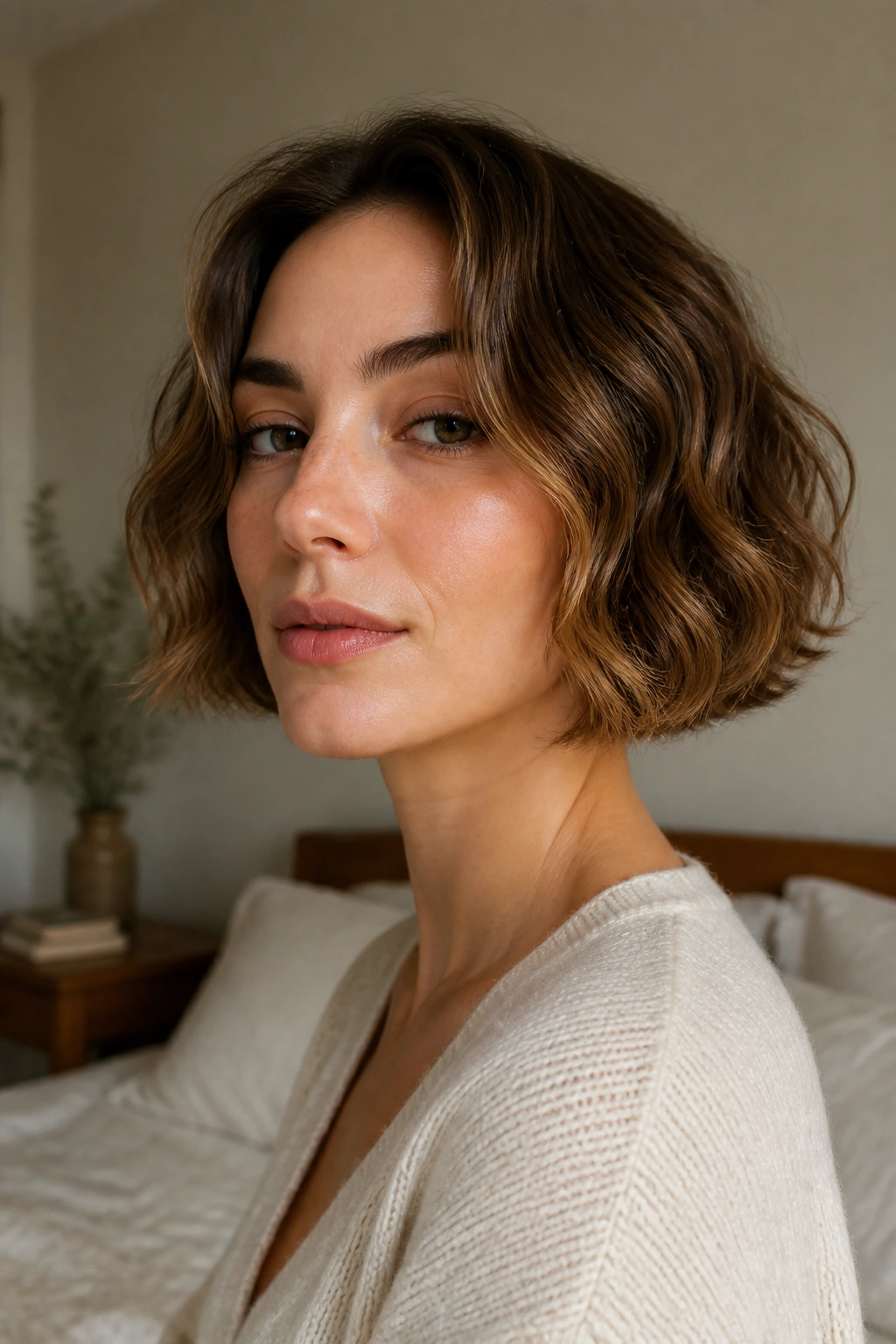
A chin-length bob is one of the easiest ways to make fine wavy hair look denser. The perimeter sits around the jaw, where the eye reads weight first, and that gives the ends a fuller look even if the strands themselves are delicate. It’s a short cut, but it doesn’t feel severe when the waves bend through it.
The trick is to keep the line clean and the layers light. Ask for just enough internal shaping to stop the triangle effect, but not so much that the bottom starts to look wispy. This cut shines when the wave pattern has a loose S-shape. Tight curls can still wear it, but the silhouette changes fast, so styling matters more.
A chin-length bob also does something nice for the neck and cheekbones. It opens up the face without leaving the whole look flat. If you want a cut that feels polished on air-dry days and tidy with a quick bend from a curling iron, this is a strong place to start.
2. Collarbone Lob with Soft Layers
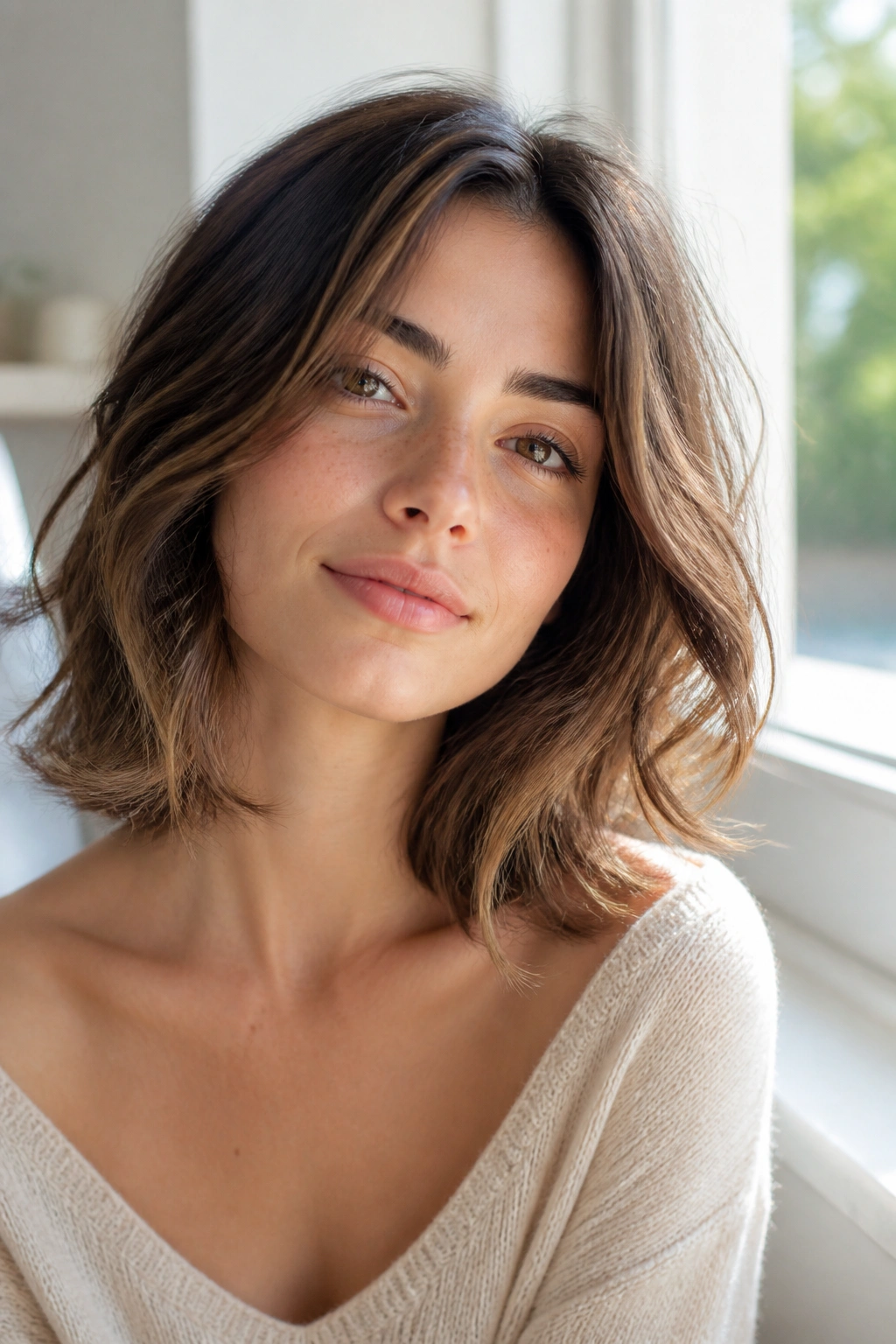
The collarbone lob is the safe bet that rarely feels boring in real life. It gives fine hair a little more length to hang onto, which helps the waves stretch instead of puffing out. At the same time, the cut still feels light enough that your texture can move.
Soft layers are the key. Not choppy ones. Not shredded ends. You want gentle layering around the front and maybe a little internal movement through the mid-lengths so the hair doesn’t sit in one heavy sheet. If your hair is very fine, a blunt-ish edge with a few face-framing pieces often looks better than lots of visible layers.
Why It Works
The collarbone length lands in that sweet spot where the hair can swing, but not disappear. It also gives you room to clip one side back, wear a half-up style, or add a soft bend with a 1-inch iron when you want more polish. The cut grows out well too, which matters more than people admit. A haircut that still looks decent after eight weeks saves you money and avoids that “I need a trim tomorrow” feeling.
3. French Bob with a Side-Swept Fringe
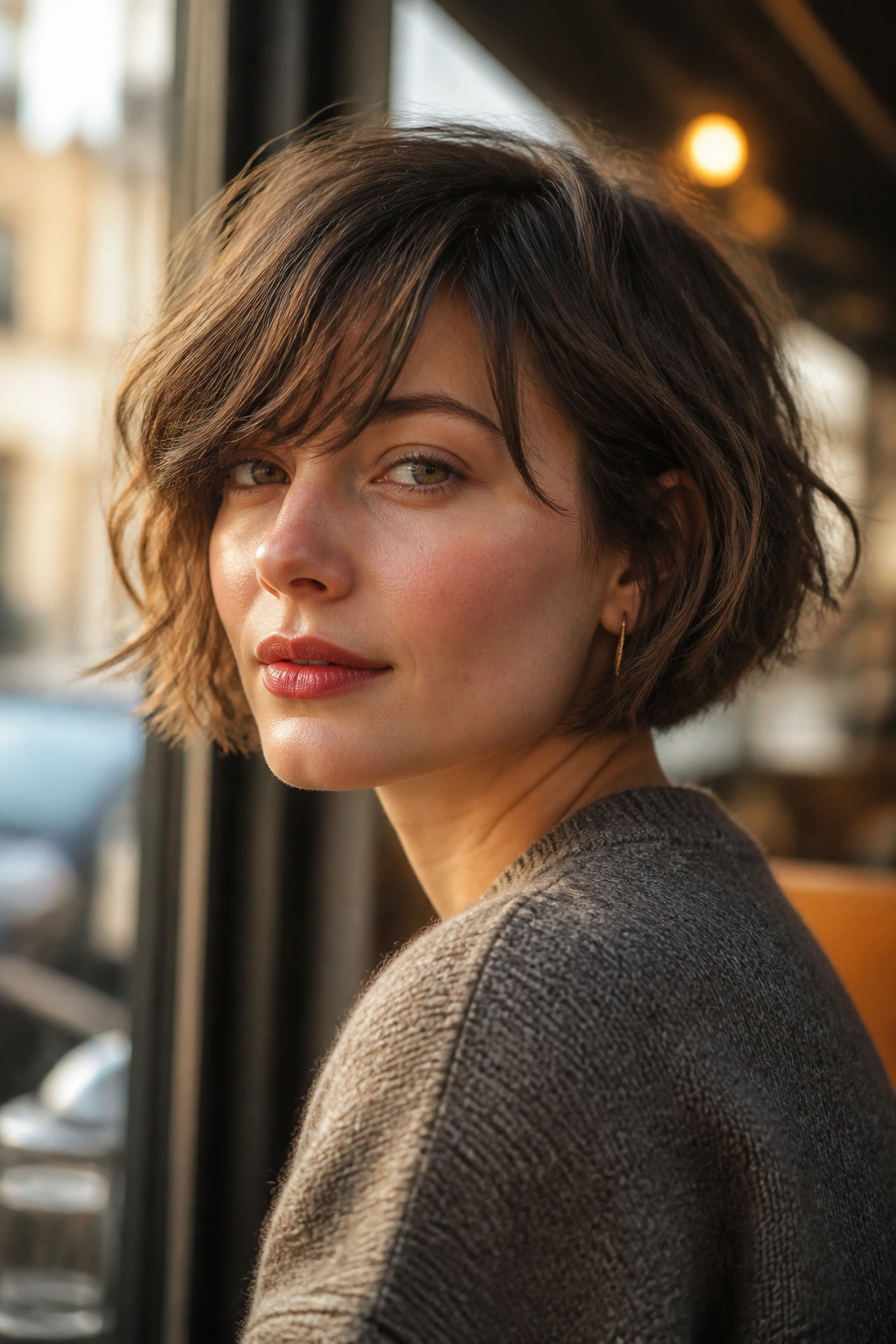
The French bob has attitude, but on fine wavy hair it also has a practical side. The shorter length keeps the wave pattern springy instead of weighed down, and the side-swept fringe breaks up the forehead area without crowding it. You get shape fast. No drama.
What makes this version work is restraint. Keep it grazing the jaw or just above it, and don’t over-texturize the ends. A French bob looks best when the line feels deliberate, almost crisp. The fringe should fall lightly to one side, not flop into the eyes in a heavy curtain. That little shift gives the cut movement without asking for much styling time.
This one suits anyone who wants a short haircut that feels a bit sharper than a classic bob. It’s especially good if your waves are loose and your hair tends to flatten at the crown. A root-lifting spray at the crown and a quick scrunch at the ends is often enough.
4. Curtain Bang Lob

Curtain bangs can be a gift for fine wavy hair when they’re cut with enough softness. The lob keeps the length from feeling too fragile, and the bangs add lift around the face where fine hair often needs help most. The whole thing feels balanced, which is not always easy with fine strands.
The best version starts with bangs that blend into the front layers instead of sitting like a separate piece. They should open from the center, fall past the cheekbones, and taper into the sides. If they’re too short or too blunt, they can steal volume from the rest of the cut. That’s the part people regret later.
Ask your stylist to keep the perimeter at or just below the collarbone, then carve in light face-framing pieces that connect to the bangs. The result is soft, flattering, and easy to wear with either a middle part or a slight off-center part. It’s one of those cuts that looks like you planned your hair, even on days you didn’t.
5. Textured Shag
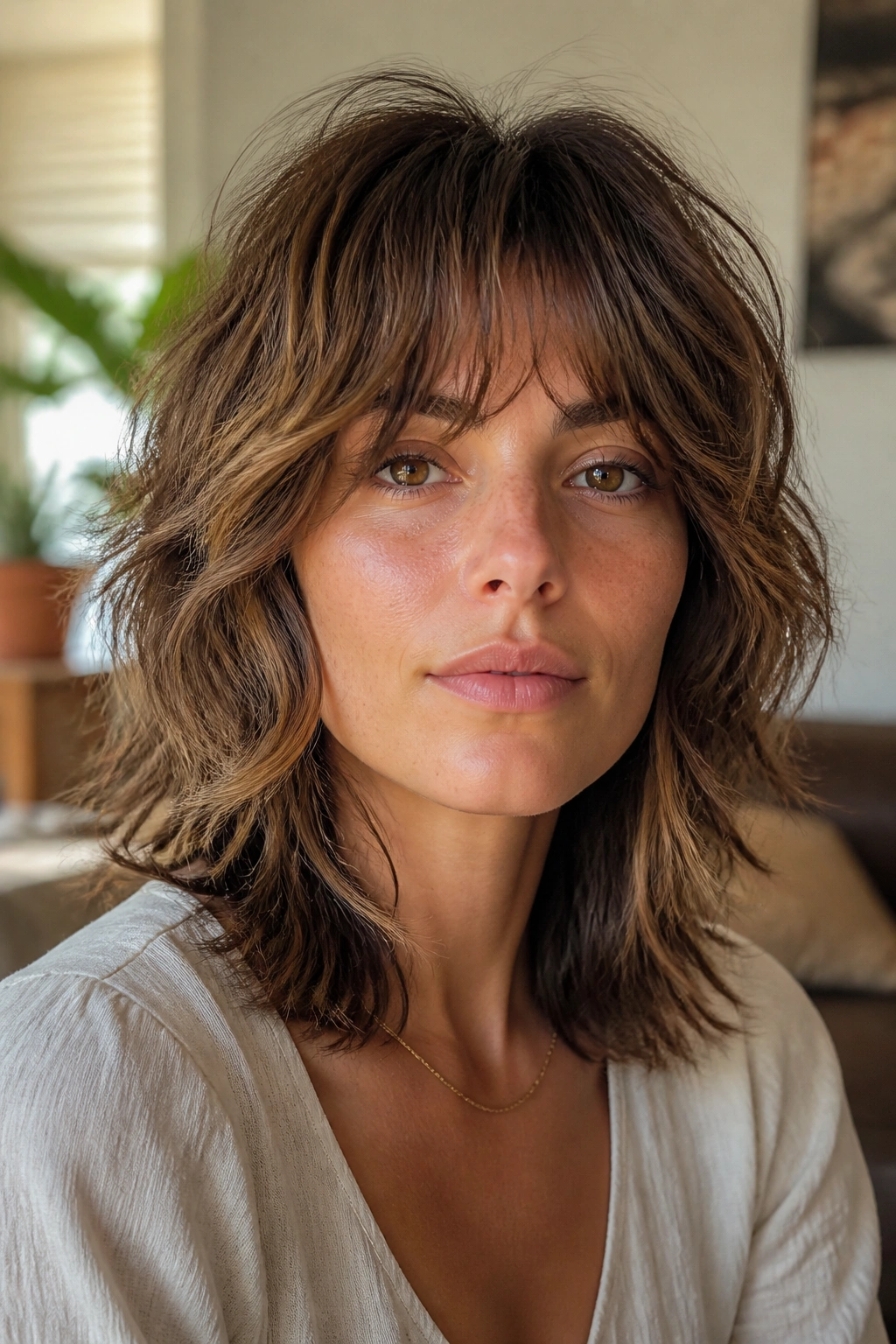
A shag sounds risky for fine hair, and sometimes it is. But if your waves already have a bend to them, a controlled shag can give you lift in all the right places. The point is not to thin the hair out. The point is to create movement that fine hair can actually hold.
What to Ask For
- Keep the layers longer than you think you need.
- Preserve enough weight at the ends so they do not go see-through.
- Use soft texturizing, not aggressive razor work through the whole head.
- Let the fringe stay a little piecey instead of overly polished.
A good shag gives the crown some air and lets the waves fall in an easy, lived-in way. It works best if you are okay with a little mess. In fact, a little mess is the point. If you like hair that can be scrunched with mousse and dried fast, this cut delivers that texture without a ton of precision styling.
6. Long Layers Below the Shoulder
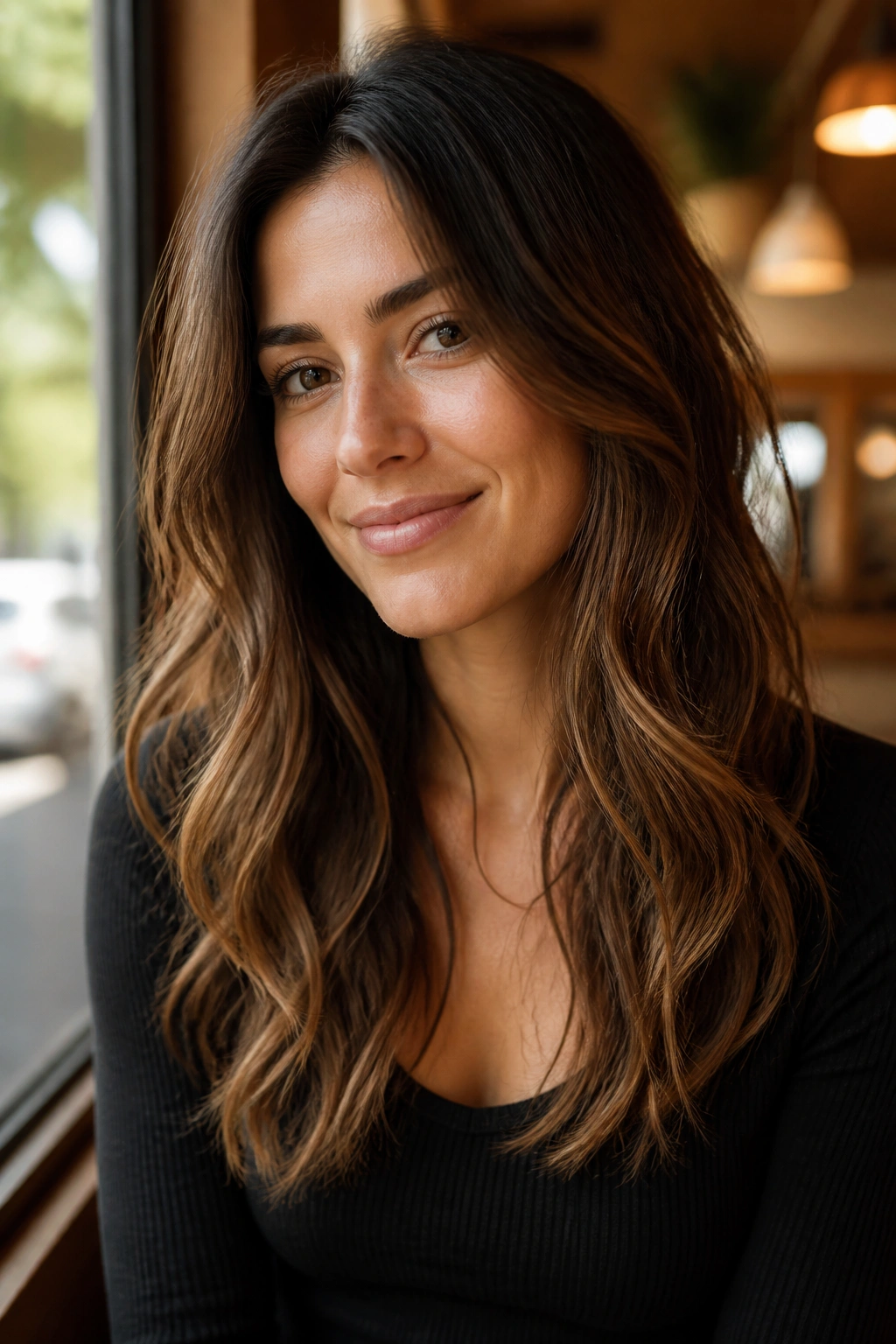
Sometimes the smartest move is to keep the length and cut the layers with more control. Long layers below the shoulder can be perfect for fine wavy hair that wants to look full, not stringy. The longer outline keeps the ends from disappearing, and the layers add bend where the wave wants to live.
The danger with long layers is going too high. If the shortest layers start too close to the cheekbones, fine hair can begin to look thin through the mid-lengths. Ask for layers that start lower, with soft movement focused below the shoulders. That keeps the body intact.
This cut works especially well if you like to wear your hair half-up or tucked behind the ears. The shape still feels feminine and relaxed, and it does not demand that you cut off all your length to get volume. A round brush at the roots and a diffuser through the ends can make the shape look expensive without doing much at all.
7. Blunt Bob with Airy Ends
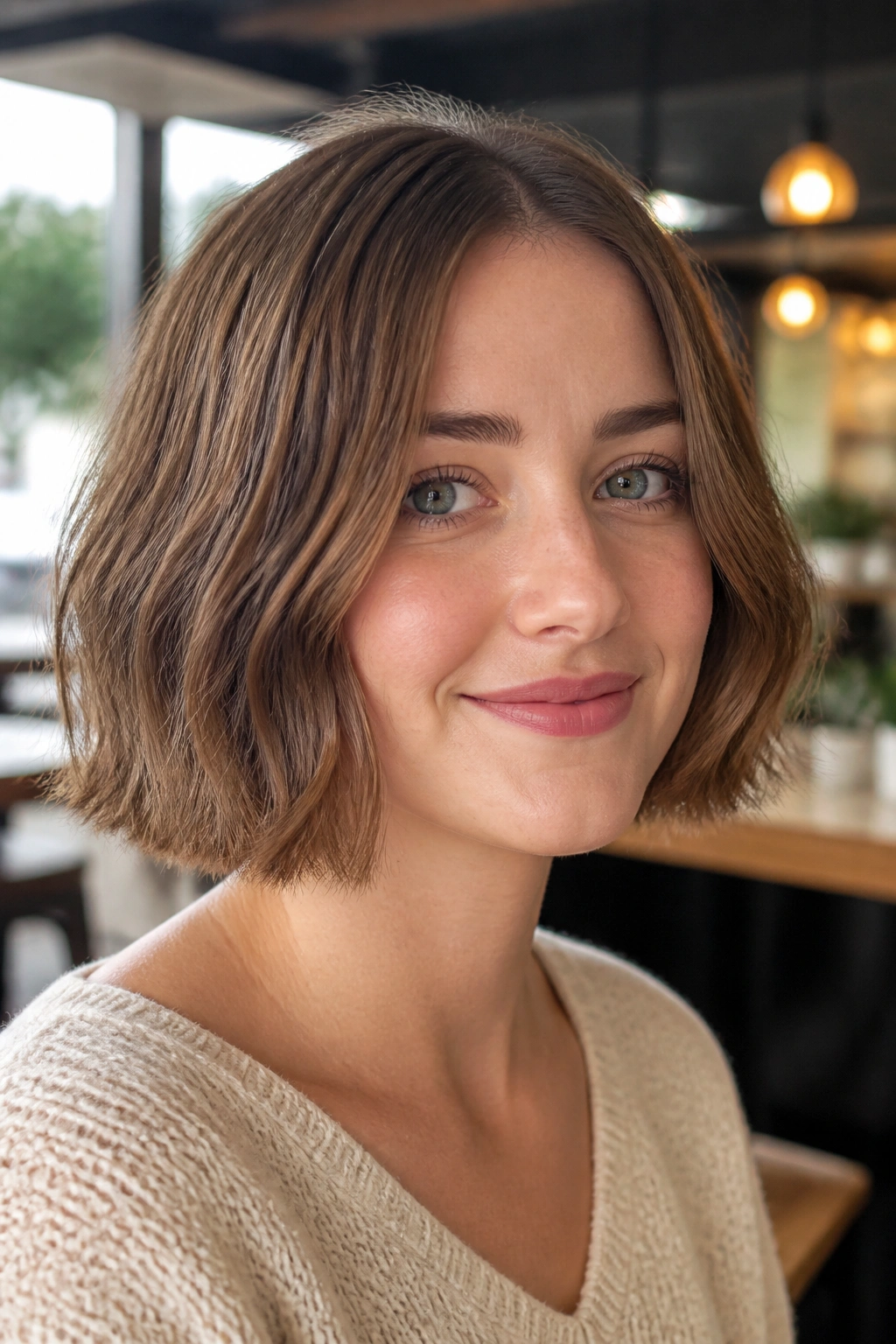
A blunt bob sounds like the opposite of a wavy haircut, but that’s exactly why it works on fine hair. The blunt edge creates the illusion of thickness, which is gold when your ends tend to look transparent. Then the natural wave softens the line just enough so it does not feel boxy.
The “airy ends” part matters. You want the ends to move, not sit like a helmet. That means keeping some softness in the interior while preserving the visual density at the perimeter. It’s a balancing act, and a good stylist will know how to do it without over-thinning the bottom.
If your wave pattern is loose, this cut can look especially good with a center part and a quick bend from a blow-dryer brush. It has that clean, modern shape people like, but it still feels touchable. And no, it does not have to be pin-straight to work. A little wave gives it life.
8. Pixie with a Wavy Top
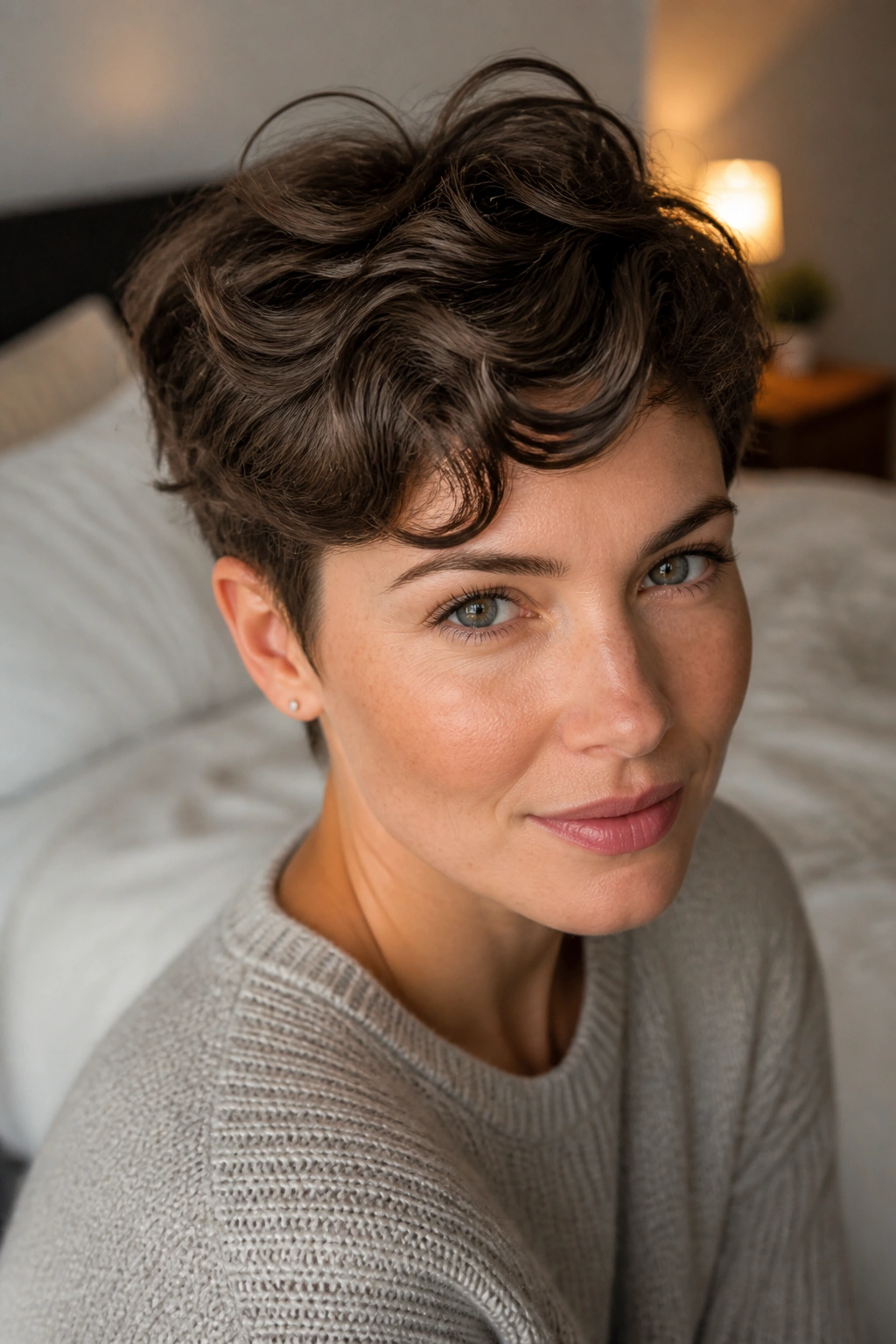
A pixie on fine wavy hair is not as scary as it sounds. In fact, it can be one of the easiest ways to make fine hair look fuller, because the shorter length lets waves stack up instead of hanging flat. The top stays soft and piecey, while the sides can be tapered close to the head.
The secret is leaving enough length on top for the waves to show. If the top gets cut too short, fine hair can start to look fuzzy instead of textured. You want 2 to 4 inches on top, depending on your wave pattern and how much styling you’ll actually do in the morning. Be honest here. A pixie only works if you like using your fingers more than a brush.
This cut is a strong choice if you want something low on drying time and high on shape. A pea-sized bit of cream or paste, worked through damp hair, is often enough. Then you can twist a few pieces and let them fall where they want.
9. Asymmetrical Bob
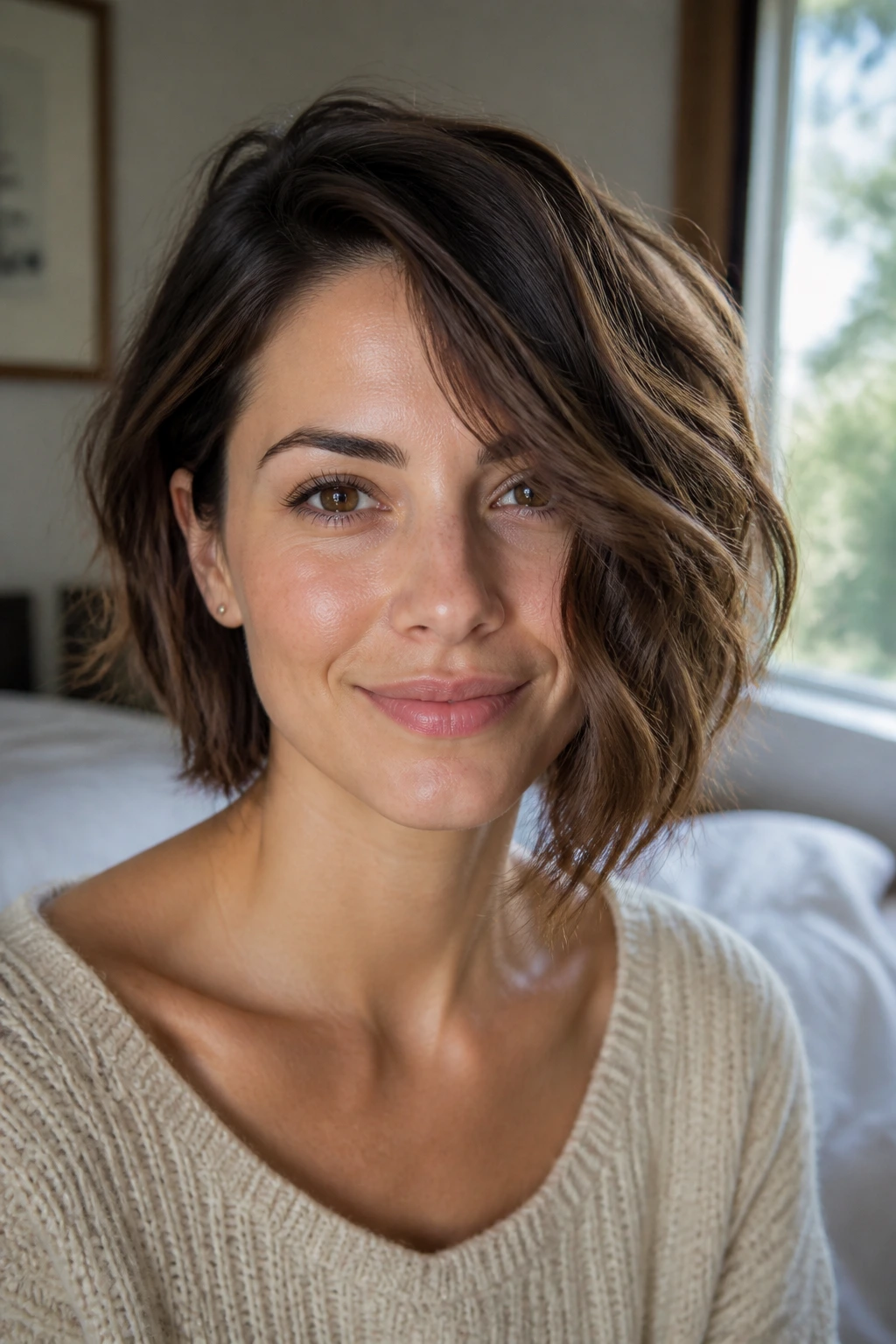
The asymmetrical bob has a built-in bit of edge, and that edge can do a lot for fine wavy hair. One side being slightly longer makes the whole cut look intentional, even when the waves are doing their own thing. It gives the eye a line to follow, which helps hair feel fuller and more styled.
This cut is especially useful if one side of your hair is denser than the other. Plenty of people have that, by the way. The asymmetry can balance things out without making the haircut look forced. Keep the difference subtle, though. An extreme angle can make fine hair look stringy, especially if the wave pattern is soft.
I like this cut for people who want something a little sharper than a standard bob but not so dramatic that it dominates the face. It works with a side part, a middle part, or a tucked-behind-one-ear look. Small shift. Big payoff.
10. Butterfly Cut
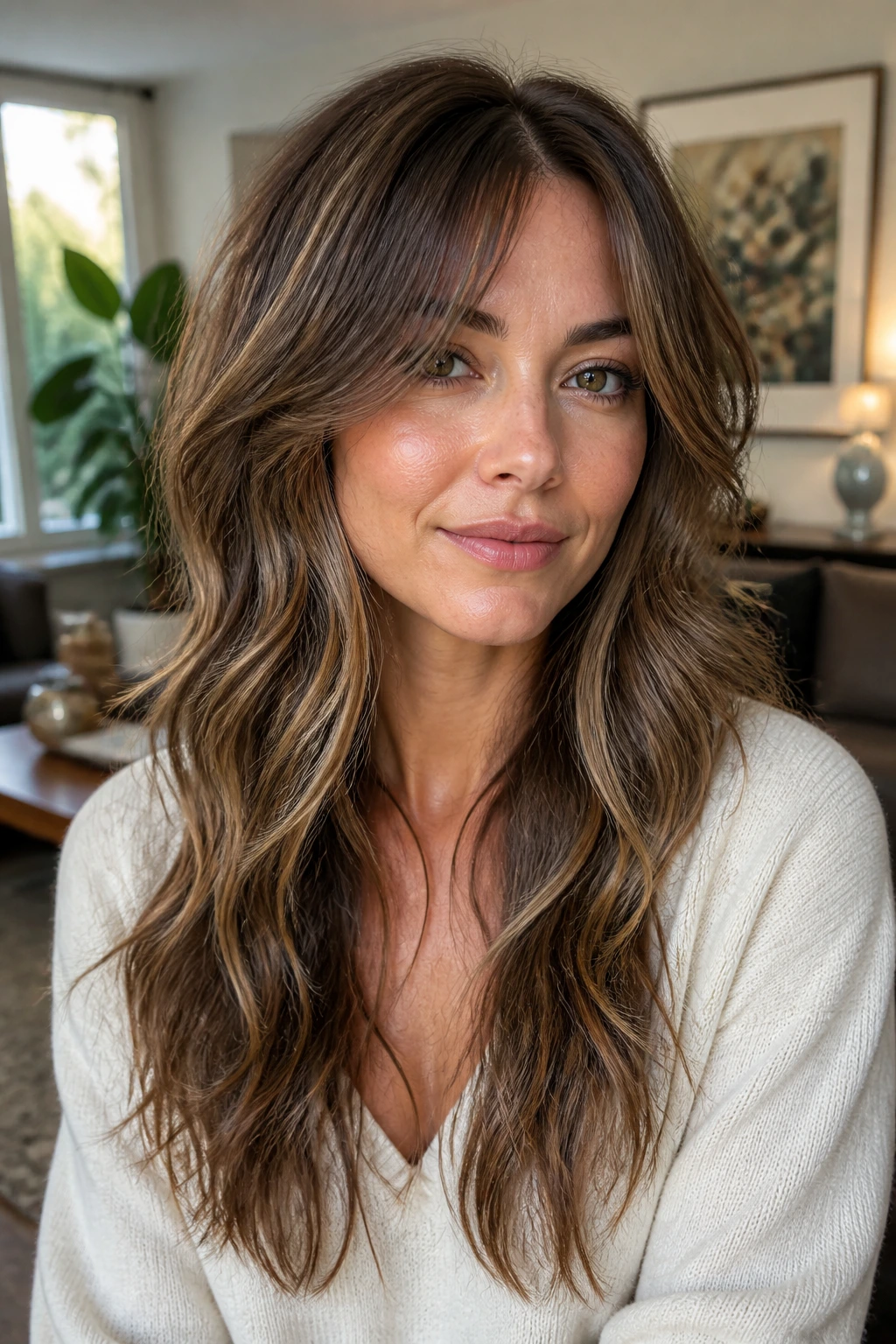
The butterfly cut gets a lot of attention, and on fine wavy hair it can be either brilliant or too much. The reason it works is simple: shorter face-framing layers create lift around the top, while the longer bottom section keeps enough weight to avoid a wispy finish. You get movement without sacrificing all the length.
But there’s a catch. If the stylist takes too much out of the interior, the ends can go sparse fast. Fine hair needs a careful hand here. The shortest layers should stay long enough to blend, and the bottom should still feel substantial when you gather it into a low ponytail. If it looks thin in a ponytail, it may look thin down.
This cut is best for someone who likes volume at the crown and around the face. Blow-drying the top section with a round brush gives it that lifted shape, while the underlayers stay soft and easy. It’s a flattering cut, but it has to be tailored. No shortcut version.
11. Soft Wolf Cut
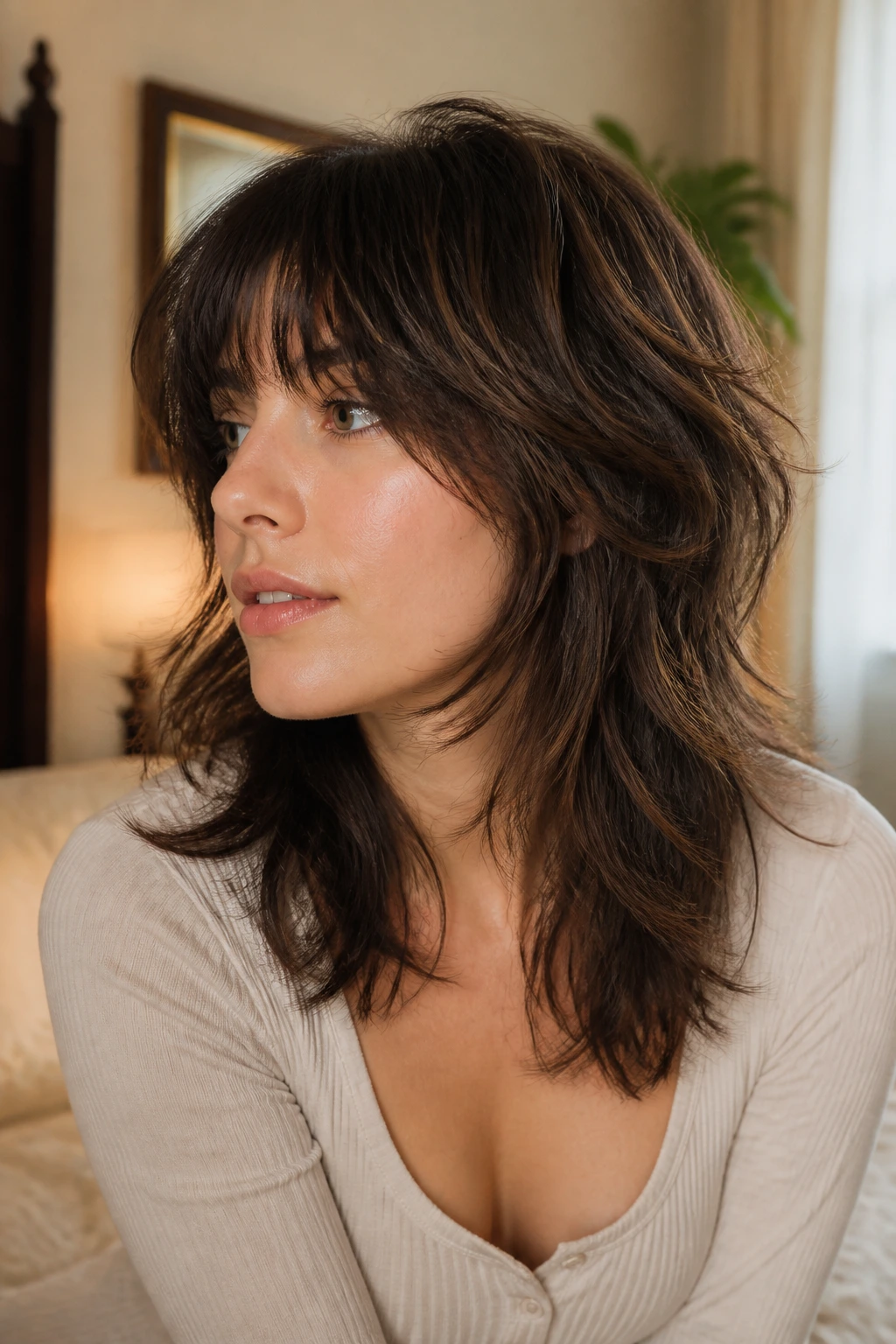
A wolf cut can be a fantastic fine-hair option if you keep it soft. The rough version of this cut can eat away too much density, which is a bad trade on thin strands. The soft version keeps the shaggy vibe while protecting the perimeter so the ends still look like hair.
The shape depends on longer layers, broken-up fringe, and a little bit of mess. That mess is useful. It lets fine waves puff slightly at the crown, which makes the whole head look fuller. The cut can feel edgy, but it should still move gracefully when you run your fingers through it.
Who It Suits
- People with loose to medium waves.
- Hair that gets flat at the roots but not limp through the ends.
- Anyone who likes a little product and does not mind scrunching.
- Faces that benefit from texture around the cheekbones and jaw.
Skip the ultra-thinned version. That one looks cool on a mood board and disappointing in a bathroom mirror.
12. C-Cut Layers
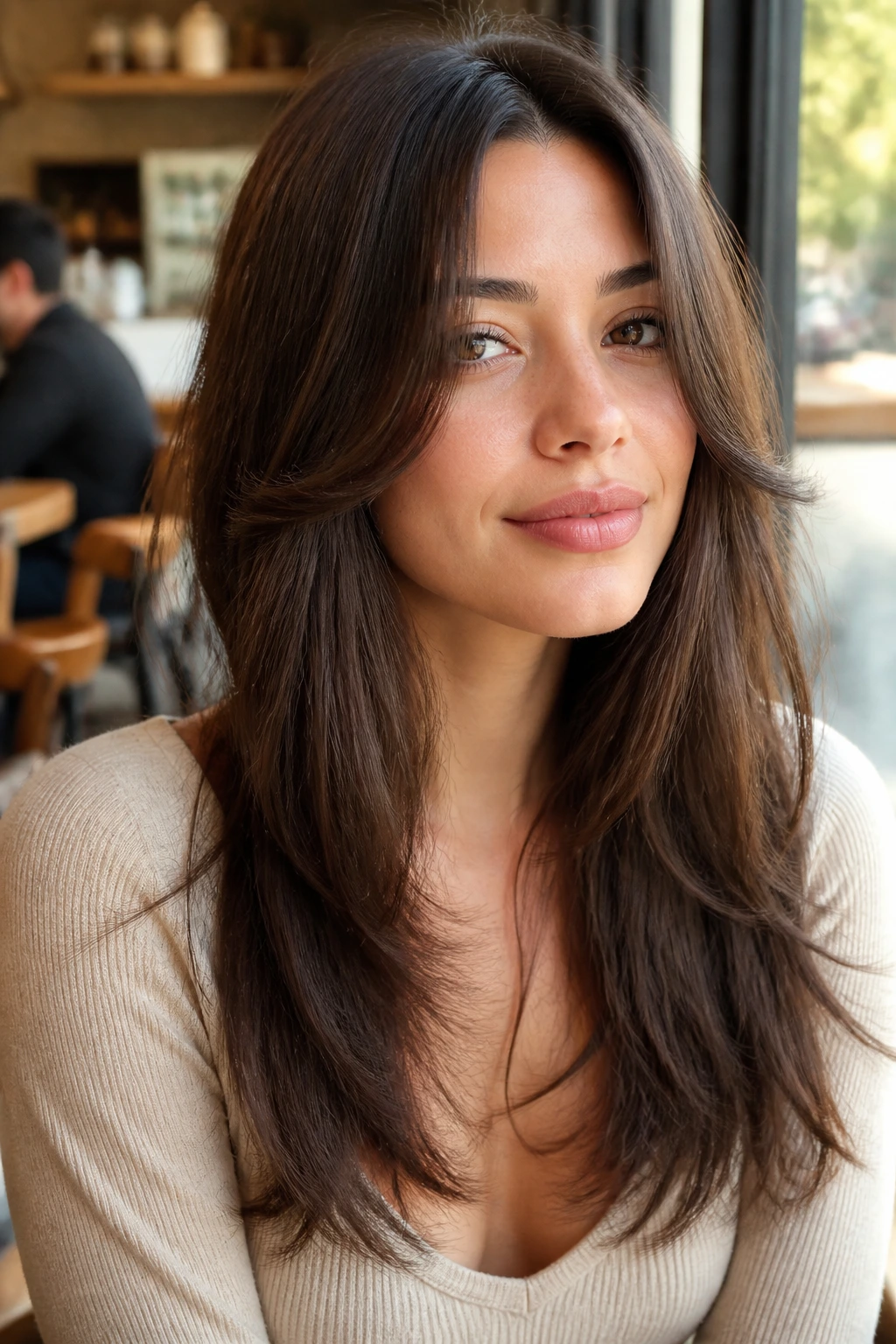
C-cut layers are a quieter choice, and honestly, I think they’re underrated. The front pieces curve in a soft “C” shape around the face, which gives fine wavy hair movement without turning the whole head into layers. The length stays intact, but the silhouette feels more alive.
This is a good option if you hate obvious layering. The ends still look full because the shape is mostly long and connected. The face-framing pieces lift the eyes and cheekbones, which can be a nice bonus when the hair itself is delicate. It also styles easily with a large round brush or a 1.25-inch curling iron.
Ask for a shape that starts around the chin and falls gradually into the rest of the hair. The idea is subtle contour, not a dramatic cut. Some haircuts shout. This one just looks finished.
13. Face-Framing Medium Cut
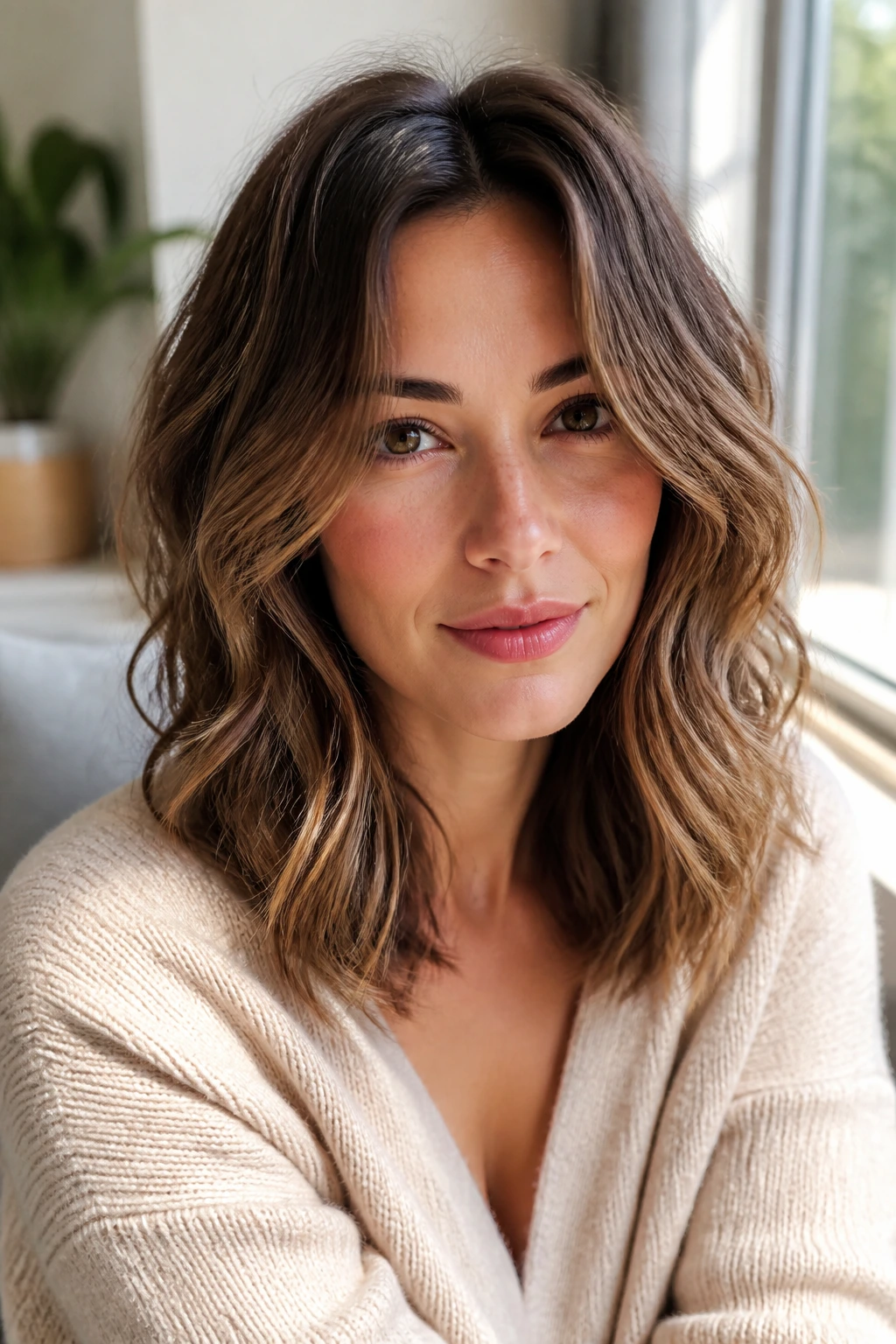
A medium cut with strong face-framing pieces can do more for fine wavy hair than a pile of short layers ever will. The length usually sits between the collarbone and the top of the chest, which gives enough weight for the waves to hold their pattern. Then the front pieces add shape where you see it first.
The best part is how flexible it is. You can wear it with a middle part for a softer, more open look or tuck one side behind the ear for a bit of asymmetry. The face-framing should begin around the cheekbones and taper down in a way that blends, not chops. That blending is what keeps the cut from looking pieced out.
This is the kind of haircut that makes styling feel easier because the shape is already doing some of the work. Air-dry it with a light mousse, or give it a quick bend with a curling wand. Either way, the front pieces will make the whole cut read as fuller.
14. Collarbone Cut with Invisible Layers
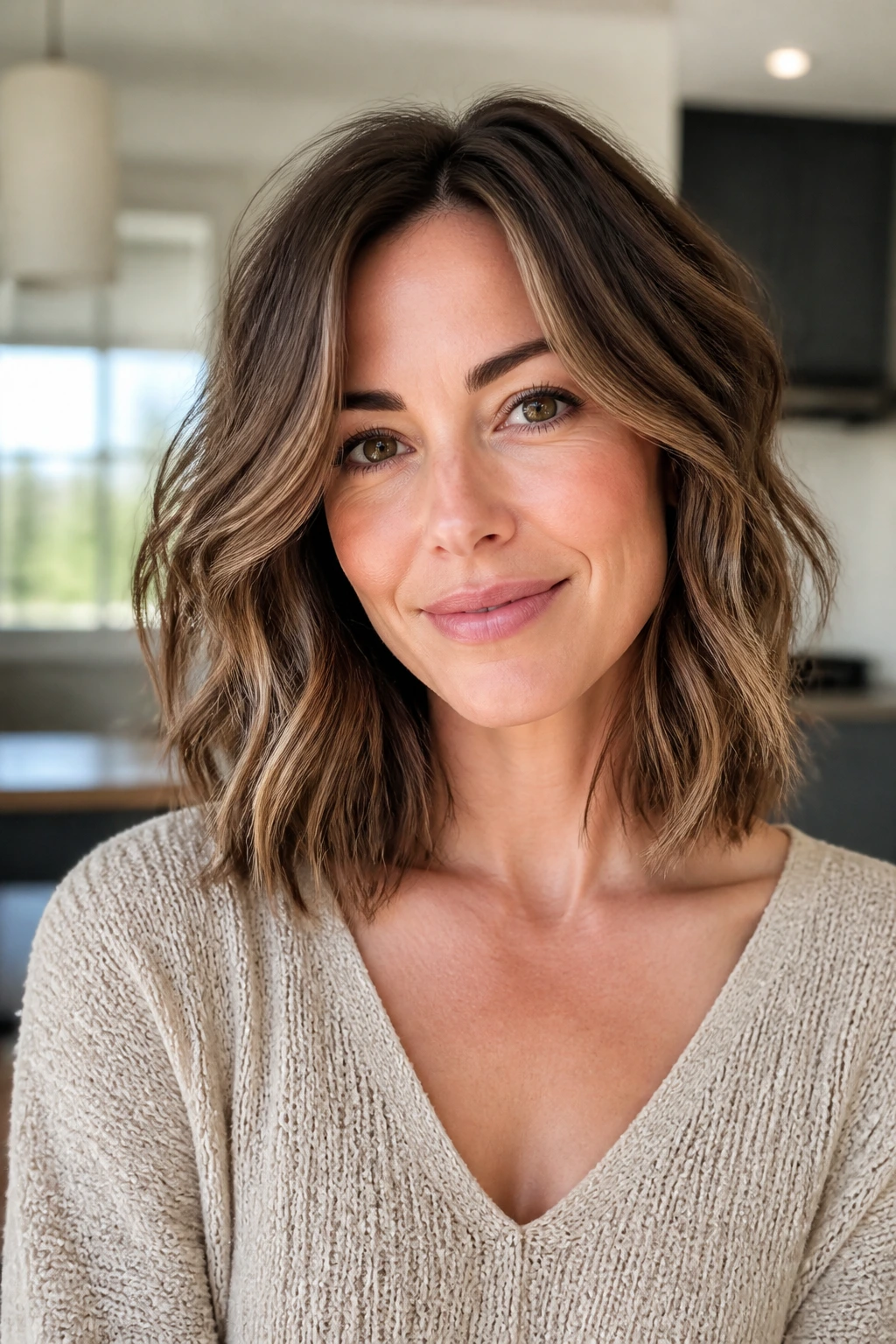
Invisible layers are exactly what they sound like: layers that create movement without showing up as obvious steps. Fine wavy hair often looks better this way than with chunky, visible layering, because the end result keeps density while still getting lift.
The collarbone length gives the style a stable base. That matters. When the hair is too long, fine strands can lose shape and hang in a sad curtain. When it’s too short, you may lose the wave pattern you actually like. Around the collarbone hits a useful middle ground.
Ask for the layers to be cut into the interior, especially around the crown and upper back of the head. The outside line should stay fairly clean. This is one of those haircuts that looks simple from across the room and more thought-out up close. That’s a good thing.
15. Shoulder-Length Cut with Micro-Layers
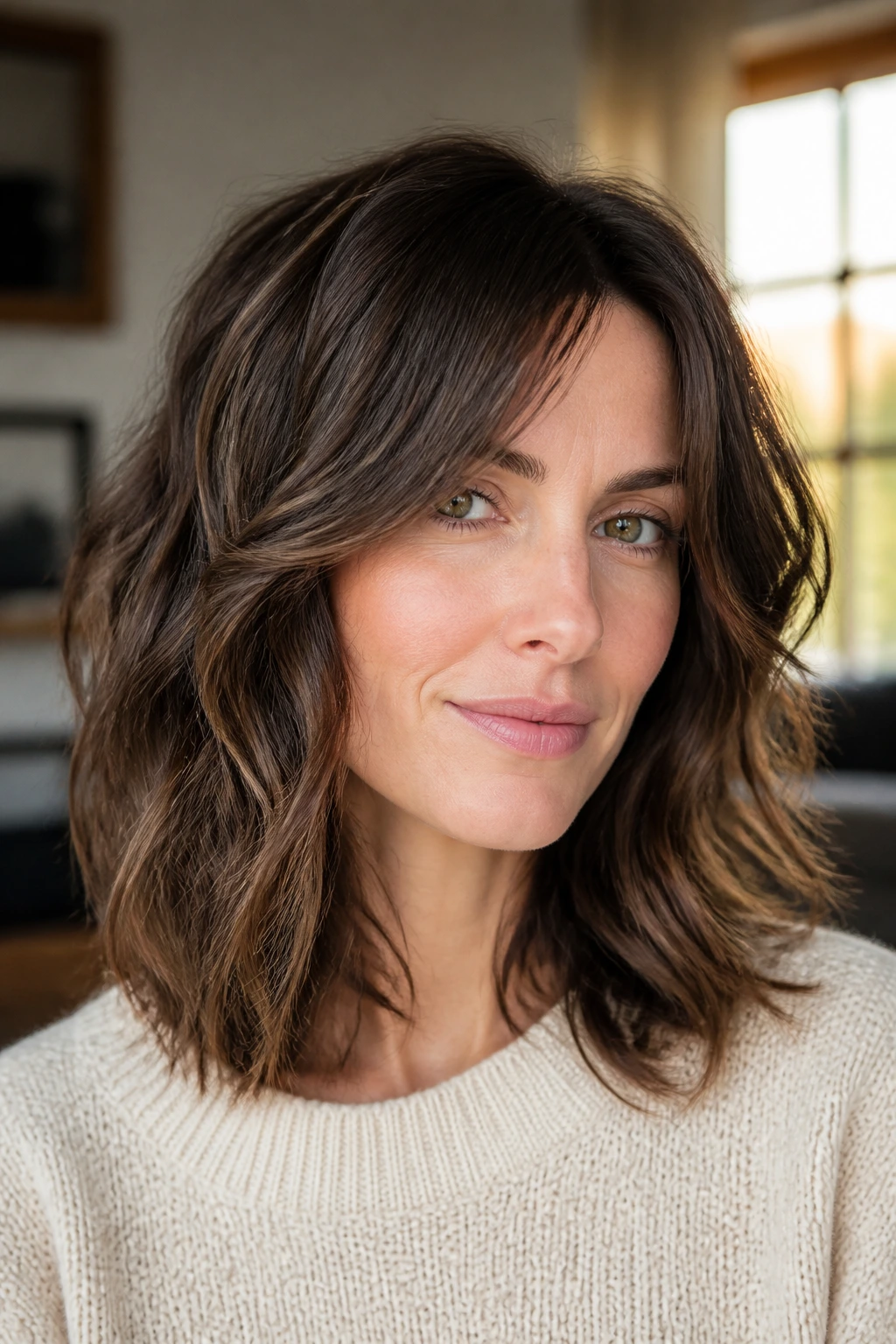
Shoulder-length hair and fine waves can play nicely together if the cut is handled with a light touch. Micro-layers give the hair just enough release so it doesn’t sit like a block, but they stop short of making the ends fragile. The shape feels easy and everyday.
The benefit here is movement without obvious graduation. Micro-layers are tiny, almost hidden adjustments that let the wave break up the line of the cut. If your hair gets heavy at the bottom, this can help. If your hair already feels thin at the ends, the layers should stay minimal.
This cut is a practical one for people who want to air-dry often. It does not require a lot of heat to look decent, and it grows out in a friendly way. A little mousse, a quick twist of the front sections, and you’re done. No elaborate routine needed.
16. Wavy Mullet Lite

A full mullet can be too much for some people, but a softer version can be a smart move for fine wavy hair. The crown gets lift, the sides stay controlled, and the back carries a little extra length so the whole thing feels balanced rather than choppy.
The “lite” part is where the haircut wins. You want the layers to move, but not to a point where the hair starts looking hollow. The top can be short enough to encourage volume, while the back stays long enough to keep shape. That contrast is what makes the haircut interesting.
I’d call this best for someone who likes texture and does not mind visible personality in a haircut. It works especially well with a little grit from styling cream or mousse. If you want hair that looks good with jeans and a T-shirt, this is the sort of cut that can lean casual without falling apart.
17. Bixie

The bixie — part bob, part pixie — is one of the nicest short options for fine wavy hair because it gives you both shape and softness. It has enough length around the crown and top to keep the waves visible, but it is short enough that the hair doesn’t get dragged down.
This cut usually sits somewhere around the ears and nape, with longer pieces around the face. That framing matters a lot. Fine hair can disappear if every side is cut too tight. A bixie keeps a bit of movement on the outside while cleaning up the bulk underneath.
It’s also a good choice if you want a haircut that feels playful but still manageable. Blow-drying takes less time. Styling usually comes down to a little root lift and some piece separation at the ends. Fast. Easy. Still cute when it grows out.
18. Rounded Lob
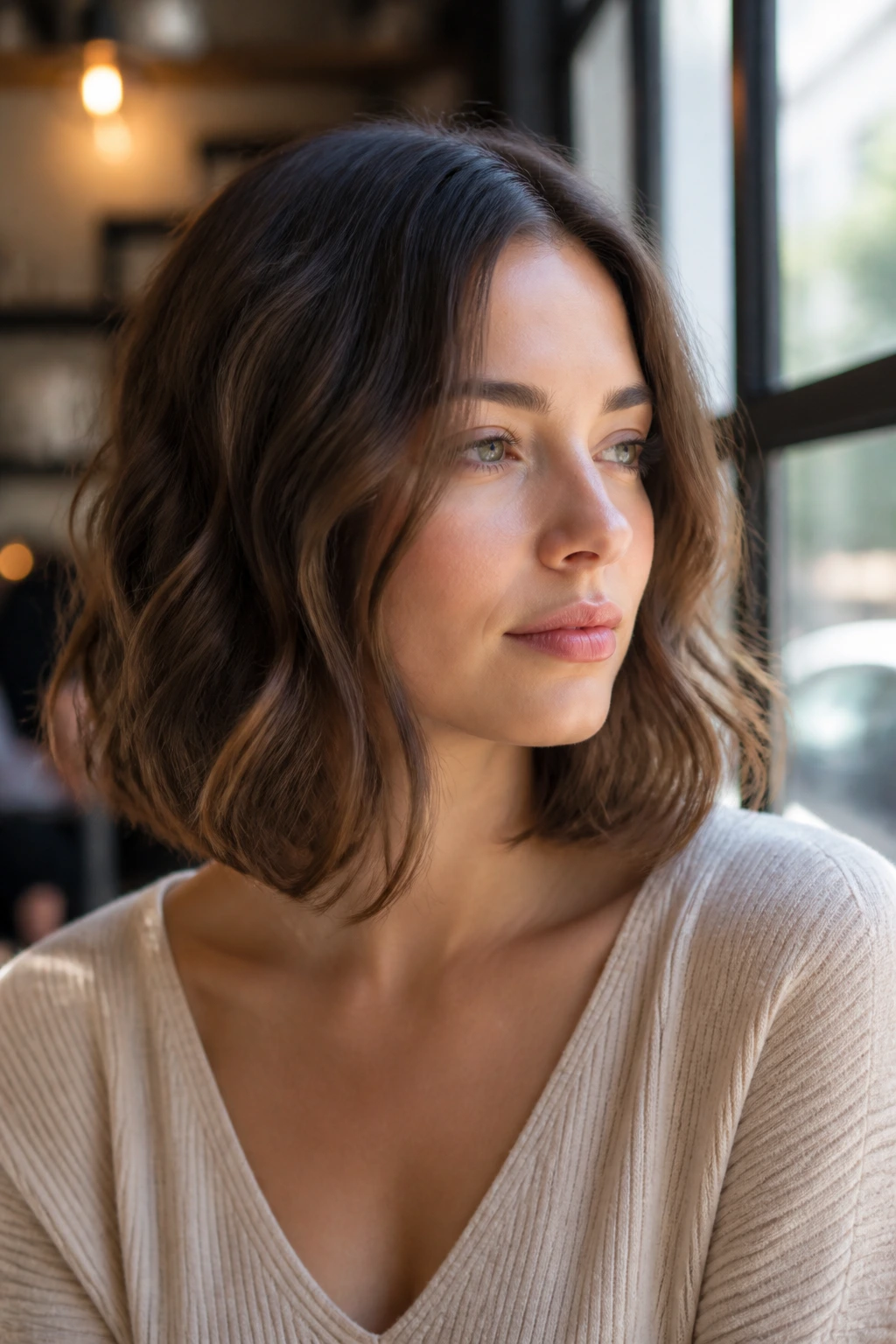
A rounded lob is a smarter choice than people give it credit for. Instead of cutting the hair into a flat line, the shape curves softly around the face and toward the ends. On fine wavy hair, that rounded outline keeps the cut from feeling wide and stringy.
The curve makes the whole style look denser because the ends follow the shape of the head. That matters more than it sounds. Fine hair often loses strength at the perimeter, and a rounded lob protects that visual weight better than a heavily layered cut. The waves help soften the curve so it does not feel helmet-like.
This cut is especially flattering if your face is narrower and your hair tends to puff only in certain spots. The rounded shape brings harmony back to the silhouette. It’s an understated haircut, which is code for “it does a lot without looking like it’s trying.”
19. Deep Side-Parted Layered Cut
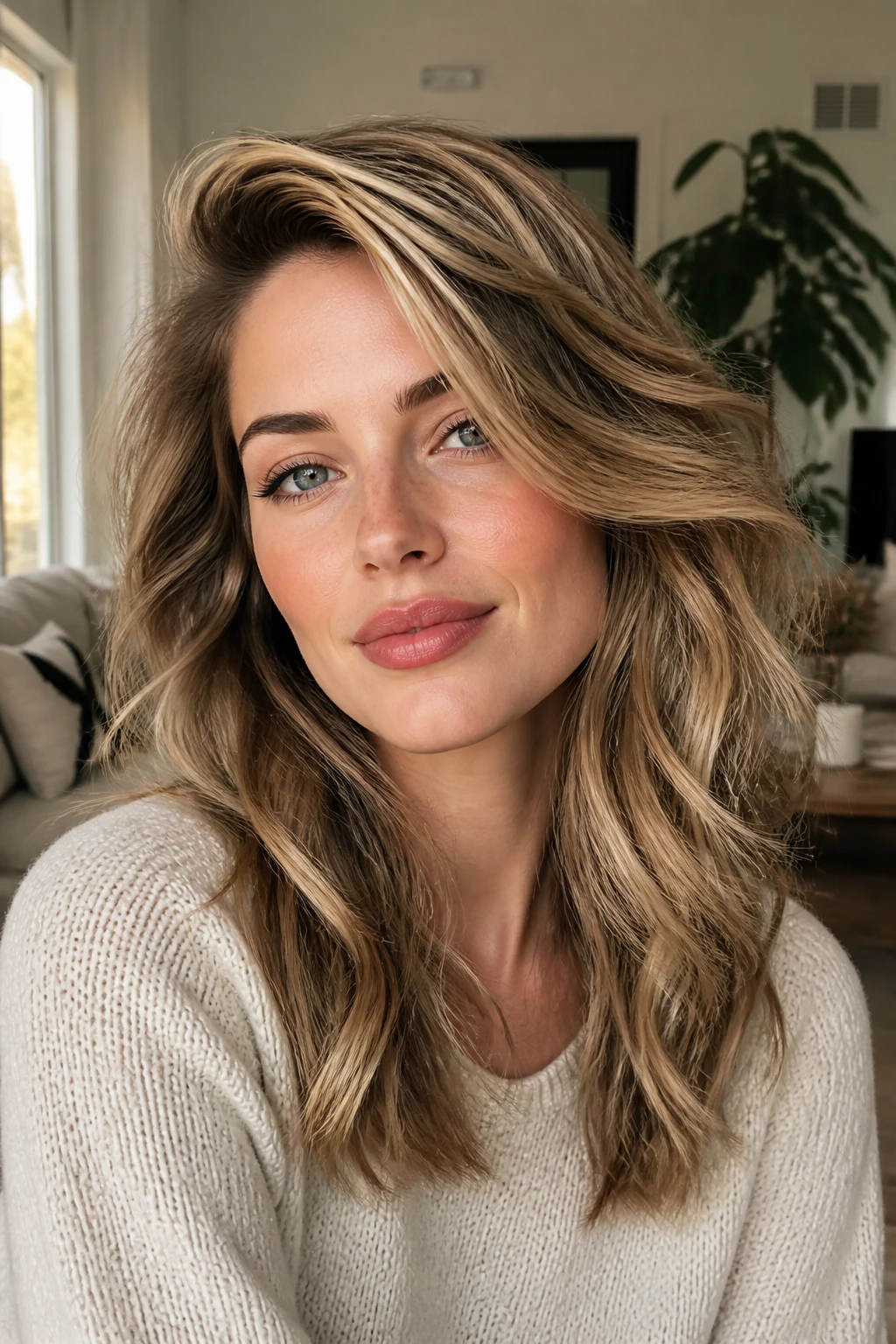
A deep side part can change a haircut more than a lot of people expect. Fine wavy hair often gets a lift just from moving the part over, because the hair that falls across the top has to travel farther and stands up a bit at the root. That creates instant volume.
Pair that part with light layers and you get a cut that feels fuller on one side and softer on the other. The result can be glamorous, but not in a fussy way. A side part also helps if the hairline or crown has a flat spot that needs disguising. We all have those. Hair just makes them more obvious.
Ask for the layers to be long enough that they don’t break the shape. The part is the star here, not the layers. Sometimes the simplest move is the most effective one, and this is one of those times.
20. U-Shape Cut
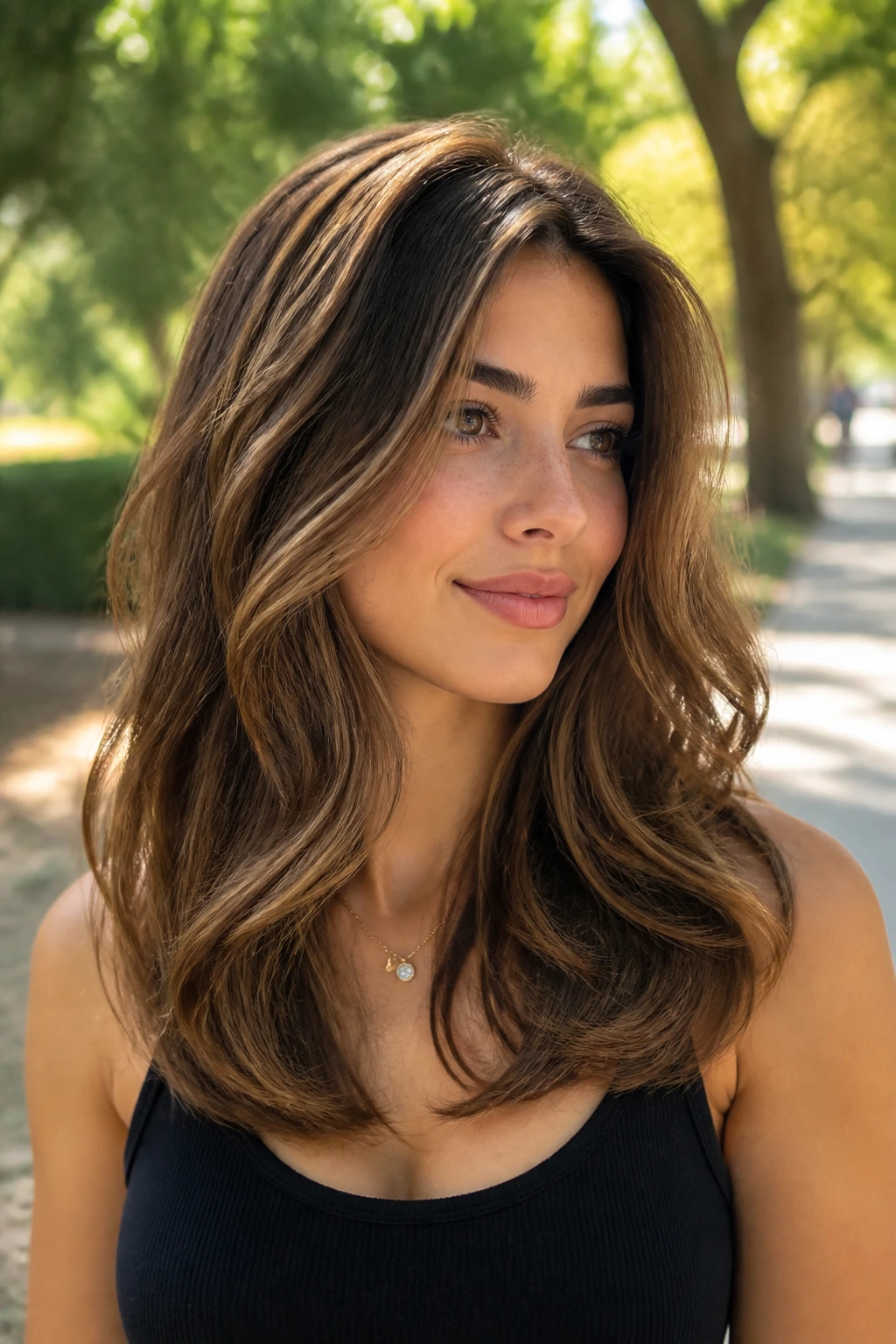
The U-shape cut is a quiet hero for fine wavy hair that needs fullness at the bottom. Instead of a straight blunt edge or a dramatic V, the hair curves gently upward at the sides and drops a little longer in the back. That gives the illusion of density while keeping the outline soft.
It works because the perimeter stays connected. Fine hair can get see-through if the cut is too pointy or too layered. The U-shape keeps enough mass at the ends to look healthy, and the curve makes the style sit nicely over the shoulders. It’s flattering, easy to grow out, and not hard to style.
This is a good call if you wear your hair loose most of the time and want it to look polished with minimal effort. A round brush, a bend at the mid-lengths, and a clean finish at the ends are usually enough. Simple, but not boring.
21. Graduated Bob
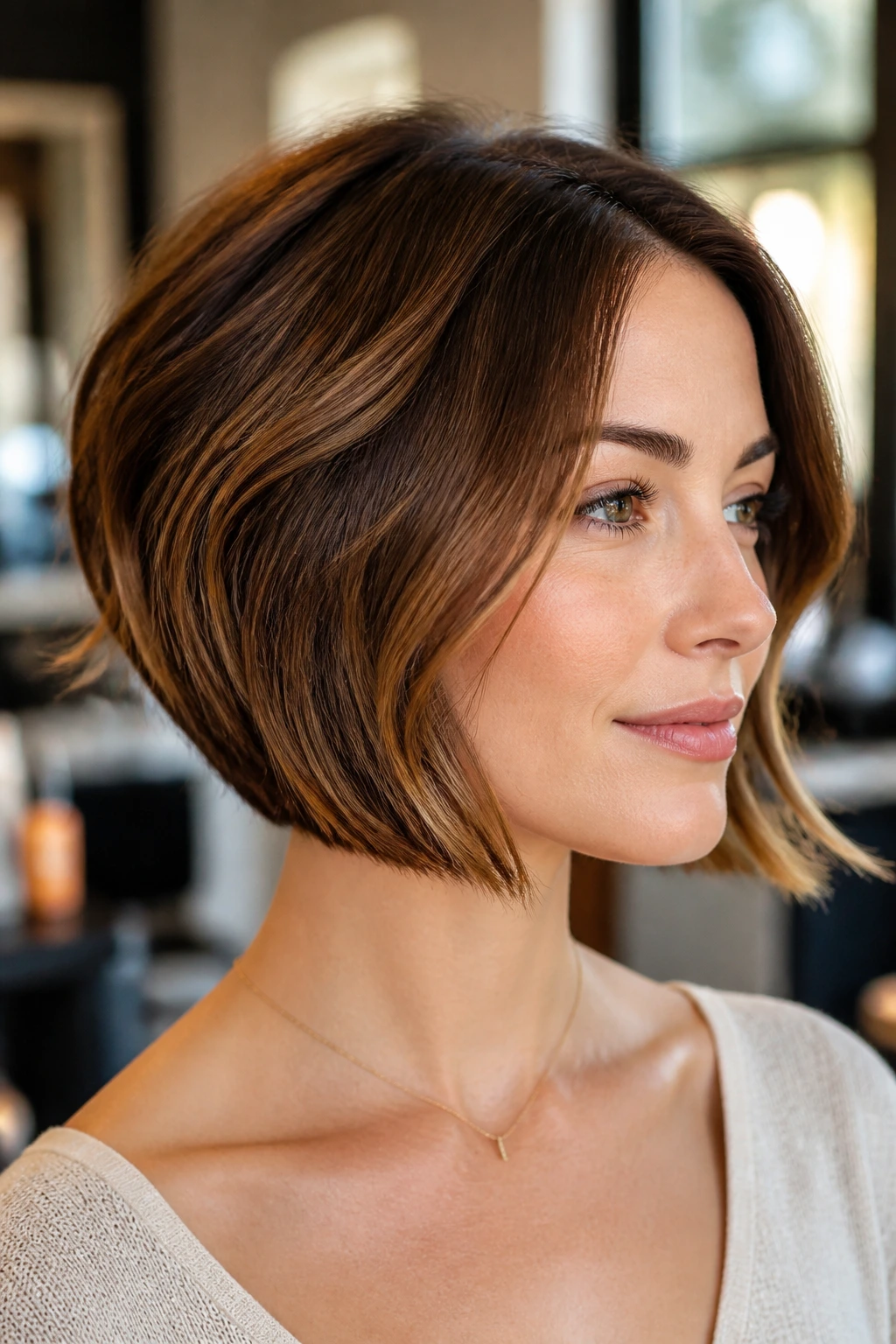
A graduated bob stacks a little weight in the back, which can be a gift for fine wavy hair when it’s done carefully. The shorter back supports lift at the crown, while the front gradually gets longer and softer around the jaw. That shape creates structure without needing a lot of volume from the hair itself.
The danger is over-stacking. Too much graduation can look dated fast, and on thin hair it can leave the front looking overextended. You want a subtle rise, not a dramatic wedge. The back should support the style, not dominate it.
This cut works well for waves that flip naturally under at the ends. It gives the hair a neat, tucked-in shape that feels tidy for work but still has enough movement to avoid looking stiff. If you like hair that holds its shape for days, this one deserves a look.
22. Sleek Lob with a Soft Bend
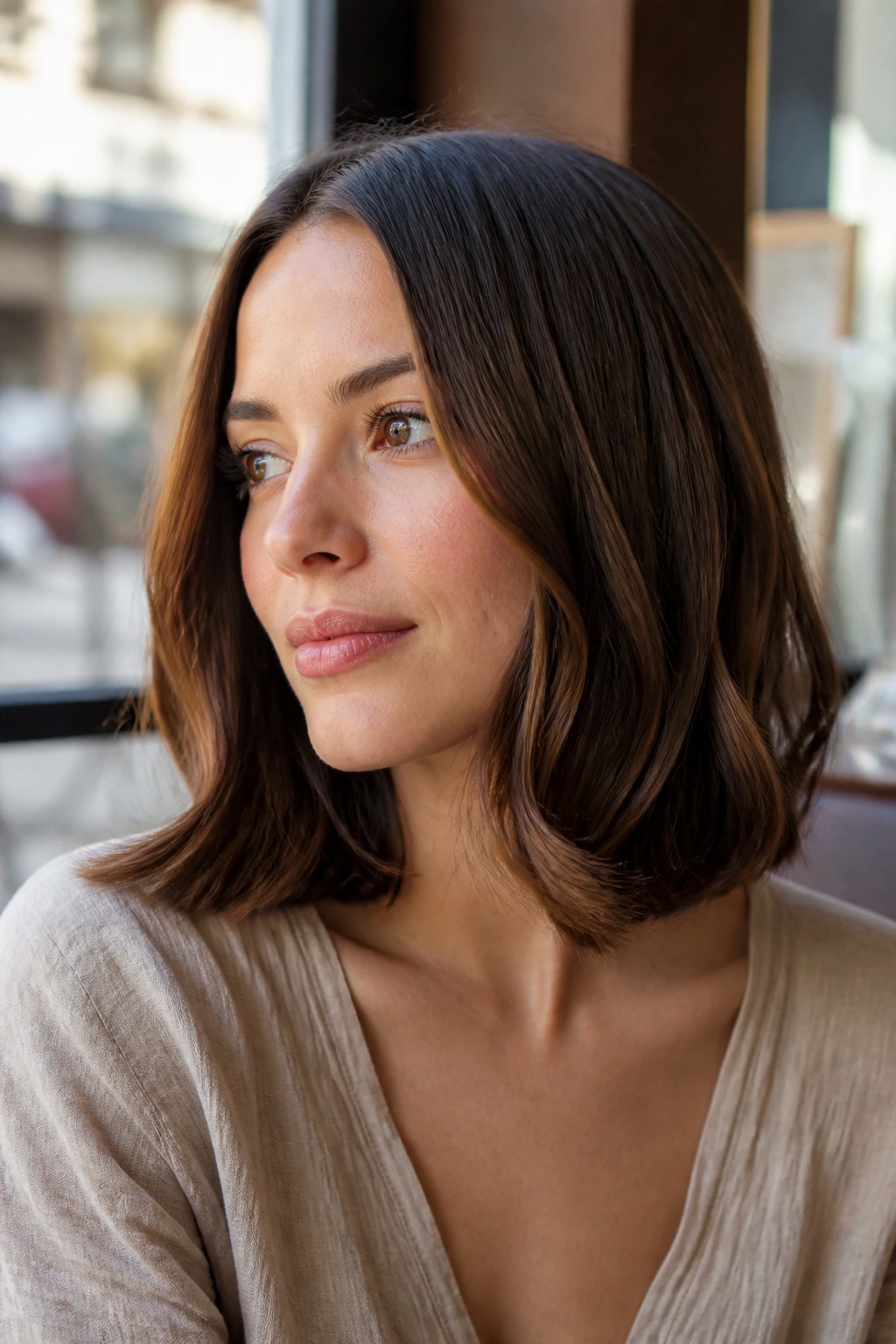
Not every wavy haircut has to be messy or heavily textured. A sleek lob with a soft bend is a clean option for fine hair that wants movement without frizz. The cut stays fairly blunt around the ends, which adds fullness, while the waves add a slight bend instead of a lot of volume.
This style is especially nice if your waves are loose and your hair responds well to a flat iron or large barrel iron. You’re not forcing the hair straight. You’re guiding it into a smooth bend that feels relaxed. The result is refined, not stiff.
It also works on days when you want your hair to look tidy with little effort. A smoothing cream at the ends and a quick pass through the surface can make the whole thing sit better. If you prefer clean lines and a little movement rather than full texture, this is a very good fit.
23. Grown-Out Pixie Bob
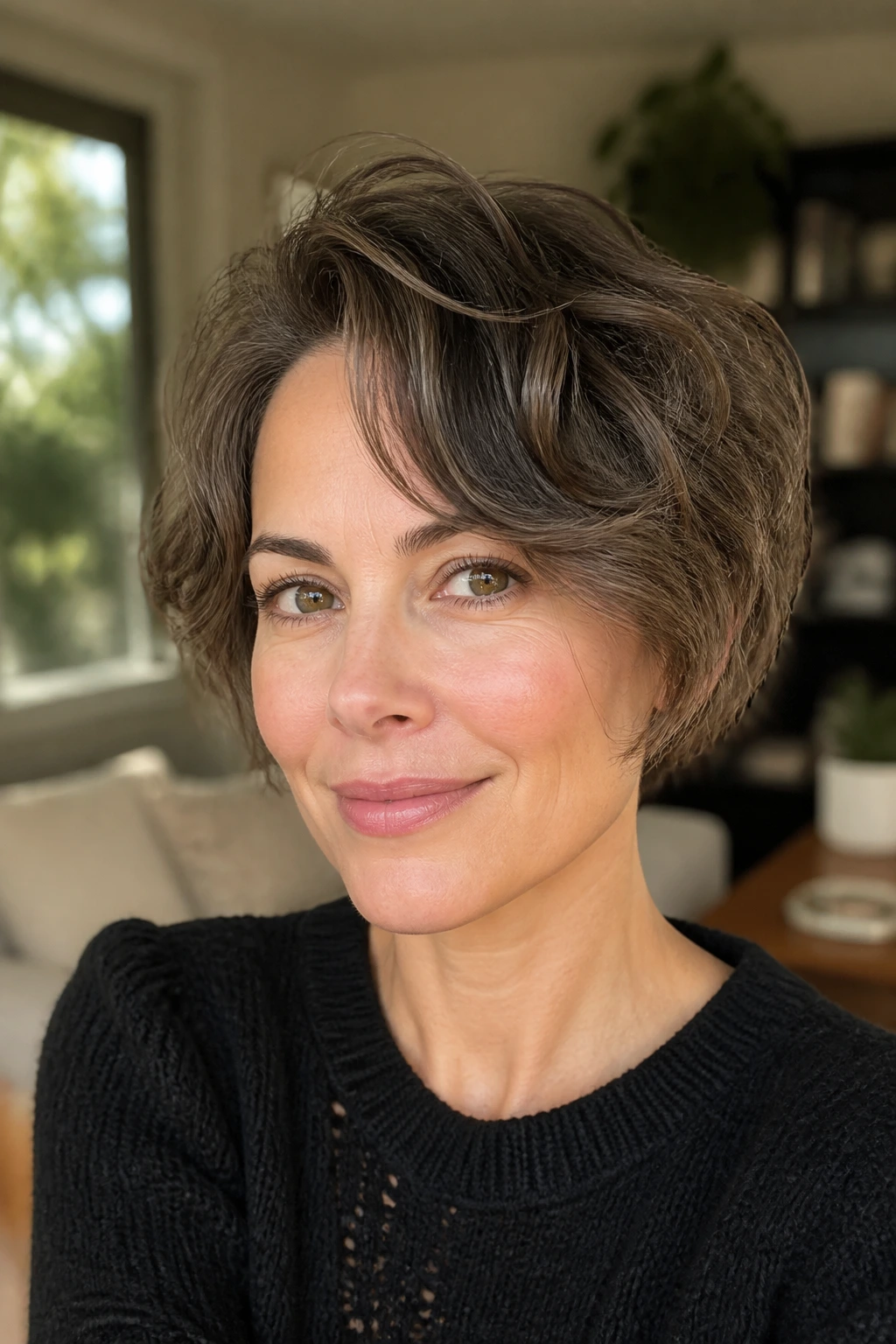
A grown-out pixie bob is one of those in-between cuts that often ends up looking better than the original short style. It keeps the cropped energy around the nape and sides, while the top and front pieces lengthen enough to show off the wave. Fine hair can love that extra lift.
The shape feels soft because the shorter pieces underneath remove bulk, but the longer top pieces keep the look from collapsing. That gives you height at the crown and a bit of swing around the face. If your hair has been too flat in longer lengths, this middle ground can feel like relief.
Maintenance is easier than a true short pixie, but it still needs shape every so often. The good news is that the grow-out is usually flattering. That matters. Nobody wants a haircut that looks good only for ten days.
24. Bottleneck Bangs with Waves
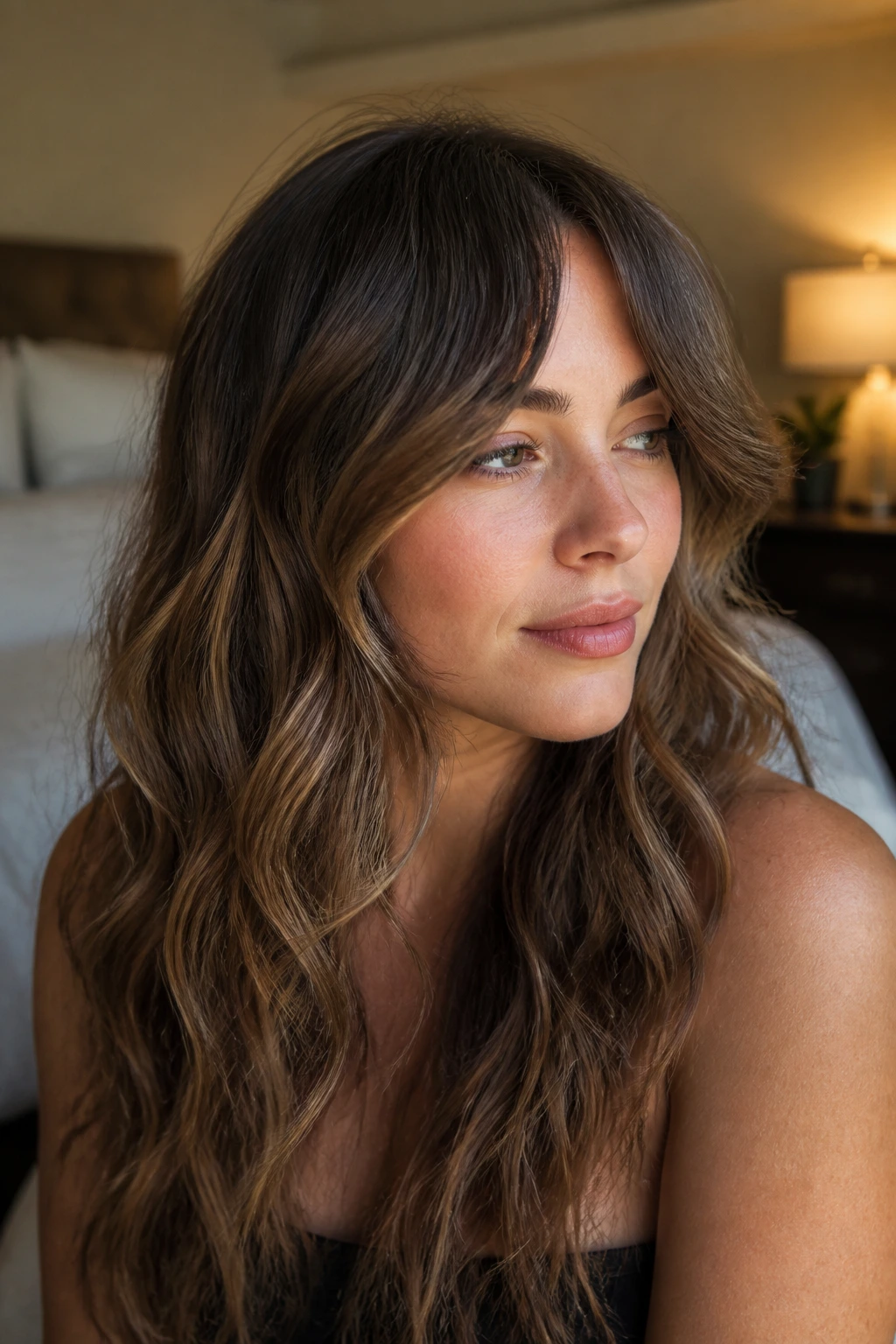
Bottleneck bangs are softer than blunt fringe and more structured than curtain bangs. For fine wavy hair, that middle path is useful. The bangs start narrow at the center and widen out toward the cheekbones, which keeps them from swallowing the forehead or making the hair look heavy.
The wave pattern gives these bangs a lot of character. They can sit lightly on the brow or sweep to the sides depending on how you dry them. Because the bang shape is tapered, it blends well into the rest of the cut instead of sitting like a separate block on top.
I’d choose this if you want the face to be the focal point. The bangs draw the eye in, but they do not demand perfect styling. A round brush or even a quick finger-dry can be enough. That’s the appeal: detail without fuss.
25. Deep Side-Part Lob
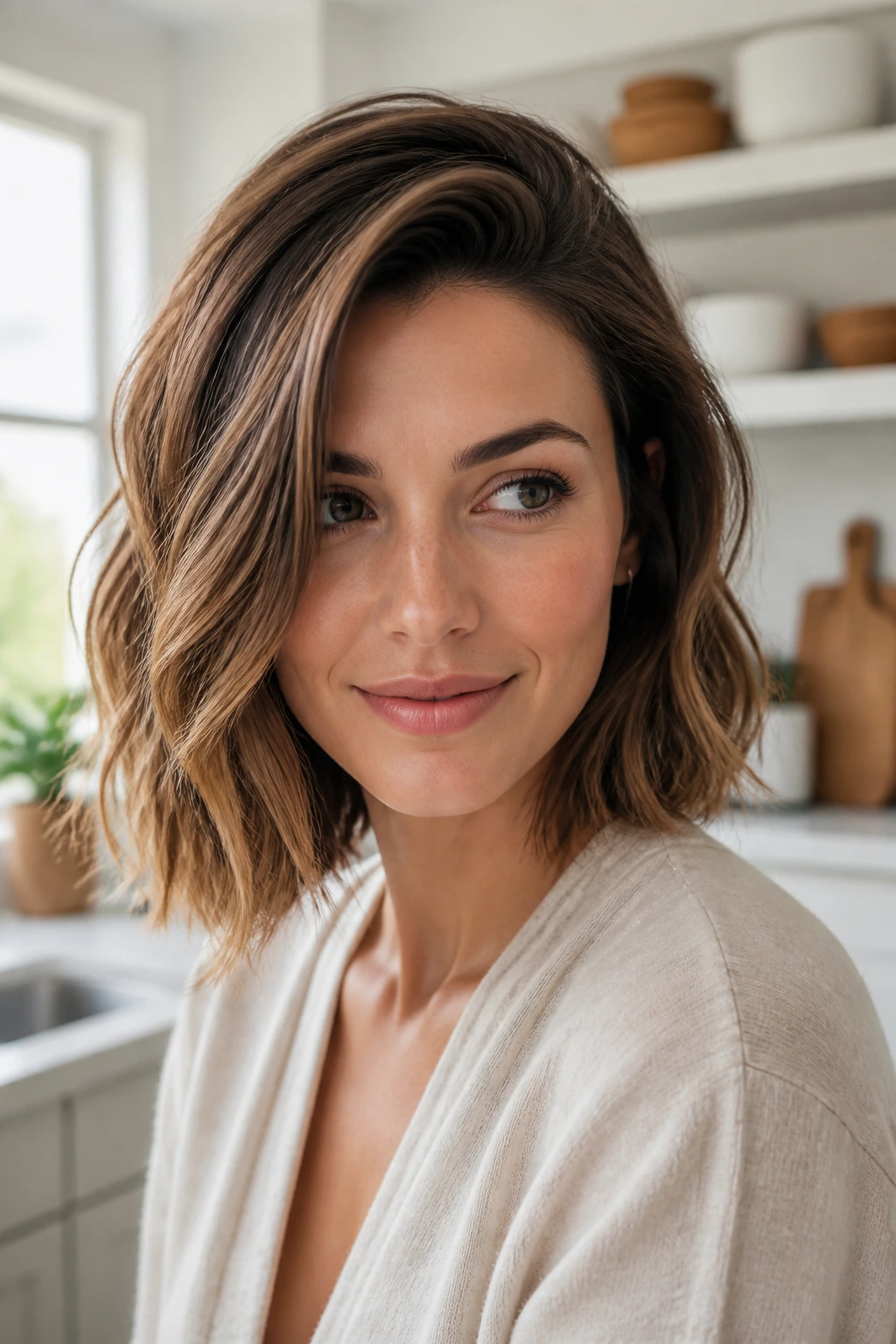
A deep side-part lob is a pure volume play, and it works. Fine hair often needs a little unfair help at the roots, and shifting the part gives it that lift immediately. The lob length keeps the ends dense enough to support the shape, while the side part adds instant asymmetry.
This is one of those cuts that can look different depending on how you wear it. Tucked behind one ear, it feels sleek. Flipped over and tousled, it feels fuller and more casual. The haircut itself is simple. The styling options are what make it interesting.
If your waves are loose, this shape holds especially well because the hair has enough length to form a curve without dropping straight down. If your hair is very fine, use a lightweight root spray at the part and rough-dry the roots first. That one step can make the whole style stay up longer.
26. Softly Tapered Long Cut
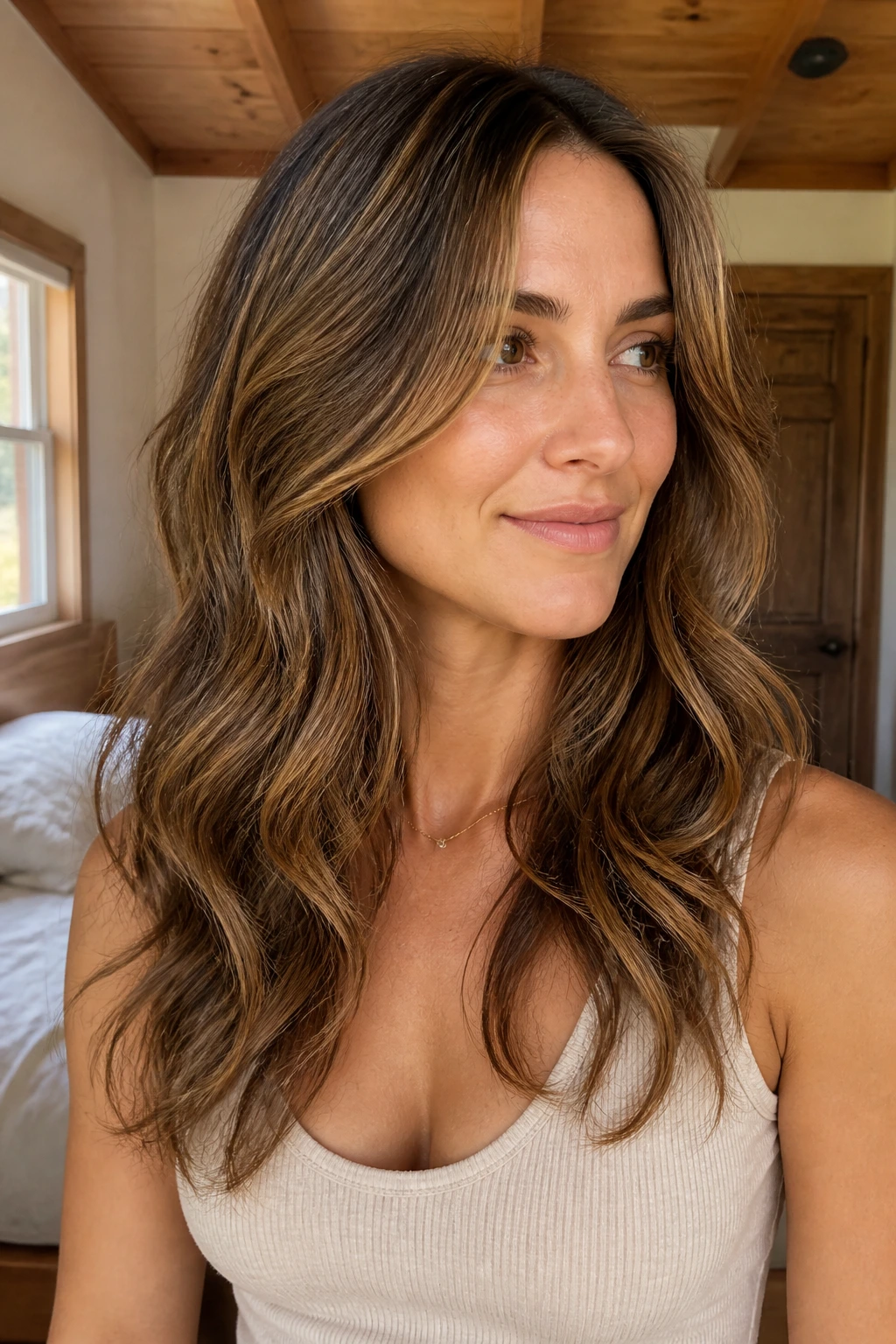
Long hair and fine strands can be a tough mix, but a softly tapered cut gives the length a better shape. Instead of one flat curtain from root to tip, the hair narrows gently toward the bottom while keeping enough weight to look full. The waves help the taper feel natural.
The important part is keeping the taper soft. Too much shape through the lengths can leave the ends looking thin and the body disappearing. Ask for long, gradual layers that follow the wave pattern rather than fighting it. The haircut should feel like it grows out of the hair, not like it was carved into it.
This cut is a solid option if you love long hair but hate when it looks lifeless. It needs less heat styling than a straighter long style because the wave already gives you movement. A light leave-in conditioner and a wide-tooth comb are often enough.
27. Razor Cut Wave Bob

A razor cut can be tricky on fine hair, but in the right hands it creates a soft, broken edge that helps waves move. The trick is moderation. You want a wave bob with a little irregularity at the ends, not a shredded shape that eats away at density.
This style works best when the wave pattern is defined enough to support the texture. The razor creates a slightly airy finish, which can be lovely if your hair tends to look too solid or too blocky when it’s blunt cut. But if your hair is already very fragile-looking, this is one to discuss carefully with your stylist.
The payoff is a bob that feels lightweight and modern without going flat. It has motion built in. That can be a gift on days when you do not want to spend ten minutes fighting a round brush. Sometimes a haircut should do the work for you.
28. Piecey Midlength Cut
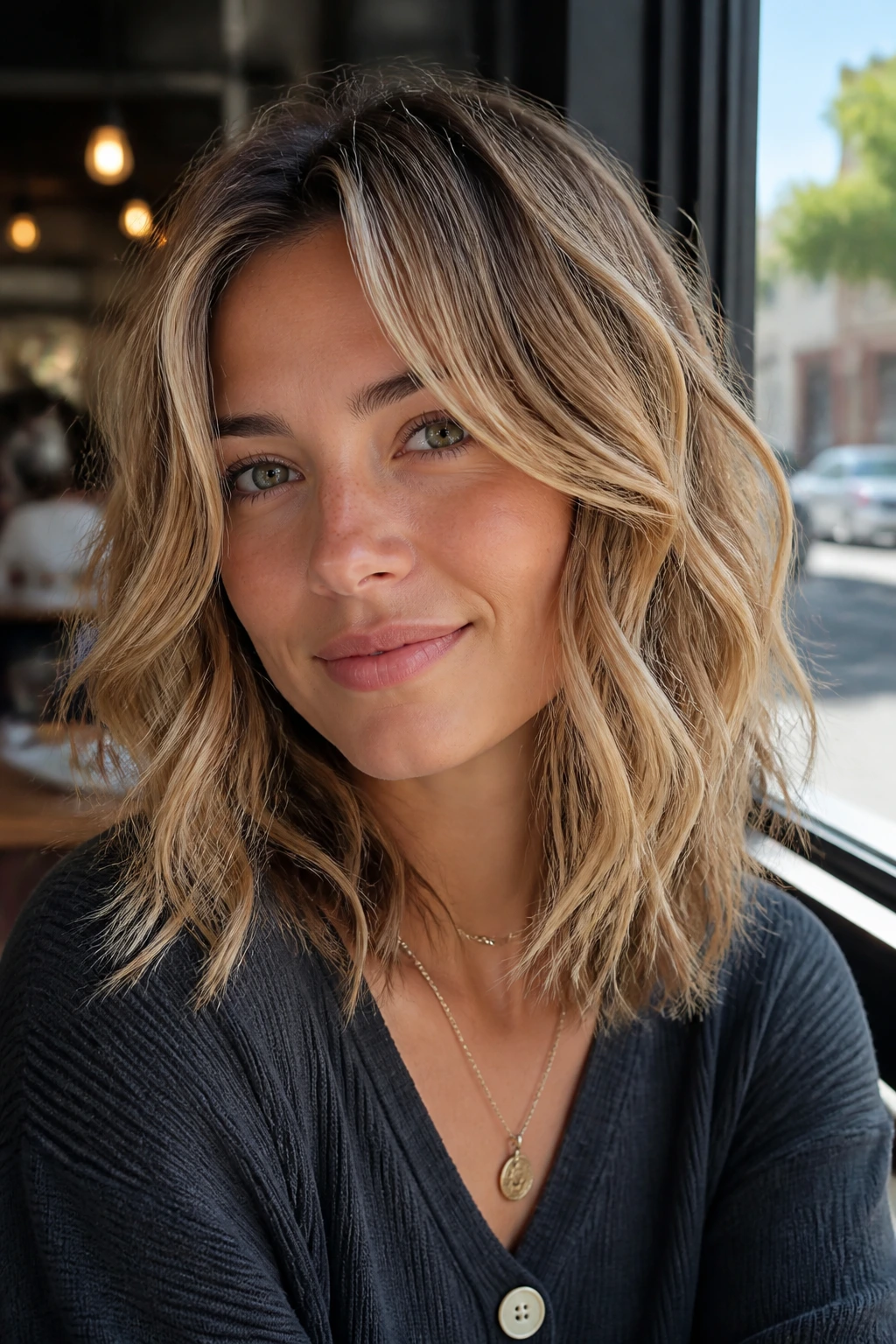
Piecey midlength hair is one of the easiest looks to live with if your waves are fine and a little unpredictable. The length usually falls between the shoulders and collarbone, and the cut is shaped so individual sections can separate without looking thin. That “piecey” quality is what gives the hair personality.
The key is not to over-style it. A bit of mousse, a scrunch, maybe a touch of cream on the ends. Done. The haircut should already have enough movement that the pieces fall into place on their own. If every strand is trying too hard to be defined, the whole look can turn stiff.
This cut flatters people who like a casual, slightly undone finish. It also works well if you wear glasses, because the shape around the face stays soft and doesn’t crowd the frame. Small detail. Big difference.
29. Subtle Shag with Long Fringe
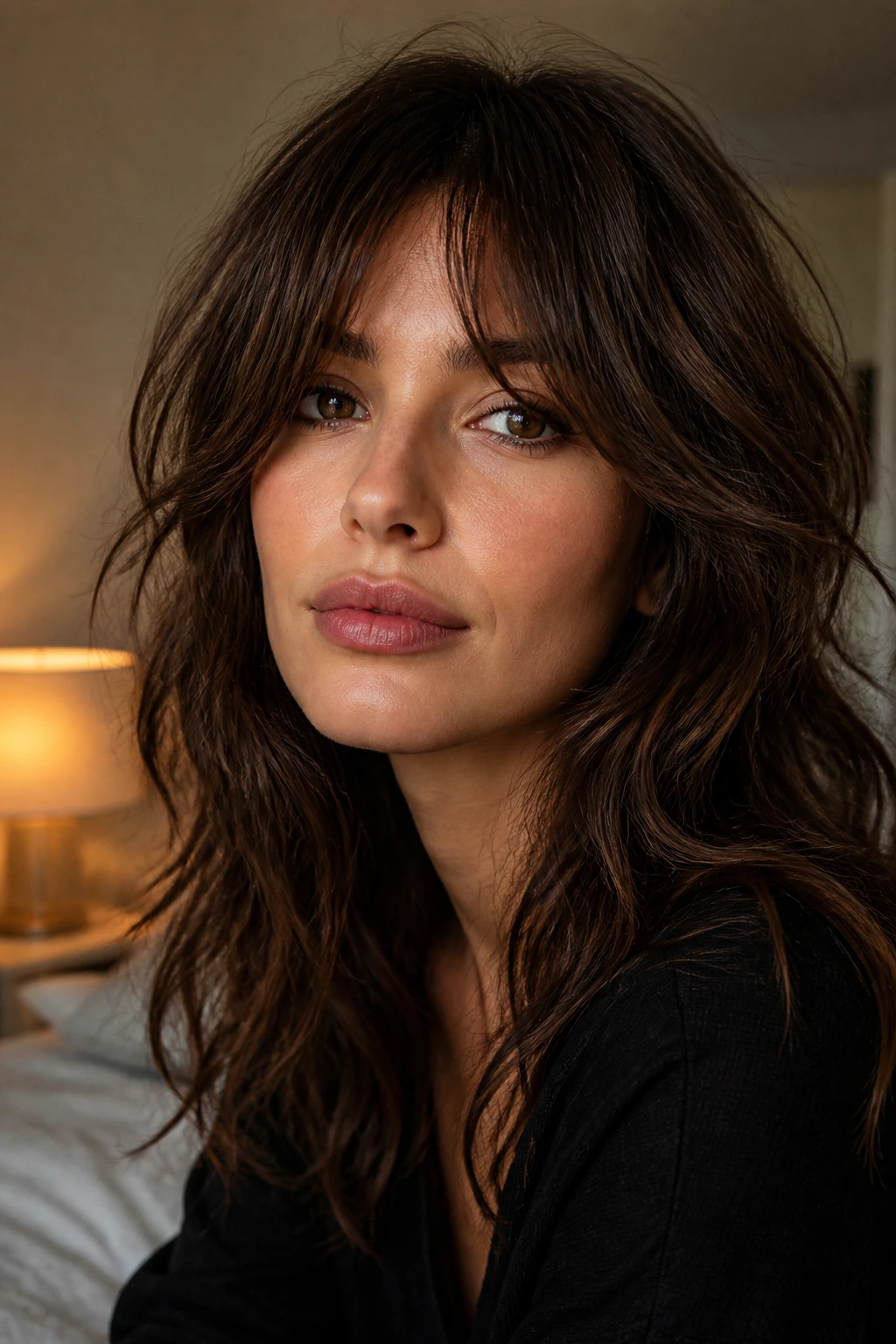
A subtle shag with a long fringe gives fine wavy hair texture without going full retro. The layers are present, but they’re stretched out and blended so the haircut still holds its shape. The long fringe softens the forehead area and keeps the front from looking heavy.
What I like about this version is the restraint. Too many shag cuts for fine hair try to do too much at once. That can leave the ends bare and the crown puffy. A subtle shag keeps the energy but trims back the excess. You get movement at the top, softness at the sides, and enough length to keep the hair from feeling shredded.
It’s a good fit if you want the hair to look lived-in even when it’s freshly washed. That is the whole point. Fine wavy hair often looks best when the cut does some of the styling work for you.
30. Air-Dried Shoulder Cut
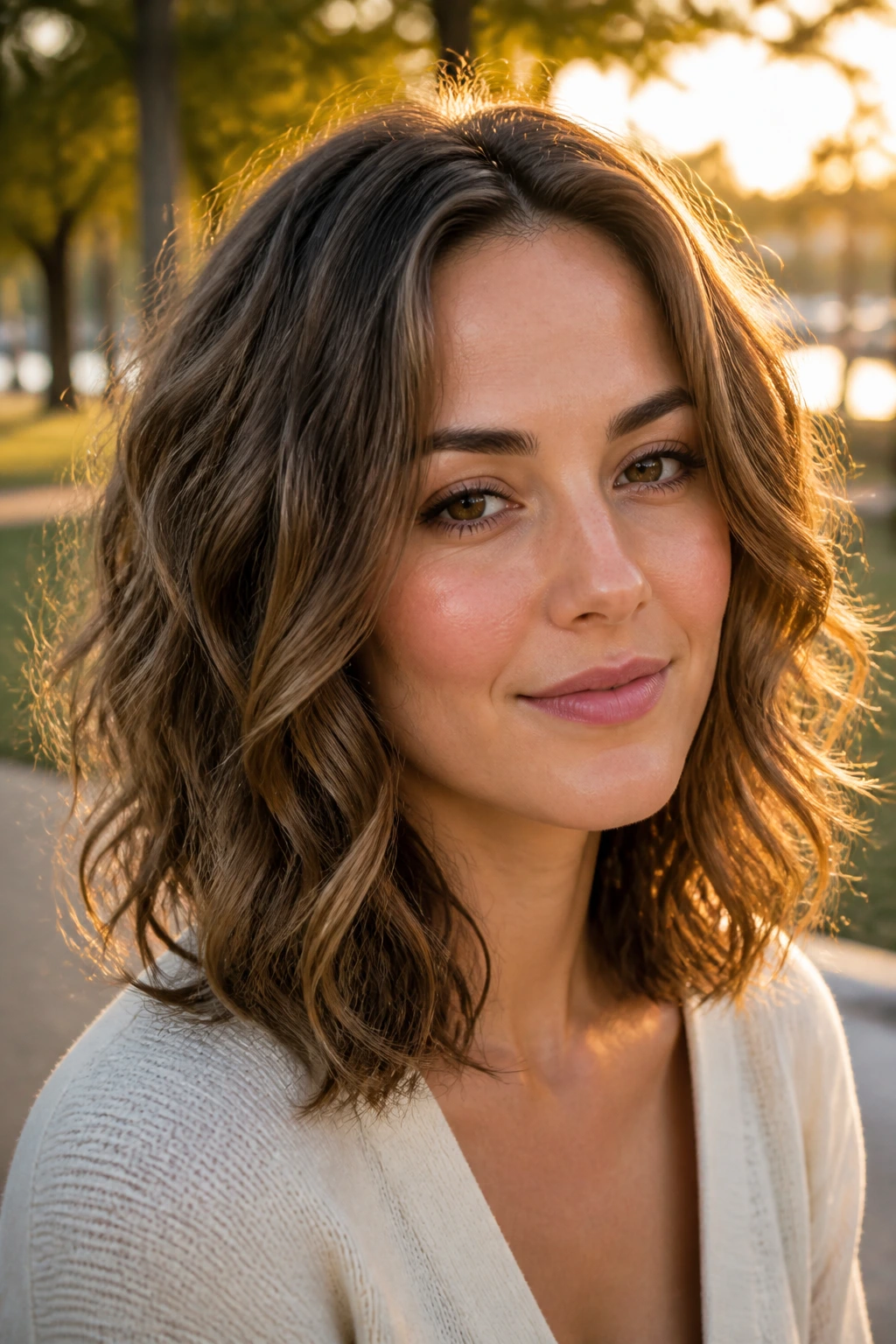
An air-dried shoulder cut is the one I recommend to people who want a haircut that behaves in normal life, not just in a salon chair. The length sits around the shoulders, which is long enough to hold shape and short enough that fine waves don’t get dragged flat. It’s one of the most forgiving options on this list.
The cut itself should be simple, with soft layers only where the wave needs help and a perimeter that still feels full. This is not the place for extreme texturizing. The whole point is to let your hair dry on its own and still look intentional. A little leave-in, a little scrunch, and a part that makes sense for your face can carry the whole style.
If you want the least fussy route, this is probably it. The best wavy haircuts for fine hair are the ones that respect how the hair actually behaves, and this one does. It gives you body, movement, and enough shape that you do not have to fight it every morning. Bring a few reference photos to your stylist, stay honest about how much heat you’re willing to use, and keep the cut clean around the ends. That’s usually where the whole thing succeeds or fails.
