



Ash balayage on brown hair can look smoky, chic, and expensive—or flat and muddy if the tone is off by half a level. Brown hair already carries warm pigment under the surface, so ash has to be placed with a little care or the whole thing can turn dull fast.
That’s the part people miss. Ash does not mean gray. It can read as mushroom, taupe, beige smoke, cool mocha, or a soft silvery cast at the ends. When it’s done well, it cools down brass without stripping the richness out of the brown base.
On brunette hair, the difference between pretty and patchy often comes down to placement and tone. A level 5 chocolate base needs a different hand than a level 7 medium brown, and a curled bob needs a different finish than long waves that fall in sheets. Small choices. Big payoff.
The looks below move from subtle to bolder, so you can find the amount of contrast that feels right for your hair, your skin tone, and your patience for upkeep.
1. Smoky Mushroom Ash Balayage for Soft Brown Hair
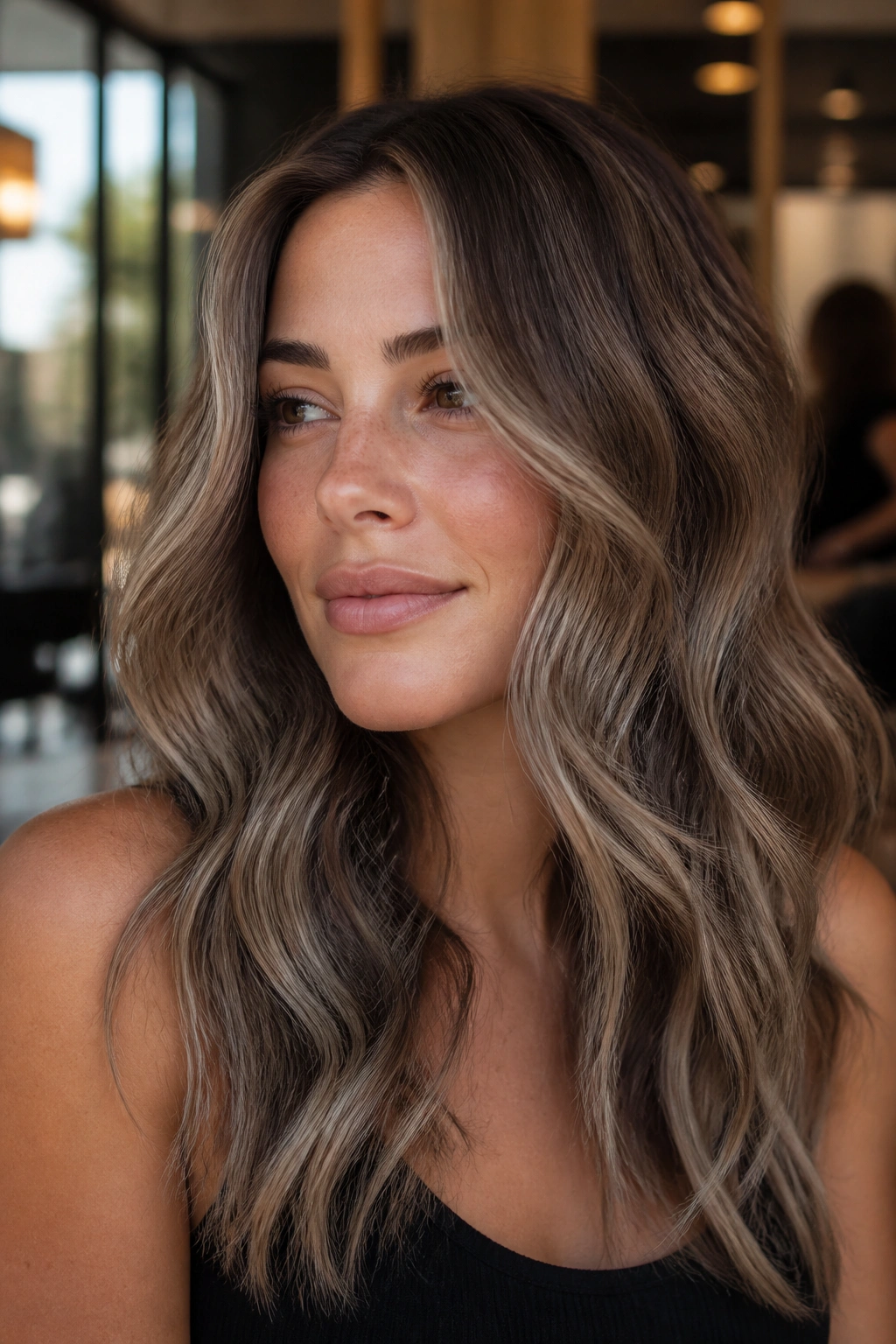
Smoky mushroom is the easiest ash balayage entry point for brown hair, and I keep coming back to it because it never shouts. It sits in that useful middle zone between cool beige and soft taupe, which means you get dimension without the harsh stripe effect that can happen with brighter blonde pieces.
What to Ask For
Ask for a level 5 or 6 brown base with hand-painted pieces lifted to a cool level 7 mushroom-beige. The root area should stay slightly deeper, then melt into softer ribbons through the mid-lengths and ends. On wavy hair, this looks especially clean because the bends catch the lighter pieces in a way that feels natural.
- Keep the lightest pieces around the face and on the top layer.
- Ask for thin, irregular ribbons, not chunky stripes.
- Request a soft gloss with beige ash, not silver.
- Leave the ends a touch cooler than the mids so the color doesn’t read yellow.
Best for: medium brown hair, soft waves, and anyone who wants ash balayage without a big contrast jump.
One small warning: if your hair pulls orange fast, the toner matters more than the lightening. Skip a warm gloss here, or the whole look loses its smoky edge.
2. Deep Cocoa Balayage with Charcoal Ends
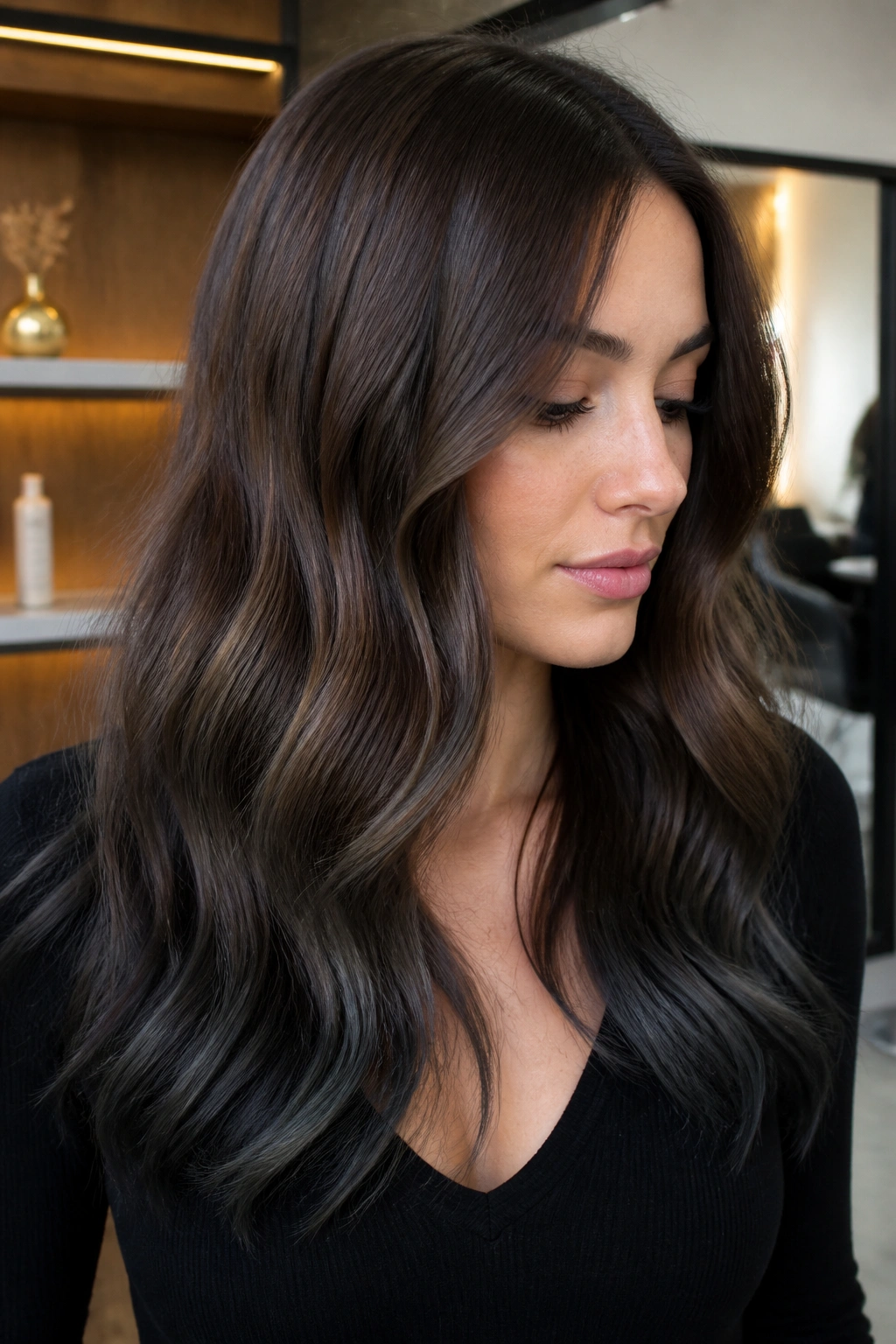
Dark brown hair does not need to get lighter to look finished. That’s the whole appeal here. A deep cocoa base with charcoal-leaning ends gives movement while keeping the overall feel rich and dense, which is handy if you like darker hair but want something less flat than a single color.
This style works best when the balayage is subtle through the middle and more visible only near the last few inches. The trick is restraint. If the lightened sections start too high, the look can lose its depth and start reading streaky.
A good colorist will keep the lift gentle and then tone the ends toward cool charcoal-brown, not silver. That distinction matters. Silver ends can look icy on paper, but on brown hair they can sometimes look too sharp unless the cut is very sleek.
If you wear your hair in loose curls or blow it out with a round brush, the contrast will show in a soft, ribbon-like way. Air-dried hair still works, but polished styling gives this one its best shape.
3. Beige Ash Face Framing on Medium Brunettes
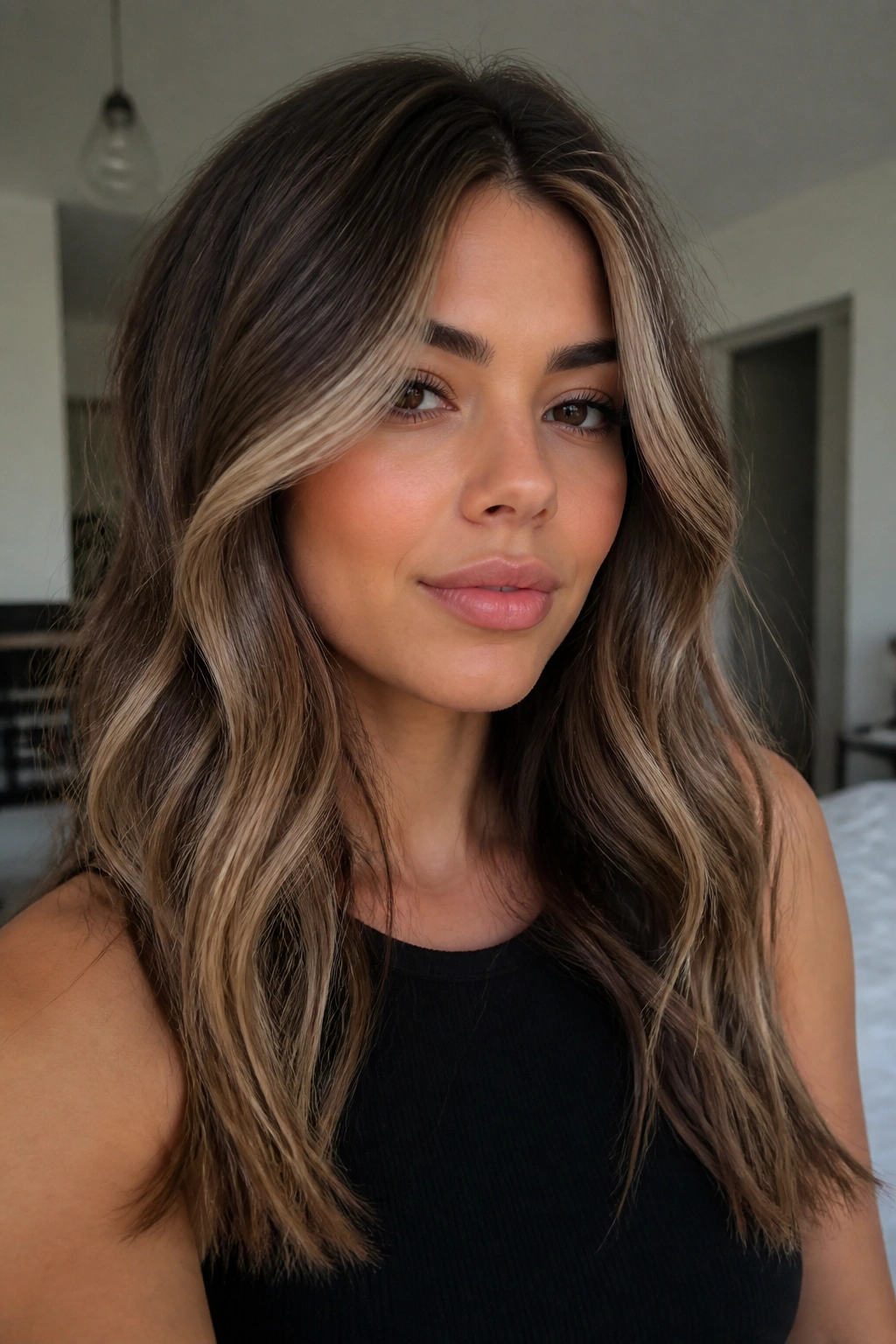
Can ash balayage still feel bright? Absolutely, if the brightness stays near the face and the tone leans beige instead of icy. This is the look I’d point to for someone who wants a lift around the cheeks and eyes without turning the rest of the head into a full highlight job.
How to Ask for It
Ask your colorist for two to four face-framing ribbons that sit one to two levels lighter than your base. Then request a beige-ash toner, not a warm caramel glaze. The back and underlayers should stay deeper so the front pieces do the talking.
A few useful details:
- Keep the front pieces soft, about one inch to one and a half inches wide.
- Blend them into the temple area instead of stopping them abruptly at the chin.
- Ask for a shadow root if your natural brown is deep.
- Style with a center part or soft off-center part to show the money pieces.
This look flatters a lot of face shapes because the lighter pieces act like a frame, not a spotlight. And yes, that matters. Brightness near the face can make the whole cut feel cleaner, even when the rest stays quiet.
4. Ashy Caramel Ribbons on Brown Waves
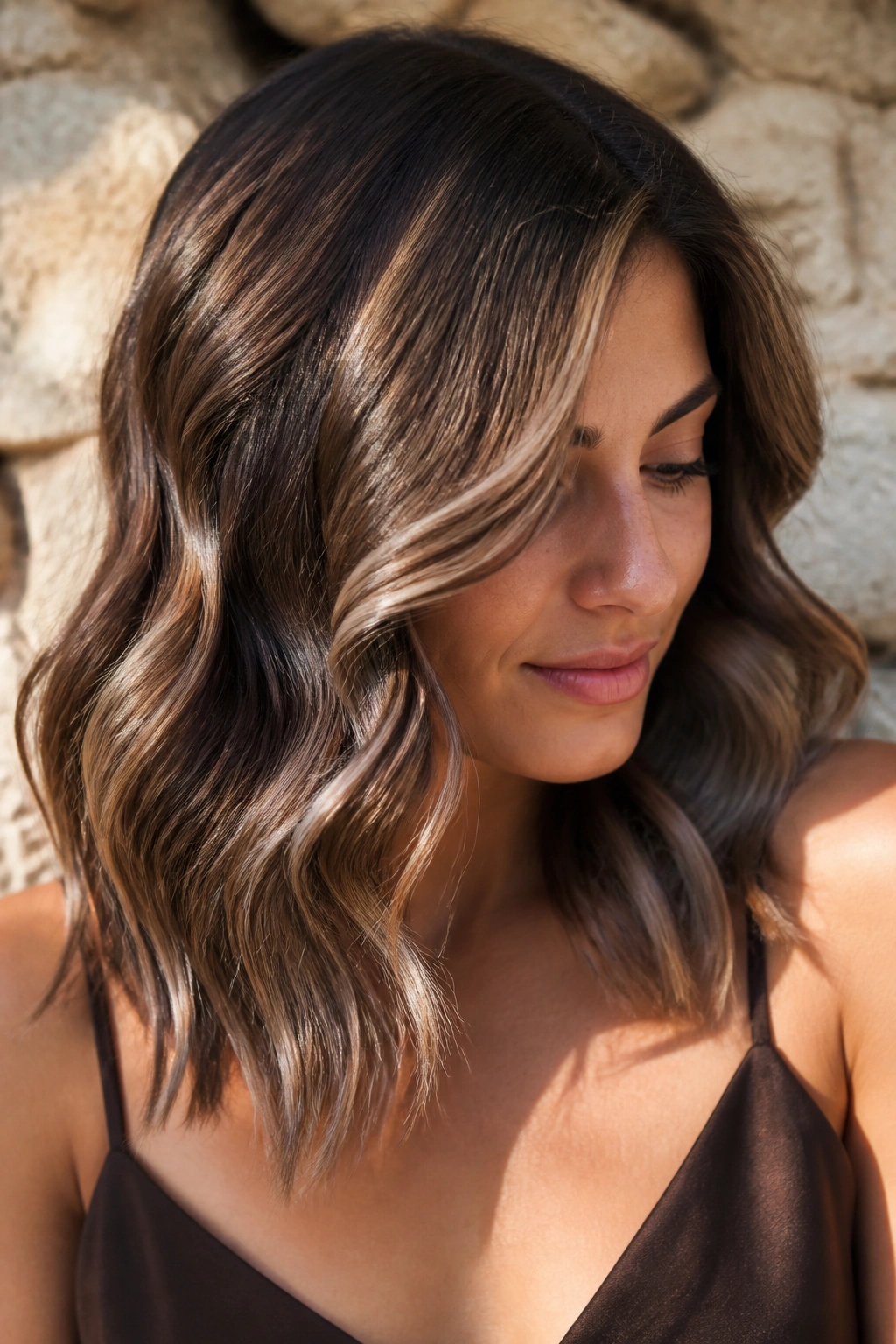
I’ve seen this one save more dull brunette color than I can count. A warm brown base with ash-toned caramel ribbons gives you the movement people love in balayage, but the ash keeps the caramel from going orange or copper-heavy.
The result is softer than a straight golden balayage. You still get that sunlit feeling, only it’s filtered through a cooler lens. On shoulder-length waves, the ribbons sit in the bends and make the hair look thicker from a distance.
A Few Placement Notes
- Put the brightest ribbons where the hair bends, not in a solid block.
- Keep the underside darker so the light pieces have room to breathe.
- If your hair is porous, ask for a cooler gloss at the end.
- A 1.25-inch curling iron usually gives the best bend for showing off the ribbons.
That last point matters more than people think. If the wave is too tight, the color can look busy. If it’s too loose, you lose the contrast. Somewhere in the middle is where this color earns its keep.
5. Cool Mocha Balayage with a Shadow Root
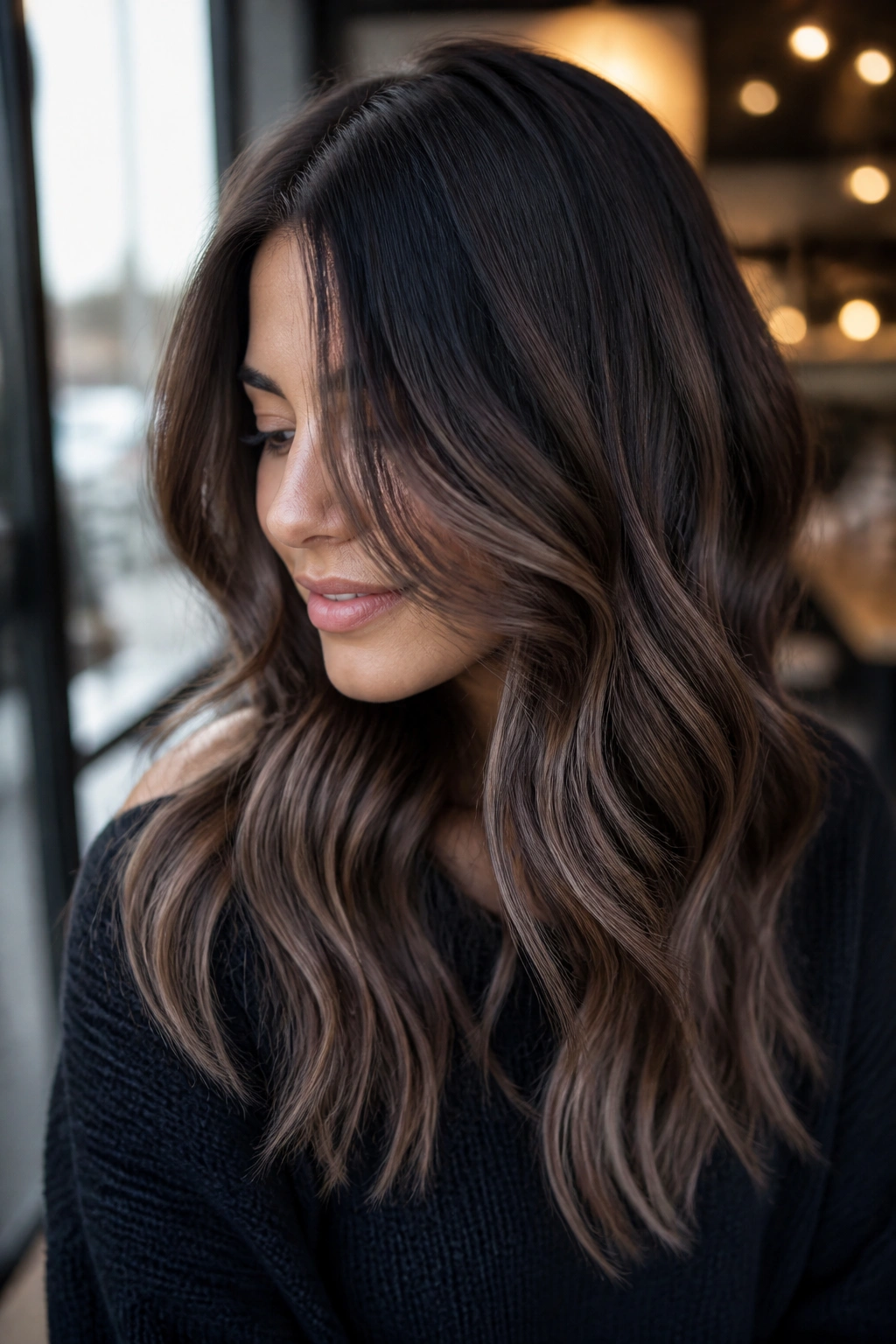
Cool mocha is for the person who loves brunette hair but wants it to look edited. Not loud. Edited. The base stays dark and grounded, then soft mocha pieces are painted through the mid-lengths with a shadow root that makes the grow-out less fussy.
This is one of those shades that looks richer in motion than it does on a hanger—or, well, on a salon swatch. A still photo can flatten it. Hair in movement brings out the soft ash-brown variation, and that’s where the color makes sense.
The best part is how low-key it can be. You do not need a huge lift to get the effect. In fact, lifting too high ruins the whole point. Keep the highlights inside the mocha family, and let the root stay deeper for contrast.
If you wear jewelry in silver, platinum, or gunmetal, this shade tends to play nicely with that cooler palette. It can also calm down naturally red-brown hair that turns too warm in bright light.
6. Chestnut Brown Balayage with Smoky Ends
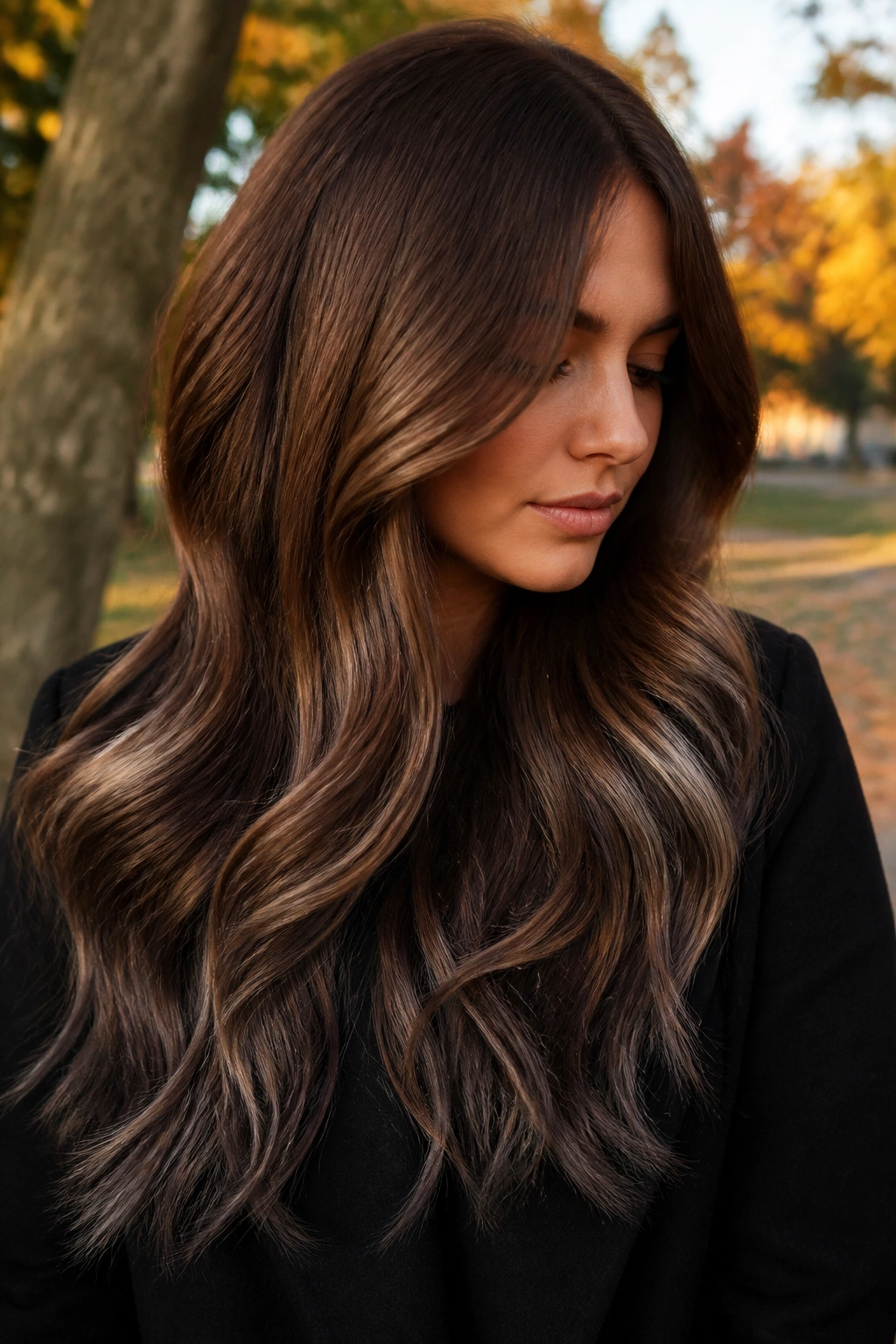
Unlike warm chestnut balayage, this version keeps the richness but strips out the candy gloss. The ends fade into a smoke-tinted brown instead of a golden copper, so the color feels grounded and a little more tailored. I like it on long layers because the shift from chestnut mids to smoky ends gives the cut a real shape.
The base shade is the star here. You want a chestnut brown that still looks shiny, not flat or muddy. Then the balayage begins low enough that the grow-out stays soft, and the ends get a cooler finish that keeps the warmth under control.
This is a smart choice for someone who wants brunette hair that looks expensive in plain daylight. It won’t scream highlight job. It just looks considered.
Best For
- Medium to deep brown hair
- Hair that tends to look red in the sun
- People who want movement without high contrast
- Layers, curls, and loose blowouts
The one thing to watch is over-toning. Too much ash can flatten chestnut. You want smoke, not ash dust.
7. Bronde Balayage with an Ash Overlay
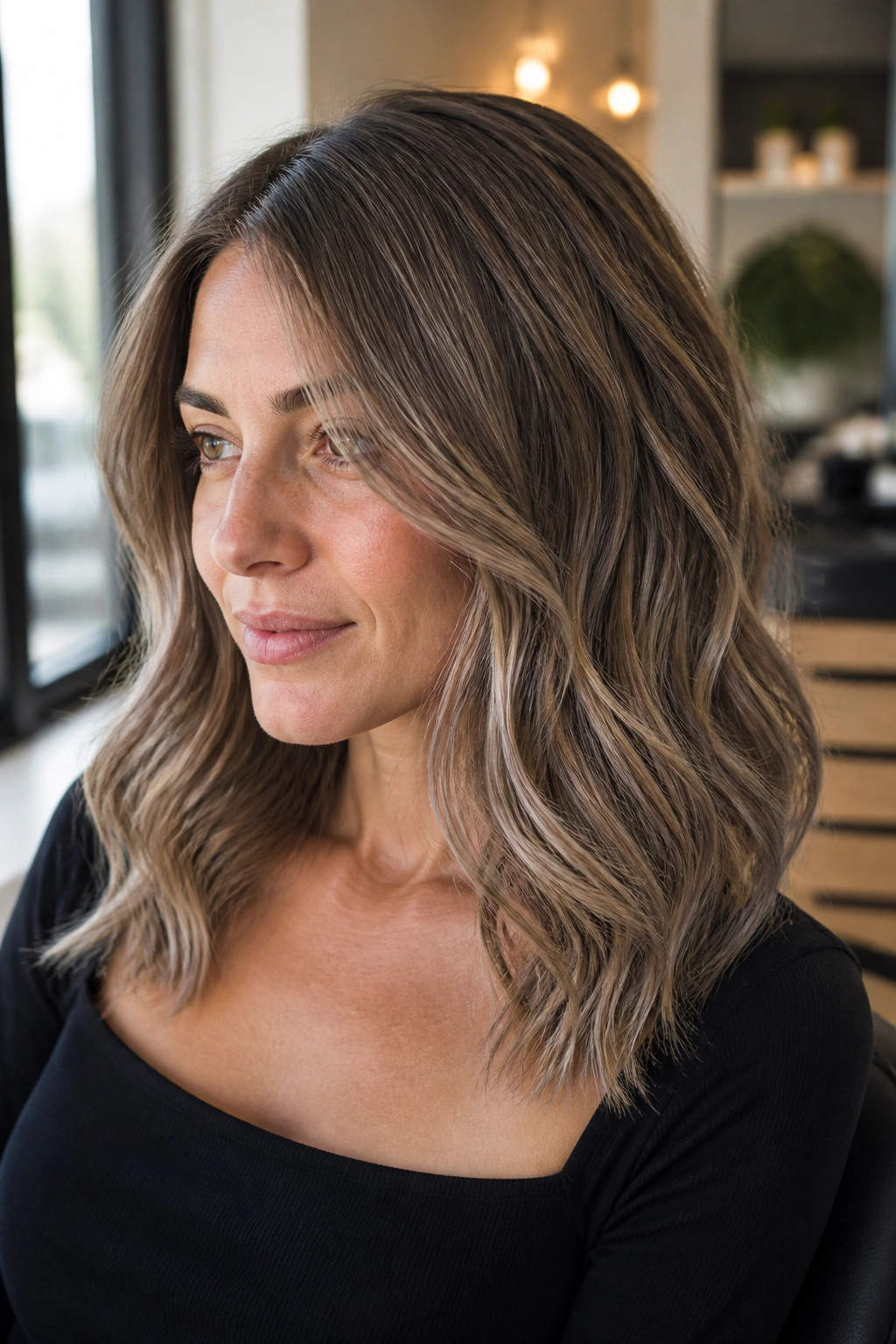
Bronde gets better when the blonde is cooled down. That’s the plain version, and it’s the one I stand by. If the blonde is left too warm, it starts fighting the brown base. An ash overlay smooths the whole thing out so the lighter pieces feel like part of the brunette, not a separate event.
Why It Reads So Well
The magic is in the middle ground. Bronde already splits the difference between brown and blonde; ash makes that split cleaner. The hair still looks bright, but the brightness has a softer edge and less gold glare.
A good version of this look uses:
- A medium brown or dark blonde base
- Fine balayage pieces lifted to level 8-ish
- A beige-ash gloss to mute gold
- Slightly darker lowlights near the crown for depth
It’s a strong pick if you like a sunlit finish but hate brass. It also works well on hair that’s naturally fine, because the lighter pieces can make the strands appear fuller without turning the whole head pale.
Wear it in soft waves. Straight styling can look a bit severe unless the cut has movement.
8. Espresso Hair with Silver-Soft Tips
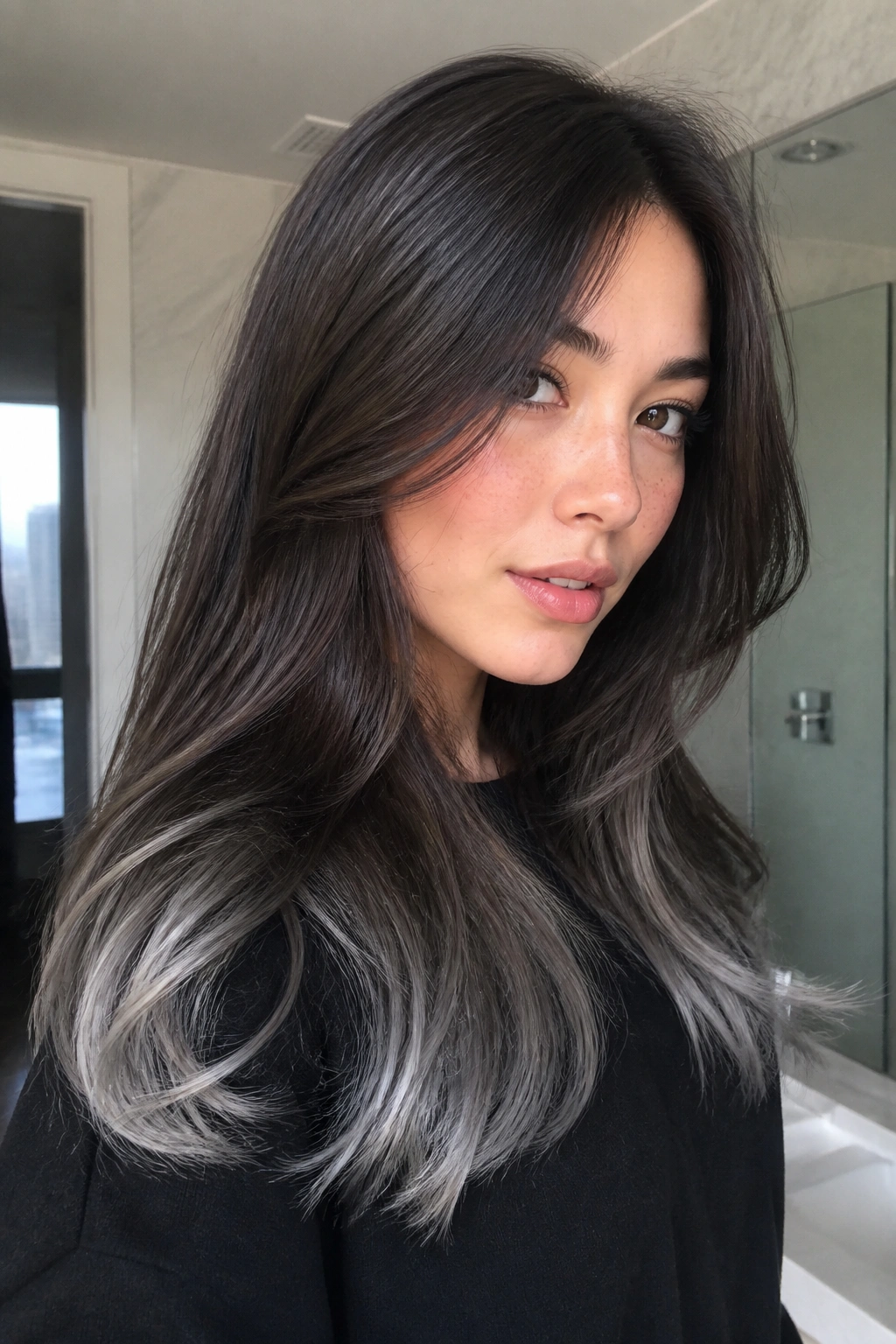
Why do some dark balayage jobs look sharp and others look expensive? The difference usually comes down to where the contrast stops. With espresso hair, the lighter pieces should live mostly in the last few inches, then melt into silver-soft tips that whisper instead of shout.
This style is not for someone who wants subtle. It’s for someone who likes a visible shift from dark to cool light at the bottom of the hair. The espresso base gives you all the depth, and the ash-toned tips keep the bottom from turning orange or coppery.
How to Style the Ends
Use a medium-barrel wand and leave the last inch straighter for a modern finish. A tiny bit of serum on the tips is enough; too much product makes the light pieces separate in a greasy way.
A few notes worth keeping in mind:
- Best on hair with at least shoulder-length growth
- Works well with blunt cuts and long layers
- Needs a violet or blue-based toner refresh if warmth creeps in
- Looks strongest when the ends are healthy and trimmed
If your ends are dry and see-through, get a cut first. Nothing ruins a cool finish faster than frayed tips.
9. Mushroom Brown Balayage on a Lob
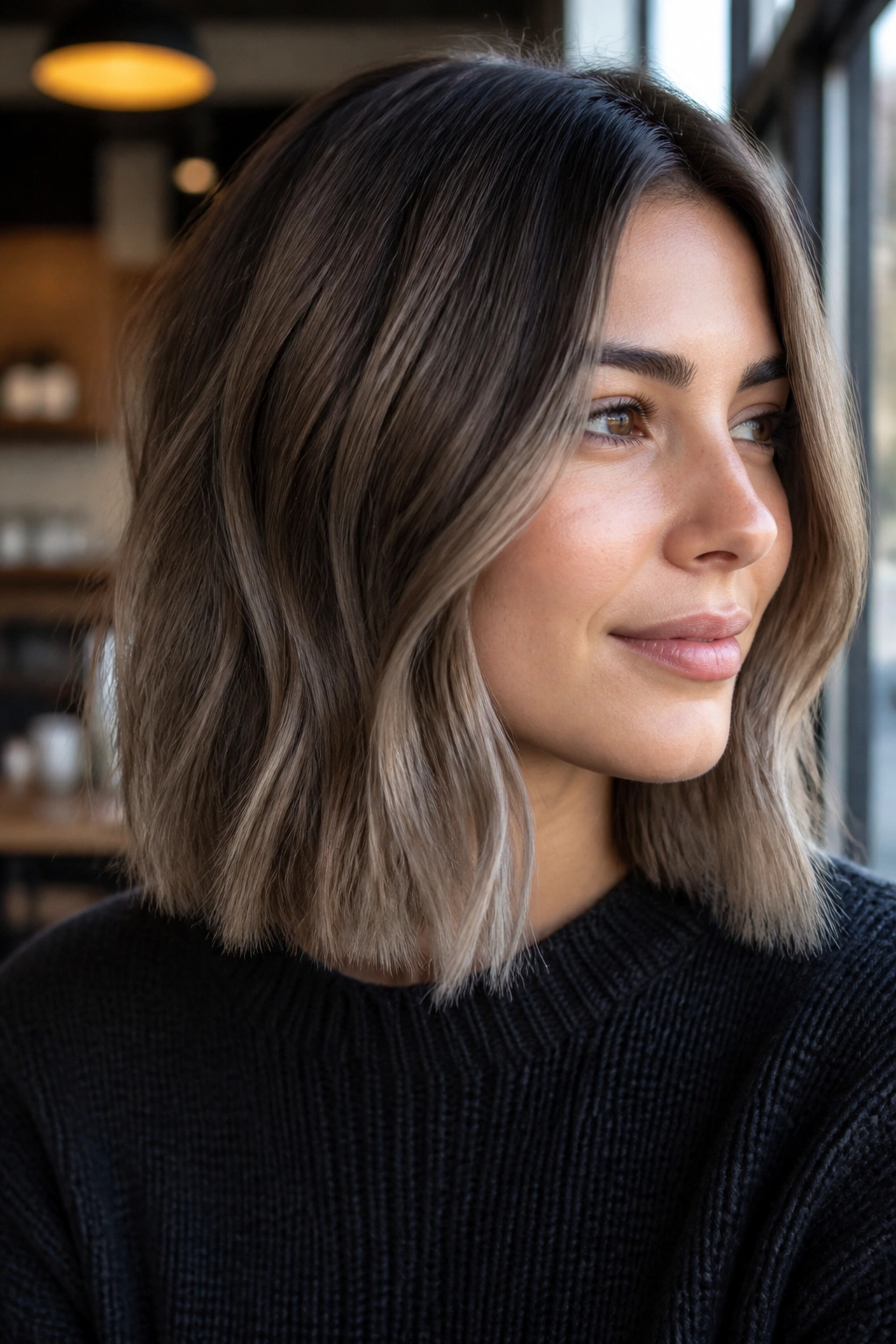
A lob and mushroom brown balayage are a very good pair. The cut gives you a clean edge, and the color softens it just enough so the whole look feels lived-in instead of rigid. On blunt or slightly textured lobs, this color can make the hair look thicker at the ends, which is a nice side effect if your hair is fine.
The mushroom tone sits between ash brown and beige taupe, so it doesn’t pull green or silver the way some cooler brunettes do. That balance is why it works so well on a shorter cut. There’s less room for error, and the shade stays calm.
One sentence, because it deserves its own space: This is the brunette version of quiet luxury, without the cliché.
Keep the balayage soft through the top half and a bit fuller around the lower side panels. The lob moves when you tuck it behind the ears, and the color should still make sense from every angle. If it only looks good from the front, the placement needs work.
10. Smoky Honey Brunette with Soft Contrast
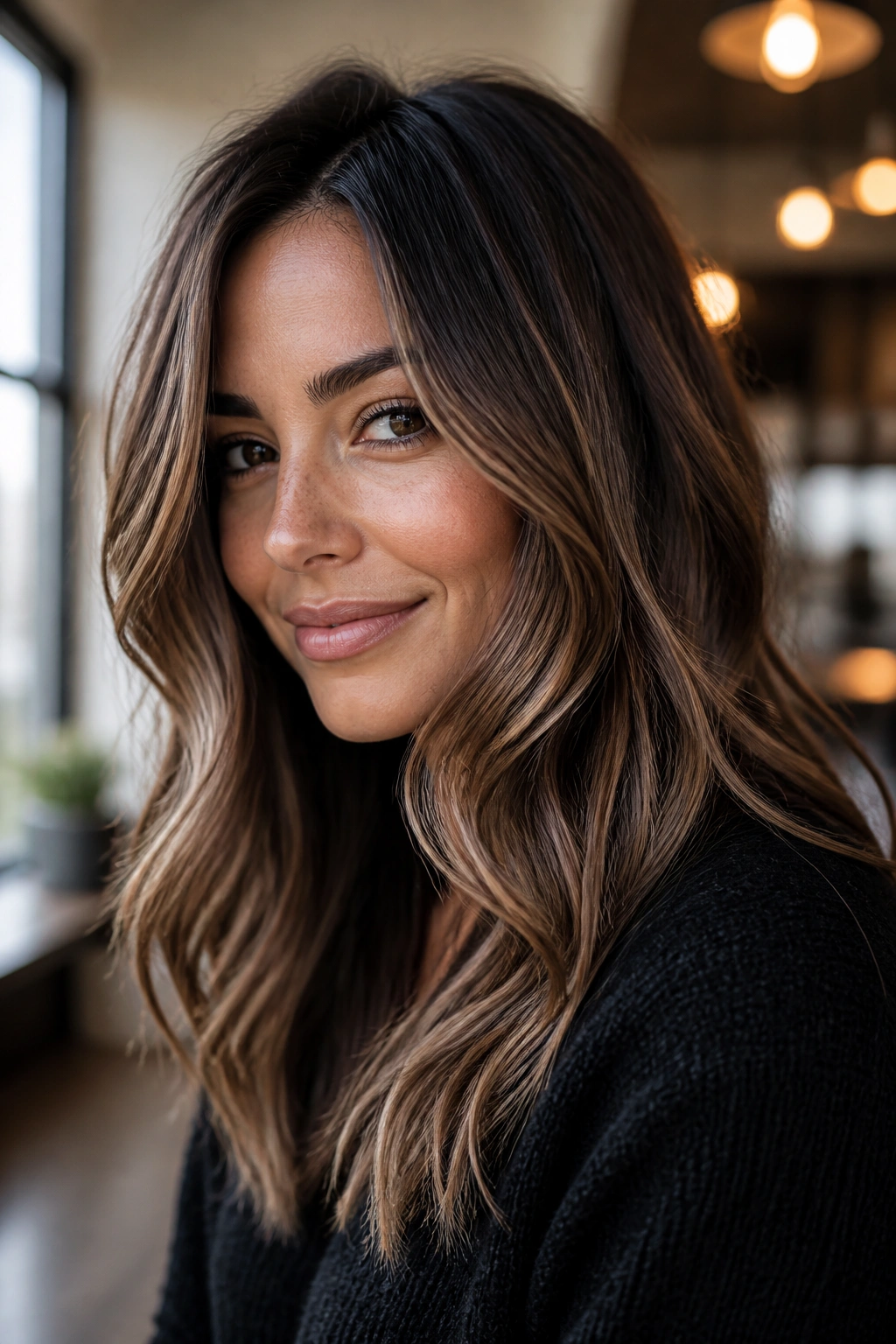
Who says ash balayage has to be icy? Smoky honey brunette gives you a little warmth, but the ash keeps it from drifting into orange syrup. That balance makes the shade look sun-touched rather than sugary.
This is one of the easiest looks to wear if you want brown hair with a small lift. The honey pieces can be painted through the outer layers, then toned back with a cool gloss so they keep their brightness without the brass. It’s a useful middle path for people who think full ash might feel too muted.
Good For Hair That
- Starts at medium brown
- Holds warmth fast
- Looks flat in single-process color
- Needs brightness near the face and crown
The contrast should be soft enough that the hair still reads brown first and highlighted second. If the blonde starts stealing the show, the ash tone isn’t doing its job. I prefer this one on wavy hair, because the movement breaks up the lighter ribbons and makes the finish look more natural.
11. Dimensional Ash Balayage for Curly Brown Hair
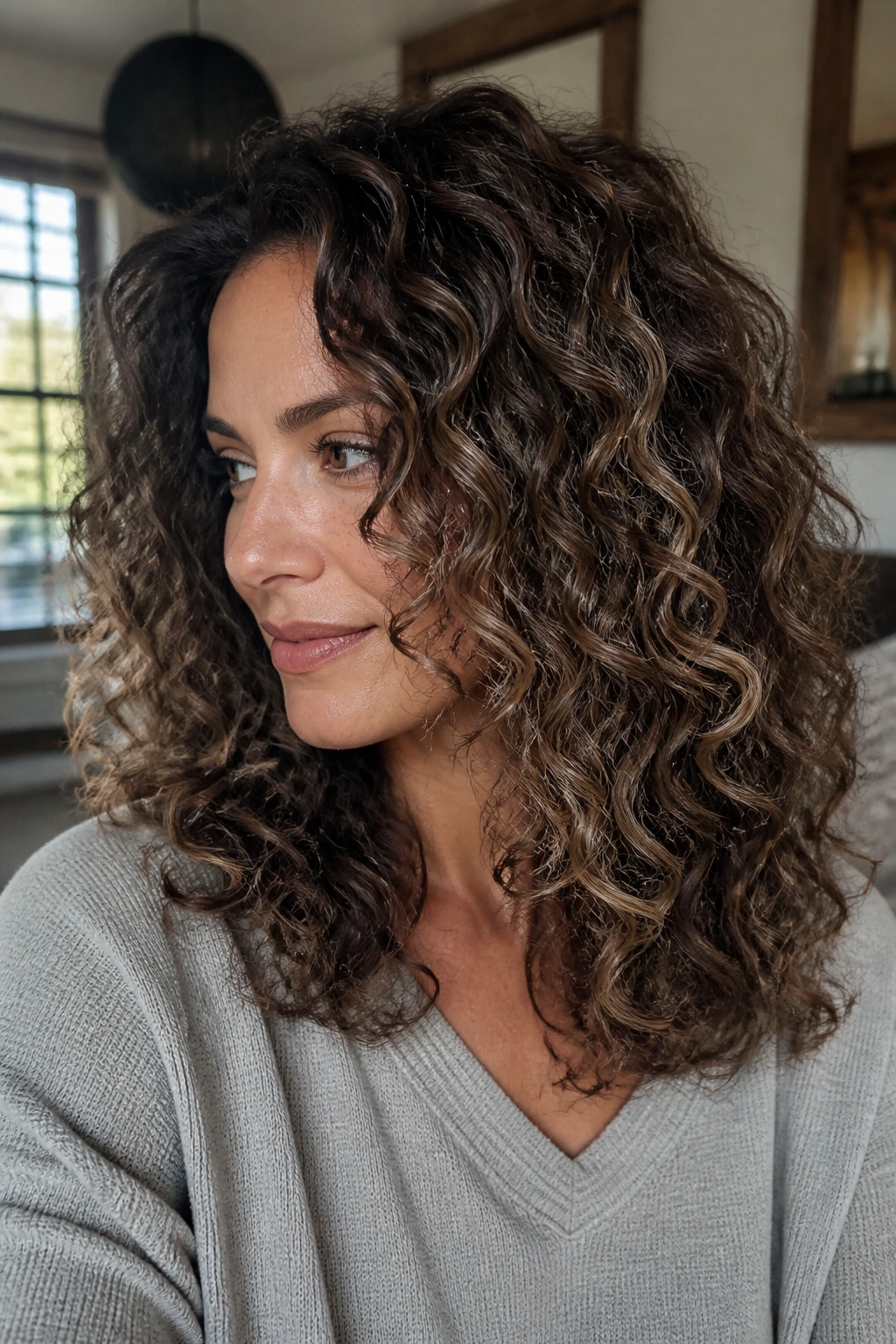
Curly hair needs a different map. Paint a curly brunette the same way you’d color straight hair, and the curl pattern can hide half the work or bunch it up in the wrong spots. The whole point here is to place ash balayage where the curls open and show the light, not where they clamp shut.
Where the Painter’s Eye Matters
A good colorist will separate curl families and place lighter pieces through the outer ring, then leave enough depth underneath to keep the shape strong. Wider curls can handle broader ribbons. Tight curls need finer, more scattered placement so the color doesn’t turn into a blur.
Use this as a guide when you talk to the salon:
- Ask for hand-painted pieces on the curl canopy
- Keep the crown slightly darker for lift
- Tone toward cool beige, not flat gray
- Avoid over-lightening the inside layers
What to Watch For
Curly ends can dry out fast after lightening, so the cut matters as much as the color. If the ends are already rough, get them trimmed before the balayage. The color will hold better, and the shape will look cleaner.
This look can be beautiful, but it needs a colorist who understands curl shrinkage. That part is non-negotiable.
12. Cool Walnut Balayage with Lived-In Depth
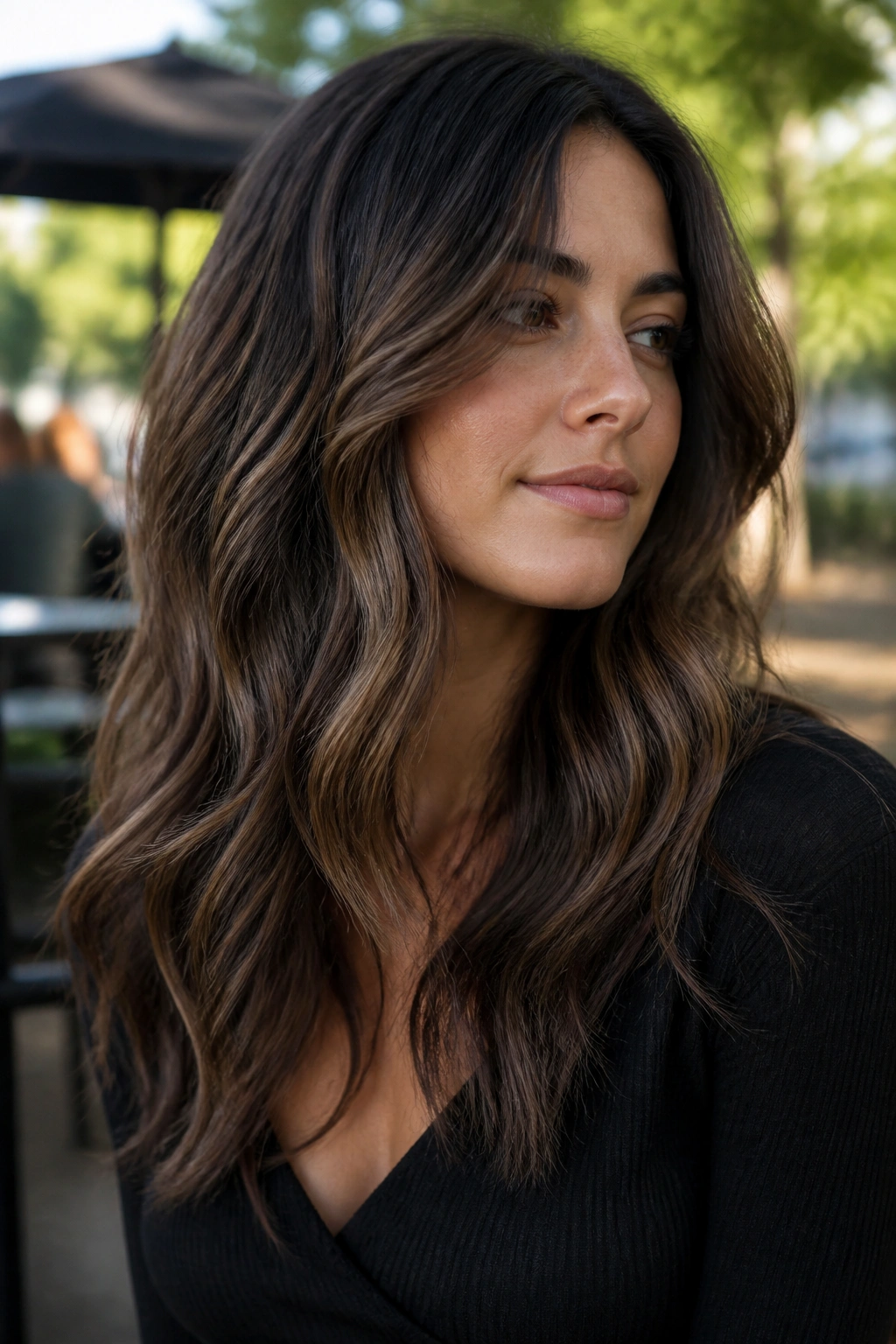
Walnut is a shade I trust when someone wants brown hair that still feels deep and grown-up. Add cool balayage through walnut and you get a finish that looks intentional without feeling polished to the point of stiffness. The color lives in that space between dark chocolate and soft taupe, which is exactly why it works.
The root stays rich. The mid-lengths get a whisper of cool lift. The ends soften a shade or two, but they never look blond. That subtlety is the whole charm.
I especially like this on hair that is worn loose rather than pinned back. The movement keeps the darker and lighter pieces from merging together. When hair sits flat, walnut balayage can lose some of its texture, so a quick bend with a round brush or a large curling iron helps.
If you like color that grows out gracefully and doesn’t demand constant toner appointments, this is one of the calmer choices on the list.
13. Beige Blonde Balayage on a Dark Shadow Root
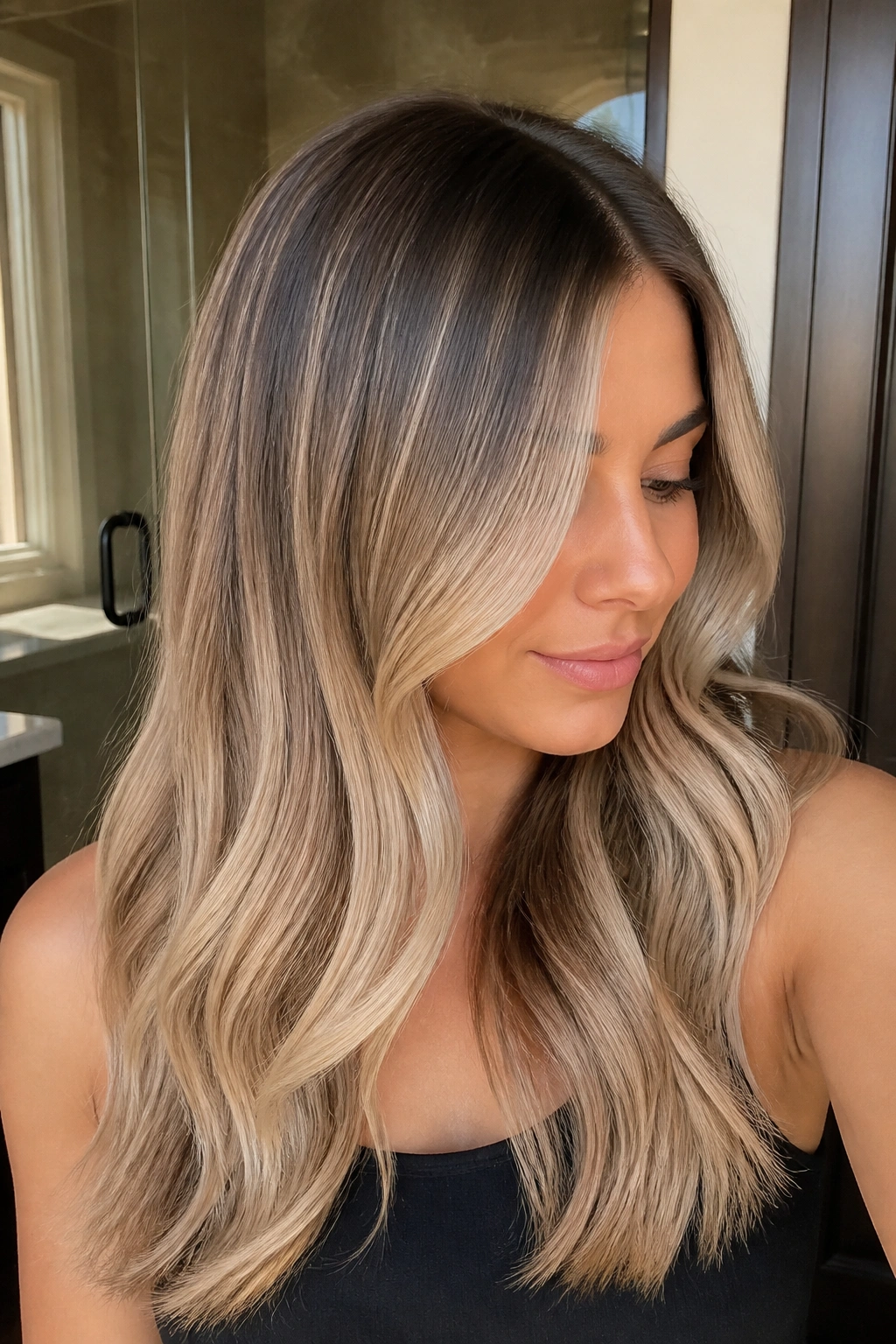
Bright blonde can work on brown hair, but only when the root stays dark enough to anchor it. A dark shadow root gives the hair a base, and the beige-blonde balayage above it keeps the bright pieces from looking striped or brittle.
This look has more contrast than the softer brown-on-brown styles, so it suits people who want their balayage to be noticed. The beige tone is what saves it from going too yellow or too icy. Beige sits in the middle, which makes the transition from brown to blonde feel smoother.
Best For
- Dark brown hair that lifts well
- People who like a clearer color shift
- Layered cuts, because the blend shows better
- Hair that can handle regular toning
It’s not the lightest look in the group, but it is one of the clearest. The shadow root should be soft enough that you don’t see a line, and the blonde pieces should look painted rather than foiled in a block. If the blonde begins too high, the whole thing can feel busy.
14. Bronzed Brown Balayage with Wide Ash Panels
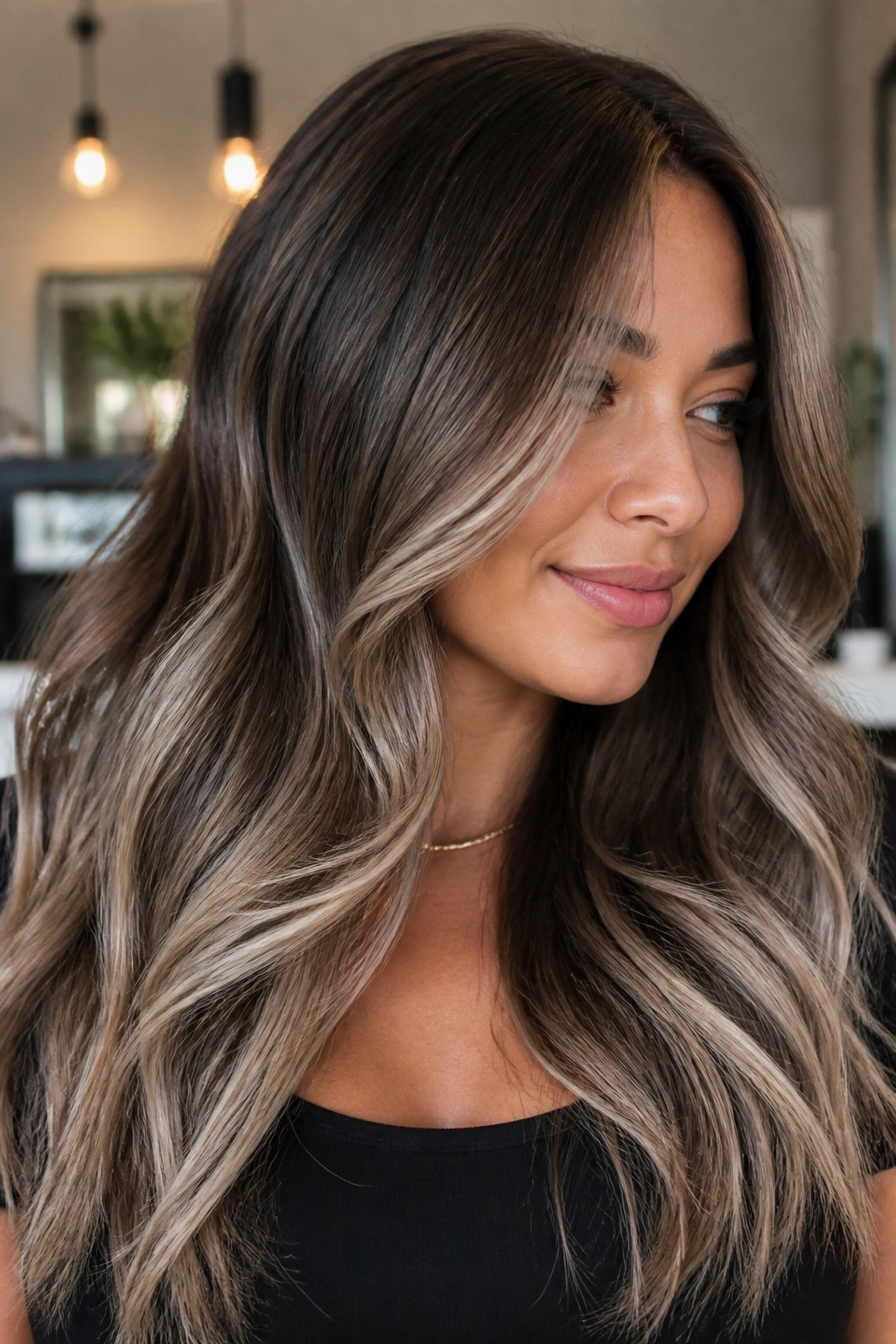
Picture someone with long brown hair who wants the color to read from across the room. Not in a loud way. Just enough that the movement is obvious. That’s where wide ash panels come in.
This style uses broader sections than a fine ribbon balayage, which means the dimension shows more clearly when the hair swings. The base stays bronzed brown, but the ash-painted panels cool the tone and stop the bronze from going orange. On long layers, the effect is strong without being messy.
A Useful Breakdown
- Use wider hand-painted sections through the lower half
- Keep the top layer softer so it doesn’t look chunky
- Ask for a cool gloss with a brown-beige finish
- Trim the ends before coloring if they’re thin or transparent
The reason this works is simple: wider panels show movement better on long hair. Fine ribbons can disappear in a heavy curtain of hair. Bigger panels give the eye something to follow.
If you want a look that feels more fashion-forward than subtle, this is the one I’d put near the top of the pile.
15. Slate Brown Money Piece and Face-Framing Brightness
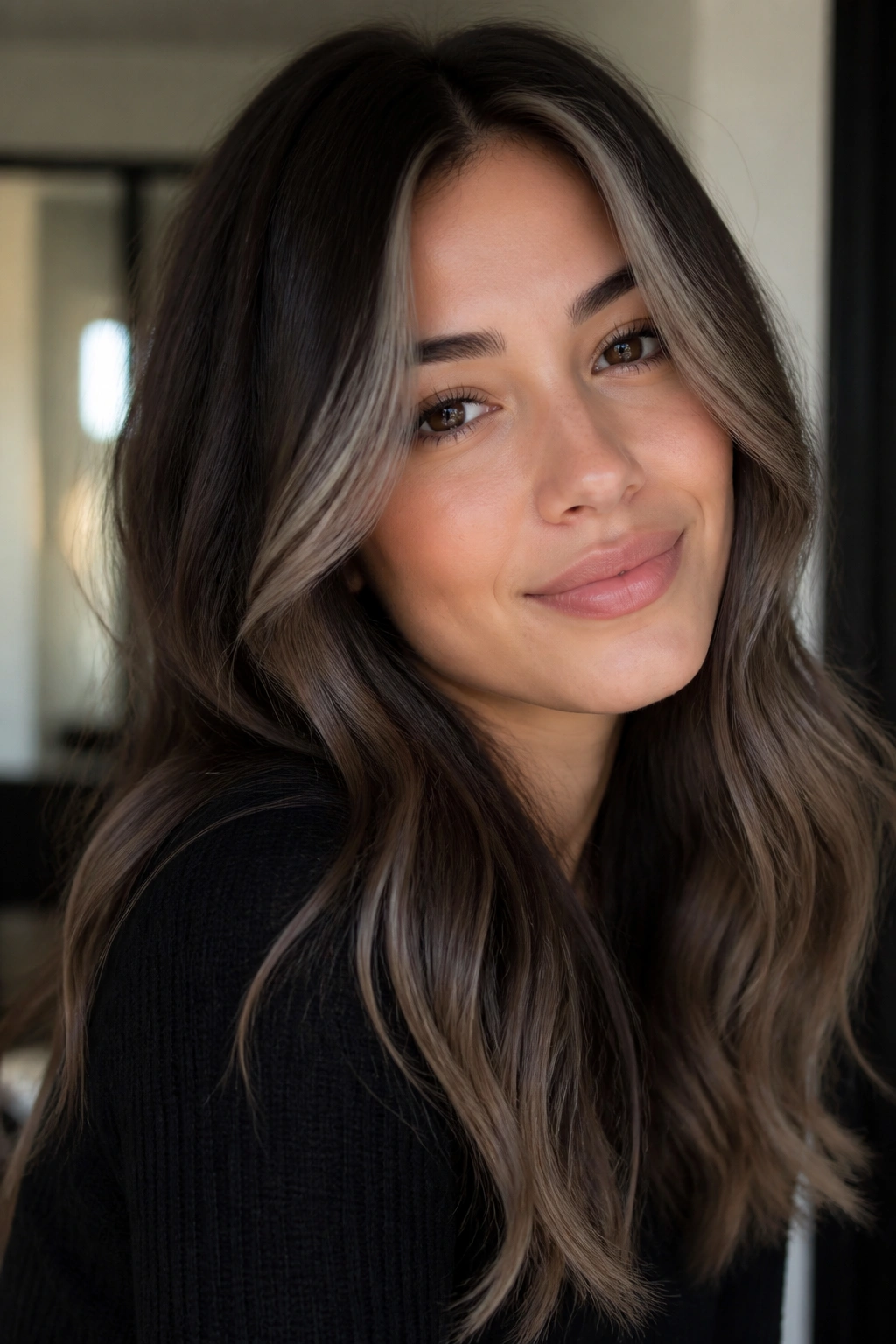
A slate brown money piece can wake up a face fast. The color sits cooler than standard brunette highlights, and the face-framing pieces give you that bright edge without forcing the whole head to go lighter. For people who want change but not a full color overhaul, this is a smart move.
Does the front section need to be bold? Not always. Sometimes the nicest version is only a shade or two lighter than the base, then toned toward slate or soft ash-brown. If your skin runs rosy, that cooler frame can keep the hair from looking too red. If your skin is neutral, it gives the face a neat, sharp outline.
A good ask at the salon is a 1 to 1.5 inch money piece, blended through the temples and just a touch into the crown. Keep the rest of the balayage quieter so the front carries the effect.
This one can feel edgy if the money piece is very light, or elegant if it stays muted. Same structure. Different mood. That flexibility is why it keeps showing up in brunette color requests.
16. Soft Smoke Balayage on Long Layered Hair
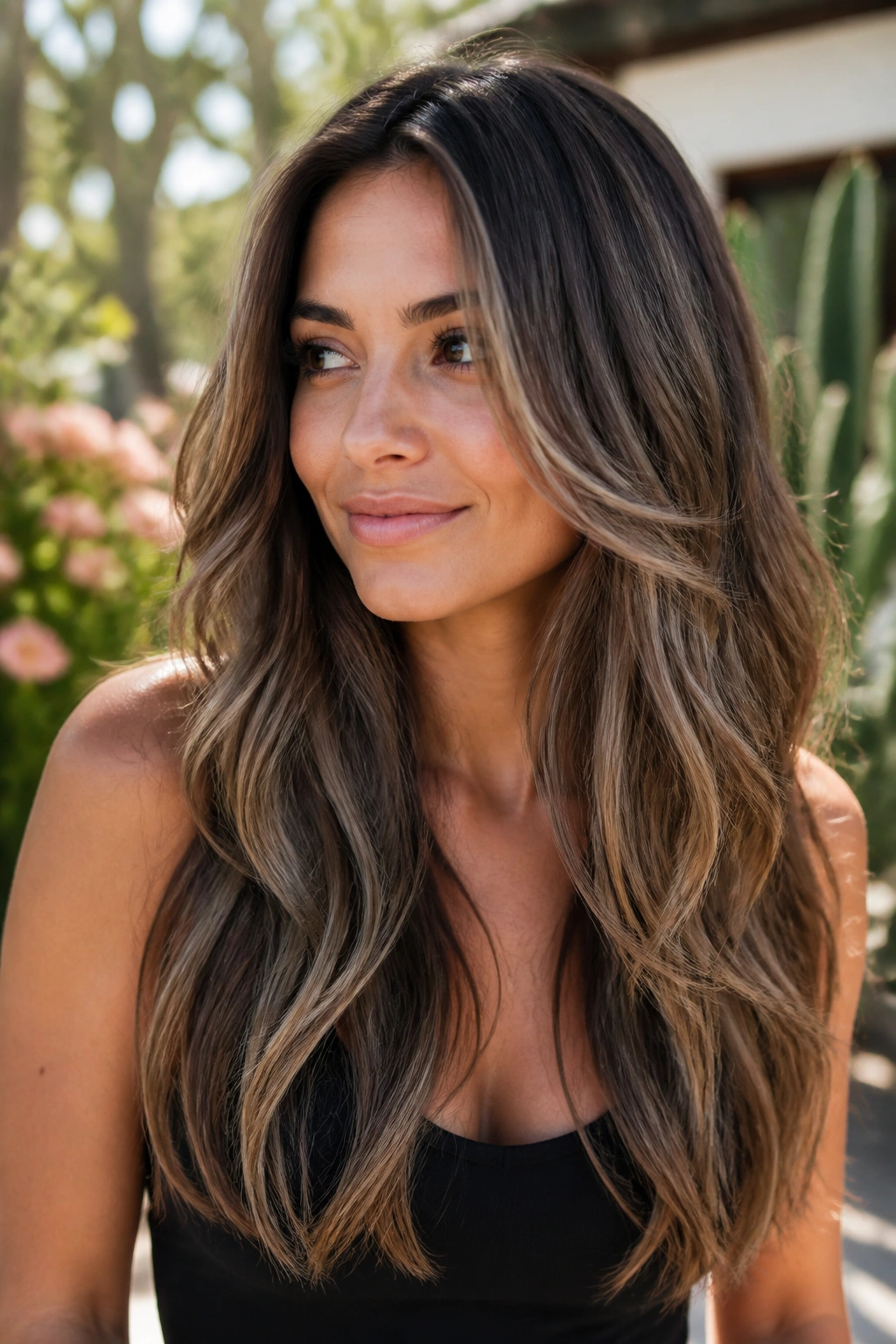
Long layers love ash. The layers break up the surface, and the cooler pieces fall through the hair in a way that looks airy instead of heavy. Without layers, ash balayage on long brown hair can sometimes sit too neatly on top. Layers fix that.
This look is about softness first, contrast second. The color should read as smoke moving through the length, not highlights sitting on top of it. Ask for ribbons that begin a few inches below the root and taper out through the ends. The longest face-framing pieces can be a touch lighter, but the overall finish should stay calm.
One-sentence truth: Long hair can swallow color fast, so placement matters more than brightness.
I like this on naturally thick hair because the layers stop the color from looking blocky. I also like it on finer hair when the goal is movement without a lot of visible line work. Either way, the result should feel like the hair has more air in it, not more stuff sitting on it.
17. Ash Balayage for Brown Curls with Curl-Friendly Placement
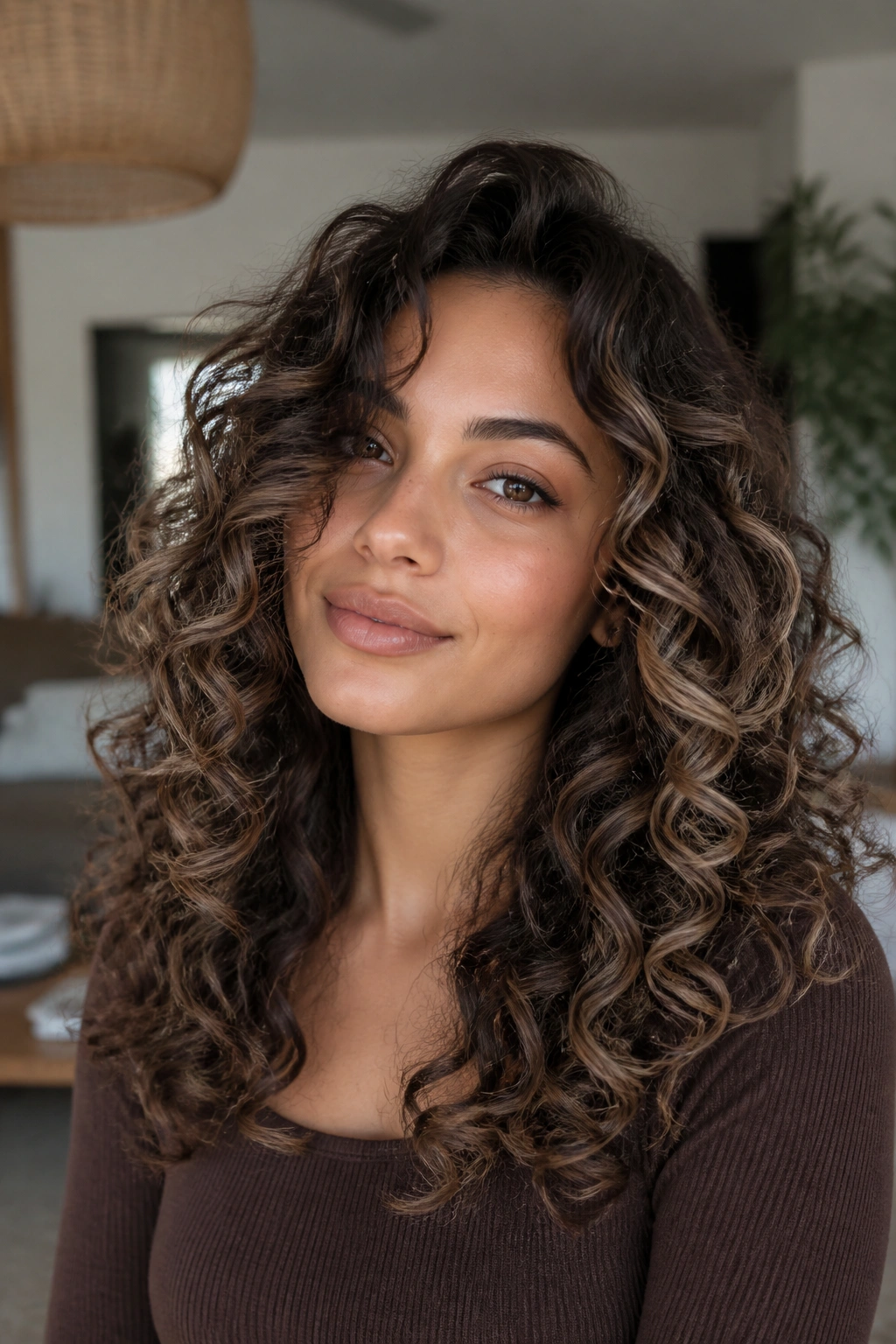
Curly brown hair can wear ash balayage beautifully, but only if the placement follows the shape of the curl. Paint it like straight hair and the pattern gets lost. Paint it with the curl in mind and the light starts to travel around the head in a much nicer way.
Why Curly Hair Needs a Different Plan
Curls shrink, twist, and overlap. That means the lighter pieces need room to show through. Ask for curly-balayage placement or curl-specific painting if your salon uses that language. The color should sit on the outer curve, not packed underneath where it disappears.
What I’d Ask For
- Soft ash-beige ribbons through the canopy
- Deeper roots for dimension
- Stronger pieces around the front curls
- A cooler gloss that won’t kill shine
Styling matters too. Use a curl cream with enough hold to separate the pattern, then diffuse on low heat. If the curls clump too hard, the color gets hidden. If they’re too frizzy, the ash pieces lose shape. That narrow middle ground is where this look works best.
It can be one of the prettiest ways to wear ash balayage on brown hair, but it asks for a little more care than a straight style.
18. Deep Brunette with Frosted Ends and a Clean Finish
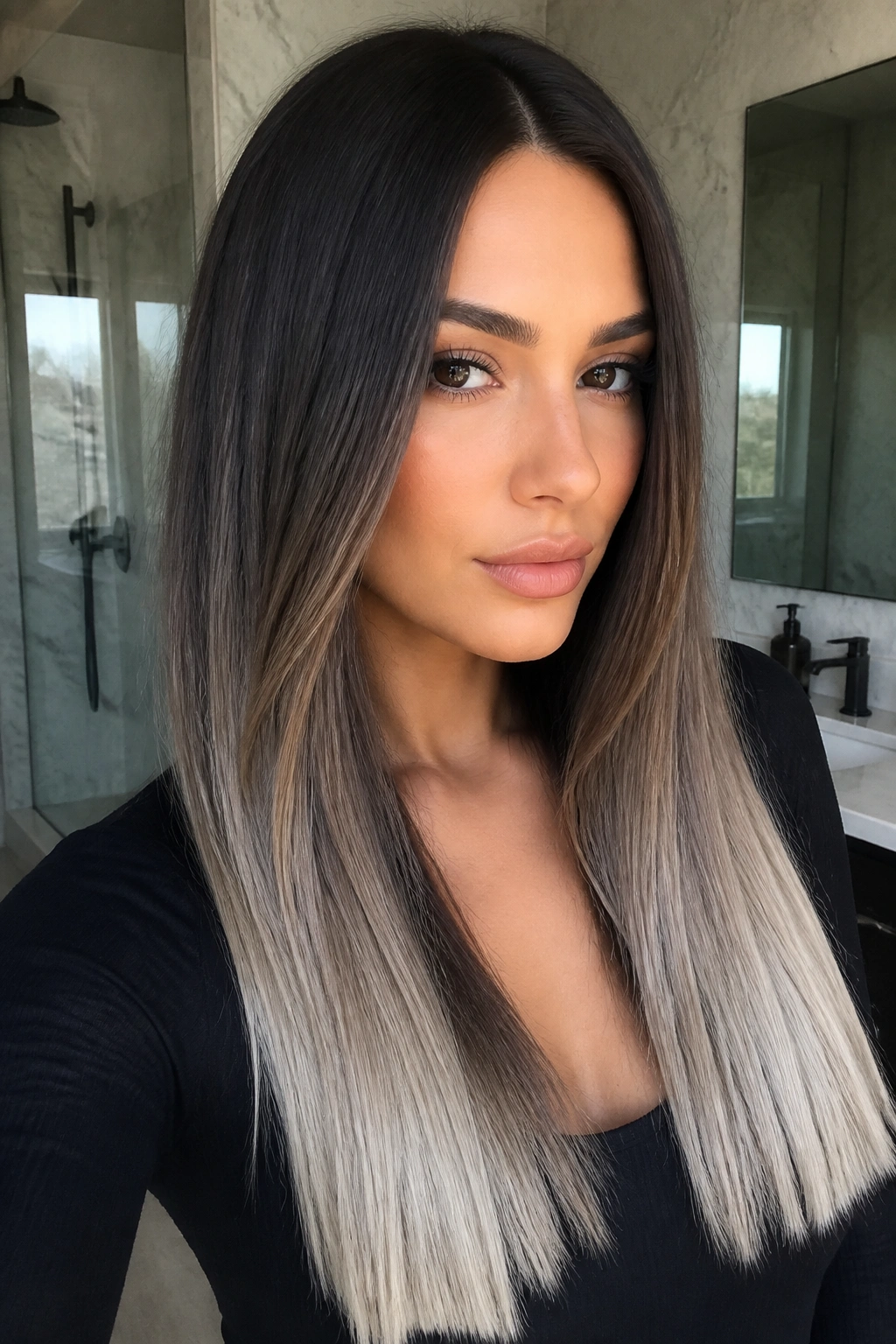
This is the boldest option in the group. A deep brunette base with frosted ends gives you a clear cool contrast, and it looks best when the cut is clean and the ends are healthy. If the hair is rough, the frost can make it look dry. If the ends are polished, the whole thing feels sharp and deliberate.
The key is to keep the root and mid-lengths rich, then let the bottom section shift into a cooler ash finish. Think of it as a brunette ombré with more polish and less drama. You still get movement, but the shift is controlled.
I’d put this on straight, blown-out hair first. Waves can soften the effect, which is fine if that’s what you want. But the clean finish is what makes the frosted ends stand out. It needs a bit of shine spray or a light serum, nothing heavy.
If you like your hair to have an edge, this one delivers. If you want barely-there dimension, skip it.
Final Word
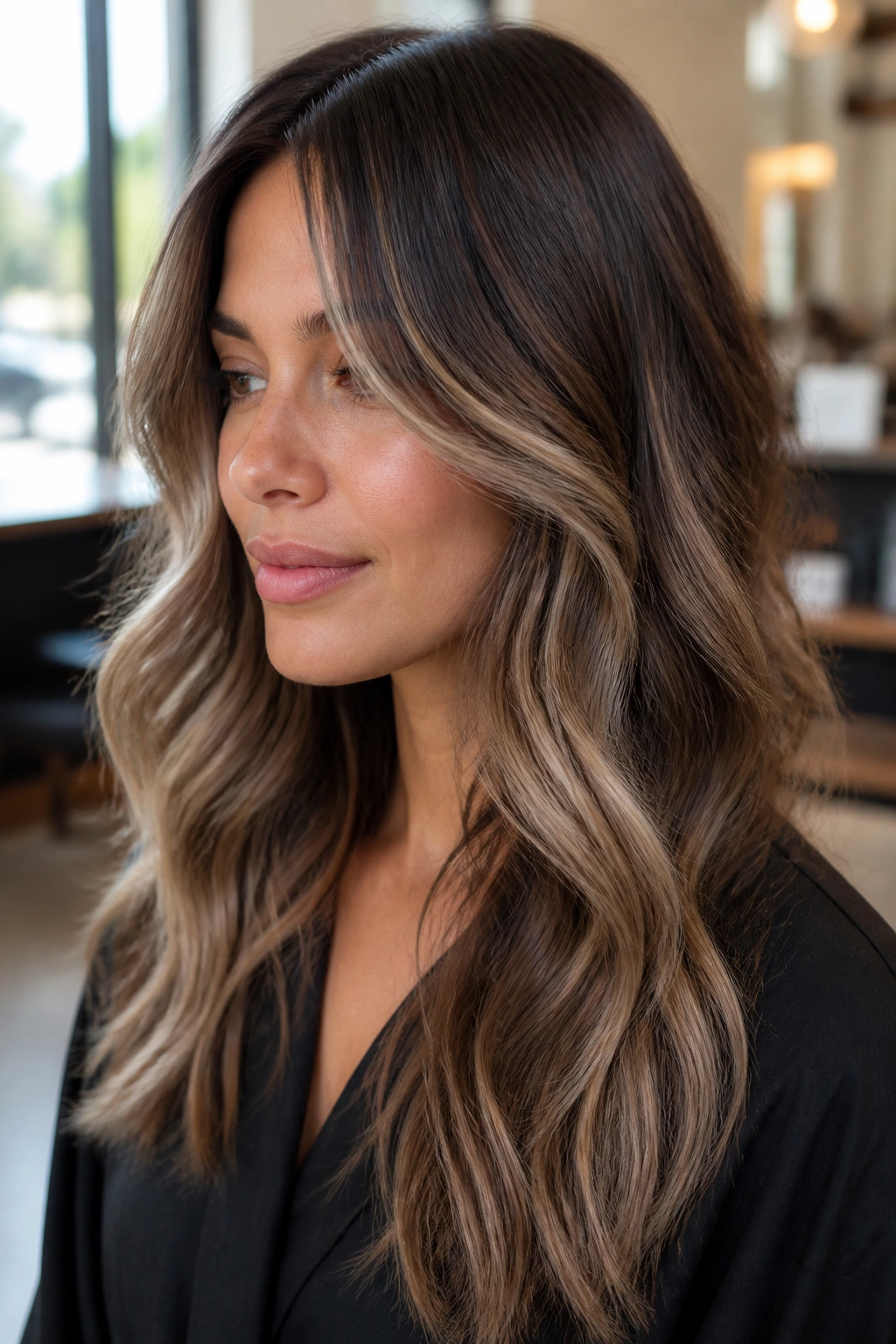
The best ash balayage for brown hair is the one that respects your base color instead of fighting it. Dark brown can handle smoky mocha or walnut tones. Medium brown usually shines with beige ash, mushroom, or cool caramel. If you want more contrast, lean into money pieces, frosted ends, or a brighter bronde finish.
Bring photos, yes, but bring the right kind of photos. One shot in daylight, one indoors, and one that shows the tone after a few washes tells a colorist a lot more than a single perfect studio image. That tiny bit of clarity saves a lot of disappointment.
