



Ash gray balayage on brown hair has a funny reputation. In photos, it looks calm and easy; in real life, the difference between chic and muddy comes down to placement, lift, toner, and whether the brown base can hold cool pigment without turning flat. That’s why the good versions feel expensive in the best sense — soft at the root, smoky through the mids, and bright enough at the ends to catch the eye without shouting.
Brown hair gives you a better starting point than a lot of people realize. It already has depth, which means the ash tones don’t need to carry the whole look. They can sit on top of a richer base and do what they do best: mute warmth, add contrast, and make waves, curls, and bends look sharper. The catch is brass. If the hair isn’t lifted enough before toning, ash can slip into dull brown-gray instead of that cool, glassy finish people actually want.
Some of the prettiest versions are barely gray at all from a distance. Up close, though, you see the cool reflection. That’s the part most people miss when they bring in inspiration photos and say they want “gray.” What they usually mean is dimension, a little edge, and a color that doesn’t look orange two weeks after the salon visit.
1. Smoky Mushroom Ash Balayage on Dark Brown Hair
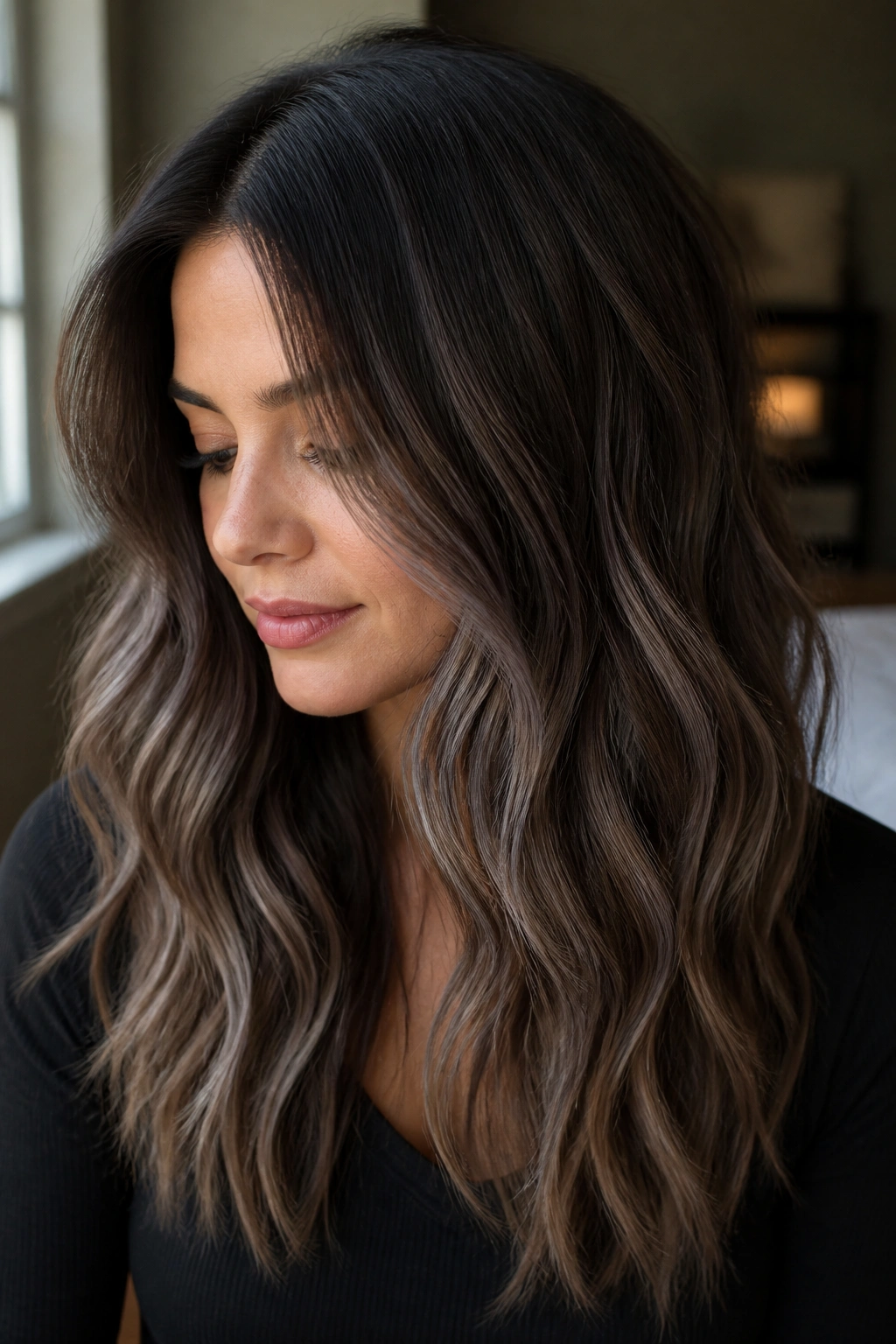
This is the most wearable starting point if you want ash gray balayage but don’t want to go straight into silver territory. Dark brown hair holds this look well because the ash pieces sit inside a deeper base, which keeps everything soft instead of streaky.
Why It Works on Dark Brown Bases
The trick is the in-between tone. Mushroom brown lives between beige, taupe, and smoke, so the gray reads refined instead of cold. On dark brown hair, a colorist can paint in fine ribbons through the mid-lengths and ends, then keep the root area deeper for a shadowed finish.
That contrast matters. Too much lift can make brown hair look washed out, but a medium-cool tone keeps the hair looking full and dimensional. Ask for thin, scattered ribbons rather than chunky light pieces.
- Keep the root area at least 2 inches deeper than the lightest pieces.
- Ask for a beige-gray toner, not a silver toner.
- Style it with soft bends, not tight curls, so the smoky tone shows.
A quick wave with a 1¼-inch iron is enough. You want movement, not pageant curls.
2. Cool Silver Ribbons Through Chestnut Waves
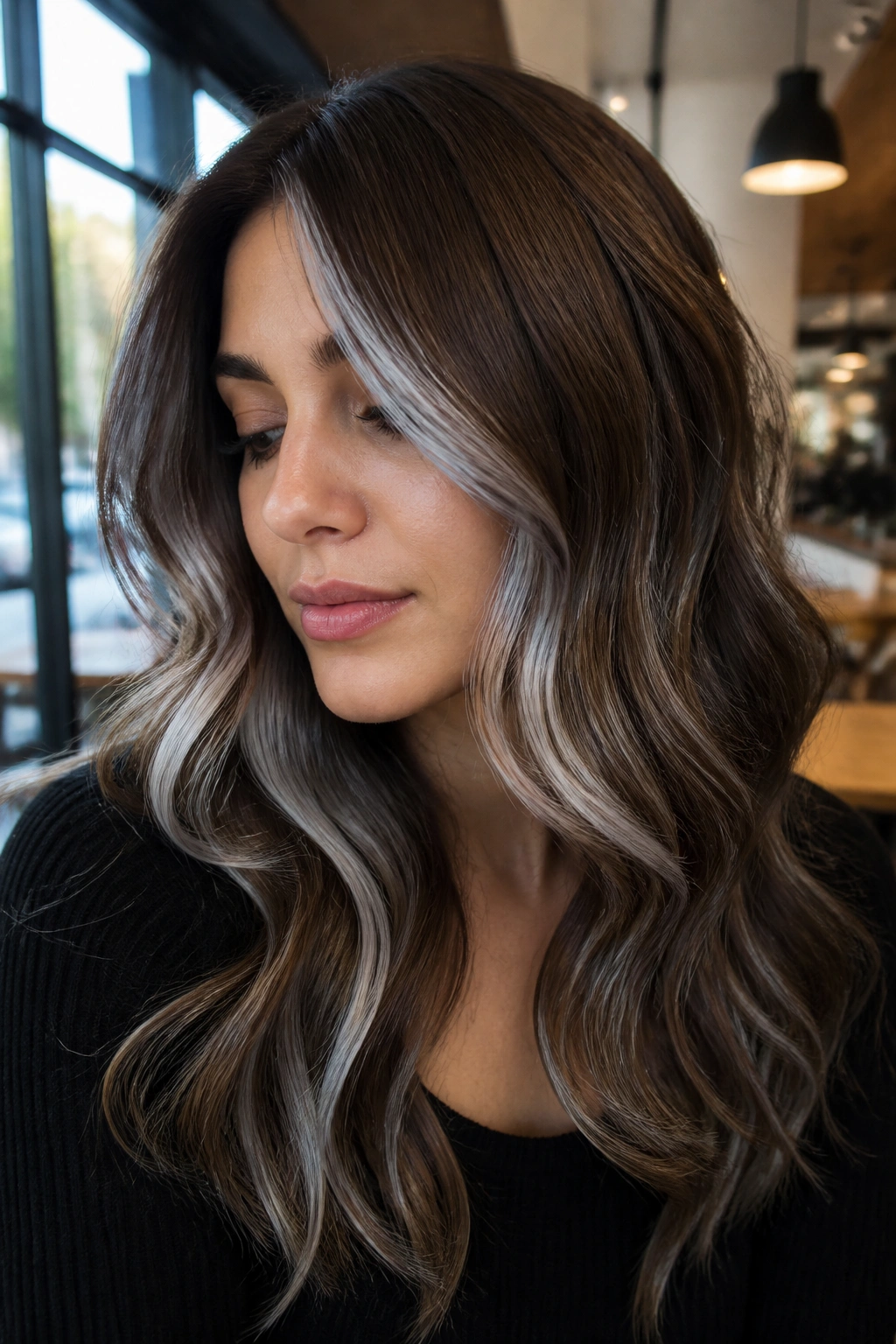
Chestnut brown is one of the nicest bases for ash gray balayage because it already has enough warmth to support a cooler overlay. The result is contrast that feels polished, not harsh. Silver ribbons pop against chestnut waves in a way that plain blonde highlights just can’t match.
The placement should be deliberate. Think fine, sweeping ribbons through the outer layers and a few brighter pieces around the face. The interior can stay deeper, which keeps the style from looking overprocessed. The cooler the ribbon, the more important the blend around it becomes.
A colorist who knows what they’re doing will leave some chestnut showing between the lighter pieces. That space matters. It keeps the hair from turning into a flat sheet of gray-brown and gives the waves somewhere to catch the light.
This look is especially good if you wear your hair loose most of the time. A half-up style can hide the top dimension, but down and wavy is where the contrast really shows.
3. Face-Framing Ash Money Piece for Brown Hair
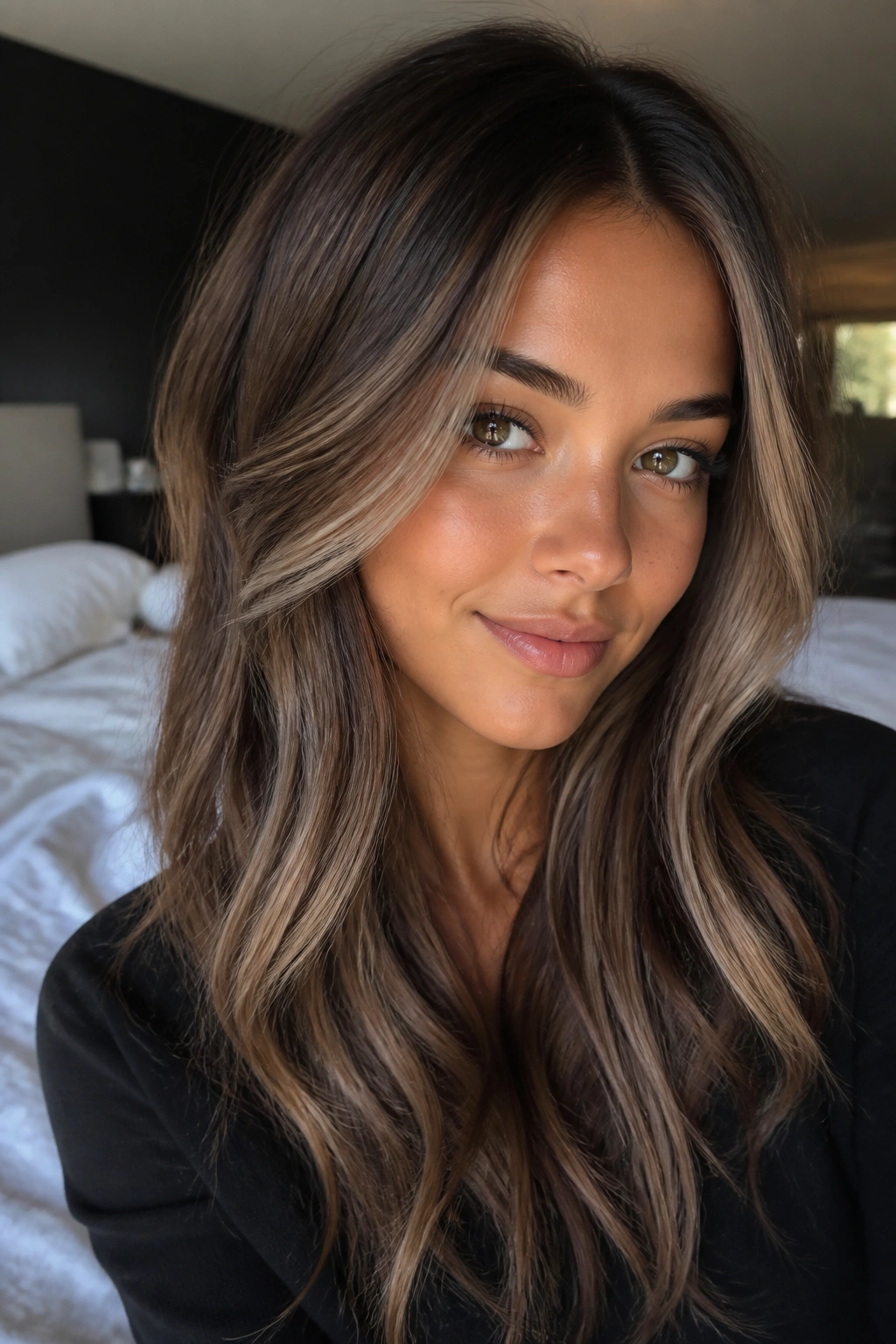
Want the fastest way to change the whole mood of brown hair? Put the ash gray balayage where people actually see it first. Around the face. That front section does more work than a lot of length-heavy color, and it can shift the whole look from plain brunette to cool, modern, and intentional.
What to Ask For at the Salon
The money piece should start high enough to show when your hair is down, usually near the cheekbone or just above it, then soften as it falls past the jaw. If it starts too low, the face frame looks disconnected. If it starts too high, it can look stripey.
- Ask for two to four brighter front pieces on each side.
- Keep the ends slightly lighter than the mids.
- Blend the color back into the crown instead of stopping it sharply.
This is one of the easiest versions to maintain because the front can fade a little without ruining the whole look. And if you tuck your hair behind your ears a lot, even better — the gray frame stays visible without needing a full overhaul.
4. Rooted Ash Gray Balayage on a Lob
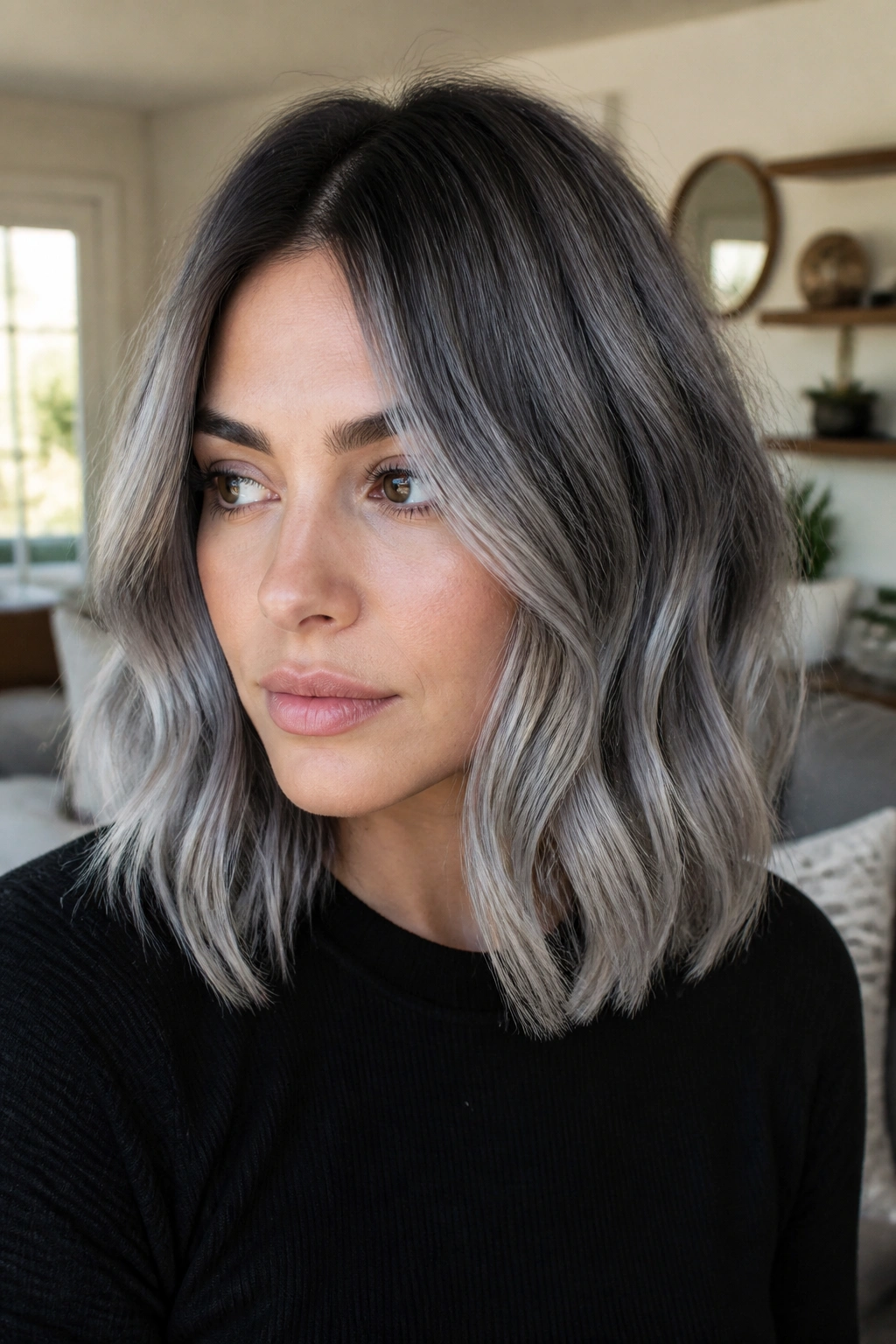
A lob and ash gray balayage get along fast. The length sits right around the collarbone or jaw, so the color has almost no place to hide, which means the blend needs to be clean and the root shadow needs to do its job.
The rooted version is the smart choice if you want the style to grow out without a hard line. A 1½- to 2-inch shadow root gives the ash pieces somewhere to live, and it helps the color stay soft as it fades. On a lob, that matters even more because the hair swings and parts change all day long.
Straight lob? Great. Wavy lob? Even better. The cut itself gives the color movement, so you do not need heavy contrast to make it interesting. A few cooler ribbons near the ends and one brighter face frame usually do the trick.
This is the look I’d pick for someone who likes neat hair. It stays polished, and it doesn’t ask for a lot of styling drama.
5. Slate Gray Ends on Layered Brunette Hair
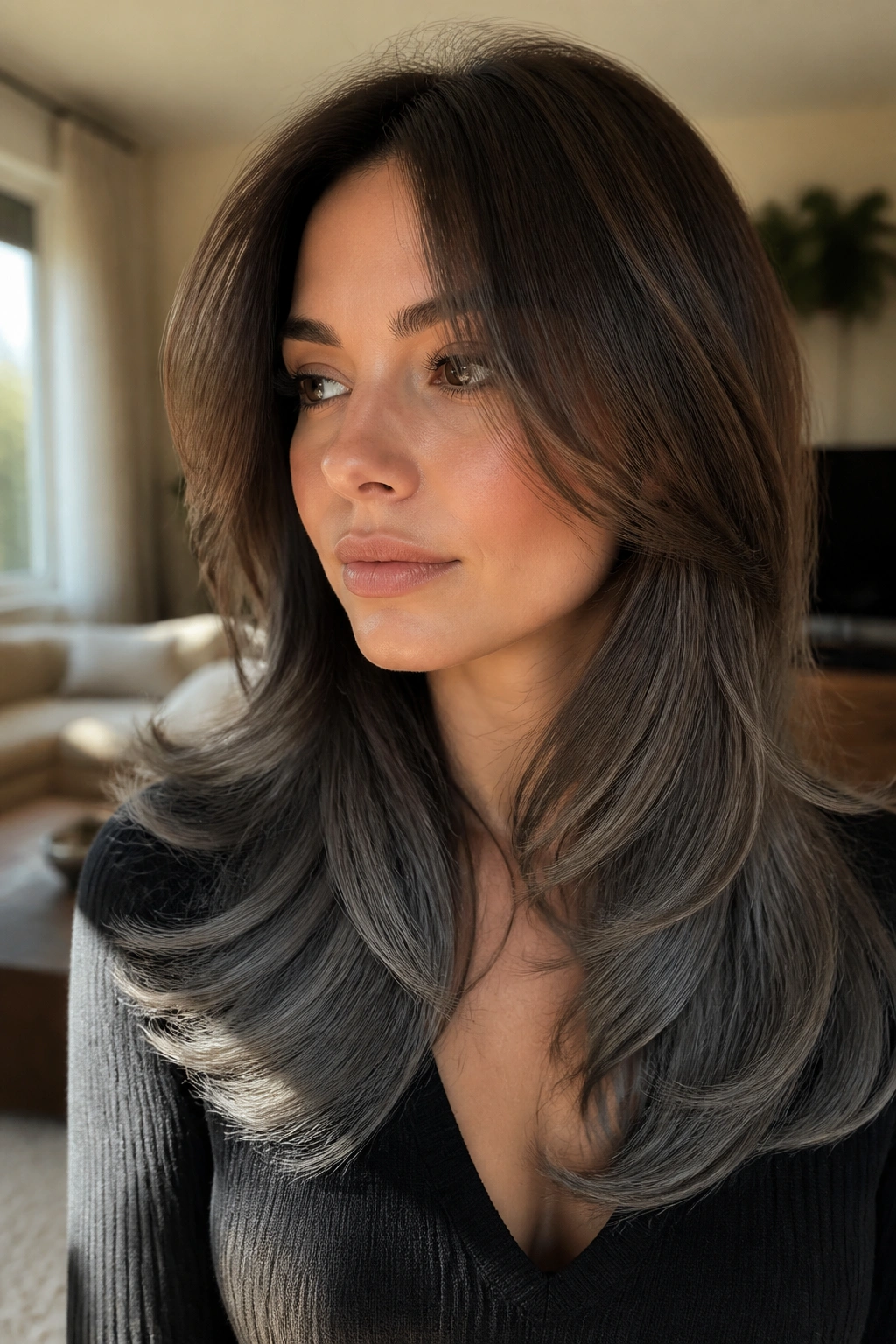
Slate gray at the ends is a sharp move when you want the color to feel intentional but not overly light. Layers make this work because the ends separate and move, which lets the cooler tone show up without flooding the whole head.
The key is keeping the top section brown enough to anchor everything. If the upper layers get too pale, the whole style can go flat fast. Slate works best when it stays concentrated on the last few inches of the hair, especially on long layered cuts where the ends can swing freely.
It helps to think of this look as a transition, not a target. The brown base melts into smoky mid-lengths, then drops into a darker gray finish at the tips. That little shift is what makes it feel expensive rather than heavy.
A blunt hemline can make this look a bit too obvious. Layers soften the edge and give the gray a place to break up. Simple. Effective.
6. Mushroom Brown Balayage with Beige Lift
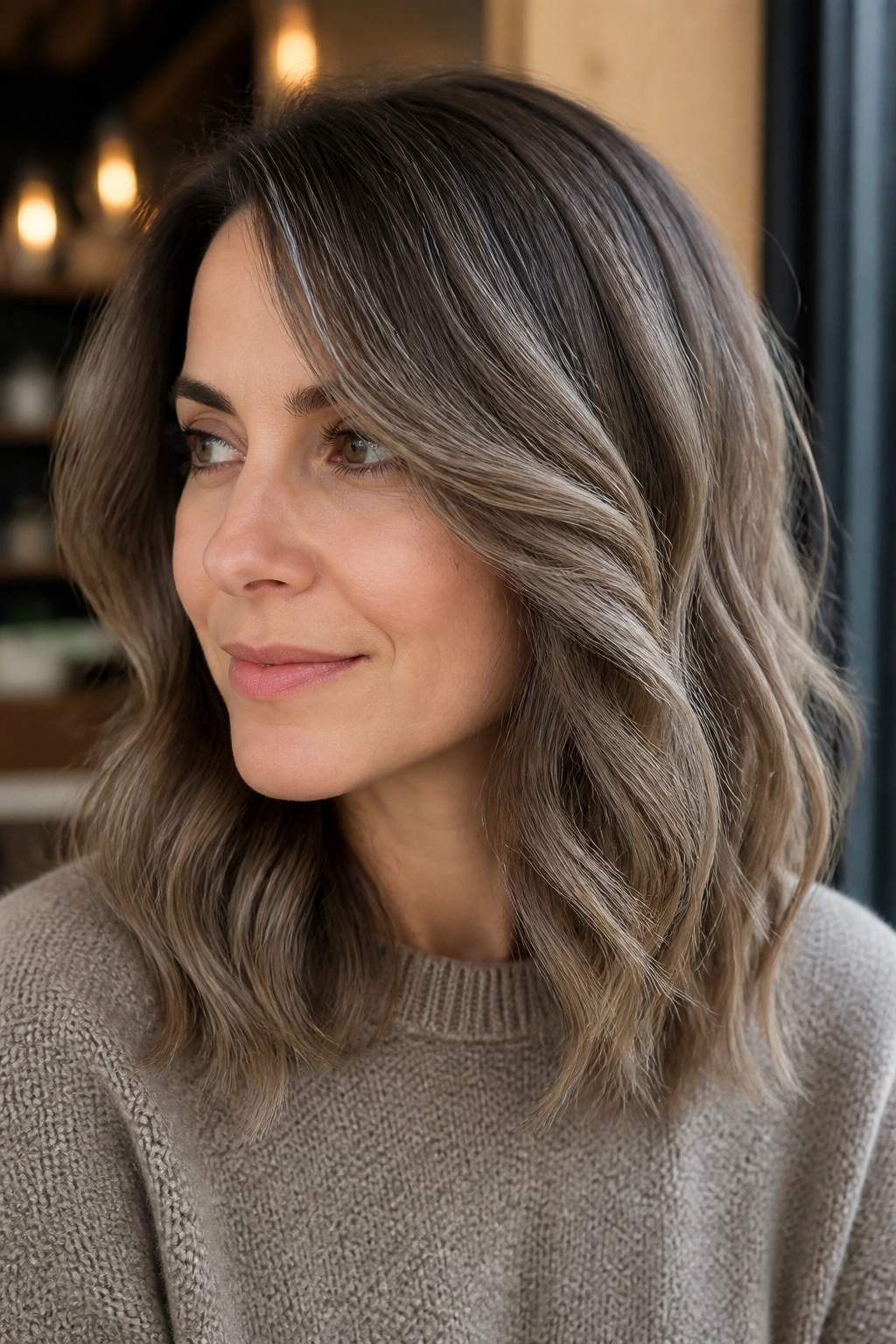
Soft. Dusty. Wearable. That’s the whole appeal here.
The Color Mix That Makes It Read Right
Mushroom brown works because it refuses to be one-note. It carries a taupe base, a little ash, and enough beige to keep the hair from going dead under indoor light. On brown hair, that mix creates a smooth bridge between natural depth and cooler brightness.
If your hair tends to pull orange, this is the more forgiving route. Beige lift gives you some lightness without turning the finish icy. Ask for smoky beige toner on the lighter pieces and leave the darkest sections alone so the dimension stays visible.
- Best for people who want cool tones without a silver finish.
- Good on medium brown, chestnut, and soft espresso bases.
- Looks especially nice with loose waves and air-dried texture.
This one is quietly flattering. Not boring. Just controlled.
7. High-Contrast Ash Gray Balayage on Espresso Curls
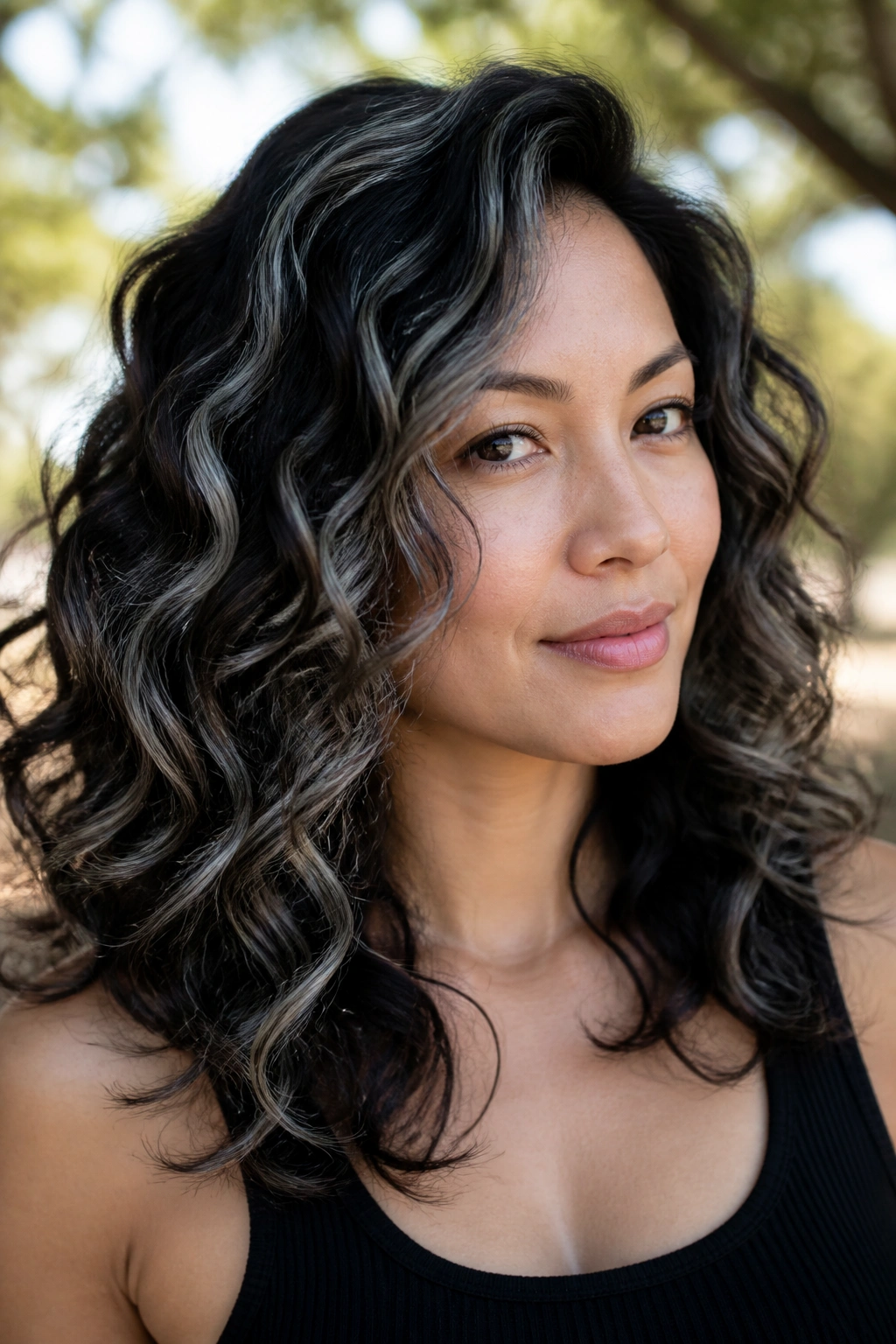
Curls can carry more contrast than most people think. On espresso brown hair, ash gray balayage doesn’t have to be whisper-soft to look good; it can be bright and still feel balanced because the curl pattern breaks the color into moving pieces.
The placement matters more than the exact shade. Paint the cooler ribbons where the curl clumps naturally separate — along the outer curve, around the crown, and through the front sections that frame the face. That keeps the lightest parts visible without creating a blocky stripe effect.
A strong diffused finish helps here. When curls dry into their natural shape, the gray pieces sit between the darker coils and pick up shine from the bends. That contrast is the whole point. It gives the curls shape from a distance and texture up close.
This version is not for someone who wants invisible color. It’s for someone who likes the look of dimension you can spot across the room.
8. Gray Melt Balayage on Straight Brown Hair
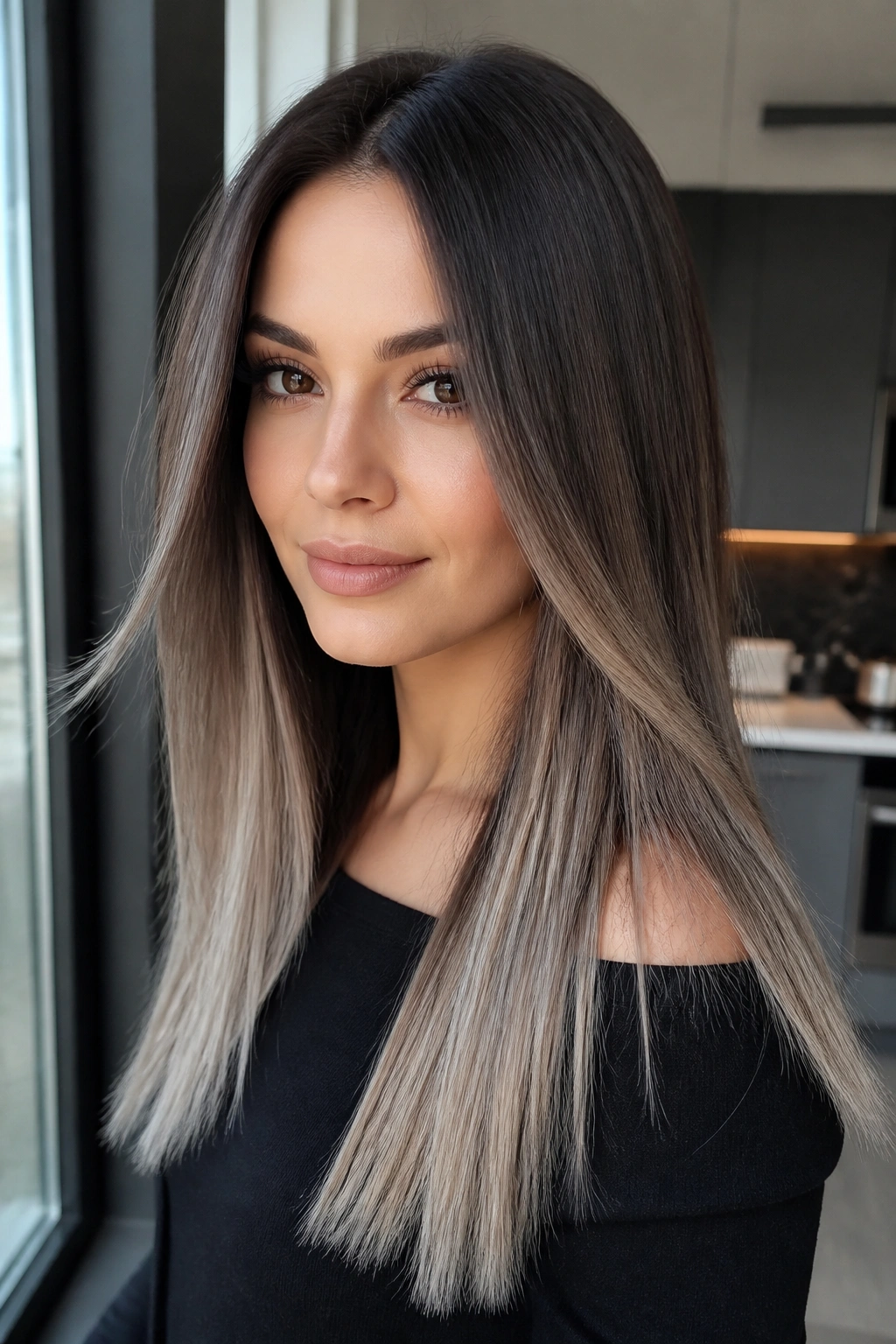
Why does straight hair often need a softer gray melt instead of blunt ash streaks? Because straight strands show every line. If the transition is too abrupt, the eye goes straight to the striping.
How to Wear It Without Losing Softness
A gray melt solves that by blending brown, smoky taupe, and cool silver in a gradual fade. The root stays deep, the middle shifts cooler, and the ends carry the lightest tone. Nothing hard. Nothing choppy.
Straight hair likes clean flow, so the blend should move in long, fluid sweeps rather than short patches. Ask for fewer, broader painted sections and a gloss that softens the contrast at the end. A center part usually shows the fade best, though a slight off-center part gives the front pieces a little more life.
This is a good choice if you blow-dry your hair sleek or wear it pinned back often. The color still reads even when the texture is flat, which is half the battle with cool brunette shades.
9. Ash Brown Peekaboo Balayage Under Dark Layers
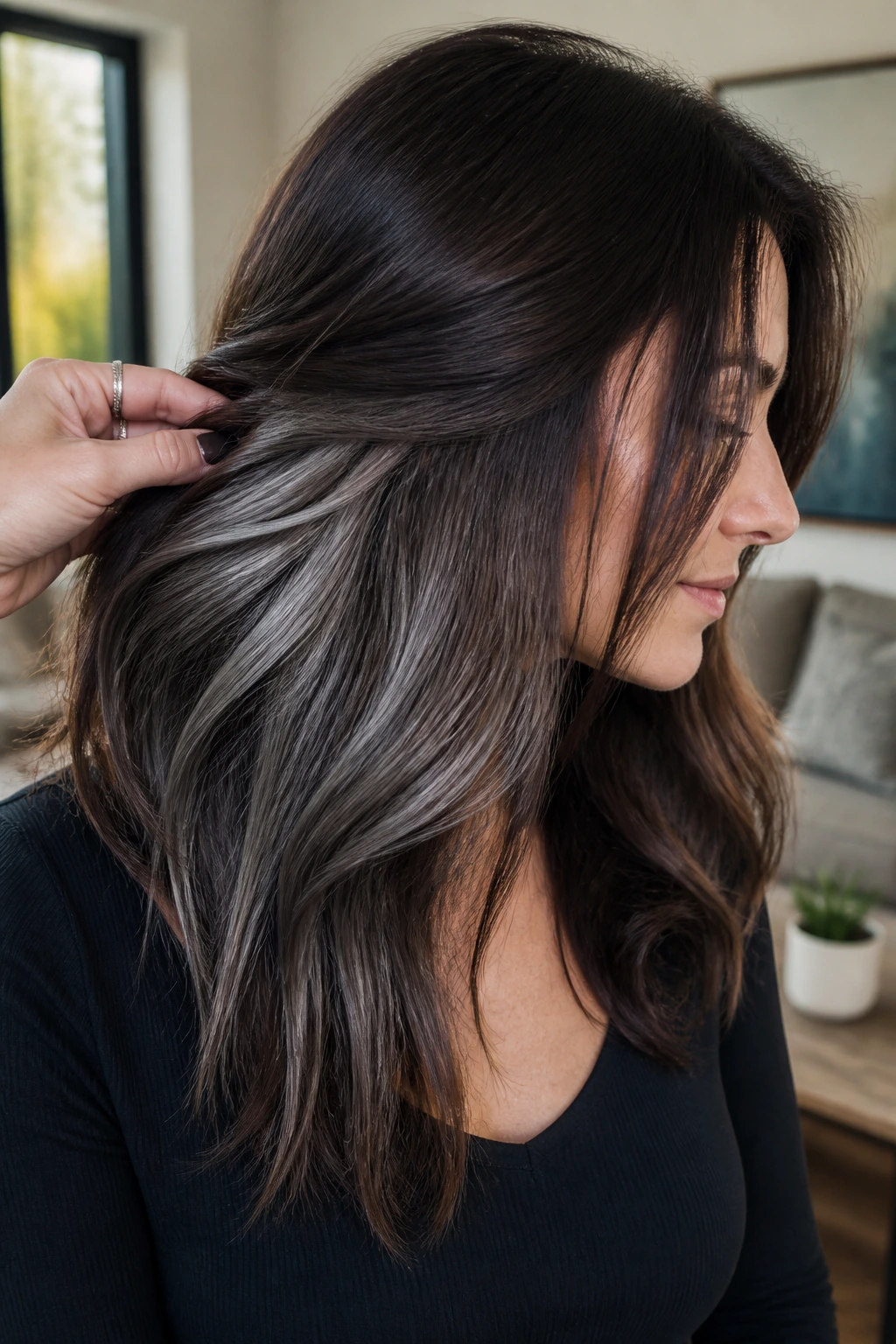
If you need something quieter, this is the clever one. Peekaboo ash gray balayage hides the cool tone under the top layers, so the hair keeps its brown face but flashes smoke when it moves.
That hidden placement is especially good for people who wear their hair up, clip it half back, or want a bit of edge without changing their whole look. The nape, inner panels, and a few lower crown sections are the places that matter. The top can stay rich and dark.
The effect is subtle until the light hits it or you twist the hair into a knot. Then the gray appears in little flashes, which is half the charm. It feels private. Like the hair is keeping a secret.
This style also grows out gracefully because the top section does so much of the visual work. If you want ash gray balayage with a lower commitment level, this one makes a lot of sense.
10. Charcoal Balayage for Thick Brown Hair
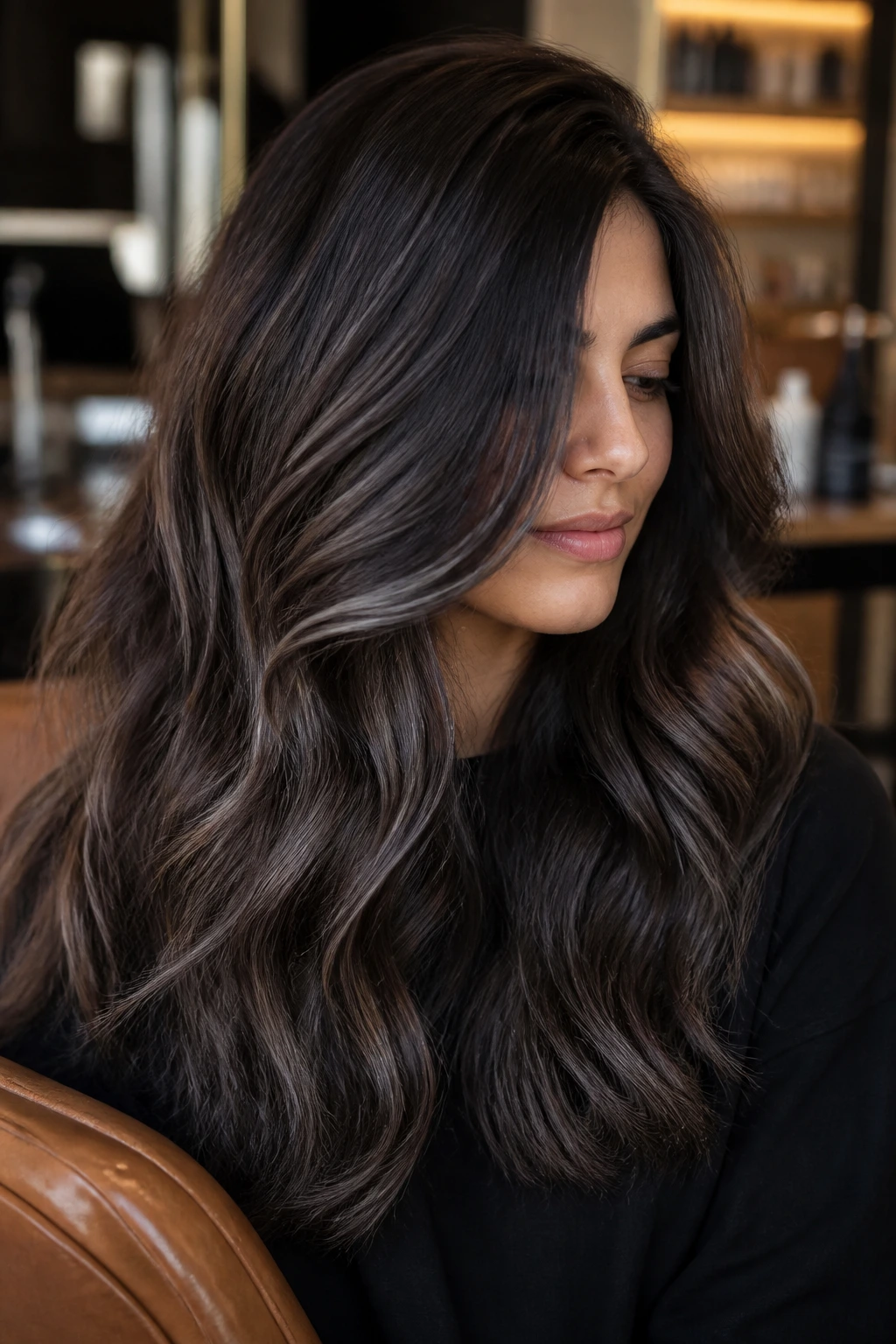
Thick hair can take more depth than fine hair, and charcoal proves it. On a dense brown base, charcoal balayage gives you cool tone without making the hair look see-through or overlightened.
The reason it works is simple. Thick hair already holds shape and volume, so it can carry darker ash panels through the mids and ends without losing body. In fact, a few broader charcoal sections can make thick hair look smoother because they visually break up the bulk.
A blunt, all-over cool tone would be too much here. Instead, keep the charcoal pieces tucked inside the surface layers and around the ends, where they can move. That gives the cut a cleaner outline. Shine matters more than brightness in this version.
A smoothing blowout helps a lot. So does a light gloss serum on the lower half of the hair. Heavy products will flatten the movement, and that defeats the whole point.
11. Feathered Ash Balayage on Shoulder-Length Hair
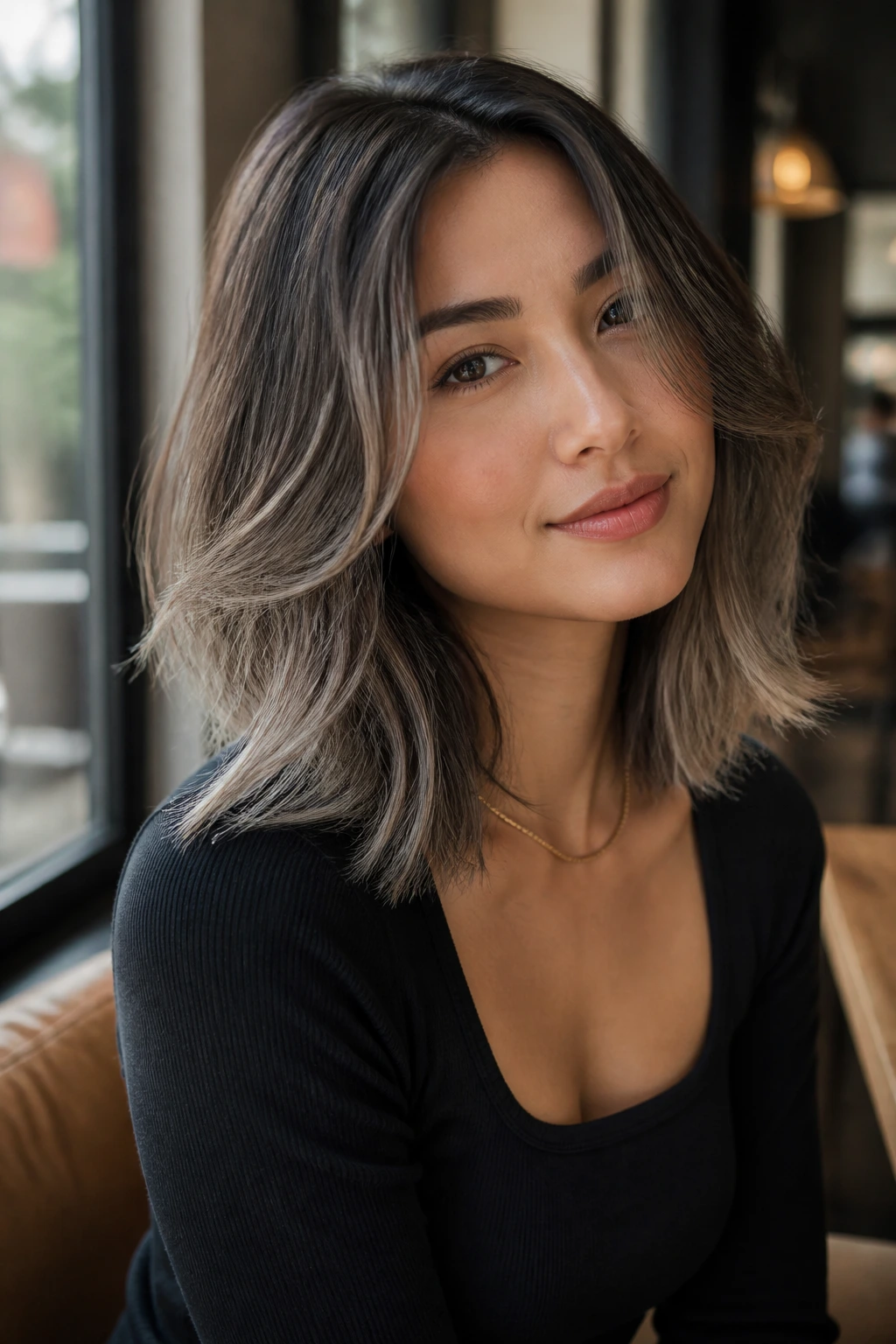
You can see this one move. Shoulder-length hair flips and sways more than long hair, so feathered ash balayage shows off every shift in the cut.
Why the Feathered Edges Matter
Feathered ends keep the cool pieces from looking hard. Instead of stopping the light color in a blunt line, the painterly edge lets the ash trail off in a soft point. That makes the finish feel lighter, especially on hair that sits around the shoulders and catches on jackets, bags, and scarves.
- Ask for light pieces that taper at the ends.
- Keep the face frame a half-step brighter than the rest.
- Style with a round brush or a loose bend iron, not tight curls.
A shoulder-length cut can go bulky fast if the color is too blocky. Feathering fixes that. It gives the balayage room to breathe.
12. Cool Ash Panels on Short Brown Hair
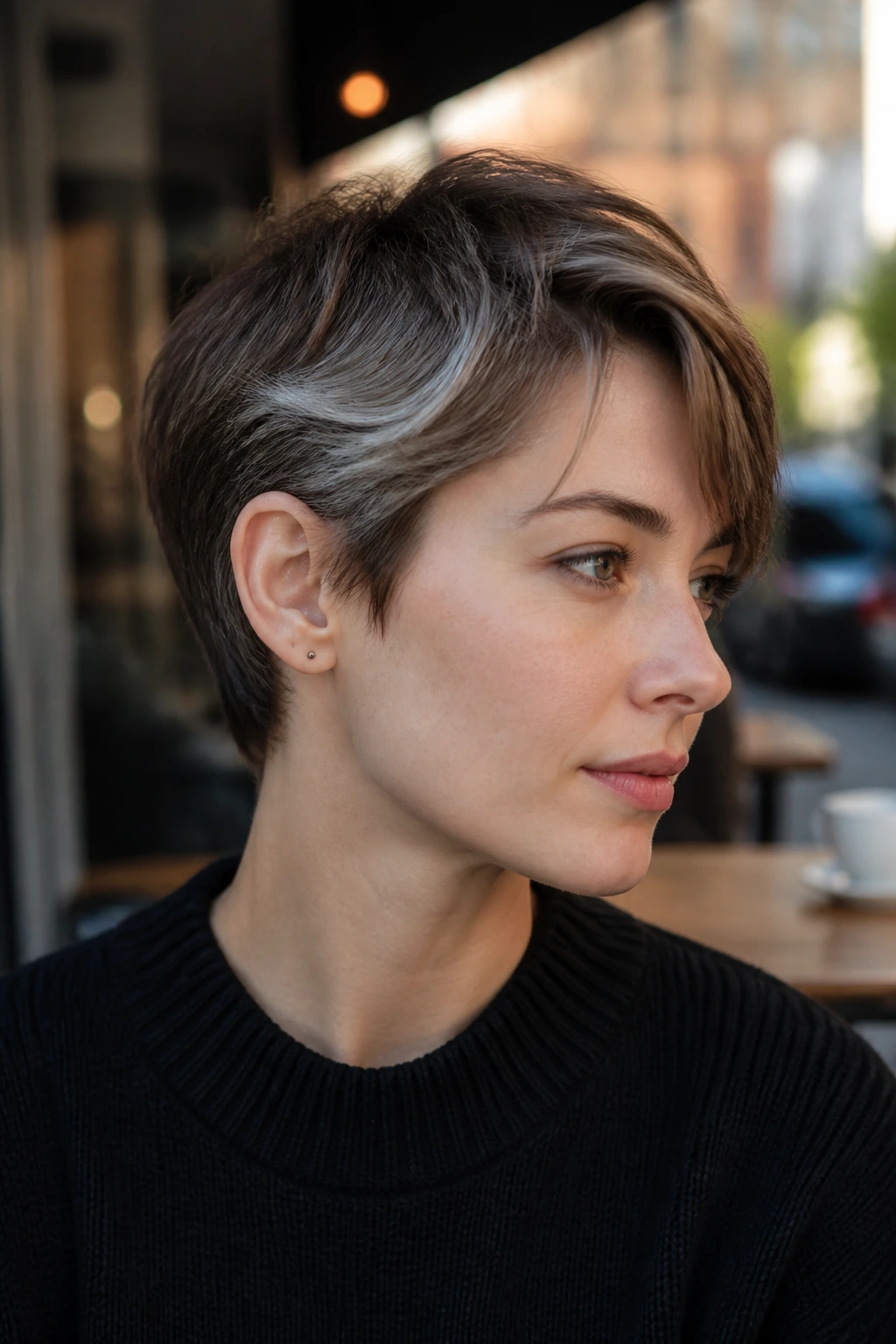
Short hair can look expensive with the right placement. A bob or pixie with cool ash panels gets a clean, graphic edge that long layers sometimes hide.
The trick is restraint. On short brown hair, too many light pieces can make the cut feel busy. A few ash panels near the temples, a soft sweep through the crown, and a whisper of cooler tone near the nape are usually enough. That keeps the shape visible and the color controlled.
This is where the cut and color start talking to each other. Sharp lines in the haircut get softened by the cool tonal shift, and the gray pieces help define movement even when the hair is barely touching the jaw. It’s small, but it has presence.
If you wear glasses, this look can be especially good. The cool panels around the face play nicely with frames without stealing the whole show.
13. Icy Gray Tips on Chocolate Brown Hair
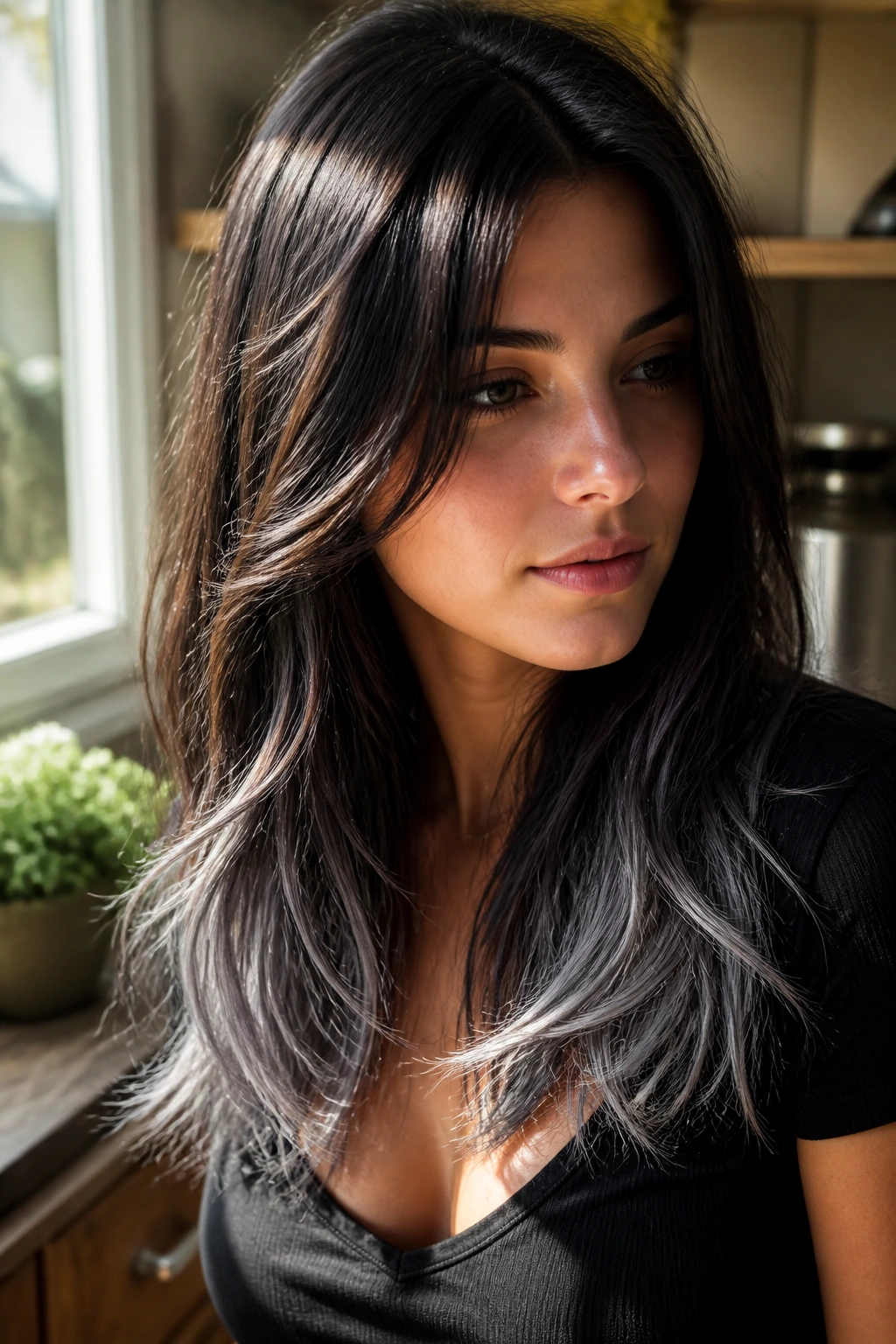
The tips do the talking here. Chocolate brown hair with icy gray balayage at the ends gives you a strong contrast without committing the whole head to a pale tone.
Long layers make this work best. They let the light ends sit in different spots, so the gray doesn’t look like a single line across the bottom. On curls, the effect is even better because the tips catch the eye as they bounce.
Ask for the brightest gray only at the last inch or two, then let the color soften upward into cooler brown. That transition keeps the ends from looking harsh. If the whole lower section goes too light, the style can start to feel disconnected from the base.
This is a good option if you want something a little dramatic but still brown at heart. The base stays rich. The ends carry the attitude.
14. Shadow-Root Ash Gray Balayage with Soft Waves
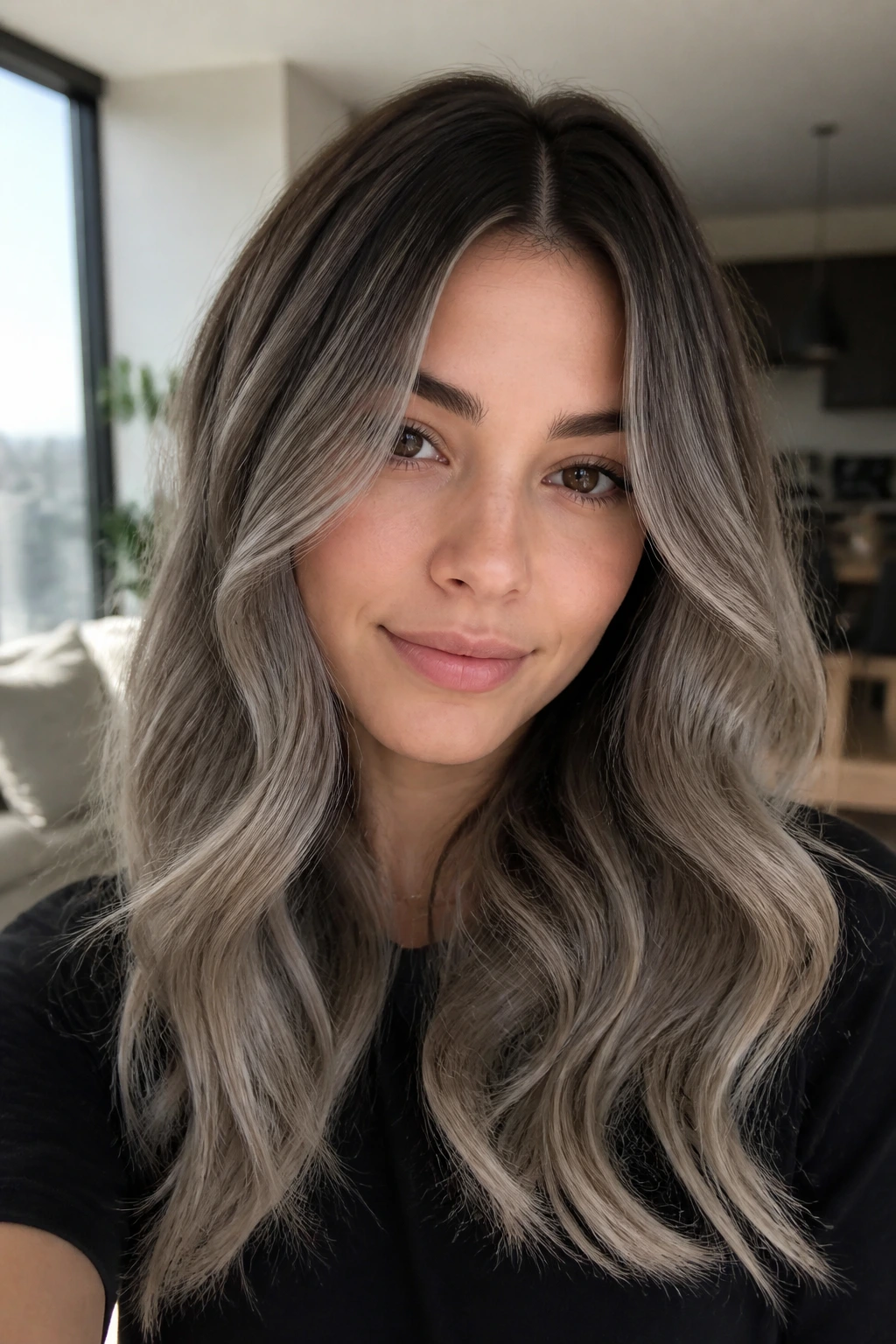
Want ash gray balayage that grows out without a hard line? Shadow-root placement is the answer most colorists reach for, and for good reason.
The root stays deeper for about 1½ to 3 inches, depending on the length and density of the hair, then the color opens into smoky ribbons through the mids and ends. Soft waves hide any tiny shifts in tone and make the whole thing look blended, not painted in panels.
What Makes the Grow-Out Easier
A shadow root buys you time. It lets the hair grow without screaming for a salon visit, and it keeps the ash from turning patchy as the lighter pieces fade. This matters a lot on brown hair, where the line between cool and warm can show up fast if the root is too bright.
- Keep the base slightly cooler than your natural brown, not lighter.
- Use soft bends to blur the placement.
- Ask for a gloss refresh, not a full re-lightening, when the tone dulls.
This version is calm and smart. No fuss, no stripey surprises.
15. Bronze-to-Gray Color Melt for Warm Brunettes
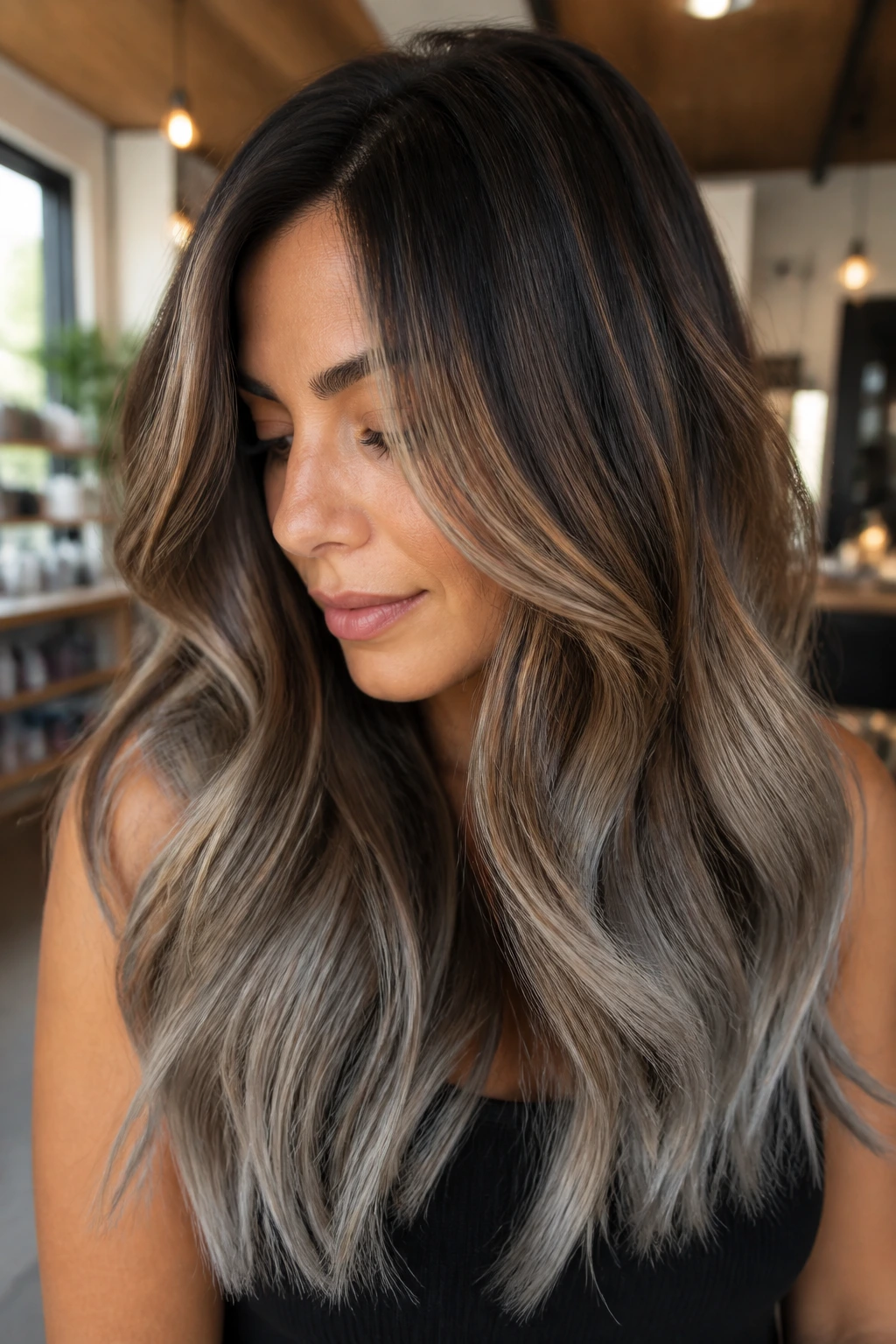
Warm brunettes do not need to fight their base color. They can move through it. A bronze-to-gray melt does that by carrying the hair from rich brown through muted bronze, then into ash at the ends.
That bridge is the difference between flattering and awkward. If you try to force icy gray straight onto a warm brown base, the hair can look muddy or overtoned. Bronze gives the eye a place to travel, and the final ash finish feels earned instead of pasted on.
What Your Colorist Should Build In
- A warmer midsection to soften the shift.
- Cool ash only where the lightest pieces sit.
- A root shadow that keeps the base looking full.
This look is especially kind to hair with natural red or gold undertones. It respects what the hair already has and steers it cooler in stages. That usually wears better than a hard tonal jump.
16. Gray-Laced Balayage on Wavy Hair
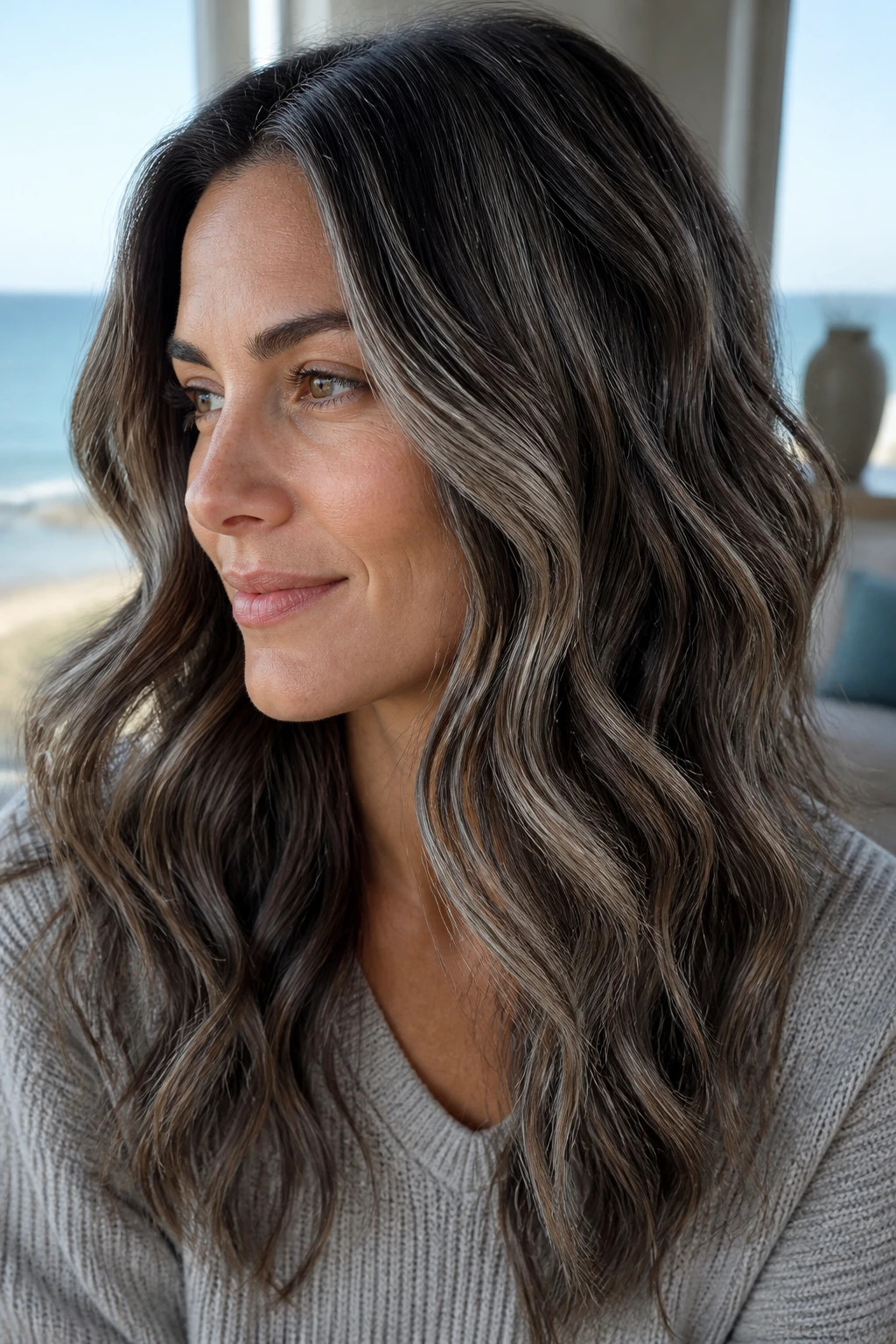
Tiny ribbons can do more than big streaks. Wavy brown hair is a perfect canvas for gray-laced balayage because the bends already create shadows, and the cool pieces slip into those shadows instead of sitting on top of them.
The best placement follows the S-shape of the wave. Paint a few narrow ribbons where the hair naturally curves, then leave spaces of brown between them so the movement stays readable. If everything is light, the wave pattern gets lost. If the pieces are sparse but intentional, the color looks richer.
This style works especially well on mid-length cuts where the waves don’t weigh themselves down. A sea-salt spray can help, but don’t overdo it. Too much product dulls the ash and makes the hair feel gritty. A soft cream or light mousse is usually enough.
Gray-laced color is a good choice if you like your hair to look done without looking styled to death. That’s a nice place to land.
17. Muted Slate Balayage on Long Layers
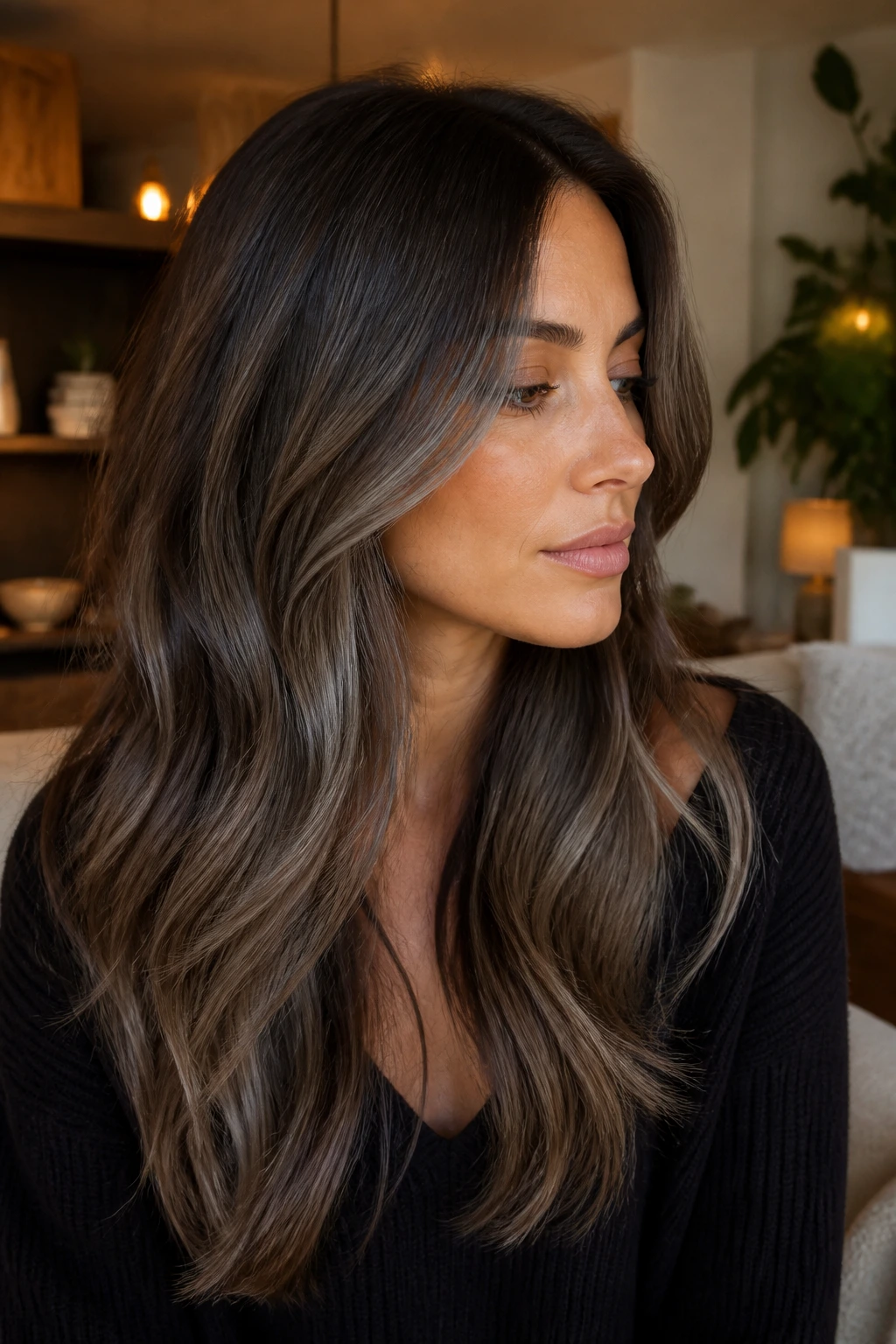
Slate gray against brown hair has a pencil-line quality to it. Not harsh. Just crisp. On long layers, that cool tone falls through the hair in a way that makes the shape feel longer and more deliberate.
Long hair needs dimension or it can go flat. Slate balayage solves that by breaking the length into cooler sections without bleaching the life out of the base. The lighter pieces usually work best from about the cheekbone down, where the layers start to separate and move.
A satin blowout shows this look well. So does a loose braid undone at the ends. The gray catches in the bends and around the face, and the darker underneath sections keep the color from looking thin.
This is one of the quieter, more elegant options in the set. It doesn’t chase silver. It just sits there and looks composed.
18. Smoky Ash Balayage with Curtain Bangs
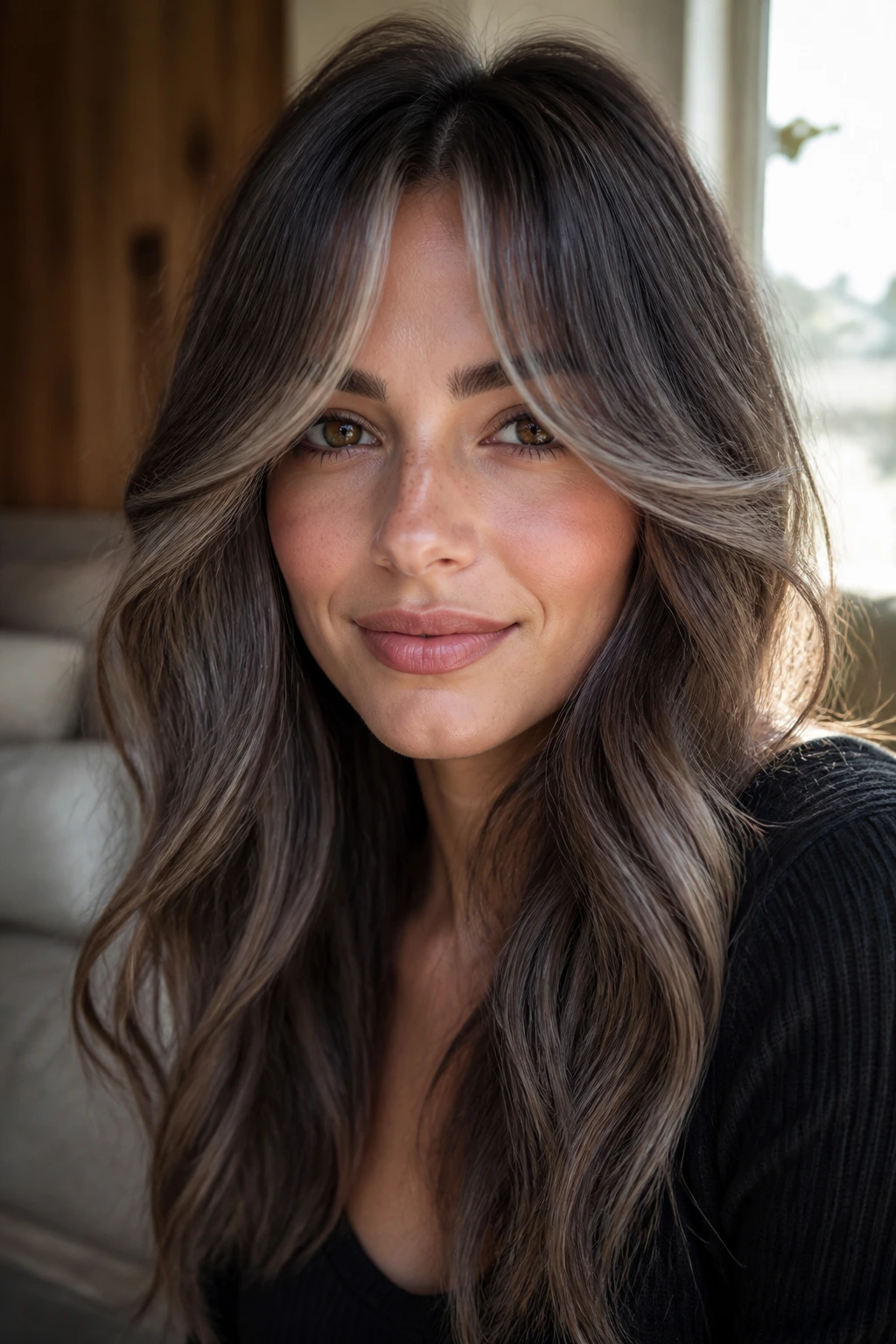
Curtain bangs change everything. They pull the eye straight to the front of the haircut, which means the ash gray balayage near the face needs to be a touch brighter and a little more deliberate than the rest.
How the Bangs and Color Work Together
The bang section should feel soft, not chunky. A few smoky pieces through the fringe area help the bangs separate instead of clumping into one dark curtain. That matters if your hair is thick or holds a wave, because the bangs can swallow the color if the placement is too conservative.
- Keep the front pieces one shade lighter than the side pieces.
- Let the color feather into the cheekbones.
- Style the bangs with a round brush or velcro roller for a gentle bend.
Curtain bangs already create movement. Add ash gray balayage around them and the whole front of the head wakes up. It’s a small change with a big visual payoff.
19. Metallic Gray Balayage on Dark Brunette Hair
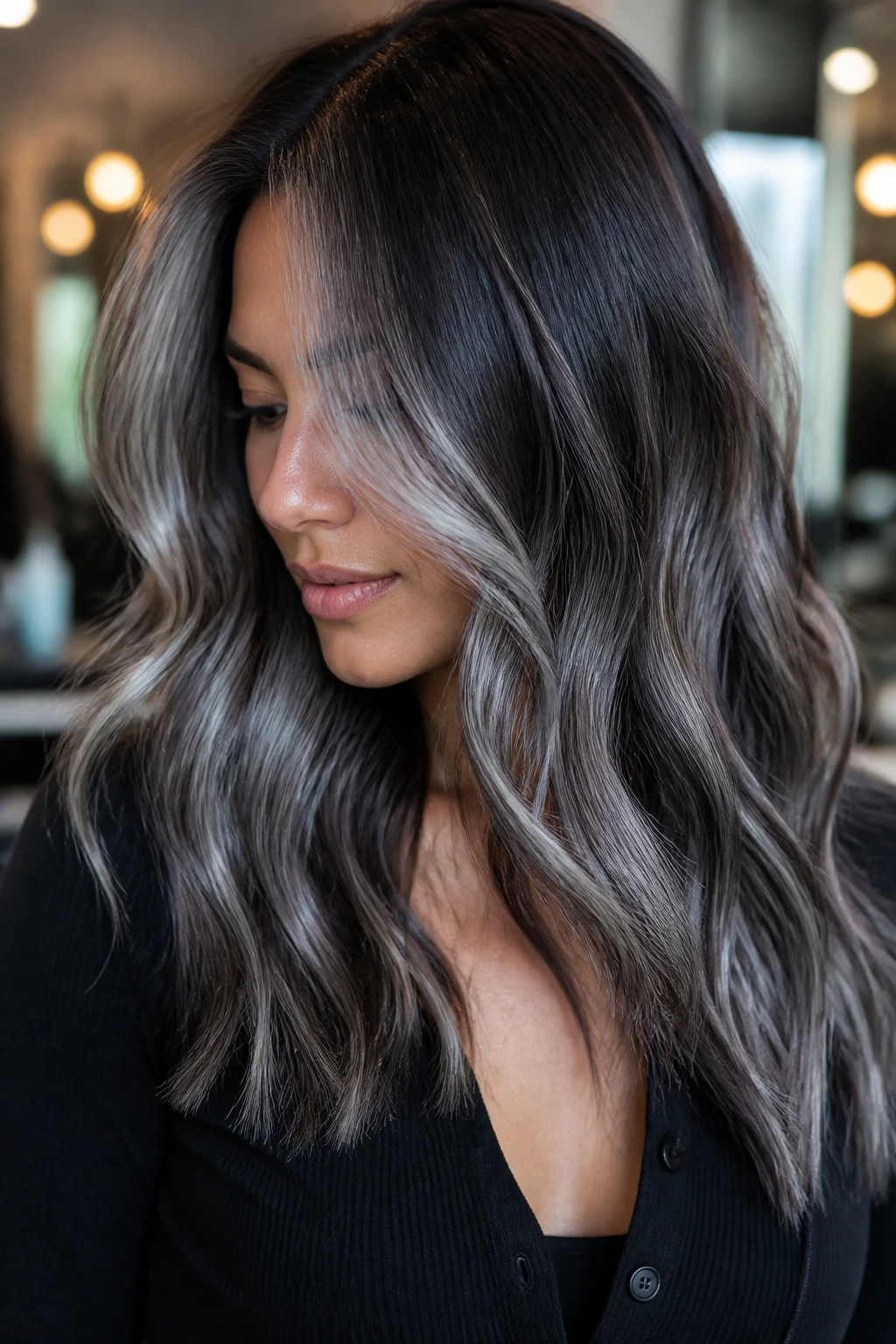
Metallic does not mean shiny silver everywhere. On dark brunette hair, it means cool reflect, polished edges, and a finish that looks sleek instead of dusty.
This look depends on gloss. Lots of it. The light pieces need enough lift to take the cool tone, but they also need a smooth surface so the gray reflects cleanly. If the hair is rough or porous, metallic tones can go dull fast. That’s the part people miss when they only look at the color photo.
The best placement keeps the metallic pieces concentrated through the outer layers and face frame. That way the hair stays dark and rich underneath, while the surface picks up the cool shine. A flat iron can make this look sharper, but a smooth blowout usually gives it a softer finish.
If you want ash gray balayage that feels sleek, almost glassy, this is the stronger choice. It has edge, but it still behaves.
20. Soft Charcoal Balayage for Low-Maintenance Brunettes
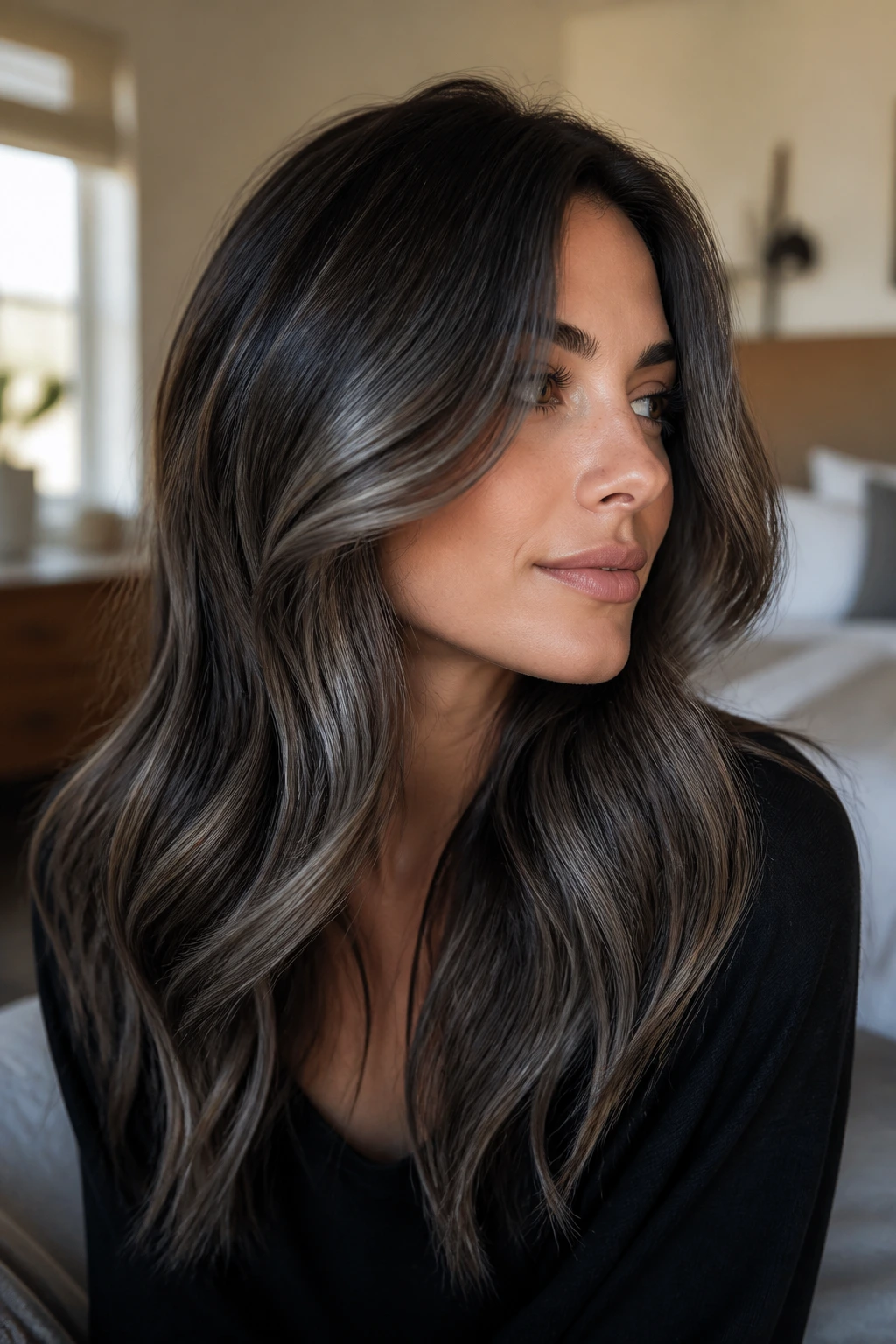
What if you want the cool look but don’t want to babysit it? Soft charcoal balayage is the answer I’d hand to someone who likes brown hair first and gray tones second.
The color stays deep, the ash is muted, and the contrast is kept low enough that the grow-out doesn’t feel rude. A colorist can paint broader charcoal ribbons through the mids and ends, then leave the crown darker so the whole thing reads as dimensional rather than fully lightened. That also helps the hair keep some thickness at the root, which matters on finer brunette textures.
This is the version that plays nicely with air-drying, second-day waves, and busy mornings. It doesn’t need constant curling iron drama to work. A little bend is enough. A little shine cream on the ends helps too, but not much.
If I had to point to one ash gray balayage look for brown hair that feels cool without becoming fussy, it would be this one. Quiet, smoky, and easy to live with.
