



Burgundy balayage on brown hair has a nice little trick: it can look expensive even when it is only a few ribbons of color. The shade does not need to shout.
On a chestnut or espresso base, burgundy reads one way indoors and another near a window. That shift is the whole appeal. Too much red and the hair can look flat; too little and you lose the wine-like depth that makes the color interesting.
The sweet spot is placement. Hand-painted pieces around the face, through the mids, or just on the ends give brown hair movement without turning it into a solid block of red. And because burgundy sits between brown, purple, and red, the tone you choose changes the mood fast.
Some looks stay soft for months. Others are meant to be noticed. The 22 ideas below lean from subtle to bold, with enough variety that you can match them to a work-friendly cut, a blunt bob, loose waves, or curls that need the color broken up in a smart way.
1. Soft Merlot Face-Framing Pieces
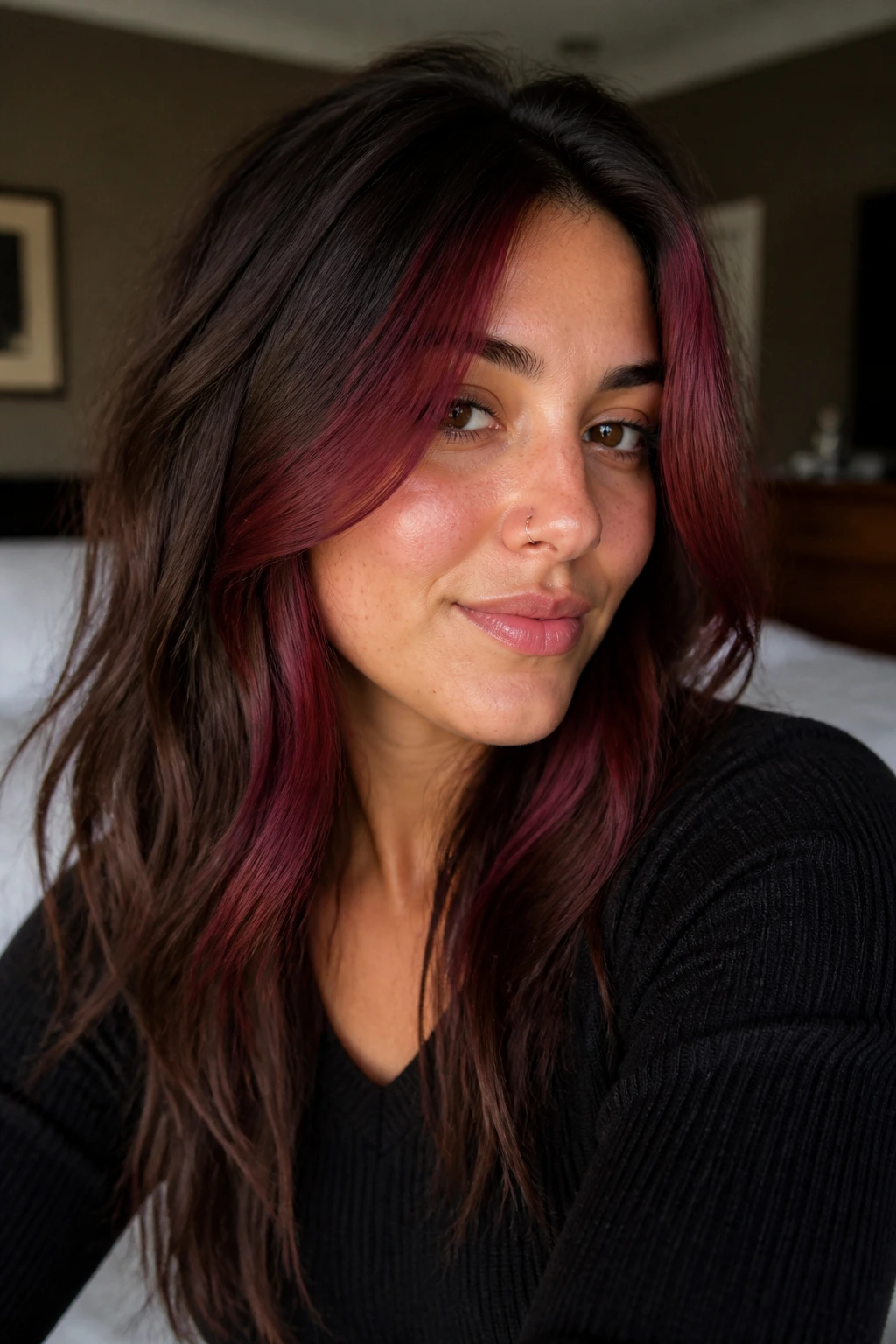
Soft merlot around the face is one of those looks that does a lot without asking for much. On medium brown hair, the color sits close enough to brunette that it never feels harsh, but the red-violet note still wakes up the whole front of the head.
Why It Flatters Brown Hair
The front sections should be thin—about 1/2 inch to 1 inch wide—so the color feels like light, not stripes. That detail matters more than people think. If the panels get too chunky, the look loses its softness fast.
- Best on level 4 to 6 brown hair
- Ask for a deeper burgundy at the root and a lighter merlot through the ends
- Style with a 1 to 1.25-inch curling wand for a soft bend, not a tight curl
- Keep the face-frame pieces slightly brighter than the rest so they stand out near the cheeks
Pro tip: leave more natural brown near the temples if you wear glasses. It keeps the color from fighting with the frame lines.
2. Cherry Cola Balayage on Chestnut Brown
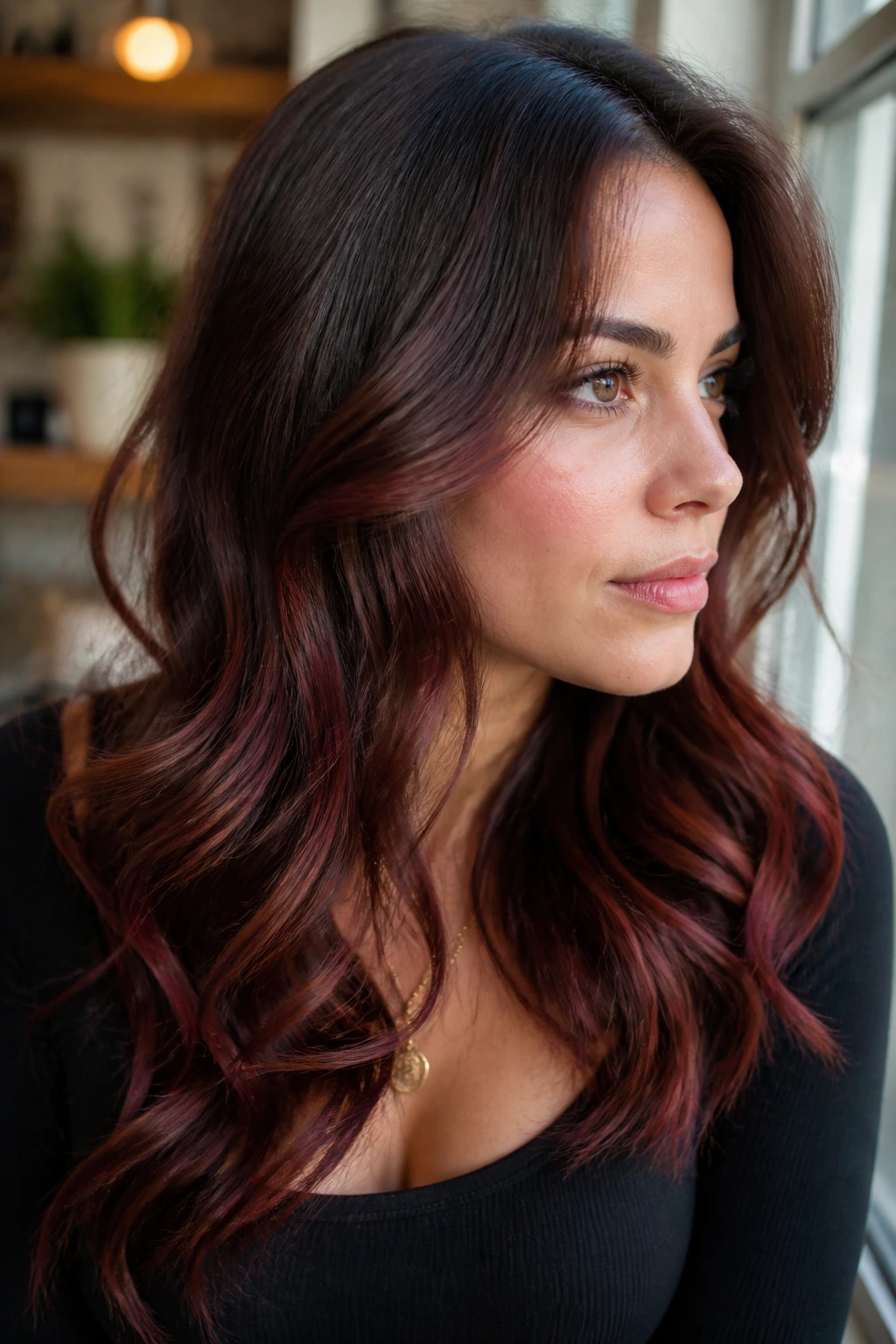
Cherry cola is the easiest burgundy look to wear on brown hair. Full stop. The brown base does half the work for you, so the red never turns neon or candy-bright.
The shade looks especially good on chestnut brown because chestnut already has warmth in it. Add a red-violet gloss over hand-painted pieces and you get a finish that feels deep, glossy, and a little moody. It is not a loud color job. It is a rich one.
If you want something that shows in sunlight but still looks polished indoors, this is a strong pick. Ask for burgundy through the mid-lengths and a softer red-brown at the ends so the grow-out doesn’t look sharp. The color shifts nicely when hair moves, which matters more than people admit.
3. Black Cherry Money Piece
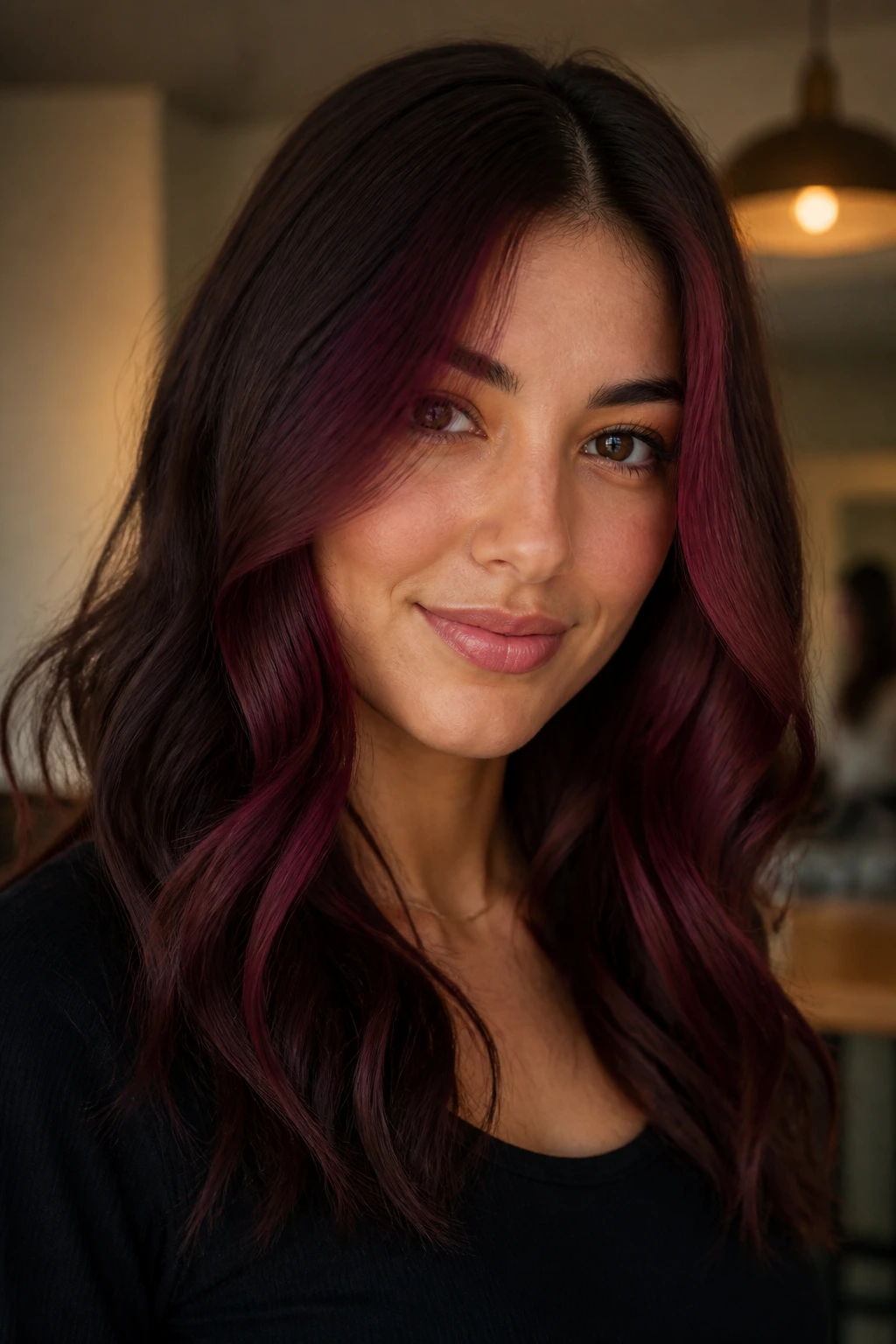
Why does a black cherry money piece work so well on medium brown hair? Because the contrast stays controlled. You get a clear frame around the face, but the rest of the hair can remain calm and dimensional.
The trick is to keep the money piece darker at the root and richer toward the bottom half. That keeps it from looking pasted on. On brown hair, a front section that is too bright can steal all the attention and make the rest of the color feel like an afterthought. Black cherry avoids that problem because it stays in the same color family as brunette.
How to Wear It
Ask for two front sections about 2 to 3 inches wide if you want a noticeable frame, or go finer if you prefer a softer effect. A middle part makes the color look sharper. A side part softens the whole thing and lets one side peek through more quietly.
A good black cherry money piece is the sort of color that still looks intentional when you throw your hair into a clip. That part is underrated.
4. Smoky Cabernet Ends on Dark Brown Hair
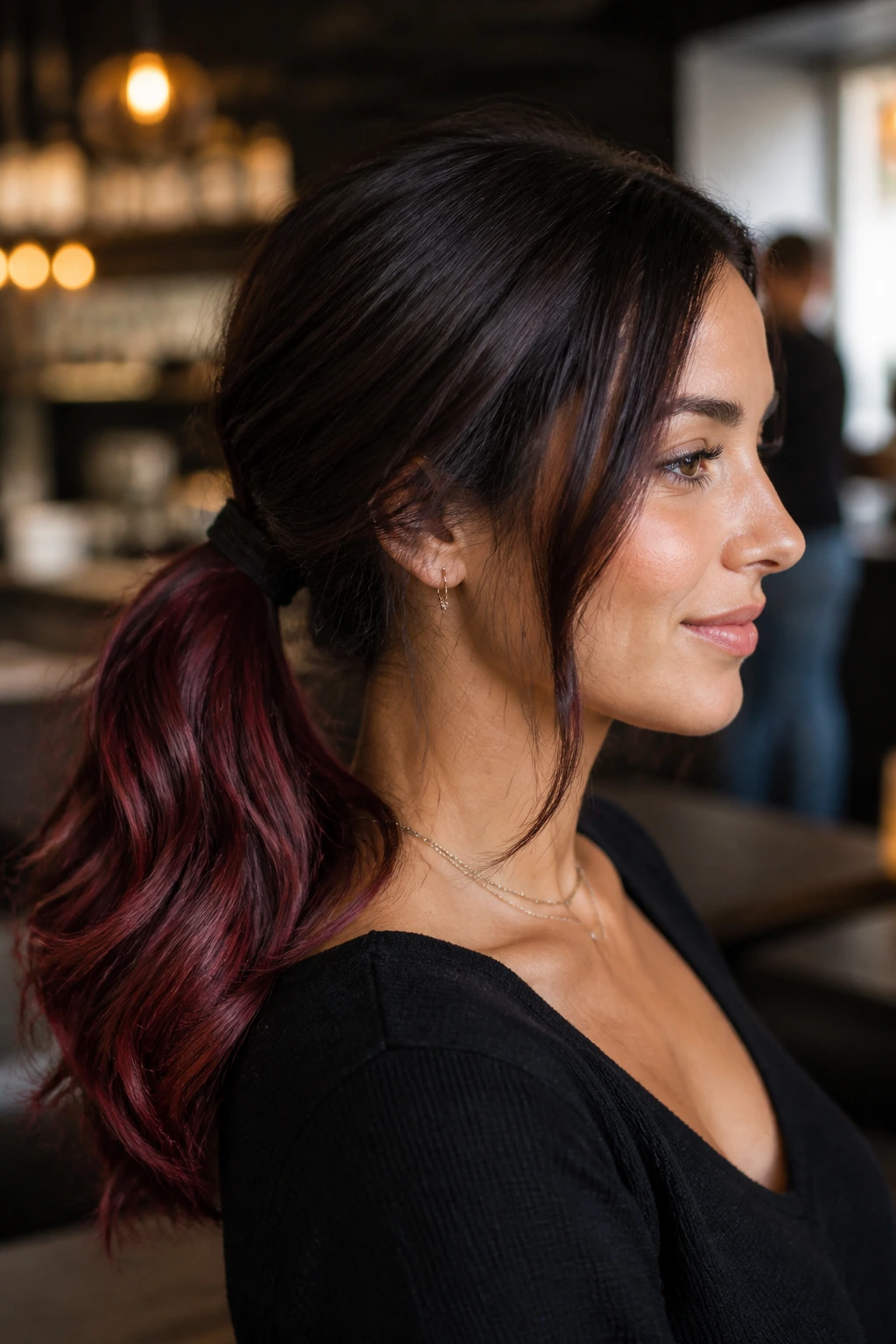
If you keep your hair in a low ponytail and still want the color to show, smoky cabernet ends are the move. The roots stay dark, the mids stay brown, and the last few inches do the talking.
That placement works because dark brown hair can swallow red if the color is spread too evenly. Concentrating the burgundy on the lower half gives you more visible payoff without needing a full head of lighter pieces. It also makes wavy styling easier, since the ends catch the movement and the color follows it.
- Keep the burgundy mostly on the bottom 3 to 5 inches
- Ask for a soft feathered blend, not a hard line
- This look plays well on long layers
- A shine spray or clear gloss helps the cabernet finish stay deep instead of dull
What to watch for: if the ends are already dry, the burgundy can turn muddy. A trim before coloring helps more than a lot of people expect.
5. Plum-Tipped Balayage for Medium Brown Hair
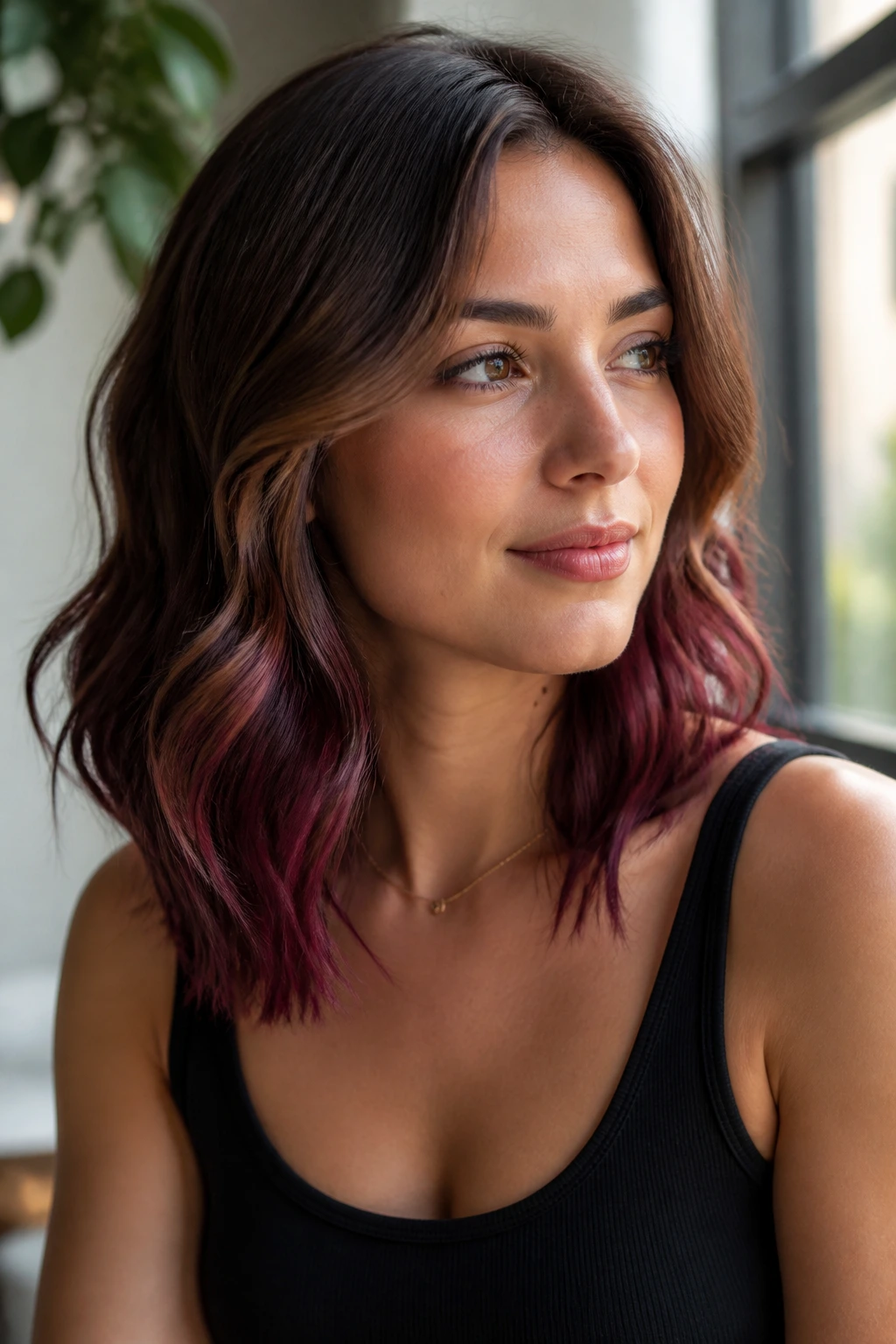
Plum-tipped balayage is for the person who wants red, but not the obvious kind. On medium brown hair, the plum note pushes the color slightly cooler, which keeps it from tipping too orange or copper-heavy.
The best version starts quietly around the mid-lengths and gets richer only at the tips. That way the eye sees a brown base first, then a plum shadow at the bottom. It feels softer than a full burgundy melt and less dramatic than a money piece, which makes it easy to wear with layered cuts.
It also grows out in a nice way. The brown root stays in charge while the plum sits at the ends, and because the color is concentrated lower down, you do not get a blunt regrowth line. Straight hair shows the tip color cleanly. Wavy hair gives it more depth.
It is a good one if you like your color to feel a little secretive.
6. Burgundy Caramel Ribbon Balayage
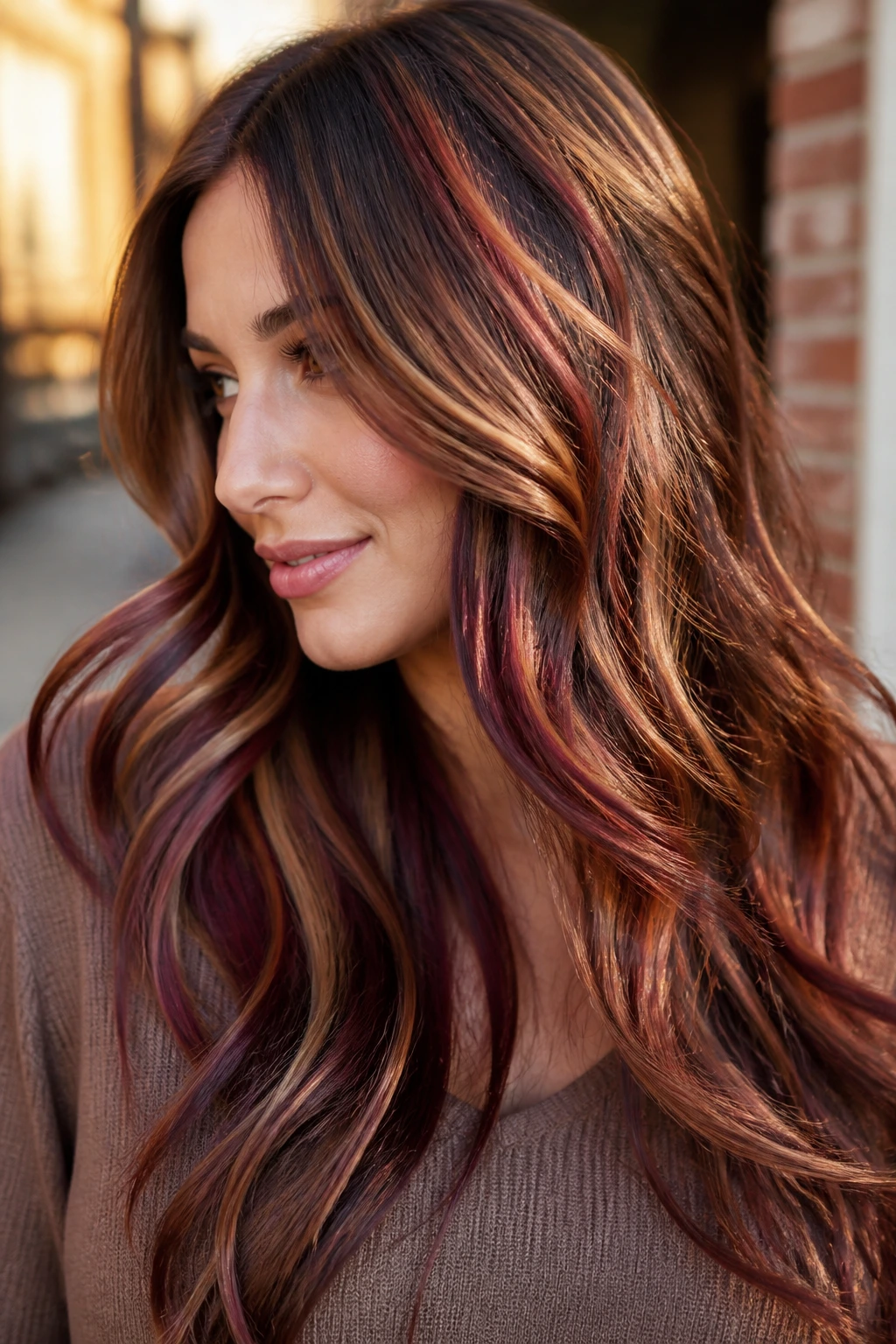
Unlike a cool burgundy look, burgundy caramel ribbon balayage keeps the warmth under control. That sounds small, but it changes everything on brown hair that already leans golden or honey-toned.
The caramel pieces stop the burgundy from going flat. They also keep the hair from looking too red in low light, which is a real risk when the base is warm brown. Ask for thin burgundy ribbons woven between caramel-toned balayage pieces, not a full red overlay. That layering gives the hair some lift and keeps the whole look from reading heavy.
This version is especially good if your skin tone likes warmth and you want the hair to feel soft around the face. It works on shoulder-length cuts, but I like it most on long layers where the ribbons can fall at different angles. The movement matters. Without movement, the contrast can look a little blunt.
7. Merlot Ribbons Through Long Layers
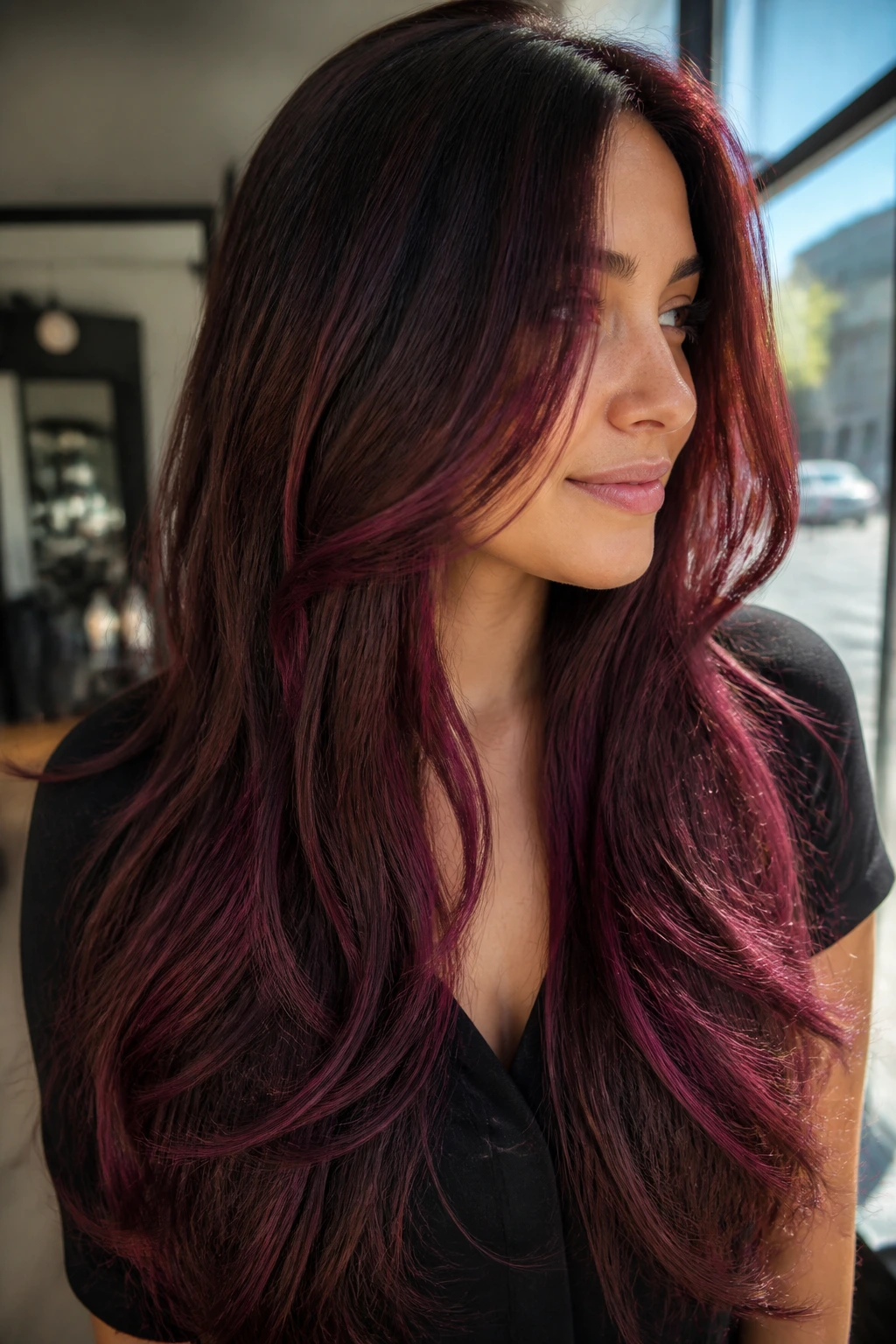
Merlot ribbons through long layers are the burgundy version of a good haircut: they let the movement do half the work. On brown hair, the color sits inside the layers instead of sitting on top of them, and that makes the whole head feel more dimensional.
Where the Ribbons Should Sit
The best placement starts below the cheekbone and runs through the mids and ends. That keeps the face from looking too red all at once. It also lets the upper layers stay brunette, which gives the burgundy more impact when the hair swings.
- Use fine ribbons around 1/4 to 1/2 inch
- Put the strongest pieces on the top layer and the front edge
- Keep the back a shade darker for contrast
- A loose blowout shows the color better than a flat iron finish
Pro tip: if your hair is thick, ask for fewer ribbons that are placed deeper. Thick hair can eat color fast, and a light hand usually looks cleaner.
8. Deep Wine Melt on Espresso Brown
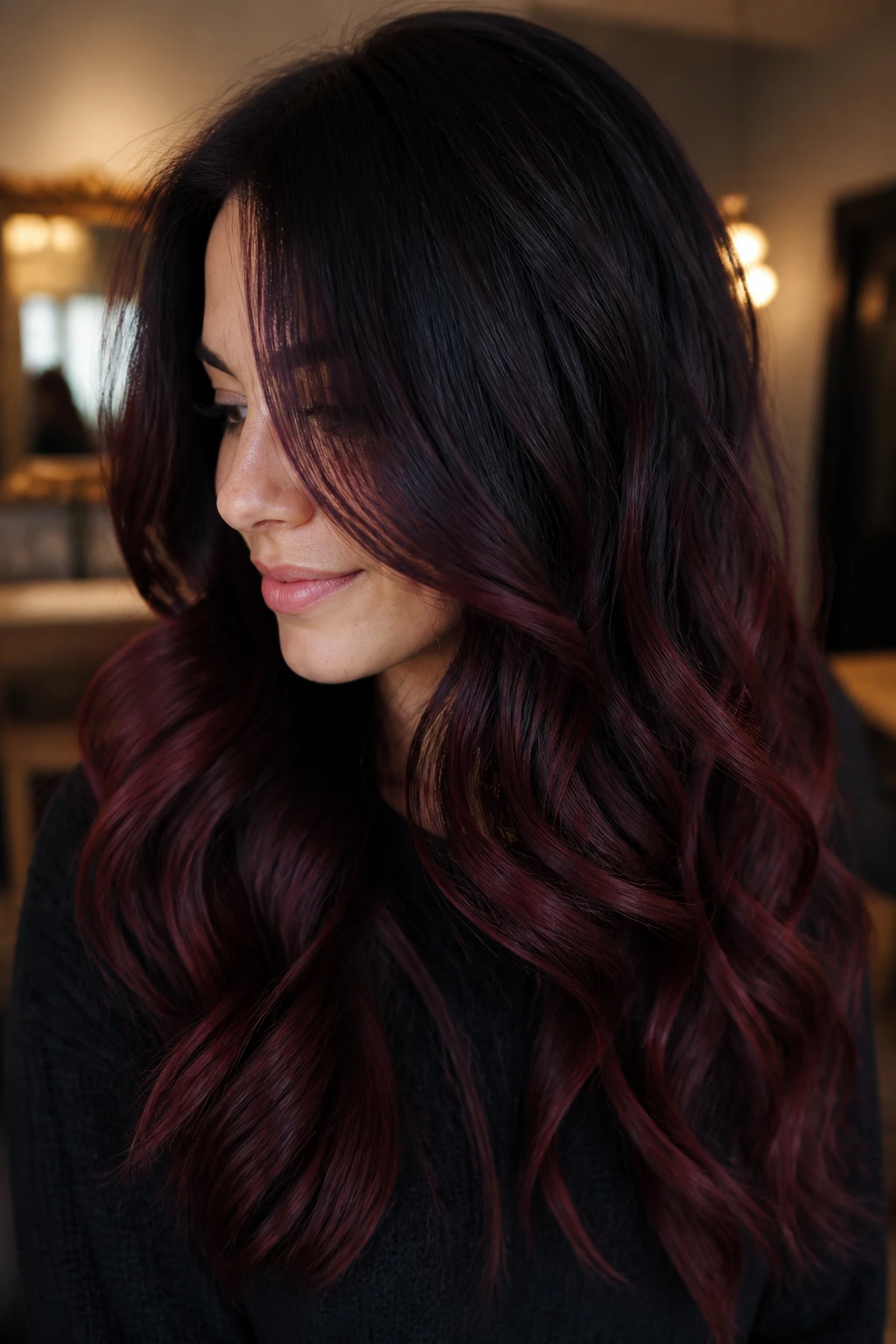
Deep wine melt on espresso hair is the boldest look here, but it is also one of the most forgiving. That sounds odd until you see it. The dark brown base makes the burgundy feel richer, and the melt effect keeps the transition from root to end soft.
The color should start as a near-brunette burgundy at the top and get more wine-toned toward the bottom. That gradient matters. If the lift is too high too early, the look can turn patchy. If it stays too dark all the way through, you lose the point of the burgundy altogether.
A lot of people like this look with long straight hair because the fade is easy to see, but I think it looks even better in soft waves. The bend shows off the color shift in layers. It is moody, but not flat. That is the entire game.
9. Mahogany Burgundy Sweep for Warm Brown Hair
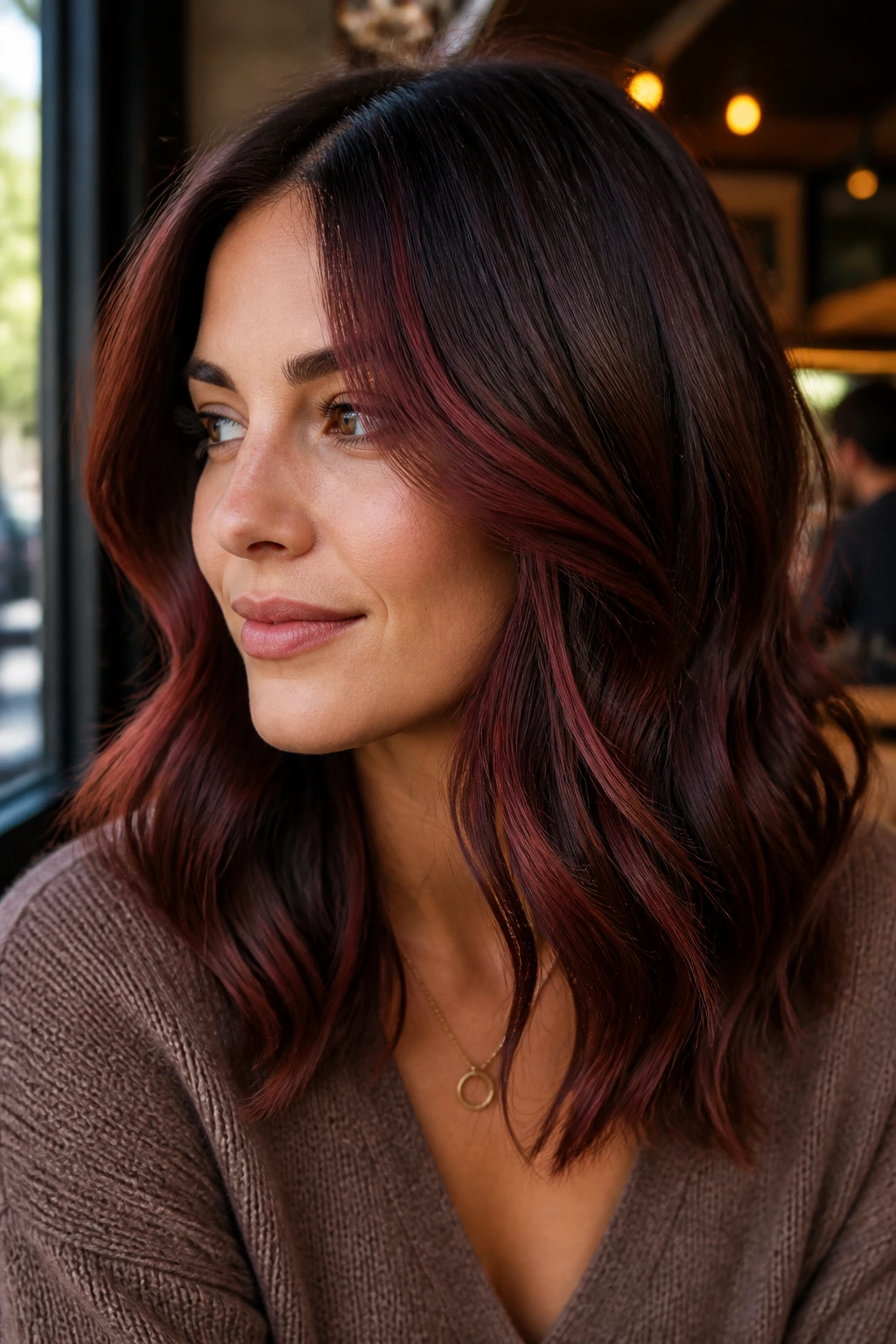
Can mahogany and burgundy sit together without turning muddy? Yes, if the warmth stays controlled. Warm brown hair gives you a head start, but you still need enough red-violet in the formula to keep the color from looking coppery.
How to Keep It from Going Orange
Ask for a mahogany base with burgundy sweep pieces layered on top. The mahogany gives the color depth. The burgundy adds the wine note. If the colorist pulls too much gold into the formula, the whole thing starts drifting toward auburn instead of staying in that deep red-brown lane.
This look works on shoulder-length cuts, especially if the ends are textured. The color sits well in the bend of the hair and gives warm brown hair a richer finish without screaming for attention.
A center part keeps it balanced. A soft side part makes one side feel deeper, which can be nice if you want the face-framing pieces to stay a little quieter.
10. Cranberry Gloss Balayage
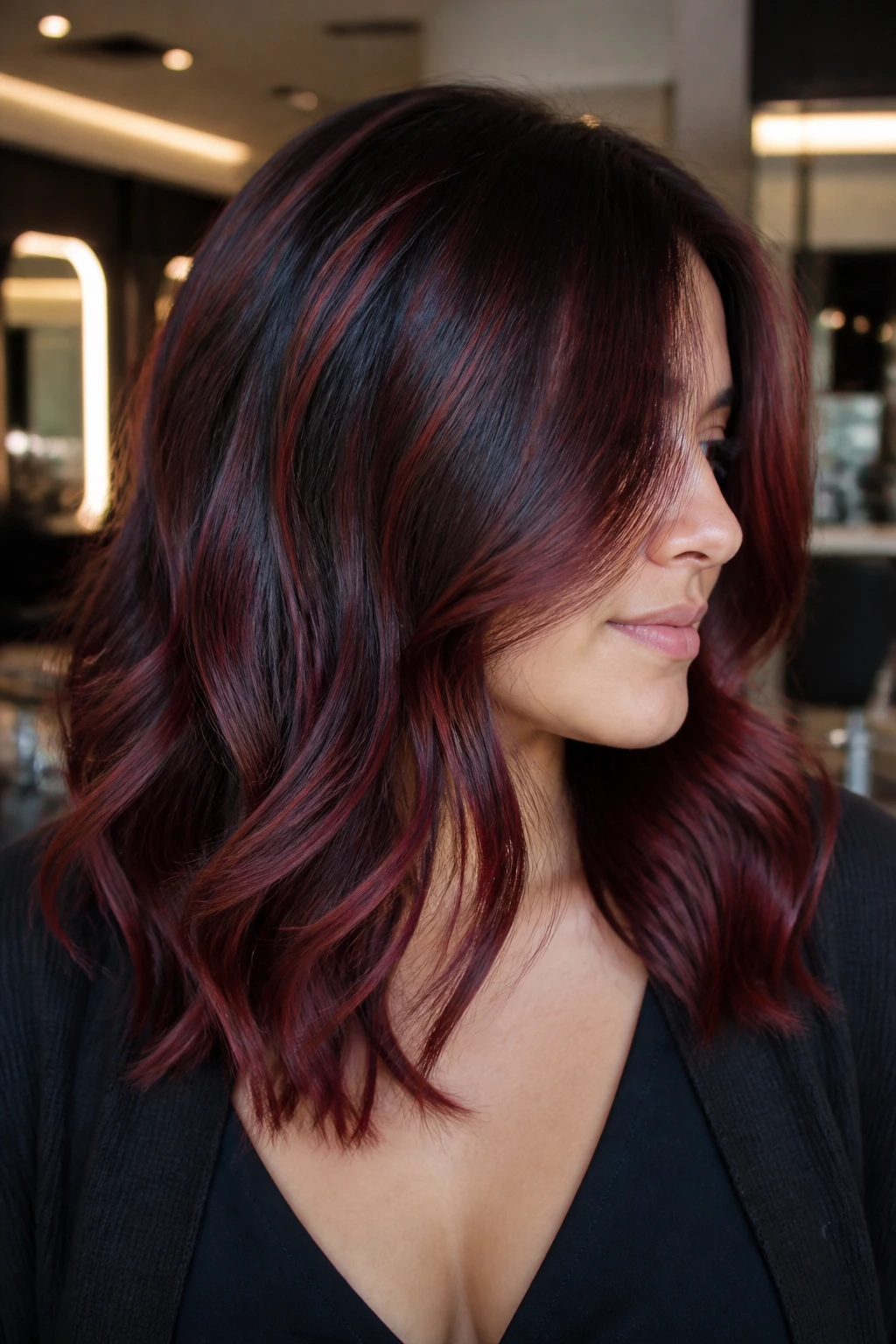
Someone who wants red but hates a hard line usually ends up here. Cranberry gloss balayage gives brown hair a fresh sheen without making the color look painted on.
The gloss does a lot of the heavy lifting. Instead of a thick, obvious red panel, you get a translucent cranberry layer over hand-painted pieces. That means the brunette base still shows through, and the color can fade more gracefully. It is a good choice if you like to refresh with a toner or gloss every few weeks instead of committing to a more saturated red.
- Best when the burgundy is kept mid-length to ends
- A clear or demi-permanent gloss keeps the finish shiny
- Looks especially good on layered lobs
- Works well if you want a red tone that feels softer in indoor light
One more thing: cranberry can look brighter on porous ends, so a trim before coloring keeps the finish more even.
11. Violet-Burgundy Balayage for Cool Brown Hair
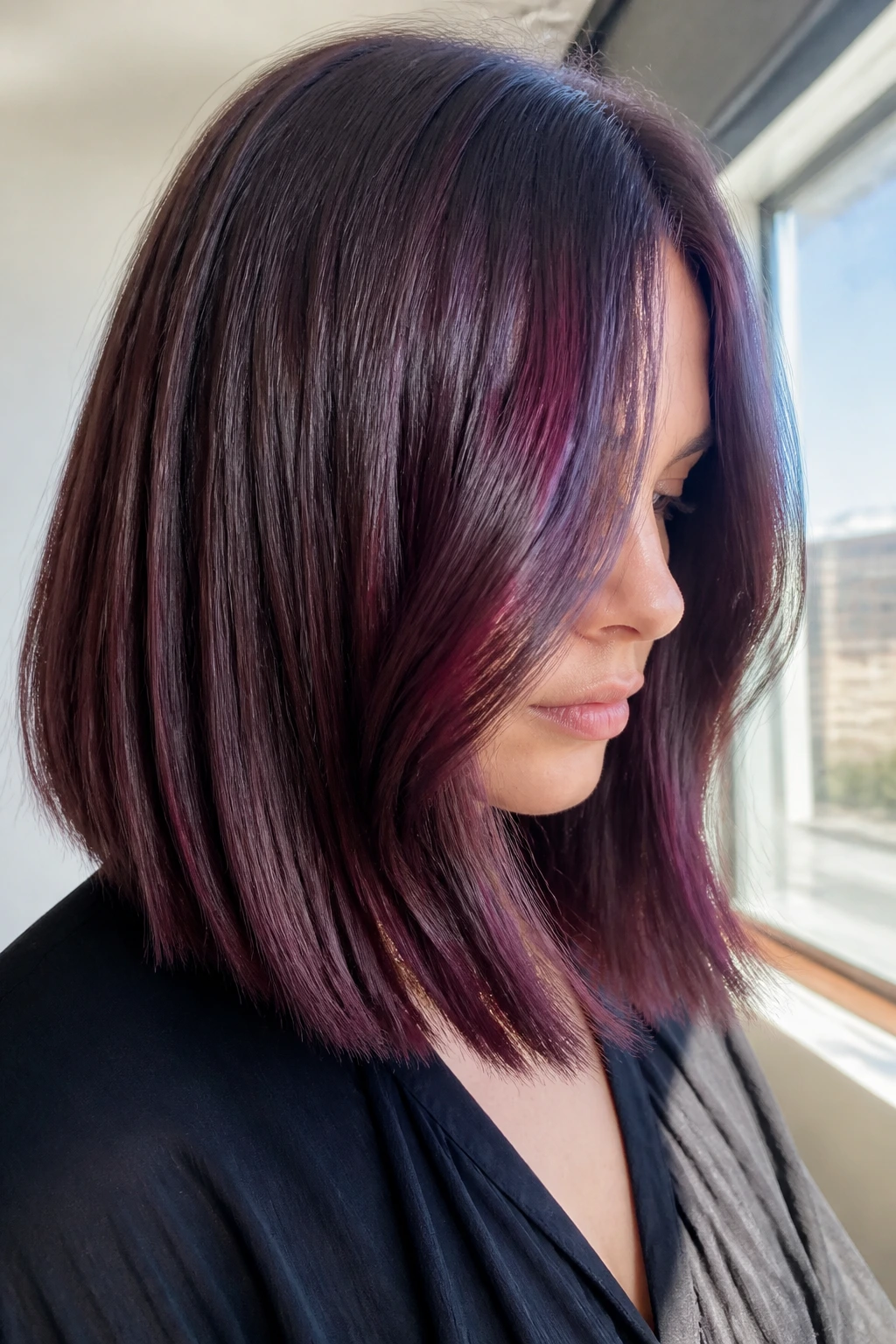
Violet-burgundy on cool brown hair is the version I reach for when I want the color to feel smoky, not sweet. The purple note cools down the red, and that is what keeps the whole thing from drifting into warm cherry territory.
The best brown base for this look is one that already leans ash, mocha, or cool chestnut. On those shades, the burgundy reads as deep wine in the shade and more violet near a window. That shift makes the color feel layered instead of one-note.
It also looks sharp with blunt cuts. A straight lob or a collarbone-length cut gives the cool burgundy room to sit cleanly. If the hair is heavily layered, the violet can get scattered too much and lose its edge. Keep the formula richer at the mids and softer at the ends, and the whole thing stays polished.
12. Burgundy Peekaboo Layers
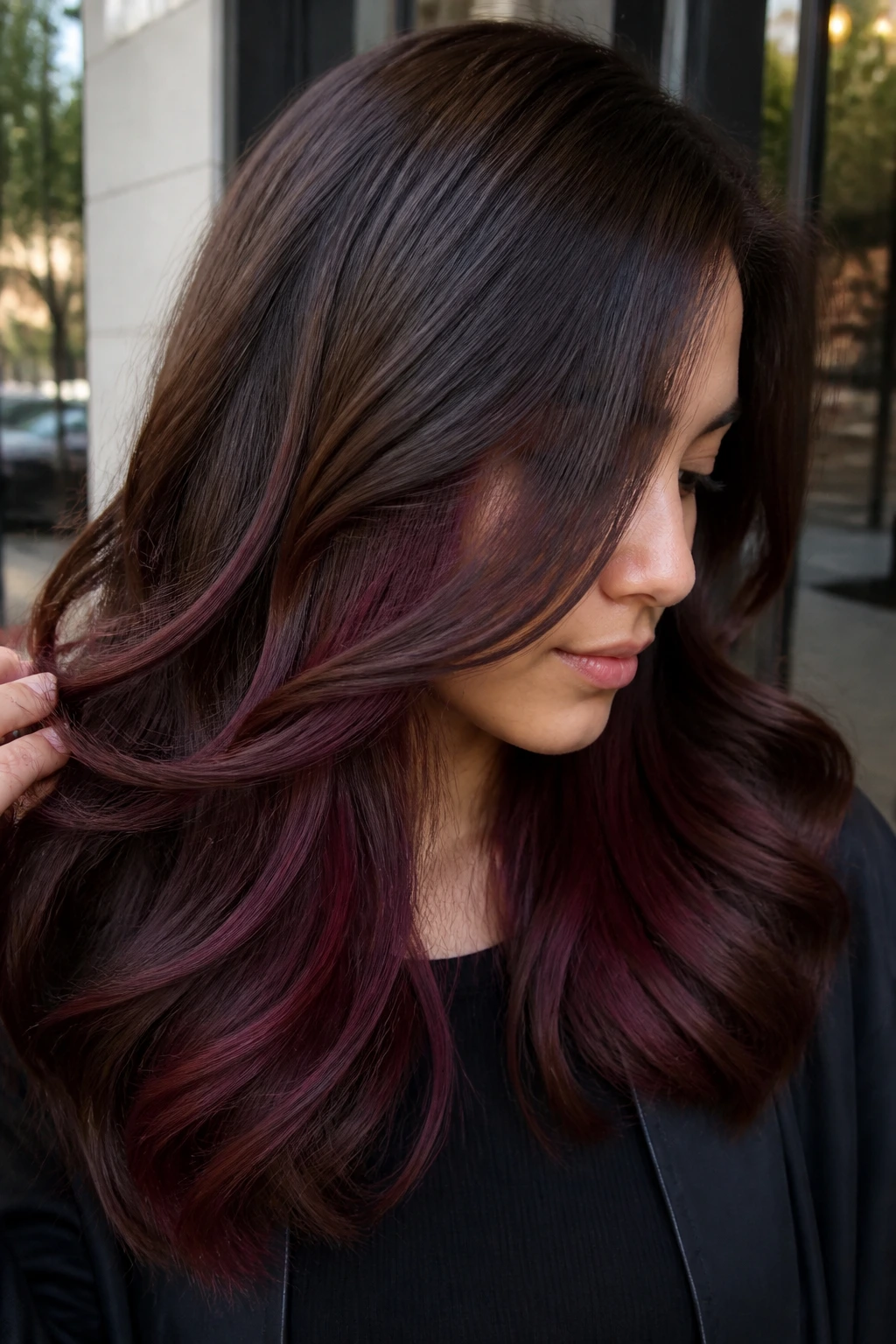
Peekaboo burgundy layers are quieter than face-framing money pieces, and that is the whole point. The color sits under the top layer of brown hair, so it only shows when the hair moves, swings, or gets pinned up.
That hidden placement works well for anyone who wants color without a full-time commitment. On a brown base, the burgundy underneath creates a nice flash of color from the side or at the ends of a braid. It is the sort of look that rewards motion.
Why It Works for Work-Friendly Color
The top layer keeps the hair looking mostly brunette, which helps if you need the color to stay subtle in daily life. The red-violet pieces underneath still give you something interesting when the hair is worn half-up or tucked behind the ears.
If you want more impact, ask for peekaboo color on the lower third of the head, not just a thin strip under the crown. That gives the burgundy more room to show without taking over the whole haircut.
13. Auburn-Burgundy Balayage for Light Brown Hair
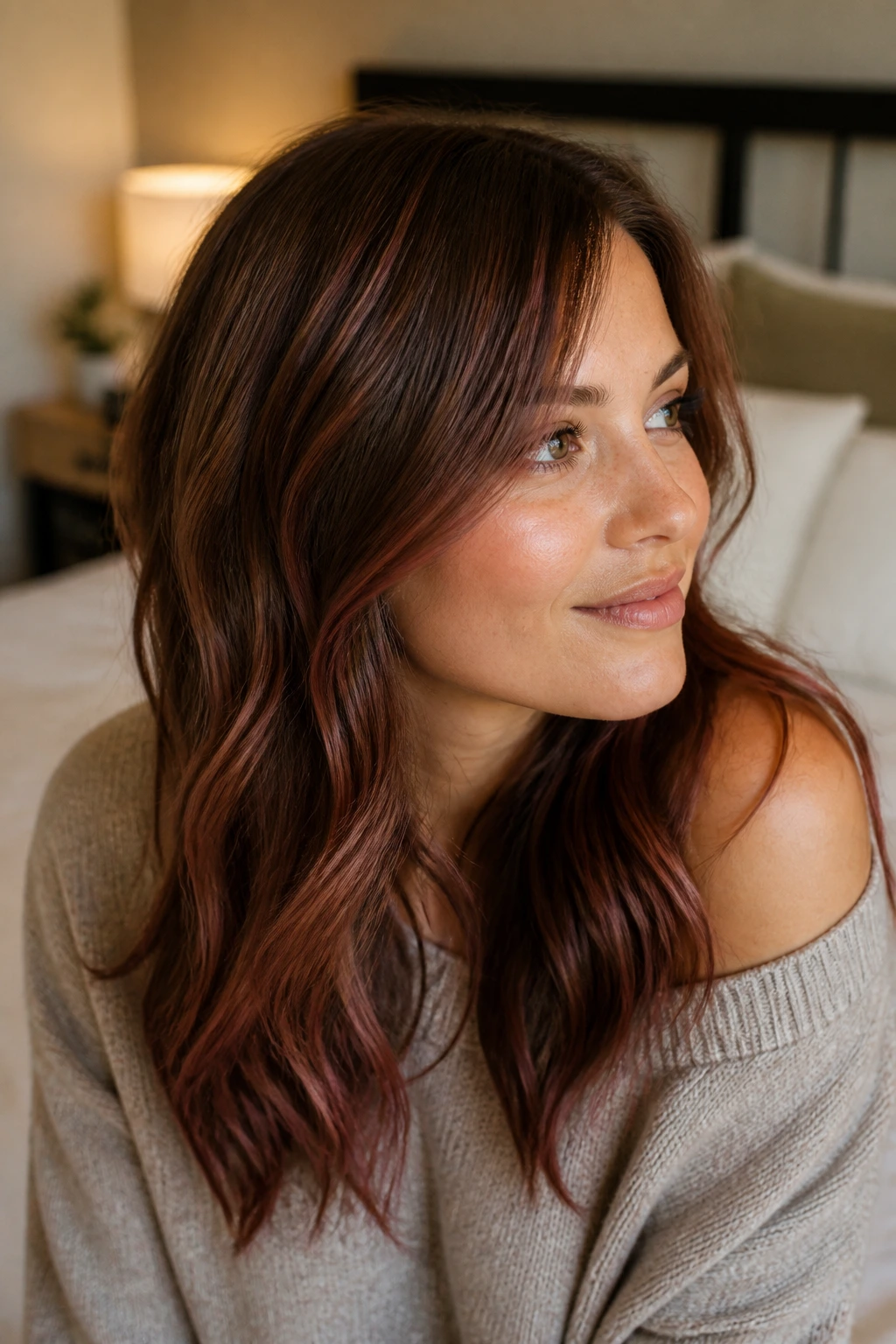
Light brown hair takes burgundy differently from deeper brunettes. It grabs pigment faster, which means the final color can run brighter if you are not careful. Auburn-burgundy balances that out by softening the red with a brown-red base.
Why the Lighter Base Changes Everything
Because the base is lighter, you do not need as much lift to see the color. A few painted ribbons around the crown and through the ends are enough. If you overdo the saturation, the hair can tip into copper. If you go too dark, the light brown base disappears and the whole point of balayage gets lost.
- Ask for fine ribbons rather than chunky panels
- Keep the front pieces a half-shade brighter
- Use a warm brown-red glaze on the ends if the color needs softening
- Works well with long layers or a softly textured lob
This is one of those looks that looks best after a gentle wave. The bend lets the auburn and burgundy show together instead of all at once.
14. Red Wine Contour Balayage
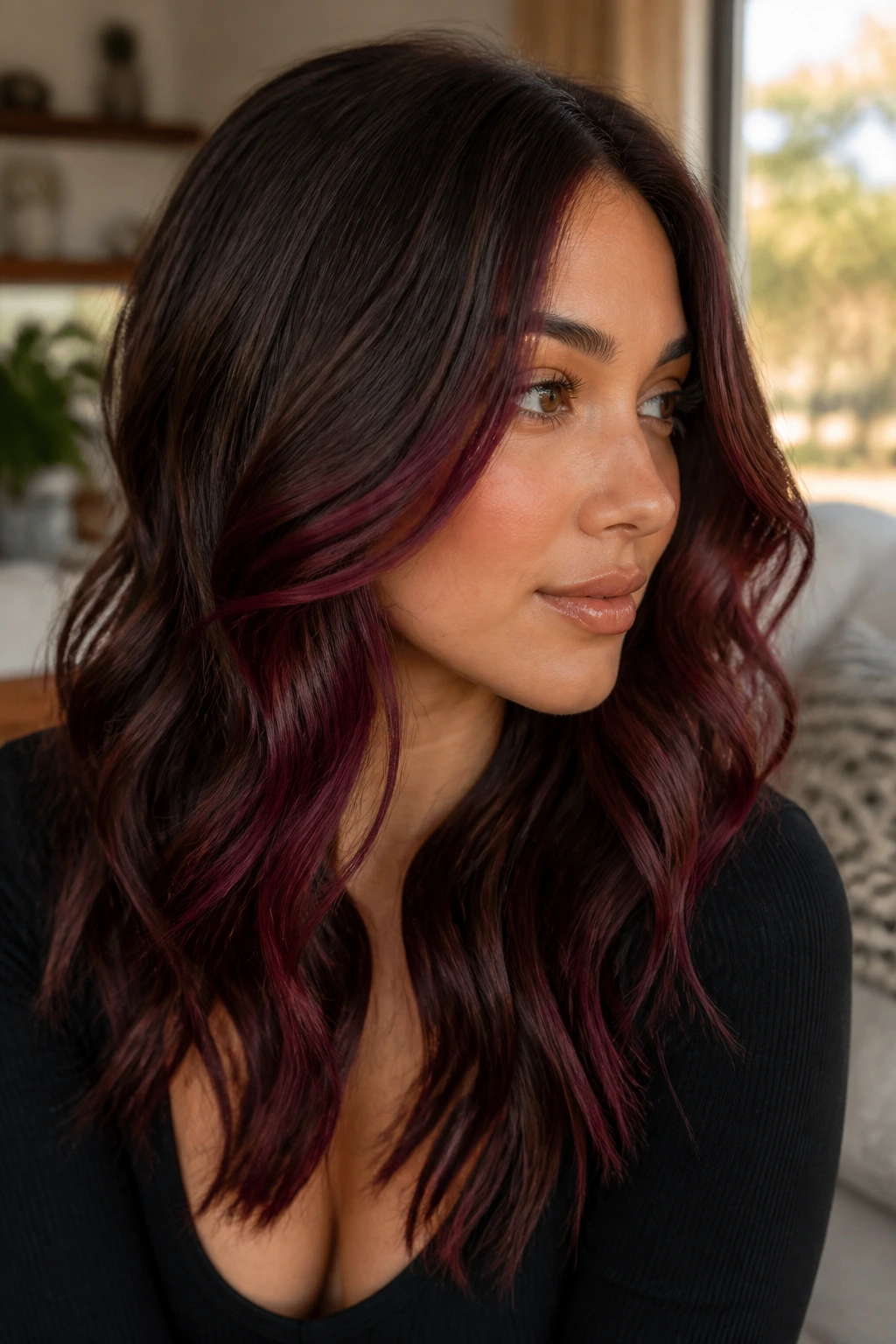
Red wine contour balayage can change the shape of a haircut. That sounds dramatic, but the placement does the work: deeper burgundy around the cheekbones, softer brown through the crown, and more light near the ends.
By framing the face with wine-toned pieces at the right height, you can pull the eye upward and inward. It is a smart move for layers that need a little more definition. On brown hair, the contour effect looks cleaner when the front pieces start around the jawline instead of right at the root.
The rest of the hair should stay fairly dark so the color around the face has a job to do. If everything is bright, the contour disappears. If the front is too thick, it starts looking like a streak instead of a shape.
This one is especially nice on medium-length hair, where the front pieces can drape around the jaw and neck. The color does not need to be loud to change the silhouette.
15. Burgundy Balayage Bob
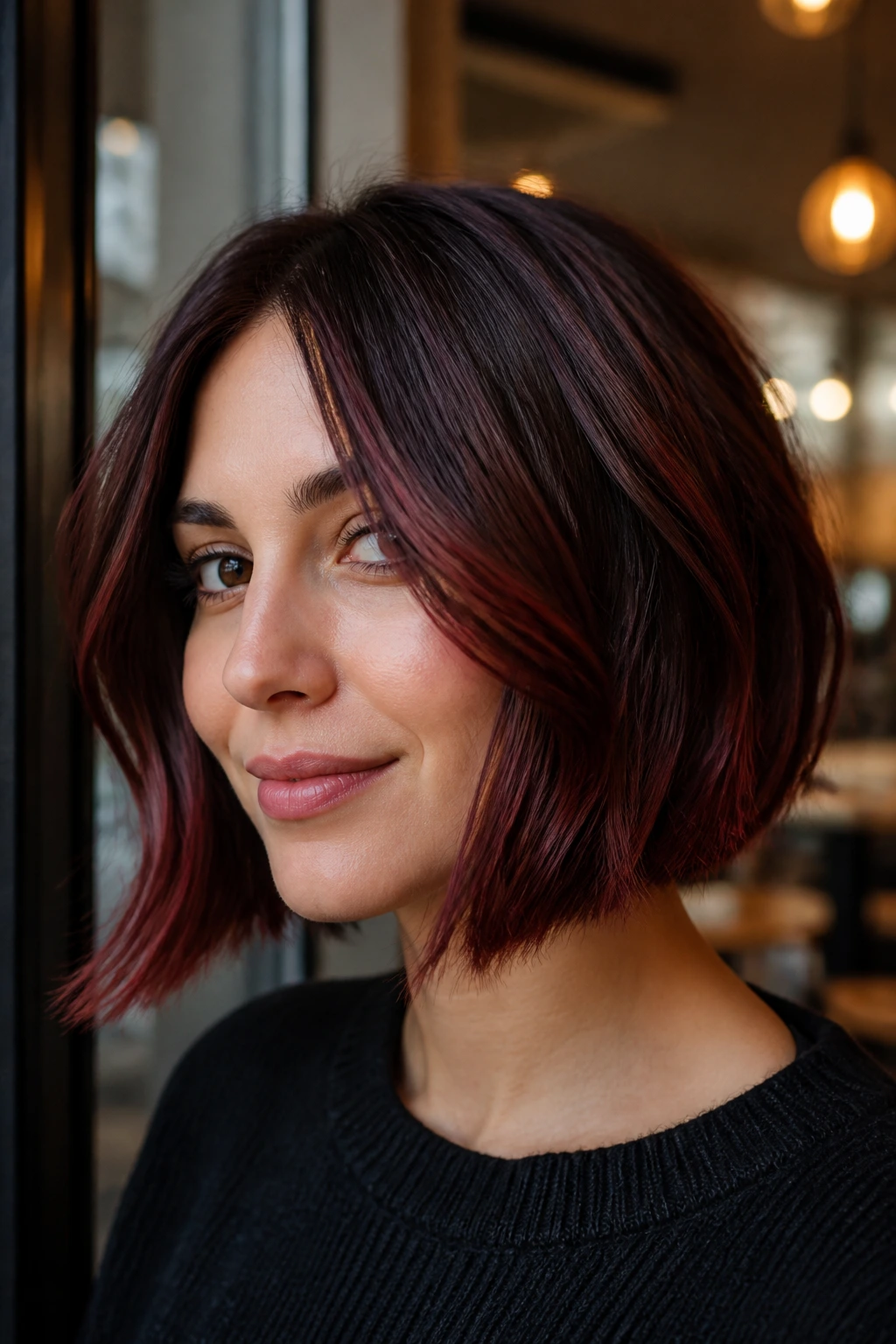
Is a burgundy balayage bob too much on brown hair? No. The cut does half the work for you. A bob gives the color a clean edge, which makes burgundy look sharper and more deliberate.
The best bob version keeps the burgundy low and controlled. Too many thick panels and the whole cut turns busy. A few narrow ribbons around the perimeter, plus a softer wash through the back, usually looks better. The blunt line of the bob helps the color read as intentional, while the red-violet tone keeps the short cut from feeling plain.
The Cut Does Half the Work
A chin-length bob can carry a stronger burgundy than a long layered cut because the shape is already bold. If the hair is straight, the color looks crisp. If it is slightly bent under with a round brush, the burgundy gathers at the ends and looks richer.
This is one of the easiest ways to wear burgundy on brown hair without going full red all over. Short hair handles contrast well.
16. Copper-Burgundy Hybrid Balayage
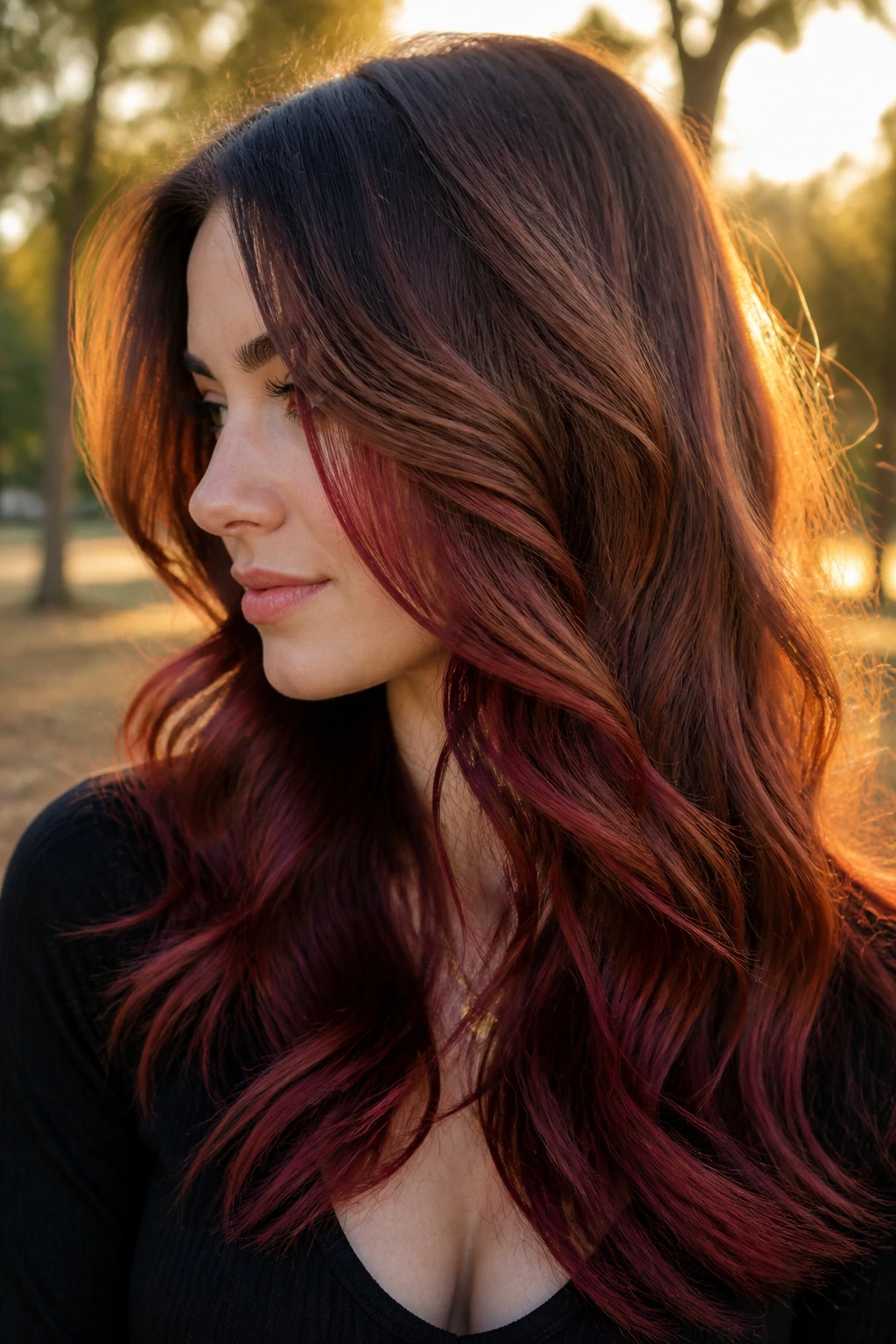
Copper-burgundy hybrid balayage is for warm brown hair that wants energy without going too orange. The copper wakes up the brown base, while the burgundy keeps the color from becoming flat or pumpkin-toned.
I like this mix when the client wants red but does not want a cool result. The best version places copper closer to the surface and burgundy underneath, so the hair has two red notes instead of one. That layering gives the color movement, especially on waves or loose curls.
- Best on golden brown or chestnut brown bases
- Ask for copper at the surface and burgundy in the lower layers
- A soft wave helps both tones show at once
- A gloss every 6 to 8 weeks keeps the red family from looking dull
Watch the balance: too much copper and the whole thing turns brassy. Too much burgundy and you lose the warmth that makes this combo fun.
17. Shadow Root Burgundy Melt
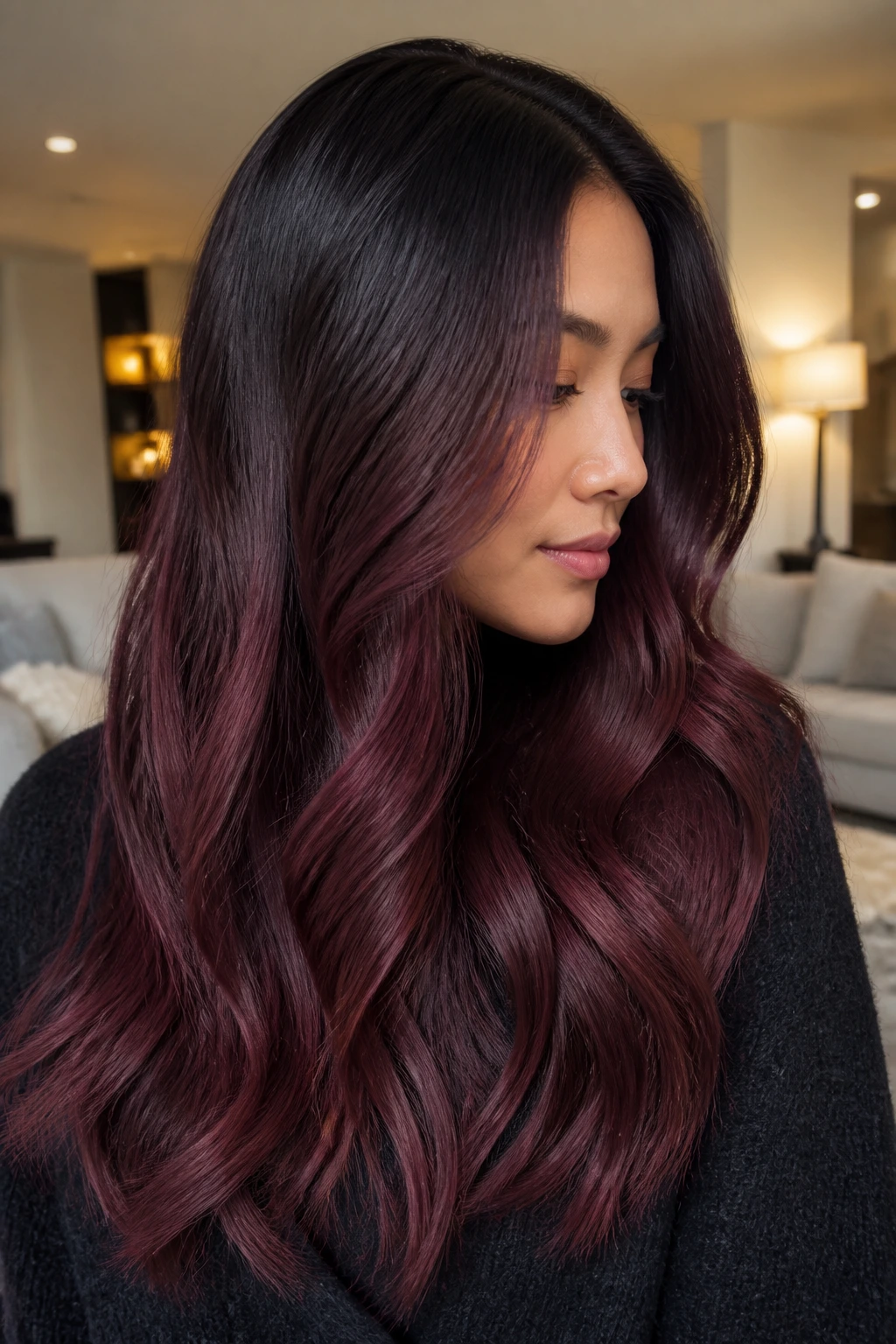
A shadow root burgundy melt is the low-maintenance version people often want after trying brighter red pieces. The root stays darker—usually a shade or two deeper than the mids—so the grow-out looks soft instead of obvious.
That root smudge is the whole reason the color lasts visually. On brown hair, it lets the burgundy start lower and blend upward without a hard line. The ends still get the richest color, but the top remains close to your natural base. It is easier to live with, and it is easier to style when you do not want a lot of contrast near the scalp.
This look works especially well on long hair that is worn down often. If you wear your hair up all the time, you may want more visible pieces around the front, because the root melt can disappear in a bun or ponytail. Still, for someone who likes soft regrowth and a deep wine finish, this is a very solid choice.
18. Dimensional Burgundy with Babylights
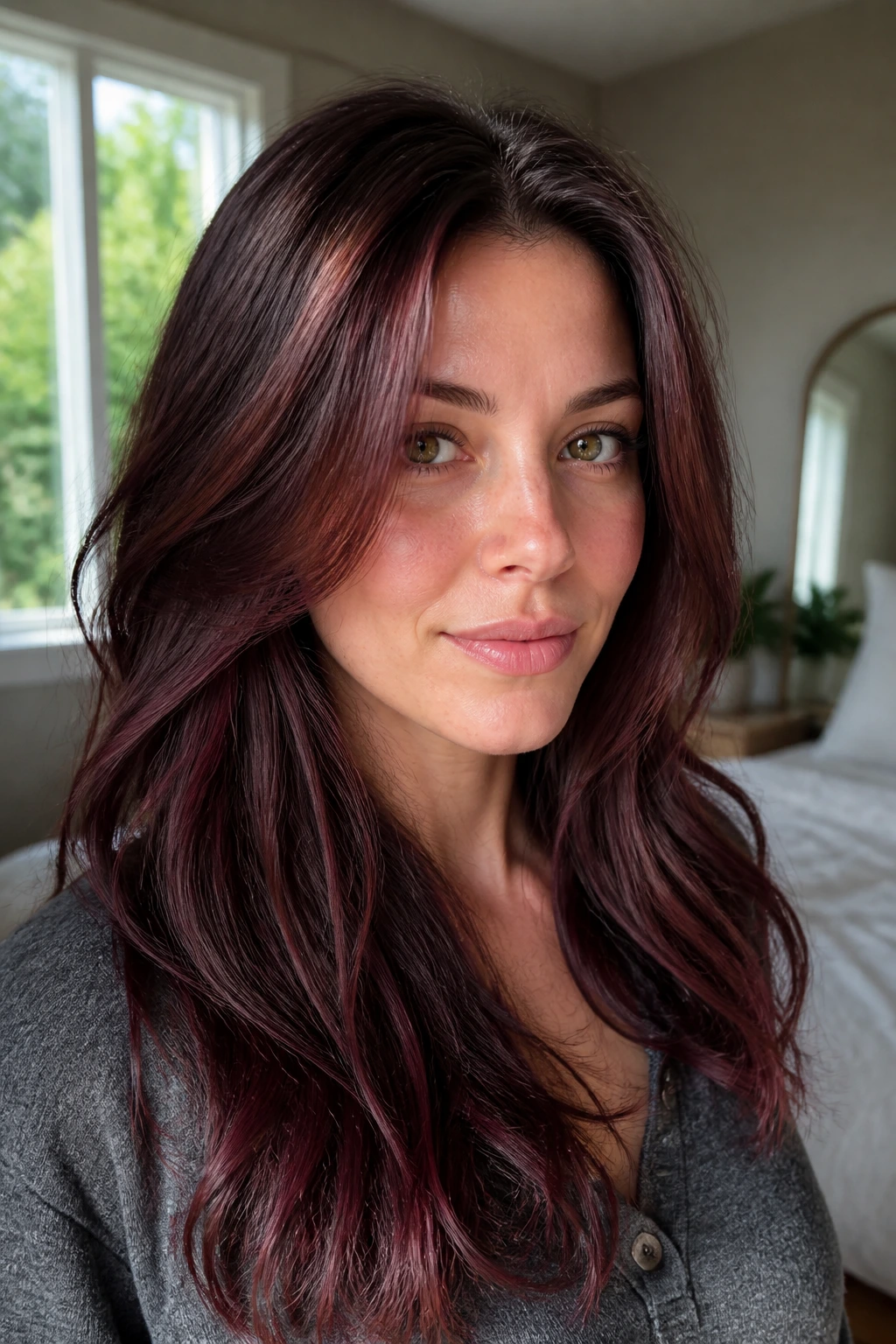
Dimensional burgundy with babylights is the one to pick if your hair is fine and you need the color to create the illusion of more movement. Babylights are tiny, thin highlights—often woven so fine they almost disappear until the light shifts. On brown hair, they keep the burgundy from sitting in one heavy block.
Unlike thick ribbons, babylights give you several shades at once. That makes the hair look fuller, especially at the crown and around the part. The burgundy can sit over a few lighter strands and a few darker ones, which gives the final result more texture.
This look works best when the colorist uses fine placement around the face and crown, then leaves the underlayer deeper. It is a good choice if you want burgundy that feels detailed rather than bold. If the hair is thick, the same idea still works—you just need a few wider ribbons mixed in so the color does not disappear.
19. Midnight Plum Balayage on Almost-Black Brown Hair
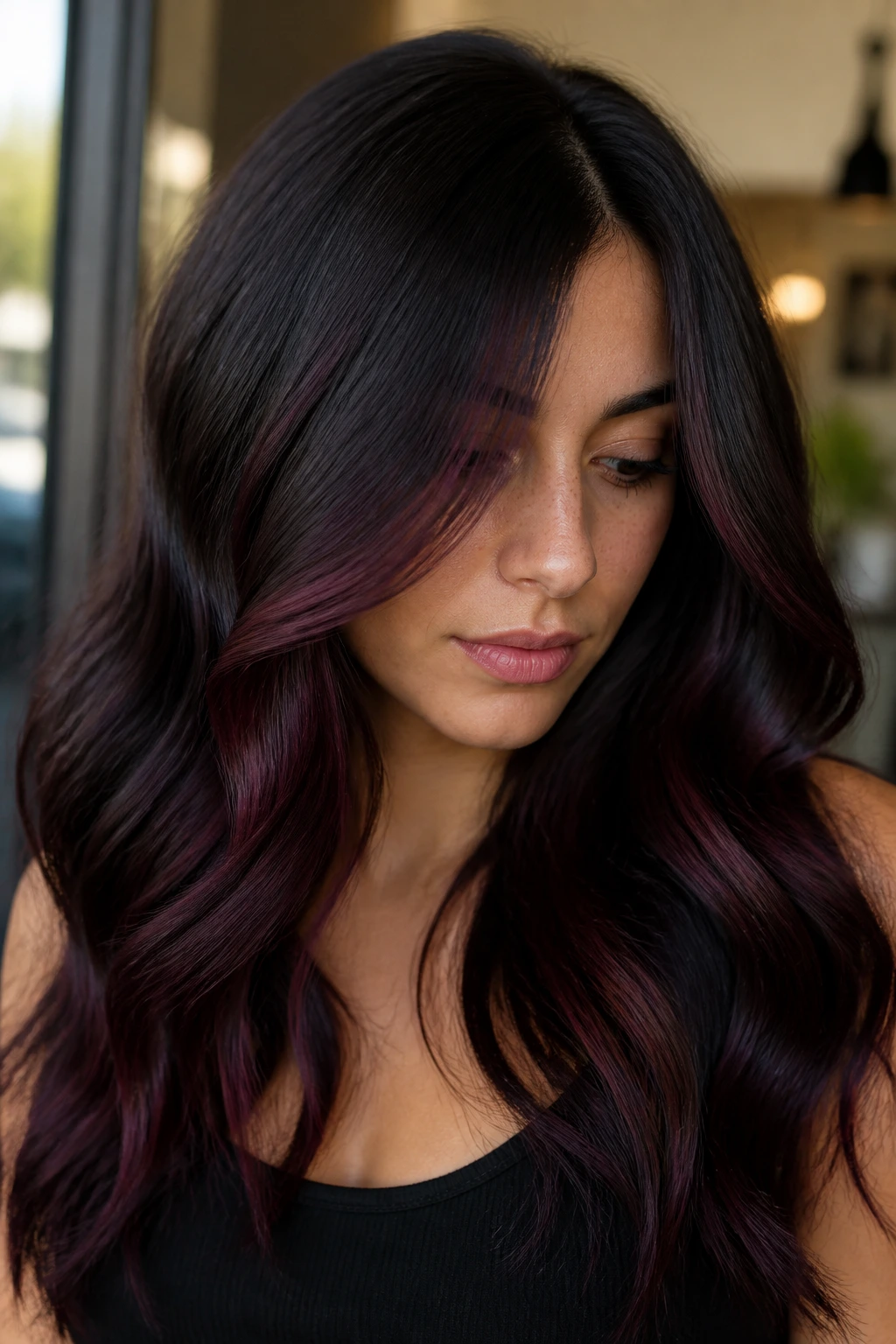
Midnight plum balayage on almost-black brown hair is for people who want color that only reveals itself in pieces. The base stays deep, and the plum shows up mostly on the surface and the ends. In a flat finish, it can look nearly brunette. In motion, it changes.
How to Make the Color Show
The secret is not more color everywhere. It is strategic placement. Put the plum where the hair bends—around the face, through the long layers, and on the final 2 to 4 inches. That is where the eye notices the shift first.
- Use thin surface ribbons so the plum does not disappear
- Keep the root close to natural brown
- Ask for a blue-violet base if you want the plum cooler
- Style with soft bends or loose waves to separate the color pieces
Pro tip: if the hair is very dark, a clear gloss over the plum can help the tone stay shiny instead of looking dusty.
20. Burgundy Balayage for Curly Brown Hair
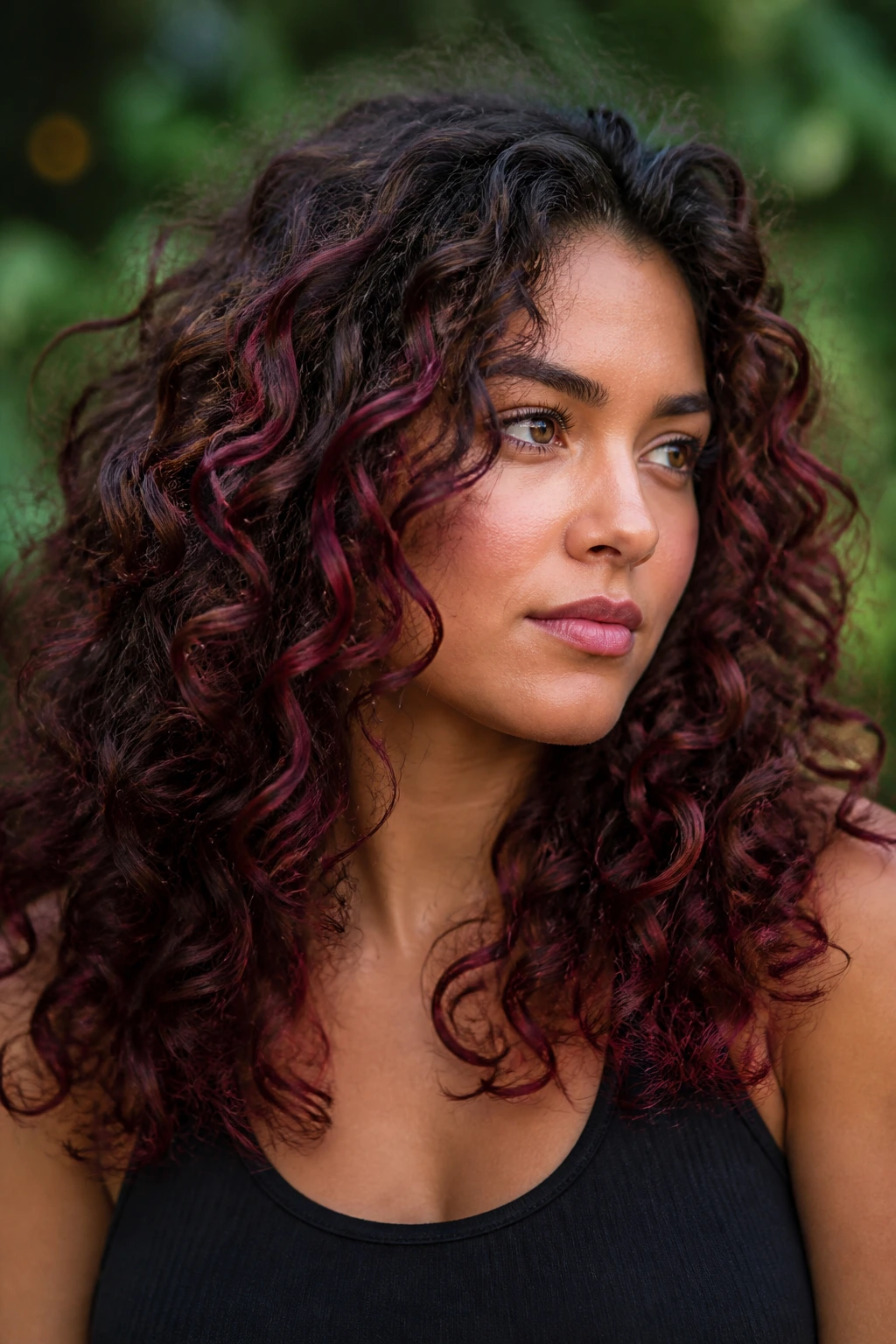
Curly brown hair takes burgundy better than straight hair in one big way: the texture breaks up the color naturally. Each curl catches a little different piece of the balayage, so the burgundy feels woven in instead of painted on.
That makes placement more important, not less. Curly hair should have the color painted on the outer curve of the curl pattern, with a few deeper pieces underneath for contrast. If the burgundy is placed only on the top layer, the color can disappear when the curls shrink up. If it is placed too heavily, the whole shape can look overloaded.
I like this look on medium to deep brown curls because the burgundy can read as plum, wine, or cherry depending on the light and the curl size. It is one of the few styles where a little irregularity is a good thing. The pattern itself does the blending.
21. Burgundy Face-Frame and Ends Combo
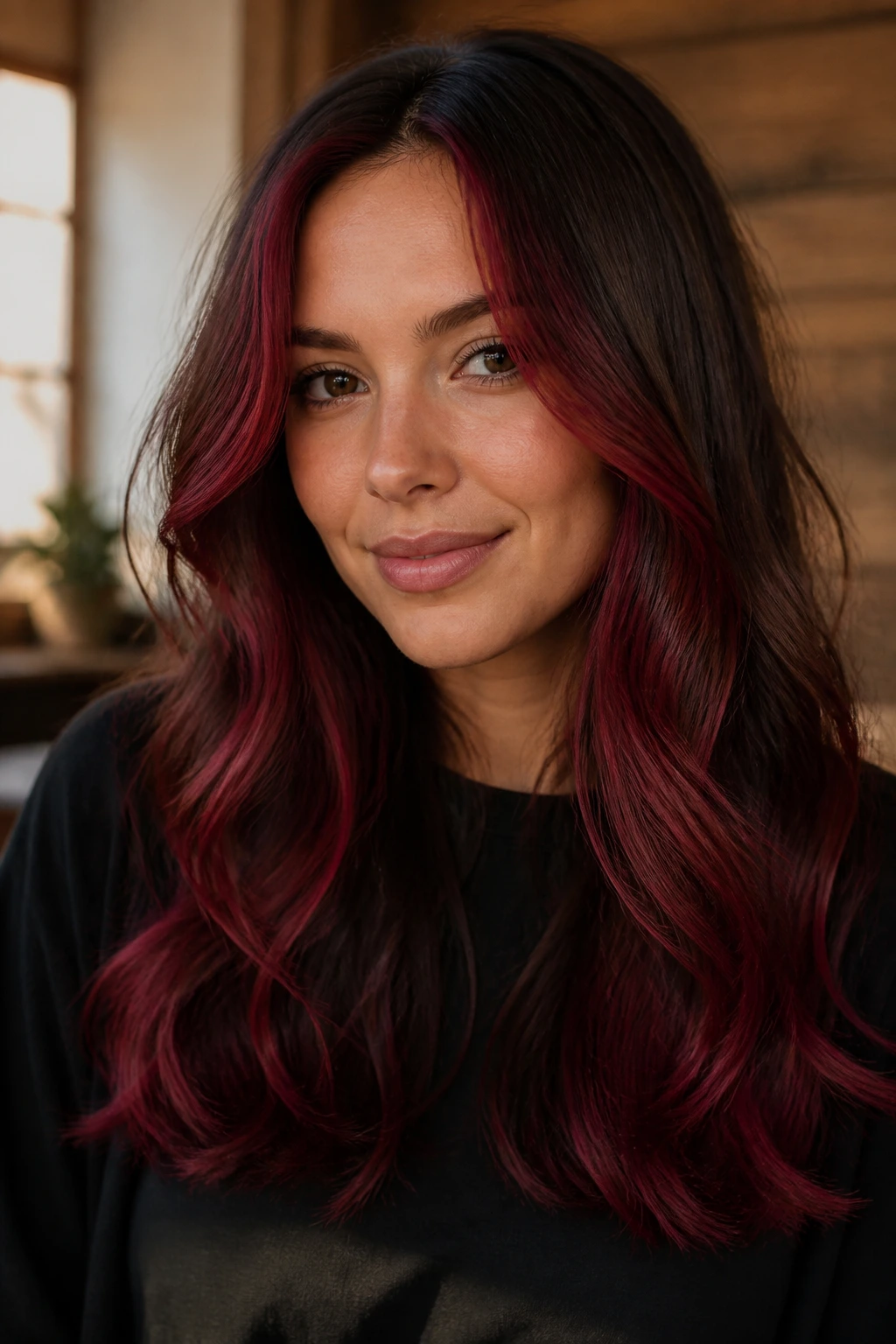
What if you want burgundy only in the front and at the ends? Then this is the one. The face-frame and ends combo gives you two clear zones of color, and the brown middle stays mostly intact.
Why This Stays Wearable
The front pieces catch attention first, while the ends keep the color from feeling too isolated. That balance matters on brown hair because a single bright area can look unfinished. By repeating the burgundy at the bottom, the eye gets a second place to land.
This setup is good for people who tie their hair back a lot. The face frame stays visible near the hairline, and the ends show even in a braid or low knot. It also works on medium-length cuts, where the color can travel from the front to the bottom without much filler in the middle.
Ask for the front pieces to start a little below the root and the ends to get the strongest saturation. That keeps the grow-out softer and the overall look more relaxed.
22. Bordeaux Balayage with Easy Grow-Out
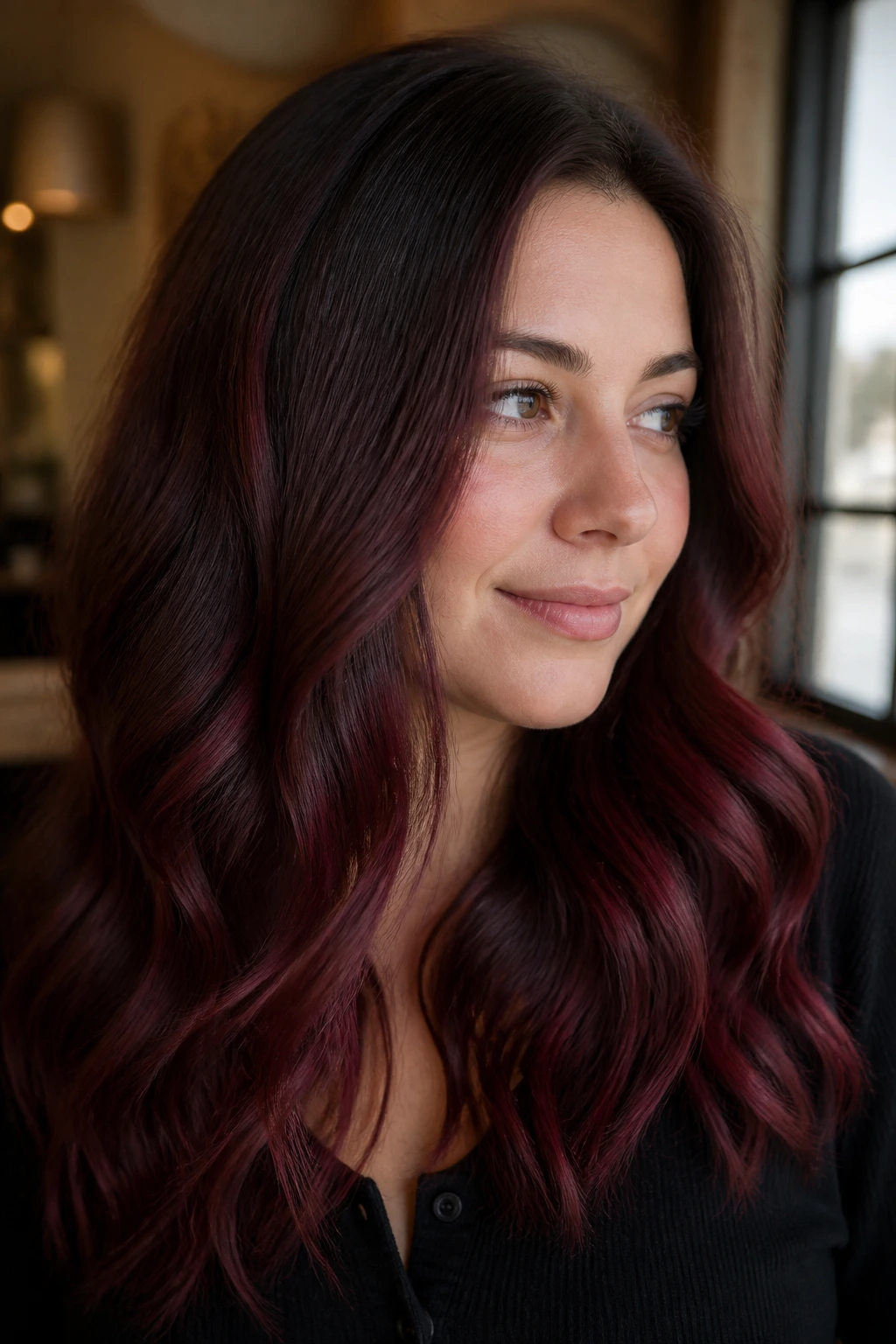
Bordeaux balayage with easy grow-out is the one I’d pick for someone who wants burgundy brown hair without babysitting it every few weeks. The color sits in that deep wine range, so it can fade into the brunette base without looking messy.
The key is leaving enough of the natural brown untouched at the root and through the interior. That gives the bordeaux room to breathe. When the hair starts to grow, you still have a clean line of color placement instead of an obvious stripe near the scalp. It is a smart choice for long layers, mid-length cuts, and anyone who likes to wear hair down most of the time.
If you want the finish to stay rich, a gloss helps keep the red-violet note from drying out. If you want the look softer, ask for the burgundy to be painted mostly through the mids and lower third. Both versions work. The difference is how much drama you want on day one versus how easy you want the grow-out to be.
