



Pink on brown hair has a trick blond hair never gets: the brown gives it depth before the color even lands. A good pink balayage for brown hair can look smoky, rosy, berry-dark, or almost metallic, and that shift happens because the base is doing part of the work.
That’s why the same pink can look sweet on one brunette and rich on another. On dark brown hair, pink tends to read deeper and moodier. On medium brown, it softens into blush, rose gold, or peach. On warm chestnut, it can go straight toward sunset tones if the lightener is placed with a light hand.
That range is the fun part.
The looks that work best are rarely the loudest ones. They’re the ones where the pink is painted in ribbons, melted through the mids, tucked under layers, or kept mostly at the ends so the brown still feels like the anchor. Done well, it looks intentional without feeling stiff, and it grows out in a way that doesn’t scream for a touch-up every minute.
1. Rose Gold Ribbon Balayage
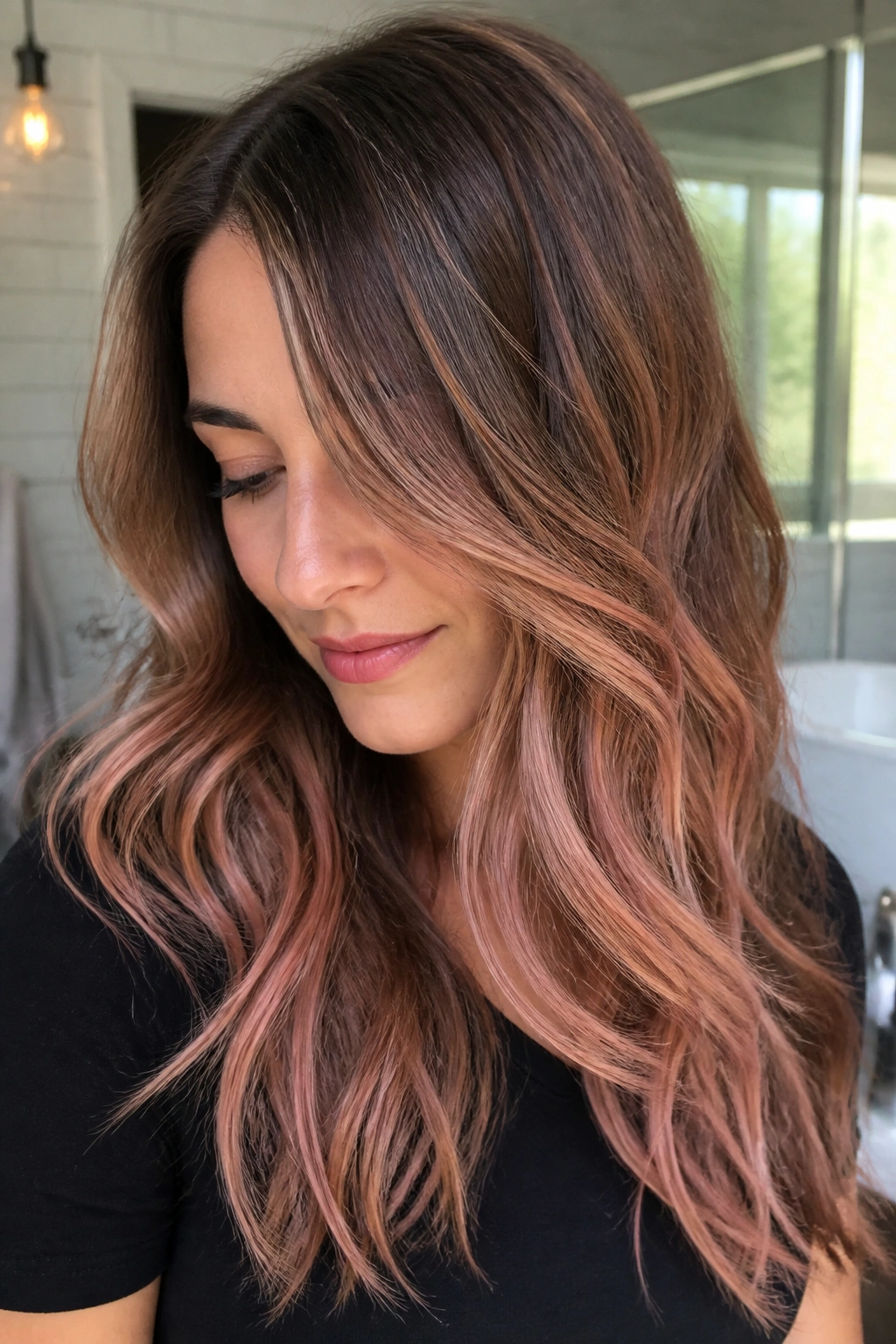
Rose gold is the easiest pink-brown crossover if you want something soft but still obvious enough to get noticed. The pink leans warm, the gold keeps it from looking icy, and brown hair gives the whole thing a deeper finish than it would ever have on blonde.
Why It Flatters Brown Hair
The best version starts with fine, hand-painted ribbons rather than big blocks of color. Those ribbons sit through the mid-lengths and ends, so when the hair moves, the pink flashes instead of sitting there like a stripe. On level 5 or level 6 brown hair, the shade reads like rosewater with a copper edge.
That warmth matters. Brown hair can swallow pastel tones if the lift isn’t clean enough, so rose gold is forgiving in a way baby pink is not. It also looks good in loose waves, where the darker base and lighter strands twist together and show off the dimension.
- Ask for thin ribbons around the face and a few scattered through the lengths.
- Keep the root area deeper with a soft shadow, not a hard line.
- Style with a 1-inch curling iron and brush the waves out a little.
- Refresh the tone every 6 to 8 weeks if you want the pink-gold balance to stay clear.
Best tip: keep the pink warm, not candy-bright. That’s what makes this one feel lived-in instead of costume-y.
2. Dusty Pink Caramel Balayage
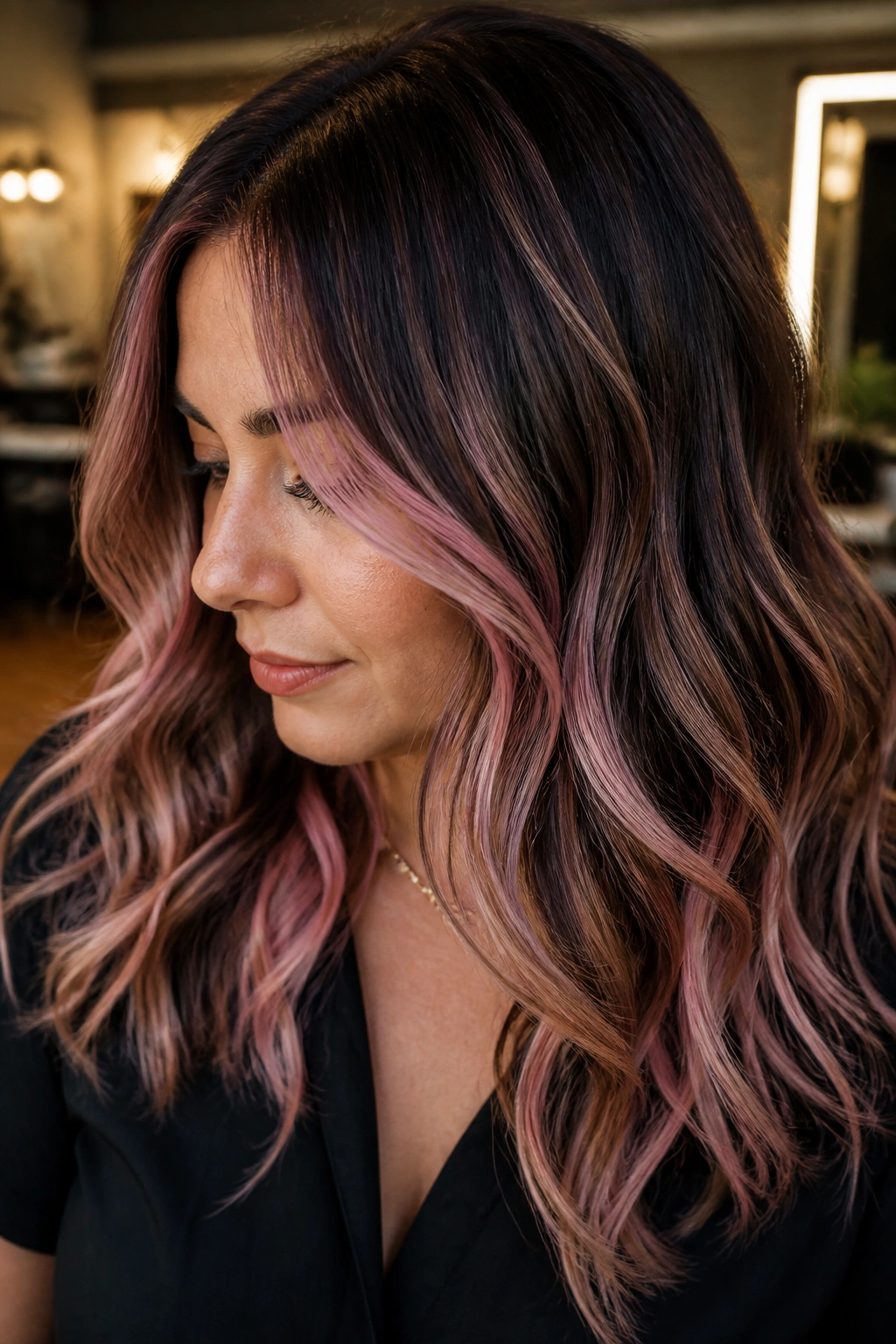
Dusty pink and caramel get along better than most people expect. The caramel keeps the brown base cozy and the pink stays quiet, almost powdery, so the whole look feels softer than a bright fashion shade.
This one is for someone who likes color but doesn’t want to announce it from across the street. On chestnut or medium brown hair, the dusty pink usually sits on the lighter ribbons and fades into a beige-rose tone after a few washes. That fade is not a flaw. It’s part of the appeal.
The nicest thing about this look is how forgiving it is around grow-out. The darker caramel pieces blend back into brown roots without a harsh edge, and the pink doesn’t need to stay loud to keep the style interesting. It’s one of those colors that looks even better when the hair isn’t freshly done, which is rare and kind of refreshing.
A flat iron can make it feel cleaner, but a soft wave gives it more movement. If your hair is layered, the color picks up little flashes on the shorter pieces first, then settles into the longer lengths.
3. Bubblegum Money Piece on Dark Brown Hair
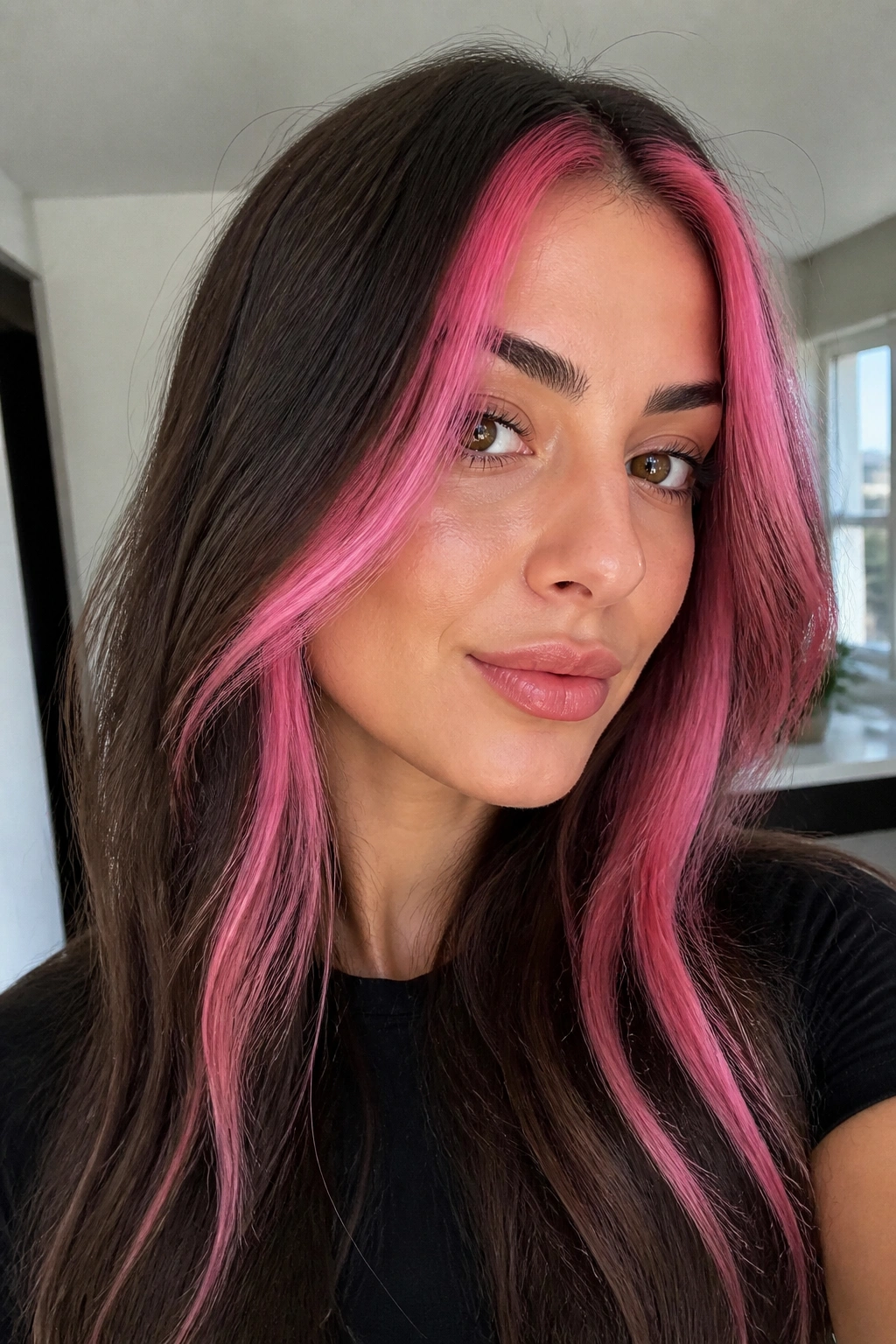
Want pink without committing to the whole head? Start at the front. A bubblegum money piece gives dark brown hair a sharp, playful frame while leaving the rest of the color story alone.
How to Ask for It
Tell your colorist you want bright pink face-framing pieces with the rest of the balayage kept deep and smoky. That contrast matters. On very dark brown hair, the money piece does the talking, and it does not need help from the back section. A few lighter pink ribbons at the ends can tie it together, but too much and the look loses its punch.
The trick is placement. The brightest bits should sit close to the cheekbones and part line, where the light catches them first. If the pieces are too wide, the effect starts to look blocky. If they’re too thin, you lose the whole point.
- Best for dark brown bases that need contrast.
- Works well on straight styles and blunt cuts.
- Needs high lift at the front so the pink shows cleanly.
- Grows out fast, so expect more frequent glossing than with softer pinks.
My take: this is the look for someone who wants one bold detail, not a full pink makeover. It’s clean, fun, and easy to style with a center part or a deep side part.
4. Smoky Mauve Balayage Melt
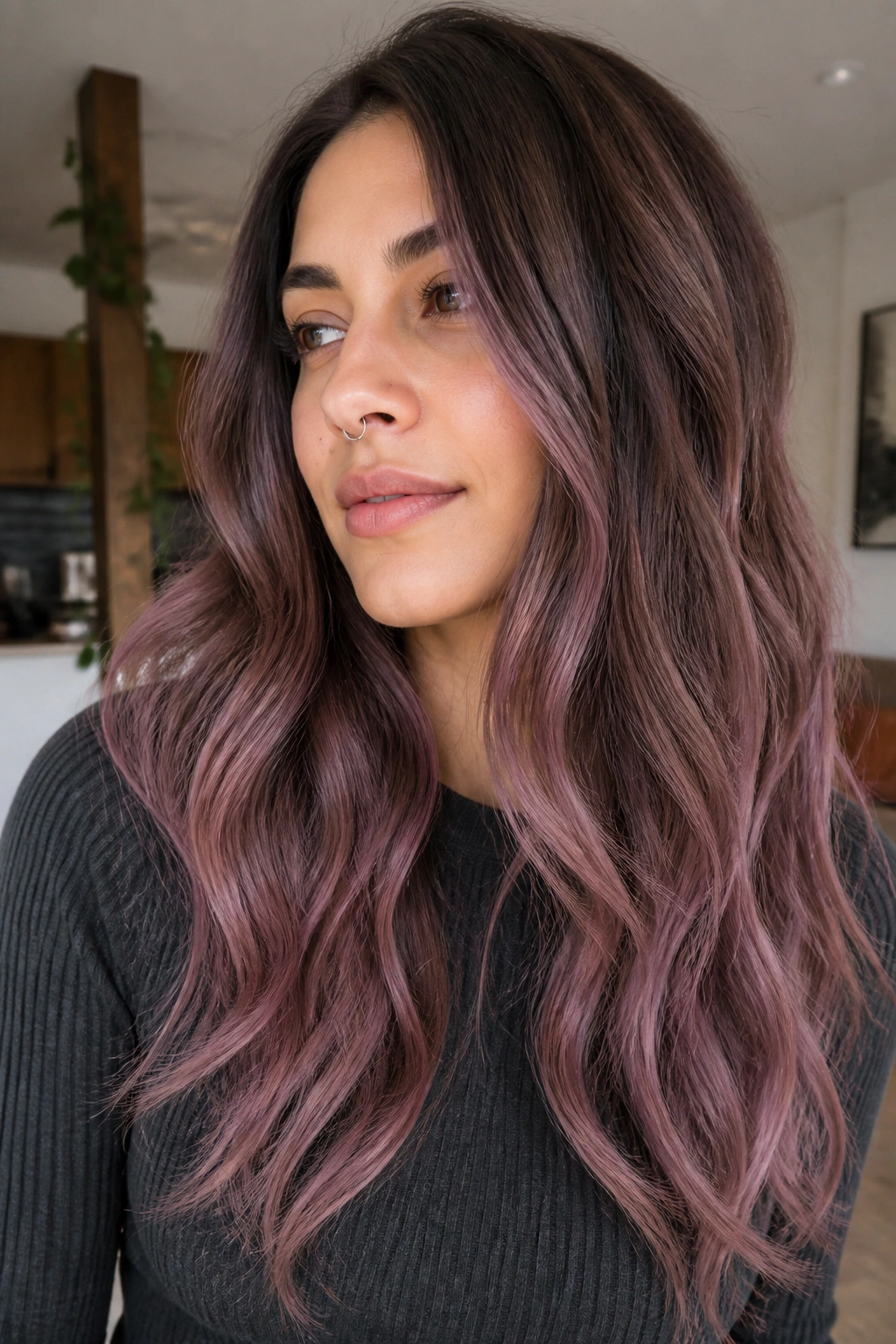
Not every pink needs to look cheerful. Smoky mauve is the cooler, moodier version, and on brown hair it can look almost velvet-like when the light hits it.
The reason it works is simple: mauve sits between pink, purple, and gray, so the brown base helps it stay grounded. On ash brown or neutral brown hair, the blend feels expensive in the plain-English sense of the word — smooth, soft, and not at all fussy. On warmer brunettes, it can pick up more rose and less violet, which is fine if you want the shade to lean gentler.
Best on Cooler Brunettes
Mauve usually looks best when the base has a cool or neutral undertone. If your brown is very golden, the mauve may tip pinker than you expected. That is not bad, just different.
It also loves movement. Curls break the tone into little bands, while straight hair makes it look sleek and quiet. If you want a salon ask that makes sense, say you want a smoky pink melt with a mauve cast and a soft root shadow.
The upkeep is moderate. Mauve fades fast enough to need a toner now and then, but the fade is graceful. It moves from smoky pink into a softer blush-gray tone instead of going brassy, which is one of the few times “fading” is actually welcome.
5. Pastel Pink Ends with Chestnut Base
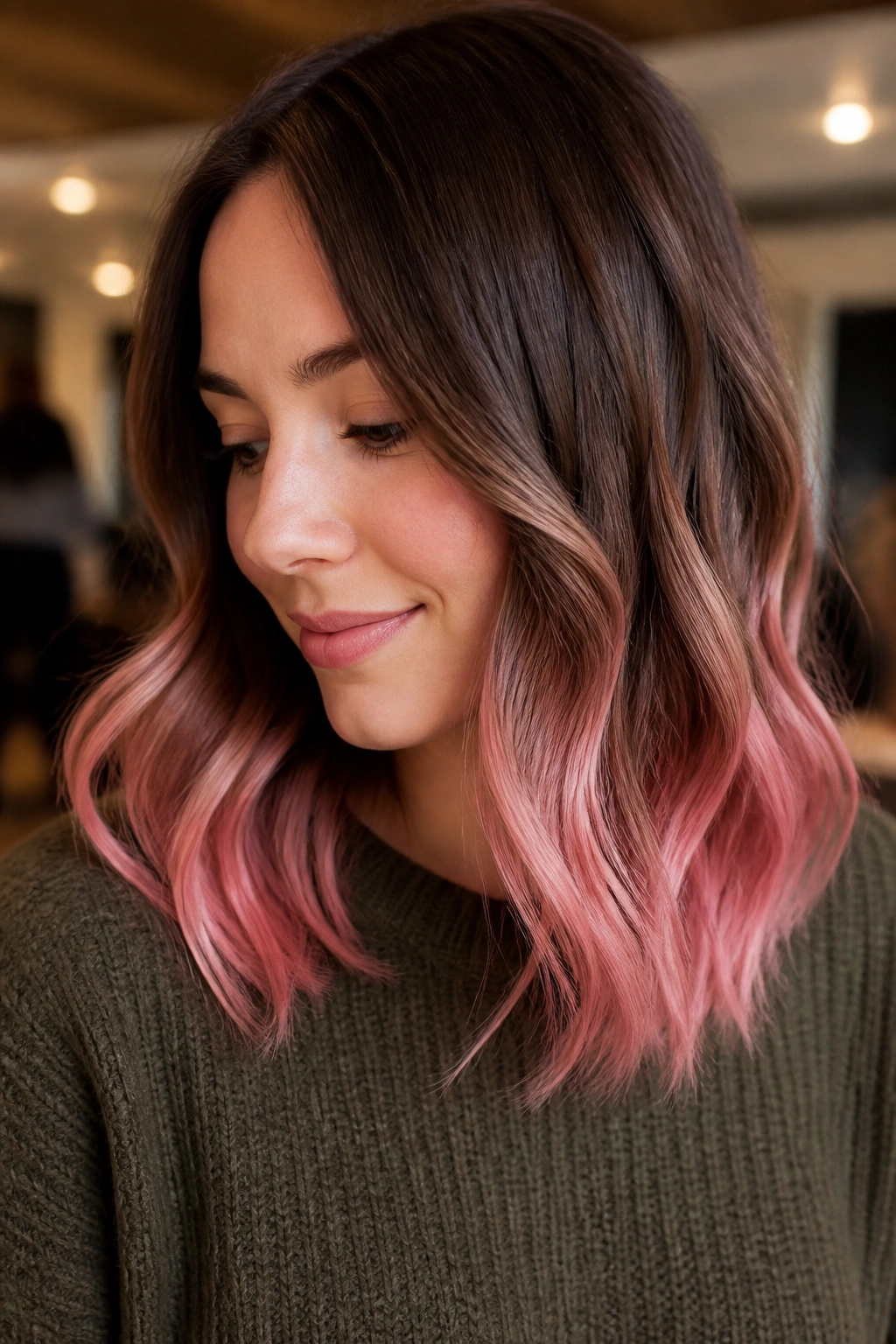
Chestnut hair and pastel pink ends have a pretty specific charm. The brown stays rich and warm up top, then the ends turn into a soft, airy blush that feels almost like the hair has been dipped in strawberry cream.
This look leans on contrast, so it works best when the cut has some length. Shoulder-length hair can do it. Longer layers do it better. The pink needs room to breathe at the ends, and a tight bob usually chops off the gentle fade that makes the style interesting.
One-sentence truth: the ends do the talking.
Because the pink is pastel, the lightening matters more than it would with a dusty or berry shade. If the hair is not lifted enough, the pink will look muted and muddy instead of soft. That means this look asks a little more from your hair, and there’s no way around that. It also means the color will need more care once it’s done, especially if you use hot tools every day.
Loose bends show the fade best. Straight hair makes it look tidy; curls make it feel dreamy. I prefer it with a clean middle part, but a side part can make the ends feel fuller.
6. Cherry Blossom Peekaboo Layers
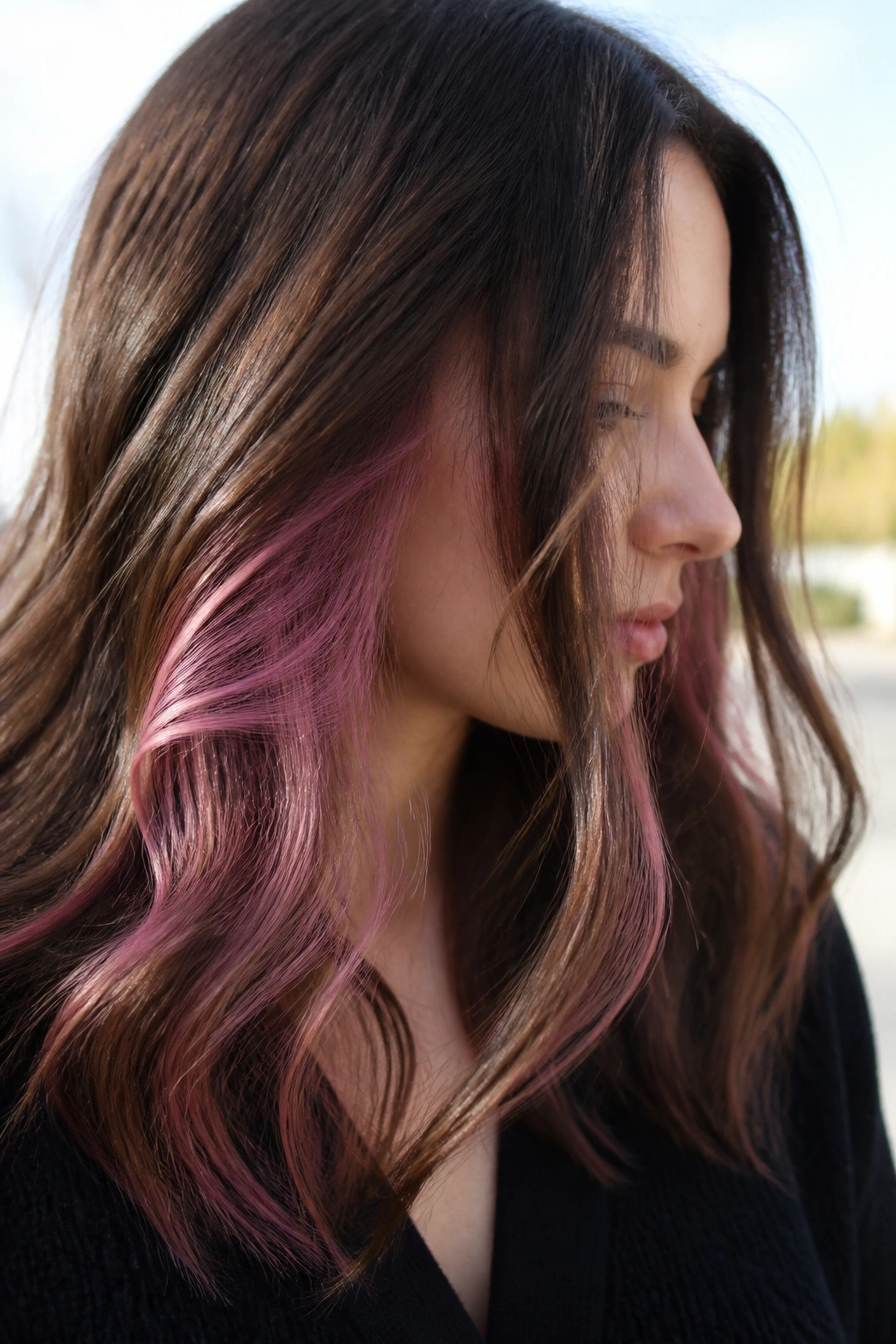
If you like the idea of pink but don’t want it sitting on top of your hair all day, peekaboo layers are the smart choice. Cherry blossom pink tucked under the top layer gives brown hair a little secret, and secrets are underrated.
The color only shows when the hair moves, so it feels playful without being loud. That makes it a nice option for someone who wants a softer office-friendly look or just doesn’t want pink staring back from every mirror. The brown on top stays in charge, while the hidden pink underlayers show up in waves, ponytails, and half-up styles.
Why Layers Matter
Layering gives the color somewhere to live. Without it, peekaboo pieces can disappear under the top section or look too flat. With layers, the pink opens and closes as the hair moves, which makes the shade feel alive instead of pinned in place.
Ask for interior balayage under the crown and around the nape. That placement keeps the pink concealed until you want it out. If your hair is thick, this look gives the color room to breathe. If it’s fine, it can still work, but the sections need to be light enough to show through.
A blowout shows it best. A quick bend with a round brush at the ends can make the hidden pink peek through without trying too hard.
7. Raspberry Ribbon Balayage
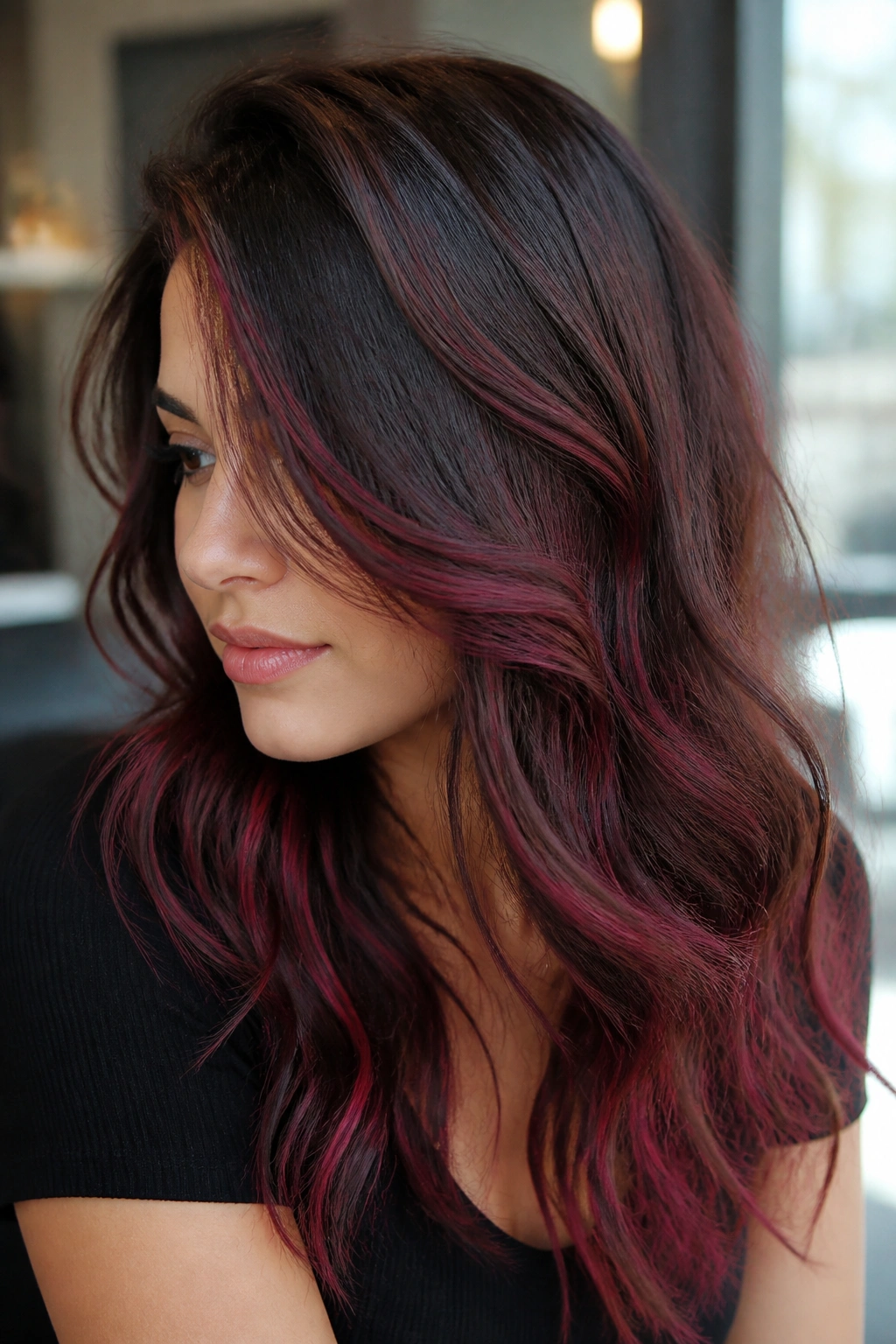
Raspberry is the pink for people who want depth. It sits darker than bubblegum, richer than blush, and a lot more visible on brown hair than a pastel ever will be. That’s what makes it so good on brunette bases that need a stronger pop.
Unlike soft pinks that fade into the background, raspberry keeps its shape. On chocolate brown hair, it reads as berry-red with a pink edge. On medium brown, it can tilt brighter and more playful. Either way, the contrast is doing a lot of work, so the style looks dimensional even indoors.
It’s a better pick than pastel if you hate feeling like your color disappears when the sun goes down. That’s a real complaint, by the way. Some pinks are gorgeous in daylight and underwhelming everywhere else. Raspberry does not have that problem.
Keep the ribbons narrow if you want movement. Chunky placement can make the color feel heavy, and the whole point is that it should feel woven through the brown, not pasted on top of it. A gloss with a berry tone every so often will keep the shade from drifting too red.
8. Blush Sombré on Medium Brown Hair
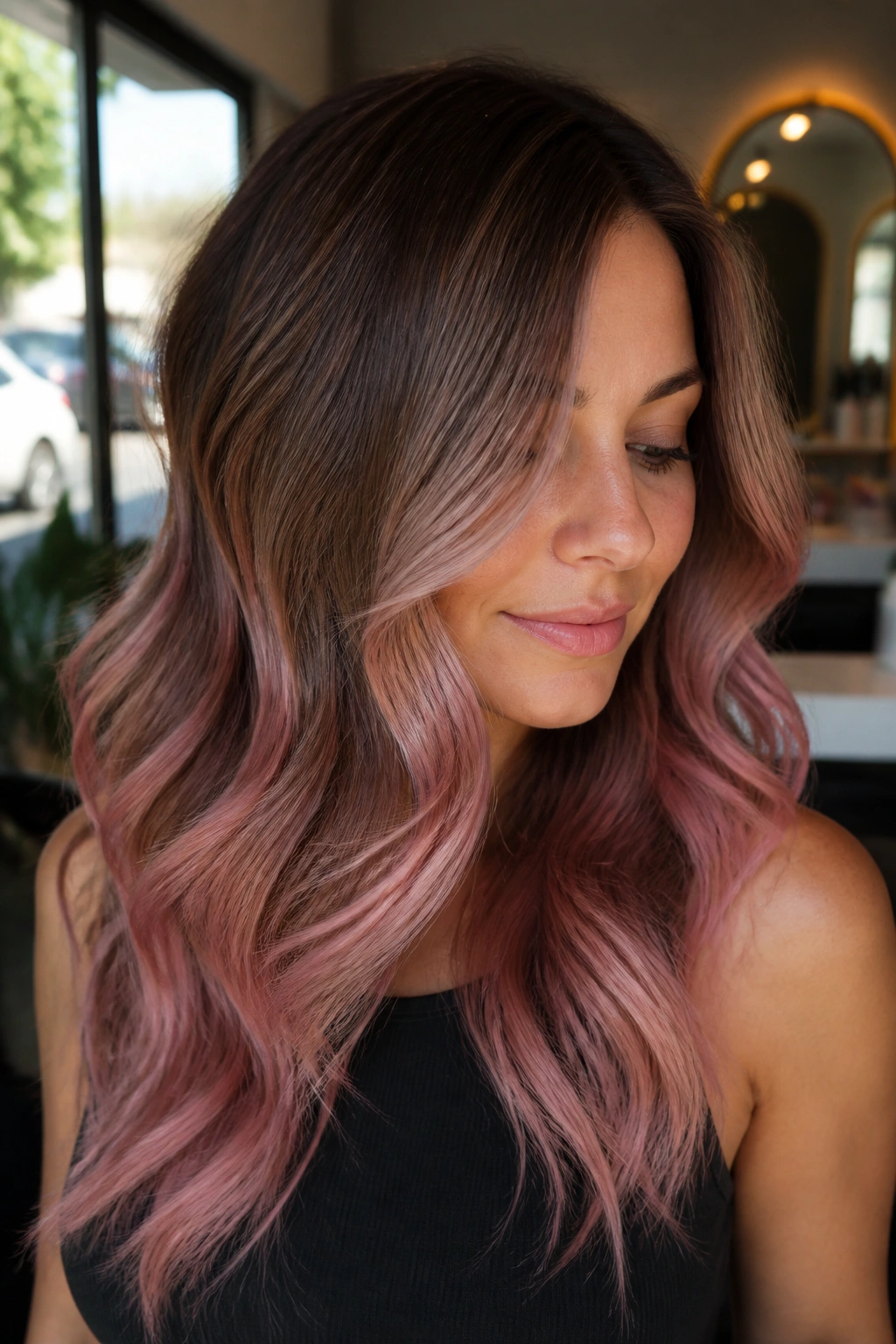
Blush sombré is all about the fade. The root stays brown, the mid-lengths soften, and the ends carry the pink in a way that feels stretched out and low drama. It’s the gentlest pink look in the bunch, and that’s why so many brunettes end up liking it more than they expected.
A sombré works because there’s no hard stop between colors. The pink doesn’t start and end in a sharp line. It drifts. On medium brown hair, that drift is easy to see, especially if the pink is kept in a blush or tea-rose family instead of a bright cotton-candy shade.
Hard lines ruin the point.
If your hair is thick, this style can look especially full because the color change adds movement without taking away depth. If your hair is fine, the blush tone gives the illusion of softer volume, especially around the ends. Keep styling loose and touchable. Tight curls can make the gradient look too busy, and that is not the mood here.
A root shadow helps a lot. So does a gloss that sits between pink and beige. The more seamless the blend, the better this one looks when it starts to grow out.
9. Peachy Pink Balayage for Warm Browns
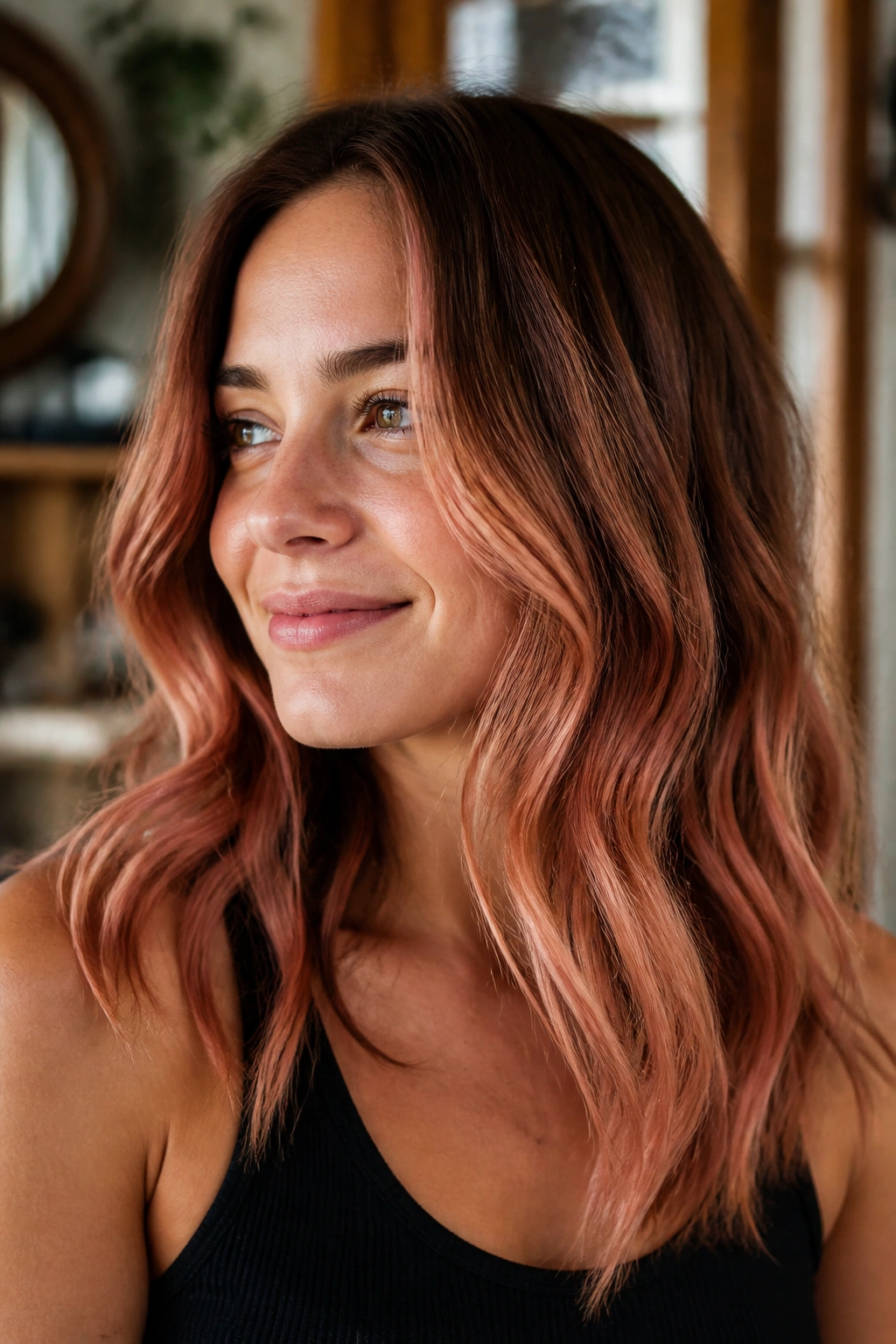
Peachy pink belongs on warm brown hair. Golden brown, honey brown, light chestnut — those bases can take a peach-pink tone and make it look sunny without going orange. That balance is harder than it sounds, which is why this look works best when the colorist keeps the pink soft and the peach clean.
What to Ask for at the Chair
- A warm brown base with lightened mid-lengths and ends.
- A peach-pink gloss, not a neon pink toner.
- Thin front pieces to frame the face.
- A finish that stays warm instead of drifting muddy.
The brown undertone does the heavy lifting here. If your base is already golden, the peach tones will blend in naturally and the pink just gives the color a little extra life. If the hair is too ash-toned, the peach can look flat, so this is one of those looks where undertone matters a lot.
I like this one with loose, brushed-out waves because the color catches differently as the hair moves. It also pairs well with a lived-in cut, something with a little texture around the ends. That keeps the warm pink from looking too neat. And neat is not what you want here.
10. Berry Wine Depth on Espresso Hair
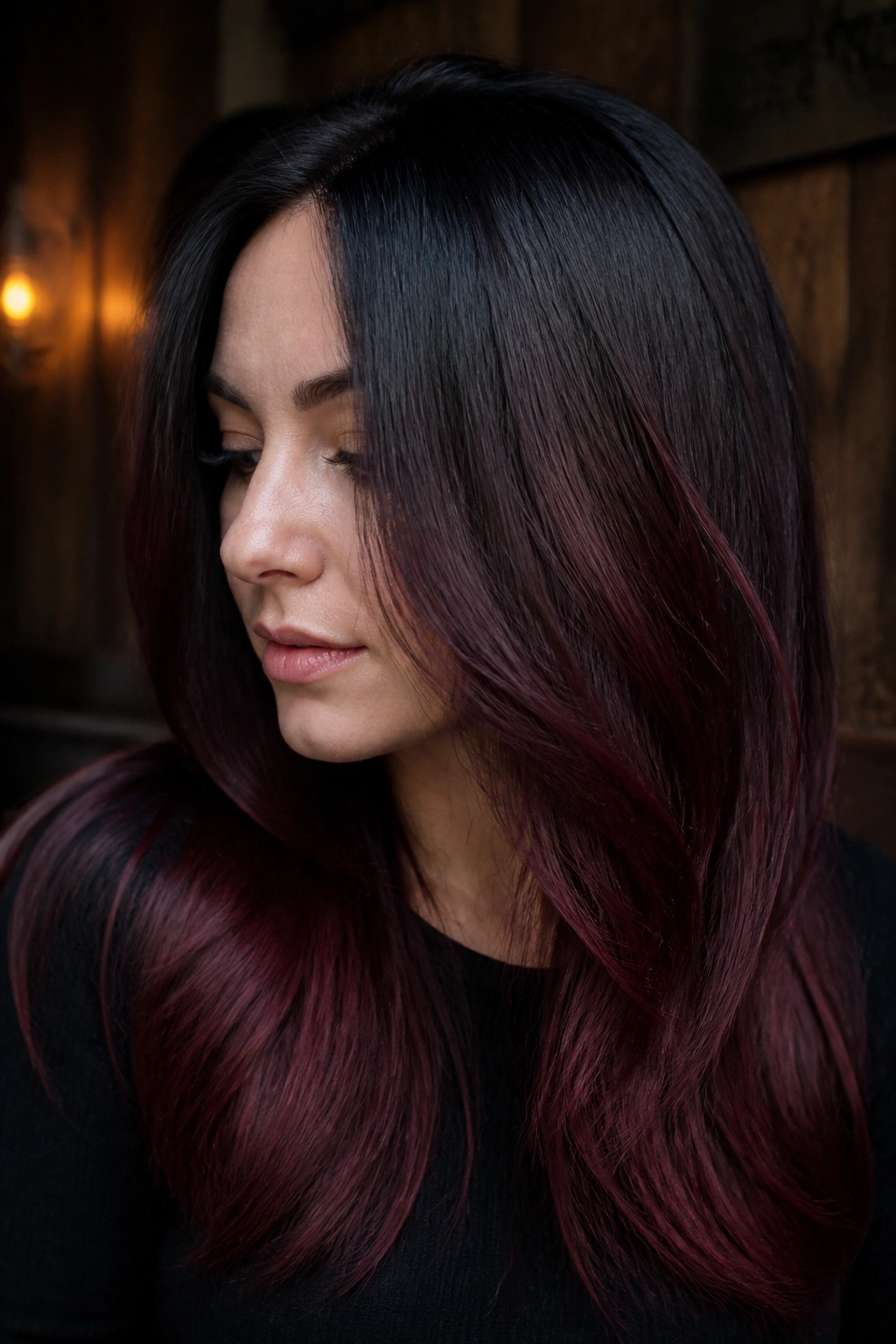
Dark espresso hair can hold a pink that lighter brunettes cannot. Berry wine is the proof. It’s deeper than raspberry and richer than blush, with enough plum in it to stay visible even when the light is low.
This is a strong look, and it suits people who want their balayage to feel moody instead of sugary. The brown base gives the berry tone a dark backdrop, so the color doesn’t need to be overly bright to stand out. That’s a big advantage if you prefer dimension over obvious contrast.
One-sentence version: it has backbone.
A colorist will usually keep this look anchored with a deep root area and painted berry sections through the mids and ends. On straight hair, the shade can look sleek and glassy. On waves, it looks richer because the dark and pink tones break apart a little. Both work.
This is one of the easier pink looks to maintain on dark hair because the overall effect can survive a softer fade. Even when the berry tones lighten, they often move into a muted rose-red rather than disappearing completely. That makes it a solid pick if you want something grown-up and a little dramatic without going full fashion shade.
11. Orchid Smoke Balayage
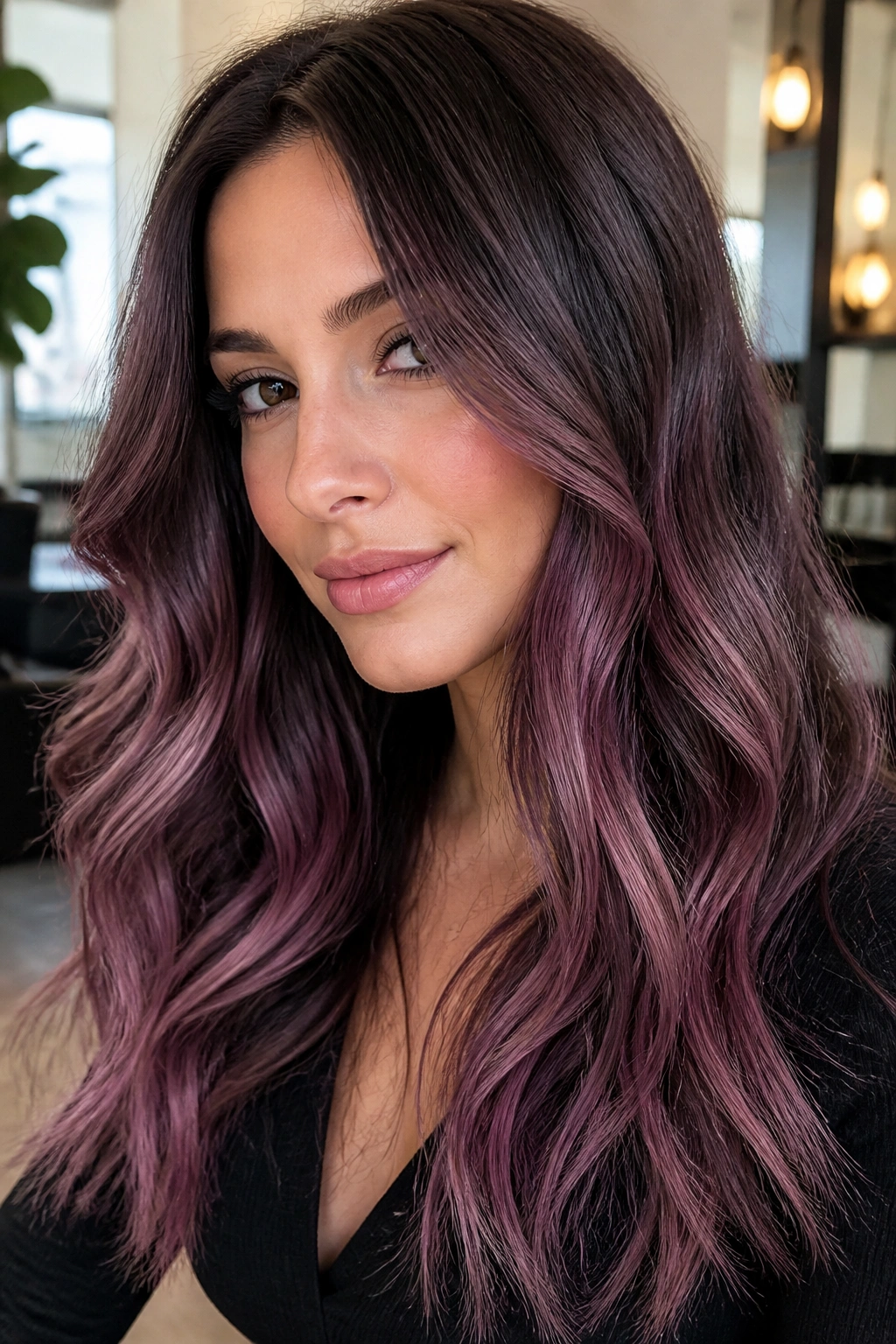
Orchid smoke is what happens when pink gets a cooler edge and a little purple shadow. It’s softer than pure orchid, darker than baby pink, and a lot more interesting on brown hair than a standard pastel.
The cool tone is what makes it feel different. Brown hair with neutral or ash undertones gives orchid smoke a polished finish, while warmer brown bases can make it read more rose-violet. Both can work, but the salon formula needs to be chosen with the base in mind. If you want the orchid to stay visible, don’t push it so violet that the pink disappears.
The Styling Trick
Wear this one with soft bends or loose waves. The color needs motion, or else it can flatten out and look a little too uniform. Straight hair makes the shade calmer; waves make it more dimensional.
The pink-purple mix also pairs well with layered haircuts because the lighter ribbons show up at different points. If you have one-length hair, the look can still work, but it benefits from movement around the face and ends. Ask for a smoky orchid gloss over a brown balayage base, not an all-over fashion color. That keeps it believable and easier to wear day to day.
12. Coral Pink Sunlit Sweep
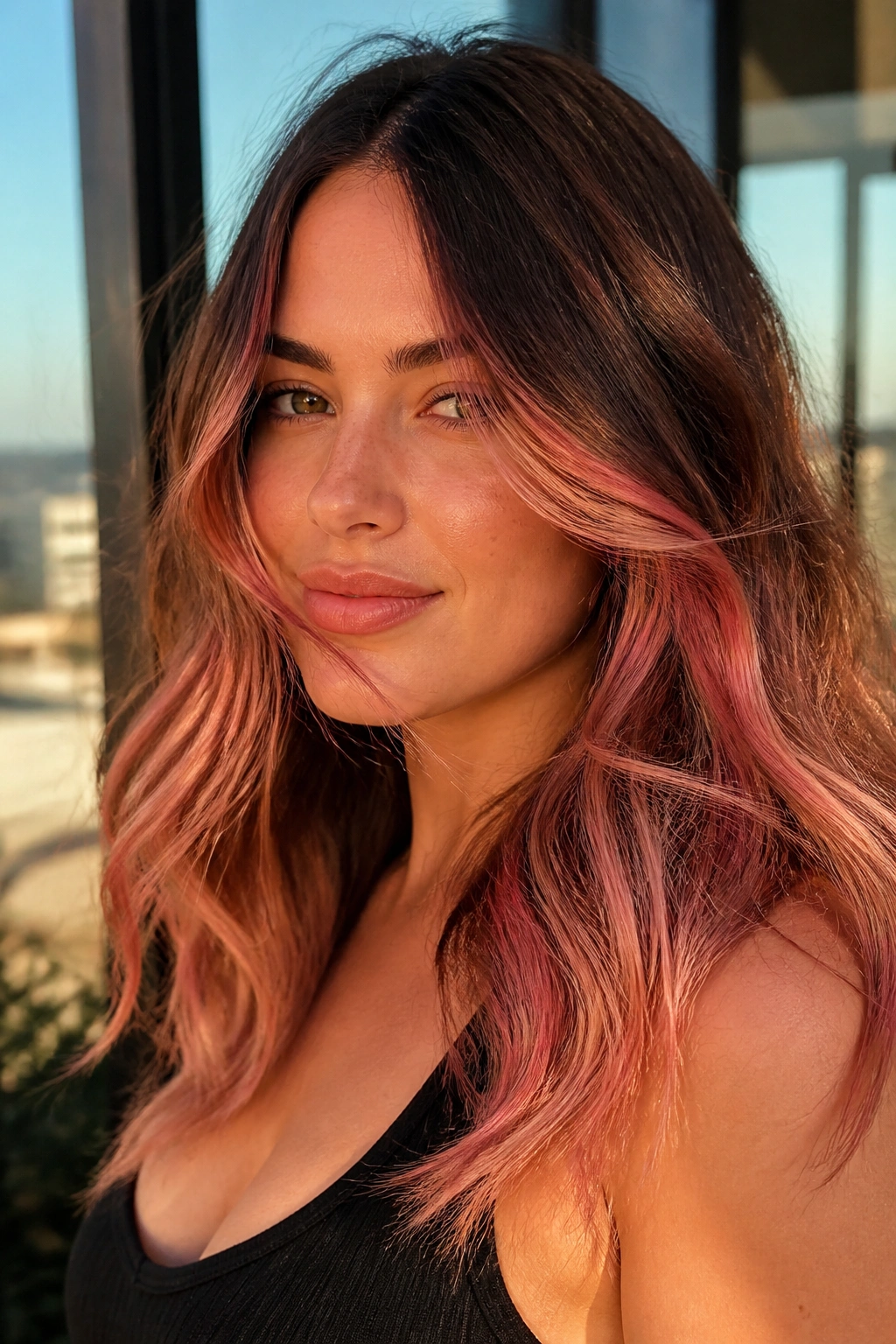
Coral pink is brighter than rose and warmer than true pink, which makes it a nice bridge shade for brunettes who want something lively but not neon. On brown hair, it can read like a soft pink-coral sweep through the mids and ends, almost like the hair picked up color from warm light.
This look tends to do its best work on medium brown and warm dark brown bases. The coral tones bring out gold in the brown, so the whole thing feels sunlit without needing harsh blond sections. That’s one reason it looks good with loose waves and layered cuts; the movement breaks the coral into smaller flashes.
If you want it to stay fresh, ask for a pink-coral gloss rather than a pure cotton-candy tone. Coral fades into peach more gracefully, and that fade is part of why people keep reaching for it. It does not fall apart as quickly as a brighter pastel can.
A center part gives it a cleaner feel. A side part can make the front pieces look brighter. Either way, the color works because the brown base is still doing some of the visual work. That keeps the coral from feeling too flat or too sweet.
13. Metallic Rose Brown Balayage
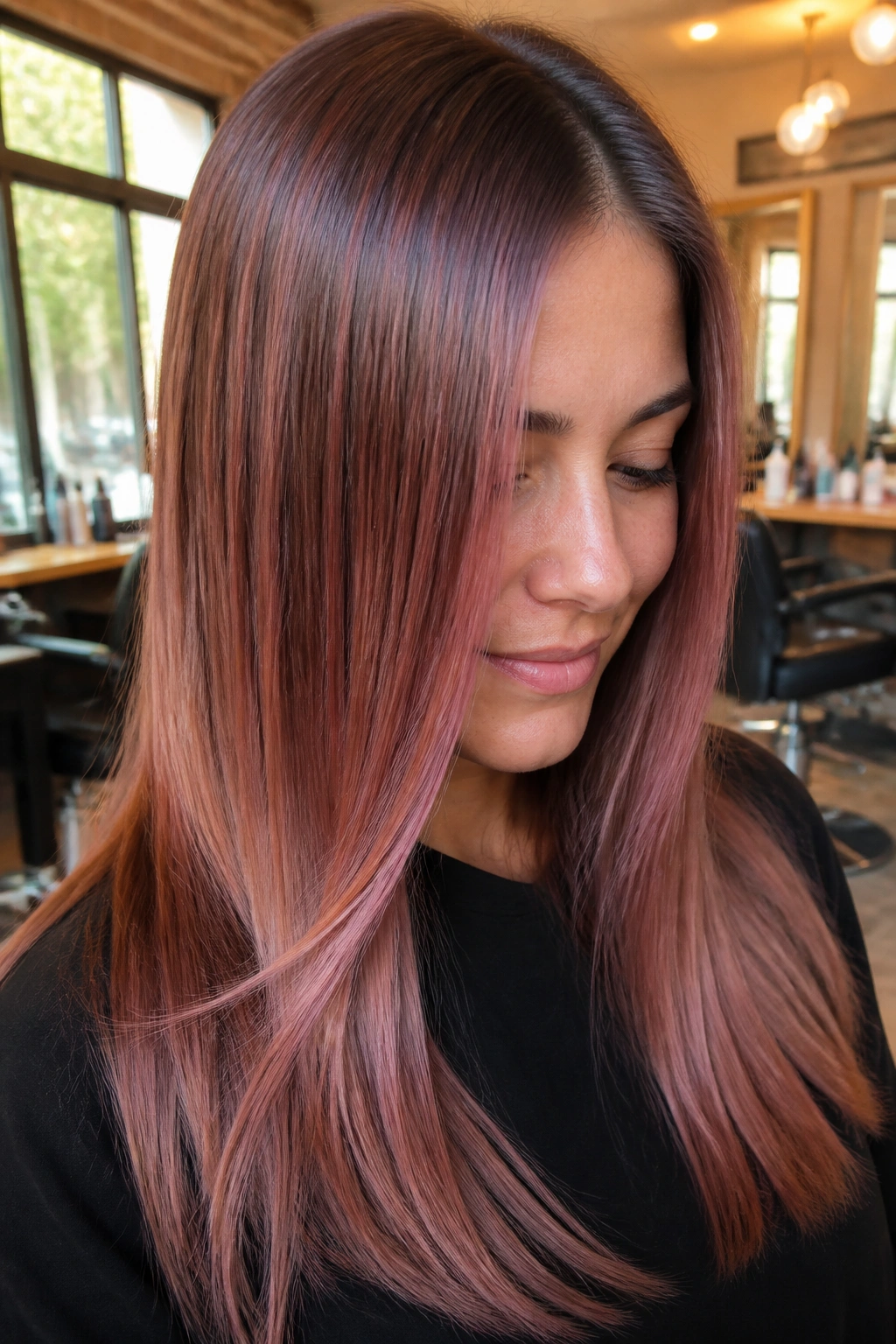
If you like shine more than brightness, this one deserves attention. Metallic rose brown is less about obvious pink and more about a reflective rose glaze that seems to sit inside the brown instead of on top of it.
That finish makes a lot of sense on straightened hair, smooth blowouts, and blunt cuts where the gloss can show. The shade can include pink, beige, and a whisper of copper, but the real point is the sheen. Brown hair already gives you depth; the metallic rose finish adds a polished surface on top of it.
One sentence says it best: gloss is the whole point.
This is not the look for someone who wants a loud color block. It’s for someone who wants people to look twice because the hair seems to shift tone every time the head turns. Ask for a rose-beige glaze with a pink-brown balance, and keep the lightened sections soft. Over-lightening kills the metallic feel and turns it into something flatter.
It’s also one of the nicer options if you want a pink balayage that still feels easy to wear with neutral clothes, work clothes, or a sharp haircut. The color does the talking without shouting.
14. Watercolor Pink Ribbons
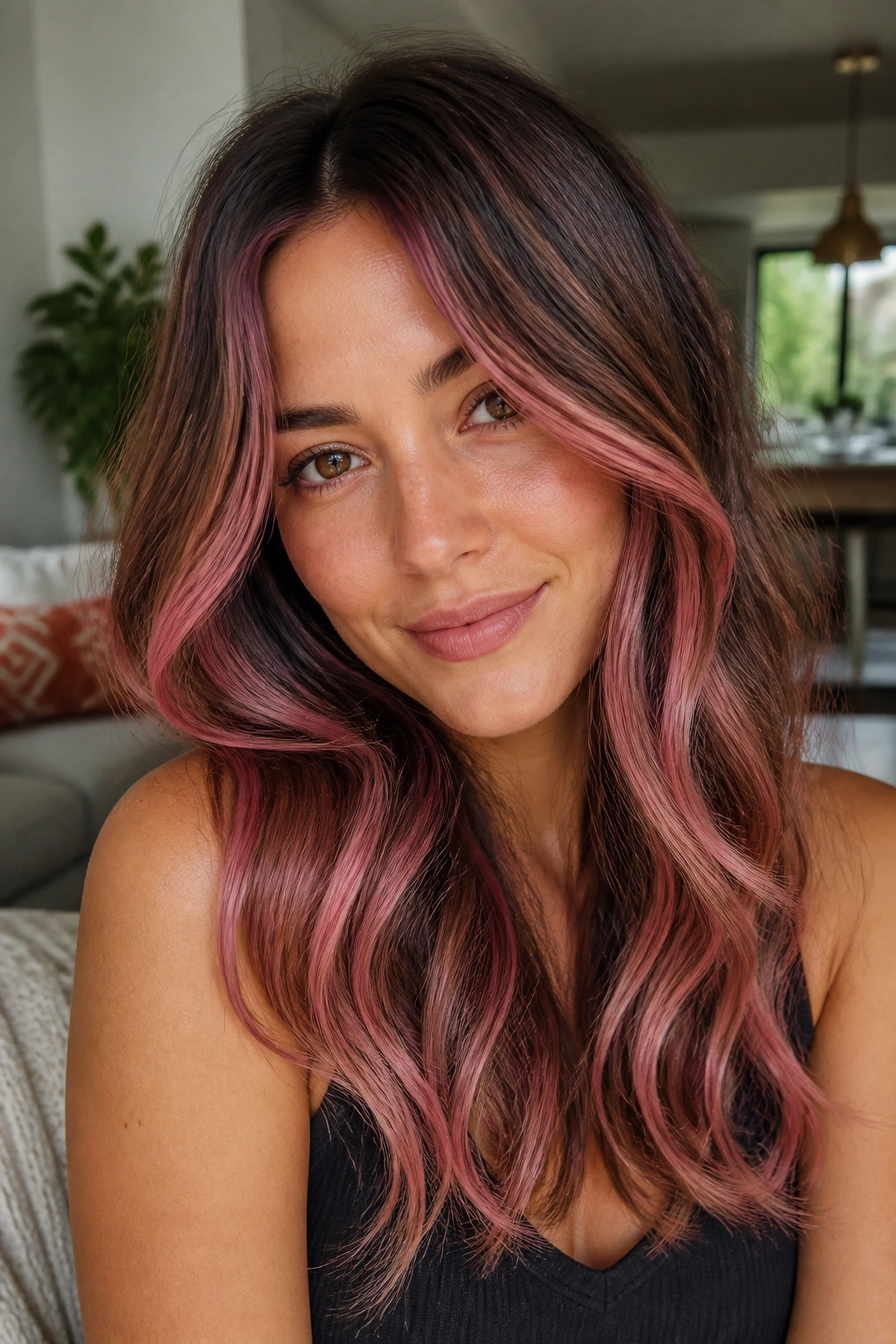
Watercolor pink ribbons look airy because the tones are broken up instead of painted in one solid band. That broken-up feel is exactly what makes the style flattering on brown hair. The brunette base stays visible, and the pink appears in soft strips that overlap just enough to feel blended.
This is a good pick for fine hair. The scattered placement creates the illusion of more movement and texture, while the brown underneath keeps the hair from looking overprocessed. On thicker hair, the same placement can feel more painterly, especially if the pink is mixed in three shades: blush, rose, and a slightly deeper berry.
What Makes It Different
Unlike a simple ombré, watercolor ribbons do not rely on one long gradient. They depend on irregular placement. That means the colorist can vary the width of each section and let some pieces stay deeper than others, which keeps the whole thing from looking flat.
A loose wave shows the effect best. A 1-inch iron with alternating curl directions gives the ribbons space to separate visually. If you wear your hair straight, the style becomes subtler, which may be exactly what you want. Either way, the appeal is in the softness. It feels edited, but not overworked.
15. Cinnamon Rose Balayage
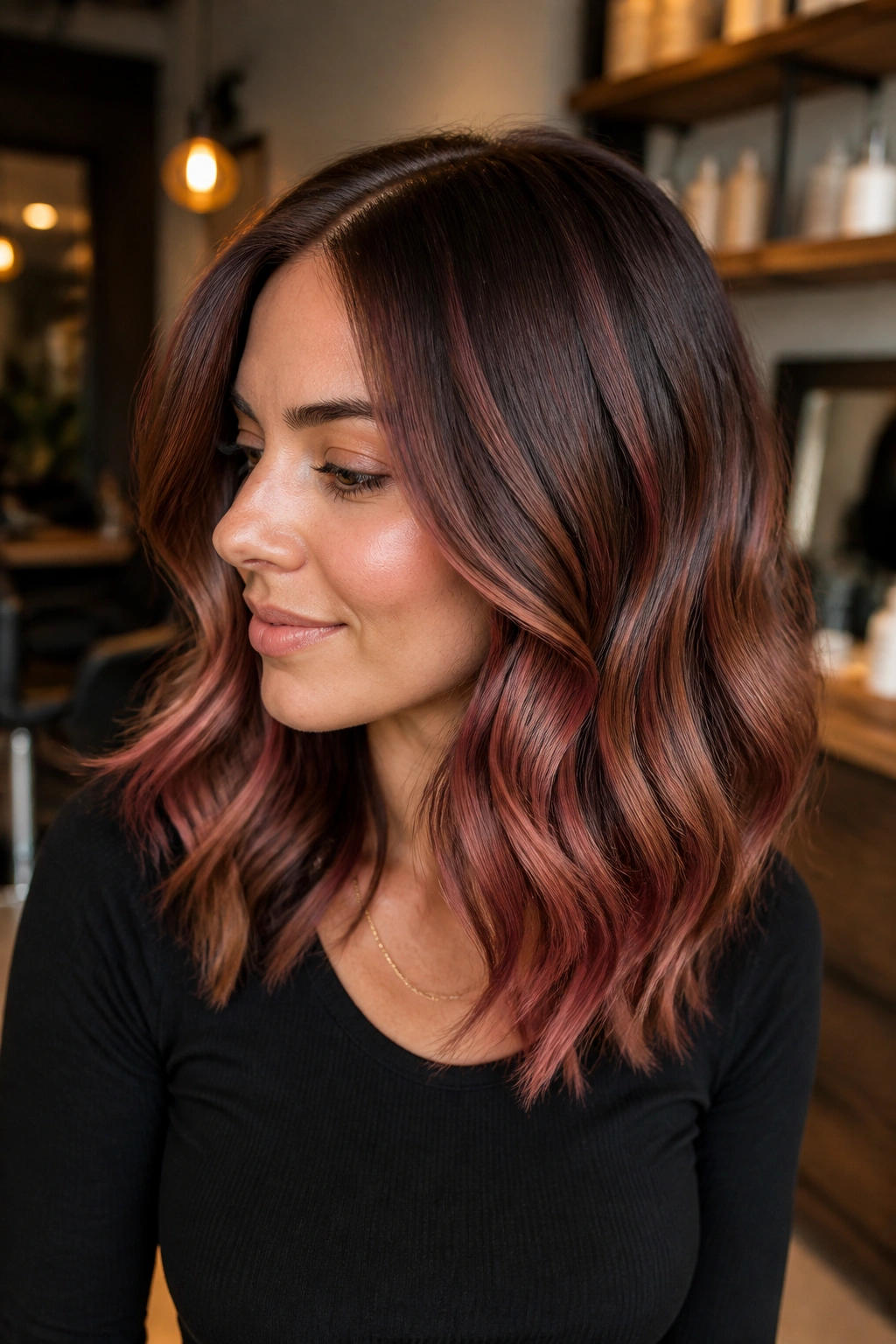
Cinnamon rose is for brunettes who want pink with a little heat behind it. The shade leans warmer and slightly redder than peach pink, so it makes sense on brown hair that already has auburn or chestnut undertones.
The reason it looks rich is because the cinnamon tone grounds the pink. Without that warmth, pink can drift too cool or too pale against brown. With it, the hair looks layered and deeper, especially if the balayage is painted through mid-lengths and ends instead of concentrating only at the bottom.
Why It Looks Rich, Not Brassy
The answer is tone. Cinnamon rose sits in that sweet spot between copper and pink, so it warms the brown base without turning the whole head orange. That balance is delicate. If the formula leans too copper, the pink disappears. If it leans too soft, the cinnamon vanishes.
This look is nice on wavy cuts and especially good on hair that already has a little red in it. If your natural brown is very ash-heavy, it can still work, but the result may feel less cinnamon and more muted rose. That is not a failure. It just means the undertone is leading the way.
A glossy finish helps a lot here. If the color starts to look dull, a warm gloss brings the rose back without making the hair loud.
16. Lavender-Pink Melt
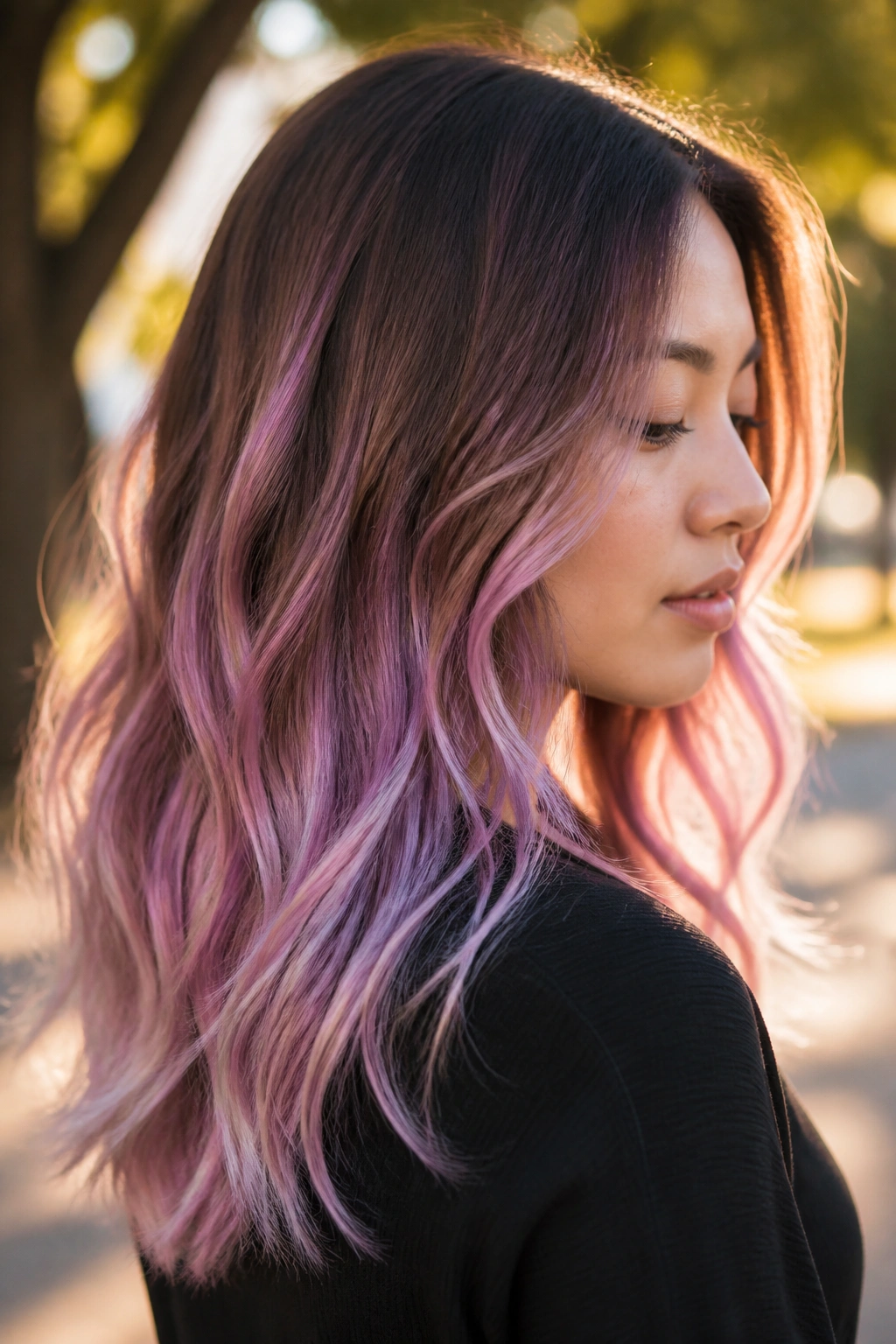
Lavender-pink is the cooler cousin in the group. It softens the pink with a lilac edge, which makes it feel airy rather than sugary. On brown hair, that contrast is especially nice because the base stops the pastel from getting washed out.
This look needs more lift than most of the warmer shades. The pink-lavender tone usually wants a pale blonde canvas before it is toned, which means the upkeep is higher and the grow-out is less forgiving. That’s the tradeoff. You get a softer, more unusual color, but it asks for more care.
The payoff is that the melt can look almost silvery at the ends as it fades. That makes it a good option if you like cool tones and don’t mind the maintenance. It also works well on smooth waves, where the lavender and pink bend around each other instead of sitting in separate bands.
A small warning: too much purple shampoo can mute the pink and push the whole thing dull. Use it lightly, and not every wash, unless you want the pastel to flatten out fast. The best versions keep the pink visible and let the lavender sit behind it, not take over.
17. Deep Plum Pink Peekaboo
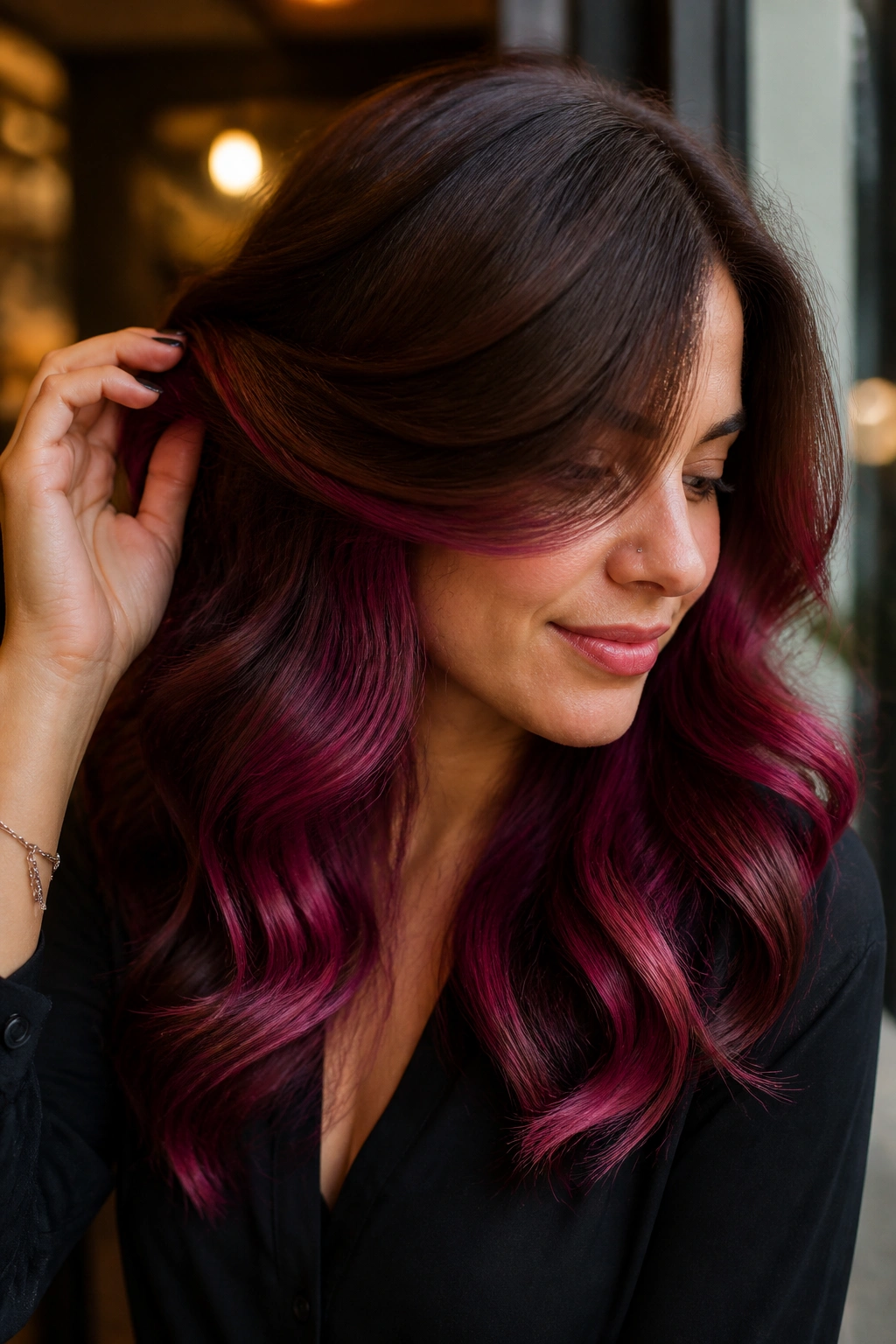
Deep plum pink peekaboo is a clever little trick. It hides under the top layers, so the color only shows when the hair swings open, lifts into a ponytail, or gets tucked behind the ear. That makes it a nice option for anyone who wants drama without constant visibility.
The plum tone is darker than cherry blossom and more saturated than dusty rose. On brown hair, that depth matters because the underlayer needs enough power to show through. If the shade is too pale, it disappears. If it’s too vivid, it can look disconnected from the brunette on top. Plum pink lands in the middle and looks deliberate.
It’s also a very practical choice for layered cuts and shags. The color peeks out at different points, which keeps it from looking like one flat panel. If you wear your hair in a bun often, you’ll get little flashes of color around the nape. That’s where this style does some of its best work.
A rooty top layer and darker peekaboo underlayer mean less fuss between appointments. It grows out with some grace, which is nice because hidden color should not feel high-maintenance every time you brush it.
18. Soft Baby Pink Face Frame
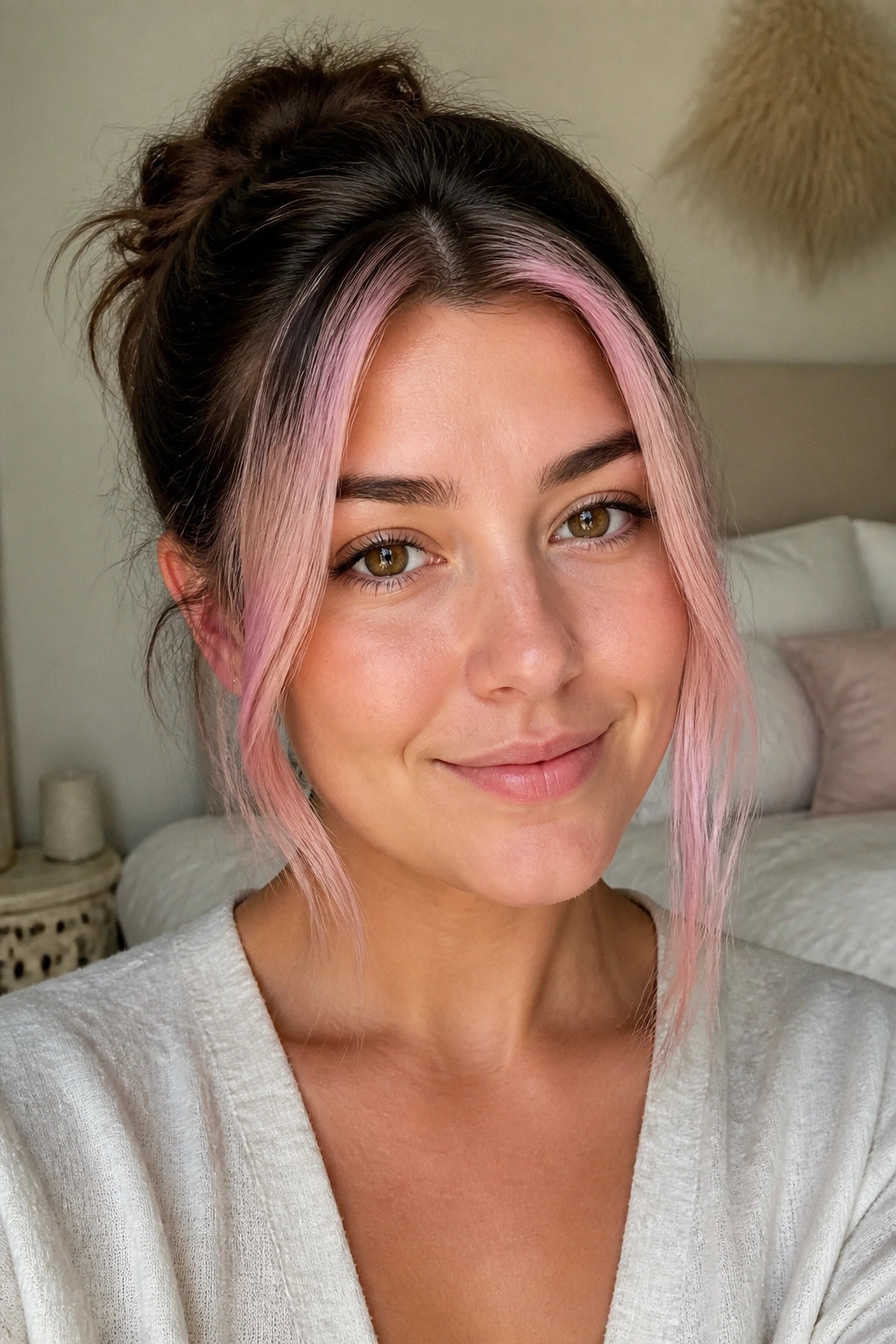
Soft baby pink around the face is the gentlest way to try the trend. If you only want a trace of pink, this is the one to ask for. The rest of the brown hair stays mostly untouched, and the color lives in a narrow money piece or two slim ribbons near the front.
That placement makes the pink look fresh without taking over the whole style. It also keeps maintenance easier, because the most visible area is limited. A quick gloss can revive it without redoing the whole head, and that matters if you’re testing the waters.
What to Watch For
- Keep the front pieces narrow and light, not wide and chunky.
- Lift the hair enough that the baby pink reads clean instead of beige.
- Style the front away from the face if you want the color to show more.
- Use heat carefully. The face-framing pieces are usually the most exposed and the first to fade.
This is a good first pink if you’re nervous. It gives you the color payoff without the full commitment. And honestly, that’s a smart move. Plenty of people think they want all-over pink, then realize a small front frame is the one they keep loving.
19. Sunset Pink Ombré
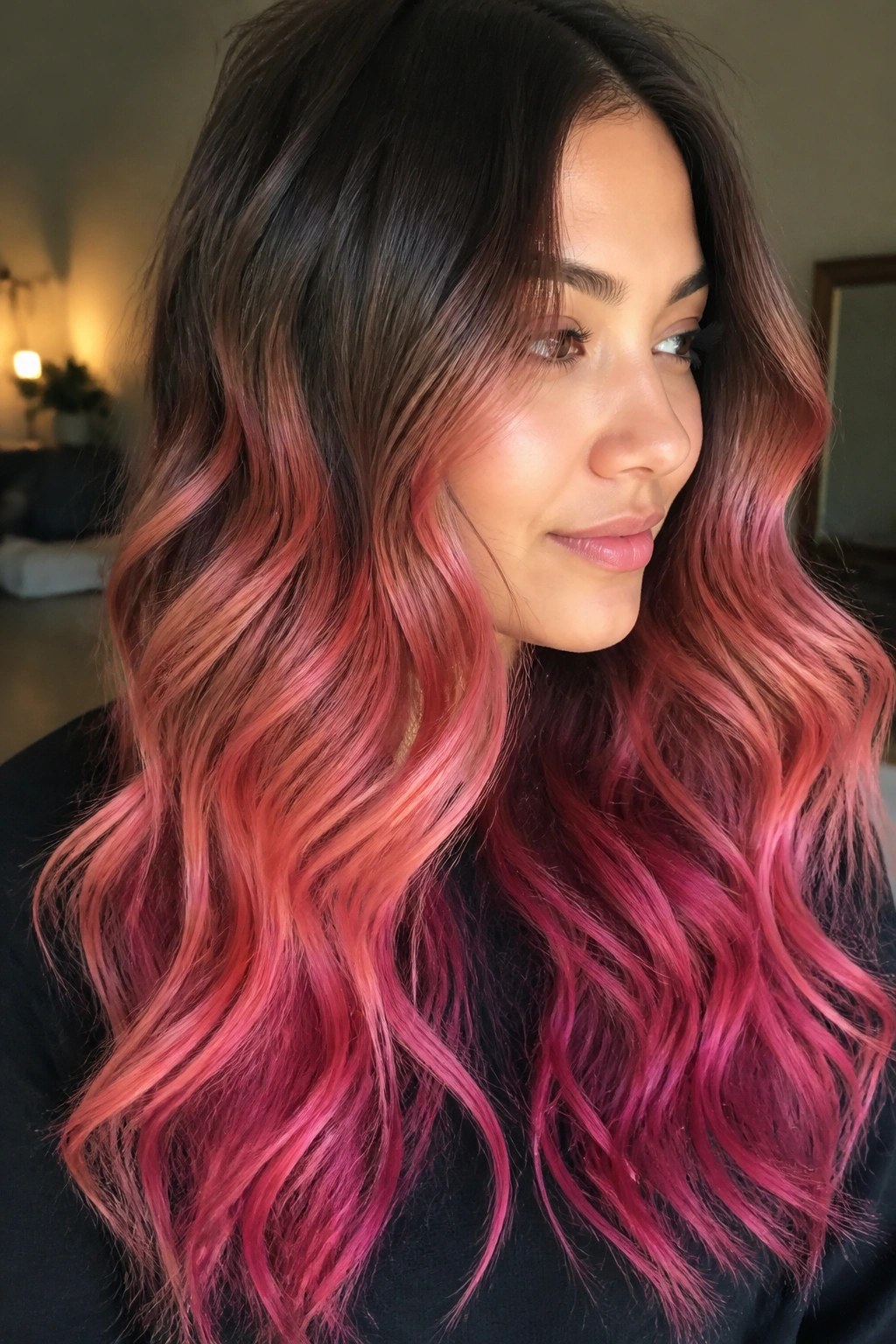
Sunset pink ombré stretches the color from darker brown roots into coral, rose, and berry at the ends. It feels a little dramatic, but in a useful way. The gradient has room to breathe, so the hair can move from one tone to the next without feeling chopped up.
Long hair shows this look best. The extra length gives the ombré enough space to work through its color changes, and the pink can shift more clearly from warm to cool. On shorter hair, the transition gets compressed and the effect loses some of its sweep. That doesn’t make it wrong. It just means the style wants length.
The easiest way to think about it is in three zones. The roots stay brown and grounded. The mids carry the soft bridge color. The ends hold the most pink. When that order stays clear, the look reads smooth instead of busy.
This one loves loose waves because the different tones show up one after another as the hair bends. If you’re the kind of person who likes a noticeable finish, sunset ombré gives you that without needing one solid pink block across the whole head.
20. Sheer Strawberry Milkshake Balayage
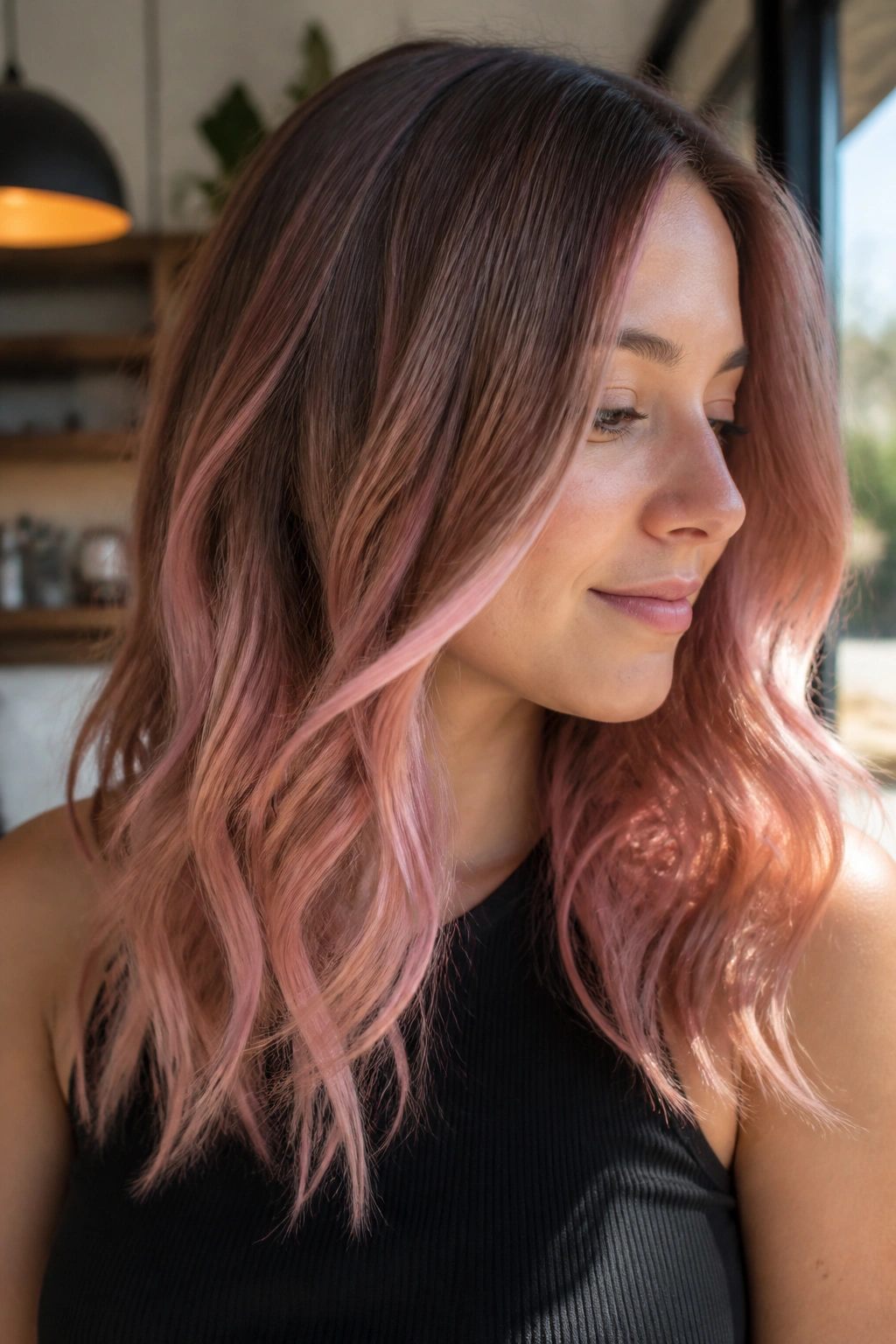
Sheer strawberry milkshake is the softest pink in the group. It’s creamy, faint, and a little sweet, but not in a loud way. On brown hair, it looks like a pale strawberry glaze laid over lighter ribbons, with enough brown showing through to keep it from turning flat.
This is the right pick if you want pink that feels almost whispered. It works on medium brown and light brown bases especially well, though deeper brunettes can wear it too if the lightening is clean enough. The shade should look milky, not chalky, and that difference is more important than people think.
One sentence: soft does not mean boring.
The best way to wear it is with smooth movement and a little shine. A blunt cut can make it feel modern; long layers can make it feel airy. Either way, the creaminess is what sells it. If the pink gets too bright, it loses the milkshake effect and becomes a different look entirely.
I like this one for anyone who wants the smallest possible step into pink balayage. It still changes the hair. It just does it quietly.
Final Thoughts
Pink balayage on brown hair works because the brown base gives the color shape before the first brush of pink even shows up. That’s why the shade family can move from dusty and soft to berry-dark and moody without feeling random. The base matters as much as the pink itself.
If you want the easiest upkeep, go with thin ribbons, a rooted melt, or a deeper berry tone. If you want the biggest visual change, face-framing pink, sunset ombré, or a bubblegum money piece will give you that faster. The smartest move is to match the pink’s temperature to your brown’s undertone instead of chasing a photo that ignores your base.
Bring daylight photos and indoor photos to the salon. That one habit saves a lot of disappointment. A pink that looks soft in the sun can read far brighter under warm bulbs, and the right reference helps your colorist place it where it’ll actually look good on your hair.
