



Brown hair can look flat fast when every strand sits in the same shade. Bronde balayage fixes that without making you look like you borrowed someone else’s hair color entirely.
That’s the part I love about it. Bronde sits between brunette and blonde, so the result feels softer than full highlights and less obvious than a dramatic ombré. The color usually stays richest at the root, then opens up through the mid-lengths and ends with beige, honey, caramel, ash, or mushroom tones depending on how warm or cool you want to go.
The smartest versions don’t scream for attention. They move. They make a simple wave look more expensive, and they keep grow-out from turning into a line you can spot across the room. That matters when you want brown hair that still looks like brown hair — just better, lighter, and a little more alive.
1. Honey Beige Bronde Balayage on Dark Brown Hair
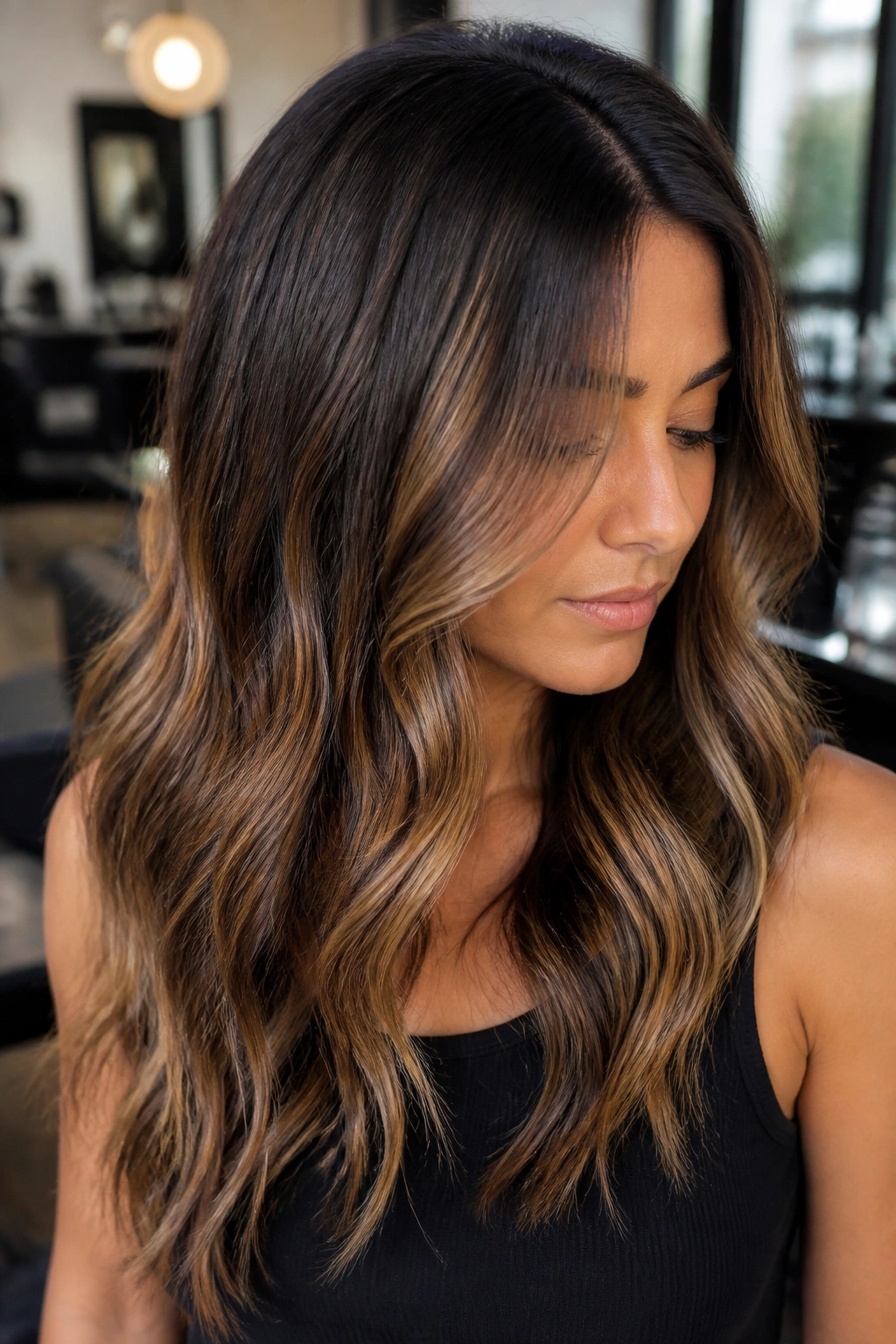
This is the look I reach for when someone has deep brunette hair and says, “I want lighter hair, but I do not want to lose my base.” Honey beige sits in that sweet spot between warm and soft, which means it brightens dark brown hair without turning it orange or flat gold.
Why It Works on a Dark Base
Dark brown hair can handle contrast, but it needs the lighter pieces placed with some restraint. A few honey-beige ribbons through the mid-lengths and ends give the eye something to follow, while the root stays grounded and rich. That contrast makes waves look thicker and gives straight hair more movement.
Ask for hand-painted balayage starting below the cheekbone, then a beige gloss that softens the warmth. If the highlights begin too high, the whole thing can look streaky. A root shadow about one shade deeper than the mids keeps the grow-out soft.
One small detail matters more than people think: the money pieces around the face should be only a touch brighter than the rest. Too much brightness there and the color starts to wear you, not flatter you.
2. Caramel Ribbon Balayage for Medium Brown Hair
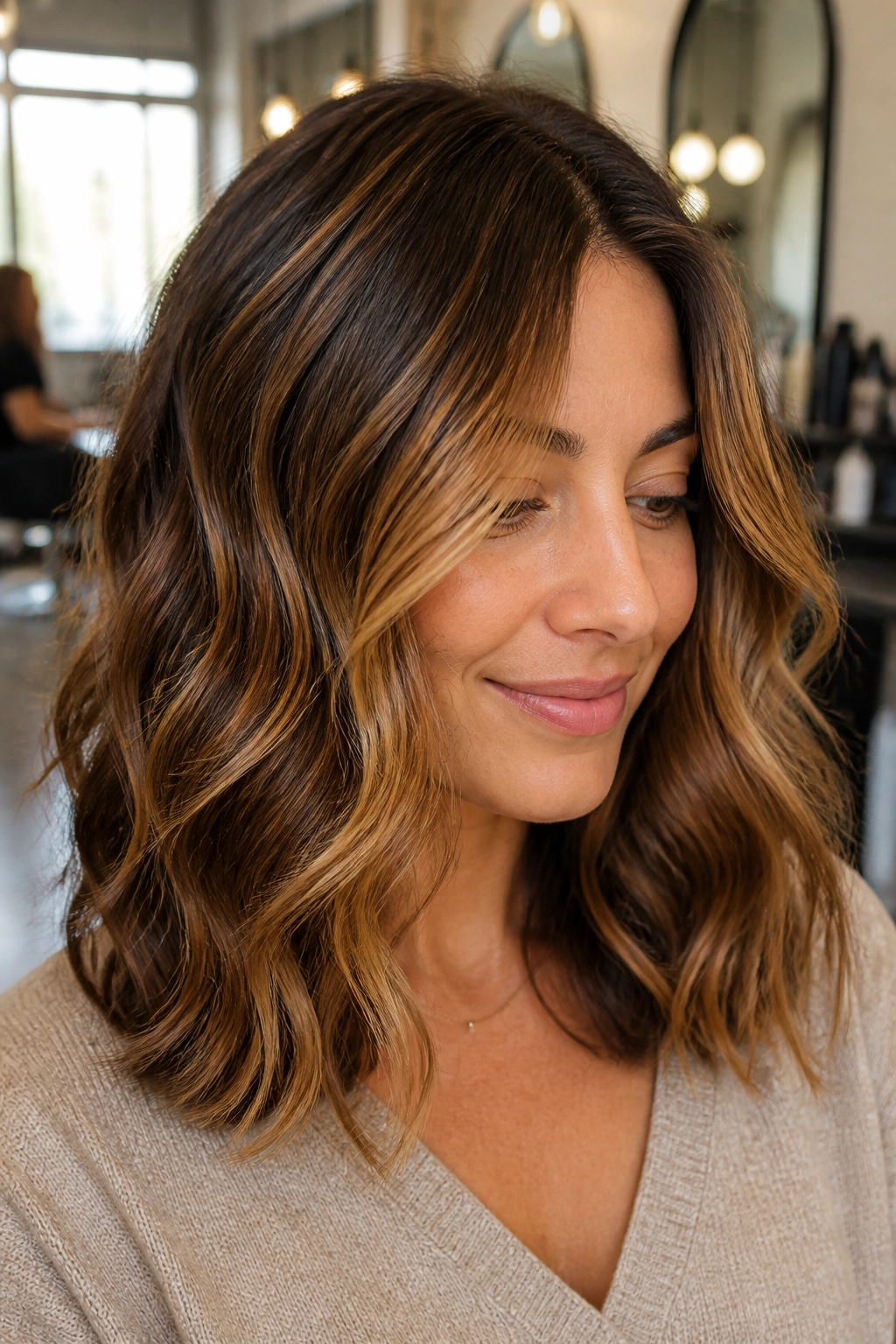
Why do caramel ribbons work so well on medium brown hair? Because medium brown already has enough lightness in it to show contrast without needing a hard line.
Caramel reads warm, but not loud. On shoulder-length cuts and loose waves, it slips into the hair in thin ribbons that move with each bend. That makes it a good choice if you want dimension without a heavy blonde effect. The look is especially forgiving on people who wear their hair up a lot, since the color still shows even in a knot or clip.
The trick is placement. You want the caramel pieces spread through the top layer and around the face, then a few stronger pieces through the lower half for balance. If every light piece sits near the ends, the color can feel bottom-heavy. Keep some depth inside the hair, and the whole thing looks more expensive.
3. Chestnut to Champagne Melt
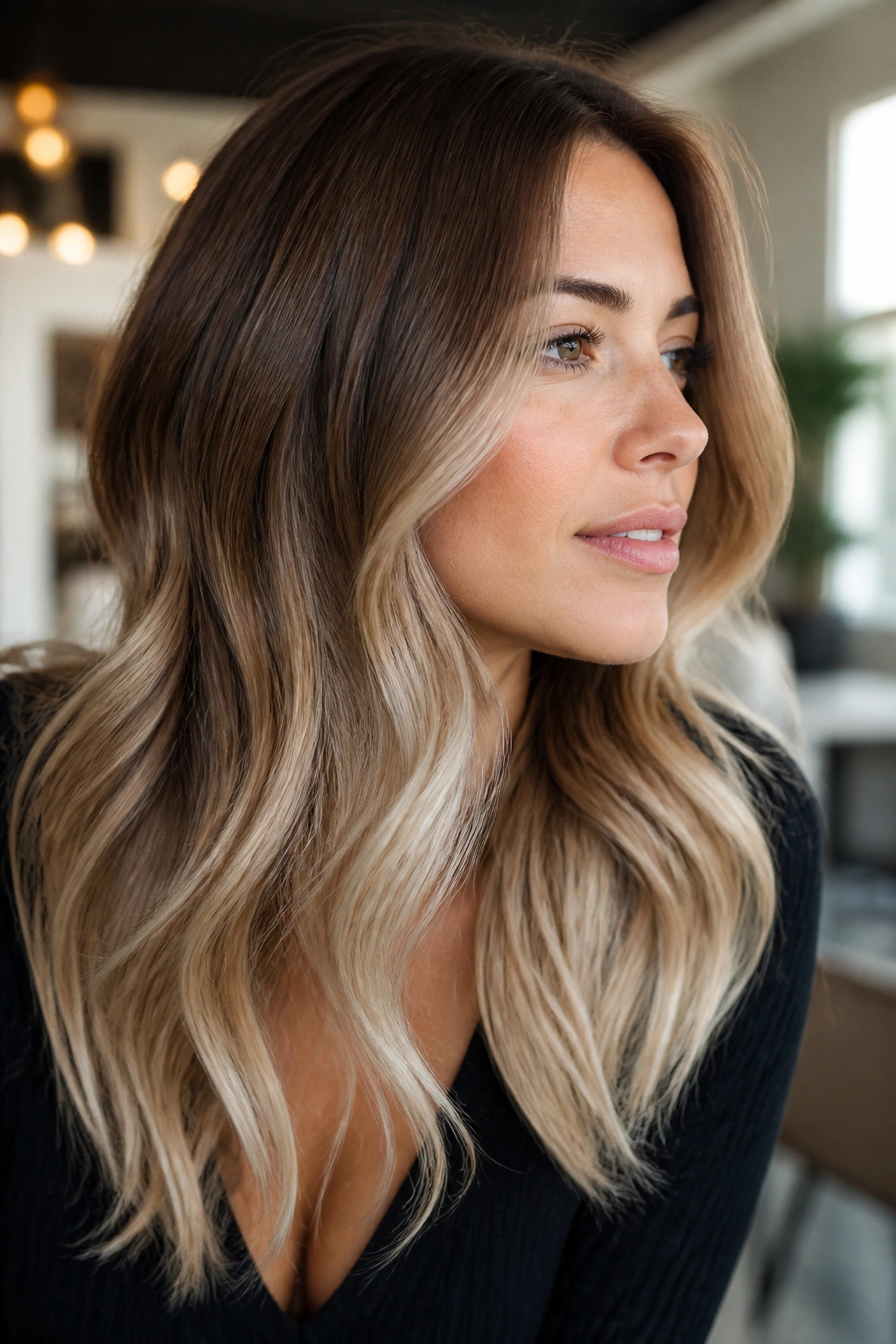
A chestnut-to-champagne melt looks polished because the transition is quiet. The base starts with a warm chestnut brown, then fades into a pale champagne beige that feels airy without going icy.
This is a smart choice if you want brown hair that still looks soft under indoor lighting. Champagne tones can go too yellow if they’re pushed too far, so the better version stays restrained and glossy. The lighter ends should look like they were lifted gradually, not dipped in bleach and left there.
A stylist will usually create this with a root shadow, then paint lighter pieces through the mids before finishing with a toner. That toner matters. Without it, champagne can drift into brass. With it, the whole color reads smooth and expensive-looking.
It’s also a good grow-out option. The line between root and highlight stays blurred, which means you can stretch salon visits without feeling like the color is falling apart.
4. Mushroom Bronde Balayage for Cooler Brunettes
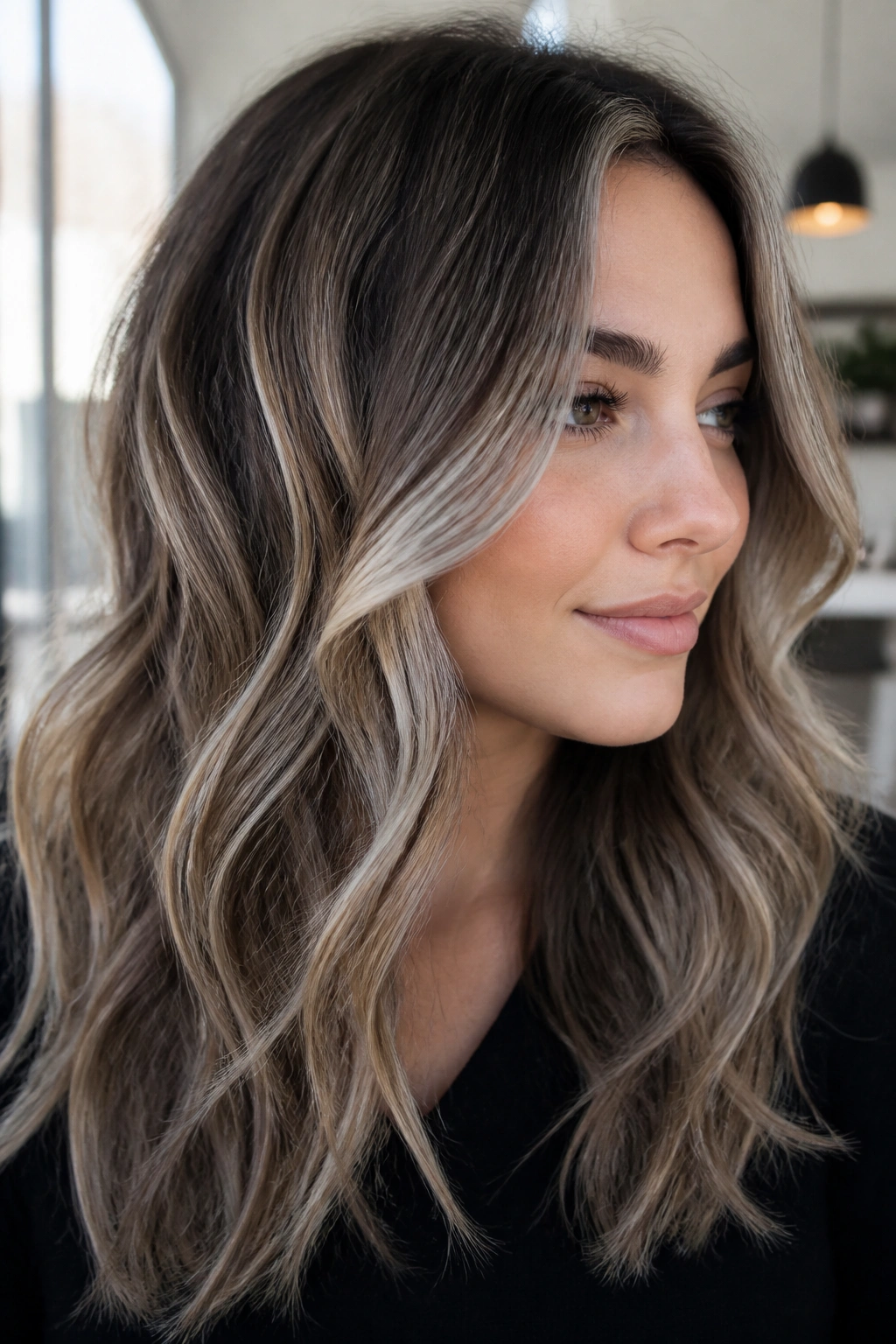
Mushroom bronde balayage is for people who look terrible in orange highlights and know it. The color sits in a cooler lane: taupe, soft ash, beige, and muted brown instead of honey or gold.
What to Ask for at the Chair
Tell your stylist you want cool brunette depth with beige-light ribbons, not bright blonde slices. That tiny difference changes everything.
- Keep the root smoky and close to your natural brown.
- Ask for ash or taupe lowlights to stop the highlights from looking flat.
- Use wider hand-painted pieces around the face, then finer ones through the interior.
- Finish with a cool beige toner, not a warm caramel glaze.
Mushroom tones work especially well if your skin has a neutral or cool undertone. They also look strong on straight hair, where warm highlights can sometimes feel too obvious. The payoff is a soft, modern brunette that still has movement when you wear it in a ponytail or tuck it behind your ears.
5. Face-Framing Money Piece Bronde
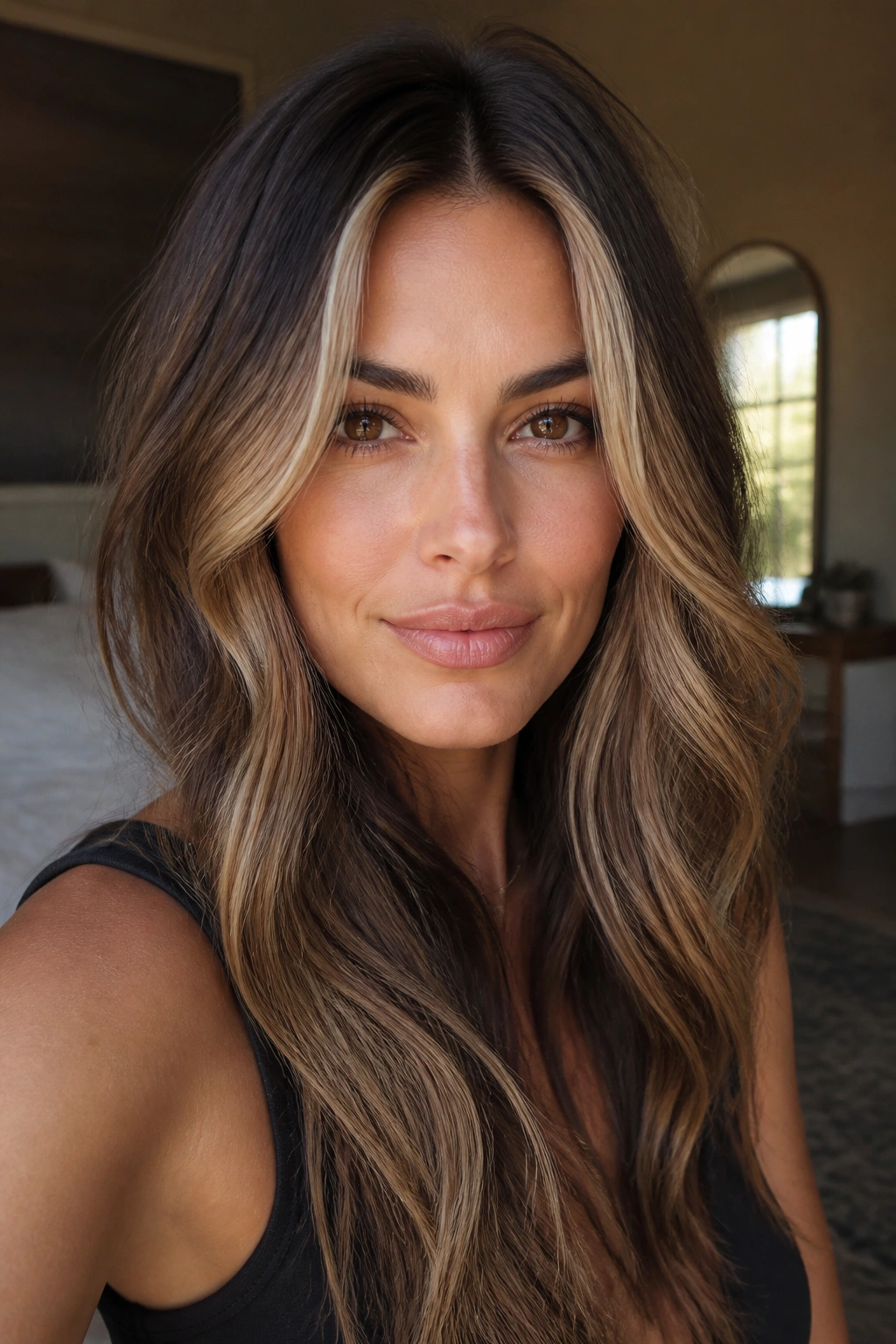
If you want the fastest visual payoff, start with the front. A face-framing money piece does more for brown hair than people expect, mostly because it changes what you see first in the mirror.
The rest of the hair can stay fairly deep, which keeps the style grounded. Then the front sections lift into a beige or caramel bronde tone that brightens the cheeks and eyes. It’s a smart move for anyone who wants to look lighter without committing to full-head lightening.
Where the Brightest Pieces Belong
The brightest strands should sit around the hairline, but not start right at the root unless you want a louder result. A better version begins slightly lower, around temple to cheekbone level, then softens as it moves back. That gives lift without looking stripey.
This one grows out nicely, too. Since most of the brightness lives near the front and on the top layer, you can keep the rest of the color deeper and more natural. It’s the kind of style that looks intentional even when it’s grown in a little.
6. Glossy Espresso Balayage With Soft Ends
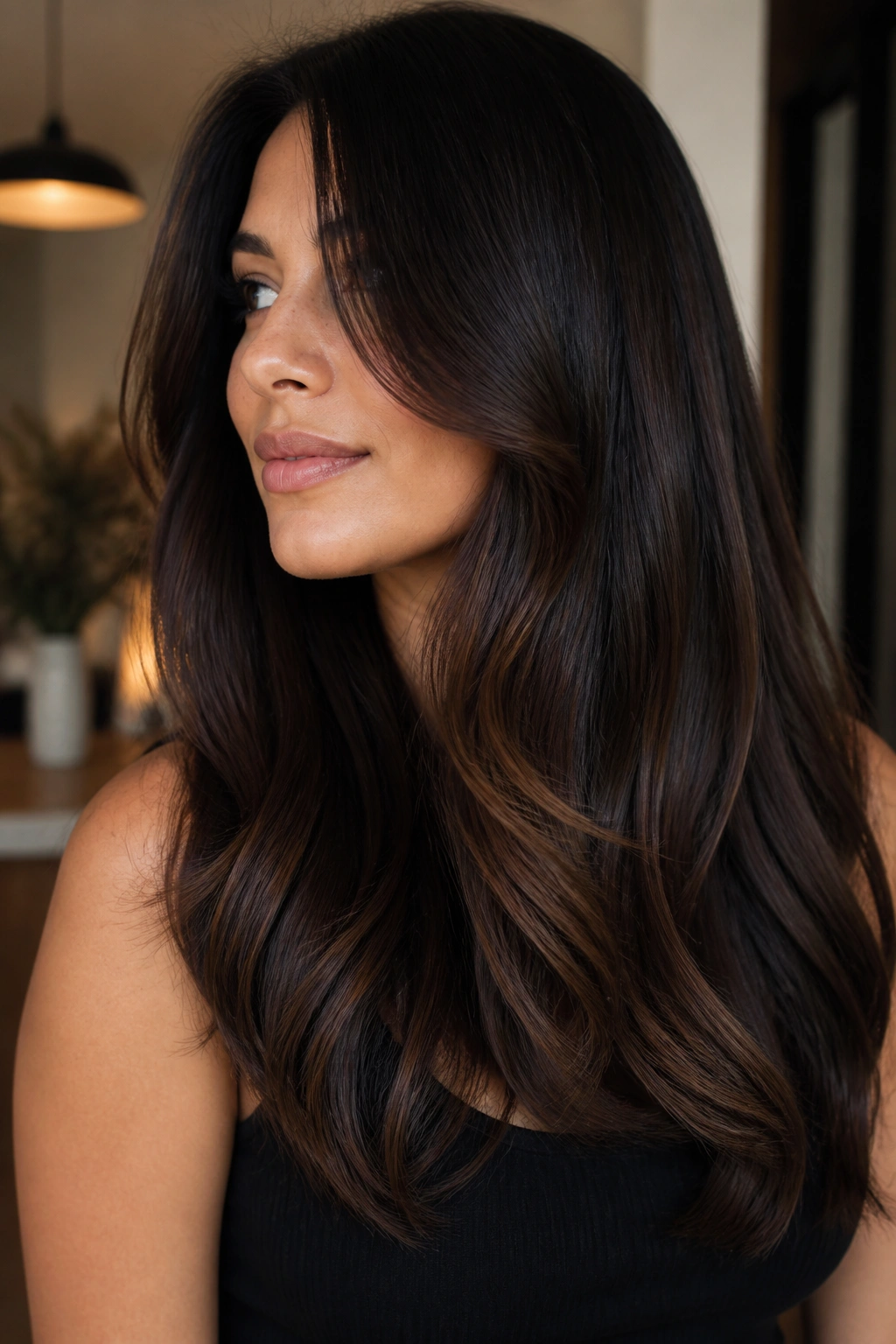
Sometimes the smartest bronde balayage barely looks blonde at all. That’s the case with glossy espresso bases and soft, muted ends that lift just enough to create movement.
This is a good fit if your brown hair is dark and you want to stay close to your natural shade. The lightness should feel like a whisper. Think espresso at the root, then a soft mocha or beige-brown through the ends, not a bright contrast that shouts from across the room.
- Best for people who want low drama and low upkeep.
- Works well on sleek blowouts because the shine shows the gradient.
- Needs a glaze or toner to keep the lighter pieces from going flat.
- Looks strongest when the ends are kept healthy and trimmed.
I like this look for anyone who has tried highlights before and hated the grow-out line. This version avoids that problem almost by design.
7. Toffee-Tipped Waves for Wavy Brown Hair
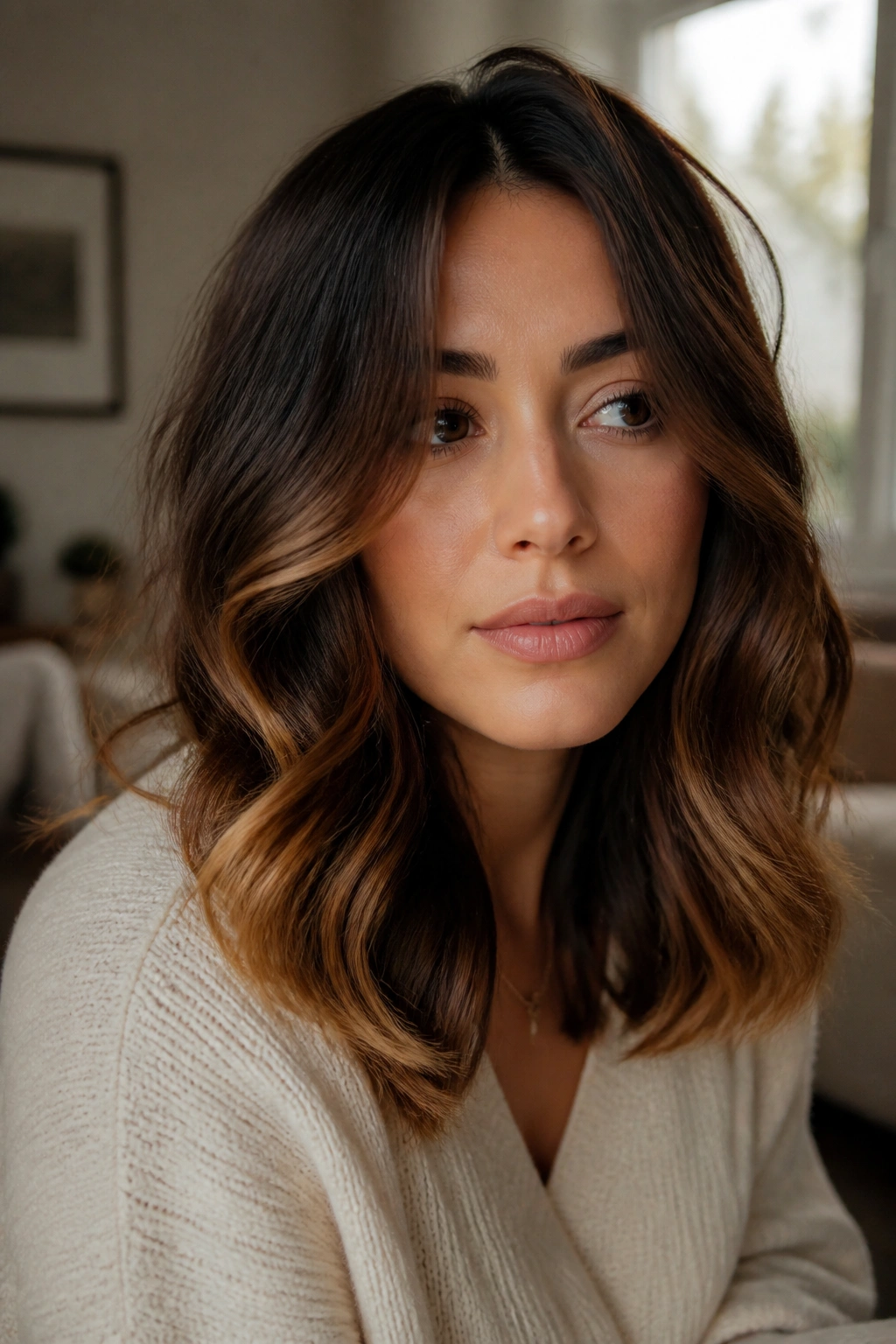
Wavy brown hair loves a toffee tip because the bend of the wave shows off the color shift naturally. You do not need a lot of lightness for this to work. You need the right placement.
The lighter pieces should sit where the wave turns outward, especially through the mid-lengths and ends. That way the color appears and disappears as the hair moves, which gives the whole style a softer, more dimensional feel. On shoulder-length waves, toffee can read warm and expensive without going brassy.
The common mistake is painting the ends too heavily and leaving the top too dark. That can make the hair feel weighed down. A few lighter ribbons near the face and through the outer layer usually do the job better. If you wear your hair with a casual bend most days, this one looks natural fast.
8. Sandy Beige Lightness for Soft Contrast
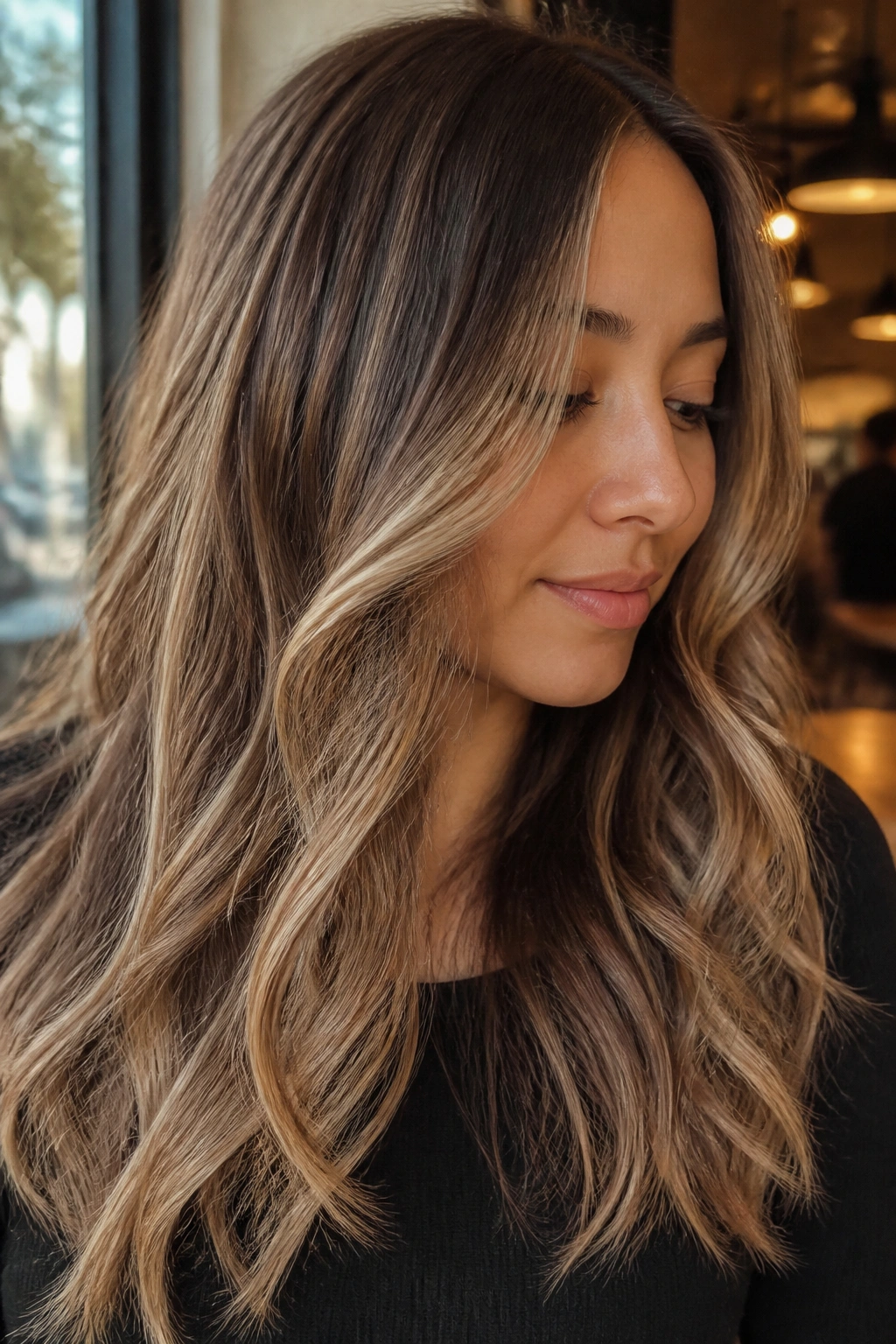
Sandy beige is one of those shades that looks almost understated until the hair moves. Then it wakes up.
On medium brown hair, sandy beige gives a sun-washed effect without pushing into yellow or gold. It’s a good pick for people who want brightness but don’t want the color to dominate their face. The finish is soft, a little dusty, and less warm than caramel.
That softness makes it handy on fine hair, where chunky highlights can look too heavy. A few thin balayage pieces through the outer layer keep the hair from looking striped. If the base is a medium brunette, ask for a beige toner that stays neutral rather than warm. The wrong toner can make sandy beige look flat instead of clean.
This shade also plays well with simple styling. A loose wave, a round-brush blowout, or even air-dried texture shows it without needing perfect curls.
9. Cocoa and Almond Bronde Balayage
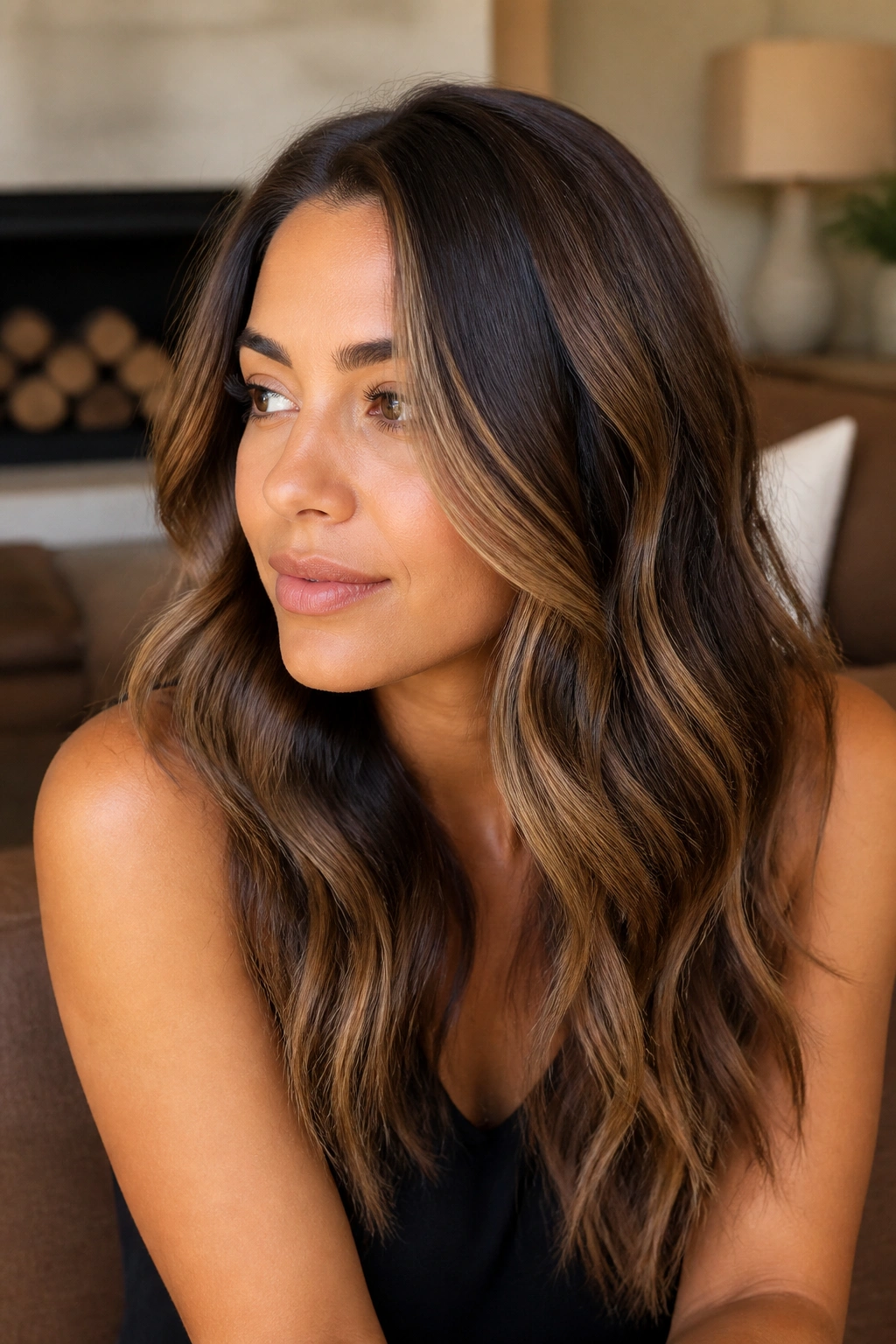
Cocoa and almond is a gorgeous pairing for brown hair because both tones stay inside the brunette family. You get brightness, but you never lose the depth that makes the hair feel rich.
Best Base Shades for This Look
This works best on medium to deep brown hair that already has some warmth in it. The cocoa pieces keep the base from looking too dark, while the almond highlights lift just enough to create contrast.
- Cocoa lowlights deepen the interior and make the lighter pieces stand out.
- Almond ribbons soften the face line and break up a solid brunette block.
- A medium beige gloss helps the mix stay balanced.
- Long layers make the color shift easier to see.
I like this version because it does not try too hard. It feels grown-up without being severe, and it suits people who want dimension more than drama. If you wear brown clothes a lot, this one can be a quiet killer, because the hair still stands out without fighting the outfit.
10. Curly Bronde Highlights That Move With Texture
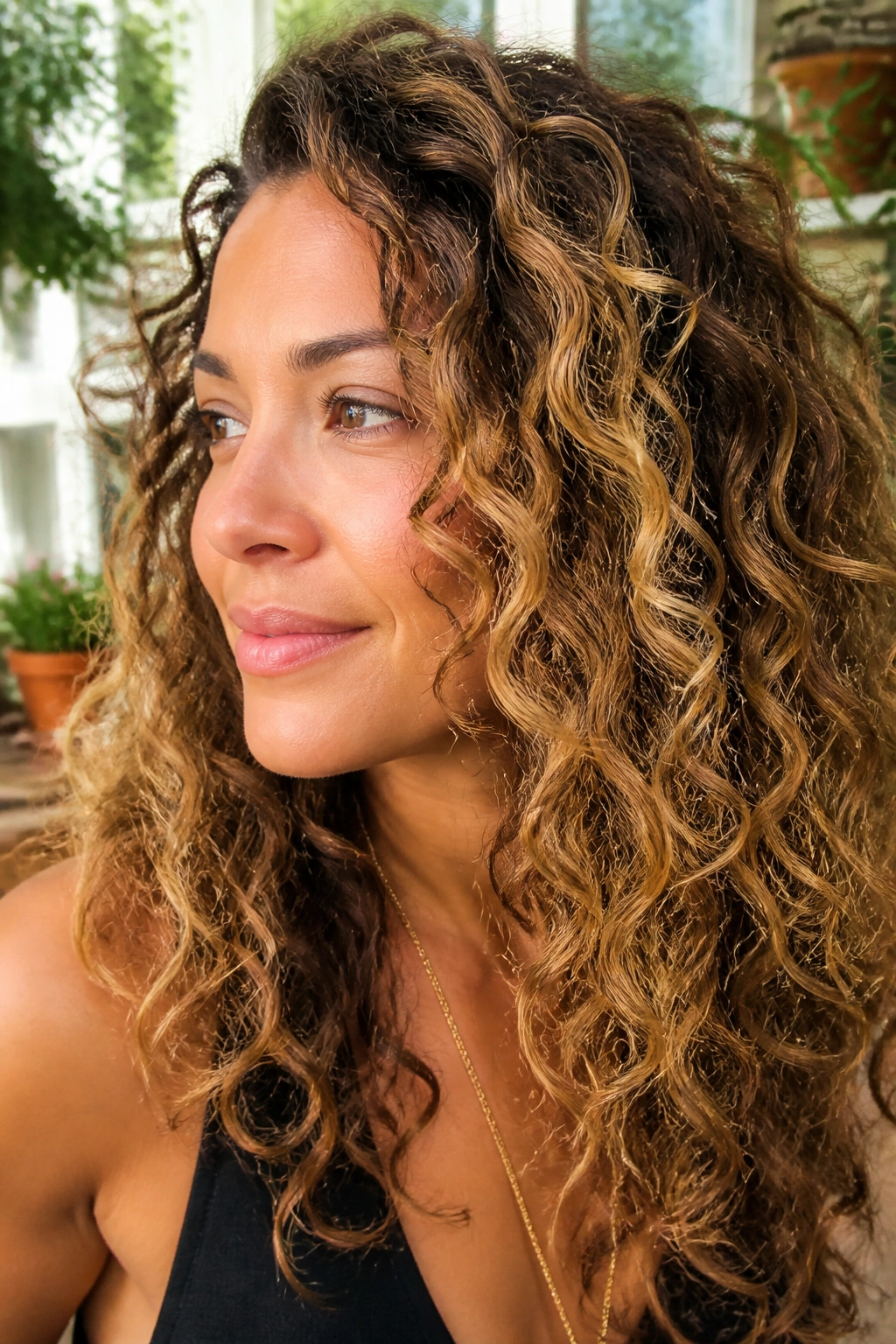
Curly hair changes everything. A highlight pattern that looks perfect on straight hair can disappear in curls, or worse, turn into a random patchwork mess.
That’s why curly bronde balayage needs a different hand. The lighter pieces should be painted where the curl opens, not just where the hair lies flat. Wider ribbons through the surface curl groups usually work better than dozens of tiny streaks. When the curl springs back, the color reveals itself in a clean, soft way.
Placement Rules for Curls
Paint on stretched curls so the color lands where the hair will sit once dry.
- Use broader pieces through the top and crown.
- Keep some darker depth inside the curl cluster.
- Avoid over-lightening the ends, which can make curls look frayed.
- Finish with a gloss that keeps the tone from going too warm.
This look can be stunning on coils, ringlets, and loose curls alike, but it does need a stylist who understands texture. That part matters. A bad highlight job on curly hair is hard to hide.
11. Babylight Balayage for a Fine-Strand Finish
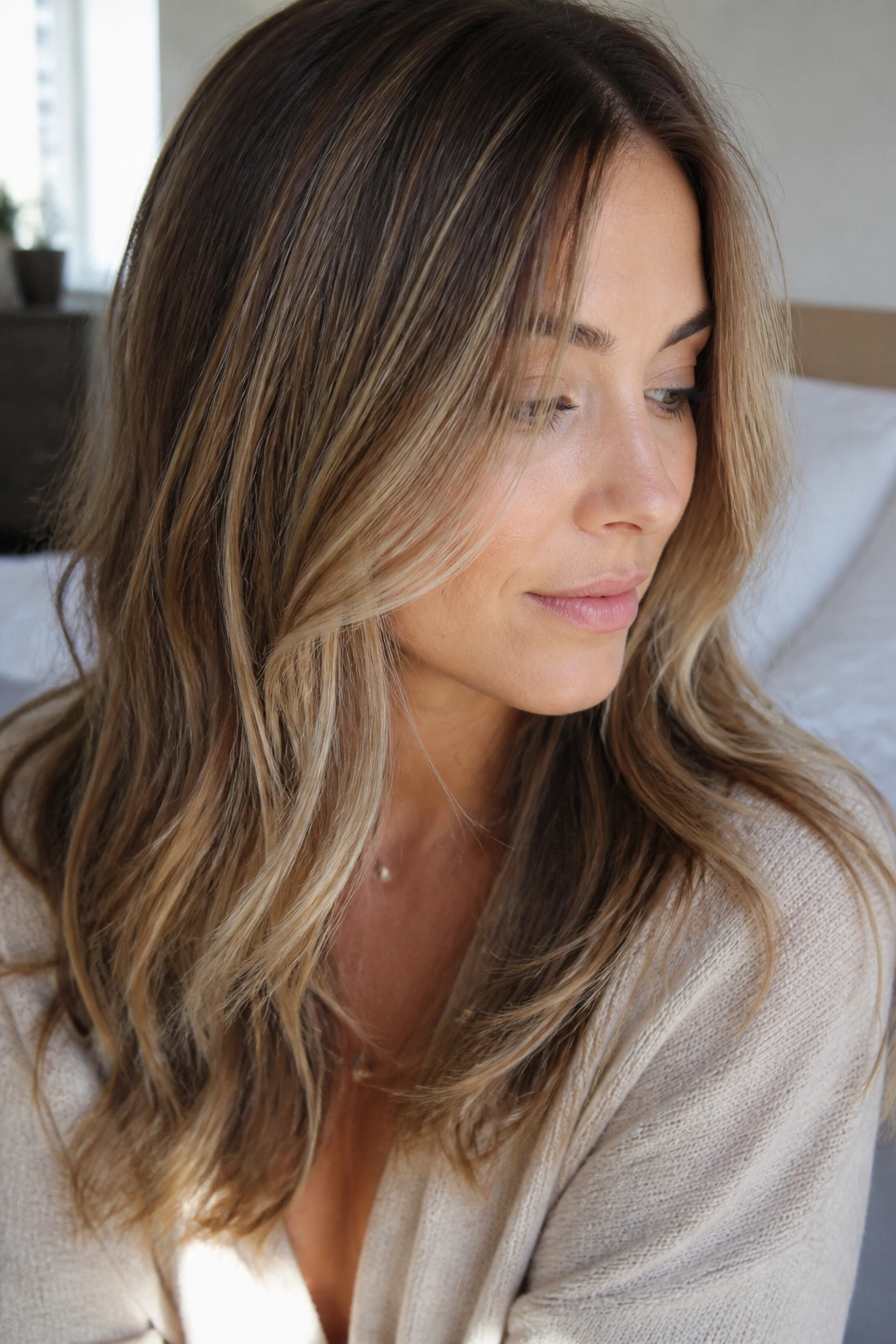
Babylights are the answer when someone wants brown hair to look lighter but still soft enough to fool people into thinking they were born with it.
Unlike chunkier highlights, babylights use very thin sections, often woven close together so the effect reads as shimmer rather than stripes. On fine hair, that makes a big difference. The hair keeps its fullness, and the lightness sits on top like a fine veil instead of breaking up the whole cut.
This is a strong move if your strands are delicate or your hair tends to feel thin after coloring. Too much contrast can make fine hair look sparse. Babylights avoid that by keeping the pattern delicate. Add a beige or honey gloss, and the result stays light without looking hollow. It is one of those styles that sounds subtle on paper and ends up doing a lot of work in real life.
12. Smoky Brunette Melt
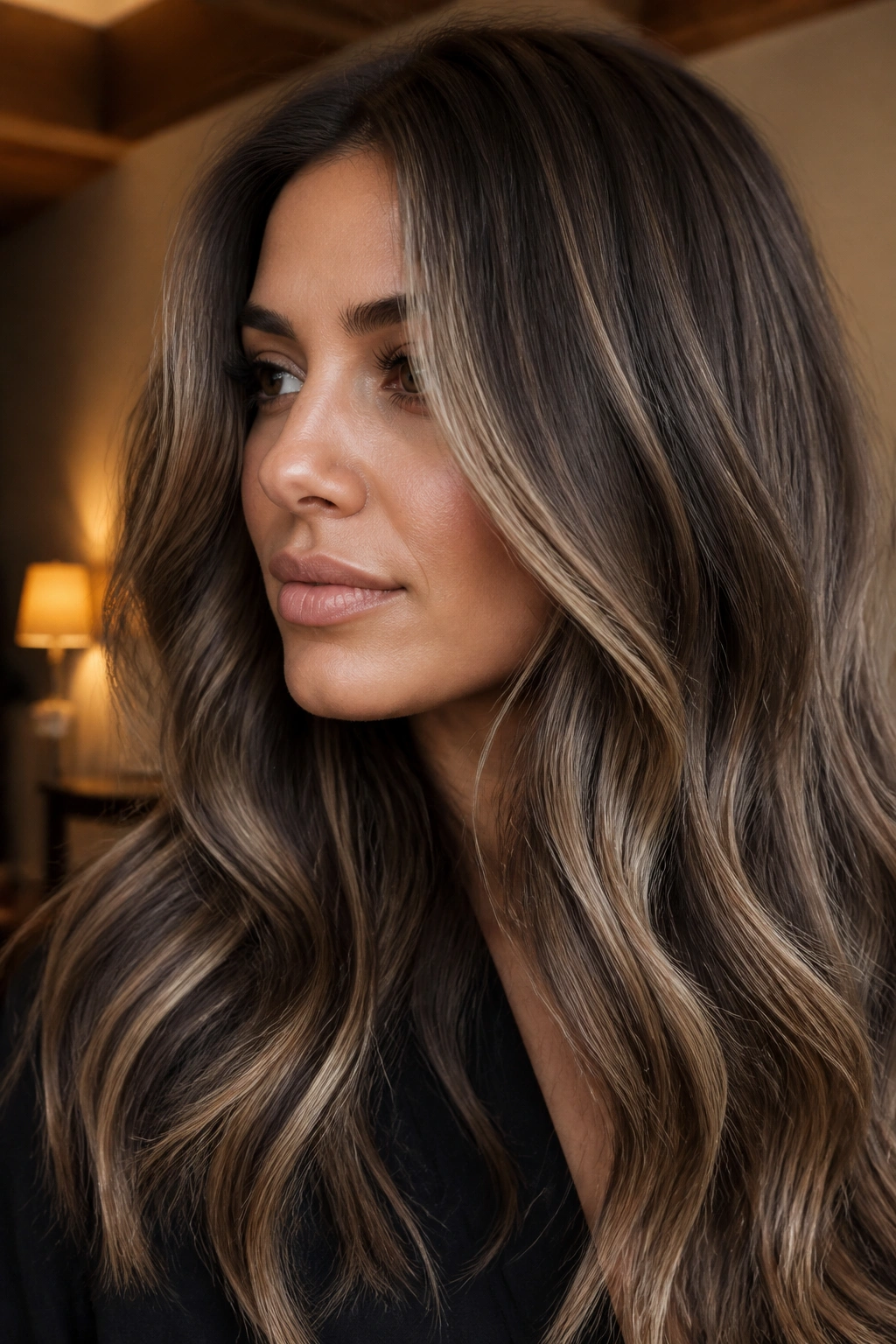
A smoky brunette melt is what happens when you want bronde energy but prefer to keep things cool and lived-in. The base stays deep, then the lighter pieces soften into muted brown-beige rather than gold.
I like this look on medium-length cuts with movement through the ends. It does not need much brightness to feel interesting. The cool tone gives the hair that slightly misty effect that works especially well under indoor light and on dull wintery days, though you do not need to tie it to any season to appreciate it.
The important part is the toner. Smoky brunette turns brassy fast if the warm tones are left unchecked, so a cool gloss or ash-beige glaze keeps it honest. If you already have naturally cool brown hair, this is a good match. If your hair pulls warm, the stylist may need to neutralize it a bit first.
This is not a loud color. That is the point.
13. Copper-Kissed Bronde for Warm Undertones
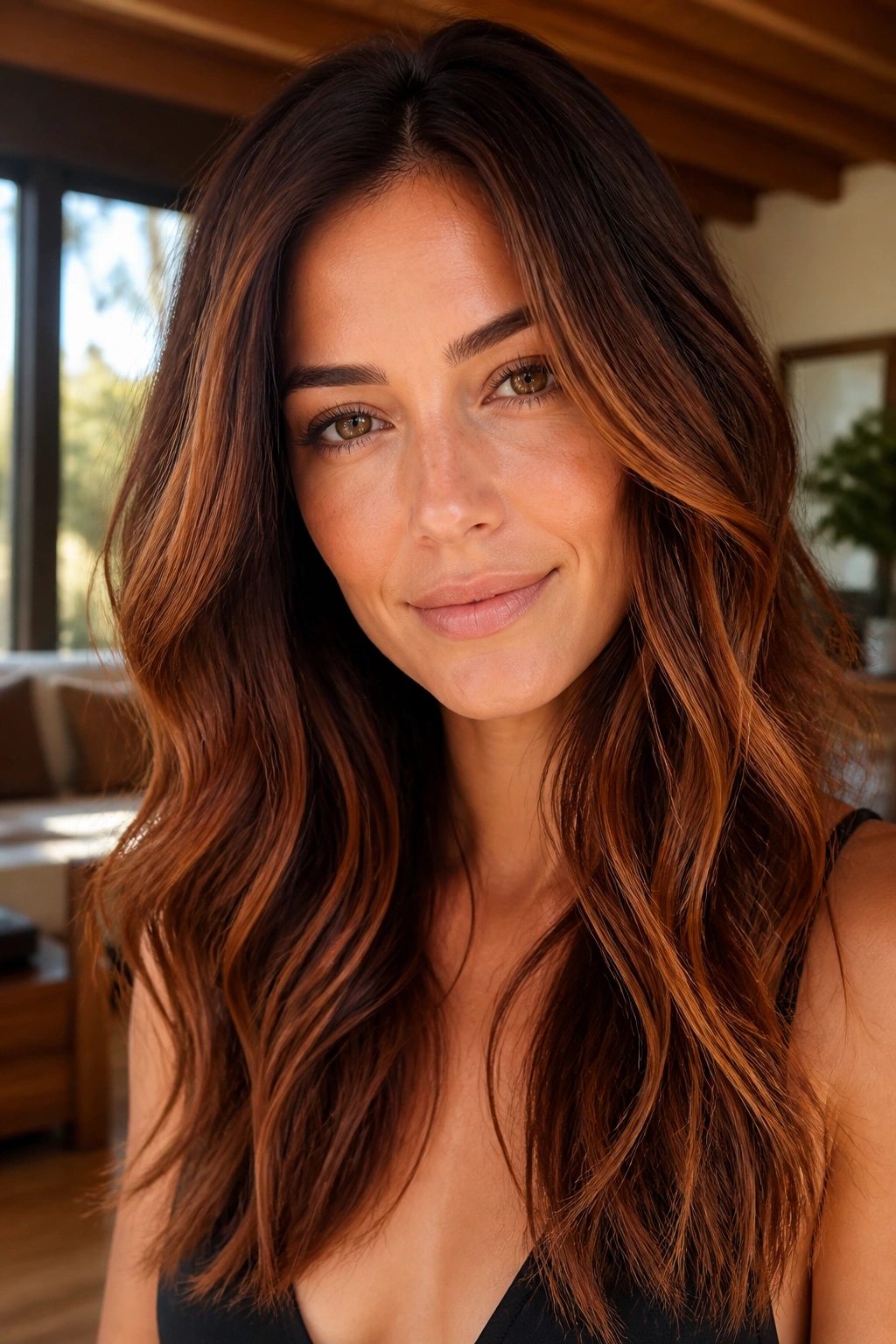
Copper-kissed bronde is for the person who likes warmth but wants it shaped, not scattered. It sits between caramel and soft copper, which gives brown hair a bit of fire without tipping into full red.
The nicest version keeps the base brunette and places the copper only in the lighter ribbons. That way the hair still reads as brown, but the warm pieces flash with a little more energy. On layered cuts, this can look lively without being obvious in a dated way.
Copper works well when your skin leans warm or golden, but the trick is restraint. Too much copper turns the whole head into a red-brown block. A few painted pieces through the front, some lighter ends, and a gloss that leans copper-beige rather than orange usually gets it right. If you like warm-toned makeup, this hair color tends to feel easy to wear.
14. Dimensional Mocha Balayage for Thick Hair
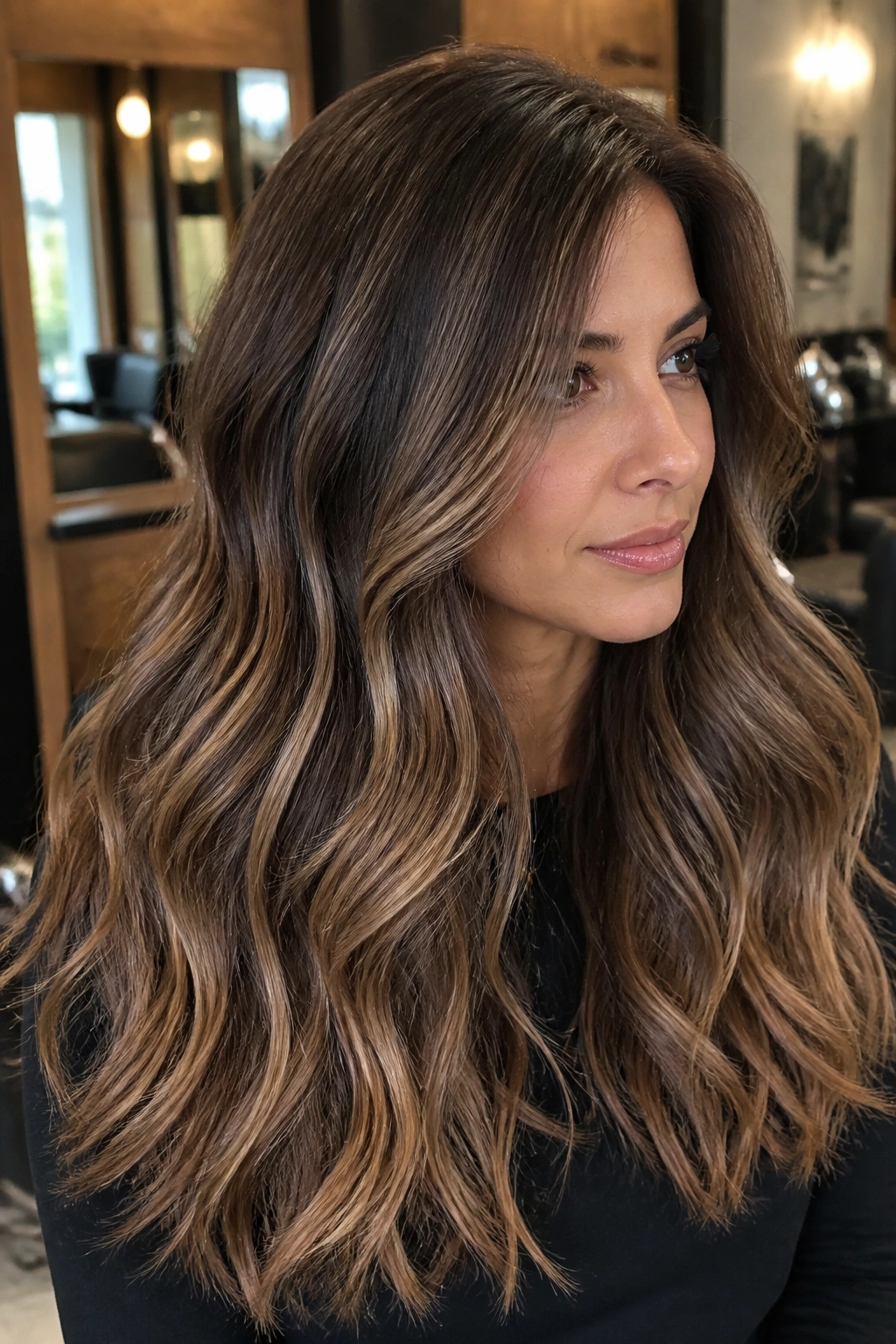
Thick hair can swallow color if the placement is too timid. Dimensional mocha balayage solves that by building contrast in layers, not with a single bright streak.
The mocha base keeps the hair looking rich, while lighter brown-beige ribbons are painted in vertical sections so the color shows from root to tip. That vertical direction matters on thick hair because it helps the eye move through the density instead of getting stuck on a heavy block of color.
You also get more mileage out of the cut here. Long internal layers or soft face-framing pieces let the balayage breathe. Without those, thick hair can look bulky even when the color is nice. This style has a smooth, expensive feel when it’s done well, and it wears nicely in a low bun, a half-up twist, or a loose blowout.
15. Ash Brown with Wheat Blonde Ribbons
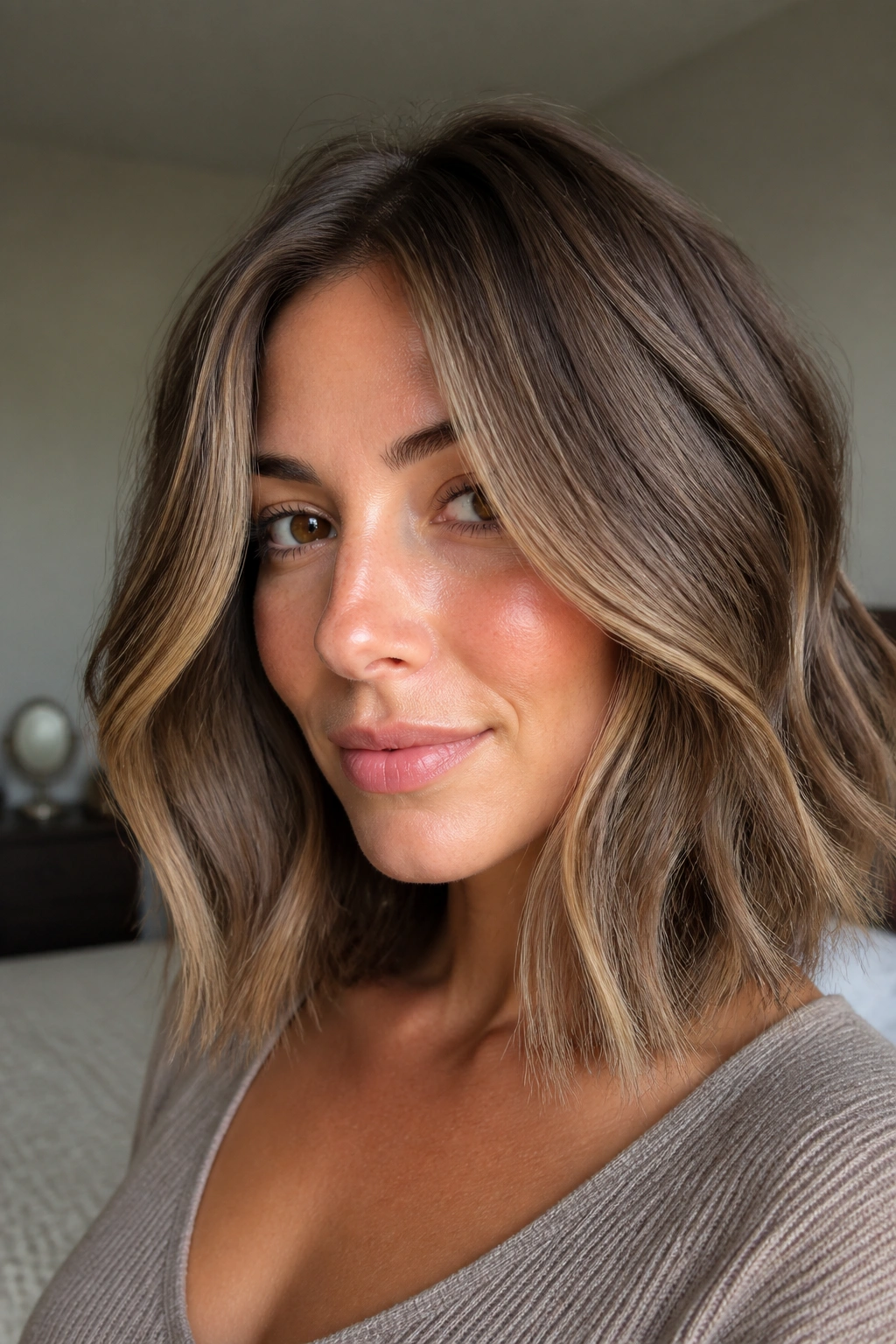
Why does ash brown with wheat blonde ribbons work when so many cool-and-warm mixes do not? Because both tones stay restrained. Neither one screams.
The ash brown base keeps the brunette side of the color clean and grounded, while the wheat blonde adds just enough lightness to stop it from feeling muddy. That makes the style especially useful for people whose hair pulls orange after coloring. The ash tones cool that down, and the wheat tone keeps the finish from looking gray.
This is a strong choice on shoulder-length cuts and longer bobs. It gives shape to the hair without needing very light pieces. If your natural color sits in the medium brown range, the contrast is enough to show up, but soft enough that you can wear it with minimal styling. A loose wave helps, but the color should still work on day-two hair, which is part of its charm.
16. Sun-Kissed Bronze Ends
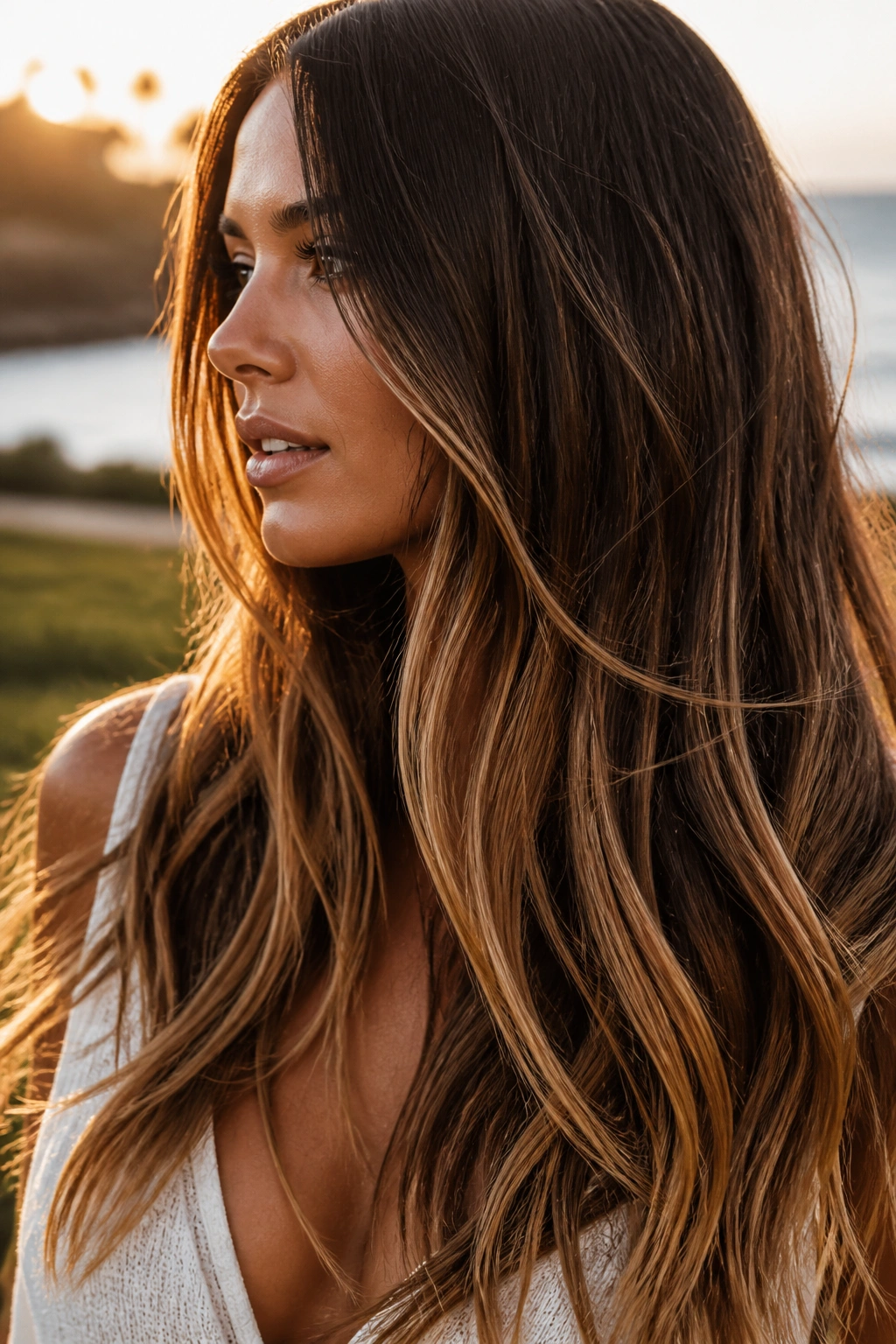
Sun-kissed bronze ends work because bronze lives in that sweet zone between brown and gold. It brightens brown hair without making it look bleached, and it feels warmer than beige without going full copper.
A good version starts with a rich brunette base and lets the ends turn bronze through gentle balayage placement. The brightest pieces usually sit on the lower half of the hair, where they can move freely and show up when the hair swings. If the bronze starts too high, the effect can become too loud. If it starts too low, you barely notice it.
This is one of those styles that looks especially good with long layers and a soft bend. Straight hair can wear it too, but the bronze is easier to see when the hair has a little shape. It is friendly on medium and dark brown bases, and it does not demand constant touch-ups. That alone earns it a place on the list.
17. Soft Rooted Bronde Balayage
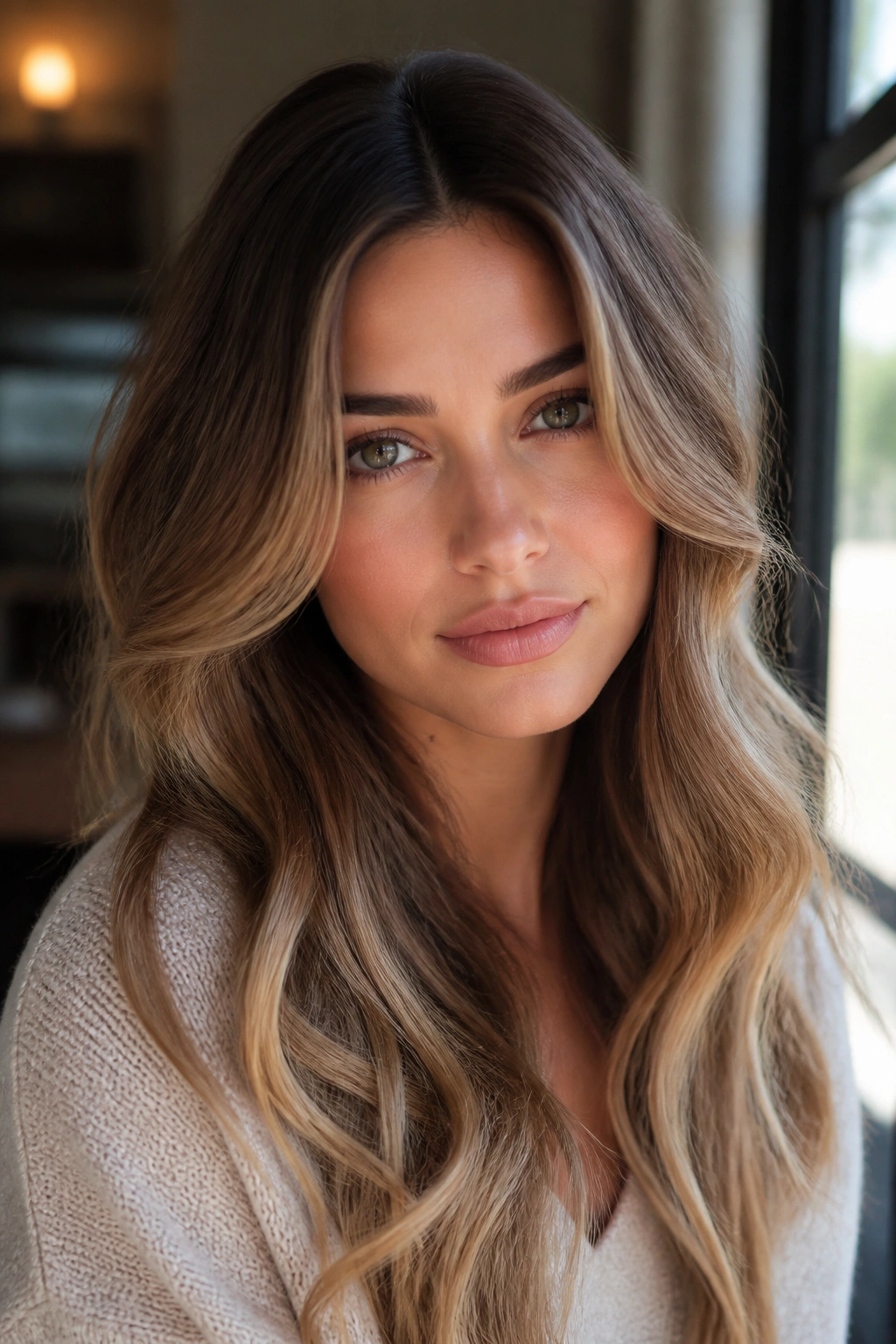
A rooted bronde balayage looks more expensive than a flat all-over light brown, and the reason is simple: the root shadow gives the whole thing structure.
Why the Root Shadow Matters
A soft root keeps the color from looking freshly dyed in a way that never quite settles. The darker base anchors the style, while the bronde pieces brighten the mids and ends. That contrast makes the hair appear thicker and gives the grow-out a much easier life.
- Ask for a root that stays close to your natural brown.
- Let the lightness begin mid-shaft, not right at the scalp.
- Keep the brightest bits around the face and surface layers.
- Use a neutral or beige toner so the root and ends blend without mud.
This look suits anyone who wants a low-stress color appointment. It is not the kind of hair that demands constant correction. It just keeps looking better as it softens.
18. Honey-Dipped Lob with Light Ends
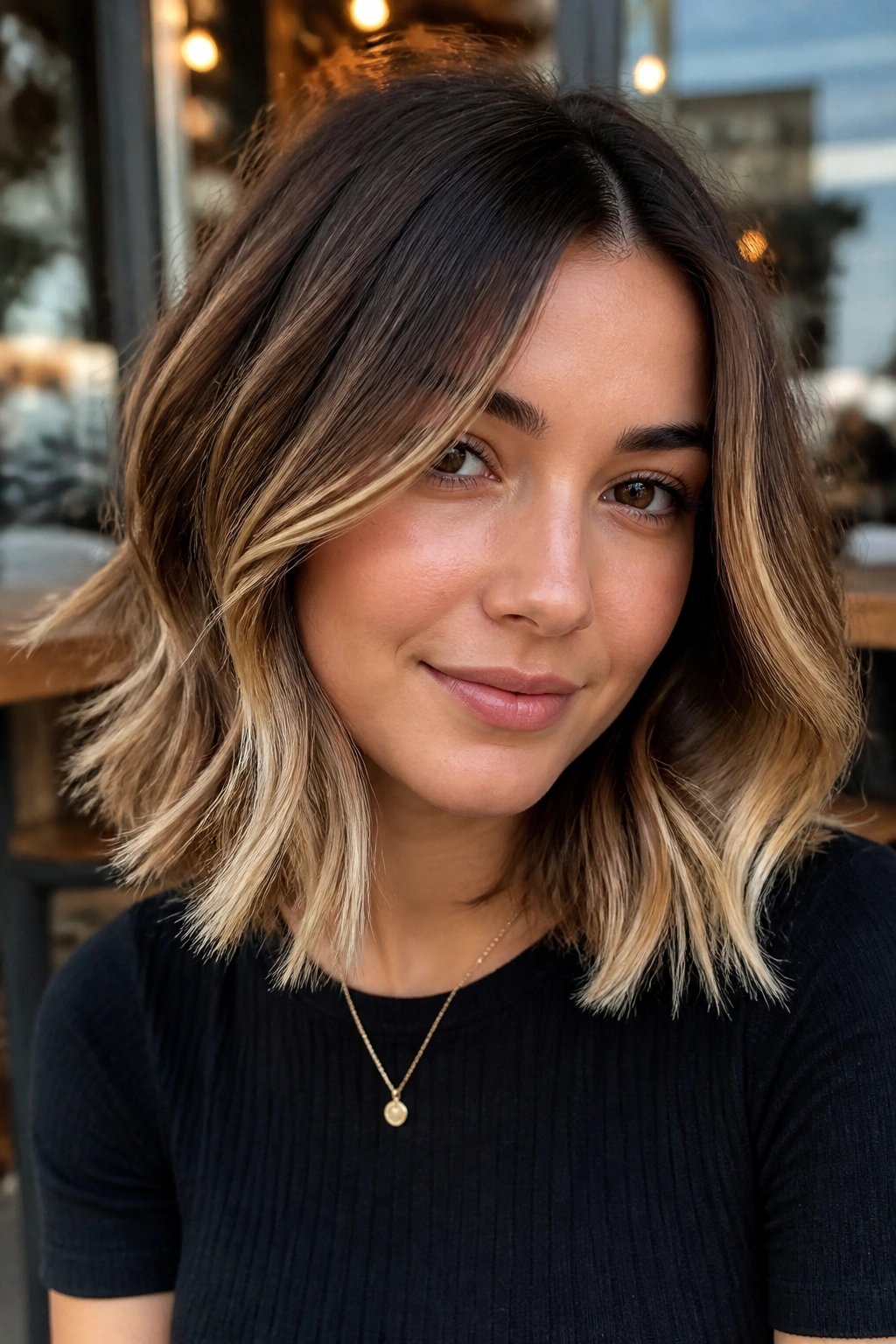
A lob can wear brightness in a way longer hair sometimes cannot. The cut stops around the collarbone, so light ends feel crisp instead of stringy, and honey-dipped balayage can make that shape look sharper.
The honey should sit mostly through the lower half and around the face. A lob already has enough structure, so the color does not need to do all the work. A few well-placed lighter pieces can make the cut look fuller and a little swingier, especially if the hair is fine or medium in thickness.
I like this on people who wear a blunt or slightly textured lob and want the style to feel less heavy around the jawline. The light ends also keep the cut from looking too severe. If you use a flat iron or a big round brush, the honey tone gives the shape a clean finish without making it look overdone.
19. Rich Mocha Melt for Deep Brown Bases
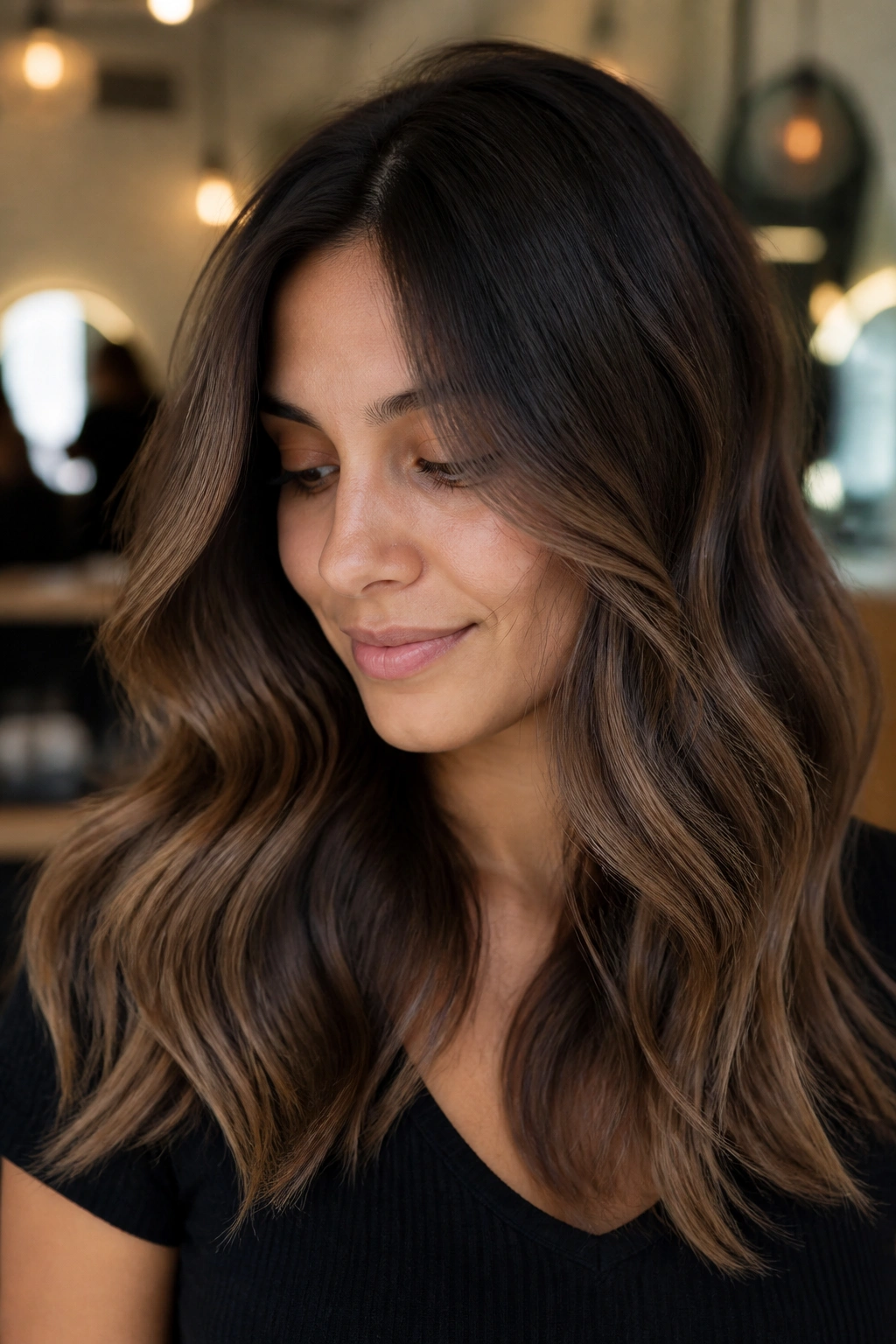
Not every good brown-hair balayage needs to push toward blonde. Sometimes the smarter move is a rich mocha melt that stays deep and glossy.
This is the look for someone who wants dimension more than brightness. The base remains dark brown, then a few mocha and soft café-au-lait pieces are painted through the mids so the hair gains movement without a big color shift. It works especially well on hair that already has depth and shine, because the color change is subtle enough to feel polished rather than dramatic.
You can also wear this one in a messy bun without losing the point. The different shades still show through, even when the hair is pulled back. That’s part of why I think it gets overlooked. People assume balayage has to be light to count, and that’s not true at all.
20. Sandalwood Bronde for Straight Hair
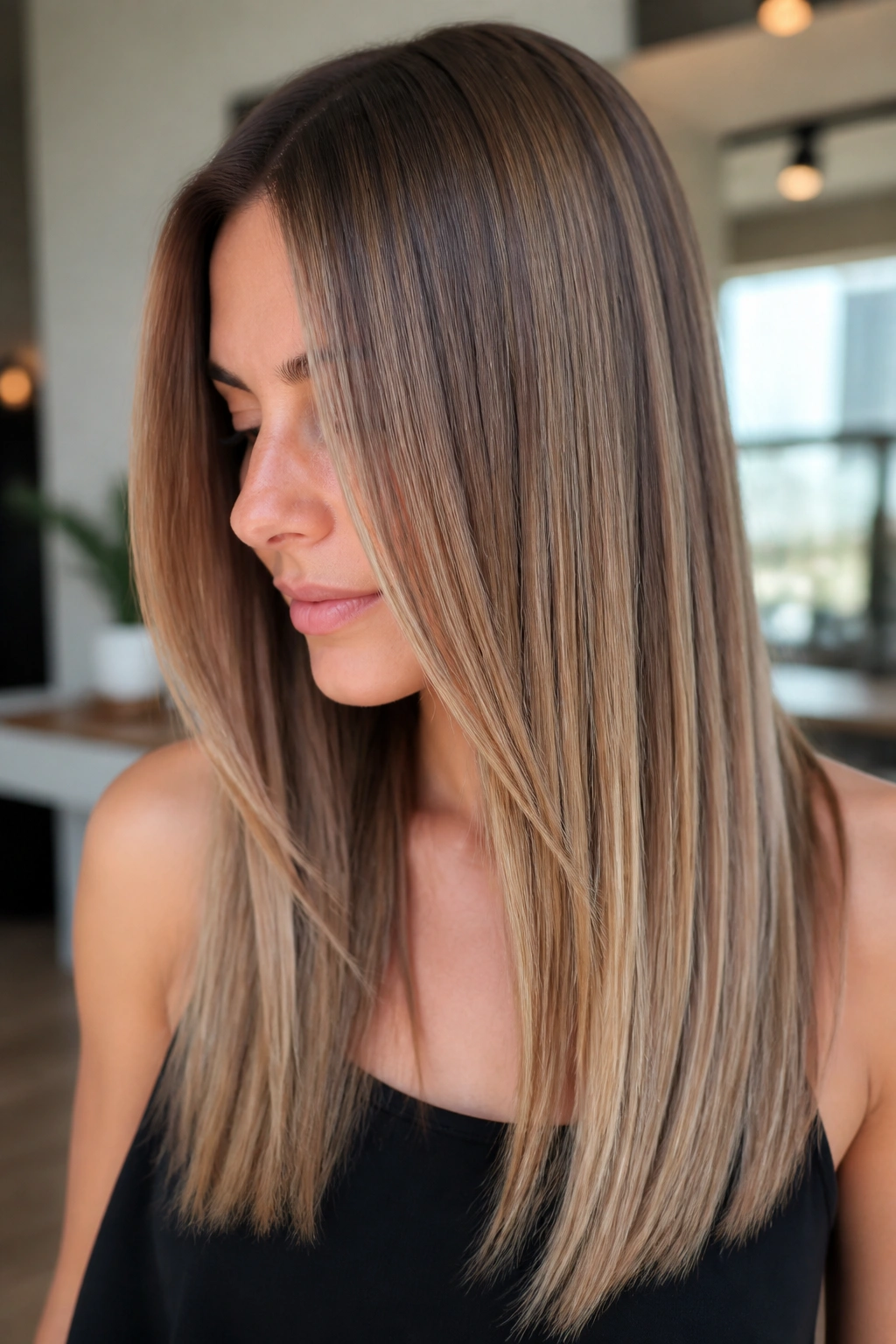
Straight hair is brutally honest. If the placement is off, you see every line.
That is why sandalwood bronde works so well here. The color is soft enough to avoid harsh stripes, but warm enough to break up a solid brown panel. On straight hair, the lighter ribbons should be spaced with care, especially through the top and the front. You want the eye to travel, not stop at a chunky highlight.
Sandalwood shades usually sit in a beige-brown family with a muted warmth that keeps the look clean. They are a solid choice if your hair falls naturally sleek and you do not want to spend every morning curling it just to make the color visible. A smooth blow-dry shows the blend clearly, and even a tucked-behind-the-ear style can look intentional because the highlights follow the line of the cut.
21. Cinnamon Swirl Balayage
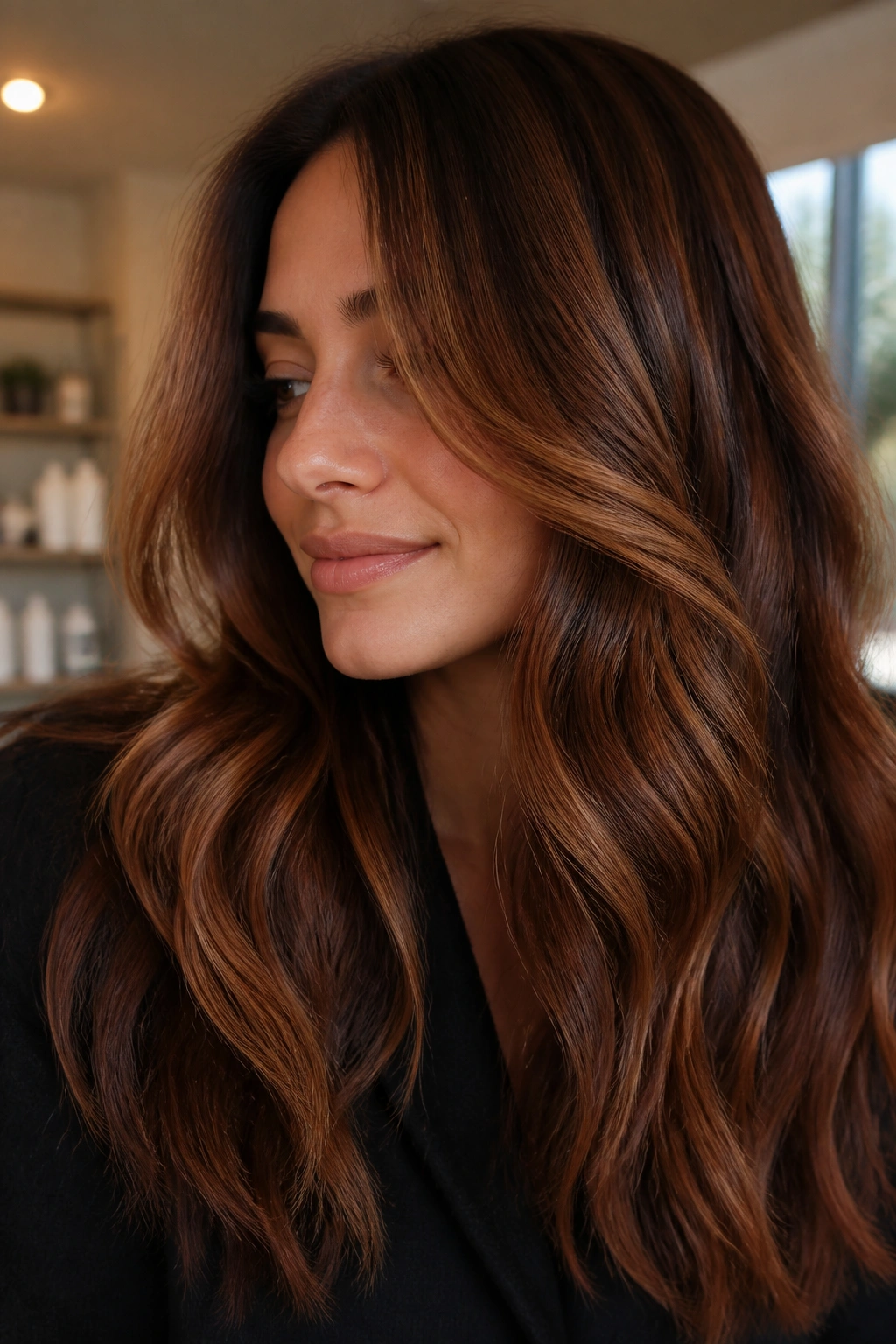
Cinnamon swirl balayage has a little more spice than caramel, and that is exactly why some brunettes love it.
The warmer red-brown tone gives brown hair a richer feel, especially if your natural color already leans chestnut or auburn at the sunniest spots. The lighter pieces do not need to be bright to matter. They just need enough warmth to read as cinnamon rather than gold. That makes this a nice middle ground for people who want color that feels cozy but not orange.
It also works well when you want your hair to look different in indoor light and daylight. Cinnamon can show softly in one setting and come alive in another, which makes the color feel less static. The main thing to watch is saturation. Too much red tone can take over fast. A few warm ribbons, a soft gloss, and a good cut are usually enough.
22. Cool Beige Ends With a Smoky Root
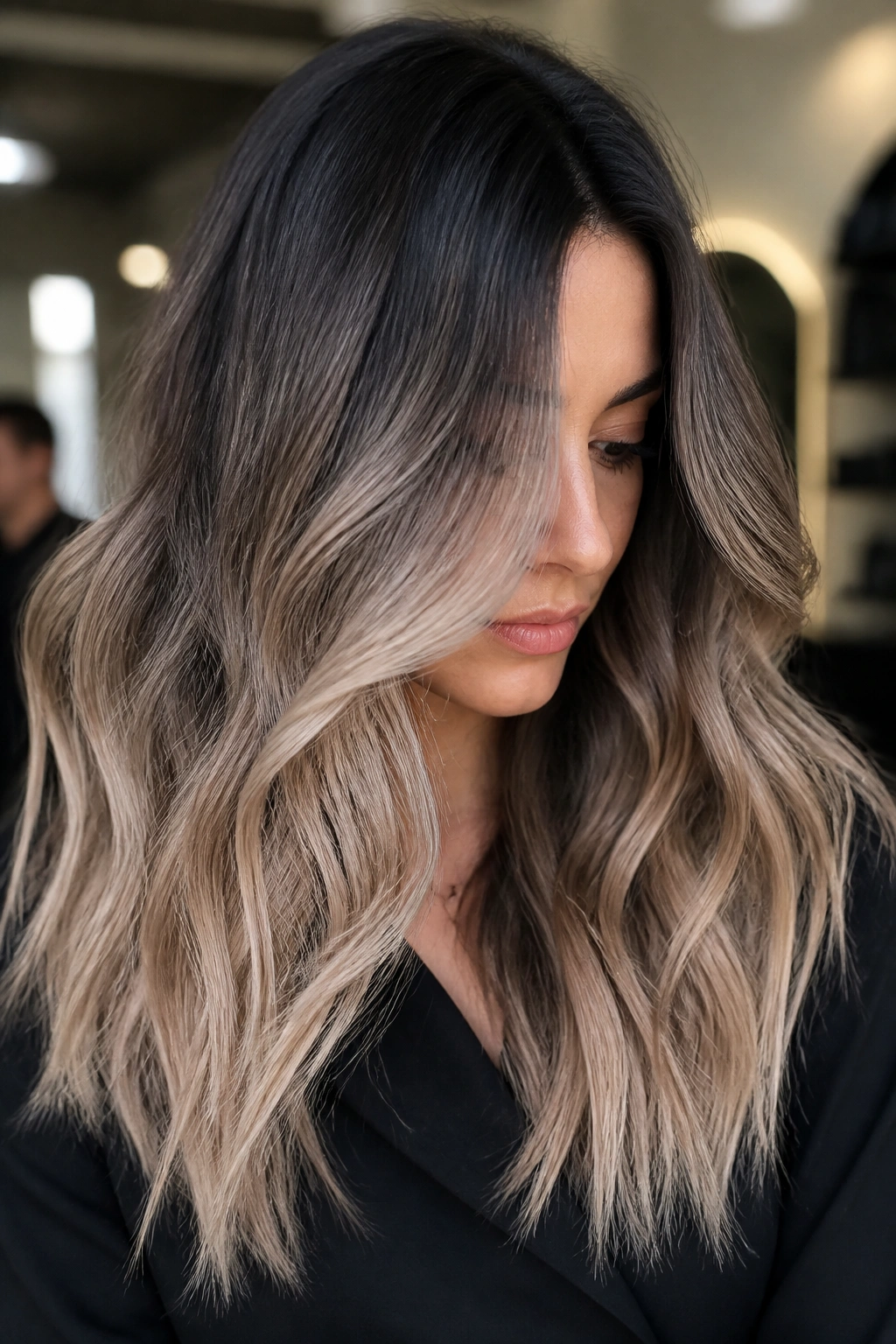
If brass is your enemy, this is your answer. Cool beige ends with a smoky root give brown hair lift without letting the warmth run away with the color.
What Makes It Stay Cool
The smoky root holds the brunette side down, while the beige ends stay soft and pale enough to brighten the length. The two tones work because neither one is too extreme. You get contrast, but not a hard line.
- Use a darker root melt close to the natural base.
- Lift the ends to a cool beige, not a golden blonde.
- Keep the face-framing pieces slightly brighter than the rest.
- Ask for a gloss that stays neutral or ash-based.
This style looks clean on layered cuts, and it can make thick hair feel lighter without slicing away all its depth. It also works nicely if your wardrobe leans cool tones. That may sound small, but hair and clothes do talk to each other more than people admit.
23. Warm Walnut Balayage
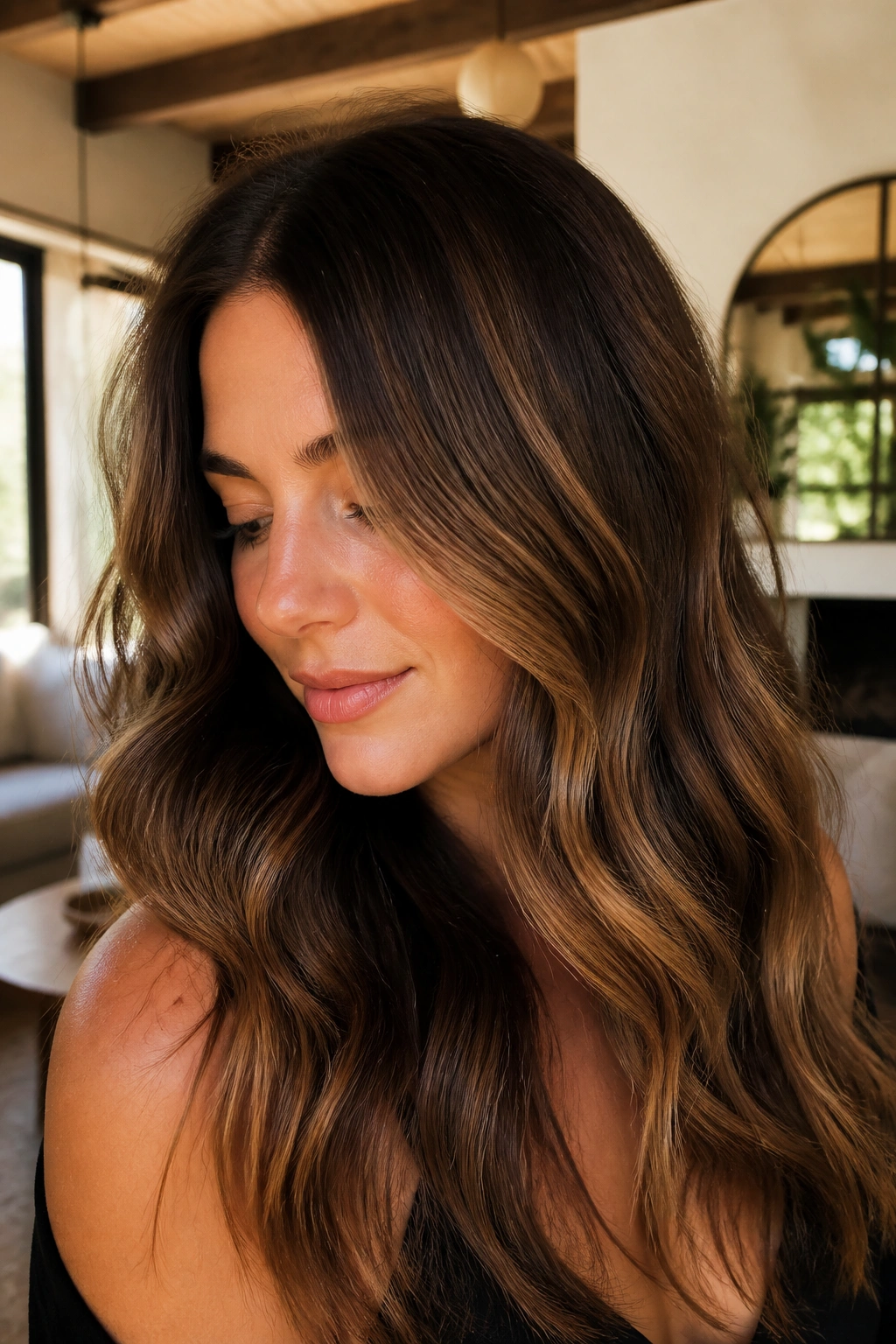
Warm walnut balayage sits in a nice place between brunette depth and soft brightness. It is warmer than ash, darker than caramel, and easier to wear than a high-contrast blonde look.
Why does walnut feel so wearable? Because it stays brown first. The lighter sections are still rooted in the same color family, so the whole thing looks coherent even when the hair is loosely tied back or tucked behind the shoulders. That makes it a good choice for people who want a color change but do not want a dramatic identity shift every time they look in the mirror.
This works especially well on medium and long hair with soft layers. The lighter walnut pieces can run through the surface, while the underside stays deep. The result is movement without losing the richness that made you like brown hair in the first place. I also like it for people who hate constant toning appointments. It is forgiving in a way some brighter brondes are not.
24. High-Contrast Bronde Balayage
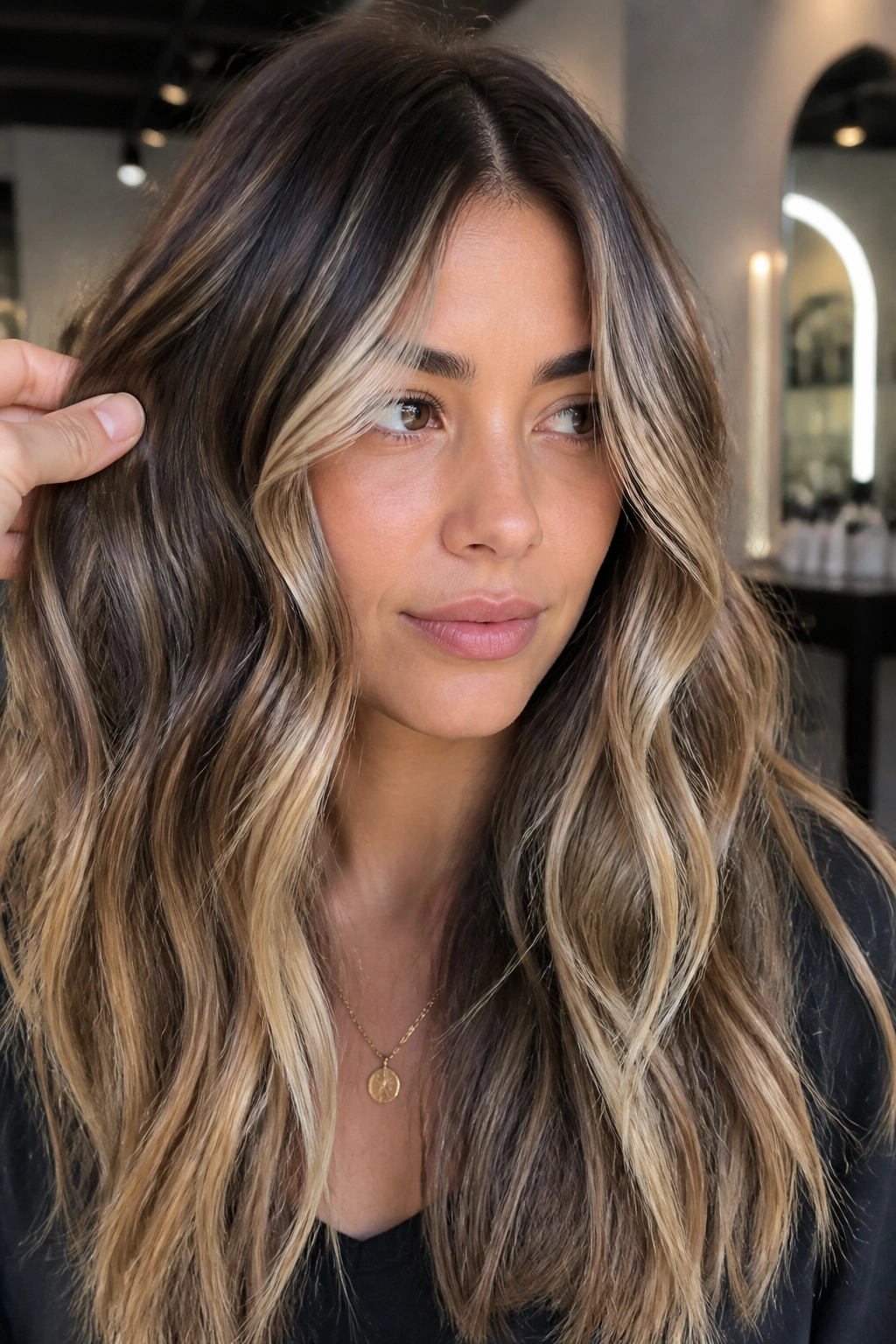
High-contrast bronde balayage is for the person who wants the color to show up on purpose. No whispery half-measures. You want to see the change.
The deeper pieces stay dark enough to hold the brunette identity, but the light ribbons are brighter and placed with more visibility around the face, crown, and outer lengths. That kind of contrast gives waves a real hit of shape, and it can make a simple haircut look much more finished.
The tradeoff is maintenance. Brighter contrast means the grow-out will show sooner, and toner matters more because the lighter pieces can drift warm or dull if ignored. Still, this is the look for anyone who finds subtle color underwhelming. It is especially good on layered cuts and medium-to-long lengths where the transition has room to breathe. If you want your brown hair to read clearly from across the room, this is the style that does it.
25. Lived-In Bronde for Long Layers
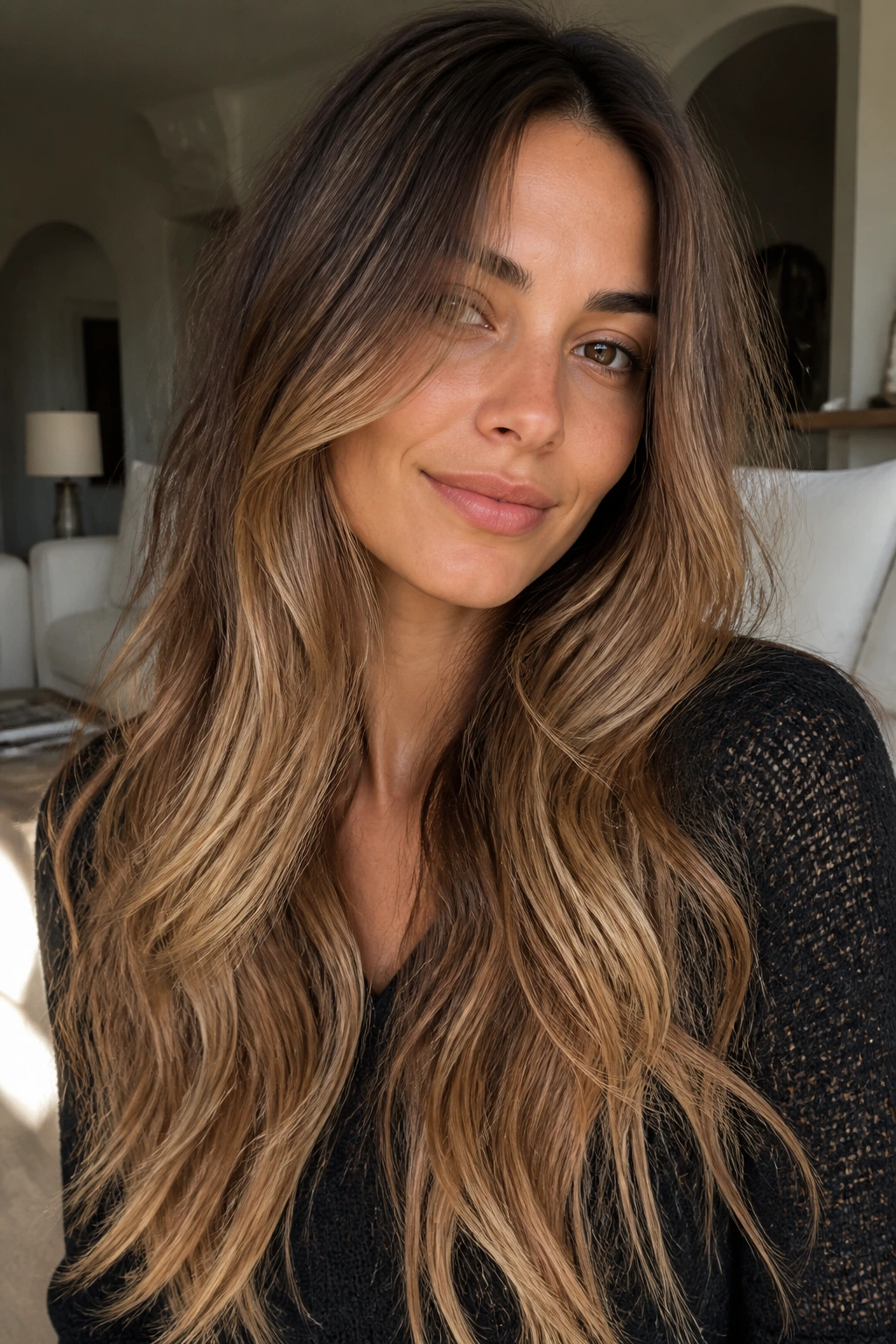
Long layers are basically made for lived-in bronde. The cut gives the color places to land, and the color gives the cut more shape.
A lived-in version keeps the root soft, the mids blended, and the ends lighter but not stripped. That gradual shift means the color still looks good several weeks after the salon visit, which is why people keep coming back to it. The hair does not need to be freshly curled to make sense. It can air-dry a little messy and still hold together.
This look also helps long brown hair avoid that heavy curtain effect. By moving brightness through the layers instead of stacking it at the bottom, the stylist creates motion that shows up even when the hair is worn straight. It is not flashy. It is practical. And honestly, that’s the appeal.
26. Bronde Balayage on a Long Wave Cut
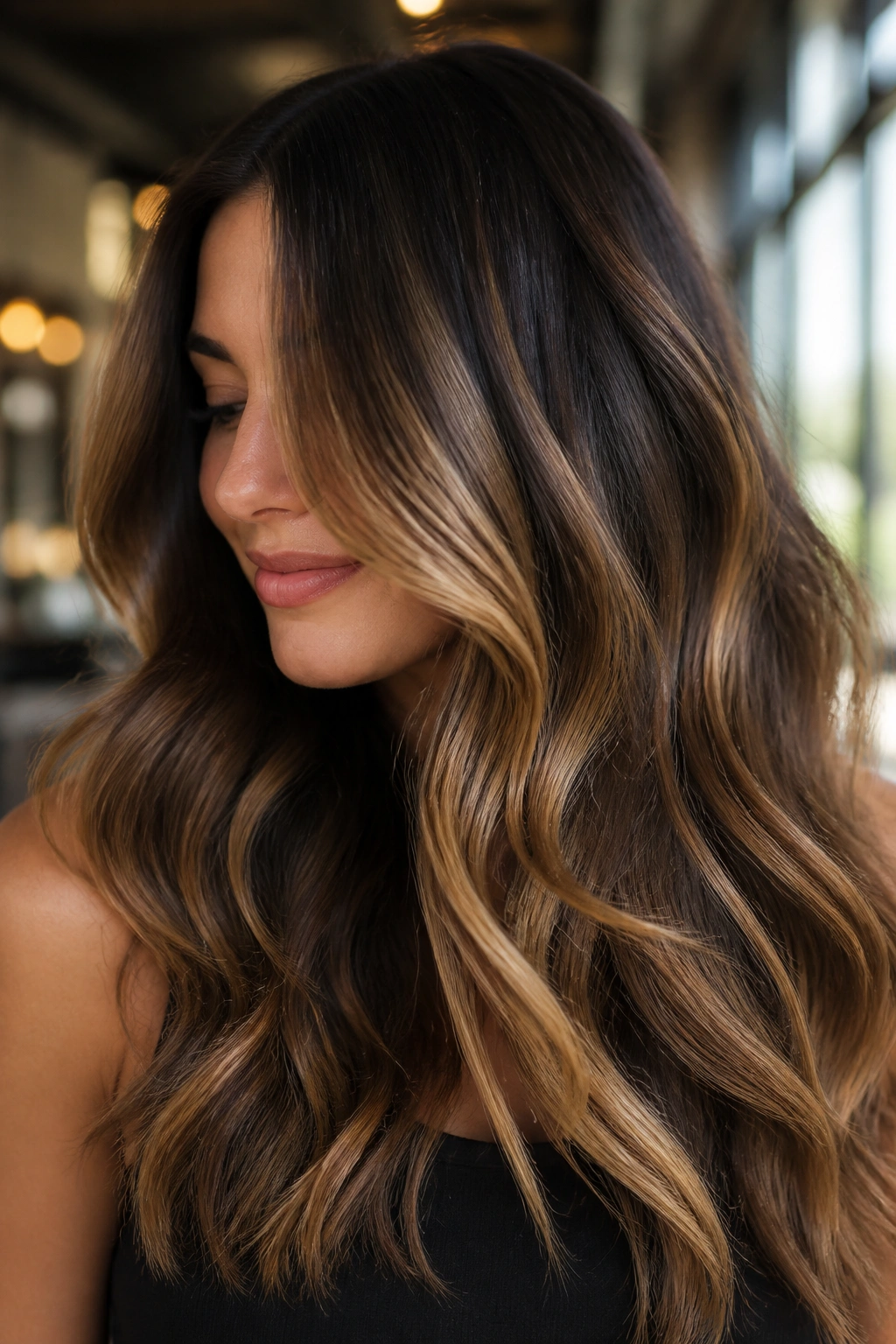
Bronde balayage on long waves is one of those pairings that makes sense the second you see it. The wave gives the color a rhythm, and the color makes the wave look fuller.
The lighter pieces should follow the bend of the hair, not fight it. That means placing bronde ribbons where the wave naturally turns, especially through the mid-lengths and around the face. If the highlights sit in random straight lines, the cut loses its flow. If they follow the movement, the color looks built into the style.
This is a good choice for people who wear their hair down most of the time. Long waves give the highlights space to show without looking busy, and the bronde tones keep the whole thing softer than full blonde. A simple salt-free texture spray or a light cream can help the pattern show without making the hair stiff. The color should do the talking. The product should stay out of the way.
27. Bronde Bob With Tapered Ends
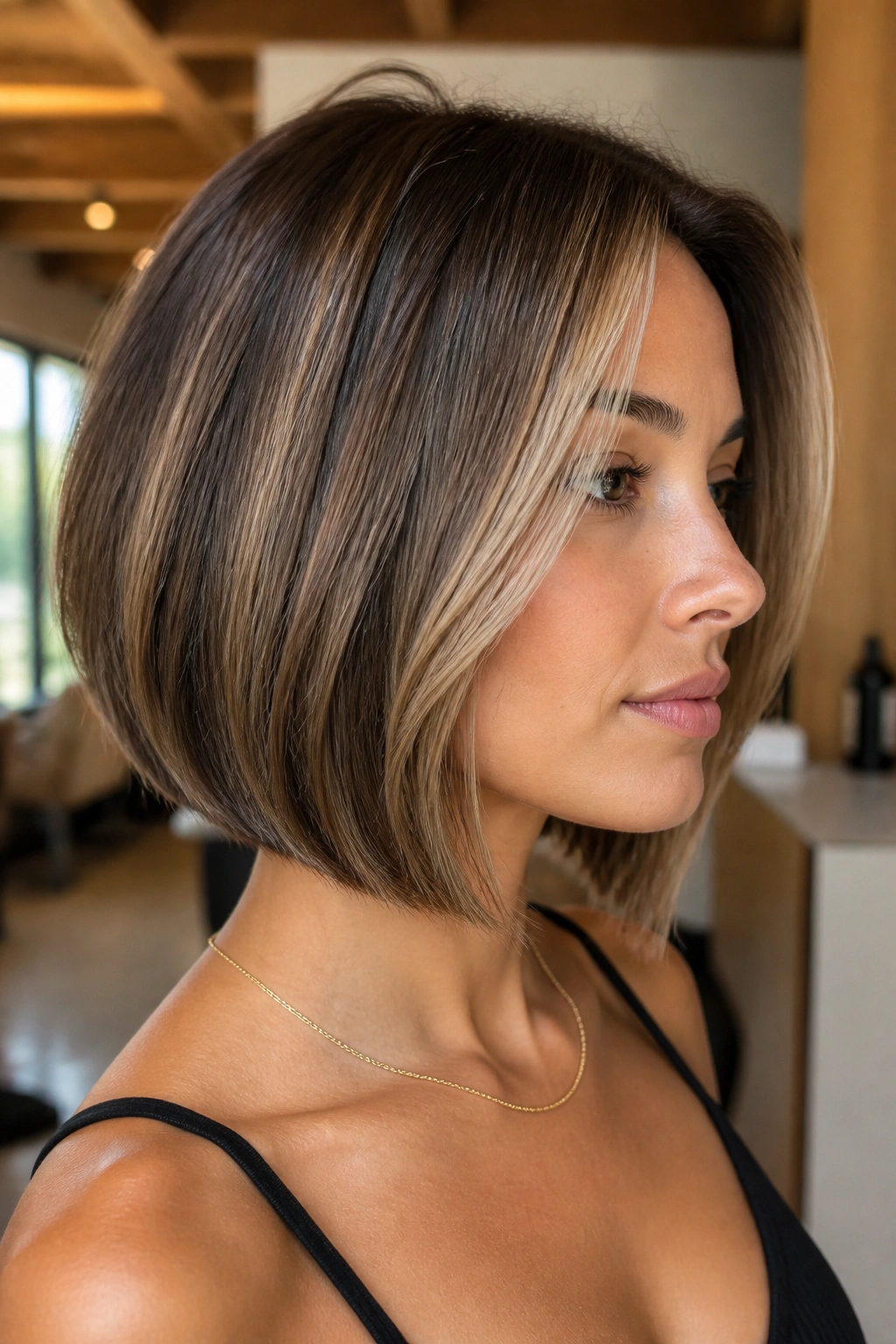
A bob changes the game because there is less length for the color to travel. That means placement has to be cleaner, and the brightness has to do more with shape than with length.
How to Keep It Clean
The tapered ends help the lighter pieces settle without looking blunt. A few caramel or beige ribbons through the surface give the cut lift, but the interior should stay deeper so the hair does not look too fluffy or over-lightened.
- Keep the brightest pieces near the front and upper surface.
- Leave the nape and interior a shade deeper for contrast.
- Ask for soft beige tones instead of icy blonde.
- Blow-dry with a round brush to show off the shape.
This version is strong on straight or slightly wavy bobs. It feels neat, modern, and easy to style. If you want brown hair that looks polished without a big color commitment, a bronde bob gets the job done fast.
28. Low-Maintenance Dimensional Bronde
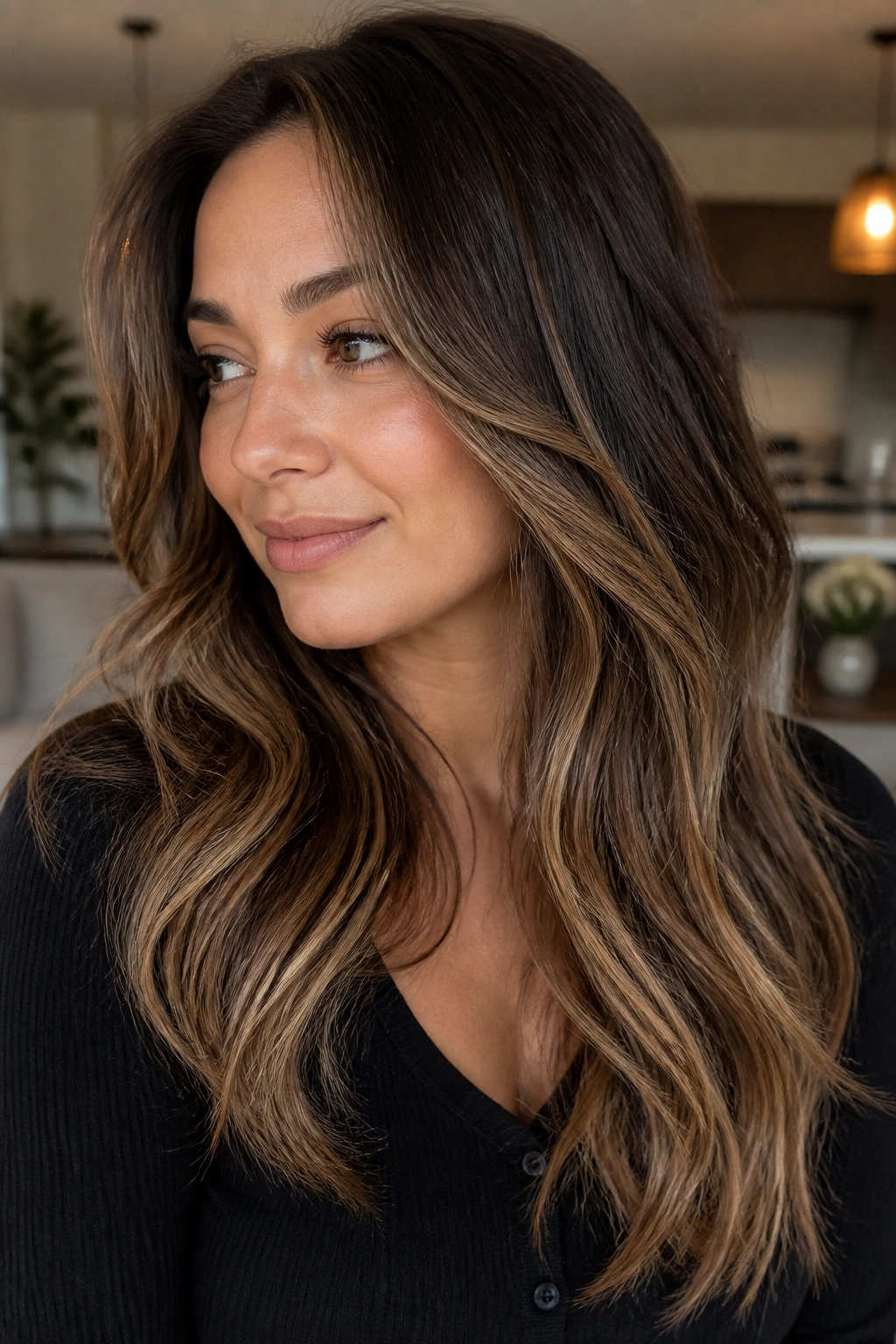
This is the look for people who want the color to look expensive even when they are not babying it. Low-maintenance dimensional bronde keeps the brunette base intact, then layers in soft, believable lightness through the mids and ends so the hair never feels flat.
What I like most here is the honesty of it. It does not pretend to be blonde. It does not cling to one-note brown either. The result is a balanced brunette with enough brightness to move through a room and enough depth to still feel like your own hair. If your schedule is busy, this is the one that makes sense.
Ask for a soft root, hand-painted highlights, and a gloss that matches your undertone rather than fighting it. The grow-out stays gentle, the upkeep stays manageable, and the color keeps looking like itself instead of turning patchy. That is probably the real reason bronde balayage keeps winning on brown hair. It gives you more light, but it does not take the brown away.
