



Brown hair and caramel blonde balayage get along in a way that still surprises people who think “blonde” has to mean a dramatic, all-over shift. On brunette bases, caramel sits in that sweet middle ground: warm enough to read as light, rich enough to keep the hair looking expensive and grounded. The result is softer than traditional highlights and less fussy than high-maintenance blonde.
The part that makes this color family work so well is placement. A few painted ribbons near the face can wake up an entire cut. A melted finish through the ends can make long hair look thicker and more layered. Even a small shift in toner — golden beige instead of yellow-gold, toffee instead of brass — changes the whole mood.
That’s why caramel blonde balayage on brown hair is such a useful lookbook to have in your head. It’s not one style. It’s a whole range, from whisper-soft brightness to bolder contrast that reads from across the room. Some versions lean sunlit. Others feel smoky, glossy, or almost amber. The trick is matching the placement and tone to the haircut you already have.
1. Soft Face-Framing Caramel Ribbons
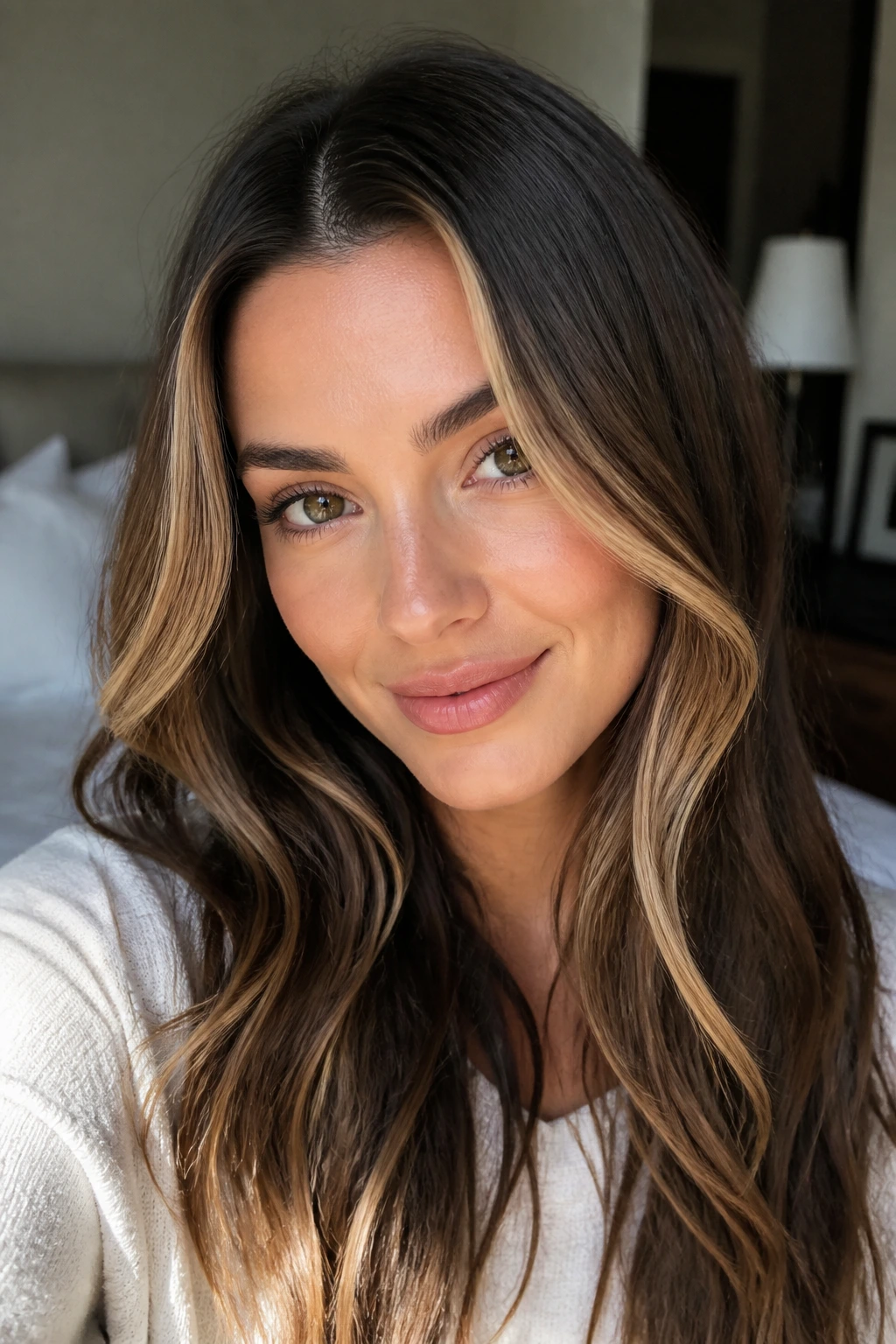
This is the look I recommend to people who want a change they can see in the mirror right away, but don’t want to commit to a lot of lightness through the whole head. The brown base stays in charge. The caramel blonde shows up around the cheekbones, the money area, and the first few inches of the lengths.
Ask for thin, painted ribbons around the face and a softer sweep through the midlengths. If your brown hair is medium or dark brown, the colorist may only need to lift the front pieces to a level 7 or 8 and then tone them warm beige. That keeps the result from going yellow. It also helps the pieces sit neatly against the skin instead of looking striped.
The nice part? These ribbons grow out cleanly. They give you brightness where you see it most, which is the whole point if your hair is usually worn down and tucked behind the ears.
2. Mocha Base with Melted Caramel Ends
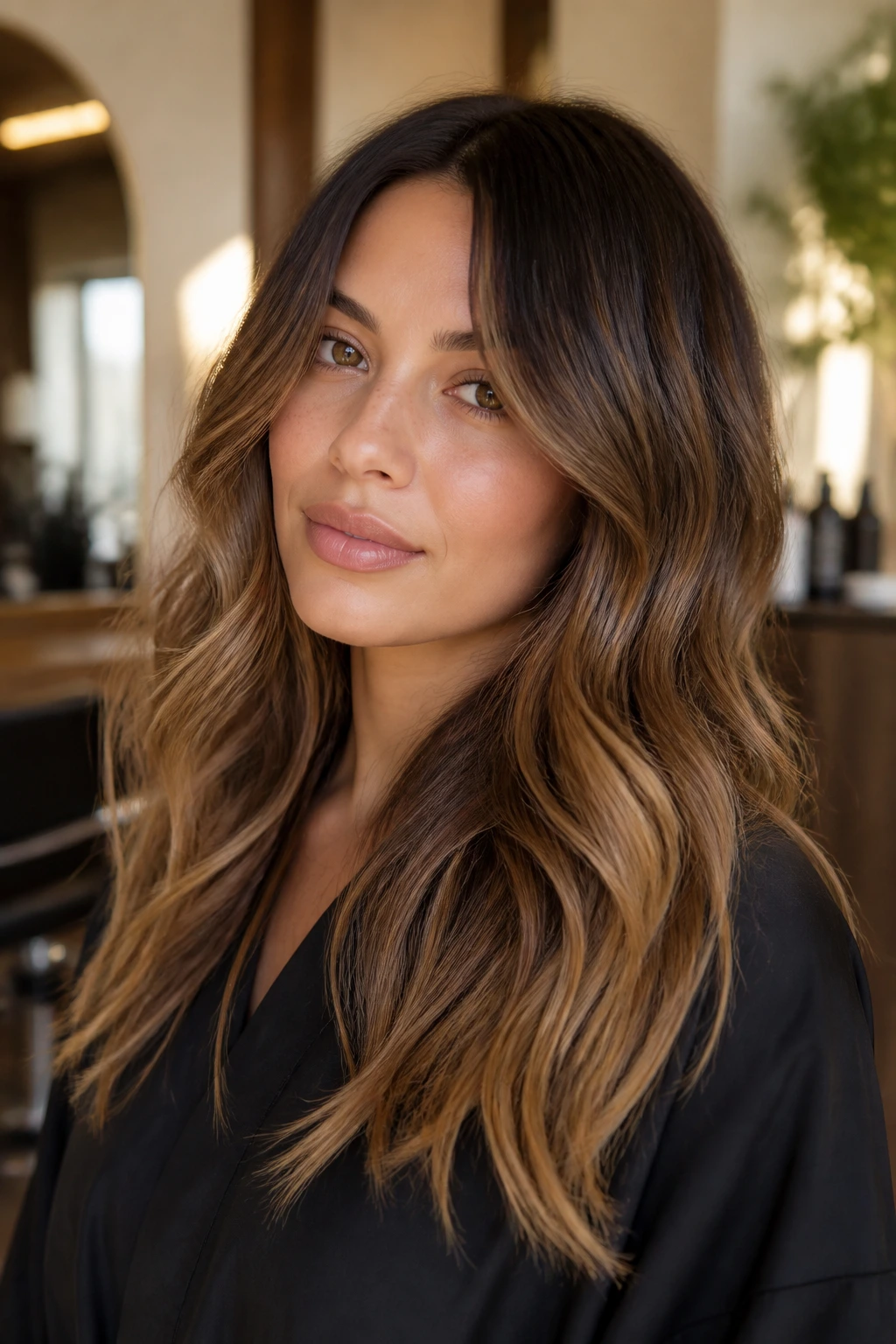
A melted balayage finish is what I reach for when the goal is softness from root to tip. The brown at the top stays mocha, espresso, or deep chestnut, and the caramel gets gradually brighter as it moves downward. No harsh line. No obvious start point.
What Makes It Work
The gradual fade matters more than people think. You want the midlengths to carry a little warmth before the ends get noticeably lighter, so the color looks blended rather than painted on. That usually means a colorist paints the lightener in a feathered pattern, then follows with a gloss that softens the transition.
Practical Notes
- Best on long or shoulder-skimming layers
- Works well if you wear loose waves or a blowout
- Needs a gloss refresh every 6 to 10 weeks if you want the caramel to stay shiny
- Looks muddy if the toner is too ash-heavy
This is a good choice if your brown hair tends to look flat at the ends. The caramel finish gives the lower half of the cut some life, and that matters more than another round of highlights up top.
3. Chestnut Brown with a Golden Caramel Money Piece
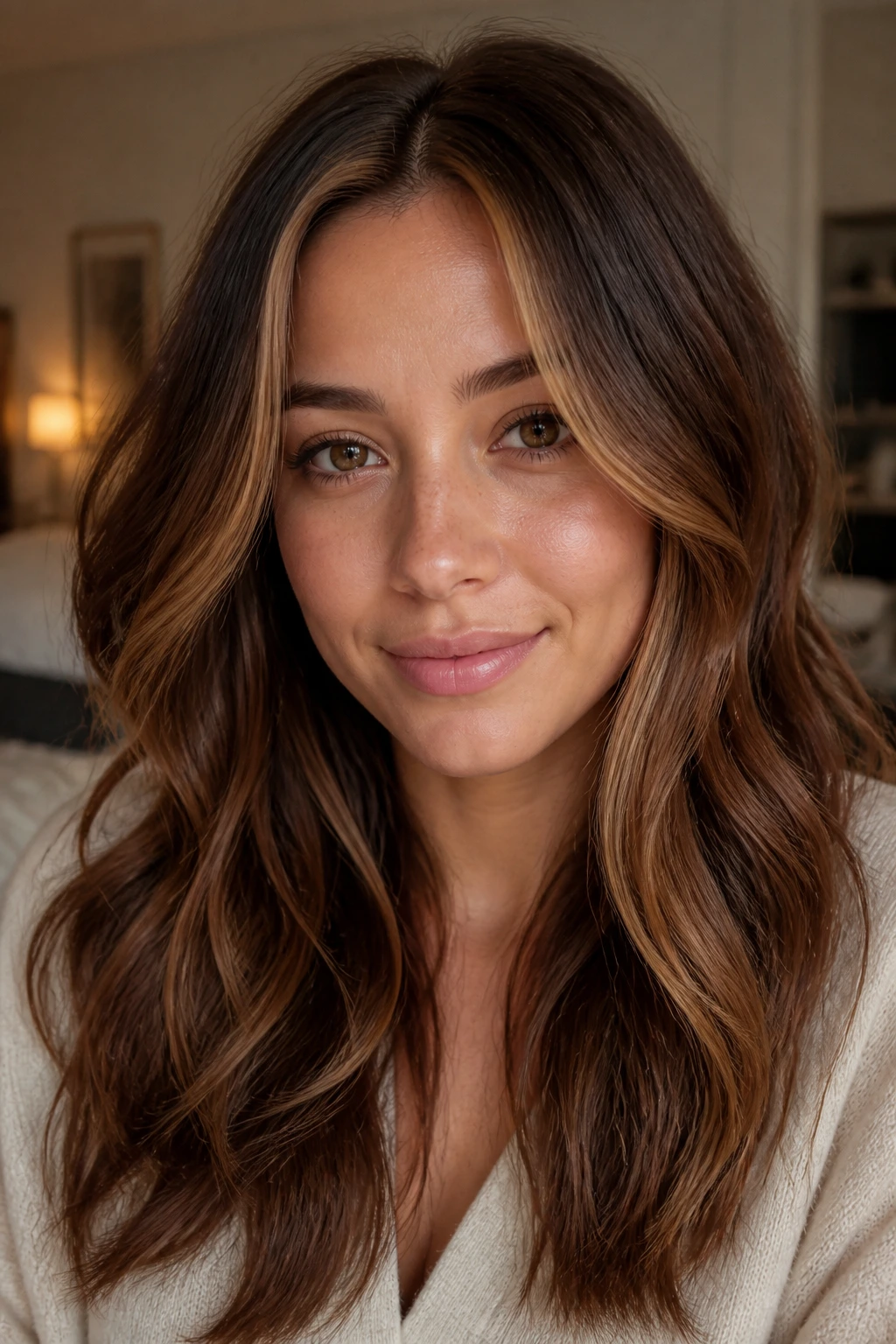
The money piece can be loud or subtle. I like it subtle on brown hair, because the contrast is enough on its own. A warm golden-caramel frame around the face can make chestnut hair look brighter without turning the whole style into a highlight-heavy look.
Why does this one work? Because the eye goes straight to the front. A brighter strip near the part, temple, and jawline changes how the rest of the hair reads. The center of the style still feels brunette, but the face gets a little light and movement.
If you wear a middle part, keep the front pieces narrow and blended so they don’t look like two separate stripes. If you wear a side part, your colorist can make one side slightly brighter. That tiny asymmetry looks natural.
The money piece is not for someone who wants quiet hair. It is for someone who likes a little framing and doesn’t mind seeing the color every time they look in the mirror.
4. Lived-In Caramel Balayage on a Wavy Lob
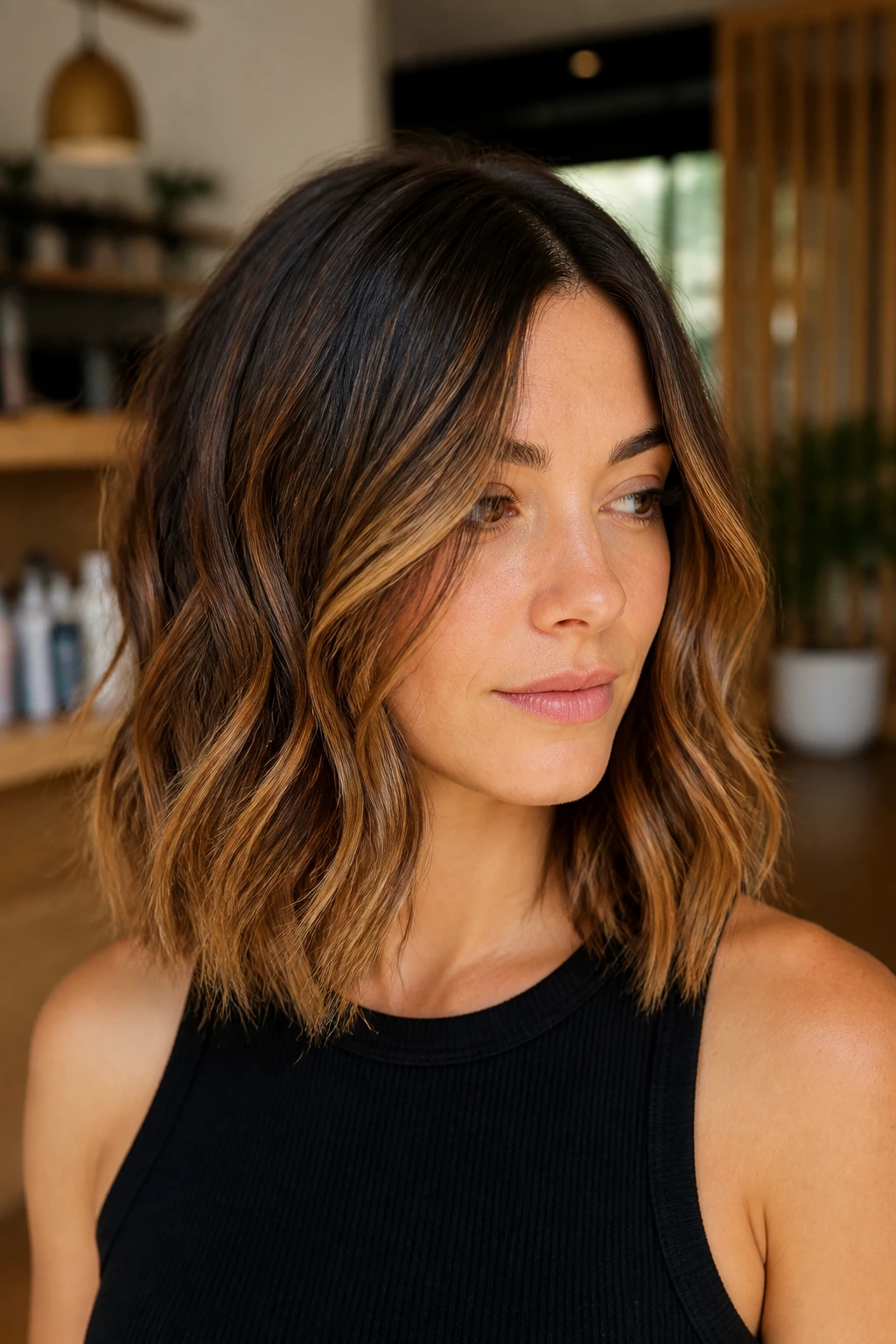
A lob with soft waves is one of the easiest places to put caramel blonde balayage, and I say that because the cut does half the work. The length sits around the shoulders, which gives the light pieces enough space to show, but not so much that the ends feel weighed down.
The color placement should stay lower through the sides and a little brighter at the midlengths. Think of it as hand-painted movement rather than a full blonde effect. On a wavy lob, those little bends catch the caramel in a way that makes the color look deeper and more expensive than it does on a perfectly straight style.
When I see this done well, the hair still looks brown first. That matters. The caramel is there to wake up the cut, not steal it.
5. Espresso Brown with Toffee Ribbon Lights
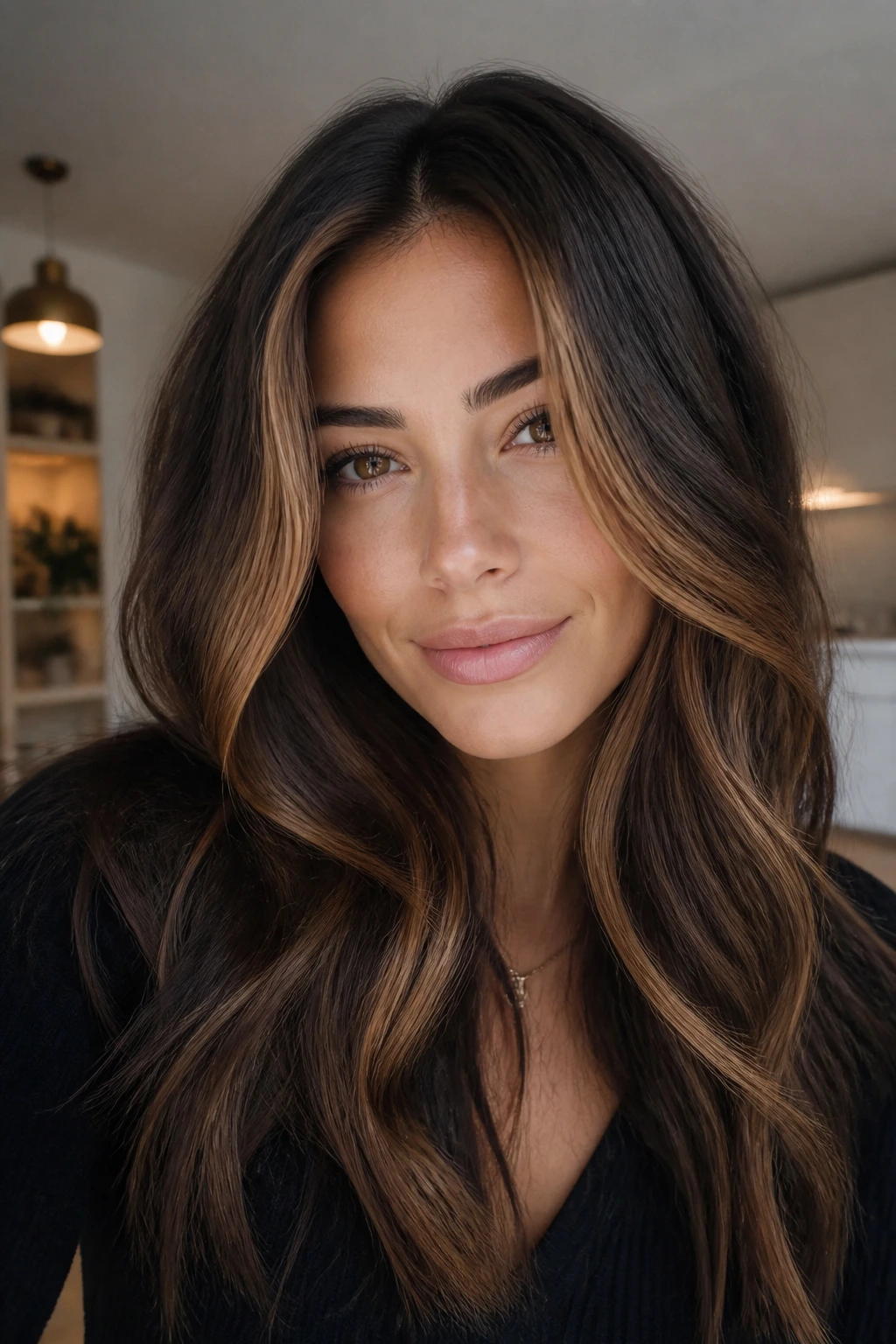
Toffee is a good choice when you want warmth, but not the soft gold that some caramel shades lean into. It has a slightly deeper, richer feel — more toasted sugar than honey. On espresso brown hair, that gives you visible contrast without turning the whole look bright.
A lot of colorists use ribbon lights here, which means the lighter pieces are painted in slightly wider sections than baby highlights. That’s useful on dark hair because the contrast needs a little room to show. Tiny strands can disappear. Wider ribbons give you movement, especially once the hair is curled.
There’s also a practical reason this shade works so well: toffee pieces age gracefully. As the toner softens, the hair usually drifts toward a warm beige rather than something brassy and loud. I prefer that. It looks lived-in instead of needing constant rescue.
6. Dark Chocolate Hair with a Honey-Caramel Halo
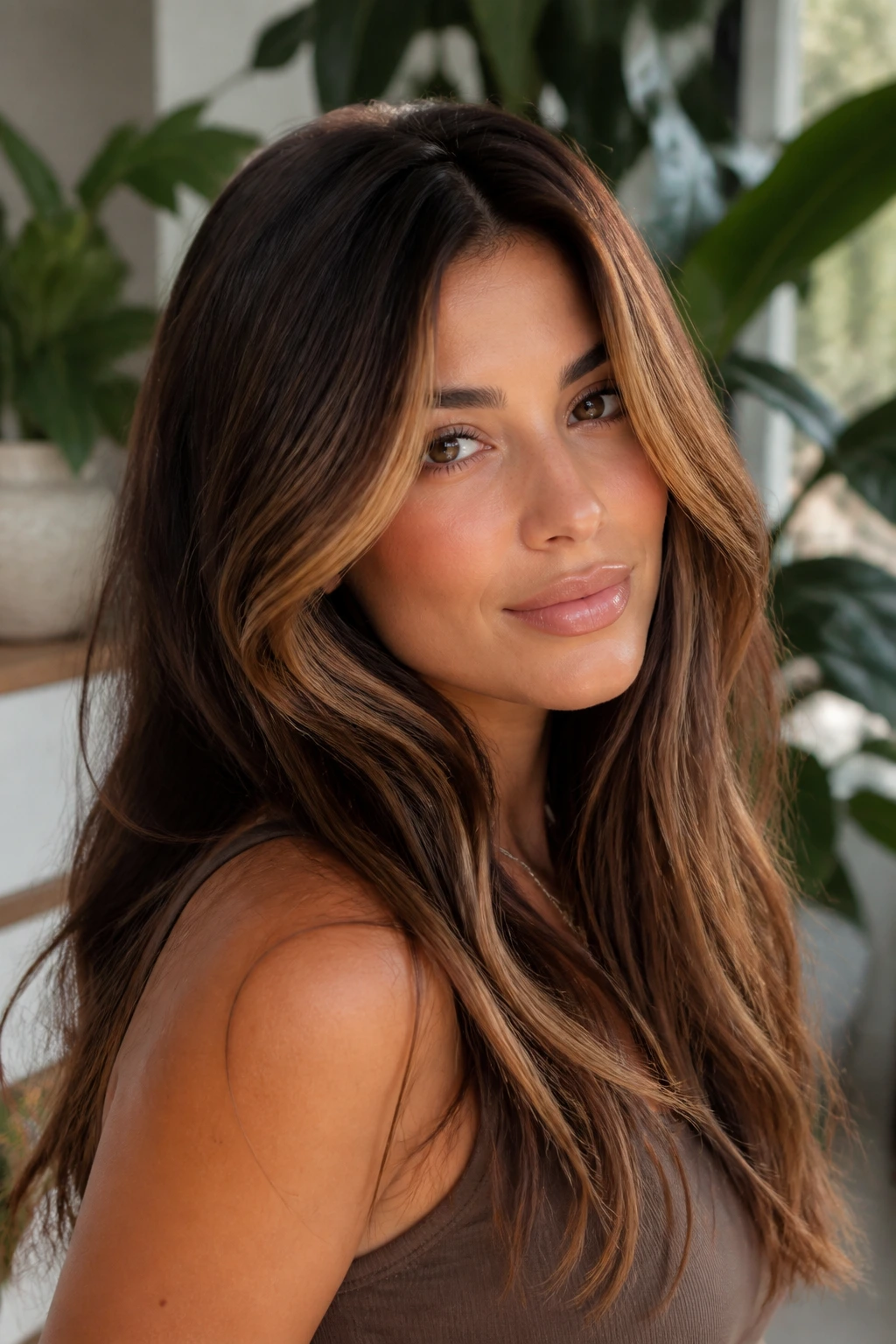
A halo placement is all about what happens around the outer edge of the head. The light pieces sit where the hair catches the sun first — along the top layer, around the face, and through the crown. The interior stays much darker.
That makes this a smart option if you wear your hair up often. A ponytail, bun, or claw clip suddenly shows dimension around the edges, and the dark chocolate base keeps the style from feeling too busy. It’s also one of the better choices for thick hair, because the halo gives brightness without overloading the whole head with lightener.
Honey-caramel is warmer than beige caramel, so this look suits brown hair with golden or neutral undertones. If your skin tends to look better next to gold jewelry than silver, this shade usually sits nicely.
7. Curly Brown Hair with Wide Painted Caramel Panels
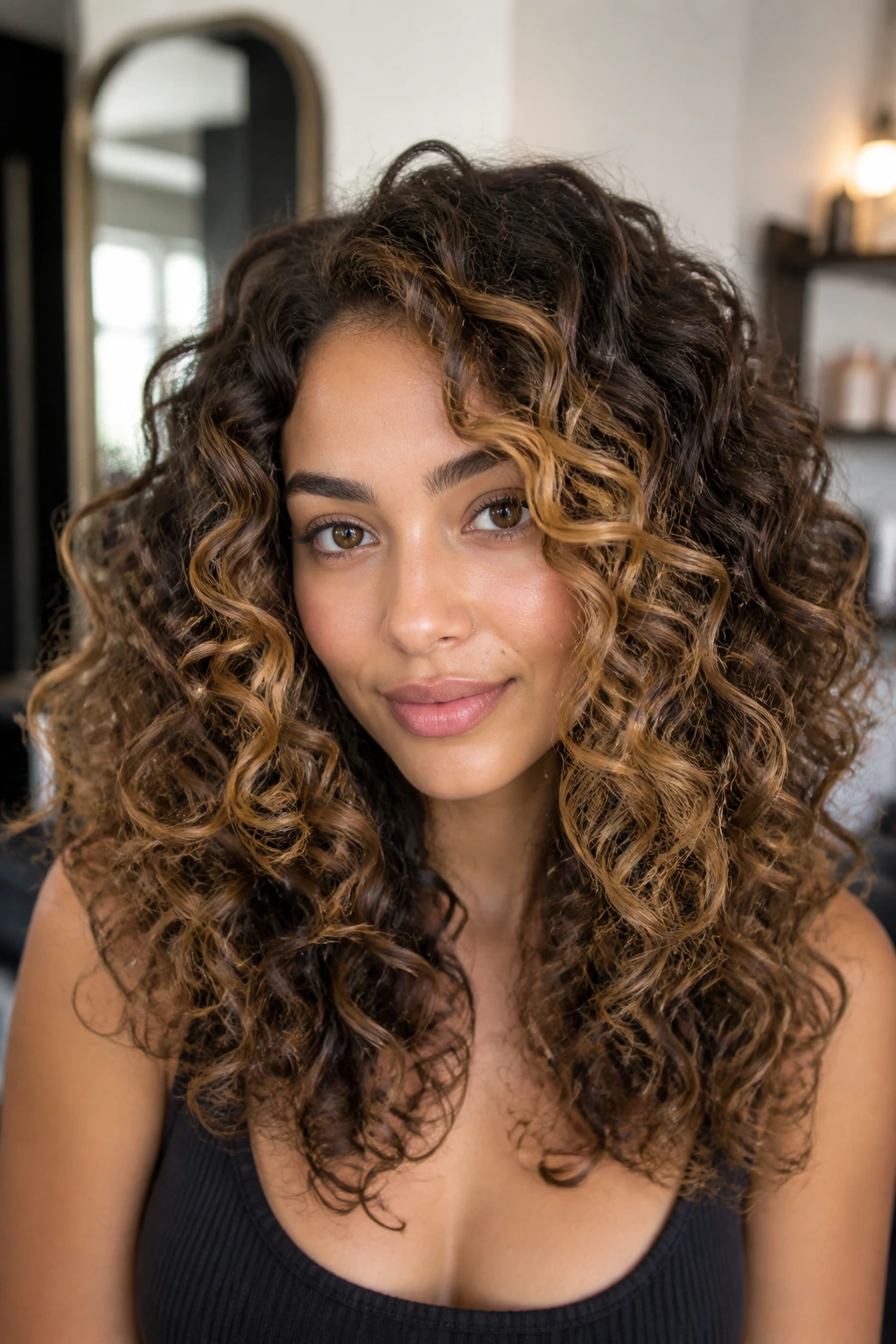
Curly hair does not need the same fine, scattered highlight pattern that straight hair often gets. Wider painted panels make more sense, because curls shrink, twist, and stack on top of each other. Tiny pieces can get lost in the texture.
Why Curly Hair Needs Wider Sections
A curl pattern changes the shape of the color as it dries. What looks bold when wet may soften into a much gentler result once the curls spring up. Wider caramel panels give the hair enough space to show the contrast after the shrinkage happens.
How to Wear It
- Ask for hand-painted panels, not micro-highlights
- Keep the lightness concentrated on the outer curves of the curls
- Use a curl cream or gel that defines the pattern without coating the hair too heavily
- Diffuse on low heat so the caramel stays glossy, not frizzy
This is one of those looks that gets better when the curls are shaped well. If the cut is blunt or uneven, the color can feel scattered. If the cut has good rounded layers, the caramel moves beautifully through the shape.
8. Cinnamon Brown with Soft Beige-Caramel Ends
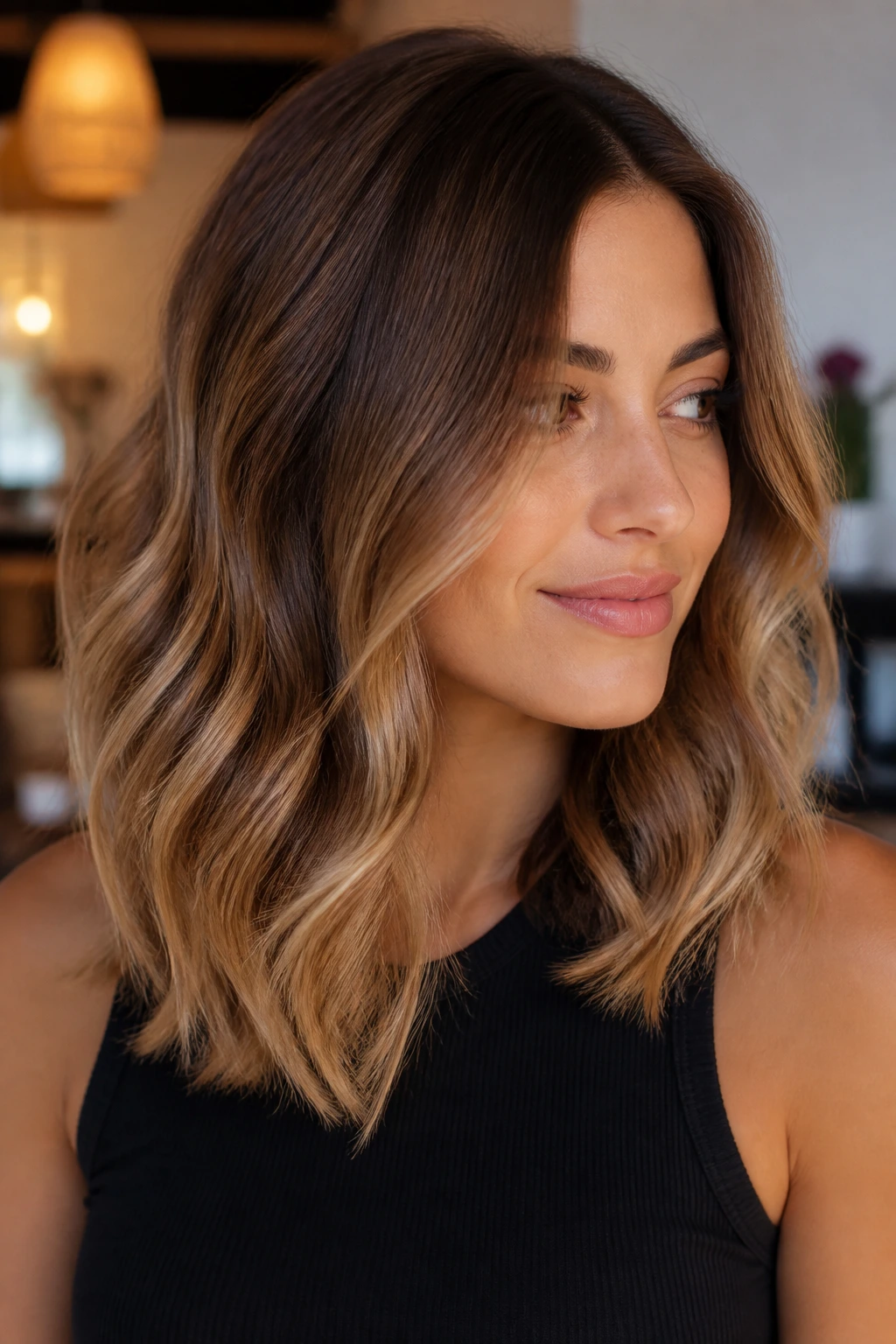
Cinnamon brown already has warmth in it, so the lighter pieces need a cooler edge to keep the color from running too orange. Beige-caramel is the answer. It still reads warm, but it has a slightly softer finish than straight gold.
This is a nice choice if you like your brown hair to stay rich. The beige tone at the ends gives the illusion of sun-lightened color without crossing into copper. That matters more than people realize. Too much warmth in both the base and the highlights can make the whole head look flat.
I like this especially on medium-length cuts with loose bends. The ends catch light first, and the beige caramel keeps the bottom of the hair from looking heavy.
9. Long Layers with Caramel Peekaboo Pieces
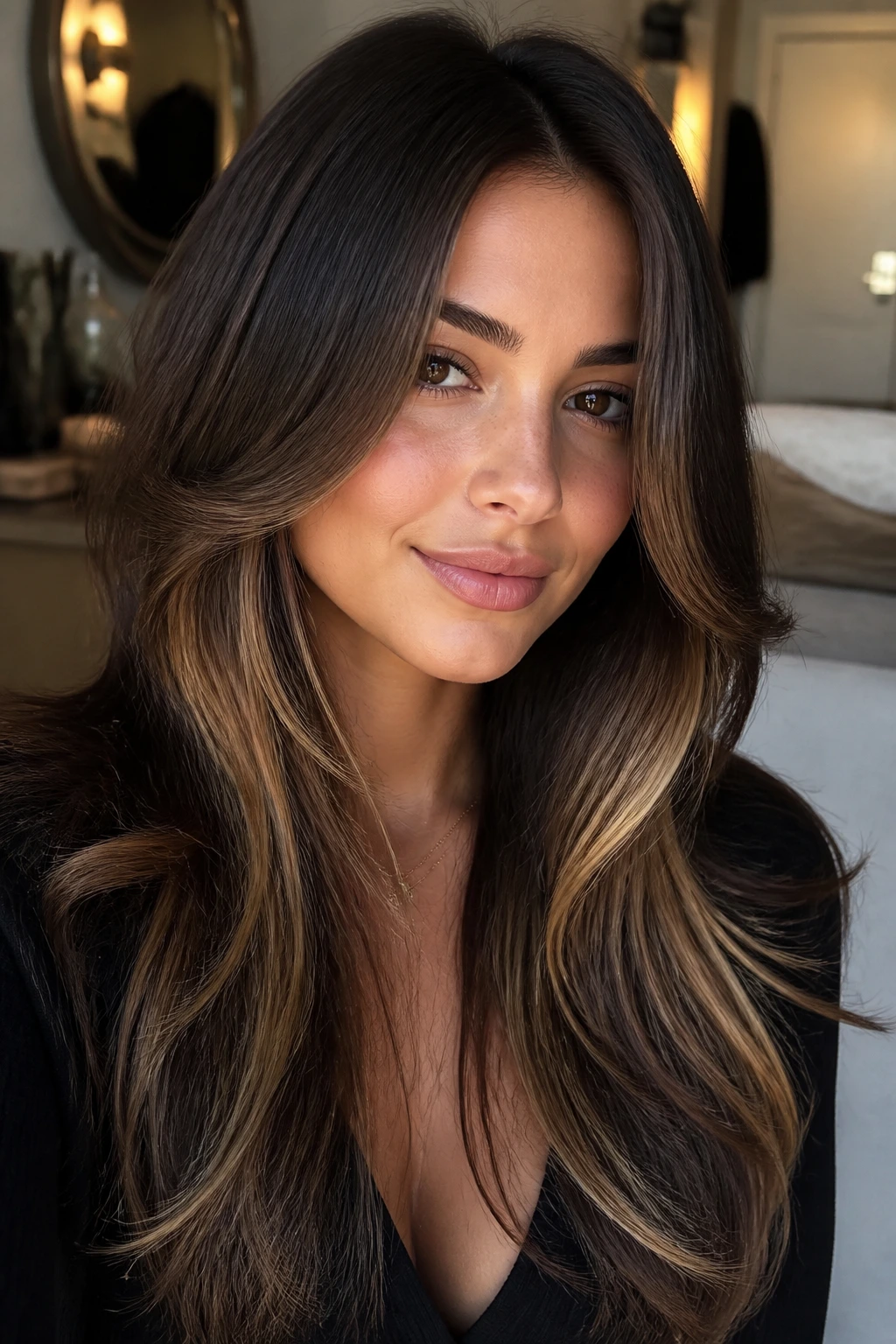
Can caramel blonde balayage be subtle on very long hair? Yes, if the lighter pieces live under the top layer and only flash when the hair moves.
Where the Color Goes
The best peekaboo placement sits behind the ears, through the lower crown, and along the inner lengths. You still get visible brightness, but it doesn’t announce itself from every angle. It’s a quieter choice for people who wear long hair in braids, half-up knots, or low ponytails.
What to Ask For
- Hand-painted interior pieces
- A caramel tone that sits between gold and beige
- Softening around the front so the face frame stays natural
- A gloss finish to keep the hidden pieces shiny, not dull
This look has a nice little surprise factor. Pull the hair back and you see warmth. Let it fall loose and the brown base takes over again.
10. Medium Brown with Sunlit Baby Balayage
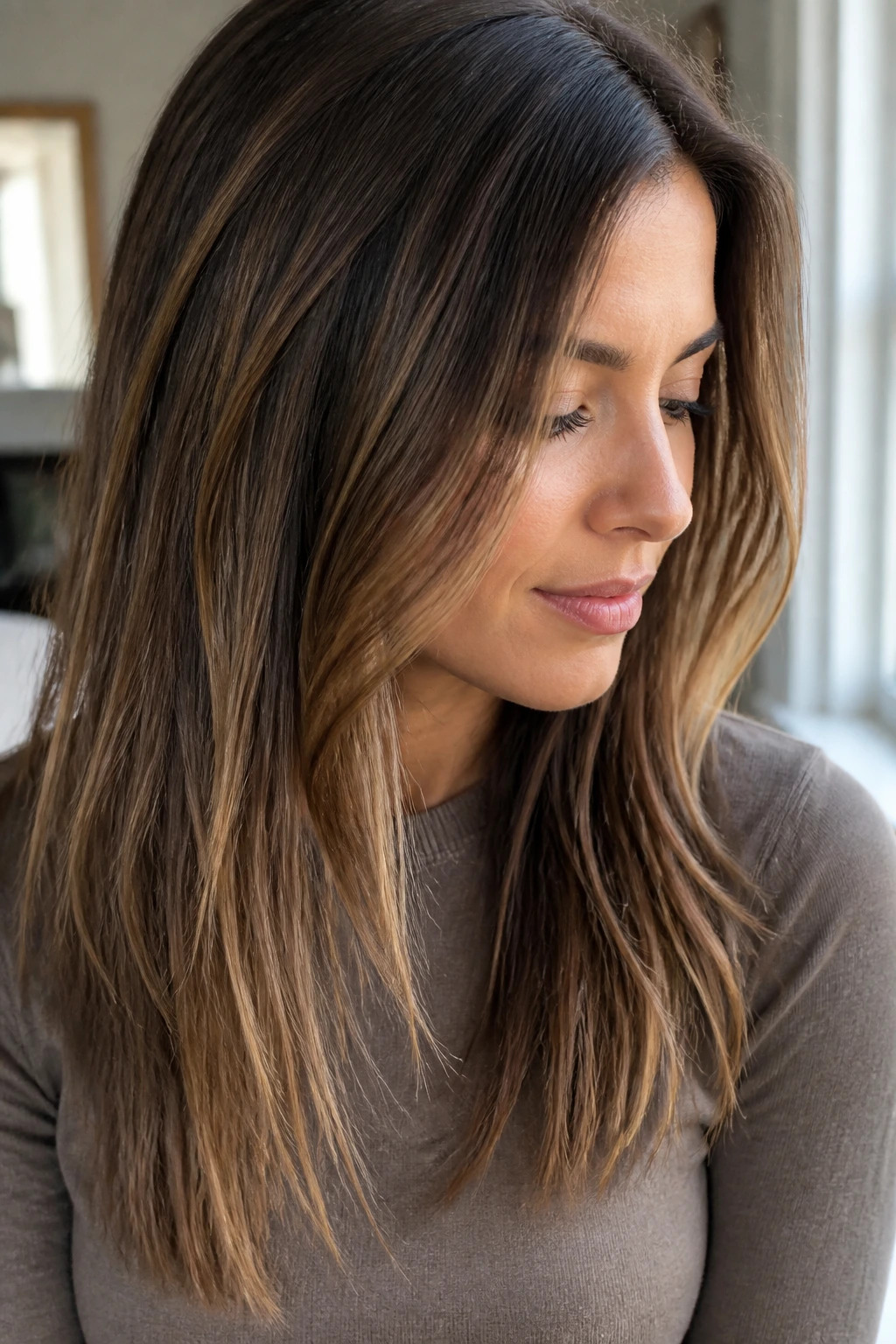
Baby balayage is for people who want brightness but hate the look of obvious streaks. The lightener is painted in smaller, softer sections, usually with a lot of diffusion through the midlengths. On medium brown hair, that creates a fine sunlit effect that reads as natural light, not salon drama.
I’ve seen this style work especially well on hair that’s worn straight most of the time. Straight hair shows every line, so the trick is keeping the highlights feathered and lightly toned. If the pieces are too chunky, the style loses its ease.
There’s also a useful side effect: baby balayage tends to grow out in a quieter way than full highlights. The root area stays soft, and the color can sit through a longer stretch between appointments without looking harsh.
11. Walnut Brown with Bronze-Caramel Blend
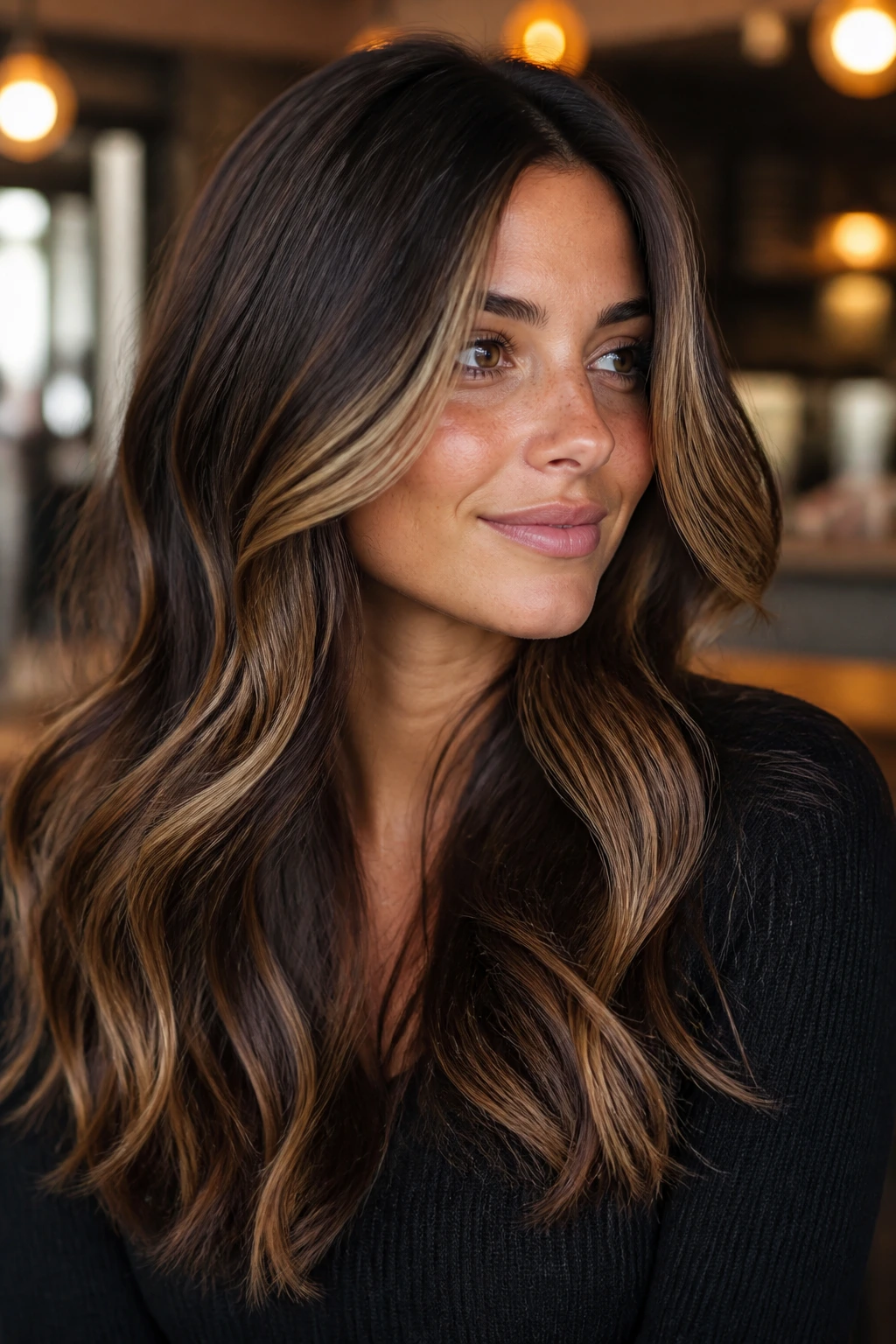
Bronze and caramel are not the same thing, and that distinction matters here. Bronze carries a slightly deeper, metal-like warmth. Caramel is lighter and sweeter. Put them together on walnut brown hair, and you get a finish that looks richer than a simple blonde highlight job.
This shade family works well if your brown base is medium-dark and has a warm undertone. The bronze keeps the color grounded. The caramel lifts the midlengths enough to stop the hair from feeling heavy. On waves, the mix can look almost liquid.
It’s a good pick for anyone who wants warm hair that doesn’t turn golden all over. Too much gold can look flat against walnut brown. Bronze-caramel stays more layered.
12. Ash Brown with Neutral Caramel Strands
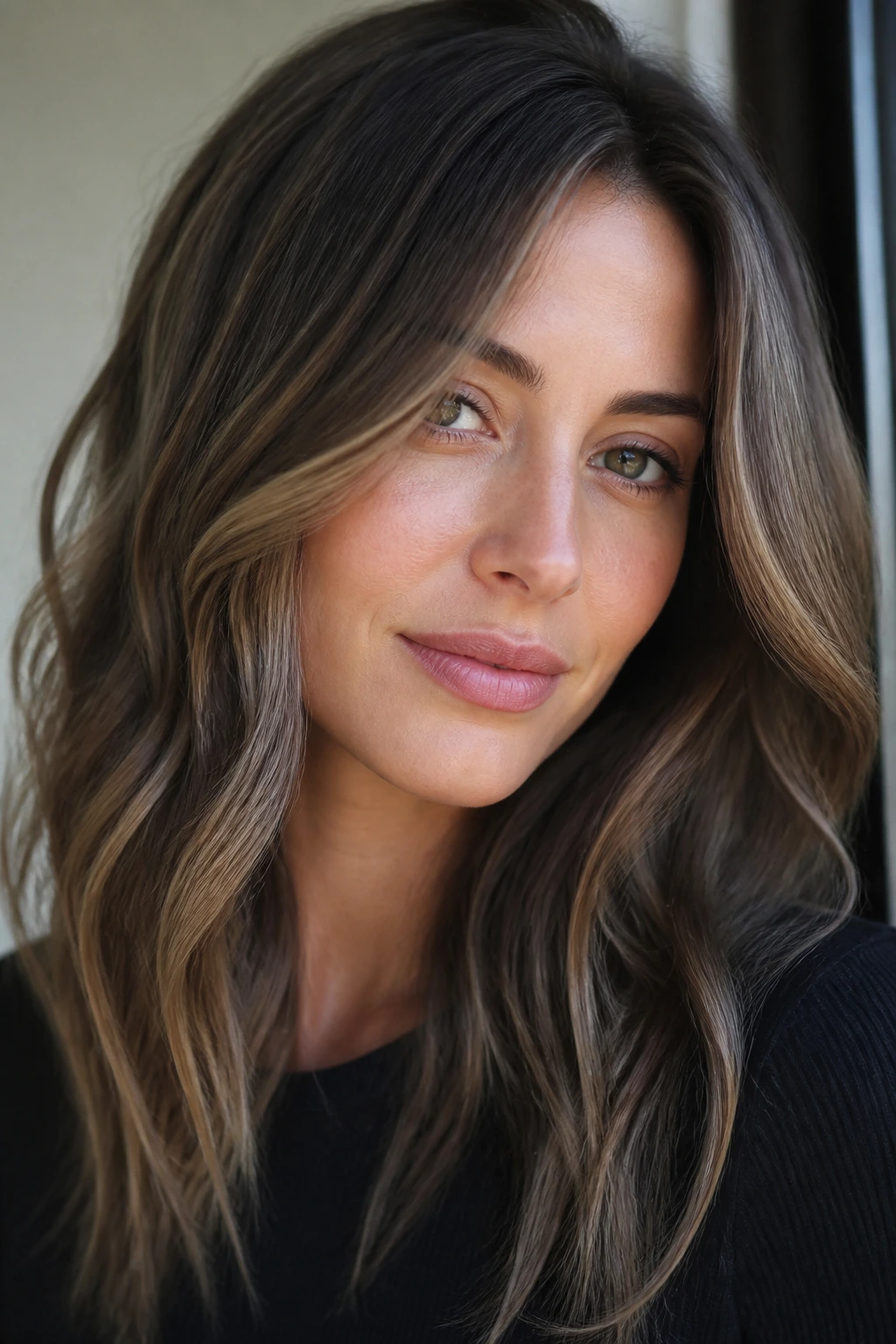
Ash brown and warm caramel can fight each other if the tone is off, so this one depends on restraint. The caramel should be neutral rather than honey-heavy, with just enough warmth to soften the cooler base. Think beige caramel, not orange-gold.
That balance gives ash brown hair a little life. Without it, ash shades can look matte or even dusty in certain light. With a neutral caramel veil through the top layer, the hair gets movement without losing its cool tone.
This is the version I suggest for people who like cooler makeup, cooler clothing, and browns that lean more smoky than red. It keeps the whole look coherent. No color clash. No weird brassy surprise around the face.
13. Blunt Lob with Sharp Caramel Strokes
A blunt lob needs a different kind of balayage than a soft layered cut. Too much blending, and the shape disappears. Too little, and the color looks blocky. Sharp caramel strokes solve that problem by giving the cut clear contrast while still keeping the hand-painted feel.
Why This Cut Handles Contrast Well
A blunt line gives the eye a place to land. Once the cut is clean, a few visible caramel strokes through the top and sides can make the shape feel more deliberate. It is a tidy look, but not a stiff one.
The Details That Matter
- Ask for defined sections near the part
- Keep the ends slightly lighter than the midlengths
- Tone with a soft gold-beige glaze
- Style with a flat iron bend or loose wave so the strokes don’t look flat
This is one of my favorite options for straight hair. The sharpness of the cut needs some visual motion, and caramel gives it that without making the lob look overworked.
14. Deep Brunette with Chunky Caramel Panels
Chunky panels sound old-school to some people, but on the right brown base they can look fresh and bold. The trick is keeping the sections intentional rather than random. A deep brunette foundation gives you enough contrast to let broader caramel pieces stand out.
This is not the quietest look in the lineup. It shows. That’s the point. If you want your balayage to be visible from across the room and not just when the light hits it at a certain angle, chunkier painting gets you there faster than whisper-thin ribbons.
It also suits thicker hair because the larger sections don’t disappear in the density. Just keep the toner warm and controlled, or the lighter panels can drift brassy and start competing with the brown base.
15. Curtain Bangs with Caramel Sweep
Do curtain bangs make caramel balayage look easier to wear? I think so, because they give you a built-in place to concentrate brightness without lighting up the whole head.
The sweep across the bangs should be soft and blended, with the lightest pieces falling just off the center part and skimming the cheekbones. That tiny bit of lift opens the face and keeps the bangs from looking heavy. On brown hair, it also gives the whole front section a sun-kissed feel that reads quickly.
The rest of the balayage can stay quieter through the sides and ends. That makes the bangs the focal point. It’s a smart move if you want a noticeable color change but don’t want brightness everywhere.
16. Layered Shag with Soft Caramel Flicks
A shag wants movement, not neatness. So the balayage should follow that same energy. Soft caramel flicks scattered through the layers can make the texture look more alive, especially when the cut has feathered ends or broken-up fringe.
I like this on medium brown hair because the layers already create shadows. The caramel can sit in the raised sections and through the outer pieces, which makes the haircut look fuller without turning it into a highlight map. The result is casual in the best way. Not sloppy. Just easy.
If you air-dry your hair, this style is forgiving. The color does not depend on perfect curls or a polished blowout to make sense.
17. Medium Chocolate Brown with a Rooty Blonde-Caramel Melt
A rooty melt is one of those styles that sounds low-maintenance because it is. The root stays darker, often very close to the natural chocolate base, and the lightness begins a few inches down. The caramel-blonde finish appears in the lower half of the hair, where it can brighten the cut without asking for constant touch-ups.
The reason it works on medium chocolate brown is simple: the contrast is enough to notice, but the root keeps the grow-out soft. You can wear it for weeks without feeling like the line between colors has become a problem. That matters if you prefer hair color that behaves itself.
This is also one of the better picks for people who like to wear their hair wavy one day and straight the next. The root gives the style a little depth either way.
18. Fine Hair with Airy Caramel Veils
Fine hair needs lightness that doesn’t look heavy. Chunky highlights can overwhelm it fast, and too many pieces can make the hair look thinner at the root. Airy caramel veils solve that by staying sheer and spread out.
Why It Helps Fine Hair
A veil-like placement lets some brown base show through between the light strands. That contrast gives the eye something to read, which makes the hair appear fuller. The caramel should stay soft and translucent, not high-contrast.
Good Styling Habits
- Blow-dry with a round brush for a bit of lift at the crown
- Use a lightweight glossing spray, not a thick oil
- Keep the lightest pieces on the top layer and around the face
- Ask for a toner that reads beige-gold, not pale yellow
This is one of the few cases where less really does more. Fine hair looks better when the color floats over it instead of sitting in thick ribbons.
19. Thick Hair with Alternating Caramel and Lowlights
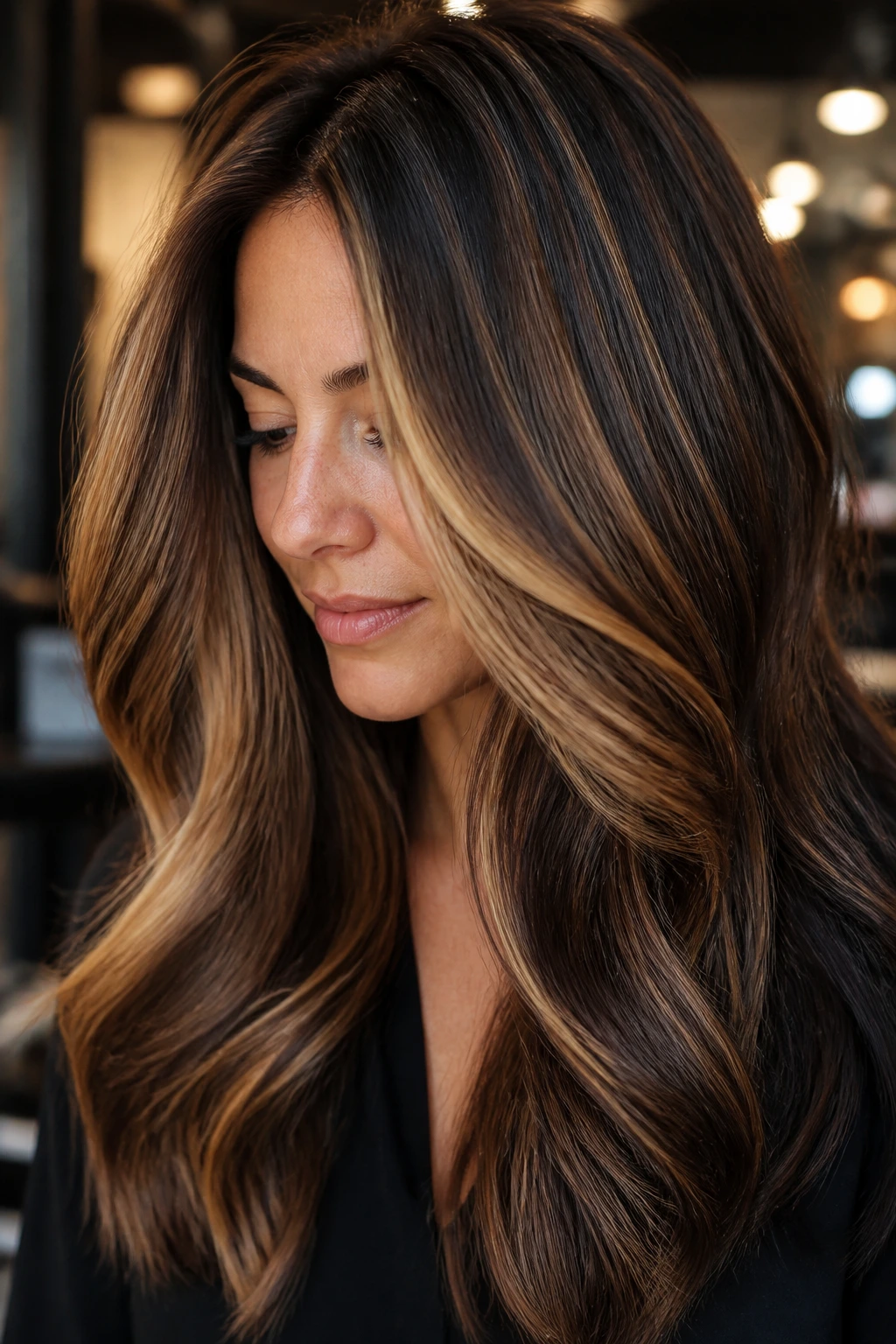
Thick hair can handle more going on, and it usually benefits from it. If you only add caramel highlights, the result can go too bright too fast. Alternating the lighter pieces with lowlights keeps the brown base visible and stops the hair from turning into one flat tone.
The Color Logic
A lowlight is just a deeper strand placed back into the hair to restore contrast. On thick brown hair, that contrast keeps the caramel pieces from floating alone. The result looks richer and more controlled.
What to Ask Your Colorist For
- Caramel panels through the top and side sections
- Deeper brunette lowlights between the brighter pieces
- Slightly brighter ends if the cut is layered
- A gloss that keeps both tones in the same warmth family
This look is especially good if your hair is dense and prone to looking bulky. The alternating tones break it up without making it look thin.
20. Coppery Brown with Honey-Caramel Shine
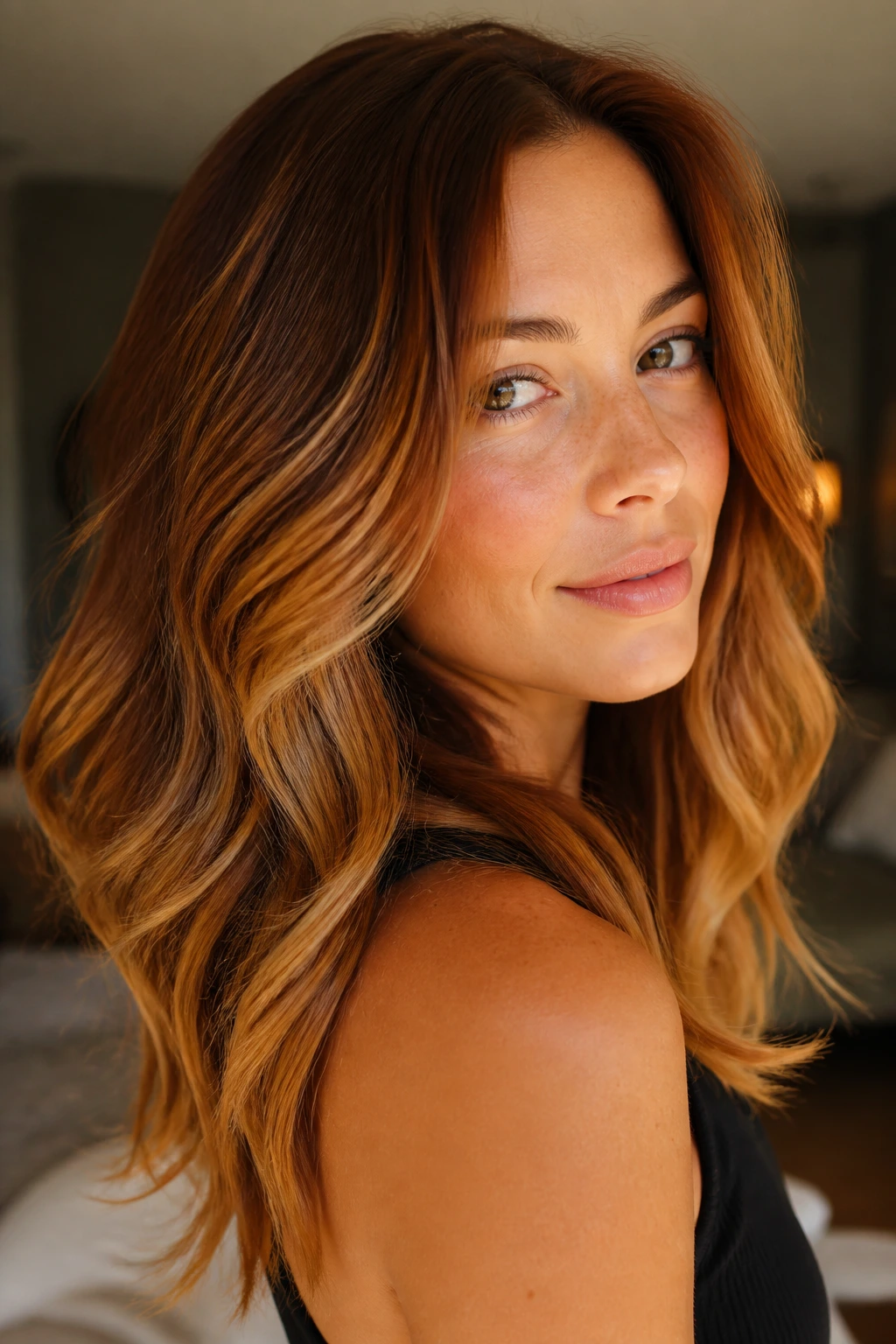
Coppery brown and honey caramel live close enough together that they can create a glowing finish when the tone is handled with care. The key is not to push the highlights too yellow. Honey should stay warm and soft, not bright and lemony.
This look feels richest on hair that already has a little red in it. If your brown leans auburn or chestnut, the honey-caramel pieces can blend in a way that looks almost natural, like the sun has slowly warmed the hair over time. That’s why this one is so flattering in motion.
A gloss is doing a lot of work here. It keeps the copper from dulling and the honey from getting chalky. Skip the heavy purple shampoo unless the hair truly needs it. Too much cool correction can flatten the warmth that makes this color interesting.
21. Cool Brunette with Beige-Caramel Threads
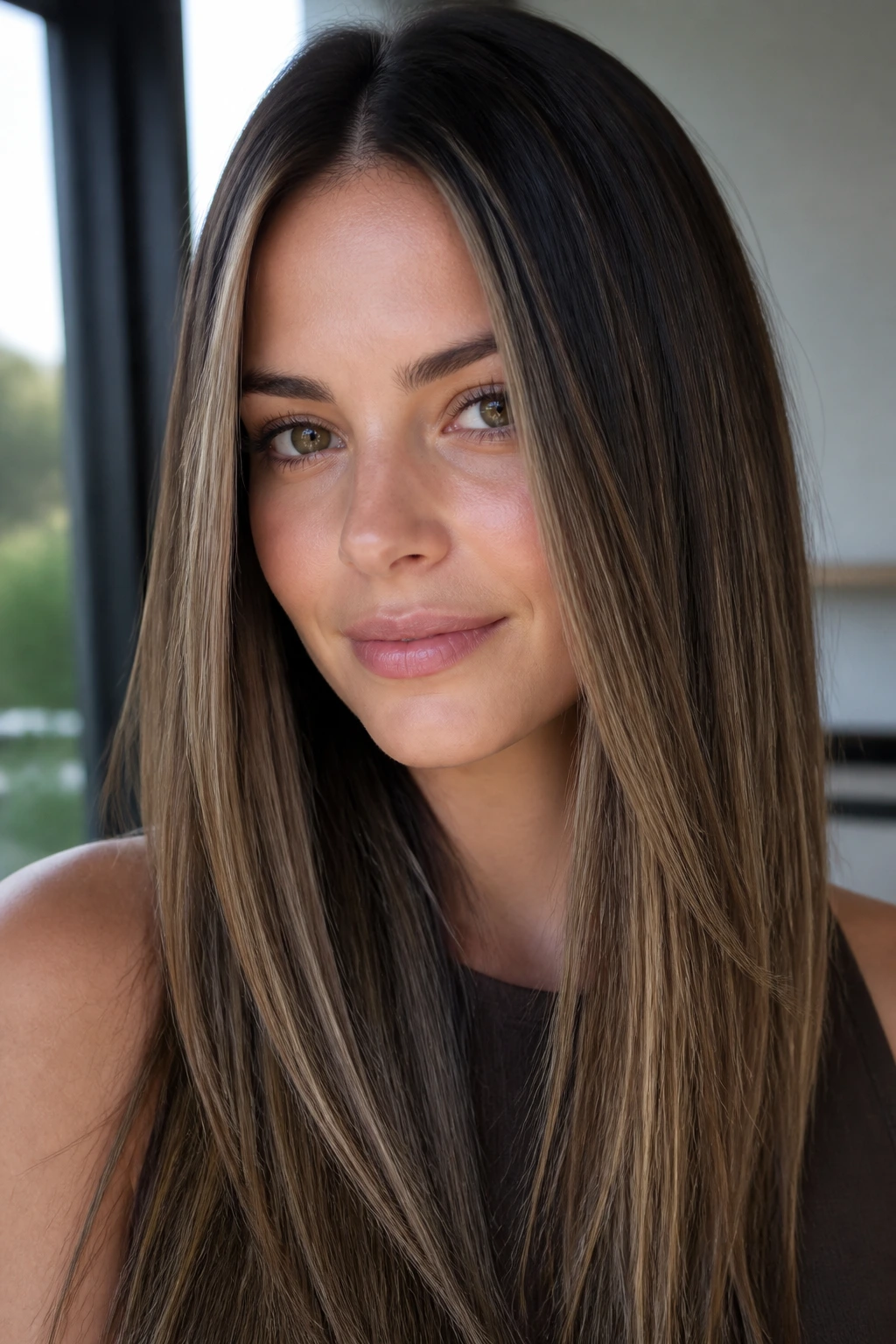
Here’s the thing about beige-caramel on cool brown hair: it has to be understated enough to avoid a clashing orange cast. When it’s done well, though, the effect is clean and polished. The brown stays cool. The caramel threads bring a soft lift through the crown and ends.
This is a good option for people who never feel comfortable in very golden hair. Beige-caramel has more softness than honey caramel and less red than toffee. It sits in a middle lane that plays nicely with cooler skin tones and neutral wardrobes.
I also like it on straight hair, where the strands can be seen clearly. The threads do not need to be thick. They just need to be placed with intention so the hair doesn’t look flat from root to tip.
22. Shoulder-Length Brown Hair with a Caramel Face Frame and Ends
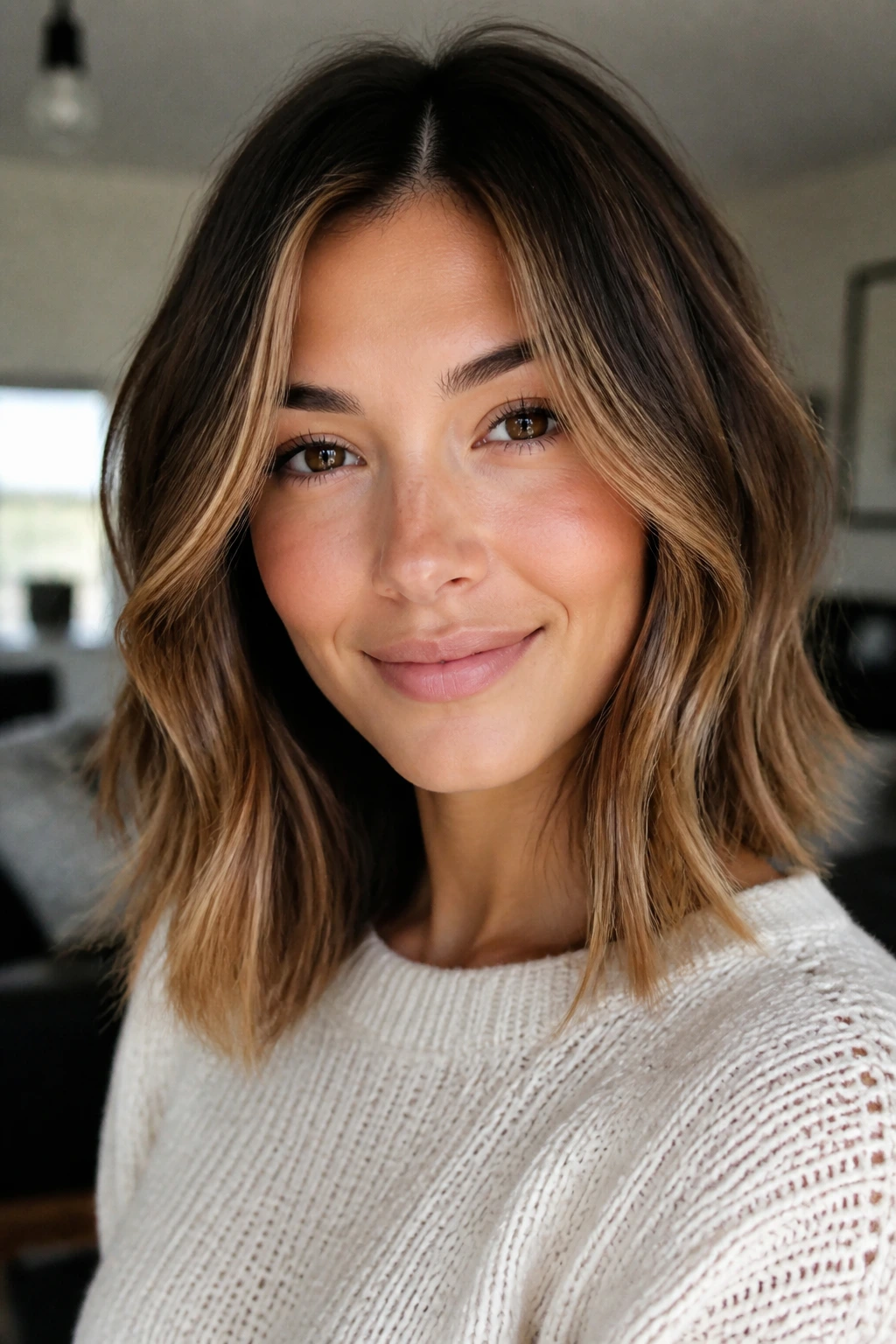
Can you keep balayage simple and still have it do something noticeable? Absolutely. A shoulder-length cut only needs two strong areas of brightness: the front frame and the ends.
How the Color Should Be Placed
The face frame should start near the temples and bend softly toward the jawline. The ends can be painted a touch lighter, especially if the hair is cut in layers. That gives the shape a clean finish and keeps the lower half from looking heavy.
A Few Useful Notes
- Works well with a center or side part
- Looks especially good on brushed-out waves
- Ask for a caramel that stays warm but not orange
- Keep the brightest pieces away from the inner root area
This style feels easy to wear because it doesn’t ask the whole head to be bright. It only asks the haircut to show up.
23. Long Straight Brown Hair with Sliced Caramel Highlights
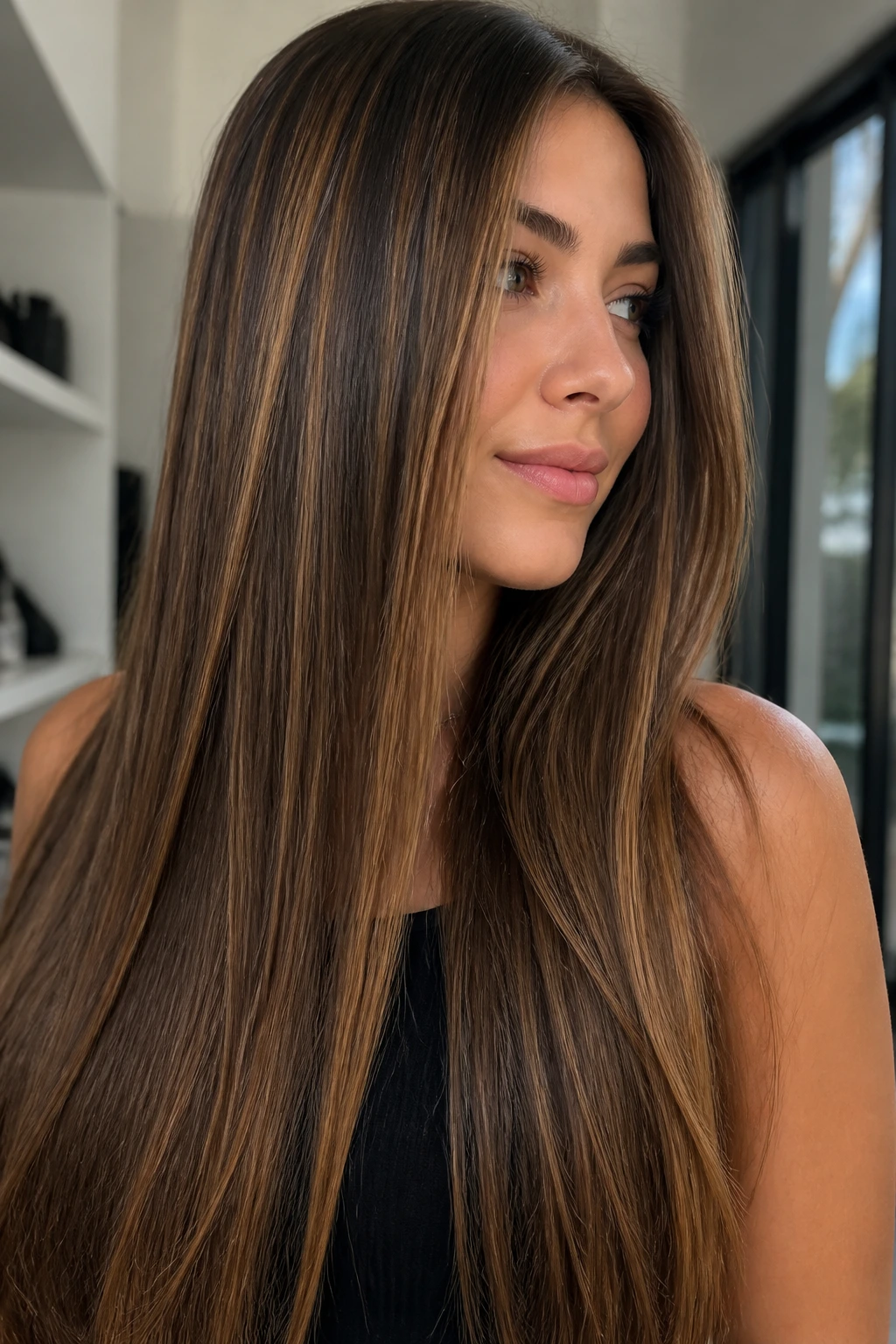
Straight hair is honest hair. Every line shows. That’s why sliced highlights can be such a smart move on long brown lengths. The caramel sits in clean slices through the top and middle layers, then drops into longer, softer ends.
The sliced pattern gives the hair visible structure without looking like old-fashioned striping. Each section has enough width to show, but the placement is still hand-painted and blended at the root. On long straight hair, that keeps the color from disappearing into the background.
This look also benefits from shine. A smooth blowout or flat-iron finish makes the caramel reflect light, and that changes the whole read of the hair. Dry ends, on the other hand, make the slices look patchy. That’s one of those annoyingly practical truths nobody likes hearing, but it matters.
24. Textured Brown Bob with Melted Caramel Tips
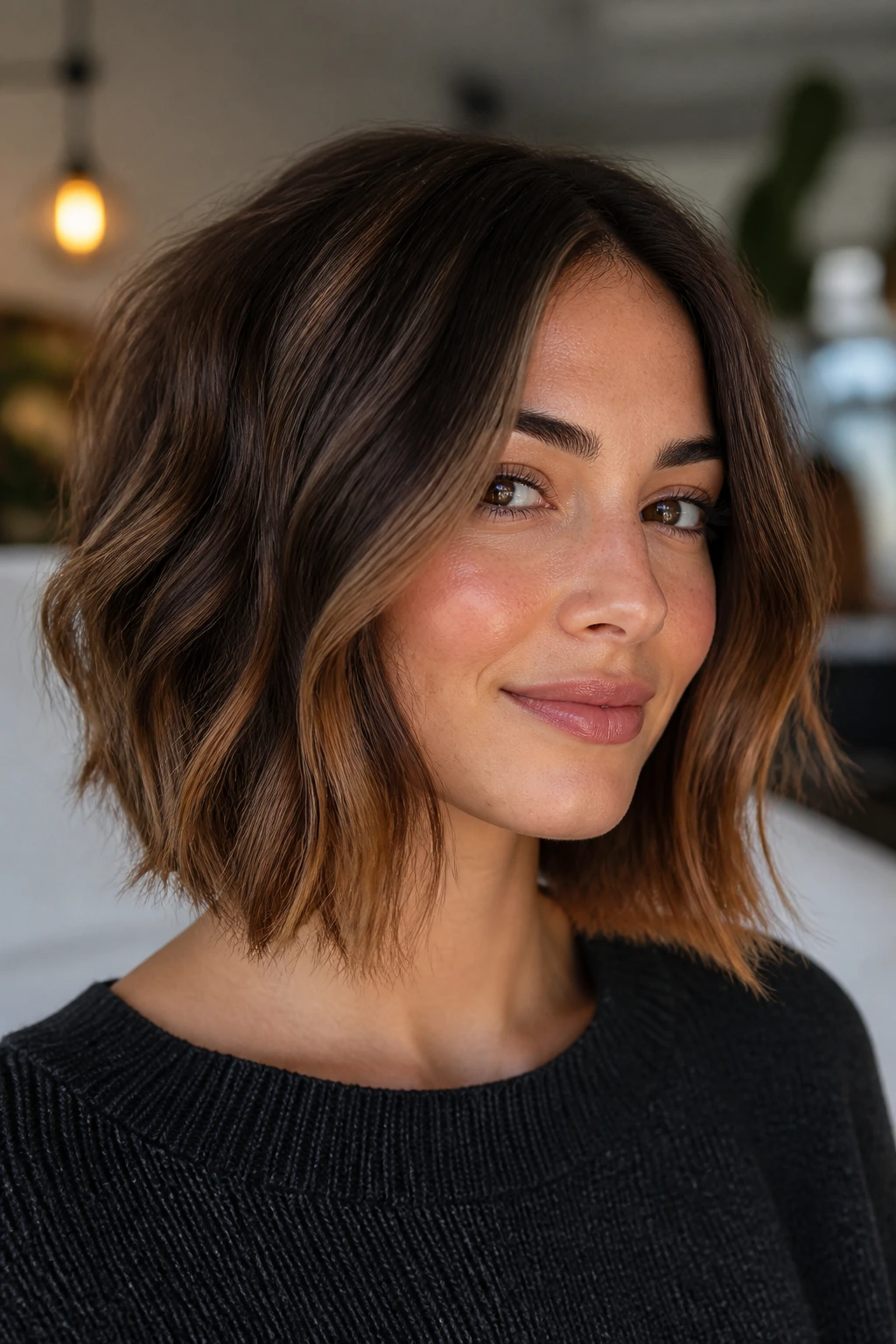
A textured bob wants lightness at the bottom more than anywhere else. The ends move, flip, and curve, so that’s where the caramel can make the most difference. A melted finish keeps the transition soft, while the texture keeps the cut from feeling too plain.
This style is especially useful if your bob has a bit of choppy layering. The lighter tips separate the shape visually, which can make the haircut look fuller and a little less round. It’s a small shift, but it changes how the bob sits.
If you let the hair air-dry, the caramel tips tend to show up in a more casual way. Blow-drying smooths them out. Neither route is wrong. Just keep the ends healthy, because dry bob ends steal the whole effect.
25. Rich Brown with Multi-Tonal Caramel and Vanilla Ends
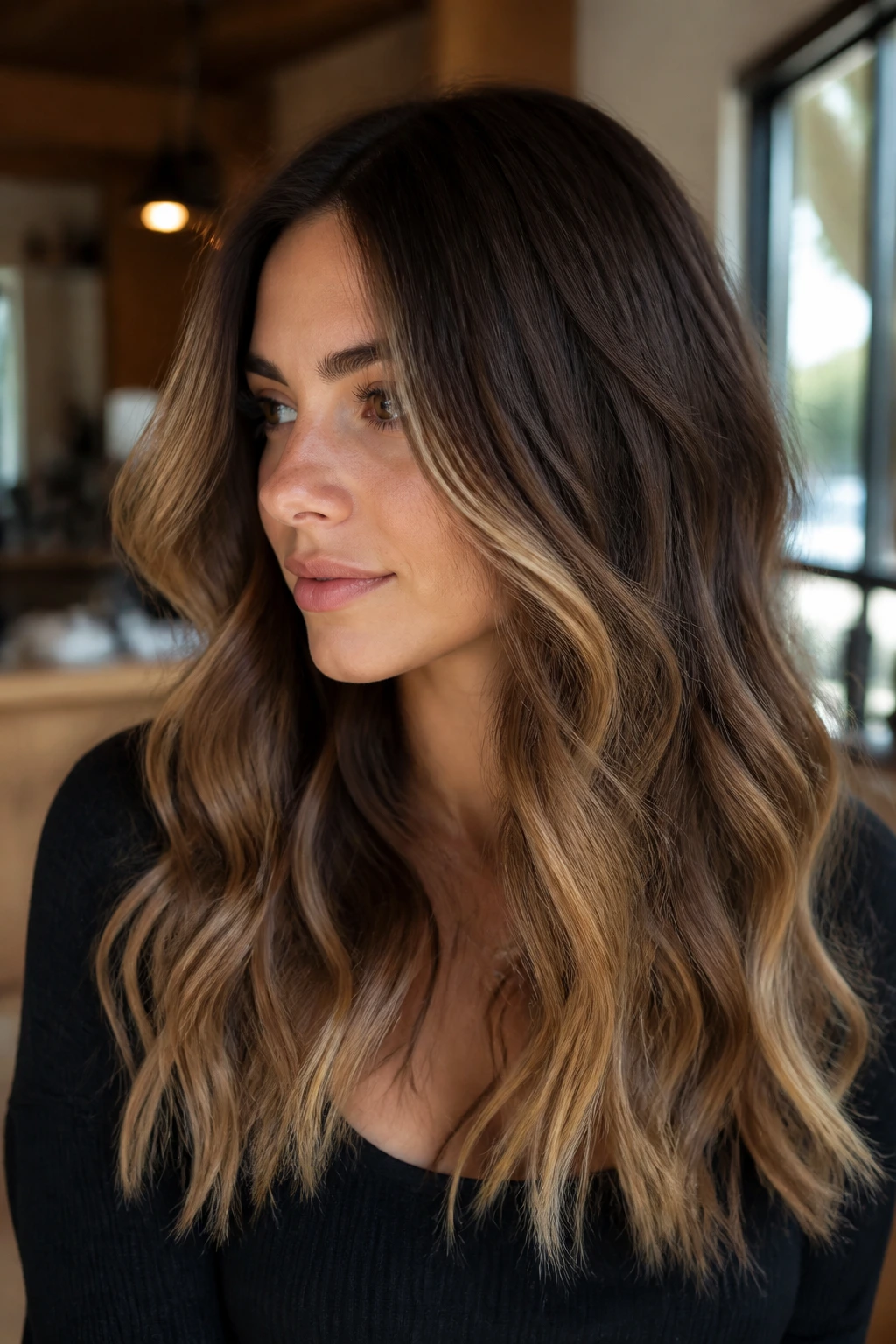
A single caramel shade can be nice. Multiple tones usually look better on rich brown hair. Mixing caramel with slightly lighter vanilla ends gives the hair a more natural, sun-faded finish, almost like the color changed over time instead of in one appointment.
The reason this works is simple: real hair rarely lifts to one exact shade. It catches light in steps. A multi-tonal finish follows that logic, so the result feels less stiff and more lived-in. On brown bases, the variation keeps the lighter pieces from looking painted in a hurry.
This is the one I’d pick if you want dimension more than drama. The vanilla ends bring a soft finish, the caramel adds warmth, and the rich brown underneath holds the whole thing together.
Final Thoughts
Caramel blonde balayage on brown hair works because it respects the base instead of fighting it. The brunette stays part of the story, which is why these looks tend to age well and grow out without looking rough.
The smartest versions pay attention to tone first, placement second, and brightness third. A tiny shift in where the caramel starts can change the whole haircut. So can a gloss. People forget that part.
Bring a photo that matches your haircut, your texture, and the amount of upkeep you’re willing to deal with. That one detail saves a lot of confusion in the chair, and it usually gets you closer to the hair you actually wanted.
