



Straight hair is brutally honest. It shows every color shift, every hard line, every placement choice that looked fine in the bowl and suddenly looks loud once the hair dries flat. That’s why balayage looks for straight hair need a different eye than the curly, wave-heavy inspo boards people save and forget about later.
The best versions don’t rely on texture to do the work. They use clean ribbons, soft shadow roots, and careful spacing so the color still moves when the hair lies smooth against the shoulders. That can mean the difference between a polished, expensive-looking blend and something that reads stripey from the middle part out.
Straight strands also give you a rare kind of control. You can see dimension more clearly, which is a gift if the placement is thoughtful and a curse if it isn’t. A few millimeters of placement change can shift the whole mood of a cut. Too much lightness near the front? Harsh. Too little contrast? Flat. Just enough warmth, coolness, or brightness? That’s the sweet spot.
The looks below are built for that reality. Some are soft and barely-there, some have a little bite, and some lean bold on purpose. All of them work because they respect the line of straight hair instead of fighting it.
1. Soft Beige Ribbon Balayage
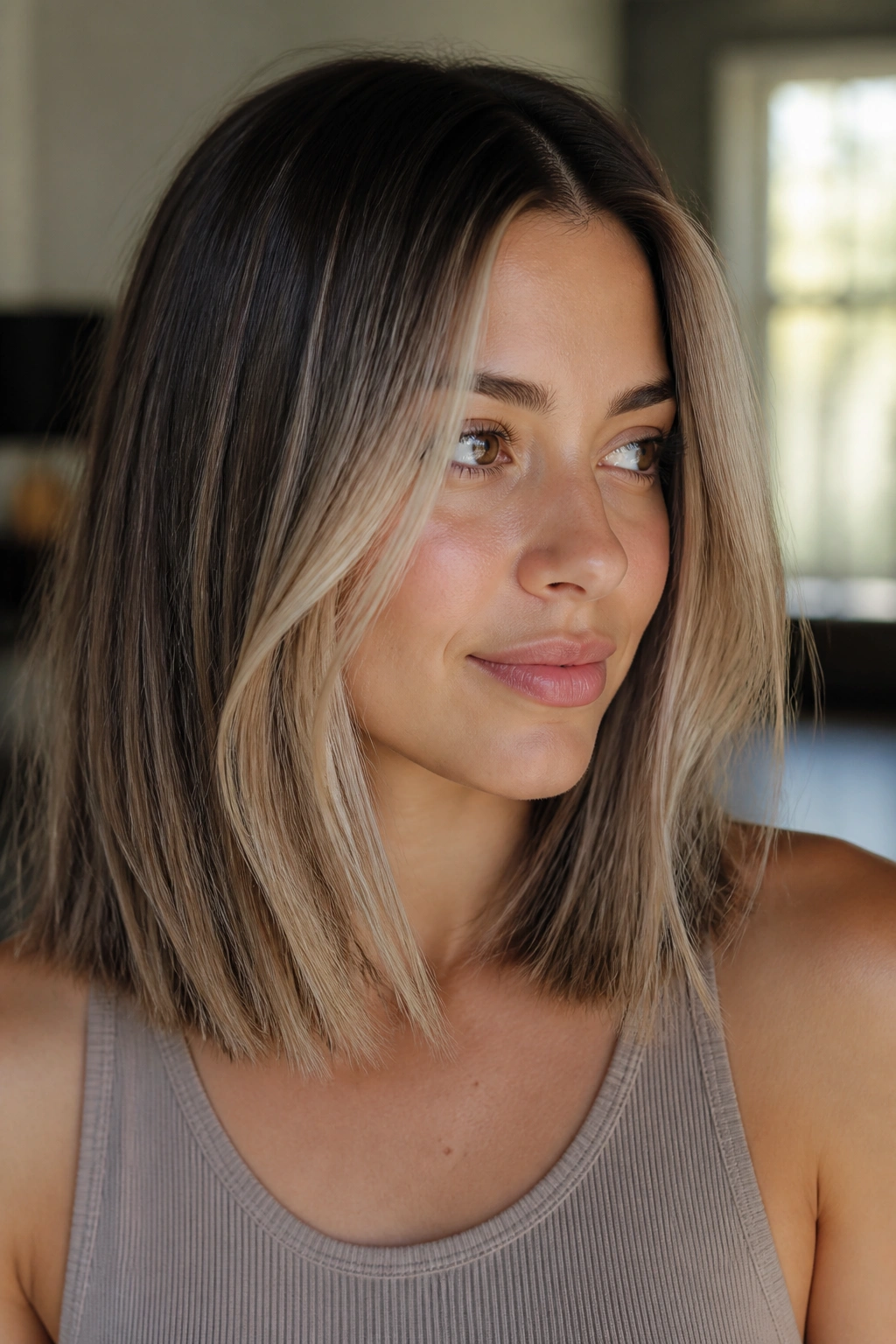
Soft beige ribbons are one of the easiest ways to give straight hair movement without making it look busy. The color sits in slim, airy pieces that run through the mids and ends, so the hair still looks smooth when it’s blown out or air-dried.
Why it flatters straight strands
Beige sits in that useful middle ground between warm and cool. On straight hair, that matters because the finish can go flat fast if the tone is too yellow or too ash-heavy. Beige keeps the whole look light, polished, and believable.
The placement should be feathered, not chunky. Think narrow ribbons that peek through the base color instead of wide stripes that demand attention. That’s the trick.
- Works best on light brown to dark blonde bases
- Looks especially clean on blunt cuts and long layers
- Pairs well with a soft money piece, but doesn’t need one
- Usually needs a toner refresh every 6 to 8 weeks
Best tip: Ask for micro-painted sections around the face and temples. Straight hair shows front placement first, so those tiny details matter more than people think.
2. Caramel Balayage on Espresso Straight Hair
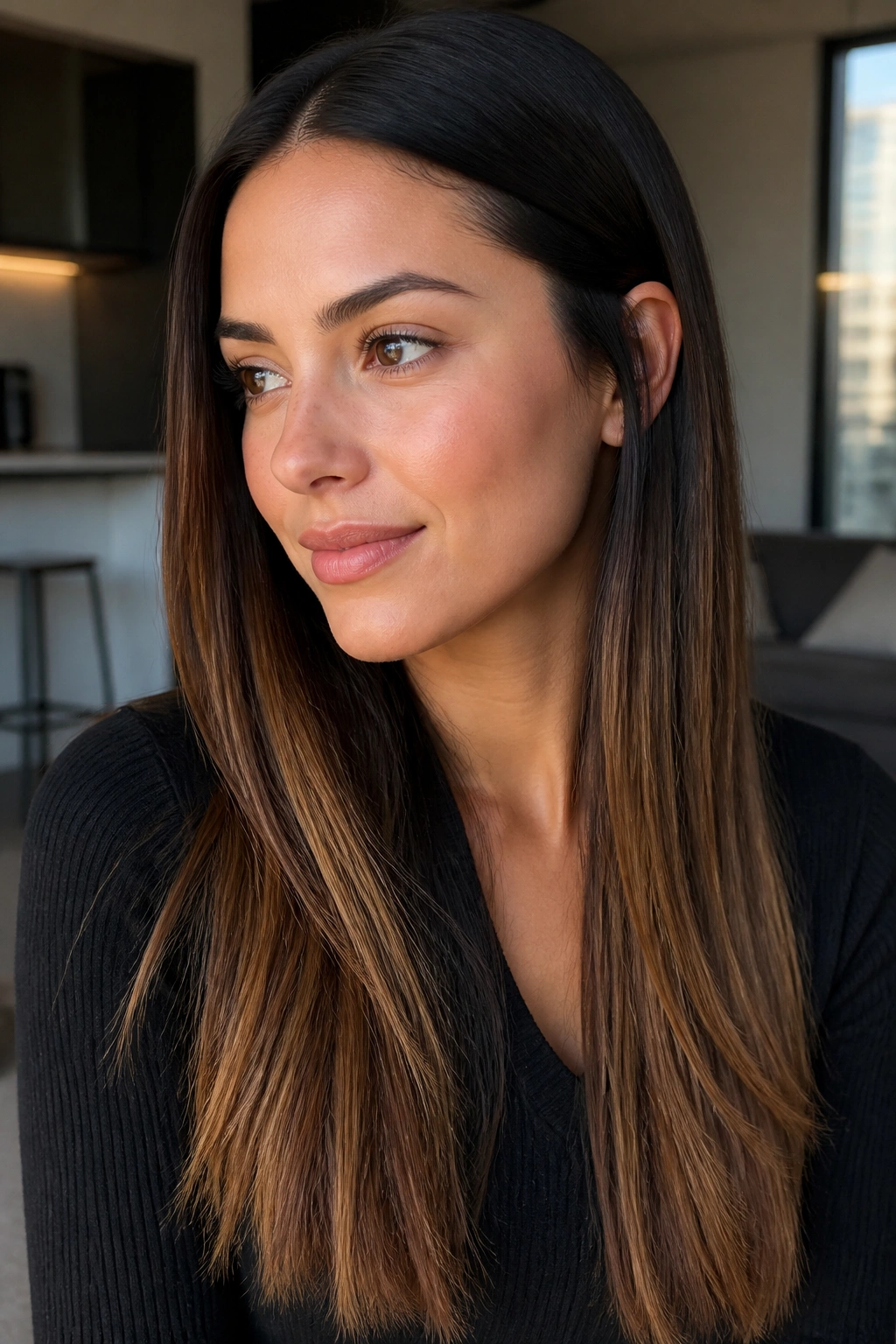
This one makes a strong point without screaming. Caramel balayage on espresso hair gives dark straight strands a warm glow that reads rich instead of flat, and that’s a hard line to hit.
Caramel works because it brings depth back into very dark hair without forcing a giant contrast jump. On straight textures, the lighter pieces stay visible even when the hair is tucked behind the ear or clipped back. That makes the color look intentional, not decorative.
I like this look when the highlights start below the crown and get denser through the lower mids. It keeps the top area grounded, which is important on pin-straight hair. If the roots are too light, the whole head can start looking fuzzy.
For the best finish, pair it with a gloss that keeps the caramel soft, not orange. A touch of warmth is lovely. Brass is not.
3. Ash Brown to Mushroom Blonde
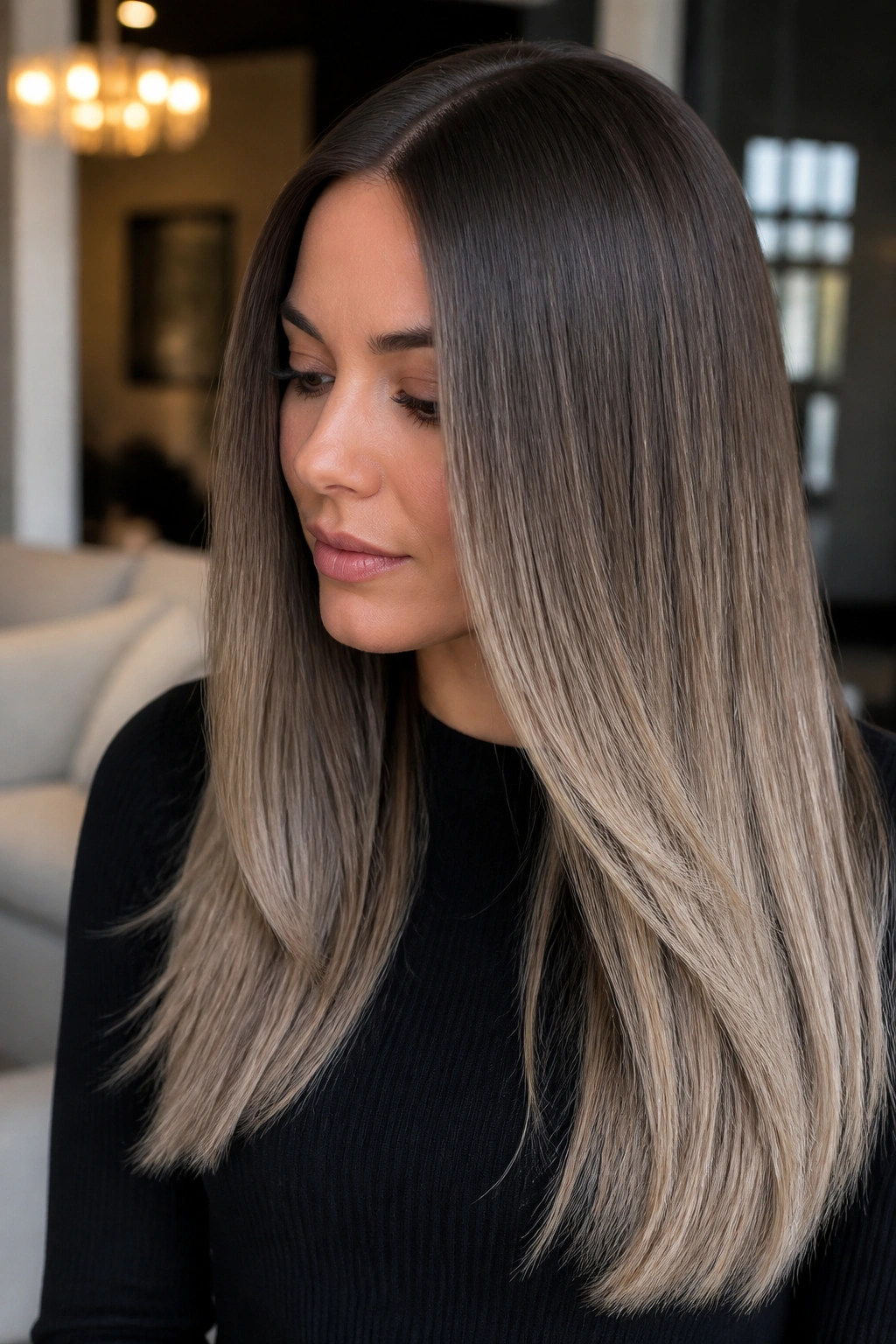
Why does this look work so well on straight hair? Because the color change is slow, smoky, and controlled. Ash brown melting into mushroom blonde has enough contrast to show up, but not so much that the hair turns into a line drawing.
Straight hair loves this kind of restraint. The cooler beige-brown tones create a soft drift from root to end, which means the eye follows the color instead of stopping at a hard boundary. That’s a big deal on hair that doesn’t get the help of waves or curls.
How to wear it
Keep the darkest area at the root and through the first few inches of growth. Then let the mushroom tone start midshaft, where the light can catch it. The ends can be a touch lighter, but they should still feel muted.
This is a good fit for people who wear sleek blowouts, center parts, or long one-length cuts. It is not the right choice if you want a bright, sunny blonde result. It’s moodier than that. Cooler, too.
4. Money Piece Balayage for Straight Hair
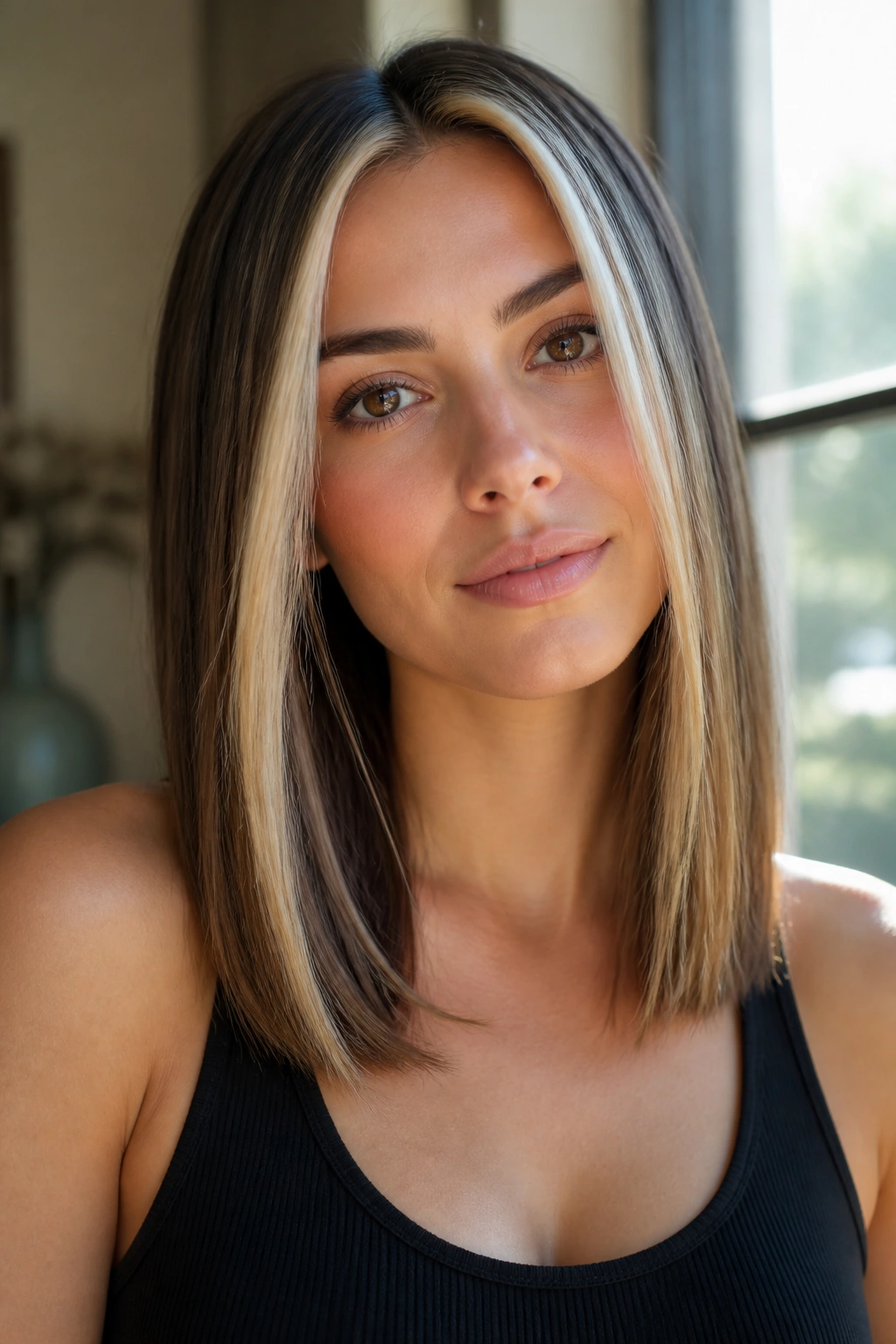
A sharp face frame can save straight hair from looking one-note. A money piece balayage puts brightness where the eye goes first, which means you get an obvious lift without needing to lighten the whole head.
Picture a shoulder-length lob with a neutral brown base and two pale ribbons skimming the cheekbones. That’s the whole move. Simple. Smart. The rest of the color can stay soft and dimensional while the front gets a little drama.
- Keep the brightest pieces one to two shades lighter than the ends if you want a soft result
- Place them just outside the part for a more lived-in feel
- Use a gloss to keep the lighter front sections shiny, not hollow
- Avoid over-lightening the front on very fine hair; it can look thin fast
The real value here is framing. Straight hair can hide movement in the back, but the front is always visible. That’s where the payoff lives.
5. Cinnamon and Chestnut Dimension
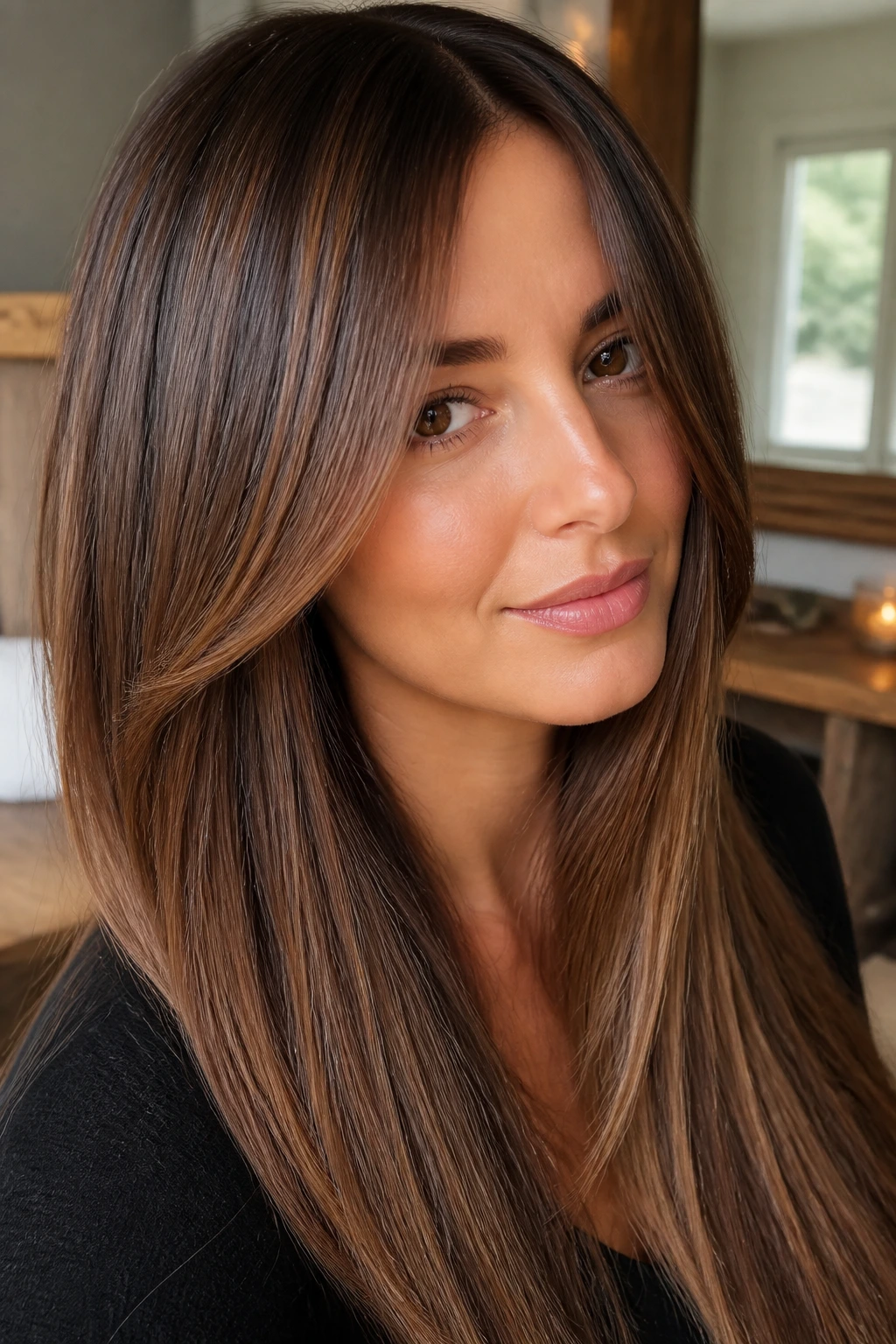
Cinnamon and chestnut are the kind of colors that make straight hair look expensive without trying too hard. The warmth sits somewhere between auburn and brown, which keeps the finish grounded while still giving you enough glow to see the weave of the balayage.
The reason this combo lands so well is that it adds depth in layers. Chestnut holds the base, cinnamon brings light, and the whole thing feels woven rather than painted. On straight hair, that woven look matters because each ribbon stays visible across the surface instead of collapsing into texture.
I prefer this look on medium brown or warm brunette bases. It also plays nicely with thicker straight hair, where a little warmth helps stop the color from looking heavy. If your hair is very fine, ask for fewer lighter pieces and more tonal variation. You want movement, not clutter.
The finish should feel rich and glossy, almost like polished wood. That sound a little dramatic? Fine. But it fits.
6. Platinum Beige Ends
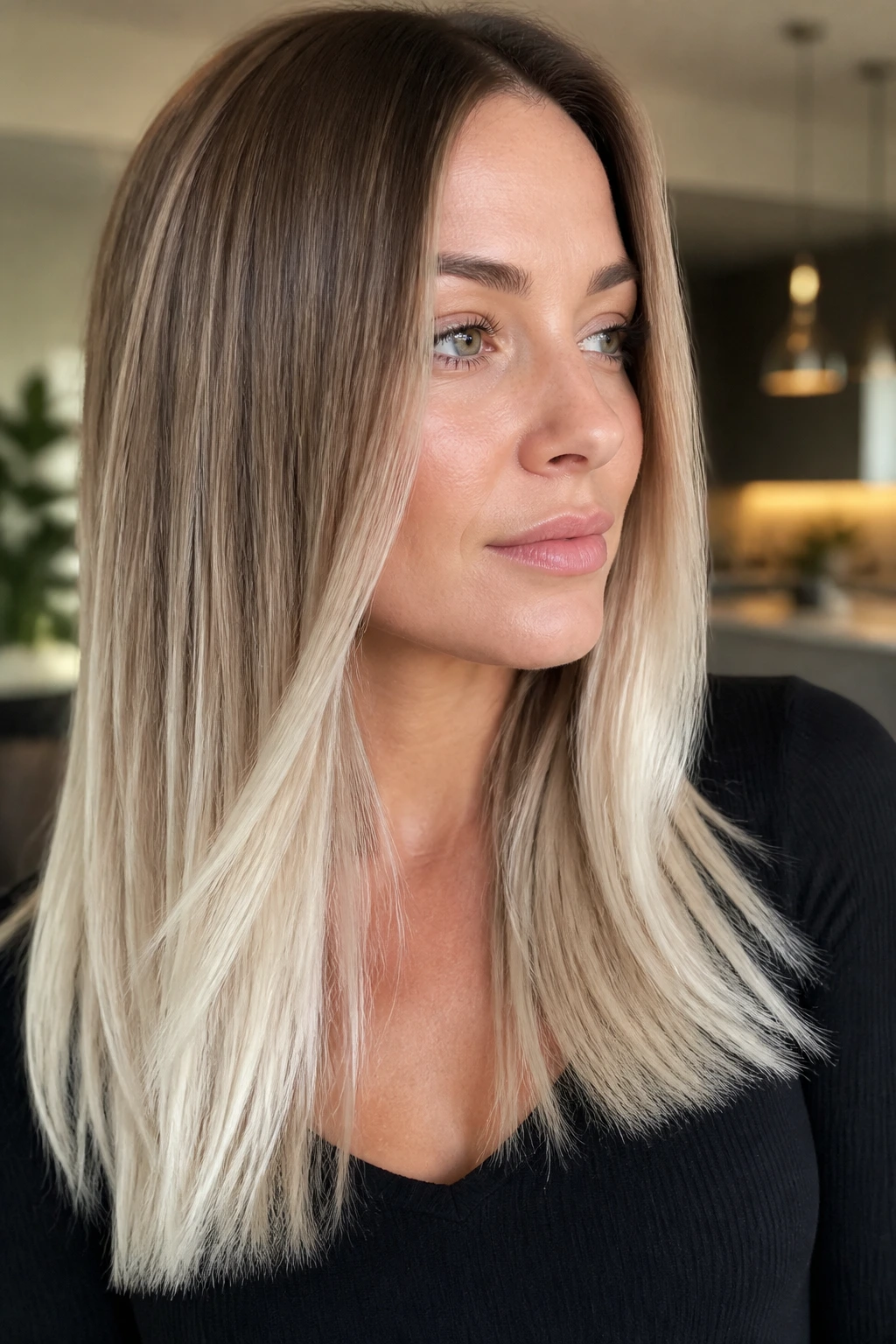
Platinum beige ends are for people who want brightness with a clean edge. Compared with a softer blonde balayage, this version gives straight hair a more deliberate finish, almost like the color was carefully shaved down rather than brushed on.
What separates this look from a standard blonde fade is the tone control. Pure platinum can look stark on straight hair, especially if the cut is blunt. Beige softens the severity and makes the lightness feel wearable instead of icy in a harsh way.
This look is strongest on medium to long hair, where the end point has room to breathe. On shorter cuts, the contrast can hit too suddenly. You want the brightness to arrive gradually.
It also asks for upkeep. Not a little. More than a caramel look, less than an all-over blonde overhaul. Toner and moisture are part of the deal. Straight hair shows dryness fast, and platinum ends can look papery if you ignore them.
7. Face-Framing Honey Balayage
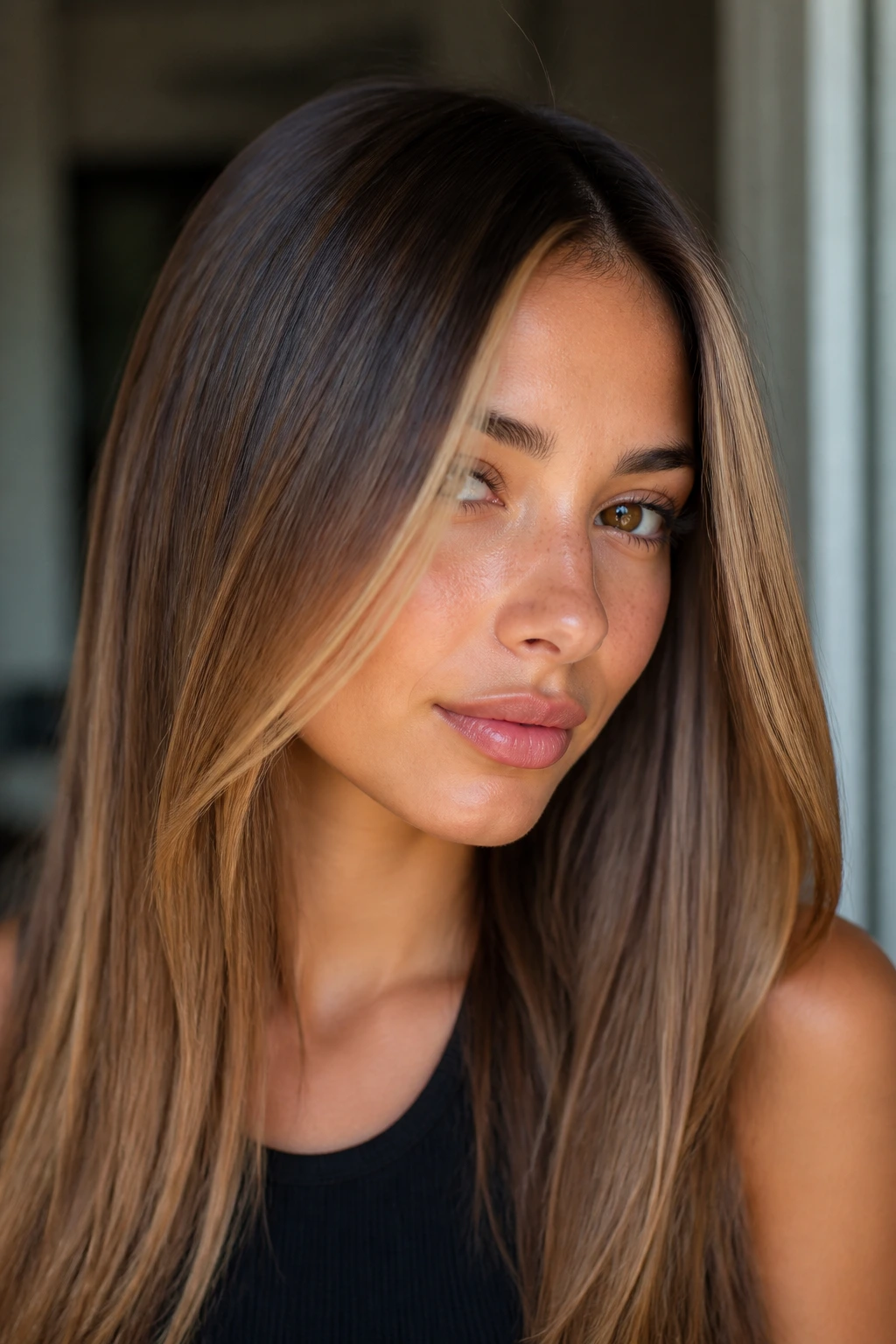
Honey around the face is an easy win. It warms up straight hair near the cheeks and jaw, which can make the whole cut feel softer even when the rest of the color stays fairly quiet.
What makes it different
Unlike full-head lightening, this approach uses warmth as an accent. The honey tones should sit like sunlight on the front pieces, then fade into a more neutral body of color. That keeps the result flattering without turning the hair yellow.
For straight hair, this placement is smart because the front layers do the talking. A few well-placed lighter strands can change the whole read of the haircut, especially if the ends are blunt or the layers are subtle.
How to get the most from it
Keep the honey tone a shade deeper than classic blonde if your base is medium brown. You want glow, not a fake-gold stripe. If your hair is dark blonde already, the face frame can be lighter and still stay believable.
This is one of those looks that does a lot with a little. Which is exactly why I like it.
8. Smoky Brunette Balayage
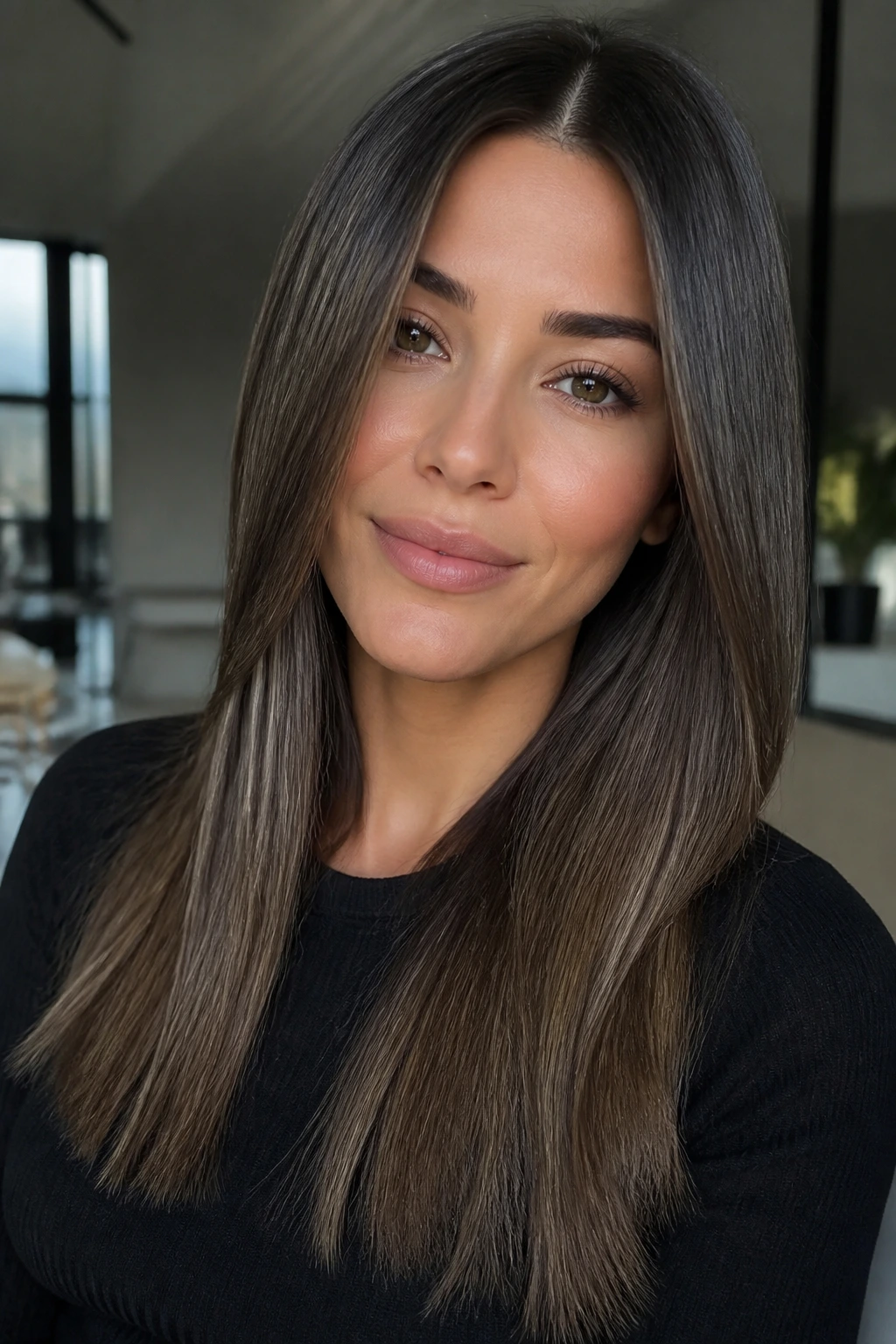
Smoky brunette balayage is for people who want dimension but don’t want to move far from brown. It uses cool, muted lightness instead of obvious blonde, so straight hair keeps its clean shape while gaining depth.
The best smoky brunettes don’t look highlighted in the traditional sense. They look like the color shifted in the sun and then settled back down. There’s a softness to it that works well on straight textures, especially when the cut has a center part and a smooth finish.
This is also a forgiving look. If your hair pulls warm, the smoky tone can keep the brass under control. If your base is already cool, it deepens the whole result without making it muddy. That balance is the whole point.
I’d choose this for someone who likes polished hair but doesn’t want anything too sweet or too bright. It pairs well with sharp ends, long bobs, and shoulder-skimming layers. It’s quiet, but not boring.
9. Rose Gold Tint on Straight Mid-Length Hair
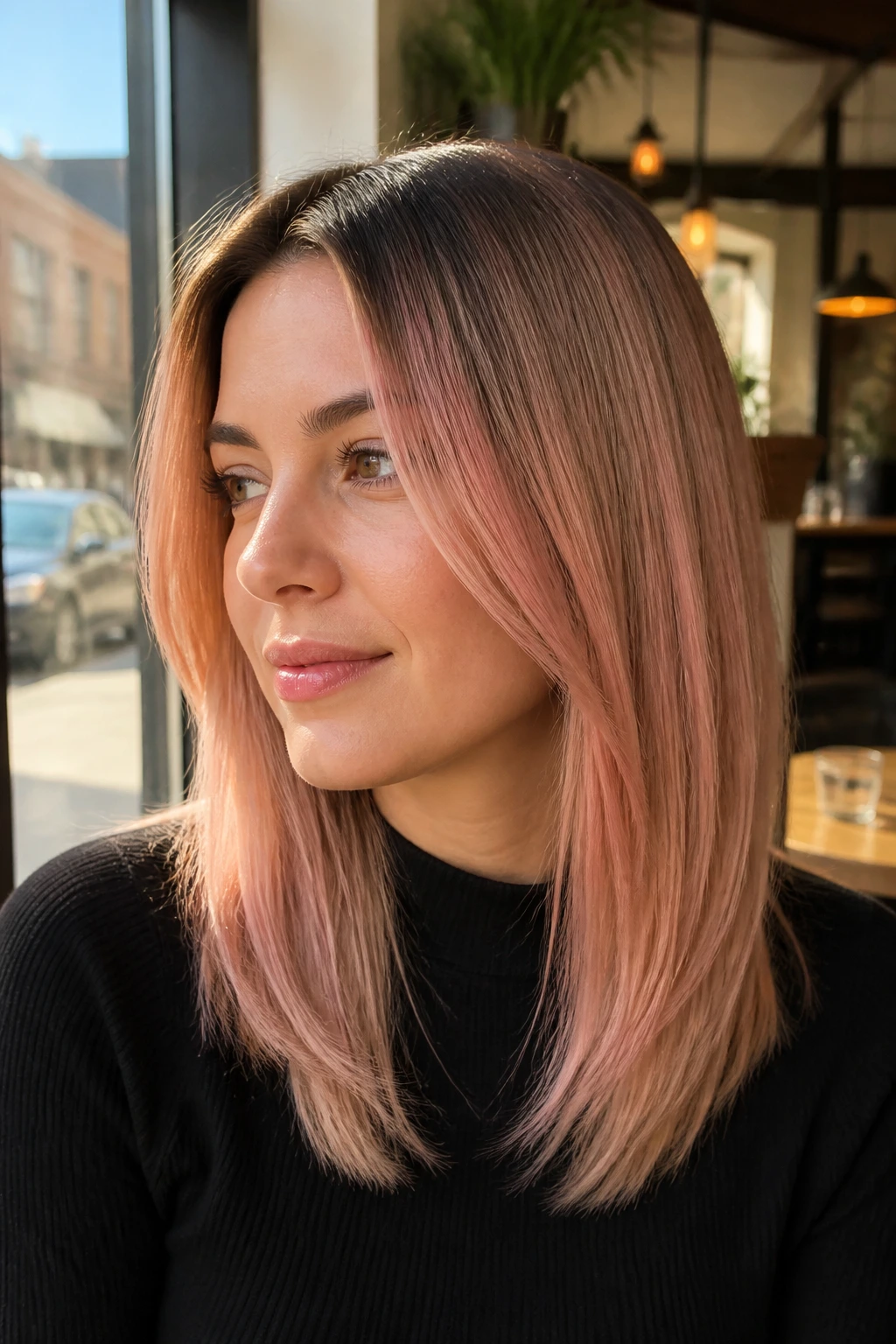
Can rose gold work on straight hair? Absolutely, if the tone is kept soft and the colorist doesn’t treat it like a costume piece. The sweet spot is a blush-beige finish with a whisper of copper, not a neon pink wash.
Straight mid-length hair is a good canvas for this because the color shows clearly across the whole head without needing curls for texture. The hue can glide from the face frame through the lower mids, then fade out near the ends so it doesn’t feel heavy.
How to use it
Keep the base either a light brunette or dark blonde. A darker base can still work, but the rose tone needs more careful lifting to stay pretty rather than murky. If you want the look to feel grown-up, ask for the pink to sit under the beige, not on top of it.
The best version looks soft in daylight and polished indoors. That’s a hard balance, but when it lands, it’s lovely.
10. Toffee Swirl Balayage
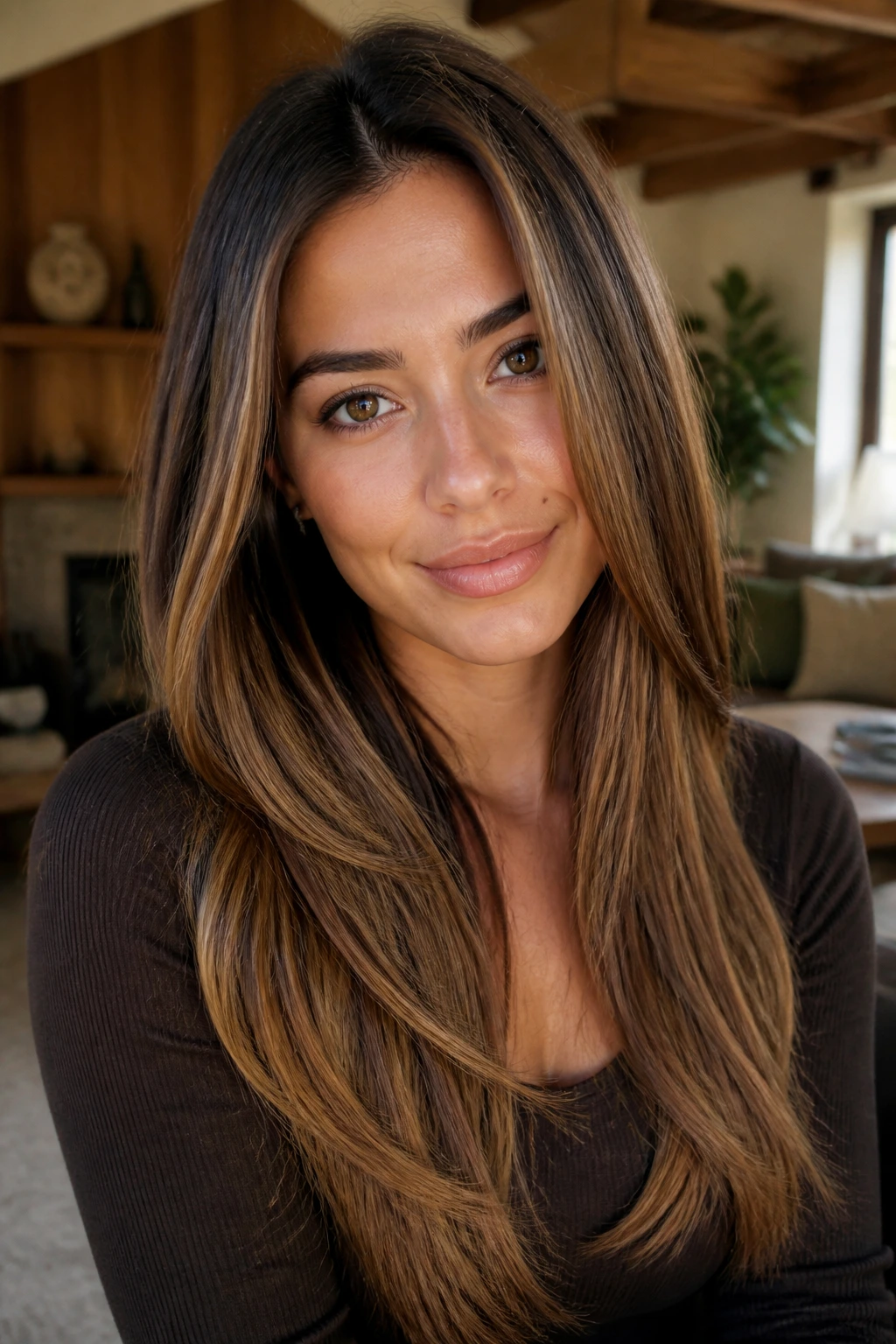
Toffee swirls bring movement to straight hair in a way that feels natural, almost like the color grew there. The pieces should be warm, but not orange, and they should travel through the hair in a loose, curved pattern rather than a rigid ladder of lightness.
A lot of people ask for caramel and end up with something too flat. Toffee has more depth. It carries a little brown back into the lighter sections, which matters on straight hair because the surface can expose every tone shift. If the light pieces are too pale, they can look pasted on.
This look works especially well on medium brunettes and dark blondes. It also plays nicely with long straight layers, where the swirls can move across the cut and break up the outline of the hair.
I’d call this one friendly and wearable. Not sleepy. Not loud. Just easy to live with.
11. Cool Mocha Balayage with Shadow Root
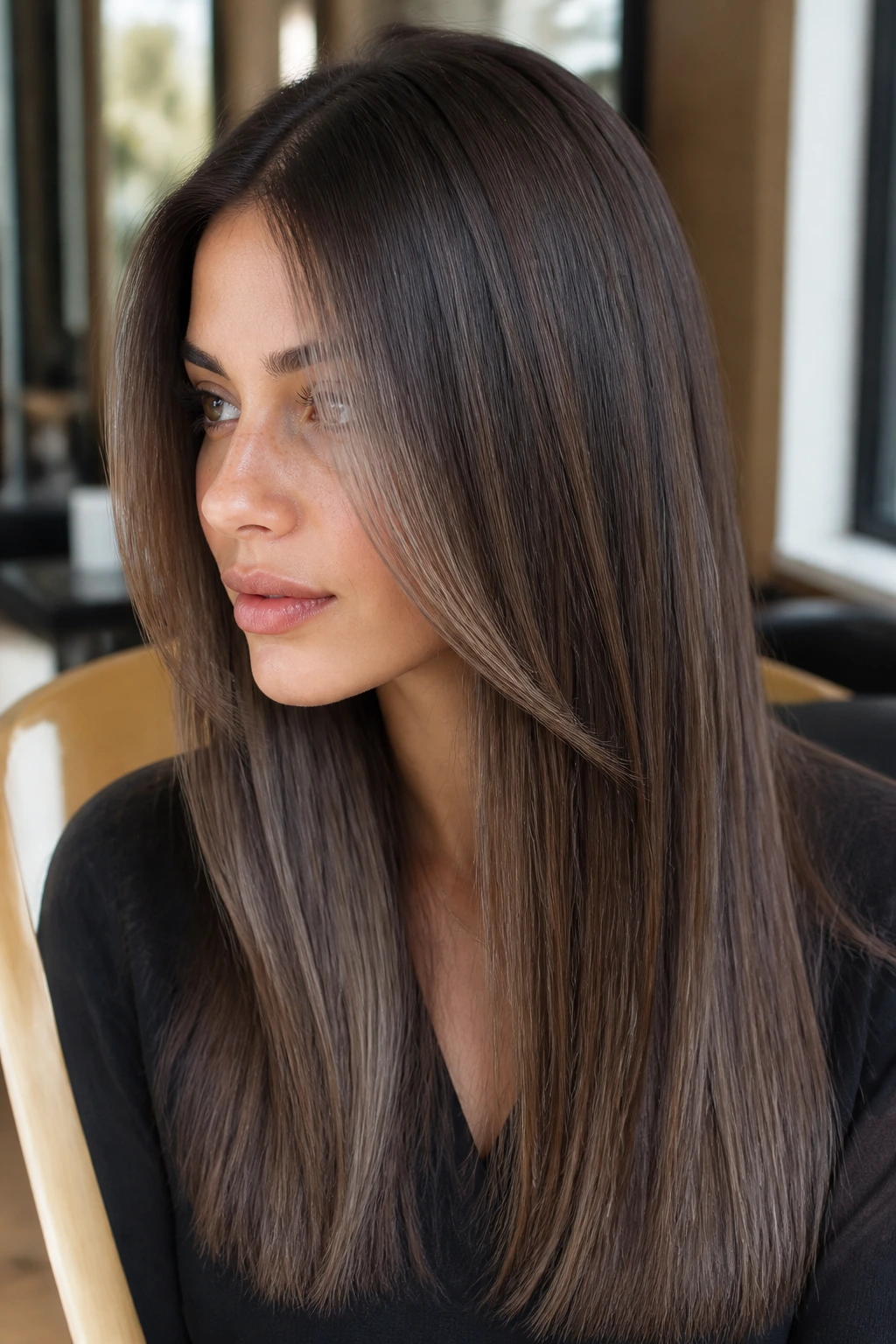
Cool mocha is one of my favorite answers to flat dark hair. It keeps the base anchored with a shadow root, then threads soft mocha lightness through the mids and ends so straight hair gets depth without a big contrast jump.
The shadow root does real work here. On straight textures, it stops the color from looking like a hard stripe as the hair grows out. That means the balayage keeps its shape longer and looks softer at the scalp.
The mocha pieces should stay muted and slightly smoky. If they lean too warm, the whole look turns muddy. If they’re too light, the balance breaks. This one needs restraint.
It’s a strong fit for people who wear sleek blowouts, straight lob cuts, or long hair with minimal layering. The color adds motion, but the cut still looks clean. That combination is hard to beat.
12. Sandy Blonde on Dark Blonde Hair
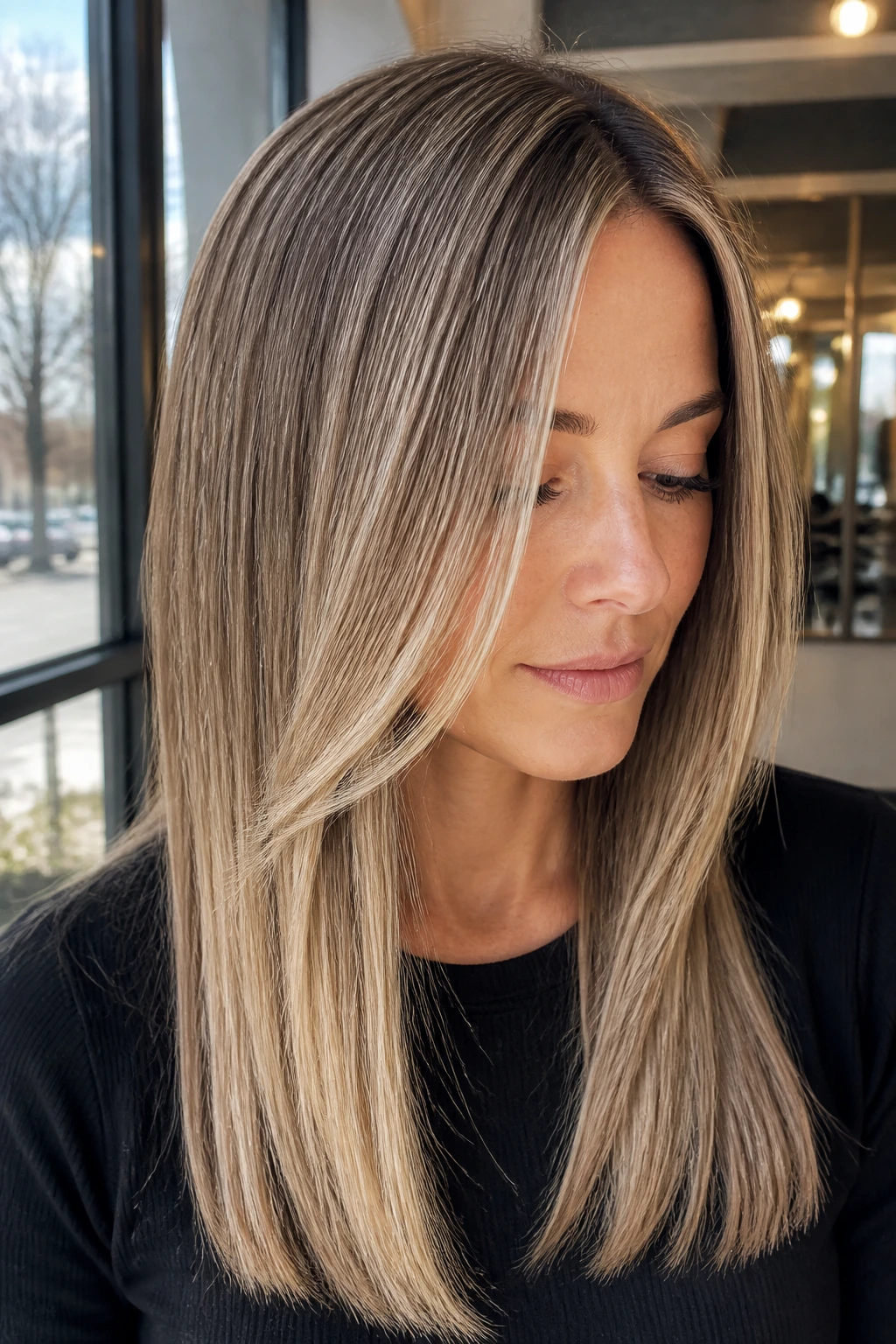
Sandy blonde balayage is one of those looks that gets overlooked because it sounds plain, but it can be gorgeous on straight hair. The sandy tone sits between beige and soft gold, which gives dark blonde hair a brighter edge without turning it white-blonde.
Compared with a platinum look, this is gentler and easier to wear. Compared with a warm honey blonde, it feels more sun-faded and less sweet. Straight hair benefits from that middle ground because the finish stays clean and shiny instead of looking textured in a noisy way.
This works best when the lightness is concentrated through the mids and ends, with just a few lighter strokes around the face. Too much all-over brightness and the hair starts to lose depth. Too little and the sandy tone disappears.
If you like low-drama color that still looks finished, this is a smart choice. It’s the kind of blonde that behaves.
13. Bold Contrast Balayage for a Sleek Lob
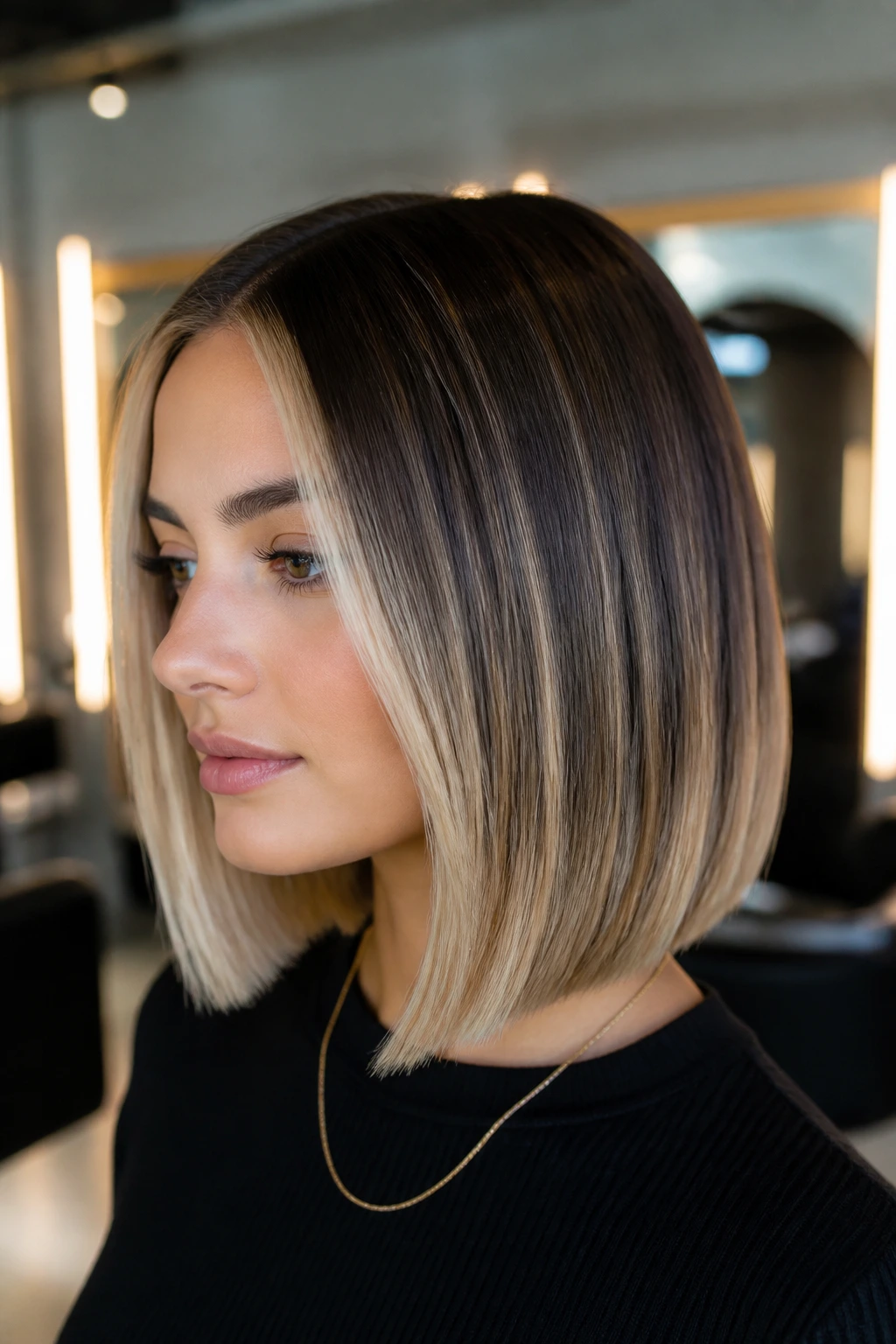
A sleek lob can handle more contrast than people assume. In fact, the blunt line of a lob often looks better with a stronger balayage because the color breaks up the solid shape and keeps it from feeling boxy.
What makes this style work is placement. The lightest pieces should sit just below the jaw and through the front angles, where they can move around the face. The back can stay darker and calmer. That split keeps the look sharp without turning it into a block of color.
- Best on one-length or lightly layered lobs
- Strongest with a center part or a deep side part
- Works well with brunette-to-blonde contrast
- Needs a gloss to keep the line between shades soft
If you want something modern without going full high-contrast stripe, this is the middle path. Clean. Direct. A little graphic.
14. Copper-Kissed Balayage
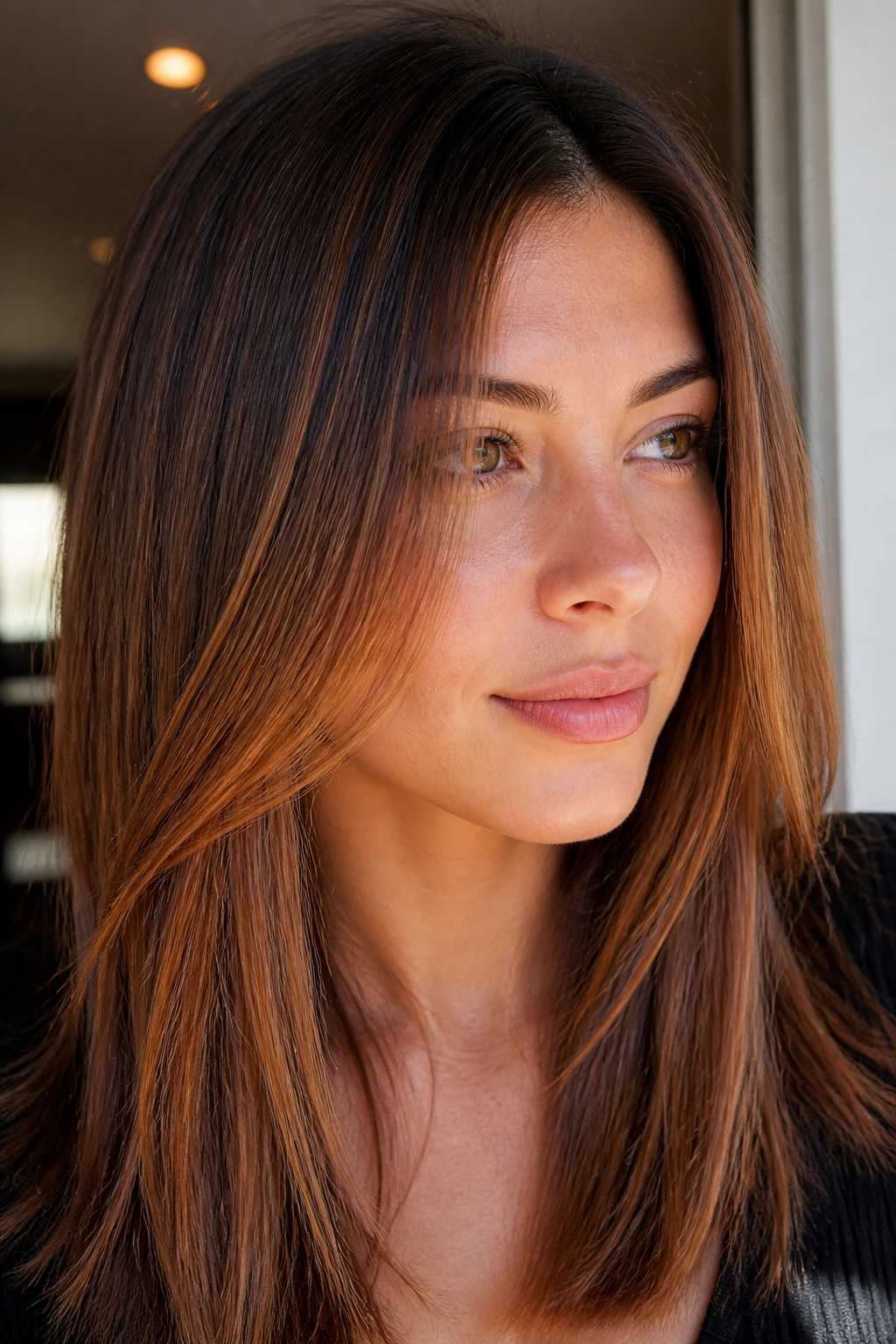
Copper on straight hair has a way of looking expensive when it’s done with a light hand. Copper-kissed balayage keeps the base brown or dark blonde, then drops in thin warm pieces that glow instead of shout.
Why it grabs attention
Copper reflects light fast, so straight hair shows it immediately. That’s useful if the pieces are placed well. It’s dangerous if they’re not. A little copper near the face can wake up the whole haircut. Too much, and the color starts to feel heavy.
I like this look on shoulder-length cuts and longer straight hair with movement near the ends. The warmth can sit in the lower half of the hair, where it reads like a soft burnished finish rather than a root-to-tip commitment.
A small warning
Copper fades. That’s not a flaw, just reality. If you want the color to stay rich, a color-safe shampoo and a warm gloss matter a lot. Skipping that part is how beautiful copper turns dull in a hurry.
15. Silver Beige Balayage
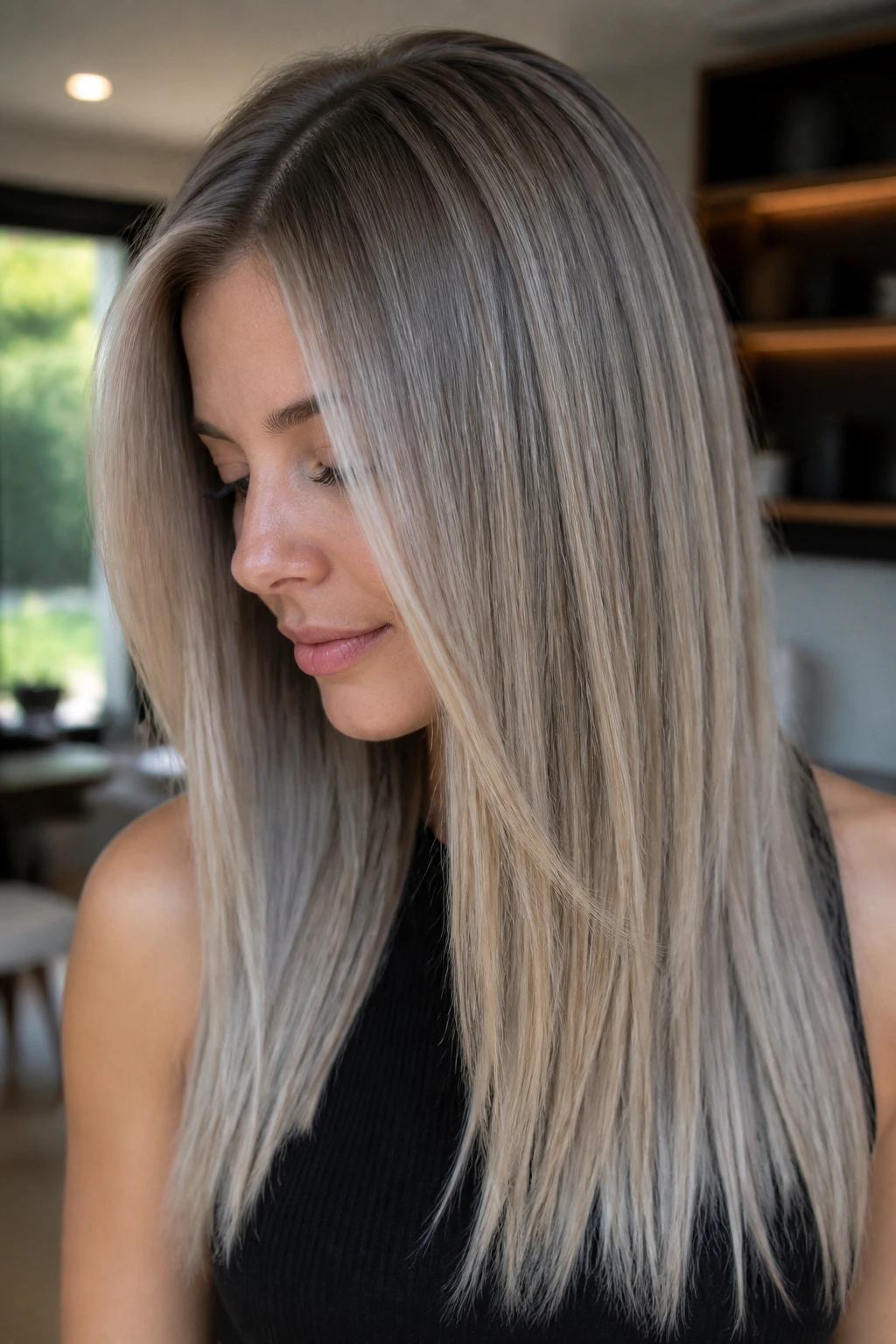
Could silver look soft on straight hair? Yes, if beige is doing some of the work. Silver beige balayage is cooler than champagne blonde, but less severe than pure silver, which makes it easier to wear on smooth, straight strands.
The appeal here is the sheen. Straight hair reflects cool tones beautifully when the cuticle is healthy, so the color can look polished without needing waves for texture. That said, the base needs careful lifting. If the hair isn’t light enough, silver beige can turn muddy fast.
How to use it
Start with a blonde base that is already quite pale. Then layer a beige toner over the silver so the finish stays wearable. A root shadow can help the grow-out look softer, especially if the hair is shoulder length or longer.
This is a better fit for someone who likes crisp, cool color than someone who wants warmth or softness. It has edge. Not a harsh edge, but a real one.
16. Soft Black Hair with Muted Brown Ribbons
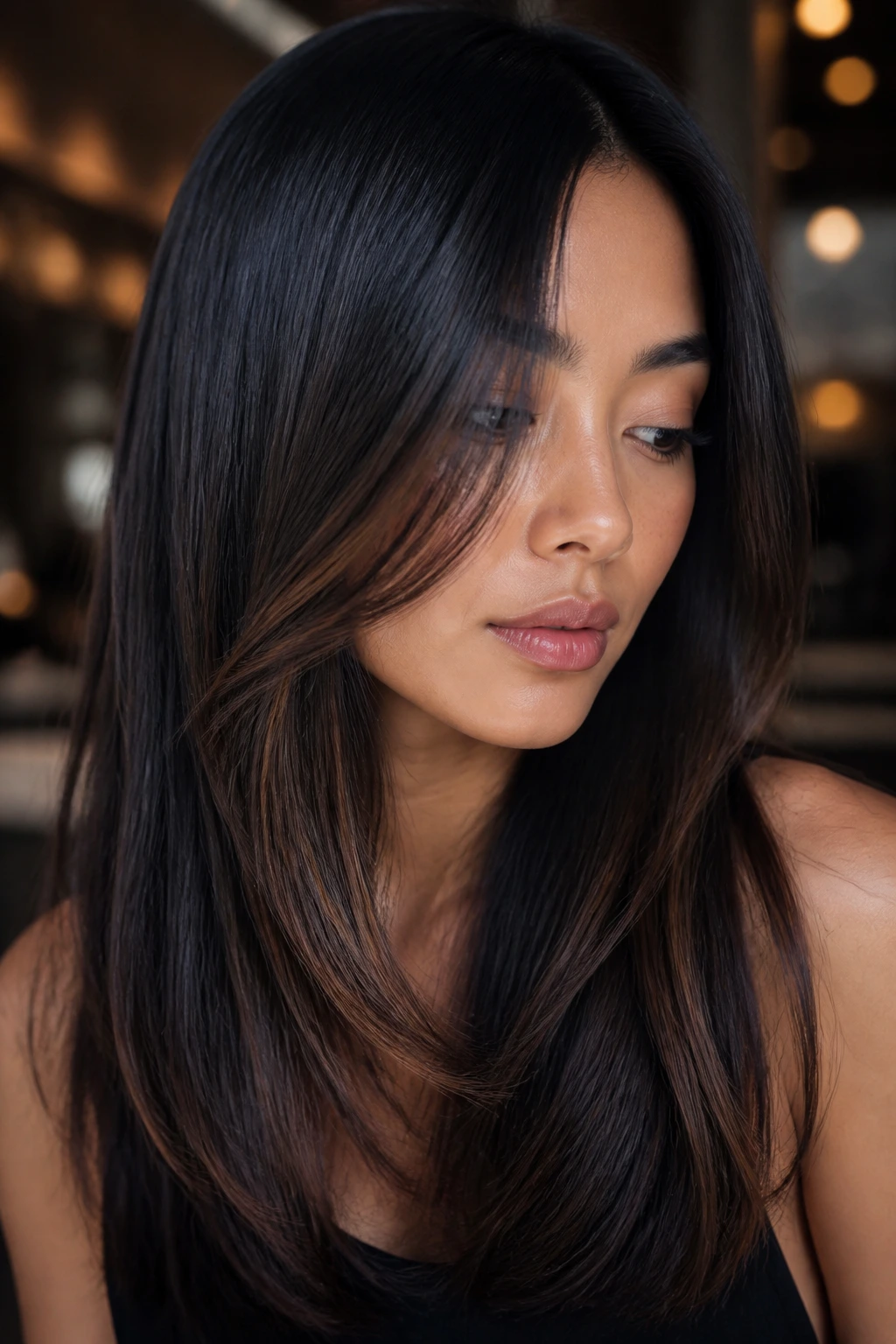
Soft black hair doesn’t need to be flat. A few muted brown ribbons can add movement while keeping the overall look dark and sleek, which is ideal for straight hair that leans glossy and dramatic.
The key is subtlety. These ribbons should not read as obvious highlights. They should look like a slight shift in tone when the light moves across the hair. On straight hair, that kind of quiet contrast is often more effective than a louder blonde piece.
The placement works best around the mid-lengths and the lower sides, where the eye naturally follows the line of the hair. If you brighten the top too much, the color can start looking dusty instead of rich.
This is a good option for anyone who wants dimension but is wary of losing the depth that makes black hair feel strong. A little brown thread through the darkness goes a long way. A really long way.
17. Strawberry Blonde Balayage
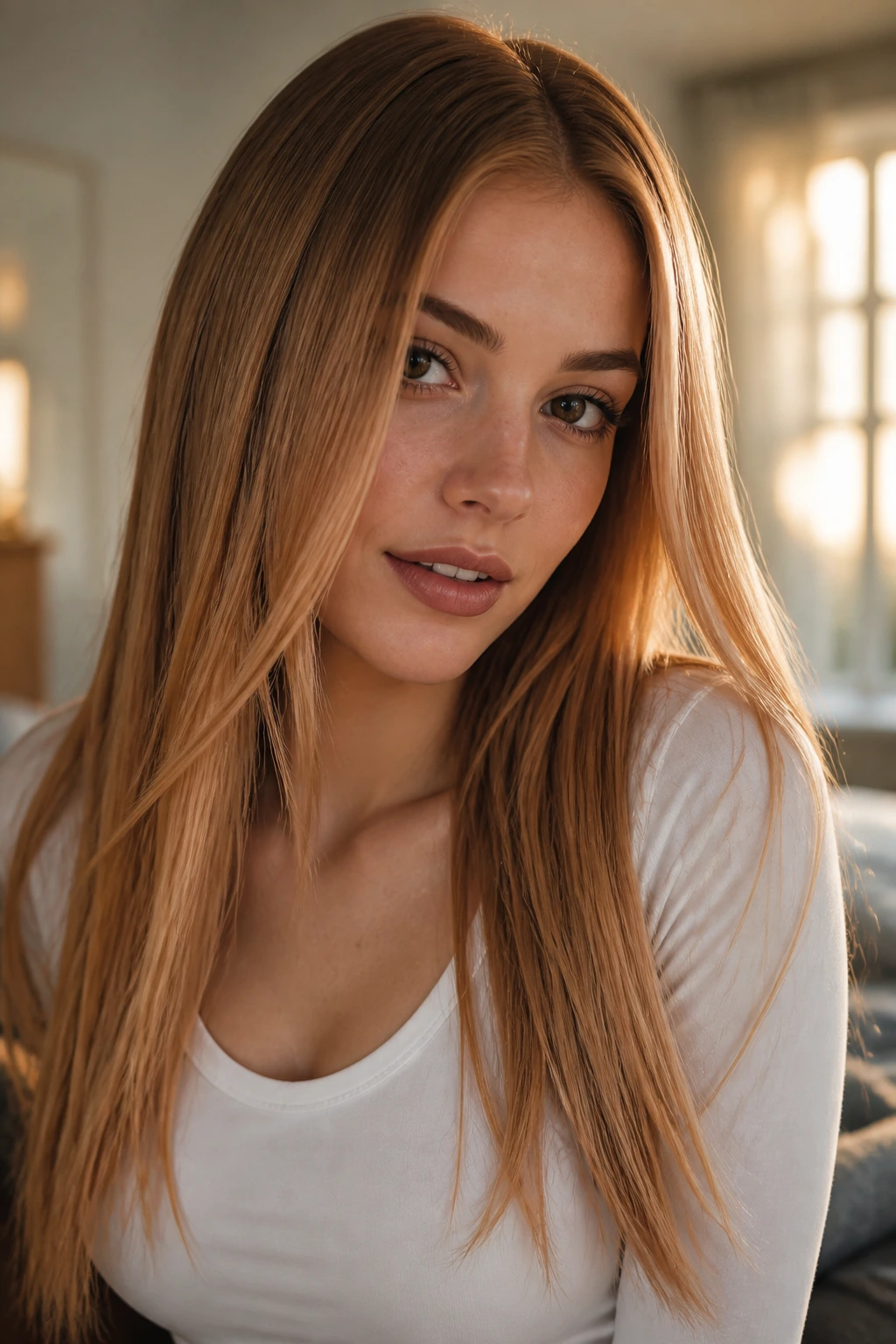
Strawberry blonde on straight hair has a sweet spot between copper and gold. It looks soft, but there’s enough warmth in it to keep the color from disappearing against pale skin or a very light base.
The best version is not an all-over peachy wash. It’s a balayage built from thin, warm pieces that move through the mids and ends with a light strawberry glaze over the top. Straight hair shows those tones cleanly, so the finish can look delicate rather than messy.
This look is especially pretty on long, smooth hair with minimal layering. The color itself supplies the movement. If the cut is too shaggy, the warmth can get scattered and lose its charm.
You do need a careful toner plan here. Strawberry blonde shifts faster than people expect, especially if you wash often. A gentle shampoo and cooler water can help keep the shade from fading into pale gold too fast.
18. Champagne Balayage on Straight Blonde Hair
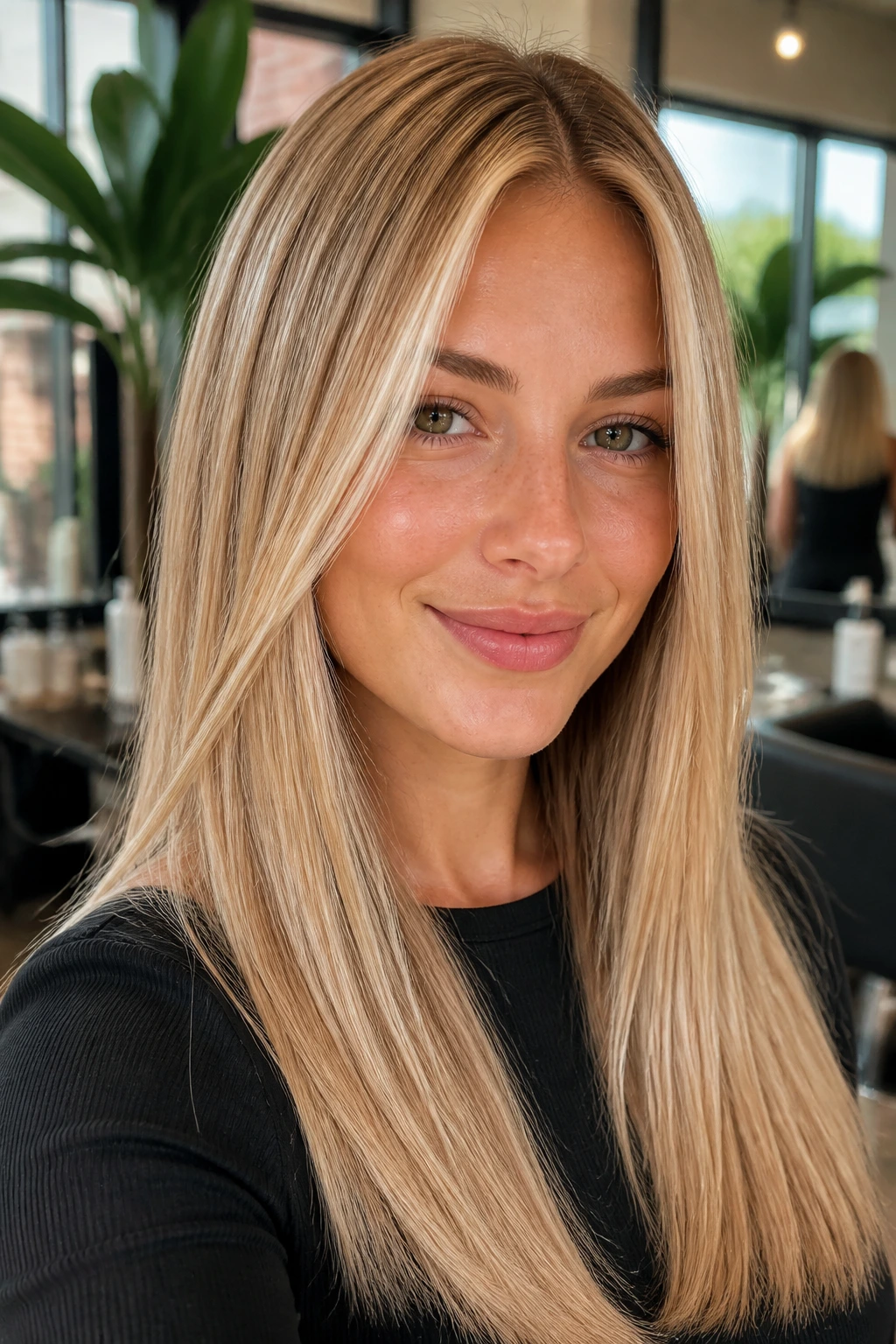
Champagne blonde is a smart move when you want blonde to feel soft instead of icy. On straight hair, that softness shows up as shine and control, which is a nice change from the overly bright blonde look that can sometimes feel harsh at the edges.
What makes it different
Compared with silver beige, champagne carries more warmth. Compared with honey blonde, it’s lighter and cleaner. That middle position is what makes it so wearable on straight strands.
The color should be painted in thin layers over a light blonde base, then toned until it reads creamy rather than yellow. Straight hair does not forgive overtoning, so the gloss has to be watched closely. A tiny bit too much ash and the color goes dull. Too much gold and it looks brassy.
For the best result, keep the roots soft and the ends bright, but not white. That combination gives the hair a polished, airy finish that looks expensive without trying to look fancy.
19. Beige-to-Icy Ombré Balayage
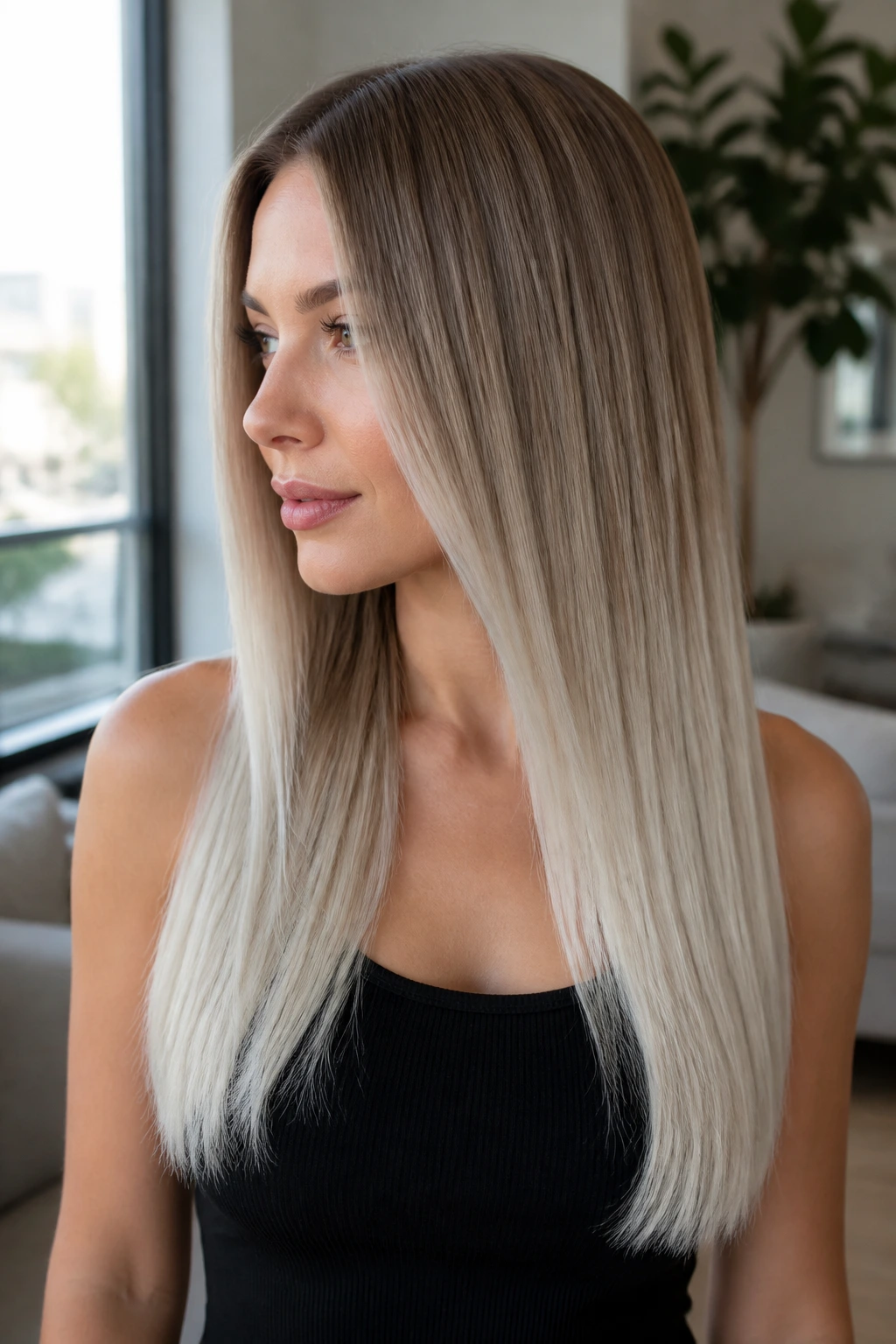
Beige fading into icy blonde gives straight hair a sharp, clean finish that still has some softness at the root. The gradient matters here. If the transition is too abrupt, it looks stripy. If it’s too blended, the icy ends lose their point.
This look works because beige holds the base together while the icy blonde delivers contrast at the bottom. Straight hair makes that fade easy to see, which is why placement needs to be disciplined. The lightest pieces belong on the lower third of the hair, with the blend starting higher only where you want movement around the face.
It’s a strong choice for longer lengths. Short hair can struggle to show the full fade, and the color may feel crowded. Long straight hair gives the ombré room to open up.
Keep in mind that icy ends need moisture. A lot of people get excited about the visual part and forget the touch part. Dry icy blonde is not a good look.
20. Glossy Espresso Balayage with Fine Caramel Threads
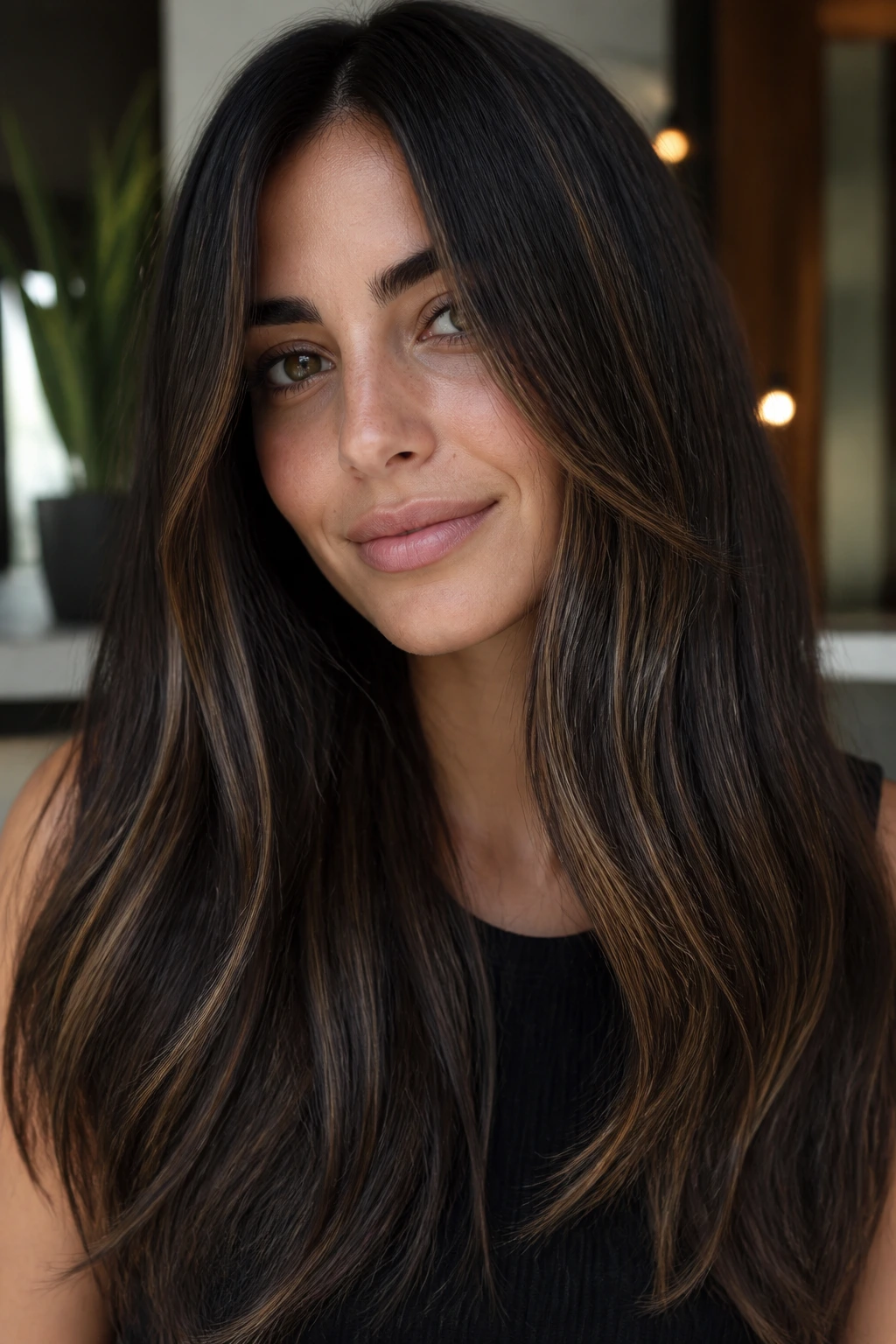
Glossy espresso with fine caramel threads is the kind of straight-hair color I keep coming back to because it works in real life. The base stays deep and rich, while the caramel pieces are so fine they look like light moving across satin rather than obvious highlights.
That fine threading is the whole point. Straight hair can show every highlight line, so smaller sections usually look better than broad, chunky ones. The caramel should be placed where the hair naturally falls around the face, over the shoulders, and through the lower mids. You want the movement to feel woven in.
This look suits almost anyone who wants dimension without losing a dark brunette identity. It’s low-maintenance compared with brighter balayage, and it ages well between salon visits. Better still, it looks good in a blunt cut or a sleek blowout, which is not true of every color choice.
If I had to pick one safe, elegant, highly wearable option for straight hair, this would be near the top. It’s calm. It’s glossy. It does its job without making a scene.
