



There is something undeniably magnetic about the combination of black or deep brown hair and rich, fiery red tones. It’s not just a hair color choice; it’s a mood. When you pull this off well, you get a look that is sophisticated, a little bit edgy, and entirely personalized. The trick—and the reason so many people struggle with this—is the placement. A bad balayage job on dark hair looks like distinct stripes of paint, but a great one? It looks like your hair caught fire in the best possible way.
You are not just asking for red hair. You are asking for a masterclass in dimension. Because brown and black bases are dark by nature, red pigments have to work twice as hard to show up without looking brassy or orange. We are looking for depth, movement, and that specific, glossy finish that makes dark hair look expensive. If you’ve been scrolling through inspiration photos wondering why yours might not look the same when you leave the salon, remember that technique—hand-painted placement and the right toner—is everything.
Let’s be honest about the upkeep before we get into the styles. Red fades. It is the most beautiful, most temperamental color in the spectrum. If you go for the vibrant, electric shades, you need to commit to cold water washes, sulfate-free shampoos, and color-depositing masks. If you are not ready for that level of maintenance, stick to the deeper, richer, brownish-reds. They are much more forgiving. Now, let’s look at the specific ways you can wear this look.
1. Classic Black Cherry Blend
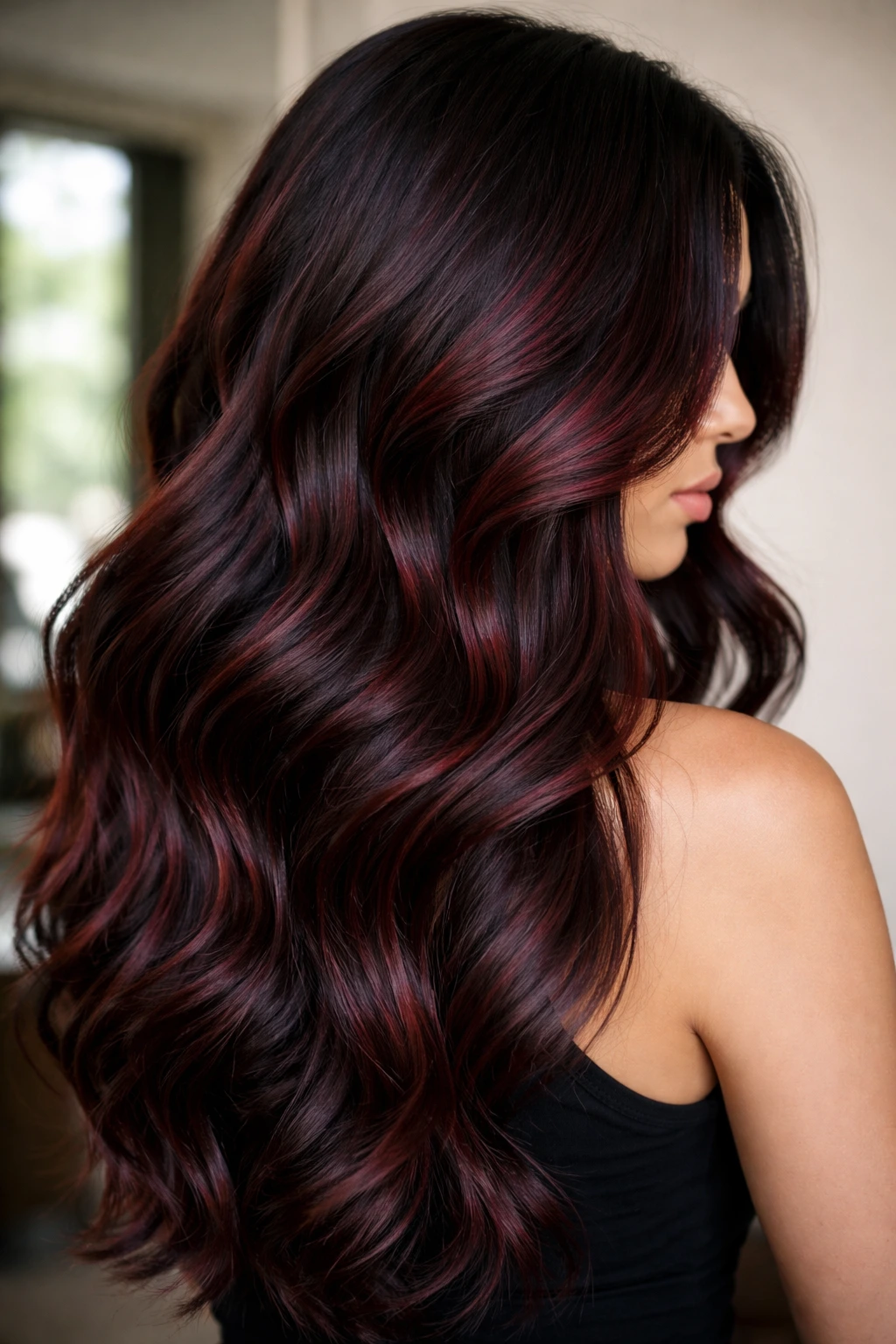
This is the entry-level classic for a reason. You are keeping your natural dark base—or your deep brunette gloss—and painting in those moody, cool-toned red ribbons. Think of the color of a dark cherry, not a bright fire engine. It’s subtle, almost invisible in low light, and then it catches the sun and looks incredibly vibrant.
Why It Works for Beginners
The reason this specific blend is a favorite is the lack of harsh lines. A skilled colorist will paint the red starting a few inches down from your roots, leaving the top section untouched. This eliminates the “grow-out” anxiety. You don’t have to stress about root touch-ups every four weeks because your natural base is doing the heavy lifting.
- Color Profile: Cool-toned red, think burgundy or dark plum.
- Best Base: Natural level 2 or 3 brunette.
- Maintenance: Low. Just a gloss treatment every six weeks.
Pro tip: Ask for a “shadow root” if you find the blend looks too stark. It softens the transition from your dark natural color to the red-tinted sections.
2. Deep Burgundy Face-Framing
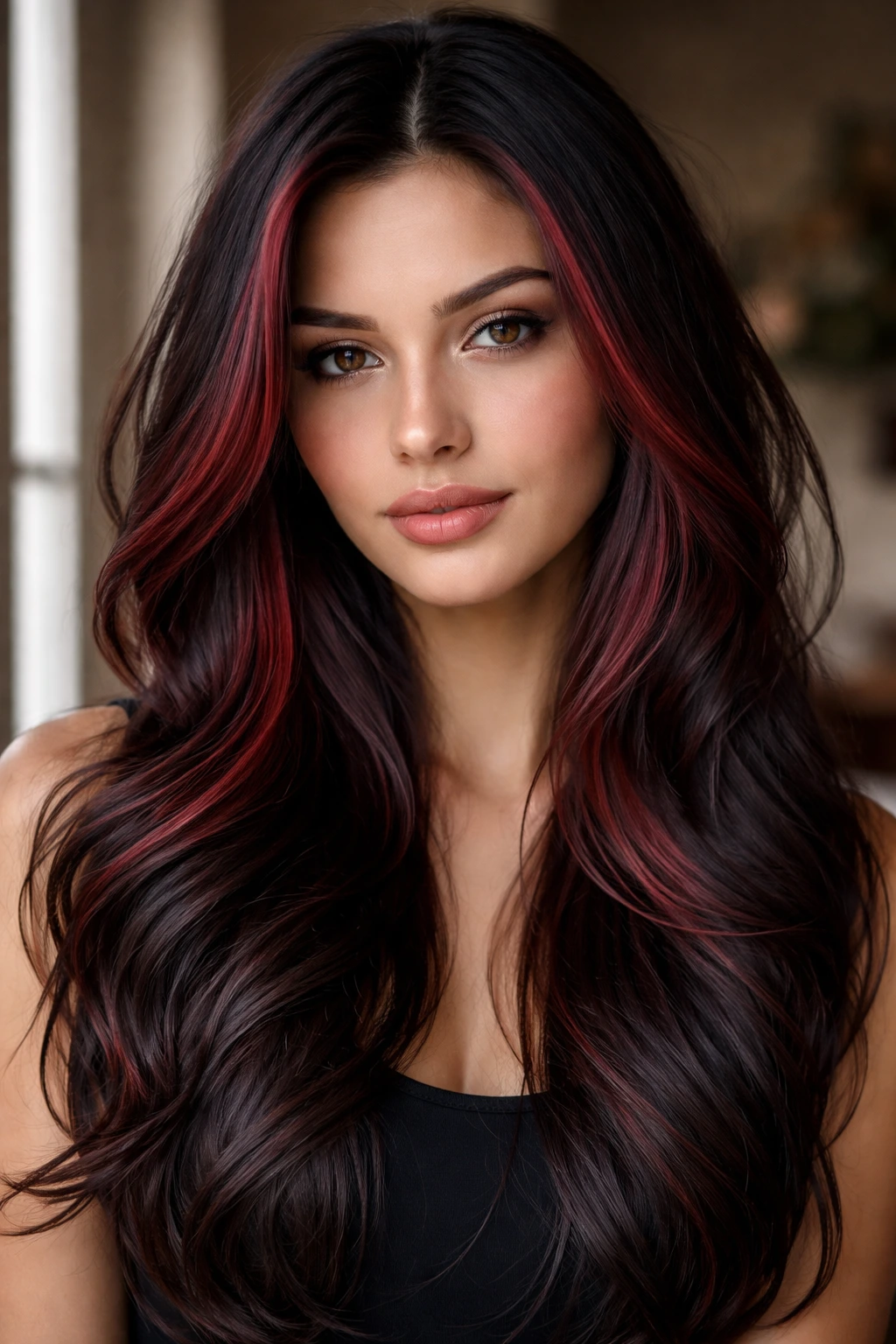
Focusing the color around your face is the smartest way to change your look without dyeing your entire head. When you bring that deep, rich burgundy right to the front, you brighten your complexion instantly. It draws the eye inward and highlights your features.
I’ve seen this done where the back of the hair is kept mostly dark, save for a few stray ribbons of color. It creates a stunning, intentional contrast. You aren’t just wearing color; you are using it to frame your face like a portrait. This is perfect for someone who is nervous about a full-head transformation but wants a significant change.
3. Copper-Red Tips for Brown Hair
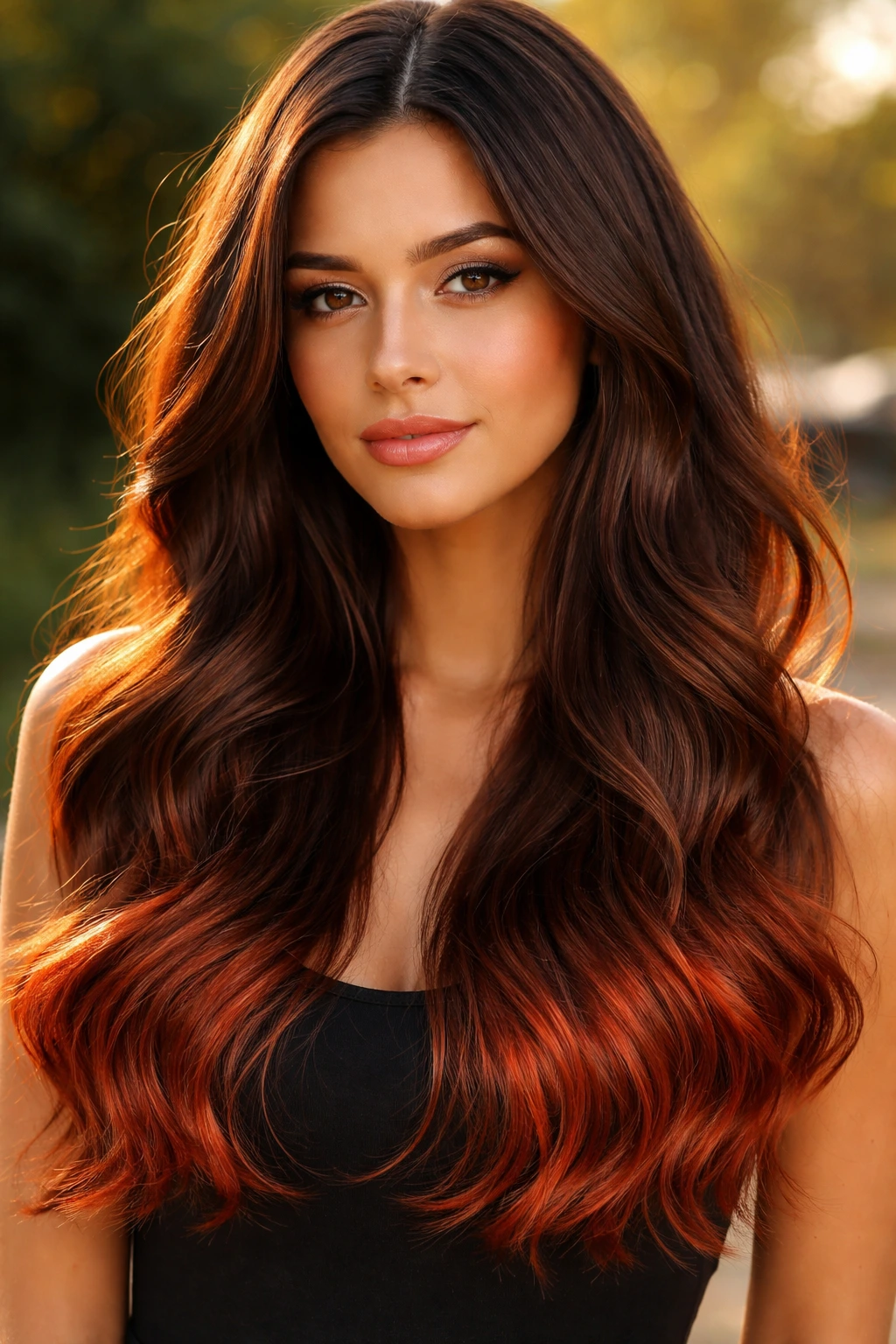
Copper is the warmer cousin to the cool cherry reds. If your skin has yellow or olive undertones, cool reds might make you look washed out. Copper is your best friend. It brings out the warmth in your brown hair, making the whole head look lit from within.
Going for just the tips—the bottom three or four inches of your hair—is a modern take on the classic ombré. It’s much softer than the harsh dip-dye we saw years ago. The colorist should “feather” the paint upward, so the copper diffuses into your natural brown seamlessly. It creates a “lived-in” aesthetic that looks like you spent the summer on the beach, even if you’ve been at a desk for months.
4. Espresso Base with Crimson Highlights
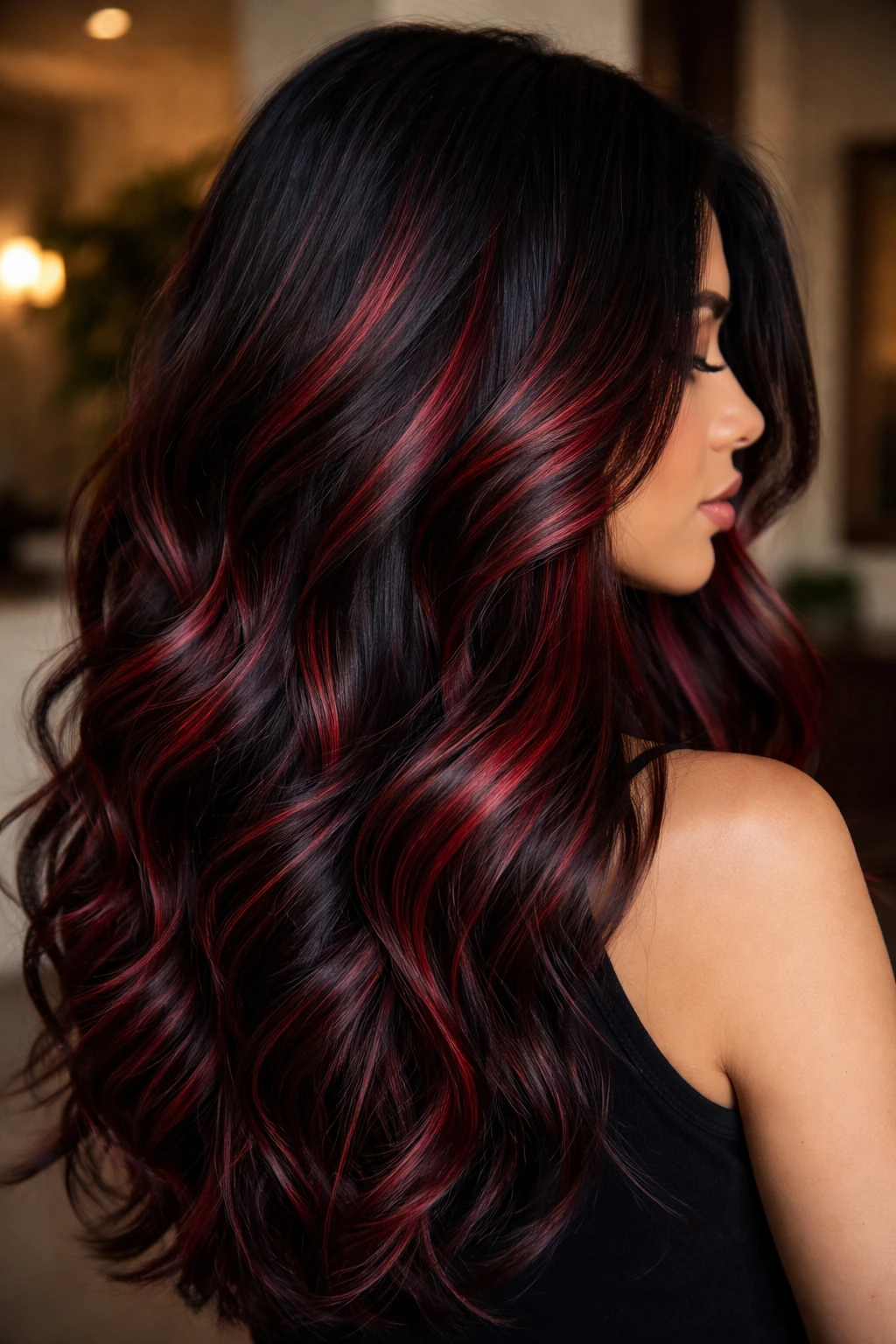
There is a specific kind of intensity that comes from pairing a near-black espresso base with distinct, sharp crimson highlights. This isn’t about blending; it’s about contrast. The red needs to be placed in intentional, distinct slices.
When you walk into the salon, ask for “babylights” or fine-woven slices. You don’t want chunky, 90s-style highlights here. The red should look like a secret you are revealing only when the light hits your hair at a specific angle. It gives the hair a metallic, polished look that is incredibly chic for formal events or just daily wear.
5. Subtle Wine Tones
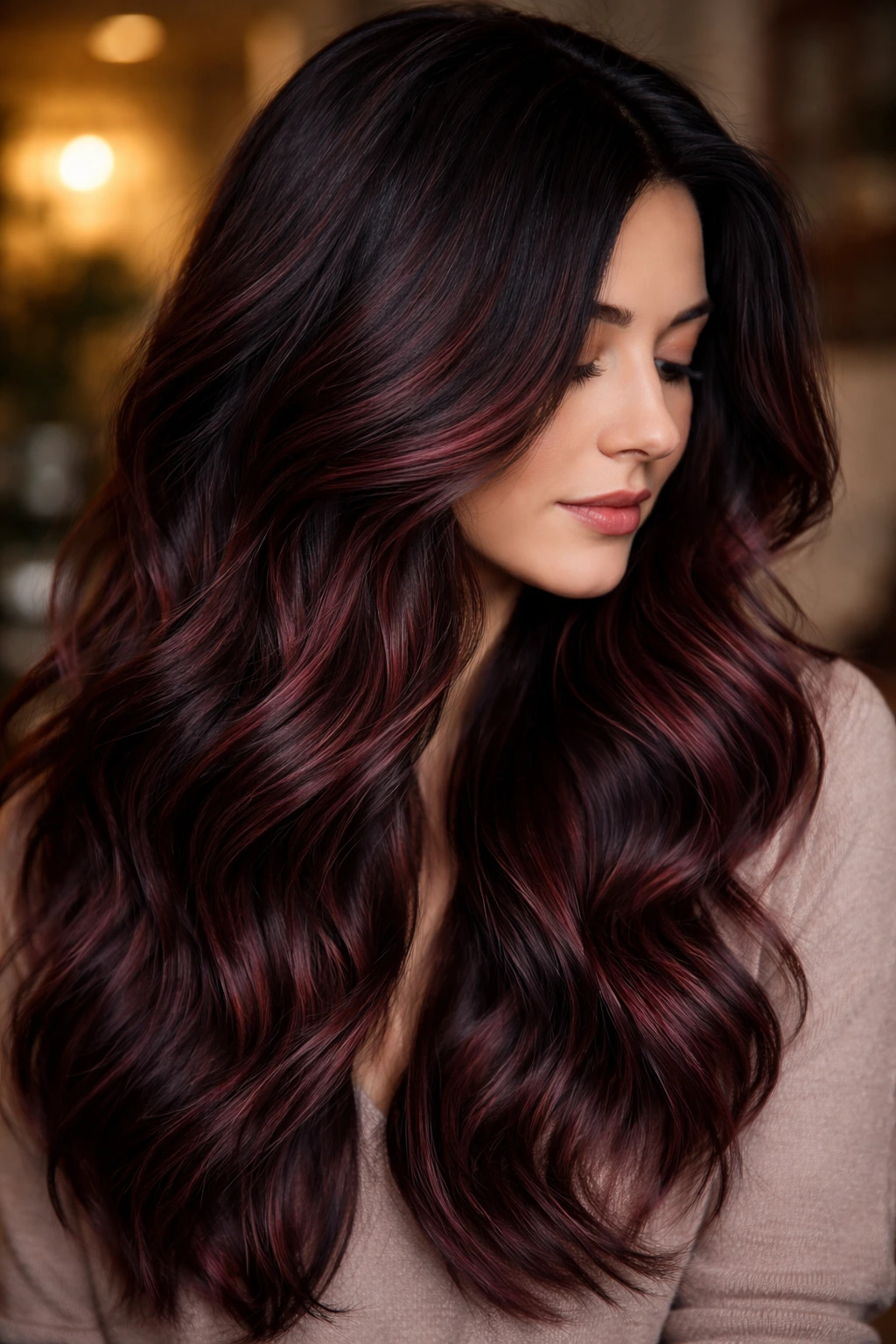
Sometimes, the best hair color is the one people can’t quite put their finger on. They know your hair looks healthy, rich, and dimensional, but they aren’t sure if it’s dyed or natural. That is the magic of subtle wine tones.
You are depositing a reddish-purple hue over a dark brown base. It isn’t a “highlight” in the traditional sense; it’s a glaze. Because it’s so subtle, it works on almost every hair texture. If you have curly hair, these tones catch the light in the bends of your coils. If you have stick-straight hair, it gives you that glass-hair sheen that is so hard to achieve with dark pigments.
6. Bold Merlot Ribbon Highlights
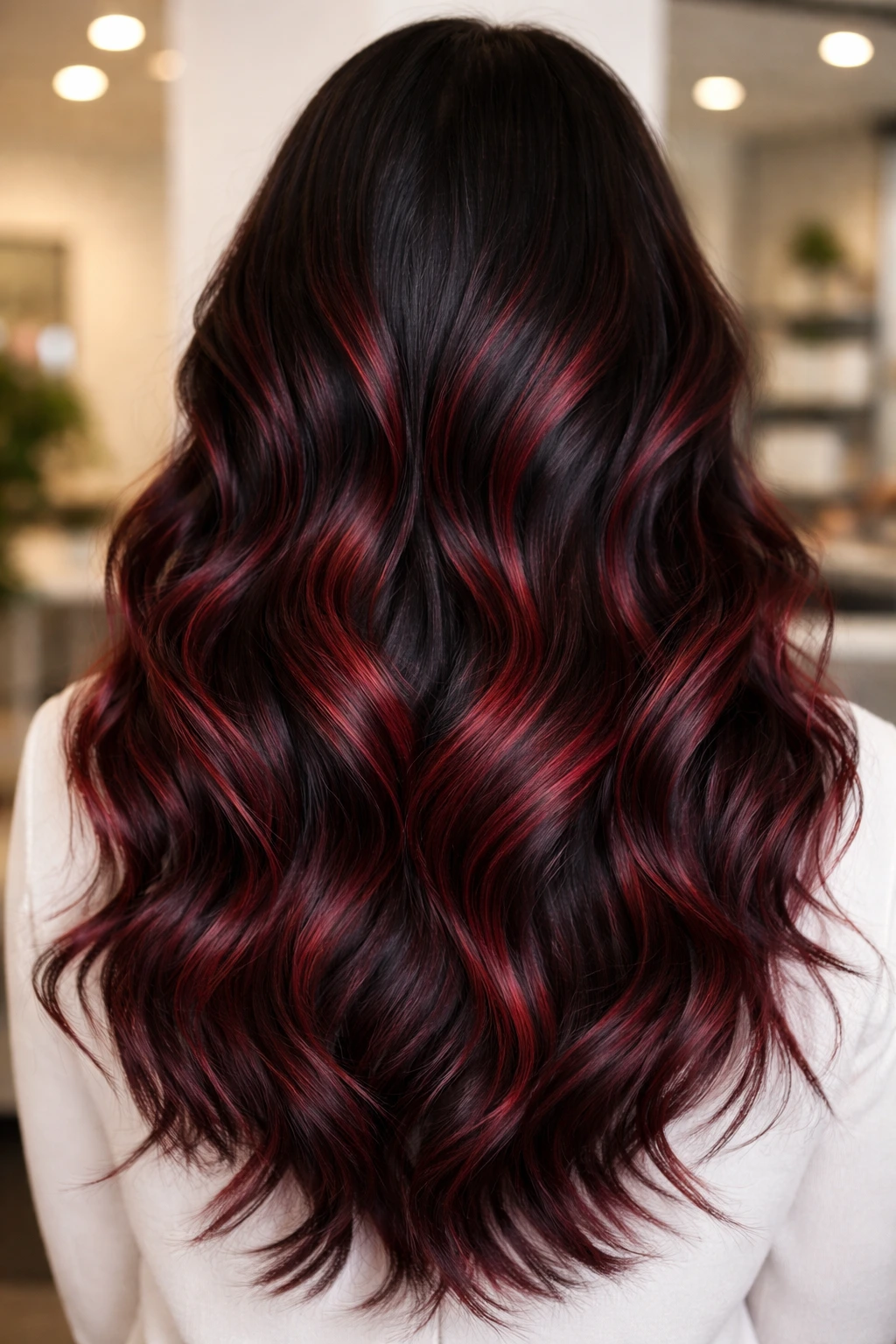
Unlike the subtle wine tones, this look is unapologetic. We are talking about thick, luscious ribbons of merlot red painted through your hair. These highlights need to be significant enough to be seen from a distance but placed well enough that they don’t look like zebra stripes.
The secret here is the placement. Your stylist should be painting these in “V” shapes—the classic balayage technique—ensuring the color is concentrated at the ends and thinner toward the top. This keeps it looking like a high-end salon color rather than a box dye experiment.
7. Mahogany Balayage for Natural Brunettes
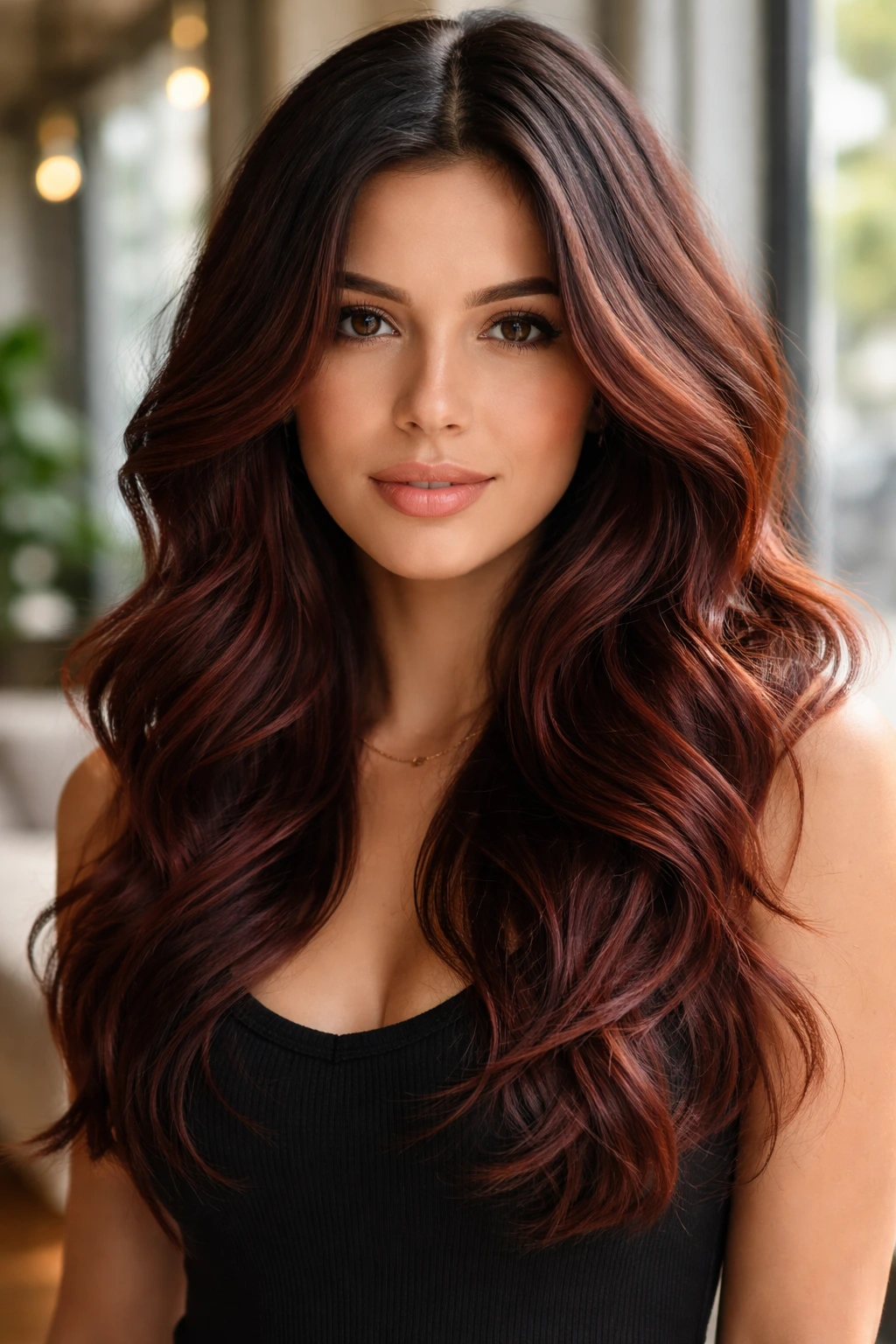
Mahogany is that perfect middle ground between brown and red. It has enough brown to look natural, but enough red to look intentional. If you have dark hair and don’t want to deal with the harshness of bleach, mahogany is the easiest path.
Key Factors for Mahogany
- Warmth: It leans toward chestnut and deep spice tones.
- Blend: It usually requires less lifting than vibrant reds, meaning less damage.
- Versatility: It complements almost every skin tone without clashing.
What to watch for: Ask your colorist for a “warm mahogany” if you want to emphasize the copper, or a “cool mahogany” if you want a more plum-like finish. Both are stunning.
8. Raspberry Melt on Dark Brown
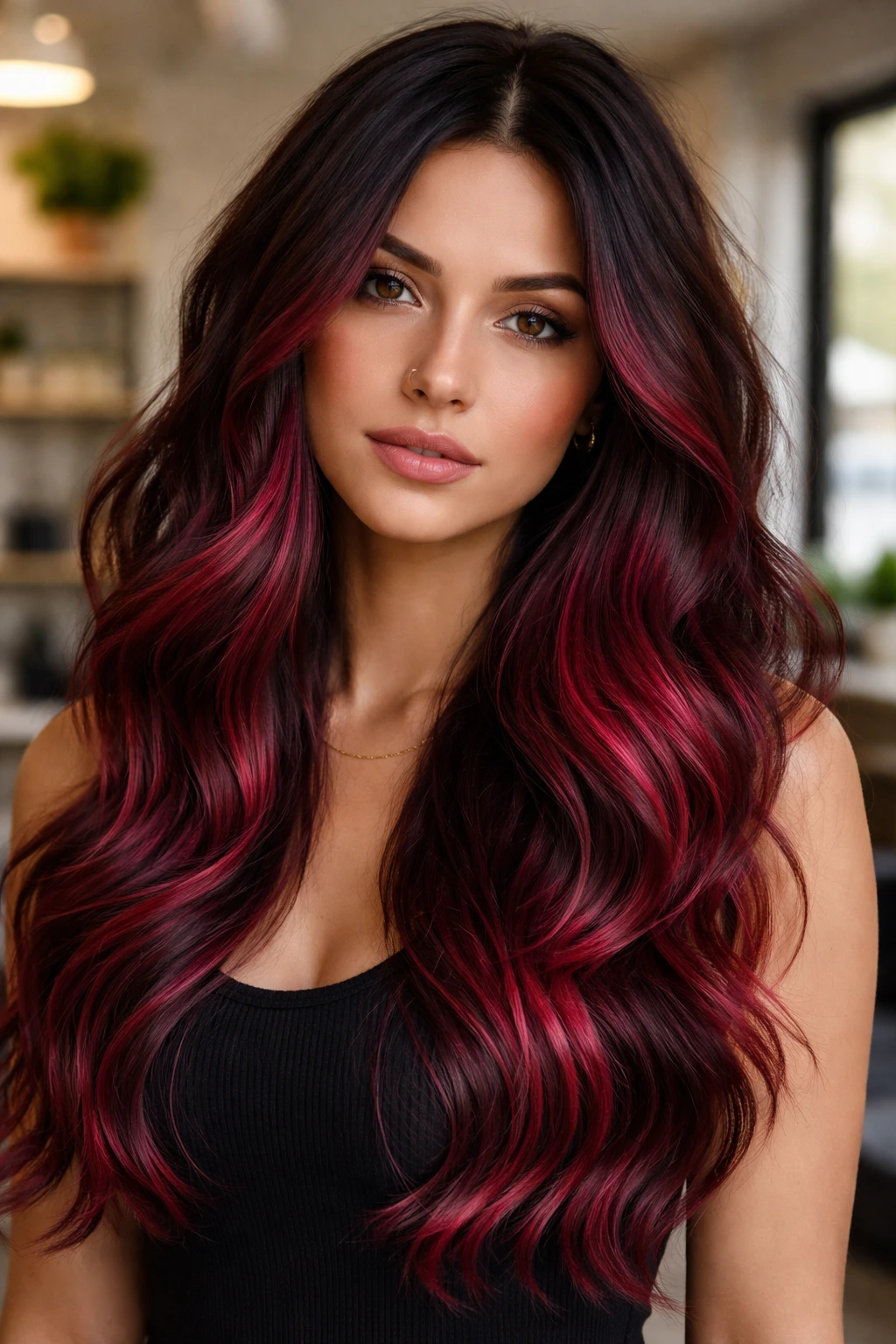
Think of a raspberry sorbet—pinkish-red, vivid, and a little bit fun. This is for the person who wants to be noticed. On a dark brown base, a raspberry melt creates a high-contrast look that feels youthful and fresh.
The “melt” part of the name is critical. It implies that the colors are layered and blended so perfectly that you cannot see where the brown stops and the raspberry begins. This takes time in the chair. It is not a two-hour service. If a stylist tells you they can do this in an hour, walk out. A proper melt requires patient, precise application.
9. Soft Auburn Face-Framing
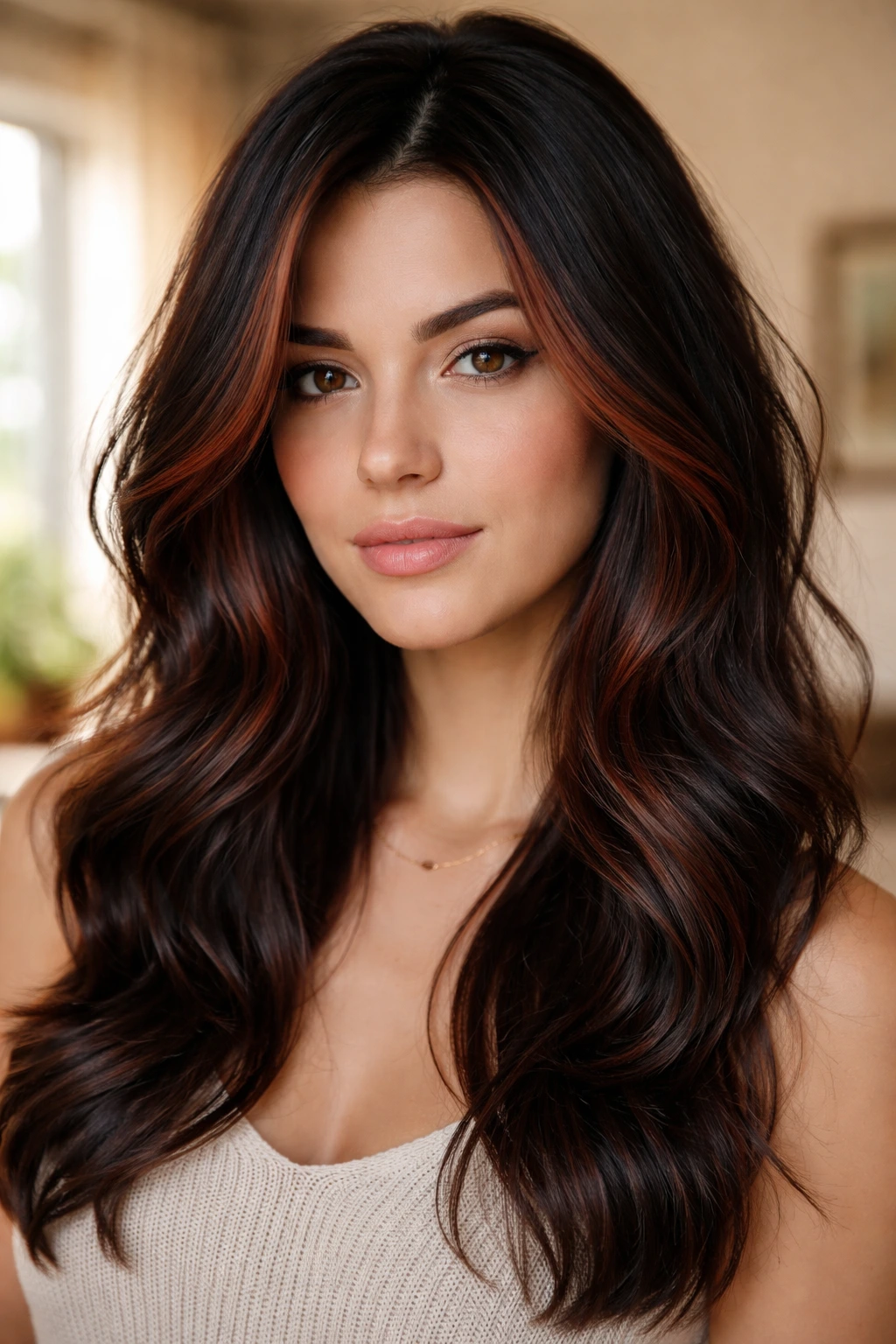
Auburn is a classic. It’s warm, earthy, and inviting. When you limit this to just the front sections of your hair, you get the benefits of a “brightening” effect without the commitment of coloring the whole head.
I love this look paired with long, layered haircuts. The movement of the layers allows the auburn pieces to peek through the rest of the dark hair, creating a very dynamic, natural-looking dimension. It’s the kind of look that makes people ask, “Is that your natural color?” because it feels so grounded.
10. Midnight Black to Fire Engine Red Fade
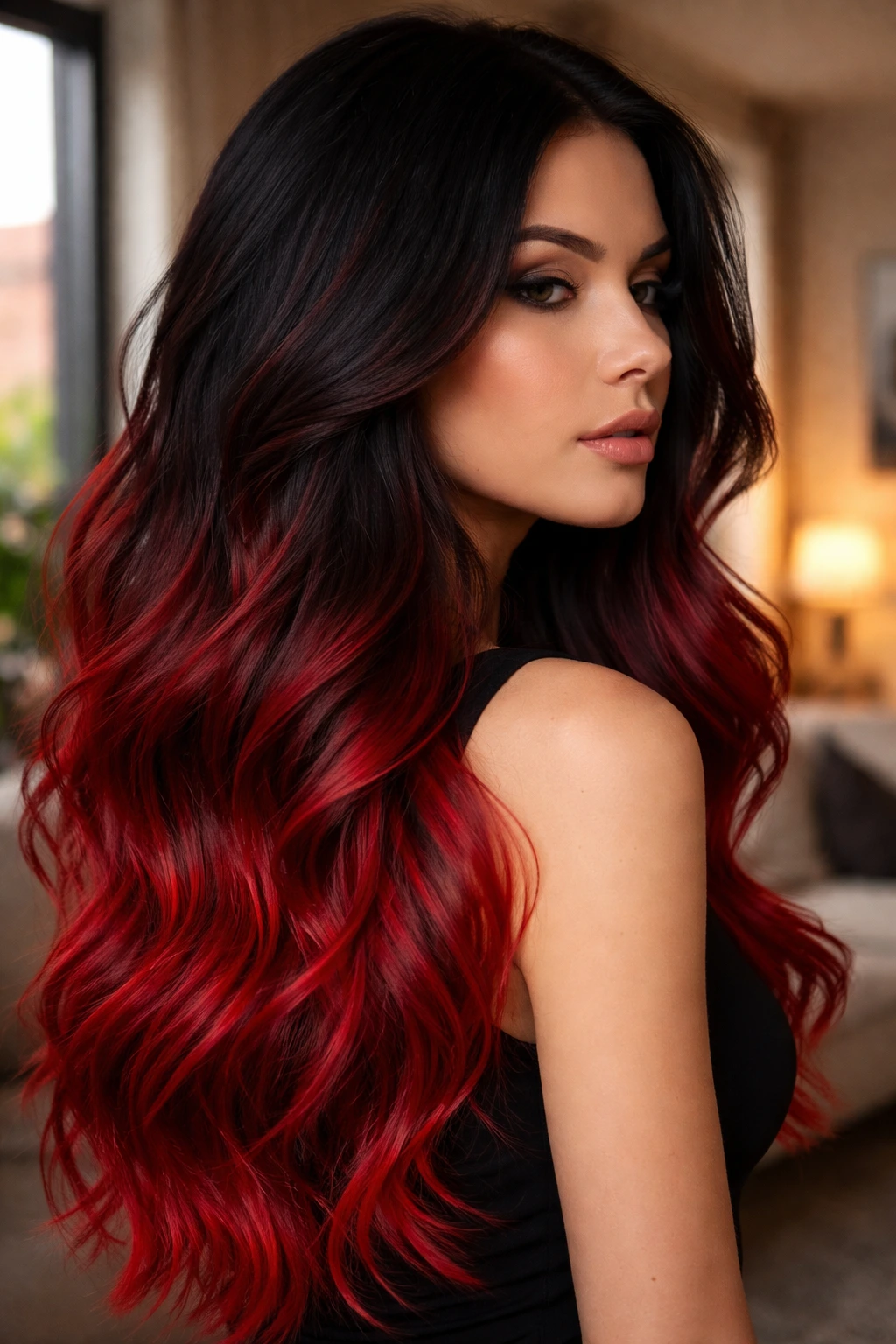
This is the boldest entry on this list. We are talking about a true ombré fade. The roots are deep, dark midnight black, and the bottom half transitions into a vivid, intense fire-engine red.
This look demands confidence. It also demands a lot of hair health. To get that level of brightness on dark hair, you have to lift the bottom sections significantly. You are essentially bleaching the hair before depositing the red. This is why I always recommend getting a bond-building treatment—like Olaplex—added to the service to keep your ends from snapping off.
11. Dark Chocolate with Cherry Red Streaks
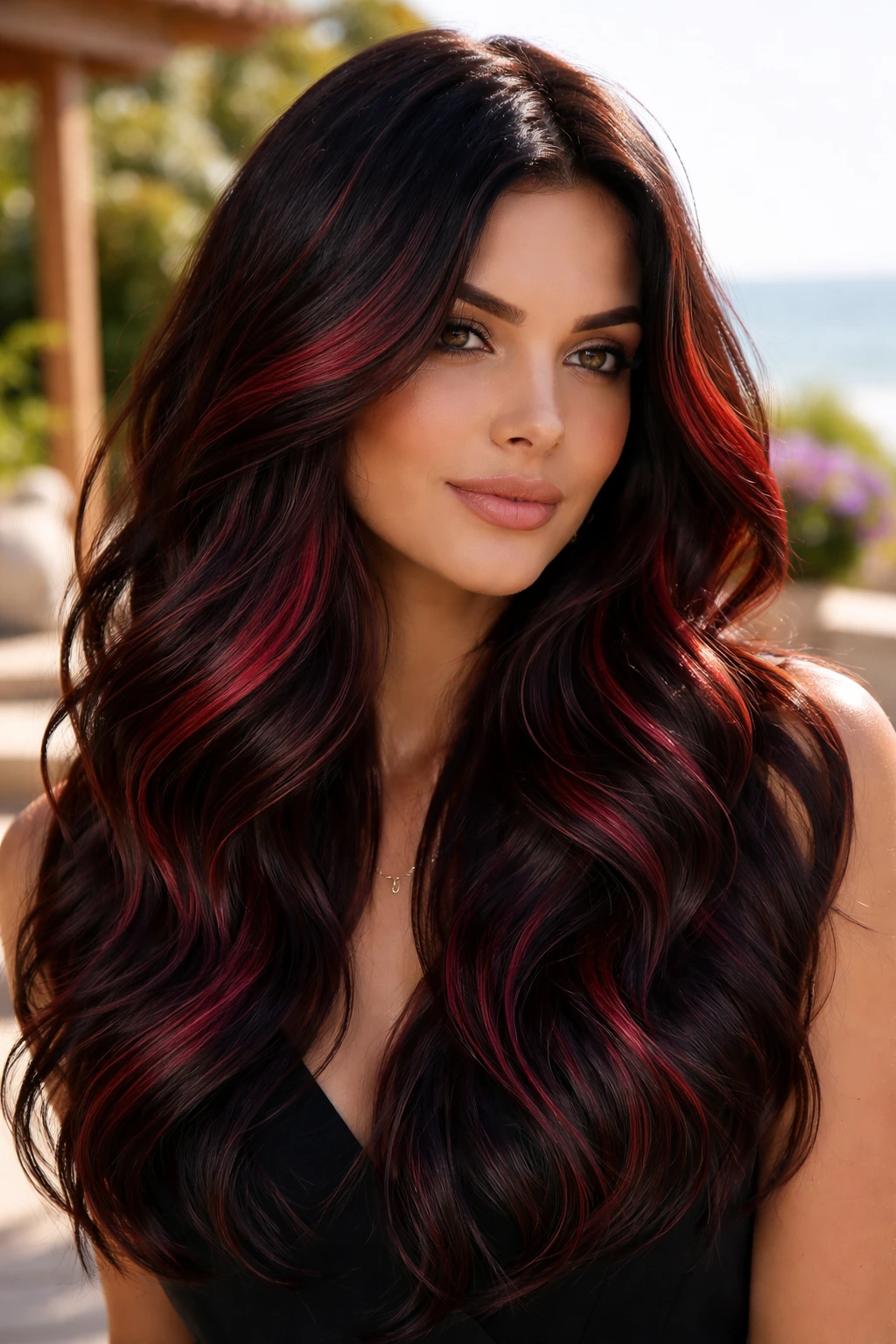
Dark chocolate and cherries go together in a dessert, and they belong together in your hair. The base is a deep, rich brown—think 70% cocoa—and the red streaks are vivid, cool-toned cherry.
How to Style This
- Waves: The best way to show off this combo is with loose, beachy waves. The movement mixes the two colors, creating a beautiful marbling effect.
- Straight: If you wear it straight, the streaks look sharp and precise.
Pro tip: Use a light hair oil to finish your style. It makes the “chocolate” look shiny and helps the “cherry” look vibrant instead of dusty.
12. Natural-Looking Cinnamon-Red Balayage
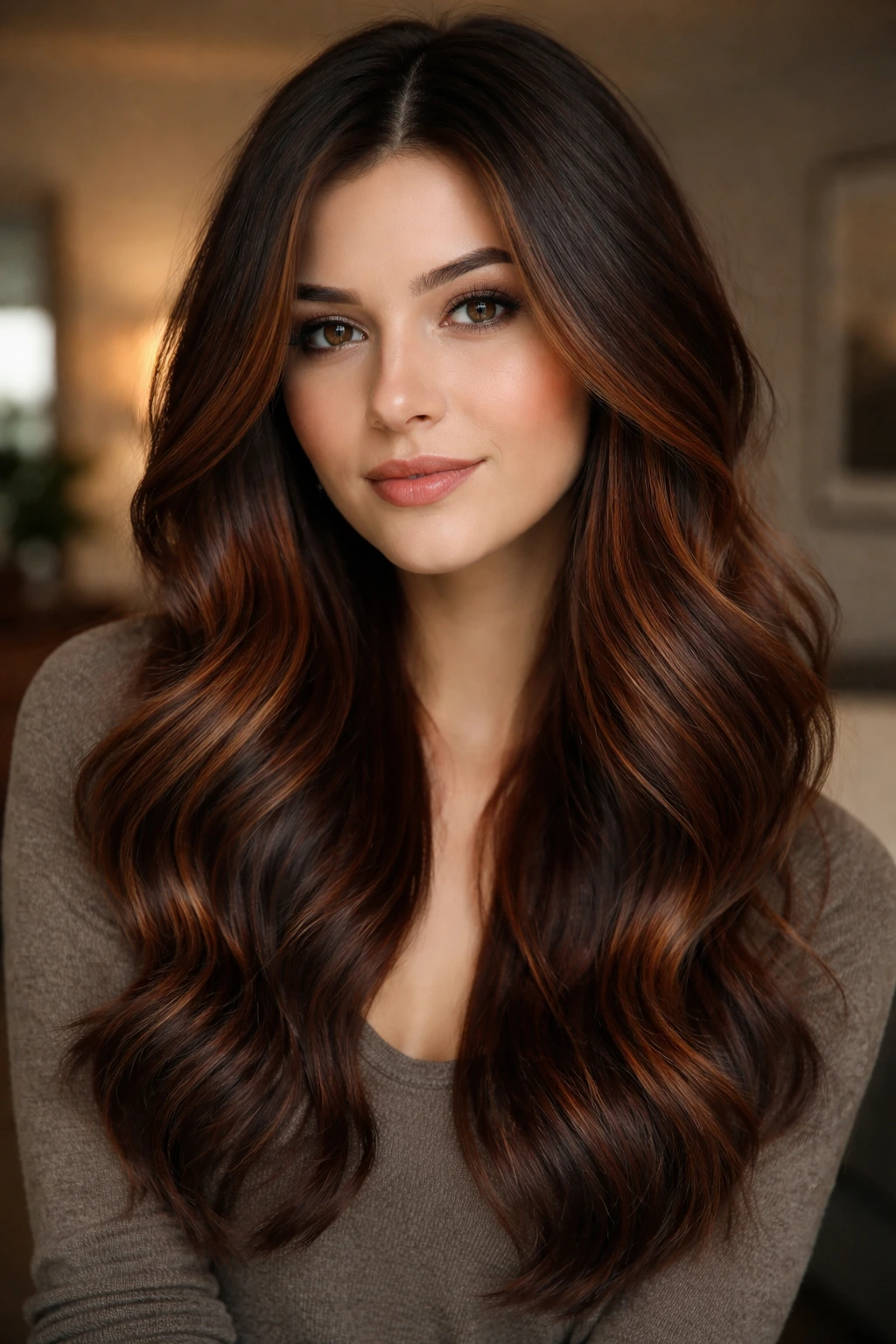
Cinnamon is a spicy, muted red that looks incredible against brown hair. It isn’t loud. It isn’t aggressive. It’s just warm. If you are a brunette who wants to dip your toes into the red pool without diving in, start with cinnamon.
It’s subtle enough to look natural but distinct enough to completely change your vibe. It warms up your face and makes brown eyes pop. This is a very low-maintenance choice because as it fades, it just looks like your natural hair has a bit more warmth to it.
13. Intense Ruby Red Dip-Dye Effect
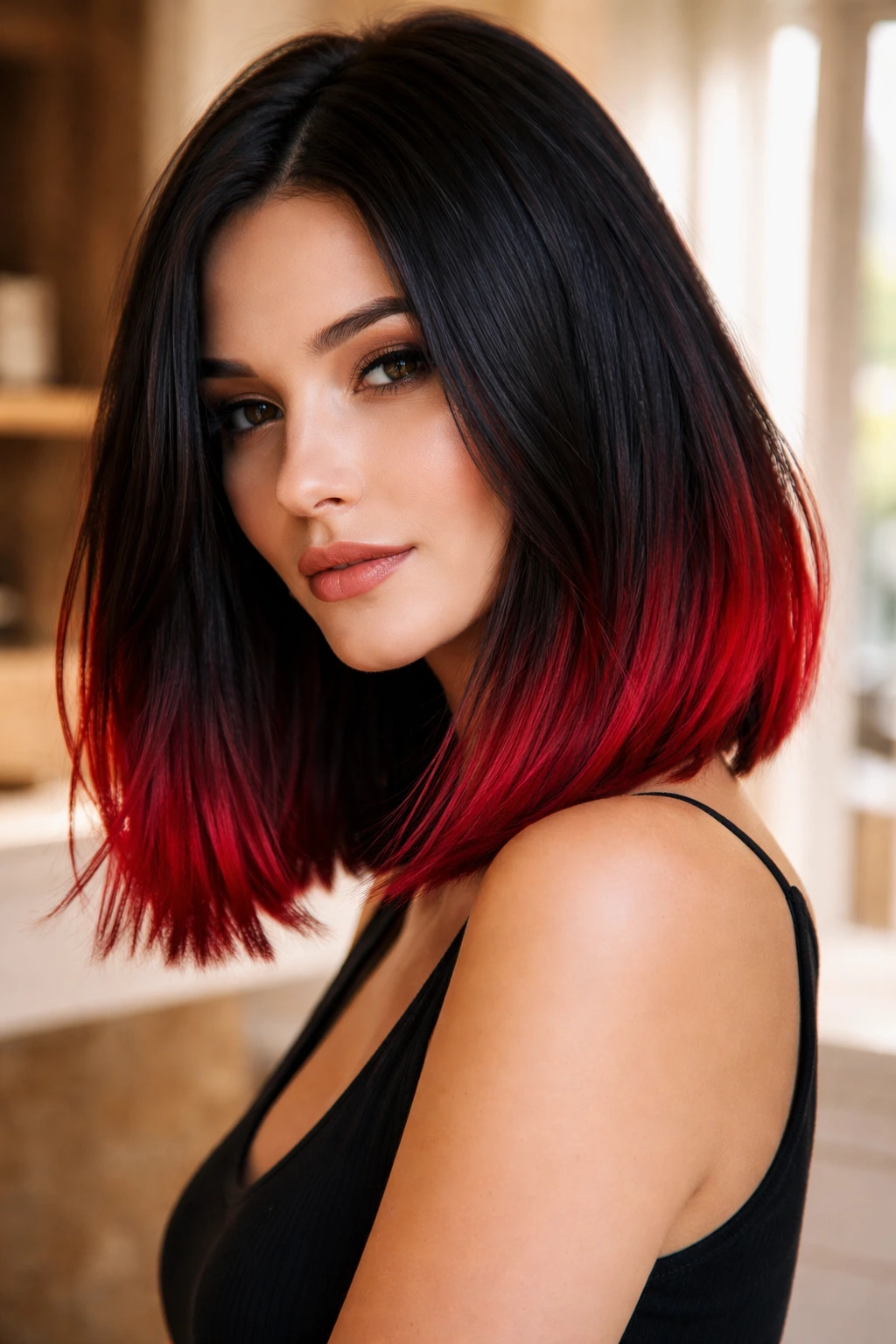
This is a modern interpretation of the “dipped ends” trend. Instead of a hard line, the ruby red is concentrated at the very ends of your hair, perhaps extending up about three or four inches.
The color should be intense—like a gemstone. This looks fantastic on blunt cuts, such as a long bob or a lob. The blunt line at the bottom showcases the saturated red color. It’s a clean, graphic look that feels intentional and artistic.
14. Voluminous Curls with Deep Plum-Red
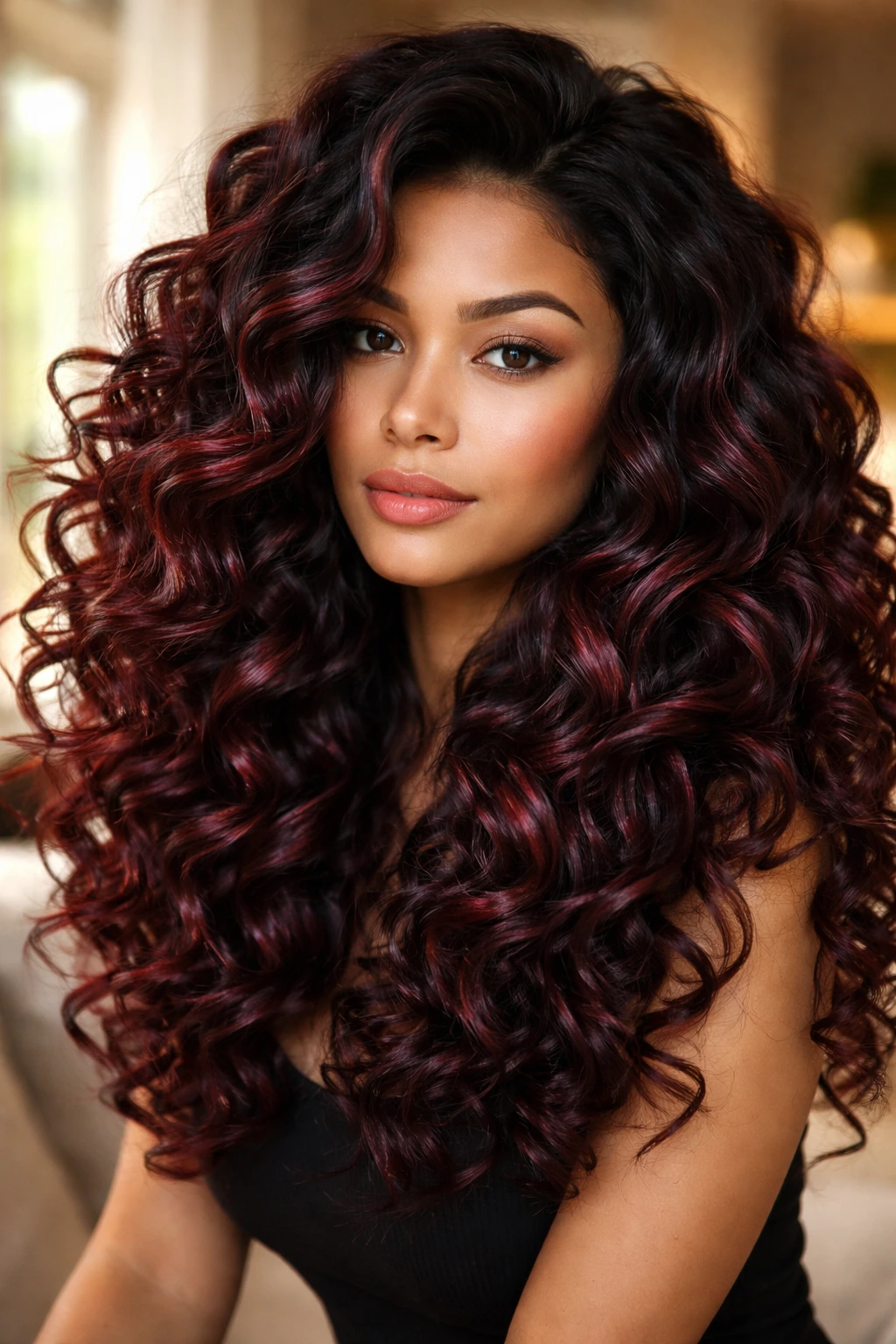
If you have naturally curly or textured hair, you have a distinct advantage: you can carry deeper, moodier colors better than anyone. Plum-red is a gorgeous, sophisticated color that doesn’t scream for attention but definitely commands it.
When painted as a balayage, the plum-red accents catch the spirals of your curls. Because curls create so much natural dimension, you don’t need a crazy amount of highlights. You just need enough to define the shape and volume of your hair. This look feels very expensive and well-thought-out.
15. Face-Framing Money Piece in Vibrant Red
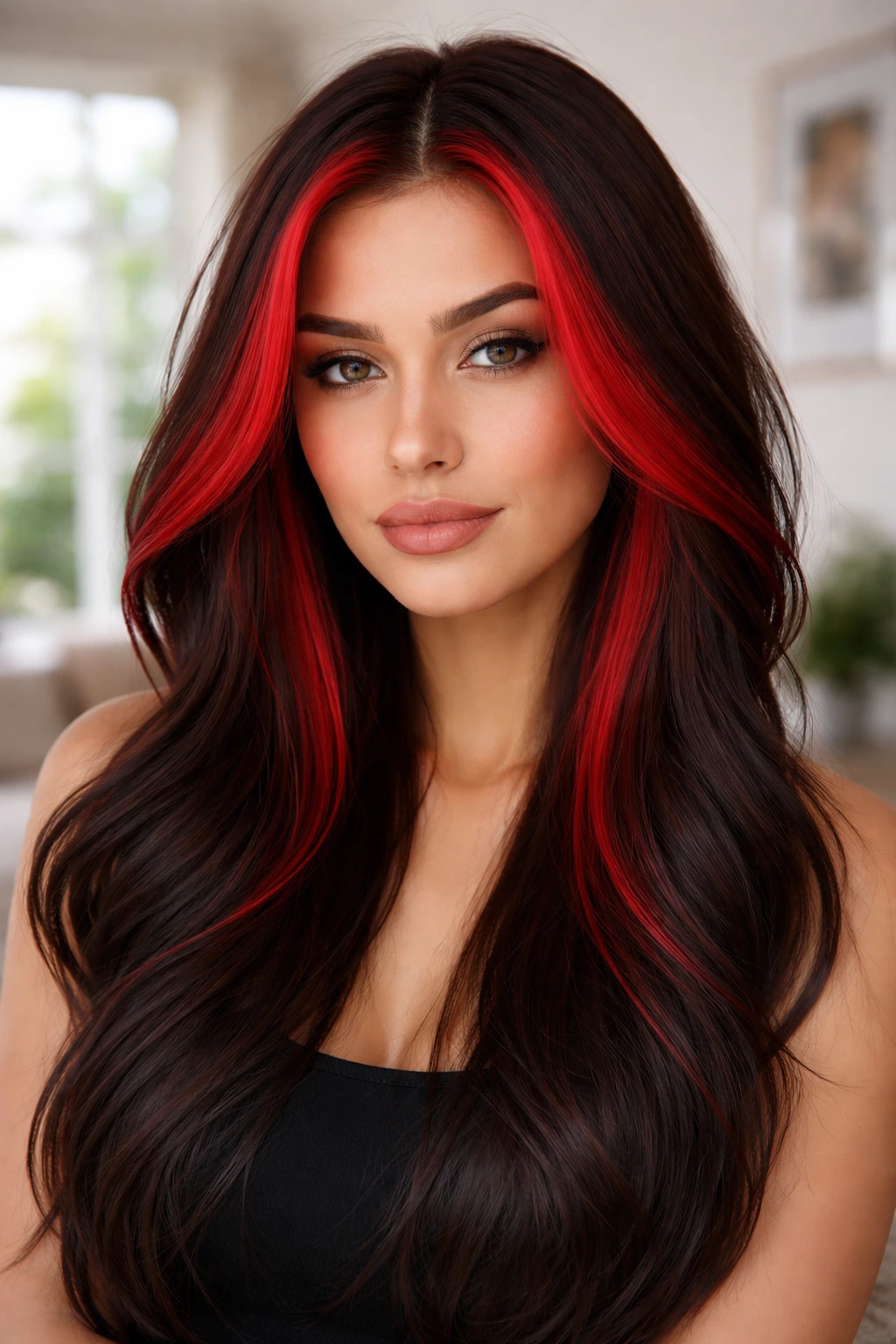
The “money piece”—the two thick, bold streaks of color framing the face—isn’t going anywhere. While we often see this done in blonde, doing it in a vibrant, saturated red is a total power move.
It instantly lights up your face and acts as the focal point of your entire look. The rest of the hair can stay a solid, dark chocolate brown, providing the perfect canvas for those red streaks. It’s a high-impact, low-effort style if you already have dark hair, as you only need to color the front.
16. Natural Brown Roots with Subtle Red Undertones
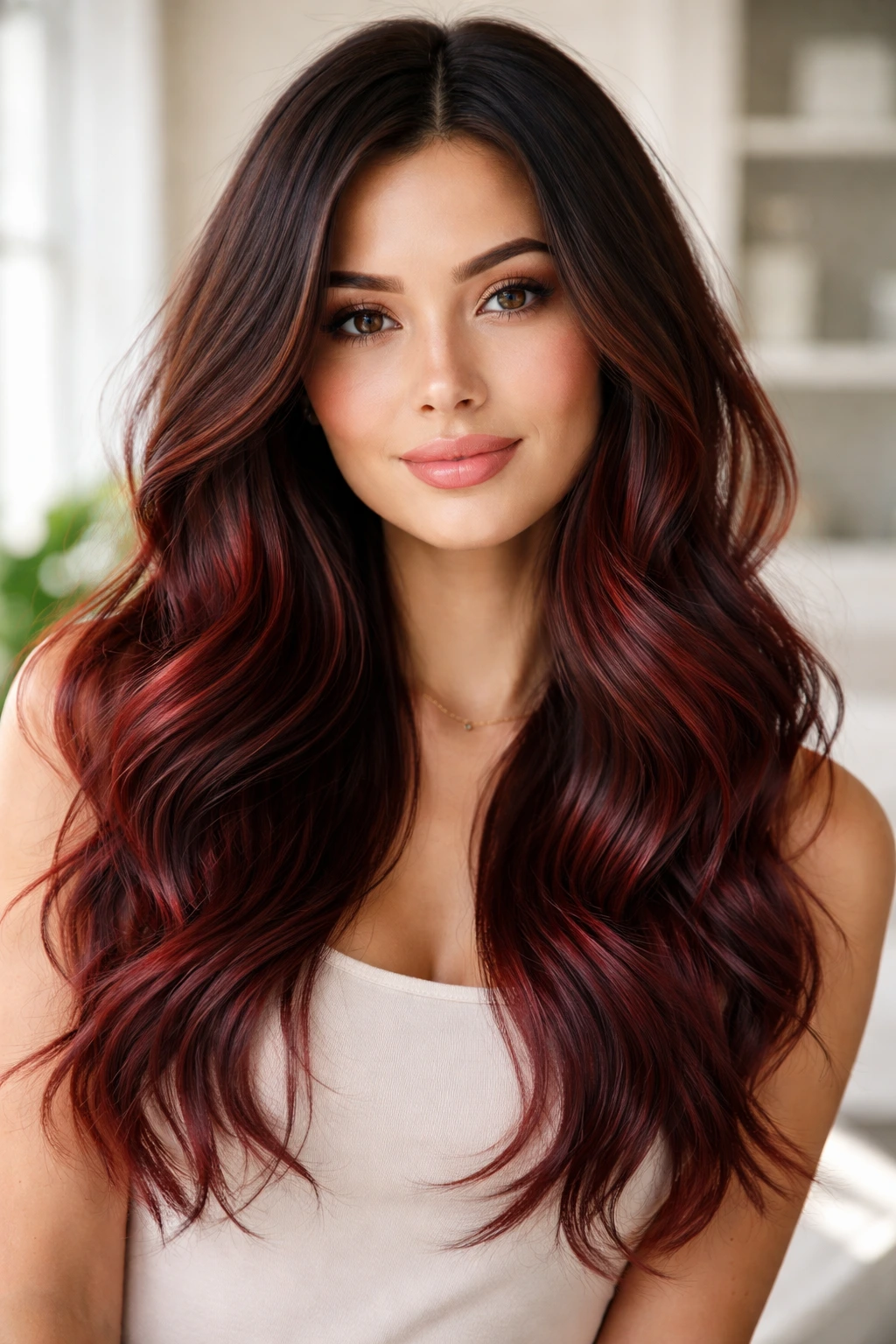
This is for the person who hates the “dyed” look. You aren’t getting highlights; you are getting a global color that shifts under the light. Your roots remain your natural dark brown, and the rest of your hair is glazed with a subtle red pigment.
It’s like looking at a dark brunette through a red filter. It’s incredibly glossy and healthy-looking. This is also the most hair-friendly option, as it requires the least amount of bleaching or lifting.
17. Electric Red Peekaboo Balayage
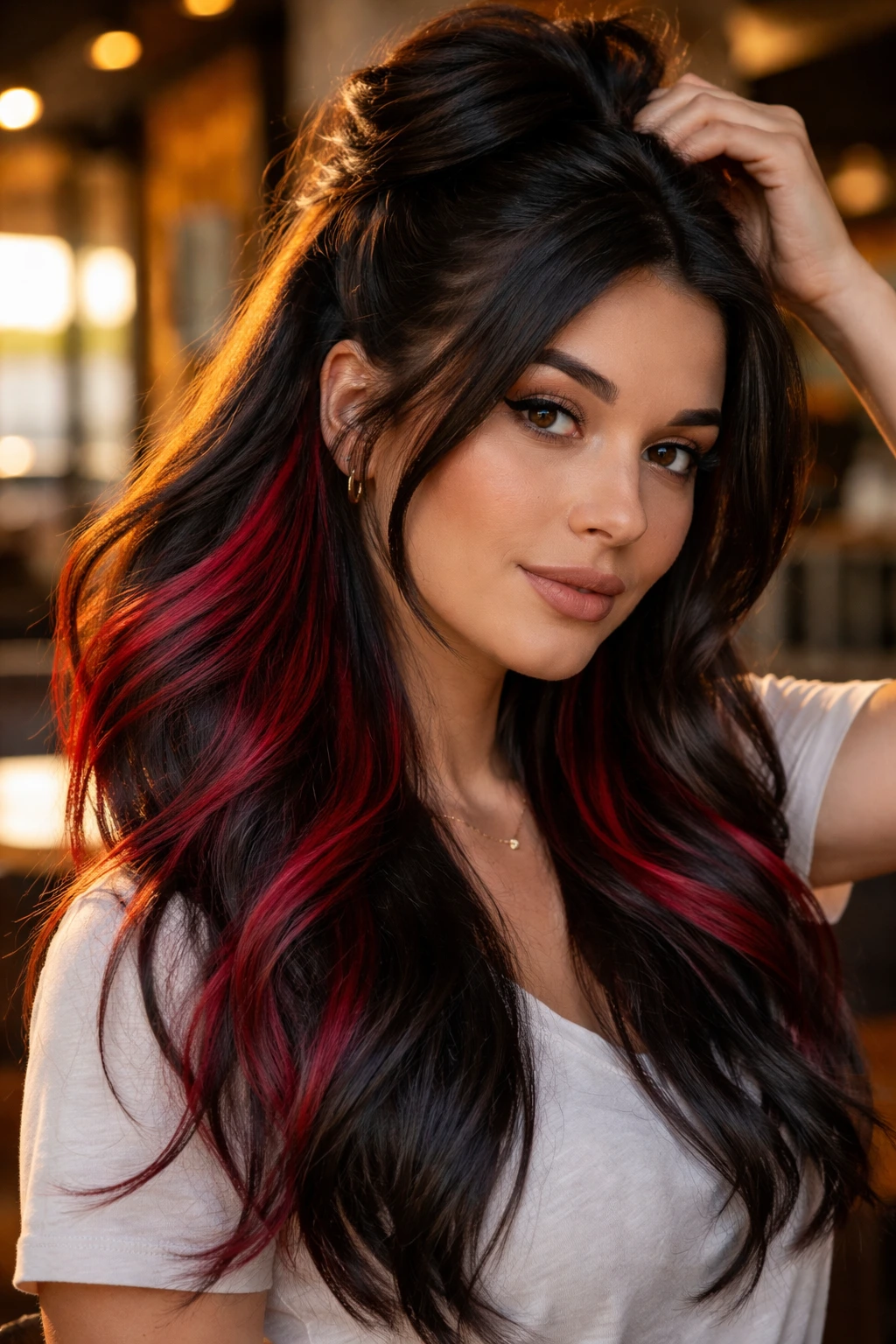
Peekaboos are fun because they are hidden until you move. The red is painted on the underneath layers, while the top layer remains dark brown or black.
The Best Ways to Show It Off
- Half-Up, Half-Down: This is the ultimate peekaboo style. It exposes the red layers while keeping the dark hair on top.
- Braids: A fishtail or Dutch braid will mix the red and brown colors, creating a really cool, intricate look.
Maintenance Note: Because these are on the bottom, they often rub against your clothes or collars. Make sure to use a good leave-in conditioner to prevent the ends from getting dry and tangling.
18. Dark Mocha with Strawberry-Red Accents
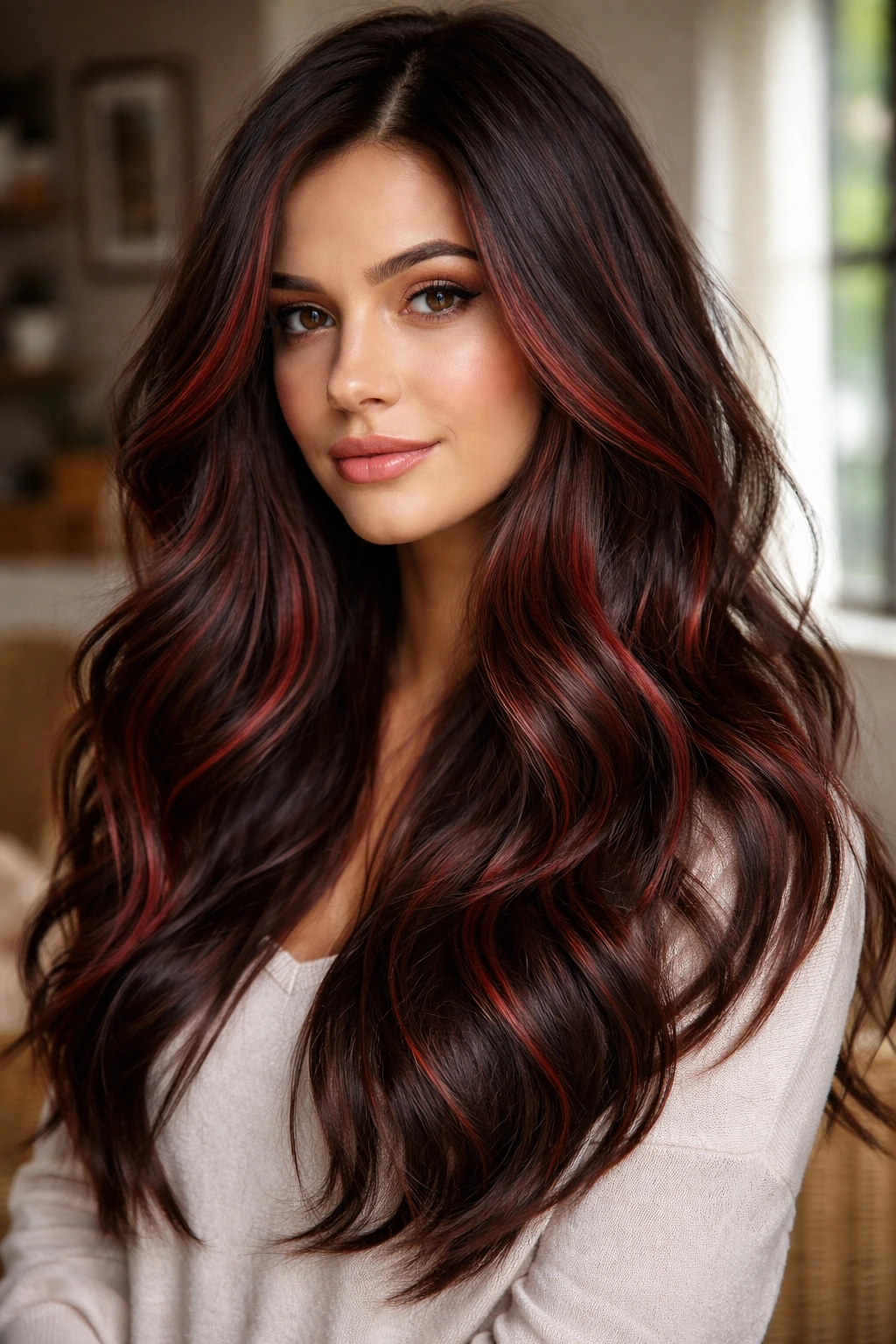
Strawberry red is usually associated with blondes, but hear me out—it works on brunettes too, when it’s done as an accent. We aren’t talking about a solid block of color; we are talking about thin, delicate slivers of strawberry red woven into a dark mocha base.
It gives the hair a “sun-kissed” effect that is very soft and romantic. It’s a lighter, airier version of red balayage that feels perfect for warmer months or if you have a lighter complexion.
19. Blended Burgundy and Brown Layers
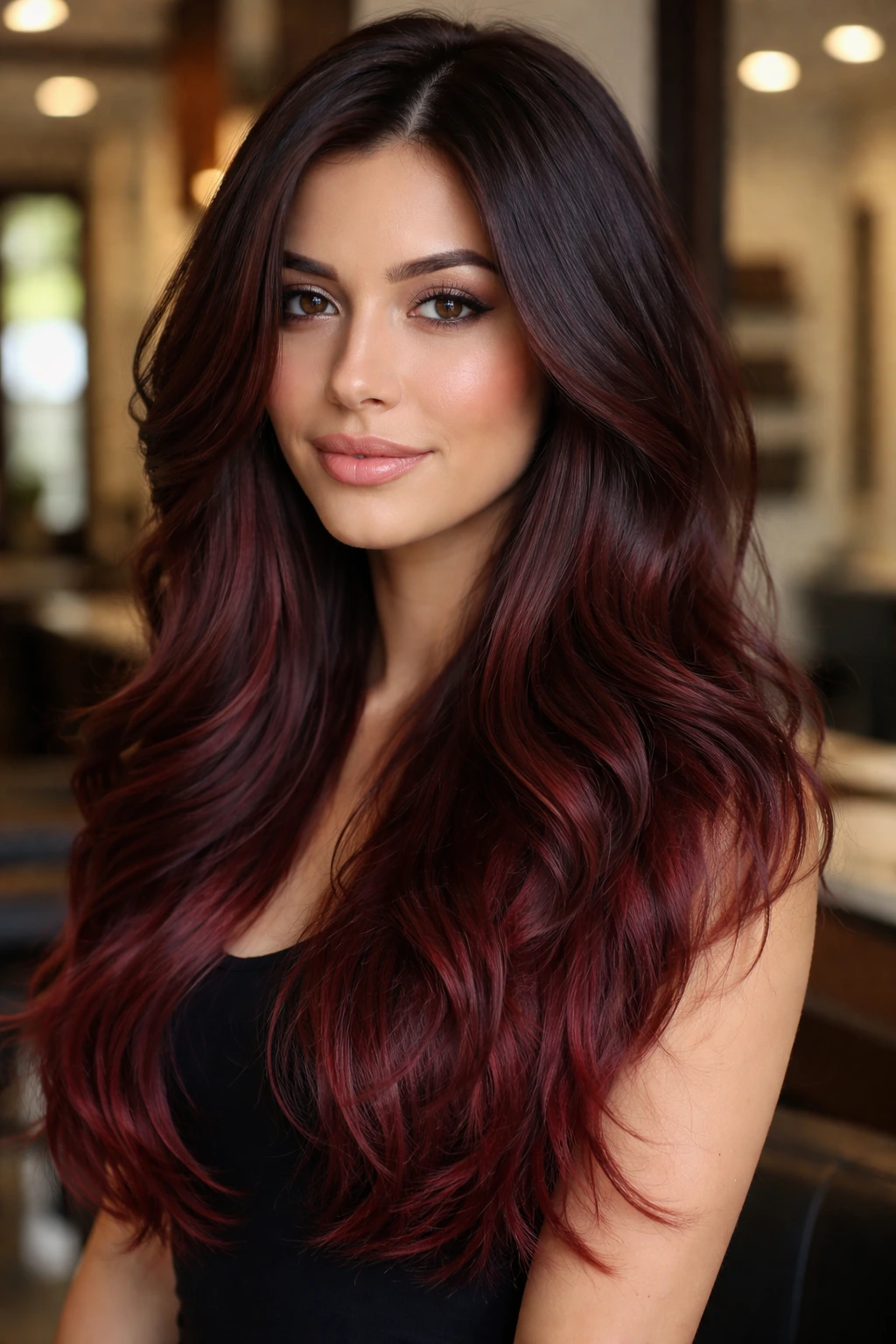
When you have layers, you have depth. This style involves painting the burgundy color only on the ends of your layers, creating a “stacked” color effect.
As the light hits your hair, the different lengths show off different concentrations of red. It’s incredibly flattering on long, layered cuts. You get the richness of the burgundy and the grounding of the brown, all mixed together in a way that feels organic and fluid.
20. Deep Cherry Ombré Style
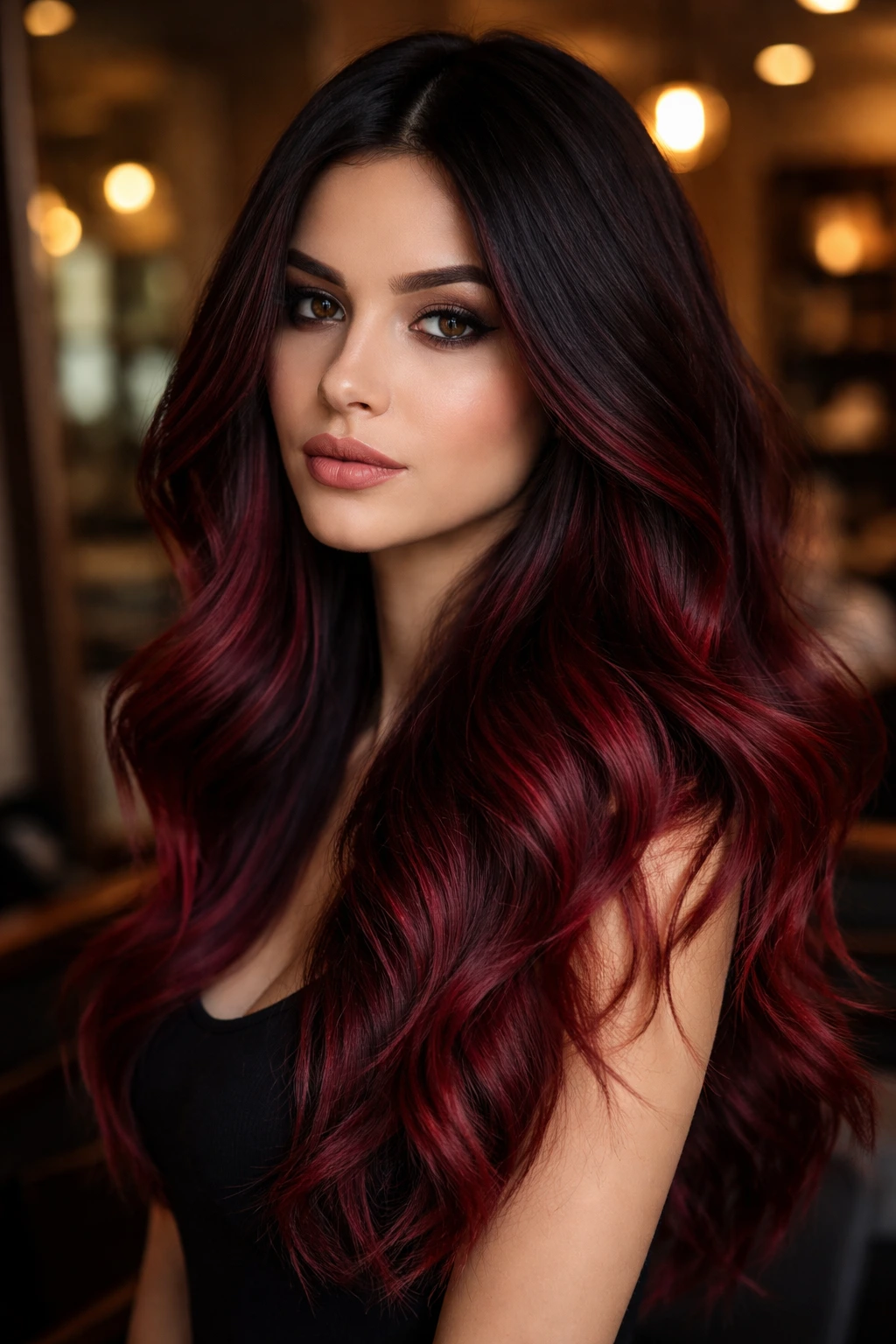
Ombré has evolved from the harsh “dark top, light bottom” look of a decade ago to this: a seamless, melted transition. The cherry red starts mid-length and saturates the ends.
Because it’s “deep” cherry, it doesn’t look orange. It looks like black cherry juice. It’s a very sophisticated look that pairs beautifully with dark, moody makeup. If you want a look that feels complete and polished, this is it.
21. Rich Rust-Red Balayage
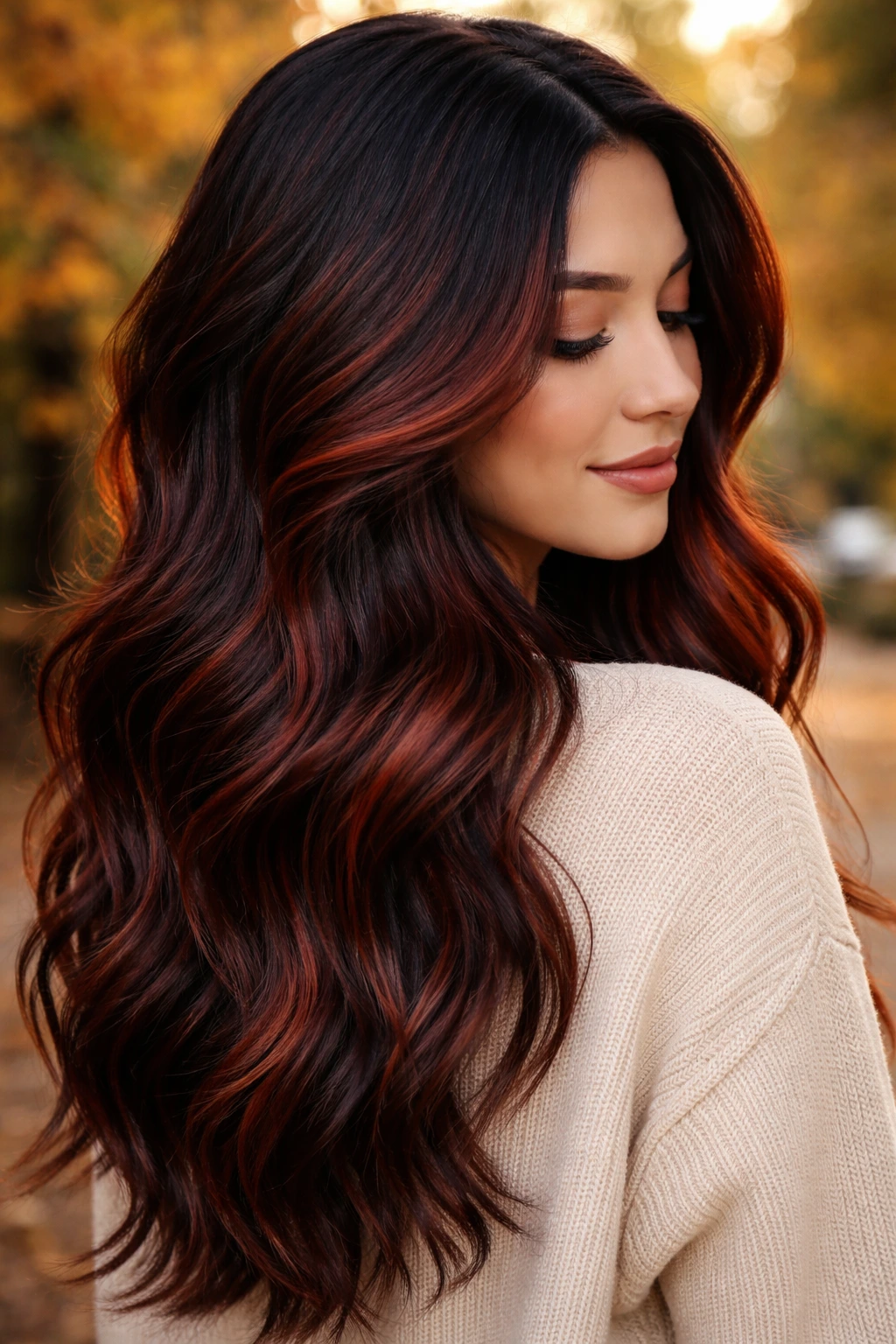
Rust is a sophisticated, autumnal color. It’s slightly burnt, slightly orange, and completely stunning against dark brown hair. This isn’t a “bright” red; it’s a “warm” red.
Why It’s Unique
Rust-red is one of the few shades that manages to look both natural and dyed at the same time. It feels like an elevated version of your own hair. It works beautifully on people with warm skin tones. If you usually struggle to find a red that doesn’t make you look tired, rust is the answer.
22. Jet Black Base with Subtle Red Highlights
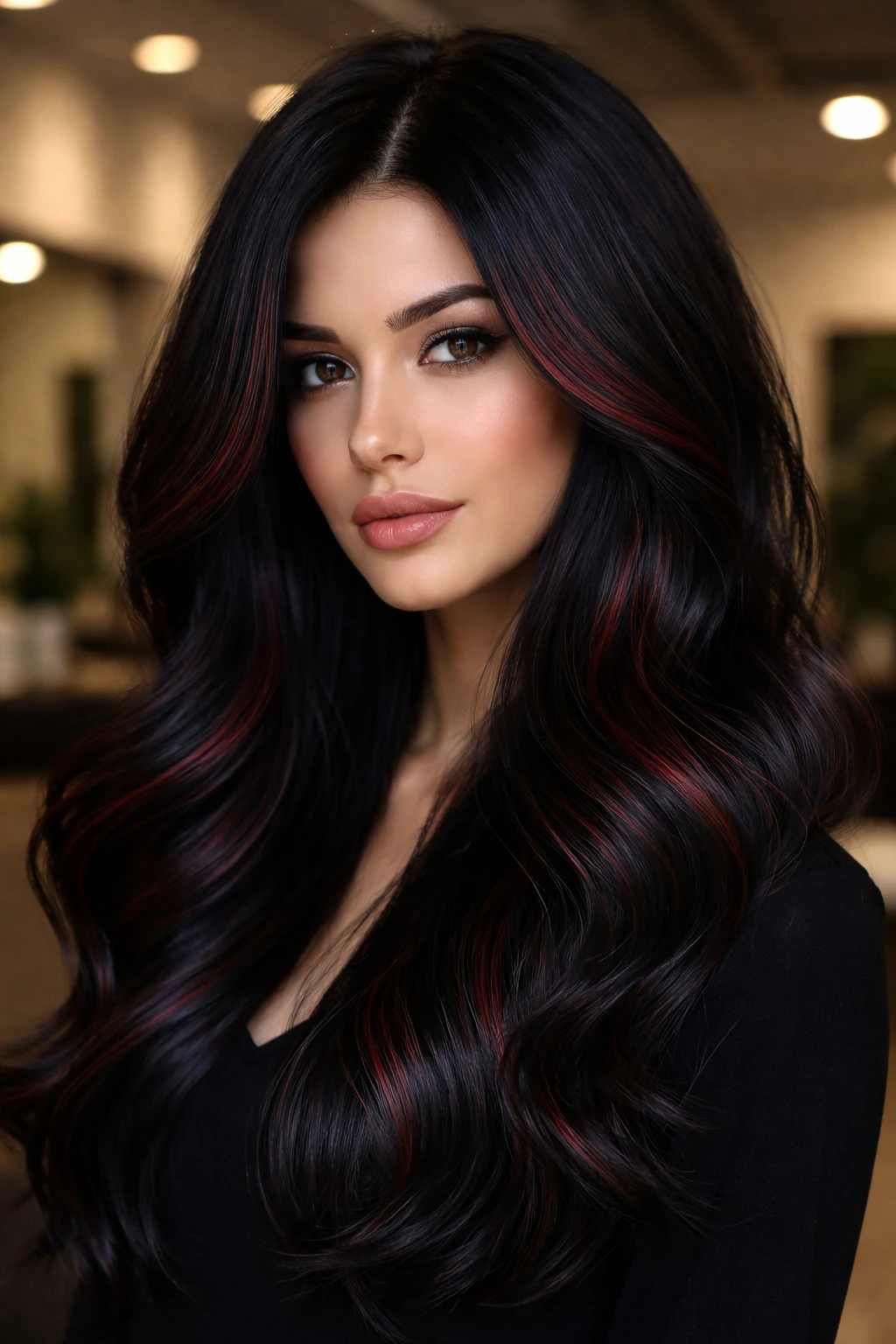
Jet black hair is often hard to color because it lacks dimension. Adding subtle, cool-toned red highlights is the best way to break up that solid black and give it some movement.
The highlights should be “babylights”—extremely fine, densely packed highlights that aren’t meant to be distinct stripes, but rather a shimmer. It makes the black look multidimensional and glossy. It’s the ultimate “Goth-chic” look.
23. Rose-Red Accents on Dark Tresses
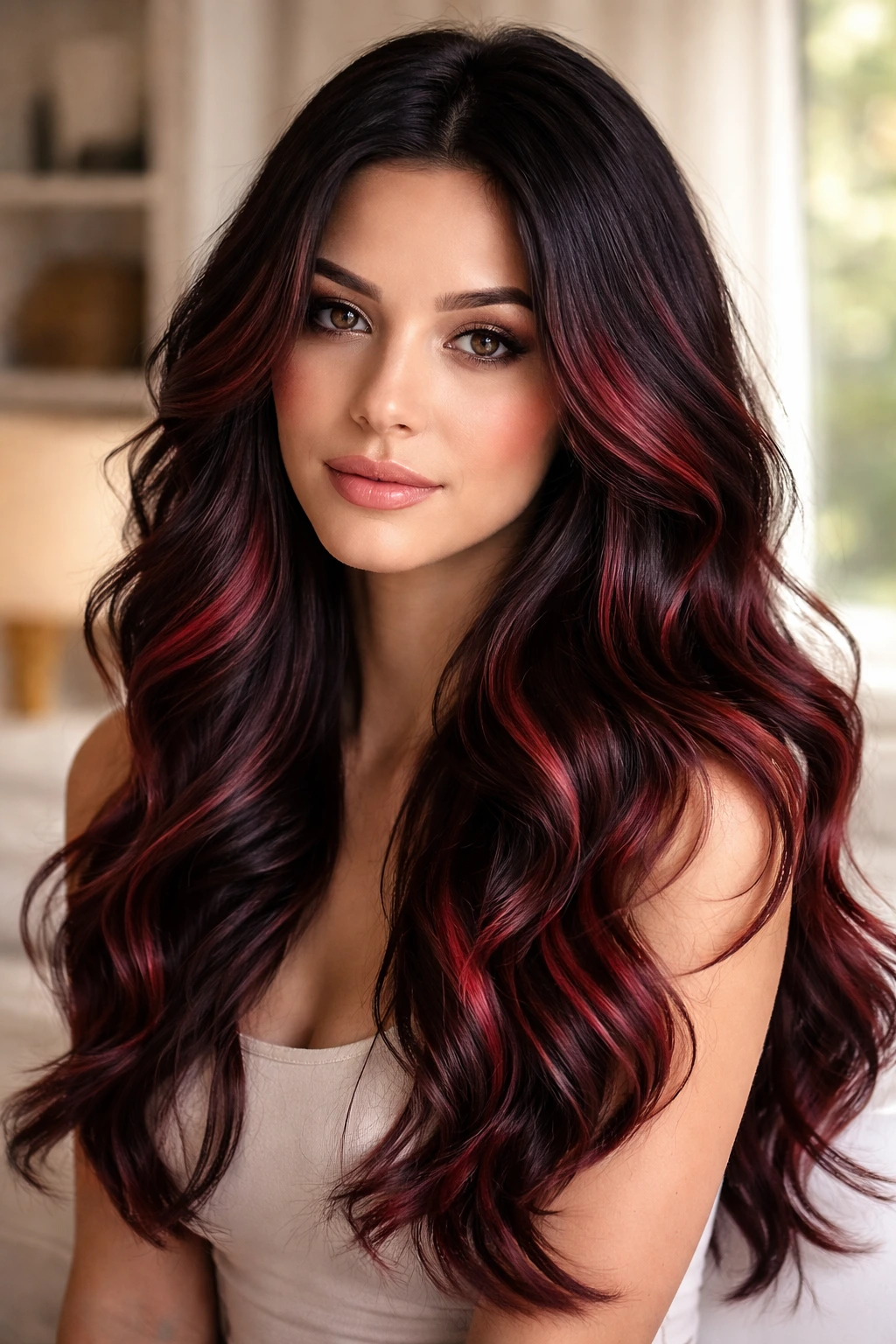
Rose-red is a softer, slightly pinker version of red. It’s very trendy, but it can be difficult to pull off on dark hair without proper lifting. If your stylist lifts your hair to a level 7 or 8 (a warm blonde/light brown), they can deposit this gorgeous rose tone.
It looks dreamy and ethereal against a dark brown base. It’s definitely a softer vibe. If you are someone who likes a more whimsical, feminine style, this is the version of red balayage for you.
24. Chocolate Brown with Paprika-Red Lowlights
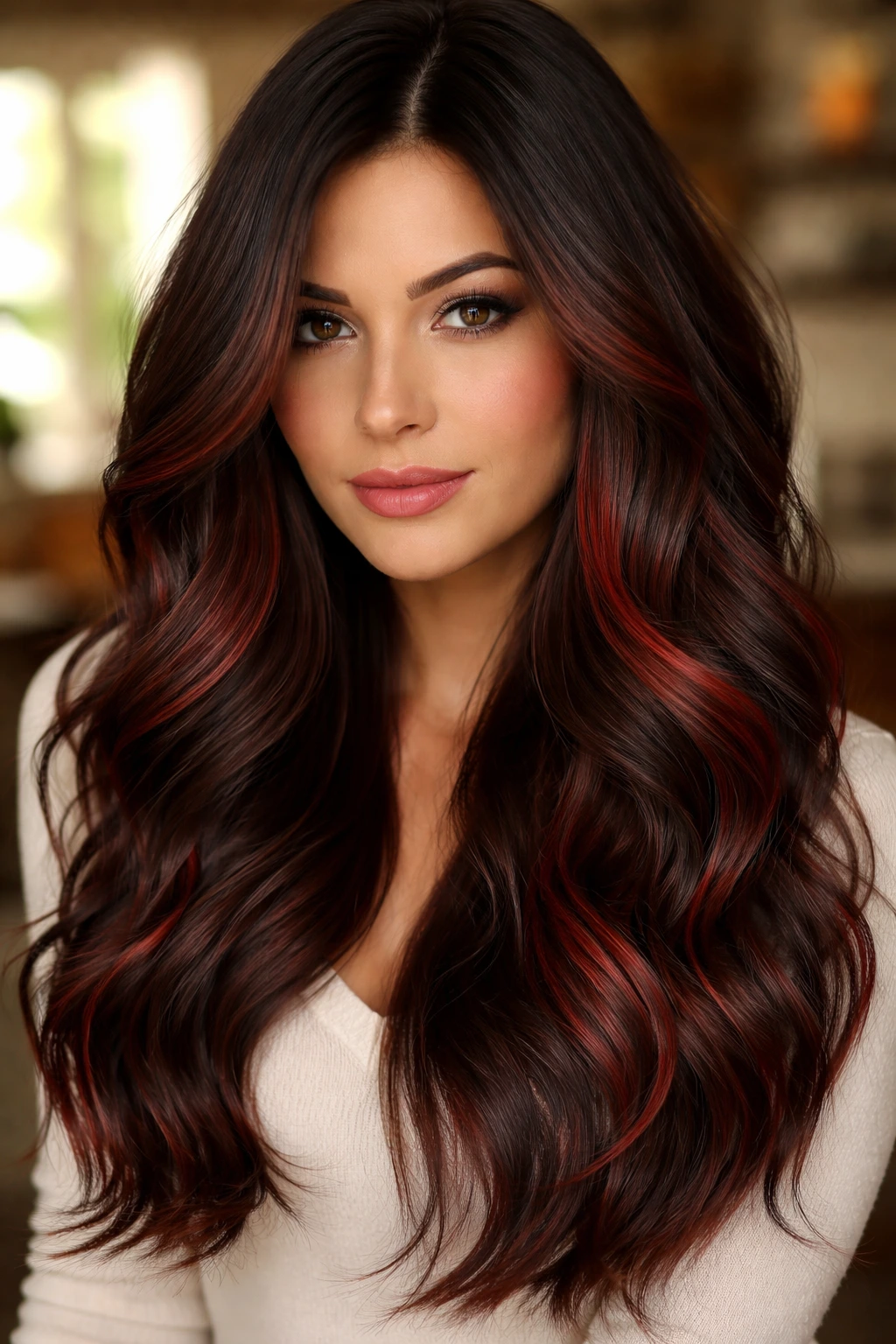
Most balayage focus on highlights, but lowlights are the secret to rich, dense hair color. By adding paprika-red lowlights to a chocolate brown base, you are creating depth and warmth rather than bright pops of color.
This adds the appearance of thickness and fullness to your hair. It’s a great technique for people with fine, thin hair who want more volume. The color contrast creates an optical illusion of depth that makes the hair look heavier and healthier.
25. Thick Ribbon Highlights in Deep Red
If you have thick hair, you can handle thicker highlights. This style involves painting larger sections of red—about an inch wide—throughout the hair.
Because your hair is thick, these ribbons won’t get lost. They will stand out and provide a beautiful, deliberate contrast. This look is dramatic and bold. It feels like a statement piece. Just ensure your stylist is still blending the tops of these ribbons so you don’t get a “bleeding” effect at the roots.
26. Soft Cherry Cola Color Melt
“Cherry Cola” is a classic color description for a reason. It perfectly captures that mix of brown and red. It’s a glossy, rich, and dimensional shade that looks great on almost everyone.
How to Achieve the Look
- The Base: Start with a dark chocolate brown.
- The Glaze: Apply a deep cherry-red gloss over the entire head.
- The Result: A hair color that looks like liquid glass.
Maintenance: This is a low-maintenance look. Because it’s a “melt,” the grow-out is virtually invisible.
27. Fiery Red Ends on Long Brown Layers
This is a classic “statement” look. The top two-thirds of your hair remain your natural, dark brown, and the bottom third is a vivid, fiery, almost orange-red.
It’s dramatic. It’s fun. It’s definitely a look that gets noticed. This is perfect for the person who loves to style their hair in different ways—braids, top knots, and ponytails all look incredible when the ends are a completely different color than the roots.
28. Glossy Dark Base with Scarlet Babylights
Scarlet is a bright, clear red. Putting it on dark hair is a risk, but when done as “babylights”—micro-fine highlights scattered throughout the head—it works.
It adds a “sparkle” to the hair. It doesn’t look like a solid streak of red; it looks like scattered ruby dust. It requires a lot of precision, but the result is a sophisticated, detailed look that elevates your entire appearance. It is, without a doubt, the most delicate and refined version of red balayage on dark hair.
Choosing the Right Shade for You
There is no single “best” red for dark hair. It all comes down to your skin tone and your tolerance for maintenance. If you have cool skin with pink or blue undertones, stick to the cool reds—burgundy, plum, cherry, and deep wine. They will harmonize with your skin and make your complexion look bright and clear.
If you have warm skin with yellow, golden, or olive undertones, gravitate toward the warm reds—copper, rust, auburn, and cinnamon. These shades will bring out the golden glow in your skin and prevent you from looking sallow. If you are somewhere in the middle, you can play with neutral reds, but err on the side of something a bit deeper, like mahogany or dark cherry.
The commitment factor is also huge. Vibrancy is a spectrum. A subtle red glaze is a commitment of maybe four to six weeks before it fades into a nice warm brown. A vibrant, lift-and-deposit red is a permanent lifestyle change. It requires a specific hair care routine. If you are not prepared to wash your hair with cold water and use color-depositing conditioners, start with the subtle, deep tones. You can always go brighter, but going from a vibrant, light-red back to dark hair is a corrective color process that is both expensive and damaging.
Finally, keep your stylist in the loop. Bring pictures, but understand that your hair history matters. If you have years of black box dye in your hair, achieving a bright red balayage is going to take several sessions. Be patient. Great hair color isn’t a race; it’s a process. When you find the right combination of placement, shade, and maintenance, black and red balayage can become your signature look—one that is as bold, sophisticated, and memorable as you want it to be.
