



Round faces are easy to flatter with color, but not with lazy placement. Ash brown balayage can make a face look longer, leaner, and sharper through the cheek area when the lighter pieces stay below the widest part of the face. Put those same ribbons too high across the cheeks, and the whole effect gets boxy fast. That’s the part people miss.
The shade itself matters too. Ash brown sits in that smoky zone between cool mocha, mushroom brown, and soft taupe-brown, which means it can calm down warmth in the hair and keep the finish looking clean. On a round face, that coolness works best when the color is broken up with depth at the roots, a little shadow around the sides, and brighter strands that travel downward instead of sitting right at the cheeks.
I like this family of color because it does two jobs at once. It tones down brassiness, and it also gives the haircut a more vertical line. That’s a small thing on paper. In the mirror, it’s the difference between “soft and full” and “soft and a little wider than I wanted.”
The 25 looks below focus on that exact sweet spot: placement that lengthens, ash tones that keep things polished, and cuts that don’t fight the shape of a round face. Some are low-contrast and quiet. Some are a little bolder. All of them know where to put the light.
1. Feathered Face Frame with Chin-Below Ribbons
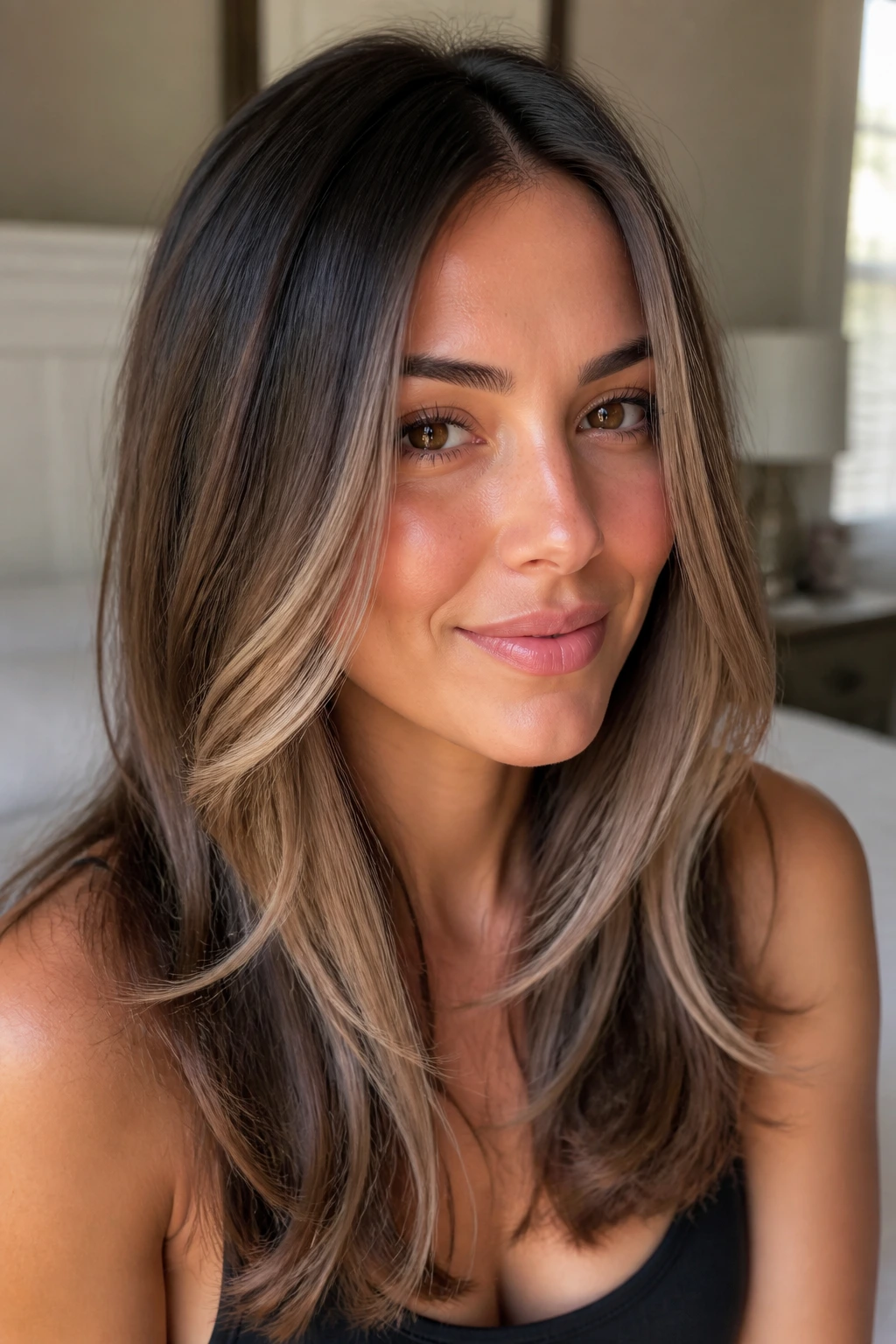
A feathered face frame gives a round face some much-needed direction. The ash brown balayage stays soft at the crown, then slips into lighter ribbons that begin around the chin and collarbone, which keeps the width away from the cheeks.
Why It Flatters
The cut does half the work here. Long feathering pulls the eye down, and the color follows that line instead of cutting across it. If the front pieces are sliced with a bit of movement, they won’t sit like a curtain over the widest part of the face.
- Keep the root shade 1 to 2 levels deeper than the mid-lengths.
- Ask for the brightest pieces below the cheekbone.
- Style with a 1.25-inch curling iron, then brush the curls out once they cool.
- Leave the ends slightly straighter for a longer look.
Best tip: avoid bright money pieces that start right at the cheekbones. That placement is cute on some faces, but on a round face it can widen the middle.
2. Smoky Root Melt on a Long Lob
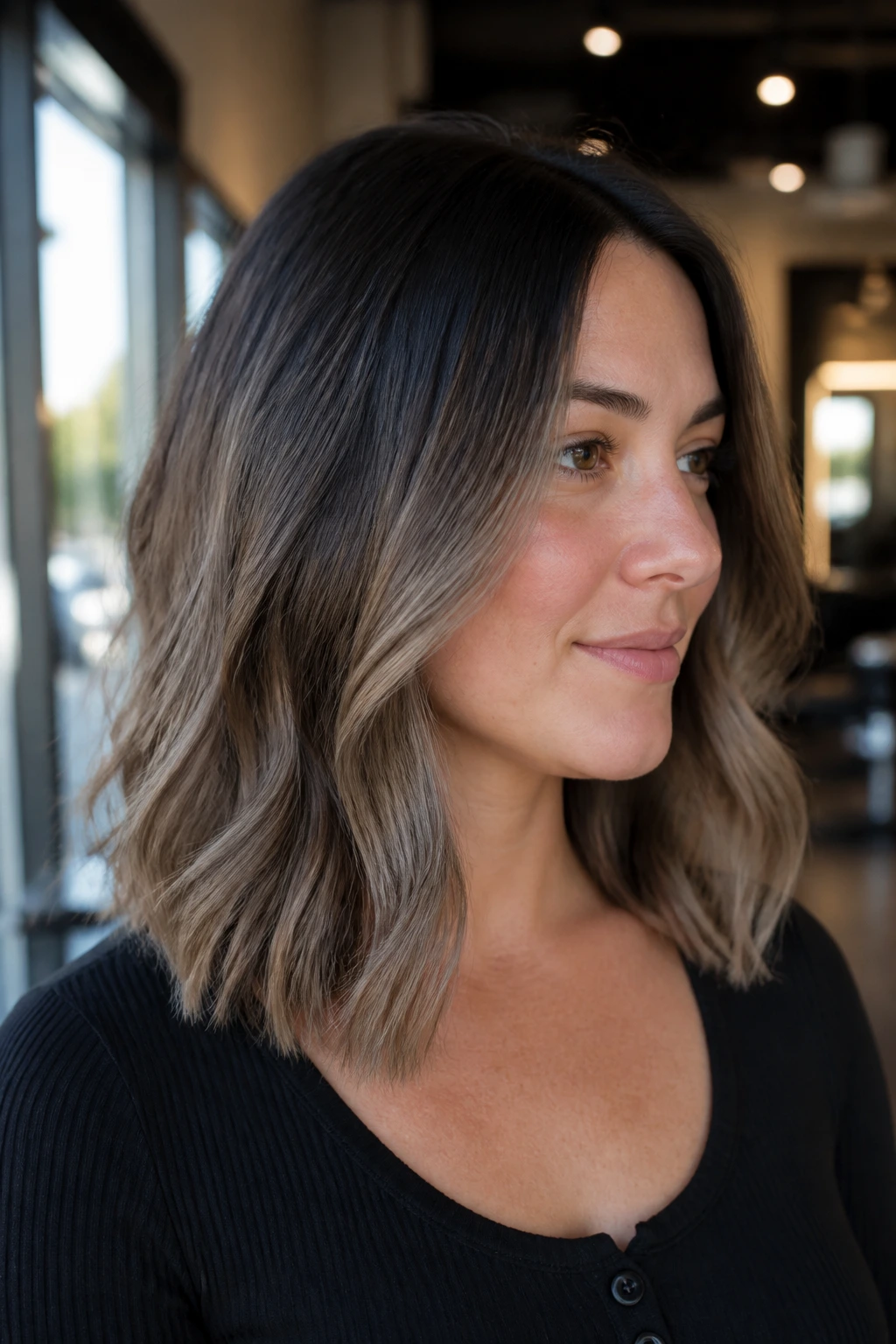
This is the easiest ash brown balayage look to wear if you like a low-drama grow-out. The root melt keeps the top dark and smoky, then the color softens into muted ash brown through a long lob that ends near the collarbone.
The shape matters more than people think. A lob that stops at collarbone length naturally pulls the eye down, and the root melt prevents the color from breaking into a hard line near the widest part of the face. It feels neat. Controlled, even.
Ask for a melt that stays deepest at the part and around the temples, then breaks into fine, diffused ribbons through the lower half. That little bit of softness keeps the face from looking framed in a circle. It’s a neat trick, and it works because the eye keeps moving downward instead of stopping at the cheeks.
3. Side-Part Waves with Crown Lift
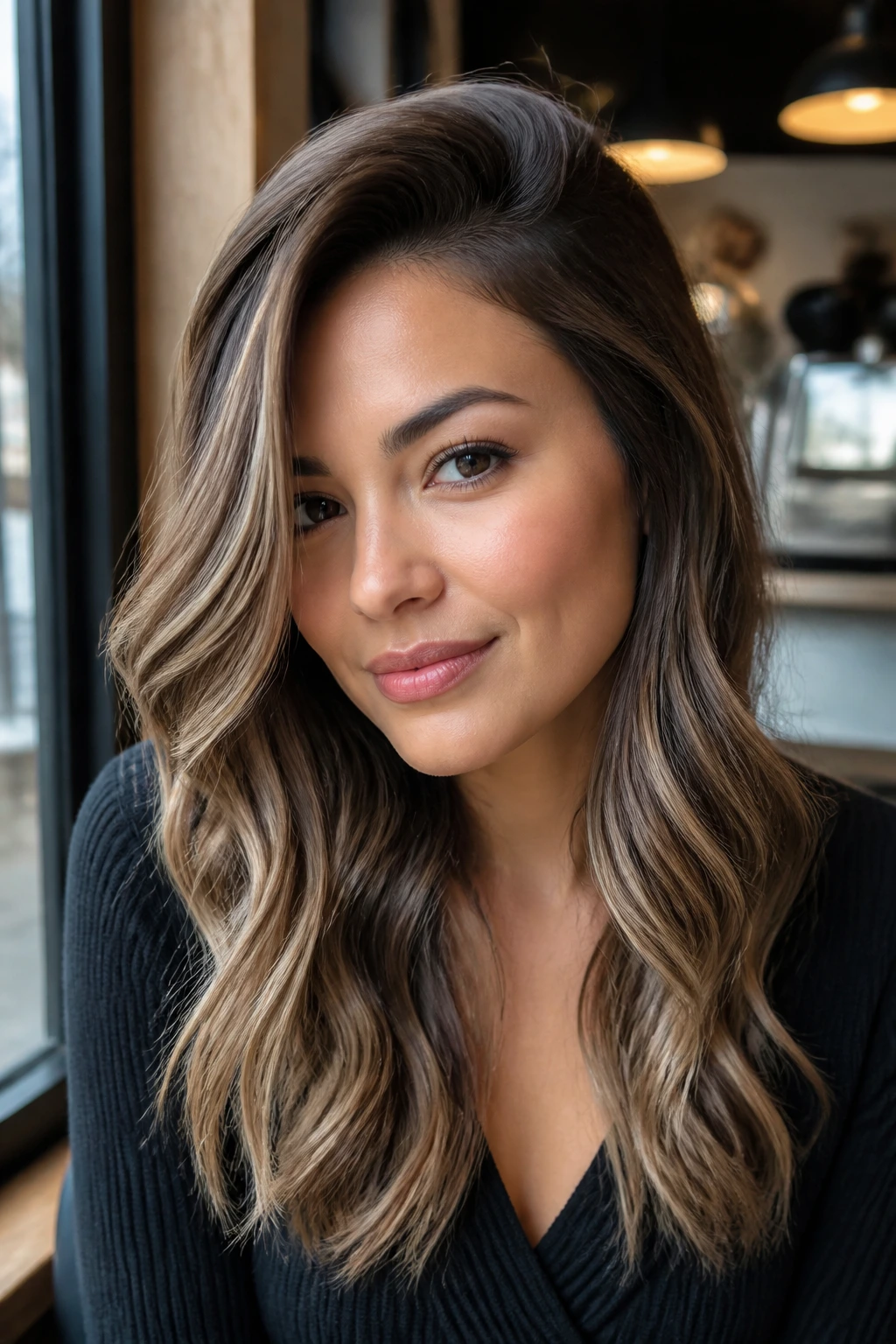
Why does a side part matter so much? Because a round face usually needs a little asymmetry to break up the symmetry of the shape. A deep side part gives the roots lift on one side, which adds height right where you want it.
The ash brown balayage should follow the part’s direction, with the brightest streaks placed on the higher side and through the lower lengths. That creates a slanted line, which is much kinder to a full cheek area than a straight horizontal frame. Loose waves help, too, but don’t overdo the curl. You want bend, not a halo.
How to Wear It
Clip the roots on the heavy side while they cool after blow-drying. That small step gives you lift that lasts longer than a quick tease with a comb.
- Part the hair about 2 to 3 inches off center.
- Keep the root shadow visible at the top.
- Place lighter ribbons from cheekbone to collarbone.
- Finish with a soft-hold spray, not a crunchy one.
4. Mushroom Brown Ends Under a Deep Root Shadow
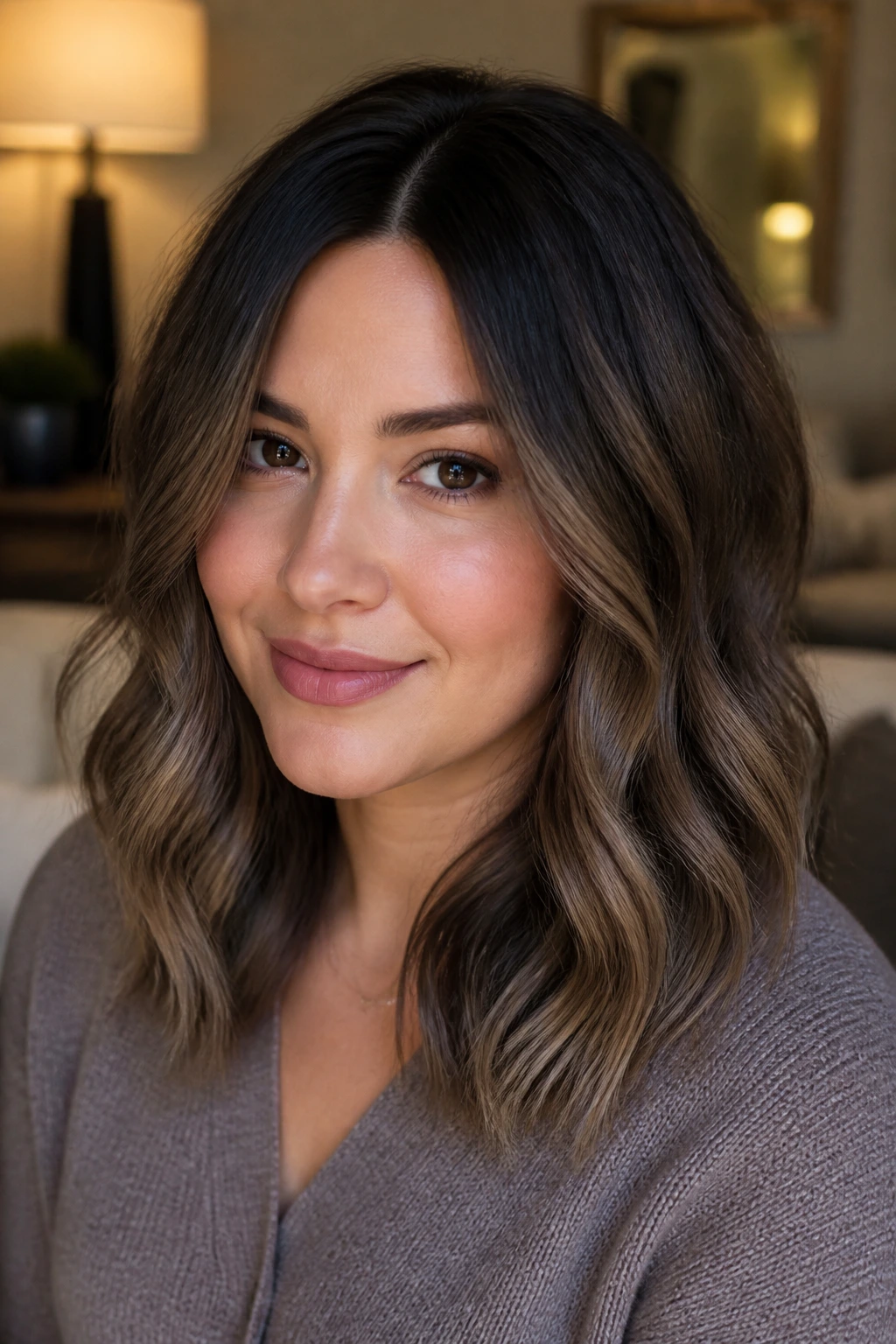
If your hair likes to puff out at the sides, this one behaves. The deep root shadow keeps the shape calm at the top, while mushroom brown ends add a muted finish that doesn’t scream for attention near the cheeks.
A round face often looks best when the lower half of the hair carries the brightness. This look does that neatly. The ash tones sit in the mid-lengths and ends, the top stays rich and dark, and the whole style feels longer because the contrast moves downward. That’s the point.
- Ask for low-contrast ribbons, not chunky streaks.
- Keep the perimeter soft, not blunt.
- Blow-dry with a round brush only at the crown.
- Let the sides fall close to the face instead of flipping outward.
The finish is calm, almost smoky. That calmness is what makes it work.
5. Sleek Mid-Back Length with Hidden Ash Ribbons
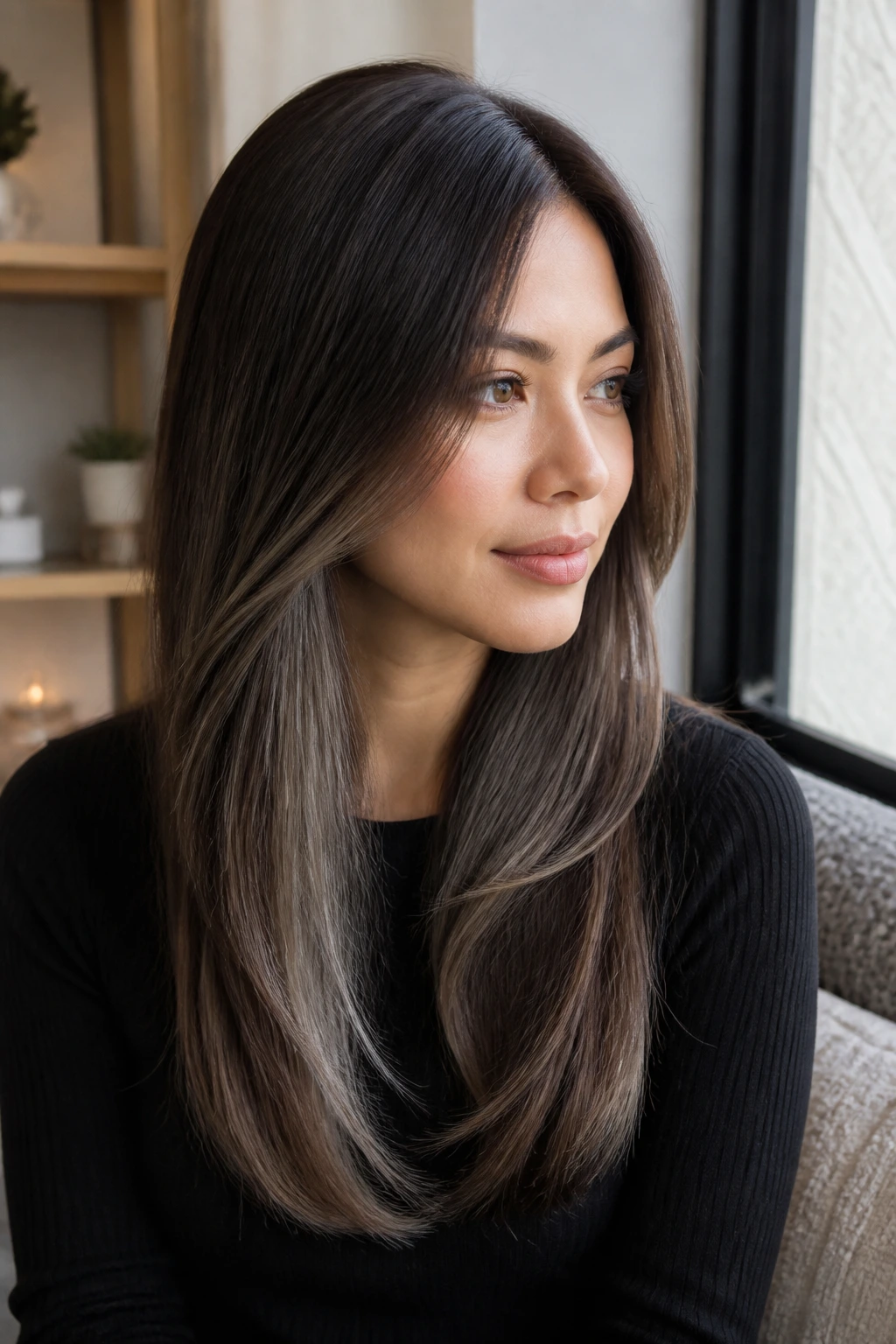
Straight hair can be tricky on a round face because it can either sharpen the look or make the cheeks feel broader. This version does the first thing, not the second. The ash brown balayage is tucked into the interior and lower layers, so the surface stays smooth while the movement lives underneath.
That hidden placement keeps the hair from looking striped. It also gives the color more depth when the hair swings, which matters more than people admit. A sleek finish shows every line, good or bad, so the color placement has to be clean. No lazy streaks. No bright patches near the temples.
The best way to wear this cut is with a center part only if the front pieces are long enough to skim past the jaw. Otherwise, a slight off-center part works better. Flat iron the ends just enough to keep them from puffing out, then finish with a light serum through the mid-lengths. Heavy oil kills the shape fast.
6. Textured Shag with Airy Ends
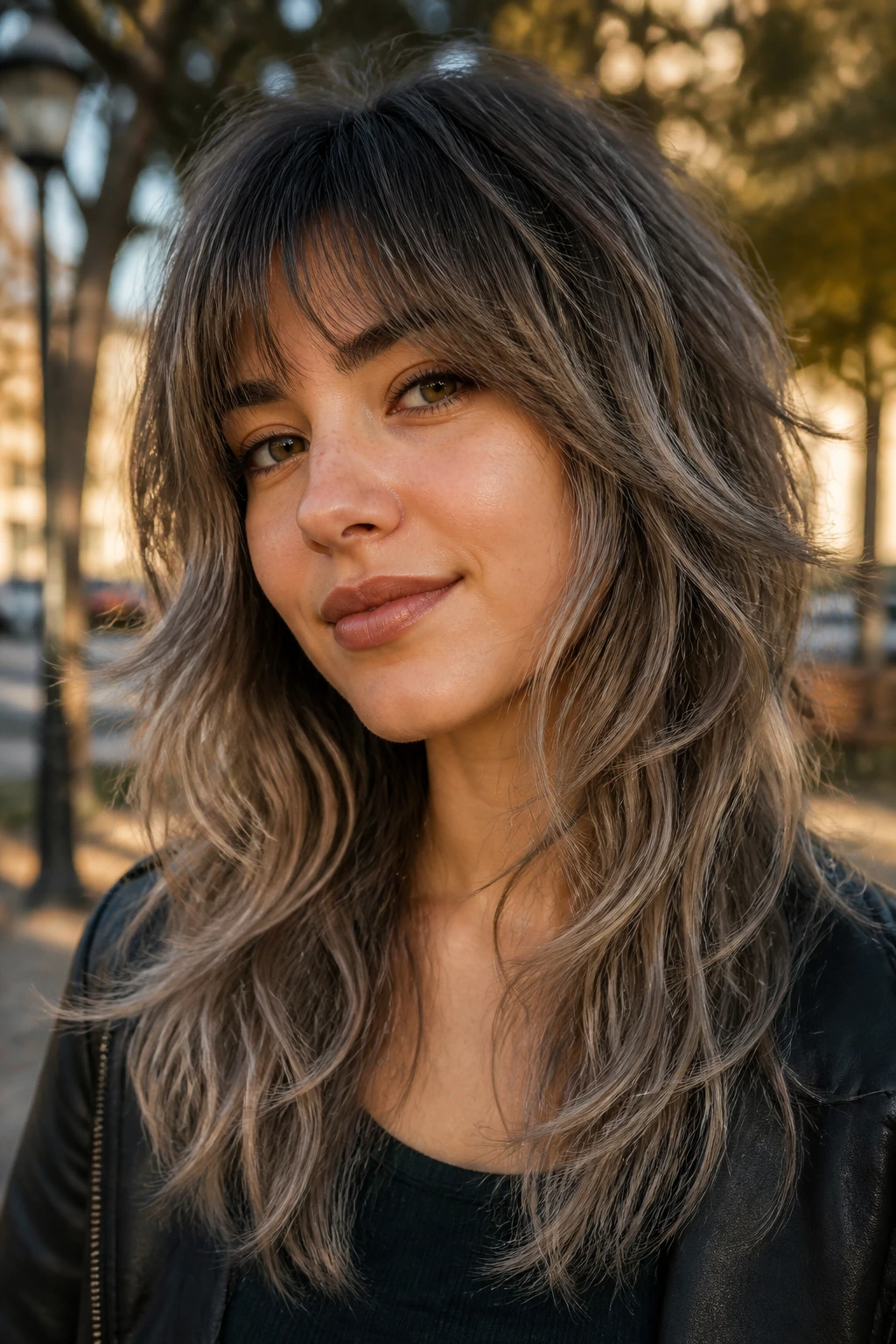
A shag is a strong move on a round face, but only when the layers are cut with enough intention. The ash brown balayage gives the movement some edge, while the airy ends stop the whole thing from turning boxy.
Unlike a blunt lob, a shag gives you broken lines. That matters. The eye can’t trace one clean circle around the face, so the shape feels longer and a little leaner. The ash tones make the layers show up more clearly, especially if the top is kept a shade darker than the bottom.
This look is best for hair that already has some texture or for people who don’t mind a little styling. If your hair is pin-straight and flat, you’ll need mousse at the roots and a rough blow-dry to get the lift this cut needs. Otherwise, it can fall too close to the sides and lose the whole effect.
7. Face-Thin Money Piece with Dark Interior Depth
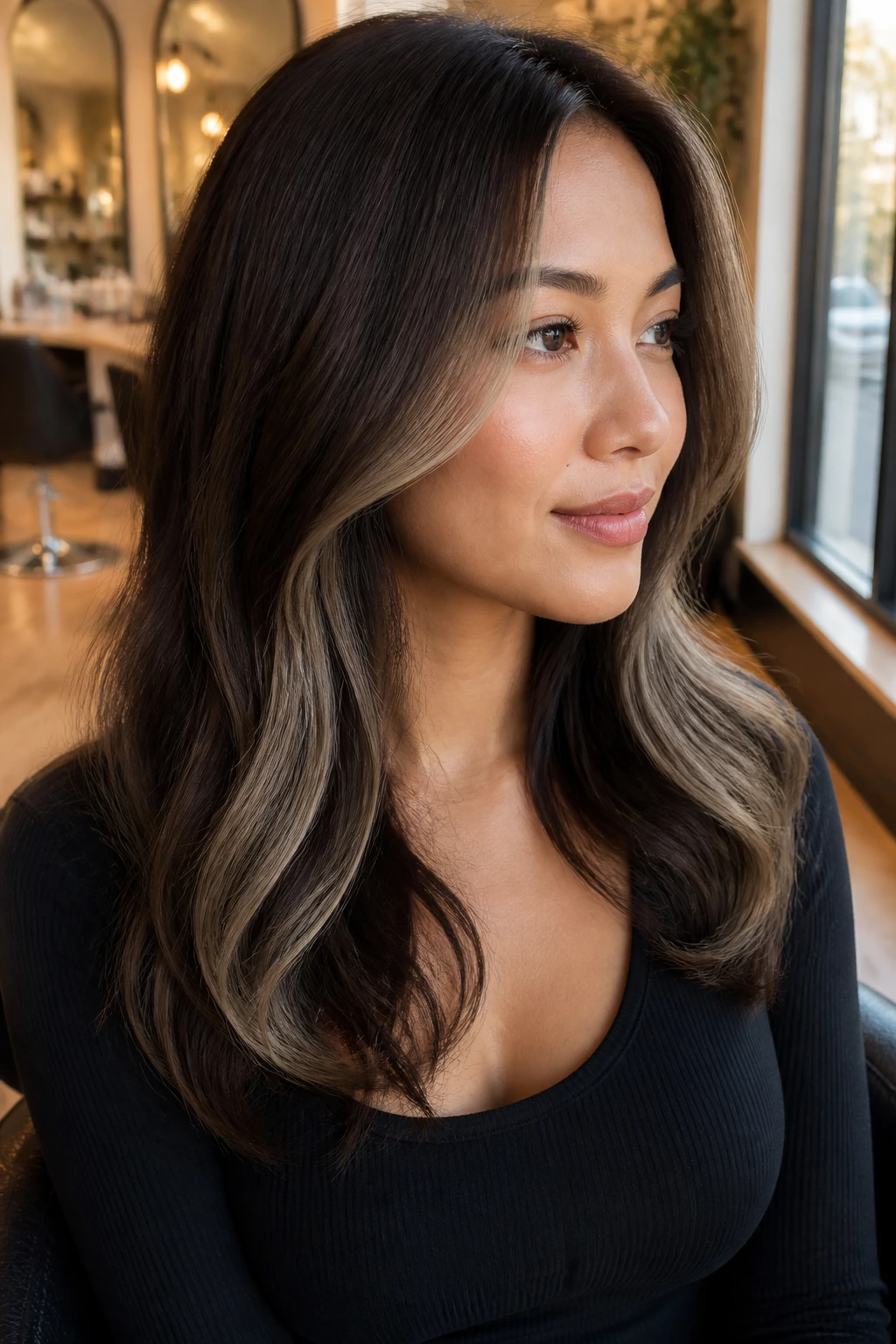
A money piece can go wrong fast on a round face. Too bright, too wide, too high — and suddenly the face looks wider instead of longer. The smarter version is narrower and starts lower, with the brightest ash brown right beside the face and a darker interior underneath.
What Makes It Work
The contrast sits where it can stretch the face vertically. That’s the key. Keep the money piece slim, almost ribbon-like, and let the rest of the balayage stay quieter so the front doesn’t feel striped.
- Start the lightest strands just below the eyebrow tail.
- Keep them narrow near the cheek and fuller near the collarbone.
- Use a cool toner, not a flat gray toner that can look muddy.
- Style the front away from the face once or twice a week so it keeps its shape.
My take: this is one of the best ash brown balayage looks if you want brightness without the usual “big cheek highlight” problem.
8. Wavy Bob with Tapered Front Pieces
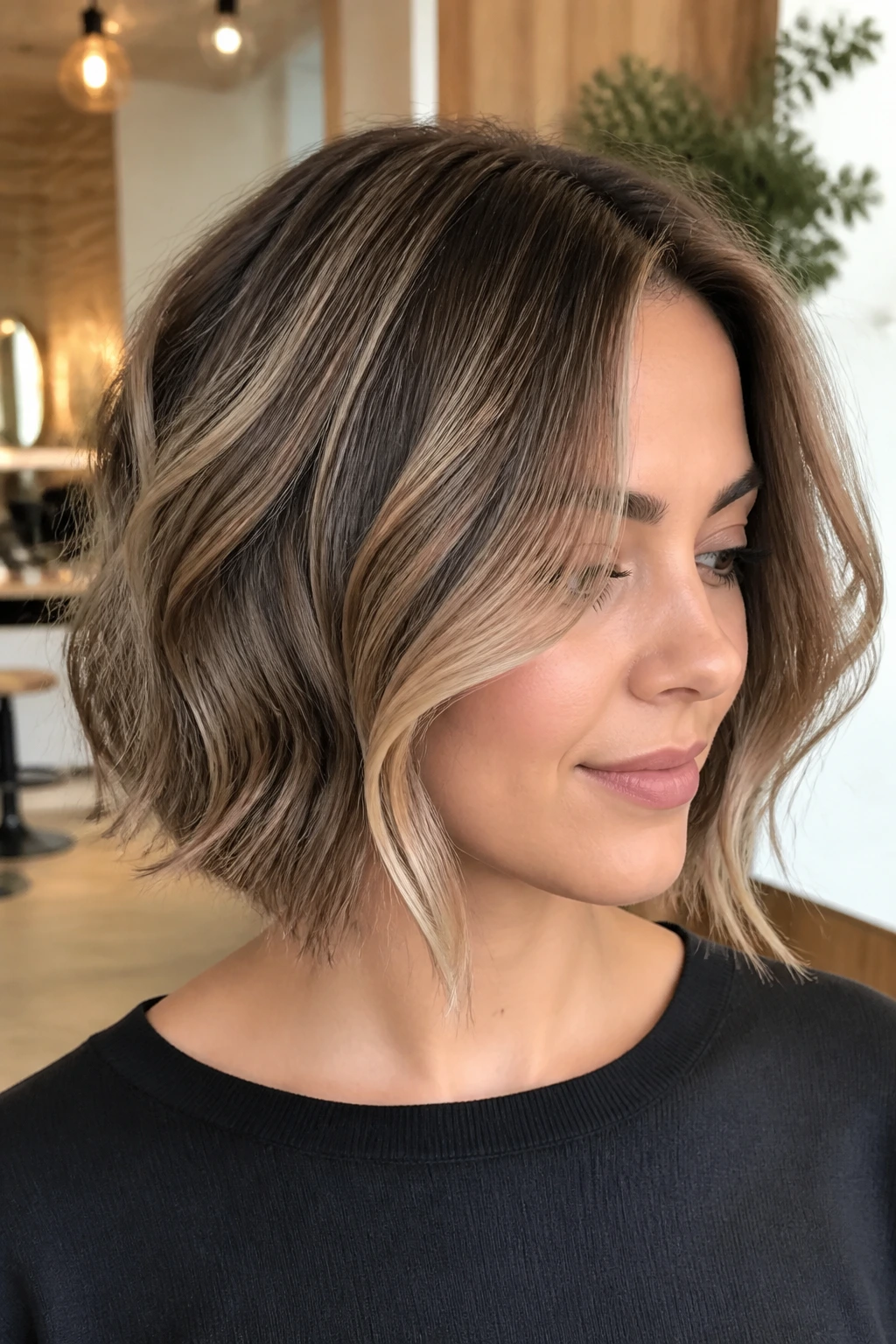
A wavy bob can be a great fit for round faces when the front is tapered. If the bob stops at the jaw and the front pieces are left a little longer, the shape angles down instead of out. That alone changes everything.
The ash brown balayage should be soft and broken up, not painted in one heavy sheet. Fine ribbons across the top layers keep the color moving, while the ends can stay a touch darker for depth. Waves should be loose, almost lazy. Tight curls round the face even more, and that’s not what you want here.
This style works best when the bob is slightly longer in the front than in the back. That subtle angle stretches the face without looking severe. A small side part helps, too. Nothing dramatic. Just enough to stop the haircut from sitting like one clean circle around the jaw.
9. Long Layers with Smoky Ends
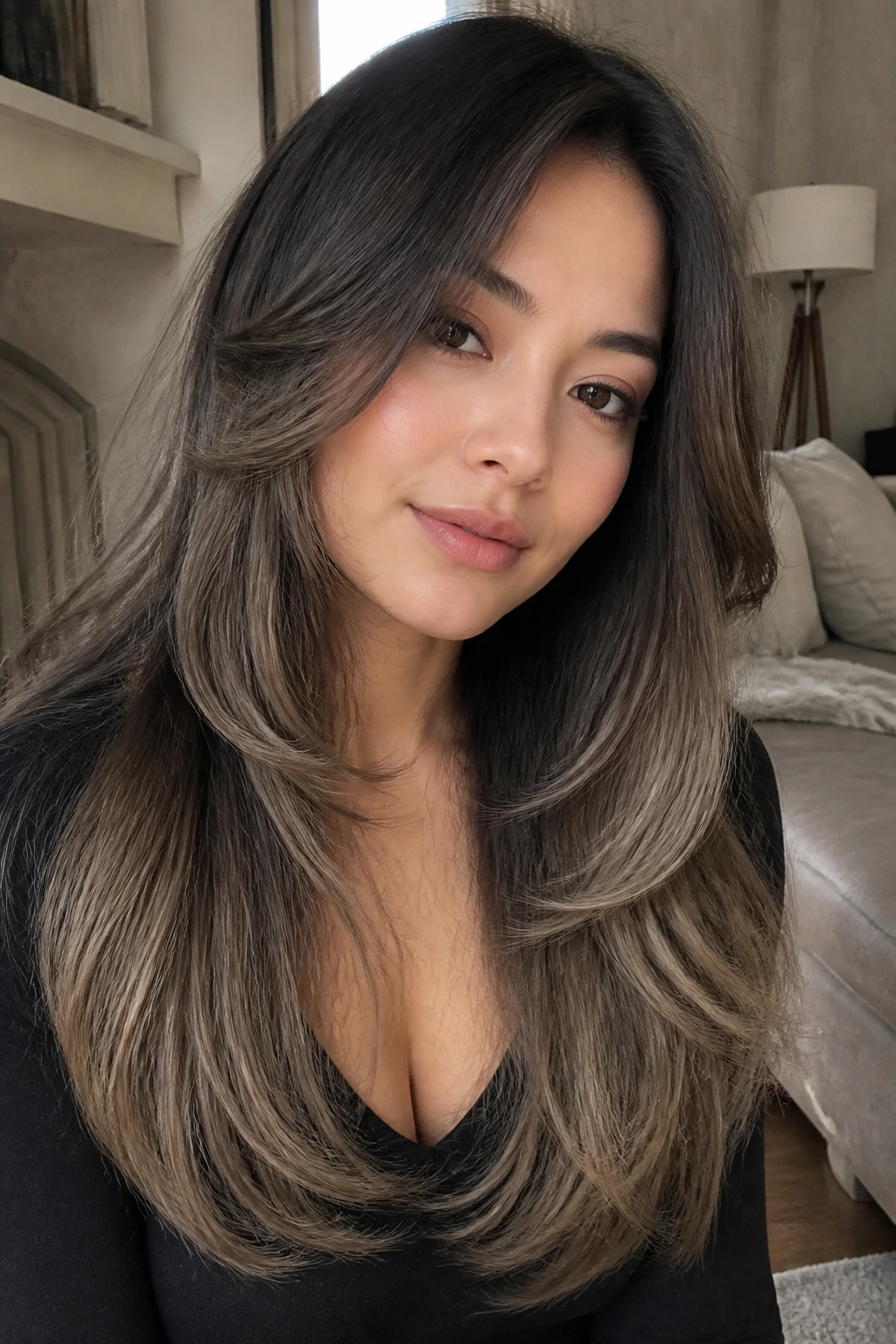
Why do long layers help so much? They keep the hair from hanging like a single curtain. On a round face, that curtain effect can make everything feel fuller at the cheeks, even when the color is gorgeous.
Smoky ash brown ends fix that by drawing the eye down. The top stays a little deeper and cleaner, then the ends lighten into soft, cool brown. That gradient gives the illusion of length, especially if the layers start below the chin instead of around the jawline.
How to Wear It
Use a large barrel wand, then leave the last inch of the hair out. That tiny detail keeps the finish from becoming too round.
A few things matter more than usual here:
- Keep the front layers long enough to clear the widest part of the face.
- Ask for low-contrast balayage through the back.
- Use a shine spray, but only on the outer layer.
- Avoid too much volume at ear level.
10. Cool Beige-Gray Balayage on a Medium Cut
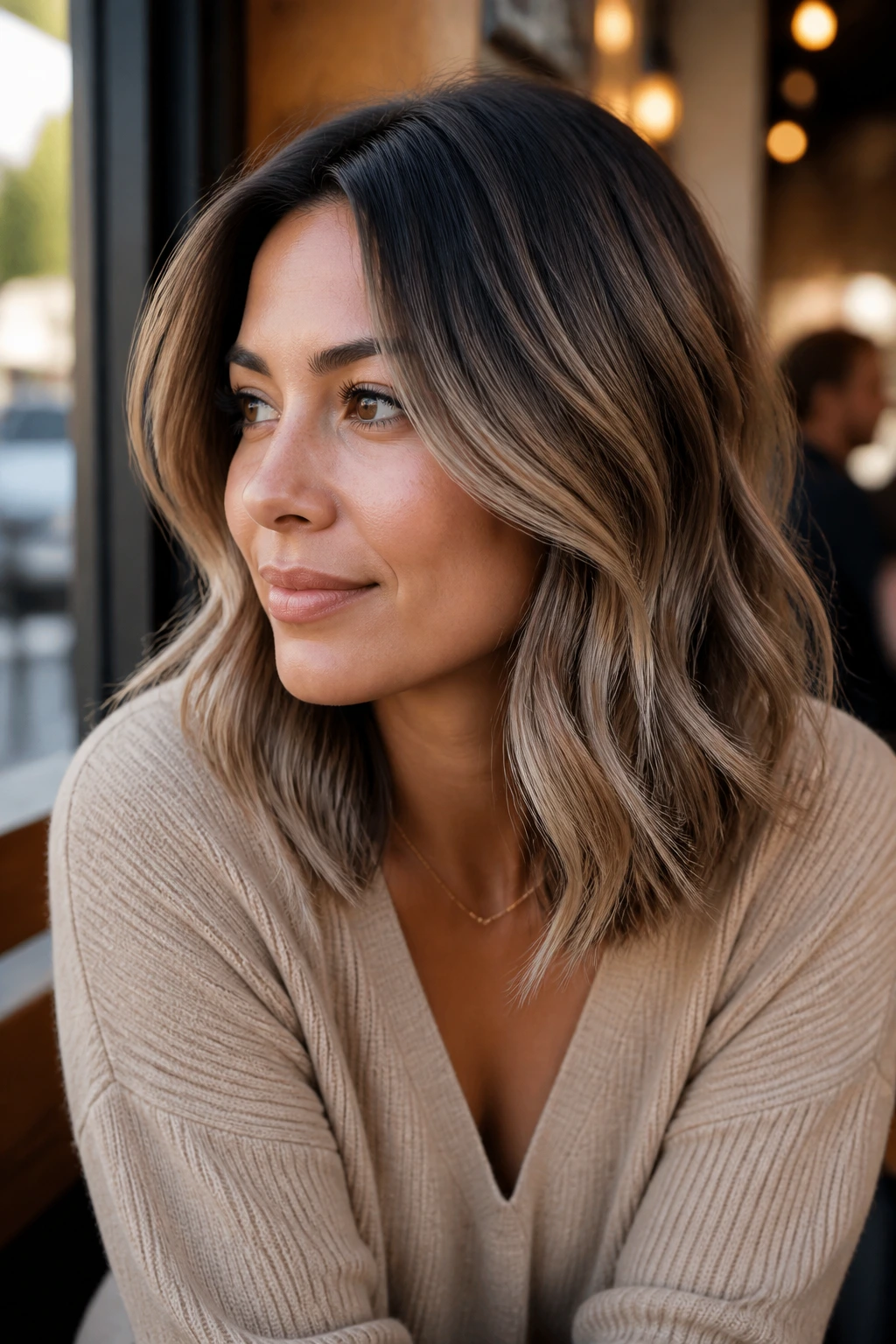
Cool beige-gray is a good middle ground if full ash can look too dark on your skin. It still reads as smoky, but it has enough softness to keep the face looking fresh. On a medium cut, that balance matters a lot.
The shape should land just past the shoulders, with the brightest pieces placed under the cheekbone and through the lower lengths. That placement keeps the light away from the center of the face. A soft bend through the ends works better than full waves, because the subtle movement looks more expensive and less busy. Busy hair can fight a round face.
If your hair tends to hold warmth, ask for a toner that leans beige rather than pure silver-gray. Pure gray can look flat if the base color is already deep. Beige-gray keeps the ash feel without draining the life out of the hair. That tiny adjustment makes the whole look easier to wear.
11. Butterfly Layers and a Deep Root Shadow
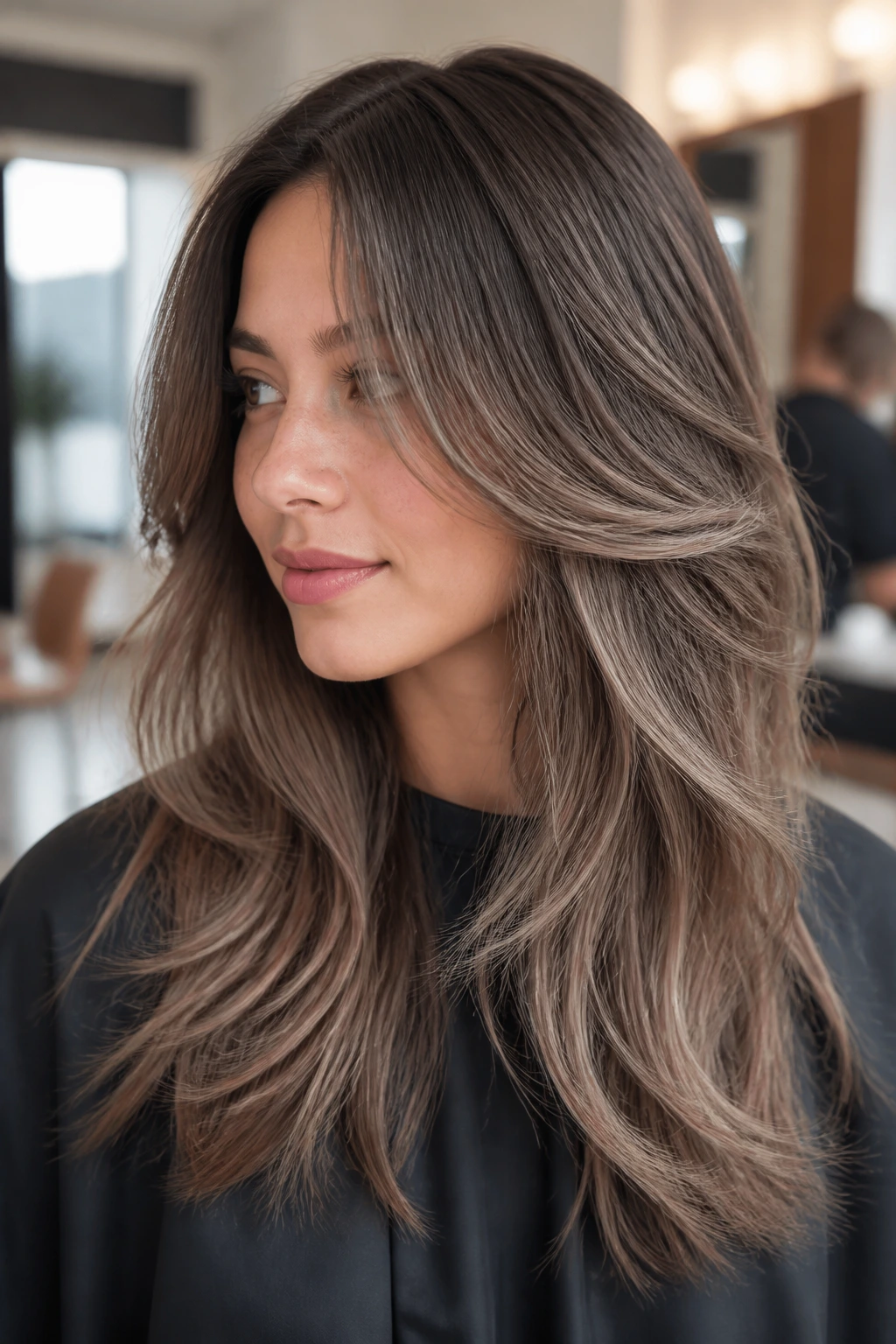
Butterfly layers are one of those cuts that can either help a round face or make it look too full. The trick is in the root shadow. Keep the top rich and grounded, then let the longer layers fall well past the chin so the face gets room.
The ash brown balayage should sit mainly on the longer layers, not the shortest face frame. That keeps the brightness from bunching up around the cheeks. A round face needs long lines, and butterfly layers give you those long lines if the top is controlled. If the crown gets puffy, the whole shape changes.
This look is a good fit for thick hair because the layers remove bulk without sacrificing length. Blow-dry the face frame away from the face, then curl only the lower third of each side. Too much curl at the top will close the face in again. It’s a nice cut, but it asks for restraint.
12. Curved Blowout with Bright Lower Third
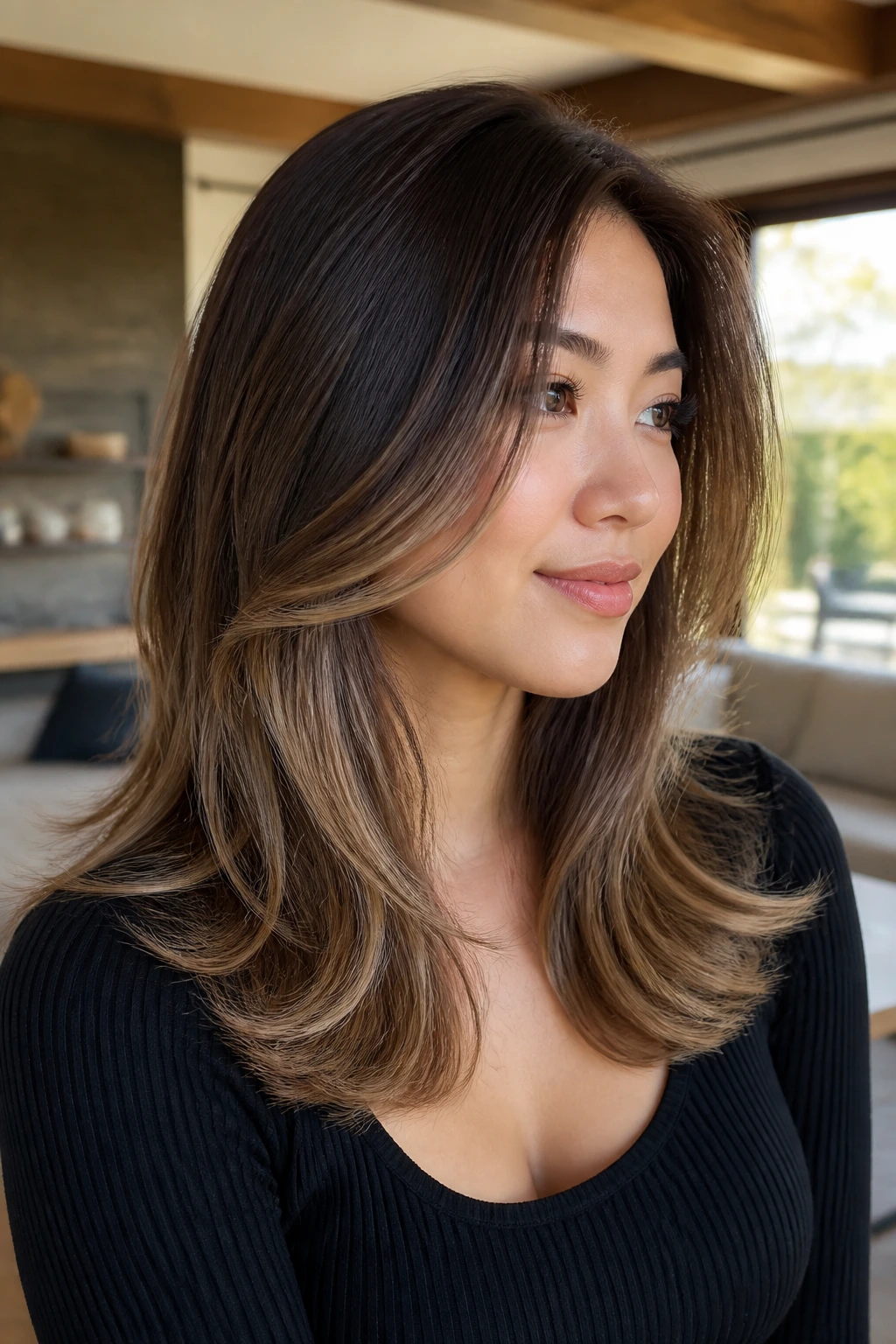
A curved blowout gives you movement without the ring-of-volume effect that can bother round faces. The hair bends softly around the jaw, then flicks out just enough at the ends to keep the shape from feeling heavy.
The ash brown balayage is brightest in the lower third, which is smart. Color placed low creates the sense of length, and the curved blowout reinforces it. Keep the roots darker, then open up the ends with a little lift. The result feels polished without looking stiff.
Unlike a tight curl set, this style doesn’t crowd the cheeks. It leaves space. That empty space matters. Use a medium round brush and focus most of the tension on the mid-lengths, not the roots. The roots need softness, not a hard bend. If you over-round the top, the face shape comes back into focus in the wrong way.
13. Tousled Midi with Micro-Babylights
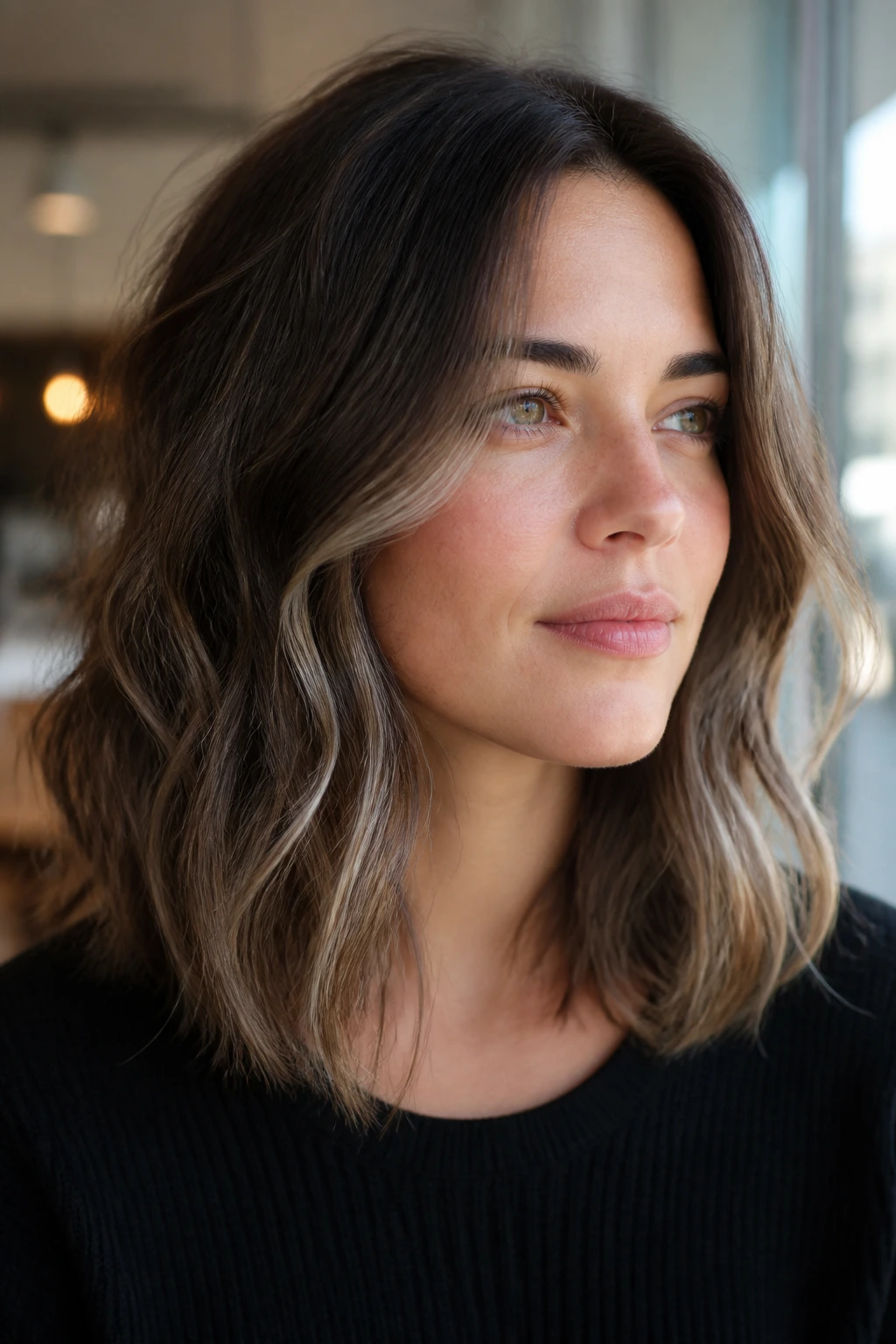
Micro-babylights are tiny, and that’s exactly why they help. They don’t create obvious stripes, so the ash brown balayage reads as movement instead of pattern. On a midi cut, that subtlety keeps the style light around the face.
Why Tiny Highlights Matter
Big ribbons can be too much on a round face if they sit in the wrong place. Tiny strands scatter the light instead, which gives the cut depth without drawing a bright line across the cheeks. That’s the whole trick.
- Keep the babylights fine enough that they blend from a few feet away.
- Concentrate them from temple to collarbone.
- Let the base color stay richer near the roots.
- Finish with a matte texture spray for a lived-in feel.
The midi length is a smart choice because it lands below the face’s widest point. Add a few rough waves, and the whole cut looks easy, not stiff.
14. Glossy Ash Brown with Soft V-Cut Layers
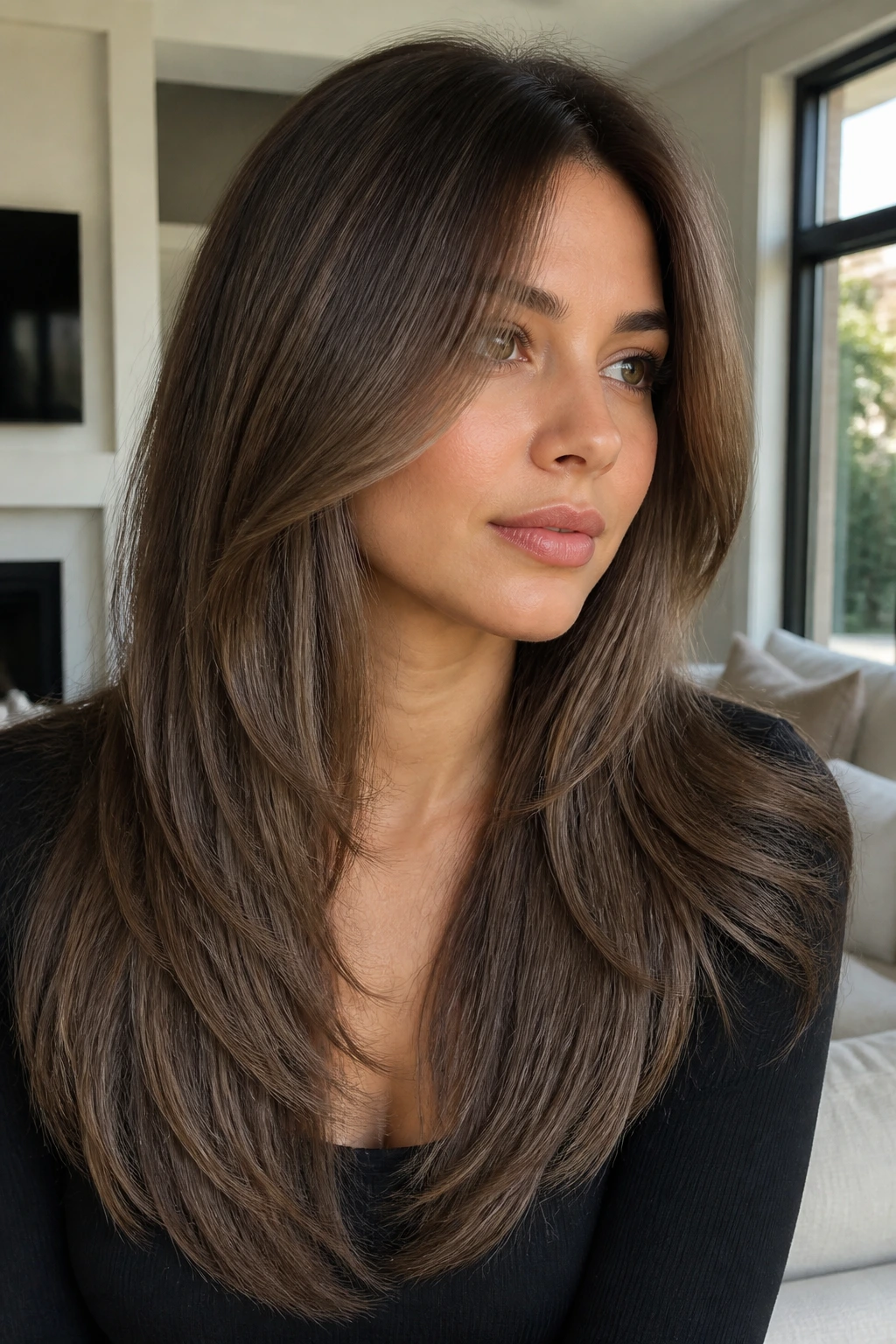
A V-cut gives long hair a pointed finish, and that point is useful on a round face. It drags the eye down the center line instead of letting it stop at the sides. When the ash brown balayage is glossy and low-contrast, the shape feels cleaner.
The best version doesn’t shout. It just moves. Keep the lightest pieces around the lower back and outer lengths, then let the top stay deeper. A glossy finish helps the color look rich instead of dusty, which can happen with ash tones if the tone is too flat.
This style is best if you like hair that swings. The V-cut creates a narrow tail at the bottom, which helps balance the width up top. It’s one of the more underrated shapes for round faces because it looks simple in a mirror but works hard in motion.
15. Layered Lob with an Off-Center Part
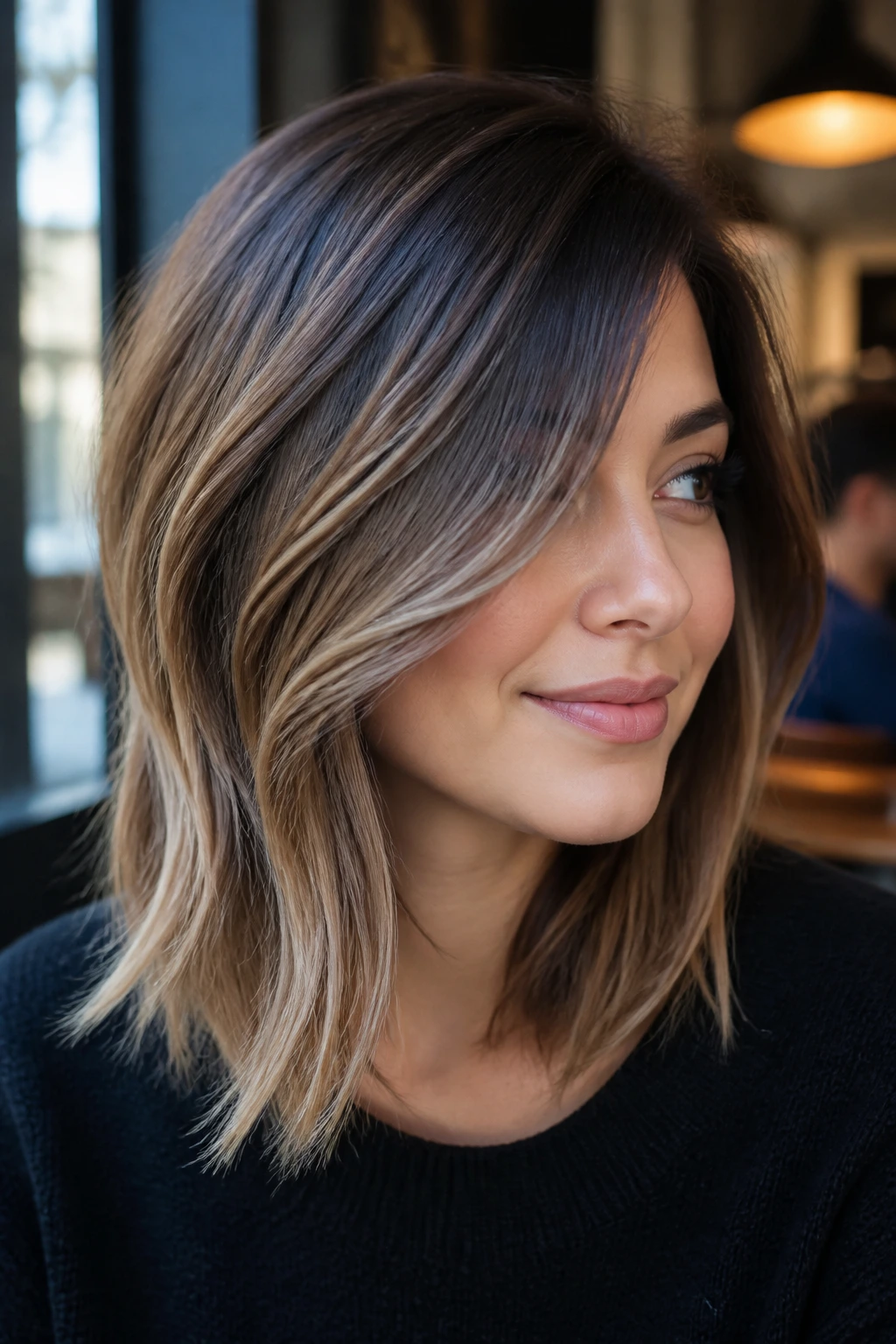
A center part isn’t the only option, and honestly, it’s not always the best one. A small off-center part can tilt the whole face shape in a better direction, especially when the lob has soft layers and ash brown balayage that fades downward.
The layers should start below the cheekbones, not at the cheeks. That keeps the lob from puffing out in the middle. The color should stay denser near the roots and lighter near the collarbone, which gives the face a longer frame. The off-center part adds a little unevenness, and that unevenness is useful. It breaks up the roundness without making the cut feel severe.
If your hair is thick, tuck one side behind the ear and leave the other loose. That tiny asymmetry works better than people expect. It keeps the eye moving across the face instead of stopping in one spot.
16. Air-Dried Waves with Scattered Ash Ribbons
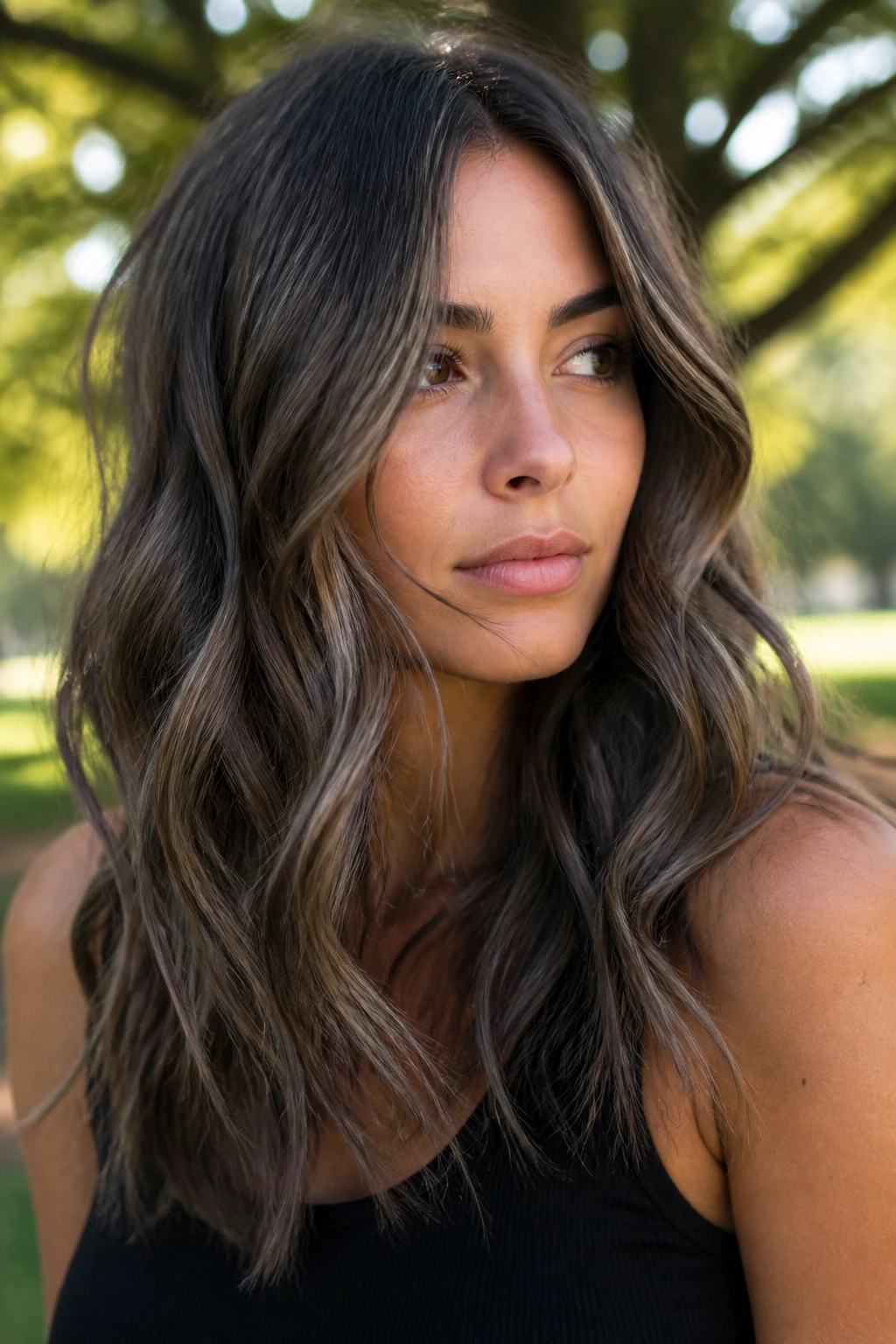
Air-dried waves can be tricky on round faces because they sometimes expand in the wrong places. But if the ash brown ribbons are scattered low and the top stays smooth, the look can feel relaxed instead of puffy.
The important part is placement. Keep the brightest strands at the lower sides and back, then let the front remain more muted. That way the hair doesn’t form a bright ring around the face. A little cream through damp hair helps the wave pattern stay broken up. You want separated movement, not a fluff ball.
What to Ask Your Stylist For
- A few darker lowlights near the temples.
- Ash ribbons below the cheek area.
- No thick highlight panels at the jaw.
- Soft texture through the ends.
That mix keeps the style casual. Not careless. There’s a difference.
17. Volumized Crown with Underlit Ends
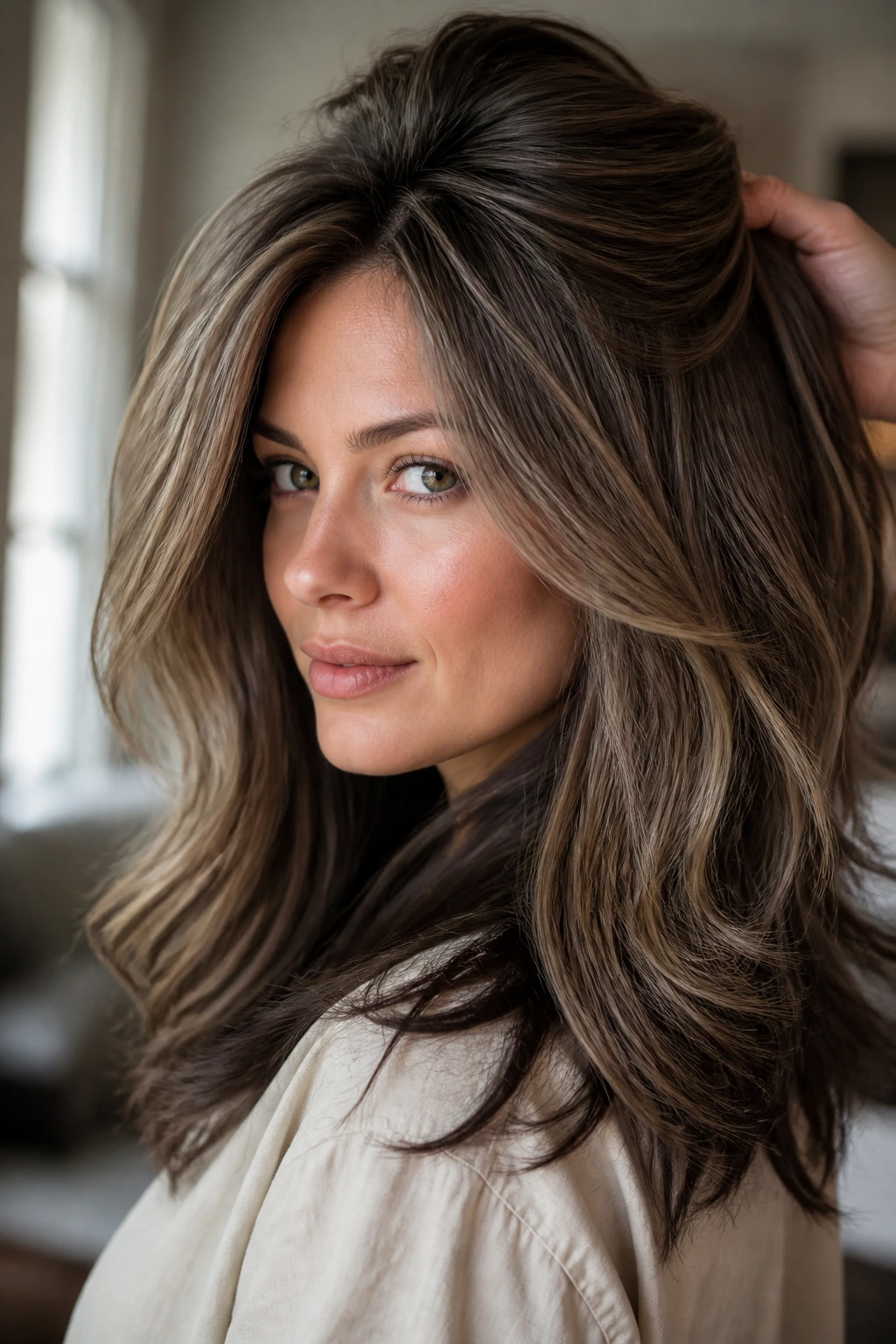
Volume can help a round face, but only when it sits high. A lifted crown adds height, while underlit ends keep the bottom from becoming too bright and wide. That contrast makes the face look longer right away.
The ash brown balayage should stay subtle on the surface and slightly darker underneath. That underlighting gives depth when the hair moves, and it stops the sides from looking like one solid block of color. If the ends are light but the roots and interior remain cool brown, the eye goes up and down instead of straight across.
A root-lift mousse and a round brush are enough here. You do not need huge backcombing. In fact, heavy teasing can make the face shape look rounder by widening the silhouette. Keep the lift at the top, not the sides. That’s the whole game.
18. Soft Curls with Dim Lowlights
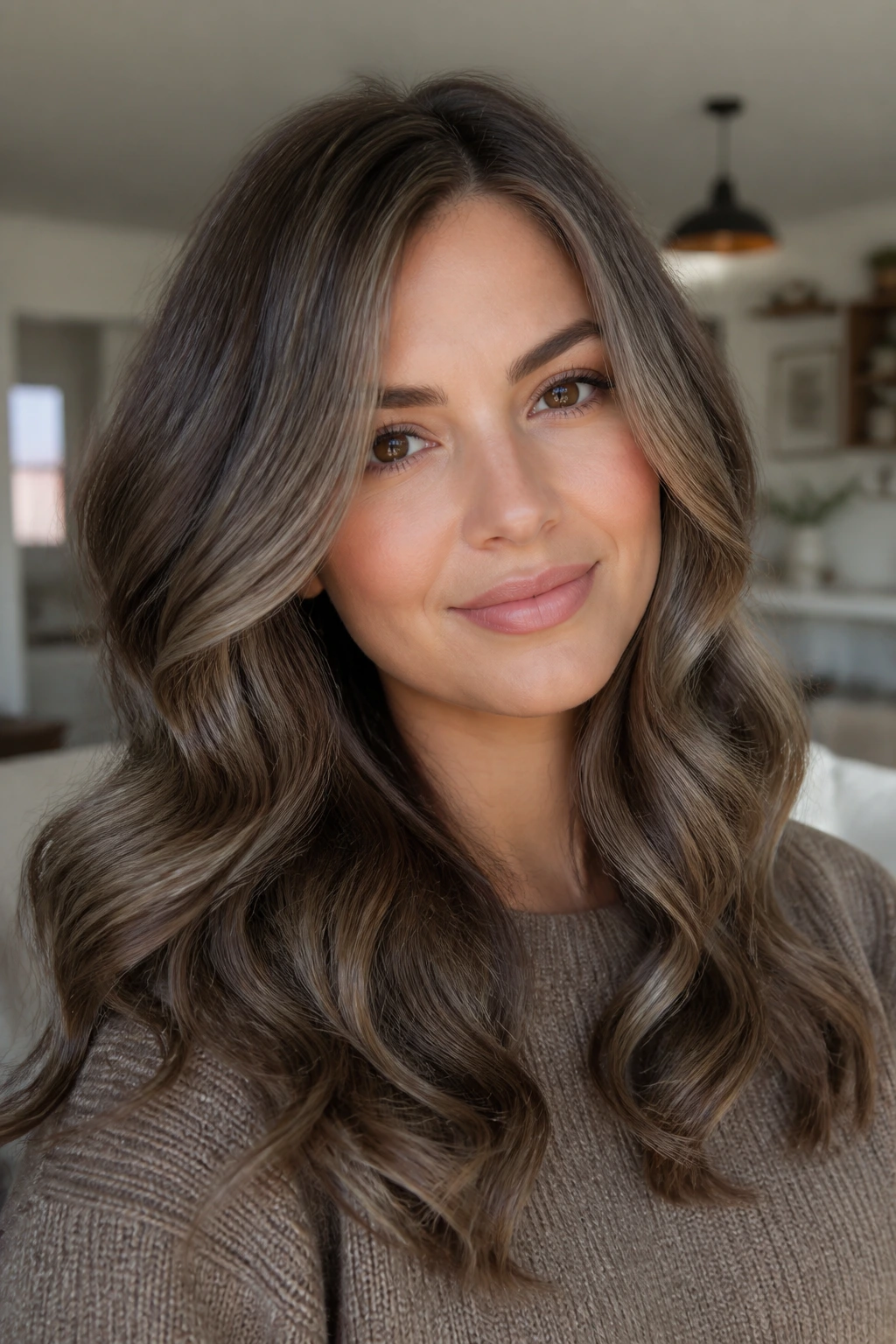
Soft curls are kinder to round faces than tight ones because they stretch the pattern instead of bunching it. Add dim lowlights into an ash brown balayage, and the curls get shape without turning into one bright mass.
The darker pieces are important. They break up the circle effect that can happen when every curl catches the same amount of light. A few lowlights near the sides and underlayers make the face look slimmer because the eye sees contrast, not a solid halo of brightness.
This look works especially well on medium-to-long hair. Curl away from the face in the front, then alternate directions through the back. That keeps the shape loose and a little undone. A curl pattern that is too uniform can look dated fast. Mixed direction feels softer and more natural.
19. French-Girl Fringe with Smoky Balayage
A fringe can be risky on a round face, and a blunt one can cut the face in the wrong place. A softer French-girl fringe avoids that problem by sitting a little longer at the sides and shorter in the center.
The ash brown balayage should stay low-key around the fringe area. Let the fringe itself keep a bit more depth, then brighten the lengths and ends. That keeps the focus on the eyes and cheekbones without making the face look wider. If the fringe is airy, not heavy, it adds shape instead of bulk.
Styling Notes
- Blow-dry the fringe side to side.
- Use a tiny round brush, about 1 inch wide.
- Keep the center piece piecey, not thick.
- Let the rest of the hair fall in soft bends.
A fringe like this has attitude. It just needs the right balance underneath.
20. Chin-to-Collarbone Gradient with Sculpted Sides
A clean gradient from the chin down to the collarbone can work wonders on a round face. It gives the illusion that the hair is falling longer than it actually is, which helps the whole profile look leaner.
The sculpted sides matter because they guide the eye. Keep the ash brown balayage softer near the cheeks, then open it up as it moves downward. The sides should curve inward slightly before turning out at the ends. That shape acts almost like a frame inside a frame, and yes, that sounds a bit fussy — but it makes sense when you see it.
This look is best when the cut is maintained every 8 to 10 weeks so the front stays shaped. If the sides grow too wide, the benefit disappears. The color can be low-maintenance, but the silhouette still needs attention.
21. Dark Ash Brown Base with Sandier Ends
A dark ash brown base gives round faces a stronger outline. Then the sandier ends lighten the bottom just enough to stretch the shape without turning the whole head bright.
This is a good choice if you want something softer than platinum, cooler than chestnut, and easier to grow out than high-contrast highlights. The color shift is gentle. It reads as depth first, light second. That order matters because the face needs structure before it needs sparkle.
If your skin tone runs warm, this look can still work as long as the ash is not pushed too gray. Sandier ends soften the coolness, which keeps the color from looking flat. A few face-framing pieces can be lighter, but keep them slim and lower than the cheekbone. That restraint keeps the width in check.
22. Long Curtain Layers with Seamless Blend
Curtain layers are popular for a reason: they part the face down the middle and then pull the eye outward in a soft diagonal. On a round face, that diagonal is gold. It interrupts the circle without making the haircut feel severe.
The ash brown balayage should melt through the curtain pieces and into the lengths without any hard break. That seamless blend is what keeps the style looking expensive rather than striped. Put the brightest pieces a little below the chin, then leave the root zone deeper. The contrast should feel gradual, like the hair is darkening and lightening on its own.
How to Get the Most From It
Use a large blowout brush and bend the curtain layers away from the face. That outward sweep opens the cheek area without sitting on it.
- Keep the part slightly off center if the center line feels too flat.
- Ask for soft blending around the temples.
- Let the ends stay a touch lighter than the top.
- Skip chunky highlights near the root.
23. Worn-In Waves with Backlit Panels
Worn-in waves have a relaxed look that suits ash brown balayage well, especially when the lighter pieces are hidden a little deeper inside the hair. Backlit panels add brightness from behind, so the surface stays calm and the movement shows when the hair swings.
That’s a smart move for round faces because the front doesn’t get crowded with light. The eye sees depth first, then color. If the front of the hair is too bright, the face starts to feel wider. Keep the panels toward the mid-back and lower lengths, and let the waves break them up naturally.
The texture should feel loose, not polished to death. A salt spray or a light wave cream is enough. The goal is a lived-in finish that still has shape. Too much curl or too much shine can flatten the effect. This one works because it looks a little casual.
24. Cool Mocha Ash with Face-Thin Brighter Strands
A cool mocha base with thin brighter strands near the face can be a smart compromise if full ash brown feels too soft or too dark. The trick is keeping those brighter strands narrow enough to slim the face instead of framing it like a circle.
The strands should start around the temple and drop past the jaw. Thinness matters here. Thick front pieces can make a round face look broader, while slim strands act more like vertical lines. The mocha base underneath gives the hair weight and depth, which keeps the color from looking washed out.
This is a nice option for hair that is fine or medium in thickness. Too much lightness can make fine hair look see-through. A cool mocha base keeps the body in the style, and the brighter pieces just nudge the face shape in a better direction. Nothing flashy. Just smart placement.
25. Polished Mid-Length Cut with Low-Contrast Finish
A polished mid-length cut is the quietest look on this list, and maybe the most wearable. The ash brown balayage stays low-contrast, so the hair reads as one smooth shape with only subtle shifts in tone. That restraint helps a round face because the eye doesn’t get stuck on a bright horizontal band.
The cut should land around the collarbone, with the front pieces a touch longer than the back. Keep the layering soft and let the ends look full rather than wispy. That balance matters. Too much thinness at the bottom can make the style feel unfinished, while a solid line can feel heavy. Low-contrast color solves part of that by softening the perimeter without losing the shape.
This is the look I’d pick for someone who wants ash brown balayage but does not want the color wearing them. It’s neat, understated, and very good at doing its job without showing off.
