



Caramel balayage works on brown hair because it sits in that sweet spot between obvious color and believable sunlight. Too pale, and it starts to look striped. Too dark, and you lose the whole point.
The best versions don’t shout. They soften a brunette base, warm up the mids and ends, and make the hair move in a way that solid color usually can’t. On a good day, caramel reads like the shine you get after a few hours outside. On a bad day, it goes brassy fast. That’s the line you’re walking.
And that’s why shade choice matters so much. Honey caramel, toffee, maple, beige caramel, golden caramel — they’re not interchangeable, not even close. Brown hair can hold a huge range of tones, and the right placement changes everything, especially when the cut has layers, bends, curls, or a blunt edge that needs breaking up.
1. Soft Caramel Ribbons on Dark Chocolate Brown
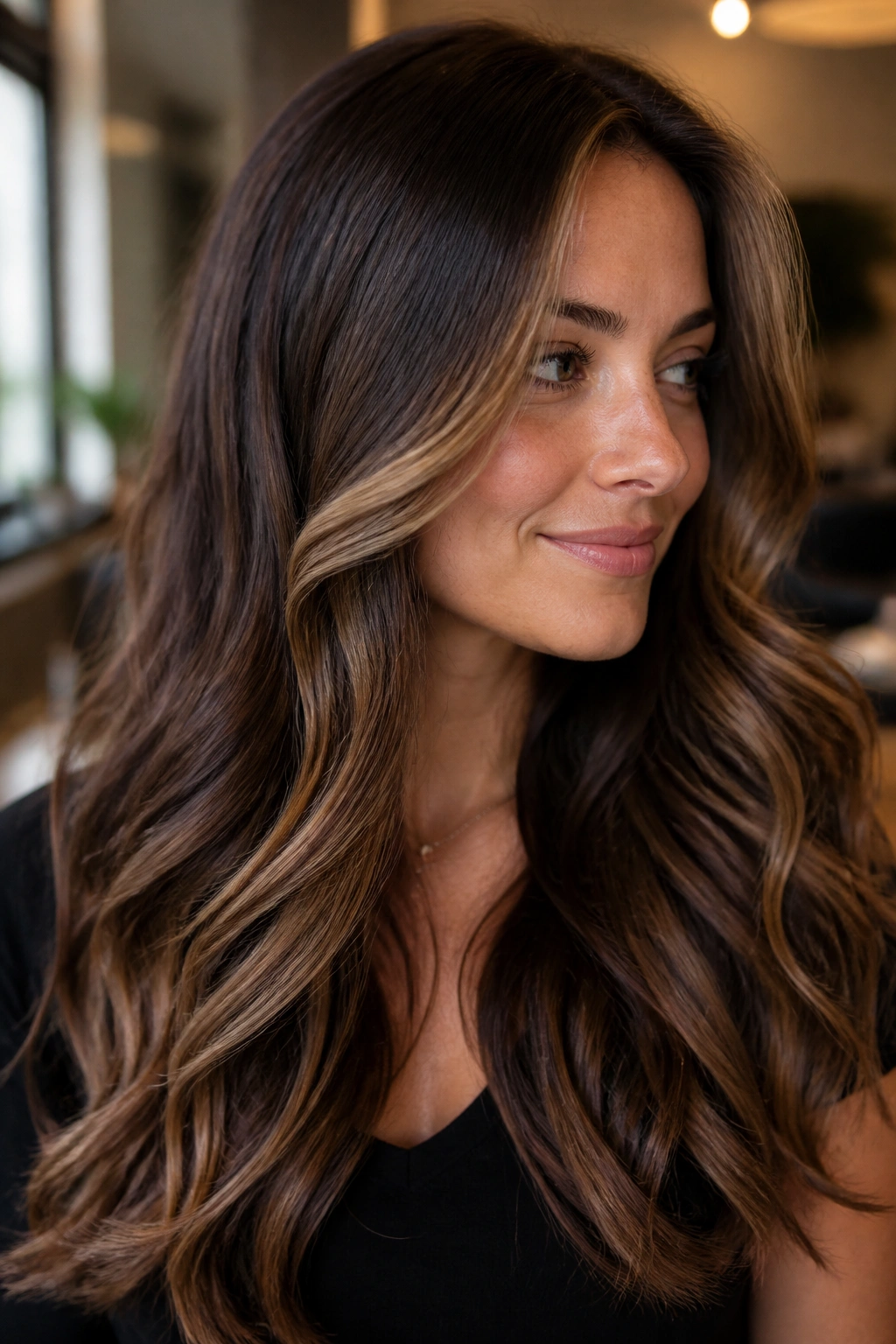
Soft ribbons are the safest place to start if you want caramel balayage on brown hair without a dramatic jump. The pieces stay thin, the contrast stays gentle, and the overall effect feels expensive in the quietest possible way.
Why It Works
This look is all about restraint. A dark chocolate base with a few hand-painted caramel streaks through the mids lets the brown stay dominant, which is exactly why it looks believable. The lighter pieces catch around the face and along the top layer, not all over the head.
Best for:
- First-time balayage clients
- Straight or softly waved hair
- Anyone who wants dimension without a big color commitment
Color note: Keep the caramel in the neutral-to-golden range so it doesn’t turn orange against a deep brown base.
2. Toasted Toffee Money Piece
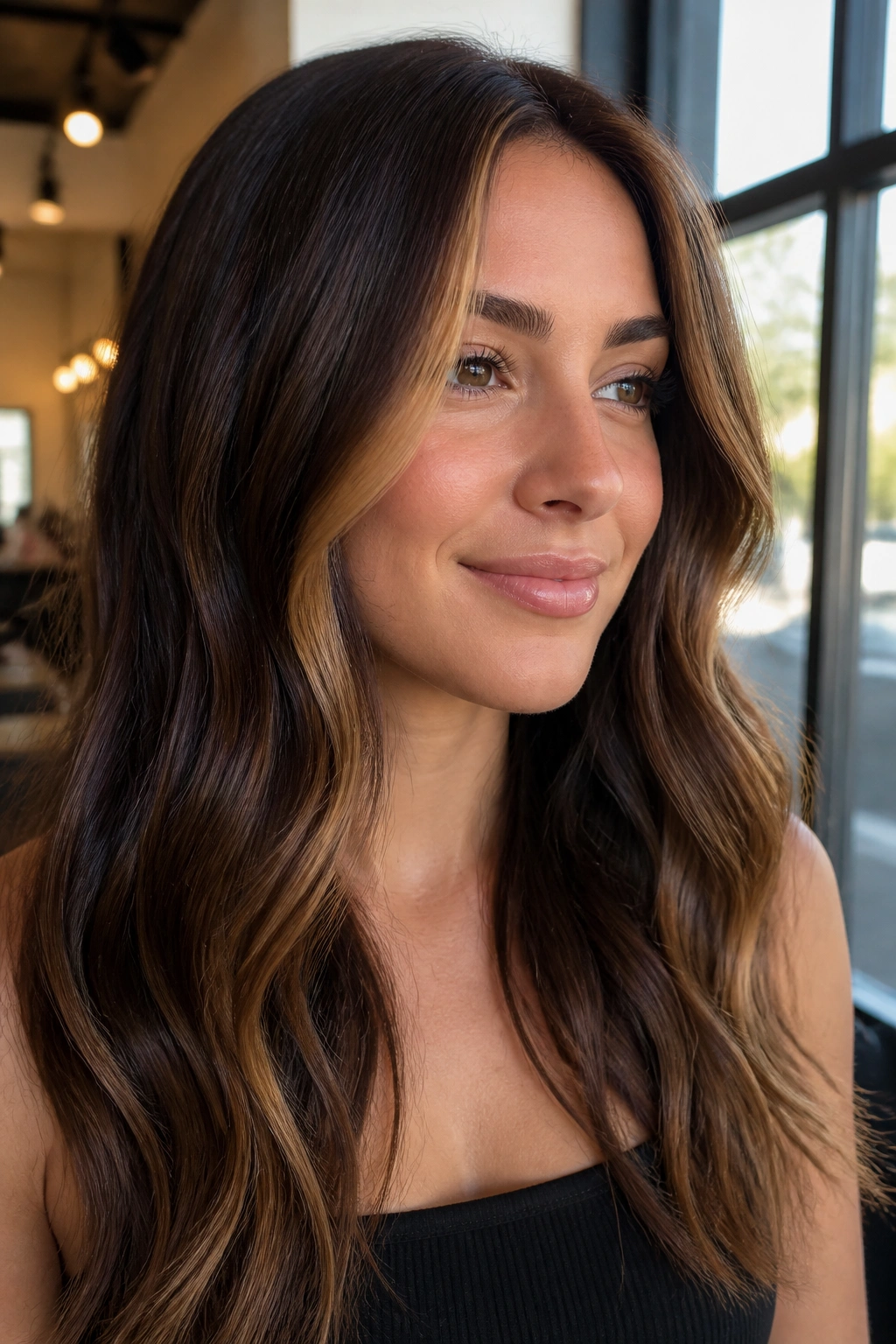
A brighter money piece changes the whole mood fast. One or two face-framing sections in toasted toffee can wake up brown hair that otherwise feels flat, especially if your cut has long layers or curtain bangs.
The trick is contrast. The front pieces should be lighter than the rest, but not so light that they look pasted on. I like this look when the roots stay rich and the color starts about an inch back from the hairline — it gives lift without looking harsh.
Ask for a soft transition near the temples and a slightly brighter finish around the cheekbones. That little bit of placement is what makes the style feel intentional instead of streaky.
3. Mocha Melt to Caramel Ends
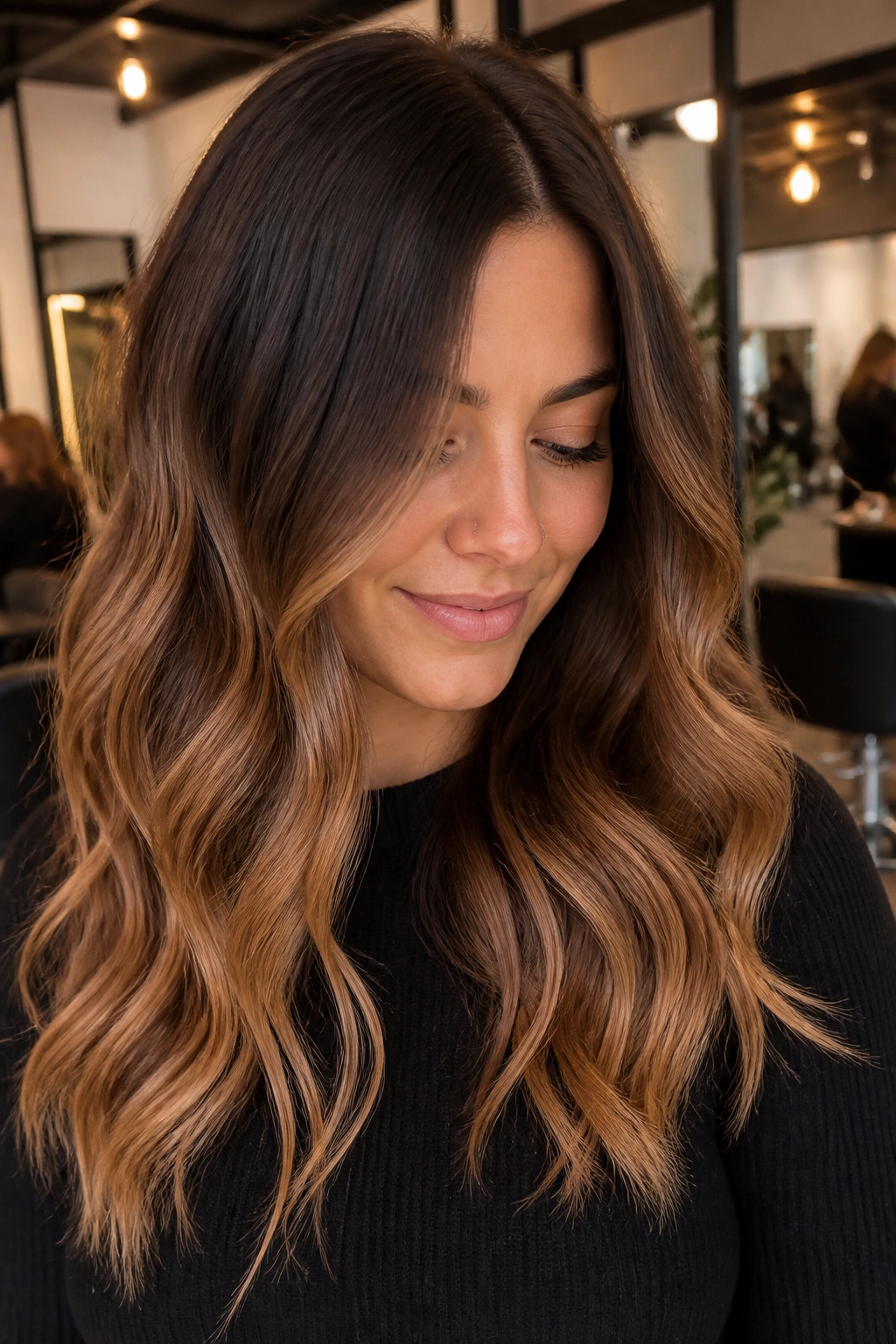
Why does this one work so well? Because the eye loves a gradual shift. A mocha root melting into caramel ends feels smooth and expensive, and it’s one of the easiest caramel balayage looks to live with between salon visits.
The color change should happen slowly. No sharp line, no sudden jump from brown to blonde. You want the warmth to build in the lower half of the hair, where light naturally lands. That keeps the style soft even when the hair is worn straight.
How to wear it
- Best on long layers
- Looks especially good with loose bends from a 1.25-inch iron
- Keep the ends glossy with a light serum, not a heavy oil
4. Cinnamon-Caramel Waves
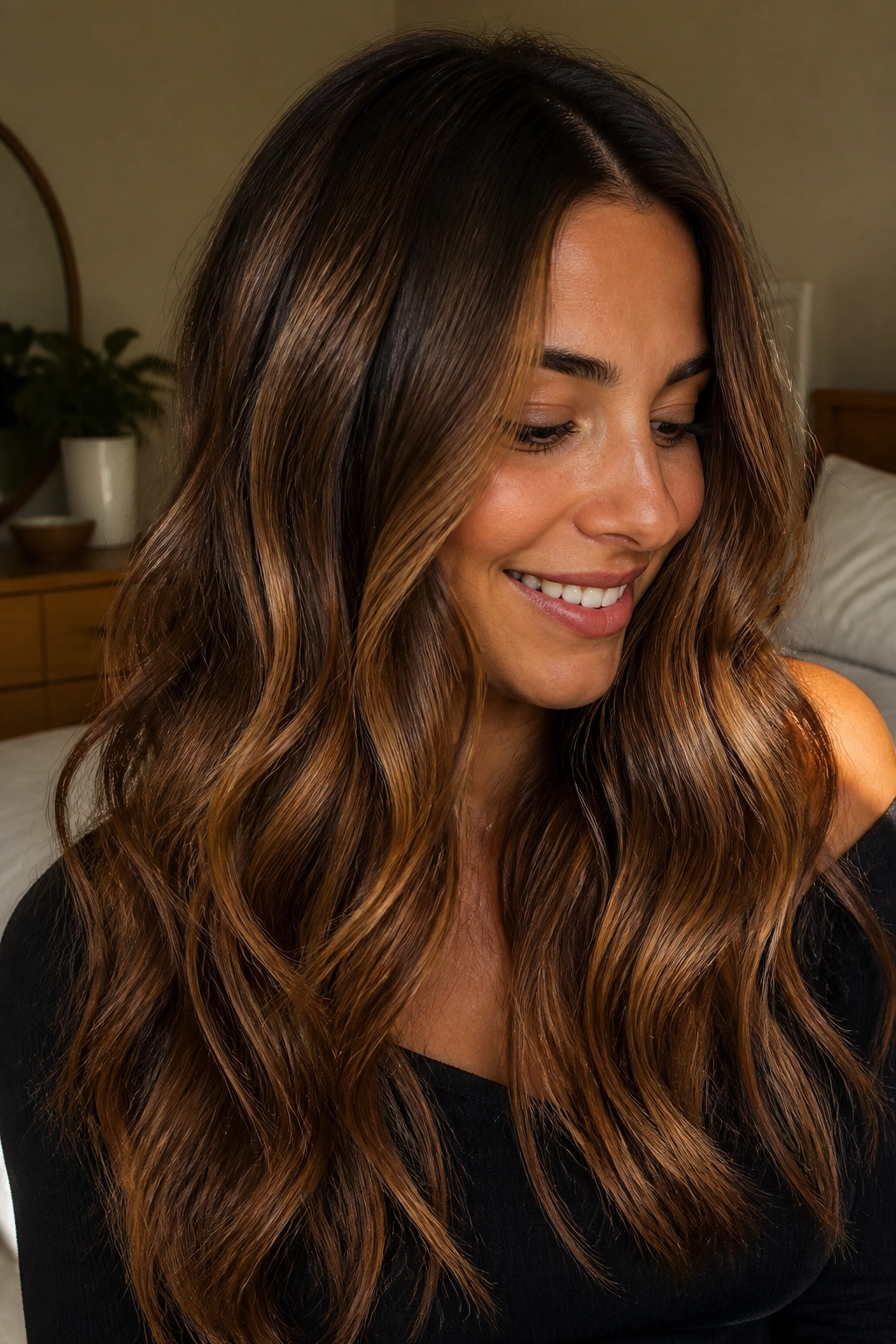
Cinnamon caramel has more warmth than a standard honey tone, and that extra red-brown note can be gorgeous on medium brown hair. It gives the hair a little depth, almost like the color has been baked in instead of painted on.
This is the version I reach for when brunette hair feels too flat under indoor light. The warm undertone wakes it up fast. On wavy hair, the movement makes the cinnamon pieces look deeper at the curve and brighter at the top of each wave.
It’s not the right choice if you hate warmth. If that’s you, skip ahead. But if you want a rich, cozy brunette look, this one earns its keep.
5. Chestnut Brown with Face-Framing Balayage
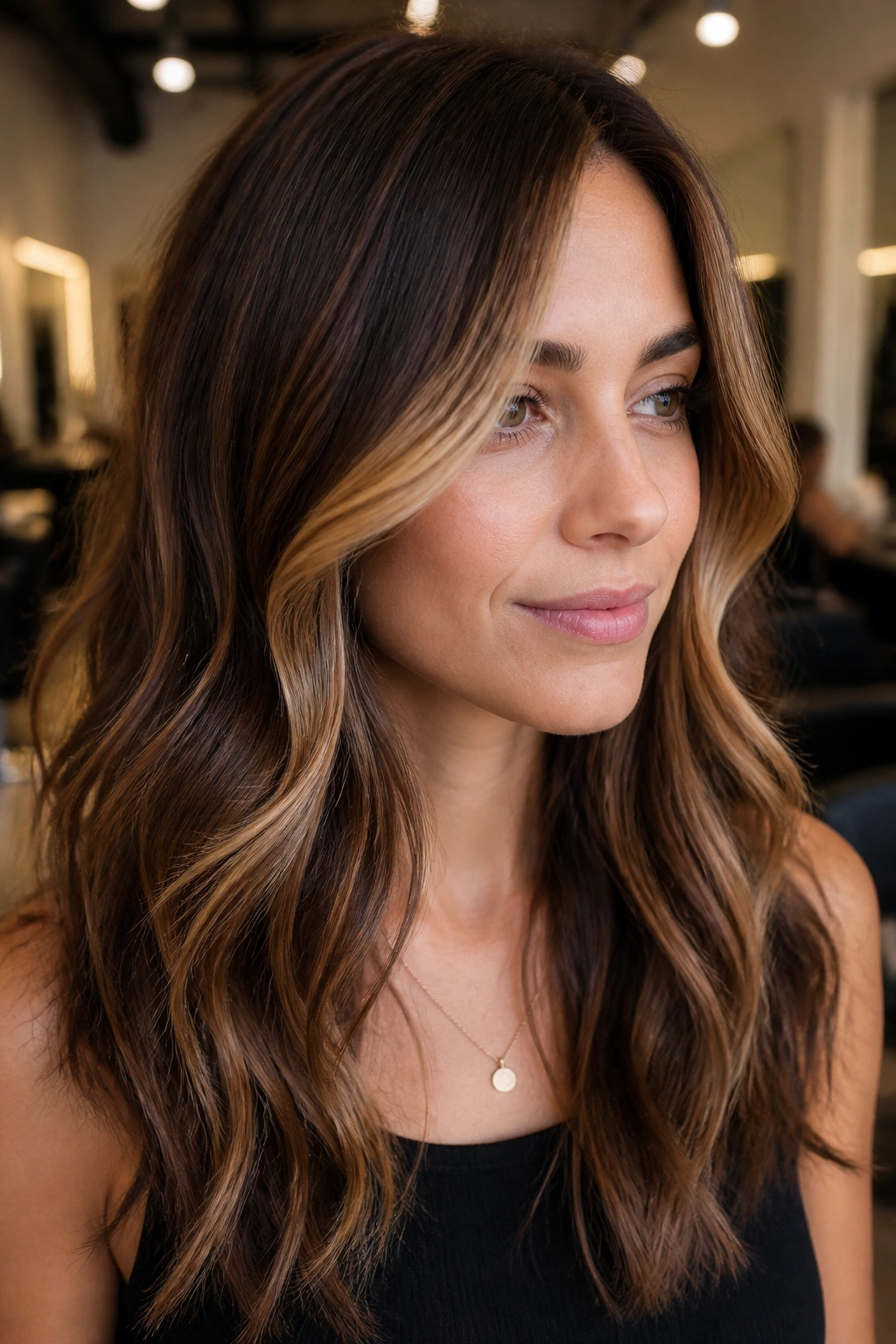
A chestnut base already has softness, so the caramel should support it, not overpower it. The smartest move is to keep the balayage concentrated around the front and upper layers, where it can brighten the face without breaking the depth of the brown.
This look flatters shoulder-length cuts especially well. The lighter pieces sit over the chestnut like brushstrokes, and the result is cleaner than a full highlight pattern. You still see the brown. You’re supposed to.
What to ask for
Tell your colorist you want caramel that stays two shades lighter than the base, with the brightest pieces right beside the face. That keeps the look polished instead of busy.
6. Espresso Base with Ultra-Fine Micro-Balayage
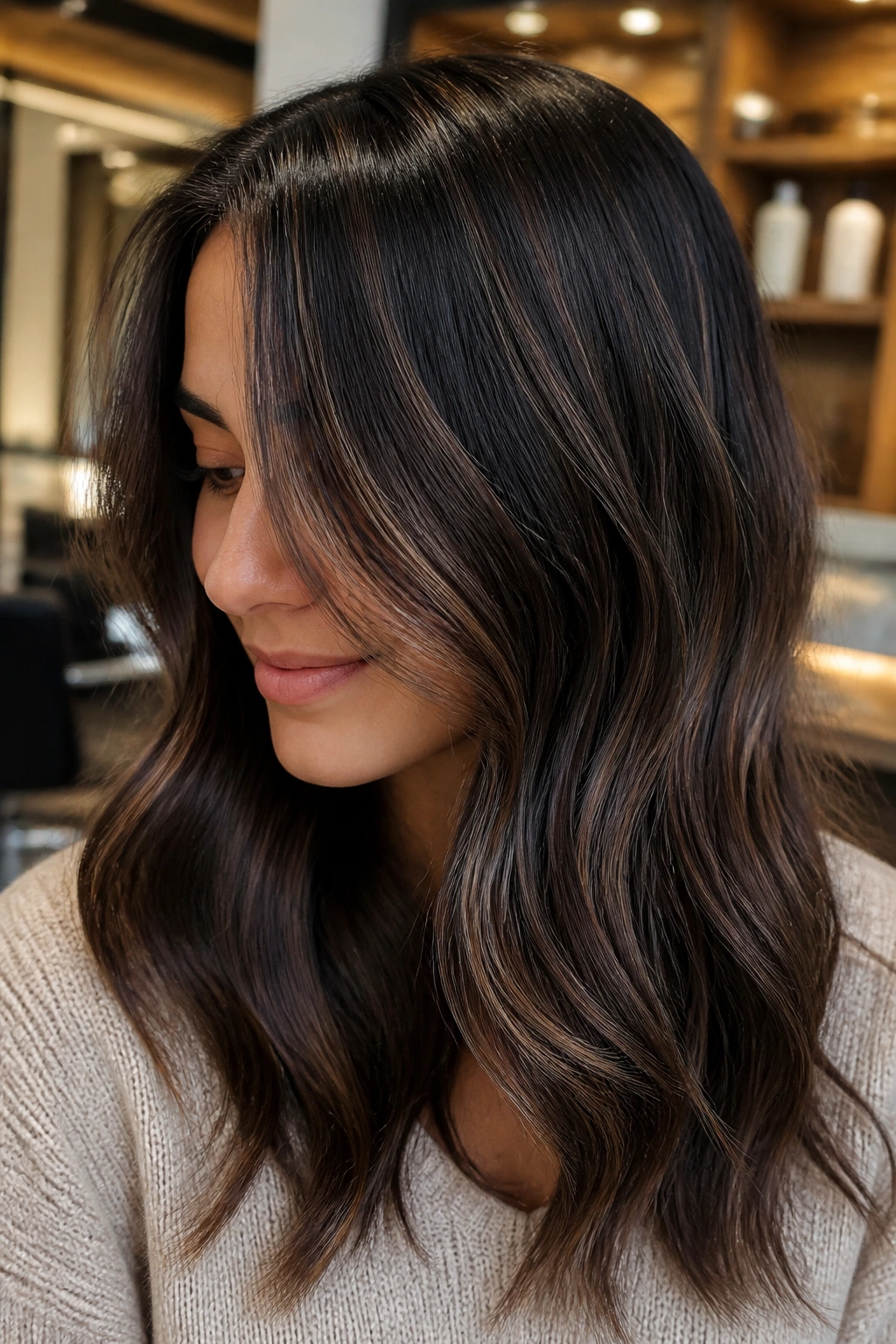
Micro-balayage is the move when you want dimension but hate obvious streaks. The pieces are so fine that the color looks like it came from inside the hair rather than sitting on top of it.
That matters on espresso brown hair, where chunky light bits can look loud in a hurry. Fine placement gives the cut texture, especially on straight hair that otherwise falls like a curtain. You notice the shimmer when the light hits it, then lose it again when the hair moves. That’s the charm.
This is probably my favorite option for someone who wears their hair down a lot and doesn’t want obvious maintenance staring back from the mirror.
7. Golden Caramel on Curly Brown Hair
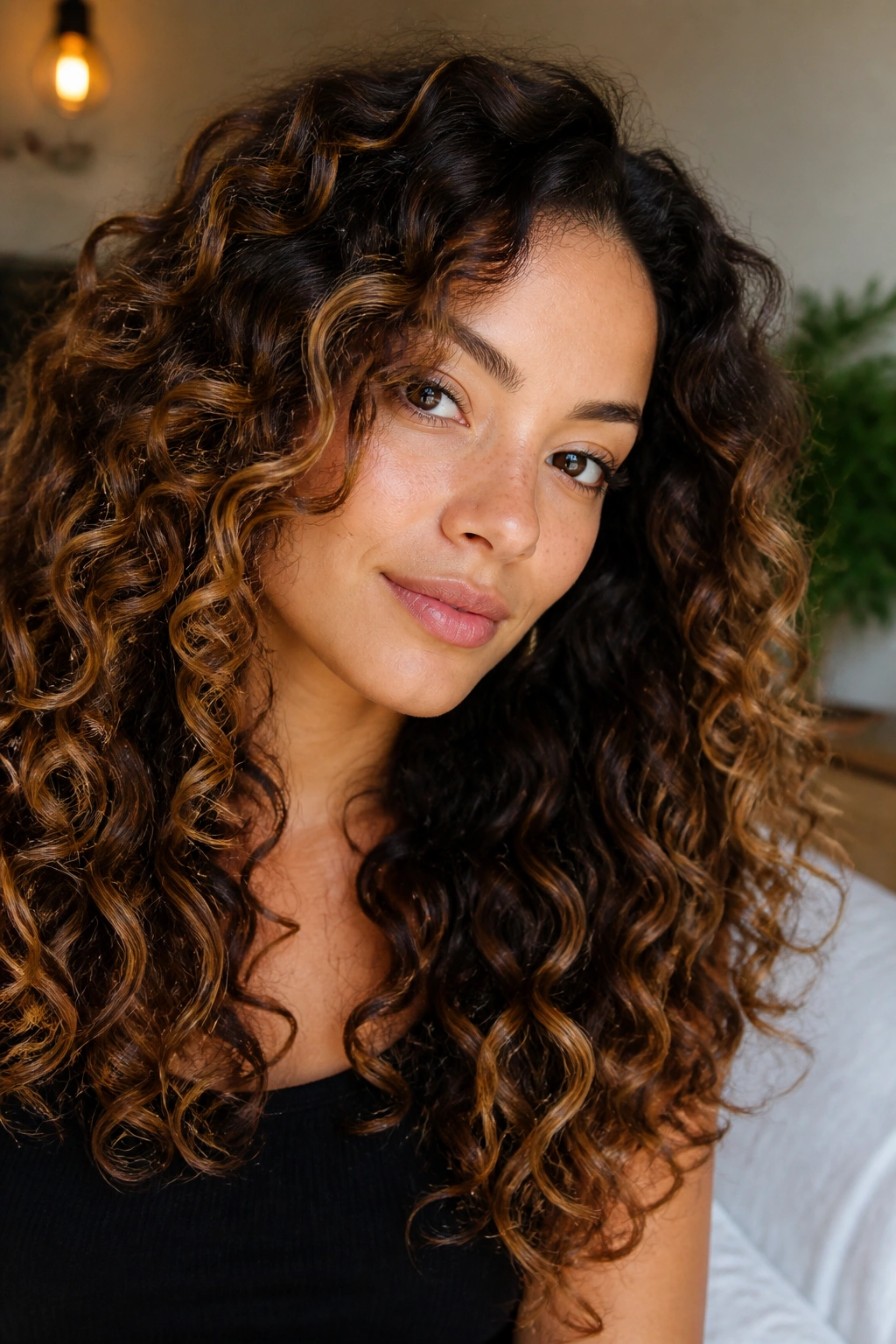
Curly hair loves painted warmth. The bends in the curl catch lighter pieces differently, so golden caramel can look richer and more dimensional on curls than on straight hair.
The key is spacing. If the lightened sections are too close together, curls start to blur into one large bright mass, and the dimension disappears. Better to keep the color mapped across the outer curve of each curl pattern and let the inner sections stay dark.
Why It Looks So Good
Golden caramel makes curls look fuller because it creates the illusion of depth between the coils. The darker base hides underlayers. The lighter ribbons sit on top. Simple, but effective.
8. Buttery Caramel on a Lob
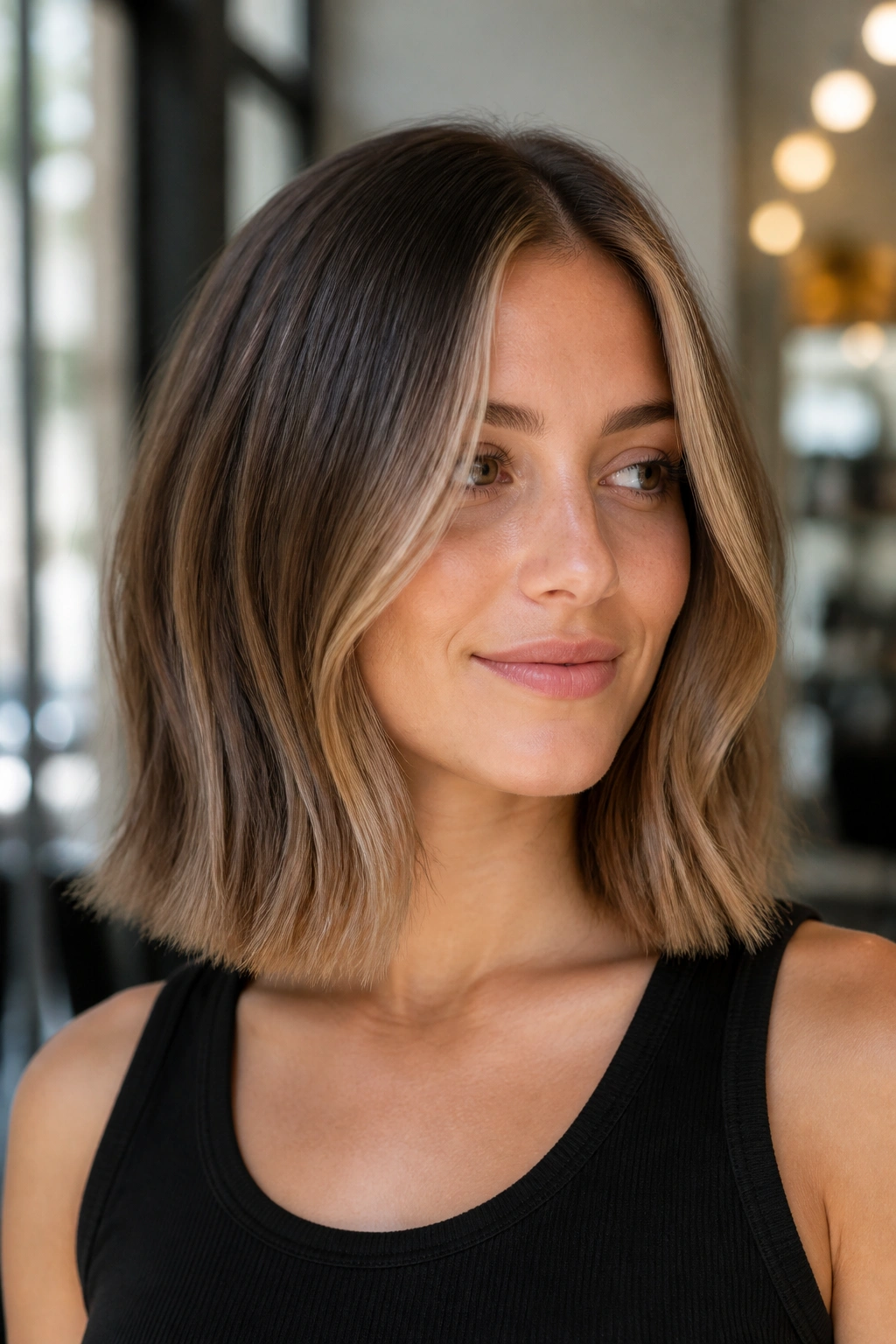
A lob can take a lot of color without looking overloaded, which is why buttery caramel works so well here. The cut already has movement at the shoulders, so the balayage can follow that shape and make the ends swing a little more.
Buttery caramel sits softer than gold and reads cleaner than orange. On a blunt lob, that matters. A harsh tone would fight the cut. A creamy one just makes it feel fresher.
If your lob is worn with a center part, ask for extra brightness at the front corners. That tiny shift makes the haircut look more deliberate and less like a grown-out all-over color.
9. Mushroom Brown with Beige-Caramel
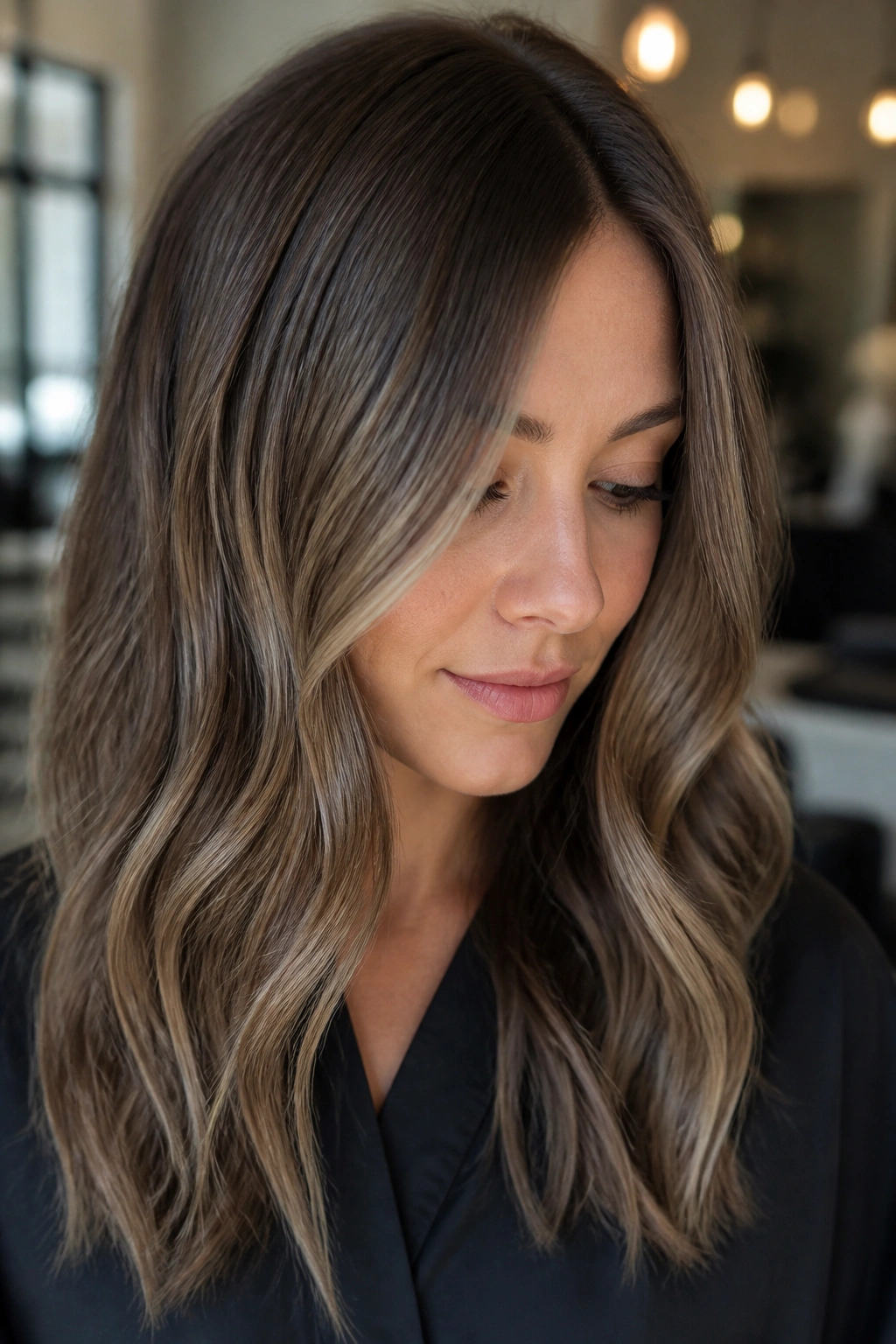
Not everyone wants warmth. Some people want a brown that stays cool, ashier, and a little smoky, and beige-caramel is the right answer when the base has that mushroom-brown feel.
This combination is subtle in the best way. The caramel doesn’t read golden; it reads soft and sandy. That keeps the result from sliding into orange, which is the problem a lot of brunettes run into when they ask for “caramel” without naming the tone.
How to keep it believable
- Choose a beige toner, not a warm gold toner
- Keep the lightened pieces thin and diffused
- Pair it with a soft wave rather than tight curls
10. Honey-Caramel Veils on Long Layers
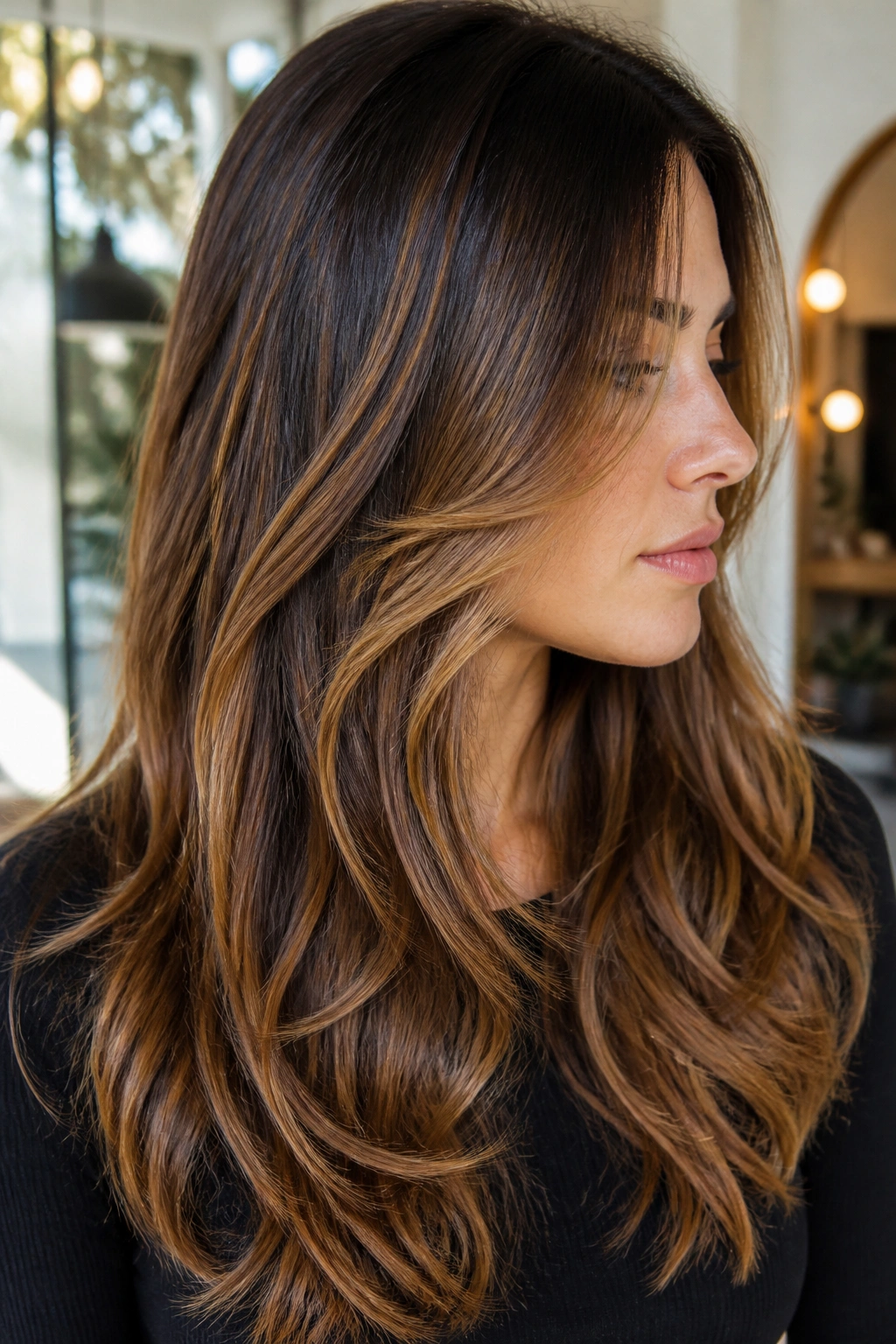
Long layers give caramel room to breathe. Instead of sitting in one obvious block, the color drapes across the hair in soft veils, and each layer shows a slightly different amount of light.
That’s what makes this look feel expensive. The honey-caramel sits over the brown like sheer fabric, not heavy paint. It’s especially flattering if your hair is thick, because the layers stop the color from looking too dense at the ends.
The best part? It photographs well from every angle, but more important, it still looks good in motion. Hair that moves needs this kind of placement.
11. Dark Brunette with Bold Ribbon Highlights
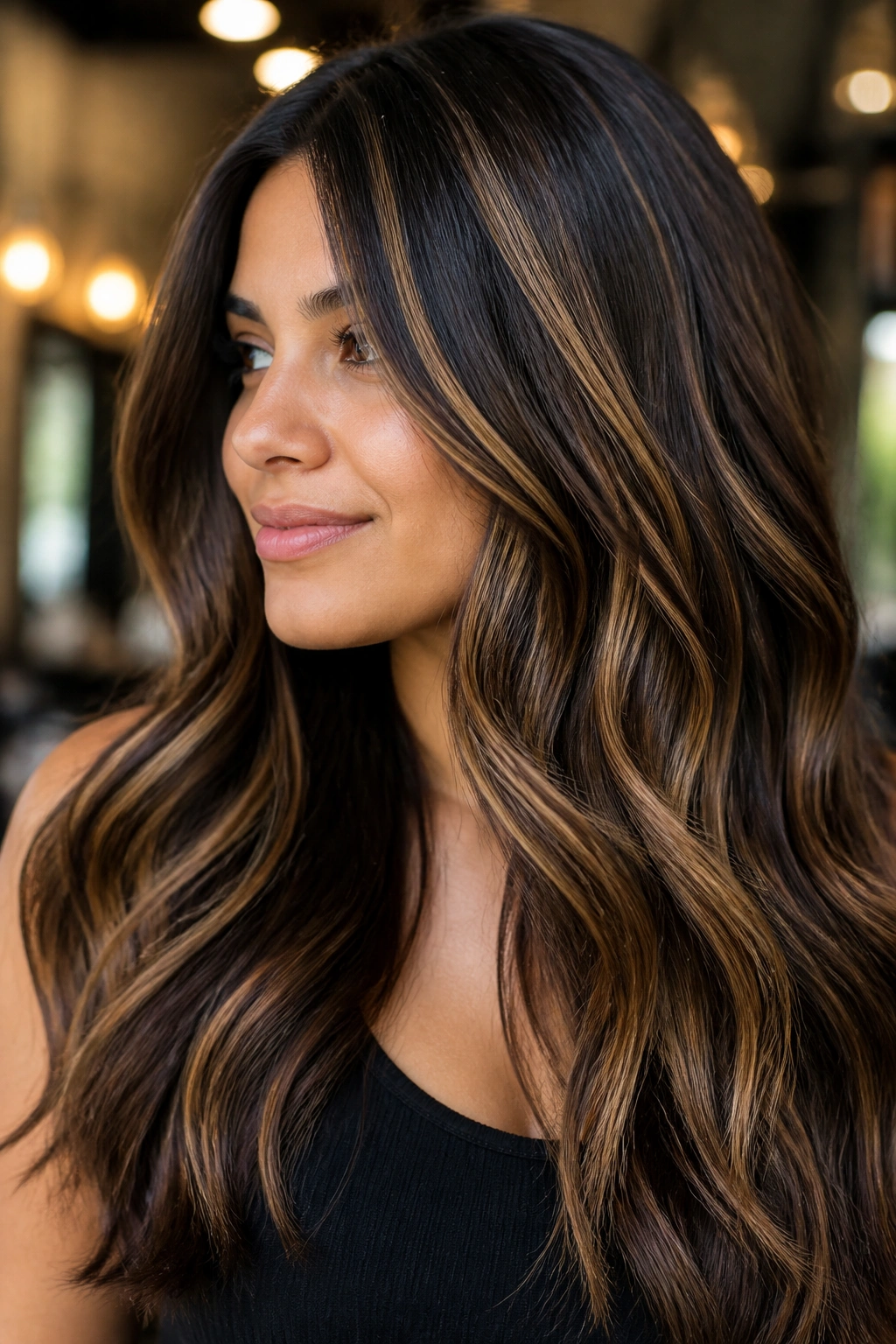
Sometimes subtle isn’t the point. Bold caramel ribbons on dark brunette hair give you contrast that reads clearly from a few feet away, and if you like seeing the color, this is the version to choose.
The dark base does the heavy lifting here. It makes the caramel look brighter without needing to push the lightness too far. That also helps the hair stay in better shape, since the lighter pieces can stop at a warm medium caramel instead of chasing pale blonde.
The placement should be broad and sweeping, especially through the surface layer. Thin ribbons would vanish. These need room.
12. Smoked Mocha Balayage with Soft Ends
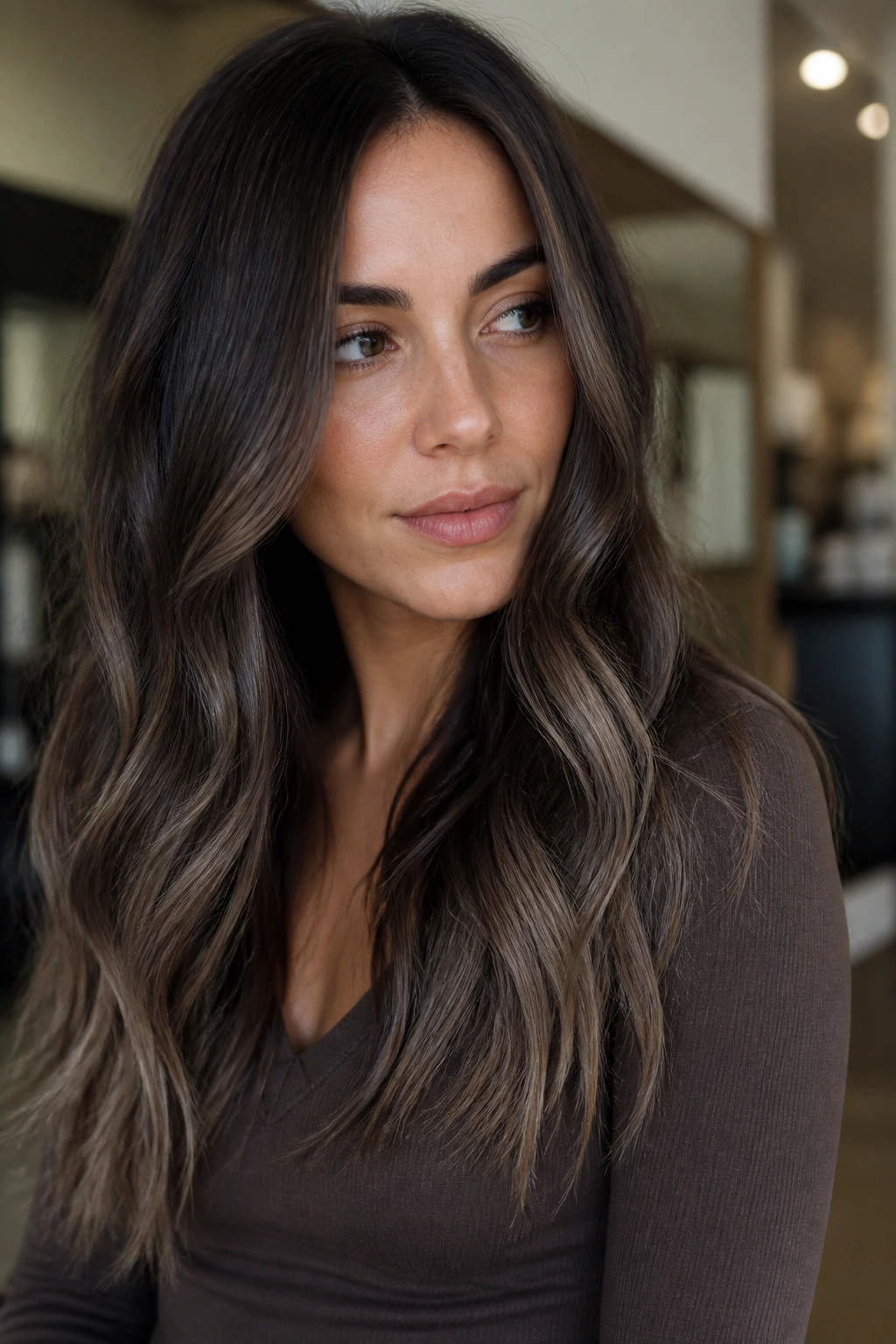
Smoked mocha is the sleeper hit of caramel balayage looks for brown hair. It’s darker than honey, cooler than toffee, and far less predictable than the usual warm brunette color story.
I like this on hair that already has a little natural depth. The balayage starts midshaft, then fades softly toward the ends, so the color never looks chopped off. On layered cuts, the movement makes the smoke-toned pieces slide in and out of view.
It’s the kind of color that doesn’t beg for attention. It earns it slowly.
13. Chocolate Cherry Base with Warm Caramel Accents
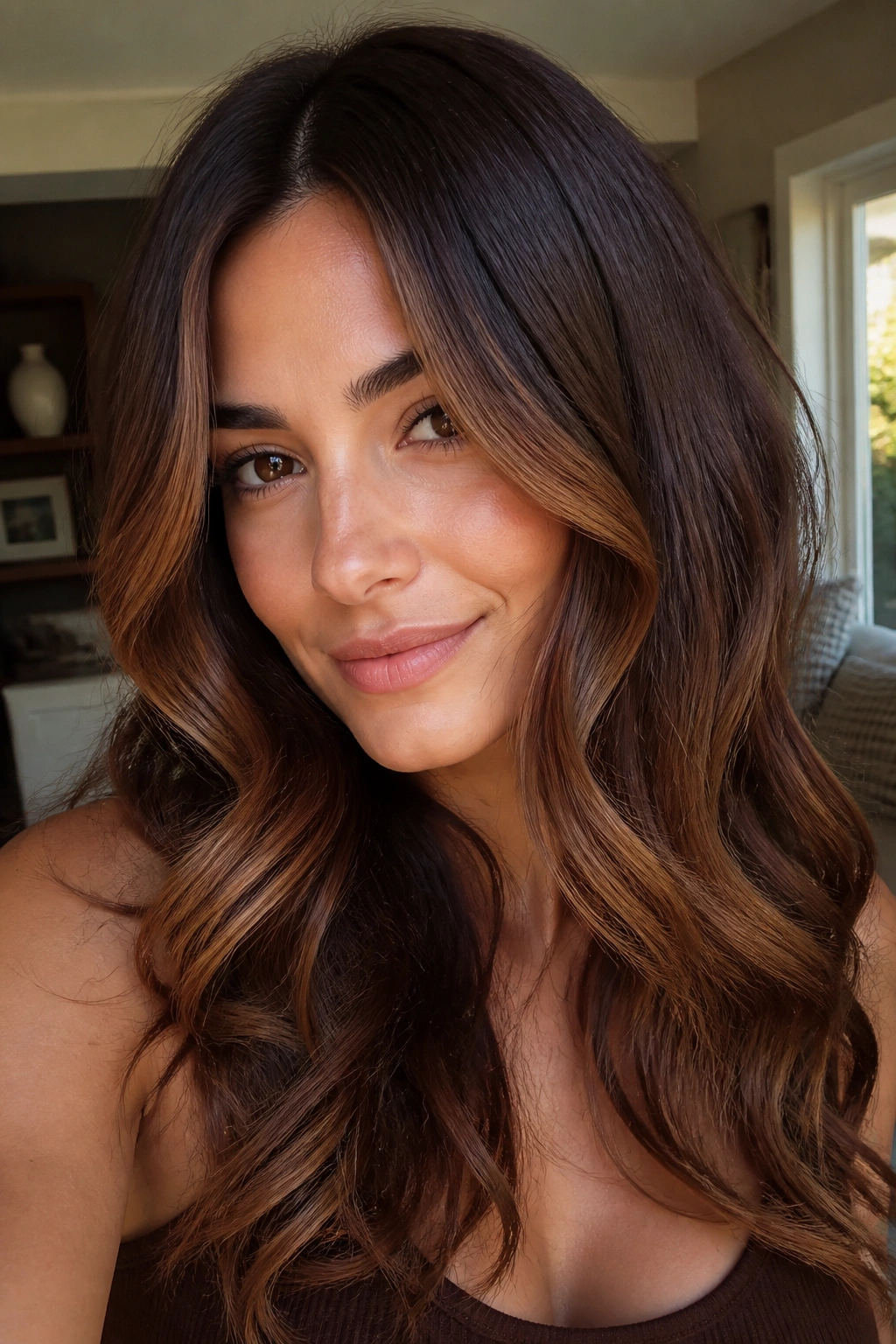
A chocolate cherry base can sound dramatic, but the caramel accents keep it wearable. The red-brown undertone makes the caramel look softer and a little richer, especially in daylight.
This is a nice option if your brunette hair tends to look flat or muddy. The cherry note brings it back to life, then the caramel pieces create contrast at the ends and around the face. The mix feels warm without getting too orange.
What makes it different
The red tone changes how the caramel behaves. Instead of reading as a beachy blonde piece, it looks closer to toasted sugar. That small shift gives the whole style more depth.
14. Sunlit Caramel on Beachy Waves
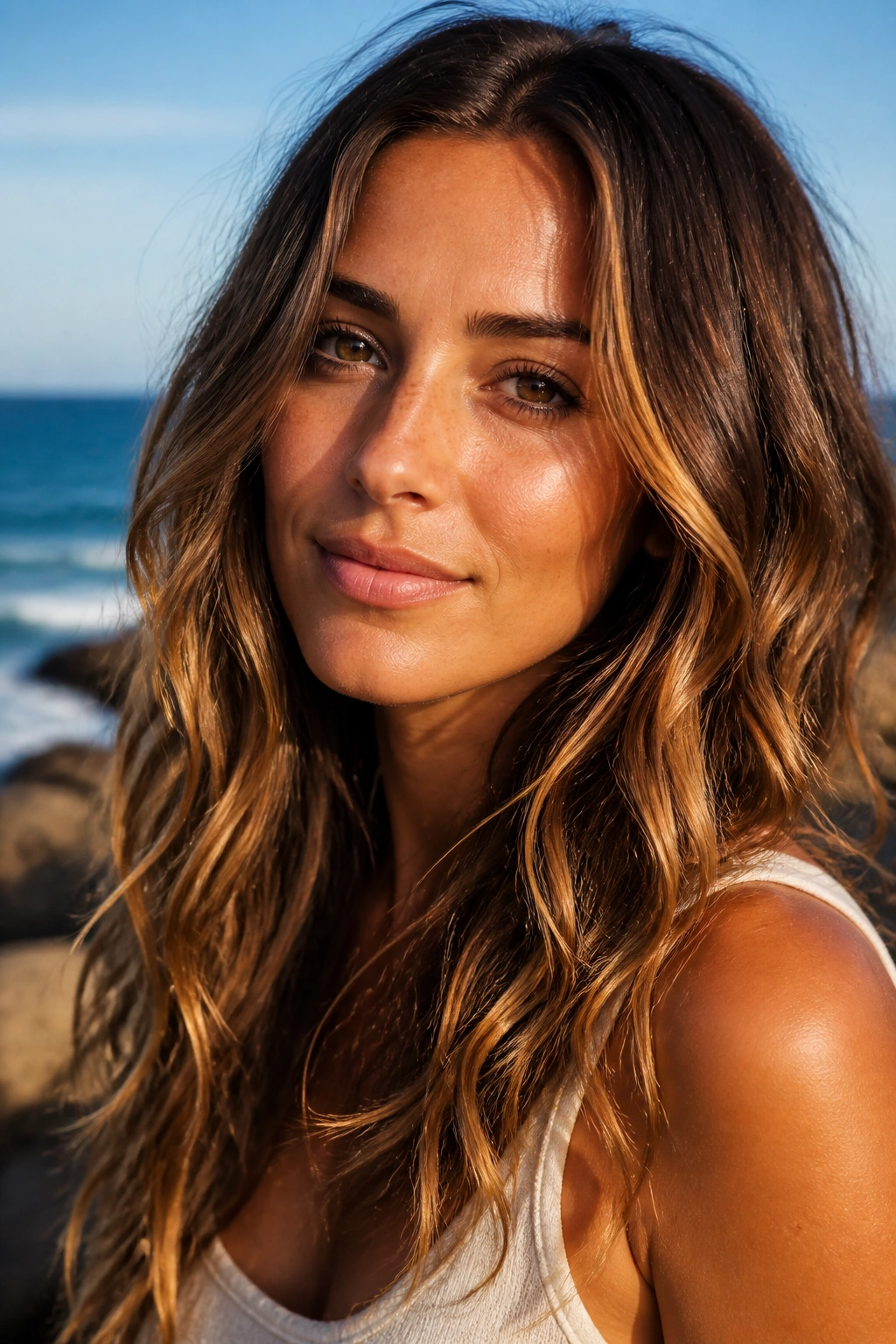
Beachy waves and caramel balayage have been paired so often because the combo works. The waves create pockets of light, and the caramel slips into those spaces like sun hitting hair that has already had a long day outside.
This look should feel easy, not overworked. The brown base stays visible, the caramel sits mostly in the mids and ends, and the wave pattern helps blend everything together. If the hair is too smooth, the color can look more obvious. A little texture fixes that.
Use a salt-free texture spray if your hair runs dry. Salt sprays can rough up the cuticle and make caramel tones look dull.
15. Face-Framing Caramel and Curtain Bangs
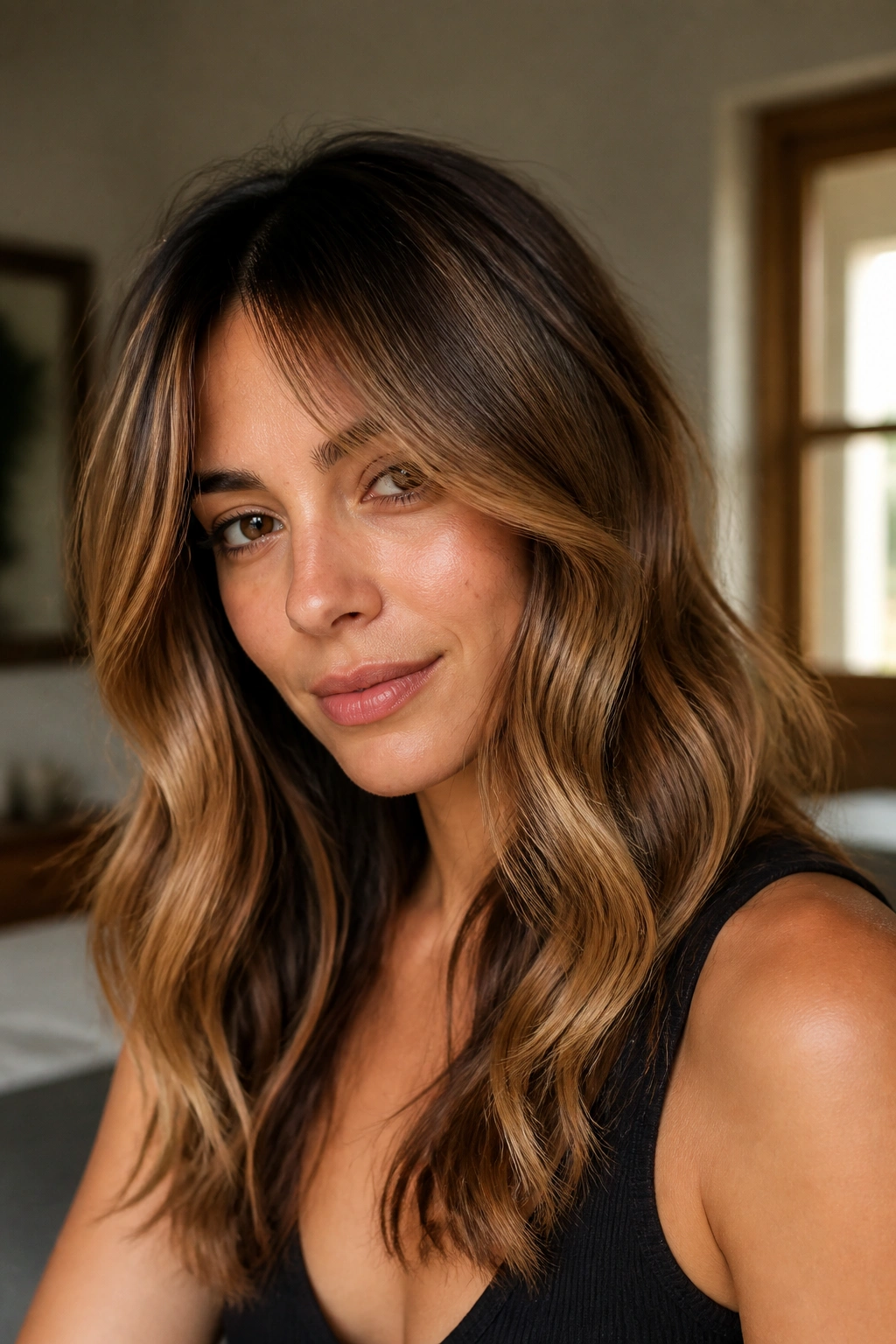
Curtain bangs and caramel balayage are a strong pairing because both are about softening the front of the face. The lighter pieces open up the eyes, while the bangs keep the haircut from feeling severe.
You do not need much lightness here. In fact, too much color around curtain bangs can make them lose their shape. A few carefully placed strokes at the cheekbone and along the outer fringe are enough to do the job.
How to get the most from it
Ask for the brightest caramel right where the bangs split, then let it fade as it moves back. That keeps the front flattering and the rest of the hair calm.
16. Glossy Maple-Caramel Balayage
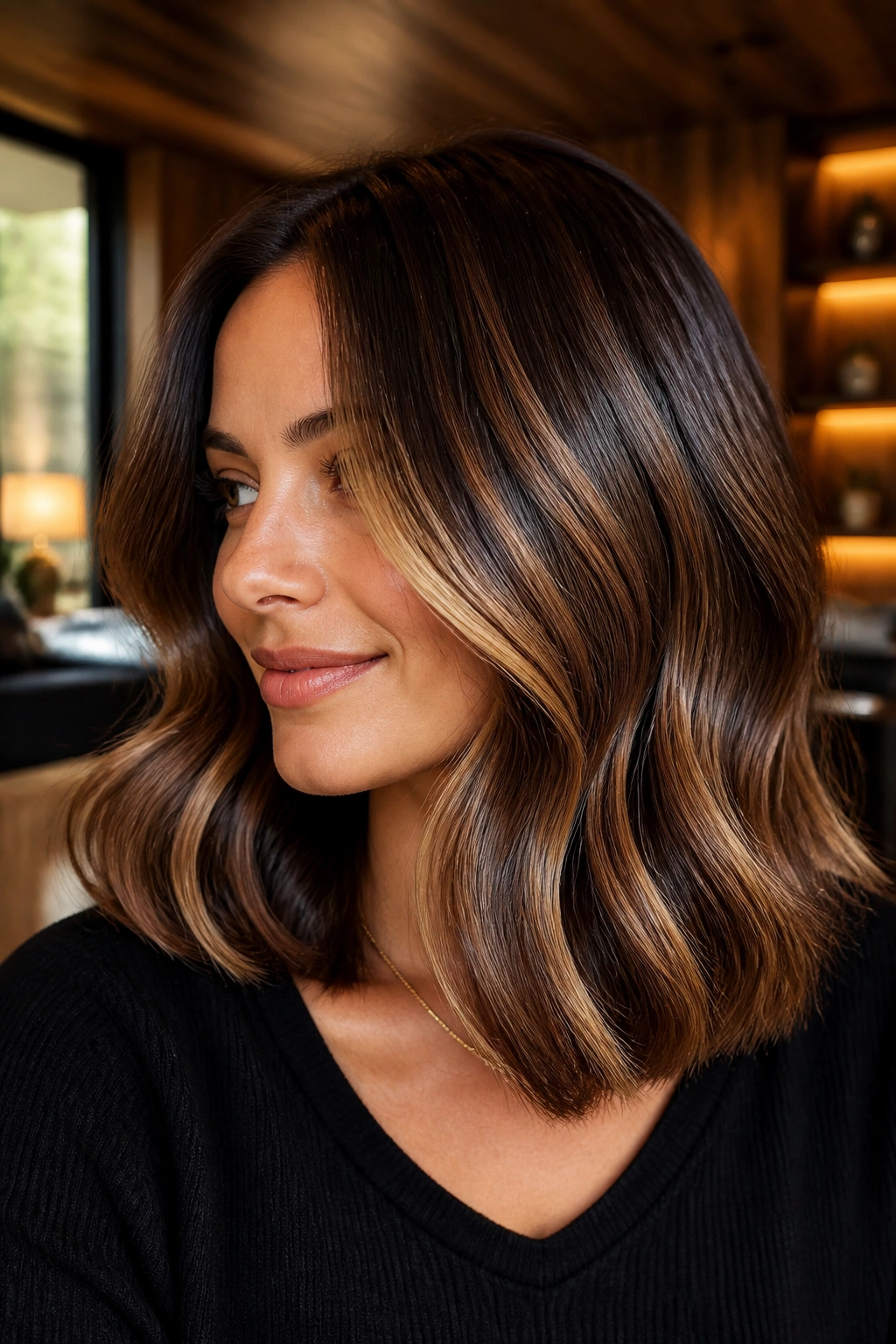
Maple caramel is one of those tones that looks warmer on paper than it does on the head. In real life, it reads deep, glossy, and slightly amber — less sugary, more woodsy.
This is a strong option for brown hair that needs shine more than drama. The color should sit in smooth ribbons with a finished, polished surface. A salon gloss helps a lot here, because maple tones can look flat if the finish is too dry or matte.
A shoulder-length cut or long bob is a nice match. The color catches on the curve of the hair and gives the whole style a soft, expensive sheen.
17. High-Contrast Caramel on Black-Brown Hair
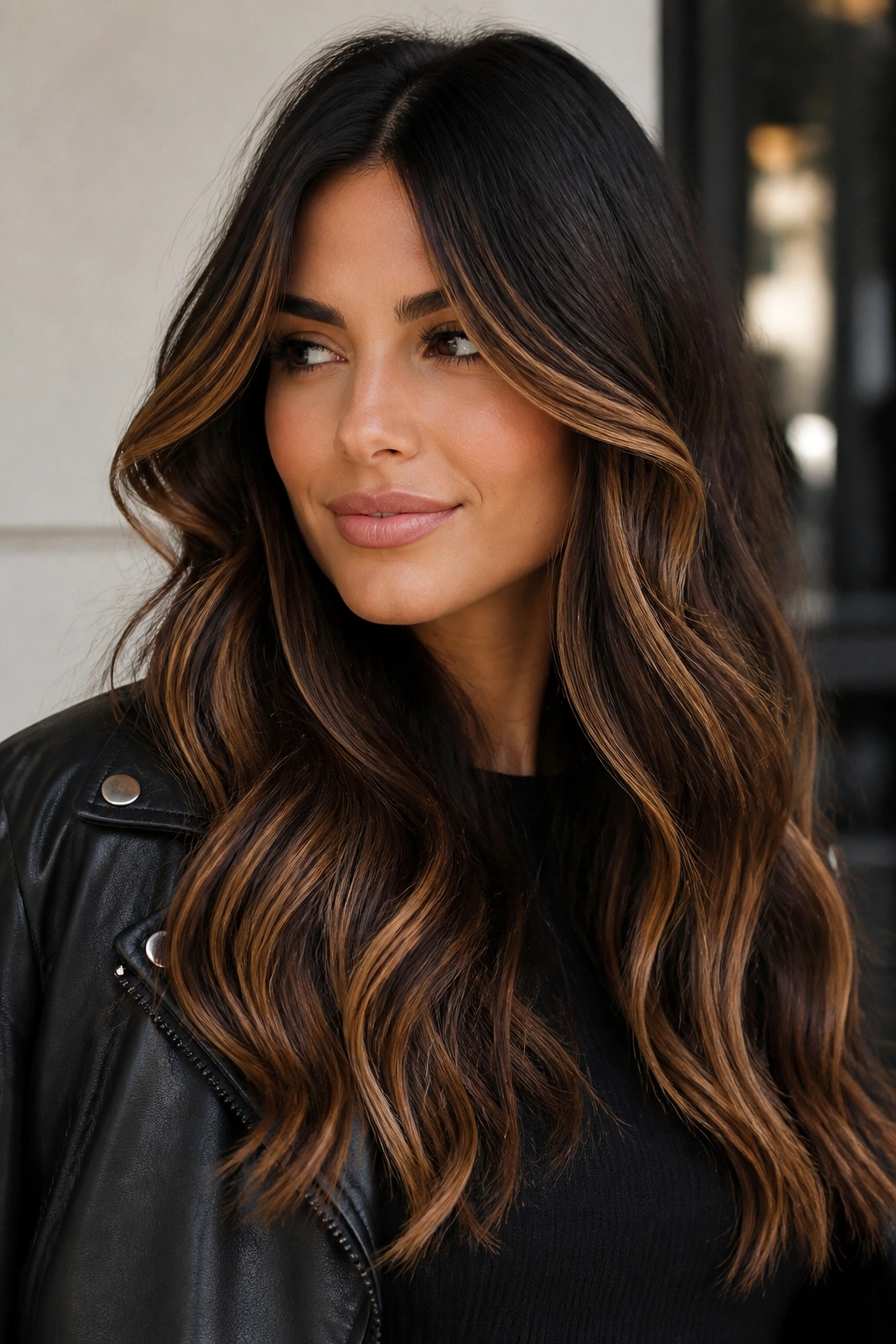
High contrast is not for everyone, and that’s fine. On black-brown hair, caramel balayage can look striking fast, especially if the lighter pieces start halfway down the head and brighten toward the ends.
The trick is discipline. Keep the roots deep, keep the caramel warm, and don’t overdo the number of light pieces. Too many ribbons will flatten the drama. A few strong strokes are enough.
This style works best when you want the color to be seen. If you prefer subtlety, skip it. If you like depth plus punch, it’s one of the most flattering ways to wear caramel on very dark brown hair.
18. Soft Ombre Caramel Melt
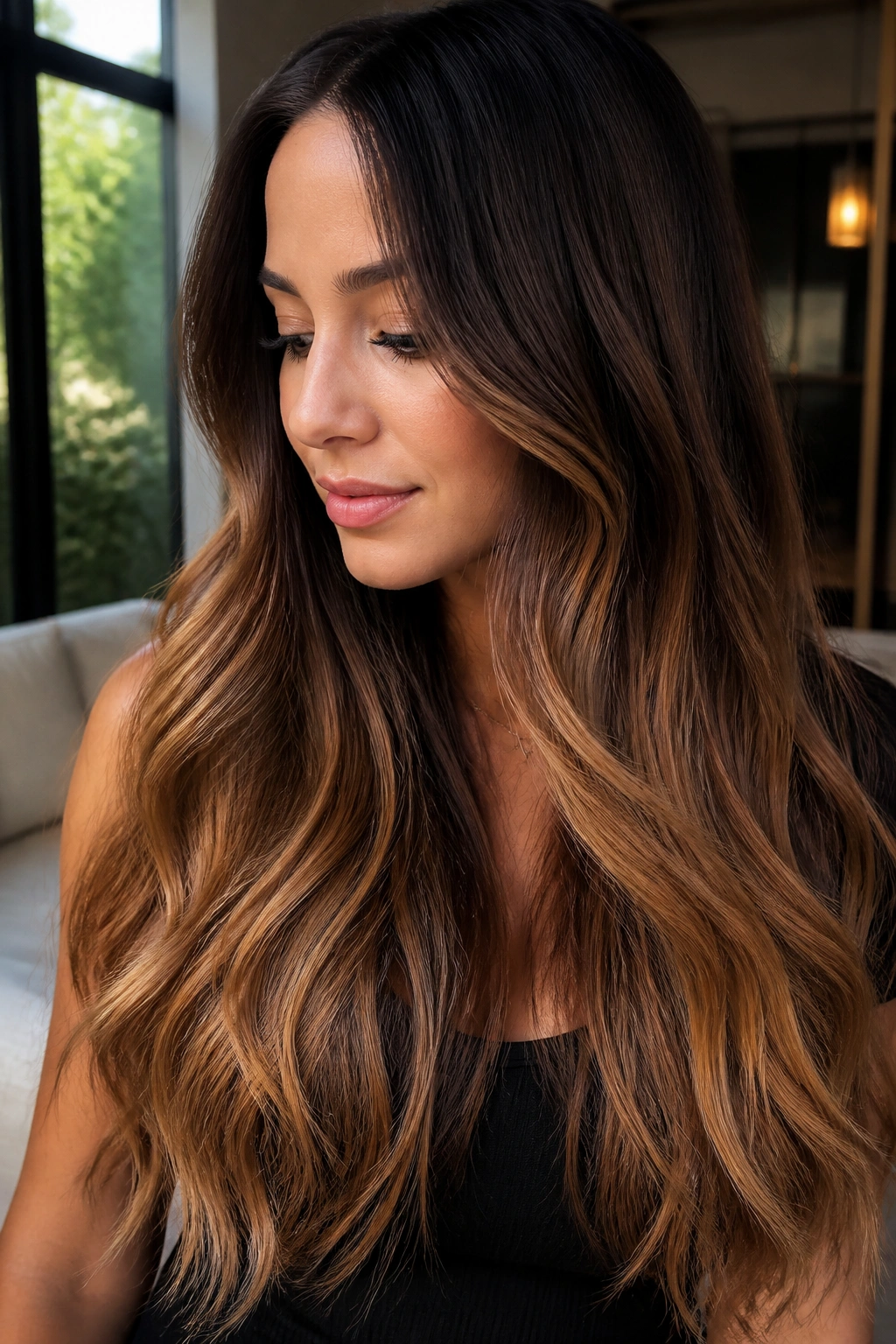
A caramel ombré melt is more about transition than placement. The roots stay rich, the mids start to warm, and the ends finish in soft caramel so the whole head reads as one long gradient.
This is a good pick for people with long hair who don’t want touch-ups every few weeks. Since the lightness lives lower on the head, grow-out looks intentional instead of messy. That matters. Nothing ruins a pretty color faster than obvious demarcation lines.
The best ombré melts still show a little brown through the ends. If the ends go too light, the style loses its brunette soul.
19. Layered Cut with Sweeping Caramel Panels
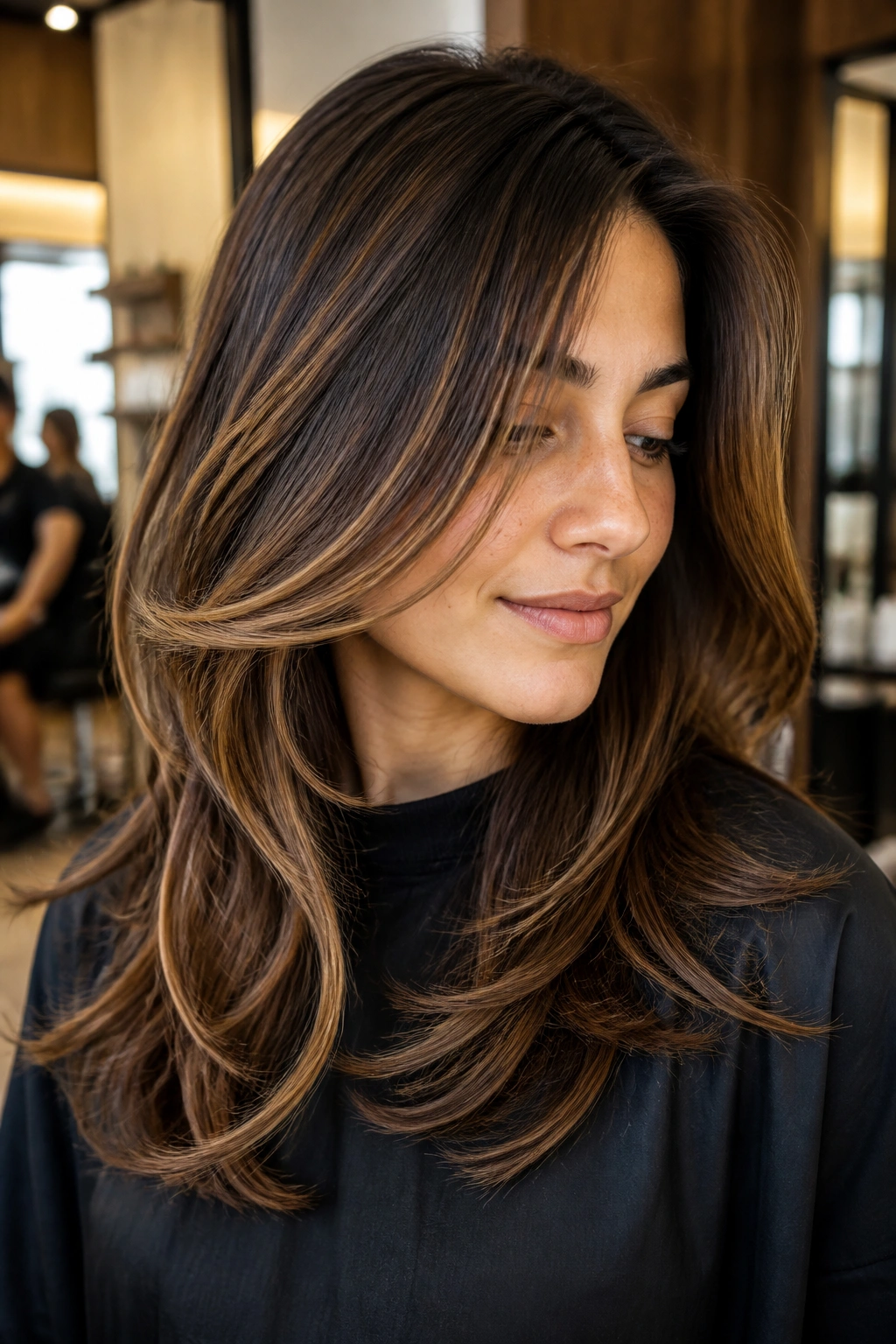
Layers and caramel panels make sense together because the cut already creates movement. Add broad strokes of color, and each bend in the hair gets its own light-and-dark story.
This is more graphic than micro-balayage, but it still feels soft if the edges are blended well. The panels should follow the shape of the haircut — longer in the front, lighter over the top layer, then tapering as they move back.
Why It Stands Out
The contrast between panels gives the hair dimension you can see from across the room. On thick brown hair, that can be a blessing. Without this kind of placement, layers sometimes disappear.
20. Neutral Beige-Caramel for Medium Brown Hair
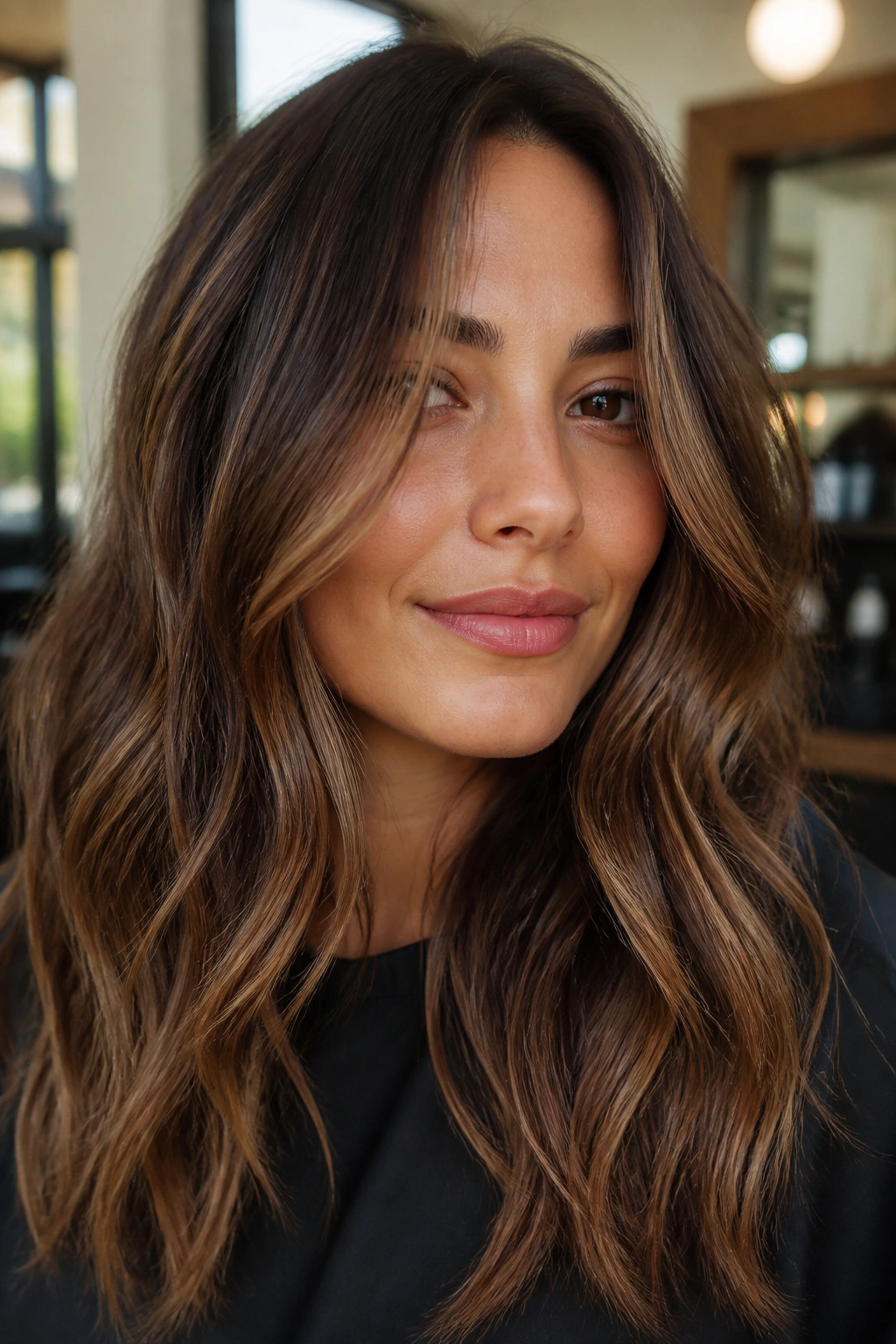
Medium brown hair can swing too warm if you’re not careful, so neutral beige-caramel is a smart middle ground. It’s warm enough to show, cool enough to avoid the orange trap, and soft enough to work on most skin tones.
The color should sit one step lighter than the base, not three or four. That keeps the look grounded. You want movement, not a loud makeover. The whole thing should feel lifted, like the hair got a little air around it.
If your natural brown leans slightly ashy, this is one of the easiest caramel balayage looks to wear. It doesn’t fight the base.
21. Toffee Swirls on Wavy Midlength Hair
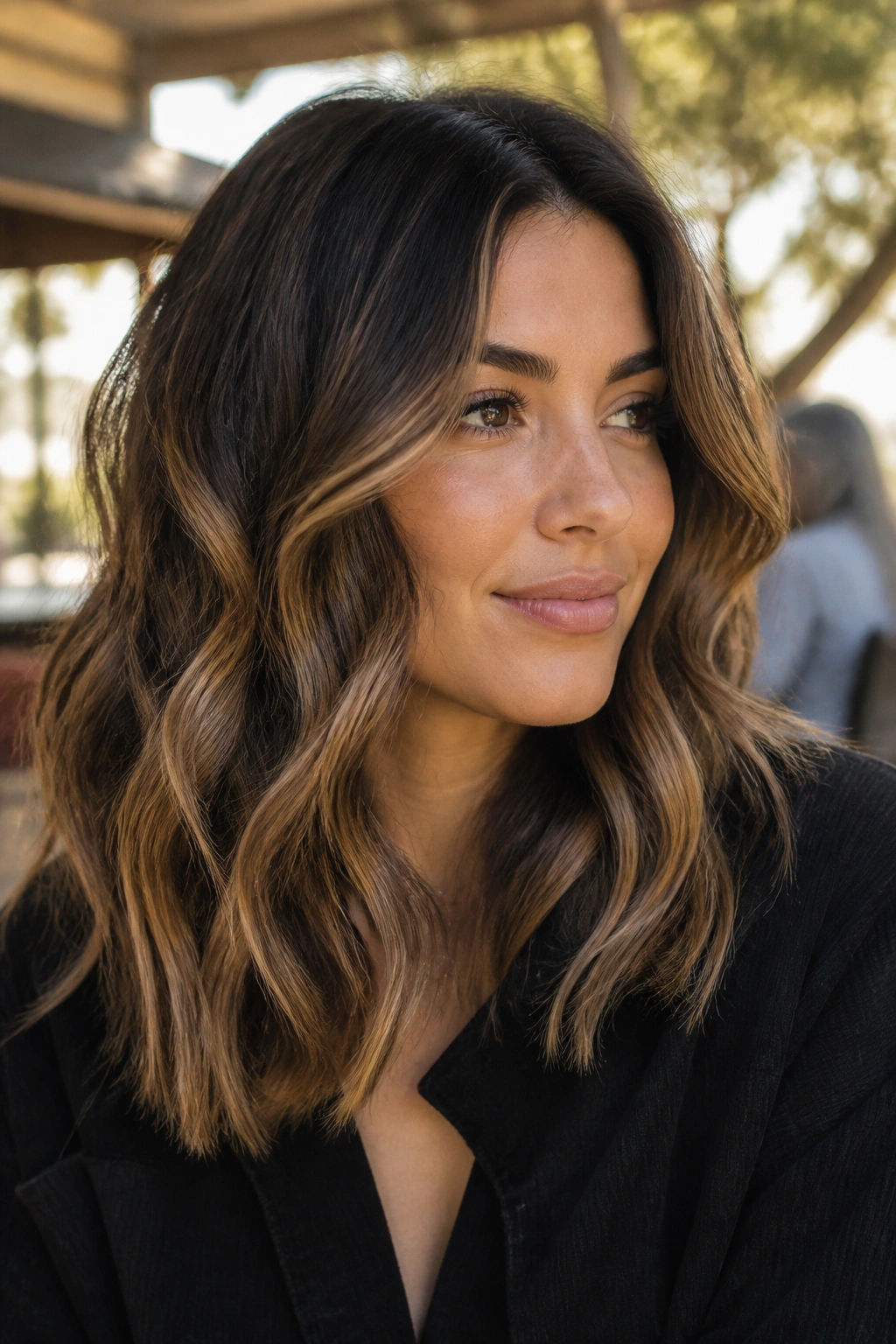
Midlength hair has enough length for color, but not so much that the balayage gets lost. Toffee swirls fit right into that sweet spot, especially on loose waves.
I like this look when the hair has a little body but not a ton of volume. The swirls create the illusion of thicker texture, and toffee adds warmth without pushing into golden blonde territory. The result feels polished, but not fussy.
The best placement usually starts around the cheekbones and gets denser toward the bottom third of the hair. That keeps the root area easy to maintain while still giving the midlength cut some life.
22. Caramel Peekaboo Pieces
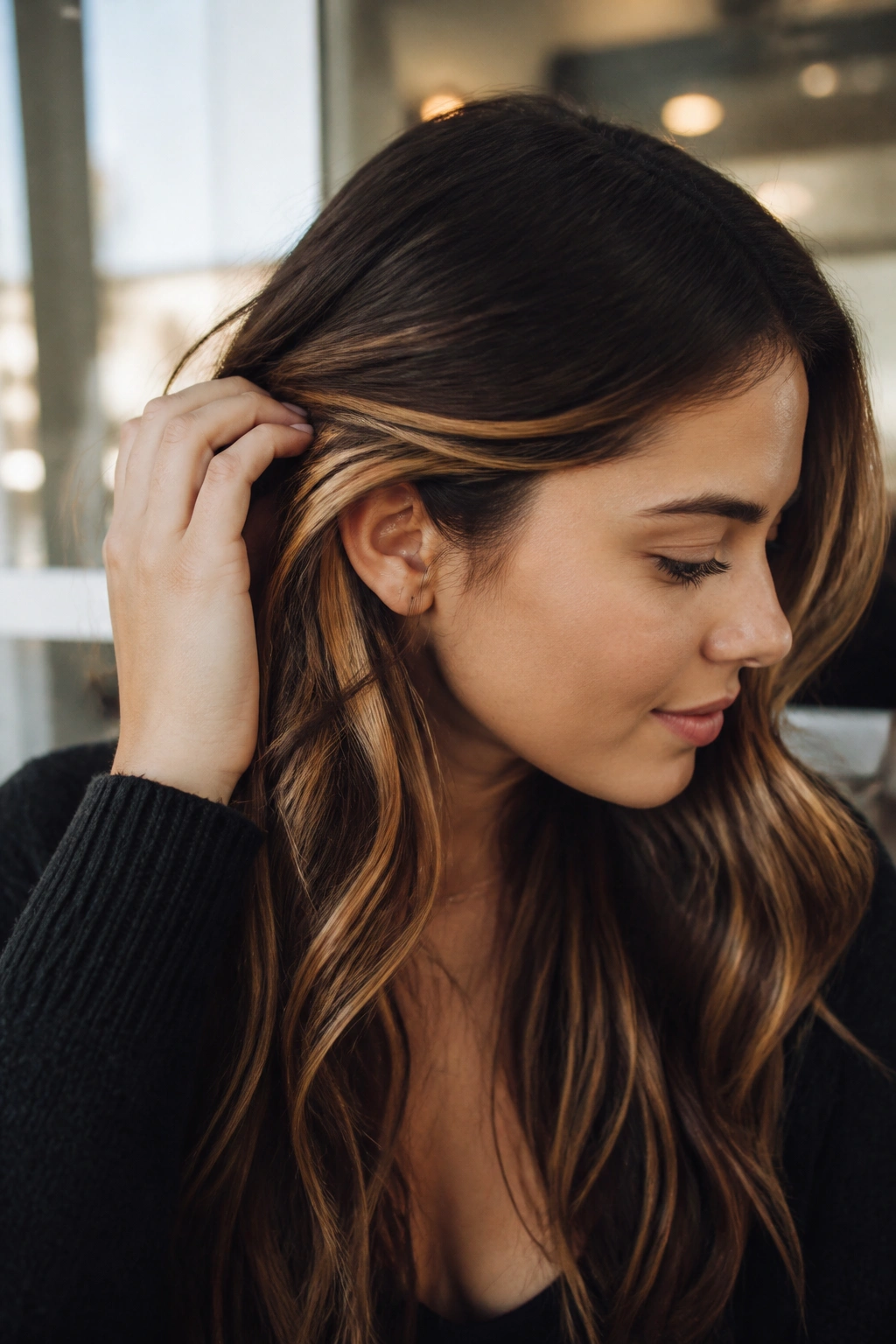
Peekaboo pieces are for people who want a little color flash without changing the whole surface of the hair. The caramel hides under the top layer, then shows when the hair moves or gets tucked behind the ear.
That makes this look fun without being loud. It also works well in settings where you want the color to feel a bit more private. Underlayers can be lighter and a touch bolder, while the top stays brown and calm.
Key details
- Place the caramel beneath the crown and around the nape
- Leave the top layer deeper for contrast
- Use a soft wave to let the hidden pieces peek through
23. Bright Caramel Ends on Brunette Curls
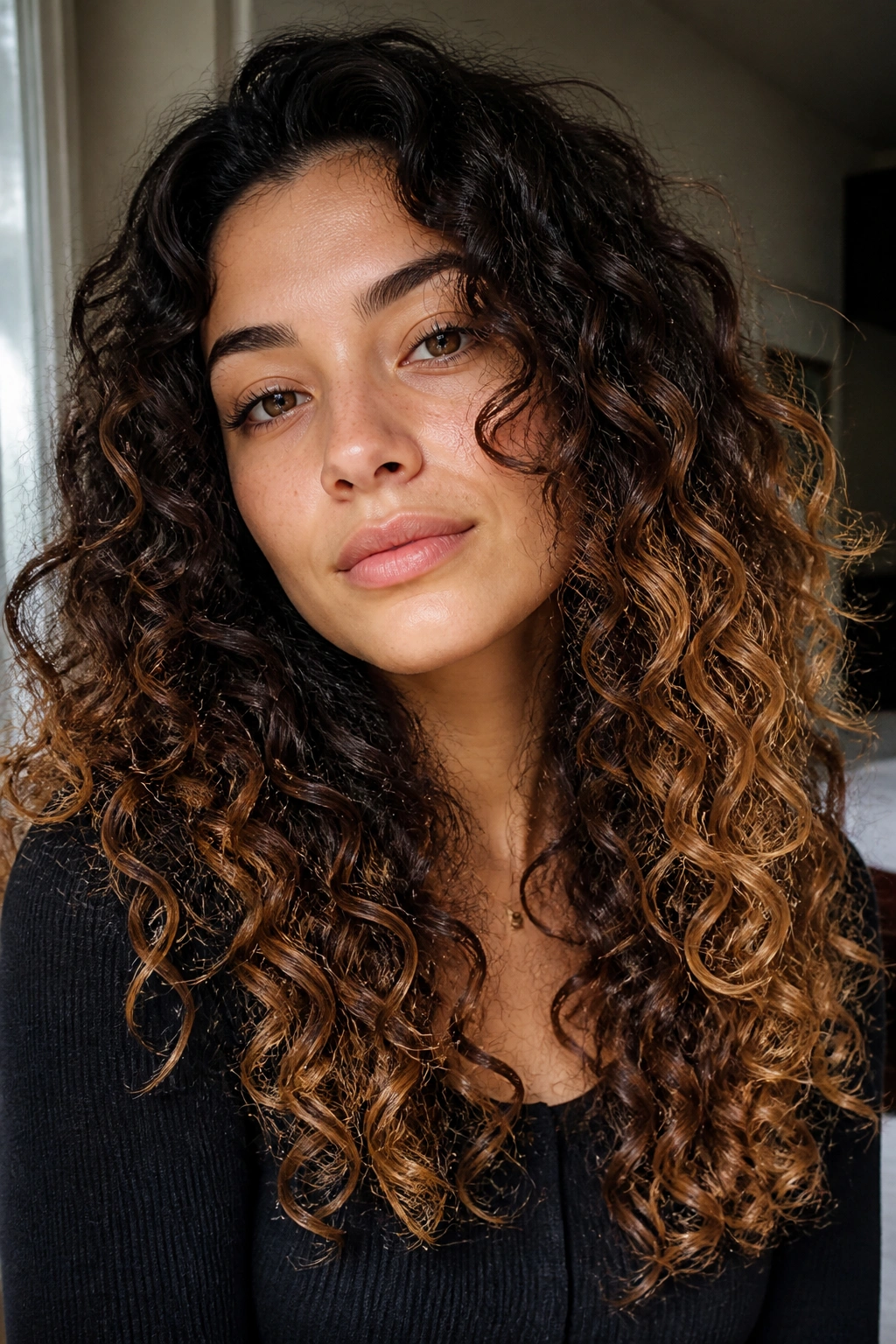
Curly brunettes can have a lot of fun at the ends. Bright caramel tips give the curl pattern a lifted finish, and because curls bunch and spring, the lighter ends usually look more blended than you’d expect.
This is especially nice if your curls are dense and you want some separation near the bottom. The ends stop looking like one big shape and start looking like individual coils again. That’s the main payoff.
Be careful with the lightness, though. Over-lightened ends on curls can feel dry fast. Keep the caramel rich, and trim regularly so the color doesn’t sit on frayed tips.
24. Ash-Brown Root Shadow with Caramel Midlengths
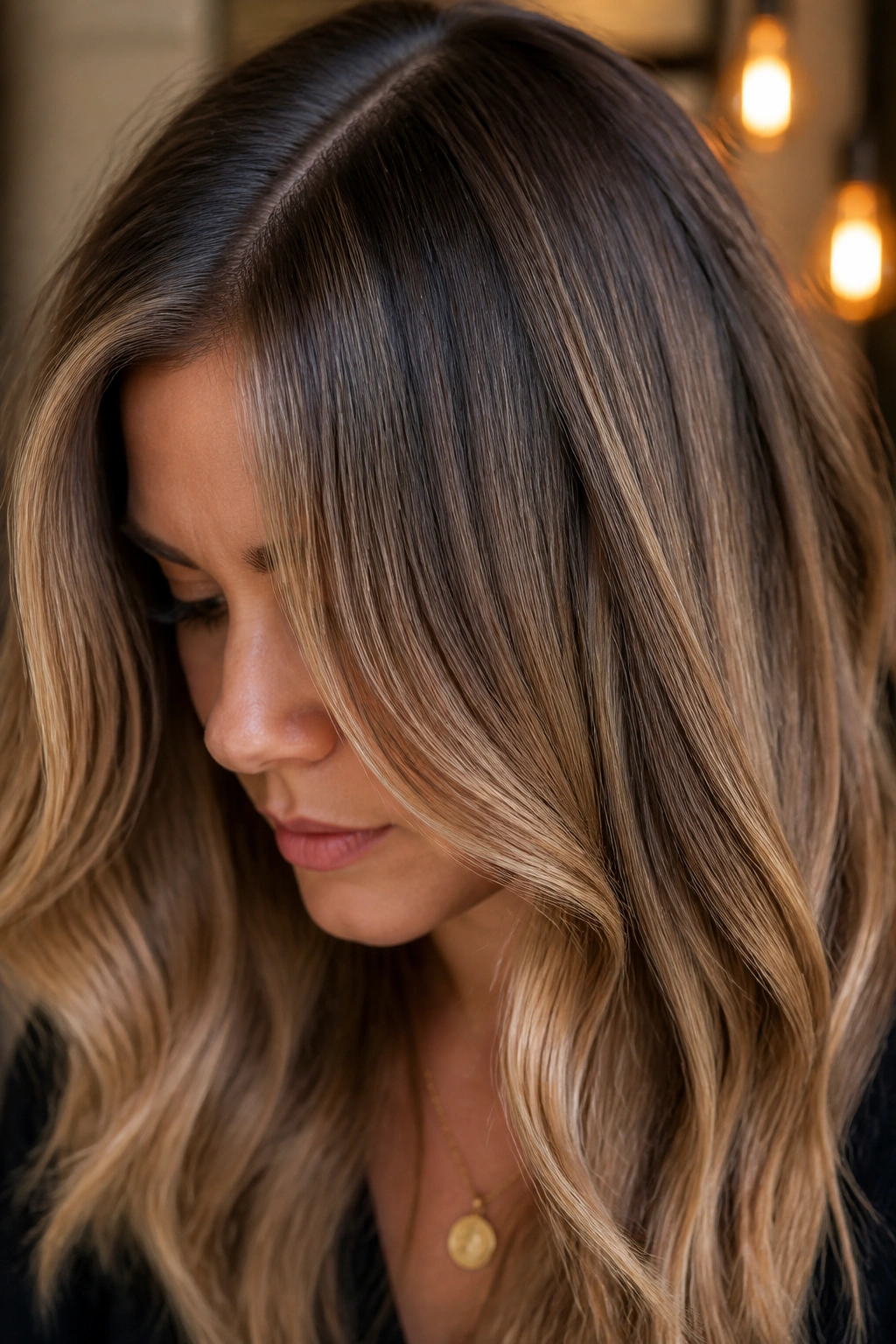
A root shadow can save a caramel balayage from looking too bright at the top. By keeping the roots ash-brown and the caramel concentrated in the midlengths, the style stays grounded and grows out with less fuss.
This is a good choice if your natural color is medium to dark brown and you want dimension without a hard upkeep schedule. The shadow at the root keeps the contrast controlled, while the caramel adds movement where the hair naturally bends.
It’s a practical look. Not boring. Practical.
25. Vanilla-Caramel on Dark Mocha
Vanilla caramel sits lighter and creamier than classic gold, which is why it can look so nice on a dark mocha base. The contrast feels smoother, almost milky at the ends, without turning pale or streaky.
This style needs careful toning. Too much gold and the vanilla effect disappears. Too much ash and it starts to look dull. The sweet spot is a soft, creamy warmth that still belongs to the brunette family.
How to wear it well
Loose bends help the lighter shade stand out. Straight hair works too, but the ends need a polished blowout so the contrast doesn’t feel flat.
26. Burnished Caramel with a Salon Gloss
Burnished caramel is for people who want warmth with shine and a little depth underneath. The tone sits somewhere between gold and amber, and a good gloss makes the whole thing look smoother and more expensive.
This is a color that changes under different light. Indoors, it can read deep and cozy. Outdoors, the caramel wakes up and shows more brightness. That shift is part of the appeal. You get two moods from one color family.
If your brown hair has been dulled by previous color, this is one of the nicest ways to bring it back without going too light.
27. Soft Sombre Caramel for Fine Hair
Fine hair doesn’t always like chunky highlights. A sombre — softer than an ombré, more blended than a full highlight pattern — gives the hair dimension without making the strands look separated or thin.
That’s where caramel shines. Fine brown hair often needs a little depth and a little lift at the same time. A soft sombre does both. The roots stay close to the base, the color spreads gently through the mids, and the ends pick up just enough warmth to look fuller.
A center part can work here, but a side part gives the color even more movement. Tiny change. Big difference.
28. Dimensional Caramel Balayage with Micro-Lights
Micro-lights are the detail work that makes a dimensional caramel balayage look expensive instead of random. They’re tiny, scattered pieces that break up the brown base and keep the larger caramel sections from looking heavy.
This is the most layered version on the list. You get broad caramel ribbons, then smaller light bits tucked between them, which helps the color read as one blended finish instead of separate streaks. It’s a smart choice if your hair is thick, layered, or naturally wavy.
What makes it worth asking for
The mix of large and tiny pieces keeps the hair moving visually. One look at the head, and you can tell there’s structure underneath. That’s the good stuff.
Final Thoughts
The best caramel balayage on brown hair isn’t the loudest one. It’s the one that fits the base shade, the cut, and how much contrast you actually want to live with.
Warm caramel can make brown hair feel richer. Beige and ashier versions keep things quieter. And when the placement is right — around the face, along the layer lines, or softened through the ends — the whole style starts to look like it belongs there.
If you’re choosing between two shades, take the less obvious one first. Brown hair almost always looks better when the caramel feels blended into the fabric of the hair instead of sitting on top of it.
