



Blue balayage on brown hair has a way of looking polished without feeling stiff. The brown base keeps the blue from shouting, and that balance is the whole appeal: the color looks woven in, not laid on top.
The shade choice matters more than people think. On dark chestnut hair, navy and ink tones sink in and look glossy. On medium brown hair, denim, cobalt, and peacock shades catch more light and show more movement. Placement matters, too. A soft sweep through the mid-lengths gives a very different result from a bold money piece or a dip-dyed end.
The wrong blue turns muddy fast.
What works instead is a color story that respects the brown underneath it. Some looks below stay subtle enough for everyday wear. Some are louder, sharper, and a little mischievous. All of them rely on the same idea: let the brunette base stay visible so the blue has something to lean against.
1. Midnight Ribbon Balayage on Dark Brown Hair
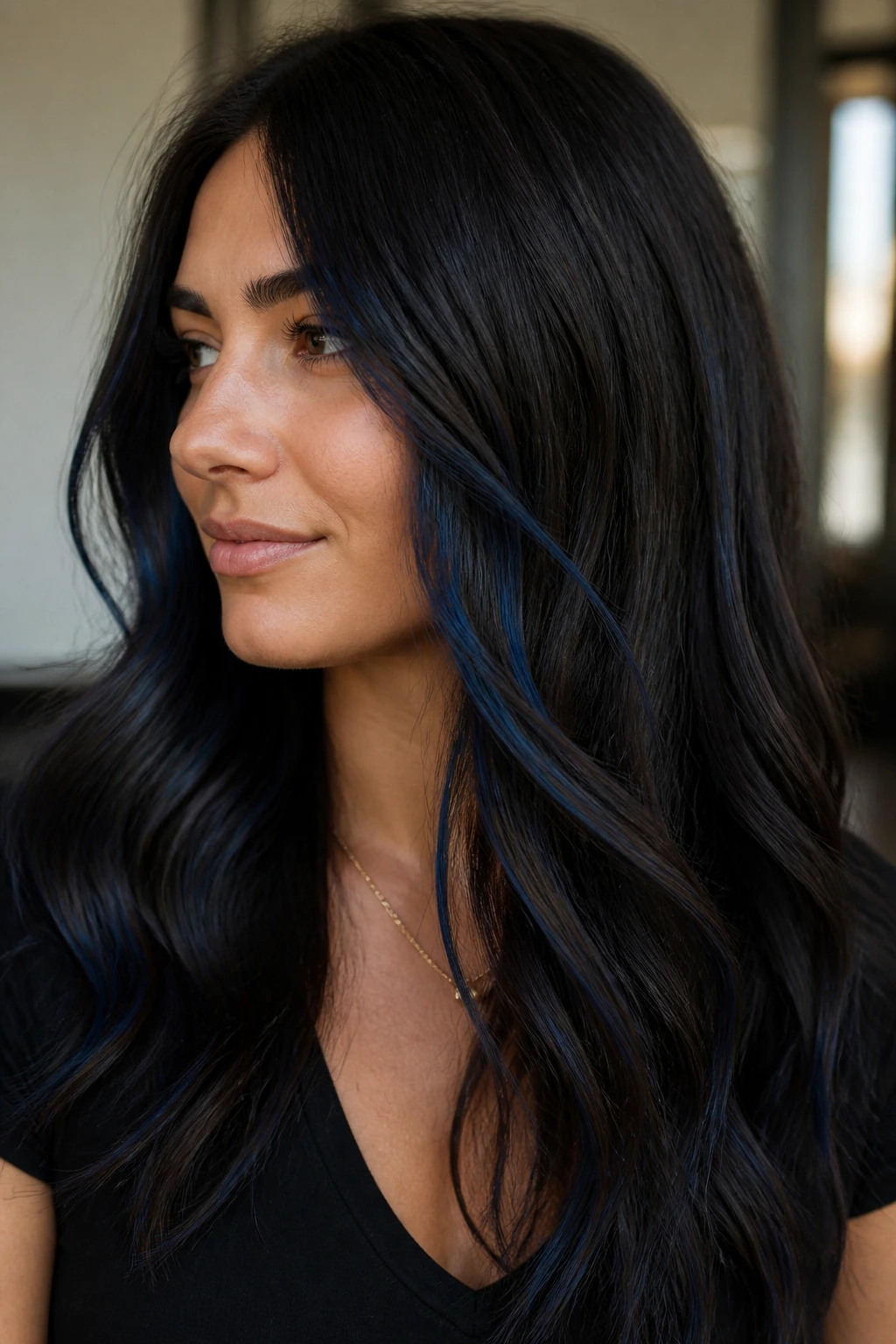
Midnight blue is the shade I reach for when someone wants blue balayage that still reads rich in low light. The ribbons stay narrow, almost like satin threads, and that keeps the color from taking over the whole head.
Dark brown hair gives this look a good base because the blue sits on top of depth instead of fighting brass. Ask for painted pieces that start around the cheekbone and slide lower toward the ends, leaving the root area soft and untouched. That little gap matters. It stops the color from turning into a hard block.
Why It Works
The contrast is enough to notice from across a room, but it still moves like hair. That’s the sweet spot. You get color without losing the brunette shape.
- Best on level 3 to 4 brown.
- Ask for ribbons about 1/4 inch to 1/2 inch wide.
- A clear gloss helps the blue stay slick and dark.
- If your ends are dry, keep the blue away from the last half-inch.
Tip: start the blue below the first bend of the hair. The result looks cleaner, and it grows out with less drama.
2. Cobalt Face-Framing Pieces for Medium Brunettes
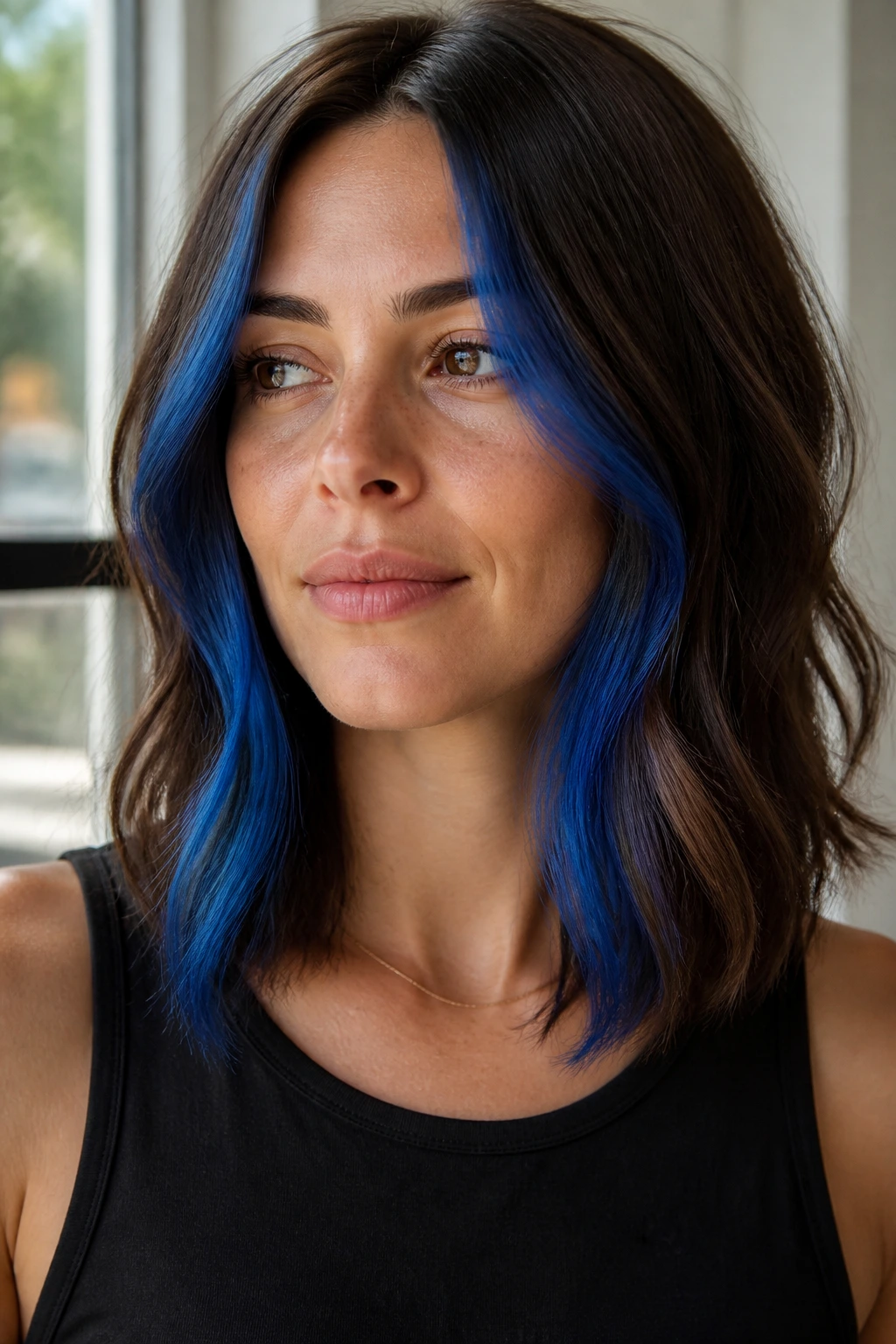
Want blue without changing the whole mood of your hair? Cobalt face-framing pieces do that job fast. They sit right where the eye lands first, so even a small amount of color feels deliberate.
On medium brown hair, cobalt has enough punch to show through curls and waves, but it still looks nicer when the rest of the head stays quiet. I like this look on shoulder-length cuts because the color can swing forward around the face and disappear into the side layers. Straight hair makes it look sharper. Wavy hair softens the edge a little.
How to Wear It
Ask for two panels no wider than 1 inch, painted from the temple down to just past the collarbone. Keep the underside deeper brown so the blue doesn’t spread everywhere. That contrast gives the pieces a cleaner edge.
A lot of people worry cobalt will look cartoonish. It won’t, as long as the rest of the color stays grounded. The blue is doing one thing here: framing the face and making the eyes pop. That’s enough.
3. Denim Blue Melt Through Chocolate Brown Hair
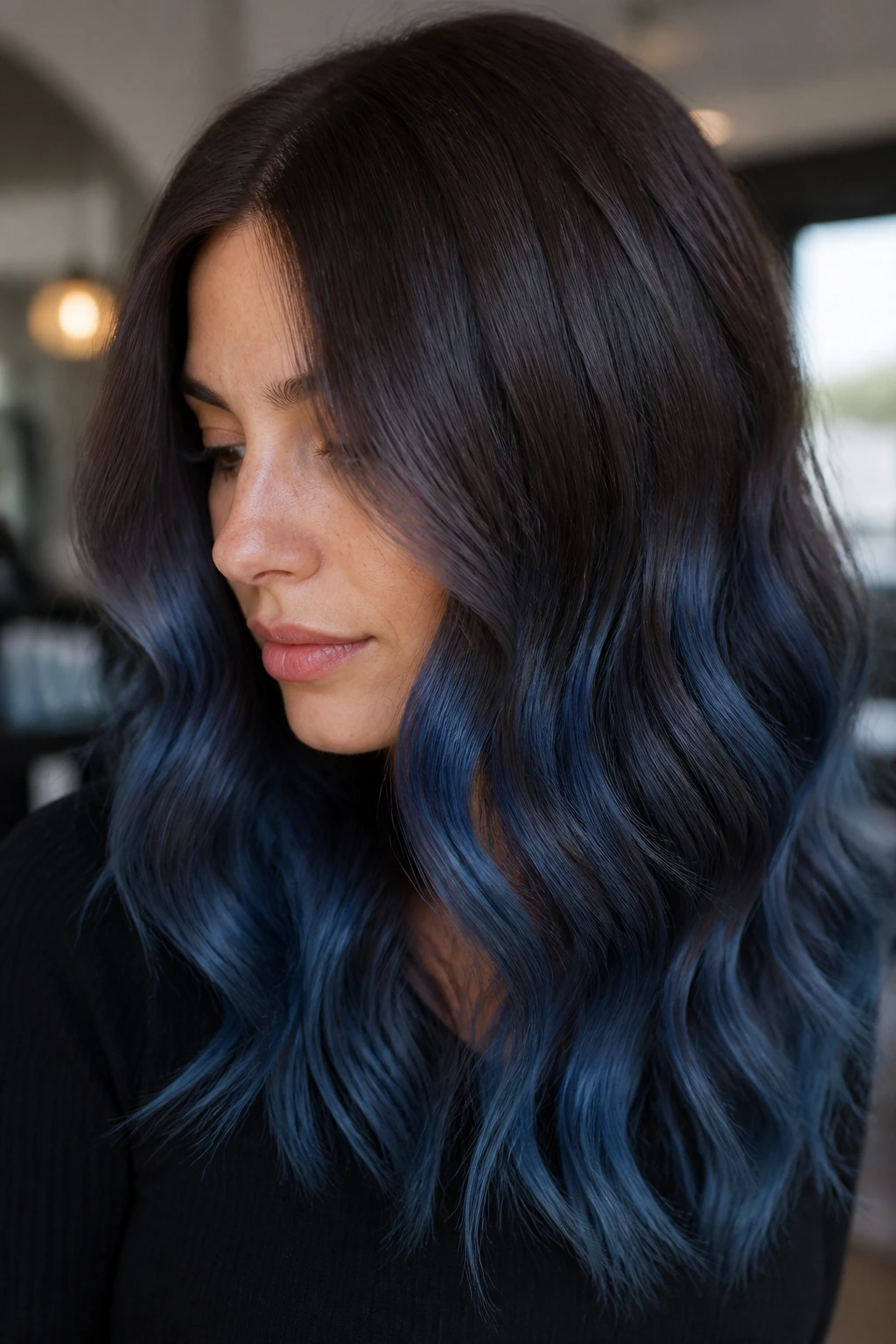
A denim melt is the easiest blue balayage to wear if you like color that looks lived-in. It starts dark at the root area, then loosens into softer blue through the mid-lengths, almost like faded jeans that still hold their shape.
Picture chocolate brown hair catching light near the ends while the middle sections shift toward cool blue-gray. That’s the effect. It’s not streaky, and it does not need to be. The whole point is a slow change from brown to blue, with no hard line where one shade stops and the other starts.
What to Tell Your Colorist
- Keep the roots at chocolate brown.
- Blend the blue through the middle third of the hair.
- Let the ends go a touch lighter for movement.
- Ask for a smoky blue toner, not a bright teal.
The nice part is how forgiving this one is. Even when it fades, it often fades into a soft denim wash instead of an odd patchy stripe. That makes it a strong choice if you wear your hair loose most days and want the color to look good on day one and day eighteen.
4. Sapphire Ends on Chestnut Waves
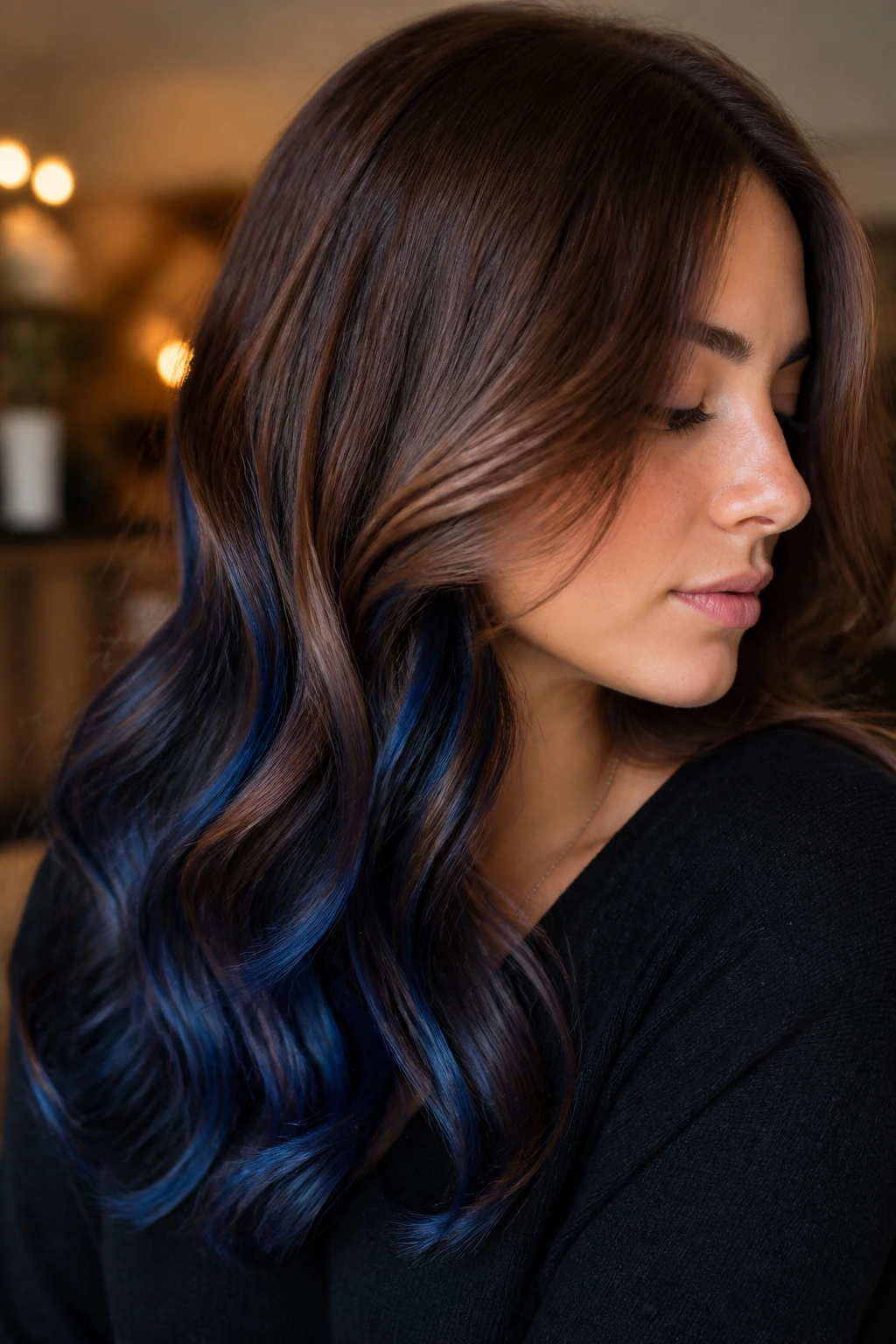
Sapphire ends are smarter than all-over blue if you want the color to last through a busy week. The brown stays in charge near the roots and through the top layers, while the ends pick up the blue and make the whole style feel intentional.
Chestnut hair gives sapphire a warmer frame, which is exactly why it works. The brown keeps the blue from looking icy, and the blue keeps the brown from reading flat. On waves, the color breaks up into little flashes as the hair moves. On straight hair, it looks more graphic and crisp.
Unlike a full blue panel, this version lets you keep most of your natural color near the face. That means easier grow-out and less pressure to maintain a perfect tone every few weeks.
If you want a shape that feels polished without looking overworked, ask for the sapphire to start below the ears and deepen toward the last 3 to 4 inches. That keeps the transition soft and gives the ends enough weight to feel rich instead of skimpy.
5. Smoky Navy Balayage for Mocha Hair
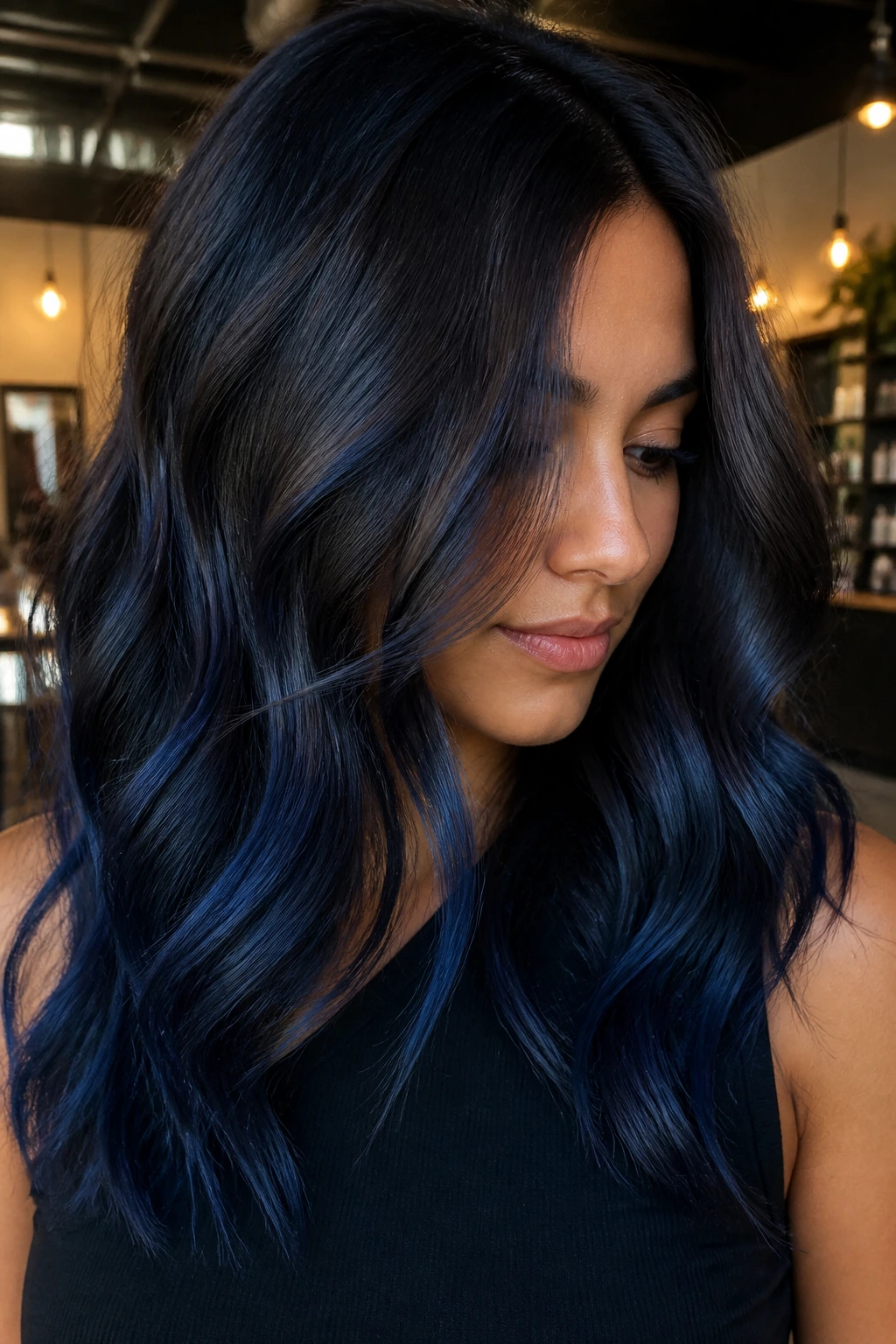
Smoky navy on mocha hair looks like wet ink under a thin coat of gloss. It’s dark enough to stay elegant in dim light, but it catches a blue edge whenever the hair turns.
The reason I like this shade so much is simple: it doesn’t fight the base color. Mocha brown already has a soft richness, and navy slides into that without creating a loud contrast. The result feels calm, almost quiet, until the light hits the mid-lengths.
It reads expensive in low light.
That may sound like a silly phrase, but the effect is real. The color looks dense at first glance, then blue shows up at the bend of a wave or along the outer layer of a blowout. If you want a version that looks good at work and still has personality at night, this is one of the safest bets.
The key is a soft shadow root and no harsh line near the part. If the blue starts too high, it loses the smoky part and starts looking like a stripe. Nobody wants that.
6. Electric Blue Money Piece Against Deep Brunette Hair
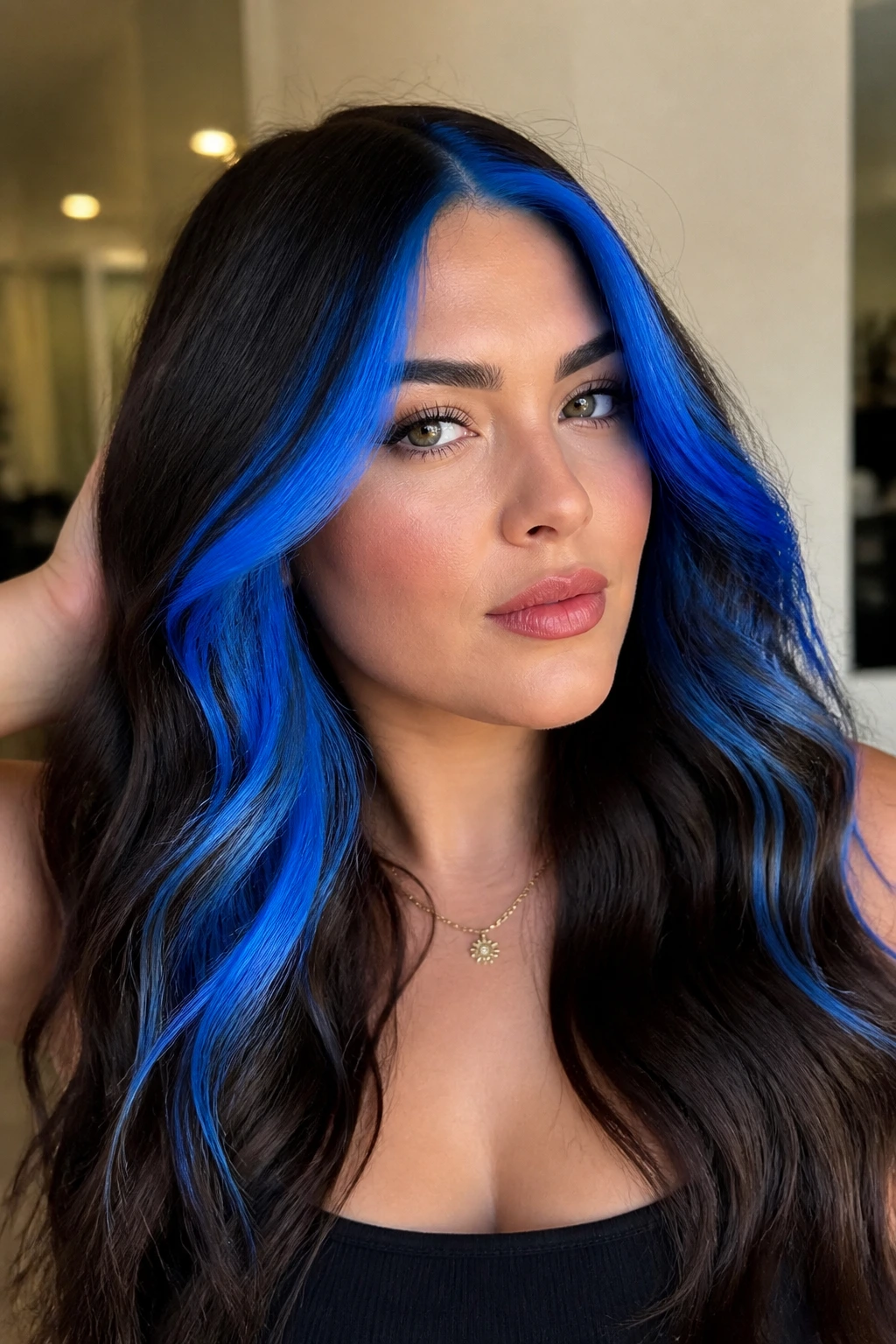
A money piece is not a mini highlight. It’s a spotlight. That matters with electric blue, because this look works best when the color is meant to be seen first.
Against deep brunette hair, the front panels carry the whole idea. They brighten the face, sharpen the hairline, and give the rest of the hair something dark and calm to sit behind. The blue can be vivid here, even a little wild, because the placement is so controlled.
What Makes It Different
A full head of electric blue can feel heavy. A money piece keeps the drama at the front and leaves the rest of the hair alone. That gives you a cleaner grow-out and makes styling easier on days when you throw the hair up.
Who It Suits
This look is strong on long layers, curtain bangs, and collarbone cuts. It also works if you like a center part, because the blue panels sit like bookends around the face.
Best Move
Ask for the brightest blue on the first 2 inches next to the face, then let it soften into darker brunette lengths. That keeps the front sharp and avoids a chunky block of color.
7. Teal-Blue Dip Ends on Layered Brown Hair
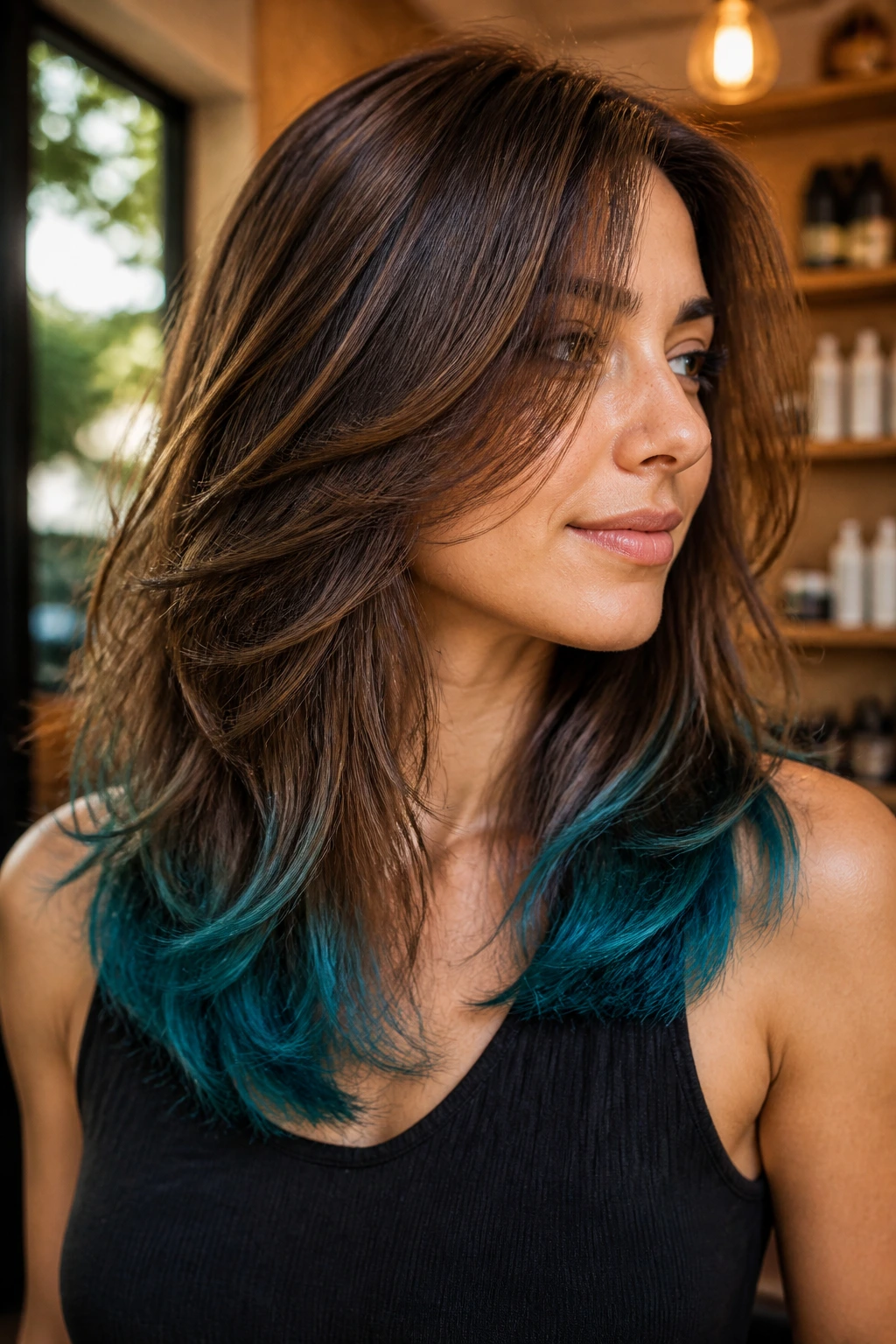
This is the loudest look on the list, and the reason it still works is placement. The color stays low, so the teal-blue hits only where the hair swings and moves.
Layered brown hair gives dip ends more life than one-length hair does. The layers stop the color from looking like one heavy bar at the bottom, which is the main danger with vivid ends. When the cut has some shape, teal can feel playful instead of blunt.
If your hair is already lightened or porous, this shade can lean green faster than you expect. That’s not a flaw in the color itself; it’s a pigment issue. A cleaner, cooler teal formula tends to age better than a neon one.
The best version starts around 2 to 3 inches from the ends, with the blue-teal deepening toward the very bottom. That gives the eye a place to land and keeps the shape neat when the hair is worn straight.
8. Blue-Black Whisper Balayage for Espresso Hair
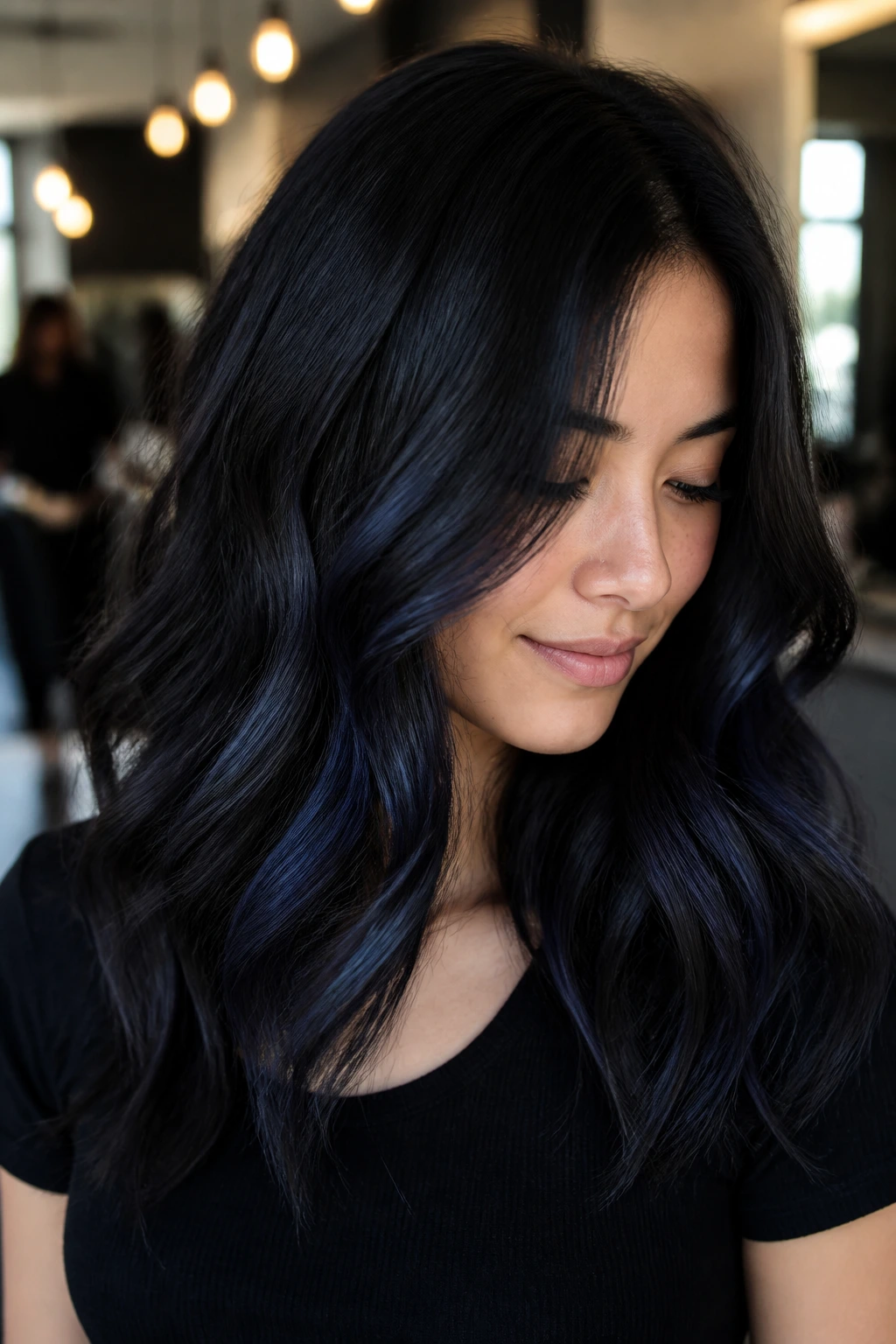
Can blue look nearly invisible and still count? Yes. That’s the charm of a blue-black whisper on espresso hair. The color hides in the darkness until light catches it, then the blue shows up like a low metallic sheen.
This is a good choice if you want movement more than contrast. The balayage pieces should be soft, narrow, and spread out. Think of them as tone shifts, not streaks. On a deep espresso base, the blue-black effect can look almost velvet-like, which is a nice change from brighter shades that dominate the whole head.
How to Ask for It
Tell your stylist you want a blue glaze that stays close to black at first glance. Ask for the lightest blue through the mid-lengths, not the roots. That keeps the finish soft and wearable.
This look is also friendly to curly hair because the curls break up the color naturally. You get little flashes instead of one solid block, and the whole thing feels a bit more expensive-looking than a straight line of color ever could.
9. Peacock Blue Ribbons Through Long Brown Layers
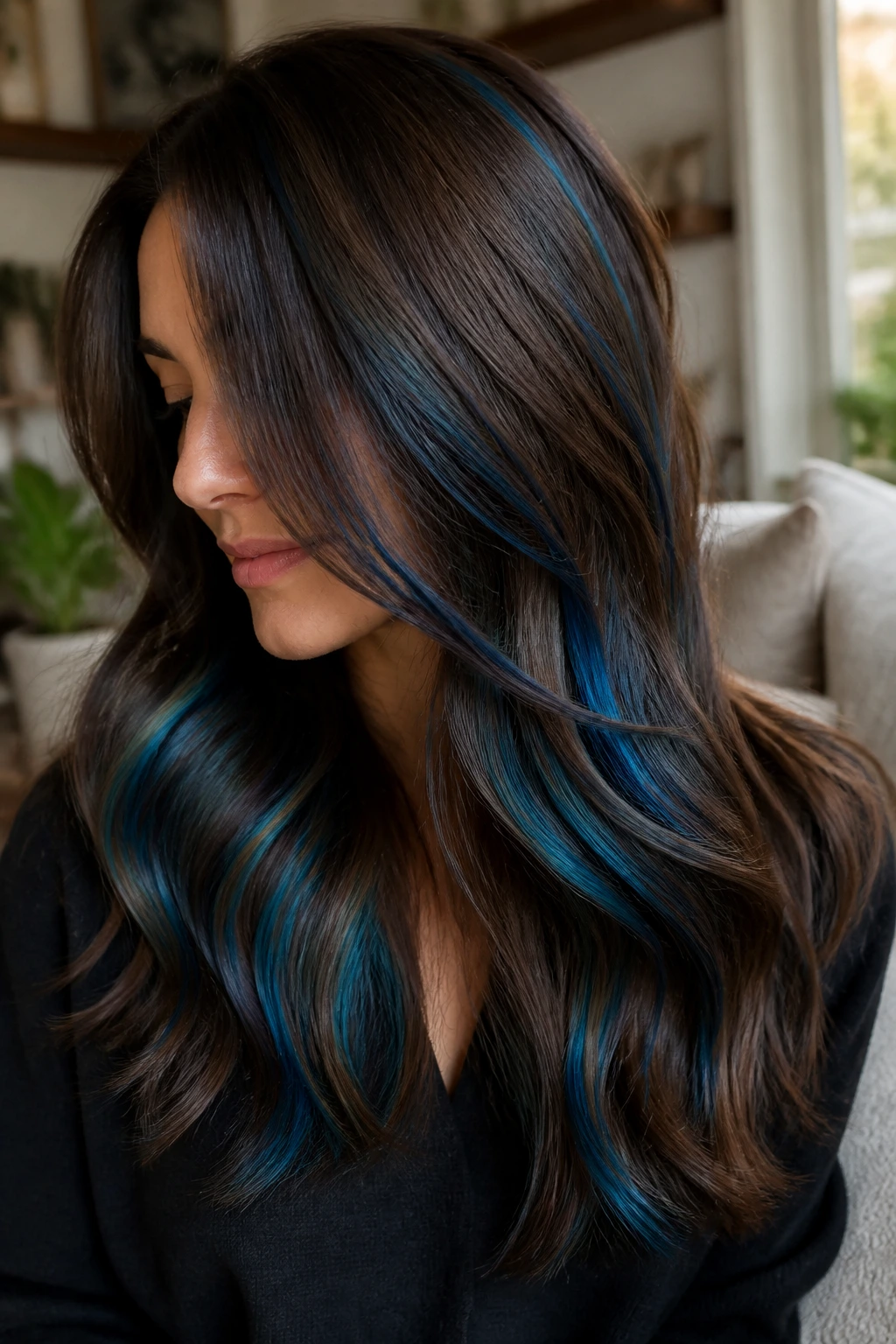
A braid wakes this color up. So does a blowout. Peacock blue ribbons on long brown layers have enough green-blue depth to look rich, and the layers keep the ribbons from sitting flat.
The trick here is distribution. You want the blue tucked through the hair in a way that leaves some brunette between the painted pieces. Too much color in one zone and the whole thing starts to look heavy. Too little, and the peacock tone loses that jewel-like look that makes it worth doing.
What to Watch For
- Best on hair past the shoulders.
- Works well with loose waves and braids.
- Ask for ribbons that start below the crown.
- Keep a few brunette sections near the face.
One thing I like about peacock blue is that it doesn’t need perfect styling. Even a messy half-up look shows off the color because the blue has enough depth to catch on its own. If you want the hair to look a little dressed up without trying too hard, this is a good lane to stay in.
10. Peekaboo Blue Underlayers for Brown Bobs
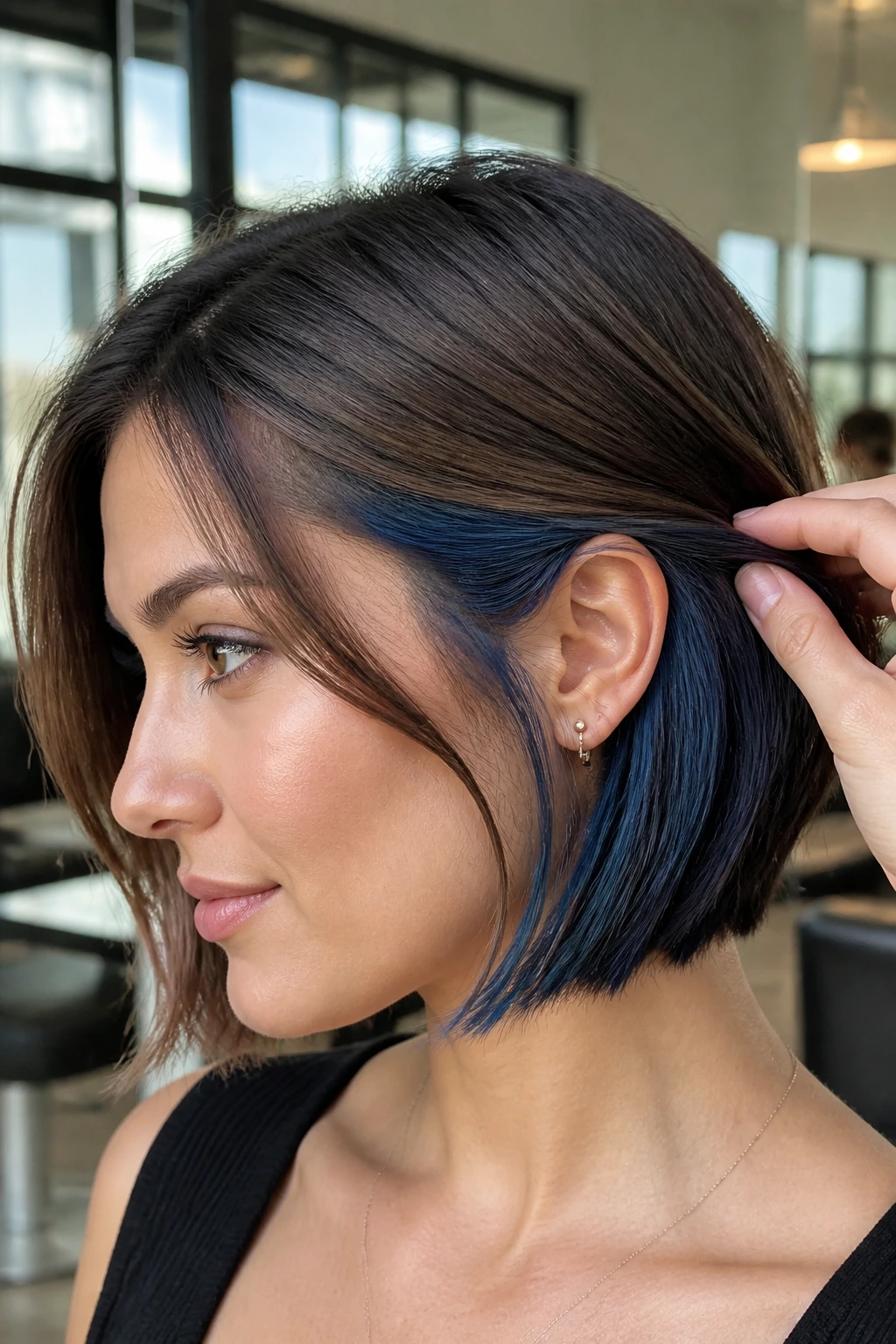
Not every blue has to announce itself.
Peekaboo underlayers are the answer when you want color with a private life. On a brown bob, the blue sits underneath the top section and only flashes when you tuck the hair behind the ears or catch movement at the neck. It feels a little sly, which is part of the appeal.
This look works because bobs have shape. The shorter length keeps the hidden blue close to the surface, so it doesn’t disappear the way it can on long hair. A chin-length or jaw-skimming cut gives enough swing for the color to peek out at the right moments.
If your job or wardrobe leans neutral, this is the one I’d point you toward first. The top layer stays brown, so the color doesn’t dominate every outfit. You get the fun part without needing to commit to a blue front all the time.
A little underlayer color also buys you flexibility. Wear it sleek and hidden on some days. Push it forward and show more blue on others. That kind of switch is hard to beat.
11. Steel Blue Balayage on Dark Mocha Hair
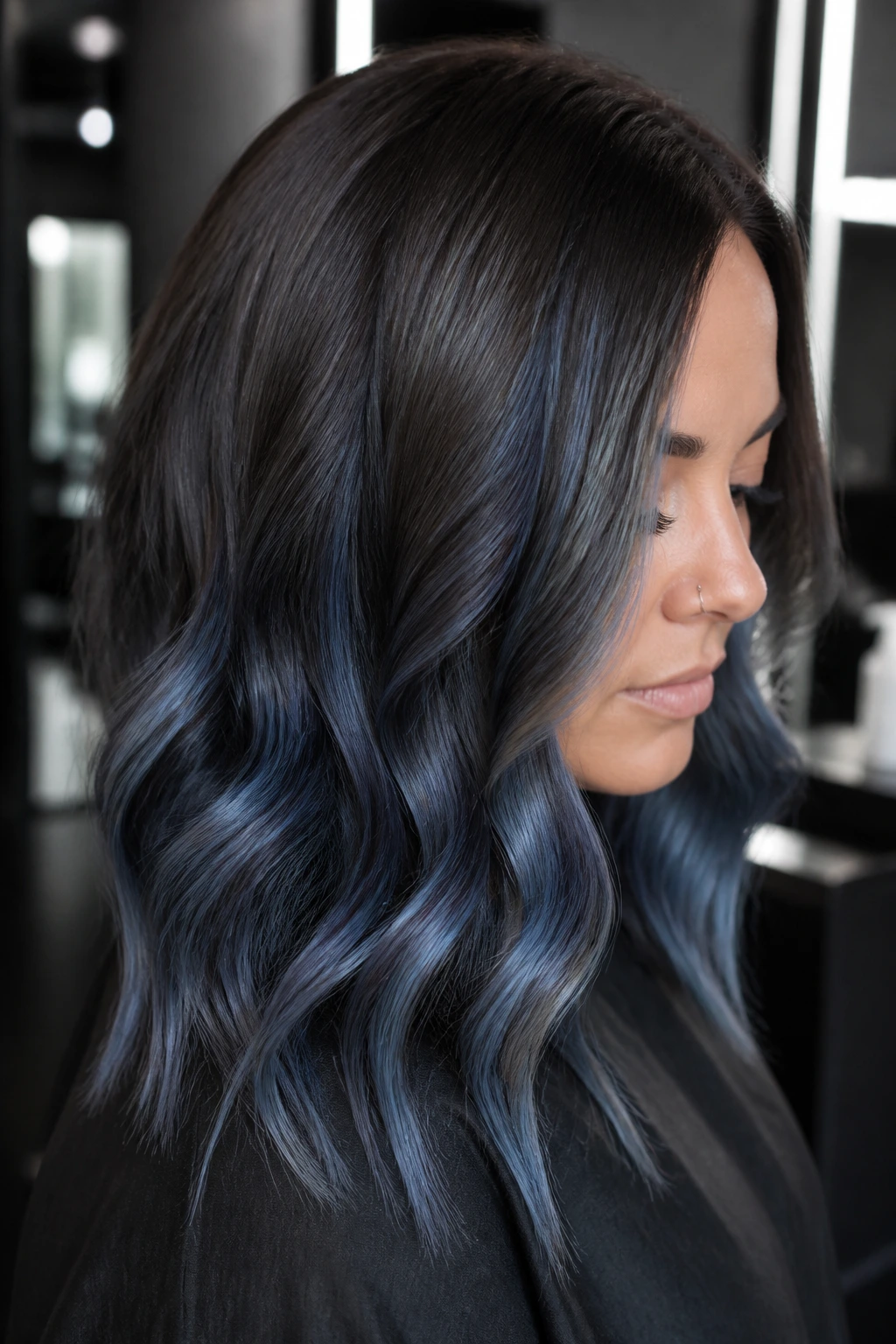
Steel blue looks cooler than navy and softer than bright cobalt, which is why it sits so well on dark mocha hair. The finish feels metallic without getting shiny in a fake way. There’s a difference, and it matters.
On the surface, the color looks almost gray. Then the blue comes through at the bend of a wave or along the curve of a layered cut. That little shift is what gives steel blue its edge. It isn’t trying to be loud. It’s trying to look crisp.
A gloss with an ash-blue cast helps this shade stay clean. If the mocha base is too warm, the color can turn flat or a touch muddy. That’s the part people don’t always think about. Cool blue tones need a cool base, or at least a neutral one that has been toned down.
This is the look for someone who likes sharp hair. A blunt lob, sleek layers, or a smooth long cut all suit it. Soft curls can work too, but the shape should stay controlled so the steel tone doesn’t vanish into fuzz.
12. Cornflower Tips on Caramel Brown Curls
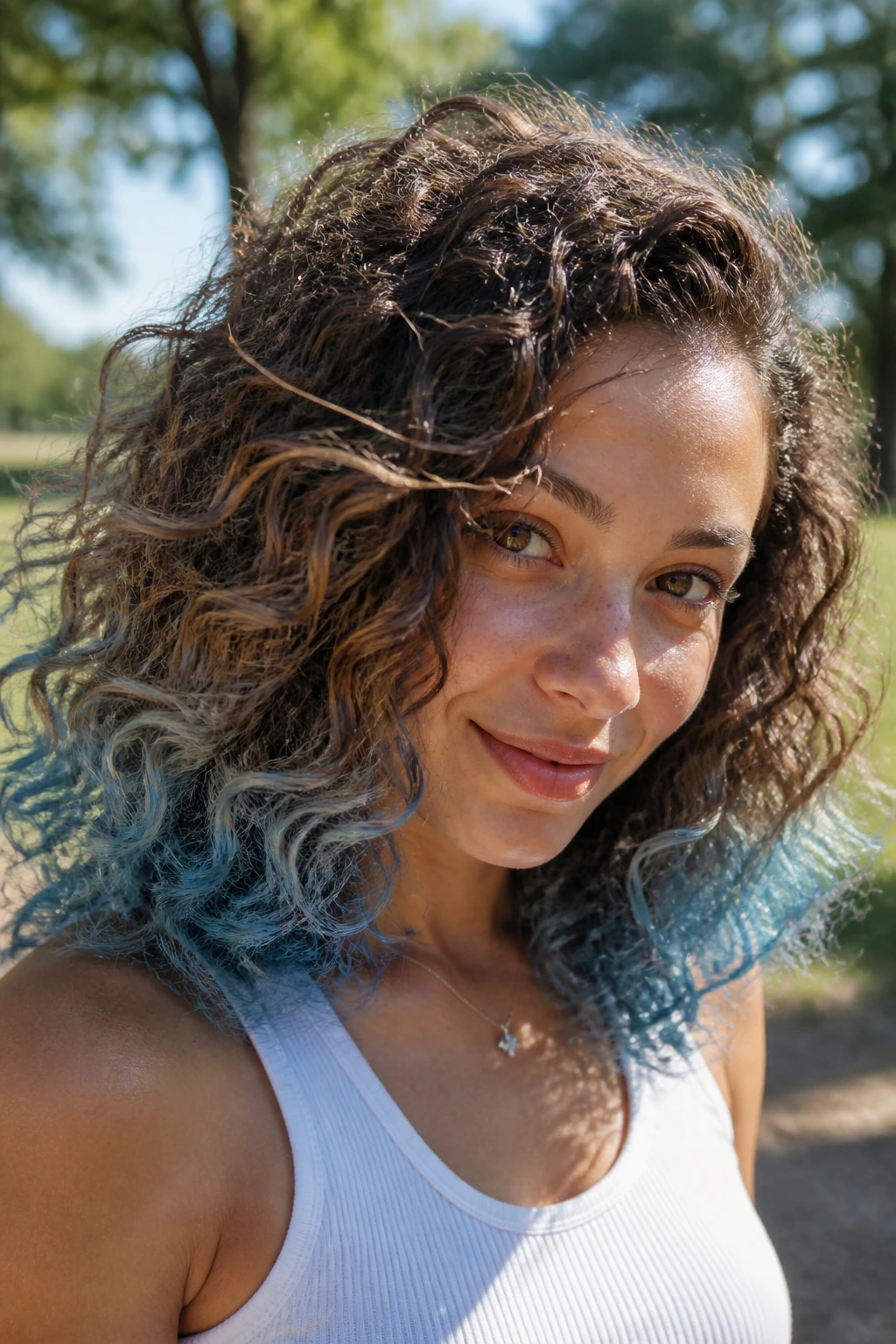
Cornflower blue behaves differently from darker blue shades on curls. It sits on top of the texture instead of sinking into it, which means the tips stay visible even when the hair is full and springy.
That’s why this version feels lighter than navy or teal. Caramel brown gives the blue a warm frame, and the curls stop the color from looking heavy at the bottom. On a straight cut, cornflower tips can look a little thin. On curls, they get more air and movement.
What Makes It Different
Unlike deeper blues, cornflower carries a softer edge. It doesn’t need a lot of saturation to show up, so the ends can stay bright without turning harsh. The color looks especially good when the tips are loose, not razor-sharp.
Best For
- Medium-length curls.
- Caramel or honey-brown bases.
- People who want a lighter blue without going pastel.
- Hair that already has some natural bounce.
Specific Recommendation
Ask for the blue to start in the last 2 to 3 inches, then feather upward with a light hand. That keeps the curl pattern visible and avoids a thick color block at the bottom.
13. Inky Blue Slice Highlights for Brunette Lobs
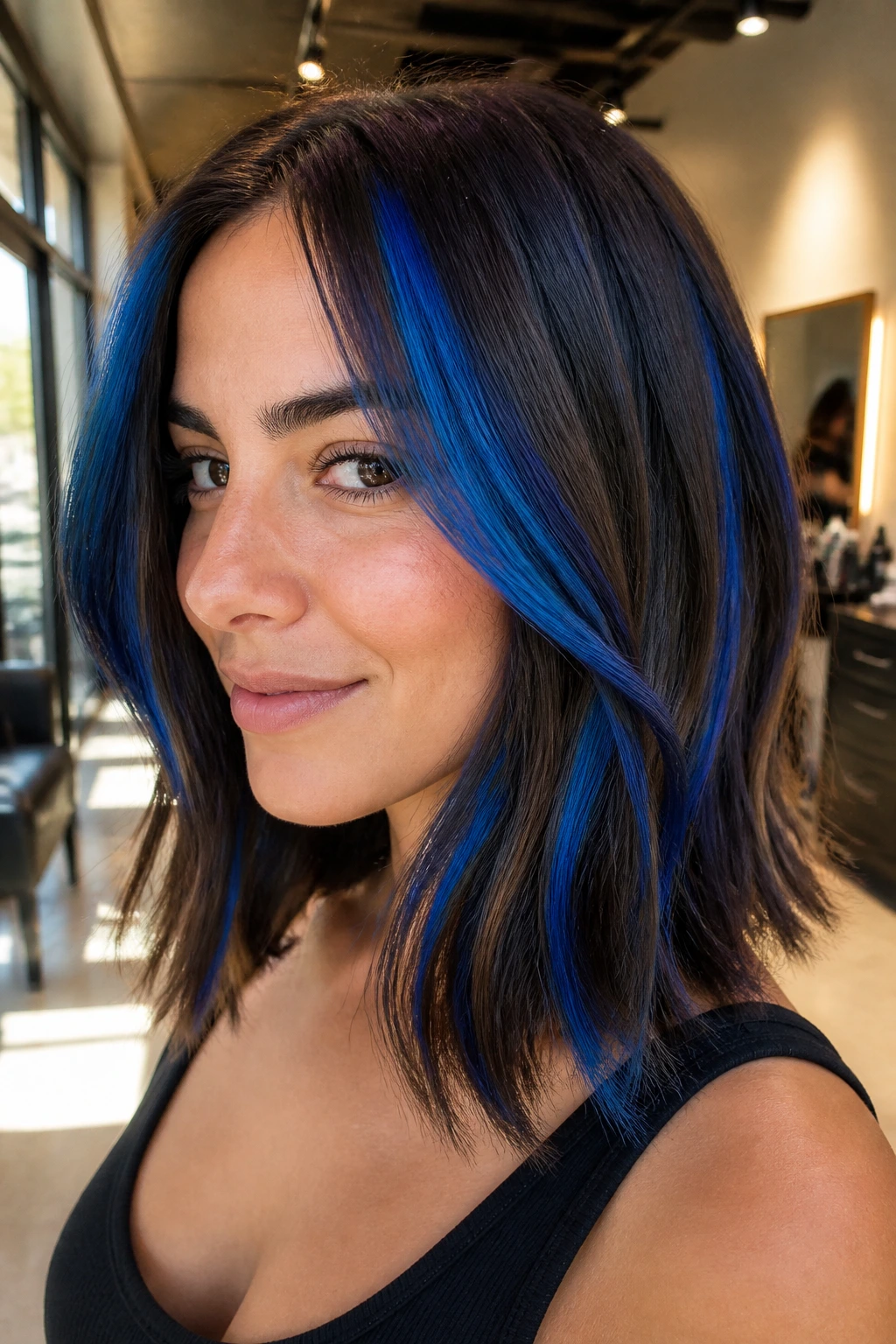
Chunkier slices are back, and on a brunette lob they look cleaner than a lot of tiny wisps. Inky blue slice highlights give the cut a sharper line and make the shape of the lob feel more deliberate.
The slices should be placed with some breathing room between them. If they’re packed too tightly, the blue loses the impact and starts to look muddy. A few strong panels are better here than a hundred thin ones. You want the color to show up when the hair swings, not just when you stare at it under bright salon lights.
On a lob, that kind of placement can look a little editorial without being fussy. The shorter length keeps the blue close to the surface, and that means the color shows from both the front and the side. Straight styling makes it graphic. Loose bends make it softer.
This is a good call if you like your hair to have shape. The lob gives the blue a frame, and the blue gives the lob a pulse. Nice trade.
14. Ocean Glass Blue on Soft Brown Waves
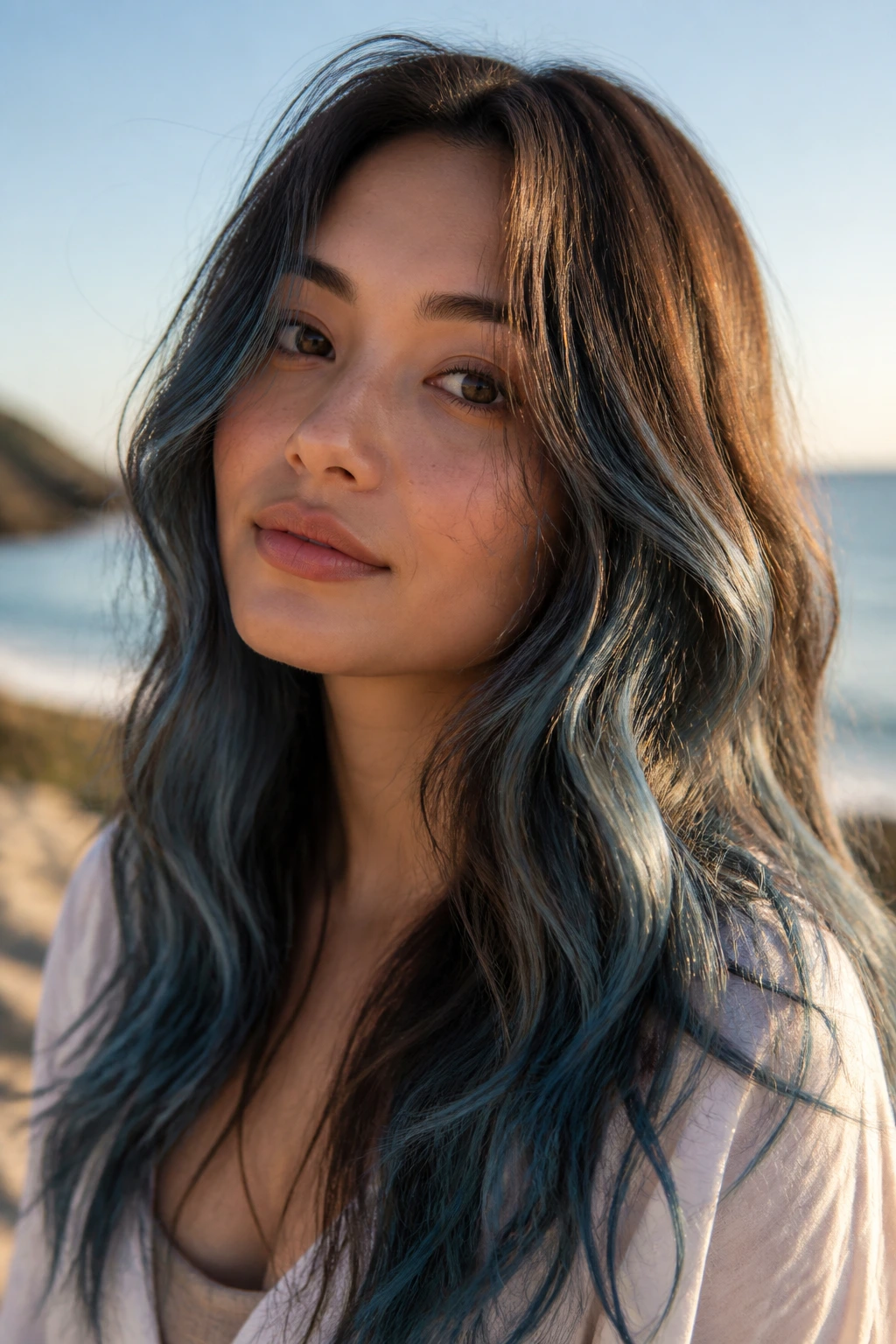
Can a blue balayage look translucent? It can, if the tone is right. Ocean glass blue on soft brown waves has that watery quality where the color feels layered instead of painted.
The trick is keeping the blue light enough to show movement but smoky enough to avoid looking pastel. Brown waves are perfect for that because the bends in the hair break the color up naturally. Each wave catches a slightly different note, and the whole head feels more fluid than a flat dye job ever could.
How to Keep It Airy
Use a soft beige-brown base rather than a red one. The cooler brown lets the ocean tone stay clean. Then ask for the blue to sit mostly on the outer layer and the mid-lengths, with the ends only lightly touched.
This shade works best when the styling stays loose. Large waves, a rough blow-dry, even a clipped-back half style — all of that shows the color better than pin-straight hair. The look is supposed to feel light and shifting, not locked in place.
15. Ink Wash Balayage on Espresso Hair
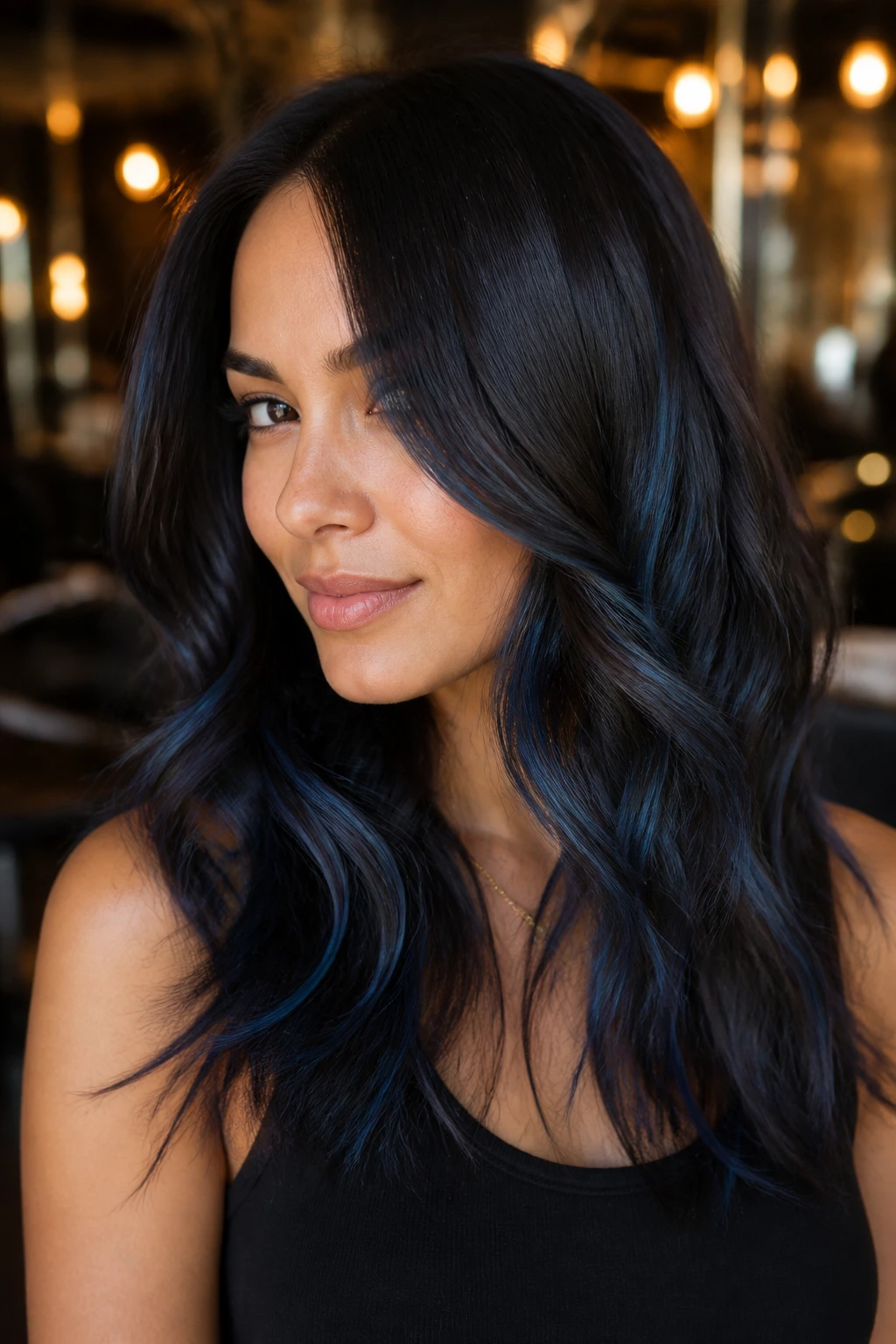
An ink wash is what happens when you want blue, but you want it to feel like a shadow first. On espresso hair, the color sits inside the dark base and shows itself in streaks, not strips.
I like this version for people who wear a lot of black, charcoal, or deep brown clothing. The hair doesn’t fight the wardrobe. It just adds one cooler note. That sounds small, but on a dark base it changes the whole mood of the cut.
What to Ask For
- A diluted navy or blue-black formula.
- Soft hand-painted pieces through the mid-lengths.
- Very little color at the root.
- A gloss finish, not a bright toner.
The nice part is that this look grows out quietly. It doesn’t need constant correction, and it won’t shout when it starts to fade. On espresso hair, that matters. The base is doing most of the work, and the blue is there to give it a little movement when the light hits.
16. Frosted Blue Highlights on Ash Brown Hair
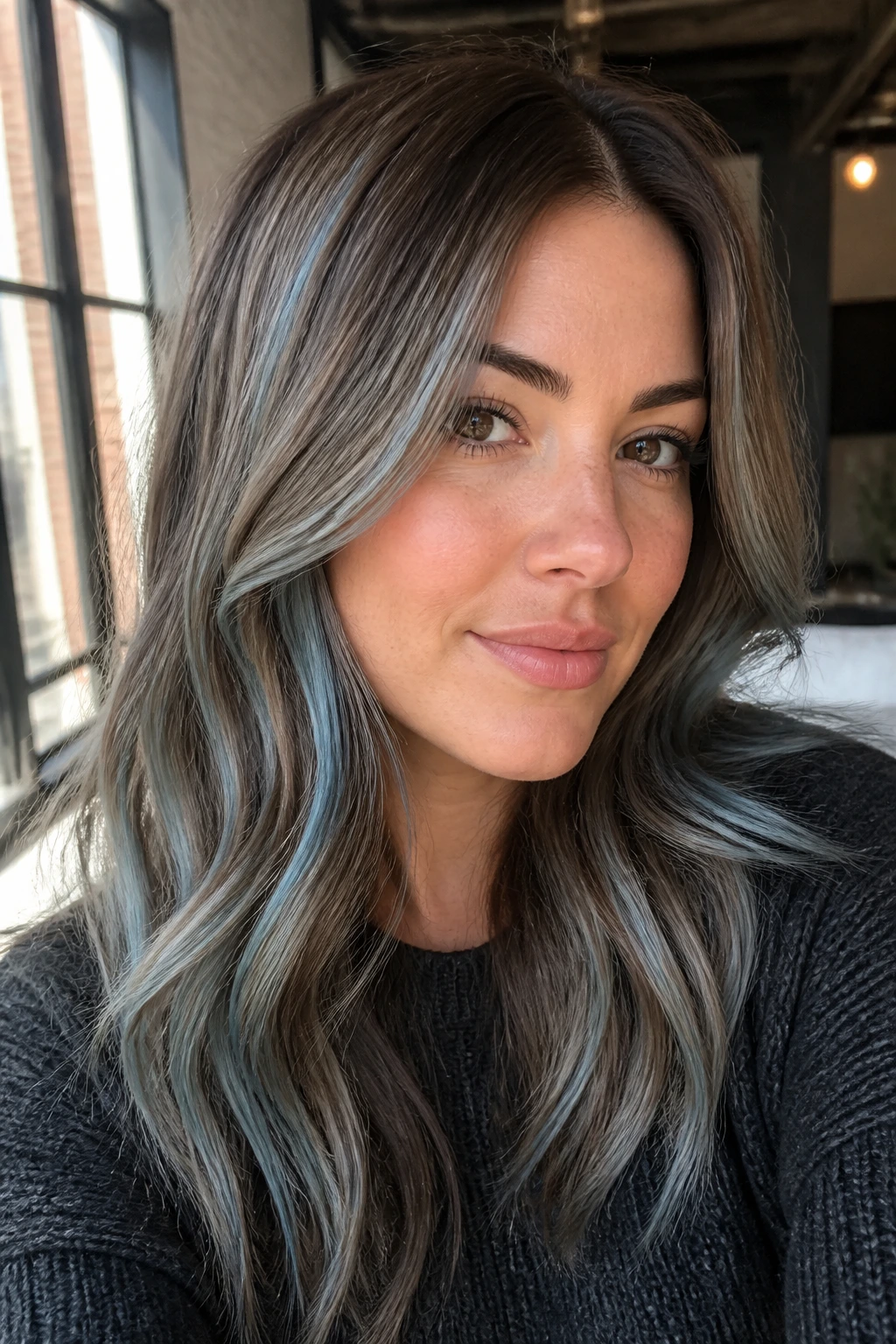
Ash brown is already halfway to cool, which is why frosted blue needs a lighter touch here. Too much saturation and the hair can go flat. Too little and the highlights vanish.
This look is a good match for someone who likes clean, cool tones. The blue should sit just a shade above the ash base, almost like frost laid over a cold morning window. That sounds poetic, but the actual effect is practical: the contrast stays soft, so the hair keeps its depth.
Unlike warm brunettes, ash brown doesn’t need the blue to be super dark to make sense. A pale steel-blue or frosted denim tone often looks better than cobalt because it blends into the base instead of sitting on top of it.
If your cut has layers, keep the highlights thin and spread out. That avoids a striped look and gives the hair a more misted finish. This is not the place for chunky color unless you want the whole thing to go bold.
17. Mermaid Ends for Long Brown Layers
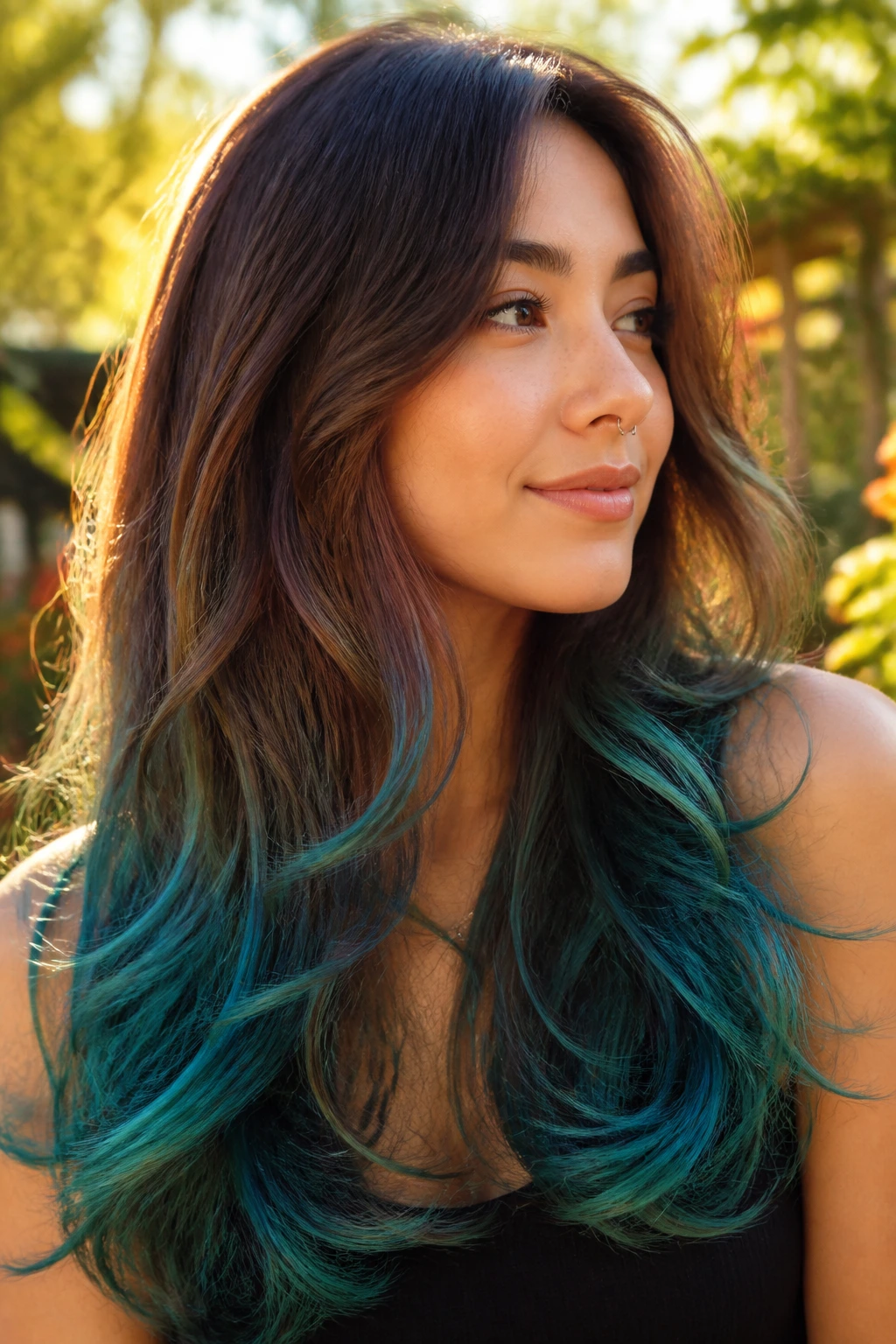
Mermaid ends on long brown layers have a strange little magic to them. The color pools at the bottom, then breaks apart through the layers when the hair moves. You see blue, teal, and a touch of green depending on the light, and the whole thing feels alive.
Long layers are what keep this look from becoming a heavy block. The ends need room to fall over one another. When they do, the color turns into pieces instead of one slab. That makes the blue look softer and more expensive-looking in person than it usually does in photos.
It also helps if the brown base stays a little darker near the crown. That keeps the eye traveling downward, which is where the color payoff lives. If the top is too light, the ends lose their impact.
A loose wave shows this style better than a tight curl. Straight hair can work, but the layers need enough movement to let the mermaid tones break apart. Otherwise, the ends can look too tidy. And the point here is a little looseness.
18. Royal Blue Slices for Chestnut Hair
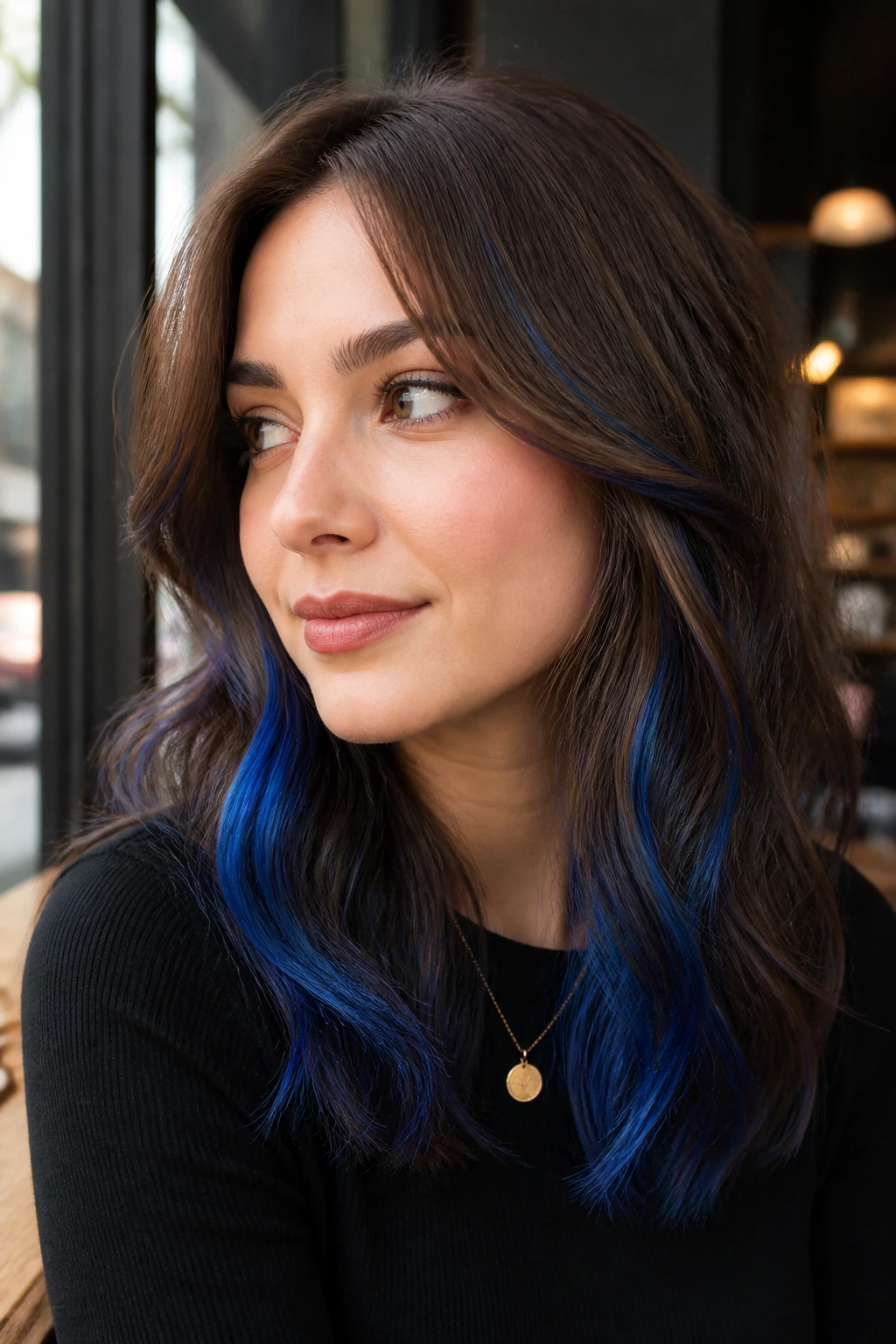
Royal blue is bolder than cobalt and deeper than electric blue, which makes it a strong match for chestnut hair. The brown base brings warmth; the blue brings the edge. That tension is what gives the look its shape.
Royal blue slices work best when they’re placed around the perimeter of the cut, not scattered everywhere. You want the color to show at the sides, near the ends, and maybe in a few hidden panels through the back. That keeps the look clean and makes the blue feel richer because it has room to breathe.
Why It Stands Out
Chestnut hair has enough warmth to stop royal blue from looking cold. The result feels more polished than neon blue and more visible than navy. It’s the middle ground that some people skip over, which is a shame because it often photographs better in real life than brighter shades do.
What to Tell the Stylist
- Keep the root area chestnut.
- Use medium-width slices, not tiny threads.
- Let the blue sit strongest on the outer layers.
- Finish with a gloss that protects the depth.
If you like the idea of color that can still pass as refined, this is a good one to try.
19. Subtle Blue Tint for Brunette Lobs
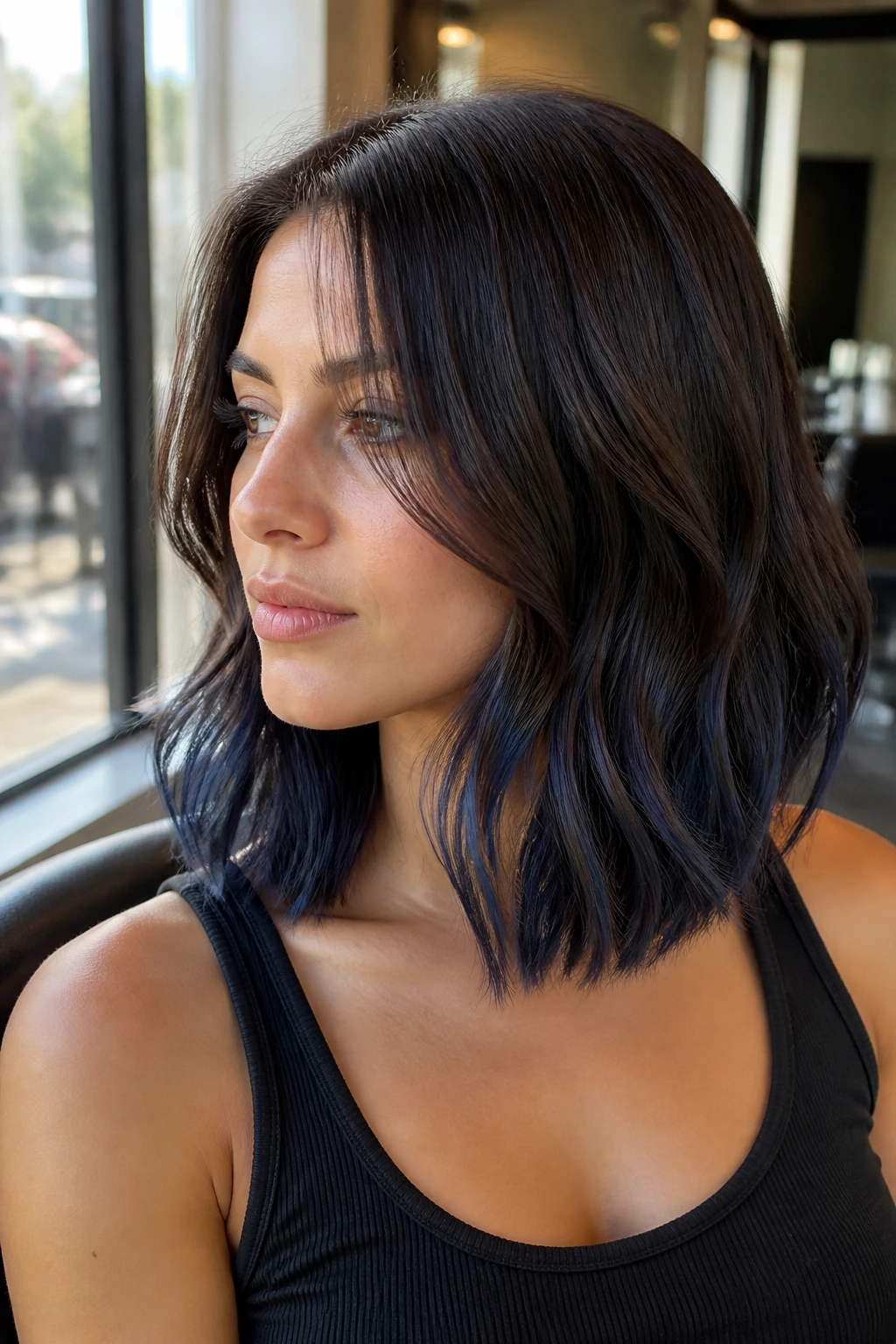
A subtle blue tint on a brunette lob is the kind of color that only reveals itself in motion. At first glance, it reads as glossy brown. Then the light shifts and the blue edge comes through.
That’s what makes this look useful. It doesn’t demand a wardrobe change or a different makeup routine. The brown stays dominant, and the blue just cools the whole cut down a notch. If you want a hair color idea that feels private rather than loud, this is an easy place to land.
The best version uses a sheer glaze or a very soft balayage overlay. Heavy blue streaks would kill the point. A lob also helps because the shorter length makes even a small amount of color easier to see. A long haircut can swallow this shade unless the tint is stronger.
I’d call this the most low-pressure option on the list. It gives you the blue note without turning the hair into a full color project. Sometimes that’s exactly the right amount.
20. Blue and Violet Balayage for Brown Hair
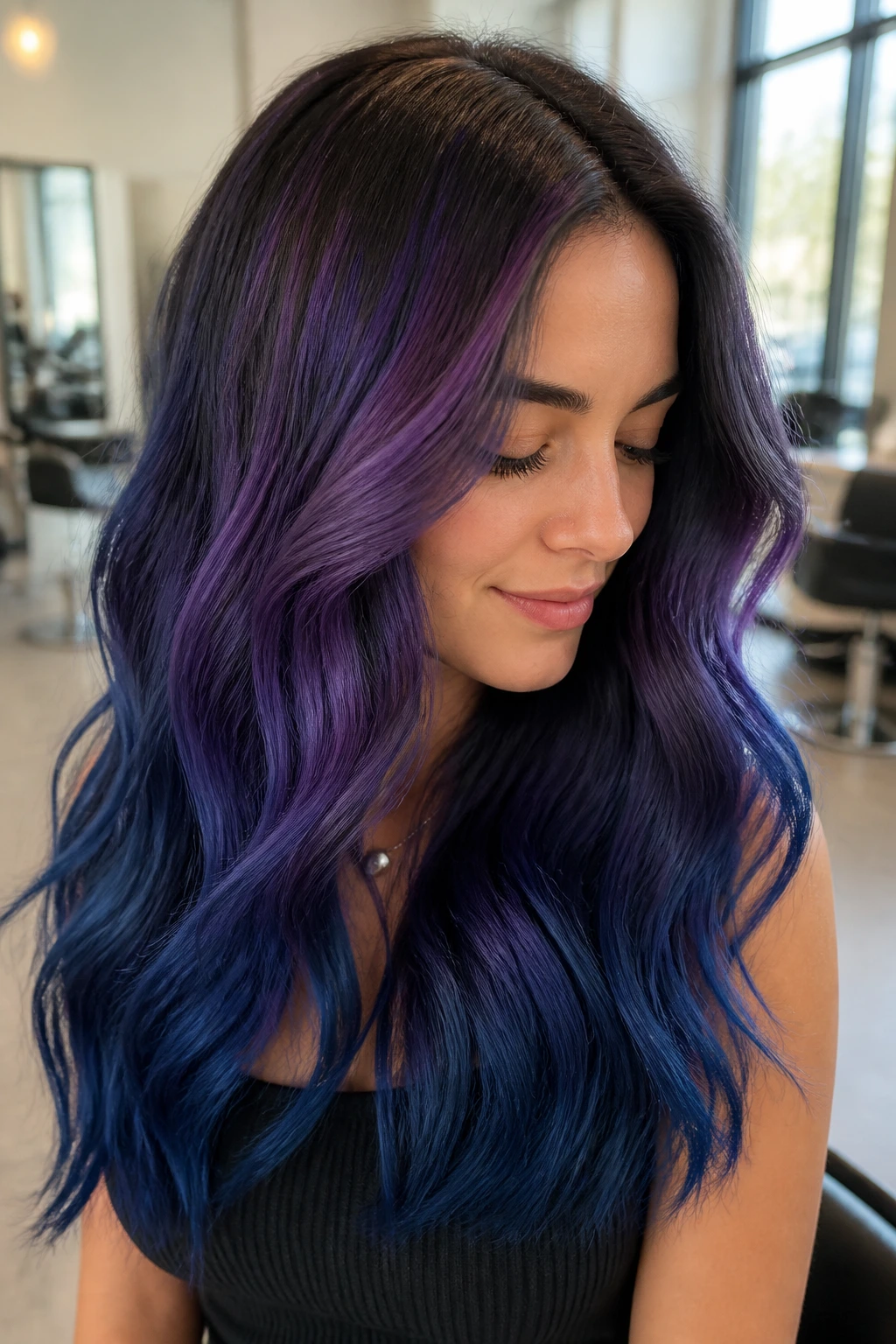
Why stop at blue when violet can soften the edges? On brown hair, the two shades can blend into something richer than either one alone. The violet keeps the blue from looking flat, and the blue keeps the violet from drifting too warm.
This combo works especially well when the base is medium to dark brown. The balayage pieces can move from violet near the roots of the painted section into blue toward the ends, or the other way around. There isn’t one right direction. What matters is that the transition feels smooth enough to read as one color family, not two separate streaks.
How to Make the Blend Read as One Color
Ask for muted violet, not bright purple. Then pair it with a smoky blue rather than a neon one. The goal is depth. The two tones should meet in the middle and create a kind of storm-cloud effect.
On curls, the mix looks plush. On straight hair, it turns more graphic. Either way, the brown base does the heavy lifting by keeping both colors grounded. Without that brunette backdrop, the blend can tip into costume territory fast.
21. Smoky Teal-Blue Balayage for Dark Brunettes
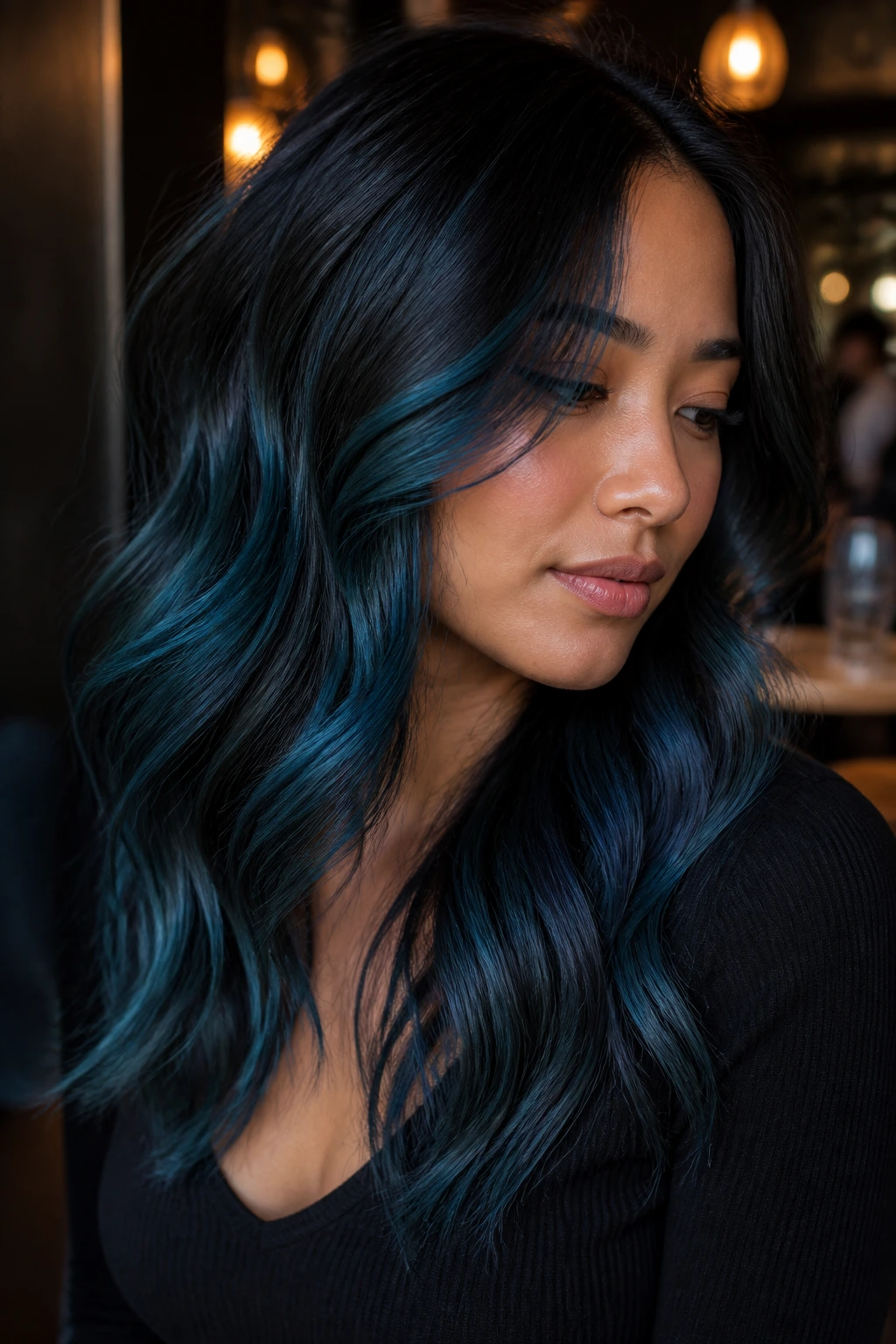
Under restaurant lights, smoky teal can look almost liquid. That’s part of the appeal, and it’s why this shade works so well on dark brunettes. The color is vivid, but the smoky base keeps it from feeling loud.
The placement should follow the movement of the haircut. If the hair has layers, let the teal-blue sweep through those lines instead of trying to cover everything evenly. The result feels more natural and less like a block of dye. That matters on dark hair, where any hard line gets noticed fast.
Key Details
- Best on level 2 to 4 brunettes.
- Use a muted teal base with blue undertones.
- Keep the painted pieces longer through the mid-lengths.
- A loose bend in the hair makes the color show better.
This is a shade for someone who wants something visible but not neon. It has enough energy to stand out in daylight and enough depth to still look polished when the hair is tied back. That’s a hard balance to get right, and this version gets close.
22. Deep Sapphire Curtain Layers for Brown Hair
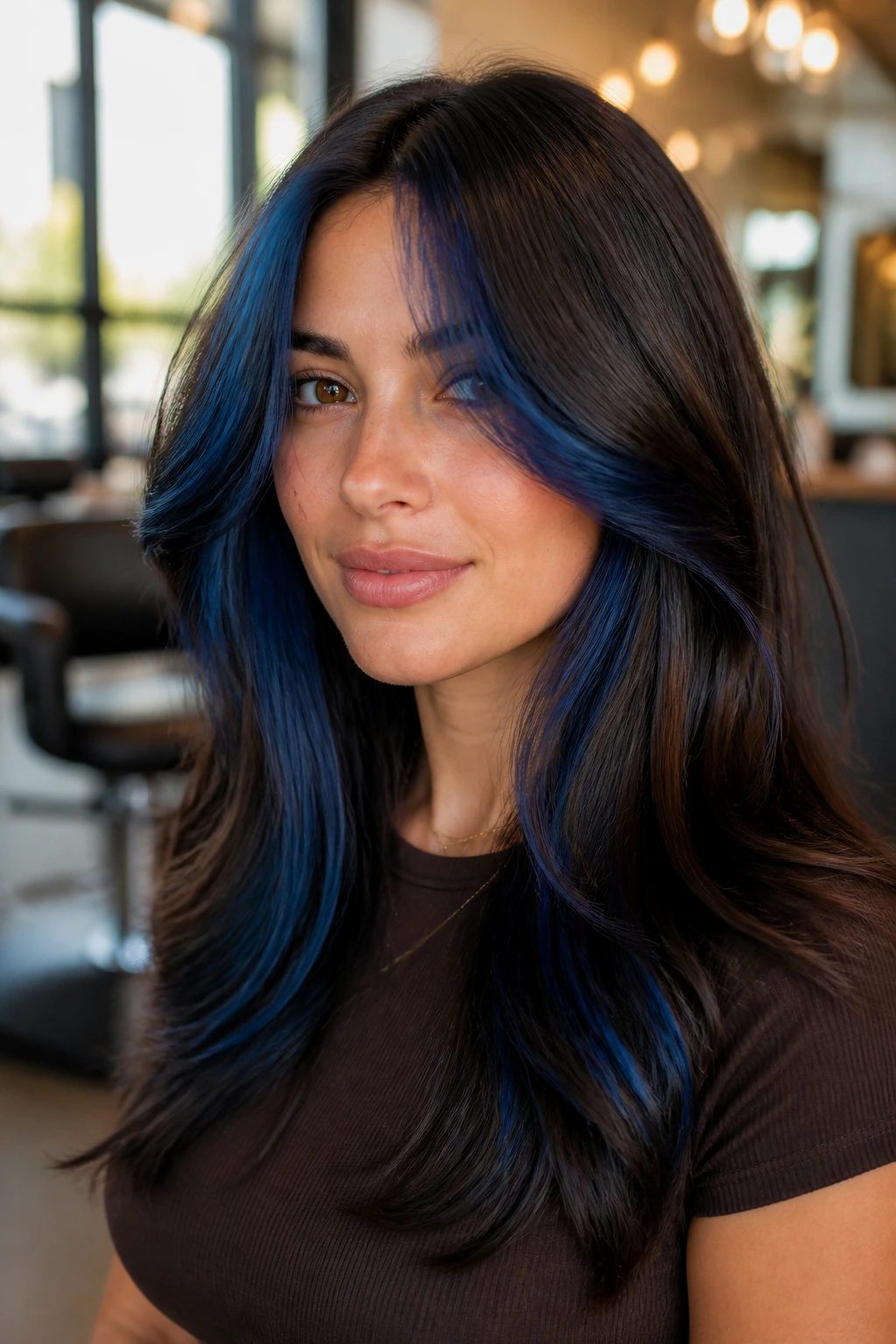
Deep sapphire curtain layers might be the most wearable blue balayage here if you want the color to frame the face without taking over the whole cut. The curtain layers open the blue right where the hair splits, so you get a soft reveal instead of a blunt front panel.
This look sits nicely on brown hair because the darker base keeps the sapphire rich. The color doesn’t need to be bright to be noticeable. It only needs enough saturation to show in the drape of the layers. On a center part, the blue frames the face. On a side part, it tucks in and feels more subdued.
Unlike a money piece, curtain layers let the blue move with the haircut rather than against it. That makes the shape feel more natural and a little less forced. It also gives you room to wear the hair straight one day and wavy the next without losing the color story.
If you want one version that can lean elegant, cool, and a little unexpected all at once, this is the one I’d pick. It keeps the brunette in charge and lets the blue do the talking where it counts.
