



A round face doesn’t need darker hair to look slimmer — it needs smarter light placement. Brown blonde balayage can do that better than most color jobs when the brightest pieces run vertically, sit a little lower than the cheekbones, and blend softly into a deeper root. That combination gives you movement without turning the sides of the face into one big bright circle.
The mistake I see over and over is simple. People ask for blonde around the front, but the light ends up landing right at the widest point of the face. That’s where the shape gets emphasized instead of softened. A good colorist will think about the full picture: where your part sits, how your layers fall, how much volume lives at the crown, and where the eye should travel first.
Brown blonde balayage is useful because it’s not one look. It can be warm, cool, soft, high-contrast, barely-there, chunky, glossy, or airy. On round faces, though, the smartest versions share a few things: longer face-framing pieces, light that starts a little below the cheekbone, and enough brunette depth near the roots to keep the shape from widening out. That’s the whole game, really.
The looks below all use that idea in different ways. Some are low-maintenance and gentle. Some are brighter and more fashion-forward. A few lean cool; a few lean caramel and warm. All of them are built to make a round face look longer, leaner, and more defined without making the hair feel stiff or overworked.
1. Soft Brown Blonde Balayage With Long Face-Framing Pieces
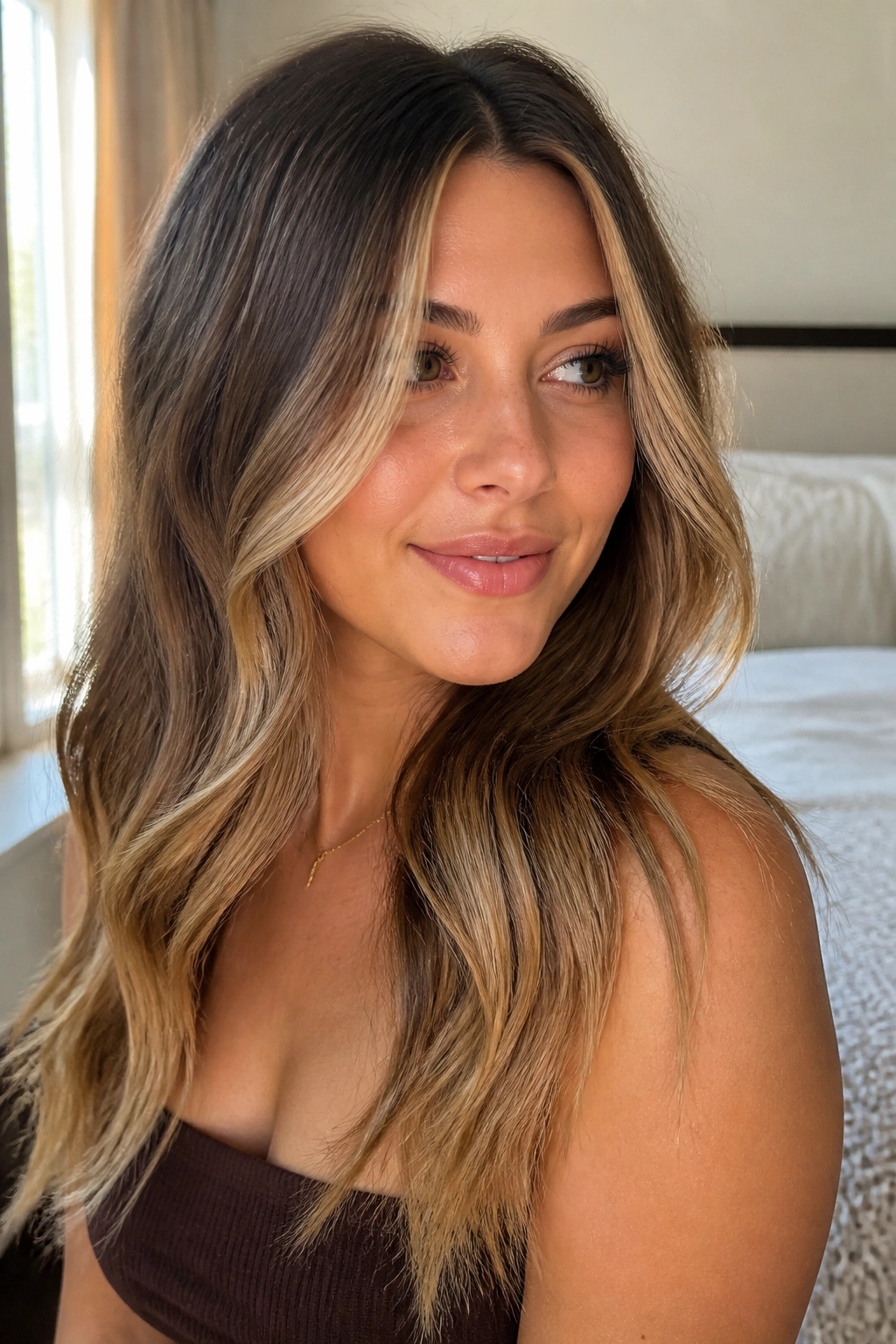
This is the safest place to start if you want brown blonde balayage for round faces without going too light too fast. Keep the base a rich brunette, then add beige-blonde ribbons that begin below the cheekbone and drift toward the collarbone. The result feels soft, not striped, and the face-framing pieces create a vertical line that helps lengthen the shape.
Why It Flatters a Round Face
A long front section is doing more work here than the blonde itself. When the lighter pieces hang past the widest part of the cheeks, they pull the eye downward instead of outward.
Ask for feathered layers around the face and a soft root shadow that stays at least one shade deeper than the mids. That keeps the look dimensional even when you wear it straight.
- Brightness starts near the mouth, not the temples.
- Beige tones keep the color calm and wearable.
- Loose waves make the front pieces fall in a cleaner line.
- A side part adds a little break in the symmetry.
Best move: curl the front sections away from the face with a 1¼-inch iron so the lighter pieces open up instead of hugging the cheeks.
2. Caramel Ribbon Balayage on a Shoulder-Length Lob
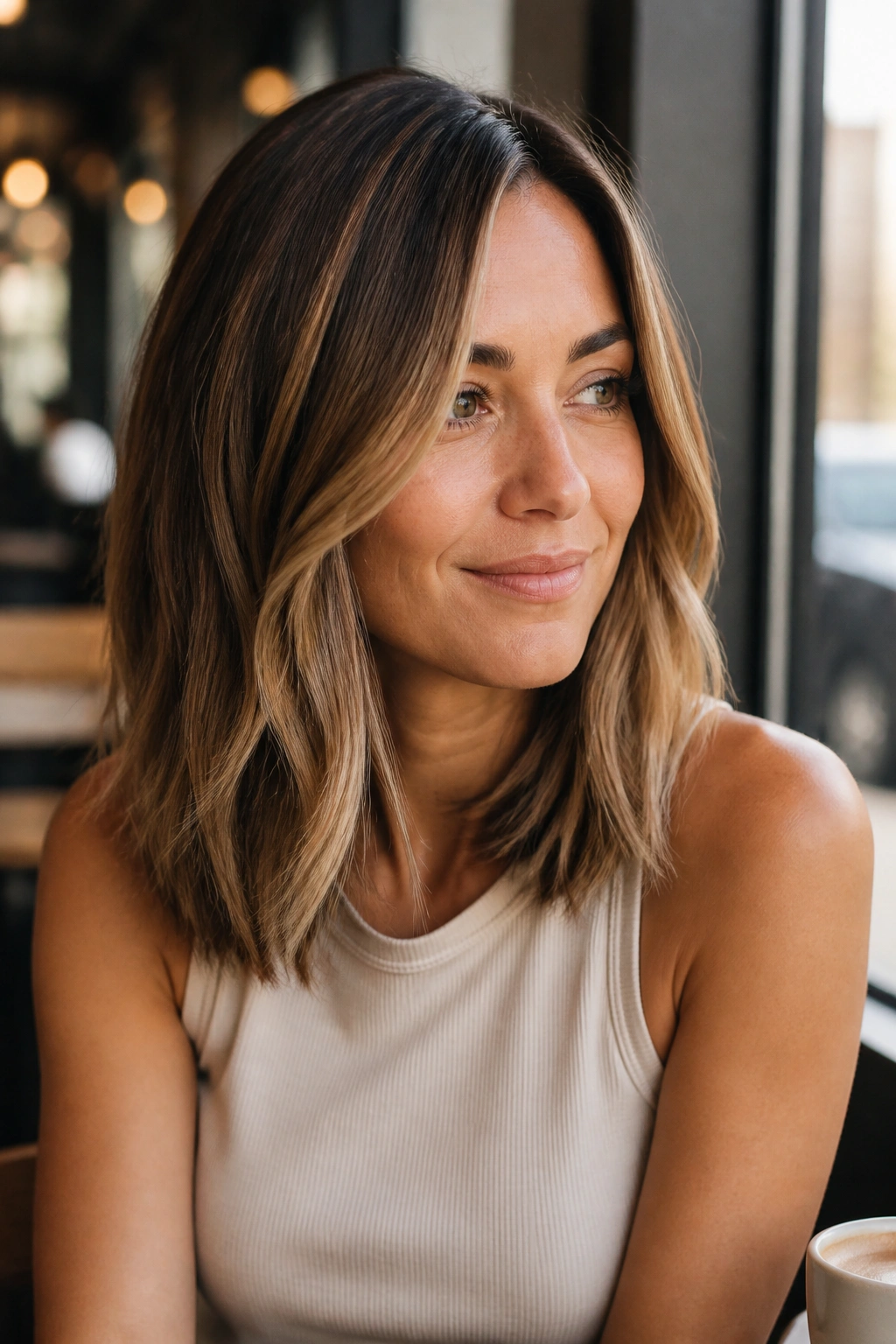
A lob can absolutely work on a round face, but only if the ends don’t stop right at the jawline. This version sits just below the collarbone, with caramel ribbons painted through chocolate brown hair in long, flowing strokes. It feels polished, but not fussy.
The ribbon effect matters. Chunky light pieces can make a round face feel wider, while thin caramel streams keep the color moving downward. That’s the trick here. The hair still looks full, but the shape reads longer because the brightest parts travel in lines instead of blocks.
Wear it with a soft off-center part and bends that start mid-shaft. Straight-under curling at the ends can make the cut feel boxy. Nobody needs that.
What to Ask Your Colorist For
- A lob that falls 1 to 2 inches below the jaw.
- Caramel balayage concentrated through the lower half.
- Soft money pieces, not a bright halo.
- A gloss that keeps the caramel looking rich, not orange.
3. Mushroom Brown to Beige Blonde Melt
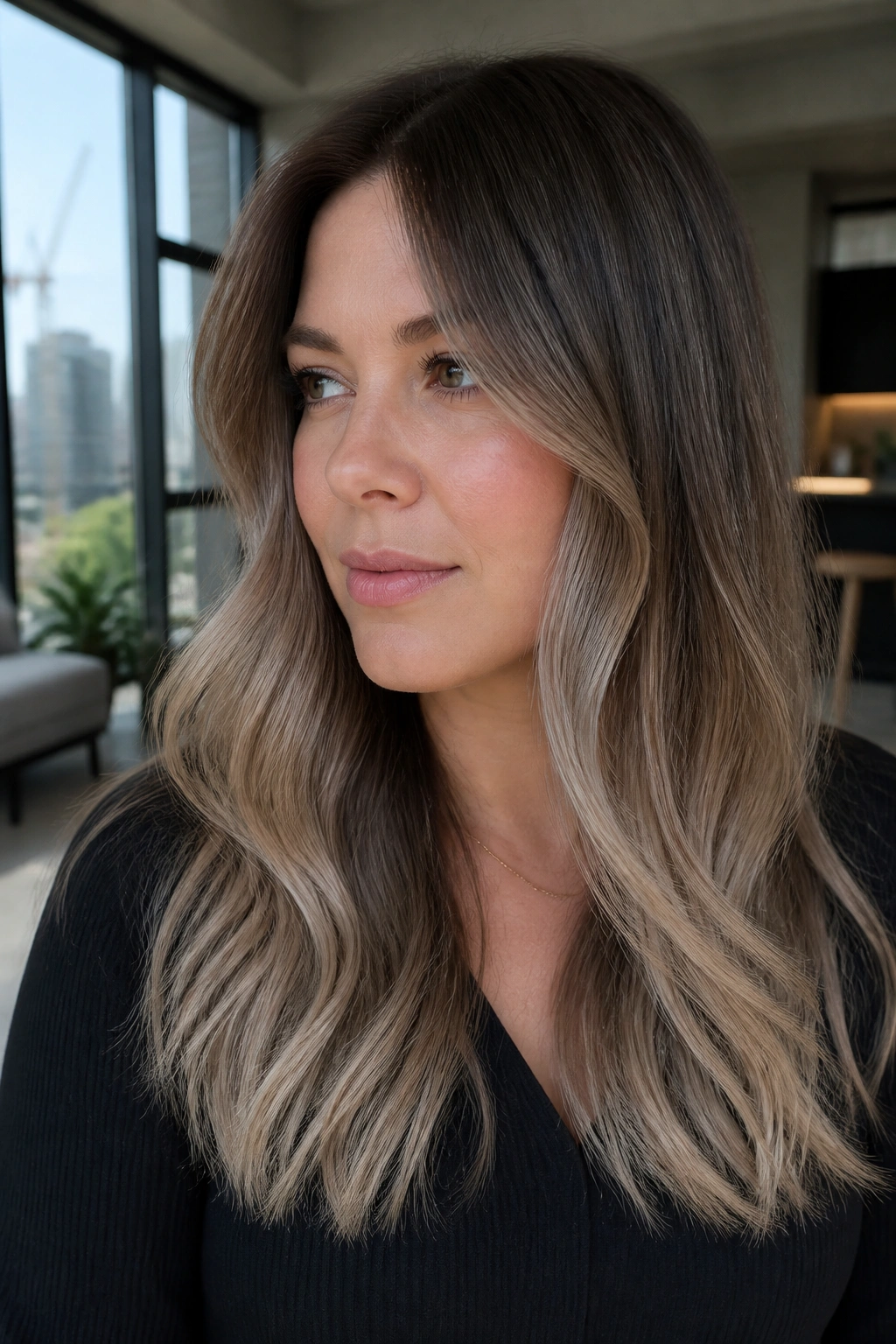
Cooler brunettes often look especially clean on round faces, because the color doesn’t puff up the features the way warm brass sometimes can. Mushroom brown has that smoky, earthy base, and beige blonde blends into it without a hard jump in color. It’s quiet in the best way.
This is one of those looks that looks more expensive when the roots are slightly deeper and the blonde stays diffused. The trick is to avoid harsh light pieces at cheek level. Keep the brightest spots lower, around the chin and collarbone, and let the upper sections stay soft and misty.
The whole thing feels sleek when the hair is straight, but it also works with a loose bend. Fine, almost invisible waves are enough. You don’t want the texture to fight the calm color story.
A blunt bob with this tone can feel heavy on a round face, so I like it best on longer layers or a lob with movement.
4. Honey Money Piece Around a Deep Side Part
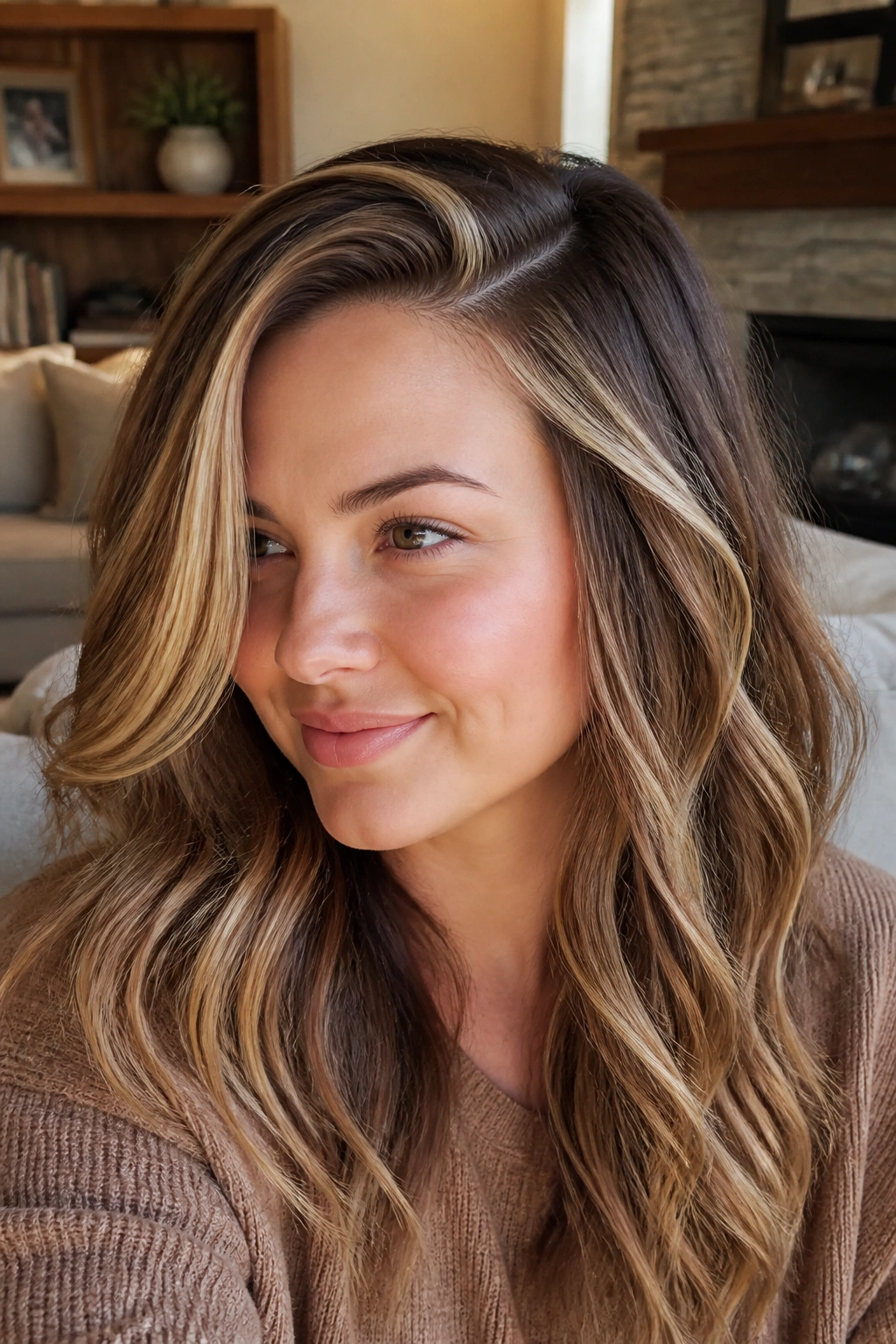
Want shape fast? Move the part and brighten the front. That’s the whole point of this look. A deep side part breaks up the roundness right away, and a honey money piece gives you lift where the forehead and temples need it most.
This version works because the contrast is controlled. The money piece is bright, yes, but it doesn’t need to be thick. Two or three finely painted panels are enough if they start at the temple and taper as they fall. The rest of the balayage can stay softer and warmer through the lengths.
A deep side part also helps the crown stand up a little higher. That tiny bit of volume matters. Round faces often look best when the top has some lift and the sides stay flatter.
Try this styling pattern:
- Blow-dry the roots up and back.
- Set the front pieces away from the face.
- Leave the ends slightly undone.
- Finish with a light gloss spray, not a heavy oil.
5. Chestnut Brown with Feathered Curtain Bangs
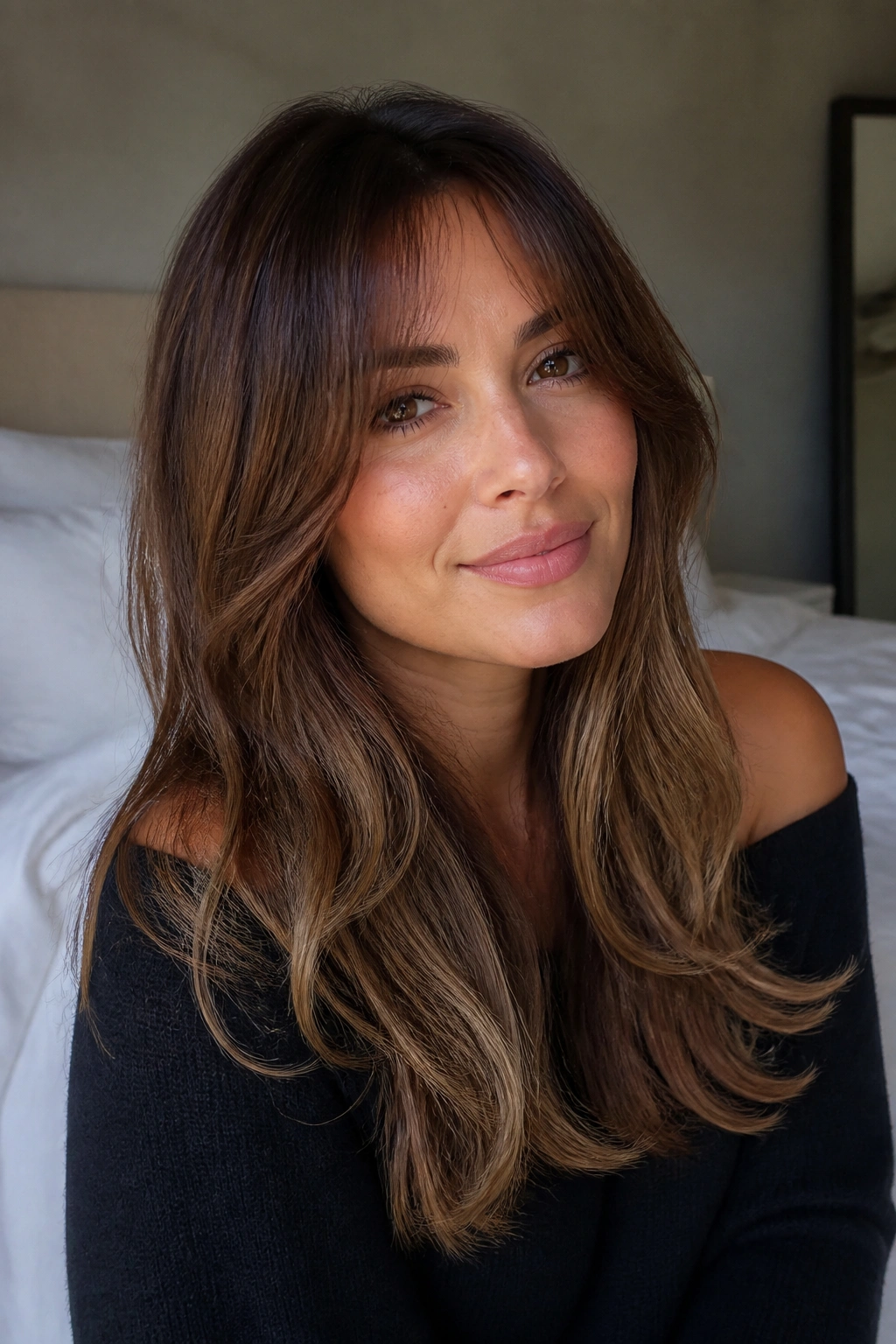
Curtain bangs can be brilliant on a round face, but only when they’re cut with enough length to part at the center and sweep into the cheekbones. Chestnut brown with soft blonde haze through the ends keeps the bangs from feeling harsh. The color does a lot of the softening for you.
The most flattering version has the bangs opening just above the brows and grazing the outer cheeks, not sitting as one straight line across the forehead. That little bit of curve changes everything. It cuts through the roundness without making the face look shorter.
Keep the balayage subtle near the fringe and richer near the roots. Too much light right at the bang area can make the top of the face feel crowded. Less is more here. And the word less usually saves people from a bad haircut.
This look is especially nice if you want movement without committing to a full face frame that’s too obvious.
6. Toffee Balayage on a Wavy Bob
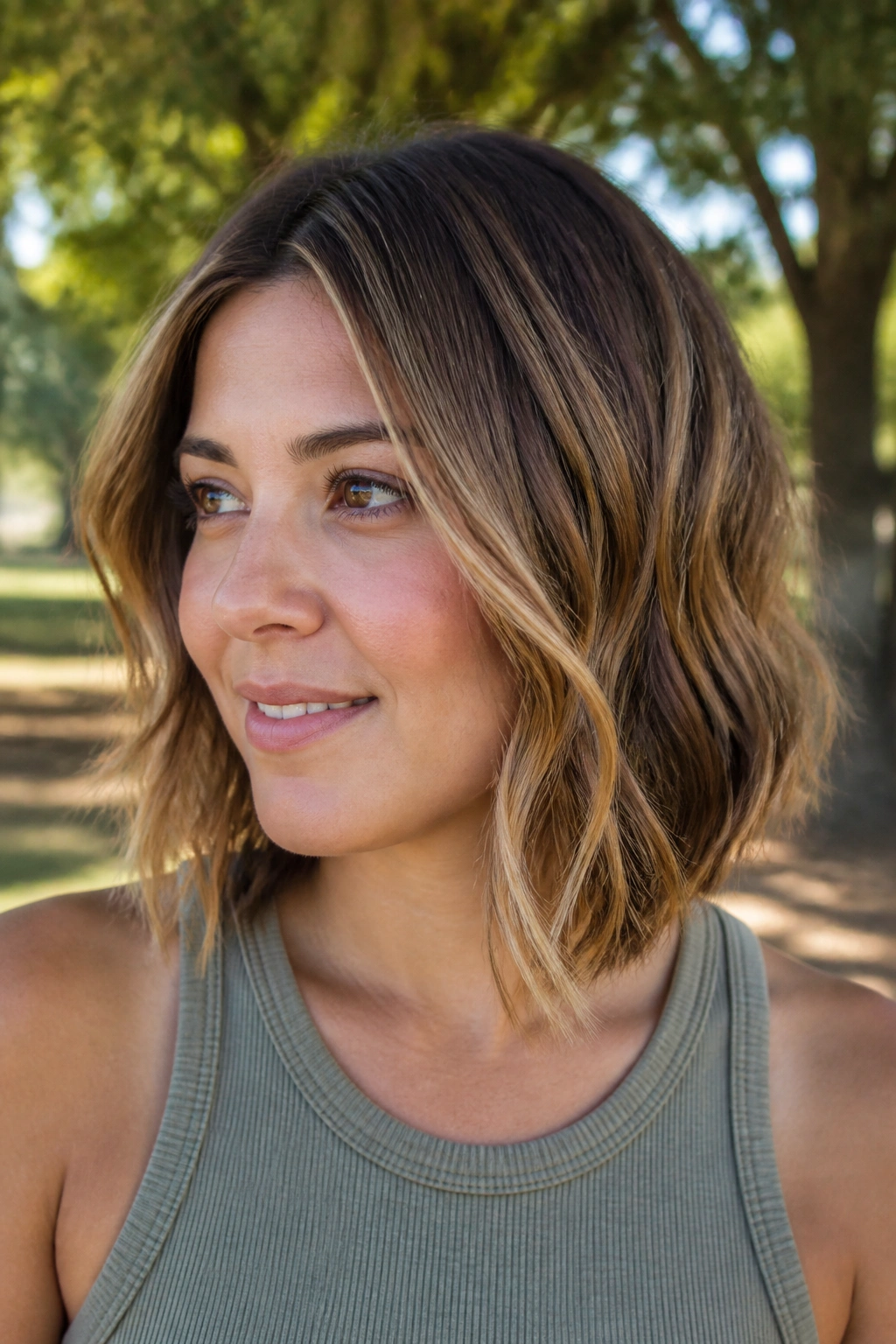
A wavy bob can be tricky on a round face. Shorter hair can widen the cheeks if the shape ends at the wrong spot. The fix is to keep the bob a touch longer than chin length and add toffee balayage in thin, vertical placements that travel through the sides.
The waves should be loose and broken, not puffy. Think about bends, not curls. A soft wave pattern lets the toffee tones peek through in narrow slices, which is much kinder to round cheeks than a big round curl sitting on the side of the head.
This one looks especially good when the ends are slightly piecey. That texture keeps the bob from becoming a perfect circle. Perfect circles are the enemy here. Hair should bend, not balloon.
Styling Notes That Matter
- Use a 1-inch iron for a softer bend.
- Leave the very ends straighter.
- Tuck one side behind the ear for asymmetry.
- Spray only the mid-lengths, not the roots.
7. Brown Blonde Balayage With an Off-Center Part
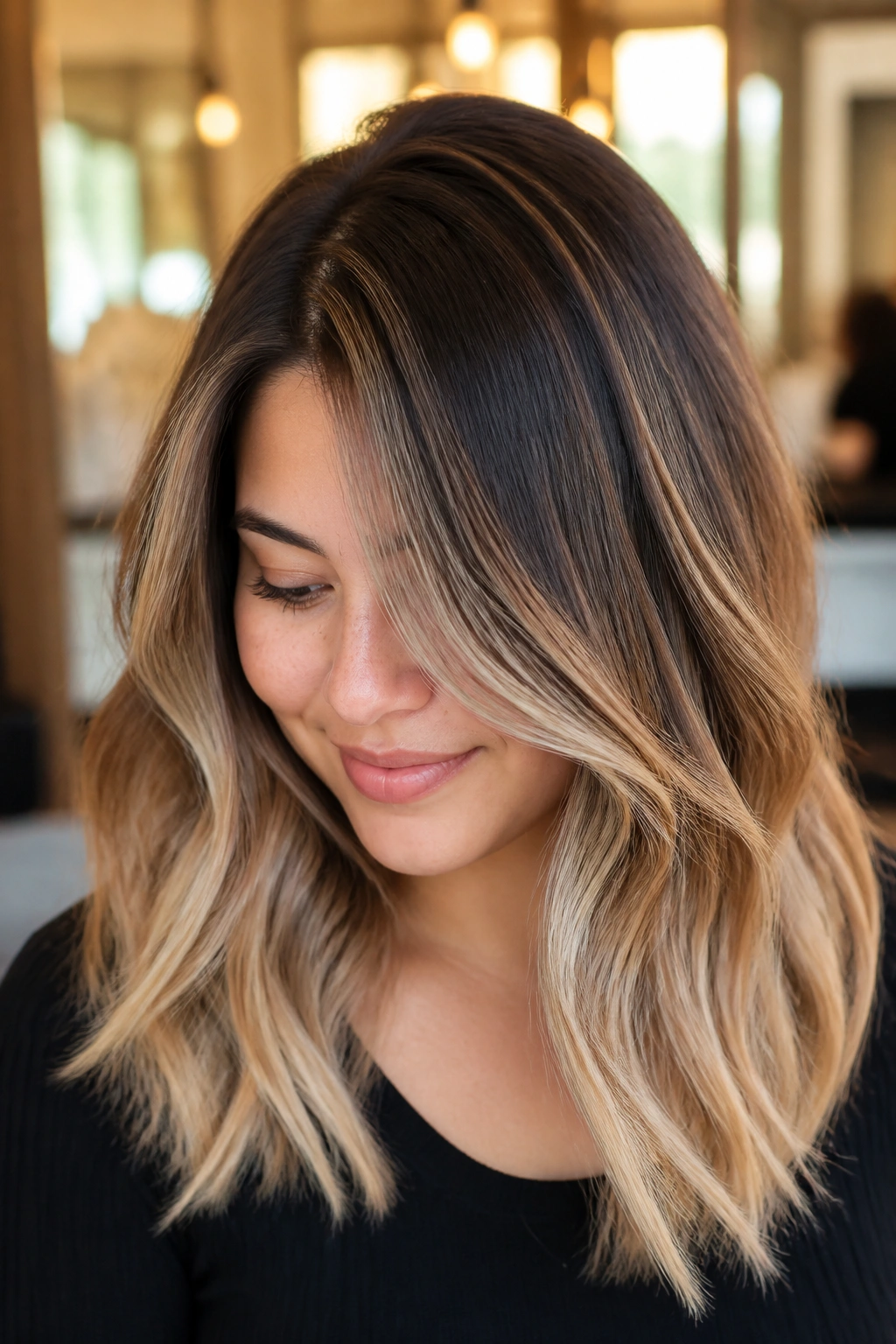
A center part is not forbidden on a round face, but an off-center part often does more for the shape with less effort. It shifts the weight of the hair a little to one side, which breaks up the symmetry that can make a face look fuller than it is. That’s why this look works.
The brown blonde balayage itself stays relaxed: chestnut roots, soft bronde through the mids, and lighter beige at the bottom third. Nothing has to shout. The part does the heavy lifting, and the color just supports it.
If you’ve got medium or thick hair, this one is a favorite of mine. The off-center part lets the front sections drape in a cleaner diagonal, which is exactly the kind of line a round face likes. Straight across is the thing to avoid.
A tiny shift in the part can change the whole haircut. Tiny. Not dramatic. That’s what makes it useful.
8. Ash Brown With Champagne Ends
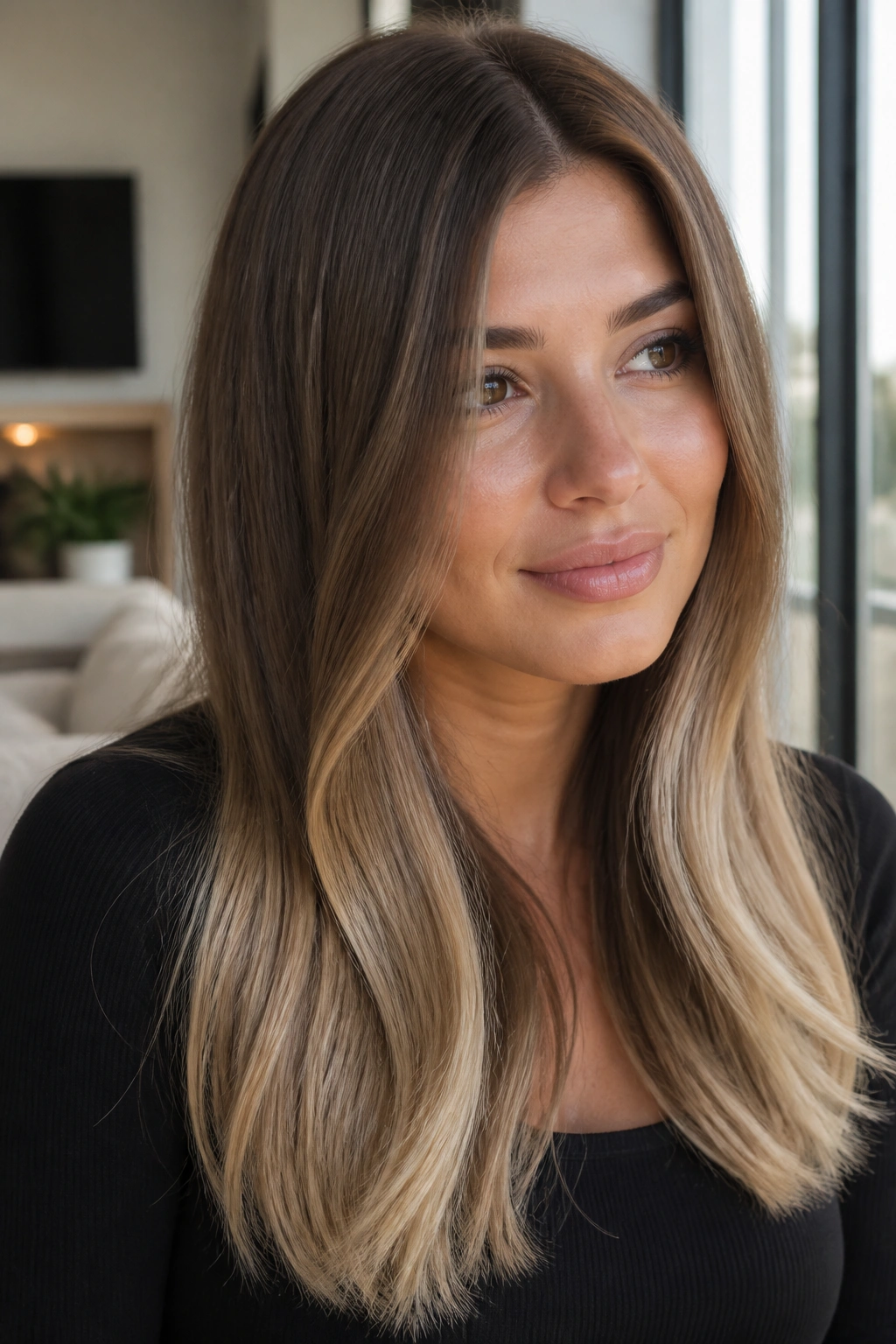
Cool brunettes can look sharp in a way warmer colors sometimes can’t. Ash brown with champagne ends keeps the overall effect sleek, while the slightly pale blonde tips pull the eye downward. On a round face, that downward motion matters more than a lot of people realize.
The champagne ends should be soft, not icy. If the blonde goes too platinum, the contrast can feel harsh around fuller cheeks. A creamy champagne tone sits in a better place because it still gives brightness without making the sides of the face feel loud.
This look is especially good if you like straight hair or soft waves with a little bend at the ends. It has a clean, tailored feel. The shine is half the appeal, so a glossing serum helps.
How to Wear It
- Keep the root area shadowed for depth.
- Aim for light ends below the chin.
- Use a flat iron only on the top layer if you want polish.
- Avoid flipping the ends inward too much.
9. Hazelnut Balayage on Long Layers
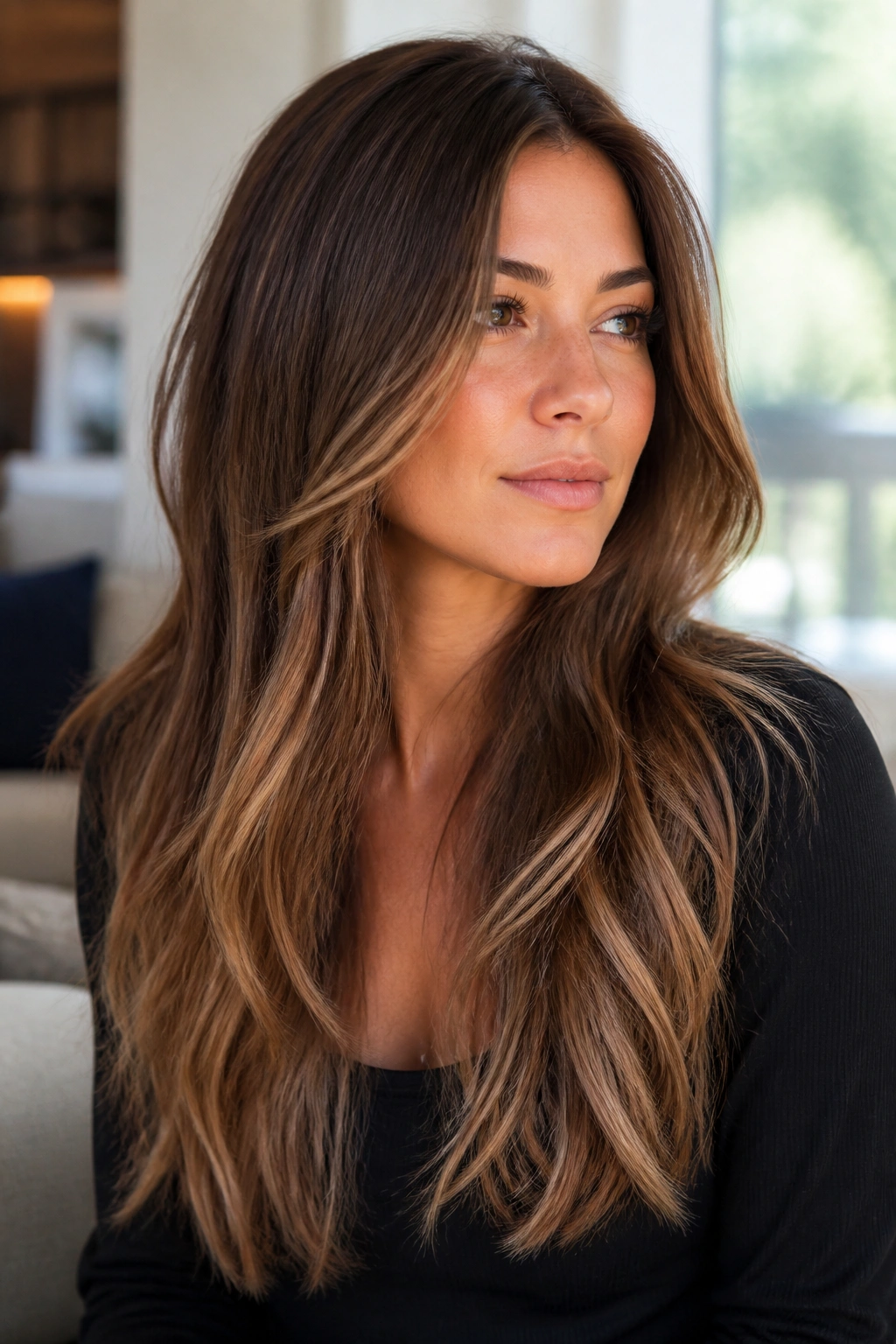
Long layers are one of the easiest ways to flatter a round face, and hazelnut balayage makes them look richer. The color starts with a warm brunette base, then moves into soft golden-brown lightness through the mid-lengths and ends. It feels lived-in without looking messy.
What makes this version work is the length of the front pieces. They should fall well below the chin, preferably brushing the collarbone or even longer. Once hair gets that extra drop, the face reads leaner because the eye follows the line of the hair instead of sitting at the cheeks.
Hazelnut also has a nice middle-ground tone. It’s warm enough to look healthy, but not so gold that it widens the face. That balance helps a lot if your skin tone runs warm or neutral.
No blunt edge at the front. That’s the only hard rule I’d keep here.
10. Mocha Brown With Soft Caramel Veils
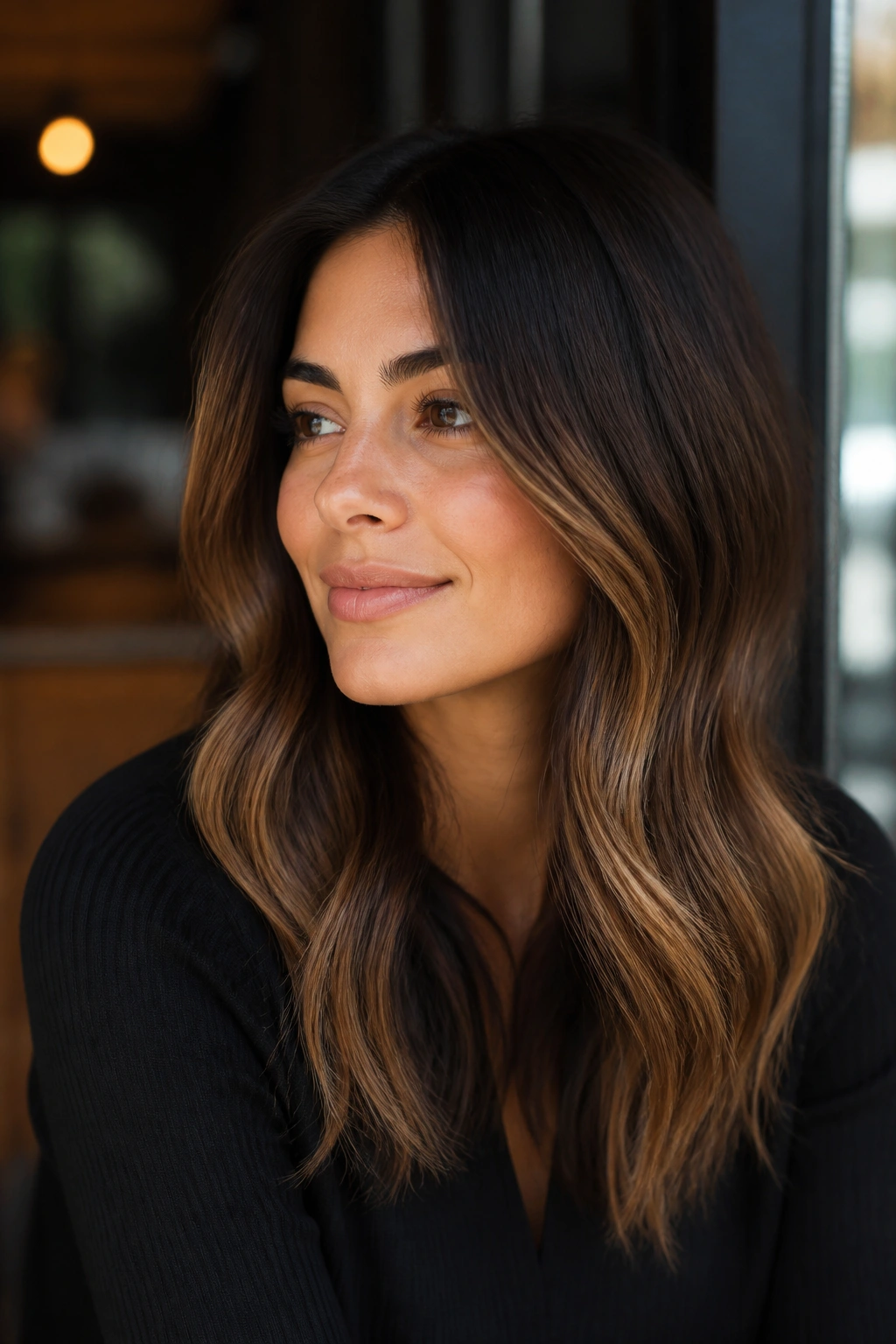
Caramel can get loud fast, so the better version for a round face is often a veil, not a streak. Mocha brown with soft caramel veils keeps the brightness tucked under the top layer, where it moves when you do. It feels rich and dimensional instead of obvious.
The veils should start somewhere between the nose and jawline, then fade as they move down. That placement keeps the glow away from the widest part of the face. You still get warmth around the front, but it doesn’t sit in one heavy block.
This is one of those looks that changes depending on how you style it. Straight hair gives you a sleek mocha frame. Waves make the caramel flicker through the ends. Both work. I’d probably pick waves, because they give the color more room to breathe.
If you want something flattering but not showy, this is a very easy yes.
11. Bronzed Brown With Face-Softening Waves
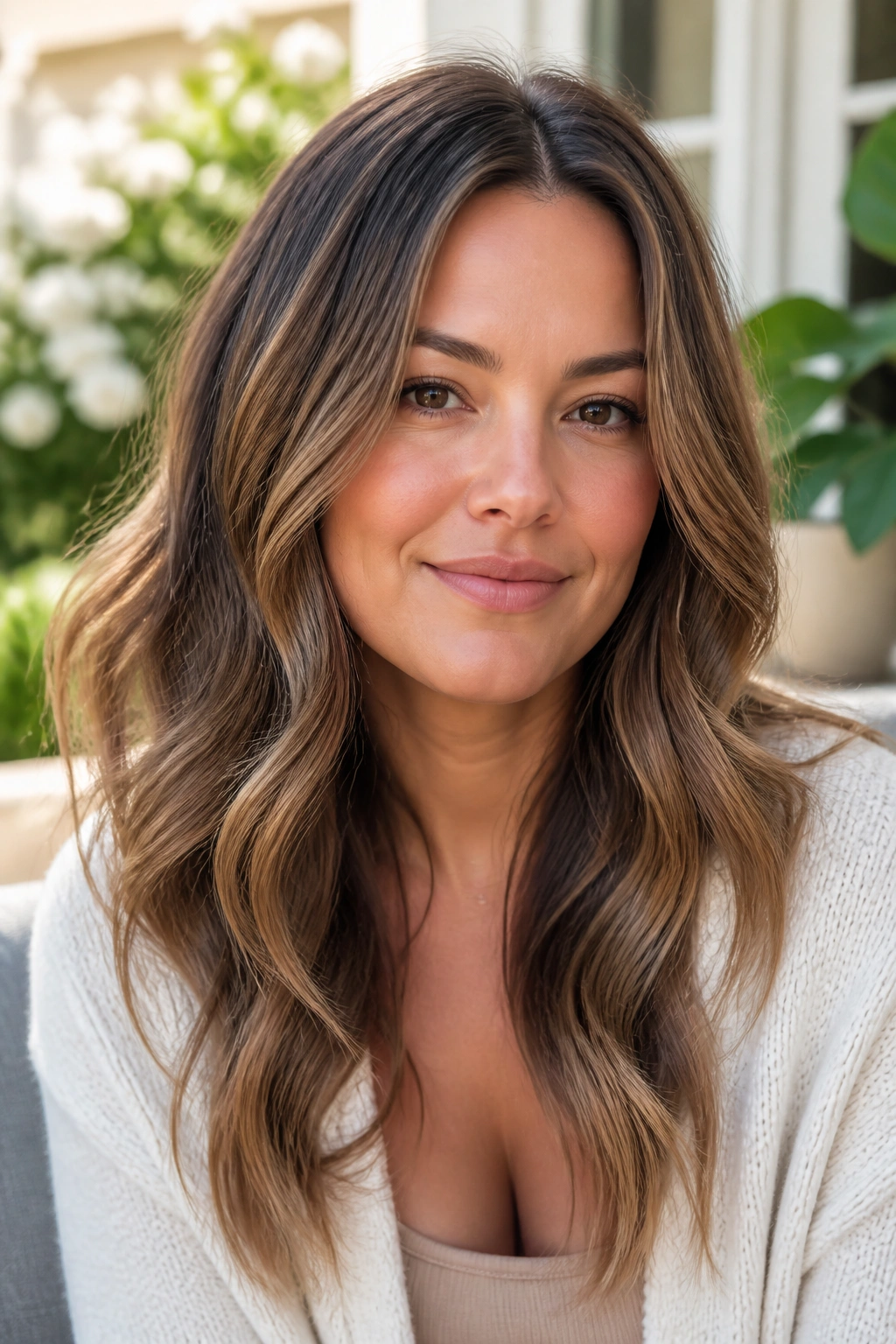
Bronzed brown is a nice choice when you want a little glow without full-on blonde. The tone sits between brunette and gold, which keeps it flattering on fuller cheeks. Add wide, face-softening waves and the shape opens up immediately.
The waves should start below the cheekbone. That part matters. If you curl from the roots, the sides can puff outward and the face can look rounder. Start lower, keep the root flatter, and let the bend happen around the mid-lengths.
This look is also forgiving on busy mornings. Even if the waves fall out a little, the color still carries the shape. That’s more useful than a high-maintenance blonde that only looks right for twenty minutes.
A lot of people overthink this one. Don’t. The bronzed pieces do enough on their own.
12. Cinnamon Brown With Beige Poplights
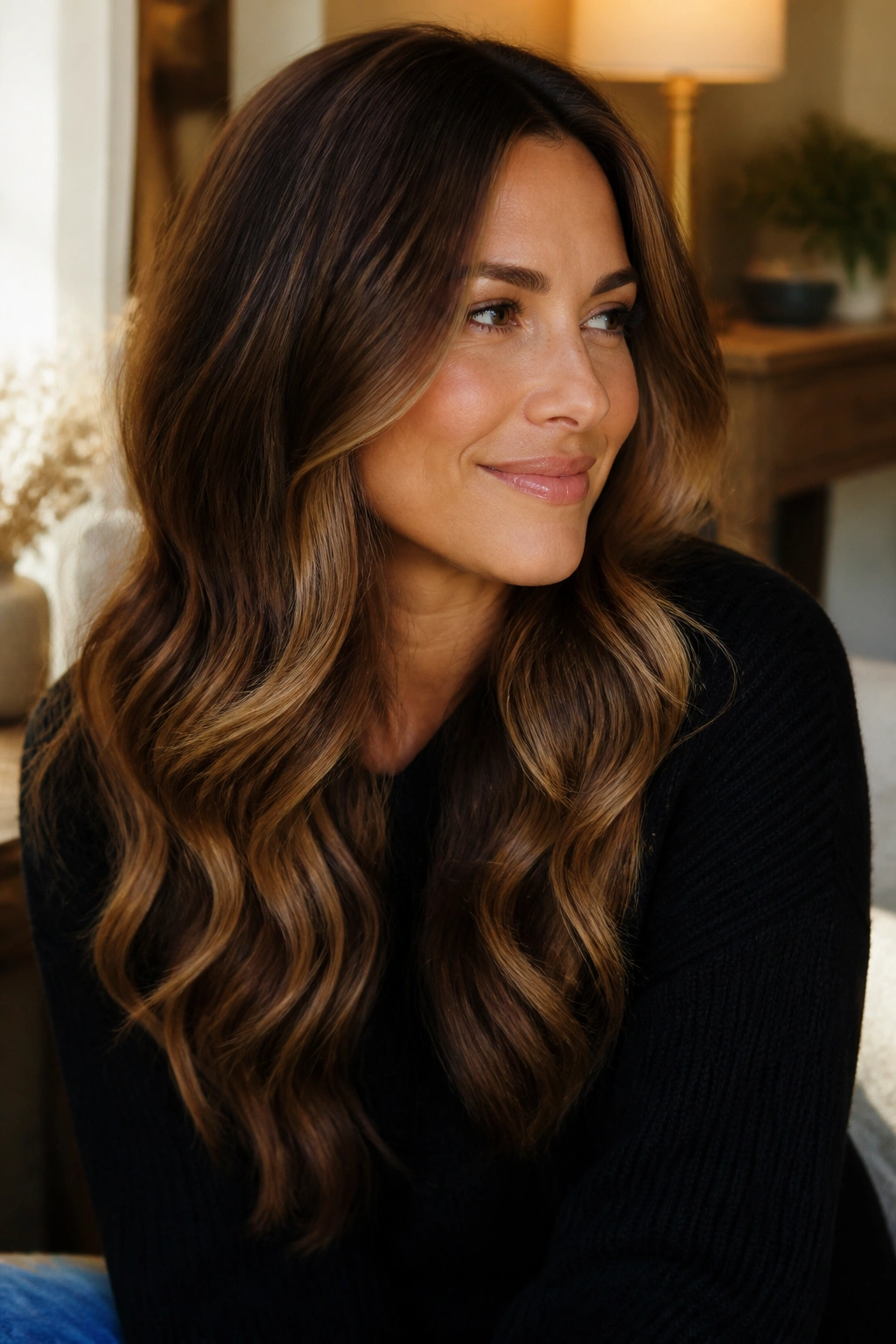
Cinnamon brown brings warmth, but it needs a cool or beige contrast so it doesn’t turn muddy. Beige poplights keep the look lifted, especially if they’re tucked inside the haircut rather than painted right on the surface. That way the shine shows when the hair moves.
On a round face, I like these brighter pieces around the lower cheeks and below. Not at the cheekbone itself. The poplights should peek through the length, not sit like a frame. That soft scatter keeps the face from feeling boxed in.
You can wear this color with curls, but loose bends are better. Curls can make warm shades feel a little fuller on the sides. Bends feel airier.
A gloss with a beige finish is worth it here. It calms the warmth without dulling the hair.
13. Espresso Base With Honeyed Ends
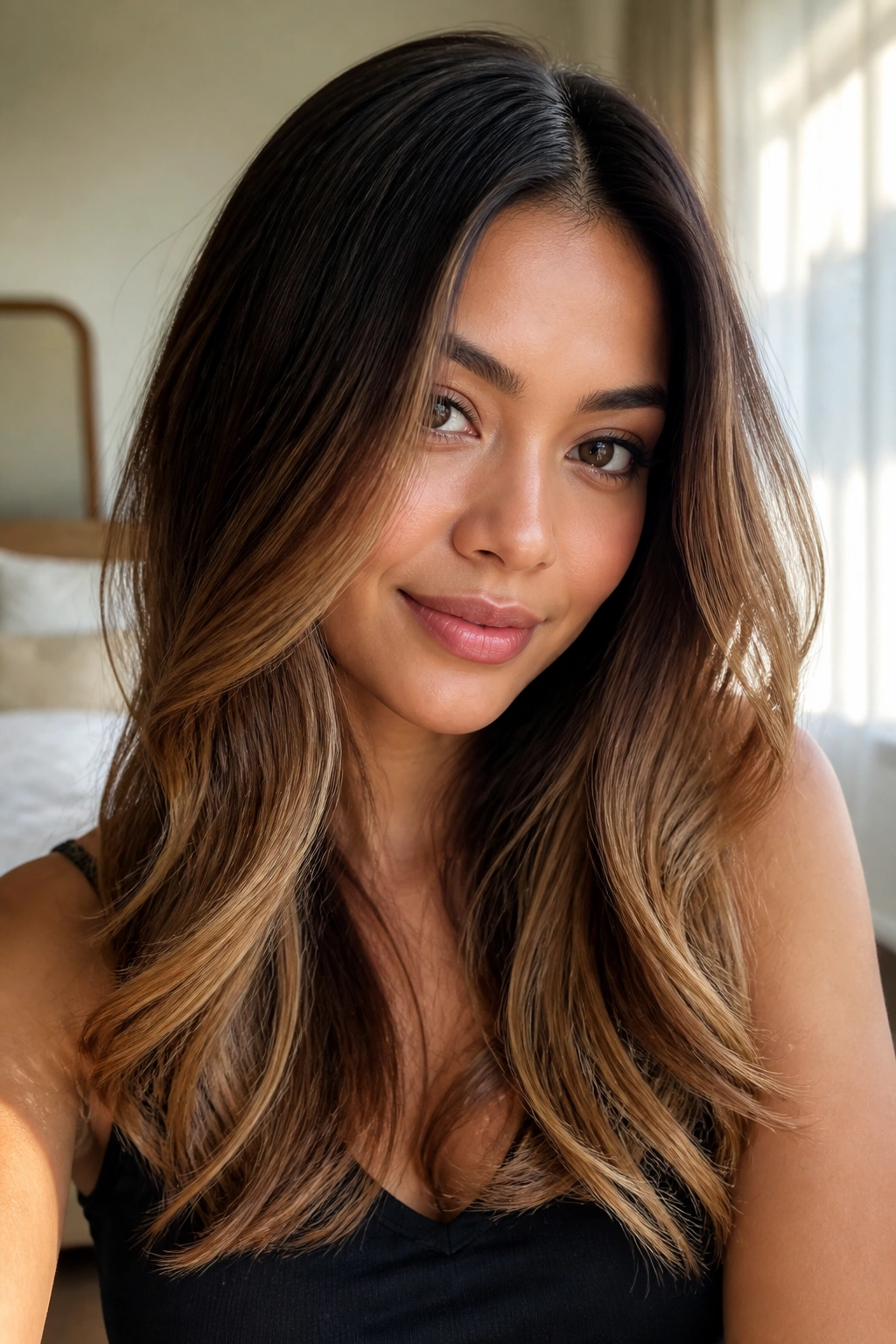
Dark roots are your friend when the goal is a leaner shape. An espresso base gives you that depth, and honeyed ends brighten the bottom half of the hair, which draws the eye down. It’s one of the simplest brown blonde balayage formulas for round faces, and one of the most dependable.
The transition should be gradual. No sudden jump from dark to light. A slow fade keeps the color expensive-looking and keeps the ends from appearing pasted on. The honey tone works best when it feels sun-kissed rather than yellow.
If your hair is long, this look gets even better. The extra length gives the honey room to move. On medium lengths, keep the front pieces longer so the brightness doesn’t sit too close to the jaw.
This is also a low-fuss grow-out color. The roots can stretch a little and the look still holds.
14. Sand Bronde With Collarbone-Clearing Layers
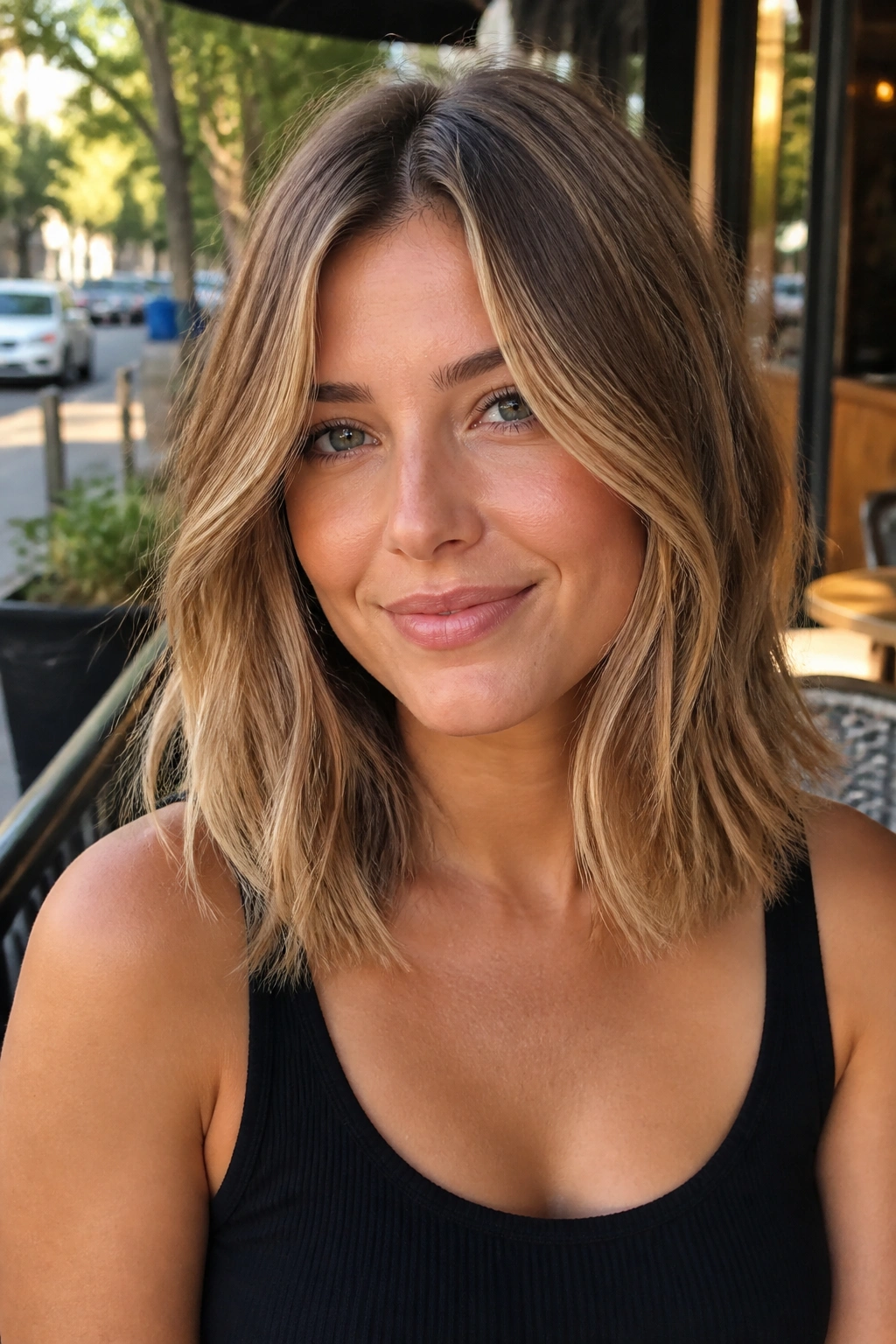
Sand bronde is one of those tones that can be worn by a lot of people, but it shines on a round face when the cut is right. Collarbone-clearing layers keep the bottom line of the hair open, which helps the face look longer. The sandy blonde lightness then works through the mids and ends without crowding the cheeks.
The color itself should stay diffuse. No hard foils that jump out at you. Think of sun-faded ribbons that soften the brunette base rather than cover it. That kind of finish looks especially good if your hair has a little natural wave.
What Makes This Shape Work
A collarbone-length cut leaves space between the jaw and the hair. That space matters more than people think.
- It stops the haircut from hugging the face.
- It gives the blonde room to show.
- It keeps thick hair from looking bulky at the sides.
- It feels lighter when worn half-up.
A soft U-shape at the bottom keeps it from getting boxy.
15. Walnut Brown With Lightened Mid-Lengths
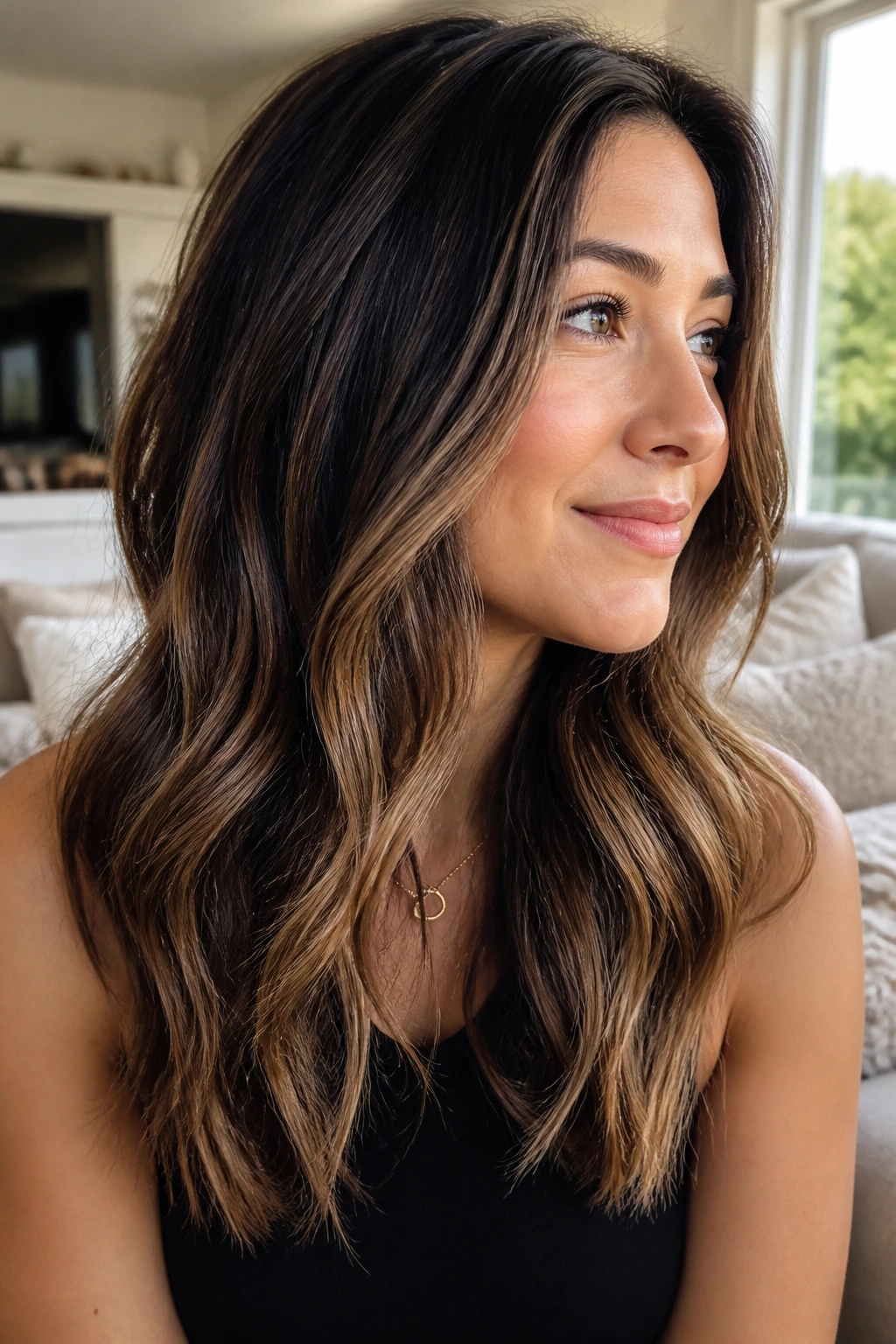
Not every brown blonde balayage look has to be brightest at the ends. Walnut brown with lightened mid-lengths is a smarter choice if you want dimension without too much contrast. The light lives in the middle section, which keeps the sides moving and prevents the face from feeling heavy.
This is especially useful if your hair is fine. Lightened mids can create the illusion of fullness without needing a huge amount of bleach or lift. The color looks expensive when the roots stay deep and the ends remain only a little lighter.
I like this on a cut with slight layering through the front. It gives the mid-light pieces a place to show up. Otherwise they can disappear under heavier hair.
A round face often looks best when the hair doesn’t all brighten at the same level. This look gets that part right.
16. Buttery Brown Blonde Balayage on Thick Hair
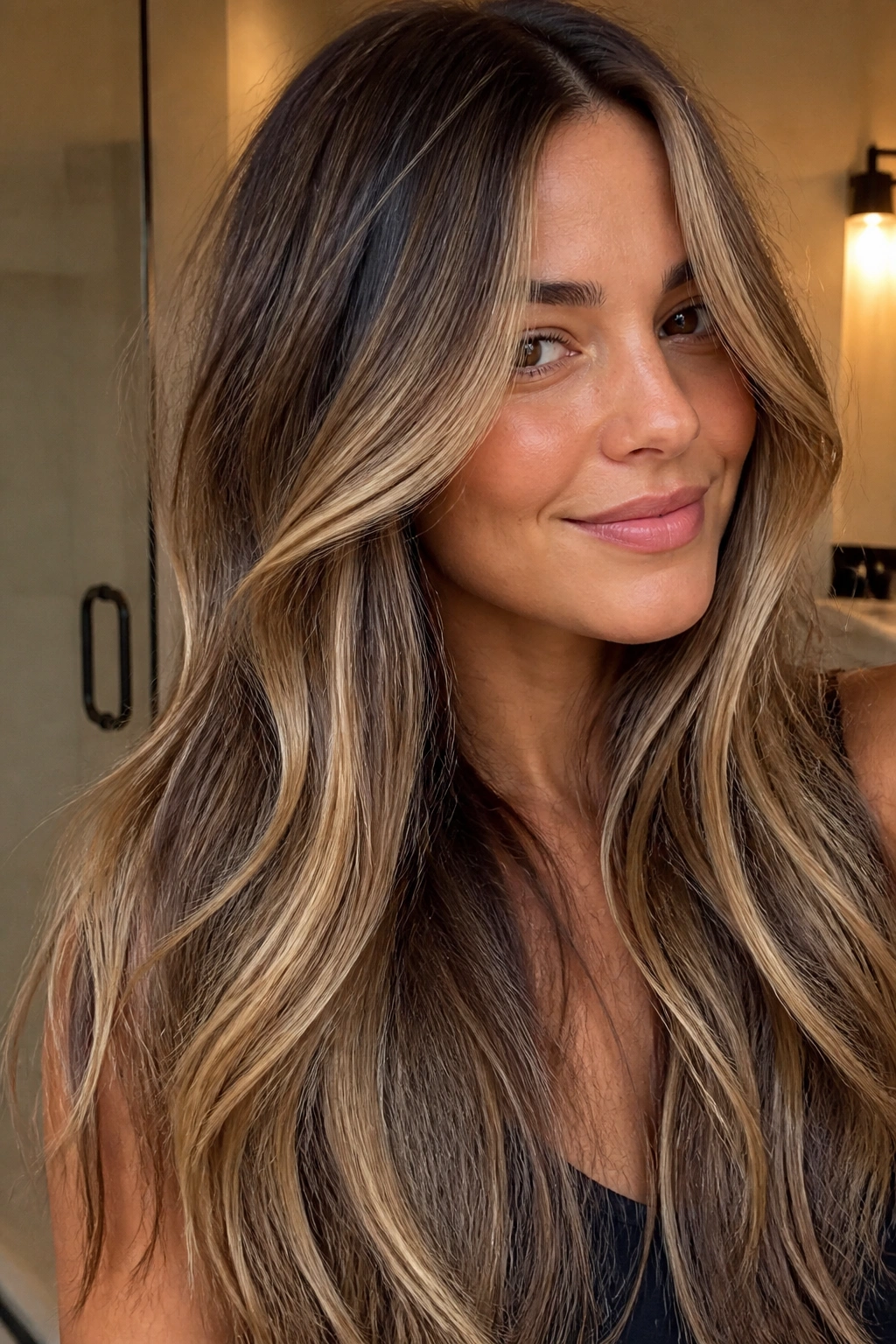
Thick hair needs more than color. It needs control. Butter blonde ribbons on a brown base can look gorgeous on a round face, but only if the haircut removes enough bulk so the sides don’t balloon out. Long layers and internal debulking help a lot here.
The buttery tone should be placed with intention. Keep the brightest pieces lower through the lengths and around the perimeter, then soften the front so it doesn’t turn into a heavy halo. Thick hair holds color drama well, which is useful, but it can also turn too dense too quickly.
This look loves movement. A soft blowout with a round brush will show off the lighter ends and keep the shape from looking square. Air-dried thick hair can be pretty, but it tends to expand. Sometimes that’s fine. Sometimes it is not.
If your hair is dense, ask for a lighter face frame and more depth underneath. That balance helps a lot.
17. Smoky Brunette With Champagne Money Piece
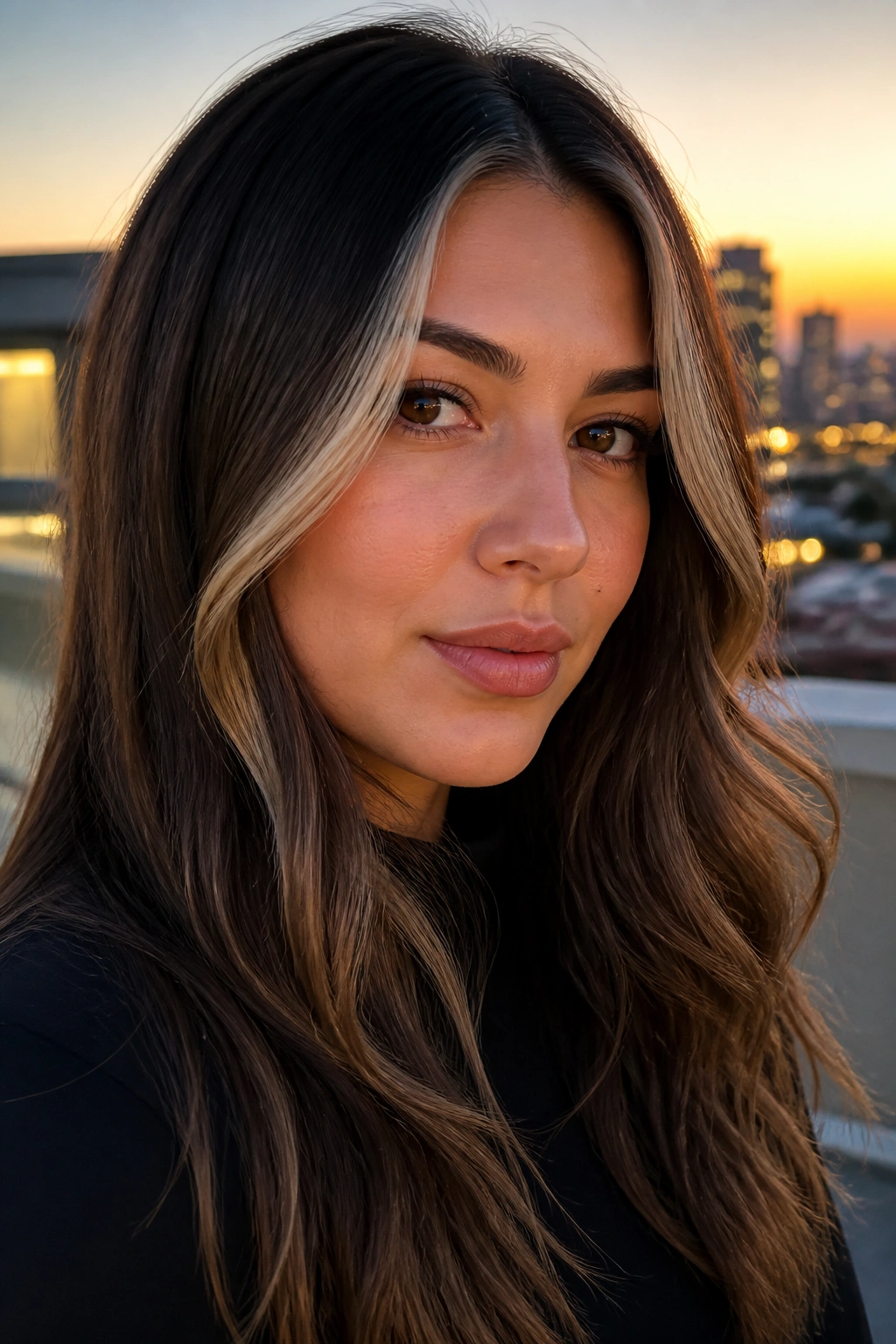
This is the bolder cousin of the softer front-framing looks. A smoky brunette base gives the hair a cooler edge, and the champagne money piece adds a clear point of light at the front. On a round face, that contrast can be flattering when the money piece is narrow and tapered.
The bright front section should not be blunt. That’s the difference between chic and harsh. Let it start closer to the temple, then fall in a softened line past the cheekbone. The rest of the balayage can stay muted so the money piece doesn’t overwhelm the face.
This look works best with styling that adds height at the crown. You want the front to rise slightly before it falls. A root-lift spray and a quick round-brush blow-dry do the job. Nothing complicated.
Strong contrast can be good. You just need control.
18. Maple Brown With Soft, Diffused Highlights
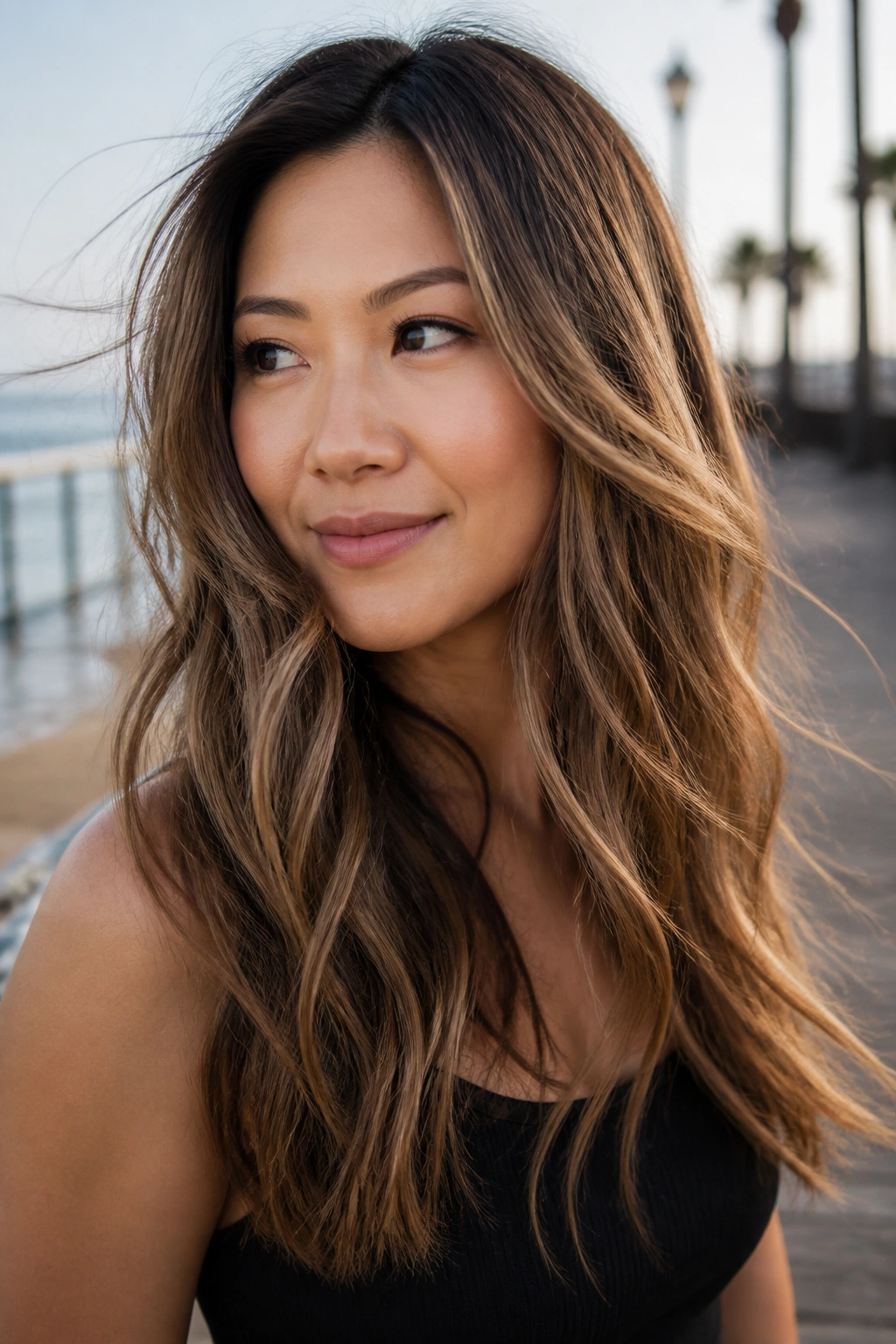
Maple brown sits in that flattering middle zone between warm chestnut and caramel. Soft, diffused highlights keep it from looking flat, but the light is blurred enough to stay kind to a round face. This is the kind of color that looks expensive in motion, which is half the appeal.
The highlights should be thin and irregular, not evenly spaced. Even spacing can make the face shape feel obvious. Uneven placement creates a softer read, especially when the brightest strands are pushed lower through the sides and back.
I like this look on shoulder-length cuts and longer. Shorter maple shades can be cute, but they don’t always give enough downward line for round cheeks. Length helps. So does a little texture.
This is one of the easiest looks to live with if you want color that grows out quietly.
19. Cocoa Lob With Micro-Balayage
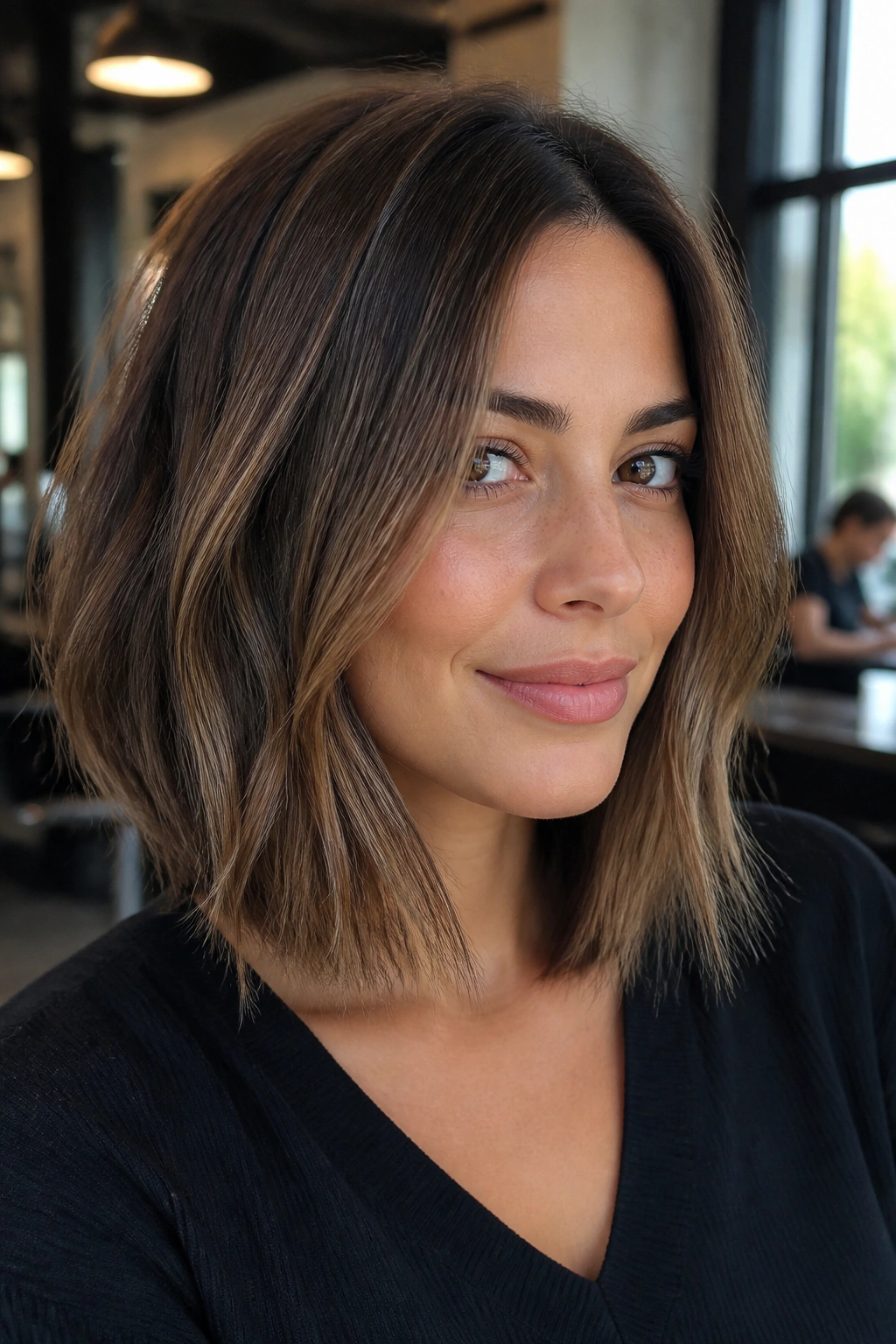
Micro-balayage is for people who want dimension without an obvious blonde shift. On a cocoa lob, the tiny painted pieces barely announce themselves until light hits them. That makes the face read softer because nothing is shouting at the cheeks.
The lob should sit just below the chin or a bit longer. Any shorter and the shape can get too round. Add barely-there lightness through the mid-lengths and a few whisper-light strands around the front. The whole thing stays polished and subtle.
Small Details, Big Difference
- Keep the light pieces ultra-fine.
- Avoid bright blocks near the jaw.
- Add texture at the ends, not the roots.
- Use a shine mist for finish.
This is a good choice if you like quiet hair with a clean shape. It’s not flashy. That’s the point.
20. Golden Brown With S-Curl Waves
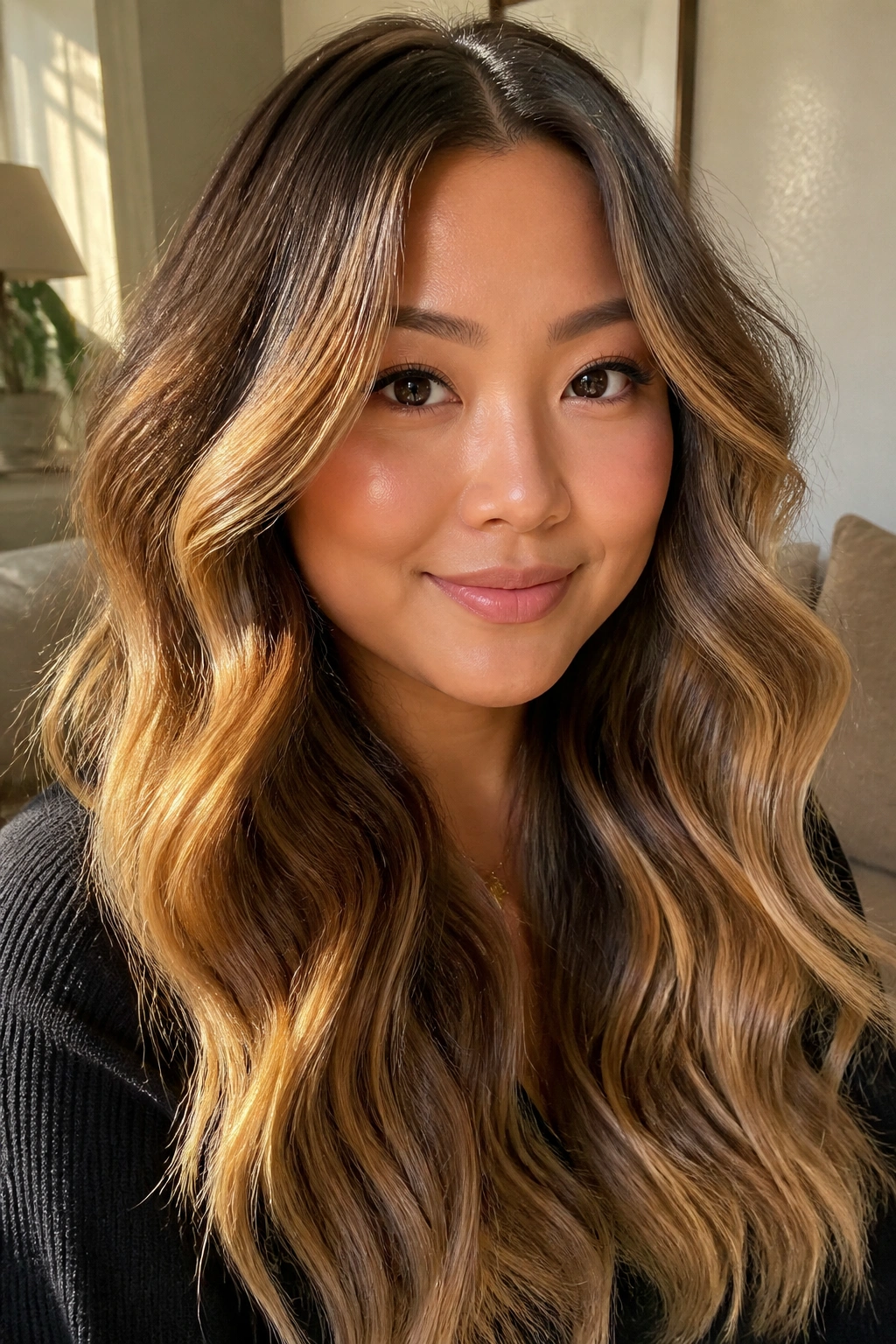
S-curl waves can be magic on a round face because they bend the hair in a more vertical way than a full barrel curl. Pair that shape with golden brown balayage and you get light that moves down the length instead of puffing out at the sides.
The golden tone should be warm, but not yellow. A soft gold-brown blend works best when the bright sections start at the lower cheek and continue toward the shoulders. That keeps the color from sitting like a frame around the face.
This look has a slightly old-Hollywood feel when it’s styled well, but it doesn’t need to be dressy. A loose center or off-center part keeps it modern enough. The curl pattern is the real secret here. It changes the silhouette more than most people expect.
If your hair is naturally wavy, this is an easy one to adapt. If not, a medium iron and a light brush-out can fake it.
21. Root Shadow Bronde With Airy Ends
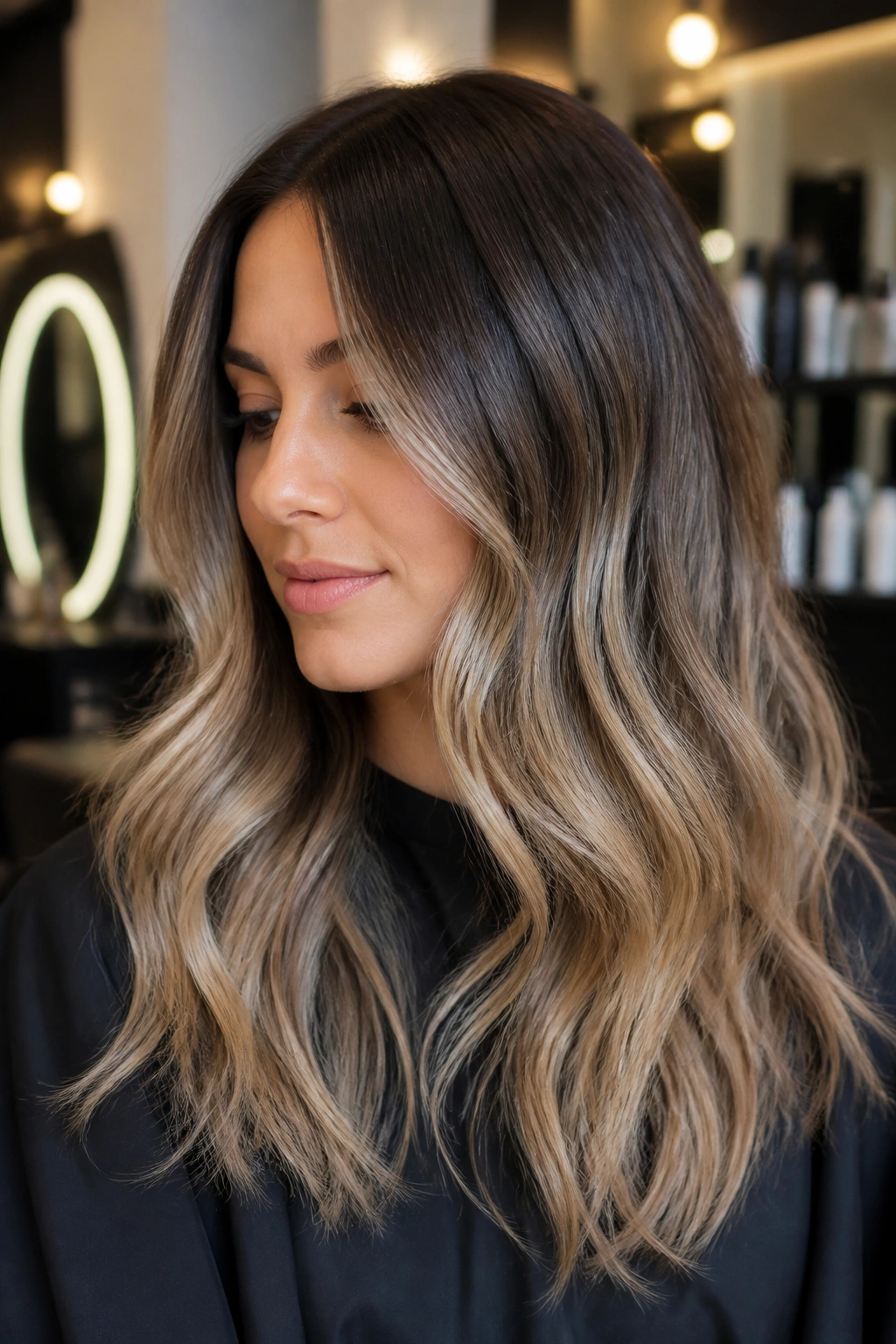
Root shadow is one of the best tools for round faces because it keeps the top darker and the bottom lighter. That vertical fade naturally lengthens the head shape. Bronde — that in-between brunette-blonde mix — makes it wearable.
The airy ends should feel thin and light, not heavy. You want enough blonde to show movement, but not so much that the hair turns wide at the bottom. A good colorist will keep the first burst of light below the cheekbone and feather the rest through the lengths.
This look is especially handy if you hate frequent touch-ups. The root shadow buys you a softer grow-out, and the airy ends keep the whole thing from looking dull. It’s practical hair. I like practical hair.
A soft wave or even a loose blowout works here. Too much curl can fill out the sides.
22. Chestnut Shag With Piecey Front Layers
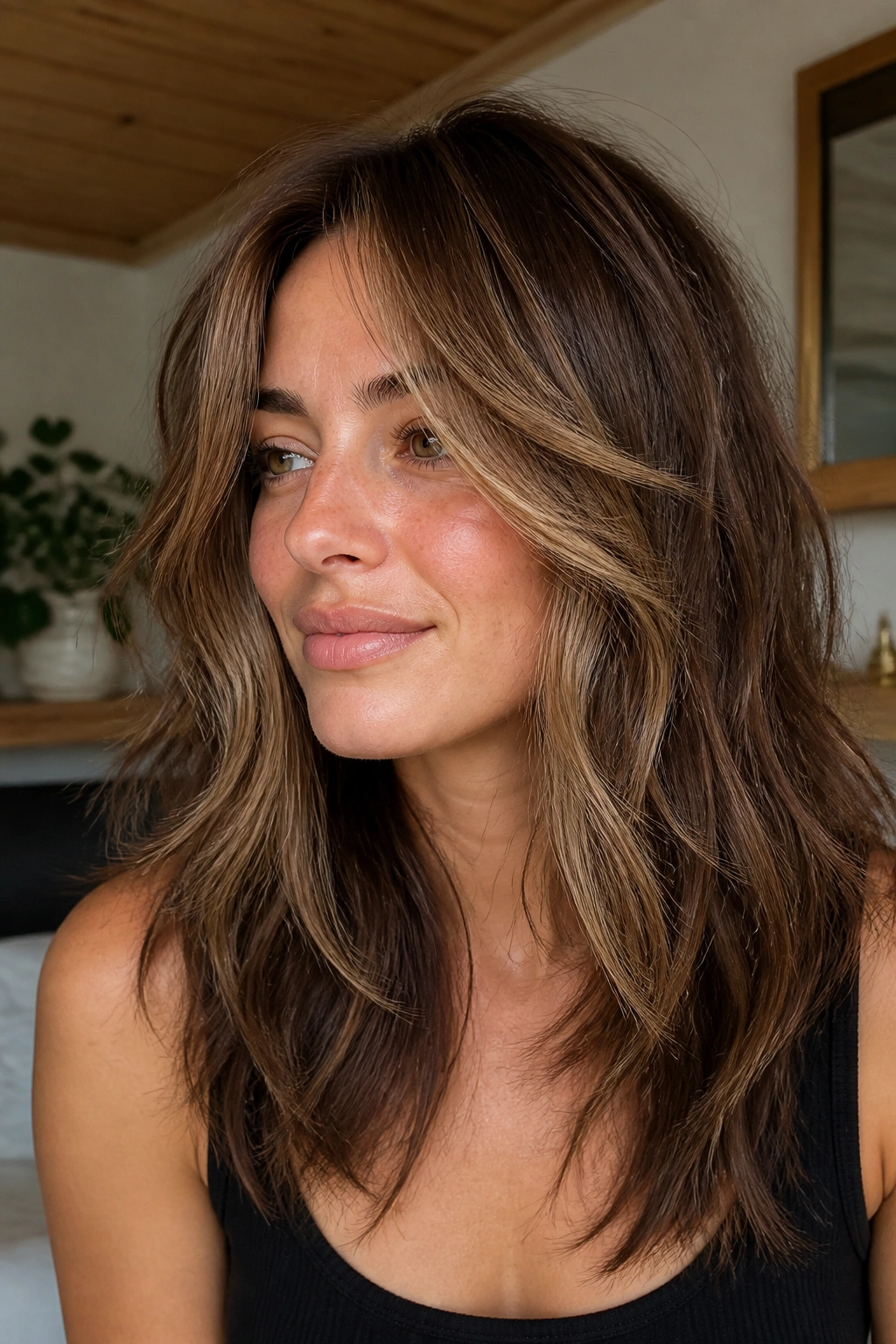
A shag can be brilliant on a round face because it breaks the shape apart. Add chestnut brown balayage with blonde pieces through the front layers, and the haircut stops reading circular. It becomes more angular, more lifted, more interesting.
The piecey front layers are the real star. They should sit in separate strands, not one thick curtain. That separation gives the face more edge and keeps the cheeks from taking over. The blonde can be soft and warm, but it needs enough contrast to stand out against the chestnut base.
This one is great if you like hair that looks a little undone on purpose. Air-dried texture helps. So does a dry texturizing spray at the ends. The shape should feel light and broken, not polished to death.
If your hair is fine, ask for shorter internal layers rather than a blunt perimeter. The shag shape needs a bit of lift to work.
23. Latte Brown With Bright Underlayers
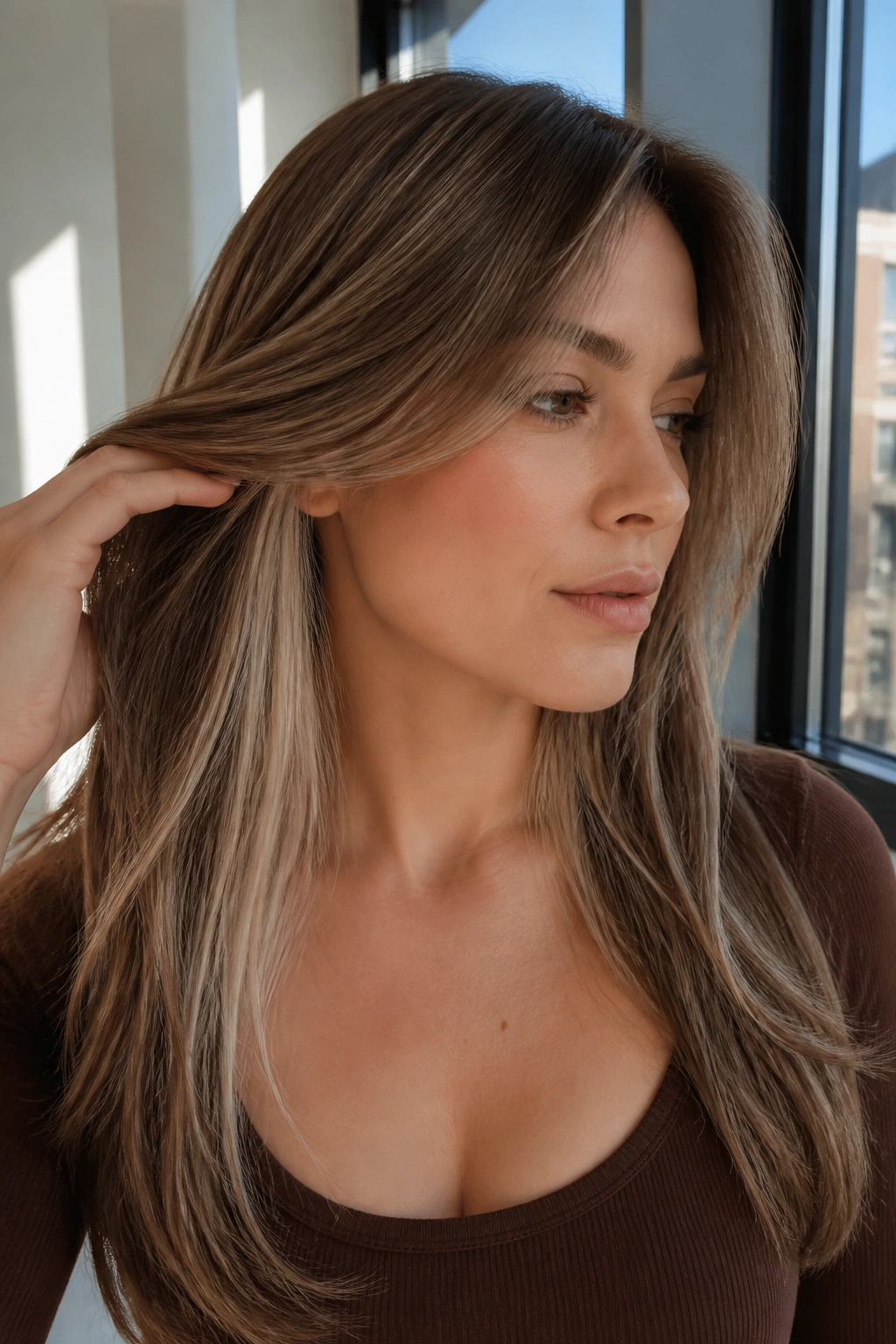
Bright underlayers are one of those smart little tricks that colorists use when they want movement without a loud front money piece. On a round face, this is useful because the light lives underneath the top layer and shows up only when the hair shifts. Latte brown on top keeps things soft; the hidden blonde underneath adds lift.
The placement matters here. Keep the brighter strands mostly below the crown and through the inner sides, not the outermost surface. That way the face gets dimension without a bright frame around the cheeks.
This is a nice choice if you often wear your hair half-up or tucked behind the ears. The blonde appears in flashes, which feels cooler than a full bright panel. It also means the grow-out is easier to live with.
A straight finish shows the color in a clean way, but a loose bend makes the underlayers peek through better.
24. Almond Brown With a Long Fringe
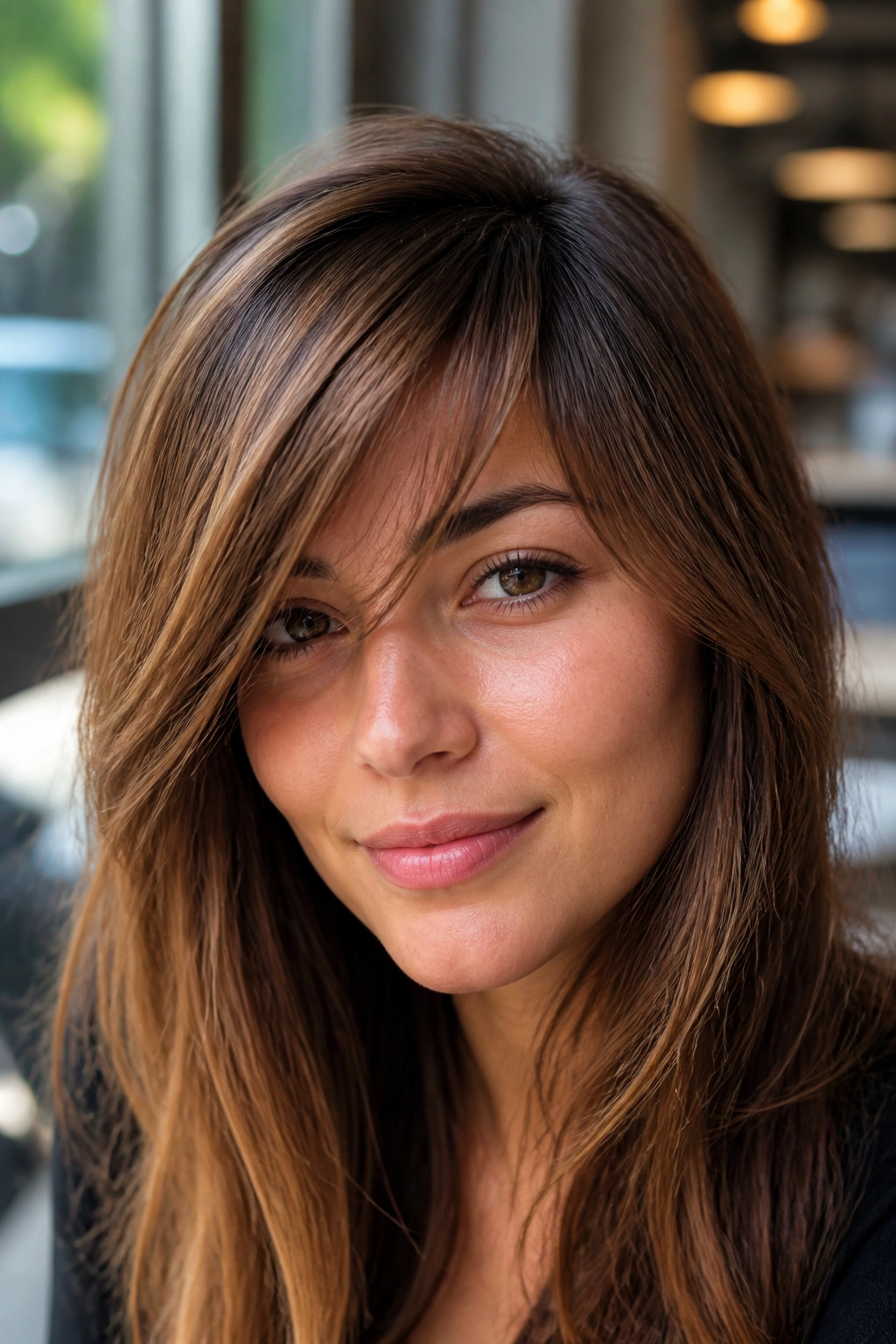
A long fringe can be a game changer on a round face when it’s cut to sweep diagonally and blend into the sides. Almond brown with soft blonde touches through the fringe area gives the style a little light without making the forehead feel crowded.
The fringe should not sit bluntly across the face. It needs movement. A bit of separation at the ends, maybe even a small bend away from the cheeks, makes the look lighter. The rest of the balayage can stay quiet through the lengths so the fringe stays the focus.
Long fringes are especially nice if you want to shorten the forehead just a little while still keeping the overall shape elongated. That’s a rare combination, and it works.
Use a light styling cream here, not a heavy balm. Heavy products make fringes stick together, and sticky bangs are nobody’s friend.
25. Mocha Melt With Glossy Finish
A mocha melt is all about seamless color change, but on a round face the gloss matters just as much as the blend. The glossy finish keeps the hair from looking flat around the sides, and the soft blonde ends pull the eye downward. Clean. Simple. Effective.
I like this look best when the light starts around the lips and fades lower. That keeps the face open without making the widest point the brightest point. The root area stays rich mocha, which gives the whole style more structure.
The shine is part of the design here. A clear gloss or glaze gives the strands a reflective surface, and reflection makes layered color read more polished. That’s a little thing, but it changes how the hair sits against the face.
If your hair tends to frizz, this is a good answer. Smooth color plus smooth texture is a strong combo.
26. Honeyed Brunette With Scattered Face Frame
Scattered face-framing pieces are better than one solid bright strip for most round faces. They feel lighter, less obvious, and easier to grow out. Honeyed brunette makes the whole thing warm and soft while still giving enough lift near the face.
The scattered pieces should be placed in a broken pattern: one near the temple, another closer to the jaw, and a few softer ribbons through the sides. That spacing keeps the face from looking wrapped in color. It also lets the eye travel instead of stopping at a single bright line.
This is one of the more forgiving ways to wear blonde with a brunette base. If the pieces get a little warmer over time, the look still works. If they stay beige, it still works. That kind of flexibility is worth a lot.
Wear this with loose waves or a rounded blowout. Both soften the transitions and keep the pieces from looking too sharp.
27. Beige Bronde With Soft Flip Ends
Flip ends can help a round face because they send the hair outward at the bottom, which creates the feeling of length and swing. Beige bronde keeps the tone light enough to feel fresh, but soft enough to stay flattering. The flip is the shape trick here.
The ends should be turned just slightly, not curled under. Inward ends can close the face in and make the lower half look heavier. A gentle outward bend opens the line and keeps the haircut from sitting flat against the jaw.
This look works especially well on medium-length hair. There’s enough length for the flip to show, but it doesn’t drag the color down. Add a little root lift and you get a fuller crown, which helps the face feel longer overall.
It’s a small styling choice, but it has a real effect. That’s why I like it.
28. Soft Sunlit Brown Blonde Balayage for Round Faces
This is the easiest all-around version if you want a safe, flattering brown blonde balayage for round faces and don’t want to overthink every placement decision. The base stays brown, the blonde stays soft and sunlit, and the brightest pieces are pushed lower through the lengths so the face keeps its shape.
The color should feel touched by light, not coated in it. Keep the front section gentle, almost blurred, and let the ends carry most of the brightness. That leaves the cheeks alone and gives the hair a longer, slimmer read. Add a center part only if the front pieces are long enough to fall past the cheekbones; otherwise, an off-center part usually works better.
This is the kind of look that holds up in real life. It looks good loose, good waved, good half-up, and good when it grows out a little. No drama. No hard lines. Just a brown blonde balayage that understands the face it’s sitting on.
Final Thoughts
The best brown blonde balayage for round faces does one thing well: it stretches the eye. Sometimes that means a long face frame. Sometimes it means a deeper root, a lower highlight placement, or a part that lands off center. The color itself matters, but the shape matters more.
If you’re bringing photos to a colorist, point out the placement, not just the tone. Say where you want the light to start. Say how bright you want the front pieces. Mention whether you wear your hair straight, waved, or blown out. Those details make a bigger difference than most people expect.
And if you’re torn between two looks, pick the one with more length in the front and less brightness at the cheeks. That’s the cleaner choice almost every time.
