



Brown hair wakes up fast when red balayage is painted in the right spots. Not the stripey kind that sits on top of the hair and shouts from across the room. The good versions fold into the brunette base, so the red reads as cinnamon, auburn, cherry, or wine depending on the light.
That mix matters because red is a tricky color on brown hair. Too much copper and you get brassiness. Too dark and the red disappears unless you stand under a lamp. The sweet spot is usually hand-painted placement through the mids and ends, with a softer root shadow that keeps the grow-out calm.
I’ve always liked how brunette red balayage can change a haircut without changing the whole personality of the hair. A layered lob picks up cinnamon ribbons one way; long curls pick them up another way. When the tone is chosen well, the color looks richer in motion, which is where balayage earns its keep.
1. Cinnamon Ribbon Balayage
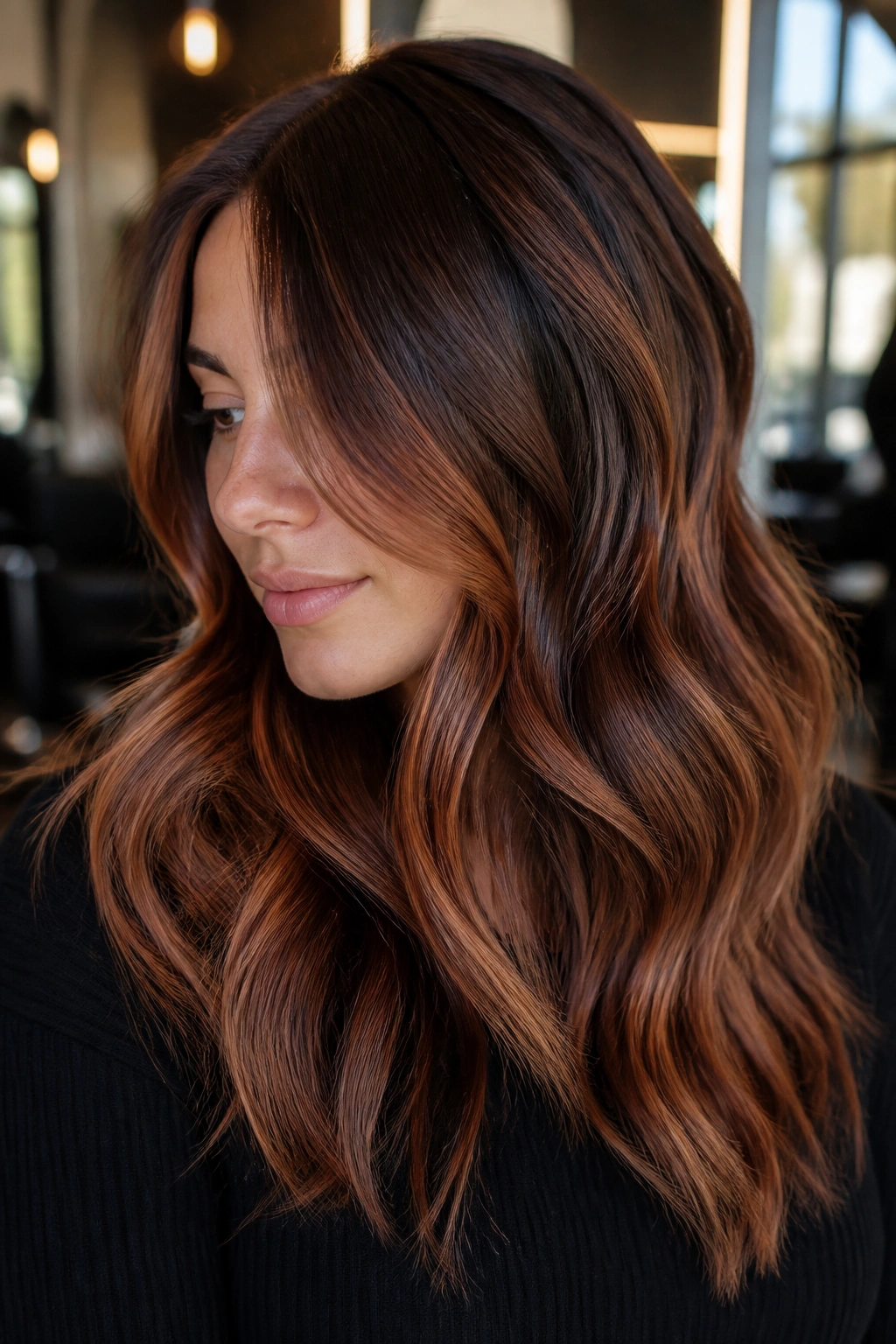
Cinnamon ribbons are the friendliest entry point into brunette red balayage. On a medium brown base, the color lands warm and spiced, not orange, especially when the root stays a shade deeper and the lighter pieces live from the cheekbone down.
Loose waves make this shade sing. Straight hair still shows it, but movement breaks up the ribbons so they look hand-painted instead of stamped on. Ask for fine pieces around the face and a slightly heavier sweep through the lower half of the hair.
This is one of those looks that works almost too well on layered cuts. The texture gives the red room to breathe, and the brunette base does the heavy lifting so the color never feels loud. A clear gloss every few weeks keeps the cinnamon warm and shiny.
2. Copper Money Piece and Brown Lengths
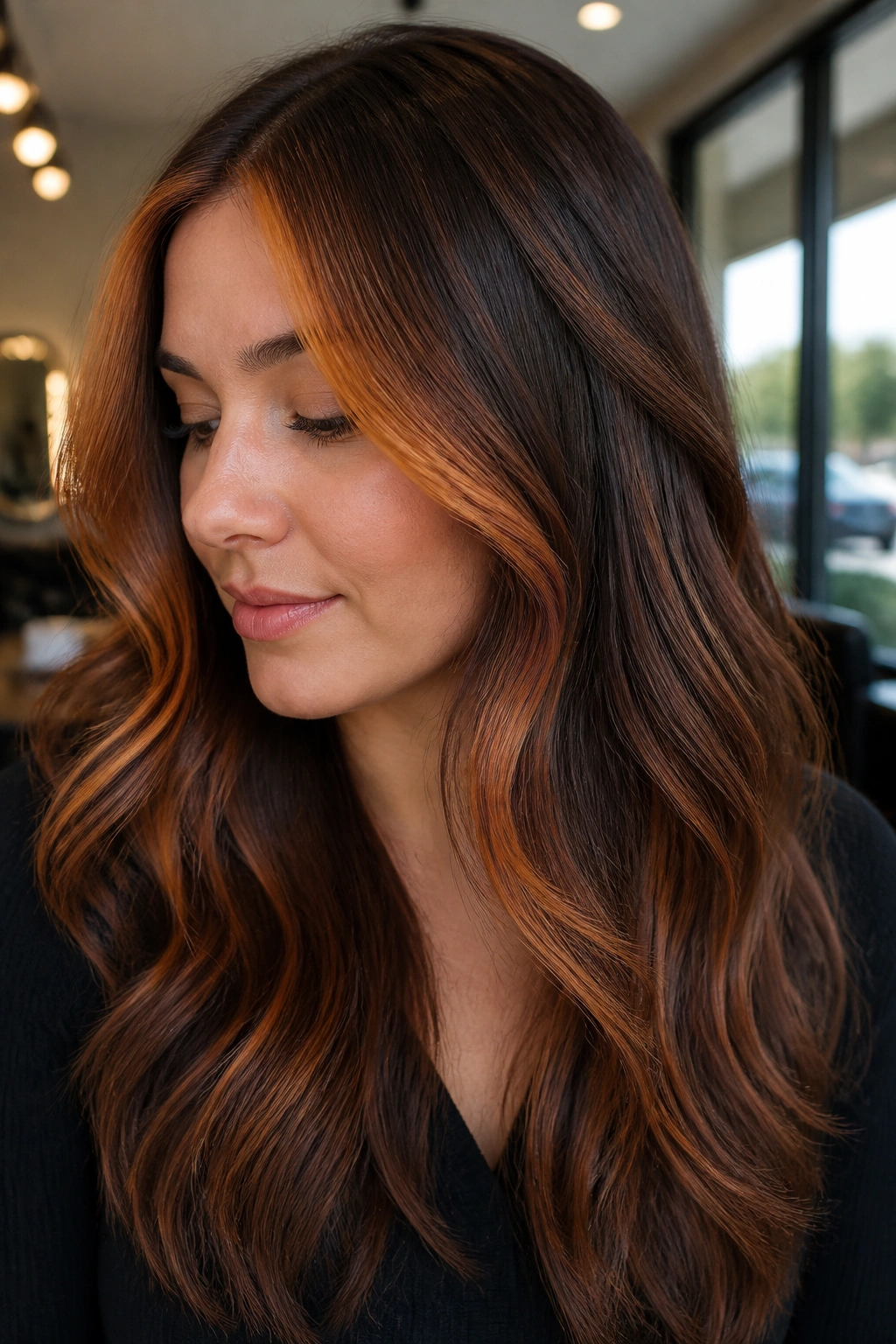
Why does a copper money piece change the whole mood? Because the eye goes straight to the face, and even a narrow band of copper at the hairline can make brown hair look brighter without coloring every strand.
What to Ask For
- A 1 to 1.5 inch face frame
- Softer copper through the temple pieces
- Brown lengths left mostly intact
- A root shadow close to your natural brunette level
This version is sharp, not busy. It suits round and heart-shaped faces well because the brightness pulls attention upward and adds lift around the cheeks. If you wear your hair half up a lot, the frame still shows, which is half the point.
The catch is simple: if your base is very dark, the copper will need more lift to read clearly. On a level 3 or 4 brunette, that usually means a brighter, more visible front section with softer ribbons behind it.
3. Mahogany Melt
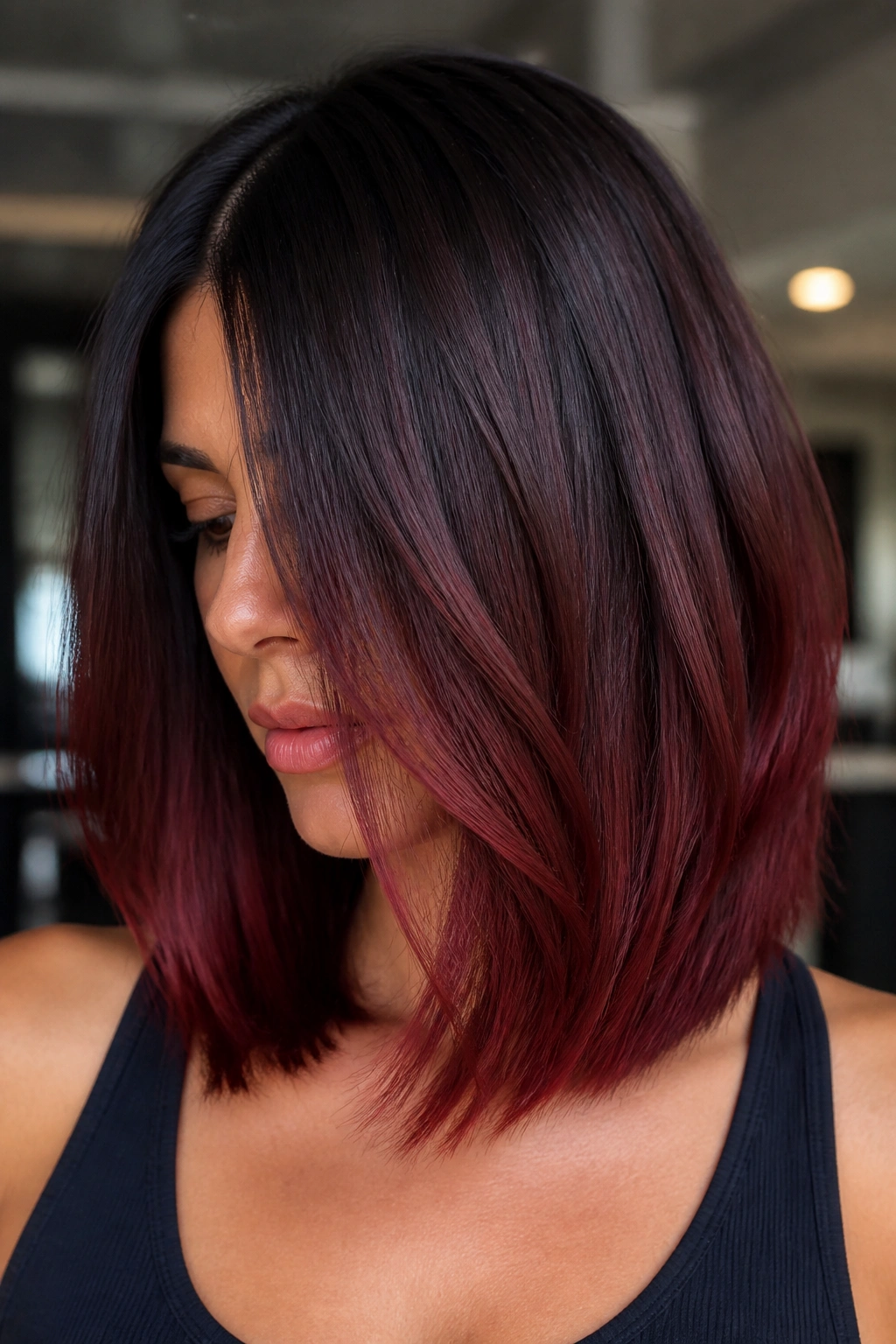
Mahogany is the shade I reach for when someone wants red but does not want anyone to point at the color first. It sits between brunette and wine, with a brown-red depth that looks polished in low light and expensive in sunlight.
The melt works best when the red starts softly through the mids and deepens toward the ends. That keeps the finish from looking like one flat block of color. A long bob, blunt lob, or shoulder-length cut shows this tone especially well because the shape gives the color a clean edge.
If you like smoother styling, this one is easy to wear straight. The shine matters more than the curl pattern here, so a silk press, blowout, or a round-brush finish helps the mahogany reflect instead of disappearing into the base.
4. Cherry Cola Brunette
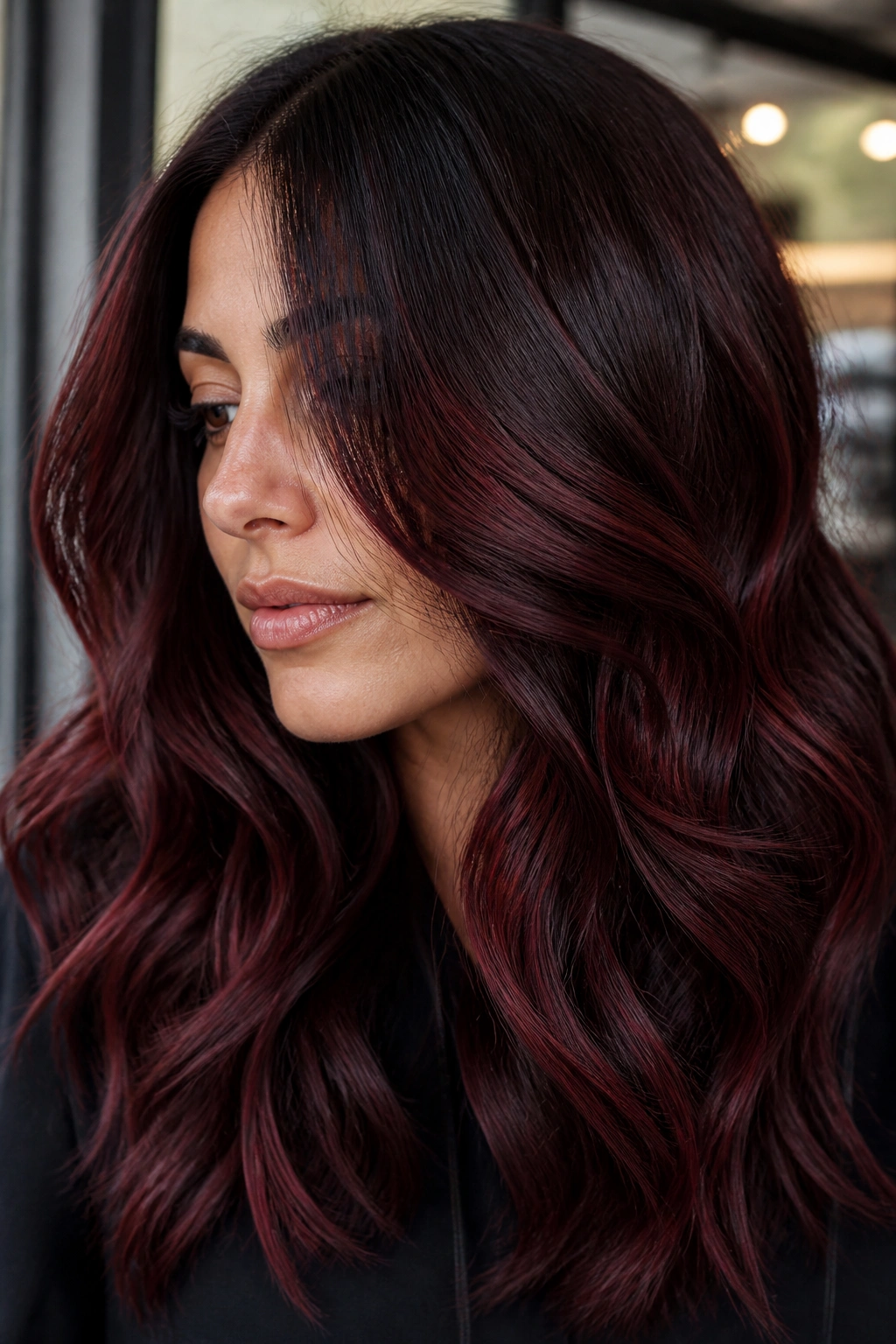
Cherry cola is the color that looks calm until the light hits it. The base stays dark, but a red-black reflect slips through the mids and ends, so the hair shifts between brown, cherry, and deep berry without ever looking flat.
That makes it a good pick for people who want dimension without a huge contrast. On curly hair, the red peeks through the bends and coils. On straight hair, it looks smoother and moodier, almost like a glossy tint sitting under the surface.
Glaze matters here. A cool red-brown gloss helps the cherry side stay rich instead of turning muddy, and a shine spray on dry hair keeps the cola part from getting lost. This is not a loud color. It is a sneaky one.
5. Auburn Face-Framing Layers
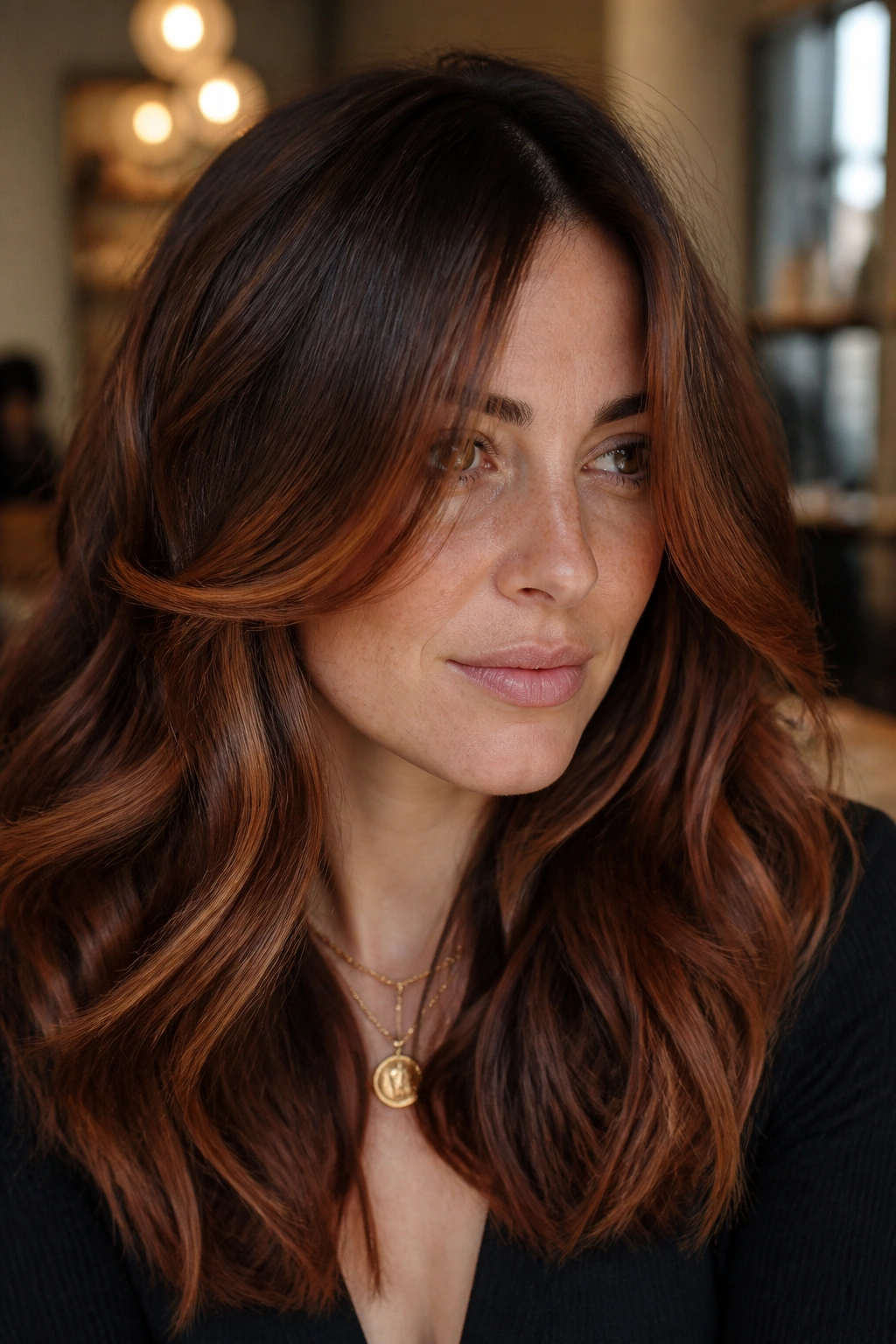
Auburn face-framing layers do one job well: they lead the eye. The warmth sits around the front sections, then trails back into a brunette base that keeps the rest of the hair grounded.
Why It Flatters Layered Cuts
Layers create little ledges for color to land on, so the auburn pieces catch light at different heights. That stops the color from reading as one flat block near the face. Curtain bangs, butterfly layers, and softly feathered cuts all do especially well here.
Tell your colorist you want the auburn to start light around the cheekbones and soften below the jaw. That placement keeps the color lively, not streaky. It also makes ponytails and half-up styles look more finished, which is a nice bonus if you wear your hair up a lot.
6. Merlot Ends
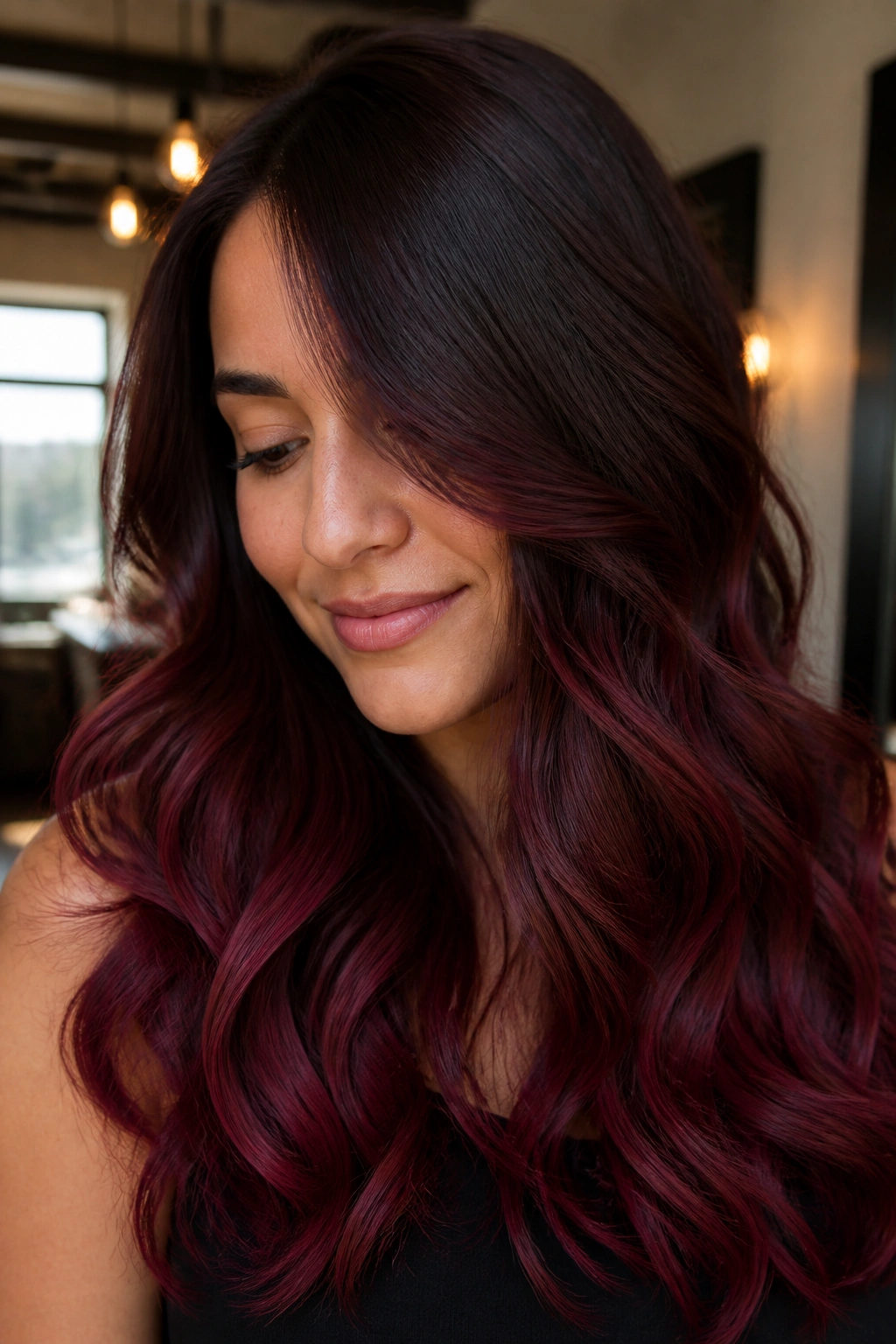
Merlot ends are not for shy people. The roots stay brunette, sometimes very dark, while the lower lengths pick up a deep wine red that looks plush and a little dramatic without needing bright copper anywhere near the scalp.
That contrast is what makes the look work. Keeping the color concentrated on the bottom two-thirds of the hair gives you a red balayage that grows out softly and still looks intentional after weeks of wear. It is especially good on long hair, where the color has room to fade from brown into wine.
A one-sentence warning: this shade looks best when the ends are healthy. Dry, split ends will drink up the red and make it look dull. A trim before coloring usually makes the whole finish cleaner.
7. Rusted Caramel Sweep
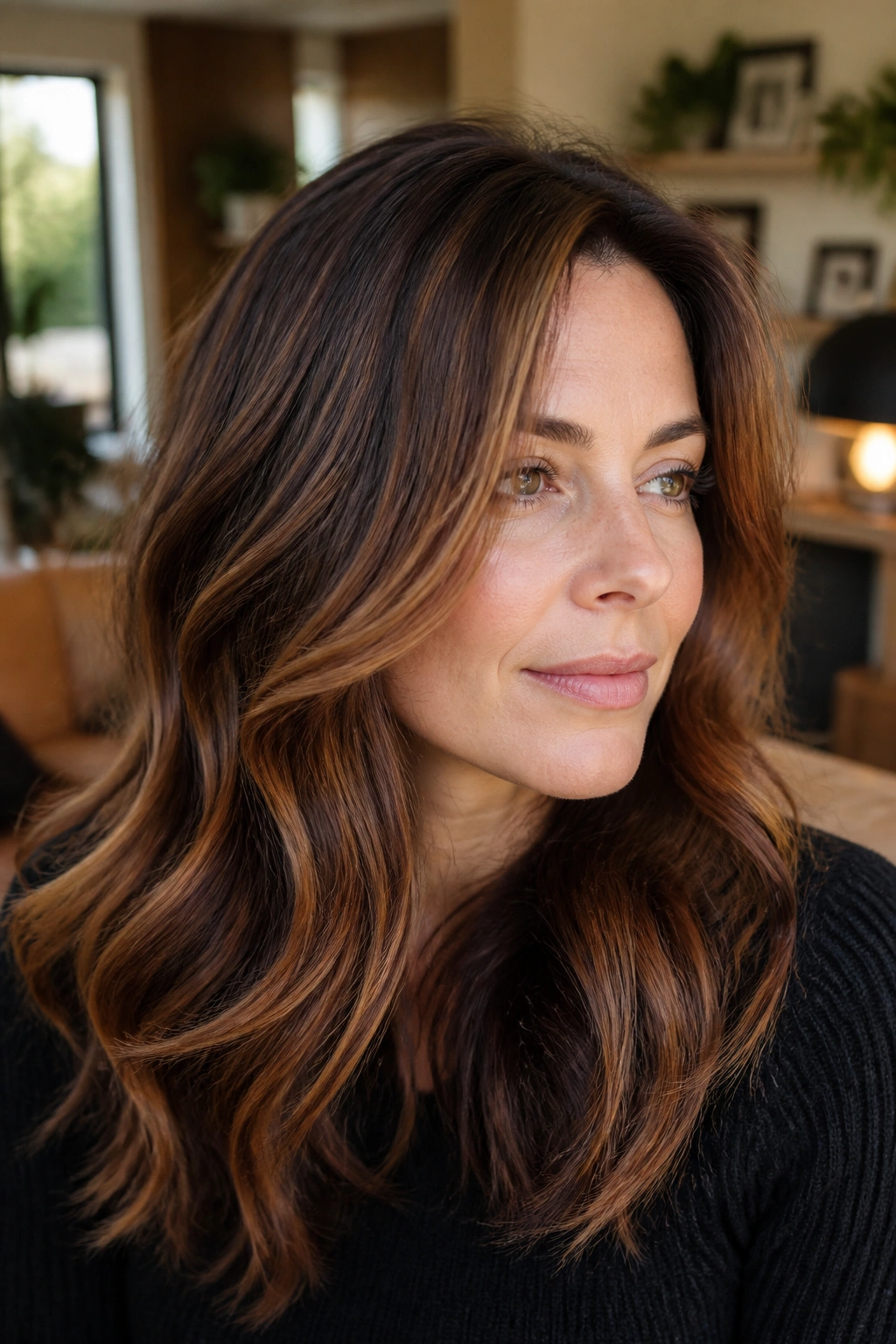
Rusted caramel sits in the sweet spot between warm brown and red copper. It is softer than bright auburn, but it still has enough fire in it to change the tone of the hair in a visible way.
The trick is the sweep. Instead of painting red through every layer, keep the caramel-red pieces loose and airy, with slightly more concentration around the mids and outer curves of the hair. That gives the color a sunlit feel without making the brunette base disappear.
This look works well on medium-brown hair that already has a little warmth. It can feel muddy on a cool ash base unless the colorist warms the canvas first. If your hair waves naturally, even better. The bends catch the rust tones and make the whole thing look more textured than it really is.
8. Burgundy Peekaboo Layers
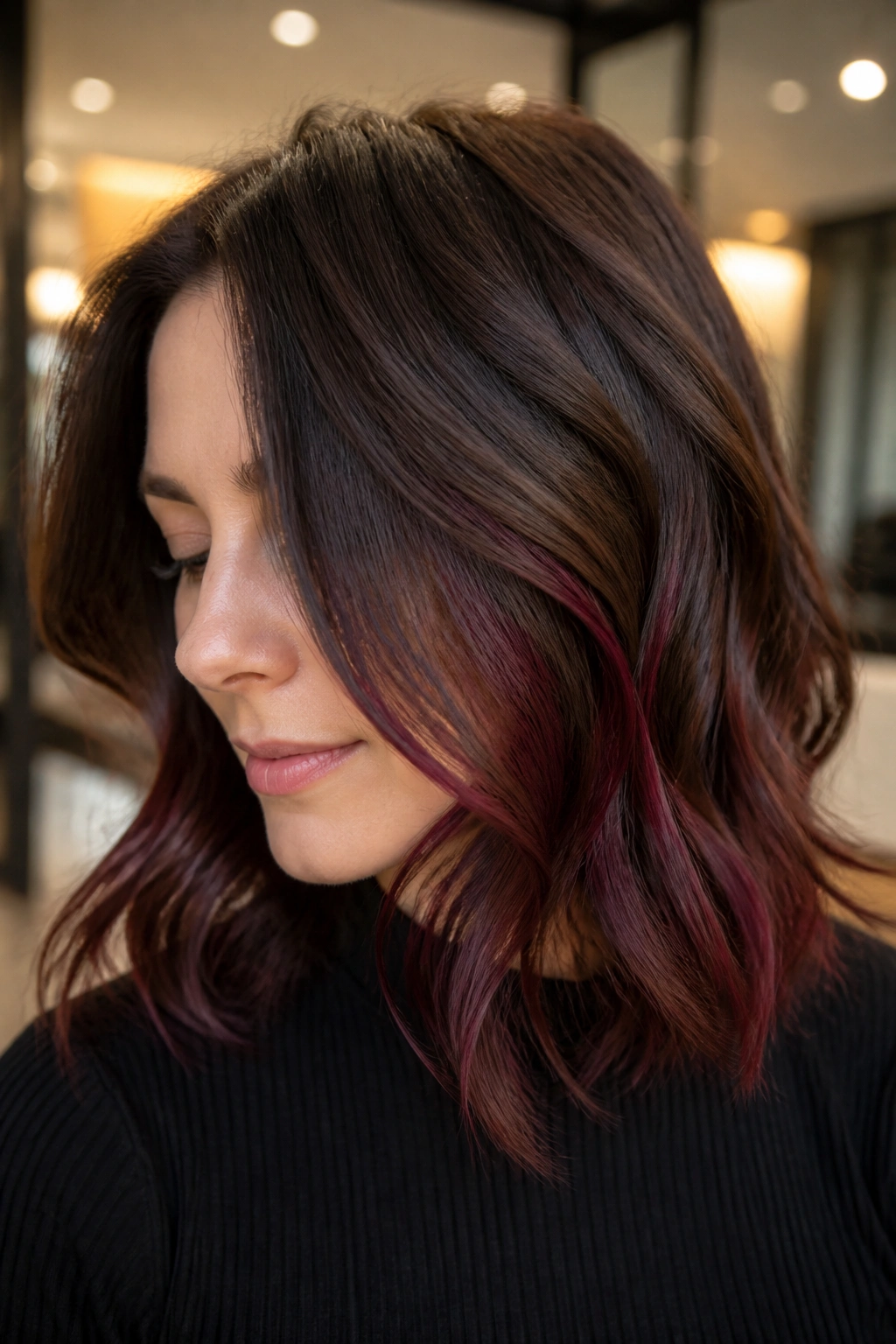
Peekaboo burgundy is the right move when you want red that hides until it wants attention. The top layer stays brown, and the burgundy lives underneath, so the color flashes through movement, ponytails, and bent-over hair flips.
Best for Low-Drama Color
This style gives you personality without putting the red on display all day. It works well in offices, schools, and anywhere a full red panel would feel too bold. The hidden placement also means your grow-out is forgiving, because the burgundy can sit a little longer before it starts looking tired.
Tell your stylist to keep the panels broad enough to show through the top layer, but not so wide that they take over. If the pieces are too thin, they disappear. If they are too thick, you lose the peekaboo effect. That middle ground is the whole point.
9. Espresso to Garnet Fade
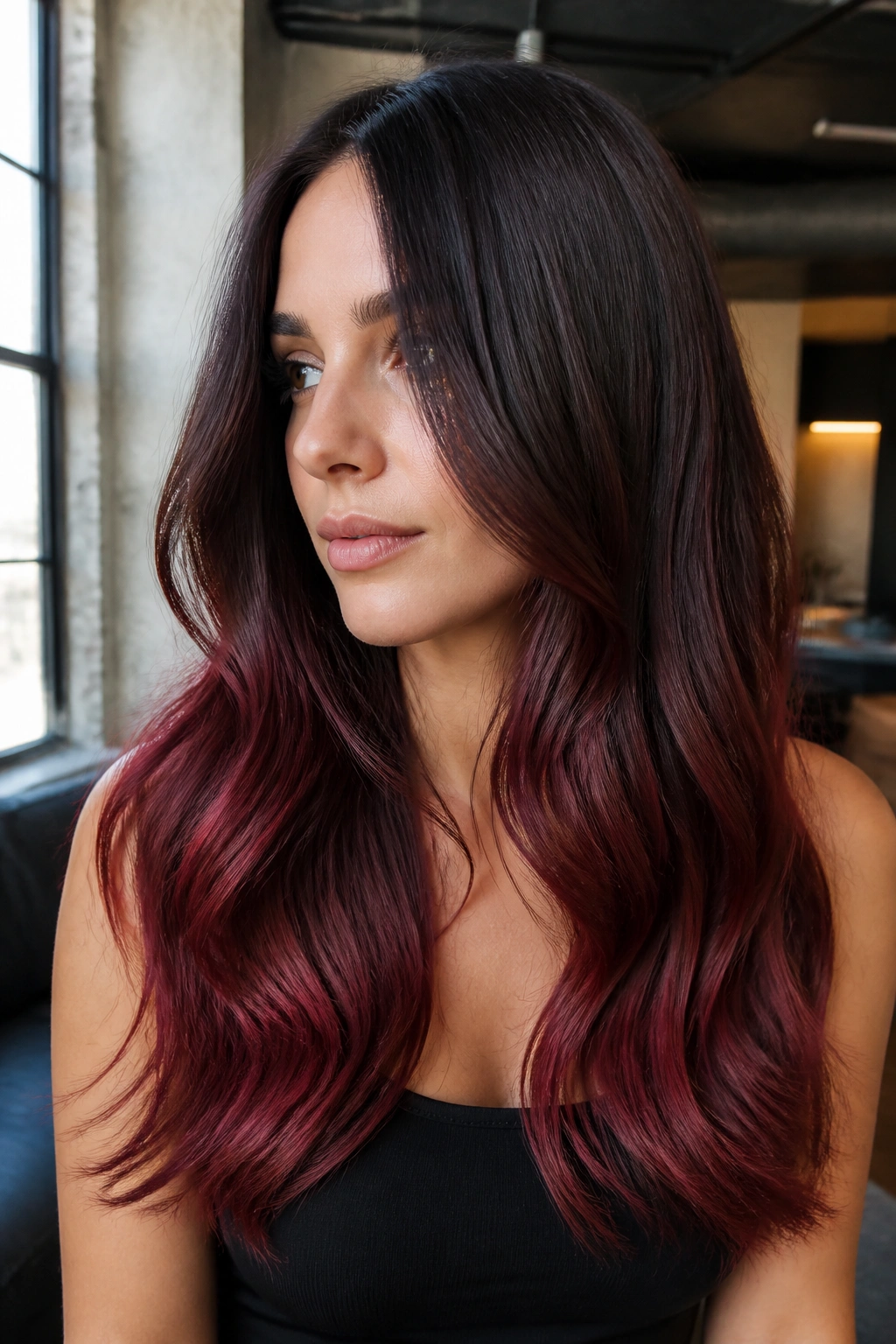
Espresso-to-garnet fades feel built for long, glossy hair. The top stays deep brown, almost black in some light, while the lower lengths slide into a garnet red that reads rich rather than bright.
That kind of gradient needs space. Medium to long hair gives the fade room to show, especially when the ends are worn sleek or in soft bends. On shorter cuts, the transition can look abrupt unless the color is extremely blended.
A center part usually shows this best because it lets both sides fall in clean vertical lines. If you like a sharp blowout or a flat-iron finish, this is one of the stronger options in the whole group. The red does not fight the brunette base; it grows out of it.
10. Spiced Walnut Red
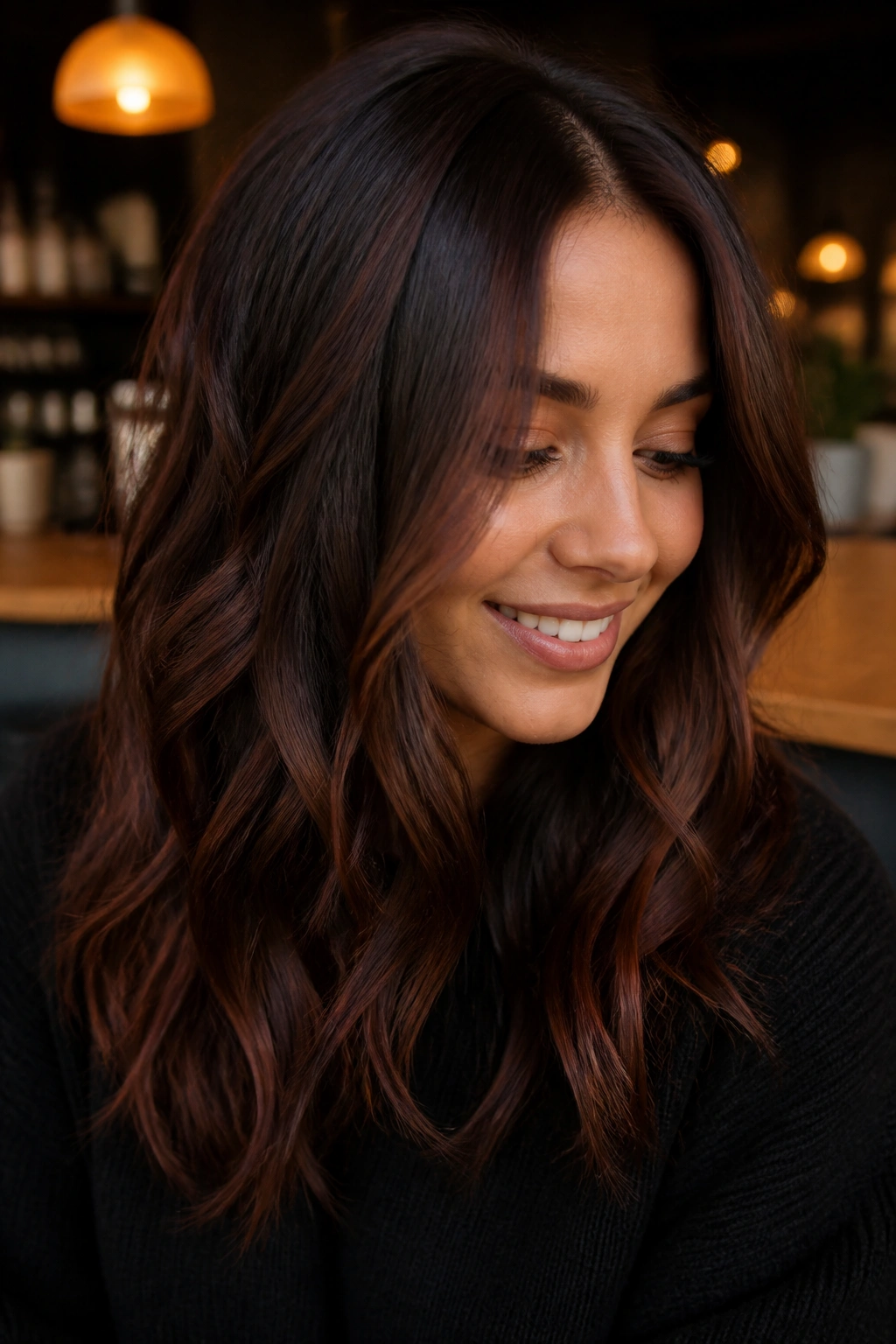
Spiced walnut red is the one I point to when someone wants red but refuses to look red-haired. The tone is earthy, almost chestnut at first glance, then a red reflect appears once the light hits it from the side.
That makes it a quiet choice, which is not a bad thing. In fact, it is one of the easiest brunette red balayage looks to wear every day because it reads as “better hair” before it reads as “new color.” It works on straight hair, waves, and loose curls without demanding a special style.
If your natural color sits in the medium-brown range, this can be very easy to blend. Darker brunettes may need a bit more lift, but the result stays soft. This is the look for people who want a subtle change that still has some heat in it.
11. Rosewood Balayage
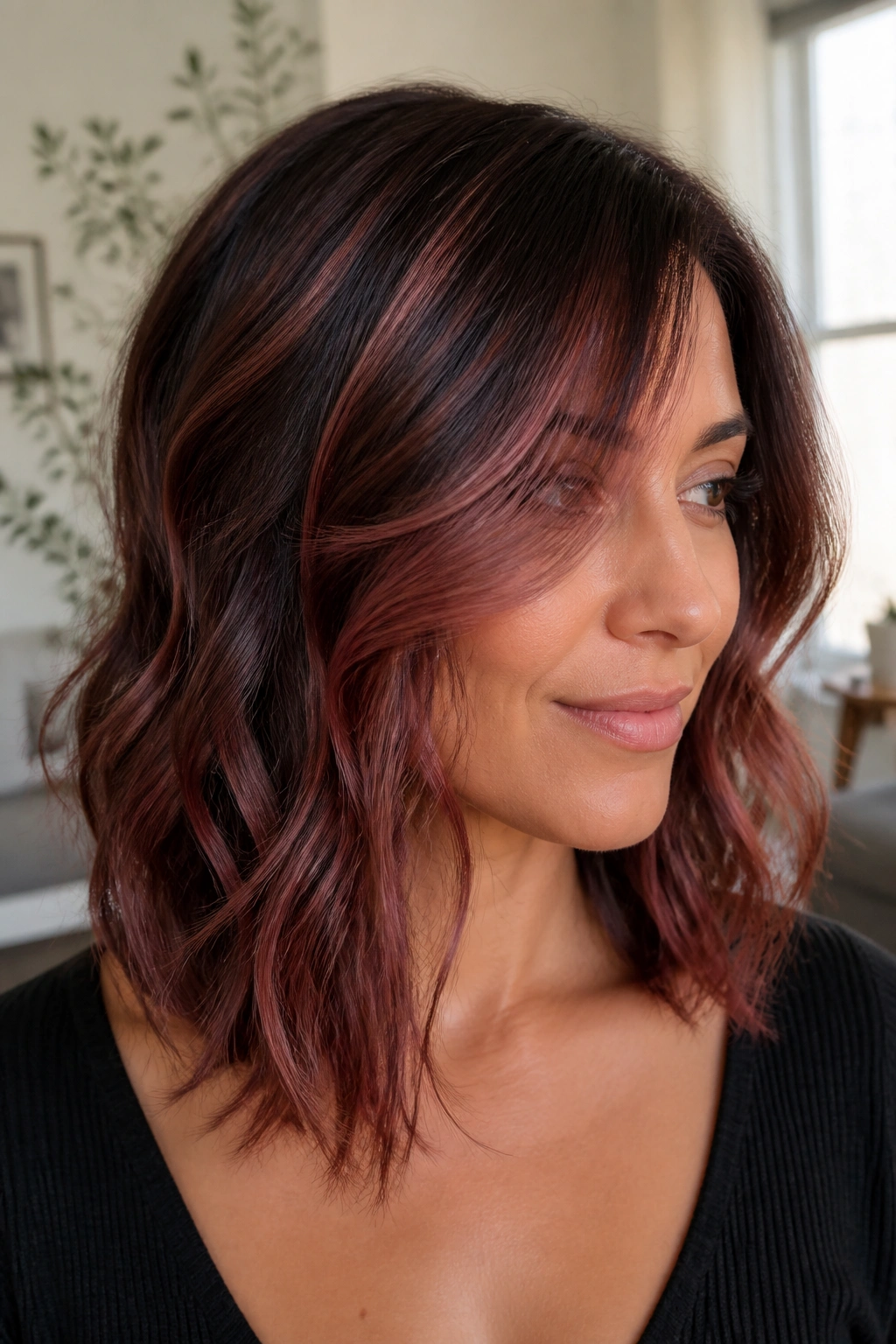
Rosewood balayage lands between blush and brown. It has a muted rosy-red feel, but the brown base keeps it from drifting into pink territory, which is exactly why it looks so wearable on brunette hair.
The best versions are soft around the face and a little deeper through the underside of the hair. That gives the rosewood color a layered, almost velvety finish. It is especially pretty on shoulder-length cuts that move a lot, because the color shifts instead of sitting still.
What Makes It Softer
- Use a dusty red-brown toner, not a bright red one
- Keep the roots close to the natural brunette level
- Let the mids and ends carry most of the rose tone
- Style with loose bends rather than tight curls
Rosewood has a gentler edge than copper or cherry. It suits people who like a romantic finish without anything sugary or loud.
12. Cranberry Glaze
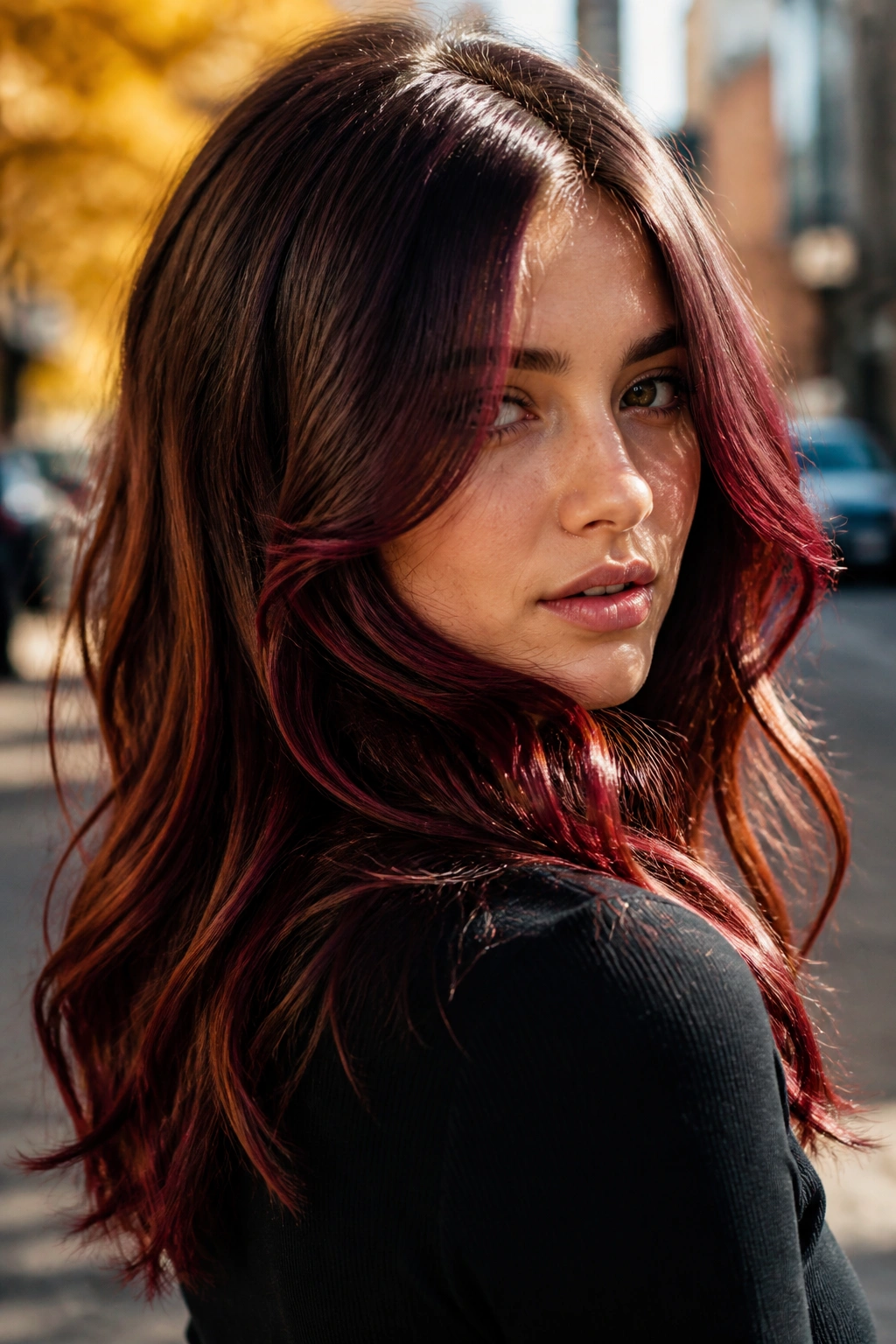
Cranberry glaze looks brightest when the hair already has some movement. On curls or waves, the red catches in the bends and shows up like a glossy wash instead of a hard streak.
That is why this shade can feel more alive than it looks in still photos. It has a surface shine, but the real payoff shows when the hair moves. A brunette base with cranberry overtones can read rich in low light and more vivid when you step outside or turn your head.
Best Places to Put It
- Through the mid-lengths, not just the ends
- Around the outer layer for a brighter finish
- In a gloss or toner that refreshes easily
- On hair that already leans warm or neutral
Cranberry glaze is one of the easier ways to test the waters if you want a red tone with some brightness. It can be adjusted up or down without losing the whole look.
13. Auburn-Toffee Dimension
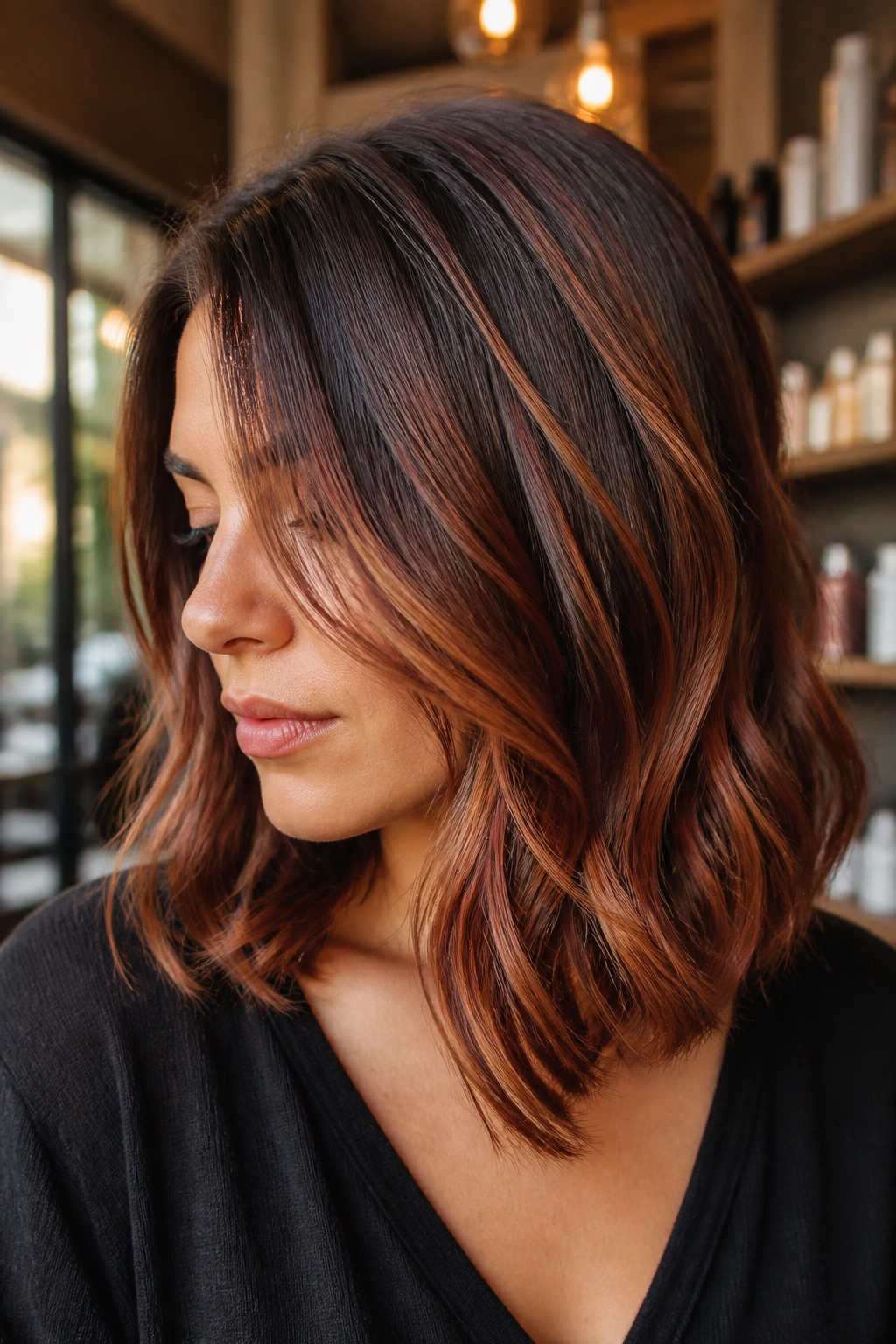
Auburn-toffee dimension is the safest bet on the menu, and I mean that in the nicest way. It blends warm brown, red, and honeyed pieces so the color looks layered rather than themed.
The appeal is balance. Auburn gives the red personality, toffee keeps it soft, and the brunette base makes the whole thing feel grounded. That mix works on a wide range of cuts, from shoulder-length layers to long, thick hair that needs depth.
Ask for three tone families instead of one flat red. The stylist should be able to keep some pieces deeper near the root and brighter through the outer layer. That variation is what makes the hair look expensive without looking done within an inch of its life.
14. Brick Red Midlength Sweep
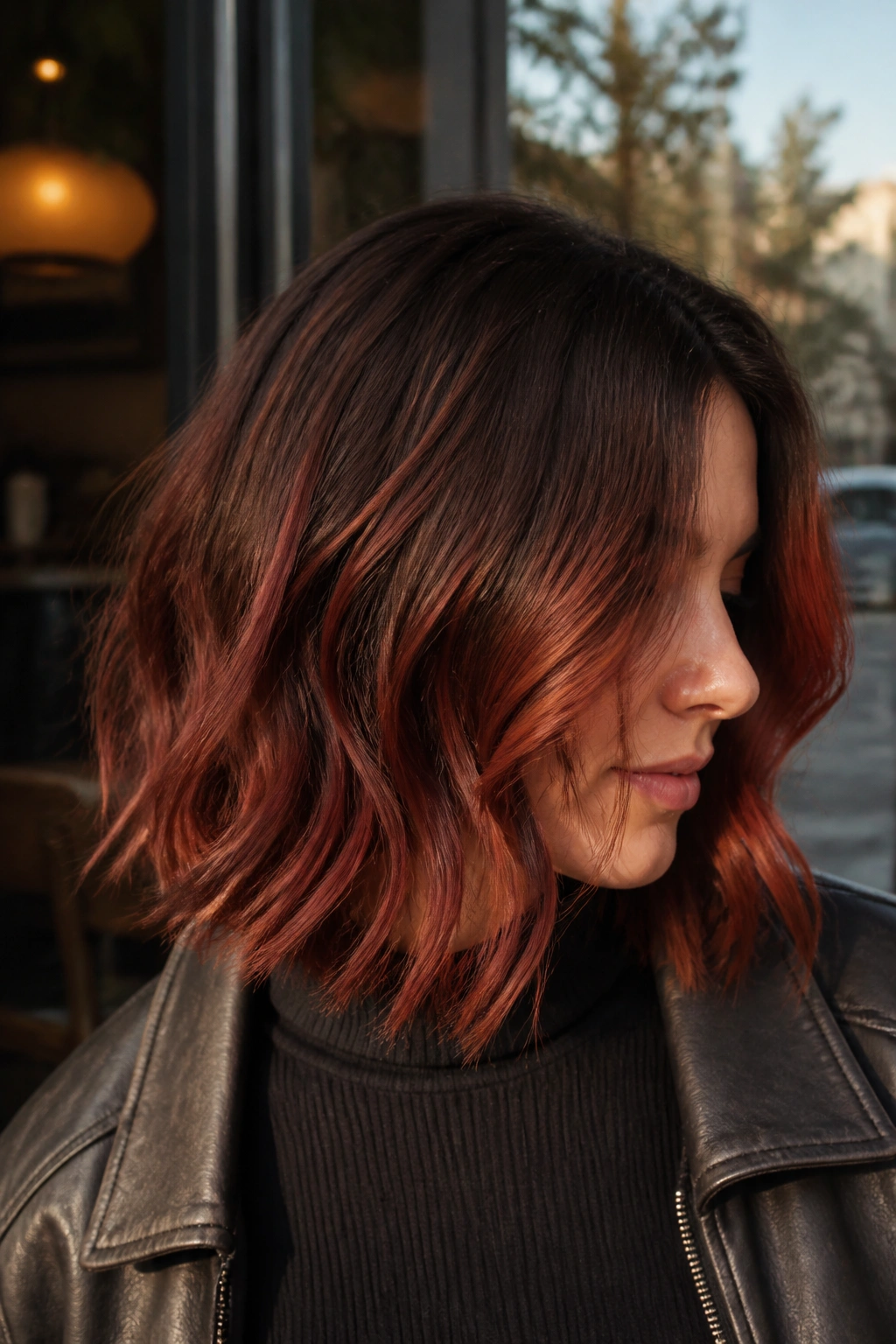
Brick red can look almost matte in a good way. It has terracotta and clay in it, so the color feels earthy rather than shiny, which gives brunette hair a more modern edge.
The midlength sweep is the key. By keeping the color mostly between the ears and the shoulders, the style avoids a heavy root line and still shows enough red to matter. Blunt cuts, long bobs, and heavy waves handle this especially well because the shape gives the color a strong line.
This is a nice option if you like your hair a bit editorial. Not sleek-pretty, not soft-romantic. More grounded. The red sits there with a little attitude, and that is exactly why it works.
15. Black Cherry Glow
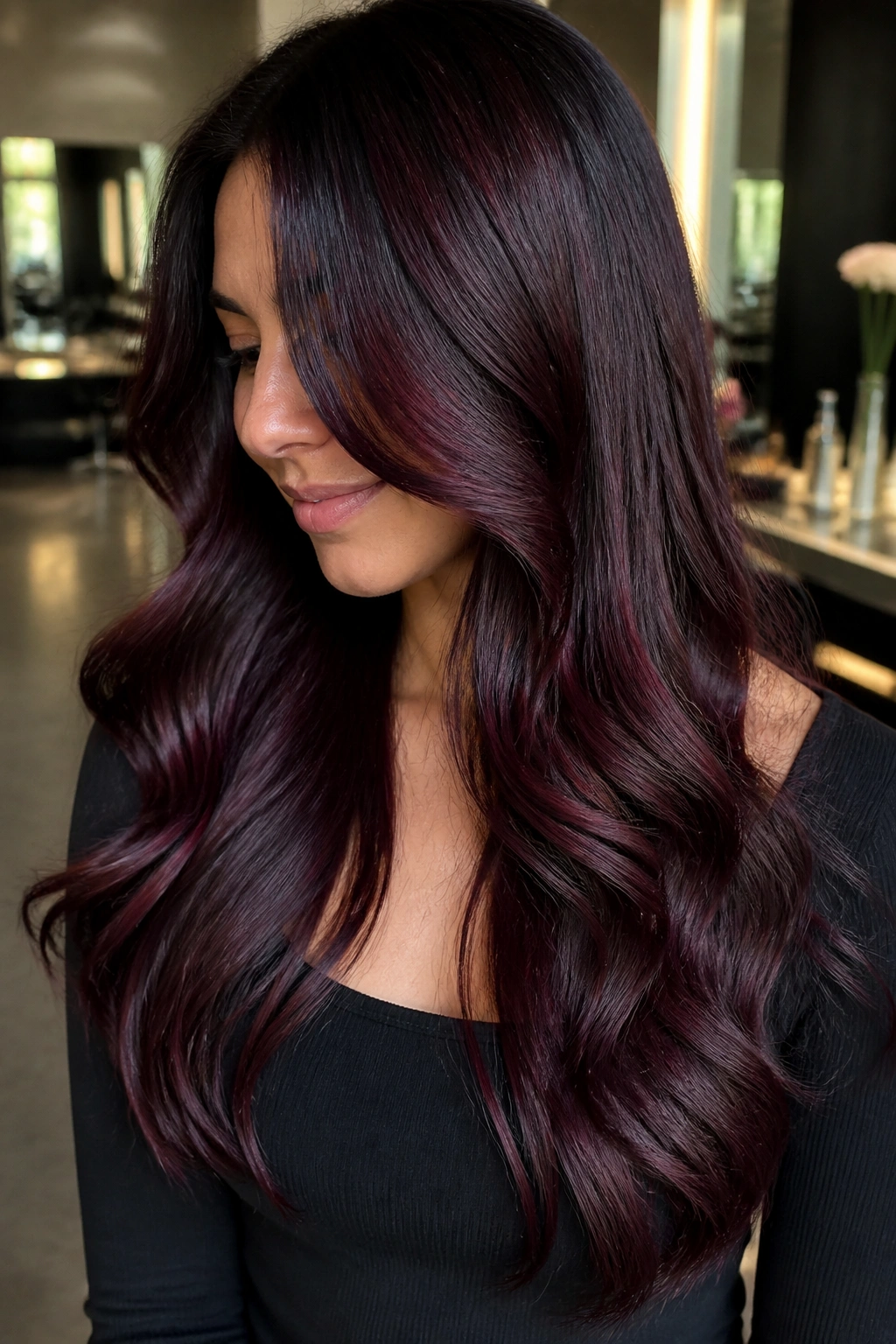
Black cherry glow is the darkest member of the group. On brown hair, it can look nearly black until the light shifts and the red-violet reflect rises up from underneath.
That makes it a smart choice for people who want depth first and red second. The color stays rich on straight styles, but it looks even better on loose, curved texture where the cherry side can peek through. If your hair is already dark brunette, this one can be achieved with less contrast than brighter copper looks.
The shine finish matters more than with most red balayage shades. A dull black cherry tone just looks flat. A reflective glaze, a smooth blowout, or a curling iron pass with soft bends helps the red hold its shape.
16. Mulled Wine Curls
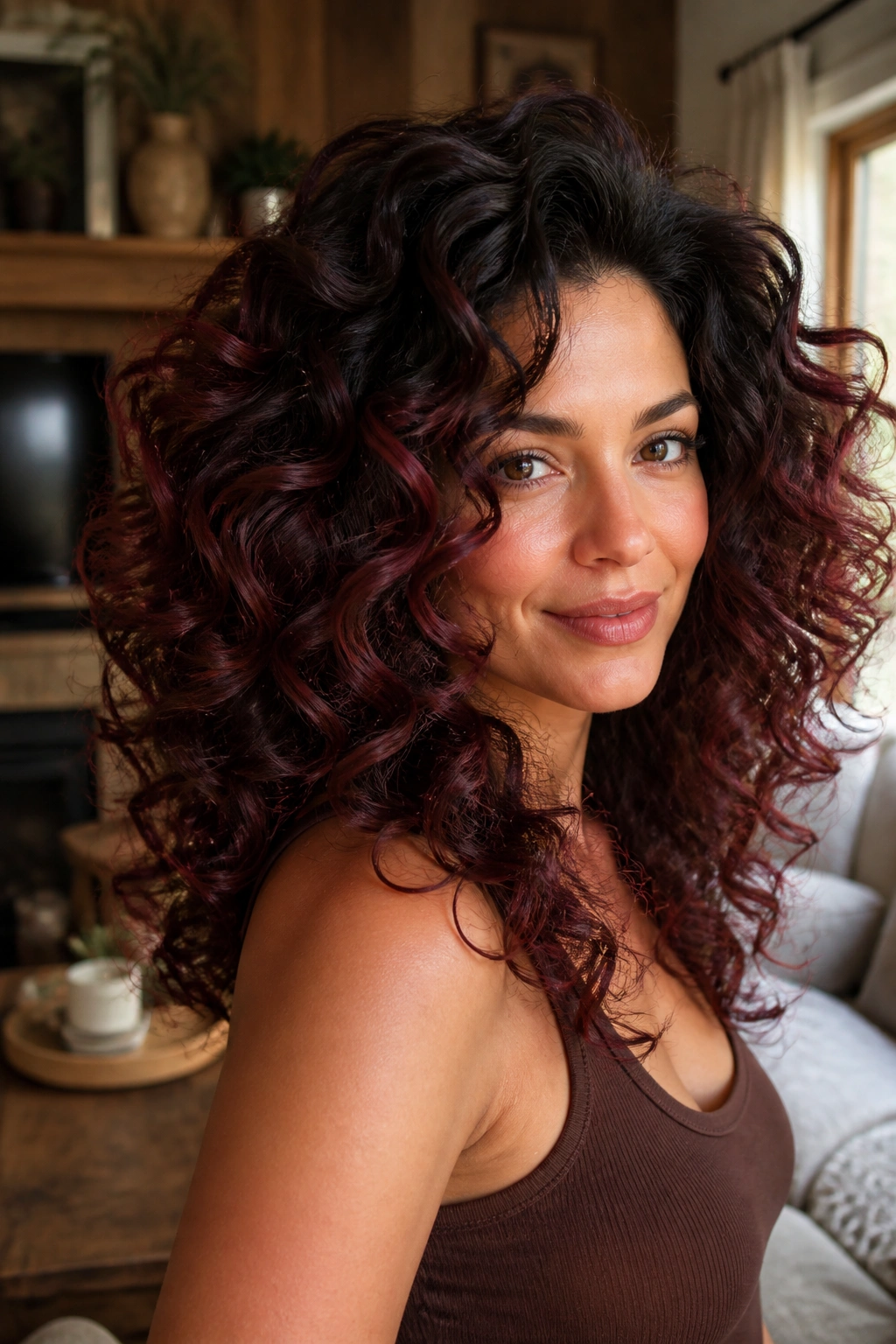
If your hair is thick and curly, mulled wine is the one that gets noticed first. The berry-red pieces sit inside the curl pattern, so the color appears and disappears as the hair coils.
That makes the look feel fuller without turning frizzy. The red works best when it follows the curl layout instead of fighting it, which means broader painted sections underneath and softer touches around the crown. A curl specialist usually handles this better than someone who paints as if the hair were straight.
How to Wear It
- Use a curl cream with light hold
- Dry with a diffuser on low heat
- Keep the brightest red off the very top layer
- Refresh with a red-brown gloss when the tone looks too muted
Mulled wine is moody, plush, and a little romantic. It suits people who like color that moves with the hair instead of sitting on top of it.
17. Chili Chocolate Balayage
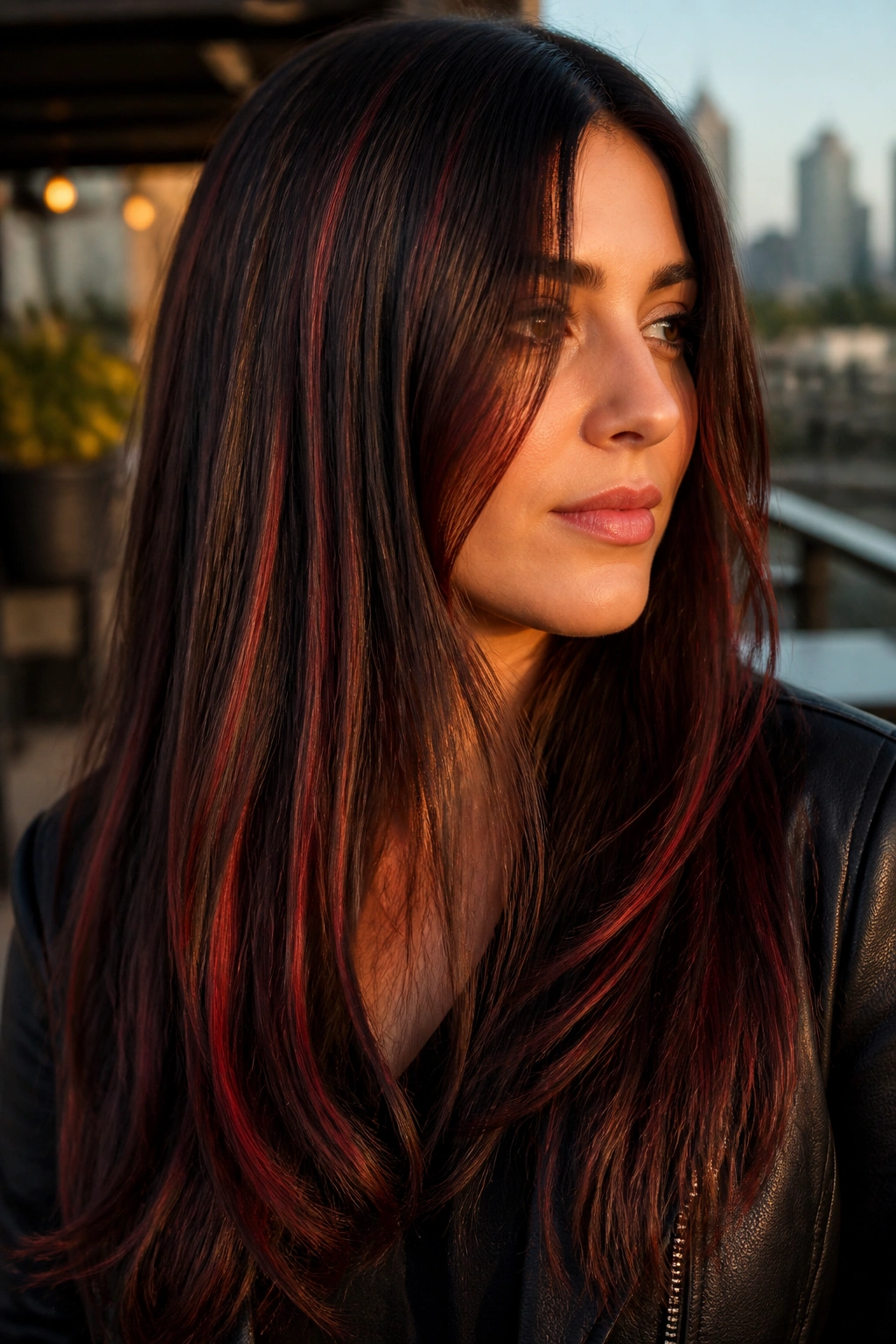
Chili chocolate balayage sounds dramatic because it is. The base stays deep chocolate, but the red pieces arrive in thinner, spicier ribbons that look almost hot against the brown.
That contrast gives the hair a sharper edge than cinnamon or auburn. It is a good choice if you want the red to show up even in everyday light. On straight hair, the ribbons can look sleek and intentional. On wavy hair, they break apart and feel more playful.
This shade is one of the better picks for people who like a little attitude in their color. Keep the pieces thin if you want movement; widen them if you want more impact. Either way, the chocolate base keeps the red from wandering into costume territory.
18. Pomegranate Veil
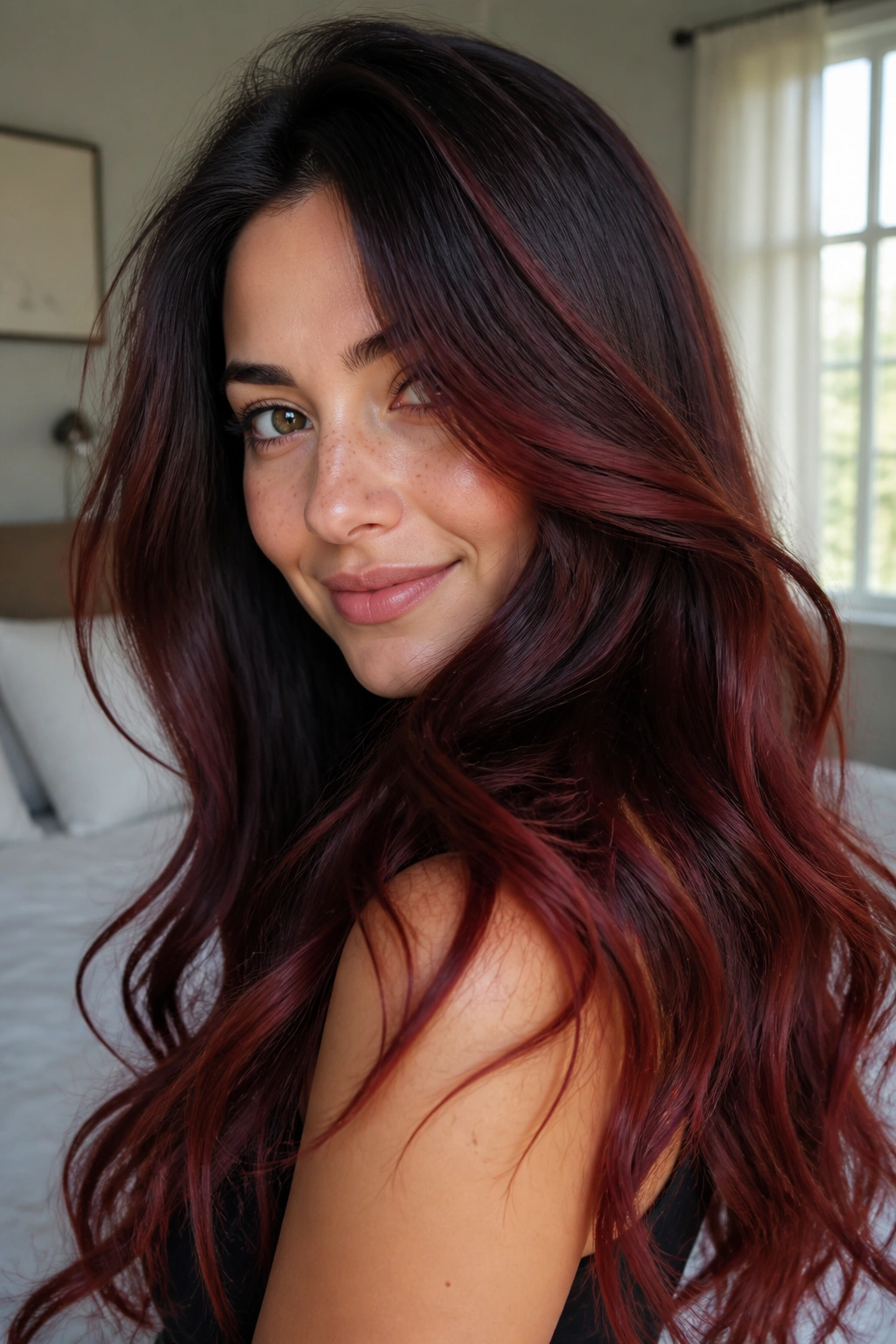
A pomegranate veil works when you want red to show in motion, not all the time. The color sits as a soft wash over the brunette base, so the hair can still read brown from a distance and red up close.
That makes it a good option for medium brunettes who want something airy. The veil effect depends on fine painting and a gentle blend at the roots. If the contrast gets too harsh, the look stops feeling like a veil and starts feeling like stripes.
Placement Notes
- Keep the color diffused through the outer layer
- Concentrate a little more pigment around the mids
- Leave a soft root shadow for grow-out
- Style with bends, not tight curls, if you want a smoother finish
Pomegranate works especially well on shoulder-length cuts. The movement lets the red appear in flashes, which gives the hair a more expensive finish without making it obvious.
19. Burnt Sienna Ends
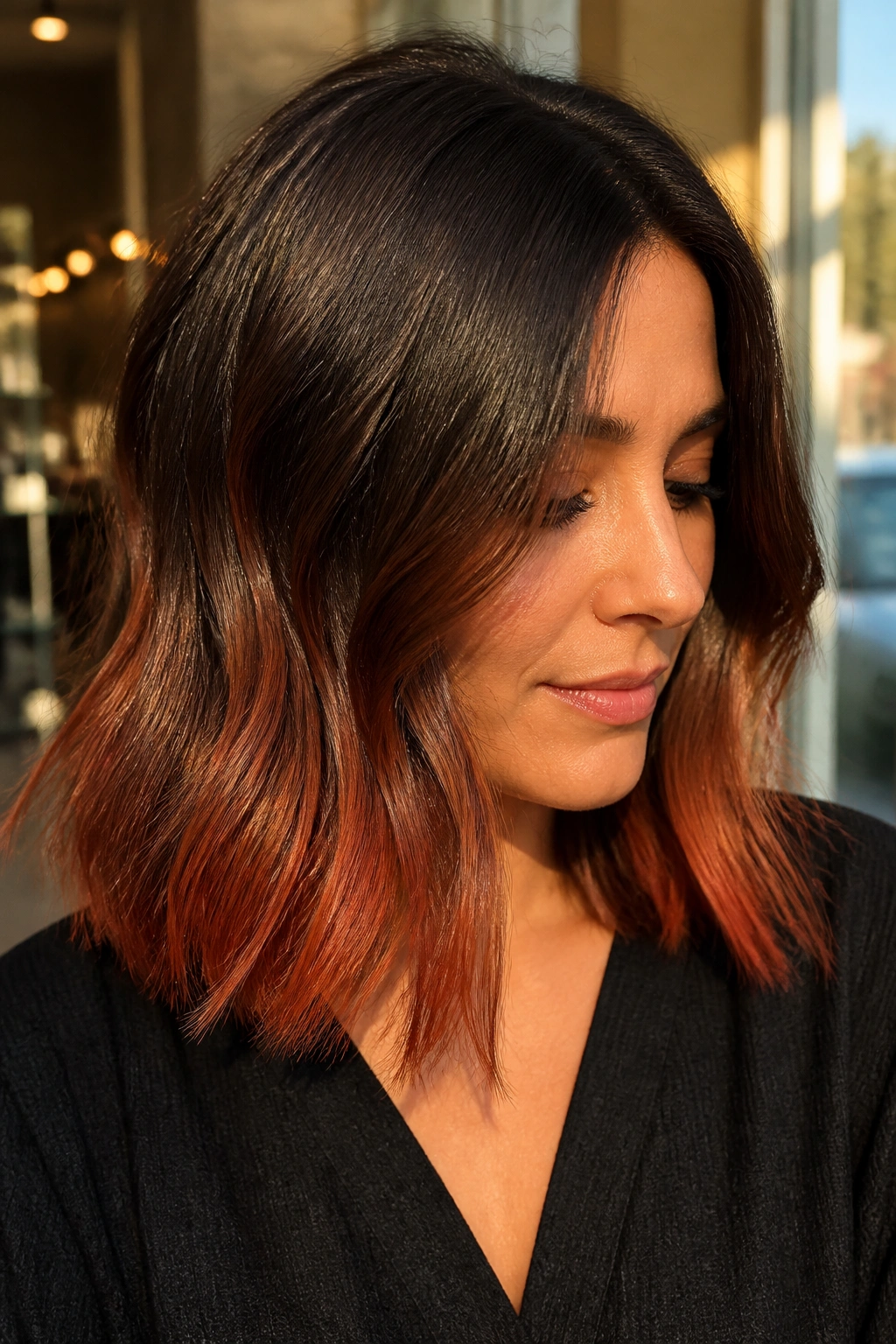
Burnt sienna ends are the lazy person’s red balayage, and I mean that as a compliment. The roots stay brunette, the mids stay fairly dark, and the ends pick up a warm earthy red that grows out without fuss.
That limited placement keeps maintenance low and makes trims more useful. Every time the ends get a dusting, the color still looks fresh. This is one of the easiest choices for people who do not want to visit the salon constantly, because the color is doing its best work where damage is already trimmed away.
A lob, long layers, or even a grown-out bob can carry this well. The shade has a lived-in feel, like the color has settled into the hair instead of sitting on it.
20. Coppery Chestnut Lift
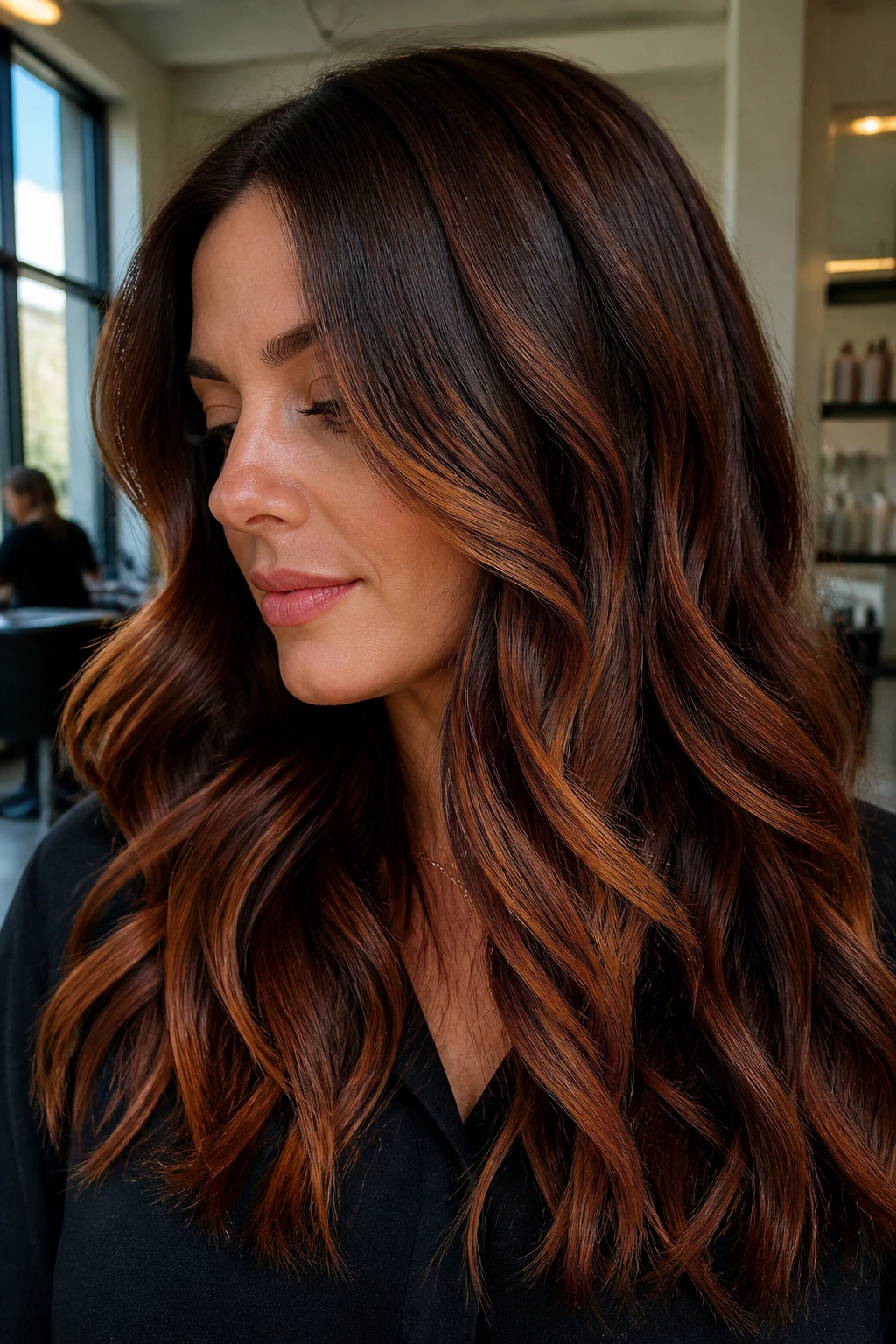
Coppery chestnut lift is what happens when a brown base needs more life, not a full color change. The chestnut stays in charge, but copper ribbons brighten the mids and ends so the whole head looks fuller and warmer.
This is a strong option for darker brunettes who want visible dimension without red taking over. It keeps the color family close to home, which makes blending easier and grow-out calmer. You can also keep the copper concentrated near the surface so the effect is more subtle from the back and brighter from the front.
If your hair tends to look flat in indoor light, this shade helps. The copper gives the chestnut somewhere to catch, and that tiny bit of contrast can make a huge difference.
21. Sangria Balayage
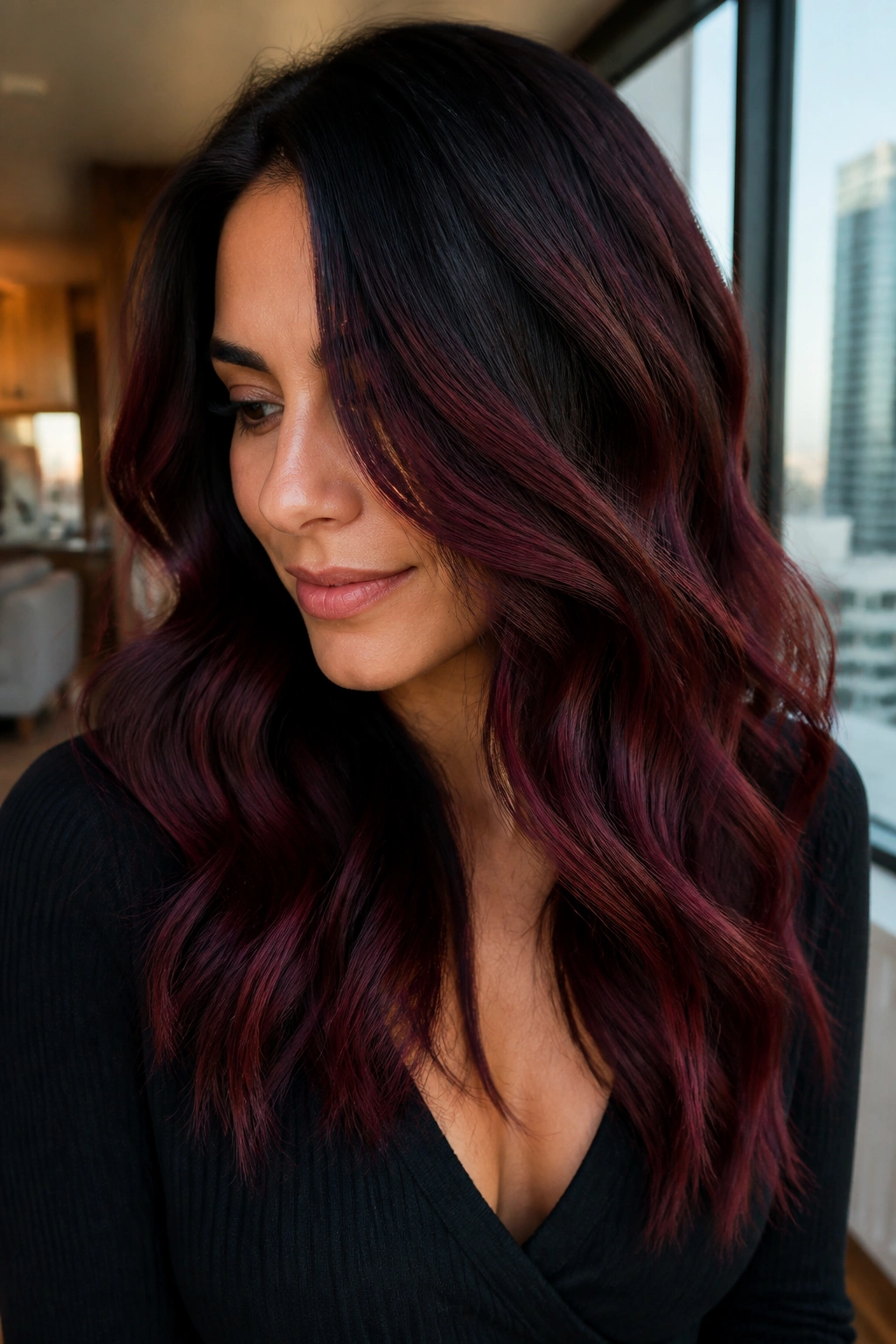
Sangria balayage leans cooler, deeper, and a touch moodier than copper. It carries berry and wine tones that sit nicely on dark brunettes who want red without warmth dominating the picture.
Best Styling Pairings
Sangria works best with smooth waves, a deep side part, or soft brushed-out curls. Those shapes let the color move between plum, red, and brown. A sleek blowout gives the shade a polished finish, while rough texture can make it look a little heavier than intended.
This is a good color if you like dark clothes and shiny hair. The red feels rich against black, charcoal, and cream, and it looks especially nice when the haircut has clean edges. Long layers can keep it from feeling too dense at the bottom.
22. Red Velvet Ribboning
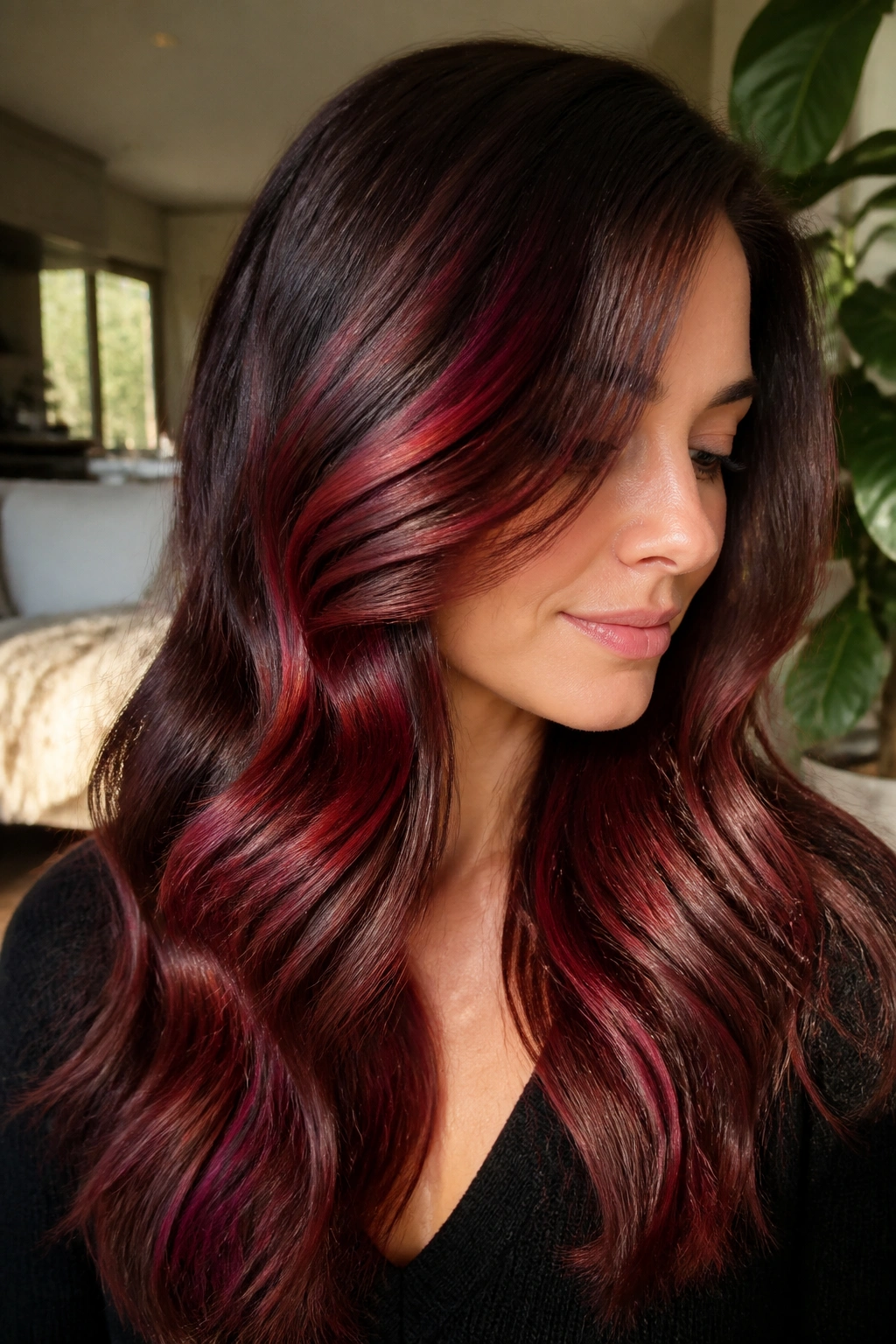
Red velvet ribboning is all about width and placement. The ribbons are broader than cinnamon or cherry strands, which gives the color a plush, fabric-like look instead of a tiny-thread effect.
That wider placement works beautifully on waves because the bends separate the ribbons and let the red show in bands. Straight hair can wear it too, though the result is more graphic. If you want a visible brunette red balayage that still feels soft around the edges, this is a strong pick.
Tell the colorist to keep the ribbons more concentrated through the outer layer and lower mids. Too much width near the root can make the color feel busy. Done well, it looks full, rich, and a little dramatic without needing bright neon red.
23. Clay Red Dimension
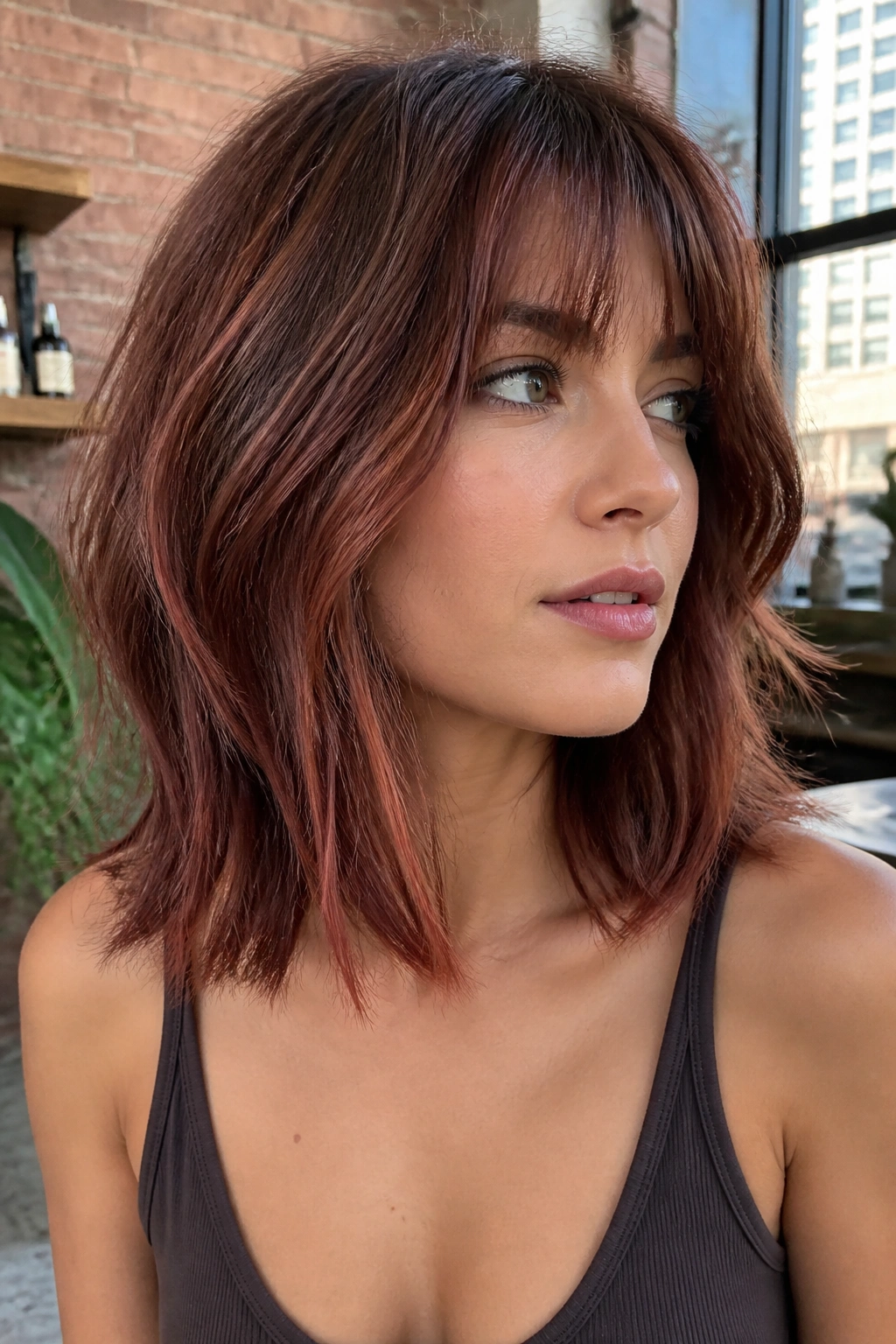
Clay red dimension sits closer to earth than fire. It is dusty, muted, and a little arty, which makes it one of the most wearable red-brown choices for people who dislike shiny copper tones.
The dimension matters because the hair is not one solid clay color. It shifts between brown, brick, and soft red, depending on the angle. That movement is what keeps the shade from looking flat. On straight hair, the color can feel clean and modern. On textured hair, it gets a softer, lived-in edge.
This look works well when the haircut has some shape to it—think choppy ends, a soft shag, or a blunt cut with movement underneath. The color does not need a lot of sparkle to make sense.
24. Garnet Halo
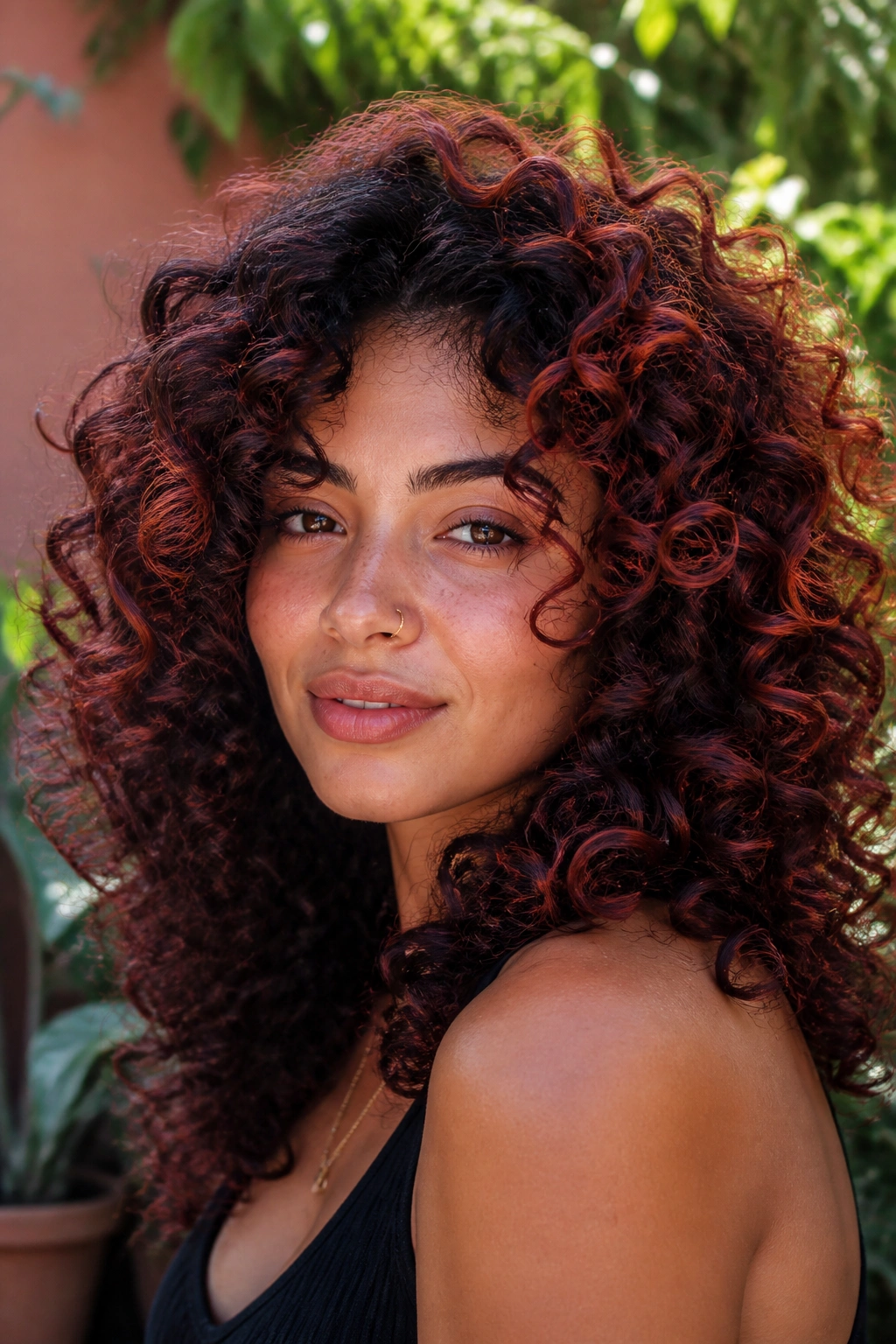
A garnet halo changes the whole silhouette of curls. Instead of painting red everywhere, the brighter garnet pieces sit around the outer curve of the hair, so the shape itself becomes part of the color story.
That placement is smart on curly and coily textures because the halo catches light where the hair already naturally arcs. It can make curls look fuller at the edges and more defined at the crown. The darker interior keeps the look grounded, which stops the red from looking busy.
What to Watch For
- Keep the halo soft near the roots
- Let the brightest pieces sit on the outer curve
- Avoid too many thin streaks; they disappear in coils
- Ask for a glossy finish so the garnet reads rich, not dry
This is one of my favorite ideas for textured hair because it respects the haircut instead of fighting it.
25. Autumn Leaf Melt
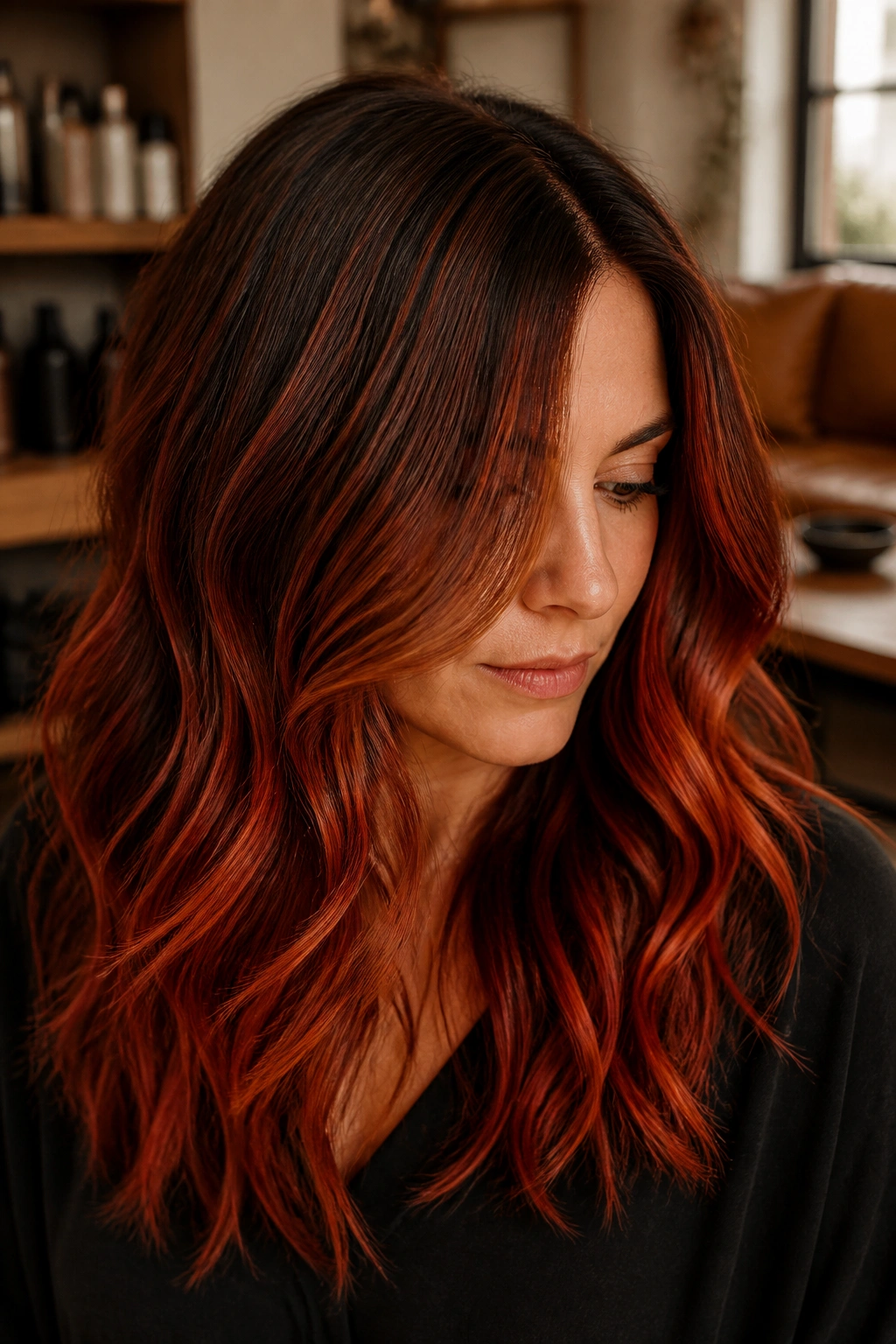
Autumn leaf melt brings three shades into the same head of hair without making it look busy. Copper, auburn, and rust move together through the brown base, so the final result feels layered and seasonal in the best sense of the word.
The melt works because the tones are close enough to belong together, but different enough to keep the eye moving. A layered cut makes that easier to see, since the color lands on different lengths and creates depth. On one-tone hair, the melt can feel flatter; on layered brunette hair, it comes alive.
This is the kind of red balayage that looks even better after a few washes. The tones settle, the gloss softens, and the whole thing starts to feel less new and more natural. That is not a flaw. It is the point.
26. Ruby Smoke
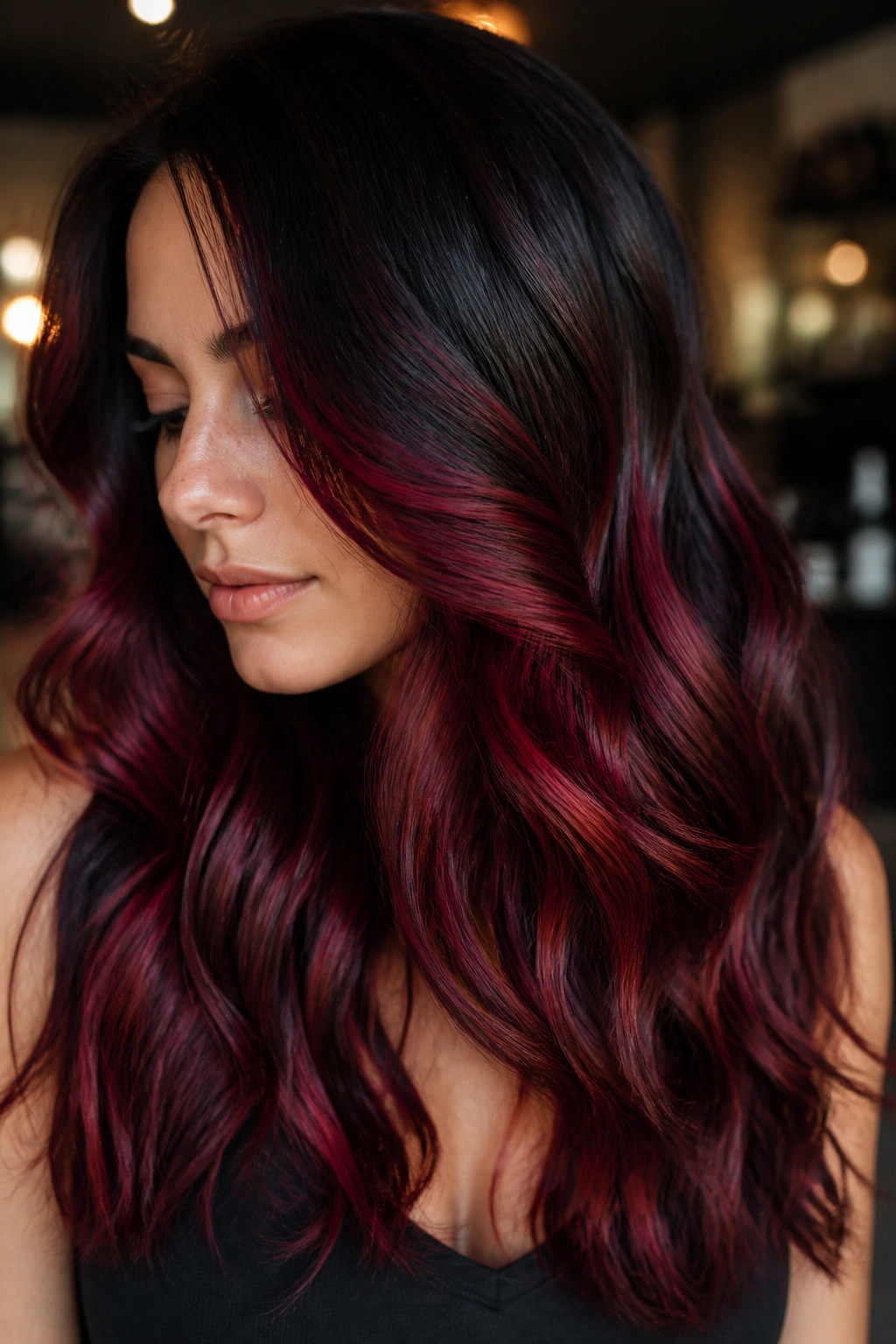
Ruby smoke is the boldest look here. The red sits deep inside dark brunette hair, but it has enough jewel-tone intensity to show even when the light is weak or the room is dim.
Why It Works
The smoky part keeps the red from looking flat or too bright. Instead of a loud cherry tone, you get a deeper ruby that feels polished and a little mysterious. It is a good match for smooth blowouts, glossy waves, and hair that already has strong shine.
You do need to like maintenance. Dark red jewel tones fade, and they can lose their edge if the shampoo is too harsh or the water runs hot. If you are willing to keep the color topped up with a glaze, ruby smoke rewards you with depth that feels richer than ordinary red highlights.
27. Ambered Brunette
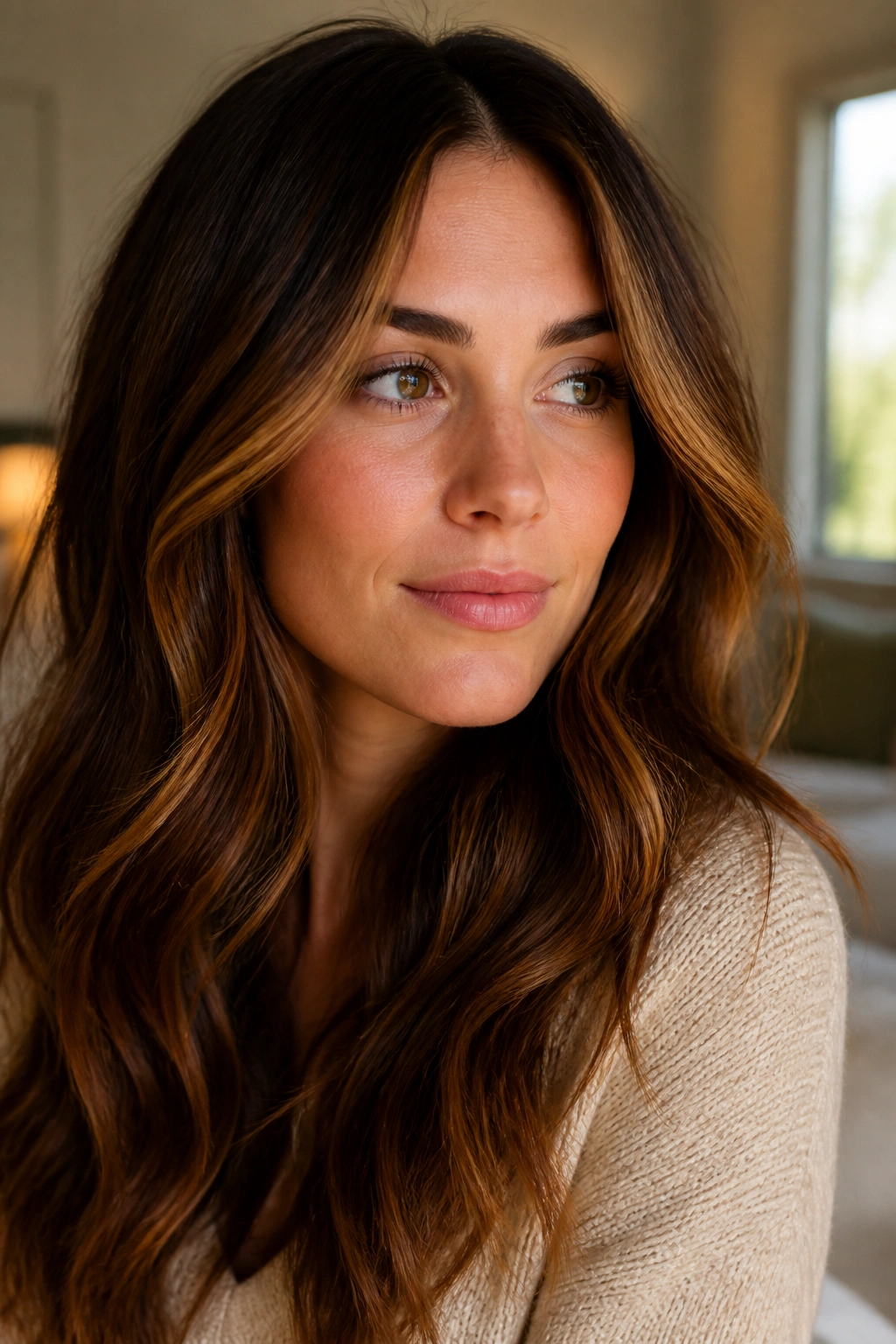
Ambered brunette is the one for people who want warmth they can wear every day. The red is soft, sun-kissed, and tucked into the brown rather than sitting on top of it.
That makes the color easy to live with. It does not scream for attention, but it still gives brunette hair a little lift, especially near the front and through the lower layers. This is a good pick for medium-brown hair that needs dimension more than drama.
The finish looks nicest when the pieces are irregular, not evenly spaced. A few brighter amber strands near the face, a softer set through the mids, and a lighter touch at the ends is usually enough. Straight hair gets a clean glow; waves make it look fuller.
28. Soft Auburn Fade
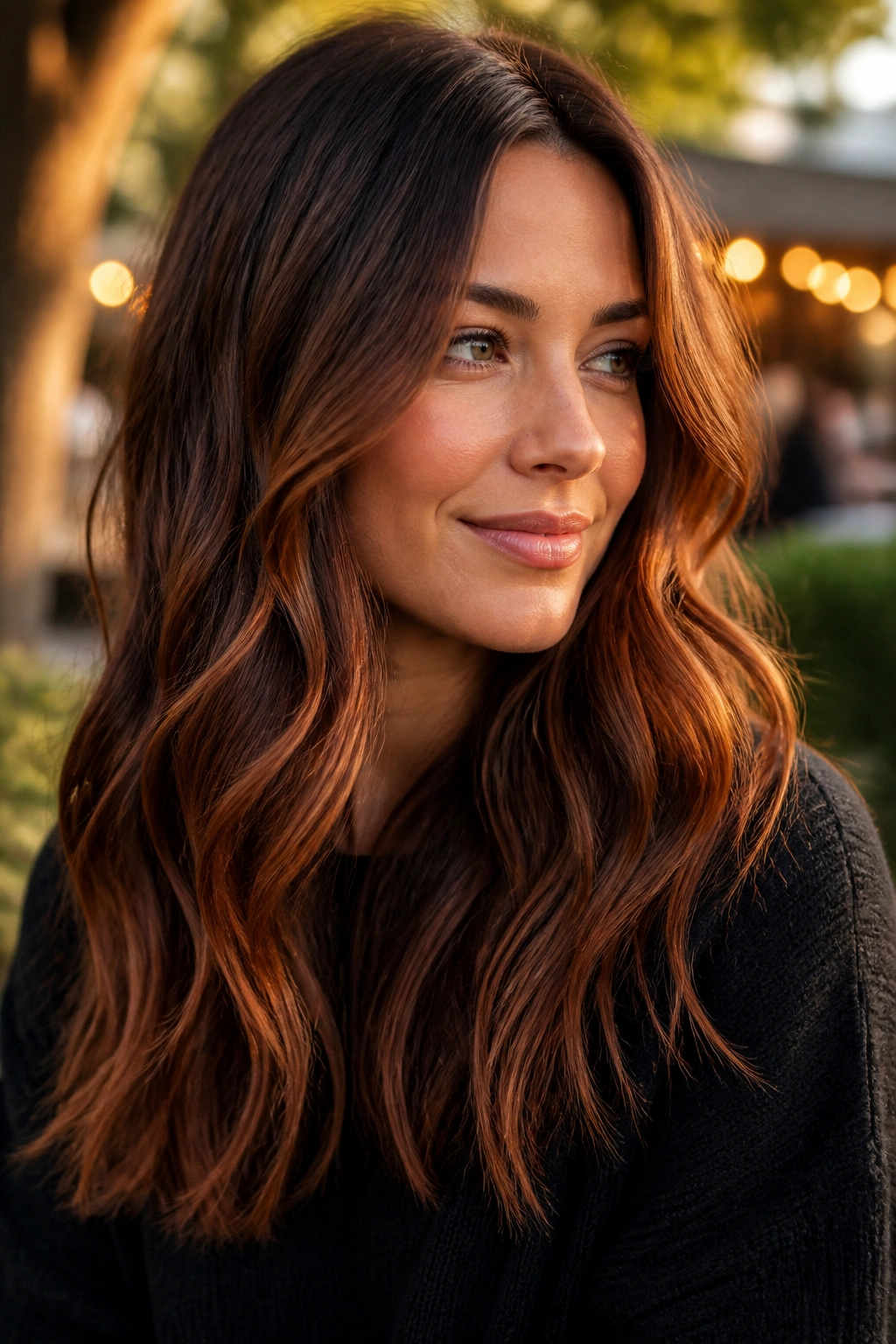
Soft auburn fade is the easiest red brunette to live with, and that matters. The color starts close to brown near the roots, then eases into auburn through the mids and ends, so the whole look grows out quietly.
That gentle fade works on almost any length, but it is especially nice on shoulder-length hair and long layers. The transition stays smooth, the red shows without taking over, and the brunette base keeps the hair from feeling over-processed. It is the look to choose when you want the idea of red, not a full-blown red transformation.
The smartest version keeps a soft gloss on the ends and a little extra brightness around the face. That keeps the auburn from sinking into the base. If you want one brunette red balayage look that can live with you for a long stretch without fuss, this is the one I would point to.
Soft auburn is not flashy. It is steady, flattering, and easier to love week after week. And for a lot of brown hair, that is the whole win.
