



Brown hair gives strawberry blonde balayage a head start. The deeper base keeps the copper, peach, and rose notes from reading like costume color, so the whole thing lands as soft, dimensional, and a little bit lived-in.
That’s the reason this color family keeps hanging around. A brunette base can carry much more warmth than people expect, and once the lighter pieces are painted by hand instead of shoved in with foil stripes, the result looks less “highlighted” and more like the hair has been sitting in good afternoon light for months.
Placement does most of the work. Push the brightness around the face and you get a glow-up effect; keep it buried in the mids and ends and the color feels quieter, richer, and easier to wear with regular ponytails and messy buns. Change the tone a little — more peach, more copper, more rose — and the whole mood shifts.
Some versions need more care than others. The brighter and more copper-heavy the pieces are, the faster they can soften or fade, which is why the smartest choices usually match your haircut, your natural level, and how much maintenance you can actually stand.
1. Warm Chestnut Strawberry Blonde Balayage
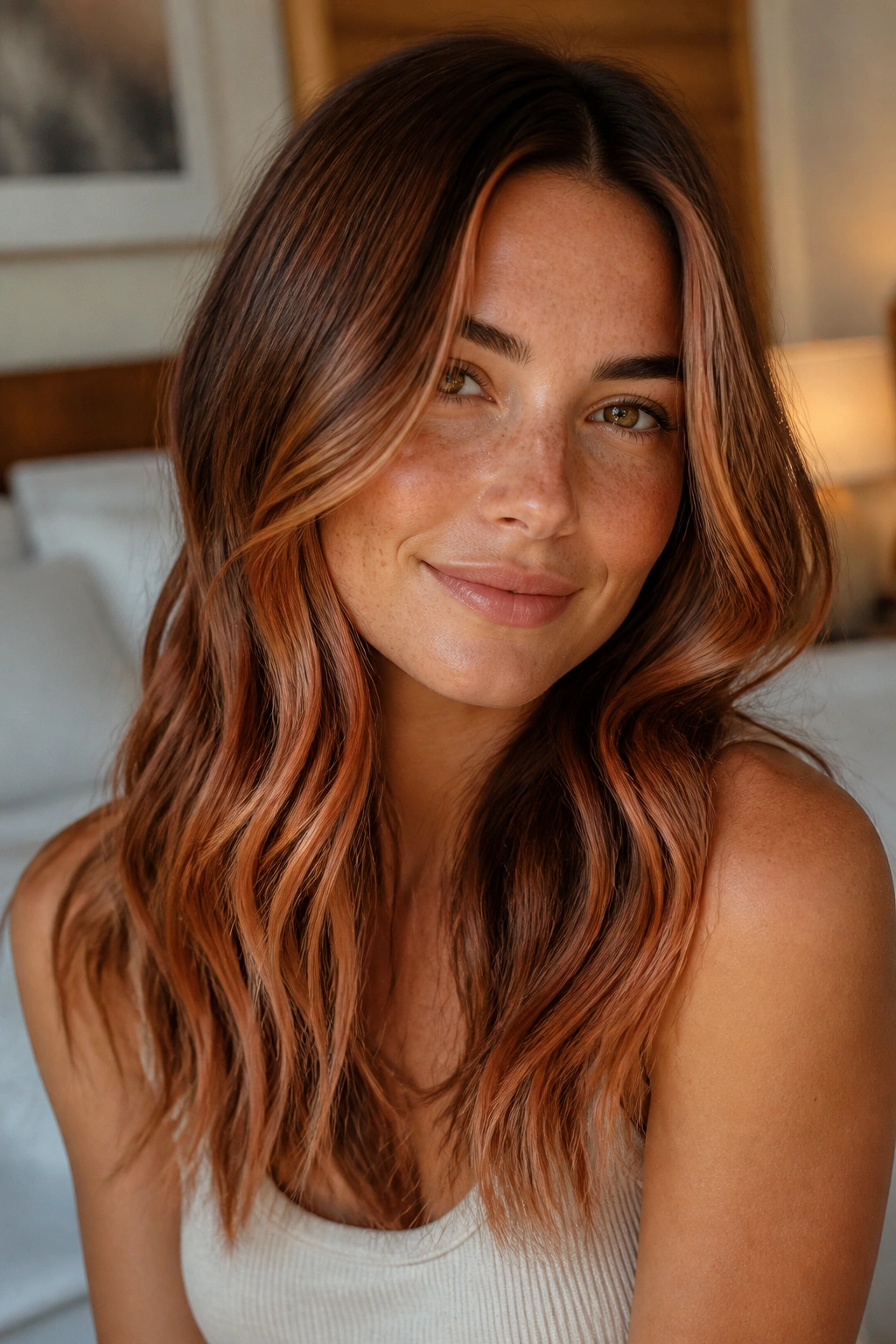
Warm chestnut hair is one of the easiest starting points for strawberry blonde balayage on brown hair, because the base already has enough warmth to keep the lighter pieces from looking harsh. The pretty part here is the way fine ribbons of copper-peach color sit inside a rich brunette canvas instead of floating on top of it.
Why It Works on Brown Hair
The contrast stays soft. You get brightness, but not that obvious stripey look that can happen when the lightened pieces are too wide. A colorist usually paints this look in thin sweeps through the mids and ends, then feathers a few lighter strands near the cheekbones.
Best for: medium brown to chestnut brunettes
Tone direction: warm peach, light copper, a hint of gold
Styling note: loose waves show the ribbons better than pin-straight hair
A good trick is to ask for the lightest pieces to sit one shade above your ends, not several shades above your whole base. That keeps the color believable. And believable is the thing here.
2. Rose-Gold Face Frame on Brown Hair
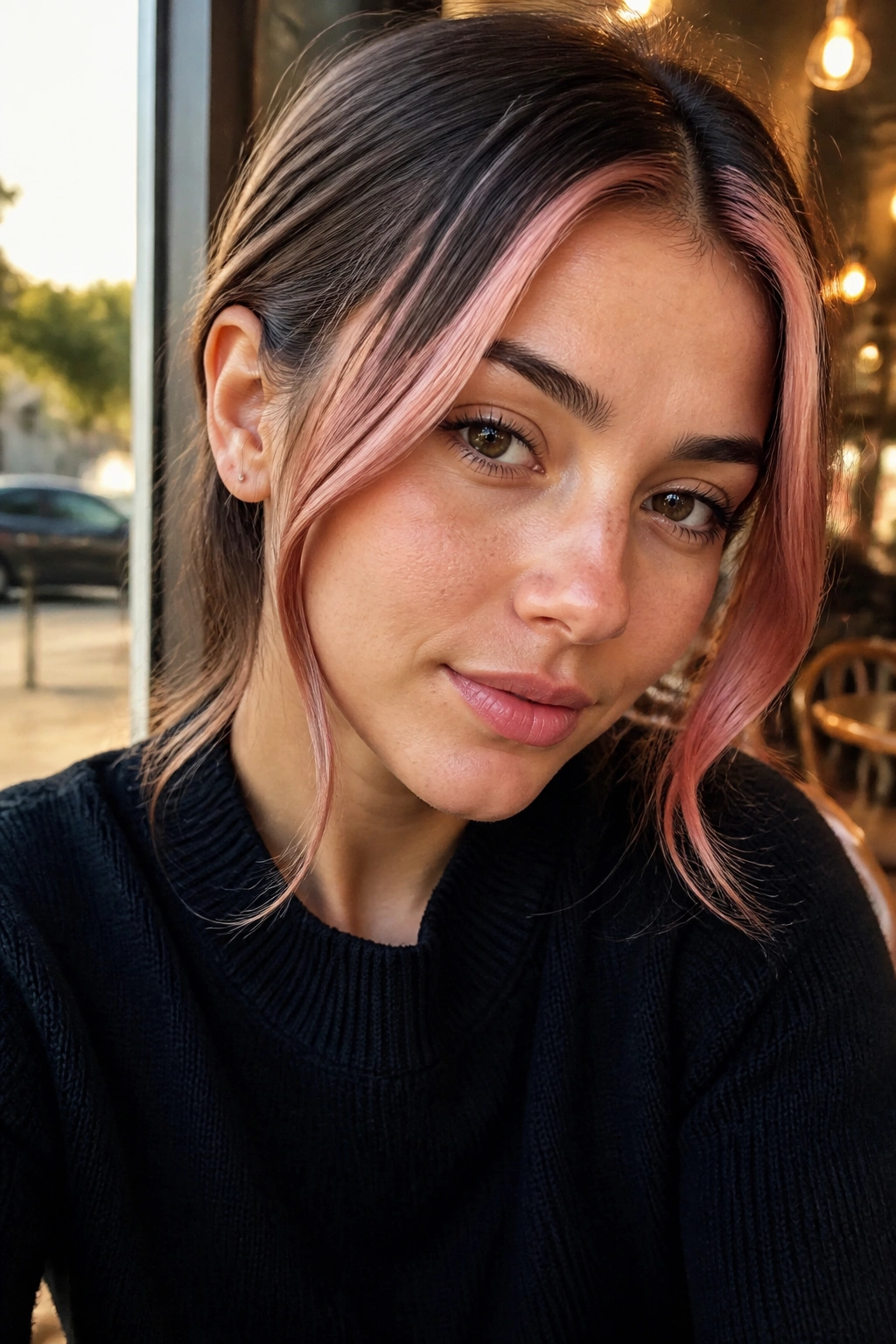
This one is for the person who wants the color to announce itself the second they tuck their hair behind one ear. The face frame is brighter, the rest stays quieter, and the whole look gets a clean focal point without needing a full-head lightening session.
The best part? It wakes up brown hair fast. A few brighter face-framing pieces in rose-gold strawberry tones can make the skin look fresher, especially around the temples and the front layers where hair tends to fall flat.
If you wear your hair parted in the middle, this look has extra payoff because the brightness sits like a soft bracket around the face. If you wear a side part, one side can look almost luminous while the rest of the hair stays grounded and deep. That contrast is what gives it shape.
Keep the rest of the balayage subtle. If too many light pieces creep into the lengths, the face frame stops feeling special.
3. Soft Copper Melt for Dark Brunettes
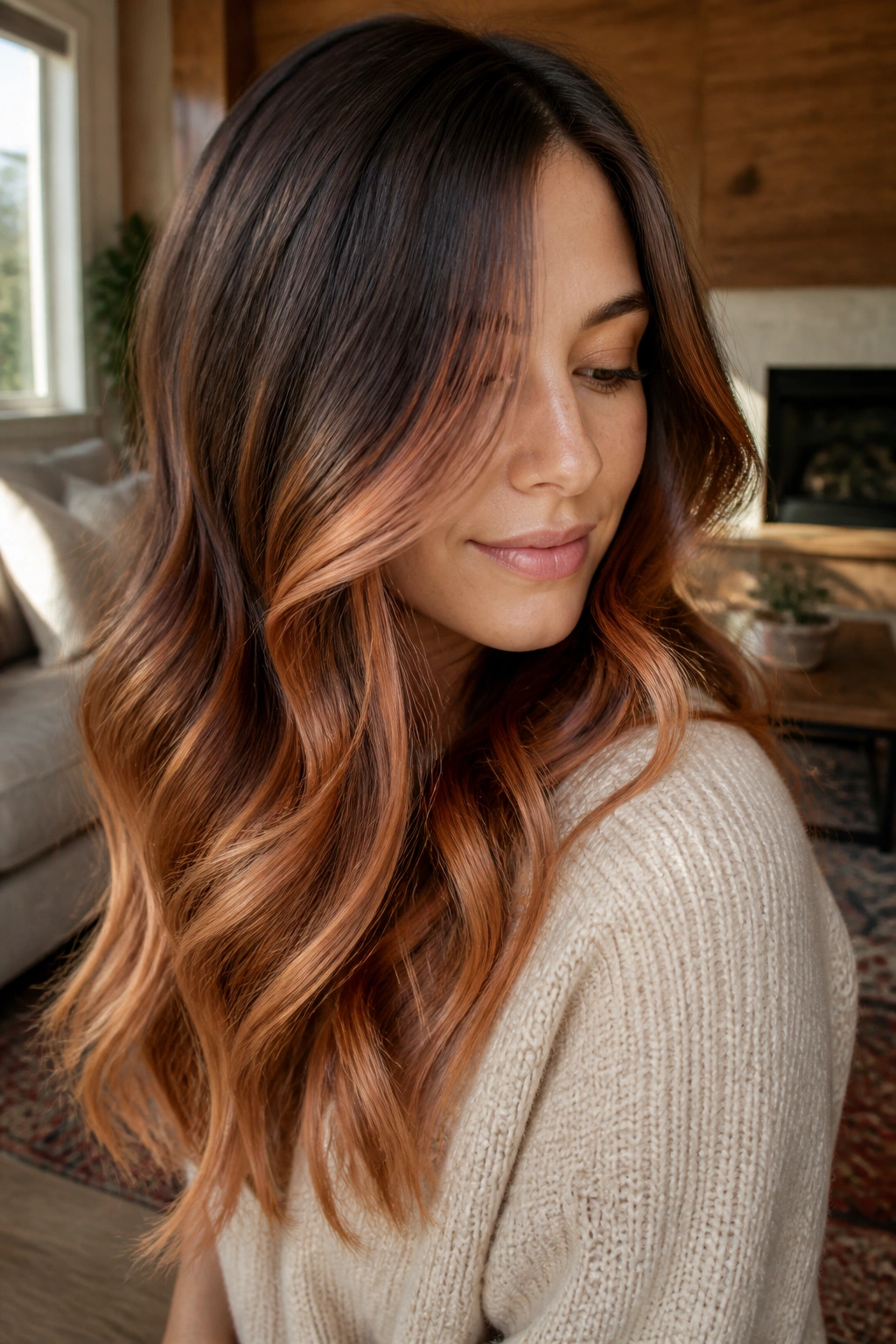
Why does this placement flatter darker brown hair so well? Because the color doesn’t fight the depth of the base. Instead of forcing blonde into dark brunette lengths, the copper gently climbs from the ends upward and gives the whole style warmth without a blunt line of demarcation.
How to Wear It
The melt should feel gradual. Think dark chocolate at the root, then chestnut through the mids, then a soft strawberry-copper glow at the bottom third. That progression matters more than the exact shade names, because the eye reads the transition before it reads the color itself.
A shoulder-length cut makes this especially easy to wear. The lighter ends land where the hair naturally moves, so the color shows when you turn your head instead of only when you are standing under perfect lighting. Straight hair can wear it too, but waves make the melt look more expensive in the plain, practical sense of the word: better blended, less effortful.
Skip chunky light pieces here. The charm of this look is its softness. Hard lines would ruin it.
4. Cinnamon Root Shadow with Strawberry Ends
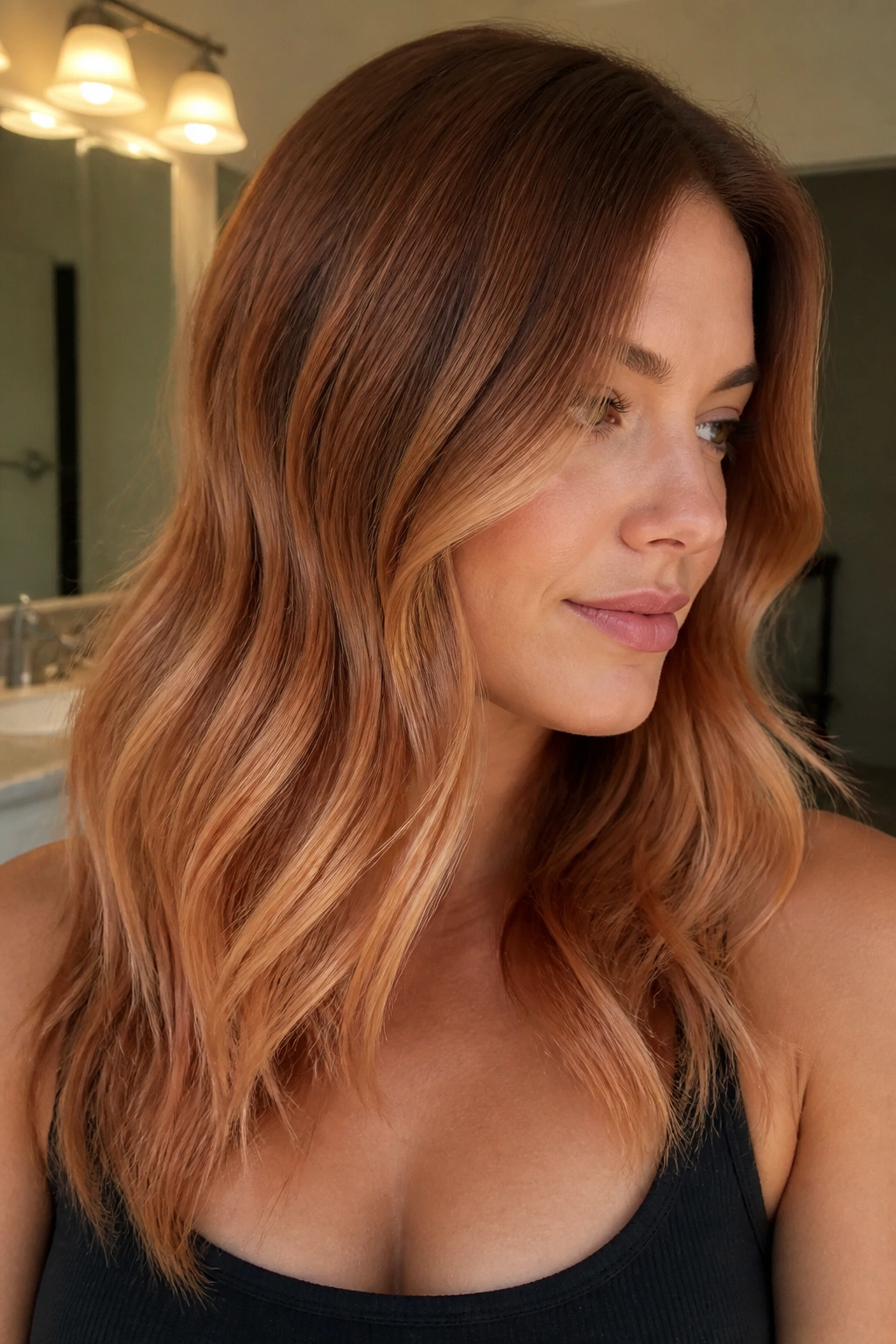
Picture a client who wants color but does not want to sit in the chair every six weeks. This is usually the answer. The root shadow stays deep and cinnamon-toned, while the ends pick up strawberry blonde brightness that looks more painted than processed.
That darker root does two jobs at once. It gives the color a slower grow-out, and it makes the lighter ends pop without asking the whole head to go lighter. You can wear this with curls, bends from a round brush, or air-dried texture. It holds shape well because the contrast lives low on the hair.
- Ask for a root blur that sits about 1 to 2 inches down from the scalp.
- Keep the brightest pieces from starting right at the crown.
- Use a gloss every so often to keep the cinnamon note from turning dull.
- Let the ends be the star, not the scalp line.
The whole effect feels polished but not fussy. That’s a good place to be.
5. Peachy Balayage on Layered Brown Hair
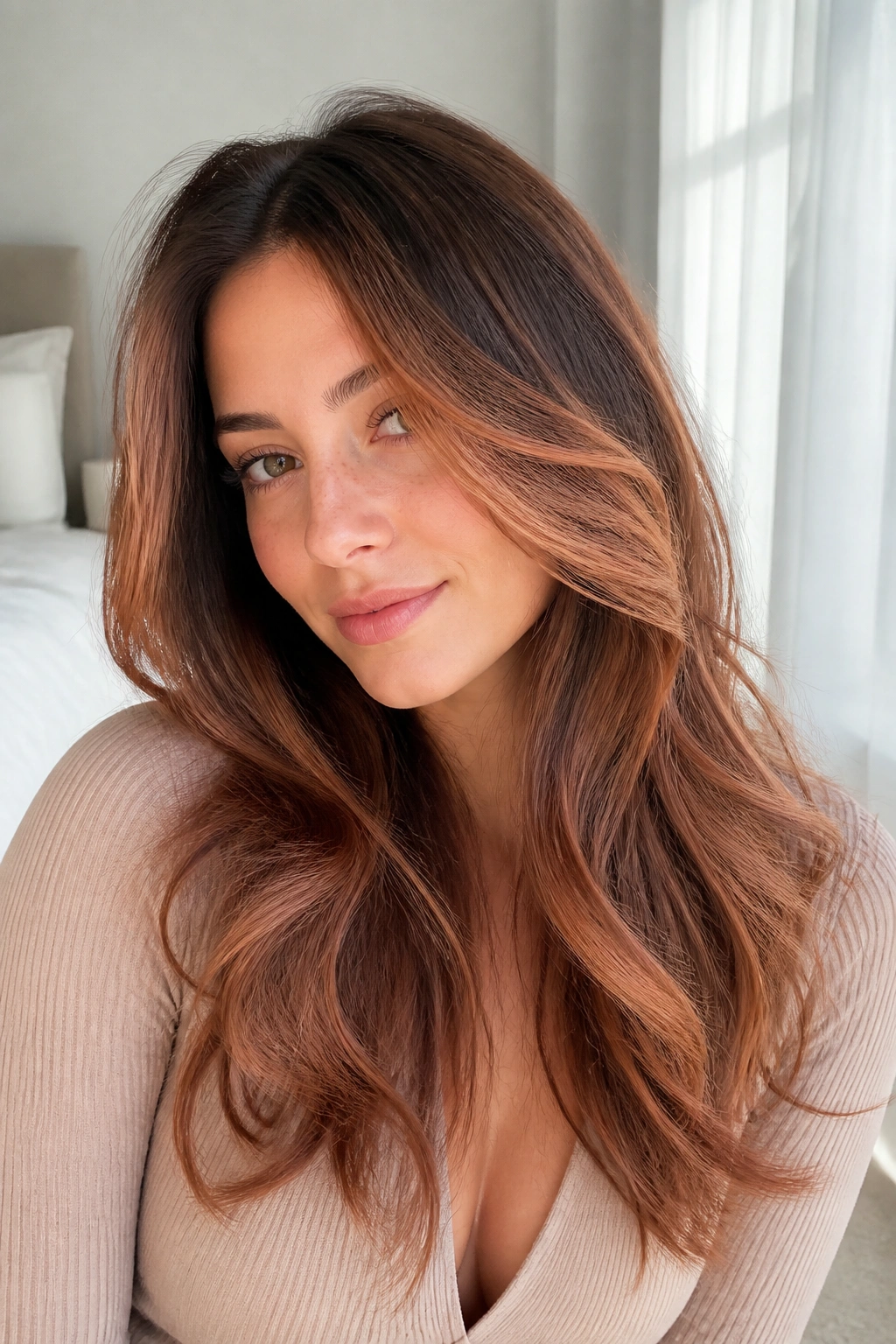
Layered brown hair gives peachy strawberry balayage room to move. Without layers, soft peach can disappear into the base when the hair is worn flat. With layers, every bend and flip catches a different ribbon of color, which makes the whole style look lighter than it really is.
The tone here is more fruit than flame. Less copper, more peach. That matters if you want warmth without veering into red. On medium brown hair, the result can look airy and sweet in a grown-up way, especially when the lightening starts midshaft and fades toward the ends.
A blowout pushes this color forward. So does a large-barrel iron with a loose wrap, because the curved shape breaks the color into little flashes instead of one flat sheet. If your hair is thick, this is one of those looks that benefits from a little invisible underlayer of lightness.
Flat ironing it pin-straight can make the peach quieter. Sometimes that is fine. Sometimes it is a waste.
6. Auburn-leaning Strawberry Ribbon Highlights
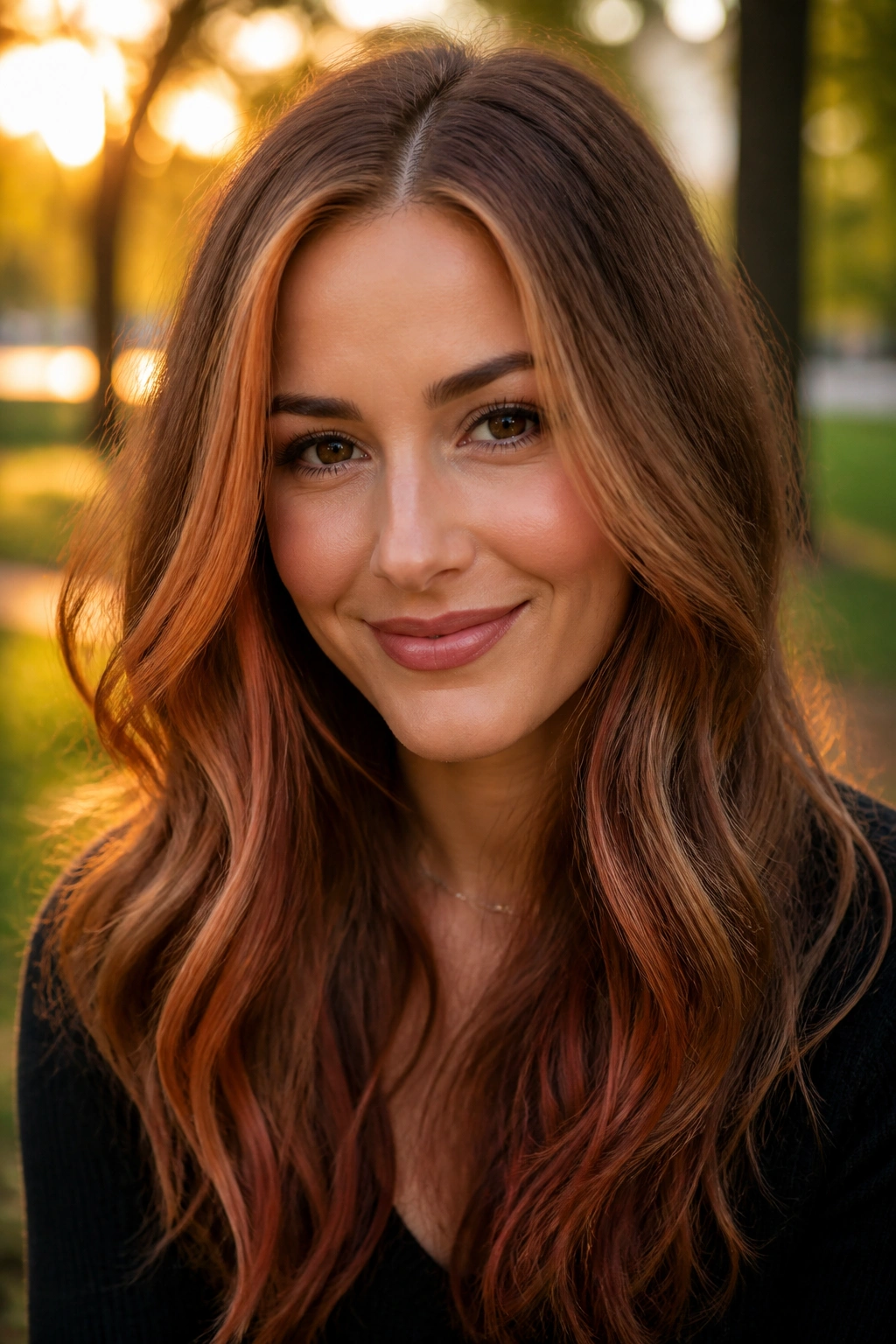
This version sits closer to auburn than a classic strawberry blonde, and that is exactly why it works on brown hair. If you are nervous about pink tones or worried the color will look too pale against a brunette base, auburn-leaning ribbons keep things grounded.
Unlike a bright blonde highlight, these pieces read warm first and light second. That means they play nicely with olive, golden, and neutral undertones, and they do not fight a naturally rich eyebrow color. The look is less about contrast and more about depth.
It is also one of the easier ways to ease into the shade family. You can keep the ribbons narrow, tuck them into the surface layers, and ask for them to stay concentrated around the front and the upper lengths. The color shows when the hair moves, which is often all you need.
If you like your hair to feel expensive in the old-fashioned salon sense — shiny, dimensional, touchable — this is the lane.
7. Barely-There Strawberry Glaze on Espresso Brown
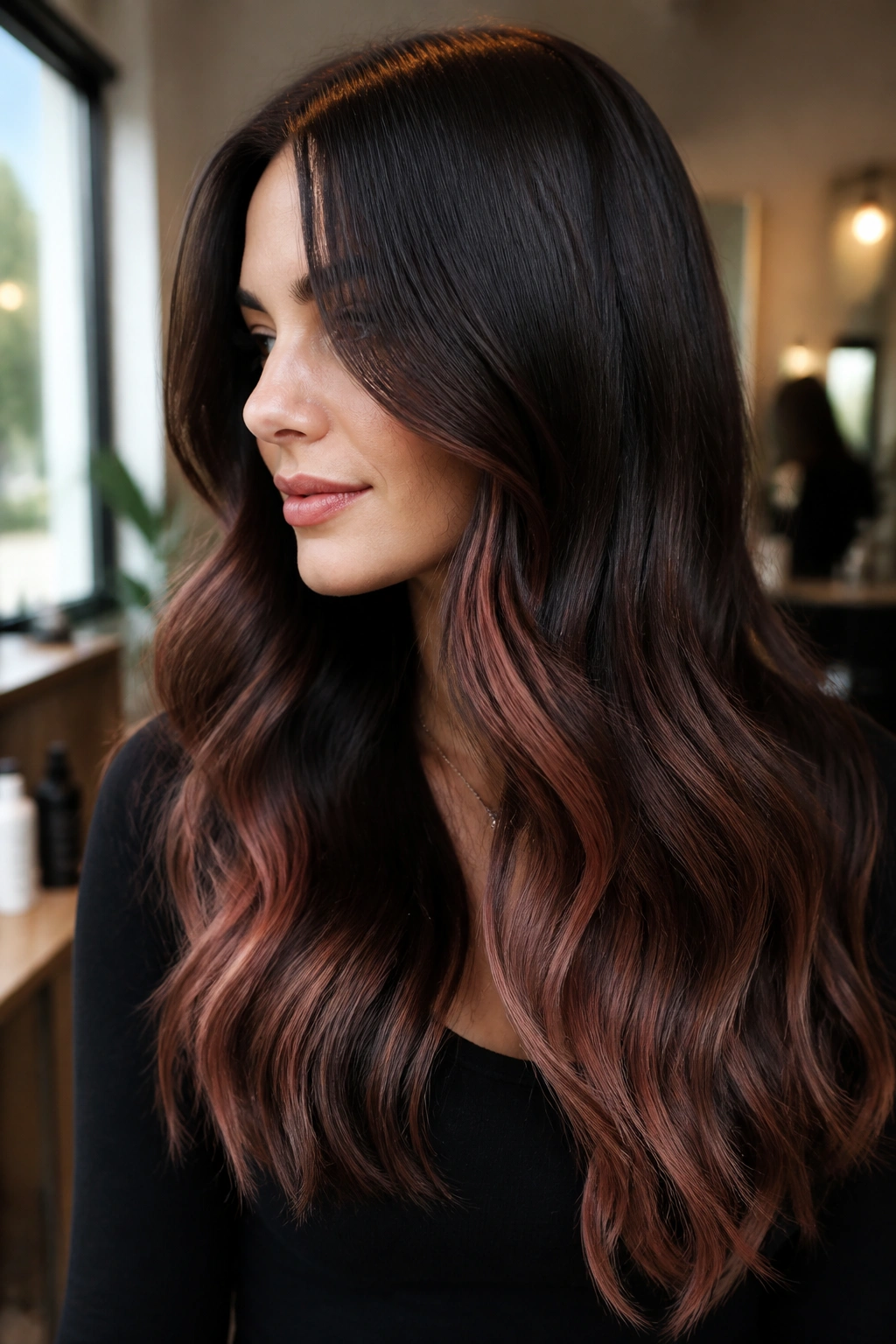
A lot of people think strawberry blonde balayage has to be obvious. It doesn’t. On espresso brown hair, a barely-there glaze can give the ends a soft rosy sheen that only shows when light hits the surface.
This is the quietest look in the bunch, and I mean that as a compliment. It works because the color change is restrained enough to look like a gloss rather than a dramatic lift. You get movement, shine, and a touch of warmth without losing the richness that makes espresso brown so good in the first place.
It also wears well for people who are picky about root regrowth. Since the change is subtle, the grow-out phase is less annoying and less likely to look choppy. That matters if you want something beautiful but not needy.
Wear this with sleek blowouts or soft bends. Both work. The trick is keeping the surface smooth so the glaze can do its job.
8. Bright Money Piece with Dim Brunette Lengths
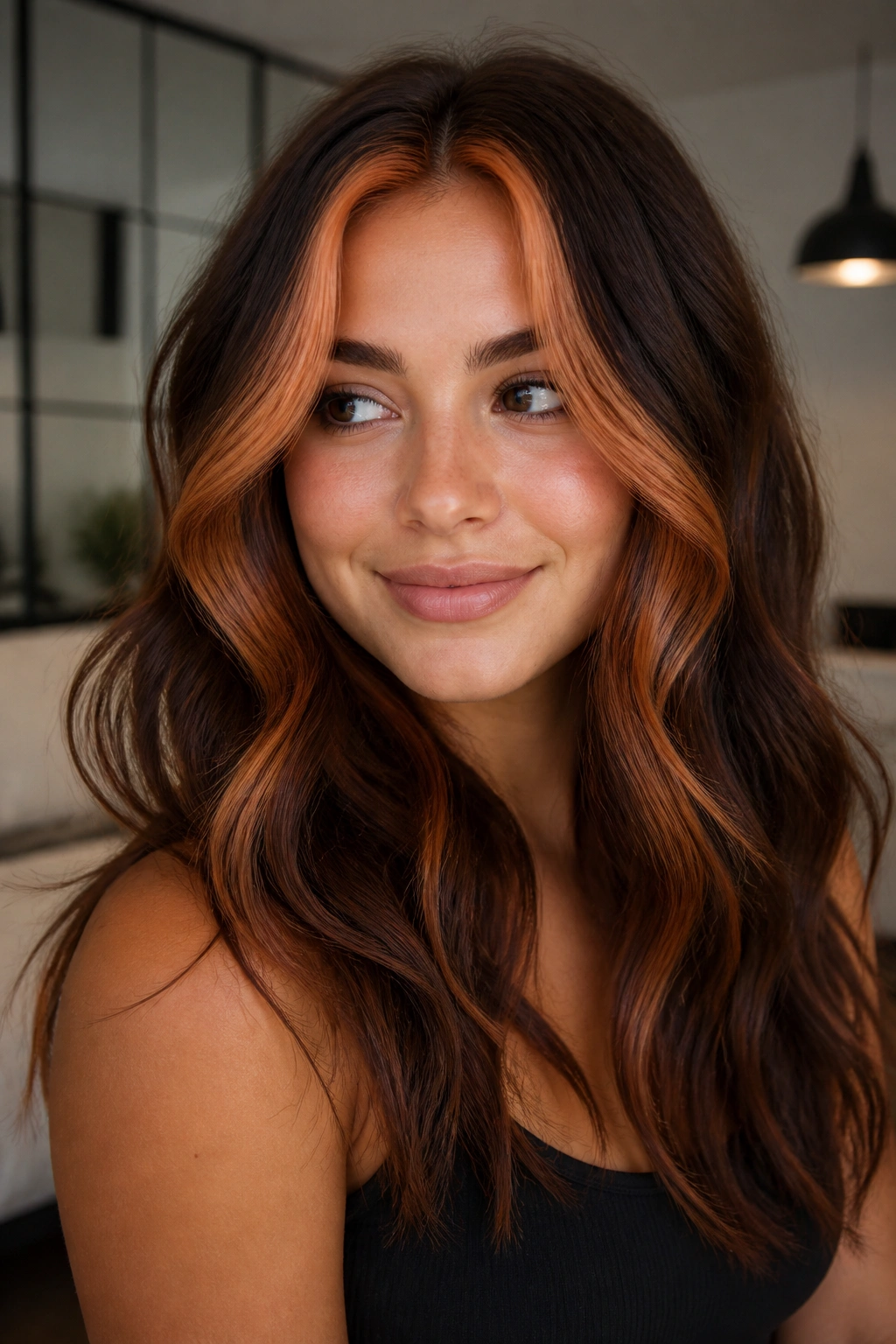
The face frame carries this look, and the rest of the hair politely steps back. That is the whole point. A bright strawberry money piece against darker brunette lengths creates instant focus, especially on long layers or shoulder-grazing cuts that can handle a bit of drama near the face.
This one is for someone who wants the color to read fast from across the room. The ends can stay deeper, almost shadowy, while the front pieces turn peachy and bright. The contrast sharpens the cheekbones and makes waves look more expensive, if that word can survive a hair conversation without sounding silly.
Placement Notes That Matter
- Keep the money piece about 1 to 1.5 inches wide on each side.
- Blend the top inch near the part line so it does not look pasted on.
- Leave the back sections softer and darker for balance.
- Use a curling iron away from the face to keep the front pieces loose, not stiff.
This style likes confidence. Tiny highlights would miss the point.
9. Curly Strawberry Balayage for Brown Curls
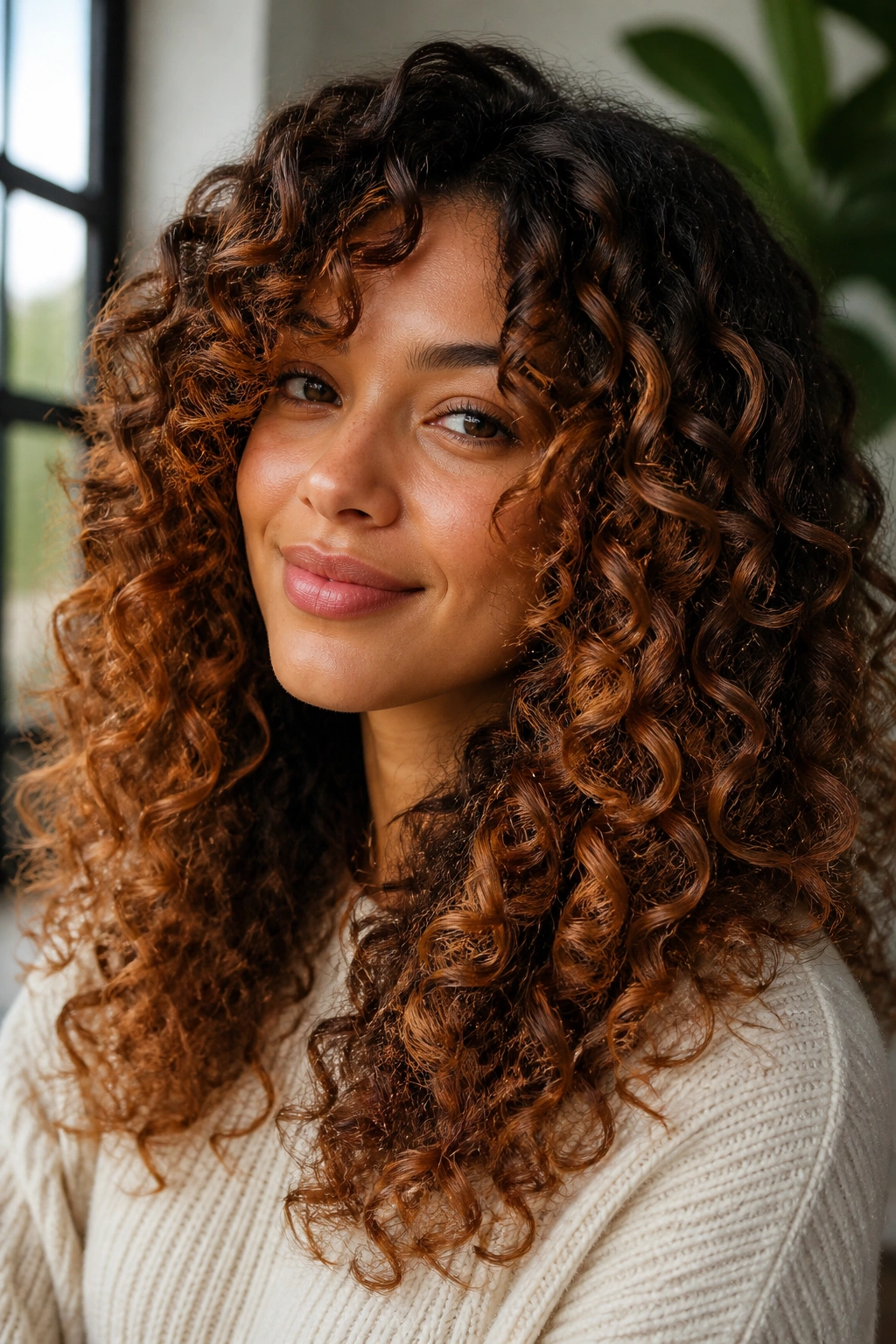
Curly hair needs a different hand. Paint the color the same way you would on straight hair, and you risk ending up with weird stripes that only show when the curls clump together. Strawberry blonde balayage on brown curls works when the placement follows the curl pattern instead of fighting it.
The lighter pieces should sit on the outer curve of the curl, where the shape naturally catches light. That way the color shows through the whole coil and doesn’t disappear into the underlayer. On tighter curls, a softer copper-rose tone usually wears better than a pale strawberry blonde, because the depth of the curl pattern can make very light pieces look abrupt.
How to Ask for It
Tell your colorist you want lightness painted where the curls bend, not in straight lines. Ask for a few brighter pieces around the face, then softer coverage through the rest of the head. A good curl specialist will know exactly what you mean.
Use a diffuser if you want the color to pop. Air-drying works too, but the lift from a diffuser gives the curls more separation, which helps the ribbons show.
10. Mushroom Brown with Strawberry Whisper Lights
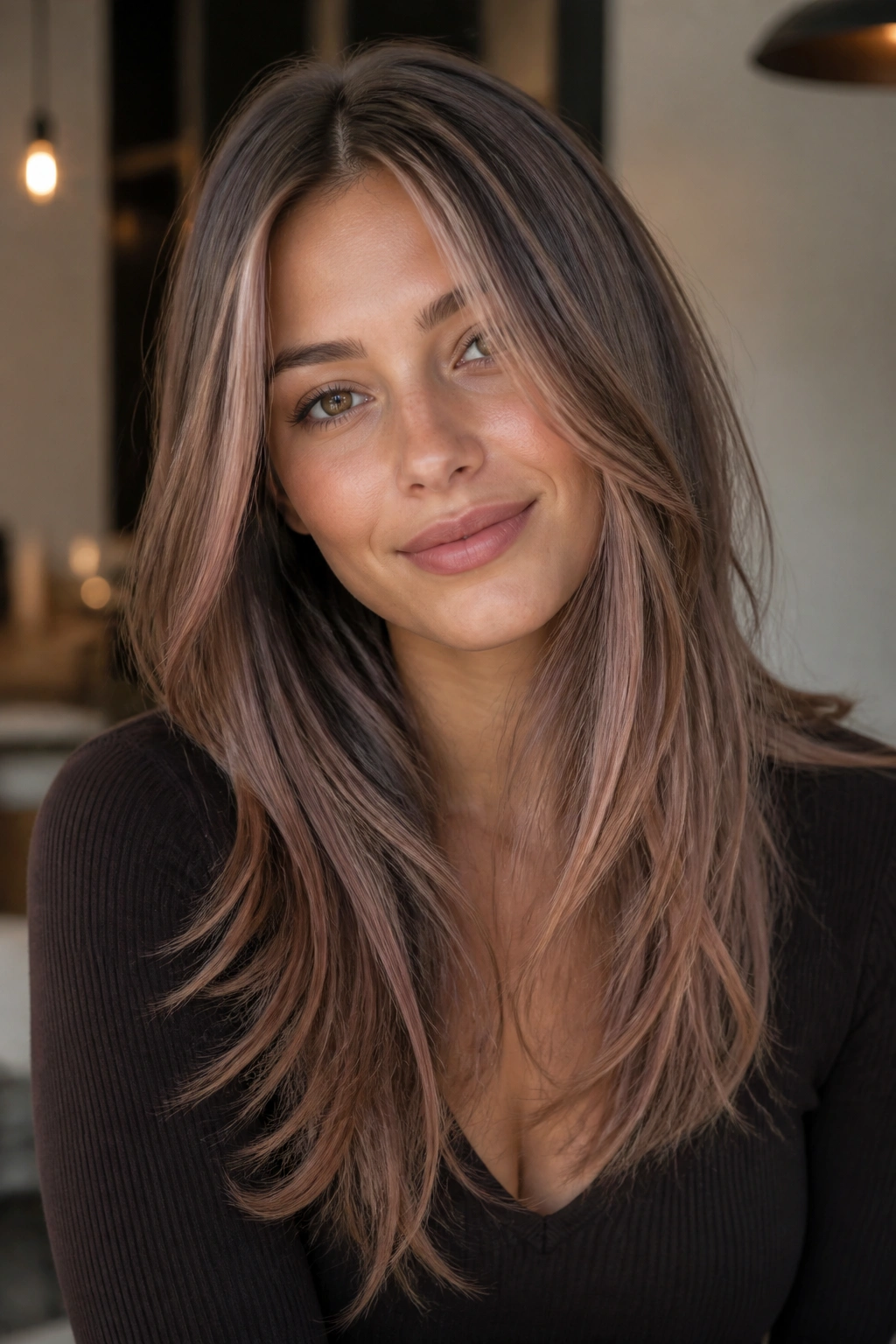
What makes this look unusual is the base. Mushroom brown usually leans cool, a little smoky, and a little gray-brown. Add a whisper of strawberry blonde and the whole thing wakes up without losing that muted, expensive-looking depth.
This is a good choice if your hair tends to pull orange when lightened. The cooler brown underneath keeps the warmth under control, and the strawberry accents arrive as a soft contrast instead of a fiery splash. You get a hint of warmth where you need it, not a full copper takeover.
It also looks especially good on straight or slightly waved hair because the subtle contrast can vanish if the curl pattern is too busy. A smooth blowout lets the cooler base and warmer accents sit beside each other cleanly.
If you want hair that feels modern without shouting, this is the one I would point to first. Quiet. But not boring.
11. Soft Ombré with Copper-Pink Ends
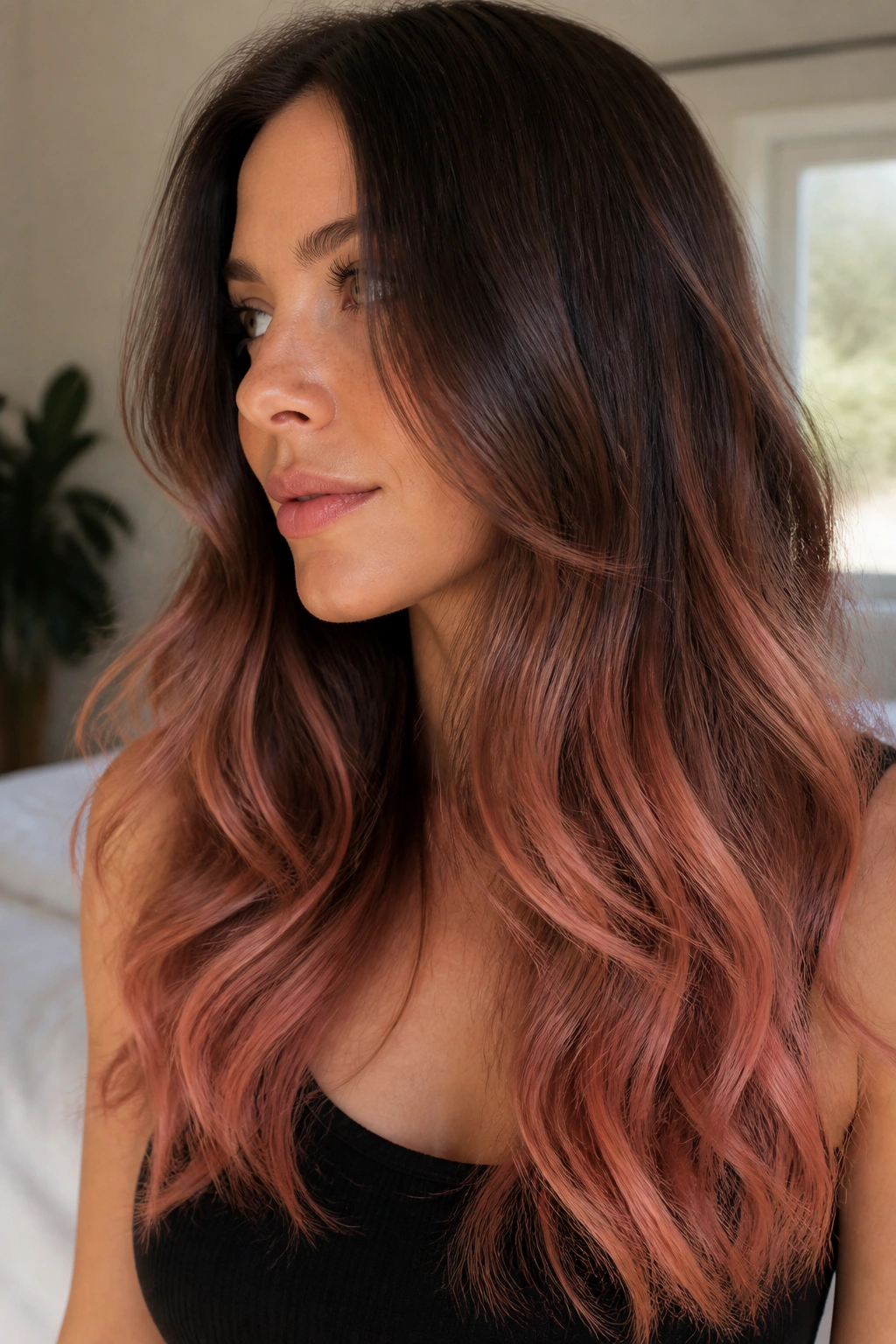
Ombré and balayage are cousins, but they do not feel the same on the head. Ombré gives you a more obvious shift from dark to light, and on brown hair that can look beautiful when the ends turn copper-pink and the top stays deep and rich.
The real appeal is length. Long hair lets the fade breathe, which means the color has space to shift gradually instead of collapsing into one muddy midpoint. If your hair hits past the shoulders, the copper-pink ends can look almost painted onto silk when the waves fall right.
Pure straight hair will make the transition more obvious. That is not bad. It just means the line between dark and light will read louder. If you prefer a softer finish, loose bends from mid-length to ends break the color into a gentler fade.
This is one of the more romantic options, and yes, that word still fits when the palette is brown and strawberry instead of blonde and beige.
12. Low-Contrast Strawberry Balayage for Fine Hair
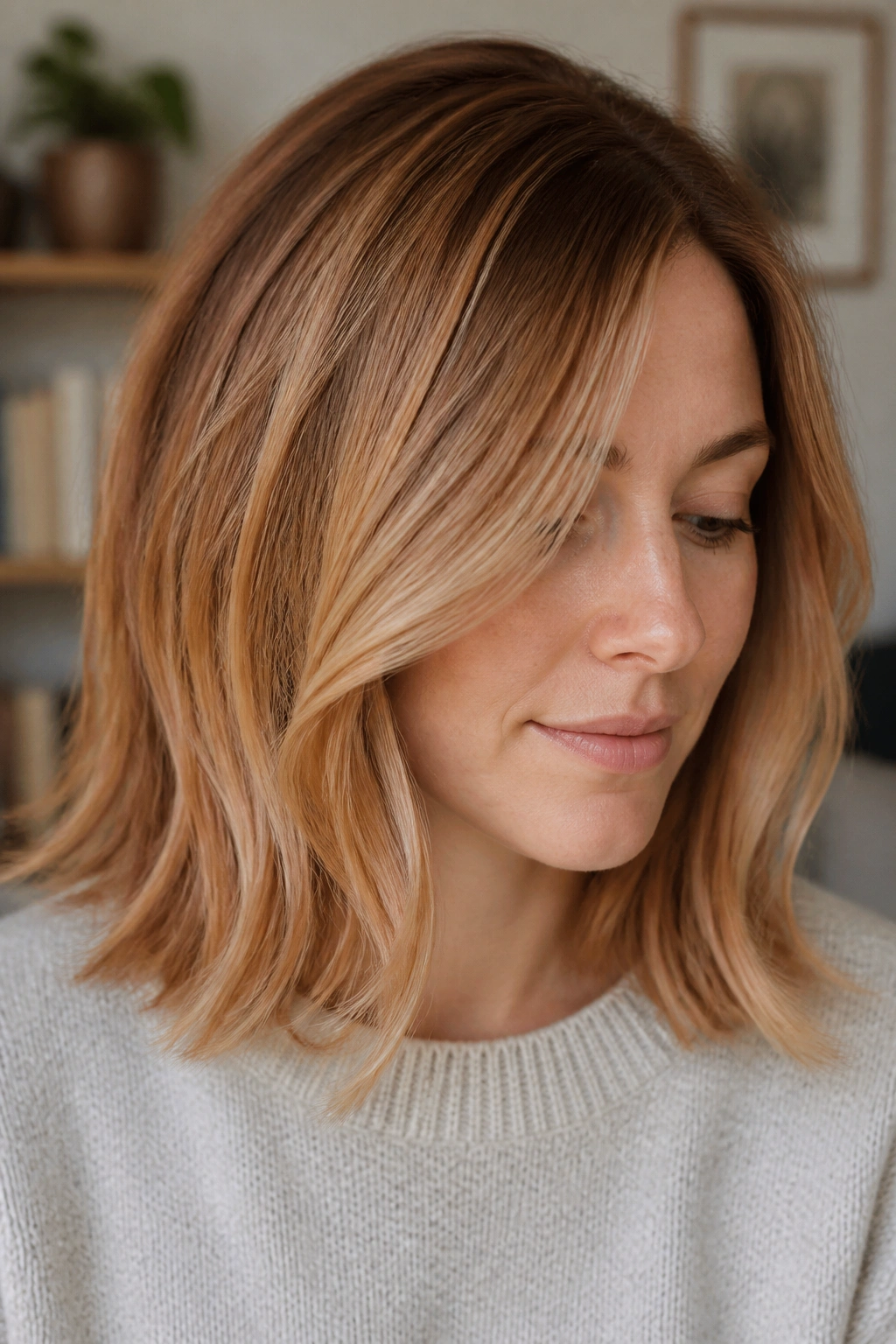
Fine hair can go flat fast, and heavy balayage only makes that worse. A low-contrast strawberry blonde treatment keeps the dimension delicate, which is usually the smarter move when the strands themselves are thin or prone to looking see-through at the ends.
The goal is density, not drama. Tiny painted pieces, a shade or two lighter than the base, create the illusion of more hair because the eye sees multiple tones instead of one flat color block. It is a sneaky good trick, and it works especially well if your hair is bobbed or collarbone length.
Do not chase brightness just because you see it on thicker hair. Fine hair often looks fuller when the color changes are subtle and the roots stay a touch deeper. That slight shadow gives the illusion of body near the scalp, which is where a lot of fine hair needs help.
A glossy blow-dry helps. So does not overdo layers.
13. Bold Ribbon Balayage for Thick Hair
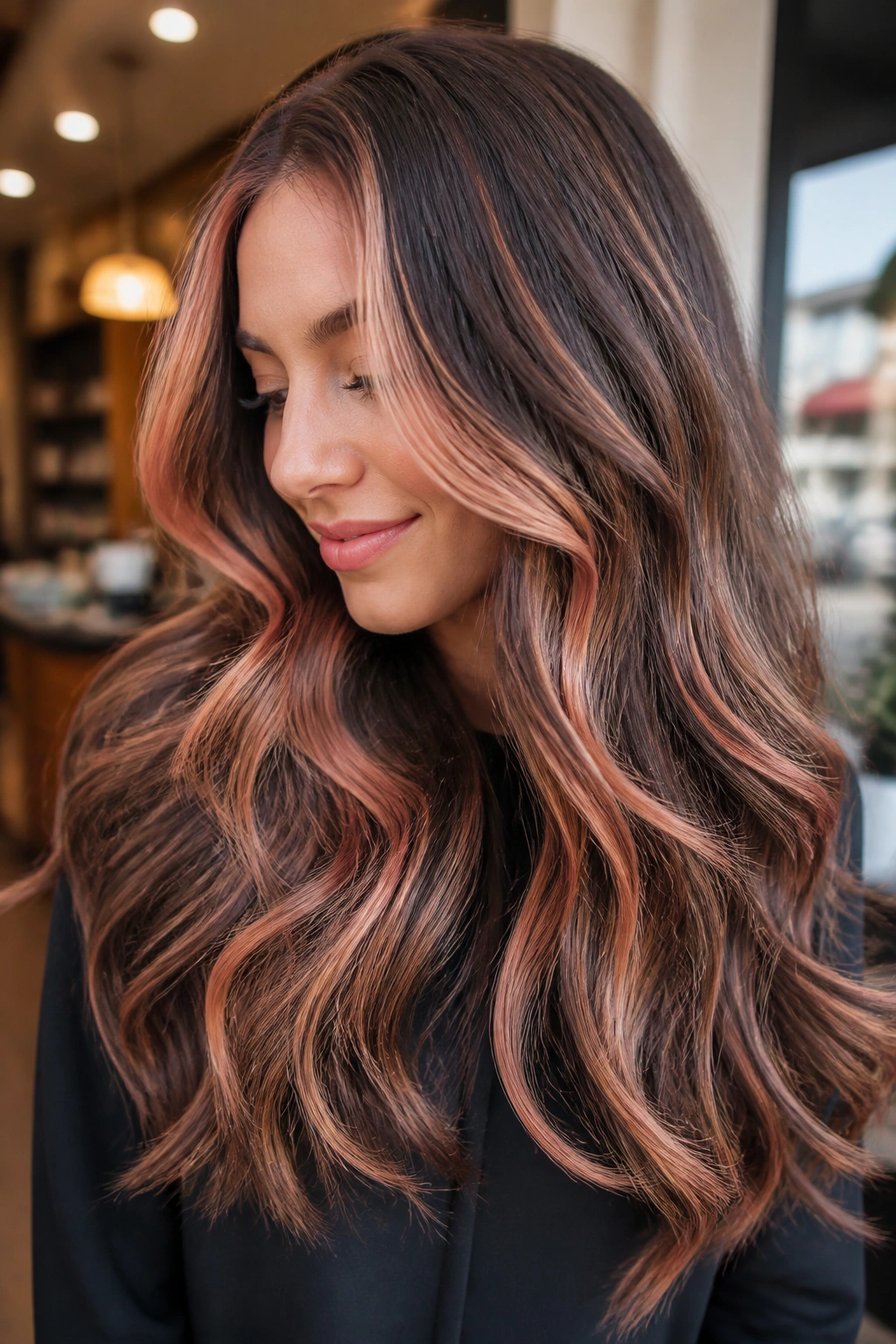
Thick brown hair can take more color, more contrast, and more visible brushstrokes than fine hair ever could. That is why bold strawberry blonde ribbons look so good here — the width of the sections matches the density of the hair, so the highlights don’t get swallowed up.
The placement should be deliberate. Broader ribbons through the outer layers, lighter streaks around the face, and a few hidden pieces underneath keep the hair from looking like one solid block. Thick hair has built-in volume, which means the color needs to move with the shape instead of fighting it.
What Makes It Different
A thin highlight on thick hair can disappear. A ribbon that is too chunky can look dated. The sweet spot sits between those two extremes, where you can actually see the woven effect but still feel the softness of hand-painted color.
This style looks especially good with layered blowouts and big soft curls. The movement breaks the ribbons apart just enough to keep the finish fresh. If your hair tends to puff up in humidity, the deeper base helps anchor the lighter pieces so the color still reads clearly.
14. Medium Brown with Golden Strawberry Veil
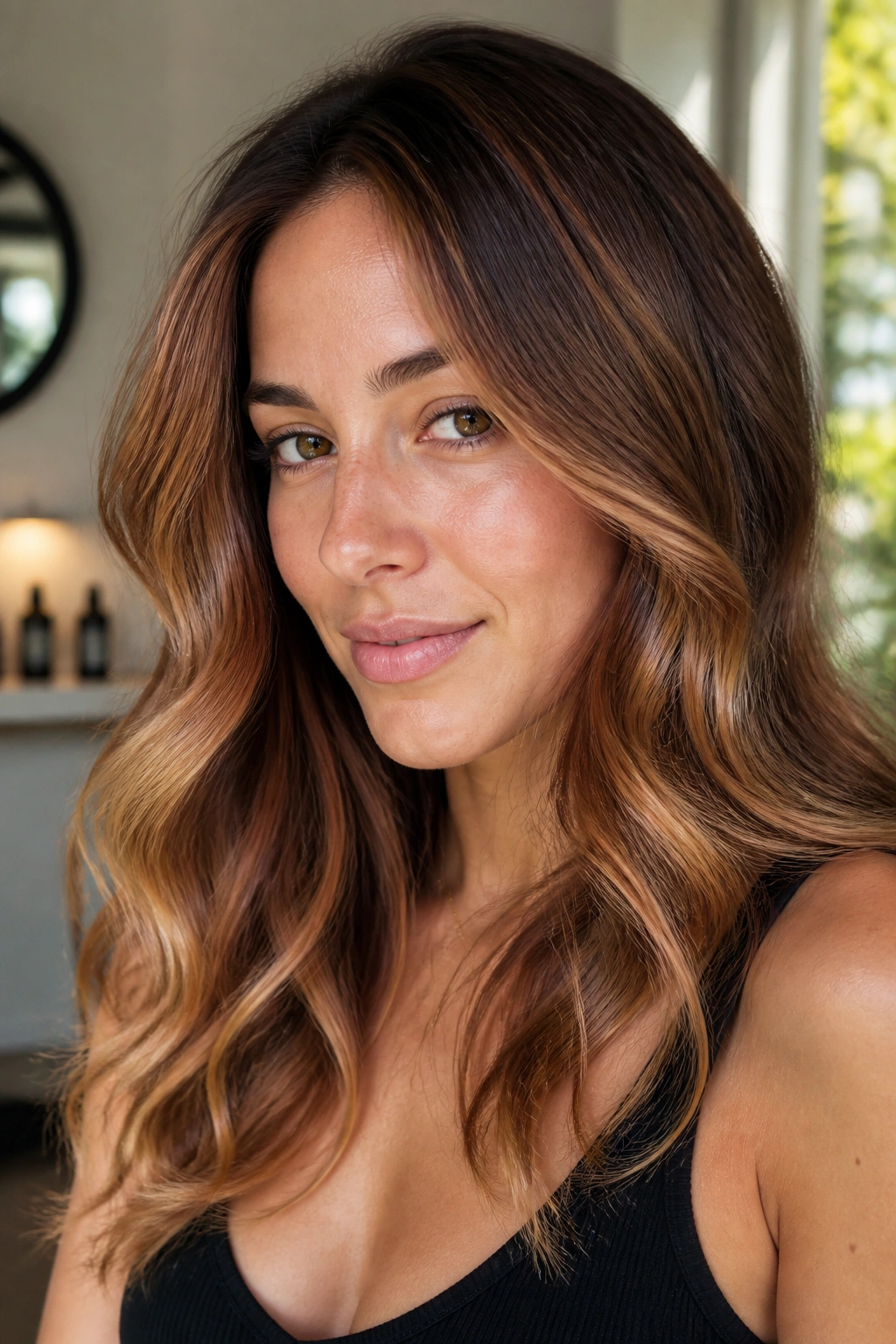
Golden strawberry is the friendliest version of the shade family. It sits between copper and blonde, which makes it easy to wear on medium brown hair without drifting too red or too peachy. The effect is warm, sunny, and a little softer than a classic strawberry tone.
Why does it work? Because the golden cast reflects light back through the lighter pieces instead of making them look chalky. On a medium brunette base, that glow can make the whole style feel more even, especially if the natural color has a neutral or slightly warm undertone.
This is a strong pick for people who want a shade that plays nicely with gold jewelry, warm makeup, and soft neutrals. It also forgives grow-out better than a brighter copper, because the transition stays cushioned by the golden glaze.
Keep the finish glossy. Golden tones can look flat if the hair is dry, and dry hair is where pretty color goes to die.
15. Cool Brunette with Rosier Strawberry Notes
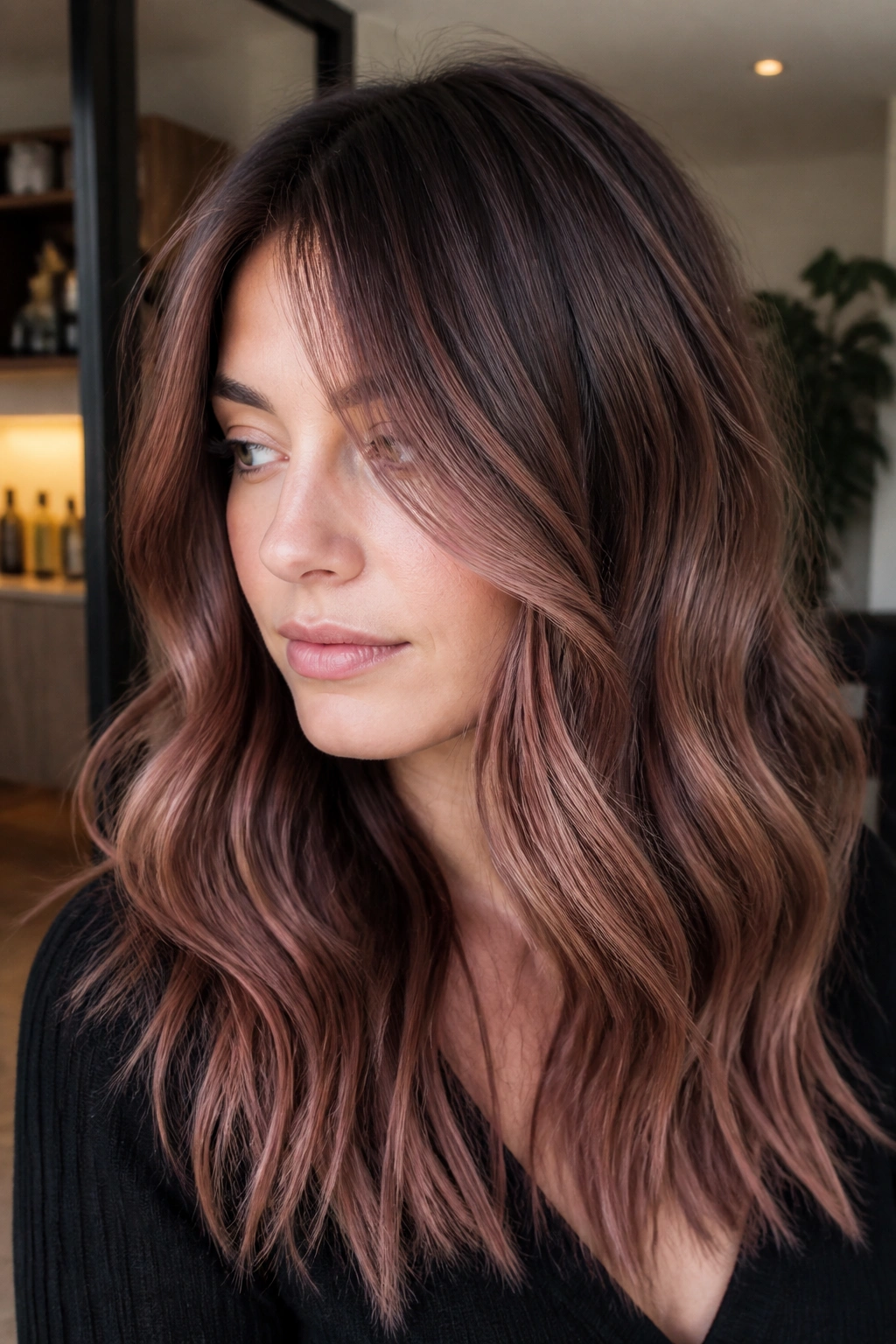
Not every strawberry blonde balayage needs to lean warm. On cooler brown hair, rosier notes can keep the color from tipping into orange, which is a common problem when brunette bases are lifted and toned too aggressively toward copper.
This look feels cleaner, almost silkier. The rose note softens the brightness, so the lighter pieces read as berry-toned instead of citrusy. That distinction matters if your skin leans cool, if your hair naturally holds ash, or if you just like a less fiery finish.
It also sits nicely with sharper cuts. A blunt lob, a collarbone bob, or long layers with clean ends can make the rosier pieces feel intentional instead of fuzzy. Straight styling works better here than very piecey waves, because the color already carries enough texture.
If copper always feels a little loud on you, this is the quieter door into the same family.
16. Long Layered Strawberry Sweep
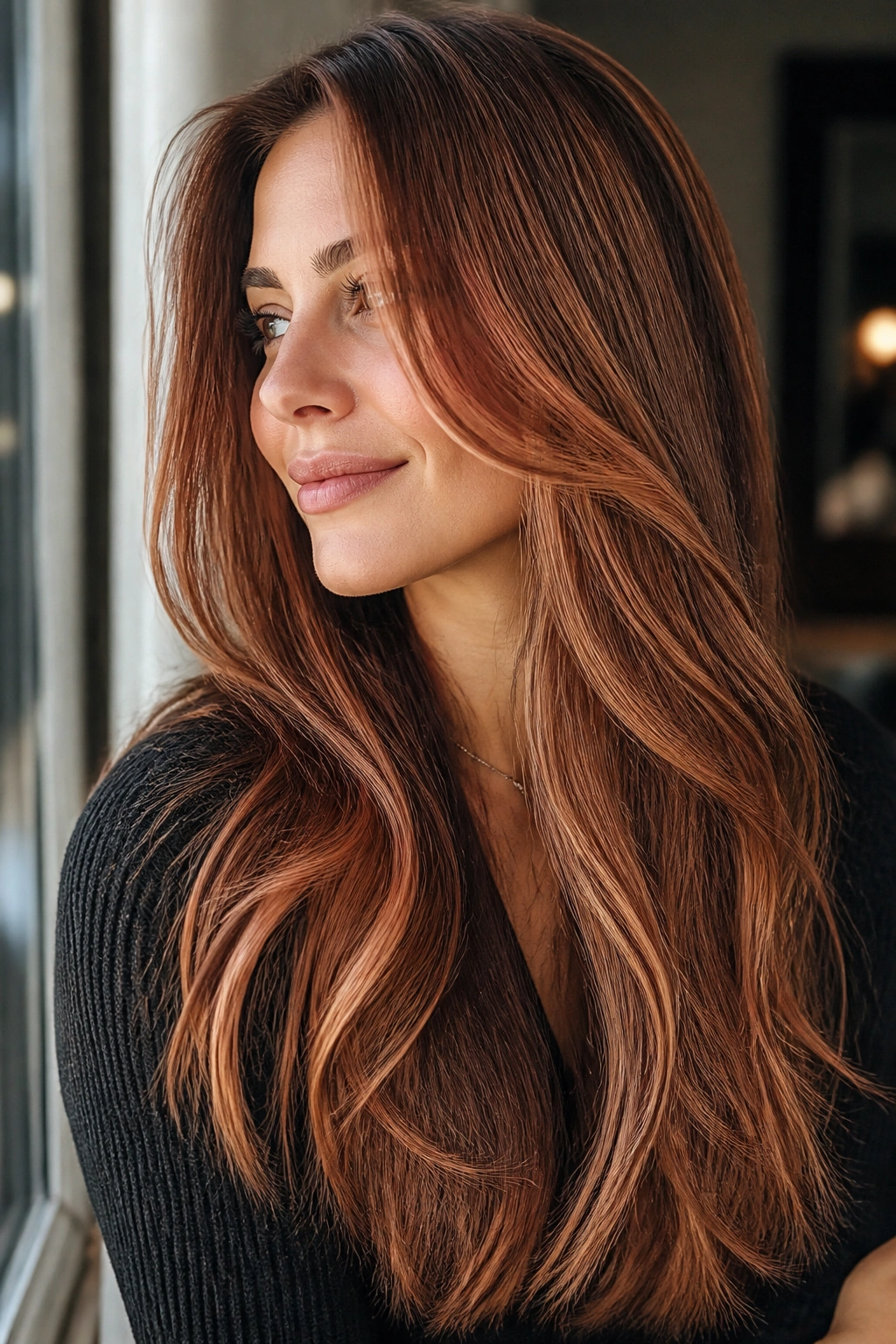
Long layers are made for this kind of color. The layers let the strawberry blonde pieces sweep through the hair instead of pooling in one heavy band, so the overall effect is lighter and more fluid than it would be on a blunt cut.
A long cut also gives the color room to gradate. The top can stay close to the brunette base, then the mids catch a little more peach, and the ends turn soft and warm. That shift is what makes the style feel expensive in motion. The color is doing work even when you are standing still.
- Ask for the brightest pieces to live around the collarbone and lower cheek.
- Keep the crown slightly deeper so the hair doesn’t look overprocessed.
- Use a round brush or soft bend to show the layers.
- Leave a few face-framing strands a touch lighter than the rest.
This look is easy to live with if you already love long hair. It rewards movement, and it really rewards a good trim.
17. Collarbone Lob with Peach-Copper Paint
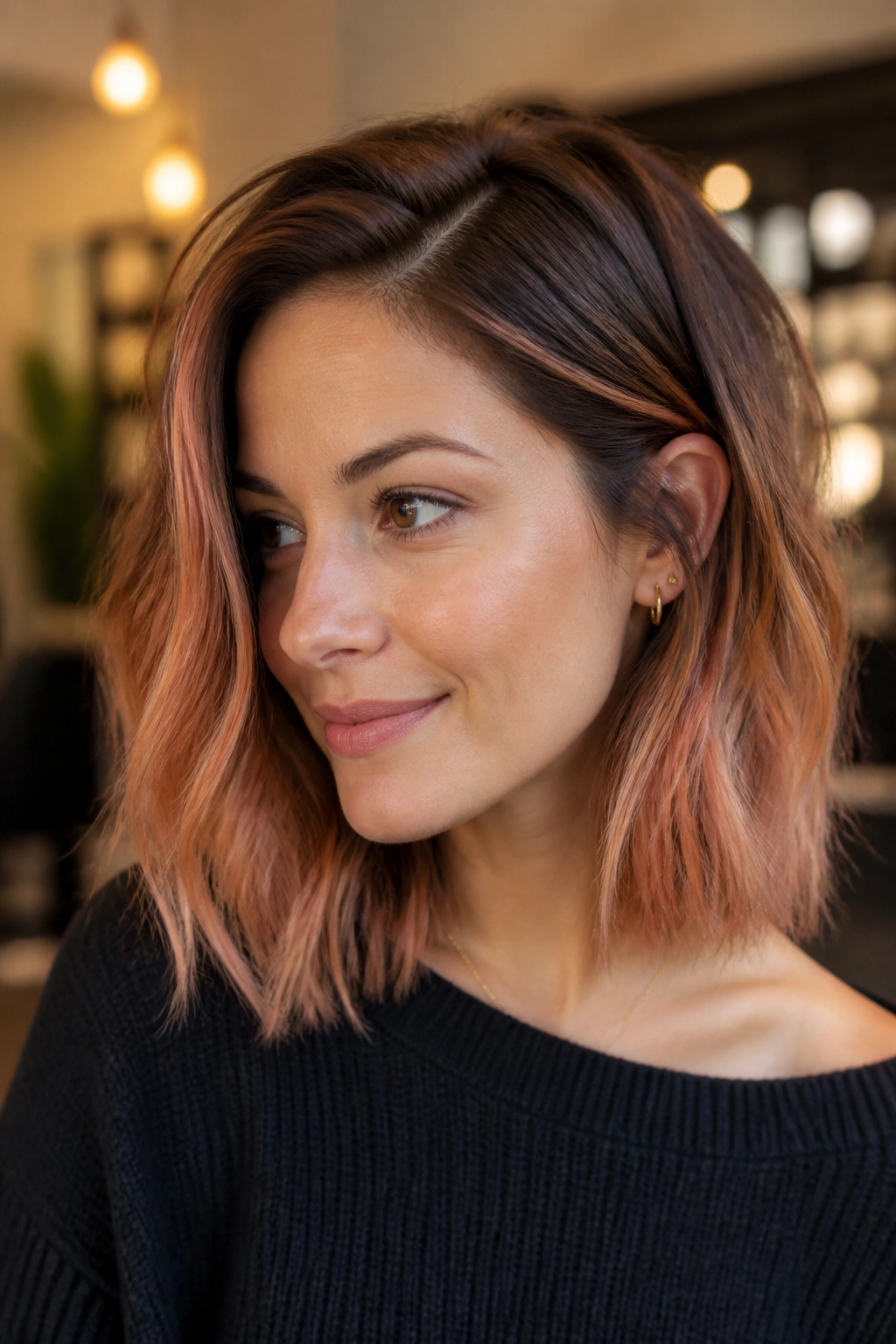
A collarbone lob can make strawberry blonde balayage look sharper and cleaner than long hair does. There’s less length to blur the color, which means every ribbon of peach-copper gets seen faster. That can be a gift if you want the shade to read modern and crisp.
The cut matters here. A lob with soft internal layers keeps the color from sitting like a helmet around the head. The painted pieces should start a little below the root and continue down through the ends so the shape has lift, not a band of brightness that cuts the line of the haircut in half.
This style works beautifully with tucked-behind-the-ear styling, which shows off the color against the jawline. It also looks good with a loose wave because the curve of the hair bends the color around the face. Sleek hair is fine too, but the waves make the peach-copper tones feel warmer.
If you want something clean and wearable, this is one of the easier wins.
18. Glossy Salon-Finish Balayage
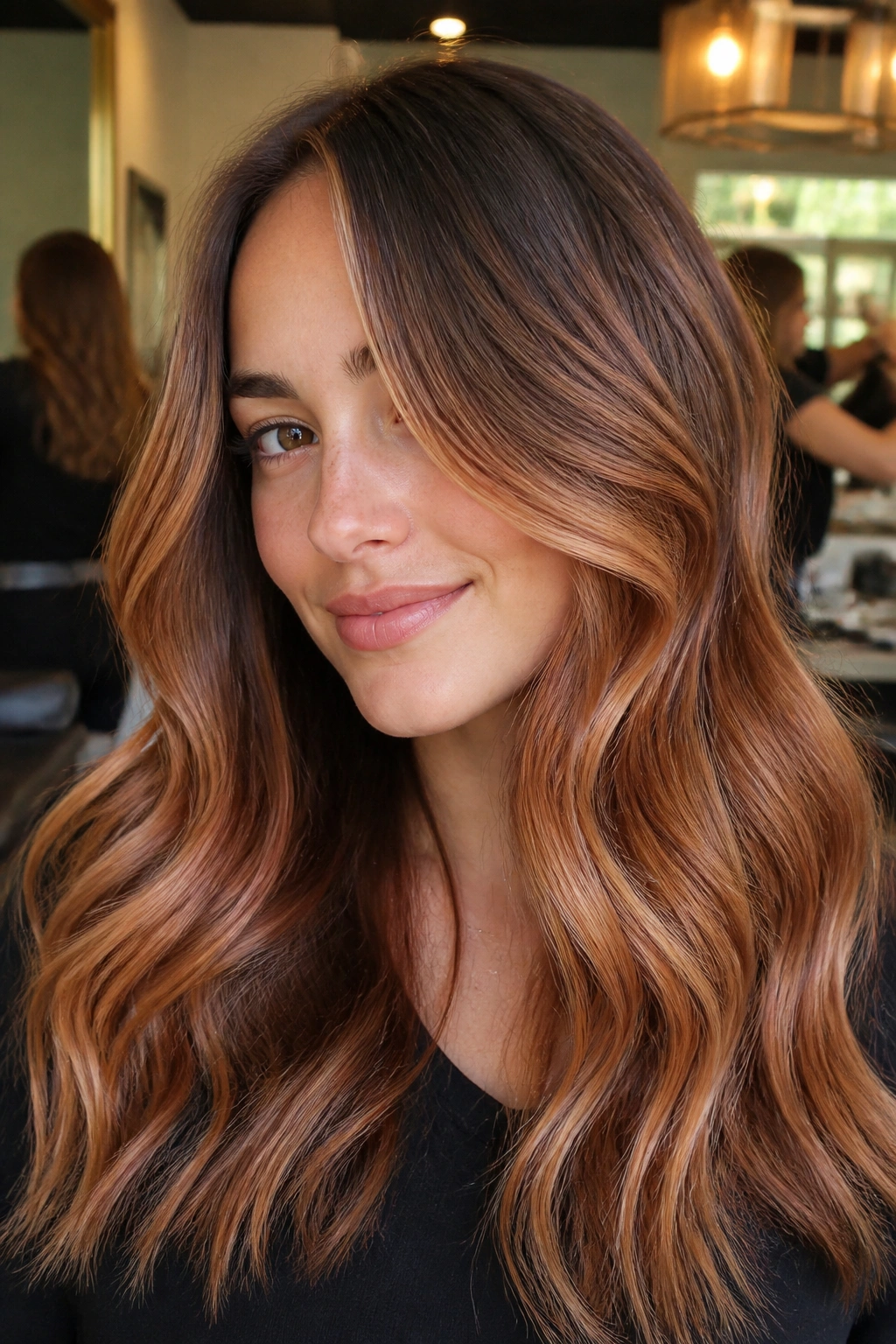
Shine changes everything. A strawberry blonde balayage on brown hair can look pleasant in dry form, but once the hair has a smooth gloss over it, the copper and peach notes start to sit inside the brunette base instead of on top of it.
That polished finish comes from tone and care as much as color placement. A clear or tinted gloss can settle the cuticle, deepen the brunette shade, and sharpen the lighter pieces so they do not look washed out. If you have ever seen color that seems to glow without being loud, this is usually why.
The style works with almost any cut, but it loves healthy ends. Split, frayed hair swallows light. Smooth ends reflect it back. That sounds obvious, but people forget it all the time and blame the color when the haircut is the real issue.
If you’re the kind of person who likes hair to look finished even on a simple day, keep this one on the shortlist.
19. Sunlit Ends for Beachy Waves
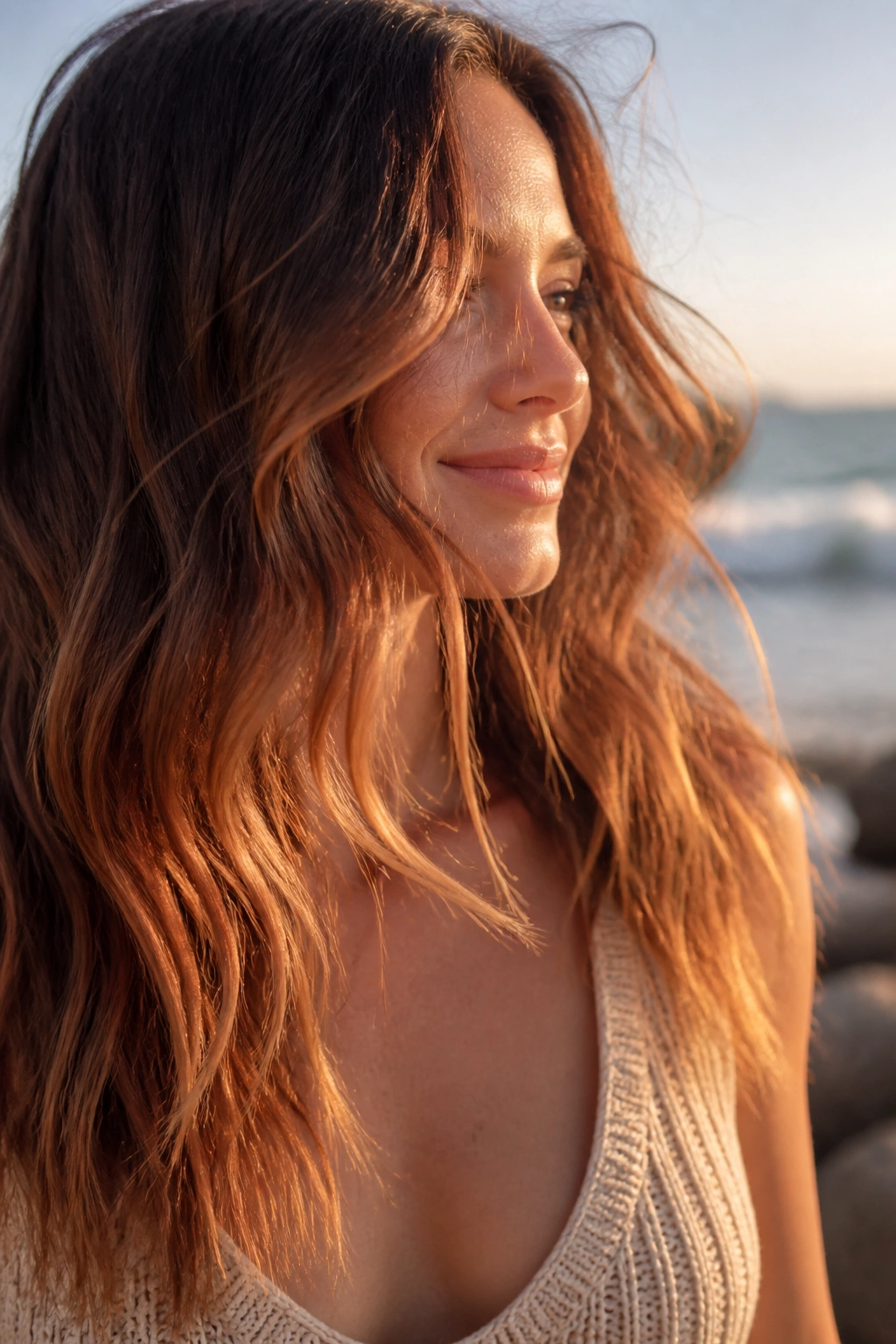
Beachy waves can make strawberry blonde balayage on brown hair feel easy in the best sense. The ends catch the light, the mids stay warm, and the whole style looks like it has been lifted by movement rather than forced into a dramatic color shift.
The trick is restraint at the top. If too much brightness starts near the roots, the color loses that sunk-in effect that makes beachy texture look so good. Keep the lighter pieces lower, and let the wave pattern do the talking. It is a lazy style in the smartest possible way.
This version suits hair that already has a little natural bend. On straight hair, you can fake the movement with a salt-free texture spray and a wide-barrel iron. On curly or wavy hair, scrunching a curl cream into the ends is often enough.
It is one of the few looks that gets better when it is slightly imperfect. That’s useful.
20. Espresso Base with Strawberry Money Piece
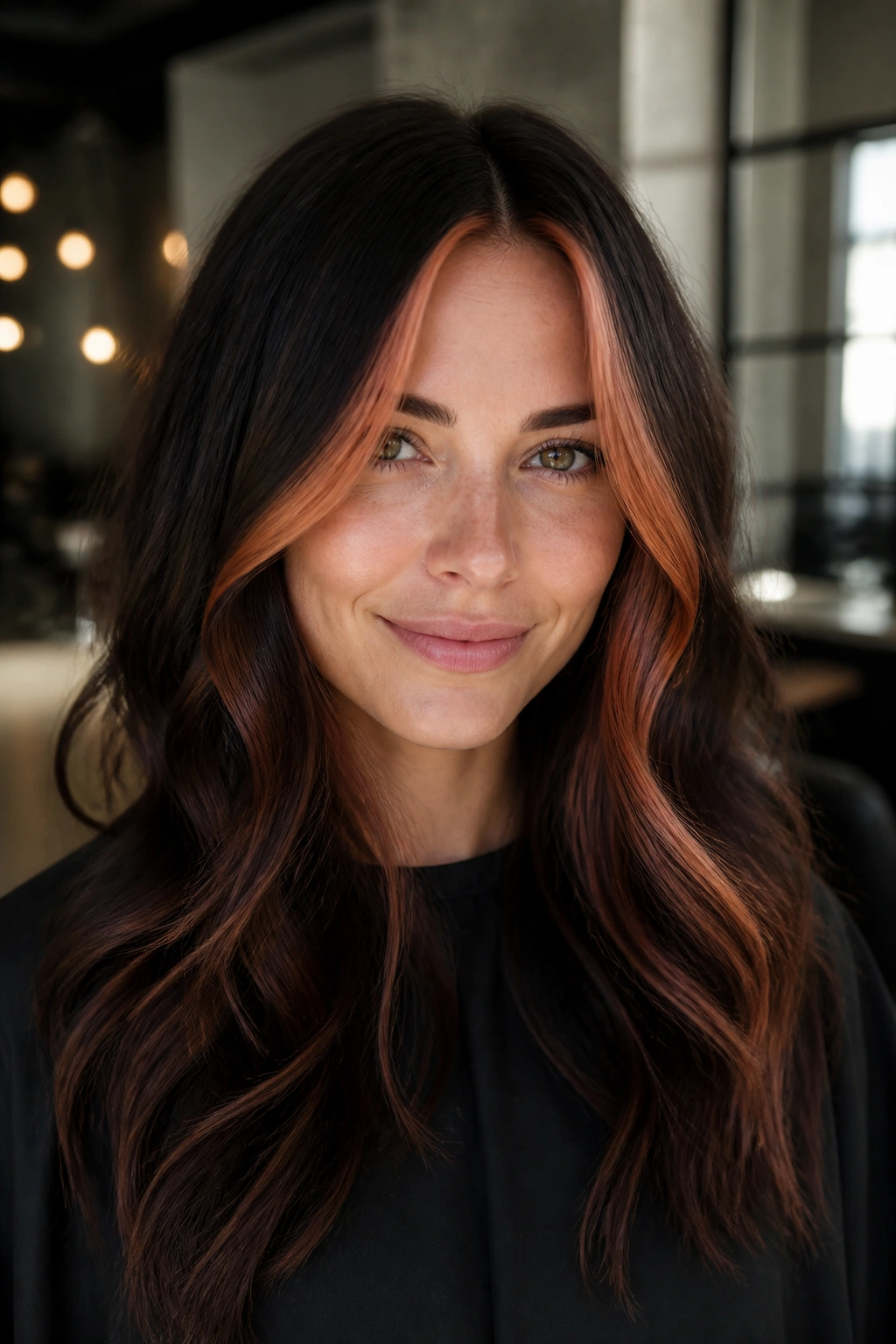
If you like contrast, this one is hard to beat. An espresso brown base with a bright strawberry money piece gives you a front-facing hit of color while keeping the rest of the hair dark and rich.
Why does it work so well? Because the face frame becomes the focal point, and the dark base makes the lighter pieces look even brighter without needing to lighten the whole head. That keeps the upkeep more reasonable and the overall look sharper. A slender money piece feels modern; a thick one can look bulky. So the width matters.
Placement Matters Here
Ask for the money piece to start softly at the part line and get brighter toward the cheekbone. That keeps the root from looking patchy when it grows in. The rest of the balayage can be minimal — just enough strawberry through the mids to connect the front pieces to the back.
This is the version for someone who wants a clear change and isn’t afraid of seeing it every time they look in the mirror.
21. Chestnut Brown with Apricot Strawberry Blend
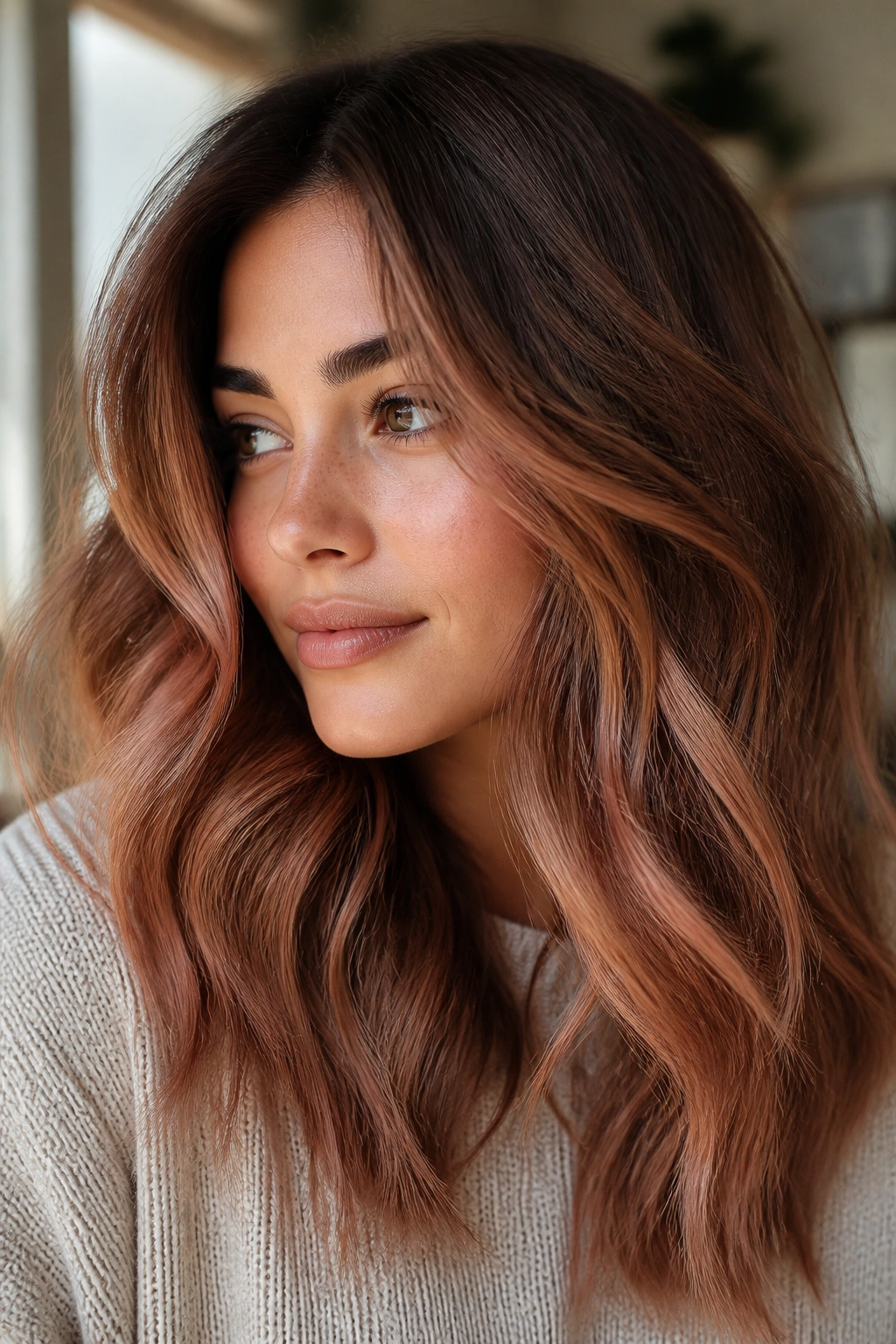
Apricot strawberry sits in a useful middle ground. It has more orange warmth than a rose-heavy shade, but it is softer and less copper-stamped than a true auburn. On chestnut brown hair, that balance creates a glowing finish that feels warm without getting loud.
This version is a smart choice if you like makeup in peach, bronze, or warm nude tones. The hair and the face start to echo each other, which makes the whole look feel coherent. That sounds small. It isn’t. Cohesion is what makes color look expensive instead of accidental.
- Keep the apron of lightness focused on the lower half of the hair.
- Ask for a soft gloss, not a brassy toner.
- Use larger sections if your hair is thick, smaller ones if it is fine.
- Style with a soft bend, not tight curls.
The apricot note is what keeps this look playful. Too much copper and it gets pushy. Too little and it loses its charm.
22. High-Contrast Ends for a Brighter Look
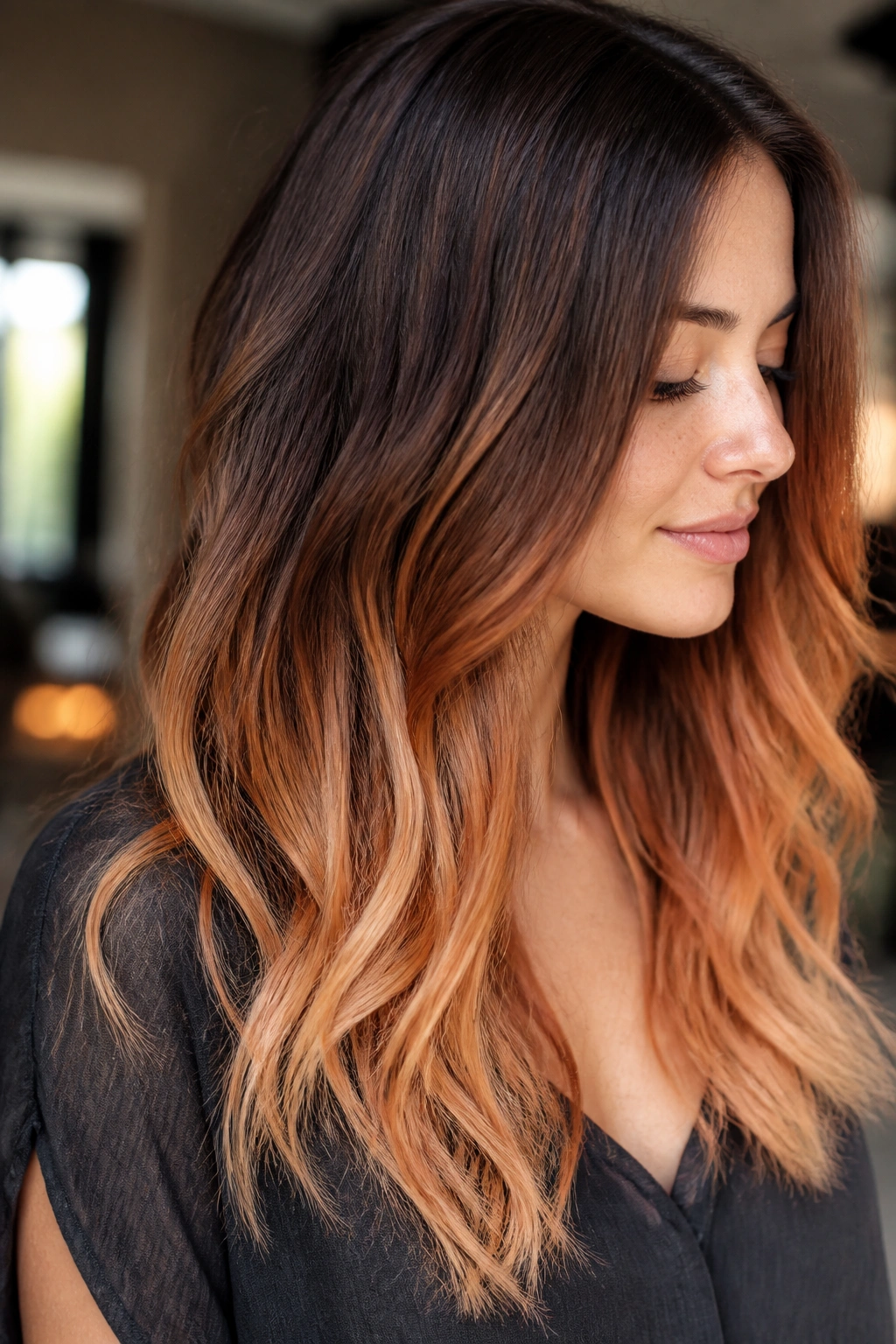
Sometimes subtle is overrated. If you want the strawberry blonde pieces to be visible from across the room, push the brightness lower into the ends and let the brunette base stay properly dark. The contrast does the heavy lifting here, not the softness.
The haircut needs to support that choice. Longer layers, a blunt lob, or a shape with some movement through the bottom all help the bright ends show without looking chopped off. A very short, uniform cut can make the contrast feel abrupt. You want enough length for the fade to breathe.
This look also likes neat ends. Frayed ends make bright color look messy. Healthy, trimmed ends make it look deliberate. That difference is bigger than people expect, especially with high-contrast color.
If your style leans bold, this is the place to go. Not everything has to whisper.
23. Grow-Out Friendly Root Melt
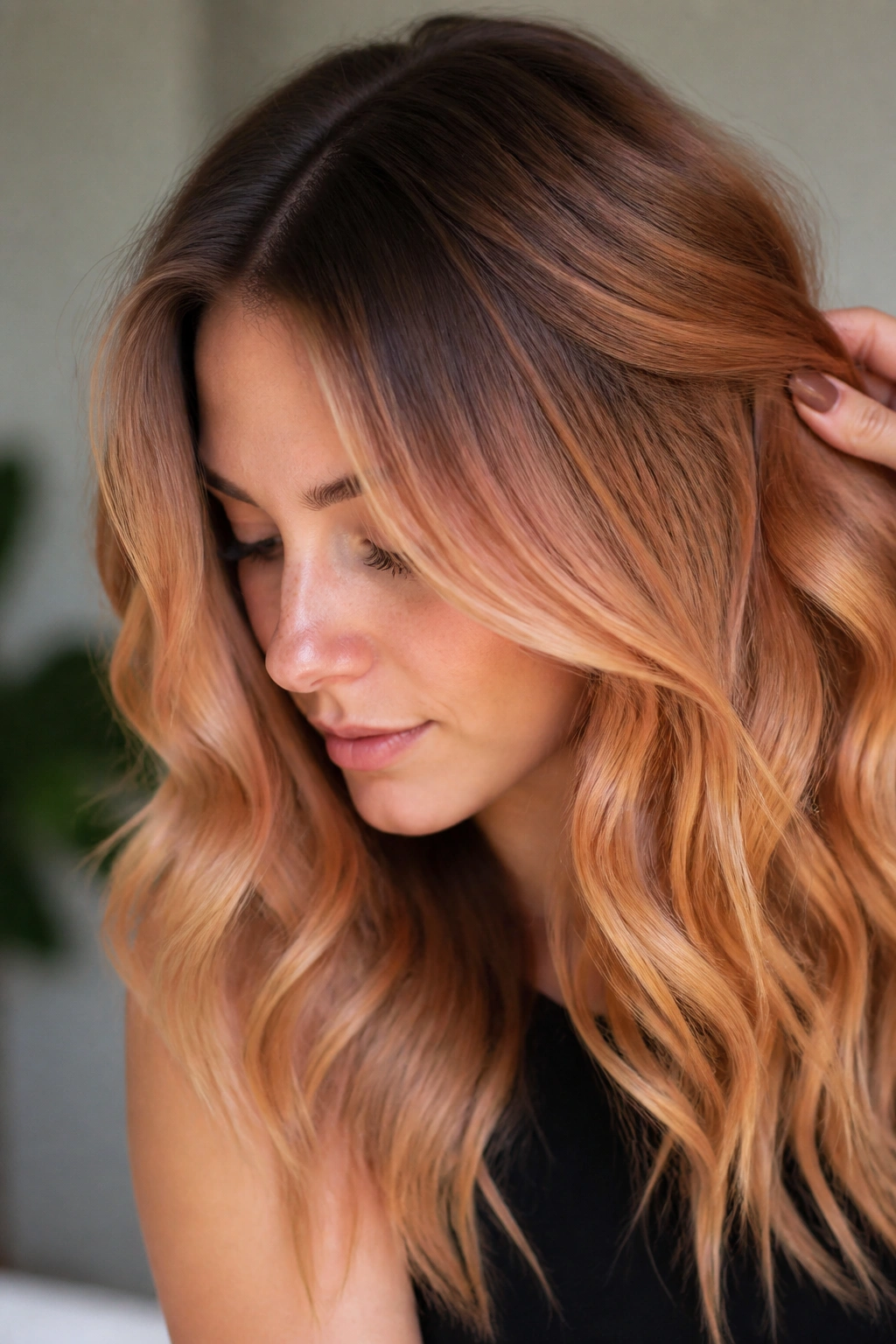
Some hair color looks pretty on day one and annoying by week six. A root melt avoids that nonsense. The deeper root area softens the transition into strawberry blonde balayage, so the regrowth line never gets too loud.
This is probably the most practical option on the list. You still get warmth, brightness, and movement, but the top section stays close enough to the natural brunette color that the hair can grow without needing constant rescue. That makes it easier on the schedule and easier on the ends, which is worth caring about.
Why It Stays Graceful
Because the root stays blurred, the color has room to age gently. The lighter pieces can fade a touch and still look like part of the style. In fact, a slight softening often makes the color look even better after a couple of washes.
Ask for a shadow root that is one to two levels deeper than the mids. That’s enough to create separation without turning the top into a black cap. Small move. Big payoff.
24. Soft Copper Halo for Face Framing
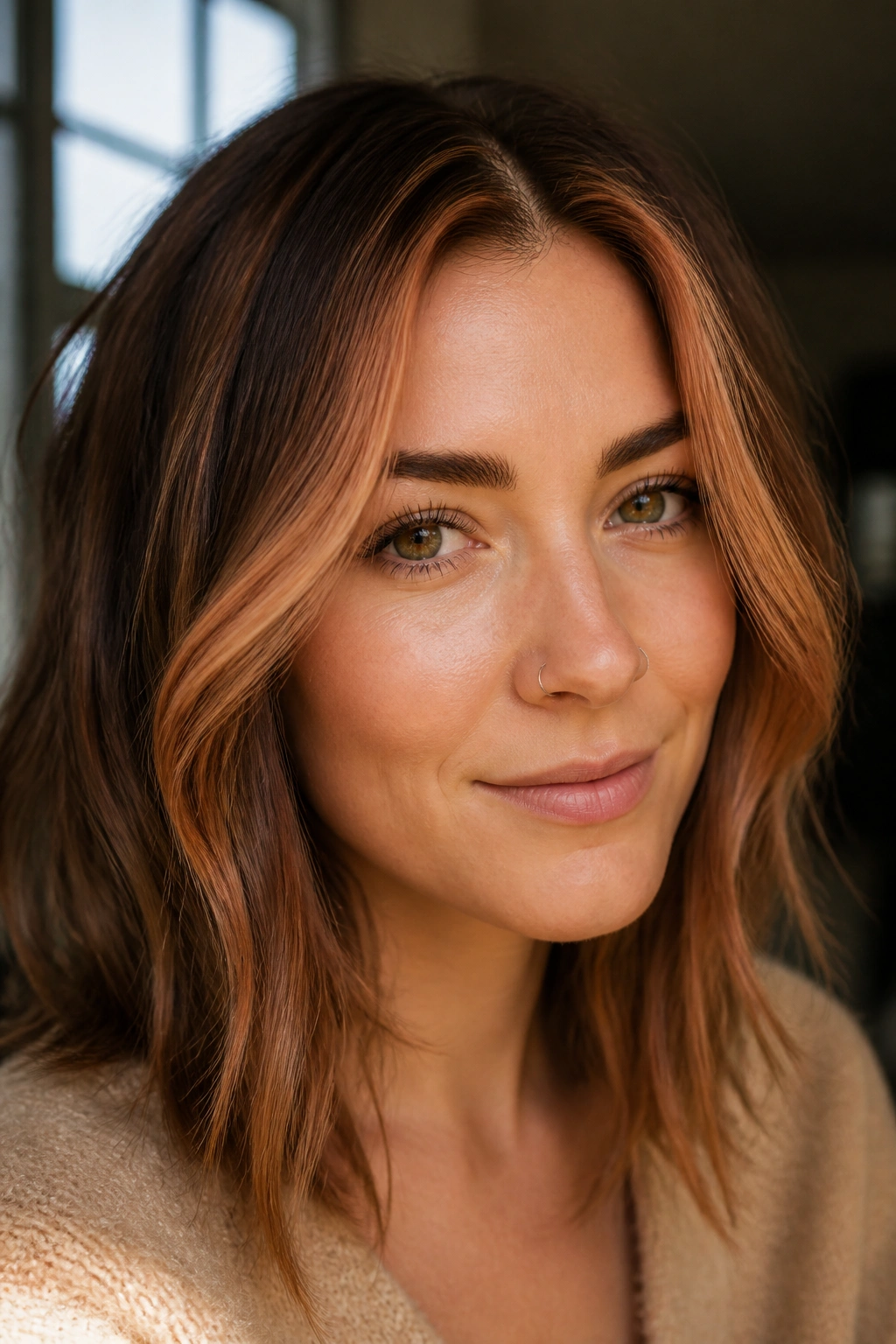
A face-framing halo is a smart choice if you want warmth but do not want your whole head painted. The color sits in a halo around the hairline, usually starting near the temples and curving into the front layers, so the face gets brightness without a full commitment.
It works especially well if you wear your hair in buns, half-ups, or tucked-back styles. The halo peeks out even when the rest of the hair is hidden, which gives you a little color payoff on the days you don’t feel like styling. That’s real-life useful, not just pretty-on-Instagram useful.
If your haircut has curtain bangs or long face layers, even better. Those pieces already want to move toward the face, and the color follows the same shape. A little copper at the edges can make the whole haircut feel more expensive and more finished.
This is the kind of placement that quietly does a lot. No drama. Just good framing.
25. Softest Strawberry Blonde Balayage for a Natural Finish
The softest version is often the one people keep wearing. On brown hair, that means just enough strawberry blonde to interrupt the brunette base, but not so much that the color starts telling a louder story than the haircut itself.
This is where restraint pays off. Fine weaves, gentle hand-painting, and a tone that sits between peach and gold keep the result believable. It’s a good ending point if you want the color family but don’t want your hair to become a full-time project.
The nicest part is how forgiving it can be. A soft grow-out, a warm gloss now and then, and a decent trim schedule are often enough. That’s it. No elaborate maintenance plan, no constant rescue work, no panic when the roots show through at the part.
If you are choosing between a bolder copper and a whisper-light strawberry, I’d lean toward starting softer. You can always add brightness later. Pulling color back is the annoying part, and nobody needs extra annoyance from their hair.
