



There is something undeniably imposing about a well-executed dreadlock mohawk. You are taking a hairstyle that is already heavy with culture and history, then stripping away the bulk on the sides to create a sharp, architectural frame around the face. When your hair is long and fully matured, the weight of the locs adds a different dynamic entirely. It is not just about the cut; it is about managing gravity. If you get the balance wrong, the style droops or pulls at the scalp. Get it right, and you have a look that balances rugged texture with clean, barber-grade precision.
Transitioning long locs into a mohawk profile requires more than just clippers and a mirror. You are working with distinct, individual cylinders of hair, which behave differently than loose strands. You cannot just cut a line and expect it to sit. The way the locs sit at the base, the tension on the scalp, and the specific way you section the hair from the nape to the forehead—all of it matters. This is about knowing how to train your hair to stand up or fall in a specific direction while keeping your scalp healthy enough to handle the structural change.
1. Classic Tapered Fade Mohawk
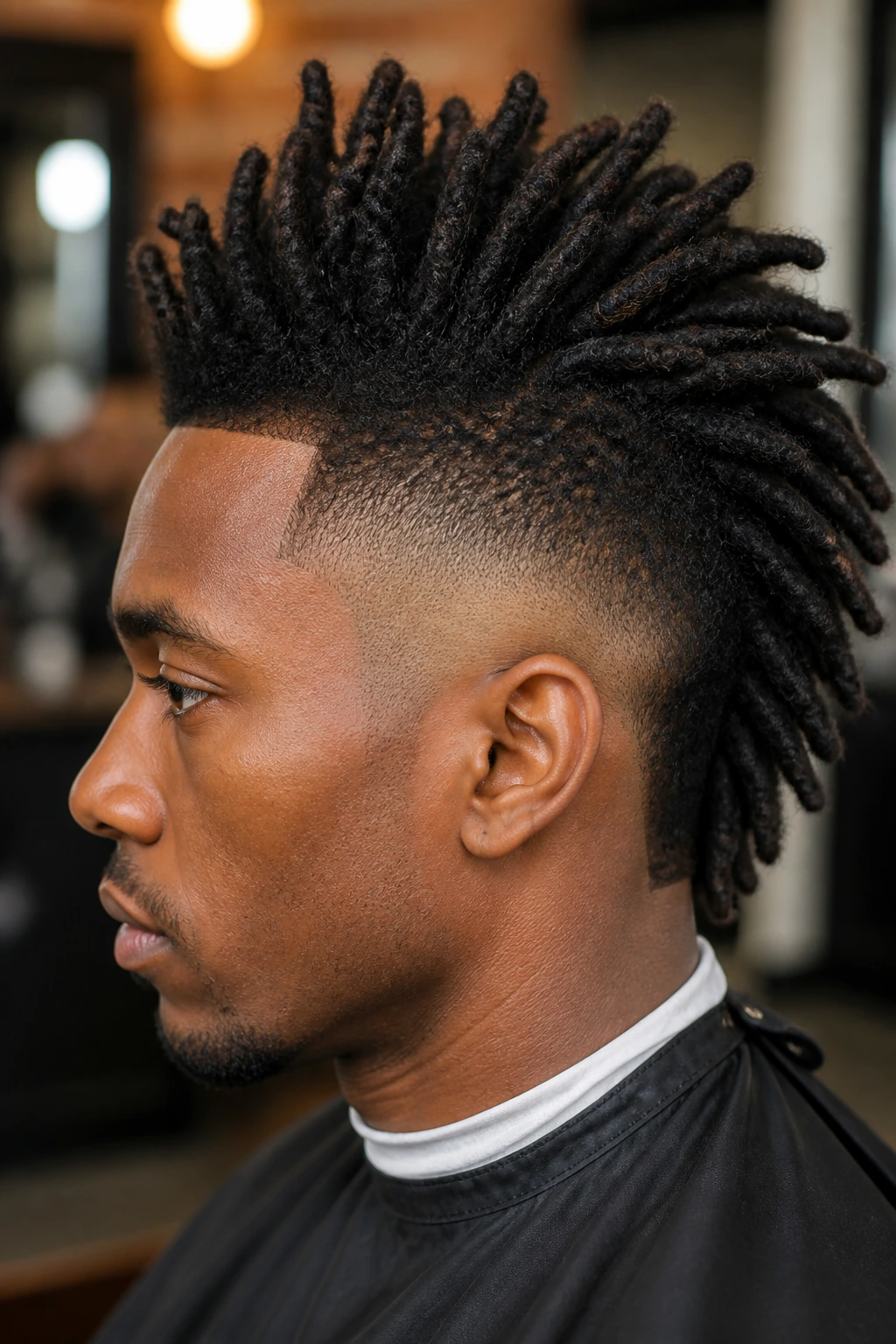
This is the baseline for clean execution. You keep the sides buzzed tight—usually a skin fade or a low taper—while the center strip of locs remains full length. The contrast between the sheer scalp and the dense, textured cylinders of your locs provides a visual punch that never goes out of style. It puts all the emphasis on the density of the mohawk itself.
The Barber’s Edge
You need a skilled hand for this. If your barber is not familiar with cutting around locs, you risk them accidentally cutting into the base of a lock or causing tension that leads to thinning. Ask for a “tapered edge” rather than a harsh blocked line. A soft taper allows the hair to grow back in without looking like a helmet, and it makes the transition between the skin and the locs look seamless.
Managing the Weight
Because you are removing the hair on the sides, the center strip takes on more weight distribution. If your locs are particularly long and heavy, you might find that they lean too far to one side. A light retwist at the base, pulled vertically rather than horizontally, can help train the roots to stand upright. Do not over-tighten. You want the style to look sharp, not painful.
2. High-Top Dreadlock Frohawk
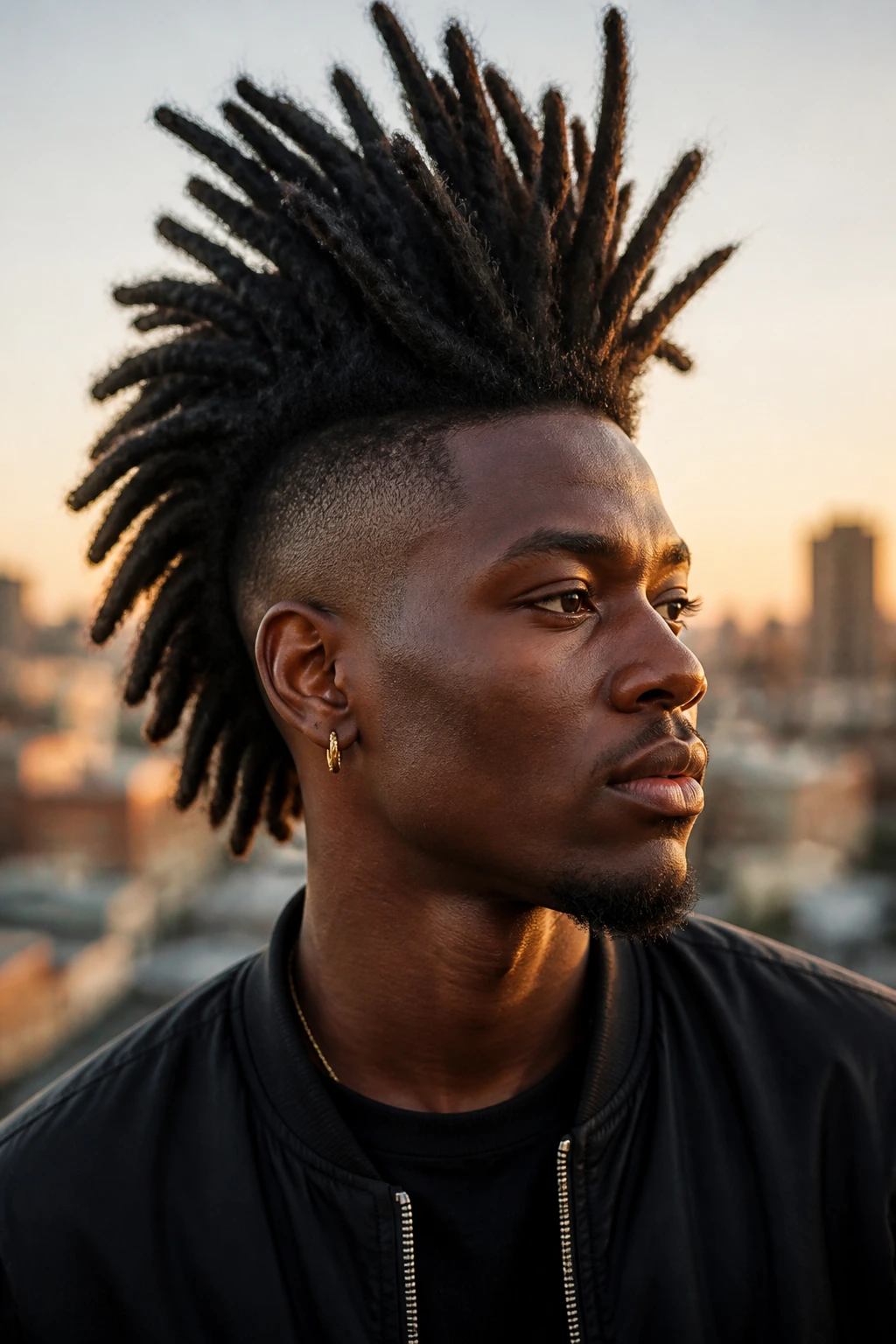
For those who want height, the high-top approach creates a vertical pillar of hair. Unlike a traditional mohawk that follows the head’s shape, the frohawk utilizes the natural volume of your locs to build a crest. This look works best if you have mature locs that have solidified and can support their own weight without collapsing.
Creating the Lift
Start by sectioning your hair. You need to ensure the base of the mohawk is thick enough to support the verticality. Some people use thin hair ties or clear bands to help stand the front locs up, but be careful. Too much tension on the hairline causes traction alopecia, which is the last thing you want. Instead, use a styling foam or a locking gel to train the roots to stand while wet, then pin them in place with bobby pins while they air dry or sit under a hooded dryer. Once they are dry, the hair memory will keep them in that upright position.
Texture and Flow
Do not try to make every lock perfectly uniform. The beauty of a frohawk is the chaotic, energetic spread of the locs. If one hangs over your eye, let it. The style should feel organic. If it looks too stiff, it loses that raw, natural appeal.
3. Undercut Sides with Braided Top
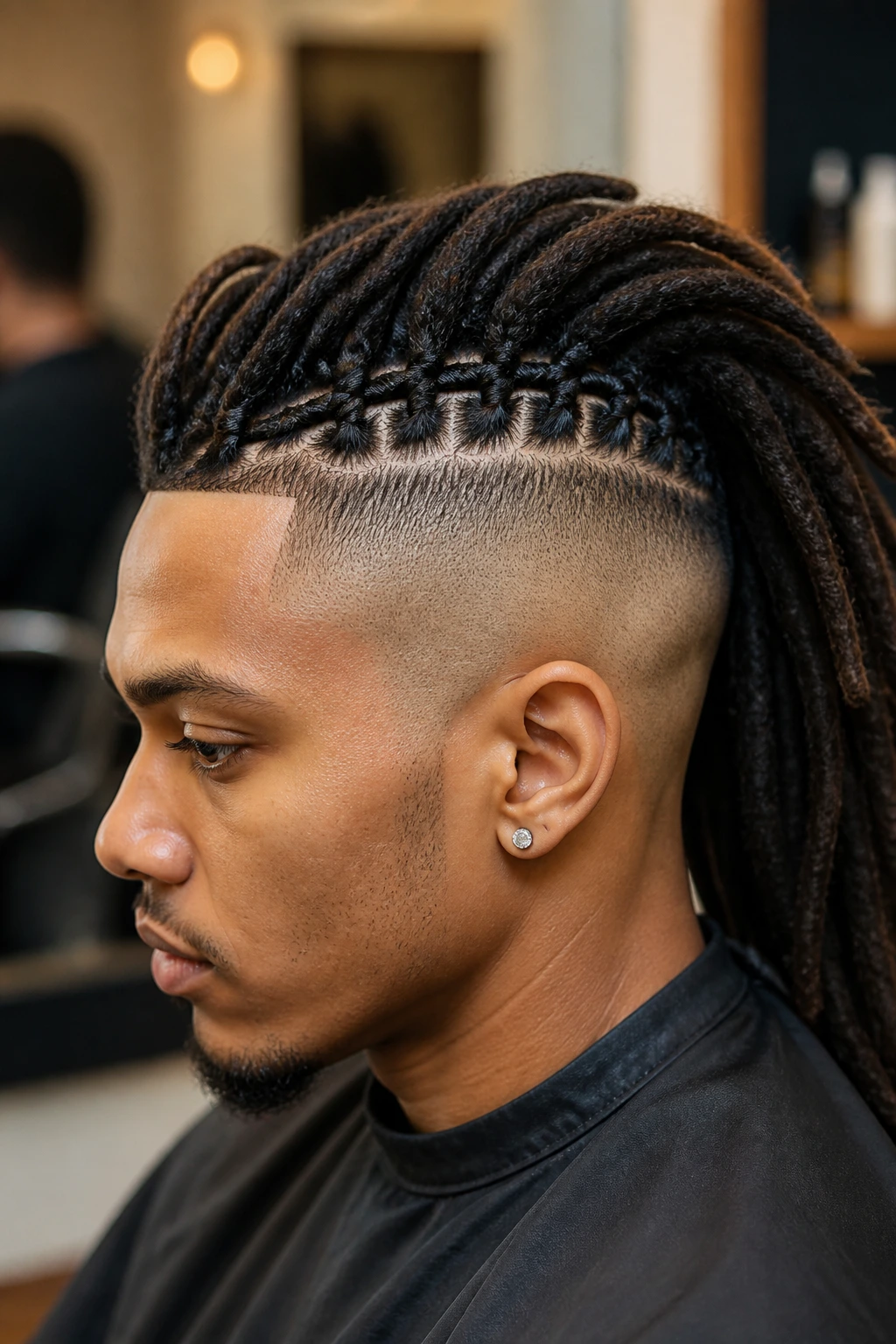
If you are not ready for a full-on shaved side, an undercut provides a similar silhouette without the permanence. You can shave the sides close to the skin, but keep the top section—the part that forms the mohawk—long. Then, instead of just letting the locs hang, you braid them into the scalp along the mohawk line.
The Practicality of Braids
This is a protective style in disguise. Braiding the locs at the base secures them, which reduces the constant tugging on your follicles that happens when long locs are left loose. It is a solid choice if you are physically active or if the weight of your hair is starting to give you headaches.
Maintenance Tips
You can keep this look fresh for weeks by simply washing your scalp with an applicator bottle filled with diluted shampoo. Since your hair is braided, the scalp is exposed and easy to clean. Just make sure you dry it thoroughly. Trapped moisture in braided locs leads to mildew and that distinct, unpleasant smell we all want to avoid.
4. Spiky Dreadlock Mohawk

Think of this as the punk-rock evolution of the loc mohawk. It is all about the tips. You aren’t just letting the locs fall; you are styling them to fan out or spike upward. This works exceptionally well if you have shoulder-length locs that aren’t too heavy, or if you are willing to use a bit of product to fight gravity.
How to Achieve the Spike
Use a firm-hold locking gel—something that won’t flake. Coat your hands and twist the gel into the tips of your locs, then pull them upward and outward. You can use wire-infused locs, often called “wicks” or decorative additions, to help them hold a shape if your natural hair is too soft.
Why It Works
It breaks the monotony of hanging hair. By creating a fan shape, you change the entire profile of your face. It is aggressive, it is bold, and it requires you to be very selective about what you wear, as this style will do all the talking for you.
5. Long Dreads Tied in a High Bun Mohawk
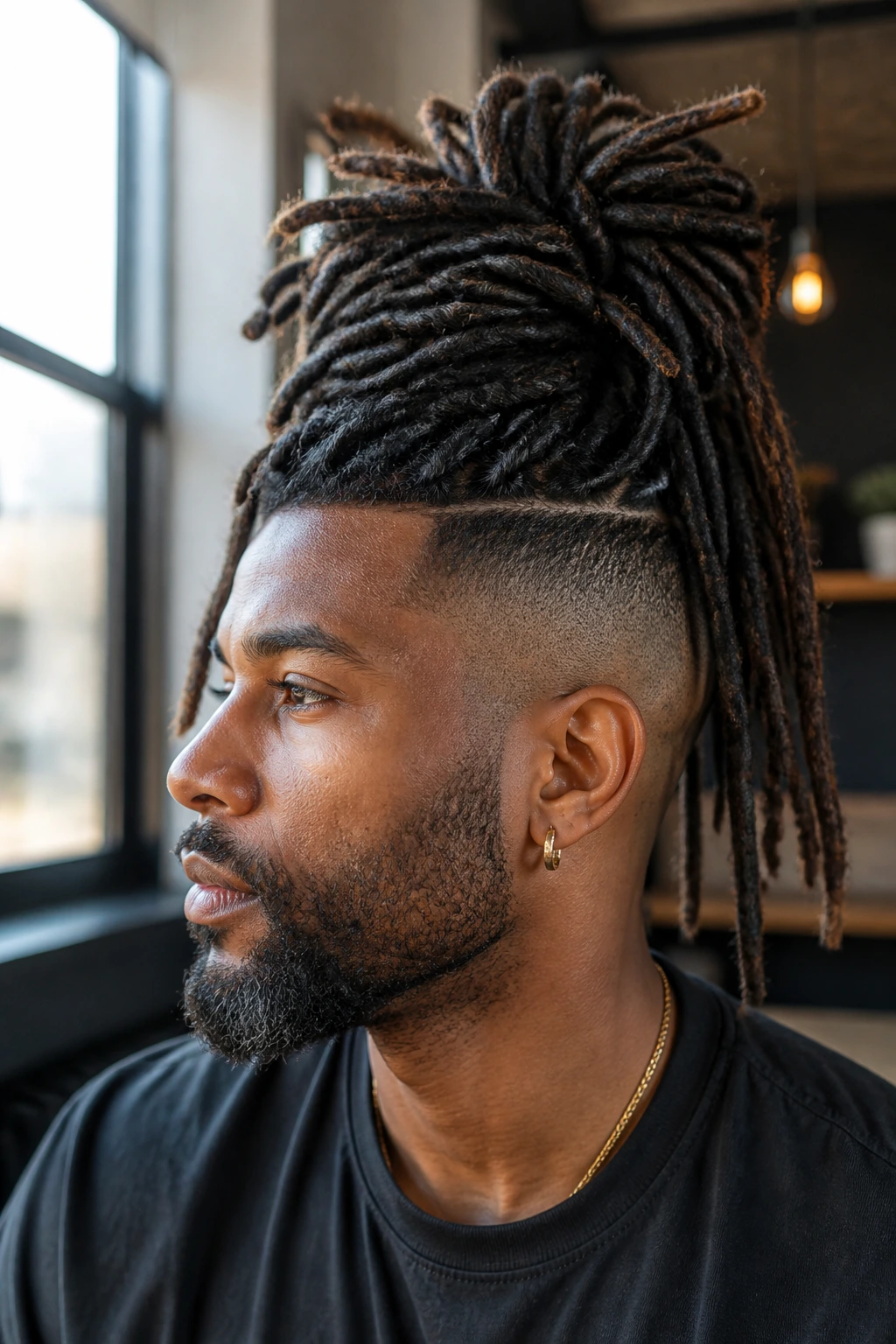
This is the “I need to get to work” version of the mohawk. You shave the sides or taper them down, but you gather the central strip into a tight, high bun right at the crown of your head. It keeps the hair out of your face, looks incredibly professional, and accentuates the lines of your skull and neck.
The Foundation Matters
The placement of the bun is critical. Too far forward, and you look like you have a horn. Too far back, and the hair will pull against your hairline. You want it right on the crown. Use a sturdy hair tie—a cloth-covered one is best to prevent breakage—and wrap it just tight enough to hold. If you have extra length, let the ends of the locs spill out of the bun to create a cascading effect.
Dressing it Up
Because the hair is up and away from your face, this style highlights your ears and jawline. It is a great time to experiment with some ear cuffs or bold jewelry. The style is minimalist by nature, so your accessories provide the contrast.
6. Dyed Tip Dreadlock Mohawk
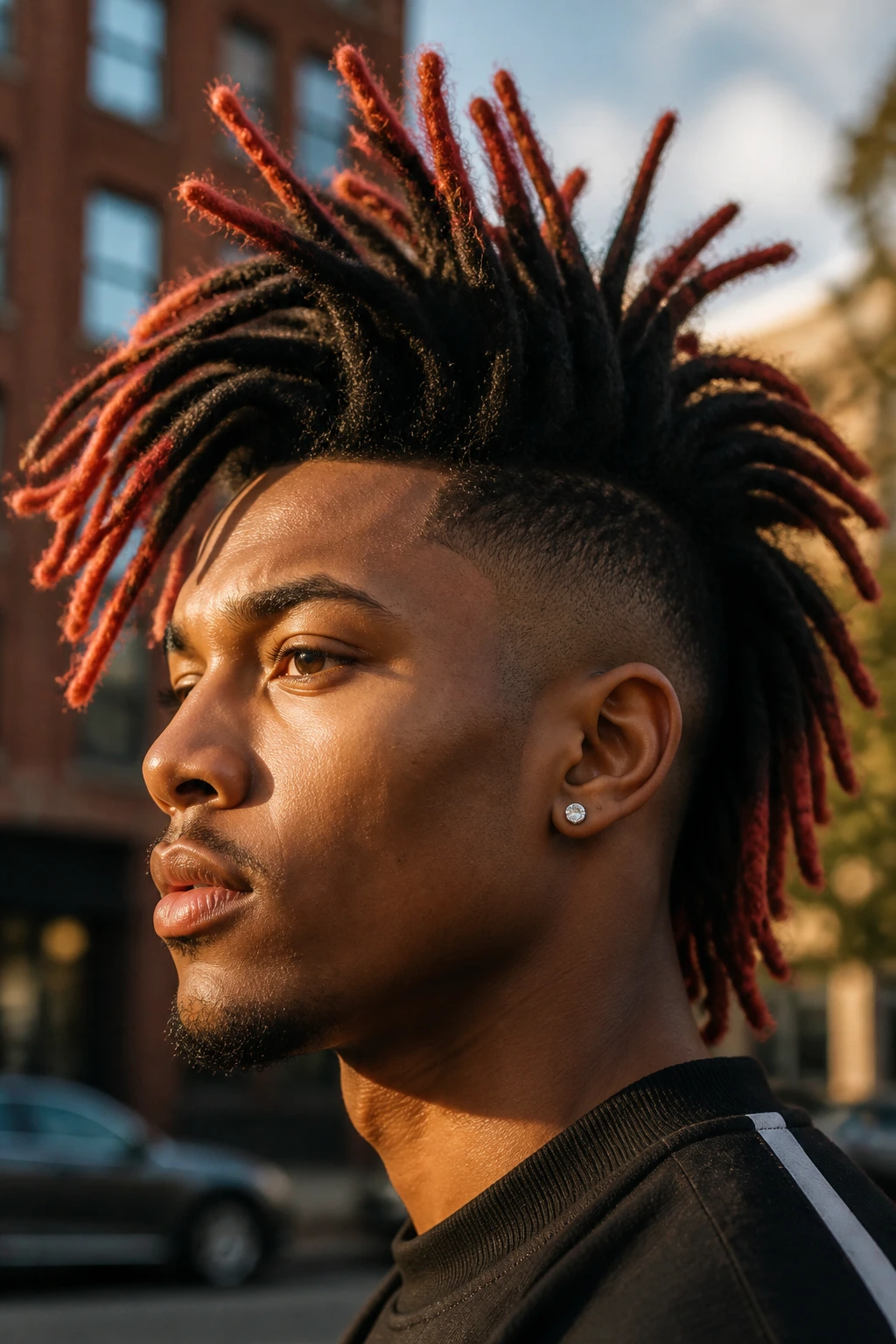
Color adds another dimension to the mohawk shape. If you have a dark base, dyeing the tips of your locs blond, red, or even a deep forest green creates a stark visual boundary. The eye follows the color shift, which makes the mohawk shape look more pronounced than it would if the hair were all one solid color.
Chemical Caution
Be careful with bleach. Bleaching dreadlocks is risky because the chemical can get trapped inside the core of the loc, making it brittle and prone to breakage. If you are going to color them, go to a professional who understands locs. They will know how to saturate the hair without destroying the structural integrity of the cylinder.
Styling the Color
When you pull your dyed mohawk into a style, the color distribution will change. You might want to fan the ends out so the color is visible from the front. If you have a gradient, make sure the brightest part of the color sits at the very top of the mohawk to maximize the impact.
7. Natural Twist-Out Mohawk
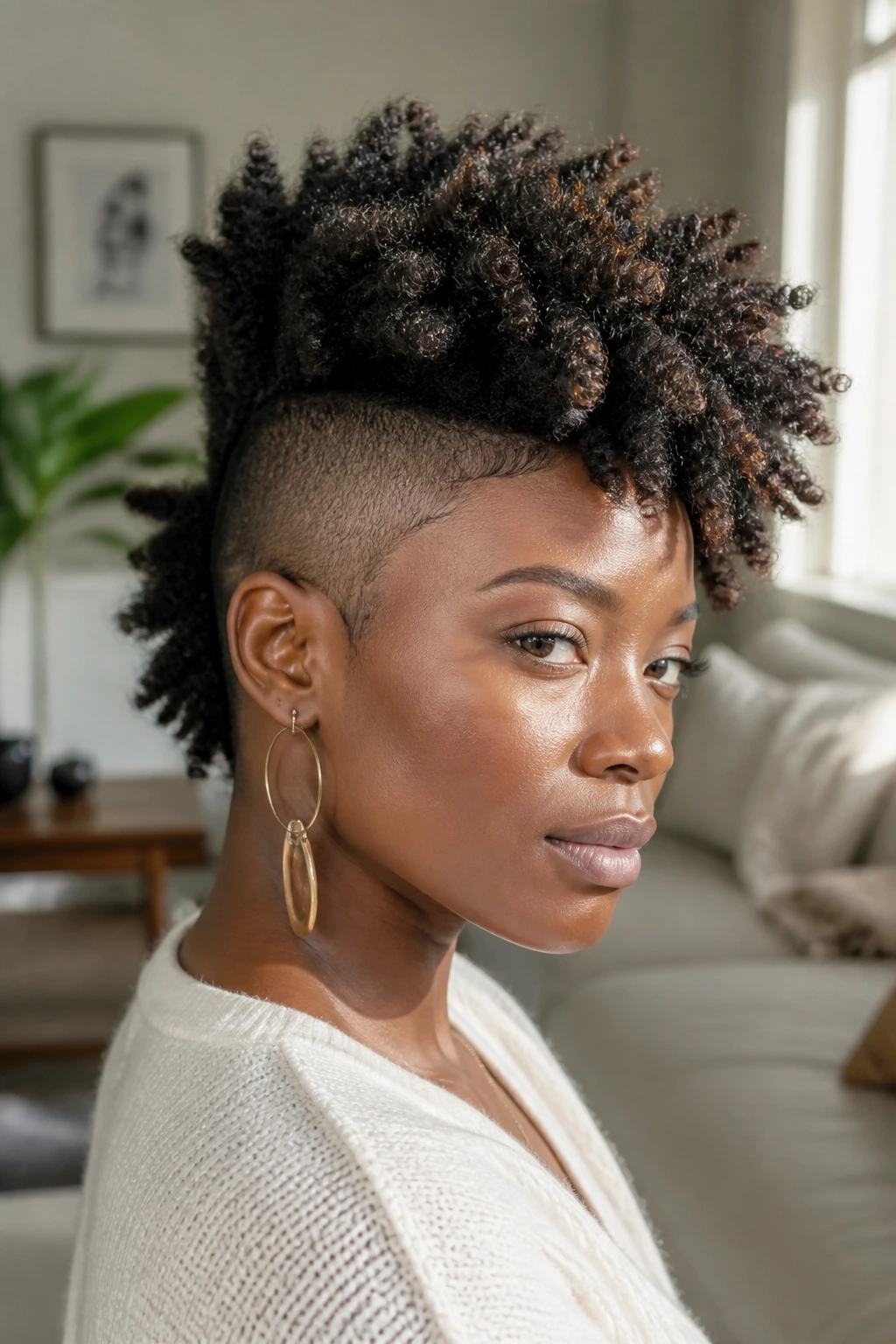
This style is for people whose locs are still relatively new or are quite thin. You don’t have to have massive, thick locs to pull off a mohawk. By using a twist-out method on the mohawk section, you create a soft, cloud-like texture that sits high on the head. It is a softer, more romantic take on a style that is usually seen as harsh.
The Technique
Wash your hair, apply a light twisting butter, and twist the locs. Let them set until they are completely dry—do not rush this. Once you unravel them, you get that crimped, voluminous texture. Combine this with shaved or closely cropped sides, and you have a look that balances structure with softness.
Why It Lasts
The texture creates friction, which means the hair holds its shape better without needing constant pinning. It is an ideal style for the middle stages of loc growth where the hair might be a bit unruly or frizzy. Embrace the frizz; it adds to the volume.
8. Shaved Side Designs with Dreads
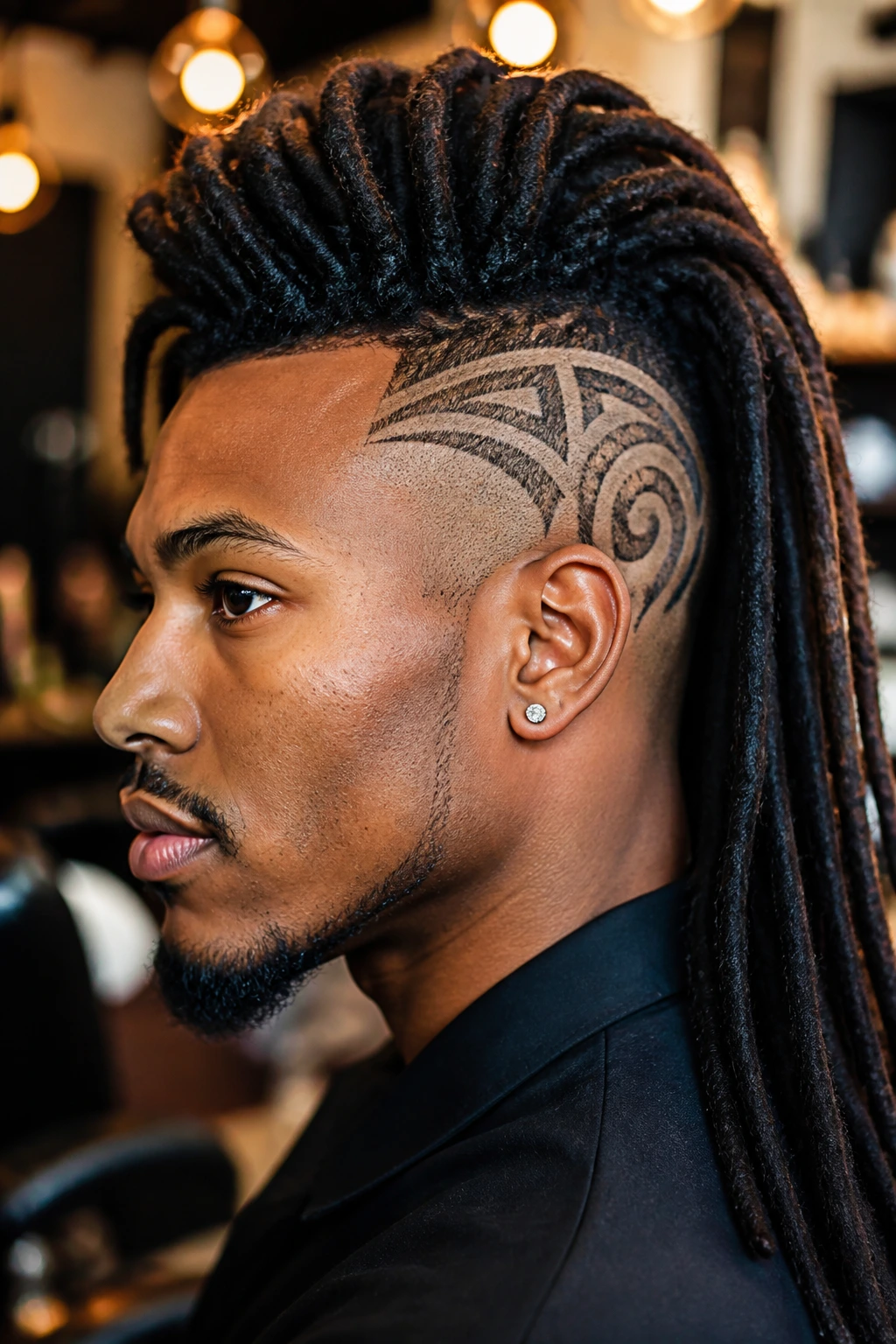
This takes the classic taper and turns it into a canvas. When you shave the sides, you have an opportunity to have your barber carve patterns into the hair. Zig-zags, straight lines, or even geometric shapes can elevate a simple mohawk into a piece of art.
Choosing Your Design
Keep the design clean. If you make the patterns too complex, they can look messy as your hair grows in and fills them out. A few sharp lines behind the ear or a crisp arc following the hairline works best. Remember that hair grows back fast, so you are signing up for bi-weekly barber visits to keep those lines looking sharp.
The Contrast Factor
The shaved design creates a secondary focal point. Because your eyes are drawn to the patterns on the side, the locs on top appear more deliberate. It turns a “head of hair” into a “groomed style.”
9. Messy Boho Locs Mohawk
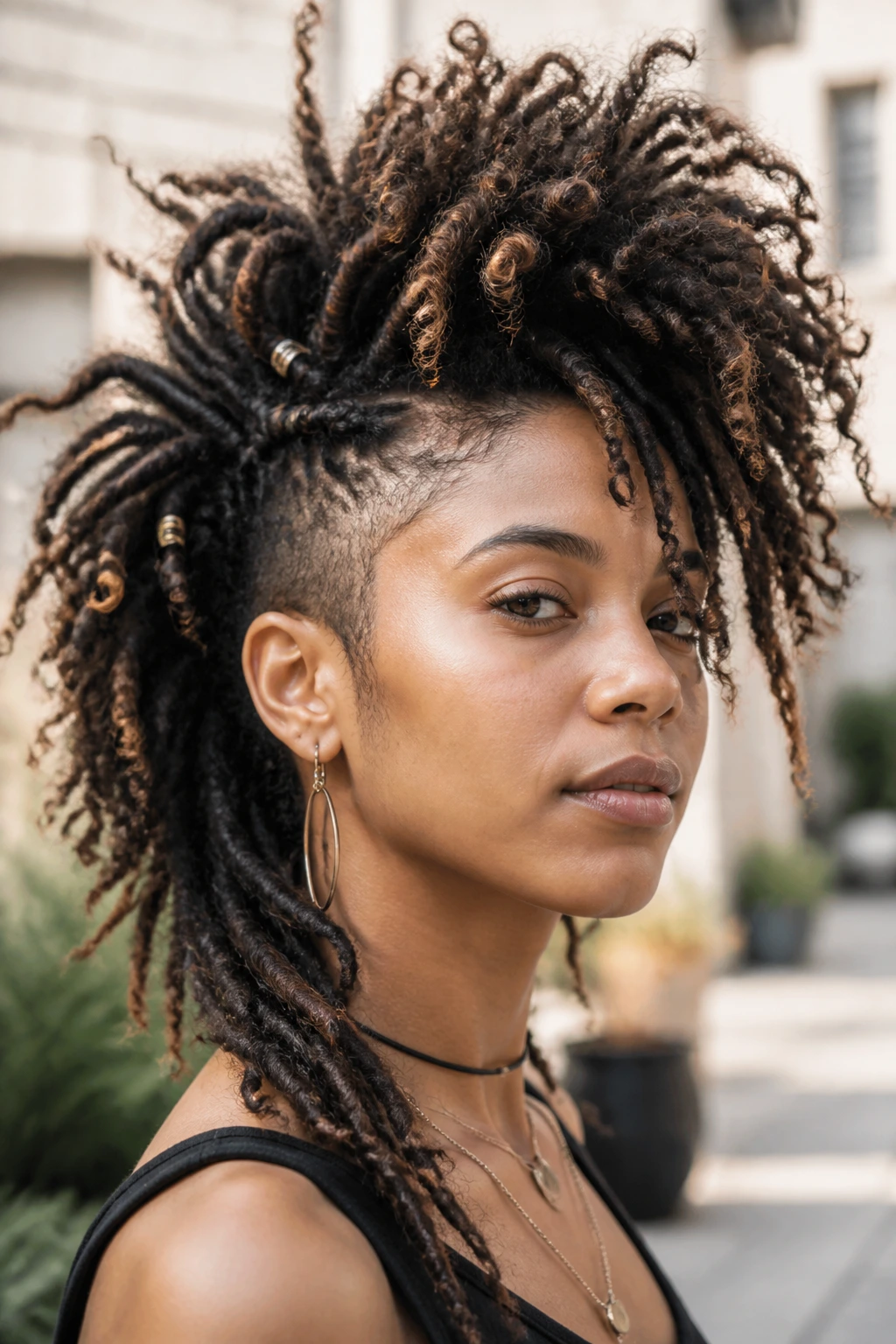
Sometimes, the most styled look is the one that looks like you just rolled out of bed. The boho mohawk is about volume and deliberate messiness. You don’t care about perfect parts. You don’t care about the fade being skin-tight. It is about letting the locs do what they want, controlled only by a slight taper at the sides.
Achieving the Vibe
Layering is your friend here. When cutting the sides, keep them a bit longer—maybe a #2 or #3 guard instead of a skin fade. This creates a softer transition. On top, use a sea salt spray to give the locs a bit of grit and hold. Scrunch them with your hands. If some fall forward and others stand up, that is exactly the point.
Avoiding “Stiff”
Do not use heavy waxes. Heavy products weigh down the locs and kill the movement. You want the locs to sway when you walk. Use lightweight sprays and essential oils if you need shine, but keep the hold products to an absolute minimum.
10. Mohawk with Side-Swept Locs
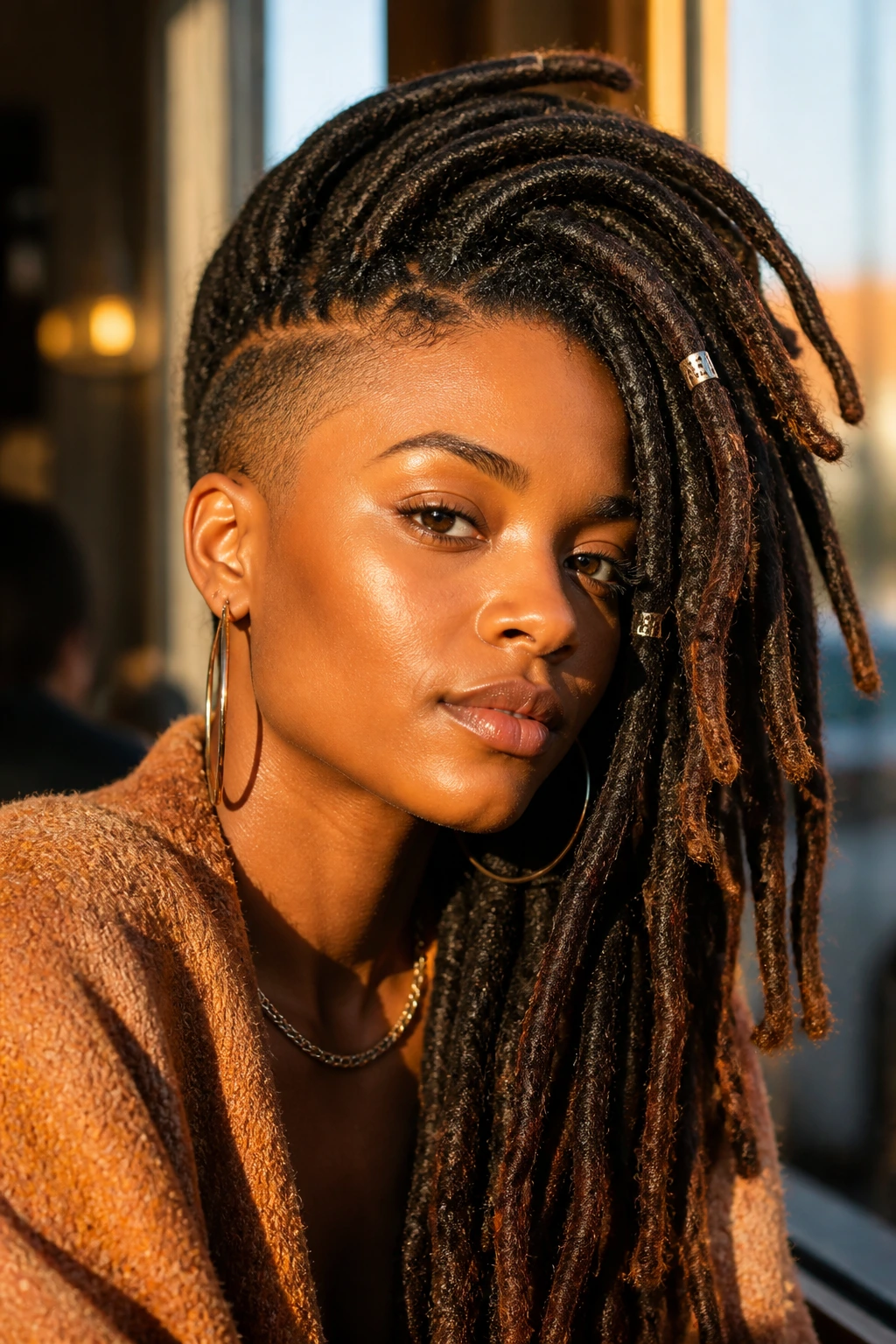
If you love the mohawk shape but don’t want the hair standing straight up, try the side-sweep. You shave the sides as usual, but you direct all the locs to fall over to one side of your head. It is a visually interesting, asymmetric style that frames the face in a way that feels intentional and elegant.
Securing the Sweep
Gravity will try to pull the locs back to the center. You will need to use hairpins or perhaps a small cornrow base on the side you are sweeping from to create a foundation. This forces the hair to sit at an angle. It is a fantastic option if you have a face shape that benefits from asymmetric framing, like a round or square jawline.
Practicality
This style is great because it gets the hair off one ear entirely, which feels surprisingly open and comfortable. It is also a very efficient way to handle long locs if you find the center-balanced mohawk too heavy or distracting.
11. Thick Wool-Wrapped Dread Mohawk
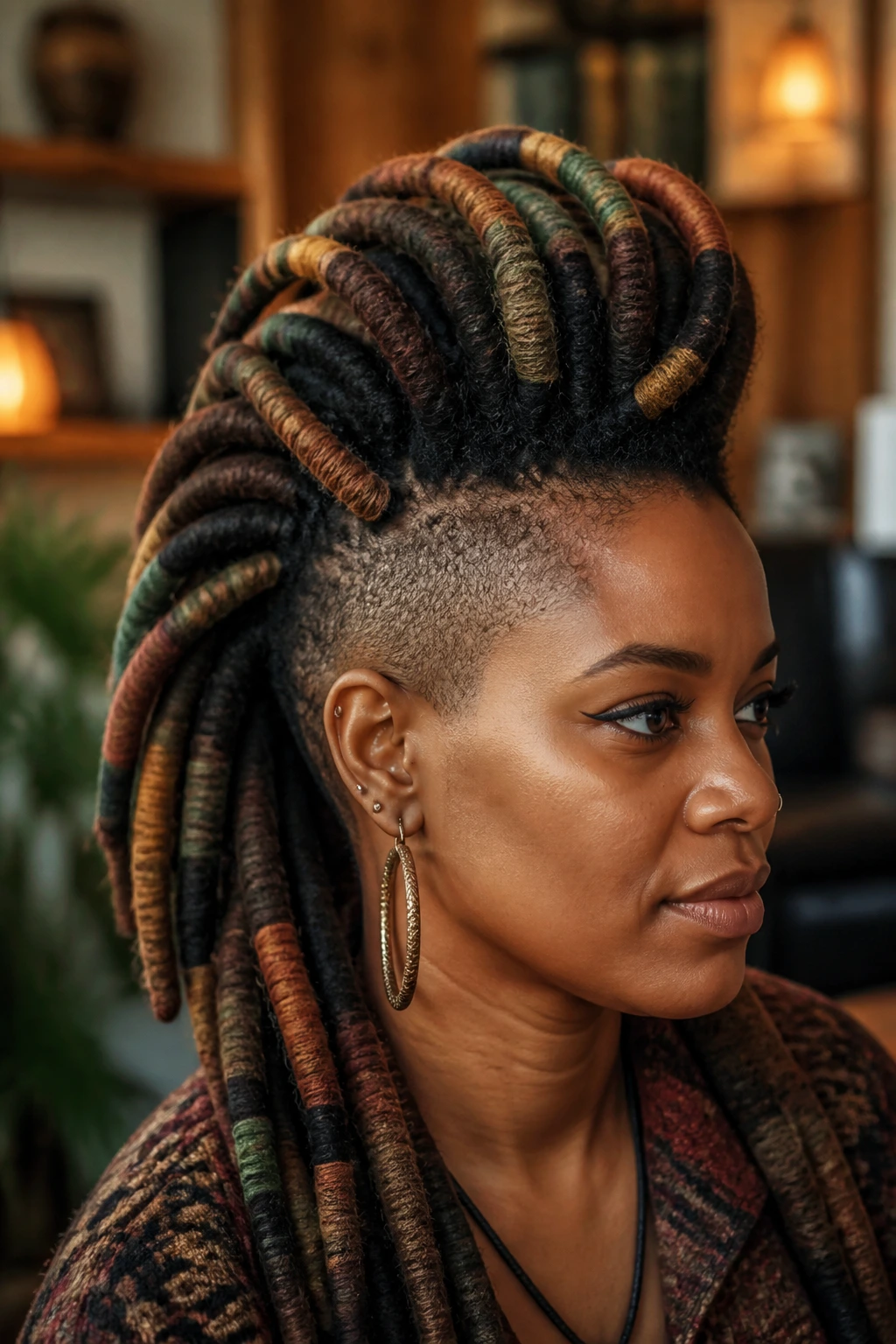
Adding thread or yarn wraps to your locs is a way to change their texture and color without using chemicals. A mohawk with wrapped locs looks thicker, feels heavier, and has an earthy, deliberate aesthetic. You can alternate colors—using black, red, or gold threads to match your style.
The Wrap Technique
You need patience for this. Start at the root and wrap downward. Do not wrap so tightly that you restrict the hair’s ability to breathe, but make sure it is secure enough that it won’t unravel when you wash your hair. If you leave the tips of the locs unwrapped, it creates a nice contrast between the wrapped base and the natural loc end.
Durability
Wool-wrapped locs can last for months. They are a protective style, meaning they protect the hair from friction, sun damage, and manipulation. However, they are heavy. If you wrap every single loc in your mohawk, be prepared for significant weight. You might only want to wrap every other loc to keep the style manageable.
12. Shortened Loc Mohawk with Loose Curls
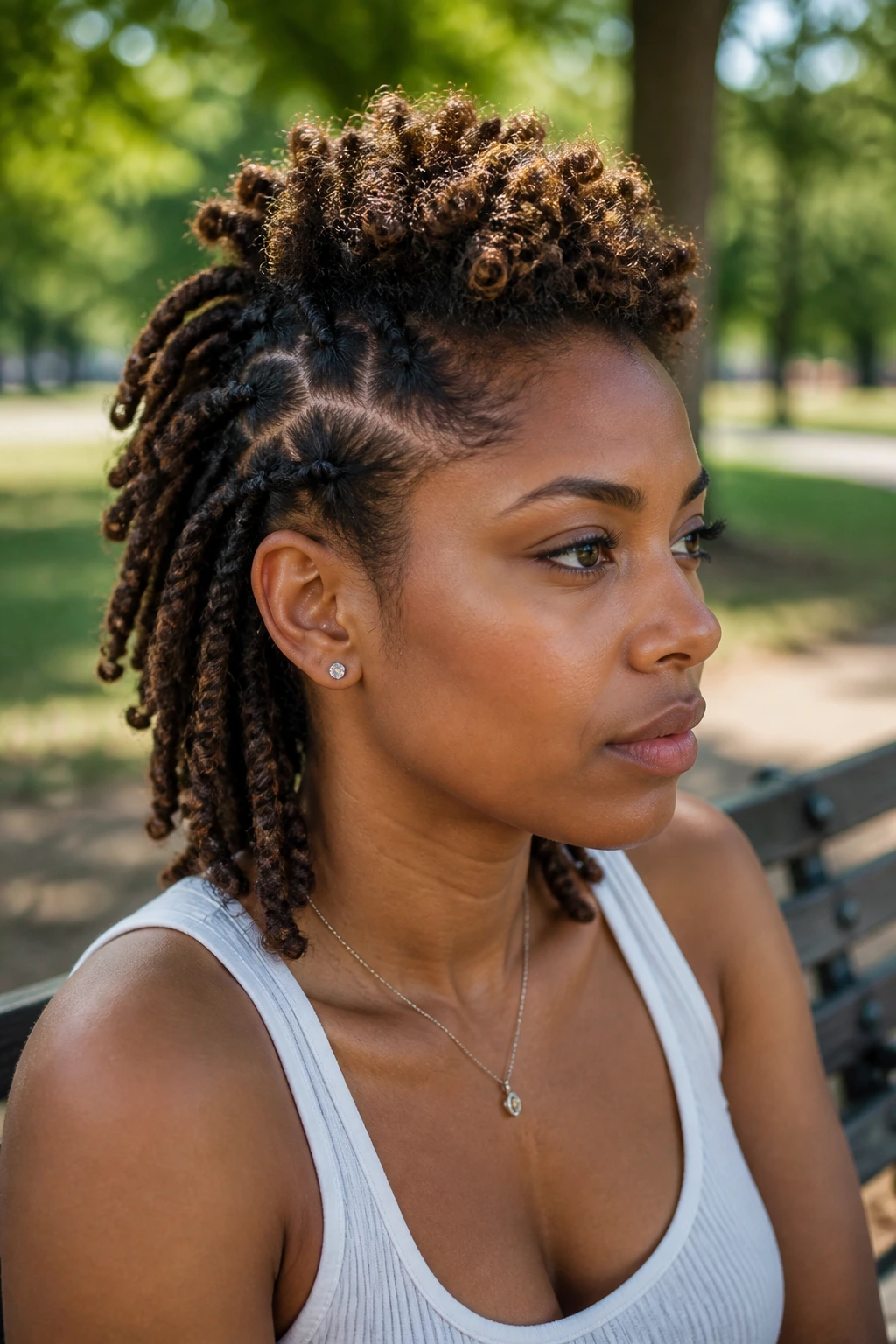
You can combine dreadlocks with loose, natural curls. This works if you have locs on the crown but let the hair at the nape of your neck or the very front hairline remain loose and curly. It creates a hybrid texture that is visually complex and undeniably striking.
Blending the Textures
The key is the blend. You don’t want a harsh line where the locs stop and the loose hair begins. You want them to intermingle. Use a curling cream on the loose hair and define it so it doesn’t frizz into the locs. This requires daily maintenance of the loose hair, whereas the locs can be left alone.
Who This Is For
This is perfect for the transition period—if you are growing out your hair or if you have partially locked your hair and are keeping the rest natural. It shows off both the precision of locs and the softness of natural hair.
13. Double-Dread Mohawk Buns
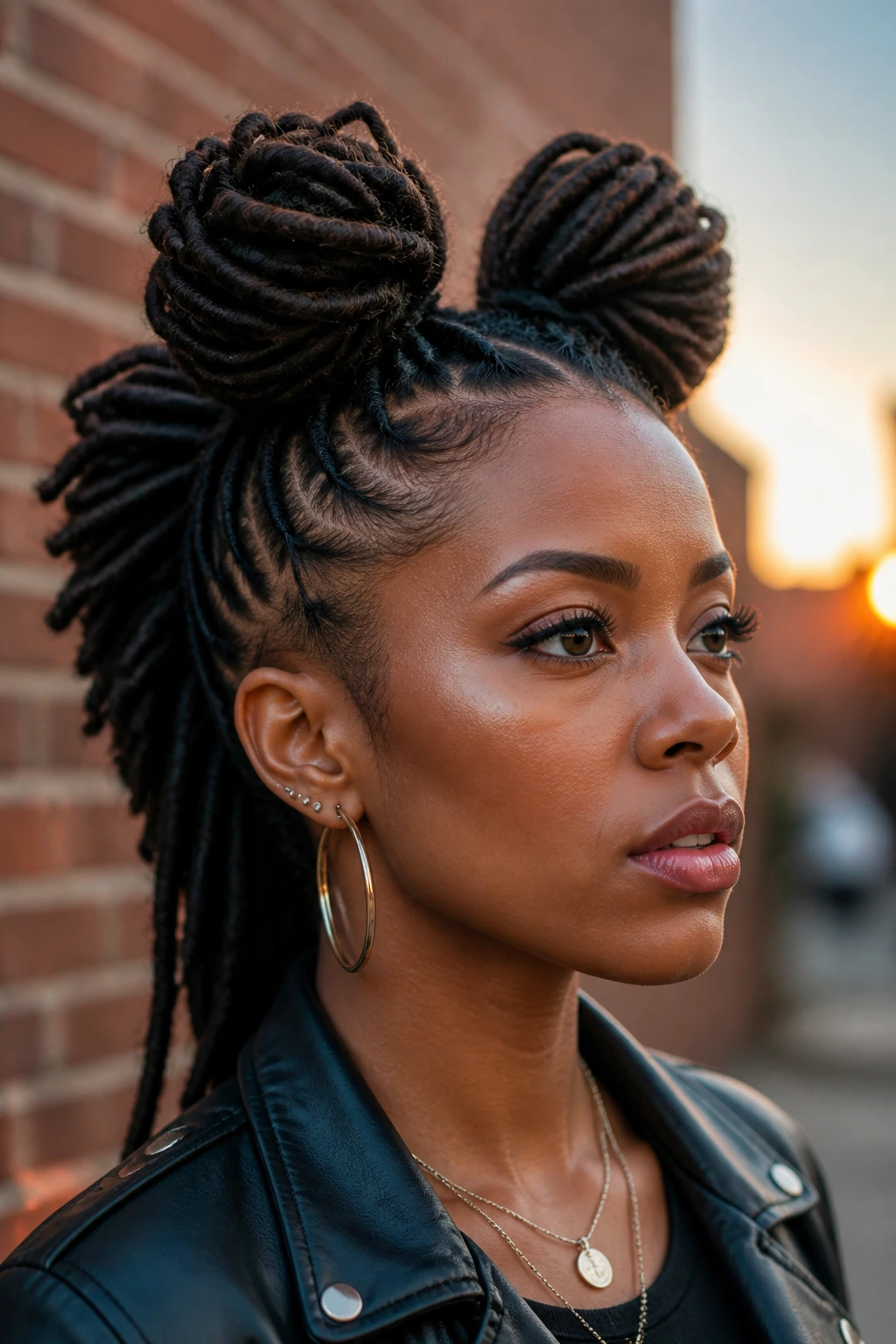
If you have a lot of hair and one bun feels too heavy or off-balance, split the mohawk into two buns. Place one at the front (near the forehead) and one at the crown of the head. It gives you a space-age, modern silhouette that looks fantastic with streetwear or avant-garde fashion.
The Parting Logic
You need a clean parting line between the two buns to make this look deliberate. If the parts are messy, the buns will look like accidental knots. Use a mirror to ensure the parts are symmetrical.
Balancing the Weight
Distributing the weight into two points of tension is actually better for your scalp than one single heavy bun. It pulls less on the hairline because the weight is shared. It is a functional style disguised as a high-fashion look.
14. Intricate Zig-Zag Part Mohawk
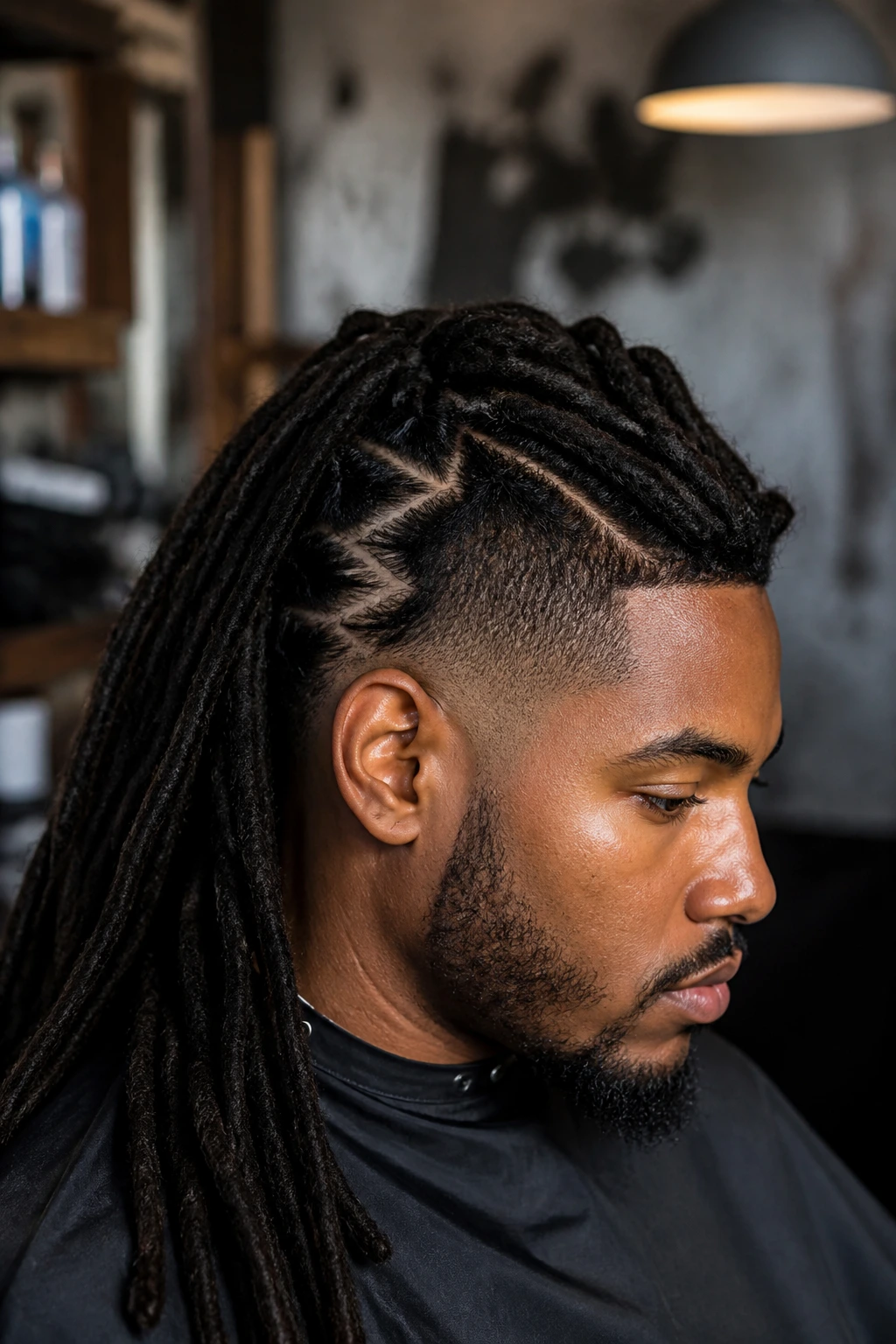
Sometimes the style is not about the hair itself, but the way the hair meets the skin. A zig-zag part along the mohawk line—where the shaved sides meet the long locs—adds a graphic element to the look. It is a subtle detail that people won’t notice from ten feet away, but when they get close, it shows a level of commitment to detail that is impressive.
Maintaining the Lines
You have to visit the barber more often for this. As your hair grows in, the zig-zag will blur. You are looking at a maintenance schedule of about 10 days to two weeks. If you can handle the upkeep, the visual payoff is immense.
Combining with Patterns
Don’t be afraid to connect the zig-zag part to a design on the side of your head. You can have the part bleed into a pattern on the temple. It makes the entire head of hair feel like a unified design project.
15. The Half-Shaved Mohawk with Beaded Accents
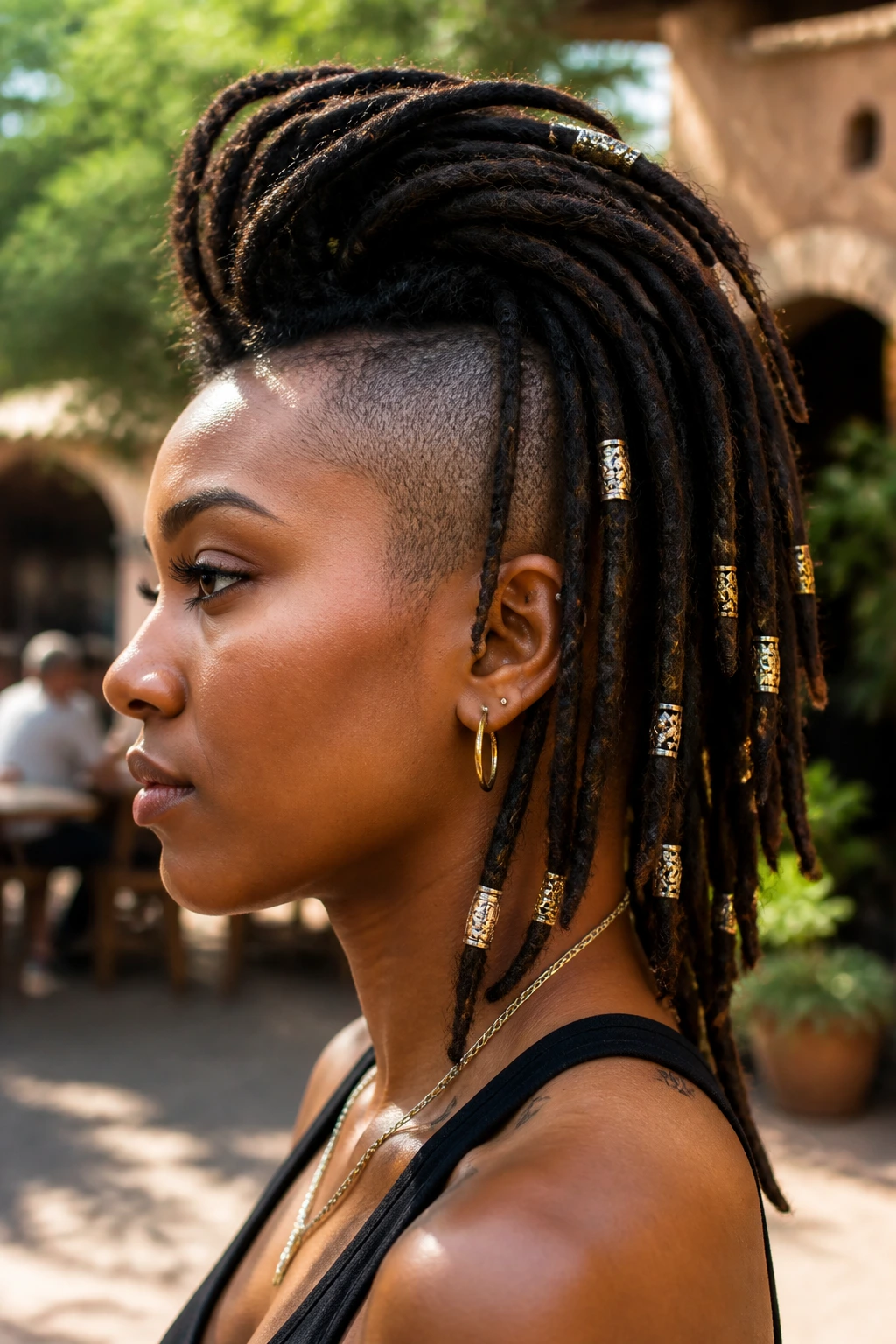
Accessories change everything. Take a standard long-loc mohawk and adorn it with gold or silver beads, cowrie shells, or metallic cuffs. The mohawk shape provides the perfect vertical “stalk” for these accessories to hang from. It adds movement, sound, and a bit of shine.
Where to Place the Beads
Don’t put them everywhere. You want them to catch the light. Place them near the ends of the locs, or frame your face with them. If you put too many at the root, it creates tension and can make the hair look cluttered. Focus the accessories on the ends of the locs to accentuate the length of the mohawk.
Selecting Your Metal
Gold tones look incredible against dark hair and skin, providing a warm contrast. Silver or copper looks sharper and more modern. Whatever you choose, make sure the beads are smooth inside. Cheap plastic beads with sharp seams will snag and break your locs over time. Spend a little extra on high-quality metal or wood beads.
Final Thoughts
Choosing a dreadlock mohawk is not just about picking a shape—it is about managing the relationship between the weight of your hair, the health of your scalp, and the frequency of your maintenance. This is a high-commitment style. You are signing up for regular grooming, mindful tension management, and a look that stands out in any room.
There is no “wrong” way to do this, provided you respect the biology of your hair. Keep your scalp clean, avoid excessive tension at the roots, and don’t be afraid to experiment with the volume and texture of your locs. Whether you go for the sharp, skin-faded edge or the soft, boho-inspired mess, the mohawk silhouette will give your long locs a new life and a completely different energy. Take the time to find a barber who understands the specific needs of locs, and treat the style as a long-term project rather than a one-time haircut.
