



The Mohawk is a style that demands attention. It is not a haircut you hide in the back of a crowded room; it is a structural statement, a play on volume, texture, and geometry. For Black women, specifically those rocking natural coils, kinks, or curls, the curly Mohawk offers a unique versatility. You can go for something polished and architectural, where the edges are slicked to perfection, or you can lean into the rebellion of a wild, untamed frohawk that celebrates the natural shape of your texture.
Choosing the right look depends largely on how much commitment you want to put into your morning routine and whether you prefer to keep your natural hair length intact. Some styles require a razor and a trip to the barber, while others rely on the illusion of a Mohawk created by clever pinning, twisting, or braiding. Regardless of which direction you choose, the key is understanding your curl pattern—whether you have loose 3C spirals or dense 4C coils—and how that pattern interacts with hold products and styling tension.
1. Classic Tapered Frohawk
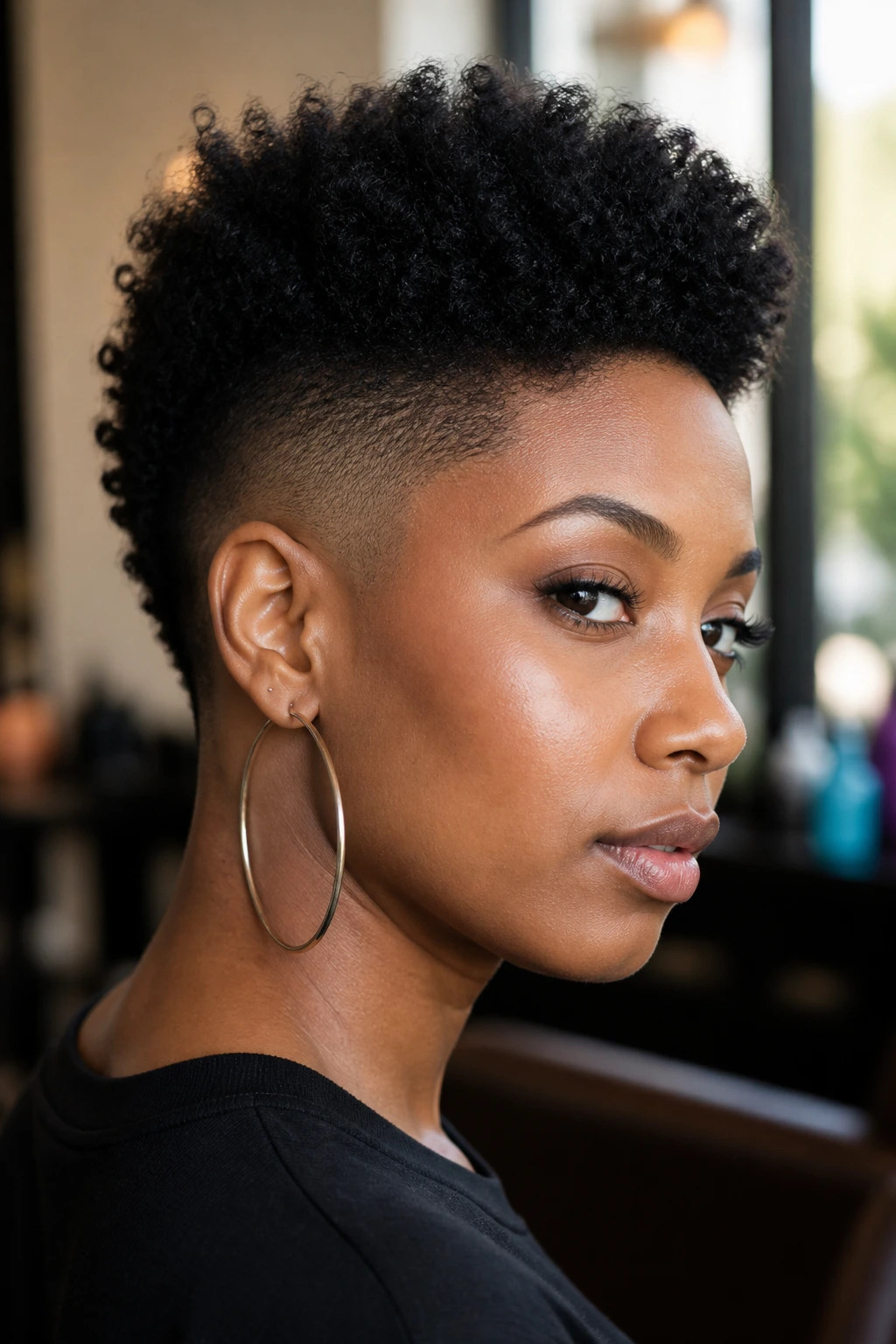
The classic tapered frohawk is the quintessential curly Mohawk. It relies on a sharp, clean fade on the sides, which directs all the visual weight to the crown of the head. When the sides are tapered short, the contrast against the volume on top becomes the focal point.
Why It Works for 4C Textures
This style is particularly effective for denser curl patterns because it controls the bulk. Without the taper, a full afro can sometimes feel overwhelming to manage. By removing the hair on the sides, you keep the fullness where you want it most, making the daily pick-out routine much faster.
The Maintenance Reality
You will need to visit a barber or stylist every two to three weeks to keep that taper sharp. If you let it grow out for too long, the silhouette loses its aggressive, clean edge. Investing in a good set of clippers for home touch-ups can save you a fortune, but there is nothing quite like a professional edge-up.
2. Braided Side-Sweep Mohawk
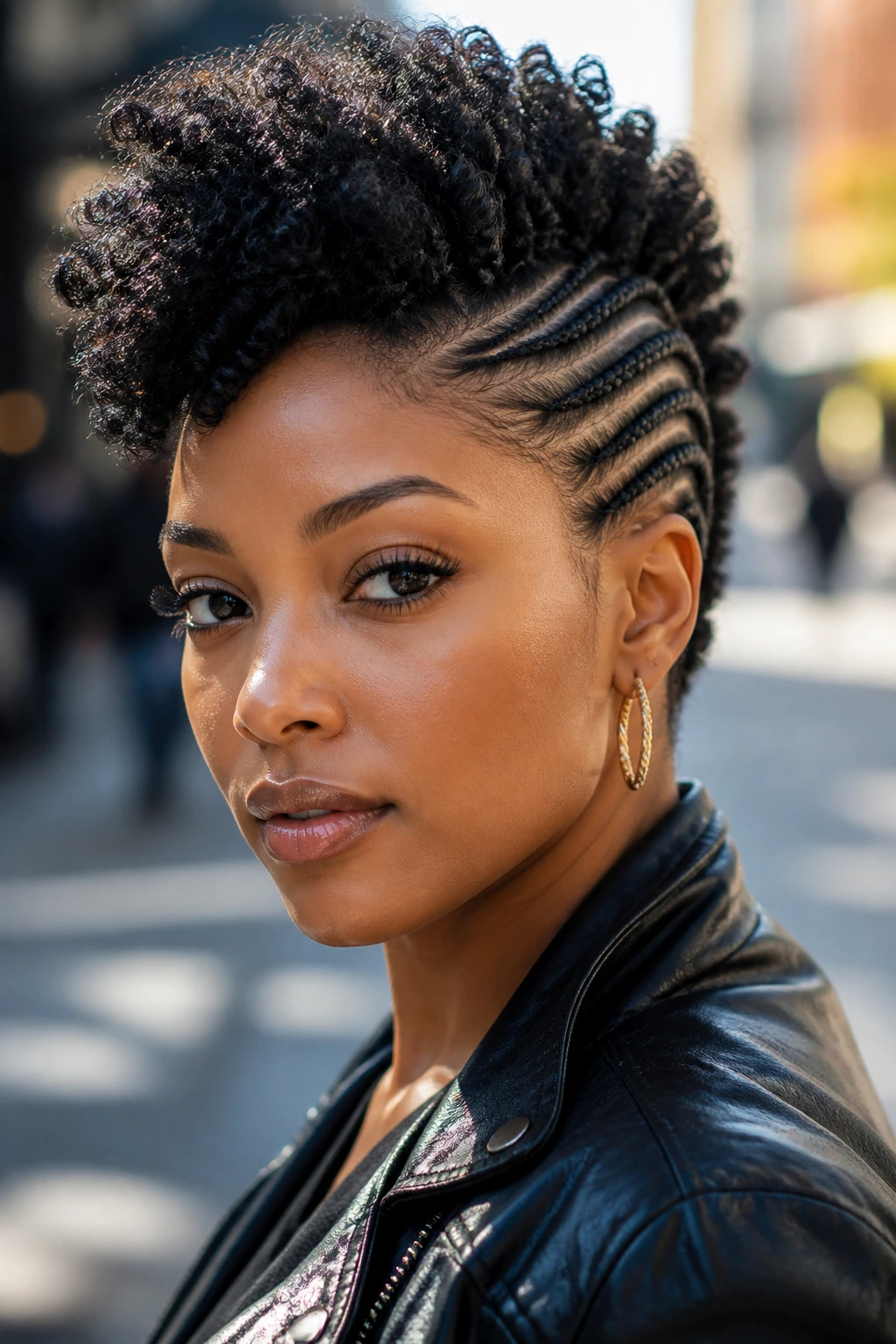
If you are hesitant to cut your hair, the braided side-sweep Mohawk is your best friend. This style uses tight cornrows on the sides, pulling the hair upward and toward the center, creating the illusion of a shaved side without the permanent commitment.
Achieving the Illusion
The secret here is tension. You want the side braids to be taut enough to lie flat against the scalp, which pushes the hair on top to stand up and fan out. It is a protective style, which is great for retaining length, but do not braid them too tight—traction alopecia is a real risk if you put too much stress on the edges.
Product Recommendations
Use a firm-hold styling gel or pomade for the braided sections to keep flyaways at bay. A rattail comb is essential for creating clean parts, which elevate the look from “messy” to “deliberate.”
3. Twisted Mini-Frohawk
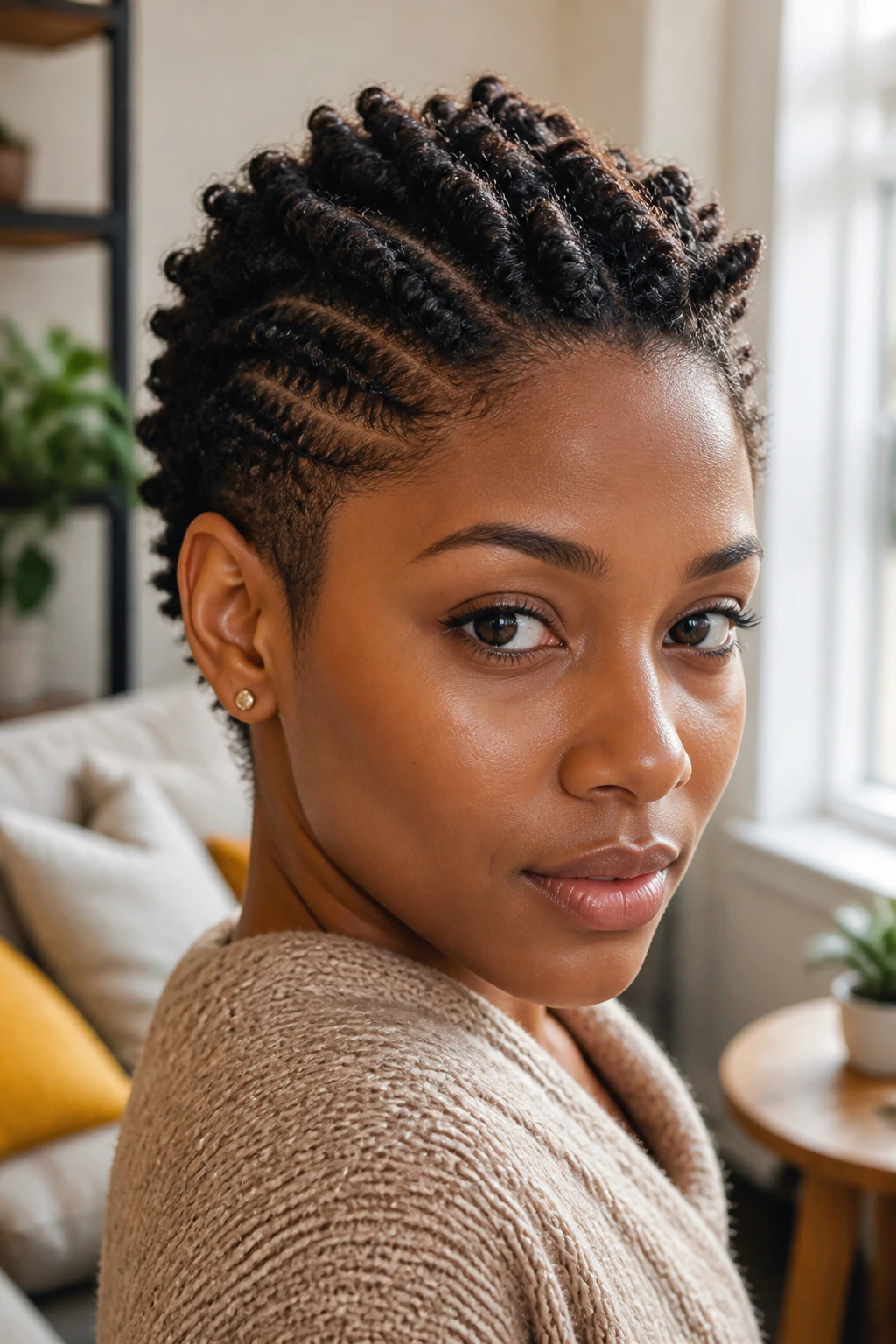
For those with shorter hair or a Teeny Weeny Afro (TWA), the twisted mini-frohawk is a beautiful way to play with texture. Instead of trying to force a large shape, you work with small, defined twists that run down the center of your head.
The Beauty of Definition
Because the twists are small, they showcase the definition of your curls perfectly. You can style this by twisting the hair in small, uniform sections from the nape of the neck up to the forehead, or you can use a sponge brush to create tighter, more condensed coils.
Why It Lasts
This is a low-manipulation style. Once the twists are in, you can leave them for a few days. Wrap your head with a silk or satin scarf at night to keep the definition crisp, and you might only need to touch up your edges in the morning.
4. High-Volume Curly Pompadour Mohawk
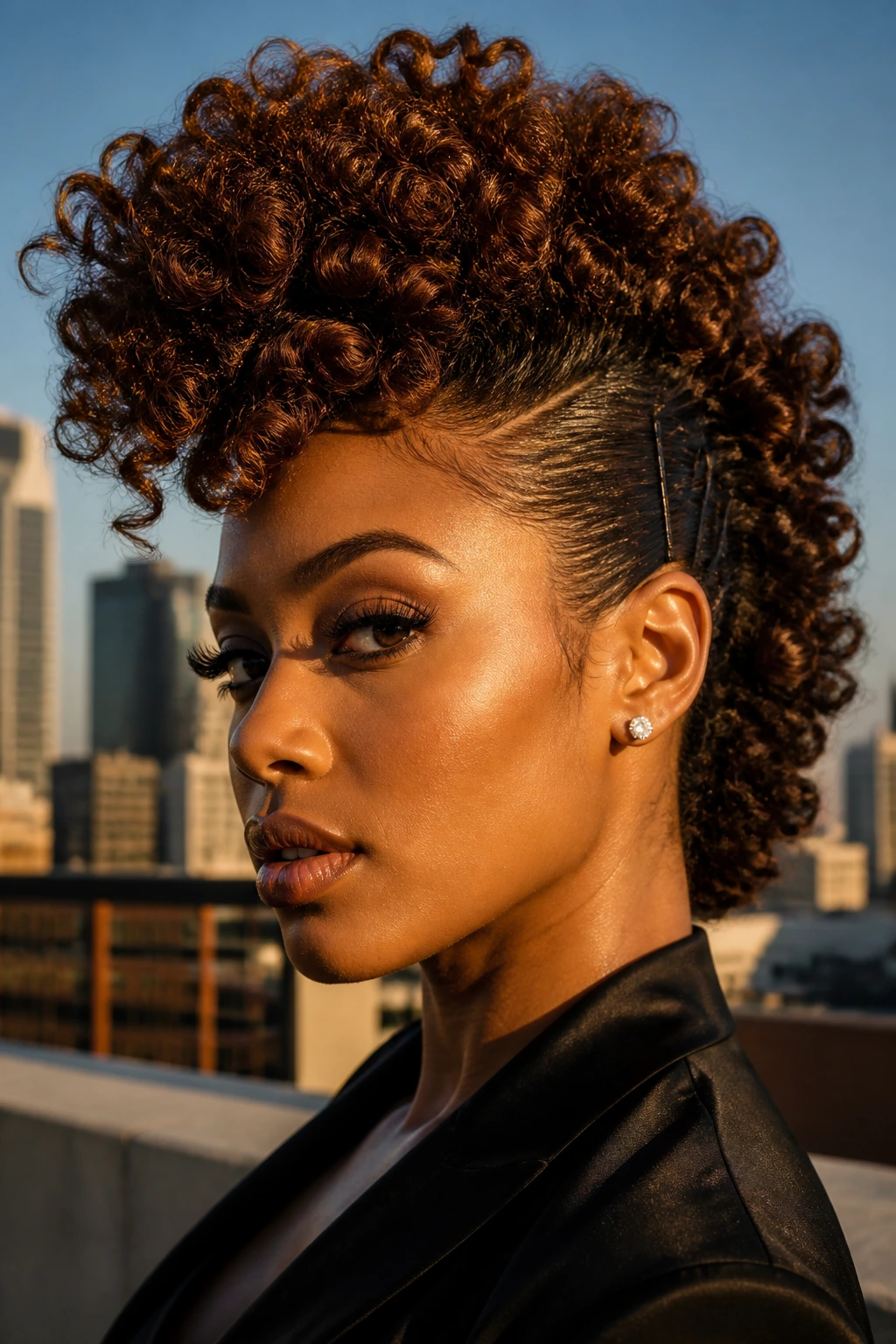
This style takes the Mohawk concept and injects it with a vintage, high-fashion sensibility. It features a sweeping, oversized front section that rolls backward, mimicking the shape of a classic pompadour but maintaining the curly texture.
Structure and Support
You will need a fair amount of hair volume to pull this off successfully. If your natural density is on the lower side, you might need to use hidden hair extensions or a clip-in piece to add the necessary bulk. Use hair pins—plenty of them—to anchor the pompadour so it does not collapse throughout the day.
The “Slick” Factor
While the front is voluminous and curly, the sides are typically sleek and pinned tight to the head. The contrast between the gravity-defying front and the pinned-down sides is exactly what gives this style its impact.
5. Pinned-Up Curls with Shaved Sides
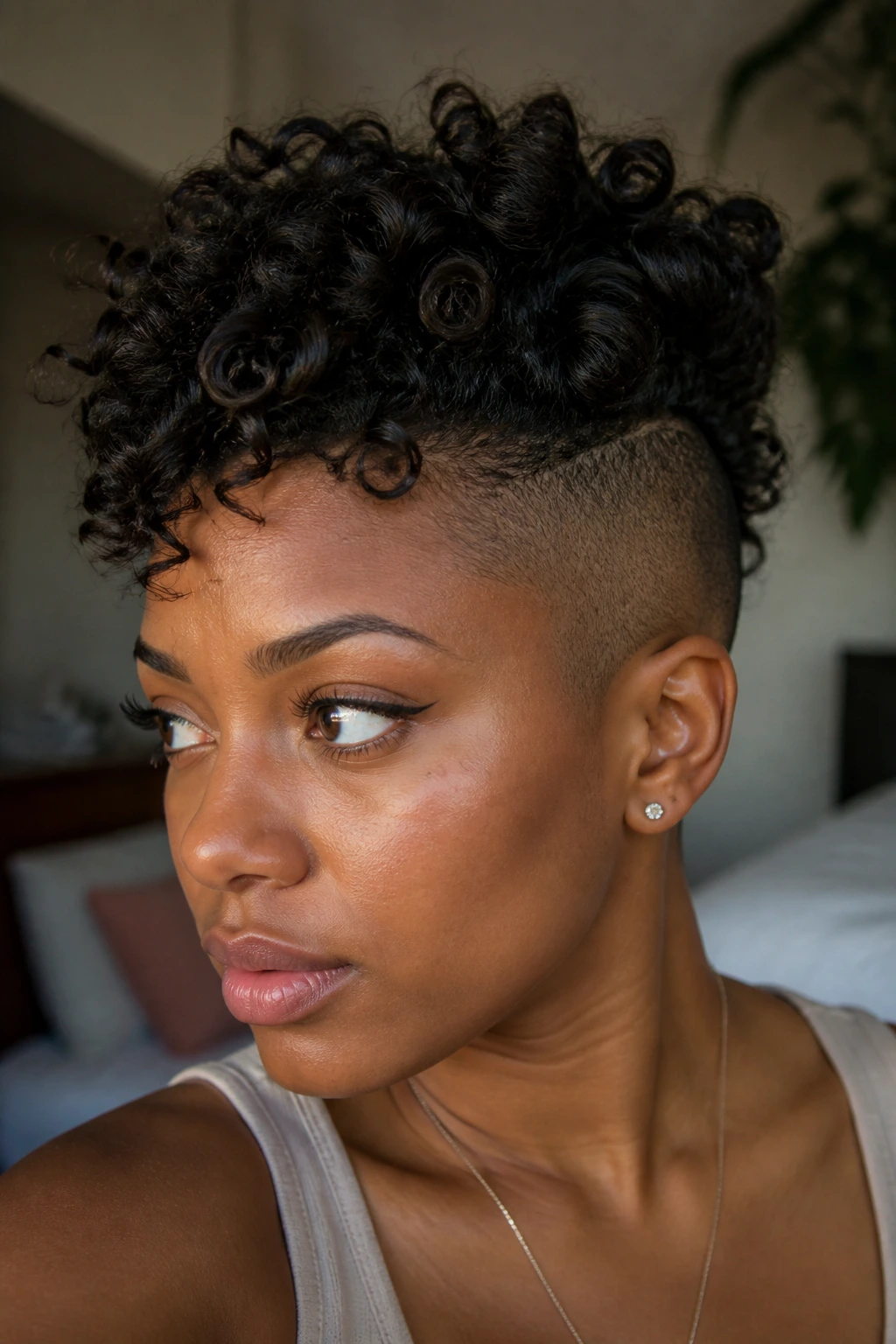
This is the “best of both worlds” look. You have the permanence of shaved sides, but the top is kept relatively loose, allowing you to pin the curls into whatever shape suits your mood for the day.
Why This Style Is Adaptable
Some days you might want the curls to be tight and upright; other days, you might want them to cascade forward over your forehead. Because the sides are already shaved, you have a blank canvas. You are not fighting against the hair on the sides of your head, so your styling time drops significantly.
A Note on Scalp Health
When you shave the sides, your scalp is exposed. It needs moisture just like your curls. Do not ignore your scalp during your wash day routine; using a light, non-greasy oil can prevent dryness and flaking, which is far more visible when the hair is buzzed short.
6. The Sleek Gel-Down Mohawk
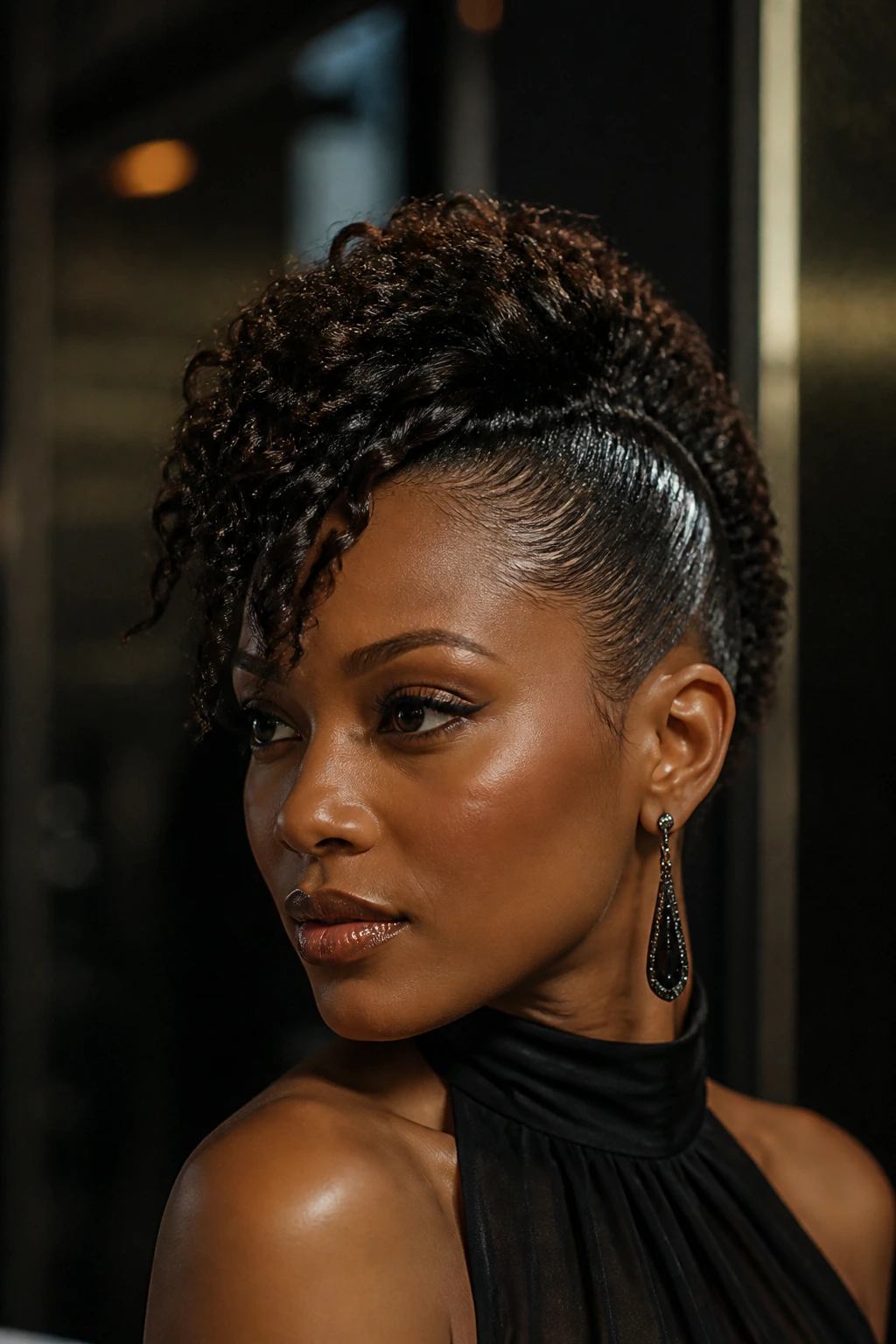
Think of this as the “wet look” Mohawk. It is incredibly popular for formal events or when you want a clean, sophisticated aesthetic. The hair is heavily saturated with gel and laid flat against the head on the sides, while the center is sculpted into tight, defined curls.
Avoiding the Crunch
The biggest mistake people make with this style is using too much product, leading to white flakes or a stiff, crunchy feel. Choose a moisturizing gel that offers hold without drying out your strands. Apply it to damp hair to help the product distribute evenly.
The “Laid” Edge
This style lives or dies by the edges. Take your time with your edge brush and a dedicated edge control product. Creating swoops or swirls along the hairline is a traditional finishing touch that ties the whole look together.
7. Crimped and Voluminous Mohawk
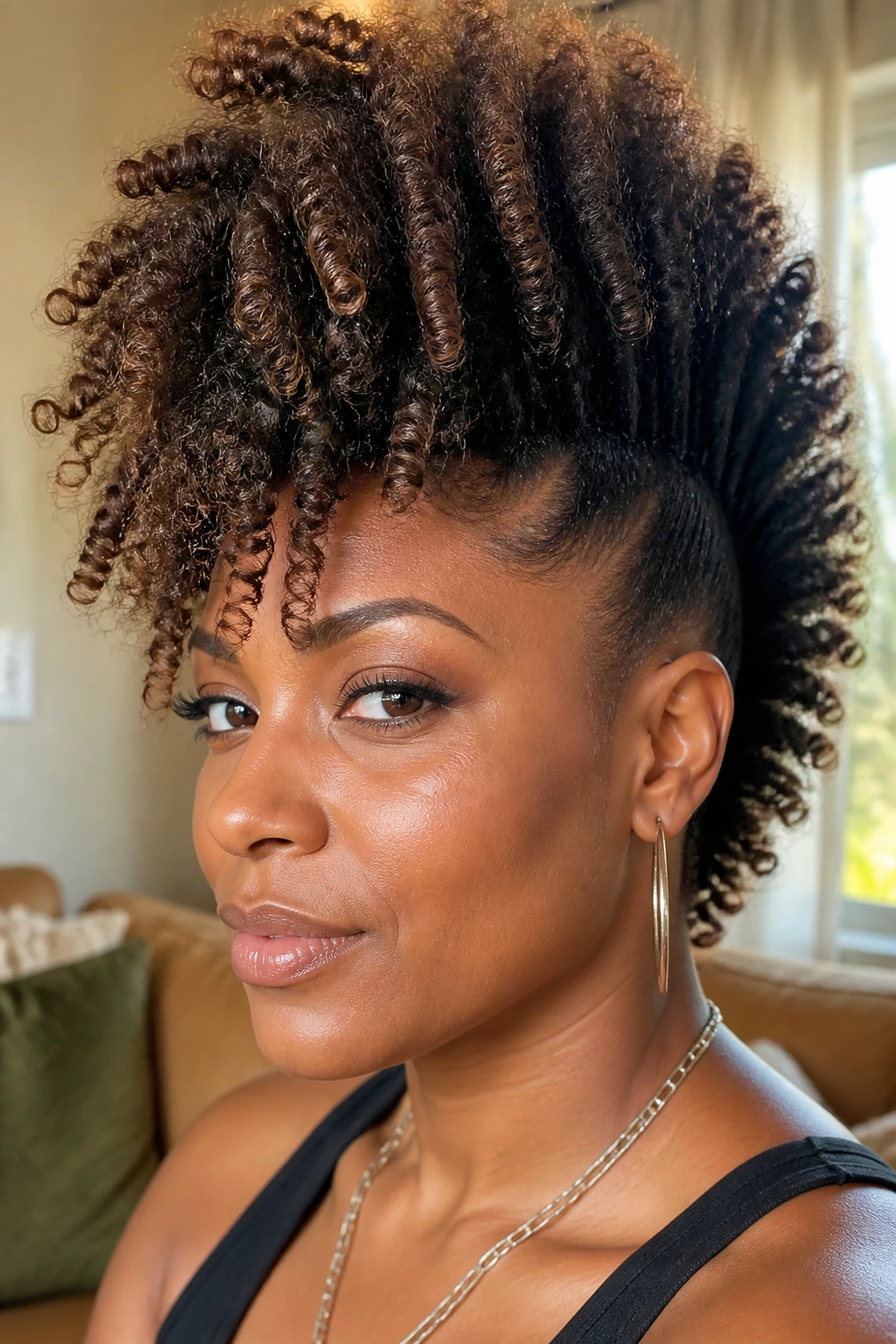
Crimping is making a massive comeback, and it looks incredible in a Mohawk. Using a crimping iron on your natural curls adds a secondary layer of texture that makes the Mohawk look larger than life.
How to Achieve the Texture
After washing and air-drying, lightly stretch your hair. Then, go through section by section with a crimping iron. Do not crimp every single strand—focus on the mid-lengths and ends to build volume. Once crimped, pull the sides up and pin them tightly to create the Mohawk shape.
Avoiding Heat Damage
Since you are using a heat tool, always use a heat protectant spray. Natural curls can be fragile, and you do not want to sacrifice your curl pattern for a temporary style. Keep the temperature on your iron moderate.
8. Mohawk with Bantu Knot Accents
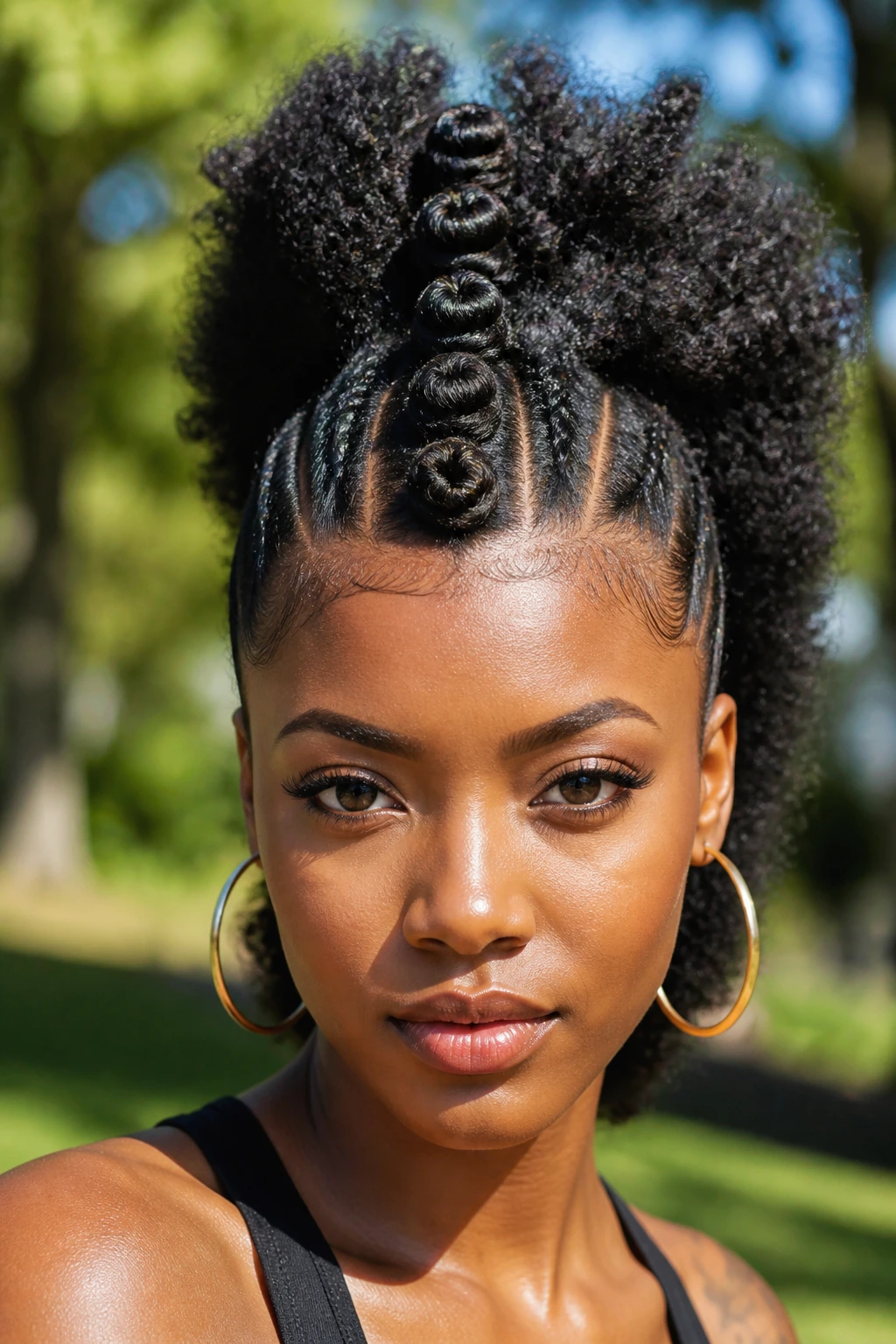
This is a fusion style that combines the edginess of a Mohawk with the cultural significance of Bantu knots. You can run a row of Bantu knots directly down the center of the head, or use them as accent pieces on the sides.
The Knotting Technique
Bantu knots are easy to create: simply take a section of hair, twist it around itself until it coils into a knot, and secure it. In a Mohawk configuration, you can line them up from the front hairline to the nape of the neck.
Why It’s Unique
It breaks up the silhouette of the Mohawk, which is typically soft and curly, with hard, geometric shapes. It is an artistic look that demands confidence. Plus, when you take the knots out after a day or two, you get a great crinkle texture that you can style for the next few days.
9. Two-Strand Twist Mohawk
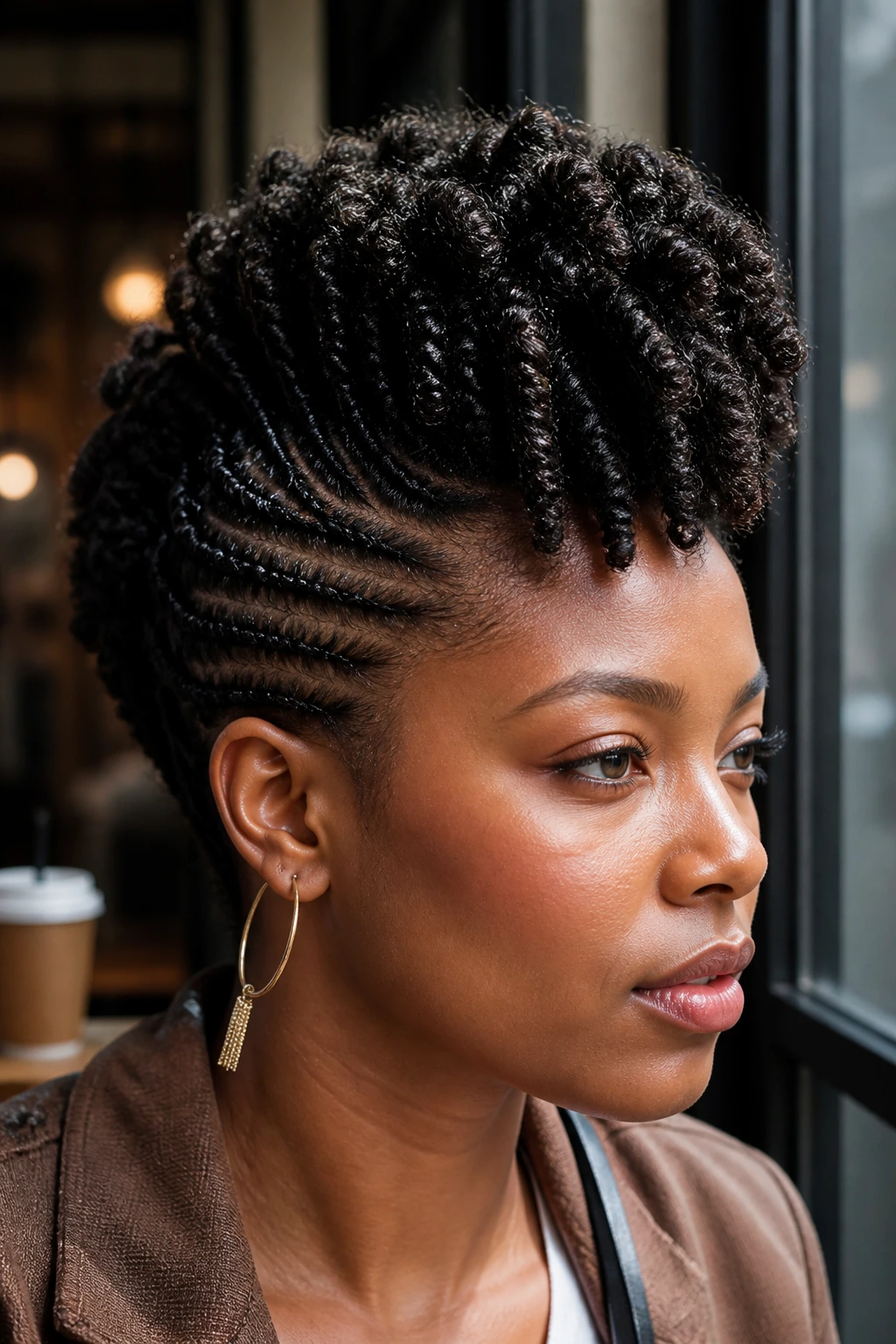
Two-strand twists are a staple for a reason: they are one of the most effective ways to define curls and maintain moisture. When you style these twists into a Mohawk, you get a clean, polished look that lasts for weeks.
Managing the Sides
You can keep the sides of your head in flat twists or cornrows, all feeding into the Mohawk section. This keeps the hair off your neck and face while providing a structured base for the twists in the center.
Refreshing the Look
One of the best things about twists is that they get better with age. As they get a little fuzzy, the Mohawk actually takes on a more natural, lived-in appearance. If they start looking too messy, a little bit of mousse can smooth them right back down.
10. Crochet Faux-Hawk
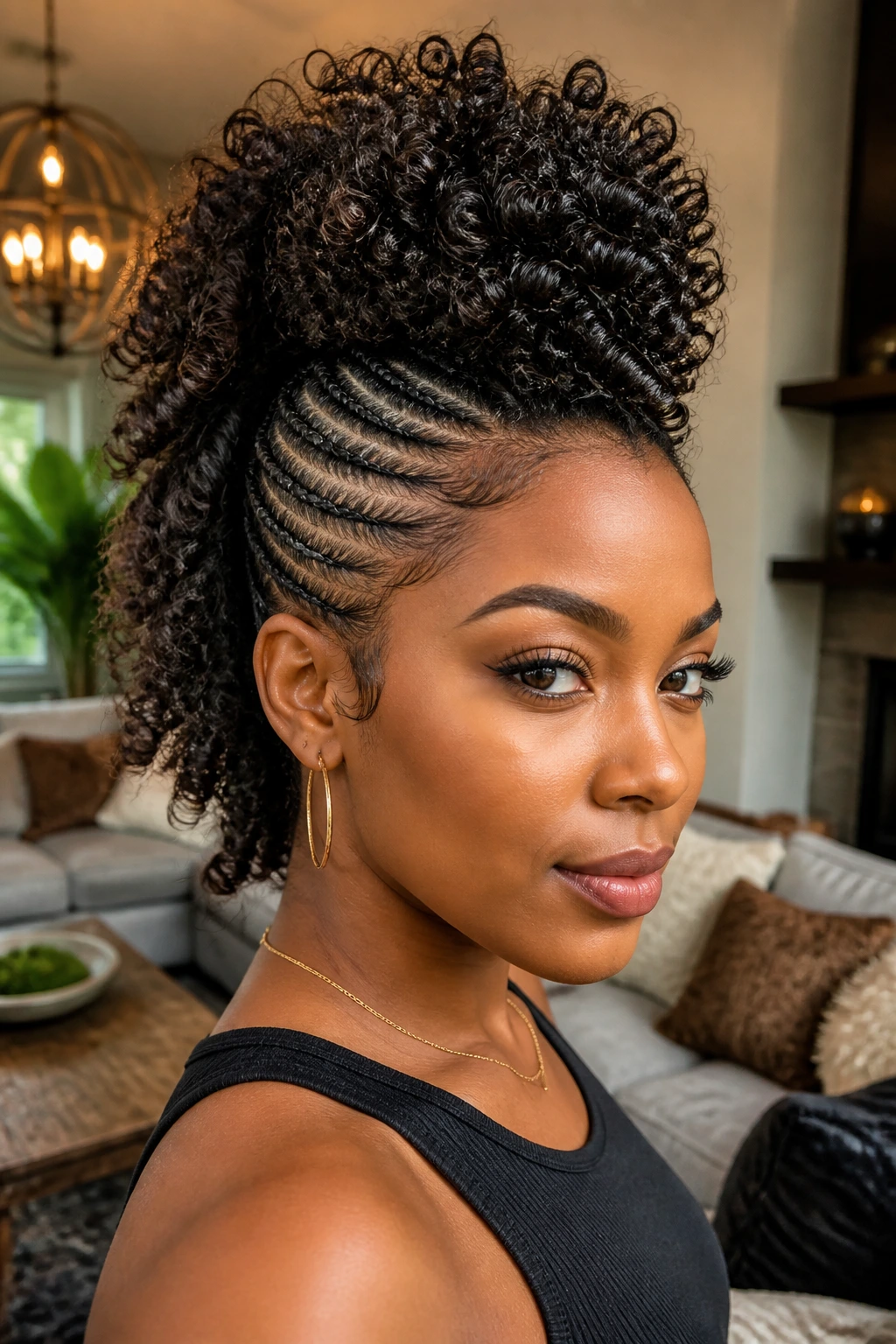
If you are currently in a transition phase or just do not want to style your own hair, a crochet Mohawk is the answer. You cornrow your natural hair down in a Mohawk pattern and then crochet curly extensions into the braids.
Why It’s a Time-Saver
Once you finish the braiding, the installation is fast. You can customize the look by using different types of curly hair—tight corkscrews, loose waves, or even ombre colors.
Choosing the Hair
Synthetic hair can sometimes be stiff or itchy. Opt for high-quality synthetic blends or even human hair if you want a look that mimics your own texture more closely. Make sure the hair is lightweight so it does not pull on your natural braids.
11. Mohawk with Intricate Cornrow Detailing
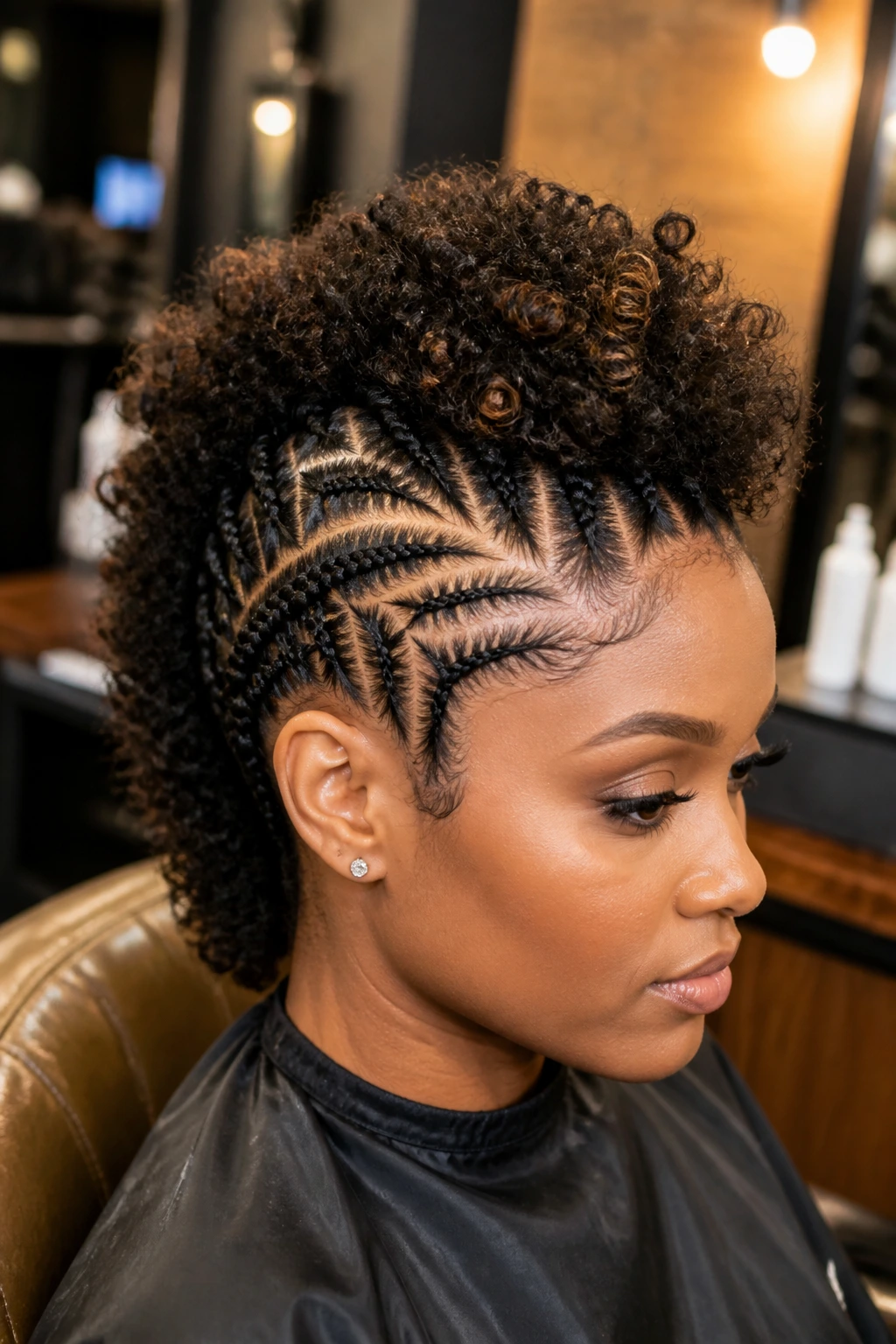
This style focuses on the artistry of the sides. Instead of simple straight-back cornrows, you can create intricate geometric patterns, swirls, or zig-zags on the sides, leading up to a crown of loose, voluminous curls.
The Skill Level Required
This is not a DIY style. Unless you are highly skilled with a mirror, you will need a professional braider for this. The complexity of the cornrow pattern is what makes the style stand out.
Highlighting the Parts
To really make those cornrows pop, use a bit of oil or pomade on your scalp to make the parts look clean. Sometimes, stylists will add gold or silver cuffs to the braids to add a little bit of jewelry to the hair, which looks striking against dark hair.
12. The Mohawk Updo with Tendrils
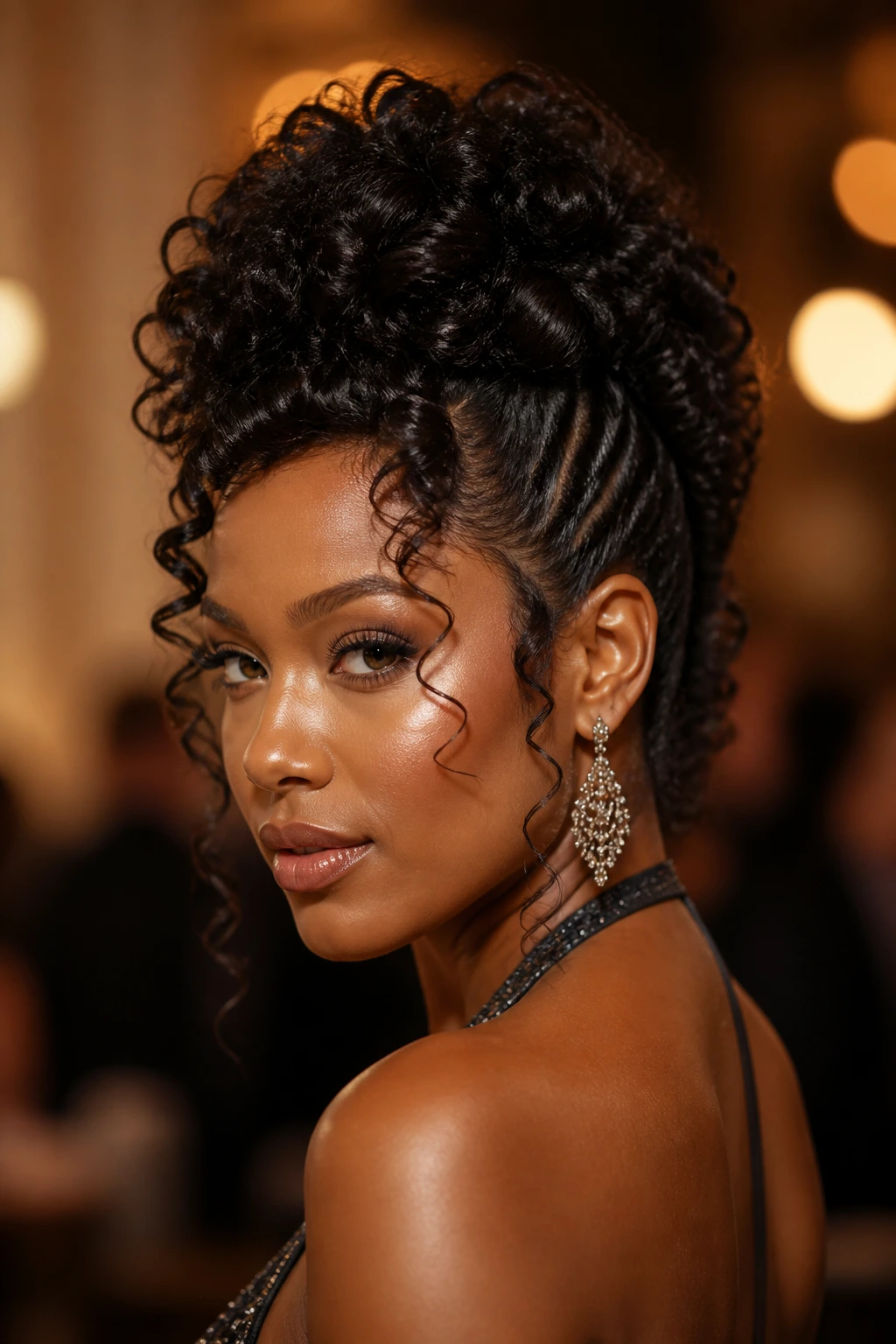
This is the softer, more romantic version of the Mohawk. It is less about the harsh, “punk” aesthetic and more about elegant volume. The hair is gathered upward, but instead of being pinned tight, it is allowed to spill over.
Styling the Face-Framing Pieces
The key here is to leave out a few curls around your face—these are your tendrils. They soften the jawline and give the style a relaxed, effortless vibe. You can curl these tendrils with a small wand to ensure they blend well with the rest of the hair.
When to Wear It
This is a perfect style for evening events or weddings. It feels formal enough for a gown but keeps the personality of your natural texture front and center.
13. Shaved-Side Frohawk with Highlighted Tips
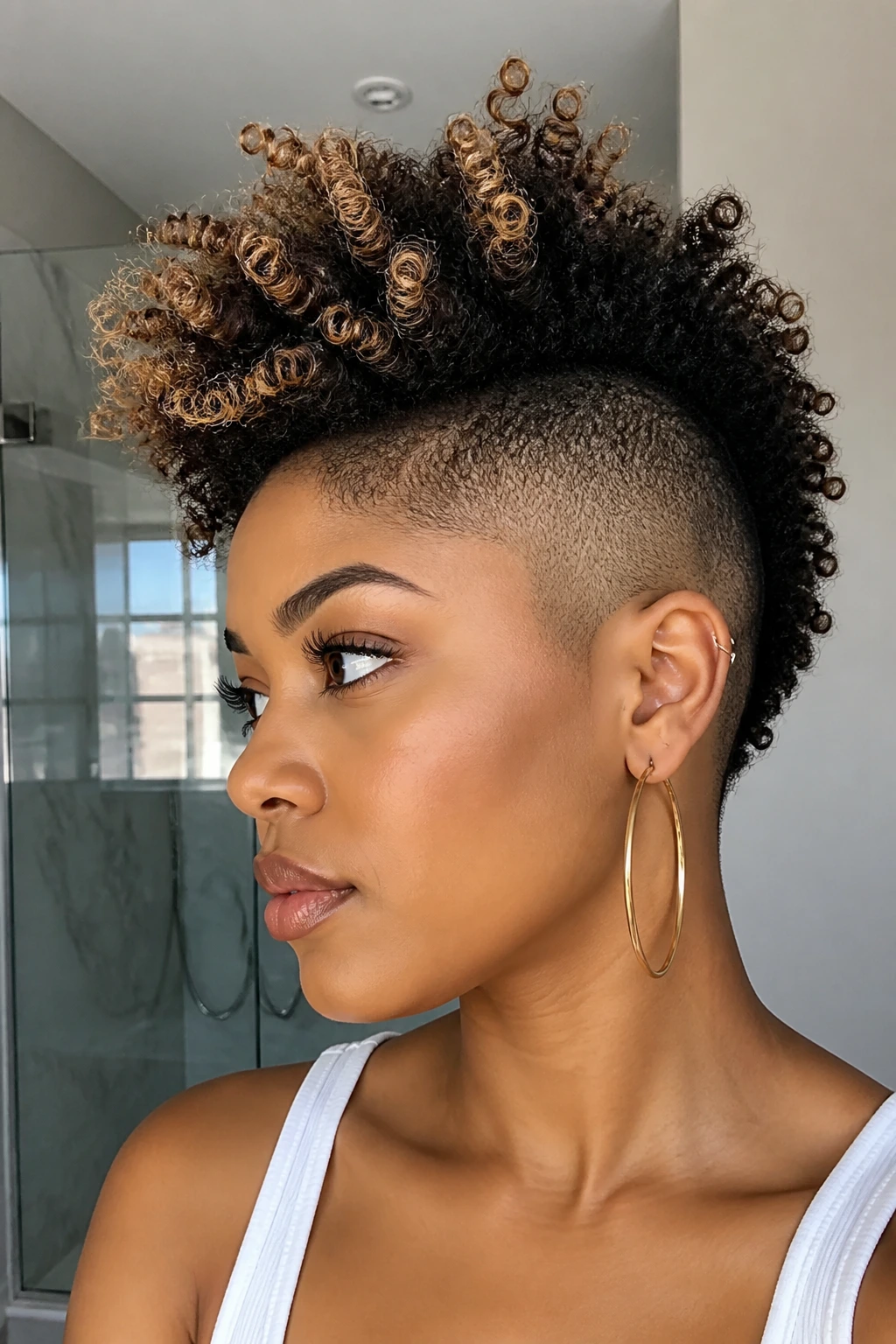
If you have a shaved-side frohawk, adding color to the very tips of your curls can completely change the geometry of the cut. The color draws the eye upward, making the Mohawk appear taller and more dramatic.
Choosing Your Colors
You do not need to bleach your entire head. A simple balayage or dipping just the ends of your curls in a vibrant shade—like honey blonde, copper, or deep burgundy—creates a stunning contrast, especially against a darker base.
Caring for Color
Bleached or dyed curls are more prone to dryness. You will need to ramp up your conditioning routine. A weekly deep conditioning mask is mandatory to ensure the ends—where the color lives—stay soft and don’t become brittle or snap off.
14. The Perm-Rod Set Mohawk
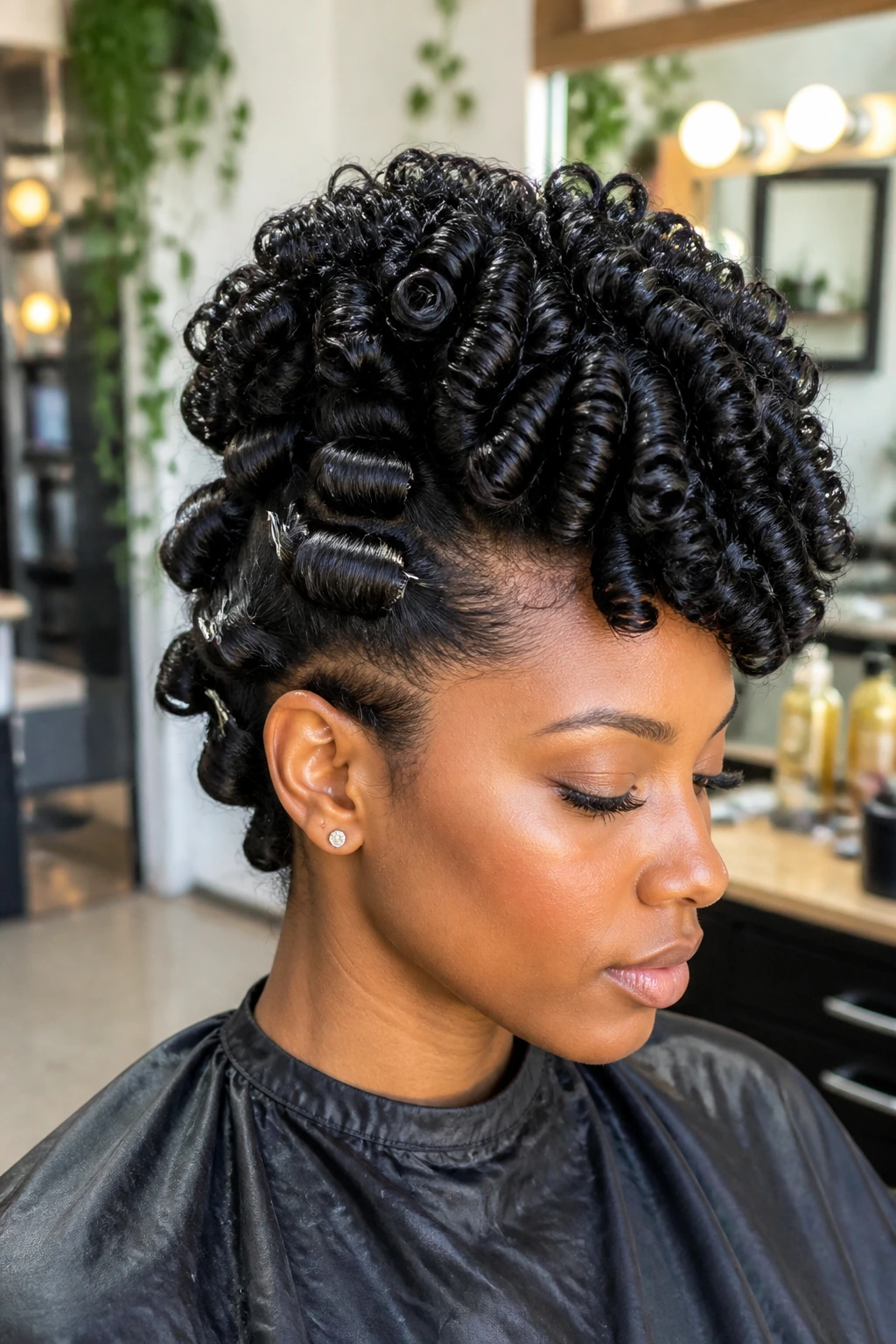
Perm-rods are the secret weapon for uniform, spiraled curls. If your natural pattern is a bit irregular, a perm-rod set will give you a consistent, tight coil that looks incredible when swept up into a Mohawk.
The Prep Work
You will need to set your hair while it is wet, using a setting lotion or mousse. The smaller the rods, the tighter the curl will be. Once your hair is 100% dry—and I mean bone dry—you take the rods out and gently separate the curls.
Styling the Mohawk
Once you have your uniform curls, gather the hair from the sides and pin it up toward the center. Because the curls are so defined, you do not need much product to hold the shape; a little bit of hairspray or a light-hold gel should suffice.
15. Mohawk with Flat Twist Sides
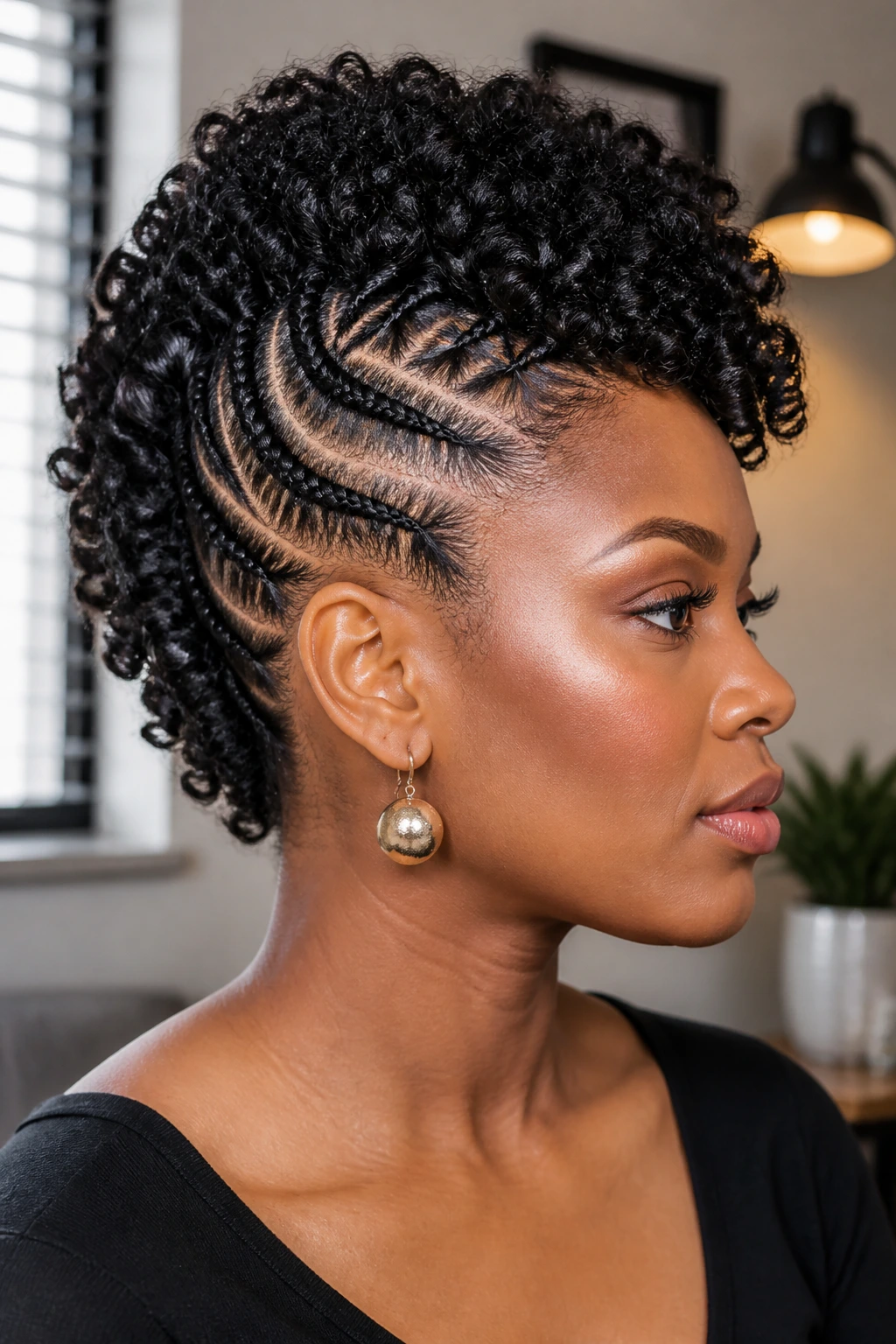
Flat twists are often easier for beginners than cornrows. They provide a similar “slicked” appearance on the sides, giving the hair a lovely, rope-like texture that looks very polished.
Why This Style Lasts
Flat twists tend to stay neater for longer than cornrows, especially if you have a softer hair texture. They lay flat against the scalp, creating a nice, streamlined foundation for the Mohawk.
The “Twist-Out” Option
When you are ready for a new style, you can take out the flat twists. Because the hair has been set in that twist pattern, you will have a beautiful, wavy texture on the sides that you can fluff out, giving you a completely different, voluminous look.
16. Messy Bedhead Frohawk
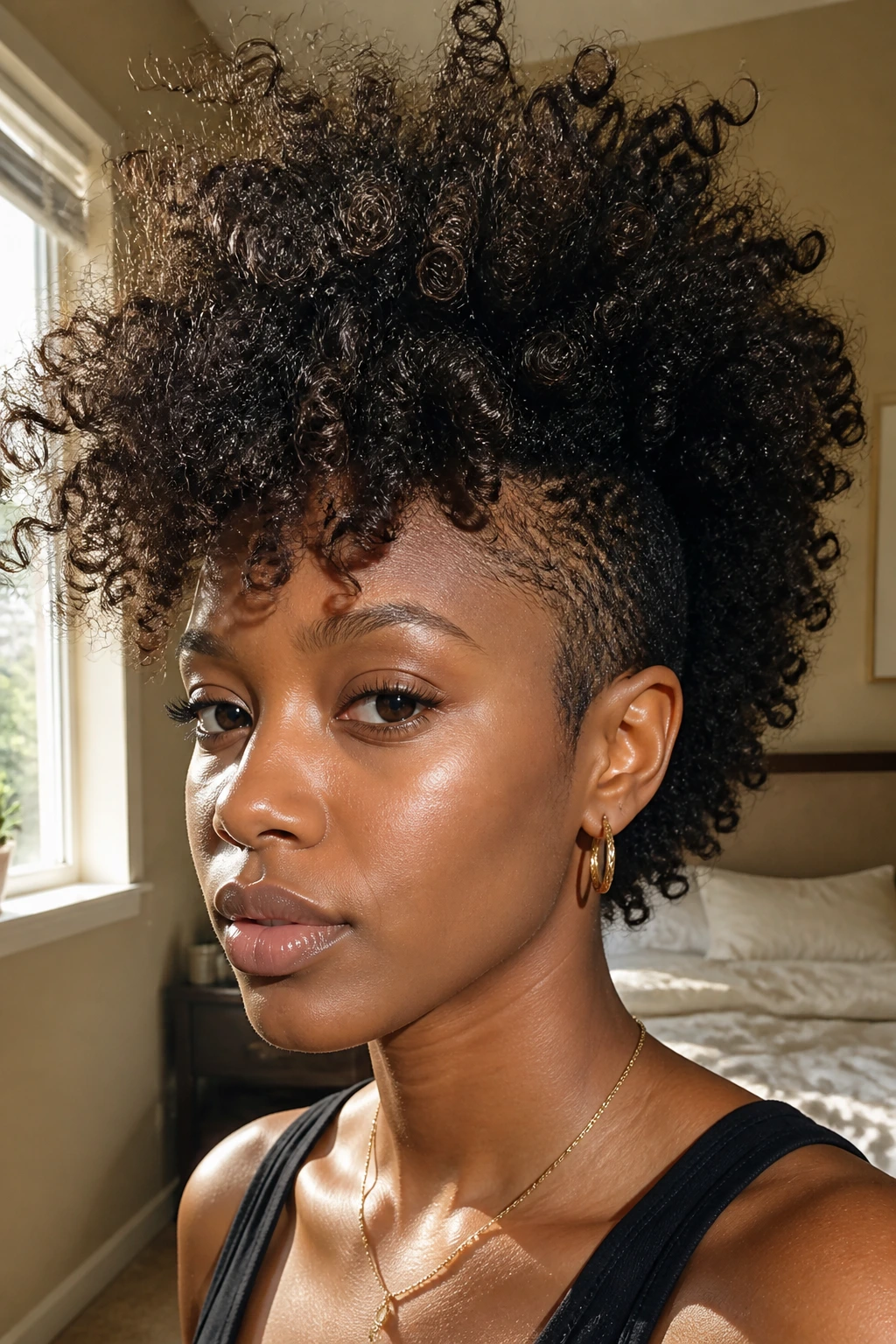
Sometimes, the best look is the one that looks like you just rolled out of bed and didn’t try too hard. The “messy” Mohawk is about embracing volume and letting the curls fall where they may.
The Art of Messiness
The secret to “messy” hair is that it is actually quite intentional. You use a wide-tooth comb or a hair pick to lift the roots, creating height. You want the curls to look airy, not weighed down by heavy product.
The Finishing Touch
Use a bit of sea salt spray or a light texture spray to give the curls some grit. This helps them hold the shape without looking “done.” If you feel it’s too messy, just use a few bobby pins to tame the areas that feel out of control, but keep the overall silhouette wild.
17. The Twisted Updo Mohawk
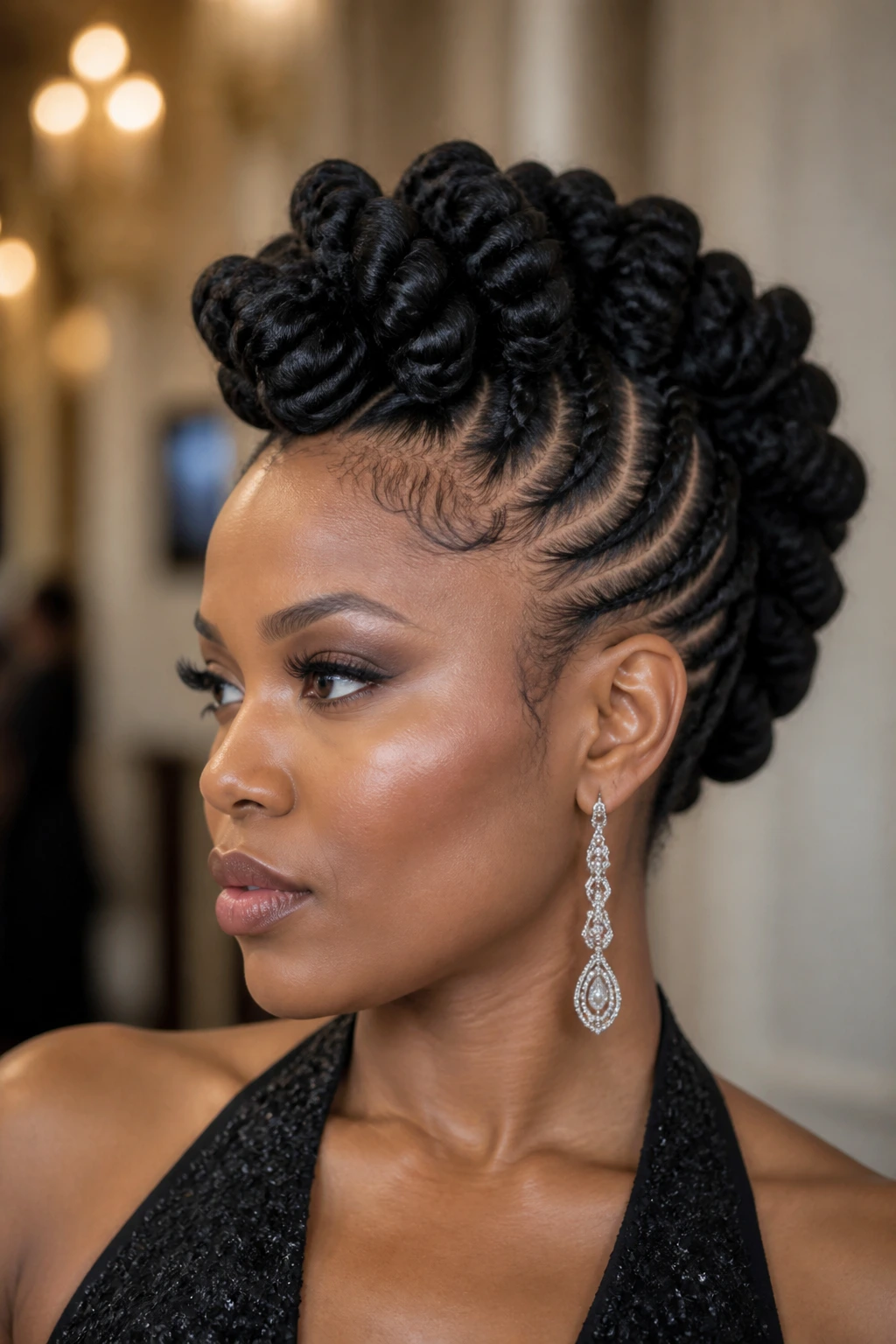
This is a sophisticated take on the Mohawk, involving larger twists that are pinned in place. It looks almost like a crown of twists running down the center of the head.
The Geometry
This is a more sculptural approach. You are essentially building a structure on top of your head. Take large sections of hair, twist them, and pin them so they curve upward and inward, meeting at the center.
Why It Works for Formal Wear
It looks incredibly ornate and high-effort, even if it is just a series of twists pinned strategically. It is a fantastic option for someone who wants a Mohawk but prefers a more refined, upscale silhouette rather than the more aggressive “shaved side” aesthetic.
Preparing Your Hair for a Mohawk
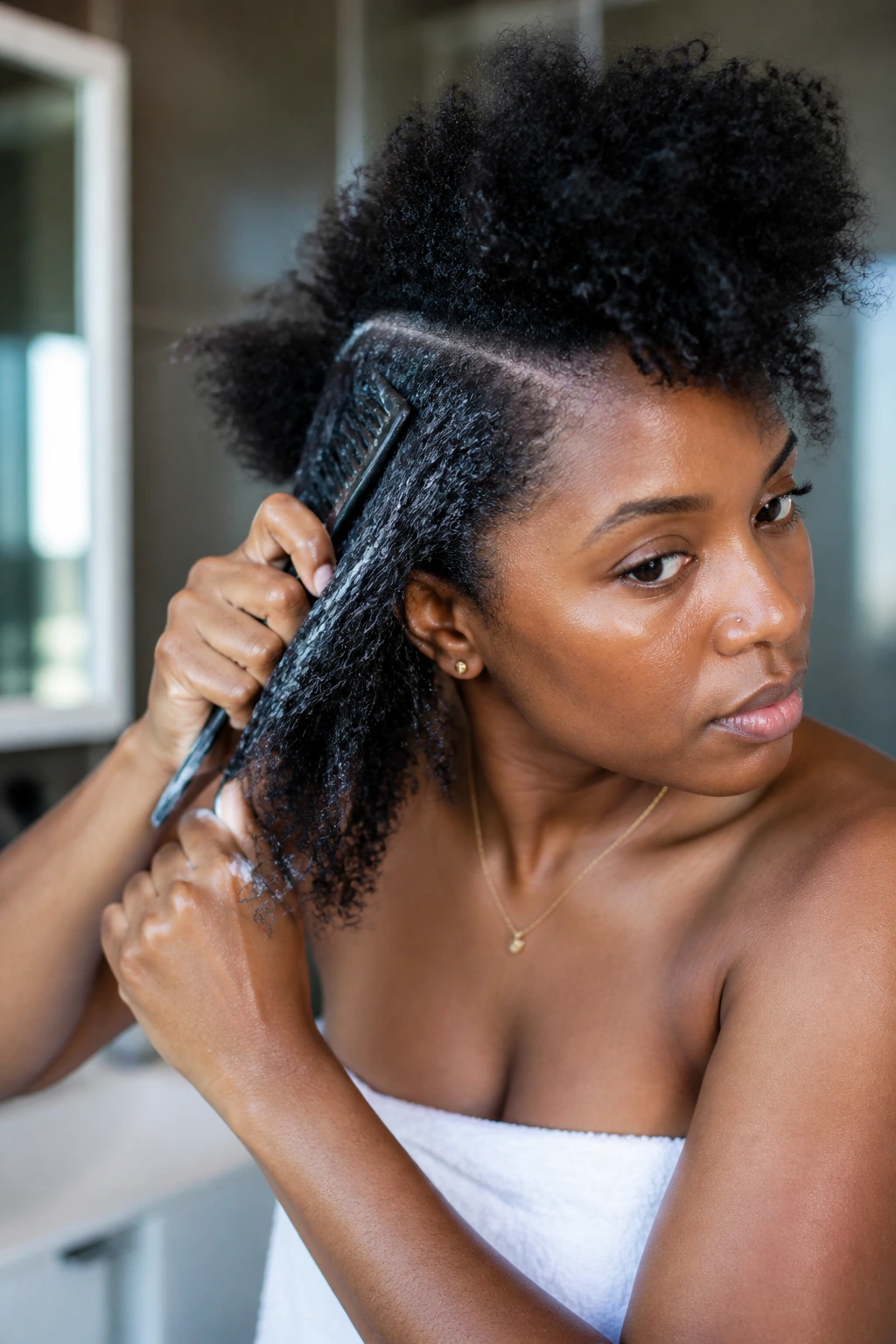
Before you reach for the bobby pins or clippers, you have to ensure your hair is prepped to handle the manipulation. Mohawks, especially those that involve pinning, can be stressful on the hair follicle if done incorrectly. Start with a clean slate. Wash your hair with a moisturizing shampoo to remove any buildup from previous products.
Deep conditioning is not optional. Your hair needs to be supple and elastic before you start pulling it into shapes. If your hair is brittle, it will snap when you try to pull it up into the Mohawk. After deep conditioning, apply a leave-in conditioner to lock in that hydration.
Consider your detangling process carefully. Work in small sections, starting from the ends and working your way up to the roots. If you try to pull a comb through a tangled fro, you will lose length to breakage. When your hair is properly detangled and moisturized, it becomes significantly easier to mold into the desired Mohawk shape.
Managing Edges and Hairlines
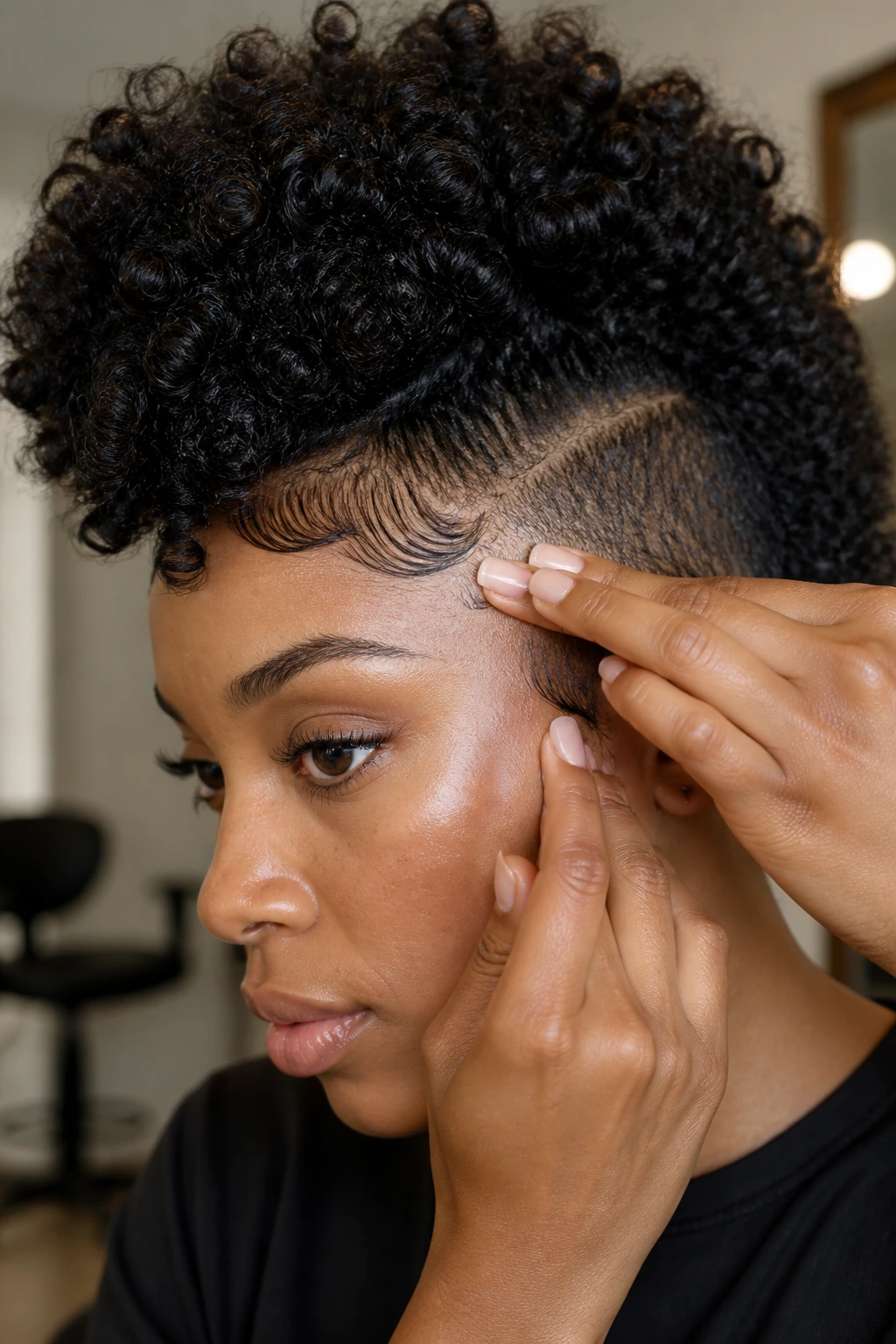
The edges are the most vulnerable part of any Mohawk style. Whether you are using gel to slick them down or braiding them tight, your hairline takes the brunt of the pressure. Always use a gentle hand. If you are using a gel, look for formulas that contain aloe or glycerin, which provide moisture alongside hold. Avoid “extreme hold” products that harden like cement; these are the primary culprits behind edge thinning.
If you are braiding the sides, remind your stylist—or yourself—to loosen the grip at the hairline. It is tempting to make the braids as tight as possible for longevity, but this is a mistake. The hair at the temple is much finer than the hair on the rest of your head. A slightly looser braid will last long enough and will keep your edges intact for the next style.
Nighttime Routine for Maintenance
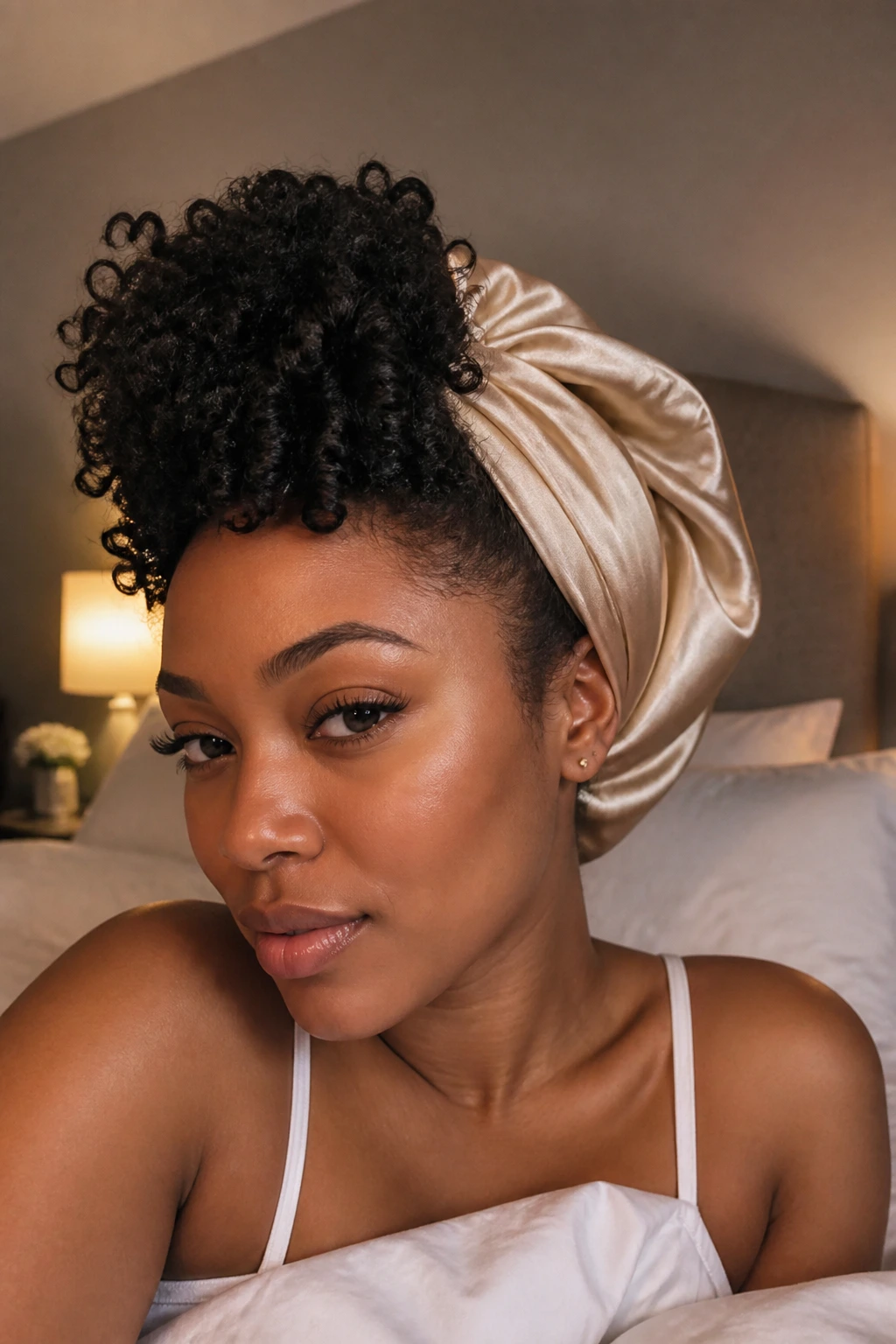
A Mohawk can be a high-maintenance style, but you can extend its life with the right nighttime routine. Friction is the enemy of curly hair. Sleeping on a cotton pillowcase will dry out your hair and cause frizz, ruining the silhouette of your Mohawk by morning.
Invest in a silk or satin bonnet, or sleep on a silk pillowcase. If your Mohawk is particularly tall or voluminous and won’t fit inside a standard bonnet, consider a “buff” or a satin-lined tube that stays secure around your head. This protects the sides if they are braided or twisted and keeps the curls on top from getting matted. In the morning, you might only need a light spritz of water or a curl refresher spray to bring the shape back to life.
Final Thoughts
The beauty of the curly Mohawk for Black women lies in its duality. It is simultaneously tough and soft, rebellious and elegant. You are not just choosing a haircut; you are choosing a framework that highlights the unique beauty of your natural texture. Whether you go for a dramatic, shaved-side look or a subtle, pinned-up illusion, the success of the style really comes down to the health of your curls.
Don’t be afraid to experiment with the different variations. A style that works for a high-intensity week might not be the same one you want for a relaxed weekend. Keep your products simple, keep your edges safe, and lean into the volume. The Mohawk is a classic for a reason—it frames the face, showcases the neck, and puts your natural curls right where they belong: center stage.
