



Fine hair can wear a wolf cut, but only when the shape respects what the hair can and cannot do. Too many short layers, too much thinning, too much enthusiasm from the scissors, and the whole thing starts to look see-through at the ends.
The wolf cut works best when it keeps a solid perimeter and saves the choppiness for places that create lift: the crown, the cheekbones, the fringe, maybe a little movement through the mids. That balance matters. A wolf cut on fine hair should look airy, not hungry.
And that’s the real trick. The difference between a flattering wolf cut and a floppy one is often tiny — a slightly shorter face frame, a softer bang, a blunt base tucked under the layers, one less round of texturizing. Small choices do a lot of work here.
These 22 versions cover the wolf cuts I’d trust most on fine strands, whether you want barely-there movement or a more obvious shaggy edge. Start with the one that matches your length, then think about how much styling you’re willing to do before breakfast.
1. The Soft Collarbone Wolf Cut

Start here if your hair collapses the second it gets over-layered. The collarbone length gives fine hair a little more visual weight, which helps the cut look full even when the strands themselves are delicate.
Why It Works for Fine Hair
The base stays long enough to hold shape, while the top gets just enough lift to create that wolf-cut feel. You get movement without losing the bottom line. That bottom line matters more than people think.
Ask for soft internal layers, not a choppy chop through the whole head. A good version begins around the cheekbone and fades down toward the collarbone, leaving the ends with enough density to look like hair, not dust.
- Keep the perimeter blunt or barely textured.
- Ask for crown layers that begin low.
- Style with a light mousse, not a heavy cream.
- Blow-dry the crown first if you want lift that lasts.
Pro tip: If your ends already look sparse, skip aggressive thinning. That one move can wreck the whole shape.
2. The Curtain-Bang Wolf Cut

Curtain bangs can do more for fine hair than another round of layers ever will. They widen the front of the haircut, which makes the whole style look fuller from the first glance.
The best version starts with a soft middle part and bangs that sweep out from the center, hitting somewhere between the cheekbone and jaw. Too short, and they can look patchy. Too heavy, and they sit flat. The sweet spot is light, brushed away from the face, and a little uneven in the nicest way.
Tell your stylist you want face opening, not forehead coverage. That wording helps. You want the fringe to blend into the sides so the cut feels connected instead of chopped into pieces.
A small round brush changes everything here. One minute under the nozzle while the bangs cool in place is usually enough. If you prefer air-drying, twist each side back and clip it while damp.
3. The Chin-Length Wolf Cut
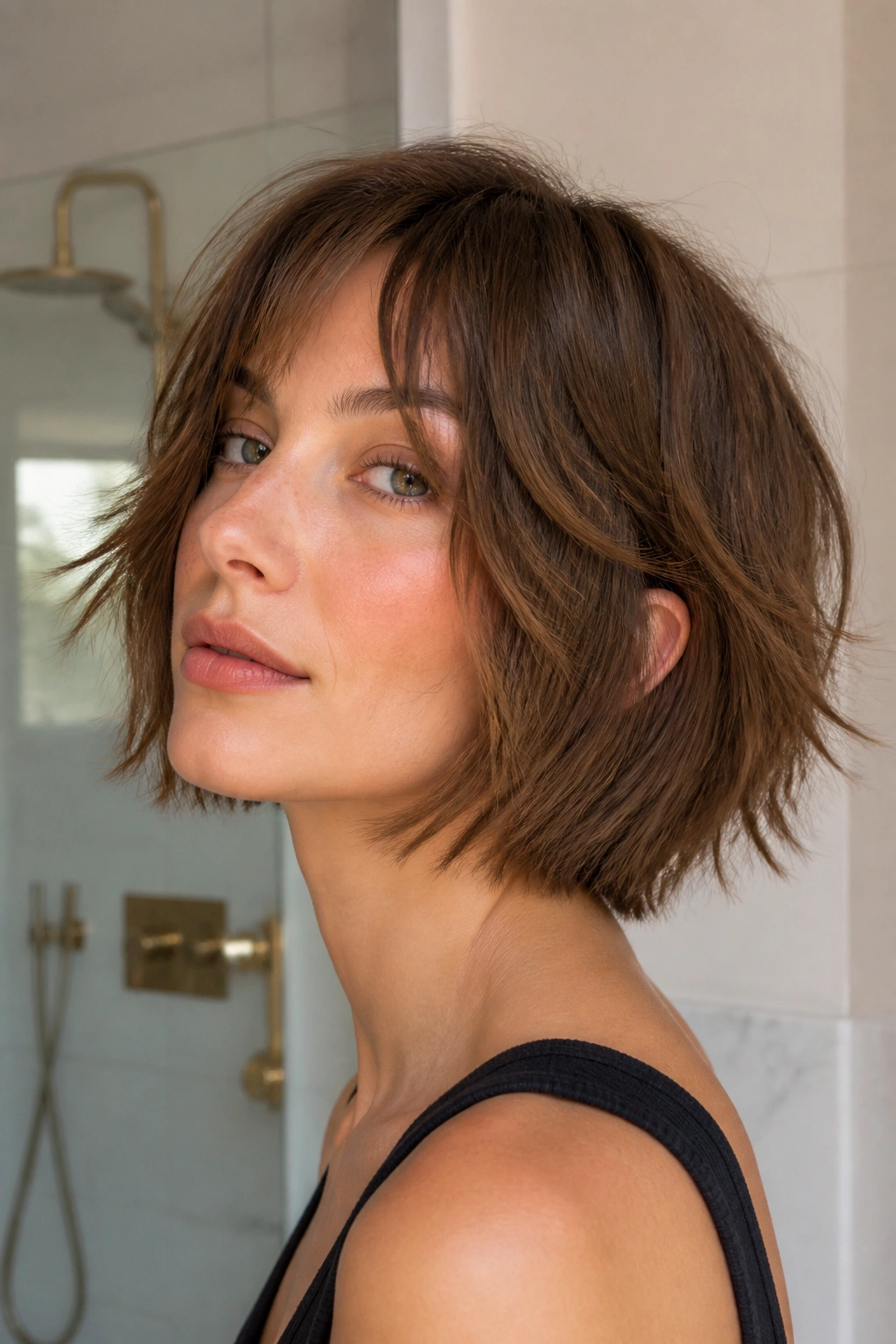
Why does chin length work so well on fine hair? Because it keeps the silhouette compact. Hair that stops around the chin tends to read fuller than hair that drifts past the shoulders and thins out at the ends.
This version is a nice middle ground if you want edge without giving up too much softness. The top can still carry that wolf-cut lift, but the shorter perimeter gives the style some bite. It also makes the jawline look sharper, which is handy when the hair itself is very fine and needs a stronger outline.
How to Wear It
Ask for a blunt or slightly beveled base with light, broken-up layers on top. The point is not to erase the shape. The point is to keep it visible.
A chin-length wolf cut likes a quick bend with a flat iron or a small brush blowout. Air-dried, it can look a little fuzzy unless your natural texture already has body. That is not a flaw. It just means the cut wants some help.
4. The Long Wolf Cut with Invisible Layers
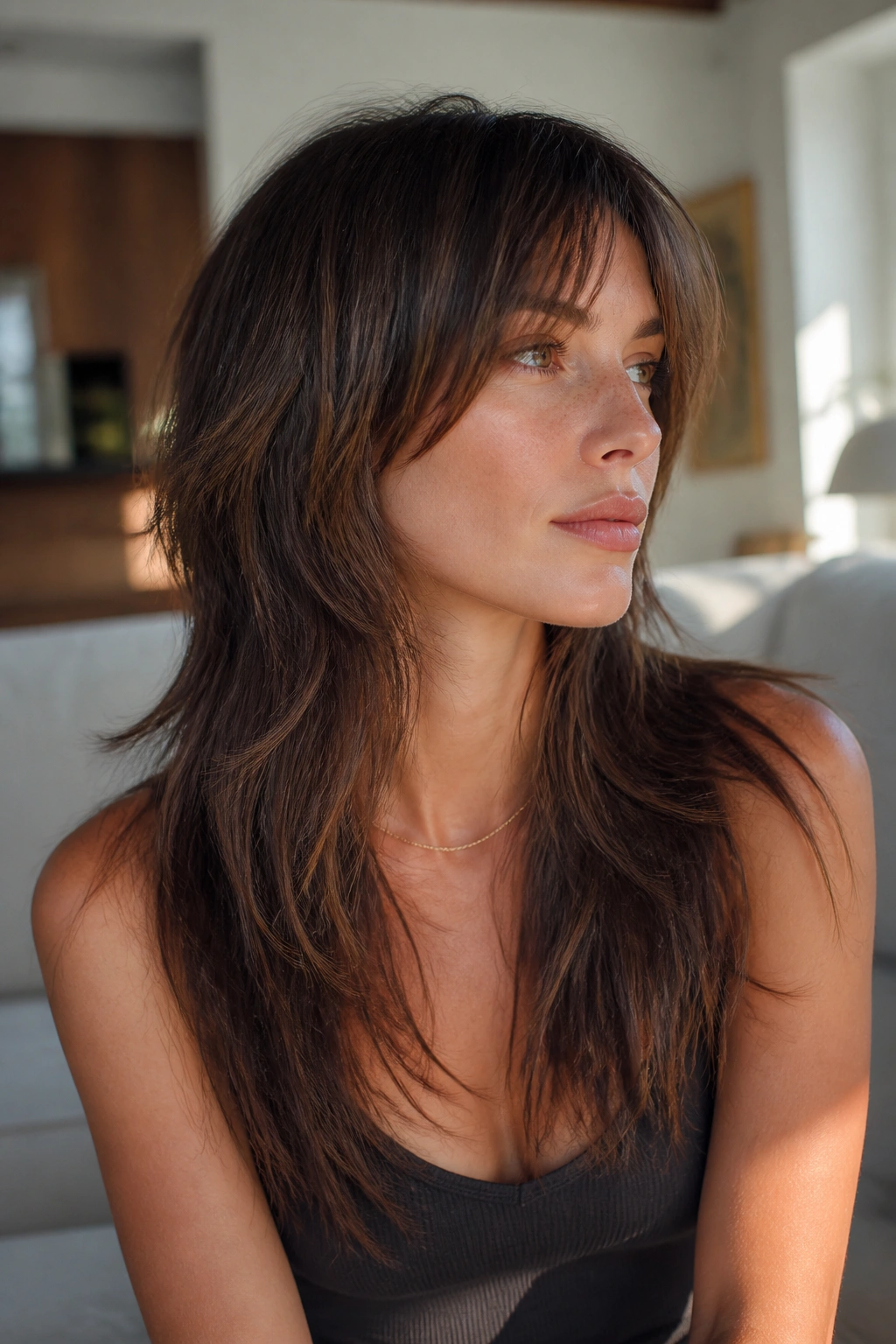
If you want to keep your length, this is the version I’d hand to you first. The layers hide inside the haircut instead of breaking it up too aggressively, so the ends stay denser and the whole style feels easier to wear.
Long fine hair can turn stringy fast when the shortest layers are too high. Invisible layers avoid that. They build movement in the mids and crown while leaving the bottom section heavy enough to anchor everything. The result is softer, less spiky, and far less risky.
One sentence matters here: length is the volume.
Tell the stylist to keep the shortest pieces low and the face frame long, then leave the rest of the interior blended rather than shredded. This version works especially well if your hair is straight or only slightly wavy, because you get shape without needing a lot of daily styling.
5. The Razor-Feathered Wolf Cut
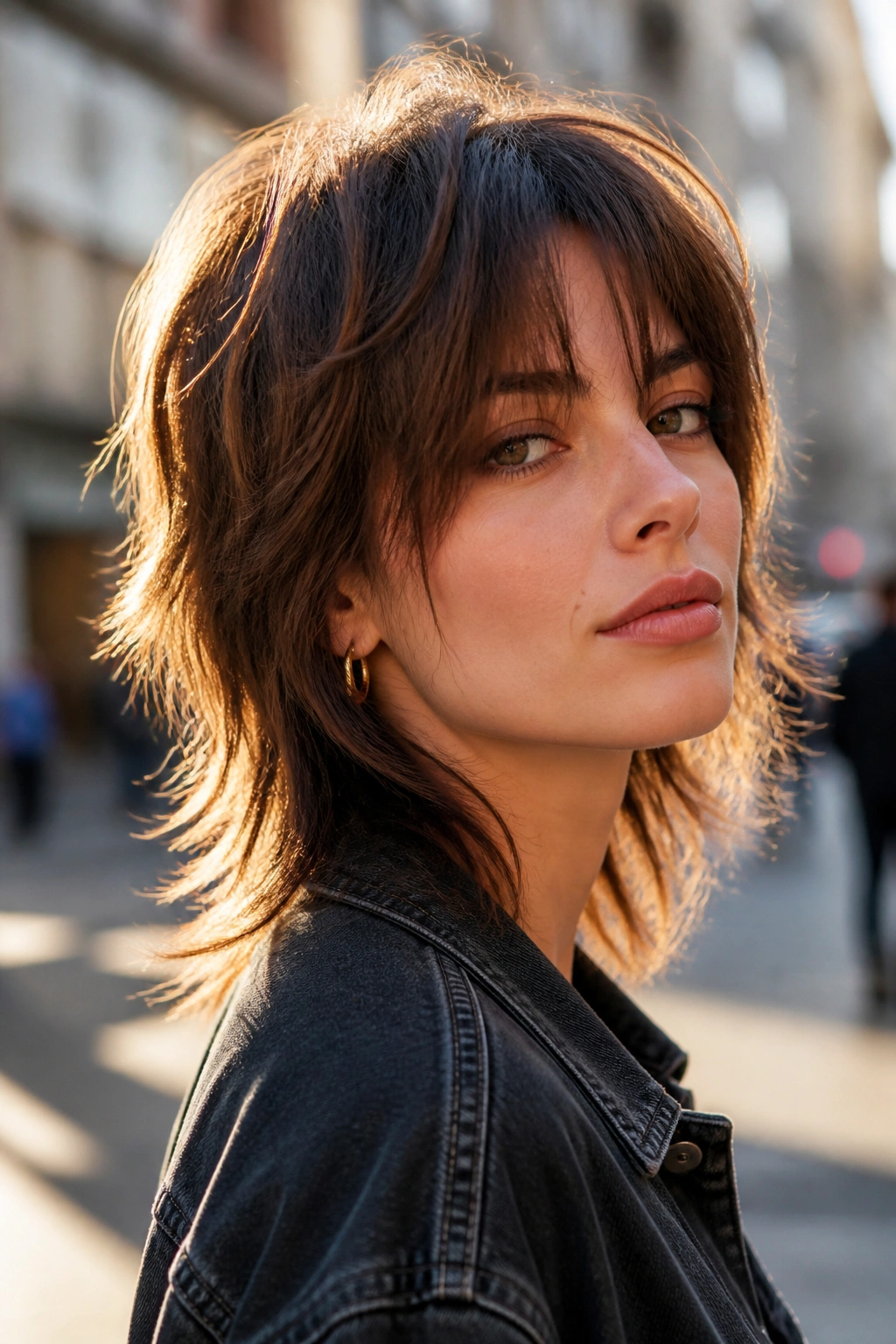
A razor can make a wolf cut feel lighter and softer, which sounds ideal for fine hair until it’s overdone. That’s the catch. Too much razor work and the ends can fray, especially if your strands are already fragile.
Used carefully, though, it creates a feathered edge that moves well and doesn’t look stiff. I like this on fine hair that is naturally smooth and a little resistant to layering. The razor takes the harshness out of the line without making the haircut look pieced together.
What to Ask For
- Soft razor work only through the mids.
- A cleaner finish at the ends.
- Less thinning near the perimeter.
- No razor over the weakest sections.
This cut suits someone who wants softness more than edge. If your hair tangles easily or splits fast, a scissor-based version may hold up better.
6. The Bixie Wolf Cut
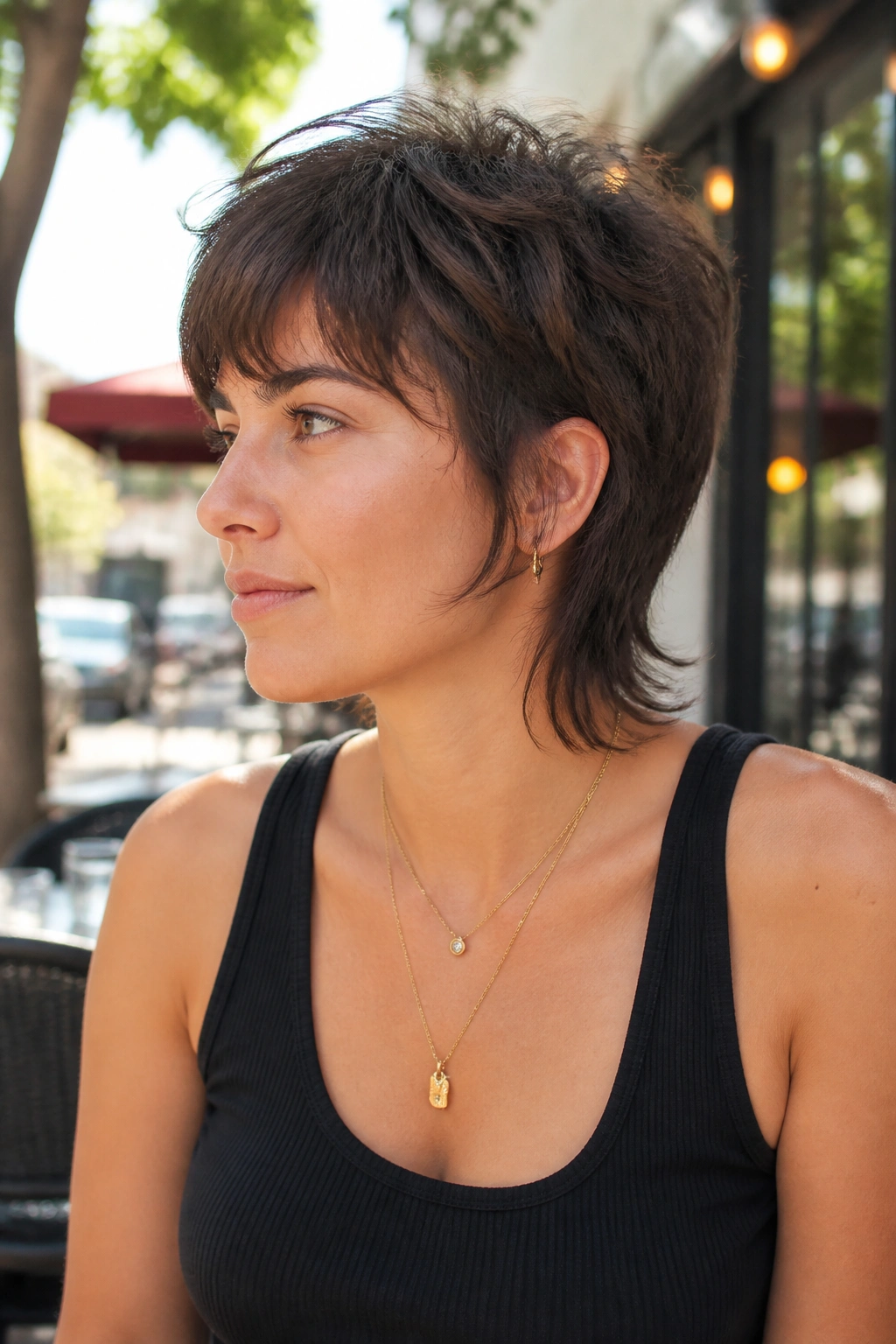
The bixie wolf cut sits in that very usable space between a pixie and a short shag. For fine hair, that shorter length can be a relief. There is less hair to fight, and the crown can be built up without the whole style sagging by lunchtime.
What makes it work is the contrast: a fuller top, a wispy nape, and enough length around the sides to keep it from looking like a standard pixie. It has movement. It has shape. It also dries fast, which is a small mercy on rushed mornings.
Why It Beats a Plain Pixie
The bixie wolf keeps the top a little longer, so you still get that messy, lifted feel. A plain pixie can sit too close to the head when the hair is fine. This shape gives the roots something to do.
Ask for piecey crown layers, a soft side fringe, and a nape that tapers rather than disappears. It’s a sharp look, but not a fragile one.
7. The Shaggy Lob Wolf Cut
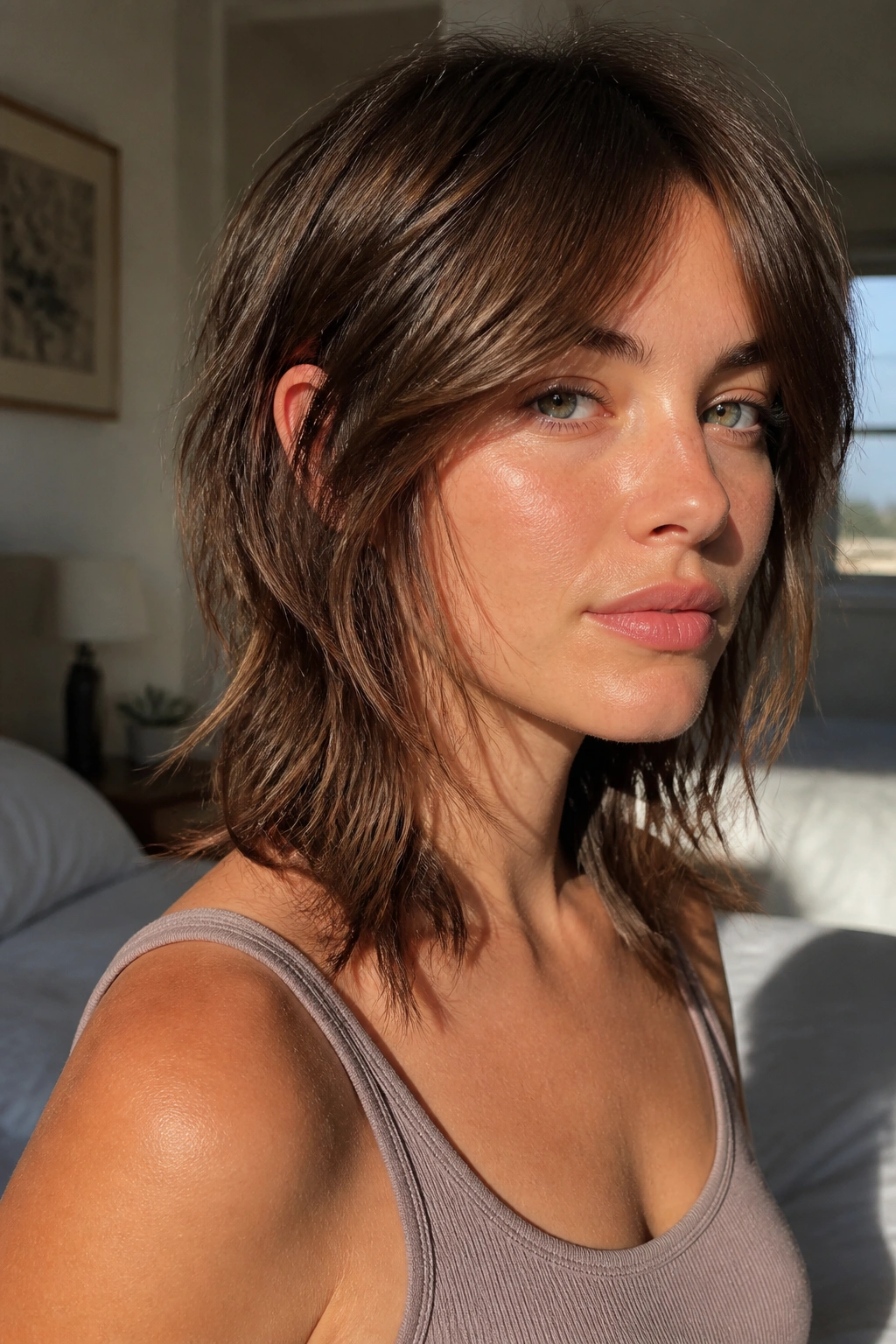
A lob is one of the safest places to play with a wolf cut on fine hair. It gives you enough length to keep the ends thick, but not so much that the hair gets pulled flat by its own weight.
The shaggy lob is the one I’d recommend to anyone who wants texture without a dramatic shift. It sits around the shoulders or just above them, then uses light layering through the top half to create lift. Because the cut is still anchored by a strong outer shape, it tends to look intentional even on day three.
The nicest versions of this cut have a slight bend at the ends and a soft, not-too-fussy face frame. They are easy to grow out. They are also easy to style badly if you reach for too much product.
Use a walnut-sized amount of mousse, then stop. Fine hair rarely needs more. A little grit goes a long way here.
8. The Bottleneck-Bang Wolf Cut
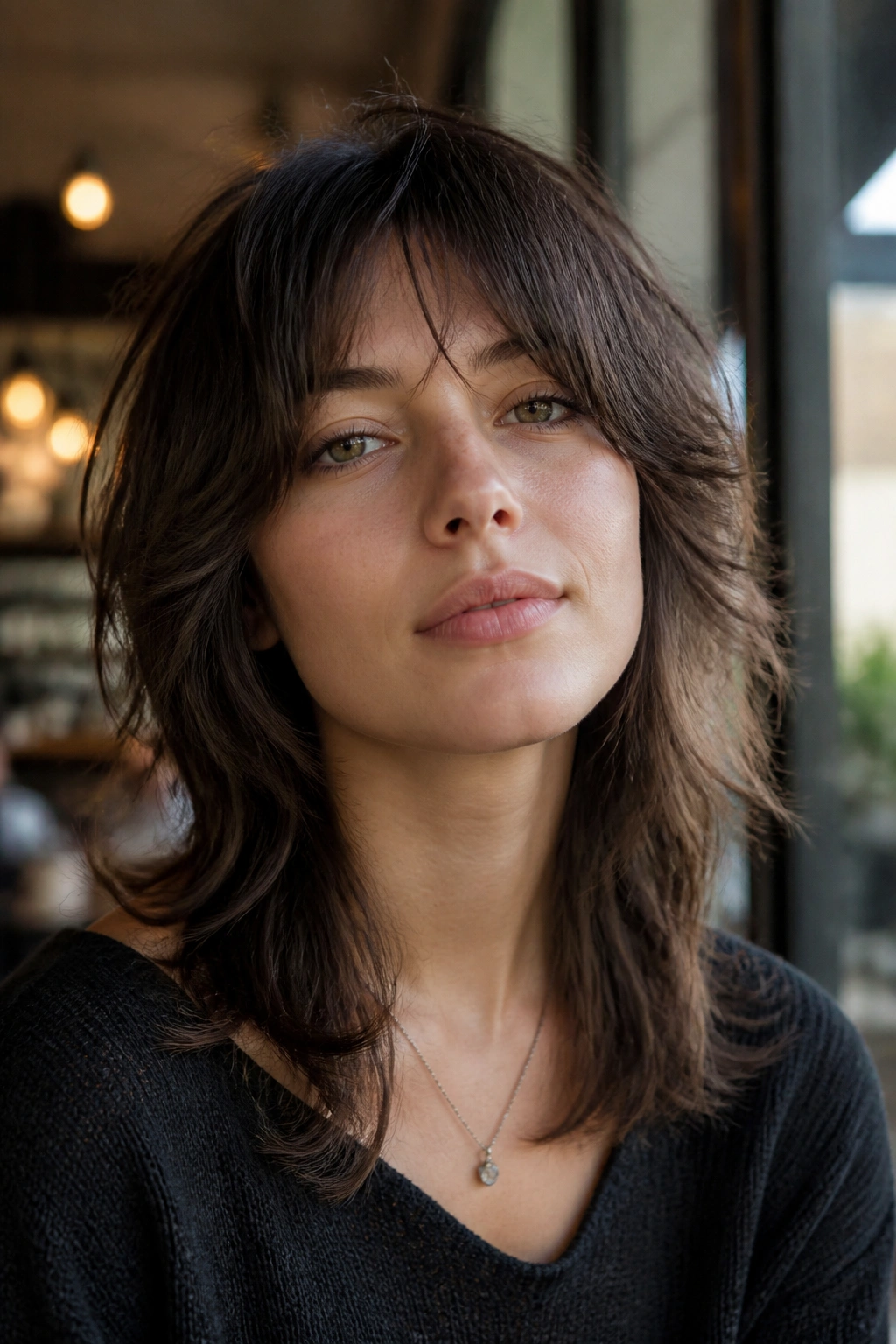
Ever wanted bangs but not the full commitment of a heavy fringe? Bottleneck bangs are the answer I reach for most. They begin narrow at the center of the forehead, then widen as they drop toward the cheekbones.
That shape is a gift for fine hair. It does not hog too much density at the front, which matters because bangs can easily expose thinness if they are cut too blunt or too thick. Bottleneck bangs stay lighter, softer, and easier to grow out than a straight-across fringe.
What Makes It Different
The bang opens the face without eating the haircut. That is the whole game.
Tell your stylist to keep the center short but not tiny, then let the outer pieces blend into the front layers. If you like a little drama but not a hard line, this version lands in a good place. It also works nicely with glasses, because the bang shape doesn’t crowd the frames.
9. The Face-Framing Wolf Cut
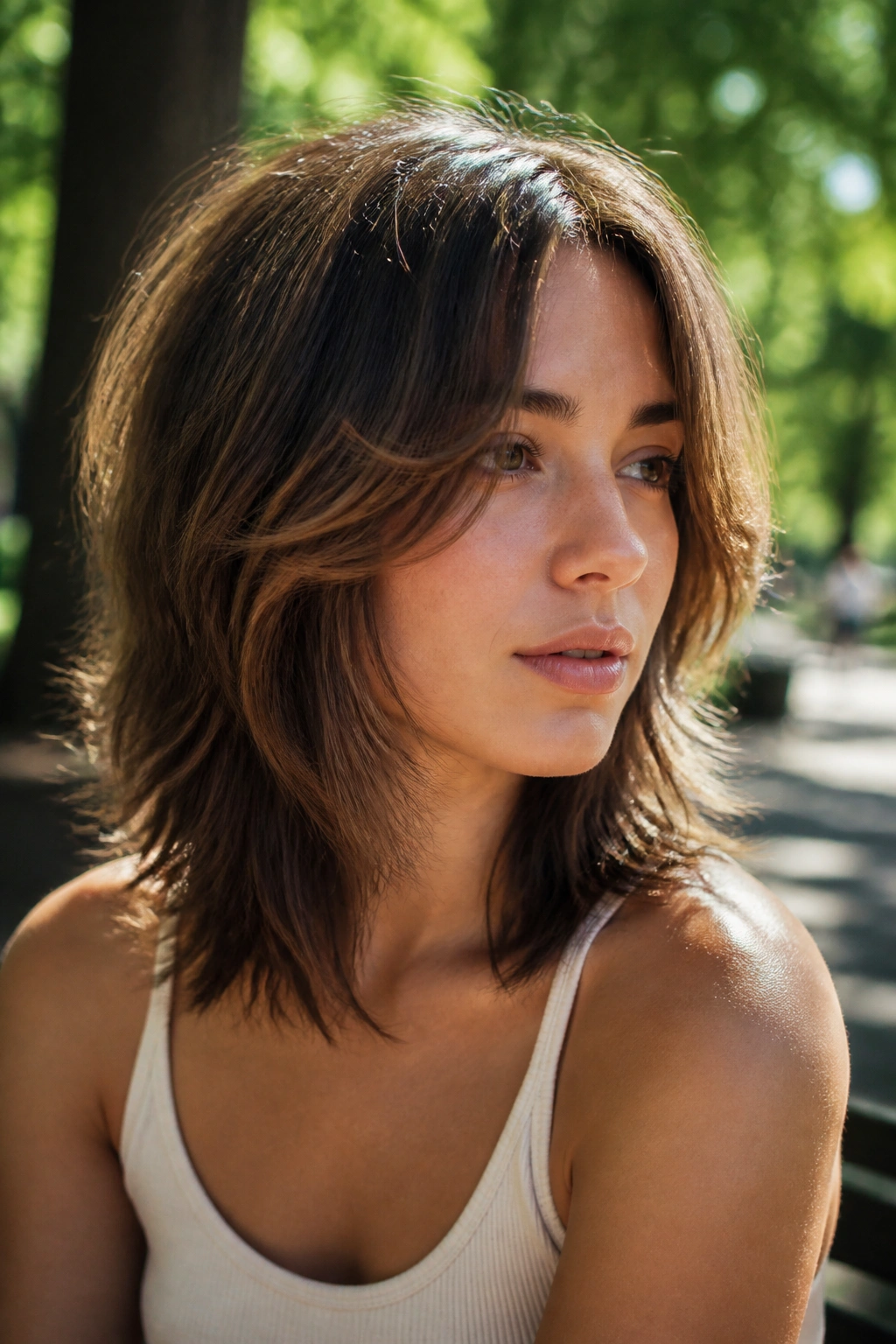
A face-framing wolf cut puts the interest right where people look first. That sounds obvious, but it matters on fine hair because you do not always have enough density to build drama everywhere. So you focus it.
The front pieces usually begin around the cheekbone and taper toward the jaw or collarbone. The back stays more controlled. This keeps the haircut from looking sparse at the ends, while still giving you that little wolf-cut movement around the face.
The best part? It flatters a lot of face shapes without forcing the hair into a bigger maintenance routine. Round faces get a little length through the front. Square faces get some softness. Long faces get a little width back.
Skip very short layers near the crown if your hair already lies flat. The front can do the heavy lifting all by itself.
10. The Wispy-Fringe Wolf Cut
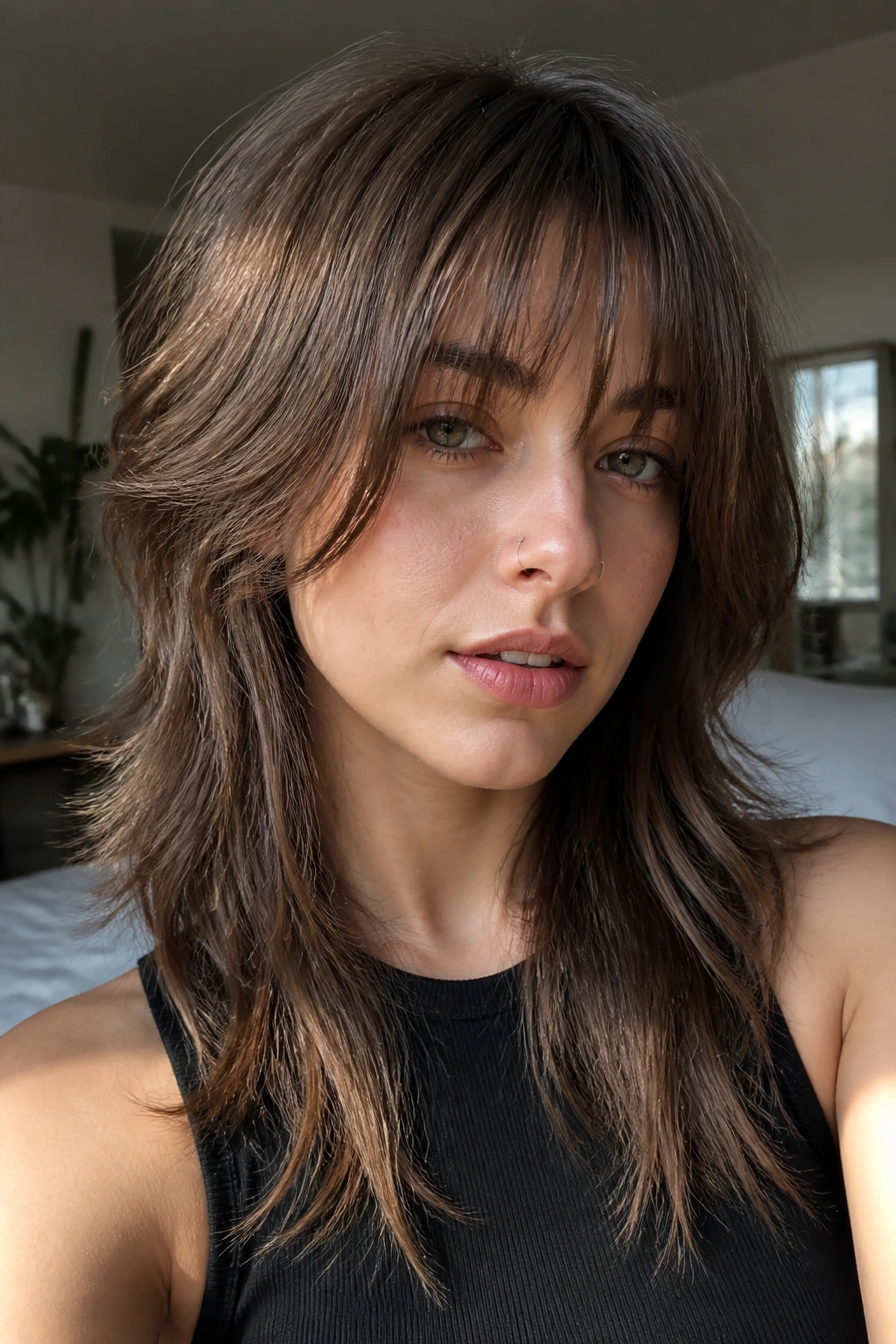
A wispy fringe is not the same thing as a thin fringe, and that distinction matters. Wispy means light and broken up on purpose. Thin means the hair simply is not there. One looks deliberate; the other looks like a bad day.
On fine hair, a wispy fringe can soften the forehead without stealing too much fullness from the rest of the cut. That’s useful if your hairline is delicate or your strands separate easily. The fringe should move when you shake your head. It should not sit there like a strip of paper.
How to Keep It Looking Good
A point-cut finish helps here. So does a dry cut, since wet bangs can shrink and look heavier than they are.
- Keep the fringe a little longer at the sides.
- Ask for texture only on the last half-inch.
- Dry it forward, then sweep it apart with your fingers.
- Avoid heavy oils near the front.
This is a nice choice if you want softness more than structure. It’s also forgiving when you skip a wash.
11. The Modern Mullet Wolf Cut
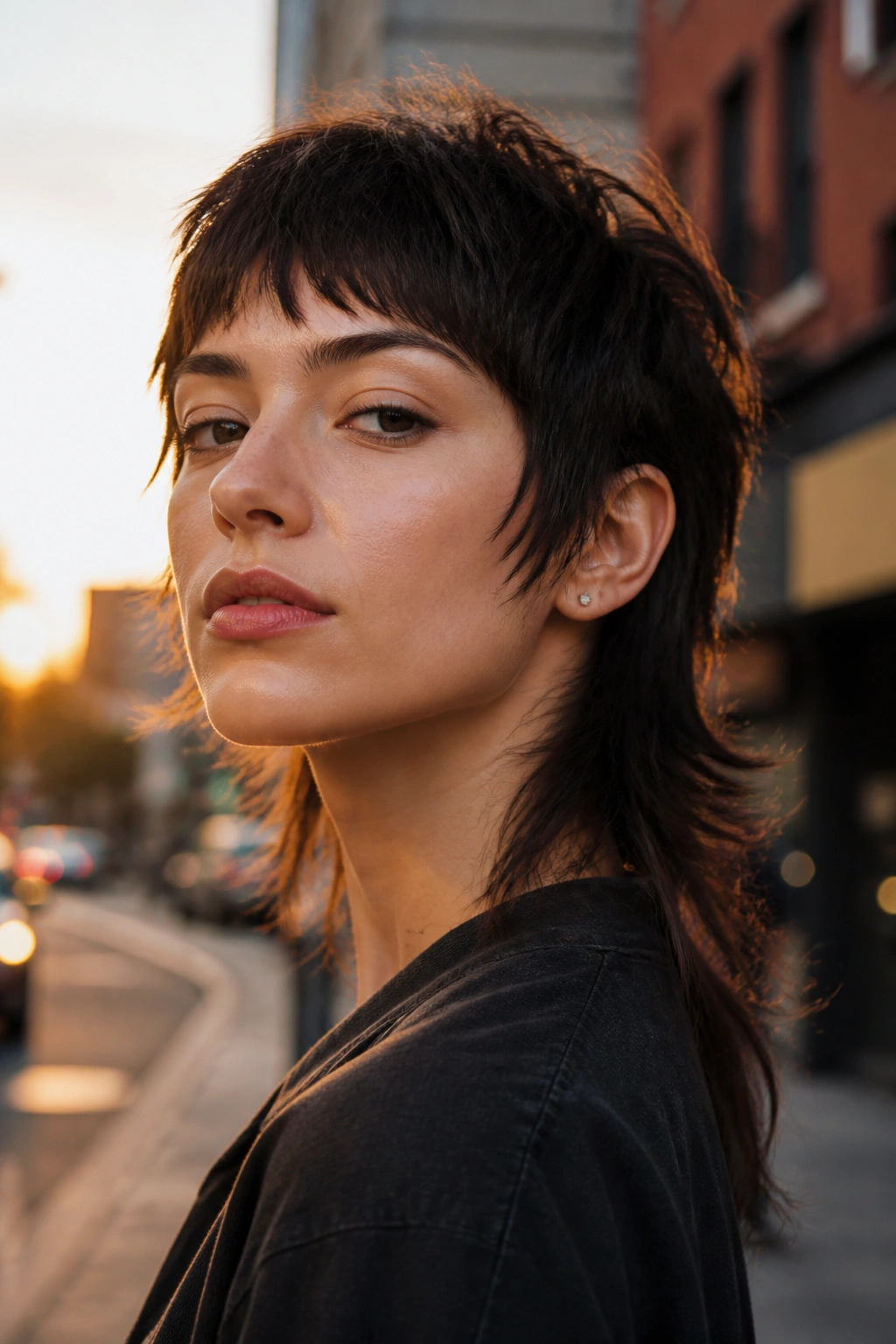
This one is not for the shy. The modern mullet wolf cut leans into the shorter front, longer back idea, but it does it with cleaner edges and less chaos than the classic mullet.
Fine hair can wear this shape surprisingly well if the back is not over-thinned. That’s the mistake people make. They assume the cut needs a lot of slicing to feel edgy, then end up with a back section that looks empty. Better to keep some weight and let the contrast come from the silhouette.
The trick is balance. A soft top, some movement around the temple, a controlled length in the back. Not a ratty layer in sight.
This is the cut for someone who wants attitude without a lot of styling time. A small amount of paste at the ends and a quick root lift at the crown usually does enough. No need to overwork it.
12. The Sliced Bob Wolf Cut
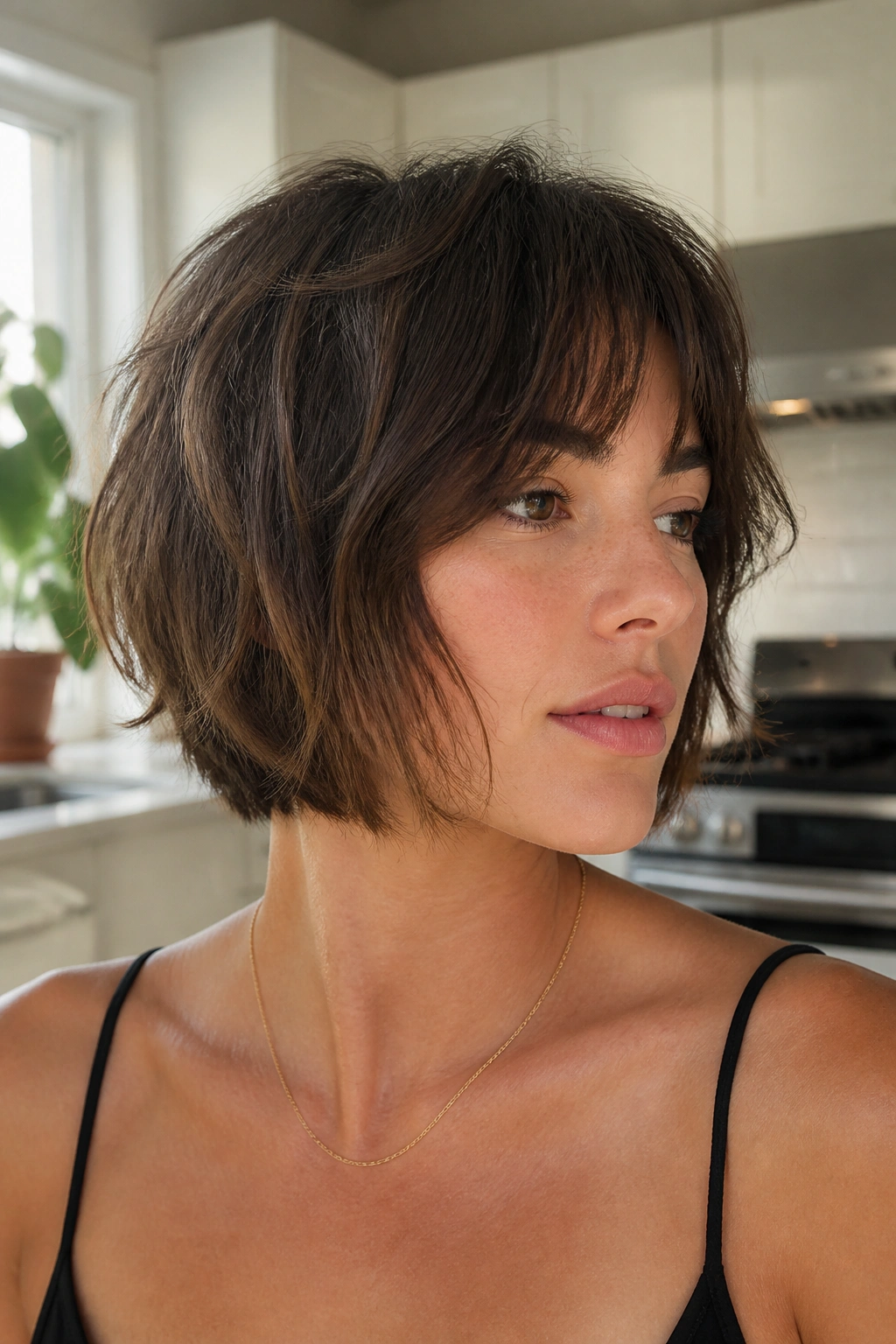
A sliced bob wolf cut gives you the structure of a bob with just enough breakup to keep it from feeling stiff. On fine hair, that blunt base is a lifesaver. It makes the hair look thicker right away.
Then the top gets softly sliced or lightly layered, which adds movement without removing too much density. That contrast is what gives the style its wolf-cut energy. You get a neat outline from the bob and a little wildness from the interior shape.
Why I Like It on Straight Hair
Straight fine hair can look limp when it’s cut into too many short pieces. A sliced bob avoids that trap by keeping the lower edge strong.
Ask for a clean line at the nape and jaw, then bring in subtle internal texture through the crown. If you want a little bend, use a flat iron to turn the ends under and out in alternating directions. It keeps the shape from looking too tidy, which is the point.
13. The Piecey-Wave Wolf Cut
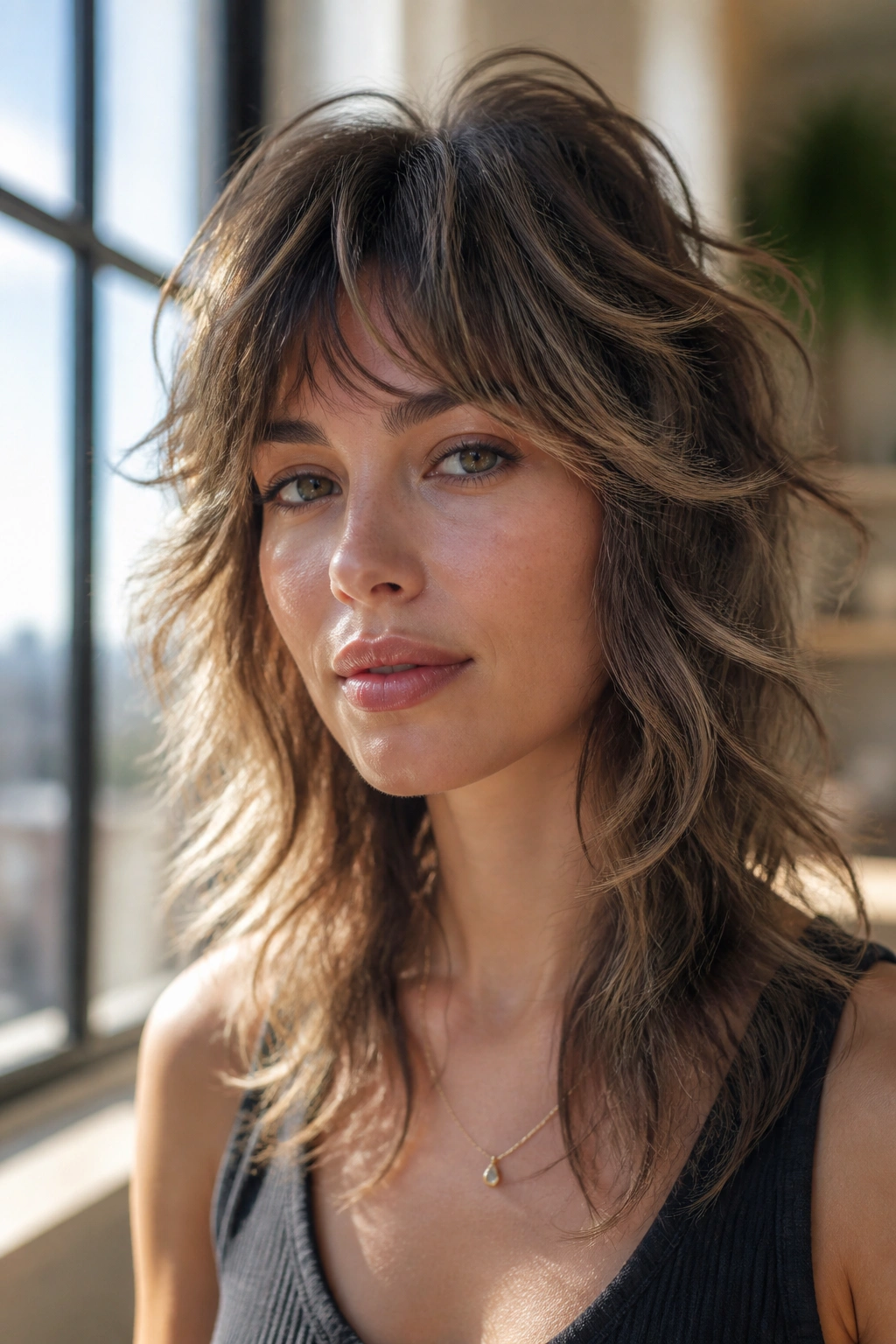
A piecey-wave wolf cut is for the person whose hair already bends a little and just needs help showing it off. The cut creates separate ribbons of hair instead of one soft cloud, which can make fine hair look fuller than it really is.
That separation matters. Fine wavy hair often loses its shape when it gets overloaded with product or cut too short at the top. This version leaves enough length in the mids to keep the wave from springing into frizz.
A Few Practical Details
- Use a lightweight foam, not a rich curl cream.
- Scrunch with a microfiber towel or T-shirt.
- Diffuse on low heat if you need speed.
- Leave a few face-framing pieces longer for softness.
The style works because the eye reads movement as density. A few well-placed bends can look fuller than a blunt, flat sheet of hair. Strange, but true.
14. The Sleek Straight Wolf Cut

Not every wolf cut needs scrunching and grit. If your hair is straight, a sleek version can look smarter than a heavily tousled one. It keeps the silhouette clean while still giving the crown and front enough lift to feel lived-in.
The key is restraint. Too many layers make straight fine hair separate in awkward little strings. Better to keep the base fuller, then add shape through long layers that bend gently away from the face. The haircut should move when you walk, not explode.
This version also plays well with a middle part or a soft off-center part. A tiny bevel at the ends helps. A flat iron bend can help even more, especially if you curve only the last inch or two. That keeps the finish polished without making it stiff.
If you want a wolf cut but hate the shredded-shag look, start here. It is quieter. Also more wearable.
15. The Side-Part Wolf Cut
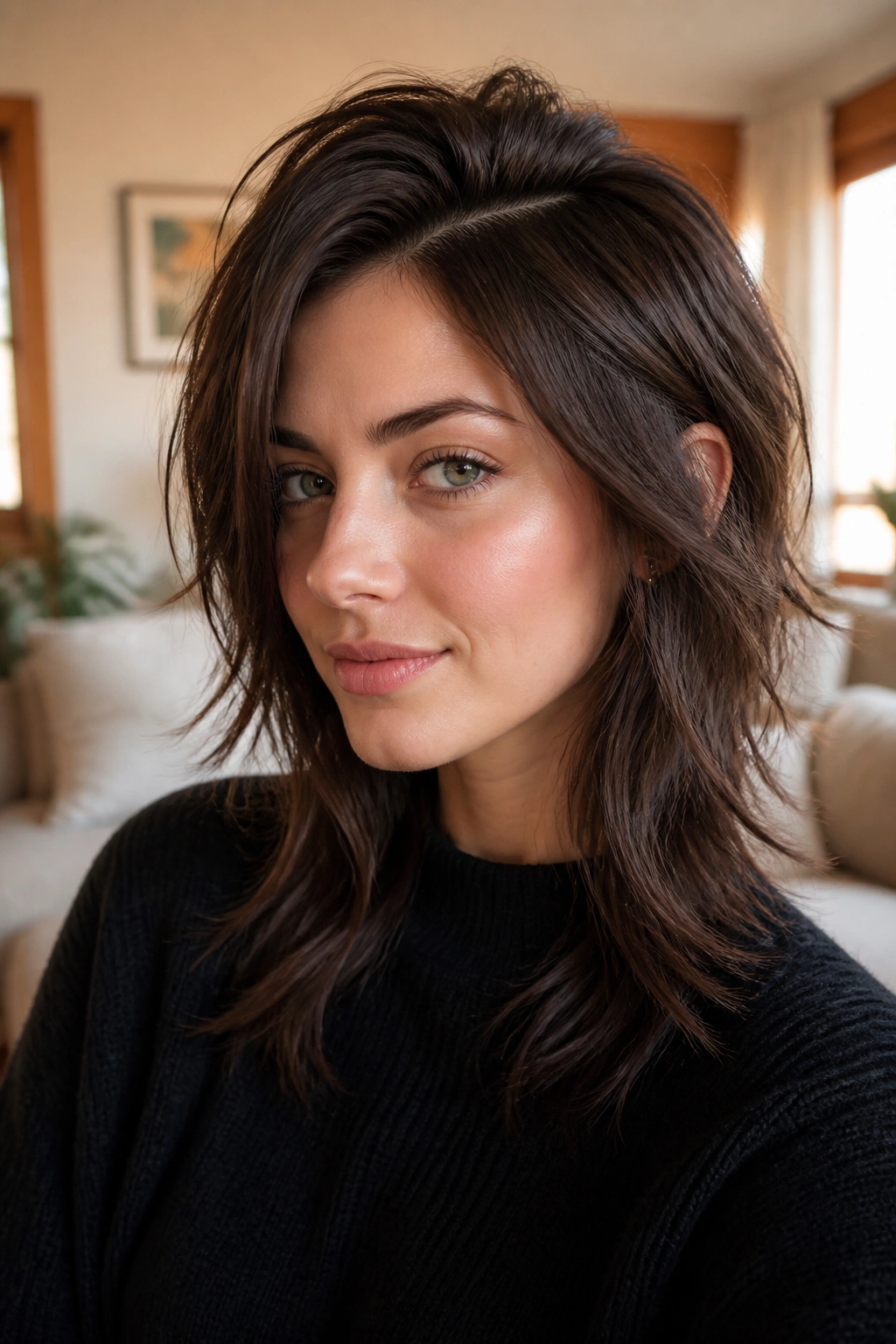
A side part can change the whole mood of a wolf cut on fine hair. It gives you instant root lift at the heavier side and creates a little asymmetry that makes the haircut look fuller than it is.
Why does that work? Because hair lying in one direction naturally lifts at the opposite side. Fine hair often needs that kind of trick. The haircut itself does not have to be dramatic if the part already creates height.
How to Get the Most From It
Tell your stylist where you part your hair most often. That should guide the shorter front layers. If the cut is built around the wrong part, it will fight you every morning.
A side-part wolf cut is especially nice when the face frame is longer on one side and a little shorter on the other. The unevenness looks intentional. It also softens a flat crown fast, which is worth a lot on fine strands.
16. The Tapered-Nape Wolf Cut
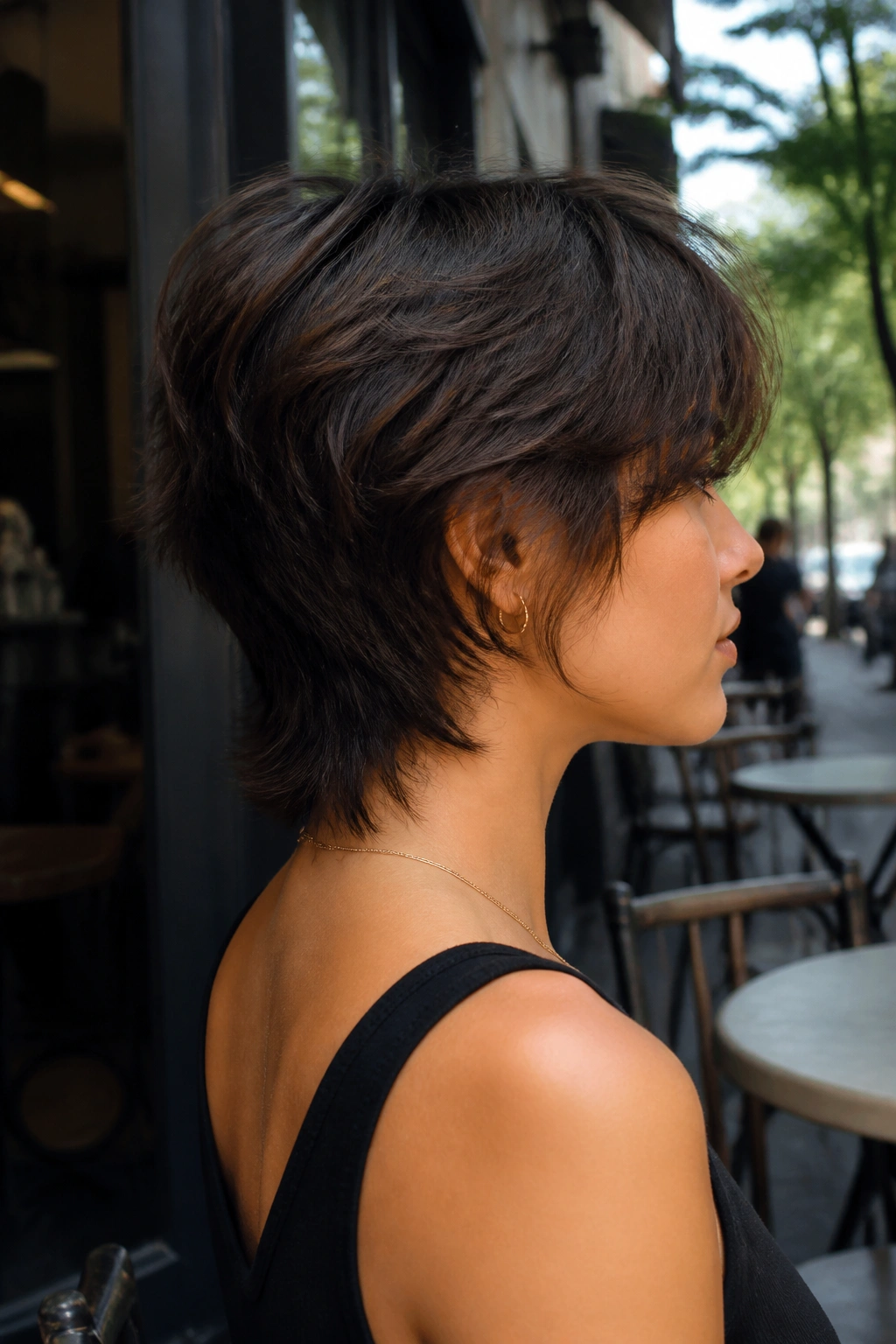
A tapered nape wolf cut is a smart choice if you hate bulk at the neck. The shorter back keeps the haircut light and neat where collars, scarves, and hoodie seams usually mess with the shape.
Fine hair can actually benefit from that little cleanup. Instead of removing thickness from the entire head, the taper narrows only the bottom back section while leaving the crown and sides with enough movement. The haircut feels lighter without losing all its shape.
The details matter here. Keep the nape soft, not shaved unless you really want that edge. Leave the top longer so the contrast stays readable. If the top is cut too short too, the style can drift into a pixie too fast.
This is the sort of cut that looks tidy from one angle and a little wild from another. I like that. It keeps the wolf cut from turning into a costume.
17. The Rounded Wolf Cut
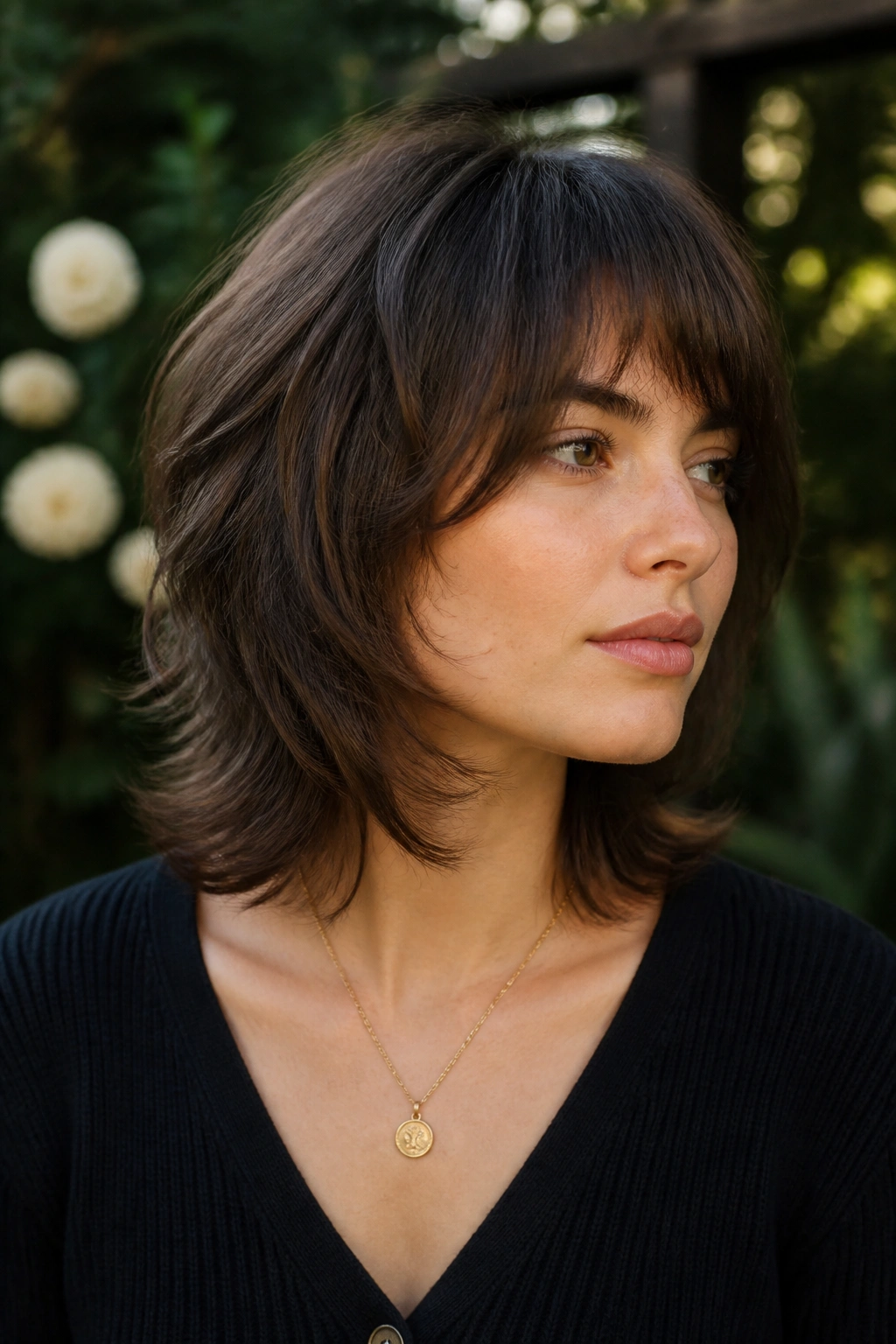
A rounded wolf cut is softer than the name suggests. Instead of building a sharp triangle or a hard mullet edge, it curves from crown to ends in a gentle arc.
That shape is a gift for fine hair because it avoids harsh corners. Harsh corners often show thinness more clearly. A rounded profile hides a little softness in the right places and makes the hair look fuller around the cheek and jaw.
The cut is also easier to grow out. That matters. Fine hair can go from shaped to awkward in a short stretch if the layering is too aggressive.
I’d ask for layers that follow the head shape, not layers that chop across it. The result is polished without feeling overworked. And yes, it still counts as a wolf cut. The texture is there; it just does not shout.
18. The Micro Wolf Cut
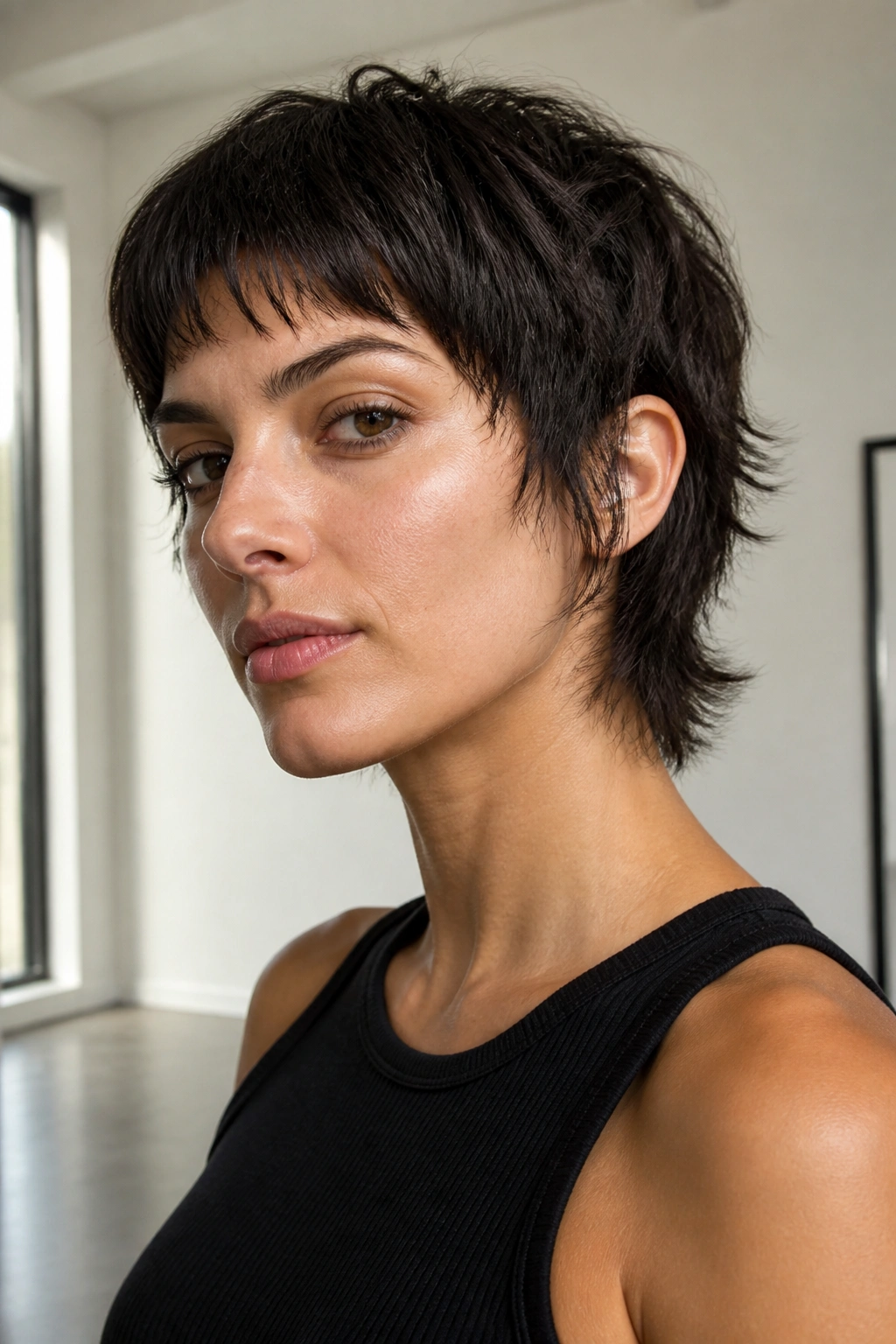
The micro wolf cut is the short, sharp cousin in the family. It sits somewhere between a cropped shag and a tiny mullet, but on fine hair it works best when the shape stays controlled.
This is not the place for overtexturizing. Fine short hair can fray fast if the scissors get too enthusiastic. What you want instead is a tight silhouette, a little crown lift, and just enough movement through the fringe and top to keep the cut from looking flat.
Why It’s Not Just a Pixie
A pixie often follows the head closely. A micro wolf cut leaves a little more separation between the top, sides, and nape, so the haircut has an edge and a bit of swing.
Best for people who want a bold cut with almost no styling time. A pea-sized dab of matte paste, rubbed between the palms, is usually enough. Then pinch the top pieces into place and stop before it gets crunchy.
19. The Long-Front Wolf Cut
Long front panels can save fine hair from looking too narrow around the face. That is the whole point of this version. The back can stay lighter and more playful, while the front pieces hang longer and thicker, almost like built-in framing.
What to Ask For
- Keep the front below the jawline.
- Start the shortest layers low on the head.
- Leave the back softer than a classic mullet.
- Avoid too much thinning near the temples.
The long-front wolf cut is especially good if you like to tuck hair behind one ear or wear it half up. The longer front pieces stay visible in those styles, which means the haircut still reads even when the rest is pinned back.
That visibility helps fine hair. You are not asking every strand to do the same job.
20. The Soft Curl Wolf Cut
If your fine hair has a natural curl or bend, do not fight it into something rigid. The soft curl wolf cut works with the pattern already there, which usually gives a better result than forcing a straight-edged shag onto hair that wants to move.
The haircut should leave enough length in the top and mids for curls to form without bunching up. Too many short layers make fine curls puff in awkward places, then flatten in others. A gentler shape keeps the curl clumps intact and makes the haircut look fuller.
A diffuser helps, but the cut does the real work. Use a light foam or mousse, scrunch from the ends upward, and dry until the roots stop looking damp. That’s the moment the shape sets.
This cut can look elegant in a messy way. Not polished. Just alive.
21. The Baby-Bang Wolf Cut
Baby bangs can work on fine hair, but only when the front has enough density to hold a clear line. If the hairline is sparse, this one can get patchy fast. So be honest before you go there.
When they do work, baby bangs give the wolf cut a sharper personality. They make the eyes stand out and bring a little tension to all the softness in the layers. That contrast can be fantastic on short or midlength cuts where you want something memorable.
What Makes It Tricky
The fringe needs precision. Too much texture and it looks broken. Too little and it looks stiff.
A baby-bang wolf cut does best with a strong base elsewhere — think full sides, decent crown lift, and a shape that can support the bold forehead line. If you like low-maintenance hair, skip this one. If you like a cut that feels a little unexpected, it can be worth it.
22. The Grown-Out Wolf Cut
The grown-out wolf cut is the one for people who do not want their haircut to panic the moment it starts to grow. Fine hair benefits from that kind of grace. You want a shape that still looks decent after six or eight weeks, not one that collapses the second the stylist’s chair is empty.
This version keeps the layers soft, the fringe optional, and the perimeter a little fuller than a pure shag. That makes the grow-out look intentional. The cut can slip between states without getting ugly in the middle, which is more useful than it sounds.
How to Keep It Looking Fresh
- Trim the ends before they split and get wispy.
- Let the fringe split naturally if it wants to.
- Refresh the crown with a round brush or velcro rollers.
- Use dry shampoo at the roots, not all over.
It’s the practical choice, and I mean that as praise. Not every haircut has to fight for your attention every morning.
The Bottom Line
Fine hair does not need a harsher wolf cut. It needs a smarter one. The best versions keep enough weight at the bottom to hold shape, then place texture where it helps the eye read volume.
That usually means less thinning, not more. More thought at the crown. Better bangs. A cleaner perimeter. Tiny details, sure, but they change how the whole haircut behaves once you wash it and leave the house.
If you remember one thing, make it this: fine hair likes movement with structure. Choose the wolf cut that fits your length, your part, and the amount of styling you’ll actually do, and the rest gets easier.
