



A wolf cut can be one of the friendliest shapes for a round face—if the layers are placed with a little discipline. Too much volume at the cheeks makes a round face feel wider. A strong wolf cut does the opposite: it builds height at the crown, keeps the front pieces moving past the cheekbone, and gives you that lived-in, shaggy shape without turning the whole cut into a puffball.
That’s the part most people miss. A wolf cut isn’t flattering because it’s messy. It’s flattering because the lines are broken up in the right places. Length at the front matters. So does a fringe that opens the face instead of boxing it in. And if your hair is thick, curly, fine, or straight, the cut should change a bit to fit the texture, because one shape does not wear the same way on every head.
Length helps.
So does asymmetry.
The styles below lean into those ideas in different ways. Some are soft and wearable. Some are a little sharper, which I like more than the internet usually admits. And a few are the kind of cuts that look almost too simple in the chair, then make sense the second you see them moving in daylight.
1. Long Wolf Cut with Curtain Bangs for Round Faces
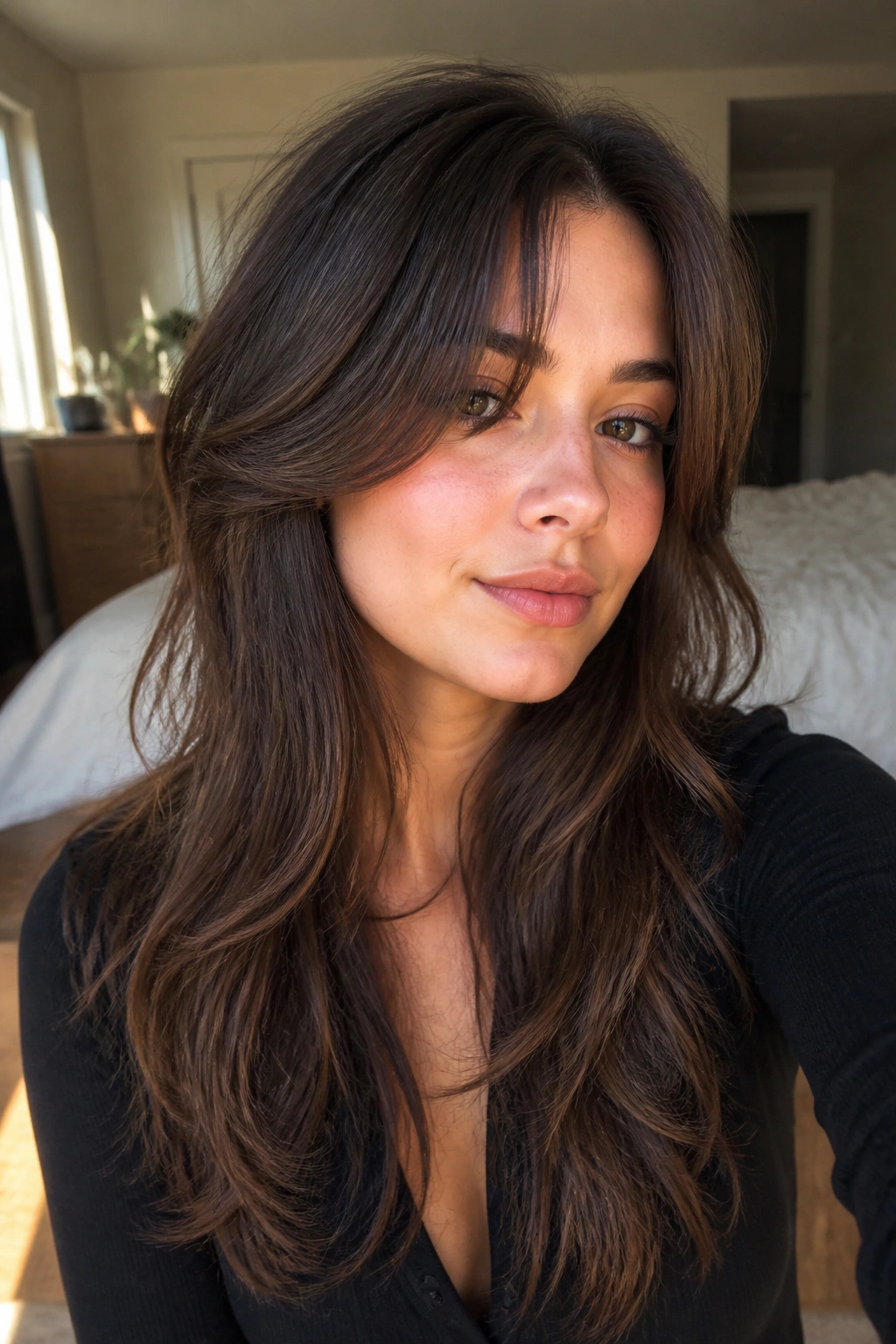
This is the safest place to start if you want the wolf cut shape without making your face look wider. Long length buys you vertical line, and that matters more than people think. When the hair falls below the collarbone, the eye moves down instead of stopping at the cheeks.
Why It Flatters So Well
Curtain bangs help because they split the forehead open and let the center of the face breathe. I like them best when the shortest point sits around the bridge of the nose and the longest pieces skim the cheekbone or lip. That keeps the fringe soft without making a heavy line across the face.
How to Ask for It
- Keep the shortest face-framing pieces below the cheekbone, not right on top of it.
- Build crown layers that start around 2 to 3 inches below the top section so the shape lifts, not fluffs.
- Ask for a fringe that can part in the center or slightly off-center.
- Style with a 1.25-inch round brush or a large blow-dry brush for bend, not ringlets.
My one rule: if your curtain bangs stop high on the cheek, push them longer. That extra inch changes everything.
2. Shoulder-Grazing Wolf Cut with Face-Framing Ribbons

If you want movement but hate long hair on your neck, this is a smart middle ground. Shoulder length keeps the cut light, while the front ribbons give you that wolf-cut attitude without swallowing your face in volume.
The trick is where the front pieces land. On a round face, I’d rather see those shortest ribbons fall between the mouth and the jawline than sit right at the cheek. That little drop creates a cleaner vertical line. It also keeps the cut from turning into a bubble around the widest part of the face.
This version has a nice balance for people with medium-density hair. It still looks textured, but it doesn’t demand a full styling session every morning. A rough dry with mousse at the roots and a few bends through the mid-lengths is enough. Nothing fancy. Nothing fussy. And that’s the appeal.
3. Collarbone Wolf Cut with a Deep Side Part
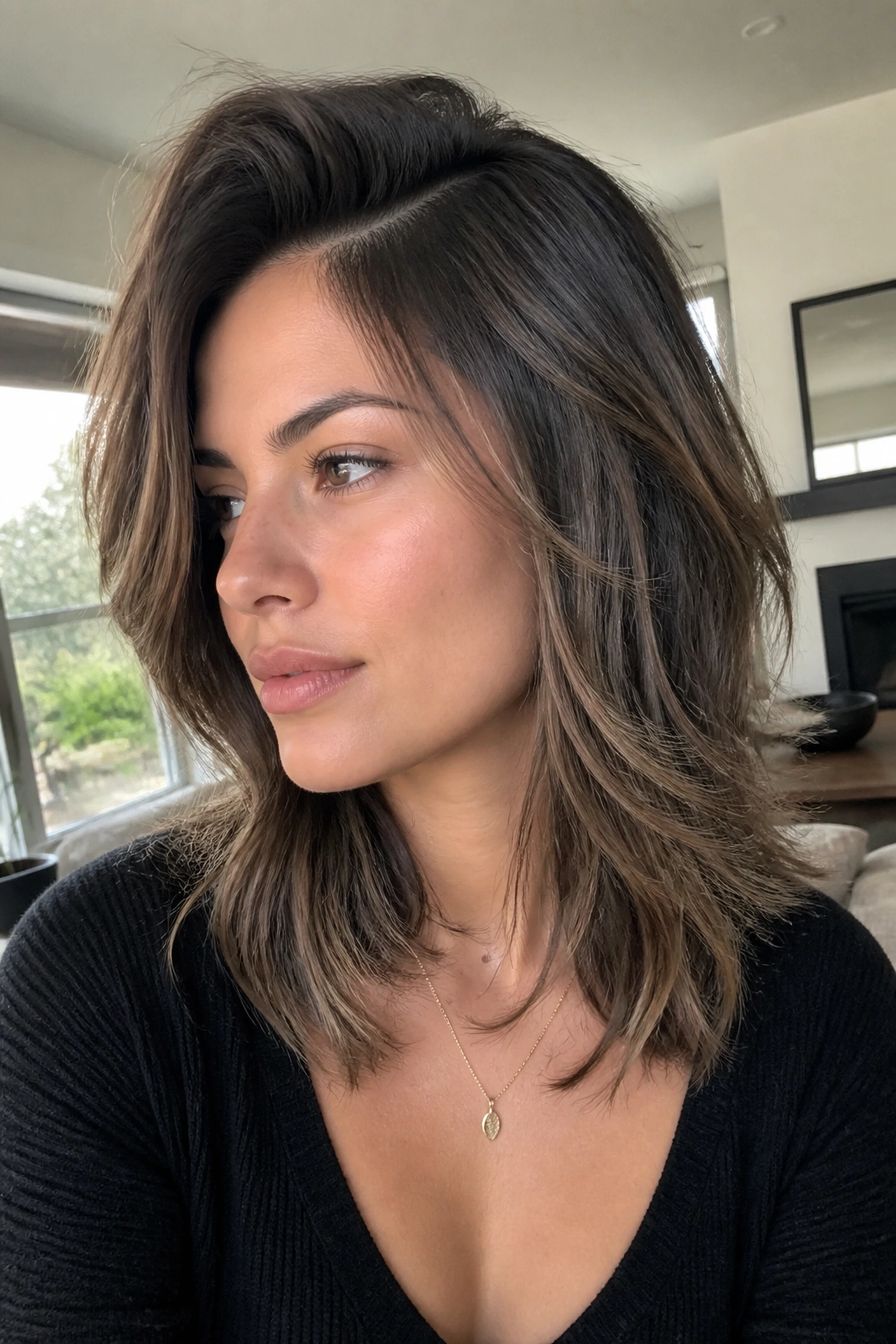
Why does a deep side part help a round face so much? Because it breaks symmetry in a way the face shape usually needs. A centered part can work, sure, but a deep side part creates a stronger diagonal line, and diagonals are your friend when you want to stretch a softer shape.
This wolf cut keeps the perimeter around the collarbone, then lets the layers fall in staggered pieces instead of a neat curtain. That irregularity is the point. It stops the cut from reading as one big circle of hair, which is the last thing most round faces need. A little lift at the roots on the heavier side gives the crown some height, and height is the quiet hero here.
How to Style It
Flip the part while hair is still damp, then rough-dry the roots in the opposite direction first. Switch back once the top is 80% dry. That gives the hair a bend without freezing it flat. A pea-sized amount of flexible cream through the ends keeps the pieces separated. Heavy oil is too much.
4. Curly Wolf Cut with Crown Volume

Picture curls that sit too full around the cheeks and then collapse at the top. That shape can make a round face look even rounder. A curly wolf cut fixes the silhouette by moving the volume upward and leaving the lower half long enough to balance the face.
The cut works best when it’s done on dry curls or at least on hair that’s been cut with shrinkage in mind. Wet curls lie to you. They always do. Ask for layers that build softly through the crown, with enough length left at the bottom to keep the profile from puffing out sideways.
- Leave the shortest crown pieces long enough to curl without springing into a mushroom.
- Keep the face frame longer than you think you need.
- Diffuse on low heat for 8 to 12 minutes, then air-dry the rest.
- Use a light gel or cream so the layers stay separated instead of frizzing together.
The best curly wolf cuts don’t look overworked. They look like the hair found its own shape.
5. Soft Shullet with a Tapered Nape
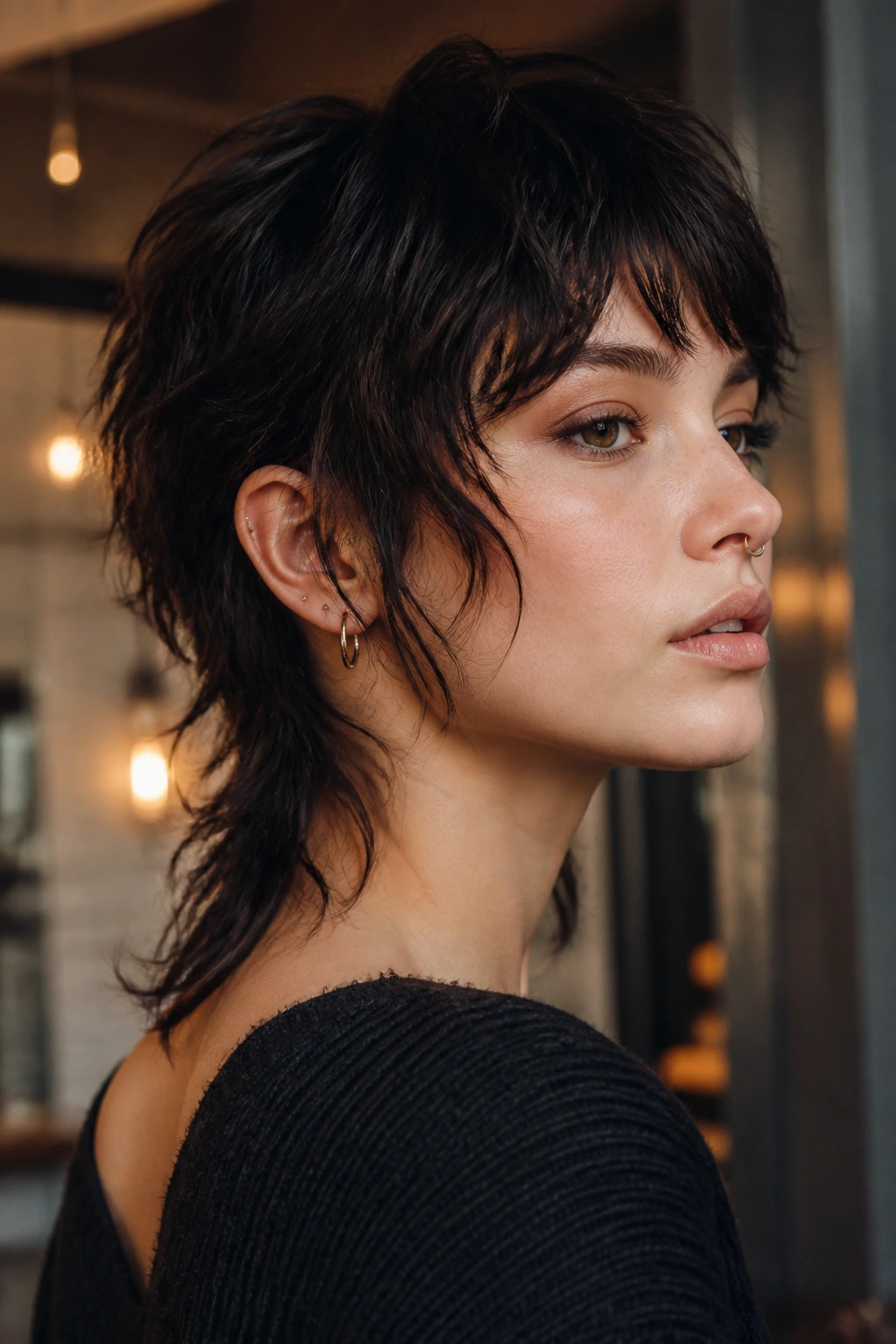
This one has more attitude, but not the loud kind. The shullet—shag plus mullet—can be a headache on a round face if the sides balloon out, so the softer version is the one worth your time. The front stays gentle and face-framing. The nape tapers down a bit longer, which gives the cut a directional feel instead of a blunt wall.
What I like here is the contrast. The top has movement. The back has a little tail. The sides don’t hog attention. That balance matters when your face already carries a lot of curve. You want the haircut to create lines, not more circle.
This cut is especially good if you like an undone look and don’t mind a bit of edge. It feels cooler than a standard shag, but it can still be polished with a round brush and a soft bend through the ends. Keep the front pieces around the chin or longer, and let the back sit just below the nape so the whole shape has room to breathe.
6. Fine-Hair Wolf Cut with Airy Internal Layers

A fine-haired round face needs a careful hand. Too many short layers can make the hair look thin and see-through, and that’s a fast way to end up with a fluffy top and limp ends. Not a great trade.
The version I like here uses internal layers instead of aggressive chopping. That means the stylist removes some weight from inside the shape while keeping the outer line soft and fairly full. The result looks lighter in motion, but the ends still read as present. That matters a lot for fine hair, because wispy ends can make the face look wider if they stop too high.
Unlike a heavily razored shag, this one stays smooth. It’s best for hair that bends a little on its own or can hold a loose wave from a blow-dry. Use a volumizing mousse at the roots, then a wide brush to pull the top upward. Skip the heavy leave-in creams. They flatten the cut before it gets a chance to move.
7. Thick-Hair Wolf Cut with Debulked Crown
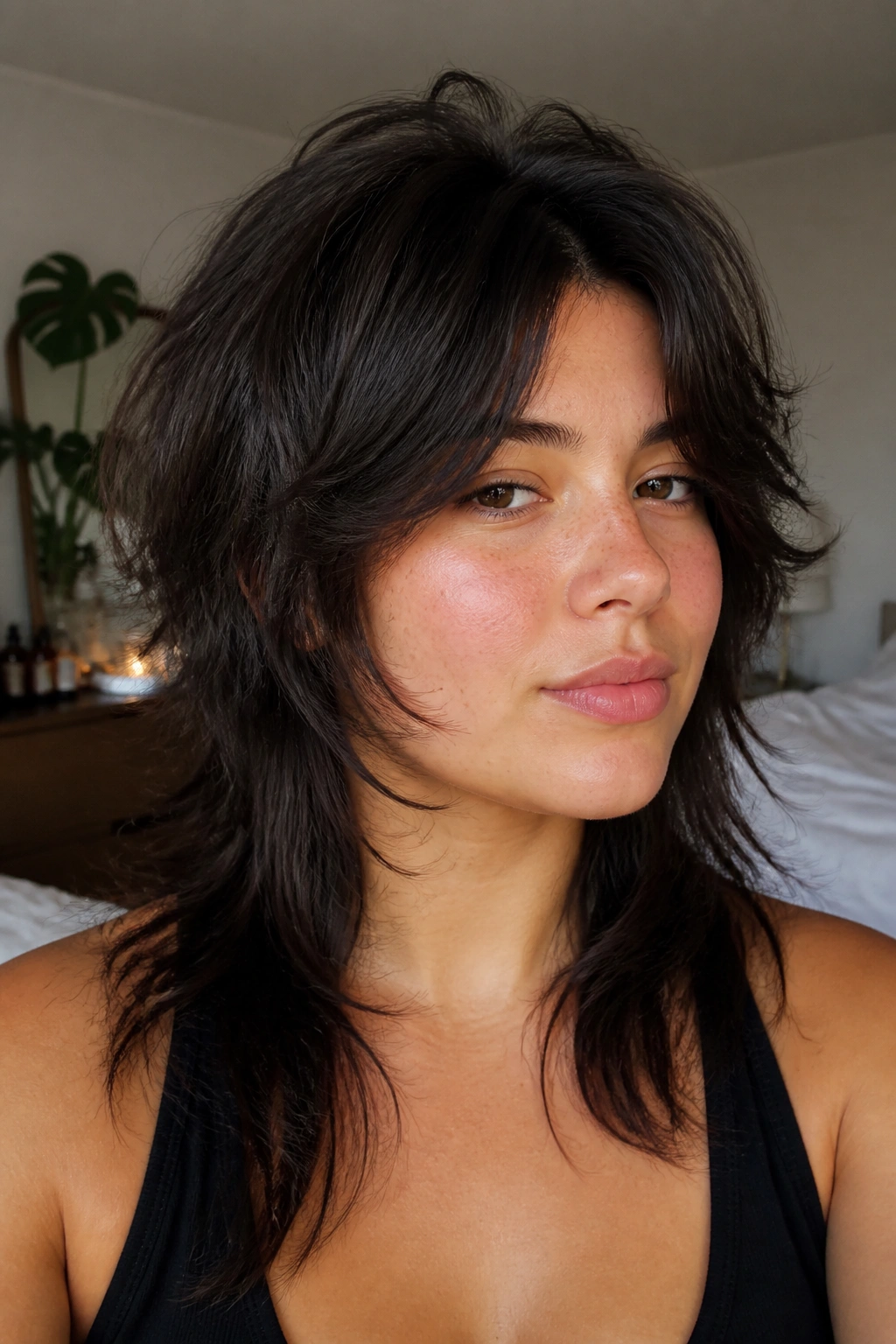
Thick hair can swallow a round face in a hurry if the layers are timid. The shape turns boxy, the sides inflate, and you end up feeling like the haircut is wearing you. This version fixes that by taking weight out of the crown and interior while keeping the perimeter strong.
Where the Weight Should Come Out
- Under the top layer, not on the surface.
- Behind the ears, where thick hair tends to puff.
- At the crown only if the hair is dense enough to stand up on its own.
- Through the ends with point-cutting instead of blunt chopping.
The best thick-hair wolf cuts keep the front pieces long enough to frame the jaw, which stops the cut from widening the cheeks. I also like a slightly deeper layer around the occipital area—the back curve of the head—because it helps the hair fall instead of sticking straight out. That one detail gets missed all the time.
Warning: if your stylist razors thick hair too hard, you can get frizz and a halo you did not ask for. Clean debulking beats over-thinning every time.
8. Micro Curtain Bangs with a Wolf Cut
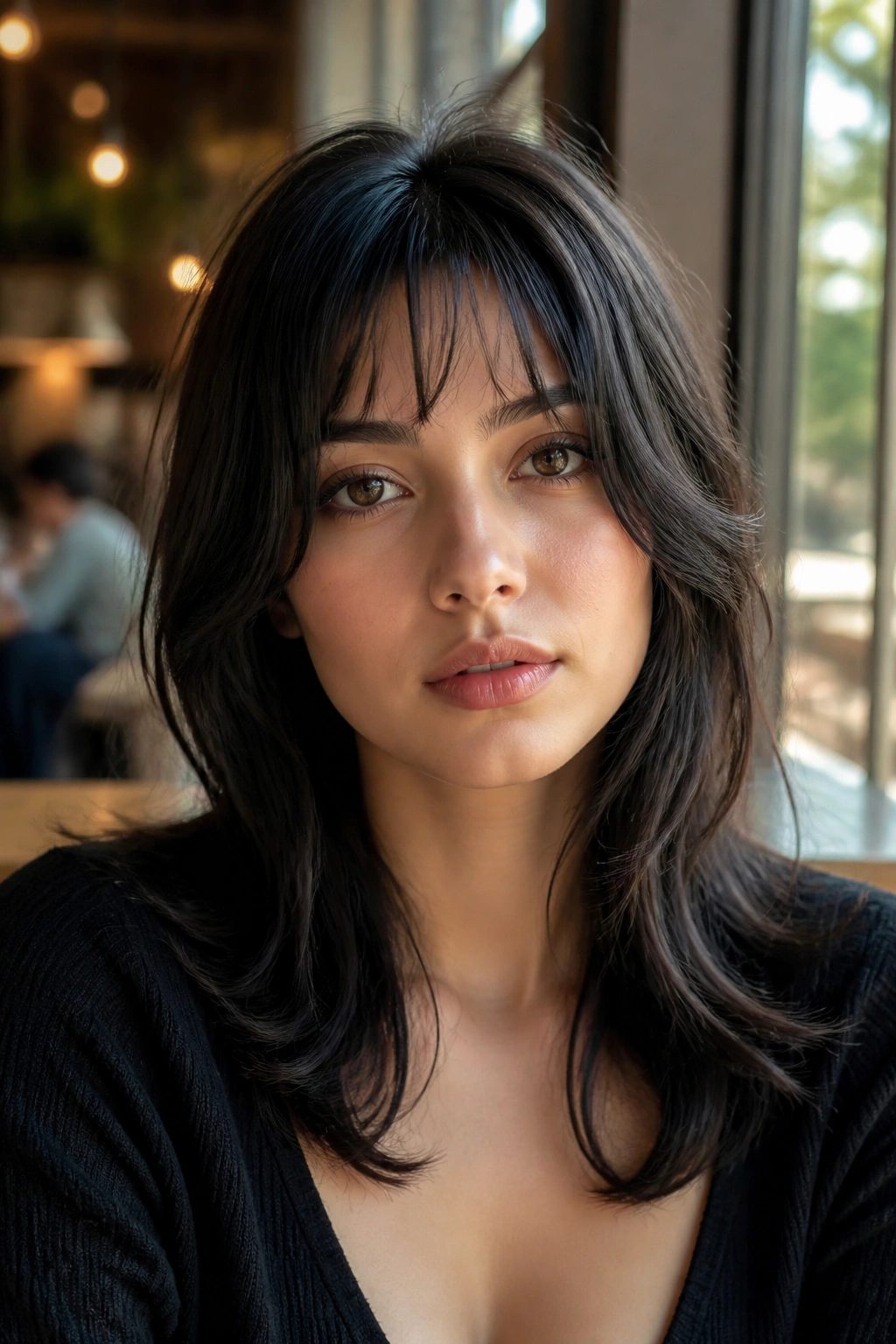
Can short bangs work on a round face? Yes, but only if they’re airy and split. A blunt micro fringe can make the forehead disappear and leave the face looking even fuller. Micro curtain bangs, on the other hand, open the center and keep the sides soft enough to avoid that boxed-in feeling.
This cut is a little sharper than the safer versions above, and I like it for people who want their haircut to have personality. The fringe is shorter in the middle, then lengthens toward the temples. That shape creates a vertical pull at the center while still framing the eyes. It’s a neat trick.
You do need to style it. A small round brush, a quick bend away from the face, and a touch of dry texture spray are enough. If the bangs sit too straight and heavy, they lose the whole point. Keep them light. Keep them separated. And don’t let them sit at eyebrow level like a shelf.
9. Wavy Wolf Cut with Chin-to-Collarbone Layers

Waves like this look easy, but the structure underneath is doing a lot of work. The best wolf cut for wavy hair on a round face usually starts the face-framing at the chin and continues it down to the collarbone. That range matters because it gives the wave room to swing without piling up exactly at cheek level.
If your wave pattern is loose, this is one of the most forgiving cuts on the list. The hair has enough texture to show off the layers, but not so much bend that the shape collapses into frizz. A salt spray can help, though I prefer a light mousse if the hair is fine. Salt can be drying. Fine waves get brittle fast.
How to Style It
Work product through damp hair, twist 2-inch sections around your fingers, then let it air-dry halfway before diffusing. That keeps the pieces from turning into one big wave blob. The whole point is separation. A round face needs definition more than it needs extra fluff.
10. Rounded Bob-Wolf Hybrid

A wolf cut does not have to be long to flatter a round face. This bob-wolf hybrid keeps the length around the chin to upper neck, then breaks up the top with soft layers. The result is cleaner than a shag and less precious than a polished bob.
The reason it works is the shape contrast. The perimeter stays compact, which keeps the hair from spreading out too far past the face. The top gets a little height and movement, which prevents the cut from sitting flat against the head. That combination can be surprisingly good on a round face, especially if you like shorter hair and don’t want a lot of styling drama.
The one line I would avoid is a shortest point right at cheek level. That tends to sit on the widest part of the face and make the whole thing feel broader. Keep the shortest face-framing pieces closer to the jaw or slightly below. Tiny shift. Big payoff.
11. Razor-Cut Wolf Cut with Flipped Ends
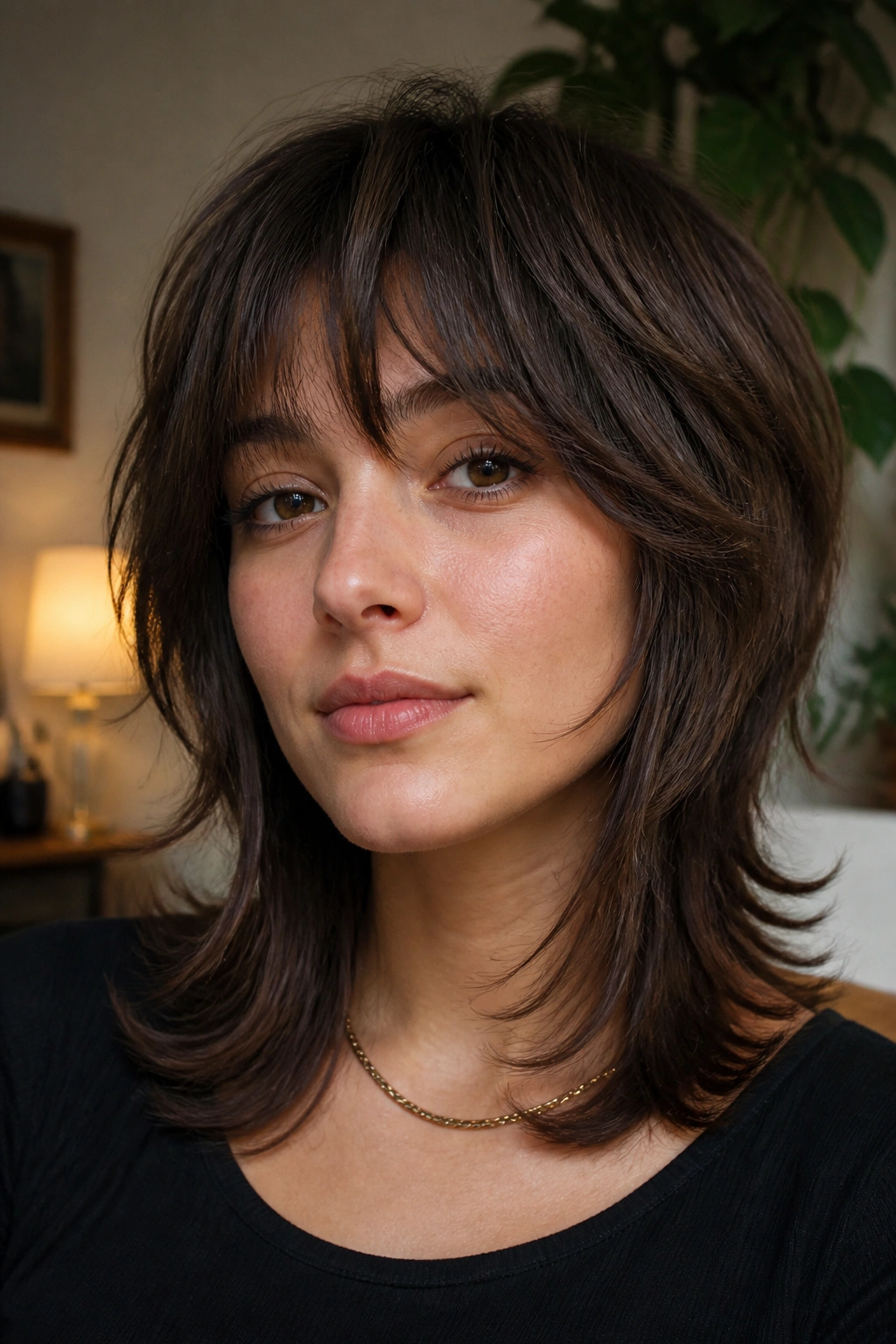
A razor-cut wolf cut has a lighter feel at the tips, almost like the ends are feathered by air instead of sliced with scissors. On a round face, that can be useful because the cut gains movement without turning heavy around the jaw.
The catch is that razors are not magic. On dry or fragile hair, too much razor work can create fray, and fray around the cheeks is not flattering. I prefer this version on medium to thick straight hair that can take texture well. The ends should look broken up, not shredded. There’s a difference, and the mirror will tell you which one you got.
Flipped ends suit this shape nicely. A small bend outward at the bottom keeps the line from sitting flat against the face. Use a flat iron or a round brush to flick the last inch of hair away from the neck. That small movement softens the outline and keeps the haircut from feeling heavy.
12. 90s Blowout Wolf Cut
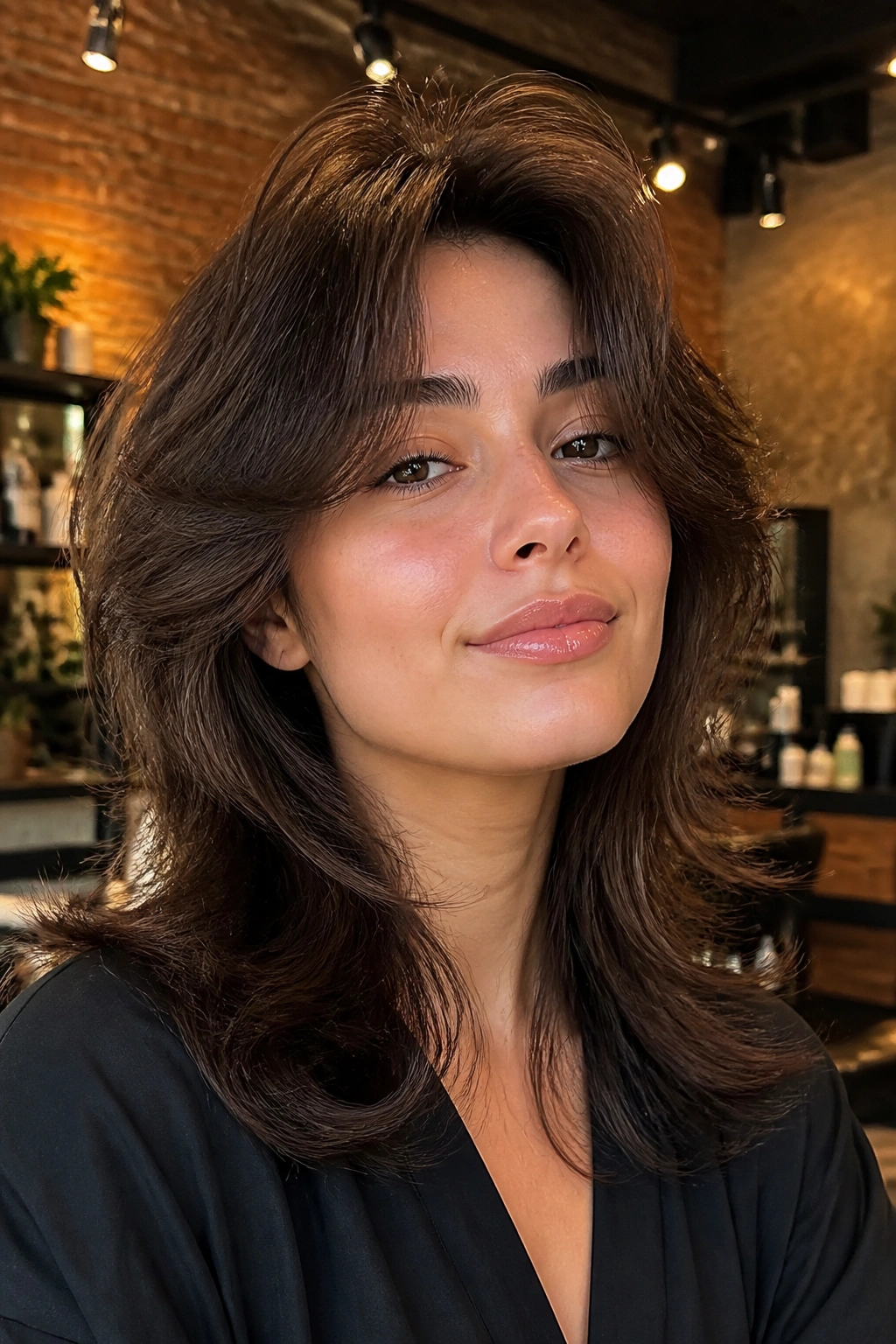
Not every wolf cut needs to look feral. Some need a little gloss. This is the polished version, and on a round face it can be better than the messier cuts because the blowout stretches the silhouette while keeping the layers alive.
The crown gets lifted. The front pieces curve away from the cheeks. The ends flip softly, almost like they were brushed out on purpose and not left to chance. That shape creates a long line through the hair, which gives the face more height. It feels a little nostalgic, sure, but it also reads clean and flattering.
Use a 1.5-inch round brush if your hair is medium to long, and set the front pieces on Velcro rollers for 10 minutes while they cool. That cooling time matters. Warm hair remembers shape; hot hair forgets it as soon as humidity shows up. If your face is round and you like a fuller blowout, this is one of the strongest options here.
13. Bottleneck Bangs Wolf Cut

When the fringe is narrow in the center and wider at the temples, a round face gets more breathing room. That’s why bottleneck bangs deserve attention. They open the middle of the forehead, then widen out gently so the face doesn’t feel trapped under a straight line.
What to Ask For
- Keep the center shorter, around the bridge of the nose or slightly above.
- Let the sides drop toward the cheekbone or upper jaw.
- Avoid a blunt edge across the whole forehead.
- Ask for soft, piecey separation instead of one dense curtain.
This cut works because it gives you a bit of structure without the weight of full bangs. I like it especially on hair that already has some bend. You can air-dry it and still get movement. Straight hair can wear it too, but it needs a quick brush and a little root lift.
The real win is how the bangs frame the eyes without closing off the face. That’s a small thing in theory. In a mirror, it is not small at all.
14. Long Front-Heavy Wolf Cut with a Subtle Mullet Back
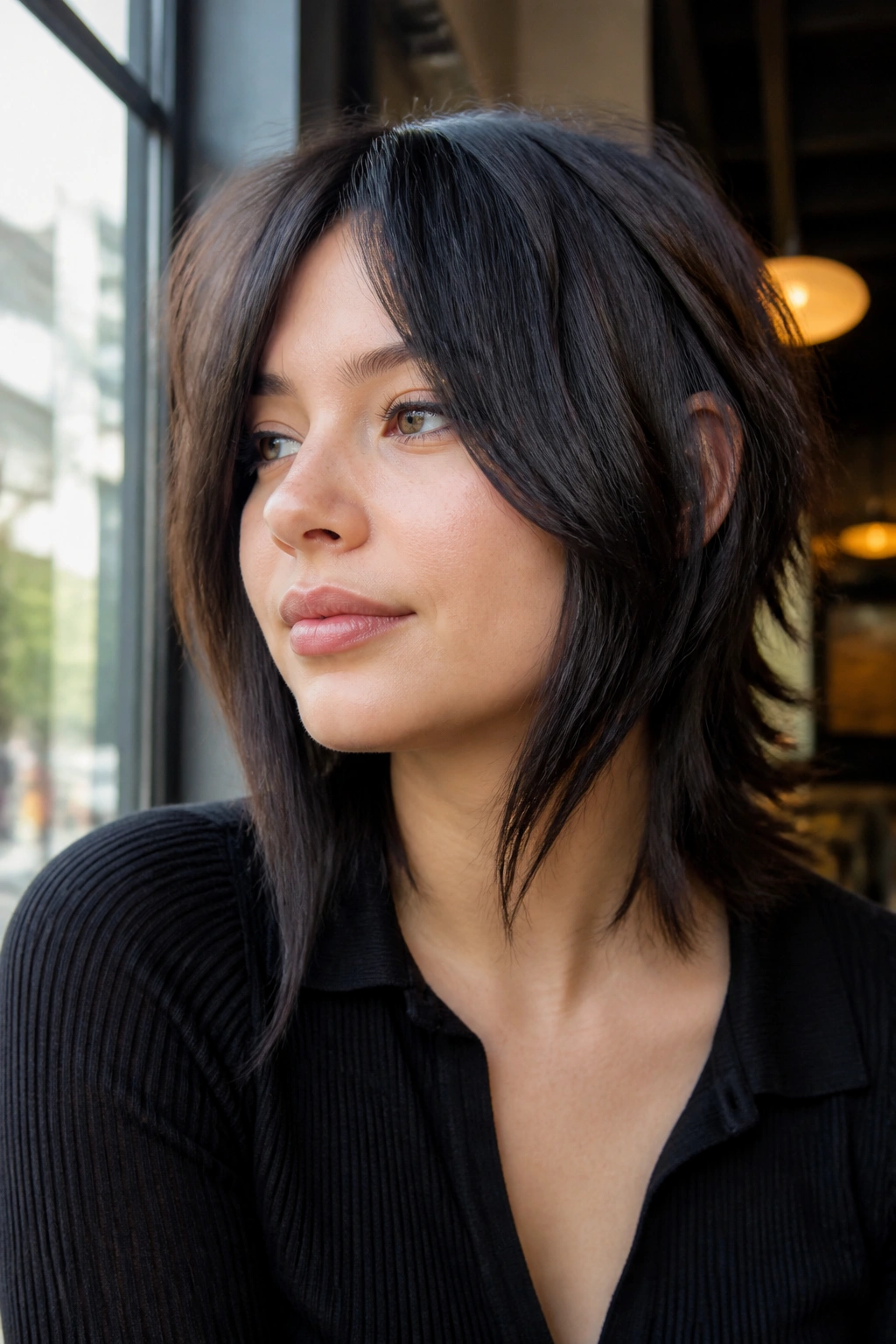
Can a wolf cut be dramatic and still flattering on a round face? Absolutely, if the drama stays in the right places. This version keeps the front longer and the back slightly shorter, but the back never gets so short that it balloons outward. That restraint is what makes it wearable.
The long front pieces pull the eye down and away from the widest part of the face. They also give you a cleaner line around the jaw and neck, which helps if your face is very soft through the cheeks. The subtle mullet back adds a little bite. Not a lot. Enough.
I like this one on thick straight hair and loose waves because both textures hold the shape without fighting it. If you want something with personality but don’t want the haircut to yell every time you walk into a room, this is a smart middle lane.
15. Messy Wolf Cut for Straight Hair

Straight hair can be the hardest texture for a wolf cut on a round face, because it shows every line. If the layers are too neat, the style can look flat. If they’re too choppy, it can look harsh. The sweet spot is messy, but controlled.
The cut needs broken-up ends and a few uneven face-framing pieces, usually starting around the lip or chin. That gives the straight hair enough motion to avoid the helmet effect. A soft bend through the mid-lengths helps, too. I’d rather see a couple of imperfect waves than a stick-straight outline sitting right at the cheeks.
This version is not high-maintenance if you keep the styling light. Dry shampoo at the roots, a quick pass with a 1-inch iron, and a finger-combed finish are usually enough. Over-smoothing straight hair is a bad move here. The hair should look a little undone. That’s the whole reason to wear a wolf cut in the first place.
16. Wolf Cut with Hidden Underlayers and Movement

Some cuts look choppy from the outside. This one doesn’t. The movement lives underneath, which makes it a nice choice if you want the wolf-cut shape without all the visible slicing around the face.
That matters on a round face because you can keep the surface line longer and softer while still removing bulk inside. The outer layer falls in a calm shape. The inside shifts and moves. It’s a sneaky cut, and I mean that in a good way.
This is especially helpful if your hair puffs out where it touches the shoulders. Hidden underlayers let the hair collapse inward a little instead of kicking out at the ends. Ask your stylist to keep the outer perimeter clean and only remove weight from the interior. If you’ve ever loved the idea of a shag but hated how it looked on your own head, this is the version to try.
17. Deep Side-Part Wolf Cut with Swept Fringe
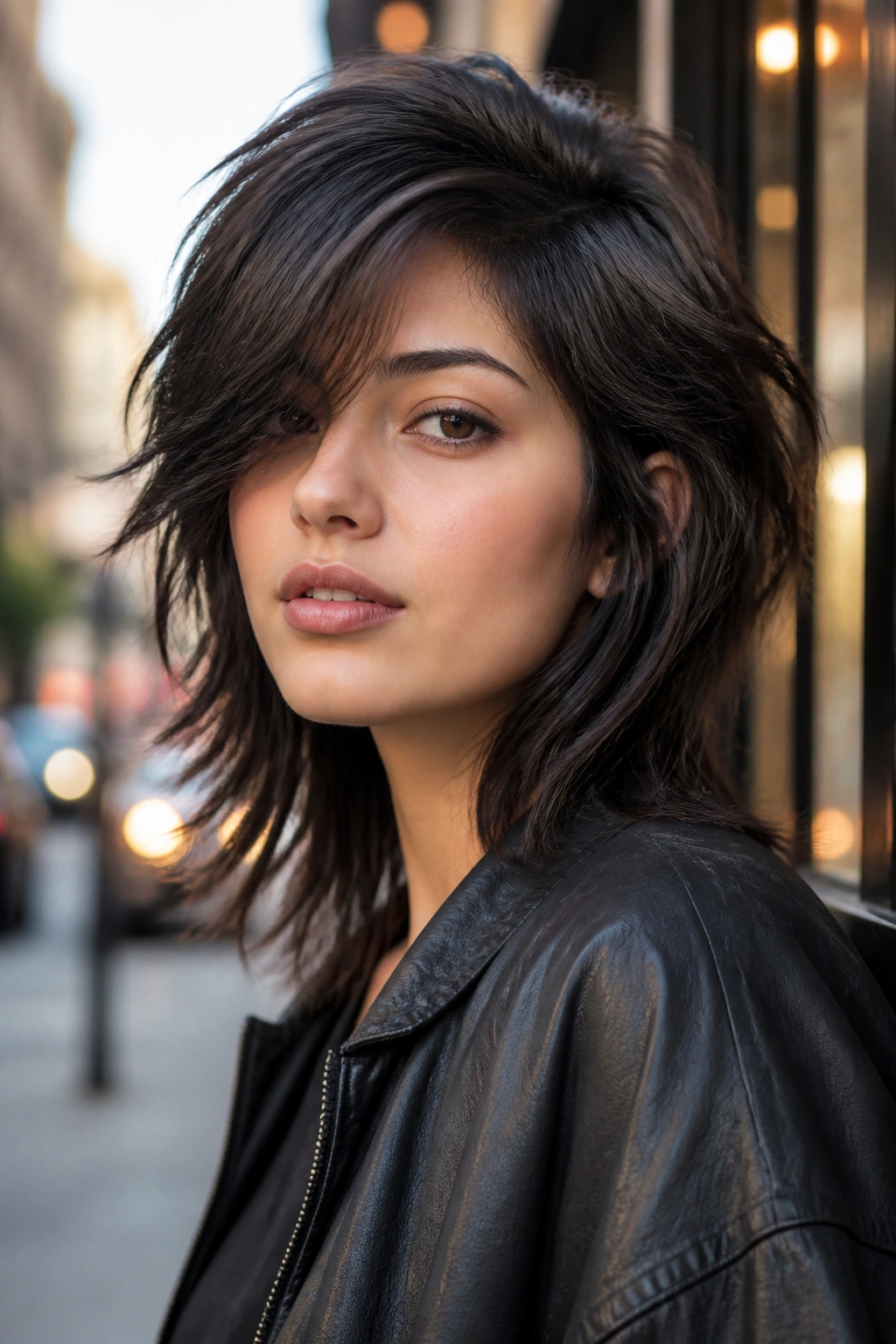
A deep side part changes the whole feel of a wolf cut. It gives a round face a diagonal line, and diagonals are what keep softness from becoming sameness. The swept fringe then follows that line instead of fighting it.
I prefer this on medium to long hair because the fringe needs enough length to sweep cleanly across the forehead and into the side layers. If the bangs are too short, they puff. If they’re too dense, they act like a curtain wall. Long and airy is the sweet spot.
The shape feels a little dramatic in the best way. There’s a small lift near the root, a longer fall across the face, and a broken-up edge around the jaw. It’s the kind of cut that looks polished in a pinch but still has texture when you run your fingers through it. Not stiff. Not fussy. Good hair, doing its job.
18. Wolf Cut for Curls and Coils with Length Left at the Bottom
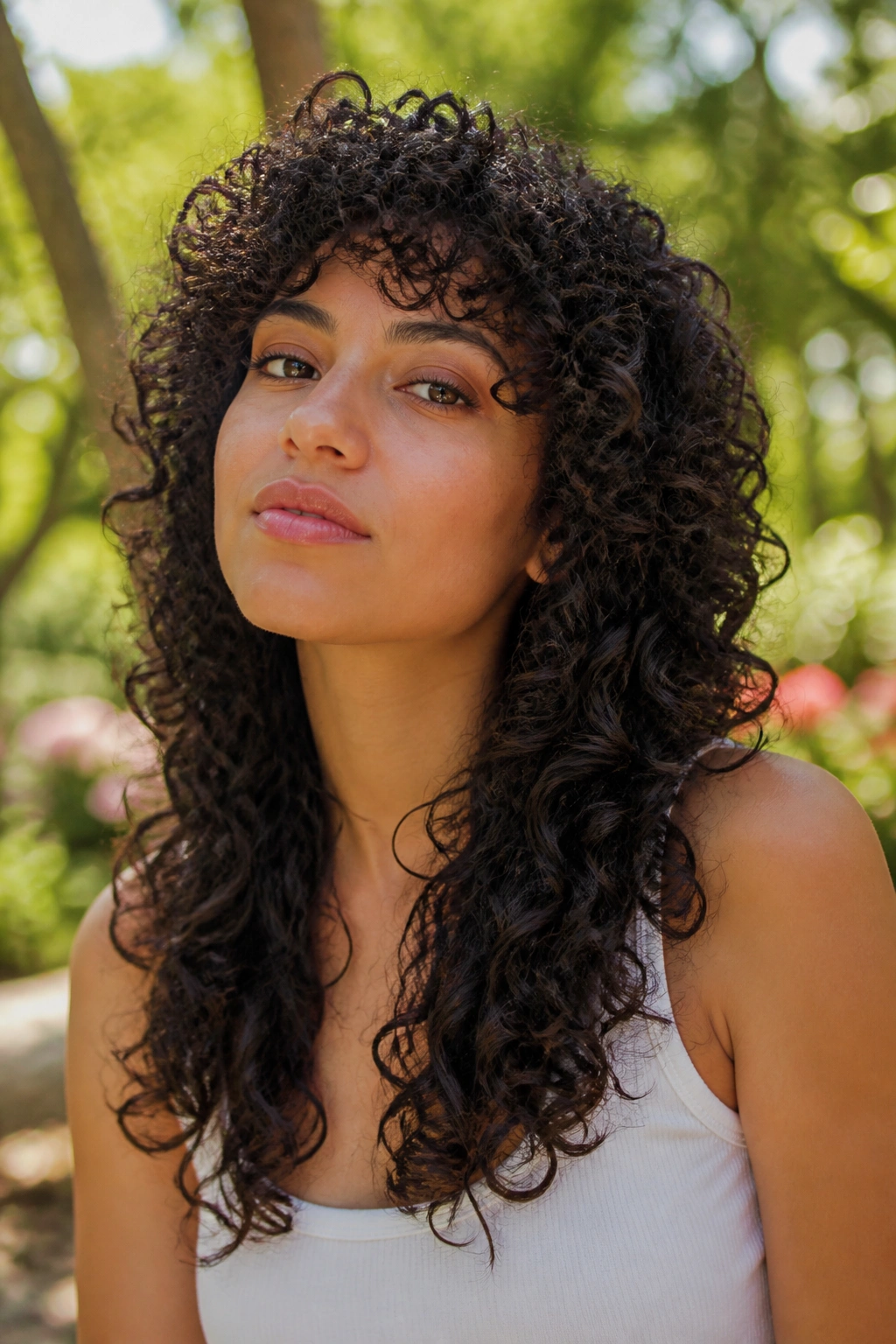
Coils need space. If the layers climb too high on a round face, the haircut can swell sideways and hide the jawline completely. That’s why the best curly-coil wolf cuts leave length at the bottom and keep the upper layers soft and controlled.
Best Cut Pattern
- Keep the bottom layer long enough to hold the silhouette.
- Place curl-by-curl layers higher on the crown, not around the cheeks.
- Cut dry so the shrinkage is visible.
- Avoid over-thinning the perimeter; it can turn fuzzy fast.
The shape should feel lifted, not puffy. I like a diffuser on low speed and a cream-gel mix for hold. A cream alone can be too soft. Gel alone can get crunchy. The mix gives the curls enough definition to show off the layers without turning them stiff.
Round faces often do better with this cut when the front curls are left a touch longer than the sides. That tiny length difference keeps the face open and the profile from going too wide.
19. Short Wolf Cut with Jawline-Grazing Pieces
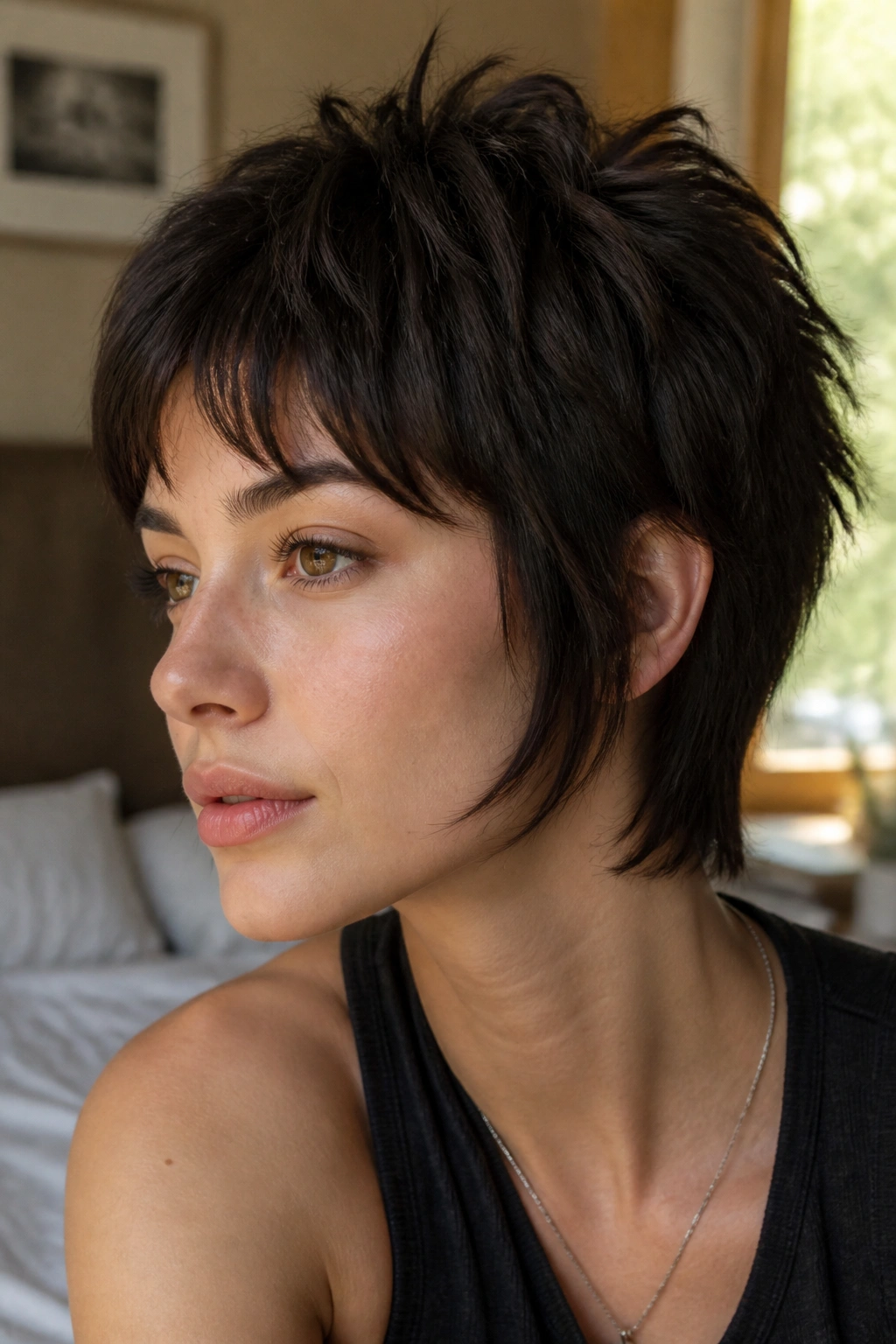
Short wolf cuts can be terrific on round faces, which people don’t always expect. The key is simple: keep the shortest pieces at the jawline or just below it. If they land higher, the face gets wider. If they land lower, the cut starts carving out shape.
This is a cleaner, punchier version of the wolf cut family. It still has choppy texture, but the length is short enough to feel easy. The back can be cropped near the neck while the front stays long enough to frame the lower face. That creates a sharp little angle without making the haircut feel severe.
I like this for people who want low styling time and a bit of edge. It doesn’t need a lot. A small amount of texture paste, a rough-dry, and one pass with a flat iron on the front pieces is usually enough. If you’ve been afraid that short hair will make your face look rounder, this version is the one I’d point to first.
20. Soft Wolf Cut with Fluttery Fringe

This is the version I point to when someone wants movement but hates high-maintenance hair. The layers are soft, the fringe is fluttery, and the overall shape stays light enough that a round face doesn’t get overwhelmed.
The trick is restraint. You do not need aggressive chopping to make a wolf cut work. You need a gentle crown lift, a fringe that breaks up the forehead, and front pieces that slide past the widest part of the face instead of stopping on it. That’s the whole game, and this cut plays it well.
It also grows out nicely, which matters more than people admit. A lot of trendy cuts look cute for two weeks and awkward after that. This one keeps its shape because the lines are soft from the start. If your hair is medium or fine, it will probably be one of the easiest options on this list. If your hair is thicker, ask for light internal shaping rather than a lot of surface layers. That keeps the cut from getting puffy halfway through the day.
