



The Mohawk braid is more than just a hairstyle. It is a silhouette that commands attention, drawing the eyes upward and framing the face with sharp, deliberate lines. Historically, the Mohawk has been a symbol of rebellion, but in the context of African braiding traditions, it transforms into an art form. It is sculptural. It is precise. When you opt for a Mohawk style on long hair, you are essentially creating a crown of intricate patterns that celebrate the versatility of textured hair.
Some people assume that a Mohawk requires shaving the sides of the head. That is a misconception. With the right technique—often using cornrows, flat twists, or sleek gel-down methods—you can achieve that bold, elevated look without cutting a single inch of your natural hair. Long hair provides the perfect canvas for these styles because it offers the length needed to create height, volume, and those dramatic swooping patterns that define a truly great braid job.
Whether you are looking for something sleek and professional or big and unapologetically bold, the options are endless. The key is in the parting, the braid tension, and how you choose to finish the look. Let’s walk through the most striking variations that bring out the best in long, textured hair.
1. Classic Cornrow Mohawk
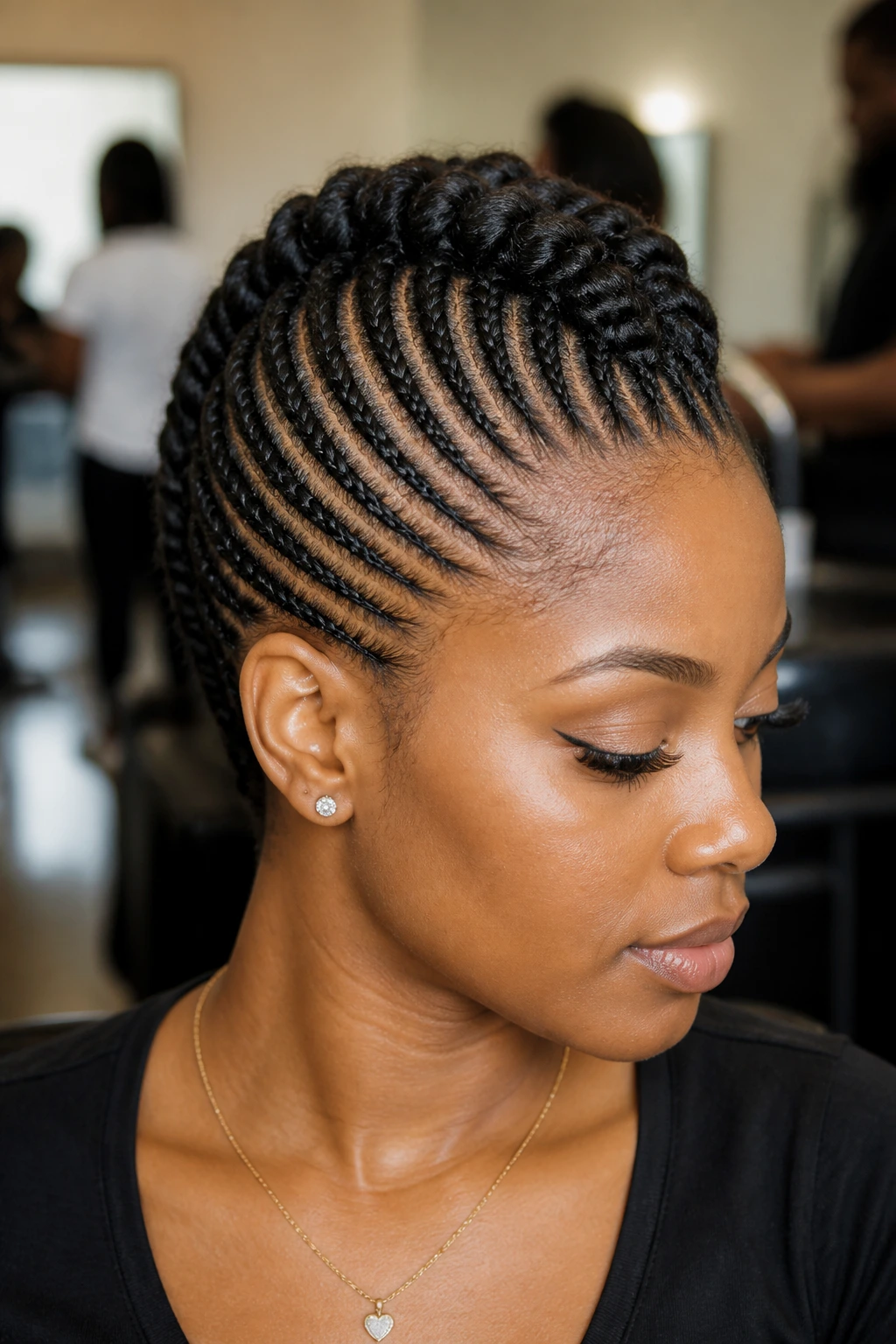
This is the foundational style for anyone looking to enter the world of Mohawk braids. It relies on tight, clean cornrows that travel from the sides of the head toward the center, meeting at the top to create a ridge of hair. The beauty of this look lies in its simplicity and the crispness of the parts.
Why This Style Works
It acts as a blank slate. You can keep it minimalist with straight-back braids or add a bit of flair with curved parts. The tension keeps your natural hair protected and tucked away, making it a stellar option for a low-maintenance, long-term protective style.
Key Maintenance Tips
- Edge Control: Use a firm-hold gel specifically designed for textured hair to lay your edges.
- Moisture: Keep the cornrows hydrated with a lightweight oil spray every two to three days.
- Night Protection: Wrap your head in a silk or satin scarf to keep the braids from frizzing while you sleep.
Pro tip: Ask your stylist to keep the cornrows near the hairline slightly smaller. This relieves tension on your most delicate hair strands while creating a polished, professional finish.
2. Twisted Mohawk Updo
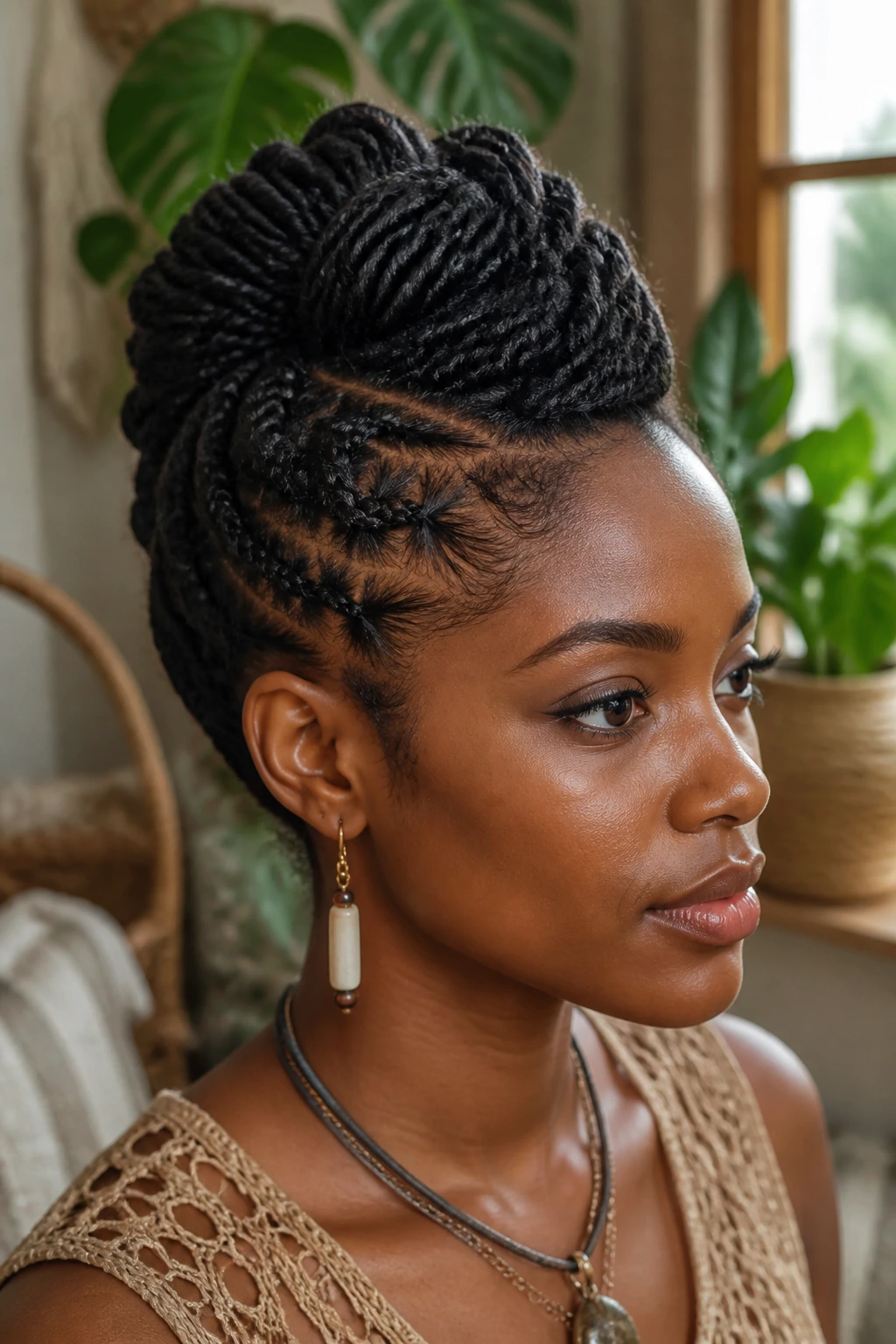
Sometimes, you want the volume of a Mohawk without the rigid structure of tight cornrows. This style uses flat twists instead of traditional braids to create that signature center ridge. It feels softer, fuller, and slightly more bohemian.
The transition from the sides to the center is gradual here. Because you are using twists, the hair has a natural bounce and texture that cornrows just cannot replicate. It is an excellent choice if your hair is thick and you want to avoid the “tight” feeling that can come with intricate braiding patterns.
You can customize the center by gathering the twists into a series of mini-buns or leaving the ends loose for a cascading effect. If your hair is long enough, tucking the ends under creates a neat, rounded silhouette that looks like a high-fashion updo.
3. Faux Hawk with Box Braids
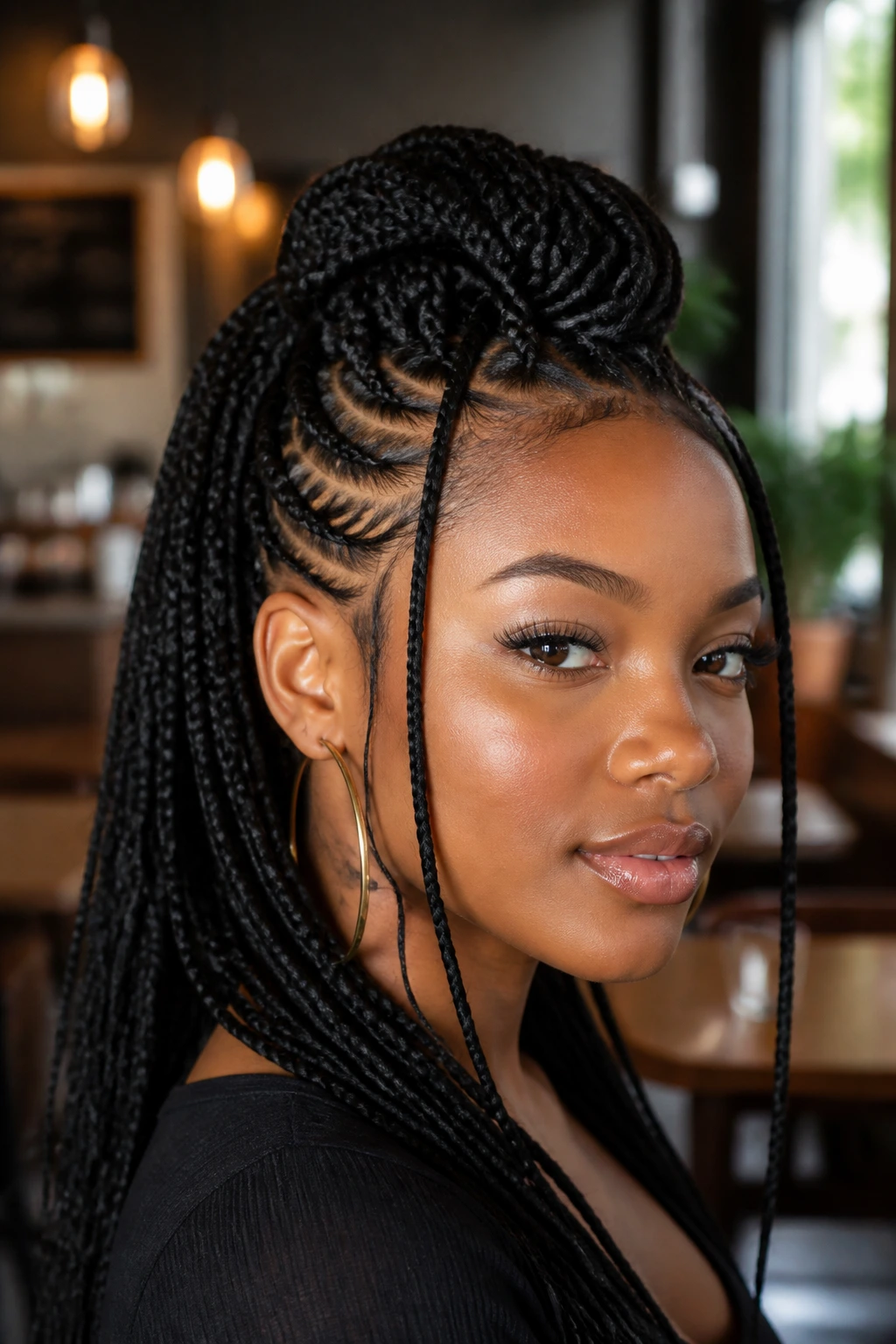
If you already have box braids installed, you are halfway to a Mohawk. This is the most versatile option because it works with braids you might have already had for weeks. You simply gather the braids from the sides and pin them securely into the center.
Styling for Volume
You need a good amount of hair to make this look impressive. If your box braids are long, wrap them around the center section in a loose, spiraling formation. This builds height. The more braids you have, the wider and more dramatic the Mohawk ridge becomes.
The Finishing Touch
Secure everything with sturdy bobby pins, but don’t be afraid to leave a few braids dangling around the face. This softens the look. You can also accessorize with gold cuffs at the roots of the braids to add a metallic pop that catches the light.
4. Zig-Zag Parting Mohawk
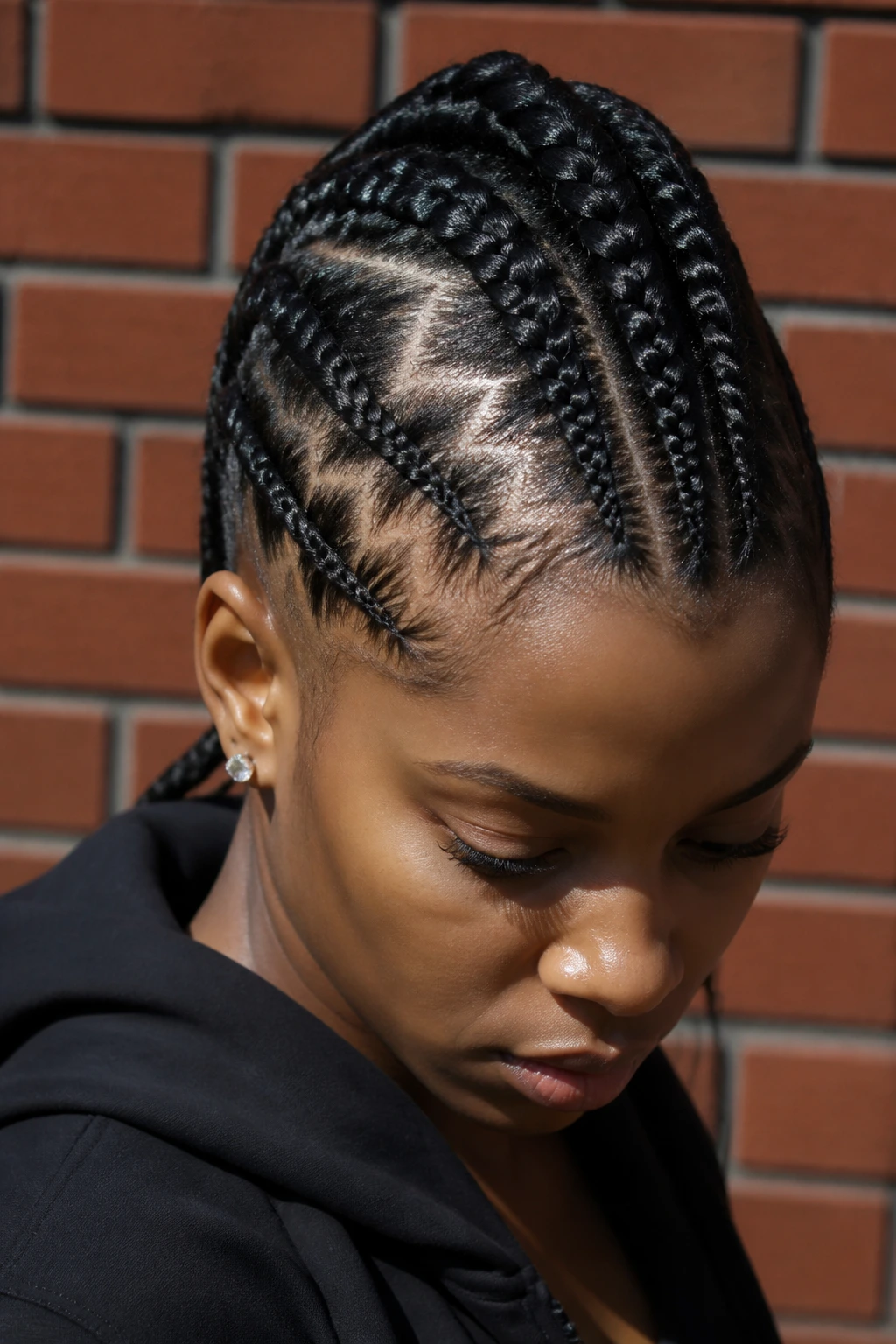
Precision is the name of the game here. Instead of straight lines, your stylist creates sharp, geometric zig-zags on the sides of the head. This adds a layer of complexity and visual interest that makes a standard Mohawk feel like a piece of modern art.
The zig-zags should be deliberate and clean. When you look at the head from the side, the pattern should be immediately recognizable. It requires a steady hand and a rat-tail comb to ensure that each line is distinct.
Because the parts are so visible, this style looks best when the hair is healthy and the roots are well-oiled. It is a bold look that doesn’t need extra accessories because the pattern itself does all the talking. It is perfect for those who want their hairstyle to stand out in a crowd.
5. Feed-In Braid Mohawk
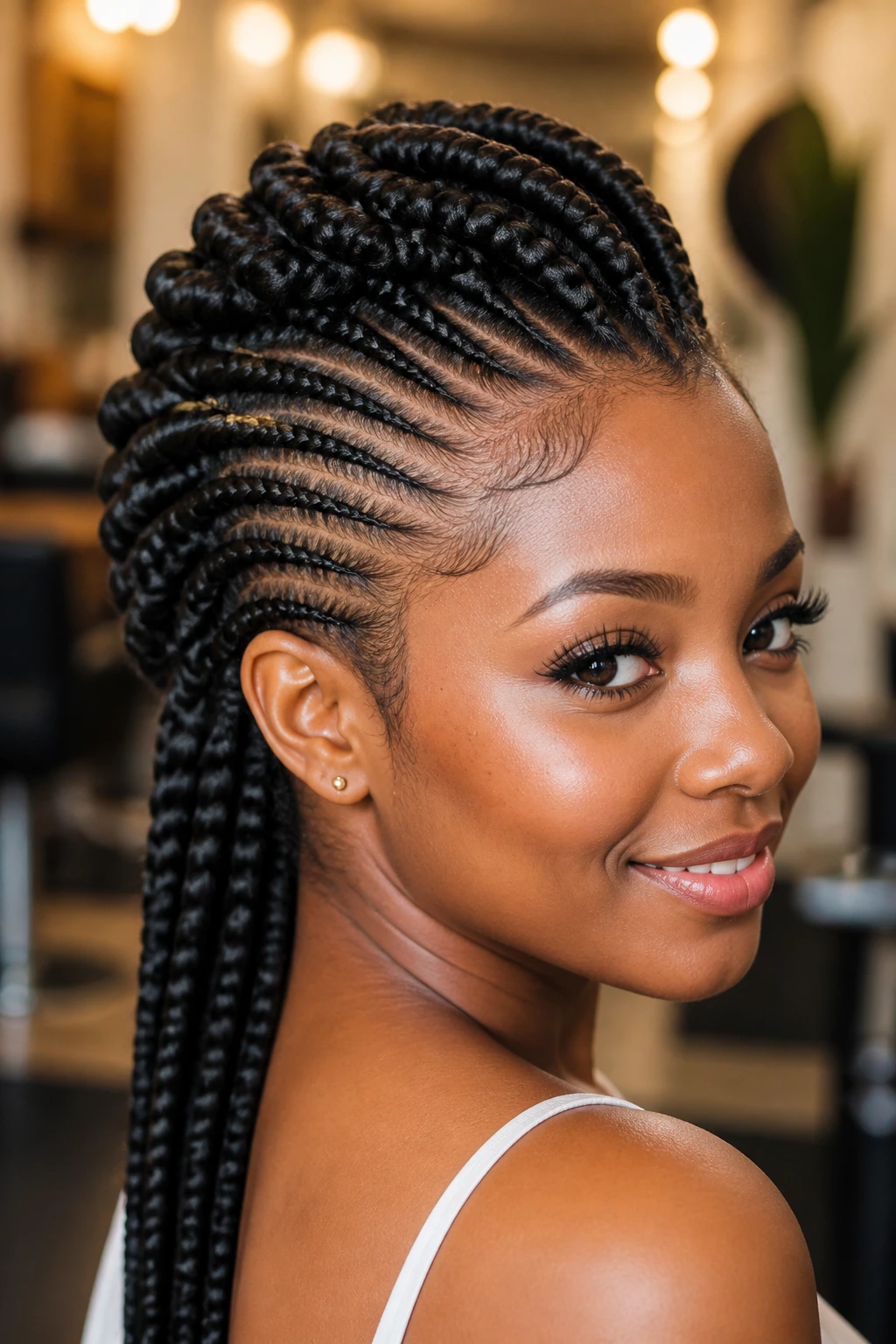
Feed-in braids are a staple for a reason—they mimic the look of natural hair growing directly from the scalp. By “feeding” in synthetic hair as you braid, you start with a small, flat base near the hairline and gradually increase the size of the braid as it moves toward the center of the head.
This creates a sleek, gradual incline that looks incredibly natural. The Mohawk ridge ends up looking thick and luxurious. It is a fantastic method for adding length and volume without weighing your natural hair down too much.
Ask for tapered ends on the braids. This gives the Mohawk a clean, finished appearance. You can play with the thickness of the braids, too—some people prefer a few chunky feed-ins, while others prefer a larger number of smaller, more intricate braids.
6. Mohawk with Goddess Braids
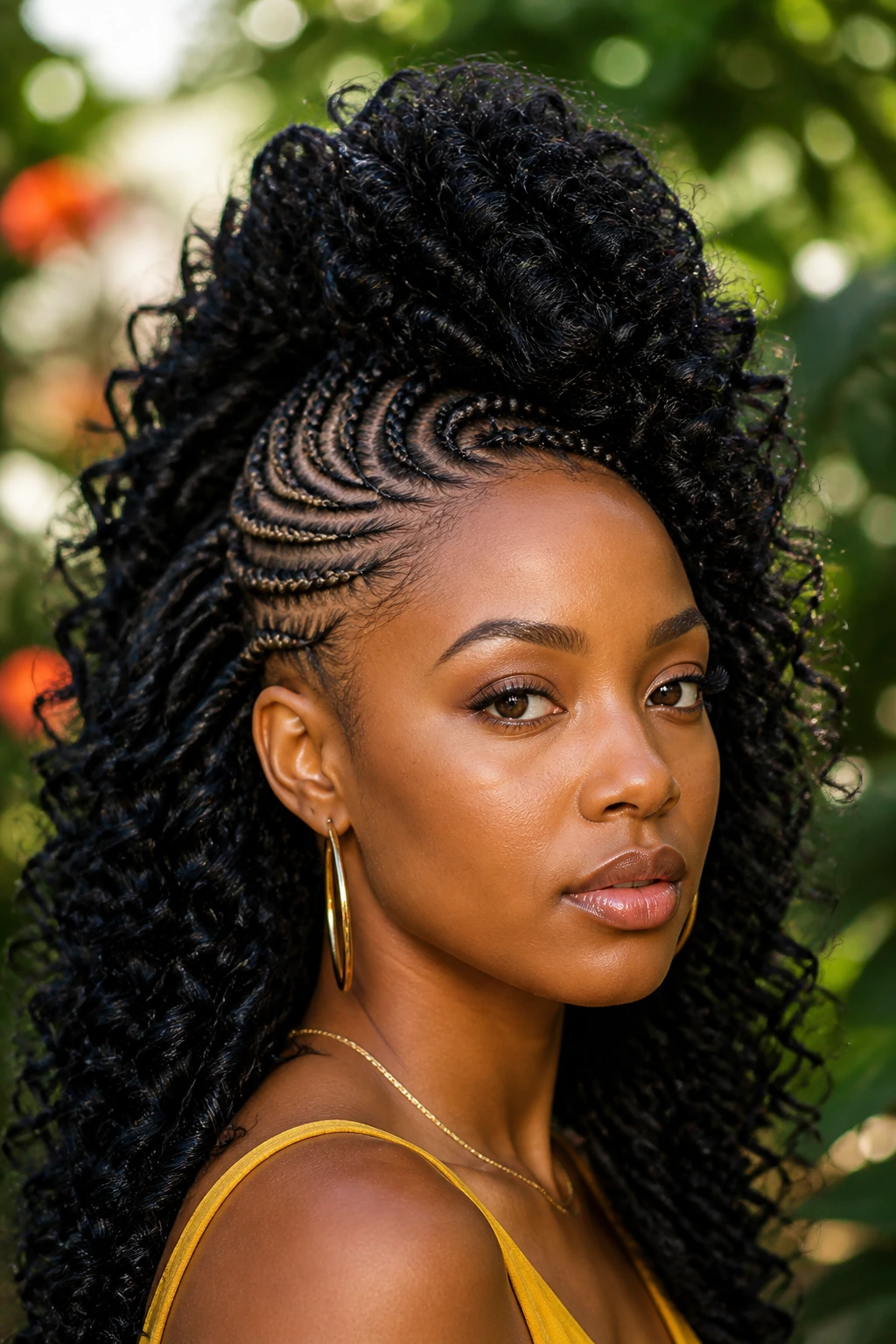
Goddess braids are the ultra-feminine, softer cousin to standard cornrows. They are typically larger, looser, and often incorporate curly extensions at the ends or woven into the braid itself. Putting them into a Mohawk configuration is a game-changer.
The volume is the main event here. Because goddess braids are thick and voluminous, you don’t need a massive number of them to create a substantial Mohawk ridge. The curls, left loose or woven throughout, create a halo effect that is both striking and incredibly soft to the touch.
This is a great style for special occasions. It feels sophisticated and effortless. Because the braids are larger, the installation time is often shorter than more intricate styles, which is a significant bonus if you have a busy schedule.
7. High Ponytail Mohawk
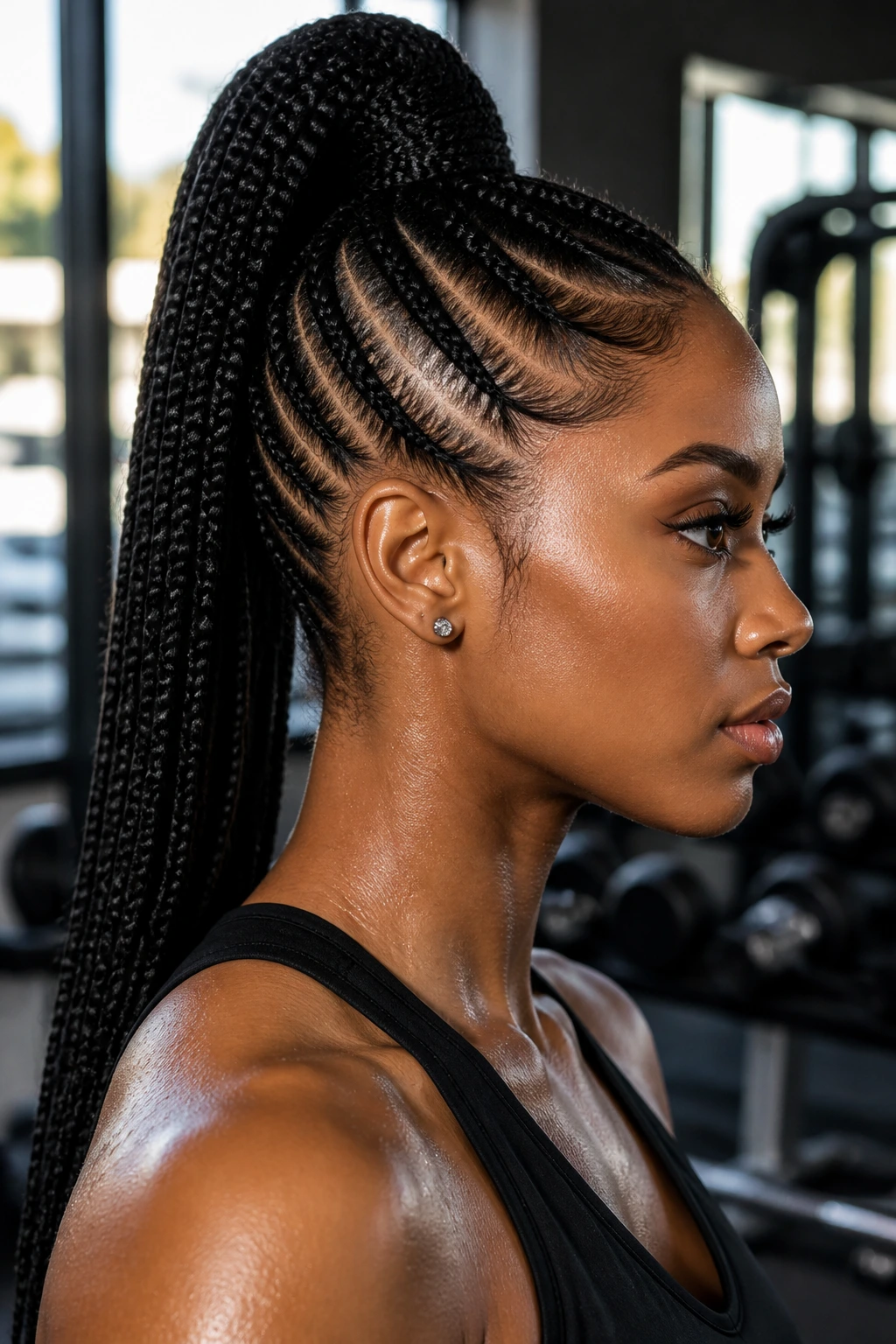
This style essentially combines the best of both worlds: a structured Mohawk and a high, swinging ponytail. You cornrow the sides of your head toward the center, but instead of the braids stopping at the nape, they are gathered into a ponytail at the crown.
The braid ends become the hair for the ponytail. You can leave the ponytail braids as they are, or you can wrap them in hair to create a thick, seamless look. This style keeps the hair off your neck, making it practical for warmer weather or high-intensity days.
It also highlights your facial features perfectly. Because the hair is pulled high, your cheekbones and jawline are put on display. It is a crisp, clean, and undeniably powerful look that works just as well in a gym setting as it does at a dinner party.
8. Mohawk with Curly Ends
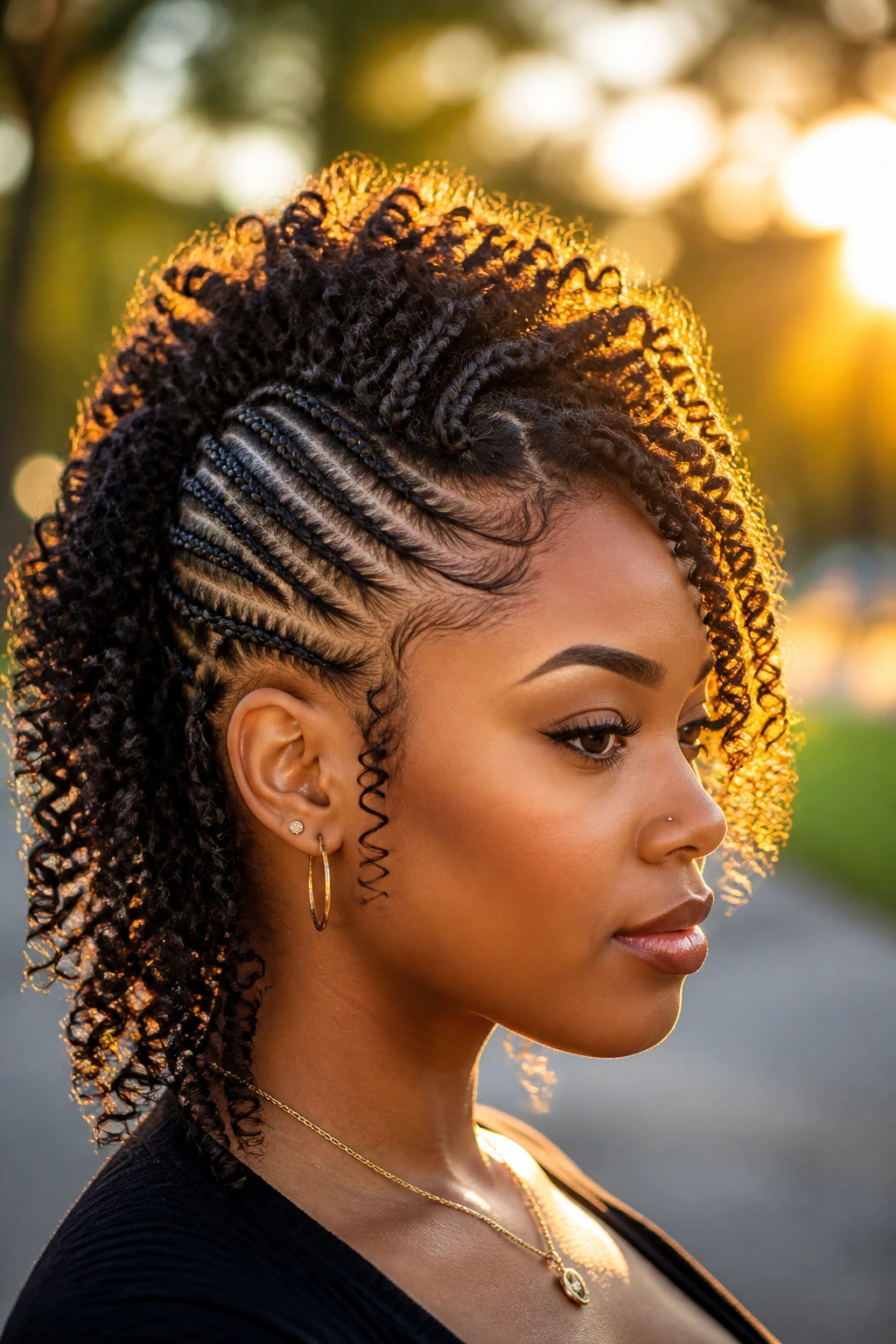
Who says a Mohawk has to be strictly braids? This hybrid style uses flat twists or cornrows on the sides to create the Mohawk shape, but leaves the long, textured hair in the center completely free and curly.
How to Style It
You define your natural curl pattern in the center with a high-quality curling custard or mousse. The contrast between the sleek, controlled sides and the wild, free curls on top is visually stunning. It celebrates both the order of protective styling and the freedom of natural texture.
Maintaining the Curls
- Diffusing: Use a diffuser attachment on your blow dryer to keep the curls defined and voluminous.
- Avoid Over-Touching: Once the product dries, keep your hands out of your hair to prevent frizz.
- Refresh: Use a water-based spray to reactivate the curls in the morning.
9. Braid-Out Mohawk
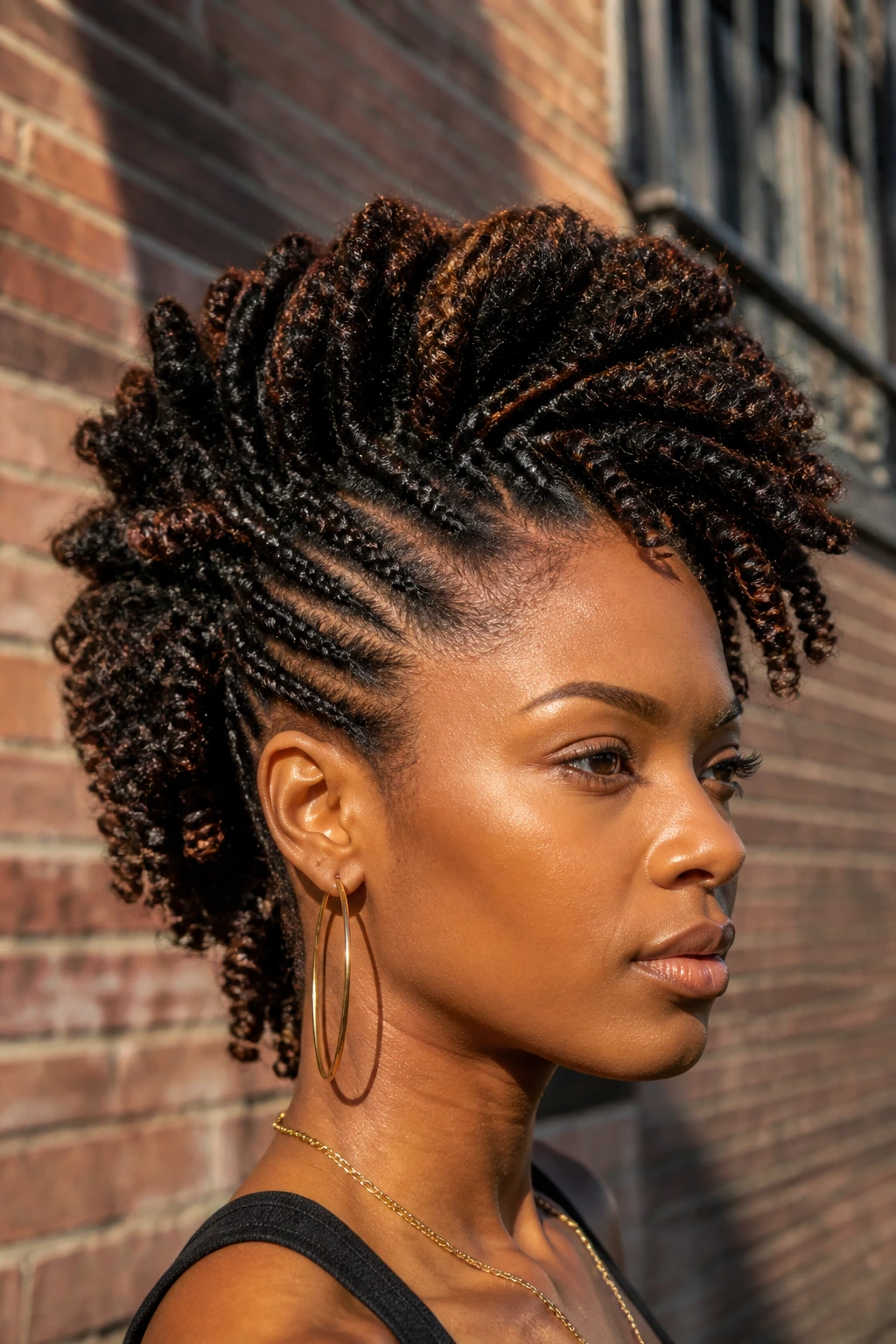
Similar to the curly ends style, but this one leans heavily into the texture of a braid-out. You braid the entire head, but keep the braids loose or large. After a few days, or by taking them down, you have a massive, voluminous mane.
You then take the sides and pin them tightly toward the center, using bobby pins to create the Mohawk shape. This style is all about volume and texture. It is big, it is bold, and it feels very organic.
This look works best on day-two or day-three hair when the definition is at its peak. It is less about perfection and more about maximizing the potential of your natural texture. If you love a look that feels lived-in and comfortable, this is the one to try.
10. Side-Swept Mohawk
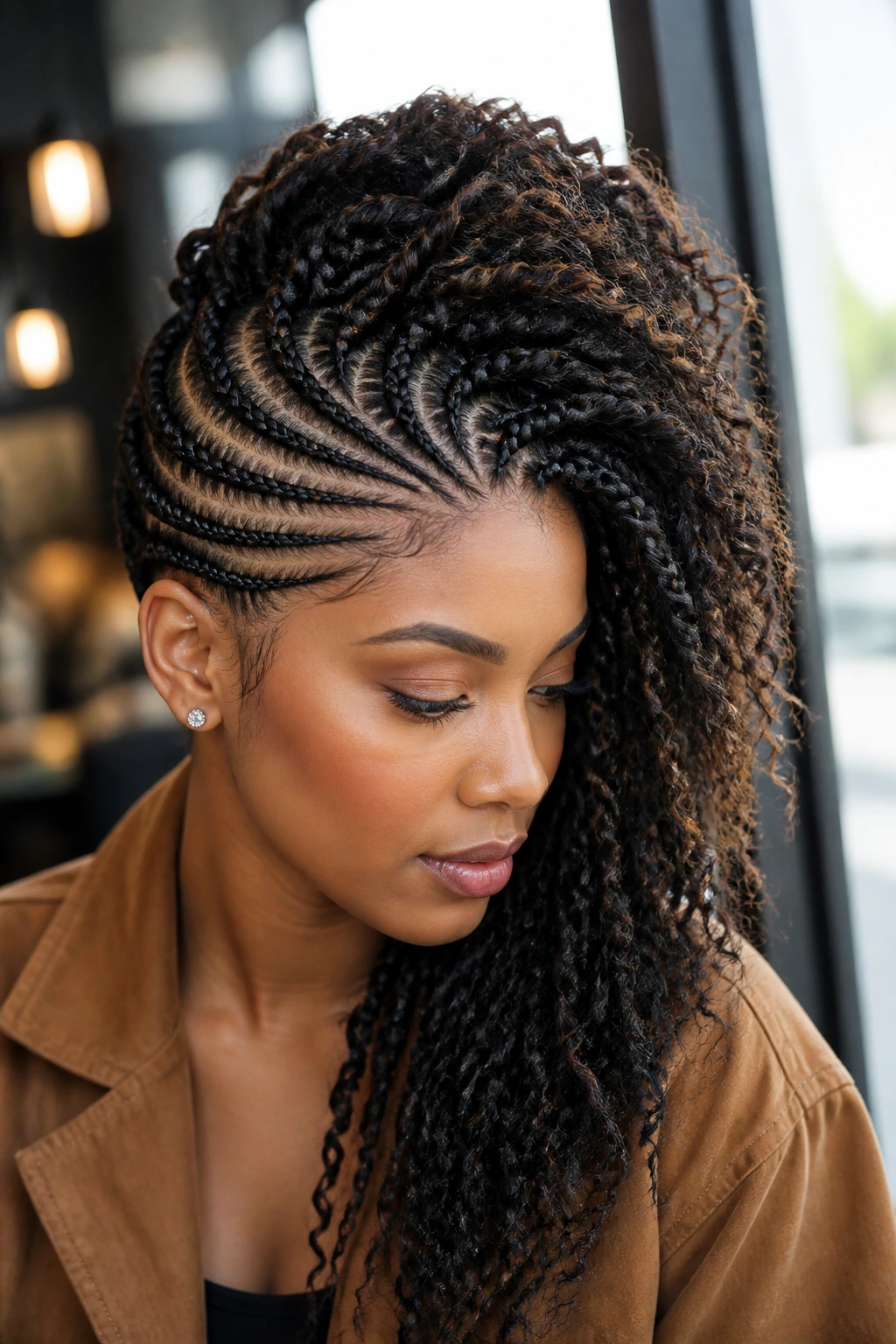
Sometimes, the Mohawk doesn’t have to be perfectly vertical. A side-swept variation brings all the drama of the center ridge but tilts it at an angle. It is asymmetrical, which makes it feel dynamic and modern.
You cornrow one side of the head tighter than the other, creating a swoop that guides the eye across the head. It is a sophisticated way to wear the style, especially if you have a face shape that benefits from asymmetry.
This style allows for a lot of creative freedom with partings. You can incorporate curved parts that mirror the sweeping motion of the hair. It is a fantastic choice if you want the “Mohawk” vibe but find a straight-up ridge too intense for your daily style.
11. Mohawk with Beads and Cuffs
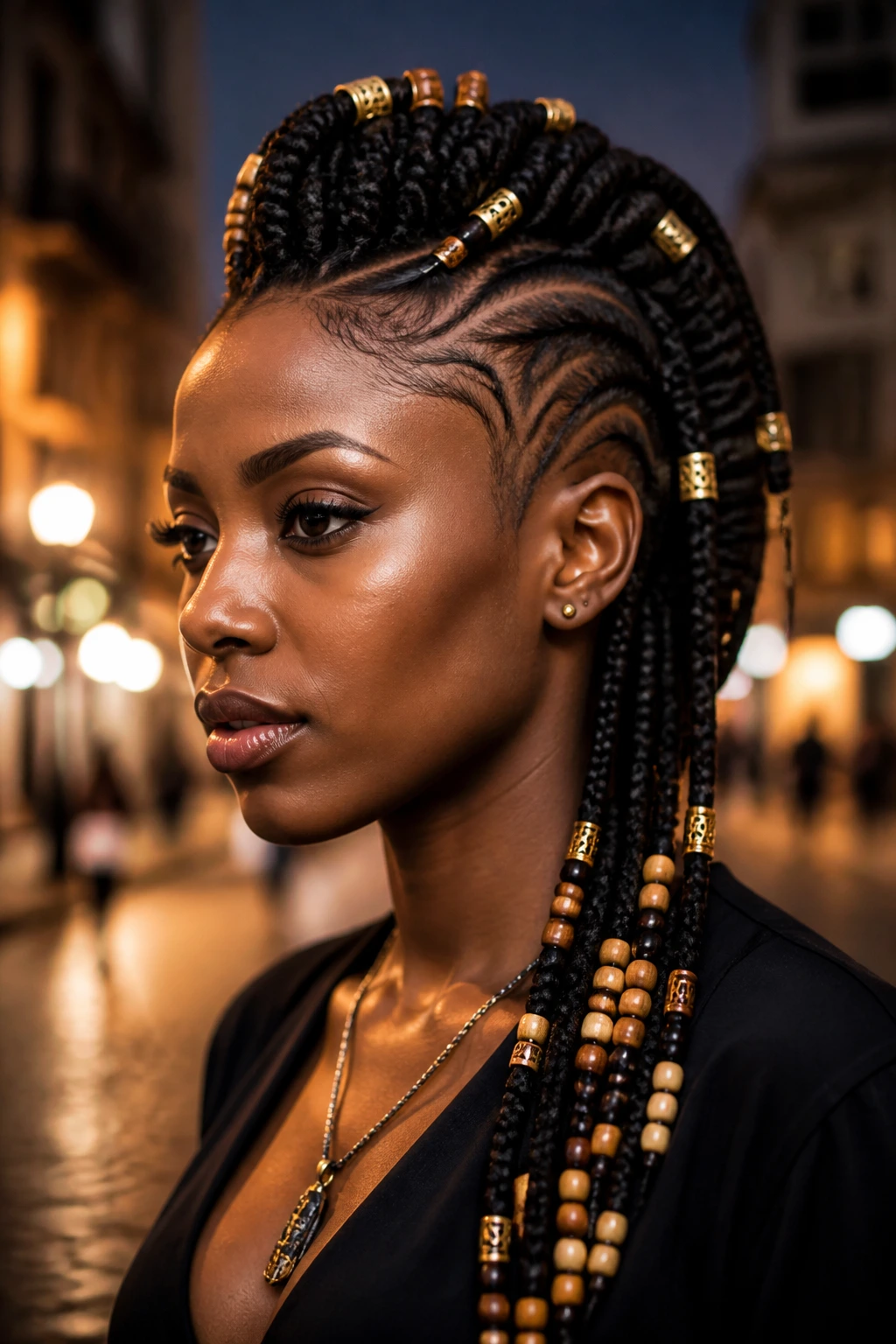
Accessorizing is the fastest way to upgrade any hairstyle. For a Mohawk, beads and metallic cuffs are your best friends. They catch the light and add a rhythmic clinking sound as you move.
Don’t just stick to the ends of the braids, either. Placing gold or silver cuffs at the base of the braid where it meets the scalp adds a structured, intentional detail. You can even thread clear or wooden beads onto the braids that form the Mohawk ridge.
Think about color coordination, too. If you are wearing silver jewelry, opt for silver cuffs. If you want a more earthy, bohemian vibe, wooden beads are excellent. This is the style that allows your personal aesthetic to really shine through the braids.
12. Two-Tone Mohawk
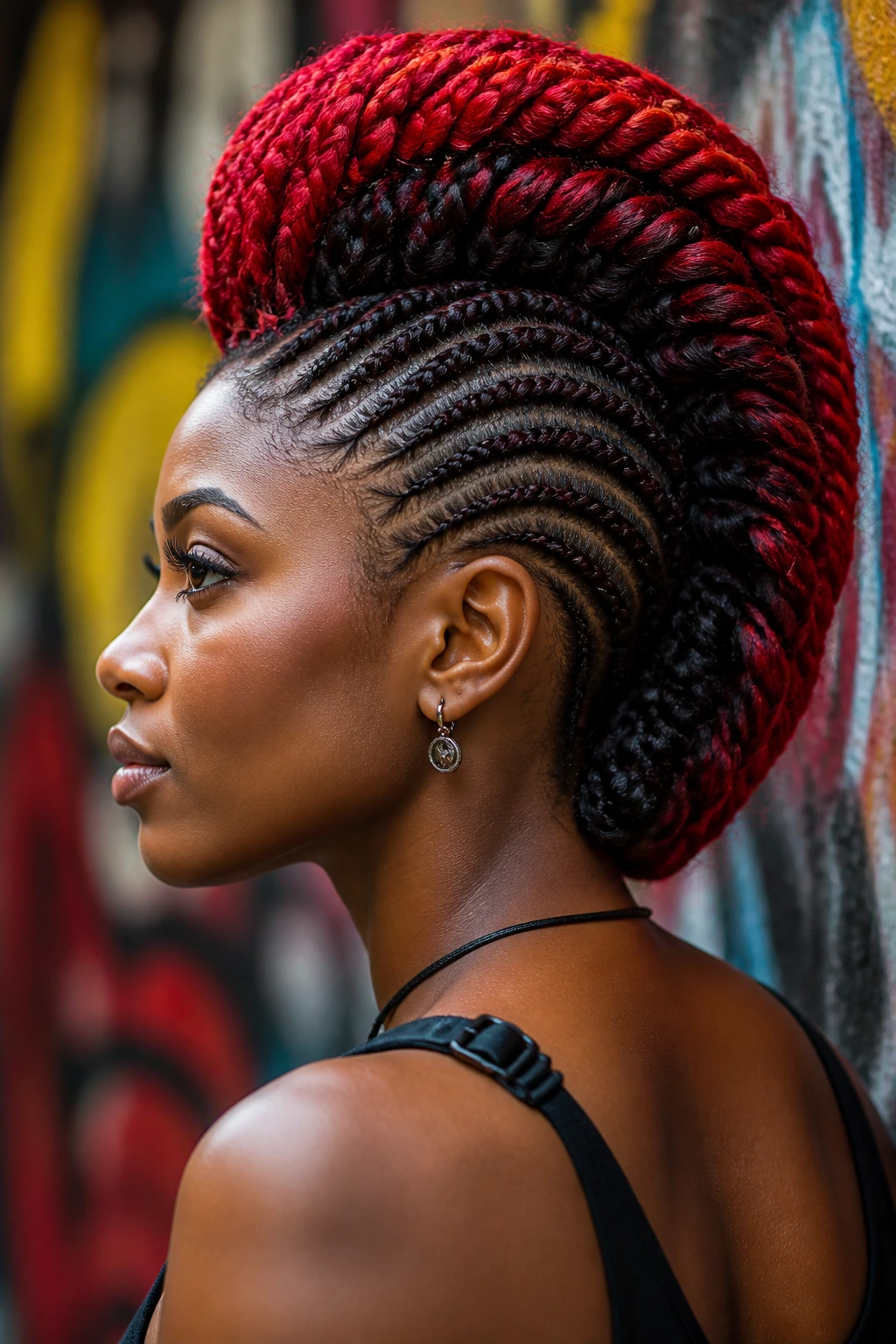
Color changes the geometry of hair. A two-tone Mohawk—where the braids on the sides are one color and the Mohawk ridge is another—creates an optical illusion that makes the height of the style look even more dramatic.
The contrast draws the eye immediately to the center. You can go for bold contrasts, like jet black sides with a platinum blonde center, or more subtle combinations, like dark brown sides with a honey-brown center.
If you don’t want to dye your natural hair, this is a perfect time to use colored braiding hair. Synthetic hair comes in every shade imaginable, allowing you to experiment with color without committing to a permanent chemical process.
13. Mohawk with Locs (Faux Locs)
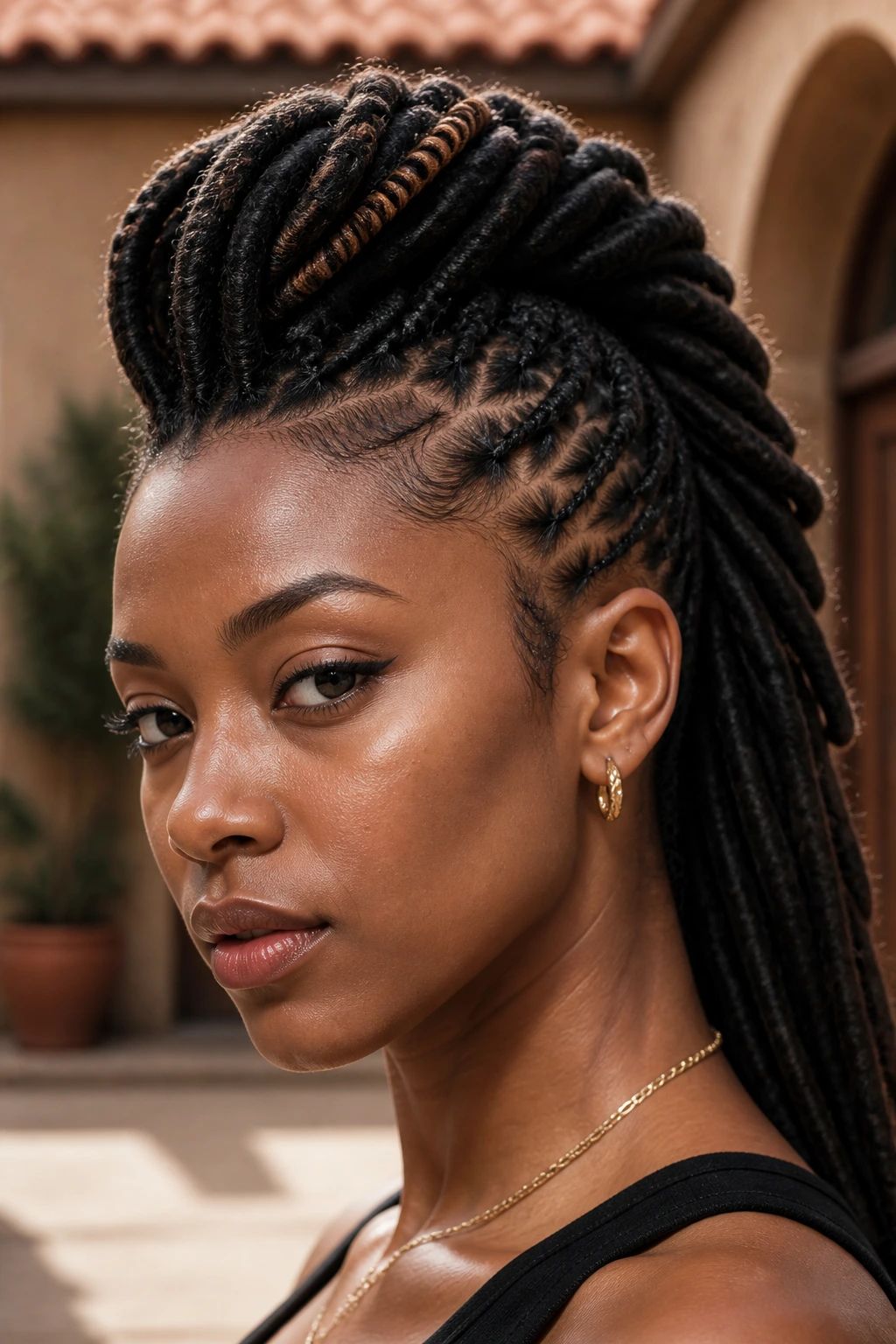
If you have faux locs, you can still rock a Mohawk. Because locs are inherently thicker and have more weight, this style produces a heavy, dense look that is visually very impressive.
You pin the locs from the sides toward the center, letting them stack up to form a thick Mohawk. The weight of the locs helps them sit securely, but make sure to use larger bobby pins to keep everything in place.
Faux locs also allow for great accessory integration. You can wrap colored string or thread around the locs in the center to add another layer of texture. This look is very “earthy” and relaxed, perfect for a vacation or a long-term protective style choice.
14. Intricate Patterned Mohawk
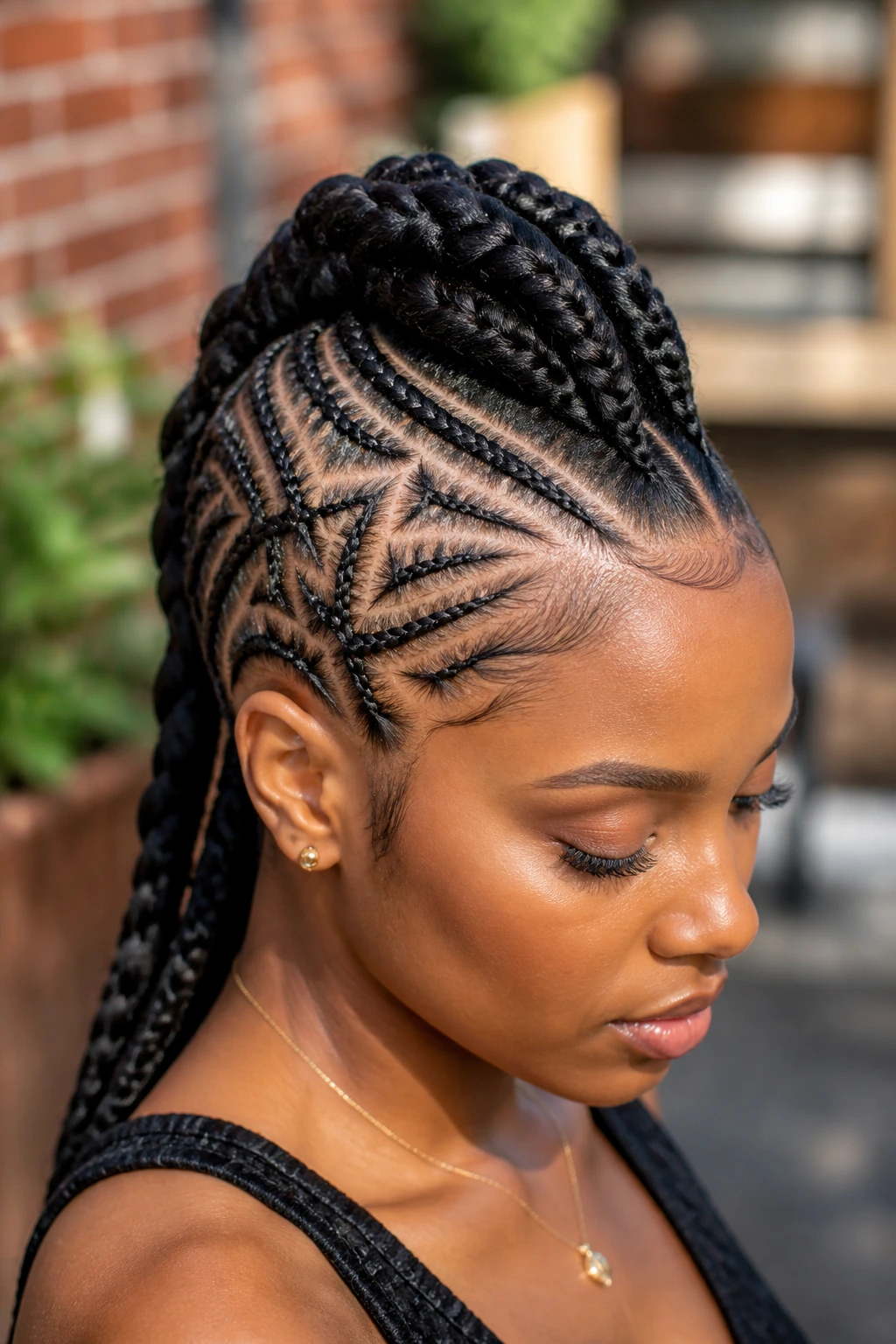
This is for the person who sees their scalp as a canvas. Instead of standard straight-back cornrows on the sides, the hair is braided into complex patterns—think stars, waves, or converging geometric shapes that all point toward the center Mohawk.
You need a skilled braider for this. It takes time, patience, and a high level of technical ability. The payoff, however, is a hairstyle that looks different from every angle.
When you go for this style, keep the accessories to a minimum. Let the parting patterns be the star of the show. If you crowd a pattern-heavy Mohawk with too many beads or cuffs, it can look cluttered. Let the geometry breathe.
15. Mohawk with Bantu Knots
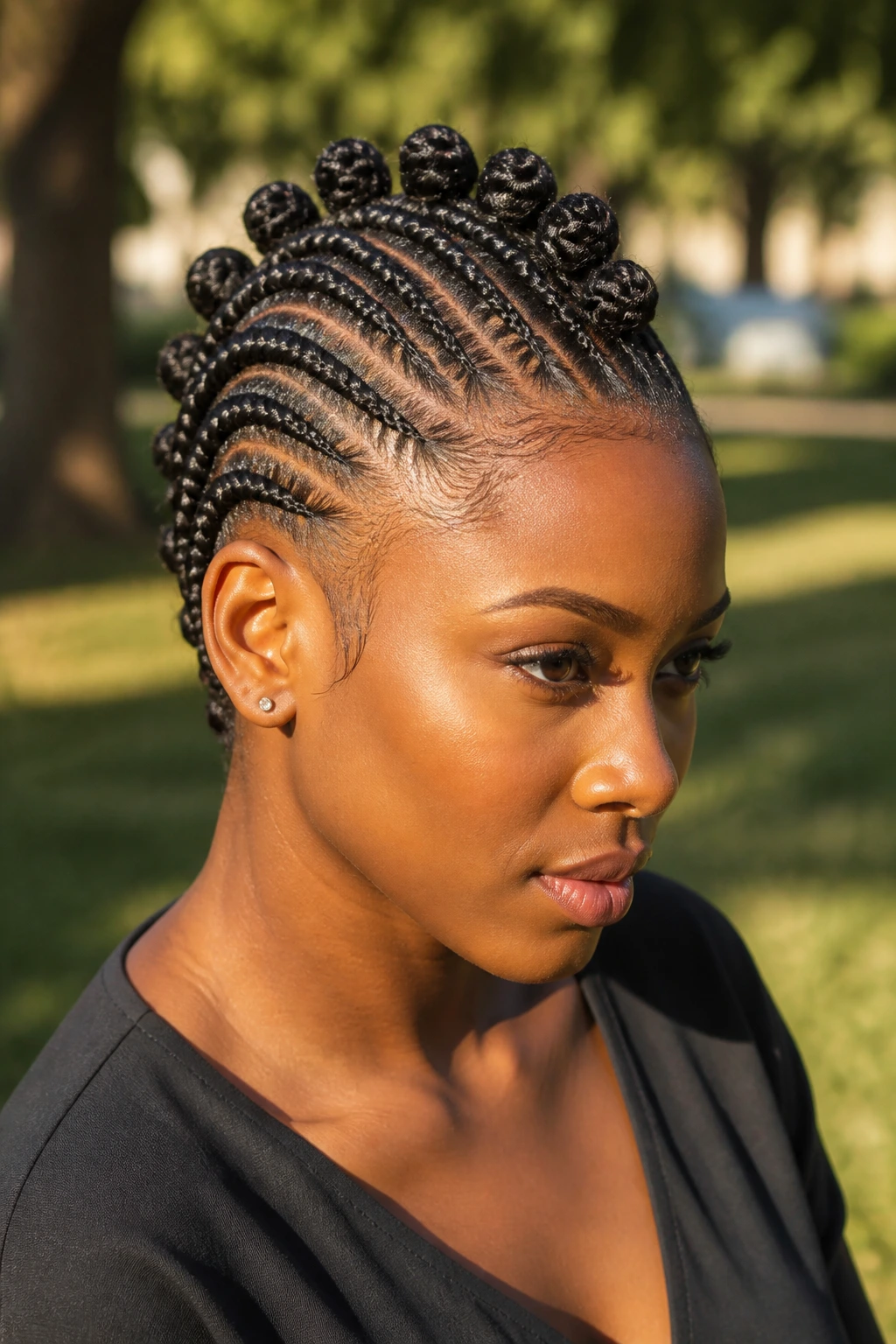
This is a stunning fusion of two iconic hairstyles. You create the Mohawk base with cornrows, but instead of the braids forming a continuous ridge, they terminate into a series of perfectly coiled Bantu knots along the center of the head.
The contrast between the flat, sleek cornrows and the raised, structured knots is beautiful. You can make the knots all the same size for a uniform look, or vary them from small in the front to larger in the back.
This style is surprisingly durable. Because the hair is knotted, it tends to hold up well over time. Just ensure you wrap your head carefully at night to keep the knots from unraveling or getting frizzy.
16. Sleek Gel-Down Mohawk
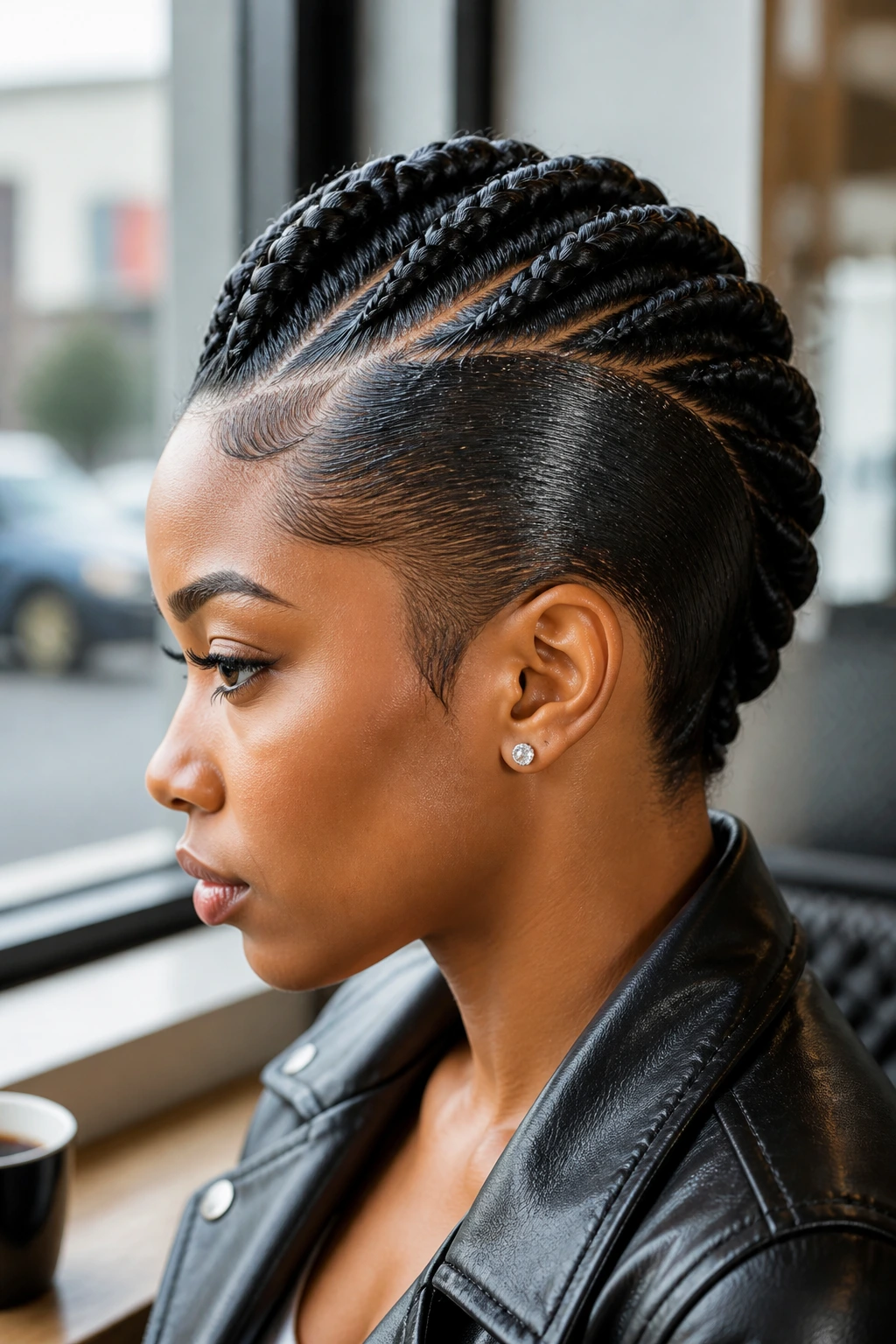
For those who prefer a less permanent braid style, the gel-down Mohawk is a classic. You slick the sides of your hair down using a high-quality styling gel and a boar bristle brush, pinning it into a ridge.
The hair in the center can be styled into a series of braids, twists, or even loose, defined curls. This style is clean, sharp, and very modern. It works beautifully on straight, relaxed, or stretched natural hair.
The secret here is the product. You need a gel that provides a firm hold without flaking or leaving a white residue. Apply the gel to damp hair, brush it meticulously, and then tie it down with a silk scarf for at least 30 minutes to set the mold.
17. Mohican Style Braids
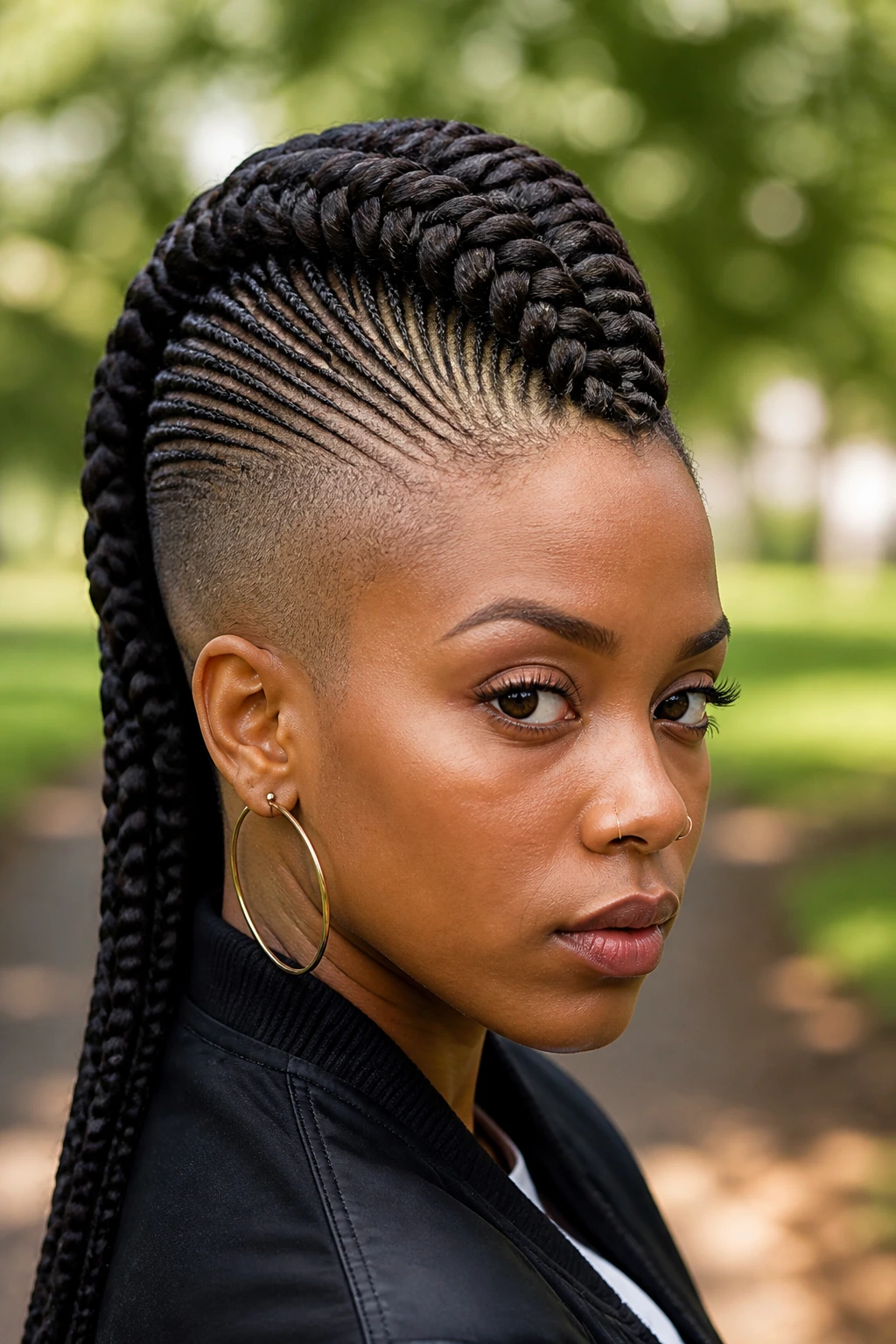
The Mohican style is distinct for its focus on a singular, massive braid that runs down the center of the head. It is almost like a very wide, thick French braid that creates a continuous, uninterrupted line from the forehead to the nape.
This is a very regal look. It feels like a crown. Because the central braid is so thick, it usually incorporates plenty of extension hair to achieve that full, rounded effect.
If you have long, fine hair, this style is a lifesaver because it creates the illusion of density. The sides are kept neat and close to the scalp, which provides a stark contrast to the thick, voluminous braid in the middle.
18. Mohawk with Fulani-Inspired Details
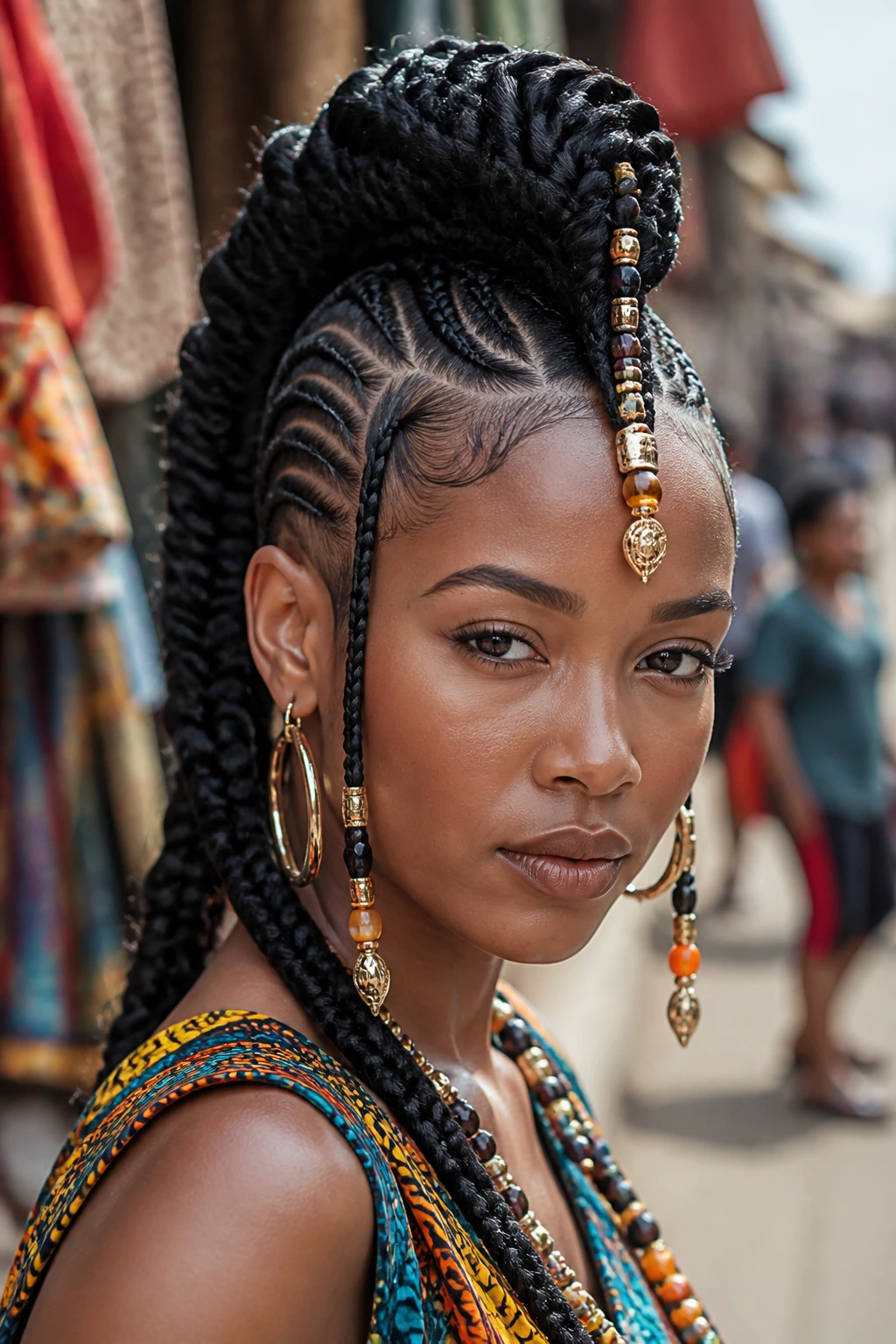
Fulani braids—characterized by cornrows that go from the front to the back, often with a central part and side braids—can easily be adapted into a Mohawk. The detailing around the hairline and the sides is what makes this style stand out.
You incorporate the signature Fulani style by adding beads to the front braids or creating intricate patterns around the temples. Then, instead of letting the braids hang loose, you gather them into the Mohawk ridge.
It’s the ultimate “details matter” style. The combination of tribal-inspired parting and the modern Mohawk silhouette is elegant and culturally rich. It is a style that feels curated and intentional.
19. Braided Mohawk with Micro Braids
Micro braids offer the most versatility for styling. If you have a full head of micro braids, pulling them into a Mohawk is an everyday look you can easily achieve without a trip to the salon.
Because micro braids are so thin, you can create a very high, narrow, and precise Mohawk. You can also weave the braids into themselves to create a sophisticated, woven texture that looks like fabric.
The downside? It takes a bit more time to pin them all up, and you need a good collection of small, matching bobby pins. But the result is a clean, sculptural Mohawk that looks incredibly dense and polished.
20. Mohawk with Chunky Flat Twists
If you are tired of braids, chunky flat twists are the answer. They offer a larger, softer texture than cornrows, and they are usually faster to install. A Mohawk made of chunky flat twists has a distinctively sculptural, organic look.
The twists should be large and defined. Because they are bigger, they create a wider Mohawk ridge, which is excellent if you want to cover more surface area on the top of your head.
This style is great for thick hair. It creates less tension on the scalp than tiny braids, making it a comfortable “break” style if you have been wearing tight weaves or braids for a long time.
21. Mohawk with Criss-Cross Parts
This variation focuses on the architecture of the sides. Instead of straight lines, the hair is parted into diagonal criss-crosses. It creates a lattice pattern that is visually captivating.
The criss-cross parts should be very straight and clean. This is not a “wake up and go” style; it requires someone who knows how to part hair with extreme precision. The effort, however, is worth it, as the lattice effect provides a texture on the sides that is quite unique.
Keep the center Mohawk ridge relatively simple—either a sleek braid or a series of twists—so that the focus remains on the complex pattern on the sides.
22. Mohawk with Braided Bun
This is an elevated take on the Mohawk. You create the standard braid-based Mohawk ridge, but instead of letting the hair fall down the back, you gather all the ends into a high, braided bun at the crown.
It is sophisticated, tidy, and perfect for formal events. The braided bun adds height, which elongates the silhouette even further. It is basically the Mohawk version of a formal updo.
This style requires a bit more length. If your natural hair isn’t quite long enough to form a substantial bun, don’t worry—your braider can add extension hair to the bun to make it look full and rounded.
23. Mohawk with Senegalese Twist
Senegalese twists are smooth, rope-like twists that are known for their sleekness. Using them to create a Mohawk is a classic move. Because the twists are so smooth, the resulting Mohawk ridge looks incredibly uniform and “neat.”
This is a great protective style because the twists are heavy and long-lasting. You can pull them up into a Mohawk with ease, and they hold their shape beautifully for weeks.
Because the twists are already uniform, you don’t need to do much to style the Mohawk. Just lift them and pin. It is a “low-effort, high-reward” style that looks like you spent hours on it.
24. Mohawk with Tribal Patterns
Tribal braiding is about storytelling through hair. By incorporating specific traditional patterns—curved lines, diamonds, or concentric circles—into the sides of your Mohawk, you are making a bold cultural statement.
This style is not about minimalism. It is about maximalism. It is about using the hair to create a design that feels ancient and modern all at the same time.
Ensure your stylist understands the specific tribal pattern you are looking for. These styles are often passed down through generations, and the specific curvature of the lines matters. It is a beautiful way to honor tradition while rocking a contemporary cut.
25. Mohawk with Ombré Hair
If you want color but are afraid of full-head dye, ombré braiding hair is the secret. Using hair that fades from dark at the roots to a lighter shade at the ends creates a striking visual effect when styled into a Mohawk.
The ombré effect creates a gradient of color that moves from the sides of your head up to the peak of the Mohawk. It adds depth. It makes the style look like it has movement and life, even when it is standing still.
Choose a color gradient that complements your skin tone. Honey blondes, warm chestnuts, and even vibrant plums look fantastic when they fade into a lighter shade at the tips.
26. Low-Profile Mohawk
Not everyone wants a massive, gravity-defying Mohawk. A low-profile version keeps the ridge relatively flat against the scalp. It is subtle, chic, and sophisticated.
This style is perfect for professional settings where you want to show off your braided style without it being too aggressive. It follows the shape of the head closely, emphasizing the natural silhouette.
It is also easier to maintain. Because the ridge isn’t standing high, it is less likely to get snagged on clothing or ruined by sleeping. It is a refined, grown-up take on the trend.
27. Mohawk with Floral Accessories
For a softer, more romantic take on the Mohawk, introduce floral accessories. This works best with braid-based Mohawks that are slightly looser or more textured.
Tucking small, dried flowers or delicate silk blossoms into the braids of the Mohawk ridge turns your hair into a garden. It is perfect for weddings, garden parties, or spring outings.
Keep the accessories small. You want the flowers to accent the braids, not completely hide them. A few strategically placed blooms along the ridge of the Mohawk are all you need to create a stunning, ethereal effect.
28. Triple-Braided Mohawk
Sometimes, one ridge of hair isn’t enough. A triple-braided Mohawk involves creating three distinct, parallel braids that run down the center of the head.
The outer two braids flank the middle one, creating a wide, dense Mohawk that feels incredibly substantial. This style is thick, structured, and very secure.
It requires a lot of hair, so this is definitely a style that relies on extensions. But the result is a majestic, multi-dimensional look that is truly unforgettable. It is the ultimate statement style for when you want all eyes on you.
Final Thoughts
Choosing a Mohawk braid style is an act of confidence. Whether you go for the sleek precision of a classic cornrow design or the bohemian volume of a goddess braid Mohawk, the most important element is the health of your hair underneath. Braiding is a fantastic protective measure, but it must be done with care.
Always ensure the tension is comfortable. If a style feels too tight around your hairline, speak up immediately. A great style should not cause pain. With the right care—moisturizing your scalp, keeping your edges protected at night, and knowing when to let your hair breathe between styles—a Mohawk can be the most rewarding hairstyle you ever wear. Enjoy the process of finding the silhouette that feels most like you.
