



Braided mohawk hairstyles do not whisper. They walk into a room first, take up space, and look like they came with their own soundtrack. That is exactly why they keep showing up in salons, on runways, at weddings, and on women who want hair that feels sharper than a plain ponytail but still practical enough to wear for more than one night.
What makes the braided mohawk work so well is the tension between polish and edge. You get clean lines at the sides, lift through the center, and texture that can go sleek, sculptural, soft, or downright dramatic depending on how the braids are built. Some versions are protective and low-maintenance. Others are pure statement hair. A few manage to be both, which is why this style family has such staying power.
The trick is choosing the right shape for your face, your hair length, and how much time you want to spend in the chair. A mohawk braid can be tight and precise, loose and romantic, or stacked high with curls spilling out the back. The structure changes the whole mood. So does the size of the braids, the parting, and whether the style sits close to the scalp or rises up like armor.
1. Sleek Cornrow Braided Mohawk
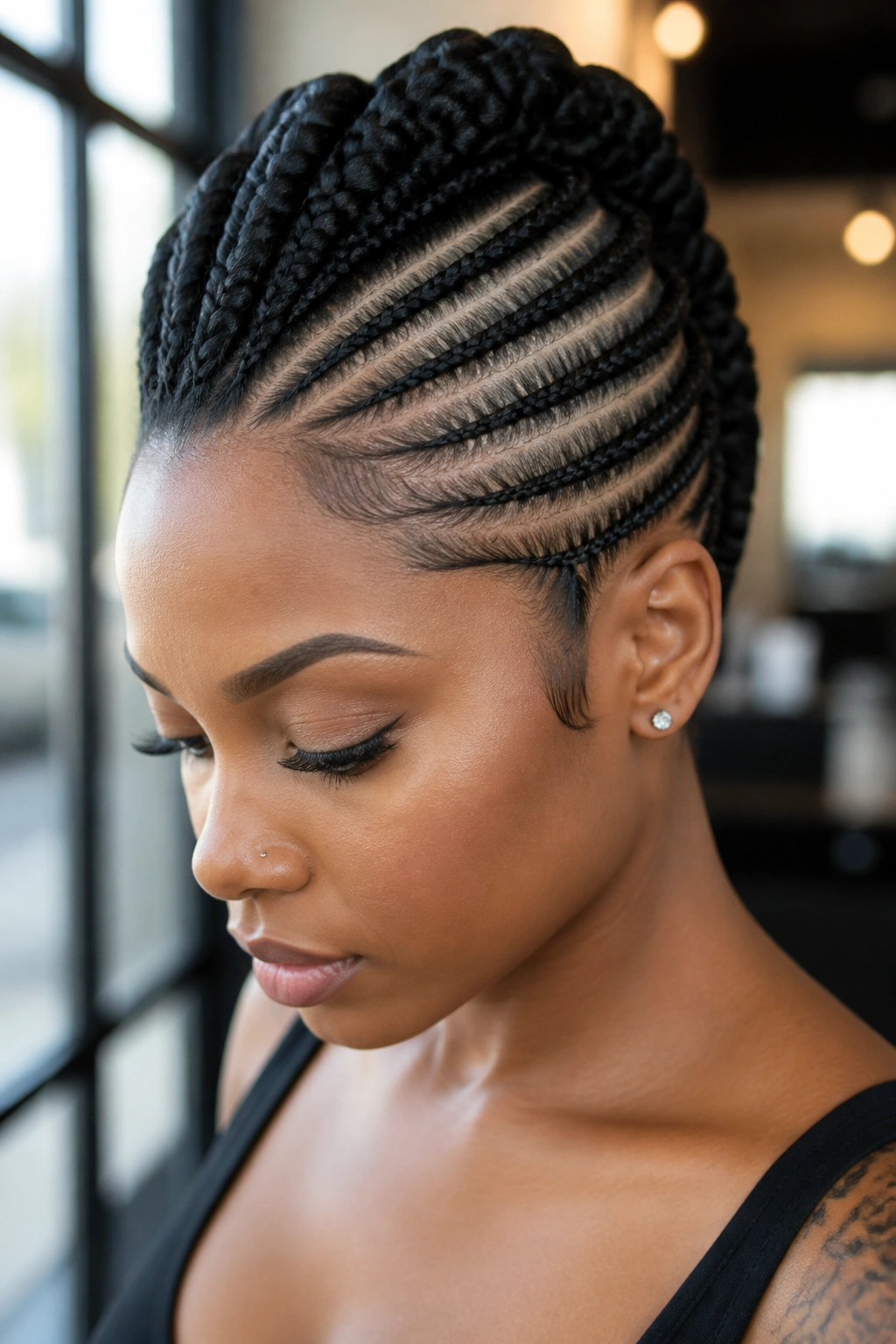
This is the style that makes the whole category make sense. Clean cornrows on the sides pull the eye straight to the center ridge, and that center ridge can be as tight or full as you want. It’s sharp, controlled, and still has enough movement to keep it from feeling stiff.
Why it hits so hard
The beauty of a cornrow mohawk is the contrast. The sides are flattened and orderly, while the middle can be braided back in thicker rows, twisted into a puff, or gathered into a tail. That contrast gives you drama without needing a lot of extra decoration.
A good version starts with crisp sectioning. The part lines should look deliberate, not rushed. If the scalp is visible in a neat pattern, even a simple braid layout looks expensive. If the lines are crooked, the whole look loses its edge fast.
Best for: medium to long natural hair, relaxed hair with enough grip, or hair extensions added for thickness.
What to ask for: tight cornrows at the sides, raised braids through the center, and enough height to keep the mohawk shape obvious from the front.
Pro tip: keep the braid tension firm, not painful. If your temples feel sore by the time you’re out the chair, it’s too tight.
2. Feed-In Braided Mohawk Ponytail
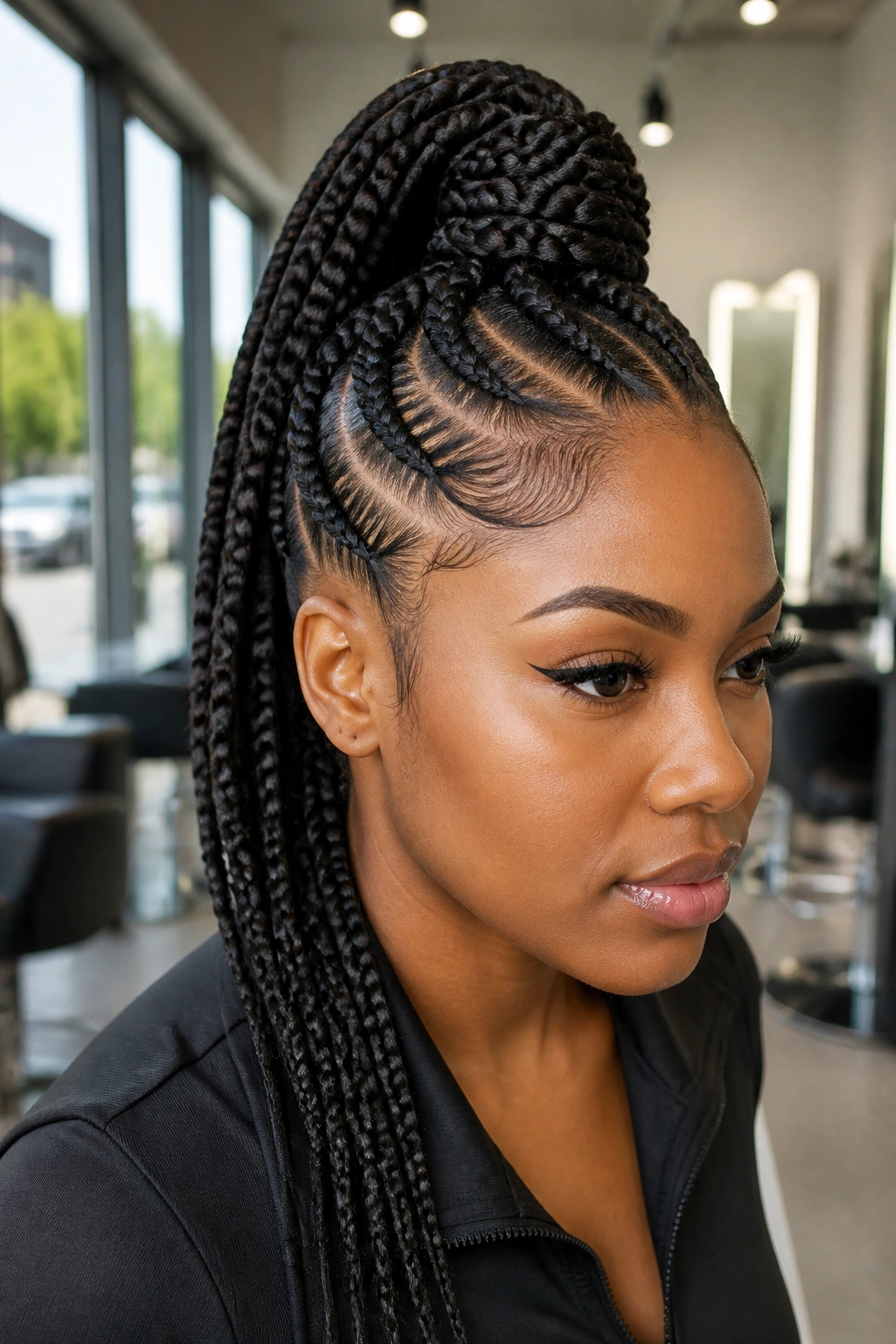
Feed-in braids give you that smooth, gradual buildup from the hairline into the braid, and that’s what makes this mohawk feel so polished. The base looks clean. The ponytail part looks full. Nothing about it feels clunky.
This style is especially good when you want height. A feed-in mohawk ponytail can sit high on the crown and cascade down the back, or it can be braided into a long tail that swings when you walk. Either way, it creates a strong vertical line that flatters round faces and brings attention upward.
The style also works well if you like your look to last. Feed-in braids tend to lay flatter at the base, which helps them stay neat longer than looser, fluffier styles. They do ask for patience in the chair, though. That smooth start does not happen by accident.
A little shine spray at the end helps, but do not drown the hair in product. Too much oil near the scalp makes the parts look greasy by day two, and nobody wants that.
3. Goddess Braided Mohawk with Loose Curls
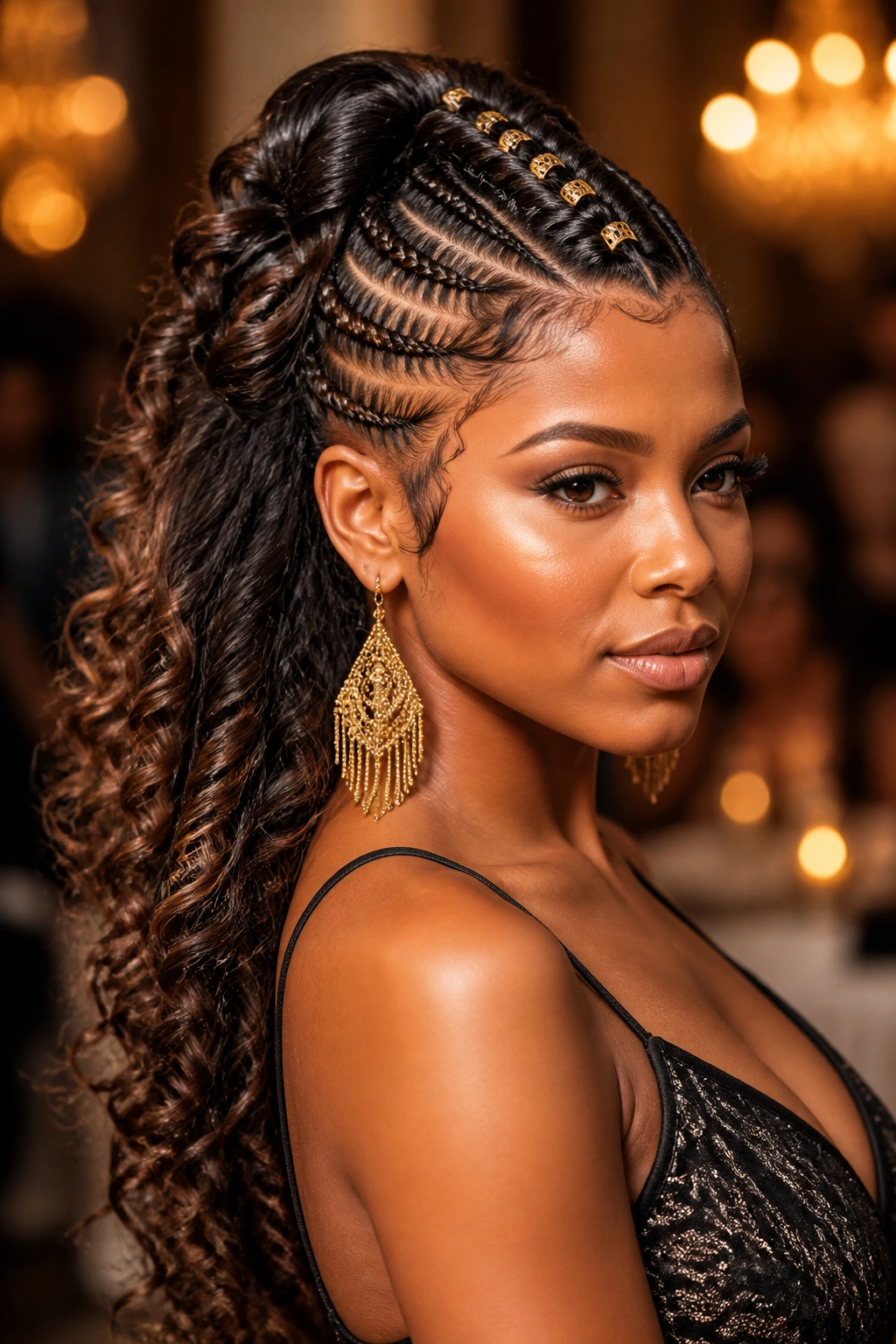
Why choose between braids and curls when you can have both? The goddess braided mohawk is the softer cousin in this lineup, but don’t confuse soft with boring. It still has height, shape, and enough presence to turn heads.
What makes it different
The center braid usually stays structured while the ends open into loose curls, waves, or textured tendrils. That mix gives the style a romantic edge. It feels less severe than a full cornrow mohawk and less predictable than a plain half-up style.
This one shines at events where you want hair that moves. Wedding guest hair. Dinner hair. Photos where you want the profile to look interesting from every angle. The curls also make the style feel fuller, which is handy if your natural hair is fine or if you want more width through the crown.
How to keep it looking fresh
- Curl the ends with a 1-inch wand if you want tighter definition.
- Use a light mousse on the loose sections, not heavy gel.
- Pin the braid base flat before the curls go in.
- Sleep with a satin bonnet or a silk scarf tied loosely around the crown.
Best for: women who want a feminine braid style with a little bite.
4. Dutch Braid Faux Hawk
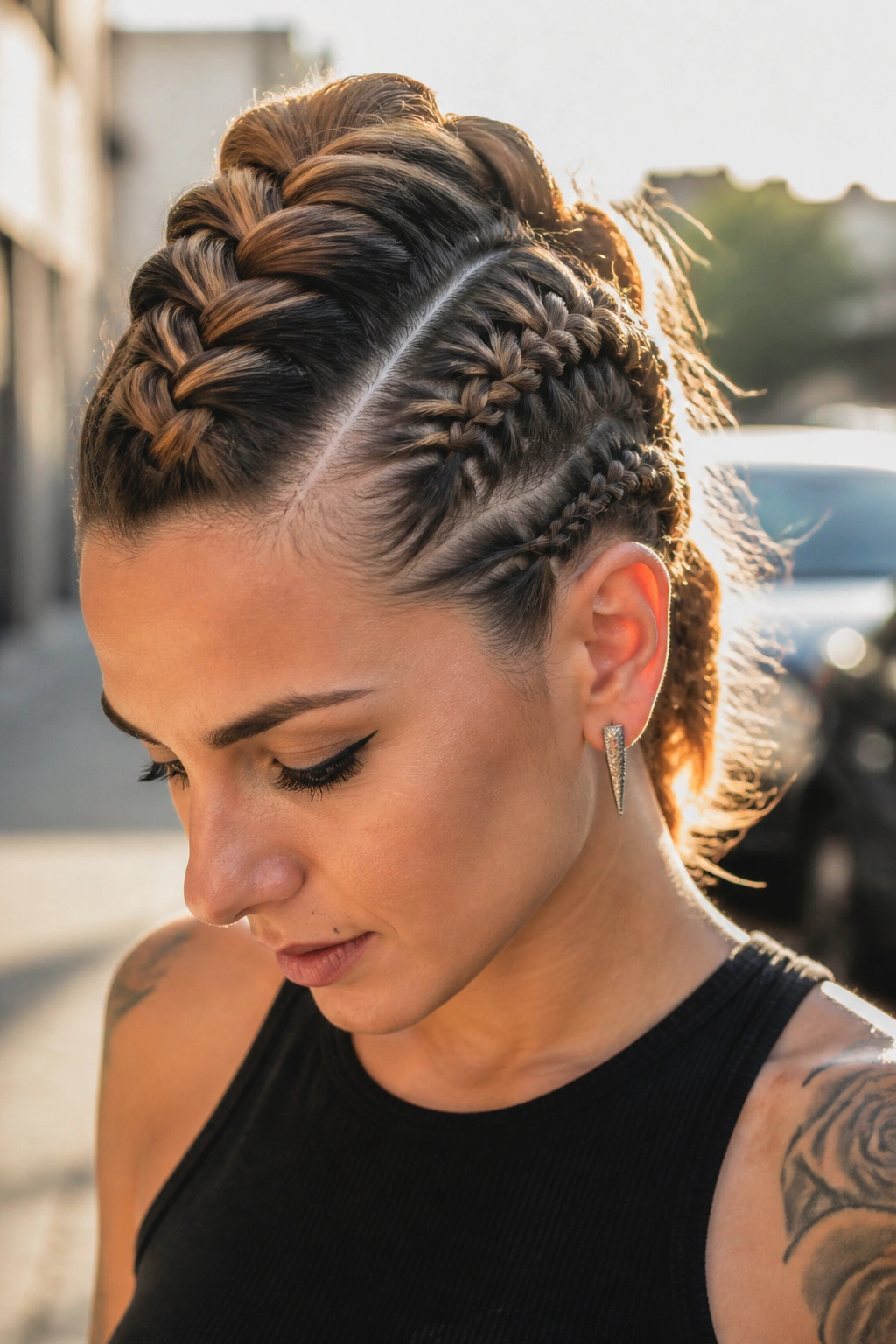
A Dutch braid faux hawk is the version you wear when you want the mohawk shape without committing to a very sculpted braided install. It’s easier to build on medium-length hair, and it gives you enough lift to look intentional without needing a full salon session.
The Dutch braid sits on top of the hair instead of sinking into it, which is why the center ridge stands out. That raised look creates a nice, chunky texture. It also means the braid reads from across the room, which is half the point.
I like this one for busy mornings because it can look finished even when it’s a little imperfect. A few soft pieces around the hairline make it less rigid. A neat braid makes it more dramatic. You can steer it either way.
How to wear it
Start with a center section from the forehead to the nape. Braid close to the scalp, keeping the hands even so the braid doesn’t wobble from side to side. If your hair is layered, a little texturizing spray at the roots helps the sections grip.
Who it flatters most: women with straight, wavy, or stretched natural hair who want something bold but not heavy.
5. Fishtail Braided Mohawk
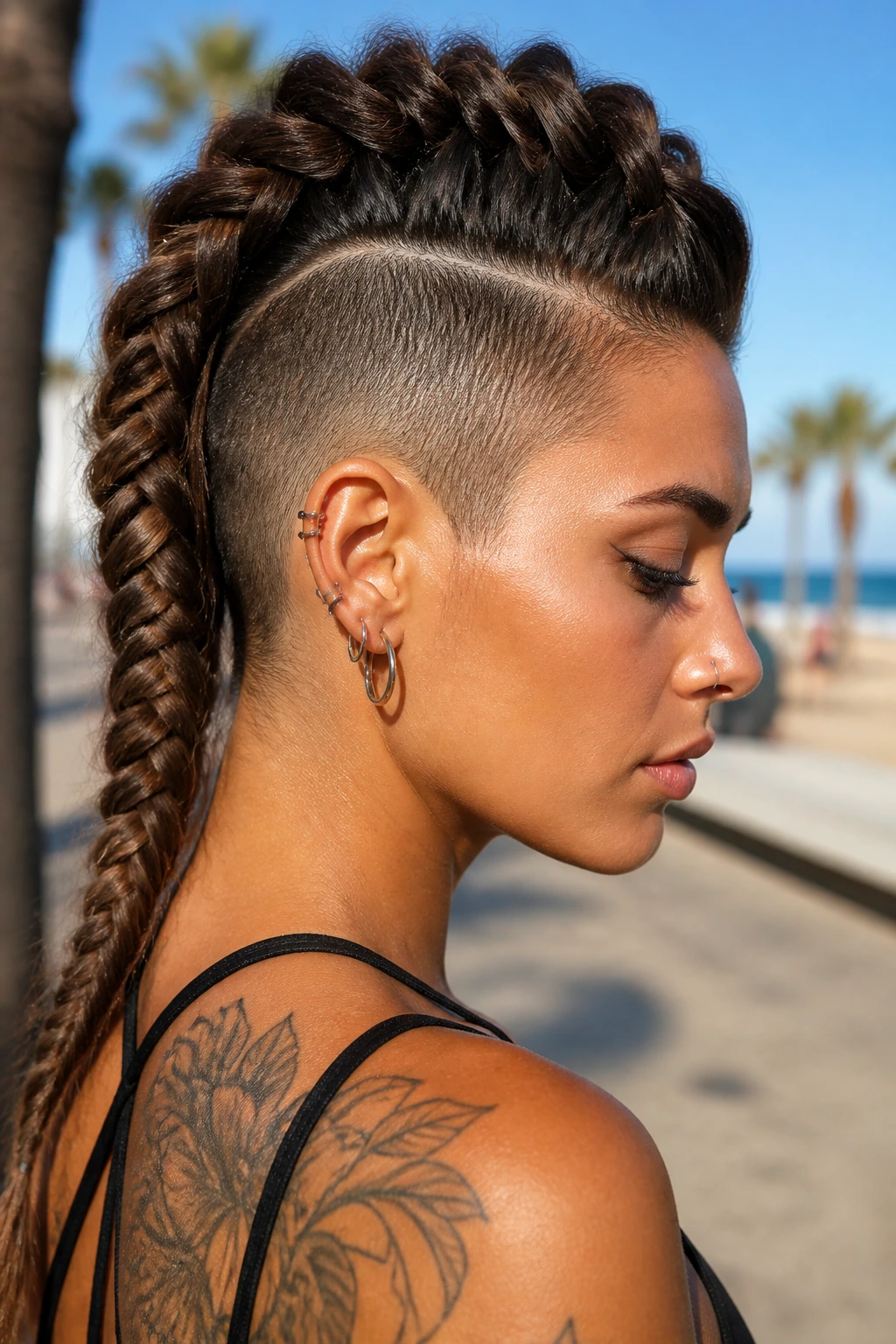
A fishtail braid mohawk has a different kind of attitude. It feels more intricate, more woven, and a little more unexpected than a three-strand braid. The result is sharp without looking severe.
The braid pattern itself is the attraction. Because the fishtail is built from tiny sections, it creates a rope-like texture that catches the eye in a slower, more detailed way. That makes it especially good for long hair, where the braid has room to show off.
Nope, this is not the quickest style on the list. It takes patience. But the payoff is worth it, especially if you want the mohawk to look refined instead of loud. A fishtail mohawk can sit flat near the scalp for a cleaner finish, or it can be pulled slightly looser so it has a fuller, more lived-in look.
If your hair is silky and slippery, mist it lightly with texturizing spray before braiding. You need grip. Without it, the braid slips apart before you’re done.
6. Jumbo Braided Mohawk
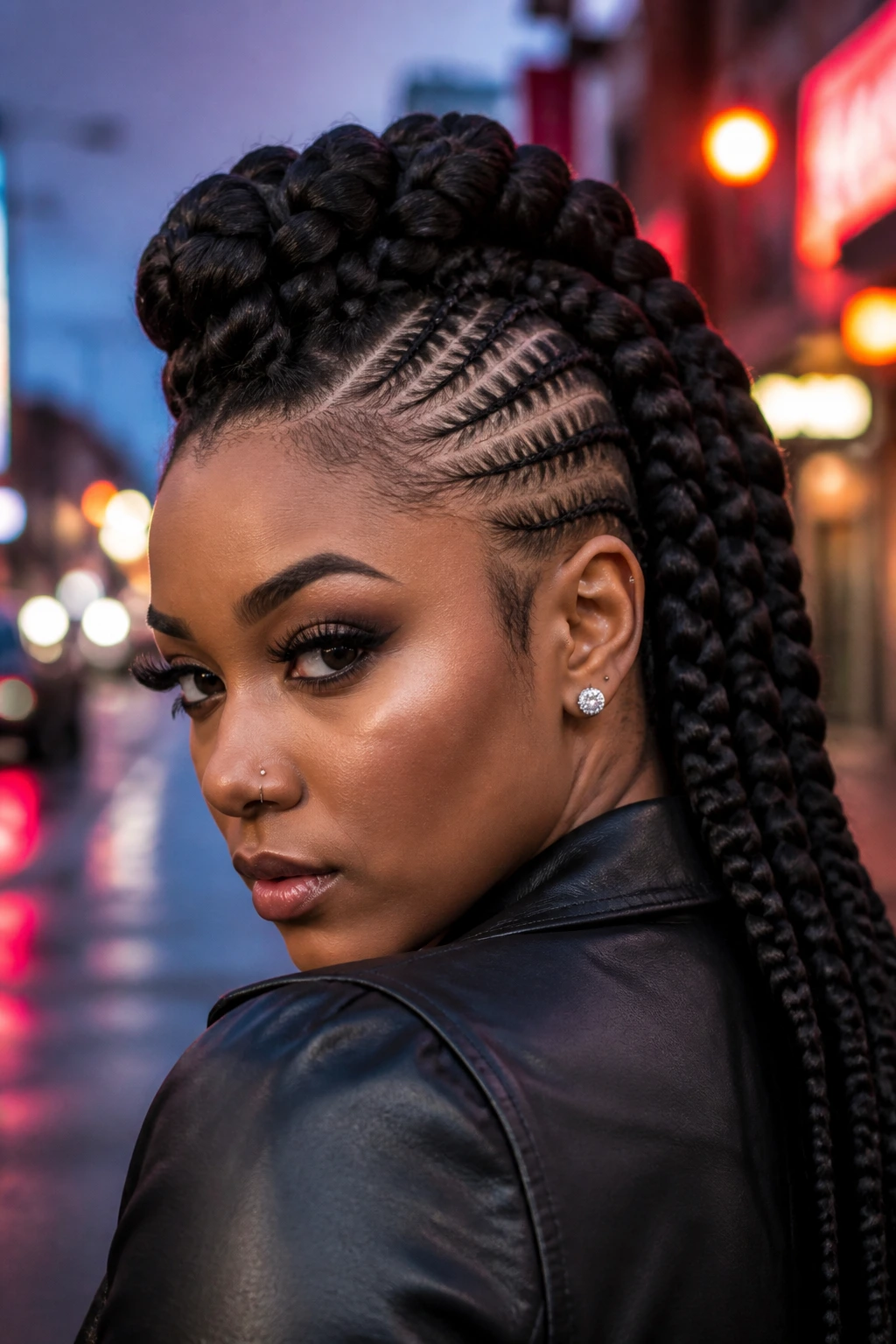
Big braids change the whole mood. They turn the mohawk into a statement piece that looks fast, confident, and a little bit fearless. There’s no subtlety here, and that’s the fun of it.
Jumbo braids are also practical in a way smaller styles sometimes aren’t. Fewer sections mean less time in the chair, less scalp fatigue, and less fuss when you’re styling the ends. You still get the mohawk silhouette, but the overall build feels easier to wear.
What to watch for
A jumbo braided mohawk works best when the sections are balanced. If one braid is much thicker than the others, the center starts to lean visually, and the shape gets sloppy. Keep the braid widths consistent from the front to the back.
- Use large, clean partings with a rat-tail comb.
- Keep the braid tension even from root to end.
- Add braiding hair if you want extra length or a fuller center ridge.
- Finish with mousse and wrap the hair for 15 to 20 minutes so the parts settle.
This is the style for women who want volume without a lot of tiny detail. It looks strong from a distance and even better up close.
7. Stitch-Braid Mohawk
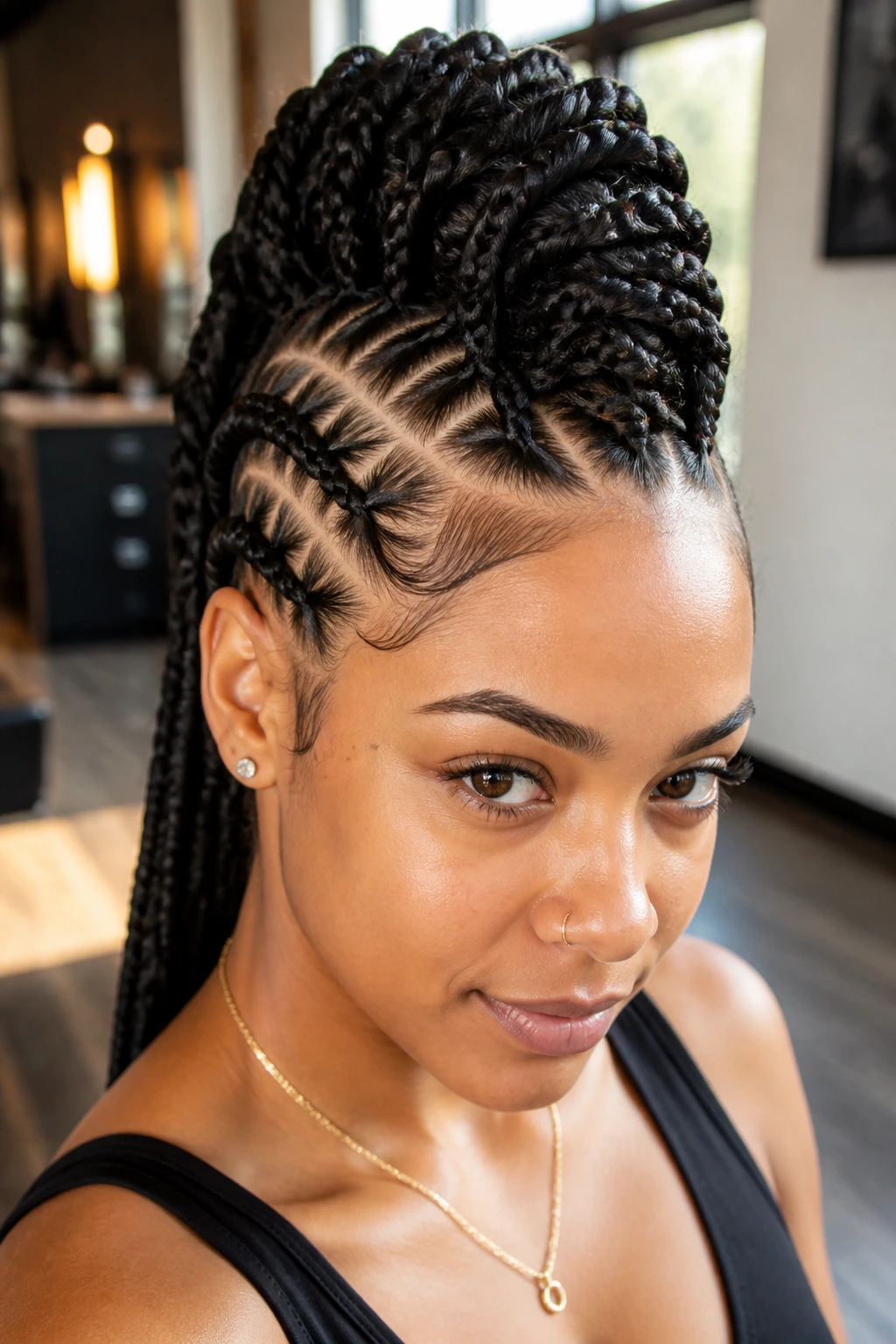
Stitch braids are all about precision. The parts look etched, almost graphic, and that sharpness makes them ideal for a braided mohawk that feels modern and clean. If cornrows are a little too soft for your taste, stitch braids bring the edge.
The braid gets its name from the visible “stitch” pattern created by the sectioning. The scalp parting looks almost like a row of neat dashes. That detail gives the mohawk a structured, almost tailored feel. I love it on women who want their hairline to look crisp and intentional.
Best tools for this look
You do not need a suitcase of products. You need the right few things.
- A fine rat-tail comb for parting
- Edge control that holds without flaking
- A small brush to smooth flyaways
- Clips to keep unused sections out of the way
This style looks best when the parts are clean enough to see from a few feet away. If the sectioning is muddy, the whole effect fades. Stitch braids ask for care, but they reward it. Hard.
8. Box Braids Styled into a Mohawk
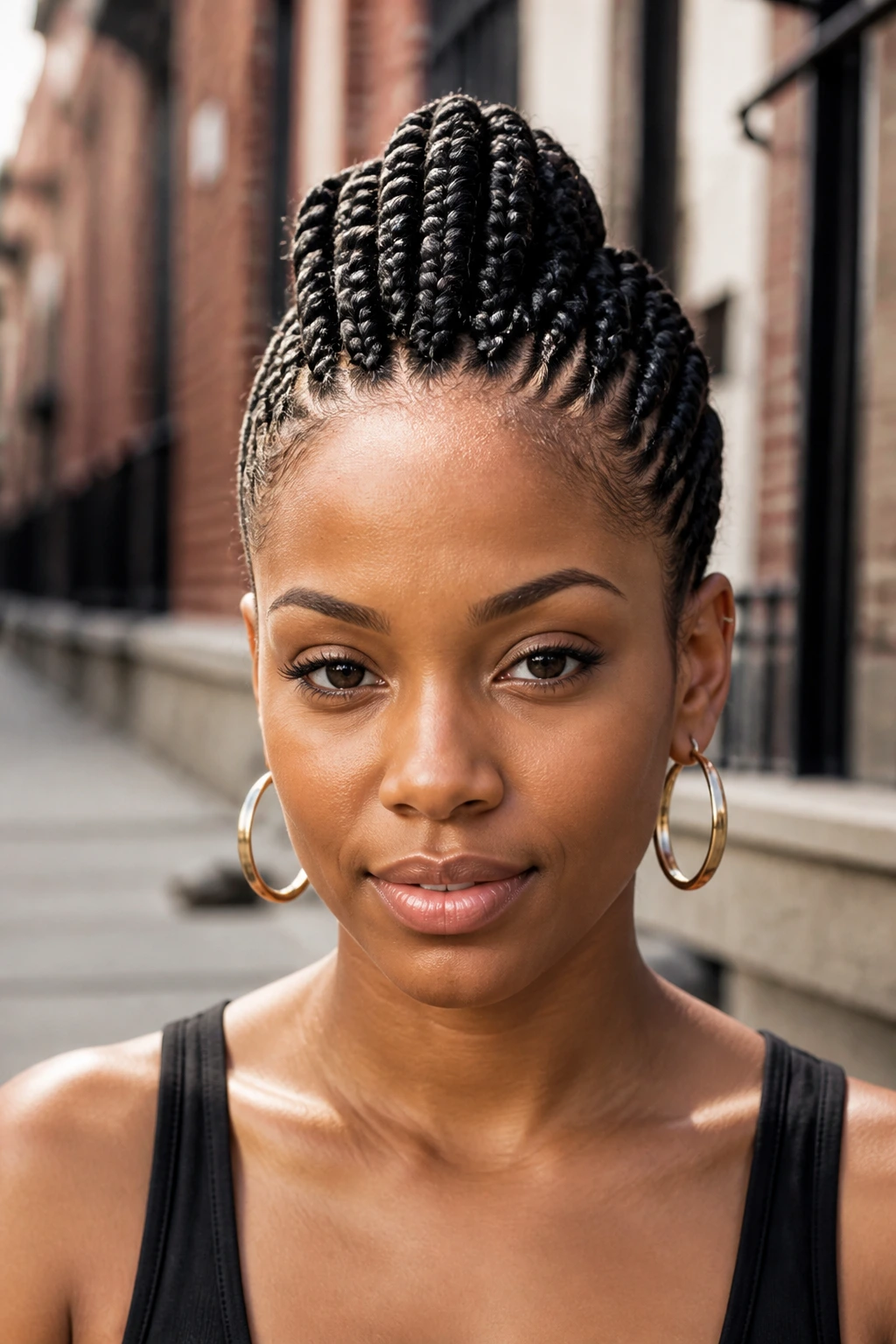
Box braids do not have to stay in one shape for weeks. Pulling them into a mohawk gives you a fresh look without starting from scratch, which is a blessing if you already spent hours getting the braids installed.
The appeal is obvious once you try it. The sides can be pinned flat, braided back, or gathered into small bands, while the middle braids are stacked into a ridge or ponytail. That creates a strong center line and keeps the silhouette from feeling flat.
What to ask for at the salon
If you want this shape from day one, say so before the braiding starts. The stylist can leave the center fuller, keep the side parts tighter, and plan for an updo shape instead of a loose-hanging style.
A box braid mohawk works especially well when the braids are medium-sized. Tiny braids can look a little sparse when pulled upward, and very large ones can make the head feel heavy. Medium gives you enough body without turning the whole style into a helmet.
One more thing. Keep the pins gentle. Tugging the braids too tightly into place can stress the roots and make the style uncomfortable by lunch.
9. Tribal Braided Mohawk
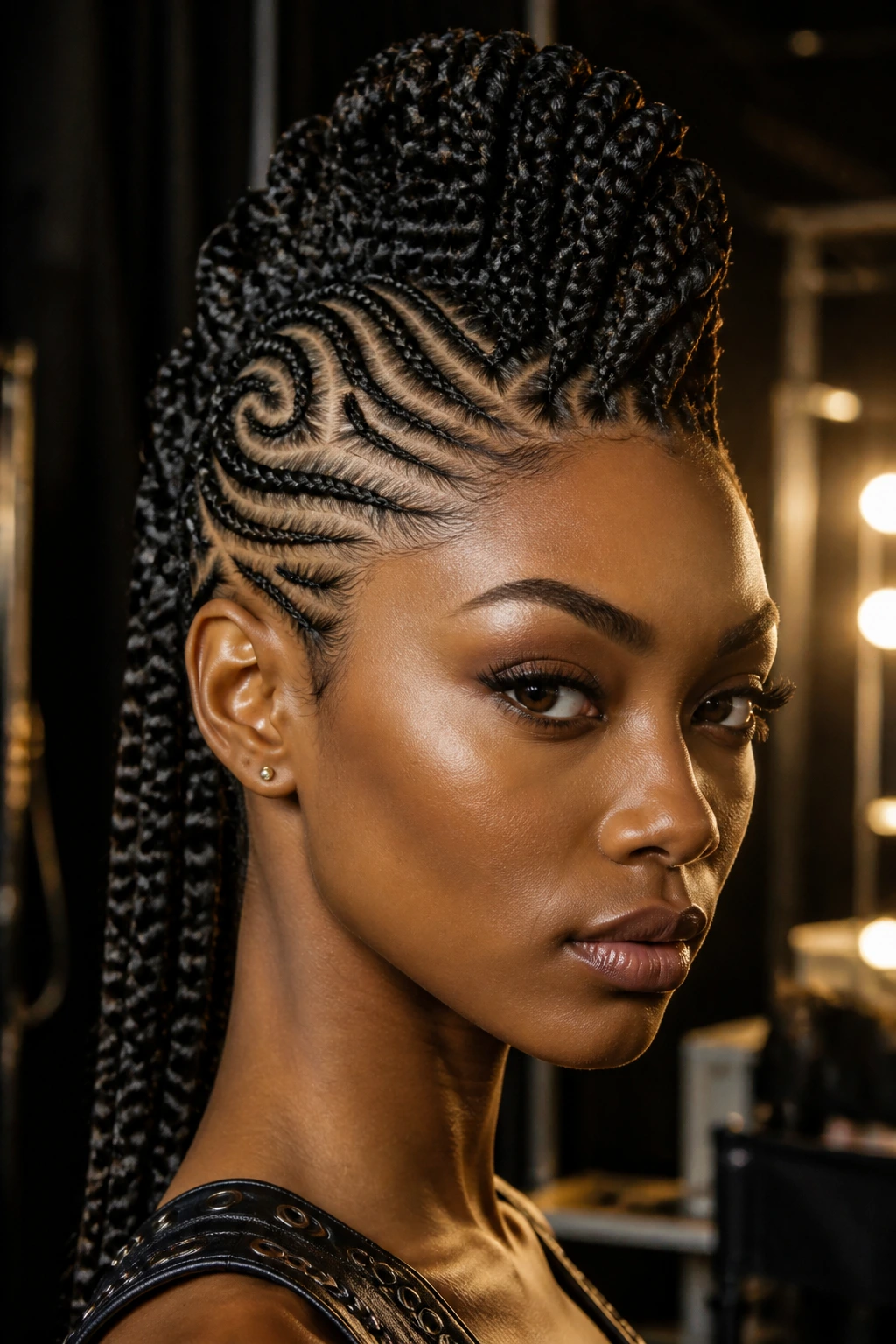
A tribal braided mohawk is one of those styles that looks like it has a story to tell. Different braid sizes, directional patterns, and scalp designs combine to create a look that feels layered and personal. It’s not just about the mohawk shape. It’s about the path the braids take to get there.
This version can include feed-ins, cornrows, curved partings, and long center braids that rise from the crown. The side braids often fan outward or sweep back in a pattern that feels almost sculptural. That makes the style a strong fit for women who want something with movement and detail.
Why the shape matters
A tribal mohawk is best when the direction of the braids leads the eye to the center. If the side rows fight the main shape, the style loses its balance. The best versions feel like everything is moving toward one point.
- Mix thin and thick braids so the pattern feels alive.
- Use curved parts instead of straight ones if you want a softer frame.
- Add cuffs or small rings sparingly; one or two accents are enough.
- Keep the center ridge raised so the mohawk stays visible from the front.
This is one of those styles that looks even better when the braids are a little different from each other. Too much symmetry can flatten the whole thing.
10. Braided Mohawk with Curly Ends
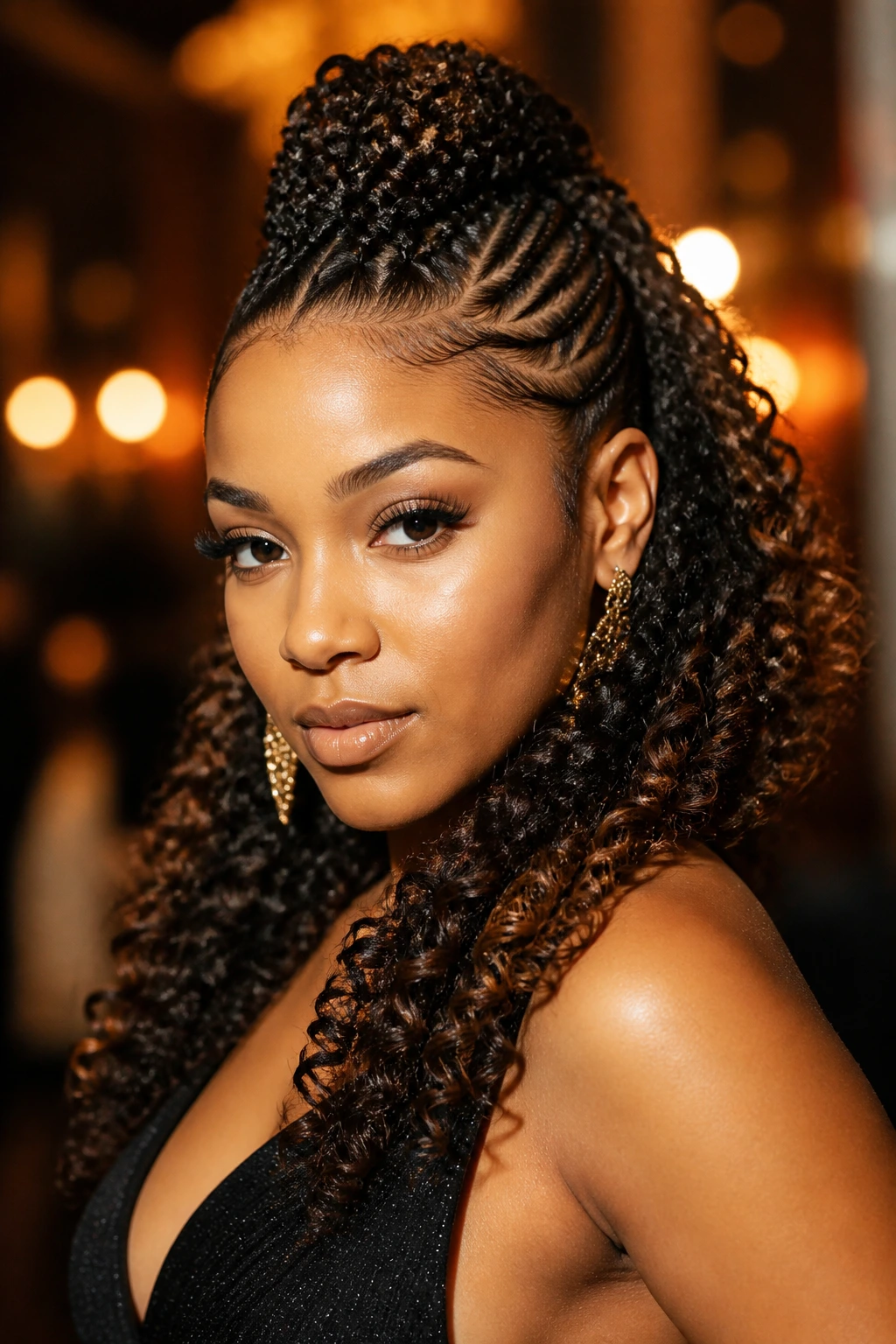
There’s a reason this one keeps showing up at parties and special events. The braid gives structure, and the curls soften the finish. That combination feels flattering on almost everyone.
The center often starts with tight braids or twists near the scalp, then opens into curls halfway down or at the very ends. The result is polished on top and playful below. It also gives you movement, which a fully braided style can sometimes miss.
I’ve always thought this version does a good job of bridging two moods. The top half says strength. The bottom half says you know how to have a little fun. That contrast makes it more versatile than people expect.
Use a 3/4-inch curling iron for tighter bounce or a 1-inch barrel for looser bends. Then let the curls cool fully before touching them. Warm curls fall apart fast, and half the charm here is the shape at the ends.
11. Braided Mohawk Updo
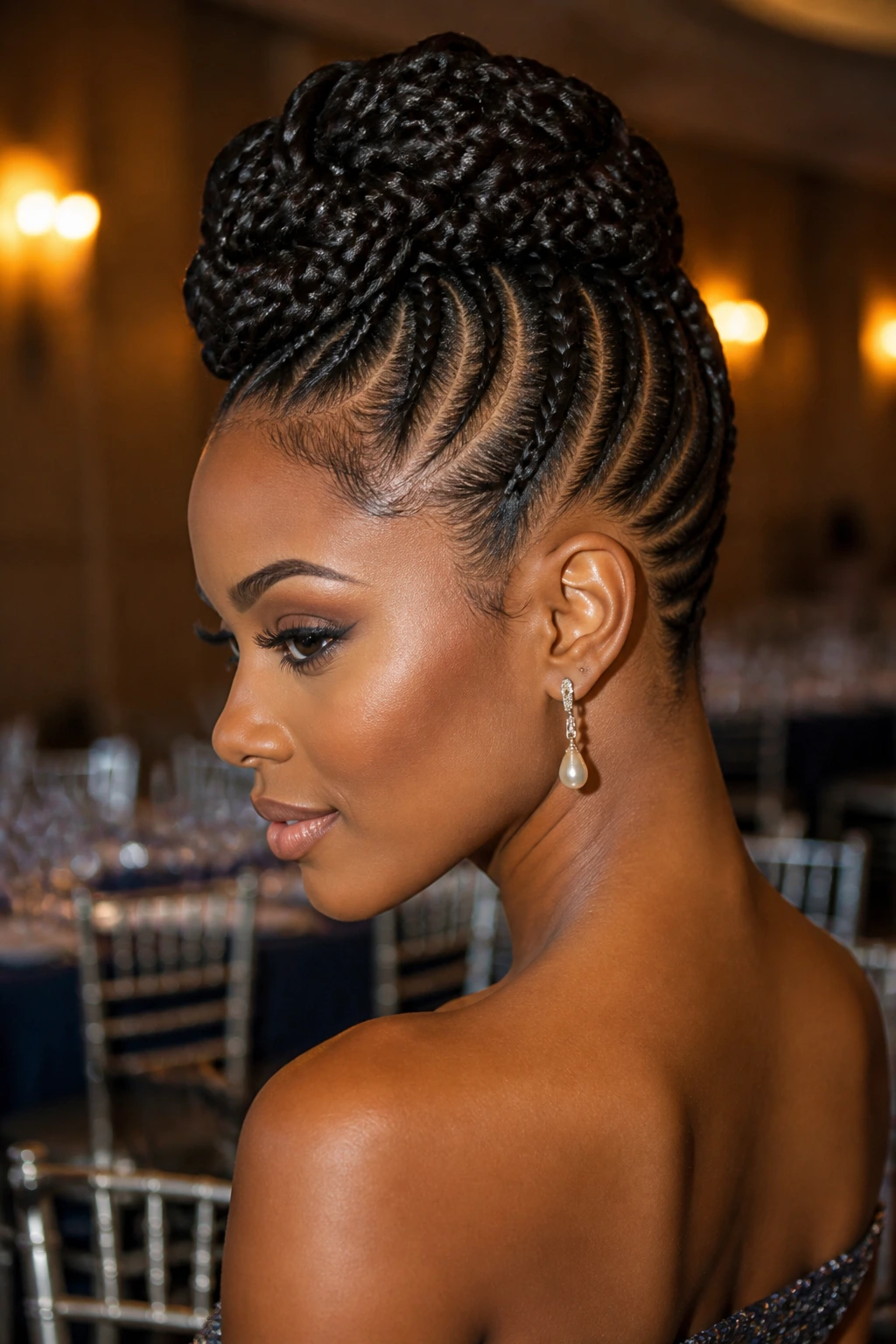
A braided mohawk updo is the formal version of the look, and it does something I appreciate: it keeps the drama while cutting the mess. The braids rise up, fold back, or tuck into a pinned shape at the crown or nape, leaving the neck clear and the profile strong.
This is a smart choice when you want mohawk energy without long hair hanging around your shoulders. It works for weddings, work events, and dinner nights where you want your hair to stay put. No constant flipping. No front pieces falling into your lipstick.
The style usually feels more polished than rebellious, though you can push it either way depending on the braid thickness and whether you leave any texture loose around the hairline. A sleek finish feels formal. A few softened edges make it less rigid.
One little detail matters a lot here: pin placement. Hide the pins under the braid folds, not through the middle of the visible braid. The whole point is to make the structure look effortless, even though it is doing a lot of work.
12. Curly Braided Mohawk with Undercut
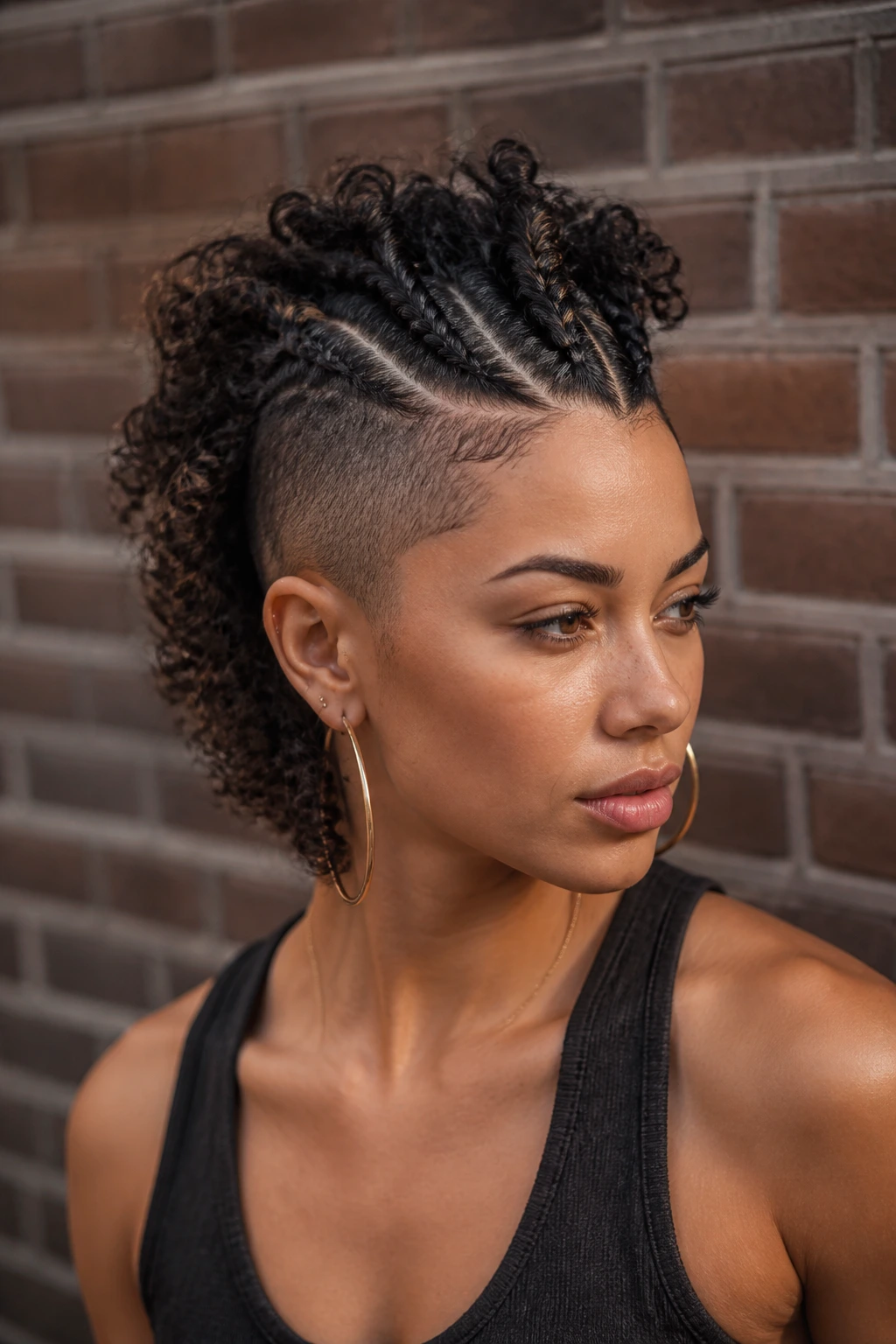
A curly braided mohawk with an undercut is not shy. It doesn’t pretend to be. The shaved sides or very closely cropped sides make the braid line pop, and the curls add softness right where you need it most.
This style is built for women who want a sharp contrast. The undercut removes bulk from the sides, which makes the center braid and curls look even fuller. It also cuts down on daily styling, since there is less hair to manage around the temples and ears.
Why people love the contrast
The shape looks clean from the front, dramatic from the side, and very strong from behind. That’s rare. A lot of styles only work from one angle.
The undercut also makes the mohawk feel lighter on the head. If you’ve ever worn a heavy braided style for more than a few days, you know how much that matters. Less weight means less tugging, and less tugging means a happier scalp.
If you’re considering this look, think hard about maintenance. The shaved section grows back fast enough to change the shape, so the cut needs regular cleanup if you want the silhouette to stay crisp.
13. Knotless Braided Mohawk
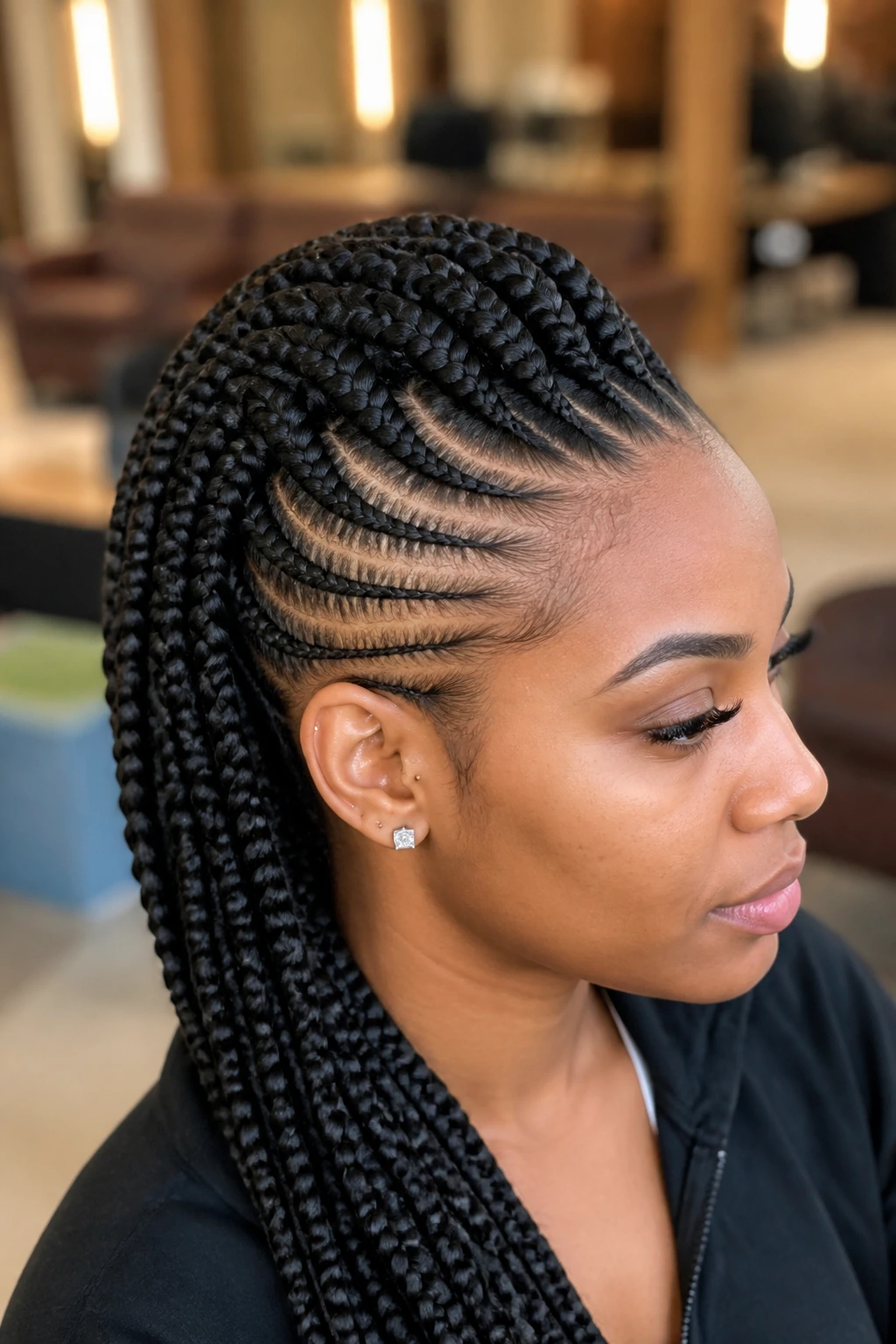
Knotless braids make this mohawk feel easier to wear from the very first day. The base starts with your natural hair, then braiding hair gets fed in gradually. That means less bulk at the scalp and a smoother start.
Why knotless matters
The real win here is comfort. When the base is flatter and lighter, the style tends to sit better around the hairline and crown. It also gives the braid a cleaner drape, which works beautifully in a mohawk because the center shape is already doing a lot of visual work.
Knotless braided mohawks are a smart pick if your scalp gets irritated by tight installs. They’re also nice if you want the braid to look a little more natural at the roots. The transition from your own hair to the added hair is softer, and that gives the whole style a smoother finish.
- Good for women who wear braids often and want less root tension
- Helpful if your hairline is delicate
- Nice for long wear because the base tends to stay neater
- Easy to dress up with cuffs, thread, or wrapped accents
You still need good parting and even tension. Knotless does not mean loose. It means gentler at the base, which is a different thing altogether.
14. Bubble Braid Mohawk
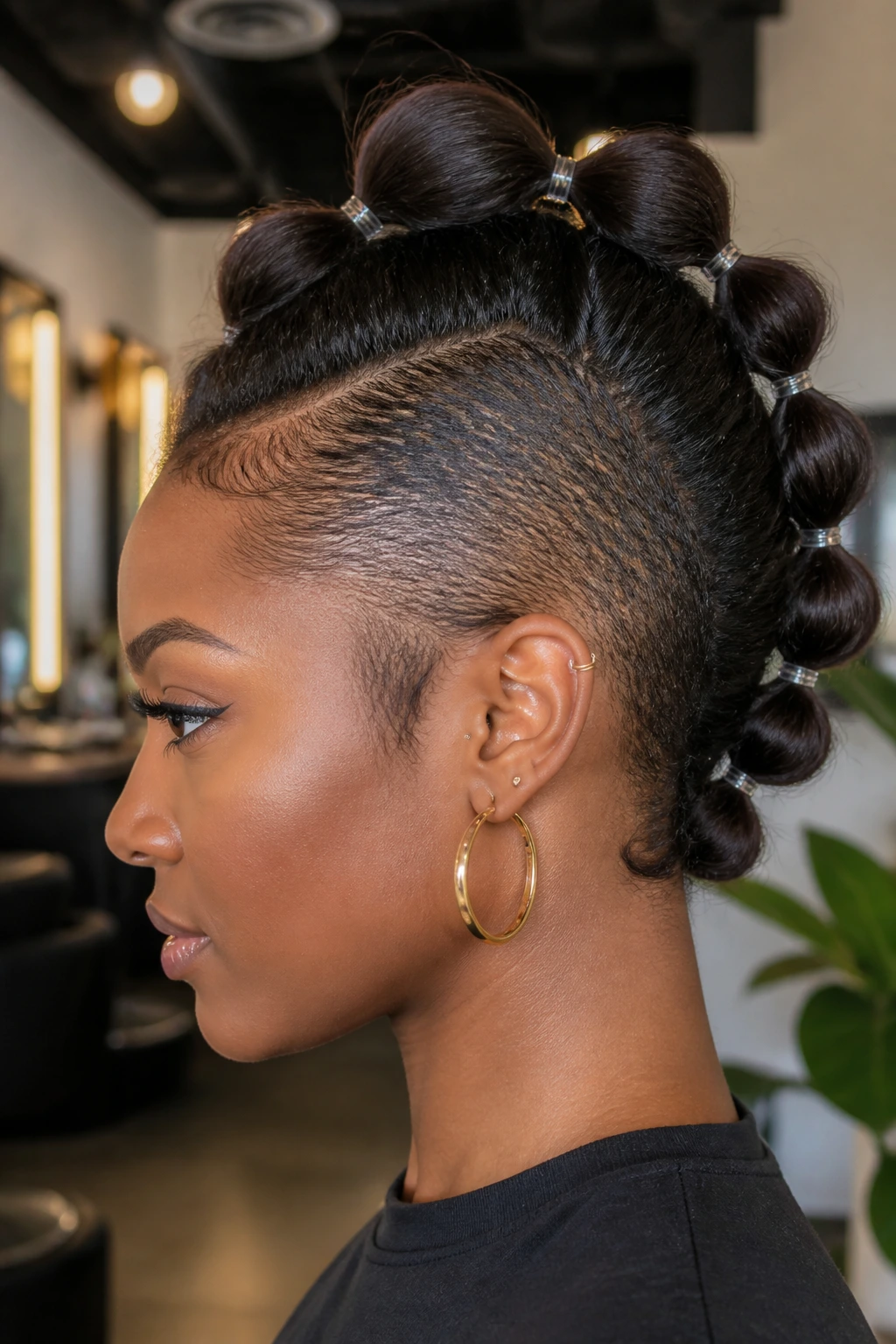
A bubble braid mohawk is playful in a way the other styles aren’t. The center section is tied off at intervals, then gently puffed into round, bubble-like shapes. It looks bold, a little futuristic, and very deliberate.
What I like about it is the shape. The bubbles create rhythm. They also make the mohawk look fuller without requiring a ton of braid work. If your hair is long, the effect is especially strong because the bubbles stack down the center like beads on a string.
How to get the shape right
Use small clear elastics or hair ties that match your hair color. Space them evenly, about 1.5 to 2 inches apart depending on your length. Then tug each section outward a little until the bubble is round but still secure.
A bubble braid mohawk looks best when the sides stay smooth. If the sides get frizzy, the style loses its clean contrast. A little gel at the roots goes a long way here, and a soft brush helps keep the sides neat without making them stiff.
This one is especially good if you want something playful that still feels grown. It has personality. Lots of it.
15. Twin Braids into a High Crown Mohawk
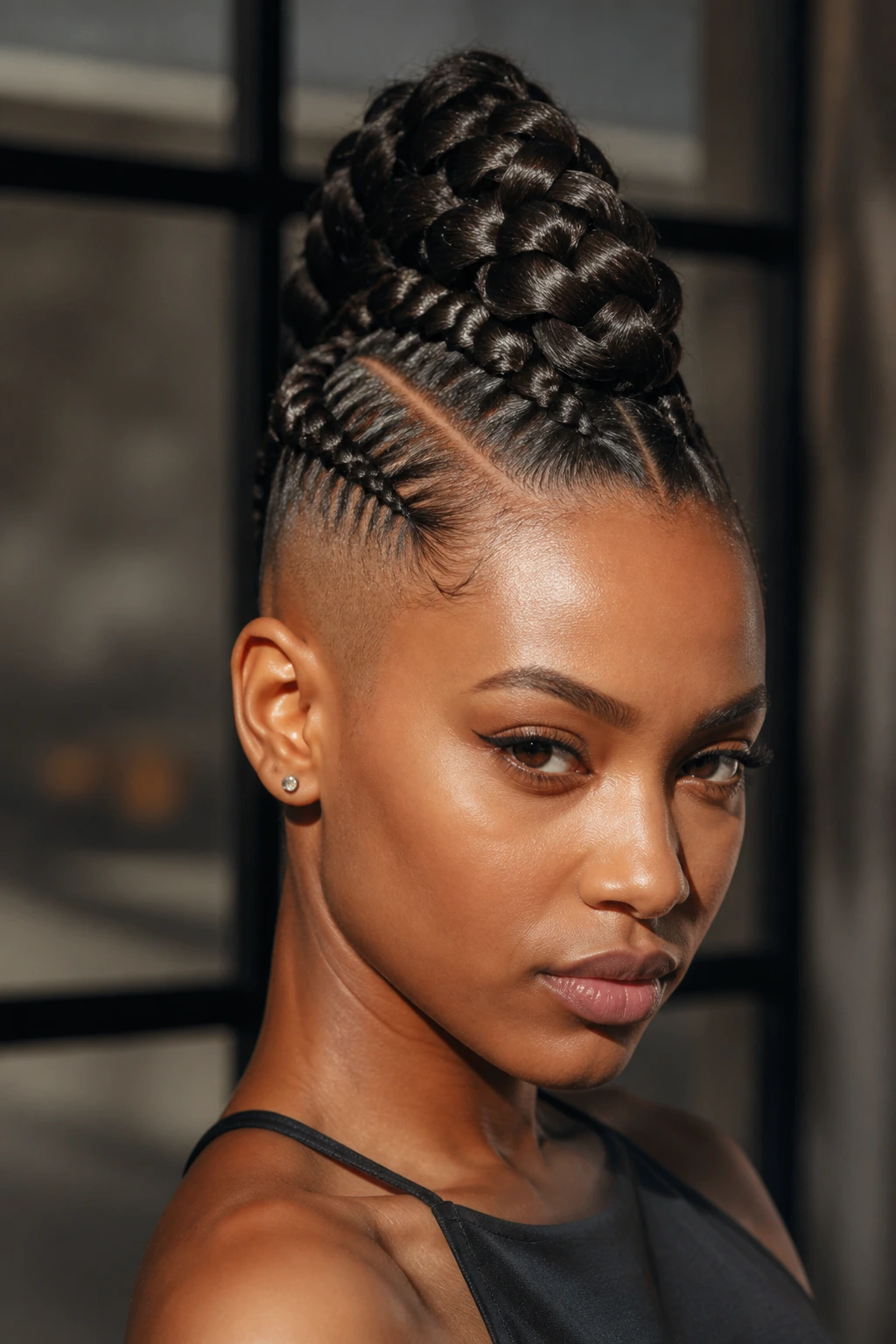
This is the style I’d hand to someone who wants the mohawk shape but doesn’t want to lean too hard into punk. Two braids rise from the sides and meet or stack into a high crown at the center, creating height without looking overly aggressive. It’s strong, but it’s also elegant in a slightly unexpected way.
The twin-braid structure gives you symmetry, which is useful if your face is very angular or if you like your hair to frame both sides evenly. Then the high crown lifts everything upward and keeps the shape from collapsing. The result feels balanced, which is not always easy with mohawk braids.
You can wear the ends tucked, curled, or left in a long tail. I prefer tucked when the outfit is already busy. If the clothes are simple, a longer tail adds drama without making the style feel crowded. That balance matters more than people think.
A good finishing mist makes the crown sit properly, but don’t spray from too close. Hold the bottle back a few inches so you don’t end up with stiff patches at the braid line. And if a braid starts to loosen near the nape, pin it before it turns into a mess. Small fixes matter here.
The best braided mohawk hairstyles do one thing well: they make hair feel intentional. Not perfect. Intentional. That difference is the whole point. A mohawk braid can be sleek, curly, sculpted, soft, or edged out with an undercut, and the right version is the one that matches how bold you want to feel when you walk out the door.
If you’re choosing between them, think about weight, tension, and how much shape you want around your face. Some women want a style that keeps the scalp flat and the crown high. Others want more texture and movement. There isn’t one correct answer, and that’s part of why this category keeps pulling people back in.
The most wearable mohawk braids usually have one thing in common: clean parting and a shape that stays visible from every angle. Get those two things right, and the rest has room to breathe.
