



Round faces can wear a wolf cut beautifully—if the layers do real shape work instead of just making the hair look busy. The trick is not to chase wild texture for its own sake. It is to build height at the crown, break up the cheeks, and keep the outer layers from ending exactly where the face is widest.
That’s why some wolf cuts look sharp on a round face while others fall flat in ten minutes. The good ones pull the eye upward and downward at the same time. Short fringe, cheekbone-skimming pieces, a little mess at the ends, and a perimeter that does not stop at the chin all help.
Flat at the roots is the enemy.
A wolf cut sits close to the shag and, if you push the crown high enough, it borrows a little mohawk energy too. That mix is what makes it so useful for softer face shapes: you get attitude without losing movement, and you get movement without making the whole cut puff out in the wrong places.
1. Choppy Wolf Cut with Crown Lift
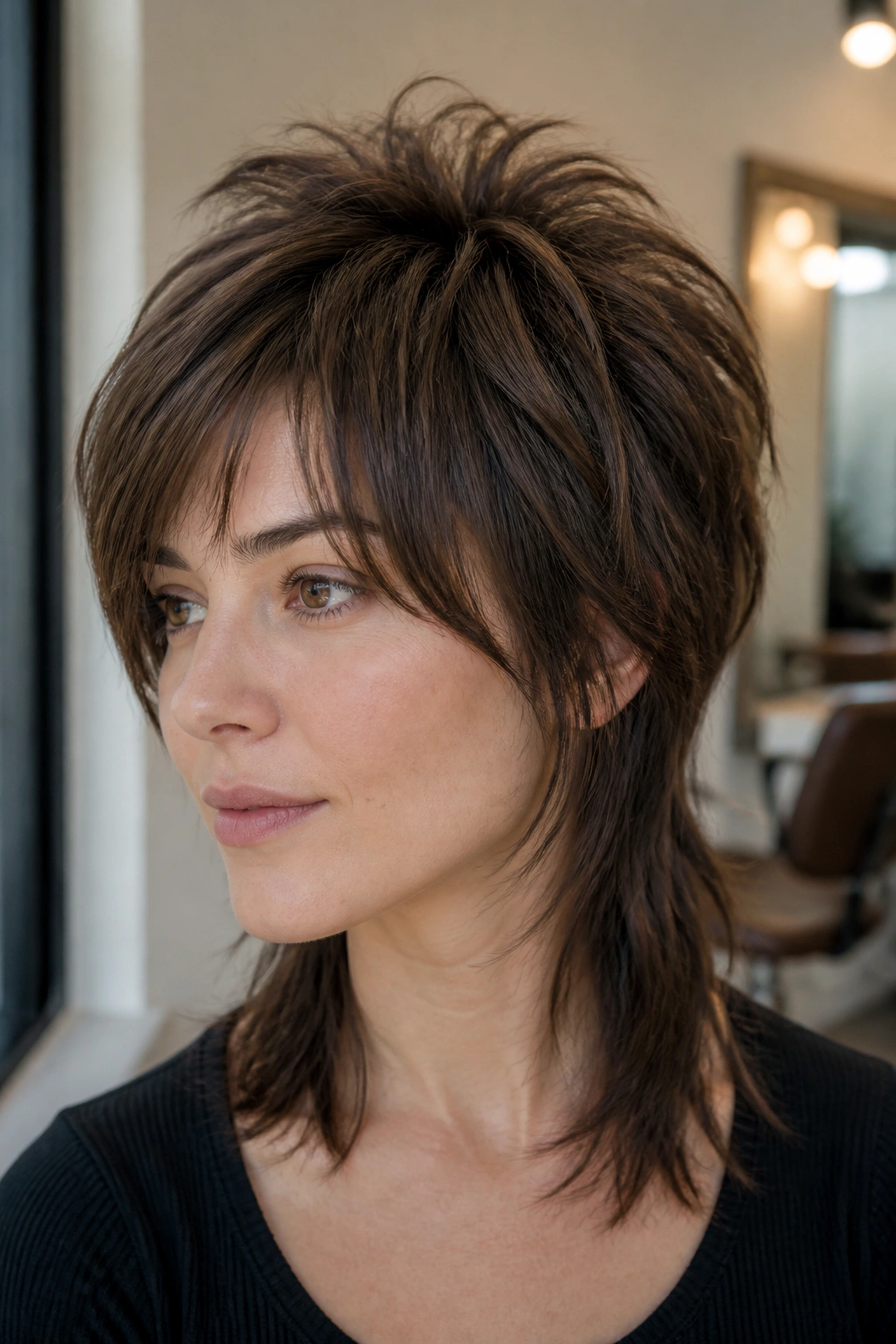
This is the version I reach for when someone wants the wolf cut look but needs the face to read longer, not wider. The crown is cut with real lift, the top layers are short enough to show movement, and the sides are kept a touch lean so the shape does not balloon out at the cheeks.
Why It Works on a Round Face
The crown does a lot of the heavy lifting here. Extra height up top changes the eye line fast, and that matters when the goal is to stretch a round face vertically. The choppy ends keep the cut from turning soft and sleepy.
A strong version of this cut usually lands best when the shortest face-framing pieces hit somewhere between the lip and the chin. Shorter than that, and the width comes back. Longer than that, and you lose some of the attitude that makes the cut worth wearing in the first place.
What to Ask For
- Short, disconnected layers through the top third of the hair.
- Pieces at the crown that can stand up with mousse or a blowout.
- Face-framing layers that skip the widest part of the cheek.
- A soft, broken outline through the ends instead of a blunt edge.
Best tip: keep the crown airy, but do not let the sides puff out. That balance is the whole haircut.
2. Soft Mullet Wolf Cut with Curtain Bangs
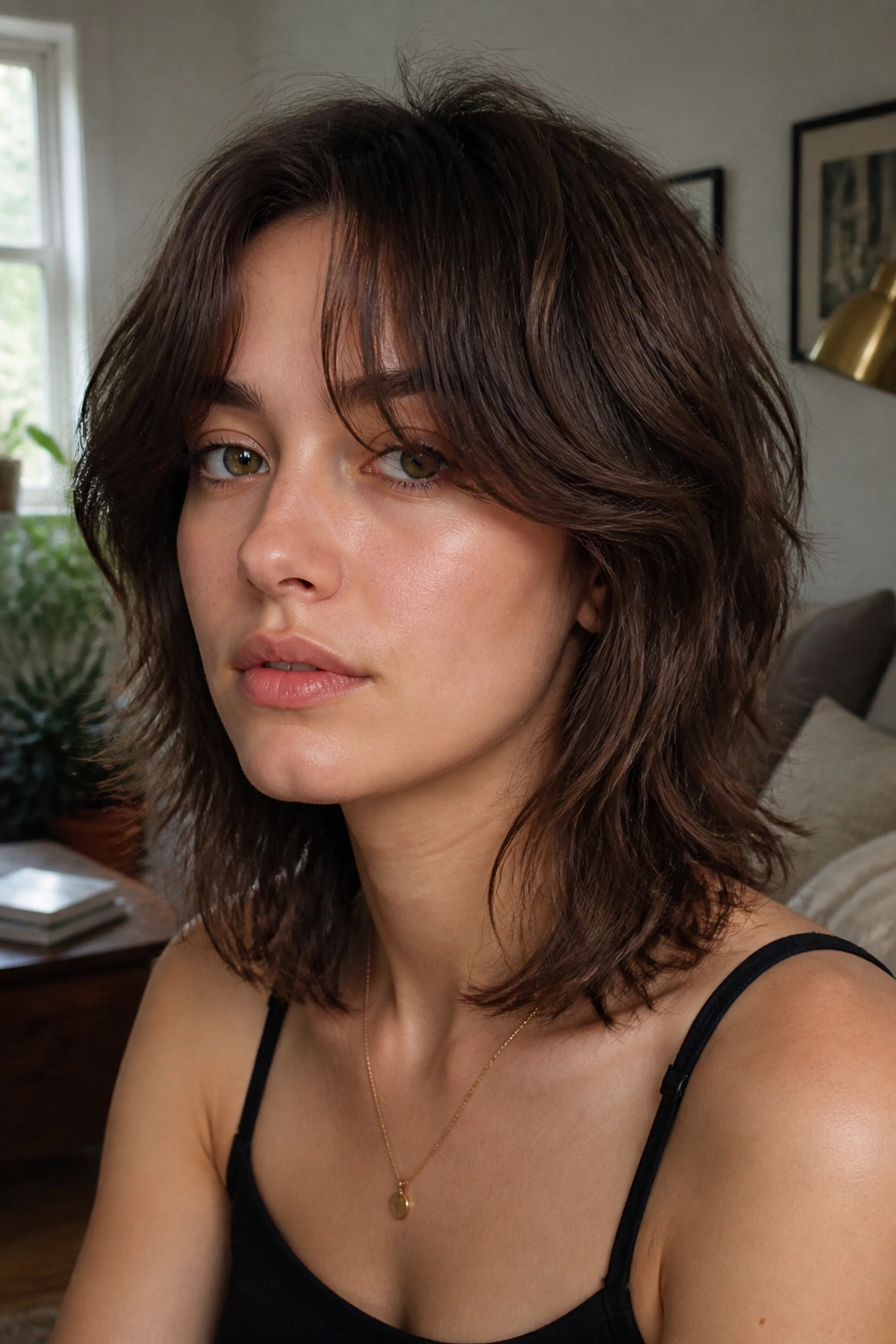
This is the most forgiving edgy version for a round face. It keeps the shape loose around the jaw while the curtain bangs split the face down the middle and give you that extra vertical line people often forget to ask for.
The magic is in the middle section. Curtain bangs need enough length to sweep away from the cheeks, usually somewhere around nose level at the shortest point, then they should feather into cheekbones and collarbone layers. That soft drop prevents the cut from sitting like a helmet.
Wear it a little messy. Not sloppy—messy. A quick blow-dry with a medium round brush and a touch of texture spray on the ends gives the hair that lived-in bend without killing the shape. On straight hair, this cut looks crisp. On wavy hair, it looks even better because the movement does half the styling for you.
If you want edge without a harsh line, this is the smart choice.
3. Curly Wolf Cut with Airy Ends
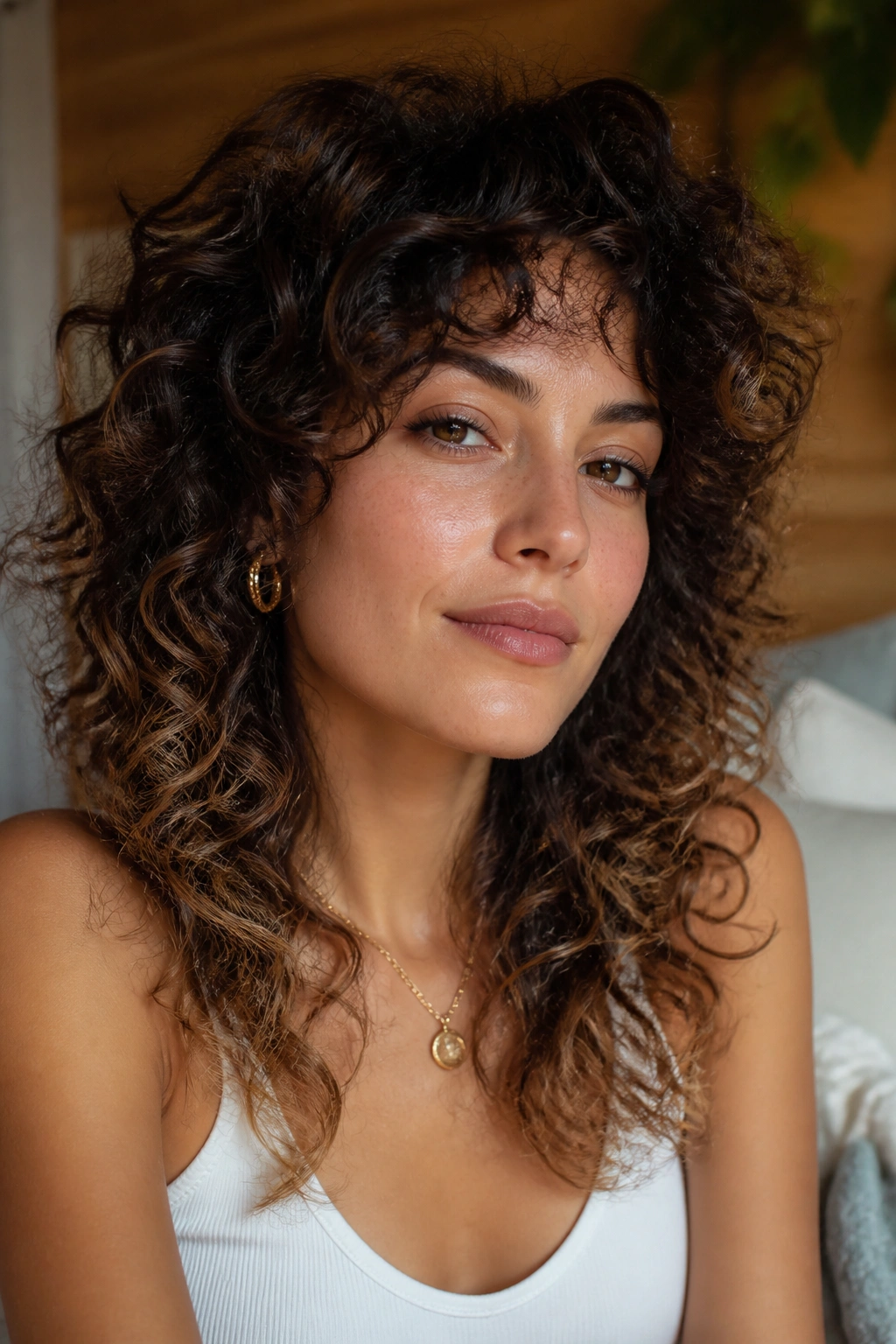
Why does this one work so well on a round face? Because curls already bring shape, and the wolf cut gives those curls somewhere to go. Instead of letting them expand all around the head, the layers let the curl pattern stack upward and then fall in lighter pieces around the sides.
The important part is restraint. A curly wolf cut should be cut dry, or at least cut with the curl pattern in mind, because curls spring up more than people expect. If the shortest pieces are taken too high at the cheek, the face can look wider. If the top is left too long and heavy, the cut loses the lift that makes it feel sharp.
How to Wear It
- Ask for curl-by-curl layering or a dry refinement pass.
- Keep the shortest pieces around the eyes or upper lip, not the widest part of the cheek.
- Use a diffuser on low heat to hold the shape.
- Scrunch in a light cream, then stop touching it.
A curly wolf cut should look a little wild. That is the point. The best version feels controlled only from the front; from the side, it should move like it has opinions.
4. Razor-Textured Wolf Cut with Side Sweep
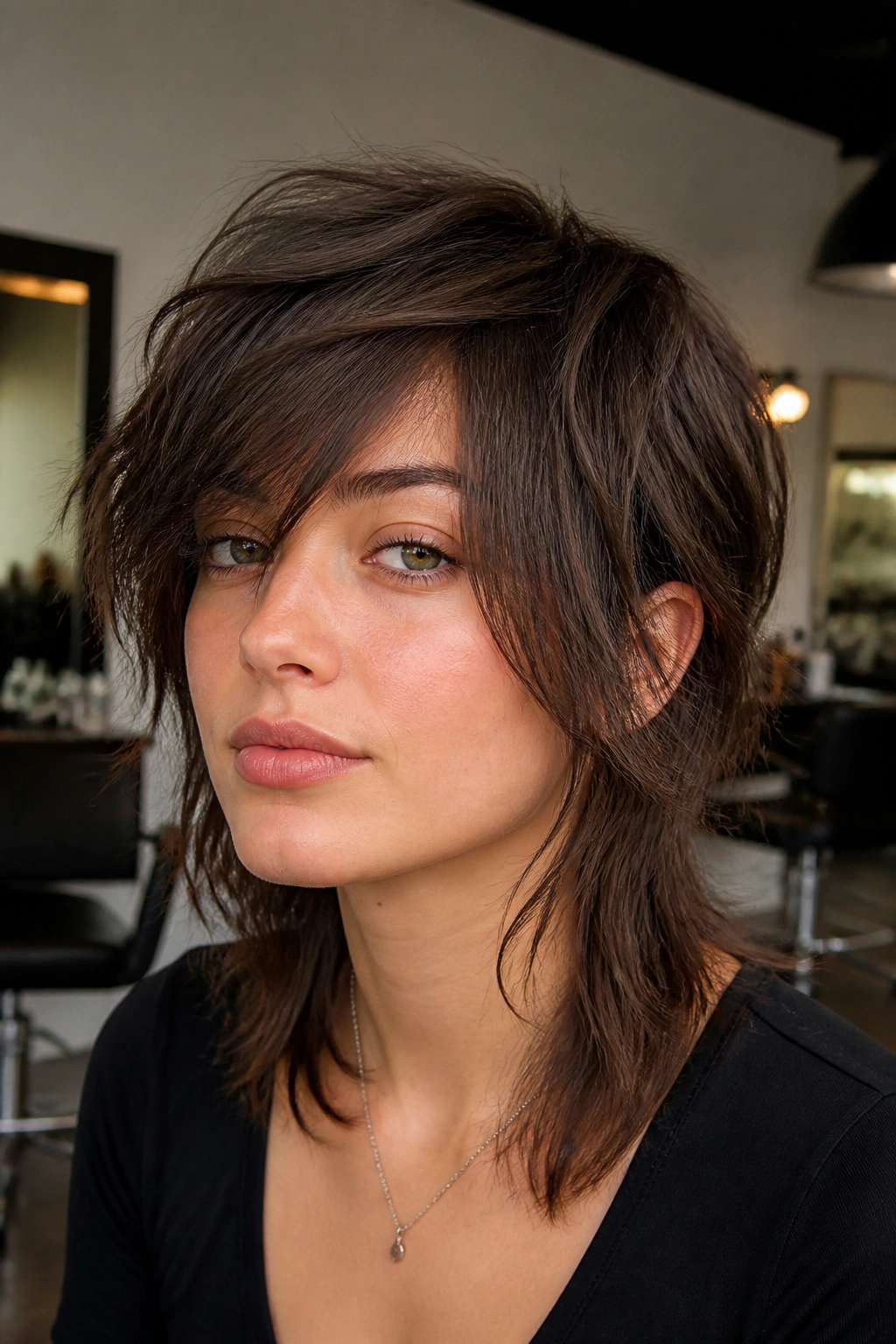
Picture hair that looks calm when it’s wet, then turns sharp the minute it dries. That’s the charm of a razor-textured wolf cut. The blade work removes bulk from the mid-lengths, and the side sweep breaks the face into a diagonal line instead of a circle.
The diagonal matters. A round face loves angles. A side-swept fringe or side-directed front layer gives the cheekbones somewhere to point, which keeps the haircut from sitting symmetrically in a way that exaggerates width. This cut also works well if your hair is thick, because the razor can take out some of that heavy, triangular weight.
- Best for medium to thick hair.
- Strong on straight or softly wavy textures.
- Ask for a side part that is not too deep; too much parting can make the cut tip over.
- Style with a light paste through the ends, not the roots.
A tiny warning: razor work can fray very fine hair if it is overdone. You want movement, not shredded ends.
5. Shoulder-Skimming Wolf Cut with Tapered Cheeks
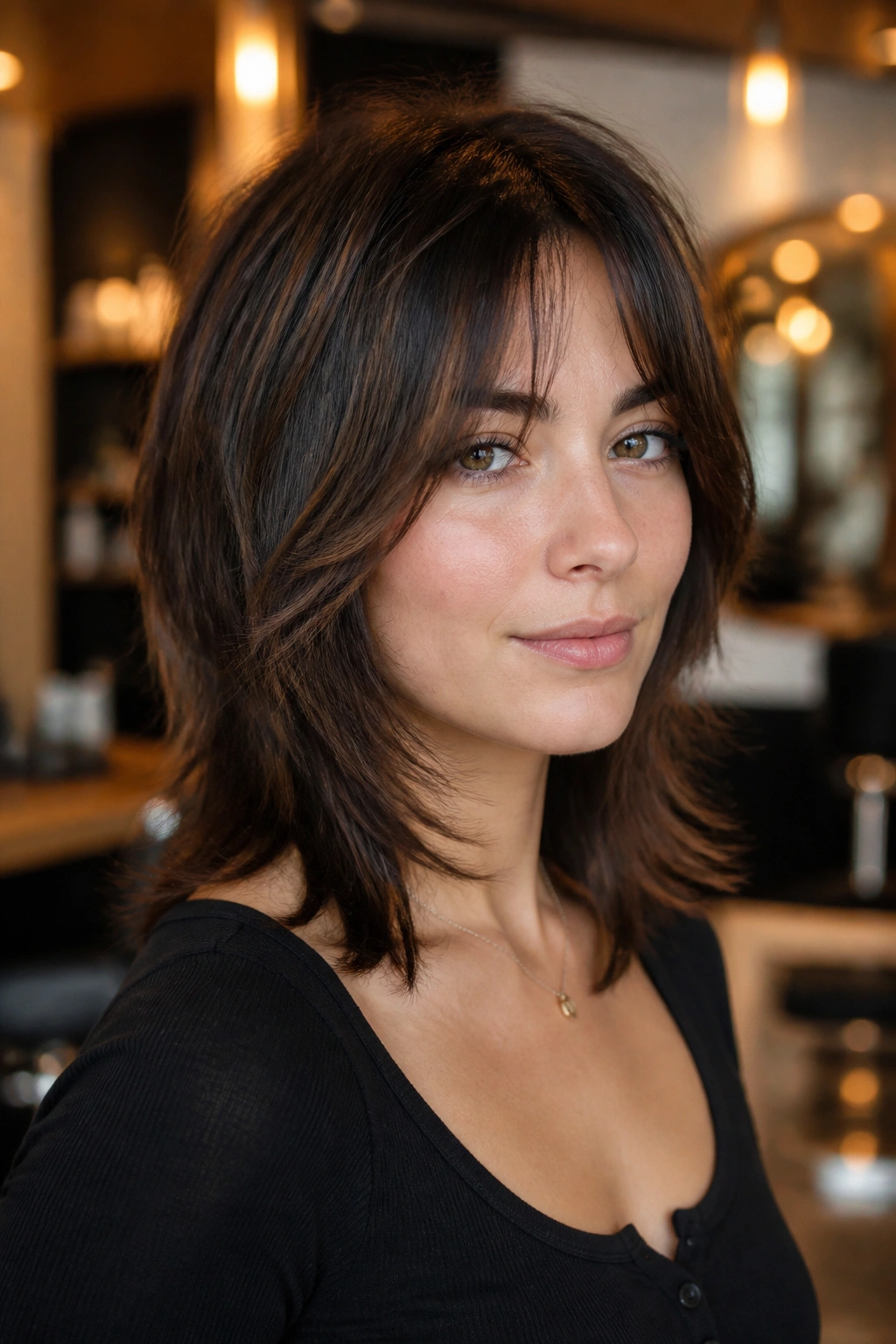
This is one of my favorites for people who want edge but refuse to babysit their hair every morning. Shoulder length gives enough room for shape, while the tapered pieces around the cheeks stop the cut from turning boxy. The result feels cool without trying too hard, which is usually the sweet spot anyway.
The length is doing quiet work here. Once the perimeter reaches the shoulders, the eye naturally follows the hair downward. That helps rounder faces because the shape no longer stops at the jawline. It keeps going. The tapered sides soften the middle of the face without hiding it, and that distinction matters.
A little bend through the ends helps a lot. You do not need a full curl routine. A rough blow-dry, a medium-barrel brush, or a large iron bend at the ends is enough to keep the layers visible. If the hair is fine, mist a texture spray through the mid-lengths only. Roots that are too stiff make the cut look dated fast.
It is an easy cut to live with, and that is not a small thing.
6. Off-Center Shag Wolf Cut with Long Fringe

Unlike a center-parted wolf cut, this one leans the eye sideways first and downward second. That shift is useful on round faces because symmetry can sometimes make the face feel broader than it is. An off-center part cuts that effect in half.
The long fringe is the star. It should be long enough to tuck behind one ear, sweep across the forehead, or fall in a soft curtain when you feel like wearing it down. That flexibility keeps the style from feeling too fixed. The shaggy layers beneath the fringe keep the cut from getting precious.
What Makes It Different
- The off-center part adds an angular line across the top.
- The long fringe gives you more styling options than a short bang.
- The layers under the fringe should stay piecey, not feathered into nothing.
- It works well on hair that wants to fall forward around the face.
Who it suits best? People who like a little mystery in a haircut. Not drama. Mystery. There is a difference, and this cut knows it.
7. Pixie-Length Wolf Cut with Micro Fringe
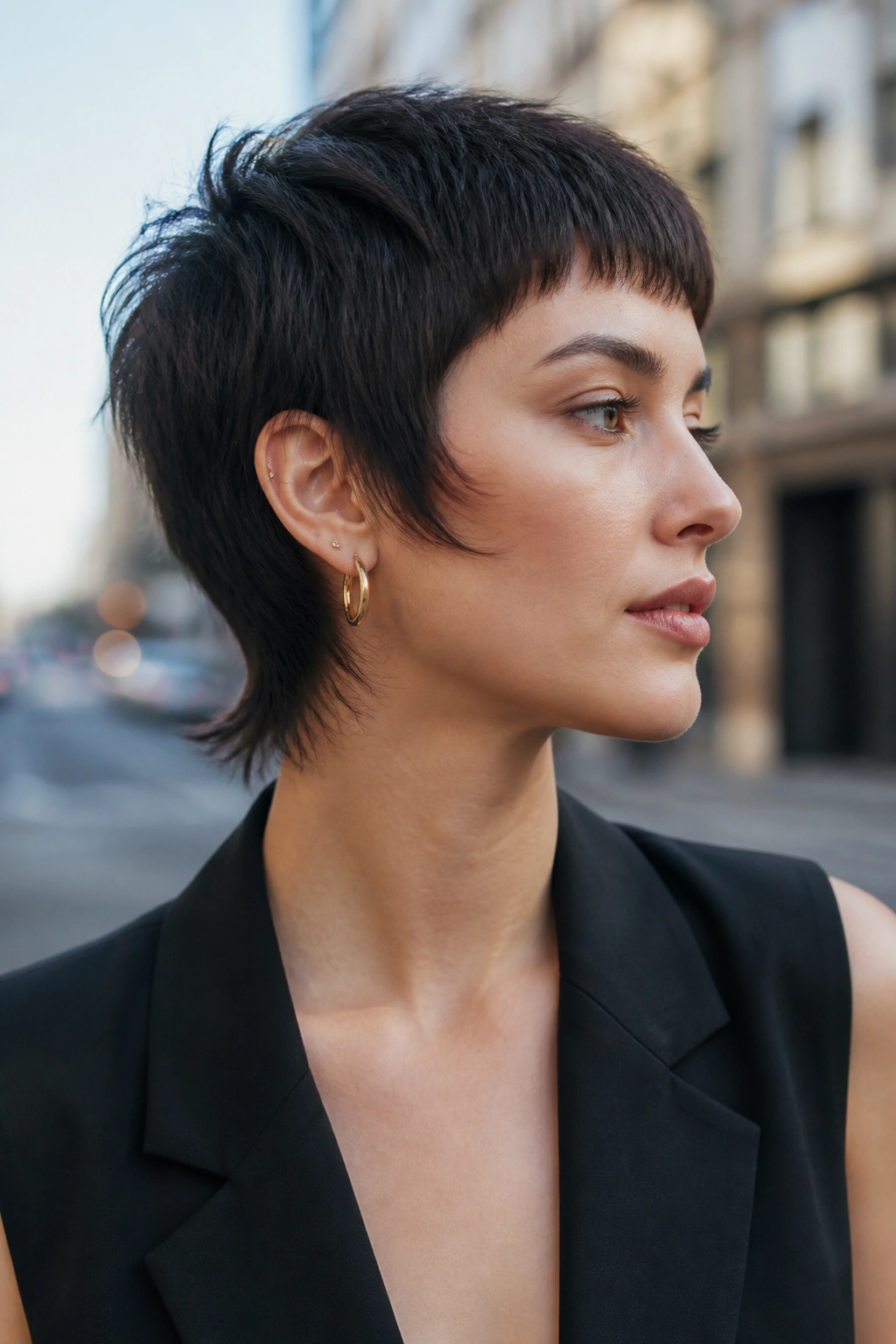
Short wolf cuts can be brilliant on round faces, but only when the top has enough lift to carry the shape. This one trims the sides tight enough to feel sharp, then leaves the crown and front layered so the haircut reads like a cropped shag with a bite.
The micro fringe is not for everyone. It works when you want your features out in front and you are fine with a little edge in the frame. On a round face, the fringe should stay narrow and compact, not heavy and blunt. A shorter bang exposes the forehead, which can help lengthen the face if the rest of the cut has height.
This is also one of the easiest cuts to make look intentional fast. A pea-sized amount of styling paste, rubbed between the hands and pushed through the top layers, gives immediate separation. If your hair is straight, you may need a quick round-brush lift at the crown. If it is wavy, a finger-dry and a touch of spray can be enough.
Tiny cut. Big attitude.
8. Long Wolf Cut with Invisible Layers
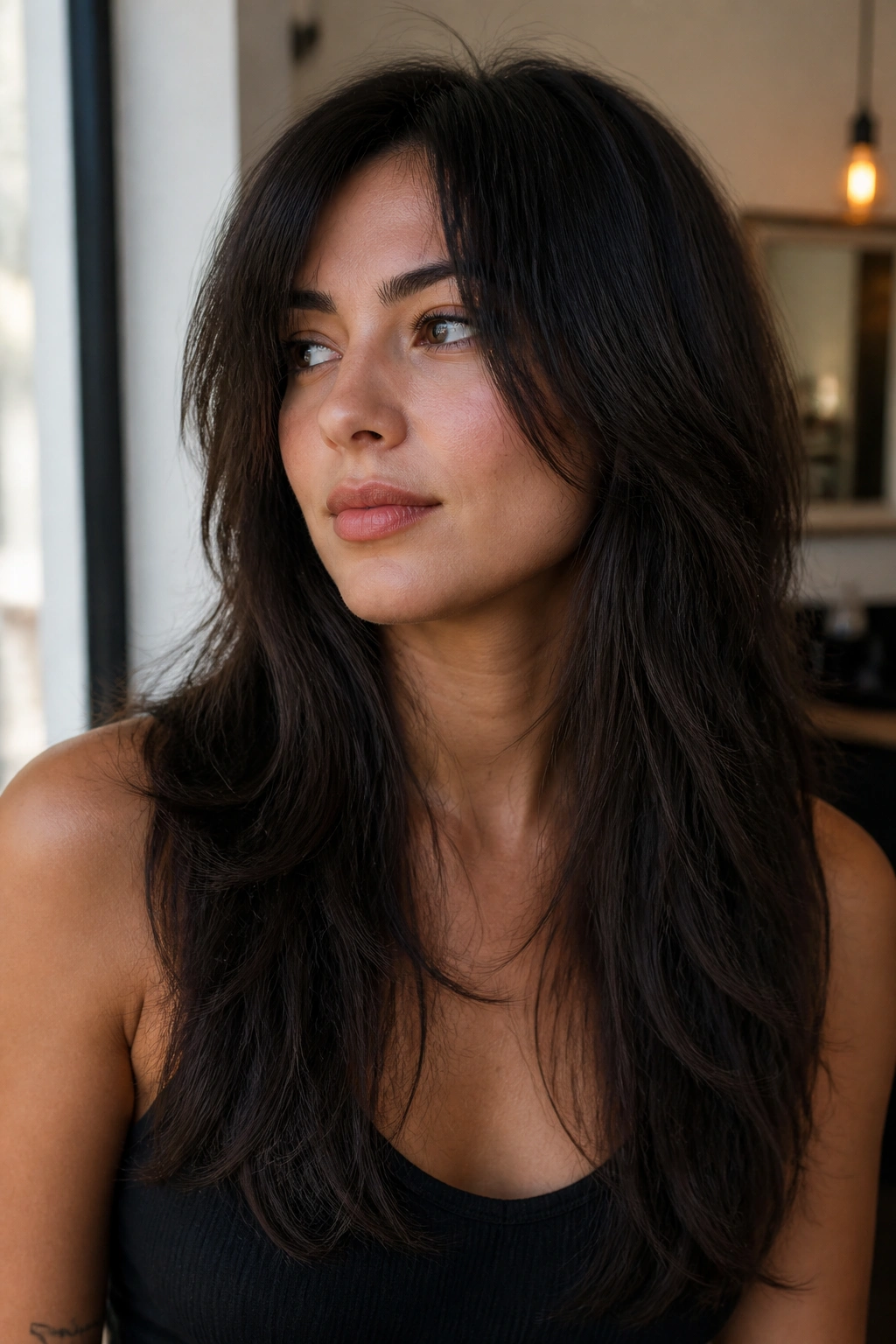
Long hair does not have to mean soft hair. A long wolf cut can carry plenty of edge if the layers are cut in a way that you notice only when the hair moves. That is what keeps the cut from turning into one long, heavy sheet.
For a round face, the length matters almost as much as the layers. Hitting past the collarbone starts to lengthen the face visually, especially when the front pieces are carved to fall around the jaw and then drop below it. The “invisible” part is what makes this cut nice for people who want shape without shouting about it.
A long wolf cut is best styled with a bend, not a curl. Too much curl can widen the sides. A flat iron bend through the bottom third of the hair or a large barrel wave keeps things elongated. If you want a little grit, work a matte texturizing cream into the ends only.
It is the quiet rebel in this list.
9. Bottleneck Bang Wolf Cut

Why do bottleneck bangs keep showing up in flattering round-face cuts? Because they open in the middle, skim the temples, and taper toward the cheekbones without cutting the forehead in a hard line. That shape is doing a lot of face-shaping work before the rest of the haircut even gets a say.
A bottleneck bang wolf cut usually looks best when the bangs start short in the center, then lengthen quickly toward the sides. That gives the front of the haircut a little tension, which is exactly what edgy hair needs. The wolf layers behind the fringe can stay soft and wild, but the bang line gives the whole style a cleaner edge.
How to Wear It
- Keep the center of the fringe shorter than the outer corners.
- Use a round brush only at the bang area.
- Let the side pieces sit near the cheekbones, not above them.
- Finish with a light mist of flexible hairspray.
This cut is sharp without being harsh. That is the appeal. It frames the face in a way that feels deliberate, and round faces usually look stronger when the front of the haircut has some structure.
10. Wavy Wolf Cut with Broken Ends
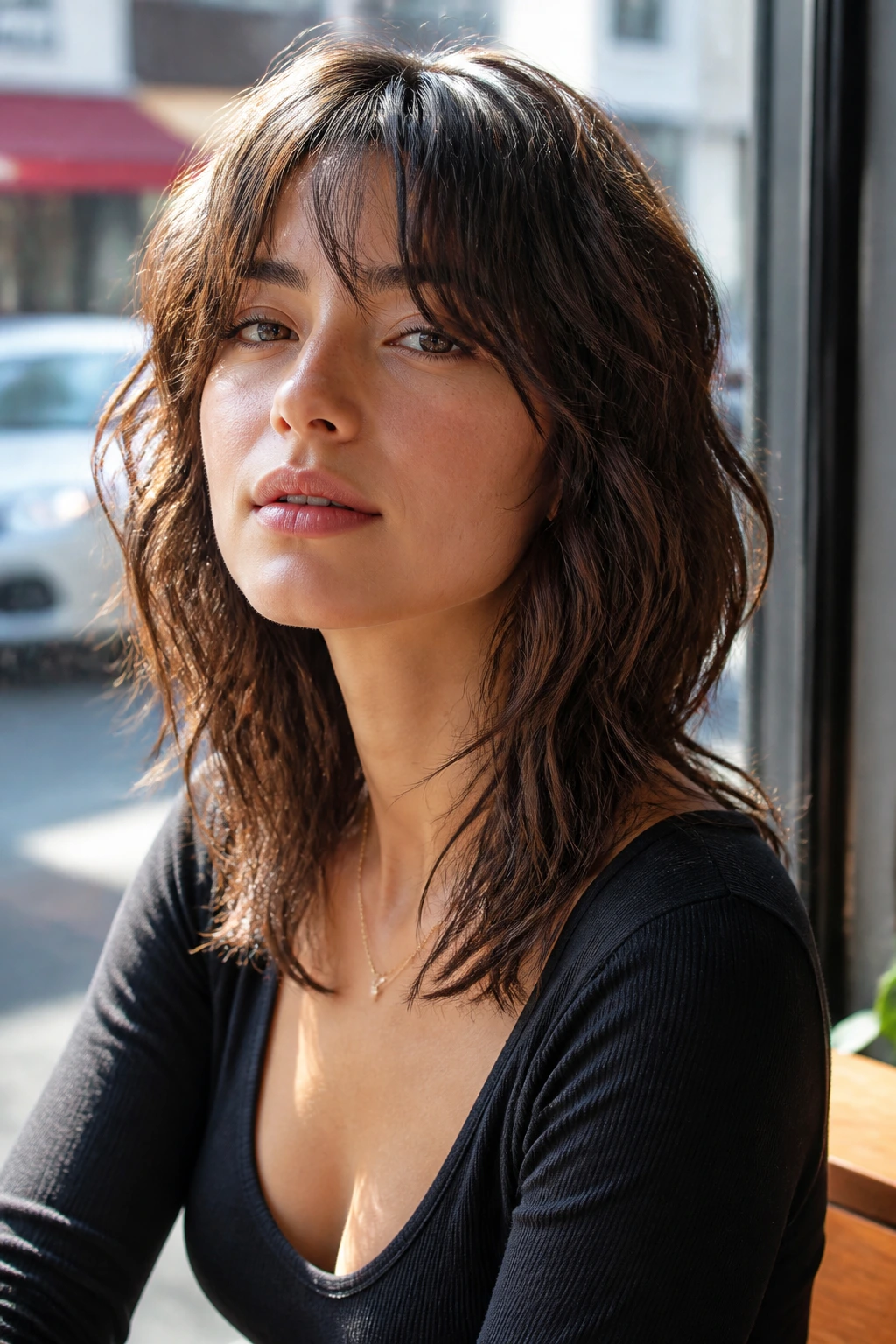
A wavy wolf cut with broken ends has a kind of messy confidence that a lot of people try to fake and usually get wrong. The trick is to keep the wave loose enough to move, but not so polished that the cut loses its rough charm.
Think of this as the “worked-in” version. The ends are chipped up, the layers are uneven on purpose, and the wave pattern gets space to fall around the face instead of puffing out at the sides. On a round face, that broken edge helps because it keeps the outline from forming one smooth circle.
I like this cut on medium-length hair where the waves can start below the cheek. That placement matters. If the bend sits too high, the width lands in the exact wrong place. A sea salt spray or a light foam can help, but do not drown the hair in product. Crisp separation beats sticky texture every time.
The best part? It still looks good when it is not perfect. That is a gift.
11. Wolf Cut with Nape Undercut
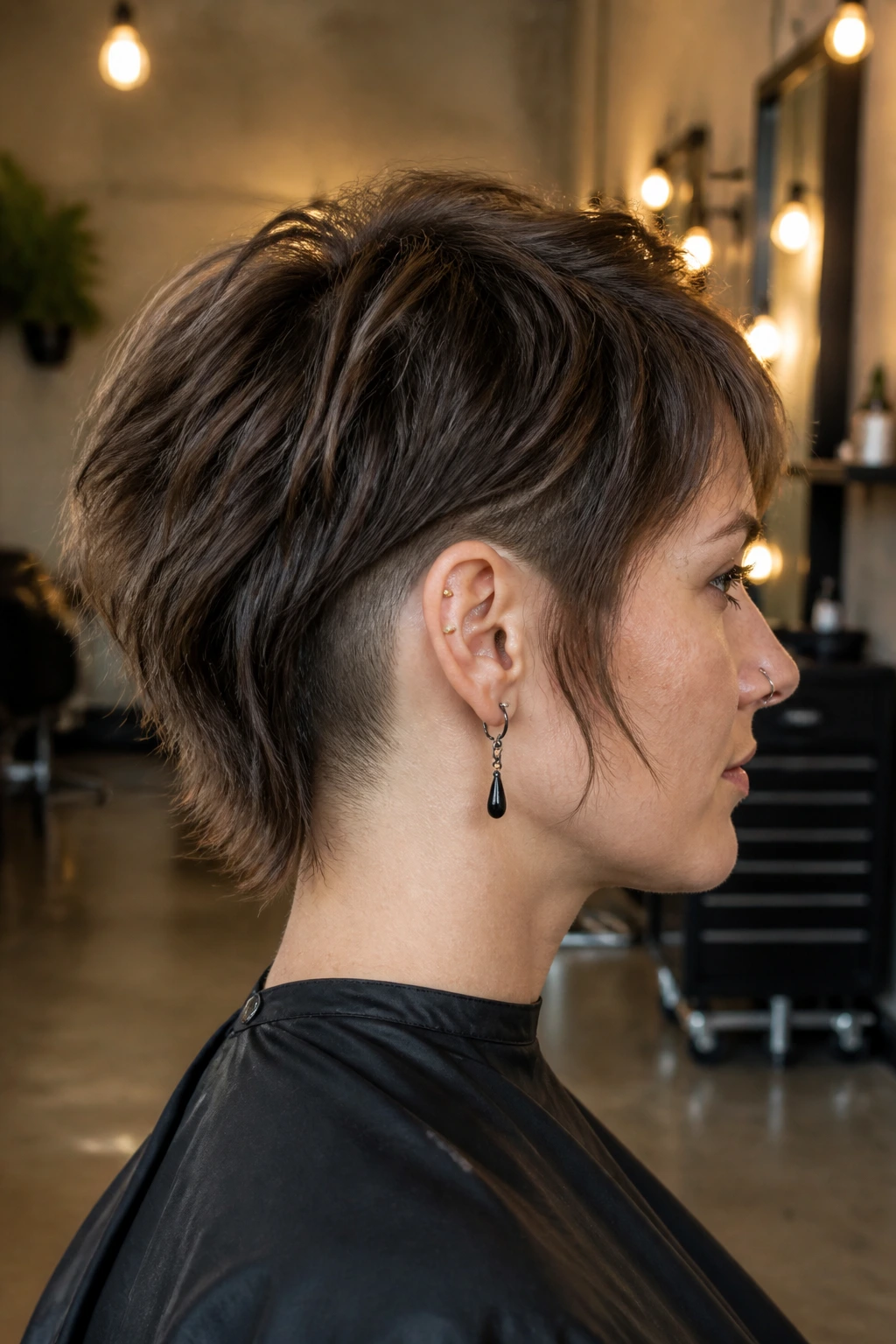
A nape undercut changes the whole mood of a wolf cut. The top can stay shaggy and full of movement, while the back is trimmed tighter so the silhouette does not swell at the neck. On a round face, that reduced bulk below the head helps the cut feel taller and cleaner.
There is also a practical side people forget. Thick hair often turns a wolf cut into a fluffy triangle if the nape is left untouched. A light undercut or a close crop beneath the upper layers keeps the back from getting heavy. You still get all the texture on top, and the cut dries faster, too.
This is the closest thing on the list to a low-profile mohawk cousin without actually becoming one. The shape is edgy, but the wearability is real. If you tuck your hair behind one ear, the undercut disappears. If you wear it loose, the contrast shows up in a nice, sneaky way.
Not everyone wants that much edge under the surface. The people who do tend to love it.
12. Feathered Wolf Cut with Tapered Sides

Compared with a blunt shag, the feathered wolf cut feels lighter around the cheeks and softer at the edges. That makes it a smart pick for round faces that need movement but not extra width. The taper through the sides keeps the haircut from sitting out like a shelf.
The feathering should not be fluffy in the old-fashioned sense. That word makes people think of over-layered, airy ends that collapse after two hours. Better to think of slim, directional pieces that bend away from the face and then fall. The front should skim, not hug. Small difference. Big visual effect.
Best For
- Fine to medium hair that needs shape without heavy layering.
- People who want a softer edge than a razor cut gives.
- Hair that dries with some natural bend.
- Anyone who wants the face to look a touch longer without a blunt bang.
A feathered wolf cut is not loud. It’s sly. It still has attitude, but it sneaks it in through the movement instead of the outline.
13. High-Contrast Wolf Cut with Full Fringe
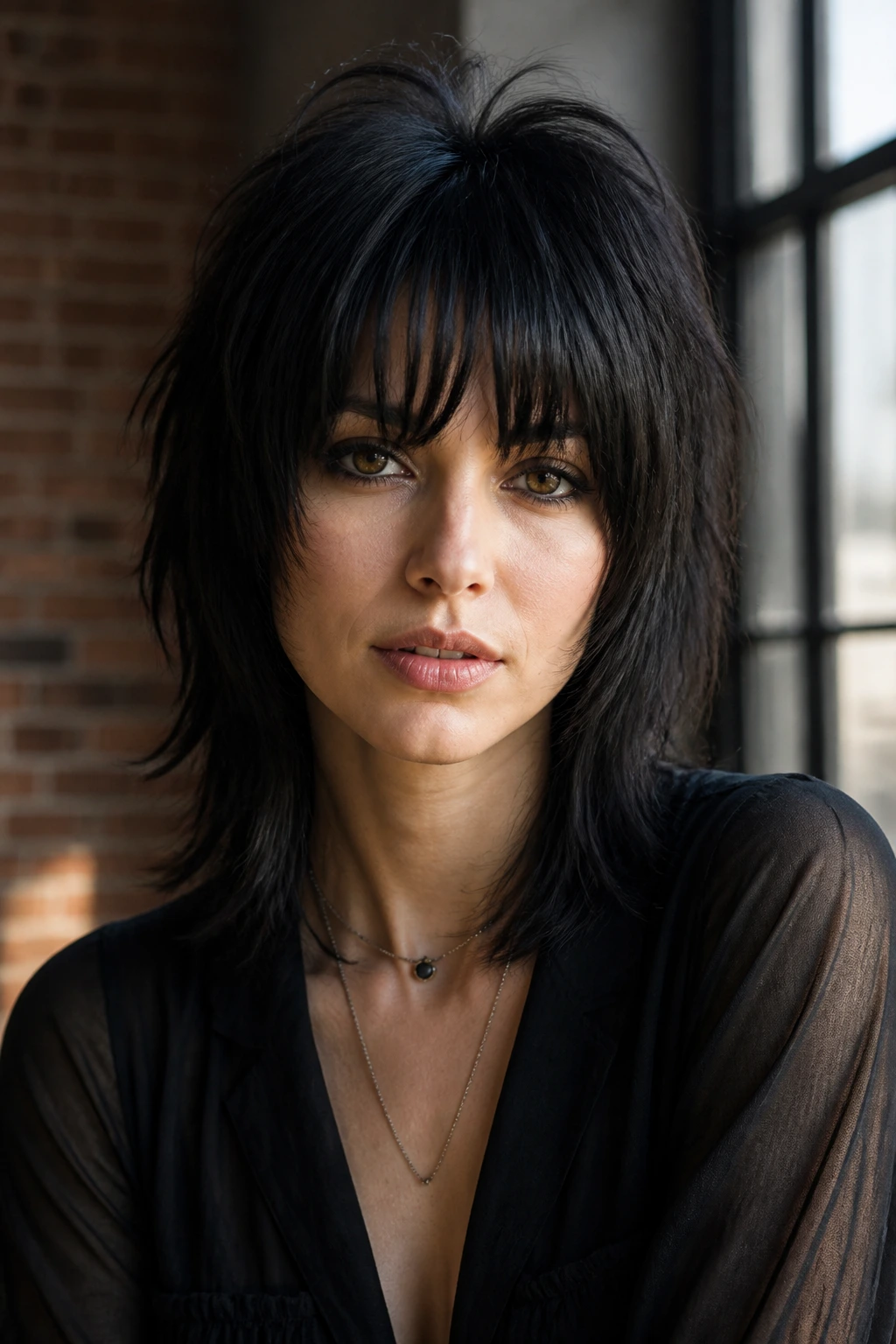
Strong fringe, strong top, lean sides. That’s the formula here, and it works because it gives the face a clear frame without widening the cheeks. The full fringe creates a graphic line across the forehead, while the layers above it keep the cut from feeling heavy.
A round face can handle a fuller bang if the rest of the cut is doing enough vertical work. That means height at the crown, not just extra hair around the temples. The fringe should sit low enough to make a statement but not so dense that it blocks light from the face. Thick fringe with no air in it can make the cut feel boxy, and boxy is the last thing this face shape needs.
This version looks especially good on straight hair. The contrast reads cleanly. If your hair is wavy, you can still wear it, but the fringe needs a little more attention in the morning. A flat brush and a quick pass of the blow-dryer usually do the job.
It is a bold cut. Not a reckless one.
14. Mullet-Forward Wolf Cut at Collarbone Length

Can a collarbone cut still feel rebellious? Absolutely. That length is long enough to keep the face looking open, but the mullet-forward layering at the back gives the haircut a harder edge than a standard shag ever could.
What makes this version work on a round face is the split between front and back. The front is kept relatively soft, often with pieces that graze the jaw or collarbone, while the back is slightly longer and more jagged. That creates motion without crowding the cheeks. It also gives the neck a bit of visual length, which helps the whole silhouette.
This cut likes texture spray and a loose, finger-combed finish. It does not need perfect waves. In fact, too much polish kills the appeal. A round face gets a nice bit of balance here because the eye sees asymmetry and length at the same time. That combo is hard to beat.
If your style leans edgy but you still need the haircut to work at brunch, this is a very good compromise.
15. Tousled Wolf Cut with Mid-Length Curtain Split

A mid-length curtain split gives a round face breathing room right through the center, and the tousled layers keep the sides from feeling too neat. The result lands somewhere between soft and sharp, which is a useful place to be when you want edge without losing softness.
The bang area is the key. The split should open enough to show some forehead, but not so wide that the face feels exposed. The front pieces should drop below the cheekbone and curve into the jawline. That drop creates a long line. Long lines help. Short horizontal lines usually do the opposite.
This style is easy to overstyle. Don’t. A little dry texture at the ends is enough. If you use too much round-brush volume everywhere, the whole shape can puff outward. Keep the lift at the roots and the texture at the ends. That’s the cleaner version.
It is a good cut for people who like changing their part depending on mood. Middle today, slightly off-center tomorrow. No drama.
16. Piecey Wolf Cut with Micro Shag Layers

This one is for the person who wants their hair to look separated on purpose, not blown out into a single cloud. The micro shag layers break the cut into visible pieces, and that piecey finish keeps the shape tight enough for a round face to wear well.
The secret is small layers stacked in different directions. Not all over. Just enough to make the top feel active and the sides stay narrow. The perimeter can still touch the shoulders or collarbone, but the internal layers need to be short enough to show through the surface. That is what gives the haircut its little jagged bite.
What to Watch For
- Too much layering at the cheek can widen the face.
- Too little layering at the crown makes the cut collapse.
- A tiny bit of wax goes a long way here.
- The finish should look separated, not greasy.
A piecey wolf cut looks especially good when the ends are dry and a little rough. Too smooth, and the character disappears. Too textured, and it starts looking overdone. There’s a narrow middle lane here, but it’s worth finding.
17. Soft Razor Wolf Cut with Wispy Face Frames

A soft razor wolf cut sounds contradictory, and that’s exactly why I like it. The razor creates movement, but the face frames stay wispy instead of sliced to bits. On a round face, that softness helps the cut sit around the features instead of pinching them.
The wispy front pieces should not stop at the cheeks. That’s the mistake. They need to move past the widest part of the face and taper toward the jaw or collarbone. Once they pass that point, the haircut starts pulling the eye downward, which is what gives the face a longer read. The rest of the hair can keep its roughness.
This is a good cut for people who want a little rock attitude but do not want the haircut to shout first and ask questions later. It works on straight hair, sure, but it can also be nice on lightly wavy hair because the wave blends with the razor texture instead of fighting it.
A soft razor wolf cut is one of those styles that looks like it took less effort than it did. I take that as a compliment.
18. Disconnected Wolf Cut with Long Tail

Disconnected cuts are not gentle, and that is precisely why they work here. A long tail through the back keeps the face from getting boxed in, while the shorter top and front pieces add the rough, editorial shape that makes a wolf cut feel alive.
For round faces, the disconnection gives the haircut room to breathe. You get a strong top section, clear separation through the mids, and a longer back that pulls the whole shape downward. That downward pull is useful. It keeps the eye moving instead of staying parked at the widest part of the face.
This version needs confidence more than perfection. If the tail is too blended in, the cut loses its punch. If the top is too soft, the whole thing slides back toward ordinary. So the lines should stay visible. A little harshness is part of the charm.
If your hair falls flat after an hour, this is one of the first cuts I’d test. It has structure in the right places, movement where you want it, and enough edge to keep the style from feeling safe. And safe is fine for some people. For this cut, though, safe would be a waste.
