



Hair texture matters more than length. That is the fundamental truth behind any successful wolf cut. We are looking at a style that occupies a unique space between the shag of the seventies and the aggressive, forward-thinking energy of the modern mullet. It relies on internal layering, disconnected sections, and a specific lack of uniformity that makes it look like you just rolled out of bed, yet somehow managed to look intentional about it. This cut demands a certain level of confidence because it sits away from the scalp, creating volume where traditional barbering usually aims to flatten. If you have fine, flat hair, this style is your best friend. If you have thick, unruly hair, it is your greatest challenge and your biggest ally.
Getting this right requires a razor. Do not settle for scissors alone. A razor removes weight in a way that creates that soft, feathery edge, which is the hallmark of the look. You want the hair to move, not sit like a solid block of wood. It needs to be airy, chaotic, and effortless. Whether you are aiming for something clean and professional or leaning into the grungier side of things, the wolf cut offers a level of adaptability that few other trends can touch. Let’s break down the specific variations that work for different hair types, lifestyles, and aesthetic goals.
1. The Classic Shaggy Wolf Cut
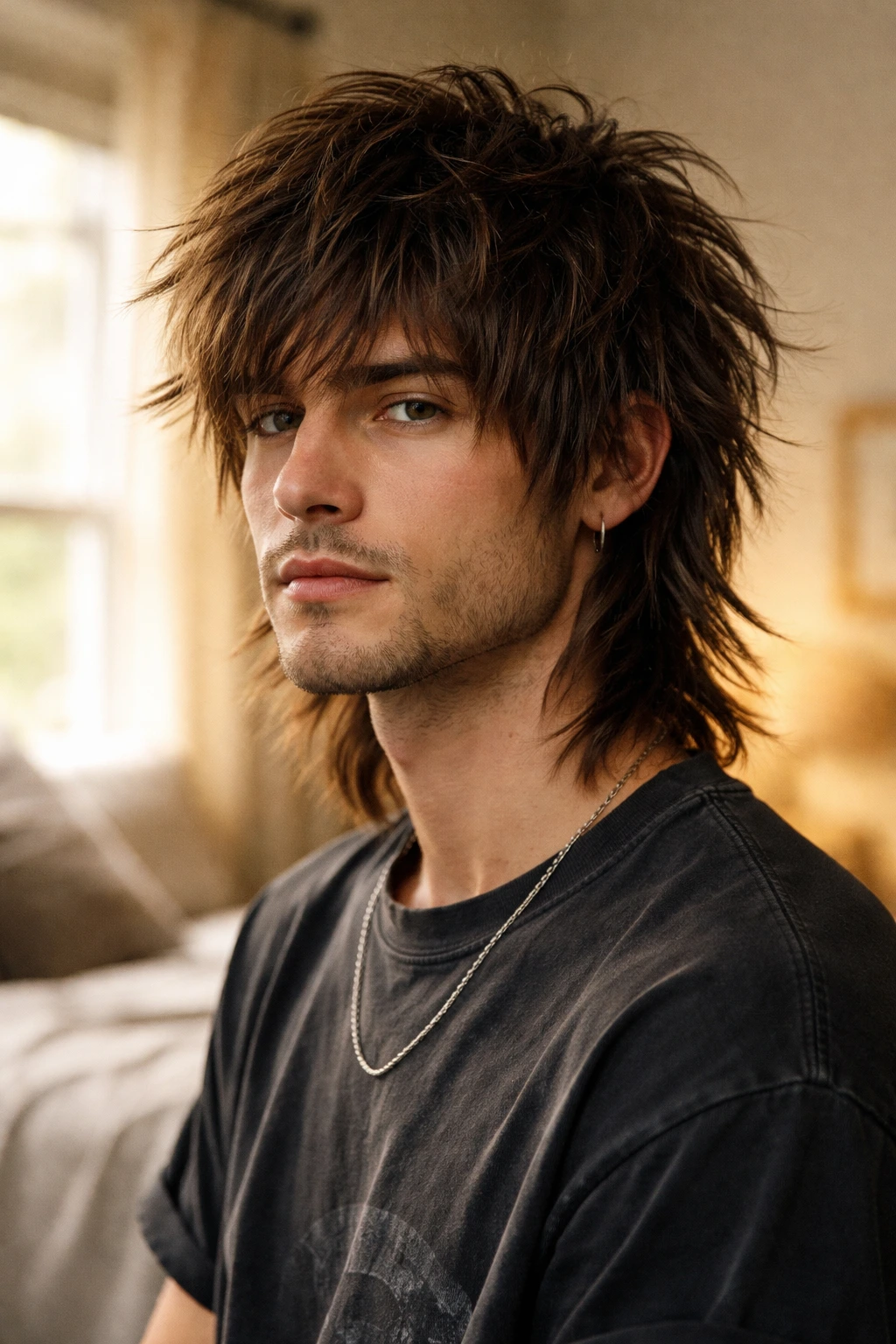
This is the baseline. If you want to understand the mechanics of the cut, start here. It features heavy, choppy layers throughout the crown and back, designed to create maximum volume with minimal styling product. The length usually hits just past the nape, with shorter, face-framing pieces that provide that iconic shag shape.
How to Style It
You need grit. Clean, silky hair is your enemy with a classic shag. Use a sea salt spray on damp hair, scrunching it with your hands as it air dries. Avoid using a blow dryer if you can; the natural texture is what makes the silhouette work. If your hair is too soft, a pinch of styling powder at the roots will add the necessary friction.
Maintenance Tips
- Schedule a trim every six to eight weeks.
- The layers will start to look messy when they grow out past their intended point.
- Keep the neck area slightly shorter than the main body to prevent it from looking like a neglected mullet.
Pro tip: Point cutting is the secret language between you and your barber here. Ensure they remove weight from the mid-lengths rather than just chopping the ends.
2. Short Wolf Cut with Taper Fade
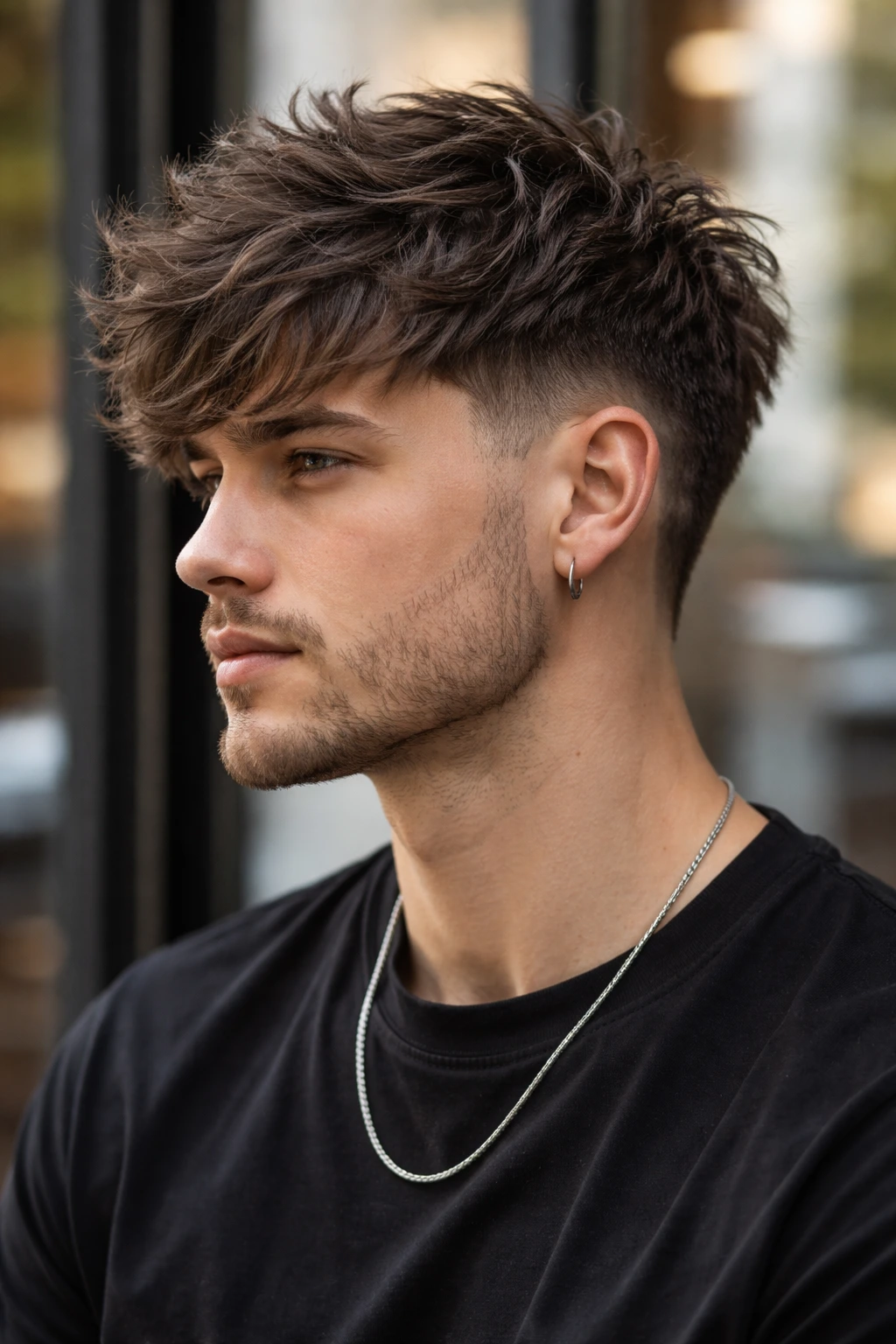
Combining a voluminous top with a clean, tight fade around the ears and neck creates a stark contrast that is hard to ignore. This version keeps the wild, shaggy aesthetic of the wolf cut on top but tames the perimeter. It is the most professional iteration of a style that is inherently rebellious.
The fade provides a sharp, structured foundation. Because the sides are tight, the eye is immediately drawn upward to the texture of the crown. You lose the traditional “neck curtain” of a standard shag, which makes this look suitable for office environments or more corporate settings where a full-blown shag might feel too casual.
Why It Works
The contrast between the faded sides and the textured, layered top mimics the effect of an undercut but with more movement. It is less about the “wild” factor and more about the interplay of silhouettes.
Styling the Top
Use a matte clay. Unlike wax or gel, clay provides hold without adding shine or weight. Warm a small amount in your palms, work it into the roots, and push the hair forward and up. You want the height to look natural, not stiff.
3. Textured Mullet Wolf Hybrid
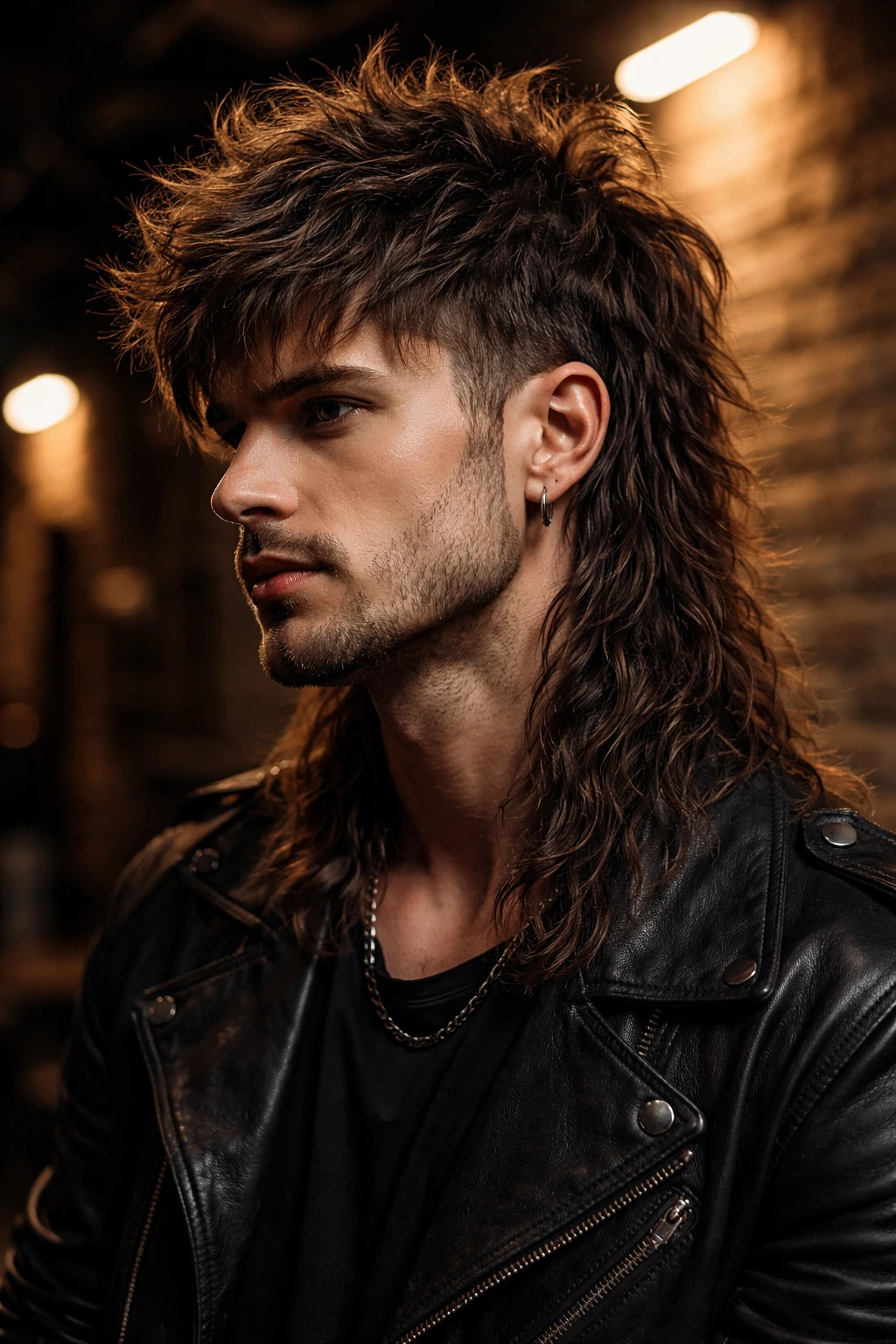
This is the evolution of the nineties rock-star silhouette. The top is heavily layered and cropped short, while the back remains significantly longer, often reaching the collar or even the shoulders. It is less about blending and more about celebrating the disconnect between the front and the back.
This style is not for the faint of heart. It is aggressive, bold, and unapologetically retro. The transition from the crown to the nape should be sharp. A skilled barber will carve out a line where the top layers end and the long “tail” begins.
The Essential Cut Detail
The key is in the layers on the sides. You don’t want the sides to be too long, or you lose the “wolf” aspect and enter pure mullet territory. Keep the sideburns short or faded, which allows the long back to stand out without looking like a helmet.
Handling the Back
Because the back is longer, it will take more time to air dry. If you have straight hair, it might tend to lay flat against your neck. Use a volumizing mousse in the back section to lift it away from the skin.
4. Curly Hair Wolf Cut
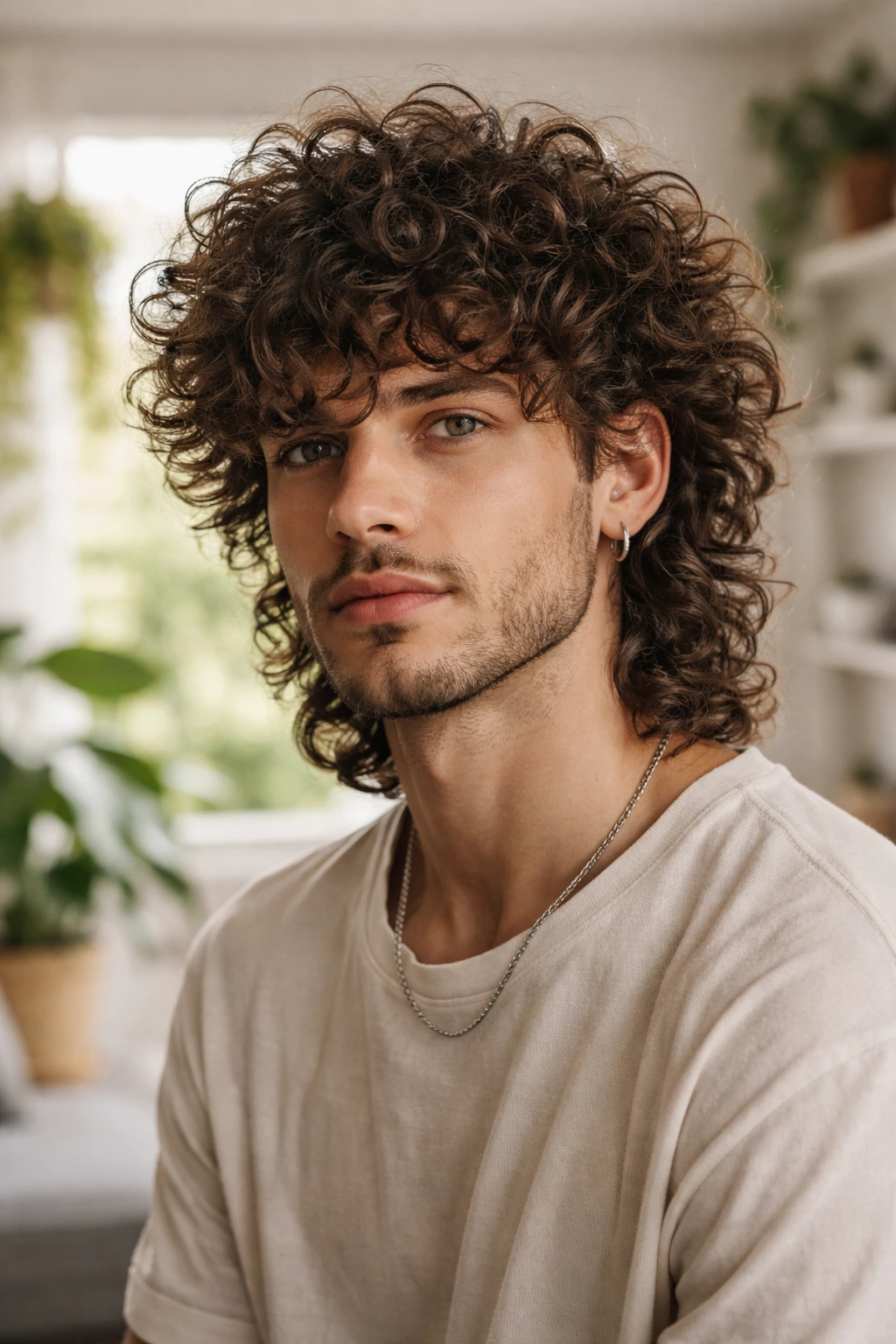
If you have naturally curly or wavy hair, you have hit the jackpot. The wolf cut was practically invented for you. The structure of the cut thrives on the natural bounce and coil of your hair, requiring very little manipulation to get that perfectly chaotic look.
The layers are crucial here. They prevent the dreaded “triangle” shape, where hair gets wide at the bottom and flat at the top. Instead, the layers encourage the curls to stack vertically, building a rounder, fuller shape that frames the face dynamically.
Managing the Volume
You might be tempted to thin out your hair, but resist the urge. The volume is the point. Focus on hydration. Use a leave-in conditioner that is light enough not to weigh down your curls but heavy enough to define them.
Styling for Coils
- Apply curl cream while your hair is soaking wet.
- Scrunch, don’t rake.
- Let it air dry undisturbed. The less you touch it, the better the final curl definition will look.
5. Modern E-Boy Wolf Cut
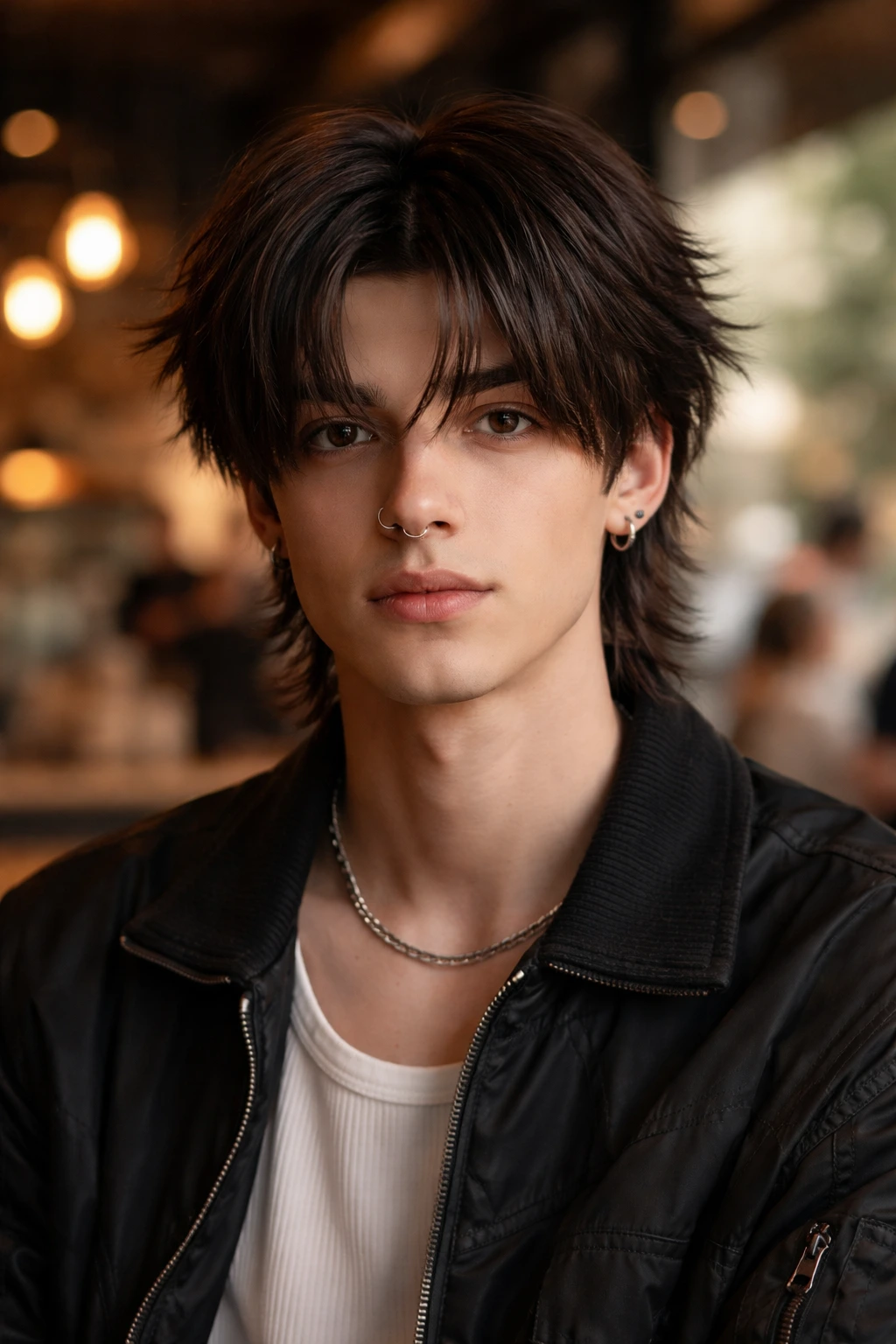
This version leans heavily into the “curtain” fringe aesthetic. The hair is long enough to drape over the forehead and brush against the cheekbones, creating a soft, almost mysterious look. It is often paired with a center part that feels intentional and styled.
The focus here is entirely on the fringe. You want the bangs to be textured, not blunt. If the front is cut with a razor, it will naturally split and fall to either side. If it is cut with scissors, make sure the tips are thinned out so they don’t look like a solid wall of hair.
The Center Parting
A center part requires the hair to be long enough to have some weight. If your hair is too short, it will stand up rather than drape. Aim for at least four inches of length in the fringe area.
Maintenance
- This style demands frequent bang trims.
- Once the fringe hits the tip of your nose, it loses the curtain effect and becomes an annoyance.
- Keep a pair of thinning shears at home to dust the ends yourself if you can’t make it to the shop.
6. Wavy Wolf Cut

For guys with hair that is somewhere between straight and curly, the wavy wolf cut is the ultimate “I woke up like this” hairstyle. It relies on the natural wave pattern to fill the gaps between the layers, creating a textured, effortless finish that moves when you move.
This look is forgiving. If you miss a spot when styling, it doesn’t matter because the style is supposed to be chaotic. The waves provide internal texture, so you don’t need to pile on the product to make it look interesting.
Enhancing the Texture
If your waves are subtle, bring them out with a texturizing spray. Apply it to slightly damp hair and twist small sections with your fingers. This encourages the natural bend of the hair to tighten up.
The Cut Structure
Ask for “shag layers.” This tells the stylist you want them to leave weight in the ends while creating height at the crown. It is the opposite of a graduated bob. You want the weight distributed evenly throughout.
7. Bleached Wolf Cut
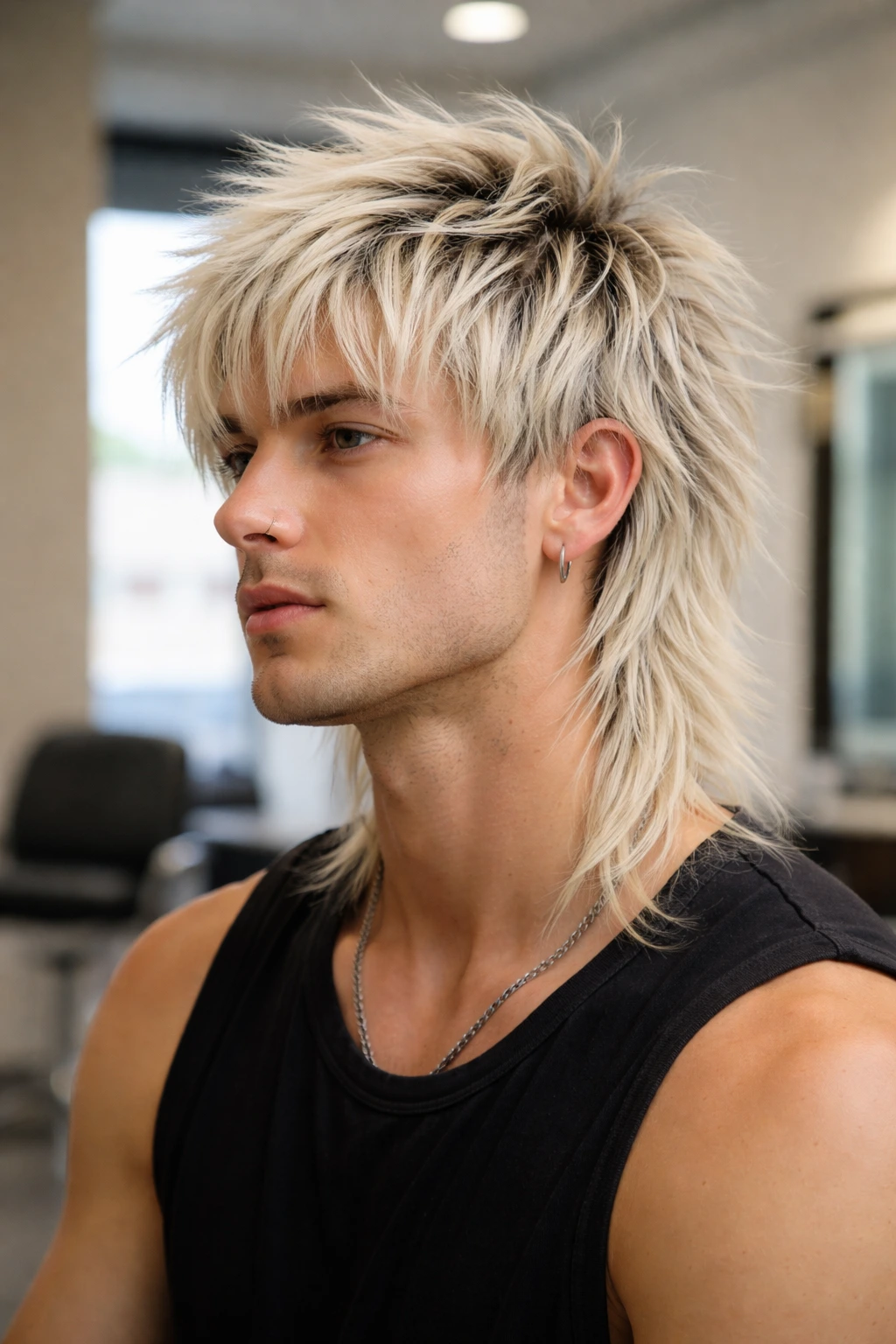
Sometimes the cut itself isn’t enough to make a statement. Introducing color—specifically a high-lift bleach—adds a layer of visual interest that changes how the light interacts with the hair. The bleach makes the hair shaft rougher and more porous, which actually helps with the volume and hold of a wolf cut.
Bleached hair has a natural “grip” that clean, virgin hair lacks. It is easier to style, stays where you put it, and looks more textured. However, it is a high-commitment move. You are signing up for root maintenance and deep conditioning treatments to keep the hair from turning into straw.
Managing the Damage
- Invest in a high-quality purple shampoo to keep the brassiness at bay.
- Use a bonding treatment weekly to repair the structural integrity of the hair.
- Skip the hot tools. Bleached hair is fragile, and the heat from a flat iron will snap it off.
8. Wolf Cut with Undercut
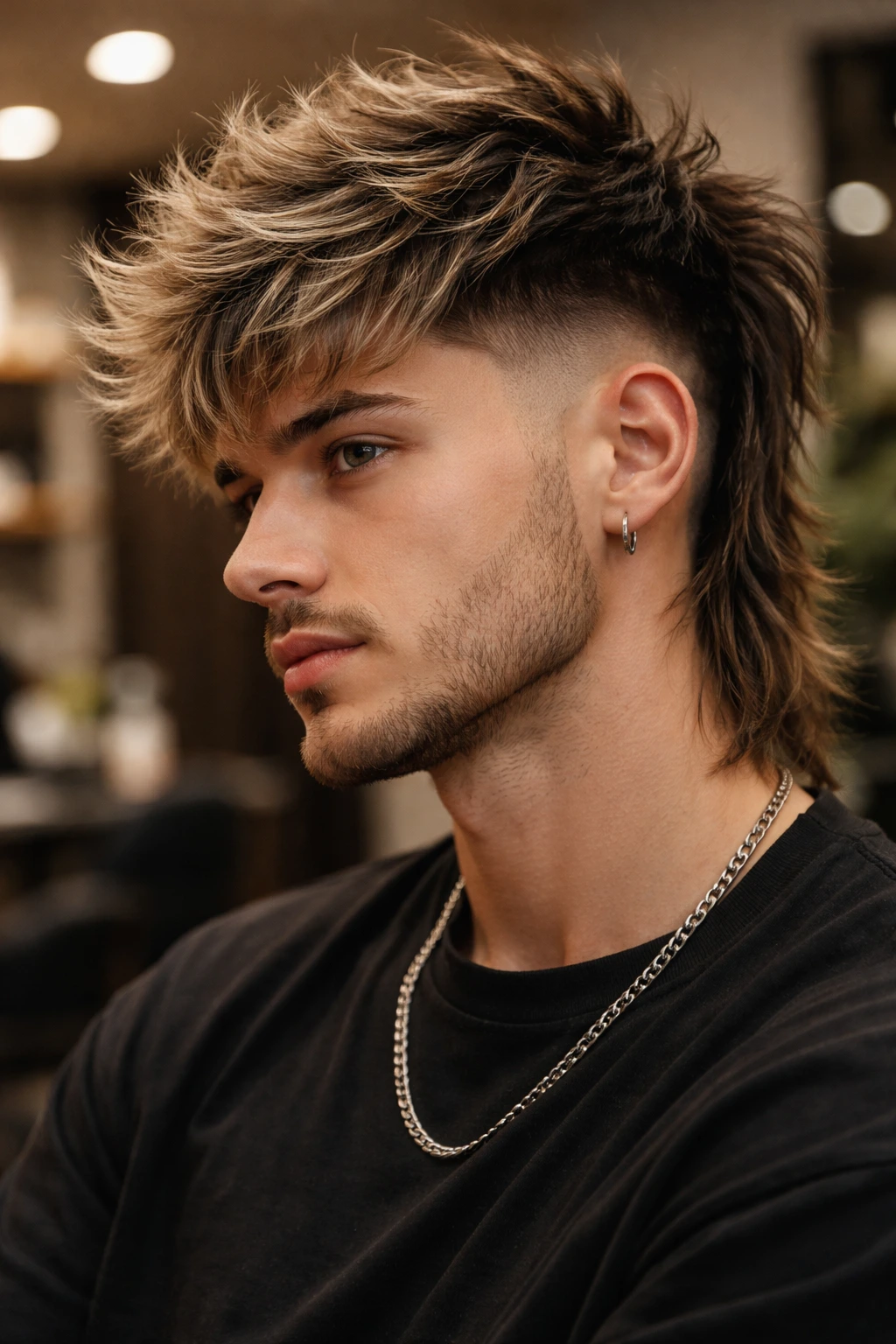
If the classic wolf cut feels too safe, an undercut adds a layer of defiance. By shaving the hair on the sides or the lower back up to the occipital bone, you create a sharp separation that makes the longer, textured hair on top look even more prominent.
This look is about power and contrast. The undercut provides a clean slate that makes the messy layers on top seem intentional rather than lazy. It is a fantastic option for guys who have too much hair and feel overwhelmed by the thickness.
Practical Application
The undercut keeps the neck cool and comfortable. It is also an easier way to style the hair; with the sides gone, you have fewer sections to manage. You simply dry the top and go.
Styling Tip
Don’t style the undercut. Let it be the clean, skin-baring anchor for the wildness above. Focus all your attention on texturizing the top section.
9. Long Layered Wolf Cut

This is for the guy who is not ready to give up his length but wants to experiment with the shaggy aesthetic. It involves taking the classic wolf cut silhouette—short, choppy top, layered sides—and extending those layers all the way down to the shoulder blades.
It is a dramatic look that requires a high degree of confidence. This style is not about the fringe; it is about the “flow.” The hair should look windswept and intentional, with pieces falling forward over the shoulders.
Styling the Length
When you have this much length, the weight of the hair can work against you. The hair near the roots will flatten out unless you support it. Use a lightweight volumizing powder at the crown every single morning.
The Barber Discussion
Be very clear with your barber: “I want layers, but I want to keep the length.” If they start cutting too aggressively, they will turn this into a short shag. You are looking for a silhouette, not a total crop.
10. Fringed Wolf Cut

This version focuses on the brow. It isn’t just a curtain bang; it is a full, textured fringe that sits just above the eyebrows. It is reminiscent of the mid-nineties grunge movement, combined with a slightly more polished, modern sensibility.
The fringe should be textured with a razor to avoid a straight line. If the line is too blunt, you lose the “wolf” vibe and end up with a bowl cut. The edges should be soft and wispy, blending seamlessly into the side layers.
Why This Style Works
It hides a large forehead and draws focus to the eyes. It is also the easiest style to grow out. When you get tired of the fringe, it naturally transitions into the curtain-bang look without much awkwardness.
Styling Advice
Don’t brush the fringe. Use your fingers to comb through it. Brushing will make it lay flat against your forehead, which is the opposite of the lifted, airy volume you want.
11. Two-Tone Wolf Cut
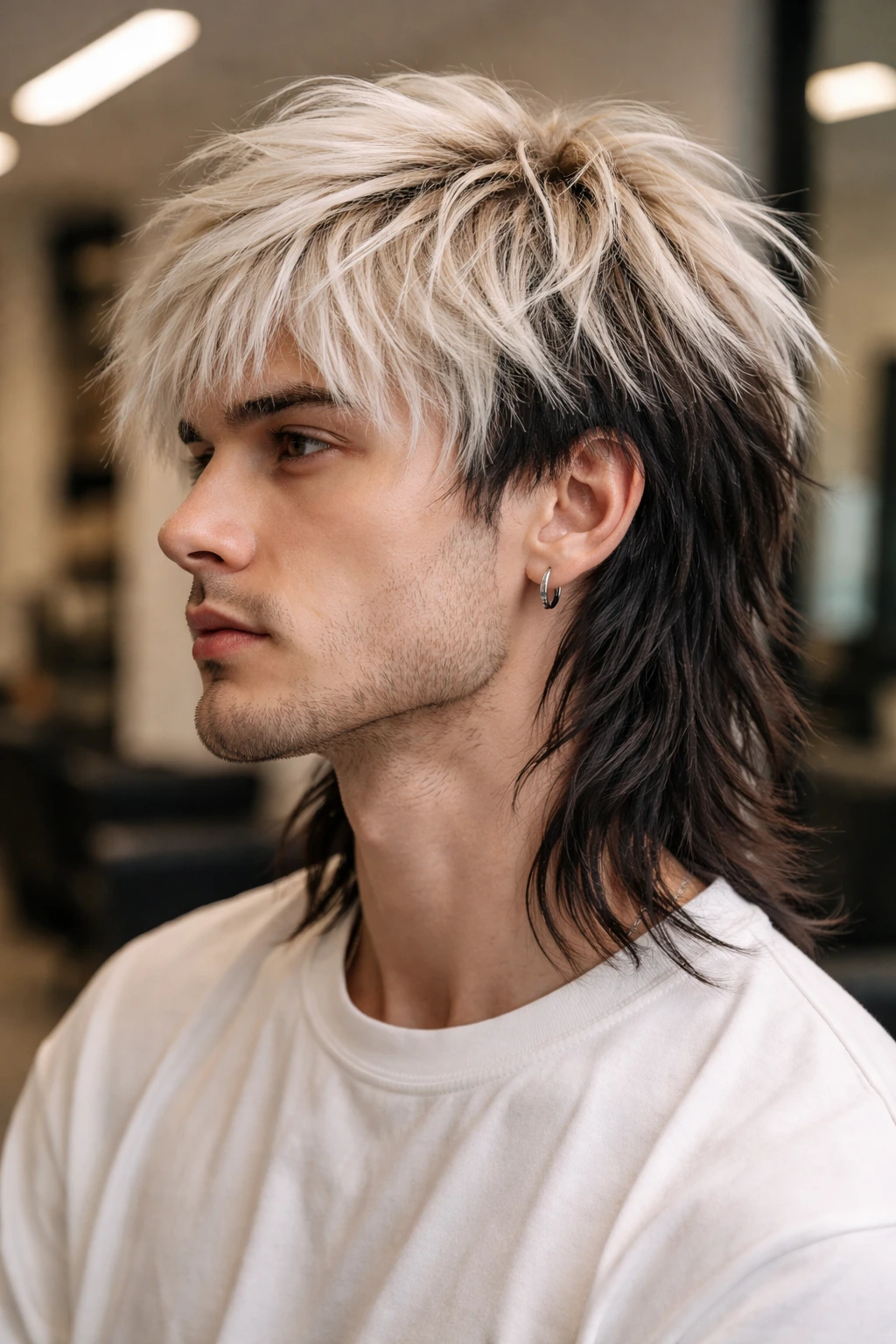
Color is an underrated tool for texture. By coloring the bottom layers a dark shade and the top layers a lighter shade, you exaggerate the depth and separation of the layers. It forces the eye to see the disconnect in the cut, which is exactly what a wolf cut aims to do.
You can go for subtle, natural tones—like a dark brown base with light brown highlights—or go for full-blown contrast. The goal is to create “shadows” in the hair that highlight the choppy nature of the cut.
Execution
This requires a professional colorist. Do not attempt to bleach or dye your own layers at home. You need precise sectioning to ensure the colors don’t bleed into each other, which would ruin the effect of the layers.
Long-Term Care
This style requires frequent trims to keep the color transition lines in the right place. As your hair grows, the color will migrate, and you will need to re-tone or re-dye to maintain the look.
12. Straight Hair Wolf Cut
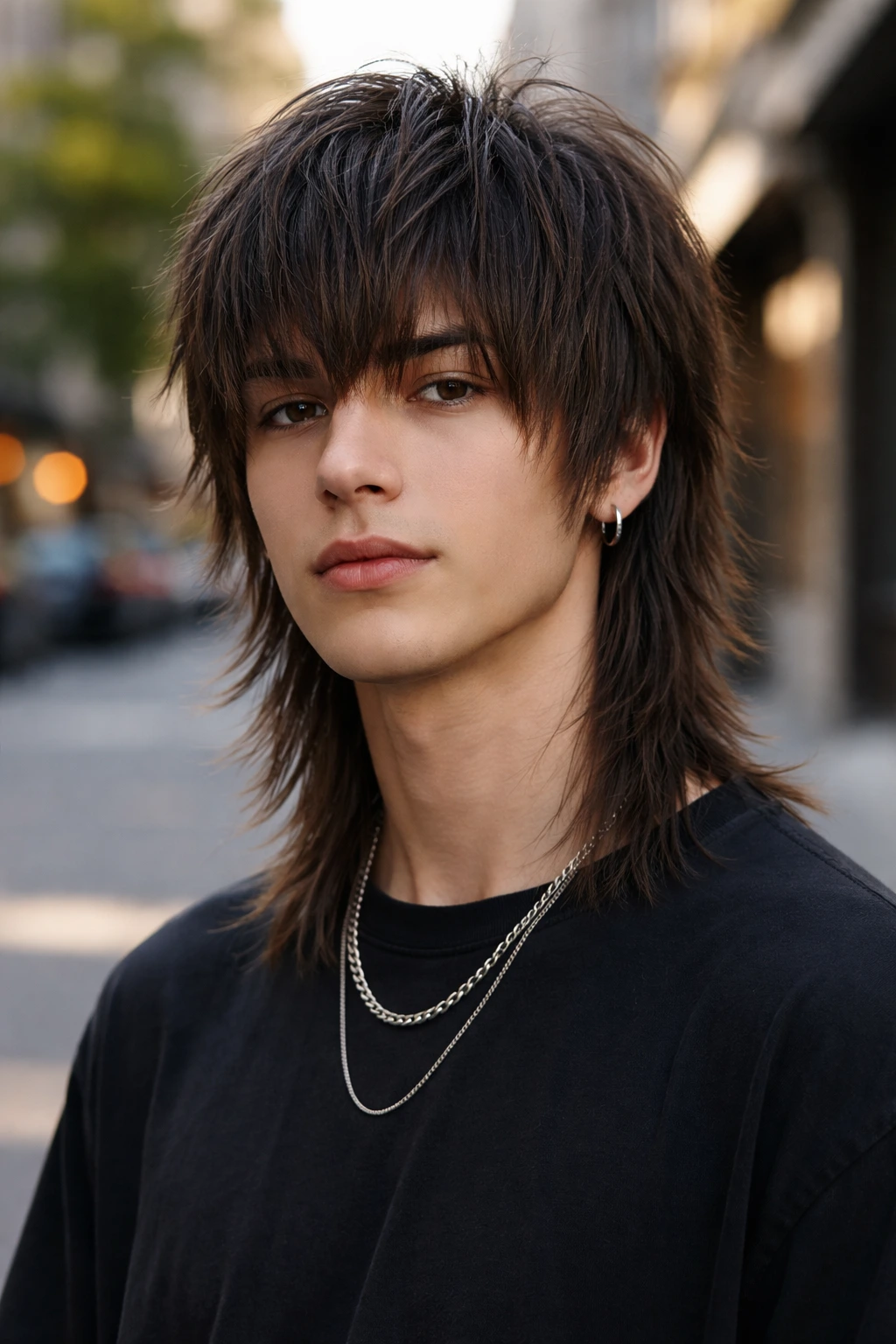
Many men think the wolf cut only works on wavy or curly hair. That is a misconception. If you have stick-straight hair, you can still pull this off, but you have to build the texture manually. It requires more product work, but the result is a sleek, edgy silhouette.
The secret to success with straight hair is the cut itself. You need more layers than the curly-haired guy. Every section of your hair needs to be point-cut to remove weight and encourage individual strands to bend and separate.
Styling for Straight Hair
You cannot rely on your natural texture. You need to create it.
- Use a sea salt spray on towel-dried hair.
- Rough-dry it with a hair dryer, using your fingers to lift the roots.
- Once dry, use a texturizing paste to “piece out” the ends.
The “Bedhead” Trick
The goal is to avoid looking like you just walked out of a salon. Take a few small sections of hair and curl them in different directions with a straightener. Then, shake them out. This randomizes the texture.
13. Tight Fade Wolf Cut
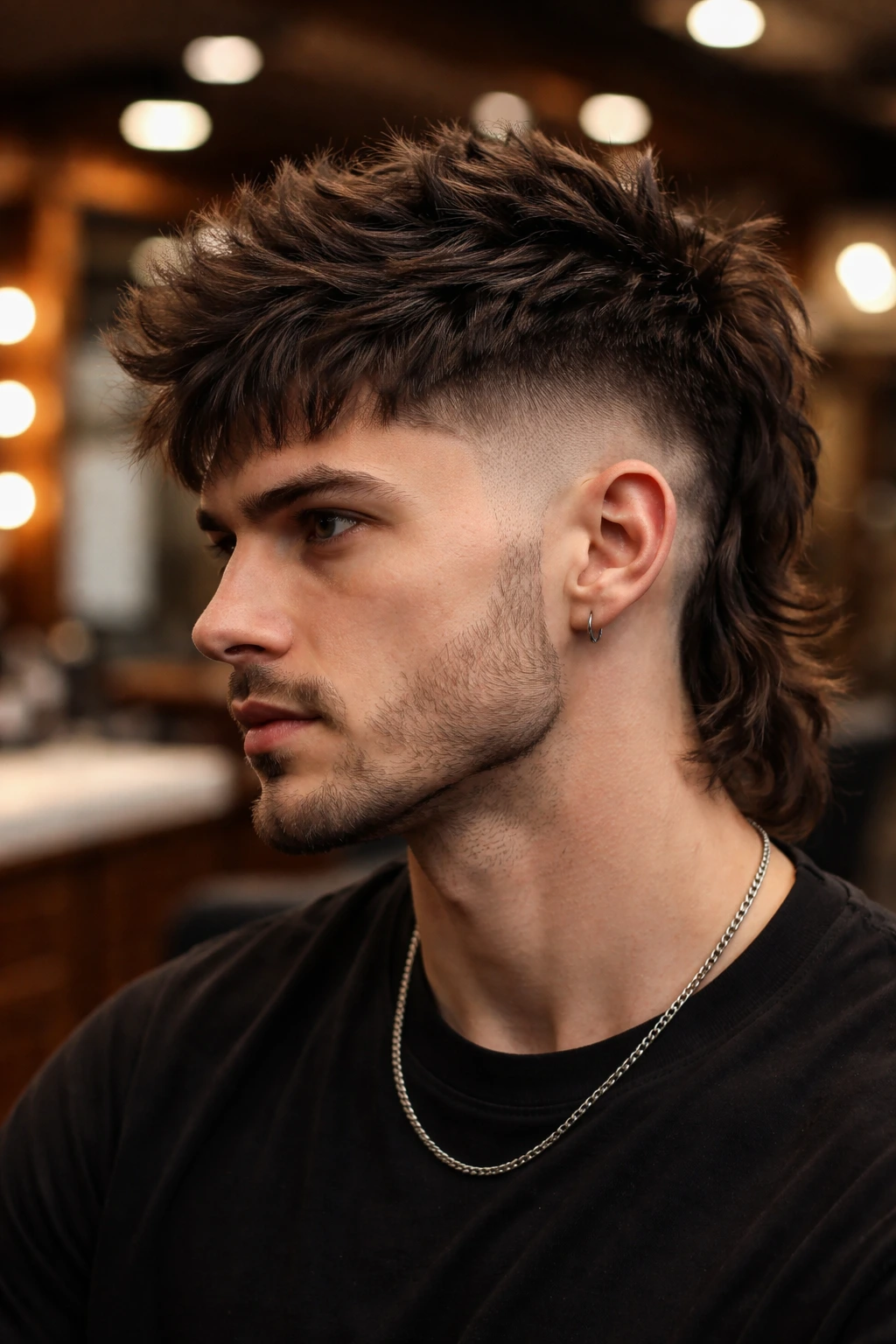
This is the most aggressive hybrid. It takes the “business in the front, party in the back” concept and tightens it up. The sides are taken down to a skin fade or a very tight #1 guard, leaving a distinct island of messy, layered hair on the top.
It is a bold look that demands maintenance. If your hair grows fast, the fade will look sloppy within two weeks. You are signing up for bi-weekly trips to the barber.
Styling the “Island”
Since the sides are gone, you have a lot of visual “noise” on top. The hair needs to be well-tamed but not flat. Use a light grooming cream to control the frizz, then set it with a dusting of hairspray.
Who Is This For?
This is for the guy who loves the edgy look of the wolf cut but has a corporate job or an environment where long, unkempt sides would be a liability. It is the best of both worlds.
14. Natural Textured Wolf Cut
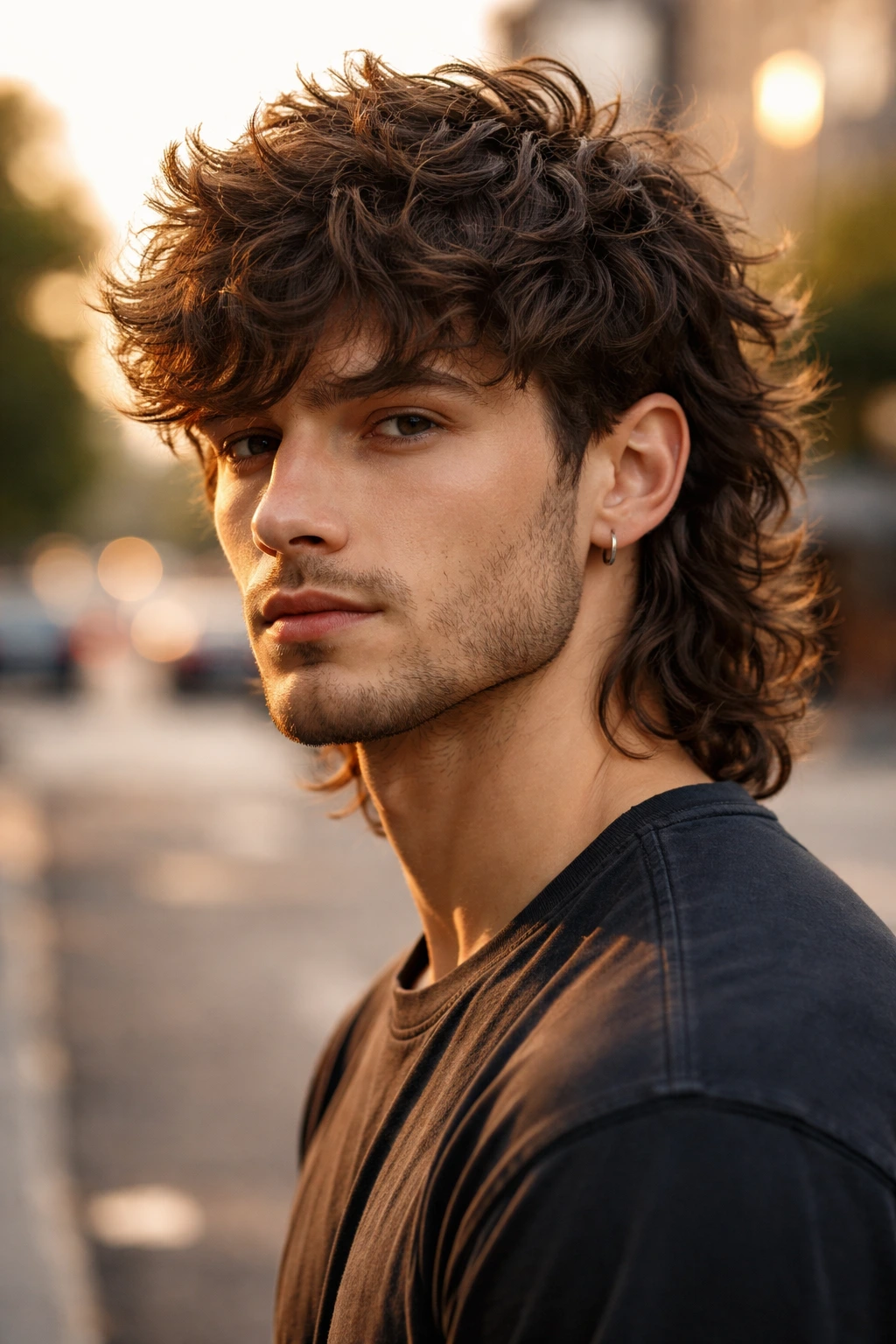
This is the “no-product” look. It assumes you have the right hair type—thick, slightly wavy, and compliant—and you just let it do its thing. It is the purest form of the wolf cut because it relies entirely on the haircut and nothing else.
To get this, you need a stylist who understands your specific hair growth pattern. They have to cut with your waves, not against them. It is highly customized. If they miss the mark, you will be spending hours trying to style it into submission.
The Initial Cut
During your consultation, show the barber pictures of hair that matches your texture, not just the cut you like. If you show a picture of a guy with thick, coarse hair and you have fine, thin hair, you will be disappointed.
Why It Lasts
Because you aren’t using product, you don’t have to wash your hair every day. The natural oils in your hair will actually help with the texture, making it look softer and more natural as the days go on.
15. Side-Parted Wolf Cut
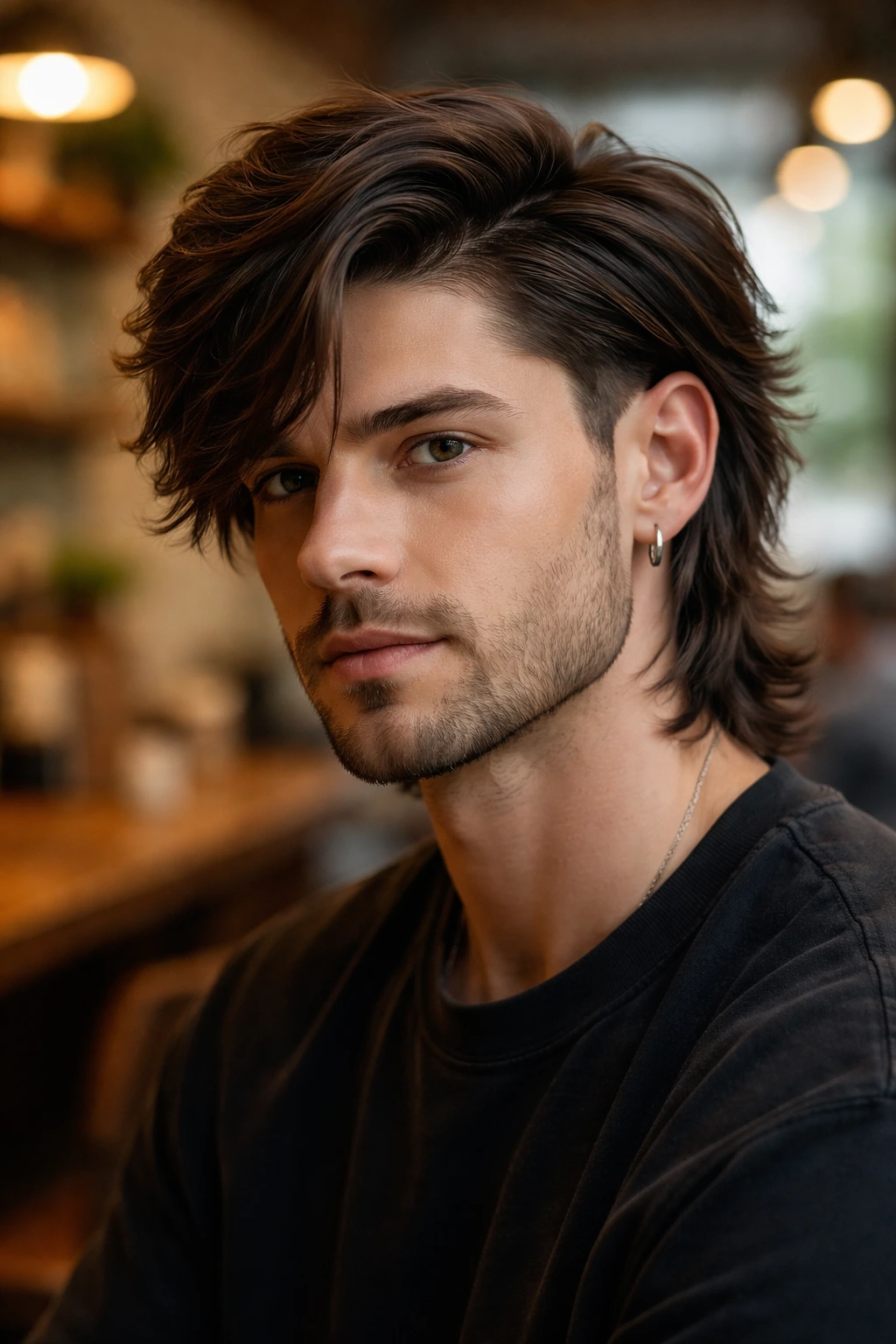
Wolf cuts are almost always associated with center parts or fringe-forward styles. A side-parted wolf cut breaks this rule. It shifts the volume to one side, creating an asymmetric, dramatic sweep that feels more “gentlemanly” but still retains the shaggy, edgy vibe of the original.
It’s essentially a textured pompadour mixed with a shag. You keep the length and the layers, but you guide the volume over to one side rather than letting it fall naturally over the face.
How to Style It
You need a styling product with a bit of “tack.” A pomade or a light-hold gel works best. Apply it to damp hair and use a comb to direct the hair, but don’t pull it tight. You want to maintain the “messy” volume even as you part it.
The Appeal
It frames the face in a way that feels more mature. It is a great transitional style for someone who wants to embrace the wolf cut trend but isn’t ready to let go of a more traditional, groomed aesthetic.
16. Messy Bedhead Wolf Cut

This look is about controlled chaos. The layers are intentionally uneven, and the finish is matte and dry. It is the quintessential rocker look—slightly dirty, very cool, and completely unbothered.
The cut is shorter than the classic shag but has more internal layering than a standard crew cut. It is designed to be messed up. If it looks too perfect, you’ve done it wrong.
The “Three-Day” Rule
This style looks best when the hair has a bit of “lived-in” quality. It works beautifully on day two or day three after a wash, when the natural texture has had time to expand and build volume.
Product Selection
Avoid heavy waxes or oils. They will make the hair look greasy and flat, which kills the “bedhead” effect. Use a dry shampoo or a texture powder to keep the hair looking fresh but feeling rugged.
17. Choppy Layered Wolf Cut
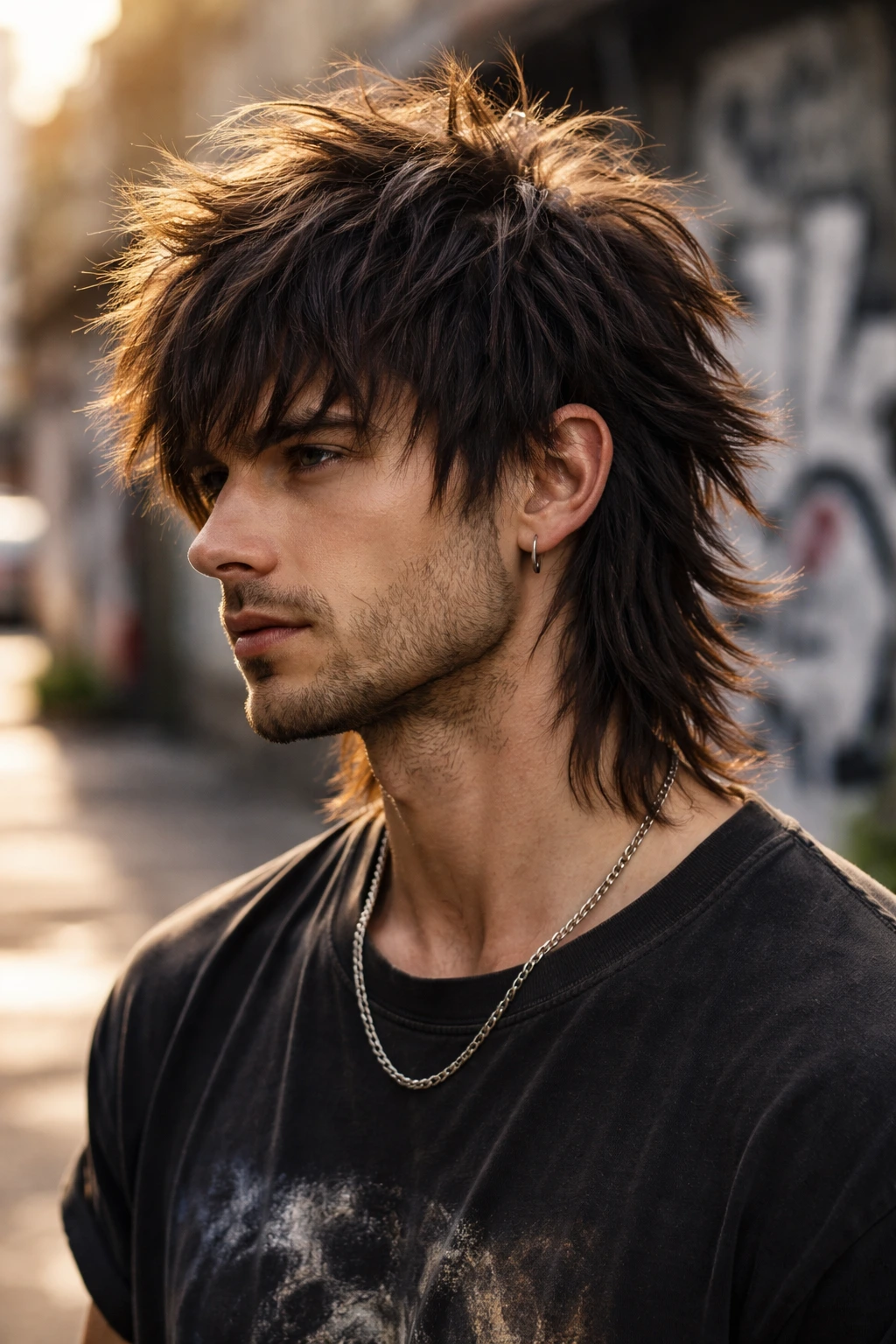
This variation relies on extreme point-cutting techniques. The barber doesn’t just trim the ends; they cut deep into the hair, removing large chunks of weight at varying lengths. This creates a staggered, jagged look that is full of character.
It is a high-fashion approach to the style. The layers are so distinct that you can see them individually. It creates a silhouette that is constantly moving and shifting, depending on how you comb it.
Why This Style Is Difficult
It requires a very precise, very skilled hand. If the barber takes too much, you end up with bald spots. If they take too little, you get a rounded, mushroom-like shape. You need a stylist who is confident with a razor.
How to Wear It
This cut looks great with a bit of length. It is not meant for short hair. You need enough length for the layers to actually show off their “choppiness.”
18. Long-Back Wolf Cut
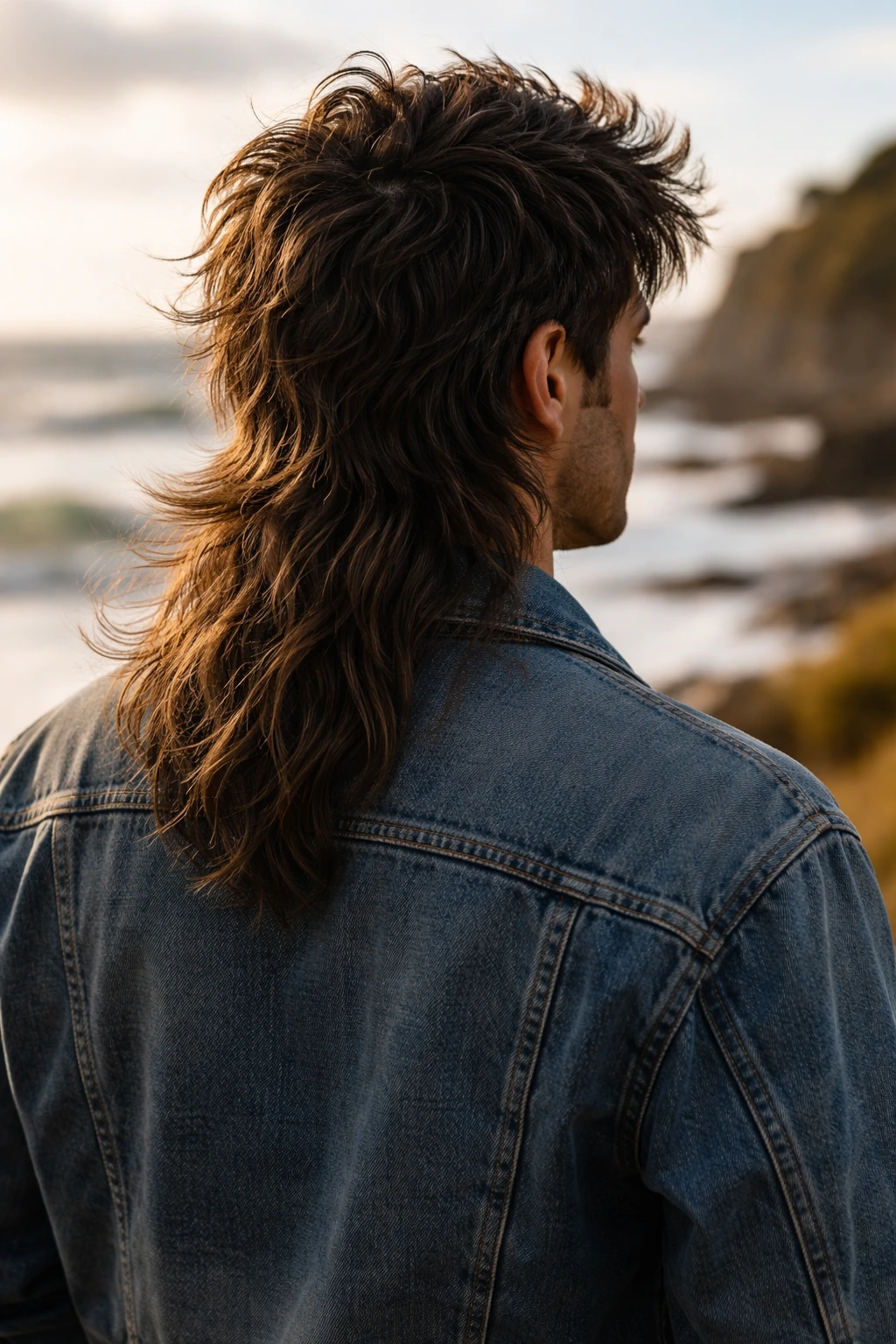
This is the closest you can get to a traditional mullet while still keeping the “wolf” label. The front and top are heavily textured, but the back is left very long, often touching the shirt collar. It is a statement piece.
It feels more “country-rock” than the urban shag. It is a style that embraces the nineties aesthetic without irony. If you want to lean into the vintage vibe, this is the version to choose.
The Transition
The secret is the sideburns. Keep them short. This isolates the length in the back and the volume in the front, preventing the hair from looking like one solid, long sheet of hair around your head.
Grooming
The back will tangle. Because it is long and layered, it will catch on your clothes and in the wind. Keep a travel-sized detangling spray in your bag. It saves your hair from breakage and saves you from the frustration of knotted ends.
Final Thoughts
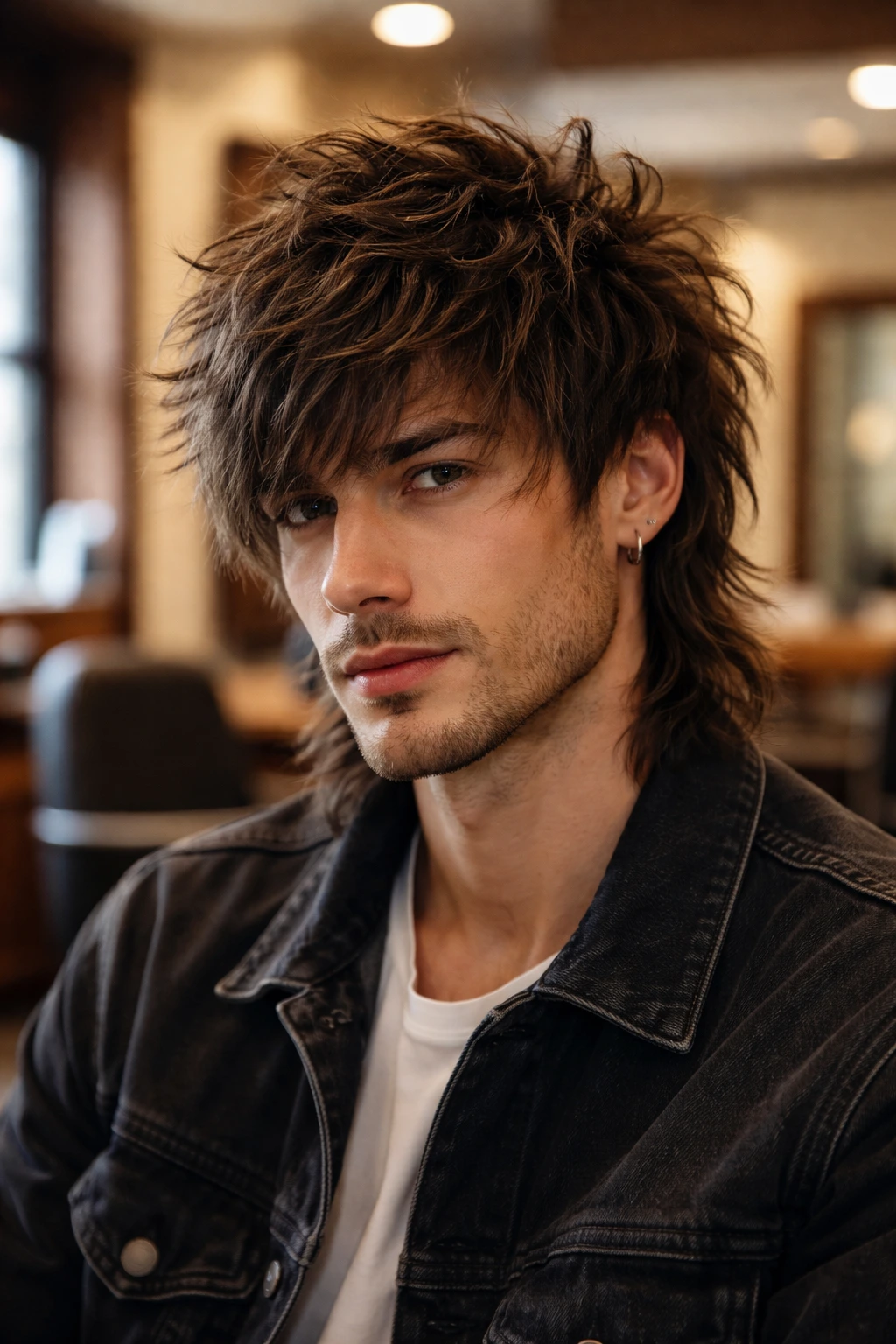
The wolf cut is a commitment. It is not the kind of haircut you get and then forget about for three months. Because the structure relies on layers and specific length points, it grows out faster than a blunt cut. You will find yourself back in the barber’s chair sooner than you expect, simply because the shape starts to lose its edge. Embrace that. The maintenance is part of the style.
Beyond the upkeep, there is the matter of texture. You cannot force a wolf cut to be something it isn’t. If you have thin, straight hair, do not expect it to look like a thick, curly shag without a lot of daily effort. Work with what you have. Use the right products—salt sprays, matte clays, powders—and learn how your specific hair growth pattern reacts to the razor. The most successful wolf cuts are the ones that lean into the natural behavior of the hair, not the ones that try to fight it. Stay consistent with your trim schedule, keep the texture rough, and you will have a style that lasts.
