



There is something undeniably striking about long hair when it catches the light, especially when the color tells a story from root to tip. Burgundy red is not just a hair color; it is an attitude. It sits perfectly at the intersection of deep, moody mystery and vibrant, head-turning confidence. When you have length to work with, you have a canvas that allows for a slow, intentional gradient—a proper ombré that looks like it belongs there, rather than a harsh, sudden line of demarcation.
You want a look that feels expensive. You want a transition that feels like it grew out of your natural shade, or at least one that was crafted with precision. Whether you are aiming for a subtle shift that only catches the sunlight or a dramatic, high-contrast melt that screams boldness, the key is in the technique. It is about choosing the right shade of burgundy—some lean toward the cool, purple-toned plum side, while others gravitate toward warm, brick-red mahogany.
Let’s be honest: long hair can be high-maintenance when you introduce color. The ends of long hair have been around for years, quite literally, and they tend to be more porous and thirsty than your roots. Before you dive into the world of burgundy ombré, make sure your ends are healthy. If they are split or frayed, no amount of gorgeous color will fix the texture. Now, let’s get into the specifics of how to carry this look.
1. Deep Wine to Black
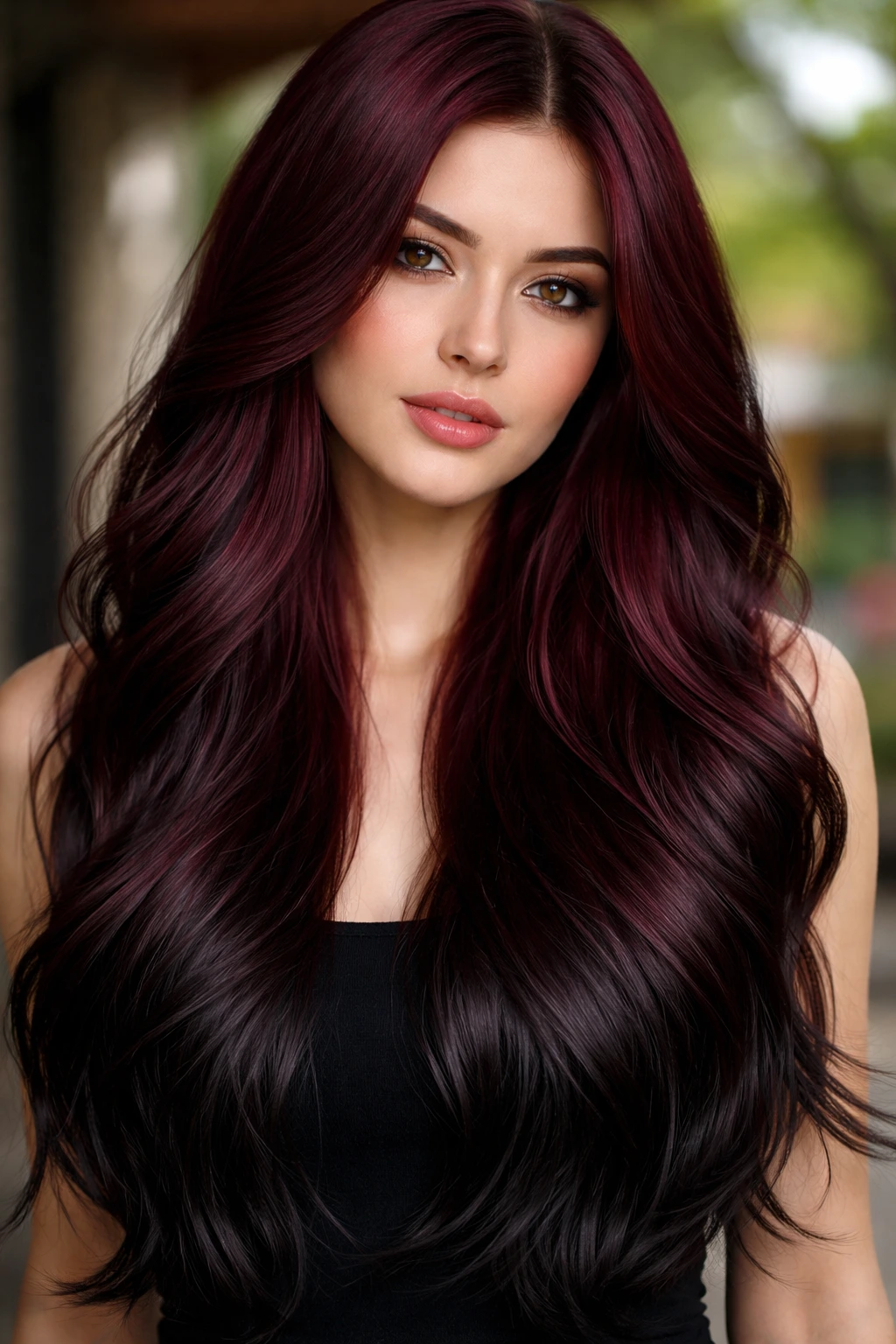
This is the classic, moody aesthetic that works best for those who want a sophisticated, low-maintenance transition. You are keeping your roots as a deep, natural black or near-black shade, allowing the burgundy to emerge somewhere around the mid-lengths. It is a slow burn. The black provides a secure, grounded base, which means you do not have to worry about root touch-ups every four weeks.
The Technical Approach
You are looking for a transition that starts around the chin line. If you start too high, it looks like a botched dye job; if you start too low, you lose the impact of the color.
- Bleaching: Use a low-volume developer (10 or 20 volume) to lift only the sections where the burgundy will sit.
- The Melt: Apply a deep wine semi-permanent color over the lifted area, blending it upward slightly into the black to blur the line.
- Gloss: Finish with a clear gloss treatment to seal the cuticle and give that “deep wine” reflection.
Pro tip: Keep your water temperature on the cooler side when washing. Hot water is the enemy of deep red tones—it will strip the vibrancy in a single wash.
2. Burgundy and Copper Melt
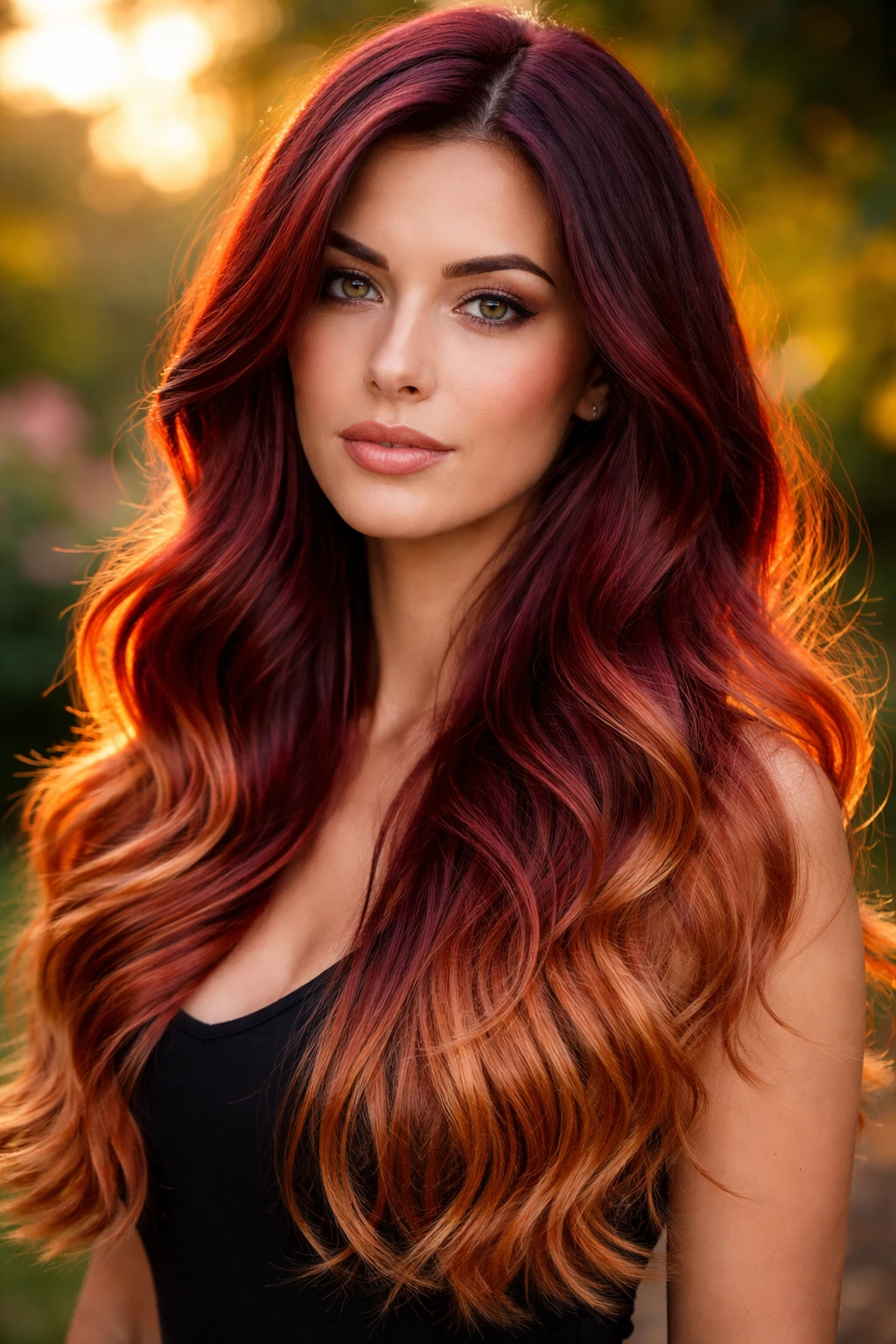
Copper is the playful, warmer cousin to the intense burgundy spectrum. Pairing them is a masterclass in dimension. This look features a deep burgundy root that melts seamlessly into a bright, metallic copper toward the ends. It is energetic and feels perfect for someone who wants to embrace the warmth of the red color wheel without committing to a monochromatic style.
This style thrives on light reflection. Because copper has a high level of brightness, it pulls the eye downward, making your long hair appear even longer and more voluminous. It is not about a harsh transition; it is about the “melt,” where the red and orange tones overlap to create a tertiary shade that looks like molten fire.
You will need to ensure your stylist—or you, if you are doing this at home—uses a color-melting technique. This involves painting the two colors side-by-side and physically blending them with a brush or your fingers while they are still wet. The goal is to avoid any horizontal bands. If you see a line, you have stopped blending too soon.
3. Plum-Infused Dark Red
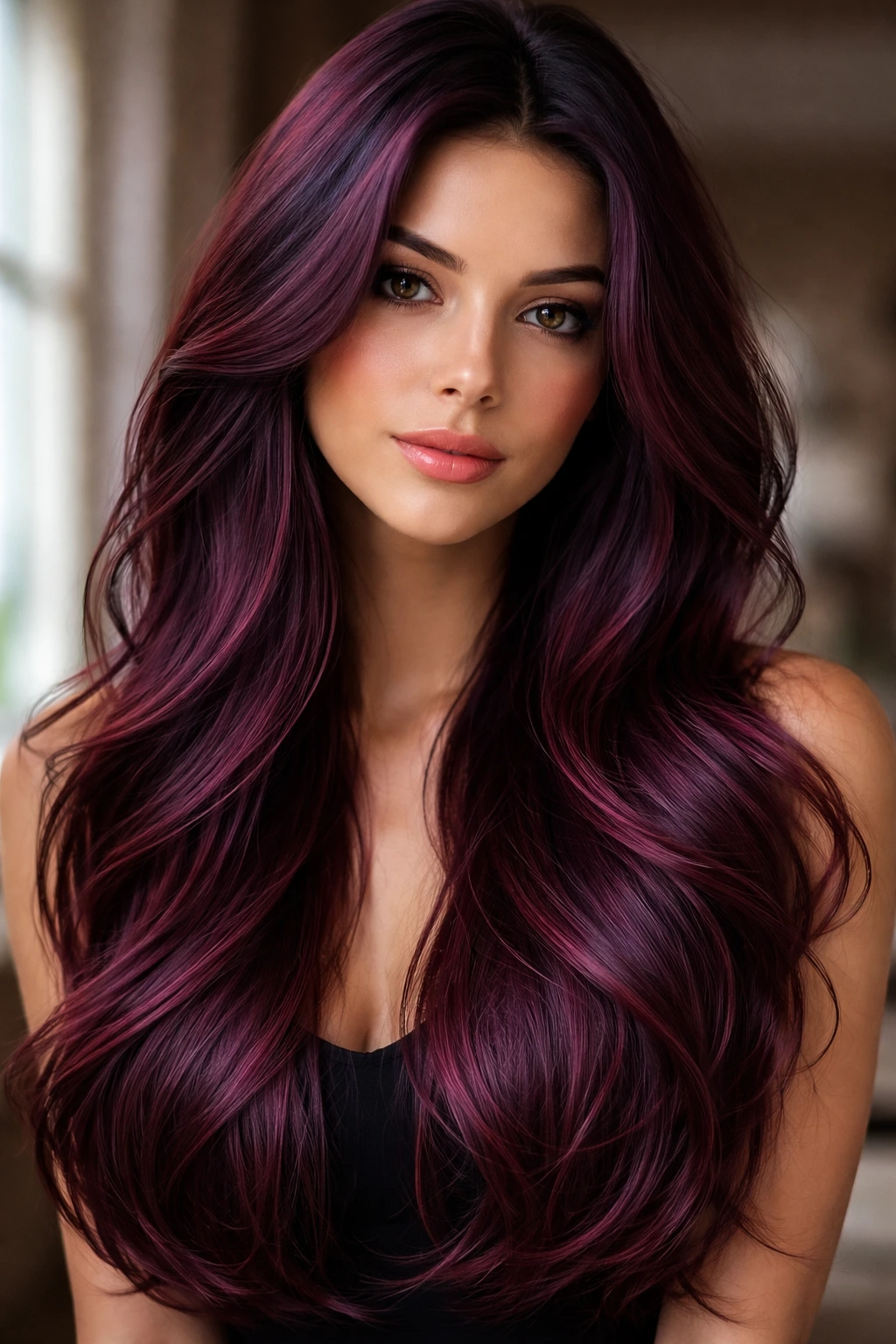
If you have a cooler skin tone, pure red can sometimes look a bit jarring. That is where plum tones come in. This version of a burgundy ombré leans heavily into the violet spectrum. It is less “fire truck” and more “velvet ribbon.” It is dark, luxurious, and reads almost as a dark brown indoors before revealing its deep, purple-red secrets under direct sunlight.
Why It Works for Long Hair
Long hair with layers benefits significantly from plum-burgundy because the cool undertones emphasize the shape of the cut. When you curl or wave long hair, the different layers catch the light differently. The plum tones shift from deep eggplant to bright violet, giving the hair a multidimensional look that flat hair simply cannot achieve.
Care Essentials
- Toning: Violet-depositing shampoos are your best friend here. They keep the brassy, orange tones out and keep the plum looking rich.
- Hydration: Deep conditioning is non-negotiable. Violet pigments can sometimes make hair feel slightly stiffer, so a high-quality moisture mask once a week is essential.
4. Bright Burgundy to Soft Rose
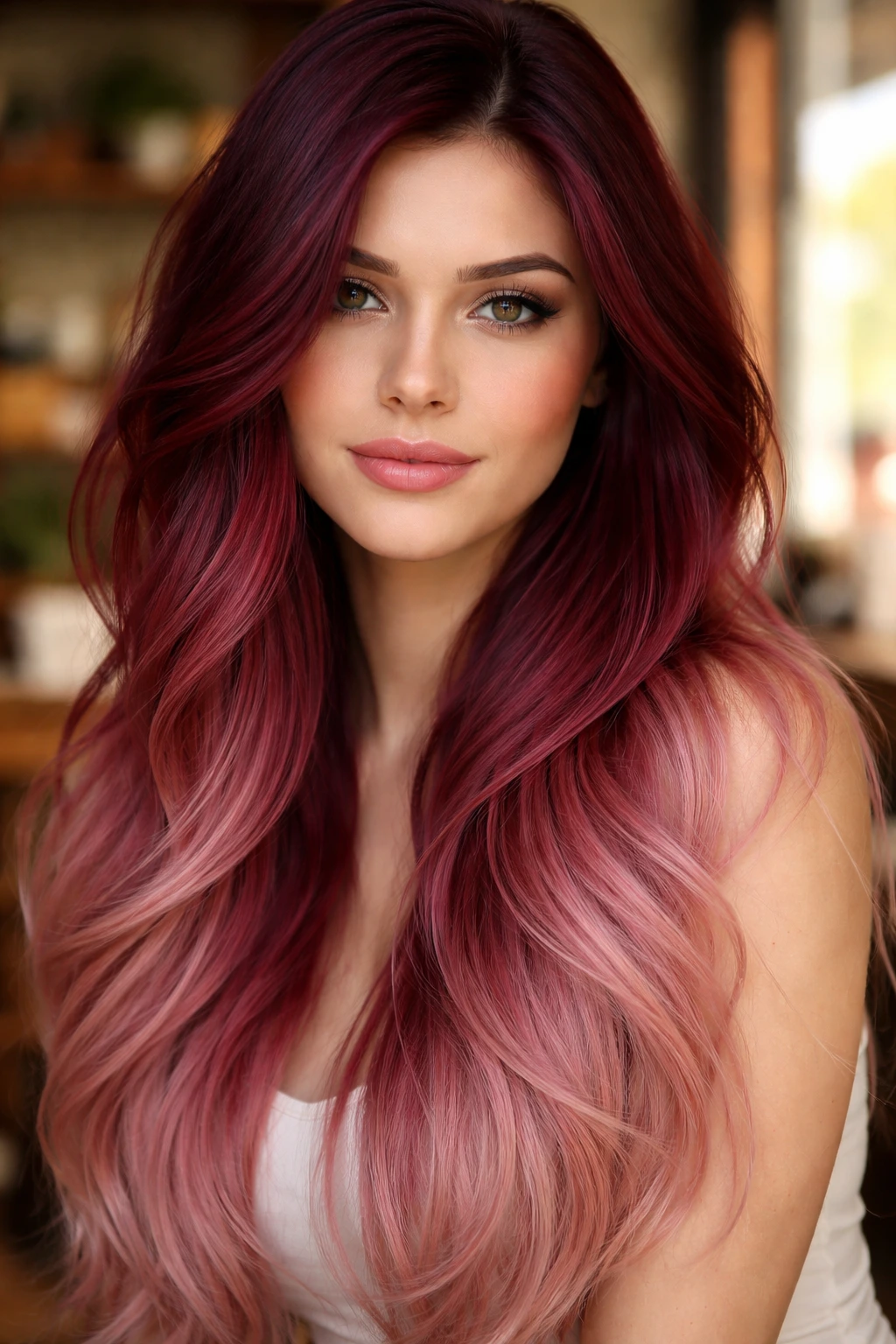
This is the modern, ethereal take on the classic burgundy ombré. Instead of fading into a natural brown or black, the burgundy transitions into a soft, muted rose gold or dusty pink. It is a bold, artistic choice that feels like a fairy-tale interpretation of red hair. It requires significant lifting, so prepare your hair for the process.
The success of this look lies in the fade. You want the burgundy to be vibrant at the roots—a true, punchy red-violet—and then gradually soften into that pastel rose. It looks stunning when braided, as the different shades of the ombré intertwine to create a complex, multi-colored effect.
Warning: This look will require more upkeep than a darker transition. Pastel tones fade very quickly. You should expect to use a color-depositing conditioner with a slight pink tint to refresh the ends every second wash. It is high effort, but the payoff is a look that feels incredibly editorial and fresh.
5. Mahogany to Burgundy Shift
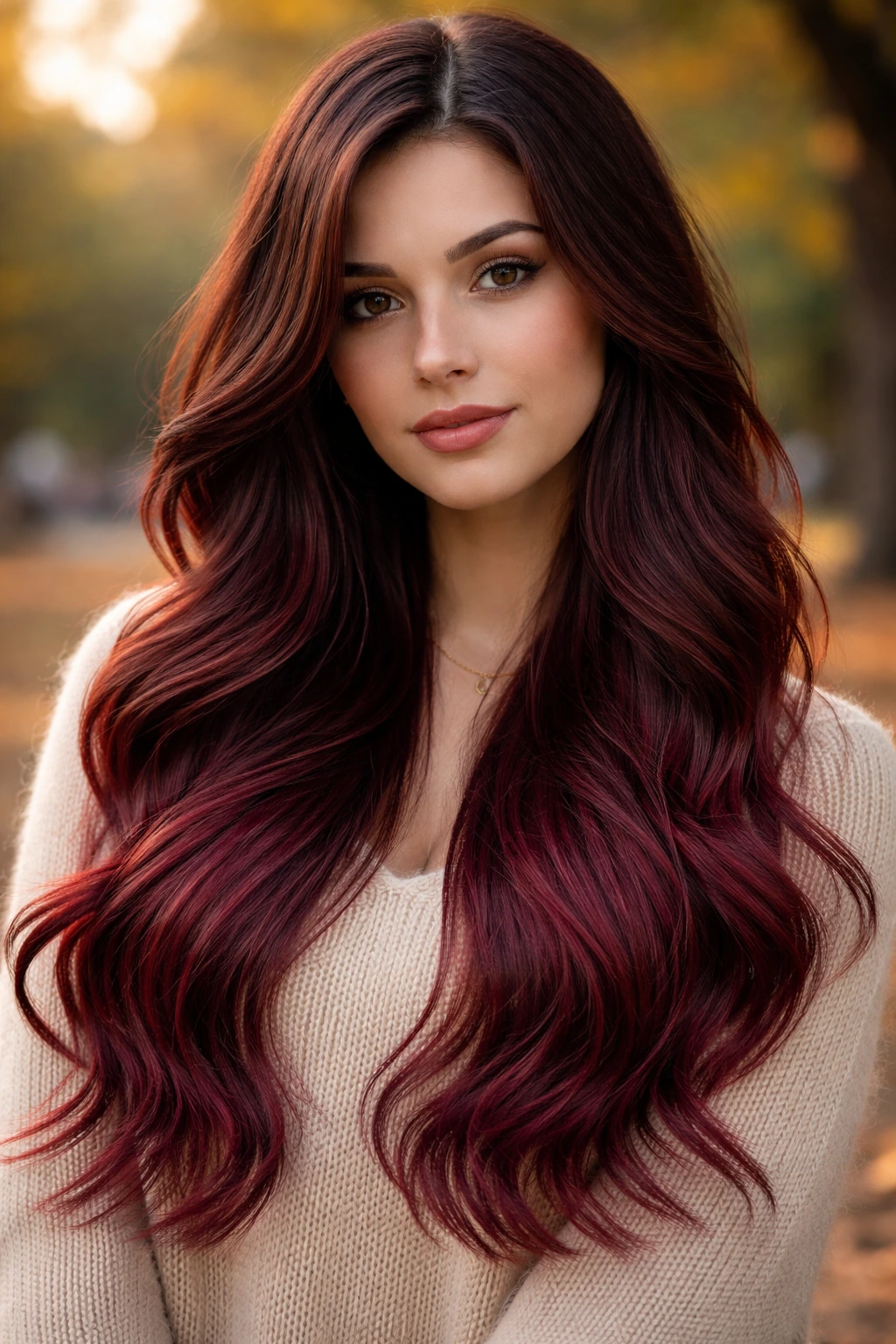
Mahogany is that perfect blend of warm brown and deep red. Starting with a mahogany base and fading into a vibrant, punchy burgundy provides a very “natural-but-enhanced” appearance. It is arguably the most wearable version of a burgundy ombré. You get the richness of the red without the intensity of a primary color.
When you choose mahogany for the upper portion, you create a seamless bridge between brown hair and intense red. If you are starting from a natural medium-to-dark brown, you might not even need to bleach your roots. You can just deposit the mahogany stain over your natural color and then focus the lightening process on the ends to achieve that brighter burgundy.
The transition here is gentle. You want the mahogany to fade into the burgundy naturally, almost like a gradient on a color wheel. This style is incredibly forgiving for those who do not want to visit the salon every six weeks. As the burgundy fades, it just blends back into the mahogany, making the grow-out process painless.
6. Burgundy Balayage Ombré
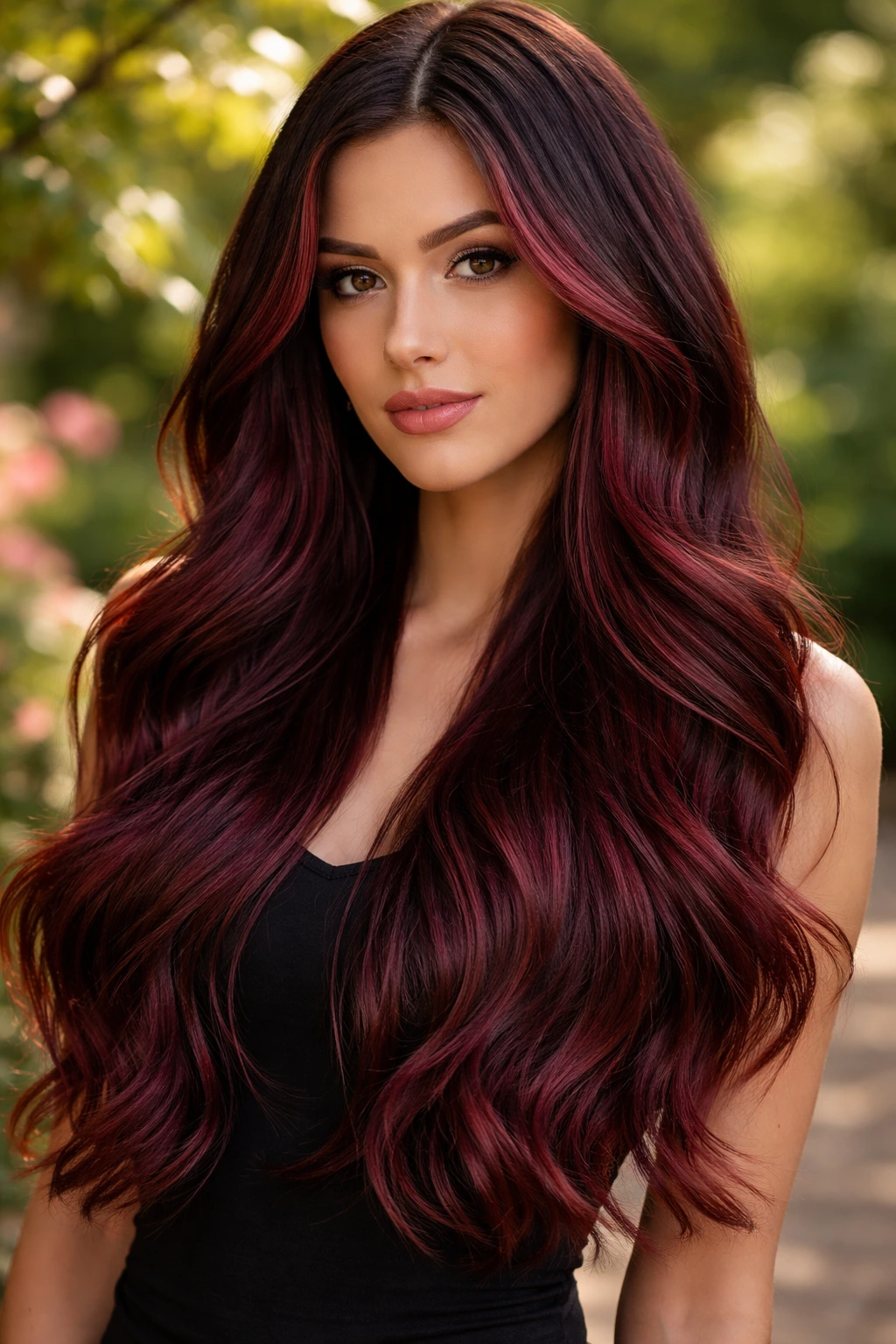
Strictly speaking, ombré is a horizontal color transition, while balayage is a hand-painted, vertical highlight technique. When you combine them, you get the best of both worlds. The burgundy starts higher up in the hair using balayage—placed strategically around the face and on the top layers—and then settles into a solid, saturated ombré effect toward the bottom three inches of your hair.
This provides movement. Pure ombré can sometimes look a bit static, especially on very long, straight hair. By weaving in some balayage, you break up the block of color. It creates a soft, sun-kissed effect even though the color is a deep red.
It is vital to place the color correctly. Focus the brighter burgundy balayage pieces on the sections that frame your face. This will brighten your complexion immediately, while the deeper ombré on the length maintains that moody, burgundy vibe.
7. Vibrant Cherry Burgundy
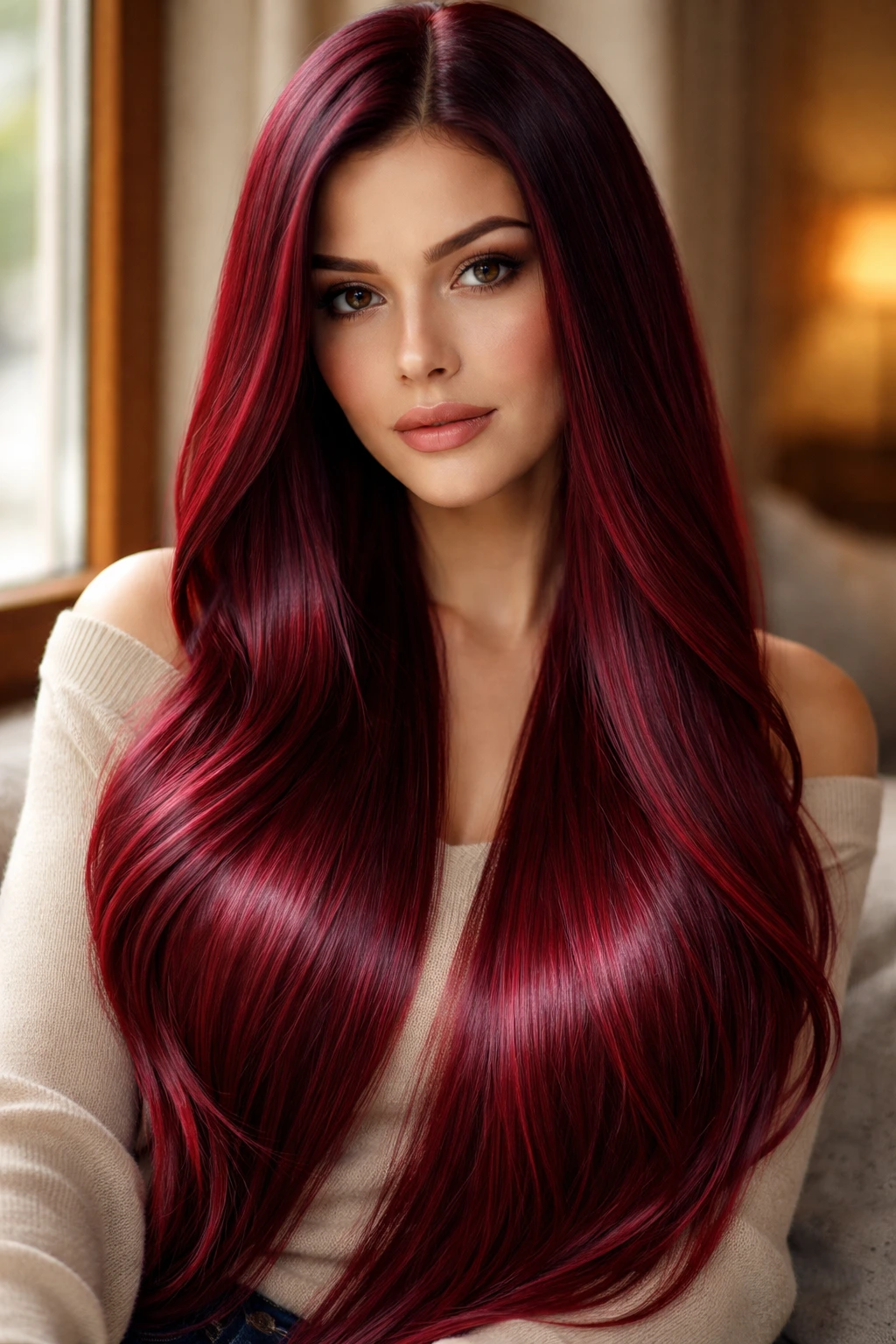
If you want to make a statement, this is the one. Cherry burgundy is bright, saturated, and unapologetically red. It is less about the “depth” and more about the “intensity.” This look is fantastic for those with long, straight hair who want to emphasize the glass-like shine of their strands. When the hair is perfectly smooth, this color looks like polished lacquer.
Achieving the Shine
- The Base: You need to get your hair to a lighter level to achieve this specific “cherry” shade. If you are starting dark, you will need a proper lightening session.
- The Gloss: Never skip the clear gloss. It is what separates “box dye red” from “salon-quality cherry burgundy.”
Important: Because this shade is so vibrant, be prepared for color bleed. The first three times you wash your hair, the water will run pink. Use an old towel and avoid white pillowcases for at least a week.
8. Burgundy to Chocolate Brown
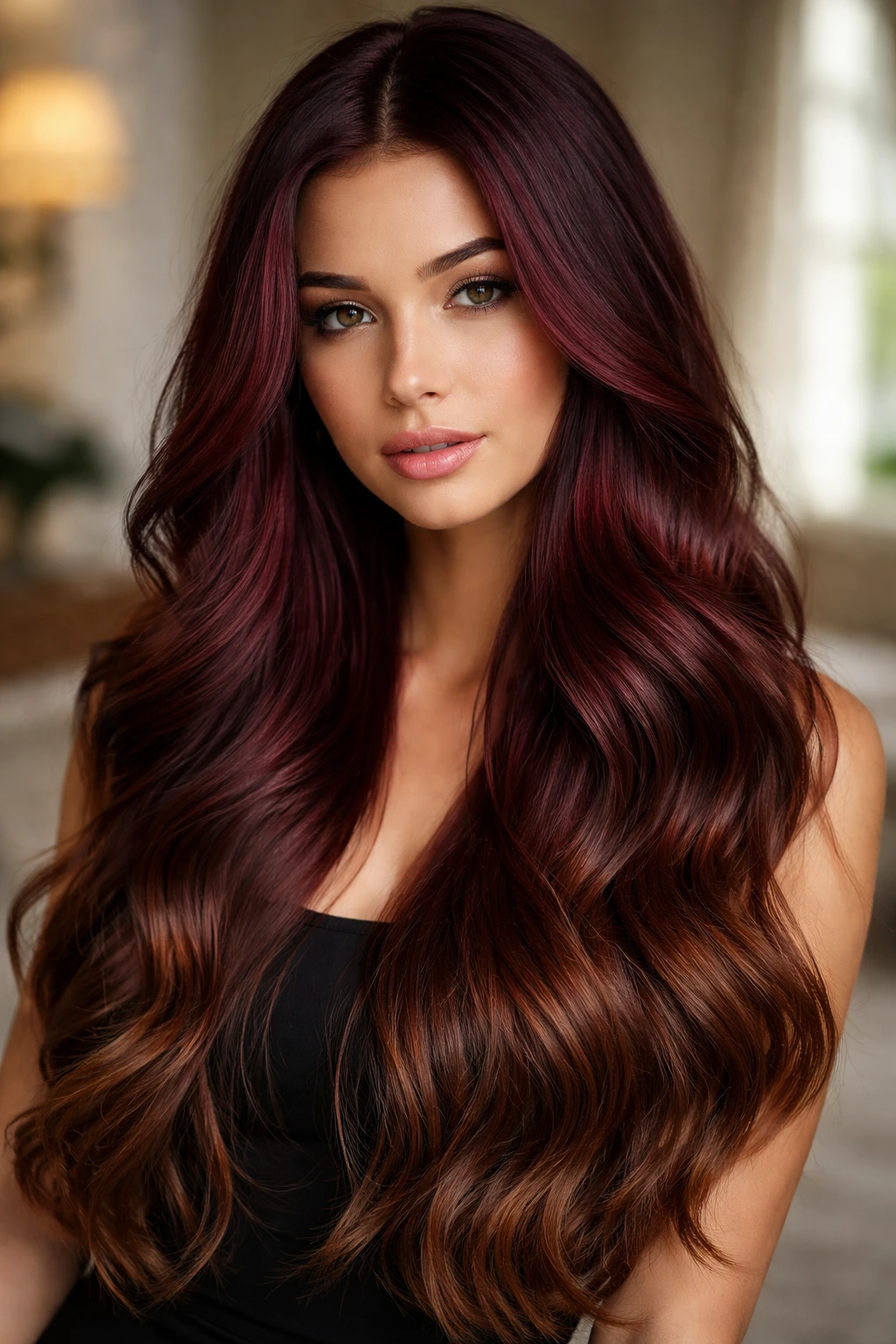
Not everyone wants to look like a punk rocker; some of us just want a hint of warmth. Starting with a burgundy mid-length and fading into a rich, decadent chocolate brown is a stunning way to soften the look. It is the reverse of what people typically expect, which makes it feel incredibly sophisticated and understated.
This approach is perfect for long hair that needs a little bit of “oomph” without the commitment of a full-head color change. It works exceptionally well on those with naturally dark brown hair who want to play with red tones without damaging their natural roots.
You are basically placing the “color” in the middle. The roots remain your natural dark brown, the mid-lengths become the burgundy, and the very ends dip back into a slightly lighter, warmer chocolate. It is a subtle, three-step transition that creates an incredible amount of depth and visual interest.
9. Shadow Root with Burgundy Lengths
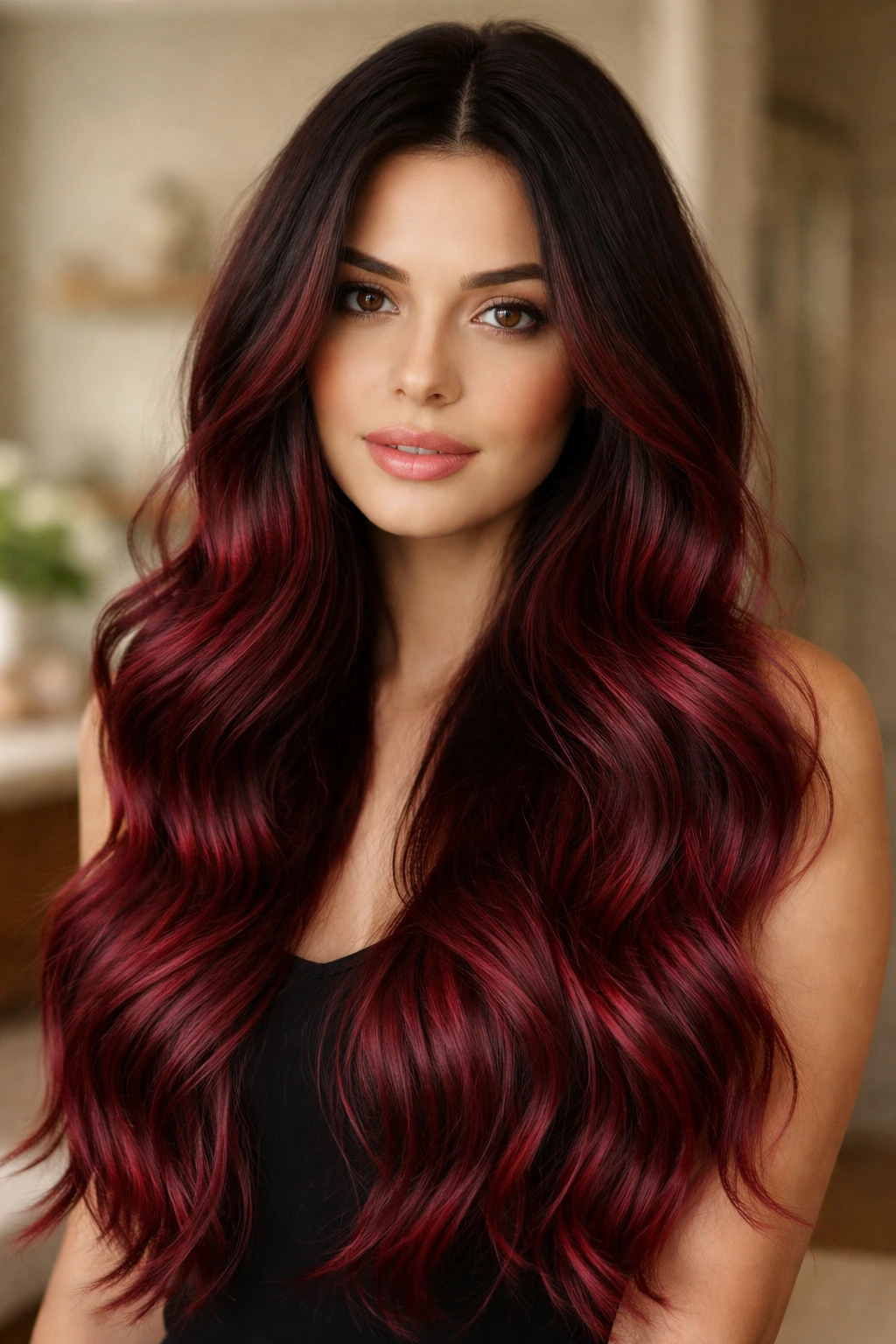
A shadow root is a technique where you smudge a darker color into the roots of your hair, even if you have highlights or a full ombré. For burgundy hair, this is a game-changer. It allows you to have a vibrant, lighter red length while maintaining a natural, rooted look that is easy to grow out.
The “shadow” should be a shade or two darker than your mid-lengths, typically a deep auburn or a neutral dark brown. This blurs the line where the hair lightens, making the transition look soft and lived-in. It is the definition of “effortless chic.”
This is the ultimate low-maintenance style. Even if your burgundy fades to a lighter red, the shadow root keeps the overall look anchored. You can go three or four months between appointments, and it will still look intentional.
10. Subtle Burgundy Peekaboo Ombré
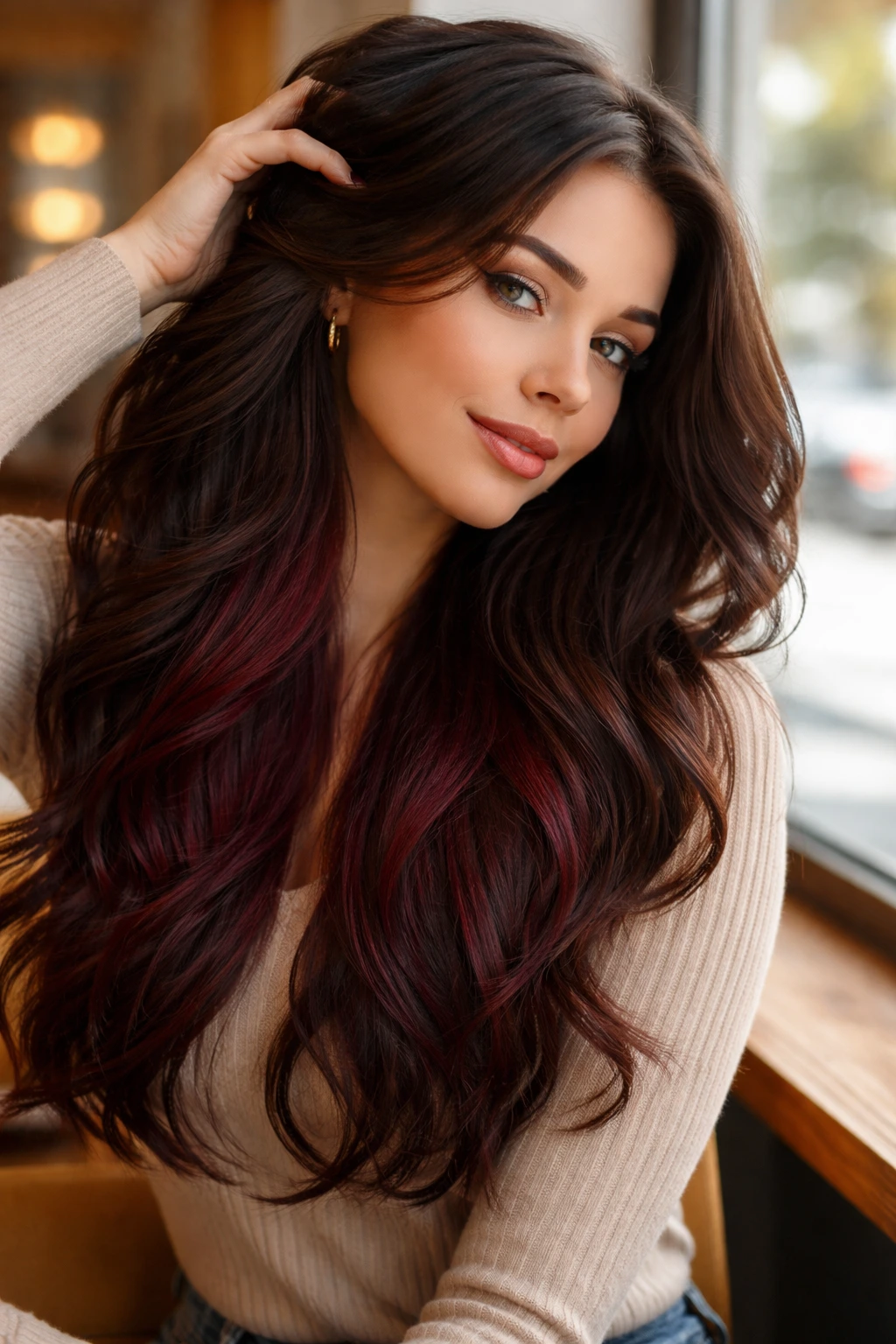
Peekaboo color usually refers to having color on the underneath layers, but you can definitely do an ombré version of it. By applying the burgundy predominantly to the bottom half of the hair on the underside, you create a dynamic look. When your hair is down, it looks like a subtle flash of color. When you pull it up into a ponytail or braid it, the burgundy becomes the star of the show.
This is a fantastic option for someone who needs to be professional during the day but wants to experiment with fun colors. It is not as “in your face” as a full ombré, but it provides that pop of personality when you move.
Because the color is concentrated on the bottom, you can be a bit more experimental with the brightness. If it turns out too bright, it is easily hidden by the top layers of your natural hair.
11. Burgundy with Gold Tips
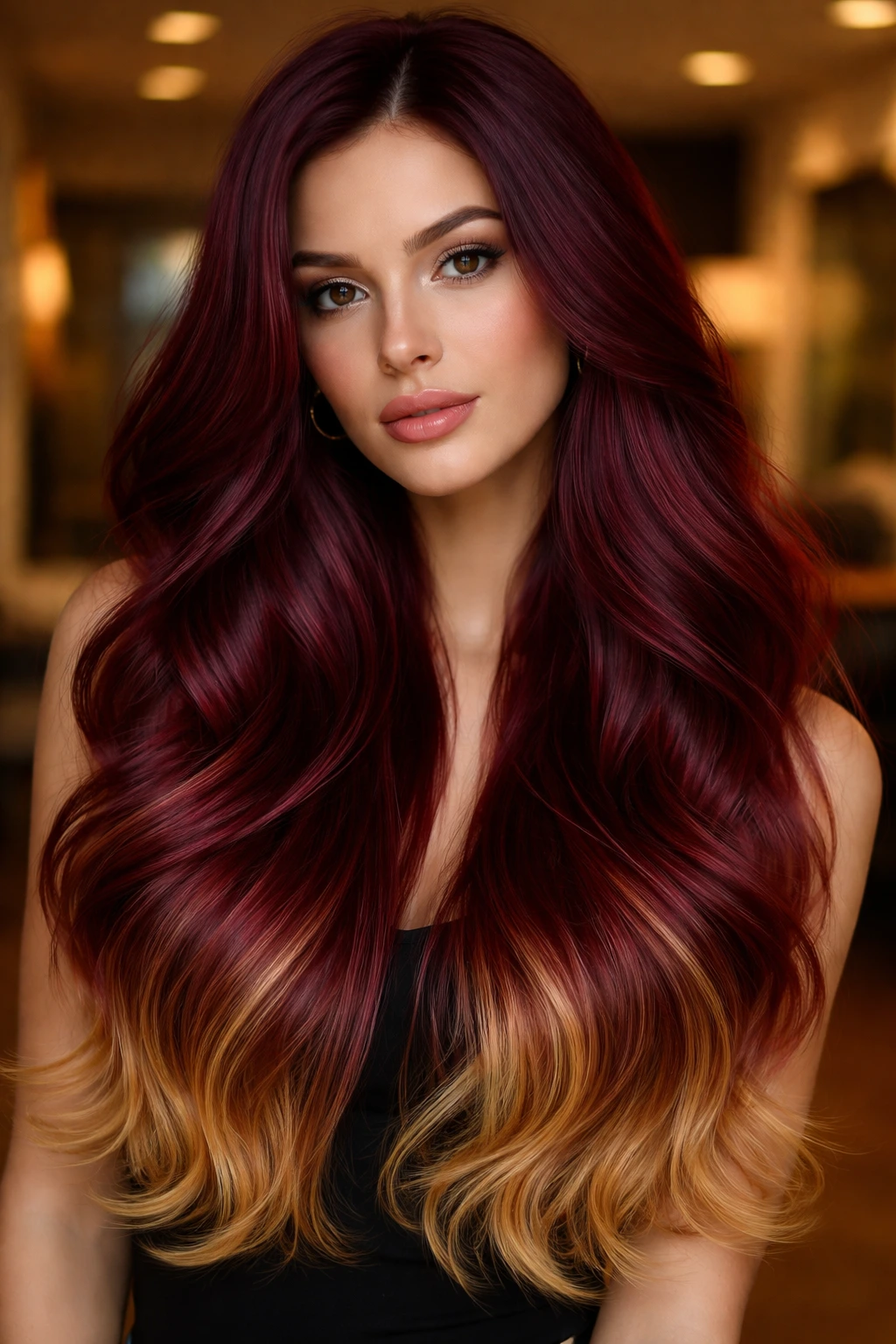
This might sound like a risky combination, but when executed correctly, it is pure luxury. You have your deep, base-level burgundy that dominates the majority of your length, and then, at the very ends—perhaps the last two inches—you transition into a warm, buttery gold or honey blonde. It adds a “dipped” effect that looks intentional and expensive.
The contrast between the deep wine red and the bright gold is striking. It is a bit of a high-fashion look, but on long hair, the gold tips act as a highlight that prevents the burgundy from feeling too heavy or “gothic.”
Technique Note: This requires two stages of lifting. First, you lift for the burgundy, then you go back and lift the very ends a second time to get them light enough for the gold. Use a high-quality bond builder throughout the process to keep the hair from feeling like straw.
12. Wine Red to Midnight Blue
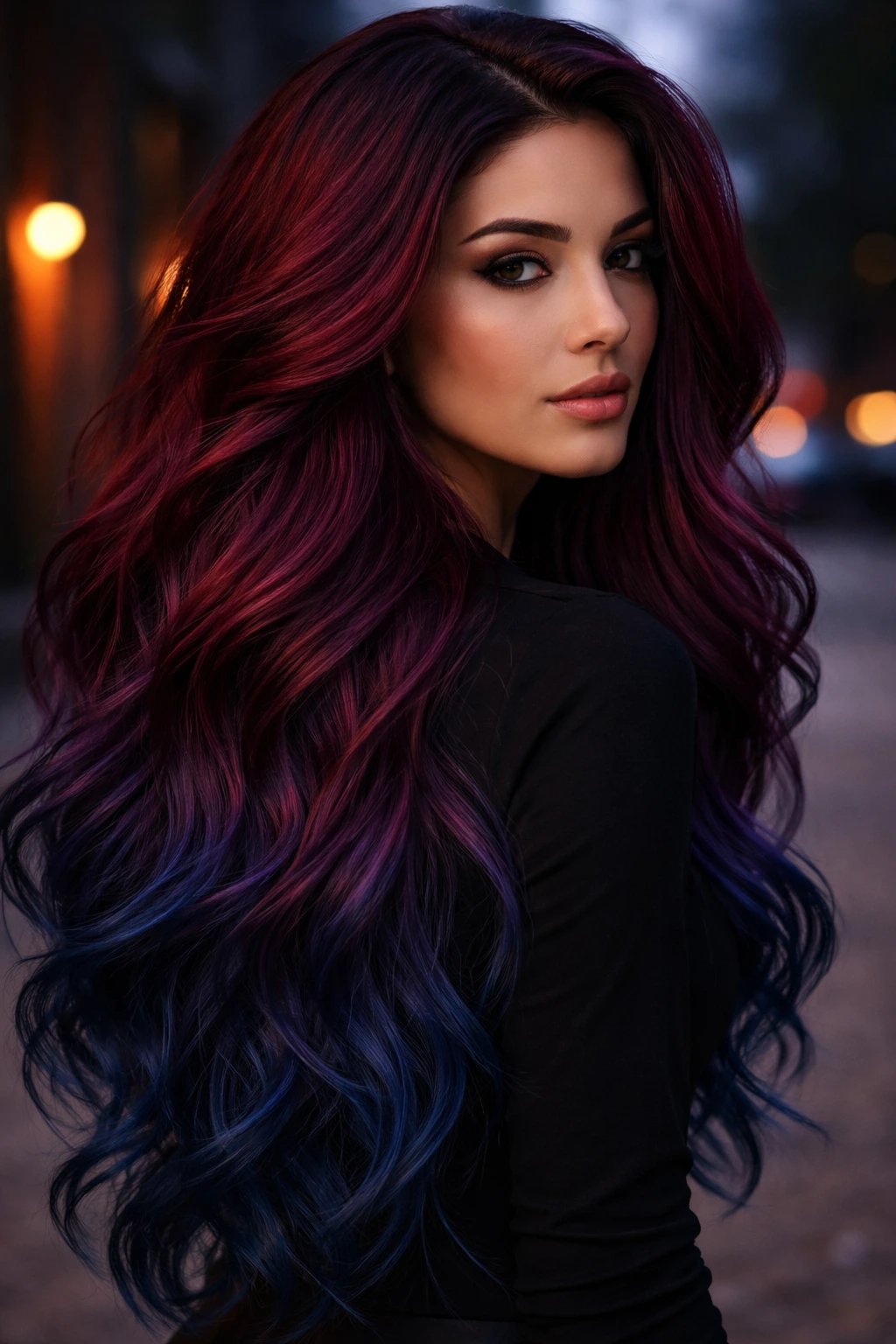
Are you feeling brave? The combination of burgundy and midnight blue is one of the most underutilized color pairings. Midnight blue is a very deep, almost black-blue that sits perfectly alongside a deep wine red. The transition from the red to the blue creates a dark, cosmic effect that looks absolutely mesmerizing on long, wavy hair.
The key to this look is the blending. You do not want a hard line where red meets blue. You want a purple transition zone. Where the two colors meet, they should overlap to create a deep violet bridge.
This is not a look for the faint of heart. Both red and blue pigments can be stubborn. If you ever want to go back to a natural color, this will be a difficult removal process. Make sure you are 100% committed to the dark, moody aesthetic before taking the plunge.
13. Muted Dusty Burgundy
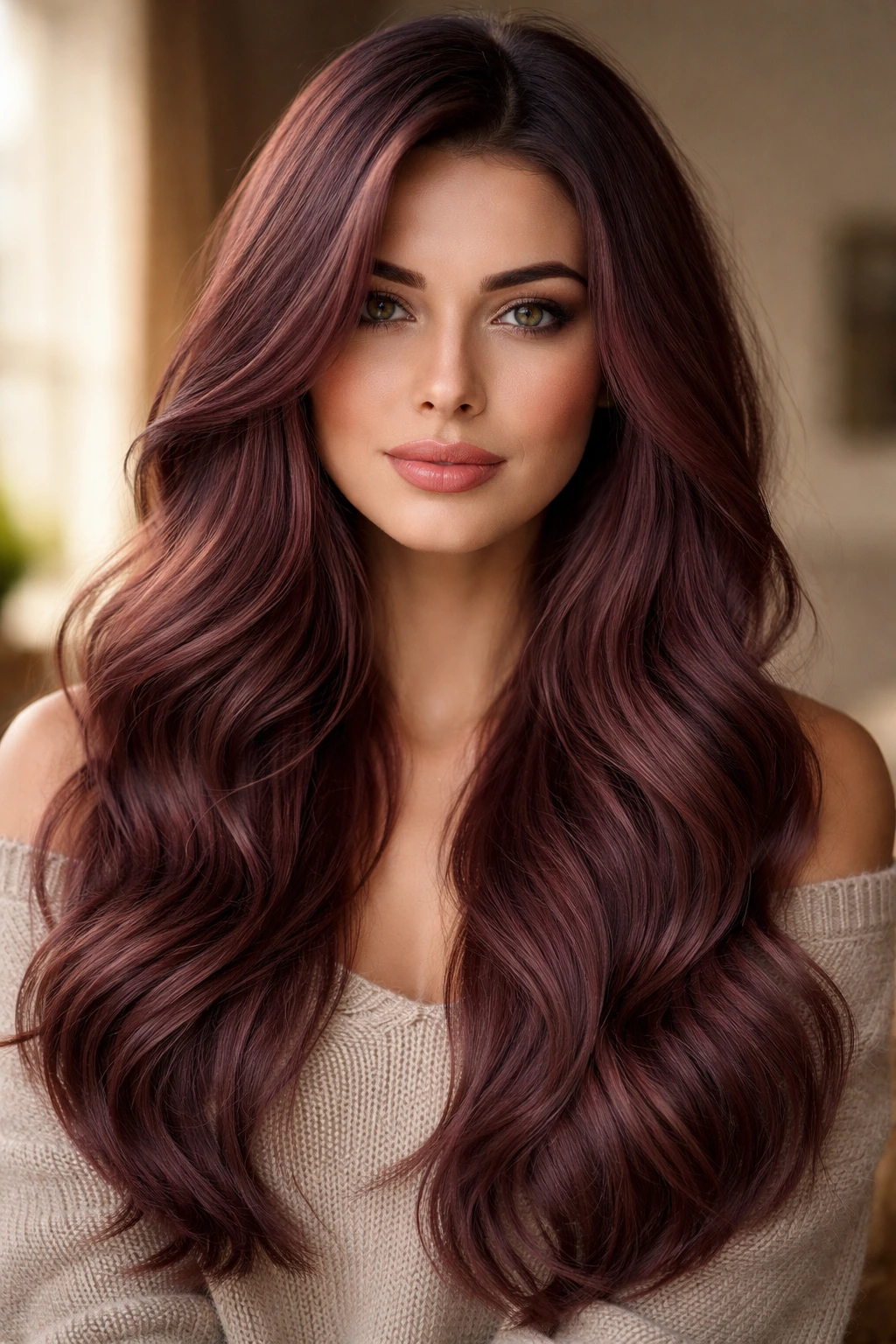
Forget the vibrant, primary reds. Muted, dusty burgundy is all about sophisticated, desaturated tones. It is a burgundy that has been mixed with grey or ash, resulting in a color that feels earthy and grounded. It is perfect for those who want a fall-inspired look that remains elegant.
This color is notoriously difficult to achieve because it requires neutralizing the natural warmth that comes when you lighten hair. You have to lift the hair to a level where there is no orange left, and then deposit a color that is specifically formulated with ash or cool tones.
Because this color is inherently muted, it doesn’t stand out as much as a cherry red. It blends better with natural textures, making it a great choice for those with curly or wavy hair who want a look that feels more “undone.”
14. Burgundy to Blonde Fade
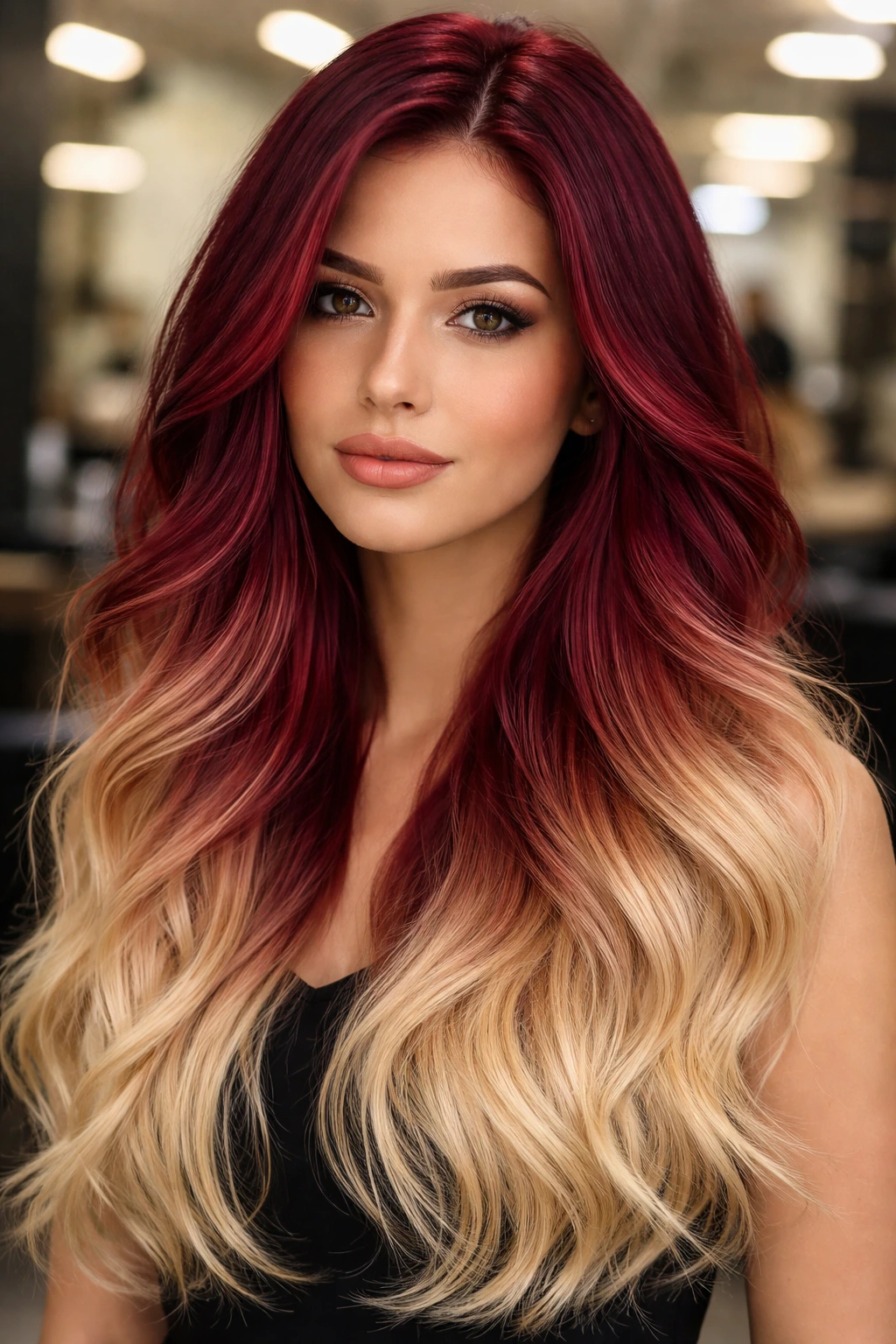
This is a bold, high-contrast ombré. Starting with a deep, dark burgundy at the root and fading into a bright, creamy blonde at the ends is a look that screams “extra.” It is a dramatic shift that requires a lot of technical skill to pull off without the hair looking like it has been “split” in two.
The secret here is the transition. You cannot go directly from dark red to light blonde; the hair will turn a muddy, greenish-orange. You need a transition color. Think of a medium-to-light strawberry blonde or a copper tone as your “bridge” color.
This will be a long salon appointment. You are essentially bleaching the lower half of your hair twice and then doing a two-tone color application. If you have fine or damaged hair, skip this one. It is a lot of chemical work.
15. Intense Fire Engine Red to Burgundy
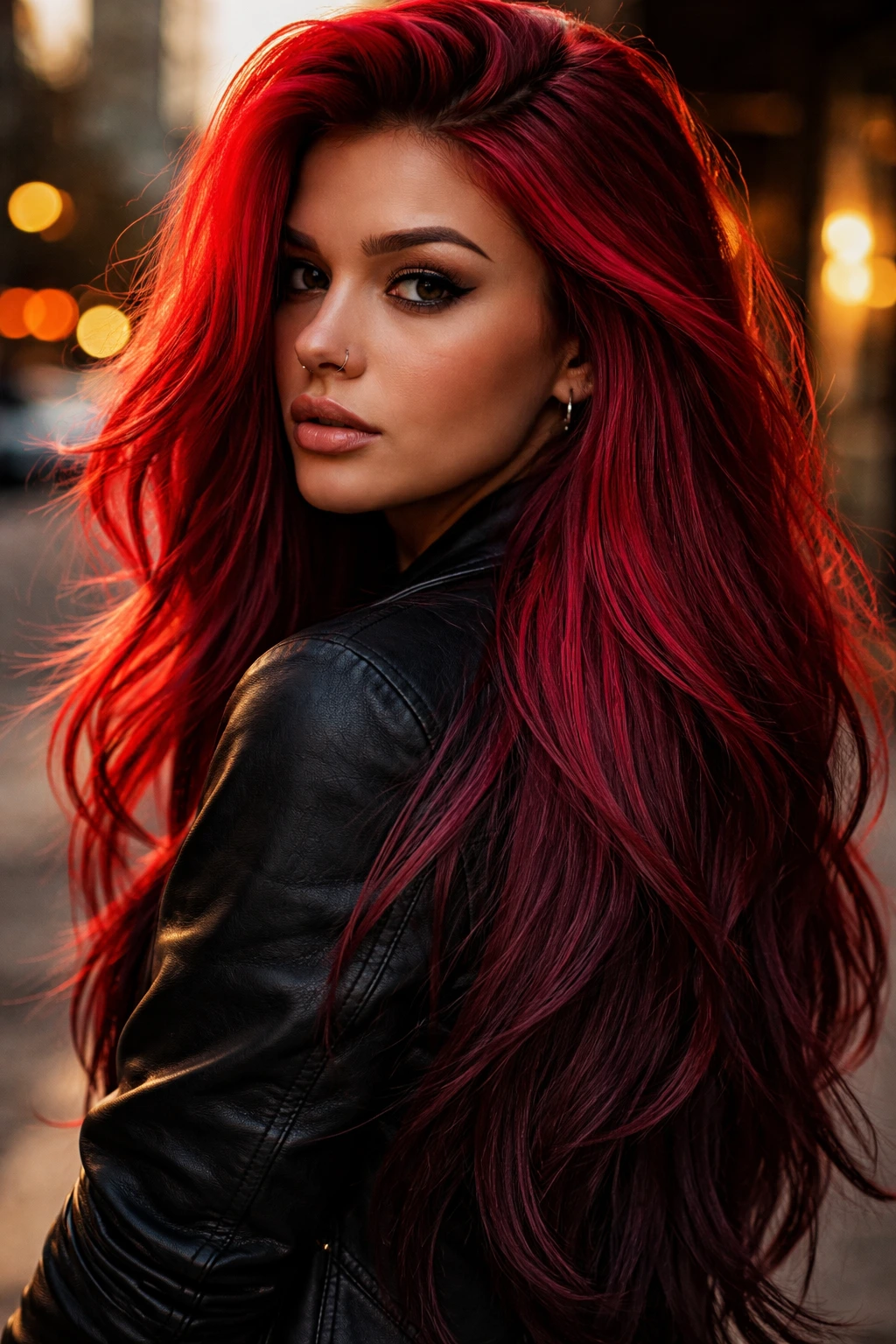
If you want to be the center of attention, start with an intense, neon-bright fire engine red at the top and transition down into a deep, dark wine burgundy. It is an inversion of the typical ombré, where the lighter/brighter color is at the top. It highlights the face and gives a very edgy, rock-and-roll vibe.
This is a high-maintenance look because the bright red at the root will fade quickly. You will need to be diligent about touch-ups. However, for the first few weeks, there is absolutely nothing like it. It looks fantastic with high-fashion styles, sharp haircuts, and bold makeup.
Use a color-depositing shampoo that matches the fire engine red shade to keep the top portion vibrant for as long as possible.
16. Deep Berry to Pastel Red
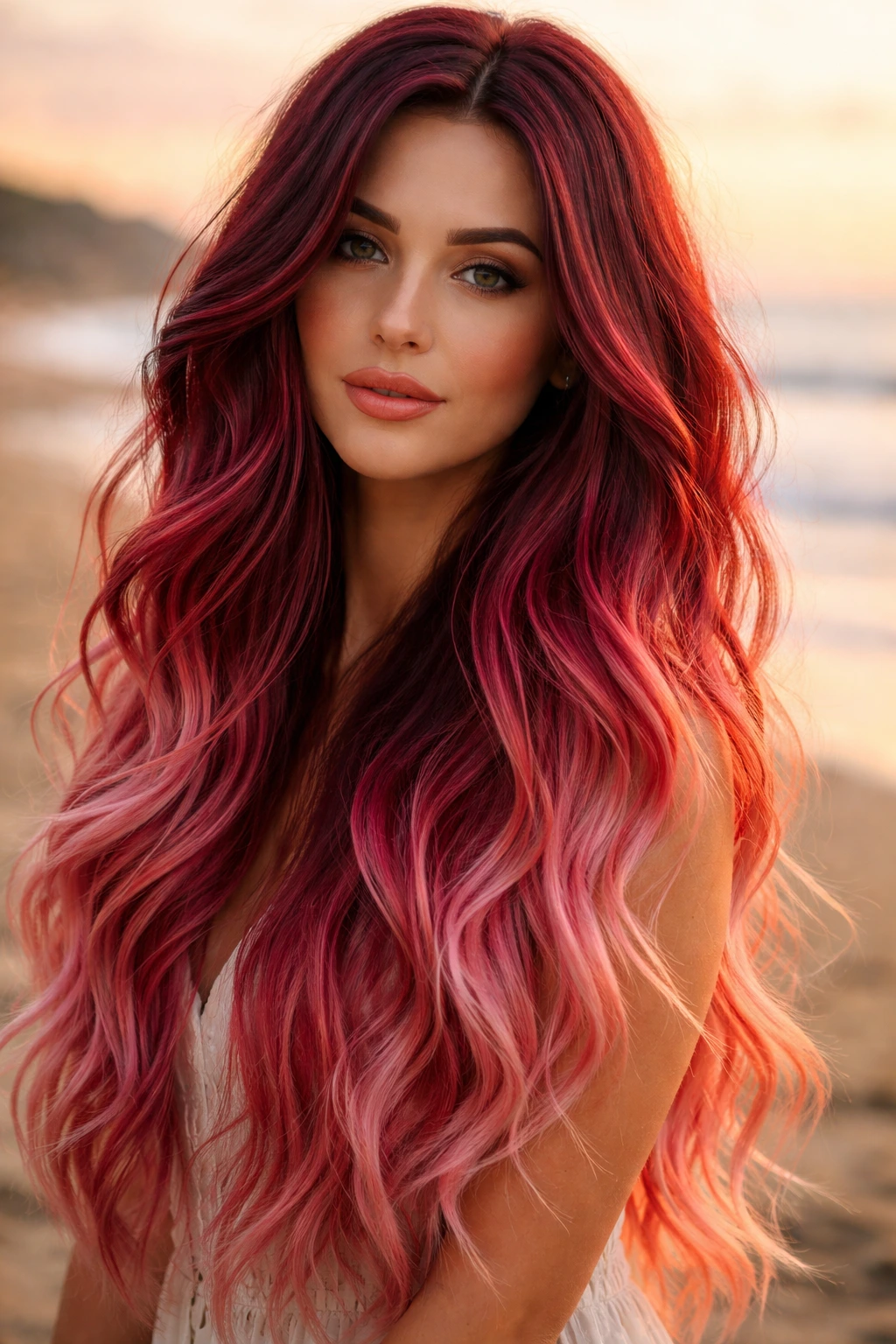
This is a softer version of the fire engine red. It takes a deep, rich berry color—think raspberry or black currant—and melts it into a light, airy, pastel red or soft coral. It is a whimsical, pretty look that feels very feminine and soft.
The contrast is low, which makes the ombré effect appear seamless. Because both colors are in the red family, the transition is naturally harmonious. This is a great choice if you are new to color and want something that feels playful without being too jarring.
It works exceptionally well on long hair with beachy waves. The texture helps blend the two tones together, creating a soft, blurred effect that is very flattering.
17. Burgundy to Caramel Tones
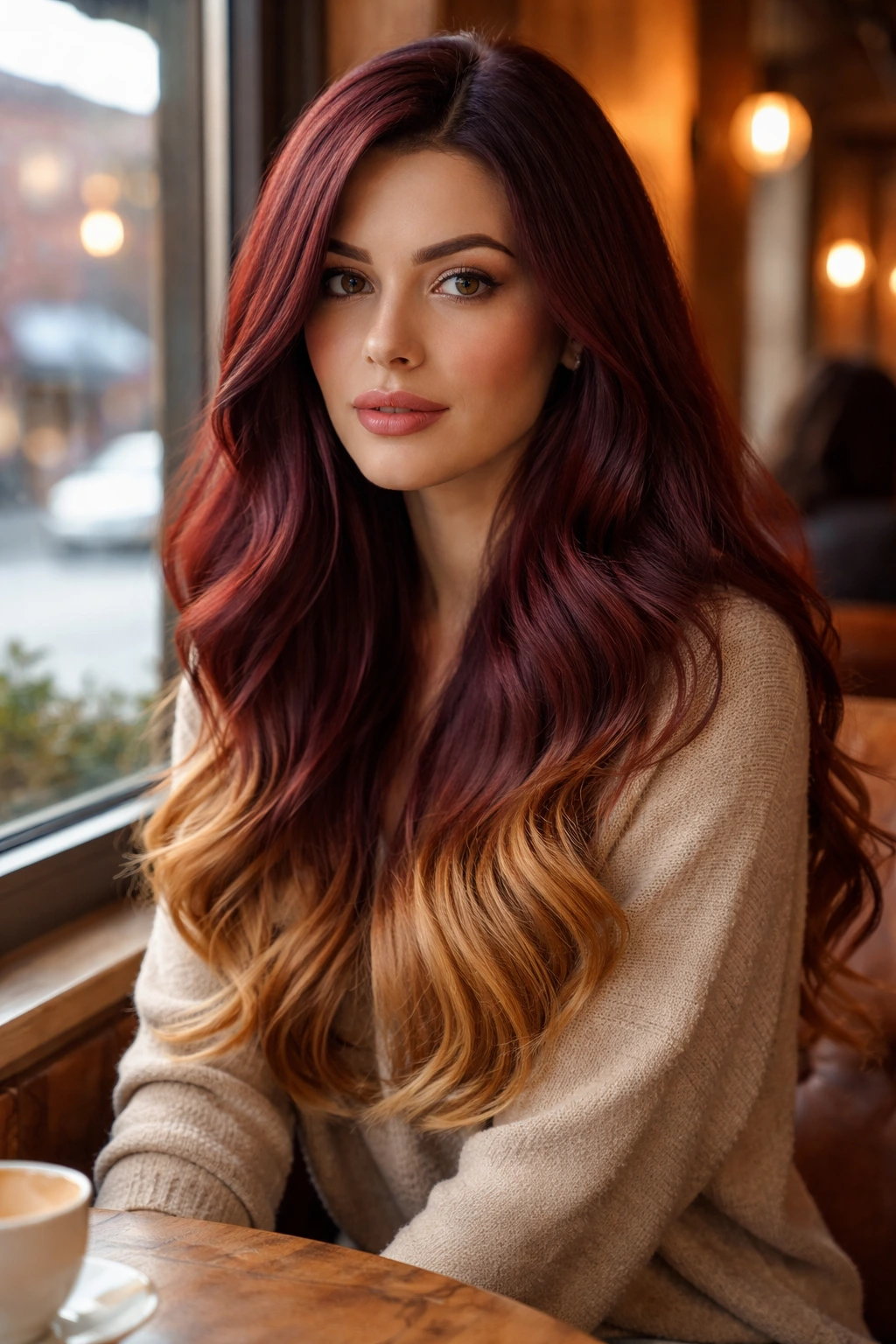
Caramel is the ultimate neutralizer for intense reds. If your burgundy feels too cold or too bold, dipping the ends into a soft, golden caramel tone can ground the look and make it feel more “approachable.” It adds a level of warmth that complements a wider variety of skin tones.
This is a low-contrast look. It is for those who want dimension rather than a color block. If you have naturally dark hair, the caramel tips will look like a soft, natural highlight that has grown out, even though the burgundy mid-length gives it that deliberate, styled feel.
It is very easy to maintain. When the caramel fades, it just looks like a lighter brown, which still works well with the burgundy.
18. Burgundy Dip-Dyed Ends
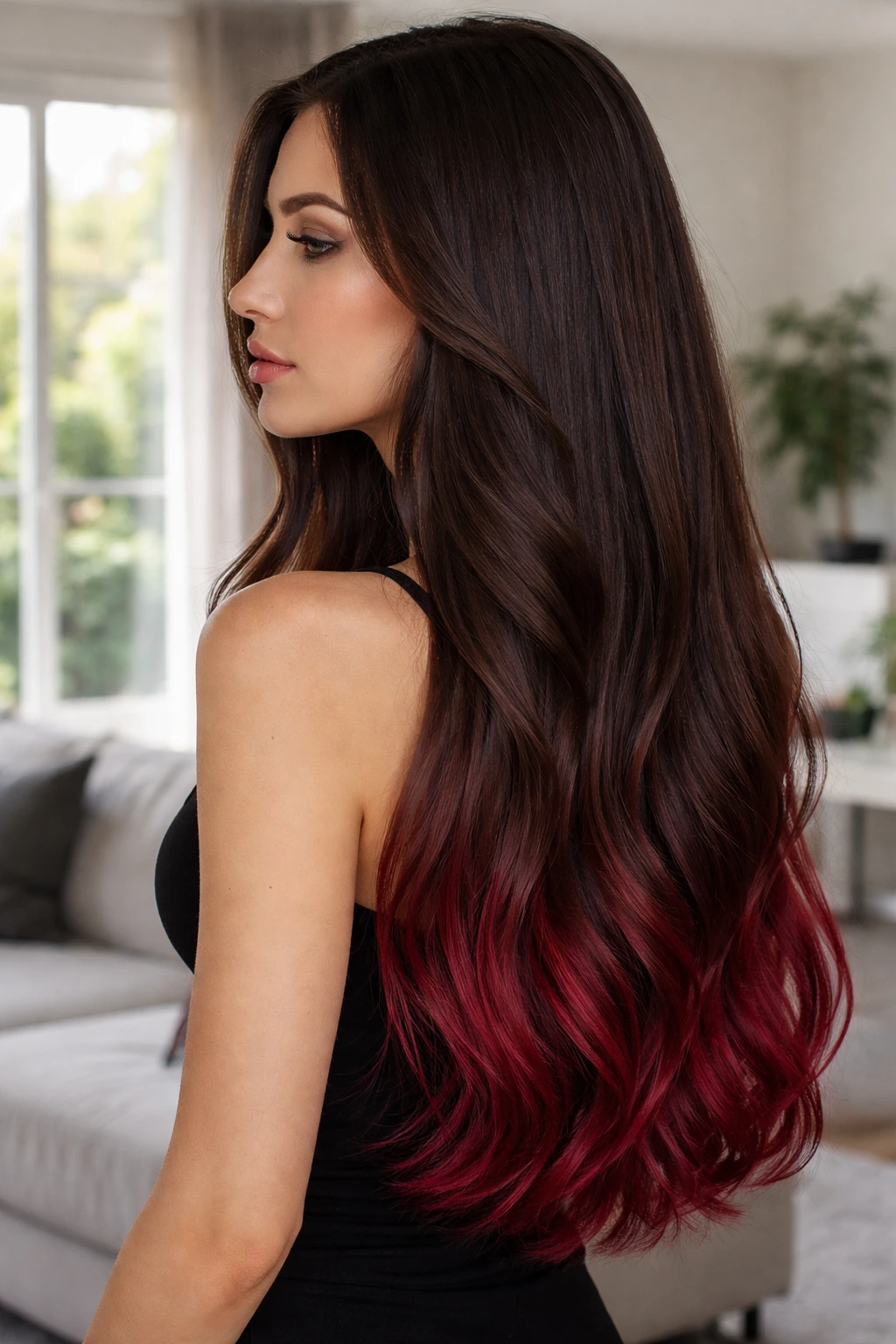
Sometimes you don’t want a long, gradual melt. Sometimes you want a sharp, defined dip-dye. This is where the color change happens in the last 4-5 inches of the hair. It is graphic, modern, and very deliberate. On long hair, this creates a beautiful “frame” for your silhouette.
For this to work, the line of demarcation must be perfectly horizontal. If it’s wavy or patchy, it will look like a mistake rather than a style choice. Use a clear gloss over the entire length of the hair to marry the two sections together and make the line of color feel intentional.
It’s a bold look that is incredibly easy to cut off if you get bored. Just trim off the dip-dyed ends, and you are back to your natural color.
19. Multi-Tone Burgundy Gradient
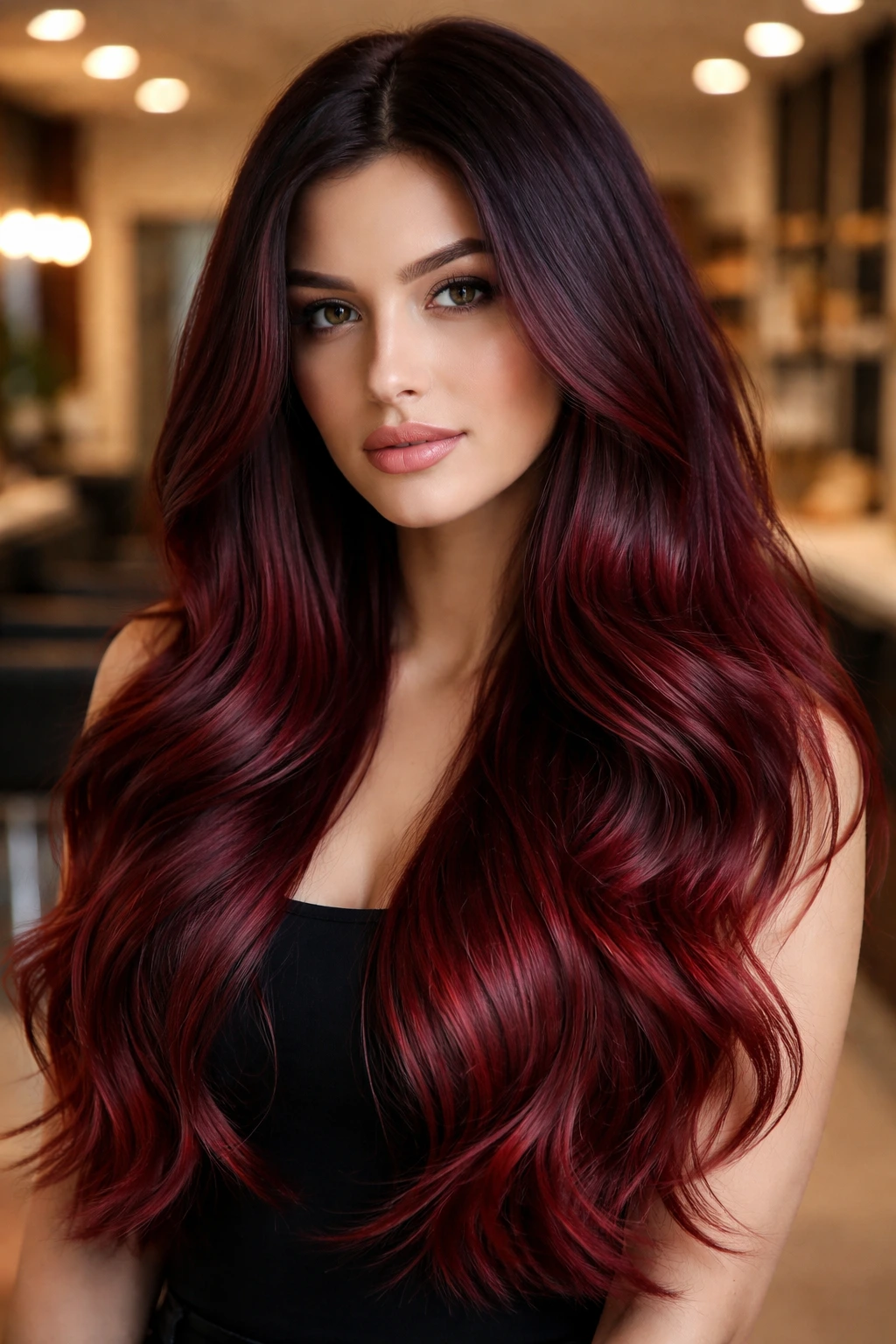
Why settle for one shade of burgundy when you can have three? This involves using a dark, deep wine at the root, a medium mahogany in the middle, and a lighter, punchier red at the ends. It is a true gradient that maximizes the surface area of long hair.
This requires a stylist who is comfortable with “color painting.” It is an intricate process, but the results are unparalleled. The different tones catch the light in a way that feels organic and incredibly expensive.
Expect to spend a long time in the salon chair for this. It is not a “quick refresh” appointment; it is a full-day transformation.
20. Burgundy to Espresso Roots
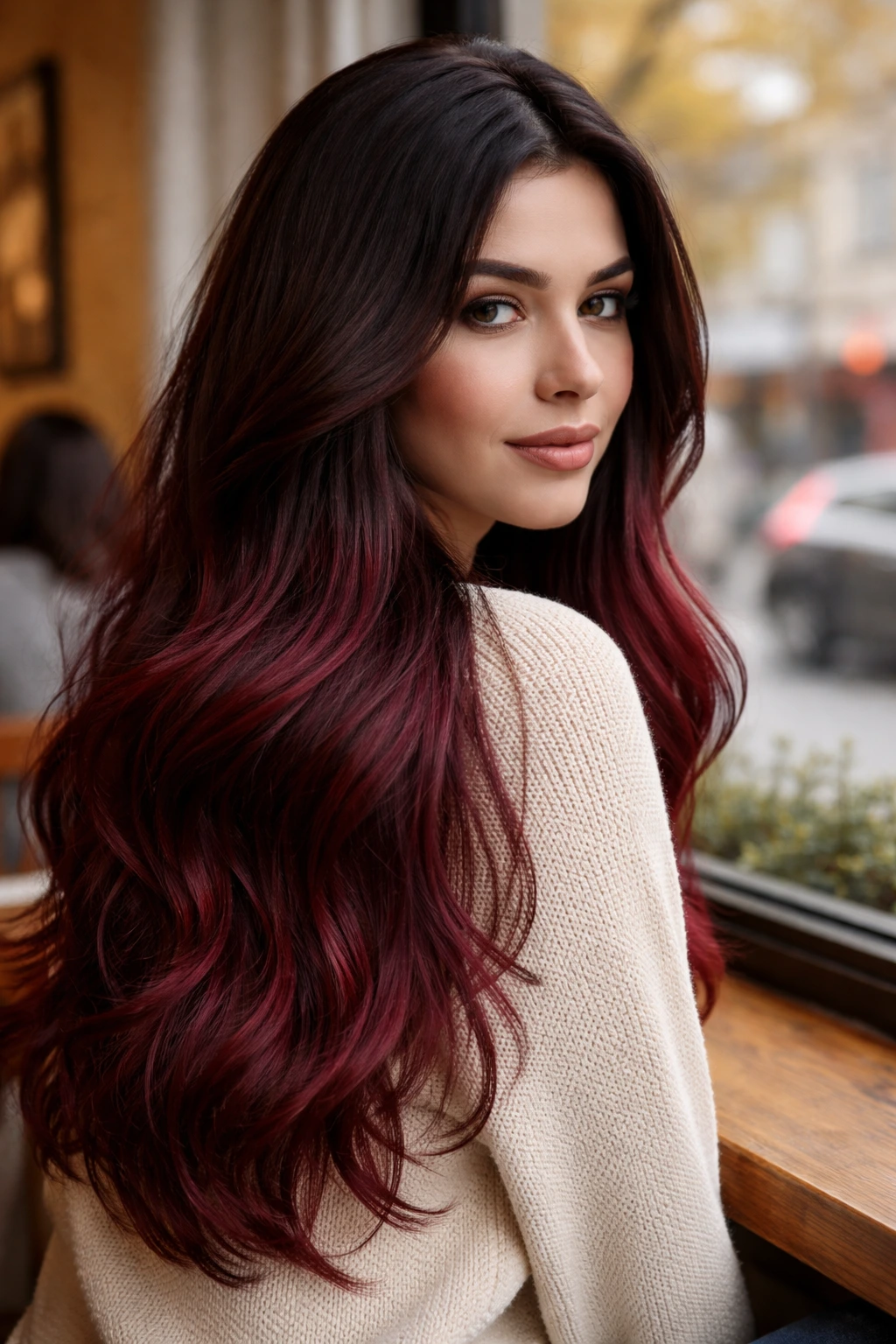
We often think of ombré as starting dark and going lighter, but you can also go from a medium burgundy to an espresso dark brown at the roots. It gives a very vintage, 90s-inspired look. The espresso roots look classic and polished, while the burgundy length adds that unexpected, fun twist.
This is excellent for people who are tired of bleaching their roots. By darkening the roots, you are actually giving your hair a break from the lightener, which can help with long-term hair health.
It is a very “fall” color palette—rich, warm, and comforting. It looks stunning when worn with simple, minimalist outfits, as the hair becomes the primary focal point of the look.
Final Thoughts
Burgundy red is a commitment, but it is one that pays off with incredible style versatility. When you have long hair, you have the unique opportunity to play with gradients, melts, and contrasts that shorter hair simply cannot support. Whether you choose a subtle mahogany fade or a bold cherry-to-wine transition, the secret always remains the same: treat your hair with kindness, invest in high-quality, color-safe products, and do not be afraid to lean into the maintenance.
The most important takeaway is that your hair is a reflection of your personality. Do not just pick a color because you saw it on a screen; pick one that feels like “you.” A great colorist can adjust any of these ideas to better suit your skin tone or your lifestyle. If you are nervous, start subtle with a balayage or a deeper, more muted shade. If you are feeling ready to make a change, lean into the bright, high-contrast looks. At the end of the day, hair grows out, and colors fade—the fun is in the experimenting. Enjoy the process of finding your perfect shade of red.
