



Gray hair has evolved from a beauty taboo into one of the most sought-after salon color profiles. When you have long hair, the canvas is vast, allowing for a dramatic transition that shorter cuts simply cannot accommodate. This specific look relies on the gradient — the seamless, melting effect where a dark or natural root color gradually surrenders into a cool, steely, or icy shade of gray. It is not an easy look to maintain, but when executed with patience, the result is visually arresting.
The secret behind a successful long gray ombre isn’t just the bleach; it is the toner and the root smudge. You need depth at the crown to avoid looking washed out, and you need precision at the ends to keep the silver from turning into a muddy, dull yellow. If you have been debating whether to take the plunge, remember that length provides structural advantages. You can place the transition point exactly where you want it — high up for a bold statement or low down for a subtle, grown-out effect.
1. Subtle Charcoal Dip
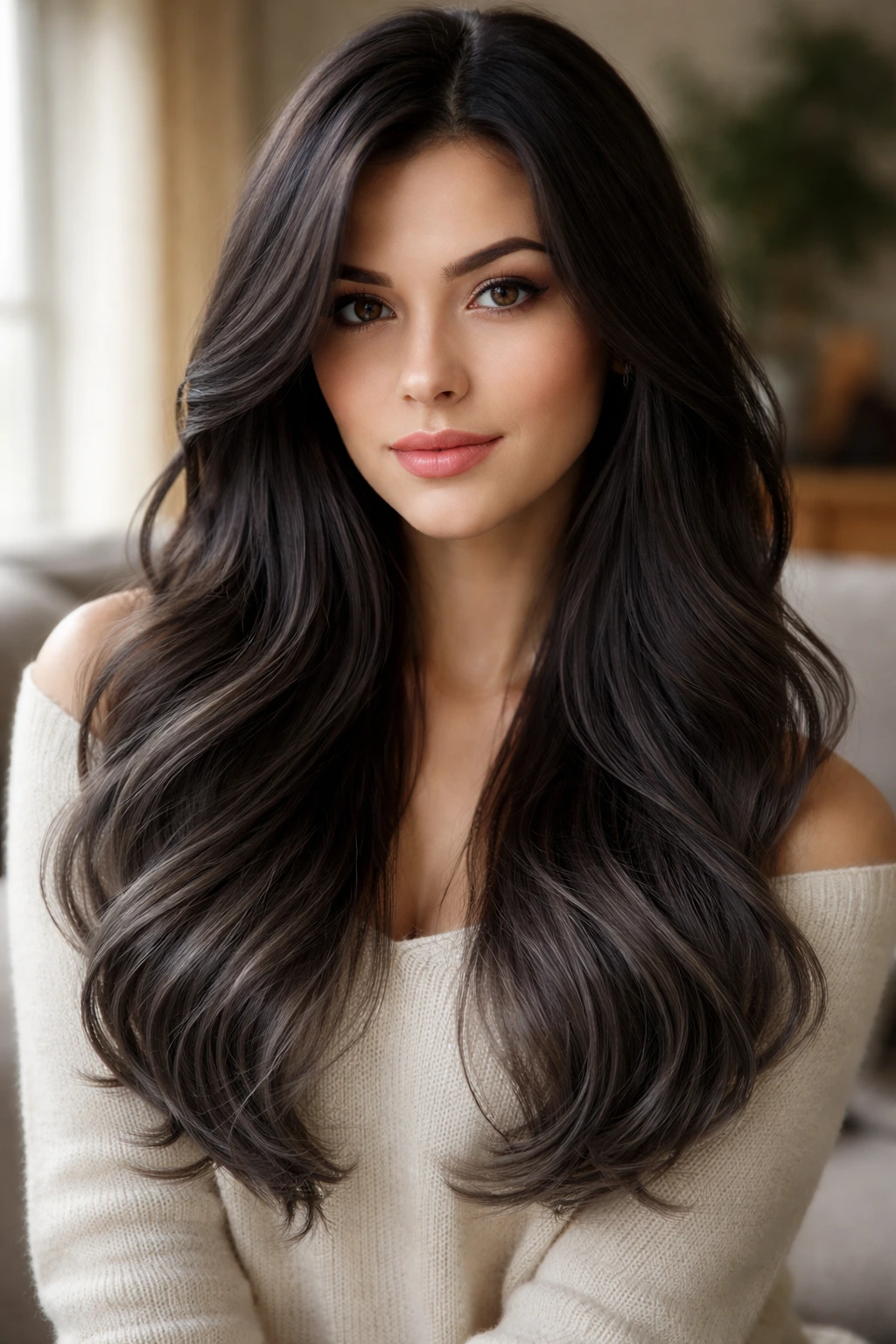
This is the entry-level version of the trend. If you have jet-black or deep dark brown hair, going straight to platinum silver is a recipe for broken, brittle strands. Instead, look for a charcoal fade. The color is deep, moody, and stays within the “dark” family, meaning you do not have to lift your hair to a level ten brightness. The transition happens over the bottom four inches, creating a soft, shadowed effect that looks incredibly sophisticated when styled in loose, bouncy curls.
Why This Works for Beginners
Charcoal is forgiving. Unlike bright silver, which shows every single imperfection or brassy yellow tone, charcoal gray is dark enough to mask a multitude of sins. It is a lower-maintenance option because the grow-out phase is less jarring. You can go months without a root touch-up, provided you use a color-depositing conditioner to keep the charcoal from fading into a brownish-taupe.
Managing the Fade
Even though it is dark, it is still fashion color.
- Use cool-water rinses to keep the cuticle closed.
- Avoid heavy, oil-based products that can pull the pigment out of the strands.
- Schedule a refresh toner service every six weeks.
2. Platinum to Silver Fade
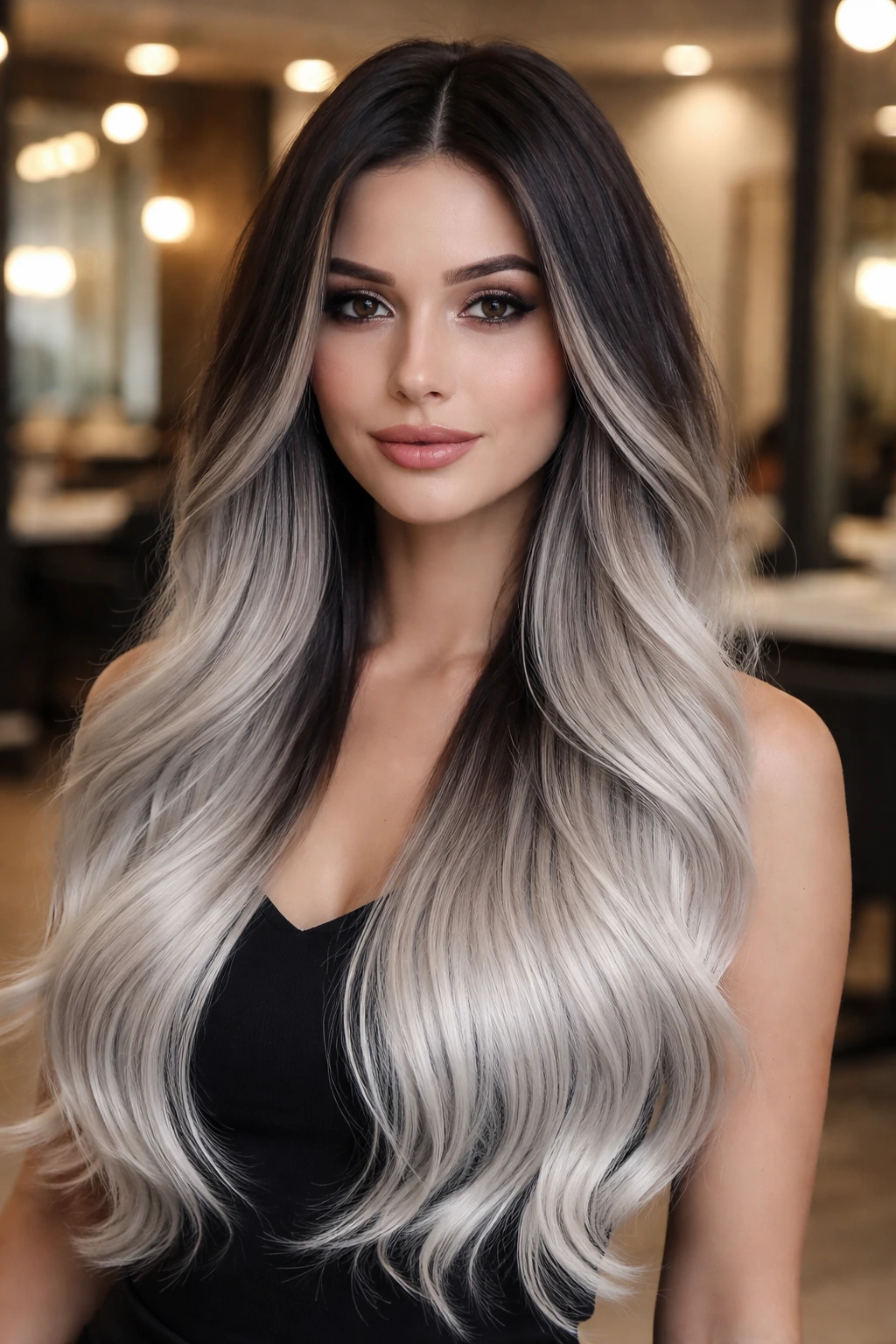
This is the high-maintenance queen of ombre styles. It requires a significant amount of lift, meaning your ends must reach a near-white status before the silver toner can do its job. The look starts with a dark, natural base and transitions into a blindingly bright platinum-silver. It is sleek, icy, and undeniably elegant.
The Technical Challenge
You are fighting the natural pigments of your hair. To get that clean, white-silver, you have to push past the orange and yellow stages. If your stylist says your hair cannot handle it, listen to them. This look is beautiful, but it is not worth burning your length off. If your hair is healthy enough, ensure you have a professional-grade purple shampoo on standby. It is the only way to stop the silver from turning yellow after three washes.
3. Root Melt with Stormy Gray
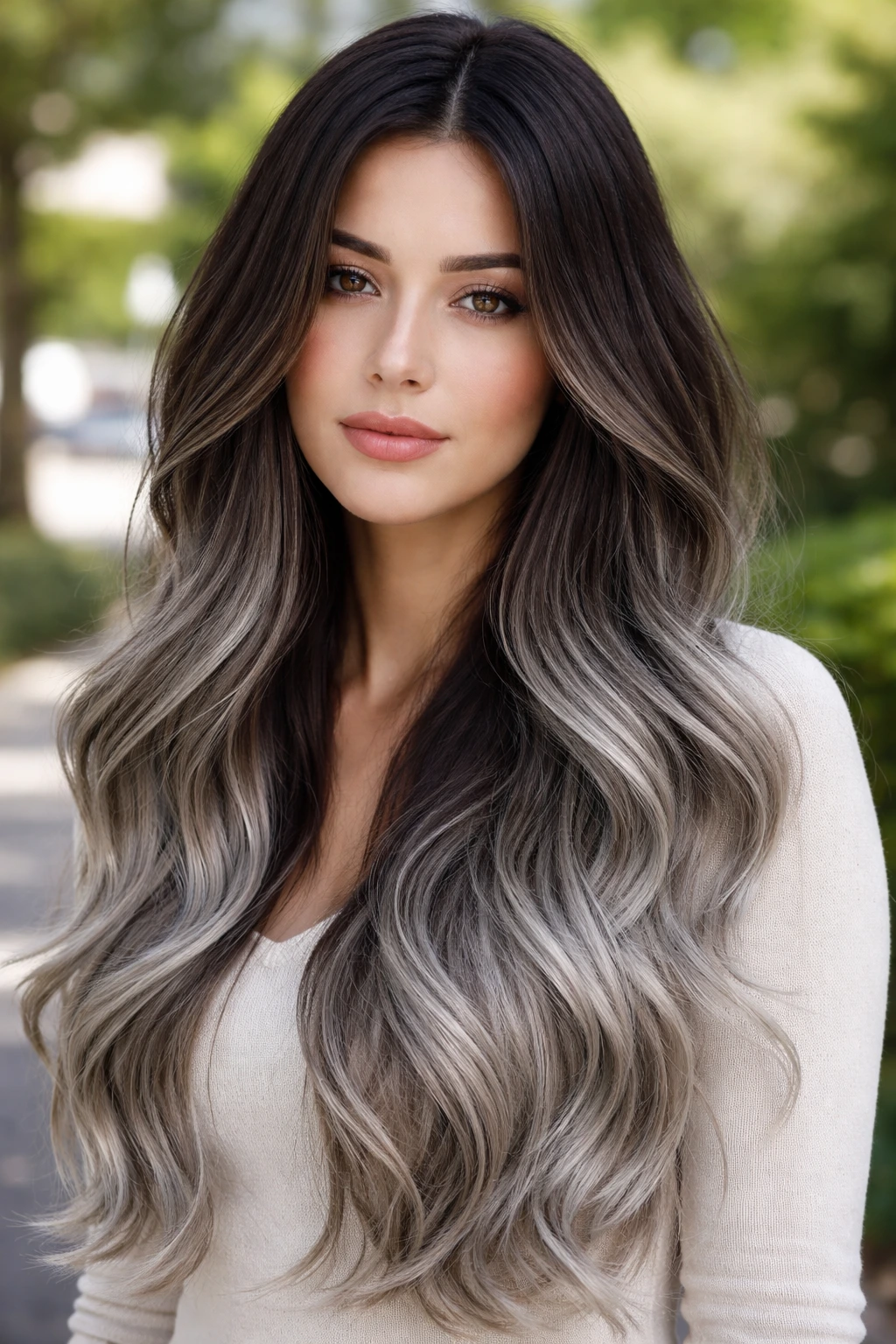
A root melt is a technique where the stylist blurs the line between your natural color and the dyed color. With a stormy gray ombre, the roots might be a deep espresso or black, melting into a slate-gray mid-section, and finally hitting a lighter silver at the very tips. It creates a seamless gradient that looks like you were born with gray hair, or at least that it grew out perfectly.
Why It Looks So Natural
Most ombre styles suffer from a “line of demarcation” where the color just stops. A root melt eliminates that. By blending the gray up into your natural hair, the transition point becomes invisible. It is fantastic for long hair because the gradient gets more time to develop, making the transition look like a slow sunset rather than a hard cutoff.
4. Icy Lavender Ombre
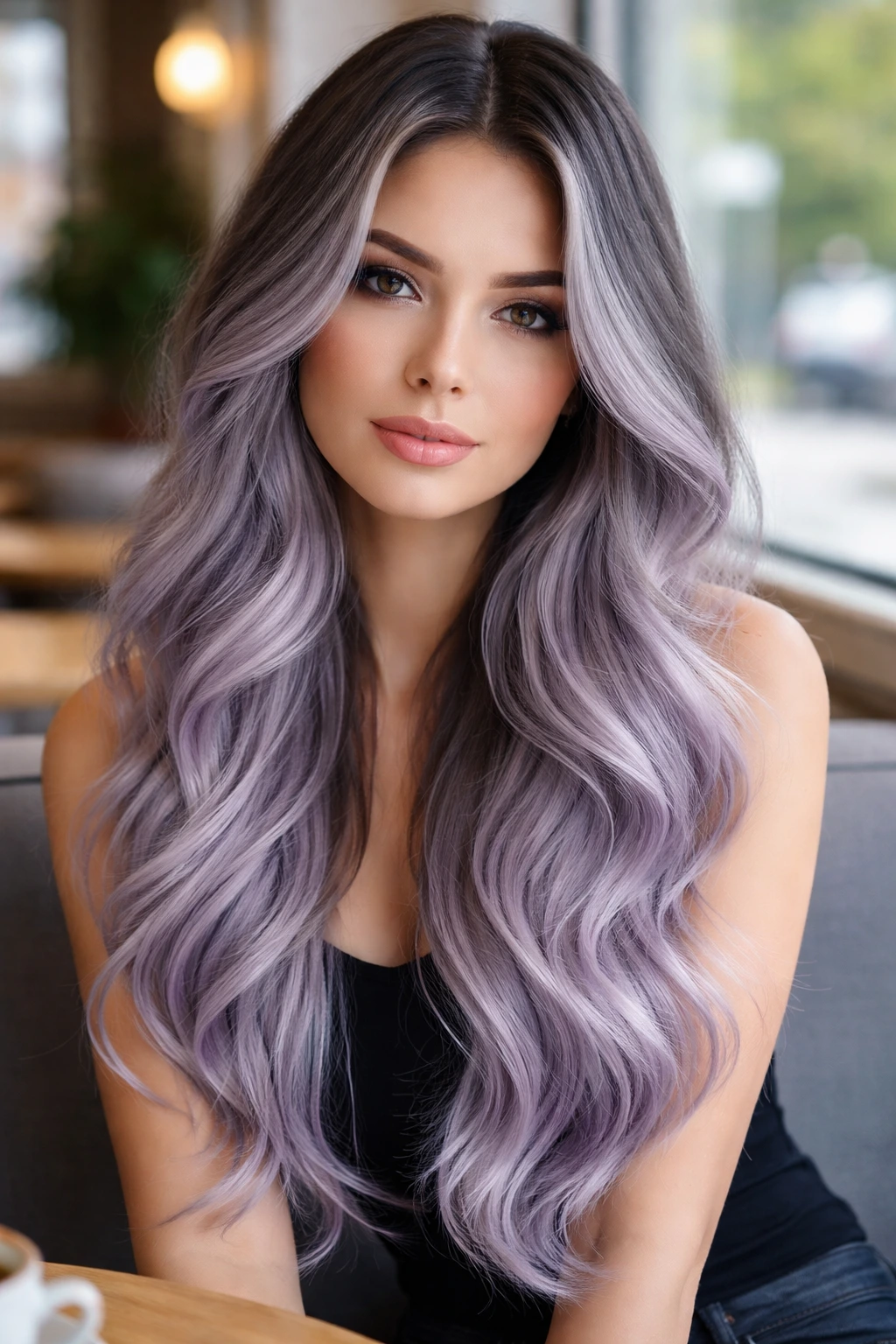
Gray does not have to be monochromatic. An icy lavender ombre takes that steely gray base and tints it with a cool, dusty violet. It is subtle and professional enough for most workplaces while still being clearly “not natural.” The gray acts as the neutralizer, ensuring the lavender doesn’t look like a neon hair accessory from a festival.
Finding the Right Tint
- Ask for a “dusty” or “smoky” lavender.
- Avoid anything with a warm, reddish undertone.
- The gray should be the primary color, with the lavender acting as a soft, ethereal highlight that catches the light differently when you move.
5. Smokey Blue-Gray Blend
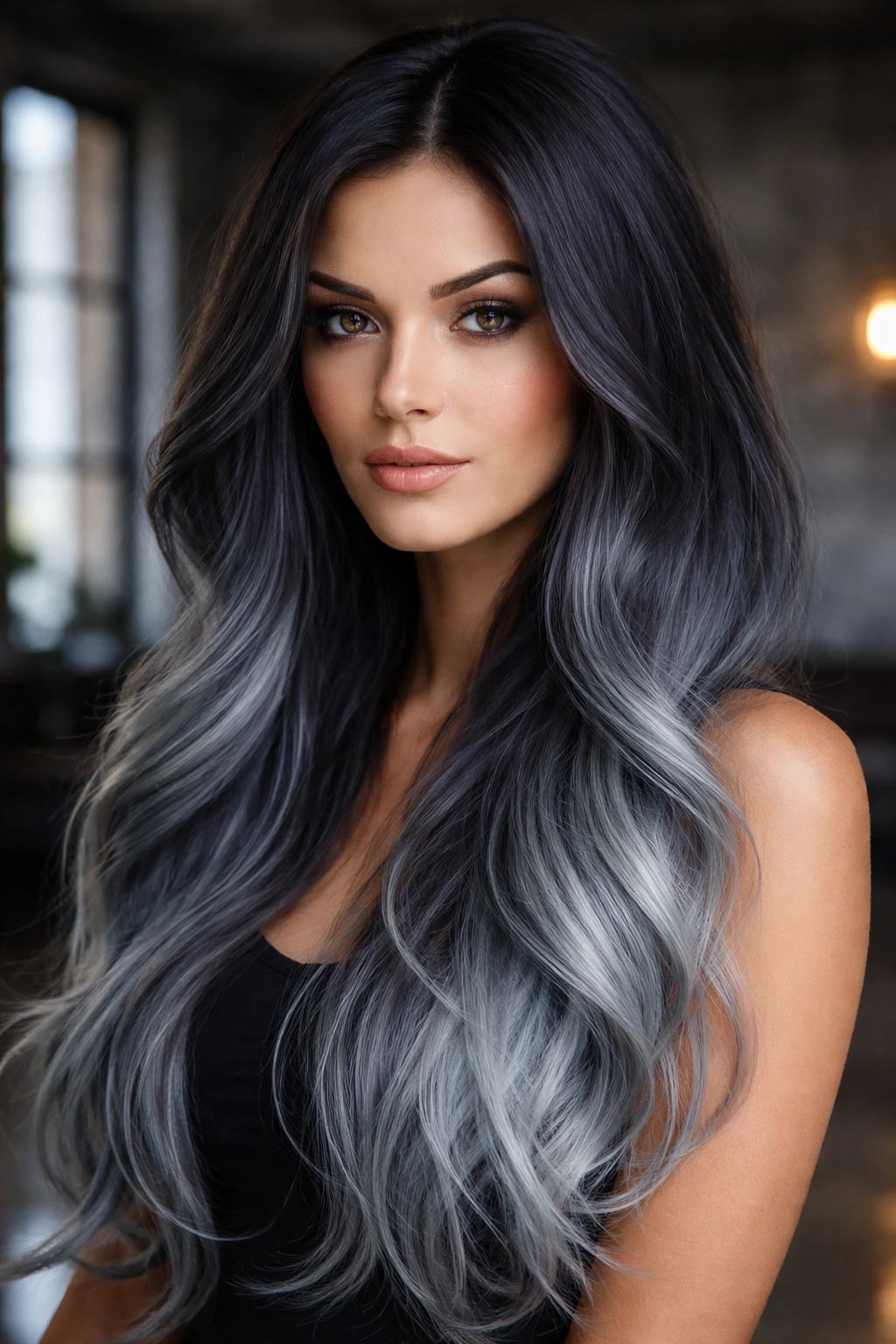
This style is for those who want an edgier, grunge-inspired aesthetic. It involves blending a deep blue-gray into a lighter, metallic silver. The blue adds depth, making the hair look fuller and more dimensional. It works particularly well for those with cool skin undertones.
The Wear Factor
Blue pigments are notoriously difficult to remove from the hair, so this is a long-term commitment. If you get bored easily, this might not be the choice for you. However, as it washes out, it often fades into a beautiful, pale icy blue that is just as striking as the original color.
6. Midnight to Silver Gradient
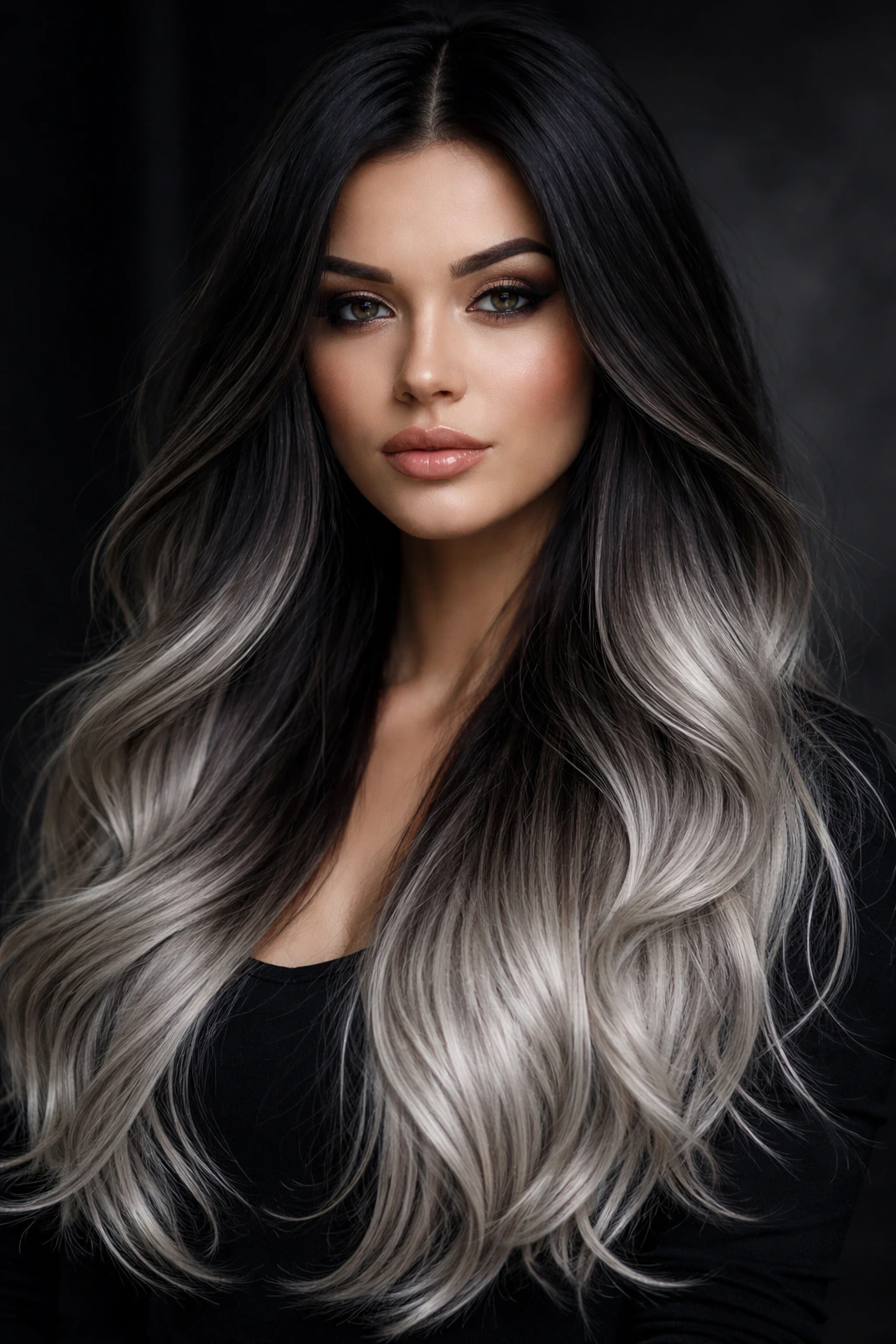
This is the “high contrast” option. You take the darkest hair possible at the roots—a true midnight black—and have it abruptly shift into a stark, metallic silver. It is a dramatic, high-fashion look that commands attention. Because the contrast is so sharp, it requires perfect blending. If the transition is choppy, it will look like a mistake rather than a design choice.
Maintaining the Contrast
To keep this look sharp, you must keep your roots dark and your ends light. Avoid washing your hair with warm water, as it will cause the dark dye to bleed into the silver ends, turning the silver a muddy grey-brown. Use a pointed nozzle application for your shampoo to keep the lather focused on the scalp, keeping the ends as clean as possible.
7. Champagne Silver Ombre
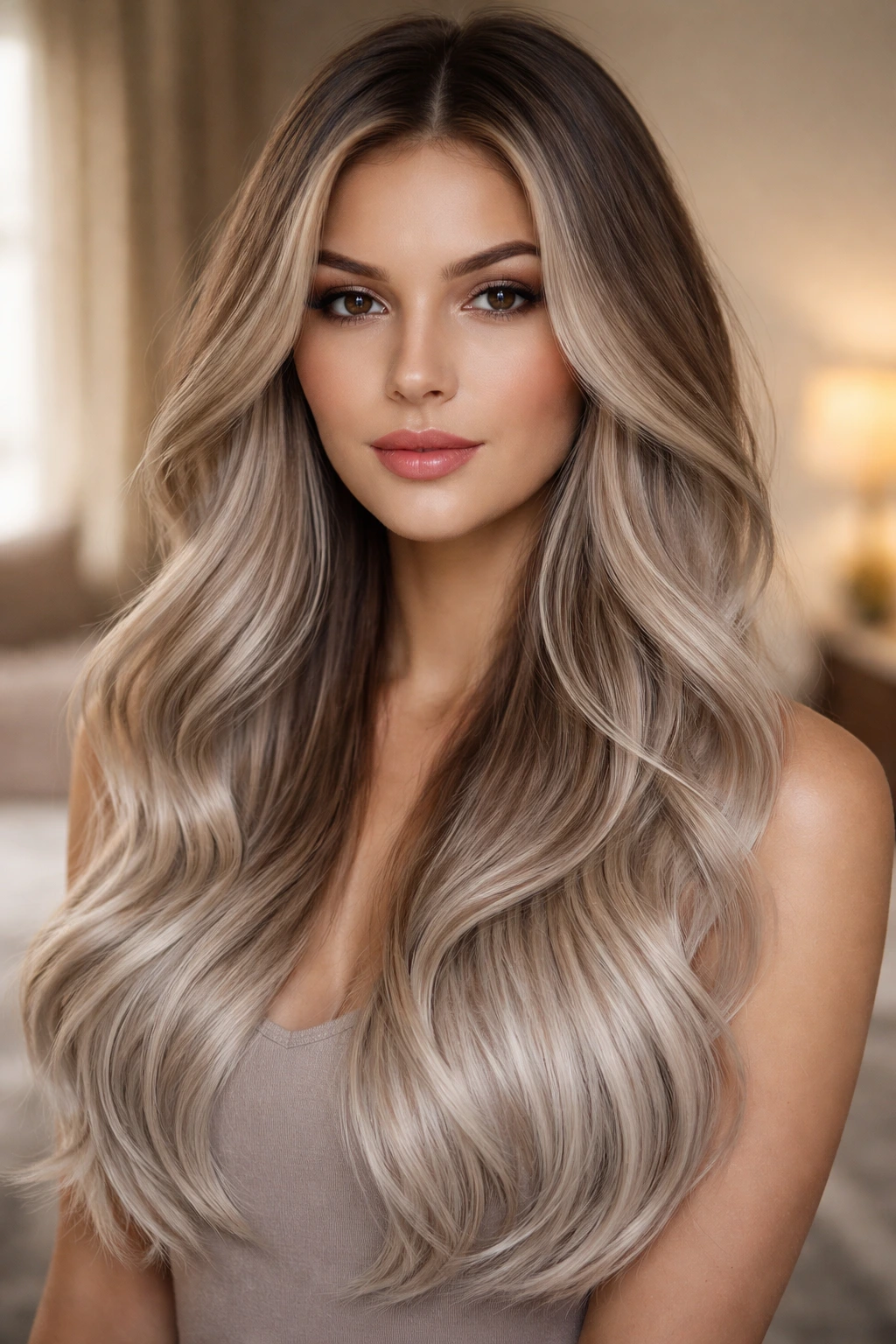
Not all grays are created equal. Some lean cool and icy, while others, like champagne silver, lean slightly warm. This is a mix of platinum blonde, silver, and a hint of beige. It is arguably the most wearable gray ombre because the slight warmth makes it much friendlier on the skin than a harsh, metallic steel.
Who Should Choose This
If you have a neutral or olive skin tone, a stark, cool silver might make you look sickly. Champagne silver brings the warmth back to your face. It is essentially a sophisticated upgrade to a blonde ombre, giving you the trendiness of silver without the jarring, cold effect.
8. Ash Brown to Gray Transition
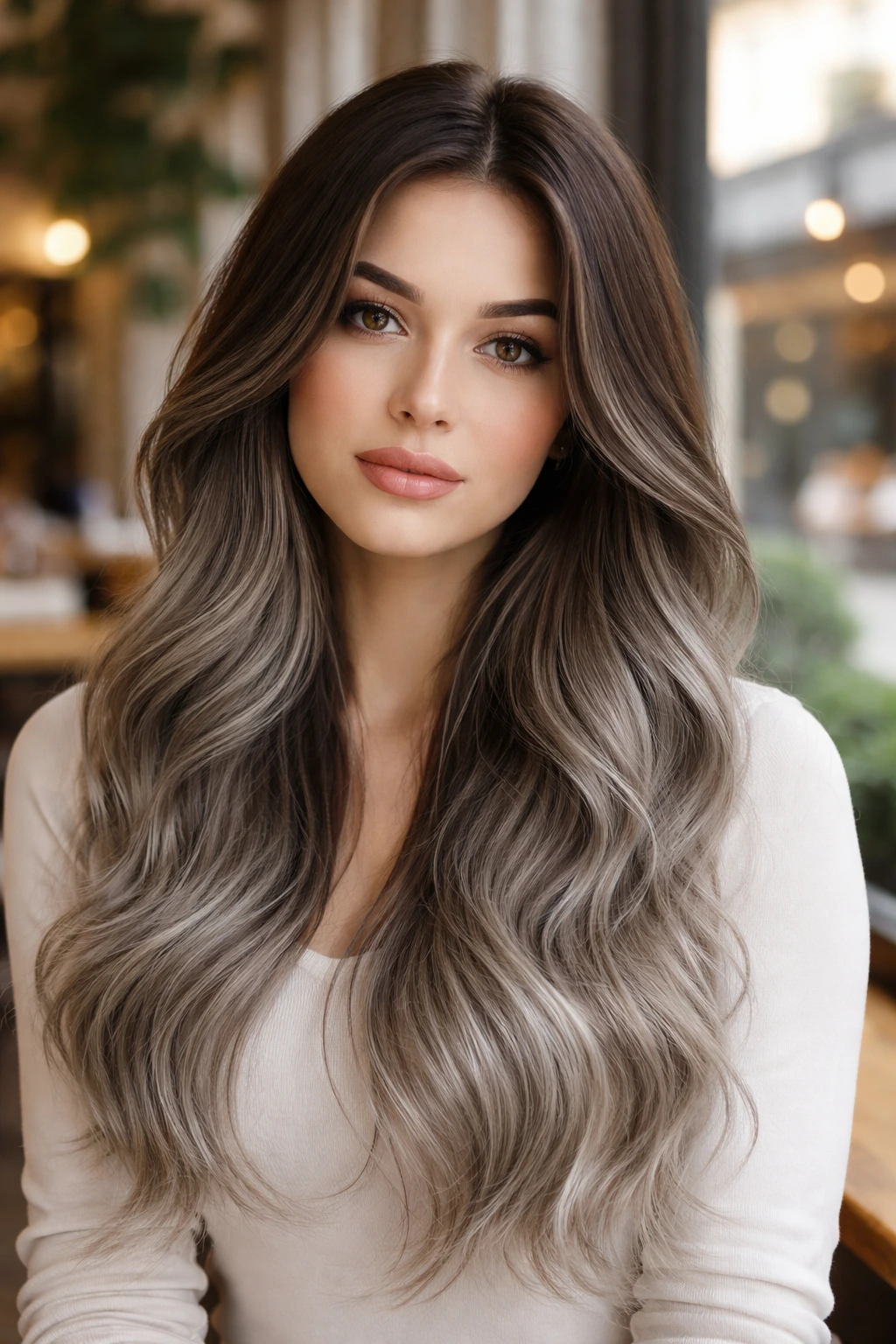
If you want to keep your roots natural, this is the path to take. Instead of coloring your roots black or dark brown, you use your natural hair color as the starting point and transition into a lighter ash-gray. It is the most “low impact” way to wear the trend.
The “Grow-Out” Benefits
Because you are working from your natural shade, you do not have to worry about root touch-ups every four weeks. You can let your natural hair grow for months. This is essentially a stylized grow-out, and it looks better the longer your hair gets. It is a masterclass in low-maintenance style that still looks intentional and chic.
9. Holographic Gray Ombre
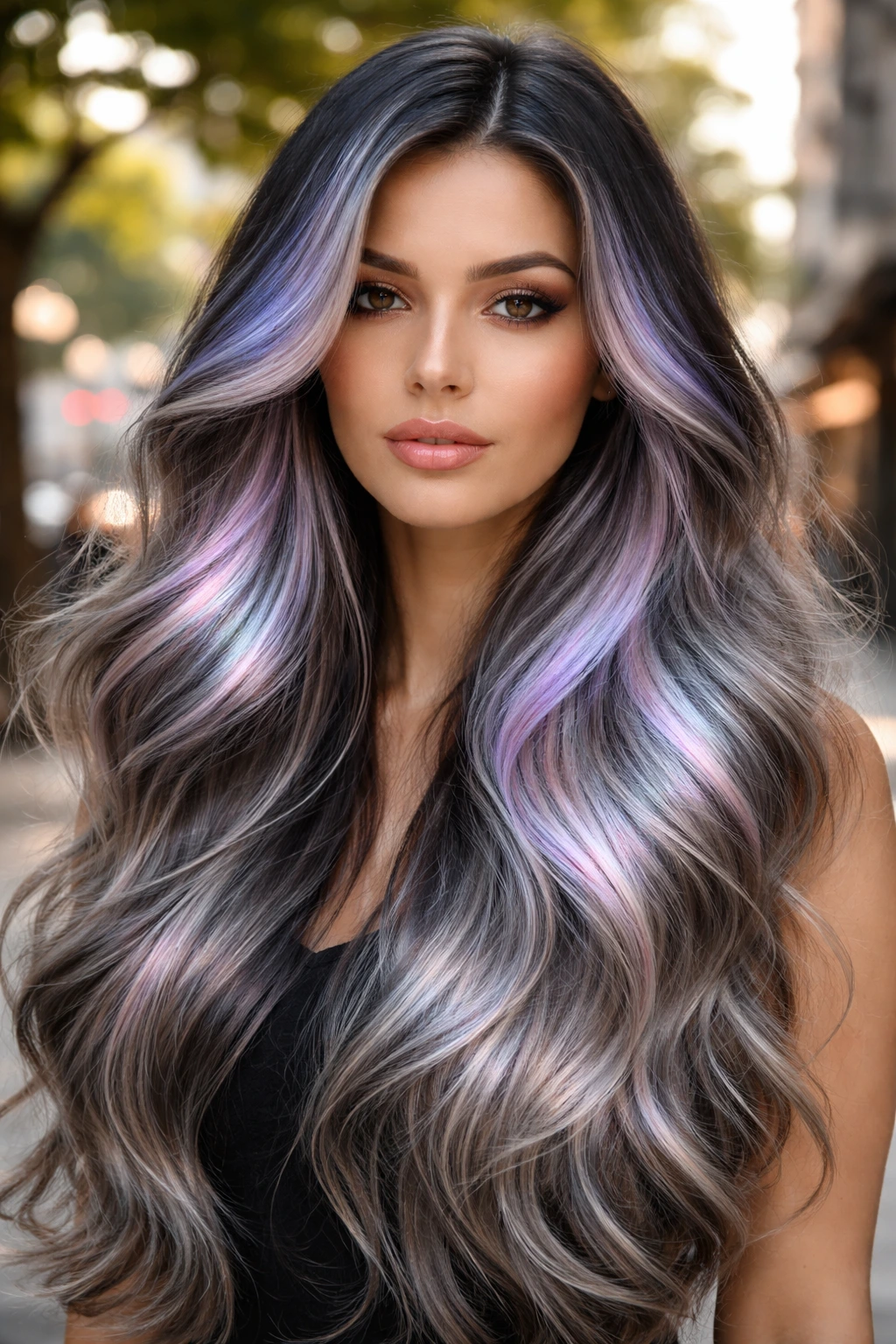
Holographic hair usually involves multiple pastel shades, but when you apply it to a gray base, it becomes metallic and sophisticated. Imagine flashes of iridescent pink, blue, and violet layered over a charcoal gray ombre. It is dynamic, ever-changing, and very difficult to achieve.
Finding the Right Stylist
Do not attempt this at home. You need a colorist who understands how to layer semi-permanent toners over a pre-lightened base. This look is about the tint, not the pigment. The goal is a gray base with shimmering, multi-dimensional highlights that appear only under certain lighting conditions.
10. Dark Roots to Steel Gray
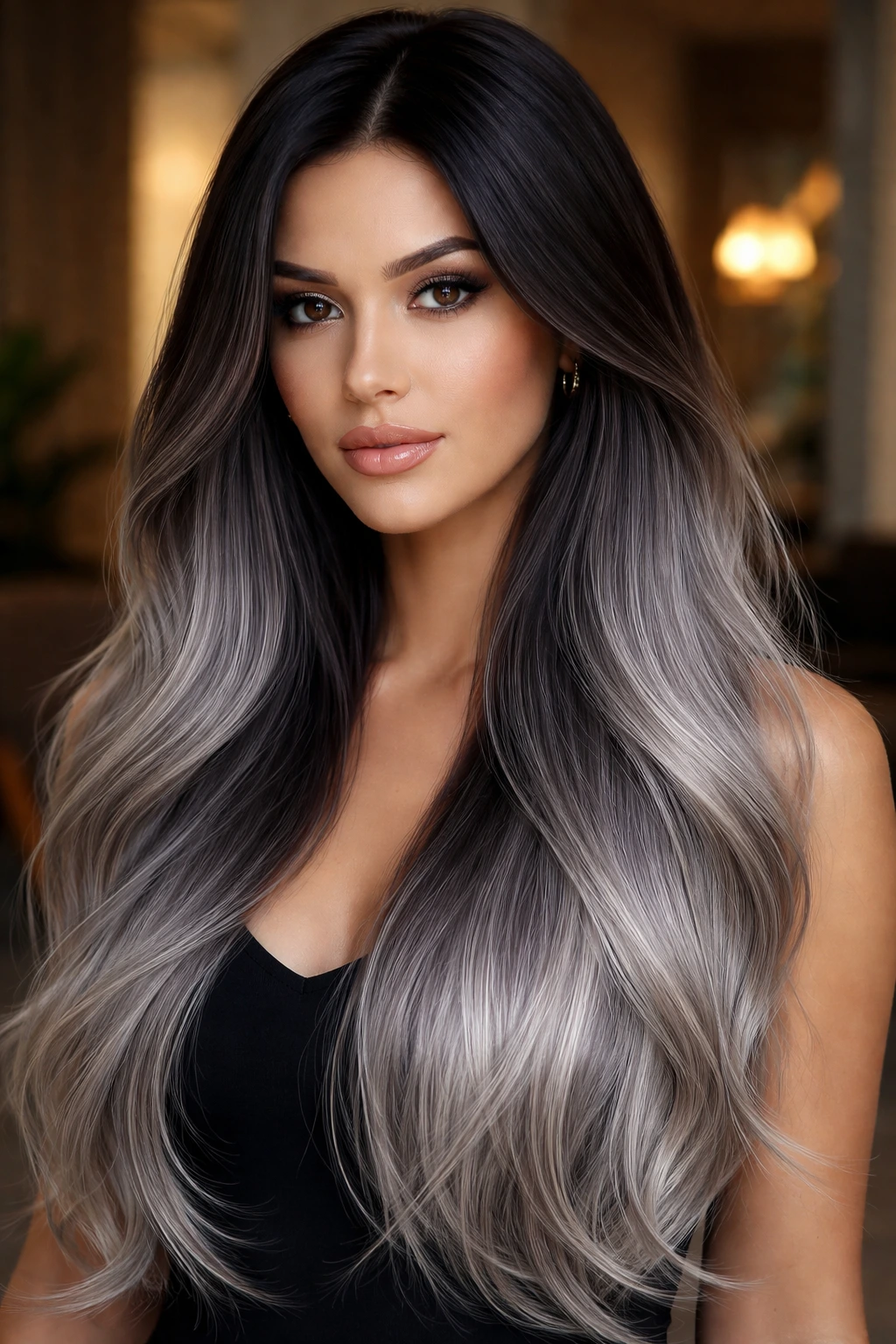
This is the classic “Instagram Gray.” It features a very solid dark root that transitions into a uniform, industrial steel gray. There is no warmth, no blue, no purple—just pure, metallic gray. It is sharp, clean, and looks fantastic on long, pin-straight hair.
The Steel Aesthetic
Steel gray is an unforgiving color. It shows every brassy tone you have, so your purple shampoo game must be elite. Use a professional-grade silver mask once a week. If you neglect the conditioning, steel gray quickly turns into “dusty mop” gray, losing that expensive, metallic shine.
11. Silver-Lilac Dip Dye
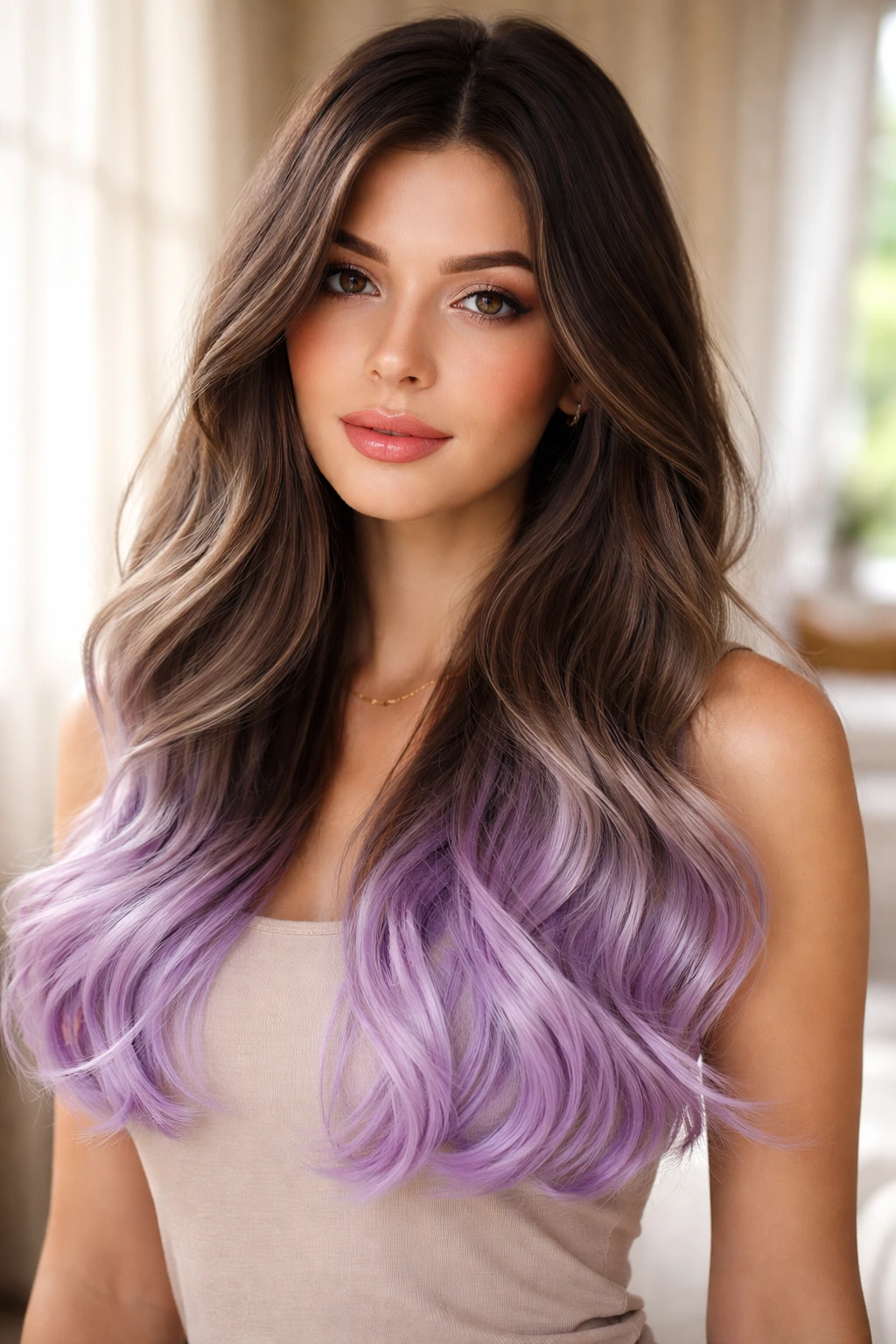
Dip dye implies a sharper line of demarcation than an ombre, but when you do it with a gray and lilac blend, you can soften the edge significantly. This look focuses the color on the bottom three inches of the hair. It is perfect if you want to experiment with the trend without dyeing your entire head.
The Ease of Reversal
If you decide you hate it after a month, you can simply cut off the three inches of dyed hair. Because the color is concentrated at the ends, you do not have to worry about long-term damage to the hair near your scalp. It is a low-risk way to play with fashion colors.
12. Metallic Gray Waves
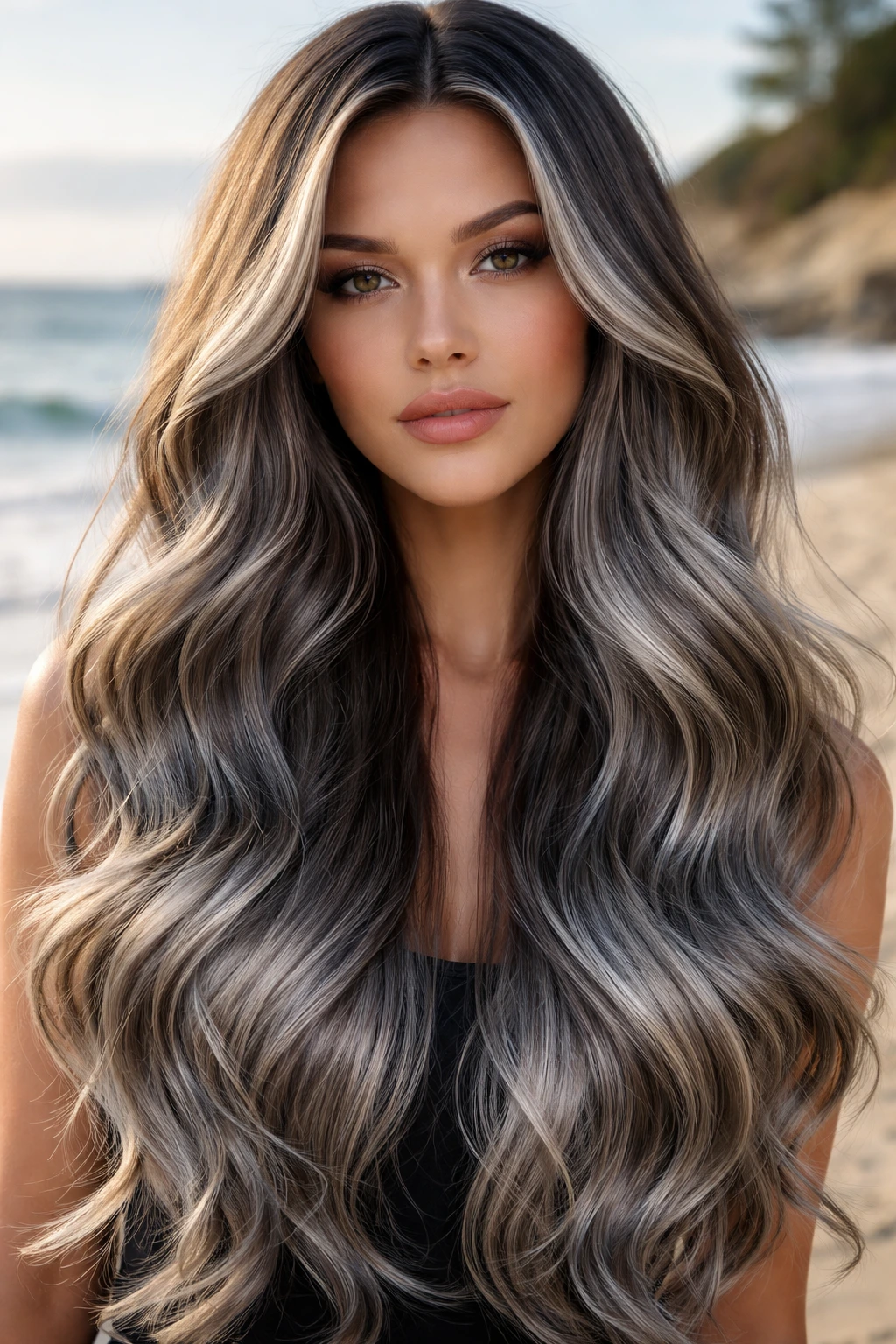
The color is only half the battle; the texture is the rest. Metallic gray waves involve using a gray dye that has a high-shine finish. When paired with long, beachy waves, the silver catches the light, creating a shimmering effect that looks almost like liquid metal.
Stylist Tips for Shine
Ask your stylist for a “clear glaze” service after the coloring process. This acts as a topcoat for your hair, sealing the cuticle and providing that high-gloss finish. Without it, gray hair often looks matte or dull. The gloss makes the metallic effect pop.
13. Braided Gray Ombre
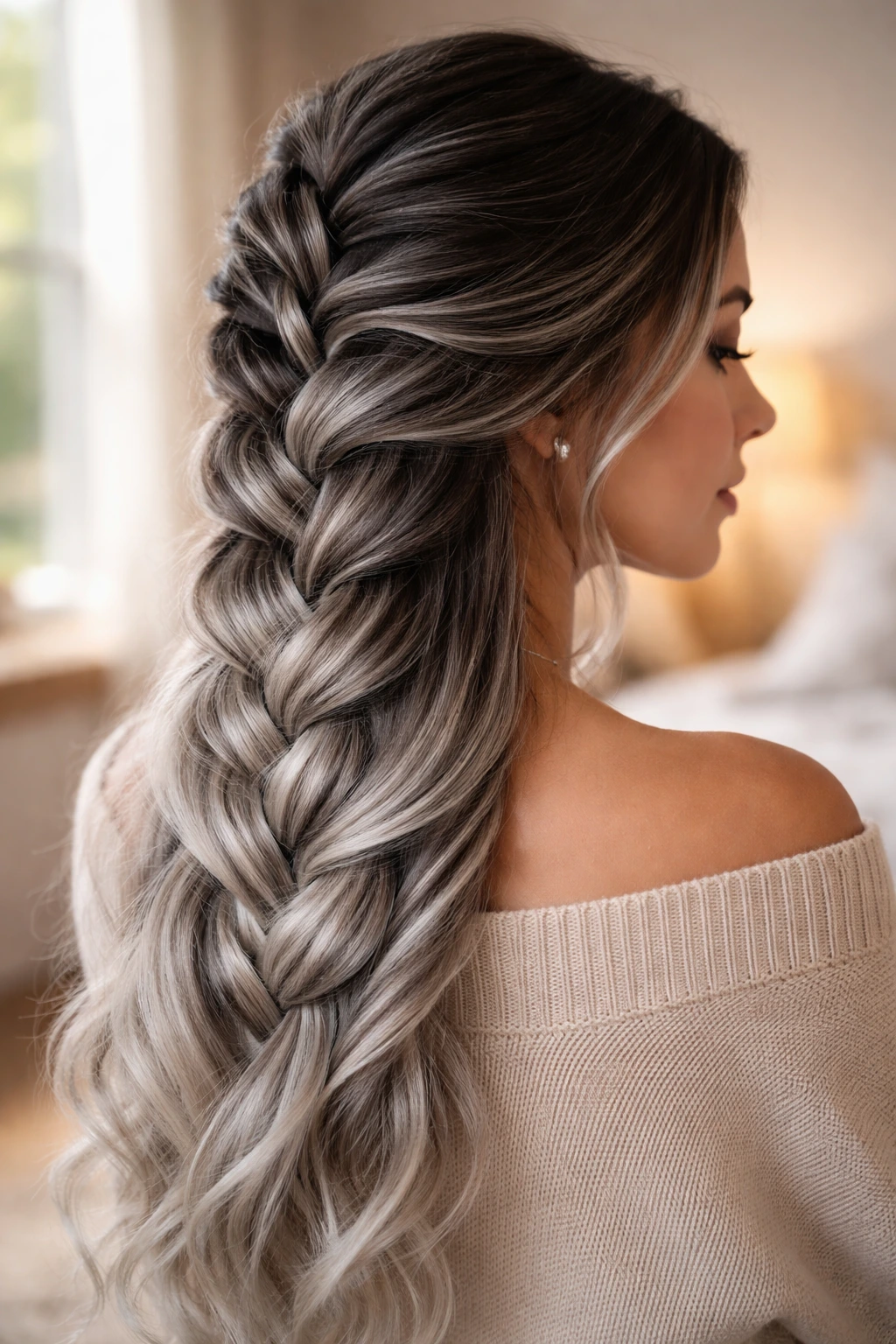
While this is a styling choice, it highlights the ombre effect better than almost anything else. If you have an ombre, wearing your hair in a braid—specifically a French or Dutch braid—blends the colors together. The result is a multi-dimensional, interwoven look that highlights the contrast between the dark roots and the silver ends.
Why It’s Useful
When you wear your hair down, you see the color. When you braid it, you see the depth of the color. The mix of dark and light strands in the braid makes your hair look significantly thicker than it is, which is a great bonus if you have naturally fine hair.
14. Subtle Pewter Fade
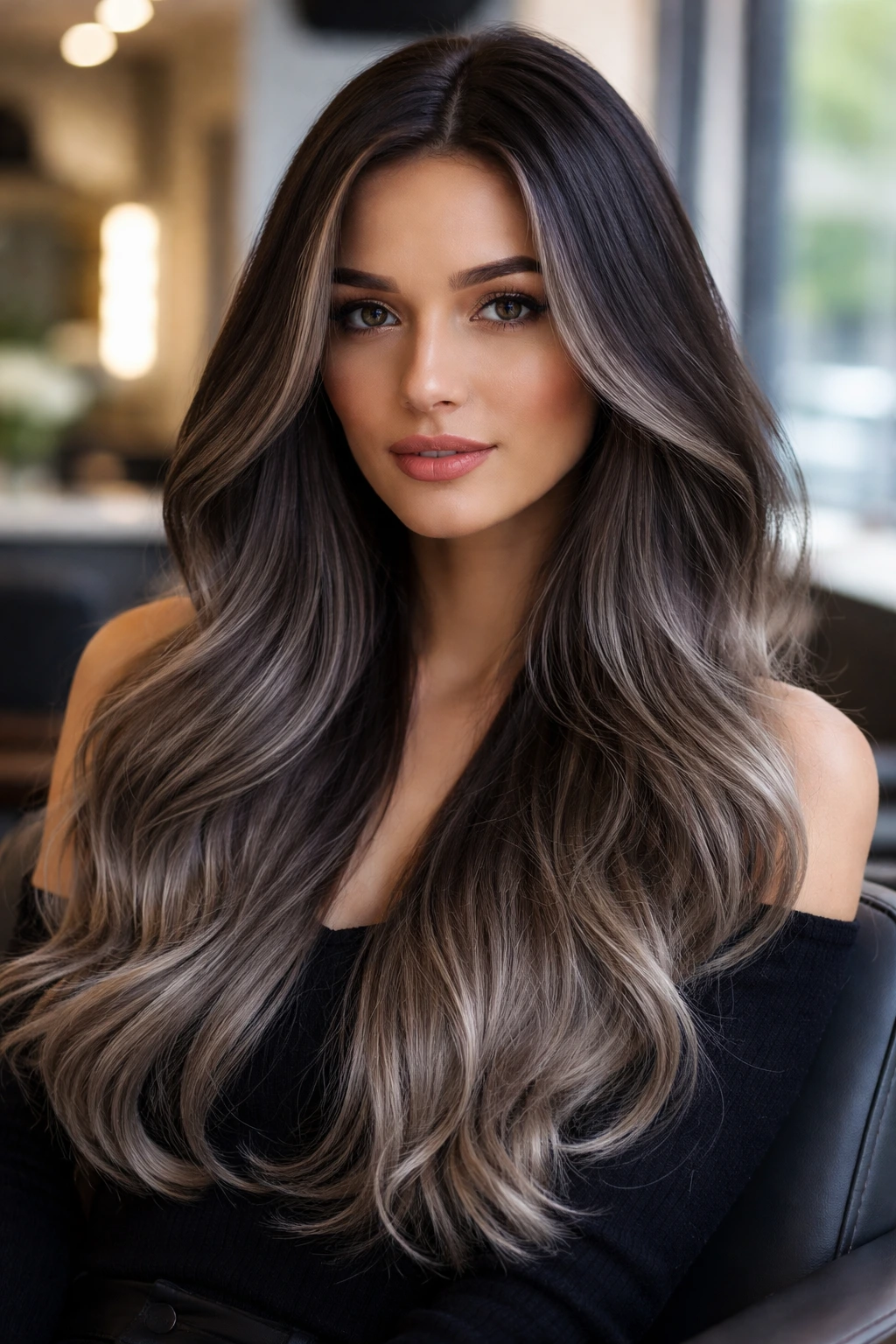
Pewter is a warm, dark gray with brown undertones. It is perfect for those who are nervous about going full “silver fox.” It’s an understated transition that looks luxurious and soft. It doesn’t scream for attention, but it has a richness that is incredibly flattering.
Why This Is Different
Most gray ombre ideas focus on stripping color to reach silver. Pewter requires depositing color to create that rich, dark metallic look. It is often less damaging to the hair because you do not have to lift to the highest level of bleach.
15. Soft Smoke Ombre
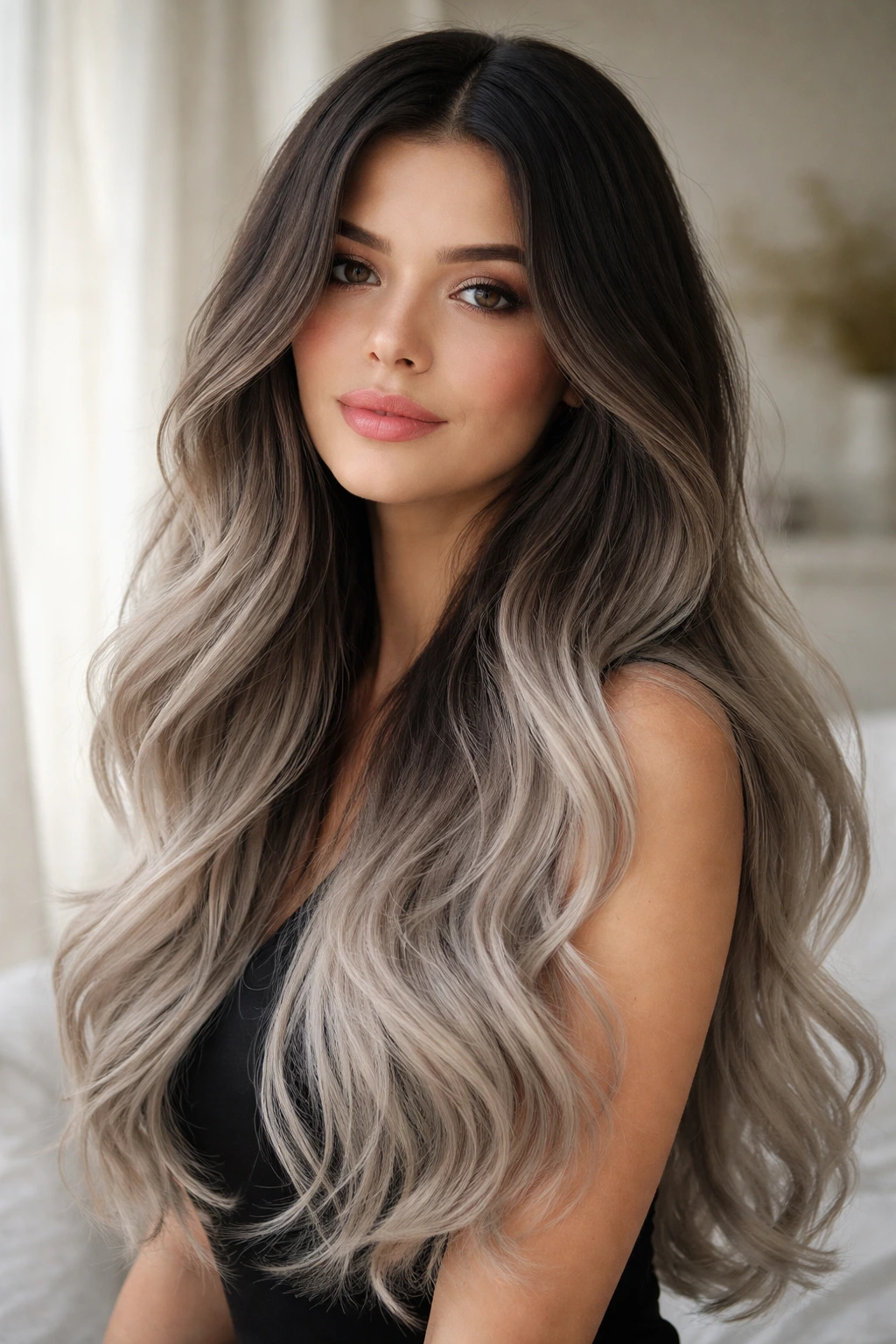
“Smoke” refers to a blurred, hazy transition. The colors are less distinct. Instead of a hard line, the dark brown of your roots fades into a medium gray, which then fades into a lighter smoke-gray. It is the most “painterly” of all the ombre options.
The Maintenance Reality
This look requires a skilled colorist who knows how to perform a “teased” application—where the stylist teases the hair before applying bleach to create a natural, feathered transition. Do not book this with a stylist who doesn’t specialize in lived-in color.
16. High-Contrast Silver Tips
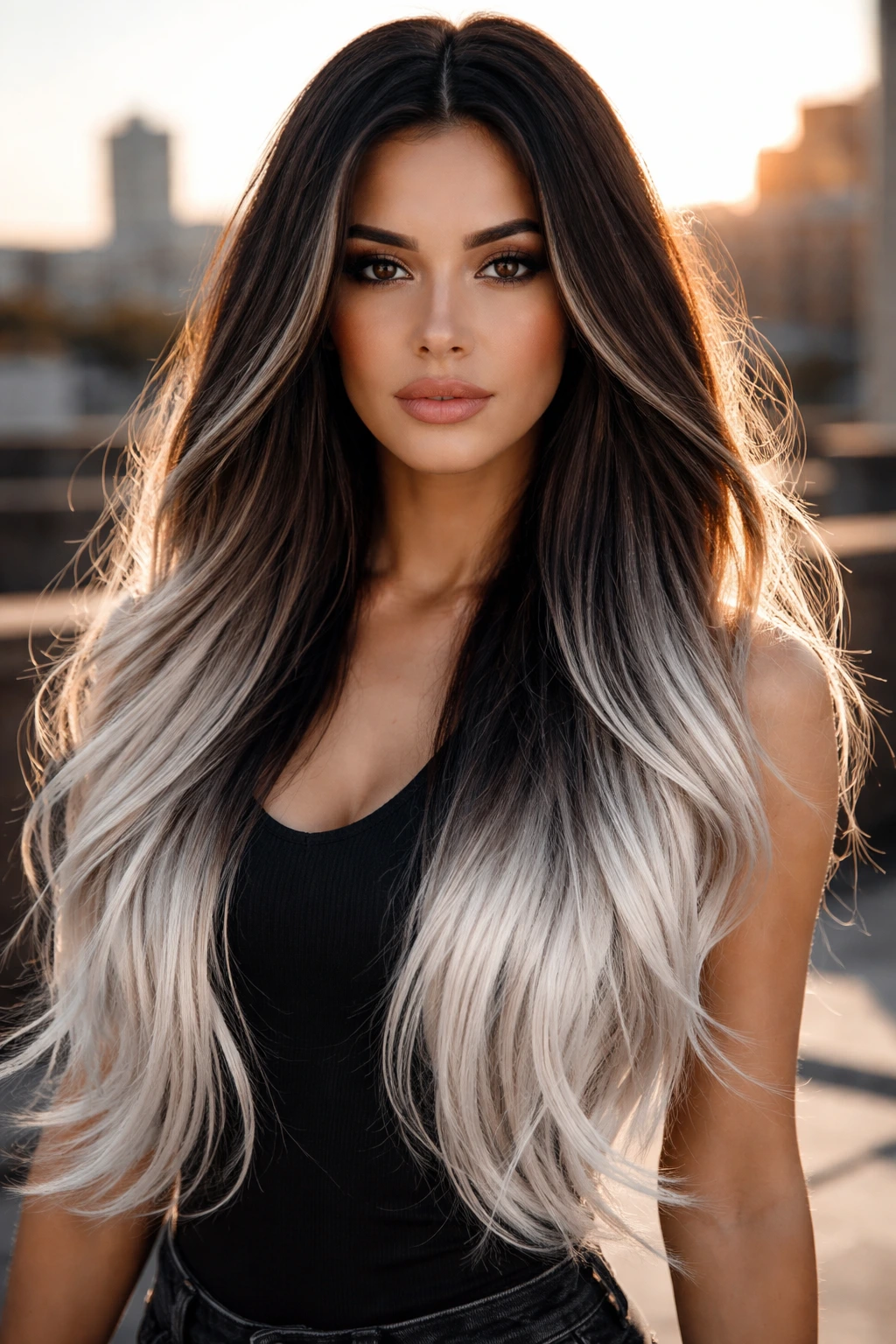
Think of this as the modern version of the 2000s chunky highlights, but done with a refined, ombre-style gradient. You have dark hair that remains mostly dark until the final few inches, which are a stark, bright silver. It is a bold, “dip-dye” look that feels very intentional and high-fashion.
Who Should Try This
If you have very long, thick hair, this is a showstopper. It frames the face and accentuates the length of your hair. It is also the easiest to maintain, as you only need to touch up the very tips, and you can let the dark roots grow for as long as you like.
17. Slate Gray to White Ombre
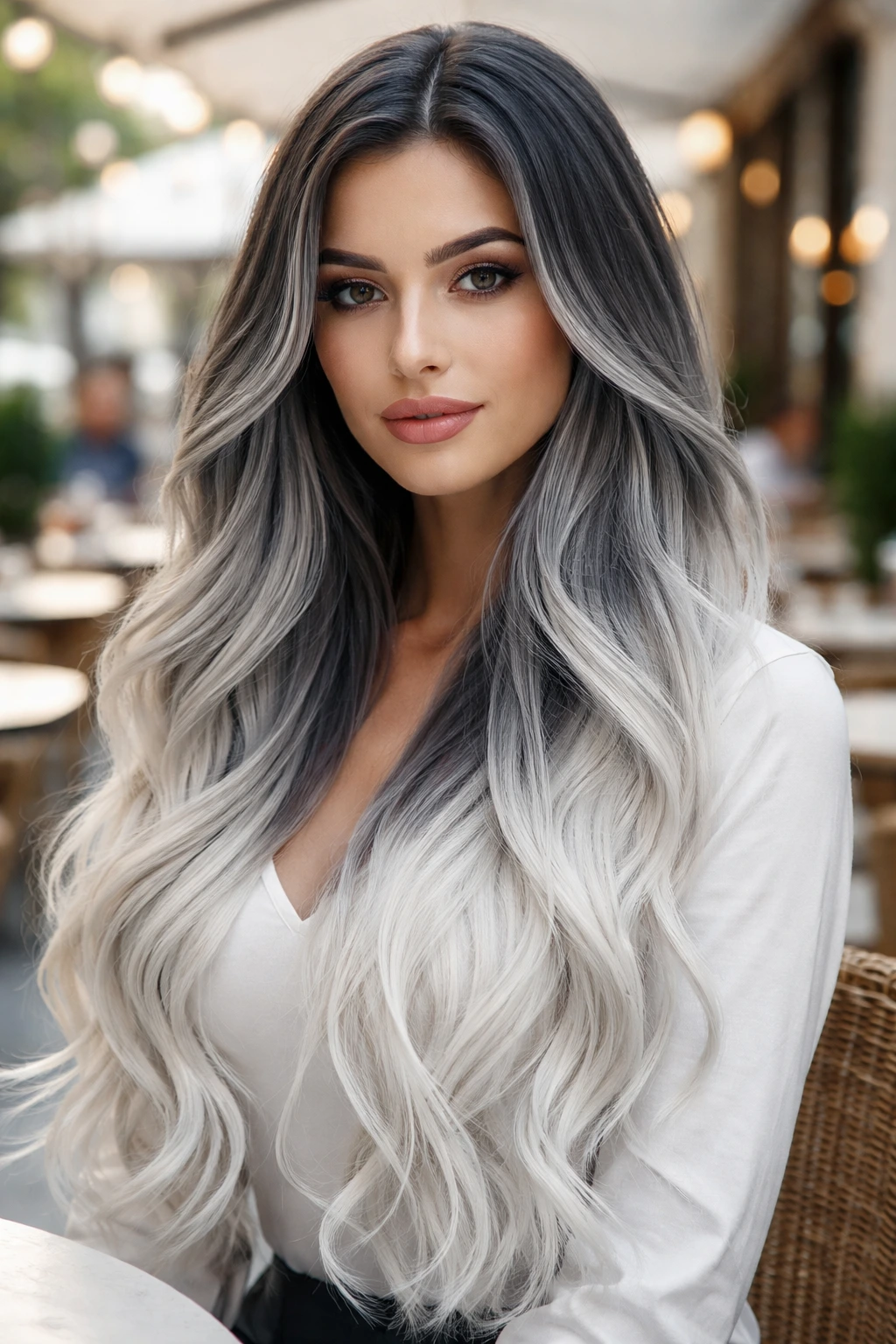
This is a sophisticated, mature take on the trend. Slate gray is a muted, cool-toned medium gray. Transitioning that into a crisp white creates a look that feels icy and architectural. It is not “fun” or “playful”—it is serious, chic, and incredibly striking.
The “White” Problem
White hair is the most fragile state your hair can be in. Once you bleach to white, you have stripped away almost all the internal structure of the hair shaft. You must be prepared to use protein treatments and bond-repairing leave-in conditioners every single time you wash your hair.
18. Grunge Gray Ombre
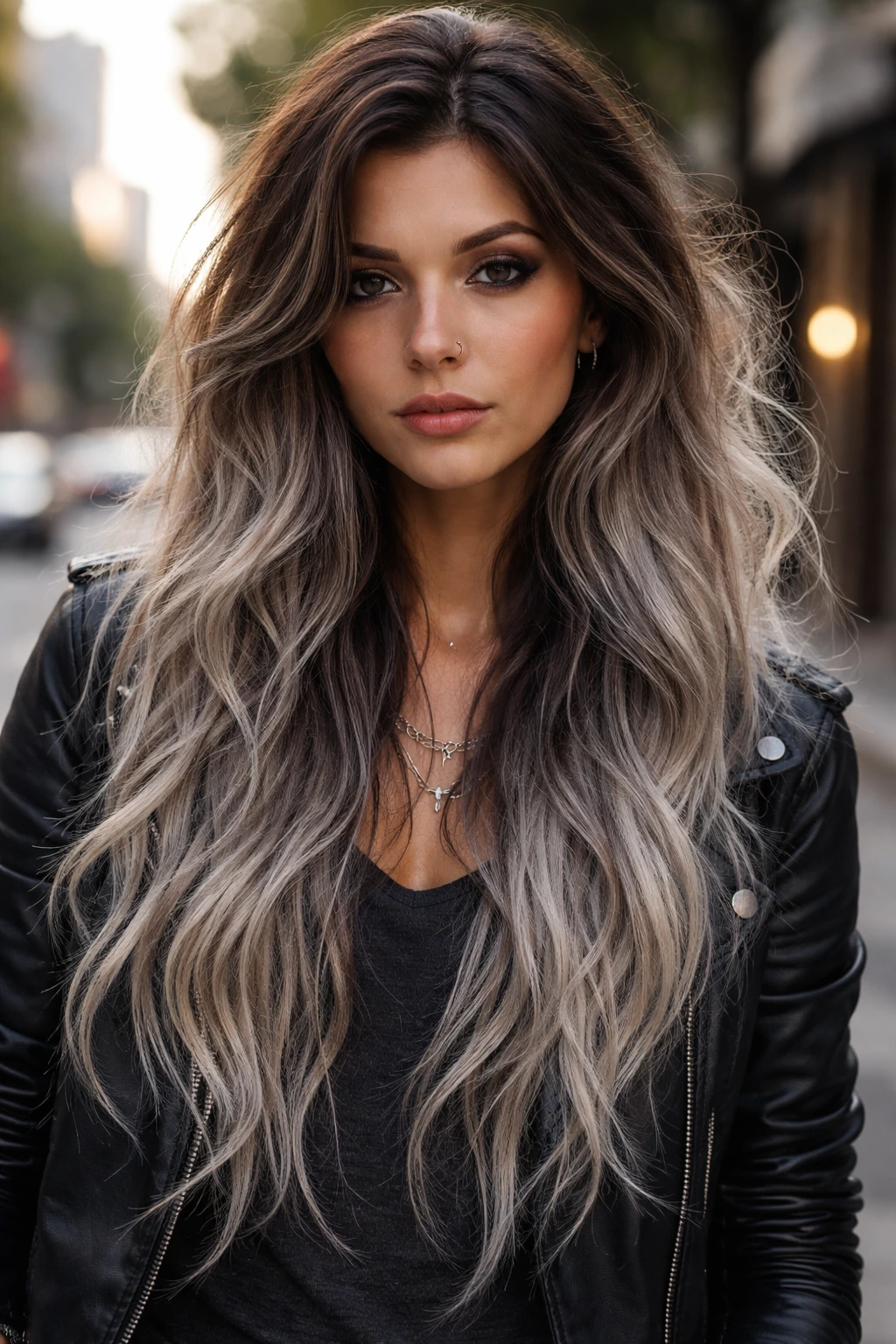
Grunge style is about “imperfect” perfection. The roots might be a bit messy, the transition might be slightly uneven, and the gray itself might be a mix of warm and cool tones. It looks like you spent three days at a music festival, and somehow, it looks cool.
Styling the Look
Avoid perfectly polished curls. Use a sea salt spray or a dry texturizing spray to give your hair that “lived-in” grit. This look pairs perfectly with leather jackets, band tees, and a generally low-maintenance approach to beauty.
19. Natural Gray Transition (The “Grow Out” Look)
This is for those who are naturally greying and want to speed up the process or make it look deliberate. You get highlights that mimic your natural silver strands and weave them into the rest of your hair, ombre-style. It is essentially blending your natural grays into the ends.
Why This Is Empowering
You stop fighting your natural biology. Instead of trying to cover up your natural silver, you celebrate it. It is the most low-maintenance option on this list because it is designed to work with your hair growth, not against it.
20. Silver Ombre with Dark Lowlights
If you have long, fine hair, an ombre can sometimes make the ends look thin or stringy. The fix? Add dark lowlights through the silver ends. This mimics the appearance of natural shadows and depth, making your hair look much denser and fuller than a flat, monochromatic silver ombre.
The Visual Illusion
The dark strands create a “3D” effect. When the light hits your hair, the contrast between the silver and the dark lowlights catches the eye, distracting from the fact that the ends might be a bit damaged from bleaching. It adds volume, visually speaking.
21. Rose Gold-Gray Hybrid
Rose gold and gray might seem like opposites, but they share a muted, dusty quality. A gray ombre with rose gold ends (or rose gold highlights throughout the gray) is a beautiful, softer take on the trend. It feels romantic and feminine.
Achieving the Blend
The key is to keep both colors in the same “tonal family.” You want a cool, dusty rose, not a vibrant, electric pink. The gray serves to ground the look, preventing the rose gold from looking too childish or bright.
22. Reverse Gray Ombre (Light top, dark ends)
Standard ombre is dark-to-light. Reverse ombre is light-to-dark. This involves a silver/gray root area that fades into a darker charcoal or black at the ends. It is incredibly unique and very rare to see in the wild.
The Difficulty Factor
This is physically harder to do. You have to bleach the roots to get them silver, which is painful, and then dye the ends dark. It is also harder to grow out, as you will have dark roots growing into a light-to-dark gradient. It is a commitment, but it is undoubtedly eye-catching.
23. Gunmetal to Silver Ombre
Gunmetal is a dark, heavy gray. This look transitions from a heavy, brooding gunmetal at the roots into a bright, reflective silver at the tips. It is high-contrast and very “cyberpunk” in aesthetic.
Texture Matters
This style works best on very straight, glass-like hair. If your hair is naturally very curly, the contrast might get lost in the coils. If you have curly hair, consider straightening it for special occasions to really let that gunmetal-to-silver fade shine.
24. Ash Blonde to Gray Transition
If you are already a blonde, you have a massive head start. You don’t need to bleach your hair to white; you just need to tone it with an ash-gray demi-permanent dye. It is a gentle way to enter the gray trend without the harshness of a full bleach session.
Why This Is the Safest Route
Because you are using a demi-permanent dye over existing blonde hair, you are depositing pigment rather than removing it. It will fade after about six to eight weeks, allowing you to return to blonde if you realize that gray is not your “forever” color.
25. Pastel Gray-Pink Ombre
This is similar to the rose gold hybrid, but here, the focus is on a cooler, almost “cotton candy” pink faded into a cool gray. It is a dreamier, softer look. It feels like a watercolor painting.
Maintenance
Pastel colors are the fastest to wash out. If you choose this look, be prepared to use a color-depositing conditioner with a pink tint every time you wash your hair. Otherwise, the pink will fade to a dull, patchy beige within a fortnight.
26. Dramatic Silver Balayage-Ombre
A pure ombre is a gradient. Balayage is hand-painted highlights. A “balayage-ombre” is the best of both worlds. You have hand-painted silver strands that start higher up near the roots (the balayage part), which then condense and saturate into a solid silver color at the ends (the ombre part).
Why It Looks So Expensive
It mimics the way hair naturally lightens in the sun, just with an unnatural color. It looks lived-in, effortless, and expensive. It is the most popular choice in high-end salons because it avoids the “fake” look of a block-dyed ombre.
27. Sharp Silver-Black Split
This isn’t a traditional gradient-style ombre, but it is often categorized under the same umbrella. It is a horizontal split: the top half of your hair is black, and the bottom half is silver. It is architectural and intense.
The Styling Requirement
This look is not for the timid. It requires perfect styling. If your hair is messy, the line looks crooked. If you are willing to spend time with a flat iron or a blow-dryer every morning, this is one of the most stunning looks you can possibly wear.
28. Glossy Charcoal Ombre
We return to where we started, but with a focus on gloss. This is a very dark, very moody charcoal ombre, but the hair is treated with high-intensity gloss treatments. It looks like spilled ink—rich, dark, and shiny.
The Secret Ingredient
You need a gloss treatment. Whether you get it at the salon or use an at-home clear glaze, it is non-negotiable. Gray hair is naturally porous and tends to absorb light rather than reflect it. A gloss glaze fills in the cuticle, creating a surface that reflects light, giving you that glass-like charcoal finish.
Final Thoughts
Choosing a gray ombre for your long hair is less about a passing trend and more about embracing a specific aesthetic that requires dedication. You are entering a realm of maintenance that involves regular toning, strict washing schedules, and a commitment to hair health that exceeds what is required for “natural” colors.
If you are new to this, start with a subtle, charcoal, or dark-ash transition. Do not try to jump to blinding white-silver in one appointment—your hair will not thank you for it, and your wallet will feel the strain of constant repairs. Take the time to find a colorist who understands “lived-in” color. Look for someone who can show you a portfolio of gradients, not just block-colored ends.
Your long hair is the perfect canvas for a slow, beautiful fade. When done correctly, the gray ombre effect creates a depth and dimension that makes your hair look like a luxury fabric. It is worth the effort, provided you go in with your eyes open to the reality of the upkeep. Treat your hair well, invest in the right purple shampoos, and enjoy the transformation.
