



Blue ombre on long hair can look expensive fast, or it can look like you grabbed the wrong toner and hoped for the best. The difference usually comes down to placement, not drama. Long hair gives the color room to breathe, which is why blue ombre hair ideas for long hair can feel elegant, edgy, moody, or even soft depending on where the darker shade ends and the lighter blue begins.
The part people miss is that long hair changes everything. A blue fade on waist-length waves has time to move from dark roots to bright ends in a way a bob never can. That extra length lets you build a real gradient — not a blunt stripe, not a muddy block, but a color shift that looks intentional when the hair swings.
Base color matters too. Put icy blue on a warm blonde and it can go cloudy. Put the same blue on a clean lift, then give the roots a shadow, and suddenly the whole thing looks richer. This is where good ombre lives: not in the loudest blue, but in the cleanest transition.
Some of the looks below are glossy and low-key. Others are loud in the best possible way. A few lean cool and smoky, which I personally think is where blue hair gets most interesting, because it keeps the color from looking costume-y.
1. Midnight Blue Melt With Black Roots
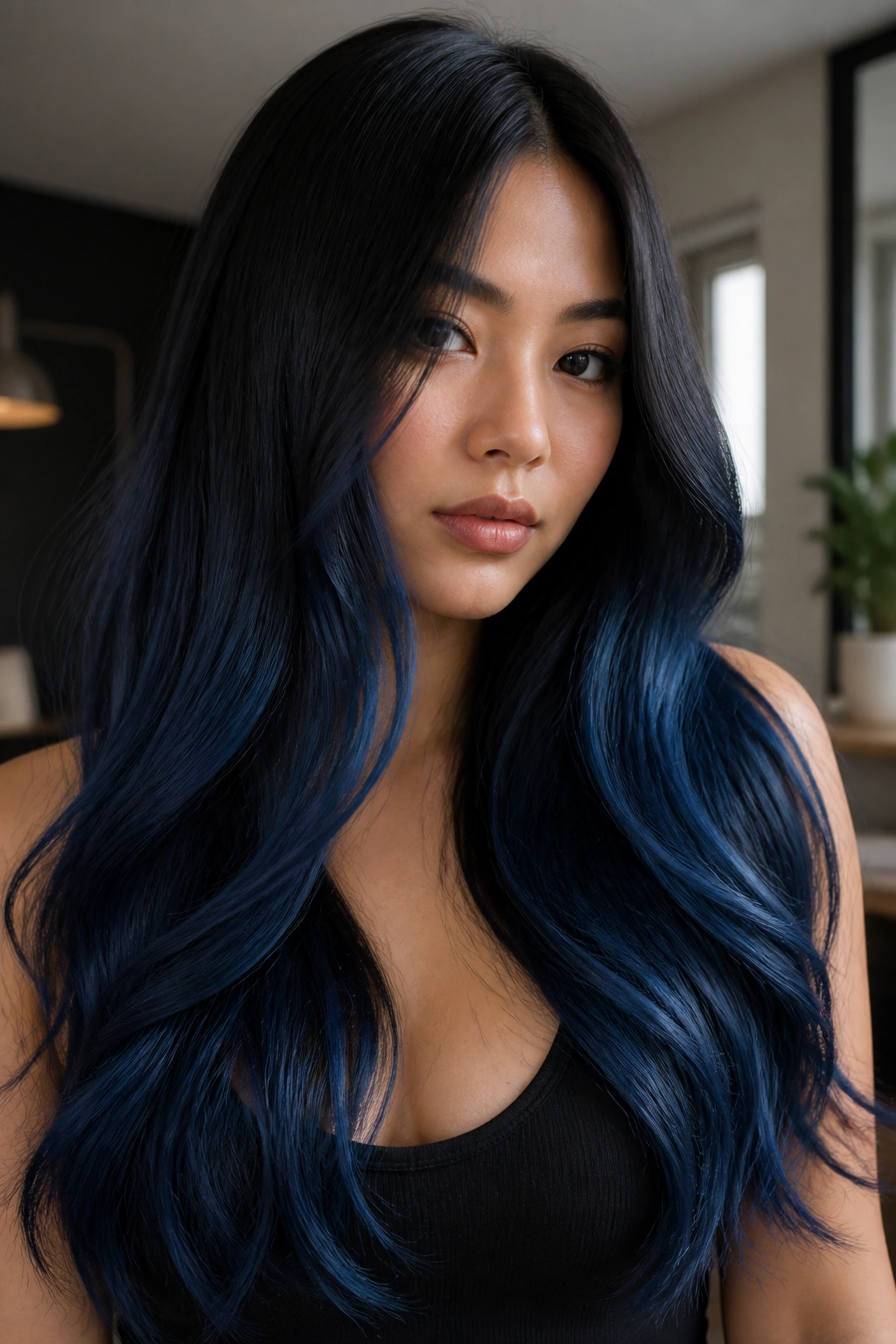
This is the safest place to start if you want blue ombre that still feels grown-up. Black or espresso roots melting into deep midnight blue create a soft edge that works especially well on long, straight hair and loose S-waves. The color stays moody near the top, then opens up near the ends, which gives the whole style a heavier, silkier look.
Why It Works
Midnight blue has enough darkness to sit next to black without fighting it. On long hair, that matters. A hard line at the top would look choppy, but a gradual melt makes the whole style feel smoother and more expensive.
- Best on hair that already has depth at the root.
- Looks strongest when the blue starts 3 to 5 inches below the part line.
- Pair it with soft bends from a 1.25-inch curling iron so the color catches movement.
- Ask for a gloss finish if you want the blue to read richer indoors.
Tip: Keep the ends glossy, not matte. Matte blue can look dusty fast.
2. Sapphire Ribbon Ombre on Soft Waves
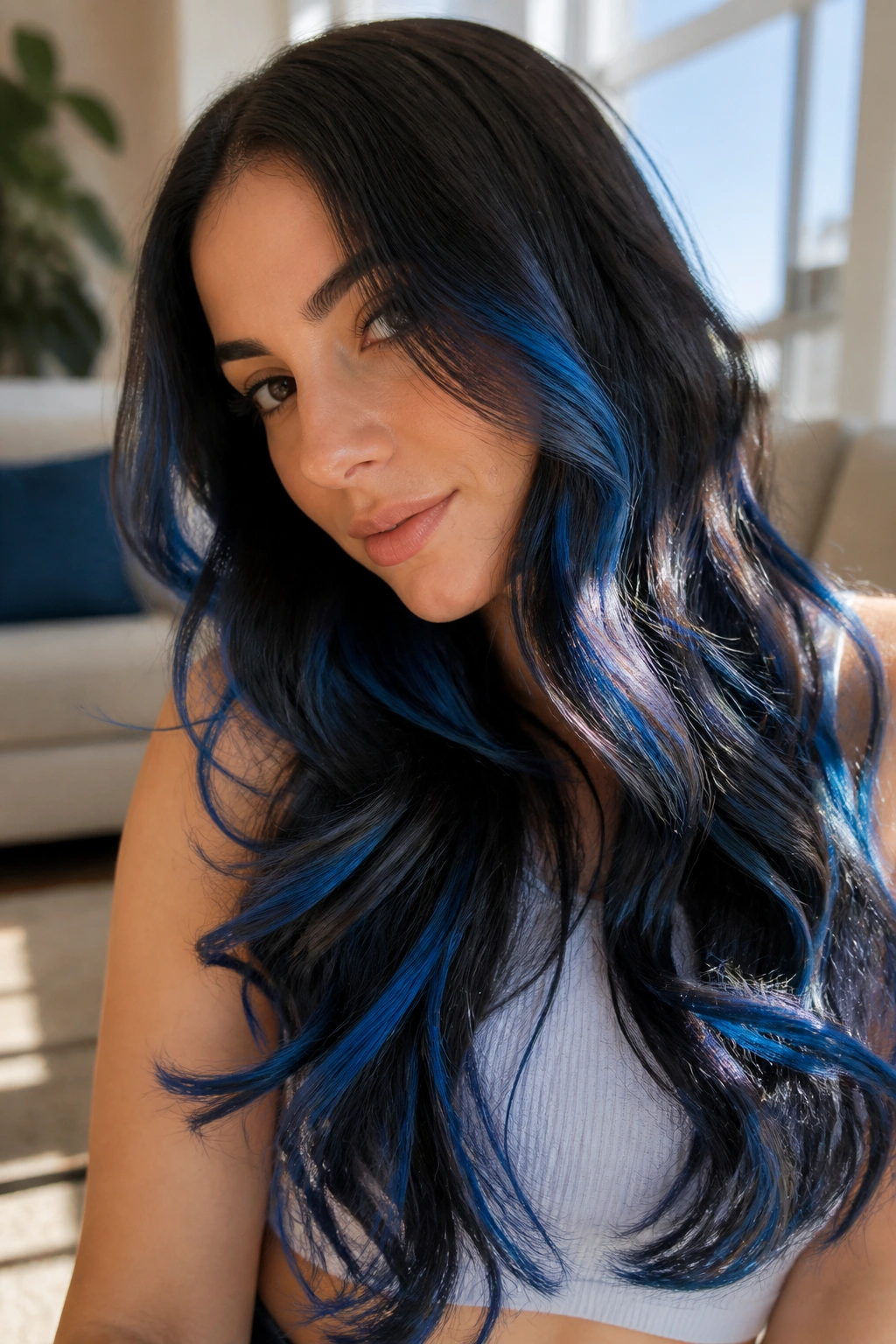
Sapphire ribbon ombre is the version I’d pick for someone who wants movement more than shock value. Instead of flooding the whole lower half with blue, the colorist paints long ribbon-like pieces through the mid-lengths and ends. On long hair, that creates little flashes of sapphire when the hair moves, which is a lot prettier than a flat color block.
The best part is how forgiving it is. Soft waves hide any tiny transition line, and the blue ribbons can sit on top of darker blonde or light brown without taking over the whole head. If you wear your hair loose, this is the one that gives you that “wait, what shade is that?” reaction.
For styling, a light smoothing cream and a loose wave pattern are enough. Keep the wave pattern irregular. Uniform curls make the ribbons look too neat, and the whole point here is that the blue should feel like it drifted through the hair on its own.
3. Teal-Blue Ombre With Silver Ends
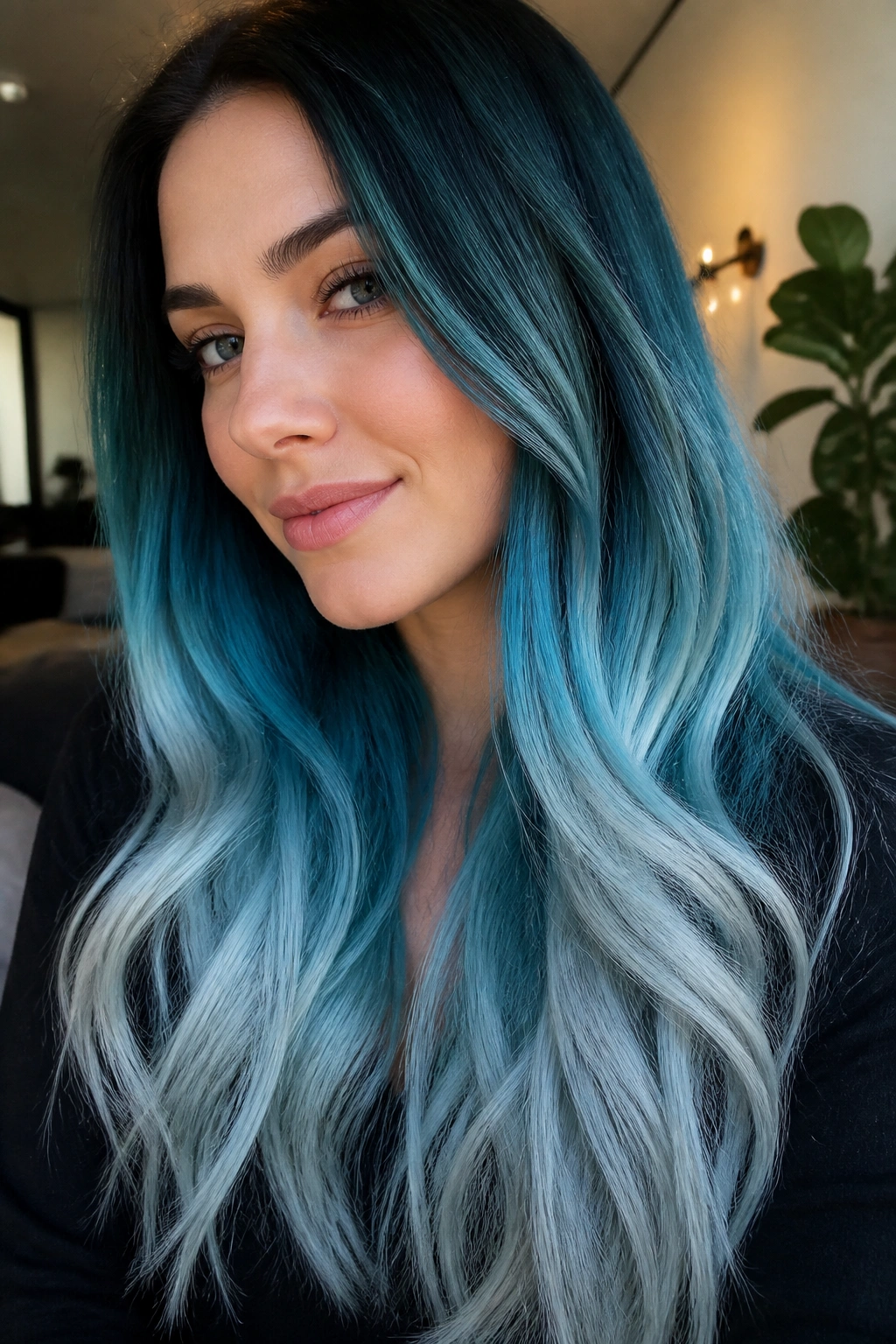
Why does teal-blue look so good on long hair? Because the little hint of green keeps the blue from flattening out. Add silver ends and the whole thing turns icy, sharp, and a bit futuristic without going full neon. On a long cut, that color shift can run from a darker teal near the mid-lengths to a pale steel-blue finish at the bottom.
How to Ask for It
Tell your colorist you want a cool-toned teal that fades into silver-blue, not a bright seafoam. That wording matters. If the teal is too green, the whole look skews tropical; if the silver is too pale, it can disappear on thick hair.
A good target is a lift to level 9 or 10 before toning if your hair starts dark. That’s the kind of clean canvas silver-blue needs. On lighter bases, the fade can begin higher up, around the cheekbone or collarbone area, and still feel soft.
4. Denim Blue Ombre on Straight Lengths
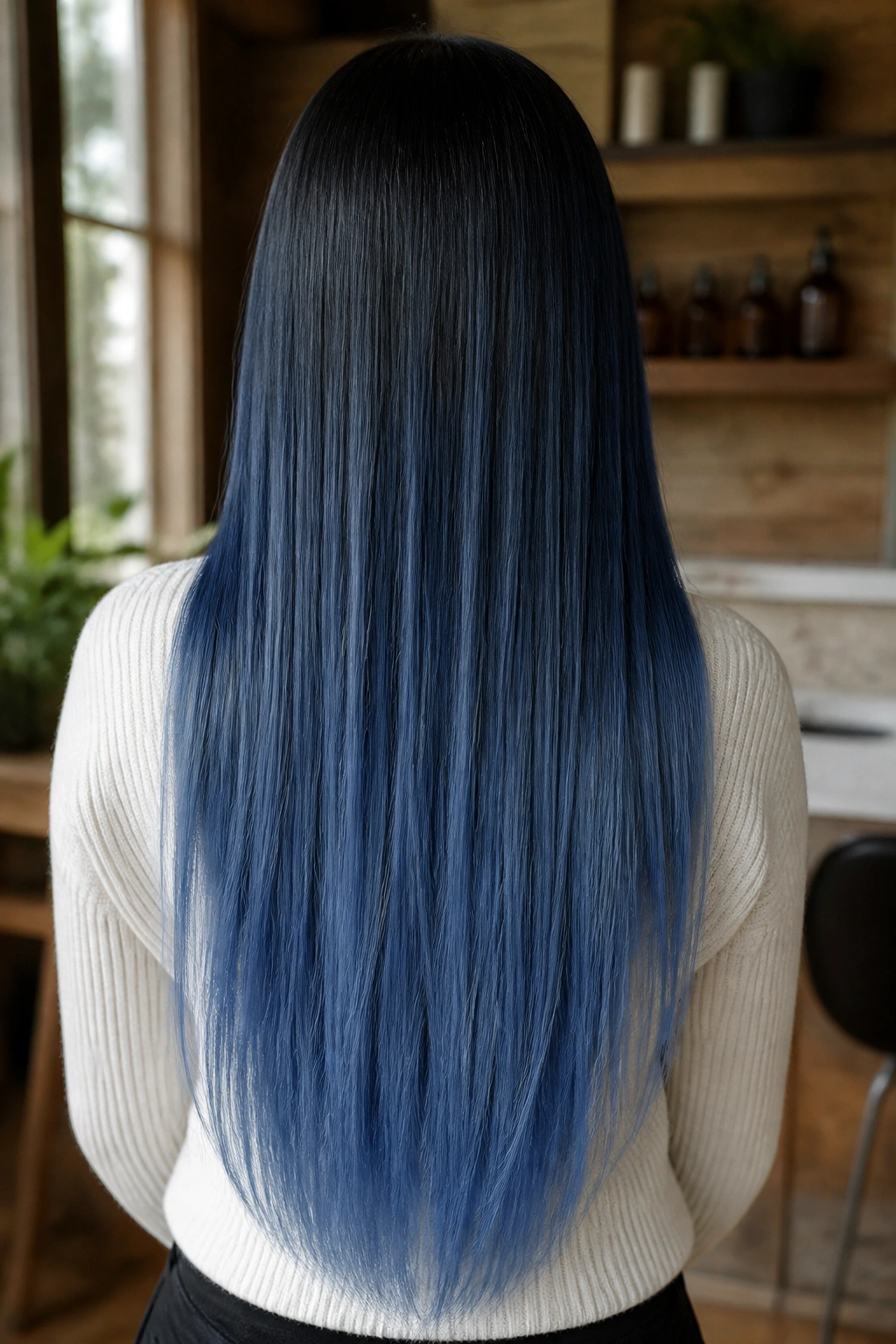
Picture a blunt, waist-length cut that falls straight and clean down the back. Denim blue was made for that shape. It starts with a cool, muted mid-blue and runs into a softer faded finish at the ends, almost like old jeans that have been washed a hundred times and still look good.
The mechanism is simple: straight hair shows color blocks more clearly, so a denim tone works better than something ultra-bright. It reads textured even when the hair itself is smooth. That makes it a smart choice if you live in a flat-iron world and want color that looks deliberate from every angle.
- Keep the transition low and gradual.
- A 1-inch sectioning pattern gives the blue a more tailored look.
- Works well on hair that falls past the ribs.
- Finish with a light serum, not a heavy oil.
Bottom line: this is cool, clean, and less fussy than it sounds.
5. Icy Blue Ombre With Smoky Charcoal Root
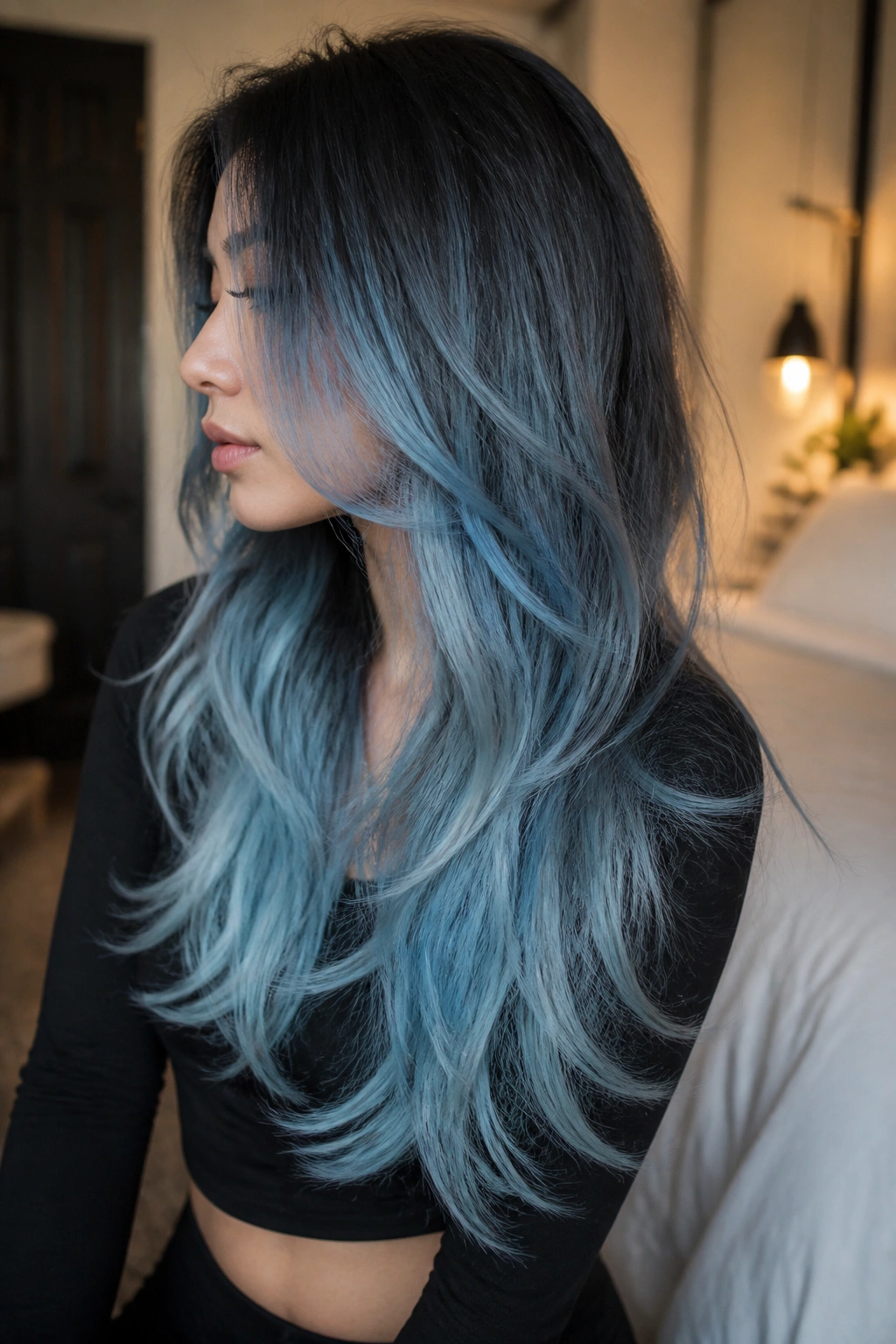
This one has a sharper edge. Smoky charcoal near the root gives icy blue somewhere to live, and the contrast keeps the color from washing out on very long hair. It’s a good pick if you like cool tones and don’t mind a look that feels a little more dramatic under bright light.
The key is restraint. The root shadow should not look painted on like a helmet. It needs to blur into the blue, so the transition feels like smoke sliding into frost. On long layers, that effect is especially nice because each layer catches a slightly different slice of color.
I like this version on glossy, healthy hair more than on dry ends. Pale blue shows every rough patch. If the ends are rough, the blue can look chalky instead of icy, and nobody wants that. A trim before coloring helps more than people think.
6. Cobalt Blue Face-Framing Ombre
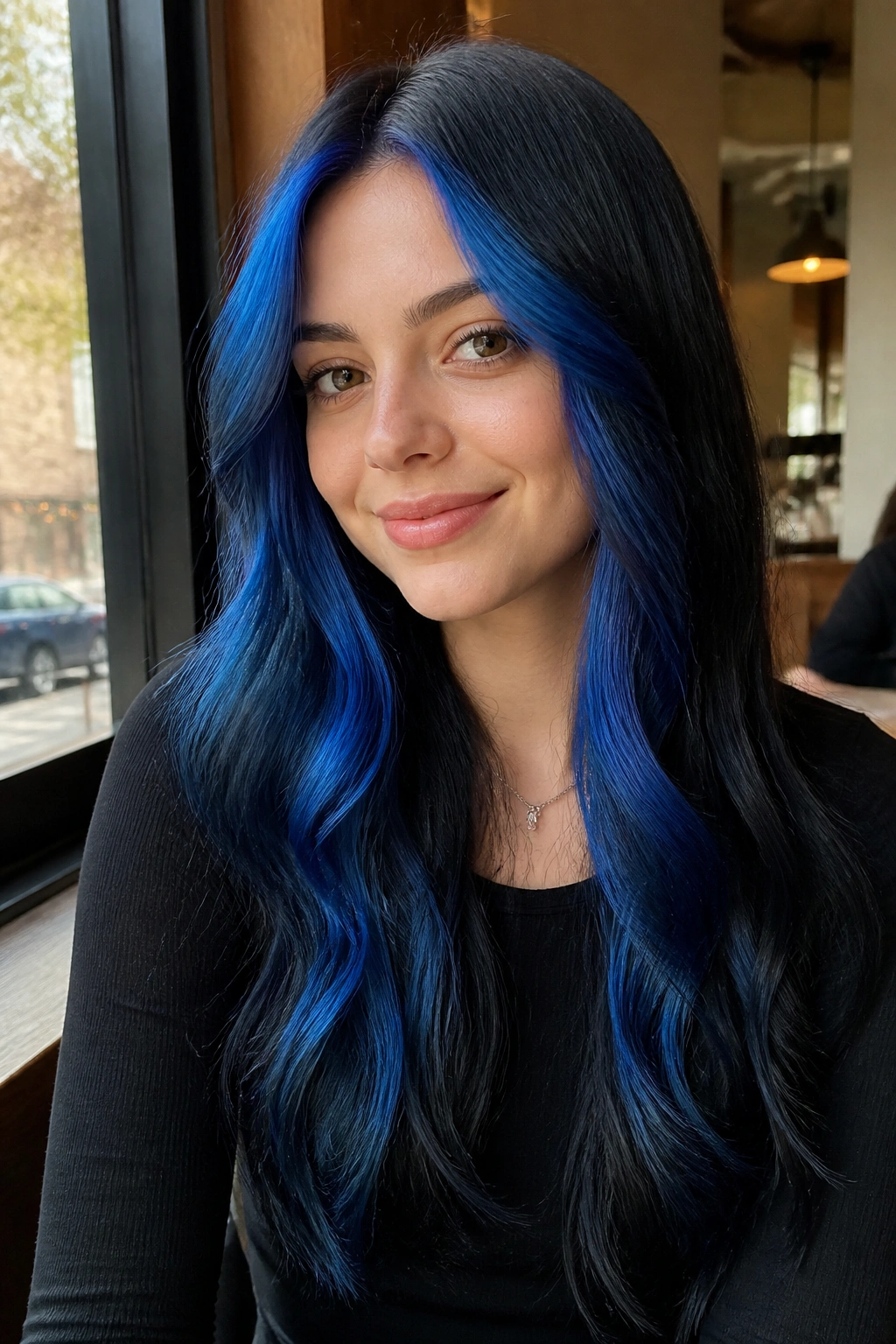
A full-head cobalt ombre can be a lot. A face-framing version gives you the same hit of color without drowning the whole length in blue. The front pieces carry the brightest tone, while the rest of the hair fades more gently toward the ends. On long hair, that creates a bright halo effect around the face.
What Makes It Different
This is the option for someone who wants the color visible even when the hair is tucked behind one ear. The front sections can start a little higher, around the cheekbone or jawline, while the back stays darker and more grounded. That contrast makes the blue pop.
If you wear layers, even better. The front pieces will separate naturally from the rest of the hair, which gives cobalt room to show off without looking painted on. And if you curl the front away from the face, the blue reads stronger right where it matters.
Best for: long hair, strong cheekbone-framing layers, and people who want color with a bit of bite.
7. Navy-to-Azure Balayage on Layered Hair
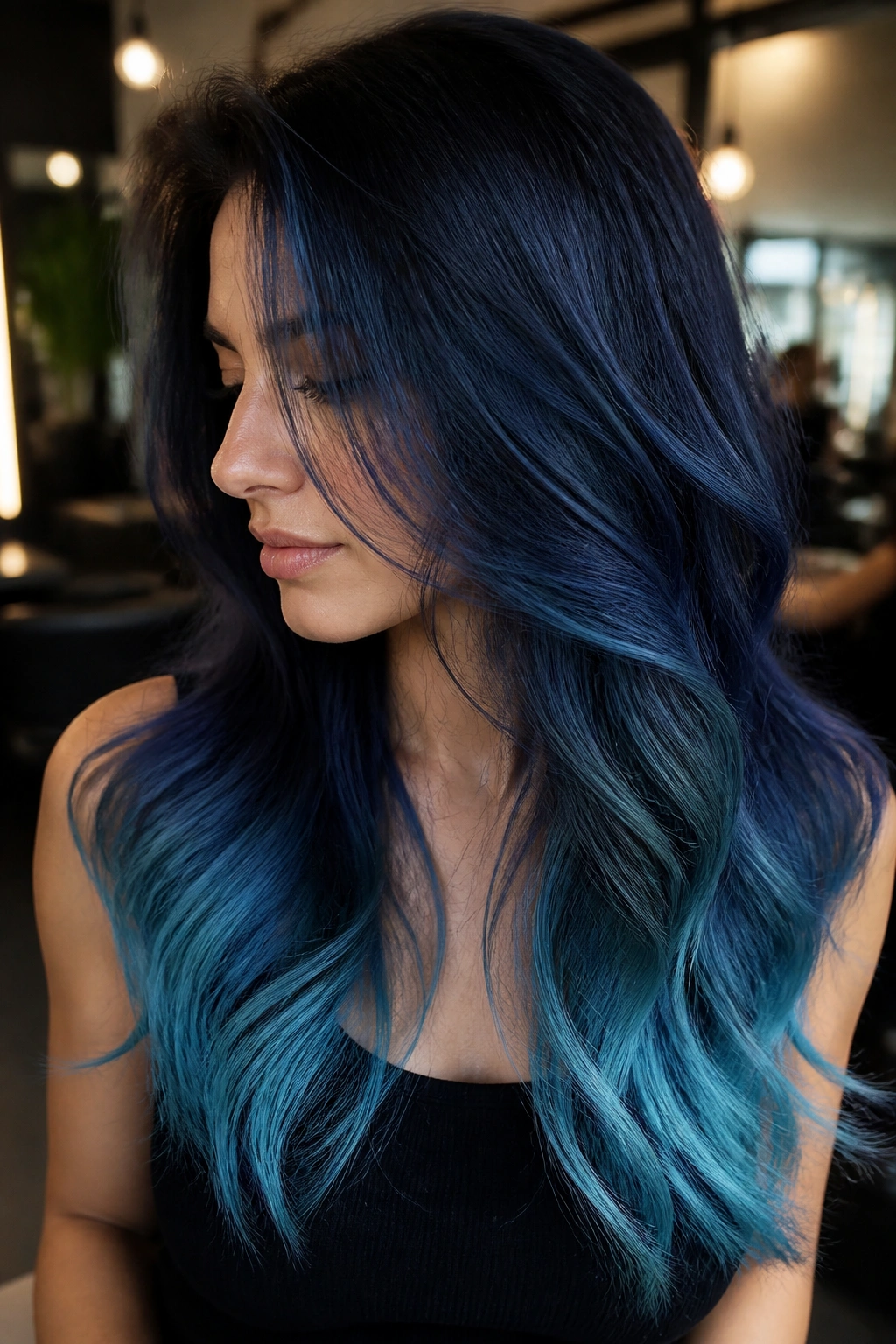
This is the kind of blue ombre that moves well. Navy near the mid-lengths and azure at the ends gives layered hair a sense of structure, because every layer picks up a different tone. On long hair, that can look almost architectural when the hair is blown out or curled.
Why It Works
Navy holds the shape. Azure lightens it up. Put them together and you get depth without the color collapsing into one flat note. The darker top half gives your roots room to grow, while the brighter ends catch light and keep the style from feeling heavy.
- Ask for long balayage pieces, not tiny streaks.
- A 1.25-inch iron makes the layers separate nicely.
- Works especially well on U-shapes and butterfly cuts.
- A gloss every few weeks keeps the azure from turning dull.
Tip: If your hair is thick, keep the navy closer to the mid-shaft. Too much dark pigment at the top can make the length look bulky.
8. Pastel Blue Ombre on Platinum Blonde Lengths
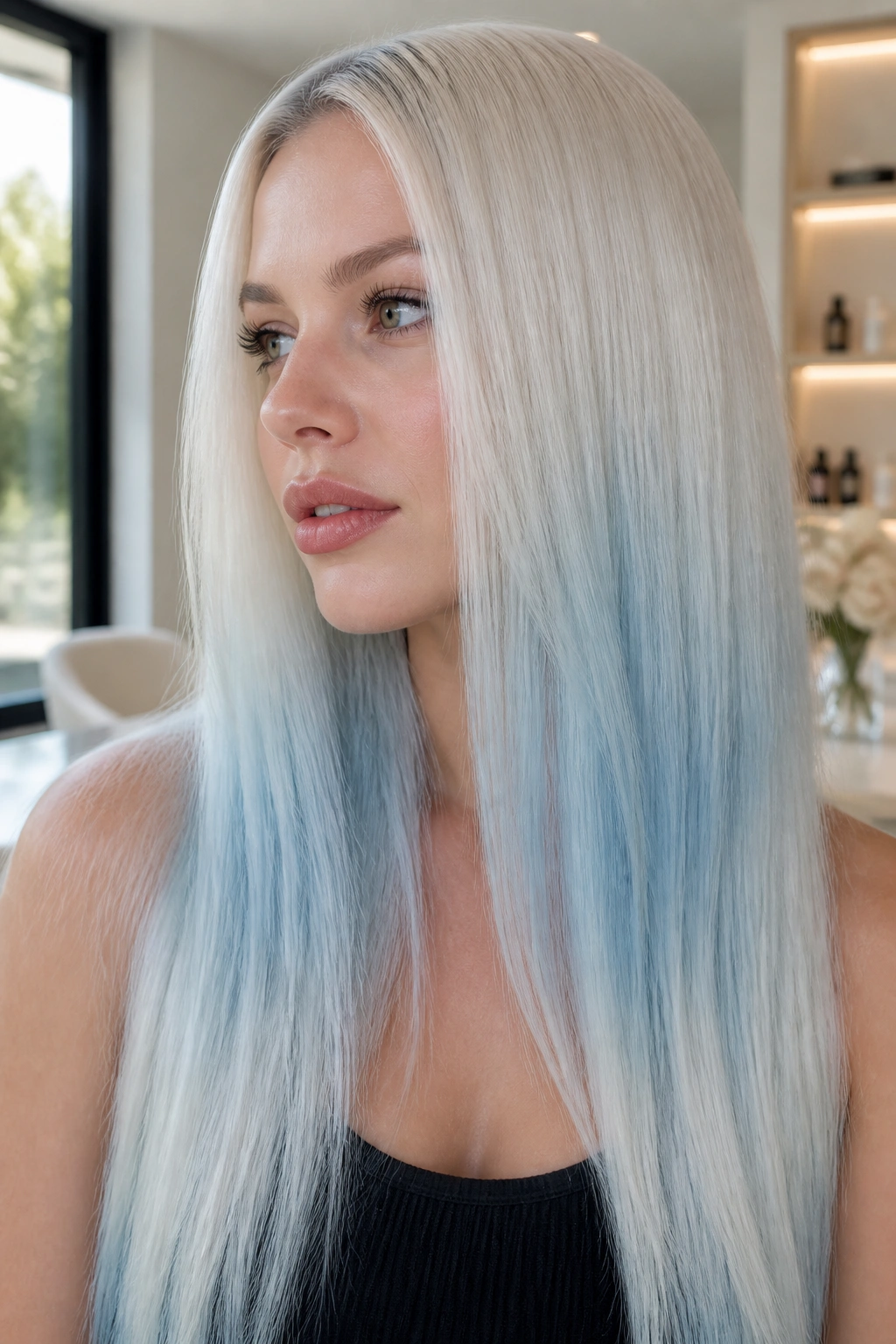
Pastel blue only works when the canvas is clean. That’s the blunt truth. On platinum blonde long hair, though, it can look airy and soft in a way darker blue shades can’t. The color usually starts faintly near the middle, then melts into a pale cloud at the ends.
This version needs a light hand. If the blue is too saturated, the pastel effect disappears and you get baby blue that feels flat. If the base is too warm, the ends go a little murky. The sweet spot is a bright, pale blonde with a cool toner underneath.
I like this look on straight or gently waved lengths because the color itself is the main event. Keep the styling simple. A soft blowout, a center part, and a clean shine spray do more here than a complicated curl pattern ever will.
9. Electric Blue Dip-Dye Ombre
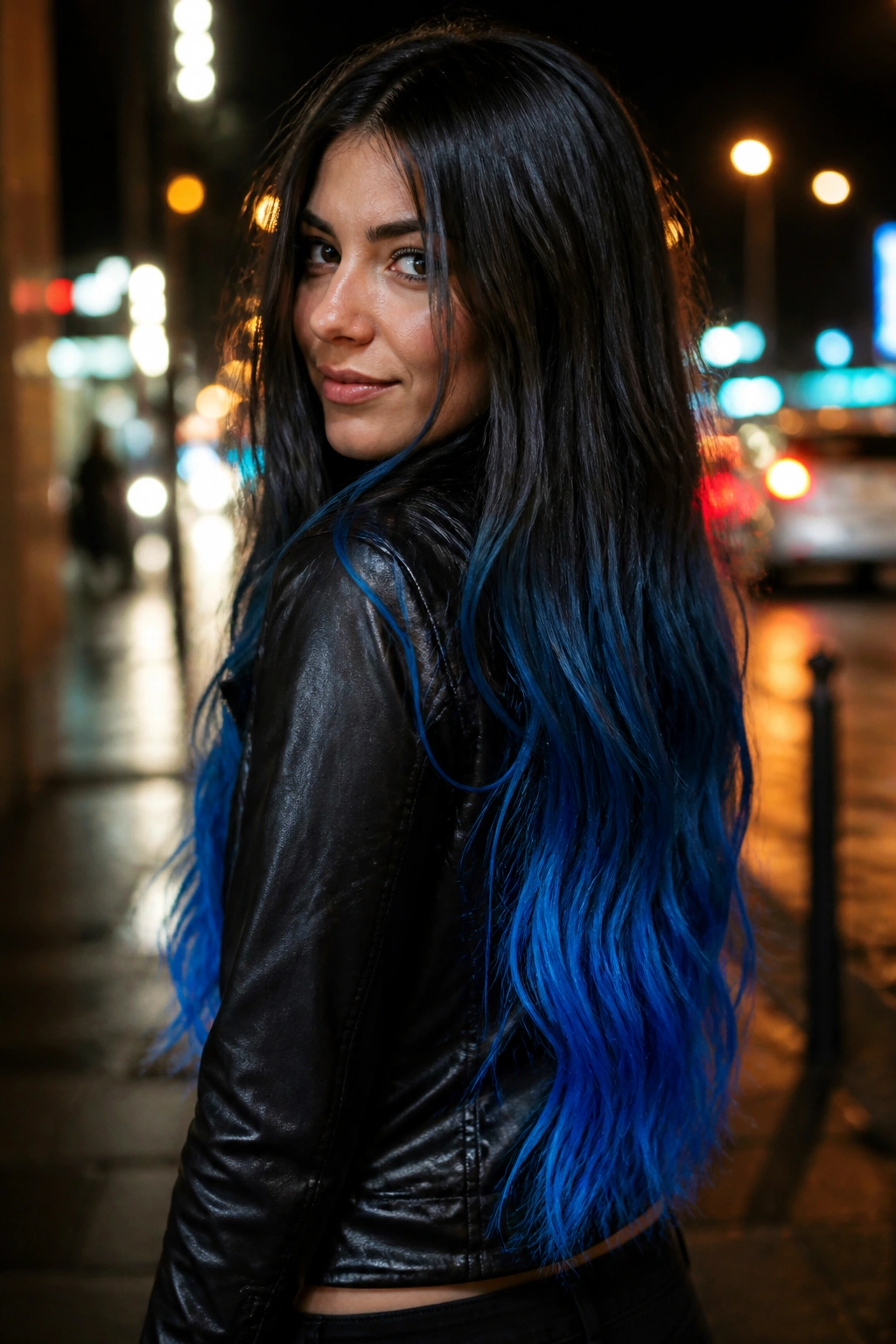
Want the blue to shout from across the room? This is the one. Electric blue dip-dye ombre keeps the top half grounded and puts the loud color right at the bottom third of the hair, where it can swing, swish, and show up in every braid or ponytail.
How to Wear It
The clean line matters. A dip-dye effect looks strongest when the transition begins around the lower ribs or just above the waist, depending on length. That makes the color feel bold without spreading it too high.
This style works well on long hair that gets worn in braids, buns, or half-up styles. The bright ends peek out in layers, which is half the fun. If you straighten it, the line looks graphic. If you wave it, the edge softens and feels more playful.
A small warning: electric blue fades fast into softer blue or turquoise tones, so plan on refreshing the ends sooner than you would with a darker shade.
10. Ocean Blue Ombre With Seafoam Tips
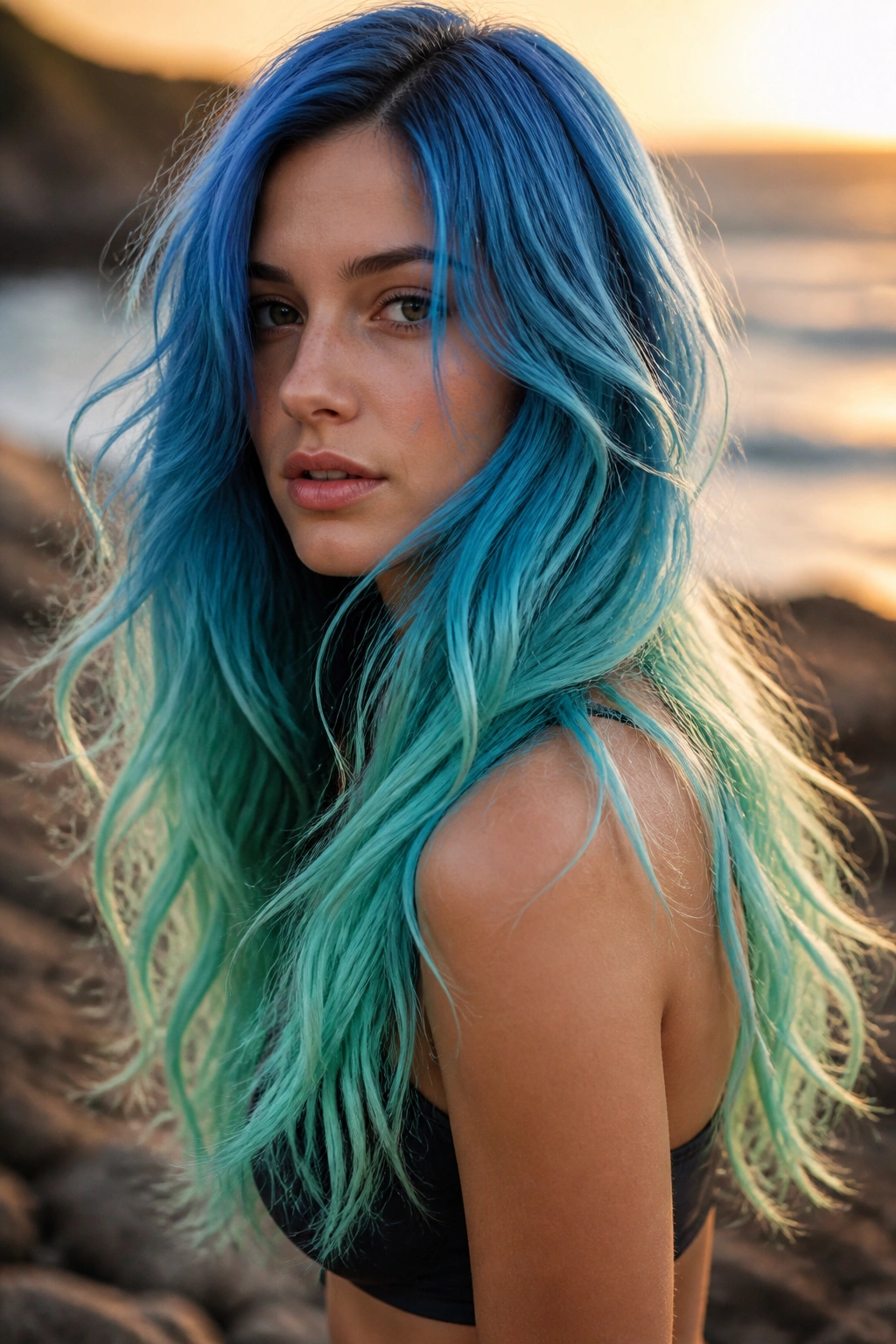
Ocean blue is one of those shades that makes sense the second you see it. Deep blue near the top, then a cooler aqua through the middle, then a hint of seafoam at the tips — that’s the whole map. On long hair, the color shift feels fluid, almost like water moving in layers.
The style works best when the ends are textured. If the tips are blunt and heavy, the seafoam can look cut off. Soft, slightly uneven ends let the lighter blue spread out and breathe. I’d choose beach waves here every time, because the movement helps the darker and lighter tones meet in a way that feels natural.
If you want the shade to hold, avoid over-washing. Blue pigments can slide out faster than people expect, especially when the ends are pale. A cool rinse and a gentle shampoo are enough to keep the water-color look from turning tired.
11. Blue Black Ombre With Glossy Finish
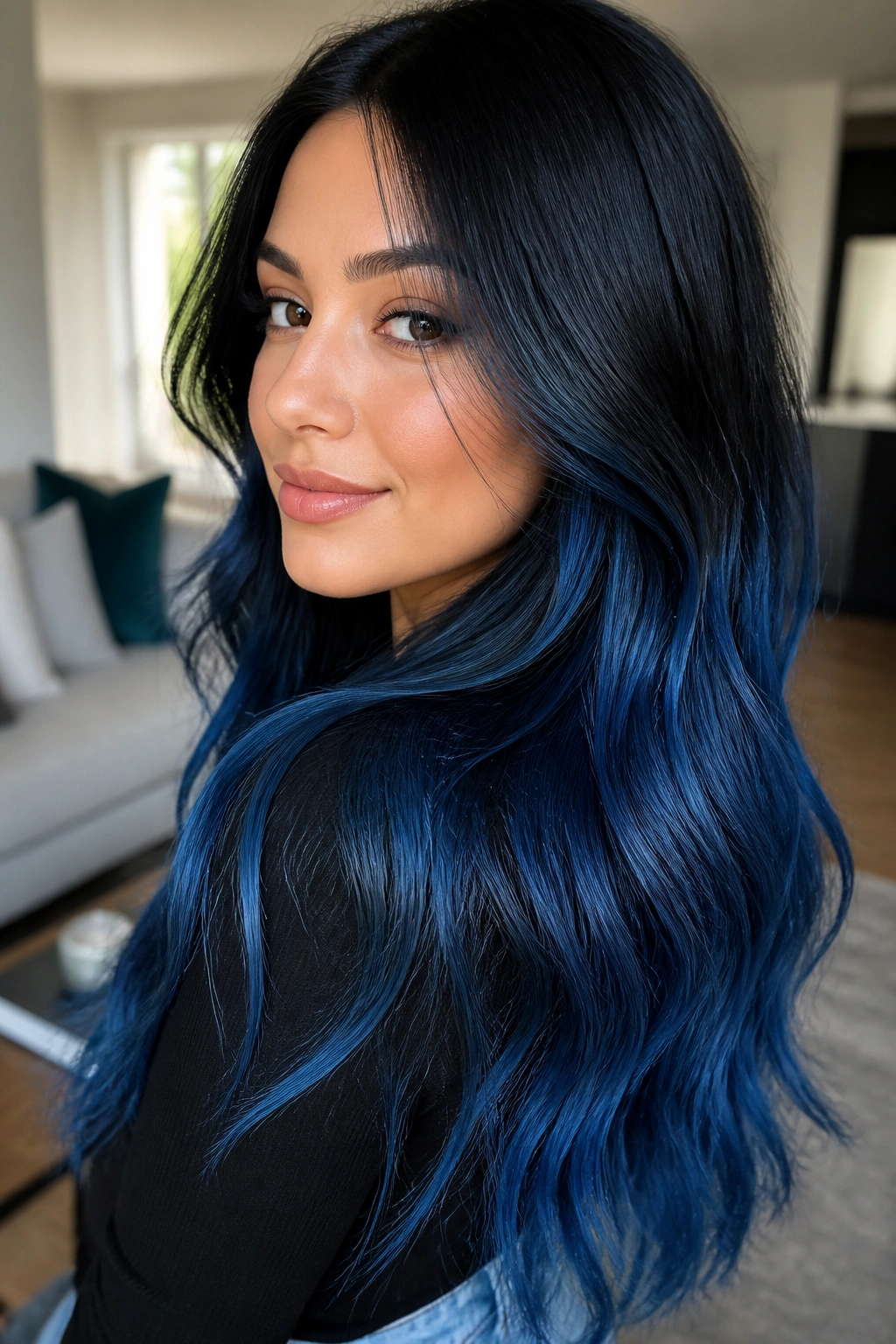
This is the stealth version of blue ombre, and it’s underrated. Blue-black at the top fading into a deeper blue at the ends gives long hair a reflective, polished finish that looks almost black indoors and blue outdoors. It’s subtle, but not boring. That’s a nice line to walk.
The glossy finish does most of the work. Without shine, blue-black can look flat. With shine, the color catches a faint indigo glow and the hair looks denser than it really is. Long hair benefits from that because the weight of the length can sometimes make bold colors look heavy; gloss keeps it alive.
I’d choose this if you like blue but don’t want strangers clocking your color from 20 feet away. It’s also one of the easier shades to live with, since regrowth is less obvious and the dark base hides a lot of the usual maintenance drama.
12. Dusty Blue Ombre for Soft, Airy Layers
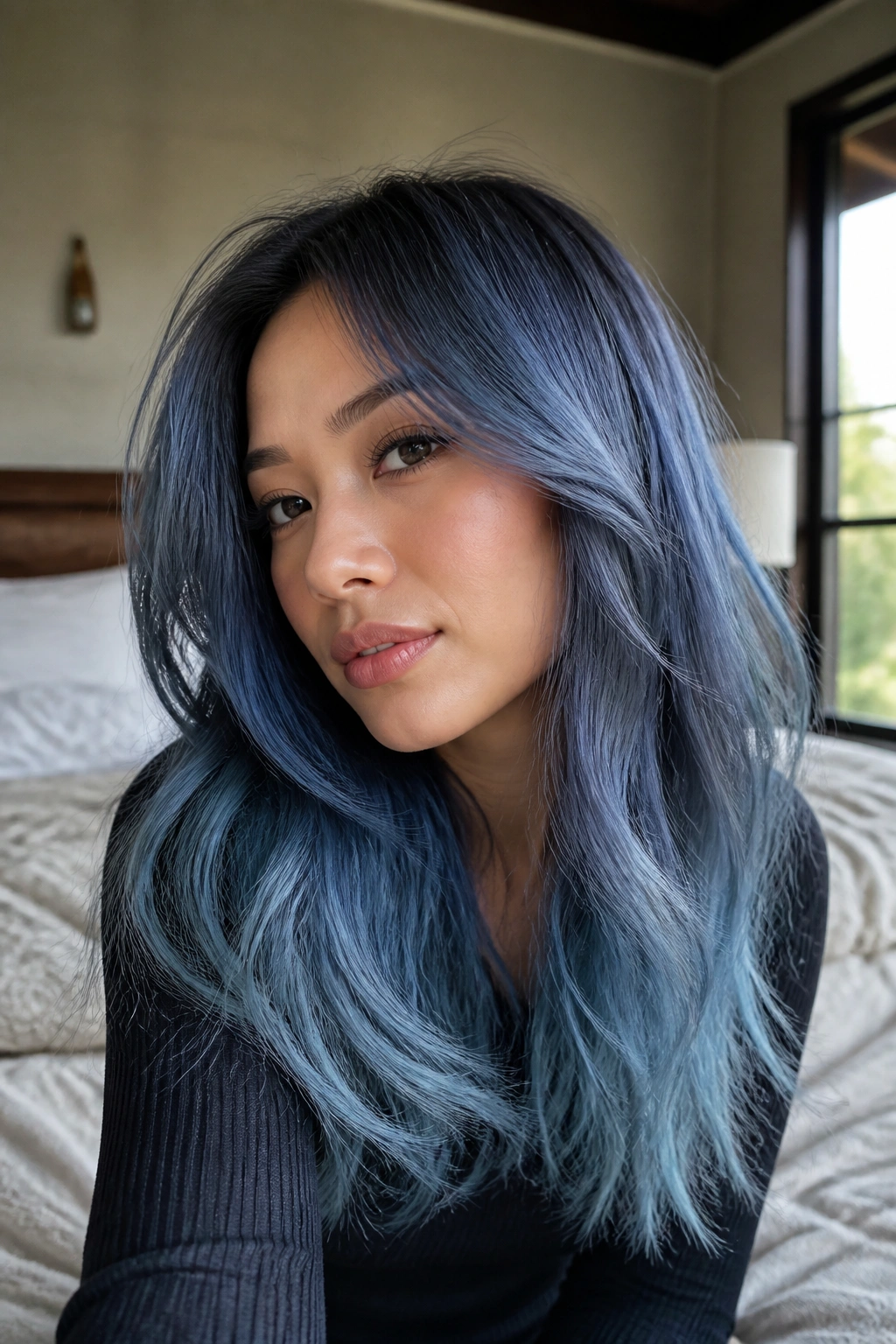
Unlike electric blue, dusty blue feels muted and calm. That’s what makes it good on long, airy layers. The shade sits somewhere between slate and pale denim, so the whole ombre reads soft instead of loud. If your haircut has movement, this color follows it well.
What Makes It Different
Dusty blue doesn’t ask for perfect brightness. In fact, it looks better with a little shadow left in the hair. That tiny bit of depth keeps the color from feeling chalky. On layered hair, the ends can go a little lighter while the mid-lengths stay smoky, and the whole thing feels balanced.
It’s a solid choice if your wardrobe leans gray, white, black, or washed-out neutrals. The color can read almost like fabric dye on hair. Not costume-y. Not sugary. Just cool and easy to wear.
If you want the blue to last, ask for a toner that leans slate rather than silver. Silver fades fast. Slate hangs on longer and keeps the finish from looking washed out too soon.
13. Blue and Violet Ombre Blend
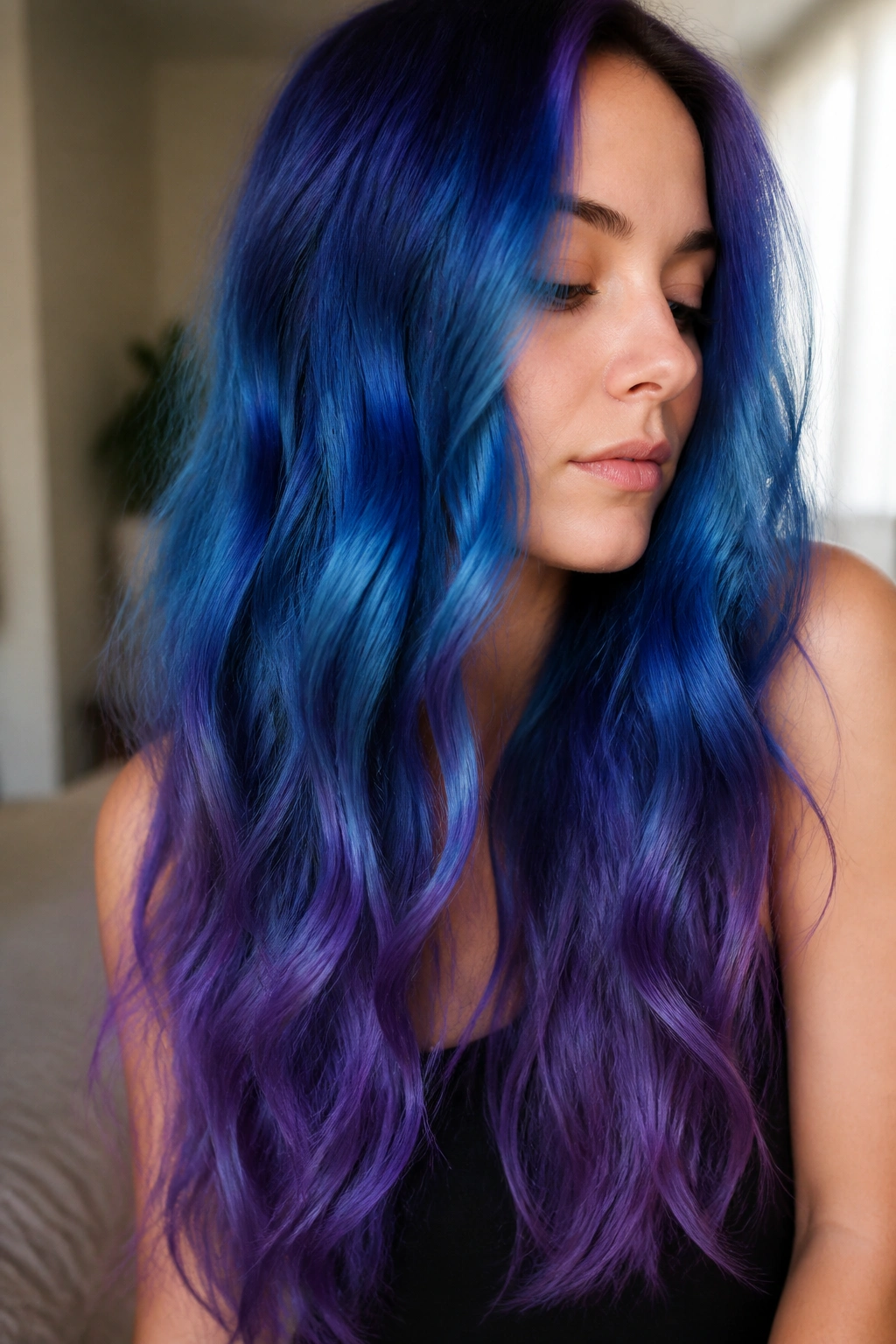
Blue alone can sometimes go flat. Violet fixes that. When the two shades are blended through long hair, the blue keeps the look cool while the violet adds depth and stops the ends from looking one-note. It’s a smart move if you want color that changes in different light.
Why It Works
Blue and violet sit close enough to feel connected, but not so close that they blur together. That means the fade can stay interesting from the mid-lengths all the way down. On long hair, especially wavy hair, the violet can hide in the shadowed parts and flash out when the hair moves.
- Ask for blue through the mid-shaft and violet concentrated on the last 4 to 6 inches.
- Works well on pre-lightened blonde or pale brown hair.
- A wave pattern with a smaller iron, around 1 inch, shows the color stripes nicely.
- Purple shampoo can help, but use it lightly or the blue may go dull.
Tip: If you want more contrast, keep the violet cooler. If you want softness, use a bluer purple.
14. Mermaid Blue Ombre With Green Undertones
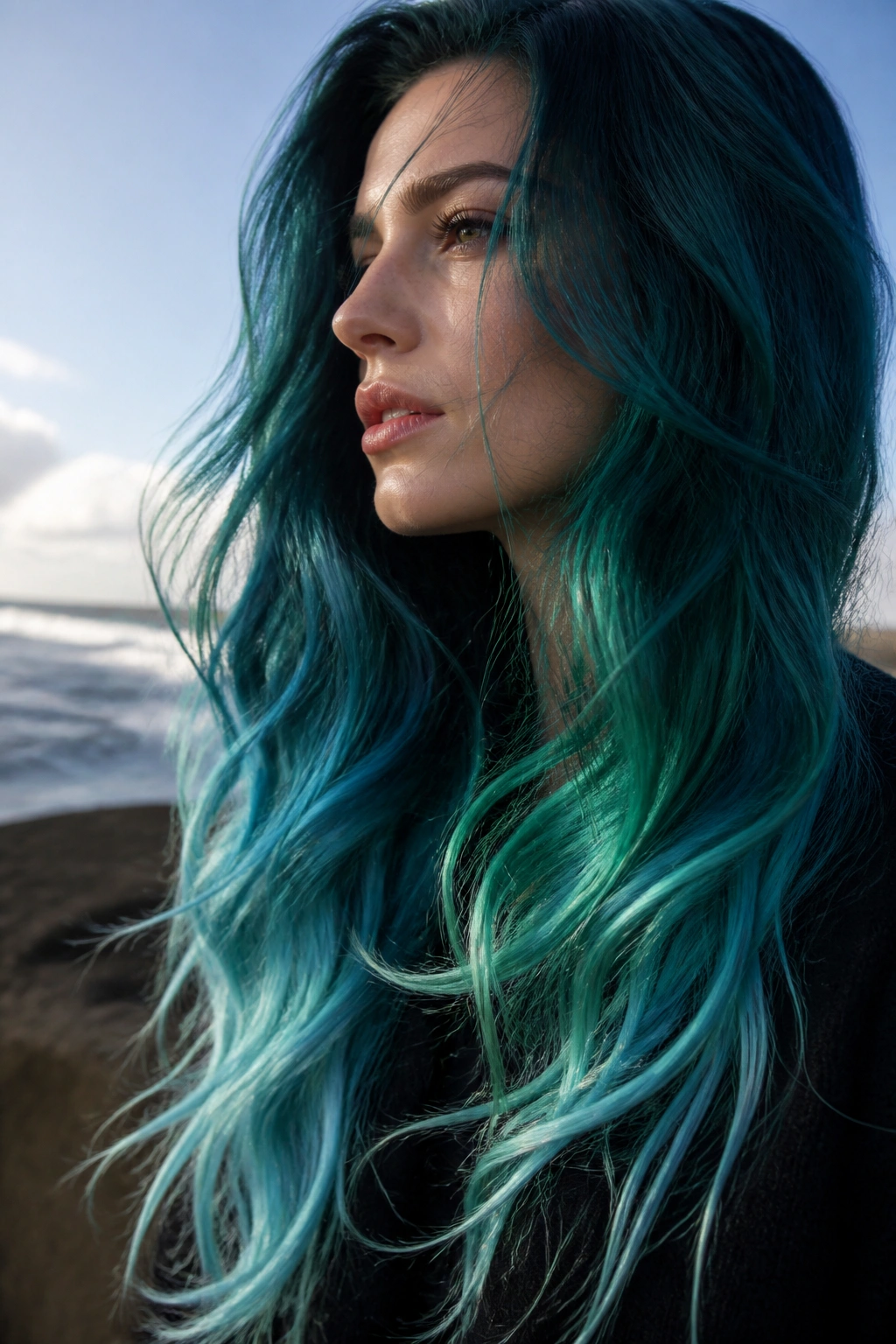
Some mermaid hair looks sugary. This one doesn’t. Mermaid blue with green undertones feels richer, darker, and a little more underwater than poolside. On long hair, the blend can move from deep teal at the top into bright aqua-blue at the ends, which gives the whole style a real sense of depth.
The green note matters because it stops the blue from looking flat. It also plays nicely with texture. Braids, beach waves, and half-up knots all show the color shift in a different way, which is exactly what you want if the length is part of the appeal.
I’d wear this with loose, touchable styling rather than tight curls. Tight curls can make the color read busier than it needs to be. A little softness keeps it in that mermaid zone instead of pushing it into costume territory.
15. Royal Blue Ombre on Curly Long Hair
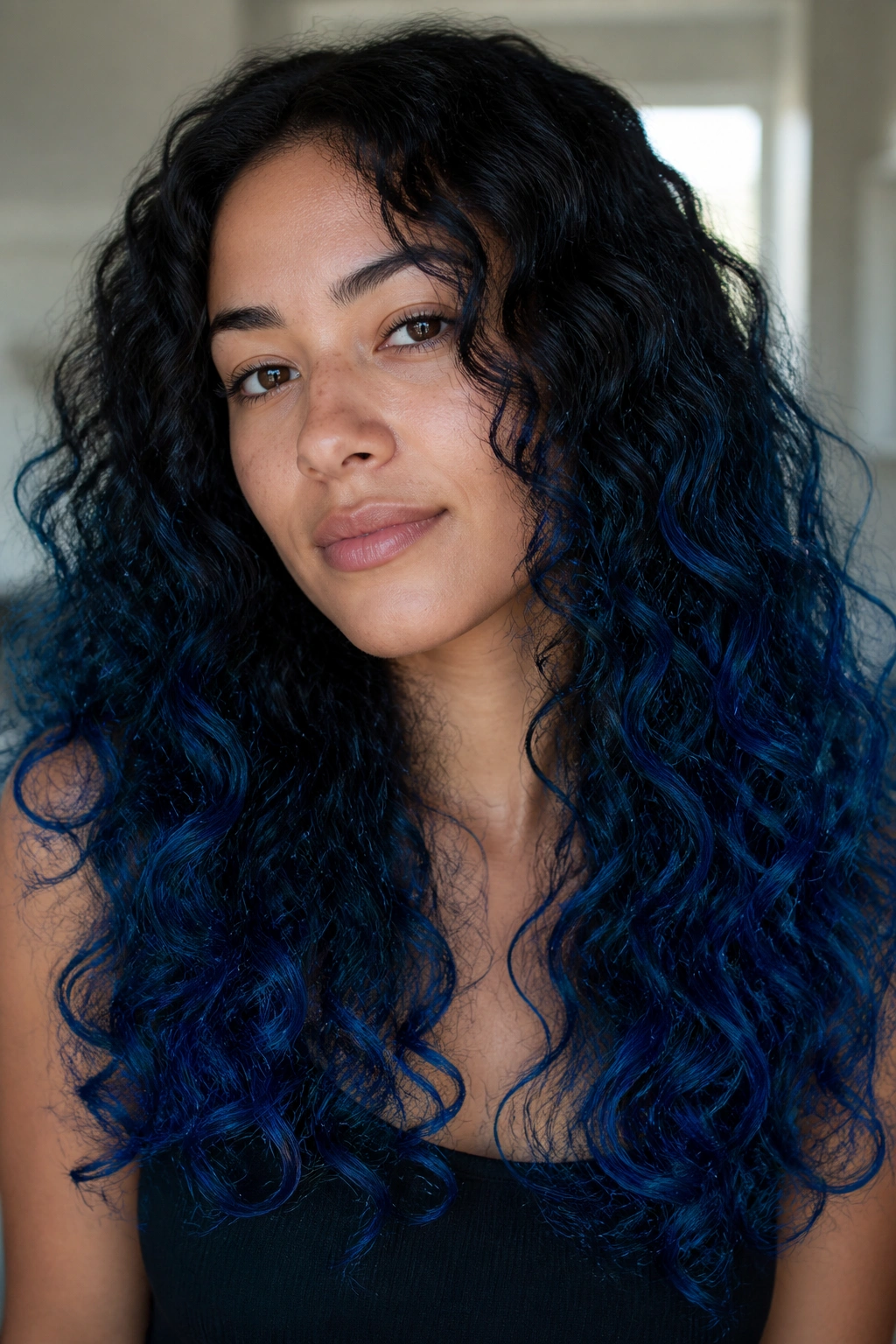
Why does royal blue look richer on curls? Because curls build their own light and shadow. A ringlet catches the bright edge of the blue, then hides the darker edge a few millimeters away. On long curly hair, that means the color looks deeper and more dimensional than it would on pin-straight lengths.
How to Ask for It
Ask for royal blue to start below the crown and concentrate more heavily toward the outer curve of the curls. That way, the inner sections stay a touch darker, which gives the whole style shape. If everything is painted the same, the curls can turn into a single blue mass. Nobody wants that.
A diffuser on low heat helps the color show without frizz stealing the spotlight. And if your curls are tight, leave a little more depth at the root. Curly hair naturally shrinks, so the ombre needs room to breathe or the blue starts too high and feels crowded.
This is one of those shades that looks excellent in motion. Stand still, and it’s pretty. Move, and it gets interesting.
16. Lived-In Blue Balayage With Shadow Root
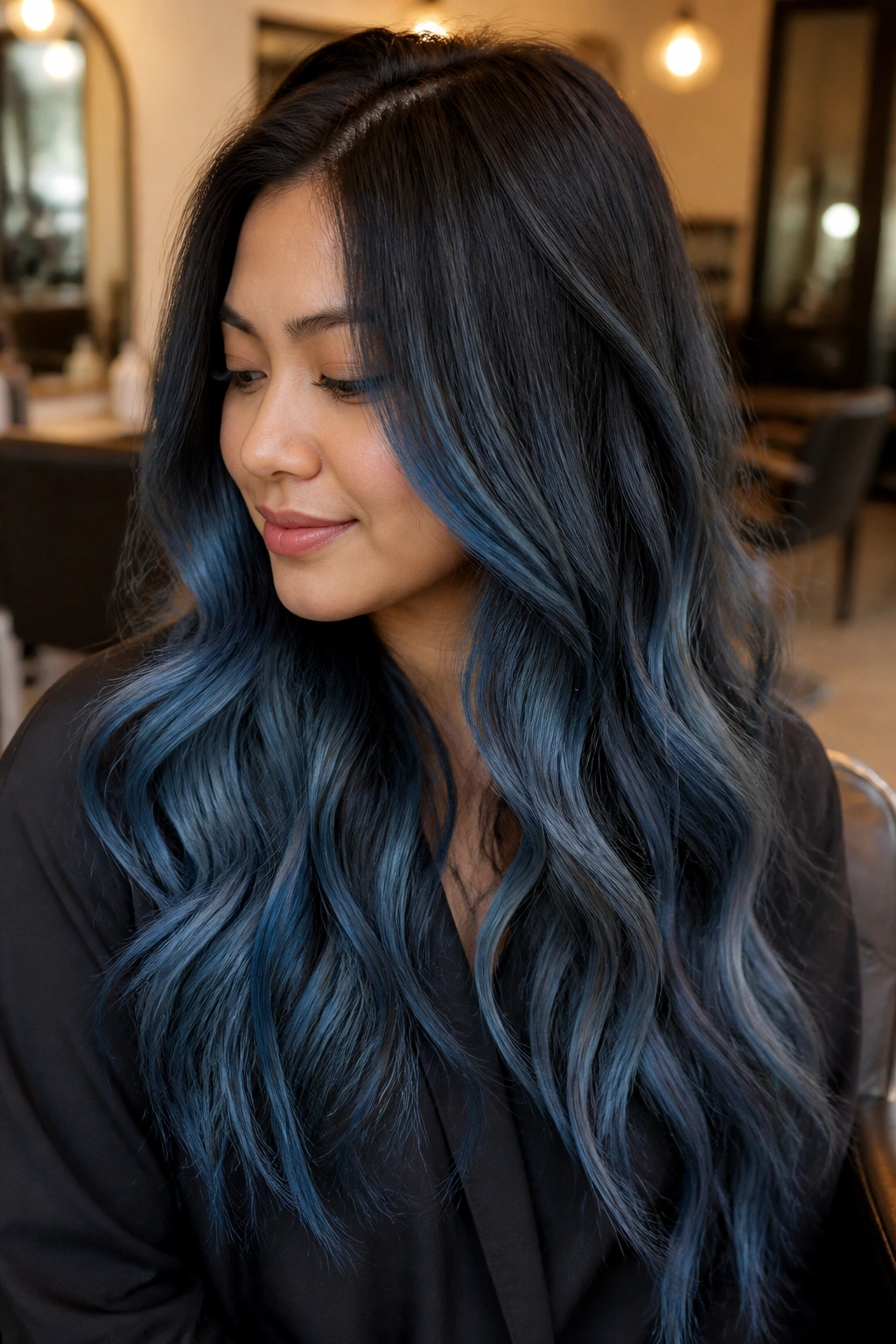
This is the easygoing version of blue ombre. The shadow root keeps the top natural, and the blue balayage pieces appear in soft ribbons from the mid-lengths down. On long hair, that grow-out-friendly approach matters because the color can stay wearable for a long stretch without looking neglected.
The finished look depends on softness. The blue should not sit in one obvious band. It needs to drift through the lengths so the hair still looks like hair first and color second. A layered cut helps, because the blue lands on different planes instead of one blunt shelf.
If you want low maintenance, this is one of the better bets on the list. You still need a color-safe routine, but you won’t feel trapped by regrowth the way you might with a hard, high-contrast pastel. That alone makes it appealing.
17. Blue Peekaboo Ombre Underneath Long Hair
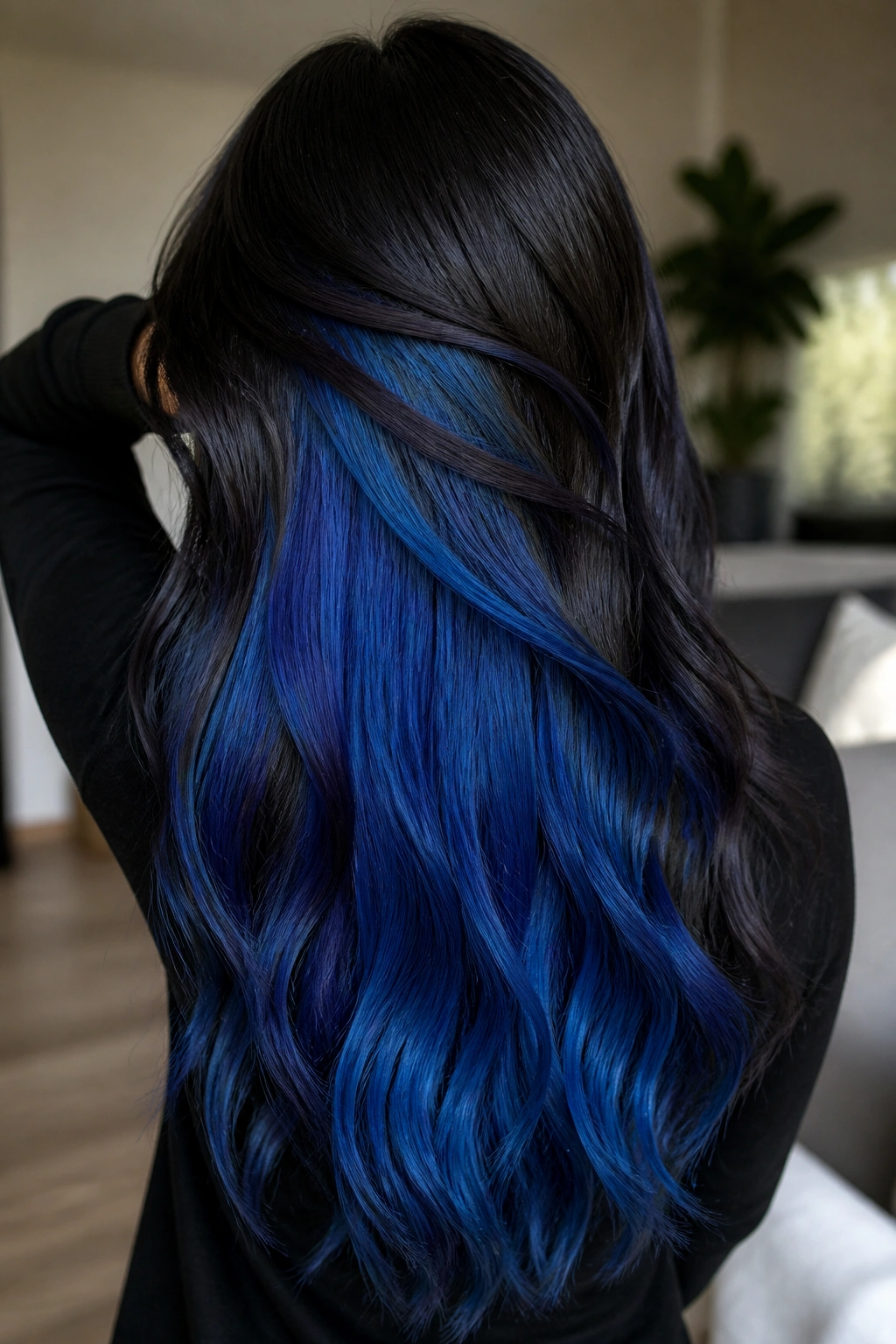
This is for people who want a hidden surprise. Blue peekaboo ombre lives underneath the top layer, so it stays quiet when your hair is down and flashes through when you braid it, half-up it, or tuck it behind your ears. Long hair makes that reveal feel almost theatrical.
The placement is the whole point. The top layer should keep more of the natural base or a darker blue shadow, while the underside carries the brighter tone. That gives you two moods in one head of hair. Workday calm up top. Color story underneath.
It’s also smart if you’re color-curious but not ready to sign up for a full bright look. You can grow it out, hide it, or show it off depending on the day. That kind of flexibility is rare with bold color, and honestly, it’s one of the reasons I like this option so much.
18. Frosted Baby Blue Ombre on Feathered Ends
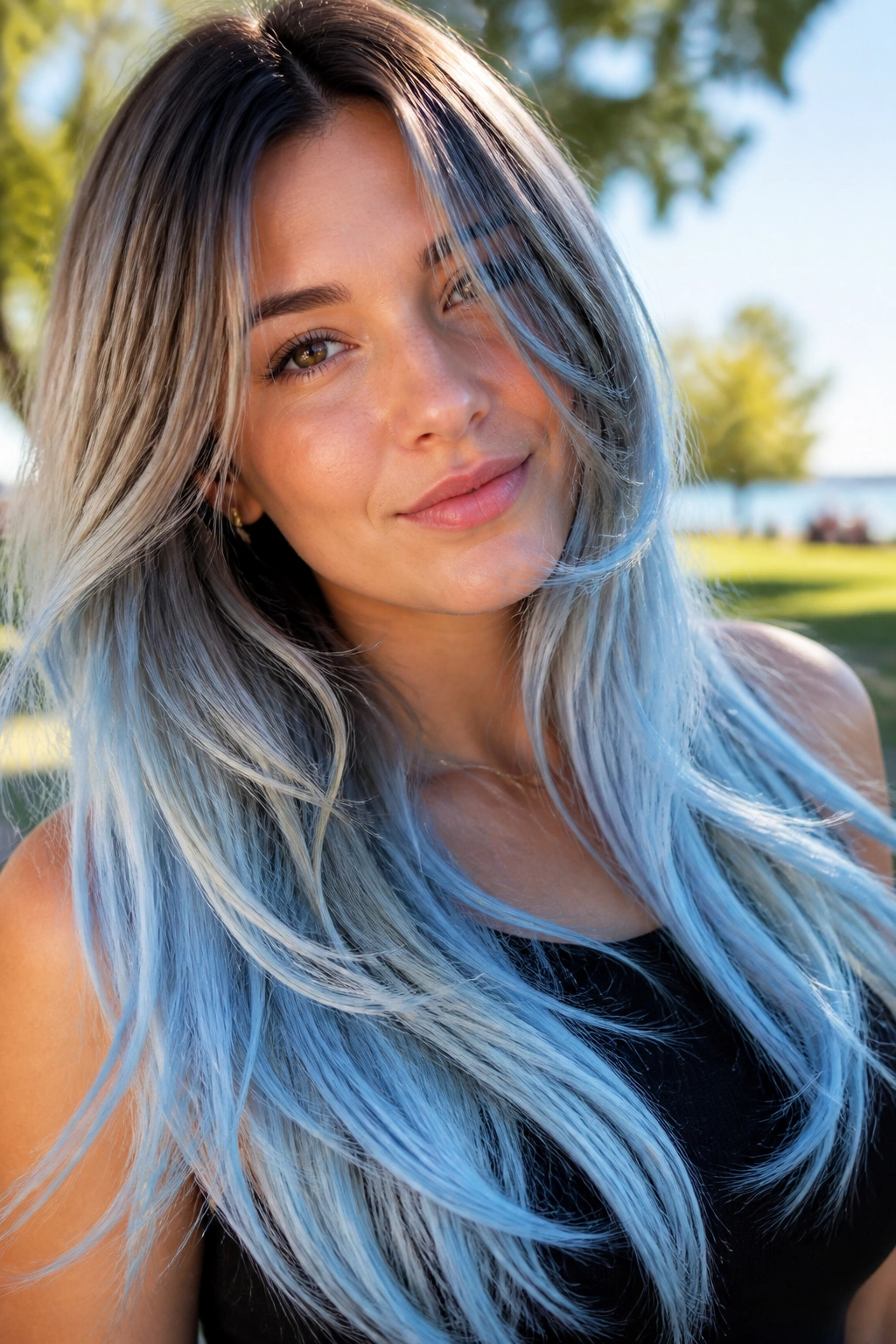
Baby blue can look childish if it’s too flat. Feathered ends solve that. Soft, wispy ends help frosted blue spread out so the shade feels light and airy instead of heavy or chalky. On long hair, especially long hair with face-framing layers, the effect can be delicate in a way stronger blues can’t match.
What Makes It Different
Unlike electric blue, baby blue depends on softness. The shade has to sit on a clean pale base, but it also needs movement at the bottom so the ends don’t look like a solid paint stripe. Feathering gives the color that movement, which is why this version works better with layered cuts than blunt ones.
This is a nice pick if you want something lighter than denim but not as bright as pastel cotton candy blue. It sits in a sweet middle space. The color feels chilly, crisp, and a little dreamy without being sugary.
For styling, keep the ends loose. A soft bend or a round-brush blowout works better than tight curls, which can make the pale blue look busy.
19. Smoky Slate-to-Blue Ombre
Smoky slate is one of the easiest ways to make blue ombre feel polished. The top half starts with a gray-blue, almost graphite tone, then opens into cleaner blue as it moves down the hair. On long lengths, that shift feels understated but still interesting, which is a nice balance if you’re tired of bright color.
Why It Works
Slate tones do a good job of hiding any rough transition near the roots. They also soften the jump from natural hair color to blue, which is useful if your base is dark brown or black. Instead of a loud leap, the eye gets a slow slide from one cool tone to the next.
- Best on long hair with a strong center part or soft side part.
- Ask for smoky blue at the top third and brighter blue only at the very ends.
- Looks sharp with straight styling and a blunt hemline.
- A shine spray helps the slate tones stay reflective.
Tip: If the slate goes too gray, the blue can disappear. Keep at least a little saturation in the mid-lengths.
20. Bold Blue Money Piece With Ombre Lengths
This one is about contrast. The money piece — those front strands around the face — carries the brightest blue, while the rest of the length fades more gradually. On long hair, that makes the face pop first and the ombre feel deeper everywhere else.
The look works because your eye naturally goes to the front. A bright cobalt or sapphire panel near the cheekbone can wake up the whole style, even if the lengths are softer navy or denim. It’s a good move for someone who wants bold color but doesn’t want the entire head to shout at once.
I’d wear this with layered ends or loose waves so the brighter front pieces don’t look pasted on. The contrast should feel purposeful, not chunked out. If the front is too thick, it can overpower the rest of the hair. A cleaner, narrower panel usually looks better.
21. Ink Blue Ombre With High-Contrast Ends
Ink blue sits almost black until the light hits it. That’s the appeal. On long hair, it creates a dark, glossy top that slides into a deeper blue finish at the ends, giving you contrast without neon brightness. It’s moody in a good way, not gloomy.
How to Ask for It
If you want this effect, ask for an ink-blue root melt and a deeper indigo finish through the lower lengths. The goal is not a bright blue fade; it’s a dark, polished one. On brunettes, this can sometimes be done with less lightening than pastel shades need, which is kinder to the hair.
The style works especially well if you like sleek blowouts or long waves with a center part. The shine matters here. High-gloss blue is the whole point, and dry ends will undercut it fast.
Best for: people who want blue hair that still reads dark from a distance.
22. Aqua Blue Ombre on Beachy Layers
Aqua blue is the sunny cousin in the blue ombre family. It leans brighter and fresher, especially when it fades through beachy layers on long hair. The cut matters here; layers stop the aqua from sitting in one flat sheet, and the color ends up moving more freely.
The trick is keeping the top shade grounded. A little sea-glass blue near the mid-lengths gives the aqua somewhere to emerge from. If the top is too light, the look loses structure and starts to feel washed out. A deeper root shadow fixes that fast.
I like this style with loose, imperfect waves. Tight curls can make aqua look louder than it needs to be. Beach waves let the blue spread out in strands, which feels lighter and more wearable even when the color itself is bright.
23. Soft Cornflower Blue Ombre
Cornflower blue has a gentler mood than cobalt or electric shades. It’s cleaner, softer, and a little more romantic, which makes it a smart choice for long hair that already has movement. The fade usually starts around the mid-lengths and ends in a pale blue that looks airy rather than loud.
The thing I like most here is the restraint. Cornflower is still blue, but it doesn’t shout. That makes it a good choice if you want color that shows up in photos and still feels calm in real life. On long layers, the ends can look almost like washed silk.
If your hair is very dense, keep the color a touch deeper. Thin pastel ends can disappear in thick hair. A slightly richer tone gives the fade more shape and stops the style from getting too wispy.
24. Steel Blue Ombre on Thick Straight Hair
Thick straight hair can swallow lighter shades. Steel blue fixes that. The gray note gives the color weight, so even on dense, long lengths, the ombre still reads clearly from root to tip. It’s cooler and more serious than aqua, which is exactly why it works so well here.
What Makes It Different
Steel blue is not trying to be playful. It’s a cooler, more urban shade that looks crisp when the hair is pressed smooth or worn in a low wave. Because it has a little gray in it, the color doesn’t puff out visually the way brighter blues can on thick hair.
- Best with long layers or a soft U-cut.
- Ask for cool gray-blue through the mids and a deeper steel finish at the ends.
- Straight styling shows the tonal shift best.
- A lightweight anti-frizz cream keeps the surface glassy.
Recommendation: If your hair is heavy and straight, this is one of the most flattering blue ombre choices on the list.
25. Deep Indigo Ombre for Glossy Brunette Bases
Deep indigo is the brunette-friendly blue. It doesn’t demand a dramatic lift, which is useful if your base is already dark and you want the color to stay rich instead of pale. On long hair, indigo can begin as a midnight navy near the top and deepen even more toward the ends.
Why It Works
The darker base helps the indigo sit in the hair instead of floating on top of it. That makes the color look intentional, not pasted on. You also get a slower fade, which matters if you do not want to refresh your color constantly.
A glossy brunette base gives the indigo a kind of velvet finish. It’s subtle at first glance, then more obvious in direct light. That delayed reveal is a big part of the appeal. You get depth without losing the richness of your natural color.
Tip: Ask for a blue-violet undertone if you want the indigo to feel deeper. Pure blue can skew flat on dark brunettes.
26. Dreamy Blue Gradient With Soft Curtain Bangs
Curtain bangs change the whole story. They pull the eye upward, so a blue gradient on long hair feels lighter and more balanced. The fade can start lower through the sides and stay softer around the face, which helps the bangs do their job without competing with the ends.
The best part is how the bangs frame the color. A soft blue gradient with curtain bangs gives you shape at the front and length through the back. That combination keeps the look from feeling too heavy, especially if your hair is thick or one length.
I’d keep the bangs a touch darker than the ends. A little depth around the face makes the blue feel more natural and keeps the whole style from going flat. Blow them with a round brush, then let the lengths fall in loose waves. That contrast is where the charm lives.
27. Two-Tone Blue Ombre With Navy Underlayer
Why hide navy underneath? Because movement makes it interesting. A two-tone ombre with a navy underlayer lets the brighter blue show only when the hair shifts, which means long hair becomes part of the reveal. It’s a smart option if you like color that changes with styling.
How to Ask for It
Tell your colorist you want the bottom sections painted in navy, with a brighter blue sitting over the top lengths. The contrast should be hidden in the folds of the hair, not blasted across the whole head. Braids and half-up styles show this especially well.
This version works best on hair with some density. Fine hair can lose the underlayer effect because there isn’t enough weight to separate the tones. Thick hair, though, gives you the kind of movement that makes the blue look layered and real.
A little shine spray on the top layer helps the navy stay tucked beneath the brighter finish instead of muddying the whole look.
28. Soft-Grown Midnight Fade
This is the one I’d hand to someone who wants blue ombre hair ideas for long hair but doesn’t want to babysit them every week. A soft-grown midnight fade starts with a dark root shadow and eases into blue lengths that look intentional even as they grow out. It’s quiet at first, then richer as the hair moves.
The color story matters here: keep the top deep, the middle blurred, and the ends a shade lighter than the base but not neon-bright. That gives the fade a long, easy slope instead of a hard color cliff. On waist-length hair, that slope is what makes the style feel polished.
If you want one version that holds up through real life — ponytails, braids, office days, lazy weekends — this is the one I’d trust. It wears well, grows out gracefully, and still gives you that blue hit when the light lands right.
