



Long hair is the best canvas for lavender ombre because the fade has room to travel. On a short cut, purple can hit hard and feel abrupt. On hair that falls past the shoulders, the same color can slip from beige blonde into lilac, smoke, or full jewel-tone territory without looking chopped up.
That extra length matters more than people think. Lavender is a fussy shade in the nicest possible way: it looks dreamy when the blonde underneath is even, and it looks muddy when the lift is patchy or the ends are over-porous. If your hair has been lightened before, the mid-lengths may drink up pigment faster than the ends, so a good color placement plan saves you from that dull gray-purple strip nobody wants.
The nicest versions are never one-note. Indoors, the color can read soft and creamy. Outdoors, it wakes up and turns sharper, cooler, and a little shinier. That little shift is part of the appeal, honestly. The best lavender fades on long hair use the length, the cut, and the tone of the base as part of the design, not afterthoughts.
Start with the softest version. Then go bolder if you want to.
1. Soft Lavender Melt on Waist-Length Waves
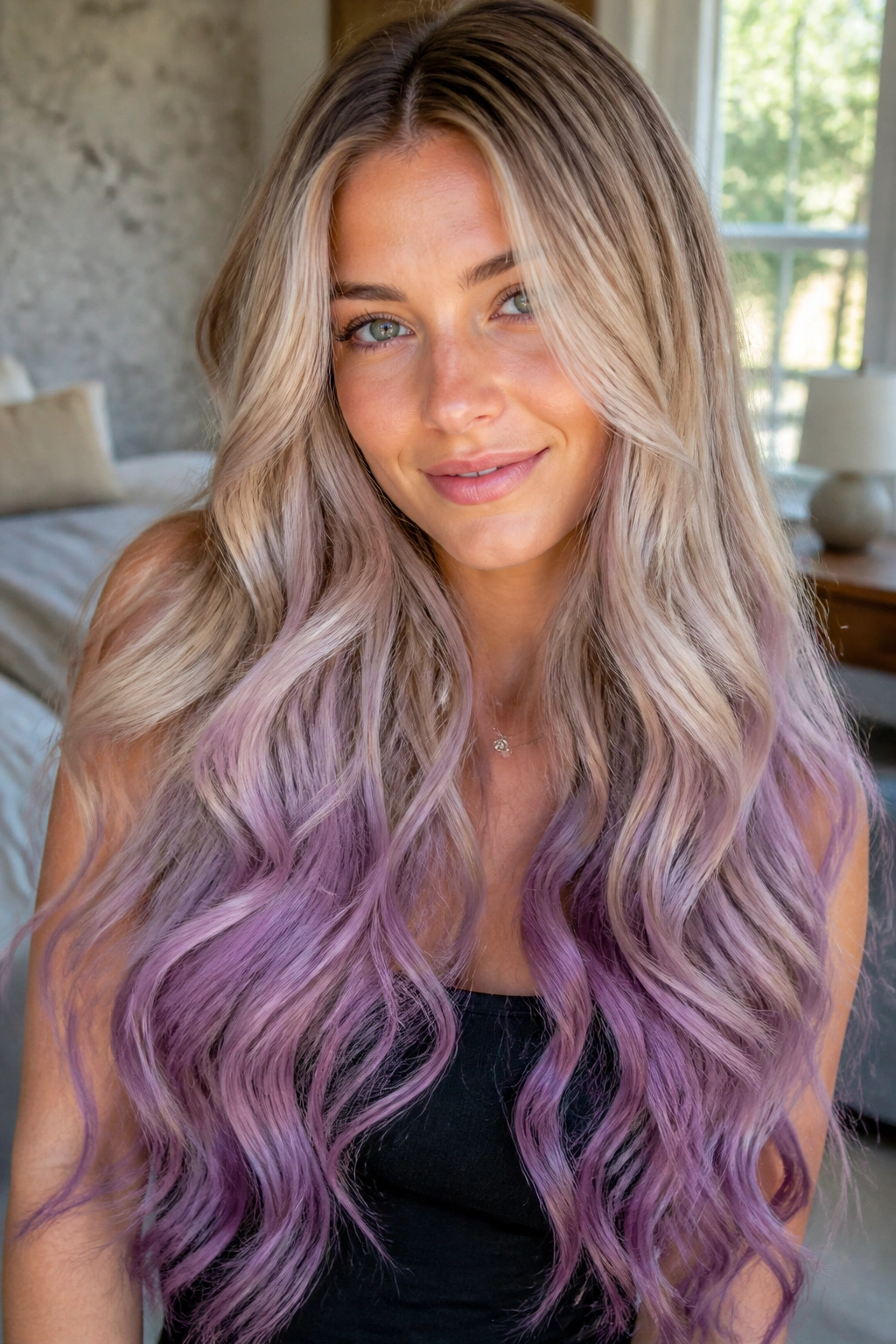
A soft lavender melt is the easiest way to wear lavender ombre hair on long hair without tipping into costume territory. The fade has enough distance to feel airy, and the ends look like they were dusted with color instead of dipped in it.
Why It Reads Soft
The bridge shade does a lot of the work here. A beige blonde or creamy champagne band between your natural base and the lavender keeps the fade from snapping in half.
On waist-length waves, the color looks best when the lavender starts around the lower third of the hair. The last 3 to 4 inches should hold the richest pigment, so the ends stay plush instead of see-through.
- Keep the transition low, around the ribs or lower.
- Ask for soft bends, not tight curls.
- Use a clear gloss if the ends feel chalky.
Best move: leave the face-framing pieces a shade lighter than the back so the color moves when you turn your head.
2. Ash Brown Roots with Smoky Lilac Ends
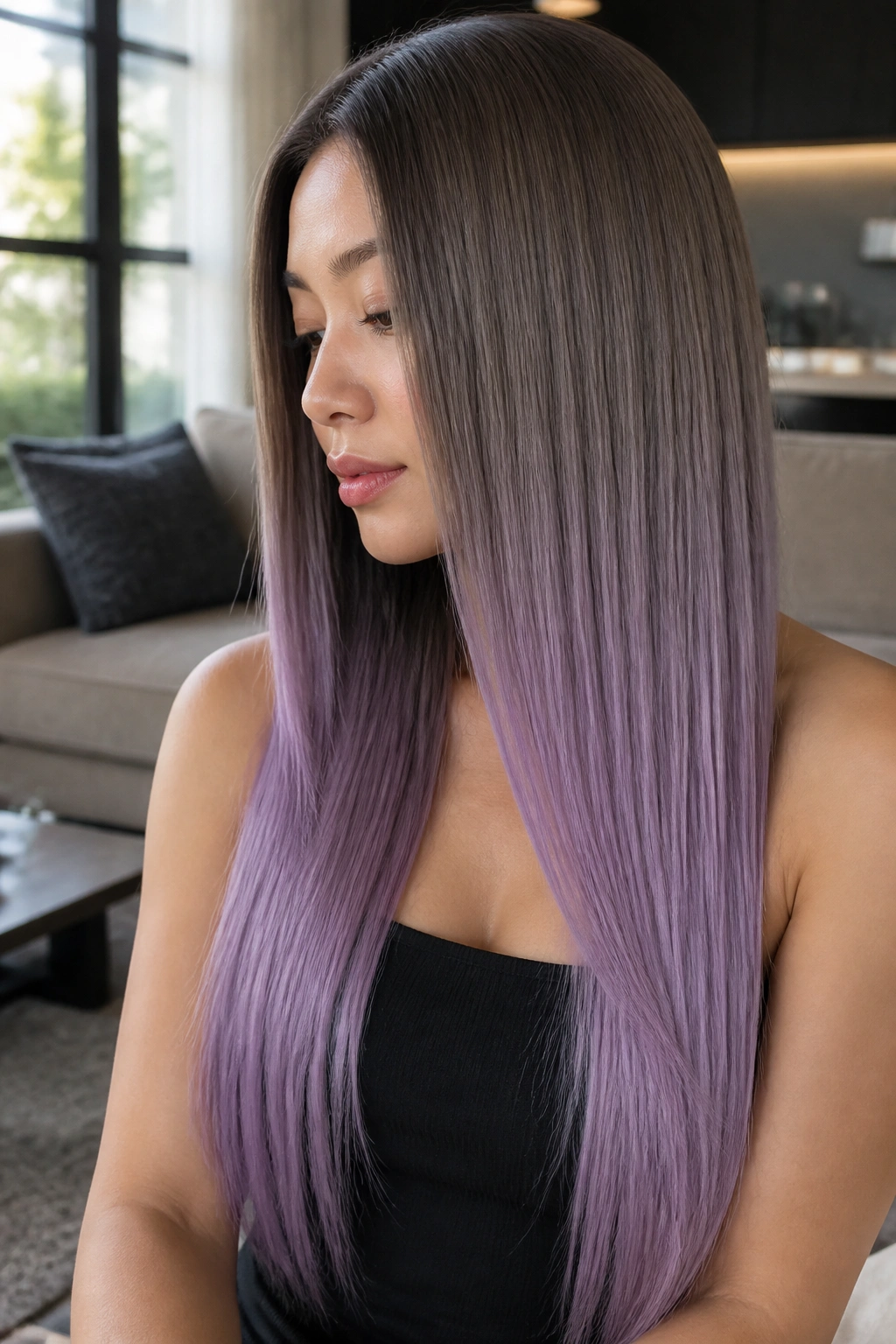
Smoky lilac on an ash-brown base is one of those shades that looks cooler the longer you stare at it. The dark root shadow makes the lavender feel like haze at the ends, which is a lot more interesting than a flat purple block.
It works especially well on long, straight hair or loose S-waves because the color sits low and sleek. That gives you a polished line from top to bottom, then the lilac shows up near the hem like tinted smoke.
A blunt fade can make this look heavy. A better plan is to keep the lavender starting at about chin level and let the last section go slightly lighter. A demi-permanent gloss every 6 to 8 weeks helps the ash side stay crisp instead of flat.
3. Platinum Blonde with Orchid Points
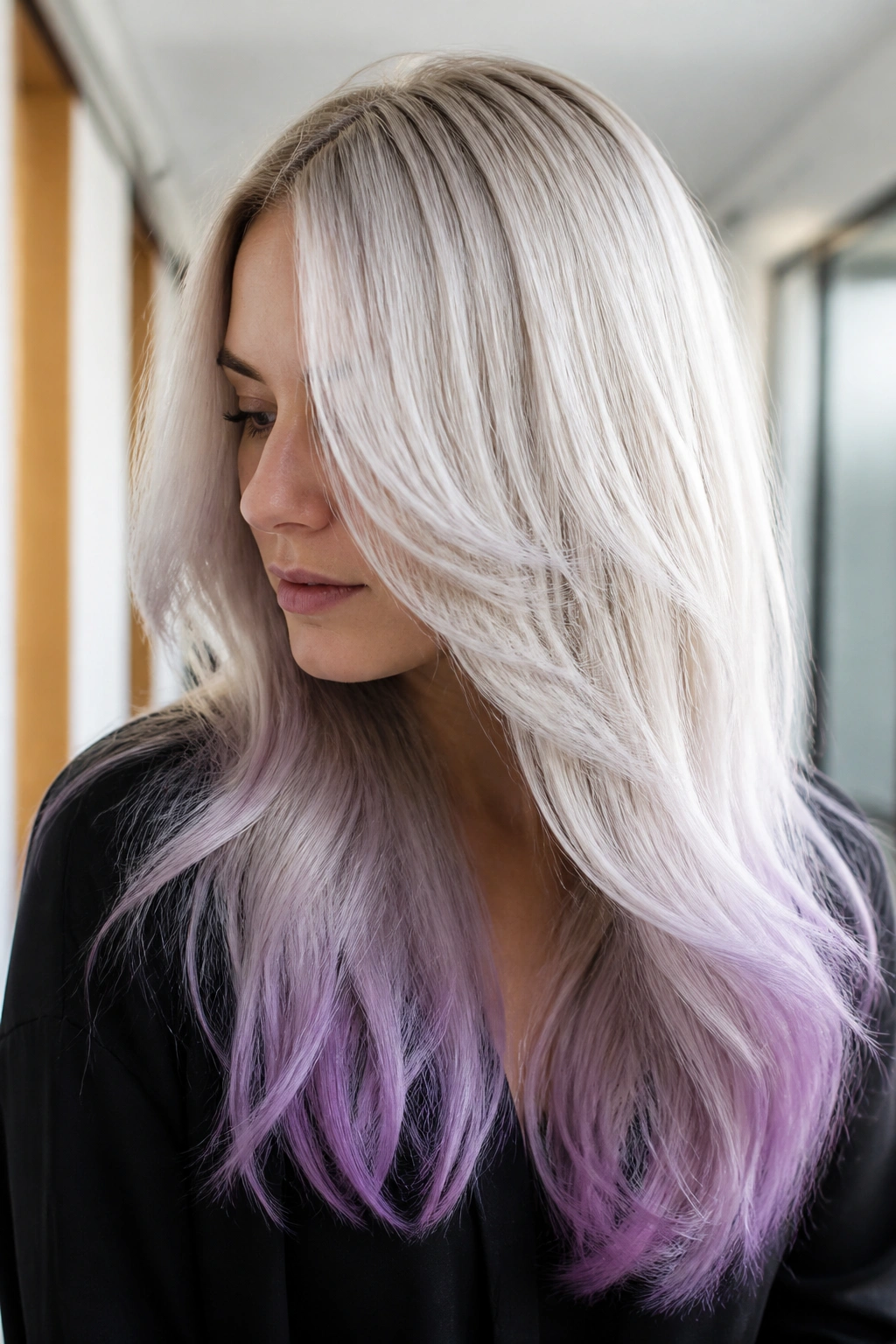
Want something that feels light but still has edge? Platinum lengths with orchid points do that fast. The look is cleaner than a full pastel head, and it suits long hair because the pale blonde gives the orchid room to glow.
How to Wear It
This version likes layered cuts. The movement in the layers stops the platinum from turning into one big sheet, which matters a lot when the ends are pastel.
If your hair is naturally light, ask for orchid on the last 2 to 3 inches only. If your base is darker, the lift has to be even before the purple goes on, or the orchid can skew gray in patchy spots.
Quick note: keep the toner creamy, not overly violet, or the blonde can lose that bright finish.
4. Honey Blonde with Pastel Lavender Tips
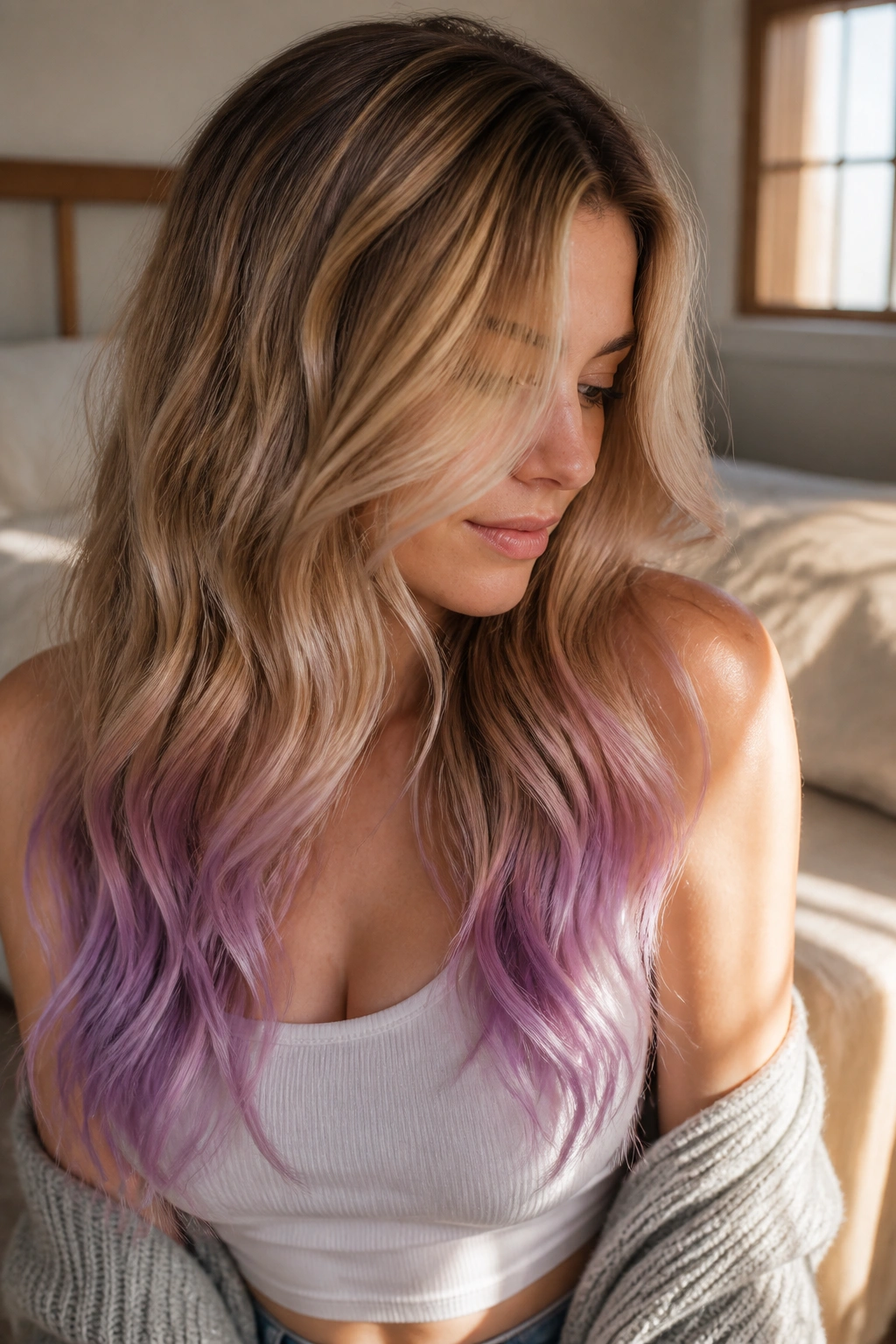
A honey blonde base with pastel lavender tips feels sweeter than a hard contrast, and that’s the whole charm. On long hair, the warmth up top keeps the color from looking icy, while the pale ends stay soft and airy.
Picture a client with shoulder-blade-length waves and warm gold in the roots. Lavender just on the last 5 to 7 inches gives the hair a little surprise when it moves, but it still reads easy and wearable.
- Let the blonde bridge stay warm, not beige-cool.
- Keep one thin lavender ribbon near the face.
- Avoid saturating the whole bottom half if the hair is fine.
Best trick: curl the ends away from the face so the lilac tips show up in motion, not just in still photos.
5. Deep Espresso into Plum-Lilac Ribbon Melt
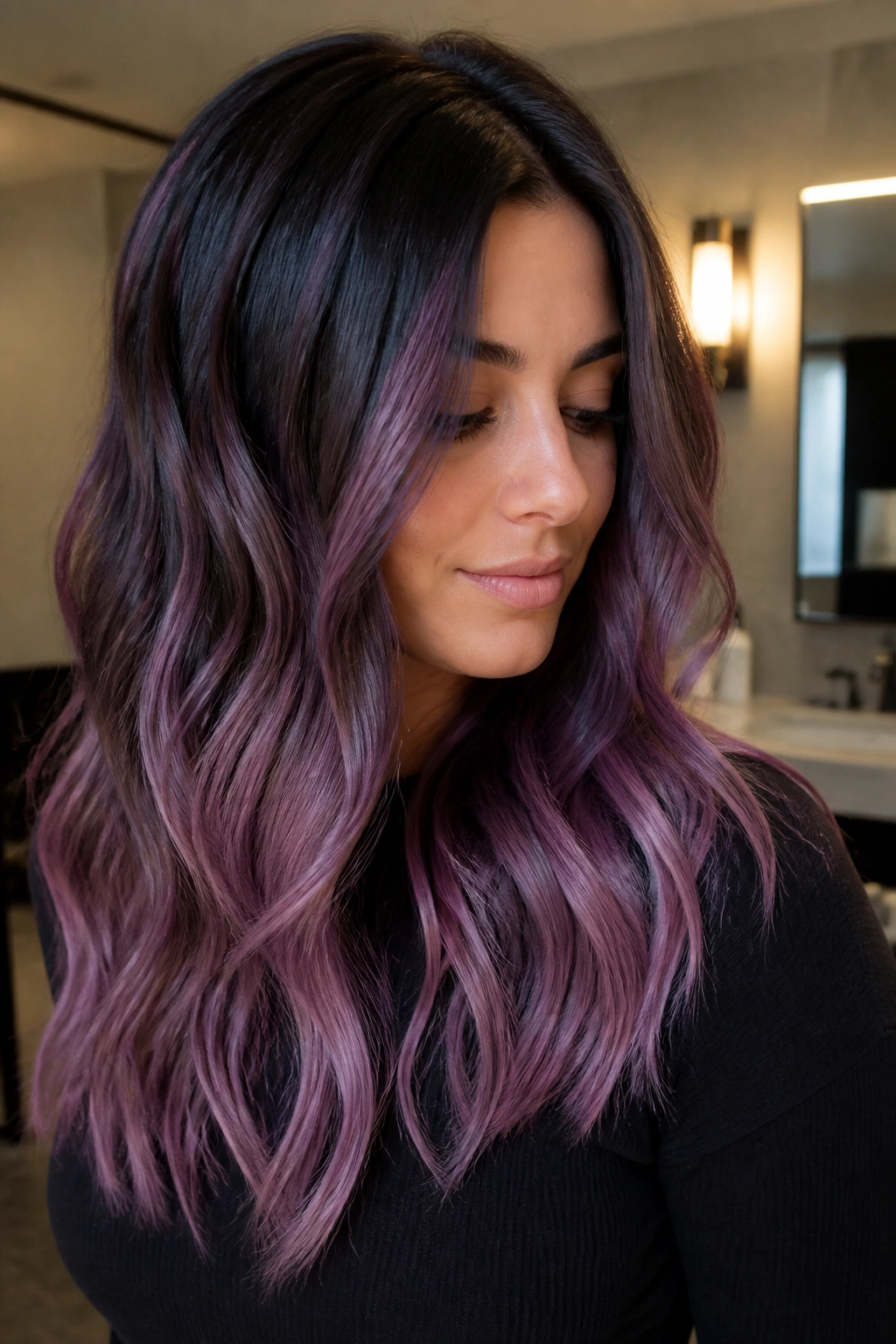
Deep espresso fading into plum-lilac is for the person who wants purple but does not want a pastel mood. The dark base gives the ends weight, and the plum note keeps the lavender from looking sugary.
This one is strongest on long, thick hair where the color can be stretched over a lot of length. The middle section matters here. If it jumps too fast from espresso to lilac, the effect looks choppy. A better formula is a root melt, then a plum ribbon through the mid-lengths, then a cooler lavender at the very bottom.
On a curling wand with a 1.25-inch barrel, the plum and lilac separate just enough to look dimensional. That texture is the point. Flat ironed, it gets sleek; waved, it gets moody.
6. Ice Blonde with Orchid Ombre
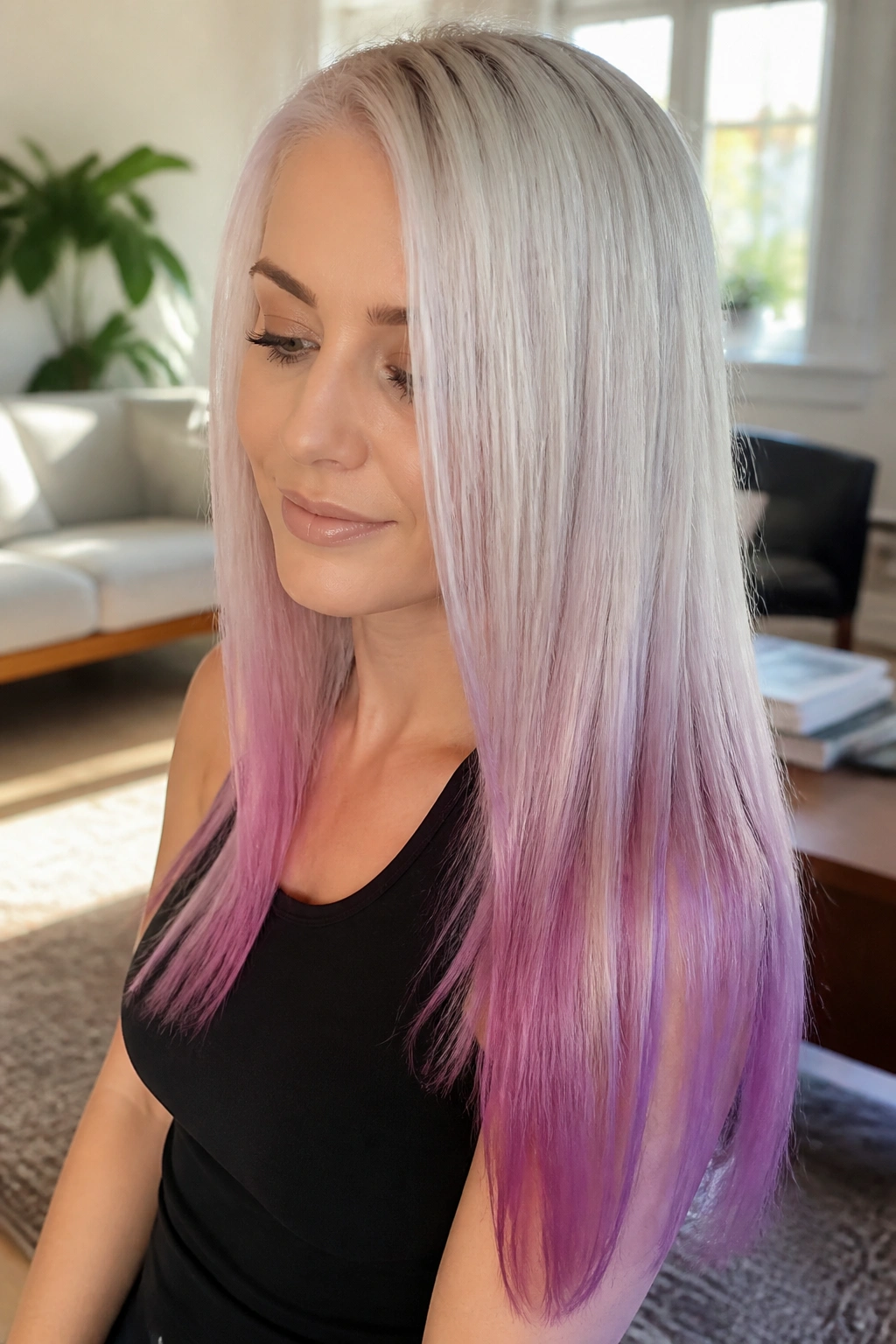
Platinum to orchid is sharper than a soft lavender melt, and that is exactly why it works. The contrast gives you a high-drama finish, but the orchid keeps it from feeling neon.
This shade belongs on hair that has already been lifted to a level 9 or 10. If the blonde is too yellow, the orchid turns muddy fast. If the cut is long and blunt, the clean edge of the hair makes the fade feel expensive rather than busy.
What Makes It Different
Unlike smoky brunettes, this version shows every shift in tone. The ombre is not hiding; it is the whole show.
It suits sleek blowouts and polished waves best. If you want the color to stay creamy, ask for a gloss that preserves the icy blonde and lets the orchid live only on the final few inches. That keeps the purple looking deliberate, not over-deposited.
7. Black Cherry Base with Violet Haze Ends
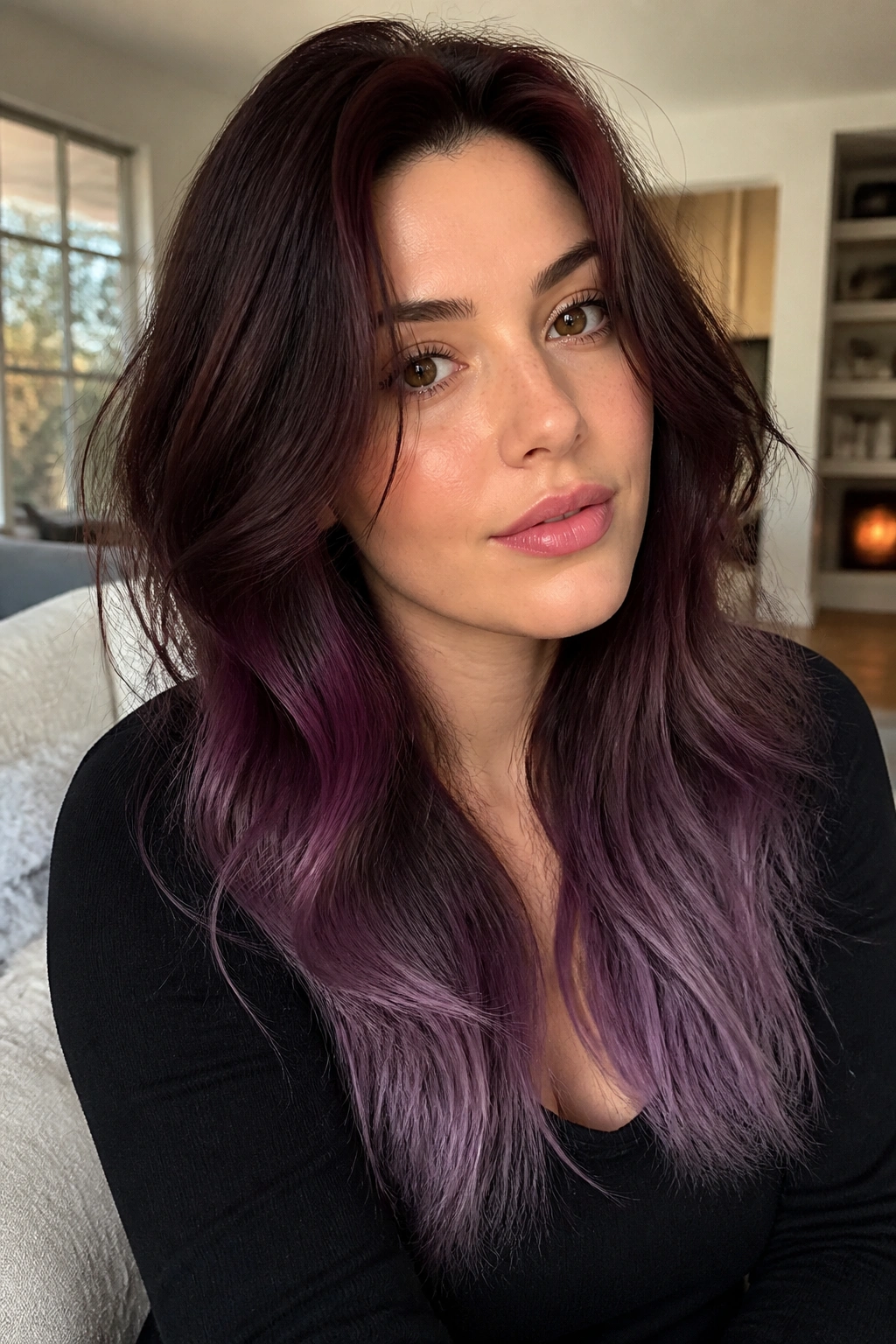
Black cherry and violet haze is for people who like their color to look rich even when the light is bad. The base has enough red depth to keep the ends from disappearing, while the haze keeps the purple side cool.
What Makes the Haze Work
The trick is restraint. Too much violet and you lose the soft smoke effect. Too little and it just looks like faded burgundy.
- Keep the strongest violet on the outer layers.
- Leave the underlayer deeper for contrast.
- Add a few face-framing strokes if you wear your hair half up.
Best tip: this shade looks better on second-day hair, when the texture is a little loose and the tones can separate. Freshly blown out, it can feel too glossy and hide the lavender shift.
8. Champagne Blonde with Lilac Ribbons
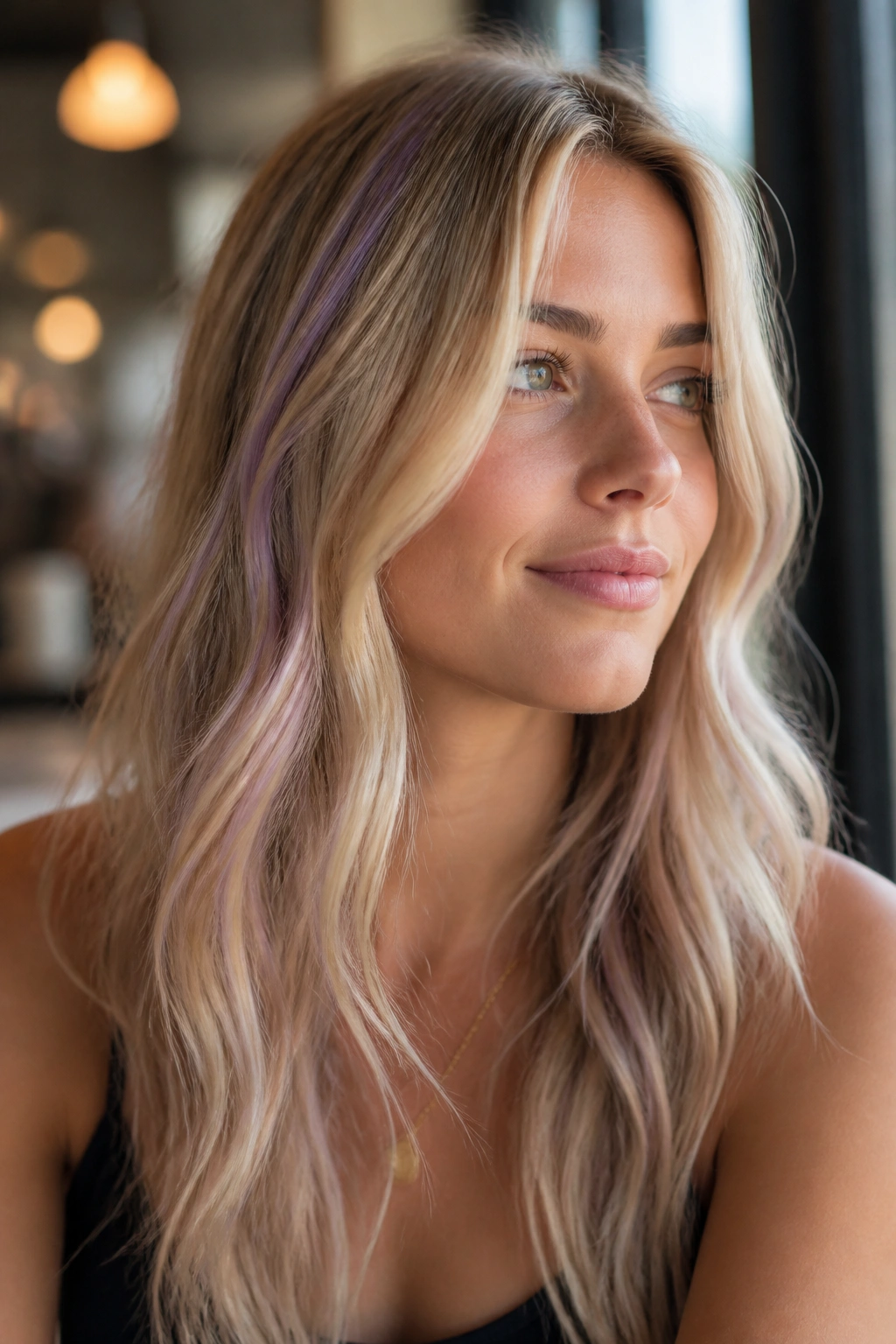
A champagne blonde base with thin lilac ribbons gives long hair a lighter, more woven look than a single fade. The color lives in narrow strands, so the lavender shows up like thread through silk.
That makes it a smart choice for fine hair. Big, heavy chunks can swallow movement, but 1/2-inch ribbons keep the hair looking airy. The effect is also easier to grow out than a blunt dip-dye, because the lilac is scattered through the lengths.
If you wear a center part, place a few ribbons a little higher around the face. If you tuck your hair behind your ears, the lilac catches the eye without taking over. It is a small detail, but it changes the whole read.
9. Mushroom Brown with Dusty Lavender Fade
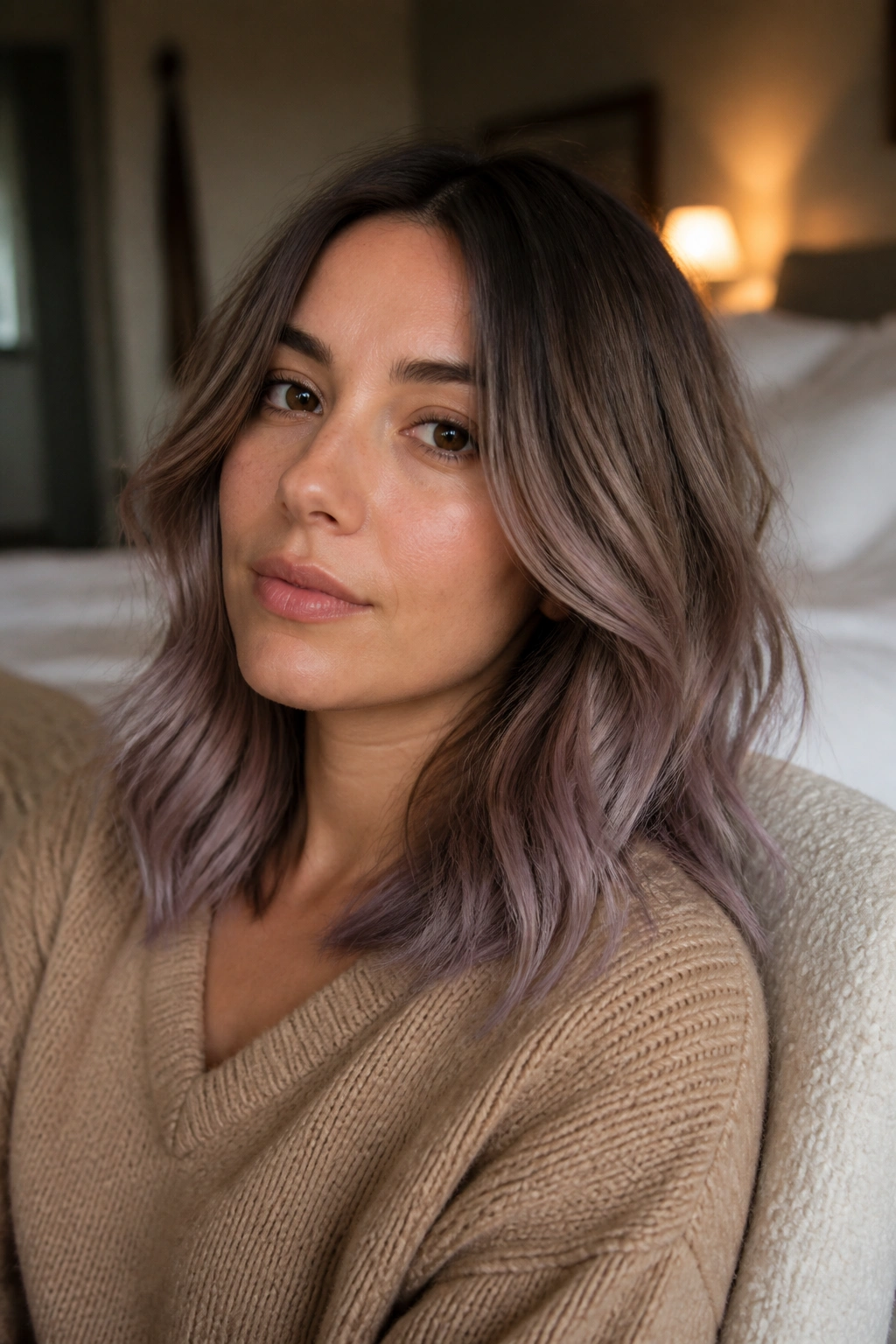
Want something quieter? Mushroom brown fading into dusty lavender is one of the best cool-toned options for long hair. The brown has that soft taupe-gray cast, so the lavender does not feel pasted on.
How to Ask for It
Ask for the fade to begin around the collarbone and get denser only at the very bottom. That keeps the top half grounded and stops the color from looking too sweet.
On soft waves, the dusty lavender picks up in bends and disappears in flat sections, which is half the appeal. It feels lived-in, not polished to death.
Why It Works So Well
Because the colors sit close together on the cool side, the grow-out stays prettier than you might expect. The roots can go a little deeper, the ends can stay powdery, and the whole thing still looks intentional.
10. Caramel Balayage with Violet Edges
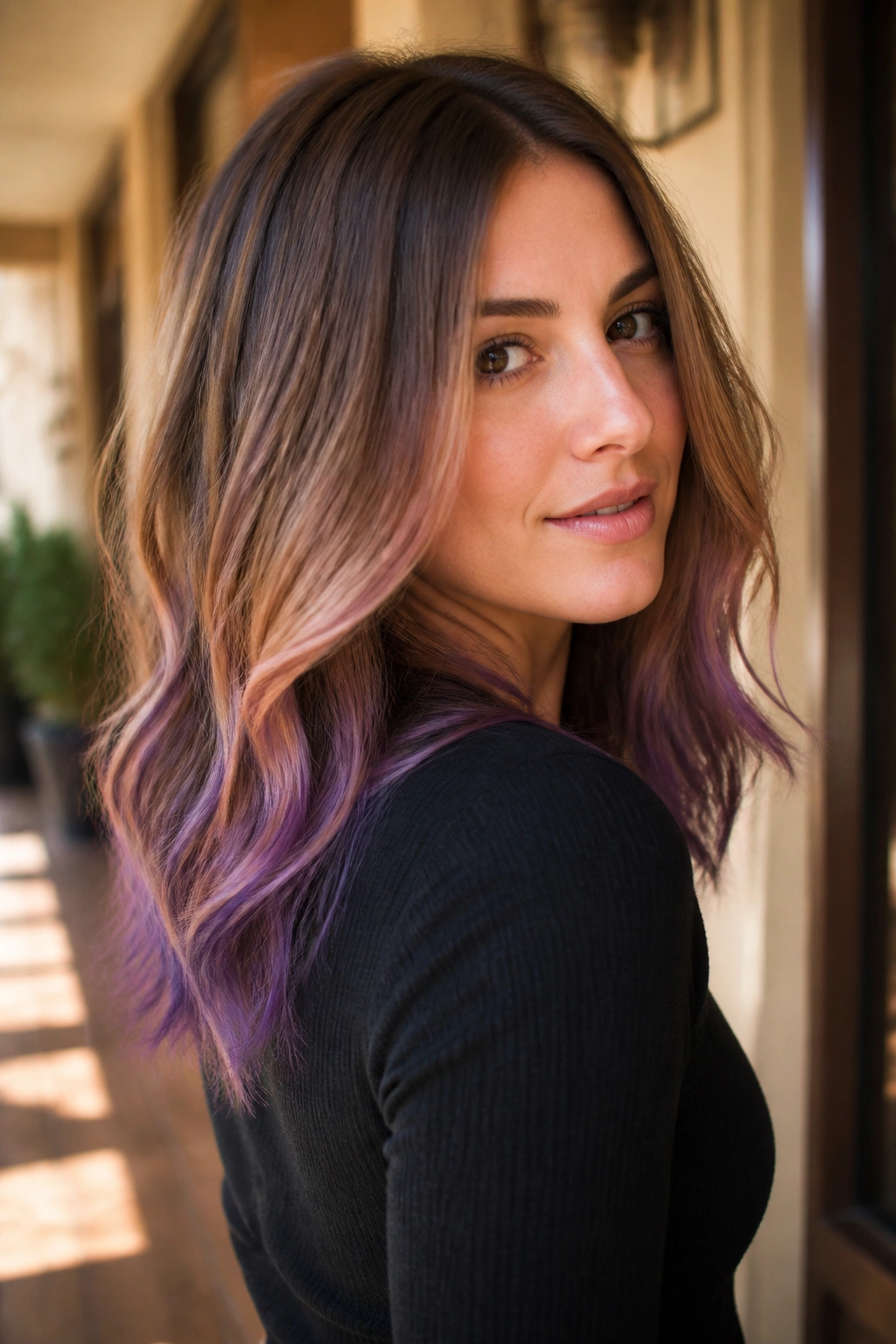
Caramel and violet sounds like a risky pairing, but on long hair it can look rich and a little unexpected. The warm mid-lengths stop the purple from feeling chilly, and the violet edges give the finish a sharper outline.
Imagine long layers, a few beach bends, and then just enough violet around the perimeter to frame the shape. That is the version I like best. It is not a full dip-dye. It is more like the hair picked up a cool shadow at the bottom.
- Place the violet mostly on the outer layers.
- Keep the caramel visible in the middle.
- Leave the back a touch softer if your hair is very thick.
Good detail: this look is stronger when the ends are slightly feathered. Heavy, blunt ends can make the violet feel too blocky.
11. Rosy Brunette into Mauve Lavender
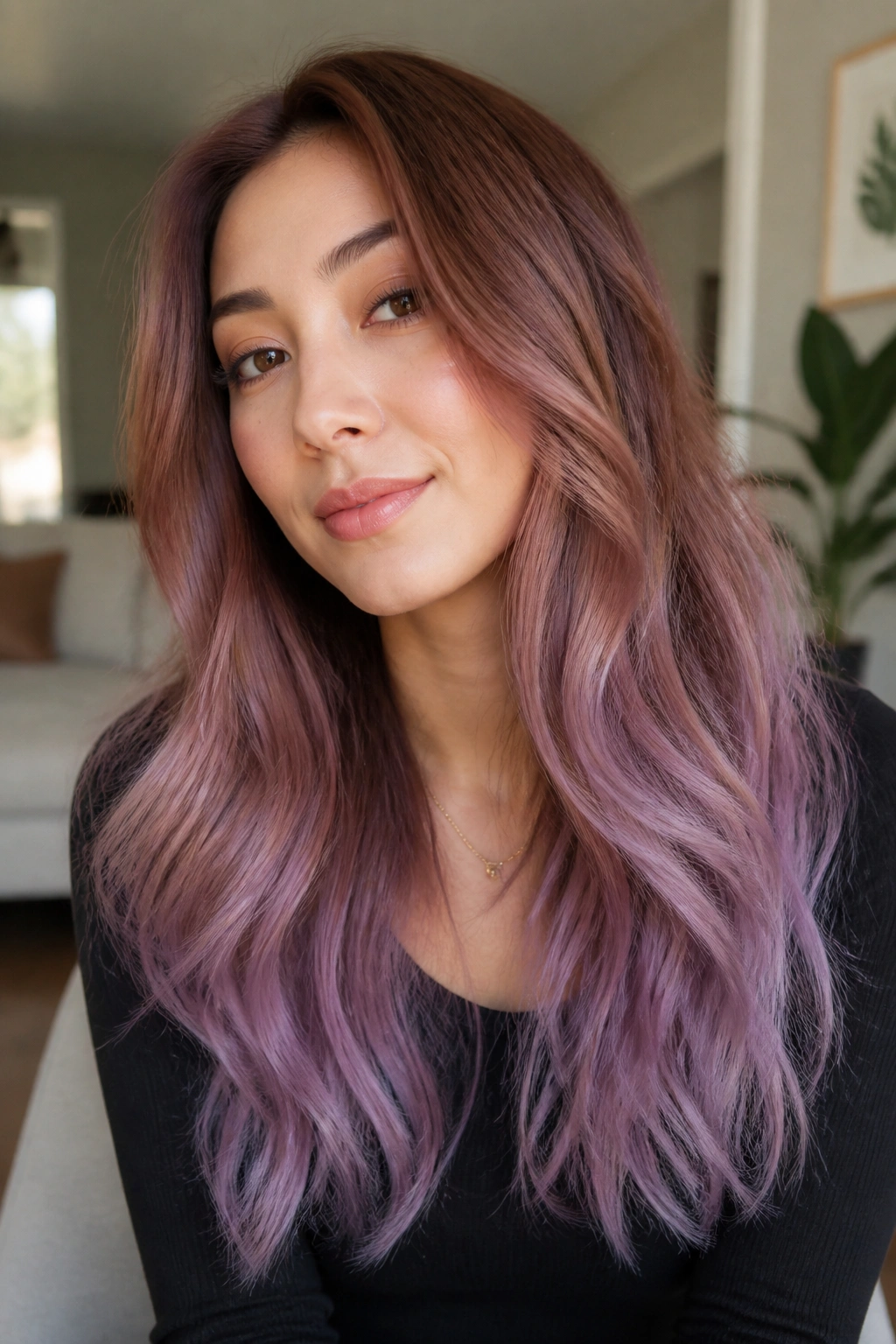
Rosy brunette fading into mauve-lavender has a softer, more romantic feel than a cool ash-brown fade. The rose undertone warms up the front half, and the mauve end point keeps the lavender from turning chalky.
This is one of those shades that looks especially nice on long hair with loose movement. The color shifts as the hair bends, which matters because mauve can go flat if it is buried in too much blonde. A demi-permanent gloss is usually the better choice here, since it lets the tones sit on top rather than chewing up the base.
I also like it on hair that is parted off-center. The rose tones around the face keep the look from getting too cool, and the lavender at the ends gives the whole thing a soft finish.
12. Beige Blonde with Pearl Lilac Ends
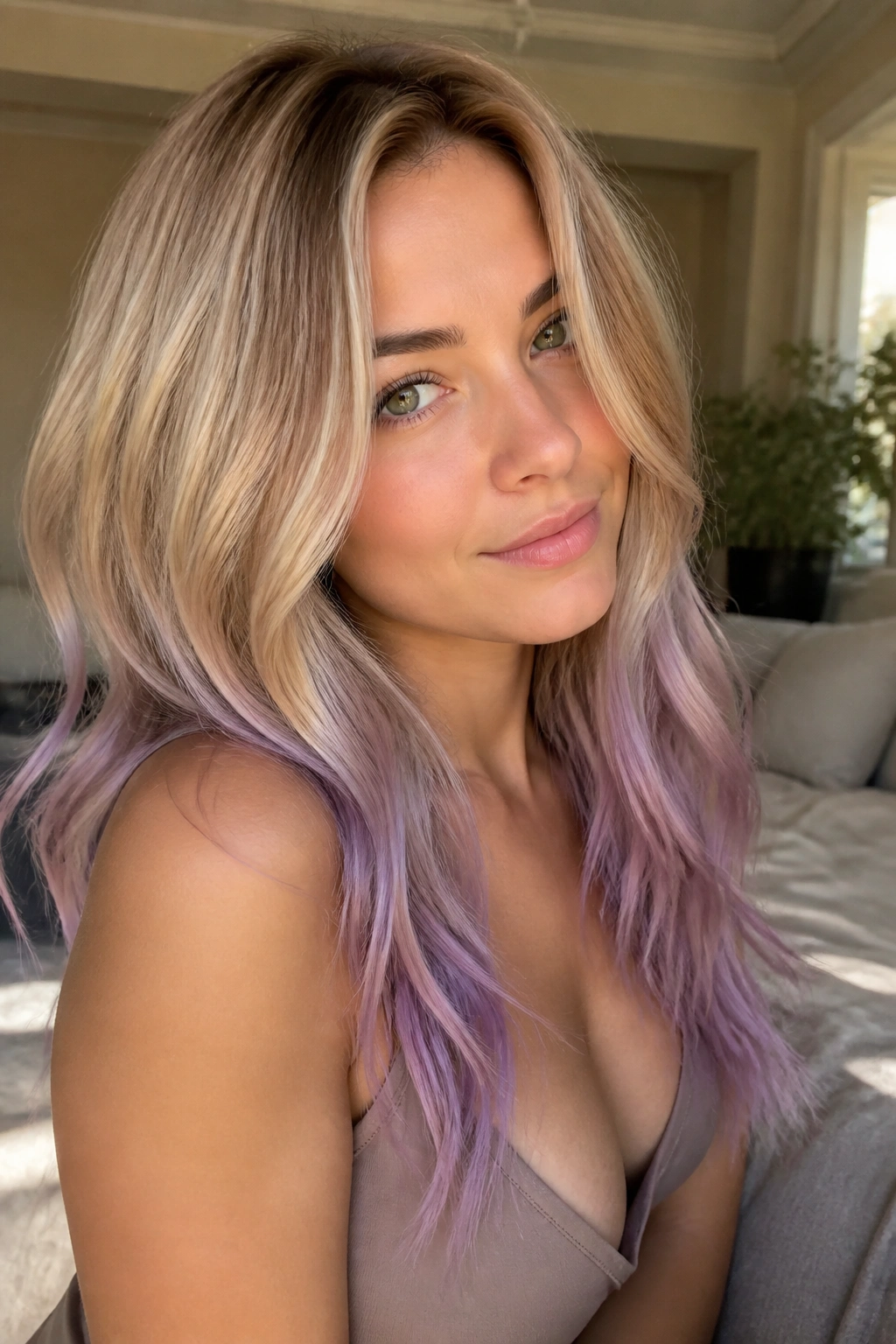
Beige blonde with pearl lilac ends is for anyone who wants the faintest hint of purple. It is prettier than it sounds, and on long hair it looks almost like the color slipped in by accident.
Why It Feels So Light
Pearl lilac is cooler and more translucent than a standard pastel lavender. That makes it look silky on long straight hair and softly diffused on waves.
Unlike platinum orchid, this version needs a beige base rather than a stark icy one. The beige keeps the lilac from becoming too white and gives the fade a creamy finish.
How to Keep It Clean
Ask your colorist to keep the tone cool but not silver-heavy. If the hair is too ashy, the lilac can vanish. If it is too warm, the pearl note gets lost.
A tone refresh every 4 to 6 weeks is usually enough to keep the ends from fading into a dull beige.
13. Midnight Blue-Black with Lavender Smoke
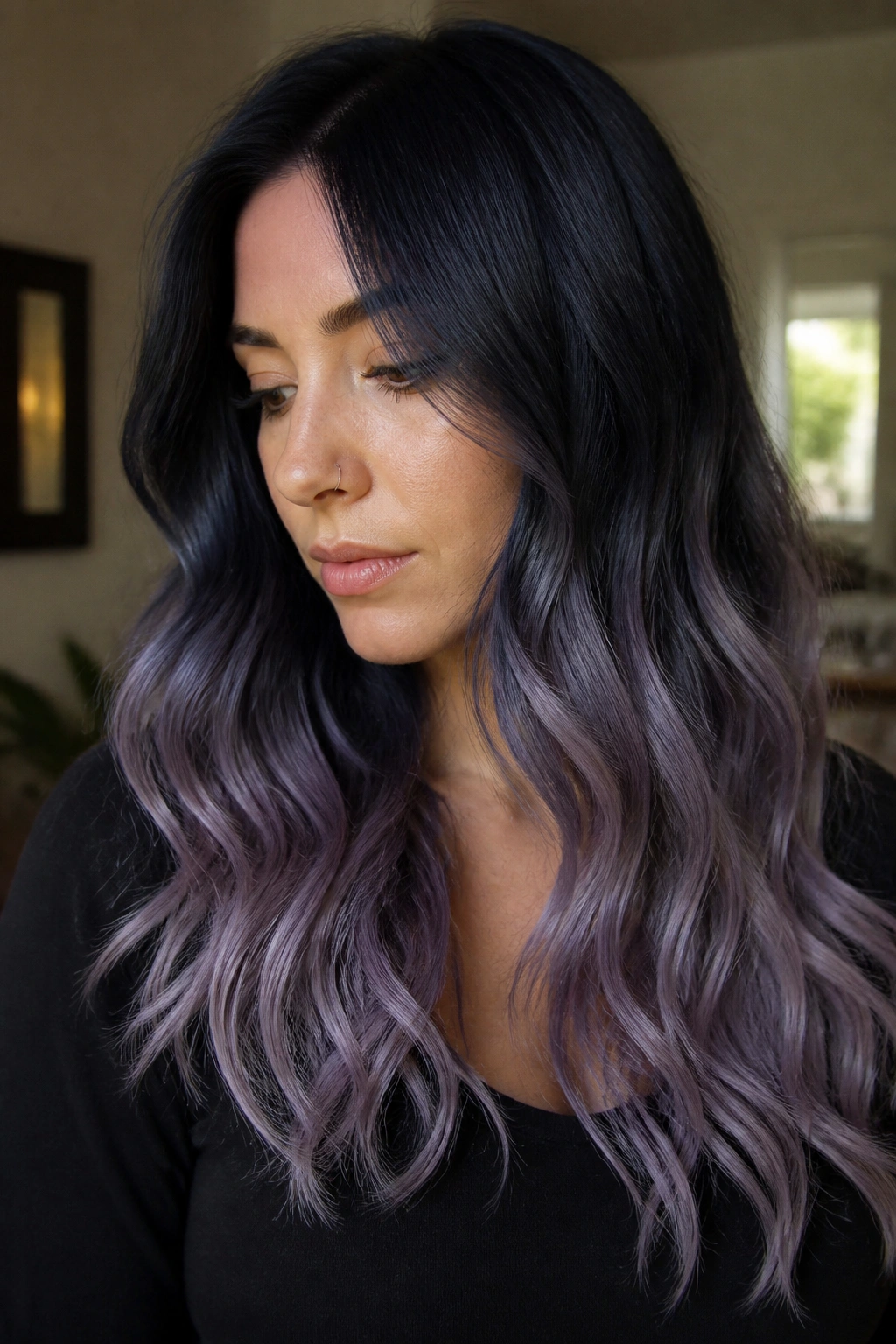
Midnight blue-black into lavender smoke is dramatic in a quiet way. From a distance it reads like a dark glossy fade, then the lavender shows up in the light and catches your eye.
What Makes It Look Real
The smoke effect comes from keeping the purple soft, not bright. Think mist, not candy. The best version starts with a blue-black root and shifts into a gray-lavender mid-length before going a shade lighter at the tips.
- Keep the darkest color at the crown.
- Place lavender on the outer panels for movement.
- Use shine spray, not heavy oil.
One warning: if the hair is over-layered, the contrast can break apart too fast. On longer, heavier lengths, the smoke sits in a cleaner line and looks richer.
14. Chestnut Dip Dye in Violet Orchid
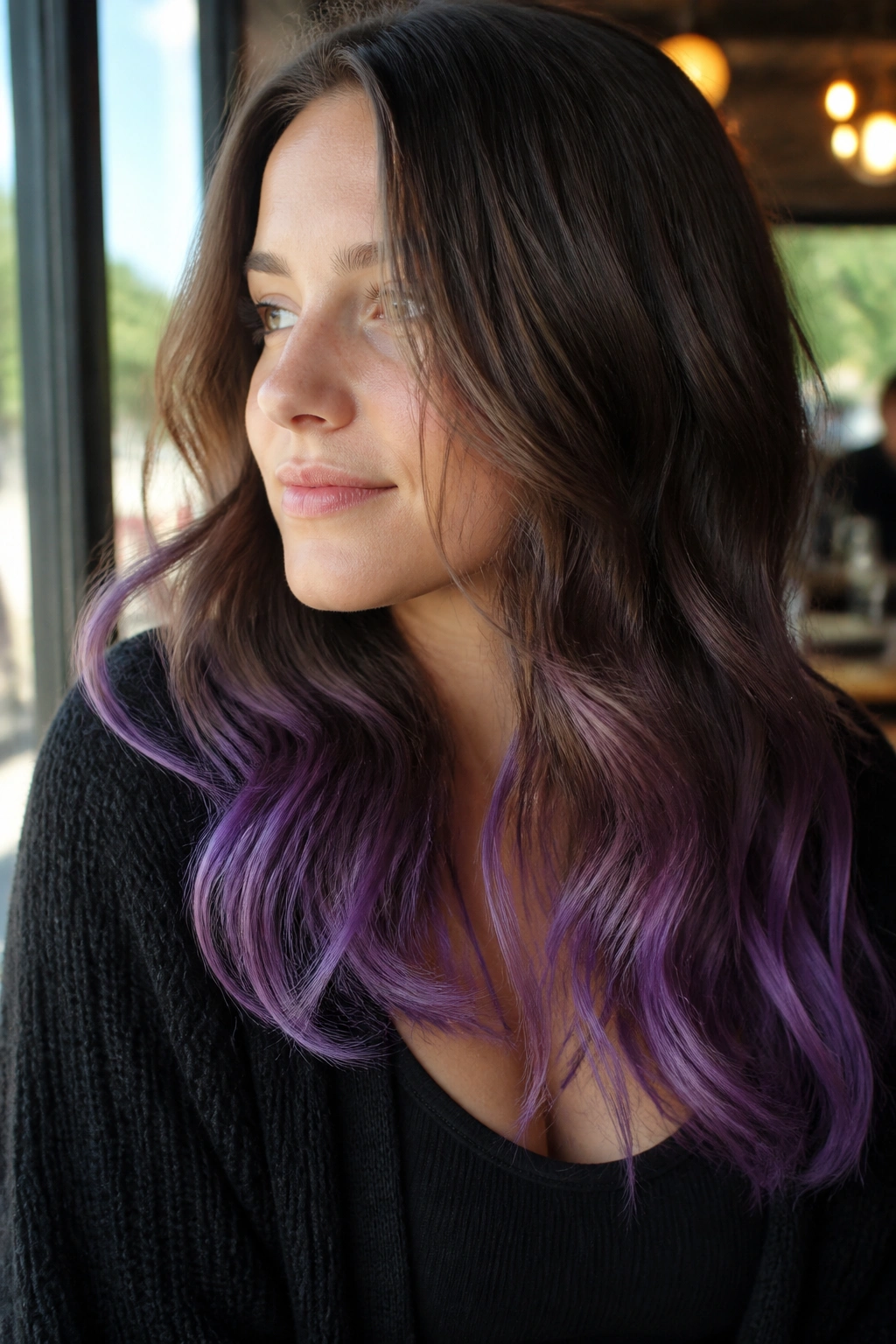
Chestnut with violet orchid tips has more edge than a blended ombre, and that is why it works. The dip-dye finish is visible on purpose. It says, “Yes, I wanted this color here.”
This is a good choice if your long hair already has a slight wave or bend. The boundary between the chestnut and orchid looks cleaner when the hair moves. If it is pin-straight, the line can feel too sharp unless the color is feathered by hand.
How to Wear It
Tell your colorist to keep the orchid below the collarbone if you want grow-out to stay easy. If the purple begins too high, chestnut regrowth can look patchy faster.
The best part is the contrast. Chestnut is warm and grounded; orchid is bright and cool. That push-pull keeps the style from looking flat.
15. Copper Base with Muted Amethyst Ends
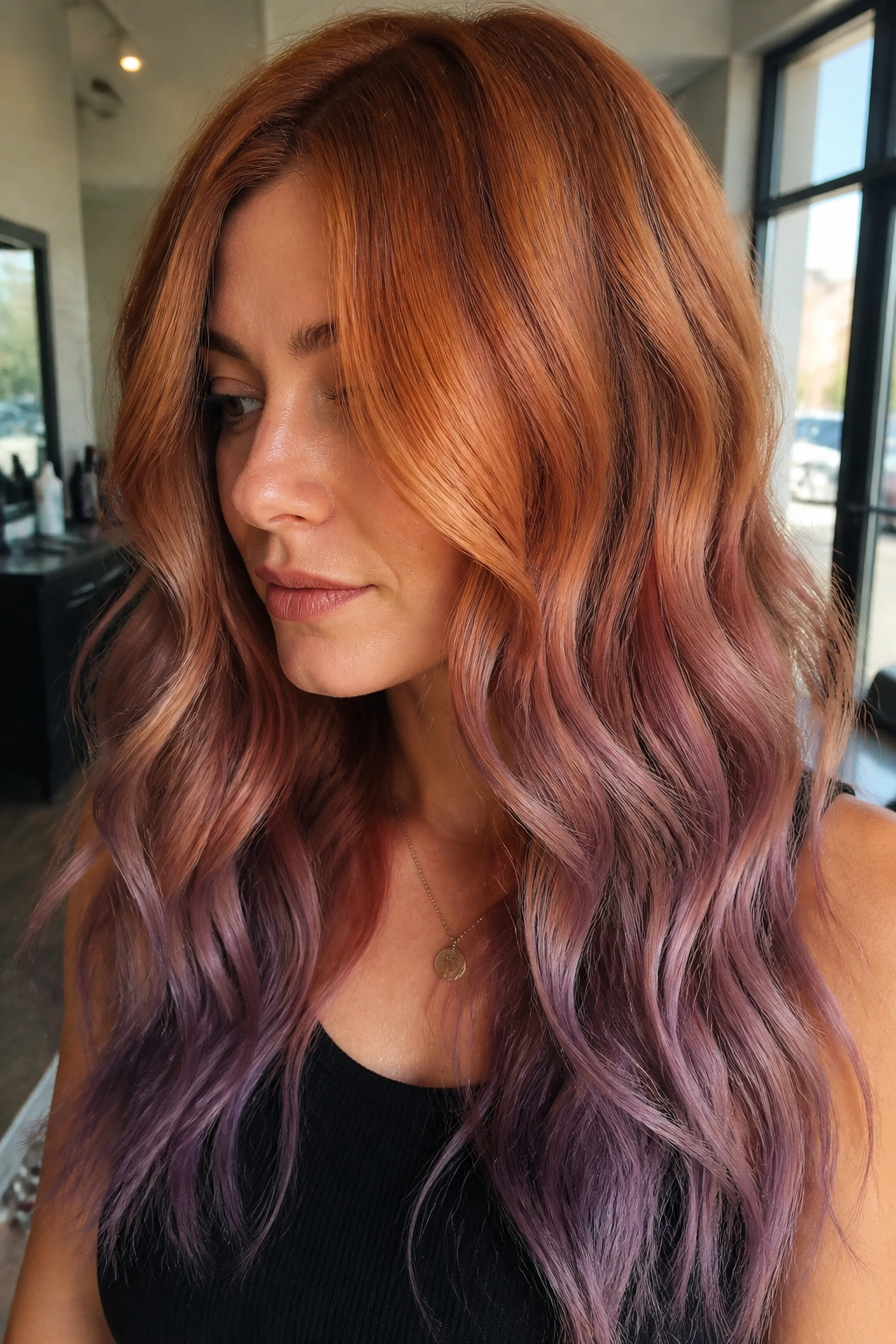
Copper and muted amethyst is one of the more interesting ways to wear lavender on long hair, because the warmth changes the whole mood. The copper keeps the top alive, while the amethyst adds a cool finish that never feels generic.
This works well when the ends are not pure pastel. A muted amethyst has enough depth to sit beside copper without fighting it. On long layered hair, the movement helps separate the warm and cool tones, and the result feels more editorial than obvious.
How to Make It Work
Ask for the amethyst to start softly around the mid-back point, then deepen at the final 2 inches. That little step keeps the fade from looking flat.
If your skin tends to look better beside warm color, this is a smart pick. The copper does most of the flattering, and the purple just gives the shape a cooler finish.
16. Vanilla Blonde with Lilac Cream
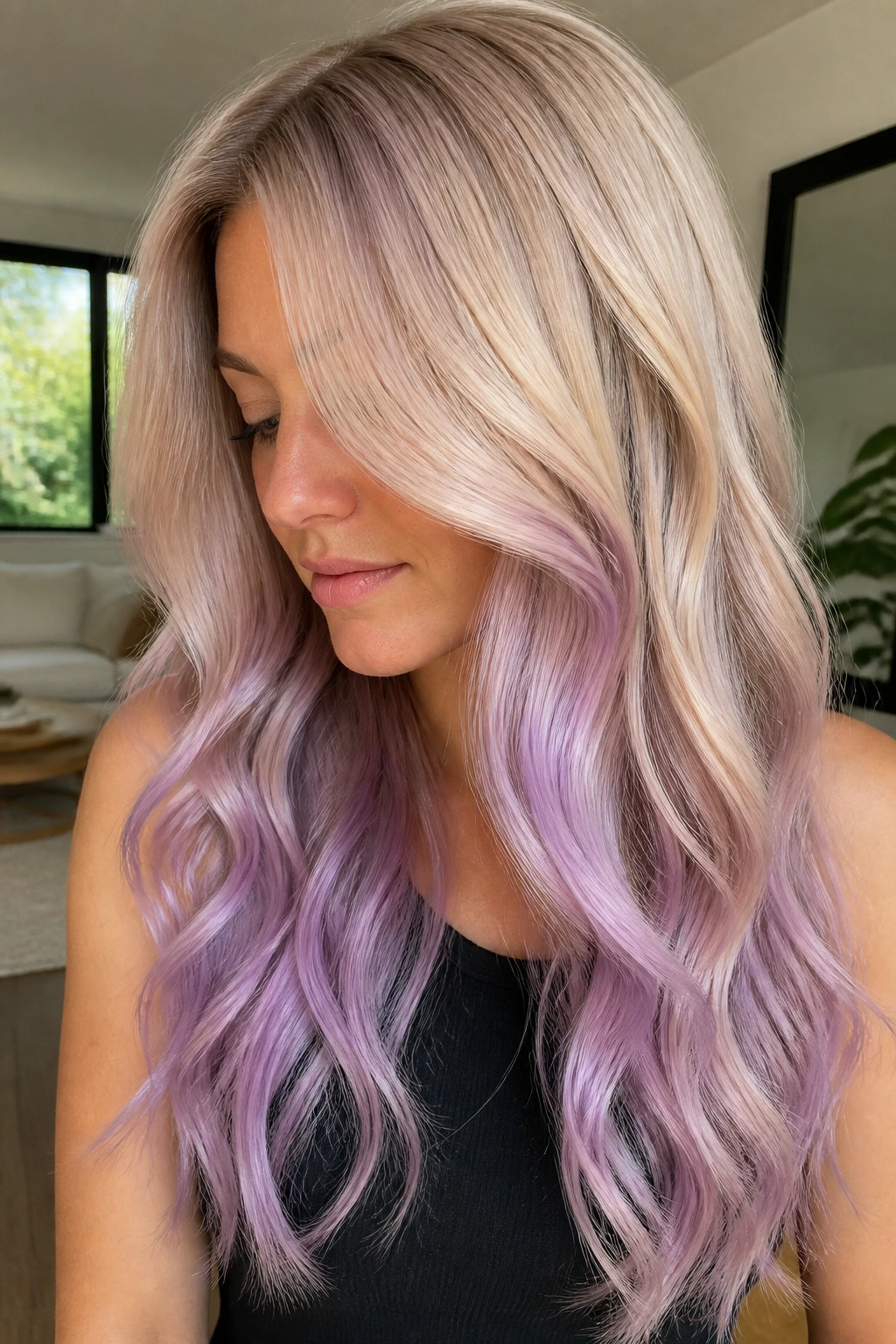
Vanilla blonde with lilac cream is a soft-focus version of lavender ombre hair. It is pale, airy, and a little dreamy without turning washed out.
A long cut with movement is the best match here. The cream tone on top keeps the blonde from feeling yellow, and the lilac at the bottom has just enough color to register as purple without shouting about it. If your hair is very thick, this shade can look heavy unless the lightest tone is placed through the outer layers.
What to Watch For
The ends need to be lifted evenly before the lilac goes on. Any yellow patches will fight the cool tone and make the bottom look dull.
I like this shade for polished waves and soft blowouts. It has that clean finish people notice when the hair swings, not when it sits still.
17. Espresso with Peekaboo Lavender Underlayers
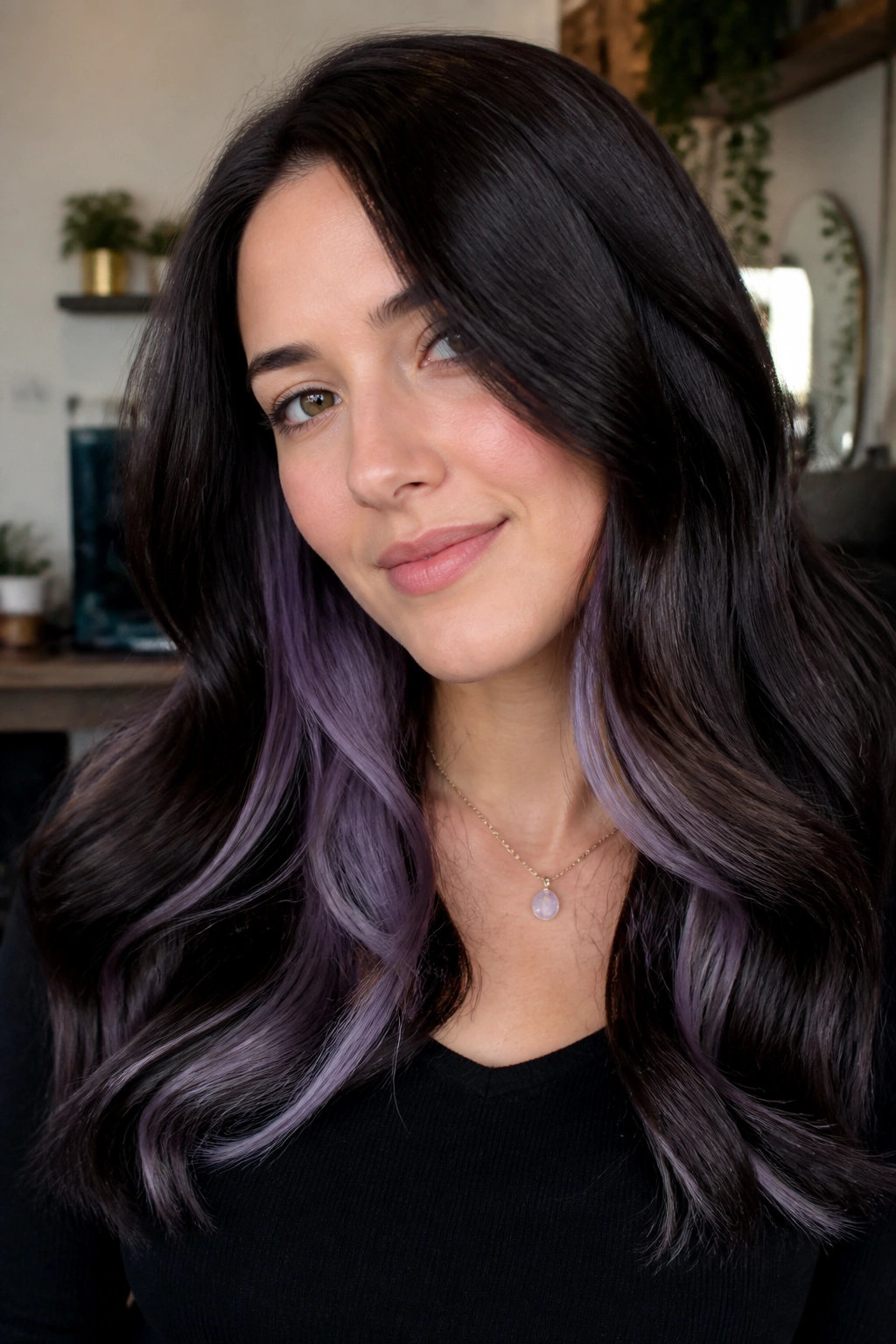
Peekaboo lavender is for the person who wants surprise, not broadcast. The top stays espresso and glossy, while the lavender hides underneath and flashes out when the hair is braided, pinned, or lifted into a ponytail.
This is especially good on long hair because the underlayer has enough length to show up in sections. If the hidden color is only on the bottom two inches, it barely reads. If it runs from the nape to mid-back, the effect feels intentional.
A center part can keep the top dark and sleek. A high ponytail suddenly turns the whole thing playful. That contrast is the point, and it makes the style more flexible than a full lavender fade.
18. Smoky Gray with Lavender Wash
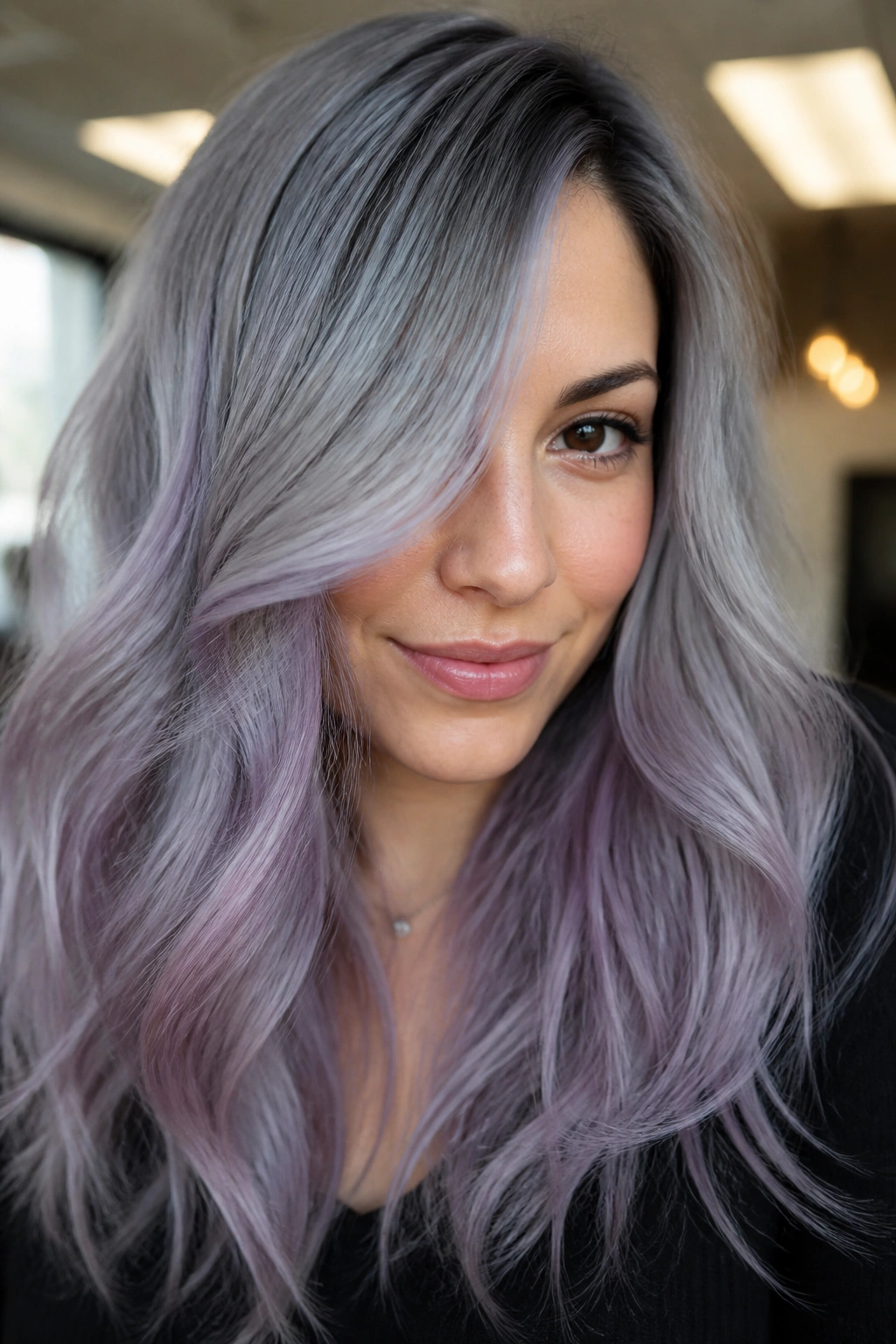
Smoky gray with a lavender wash sits closer to silver than purple, which is why it looks refined on long lengths. The lavender is soft enough that it reads as a tint, not a block of color.
Comparison Angle
Unlike a bright pastel fade, this version looks calmer in office light and stronger in sunlight. It is the one I would send to someone who wants a cool shade but does not want to restyle every other day.
On layered long hair, the gray creates texture and the lavender wash keeps the ends from looking flat. If you wear curls, the shade gains a softer edge. If you wear it straight, it looks cleaner and more metallic.
Best recommendation: keep the toner cool and the last inch slightly deeper, so the lavender wash does not disappear into silver haze.
19. Brown Sugar Roots with Violet Flame Ends
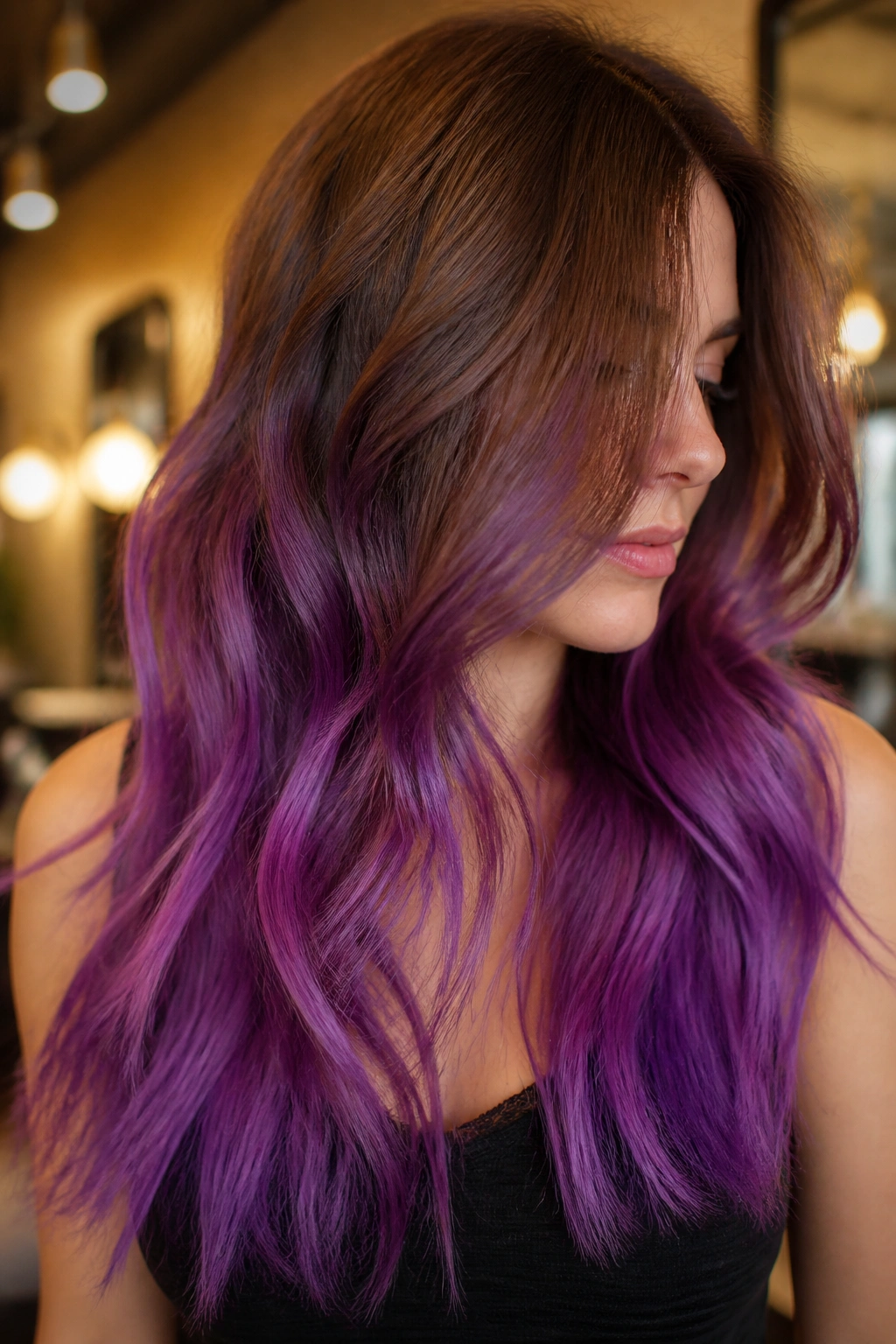
Brown sugar to violet flame is bolder than most lavender fades, but it still belongs in the same family. The warmer root shade softens the transition, and the vivid violet at the ends gives the hair a real finish.
Why It Reads Strong
The color shift is more visible on long, layered cuts because the ends fan out and the violet can show from different angles. If the hair is one-length and heavy, the flame effect gets trapped.
- Keep the violet concentrated below the shoulder blades.
- Use wider sections near the back for depth.
- Let a few pieces stay brown through the final inch.
That little break in the color matters. A solid block of violet can look flat. A few brown threads keep the ends moving.
20. Curly Long Hair with Lavender Ribbon Highlights
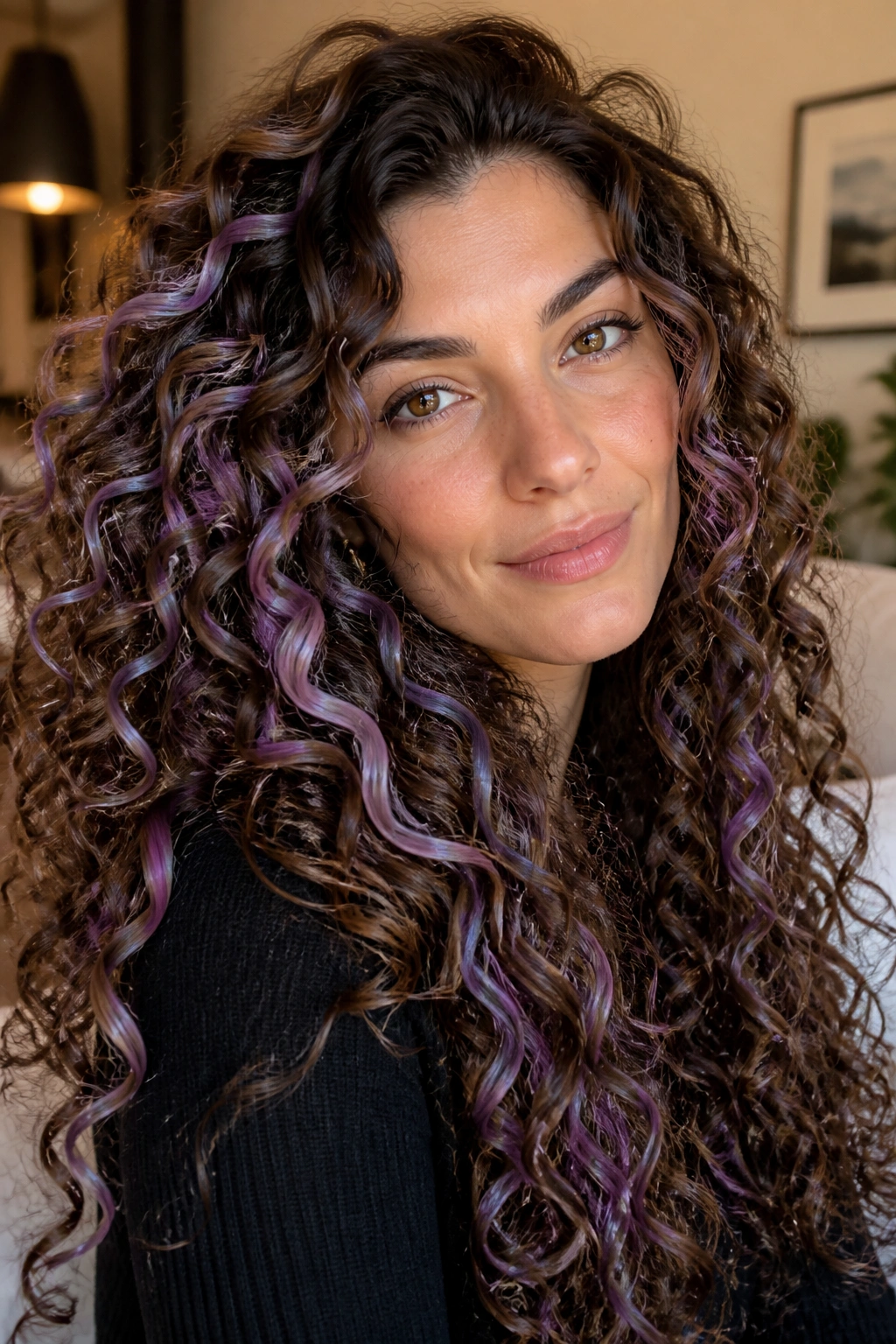
Curly hair and lavender ribbon highlights are a match that deserves more attention. Curls already break up the color, so the lavender can weave through the pattern instead of sitting on top like a stripe.
The best version is painted curl by curl on dry or nearly dry hair. That lets the colorist see where the ringlets naturally land and place the lavender where it will show after the curl springs back. On long curls, this is better than trying to force one straight fade across the whole head.
How to Wear It
Ask for ribbons around the outer shell of the curl pattern and a little extra color at the ends. The inner layers can stay darker, which gives the shape depth.
It is a good way to wear lavender without losing the texture. The curls do half the styling for you.
21. Straight Glass Hair with a Sharp Lavender Gradient
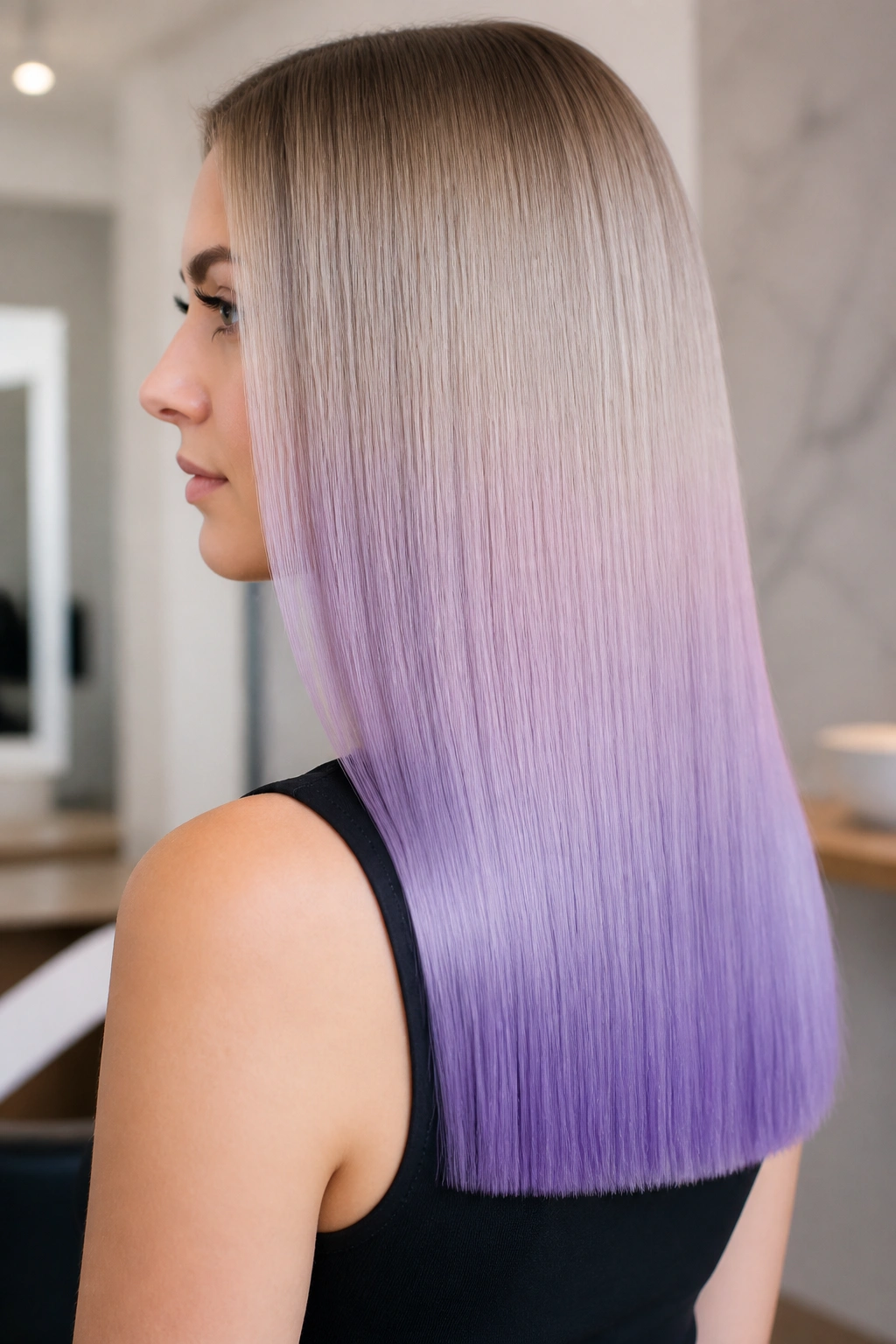
A sharp lavender gradient on straight glass hair is clean, modern, and a little unforgiving. That is what makes it interesting. There is nowhere for the fade to hide, so the color has to be placed with care.
Long, blunt ends are the best match. The straight line at the bottom lets the lavender finish feel crisp instead of fuzzy. If the hair is very layered, the effect gets broken up and turns softer, which may be what you want. If not, keep the cut sleek and let the color do the talking.
How to Keep It Sharp
Use a smoothing blow-dry and a flat iron pass only if the hair can handle it. Too much heat can flatten the gradient and make the ends look thin.
The real payoff is the contrast between the clean top and the cool bottom. It feels deliberate every time.
22. Boho Waves with Multi-Tonal Lilac
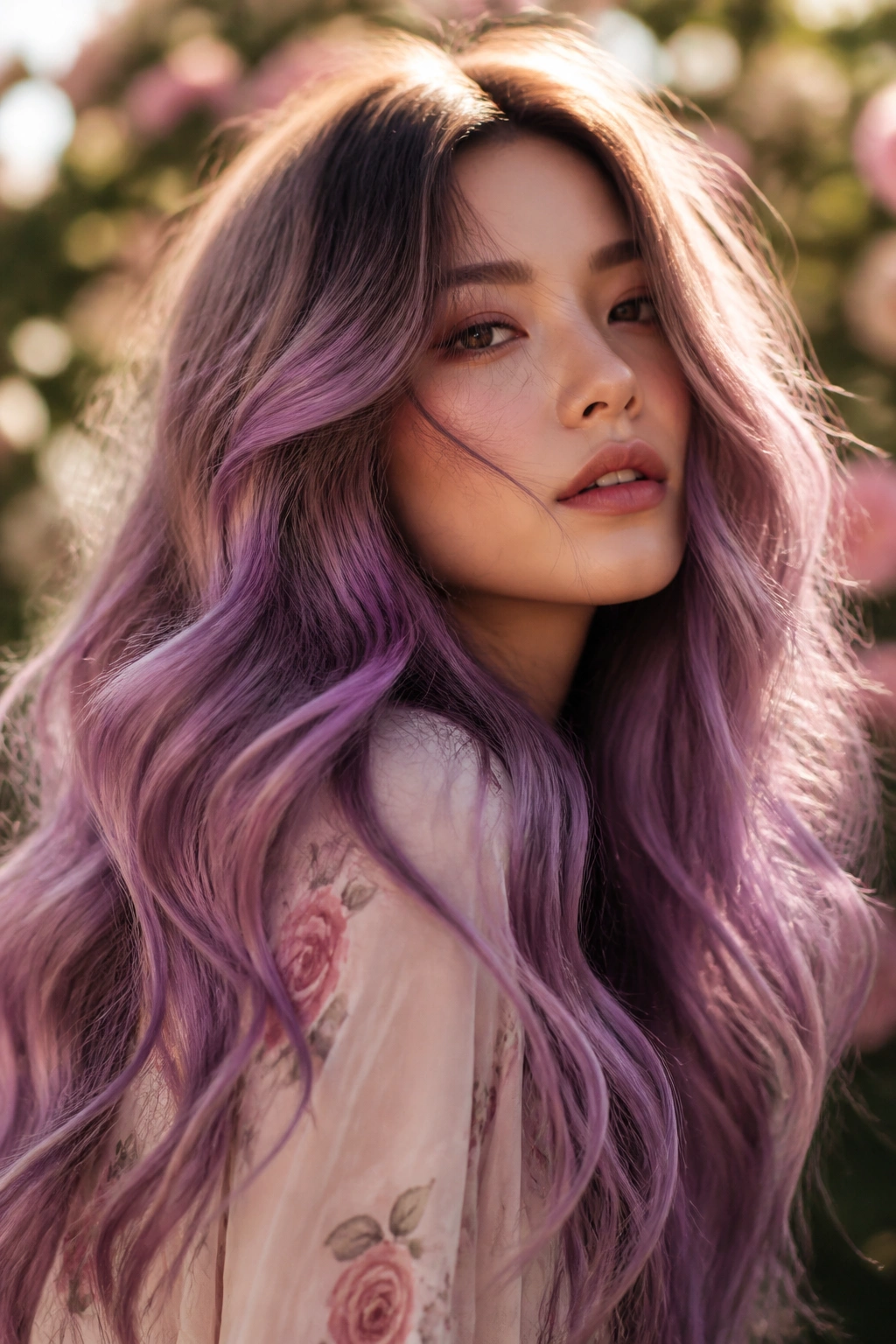
Boho waves are the place where multi-tonal lilac gets to act like a whole mood instead of one color. You can layer pale lilac, dusty orchid, and a little smoky lavender through the ends and let the movement sort it out.
This works because long wavy hair never shows every strand the same way twice. One bend catches the pale shade, the next bend shows the deeper one. That makes the fade look richer without needing a lot of contrast at the root.
- Keep one shade slightly deeper for the underside.
- Leave a few pale pieces around the face.
- Ask for a soft gloss so the ends do not look dry.
Best part: this is one of the easiest lavender ideas to grow out gracefully because the tones blur together as they soften.
23. Layered Cut with Face-Framing Lavender Money Pieces
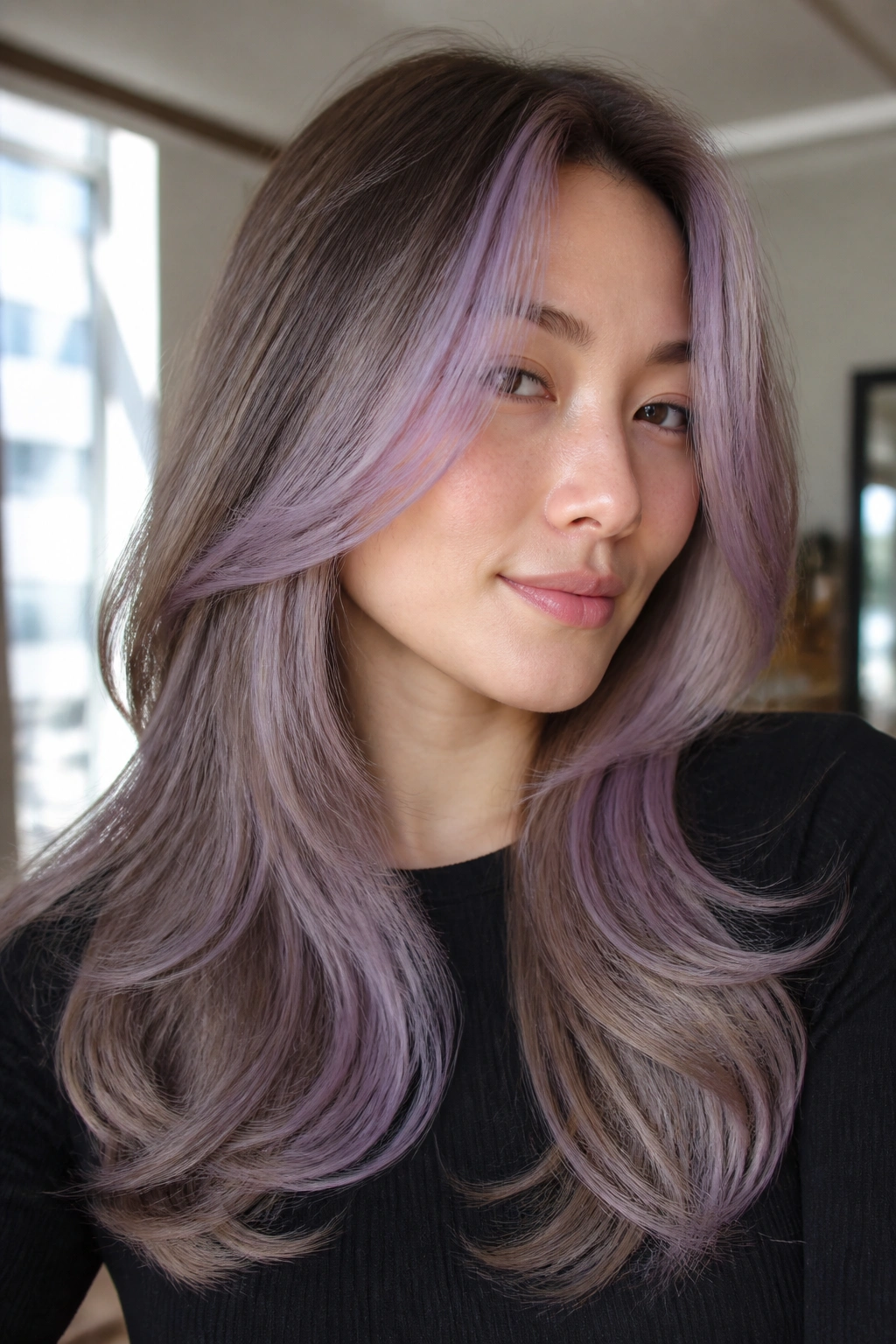
Face-framing lavender money pieces give long layered hair a sharp little accent without committing the whole head to purple. The rest of the hair can stay a soft blonde or brunette fade, while the front pieces do the talking.
Why This One Works
Money pieces draw attention to the face and to the cut itself. On long hair, they also break up the length so the style does not feel heavy from front to back.
If you want the color to show when your hair is tucked behind your ears, keep those front panels a touch brighter than the back. A lavender starting around the cheekbone and fading downward looks cleaner than one that begins at the root.
This is a smart choice if you like ponytails, braids, and messy half-up knots. The lavender stays visible even when the rest of the hair is pinned back.
24. V-Cut Lengths with Shadowed Lavender Ends
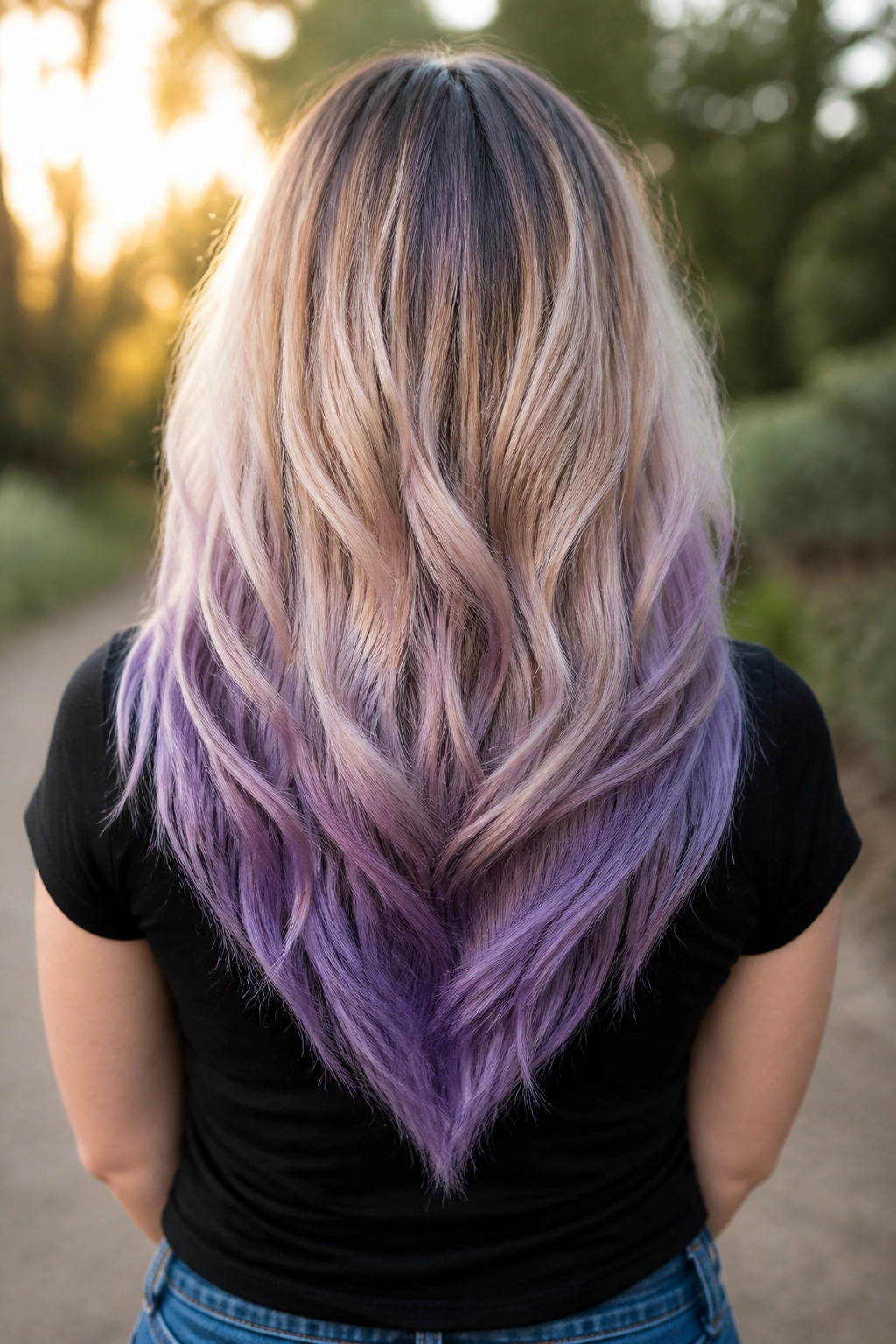
V-cut hair makes lavender ombre look longer and fuller at the same time. The sharp point at the back concentrates the color at the hem, which gives the ends more presence.
The shadowed version is softer than a full dip-dye. The roots stay deeper, the mid-lengths stay neutral, and the lavender collects at the last stretch of hair where the V shape narrows. That means the color looks denser without needing more pigment.
What to Ask For
Tell your colorist you want the brightest lavender on the outer point of the V and a softer dusting in the inside layers. That prevents the back from looking one-dimensional.
It is a nice choice if your hair is thick and you want the bottom to feel lighter. The shape and the color do a lot of the same work.
25. Long Shag with Smoky Lavender Texture
A long shag gives smoky lavender a place to live. The layers break up the color, which makes the fade look softer, more lived-in, and less like a smooth sheet of dye.
This is one of my favorite ways to wear lavender on long hair because the cut does not fight the color. The shorter internal layers catch the lighter purple, while the longer perimeter holds the darker smoke. You get movement without needing a perfect blowout.
Why It Suits the Cut
A shag already has that slightly undone feel. Smoky lavender leans into it instead of trying to polish it away.
If your hair is thick, ask for the lightest lavender on the outermost layers and keep the inner layers more muted. That stops the color from becoming busy. A soft wave or bend is enough. No need to over-style it.
26. Braided Long Hair with Lavender Ombre
Braids make lavender ombre easier to see because they pull the colors into clear lines. A simple three-strand braid, a fishtail, or even a loose rope braid will show the fade in a way loose hair sometimes hides.
How to Style It
This version works best when the strongest lavender sits on the outer panels of the hair. Once the braid is woven, those panels turn into the visible edges, so the purple shows up without needing extra product.
- Braid on hair that still has a little grip, not silky-soft slip.
- Leave the last 4 to 6 inches more saturated.
- Pull the braid apart slightly if you want the colors to fan out.
That loosened texture makes the gradient easier to read. Tight braids can compress the color too much.
27. Half-Up Styles That Show Off the Fade
Half-up styles are underrated for lavender ombre because they let you show the darker roots, the fade, and the bright ends all at once. A twisted crown, a small top knot, or a bubble half pony can all shift the color in a different way.
If your hair is very long, this is one of the easiest ways to keep the lavender visible without wearing it loose every day. The top section lifts away from the face, and the ends fall free, so the fade gets built into the style instead of hidden by it.
How to Get the Most From It
Place the brightest lavender in the lowest layer of the half-up section. That way, when the hair is pulled back, the color still peeks through around the ears and at the ends.
It is a practical choice, too. The style works at brunch, at a wedding, and on a normal day when you just want your hair out of your face.
28. Lavender-Silver Mermaid Melt
Lavender-silver is a cooler, more reflective version of the fade. The silver keeps the ends bright, and the lavender gives the whole thing a soft purple edge that reads like polished metal instead of candy.
This one needs careful placement on long hair. The lighter pieces should sit around the face and the top layer, while the lavender-silver mix gets denser from mid-back to the ends. If the silver starts too low, the purple can feel trapped underneath.
What Makes It Different
Unlike a plain pastel ombre, this style looks stronger in low light because the silver reflects what is around it. In daylight, the lavender shows up more. That shift is what makes it feel layered.
Best on smooth blowouts, but it also looks striking on long waves with a middle part. Keep the tone cool, not blue, or the silver can start to look icy in a dull way.
29. Rooted Mocha with Lavender Milk Ends
Rooted mocha fading into lavender milk is a softer, creamier way to wear long lavender hair. The mocha root keeps the top grounded, while the milkier ends stay light and feathery.
The nicest thing about this version is how forgiving it can be. A deep root shadow buys you time between salon visits, and the pale lavender at the bottom still looks intentional as it softens. Long hair gives the color enough length to stretch, which matters here because the fade should feel gradual, not painted in bands.
I like this on hair that is gently layered and worn loose more often than not. The layers help the lavender milk catch light at the ends, and the mocha root prevents the whole head from turning washed out.
30. Grown-Out Lavender Ombre with Shadow Roots
A grown-out lavender ombre is the one to choose if you want the color but not the upkeep headache that usually comes with it. The root shadow is part of the design, not a problem to fix, so the style keeps looking good as it softens.
This is where long hair earns its keep. You can keep the lavender concentrated from mid-length to ends, let the roots stay a deeper brown or blonde, and still have a fade that looks planned. The longest versions can even hold two tones of lavender: a dusty shade above and a brighter one at the very tips.
If you want a practical version of the look, ask for the lavender to begin 8 to 10 inches from the ends. That gives you room for grow-out, braids, ponytails, and the occasional lazy hair day. It also means the color will look lived-in rather than freshly painted, which is usually the better look anyway.
