



Ombre hair ideas for curly hair can go soft, loud, glossy, smoky, or straight-up dramatic, but the best versions all do the same thing: they respect the curl pattern instead of fighting it. A spiral does not behave like a flat strand. It folds light into itself, hides color in some bends, and flashes it back at you in others. That’s why the same shade can look expensive on curls and flat on straight hair.
The best ombre for curls usually keeps some depth at the roots and places the brighter shade where the curl opens up—mid-lengths, outer layers, and ends. Push the lightness too high and you can end up with a hard line. Push it too low and the color disappears when the hair shrinks up. Tiny placement shifts make a huge difference.
Curls also have a personality of their own. Tight coils, loose ringlets, and wavy spirals all carry color differently, and porosity matters just as much as shade choice. Dry ends grab pigment fast. Fragile ends also lose moisture fast. That’s why the prettiest ombre often looks like it was painted by someone who has spent time studying how curls actually move.
The first stop is a warm, forgiving version that works on a lot of bases: caramel ribbons.
1. Caramel Ribbon Ombre on Dark Curls
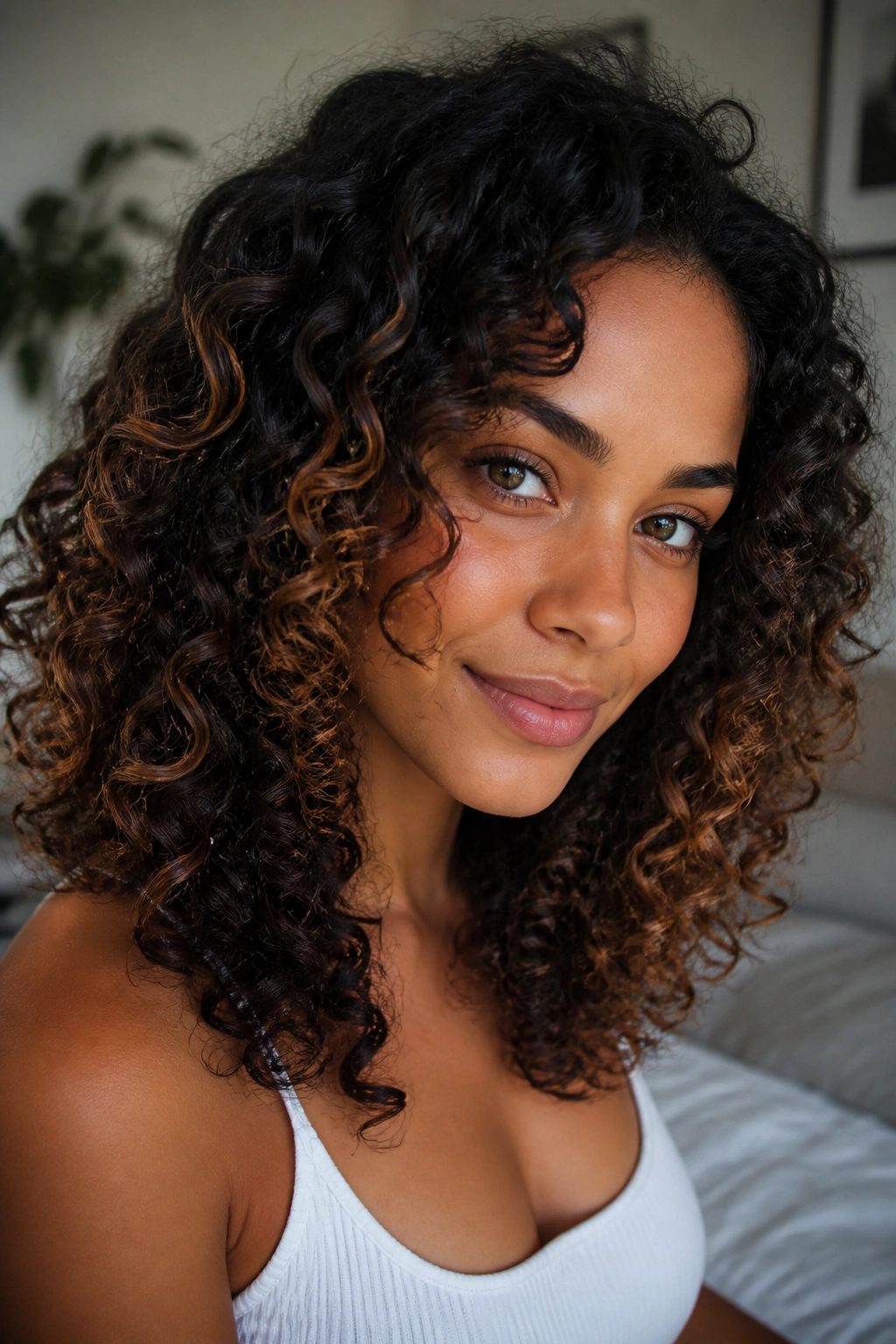
Caramel ribbon ombre is the easy yes. It gives dark curls a warm lift without turning the whole head blond, and that matters when you want dimension more than drama.
Why It Works on Curls
Curls break up color in a way straight hair never can. A ribbon of caramel lands on the outside of the curl, so you get flashes of warmth as the hair moves and shadow underneath to keep it grounded. The result looks fuller, not thinner.
- Best on dark brown, mocha, and espresso bases.
- Ask for 1 to 2 inches of root shadow so the grow-out stays soft.
- Keep the lightest caramel on the mid-lengths and ends, not the crown.
- A gloss in level 7 or 8 warmth keeps the tone rich, not brassy.
Quick tip: Caramel looks better when the cut has layers. Flat ends make the color feel heavy.
2. Honey Brown Ends on Loose Ringlets
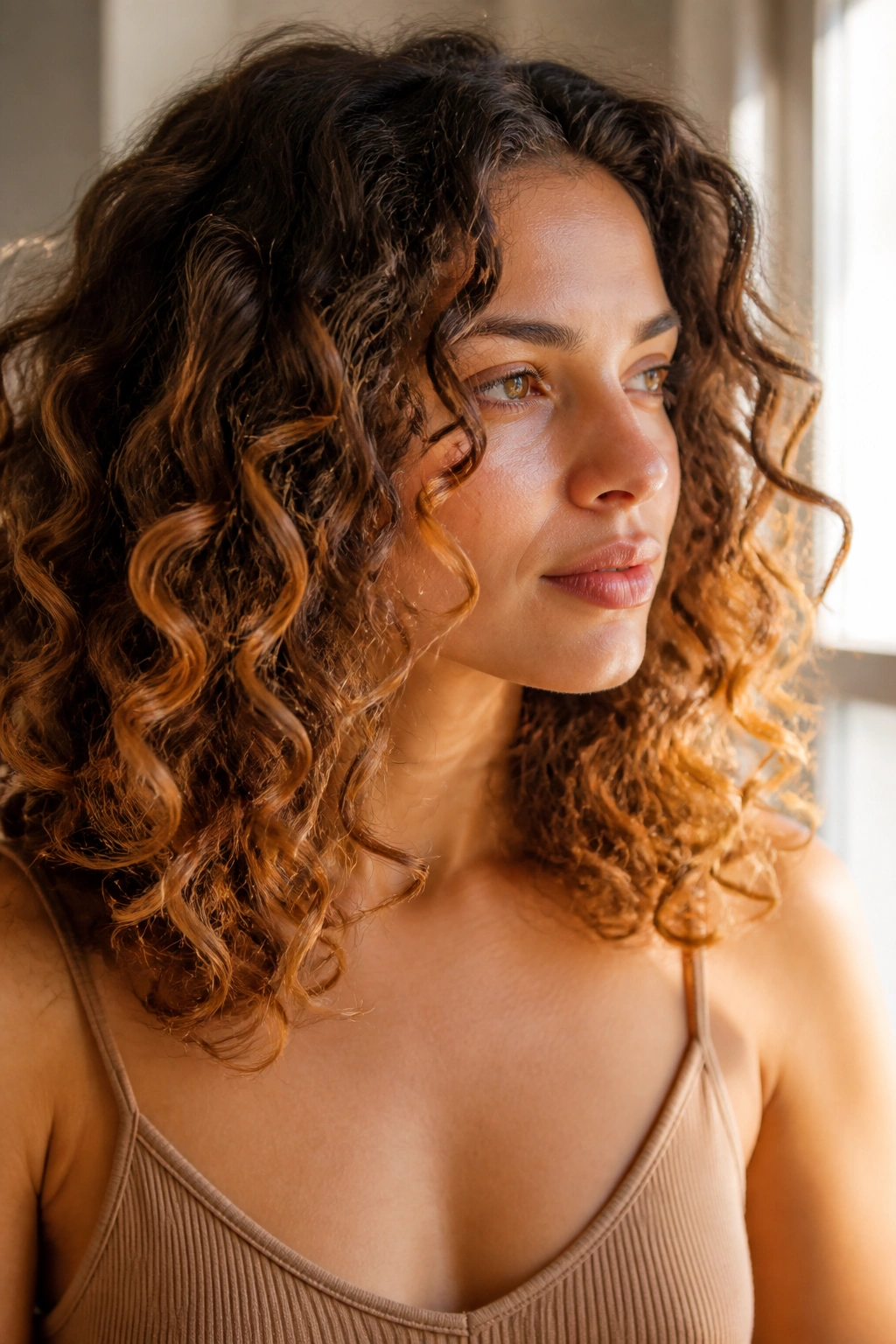
Honey brown is calmer than blonde, and that calm is the point. If you want lightness but do not want your curls to look overprocessed, honey brown ends are one of the safest bets.
The shade sits in that sweet spot between gold and soft beige, which means it warms up brown curls without screaming for attention. On loose ringlets, the ombre reads as sun-kissed rather than dyed. That’s a useful distinction. One feels polished. The other can feel busy if the curl pattern is already dense.
I like this version most on shoulder-length cuts with a little movement around the face. Ask for the lighter shade to start below the cheekbone area, then fade gradually toward the ends. If the light color starts too high, the curl pattern can make it look chunky. Keep the root deep, let the middle stay multi-tonal, and the whole style settles into something easy to wear.
3. Copper Ombre for Springy Coil Patterns
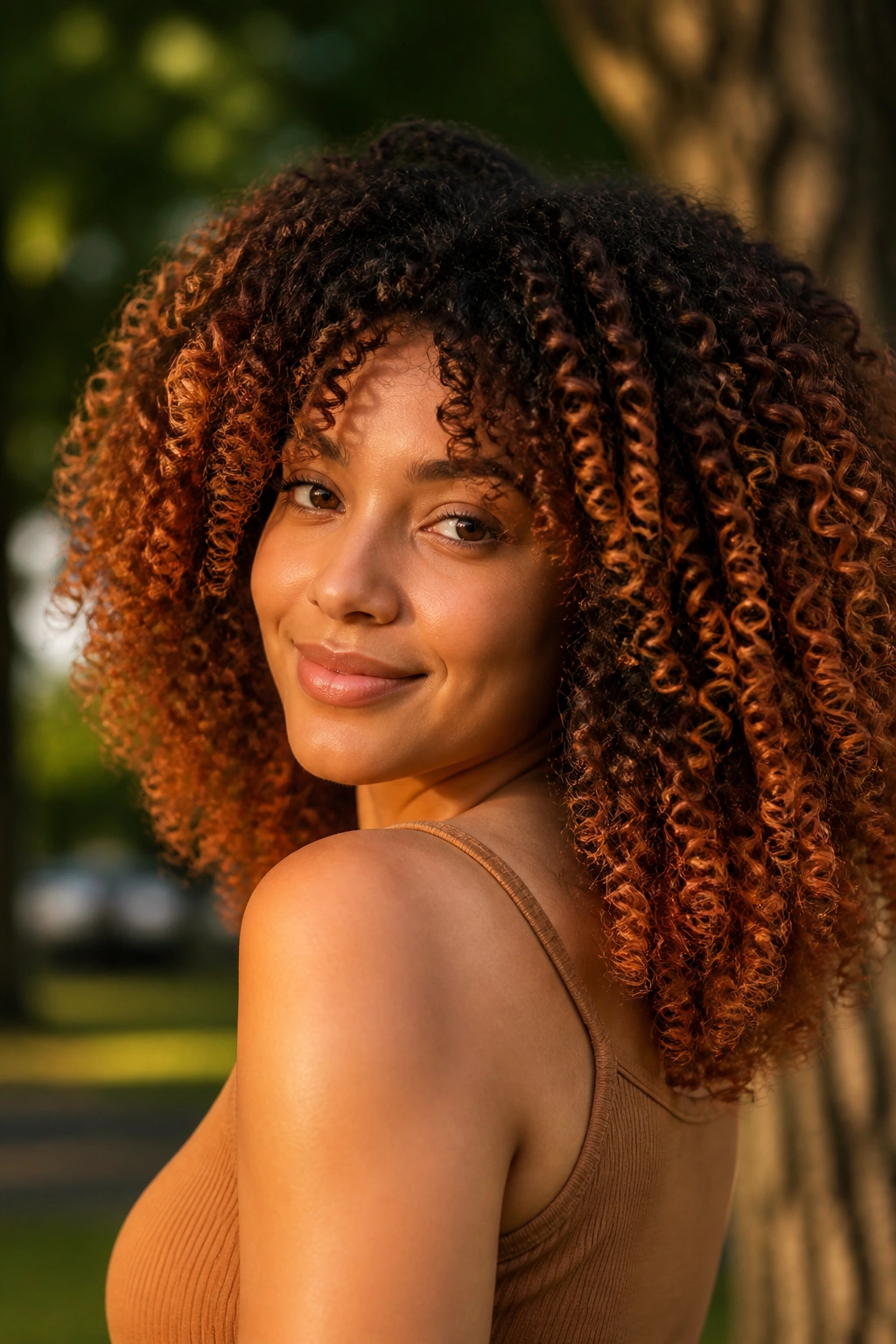
Why does copper look so good on coils? Because the warmth sits inside the curl pattern instead of floating on top of it. That makes the color feel alive.
Copper is one of those shades that can go loud fast, so the trick is to choose the right depth. On springy coils, a softer copper-blonde can read bright and playful, while a deeper copper auburn feels richer and less obvious. The curl structure helps either version. Each twist catches a different slice of light, which gives the color more movement than it would have on straight hair.
How to Wear It
Ask for a soft root shadow and a copper gloss on the ends. If your base is dark, the lift should be gentle enough that the curls stay springy and not straw-like. Leave some depth between the roots and the brightest ends. That break is what keeps the look from turning into one flat orange block.
If you like color that feels warm and lively but not too sweet, copper is a strong pick.
4. Auburn Ends on Deep Brown Curls
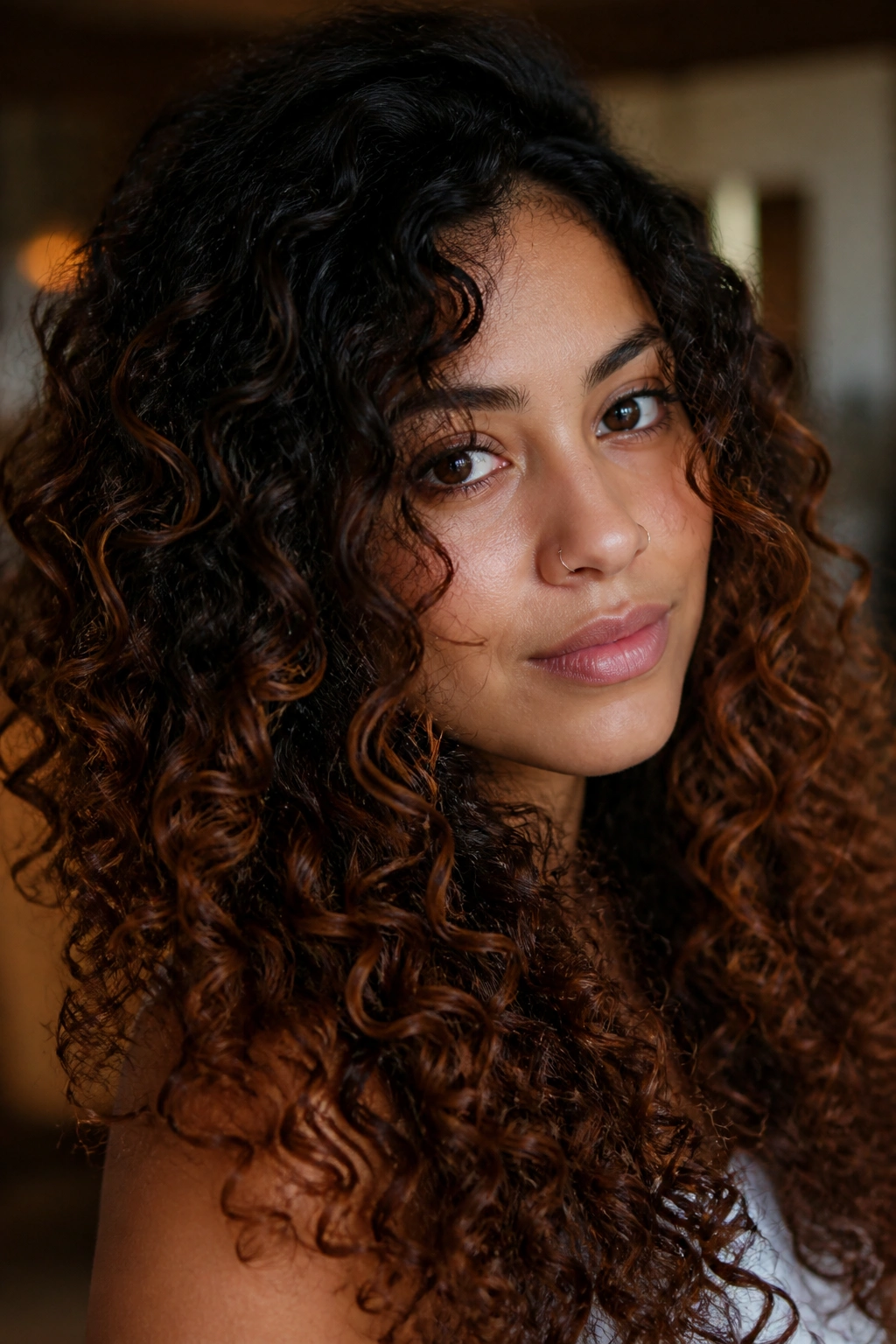
Picture a deep brown base with auburn threaded through the lower half of the curls. That’s the version that always gets my vote when someone wants warmth without jumping into bright red.
Auburn works because it sits between brown and red, which gives curls a richer look under indoor light and a subtle glow outdoors. The color is strong enough to show, but not so loud that every curl competes with the next. On tight or medium coils, that matters. A harsh red can look patchy fast. Auburn usually does not.
- Best for dark brown and black-brown bases.
- Keep the lift limited to the ends if your hair is dry.
- A color-safe mask once a week helps the red tone stay smooth.
- Ask for a soft blend, not a hard line at the mid-shaft.
The big appeal here is depth. Auburn makes curls look denser, which is useful if your ends feel thin.
5. Rose Gold Dip on Medium Curls
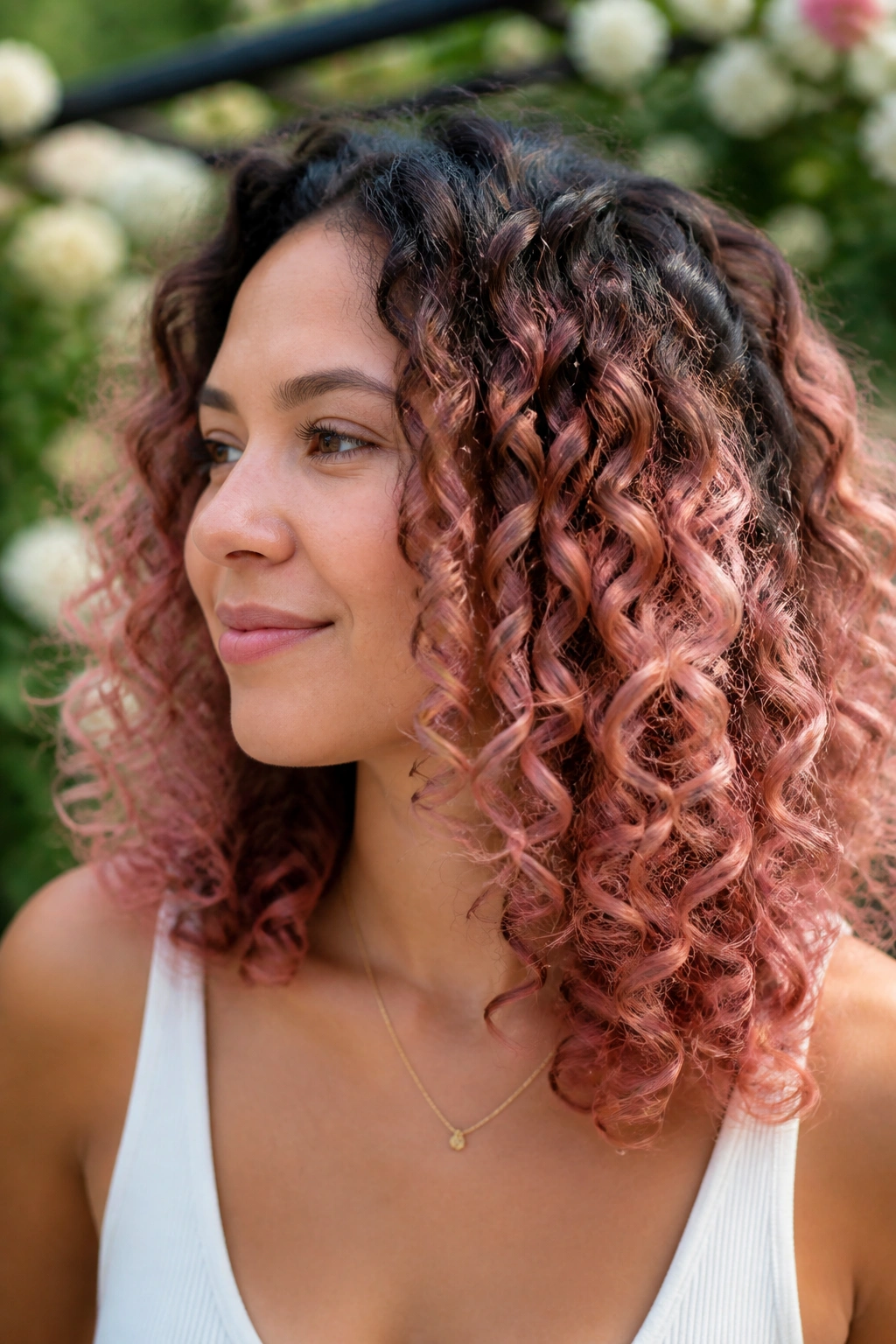
Rose gold on curls has a softer personality than people expect. It does not read like shiny metal. It reads like a muted blush with a warm edge, and that difference matters a lot.
The best rose gold ombre starts with a lighter canvas, because the pink-gold tone needs room to show up. On medium curls, it falls in between playful and polished. If the base is dark, the ends need enough lift to hold the pink undertone cleanly. If the lift is too weak, the rose can go muddy. Too pale, and it turns almost peach. So the sweet spot is a clean blond base with a warm pastel gloss on top.
I like rose gold on curls with a lot of definition because the bend of the strand gives the pink tone movement. The color shifts every time the curls separate, which keeps it from looking flat. A few washes with a color-depositing mask can keep it fresh without blasting the whole head with pigment again.
6. Ash Blonde Ombre on Dark Spirals
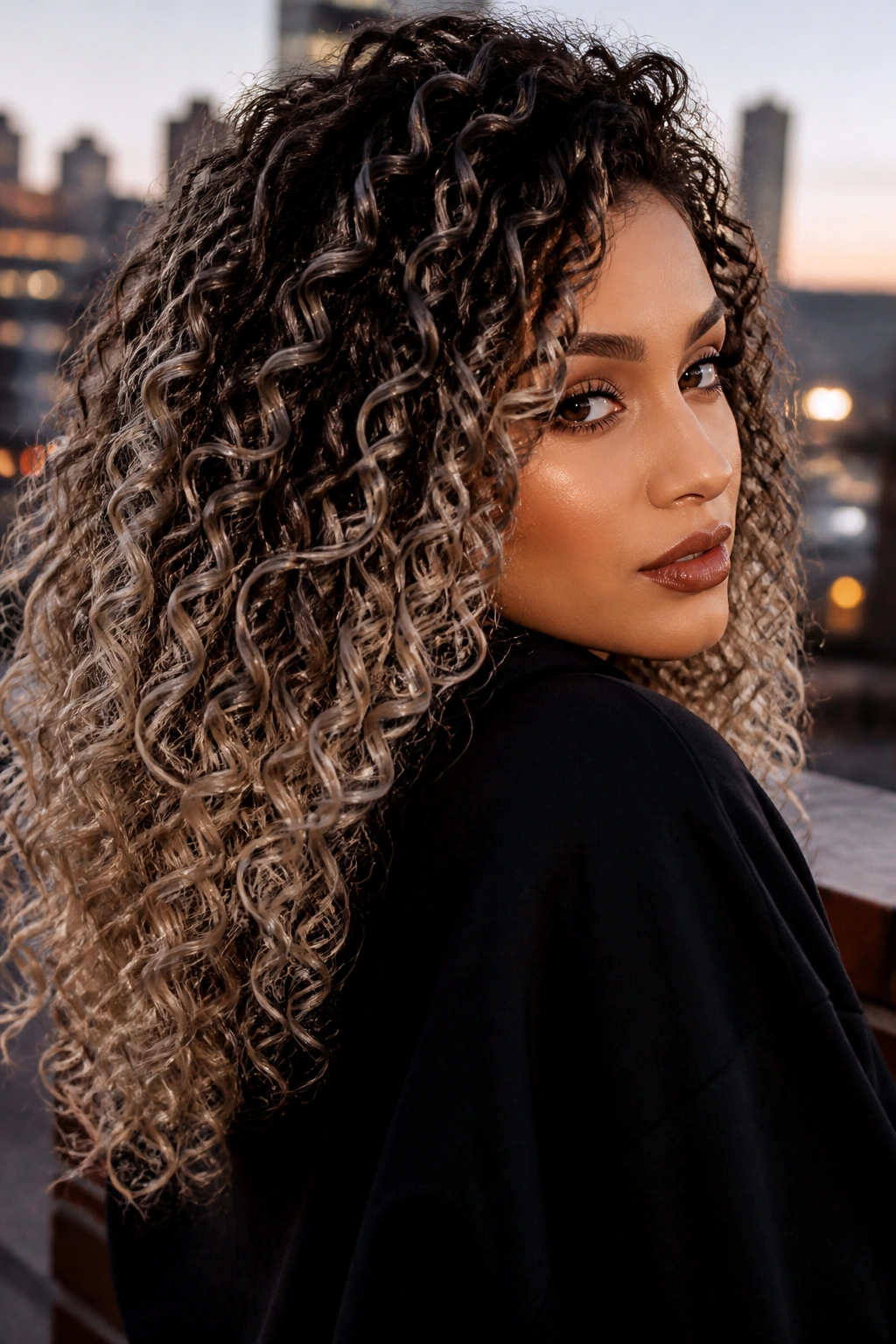
Ash blonde is the cooler cousin of honey blonde, and it brings a sharper edge to curly hair. If warm shades feel too soft for your taste, this is the one that changes the mood fast.
Unlike caramel or honey, ash blonde has a gray-beige cast that cuts through red and gold in the hair. On dark spirals, that contrast looks clean and a little dramatic. It also asks for more upkeep. Cool blondes need toning, and curls need moisture, so you are juggling both tone and texture at once. No shortcut fixes that part.
Who It Suits Best
It works best on people who like a crisp finish and do not mind using violet shampoo, a deep conditioner, and the occasional gloss. I would keep the lift around level 8 unless the hair is very healthy. Higher lift can look icy, but it also exposes every dry end.
If you want a cooler ombre that still feels wearable, ash blonde gives you that edge without going full platinum.
7. Espresso to Milk Chocolate Melt
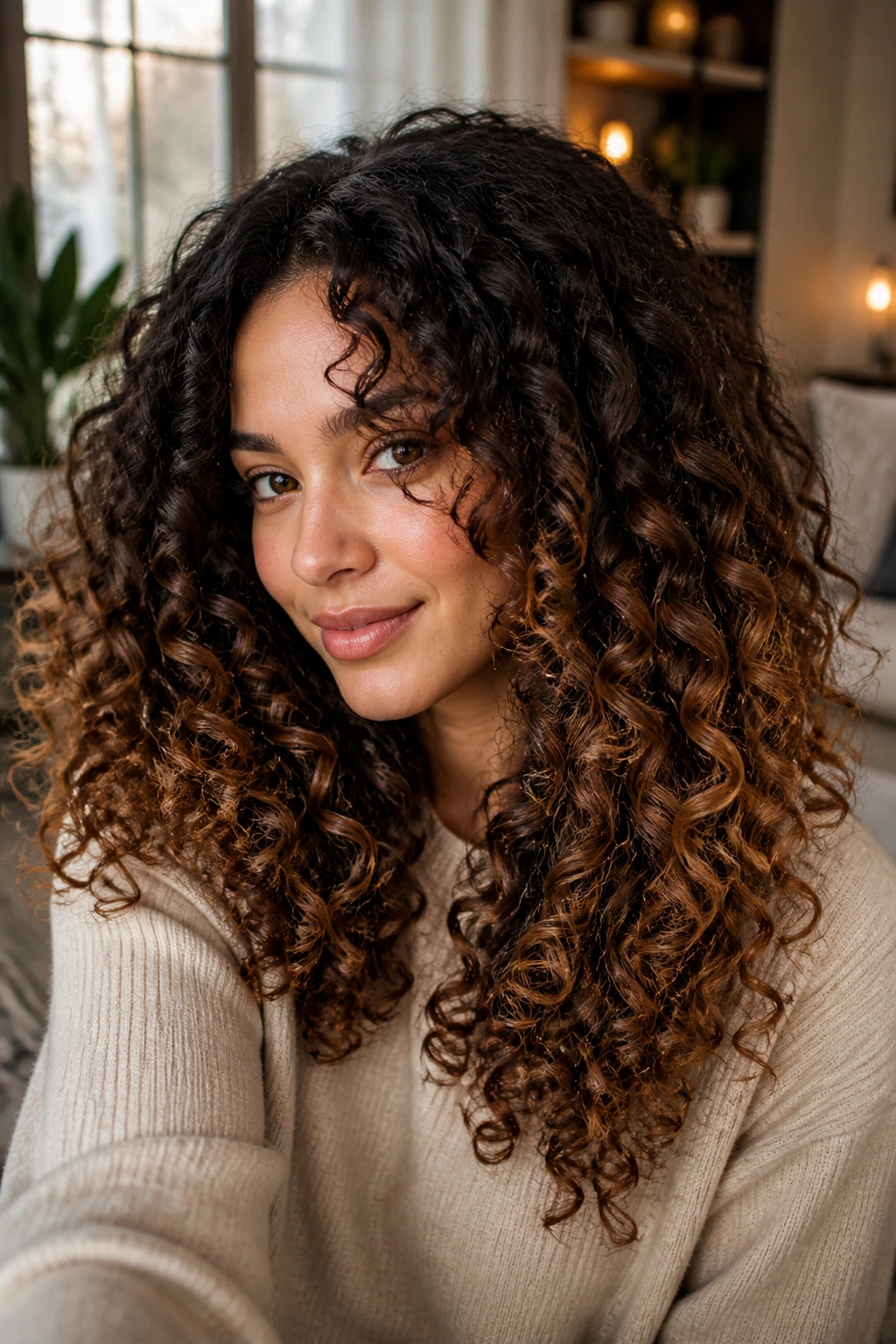
This is the quiet luxury version of ombre, if I can borrow a loaded phrase without sounding like a brochure. The transition from espresso roots to milk chocolate ends is soft, warm, and easy on curly hair.
The reason it works so well is simple: the shades are close enough to look natural, but different enough to show movement. On curls, that tiny shift becomes visible because the hair bends and stacks. A flat style might hide it. Curls do not. They show every little change in tone.
What Makes It Different
The transition should look like melted cocoa, not stripes. Ask for color that begins around the lower mid-lengths and gets a touch lighter toward the ends. The contrast should stay gentle—about two or three shade levels at most.
- Best for people who want low-drama color.
- Works especially well on layered cuts.
- Needs less maintenance than blonde-based ombre.
- Looks polished even as it grows out.
My favorite part: it keeps the curls looking thick. Heavy contrast can split the shape. This does not.
8. Cinnamon and Toffee Dimension
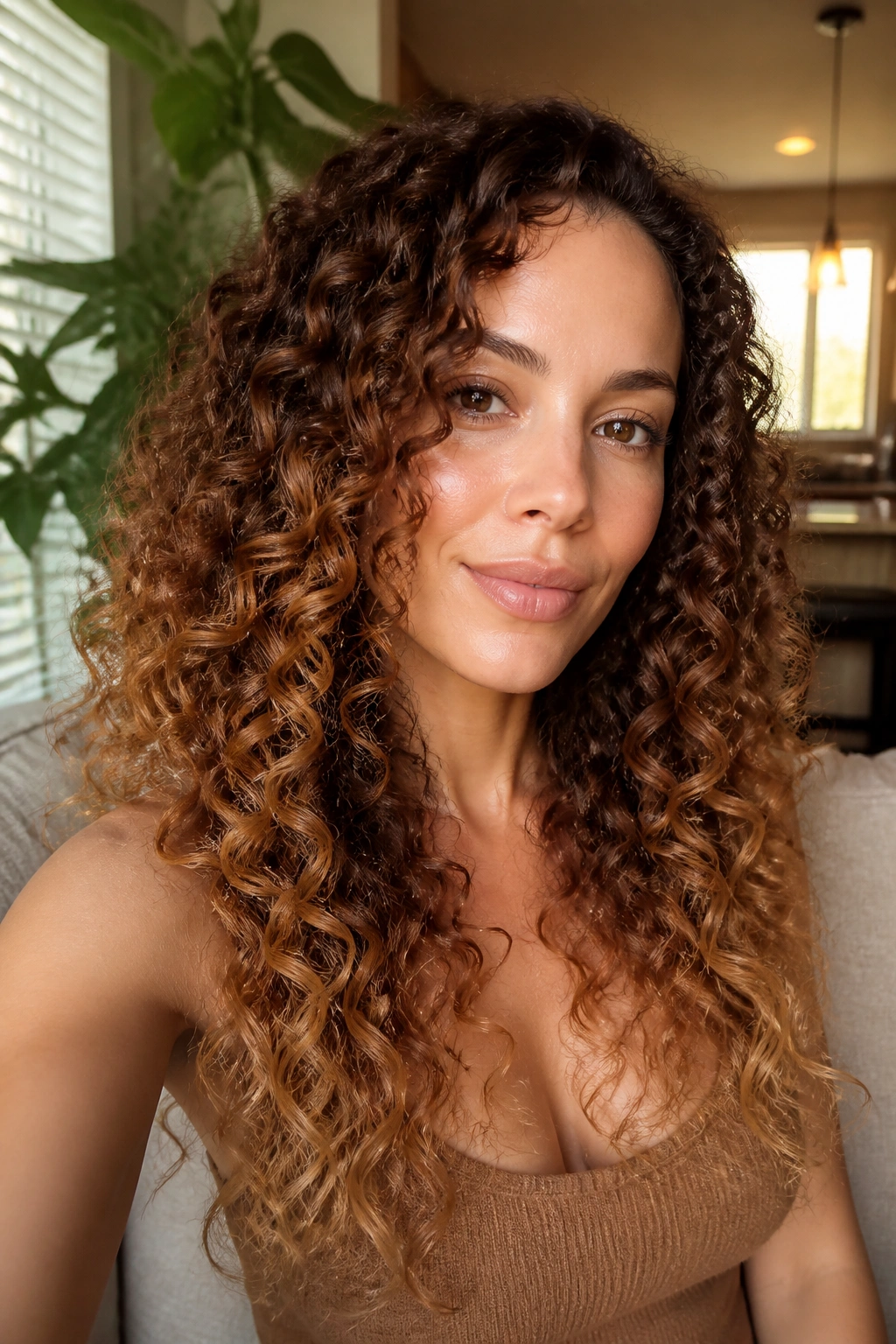
Cinnamon and toffee are warmer than espresso-chocolate, but they do not swing into copper territory. That middle ground is what makes the look easy to live with.
I like this combination on hair that already has brown warmth in it. The cinnamon can sit through the mid-lengths while toffee brightens the ends, and the whole thing reads as rich rather than loud. On curls, the two tones do a nice job of separating the pattern visually. You can actually see the twists. That is half the appeal.
If you wear your curls big, this ombre adds shape without needing a blunt cut. If you wear them stretched, the color still holds because the warm tones overlap enough to avoid harsh bands. Ask for a soft hand at the root and a gloss finish at the end. The gloss is worth it. Without it, warm shades can go dull fast.
9. Burgundy Wine Ombre on Curly Layers
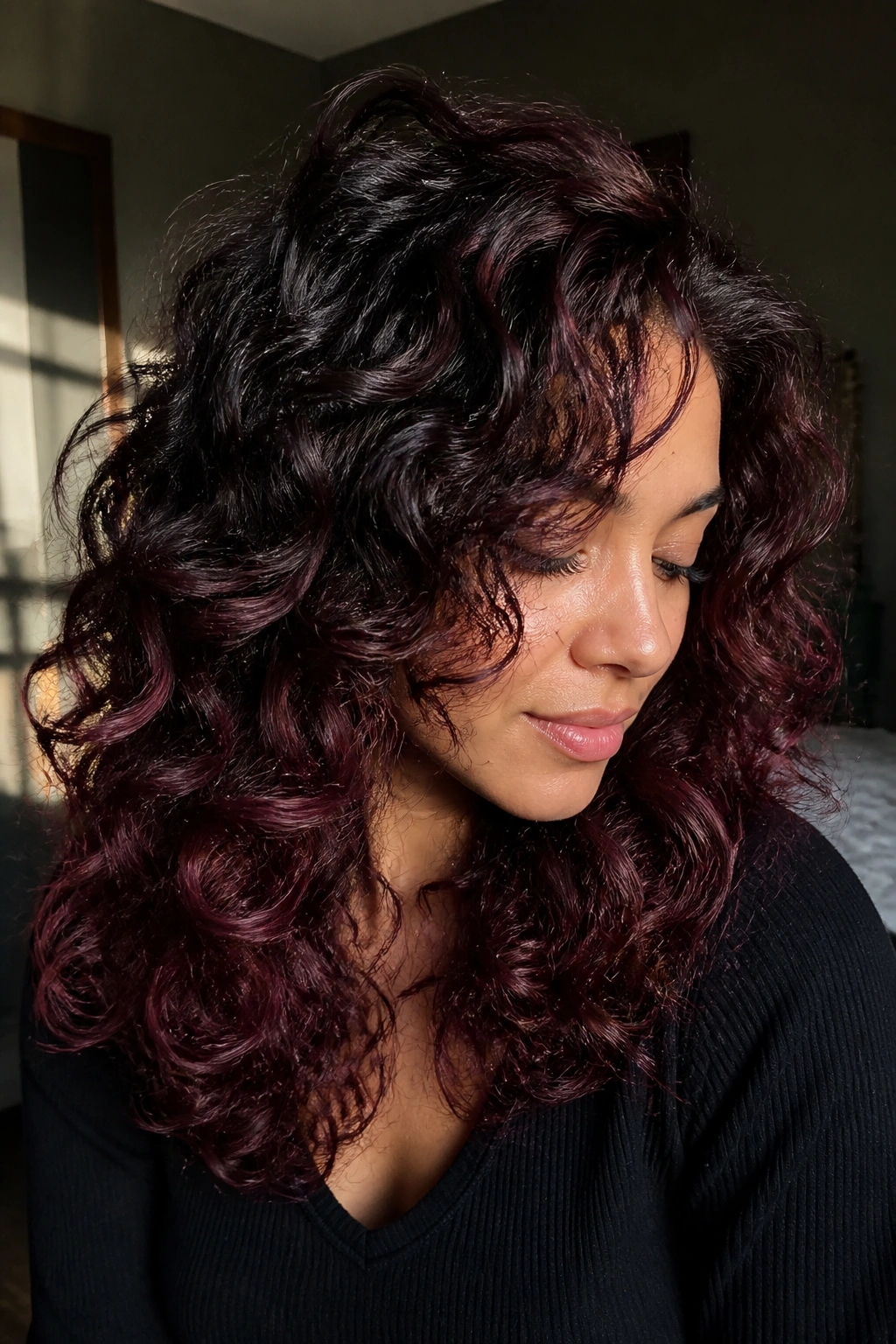
Why do burgundy curls look so good in low light? Because the red-violet tone hides inside the shadow of the curl and then flashes when the strand turns.
Burgundy is one of the richest ombre choices for curly hair because it feels moody without becoming black. It works especially well if your base is already dark brown or black. The ends can be lifted just enough to hold the wine tone, then toned back down so the shade stays deep. Too much lift and burgundy can look neon. Too little and it disappears. The sweet spot lives in the middle.
How to Keep It from Going Flat
A burgundy ombre benefits from shine. Use a light oil on the ends, but not so much that the color gets greasy-looking. A color-depositing conditioner with red-violet pigment can help between salon visits. Skip heavy clarifying shampoos unless your hair truly needs them. They pull red tones out fast.
If you want something darker than copper and more playful than brown, burgundy has real range.
10. Plum Ombre on Tight Curls
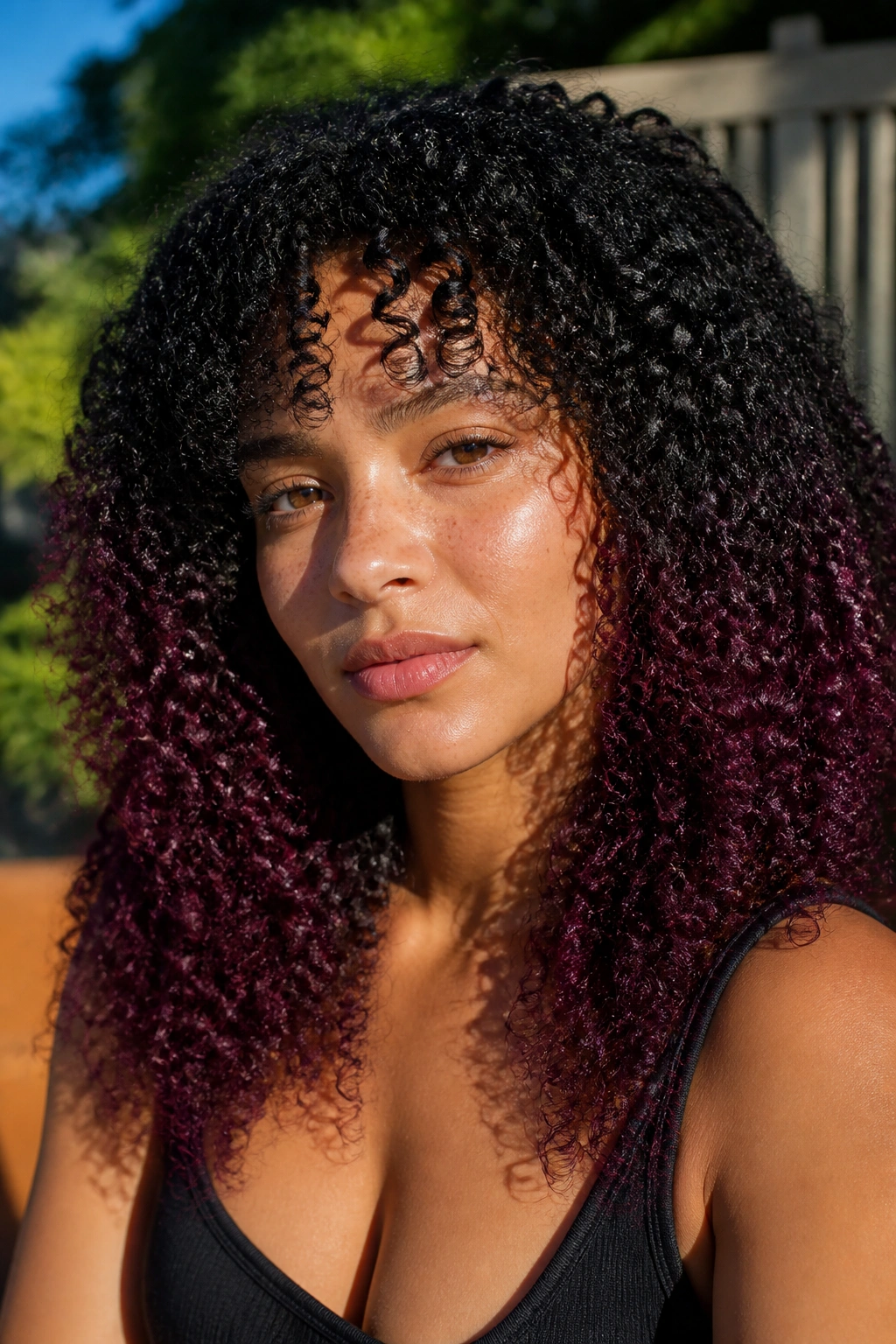
Imagine black curls with plum tucked into the lower third. It sounds bold, and it is, but the curl pattern keeps it from looking harsh.
Plum has enough blue in it to stay deep, which makes it a smart choice for tighter curl patterns. The color does not need to be loud to show up. It only needs a little light to catch the purple edge. That means the ends can stay rich and dimensional instead of turning flat violet. The look feels especially strong on short to medium curls where the movement is compact and the color sits close together.
- Best on dark bases that can handle moderate lift.
- A cool plum reads more sophisticated; a red plum reads warmer.
- Use sulfate-free shampoo if you want the tone to last.
- Keep the top dark so the ends do the visual work.
Plum is not shy. That is the point.
11. Blonde Money Piece Ombre
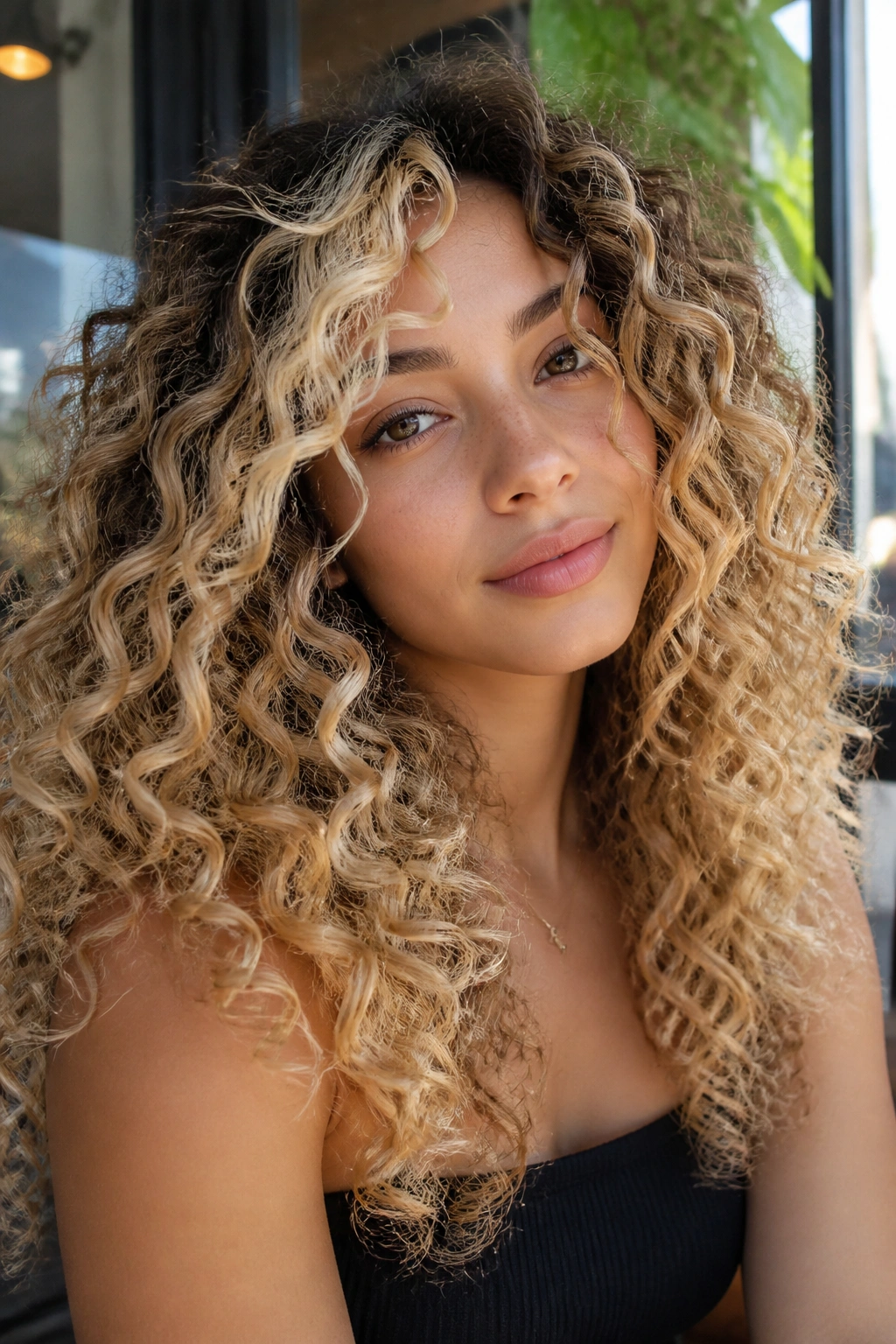
Money-piece ombre is the version I reach for when someone wants brightness near the face without bleaching the whole head. On curls, it works because the front pieces bounce and move more than the rest.
The lighter face frame should start around the cheekbone or jawline, then melt into the rest of the curls. That placement lifts the face and keeps the style from feeling heavy around the perimeter. If the pieces are too thick, they can overpower the curl pattern. Thin, deliberate sections do the job better. A little light around the face goes a long way here.
This style also plays well with layers. The lighter curls catch light first, then the darker back section gives the whole look some depth. I like it on people who wear a center part or a soft off-center part, because the contrast shifts as the curls move. It feels casual but still pulled together.
12. Reverse Ombre with Dark Ends
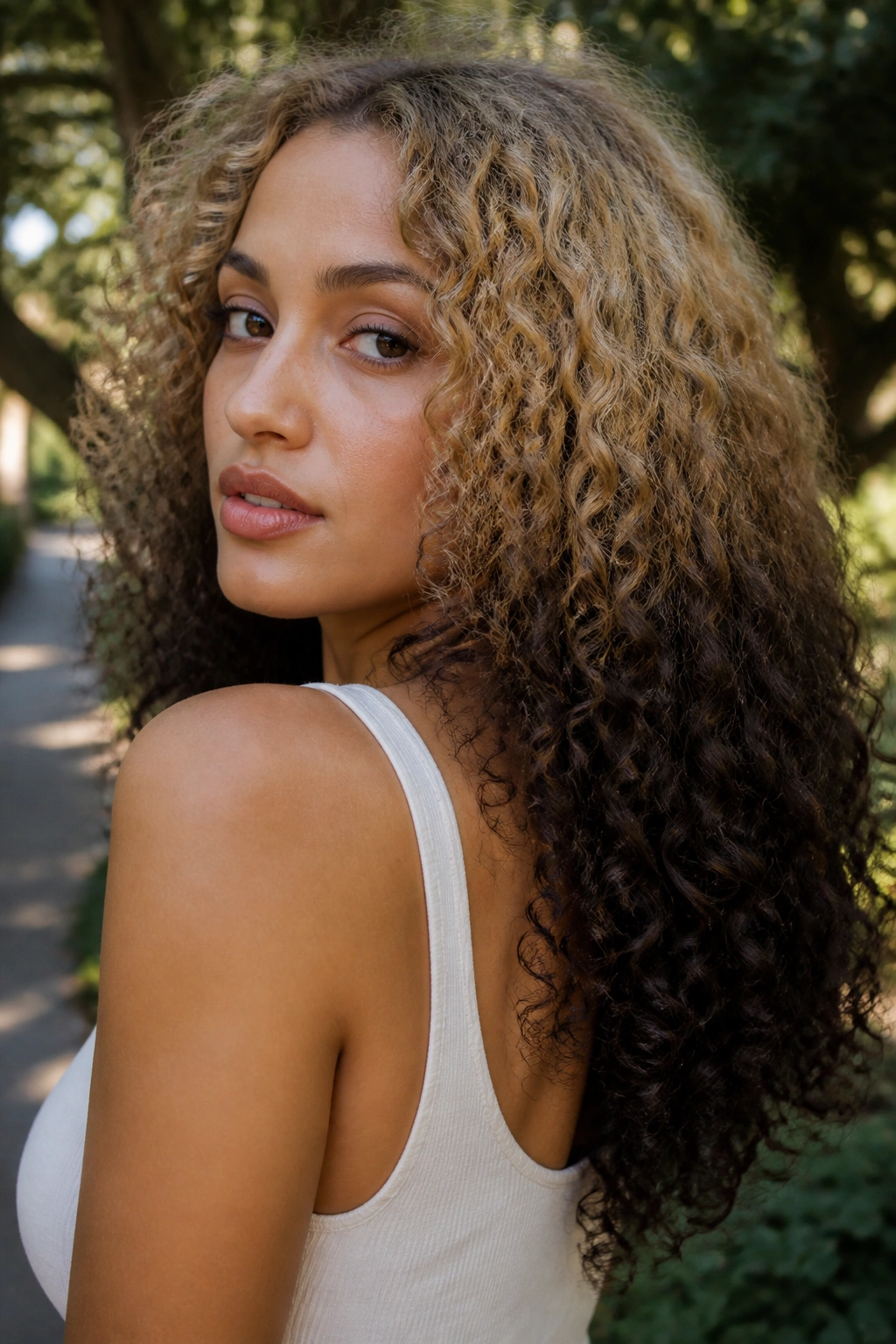
Reverse ombre flips the script. Instead of light ends, the color gets darker toward the tips, which gives curly hair a heavier, more dramatic outline.
Unlike classic ombre, this version keeps brightness near the roots or upper mid-lengths and lets the ends sink into a deeper shade. On curls, that can look striking because the dark tips collect together and form a strong silhouette. It also works well if the ends are weaker than the rest of the hair. Darker pigment can hide dryness better than pale blond does.
Who Should Try It
This is best for people who like a fashion-forward look and do not mind a little upkeep around the root zone. If you already have lighter hair, reverse ombre can be a smart way to darken damage-prone ends without cutting everything off.
Ask for a soft transition, not a block of color at the bottom. That block is where the style starts to feel stiff. A melted edge keeps the curls lively.
13. Sun-Kissed Beige Ombre on Curly Layers
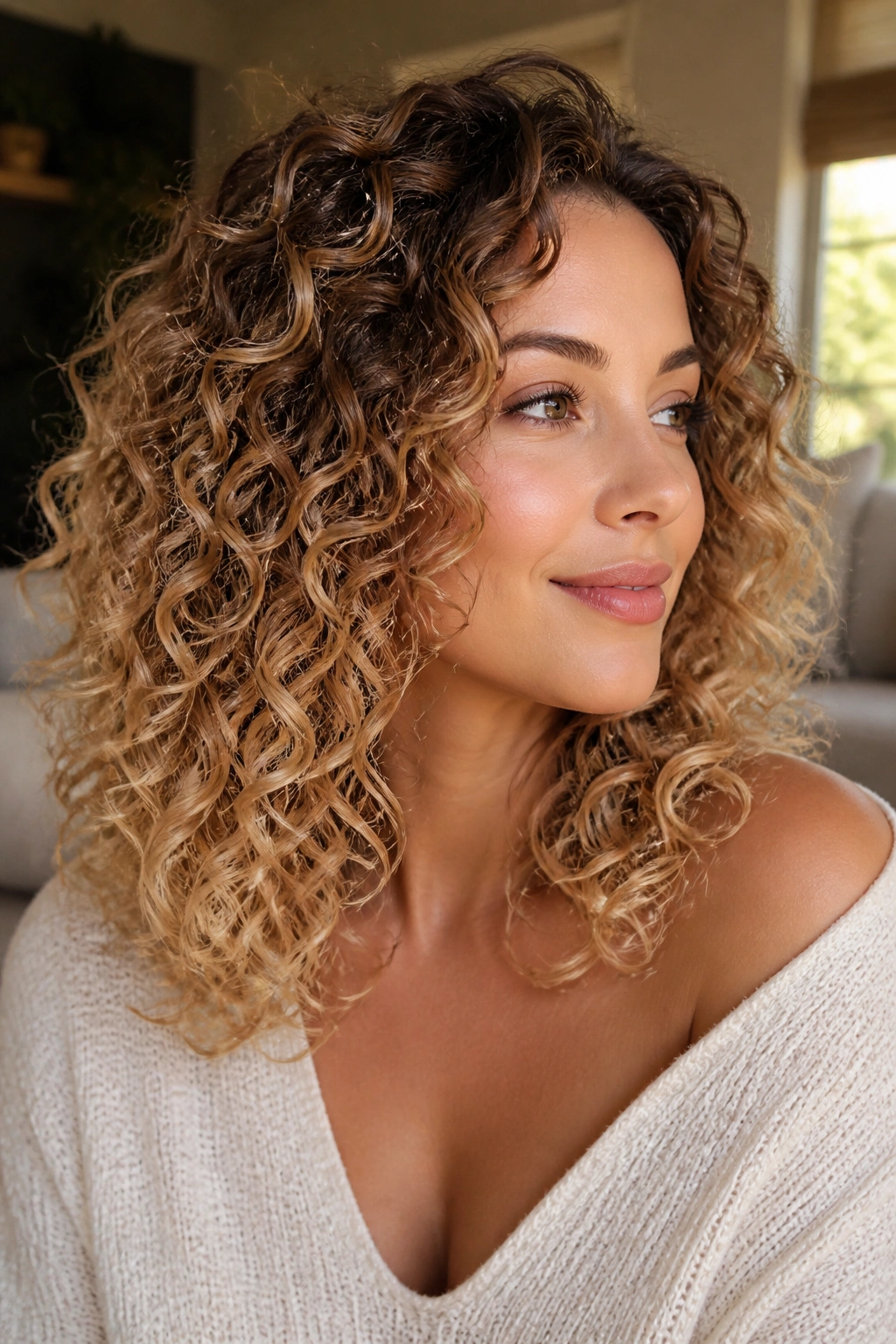
Beige ombre is one of those shades that can look plain in a swatch and lovely on actual curls. The texture gives it life.
Why It Works on Curls
Beige sits between gold and ash, so it does not lean too warm or too cool. That neutrality matters when the curl pattern already brings a lot of visual movement. You are not fighting the hair. You are letting it carry the shade.
- Best on medium brown or dark blond bases.
- Ask for a level 8 to 9 end lightness, then tone it beige rather than yellow.
- Keep the root shadow soft, not harsh.
- Works well with layered cuts that separate the curl clumps.
The most wearable version is the one that looks like the hair has spent time in good light, not the one that looks obviously processed. A beige gloss keeps the finish smooth and stops the blond from going brassy. Small detail. Big difference.
14. Smoky Silver Ombre on Curly Hair
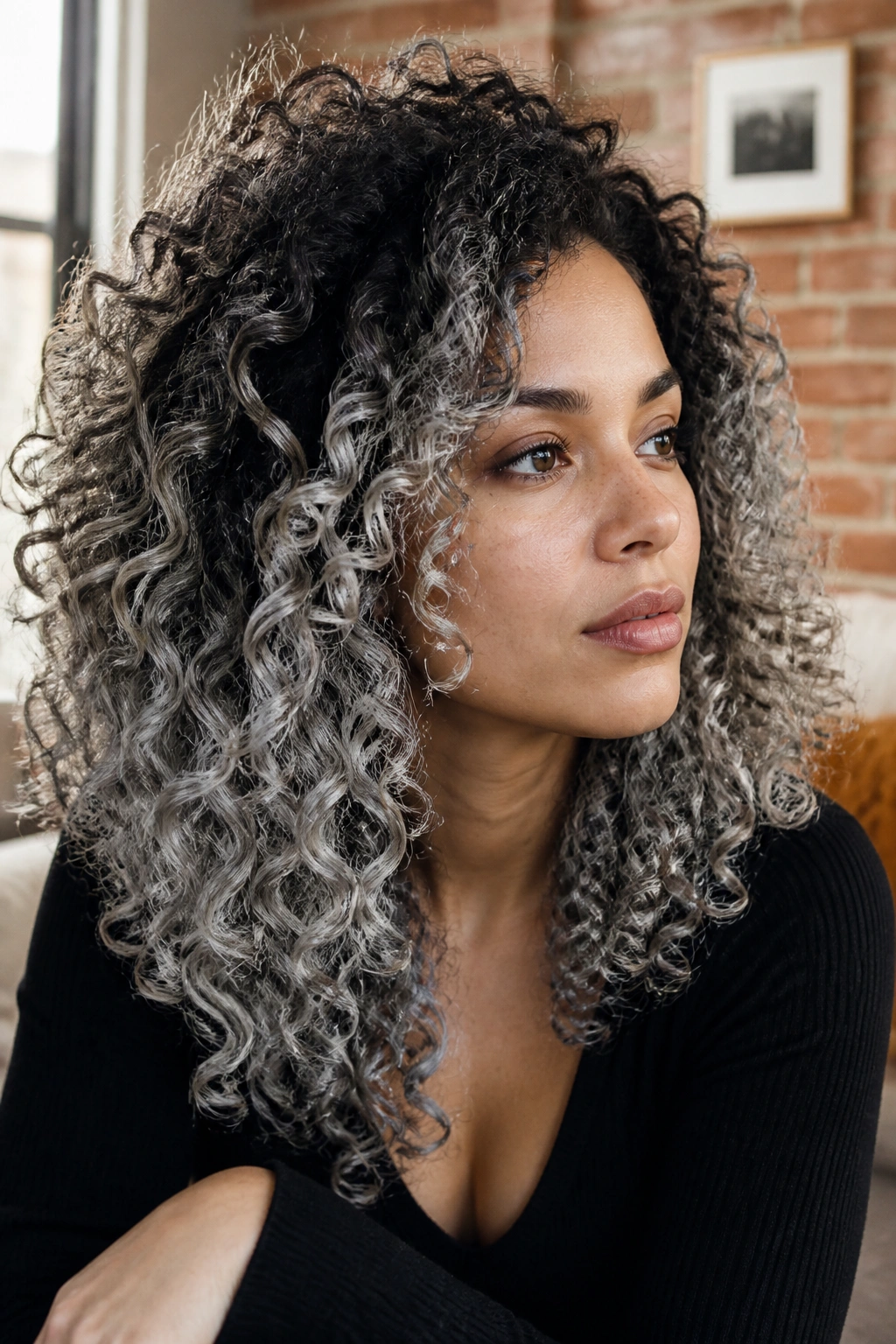
Smoky silver is cooler, sharper, and more demanding than beige. It also has one of the best payoffs if you love a crisp finish.
The reason silver works on curls is that the shape breaks up the metallic tone. A flat silver panel can look stark. Silver on curls looks textured because the light hits different parts of the spiral at different times. That softens the metal effect and makes the whole thing feel more wearable. A root shadow helps even more. It gives the silver room to breathe.
You do need a healthy base for this one. Silver needs a lighter starting point, and curl health matters more than almost anything else here. If the ends are dry or porous, the silver can go blotchy fast. I would rather see a slightly deeper smoky gray that lasts than a pale silver that fades unevenly after two washes.
15. Peach and Apricot Ends on Soft Curls
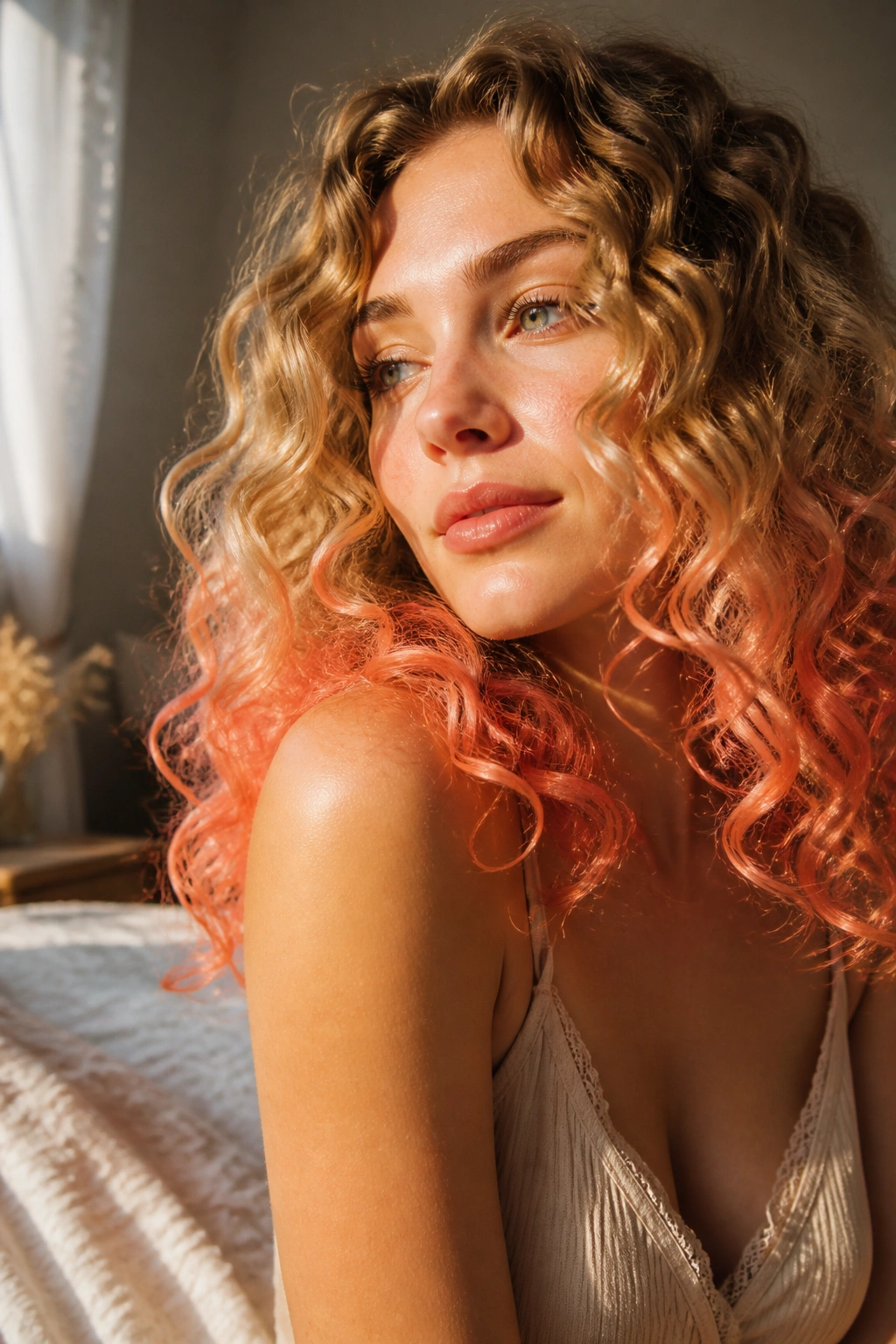
Why do peach and apricot look so fun on curls without feeling childish? Because the curl pattern turns the color into a wash, not a flat cartoon block.
That softness is the whole trick. Apricot sits warmer and more golden, while peach brings a tiny pink note that keeps it from going orange. On curls, the two shades can blend into a warm sunset effect, especially when the ends are pre-lightened enough to hold pastel pigment. If the base is too dark, this look will not show well. It needs a clean canvas.
How to Keep It Wearable
Keep the color limited to the lower half of the hair, then leave the roots and most of the crown alone. That gives the style structure. A pastel conditioning mask can stretch the life of the shade, but it is still a softer color and will fade faster than red or brown. That is part of the charm, honestly. It looks airy while it lasts.
16. Teal Dip-Dye Ombre
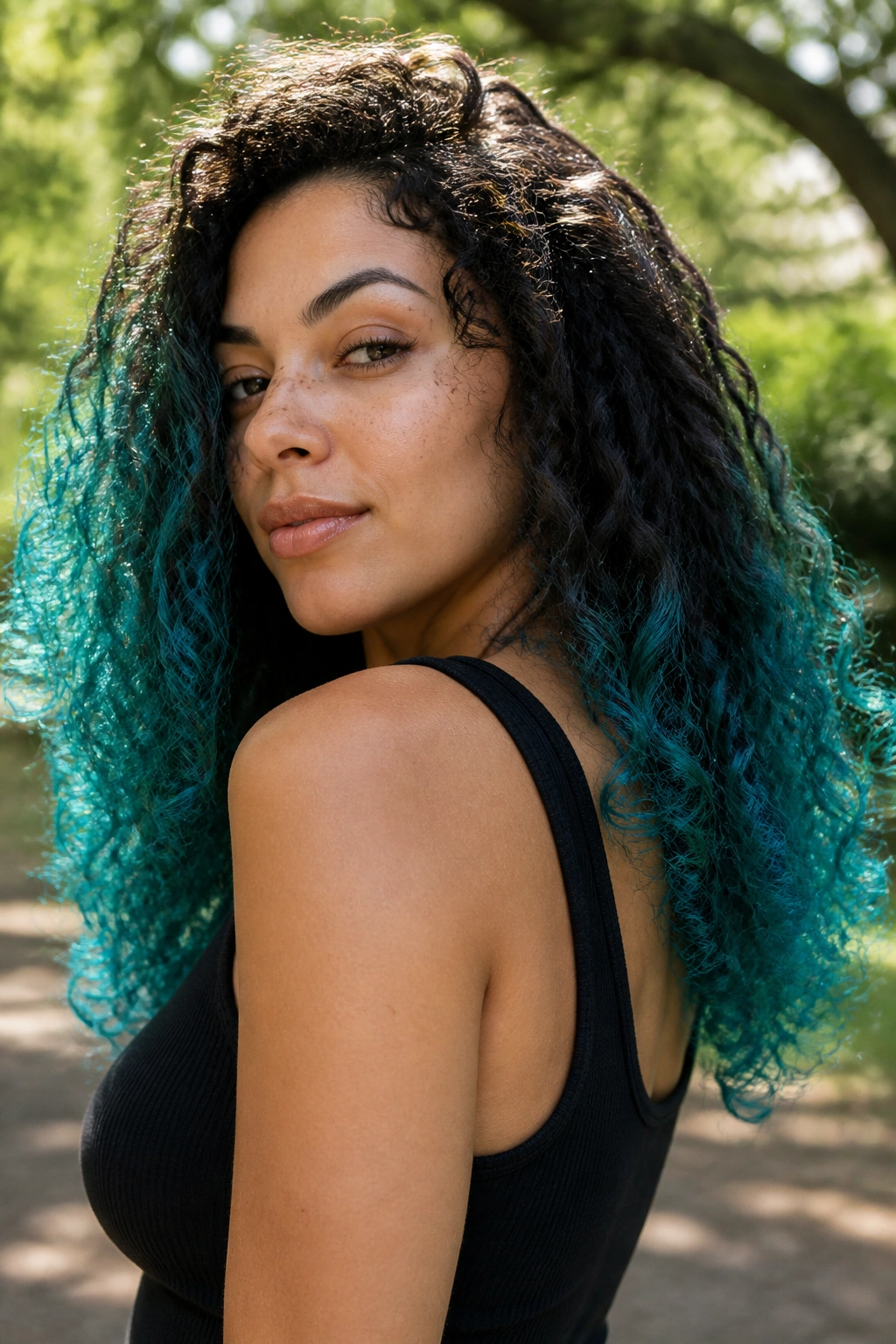
A teal dip-dye ombre on curls has a sharp edge, but the curl pattern saves it from looking costume-like. The color lands at the ends, where the movement is strongest.
There is something satisfying about the way teal reads against dark hair. It has enough blue in it to feel cool and deep, while the green side keeps it from disappearing into navy. On curls, every twist of the ends makes the color shift a little. That motion is the reason the style works. A blunt straight finish would be harder to wear. Curls make it feel alive.
- Best on darker bases with pre-lightened ends.
- Use a sulfate-free cleanser if you want the teal to hang on.
- Refresh with a semi-permanent color instead of full bleach.
- Let the roots stay natural for an easier grow-out.
If you want color with attitude, this one has it.
17. Navy Blue Fade on Curly Hair
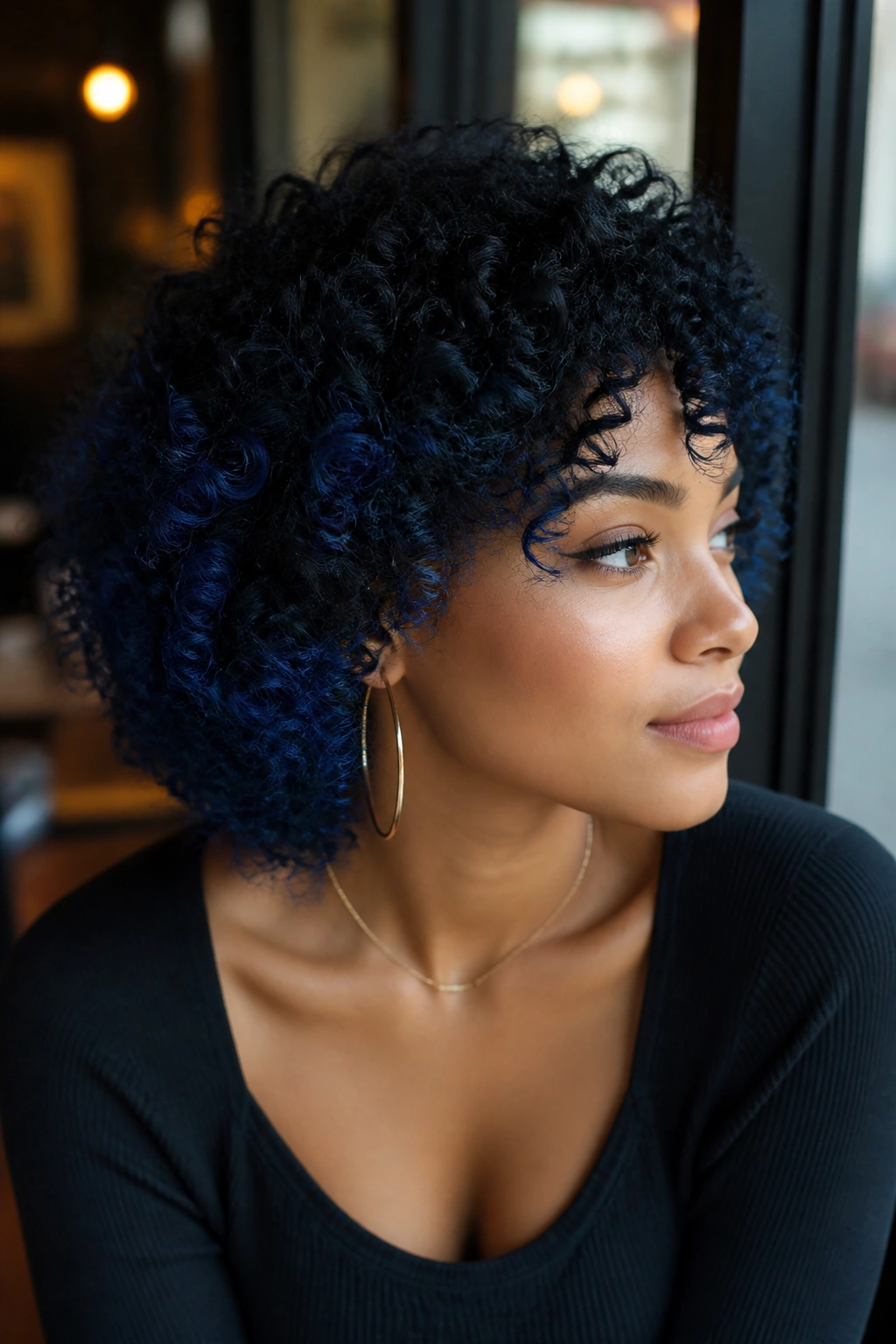
Navy blue is one of my favorite low-key bold colors because it often reads black at first glance, then opens up in the light. Curly hair is especially good at that trick.
The fade works best when the blue sits in the lower lengths and the ends, leaving the roots deep and dark. On curls, navy does not need much contrast to show up. A hint of blue in the shadow is enough. If you lift the hair too high, the color can go dusty or flat. Keep it rich and dark. That is the whole game.
I like navy on tighter curl patterns because the color stays tucked into the curl and appears in little flashes instead of one big block. It feels clean, a little mysterious, and easier to wear than brighter blue. If you want something dramatic without jumping into neon, navy is the safer dark choice.
18. Mushroom Brown Ombre for Soft Curls
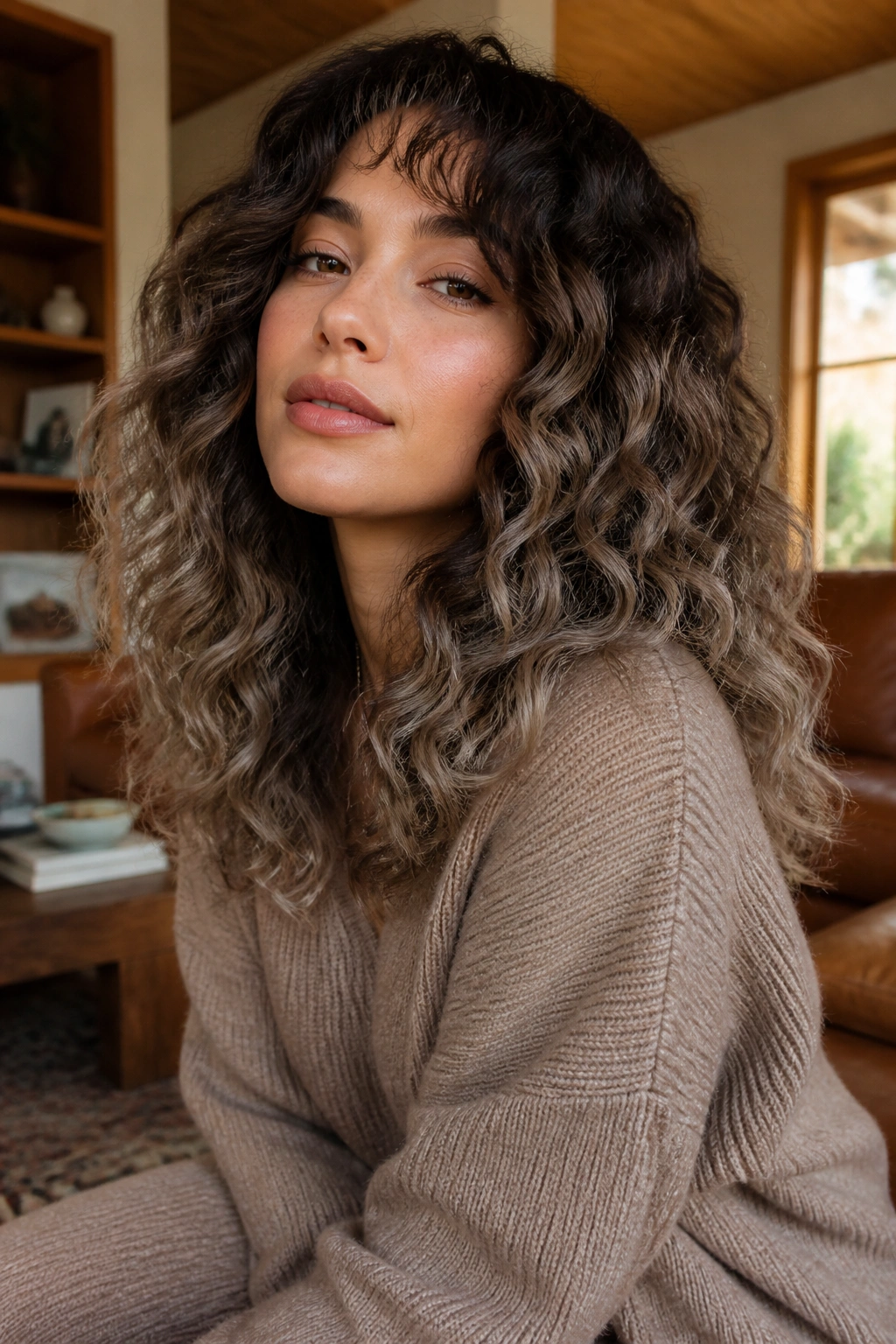
Mushroom brown is cooler than caramel and less severe than ash blonde. That puts it in a useful middle lane for people who want a muted finish.
Unlike warm ombre shades, mushroom brown leans taupe, beige, and soft gray-brown. On curls, that cool neutrality can look expensive in the plainest sense of the word: not shiny, not flashy, just controlled and rich. It also works well if your natural hair has a lot of red in it and you want to calm things down. The color correction effect is real, and very welcome.
Who It Suits
It suits medium brown curls, layered lobs, and anyone who wants a softer transition than blonde. Ask for a dusty beige toner rather than a flat gray. Flat gray can make curls look lifeless. Mushroom brown keeps enough warmth to stay wearable.
If you like understated color that still has depth, this one is sneaky good.
19. Chestnut to Cocoa Blend
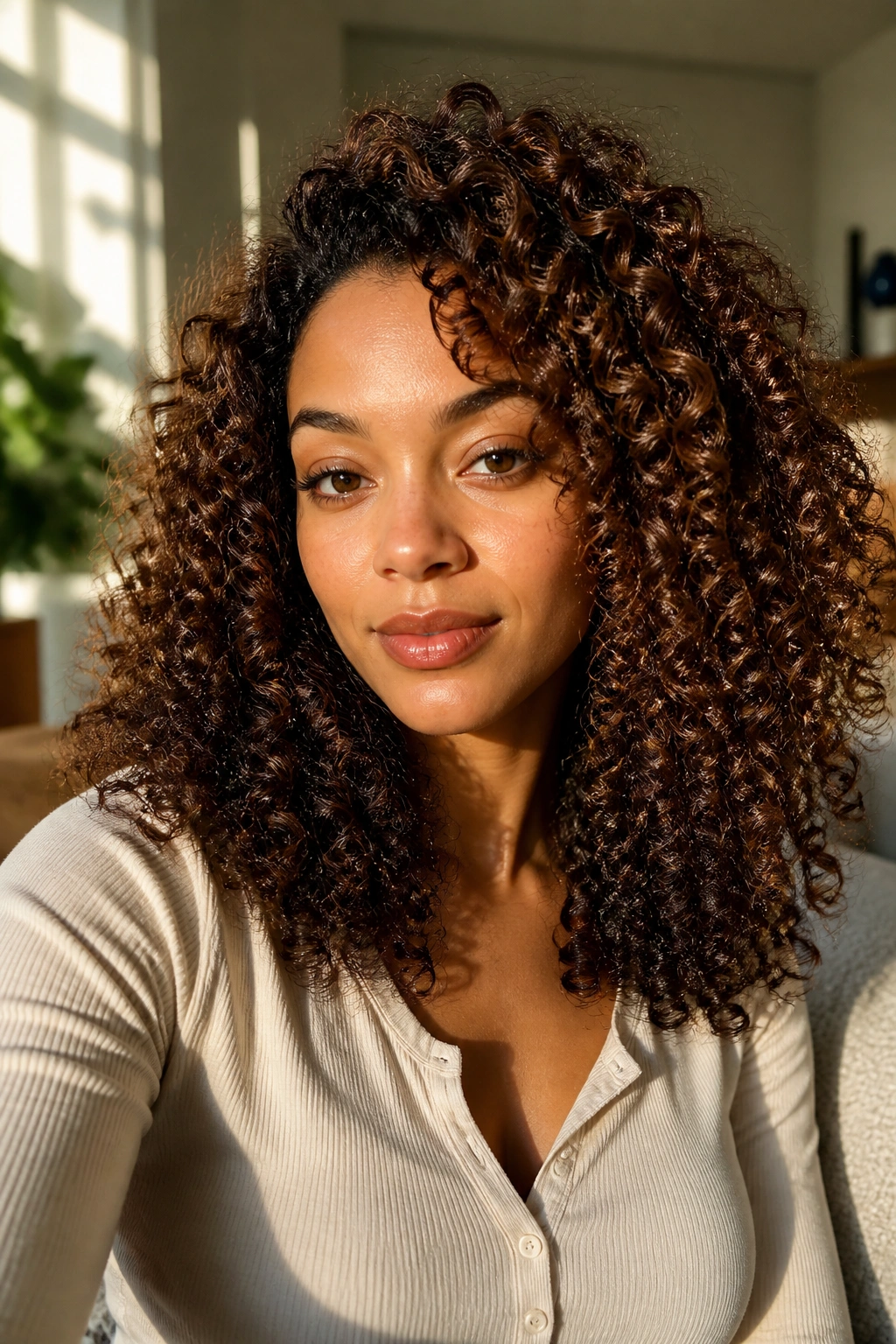
Chestnut to cocoa is a warmer brown ombre that reads polished without trying too hard. It is one of the easiest options to wear on curly hair because the shades stay in the same family.
Why It Works on Curls
The chestnut at the mid-lengths adds a little warmth, while cocoa on the ends gives the curls weight. That contrast is subtle, but it shows up beautifully in layered shapes. The spiral structure does the rest. As the hair moves, the warmer and cooler browns alternate in little flashes.
- Best on loose curls and medium coils.
- Ask for the transition to begin below the ears if you want a softer face frame.
- A clear gloss can keep the browns from going dull.
- Works well with a side part or a deep center part.
This is the kind of ombre you choose when you want the hair to look better, not louder. I respect that.
20. Golden Apricot Balayage Ombre
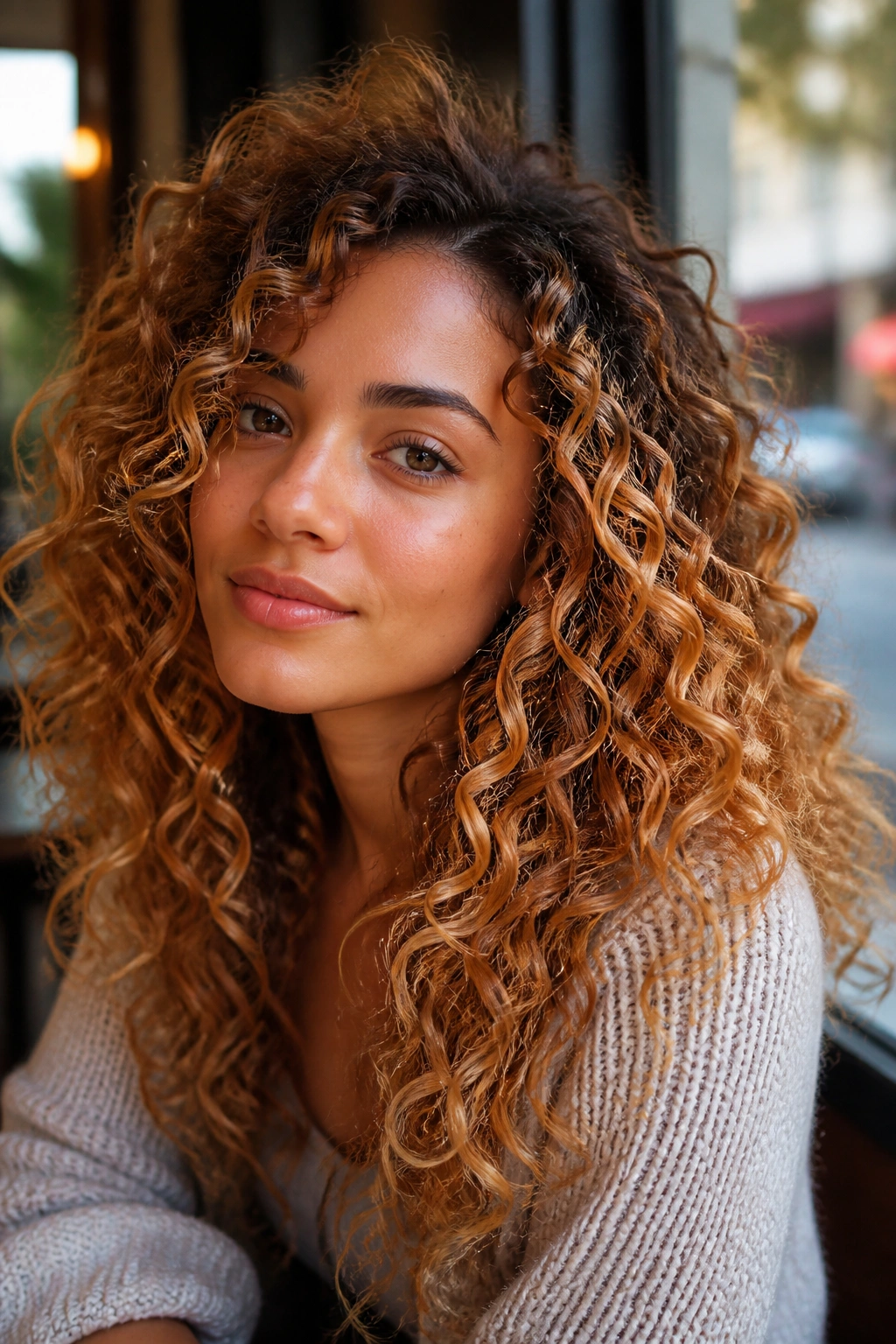
Golden apricot sits between blonde and copper, and that in-between space is what makes it interesting. It gives curls warmth without the strong orange note that some copper shades carry.
On curly hair, I like golden apricot painted in wider strokes near the outer layer. That keeps the color from disappearing inside the curl mass. You want the brighter pieces where the eye lands first—around the front, the top layer, and the ends that frame the jaw. If the color is buried too deep, the whole thing gets lost.
This shade works especially well when the hair has natural movement and a slightly layered cut. It creates a soft glow without forcing a hard contrast. If you like warm hair but want something a little lighter than cinnamon, this is a smart middle ground. A beige-gold toner can keep it from turning too orange after a few washes.
21. Platinum Frosted Tips on Defined Curls
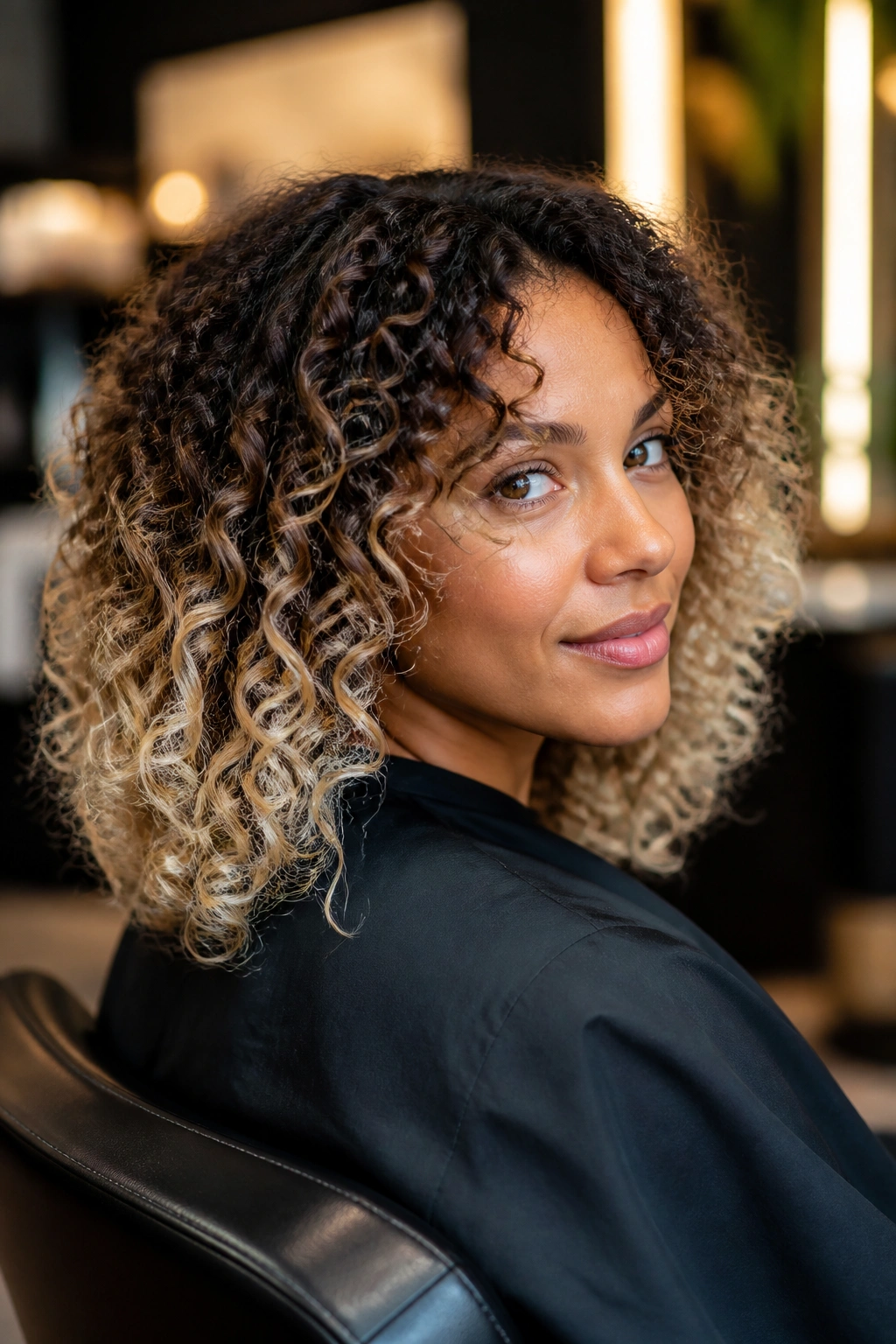
Why do frosted tips work on curls when they can look dated on straight hair? Because curls break up the line and keep the platinum from reading blunt.
That texture is doing real work here. The bright ends sit on the outside of the curl, so each twist gets a tiny hit of light instead of one solid block of blonde. On defined curls, platinum can feel sharp and modern if the base stays dark and the ends stay healthy. It is not an easy look to maintain, though. Platinum shows damage fast.
How to Use It
Keep the platinum concentrated at the tips and maybe a few face-framing pieces. Do not drag it too high unless the hair is very strong. Bond-building care is not optional here. It helps keep the curl shape from getting brittle after lightening.
If you want a high-contrast ombre with real edge, platinum tips deliver it.
22. Mahogany Glow Ombre on Thick Curls
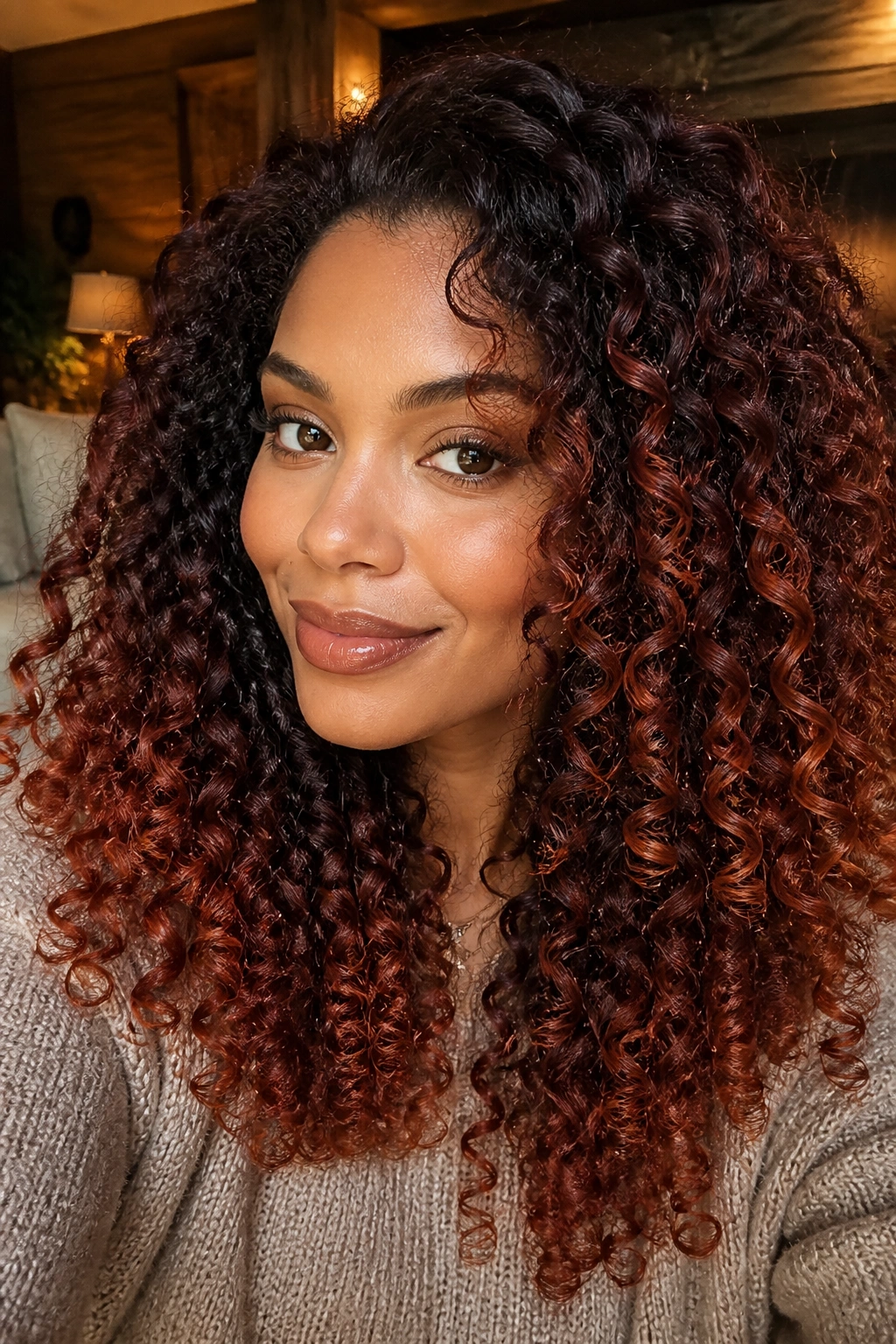
Mahogany is red-brown in the best possible way. It adds warmth and depth without pushing the hair into bright red territory.
The look works especially well on thick curls because the color has room to move. On dense hair, mahogany appears in layers: darker at the root, richer in the middle, brighter at the ends. That shift gives the style a candlelit feel under indoor light, which is hard to fake with one flat shade. It also flatters dark natural bases without looking too processed.
- Best for thick or coarse curls that handle pigment well.
- Keep the blend soft so the color does not form a line.
- Use a red-brown gloss when the tone starts to fade.
- Great for layered cuts that need more shape.
I like mahogany when someone wants something richer than brown and less obvious than burgundy. It sits in a smart middle place.
23. Lilac Smoke Ombre on Curly Hair
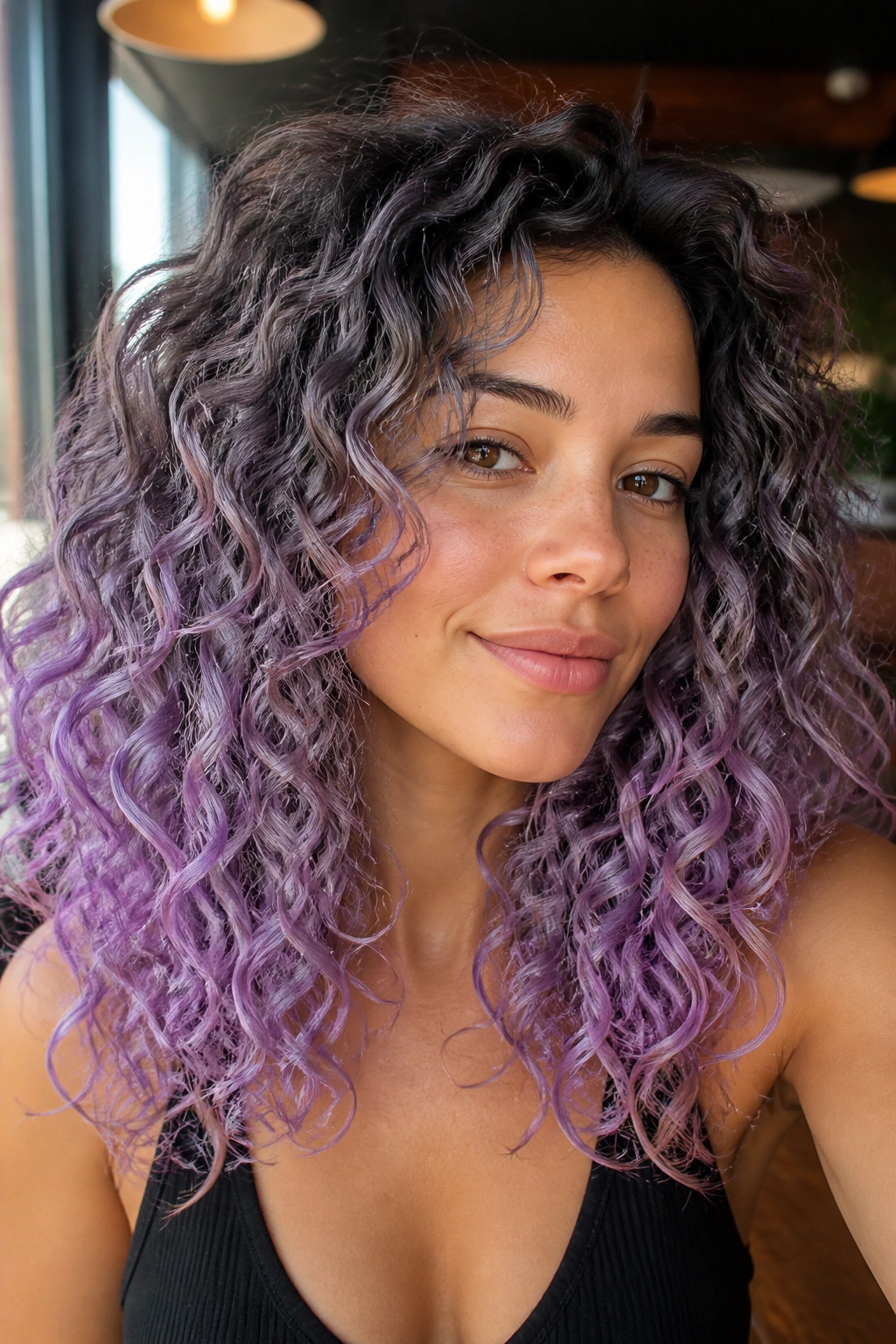
Lilac smoke is one of those shades that sounds delicate and ends up looking stronger than expected. On curls, that softness has a little bite.
The color works because lilac is not a flat purple. The smoky gray base tones it down, so the hair reads cool and airy instead of candy-bright. Curly ends hold that kind of pigment well once they are light enough, and the movement keeps the shade from feeling too pastel. It drifts as the curls move. That is the charm.
If you want a lilac ombre that looks grown-up, keep the roots darker and let the pastel live mostly on the ends. Too much lilac near the crown can wash the face out. A soft silver toner before the lilac can help the shade stay calm. You also want moisture, because pastel colors expose every dry patch. The color is gentle. The upkeep is not.
24. Bronze-to-Amber Fade on Curly Ends
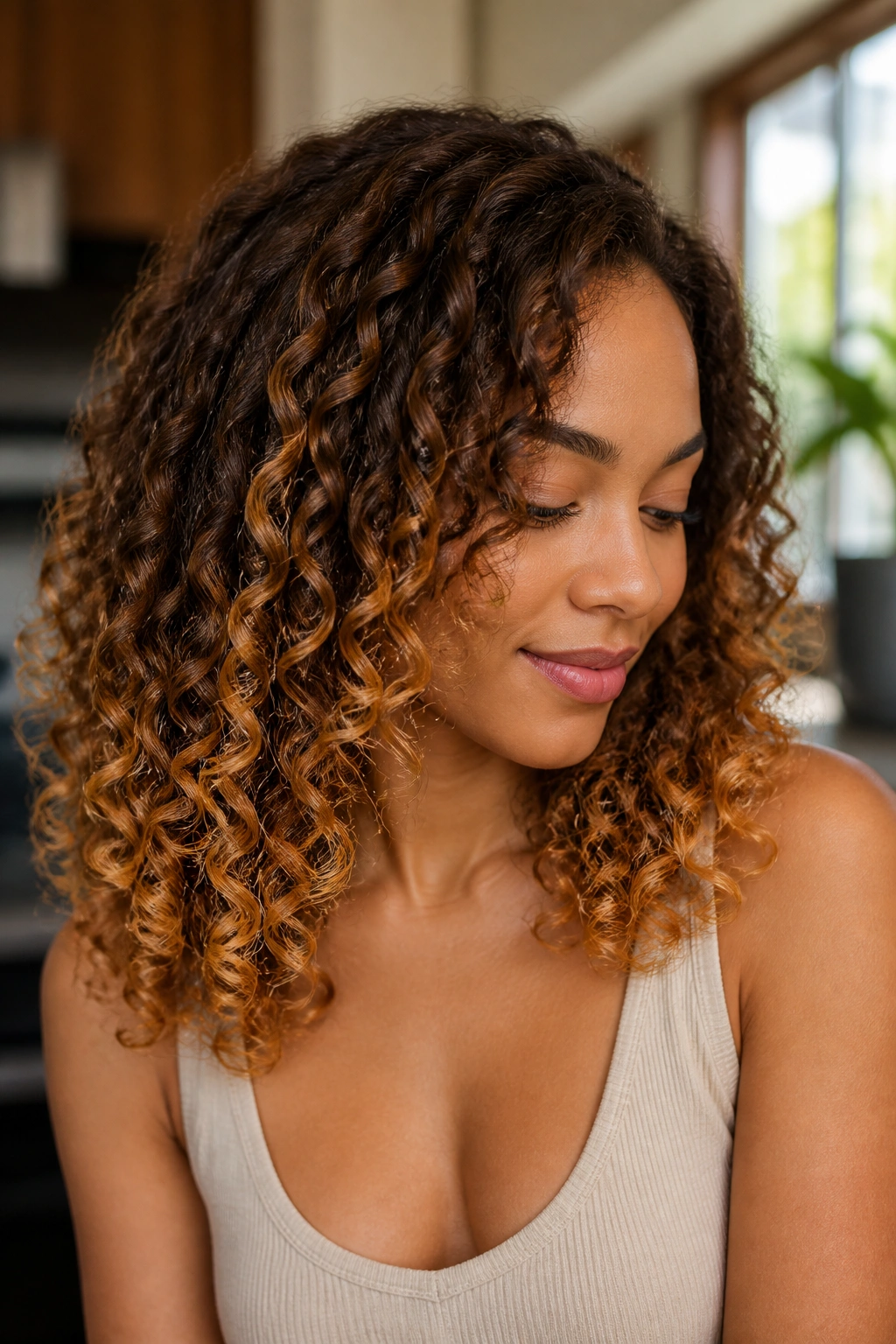
Bronze and amber are cousins, but they do not behave the same way. Bronze is deeper and earthier. Amber is lighter and glows more.
That contrast makes this ombre a strong choice for curls that need warmth but not too much brightness. Bronze at the top gives the hair weight, while amber at the ends brings enough light to keep the shape moving. On curly hair, the fade feels richer than a plain copper because the tones sit a little lower and less orange. If your skin tone runs warm or olive, this one can be especially flattering.
What Makes It Different
Unlike bright copper, bronze-to-amber does not announce itself from across the room. It shows up in motion, in reflected light, and in the bend of the curl. That makes it easy to wear day to day. Ask for a soft glow rather than a loud lift.
If you want warmth with some restraint, this is the lane.
25. Sand Blonde on Medium-Length Curls
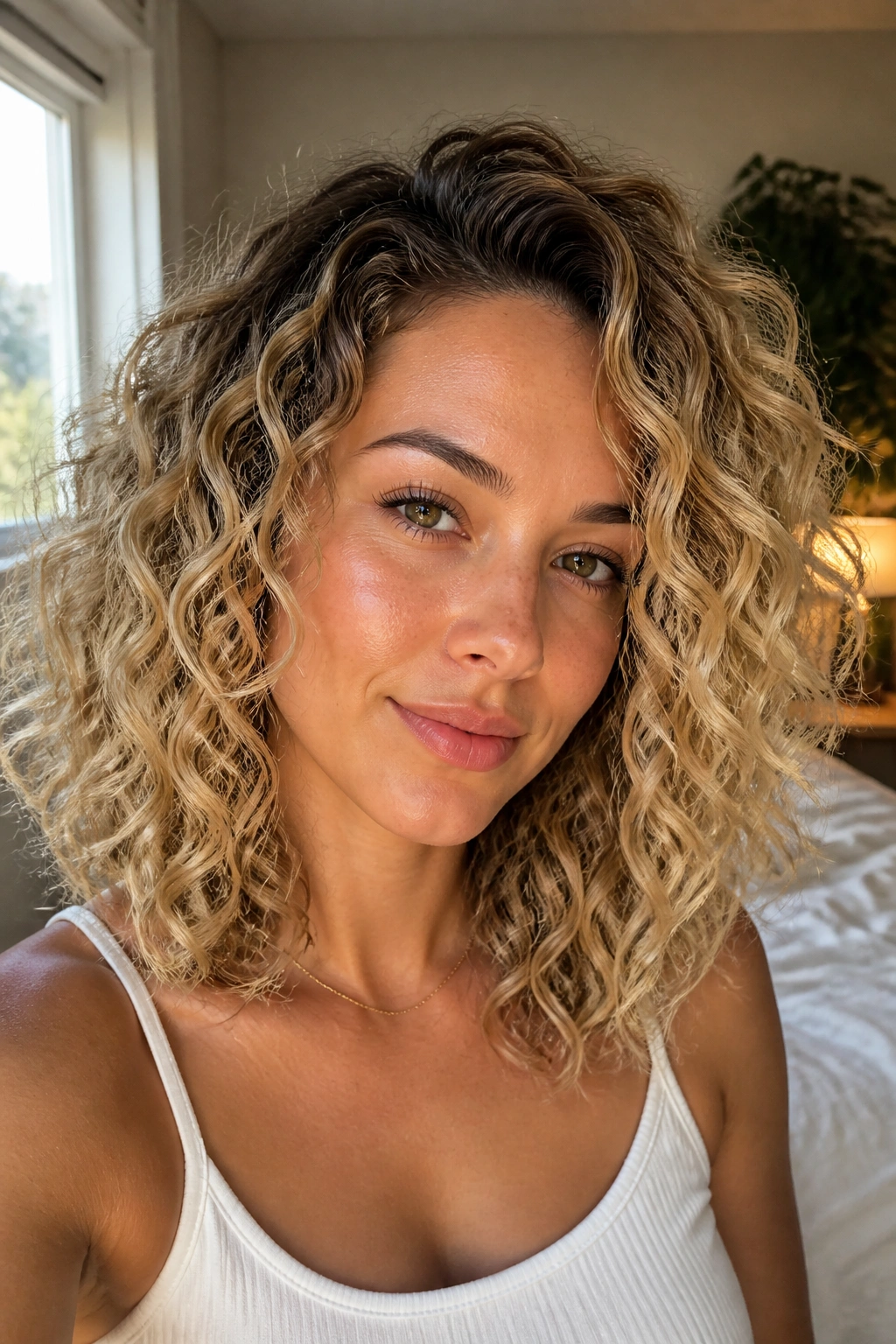
Sand blonde is one of the cleanest ombre choices for curly hair because it balances beige, gold, and a tiny bit of ash. Nothing about it feels too loud.
Why It Works on Curls
Medium-length curls carry sand blonde well because the lighter ends have enough space to show. Short curls can make it look crowded. Longer curls sometimes need more contrast to keep the shade visible. Medium length hits the sweet spot.
- Ask for a soft root shadow in the natural base color.
- Keep the blonde neutral rather than yellow.
- A trim before coloring helps the ends reflect light more evenly.
- Works well when the curl pattern is loose to medium.
Sand blonde is a good choice if you want something bright but not icy. It feels relaxed and tidy at the same time, which is rare. A beige toner after lightening keeps the blonde from drifting too gold.
26. Midnight Blue Black Fade
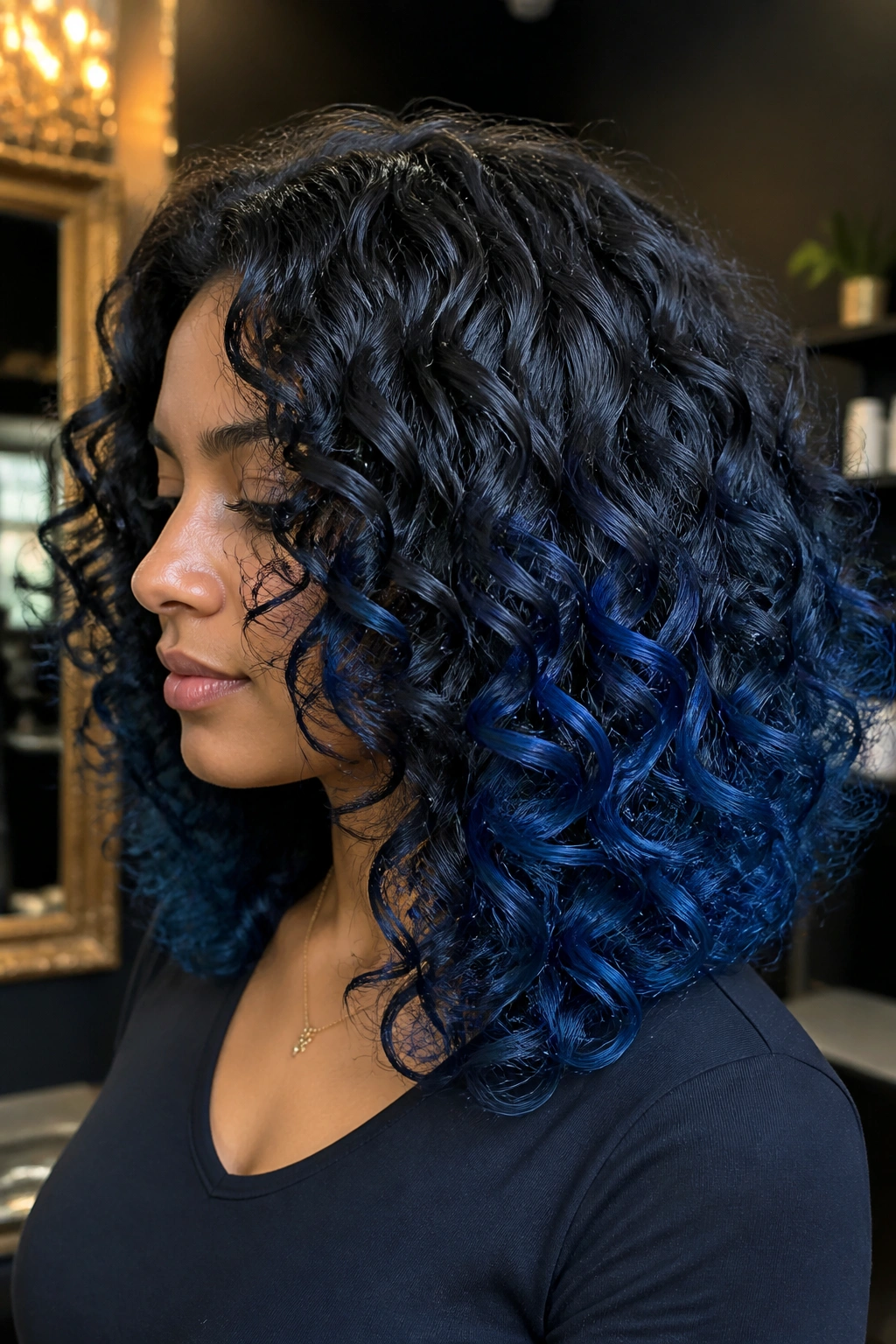
Midnight blue black is almost black until light finds the blue, and that tiny reveal is what makes it interesting. Curly hair is perfect for it.
The fade works because the dark base keeps the style grounded, while the blue tint adds depth in the outer layers and ends. On curls, the color can look nearly invisible indoors, then suddenly show a deep blue sheen in bright light. That controlled reveal gives the hair a little edge without forcing a bright color story. I like this on tighter curl patterns because the blue stays rich and contained.
Be careful with the lift. Too much bleach and the shade can go off-key fast. You want enough lightness for the blue to read, but not so much that it turns flat or greenish. A blue-black gloss over a dark base can get you there with less damage than full lightening. That is the cleaner route.
27. Soft Ginger Ombre on Curly Hair
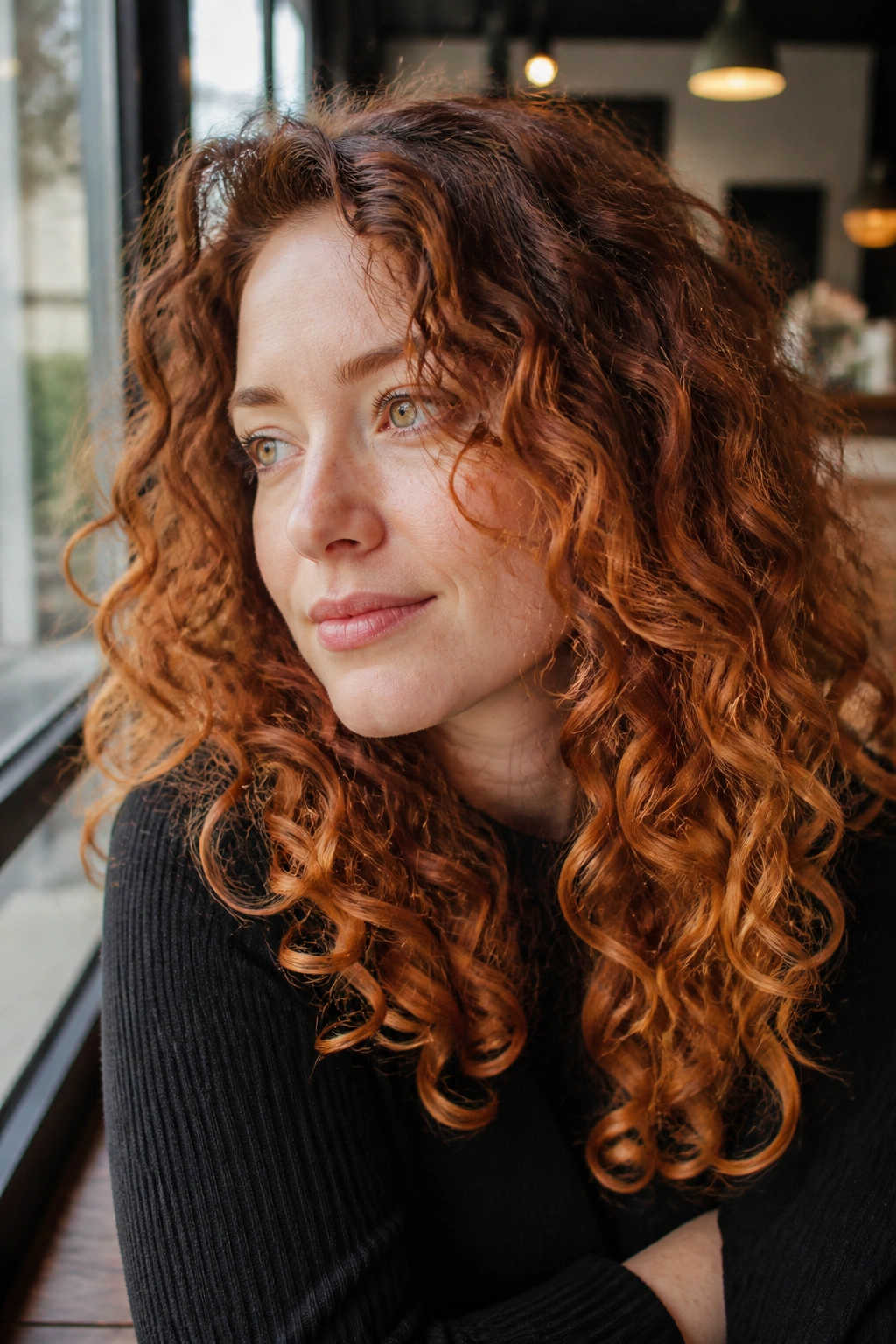
Why does ginger look alive on curls? Because it sits right between gold and copper, which gives the hair warmth without tipping into neon.
Soft ginger is a good fit for people who want warmth and movement but do not want the color to take over the whole look. On curls, ginger shows up in the bend of each strand, where the light can catch the gold side one second and the copper side the next. That shifting tone keeps it lively. It also works nicely on medium to dark bases that can be lifted to a warm level 7 or 8.
How to Wear It
Let the ginger start through the mid-lengths and concentrate it on the ends. A few brighter face-framing pieces can keep the style from feeling heavy. If the hair runs dry, add a gloss with a small amount of gold pigment instead of repainting the whole head. That keeps the tone soft and the texture happier.
28. Neutral Beige and Root Shadow Ombre
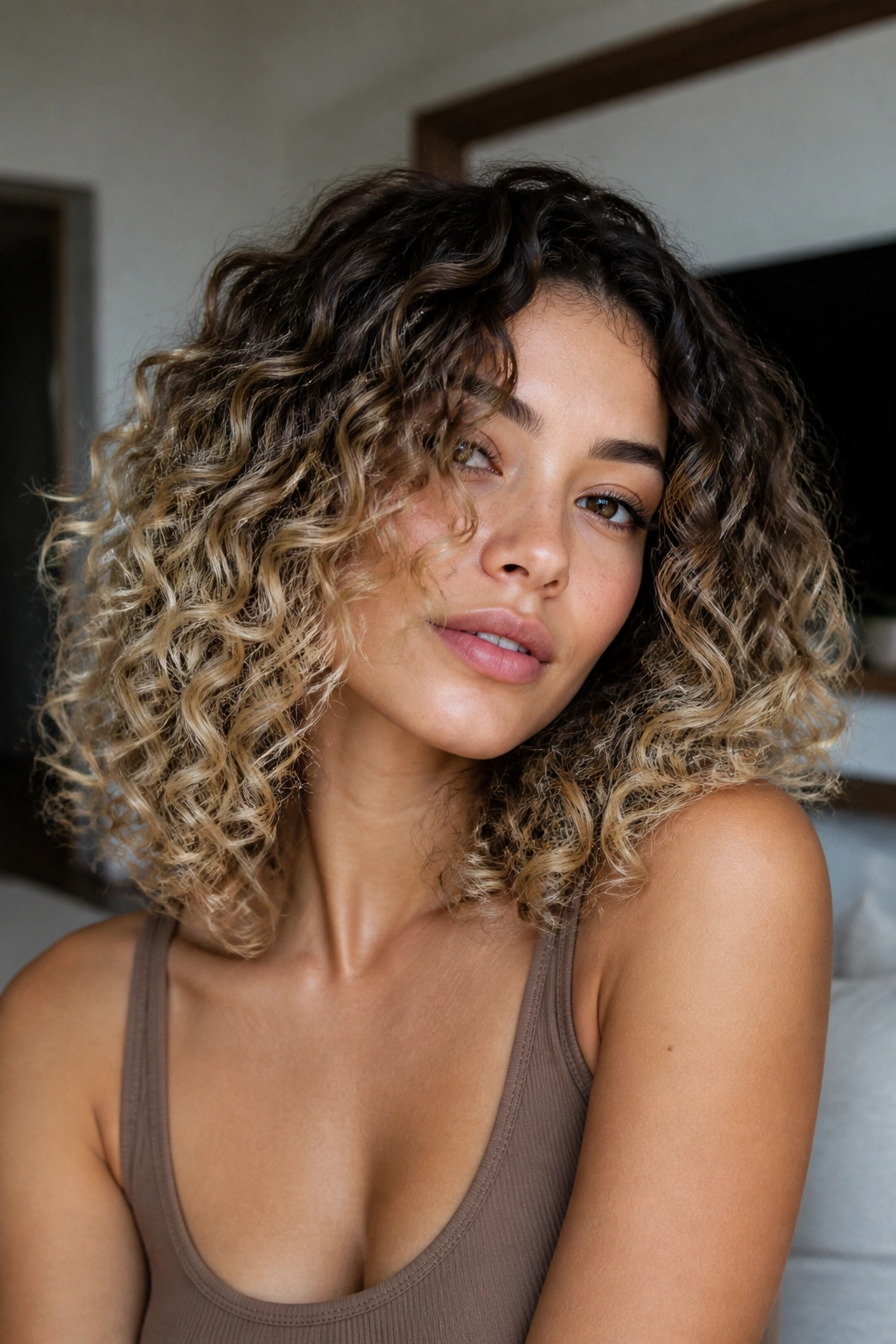
This is the clean, low-drama version for people who hate obvious dye lines. The root shadow stays close to the natural base, and the beige ends brighten the curls without turning them gold or icy.
On curly hair, neutral beige works because it lets the shape of the curl do the talking. You see movement first, color second. That makes the style feel calm and expensive-looking in the plainest sense. It also grows out better than high-contrast blonde because the root blend is already doing part of the work. There is no hard stop where the color begins.
- Best for people who want easy maintenance.
- Ask for a soft beige toner, not a yellow blond.
- Keep the root shadow one to two shades deeper than the ends.
- Great for layered cuts and shoulder-length curls.
If your hair tends to puff up in humidity, this is one of the safest ombre choices. It does not fight the texture.
Final Thoughts
Curly hair gives ombre a built-in advantage: the color moves. That movement is what makes a warm caramel ribbon feel softer, a silver fade feel less severe, and a bright teal dip-dye feel more wearable than it would on a flat finish.
Placement still matters more than the shade name on the tube. Keep the brightness where the curls can open up, and do not rush the lightening on ends that already feel dry. A good trim before coloring helps more than people admit, and a gloss after lightening often makes the whole style look cleaner.
If you are choosing between two shades, pick the one that works with your curl pattern first and your color preference second. That order saves a lot of regret.
