



Burgundy ombre hair on long hair has a real advantage: the fade gets room to move. On a bob, the color can feel abrupt. On lengths that fall past the shoulders, burgundy can slip into wine, plum, cherry, or black cherry without looking chopped into pieces.
Long hair also gives you more control over where the color starts. A deep root shadow can stay calm at the crown while the richer red lives through the middle and lower half, which is usually where burgundy looks the most expensive. Too high and it can turn loud fast. Too low and you lose the point.
Red tones are gorgeous, but they are not shy about fading. Hot water, frequent shampooing, and porous ends will steal the shine first, so placement matters as much as the shade itself. The prettiest burgundy ombre usually looks soft at the seam and richer toward the ends, not stripy or flat.
1. Burgundy Ombre Hair with Deep Wine Ends
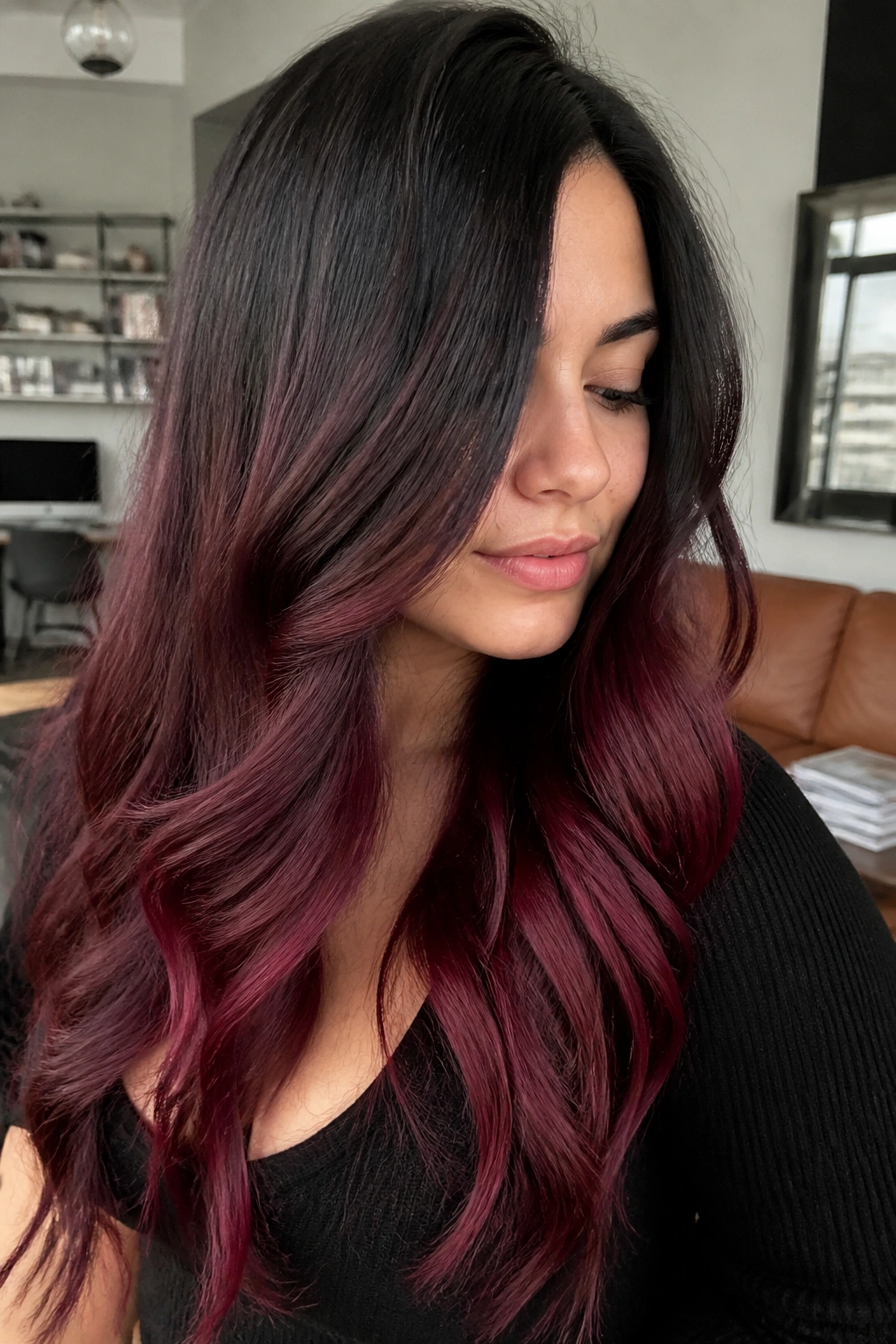
If you want burgundy to feel rich instead of shouty, start with chocolate, not copper. A deep wine-to-chocolate fade keeps the color family dark enough to flatter long hair, especially when the lengths are thick and the ends need a little visual weight.
Why It Works on Long Hair
A long curtain of hair gives the burgundy somewhere to land. Start the transition about 3 to 4 inches below the root and keep the middle section a shade softer than the ends. That way the eye reads depth first, then red.
- Best on a level 4 or 5 brunette base
- Looks especially good on wavy or blowout-styled hair
- Ask for a shadow root so the grow-out stays quiet
- Finish with a clear or warm brown gloss on the last 4 to 6 inches
My favorite part: the color stays dark enough for work, but it still flashes red when the light hits the ends. That little reveal does a lot.
2. Cherry Burgundy with a Soft Face Frame
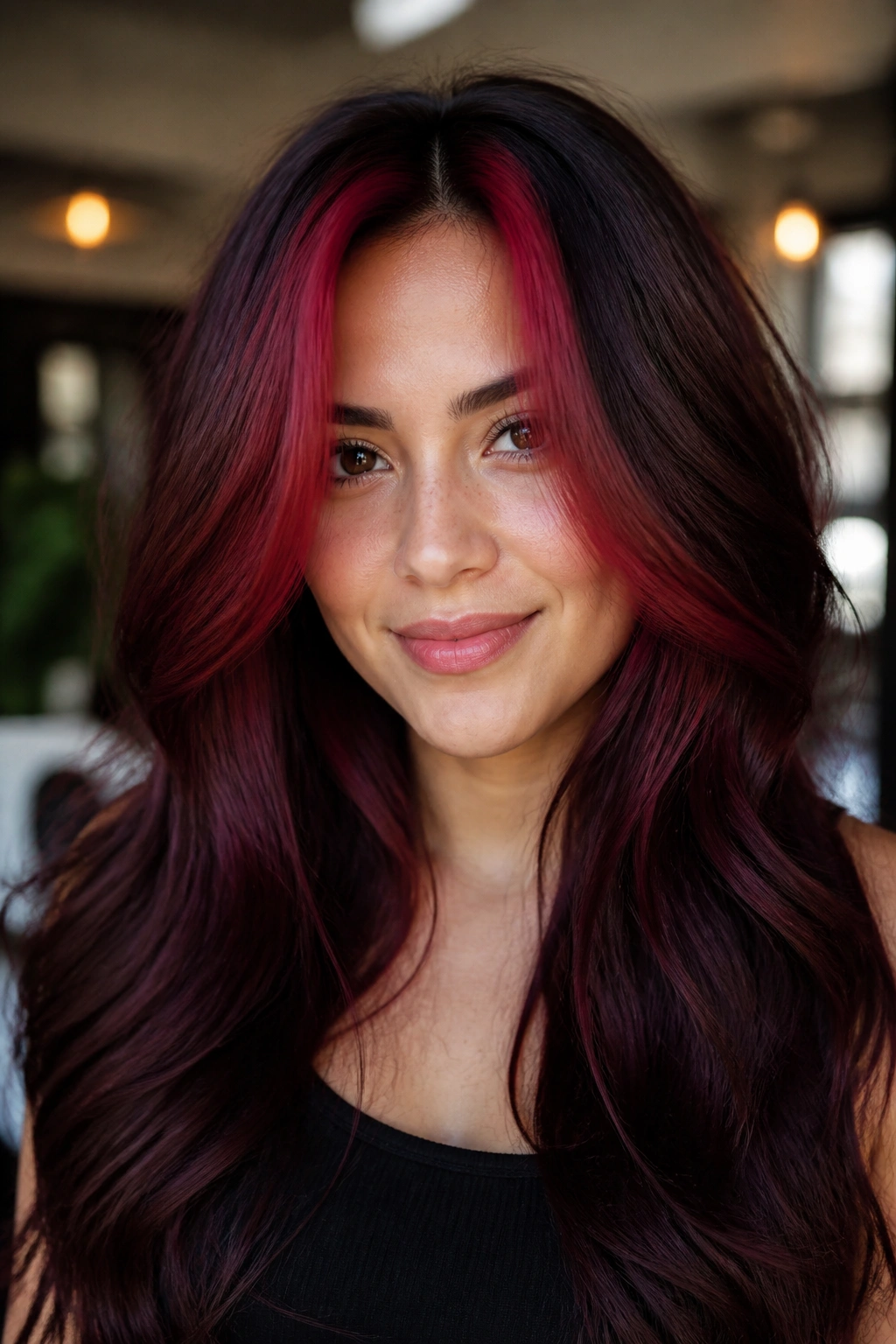
Want the color to wake up your face without changing the whole head? Cherry burgundy with a soft face frame does exactly that. The front pieces take the brightest red, while the rest of the ombre stays deeper and quieter.
The trick is placement. I’d keep the face frame starting around the cheekbone or jawline, then let it melt into a deeper burgundy through the lower lengths. On long hair, that keeps the front from looking heavy and gives the cut some lift even when the hair is worn straight.
This is a smart move if your layers are long and blended. The front pieces catch the eye first, then the burgundy takes over through the ends. It feels fresh without needing a full head of bright color.
And yes, it plays nicely with center parts. The brighter front panels break up a lot of darkness near the face, which matters more than people expect.
3. Black Roots and Red Velvet Mids
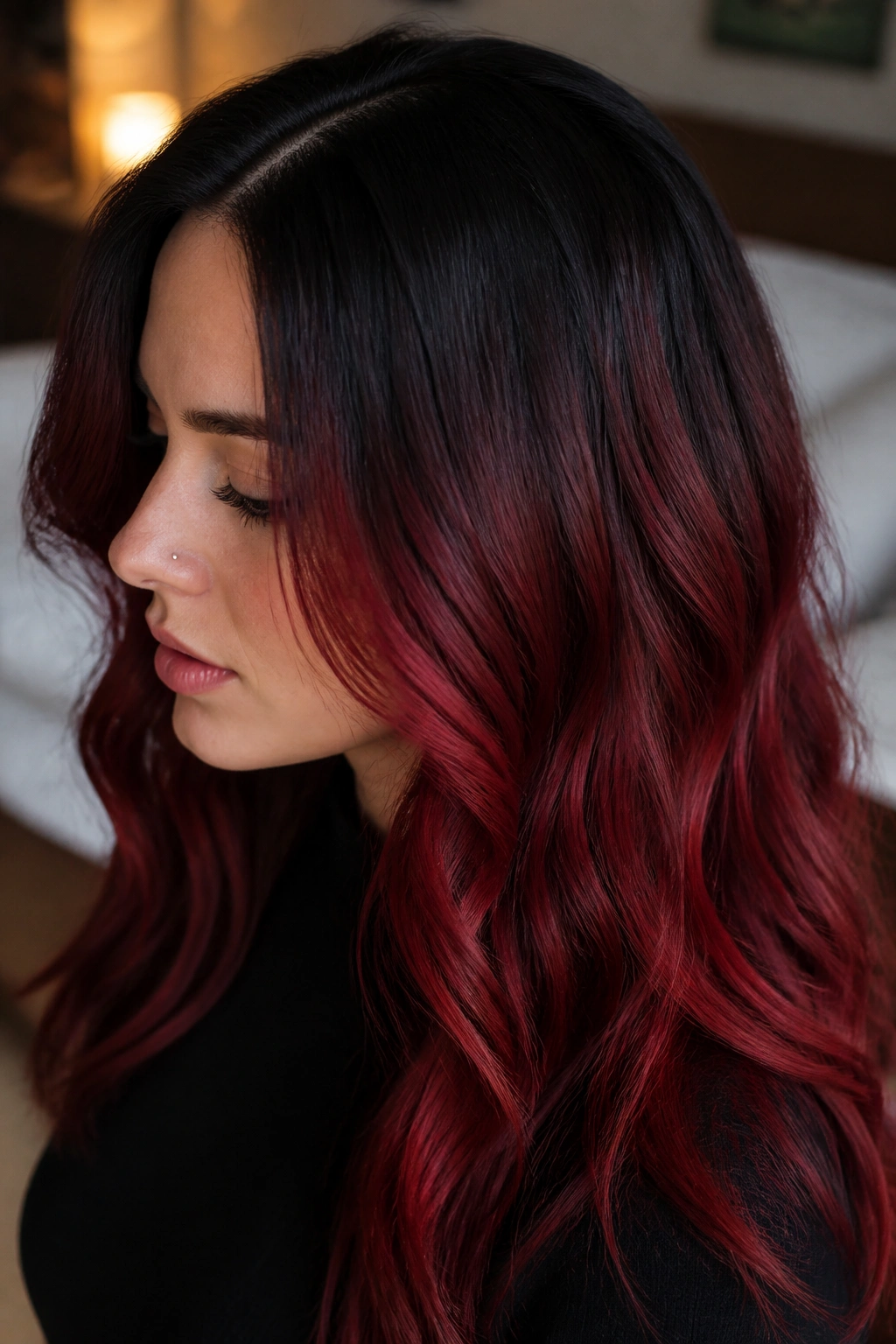
This is the dramatic one. Black roots fading into red velvet mids give long hair a real runway feel, but the look only works when the transition is smooth enough to avoid a hard stripe.
A long mane helps here because the color can build slowly. If your natural base is very dark, the roots can stay almost inky black, then the burgundy can begin around the ears and deepen as it drops toward the chest. That contrast makes the ends look plush instead of washed out.
What the Contrast Does
- Keeps the crown low-maintenance
- Makes long layers look fuller
- Adds movement to one-length hair
- Works best with large waves or soft bends
The catch is simple: if the mids are too bright, the whole look loses that velvet quality. Ask for a red-brown formula, not neon red, and keep the finish glossy. Flat red is fine. Dull red is not.
4. Burgundy Balayage Ends
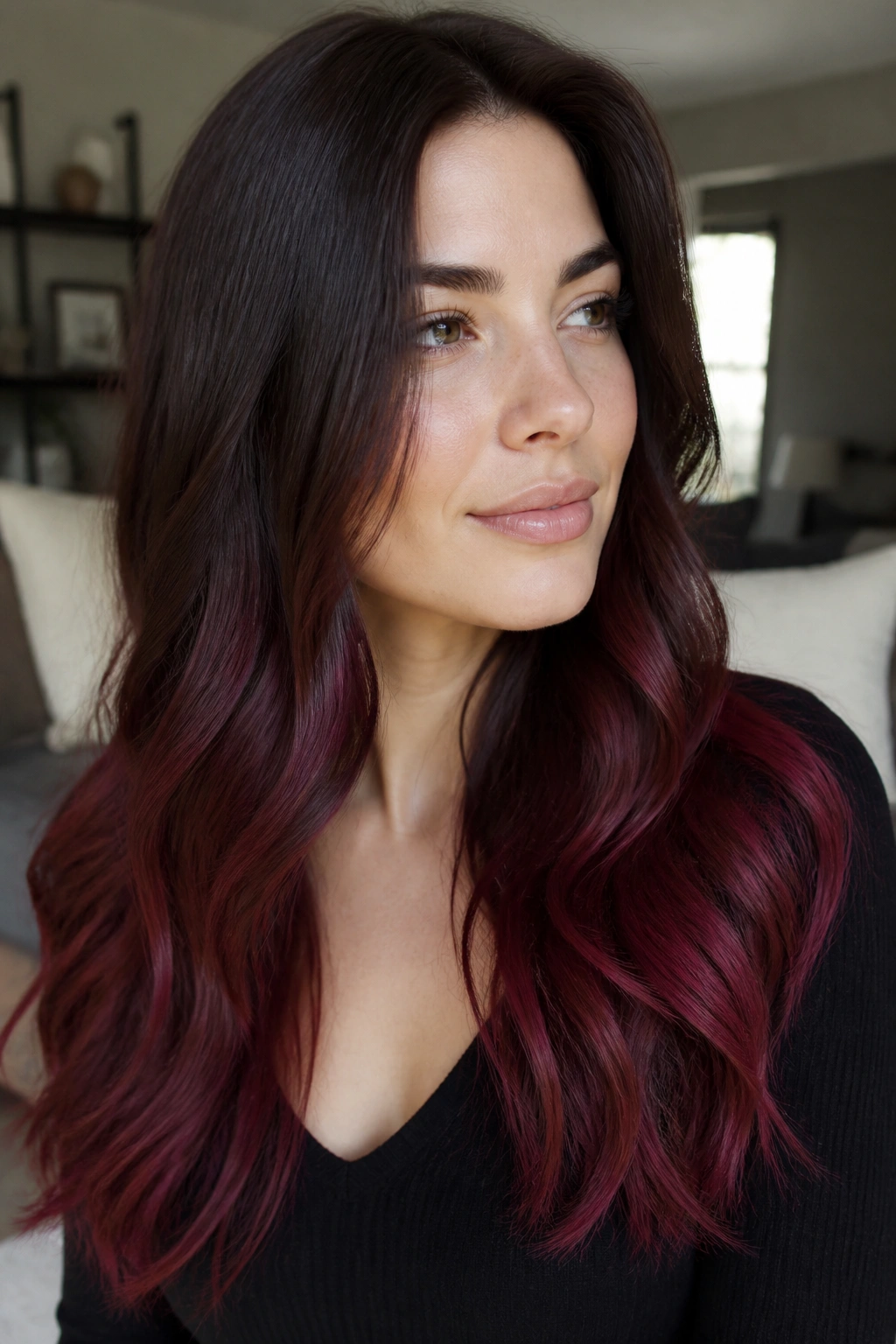
A soft balayage on the ends is less obvious than a classic dip-dye, and that is exactly why I like it for long hair. The color looks painted in rather than stamped on, which makes the fade feel more natural through every bend and wave.
Balayage also gives you control over density. You can keep more burgundy at the outer surface for visibility, then leave some of the underside darker. That hidden depth matters on long lengths because it keeps the hair from looking like one solid color block.
For people who wear their hair half-up a lot, this is one of the smartest choices. The lifted top section stays brunette, while the ends swing red when the hair moves. It’s a small detail, but it changes the whole read of the style.
I’d ask for a softer transition if your hair is thick. Heavy hair can swallow color, and a hand-painted finish prevents that flat, helmet-like effect.
5. Plum Burgundy on Straight Long Hair
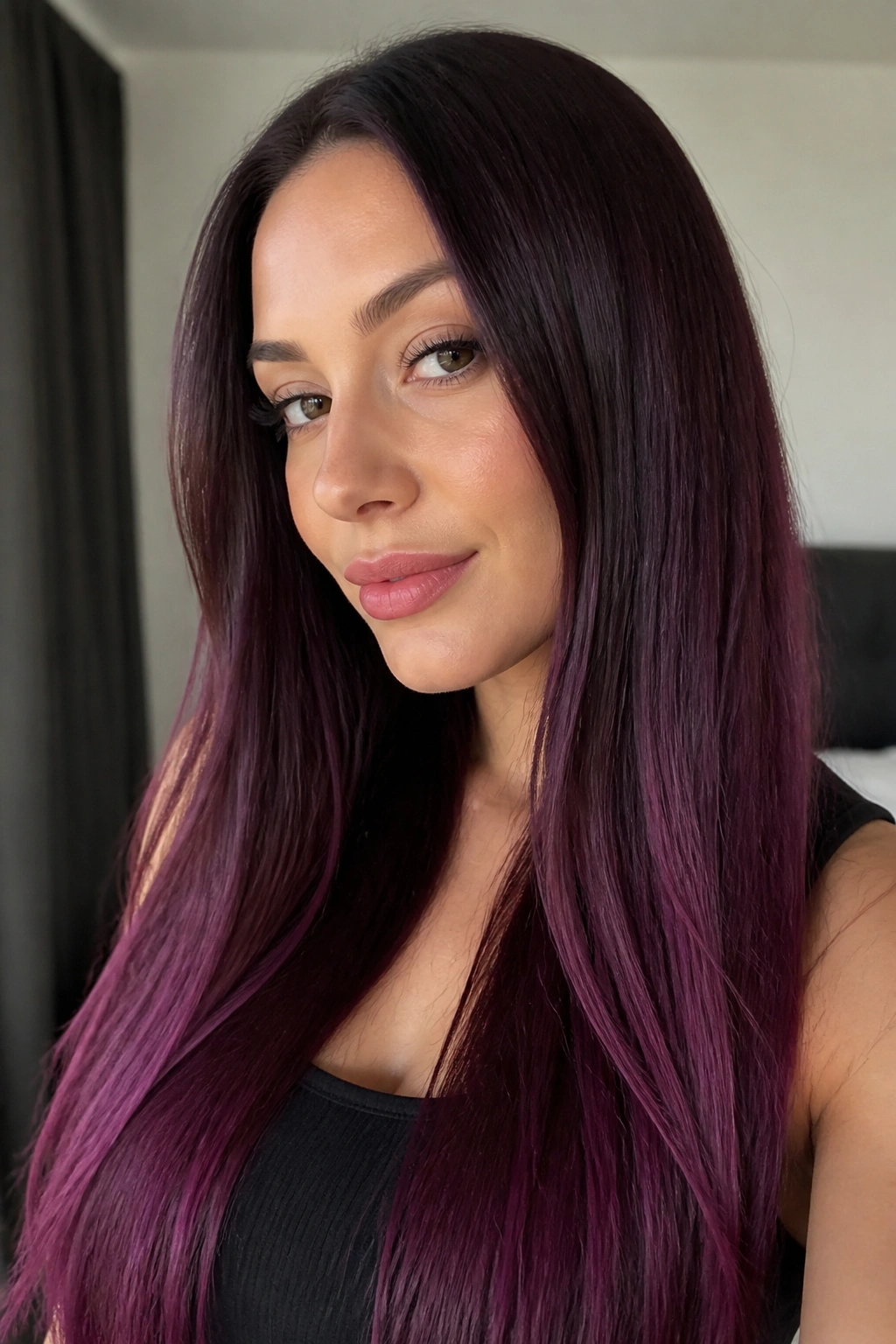
Straight hair can be a little unforgiving with color. Every line shows. Every band shows. That is why plum burgundy on straight long hair needs a careful fade, not a rushed one.
Plum tones add a cooler edge to burgundy, which helps the color stay rich instead of orange. On sleek lengths, I like the transition to start lower than people expect — sometimes mid-back to lower back length if the hair is very long — so the upper section stays clean and the ends carry the drama.
A glossy blowout makes this shade behave. It reflects light in a smooth way, almost like polished glass, and the plum notes come out without screaming. If your ends are porous, a cool-toned gloss can pull the color together fast.
Skip blunt, chunky placement here. Straight hair punishes sloppy blending.
How to Wear It Sleek
- Blow-dry with a round brush for a smooth curve
- Use a heat protectant that leaves no sticky film
- Add a light serum only on the bottom third
- Refresh the tone with a gloss when the plum starts looking muddy
6. Merlot Ombre with Curled Ends
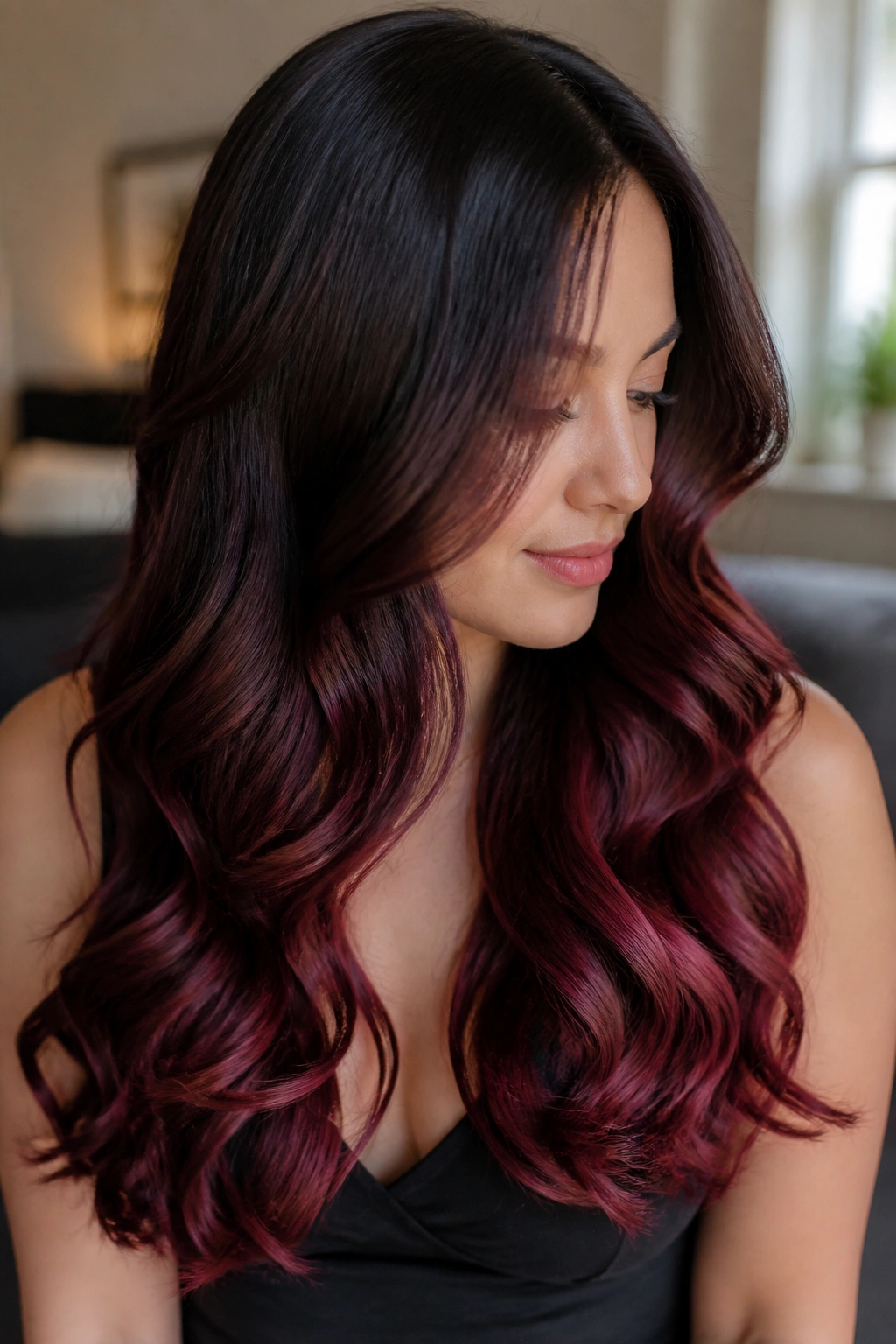
Curls make merlot look deeper. That’s the whole story, and it’s why this version works so well on long hair with layers or a shaped cut.
When the ends are curled under or away from the face, the burgundy catches on the curve of each wave and looks richer than it does on a flat sheet of hair. A 1.25-inch curling iron usually gives enough bend without turning the whole style into ringlets. Alternate directions and leave the last inch a little softer so the color shows through.
Why the Curl Matters
Merlot has enough brown in it to stay elegant, but it still needs movement. Curls create pockets of shadow and light, and that makes the shade look layered even if the cut is simple. On very long hair, that movement keeps the ends from dragging the whole style down.
I’d keep the root area natural or only slightly shadowed. Too much color at the scalp steals the effect. The point is wine at the bottom, not red all the way up.
7. Burgundy and Copper Ribbon Blend
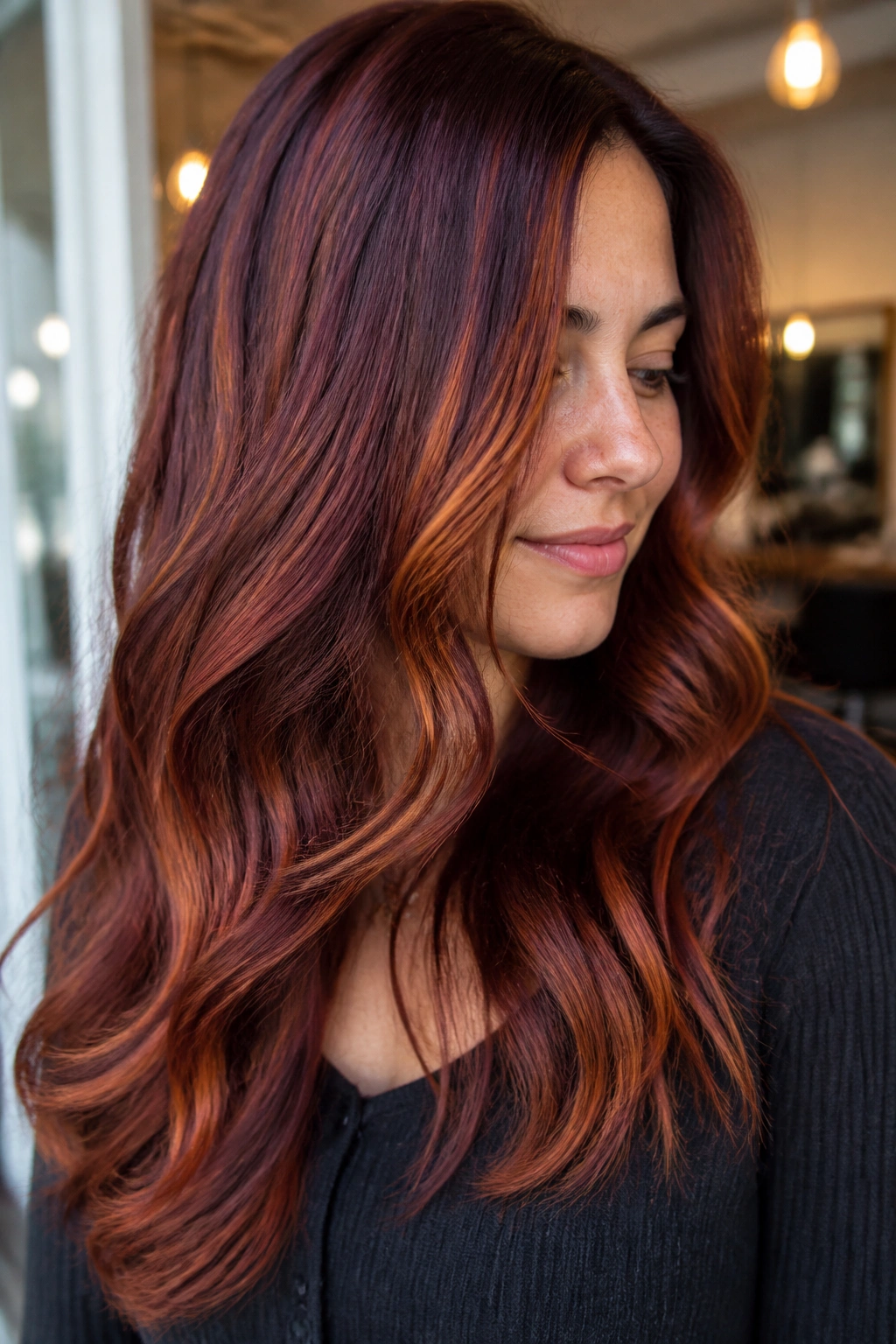
If plain burgundy feels a little flat, copper ribbons fix that fast. The copper should not take over. It should sit inside the burgundy like thin threads, especially through the midlengths where long hair can use a bit of extra shine.
This version is warmer and brighter than a cool burgundy ombre, so it flatters golden and peachy skin tones nicely. I’d use it on layered long hair, where the copper can peek through in motion instead of sitting in one obvious strip.
What to Ask Your Colorist For
- A burgundy base with fine copper ribbons
- The brightest pieces around the front third of the head
- A softer copper concentration through the lower half
- A glaze that keeps both tones from fighting each other
The result is dimensional, not busy. That’s the difference. A flat copper-red can look loud on long hair; a ribboned blend looks intentional and alive.
8. Velvet Burgundy on Layered Waves
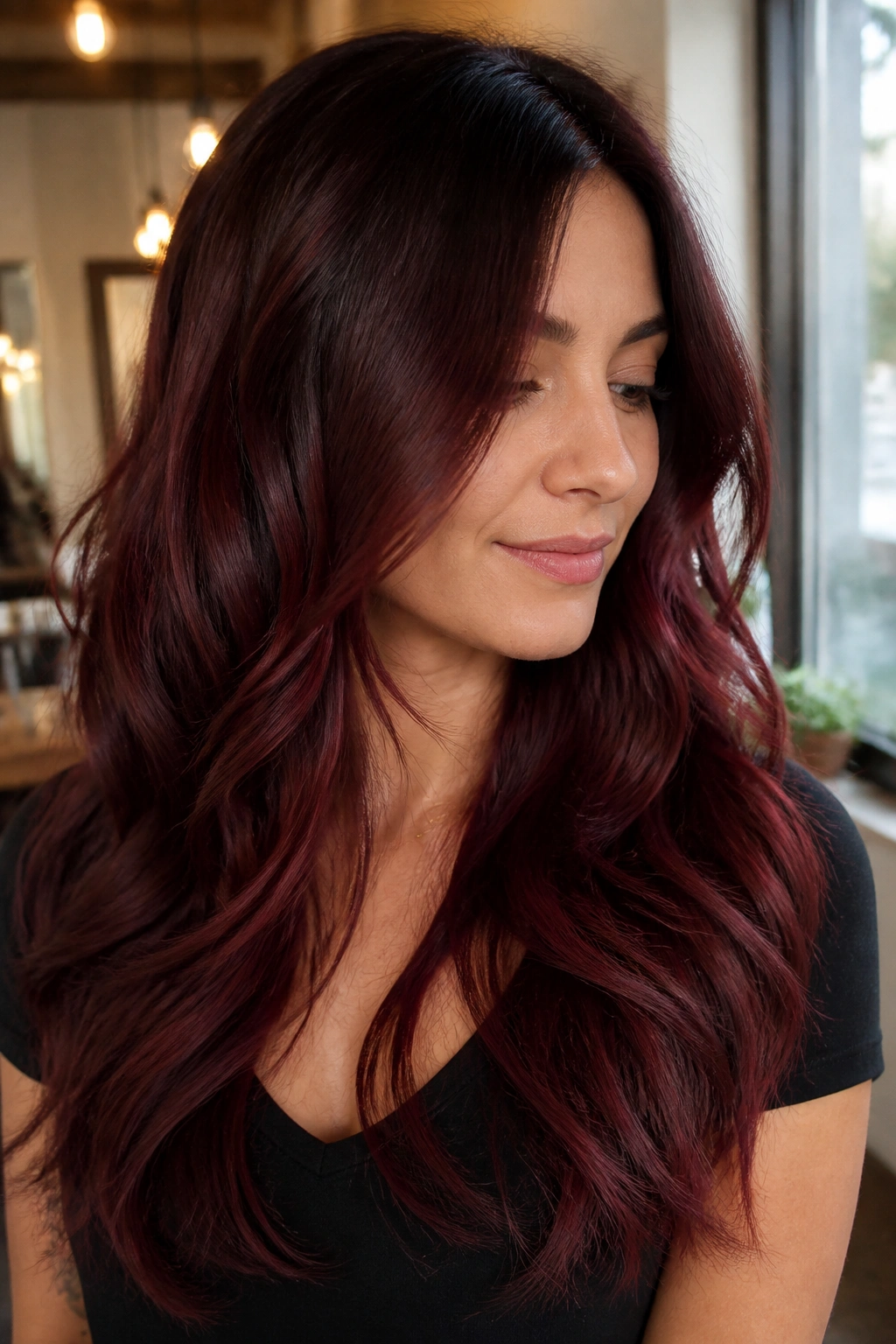
Thick hair can eat color if the cut is too blunt. Velvet burgundy on layered waves fixes that problem by giving the color spaces to move through instead of sitting like one heavy sheet.
Layers matter more here than people think. They let the burgundy flash through at different lengths, which keeps the fade soft and stops the ends from feeling weighed down. On long hair, that’s a real advantage. The color looks fuller because the cut is doing some of the work.
A side part can help too. It shifts the darker root section across the crown and lets the burgundy show up in a more uneven, natural way. I like this shade on hair that has some bend already — loose waves, air-dried texture, or a quick blowout with a large brush.
This is one of those looks that gets better when you stop trying to make it perfect. Slight asymmetry makes it feel human.
9. Dark Brunette to Cranberry Tips
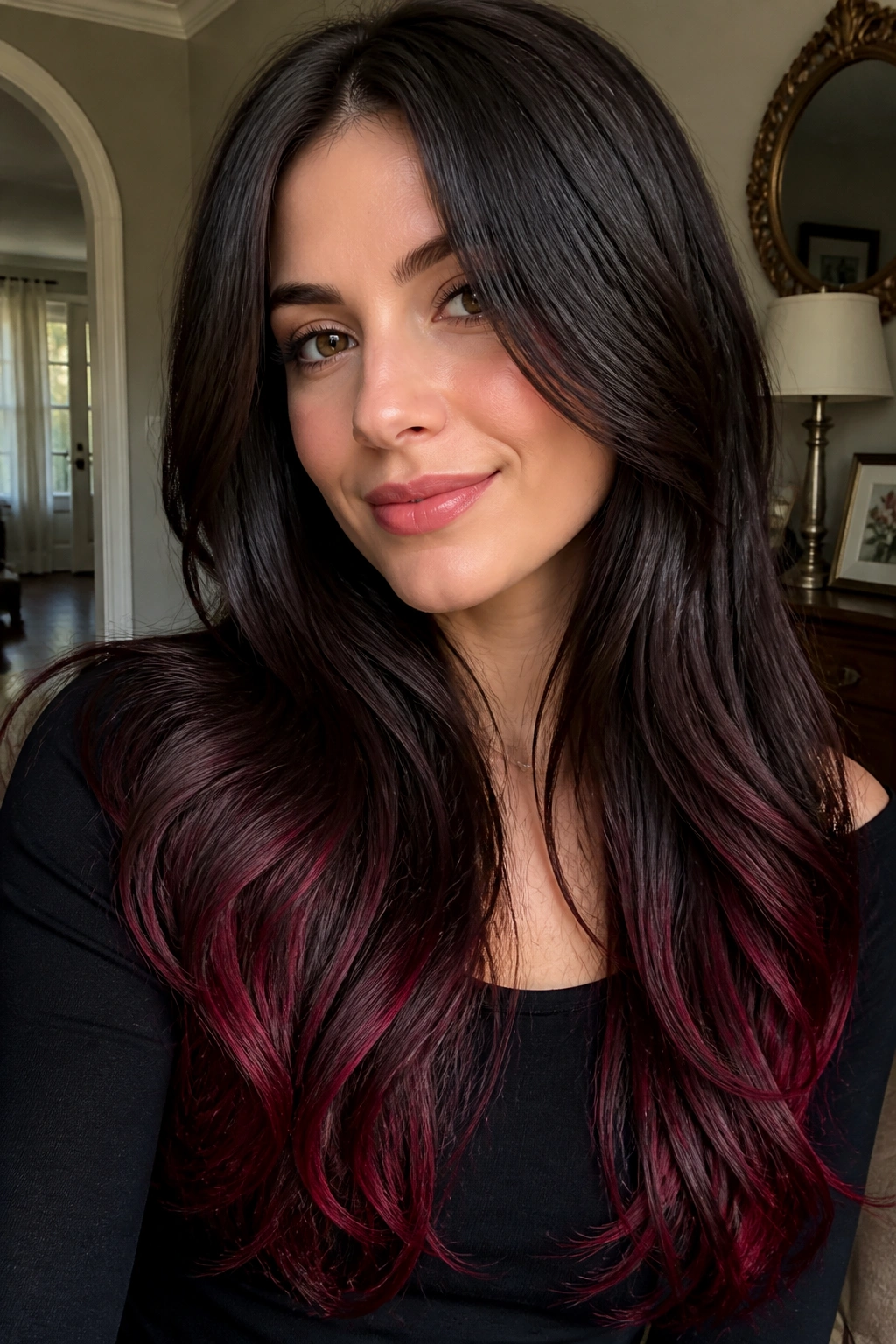
A cranberry tip fade is for someone who wants color without turning the whole head into a red statement. Unlike a high-contrast ombre, this one keeps the drama at the ends, which makes it easier to wear every day.
The shift can stay subtle through most of the length. Then the last 2 to 3 inches pick up a deeper cranberry, almost like the hair was dipped in berry juice and then softened with a brown glaze. On long hair, that tiny zone of color goes farther than you’d think.
This is a strong pick if your base is already dark brown and you do not want much lift. The ends need enough brightness to read as cranberry, but not so much that they look pink. That balance is the whole game.
I’d choose this style for someone who likes red but gets nervous about maintenance. It grows out with less drama than brighter burgundy styles, and the darker mids help hide the line.
10. Smoky Burgundy with an Ash-Brown Root
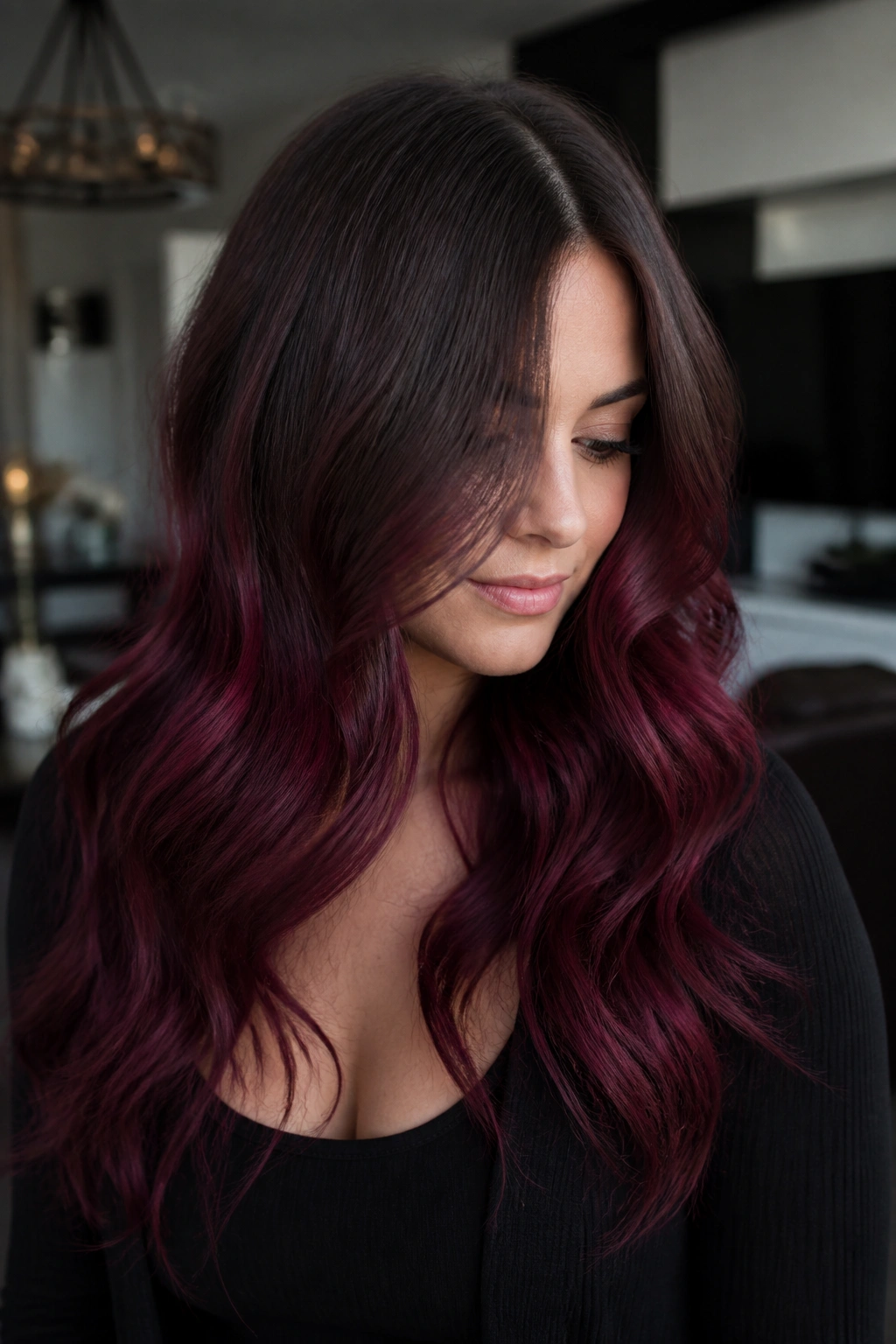
Think red wine in low light. Smoky burgundy with an ash-brown root has that muted, cool look that feels expensive without trying too hard.
What to Ask for at the Chair
- An ash-brown root melt
- Burgundy through the middle lengths
- Slightly cooler, red-violet ends
- A gloss that keeps warmth from creeping in
The ash base is what makes the red feel smoky. Without it, the burgundy can drift toward warm cherry. With it, the whole style stays grounded and a little moody, which is perfect on long hair that tends to show every tone shift.
I like this look on people with neutral or olive skin. It also helps if your hair tends to go brassy fast. The cooler root acts like a buffer, and the burgundy stays more wine-colored as it fades.
One warning, though: if you love warmth, this is not the one. It leans cool on purpose.
11. Burgundy Ombre Hair with a Money Piece
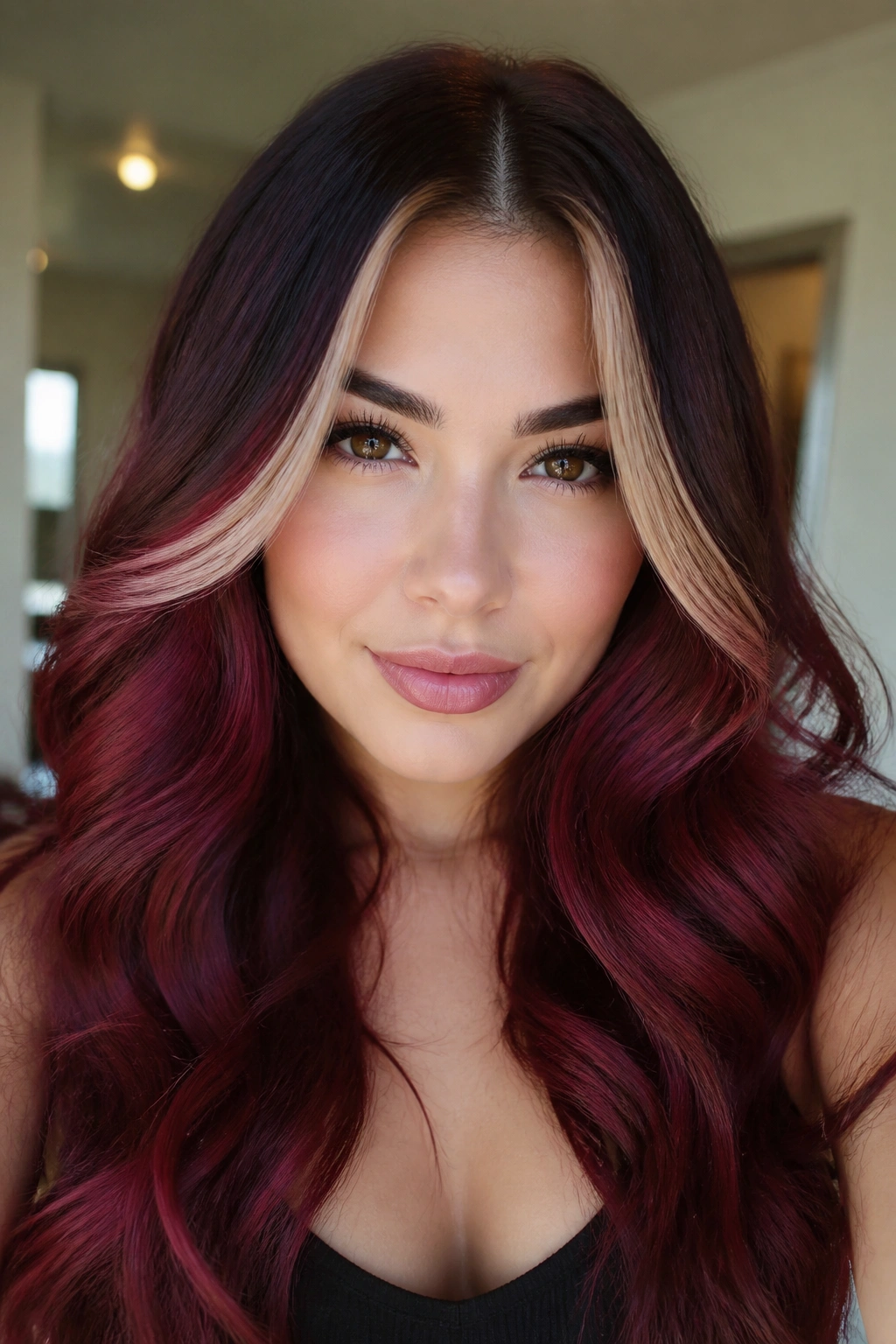
The front pieces change everything. Burgundy ombre hair with a money piece gives long hair a brighter frame, and that’s often enough to make the whole color feel more alive.
The money piece should stay close to the face, usually starting around the top of the cheekbone and flowing down into the burgundy fade. Keep it a touch lighter or brighter than the rest of the front section. That separation helps the color pop when the hair is curled away from the face.
How the Money Piece Changes the Shape
A standard ombre can disappear when the hair hangs straight. A money piece fixes that by pulling the eye upward. The face reads brighter, the layers show up better, and the overall style feels less heavy through the length.
- Best with long layers
- Strong choice for center parts
- Works on hair that is worn curled, waved, or blown out
- Ask for a front section that is 1 shade brighter than the midlength burgundy
I’d skip this if you want a very soft, hidden color. If you want people to notice the front first, it’s the right move.
12. Wine Red Ombre with Curtain Bangs
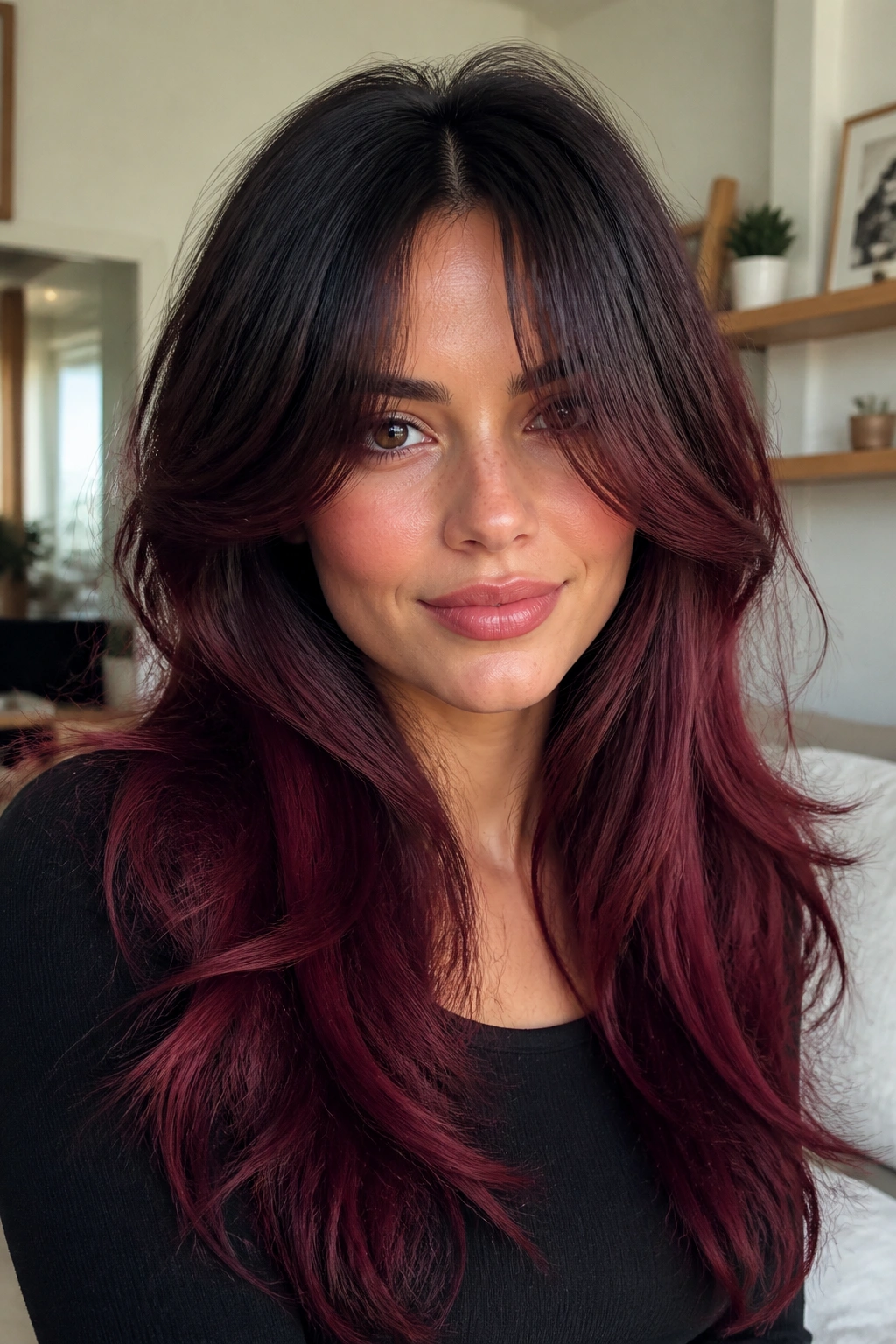
A long set of curtain bangs and a wine-red fade do something nice together. The bangs break up the top half of the style, while the burgundy settles into the lengths and keeps the whole cut from looking too plain.
The trick is restraint. Keep the curtain bangs a little darker at the root, then let the wine tone start below the bend of the bang. If the bangs are saturated too heavily, they can overwhelm the face. A softer front keeps the focus where it belongs — on the sweep of the cut and the red in the lower half.
This look works especially well on long, layered hair. The bangs connect to the ombre instead of fighting it, and the fade gives the hair a little lift when it is worn loose. I like a round-brush finish here because it rounds the front pieces just enough to show the color shift.
It’s romantic without getting fussy. That matters.
13. Mahogany Burgundy with a Glossy Finish
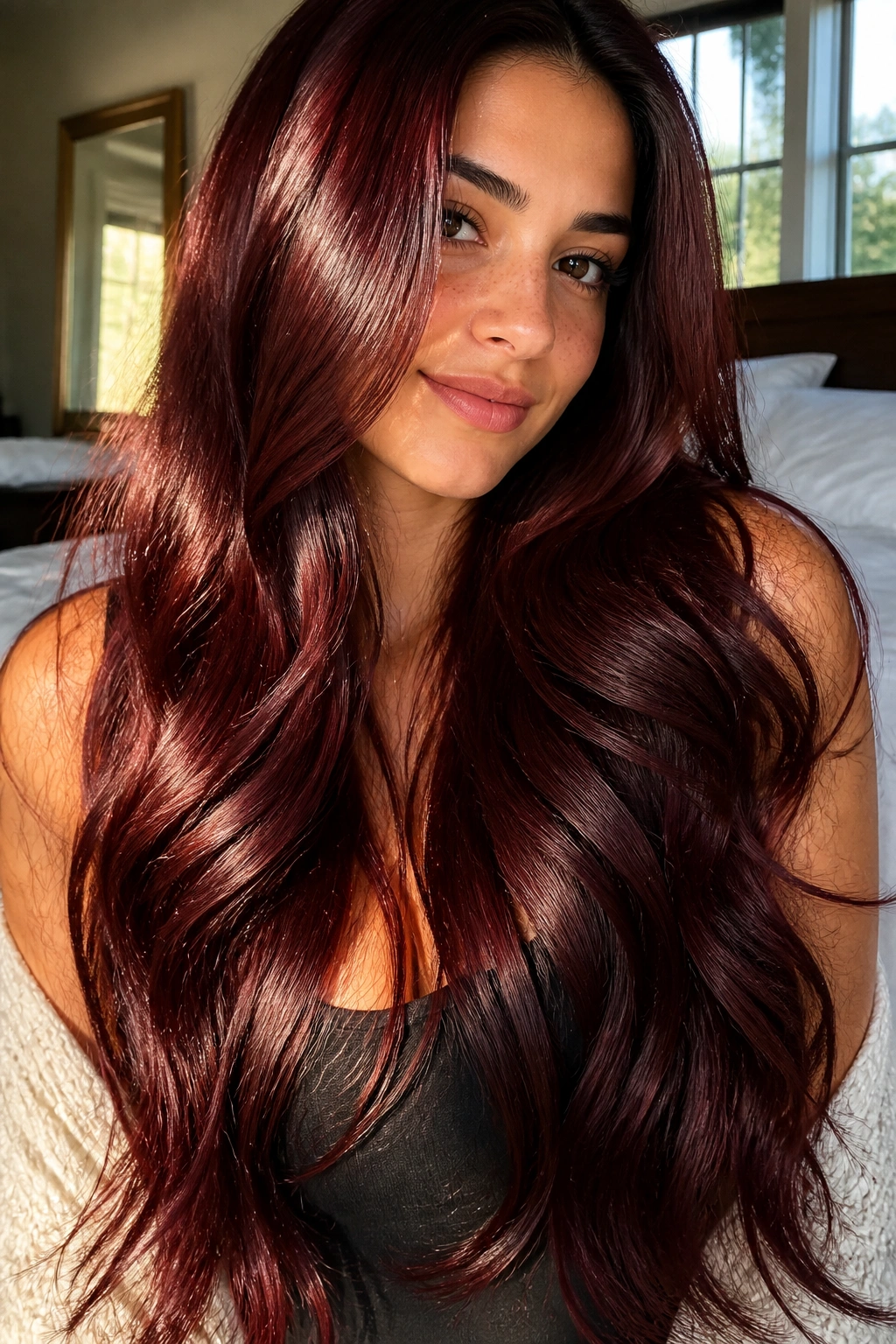
Not every burgundy needs to look bright in daylight. Mahogany burgundy with a glossy finish is for the person who wants depth first and color second, which is honestly a smarter choice more often than not.
Mahogany sits in that brown-red middle ground that flatters long hair without taking over. The shine treatment is what gives it life. A clear gloss or red-brown glaze keeps the ends reflective, so the shade doesn’t sink into the hair and disappear.
Why Gloss Matters
Gloss changes the whole temperature of the color. It can make mahogany feel lacquered, soft, or almost velvet-like depending on the formula. On long hair, that shine stops the lower lengths from looking dry, which is a common problem with red tones.
I’d pair this with a smooth blowout or a large soft wave. Tight texture can hide the mahogany depth. A polished finish lets the color do its work.
This is one of my favorite low-drama burgundy ideas. Quiet, but not boring.
14. Berry Burgundy on Thick Curls
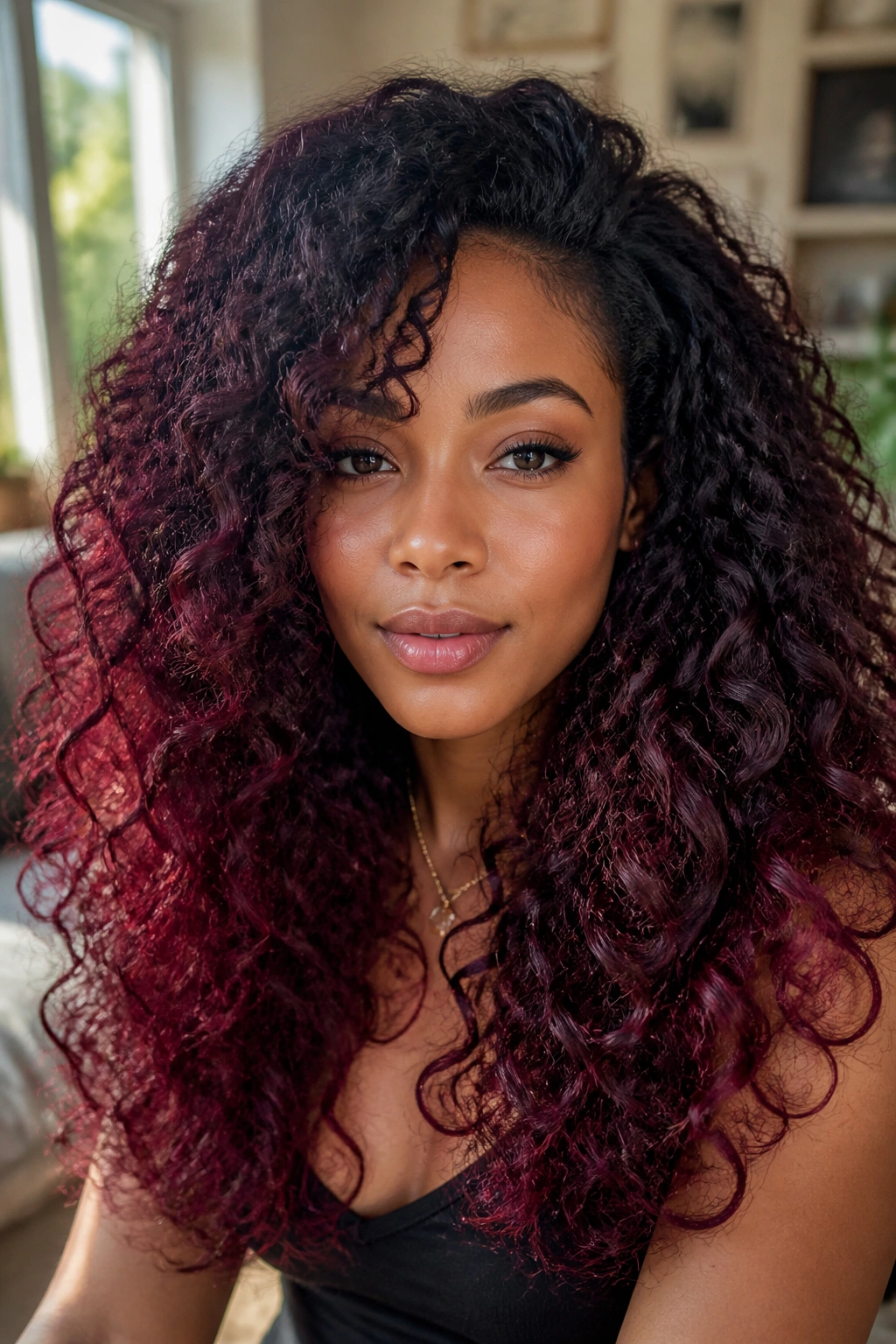
Thick curls can swallow color if the placement is too timid. Berry burgundy solves that by sitting bright enough to show through the curl pattern, especially on long hair that has a lot of density.
The color should live on the outer curve of the curl and through the lower layers, where motion exposes it. If the color stays only on the top surface, the underside can look flat and heavy. Berry tones fix that by adding contrast inside the shape, not just on top of it.
A lot of people with curls worry about over-lightening. Fair. You do not need pale ends here. A berry burgundy that sits over a deep brunette base can still read clearly because curls create their own natural separation.
- Place the lighter tone where the curls bend outward
- Leave some deeper burgundy under the crown
- Use a moisturizing mask, since curls and red dye both hate dryness
- Diffuse on low heat to keep the pattern intact
The result feels dimensional instead of painted on.
15. Rose-Burgundy Ombre on Long Layers
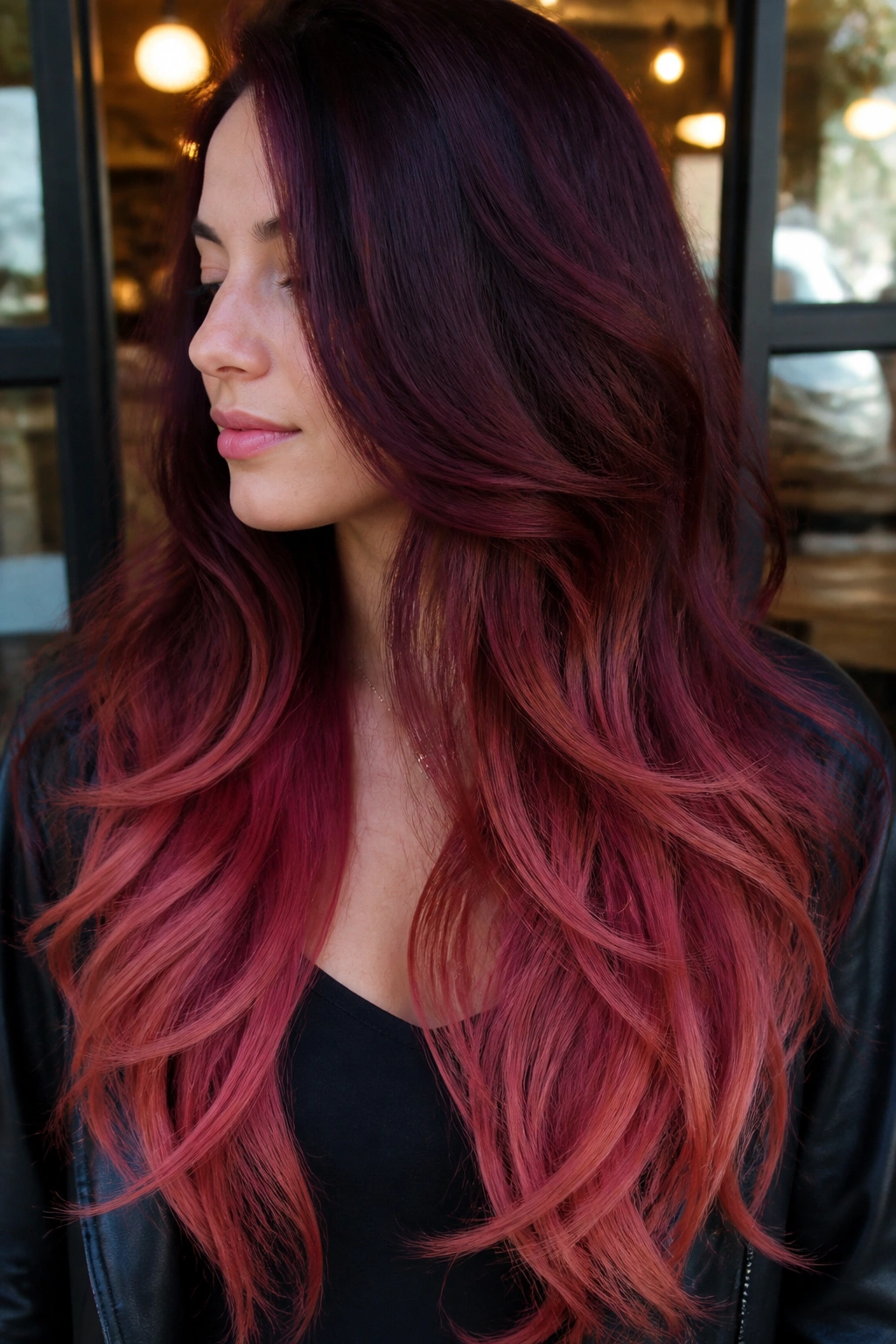
Can burgundy look softer? Absolutely. Rose-burgundy ombre gives long hair a pinker red note, but it still stays grown-up when the transition is handled well.
Long layers are the reason this version works. They break up the rose tone so it doesn’t sit like a single wash of pink. The color can start as a deep burgundy around the midlengths, then open into a rose-red at the ends. That small shift gives the style a gentle finish without turning it pastel.
How to Keep It from Reading Pink
Keep the base deeper than you think. A level 4 or 5 root lets the rose tone stay grounded. If the ends get too light, the color will drift toward strawberry fast, and that is a different look entirely.
I like this on hair that already has movement. Airy layers, soft waves, and face-framing pieces all help the rose notes show up in a controlled way. The shade feels lighter, but the structure of the cut keeps it from looking flimsy.
It’s a nice choice if you want romance without sweetness.
16. Black Cherry Ombre with Shine Treatment
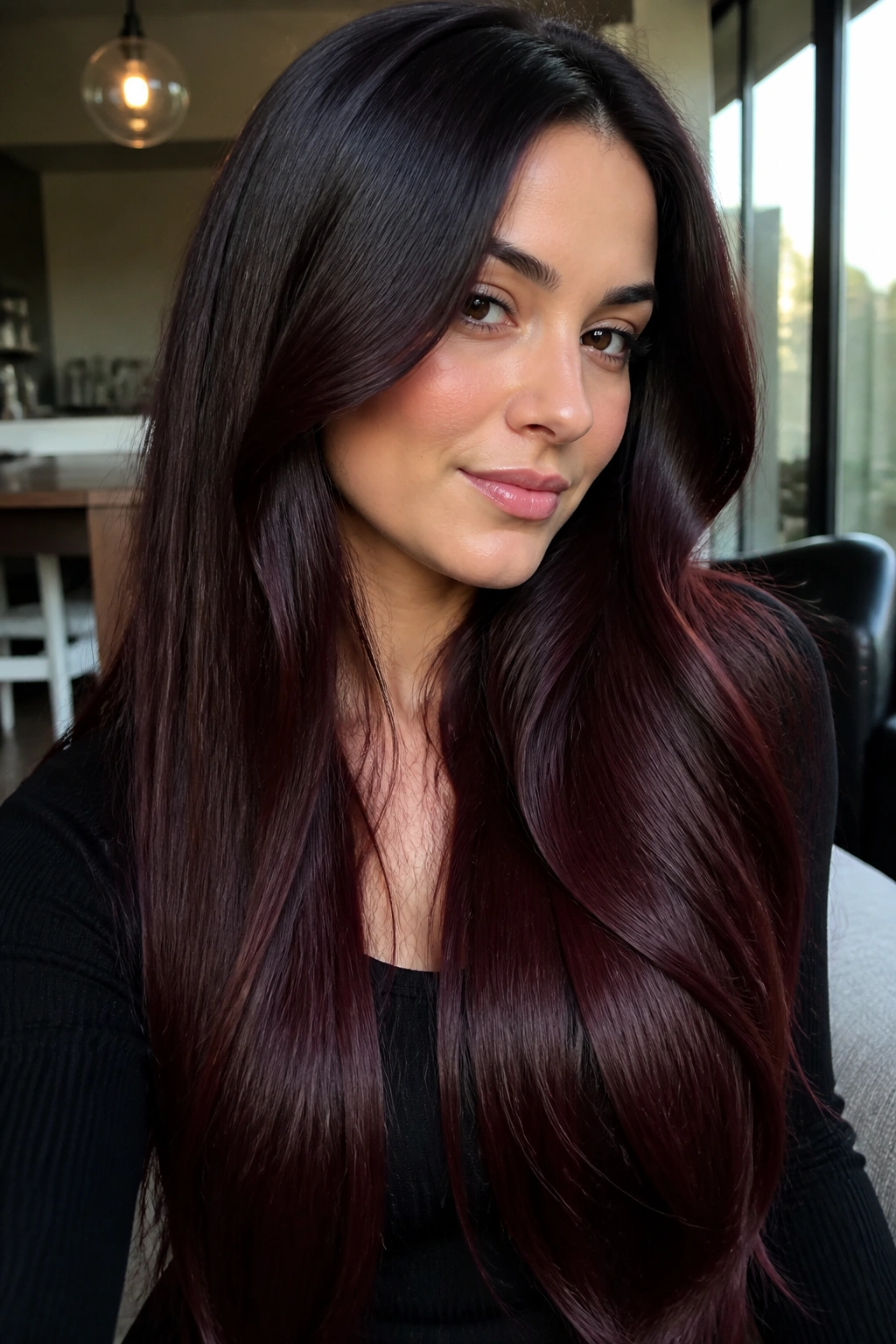
If your hair is already dark, black cherry is the sneaky version of burgundy. It gives you red depth without forcing a huge lift, which makes it easier to wear on long hair that has been through a few rounds of heat styling.
The shine treatment matters more than the shade here. Black cherry can look flat if the finish is dull, but a red gloss or clear glaze brings the tone forward. On smooth lengths, it reads as dark fruit with a red edge. On wavy hair, it looks deeper and more dramatic.
I’d keep the transition subtle. A hard ombre line would fight the darkness of the shade. A soft melt lets the cherry notes appear mostly at the midlengths and ends, which is where they look richest.
This is a solid choice if you want burgundy energy without a bright red head. Subtle, but not sleepy.
17. Burgundy Ombre with Peekaboo Depth
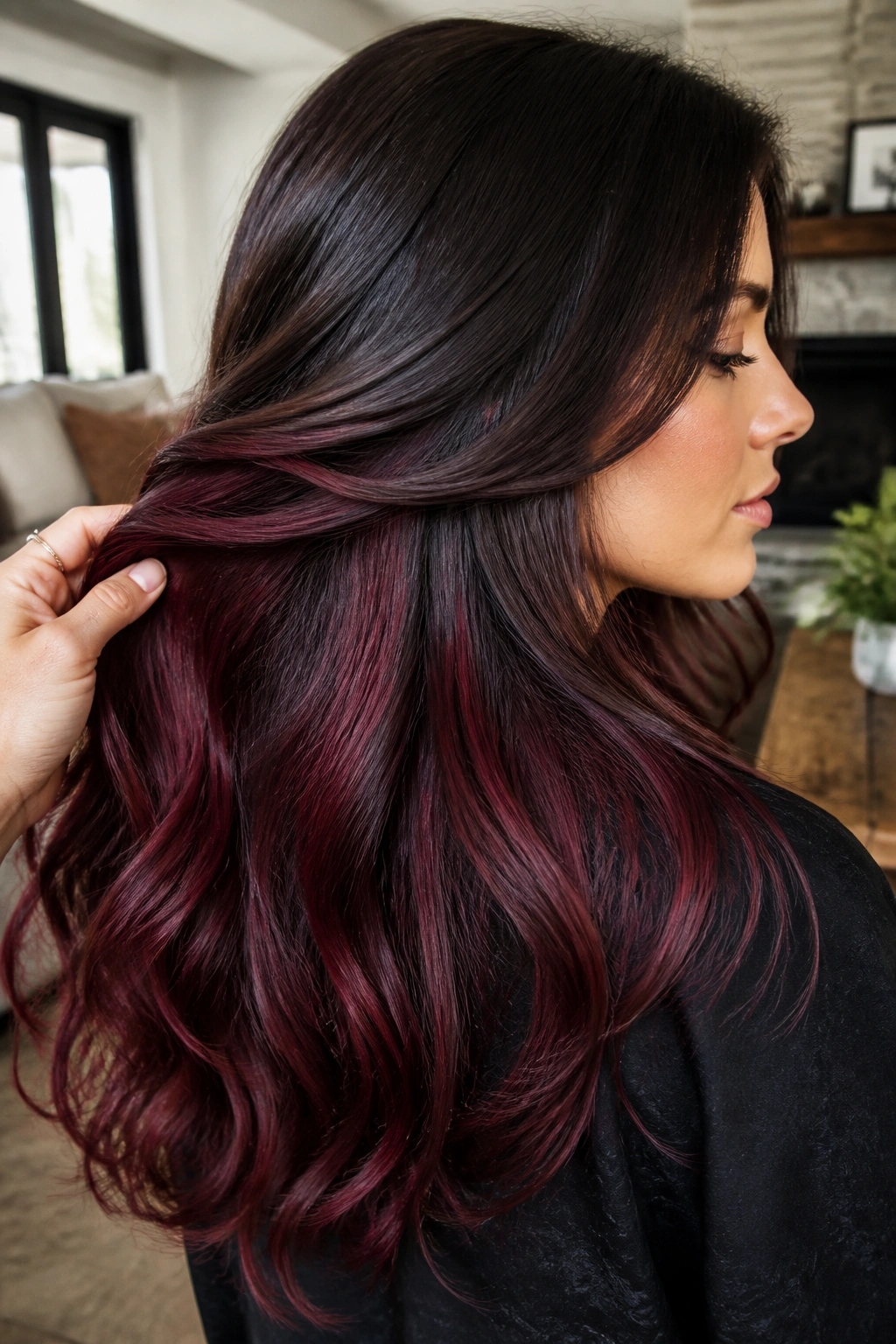
The top layer stays calm. The color hides underneath until the hair moves. That is the whole charm of a peekaboo burgundy ombre, and on long hair it can be a lot more interesting than a fully visible fade.
Where to Place the Hidden Panels
- Under the top layer at the mid-back section
- Around the nape for surprise color in braids and ponytails
- Through a few face-side underlayers for movement
- Slightly brighter on the lower ends so the peekaboo effect does not disappear
This style works well if you wear your hair up often. A low ponytail, a braid, or even a half-up twist will show the burgundy in flashes, which feels more playful than an all-over fade. It also gives thick long hair some internal contrast, so the style does not look like one heavy block.
I’d choose this if you want color that lives under the surface. It’s private until it moves, and that is half the fun.
18. Soft Burgundy Ombre Hair Melt for Low-Maintenance Grow-Out
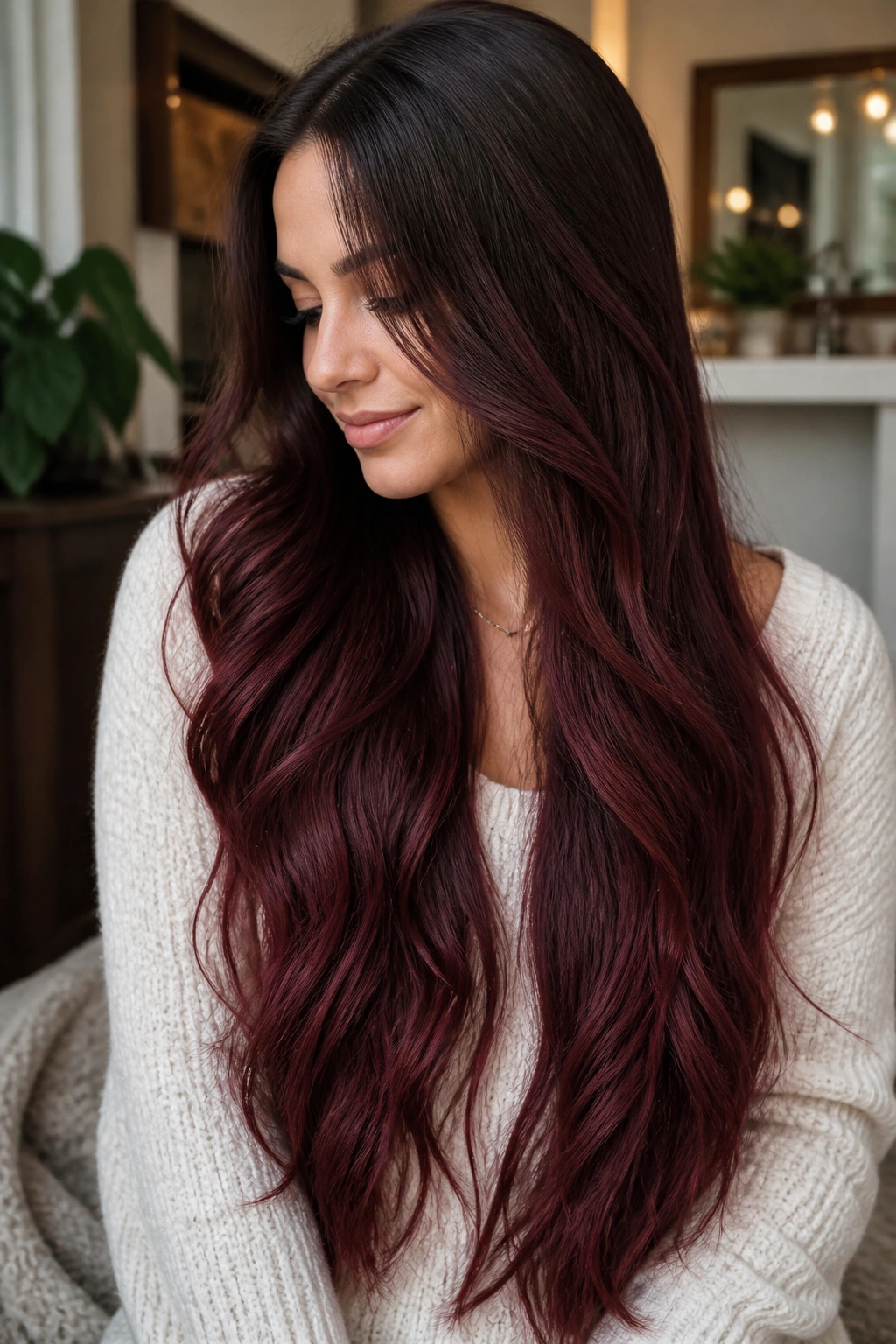
If you know you will hate a hard regrowth line, pick the melt. Soft burgundy ombre hair with a blurred root-to-end transition is the easiest version to live with on long hair, and it still looks rich.
The root stays close to your natural color, then the burgundy opens gradually through the middle lengths. The ends can be the strongest point, but the fade should never look like two separate colors sitting next to each other. A clean melt gives you flexibility when the hair grows, which matters more than most people admit.
I like this version for waist-length hair and for anyone who wears their hair down more often than up. The longer the canvas, the more room the color has to breathe. A soft finish also works well with glossing between full color appointments, since a quick refresh can keep the burgundy from turning flat or brown.
If I had to pick one look that balances drama and sanity, this would be the one. It is the kind of burgundy that still looks good when life gets busy, and that is not a small thing.
