



Brown and pink can look sweet, but they do not have to. On long hair, a brown pink ombre can be soft enough for everyday wear or bold enough to stop traffic, and the difference usually comes down to where the pink starts, how light the ends are, and whether the brown leans warm, cool, or somewhere in between.
Long lengths give the color room to move. That matters. On shoulder-length hair, pink can land too abruptly; on waist-length hair, the fade can travel from espresso at the roots to rose at the ends without looking chopped up or busy.
A good ombre is not one flat pink painted on brown. It’s a slow shift, and the best versions use that shift to make the hair look thicker at the crown and lighter through the ends. If the ends are pale enough, dusty rose looks polished. If they’re still too dark, the pink goes muddy fast.
That is the part most people miss. Pink is not hard to wear. Pink just punishes sloppy lightening, harsh lines, and ends that are already dry before the color even goes on. Get the canvas right, and the rest gets easier.
1. Soft Mocha Brown Into Dusty Rose Melt
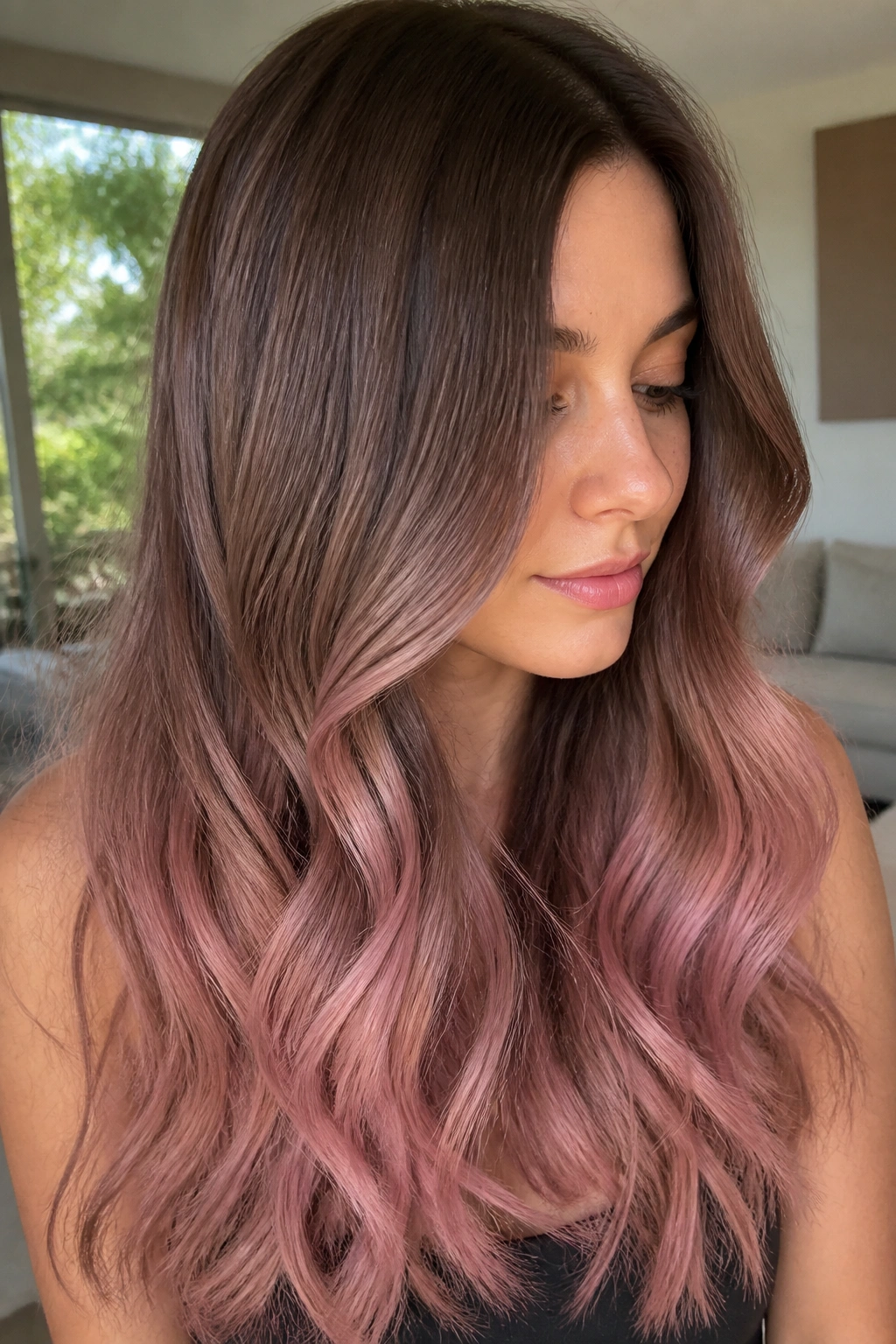
This is the look I’d hand to someone who wants pink hair without the full drama of vivid color. The brown stays soft and creamy at the top, then eases into a muted dusty rose that looks more like blush than candy. On long hair, that kind of fade has room to breathe.
Why it works on long hair
The length gives the color a real runway. Instead of the pink starting too high and crowding the face, it can begin below the shoulders and feather down through the last third of the hair.
A soft mocha base helps the pink stay calm. Too dark and the rose gets lost; too warm and it can drift peachy in a way that changes the whole mood. Dusty rose sits in the sweet spot.
- Best on loose waves or big, brushed curls.
- Ask for a shadow root if you want low maintenance.
- Keep the ends trimmed every 8 to 10 weeks so the fade does not fray.
- A rose-colored gloss keeps the pink from turning flat between salon visits.
My favorite part: this one looks expensive even when the styling is simple. A middle part and soft bend in the ends are enough.
2. Dark Chocolate Brown to Bubblegum Pink Ends
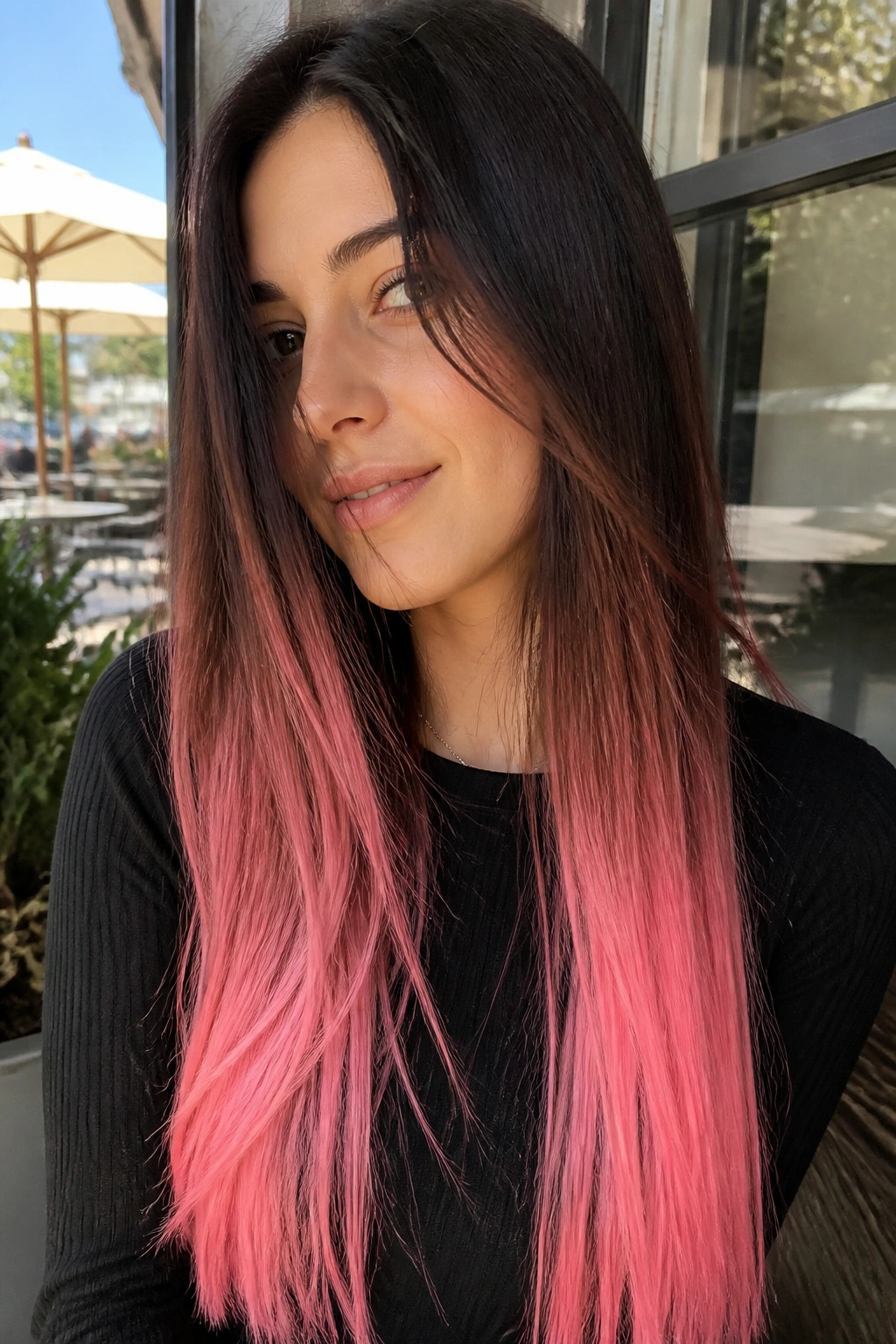
Some pink ombres whisper. This one does not. Dark chocolate at the roots makes the pink at the ends look brighter, so the whole style has more punch without needing color everywhere.
The trick is contrast. If the brown is deep and glossy, the bubblegum pink can stay playful instead of childish. On very long hair, that contrast shows best when the pink starts low, around the mid-back area, so the top half still feels grounded.
I like this version on straight hair, honestly. Waves soften the contrast so much that you lose some of the fun. On smooth lengths, the color shift is cleaner, almost graphic, and the pink tips look deliberate rather than accidental.
Ask your colorist for pre-lightened ends that lift to pale yellow, not orange. Orange under pink is where things go wrong fast. If the base is too warm, the pink can drift coral and lose that bubblegum snap.
Tiny detail, big payoff. A serum on the last 2 to 3 inches keeps the bright ends from looking dry under daylight.
3. Chestnut Brown with Rose Gold Ribbon Ends
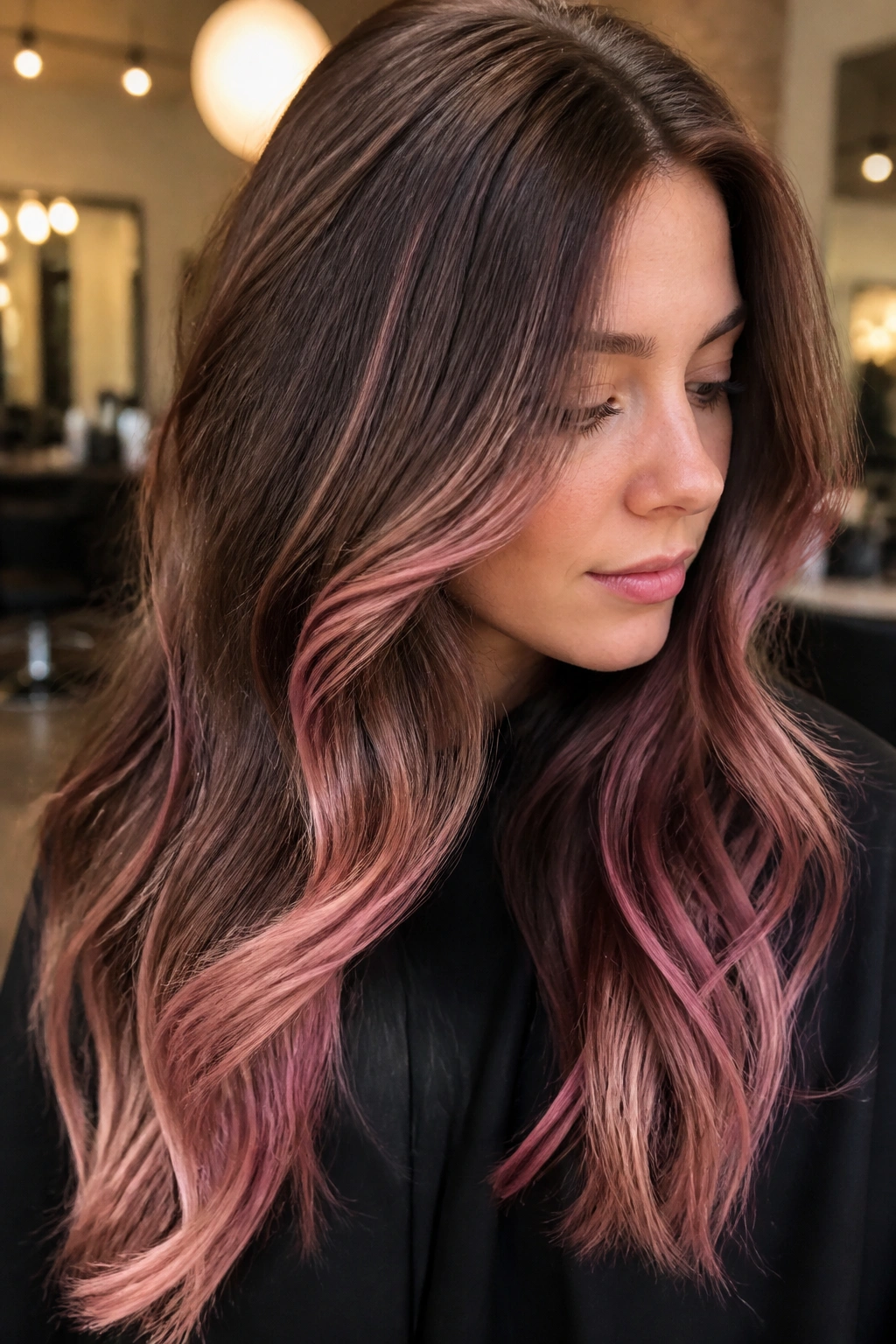
Rose gold is the easygoing cousin in the pink family. It flatters chestnut brown because both shades have warmth, so the transition feels like one color family instead of two strangers meeting at mid-length.
What makes it different
This is not a heavy dip-dye. The best version has thin ribbons of rose gold that start around the lower third and gather toward the ends. That keeps the hair from looking blocky, which can happen when the pink is laid on too thick.
The chestnut base does a lot of work here. It softens the lighter pink strands and makes the whole look feel sunlit, even indoors. On long layers, the movement helps each ribbon catch the eye without shouting for attention.
What to ask for
- A chestnut or cinnamon brown root color.
- Thin hand-painted pink ribbons through the lower lengths.
- A rose-gold toner rather than a neon pink formula.
- A soft blowout or large-barrel wave to show the dimension.
This is one of those shades that looks best when it is not overstyled. A little bend, a little shine, and you’re done.
4. Espresso Brown to Smoky Mauve Fade
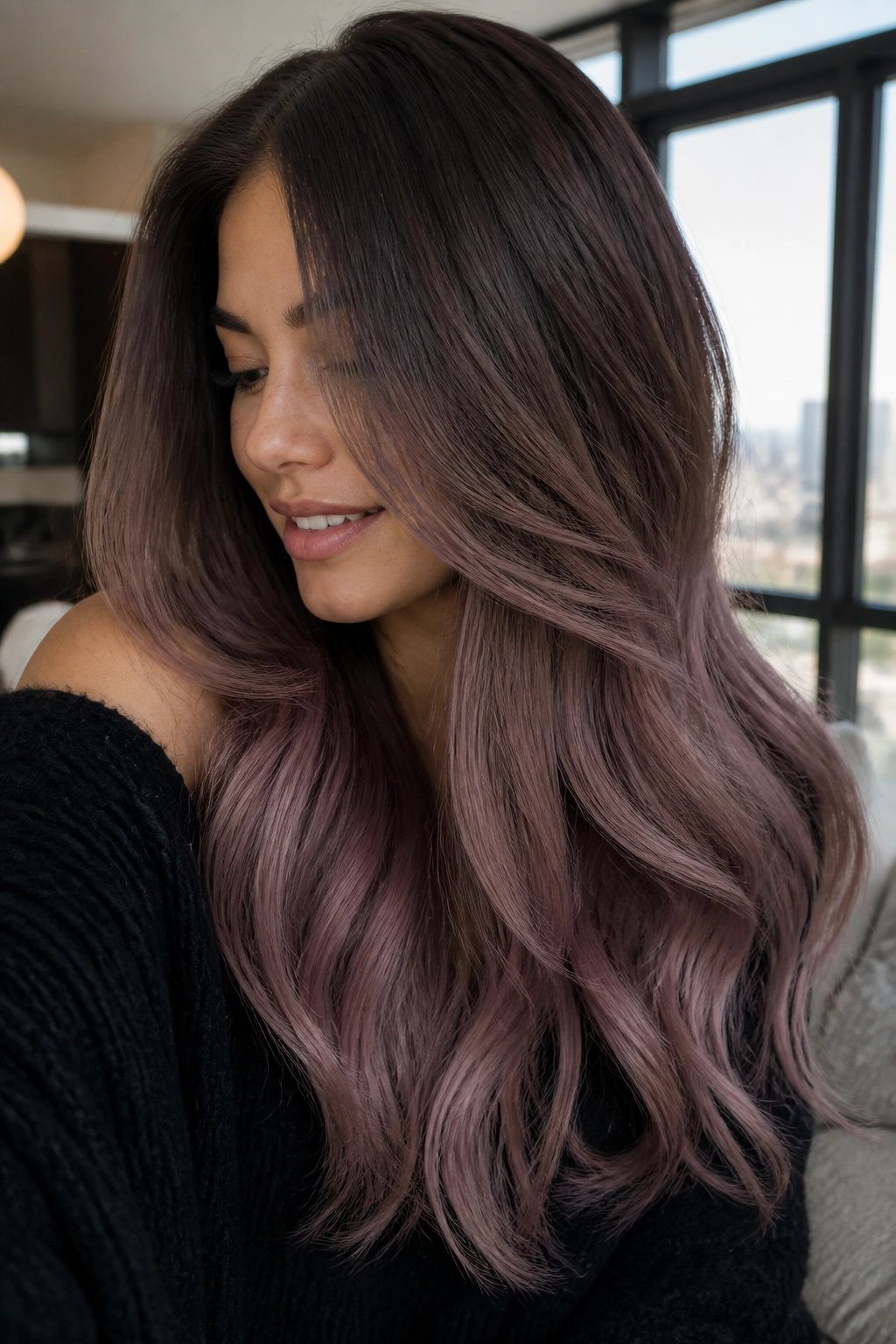
Smoky mauve is the grown-up pink. It sits cooler than rose gold and deeper than pastel blush, which makes it a smart choice if you want brown pink ombre hair ideas for long hair that feel moody instead of sugary.
The espresso base gives the fade some seriousness. That sounds dramatic, but I mean it in a good way. The dark root keeps the look grounded, while the mauve ends soften the whole thing so it never turns harsh.
This color shines on long, layered cuts. The layers break up the fade and keep the mauve from pooling at the bottom like one heavy band. Without layers, the color can still work, but it needs a smoother gradient and a lot more care at the ends.
Use a sulfate-free shampoo and keep hot tools lower than 375°F. Mauve fades faster than brunette, and high heat strips the nice gray-pink tone out of it faster than most people expect.
Nope, this is not the most obvious pink. That is exactly why it works.
5. Milk Chocolate Brown with Petal Pink Balayage
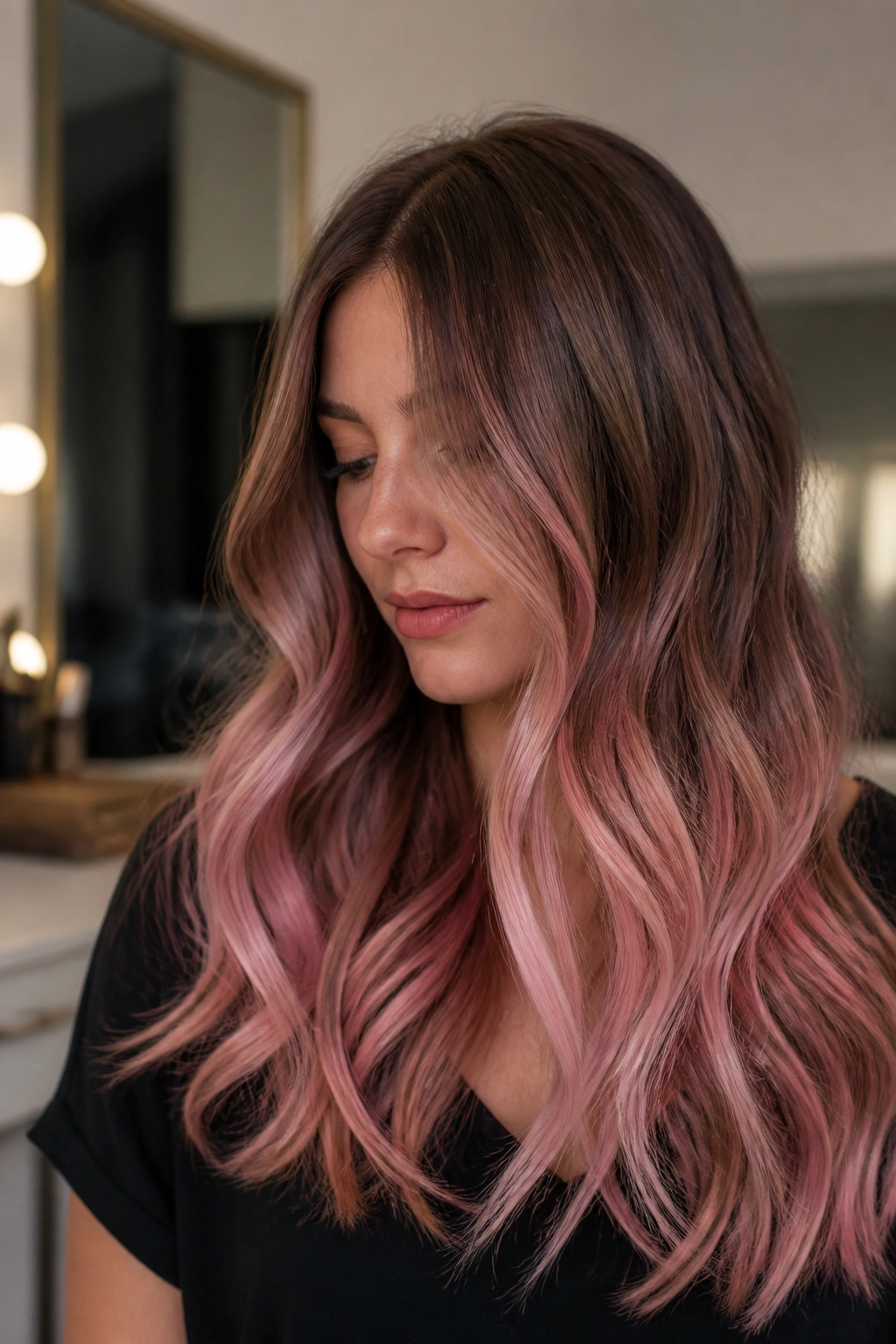
Why does this one feel so easy to wear? Because the pink is painted like light, not like a solid block. Petal pink balayage on milk chocolate brown gives long hair that soft, airy movement people love when they want color that looks touched by hand.
The softest way to wear pink
Balayage keeps the pink from starting at one hard line. Instead, it sweeps into the mid-lengths and ends in thin, broken pieces, which makes the result look lighter and less formal.
Petal pink is also forgiving. It has enough warmth to sit on a chocolate base without looking neon, and enough softness to avoid going flat. On long hair, this matters because the eye has time to travel through the whole blend.
Best styling move
A loose wave is the sweet spot. Straight hair can make balayage look sparse; a wave fills in the gaps and lets the pink and brown overlap in a nicer way.
- Best for people who want low-commitment color.
- Strong choice for wavy and layered hair.
- Ask for face-framing pieces if you want the pink to show sooner.
- Refresh with a sheer pink gloss when the tone starts to fade.
I’d pick this over a solid pink melt for anyone nervous about upkeep. It grows out with much less fuss.
6. Cinnamon Brown to Pastel Pink Waves
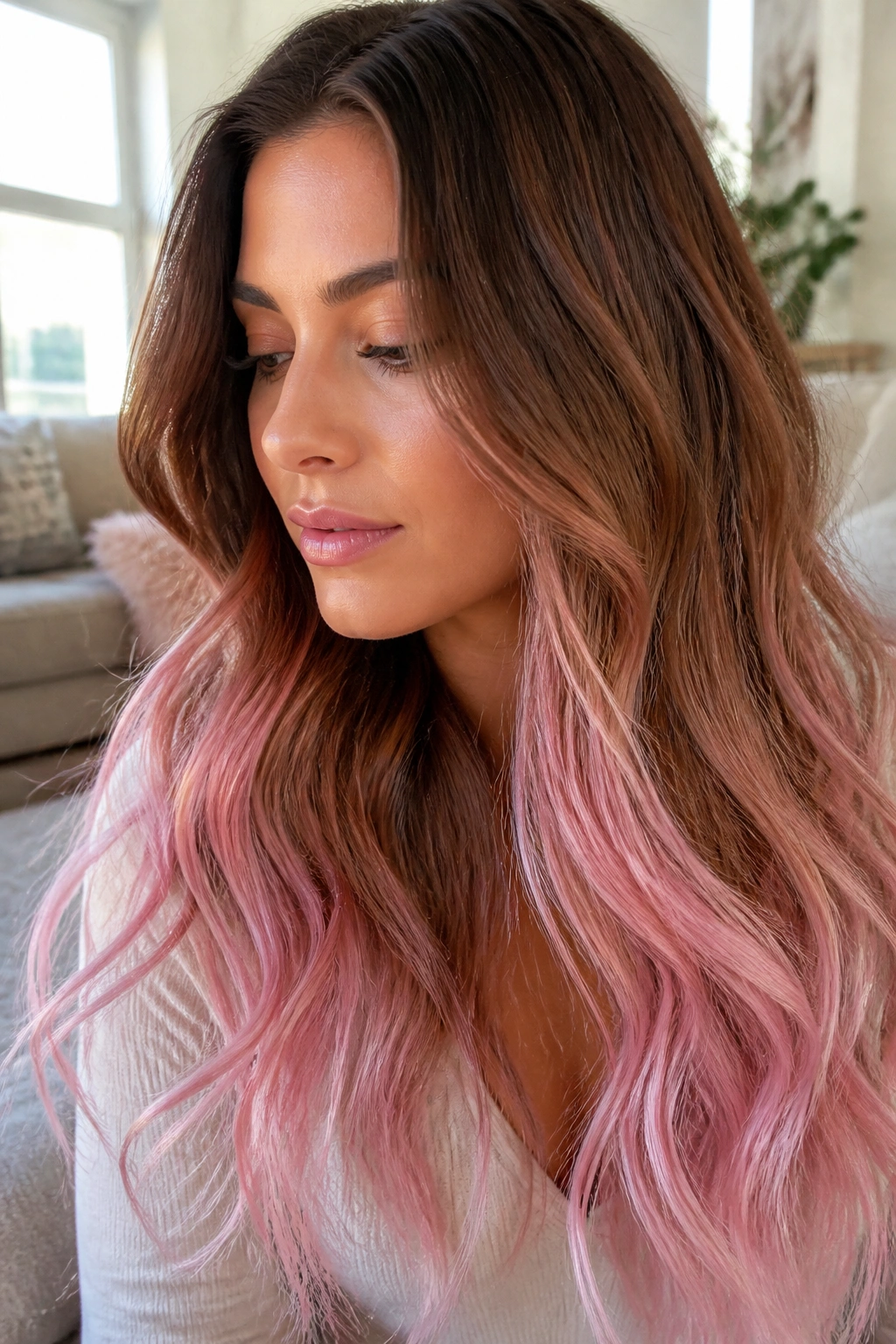
Cinnamon brown has warmth and spice, which makes it a natural partner for pastel pink. The whole look feels gentle, but not bland. That’s a useful distinction, because a lot of pastel ombres end up looking washed out when the brown base is too neutral.
This version loves movement. On long waves, the cinnamon sits like a warm frame while the pink tips appear and disappear as the hair swings. On straight hair, it can look softer and more delicate, but you lose some of the layered color play.
The best thing about this look is the transition zone. A thin band of peachy-brown between the cinnamon and the pastel pink helps the fade feel smooth. Skip that buffer, and the contrast can look stiff.
I’d recommend this to someone who wears sweater knits, gold jewelry, or warm makeup tones. It sits in that friendly range where the hair color doesn’t fight the rest of your look.
One caution: pastel pink shows dryness fast. If your ends already feel rough, trim them first. Color will not hide split ends. It never does.
7. Toffee Brown with Strawberry Cream Ombre
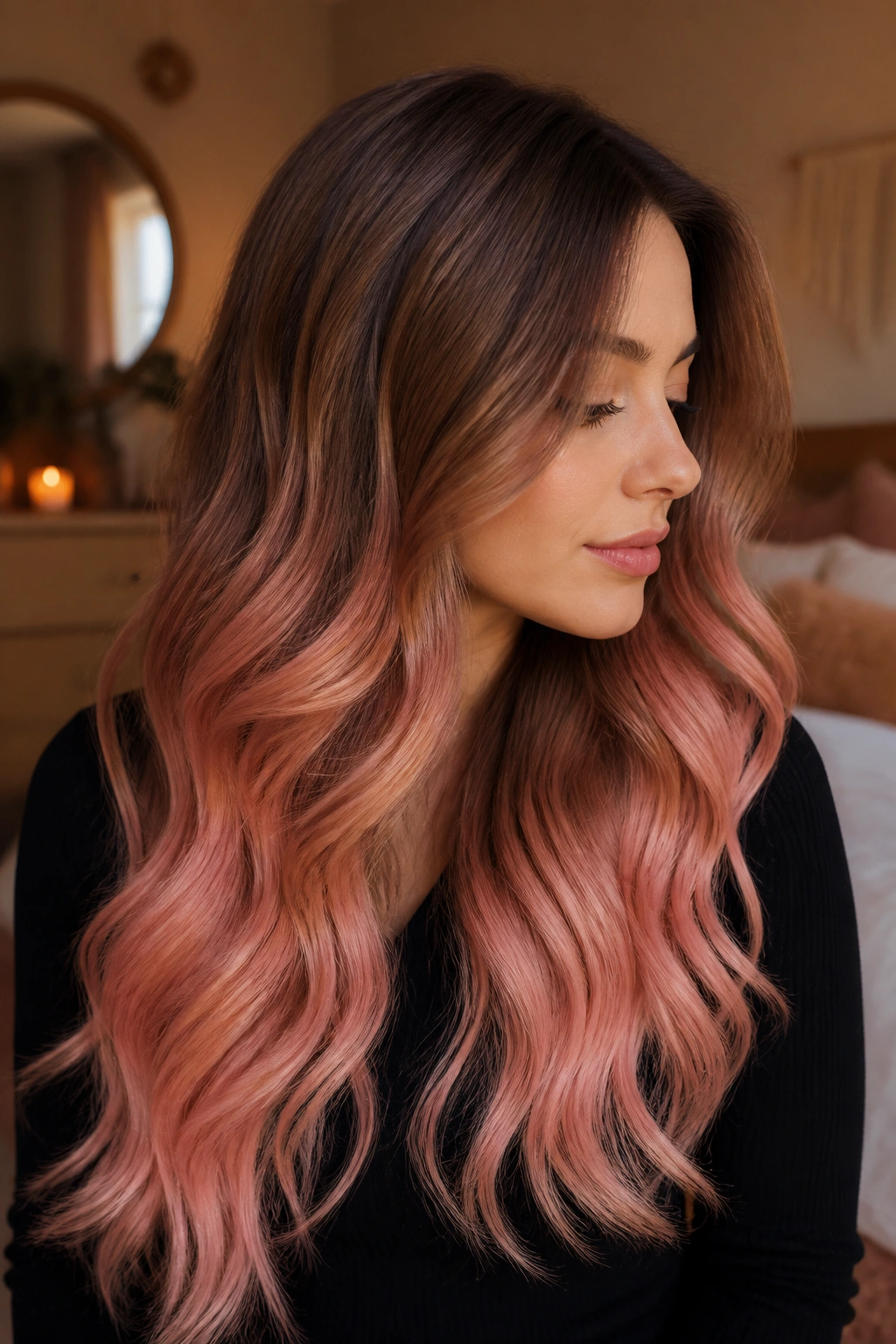
This one is sweeter than it sounds, but not childish. Toffee brown at the crown gives the hair a rich, warm base, and the strawberry cream fade keeps the ends light and playful without going full neon.
What to tell your colorist
Ask for a toffee root shade with a gradual lift through the mid-lengths. The pink should lean creamier than bubblegum, with a faint peach tone that helps the transition feel smooth.
A lot of pink ombres fail because the line between brown and pink is too sharp. Strawberry cream works here because it has enough softness to blur that edge. On long hair, that blur is what makes the style feel expensive rather than loud.
Why this one flatters long hair
Long hair gives the color room to stack. The brown sits at the top, the strawberry tone builds in the middle, and the lightest pink can live only on the last few inches. That layered effect is what keeps the whole thing from looking flat.
- Best with soft curls or a round-brush blowout.
- Ask for slightly lighter ends if your hair is naturally very dark.
- Use a cream-based color mask to keep the pink glossy.
- Keep your part off-center if you want the color melt to show more on one side.
This is the kind of pink that gets compliments from people who normally claim not to like pink hair.
8. Ash Brown to Orchid Pink Fade
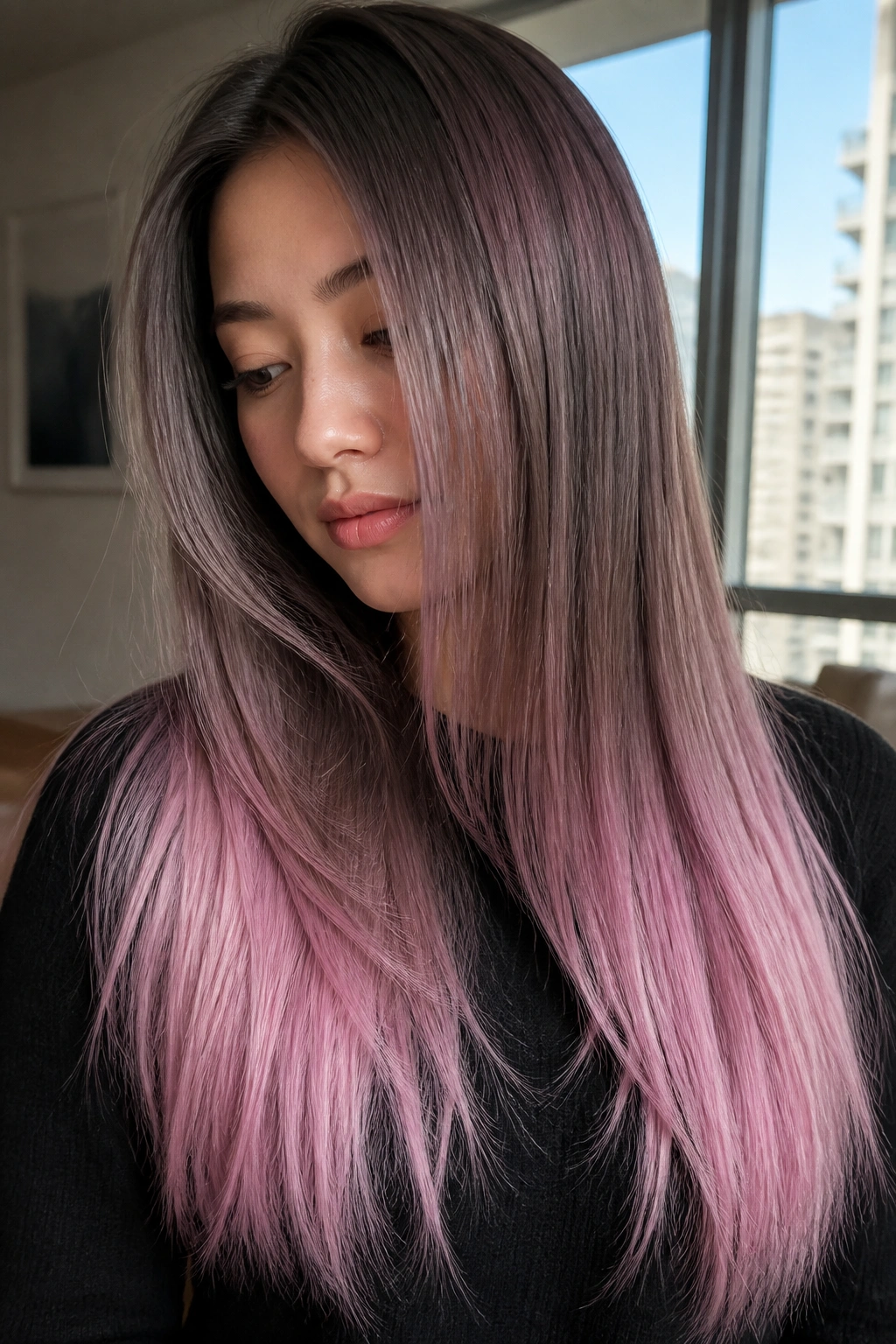
Cool brown plus cool pink can be gorgeous, but it has to be handled carefully. Ash brown to orchid pink gives you that icy, polished feeling without drifting into flat, smoky gray.
Orchid pink is stronger than blush and softer than magenta. It has a little purple in it, which helps it sit next to ash brown without clashing. On long hair, the fade looks sleek when the lighter ends are kept narrow and the top stays dense.
Straight styling works well here. So does a very soft bend at the ends. The point is to keep the finish clean, not fluffy. If the hair gets too voluminous, the cool tones can lose their shape.
There’s one thing I’d watch closely: ash brown can go dull if the pink starts too high. A root area that is too desaturated can make the whole style feel dusty in a bad way. A soft brown with a cool edge is safer than a gray-heavy base.
Best for: people who like silver jewelry, smoky eyeshadow, and hair that looks controlled rather than sweet.
9. Cocoa Brown with Coral Pink Dip Ends
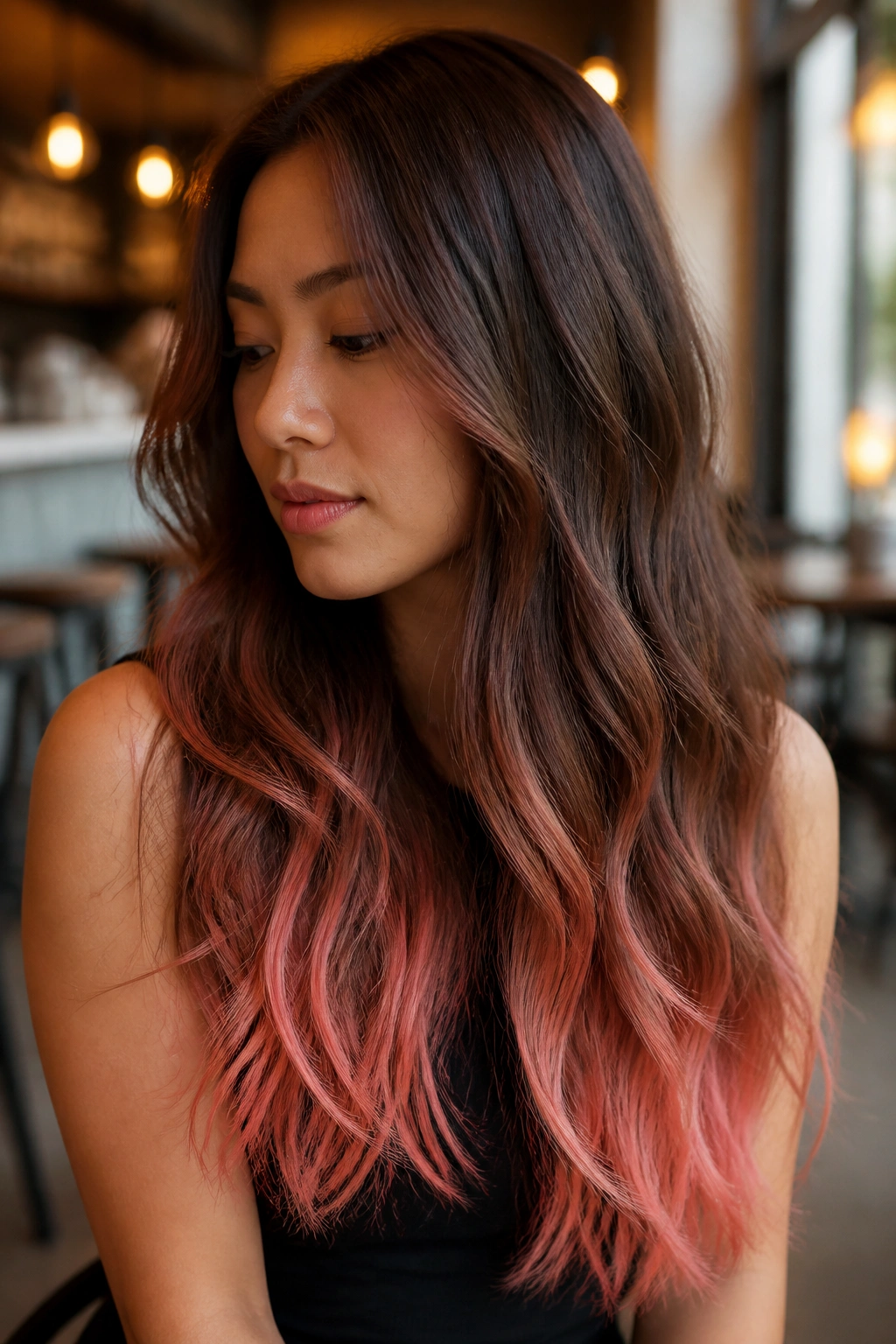
Coral pink is the fun one. It sits between pink and orange, which makes it ideal for cocoa brown hair that already has a little warmth in it. The result is fresh, bright, and easy to wear on long layers.
I like this as a dip-end look because the coral needs room to make an entrance. If you start the lighter shade too high, it can blur into the brown and lose the pop that makes it interesting. On long hair, the very ends can take the color and hold it like a little flash of sunset.
Quick things to know
- Cocoa brown keeps the style grounded.
- Coral pink works best when the ends are lifted to a pale gold.
- A layered cut helps the color sit in steps instead of one block.
- Loose waves make the coral look richer and less striped.
The coral finish also photographs well in low light because it keeps a warm glow. That said, it fades toward peach, so if you want the brighter version, plan for gloss refreshes.
This is a good choice if you want color that feels cheerful without leaning too far into pastel territory.
10. Hazelnut Brown with Blush Pink Face Framing
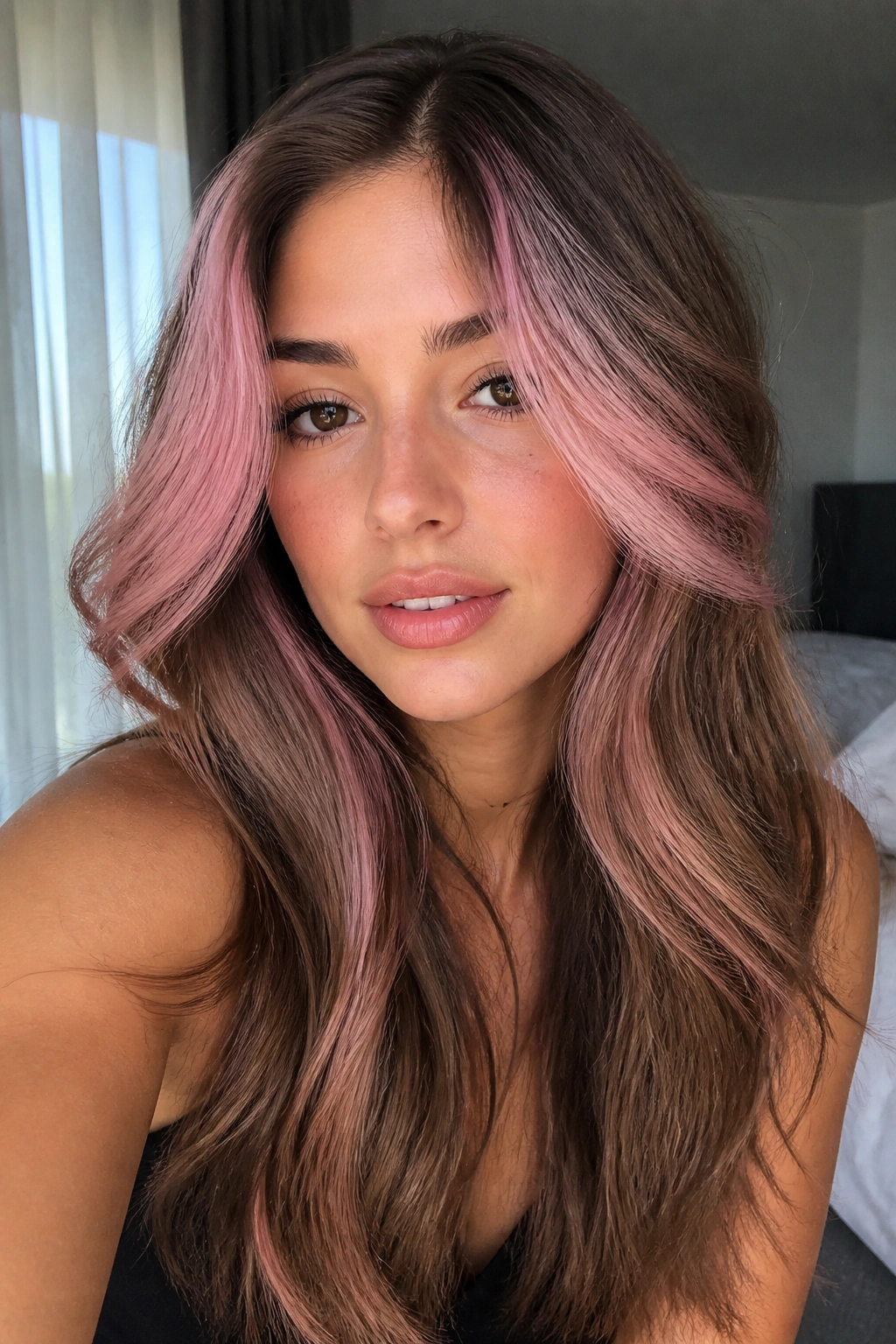
Face-framing pink is a smart move when you want brown pink ombre hair ideas for long hair but don’t want the whole head to go light. Hazelnut brown through the lengths keeps the look soft, while blush pink around the face gives you the color hit right where it matters.
That placement changes the whole mood. Instead of waiting until the ends to show the pink, the color greets you near the cheekbones and collarbone. On long hair, that is a nice way to keep the style visible even when it’s half-up or tucked behind the shoulders.
I like this option for people with layers around the front because the pink can follow those shorter strands and melt back into the brown lengths. It also works if you wear your hair in low ponytails; the front pieces still do the talking.
A small but useful detail: ask for the pink to begin around the cheekbone, not at the roots. That gives the face-framing pieces room to soften and keeps the grow-out cleaner.
Simple. Smart. Hard to mess up.
11. Bronze Brown to Peach-Pink Gradient
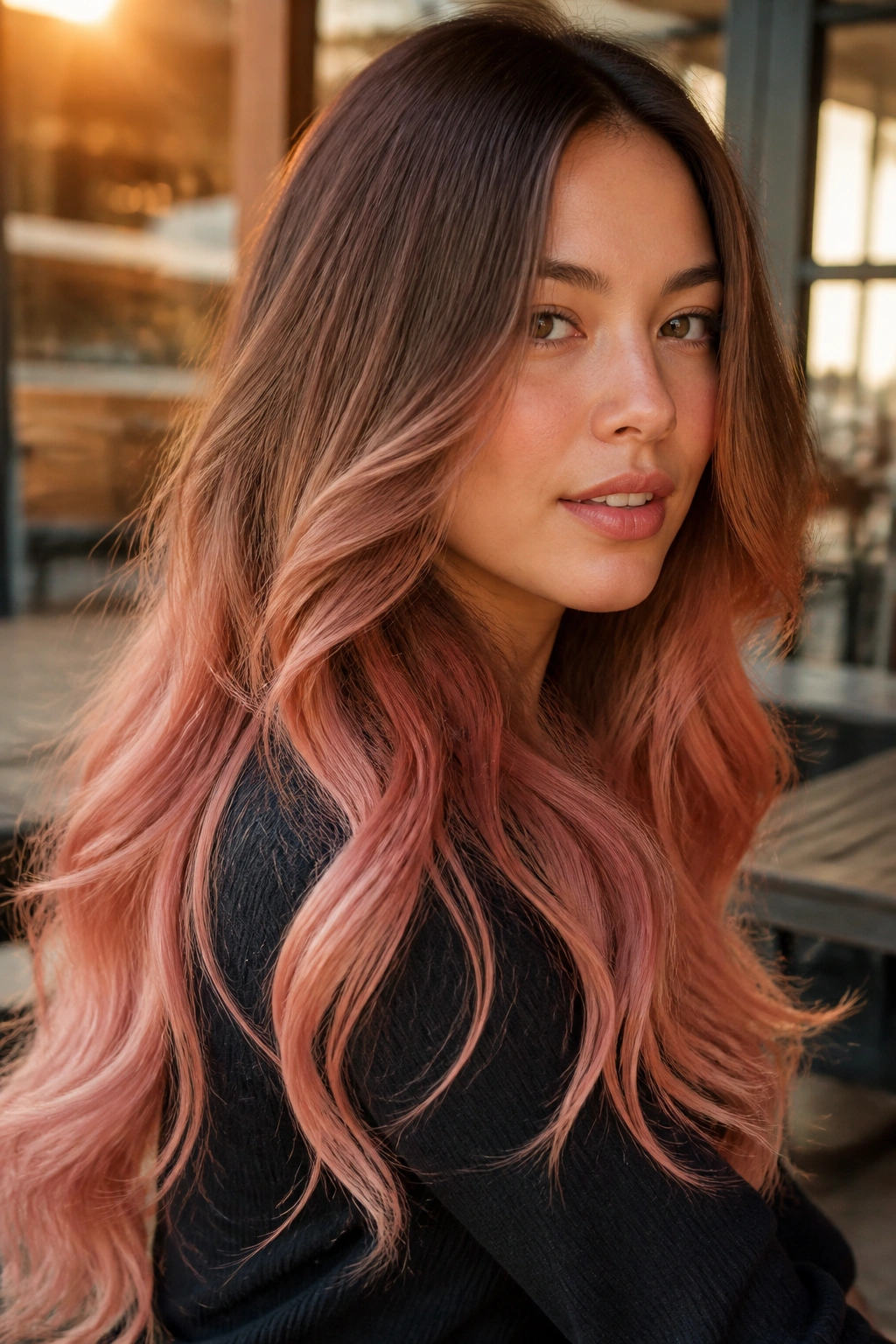
Bronze brown has a glow that makes peach-pink feel natural instead of forced. The whole look sits in a warm lane, which is why it works so well on long hair with soft bends or big waves.
Why it stands out
The bronze base adds shine and a little depth, so the peach-pink ends do not need to be neon to make an impact. That’s useful on long hair, where too much brightness can start to look busy.
Peach-pink also has an interesting habit of flattering a lot of skin tones because it carries both warm and rosy notes. On long hair, the gradient looks best when the peach lives mostly in the lower half and the pink is kept lighter on the very ends.
How to wear it
- Use a large curling iron for loose, polished waves.
- Keep the crown smooth so the bronze reads clearly.
- Ask for a peach glaze if you want the ends softer.
- Trim the ends regularly so the fade stays clean and not fuzzy.
This is one of those shades that looks expensive in motion. Not flashy. Just good.
12. Deep Brunette to Plum-Rose Ends
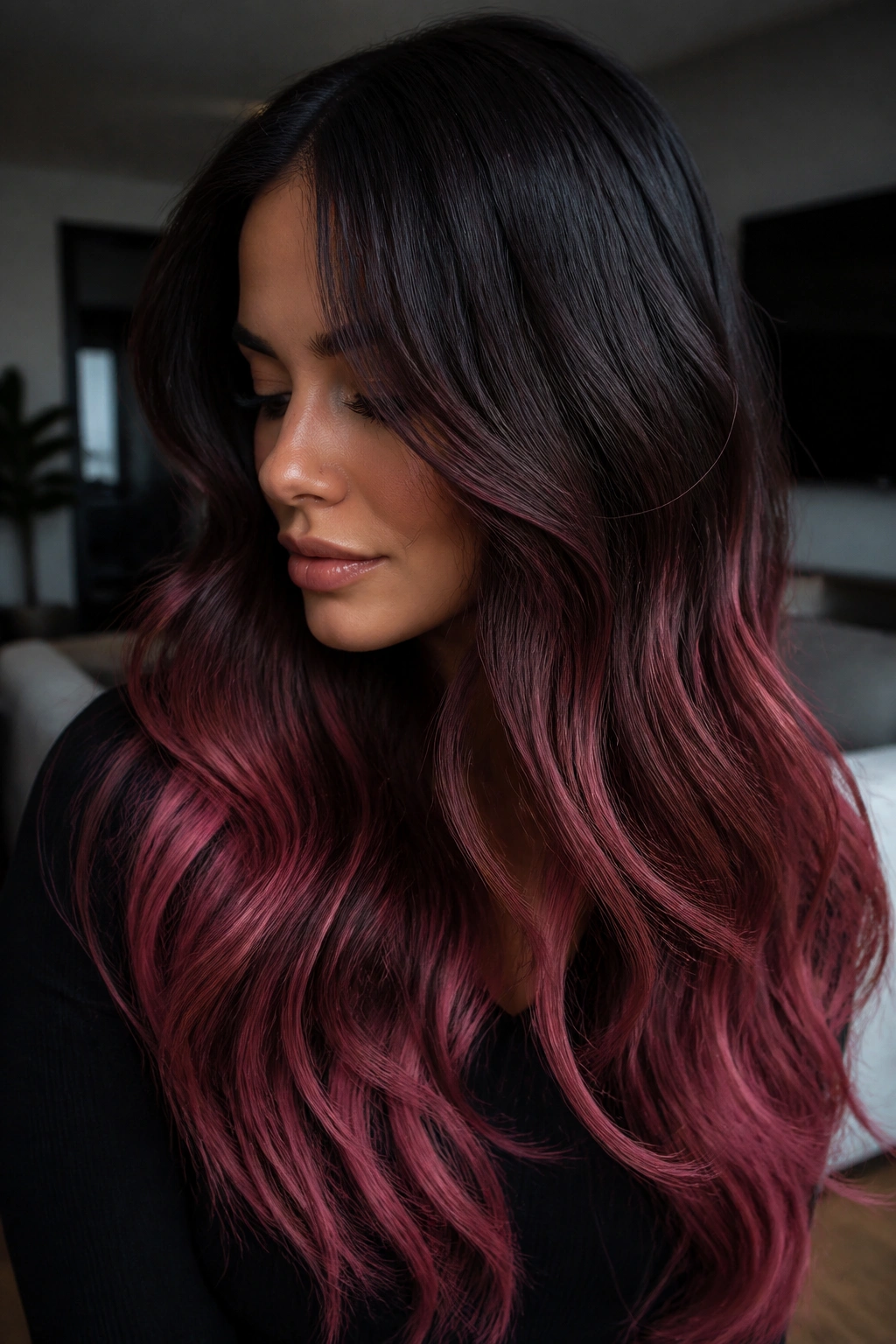
Plum-rose is for someone who wants pink, but not cute pink. The plum gives the fade depth, while the rose keeps it from turning purple-heavy. On a deep brunette base, the result feels rich and a little moody.
The long-hair advantage here is obvious. You need length to let the plum-rose move gradually from one tone to the next, or the darker pink can sit too abruptly against the brunette. A longer canvas gives the color room to look intentional.
I’d choose this over brighter pinks if you wear dark clothes, leather jackets, or richer makeup shades. It blends into that wardrobe easily. It also works well in colder lighting because the plum tone keeps the pink from going washed out.
A few practical notes
- Ask for a brown-to-plum melt, not a hard line.
- Keep the ends healthy; dark pink shows damage in the shine.
- Use cool water when washing to slow fading.
- Avoid heavy clarifying shampoo unless you need to strip product buildup.
This one has real staying power when the base is rich enough.
13. Walnut Brown with Rosy Underlayers
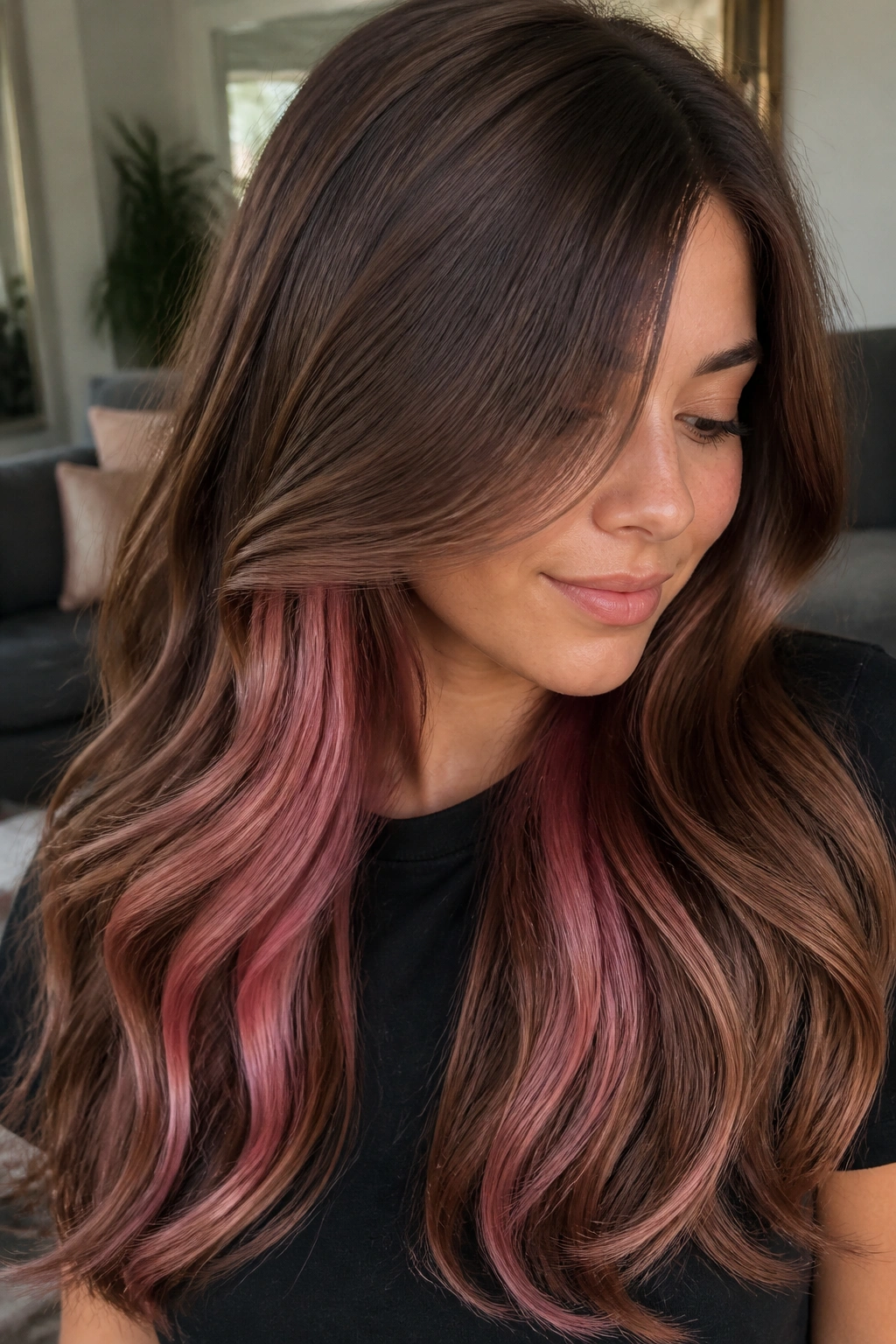
Underlayers are underrated. When the pink sits beneath walnut brown instead of on top, the style gets a hidden flash that shows up in braids, ponytails, and windblown hair. On long hair, that means the color keeps changing depending on how you wear it.
What makes it different
The top layer stays mostly walnut brown, which makes the hair look full and grounded. Beneath that, rosy pieces peek through in a way that feels more private than obvious. It’s a nice option if you want color but still need a conservative top layer for work or family settings.
The rosy underlayers also last longer visually because they are not exposed all the time. That does not stop fading, but it does slow the visual drop-off a little.
Best ways to style it
- Half-up twists show the underlayers fast.
- Braids pull the rosy pieces forward.
- High ponytails create the biggest contrast.
- Loose curls let the pink flicker through the brown.
This is one of my favorite choices for long hair because it gives you two moods in one cut. Calm when you want calm. Pink when you want pink.
14. Caramel Brown to Fuchsia Tips
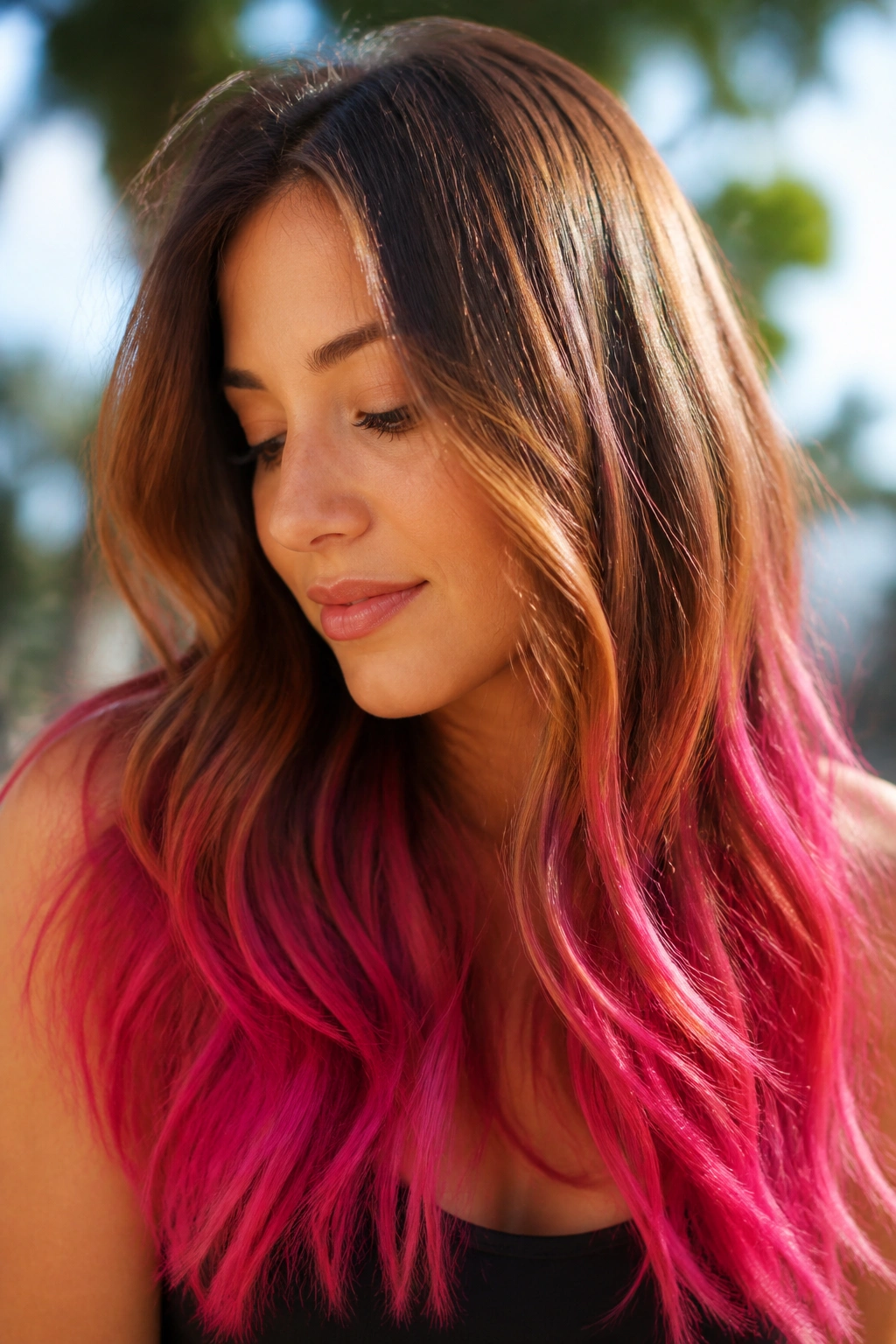
Fuchsia is the bold one in this list. It is brighter, more electric, and less shy than rose or blush. Against caramel brown, it creates a sharp finish that looks especially good on long hair with defined layers.
The reason it works is simple: caramel gives warmth, and fuchsia brings the voltage. That contrast keeps the style from looking washed out. If the brown were too cool, the pink could feel disconnected. If the pink were too soft, it would disappear.
Ask for this kind of fade if you want:
- A more obvious color shift.
- Pink tips that show even from across the room.
- A style that looks strong with straight hair.
- Something that still leaves your roots natural.
One warning. Fuchsia is less forgiving than blush. It needs a clean pre-lightened base, and it fades into berry tones faster than people expect. If you like that deeper berry stage, great. If you want it bright the whole time, you’ll need to refresh it more often.
I’d call this the extrovert of the group.
15. Mushroom Brown to Rose Quartz Melt
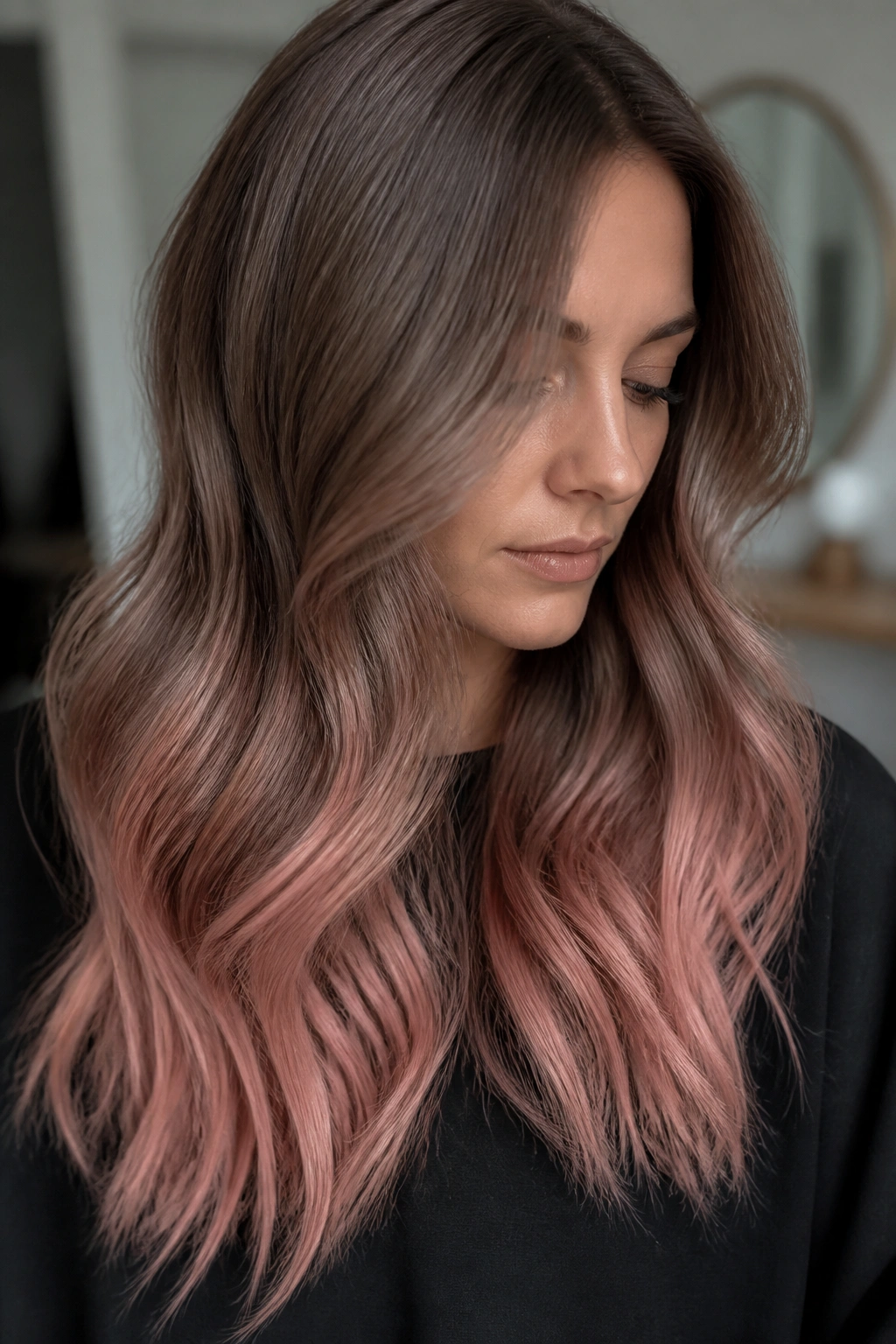
Mushroom brown has a soft, earthy base that makes rose quartz look gentle instead of sugary. If you want a pink ombre that feels muted, almost stone-like, this is the one to keep in mind.
Why people like it
Mushroom brown sits between cool and warm, which gives the pink a flexible base. Rose quartz is also a softer pink with a little gray in it, so the two shades meet without a hard jump. On long hair, that makes the melt look smooth from crown to tip.
This is a good choice if you wear muted clothing, light denim, cream sweaters, or neutral makeup. The hair won’t fight the outfit. It will sit there quietly and look expensive, which is still a useful thing.
The fade also grows out gracefully. That matters more than people admit. A long, soft melt can keep looking deliberate even when the roots show a little more.
Tip: ask for the ends to be brighter than the mid-lengths by only a small margin. A huge jump kills the mushroom-brown softness.
16. Golden Brown with Salmon Pink Ends
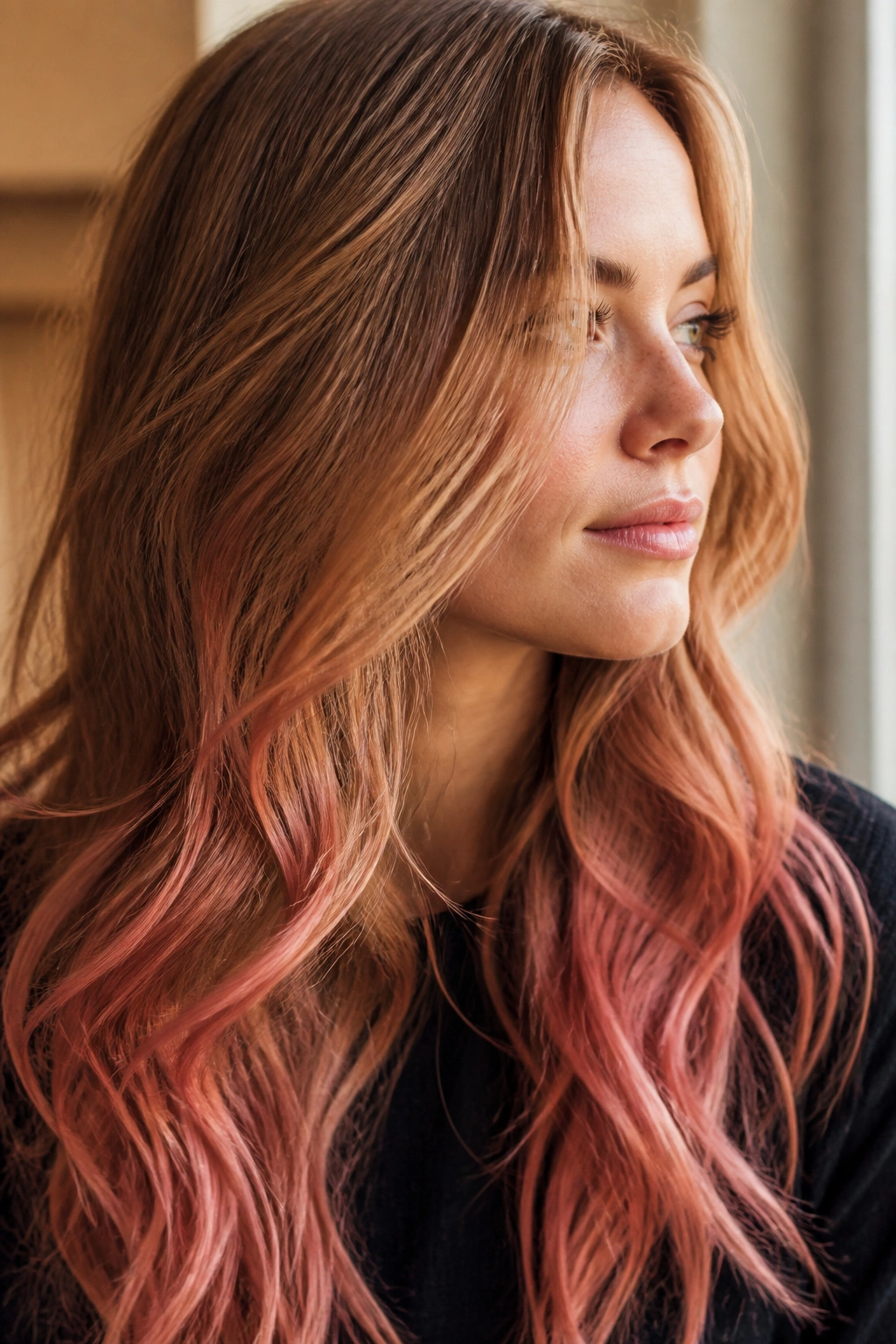
Salmon pink lands in a sweet spot between coral and blush. It feels warm, fresh, and slightly sun-kissed, which is why it works so well with golden brown hair on long lengths.
This look is strongest when the hair has movement. Soft waves make the salmon ends catch the eye without looking heavy. Straight hair can work too, but then the color shift should be very smooth, or the lighter ends can look a bit cut off from the base.
Golden brown already carries some brightness, so the salmon ends do not need to be screamingly light. In fact, if you push the ends too pale, the color can start to feel disconnected from the root.
A lot of people overlook this, but the warmth in the base matters as much as the pink itself. Salmon has a cozy quality; it wants a base that can meet it halfway.
Best for someone who wants pink, but still wants the hair to look soft and wearable.
17. Espresso Brown with Cotton Candy Pink Peek-Throughs
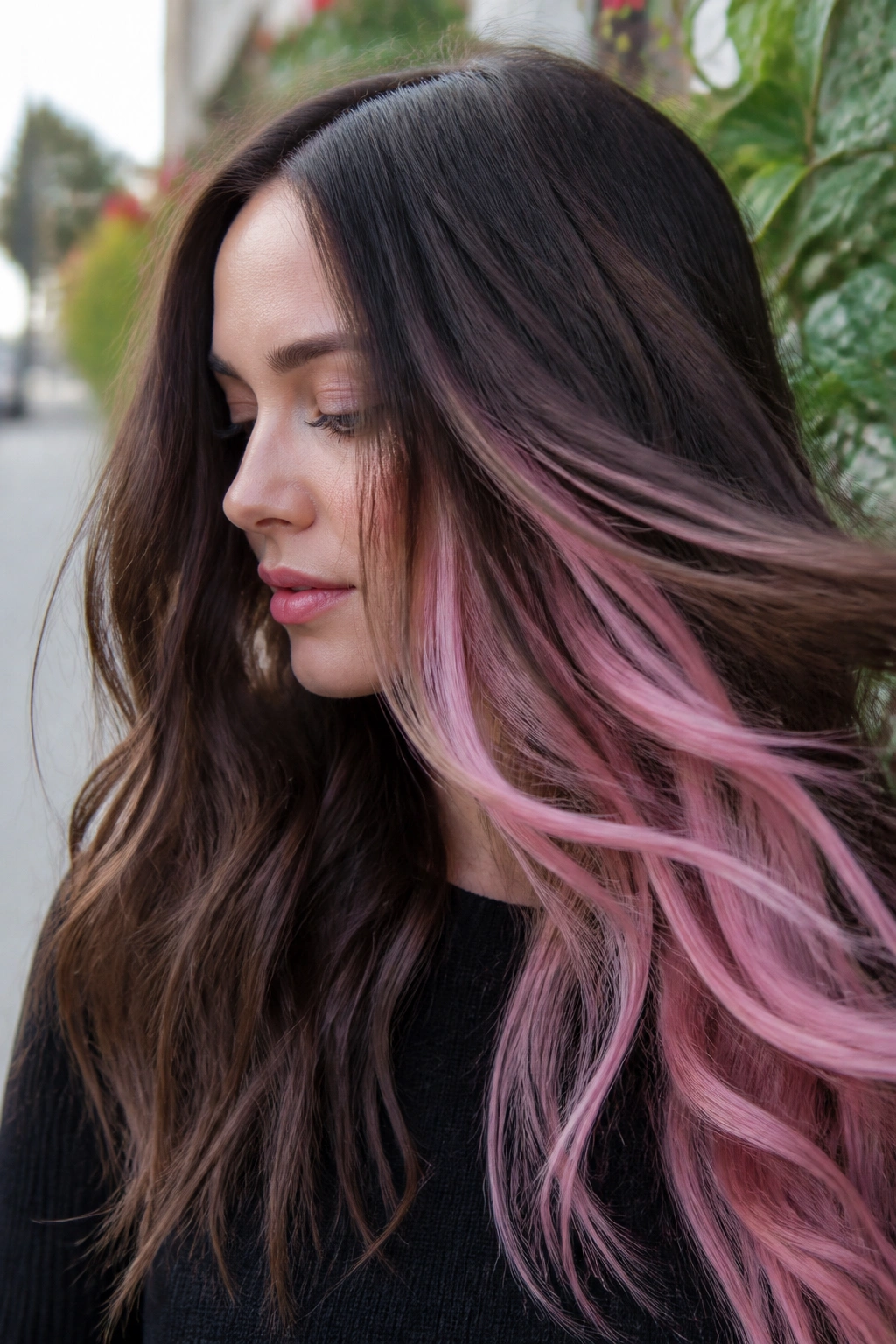
This one is pure fun. The espresso brown stays dominant, while cotton candy pink hides in pieces beneath the top layer, then shows up when the hair moves or gets pulled back. On long hair, that hidden color has more room to surprise you.
Best for long, layered cuts
Long layers make peek-through color work harder. The top section falls over the pink, then shifts enough to reveal it in flashes. That keeps the style from feeling like a full pink commitment.
Cotton candy pink is brighter than blush and lighter than fuchsia, so the contrast against espresso is obvious without taking over the whole head. If you want a high-contrast look that still feels wearable, this is a good middle path.
Small styling tricks
- Curl the ends away from the face to reveal the pink underneath.
- Wear a half-up clip when you want the hidden color to show more.
- Keep the top layer glossy so the contrast looks clean.
- Ask for chunkier hidden panels if you want the pink to show more often.
This is the look for someone who likes a little surprise. Not everyone needs to see the pink at first glance. That is half the fun.
18. Chestnut Brown to Tea Rose Lengths
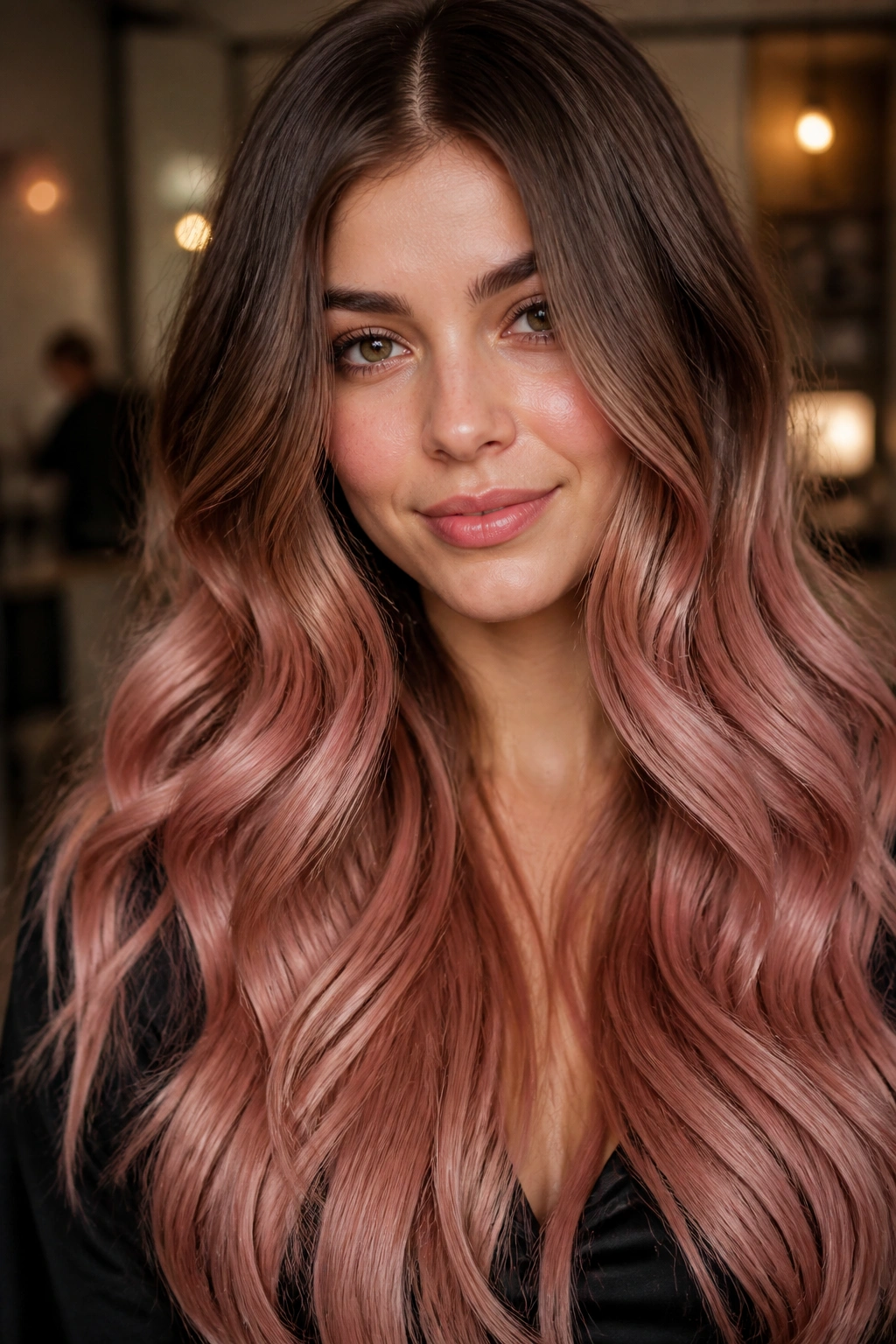
Tea rose is softer than bubblegum, richer than pastel, and a little more romantic than dusty rose. Paired with chestnut brown on long hair, it gives a finish that feels quiet but not plain.
The best thing about this version is how the color stretches. Chestnut at the roots keeps the hair warm and full, then the tea rose slides down through the lengths in a smooth, breathable fade. On long hair, that stretch matters. You can see the transition without feeling like the colors are fighting for space.
I’d wear this with soft curls, a center part, and a clean satin finish on the ends. Nothing fussy. Let the color do the work. If the cut has long layers, even better, because the rose can show in pieces instead of one flat sheet.
For maintenance, a gentle color mask every week or two keeps the rose tone from going chalky. That small habit makes a bigger difference than most people expect.
If you want brown pink ombre hair ideas for long hair that feel elegant rather than loud, this is the one I’d keep at the top of the list.
