



Ginger ombre on long hair has a rare talent for looking expensive without looking fussy. The length gives the color room to move, so the shift from brown or brunette roots into copper, auburn, apricot, or strawberry ends can breathe instead of sitting in one hard line.
That’s why ginger ombre hair ideas for long hair tend to work so well when the placement is thoughtful. Long hair can take a deeper root, a softer melt through the mid-lengths, and a brighter finish at the ends without the whole look turning loud. You get shape, warmth, and shine all at once.
The trick is choosing the right kind of ginger. Some versions lean smoky and muted, some read like molten copper, and some sit closer to strawberry blonde with a red-gold cast. The best part? Each one feels different on long layers, waves, curls, or straight lengths, which means there’s a version here for nearly every texture and maintenance level.
1. Soft Copper Melt
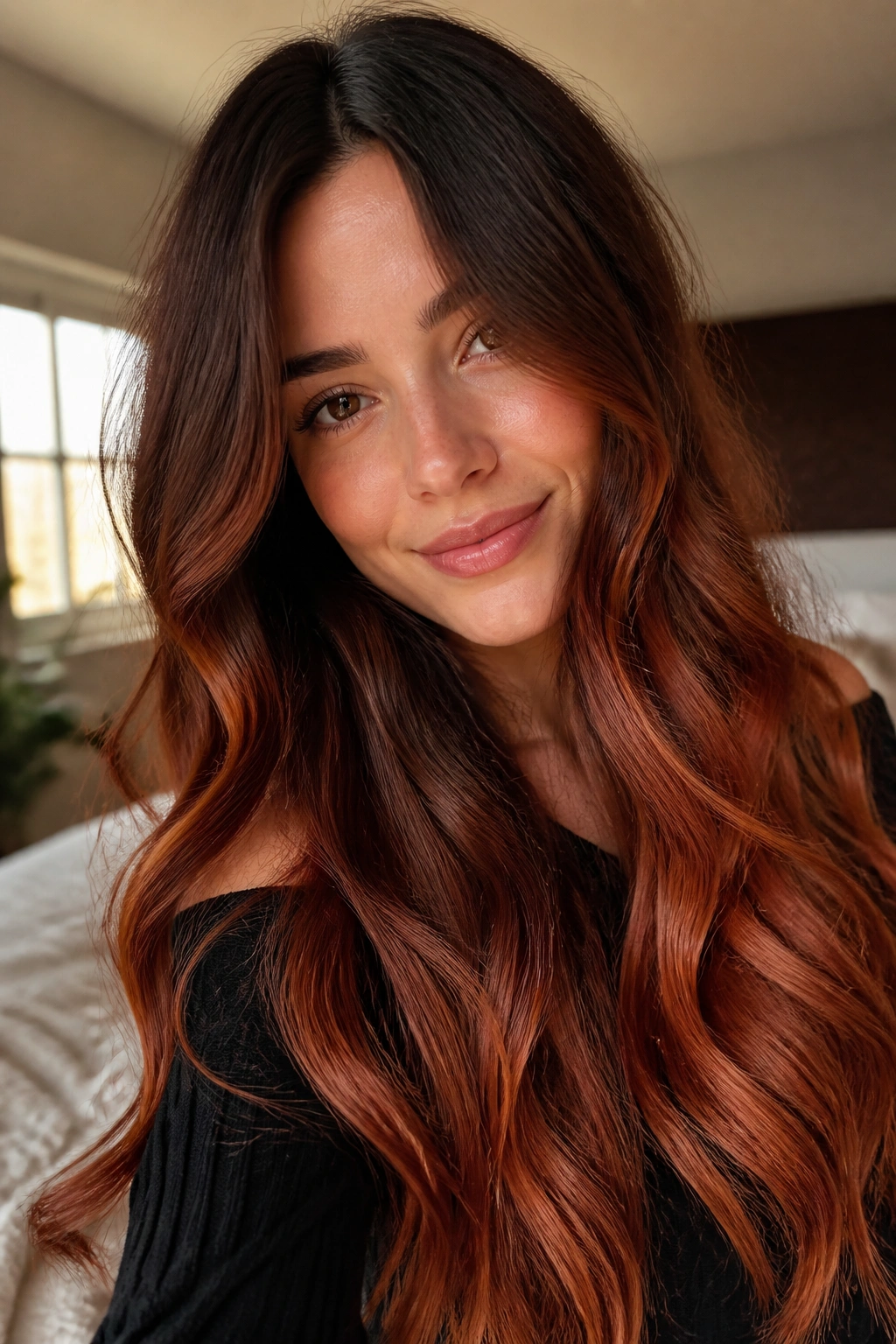
Soft copper melt is the version I’d point to first if you want ginger without the shock factor. It starts with a deeper brunette root and slides into a warm copper that looks sunlit rather than neon. On long hair, that gradual shift has room to breathe, which is exactly why it feels polished.
Why It Works on Long Hair
Long lengths let the copper show in stages. The color can begin around the cheekbones or collarbone and get richer toward the last six to eight inches, which keeps the grow-out soft and the finish clean. That’s a better move than dropping bright orange straight from the roots.
Ask for a shadow root around level 4 or 5 if your hair is naturally brown, then keep the copper in a soft glaze rather than a harsh block of color. Waves help too. A loose bend makes the transition look even smoother.
- Best on hair that already has some depth at the root
- Works well with face-framing layers
- Looks best when styled with a 1.25-inch curling iron
- Needs a gloss refresh to keep the copper from going flat
Small tip: Keep the ends a shade brighter than the mid-lengths. That tiny shift makes the hair look fuller.
2. Burnished Ginger on Deep Brown
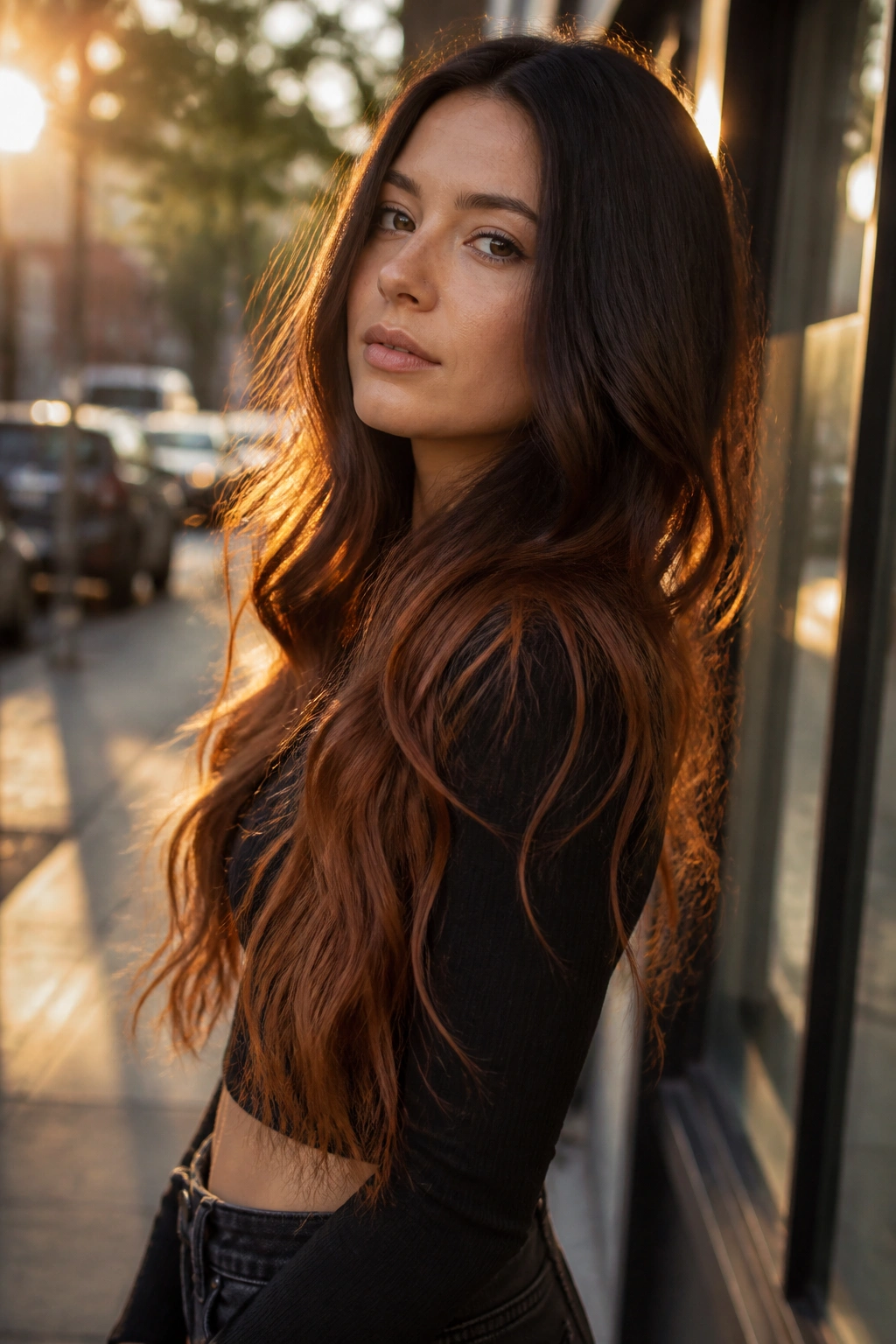
This is the safest way to go ginger without looking like you borrowed the color from a costume box. Deep brown at the top keeps everything grounded, while burnished ginger through the lower half brings in warmth and shine that reads rich, not loud.
The thing I like about this version is its restraint. It doesn’t need a huge blonde lift to work, so it’s often easier on long hair that’s already been colored before. The ginger tone should sit between copper and auburn, with enough brown left in the blend to keep it wearable.
On straight hair, it looks sleek and deliberate. On waves, it softens into something a little more romantic. Either way, ask for a root shadow and a warm glaze on the ends rather than a sharp line between shades. That’s the whole point here.
3. Cinnamon Ribbon Ends
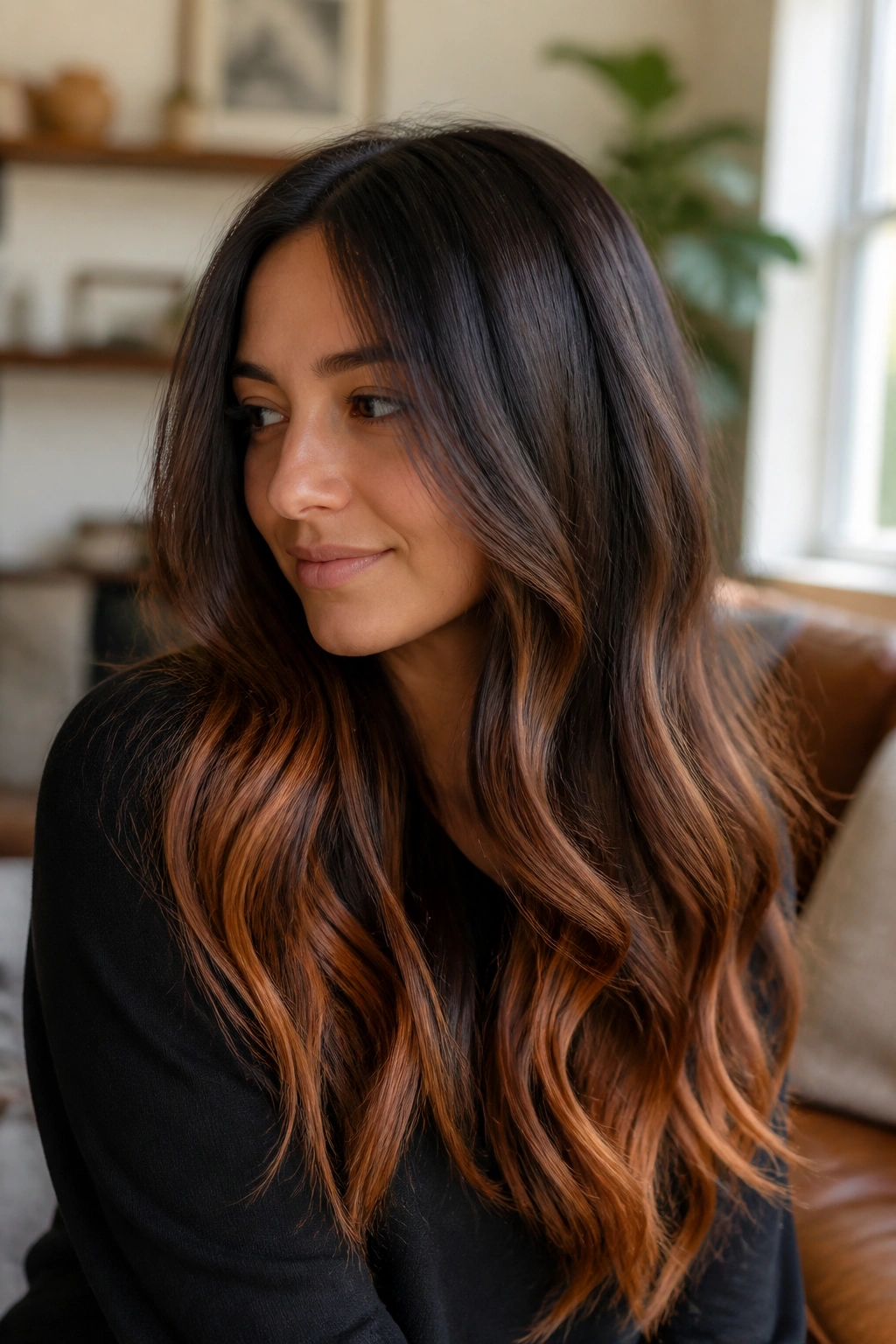
Why do cinnamon ribbons look better on long hair than on a bob? Because length gives the color space to move instead of compressing it into one visible stripe. A cinnamon ribbon placement threads warm red-brown pieces through the lower lengths, which keeps the effect dimensional even when the hair is worn loose.
What Makes It Different
This one is less about a full melt and more about controlled brightness. The brunette base stays intact, while the cinnamon shows up in ribbons that catch the light when the hair moves. It’s a smart option if you hate the idea of fully saturated ends but still want obvious warmth.
The best styling partner is a soft wave or a blown-out bend. A flat iron on the wrong setting can make the ribbons look too separated, and that’s not the look. Keep the finish loose. The color should whisper at first glance and show itself more when the hair swings.
How to Style It
- Use a medium barrel for soft bends
- Keep the root color deeper than the mids
- Ask for face-framing ribbons that start below the cheekbone
- Use a light shine spray, not a heavy oil
Pro tip: Cinnamon reads best when the hair has movement. If the cut is too blunt, the ribbons can feel disconnected.
4. Strawberry Blonde Fade
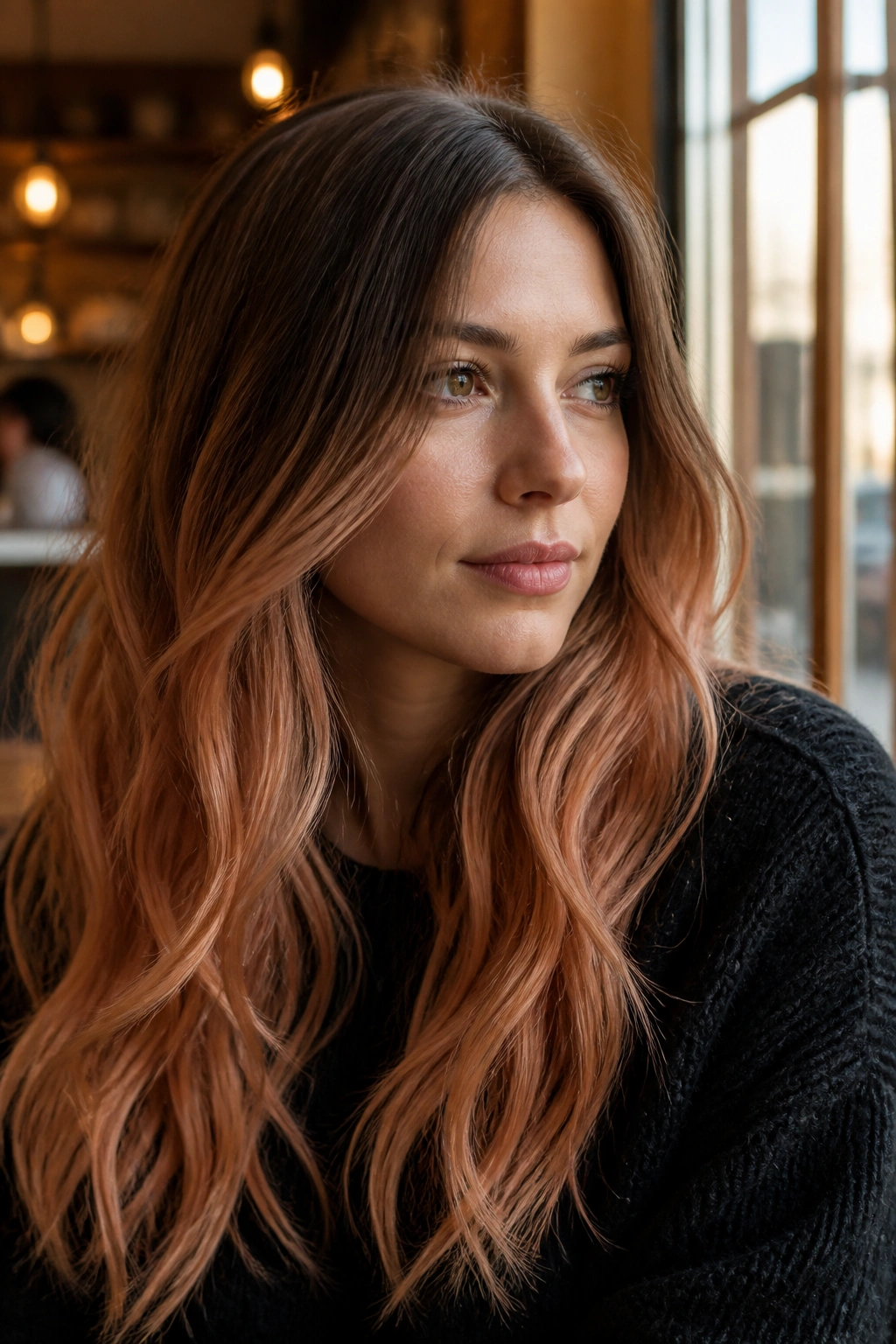
If you’ve ever wanted red hair but worried about going too orange, a strawberry blonde fade is the gentler path. It usually starts with a soft brunette or dark blonde root and drifts into a rosy blonde-ginger finish that feels airy rather than intense.
This version is especially good on long hair because the fade can take its time. You can keep the brightness concentrated from the mid-lengths down, then let the last few inches go noticeably lighter. That helps the hair look expensive, not overprocessed. It also means the color still looks good when it softens over time.
I like this on hair with long layers, because the ends don’t sit in one flat sheet. The lighter ginger catches on the raised pieces, and the whole style gets more movement for free.
- Works well with loose curls
- Best if you want a softer red family shade
- Looks pretty under warm indoor light
- Needs gentle shampooing to protect the rosy tone
5. Smoky Ginger on Layered Lengths
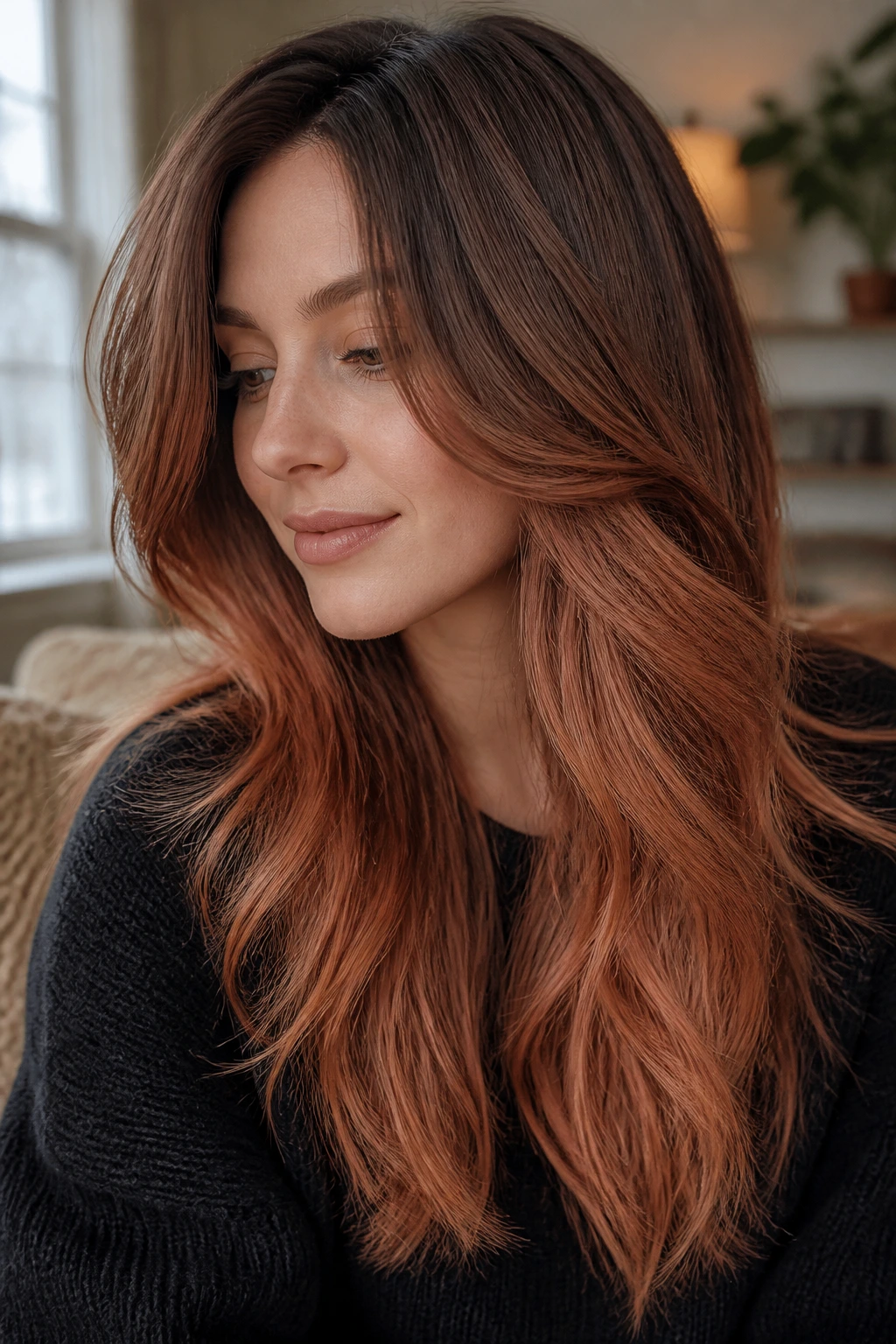
Smoky ginger is for people who want warmth but don’t want the color to shout the second they walk into a room. The tone sits in that moody space between copper and chestnut, with just enough ash around the edges to keep it from going too bright. On long, layered hair, that balance matters.
Layers stop the color from turning heavy. Without them, a smoky ginger ombre can pool at the ends and look flat. With them, the shade bends around the cut and shows off more texture. It’s a small difference, but it changes everything.
This version also wears well in straight styles. The ashier root shadow and warmer ends create a long, clean line that feels deliberate. If your hair tends to pull orange, this is a smart correction. A slightly cool glaze can keep the ginger from drifting too far into pumpkin territory.
6. Root-Smudged Copper Flame
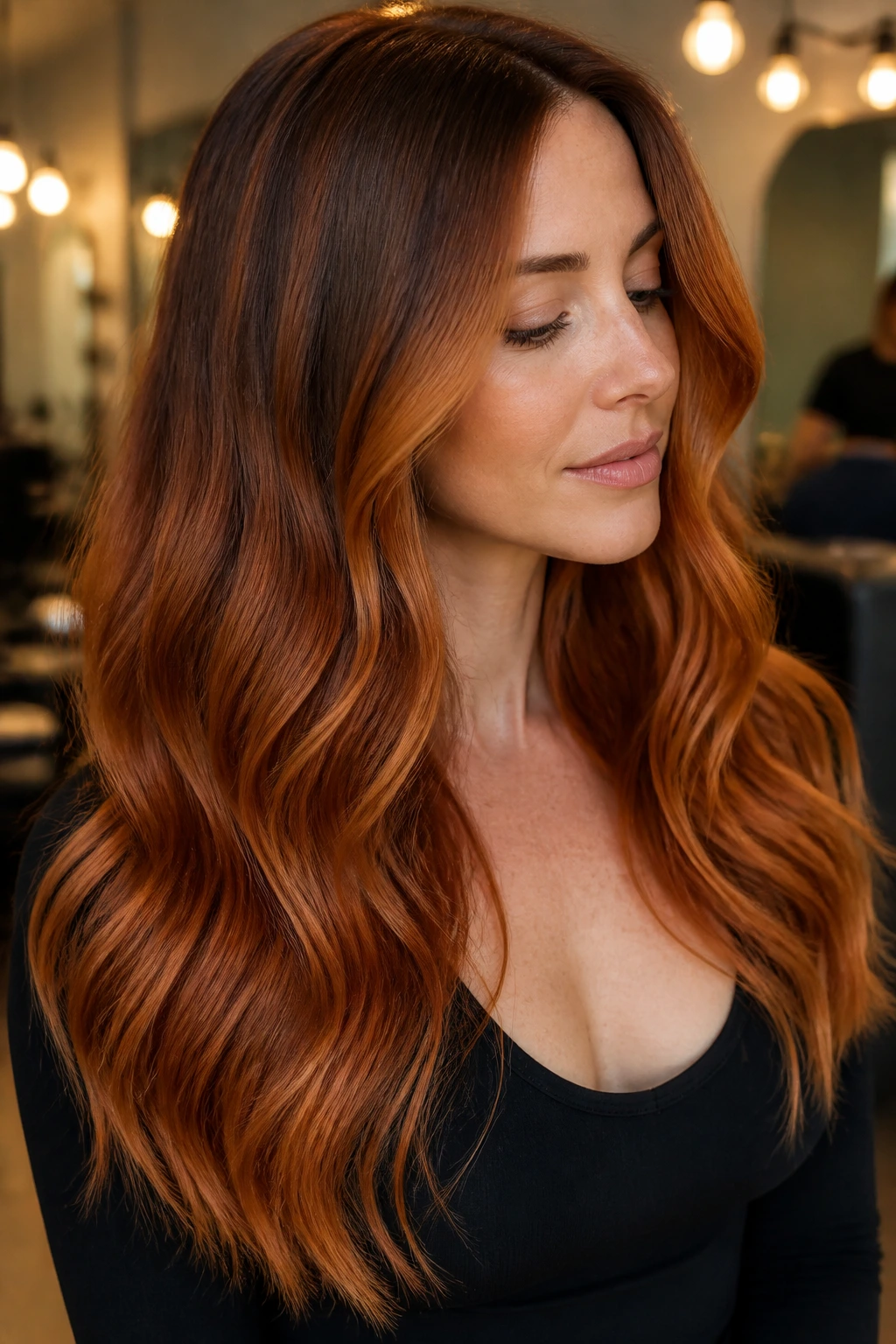
A root-smudged copper flame is the low-maintenance cousin of a brighter ombre. The root stays a shade or two deeper than the rest, then the copper wakes up through the mid-lengths and burns brightest at the ends. The smudge softens regrowth, which is the part most people care about after the salon chair is gone.
How It Differs from Classic Ombre
Classic ombre can sometimes feel like two separate colors. This version doesn’t. The root shadow is pulled a little farther down, and the copper is layered in with more overlap, so the transition looks like one long melt instead of a top-and-bottom split.
That makes it a good choice for long hair that gets worn in ponytails, buns, or half-up styles. The color still looks finished when the hair is tied back, because the transition doesn’t depend on one perfect viewing angle.
Best Fit
- People who don’t want harsh regrowth
- Long hair with natural movement
- Brown hair that can handle a warm lift
- Anyone who likes copper but not constant upkeep
My take: This is one of the easiest ginger looks to live with. It grows out without drama.
7. Mahogany to Pumpkin Spice
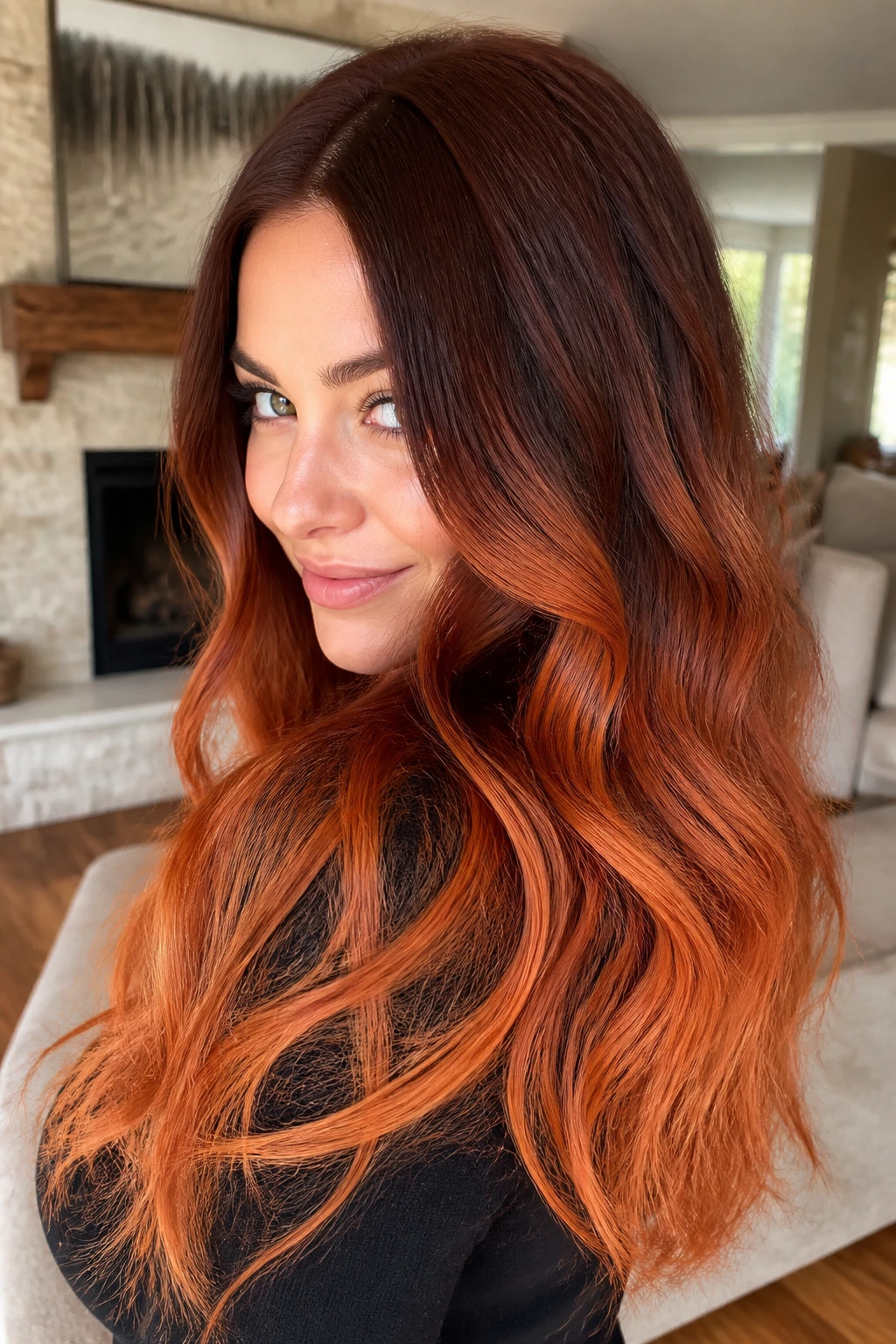
Mahogany to pumpkin spice is richer than it sounds. The top is deep, red-brown, almost winey in certain light, and the lower lengths turn into a warm pumpkin shade that carries more spice than neon orange. It has a cozy feel, but it doesn’t read sweet.
Why It Works
On very long hair, deep red-brown roots can anchor the whole style. Then the pumpkin spice ends bring the lift. That contrast gives the hair shape, especially if the cut has long, soft layers around the face and through the last third of the length.
This is one of those colors that gets better with a good wave. A curling wand around 1.25 inches gives the ends a little bounce, and the gradient shows up more clearly. On pin-straight hair, the color still works, but the transition feels sharper.
If your skin has warm or neutral undertones, this shade family can be a good fit. It’s rich enough to look intentional and playful enough to keep long hair from feeling heavy.
Good Styling Match
A center part and loose bends. That’s the sweet spot.
8. Golden Apricot Ombre
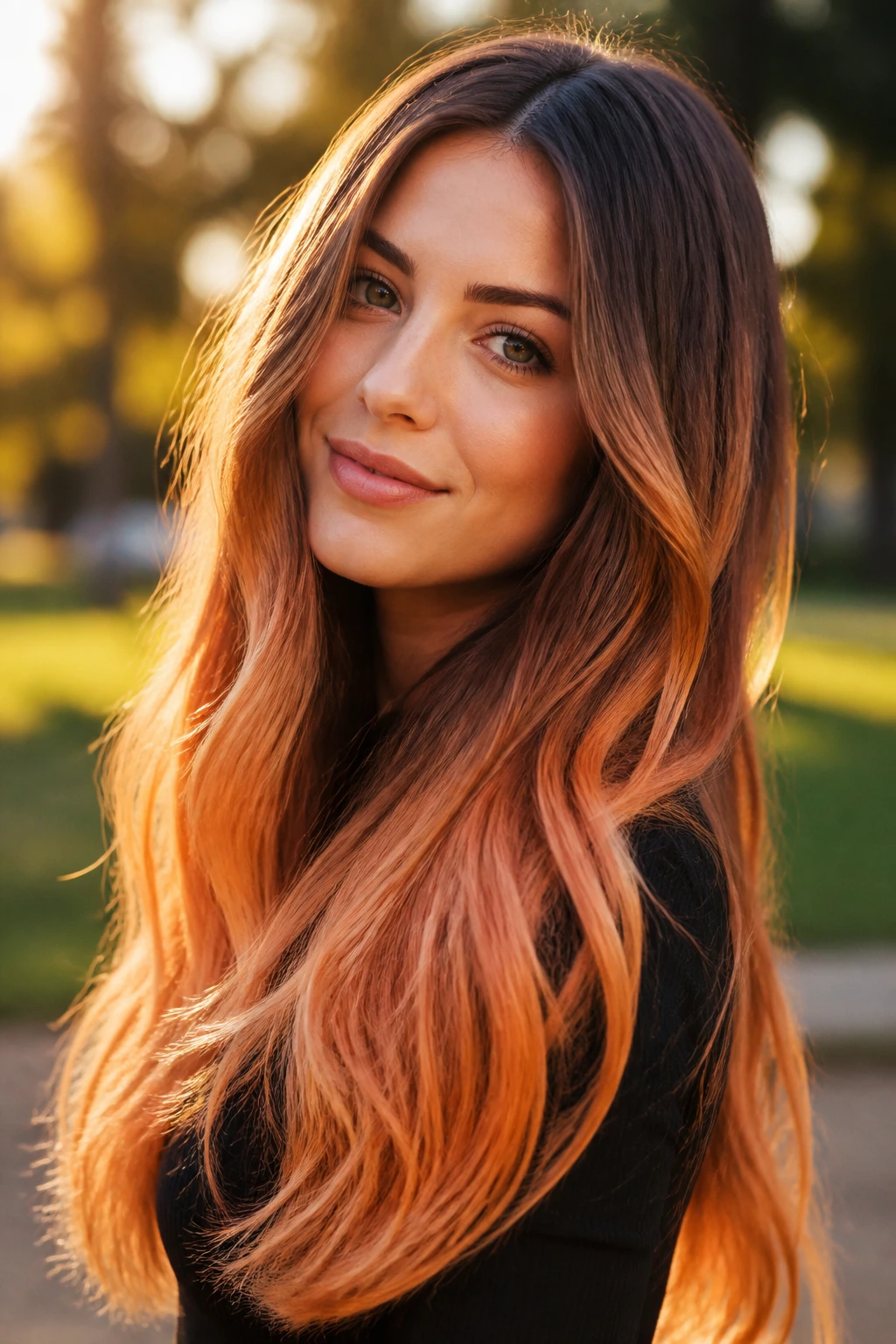
Golden apricot ombre is the version I’d recommend to anyone who wants ginger hair that feels light, fresh, and a little airy. The root can stay brown or dark blonde, but the ends move into a soft apricot that sits between gold and peach. It’s ginger, yes, but the gentler kind.
The best thing about apricot is how it catches light without shouting. Long hair gives that tone enough room to fade gracefully from warm mids into brighter ends. If the color is placed correctly, it can make the hair look fuller because each bend picks up a slightly different hue.
This is also a smart choice if you want ginger but have never worn a red tone before. It feels less risky than copper or auburn. Ask for a warm glaze rather than a bright, saturated orange result, and keep the lower half a little translucent so the hair doesn’t look painted on.
9. Espresso to Auburn Glow
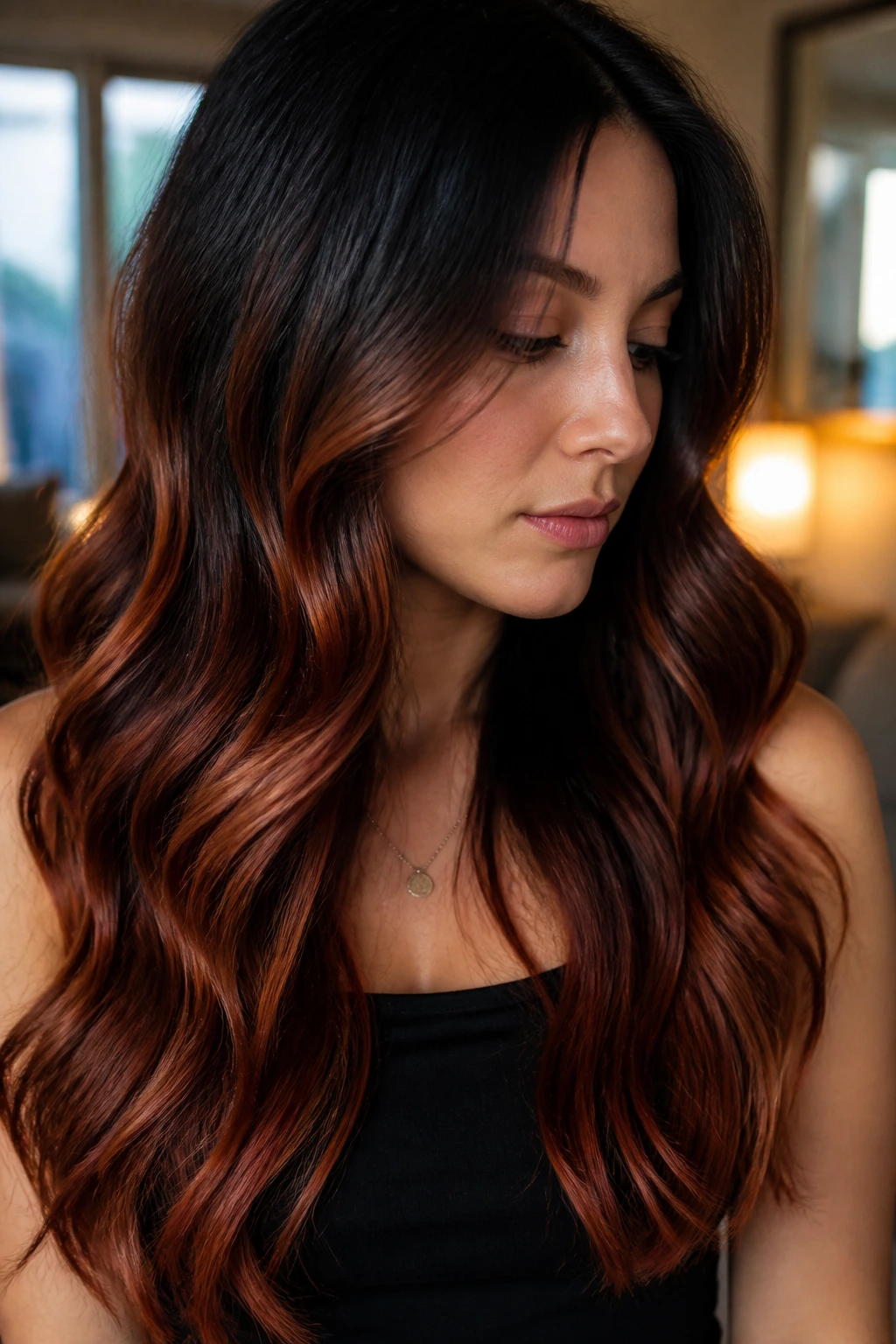
Can dark espresso hair go ginger without looking harsh? Yes, if the shift is slow and the auburn stays deep enough to honor the base color. This one starts nearly black-brown at the top and melts into an auburn glow that shows red first and copper second.
The appeal here is contrast with control. The dark root keeps the look grounded, while the auburn through the ends adds warmth you can see from across the room. Long hair makes the transition feel richer, because there’s more length for the color to open up before it reaches the bottom.
Ask for a demi-permanent auburn gloss through the last half of the length if you want something softer than a permanent change. That gives the ends a red-brown shimmer without forcing the hair to become fully copper. On waves, it looks plush. On straight hair, it looks sleek and expensive. No drama. Just depth.
10. Black to Burnt Copper
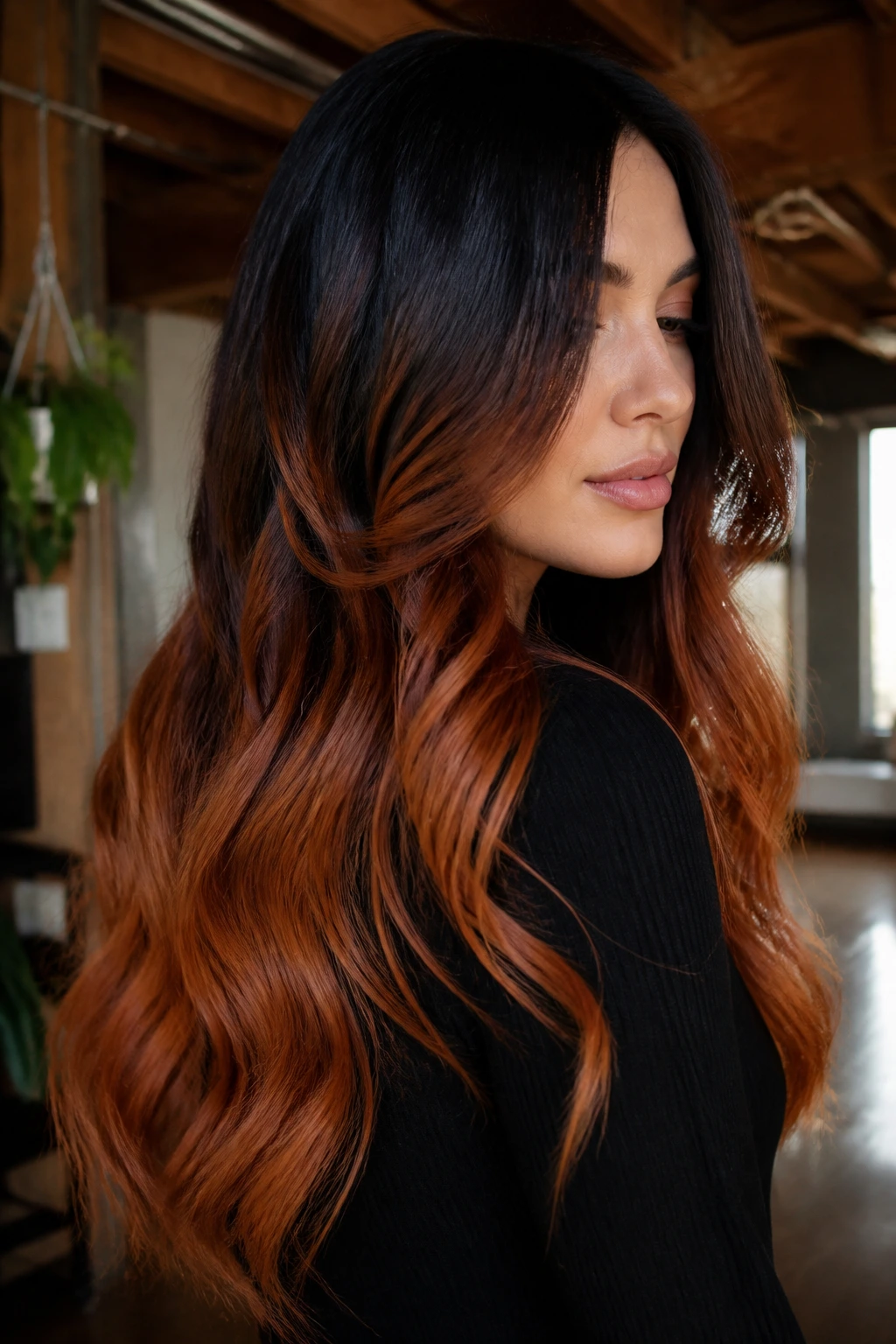
Black to burnt copper is not subtle, and that’s the point. The contrast is bold from the start: inky roots, then a warm copper that lands with more bronze and ember than bright orange. On long hair, the length keeps it from feeling too abrupt.
I’ve always liked this look on thick hair because the density can handle the color jump. Thin ends can look sparse if the lift is too aggressive, but a strong long mane takes that burnt copper and wears it with confidence. The key is keeping the transition soft enough that the top doesn’t look like a helmet and the ends don’t look dry.
- Best with rich, glossy styling products
- Needs careful bleaching on dark hair
- Looks strongest in big waves
- Works well when the copper starts below the chin
A strand test matters here. Dark hair can lift unevenly, and burnt copper looks best when it’s even.
11. Money Piece and Ginger Ends
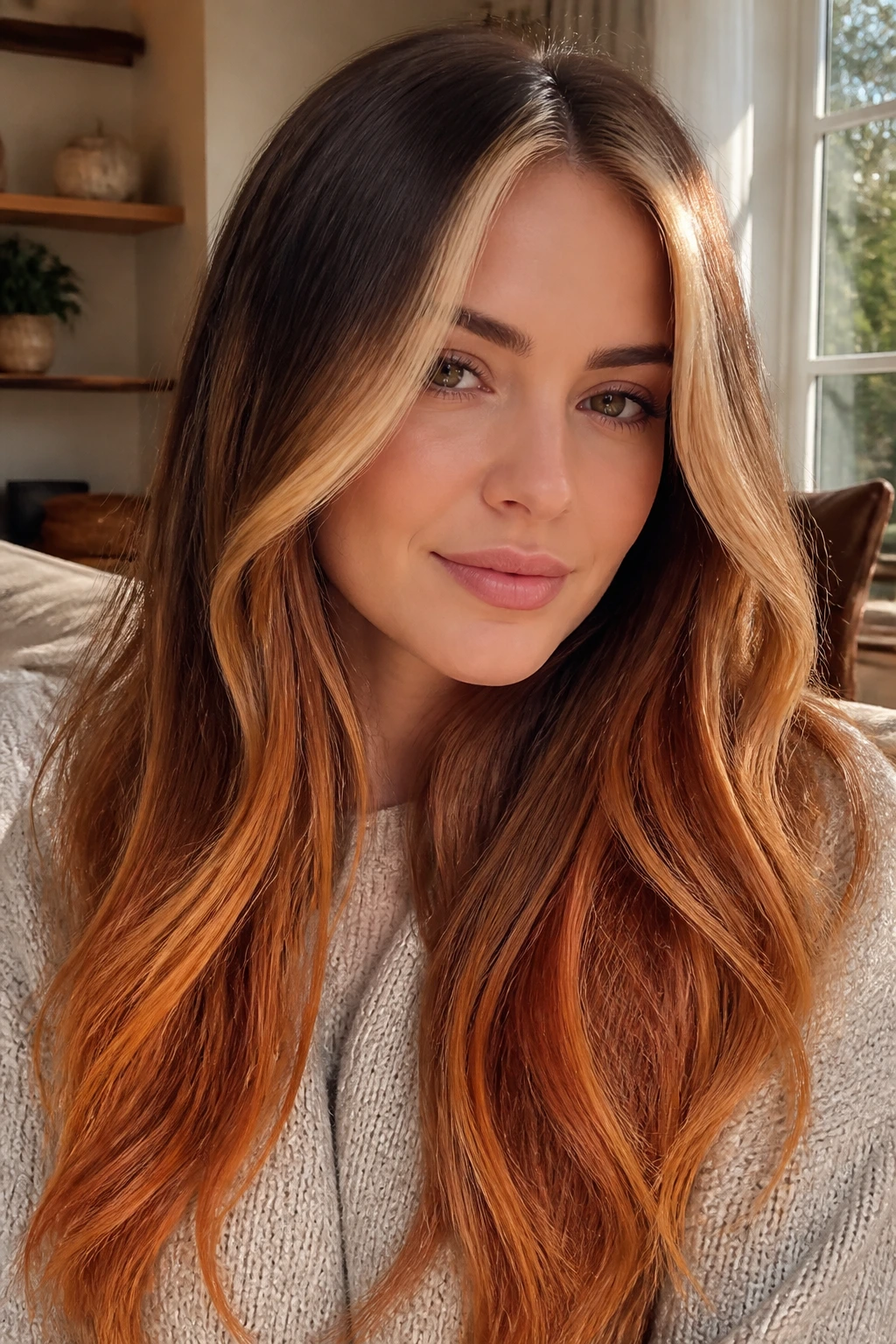
Sometimes the smartest move is to put the brightest ginger where people actually look first. A money piece at the front, paired with softer ginger ends through the rest of the length, gives long hair a face-framing lift without flooding the whole head with warmth.
This style is especially useful if you like wearing your hair parted in the middle. The front pieces catch the light near the cheekbones, which makes the face look brighter, while the lower lengths keep the color story going. It feels intentional but not overworked.
Keep the face-framing sections a little lighter than the rest of the ombre. Not much. Just enough. That tiny difference helps the haircut itself stand out, especially if you have long layers or curtain bangs. It’s one of those choices that looks simple on paper and smarter in real life.
12. Chestnut to Amber Wave
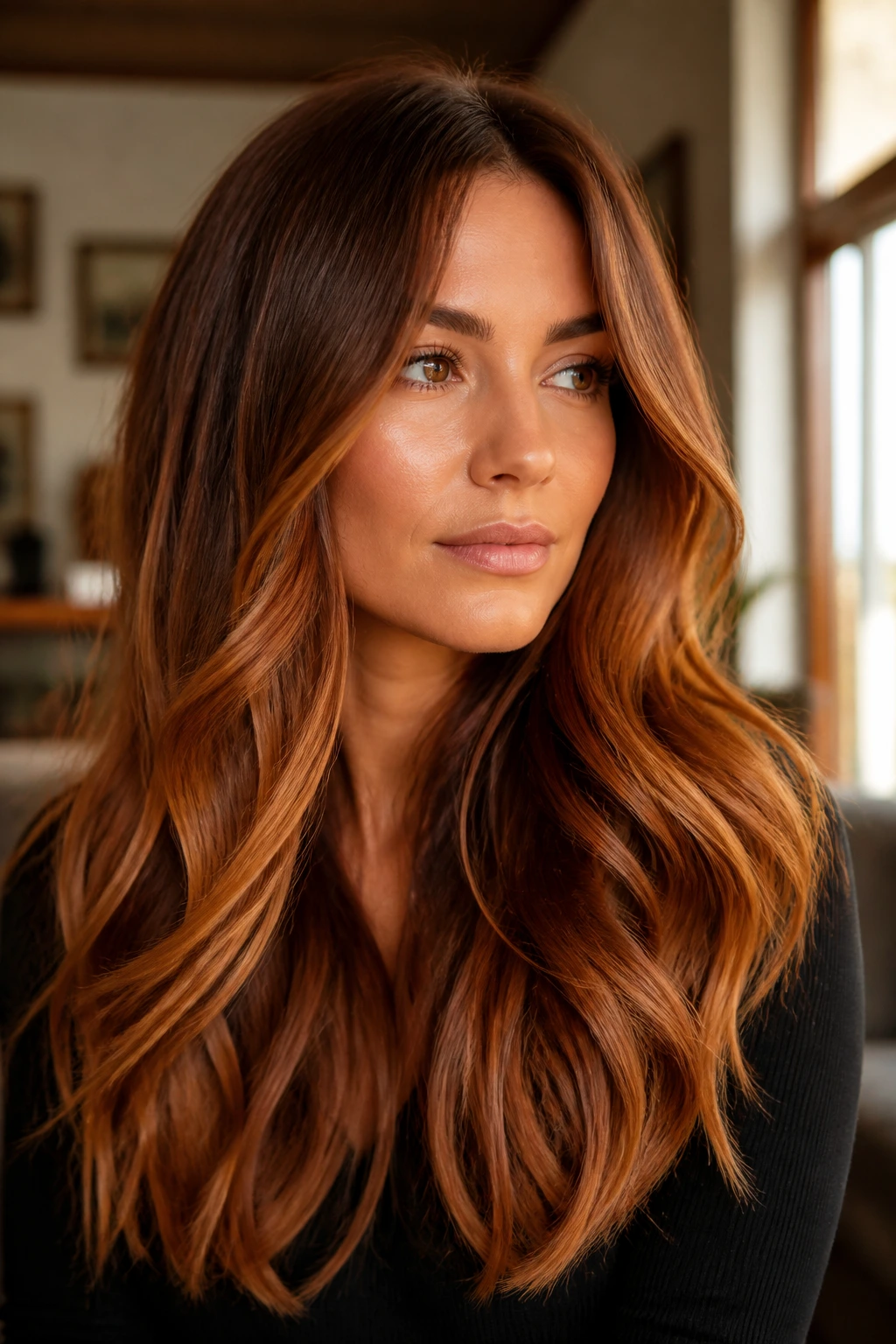
Chestnut to amber wave is a gentler take on ginger. The root stays chestnut, which keeps everything earthy and grounded, then the ombre shifts into amber instead of a stronger copper. Amber has more gold in it, so the result feels warm without getting too red.
Why It’s a Good Middle Ground
If copper feels too bright and auburn feels too dark, amber sits in the middle. That makes it one of the easiest ginger-adjacent looks to wear day to day. On long hair, the amber can live mostly from mid-length to end, with a soft fade that still feels visible when the hair is curled or braided.
What to Ask For
- Chestnut root with a warm amber gloss
- Soft balayage, not chunky panels
- Face-framing brightness that starts below the chin
- A finish that keeps some brown visible through the ends
Amber is underrated. It gives you the warmth people notice without making the hair look over-colored.
13. Rose Gold to Ginger
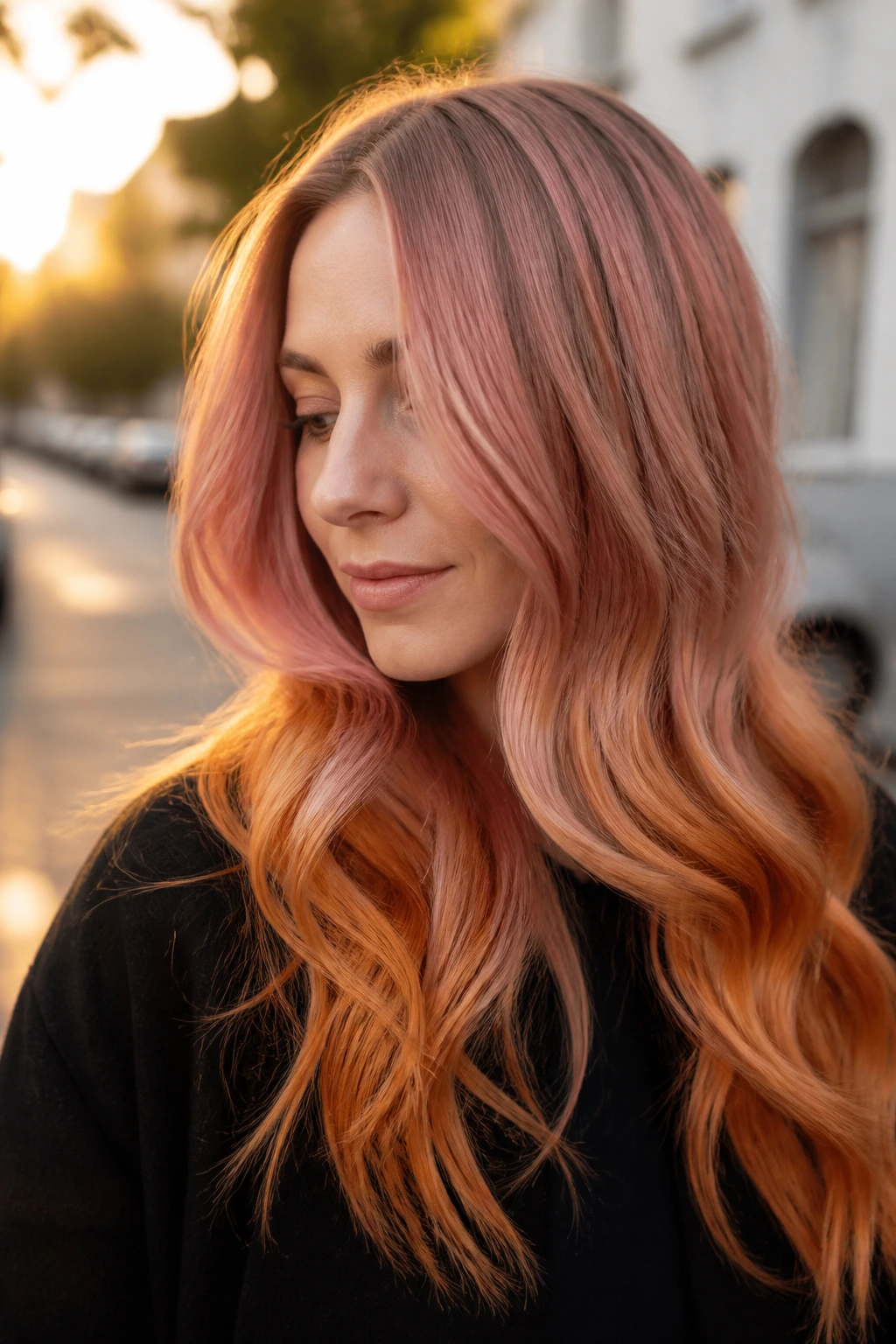
Rose gold into ginger sounds delicate, and it is, but it’s also a little more daring than it first appears. The rose gold section near the top or through the mids adds a pink-red softness, then the ginger ends pull the color warmer and deeper.
That bridge matters. If you jump straight from brunette to copper, the result can feel sharp. Rose gold smooths that line out and gives the eye something softer to follow. On long hair, especially hair with a slight wave, the color can look almost liquid.
Why It Softens Ginger
Rose gold has enough red to connect with ginger, but enough pale warmth to stop the look from turning too heavy. That makes it a good fit if you love warm tones but don’t want the final result to read orange first and everything else second.
Loose curls help the most. The rose sections peek through when the hair moves, and the ginger ends stay lively rather than flat.
14. Tangerine Tip Ombre
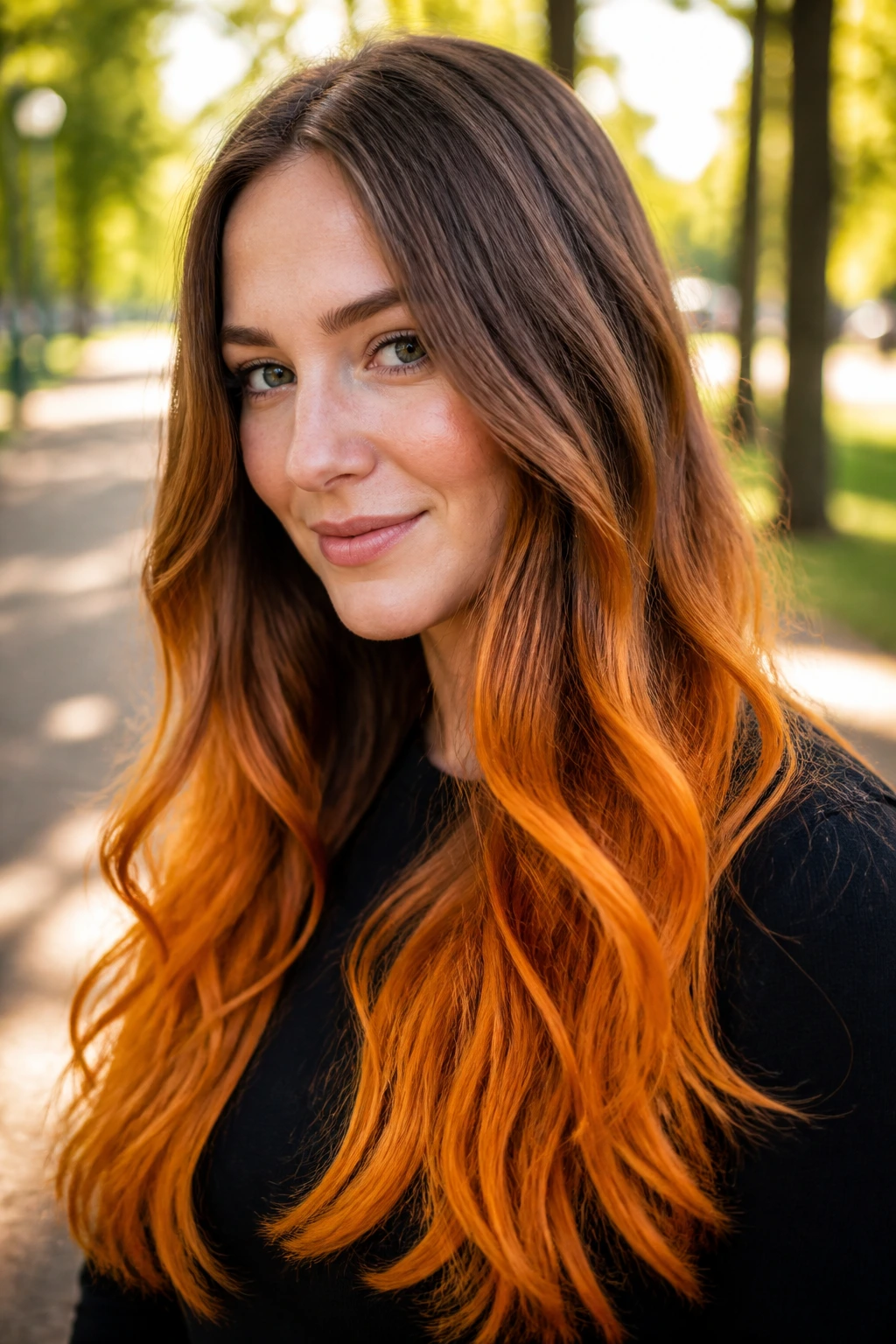
This is the boldest wearable version on the list. Tangerine tip ombre keeps the root and mid-lengths relatively calm, then lets the ends go bright and orange-gold in a way that feels graphic but still pretty. Long hair is the perfect canvas for it because the length gives the color a runway before it hits the tips.
The trick is saturation. Tangerine works best when the ends are rich enough to look intentional, not washed out. If the color is too thin, it can turn peachy or even brassy. You want a clean, juicy orange-gold at the bottom inch or two, especially if the base is dark.
This one looks especially good when the hair is worn in braids or waves. The brighter tips catch light each time the section turns, and that movement makes the whole ombre feel alive. It’s not shy. It shouldn’t be.
15. Bronze to Peach Ginger
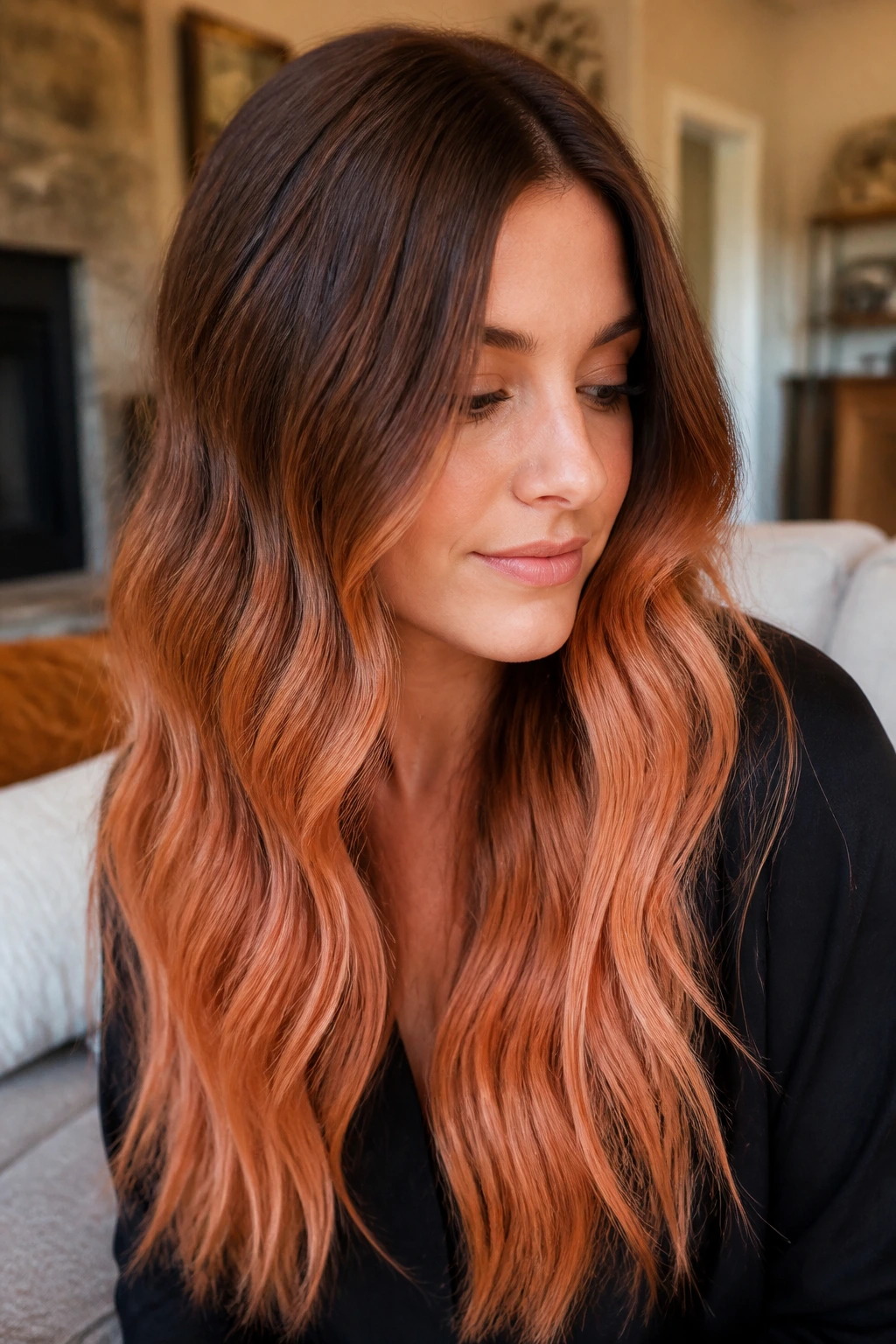
Why do bronze and peach make such a good pair on long hair? Because bronze gives the style weight while peach keeps it from feeling heavy. The bronze root holds onto a bit of brown and gold, then the peach ginger ends bring a softer, slightly playful finish.
This is the kind of color that looks more interesting the longer you stare at it. From across the room, it reads warm. Up close, you see the peach shift. That subtle change is what keeps it from feeling flat. On long hair, the gradient can run through several inches, which gives you more room to blend the tones without making the ends look dusty.
If your skin tone leans warm or neutral, peach ginger can be flattering without screaming red. Keep the peach creamy rather than pastel. Too pale and it starts to look faded. The goal is glow, not chalk.
16. Auburn Fox Hair
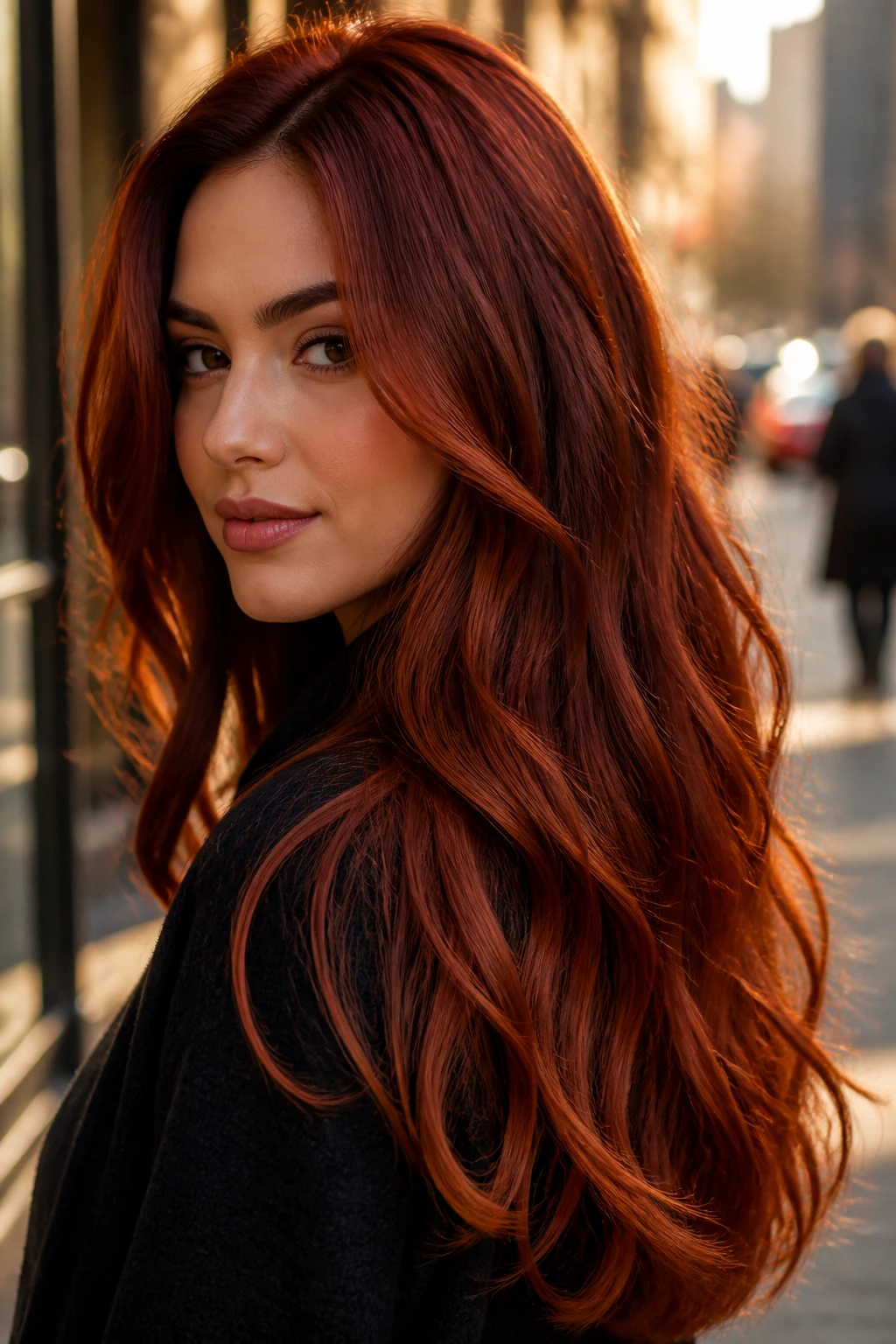
Auburn fox hair has that slightly wild, glossy feel people love when they want ginger with attitude. It usually sits in a range of auburn, copper, and russet, with long hair carrying the color in a way that feels rich and a little clever.
I think the best version is one with softer brightness around the face and deeper auburn through the back lengths. That keeps it from looking one-note. The fox effect comes from the depth: warm, layered, and a little mysterious when the hair moves. Thick waves are the sweet spot, but it works on straighter hair too if the finish is polished.
Good Details to Ask For
- Auburn through most of the length
- Slightly lighter copper around the face
- A gloss that keeps the red-brown from going muddy
- Soft ends, not blunt ones
My favorite part: this color looks even better on day two, when the hair has a little less slip and a little more texture.
17. Sleek Firelight Ombre
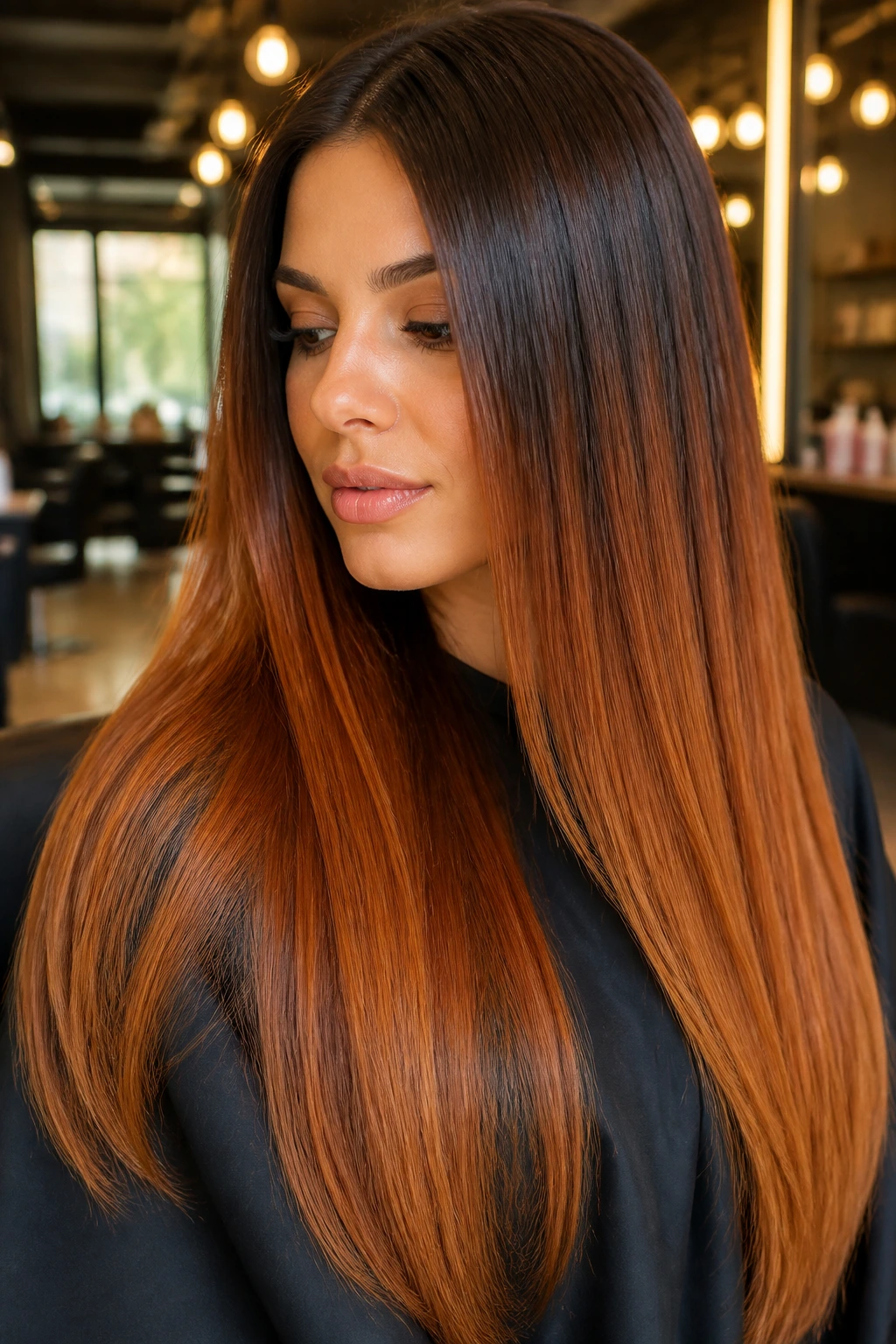
Straight long hair and ginger ombre are a strong match when the color placement is precise. Sleek firelight ombre keeps the root deep, then sends copper and amber straight down the length in a smooth, glassy fade. Nothing is fuzzy. Nothing is accidental.
This style depends on shine. If the hair is dry or rough, the gradient can lose its depth and start looking patchy. That’s why a smoothing cream or heat protectant matters more here than in some of the softer wave looks. The color should look like polished metal, not dry leaves.
I’d choose this for long hair that’s naturally straight or for someone who likes a blowout. The line of the hair shows the ombre clearly, and the ginger becomes more striking because the surface is so clean. It’s a crisp look. Not cold, though. Just clean.
18. Curly Ginger Cascade
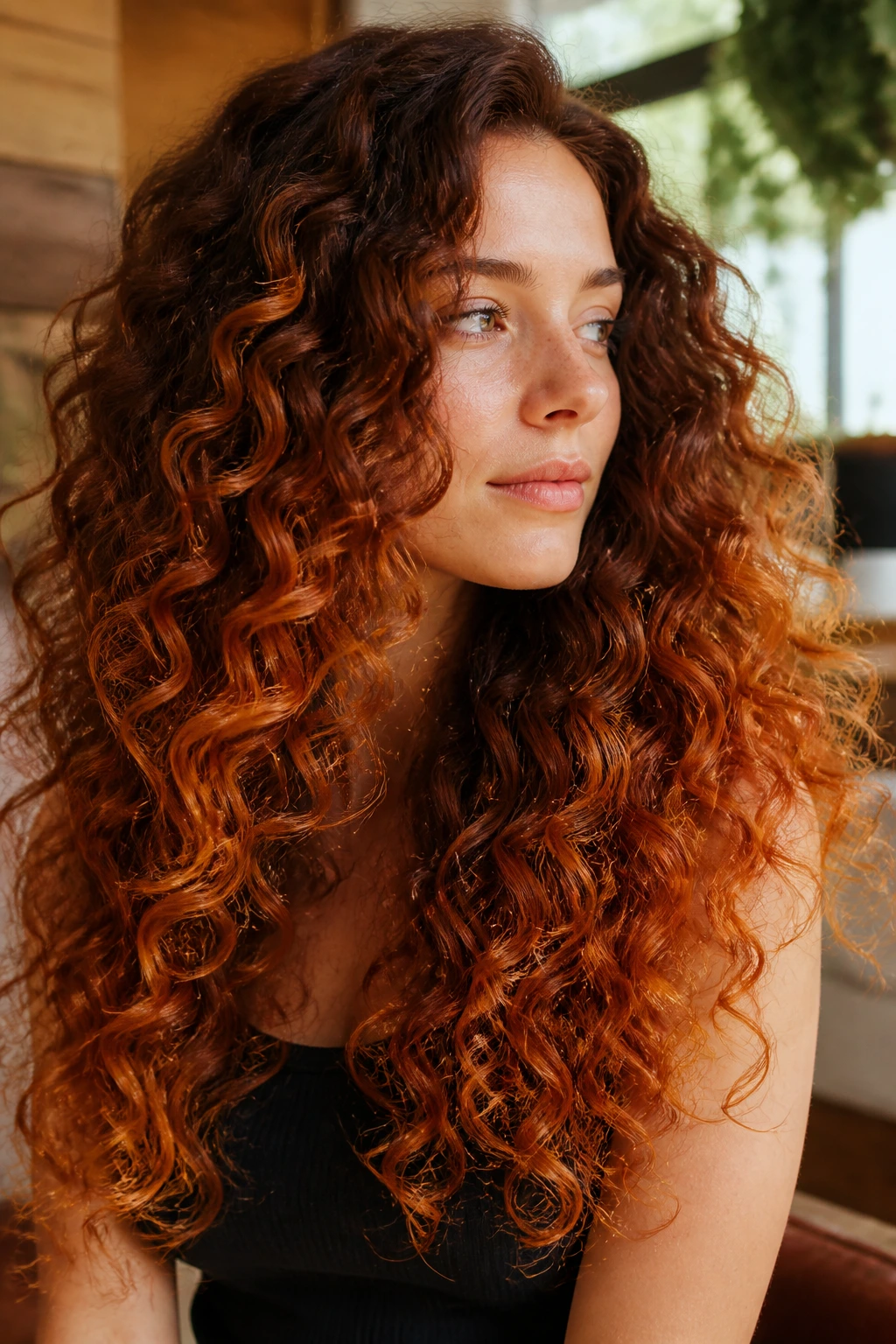
Curly hair changes ginger ombre in a way that straight hair can’t. Each curl catches a slightly different slice of color, so the fade looks more layered and less linear. That’s why a curly ginger cascade often feels richer than the same color worn sleek.
What Makes It Different
A curl pattern breaks up the color naturally. The darker root can sit in the base of the curl, while the ginger shows on the outside curve and the ends. That creates a living texture that shifts every time the hair moves. Long curls are especially good for this because there’s enough length for the color to climb and fall inside the shape.
Styling Notes
- Diffuse on low heat to preserve definition
- Use a curl cream that won’t dull the red tones
- Ask for the lightest ginger where curls hang longest
- Avoid heavy oils that can make the color look flat
Curly ombre can look louder than it does on the hanger. That’s normal. The bounce is part of the charm.
19. Bronde to Tangelo Ends
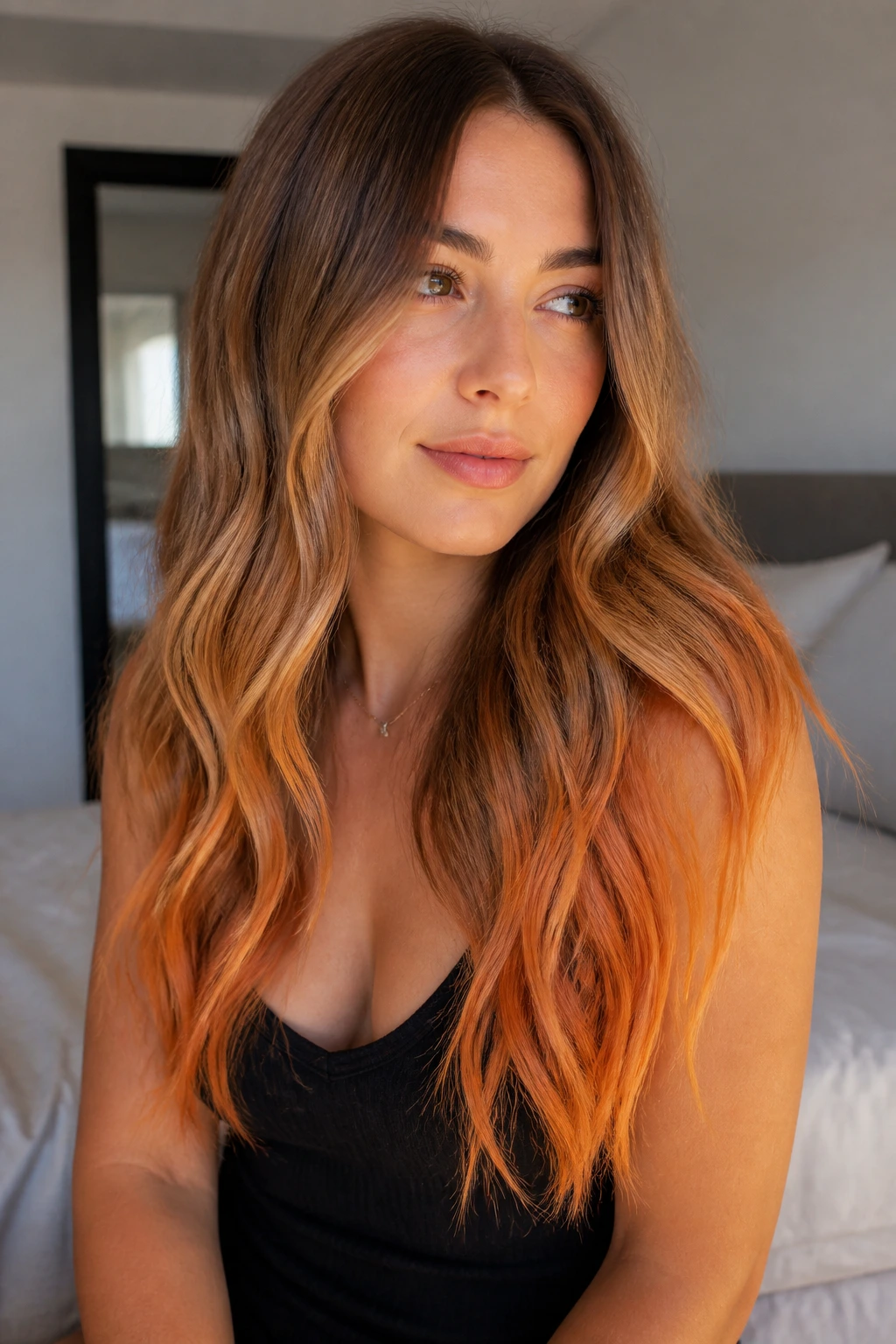
Bronde to tangelo ends is one of those looks that sounds playful and still manages to feel grown-up. The top stays in that brown-blonde middle ground, then the lower lengths go tangelo, which is a juicy orange-red with a little gold behind it. Long hair makes the transition feel intentional instead of random.
How to Wear It Well
The best version usually starts with a neutral bronde root, not an ash-heavy one. That keeps the tangelo from fighting the base color. Once the ends lighten up, the orange-red can sit there with enough brightness to matter. If the hair is layered, the tangelo picks up more movement. If it’s all one length, the statement is stronger and a little cleaner.
Best Styling Move
Big, soft bends. The color reveals itself as the sections fall over each other, and the ends look fuller than they are. That’s a nice trick on longer hair, especially if the ends are naturally finer than the roots.
20. Long Shag with Ginger Gradient
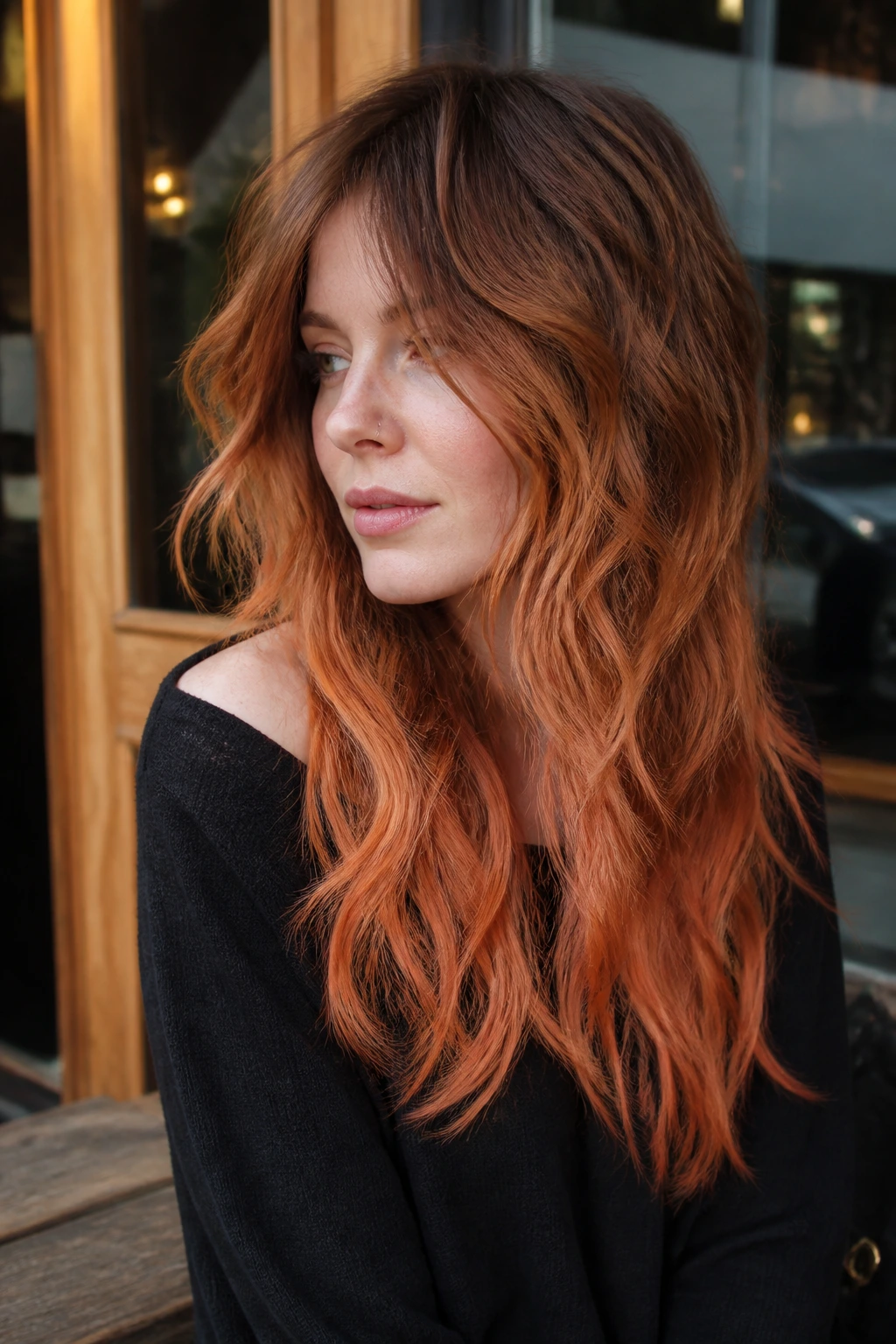
A long shag makes ginger look sharper and more deliberate. The layers break up the color so the gradient doesn’t sit like one heavy curtain at the bottom of the hair. Instead, the warm tones land on the shag’s movement and give it a little edge.
This is a strong choice if you love texture. A flat, one-length cut can make ginger ombre feel predictable, but a shag gives the color more places to land. The ends still stay warm, yet the pieces around the face and through the crown create a more lived-in finish.
If you like air-dried hair, this is one of the better pairings. The shag does a lot of the work for you. A little mousse, a little scrunching, and the color already looks styled. It’s one of the few ginger looks that can read slightly undone and still feel smart.
21. Curtain Bangs and Copper Lengths
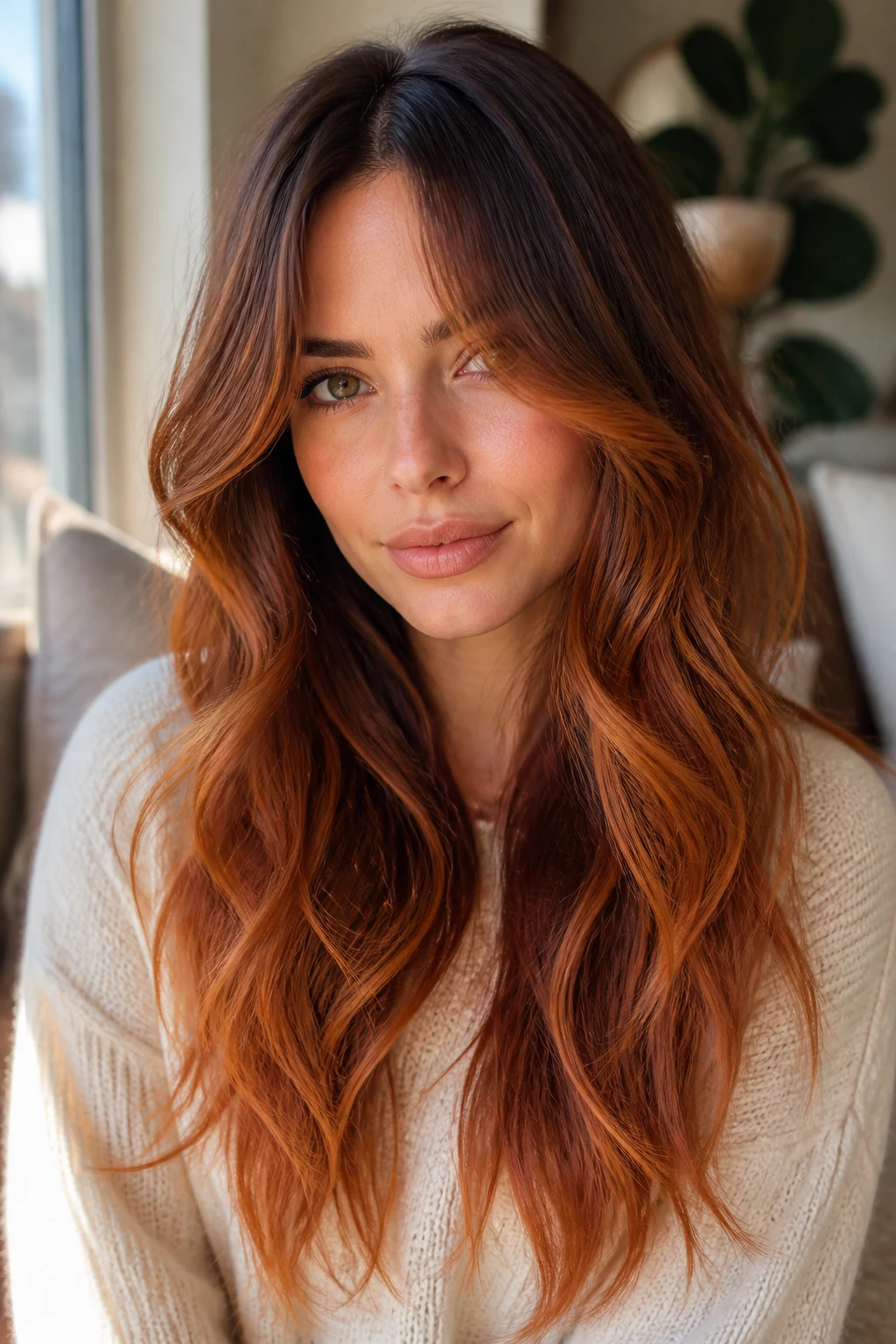
Can curtain bangs and ginger ombre get along? Absolutely, and the result is usually softer than people expect. The bangs frame the face first, which means the copper length behind them can unfold slowly instead of hitting all at once. That’s a nice balance on long hair.
Curtain bangs also let you keep the root a little deeper near the part while still bringing light closer to the cheekbones. It’s a good setup if you want the front to feel brighter but don’t want the whole head lifted. The longer lengths carry the ginger into the rest of the style, so the bangs don’t feel isolated.
What to Ask for at the Salon
- A soft copper piece that starts around the cheekbone
- Slightly darker root at the part
- Long curtain bangs that blend into the front layers
- A glaze that keeps the copper from going too orange
A blow-dry with a round brush makes this look especially nice. The bangs sweep, the color moves, and everything feels connected.
22. Dimensional Ginger with Lowlights
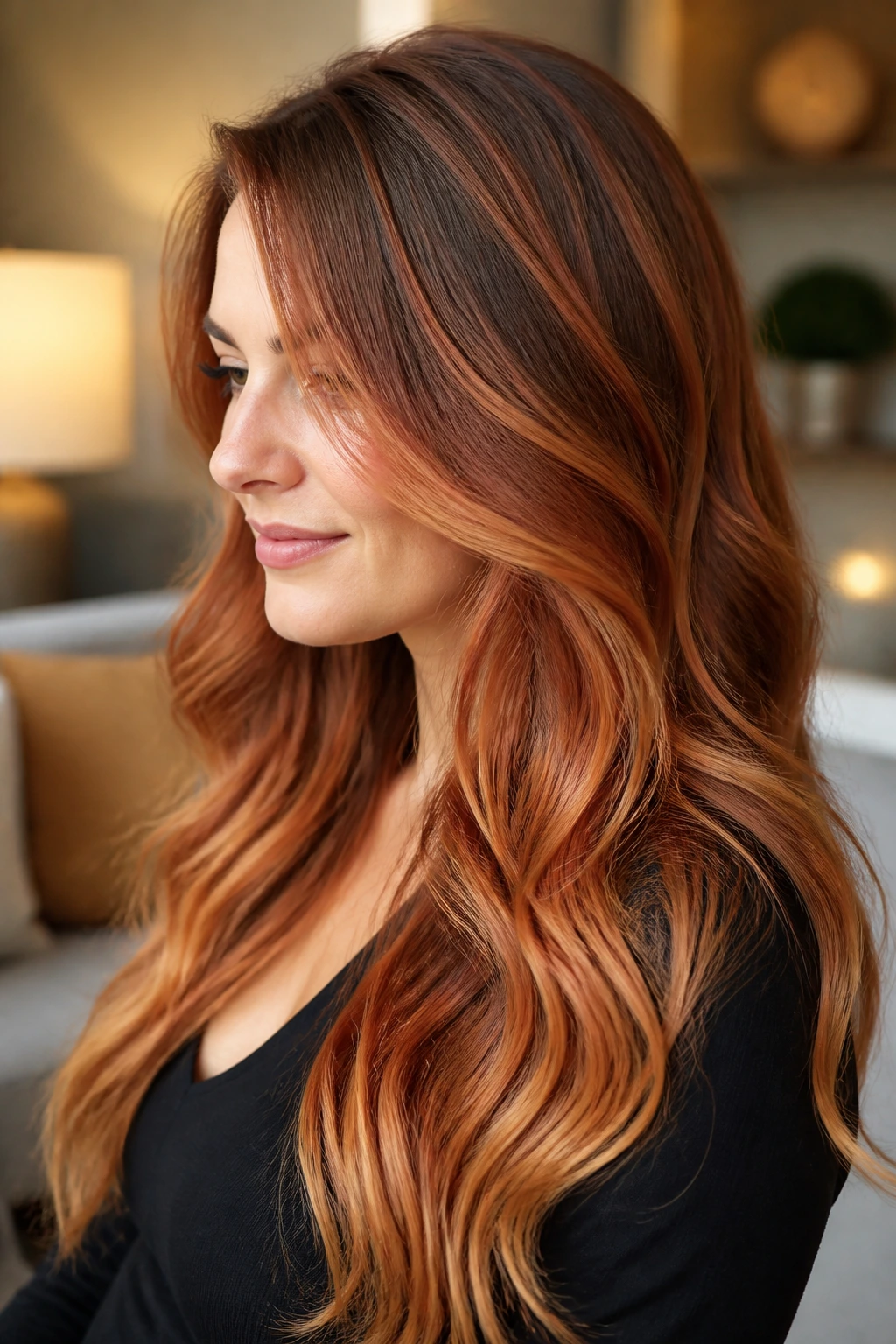
Dimensional ginger with lowlights is for people who hate flat color. Long hair can handle a lot of visual information, and lowlights are what stop the ginger from turning into one solid block. They give the eye something to move through.
A good lowlight choice is usually a chestnut, cinnamon-brown, or deep amber tone placed between the brighter sections. That keeps the ginger active without making the ends look over-lightened. It also helps the color stay interesting once the top starts growing out. Flat red fades fast. Dimension lasts longer.
- Add lowlights under the top layer
- Keep the brightest copper around the ends and face
- Use curls or waves to show the difference
- Ask for a gloss that ties the warm tones together
Worth saying: this is one of the best options if your hair is very long and thick. It keeps the shape from getting too heavy.
23. Foxy Ginger with Invisible Layers
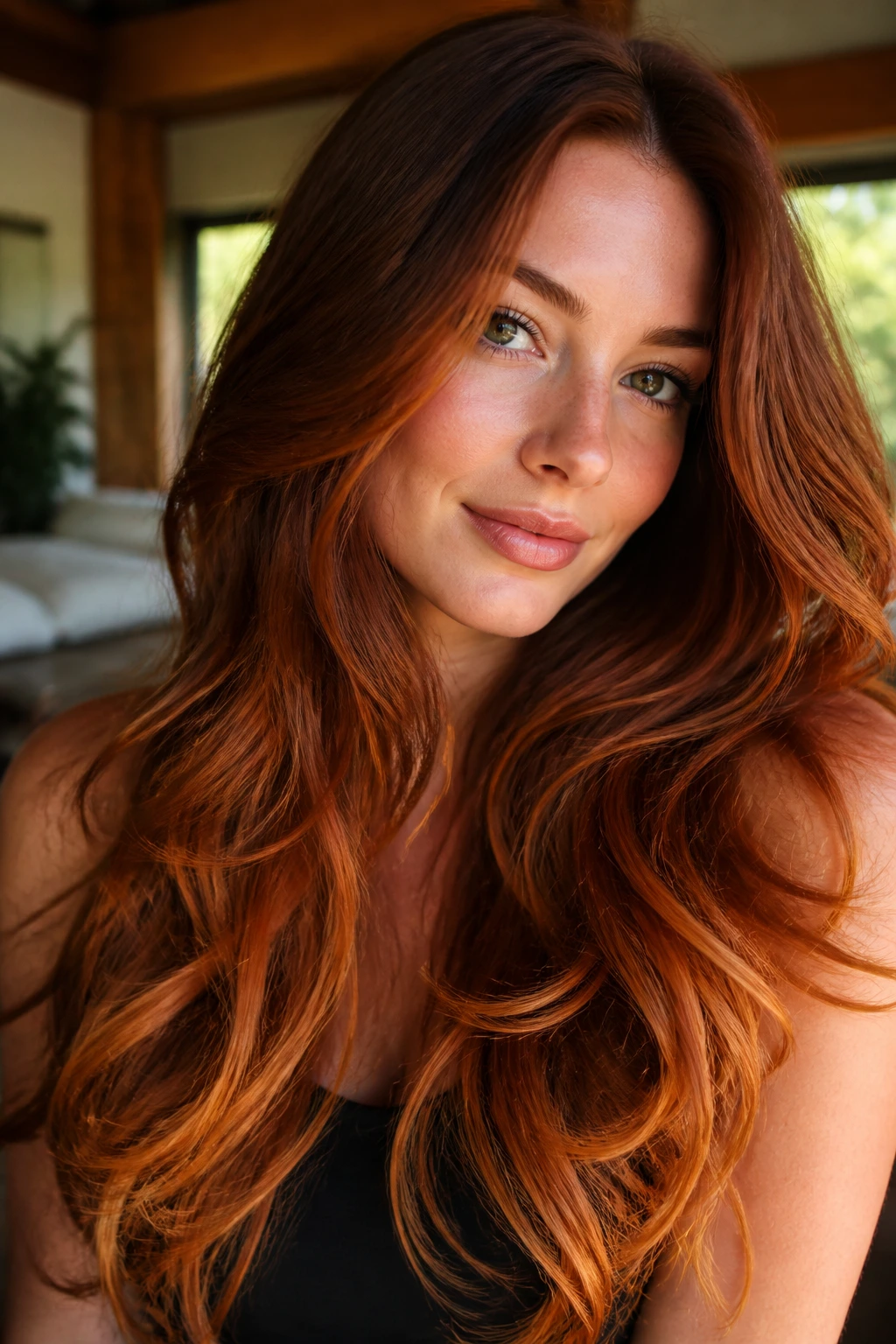
Invisible layers are a quiet hero here. They change the way the hair falls without looking chopped or overly styled, which means the ginger ombre gets more movement while the cut stays long and smooth. That matters when you want a foxy kind of color—warm, layered, and a little sleek.
The invisible layers prevent the lower half from looking like a blunt curtain. Instead, the color can drape in softer sections, and the ginger shifts when the hair moves. This works especially well if you wear your hair straight most of the time but still want body when it’s curled or tied back.
I’d lean into a copper-brown blend with this style rather than something too peachy. The invisible layers already create softness; the color can afford to have a little depth. And yes, the ends should still look bright enough to register as ombre. Just not loud.
24. Peach Cobbler Ombre
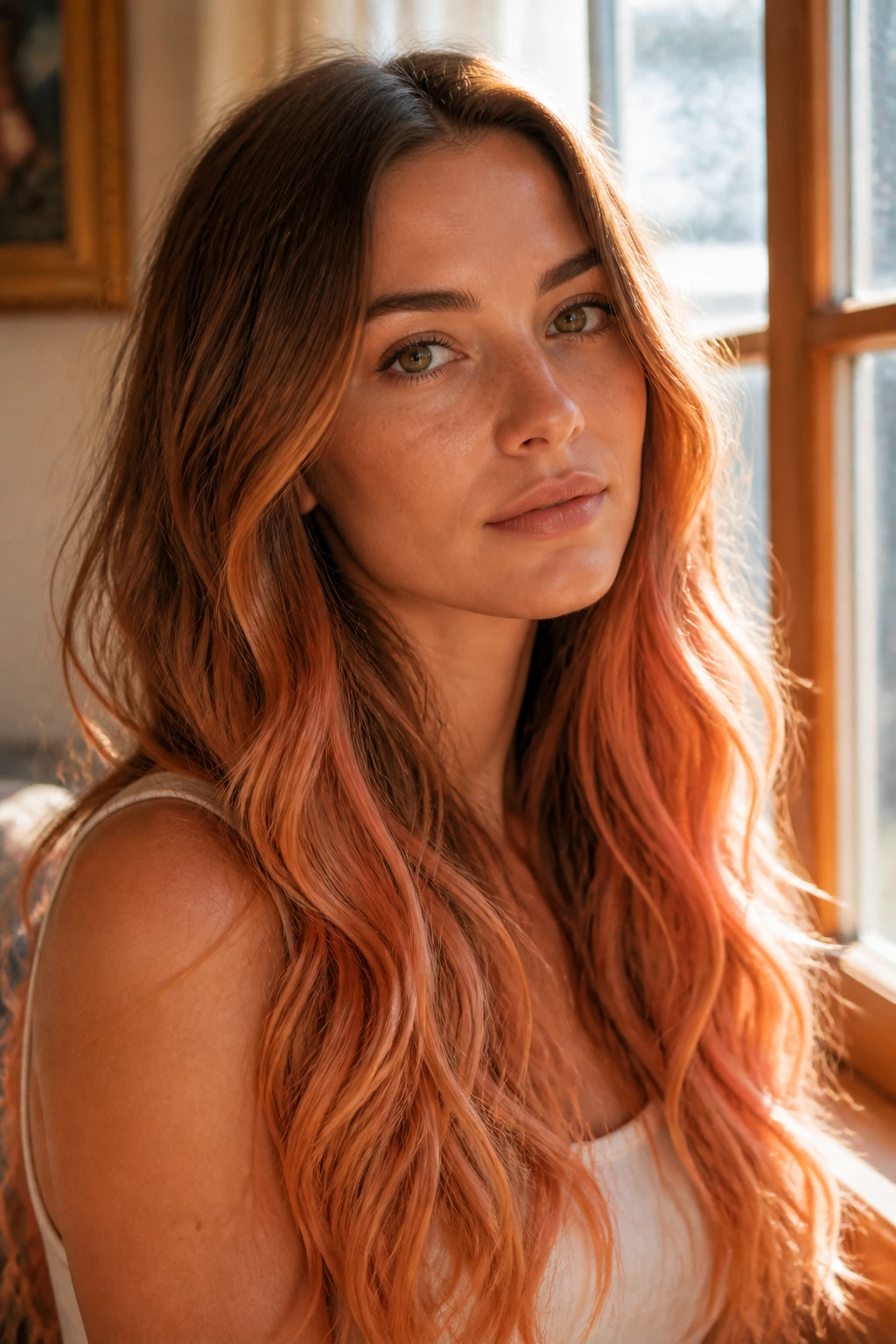
Peach cobbler ombre feels warmer and softer than a standard copper fade. The root can stay a natural brown or dark blonde, and the ends move into a peach-ginger tone with a creamy finish. Long hair gives the peach more time to show before it reaches the bottom.
Why It’s Different from Rose Gold
Rose gold usually leans a touch pink. Peach cobbler stays more orange-gold and a little less rosy, which makes it feel sunny rather than sweet. That difference sounds tiny, but on long hair it changes the whole mood of the color. Peach cobbler looks softer in waves and slightly more playful in straight styles.
Who It Suits
- People who want warm hair without deep red
- Medium to light bases
- Long hair with loose layers
- Anyone who likes a softer finish around the face
If the peach goes too pale, it starts to look faded. Keep it creamy. That’s the difference between a deliberate color and one that looks washed out.
25. Burgundy Roots to Ginger Ends
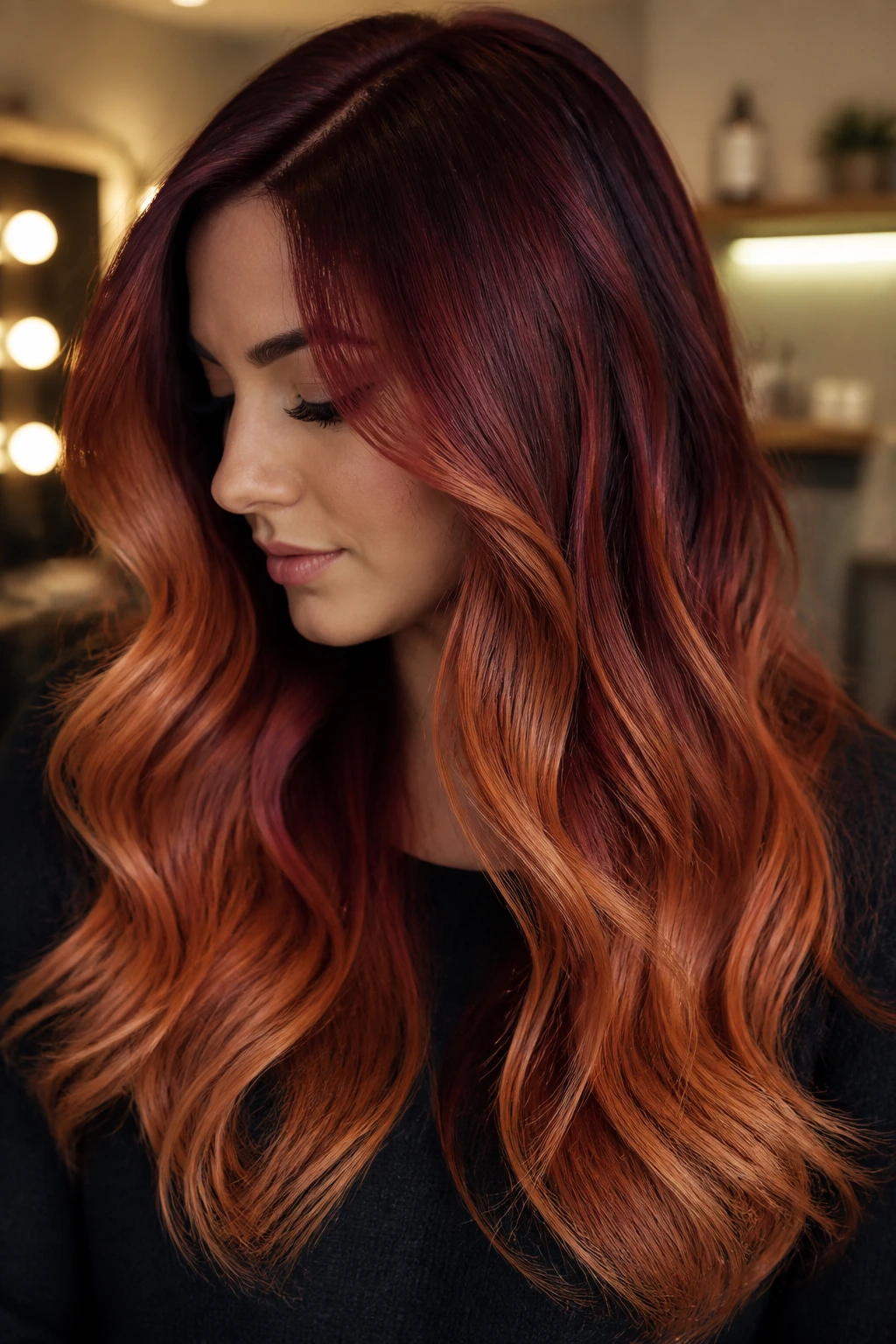
Burgundy roots into ginger ends makes a strong red-to-copper story. The top stays deep and wine-colored, which gives the style drama, while the lower lengths shift into a warmer ginger that feels brighter and more alive. On long hair, the transition has room to feel elegant instead of abrupt.
Why It Works on Long Hair
The length allows the color family to unfold slowly. Burgundy can sit at the crown and around the upper mid-lengths, then melt into copper and ginger through the bottom half. That creates a layered red look without making the whole head one flat tone. Long hair needs that kind of spacing, or the red can feel heavy.
Best Styling Choice
Soft waves with a side part. They let the burgundy peek through at the top and the ginger take over toward the bottom.
A glossy finish is a must here. Burgundy can go dull faster than people expect, and the ginger ends need enough shine to keep the contrast alive.
26. Honey-Ginger Melt
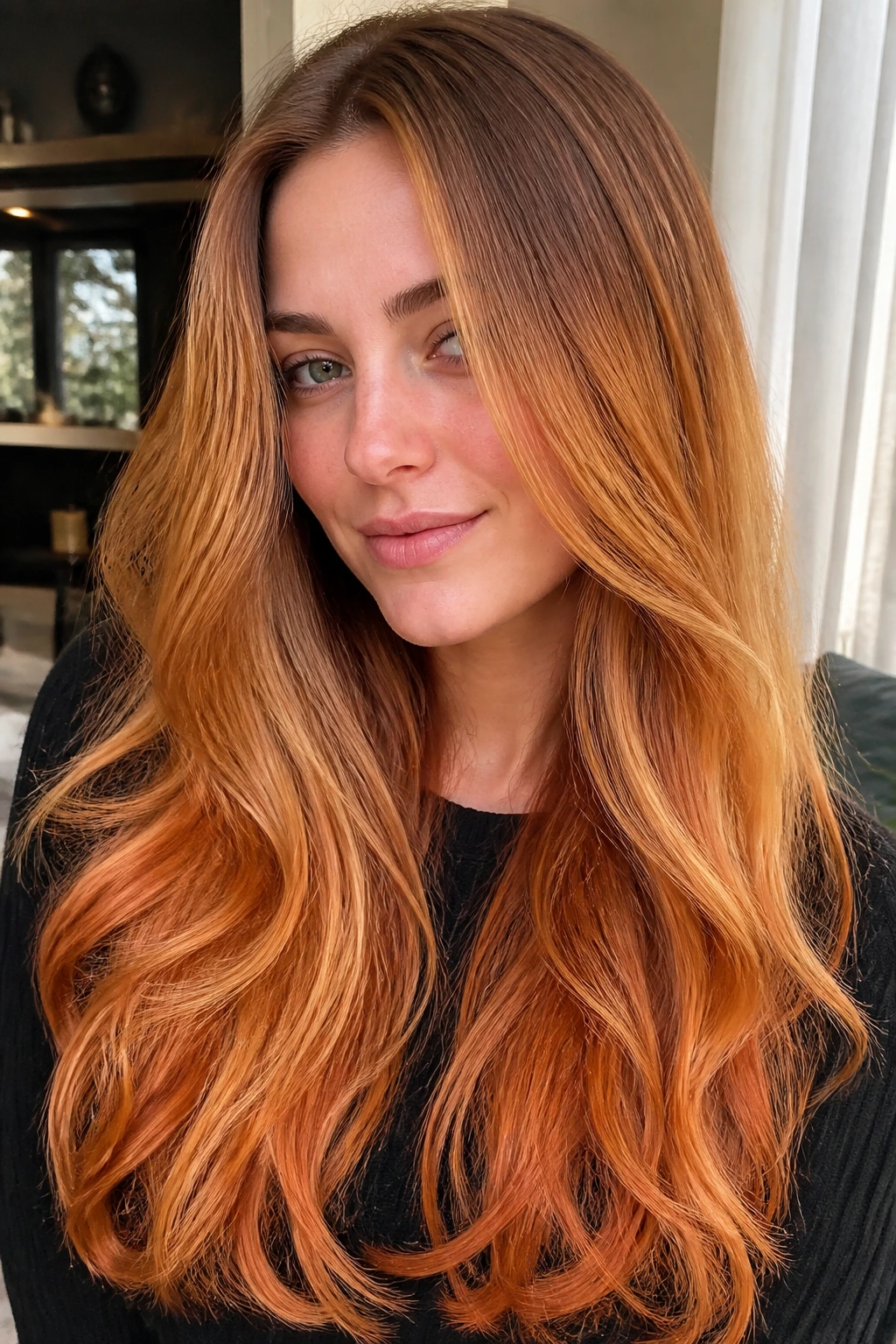
Honey-ginger melt might be the most wearable warm color on this list. Honey keeps the tone soft and golden, while the ginger adds that red-copper lift people often want when they say they want “something warm” but don’t want to spell it out. Long hair makes the fade feel silky.
This is the version I’d point to for someone trying ginger for the first time. It’s not too bright, not too orange, and not so red that it steals the whole show. The honey at the top or through the mids smooths the transition, so the ginger shows up as warmth instead of a hard color change.
It looks especially good when the ends are styled with a loose bend and a little separation. You want the honey and ginger to play off each other, not blur into one soft wash. That tiny edge keeps the color interesting.
27. Ember Ends on Thick Hair
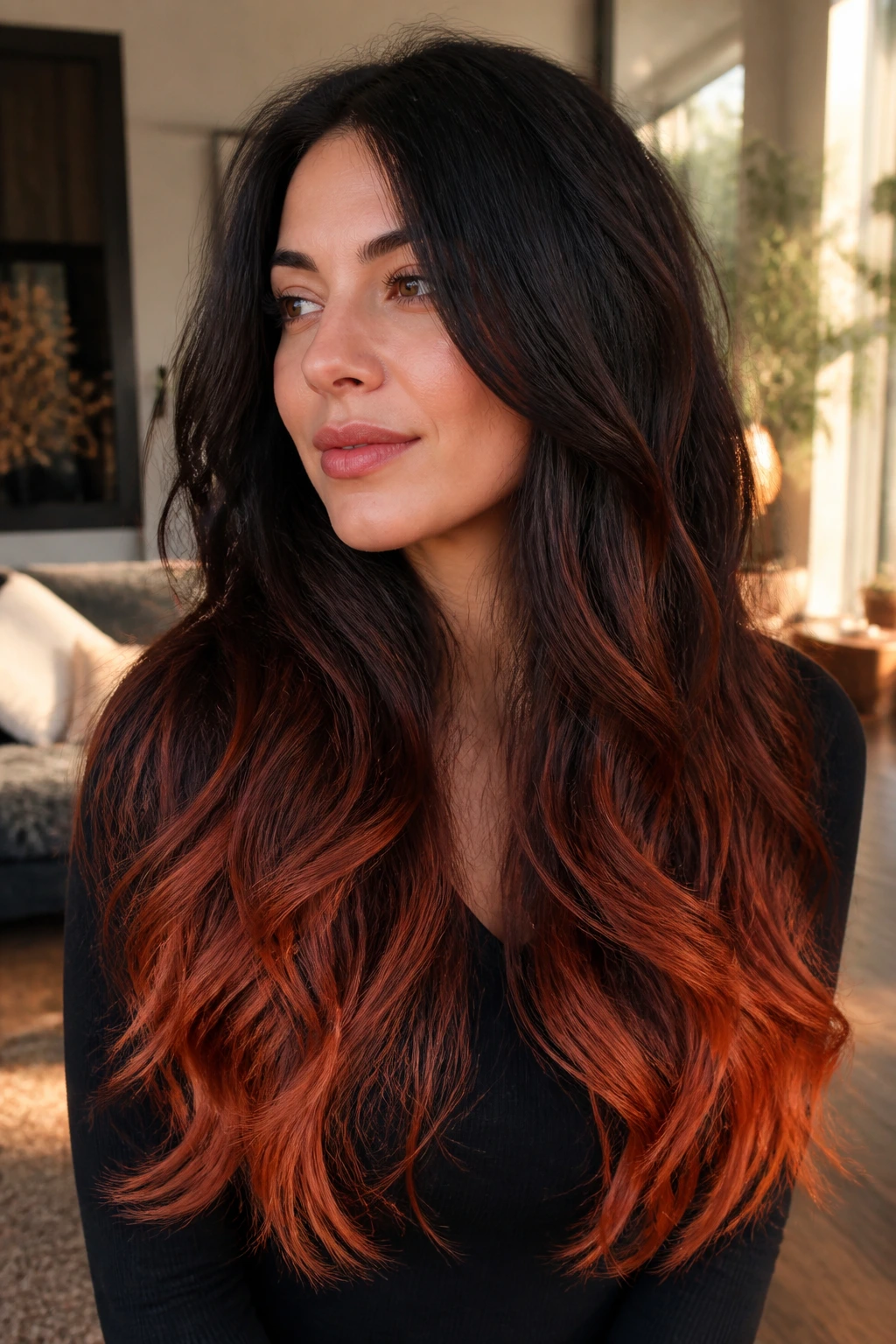
Why do ember ends work so well on thick hair? Because thick hair can carry a denser color finish without looking see-through. Ember ends usually mean a deeper copper-red at the bottom half, with enough saturation to read warm from across the room. On long, thick lengths, that’s a strength.
The real trick is managing bulk. If the hair is all one weight, the ember effect can sit too low and feel heavy. Long layers help a lot here. They let the color show in pieces rather than one solid curtain, and that keeps the warmth from feeling bulky.
Ask for the brightest red-copper near the ends, not the crown. You want the heat to build downward. That way the grow-out stays softer too, which matters when thick hair is already doing a lot visually. This is a strong look. It knows it.
28. Braided Ginger Ombre
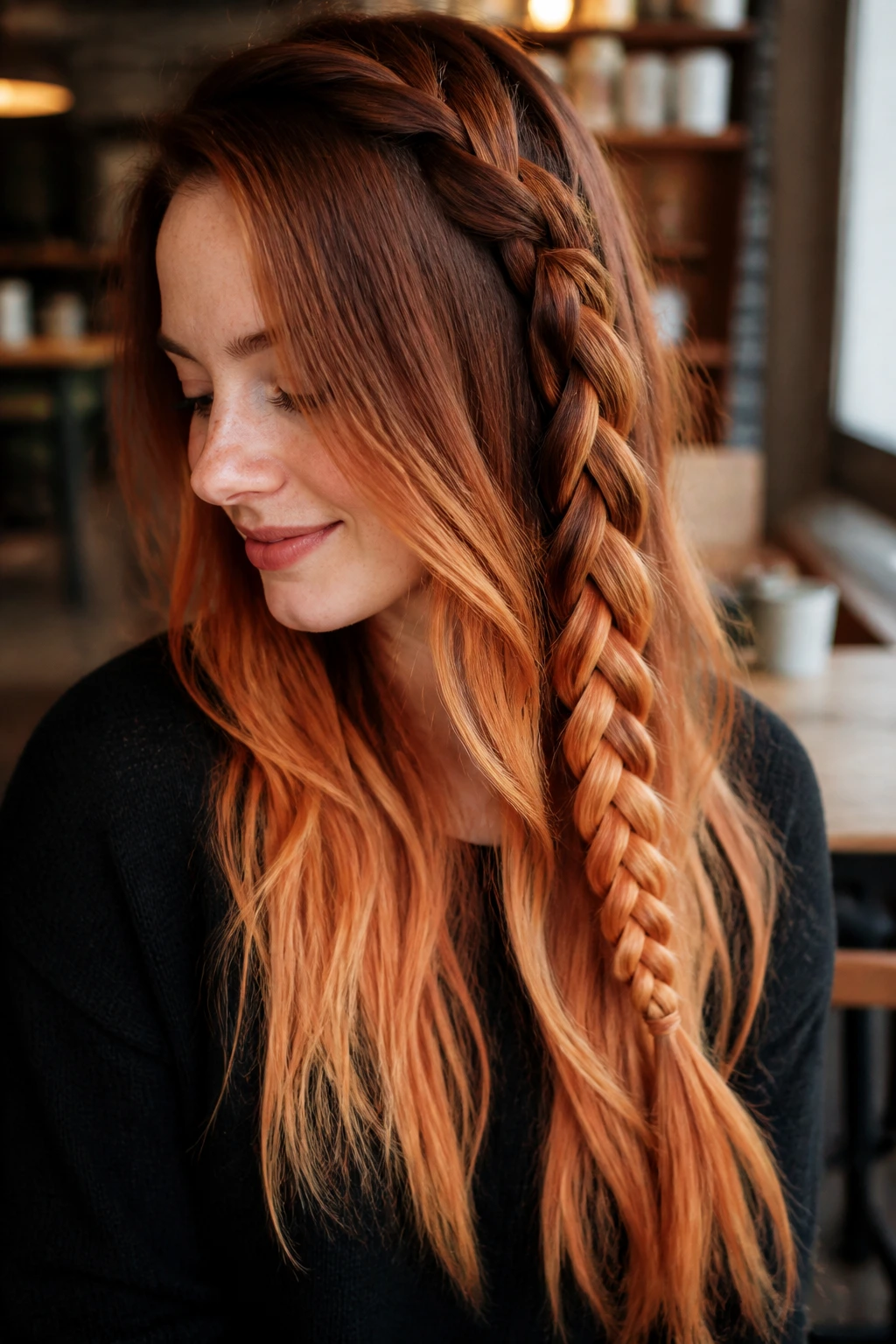
Braids reveal ginger ombre in a way loose hair sometimes hides. Every time the braid twists, a different strip of color shows up, which is why long hair with a ginger fade can look almost painted when it’s braided. The gradient stops being theoretical and starts moving.
Best Braid Styles for This Color
- Three-strand braids show the strongest contrast
- Fishtail braids break the color into fine, pretty lines
- Rope braids make the ginger look more dramatic and chunky
- Half-braids keep the top color visible and let the ends do the talking
I like this look because it gives you two versions of the color for the price of one. Loose hair shows the melt. Braids show the detail. If you’re the kind of person who wears your hair up often, this matters a lot. There’s no point in having a gorgeous ombre that disappears the second you tie it back.
29. Satin Straight Ginger Sheen
Satin straight ginger sheen is all about surface. The color itself can be fairly simple—brown root, copper or auburn mid-lengths, brighter ends—but the finish changes everything. On very long straight hair, the ginger reads like a smooth ribbon of warmth instead of a fluffy color cloud.
That sheen matters because straight hair shows every inch of the transition. If the blend is sloppy, you’ll see it. If it’s clean, the result looks sharp and polished in a way waves sometimes hide. A heat protectant, a good blow-dry, and a medium gloss are worth their weight here.
I’d keep the ends a little richer than you might expect. Straight hair can make pale ginger look thin. A satin copper or amber finish keeps the length looking full, and the shine helps the whole thing feel deliberate.
30. Sunset Ginger Ombre
Sunset ginger ombre is the one that gives you the broadest warm palette in a single look. It pulls from apricot, copper, amber, and auburn without locking you into one shade too hard. Long hair is the perfect place for that kind of mix because the color can change as the eye travels downward.
Why It’s the Most Flexible Choice
A sunset blend works when you want ginger but can’t pick a single tone. The roots stay grounded, the mids carry the warmth, and the ends can be lighter or deeper depending on how vivid you want the finish. That flexibility is useful if you like to wear your hair in different ways. Loose waves show the full gradient. Straight styles make the darker-to-lighter shift obvious. Braids pull all the tones together.
My Recommendation
Ask for a warm copper base with apricot and auburn threaded through the lower half. That gives the color depth without making it look striped. It’s the kind of ombre that can lean soft or bold depending on styling, and that’s why it earns the last spot here.
Final Thoughts
Long hair gives ginger ombre room to do what it does best: move. A short length can make the transition feel abrupt, but long layers, waves, braids, and straight finishes all give the color a different personality. That’s half the fun.
If you want something easy to live with, stay closer to honey, amber, or soft copper and keep the root shadow a shade deeper. If you want more drama, push into burnt copper, ember ends, or black-to-ginger contrast. The placement matters more than the label.
And if you’re taking one practical thing from all of this, make it this: good ginger ombre looks better when the ends are glossy and the transition is soft enough to grow out cleanly. That’s the difference between a color that feels finished and one that looks like it needs fixing a week later.
