



On long hair, black and blue can look almost liquid—dark at the top, then suddenly electric when the ends move. That’s the appeal of black blue ombre hair: it gives you drama without forcing the whole head into one loud shade, and it lets the length do the work.
The color also has a useful trick up its sleeve. Black does not just sit there looking flat; it makes blue look deeper, cooler, and sharper, especially when the fade starts below the shoulders. On very long hair, that gives you room to stretch the transition so it doesn’t turn into a harsh line or a muddy mid-zone.
Tiny detail. Huge payoff.
The part people miss is placement. A blue ombre on long hair can read soft and glossy, or it can look patchy and overworked, depending on where the lightening starts, how strong the blue is, and whether the cut has movement. Straight hair shows a clean color shift. Waves blur it. Braids split it into little ribbons. That is why the same dye job can feel polished in one photo and messy in another.
1. Black Blue Ombre Hair with a Sapphire Melt
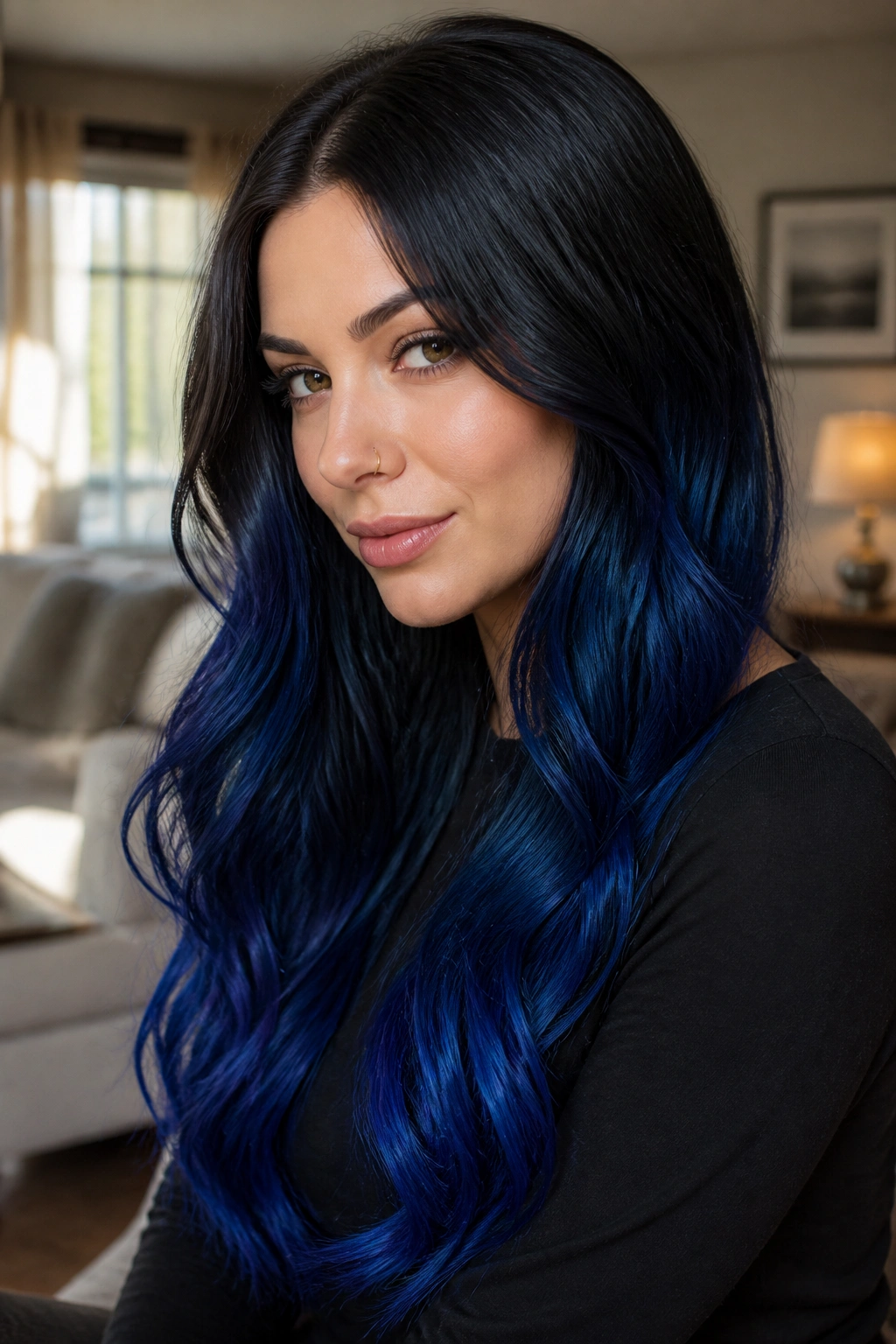
A sapphire melt is the version I’d hand to someone who wants the blue to feel rich, not cartoonish. The roots stay jet black, the mids soften into a deep inky blue, and the last 6 to 10 inches land in a jewel-toned sapphire that looks dense rather than neon.
Why It Works on Long Hair
Long hair gives the transition room to breathe. If the fade starts around the collarbone and deepens near the waist, the color reads intentional instead of chopped up.
- Ask for a soft lift on the ends first, not a full brightening from root to tip.
- Keep the blue in the level 4 to 6 range if you want depth.
- Loose waves show the melt better than pin-straight hair.
- A gloss every 6 to 8 weeks keeps the sapphire from looking dusty.
Best tip: if your hair is thick, ask for the blue to be painted in narrow ribbons, not one solid block. That keeps the ends moving.
2. Navy Ends That Barely Whisper
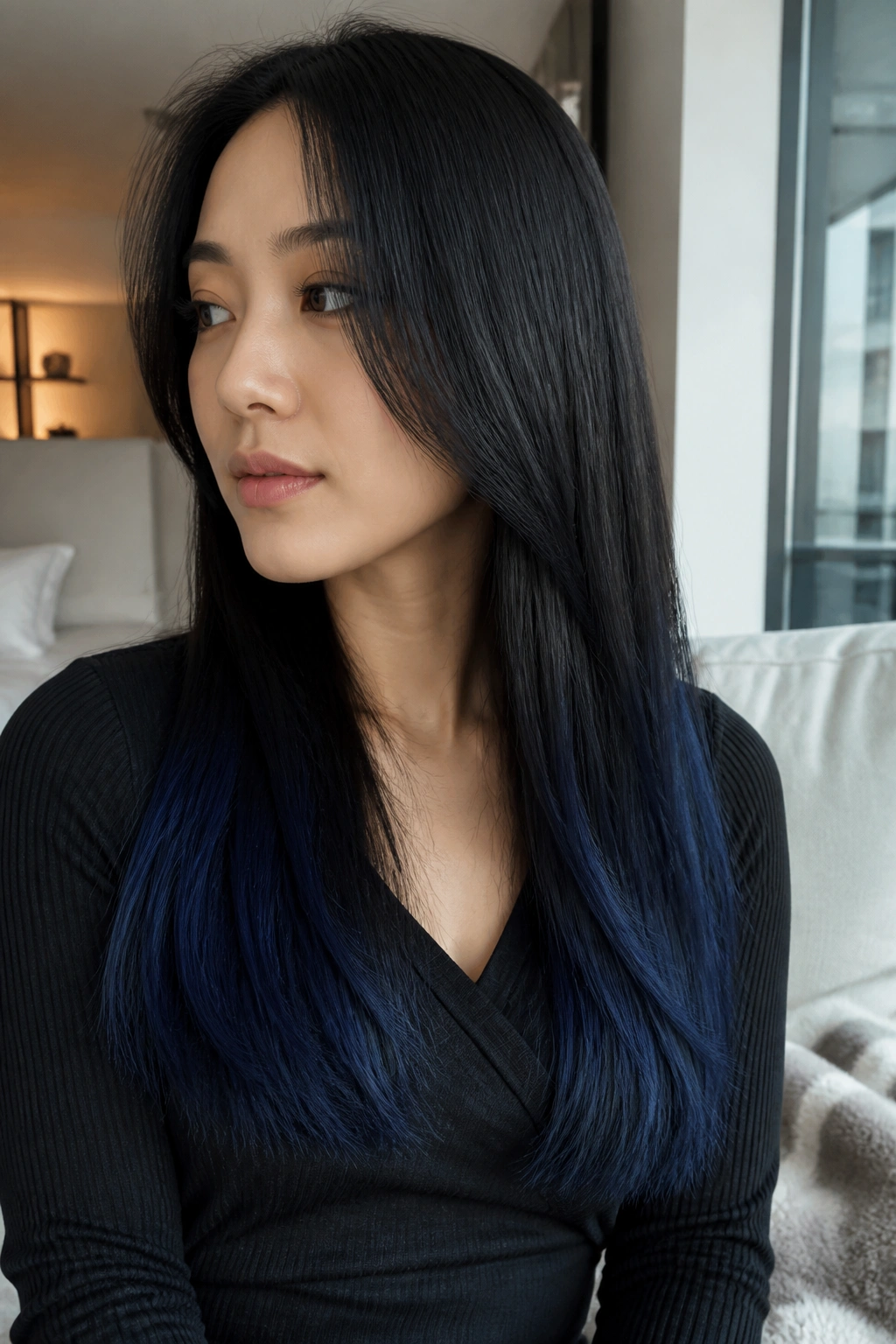
Navy is for the person who likes people to notice the color only after a second look. Indoors, it can pass for a cool black. Outside, it turns blue without screaming for attention. That makes it one of the easiest black blue ombre hair ideas for long hair if you work in a setting that does not love loud color.
It also flatters long straight cuts because the shade change is subtle enough to avoid a harsh stripe. The trick is to keep the navy concentrated in the lower third, with the black root area staying dense and glossy. If the blue starts too high, the whole thing loses that moody, expensive feel and starts looking busy.
I like navy on hair that already has shine. It needs a smooth surface to reflect from. If the cut is blunt at the bottom, the color looks crisp; if the ends are slightly feathered, it feels softer and more lived-in. Either way, this is the quiet one. Not boring. Just restrained.
3. Smoke-Black to Denim Blue on Long Layers
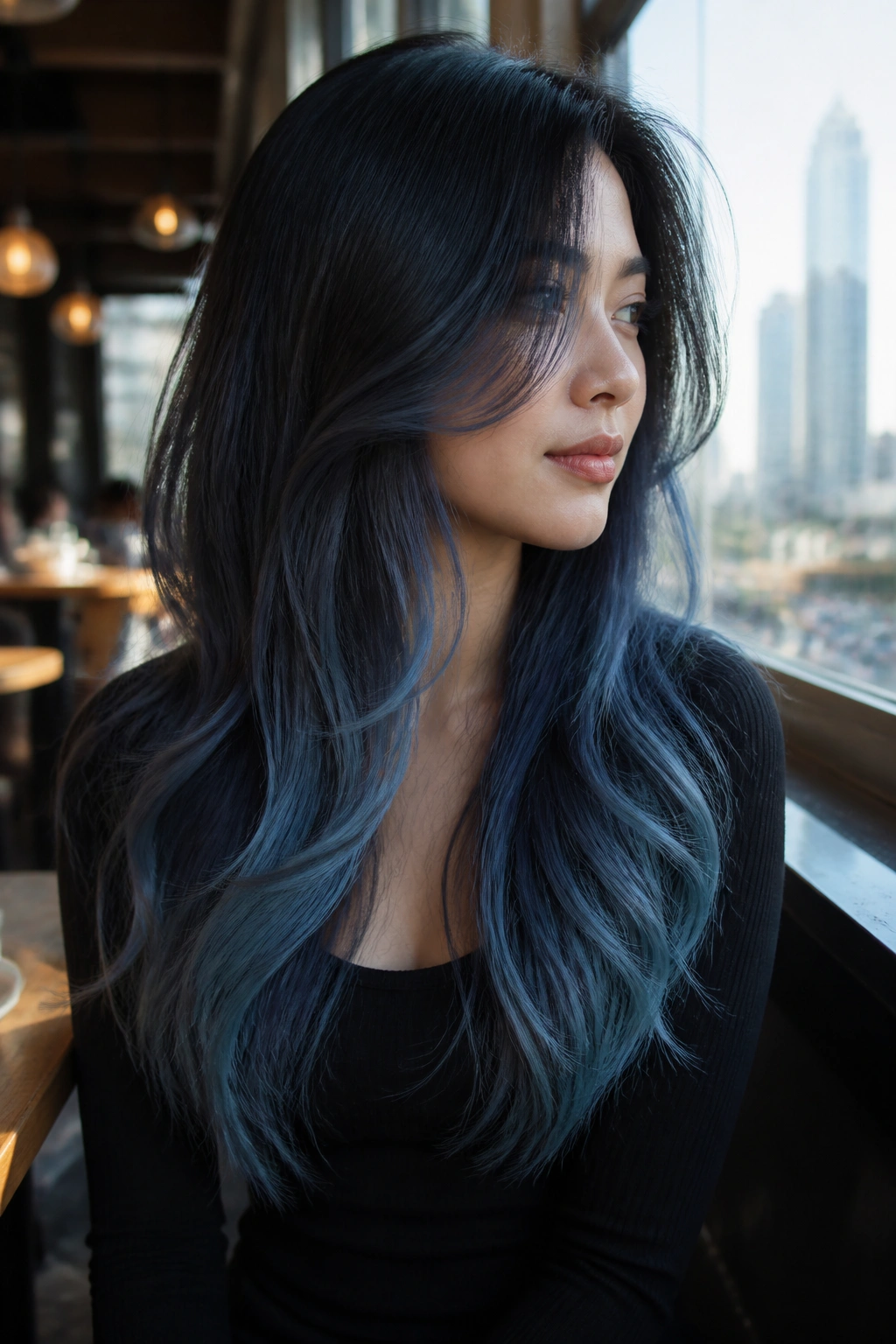
Why does denim blue work so well on layered lengths? Because it has enough gray in it to stay calm, even when the hair moves fast. On long layers, that matters. The pieces break up the color, so you don’t need a super-bright blue to make the style visible.
How to Ask for It
Tell your colorist you want a smoky transition, not a sharp two-tone split. The blue should start like a mist near the mid-lengths and deepen at the ends.
A few things help:
- A layered cut below the shoulder blades
- Blue placed in hand-painted sections
- Cool toner to keep the denim shade from going green
- Soft bends with a 1-inch iron, not tiny curls
This one has a denim jacket energy to it. Casual, but not lazy.
4. Blue-Black Gloss with Cobalt Tips
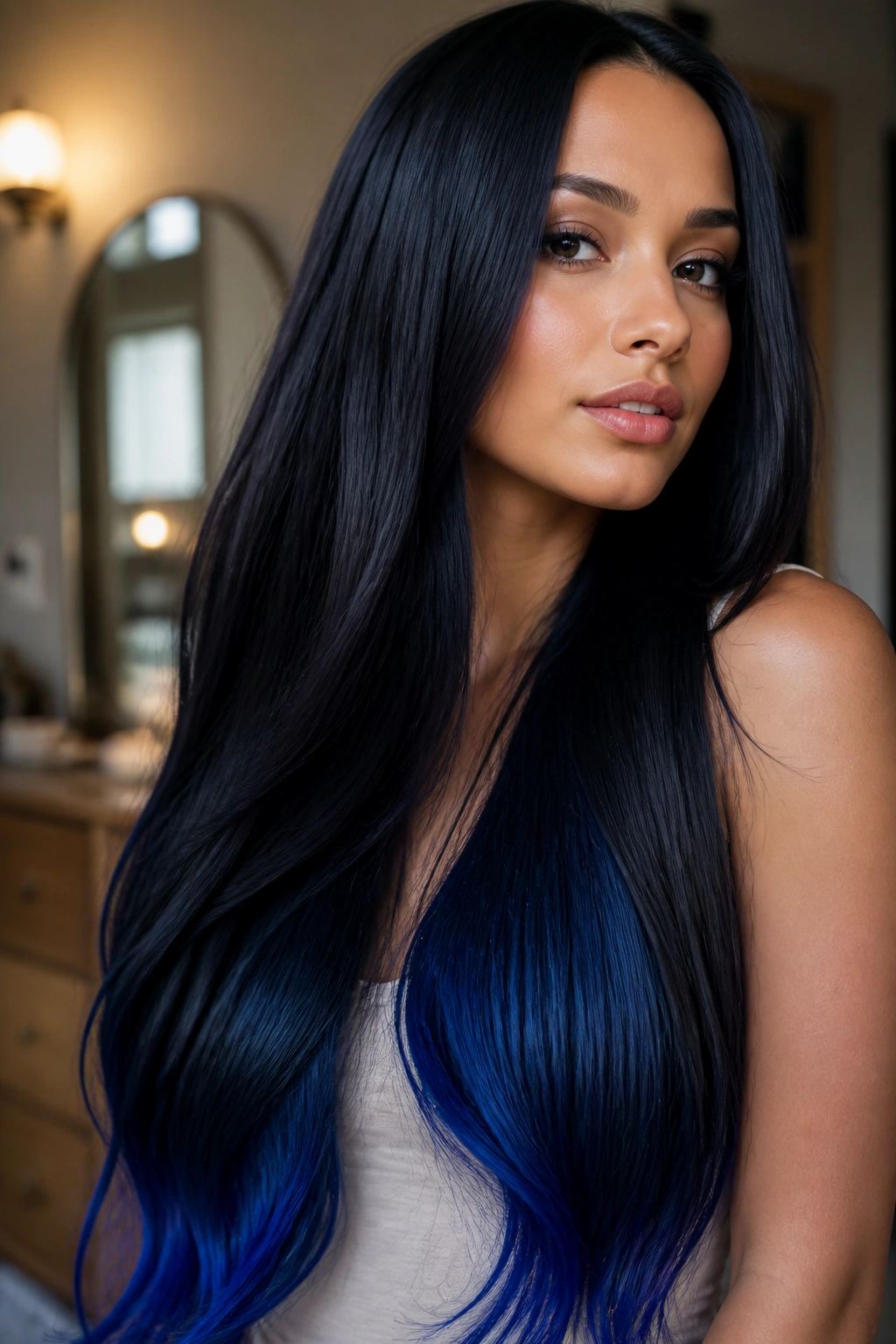
A little cobalt at the very end goes a long way. The base stays blue-black, which already gives you that dark, glossy look, and then the last inch or two snap into a brighter cobalt edge. From a distance, the hair still reads deep and moody. Up close, the tips feel sharper.
That contrast is what makes it work on very long hair. Short hair can make cobalt feel abrupt. Long hair gives the eye a path to follow, so the bright tips become a finish rather than a shock. It’s especially good on hair that gets worn in ponytails, because the color flashes when the ends swing.
I’d use this on people who like polished clothes and a little edge in the hair. It’s neat. It’s not tame. If you want black blue ombre hair that feels a touch sharper than navy but less loud than electric blue, this is a sweet spot.
5. Curtain Bangs and a Midnight Gradient
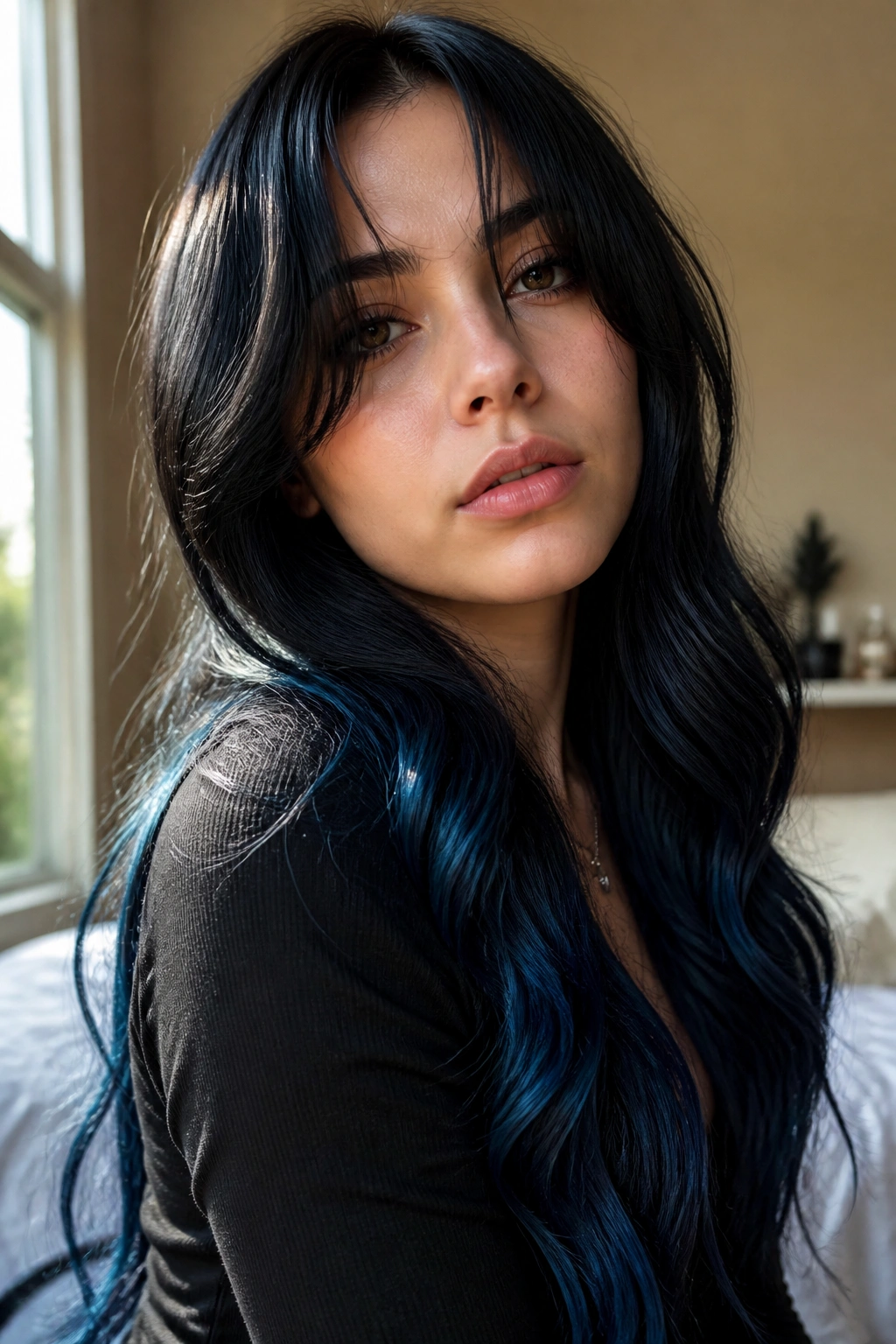
Curtain bangs change the whole mood of long ombre hair because they keep the color from starting too high around the face. The front stays mostly black, which makes the blue look richer when it appears farther down the lengths. That creates a nice frame effect without turning the whole head into a color block.
The best version uses a midnight gradient that starts near the chin and gets darker blue near the ends. On long hair, that leaves the bangs and crown sleek, then gives the lower half more movement. It’s a smart choice if you like soft layers and you do not want the blue fighting with your fringe.
I also like this for people who wear their hair half up a lot. The bangs keep the style light around the face, while the blue ends peek out below. Simple move. Strong result. And if the bangs are parted a little off center, the whole thing gets a more relaxed shape.
6. Peekaboo Blue Under Dark Top Layers
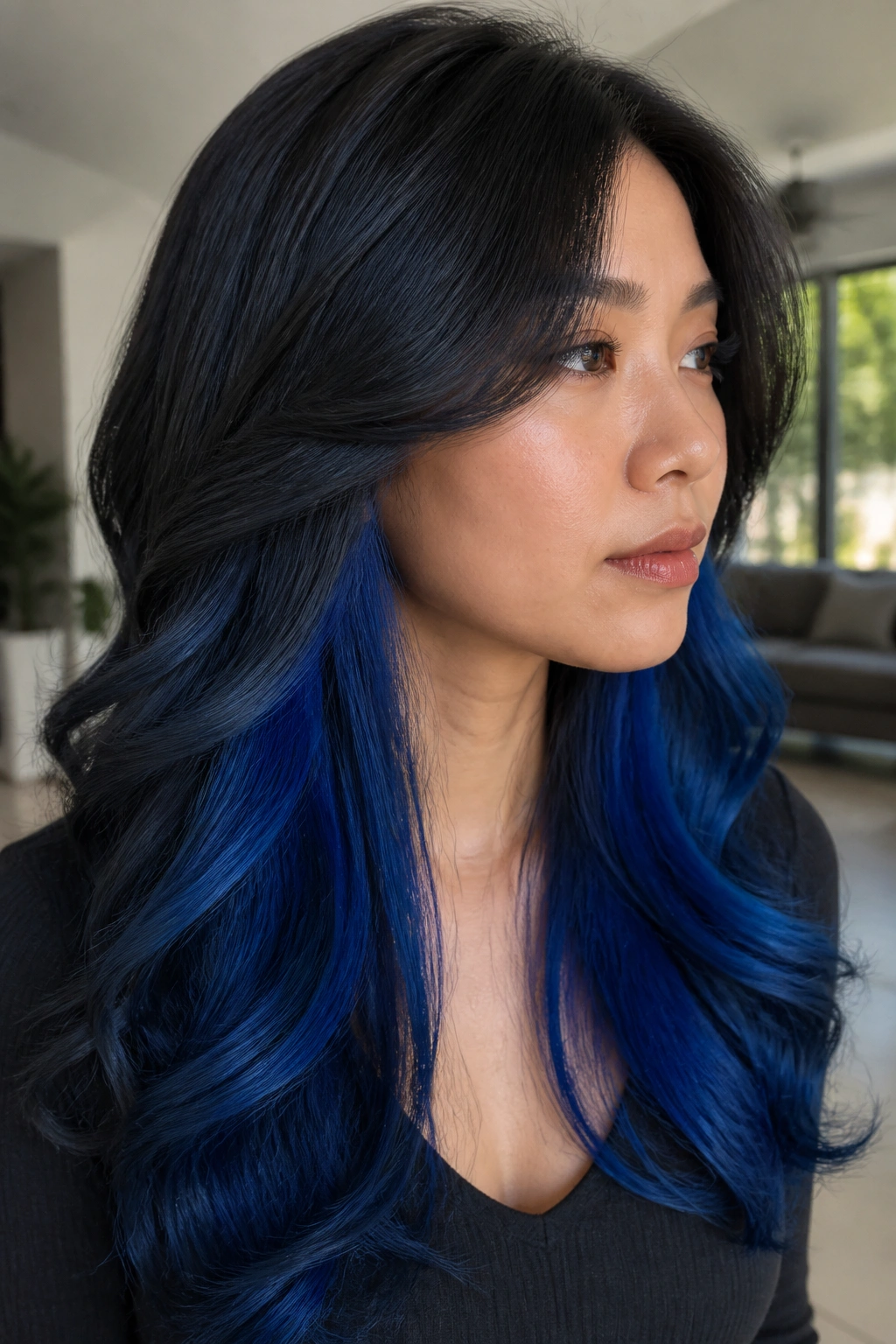
This is the one for anyone who likes a surprise. The top layers stay black, maybe with only the faintest blue shimmer, while the underlayers carry the brighter ombre. When you wear your hair down, most of the color stays hidden. Tie it up, tuck one side behind your ear, or braid it, and the blue shows up like a secret.
That kind of placement works best on long hair because there’s enough length to keep the underlayer distinct. If the hair is too short, the effect gets lost. With long strands, though, the peekaboo section can sit from the nape all the way to the ends, which gives you more control over how much color appears.
I’d pick this if you want black blue ombre hair but don’t want to see blue every single second. It’s a good compromise. Also, it is one of the better choices for people who like to switch between discreet and dramatic styling without changing the cut.
7. Indigo Flood on a V-Cut
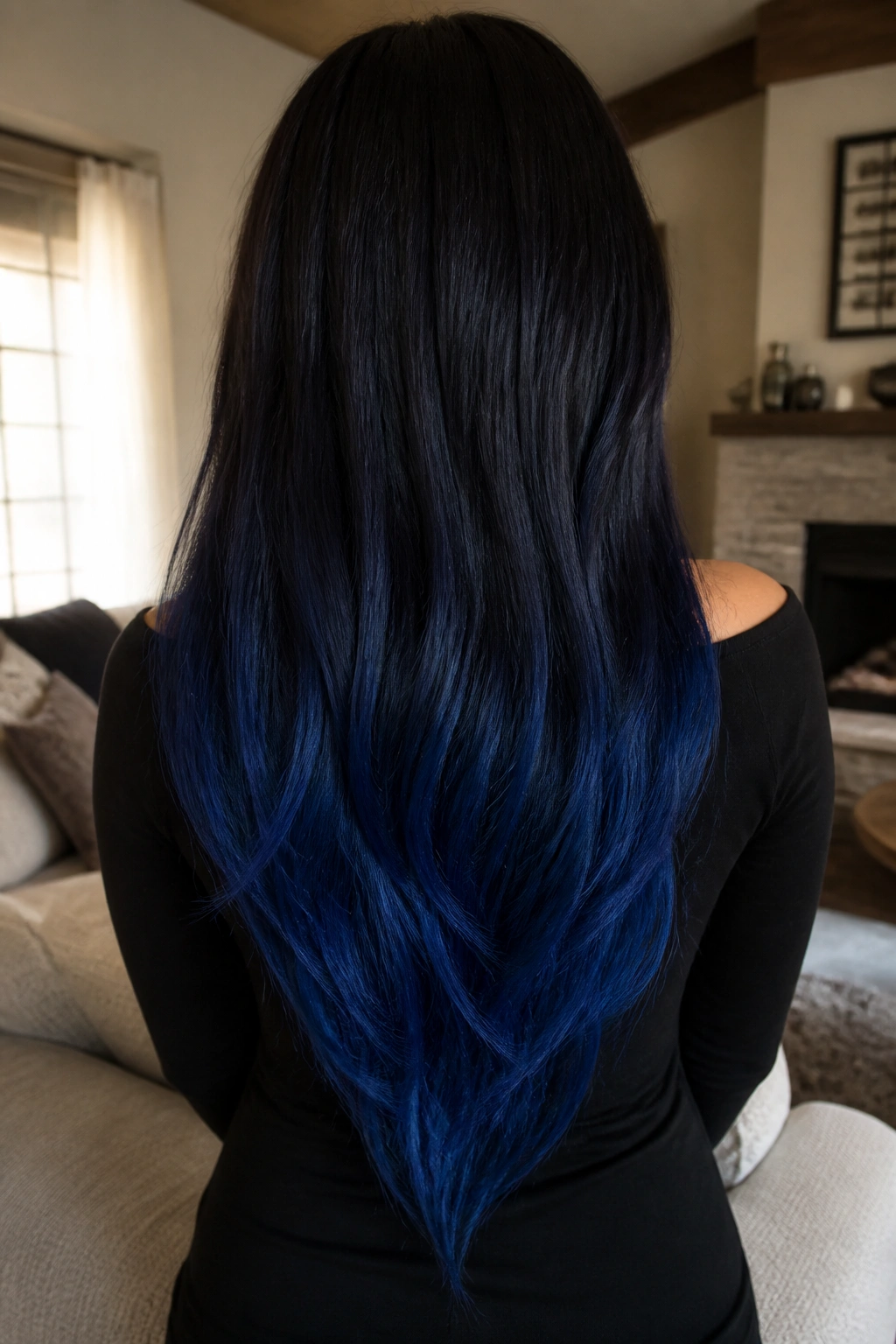
A V-cut gives long hair a point at the back, and that point makes the ombre feel like a waterfall instead of a blunt drop. Indigo works especially well here because it has enough depth to fill a lot of length without looking flat. The color can start softly around the upper back, then gather at the point of the V where it feels fullest.
What Makes It Different
The cut does half the work. The shape pulls the eye downward, and the blue follows that line. You get movement even before you style it.
A V-cut also helps if your hair is thick. The tapered ends keep the lower section from becoming a heavy curtain, which means the blue shows in layers rather than in one solid slab. If you want dimension, this is a strong choice. If you want something blunt and graphic, it is not the one.
Ask for the blue to stay deeper near the crown and brighter at the very tip of the V. That gives the whole look a stretched, elegant feel.
8. Straight Hair with a Royal Blue Block Fade
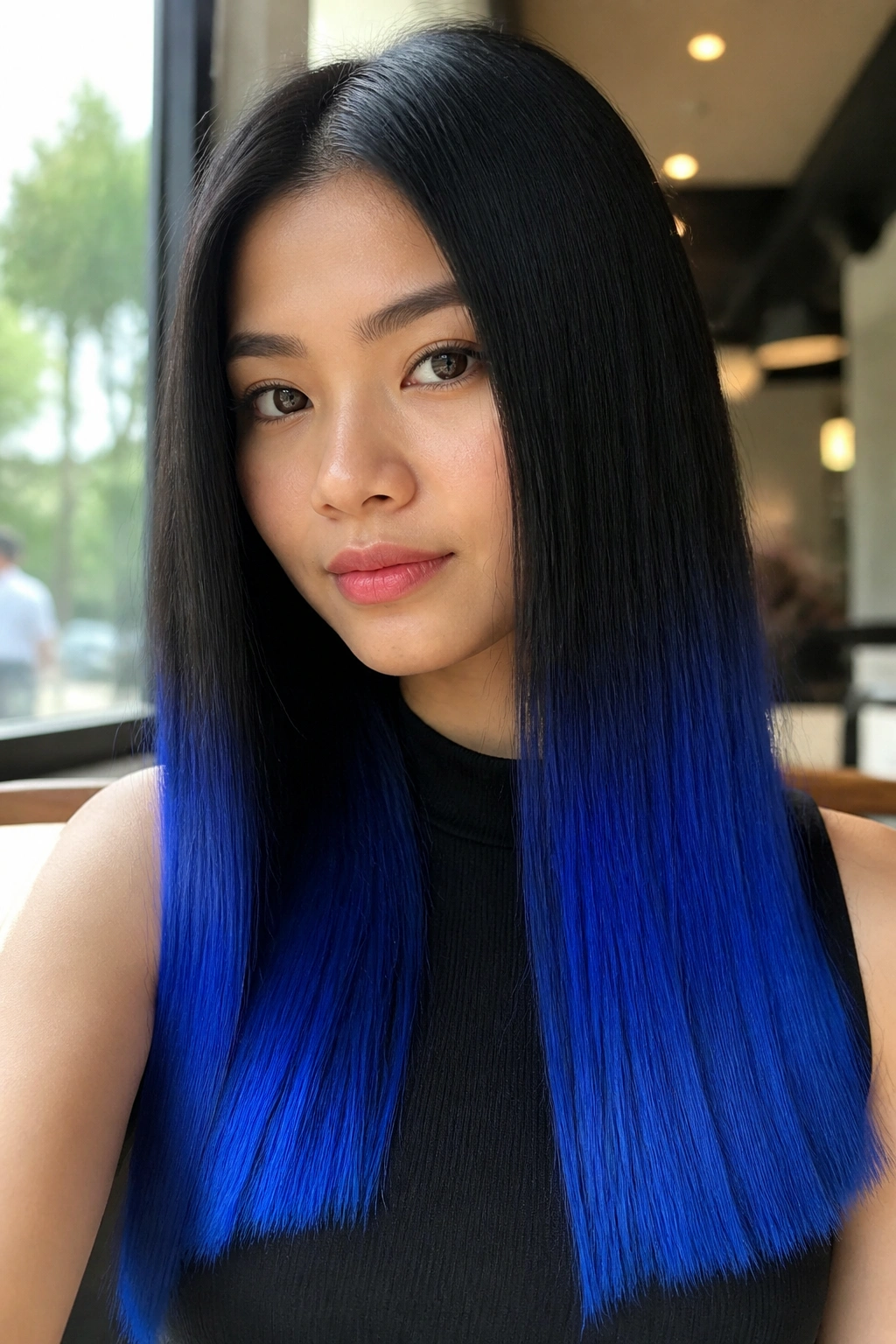
Straight hair changes the rules. It does not blur the transition the way waves do, so the fade has to be clean and deliberate. Royal blue is a good match because it holds its shape. On a long straight style, the color can move from black to blue in a blocky but polished way that feels sharp rather than soft.
This idea works best when the cut has a clean edge at the bottom. A blunt hemline, or even a slightly rounded one, gives the royal blue a place to land. If the ends are too wispy, the color can look thin. Nobody wants that.
It is a bolder look than denim or navy, but still wearable because the black root area keeps things grounded. If your hair lives in a flat iron or a blowout, this is one of the strongest black blue ombre hair ideas for long hair.
9. Ocean Haze on Beach Waves
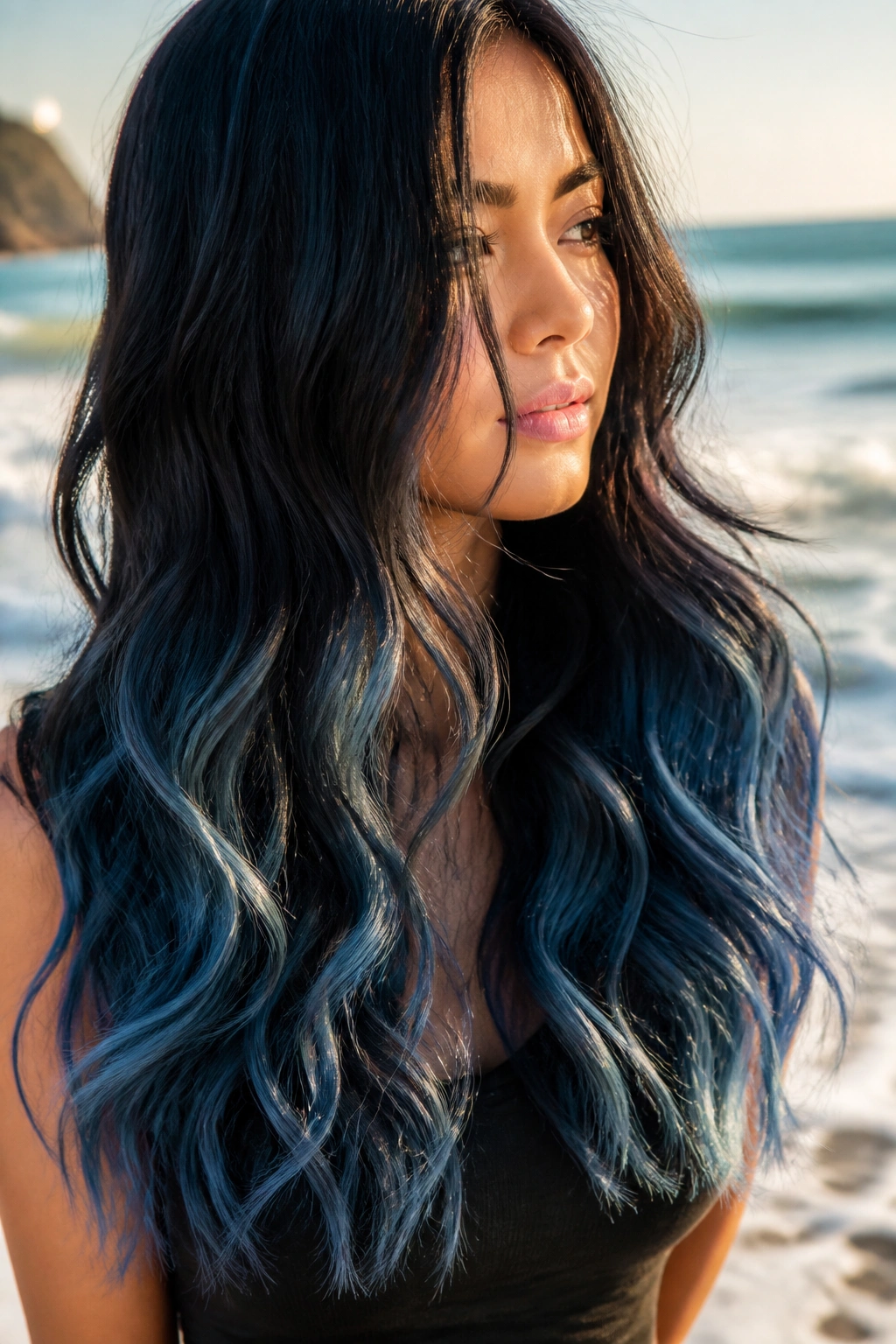
Picture loose waves, not curls. The black sits at the top, the blue starts just below the shoulders, and the ends look misted in an ocean shade that shifts as the waves bend. That’s the whole point here. The movement softens the color so the fade feels airy rather than hard-edged.
Why Waves Matter
Waves create little pockets where the blue can show and disappear. That stops the color from looking one-note.
- Use 1-inch to 1.25-inch iron bends or a wide barrel.
- Keep the wave pattern loose so the blue can break up.
- Ask for color on the outer curve of each bend.
- A shine spray on the mids and ends helps the blue look wetter.
This style has a salty, coastal feel without going pastel. It’s one of my favorites for long hair because the length lets the wave pattern show off the full fade. Straighten it, and the look gets more severe. Wave it, and it relaxes.
10. Braided Lengths with Streaked Blue
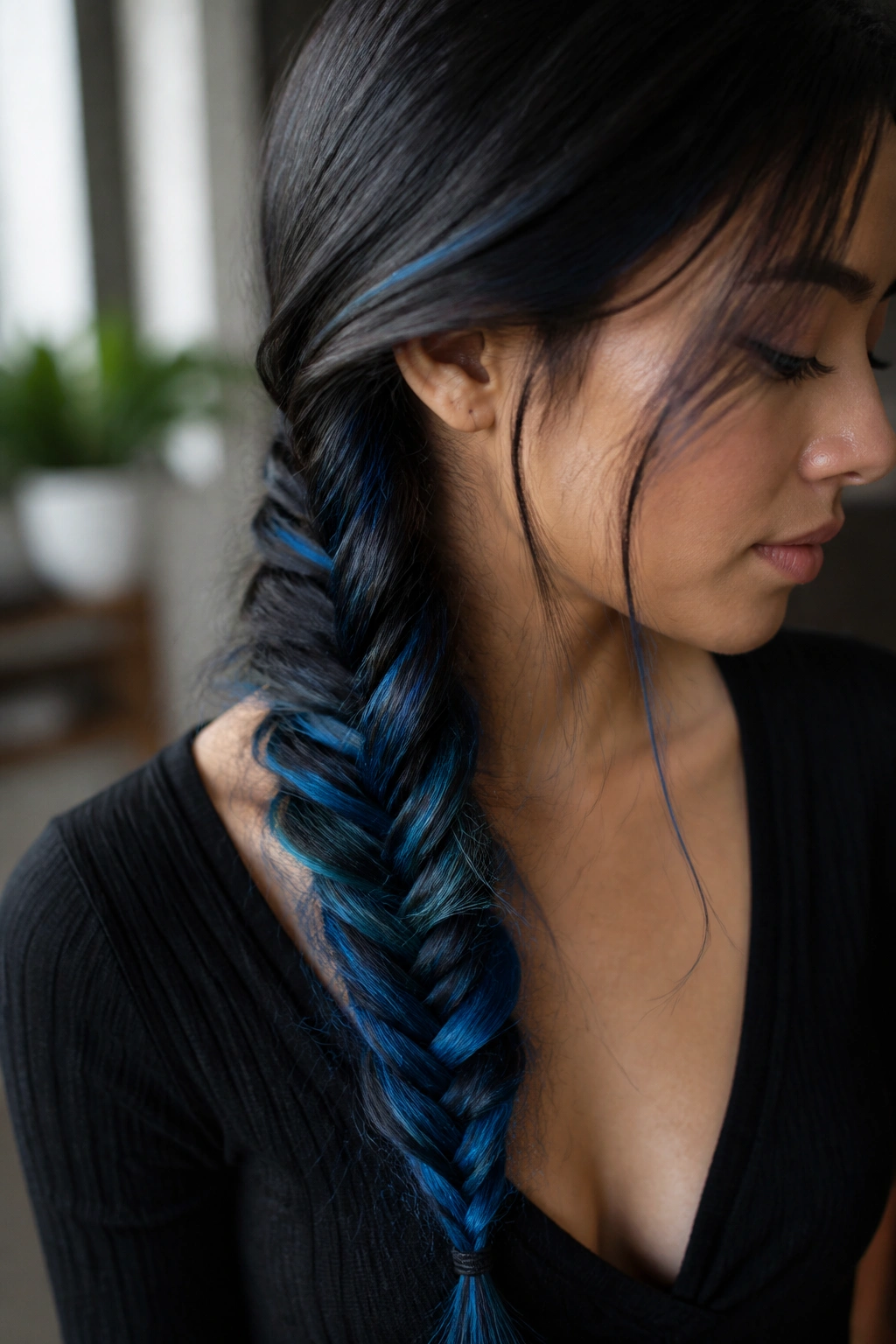
Braids are brutal in the best way. They compress color into stripes, which means black blue ombre hair turns into a rope of dark and bright bands instead of one smooth wash. On long hair, that can look striking, especially in a loose fishtail, a three-strand side braid, or a thick Dutch braid.
The part I like is that braids reveal placement. If the blue is painted only on the lower half, the braid shows exactly where it lives. If it is scattered more widely, the braid looks mixed and textured. That makes braids a good test style before you commit to a more intense ombre.
If your hair tangles easily, keep the blue sections a little smoother and more blended. Harder color patches can make knots more obvious. A clean detangle before braiding matters more than people think. Seriously. It changes the whole look.
11. Black Blue Ombre Hair with a Front Money Piece
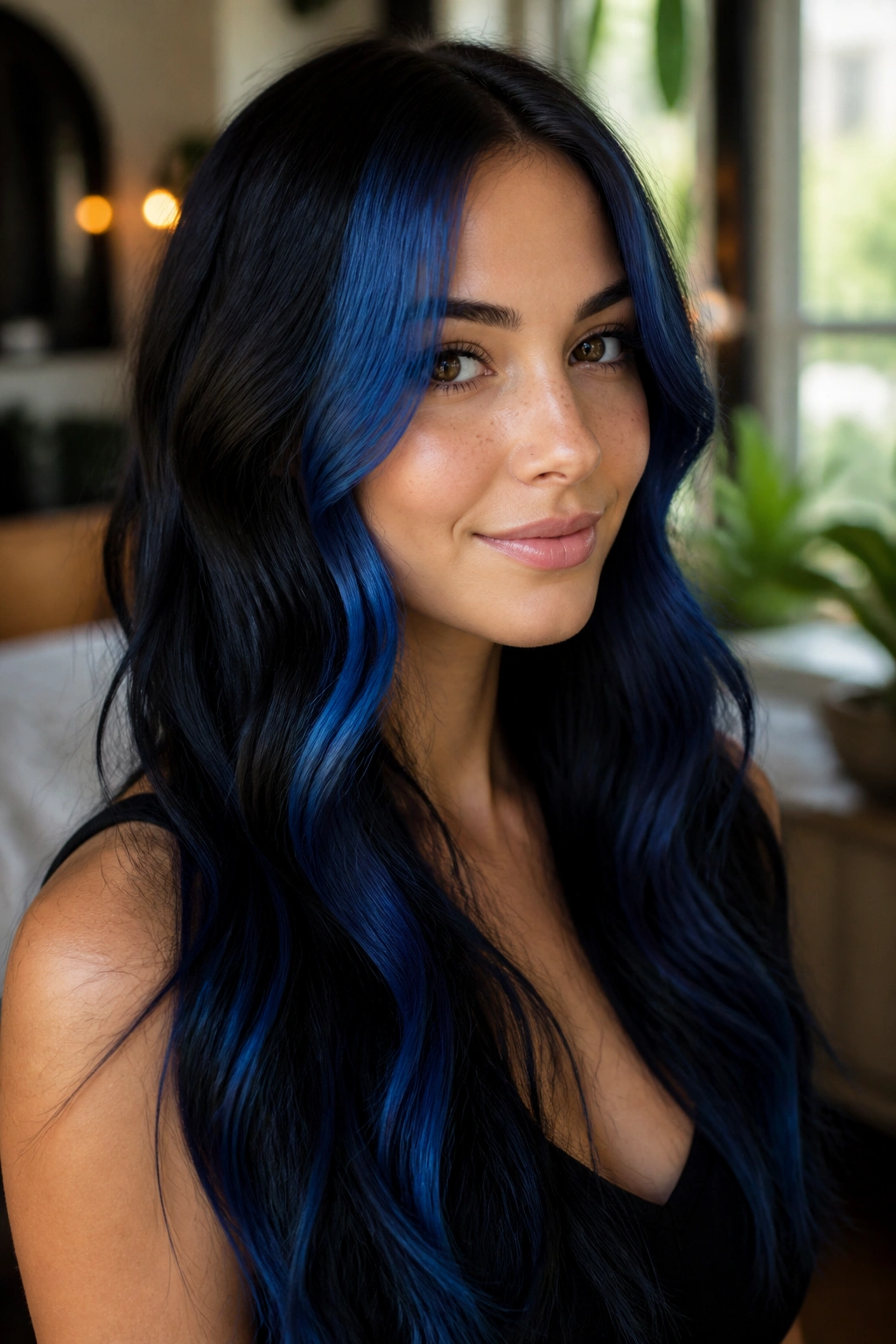
If you want the color to show even when your hair is down and still, put the brightness near the face. A front money piece in blue—just a couple of narrow panels around each side of the face—gives long black hair an instant edge while the rest of the ombre stays lower and softer.
This works especially well if your hair falls past the bust line. The front pieces can start darker near the roots and slide into blue at cheekbone or jaw height, which keeps the face framed without swallowing it. The rest of the lengths can stay more muted, even nearly navy, so the look feels balanced.
I like this on people who wear middle parts and simple clothes. It adds enough drama that you do not need much else. And if you want to see the color in a mirror without turning around, this is the practical answer.
12. Steel Blue on Dark Hair
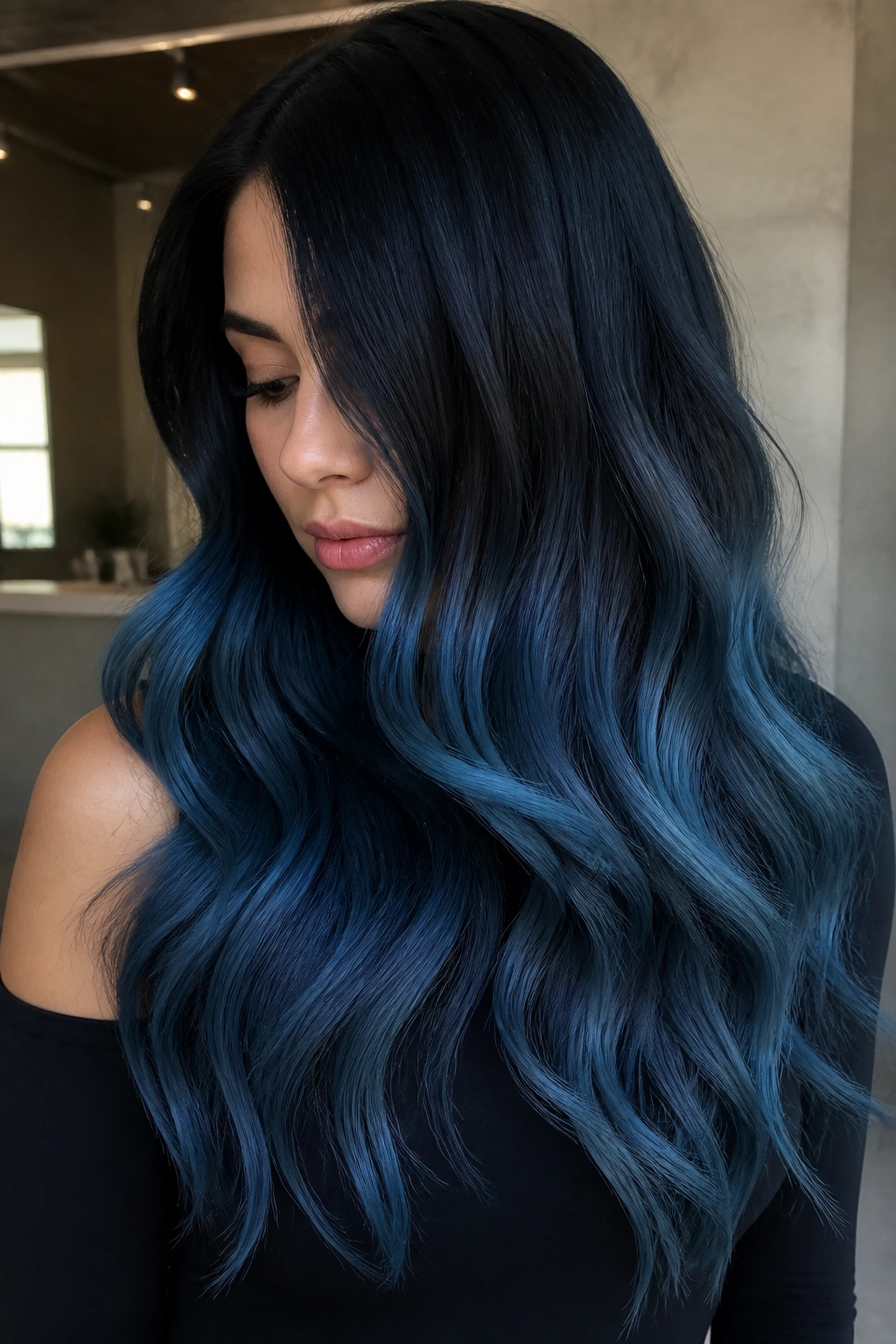
Steel blue is the cool, smoky version of the palette. It sits between navy and gray, which makes it an easy fit for black hair that needs a little edge but not a blast of brightness. On long hair, it looks sleek and a little icy, especially when the finish is smooth.
What keeps this from going flat is the gray undertone. Too much pure blue can look loud, but steel blue has a calmer surface. That makes it useful for layered cuts, where the pieces already bring movement. The color does not need to shout. It just needs to stay clean.
This one looks especially good with silver jewelry and dark clothing, though that sounds fussy and it isn’t. The color does the work for you. If your taste runs toward cool tones and clean lines, steel blue sits in a nice place between subtle and bold.
13. High-Contrast Cobalt on Thick Curls
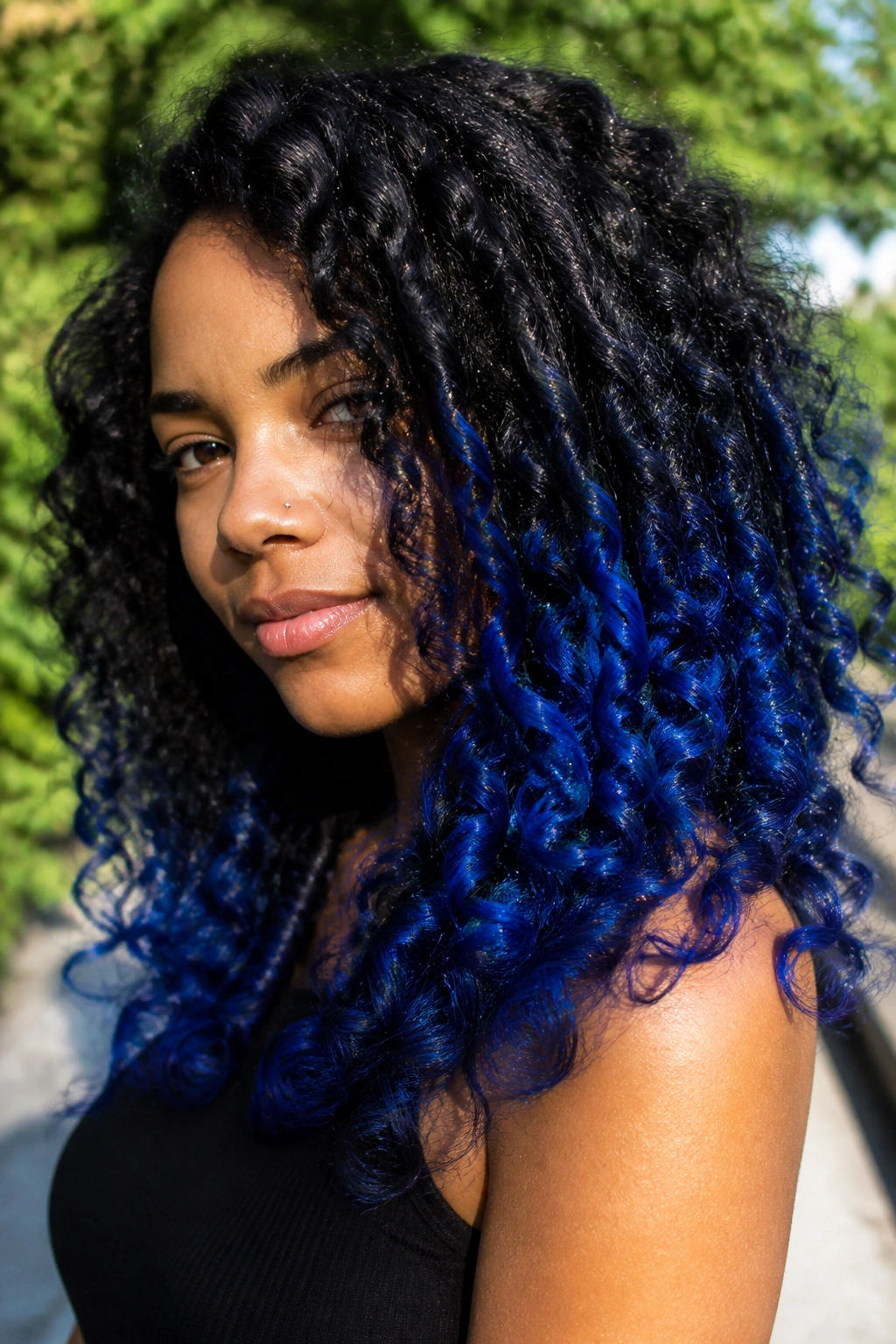
Thick curls can swallow soft color. That’s the problem. The shape is so full that a muted blue disappears into the pattern, especially at the ends. Cobalt fixes that by staying bright enough to survive the curl volume.
What to Ask Your Colorist
Ask for the cobalt to sit on the outer curl surface and the lower 6 to 8 inches. That keeps the color visible without flooding every strand.
- Keep the black base deep and glossy.
- Use stronger color saturation on the ends.
- Let the curls fall in large sections, not tiny ringlets.
- Refresh with a blue conditioner or depositing mask when the shade softens.
The contrast here is the whole point. On long curls, cobalt reads playful but not childish, and that matters. If you’ve ever looked at a dark curly head and wished the color would show more, this is the fix. It’s loud enough to be seen, but the black base still holds the style together.
14. Shadow Root with a Blue Start at Chin Length
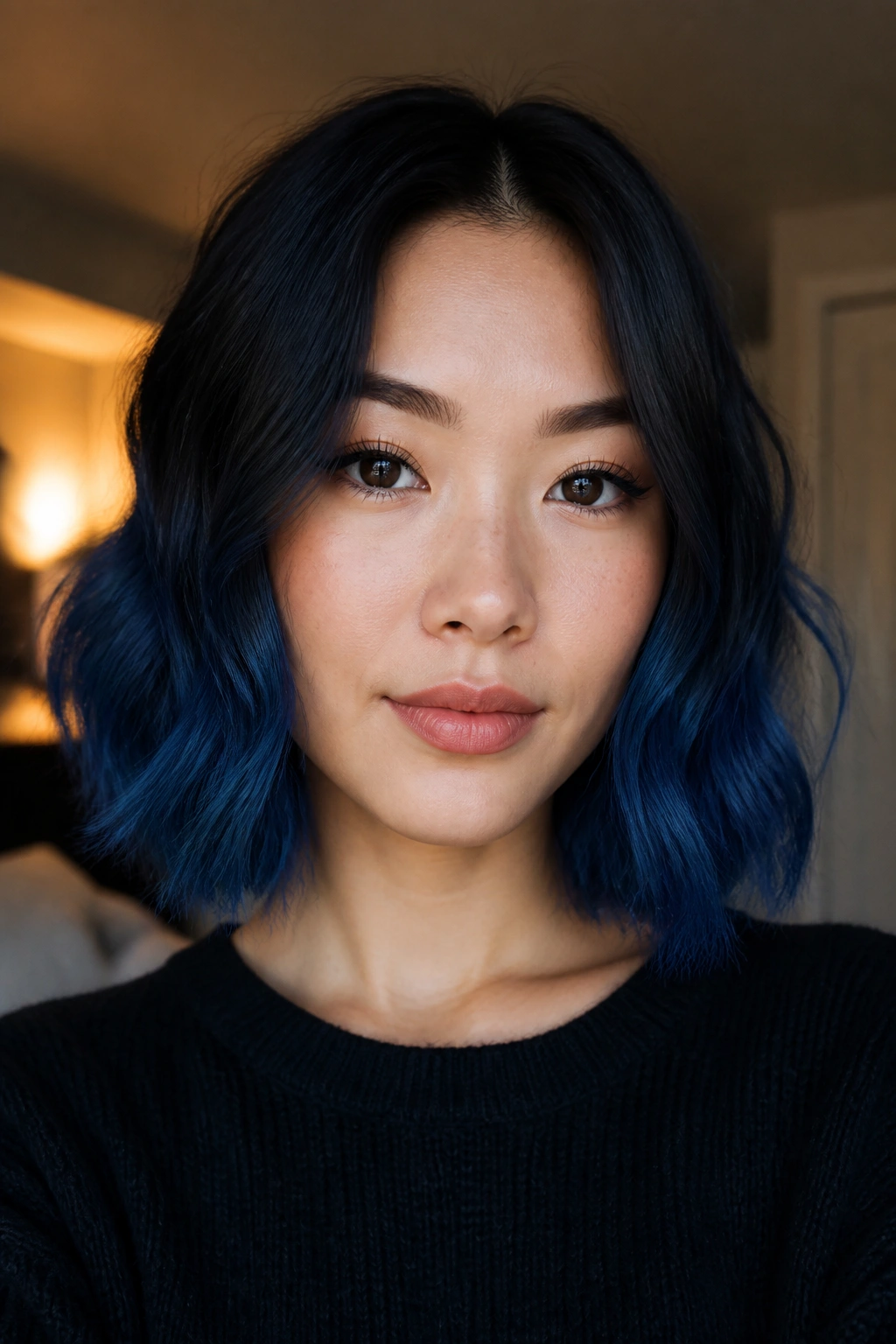
Why push the blue so low? Because sometimes the most flattering ombre starts later than people expect. A shadow root that stays black through the crown and upper lengths gives the eye a clean frame, then the blue begins around the chin or lower jaw and falls from there.
That placement works well on long hair because the fade has room to lengthen. On medium-length hair, it can feel cramped. On waist-length hair, it becomes elegant. The face stays dark and grounded, which can be useful if you like strong eye makeup or bold earrings.
It also buys you a little more grow-out time. The top remains black, so root maintenance is less stressful. If you want a color that feels polished, not fussy, this is a smart route. Nothing flashy about the root. The ends get all the fun.
15. Blue Flame Ends
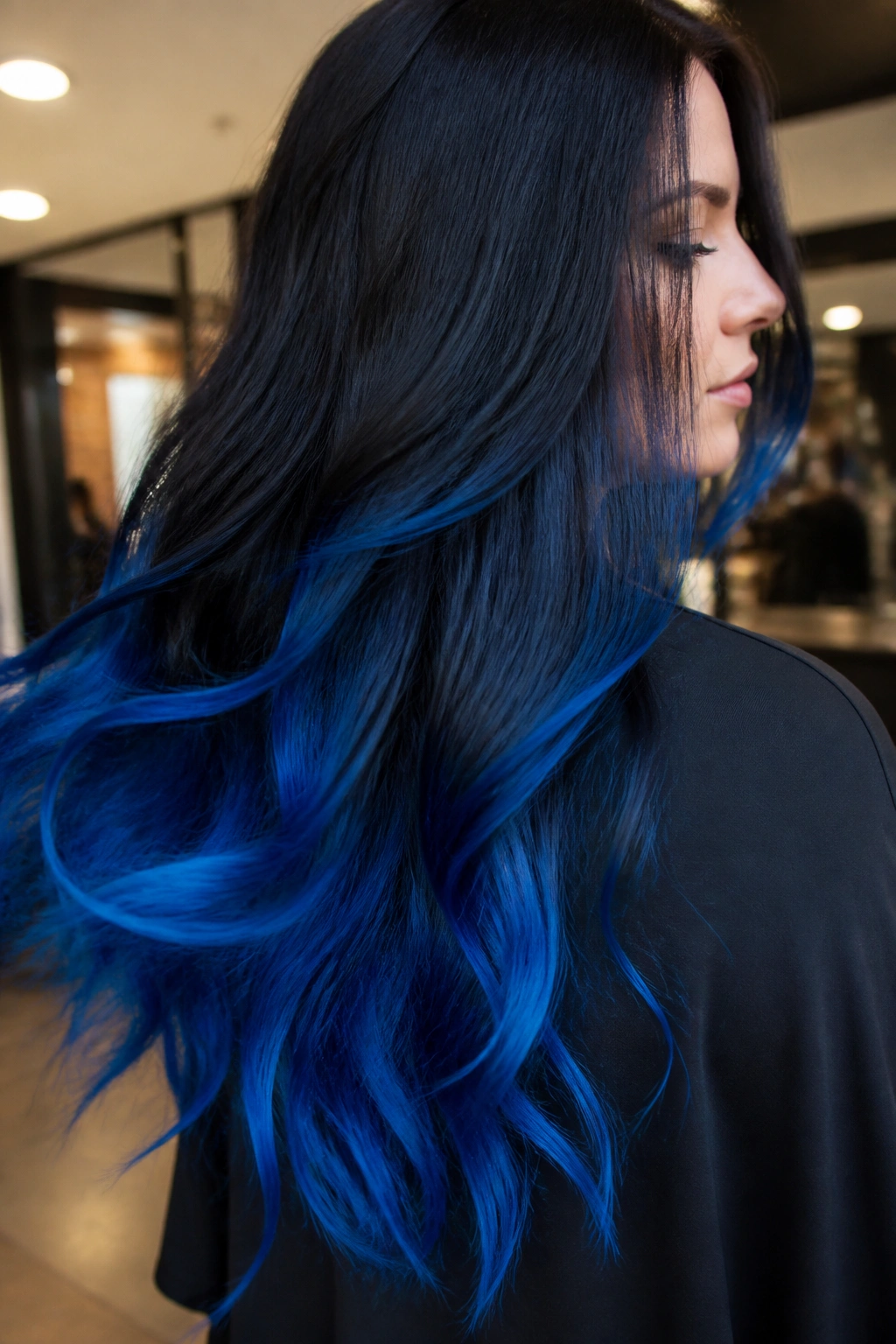
There’s something sharp about blue flame ends. The roots are black, the mids stay dark, and then the last few inches flare into a brighter electric blue that looks almost lit from inside when the hair swings. It is not soft. That is the point.
This idea works best on long hair with movement in the cut. Feathered ends, long layers, or a U-shape can all help the bright blue look active rather than chopped off. If the hair is one length and very heavy, the flame effect can turn stiff.
One of the reasons I like this version is that it gives you a lot of black surface area, which makes the color change feel intentional. Too much blue and the drama gets diluted. Keep the flame at the bottom, and the whole style has more punch.
16. Half-Up Styling with Hidden Blue Underlayers
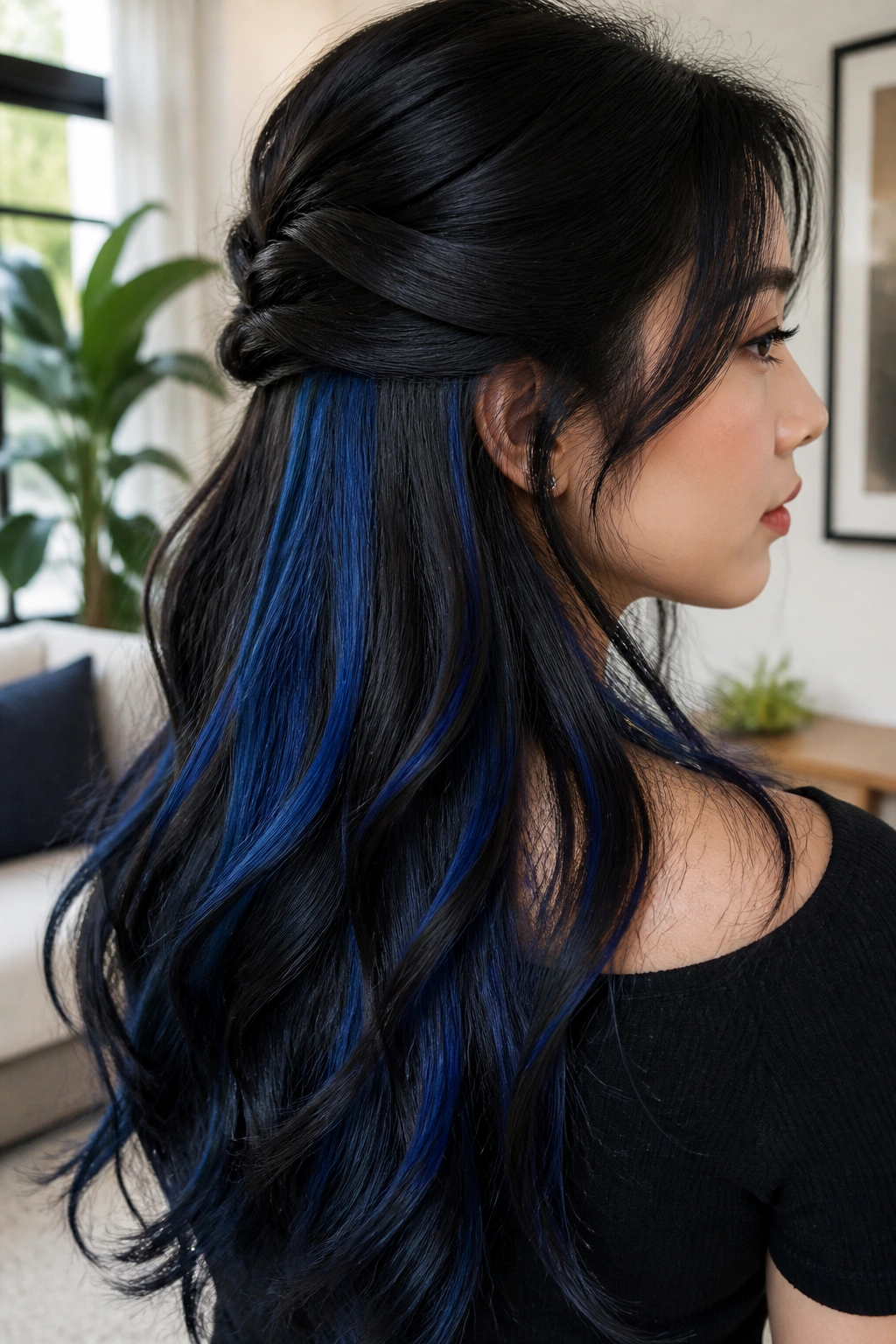
Half-up styles are a sneaky way to wear blue without wearing all of it at once. The top section stays black and smooth, while the lower layers carry the blue ombre. When you pull the crown back, the color beneath gets exposed. When you let it down, it disappears again.
That makes this a strong pick for people who want variety. A messy half bun, a twisted half ponytail, or even a simple clip can change how much blue shows. Long hair is useful here because the lower section has enough length to hang below the top layer and keep the contrast visible.
I would choose this if you already wear your hair up half the week. It’s practical, but it still gives you a little surprise. And if the blue is concentrated around the nape and lower half, the grow-out stays graceful.
17. Deep Indigo with a Silver-Blue Glaze
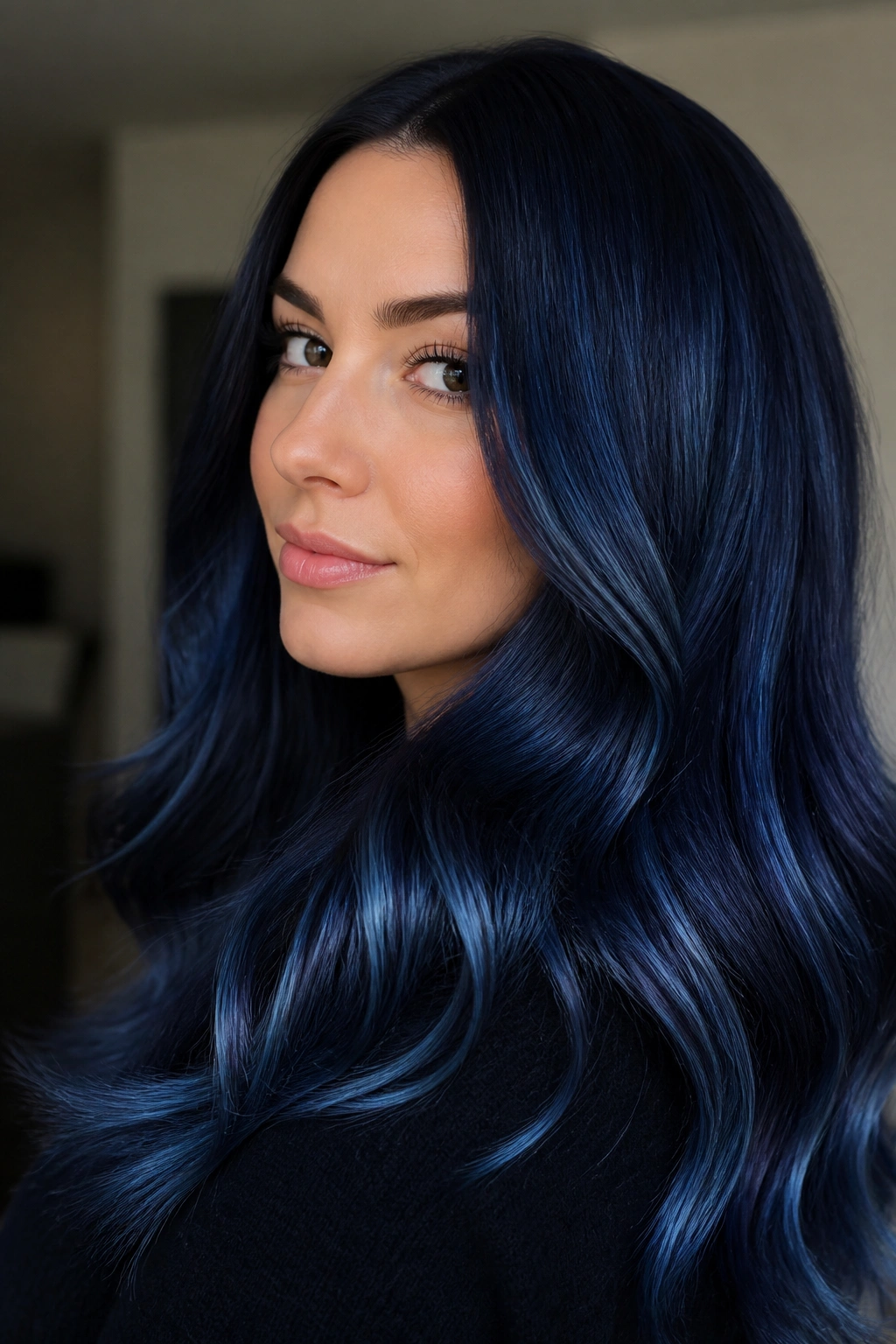
Indigo can look heavy on its own, so a silver-blue glaze keeps it from going dull. The finish adds a cool sheen over the color, which helps long hair look smoother and the blue look cleaner. You do not need a bright, metallic effect. You just need the shade to stay crisp.
This version suits people who like dark clothes, low-key makeup, and hair that feels polished without obvious shine spray. The glaze is what keeps the blue from dropping into flatness after a few washes. It also helps if your hair is porous and tends to grab pigment unevenly.
It’s a smart color choice for long, thick hair because the extra surface area can make indigo feel heavy. The glaze lifts it just enough. Not by much. Enough.
18. Scattered Blue Balayage Through Long Layers
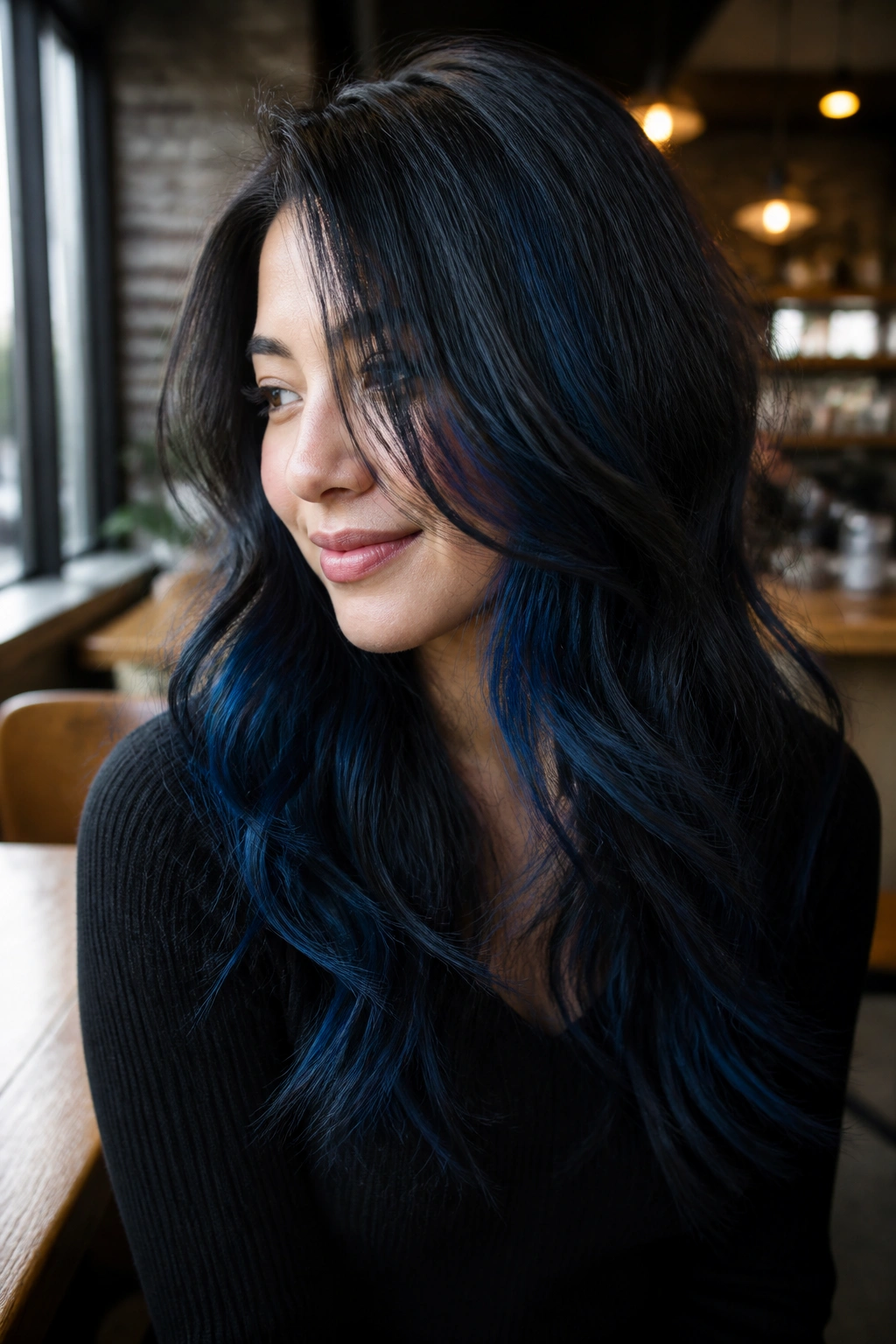
Balanced placement matters more than brightness here. Instead of painting the whole bottom section blue, you scatter the color through the long layers in hand-painted pieces. That lets black and blue move together, which is especially nice if your hair is layered from shoulder blade to waist.
The effect is softer than a hard ombre and less obvious at the roots. That can be a relief if you like low-maintenance color. You still get blue showing through when the hair swings, but it never sits in one obvious block.
This is also one of the easiest ways to keep black blue ombre hair from looking too formal. It has a worn-in feel. Not sloppy. Just relaxed. If you like your color to look like it grew there, scattered balayage is a good fit.
19. Mermaid Waves with a Midnight-to-Ocean Shift
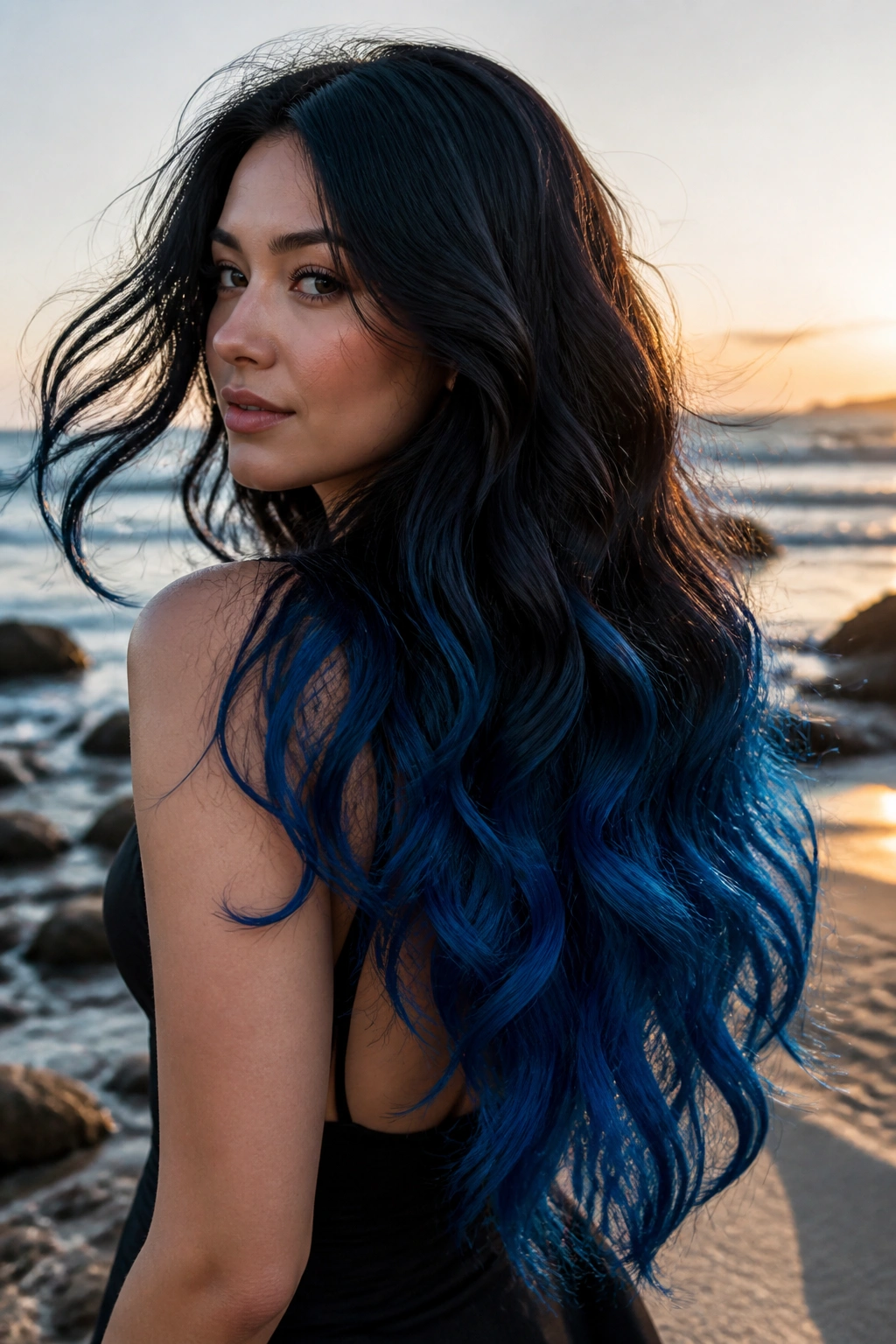
Can black and blue feel almost layered in depth? Yes, if you give the color more than one stop. A midnight-to-ocean shift starts with black at the roots, moves into a deep midnight blue through the lower mids, and then opens into a more open ocean shade at the ends.
How to Style It
Large waves do the best job here. They let each shade show separately without turning the fade into a blur.
If you want this look to read cleanly, ask for:
- A three-zone blend rather than one flat fade
- Blue placed a little heavier on the last 4 to 6 inches
- A soft wave set with a wide iron
- A gloss that keeps the ends from looking dry
This one feels dreamy in long hair because the color has room to change as the lengths drop. It does not need glitter. The movement is enough.
20. One-Side Blue on a Side-Swept Cut
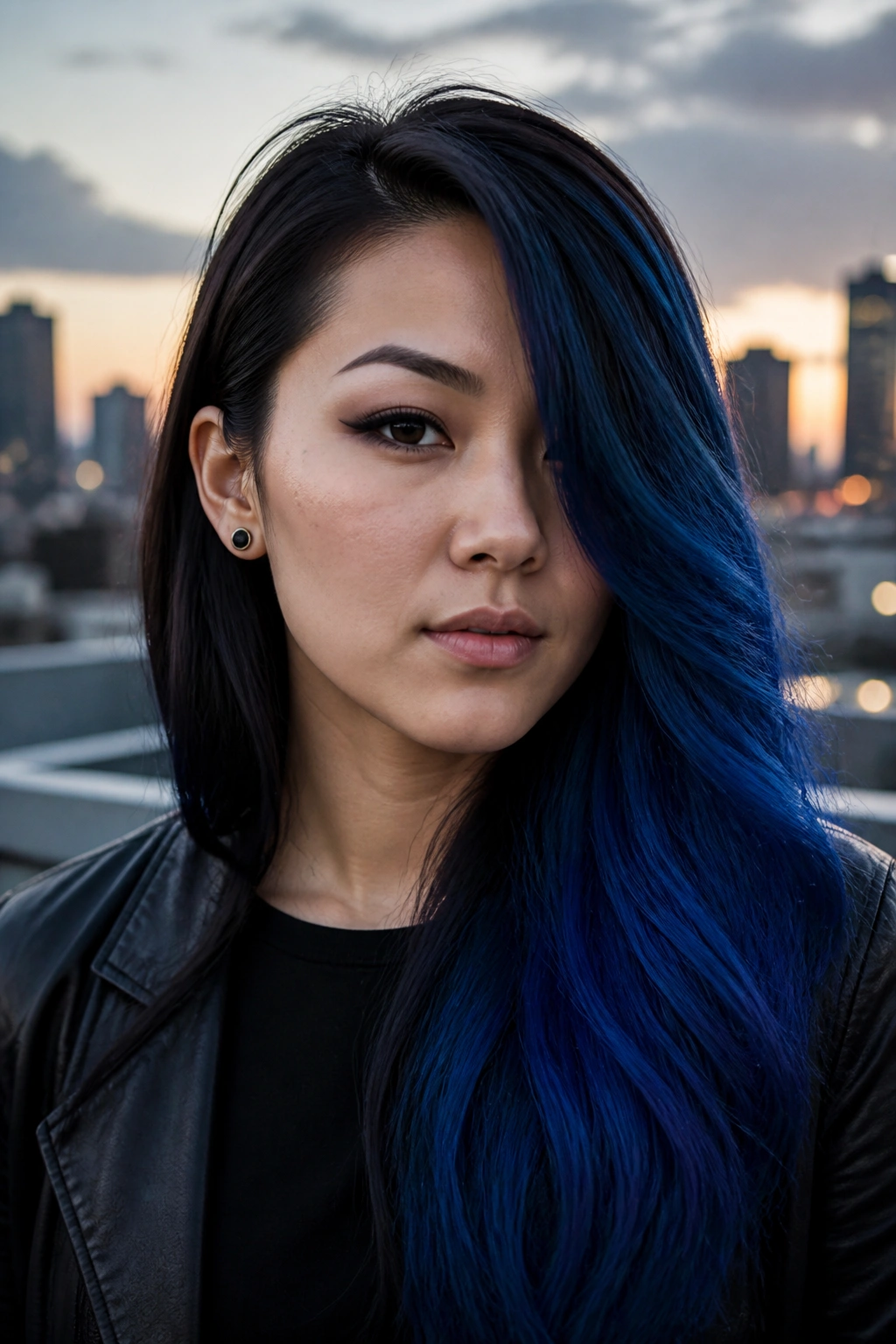
Asymmetry makes color feel fresh fast. With a side-swept long cut, you can keep one side mostly black and let the blue ombre live heavier on the other. That creates a deliberate imbalance that looks bold without needing extra brightness.
The style works because the side part gives the eye a starting point. One side can frame the face in dark hair, while the blue side spills down past the shoulder and into the ends. If you tuck one side behind the ear, the contrast gets even stronger.
I like this for people who get bored easily. It is not a safe haircut-color combo. Good. It has enough structure to stay wearable, but the placement keeps it from feeling flat. On long hair, the side-swept shape gives the blue something to lean against.
21. Sleek Navy-to-Cobalt on Waist-Length Hair
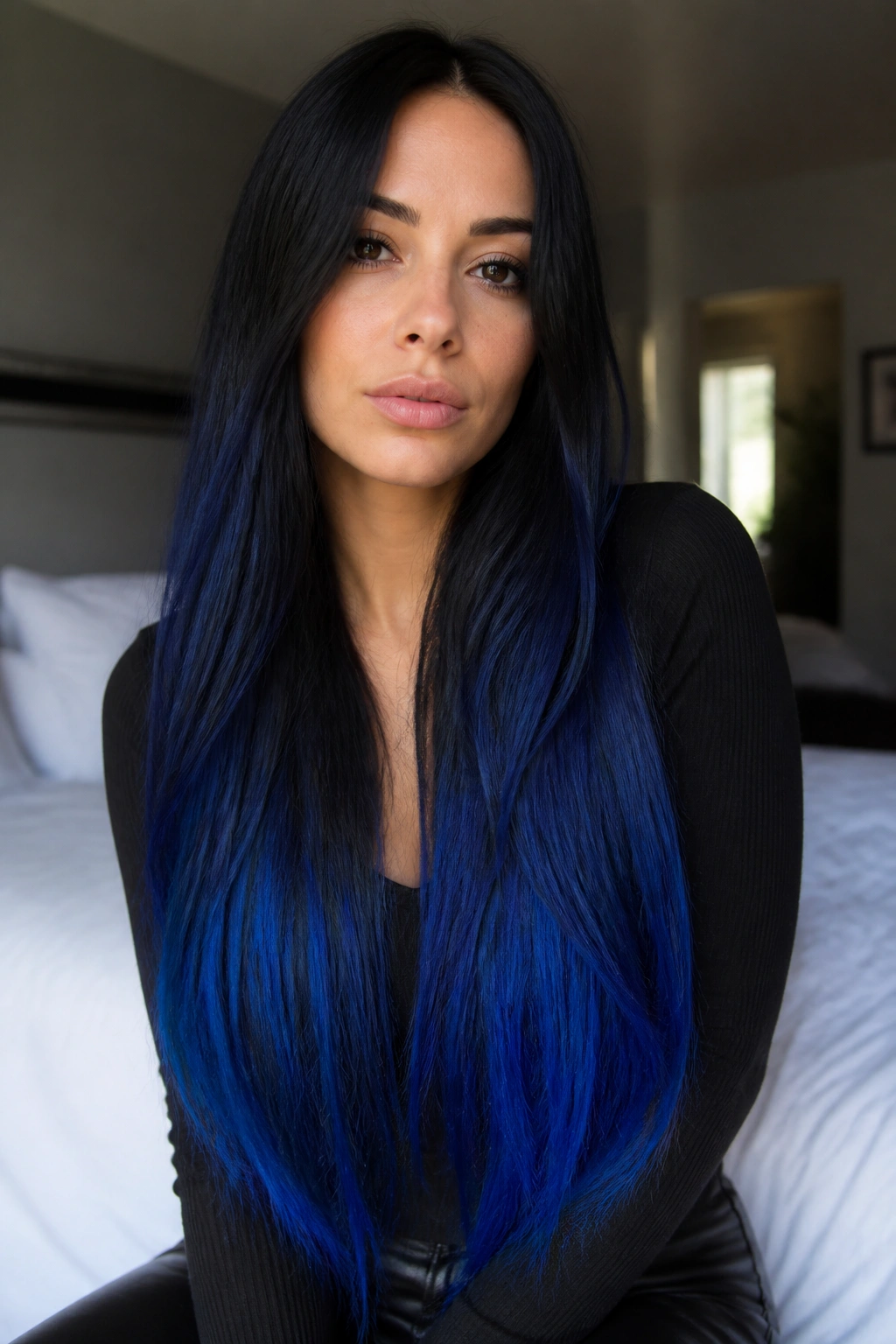
Straight, waist-length hair is the place where gradient work really shows. The change from navy to cobalt can stretch over a long section, and that slow transition keeps the color from looking abrupt. Black at the top, navy through the middle, cobalt at the bottom. Clean. Controlled. Easy to read.
How to Ask for It
Tell the stylist you want a long blend zone with no hard line around the ribs or waist. That matters more than the actual blue tone.
A few notes help:
- Keep the root area glossy black
- Let navy hold the middle third
- Brighten the bottom 6 to 8 inches to cobalt
- Finish with a flat iron or polished blowout for the cleanest read
This is one of the sharpest black blue ombre hair ideas for long hair because it takes advantage of sheer length. The longer the canvas, the better the fade looks. Short hair can’t stretch this effect the same way.
22. Outer-Layer Blue on Big Curls
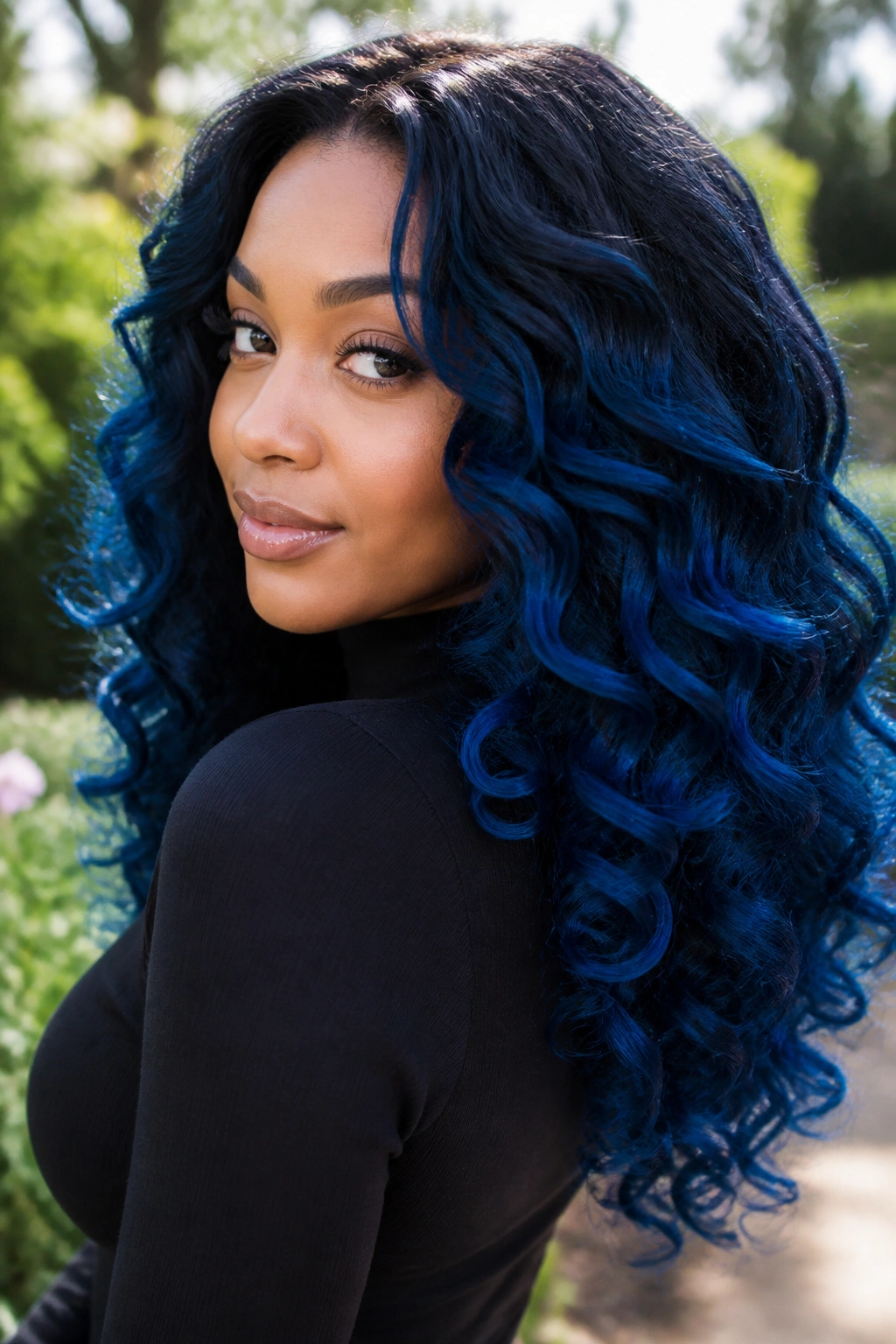
Big curls can hide color in the middle of the curl pattern, so the smartest move is to place the blue on the outer layer. That way, the shade sits where the eye actually lands. On long curly hair, this keeps the blue visible even when the curls shrink up a bit.
The black base stays underneath and around the crown, which gives the color a deep backdrop. The blue then appears across the tops of the curls and lower ends, like highlights that traveled downward. It is a much cleaner look than trying to flood every curl with pigment.
If your curls are coarse, this method is especially useful. The texture grabs light in chunks, and the blue shows better when it has surface placement. It feels deliberate. It looks deliberate. That matters.
23. Braided Ribbon Color in Long Black Hair
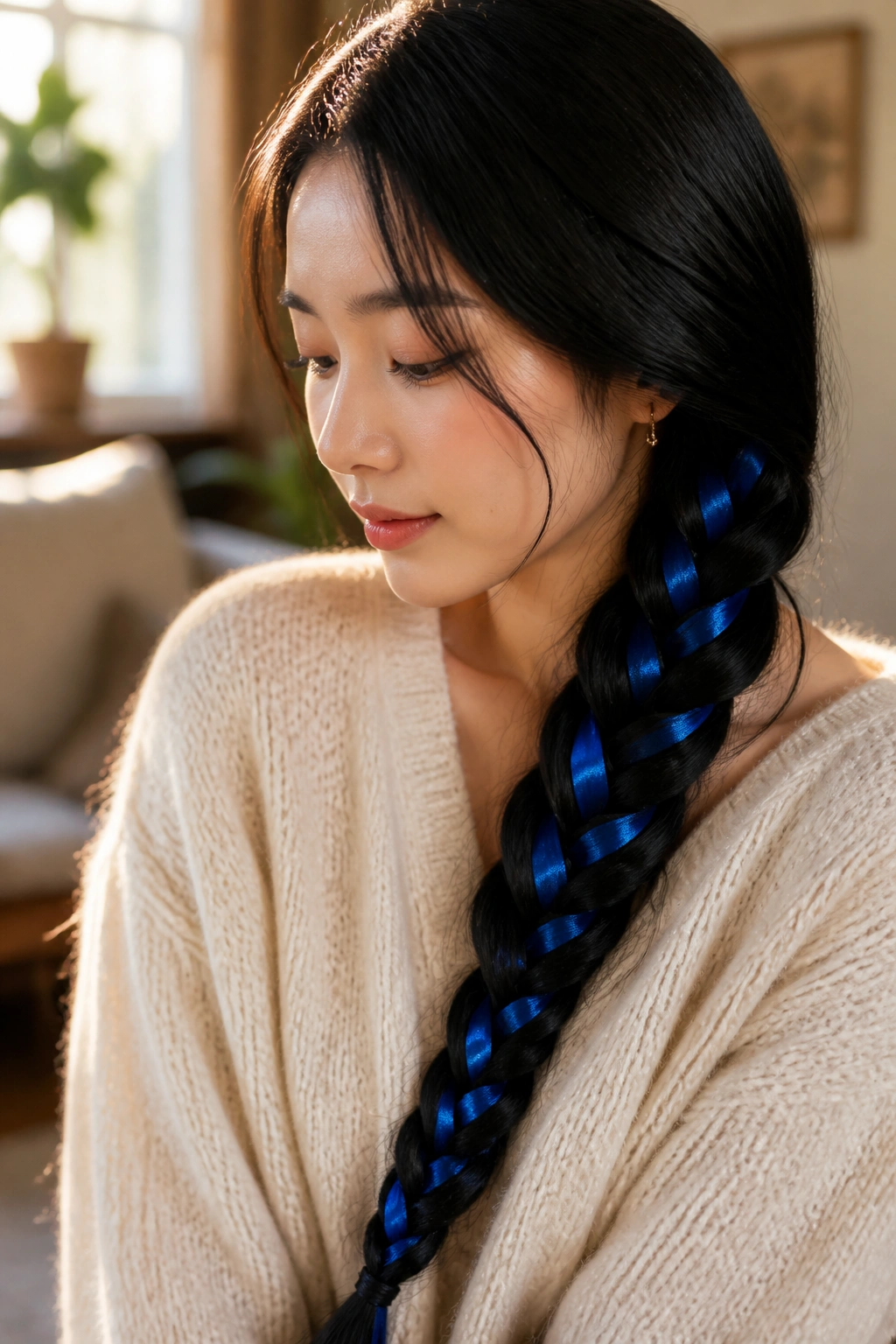
Braids turn ombre into pattern. A fishtail braid, rope braid, or even a loose three-strand braid can split black and blue into narrow ribbons that look much more detailed than they do when the hair hangs loose. On long hair, that effect goes on for ages, which is the fun part.
The color placement should be slightly uneven for this one. If every section has the same amount of blue, the braid can look striped in a stiff way. If the blue is heavier near the lower third and a little lighter through the middle, the braid looks dimensional.
This is the version I’d choose if you wear braids often or want your color to change shape a lot. It photographs differently every time you twist it. And that’s half the point.
24. Black, Navy, and Cobalt in a Three-Step Fade
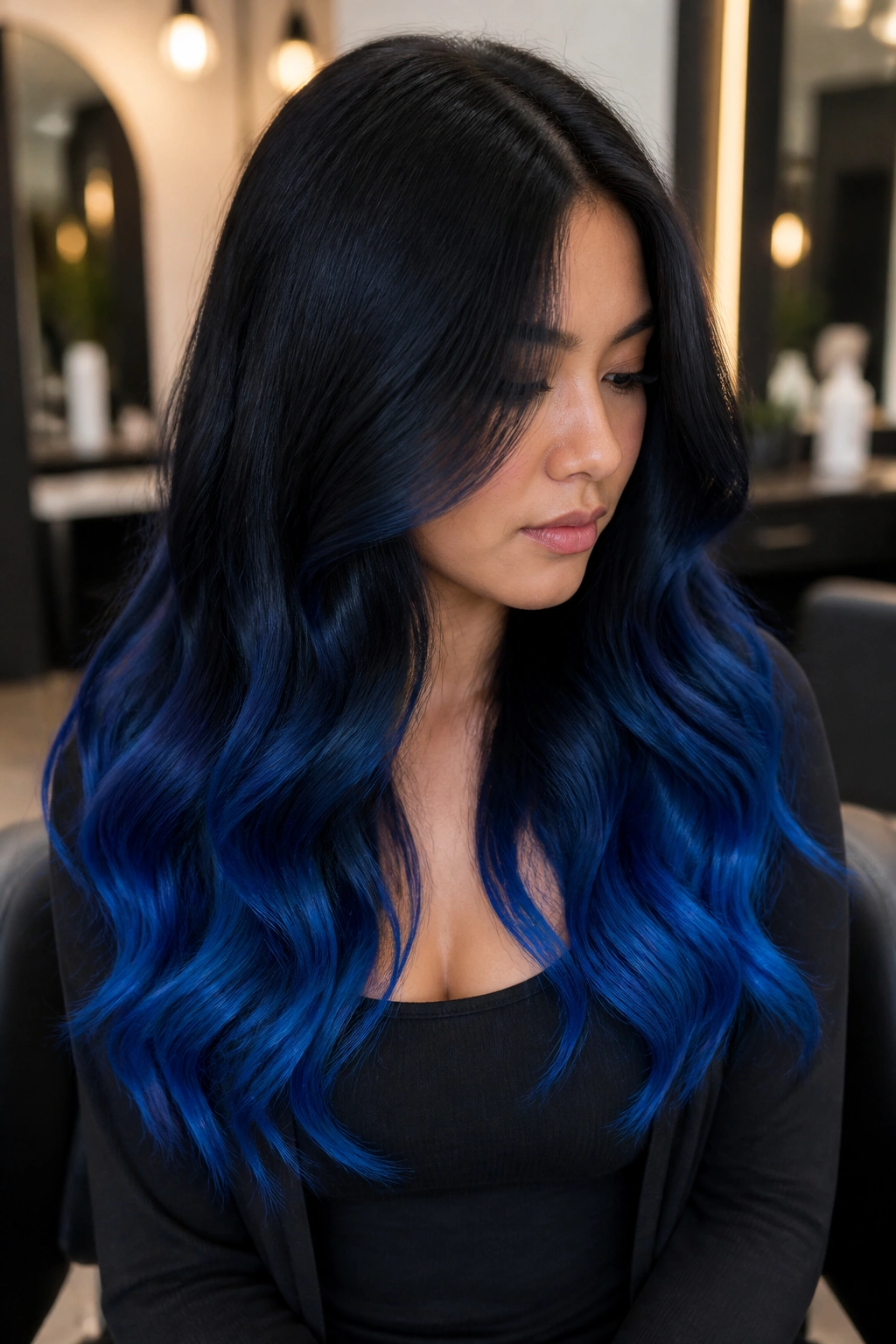
A three-step fade solves a common problem: the jump from black to bright blue can be too abrupt. By inserting navy in the middle, you get a softer bridge. The result is cleaner, especially on extra-long hair where a two-tone fade can otherwise look broken.
This is the most polished option in the group. It feels planned because each shade has a job. Black anchors the top, navy handles the blend, and cobalt finishes the lengths with energy. If your hair is very long, the transition can span most of the torso and still read as one idea.
I’d recommend this to anyone who wants a salon look with a little more structure. It is not the most casual style on the list, but it might be the easiest one to live with because the middle shade hides any awkward shift.
25. The Tailbone-Length Cascade
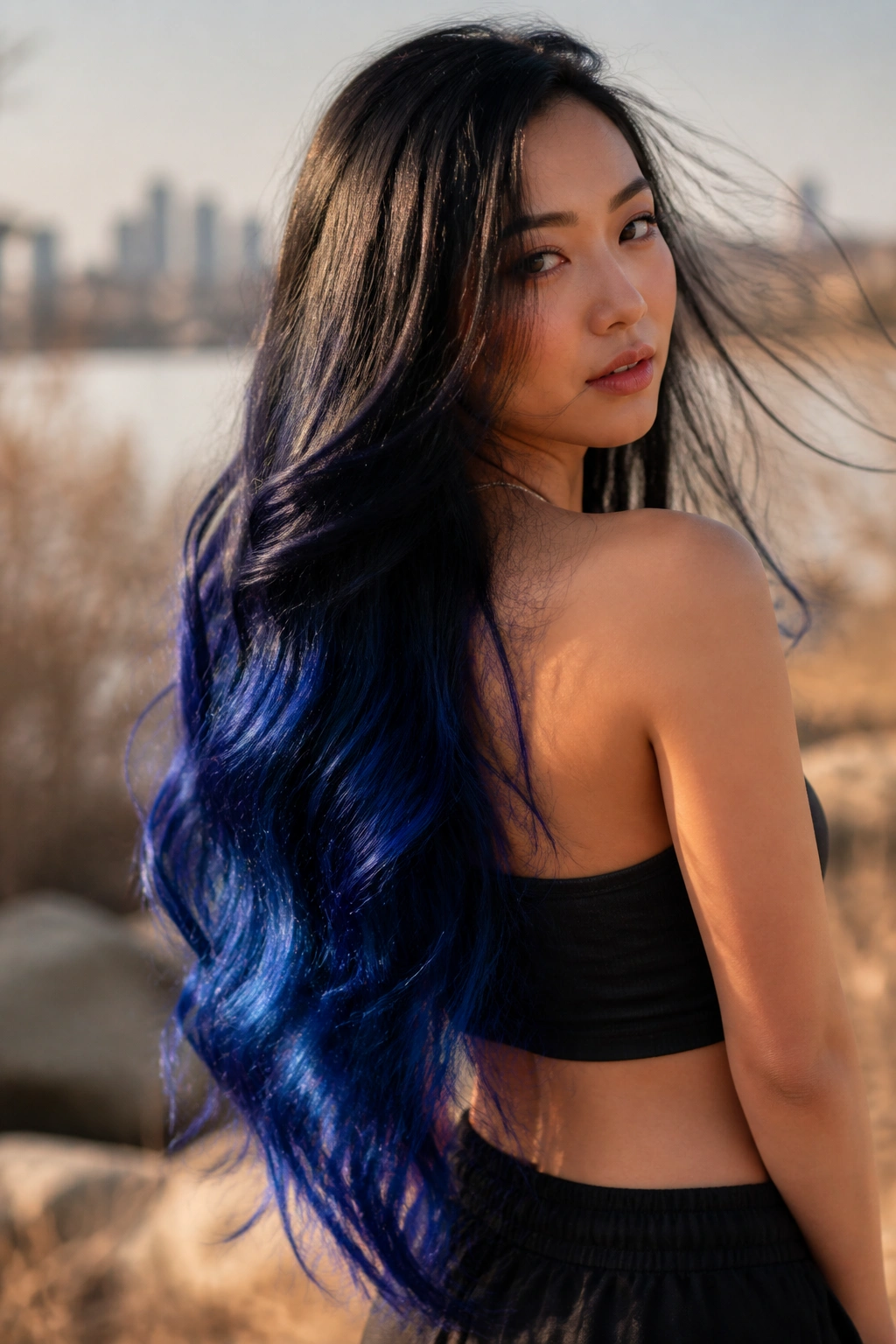
When hair reaches the tailbone or lower, black blue ombre stops looking like a simple color change and starts looking like a full visual line. The lengths give the blue room to stretch, and that extra distance keeps the fade from feeling crowded. A long cascade can hold a dark root, a deep navy middle, and a cooler blue finish without losing shape.
This is the one I’d save if you want the color to feel dramatic in motion rather than loud in a still photo. Wear it loose, and the blue appears in a slow reveal. Put it in a low braid, and the ombre turns into a dark and bright rope. Even a basic low ponytail changes the whole mood.
If you’re showing a colorist reference pictures, bring three: one for shade, one for blend height, and one for finish. That tiny bit of planning saves a lot of disappointment later. A black blue ombre on long hair has room to be subtle or sharp, and the best version is the one that fits how you wear your hair, not how it looks in a single salon chair moment.
