



Long hair gives black and red ombre room to breathe. On a short cut, the color shift can feel abrupt. On waist-length hair, the fade has space to stretch, soften, and pick up light in a way that looks deliberate instead of loud.
That’s why black red ombre hair ideas for long hair keep showing up in salons and on inspo boards. The dark root keeps the style grounded, while the red can go cherry, burgundy, merlot, ruby, or something closer to a burnt wine shade depending on how much contrast you want. A little shade change makes a huge difference here. A deep red melt can look moody and expensive. A bright crimson dip-dye can feel sharper and more rebellious.
Red does fade faster than black, though, and that matters. If you want the color to stay rich between appointments, placement is half the battle. Put the red lower, and you buy yourself a little more time. Push it higher toward the mid-lengths, and the whole look reads bolder from across the room. Same palette. Very different attitude.
The trick is matching the shade and the placement to the way your long hair actually moves. Loose waves show a blend. Straight hair shows a line. Braids split the color into ribbons. Curls make the red feel deeper and more dimensional than it does in a flat photo. That’s where the fun starts.
1. Jet Black Roots with Cherry Red Ends
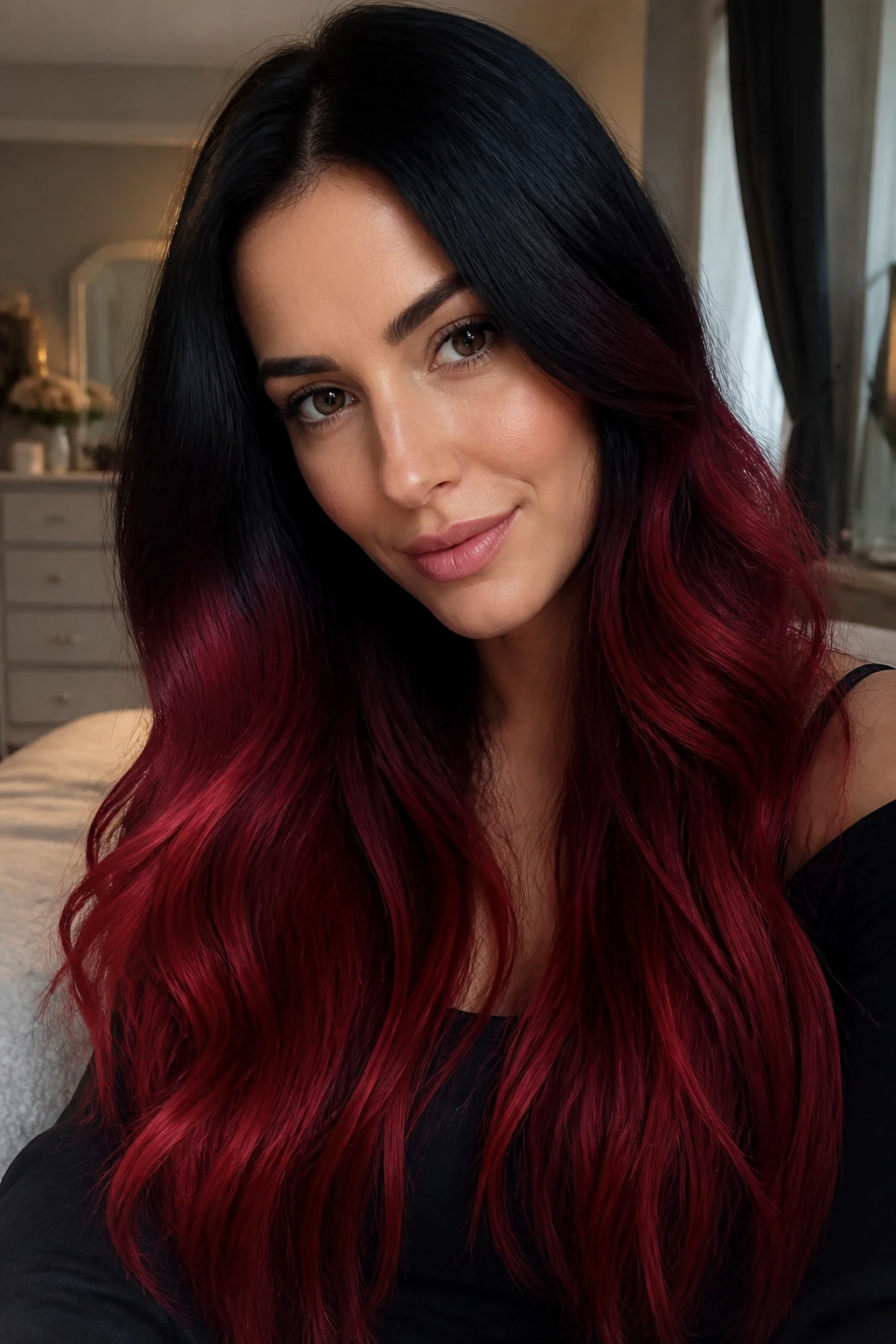
Jet black roots with cherry red ends are the cleanest place to start if you want black red ombre hair that makes sense on long hair without asking for a dramatic leap. The contrast is strong, but the red stays juicy instead of neon, so the whole thing reads polished rather than costume-y. On hair that falls past the chest, the red has room to pool at the ends and show off movement.
Why it works on long hair
Long hair gives the fade a natural runway. The black can stay dense through the top half, then ease into cherry around the lower third, where the ends already take the most visual weight. That makes the color shift feel smoother.
Best on:
- Straight hair with a blunt finish
- Soft waves that show off the red tips
- Layered cuts that need more movement at the bottom
Ask for: a true cherry red, not a red that leans orange. That small difference changes the whole vibe.
A tiny trim every so often helps too. Red on dry, frayed ends looks tired fast, and long hair shows that damage more than short hair does.
2. Deep Black to Burgundy Melt
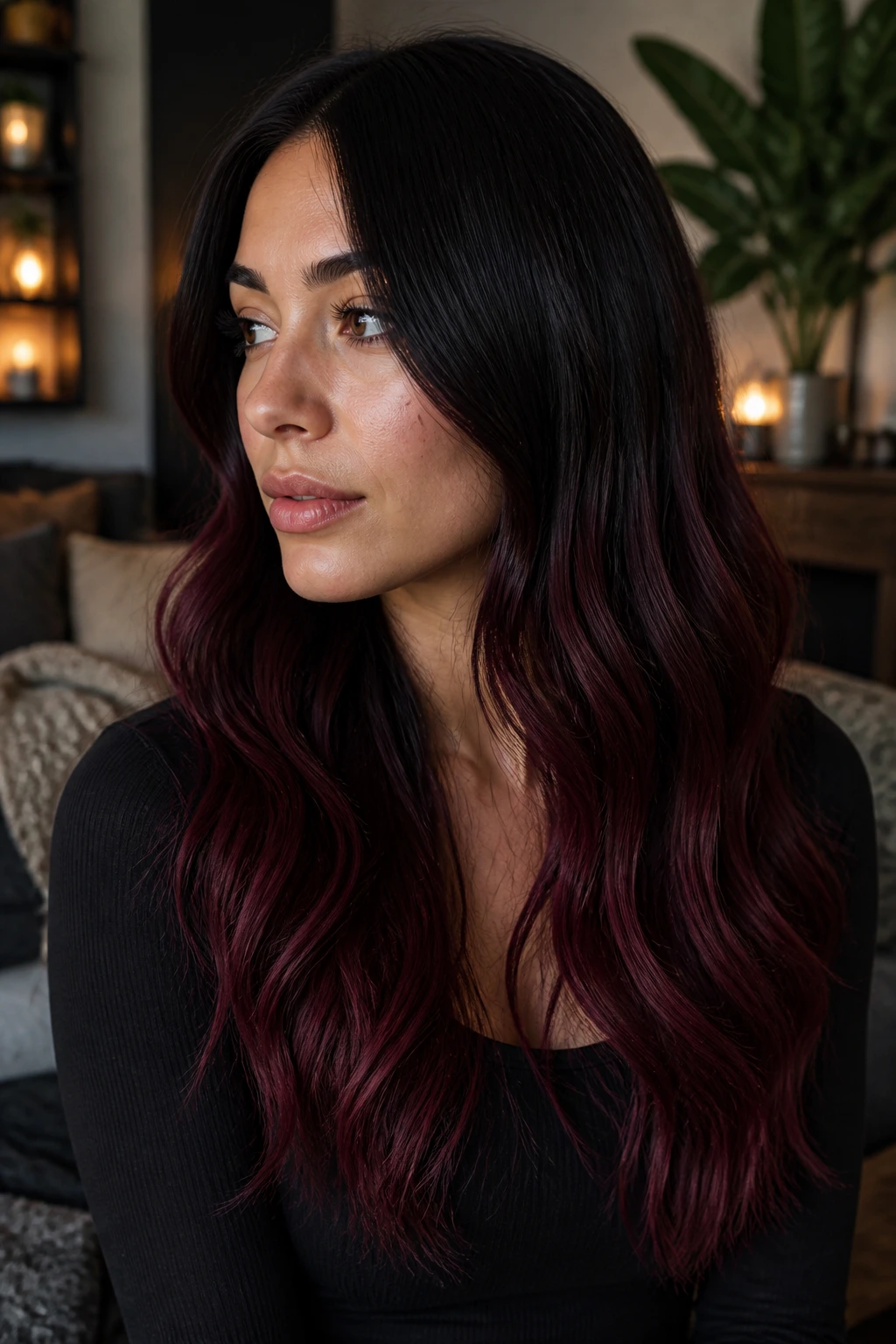
Burgundy is the shade I reach for when someone wants black and red, but not a sharp pop of red. It sits lower on the spectrum, with that wine-dark tone that looks almost black indoors and then turns velvety in daylight. On long hair, that color depth is the whole point.
The melt matters here. A hard line between black and burgundy can feel harsh. A slow transition from root to mid-length to end gives the look its weight. That’s especially nice on thick hair, where the color can disappear if the red is too bright and too narrow.
This version is also easier to wear day to day. Burgundy doesn’t fight with makeup or clothes the way a fire red sometimes does. It works with gold jewelry, silver jewelry, black clothes, denim, and those oversized sweaters that make hair look even longer than it is. Easy choice. Good payoff.
3. Black Red Ombre Hair with Ruby Balayage Ribbons
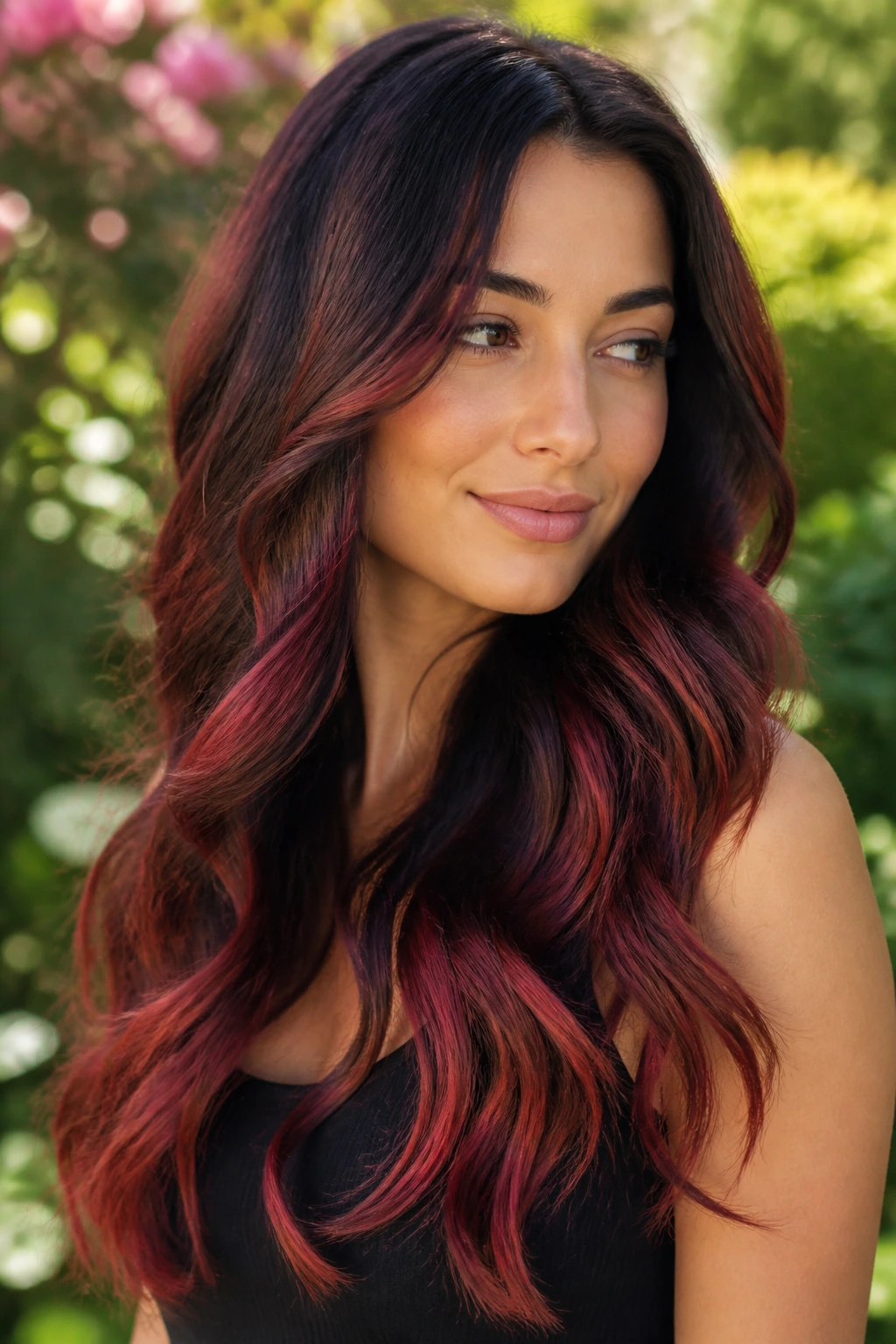
Do you want the red to feel woven into the hair instead of sitting on top of it? Ruby balayage is the answer. It gives long hair a more hand-painted look, where the red appears in ribbons through the mid-lengths and ends instead of dropping in a blunt sheet.
How to wear it
This style makes the most sense on layered hair, because the different lengths catch the ruby pieces at different angles. Wavy hair helps too. The bend in the wave lets the red flash in and out, which keeps the whole look from getting flat.
A few things make this version easier to live with:
- Keep the ruby pieces concentrated on the outer layers
- Leave the crown darker for contrast
- Ask for soft placement around the face if you want the color to show when you tuck your hair back
It’s a smart pick if you like red but don’t want every strand shouting for attention. Ruby has range.
4. Black Hair with Crimson Dip-Dyed Tips
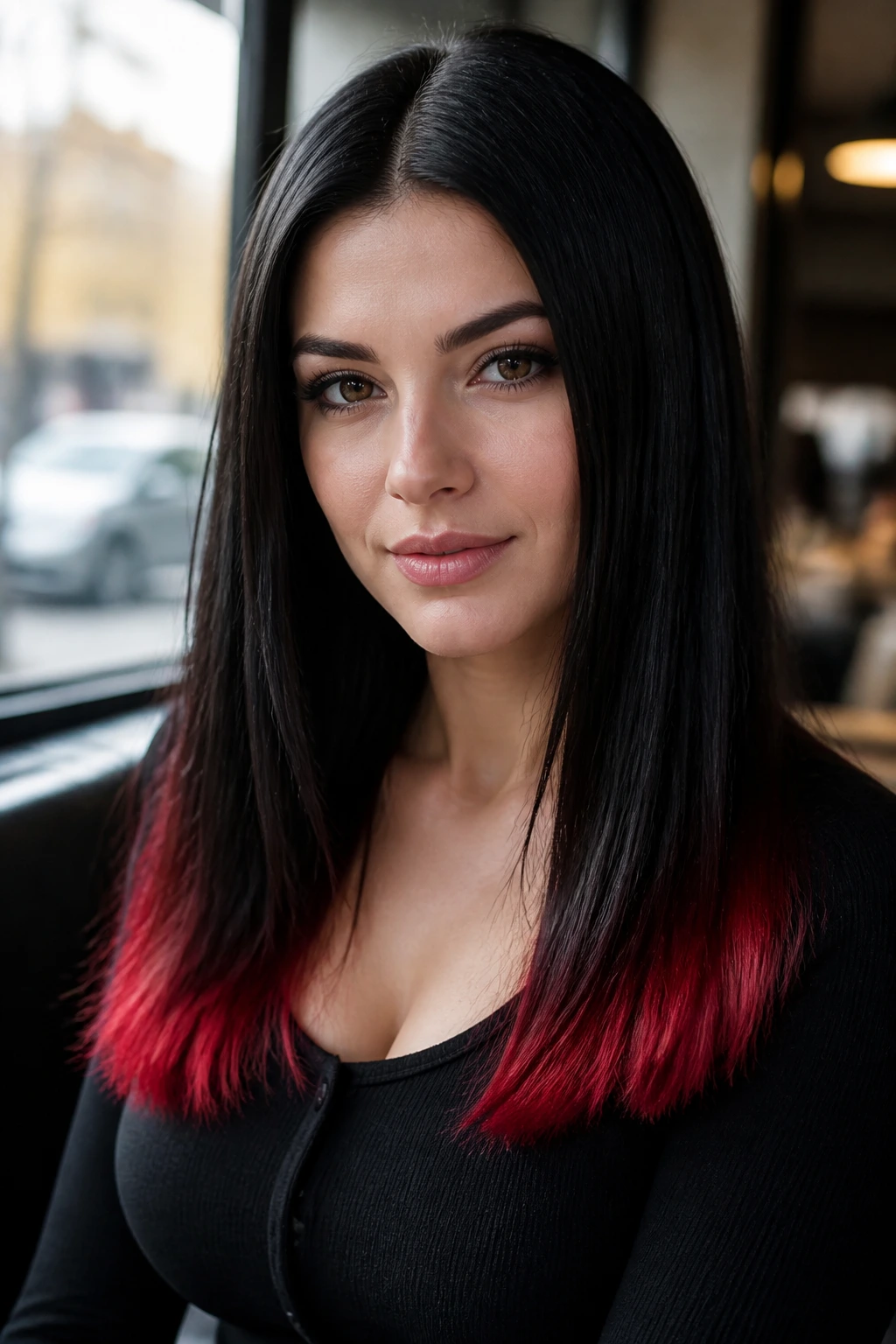
Crimson dip-dye tips are for the person who wants the ends to do the talking. The black stays almost untouched, then the red lands in a clearer, more obvious block at the bottom. On very long hair, that can look sharp in the best way because the color has enough length to feel intentional, not random.
I like this on straightened hair or hair that’s been blown out smooth. You get a crisp edge where the red starts, and that edge becomes part of the style. Curls can soften it later, but the base look stays bold.
One caution: crimson is bright enough to show every dry end. If your hair has a rough bottom inch, trim first or the color can make the damage look louder than it is. No one wants that.
Good fit for:
- Thick hair
- High-contrast styling
- People who like a graphic finish
5. Wine Red Ombre on Soft Layers
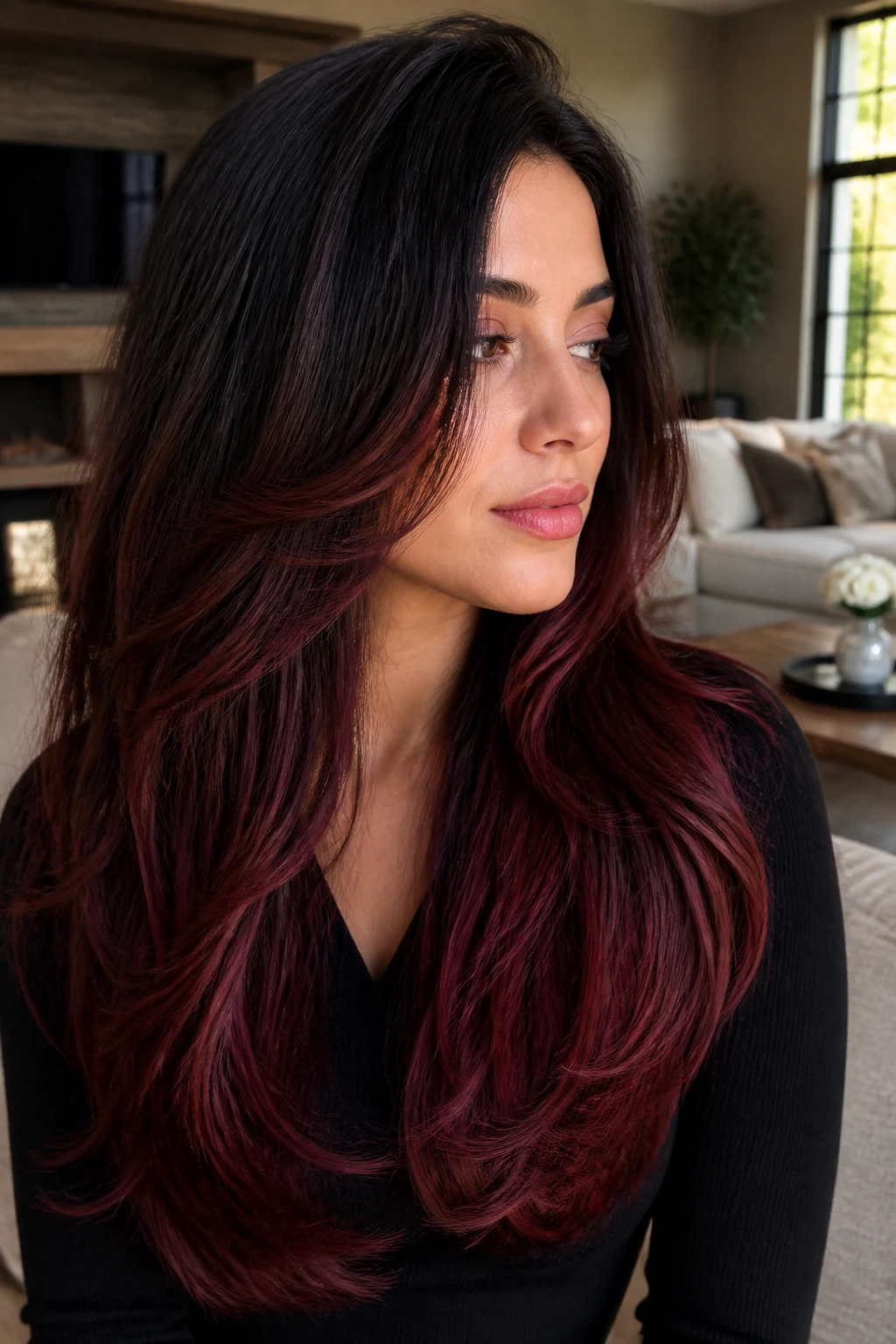
Wine red on soft layers has a quieter mood than cherry or crimson, and that’s exactly why it works. The layers keep long hair from feeling heavy, and the wine tone gives the ends a deep, brushed-velvet look instead of a sharp flash. It feels expensive without trying too hard. Which is rare, honestly.
This is one of those colors that changes personality with styling. Air-dried waves make it feel relaxed. A round-brush blowout makes it look fuller and richer. Straight hair shows the color depth in a more direct way, almost like a dark stain in fabric.
If you usually wear your hair down, this is a very safe place to land. It won’t fight with your skin tone the way some brighter reds can, and it tends to age well between salon visits. The grow-out is softer, too.
6. Black and Dark Cherry on Face-Framing Layers
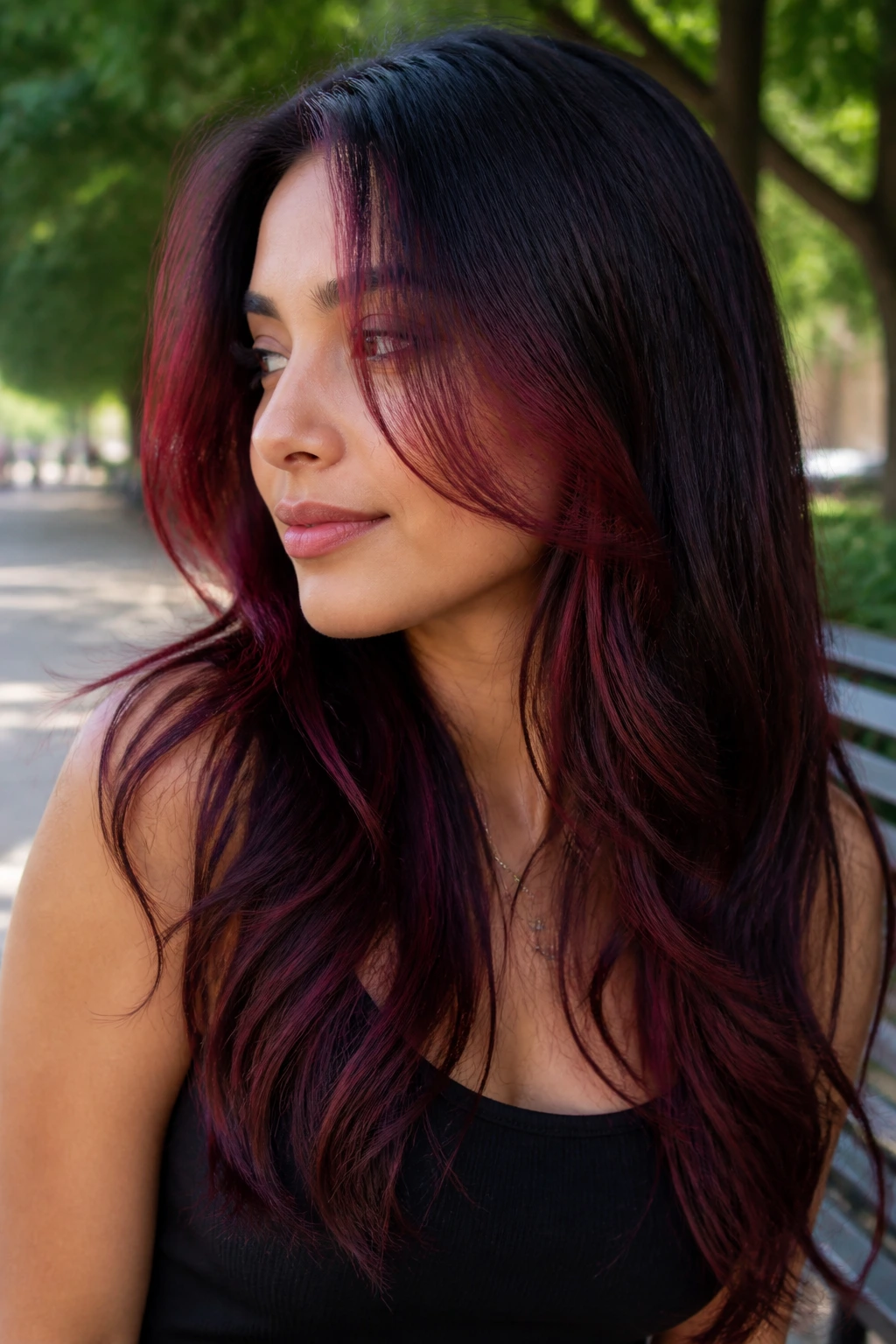
Face-framing layers change everything here. Instead of sending all the red to the bottom, this look brings dark cherry forward around the cheekbones and jawline, then lets the rest of the length fall into a deeper ombre. It’s a smarter version of red on long hair because it puts the color where people actually see it first.
Unlike a full-end fade, this one does a better job of shaping the face. The red pieces near the front can soften a sharp jaw, warm up a pale complexion, or just make straight hair feel less severe. It’s still dark. Still moody. Just a little more awake.
What makes it different
The front pieces carry the drama. The back stays grounded.
That’s useful if you wear your hair in a middle part, because the red framing reads from both sides without needing a huge color commitment everywhere else. I’d ask for the cherry to stay rich and shaded, not bright and flat. The difference shows most when the hair moves.
7. Sleek Straight Hair with Scarlet Ends
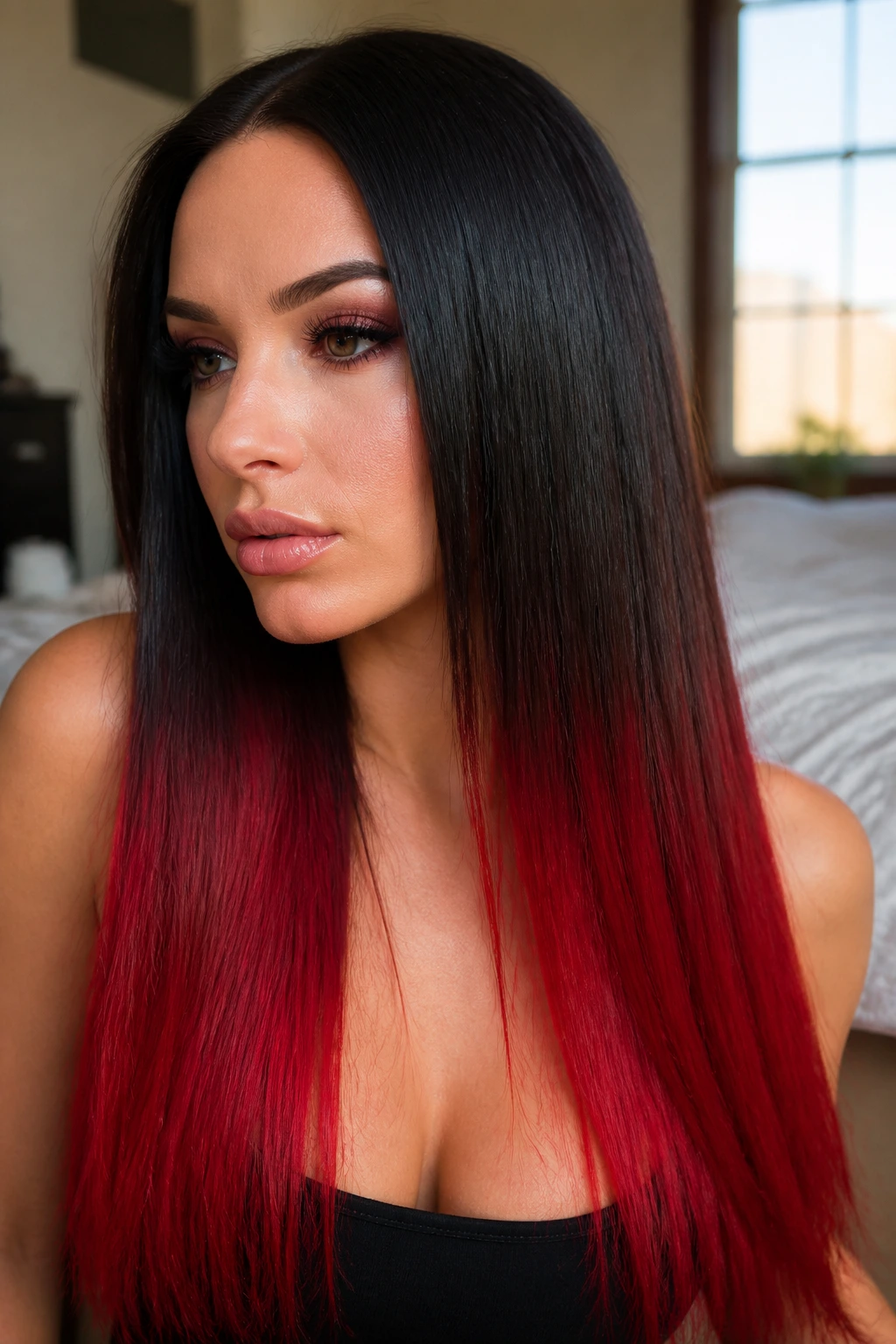
This one is all attitude. On pin-straight long hair, scarlet ends create a clean line that looks almost architectural. The black top half acts like a frame, and the red lands hard at the bottom in a way that feels sharp instead of blended.
Best details to request
- Keep the root area near-black for maximum contrast
- Start the red lower if you want a more wearable finish
- Use a gloss after coloring so the scarlet reads shiny, not dry
- Ask for a smooth transition if your hair is thin, because thin hair can show every step in the fade
The appeal here is the simplicity. No soft cloud of waves. No hidden dimension. Just long hair, a dark base, and a red end point that says exactly what it means. If you like structured clothes, blunt cuts, or heavy eyeliner, this style sits right in that lane.
8. Black to Mahogany Ombre for a Softer Result
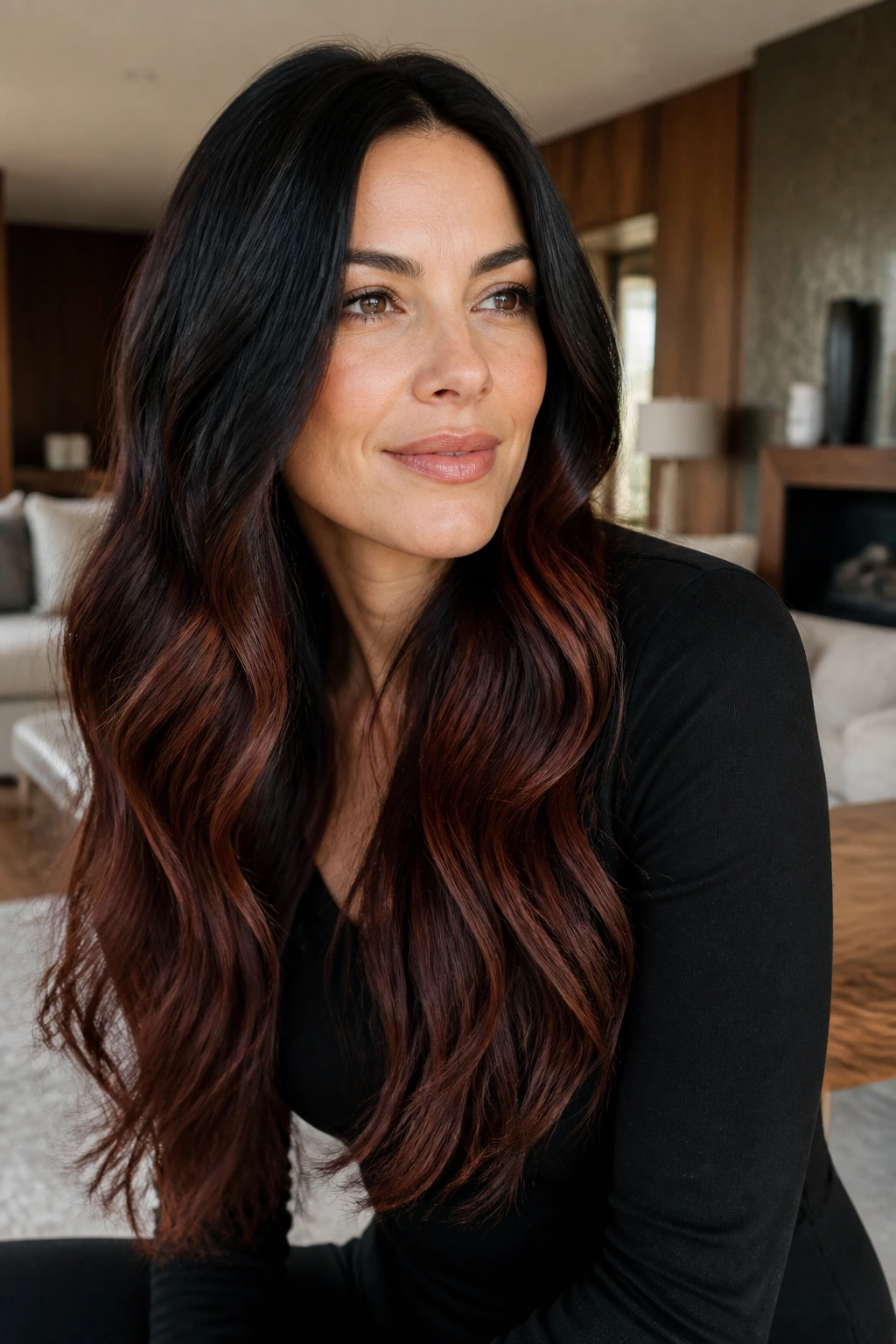
Want red without the sharp brightness? Mahogany is the quieter answer. It leans brown-red, which keeps the look rich and wearable while still giving long hair enough color movement to feel finished. On darker bases, mahogany can almost read as a low light until sunlight hits it.
This is one of the easiest black red ombre hair ideas for long hair if you’re nervous about upkeep. The grow-out is gentle, and the shade doesn’t scream for constant refreshes. It also works nicely on layered cuts because the brown-red tone moves in and out of shadow instead of sitting there like a block.
If you wear a lot of black, cream, camel, or denim, mahogany fits the wardrobe instead of fighting it. That may sound minor. It isn’t. Hair that works with your clothes gets worn more, and that’s the point.
9. Garnet Ombre on Waist-Length Curls
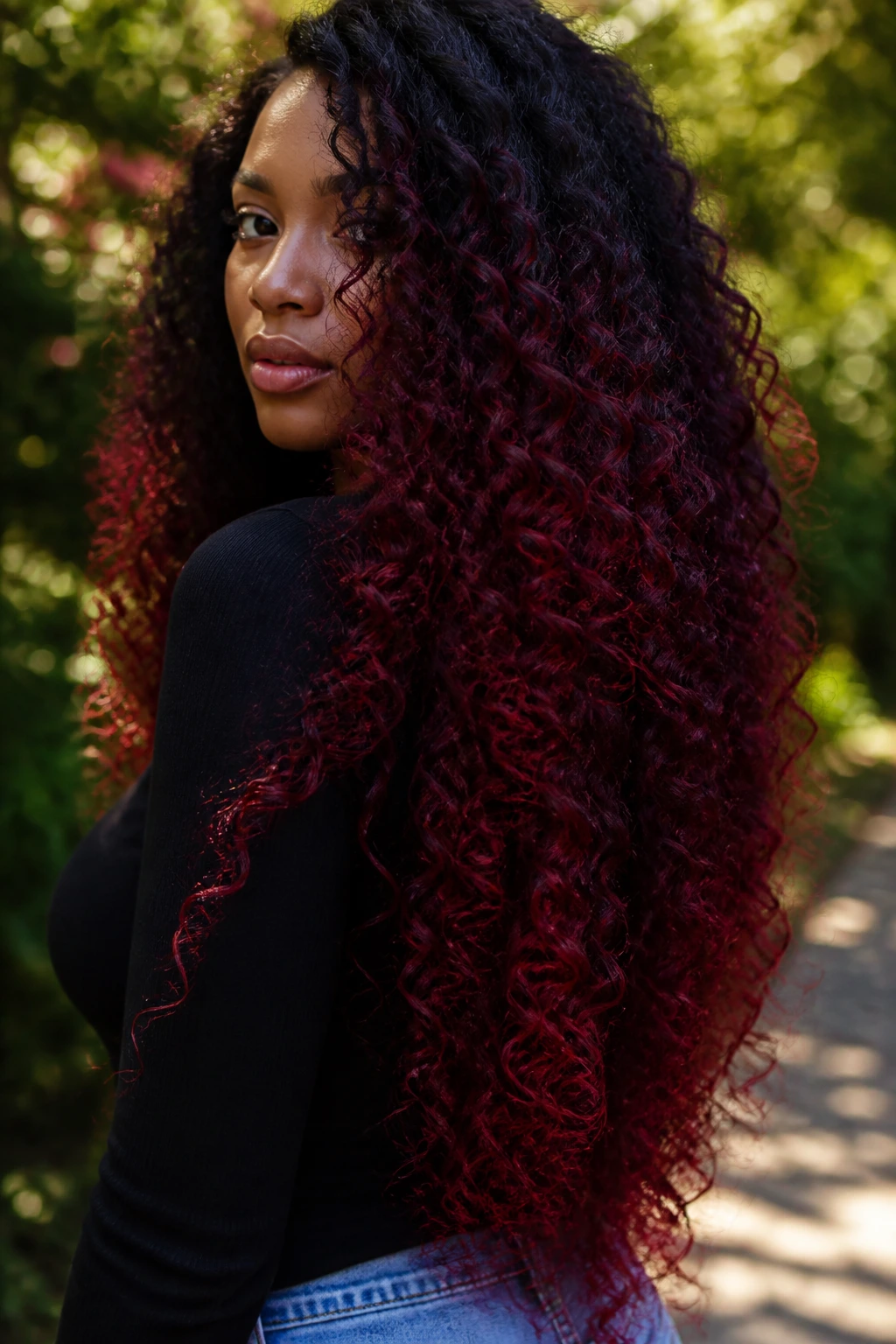
Garnet loves curls. The color is deep enough to stay moody, but it has a red core that catches each bend in the hair. On waist-length curls, the shade looks layered even if the dye itself is simple. One curl shows more red, the next shows more black, and the whole thing starts to look expensive in motion.
I’d choose this when you want long hair to feel full. Curls and garnet both add visual weight, which can be a gift if your hair is fine or medium-textured. The color seems to sit inside the hair shaft instead of sitting on top of it.
A wide-barrel curl gives the nicest result. Tight curls can still work, but the color reads darker and the red becomes more subtle. Either way, this is a strong pick for someone who likes a rich, almost jewel-tone finish.
10. Midnight Black with Red Velvet Mid-Length Melt
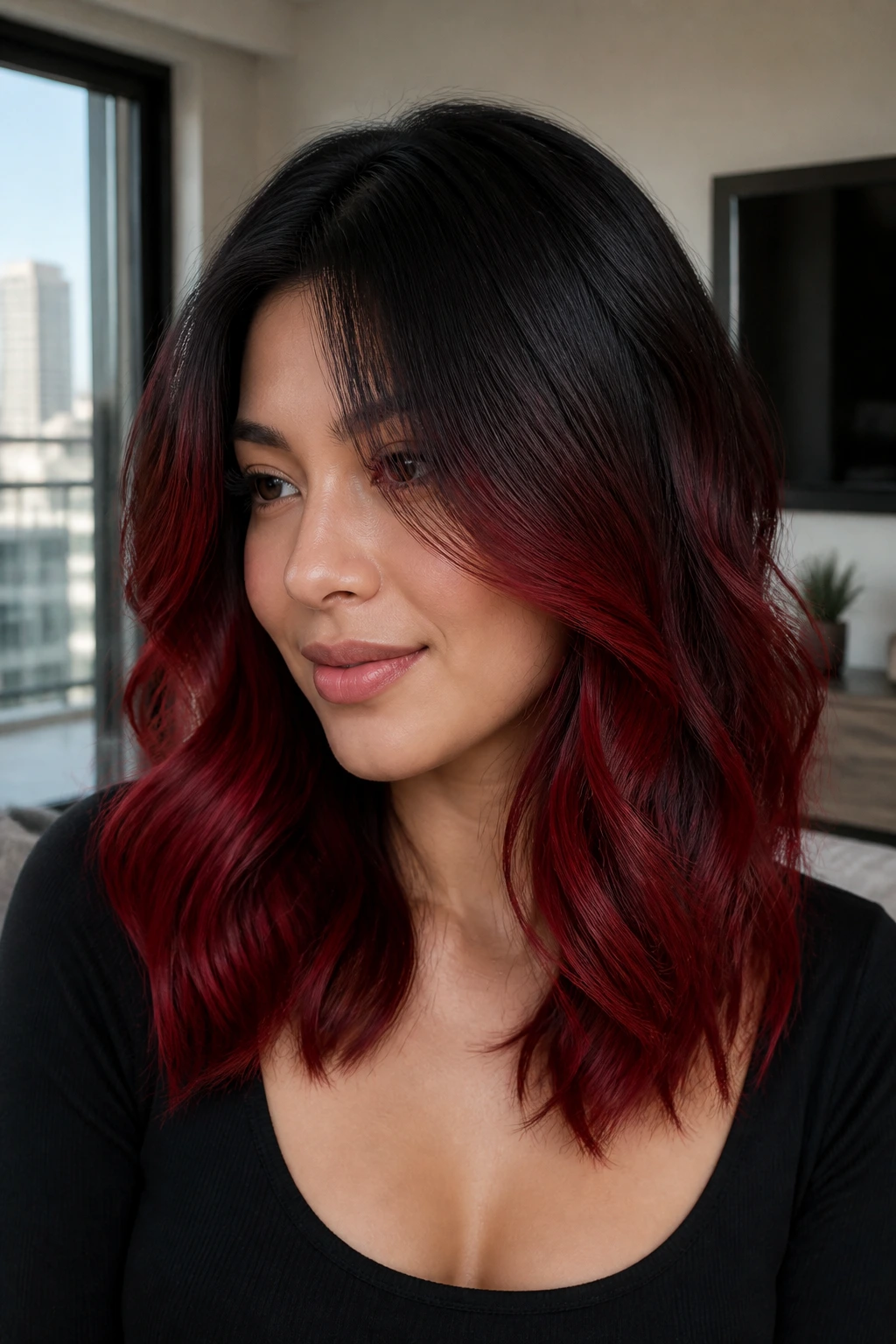
Mid-length melt is the move when you want the red to start earlier without losing the dark base that makes the whole style feel grounded. Midnight black at the roots, red velvet through the middle, deeper red at the ends — that’s the shape. It keeps the color story visible from the front, which long hair sometimes needs.
This version looks especially good when the hair is split into long layers or a soft U-shape. The mid-length placement follows the curve of the cut, so the color feels tied to the haircut instead of sitting on it as an extra layer. That’s the part many people miss.
It’s a bolder look than an end-only ombre, but not as loud as a full head of red. If you want people to notice your hair before they notice your outfit, this is a strong route.
11. Black to Auburn Red for a Warmer Finish
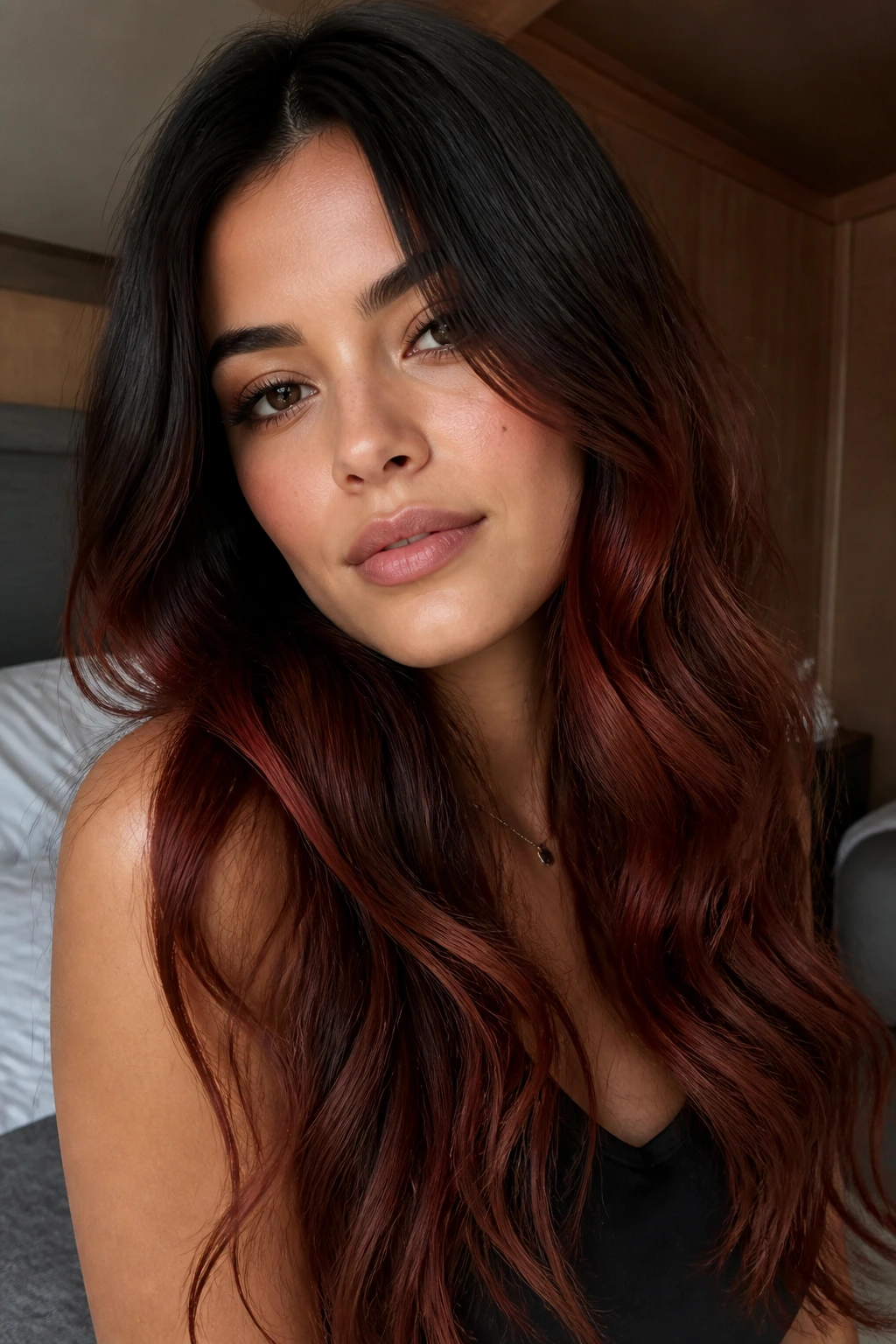
Auburn brings a brown warmth that cherry red doesn’t. If cherry feels too bright and burgundy feels too deep, auburn lands in the middle with a softer, sun-baked look. On long hair, that warmth can stretch beautifully through waves and still keep the black roots in charge.
This shade is especially nice if you want the color to feel a little more natural. Not natural in the boring sense. Just easier to wear. Auburn has enough red to read as a statement, but enough brown to sit comfortably against everyday makeup and casual clothes.
It also grows out with less drama than a brighter red. The line between black and auburn is gentler, so you’re not stuck with a harsh root situation after a few weeks. That makes it a smart pick for someone who wants a rich look without the maintenance headache.
12. Black Hair with Berry-Red Mermaid Waves
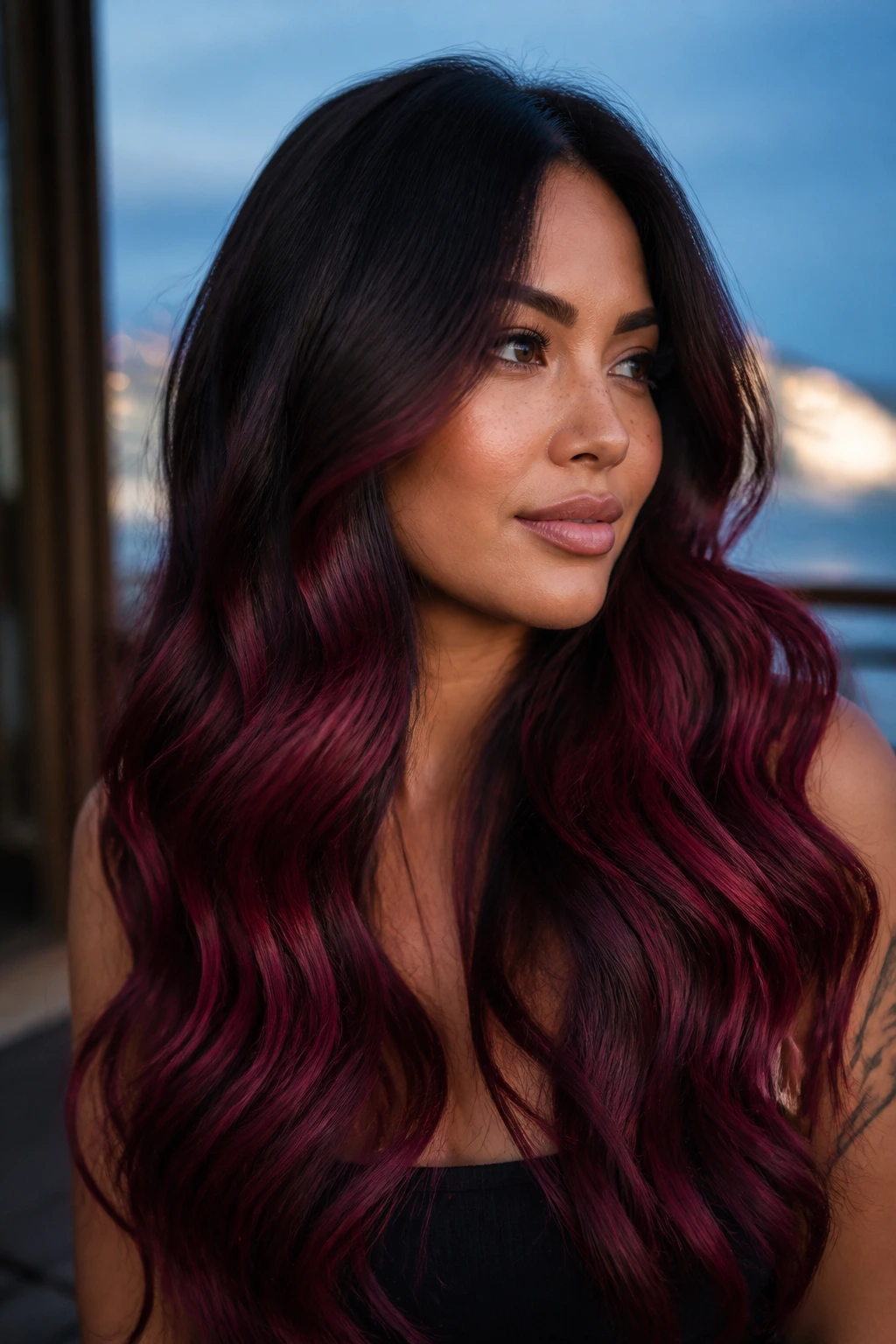
Berry-red mermaid waves are all about movement. The long wave pattern lets the red spill in and out of the black, which gives the hair a layered, almost liquid look. Berry tones sit somewhere between plum and cherry, so the color feels playful without going neon.
This is one of my favorite ideas for very long hair because the length carries the wave. Shorter cuts can’t always support this much color play. Long hair can. The red appears at the bends, hides in the troughs, and then flashes again at the ends. That rhythm is the whole charm.
If you wear your hair with a side part, even better. The color catches differently on each side, and the result looks less uniform in a good way. A flat iron can soften the wave later, but honestly, this color earns its keep when the hair is loose and wavy.
13. Black with Smoky Red Underlayers
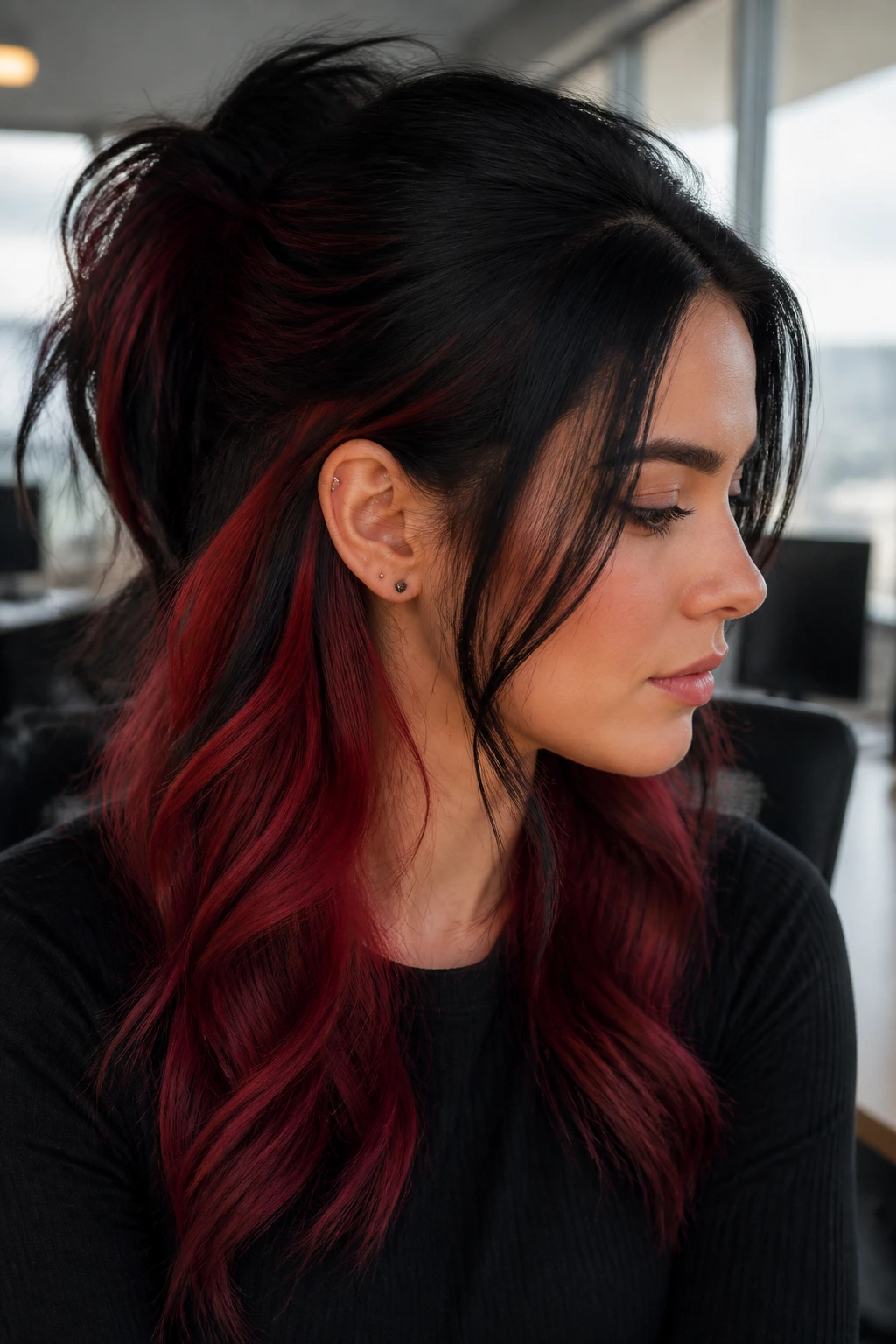
Smoky red underlayers are for the person who wants the color to stay hidden until it moves. From the top, you mostly see black. Bend the hair, lift the top section, or put it in a half-up style, and the red comes out from underneath like a secret.
How it shows up
The placement is the trick. The color should sit below the top veil of black hair, usually through the lower mid-section and ends. That way, the red doesn’t compete with the surface color. It waits.
A few styling ideas make this one worth the effort:
- Half-up ponytails expose the red with almost no work
- Loose braids turn the underlayers into visible strands
- A deep side part can reveal just enough red to feel intentional
This style is a good match for offices, stricter dress codes, or anyone who likes a little hidden drama. It’s not shy. It’s selective.
14. Black to Fire-Red Ombre on Layered Hair
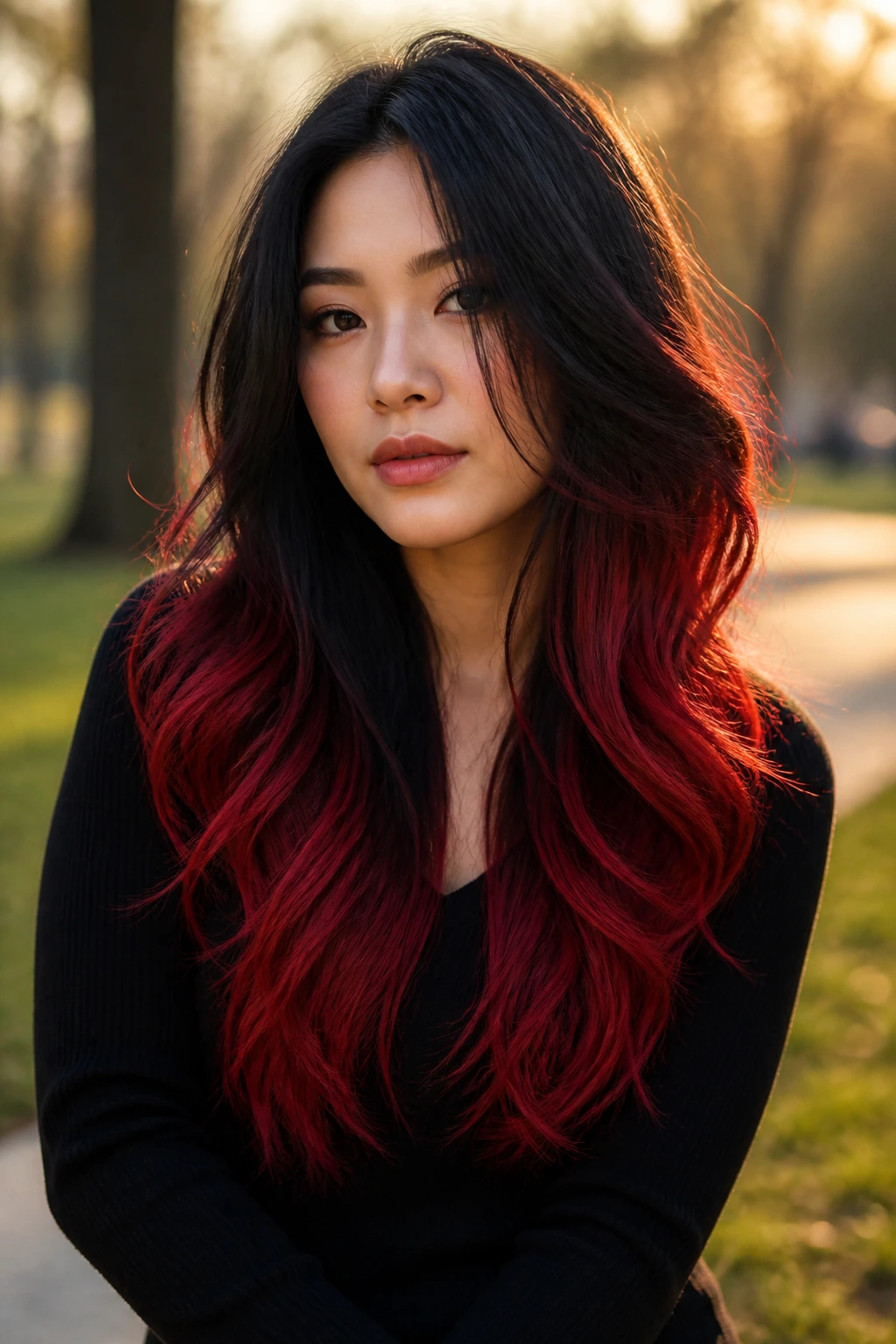
Fire-red ombre is the loudest version on this list, and layered long hair is what keeps it from looking blunt. The layers break up the color block so the red feels alive rather than heavy. If the fade is done well, the result has motion even when the hair is still.
The key is not starting too high unless you want a dramatic shift. Fire red is already high-contrast. Long hair gives you the freedom to keep the black dominant at the top and let the red heat up toward the ends. That keeps the style wearable even when the shade itself is intense.
I’d pair this with loose waves, big curls, or a blowout with flipped ends. Anything too flat can make the red read one-dimensional. Give it texture. The color wants it.
15. Black Hair with Merlot and Plum Ends
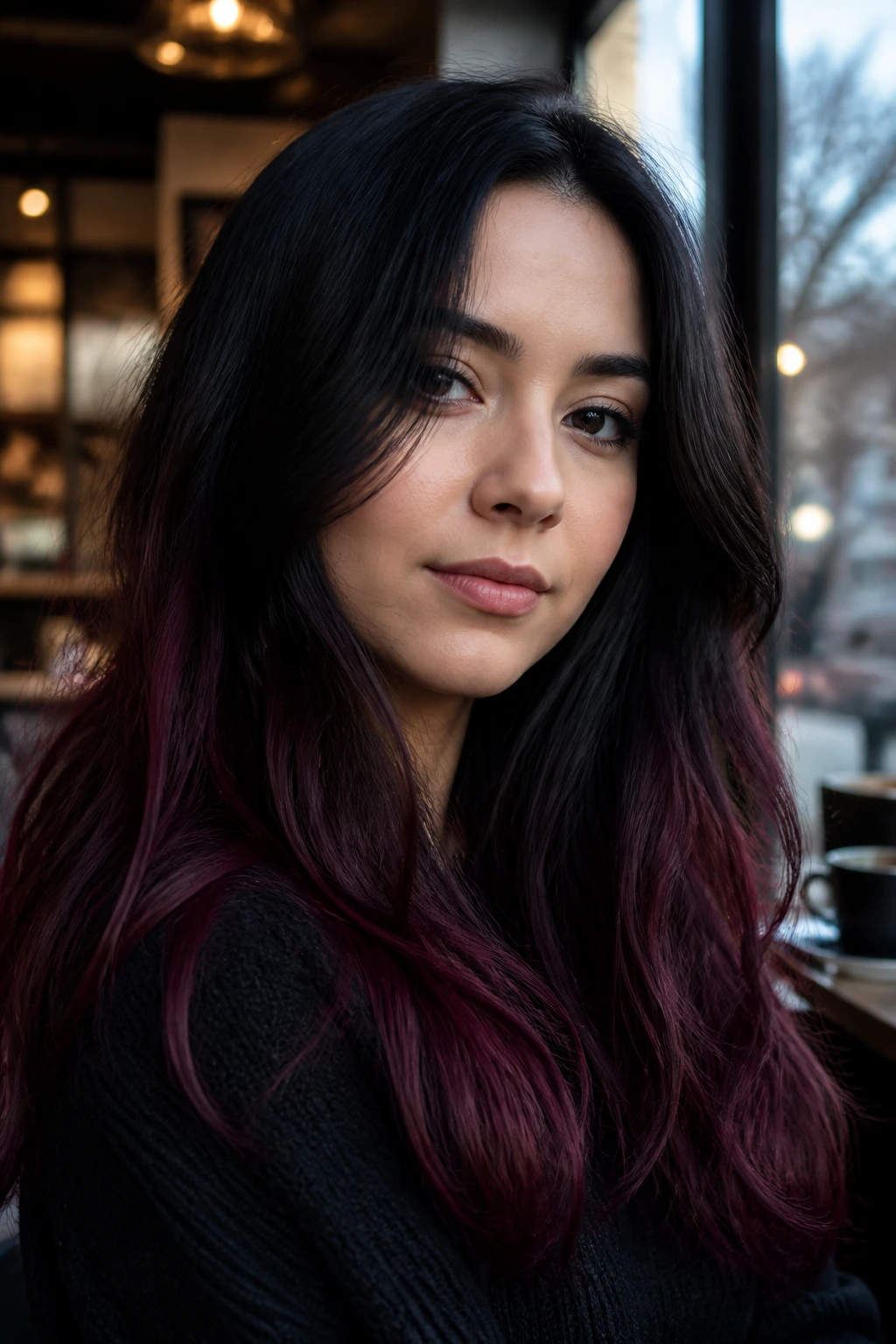
Merlot and plum together make a darker, cooler red story. If cherry red feels too bright and auburn feels too warm, this combo lands in the middle with a softer, more shadowy finish. On long hair, the blend can look almost layered in tone rather than layered in dye.
This is a nice choice for people who like moody clothes, darker makeup, or a more refined color shift. Merlot keeps the red base visible. Plum adds depth. Put them together on the ends and the hair looks fuller, especially in motion.
Compared with burgundy, this version can feel a touch more purple. That’s the point. It gives you something less expected without drifting away from the black-and-red family. I’d call it the quieter cousin of classic red ombre.
16. Black with Cherry Money Pieces and Red Ends
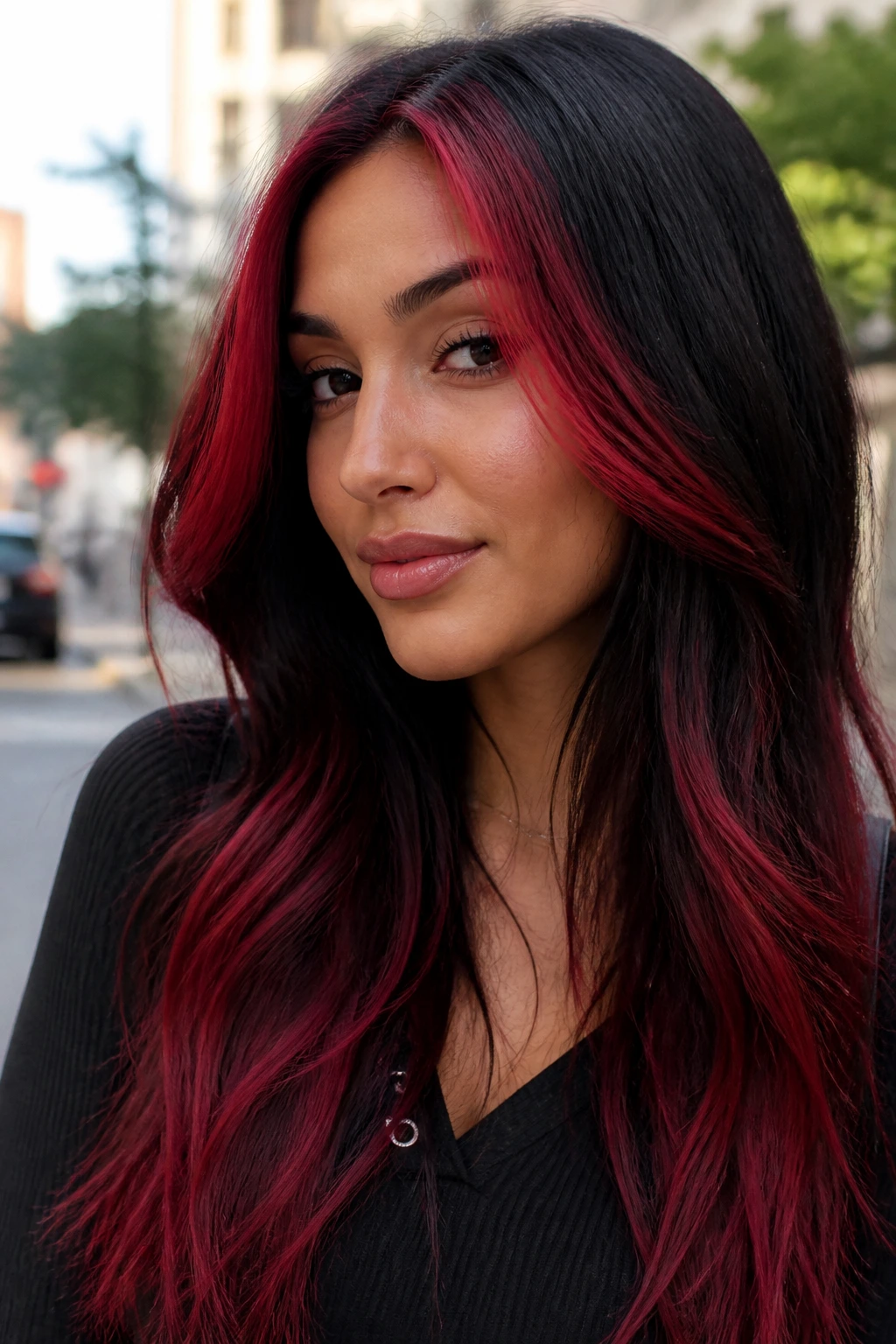
Money pieces can pull a whole look together fast. On long black hair, a few cherry-bright front sections make the face look framed, then the red continues down to the ends so the color doesn’t feel isolated. You get impact up front and flow at the bottom.
This works especially well if you like wearing your hair tucked behind one ear, in a low ponytail, or half up. The front red still shows. That matters. A lot of long-hair color lives and dies by whether it disappears when you put it up.
The red doesn’t need to be broad here. A narrow face frame can do a lot if the shade is strong enough. Keep the ends a little deeper, and the whole thing reads balanced rather than striped.
17. Black-to-Ruby Braids and Buns
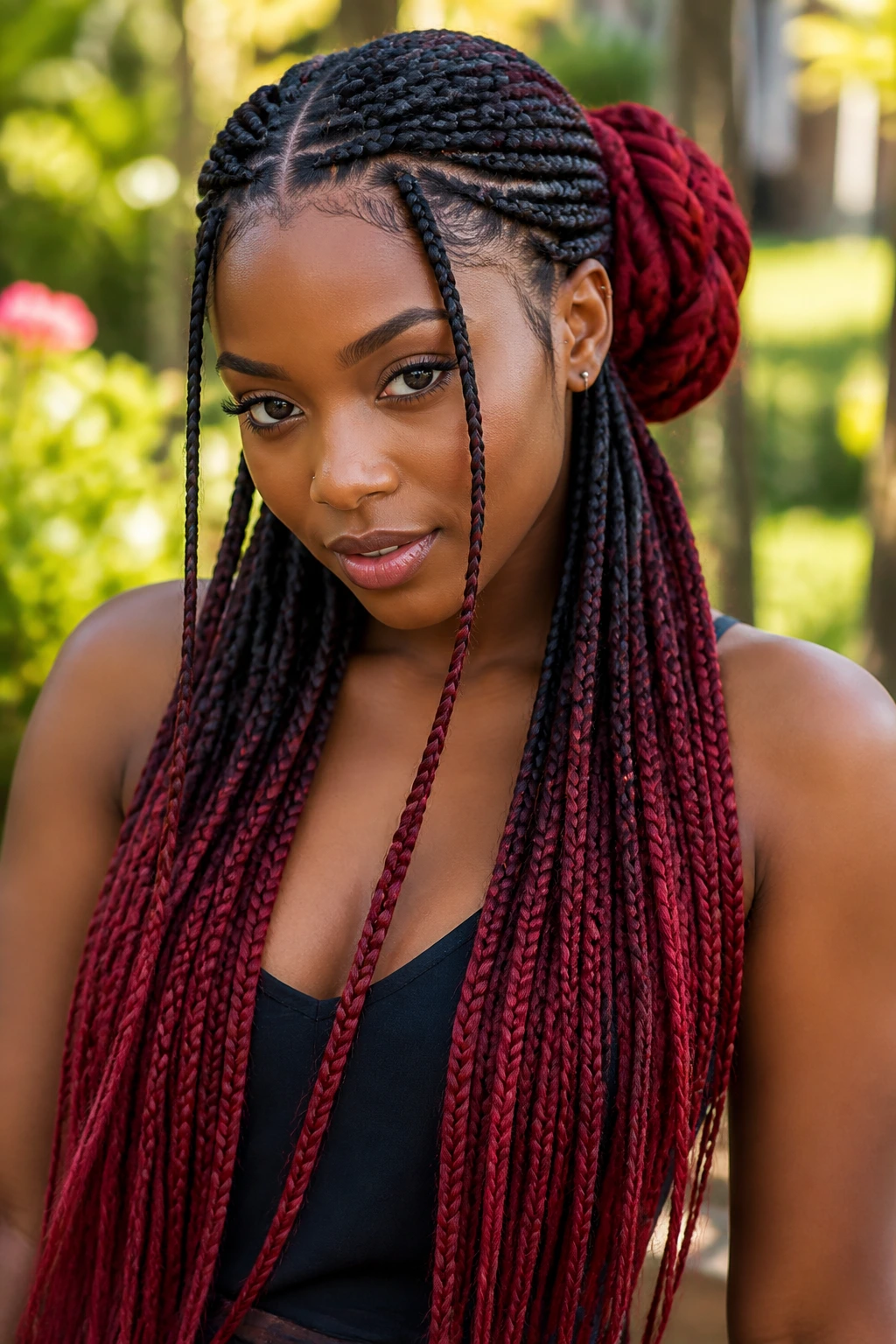
Braids are where ombre gets interesting. In loose hair, the red may blend. In a braid, it becomes a visible pattern, like ribbon running through the plait. Ruby on long black hair gives braids more depth, and buns show the color in loops and folds that straight hair can’t offer.
This idea is good if you actually style your long hair often. A single low braid can show the fade from crown to tail. Boxer braids make the red look more graphic. A twisted bun can reveal dark roots and red lengths all at once, which is a nice trick when you want the color to look different from day to day.
I’d choose ruby over bright scarlet here. Braids already create strong lines, and ruby keeps the look rich instead of too sharp. That keeps it wearable for more settings.
18. Black with Red Flame Balayage Around Long Layers
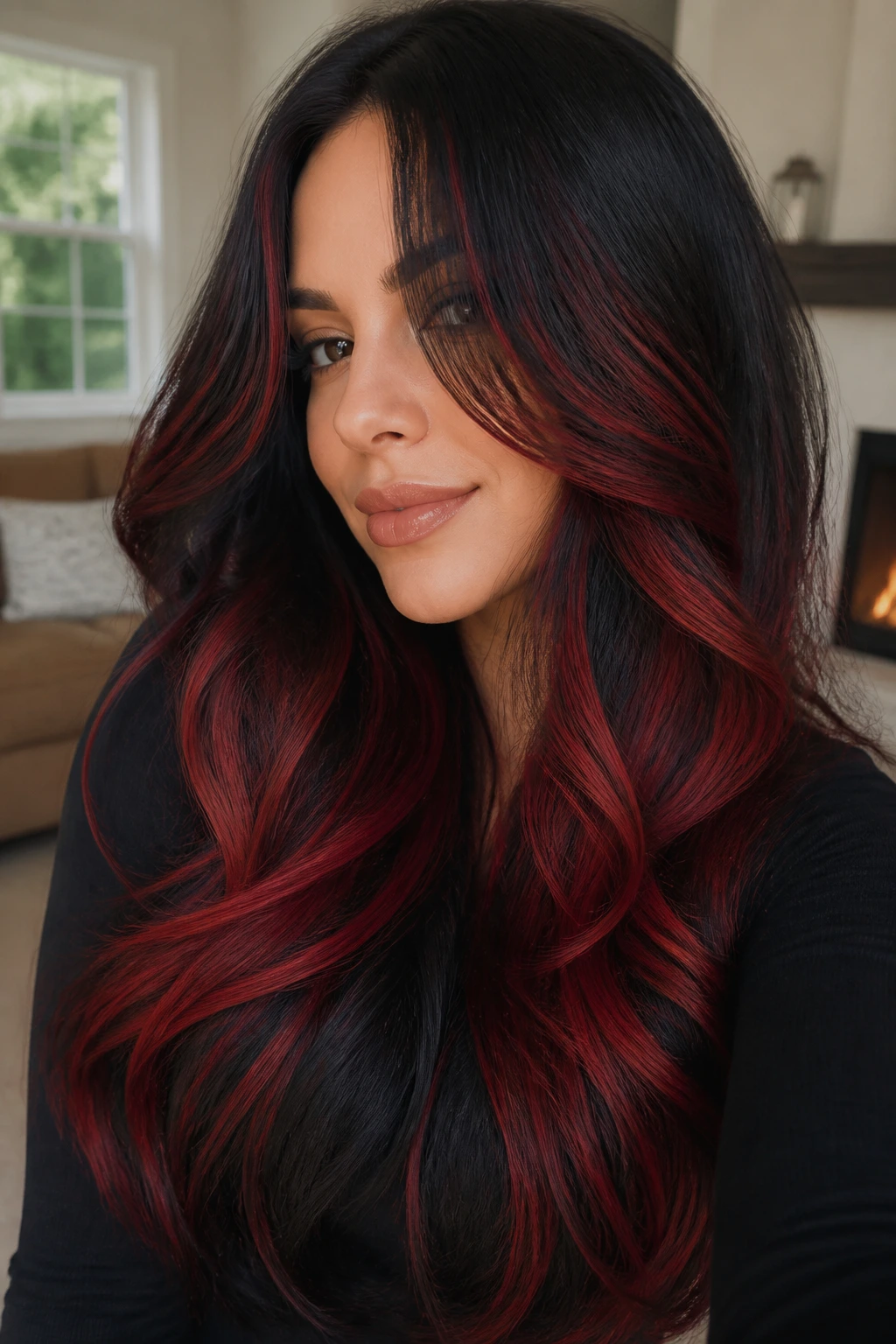
Red flame balayage works because the color is placed where long layers bend and separate. Instead of one flat gradient, you get strokes of red that look like they’re moving through the hair. It’s one of the better options if you want black red ombre hair ideas for long hair that feel dimensional from every angle.
The shape matters. Layers that start around the chin or collarbone let the color sit in the right spots. Too few layers, and the red can gather at the bottom and feel heavy. Too many, and the look gets choppy. There’s a sweet spot.
This is the style I’d send to someone who likes blowouts, big waves, and a little drama. It gives the hair that lit-from-within look people try to fake with styling products. Here, the color does the work.
19. Glossy Black Roots with Rust-Red Ends
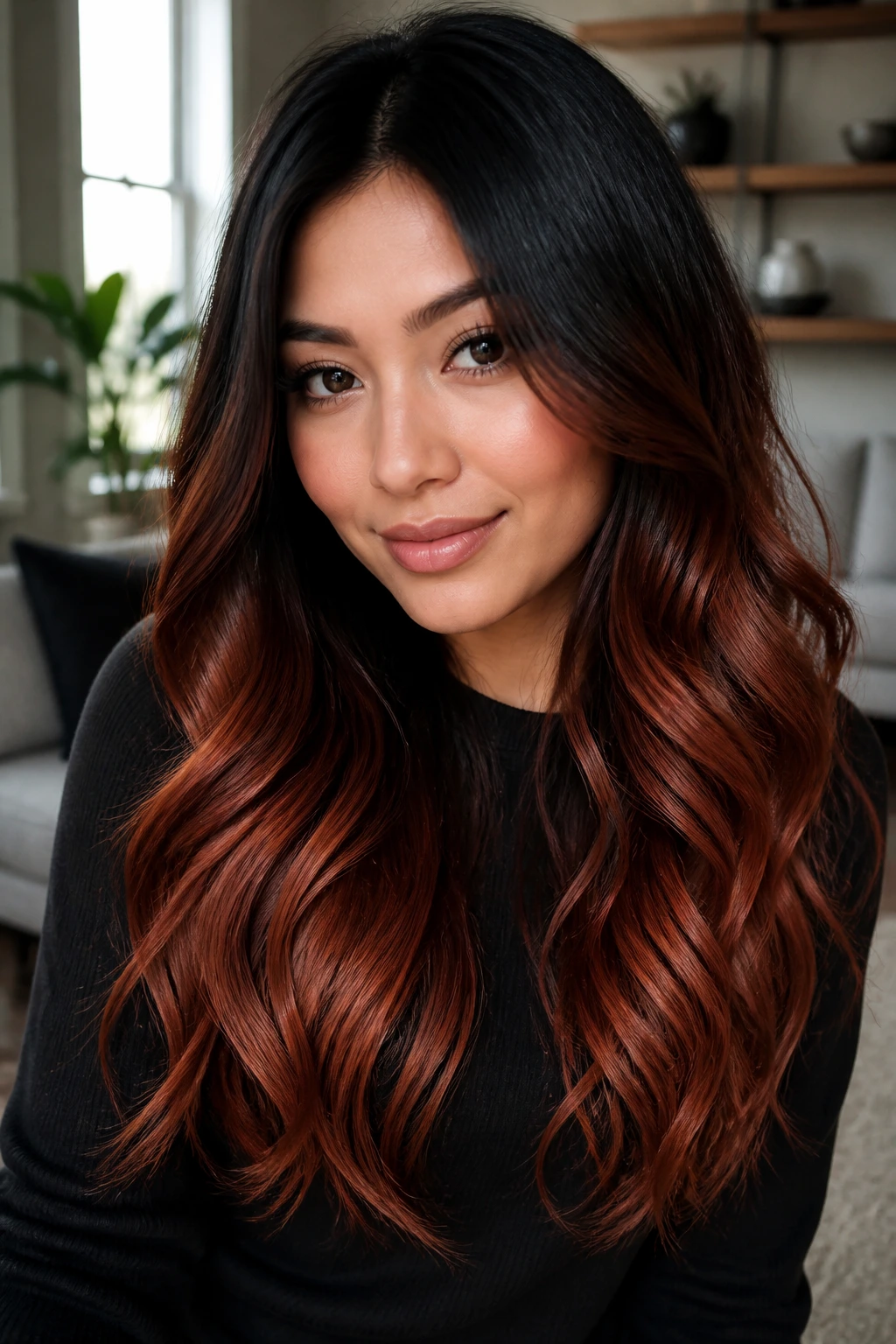
Rust-red is underrated. It’s earthier than cherry, warmer than burgundy, and easier to wear than a bright scarlet finish. On long hair, rust gives the ends a rich copper-red cast that looks especially good against a high-shine black root.
The glossy finish is what keeps this from feeling too muted. Rust can go flat if the hair is dry. With shine, it looks textured and dimensional, almost like a copper leaf pressed into dark fabric. That sounds dramatic, but it’s the right image.
If your wardrobe leans brown, olive, cream, navy, or black, this shade slips in easily. It’s a strong choice for someone who wants red with a little grit instead of candy brightness. Not soft. Not harsh. Just grounded.
20. Black with Velvet Burgundy on Blunt Long Ends
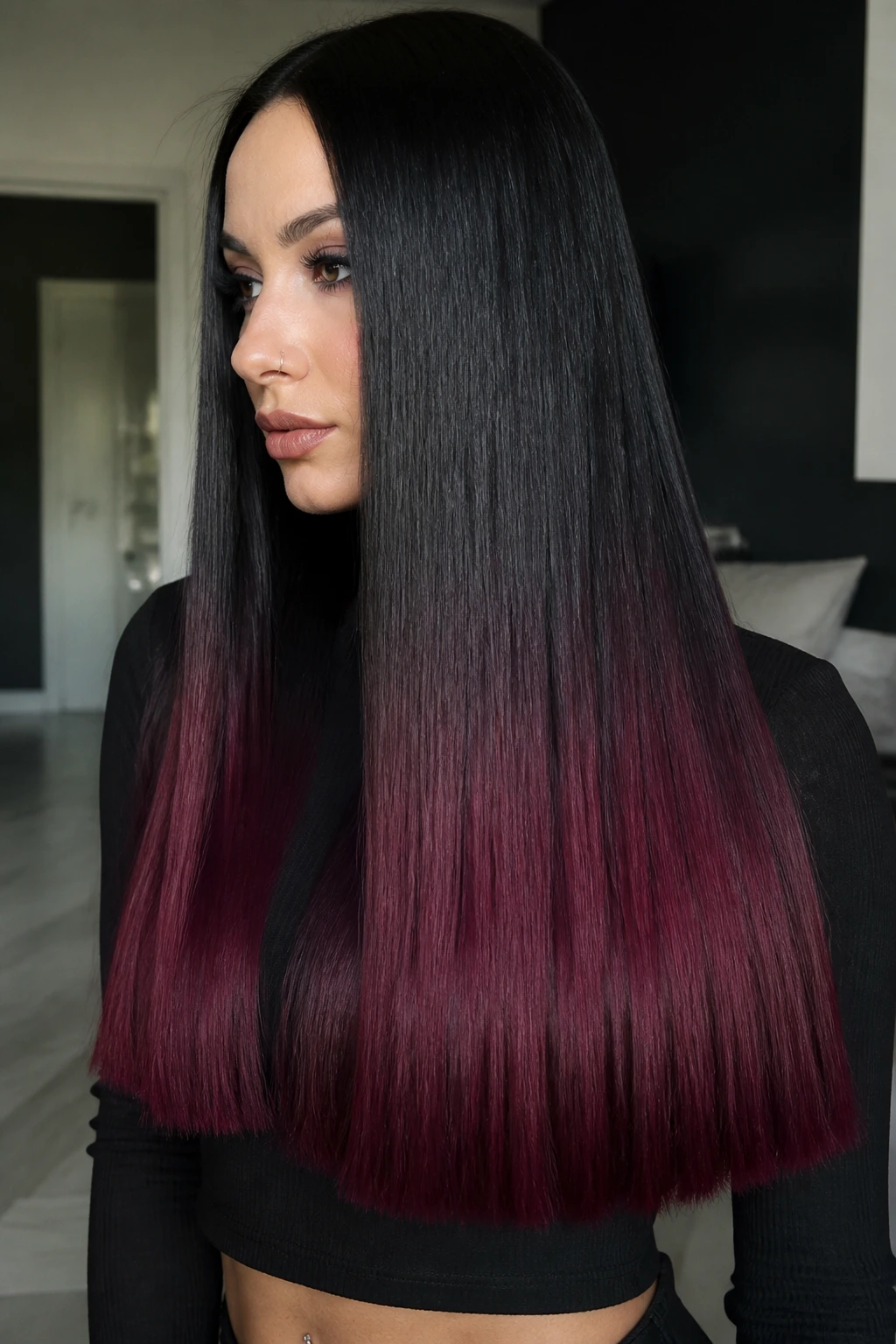
Blunt ends and burgundy are a very good pair. The haircut gives you a straight edge, and the color gives it depth, so the whole style looks crisp without being severe. On long hair, that blunt line becomes even more visible, which is exactly why the burgundy works so well there.
This is a cleaner, more editorial take on red ombre. You do not need a lot of layers for it to work. In fact, too many layers can break the blunt effect. Keep the cut solid, let the burgundy sit low, and the hair starts to feel like one continuous shape instead of three different ones.
It’s a nice option if you like minimal styling. Straightened or lightly waved, it still reads strong. The line does most of the talking.
21. Black with Bright Crimson Dip Dye on Thick Hair
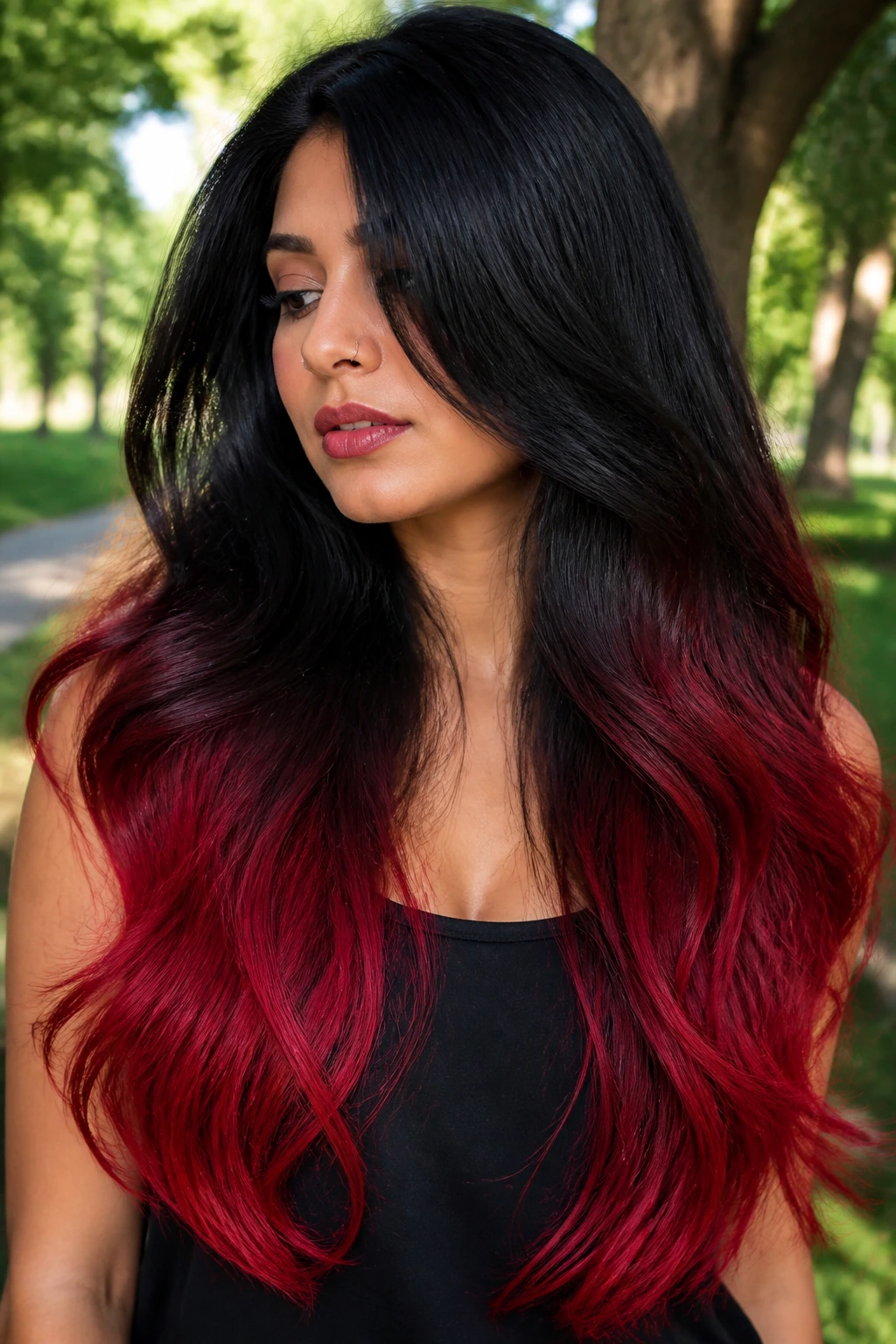
Thick hair can carry brightness that fine hair sometimes can’t. That’s why crimson dip dye often looks better on dense, long strands. The color has enough surface area to make an impression, and the black base keeps the whole thing from turning into a block of red.
The ends can handle a heavier look here, especially if your hair is naturally full. Thick hair also gives the red more body, so even a simple ponytail shows a bit of contrast. That’s useful. You don’t need elaborate styling for the color to show.
One smart move: keep the transition line a little softer if your hair is thick and coarse. A hard line can make the ends feel too heavy. A feathered blend gives the red room to sit.
22. Black with Dark Red Ombre and Curtain Bangs
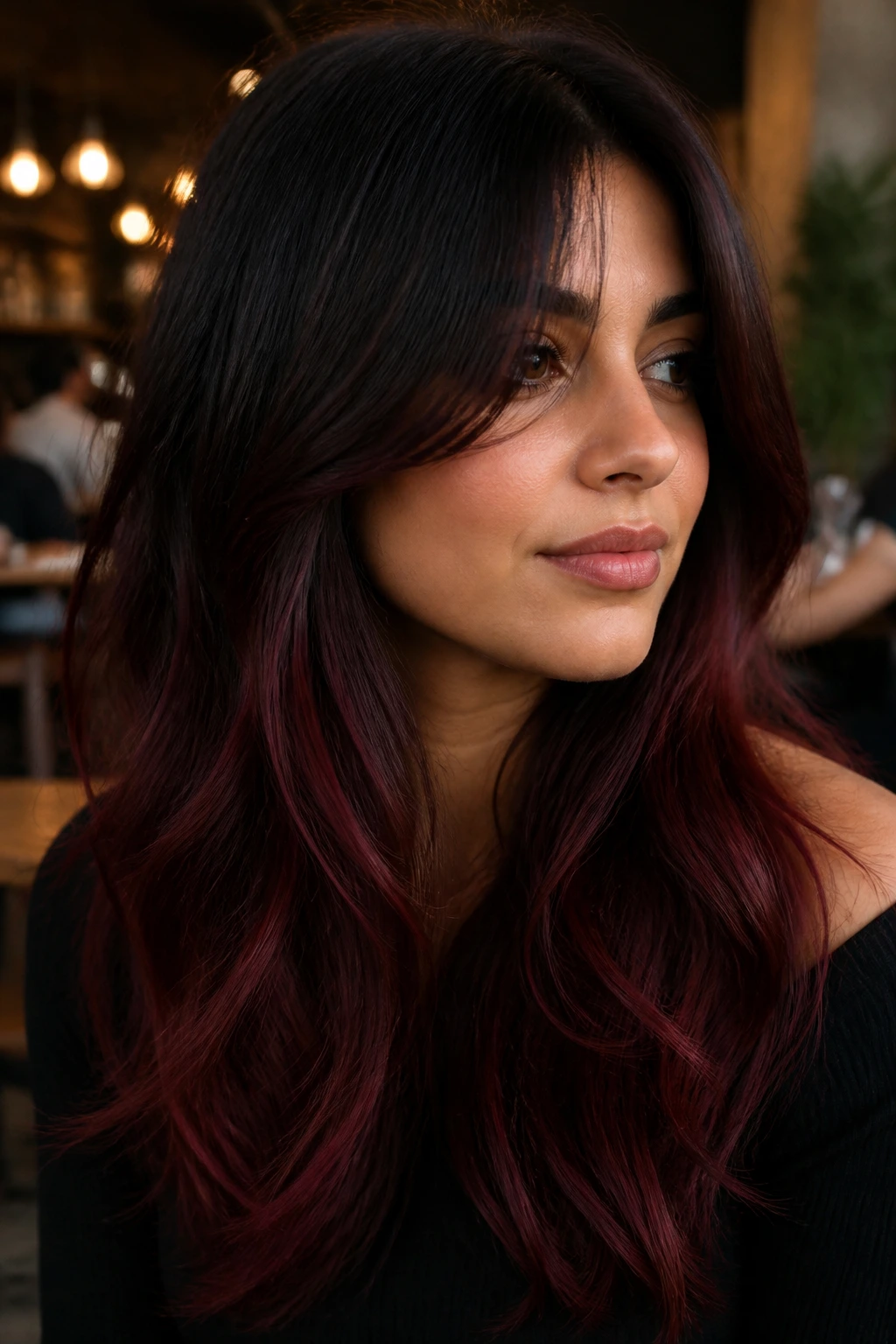
Curtain bangs change how ombre reads around the face. They break up the dark root area, so the transition from black to red feels lighter and less severe. On long hair, that matters because the length can sometimes make the top half feel heavy. The bangs solve part of that.
Dark red is the right shade here because it doesn’t compete with the bangs. If the red is too bright, the front of the haircut starts fighting itself. Keep it deep, almost wine-dark, and the whole style feels like one piece.
This is a good option if you want movement around the face without coloring the bang area too heavily. The red stays on the lengths, the bangs stay soft, and the look feels polished without being stiff. Easy enough to wear. Still interesting.
23. Black with V-Cut Layers and Gradual Red Fade
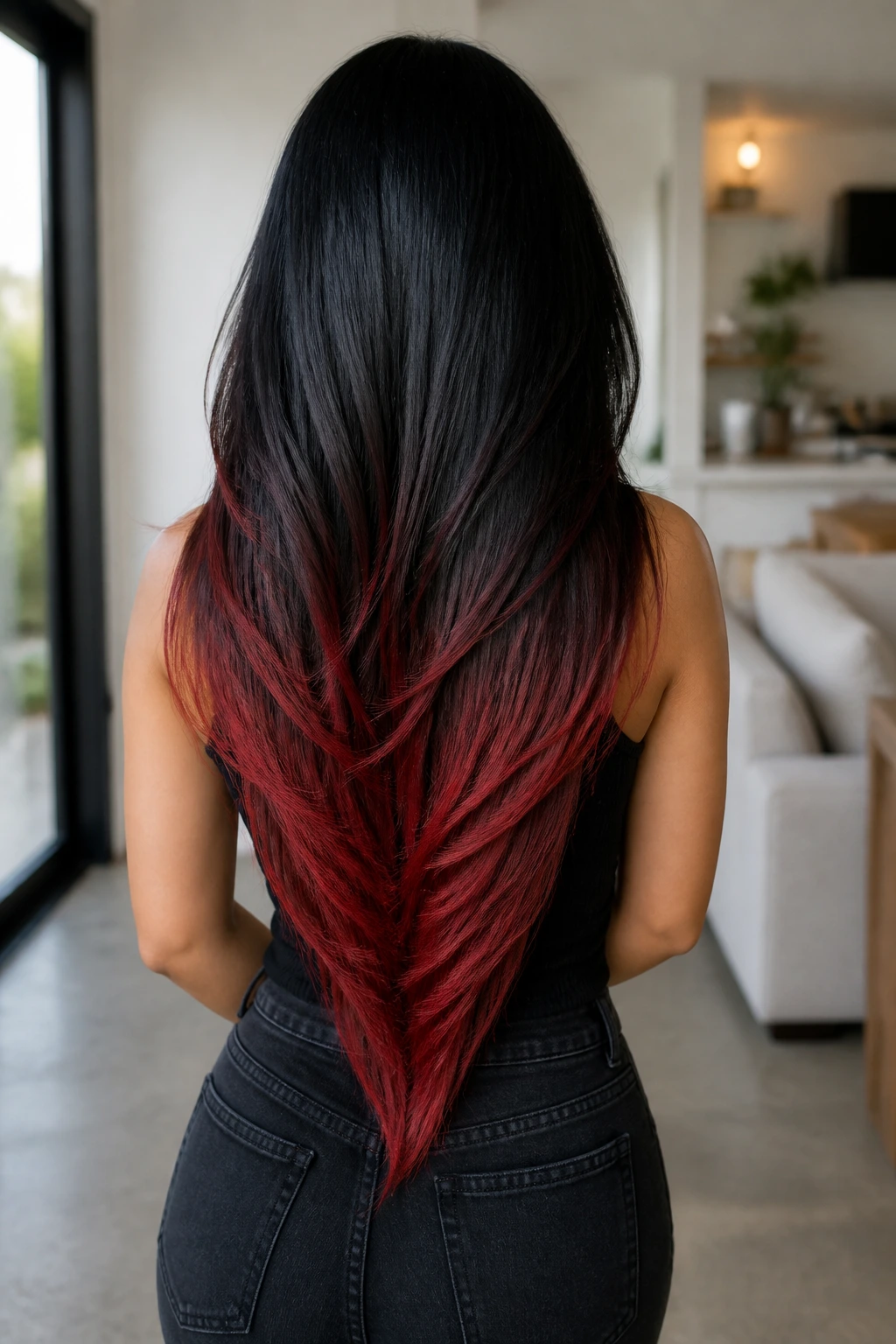
A V-cut gives long hair a pointed center line, and that shape pairs nicely with a gradual red fade. The color naturally follows the length of the cut, so the eye goes down the center and then out toward the edges. That gives the ombre more direction.
This is one of the more flattering choices for very long hair because it adds shape without chopping the length off. If you like your hair dramatic but still want it to move, the V-cut helps the red pool at the lower sections in a way that looks controlled.
I’d keep the fade soft here. A harsh line would fight the shape of the cut. A slow shift from black to red lets the point of the V feel intentional rather than accidental. Simple idea. Strong result.
24. Black with Hidden Red Panels for Everyday Wear
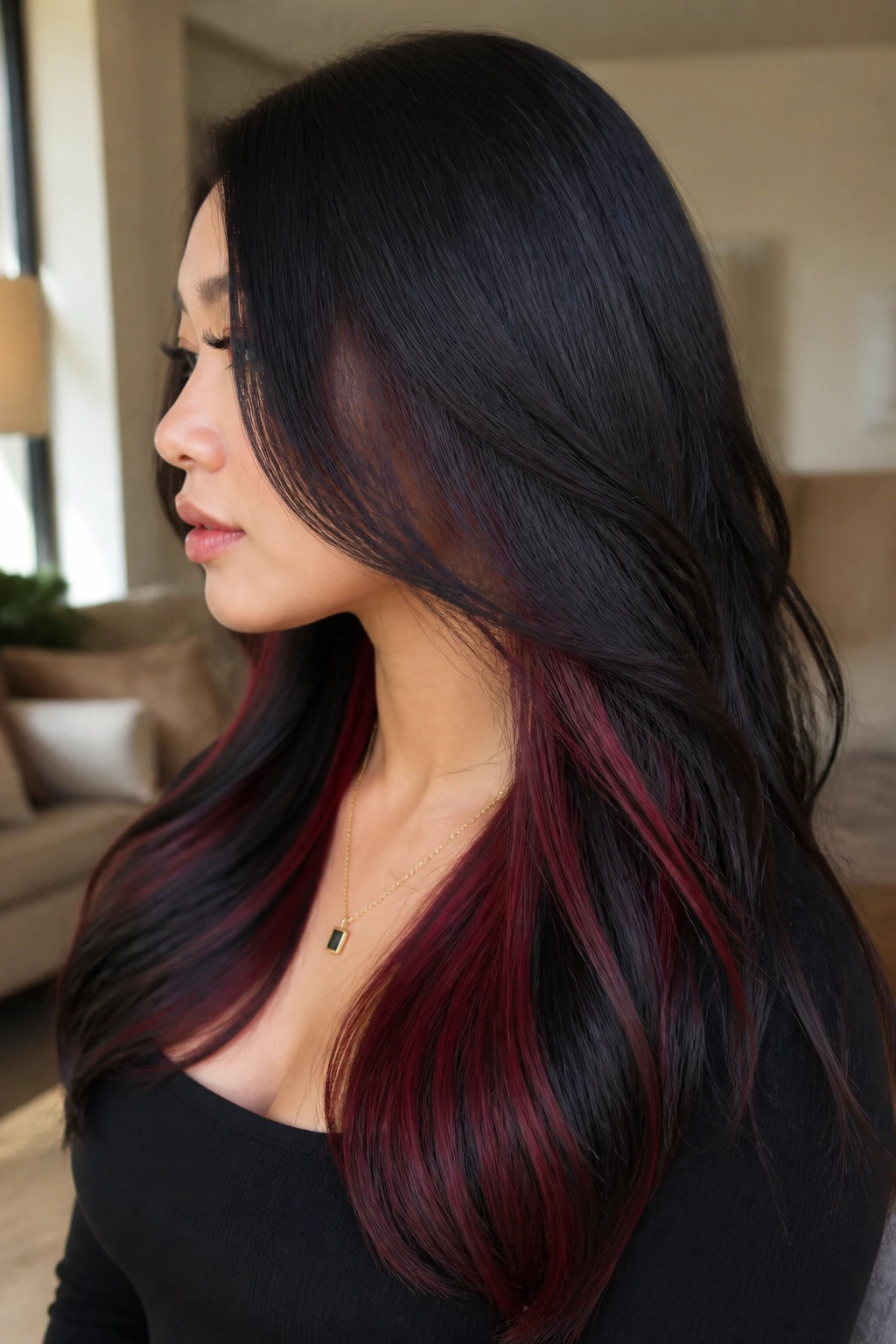
Hidden red panels are for people who want choice. Wear the hair down, and the color stays tucked away. Pull the top layer back or twist the sides, and the red shows up underneath in bold streaks. On long hair, that hidden effect is richer because there’s more room to stack layers of color.
This style feels practical in the best way. It lets you keep the black as your main look while still having a red moment when you want one. That can matter if you work somewhere conservative or just don’t want the same color showing every single day.
It also gives you more styling options than a standard ombre. Half-up styles, braids, clips, and low buns all reveal the panels differently. So the color is there, but it doesn’t have to announce itself unless you want it to.
25. Glossy Black to Red Ombre with a Salon-Perfect Finish
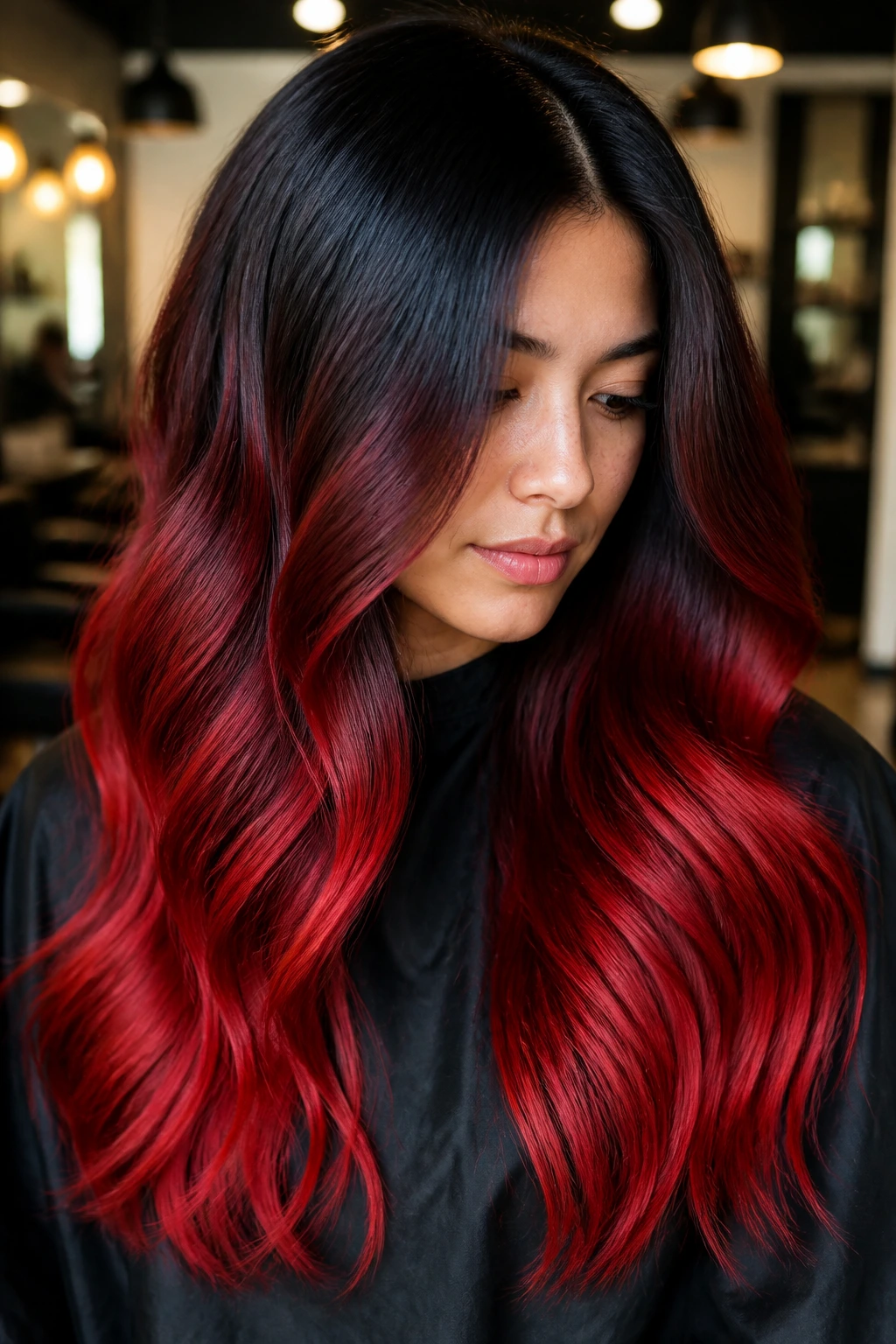
A glossy finish can change the whole story. Black and red ombre on long hair already has drama, but shine gives it that polished look people notice from across a room. The roots stay deep and sleek, while the red ends look smooth instead of dry or fuzzy.
This is the version I’d pick if the hair is already healthy and long, because shine shows off clean ends, smooth layers, and a good cut. The color transition can be simple. The finish does the heavy lifting. A clear gloss or shine treatment helps the red reflect light more evenly, which makes the fade feel richer.
If you want one last bit of advice, it’s this: long red ombre looks best when the ends are treated like part of the style, not an afterthought. Trim them, condition them, and keep them moving. That’s the difference between color that looks good in a photo and color that keeps looking good when you walk away.
