



Long hair changes the whole conversation. A pastel pink ombre on a pixie can be cute; on waist-length hair, it becomes a slow color story with room for blush, cream, beige, and even a little shadow at the roots if you want the grow-out to behave.
Pastel pink ombre hair ideas for long hair work best when the fade is planned around movement, not just length. The ends need enough lift to hold a clean pink, and the middle needs enough softness to keep the color from looking striped. If the blonde is too yellow, the pink leans peachy. If the base is too dark, the pink goes muddy fast. That’s the part a lot of glossy photos skip.
I’ve always thought long hair is where pastel pink earns its keep. The color gets space to breathe, especially in waves, braids, and layered cuts that break up the fade. A good ombre can look delicate in daylight and richer under indoor light, which is exactly why it keeps showing up in salons and on people who want color without a hard line of demarcation.
The trick is choosing the version that fits your starting color, your maintenance tolerance, and the way you actually wear your hair. Some shades ask for platinum. Some are happier sitting on beige blonde or light brown. The fun part is that “pink ombre” can mean a lot of different things once you start stretching it across real length.
1. Pastel Pink Ombre on Beige Blonde Lengths
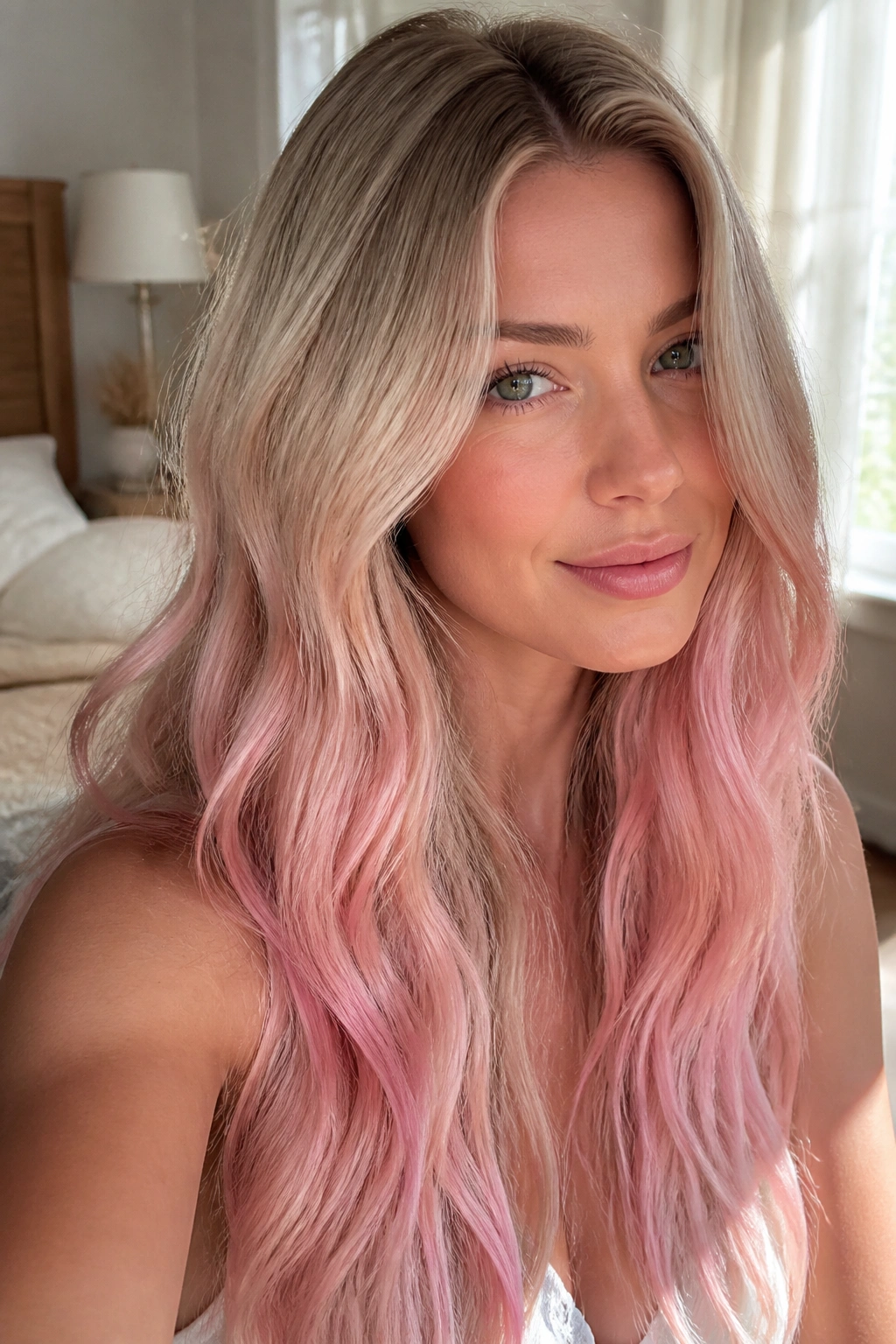
Beige blonde is my favorite starting point for a soft pink fade. It sits between icy and golden, which gives the pink room to look airy instead of sugary. On long hair, that matters more than people think. A slightly neutral blonde lets the color melt from a whisper of blush near the mid-lengths into a clearer pastel at the ends.
Why It Works
If the base is too brassy, pink turns peach. If it’s too white, the whole look can go flat. Beige blonde lands in that middle zone where the fade feels smooth and expensive without trying too hard.
- Ask for a level 8 to 9 beige blonde base with a soft root shadow.
- Keep the pink concentrated from mid-shaft to ends so the ombre reads cleanly.
- Use loose waves; they make the transition look softer.
- Best for people who want pink that looks gentle, not candy-bright.
Tip: Tell your colorist to keep the pink slightly cooler at the ends if your skin leans warm. That small adjustment stops the color from drifting too peachy after a few washes.
2. Platinum Snow Melt with Pink Ends
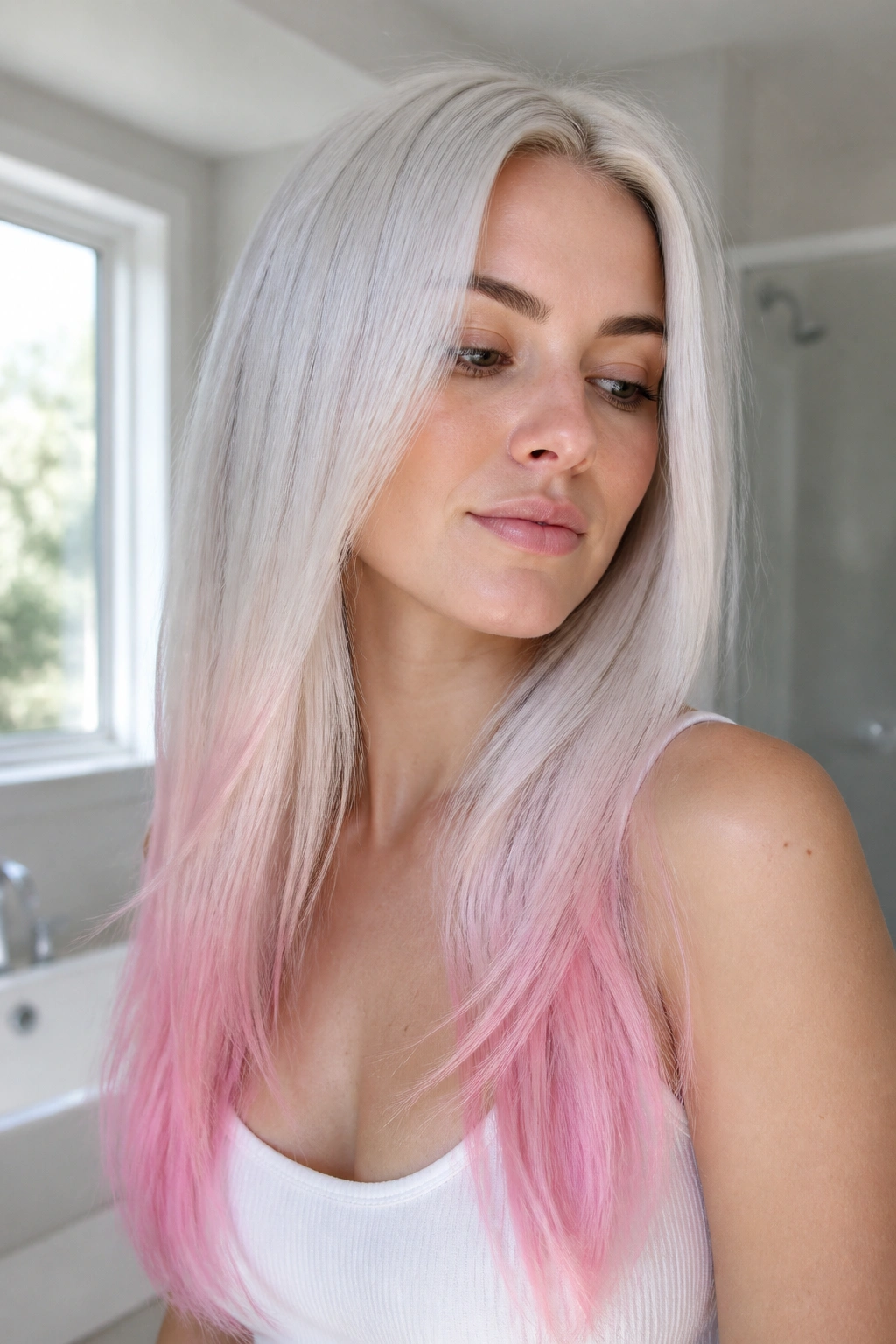
Platinum hair is the cleanest canvas for pastel pink, and long length makes that brightness feel deliberate instead of harsh. The ends almost look frosted before the pink goes on, which gives the final result a pale, airy finish. It’s one of the strongest choices if you want the pink to read as pastel and not as a muted rose.
This version works because the eye sees contrast in the shine, not the darkness. A near-white blonde root-to-midlength area lets the pink float at the bottom without fighting any yellow undertone. You get that crisp cotton-candy effect, but it stays polished when the tone is kept sheer.
The catch? It needs a careful lift. Weak pre-lightening will leave you with pink that looks dusty in the wrong way. If your hair can take a clean level 10, though, this is a beautiful choice for long straight styles and big, brushed-out curls.
3. Dusty Rose Ombre on Dark Blonde Hair
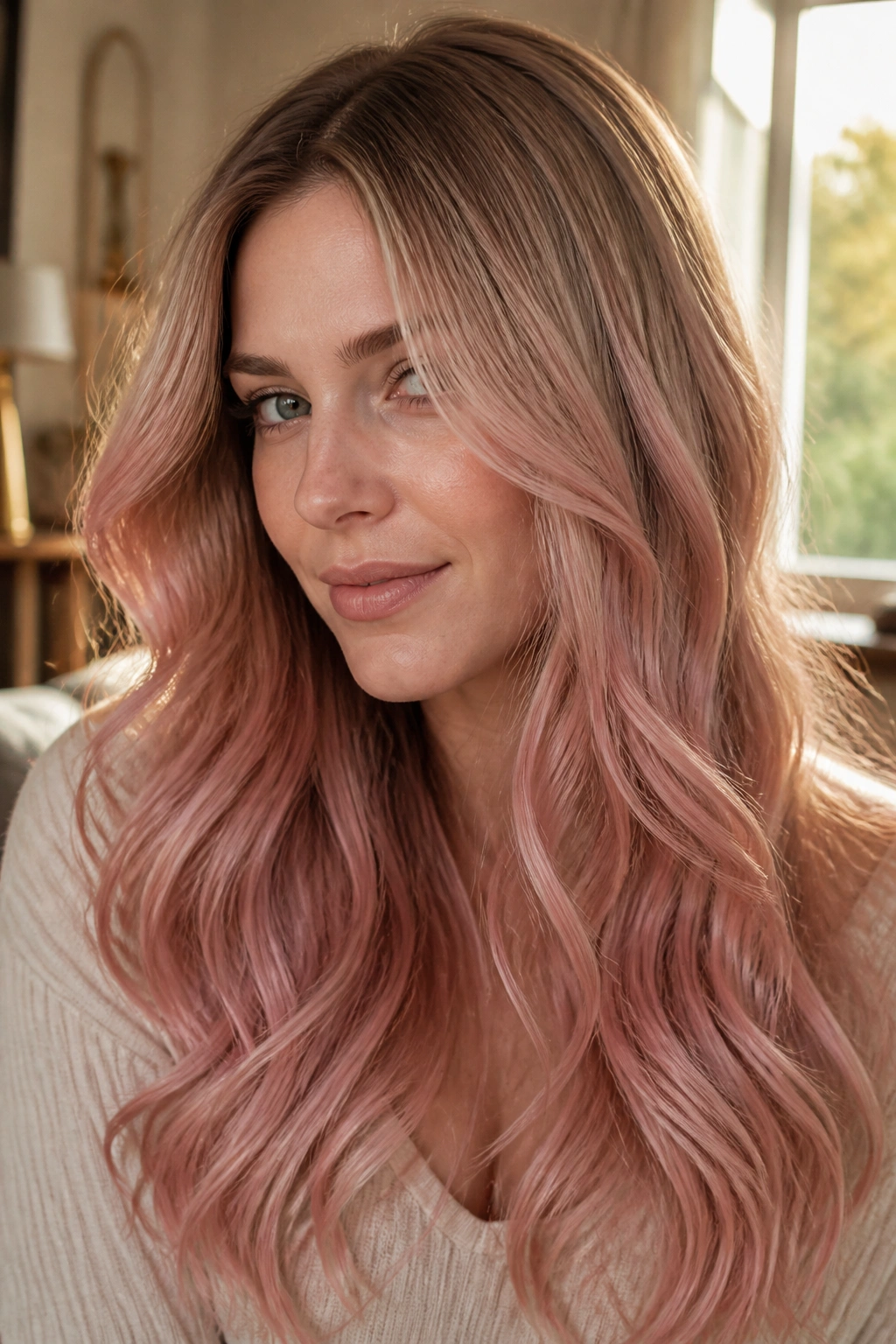
Can you keep some depth and still wear pastel pink? Yes. Dusty rose is the answer when you want the softness of pink but don’t want to push your hair all the way to platinum. On long dark blonde hair, the pink settles into a muted, almost velvet-like tone that feels calmer than bubblegum and more wearable than bright rose.
How to Wear It
The prettiest version usually starts around the lower third of the hair. The top stays dark blonde or soft ash, and the color shifts into dusty rose as the length drops. That gradual change gives the hair movement even when it’s worn straight.
- Ask for a root-to-midlength tone in dark blonde or ash blonde.
- Keep the pink smoky and sheer, not opaque.
- Wear it with soft bends or a middle part for a clean finish.
- Works best when you want something romantic but not sweet.
Long layers help this shade. They stop the color from pooling at the bottom and make the fade look intentional instead of heavy.
4. Soft Brown-to-Pink Ribbon Ombre
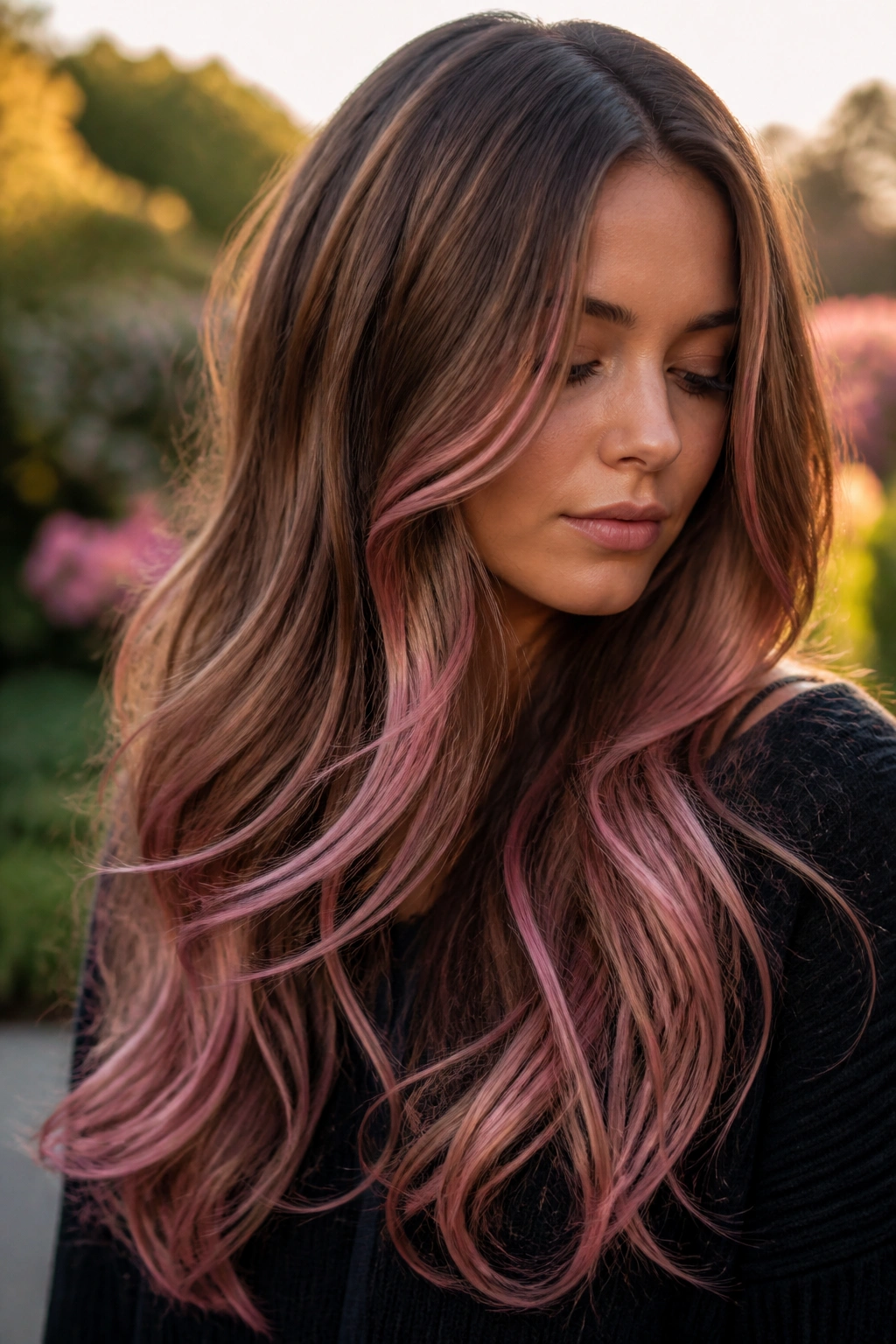
Brunettes often assume pink ombre means a dramatic bleach job and a giant maintenance bill. Not always. A soft brown-to-pink ribbon ombre keeps the brunette depth at the top and threads pink through the lower lengths in thin, painterly ribbons. On long hair, that creates a movement effect that looks richer than a blunt color block.
The reason I like this approach is simple. It gives you pink without turning the hair into one flat pastel sheet. The brunette base grounds the look, and the lighter pieces catch the eye when the hair moves.
Ask for balayage rather than chunky highlights. The ribbons should be fine enough to blur into the base from a few feet away, but visible when the hair falls over the shoulders. This works especially well on thick hair, where the color can get swallowed if the pieces are too broad.
5. Peachy Pink Melt for Warm Skin Tones
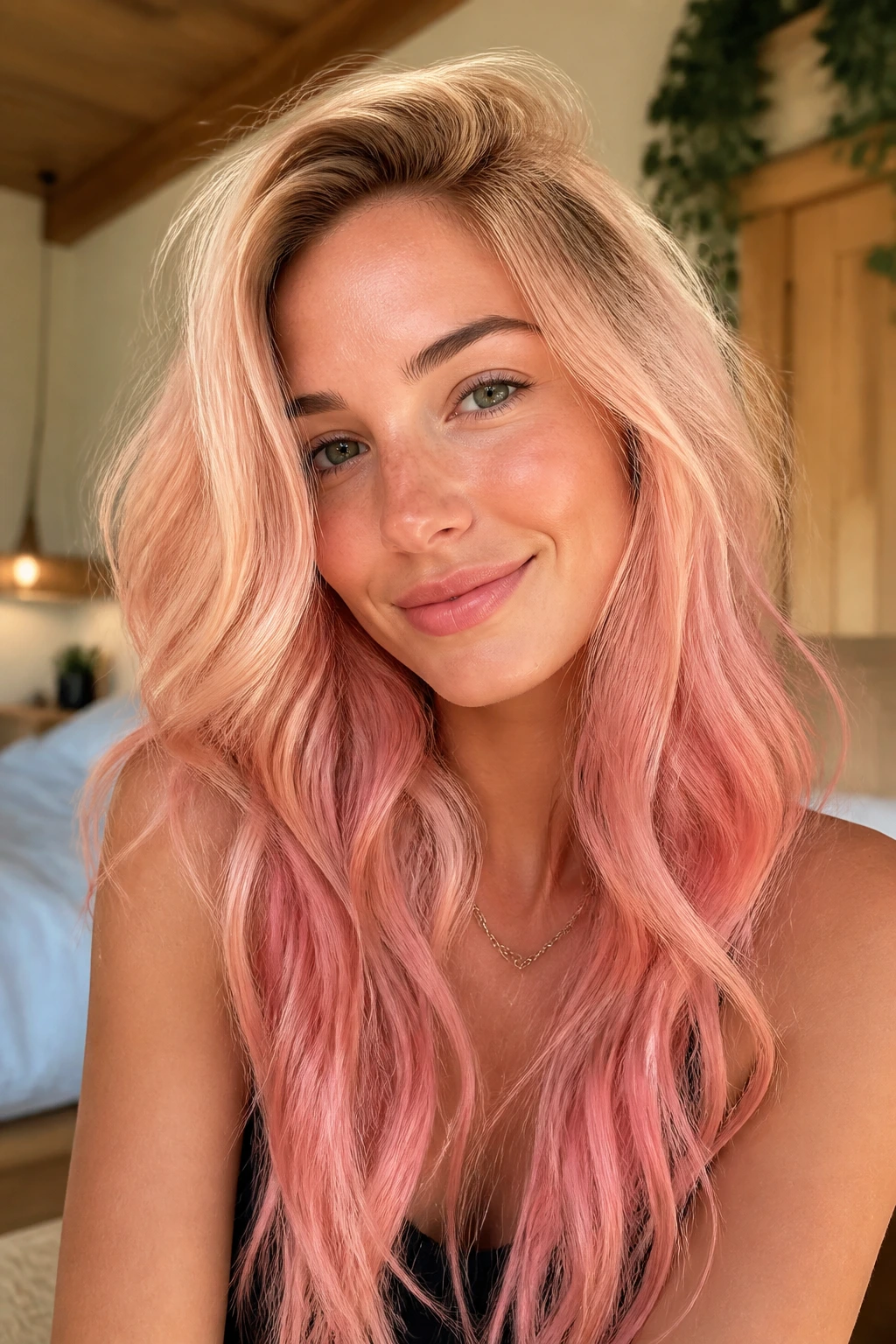
Peachy pink is the version I’d hand to someone who loves blush lipstick, gold jewelry, and warm blonde tones. It sits a little closer to apricot than baby pink, which means it flatters honey skin, golden undertones, and anyone whose hair already wants to live in the warm blonde family. On long hair, the result looks sun-softened rather than sugary.
The nice thing about this shade is how forgiving it can be. A fully icy pastel shows every tiny tone mistake; peachy pink gives you a little more grace. The fade can start as a creamy blonde near the top, then drift into peach blush, and finally deepen into a mellow strawberry-pink at the ends.
I like this best on layered cuts because the warm color catches on the bends. A blunt cut can make it look too neat, almost like a color swatch. Layers loosen it up. And if your wardrobe leans cream, rust, tan, and soft olive, this shade slips right in.
6. Reverse Shadow Root to Petal Pink Ends
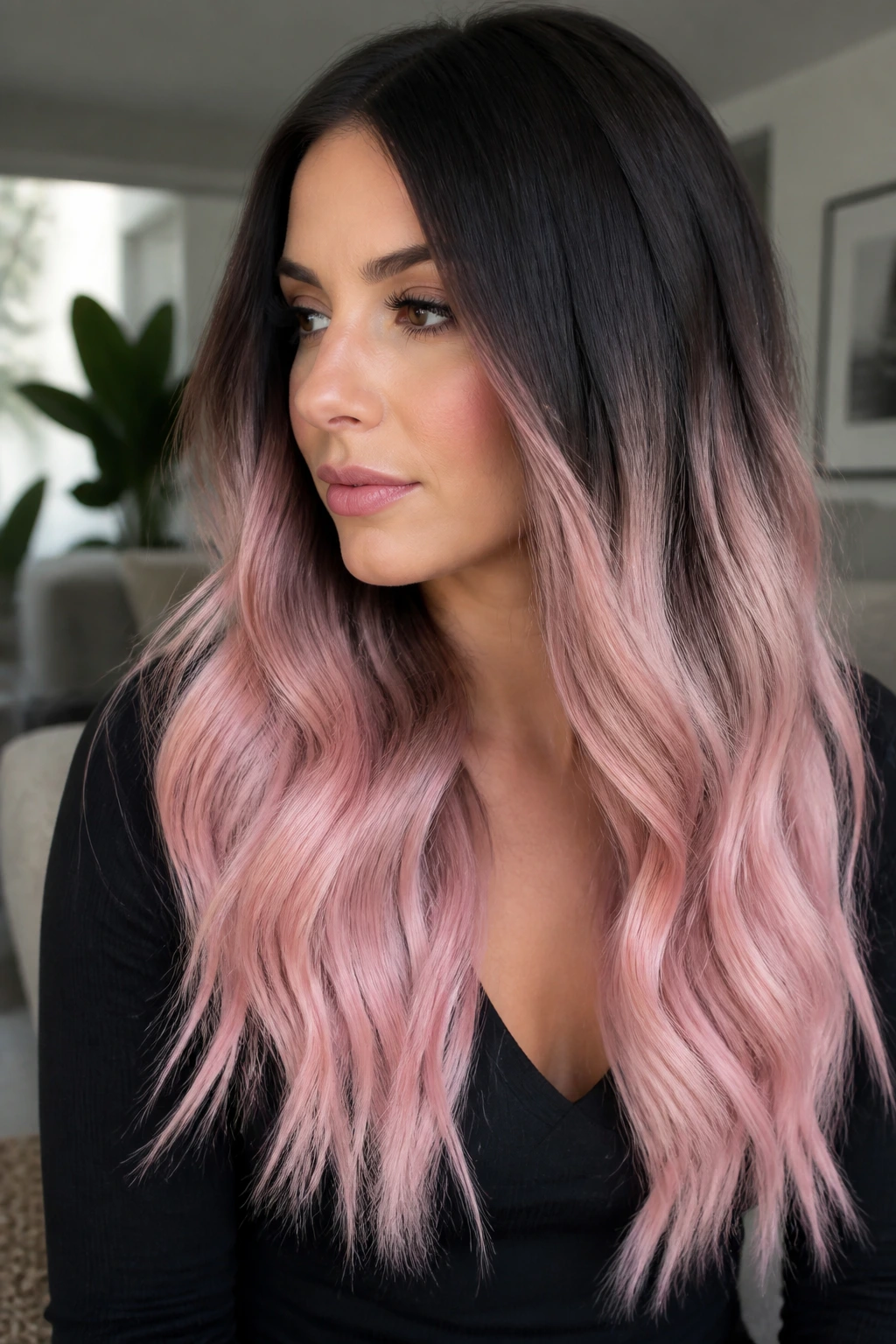
Unlike a high-contrast ombre, this version keeps the top dark enough to stay low-maintenance. The shadow root isn’t a flaw here; it’s the point. A soft brunette or mushroom-blonde root melts into petal pink at the ends, which makes the long lengths feel glossy and grounded instead of washed out.
That little bit of root depth matters on long hair because it keeps the overall look from feeling top-heavy. The eye travels downward smoothly, and the pink becomes the payoff at the bottom. It also makes ponytails and half-up styles look better, because the root area still has shape when the hair is pulled back.
Best case? You want pink but you do not want to babysit regrowth every few weeks. Ask for a root melt that’s only one to two shades darker than the mid-lengths, then a pale pink gloss on the last several inches. Keep the transition soft, or it loses the whole point.
7. Strawberry Cream Balayage on Long Layers
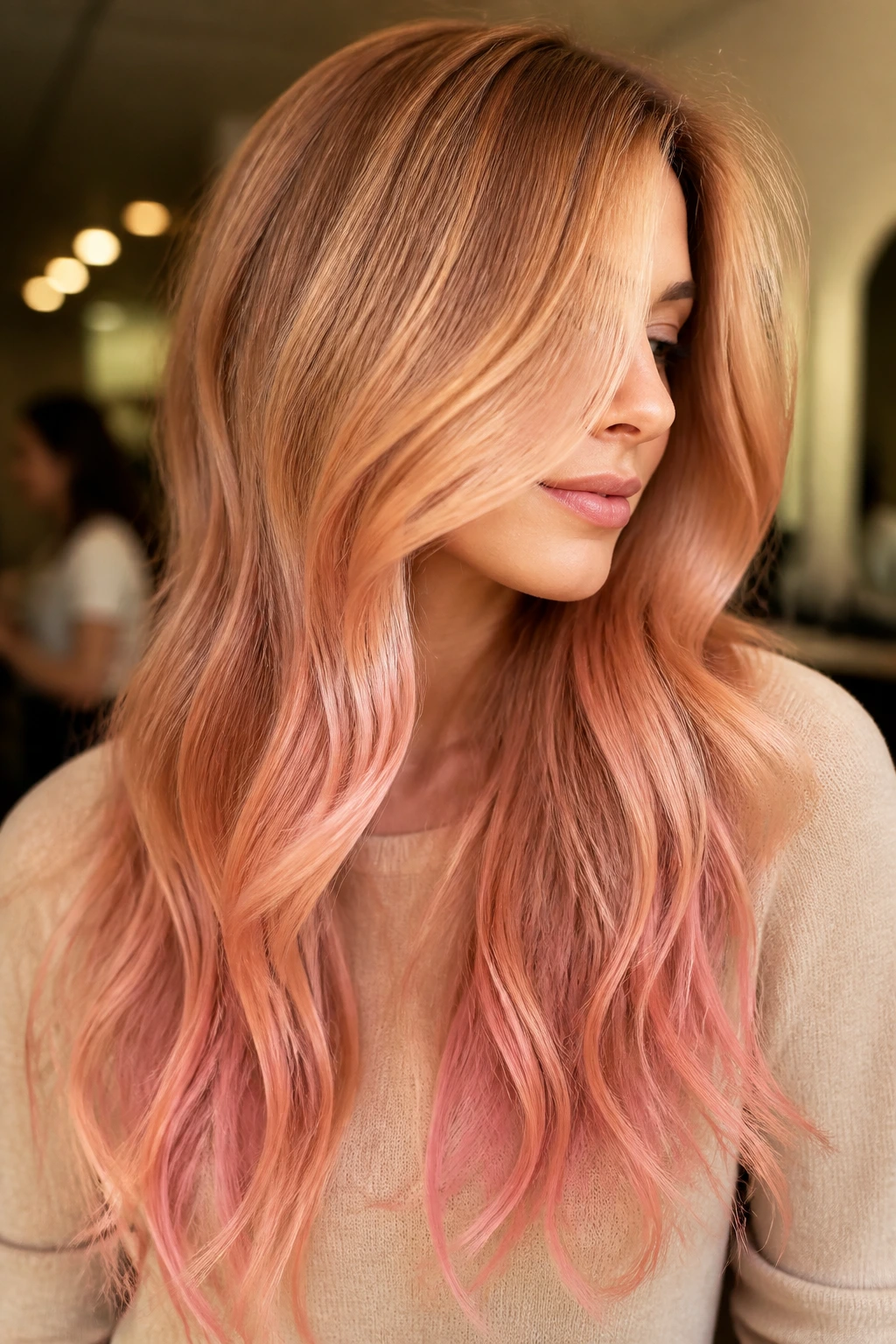
Strawberry cream is what happens when pink gets a little gold and a little milk in it. It feels softer than rose and less pastel than bubblegum, which makes it easy to wear on long layers that move around a lot. The color lives best where the hair bends, so a blowout or a loose wave brings it to life fast.
Why It Works
The shade sits in a sweet spot for people who want pink but fear going full fantasy color. It reads feminine without looking juvenile, and the warmer undertone keeps it from going chalky on long, pre-lightened hair.
- Ask for a warm blonde base with strawberry-cream tonal ends.
- Keep the pink diffused through the mid-lengths instead of starting too high.
- Use a medium round brush blow-dry or a 1.25-inch curling iron.
- Good choice for layered cuts, curtain bangs, and soft face-framing pieces.
Tip: If your hair is fine, keep the lightening subtle. Strawberry cream can go see-through on fragile ends, and that’s not the look you want.
8. Silver Blonde to Bubblegum Dust Pink
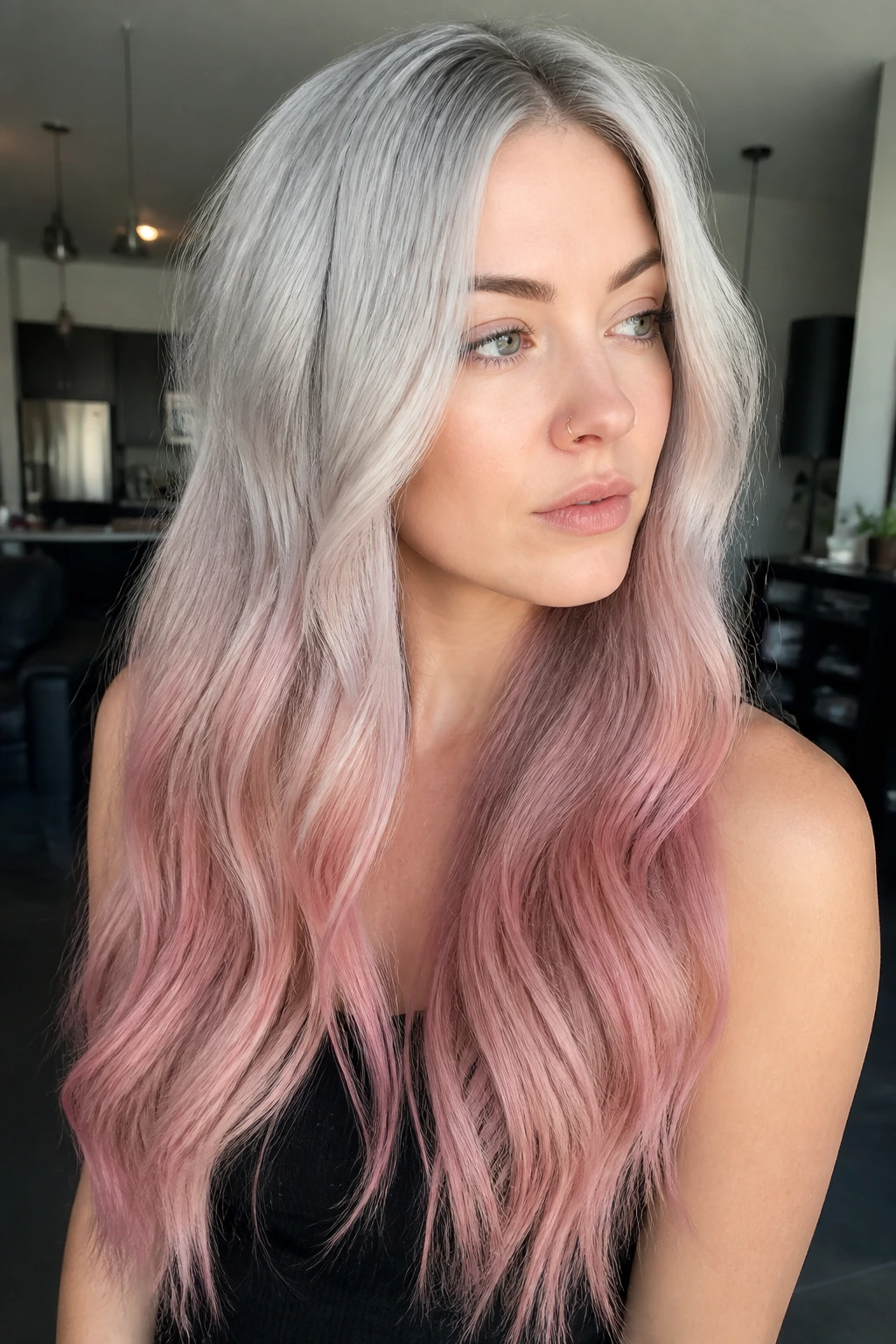
The boldest thing about silver-blonde-to-pink hair is the clarity. There’s no guessing what the color is doing. The top is cool, bright, and almost metallic; the bottom turns into a dustier bubblegum that still feels soft enough for everyday wear. On long hair, that contrast looks especially sharp when the hair swings past the shoulders.
This version suits people who like their color to have a little edge. It is pastel, yes, but it does not whisper. The silver base makes the pink look cleaner, and the cooler tone keeps the whole style from drifting too sweet. If you wear black, gray, or crisp white, the effect is even better.
You’ll want a stylist who can lift evenly and tone carefully, because silver blonde shows mistakes fast. Once it’s done right, though, the pink ends can hold their shape beautifully in straight styles or smooth Hollywood waves.
9. Soft Rose Quartz on Mermaid Waves
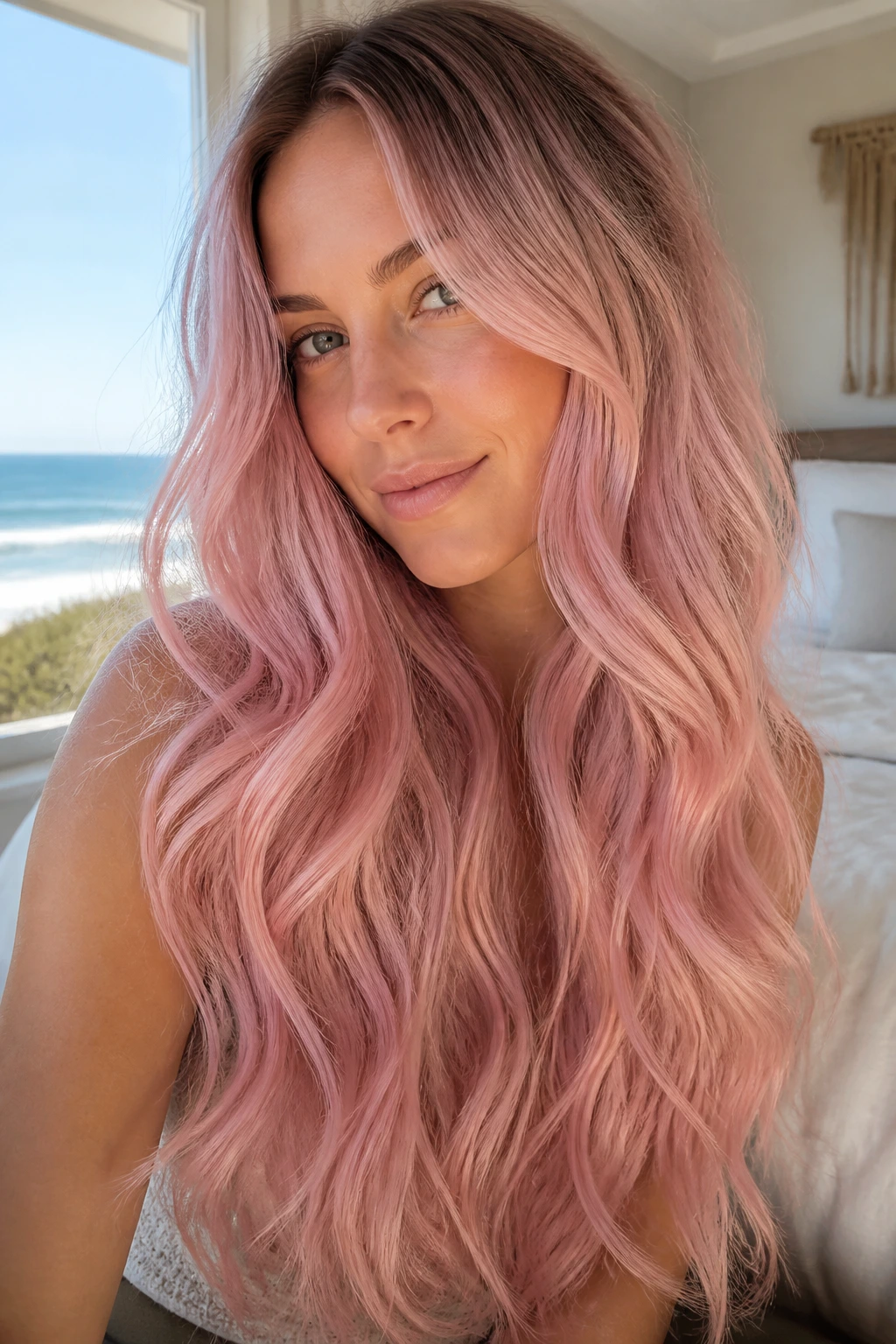
What happens when the hair itself does half the styling? Rose quartz on mermaid waves is the answer. The waves break the color into soft bands, so the pink looks airy instead of solid. On very long hair, that movement creates a dreamy fade that feels more expensive than a flat pastel block.
I like this shade because it has enough depth to stay interesting. Rose quartz sits between blush and mauve, which means it can lean romantic in the morning and richer by evening light. The ends usually carry the strongest pink, while the upper length stays diluted and light.
How to Wear It
Let the hair be a little undone. That is the point.
- Use long, loose waves rather than tight curls.
- Ask for the pink to be most intense from the jawline down.
- A center part makes the color look balanced.
- Works well on hair that already has some natural bend or layering.
The whole style looks a little softer if the pink isn’t perfectly even. That slight variation gives it movement.
10. Coral Rose Gradient for Thick Hair
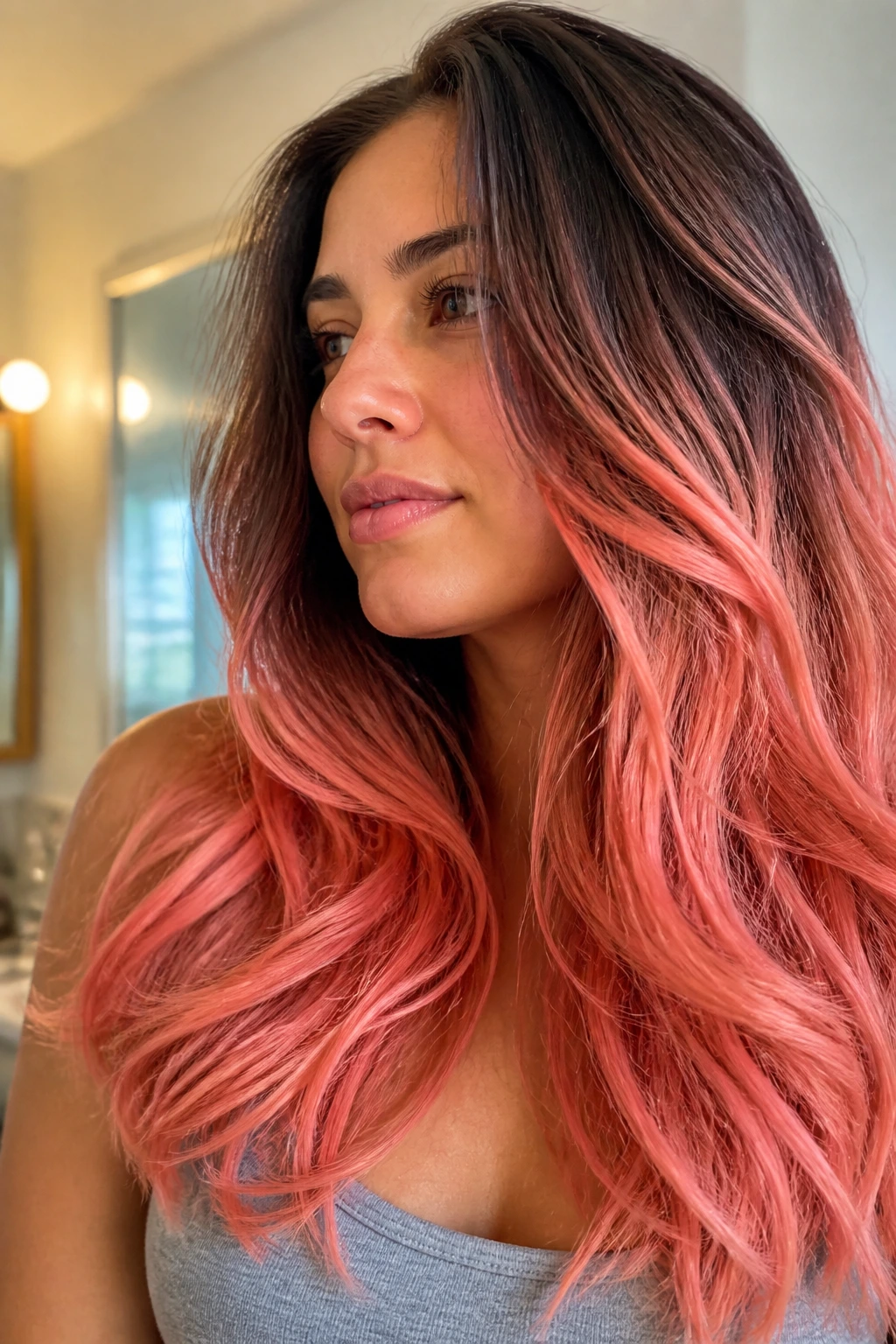
Thick hair can swallow pale color if the placement is too timid. Coral rose fixes that problem. It has enough warmth and pigment to sit on dense lengths without vanishing, and the gradient from blonde into coral-pink gives the hair a little lift at the bottom. It’s a smart choice for anyone with a lot of hair and not much patience for a washed-out finish.
A friend with heavy, waist-length hair once described this kind of color as “finally visible from the back,” and she wasn’t wrong. Dense hair needs a shade that can hold its own against all that volume. Coral rose does that without turning neon.
- Works well with layered ends or a soft U-shape cut.
- Ask for more saturation at the bottom third than you would with a sheer pastel.
- Big waves or a rough blowout make the coral-pink read better.
- Best if your natural tone is medium blonde or light brown.
A little deeper pink at the ends usually looks better here than a very pale blush.
11. Cotton Candy Dip-Dye on Waist-Length Hair
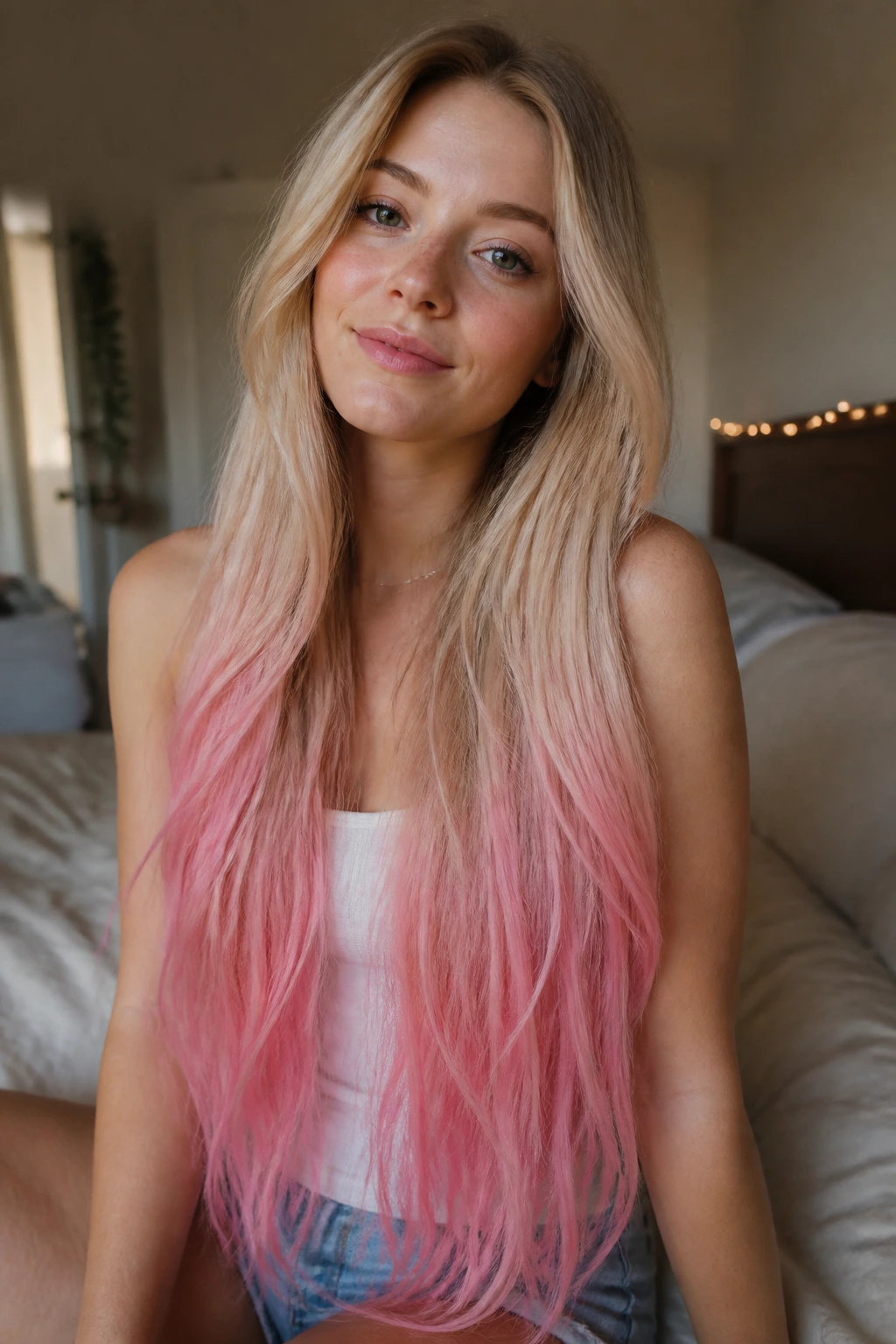
Cotton candy dip-dye is unapologetic, and that’s why it works on very long hair. The color stays concentrated near the last several inches, so the top can remain blonde, beige, or even soft brown while the ends turn into a playful pink cloud. On waist-length hair, the dip-dye effect has enough room to look intentional rather than choppy.
This is one of those styles that benefits from straight hair as much as waves. Straight lengths make the line more graphic; waves turn it into a softer wash of color. Either way, the long canvas gives the pink room to breathe instead of crowding the rest of the hair.
It’s a good pick when you want something a little louder but still pastel. If you wear your hair braided often, the pink ends peek through in a way that makes the whole look more interesting. The only thing I’d avoid is placing the color too high. Once the pink starts too far up, the dip-dye effect loses its punch.
12. Vanilla Blonde to Blush Pink Face Frame
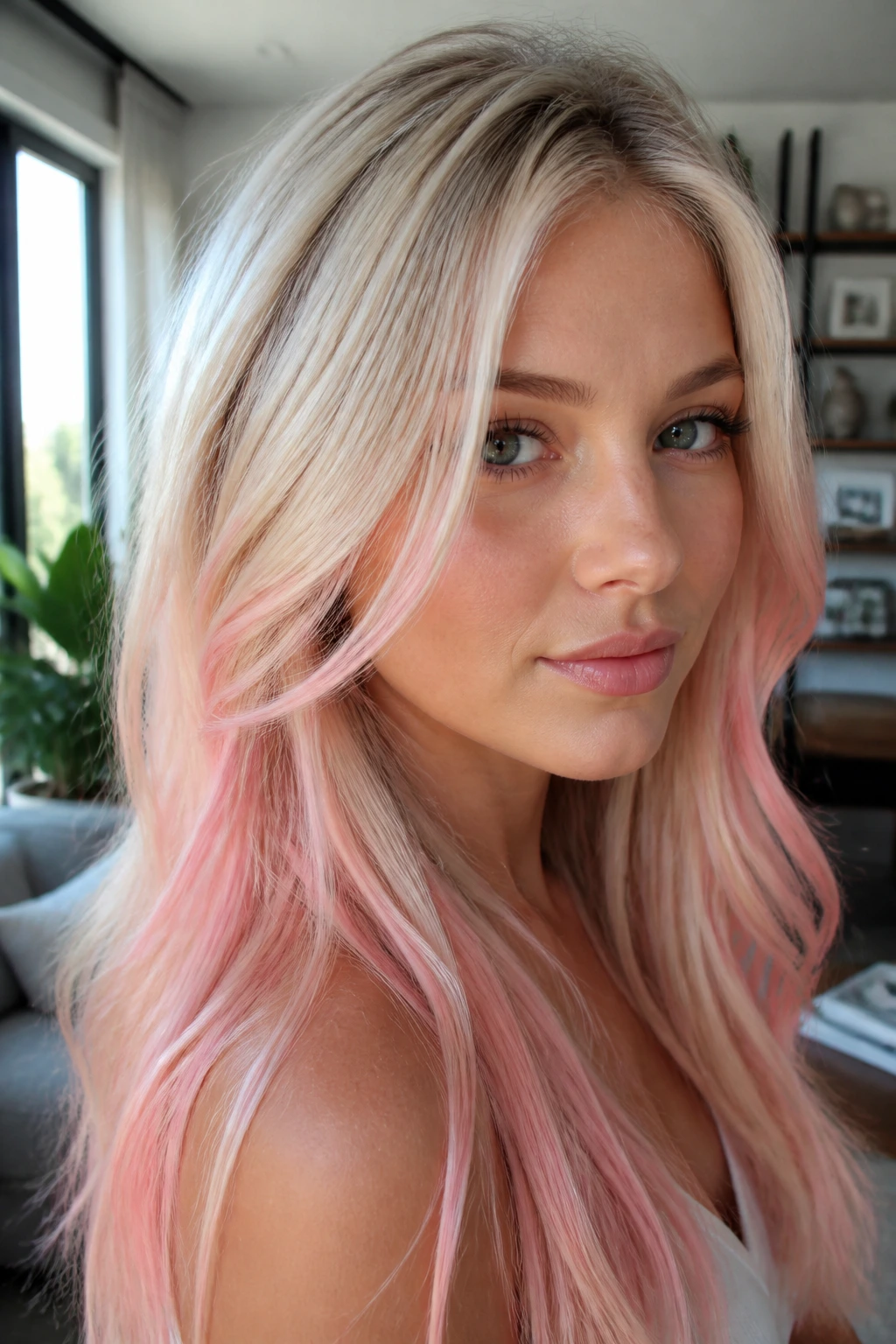
Unlike an all-over pastel fade, this version keeps the pink where the eye naturally lands first. The face frame stays lighter and rosier, while the rest of the length moves from vanilla blonde into a much softer blush at the ends. On long hair, that creates a gentle halo effect without asking for a full head of pink.
It’s a smart option if you want the color to read from the front and stay subtle from the back. That makes it easier to live with, especially if you wear your hair half up, in loose buns, or tucked behind one ear. The face-framing pieces can be a shade brighter than the rest, which keeps the color from disappearing under indoor lighting.
I’d recommend this to anyone testing pastel pink for the first time. You get the mood of the shade without turning every inch of hair into a maintenance project. A middle or slightly off-center part helps the framing pieces fall naturally.
13. Pastel Pink Ombre with Dark Brunette Roots
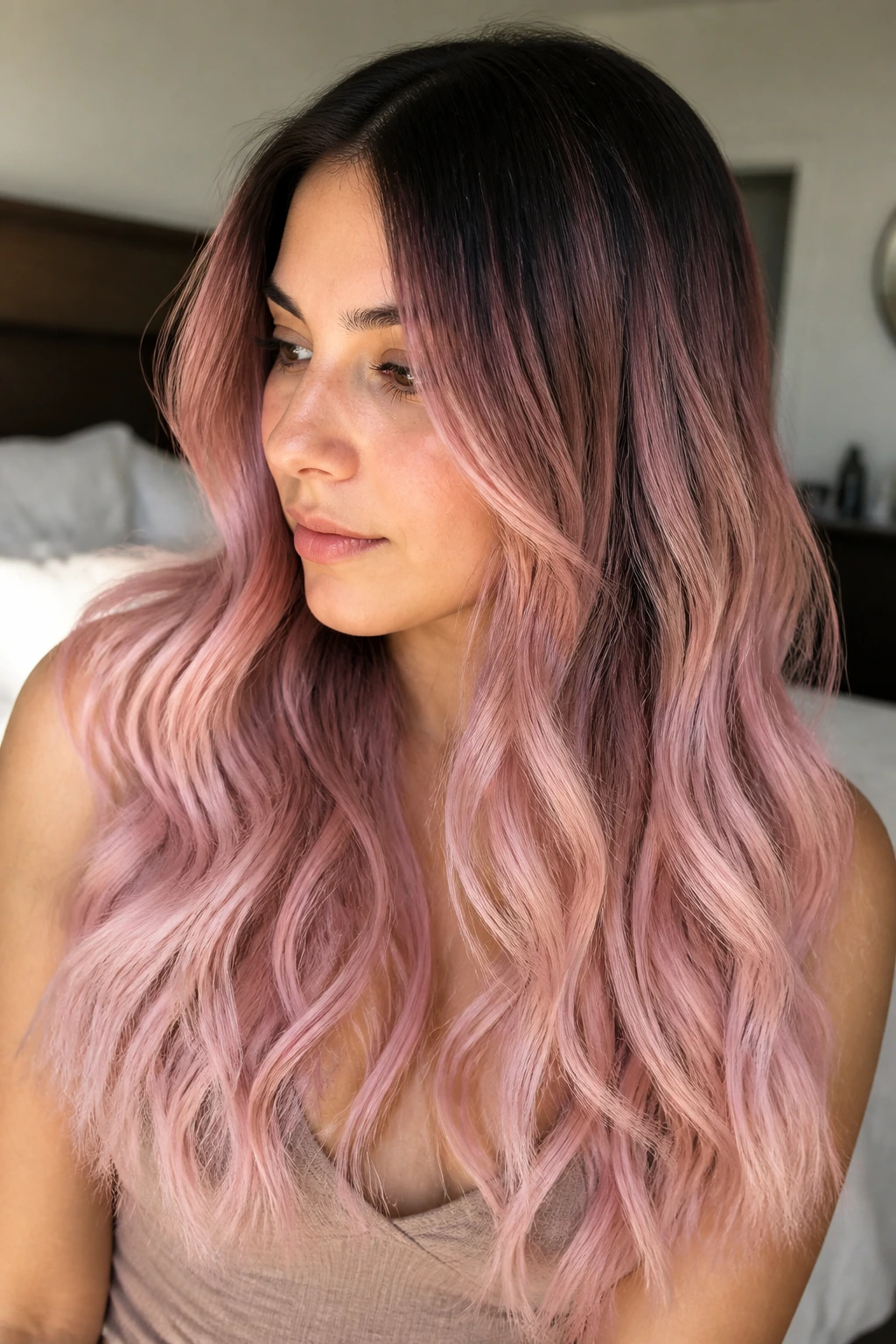
Dark brunette roots can make pastel pink look richer, not harsher, if the fade is done with care. That contrast is the whole appeal. The roots stay deep, the mid-lengths turn warm blonde, and the ends move into a clean pastel pink that feels deliberate rather than random. On long hair, the difference between root and end becomes part of the style.
Why It Works
This is the one I’d call the “grown-up pink” version, though that label always sounds a bit clumsy. It’s less sugary than a blonde-to-pink melt and more grounded by the brunette base.
- Ask for a soft brunette root melt rather than a hard line.
- Lift the ends to a light blonde before toning pink.
- Keep the transition smooth through the mid-lengths.
- Best on long, layered cuts that can handle a strong color gradient.
Tip: If your brunette is naturally warm, ask for a beige or neutral lift instead of a gold one. Otherwise the pink can pick up too much orange on the way down.
14. Soft Mauve Pink Ends on Honey Brown Hair
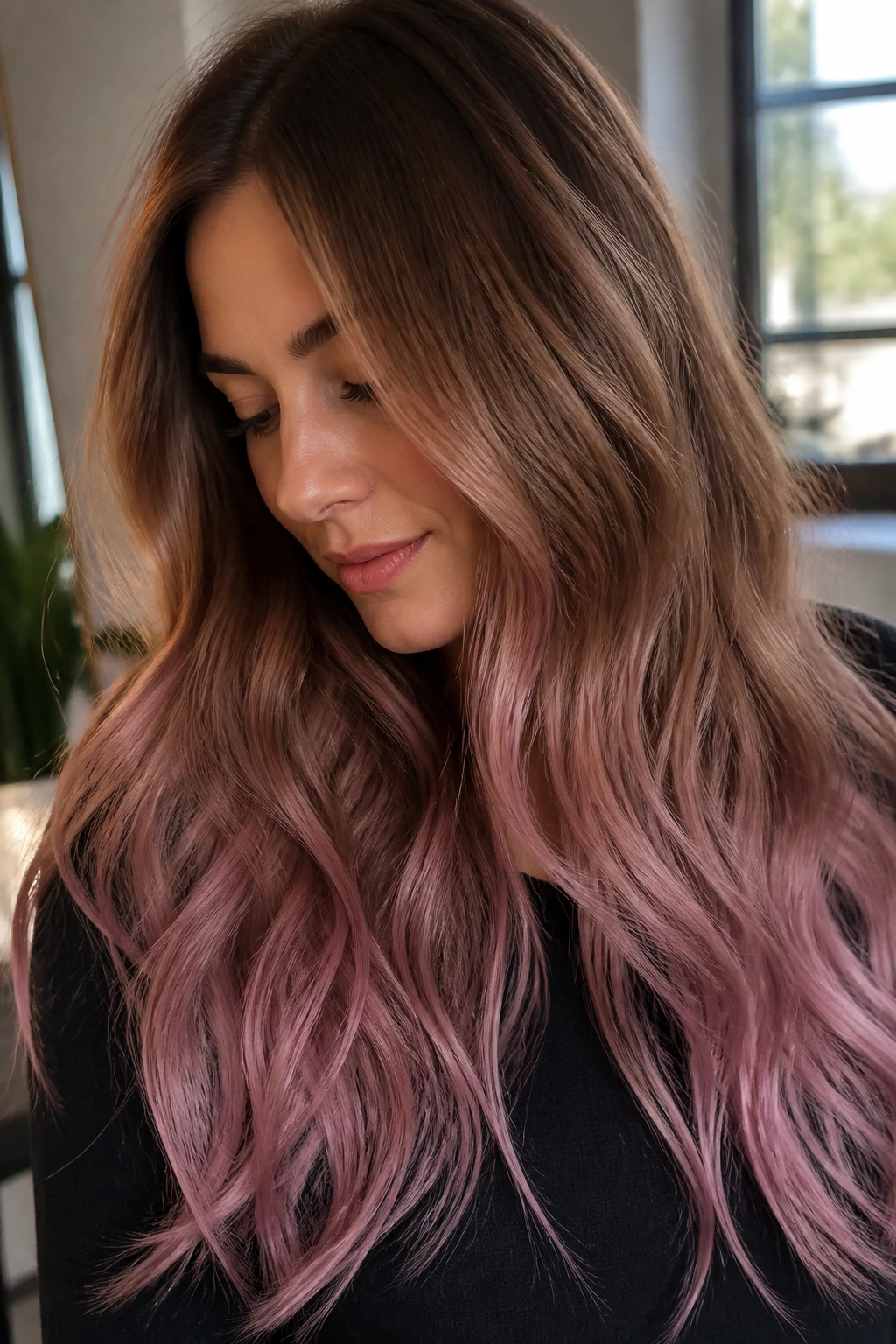
Mauve pink is the moody cousin in the family. It leans cooler, deeper, and a little dustier than baby pink, which makes it a nice fit for honey brown bases that don’t want to go too sweet. On long hair, the mauve end color looks almost velvety, especially when the light catches it at an angle.
I prefer this shade for people who like pink but feel uneasy about anything too bright. Mauve gives you the color without the bubblegum energy. It also holds up well when your hair has some natural brass, because the slight depth of the shade softens those warmer tones instead of fighting them.
The best way to wear it is with long layers and a smooth finish. A rough texture can make mauve look muddy. A glossy blowout, on the other hand, makes the pigment look richer and more expensive than it sounds on paper.
15. Champagne Pink Swoosh on Long Curtain Layers
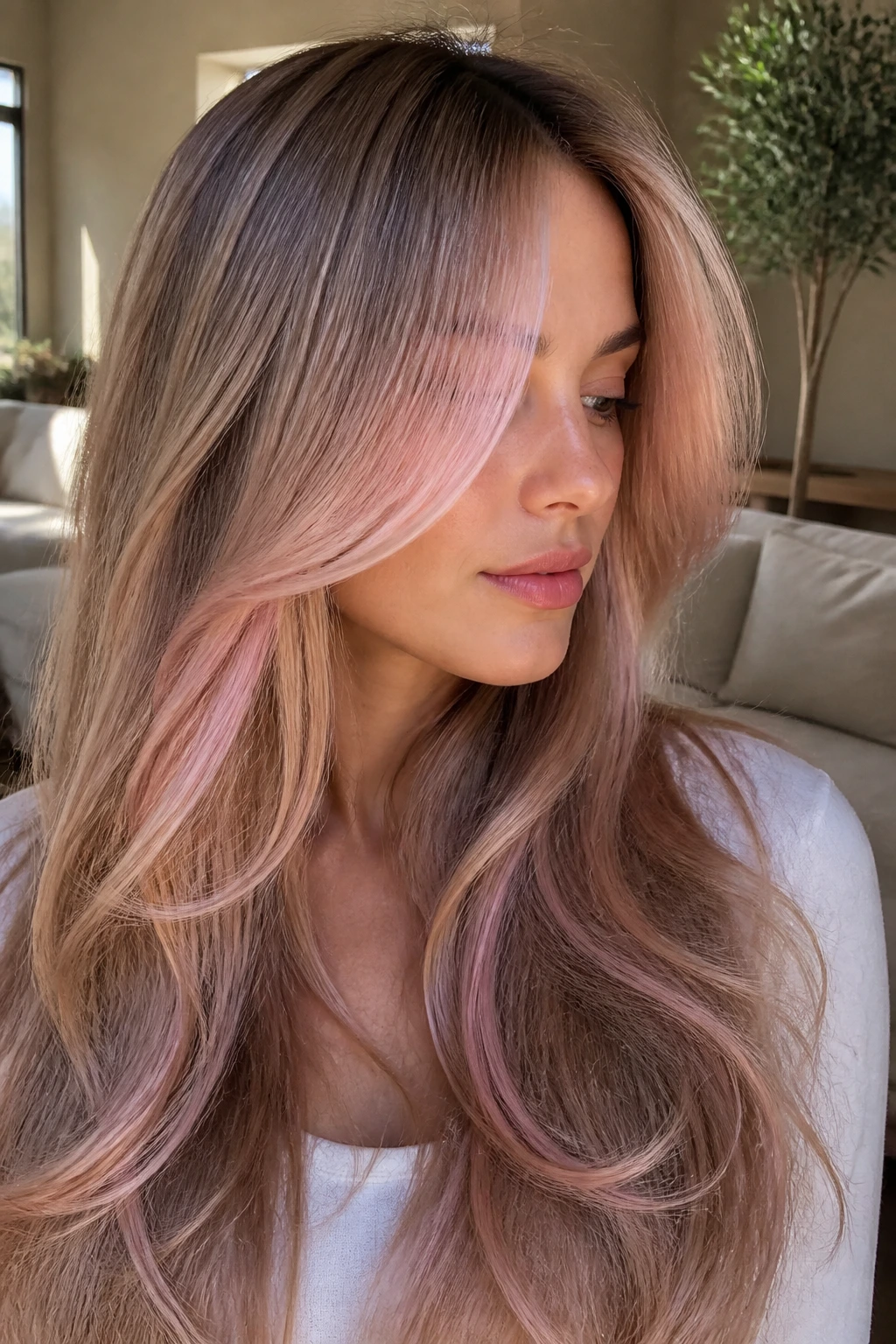
Have you ever noticed how curtain layers almost ask for color movement near the front? Champagne pink answers that question nicely. The shade lives between beige blonde and blush, so the front pieces can carry a lighter pink while the back lengths stay softer and more neutral. On long hair, that swoosh of color across the face makes the whole style feel lifted.
How to Wear It
This one works best when the pink is placed like a ribbon, not a block. The front should look brighter, then the tone should taper as the hair drops toward the ends.
- Ask for face-framing curtain layers with lighter pink at the front.
- Keep the back lengths slightly more muted.
- Use a round brush blowout to show off the bend in the layers.
- Good fit for medium-thick hair that holds shape well.
The shade feels polished without turning stiff. That’s why it works for people who want something soft but still visible from across a room.
16. Rose Gold Ribbon Ombre on Braided Hair
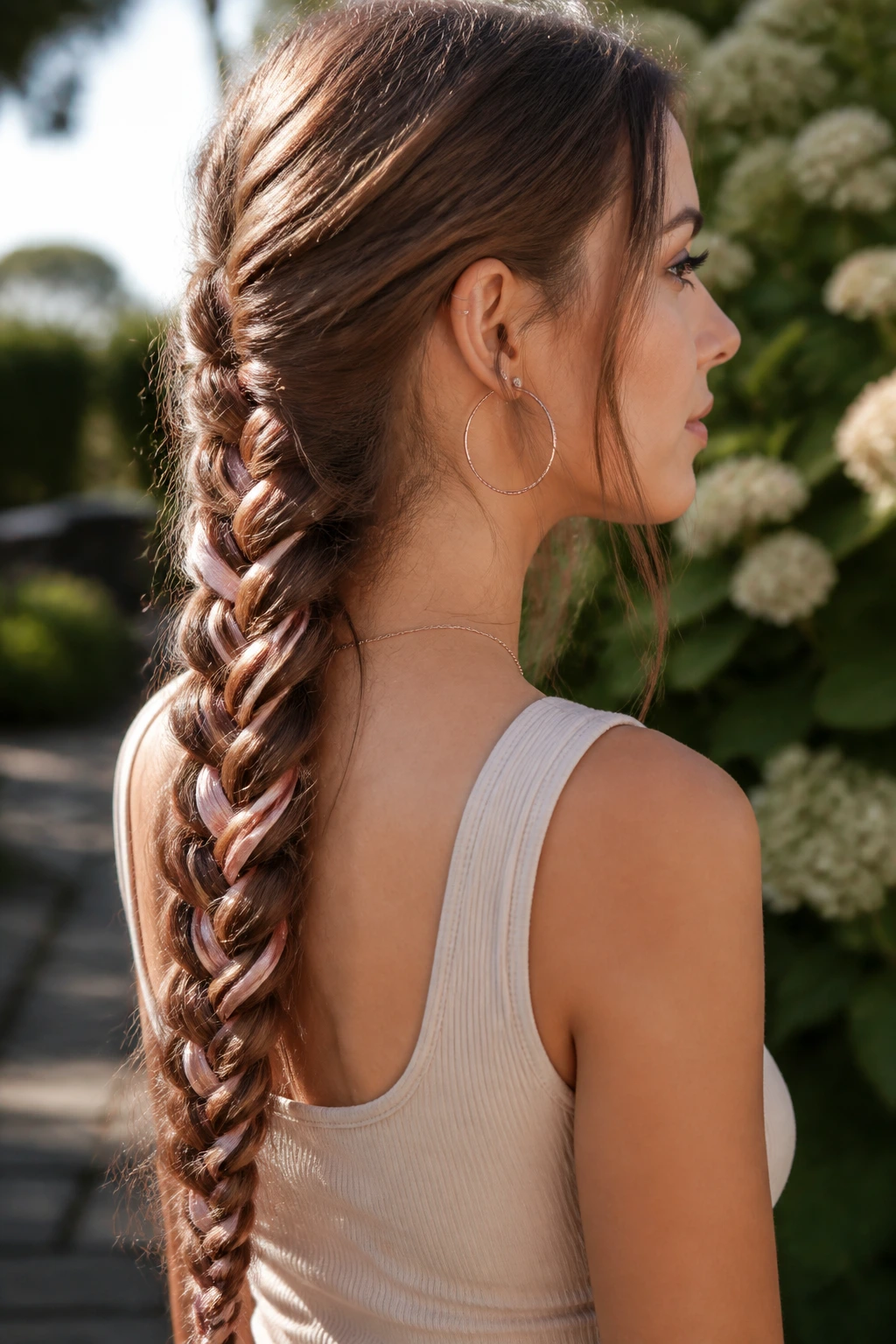
Braids change everything. A rose gold ribbon ombre can look fairly subtle when loose, then suddenly wake up once it’s woven into a braid. The different tones twist together, and the pink pieces peek through in narrow flashes rather than one solid band. On very long hair, that makes the style feel rich and textured.
This is the kind of color I’d choose if braids, fishtails, and half-up plaits are part of your regular life. The ribboning lets the ombre show even when the hair is controlled and pinned back. That’s a win, because some pastel styles disappear the second you braid them.
- Works beautifully with French braids, fishtails, and bubble braids.
- Ask for thin pink panels through the lower half.
- Keep the rose gold slightly deeper than baby pink so it holds its shape.
- Best on hair with some natural thickness or extension-friendly length.
The braid effect also hides grow-out a little better, which is a practical bonus people forget to mention.
17. Powder Pink Dip on Straight Sleek Hair
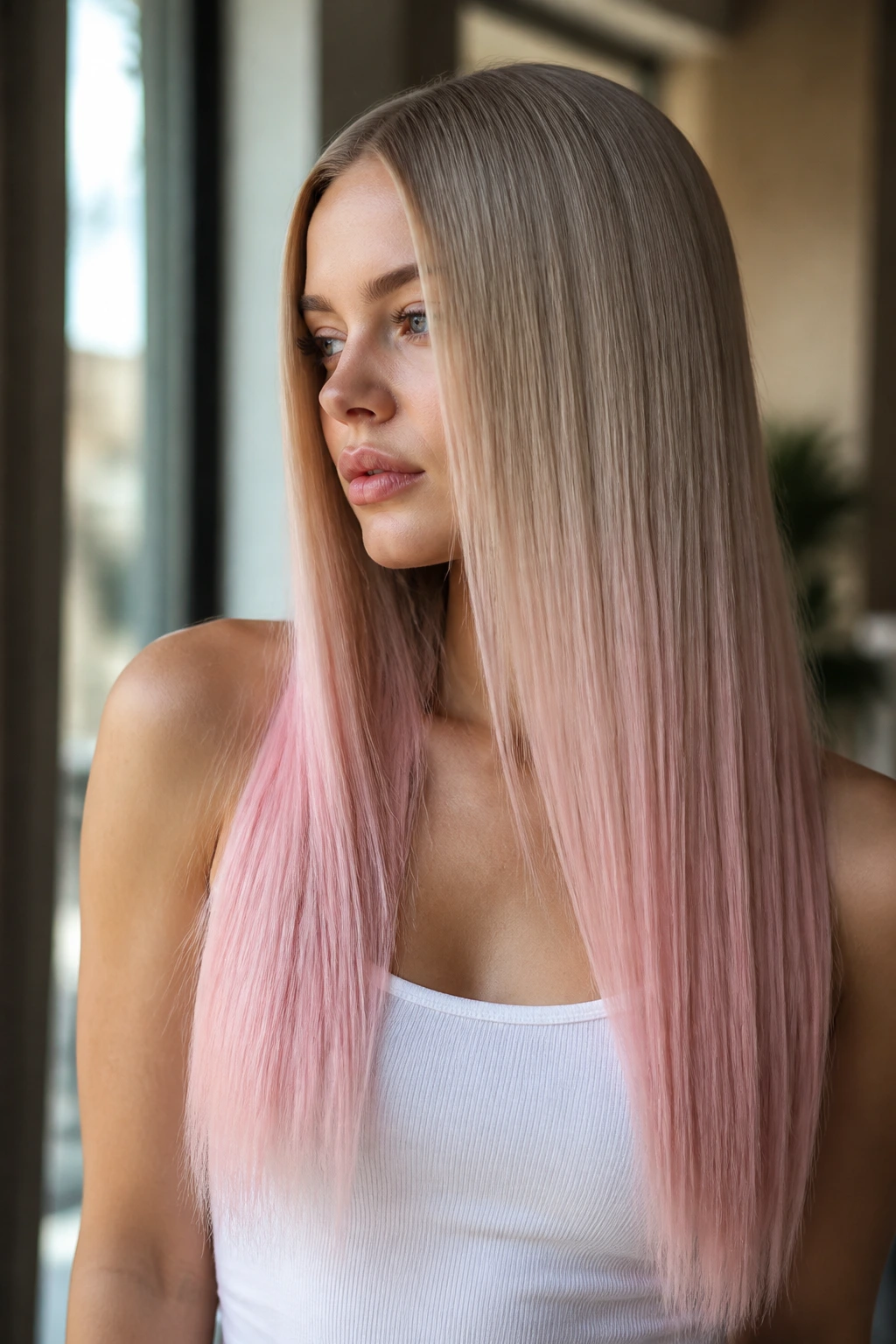
Straight hair makes pastel pink look sharper. There’s nowhere for the color to hide, so a powder pink dip on sleek lengths reads as deliberate and polished. The ends look almost airbrushed when the finish is smooth, and the ombre line can be soft enough to feel elegant without losing definition.
I like this version because it respects the shape of long straight hair. Too many pink styles assume waves are mandatory. They’re not. A glassy blowout or a flat-ironed finish can make the pink tips look cleaner, especially if the top half is a cool blonde or pale beige.
The dip should sit low enough that the lengths still feel long. If the pink starts too high, the hair can lose the long, clean line that makes this style work. Ask for a gradual fade through the last third, then keep the ends the most opaque.
18. Orchid Pink Fade for Cool Undertones
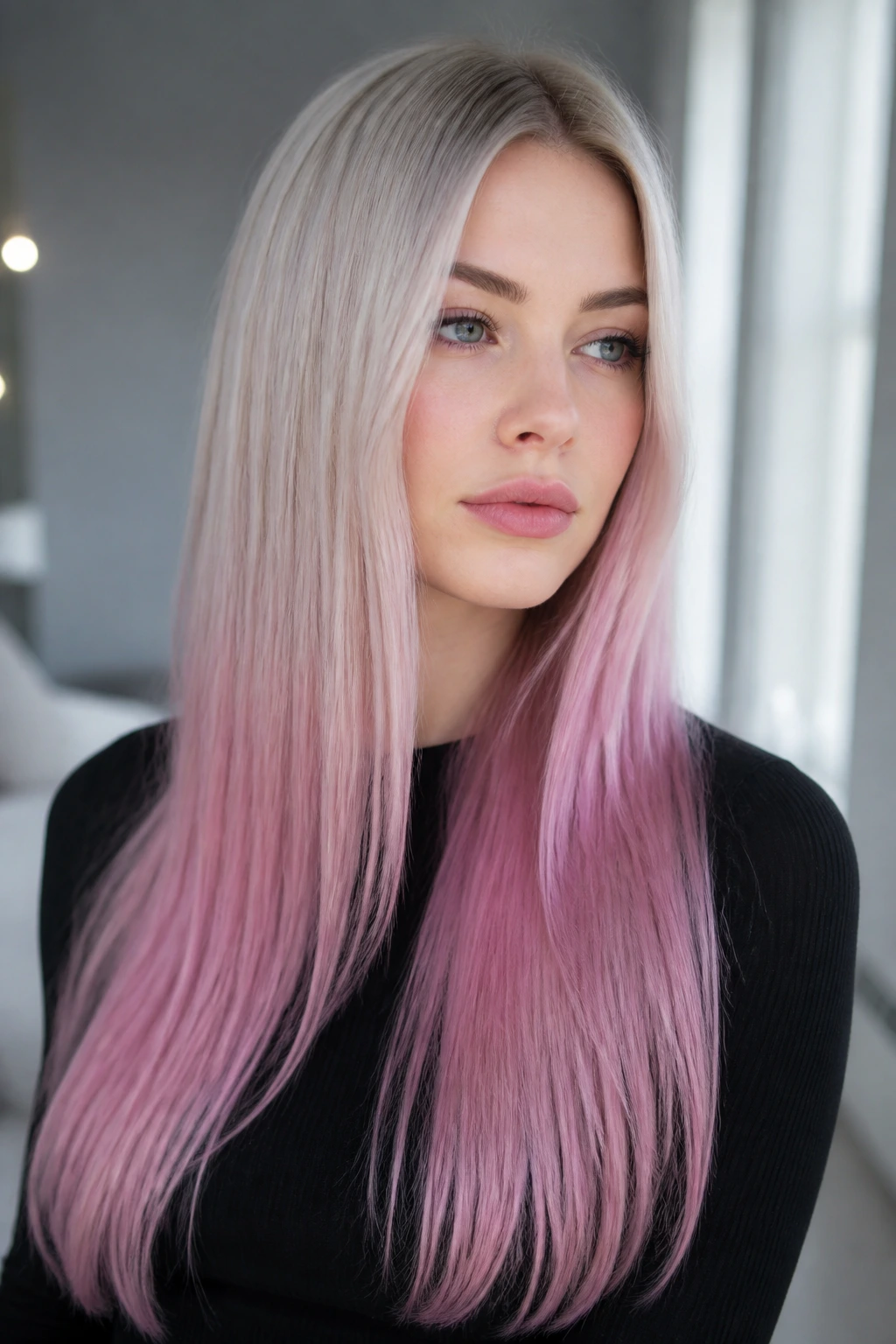
Orchid pink sits a little farther from baby pink and a little closer to lavender. That makes it a stronger choice for cool undertones, ash blondes, and anyone who finds peachy pink a bit too warm. On long hair, the orchid fade looks almost luminous because the color shifts from pale blonde into a pink that has depth.
Unlike warmer blush shades, orchid pink can hold its own next to silver jewelry, black clothing, and smoky eye makeup. It gives the hair a cleaner edge. The result is still soft, but it has more contrast than a standard pastel.
This is a good direction if you like pink with a hint of cool mystery. Keep the blonde base neutral or icy, then let the orchid tone deepen slightly toward the ends. A little more saturation at the bottom prevents the color from looking washed out once it fades a few washes in.
19. Baby Pink Balayage with Invisible Layers
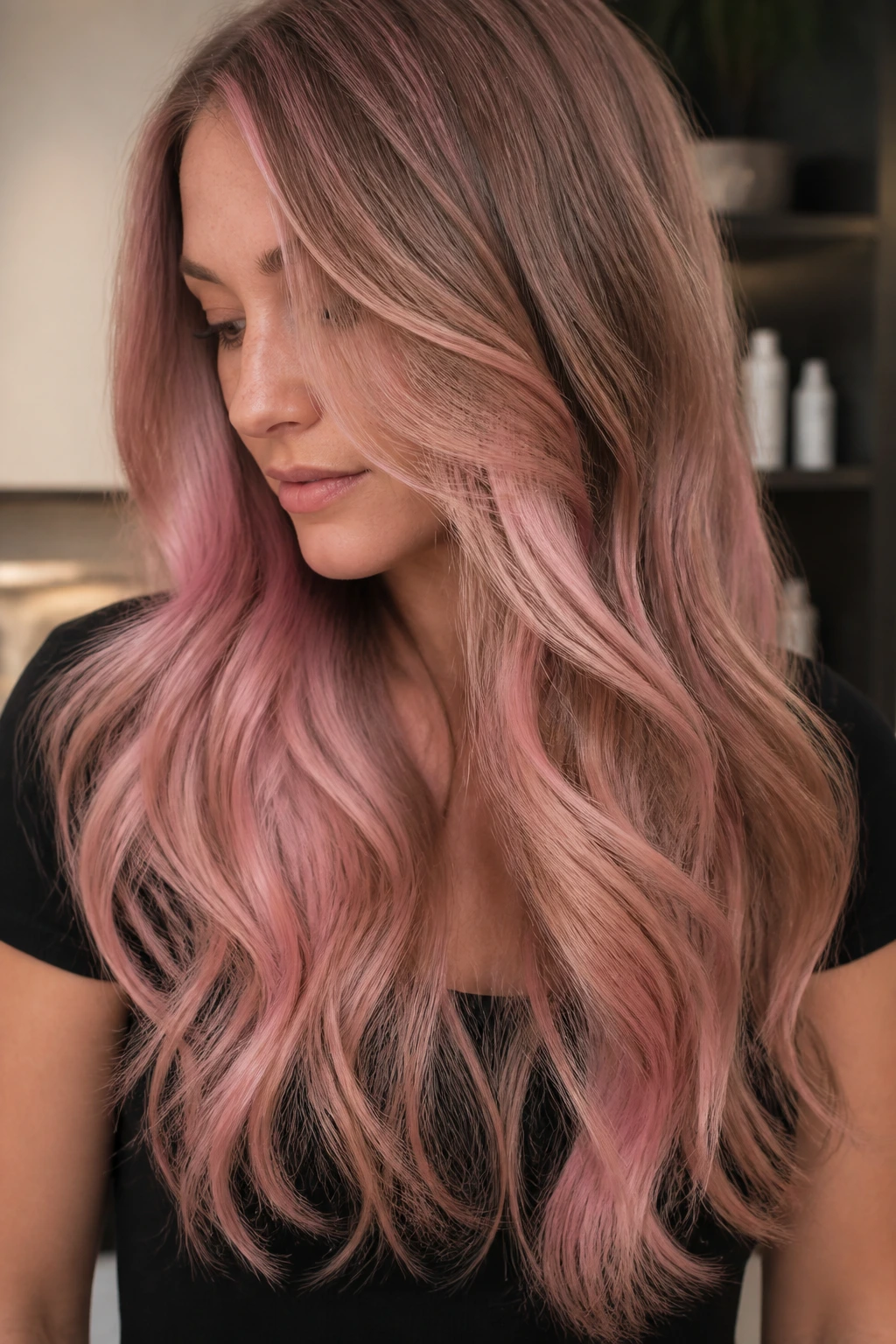
Baby pink balayage is all about movement that you don’t notice at first glance. The layers are the quiet part. The pink is painted in fine pieces so it sits inside the cut instead of floating on top of it, and long hair gives those hidden panels plenty of room to show when the hair swings.
Why It Works
The invisible-layer effect is a clever one. You get dimension in the salon chair, then the color starts appearing and disappearing as the hair moves. That makes the style feel softer than a standard ombre.
- Ask for very fine balayage pieces through the lower lengths.
- Keep the pink sheer and milky, not saturated.
- Best on long haircuts with soft layering or internal weight removal.
- Let the ends stay slightly brighter than the middle for a natural fade.
Tip: This version looks best when the hair is healthy enough to reflect light. Dry ends make the hidden layers look dull, and that steals the whole point.
20. Sunset Blush Ombre with Apricot Ends
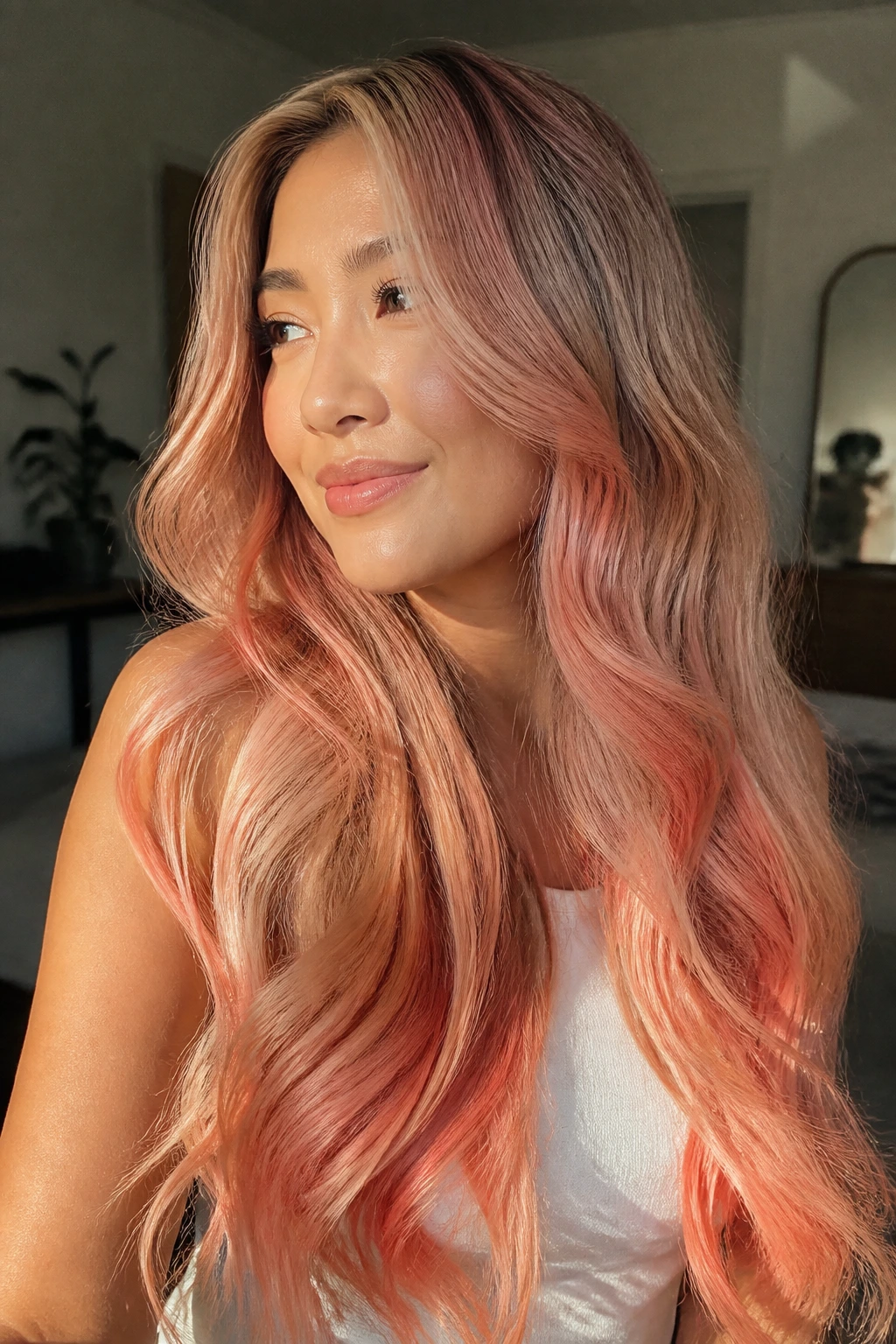
Sunset blush is the warmest, most glowing version in the group. It starts with blonde or beige tones and melts into a blush pink that picks up apricot near the bottom. On long hair, that warm shift gives the whole style a sunset feel without tipping into orange. It’s soft, flattering, and easier to wear than people expect.
This is the shade I’d suggest to someone who wants pink but doesn’t want their hair to feel fragile or too cool. Apricot in the ends keeps the color alive even after a few washes, and the pink stays visible instead of turning gray. It also looks good on loose curls, where the warmer tones catch the bend of each wave.
If your natural hair is light brown or warm blonde, this version can feel especially seamless. Ask for a gentle fade, not a stark contrast. The magic is in the warmth.
Final Thoughts
Pastel pink ombre on long hair works because length gives the color room to fade the right way. A short cut can make pink feel clipped; long hair lets it stretch, soften, and shift in a way that looks thought-out instead of rushed.
The smartest choice depends on where you’re starting. Platinum gives you the cleanest pastel. Beige blonde keeps things soft. Brunette roots make the color easier to live with if you care about grow-out. None of those routes is wrong, which is part of why this look keeps holding up so well.
If you’re taking the idea to a colorist, talk about lift first, tone second, and placement third. That order saves a lot of disappointment. Pink is the fun part, but the blonde underneath is what decides whether it looks blushy, dusty, peachy, or just plain off.
