



Red hair can look flat in a hurry, which is why the best red ombre hair ideas for long hair lean on depth before they lean on brightness.
Long lengths give you room to do the color properly. You can keep the roots richer, let the middle soften, then let the ends flare up in a way that feels intentional instead of loud. On short hair, red often lands as one block. On long hair, it can move.
There’s also a practical side people skip over. Red pigment fades fast, and long hair has more exposed ends, so the fade line matters as much as the shade itself. A good ombre doesn’t just look pretty on day one; it still looks good after a few washes, a few curls, and a few weeks of living your normal life.
The sweet spot is choosing a red that fits your base color and your haircut. Some tones want glossy waves. Some want sharp straight lengths. Some need a deep root stretch so the ends can carry the drama. That’s where the fun starts.
1. Black Cherry Ends on Espresso Brown
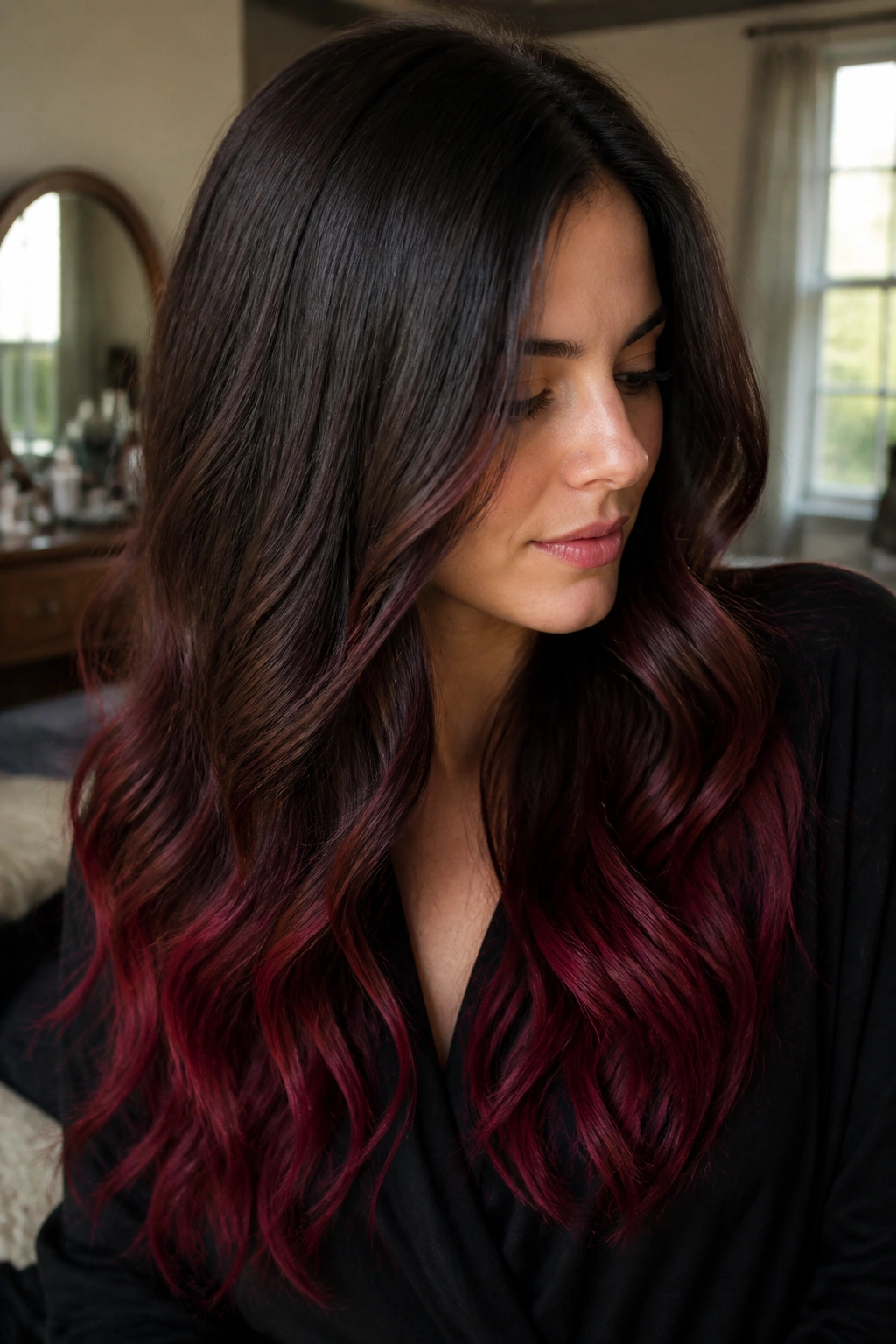
Black cherry is one of those shades that looks rich without shouting. On long espresso brown hair, the color sinks in near the roots and then blooms into a dark red at the bottom few inches, which gives the whole style a moody, polished feel.
Why It Works on Long Hair
The darker your base, the easier it is to keep this look soft. You do not need a hard line. You want a slow slide from brown into cherry, with the last 4 to 6 inches carrying most of the pigment.
That makes it a strong choice if you like red but do not want a bright copper finish. It also hides grow-out better than lighter reds, which matters when your hair is long enough to show every inch of fade.
- Best on level 3 to 5 brunettes
- Looks clean with loose waves or a bend from a 1.25-inch iron
- Ask for a shadow root and a demi-permanent cherry gloss
- Keep the ends trimmed every 8 to 10 weeks so the red does not sit on dry, see-through tips
Tip: If your ends are porous, ask for the red to be slightly deeper than you think you want. Porous hair grabs color fast and fades fast. Deep cherry holds its shape longer.
2. Copper Flame Fade on Dark Brown
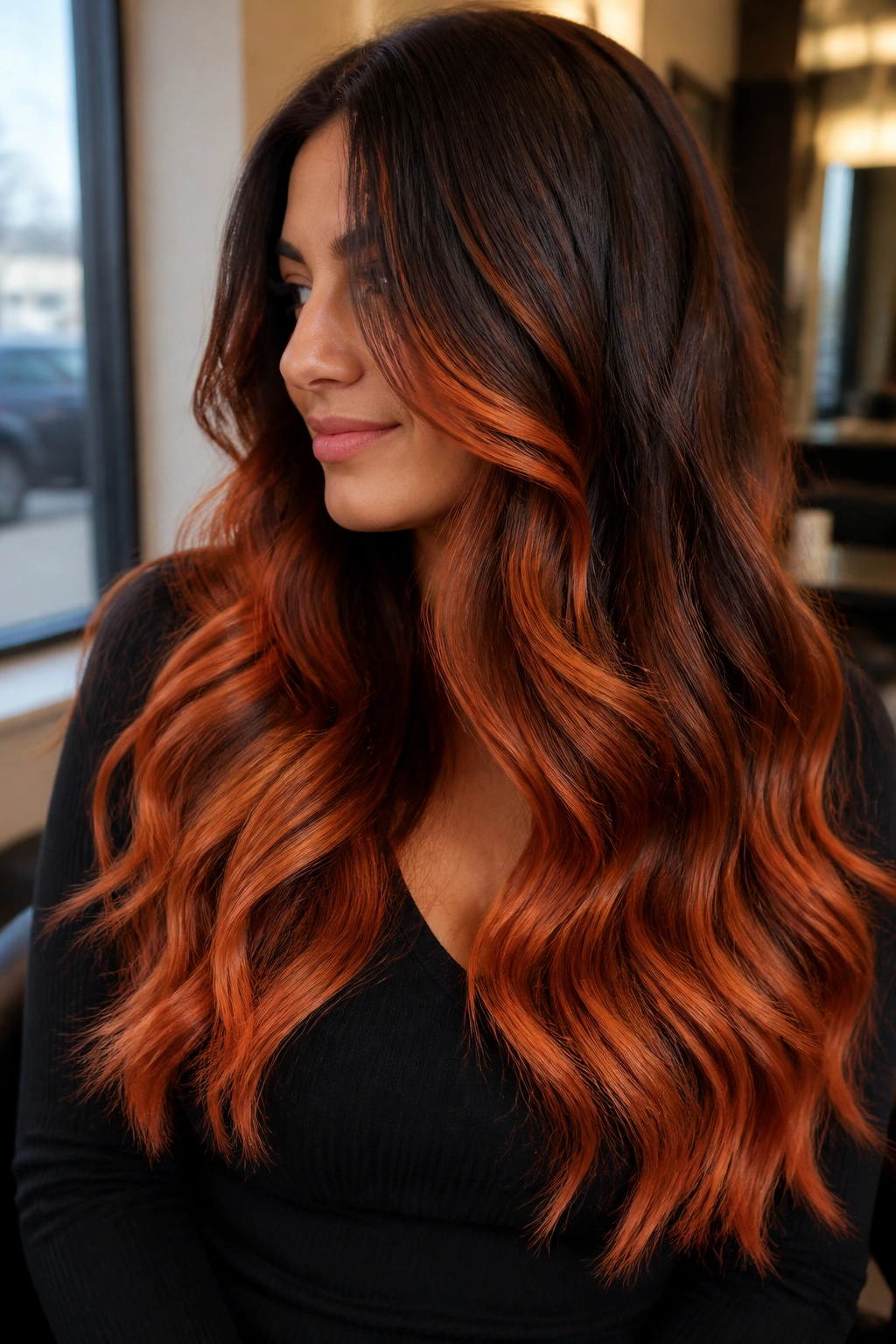
Copper is the cleanest way to make red feel bright without going neon. On long dark brown hair, it reads like heat moving through the length, especially when the color starts around the cheekbone and gets stronger toward the ends.
The nice part is that copper does a lot of work on its own. You do not need a heavy contrast to make it stand out. A warm brown root, a molten middle section, and copper ends already give you a finished look.
If your hair has layers, even better. The shorter pieces catch the copper earlier, so the color looks woven in instead of painted on. Straight hair shows the gradient clearly, while waves make it feel softer and more fluid.
The only real catch is brass. Copper can tip orange if the base is too yellow, so the tone has to be set carefully. A good colorist will keep the red warm, not cartoonish. That difference matters.
3. Ruby to Rose Gold Melt
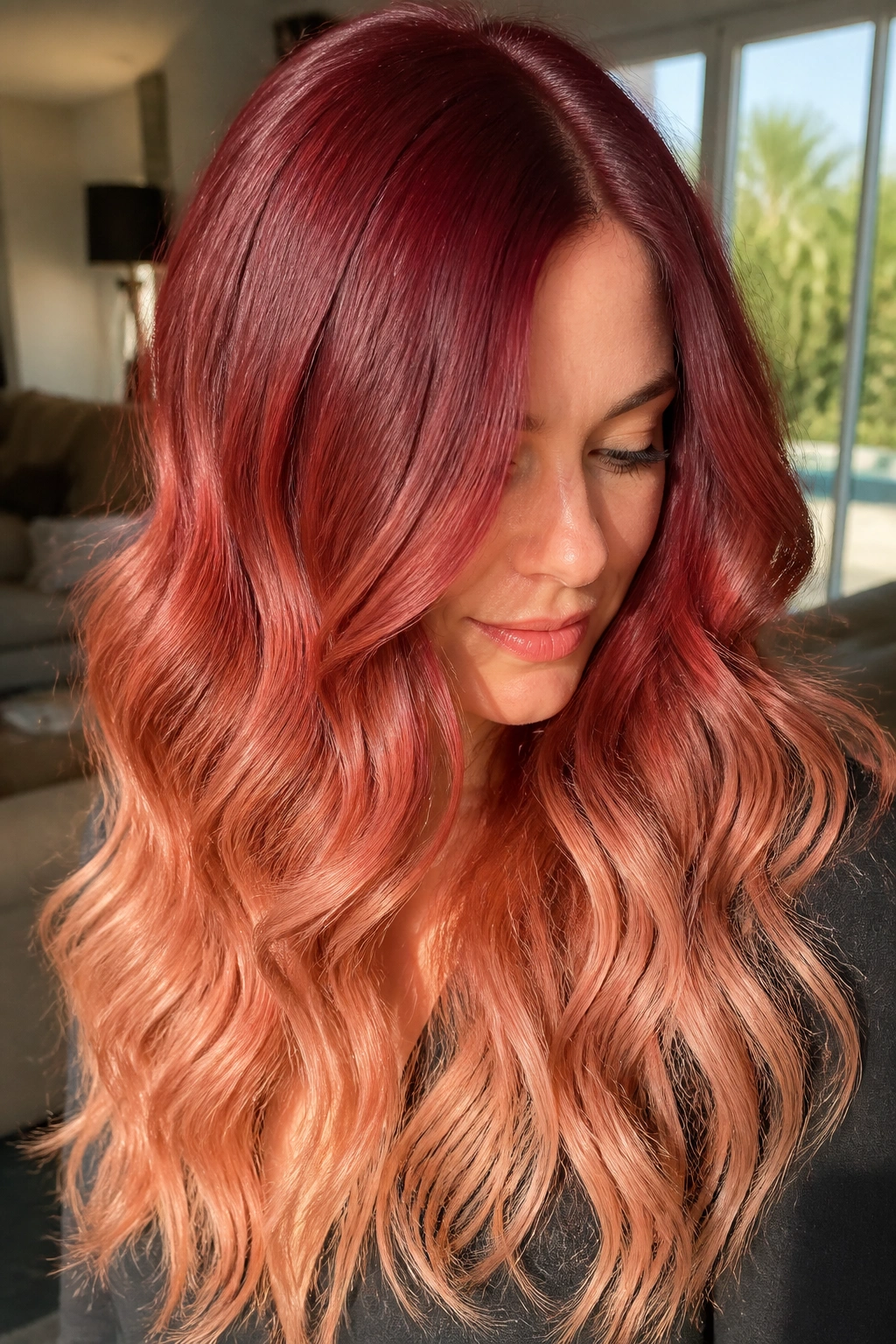
Can red go soft? Absolutely, if you keep the ruby at the top half and let rose gold take over near the ends. The result is a gradient that feels lighter and airier than the usual deep red fade.
This version works best on hair that already has some lightness through the mid-lengths. You want the ruby to sit like a stain through the upper sections, then melt into a paler pink-copper finish below. On long hair, that shift has space to breathe, which keeps it from looking muddy.
How to Wear It
Loose curls are the easiest styling match. They make the ruby and rose gold alternate in the light, so the color looks more layered than flat.
- Best for medium brown to light brown bases
- Ask for a soft transition, not a stripe
- Use a gloss in the rose-gold family to keep the ends shiny
- Avoid chunky highlights around the fade line; they break the melt
This is a good choice if you want red that feels romantic rather than heavy. It has edge, but it still moves.
4. Burgundy Balayage Through Waist-Length Curls
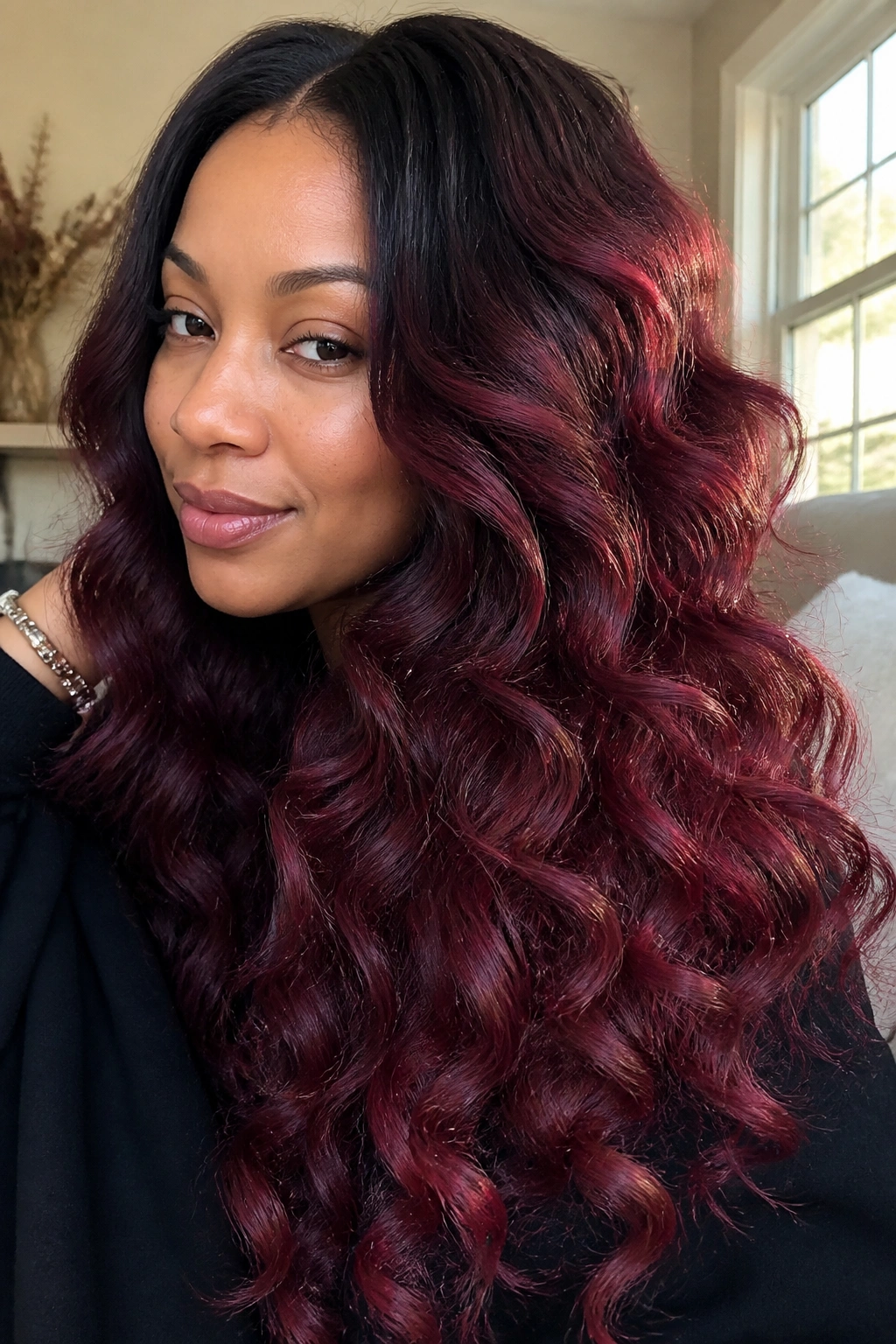
Waist-length curls can eat bold color if the placement is sloppy. Burgundy balayage solves that by letting the red peek through the curl pattern instead of sitting on top of it like a block.
Start with a deep brown or neutral root, then hand-paint burgundy through the mid-lengths and lower third. The curls do the rest. Each bend catches a different part of the shade, so the color looks richer every time the hair moves.
A lot of people make one mistake here: they put the burgundy too high. On long hair, that makes the whole style feel heavy. Keep the brightest sections lower, and the shape stays elegant instead of dark and dense.
Quick notes:
- Works well on thick hair because curls spread the pigment around
- A 1.5-inch curling iron gives the color the room it needs
- Burgundy with a blue base stays cooler; burgundy with a red base feels warmer
- This look tolerates grow-out better than full red ends
Watch for: If the curls are tight, the ends can dry out faster. A leave-in cream on damp hair helps the red stay glossy instead of fuzzy.
5. Cherry Cola Ombre with Soft Layers
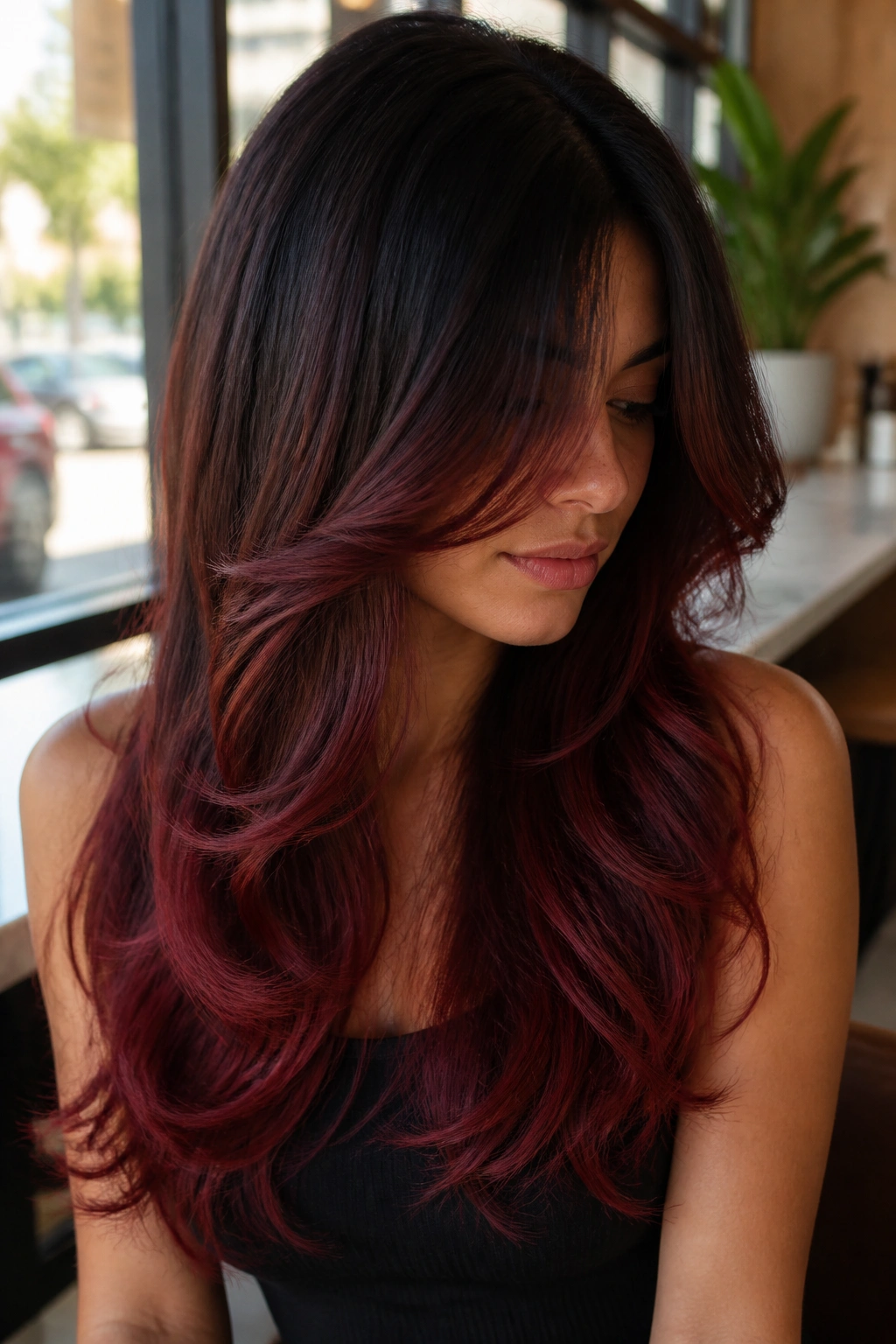
Cherry cola has a sneaky kind of charm. It starts dark, almost like a brunette shade, then reveals red when the light hits it from the side. On long layered hair, that makes the ombre feel lived-in and expensive without trying too hard.
What I like about this shade is that it is forgiving. The root area stays deep brown or black-brown, the mid-lengths hold a cola tone, and the ends shift toward cherry. You get depth first, red second. That order matters.
Soft layers help because they stop the color from turning into one long sheet. The shorter pieces around the face catch the red a little sooner, which keeps the style from reading flat. If you wear your hair straight, this is a smart one. If you wear it wavy, it gets even better.
It’s also one of the easiest reds to live with. The fade looks more like a soft shift than a problem, which is exactly what long-hair color should do.
6. Garnet Face-Framing Ends
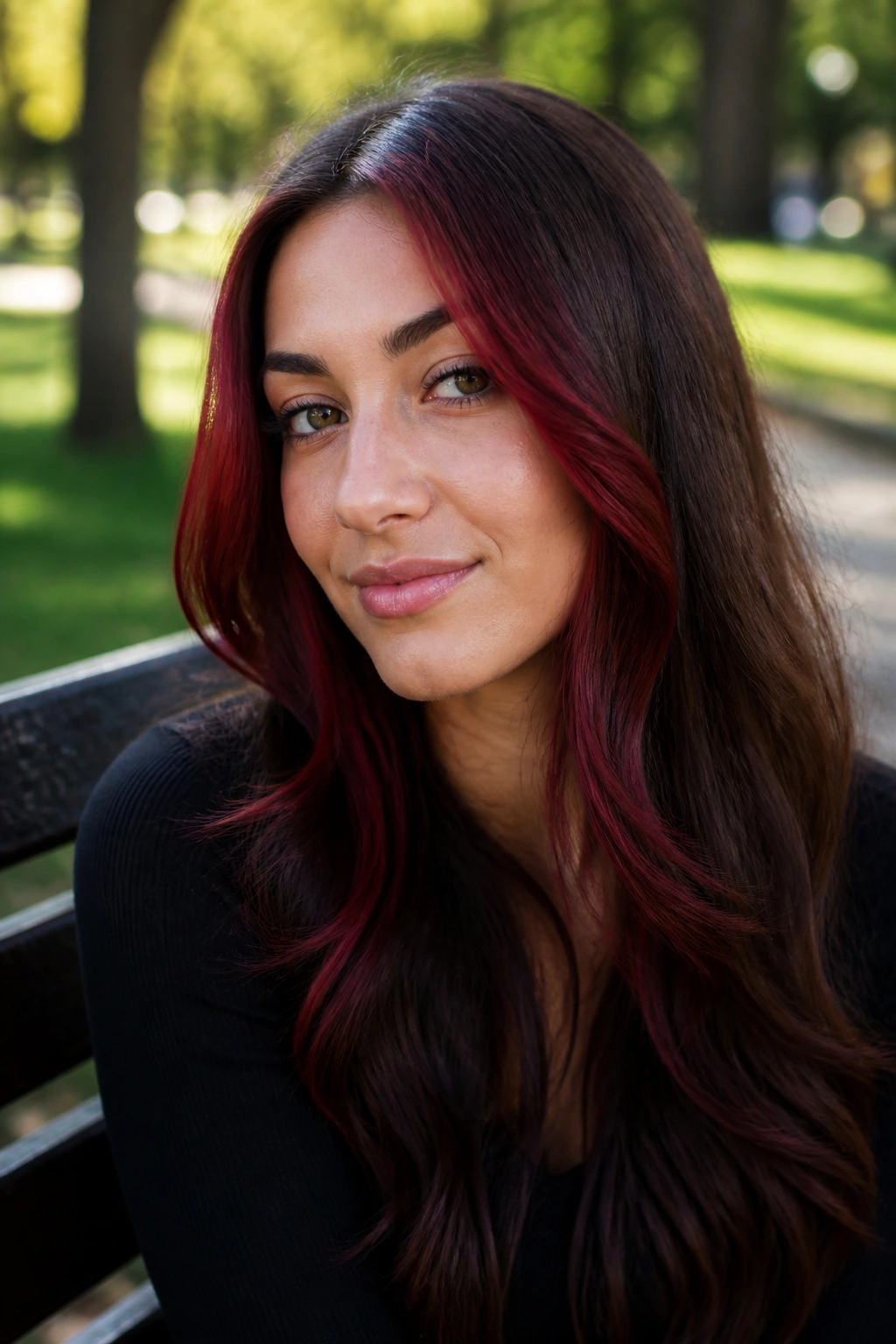
Garnet at the front is a bold move, and I mean that in a good way. Instead of loading all the red into the back, this style concentrates the darker red around the face and lets it trail into the lengths.
That placement gives you a strong color frame without turning the whole head into one heavy block. Long hair helps because the garnet can hang below the chin and still feel balanced. The rest of the hair stays brown, chestnut, or espresso, so the face-framing pieces do the talking.
What Makes It Different
Unlike full ombre, this version is about control. You still get a fade, but the eye lands on the front first. That makes it a smart pick if you like to wear your hair half-up, because the front pieces stay visible even when the rest is pulled back.
- Best for long layers or face-framing cuts
- Looks sharp with side parts
- Use a deep red gloss every few weeks to keep the front pieces rich
- Keep the front sections slightly brighter than the back for a cleaner frame
It’s dramatic without being messy. And that’s the whole point.
7. Velvet Plum and Red Wine Blend
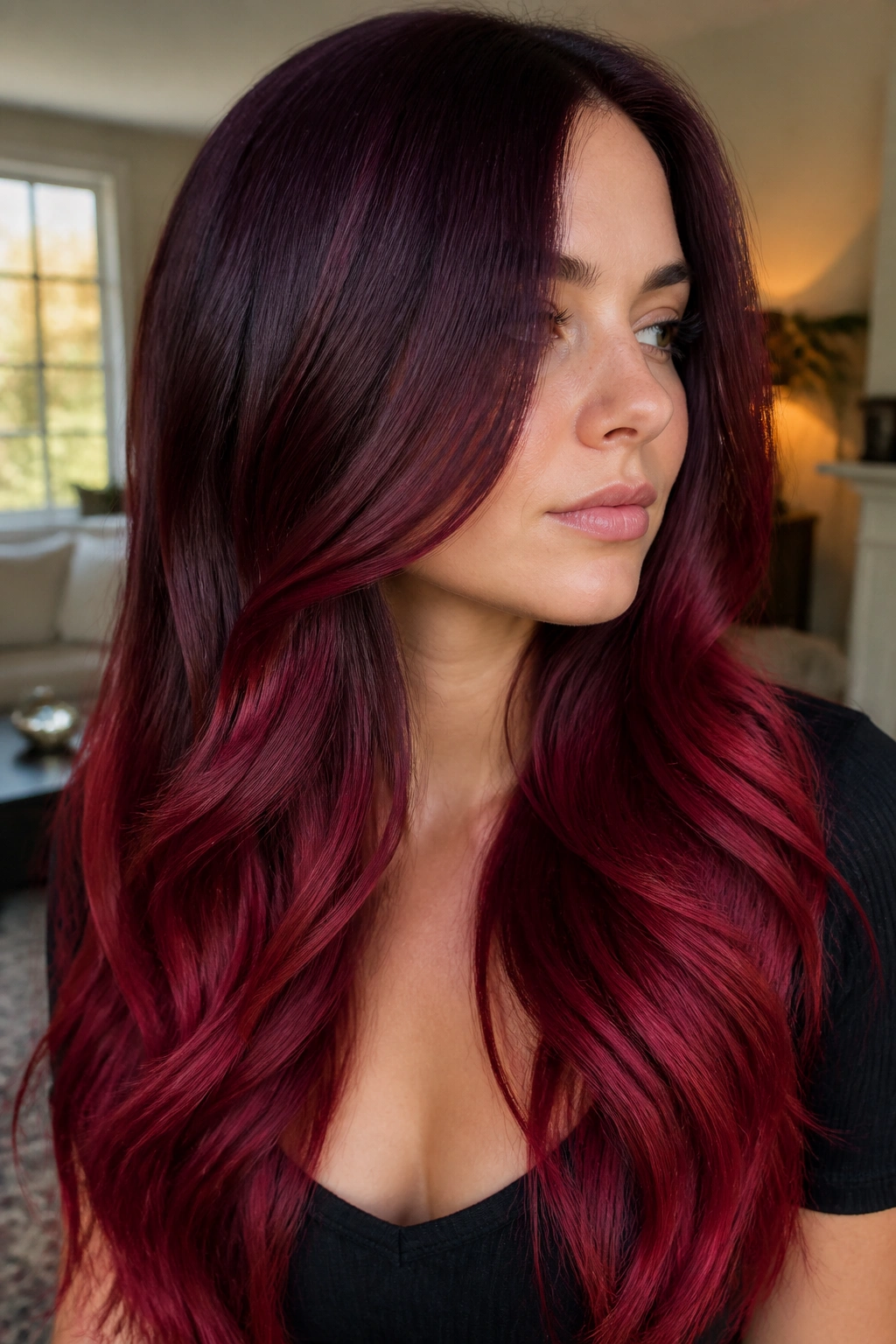
Velvet plum and red wine sit close enough to feel related, but far enough apart to create movement. On long hair, the mix gives you a shade that looks almost black indoors and then opens up into deep red-violet outside.
This is a favorite if you want red ombre hair ideas for long hair that lean cooler. The plum keeps the tone grounded, while the red wine brings the warmth back in the ends. That balance keeps the color from drifting into flat burgundy.
Why It Works
The key is saturation. You want enough pigment to make the ends feel plush, not thin. Long hair is useful here because there is enough length for the plum to sit in the upper section and the red wine to build gradually below.
A center part makes the gradient look symmetrical. Big curls make it feel softer. Straight hair, on the other hand, shows off the tone shift better, especially if the hair is very dark to begin with.
Pro tip: Ask for a gloss finish rather than a harsh permanent red on the ends. Velvet shades need shine, not stiffness.
8. Copper-to-Strawberry Ombre
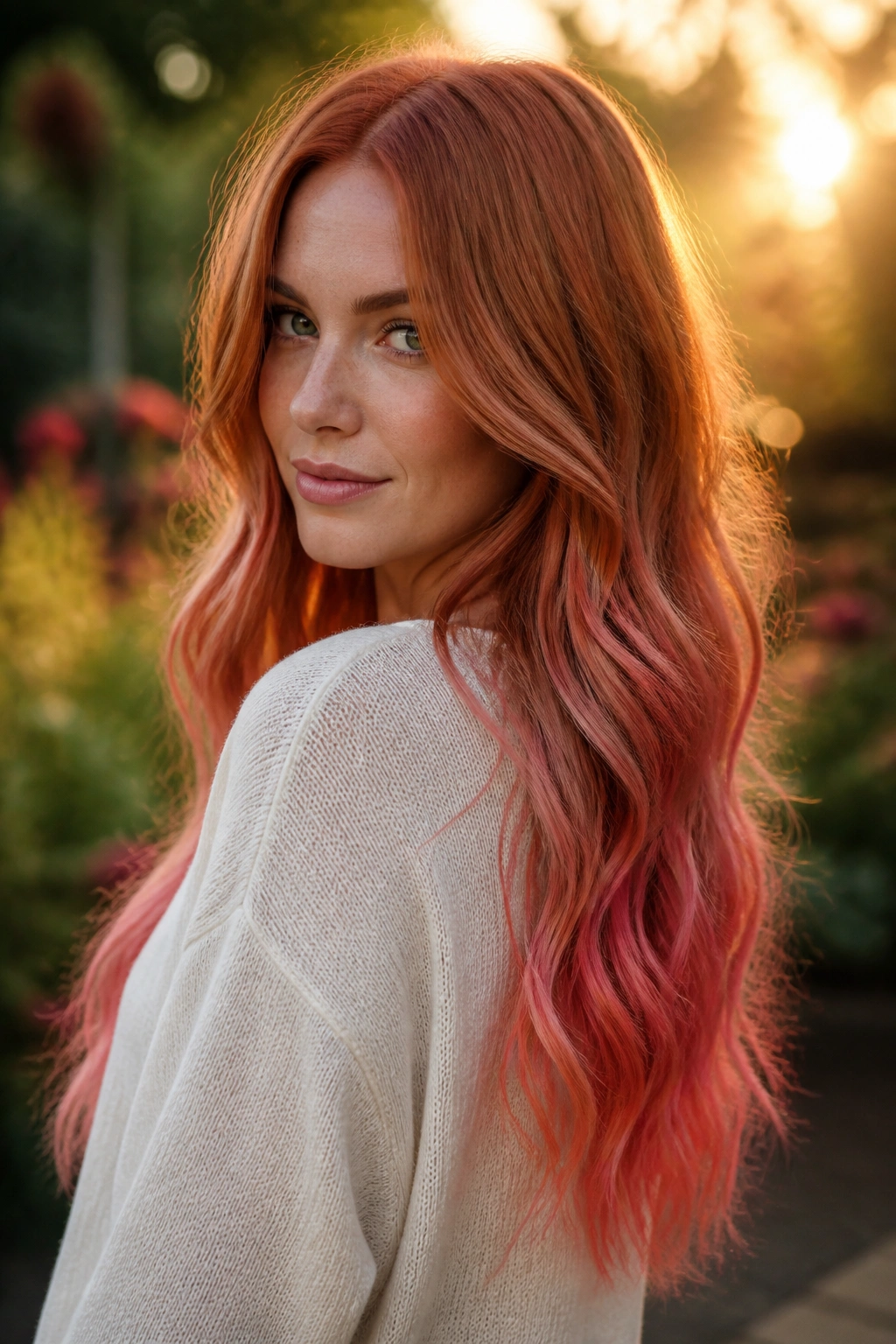
This is the brighter side of red ombre, and it makes long hair look animated fast. Copper near the roots flows into strawberry ends, so the whole style feels warm, light, and a little playful.
The important thing is keeping the strawberry tone from turning peachy in a weak way. You want enough pink in the ends to make them glow, but not so much that the color loses its red identity. On long hair, the transition can stretch through several inches, which helps the fade look smoother.
This one is especially nice on hair that already sits in the light brown range. You do not need a huge bleach job to make it work. A gentle lift, then a copper glaze and a strawberry toner, can be enough if the starting base is soft enough.
Wear it with beach waves and the color gets even better. Each bend shows a different tone, and the red seems to shift as you move.
9. Blood Orange Dip Dye on Long Waves
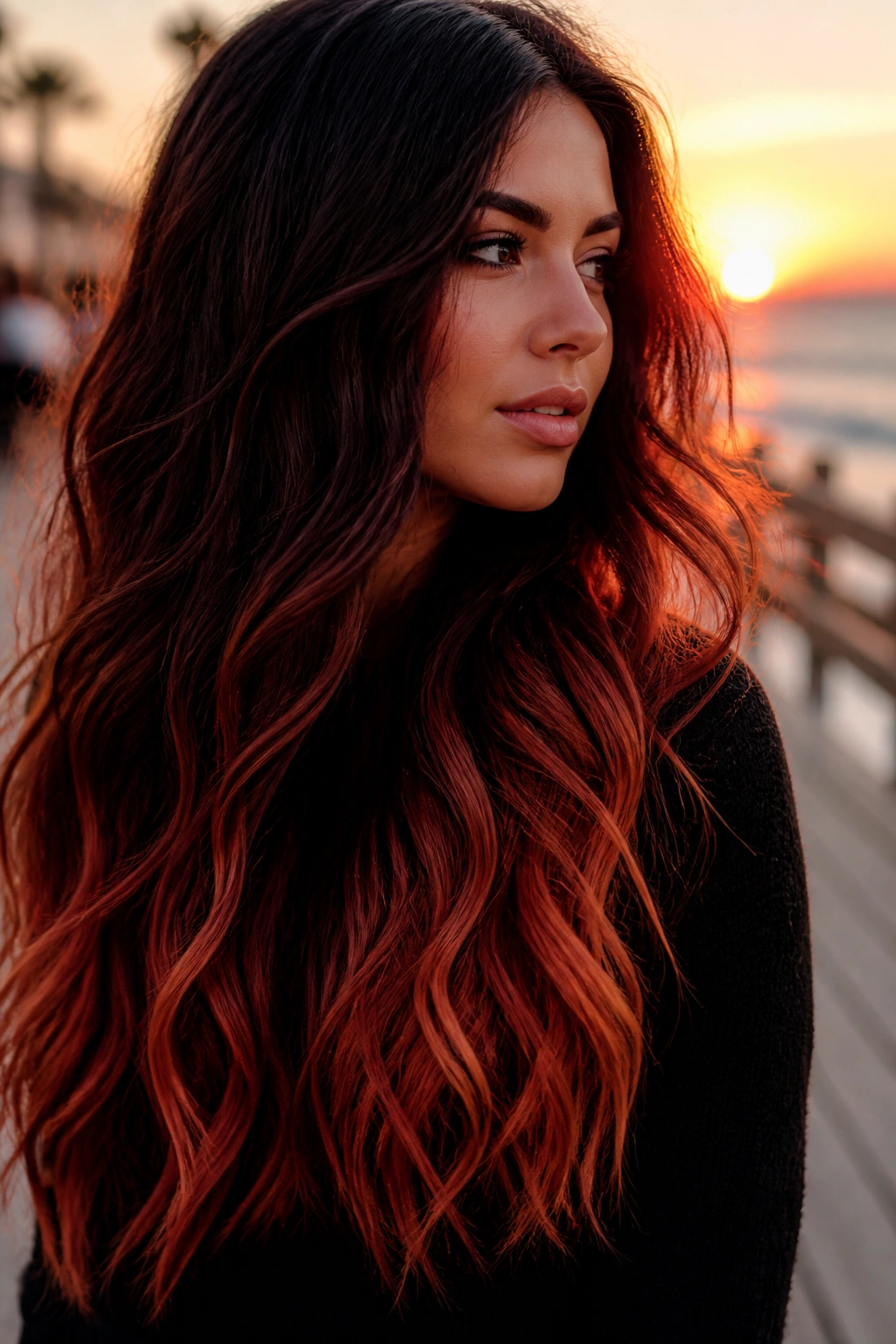
Do you want something louder? Then blood orange dip dye is the blunt answer. It keeps most of the hair dark and then drops a sharp orange-red hit into the bottom section, which looks especially strong on long waves.
The reason it works is contrast. Long hair gives the dip dye enough room to feel like a design choice instead of an afterthought. The ends can be heavily saturated, while the upper lengths stay clean and dark. That split makes the style readable from across the room.
How to Pull It Off
The cut matters more than people think. A blunt edge will make the dip dye feel severe. Soft layers or long texture will help the color move.
- Best for medium to thick hair
- Ask for a clean transition line around the lower third
- Works well with iron-shaped waves, not tiny curls
- Needs color-safe shampoo to keep the orange-red from washing out too fast
This is not a shy look. It suits people who like color that says what it means and does not apologize for it.
10. Mahogany Roots into Scarlet Ends
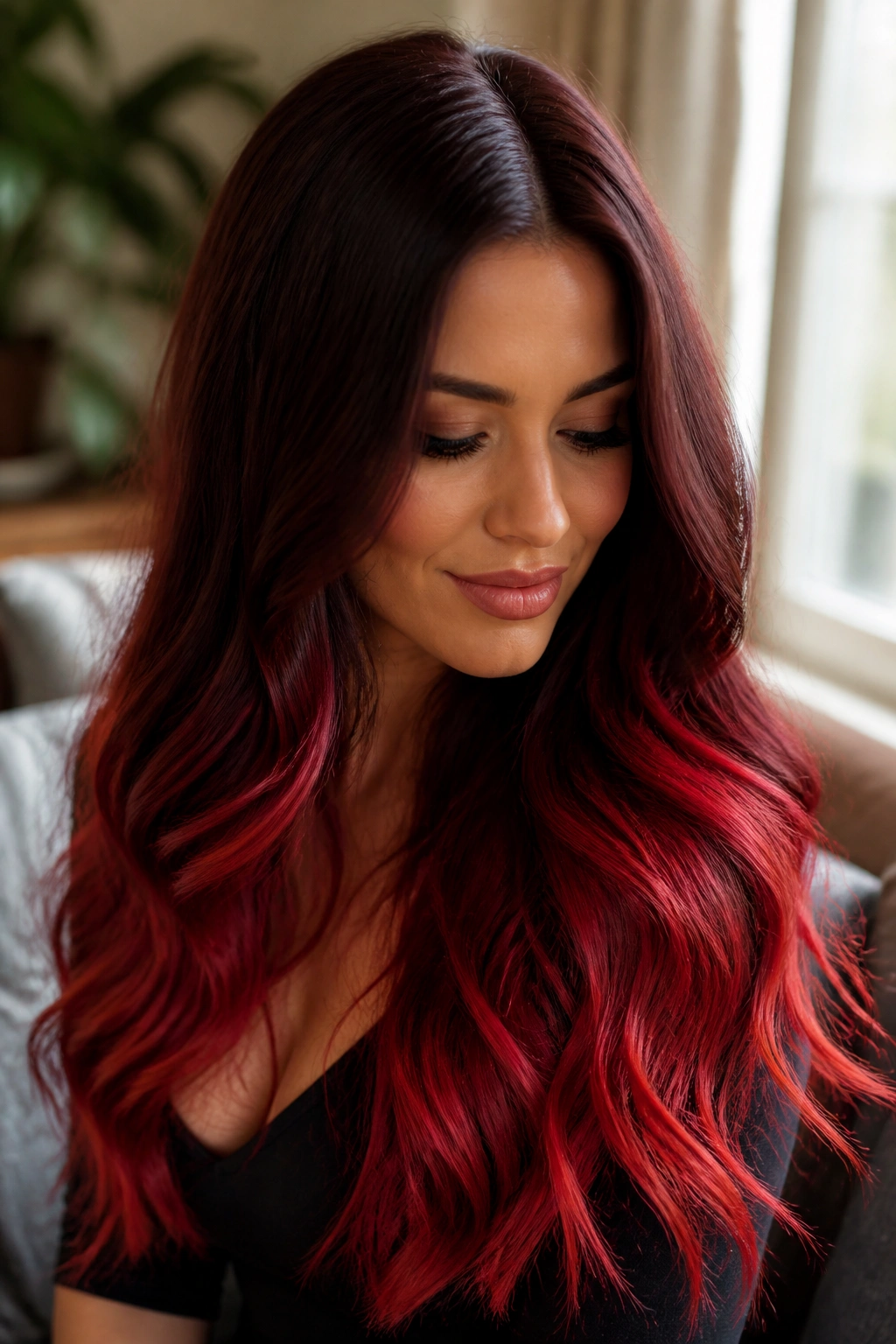
Mahogany into scarlet gives you one of the strongest red ombre hair ideas for long hair, especially if your hair is thick and the length is already giving you a lot to work with. The root area stays deep and smoky, then the red sharpens as it falls.
I like this on long hair because the first few inches can stay civilized while the last 6 to 8 inches do something louder. That split keeps the style wearable. It also lets the scarlet read as a finish, not a surprise.
The scarlet ends need room. If the haircut is too choppy, the red can break up too much. A long, flowing cut gives the gradient space to show. You will see it best when the hair is tucked behind one ear or pulled into a loose braid.
One warning: scarlet fades hard if the hair is porous. A warm-toned mask or a red depositing conditioner can help stretch the color between salon visits.
11. Mulled Wine Ombre with Curtain Bangs
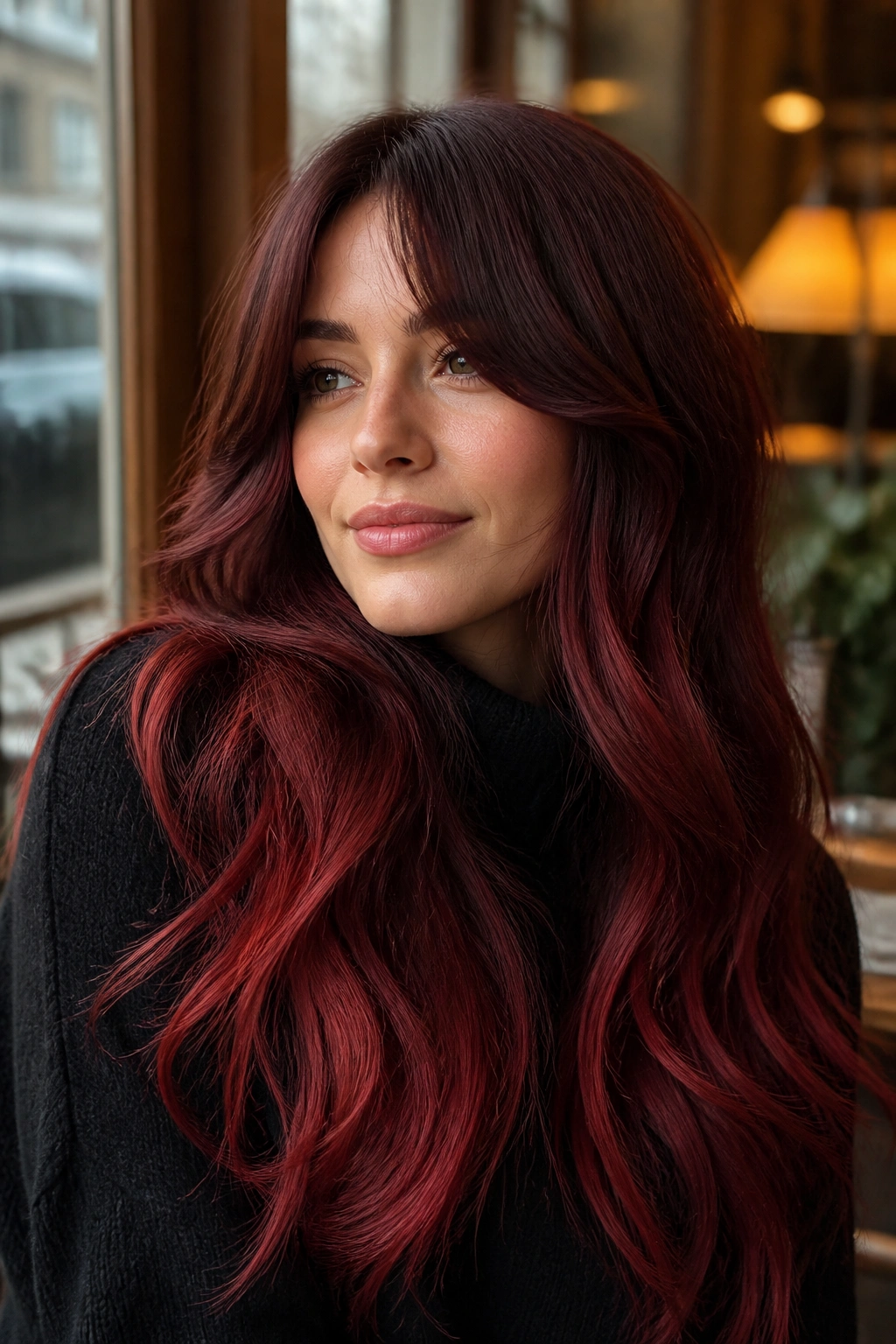
Mulled wine works because it feels warm without going orange. On long hair with curtain bangs, the shade looks soft at the top and richer through the lower half, which gives the bangs a nice bridge into the rest of the style.
The bangs matter here. They break up the red so it does not become a solid sheet, and they make the face line feel lighter. The ombre then takes over below the cheekbones, where the color can get deeper and more layered.
This shade is especially good if your hair is naturally dark brown and you want a red that still looks grown-up. Think red wine, cinnamon, and a little plum—not candy red, not copper. The blend should feel cozy and dense.
A round brush blowout suits this look better than tight curls. The flow of the bangs and the long lengths makes the color look expensive in the old-fashioned sense: rich, textured, and easy to stare at for a while.
12. Fire Engine Red on Jet Black Lengths
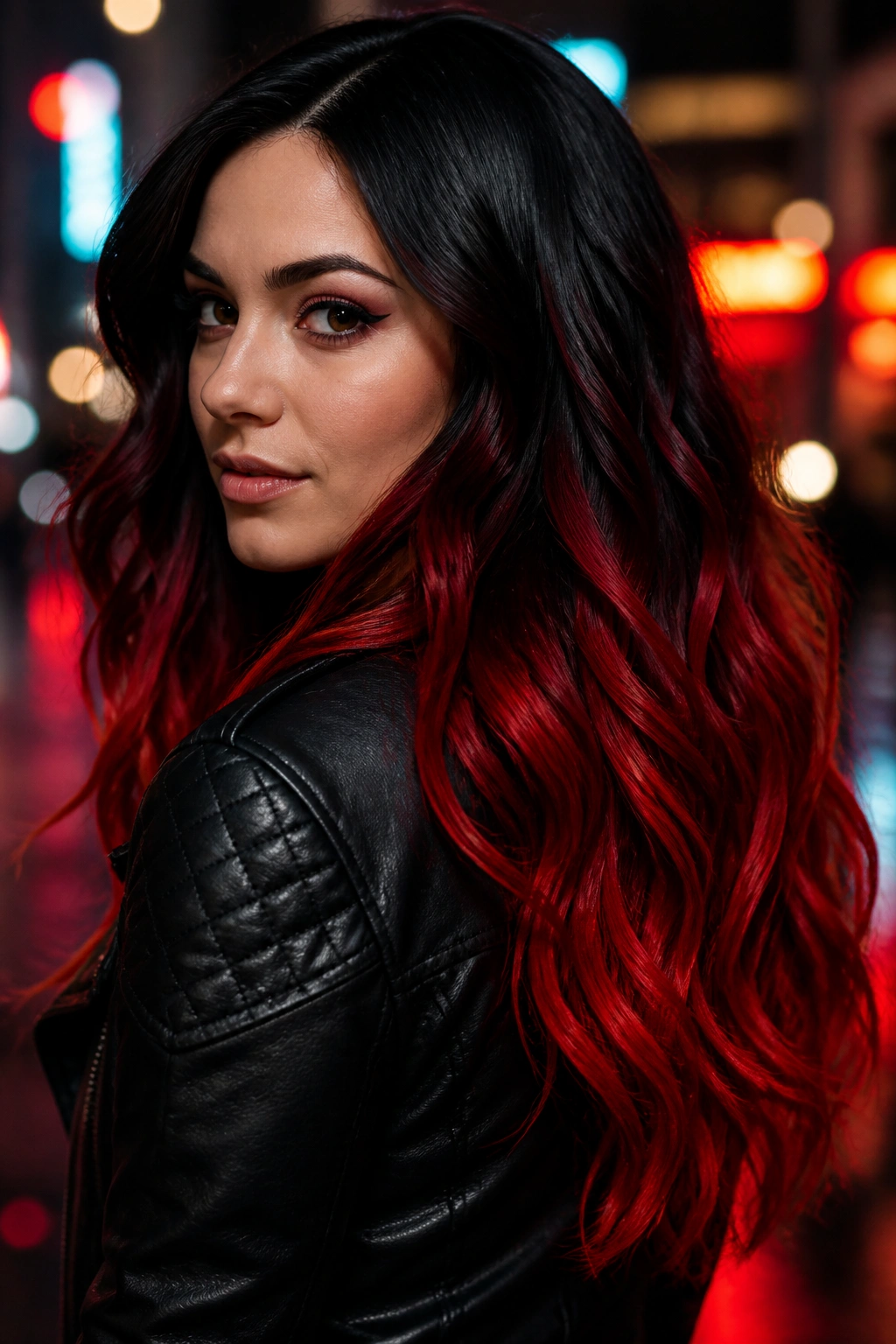
Fire engine red on jet black hair is not subtle, and that is exactly why it works. The black roots hold the style down, while the red ends give it all the punch. On long hair, the contrast has enough space to breathe, so the look feels dramatic instead of cramped.
This one needs clean placement. If the red starts too high, it can swallow the black and lose the point. Keep the transition lower, then let the brightest red sit near the ends and outer layers. Long straight hair shows the contrast sharply, while glossy waves soften the edge a little.
What to Watch For
The red has to be saturated. A washed-out crimson will look dull next to jet black, which is a bad pairing. You want a true high-chroma red or the whole style will fall apart.
- Best for thick, dark hair
- Requires lightening before the red is applied
- Looks strongest with smooth, healthy ends
- Needs heat protection every time you style it
If you like contrast and do not mind maintenance, this one has real presence. If you want gentle, skip it.
13. Cinnamon Auburn Fade for Layered Hair

Cinnamon auburn is the quieter cousin in the red family, and layered long hair is where it shines. The color starts as a brownish red near the roots, then warms into a softer auburn at the ends, which gives the layers a nice flicker when they move.
Why It Works on Layers
Layers spread the color out. Shorter pieces around the crown pick up warmth early, while the longer underlayers hold the darker auburn shade. That makes the whole cut feel thicker, which is a nice bonus if your hair is fine or medium in density.
This is a good choice if you want red ombre hair ideas for long hair that do not need a loud finish. It still reads as red, but it feels more wearable for daily life. The color looks especially good in low light, where the cinnamon notes become richer.
A soft curling wand helps here. Not tight curls. Just enough bend to let the auburn catch on the top layer and disappear a little under the rest. That movement is the whole appeal.
14. Cranberry Ombre on Straight Long Hair
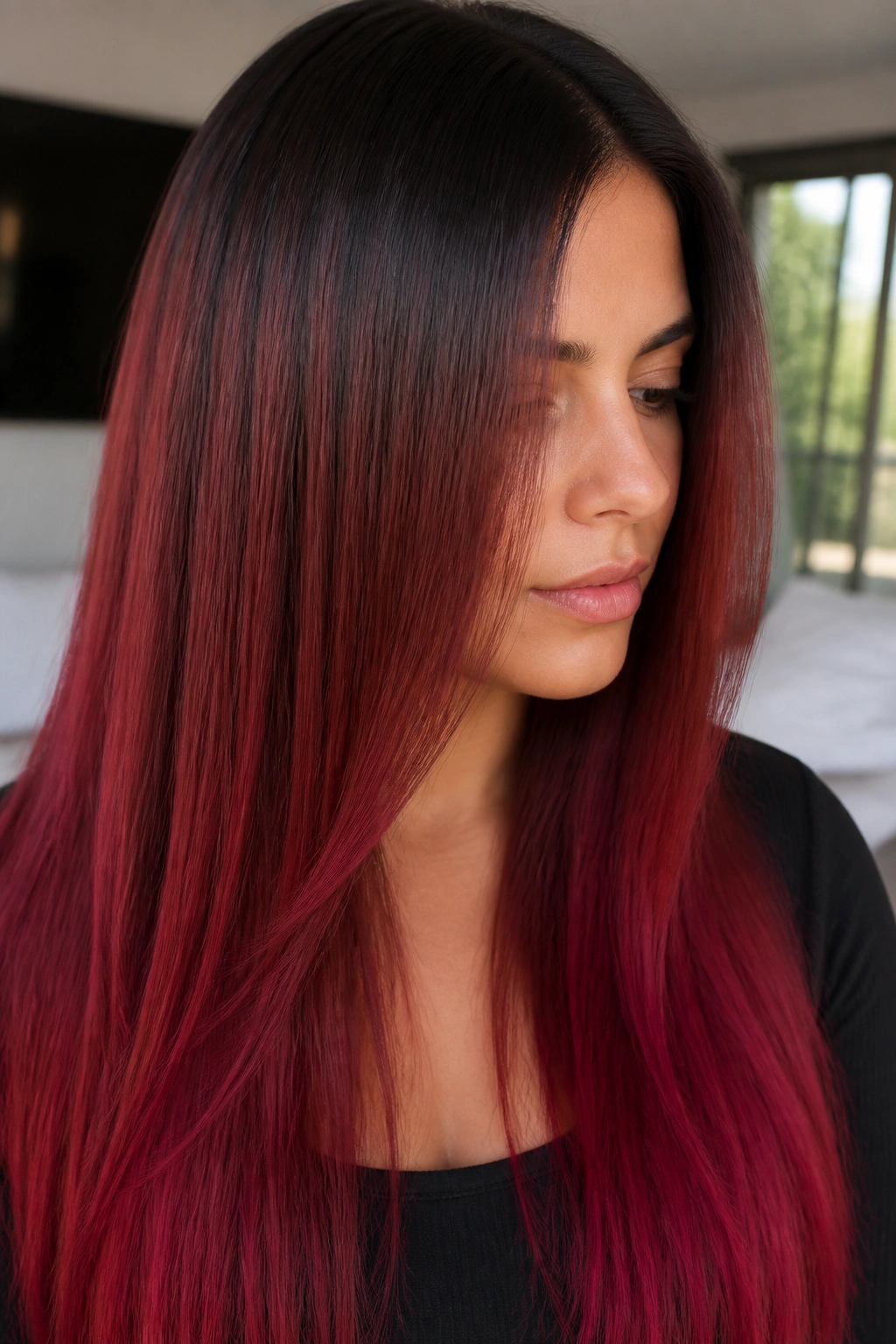
Straight long hair shows every line, which is why cranberry ombre has to be done carefully. There is nowhere for a harsh fade to hide. If the color is blended properly, though, the result is sleek and sharp in a way that waves cannot quite match.
The root area should stay dark brown or cool black-brown, then the cranberry should rise slowly through the middle before becoming richer toward the ends. The key is feathered placement. You want the change to feel brushed on, not stamped.
The Difference Here
Unlike wavy styles, straight hair exposes tone shifts immediately. That means the colorist has to blend the mid-lengths a little more gently and keep the ends glossy. You are not hiding behind texture; you are showing the work.
- Best for naturally straight or heat-styled hair
- Use a flat iron only on low to medium heat
- Ask for a soft root shadow and a cranberry glaze
- Trim split ends often, since straight hair makes damage more obvious
This look suits people who like crisp lines and a polished finish. It is less forgiving than other reds, but when it lands, it lands hard.
15. Sunset Red to Peachy Copper
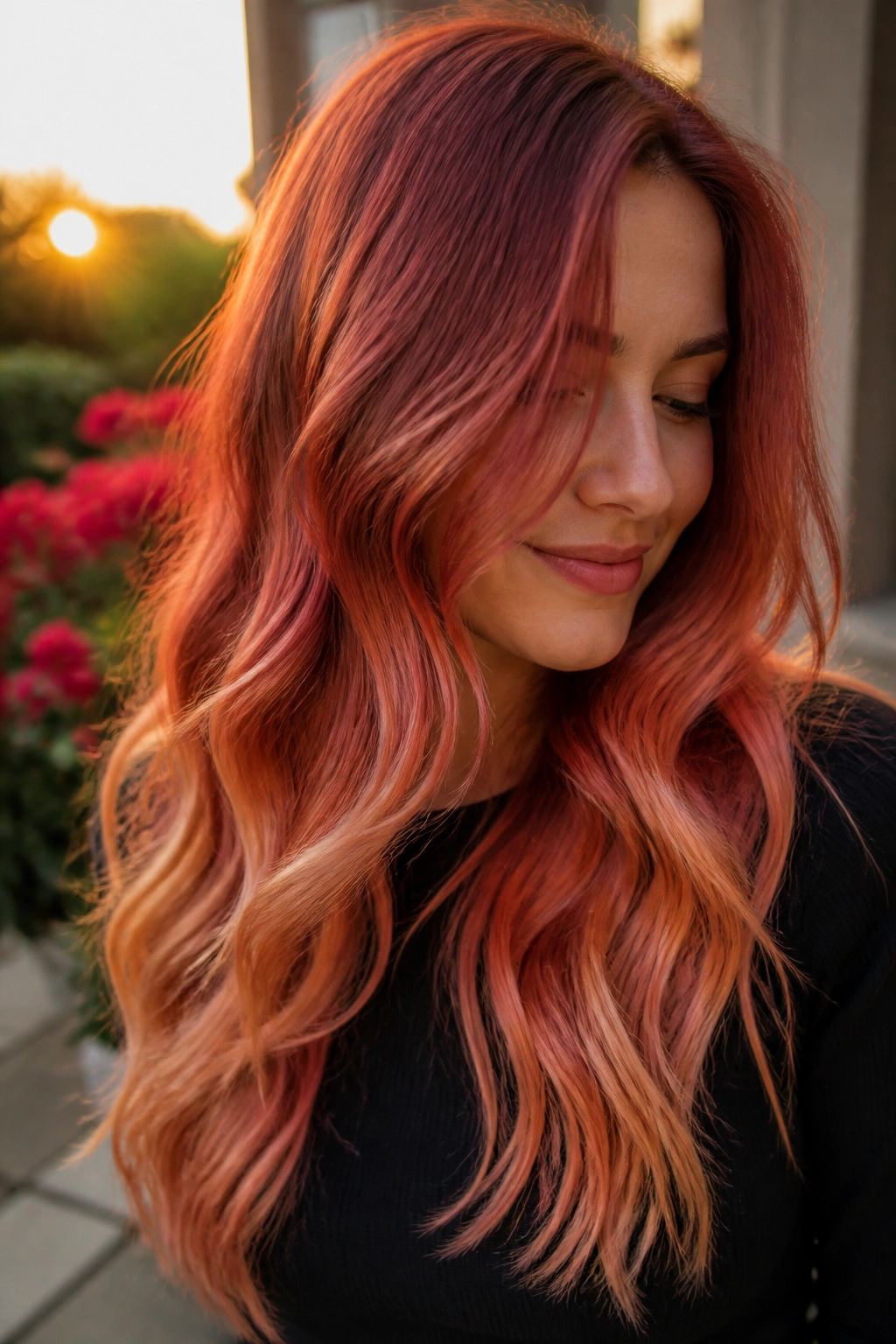
Can red feel bright and soft at the same time? Yes, if you let it move from sunset red into peachy copper. The top section stays warmer and deeper, then the ends lighten up into a sunstruck copper that feels almost airy.
This style is best on long hair with some natural wave or bend. The color shift is already doing a lot, so you do not need an elaborate cut. You just need enough length for the red to mellow into the peachier end tone without looking abrupt.
The peach copper needs a careful hand. Too much yellow and it looks brassy. Too much pink and the whole thing starts to drift into rose. You want a soft citrus warmth, not candy color. That line is thinner than people expect.
A gloss every few weeks helps a lot. Peach tones fade faster than deeper reds, and once they go dull, the whole fade loses its glow. That is a tiny annoyance, but worth it.
16. Dark Chocolate Roots and Pomegranate Ends
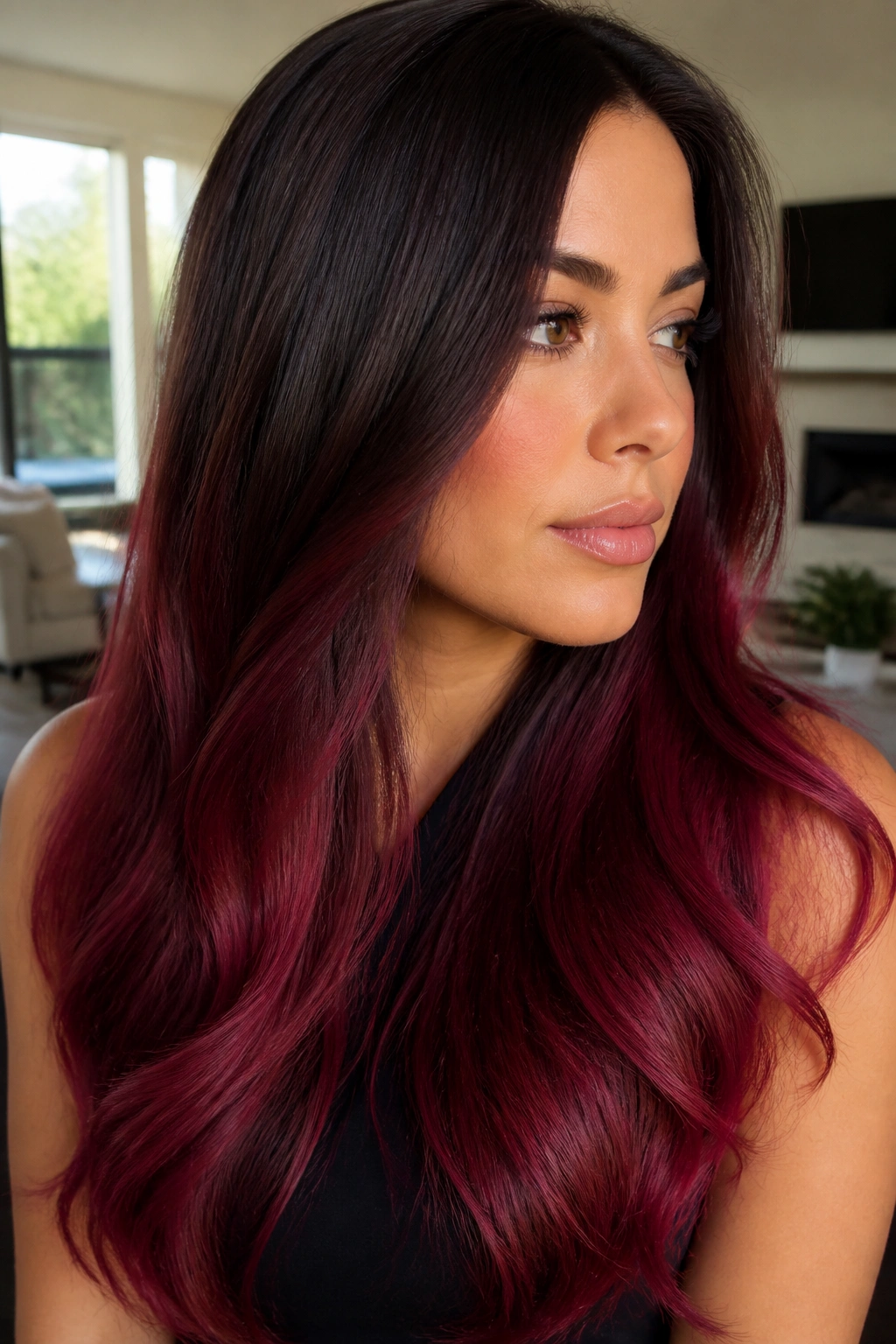
Dark chocolate roots with pomegranate ends is the kind of shade that feels expensive because it is so grounded. The root area stays rich and neutral, then the red takes on a juicy, jewel-like tone at the bottom. On long hair, that shift feels deliberate and clean.
I like this version when the hair has a blunt edge or heavy layers. The dark base keeps the length from looking stringy, and the pomegranate ends give the lower half enough life to keep things interesting. It is a good balance if you want color but not chaos.
What Makes It Stand Out
The pomegranate tone sits between ruby and berry, which means it looks deep in shadow and brighter in daylight. That gives long hair a little extra movement, especially when it is worn over one shoulder.
- Best for medium to dark brunettes
- Looks strong with glossy blowouts
- Ask for a berry-red glaze on the last 3 to 5 inches
- Avoid heavy texturizing at the ends; it can make the color look patchy
This is one of those shades that ages well between appointments. It fades, sure, but it fades in the same family, which is the dream.
17. Red Velvet Ombre with Big Barrel Curls
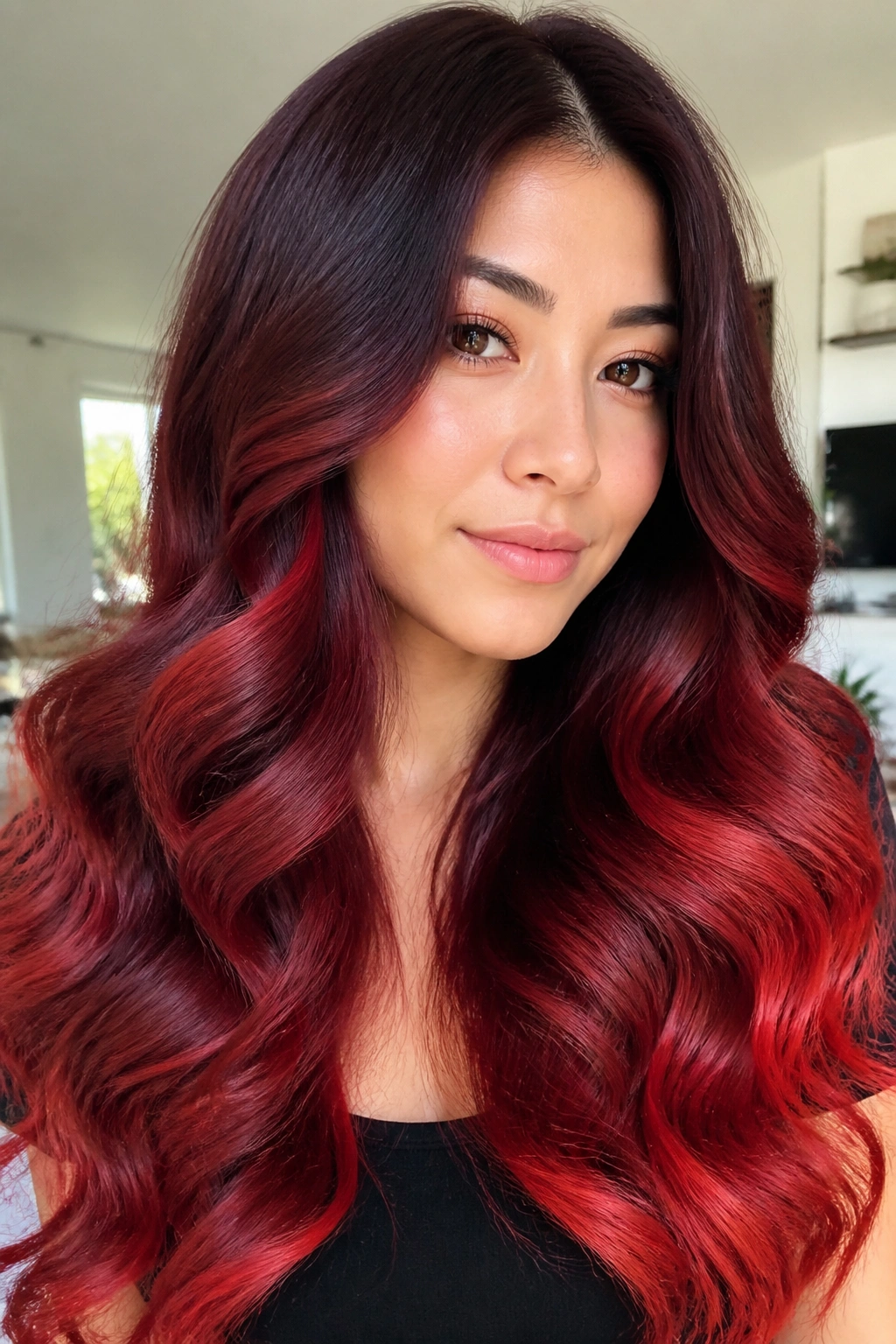
Big barrel curls are the best friend of red velvet ombre. The shade itself is deep, plush, and a little warm, and the curls spread it out so the color feels layered instead of packed into one strip.
The roots can stay dark brown or black-brown, while the mids carry the velvet red and the ends turn slightly brighter. On long hair, the curl shape lets each section catch a different part of the gradient. That keeps the style from flattening out when the hair moves.
This look is especially flattering on hair with a lot of length and medium density. Thin hair can wear it, too, but the curls need to be bigger and softer so the red does not overpower the shape.
Use a 1.5-inch barrel and let the curls cool before brushing them out. That part matters. If you brush too soon, the color blend gets blurred in a bad way and the finish turns fuzzy. Wait a bit. Let the hair set.
18. Mahogany to Copper Ribbon Highlights
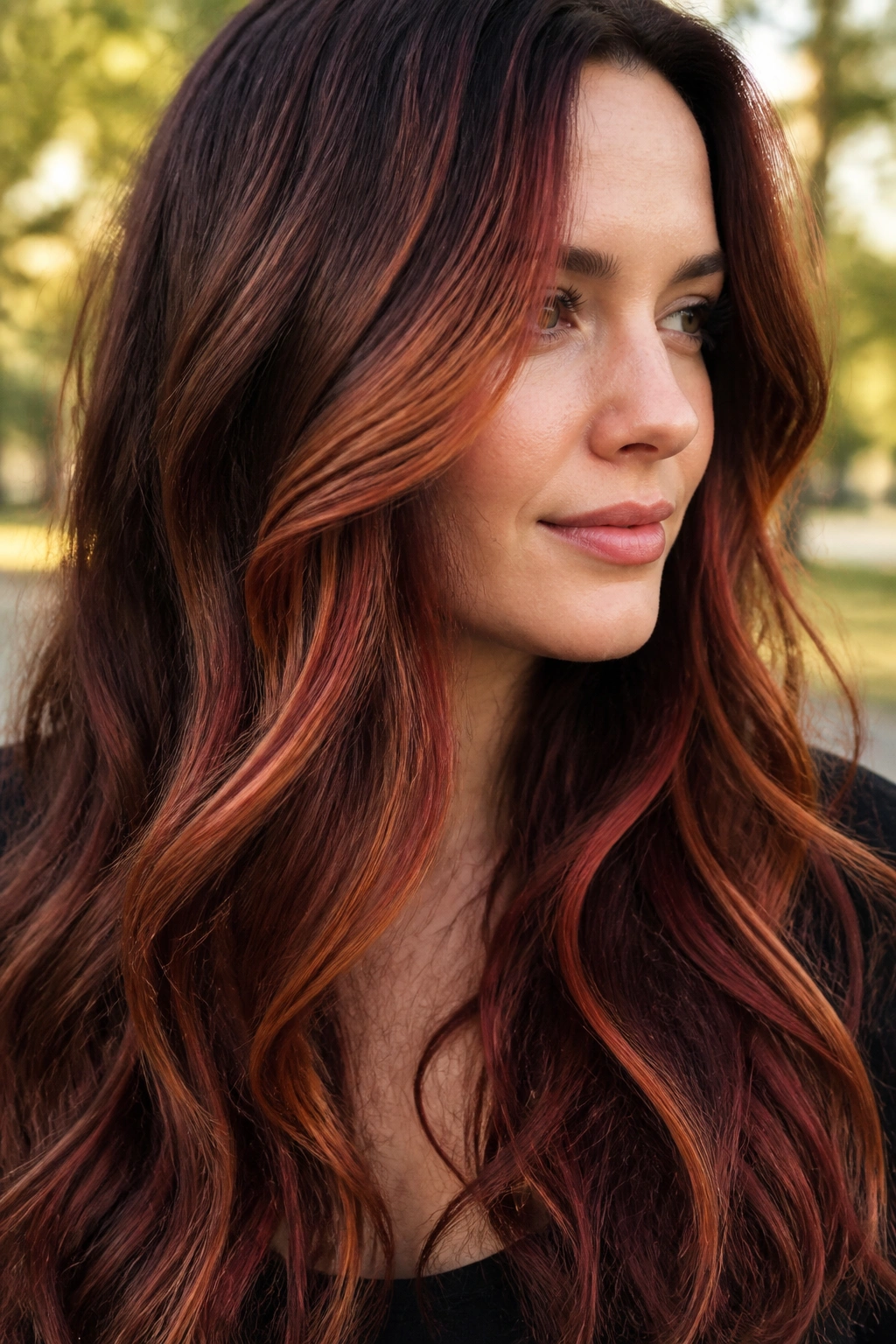
This is not a standard ombre, and that is why it earns a place here. Instead of one smooth fade, the color moves in ribbons: mahogany underneath, copper stitched through the lengths, and little flashes of red peeking out as the hair swings.
Long hair is ideal for this because there is enough surface area for the ribbons to show. On shorter cuts, the effect can get busy. On long hair, it reads as motion. The copper does not have to take over the whole end section; it can thread through in strands and still make the style feel complete.
Who It’s Best For
If you like red but hate one-block color, this is a smart middle ground. It gives you brightness without demanding a full commitment to vivid ends.
- Good for layered, thick, or wavy hair
- Use thin painted sections instead of chunky ones
- A wide-tooth comb can help separate the ribbons after styling
- Works well with half-up styles, since the copper pieces show from every angle
It has a little more attitude than a basic ombre, but less fuss than a full vivid red finish. That’s a useful lane.
19. Tangerine-to-Ruby Gradient for Thick Hair
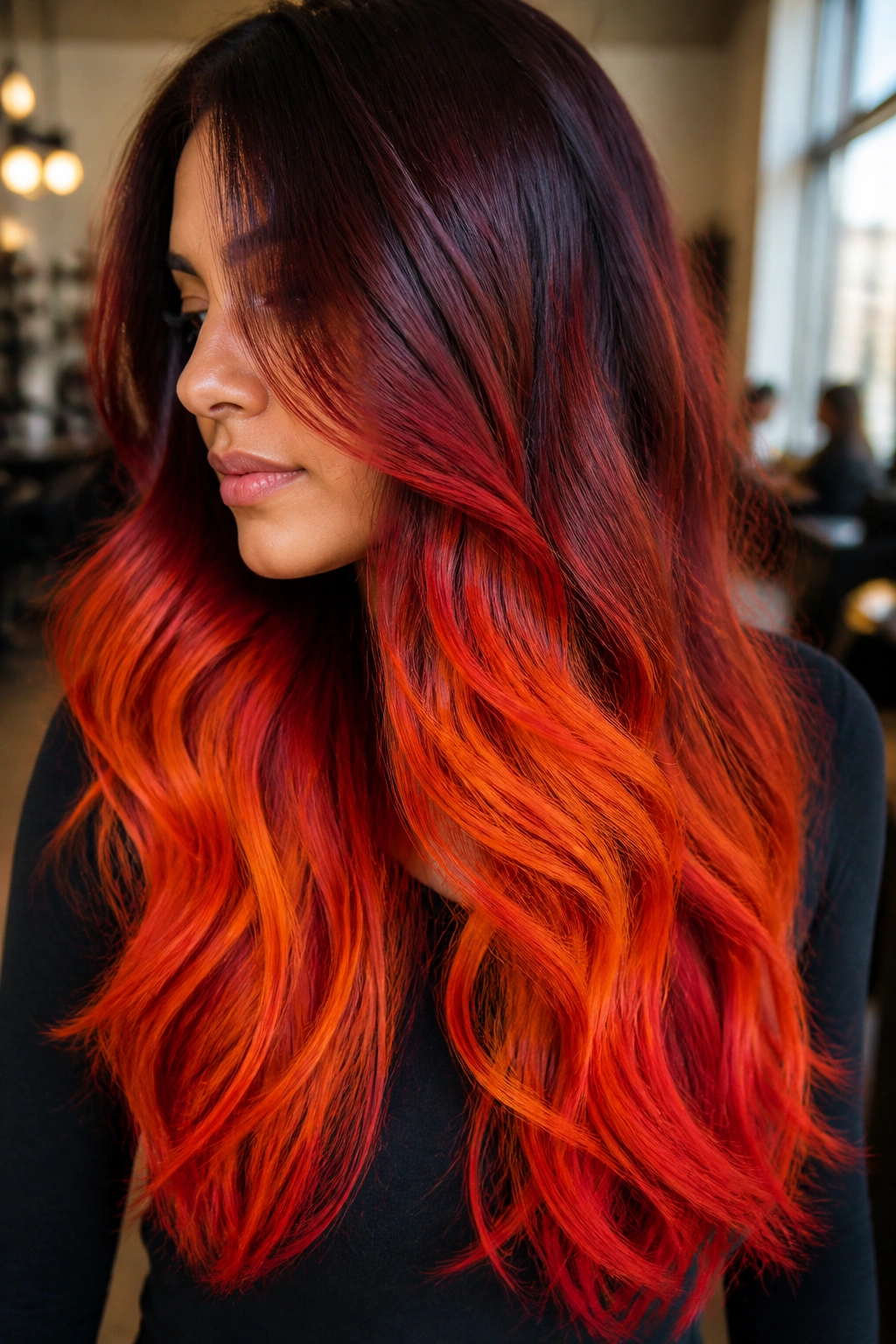
Thick hair can hold color that finer hair would drown in, and tangerine-to-ruby is a good example. The orange-red at the lower mid-lengths keeps the look bright, while the ruby ends deepen it again, so the whole fade stays alive.
This shade needs body. A thick curtain of hair gives the color something to sit on, and long length gives the transition room to travel. If the hair is too wispy, the shift can look choppy. If it is thick and layered, the gradient looks lush.
How to Get the Most From It
You want the tangerine to sit where the hair moves most—around the lower shoulders and through the outer layers. The ruby can anchor the very ends so the color does not drift too orange.
- Best on coarse or dense hair
- Looks good in braid-outs and loose waves
- Ask for a warm copper step between tangerine and ruby if the fade needs softening
- Keep the ends trimmed clean so the bright color does not look frayed
This shade has energy. Not a little. A lot.
20. A Smoked Red Ombre for Low-Maintenance Grow-Out
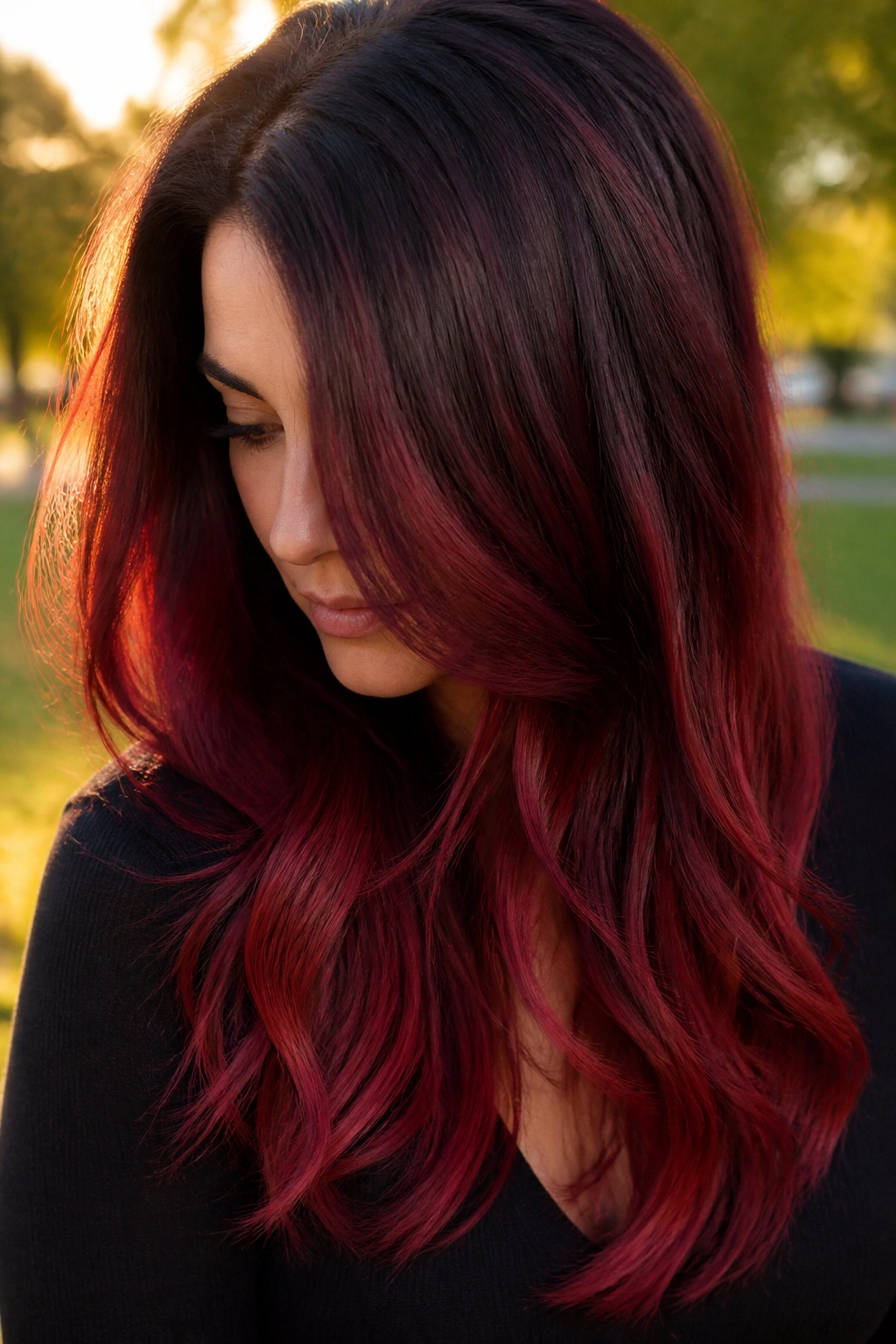
If you want red without babysitting it every week, smoked red is the smart answer. The roots stay cool and deep, the mids get a muted red-brown, and the ends carry the most color without looking neon. On long hair, that gives you a fade that still looks finished when it grows.
The smoked effect matters because it softens regrowth. Instead of a hard stripe where the root meets the color, the transition just gets a little looser over time. That is a relief if you wear your hair down often and do not want every inch of grow-out to announce itself.
I would choose this for long, layered hair, especially if your strands are prone to dryness. The darker finish hides a little damage, and the muted red is kinder than a bright one when the ends start to weather. A shine spray helps, but a good trim helps more.
The nicest part is that this kind of ombre stays useful. You can wear it sleek, curled, braided, or half-up, and it still reads as intentional. That matters more than people admit. A color that survives real life is worth more than one that only behaves in photos.
