



Long hair gives copper ombre room to breathe. On a shorter cut, the fade can feel abrupt; on waist-length hair, the same color shift can look soft, layered, and a little expensive in the best sense. Copper does have a temper, though. Push it too orange and the ends look loud. Keep the root too flat and the whole style loses its shape.
That balance is what makes copper ombre such a good fit for long hair. You get space for the shade to travel—deep brown near the roots, warm cinnamon through the mids, brighter copper where the hair falls past the shoulders. The color can move instead of sitting there like one painted strip.
I’ve always liked copper most when it has a shadow at the root and a gloss at the ends. The shade feels alive when the transition is blurred enough that you can see movement in a braid, a wave, or even a simple ponytail.
Some versions lean soft and wearable. Others have more bite. The 22 ideas below run from subtle to bold, and the best one is usually the one that suits your natural base instead of fighting it.
1. Espresso Brown Fading into Cinnamon Copper
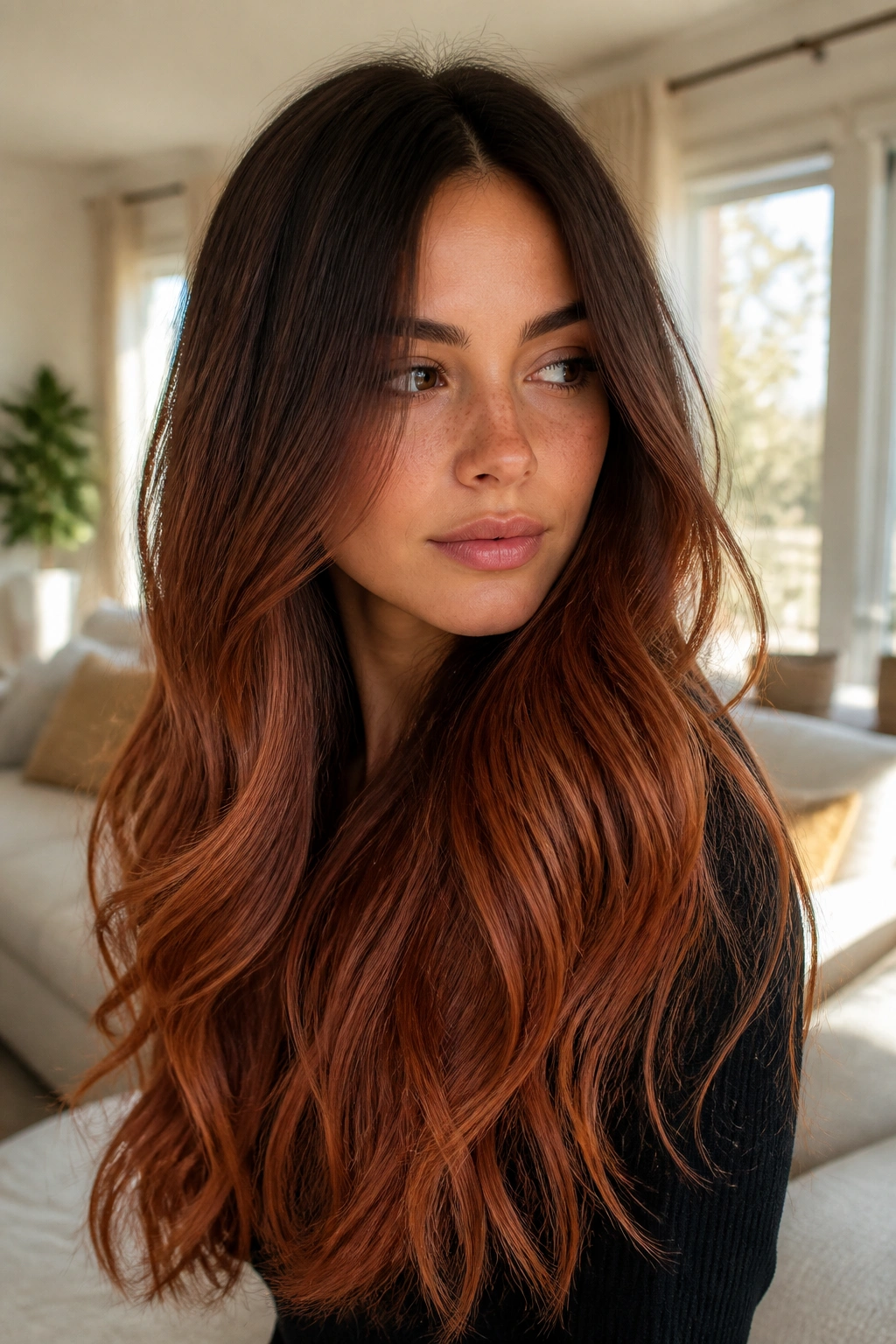
If you want copper without a hard orange edge, start here. Espresso brown fading into cinnamon copper is the safest, prettiest entry point for long hair because the root stays deep while the lower half warms up in a slow, natural way.
Why It Works on Long Hair
Long lengths give cinnamon copper room to bloom. The change can start around the collarbone, then get brighter as the hair drops toward the ends. That keeps the color from feeling heavy near the face, which is a mistake I see all the time.
Ask for a soft root shadow at a level 5 or 6 and a copper glaze that leans brown, not pumpkin. The end result should look warm in daylight and silky indoors, not neon in either place.
- Best on medium to thick brunette hair
- Looks strongest in loose waves or a low blowout bend
- Grows out cleanly because the root stays dark
- Needs a gloss refresh more than a full recolor
Tip: keep the copper brighter only on the last 4 to 6 inches if you want the fade to stay polished.
2. Near-Black Hair with Molten Copper Ends
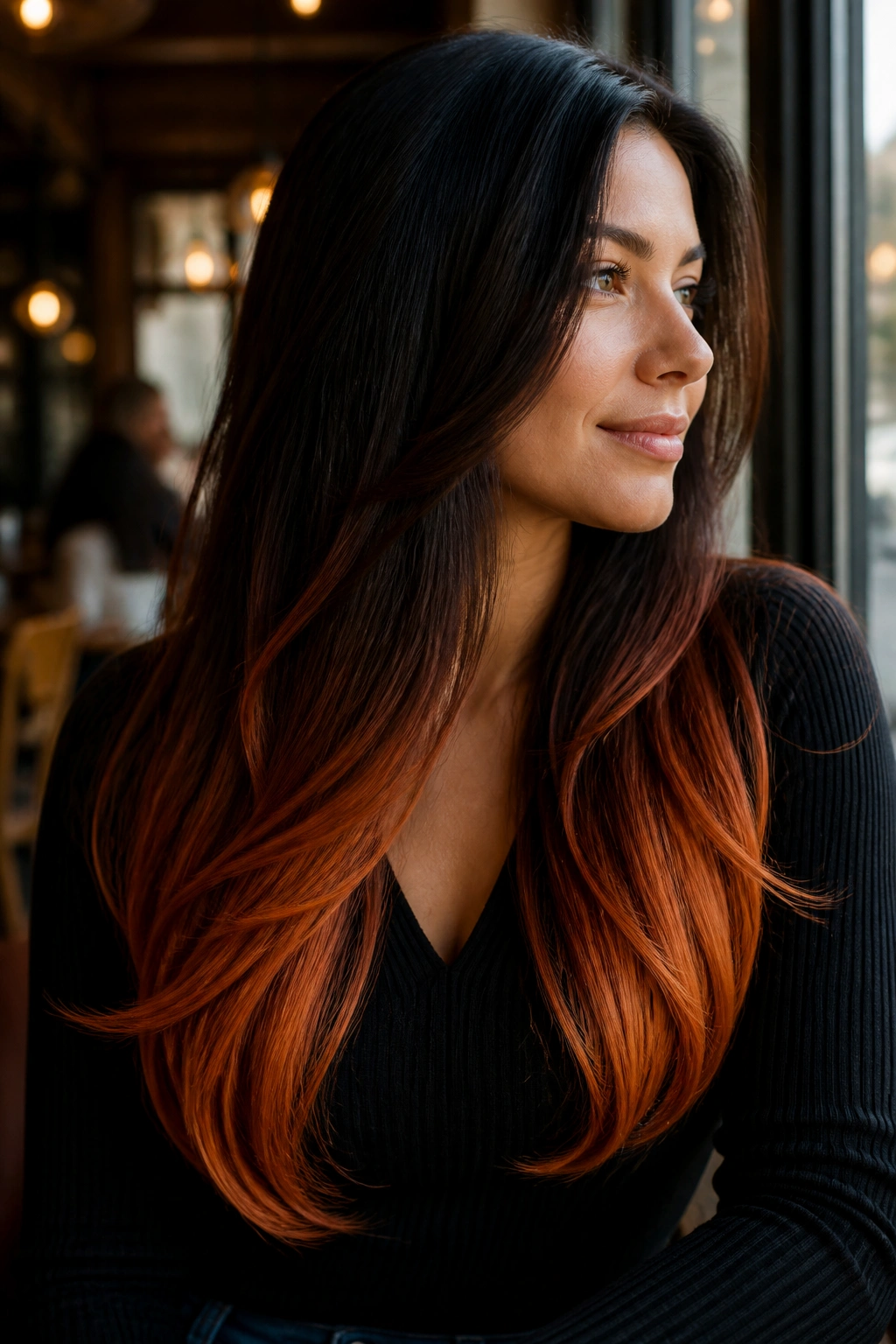
Want the copper to read bold from across the room? This is the version that does it. Near-black roots with molten copper ends give long hair a clear, dramatic contrast without needing color everywhere.
The key is restraint at the top. If the dark base stays clean and glossy, the copper looks deliberate instead of muddy. On straight hair, the edge between shades is sharper. On waves, it softens into something more fluid.
Where the Brightness Should Sit
Keep the hottest copper in the lower third of the hair, not halfway up. That preserves depth and avoids the flat banding that can happen when the transition is placed too high.
This style suits thick hair best, since the density can hold a strong color shift without looking thin or stringy. A 1.5-inch curling iron helps the copper ends separate in a soft bend, which makes the contrast feel richer.
One caution. Don’t let the copper go too orange.
3. Chestnut Brown with Fine Copper Balayage
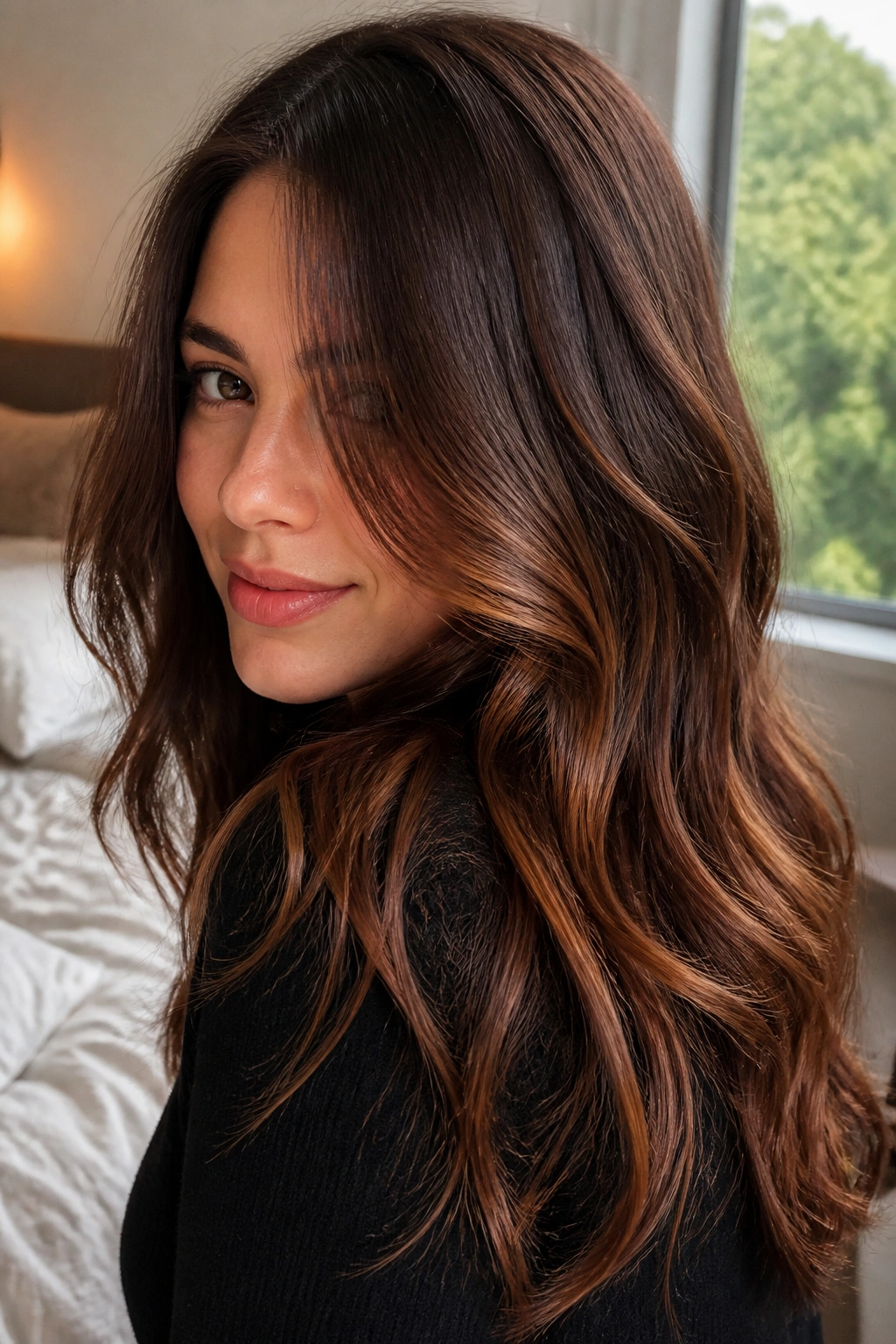
Picture long chestnut hair with copper threaded through the mid-lengths like thin strands of warm metal. That is the charm of fine copper balayage: it looks like the hair has more depth, even when the color change is barely obvious at first glance.
What Makes It Different
This is not a loud ombre. It is a quieter move, and that is why it works so well on long hair with layers. The copper can peek through the surface while the chestnut underneath keeps everything grounded.
- Ask for hand-painted pieces about 1/4 inch wide
- Keep the brightest pieces just around the face and upper mids
- Let the ends stay slightly darker for a soft fade
- Style with brushed-out curls if you want the color to show its movement
If you like color that reads expensive from a few feet away and interesting up close, this is the lane.
4. Face-Framing Copper Money Piece on Long Layers
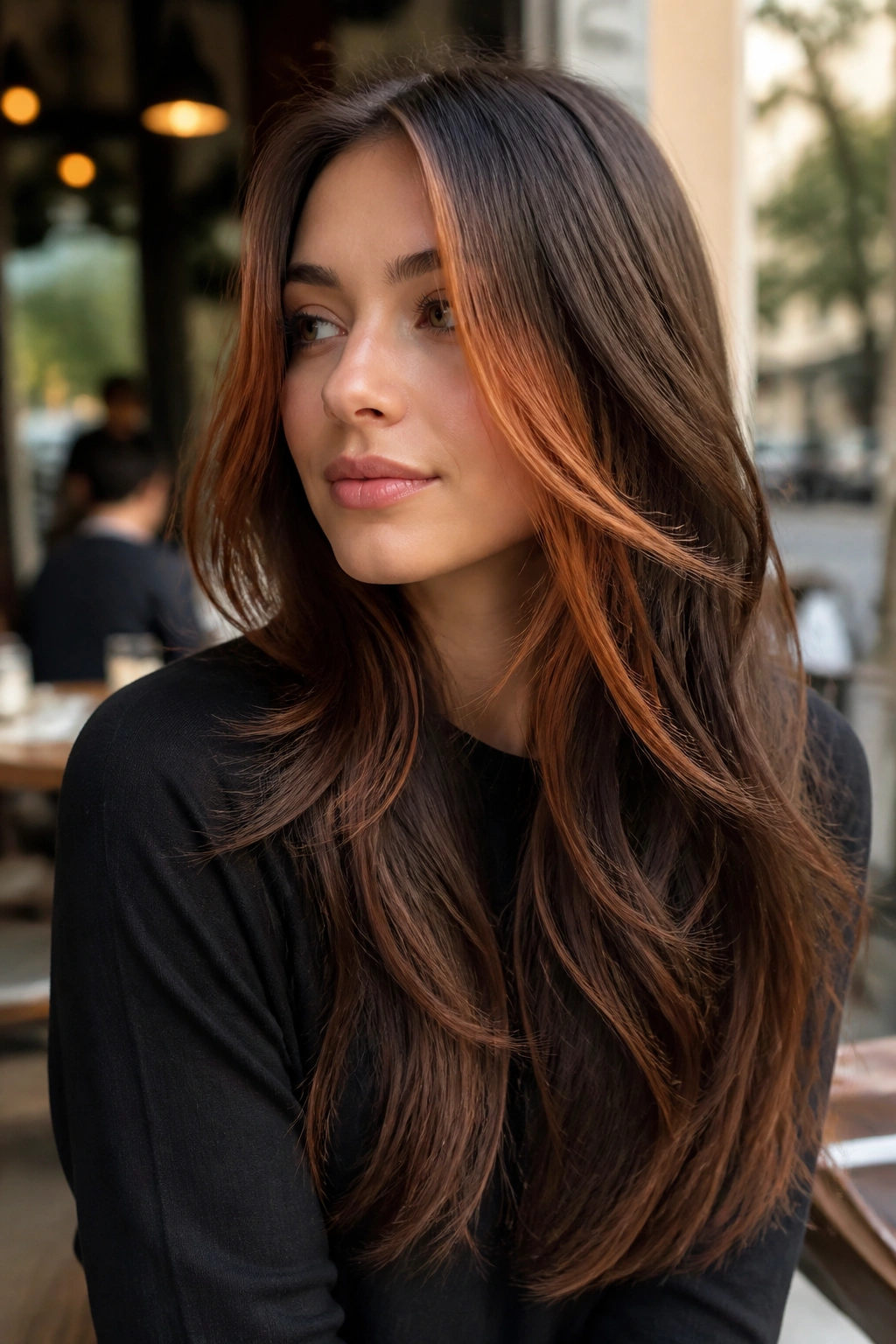
You do not need copper everywhere for the look to land. A face-framing copper money piece can do more for long hair than a full head of brighter color, especially if the rest of the ombre stays softer and more shadowed.
The front pieces pull the eye first. That means a warmer panel at the part line, blended into softer copper through the sides and ends, can make the whole style feel fresher without turning the length into a solid block of color. It’s a smart move for people who wear their hair down and tied back.
Long layers help here. They keep the bright front pieces from swallowing the rest of the hair, which is a common problem when the face frame is too wide.
My advice: ask for two brighter ribbons near the temples and keep the copper below the jaw a touch deeper. That gives the style shape.
5. Auburn Roots into Burnished Copper Lengths
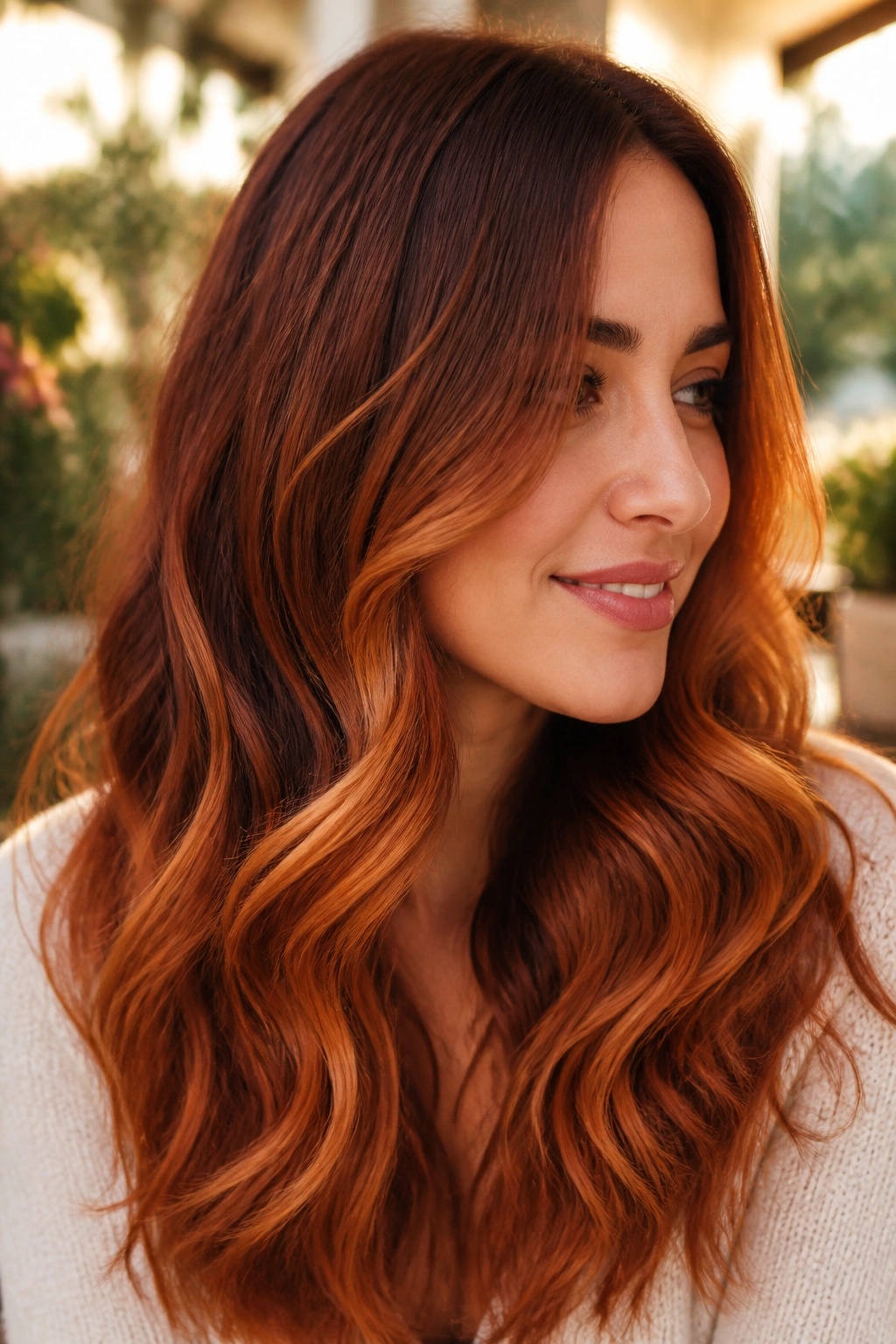
Auburn roots flowing into burnished copper lengths is the grown-up version of red hair. It keeps the warmth, but it gives the color a little more control, which long hair really benefits from.
The trick is the root. If it stays a shade deeper, the copper has somewhere to live. If everything is the same brightness, the style can go flat fast. A soft auburn root also makes grow-out less fussy, which matters when the hair is long enough to show every inch of color shift.
It’s a strong choice for waves because the bends keep the auburn and copper separate just enough to show both tones. Straight hair can work too, but the blend needs to be cleaner or it risks looking like one red note instead of a fade.
A gloss every 4 to 6 weeks helps this one stay rich. Red-based copper tones fade with annoying speed, and once they lose shine, they start to look dull rather than warm.
6. Strawberry Blonde with a Copper Wash
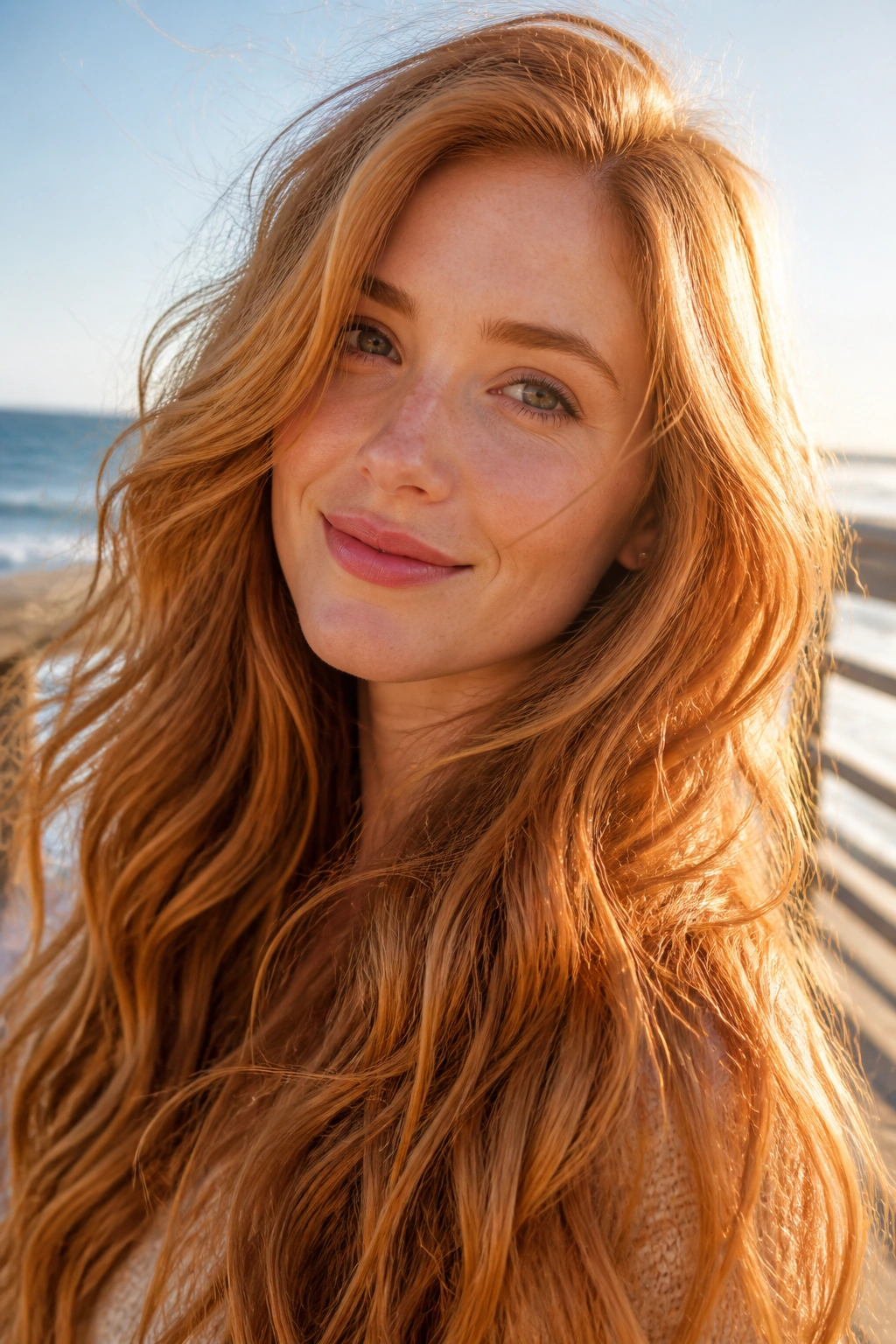
Unlike chunky highlights, this version looks like sunlight that settled into the hair and stayed there. Strawberry blonde with a copper wash is softer than classic copper ombre, and that softness is why it works on long hair with a lot of movement.
It suits lighter brunettes and dark blondes especially well, because the shift does not need a major lift. The copper sits like a warm veil over the lower lengths, while the top remains blonde-brown and easy to wear. That keeps the style light instead of heavy.
A softer root matters here. If the crown gets too warm, the whole thing can look brassy, and strawberry blonde loses its charm fast. Keep the copper richer toward the ends and gentler at the top.
This is a nice pick if you want color that feels friendly rather than intense. It looks good in a braid, good in a half-up twist, and even better when the ends are slightly bent.
7. Chocolate Brown with Ginger Ember Ends
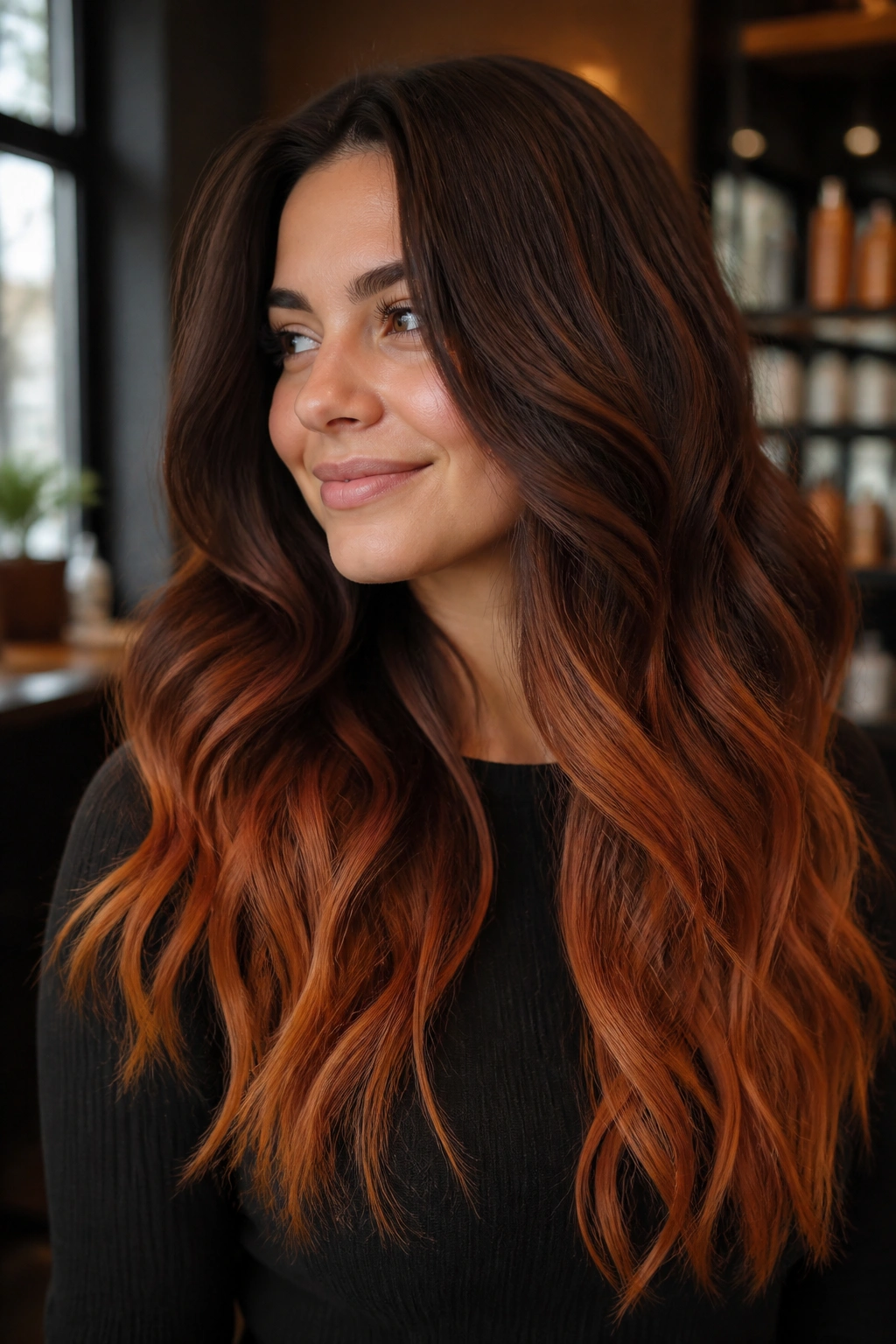
Copper and ginger are not the same thing, and that matters. Chocolate brown with ginger ember ends leans sharper and brighter than cinnamon copper, which makes it a good fit for people who want warmth with a bit more bite.
The dark brown base keeps the look grounded. The ginger ends bring the color forward. On long hair, that contrast gives the lower half a glowing edge, especially if the cut has layers that let the ends swing freely.
Where It Works Best
Thick or coarse hair handles this shade well because it can carry stronger color without looking fragile. If your hair is straight and fine, keep the ginger a shade softer so the ends do not feel stripped.
This is also one of those shades that benefits from heat control. Flat irons and hot tools can pull ginger tones down fast, so a proper heat protectant is not optional if you want the ends to stay lively.
If you like color that feels a little spicy, this one has personality.
8. Copper Ombre on Defined Curls
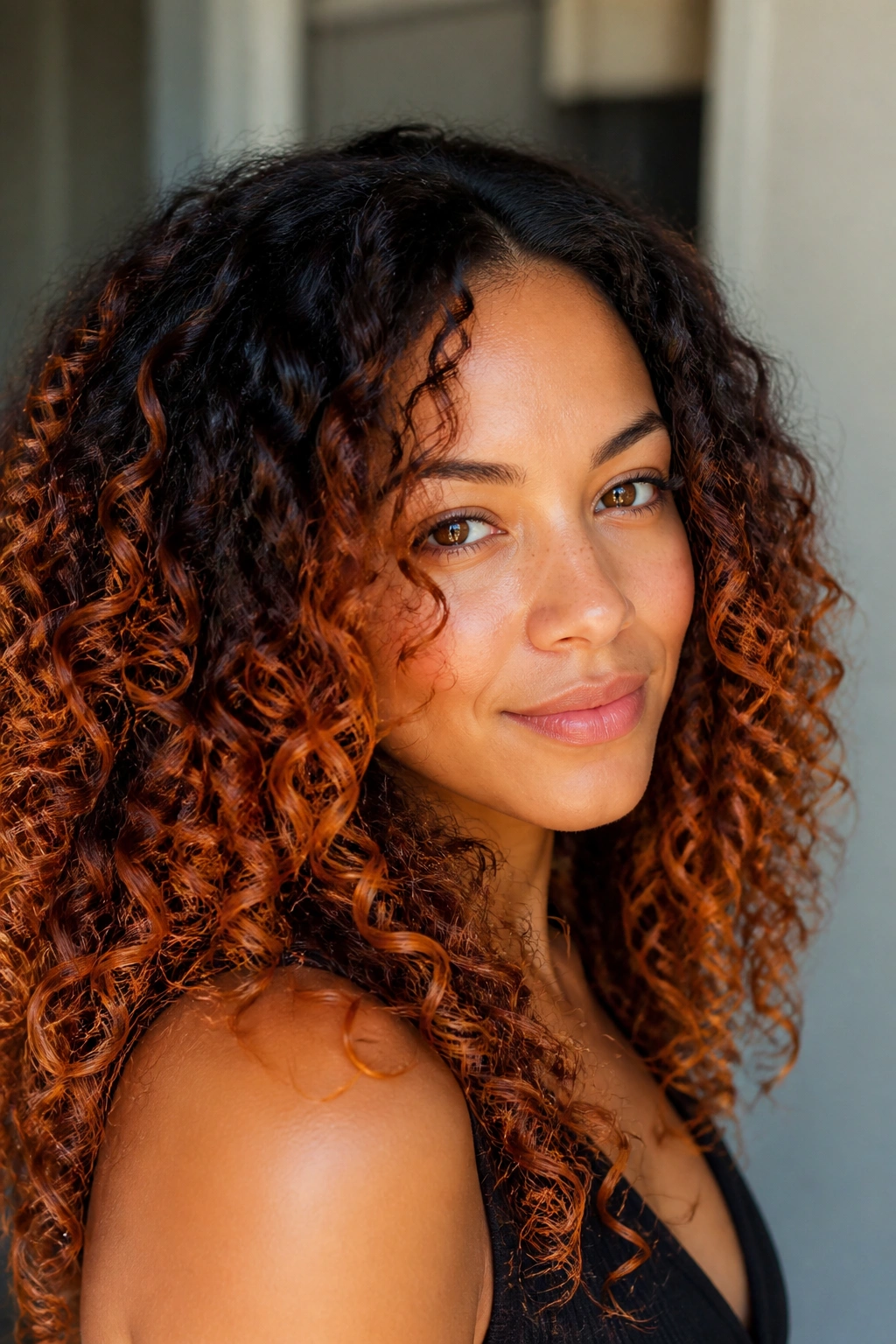
Why does copper look so alive on curls? Because the bends break the color into tiny pockets of light and shadow, and long curls give the eye more places to land. Copper ombre on defined curls is one of the most forgiving and expressive versions of the trend.
How to Place the Color on Curls
Paint the color where the curl naturally turns outward, not on every strand in the same way. That keeps the finish from looking striped. The brightest copper should sit on the outer curve of the curl pattern, while the inner sections stay a little deeper.
That small shift matters. It keeps the hair looking full and dimensional instead of painted flat.
A diffuser helps here, but only if you don’t smash the curl pattern out of shape. Let the hair dry with movement, then separate the curls with a little oil on the fingertips once they’re set.
This version can be very dramatic or fairly soft, depending on how far up the copper starts. Either way, the curls do half the work for you.
9. Copper and Caramel Mixed Through Layered Hair
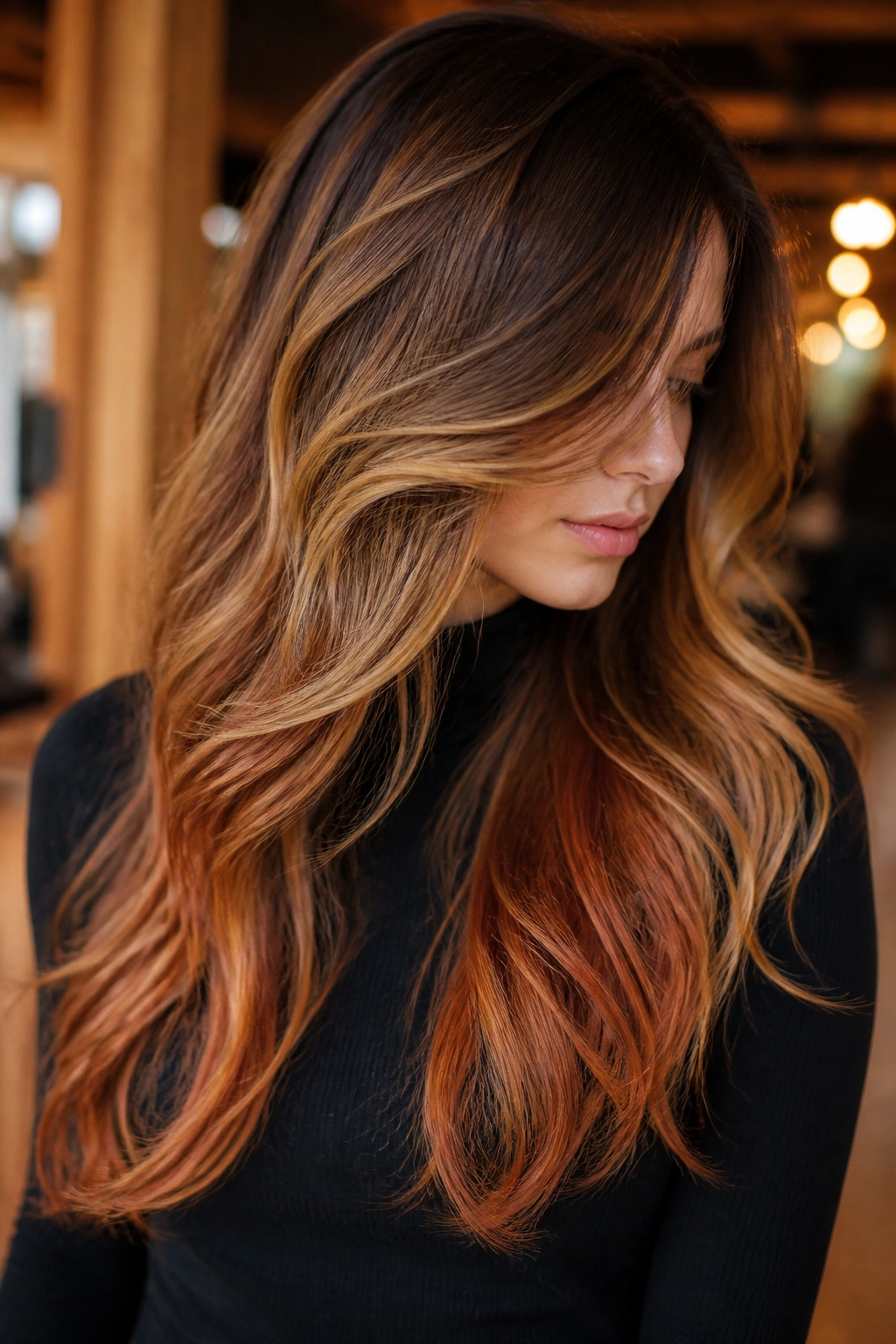
Think of caramel as copper’s quieter cousin. Copper and caramel mixed through layered long hair gives you warmth without a single dominant tone, which is why the result feels so lived-in.
The layering is doing serious work here. On long, cut-in layers, the caramel can sit through the mids while the copper catches the ends and a few face-framing pieces. That mix keeps the hair from reading as one solid color block, which is a common problem on long, thick hair.
- Best when the haircut already has movement
- Ask for alternating warm tones, not one flat copper
- Keep the deepest shade near the crown for contrast
- Use loose bends to show both colors at once
This is a smart option if you like warmth but don’t want the color to shout from every angle. It looks especially good when the hair is brushed out rather than overly polished.
10. Rose Copper Ombre on Soft Waves
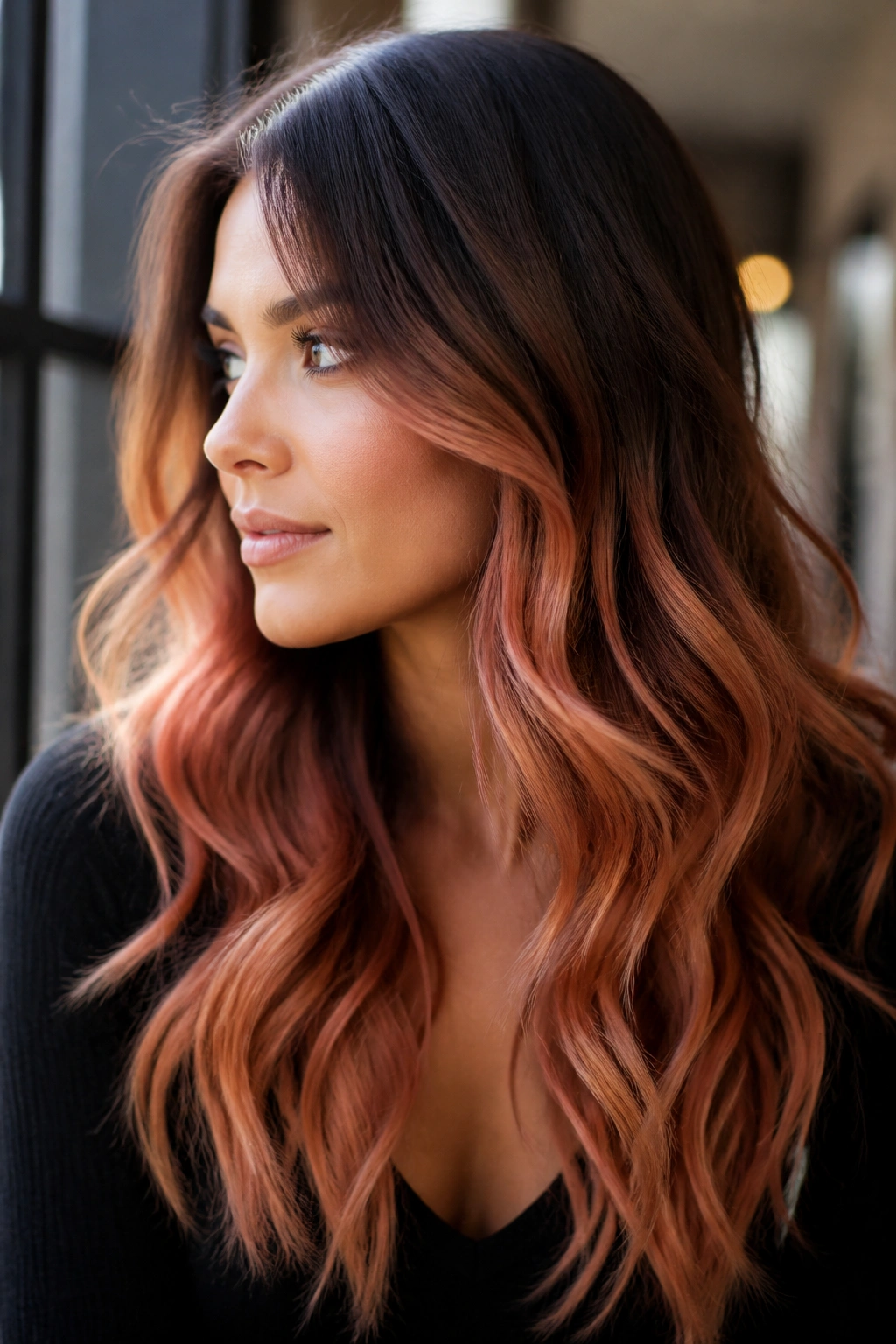
Rose copper sits in that middle ground between red, pink, and copper, and that is exactly why it works on long hair. Rose copper ombre on soft waves feels a little gentler than orange copper, with a blush tone that keeps it from getting harsh.
The look lands best when the root stays neutral and the color deepens through the mids before going more rose at the ends. If the whole head is too warm, the pink note gets buried. If it’s too cool, the copper never shows up. Balance matters here.
Soft waves make the rose tone easier to read because the bends catch the subtle shift between copper and pink. Straight hair can wear it too, but the finish needs more shine or the rose fades into a flat red-brown.
I like this one on long hair with layers around the face. It keeps the style light, and the color feels fresh without looking sugary.
11. Sleek Straight Hair with a Copper Fade
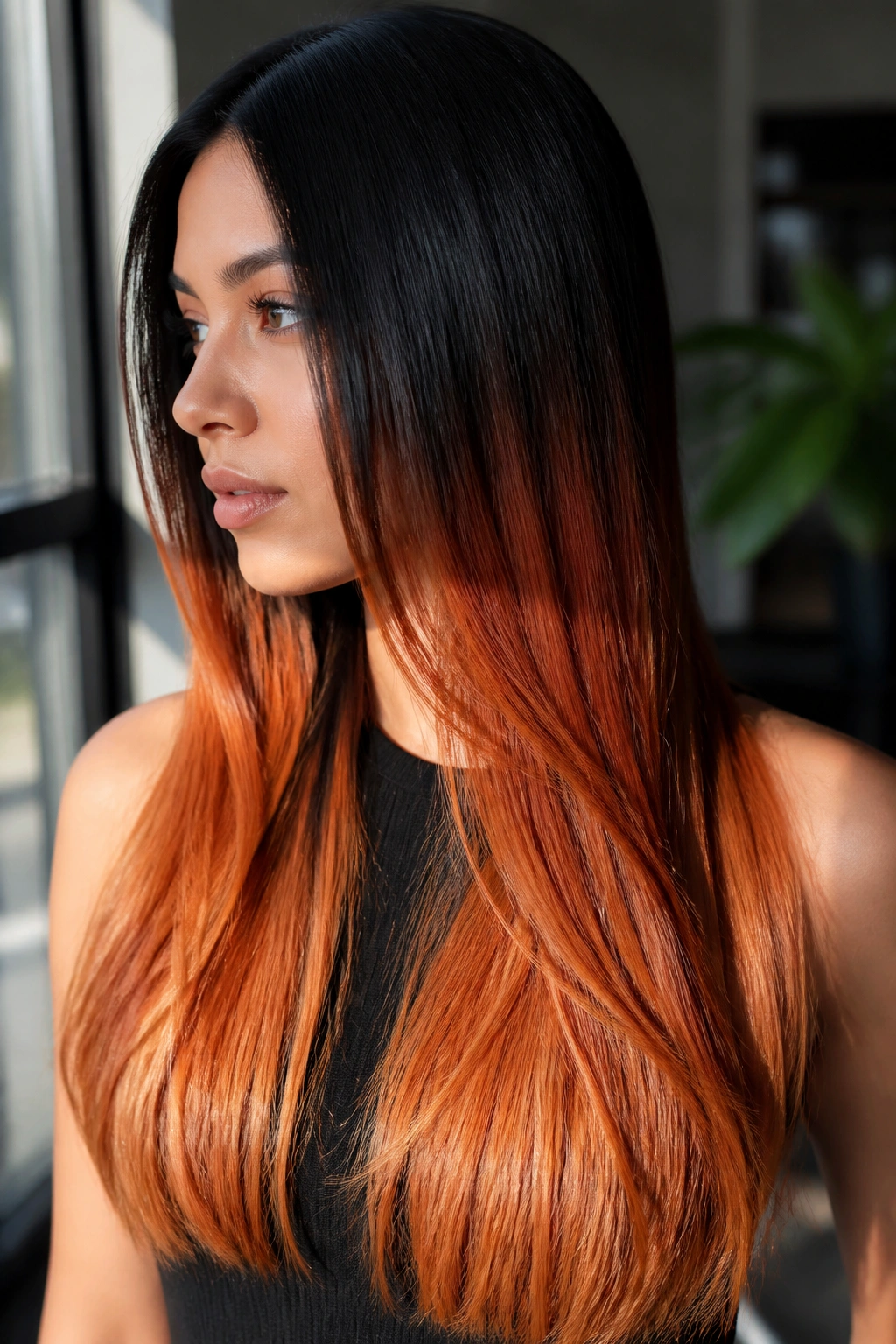
Straight hair shows every line, which is why a sleek copper fade needs cleaner placement than wavy hair. If the transition is sloppy, you will see it immediately.
That is not a bad thing. It just means the color has to be intentional. Micro-balayage through the lower half, then a slightly stronger copper hit near the last third, gives straight lengths a smooth and deliberate fade. The shine line on straight hair helps the copper glow without any extra styling.
Best Styling Match
This version is made for people who wear their hair blown out or ironed. The color reads best when the strands lie flat enough to show the shift from brown to copper in one clean view.
- Keep the top at a deeper brunette shade
- Use thin painted sections so the fade does not look striped
- Finish with a shine spray, not heavy cream
- Trim the ends regularly so the copper does not look scruffy
A sleek copper fade can look expensive in a quiet way. Clean edges matter here.
12. Curtain Bangs with a Copper Halo
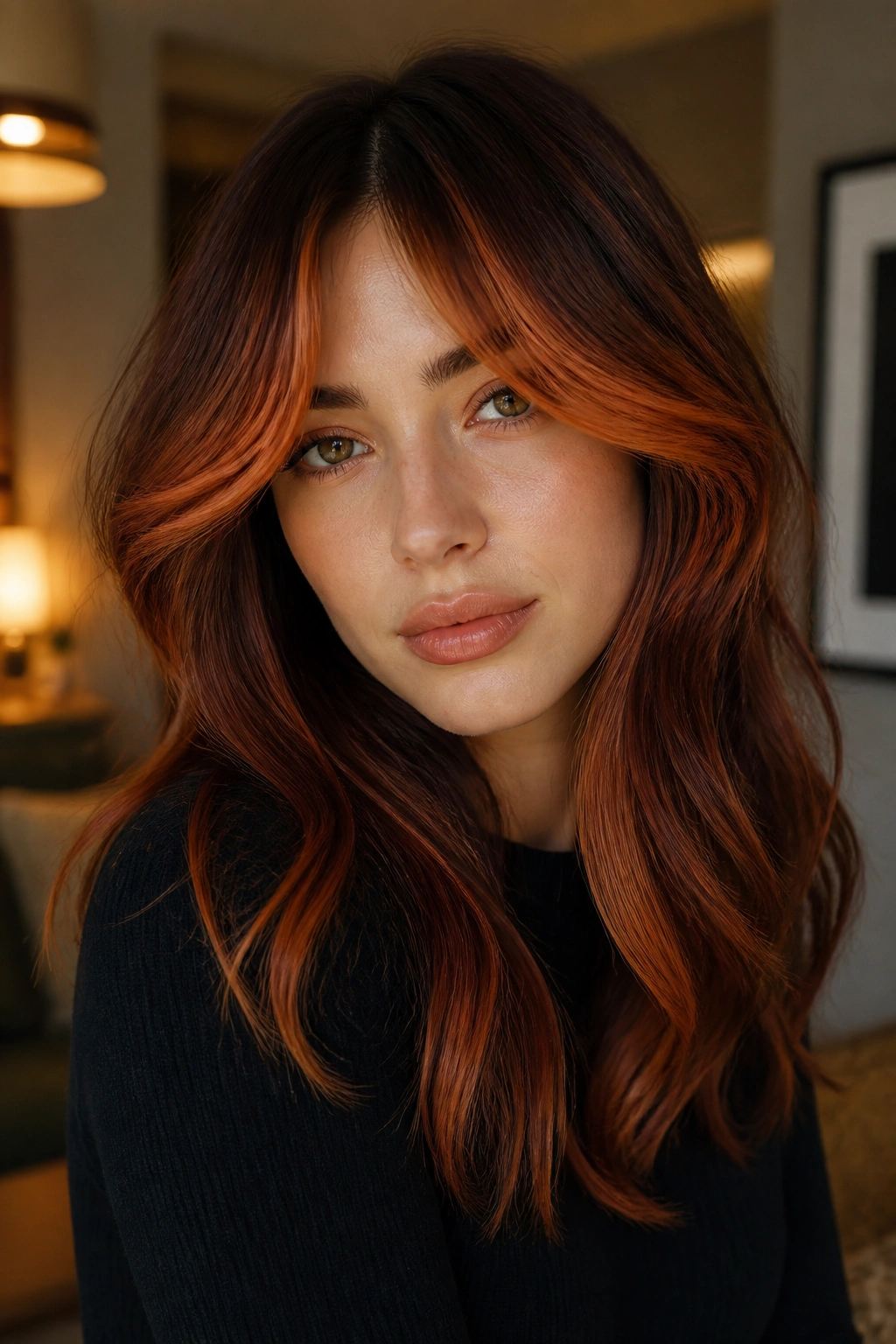
Copper and curtain bangs are a good match because the bangs pull the warmth right where the eye goes first. A copper halo around curtain bangs makes long hair feel shaped, even when the rest of the length stays soft.
Where the Brightest Pieces Should Sit
Place the warmest copper at the temples, cheekbones, and the outer edge of the bangs. That creates a halo effect without flooding the whole fringe with color. If the bangs are dense, keep them a half-shade deeper than the face frame so they don’t go orange too fast.
Long hair with curtain bangs also gets a nice balance. The fringe gives the top some energy, and the ombre through the lengths keeps the style from feeling top-heavy.
This is a good choice if you like wearing your hair loose but still want the face frame to do a little work. Blow-dry the bangs away from the cheeks first, then curve them back in. That small shift gives the copper a softer shape.
13. Mahogany Base with Copper Flame Tips
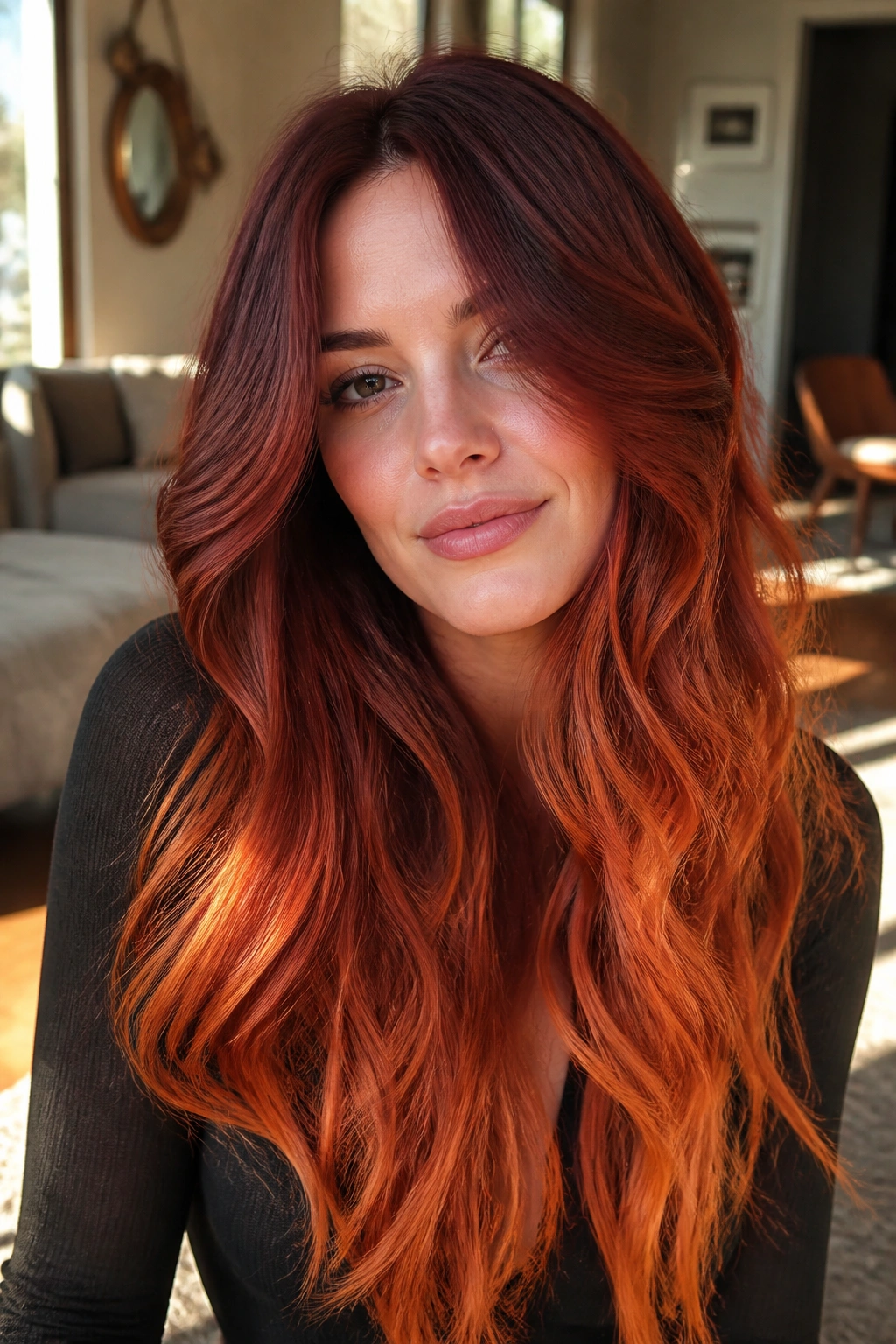
If you like red hair with a little smoke underneath, this is the one. Mahogany roots with copper flame tips give long hair a deeper, richer base and a brighter edge where the length finishes.
The color story matters here. Mahogany is dark enough to anchor the style, while the copper tips bring heat to the ends. On long layers, that creates movement that feels almost flame-like, especially when the hair is curled away from the face.
How to Keep the Flame Effect from Turning Stripey
The transition needs to be blurred for at least a couple of inches. If the color switches too quickly, the ends look like a separate section instead of part of the whole style.
That is where long hair helps. There’s enough length to blend the shades properly, and the ends can carry more brightness without overpowering the root. This is a strong pick for thick hair, since density makes the deeper mahogany look even richer.
Wear it with loose bends. The movement matters.
14. Apricot Copper on Feathered Layers
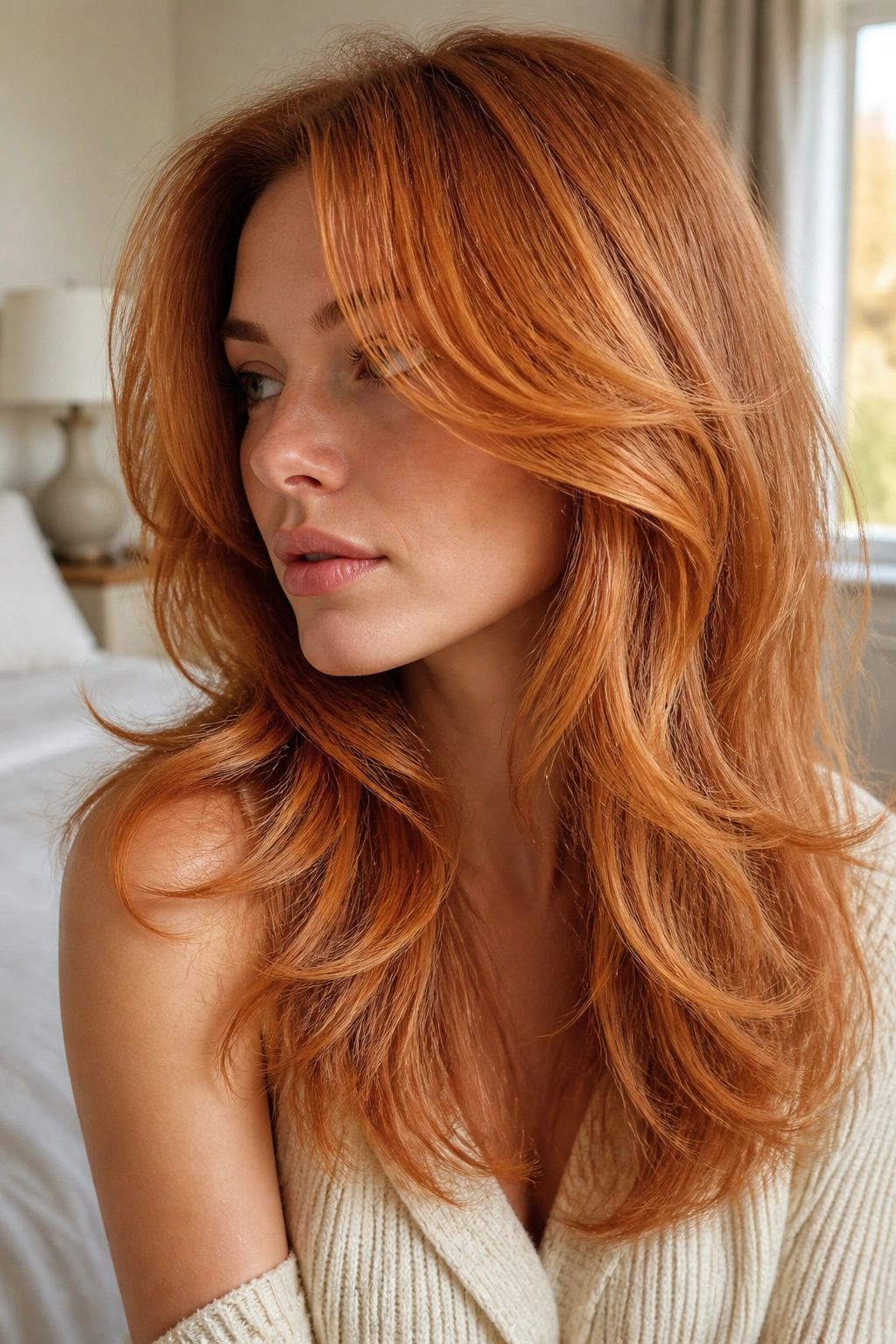
Can copper lean soft and airy? Yes, and apricot copper on feathered layers is the proof. This version skews lighter and peachier, which keeps the ombre from feeling heavy on long hair.
Feathered layers are the secret. They let the apricot tone spread out across the hair instead of sitting in one dense block at the bottom. That movement is what gives the color its lift.
The Finish That Helps
A smooth blowout with a round brush suits this shade better than tight curls. The color wants softness, not crunch. If the ends are too bulky, apricot can look flat and the fade loses that light feel.
This shade also works when the base is kept neutral rather than overly warm. Too much gold at the root and the apricot gets muddy. Too little warmth and the whole thing turns pale.
I like this on people who want copper, but not the loud version of copper. It has a gentler voice.
15. Pumpkin Copper for Thick, Long Hair
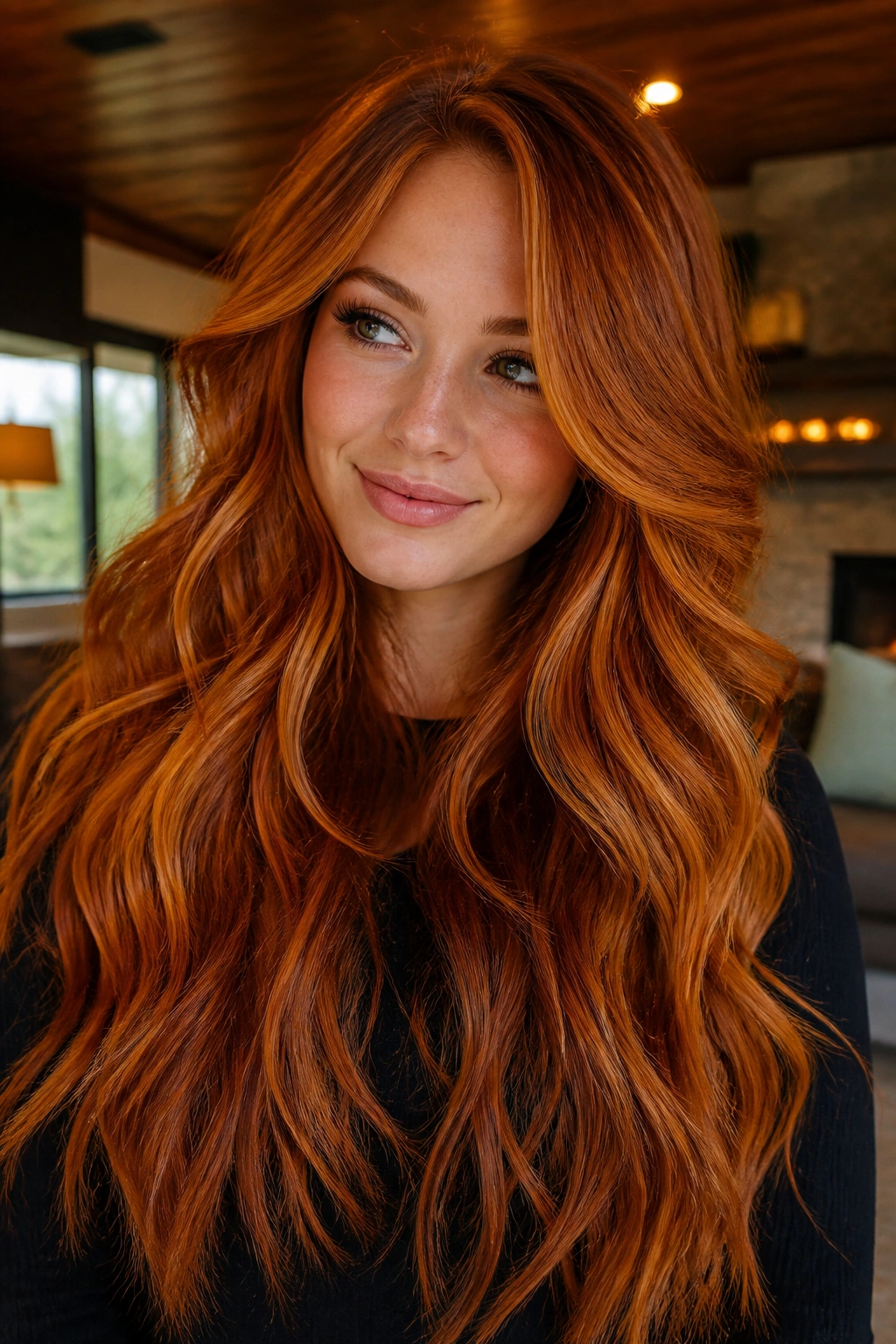
Thick hair can carry more color, and pumpkin copper on long lengths proves it. This is one of the few copper ombre looks that can handle a stronger dose of saturation without seeming too busy.
The reason is simple: density gives the shade room. On fine hair, a color this warm can overwhelm the cut. On thick hair, especially with internal layers, the color sits inside the shape and moves when the hair moves. That makes the ends look full rather than heavy.
Moisture matters here. Dry ends kill the whole look, and pumpkin copper shows dryness faster than people expect. Use a leave-in cream, not just oil, so the hair keeps some softness under the warmth.
This is the version I’d pick if you want a bolder copper that still reads polished. It has enough color to feel deliberate, but the long length keeps it from becoming one-note.
16. Mink Brown with Burnt Copper Ends
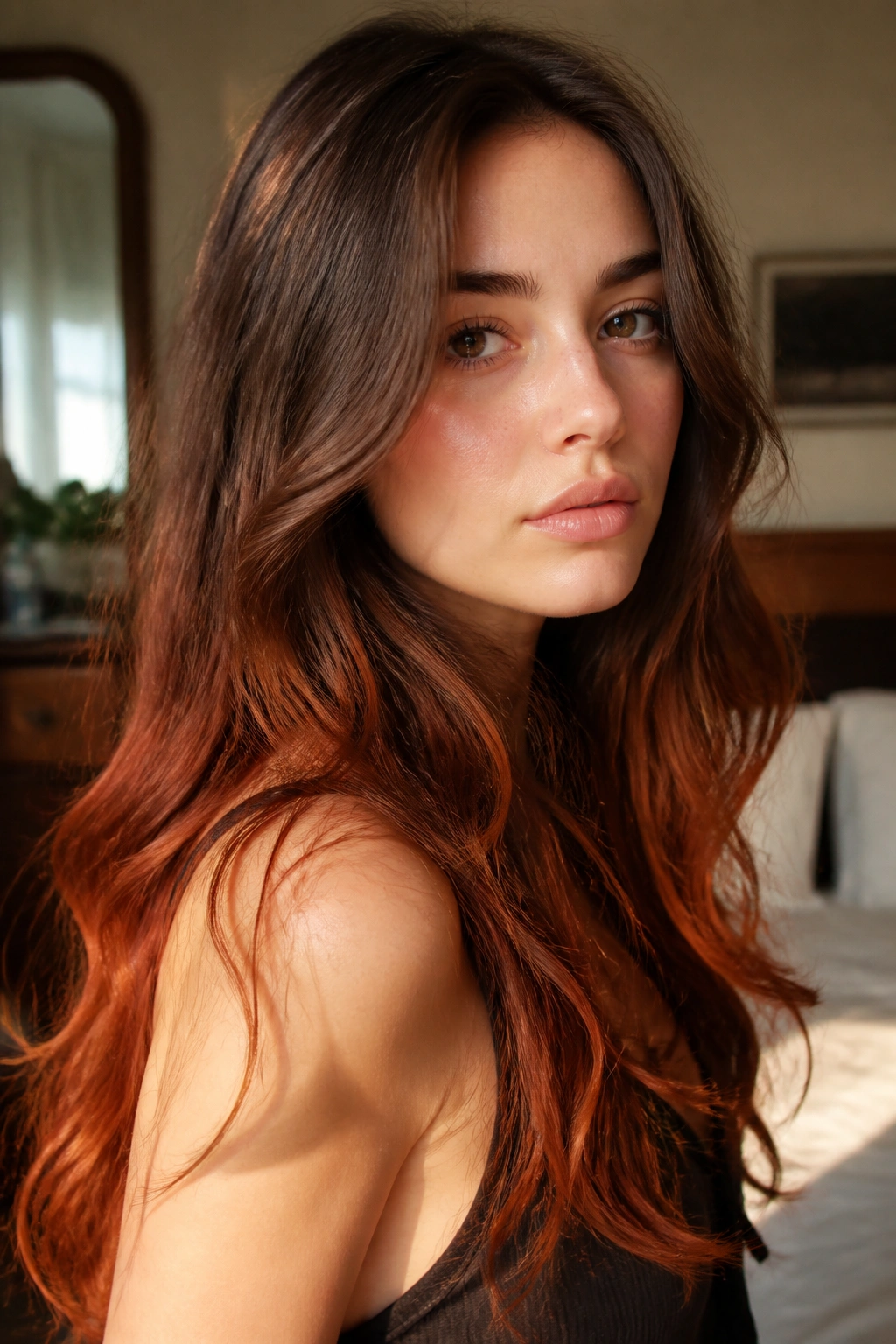
Unlike bright copper, this version stays smoky. Mink brown with burnt copper ends is the low-key sibling in the family, and that makes it a strong choice if you want warmth without a bright red finish.
The base is soft and muted. The ends carry the warmth. That contrast creates depth without a big jump in tone, so the grow-out looks easy and the color feels calm rather than loud.
This is best on long hair that’s styled in brushed-out waves, not tight curls. The waves let the burnt copper show in thin ribbons, while the mink brown keeps the style from looking overdone.
Ask for a matte or neutral root shadow and a soft copper glaze only on the last few inches. That keeps the warmth controlled. If the copper creeps too far upward, the whole thing loses its quiet edge.
17. Burgundy-to-Copper Gradient on Long Hair
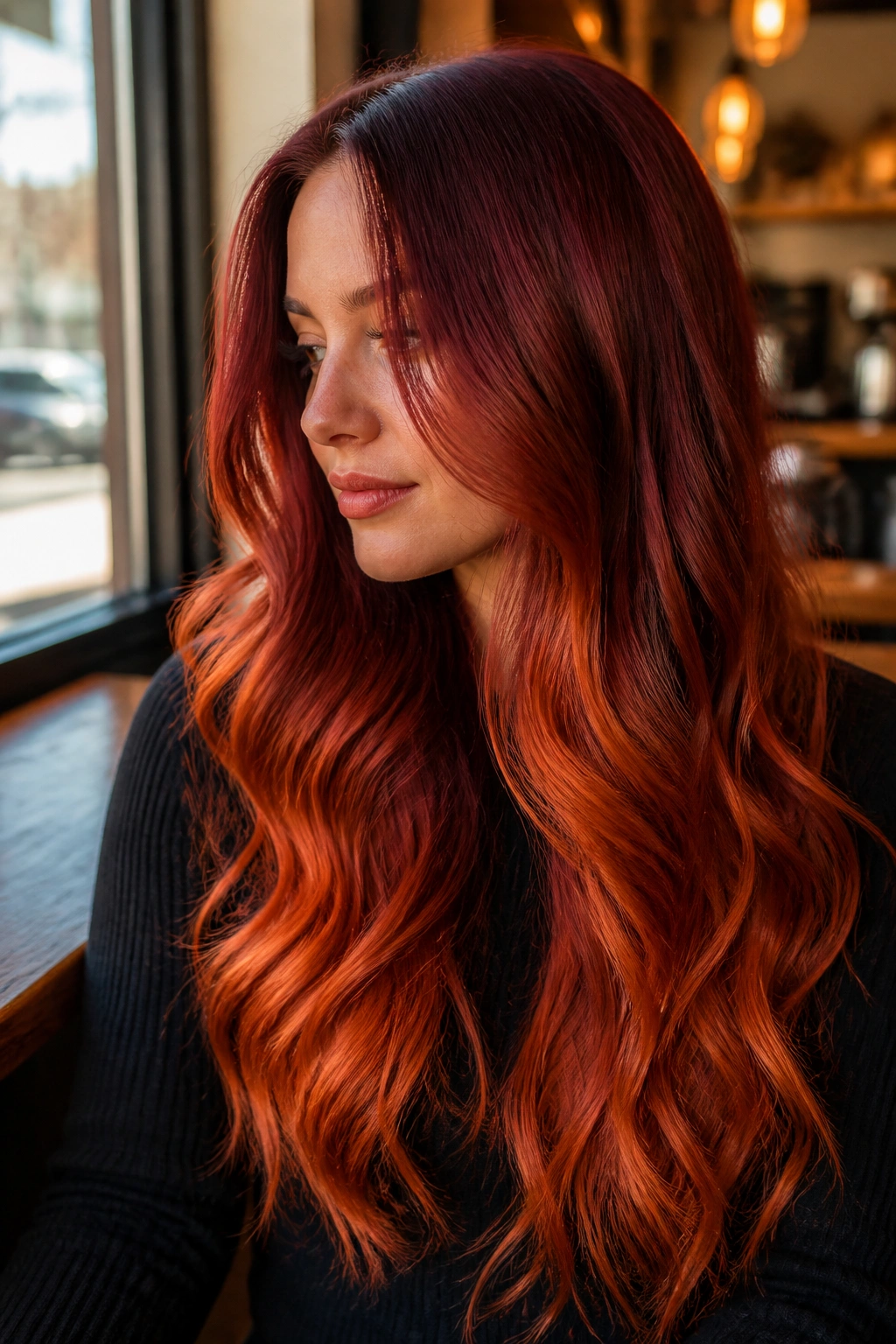
If you already wear red shades, this is an easy place to move. Burgundy fading into copper gives long hair a jewel-toned depth at the top and a brighter finish at the bottom.
The gradient works because the colors belong to the same family but still behave differently. Burgundy adds depth and a hint of wine tone. Copper brings warmth and glow. Together, they keep the length interesting without needing blonde underneath.
What to Ask For
- Deep burgundy at the crown and upper mids
- Soft copper through the middle of the hair
- Brighter copper only on the lowest 4 to 6 inches
- A blurred blend between the tones, not a hard stripe
This is a good choice if your hair has been red before. Existing red pigment usually helps the blend feel smoother, and long layers make the shift easier to see from top to bottom.
The gradient is what keeps it from reading like two separate dyes.
18. Sunlit Copper on Dark Brunettes
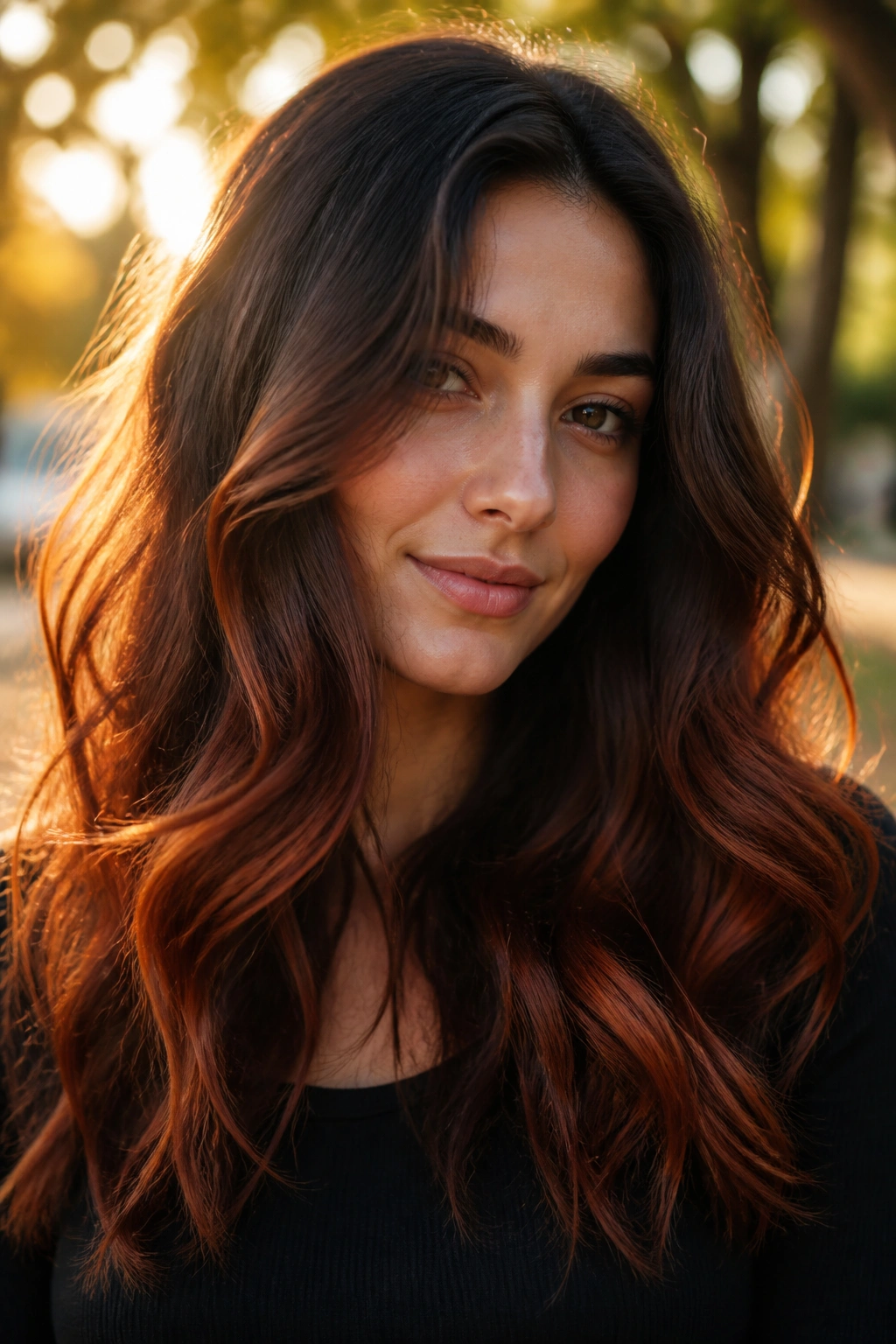
Some of the prettiest copper ombres are barely visible until the hair moves. Sunlit copper on dark brunettes is that kind of look. It stays quiet in shade and flashes warmth when the light hits the mids and ends.
That makes it a smart choice for dark hair that doesn’t want a big color leap. The copper can sit one or two levels lighter than the base, which preserves depth while still giving the length a warmer finish. On long hair, that small change is enough to make the style feel new.
- Best on fine to medium textures
- Keep the copper softer near the crown
- Use more depth underneath so the color doesn’t flatten out
- Loose waves show the tonal shift better than pin-straight styling
This kind of copper is easy to wear because it does not announce itself all at once. It sneaks in, which I prefer.
19. Glossed Copper Ombre for Fine Hair
Fine hair can go stringy if the contrast is too hard. That’s why a glossed copper ombre is such a good fit: the finish adds shine, and the color shift stays soft enough to avoid harsh lines.
Placement Rules That Keep It Soft
Stay within one or two levels from root to end. That small range keeps the hair looking full instead of thin. Use finer ribbons of copper through the mids, then save the brighter shade for the last section so the whole style reads as one smooth move.
The gloss matters as much as the color. Fine hair reflects light fast, and a copper glaze can make the strands look smoother and denser than they are. A dry finish does the opposite.
I would skip chunky ribbons here. They tend to expose too much scalp and make the ends feel sparse. A soft fade with a shiny surface is the better call every time.
20. Copper Ribbon Lights Through the Mid-Lengths
Ribbon lights make long hair look like it has more motion, and copper ribbon lights through the mid-lengths are one of the best ways to get that effect. Instead of a flat block of color, you get warm strands running through the length in uneven, graceful pieces.
That unevenness is the whole point. Long hair can handle it because there’s enough surface area for the ribbons to breathe. If the pieces are too uniform, the style starts to look planned in a bad way. If they’re varied, the hair feels dimensional and softer.
A Small Detail That Helps
Ask for alternating narrow and slightly wider painted sections—say 1/8 inch and 1/4 inch pieces—so the copper does not repeat like wallpaper. That small difference stops the color from looking stamped on.
This style is especially good if you curl the hair or wear a large round-brush blowout. The movement makes the ribbons separate and show their warmth from different angles.
21. Golden Auburn with a Copper Halo
Unlike plain auburn, golden auburn with a copper halo brightens the front and crown just enough to wake up the whole style. The long length keeps the color grounded while the halo gives it a bit of lift near the face.
Where the Halo Sits
The brightest pieces should sit around the temples, the part line, and the top layer near the face frame. That’s where the eye lands first, and that’s where a little extra light makes the biggest difference.
If the halo is too wide, the style can start to feel streaky. Keep it narrow, and let the rest of the auburn melt into copper only lower down. That keeps the look warm instead of flashy.
This is a good middle-ground option for someone who wants copper but doesn’t want the ends to carry all the work. The balance between the crown and the lengths matters here more than in most other copper ombre styles.
22. Full-Length Copper Melt with Soft Ends
A full-length copper melt is the option I’d call the most seamless of the bunch. Copper from root shadow to soft ends gives long hair a warm, continuous look that feels polished without a hard stop anywhere.
This version works because the shades are close enough to belong together but different enough to show depth. A deeper root shadow, a warm mid-tone, and a brighter finish at the ends keep the hair from flattening out. On very long hair, that gradual shift looks especially good in braids, loose waves, and half-up styles.
I also like this one for people who want copper to be the whole story. Not a hint of it. Not a whisper. A real color statement that still has enough softness to wear every day.
If you want one copper ombre idea that reads warm from every angle and still leaves room for movement, this is the one I’d put near the top of the pile.
