



Purple ombre on long hair has a habit of looking expensive even when the actual dye job is fairly simple. The length does half the work for you. There’s room for a slow fade, room for shadow at the roots, room for that in-between zone where brown, plum, and violet all blur together instead of fighting for attention.
That’s why purple ombre hair ideas for long hair keep showing up in salons and in people’s saved folders. Long hair gives colorists space to build a gradient that feels deliberate instead of choppy, and it gives you more ways to wear the color once it’s done. Straight, waved, braided, twisted into a bun — the undertones shift every time.
The trick is choosing a purple that fits your base color, your skin tone, and your patience level. Bright ultraviolet is not the same job as smoky lilac. A deep plum melt on black hair behaves nothing like lavender ends on blonde lengths, and if you’ve ever watched a tone go muddy after three washes, you already know why the details matter.
So here’s the fun part: 25 long-hair looks, each with a different feel, different upkeep, and a different mood.
1. Deep Black to Plum Melt
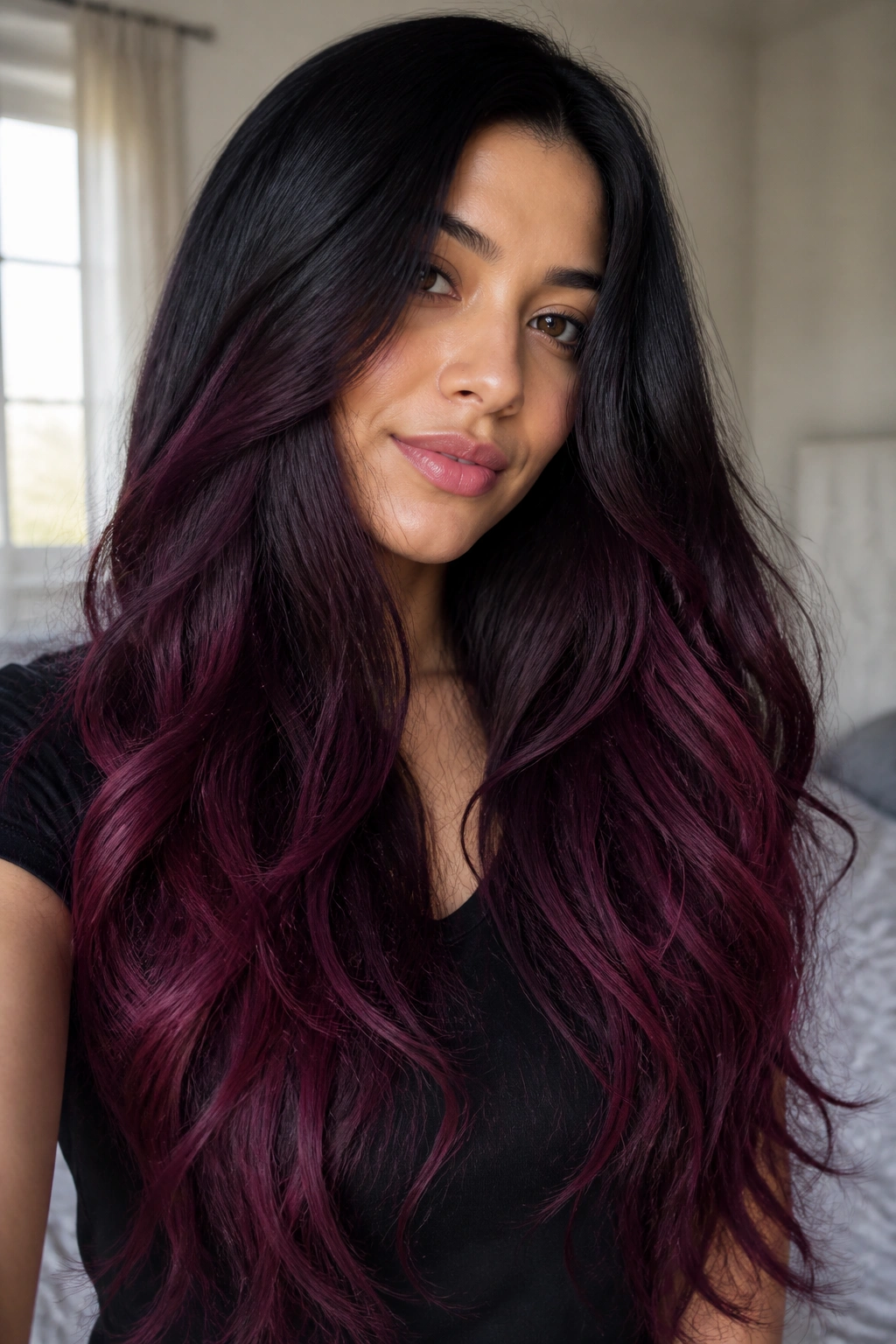
This is the classic move for long hair because it looks rich from a distance and even better up close. Black roots drifting into plum ends give you that glossy, expensive finish people often want but don’t always know how to ask for. On waist-length hair, the fade has enough room to stay soft instead of looking like a hard line.
The key is keeping the purple in the plum family, not too bright and not too red. That keeps the style wearable on straight hair, where every band of color shows, and on loose curls, where the plum catches the light at the bend. If your hair is naturally dark, this is one of the easiest purple ombre hair ideas for long hair to live with because the regrowth blends in.
A satin finish spray helps here. So does a color-safe shampoo that won’t strip the darker violet pigment too fast.
2. Chocolate Brown into Eggplant Ends
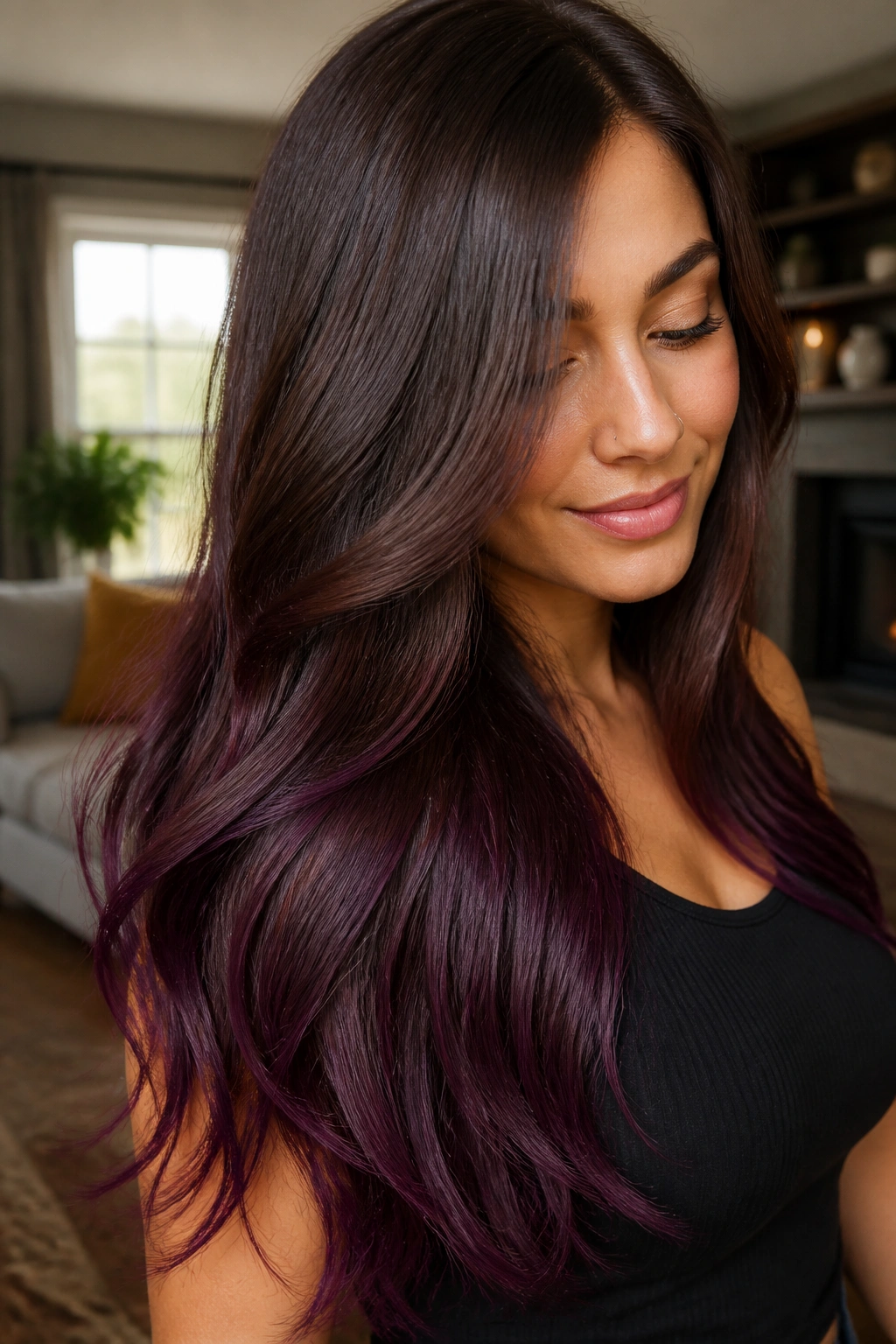
Chocolate brown gives the whole look a softer start than jet black, which makes the eggplant finish feel warmer and a little more expensive. The transition is subtle until the last third of the hair, where the purple deepens and takes over. It’s one of those styles that looks calm at work and a little dramatic when you sweep the hair over one shoulder.
Why It Works
Eggplant is a smart shade for long hair because it carries enough brown in the mix to avoid that flat, cartoonish purple look. The color feels dimensional, especially on layered cuts where the ends move.
On thick hair, ask for a blend that starts below the cheekbones so the color doesn’t eat up all the depth at the top. On fine hair, keep the root area darker and the ends brighter so the length doesn’t disappear.
A soft wave makes this one behave beautifully. Straightening it can make the shift feel sleeker, but waves give the purple more texture.
3. Burgundy Roots with Violet Ribbons
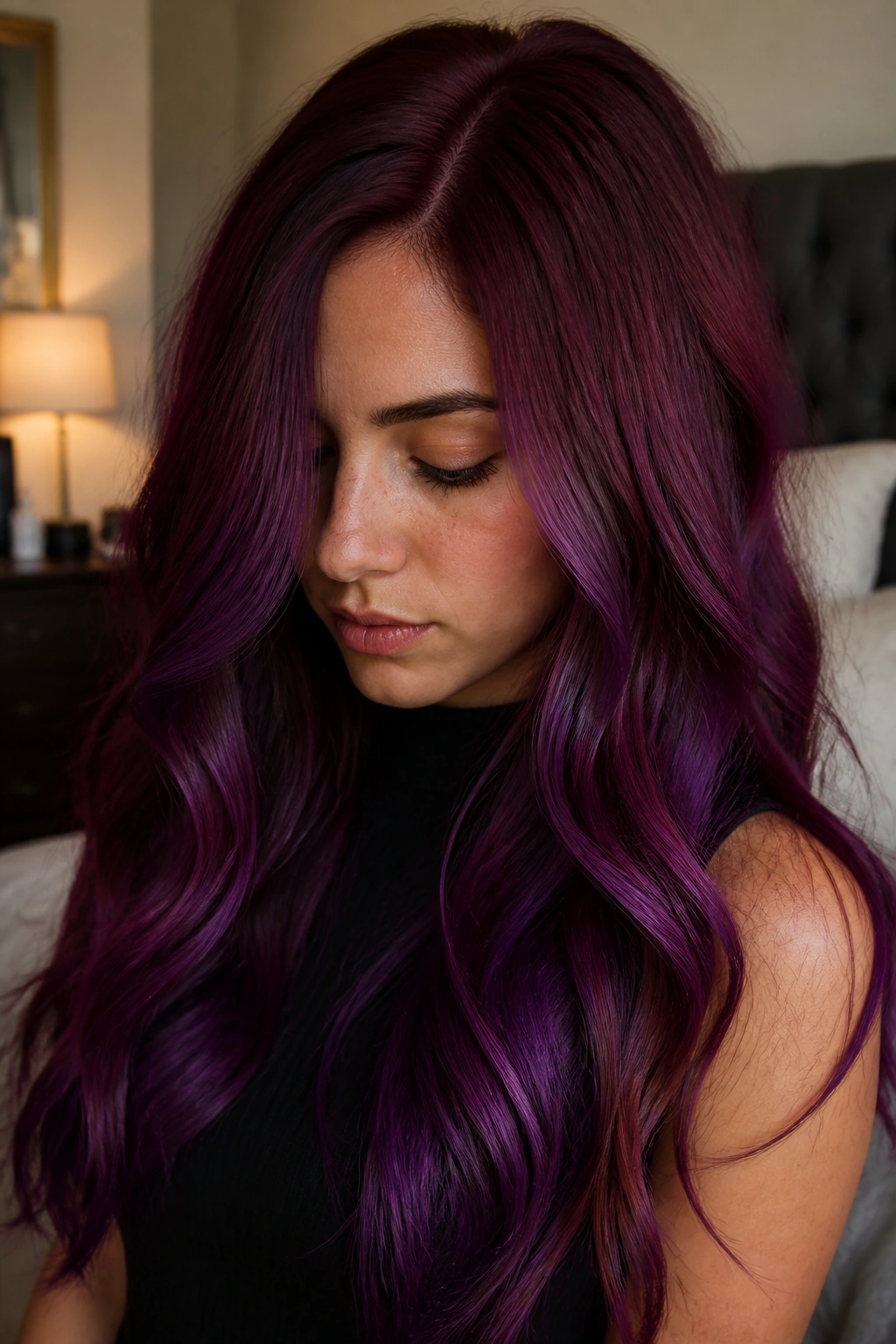
This version has a little more heat in it. Burgundy at the top melts into violet ribbons through the mid-lengths and ends, which gives long hair a wine-dark richness that reads more luxe than loud. It’s a good choice if you want purple without moving into pastel territory.
The ribbon effect matters. Instead of one smooth block of color, the violet should move through the hair in thin sections, especially around the layers. That keeps the style from looking heavy. Long hair can take it, and honestly, it benefits from it.
Wear it with loose waves if you want the ribboning to show. Braids are good too. They reveal every shift in tone as the plait opens and closes.
4. Midnight Blue Purple Gradient
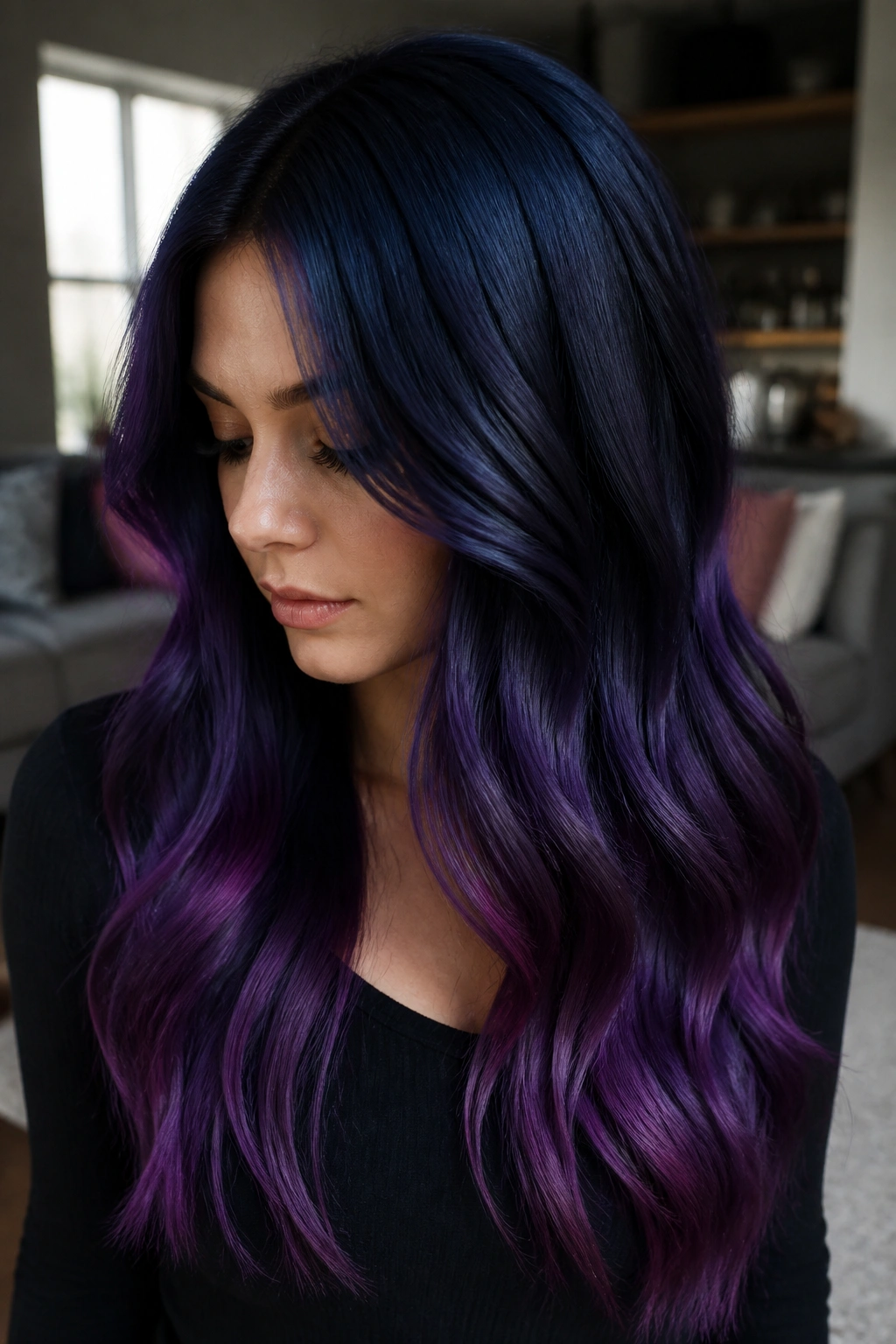
This one leans cool, almost stormy. Midnight blue at the crown fading into purple ends creates a moody gradient that looks especially good on long hair with shine. It’s not a soft, sleepy look. It’s sharper than that.
The blue keeps the purple from turning too warm, which helps if you like jewel tones and want something that feels a bit more dramatic. If your natural base is dark brown or black, the blue-purple blend can look almost black indoors and then flash color in bright light.
That dual effect is the appeal. You get a hair color that changes with the room.
Use gloss treatments here if the ends start looking dull. Blue and purple both punish dryness fast, and long lengths show it immediately.
5. Smoky Lilac Ombre
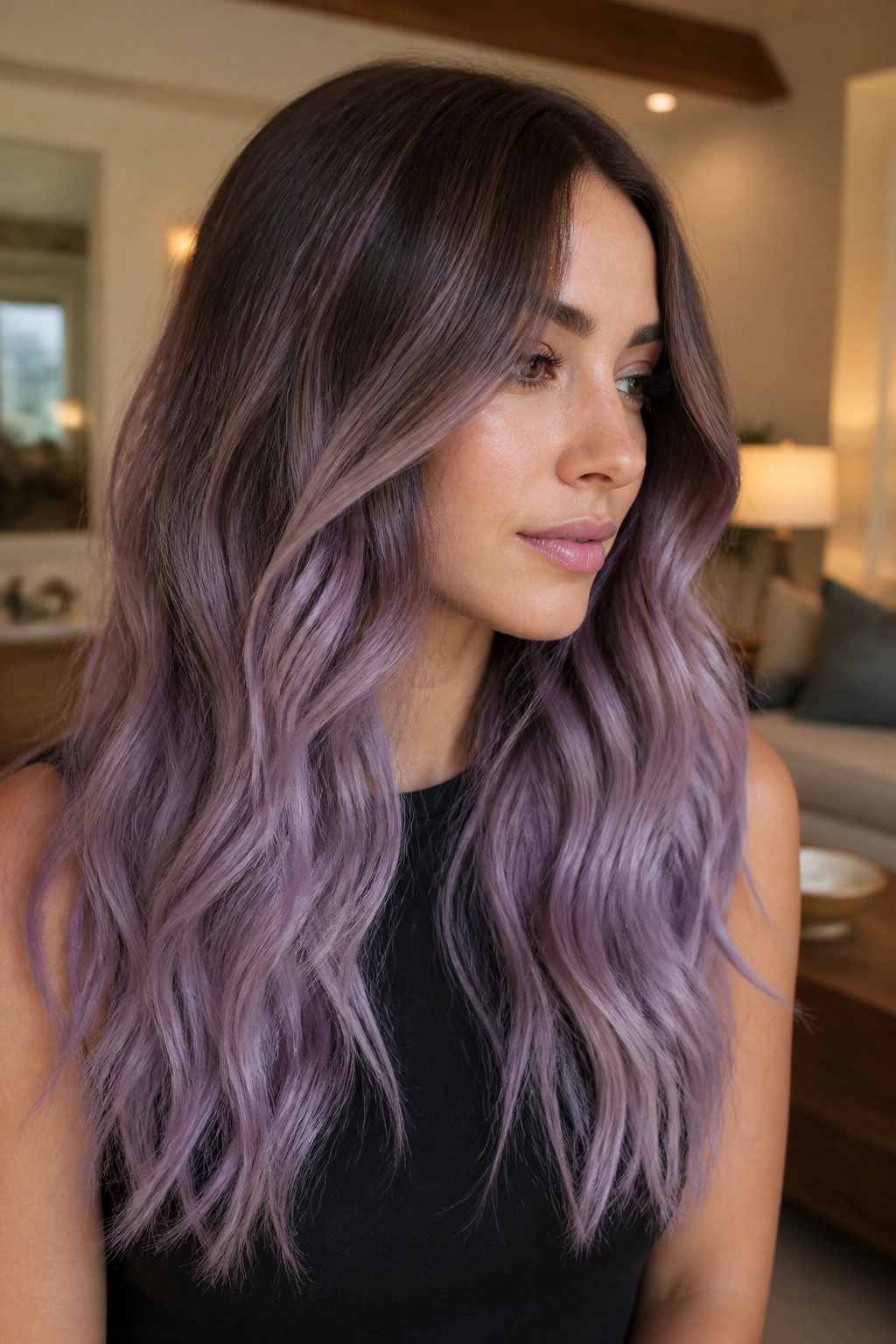
Smoky lilac is where purple gets airy instead of bold. The roots stay muted and shadowy, then the color opens into lilac that has a gray or smoky cast. On long hair, it looks delicate without feeling childish, which is a nice line to walk because pastel purple can go sugary fast.
This shade works best on lighter starting bases, usually medium blonde or pre-lightened brown. The ombre effect lets you keep depth at the top while saving the airy tone for the lower half. On very long hair, that makes the ends look soft and cloudlike.
What to Ask For
- A root shadow about 2 to 3 inches deep
- A lilac toner with gray or silver influence
- Soft blending through the mid-lengths, not a hard fade
- A finish that stays matte-satin, not neon
If you like understated color that still gets comments, this is a strong pick.
6. Lavender Fog on Long Waves
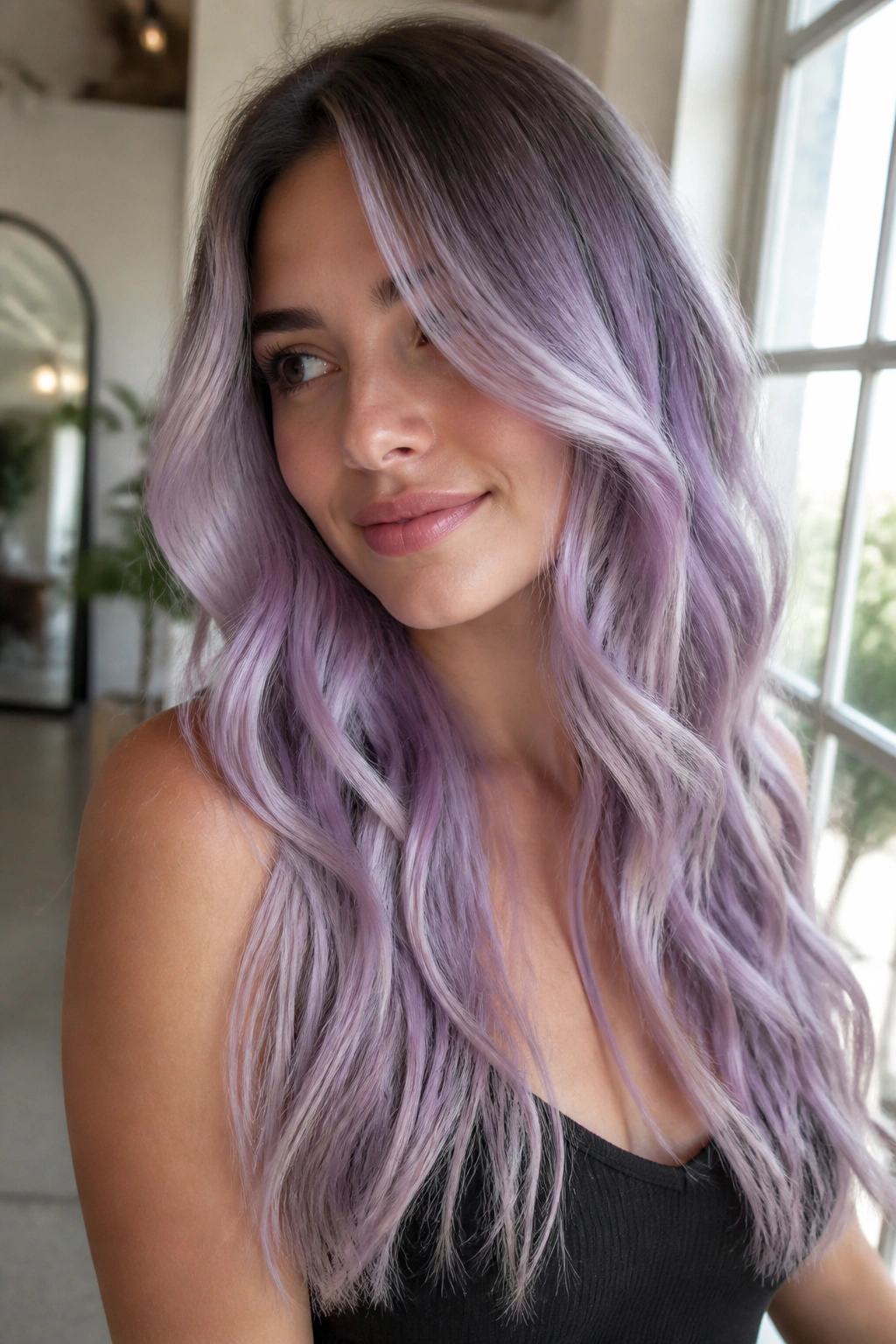
Lavender fog is lighter than lilac and a little cooler in the undertone. It has that pale, misty look that sits somewhere between pastel purple and silver. Long waves are the best canvas for it because the bends catch the pale pigment and keep the hair from looking flat.
A lot of stylists like to place the lightest lavender near the face and around the bottom layers. That gives movement without making the whole head look washed out. On long, layered hair, the effect is almost airy. Almost. Not in a fluffy way — in a clean, soft way.
It does need upkeep. Pale purple fades fast, and the ends can lose tone faster than the mid-shaft. Color-depositing conditioner helps, but don’t pile it on so heavy that the shade turns chalky.
7. Amethyst Balayage Through Chestnut Hair
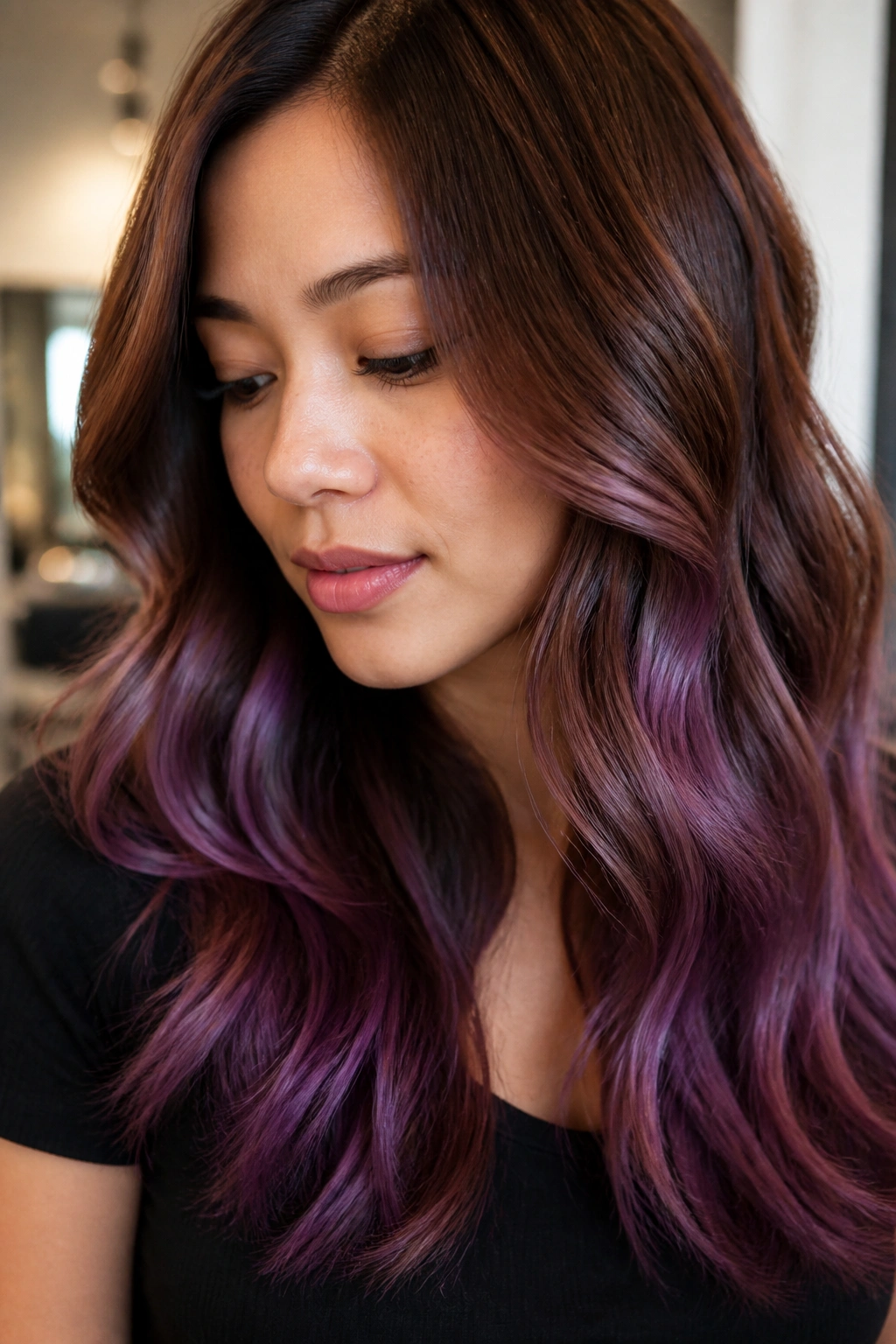
Amethyst over chestnut is one of the most wearable purple ombre hair ideas for long hair because it keeps the brunette identity intact. The purple doesn’t replace the base; it threads through it. That makes the whole style look like sunlight found the color instead of the color arriving all at once.
Balayage placement is the reason this works. Hand-painted pieces of amethyst can start around the lower layers and become denser toward the ends, which keeps long hair from looking striped. The chestnut base gives warmth. The amethyst gives shine.
This is a good choice if you want a softer grow-out and don’t want obvious line-of-demarcation drama. You can stretch salon visits longer with this one, which is one reason it stays popular with people who wear their hair past the shoulders and like low-fuss color.
8. Violet Peekaboo Ends
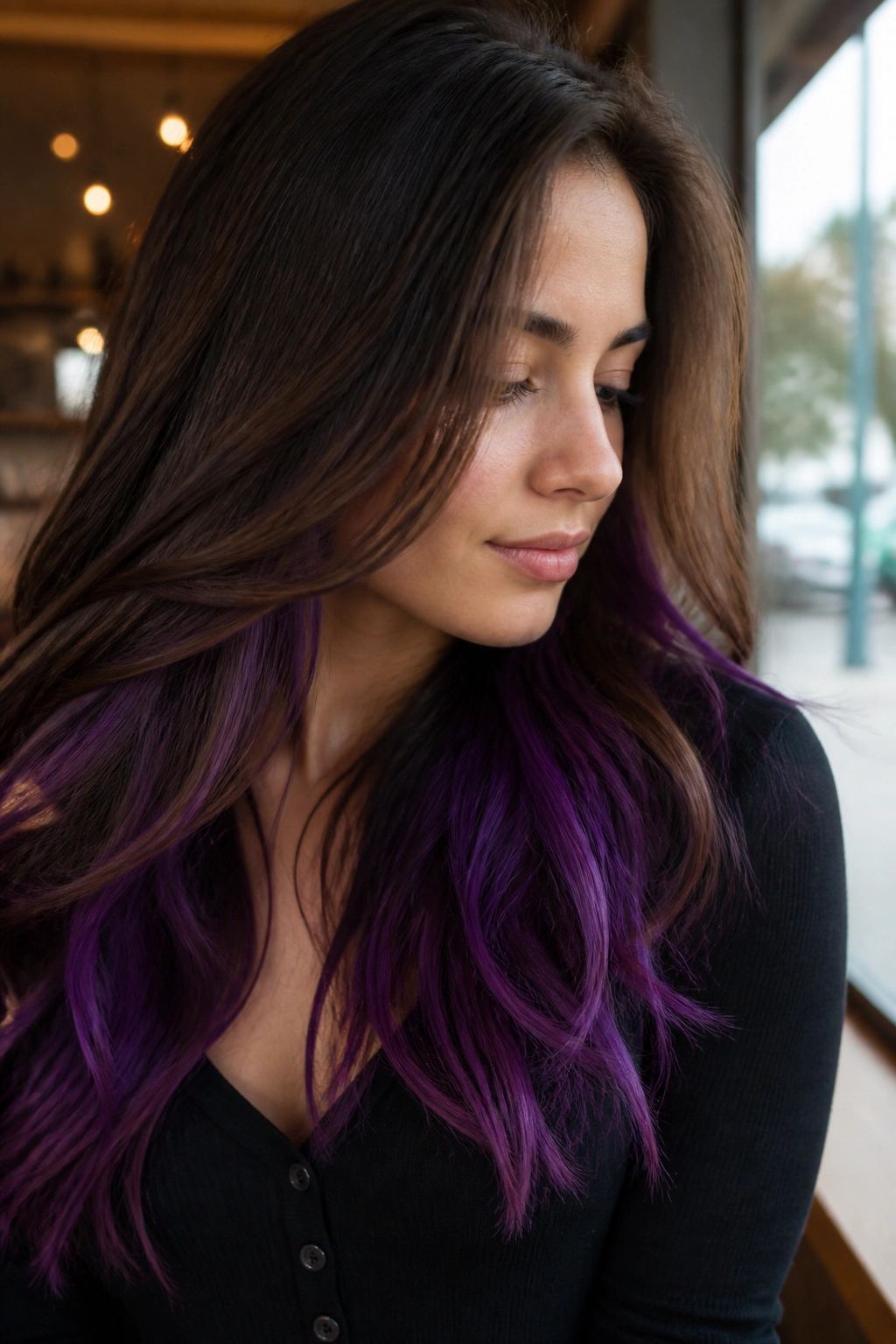
Peekaboo color is one of those ideas that sounds playful until you see how practical it is. With long hair, violet hidden underneath the top layer gives you privacy when you want it and a little flash when you curl, braid, or tuck the hair behind one ear.
This works best if you keep the top layer close to your natural shade. The violet underneath becomes a surprise, not the main event. It’s especially good for people who want color at the office or in a dressier setting but don’t want the whole head screaming for attention.
A one-inch curling iron will show off the hidden panels better than straight hair ever will. And yes, the underside needs toner too. People forget that part and then wonder why the peekaboo section fades first.
9. Silver to Purple Pastel Fade
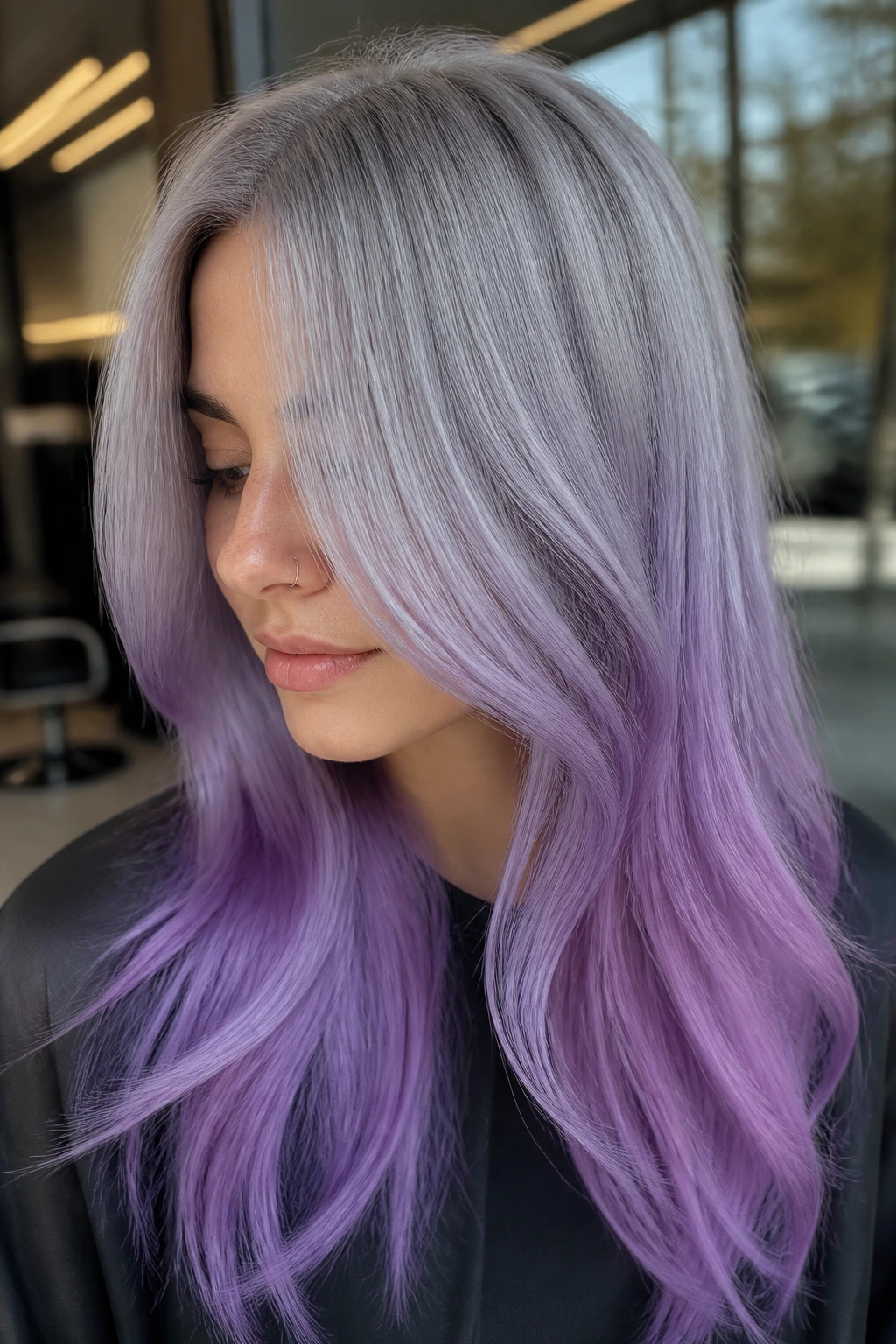
Silver into pastel purple has a frosted look that suits long, layered hair beautifully. The silver starts the story, then the purple blooms at the mid-lengths and ends. It feels cool, glossy, and a little expensive in the way well-kept light colors often do.
The fade depends on clean pre-lightening. If the blonde isn’t even, the silver can pick up yellow patches and the purple can turn patchy. Long hair gives the colorist space to correct that with a gentle transition, but the starting canvas still matters.
This is a high-maintenance choice. No way around it. Pale silver and pastel purple fade faster than deeper shades, so if you love a low-maintenance routine, this probably isn’t the one.
10. Merlot Roots into Orchid Ends
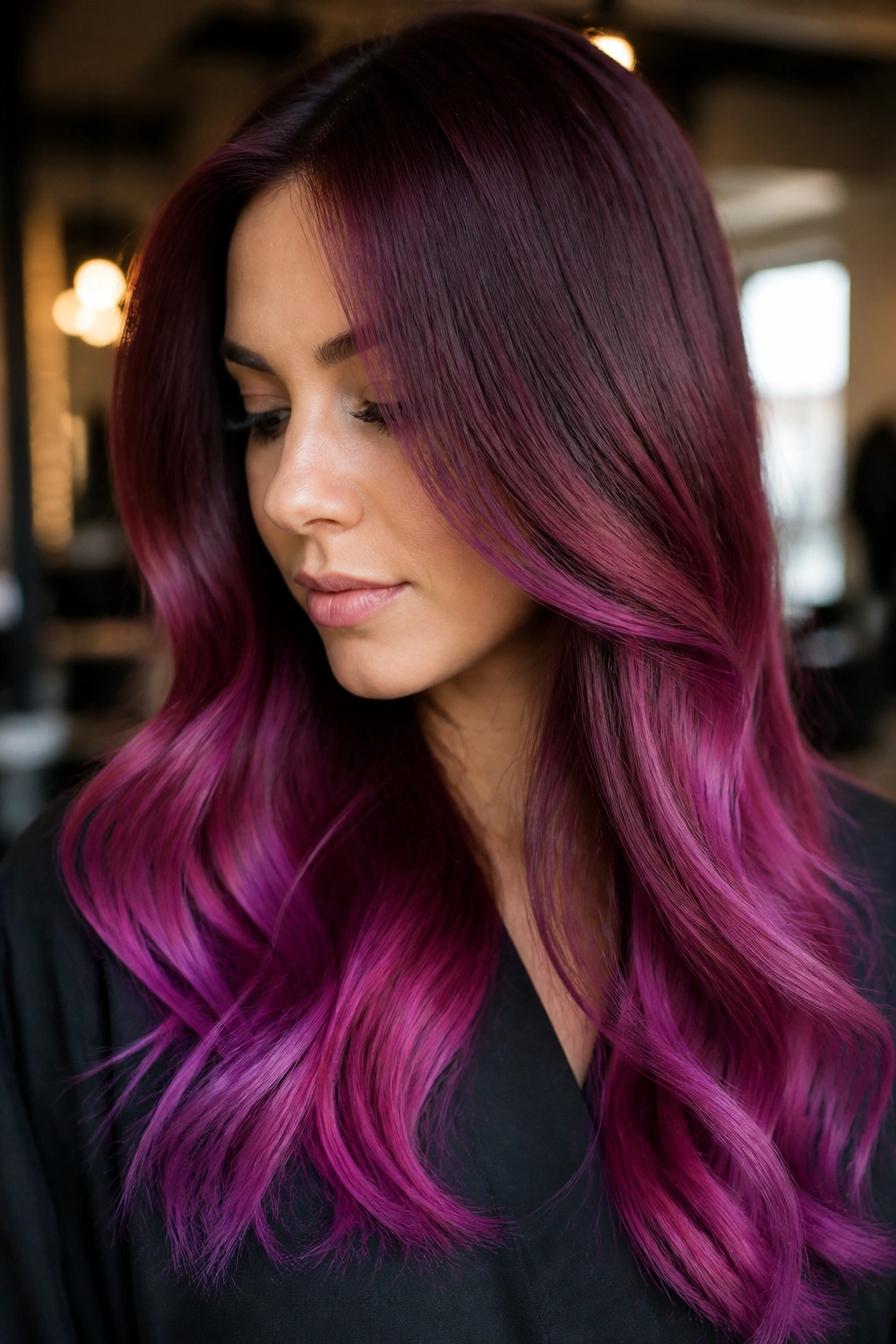
Merlot roots give you that dark, plush opening, and orchid ends bring the color into a brighter lane. Together they make a purple ombre that feels elegant without drifting into sweetness. On long hair, the transition has enough length to move from wine-dark depth into a cleaner floral purple.
I like this version on thick hair because the richer top section keeps the roots from disappearing. The orchid finish at the bottom adds lift, especially if the hair is layered or curled away from the face. The contrast isn’t harsh. It’s more like a slow exhale.
A shine serum on the last 4 to 6 inches helps here. Orchid shades can look a little dry if the ends are thirsty, and long hair shows dryness faster than shorter cuts do.
11. Reverse Ombre with Purple at the Crown
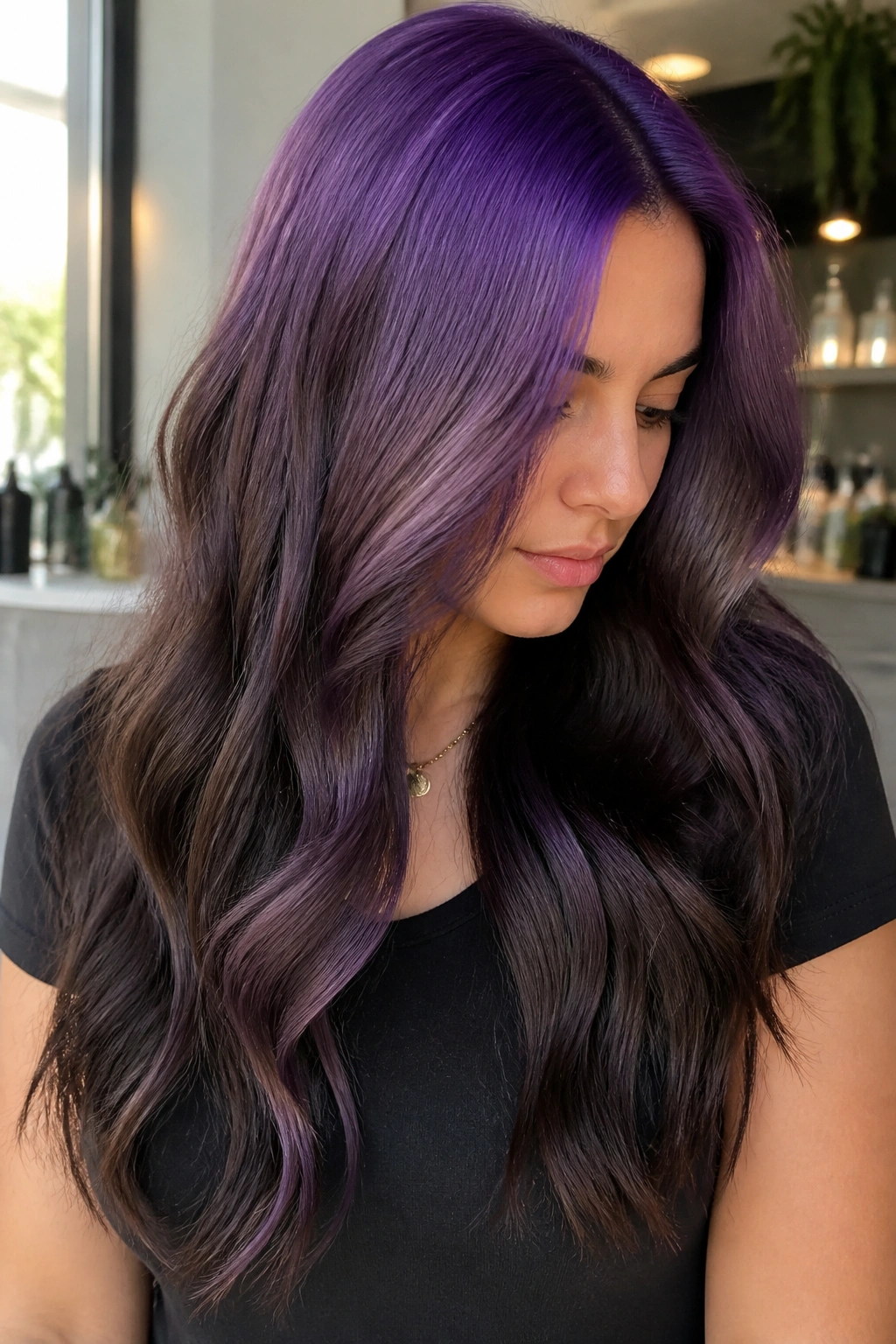
Reverse ombre flips the usual setup and makes the purple start at the roots, then soften into a darker or neutral lower half. On long hair, that reversal can look bold without feeling messy because the length keeps the gradient from becoming abrupt. It’s a smart pick if you’re bored with the same old dark-to-light fade.
The best version keeps the root purple dimensional. Think violet mixed with plum or smoky berry, not one flat cartoon shade. Then let the color drift into a softer, darker tail. That way the top stays interesting and the ends don’t fight the eye.
It’s a statement look, no question. If you like wearing your hair in high ponytails, this one shows off the root color even more, which is half the fun.
12. Split Tone Purple and Black Melt
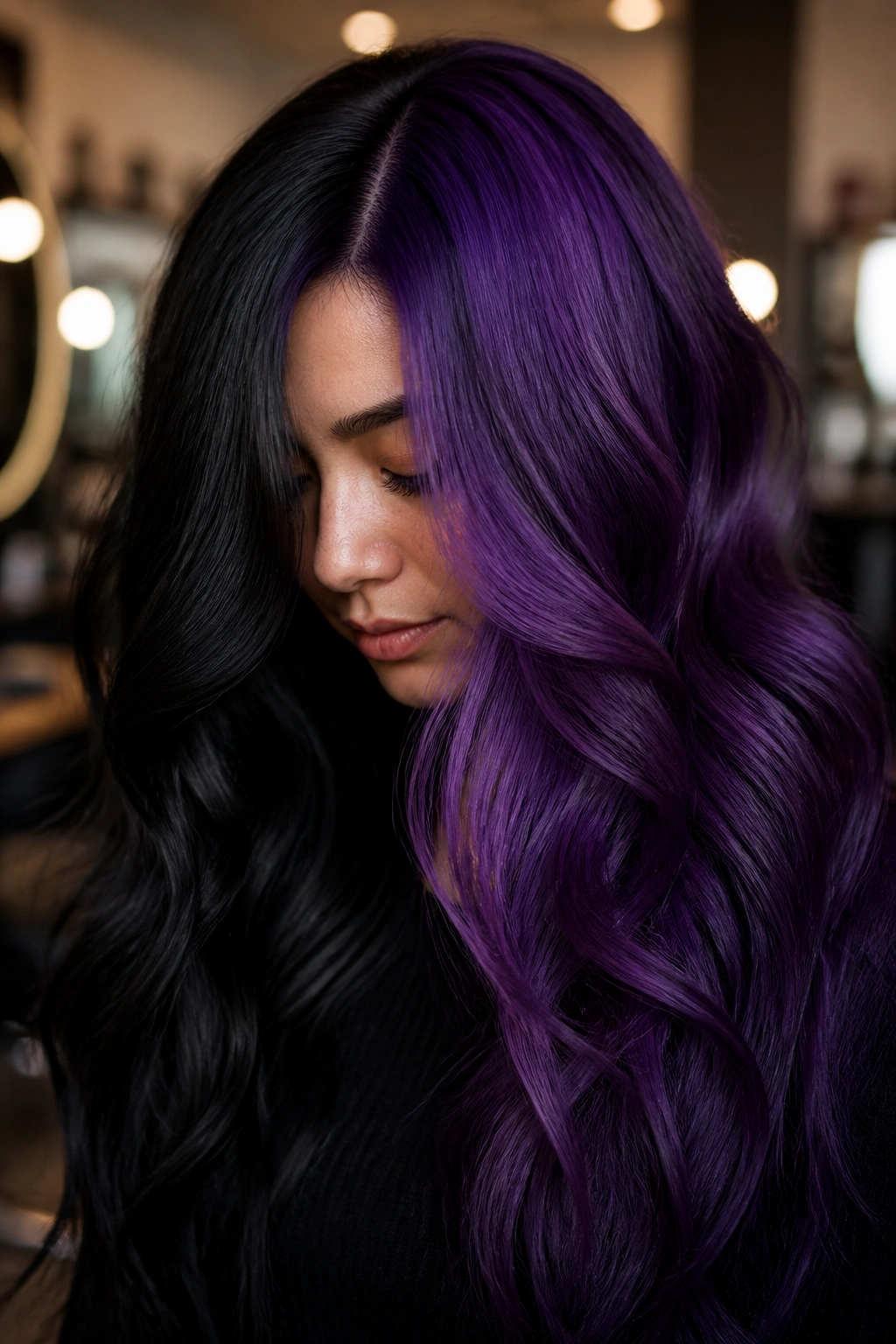
Split tone sounds aggressive, but on long hair it can be refined. One side of the head or one panel can lean black while the other shifts into purple, with the tones blending through the back or underlayers. It’s a good choice for someone who likes edge but still wants something wearable.
The trick is keeping the transition soft enough that it reads as melt, not as separate blocks. Long hair gives you the length to hide the blending zone in waves or curls. If you wear it sleek, the contrast gets sharper. That can be a plus if you want drama.
This style suits layered cuts better than blunt cuts, in my opinion. The layers help the two tones talk to each other instead of sitting there like strangers.
13. Dimensional Plum with Face-Framing Pieces
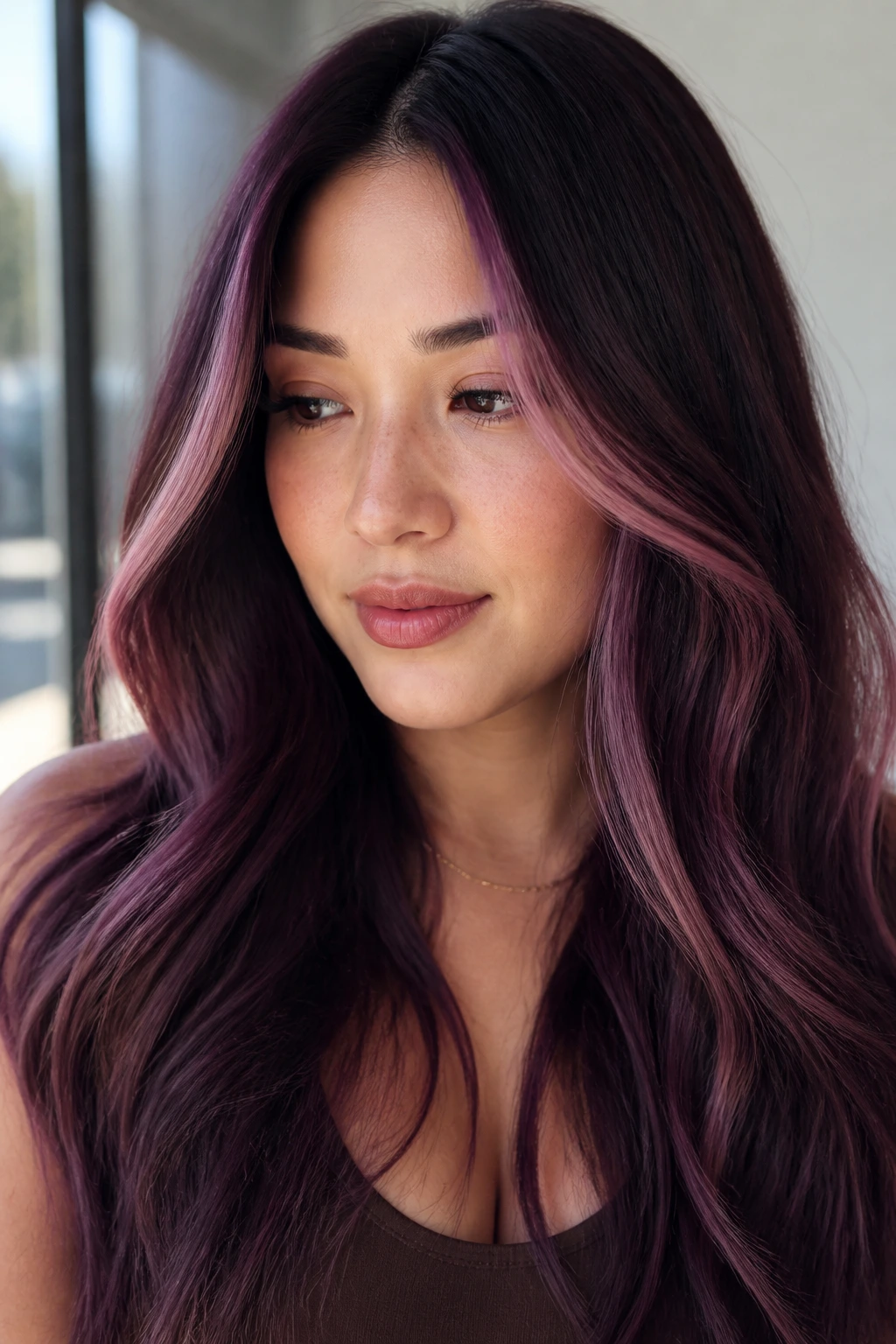
Face-framing pieces can save a purple ombre from looking too heavy. If the rest of the hair sits in plum and violet tones, a few brighter strands around the cheekbones pull the color upward and keep long lengths from dragging the face down.
Why It Stands Out
This look gives you movement where people actually notice it first. The front pieces catch the eye, and the darker back keeps the style grounded.
It’s a good answer for anyone who wants purple but fears looking washed out. You can control the brightness around the face without blasting the whole head with vivid dye.
Ask for the front panels to start brighter about 2 to 4 inches below the roots. That keeps the color soft near the scalp and lets the ombre keep its shape.
14. Ash Brown into Mauve Lengths
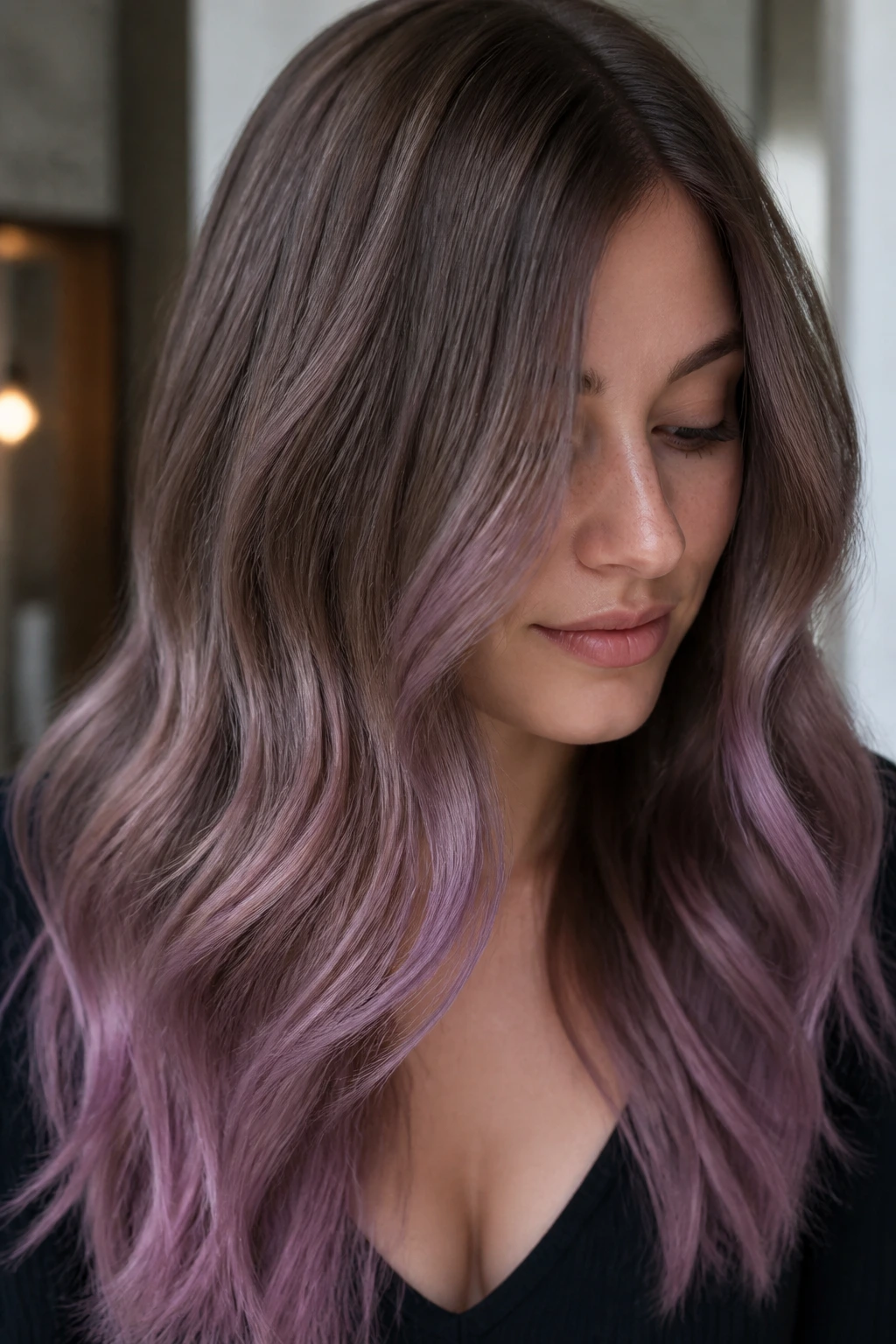
Ash brown is a helpful starting point because it cools the whole color story down. When it fades into mauve, the result feels muted, dusty, and easy on the eyes. Long hair suits this especially well because the mauve gets space to soften across the ends instead of arriving all at once.
Mauve is one of those shades that changes depending on the light. Sometimes it looks pinker, sometimes more lavender. That little shift is part of the appeal. On long, straight hair, it can look polished. On waves, it turns more romantic.
If you want purple but hate the idea of looking bright, this one is worth a serious look. It’s quiet in a good way.
15. Bright Ultraviolet on Long Layers
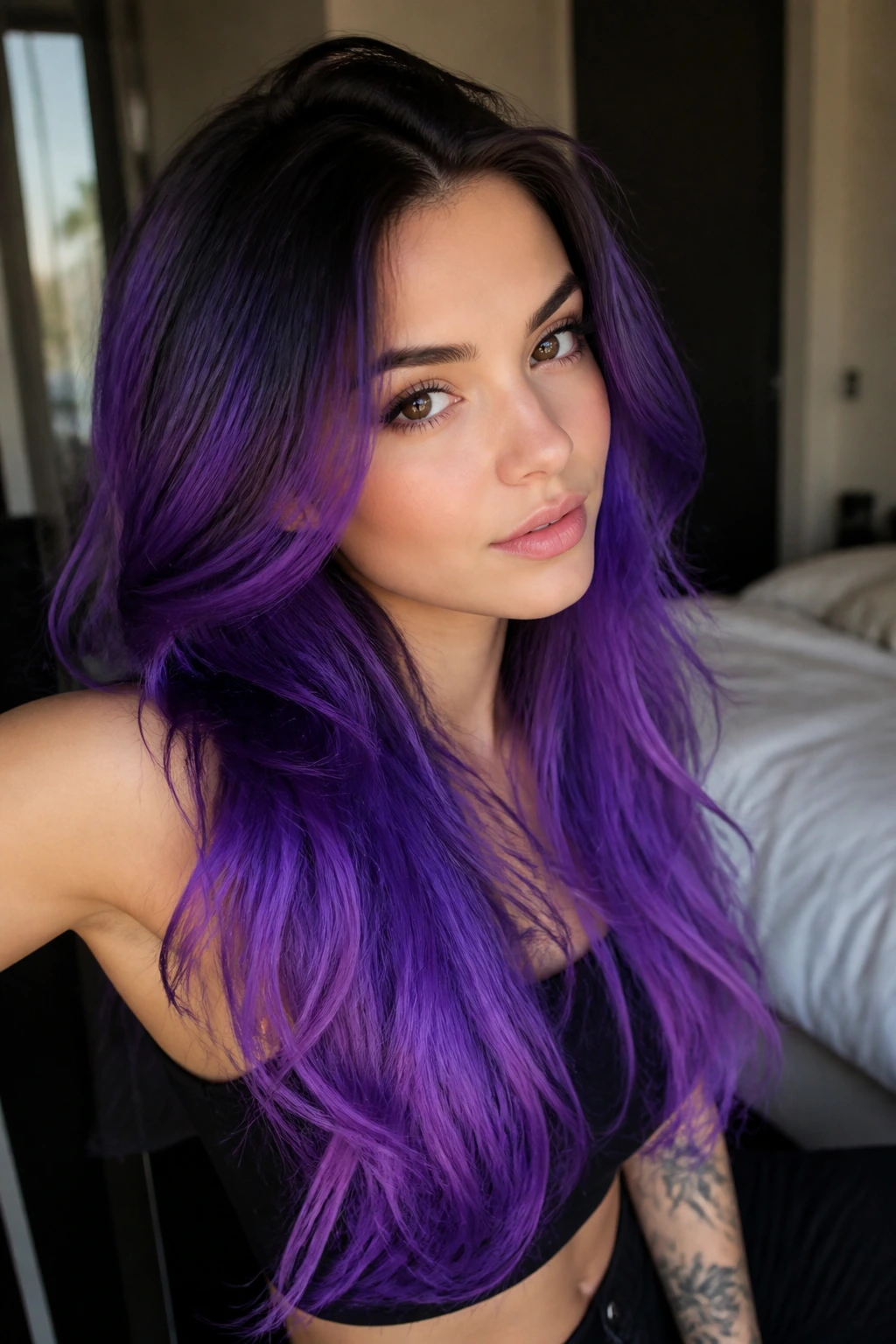
This is the loud one. Ultraviolet ombre is vivid, electric, and meant to be seen. Long layers help because they break up the intensity and keep the color from reading like a solid block. The transition from darker roots into neon-leaning violet can look sharp or soft depending on how the fade is painted.
It works best on pre-lightened ends, obviously, and I’d keep the root area darker for contrast. That makes the ultraviolet sing instead of floating without anchor. If the color is done well, the ends almost glow.
It’s not a low-maintenance choice. Pigment-rich purples fade, and bright ones can shift quickly if you wash too often with hot water. Use lukewarm water, or don’t be surprised when the color slides faster than you wanted.
16. Grape Soda Gradient with Loose Curls
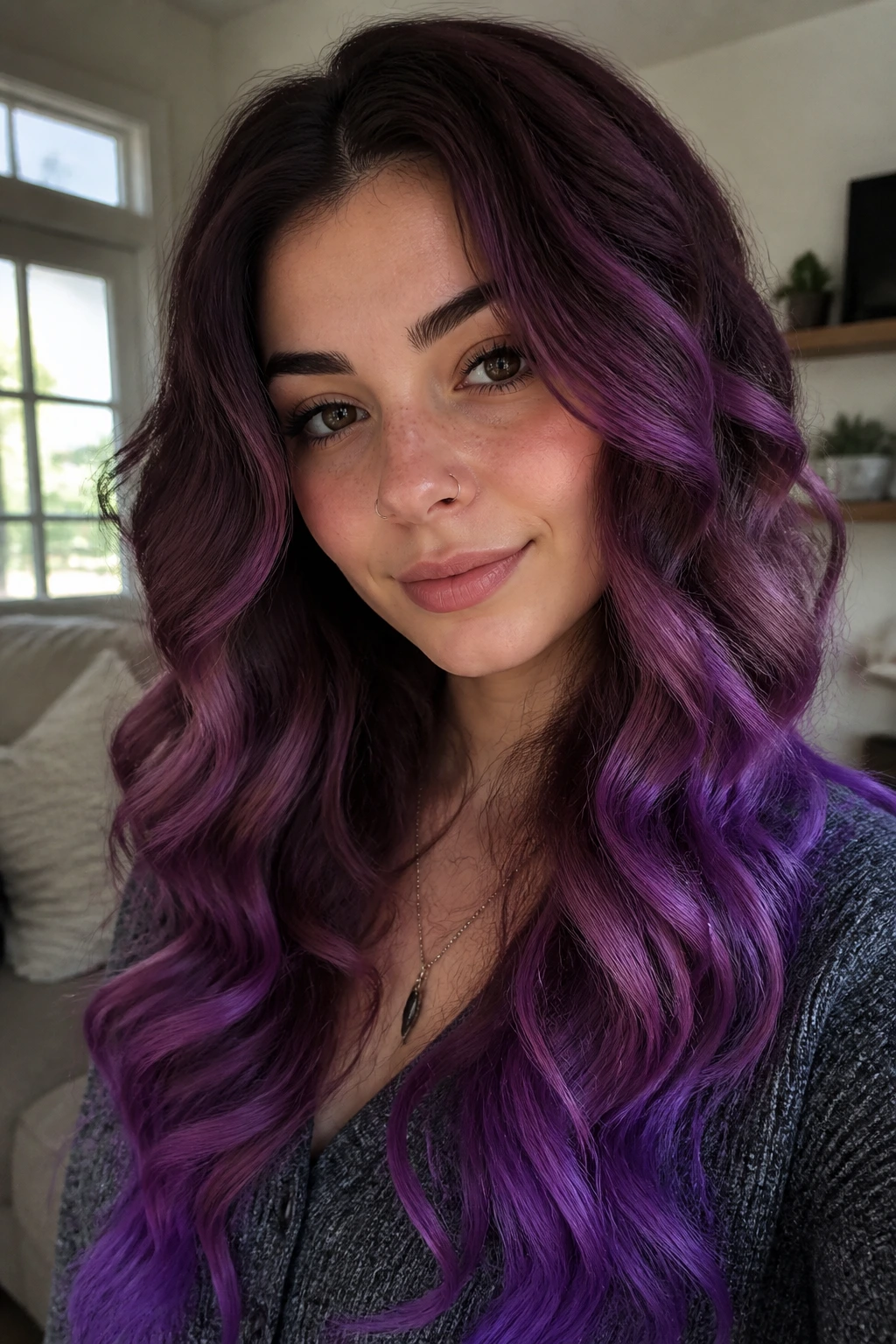
Grape soda purple has a sweeter, juicier feel than plum or eggplant. On long curls, the color bounces between berry-purple and brighter violet, which gives it a playful shine. The loose curl pattern matters because it lets each bend show a different part of the gradient.
The best thing about this look is how forgiving it is. A perfectly even fade is less important than the overall feel, and curls hide tiny differences in tone that would be obvious on pin-straight hair. If you like a softer, more feminine finish, this one lands in a nice spot.
A large-barrel curling iron, around 1.25 to 1.5 inches, works well. Smaller curls can make the color look busier than it needs to be.
17. Mushroom Brown to Smoky Purple
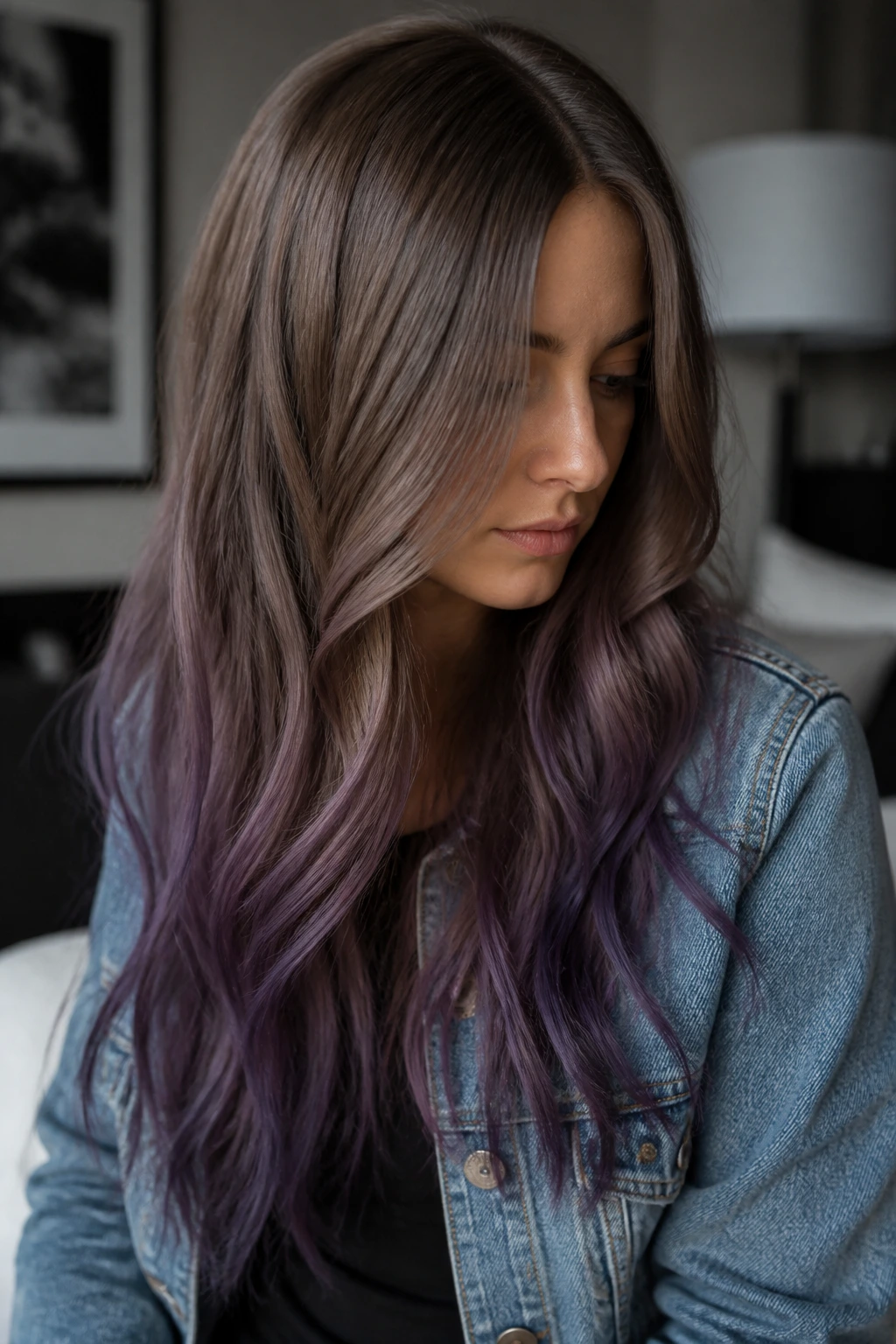
Mushroom brown has that cool taupe quality that makes purple feel modern instead of sweet. When it fades into smoky purple, the whole style gets earthy, grounded, and a little moody. Long hair keeps the combo from feeling too heavy because the ombre stretches the transition out over real distance.
This shade is a smart choice if you live in cooler neutrals and want your hair to sit in that same family. It pairs well with ash, charcoal, cream, and denim, which sounds minor until you notice how often those colors show up in everyday wardrobes.
It also grows out well. Not every vivid color does.
18. Rose-Purple Ombre
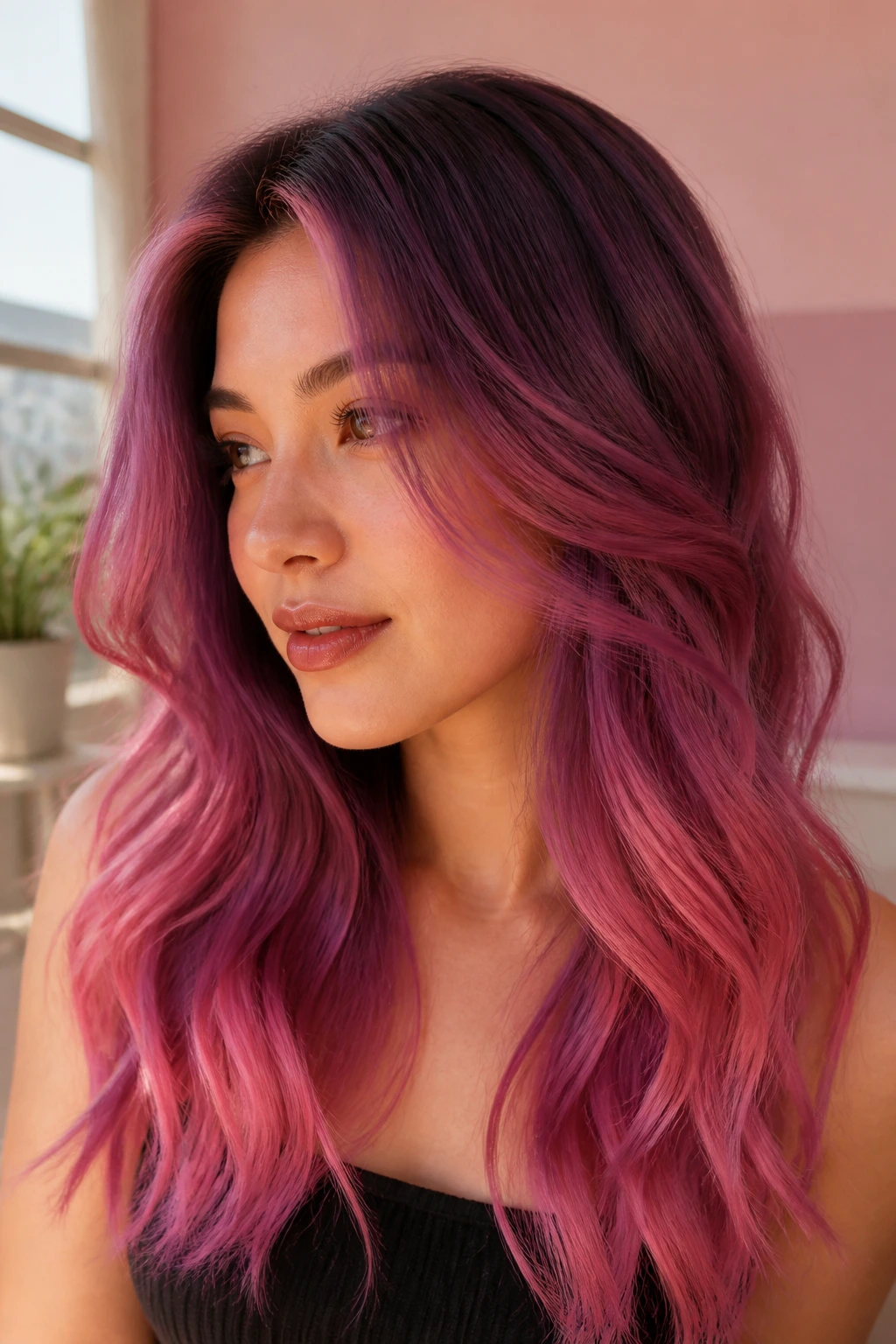
Rose-purple sits between pink and violet, and that middle ground gives long hair a soft glow. The top can stay deeper mauve or berry, while the ends lean more rose with just enough purple to keep the whole thing from reading as pink-only. That balance is the whole trick.
What to Watch For
- Too much pink can make the color look sugary.
- Too much purple can flatten the rose tone.
- A gloss every few weeks keeps the blend from turning dusty.
- Wavy styling helps the color shift instead of sitting in one place.
This is a strong pick if you want something pretty without going full fantasy shade. It’s approachable, which I know sounds like a boring word, but in hair color terms it usually means you’ll actually enjoy wearing it.
19. Electric Purple Dip-Dye
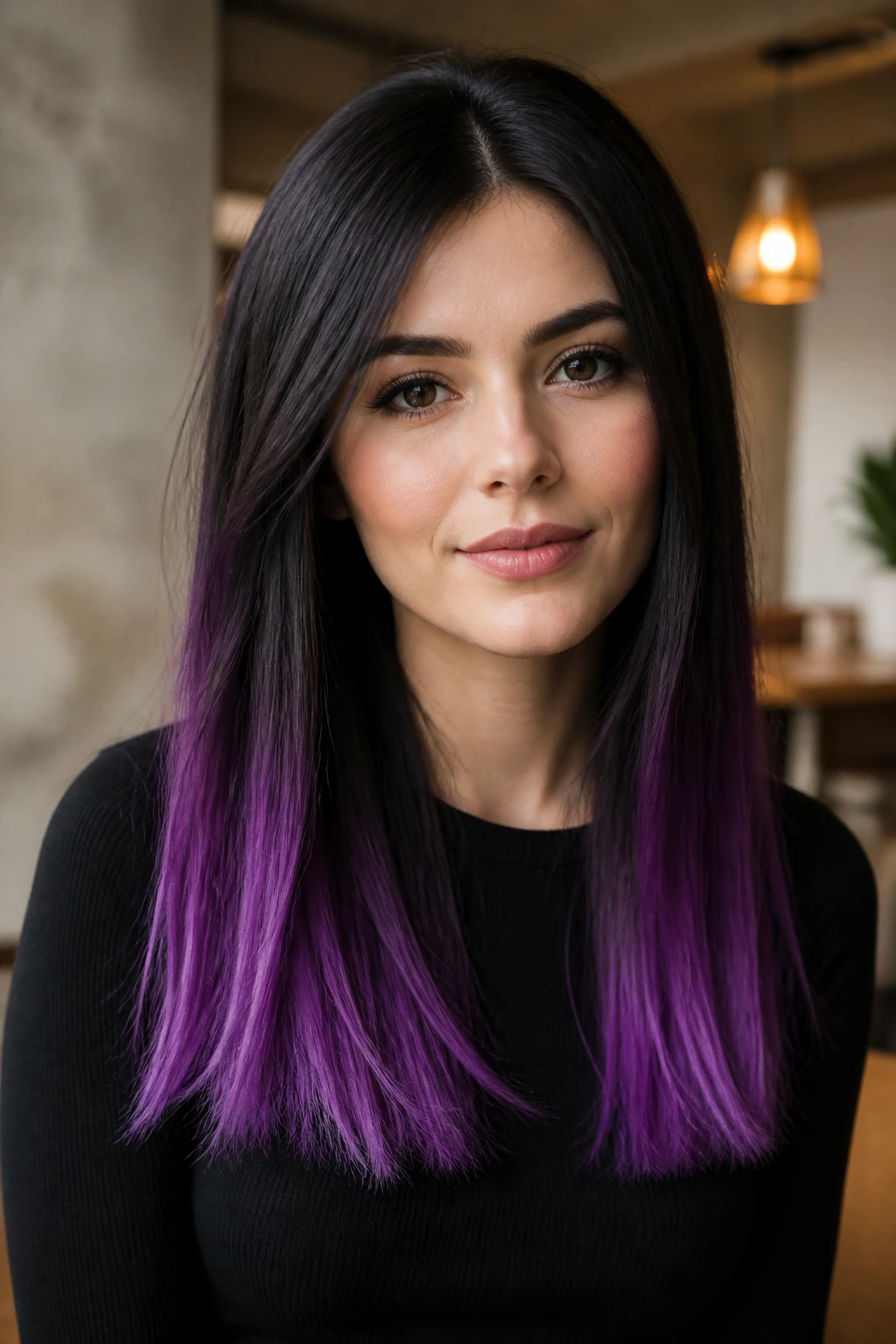
Dip-dye is less about subtlety and more about attitude. Long hair gives the electric purple enough surface area to show off, especially when the dye starts below the mid-lengths and takes over the last 8 to 12 inches. The contrast against a dark or neutral base can be sharp in the best way.
The look is cleaner when the line is intentional. A soft fade near the transition keeps it from looking like the color just stopped halfway through the job. I’d avoid this if your ends are already rough, because vivid dip-dye makes dryness obvious fast.
If you wear your hair in braids, the purple ends will pop even more. Same with a half-up style. Plenty of people like this look because it’s bold without asking for a full-head commitment.
20. Soft Violet on Natural Blonde
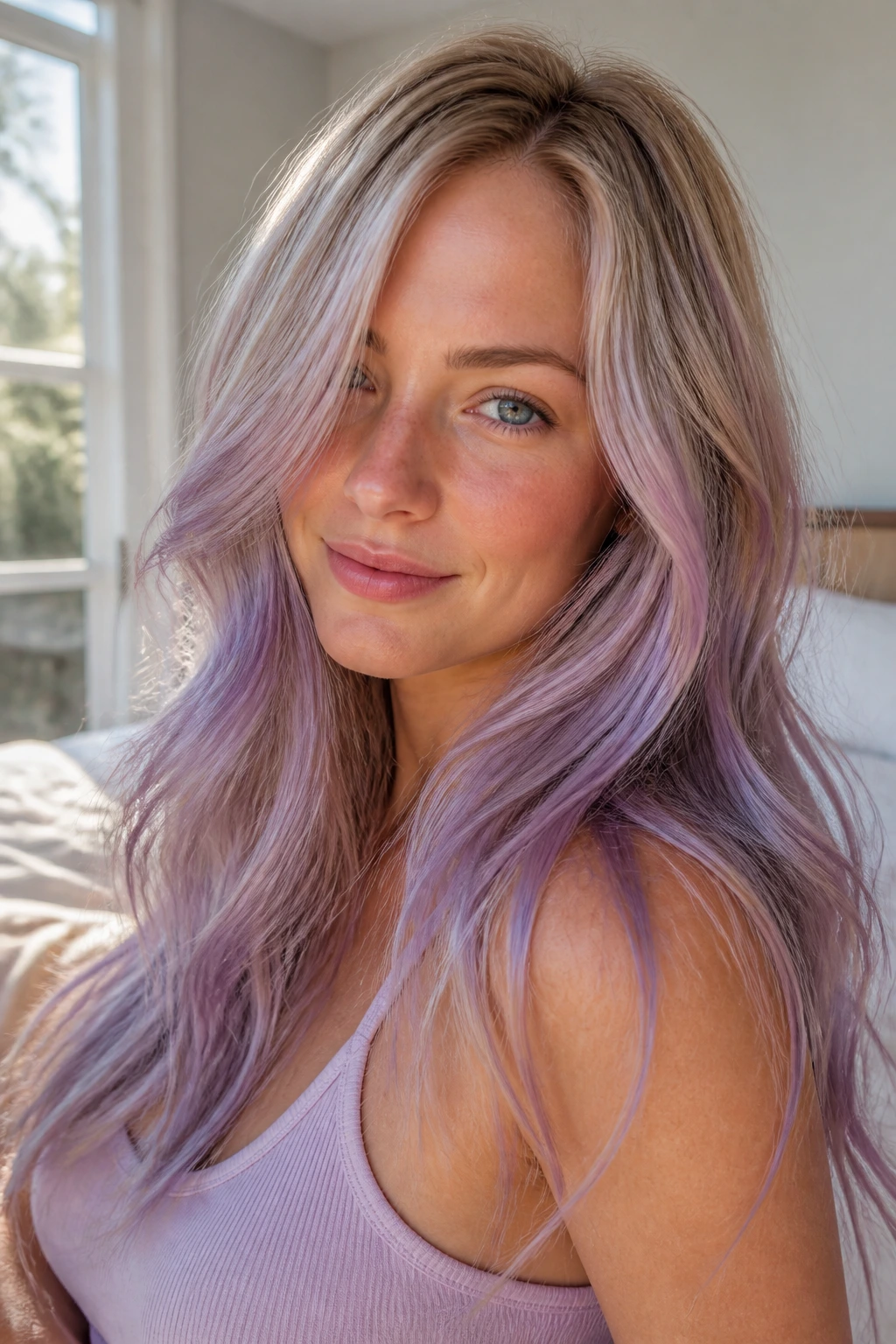
Natural blonde hair and violet can be a lovely combination when the color stays soft and translucent. You don’t need the roots to do much here; the blonde base already gives you lightness. The purple can sit as an airy overlay at the lower half of the hair, which keeps long lengths from looking flat.
This works best when the violet is more sheer than opaque. Too much pigment and the blonde disappears. Too little and the color looks washed out. That middle space is where the good stuff happens.
The upkeep is gentler than with deeper fantasy shades, but toner still matters. Blonde shows every shift in tone, and long blonde hair tends to dry out at the ends, so moisture and pigment both matter here.
21. Galaxy Purple Ombre
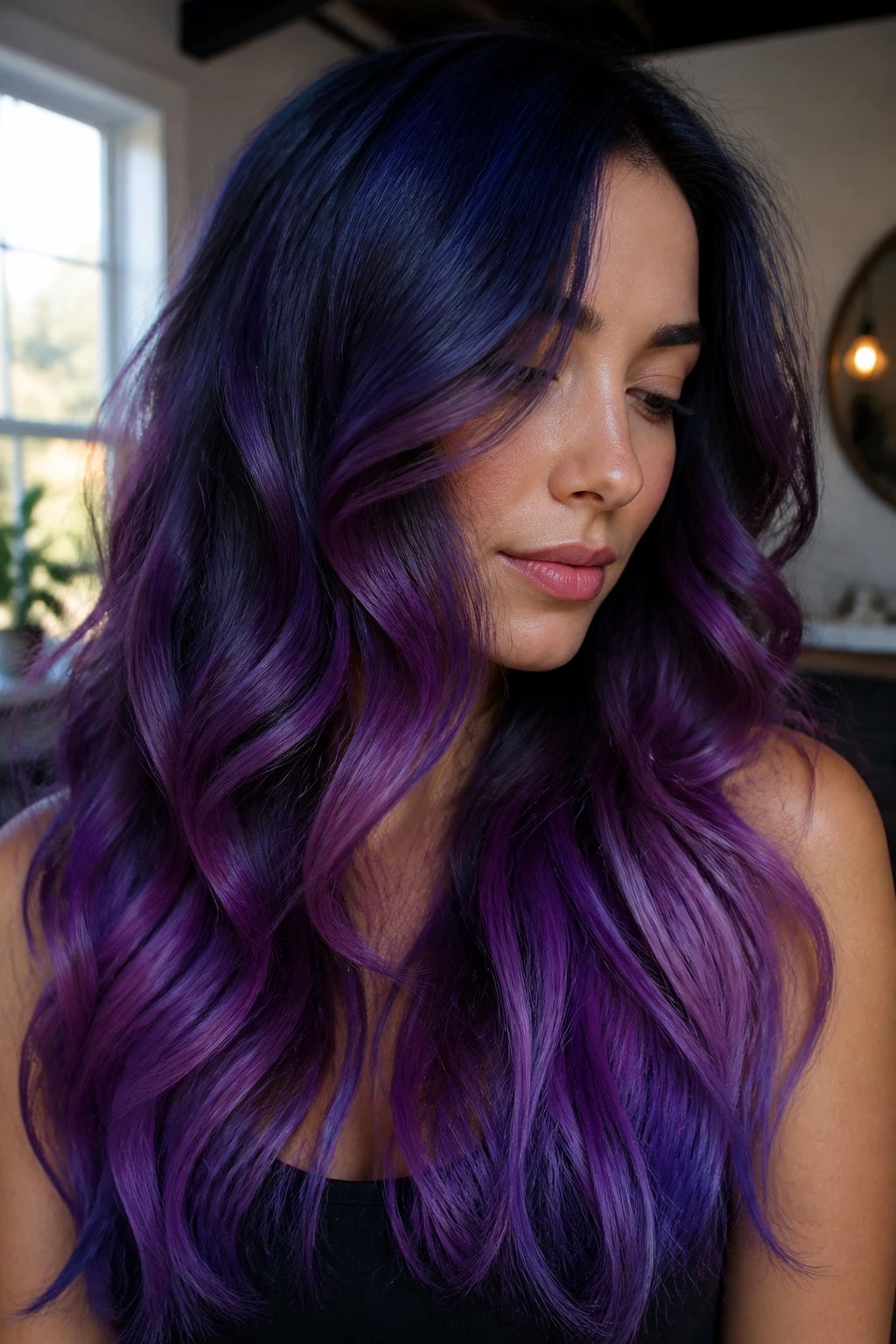
Galaxy hair is a little theatrical, and that’s fine. On long hair, purple can sit with navy, indigo, plum, and a streak of brighter violet so the whole style feels like moving color rather than one note. The ombre keeps the darker shades at the top and lets the brighter tones emerge lower down.
The main thing is dimension. A good galaxy look is never one flat purple. It has depth, and on long hair that depth can stretch beautifully through waves or loose curls. Straight styling gives it a sleeker, more dramatic finish.
The Science Behind It
You’re essentially stacking cool tones at different levels of lightness. The darker shades create shadow, while the brighter violet catches the eye at the edges.
That layered color story is what gives galaxy hair its staying power visually.
22. Berry Purple with a Gloss Finish
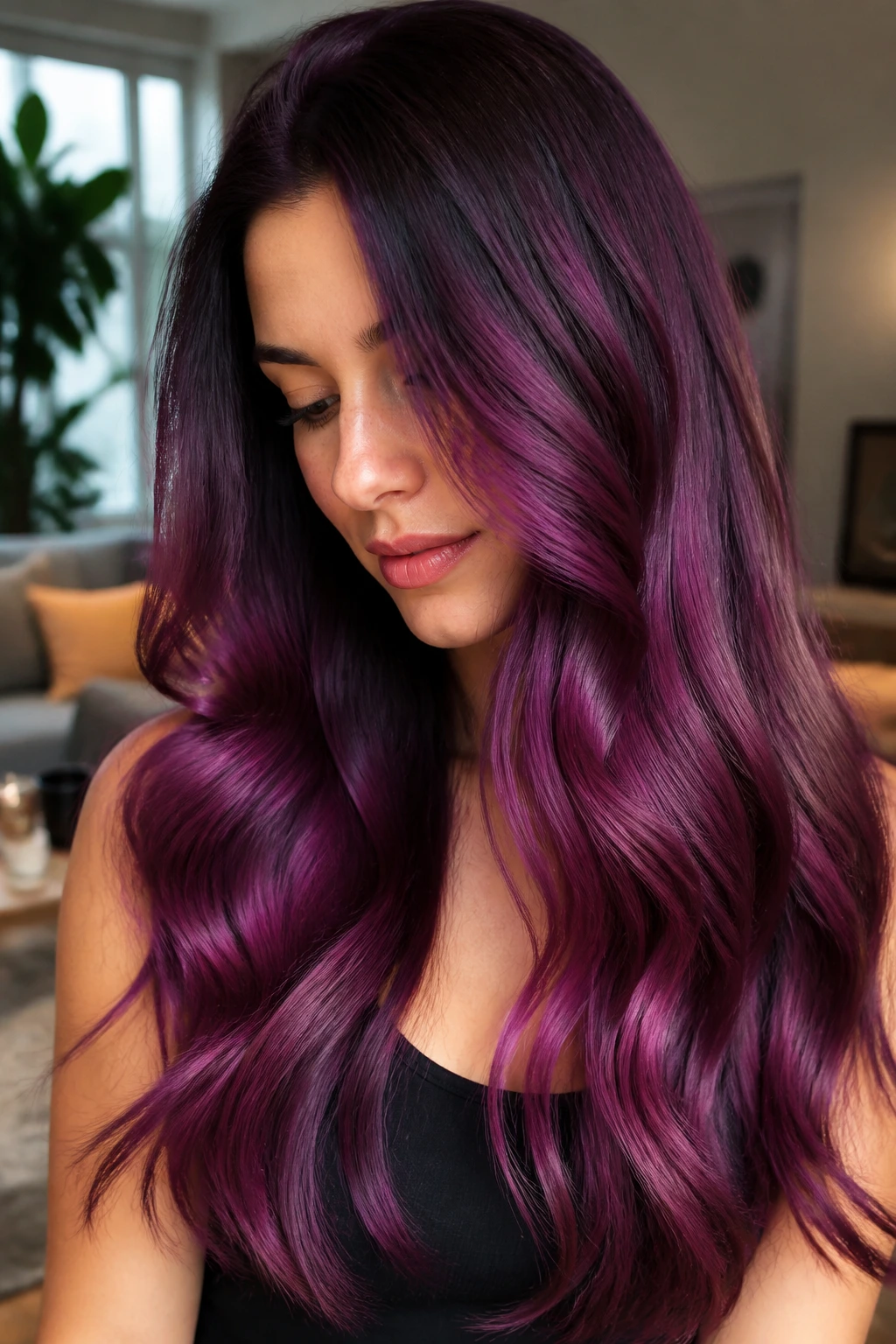
Berry purple sits in that juicy middle space between plum and magenta. With a gloss finish, it looks clean and polished instead of heavy. Long hair is a good match because the gloss can travel through the ends and give the style a reflective surface that catches light without screaming for it.
The gloss matters more than people think. Berry shades can go matte fast, and when they do, they start looking tired. A clear or lightly tinted gloss helps the color stay fresh and keeps the ends from looking porous.
This is one of the easier purple looks to wear daily because it has enough richness to feel finished, but not so much brightness that it takes over every outfit.
23. Periwinkle into Lavender Ends
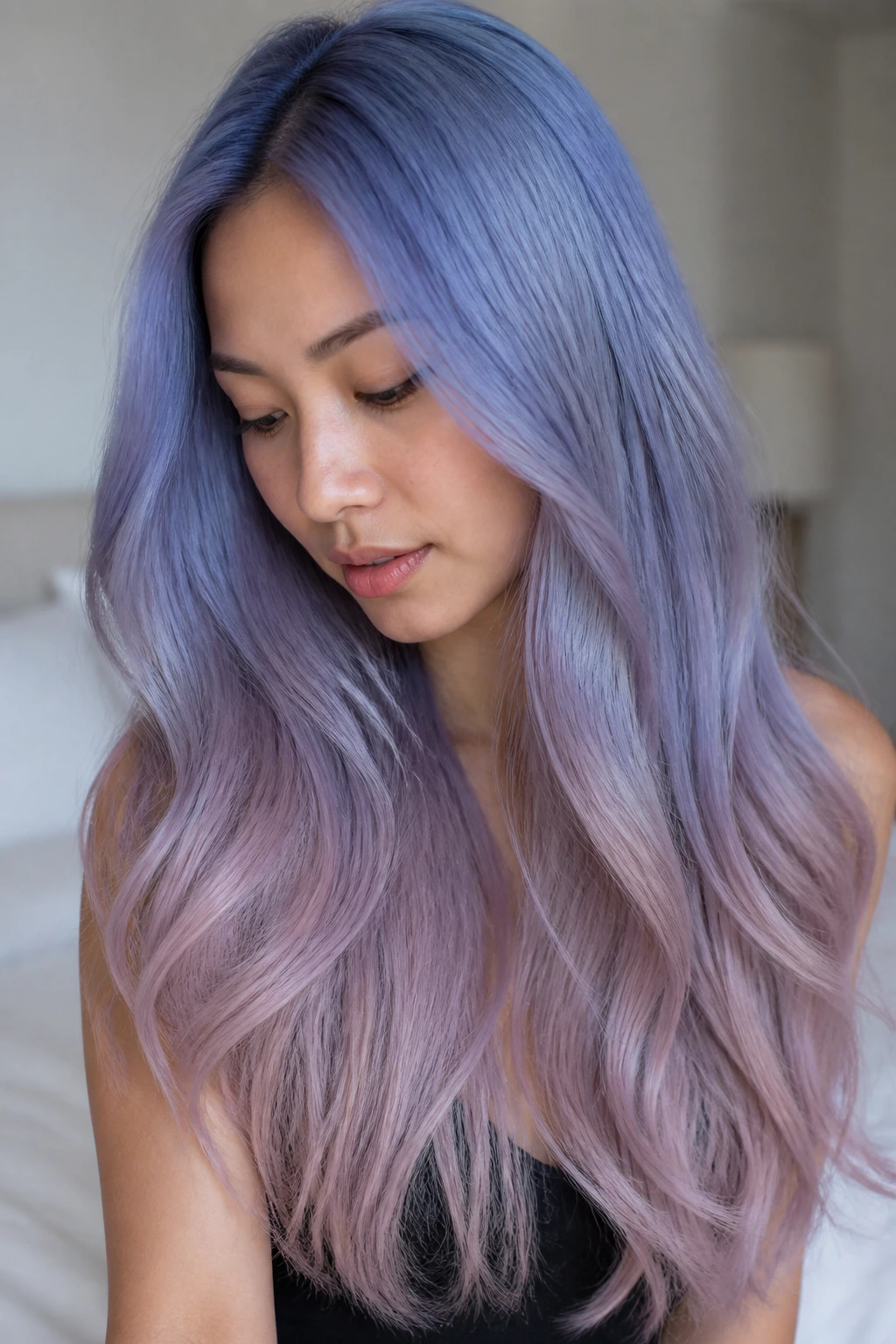
Periwinkle is the sweet spot between blue and purple, and when it fades into lavender on long hair, the result feels cool and airy. It’s a softer fantasy look, one that suits very light bases and long, fine-to-medium hair especially well.
The blue note in periwinkle keeps the color from drifting too pink. Lavender at the ends keeps it from feeling icy. Put them together and you get a color that changes in the light without becoming difficult to wear. That sounds small. It isn’t.
If the hair is layered, even better. The layers create tiny shifts in tone, which makes the gradient feel more alive.
24. Plum with a Purple Money Piece
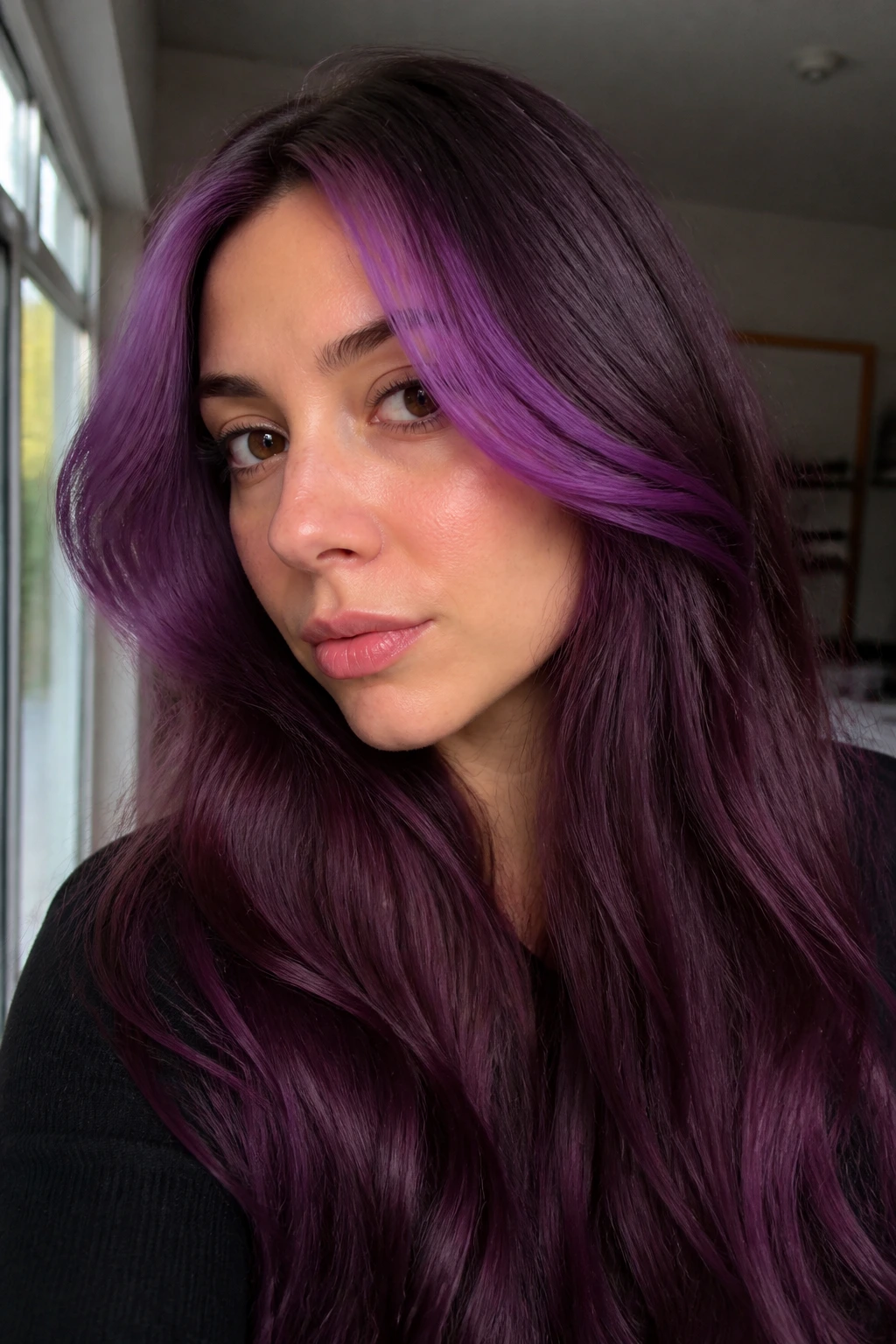
A money piece at the front can change the whole mood of a plum ombre. Instead of letting all the purple sit below the shoulders, you bring a brighter face-framing section forward and let the deeper plum fall through the rest of the length. That gives you contrast without forcing a full vivid look.
This is one of my favorite long-hair options because it’s practical. The front color is where people notice fading first, so if you want something that shows off the purple without demanding every inch of your hair be bright, this is a smart compromise.
Keep the money piece slightly lighter than the ends. If both are the same shade, the face-framing effect gets lost.
25. Soft Smoke Purple Ends
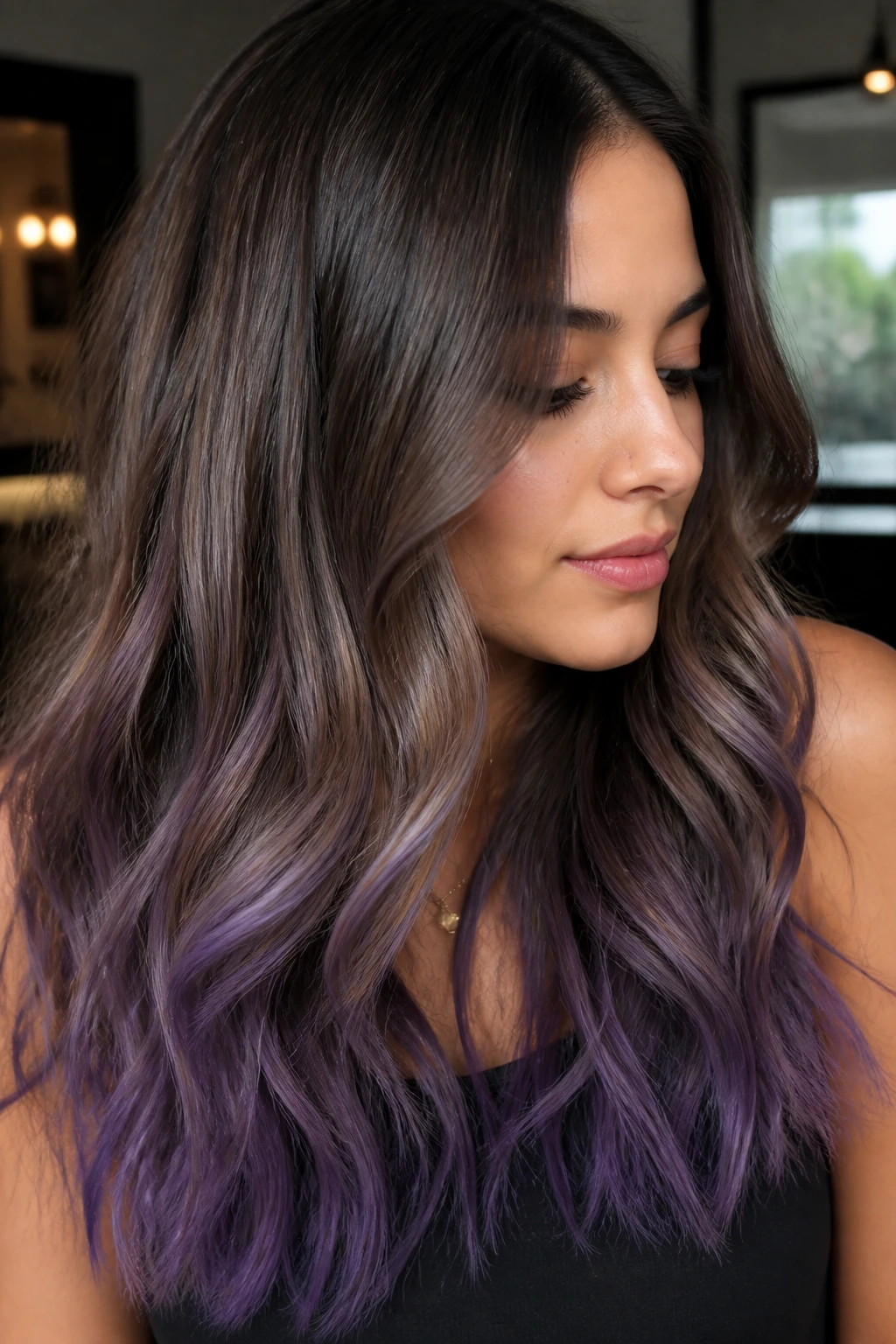
Soft smoke purple is the low-key finish that a lot of people end up loving more than the louder options. The roots stay neutral or dark, and the ends carry a smoky purple that feels lived-in instead of freshly dyed-in-a-hurry. On long hair, the fade has enough room to look intentional and relaxed at the same time.
This shade is especially kind to layered cuts and natural texture. Wavy hair gives the smoke purple movement, and curls make it feel almost hazy at the edges. If you’ve been nervous about purple because it sounds too bright, this is the entry point I’d point you toward first.
It also plays well with grow-out. That matters more than people admit. Long hair takes time to recolor, and a shade that still looks decent six weeks later is worth its weight in salon chairs.
