



Long hair gives red ombre hair room to breathe. The color can start low, creep through the mid-lengths, and turn into something richer at the ends instead of looking like one hard stripe. That space matters. On short hair, red can feel abrupt; on long hair, it can look layered, expensive, and a little moody in the best way.
Red is also unforgiving. It fades fast, it shows every rough blend, and it can slide orange or pink if the base tone is off. That is exactly why long hair works so well with it: the gradient gives the color somewhere to live, and the darker roots keep the whole thing grounded while the brighter ends do the talking.
Some versions lean soft and wearable. Others go loud and graphic. A few sit in that sweet spot where the hair looks like it has depth even when it’s tied back in a low ponytail. The 25 ideas below cover all of that, from cherry and copper to burgundy, mulberry, and fire-red ends that don’t apologize for themselves.
1. Espresso Roots to Cherry Red Ends
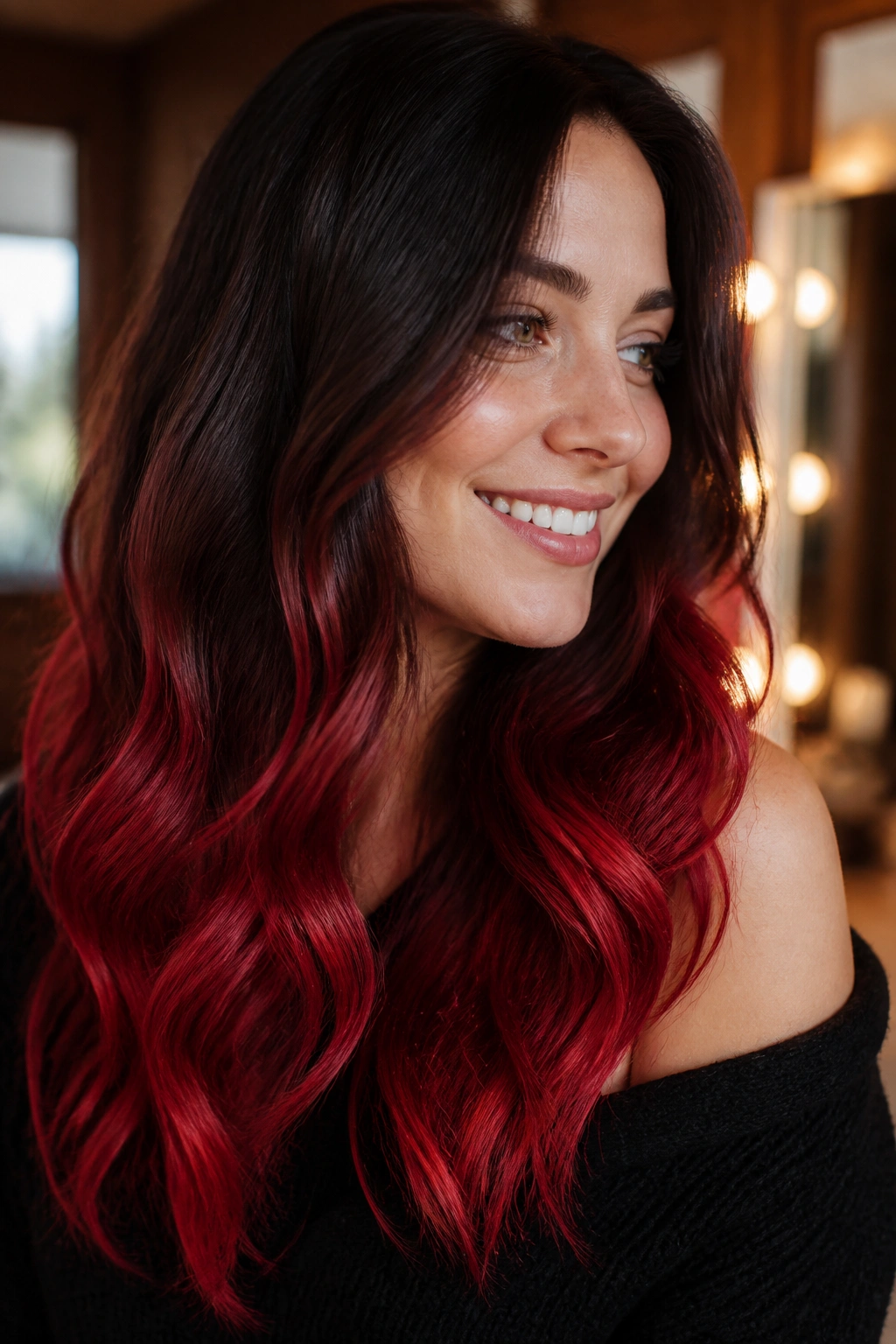
This is the red ombre I’d hand to someone who wants high contrast without losing polish. Espresso at the top keeps the base rich and dark, then cherry red takes over from the mid-lengths down so the color looks intentional instead of accidental. On long hair, that shift reads especially well in big waves, because each bend catches a different slice of red.
Why It Works on Long Hair
Cherry red needs room to show off. When it’s packed into a bob, the color can feel compressed; on long hair, it gets to spill out in a cleaner fade. The darker roots also make this easier to grow out, which matters if you do not want to live at the salon every four weeks.
- Best on thick or medium-density hair
- Looks strongest with loose curls or 1.25-inch barrel waves
- Ask for the red to start below the cheekbones if you want a softer shift
- A gloss every few weeks keeps the cherry tone from turning flat
My favorite detail: this shade looks even better when the ends are trimmed blunt, not wispy.
2. Dark Chocolate to Ruby Wine Waves
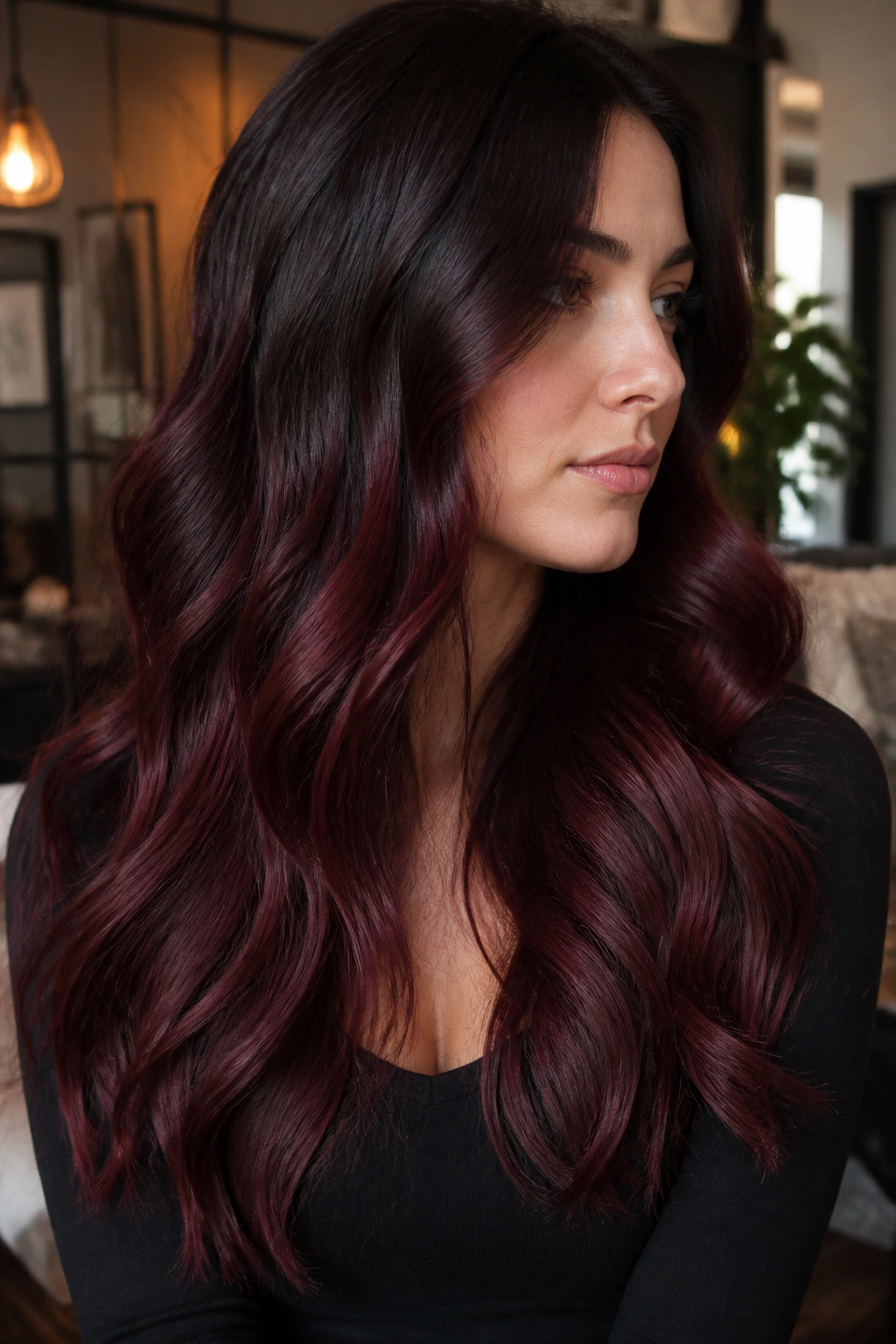
Ruby wine has a deep, polished look that sits somewhere between berry and red velvet. It’s a smart choice if you want red ombre hair ideas for long hair that feel rich rather than bright, because the finish stays moody even when the light hits it hard. The dark chocolate root keeps the palette calm, and the ruby section does the dramatic work without screaming for attention.
A lot of people think red has to be loud. Not true. Ruby wine proves the opposite. On long waves, the color looks layered and expensive in a very old-fashioned, almost velvet-draped way. It also plays nicely with medium brown brows and muted makeup, which is why I like it for people who wear a lot of black, cream, or deep green.
If you heat-style your hair often, this one is forgiving. The darker base hides a bit of fade, and the wine tone still reads red even after a few washes. Keep the finish glossy. Matte ruby can look dusty fast.
3. Jet Black to Scarlet Flame Ombre
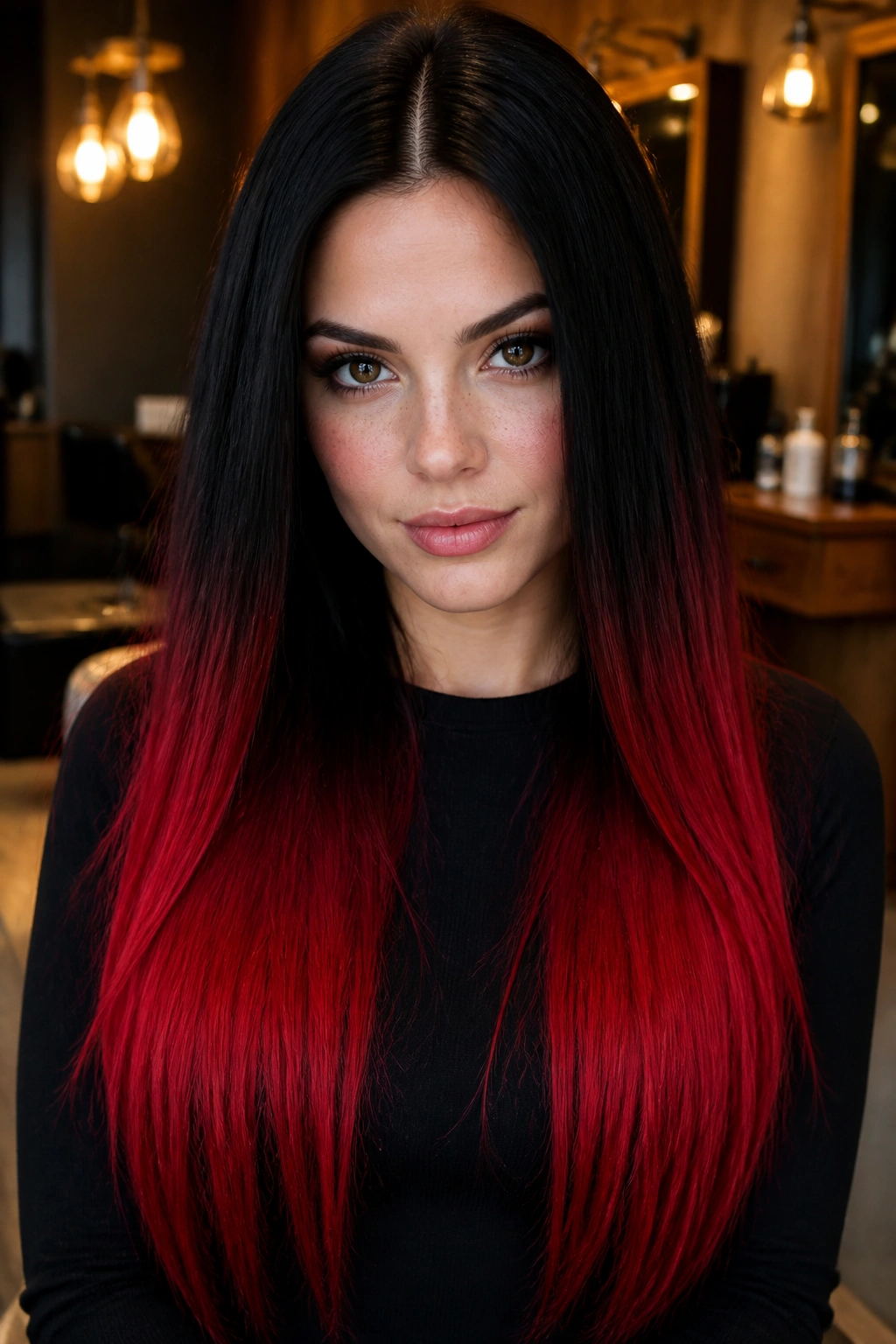
A jet-black root with scarlet ends is not shy, and that is the point. The contrast is sharp enough to read from across a room, which makes this a strong pick for long, straight hair or heavy layers that need a jolt of color. On a sleek blowout, the red looks like a ribbon. On curls, it turns into streaks of fire.
The trick here is placement. If the scarlet starts too high, the whole head can look crowded. If it starts lower, the black gets a real runway and the red hits harder where the eye lands. That spacing matters more than people think.
- Best if your hair is naturally dark or already dyed black
- Works well with straight styles and glossy waves
- Ask for a red that leans blue-red, not orange-red
- Use a color-safe shampoo or the scarlet will fade into copper faster than you want
Pro tip: this look needs shine. Flat hair makes it feel harsh.
4. Chestnut to Copper Red Melt
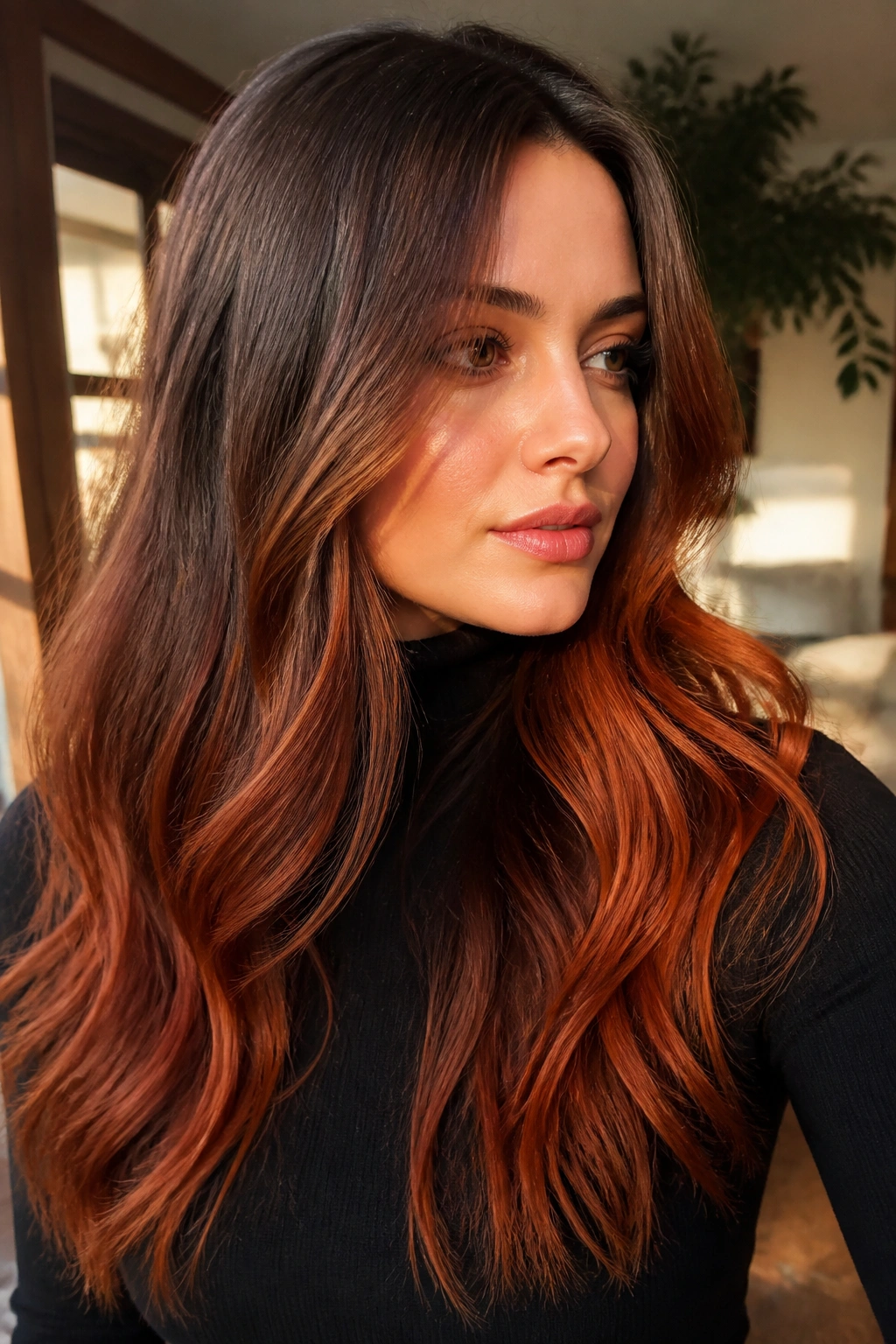
Chestnut into copper is the easy-going cousin of louder red ombre hair ideas. It keeps the whole thing warm, soft, and believable, which is why it works on long hair that already has layers or face-framing pieces. The copper sits in that sweet zone between orange and red, so it gives movement without making the hair look costume-y.
Unlike a high-contrast scarlet blend, this one is all about melt. The chestnut base should drift into copper gradually, almost like the color was warmed by sunlight over time. On long hair, that gradual shift keeps the ends from looking chopped off by color blocks.
What Makes It Different
Copper can read bright, but chestnut reins it in. The result is a red ombre that feels wearable at work and still interesting when the hair swings around your shoulders.
- Strong choice for warm undertones
- Looks good on layered cuts with soft ends
- Ask for a sheer copper glaze if you want less punch
- A round-brush blowout makes the blend look smoother
One thing I’d avoid: super frayed ends. They make copper look dry.
5. Mocha to Auburn Sunset Ends
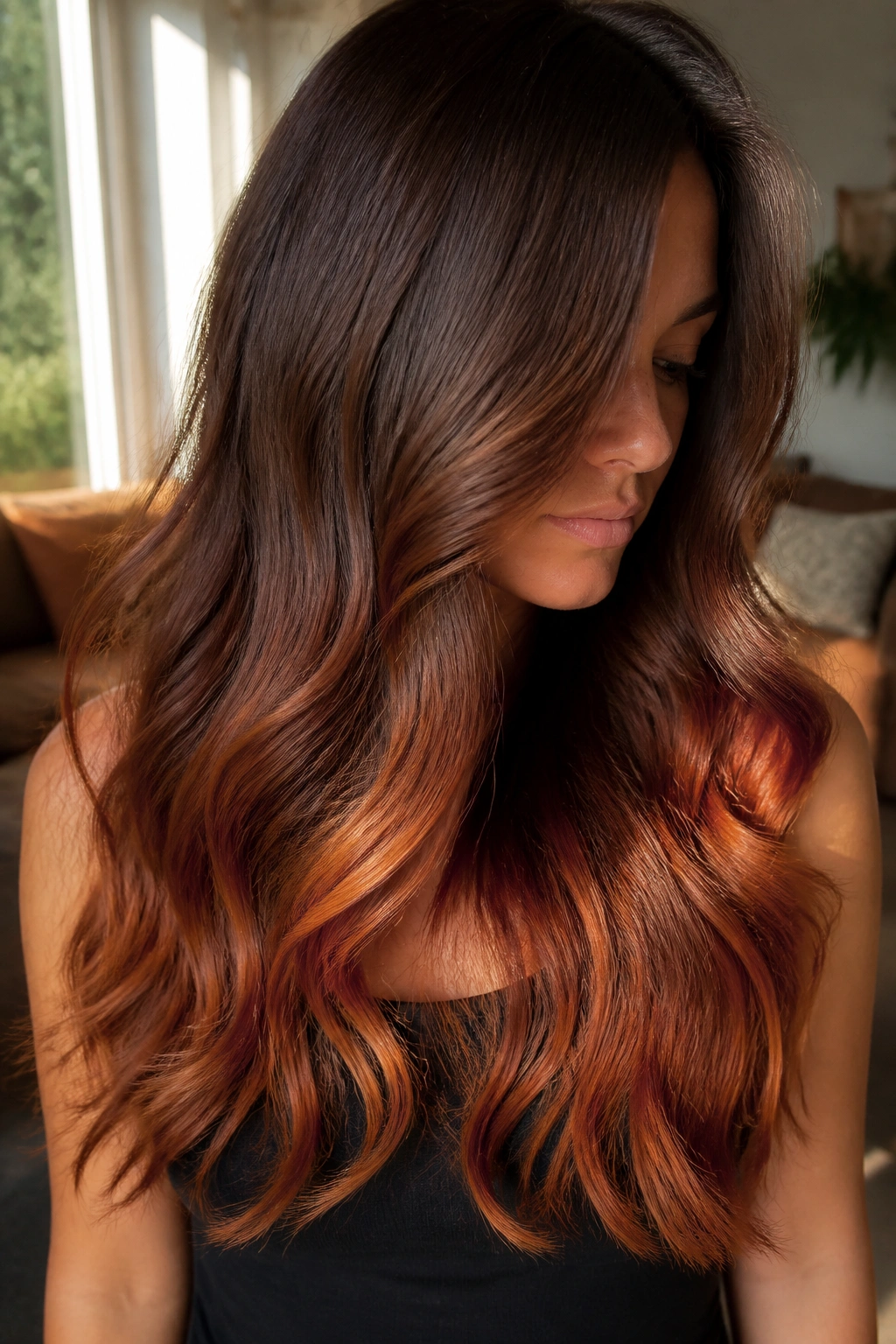
Mocha to auburn is one of those shades that looks calm at first glance and then keeps changing as the light shifts. That is the real charm. You get a brown base with enough warmth to keep the red ends from feeling disconnected, and the auburn brings a sunset tone that suits long hair without turning everything bright.
This works especially well on hair that has a soft bend to it. A little movement lets the auburn appear and disappear instead of sitting there like a flat block of color. If your hair is very straight, the gradient will look cleaner and more graphic; if it’s wavy, the whole thing feels softer and more dimensional.
I like this one for people who want red ombre hair ideas that do not require a wardrobe change. It slips into everyday life easily. Still red. Still warm. Just not screaming.
6. Mahogany to Rose Red Curls
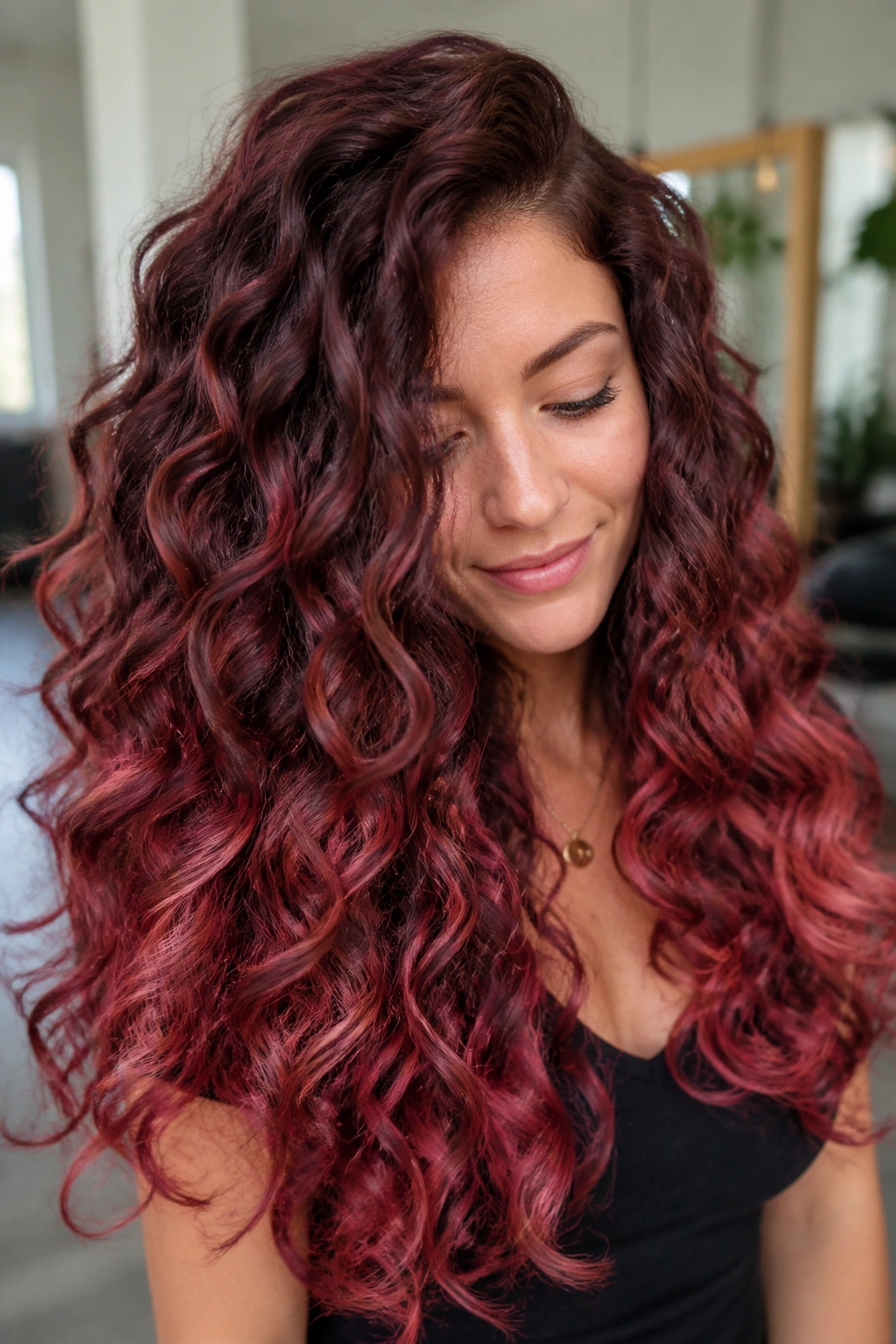
Why does rose red look better on curls than on poker-straight hair? Because curl patterns break the color up into tiny sections, and that makes the red look deeper than it is. Mahogany at the root gives the hair a wine-dark base, then rose red gets layered through the lower half so each curl catches its own version of the shade.
That small movement matters. On long curls, rose red can look soft one second and vivid the next. The color never sits still, which is exactly why it feels expensive rather than flat.
How to Wear It
If your curls are tight, ask for a more blended transition. If they’re loose, the red can start a little higher without feeling heavy. Either way, keep the finish hydrated, because rose tones show dryness fast.
- Best on defined curls and coils
- Ask for a semi-permanent rose red at the ends if you want less commitment
- Use a wide-tooth comb on wet hair so the curl pattern stays intact
- A light curl cream helps the red catch light in separated strands
7. Brown Balayage to Cranberry Ombre
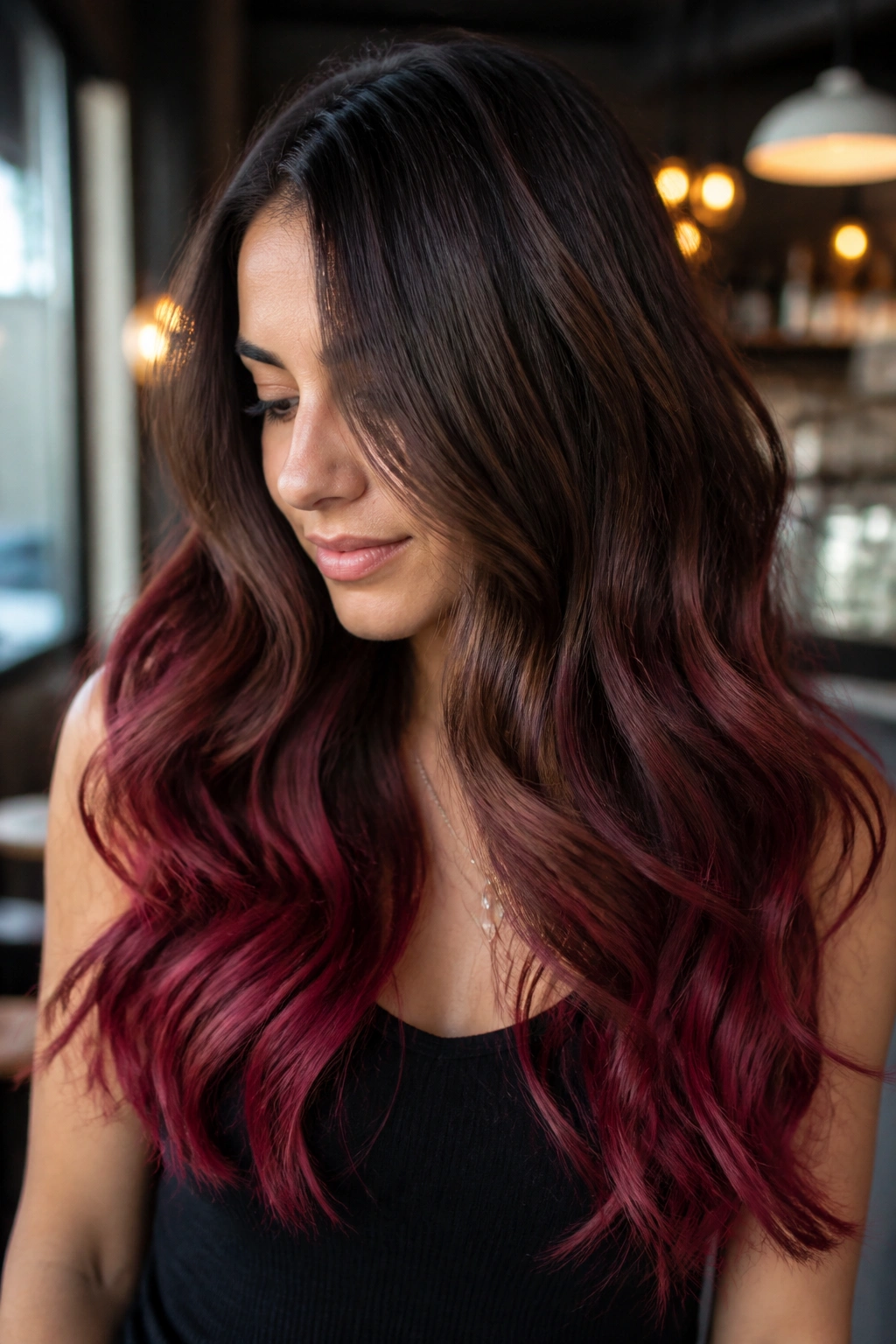
Cranberry is a useful shade because it sits between true red and deep berry. That makes it easier to wear than fire-engine red and less brown than burgundy. On long hair, cranberry ombre gives the color movement without turning the whole head into one loud block. It feels grown-up, but not boring.
The balayage part matters too. Those hand-painted pieces keep the transition from looking stripy. If you’ve got long layers, cranberry can dip into the ends and around the face while the darker brown still does the heavy lifting underneath.
A lot of red tones need constant touch-ups to stay interesting. Cranberry tends to stay readable even as it softens, which is a nice bonus. It loses a little punch, sure, but it rarely turns dull. That alone makes it worth a look.
8. Cinnamon Brown to Burnt Orange Red Fade
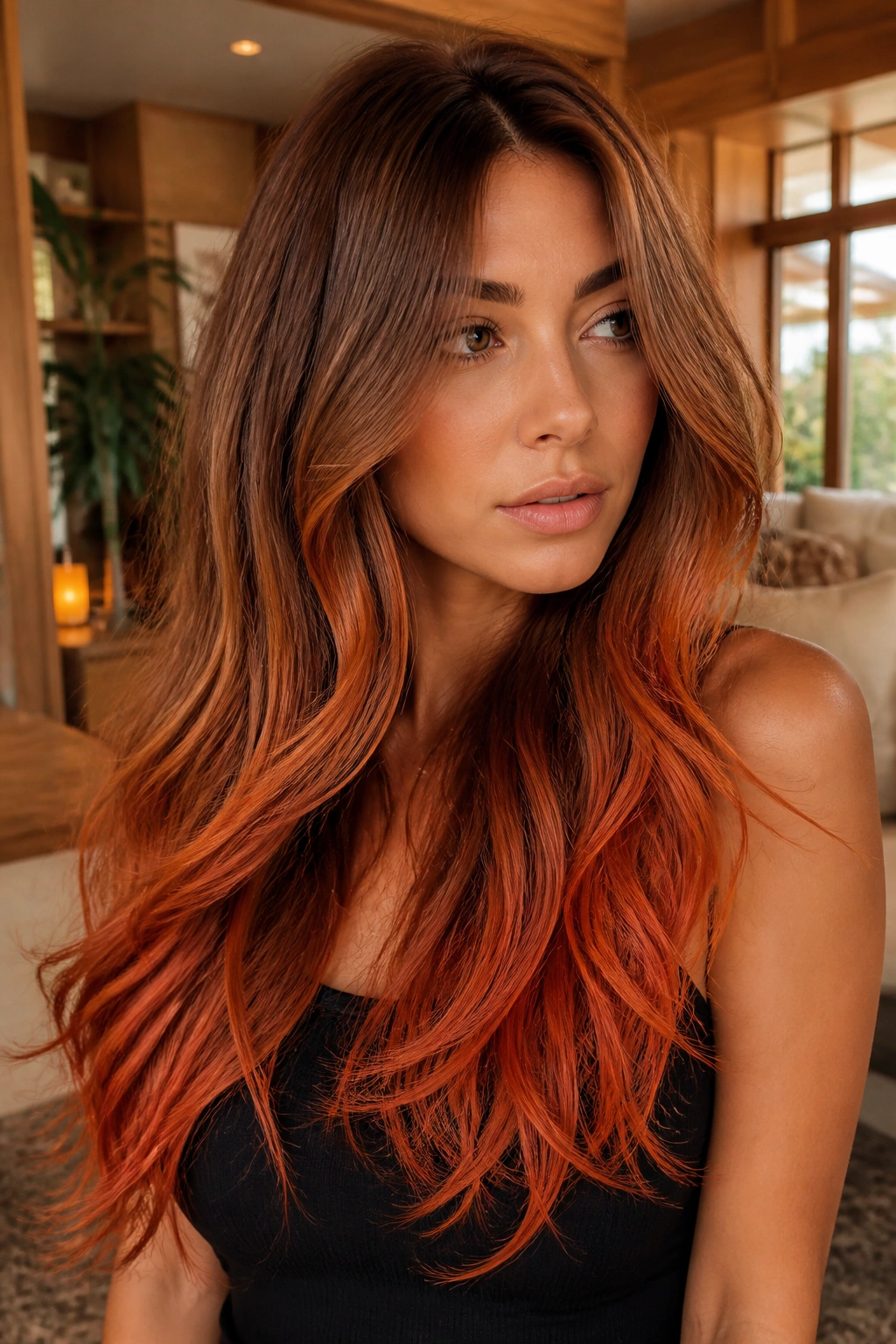
Cinnamon brown into burnt orange is for someone who wants warmth with a little bite. The orange-red end point gives the hair a fiery edge, but the cinnamon base keeps it from sliding into costume territory. On long hair, the color looks especially good when the ends are slightly feathered, because the lighter pieces can scatter through the lower half instead of sitting in one heavy block.
This is a sharper red ombre than auburn or cranberry. It feels more spirited, more obvious, and a bit more playful. If your hair has lots of layers, the transition looks even better because the orange-red catches on the shorter pieces and the longer lengths at different rates.
Wear it with soft waves if you want the fade to look smoky. Wear it straight if you want the color bands to feel deliberate. Either way, the contrast needs room.
9. Velvet Burgundy to Blackened Plum Lengths
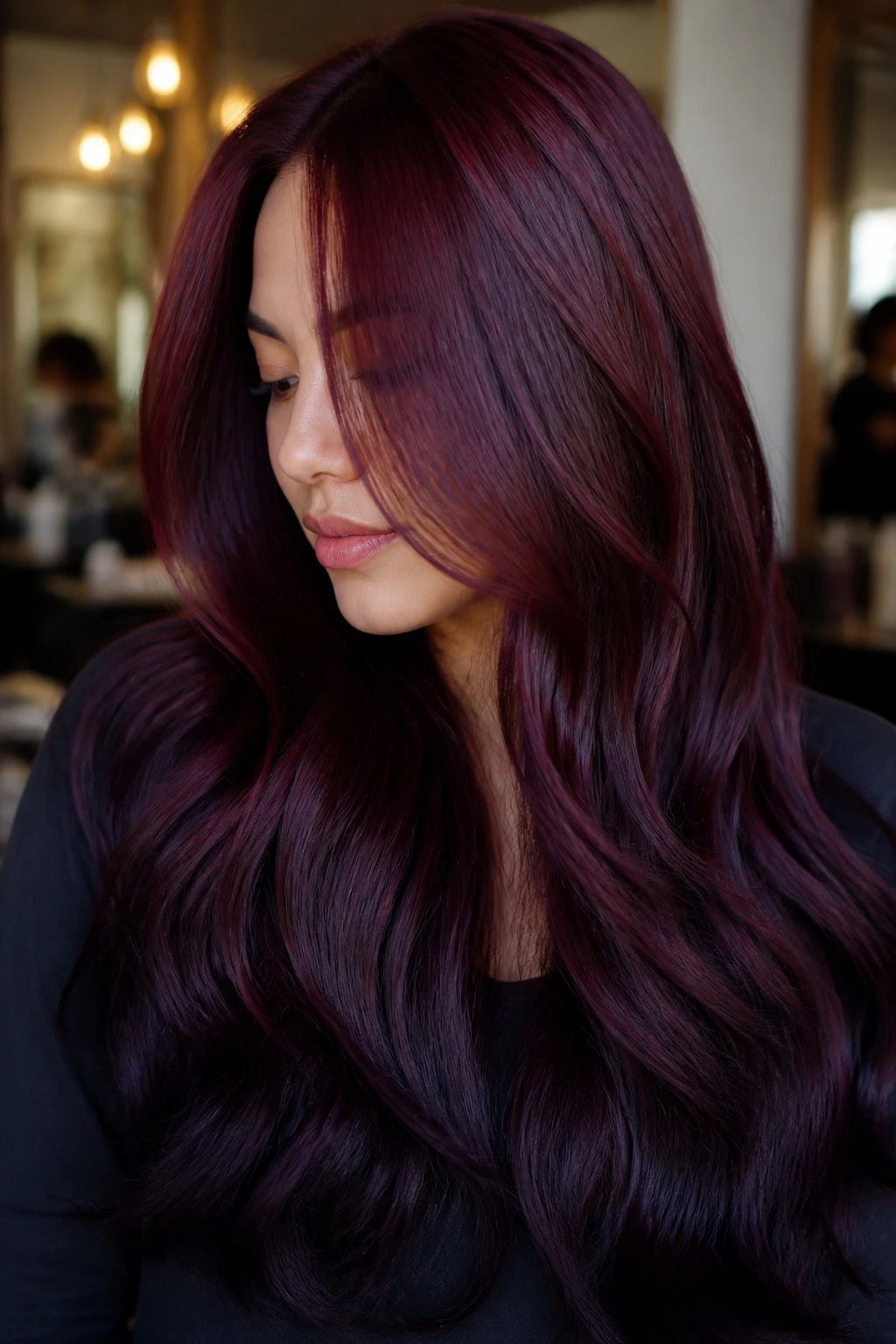
Velvet burgundy is rich on its own, but paired with blackened plum lengths it gets even deeper. The two tones sit close enough to feel connected, yet the plum adds a cooler edge that keeps the whole style from turning flat. On long hair, this is a clever choice if you want a red ombre that reads dark in low light and more saturated when the sun catches it.
I’ve always liked this kind of shade on heavy, glossy hair. There’s something about the thickness of the pigment that suits long lengths. It feels dense. A little dramatic too.
What to Ask For
- A burgundy root that stays one or two shades darker than the ends
- Plum ends that lean blue-red instead of pink
- A glossy finish, not a matte one
- Soft shaping around the face so the darker tones do not swallow your features
My honest take: if you like subtle color, this may still be too rich. It’s not shy.
10. Brunette to Fire-Engine Red Money Ends
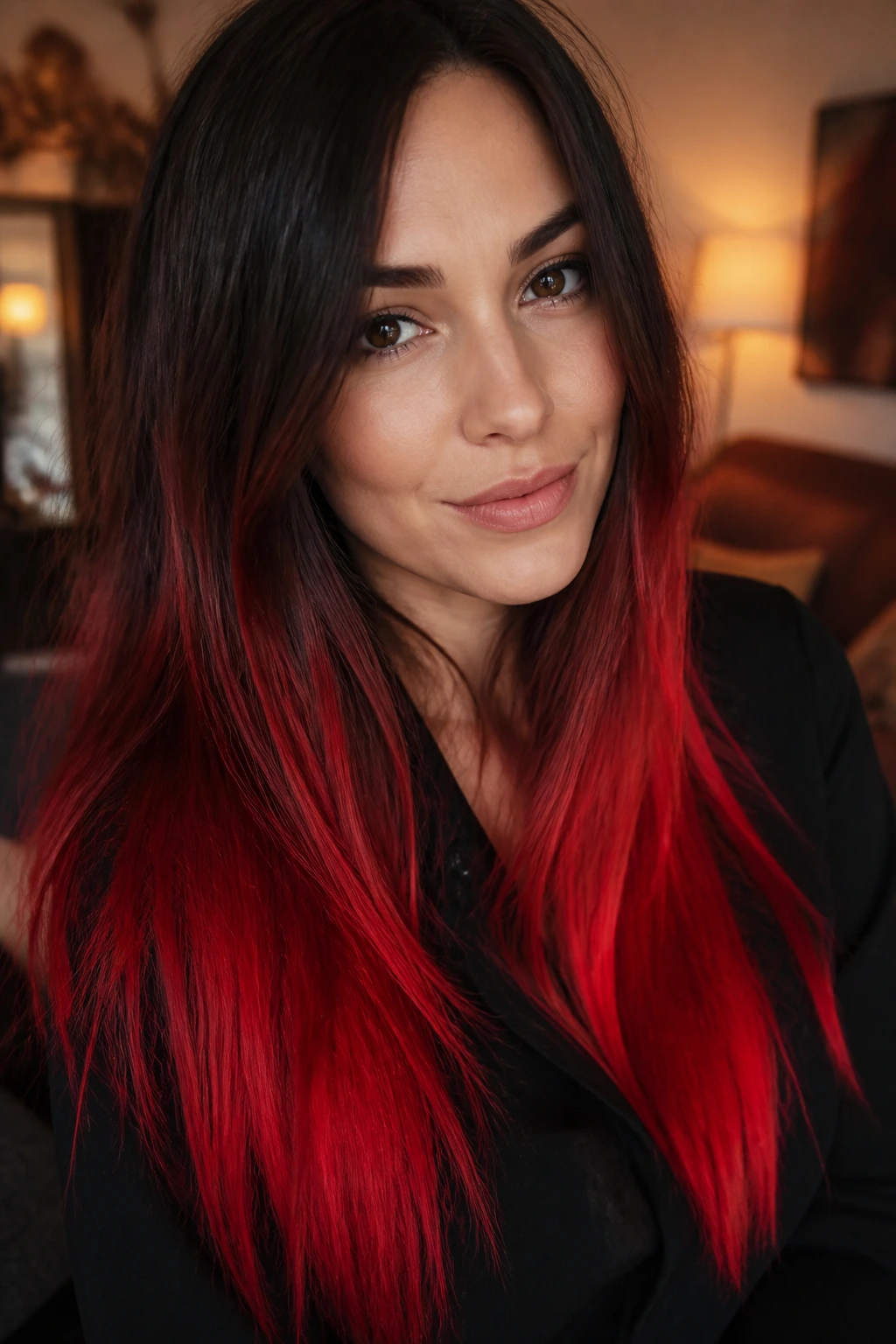
Unlike an all-over red, this version keeps the base brunette and saves the loudest color for the ends. That gives you a strong payoff without paying the price of constant root work. On long hair, the fire-engine red becomes a visual anchor at the bottom, almost like the hair is dipping into a hotter shade rather than fading into it.
This look is strongest on blunt or slightly layered ends. If the cut is too shattered, the red can look broken up. If the ends are clean, the color hits with purpose. That makes it a good choice for someone who wears a lot of straight styles and wants the ends to do the talking.
It’s also a useful option if you like a darker closet palette. Brunette roots keep the style grounded, while the red gives it attitude. Simple. Loud enough. Not messy.
11. Caramel to Blood Orange on Long Layers
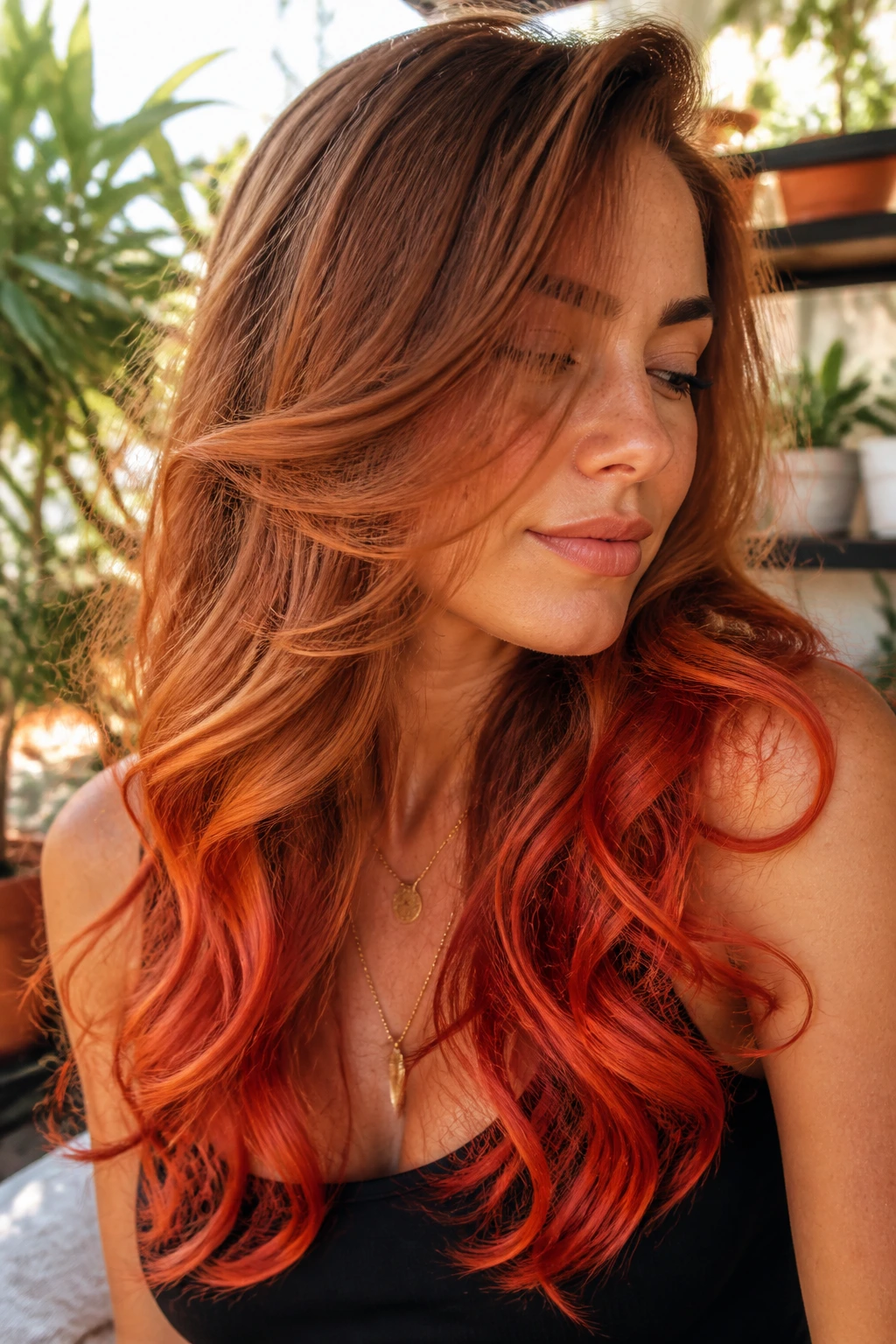
Caramel to blood orange sounds dramatic, and it is, but long layers keep it from becoming too heavy. The caramel base softens the transition, then the blood orange ends create a hot, saturated finish that looks almost glowing on curled layers. This is one of the better red ombre hair ideas for long hair if you want movement to be part of the design.
Layering changes everything here. Without layers, blood orange can sit like a curtain. With them, the color breaks apart and gets a little more air. You can actually see the shape of the cut instead of just the color.
I would recommend this for someone who likes warmth but wants more edge than copper gives. Blood orange has more punch. It looks especially strong when the hair is tucked behind one ear or pulled into a half-up style, because the ends stay visible.
12. Soft Brown to Strawberry Red Tips
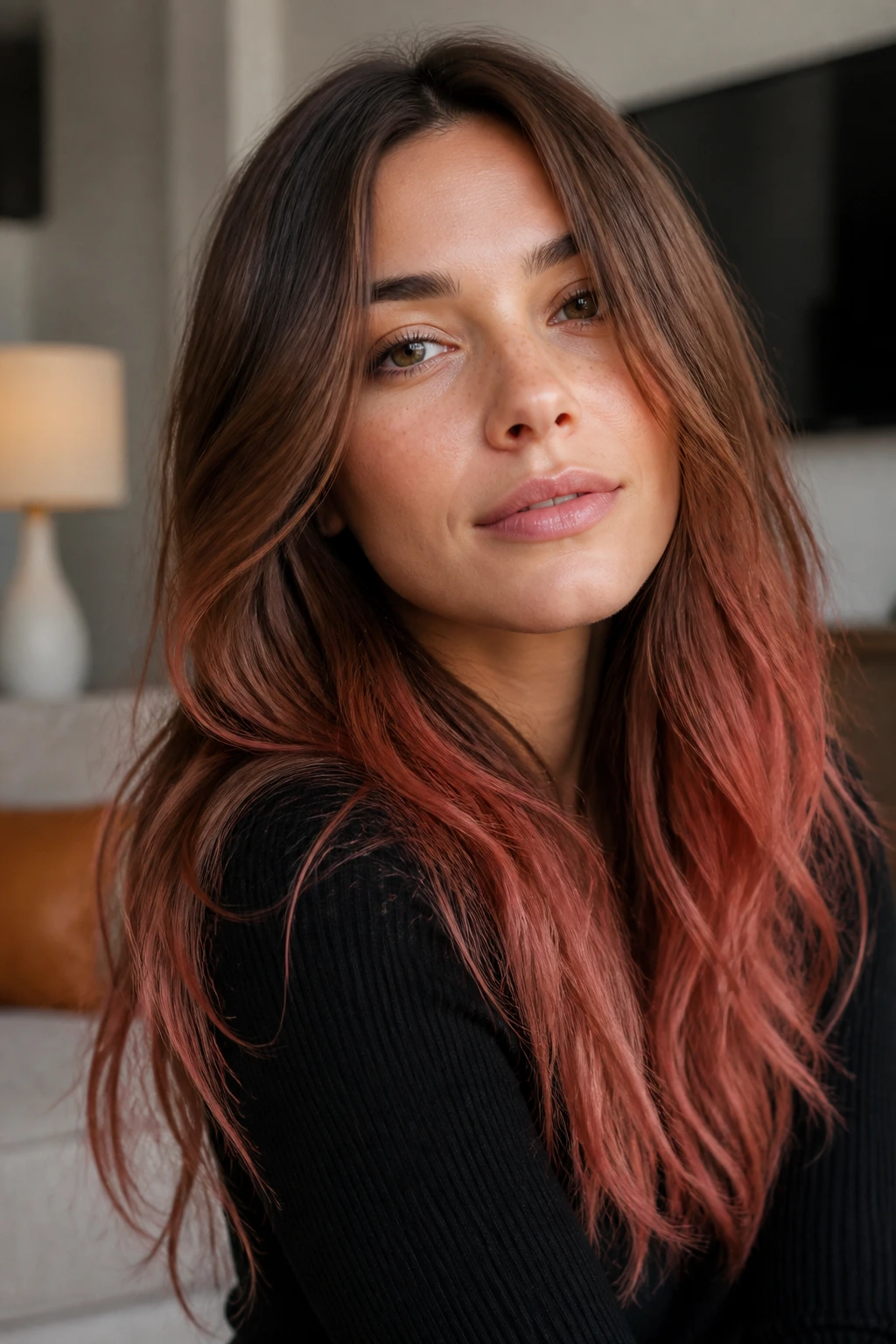
Can strawberry red work on brunette hair without looking too sweet? Yes, if the blend stays smoky. That’s the trick. A soft brown base lets the strawberry tips feel light, but not bubblegum. On long hair, the effect is delicate near the top and a little flirty at the bottom, which gives you an easy entry point into red ombre.
This style suits people who want color that doesn’t dominate every photo. The strawberry shade shows up best in motion, so it works well on layered hair, loose braids, and low ponytails where the ends peek out. It is a softer take on the red family, but it still counts.
How to Keep It From Looking Pink
- Ask for a strawberry red with copper in it
- Keep the root shadow cool enough to ground the warmth
- Curl the ends away from the face for more visible color
- Avoid overly ash brown roots, which can make the red look washed out
Best use: long hair that needs a gentle color shift, not a loud one.
13. Copper to Deep Red S-Curl Ombre
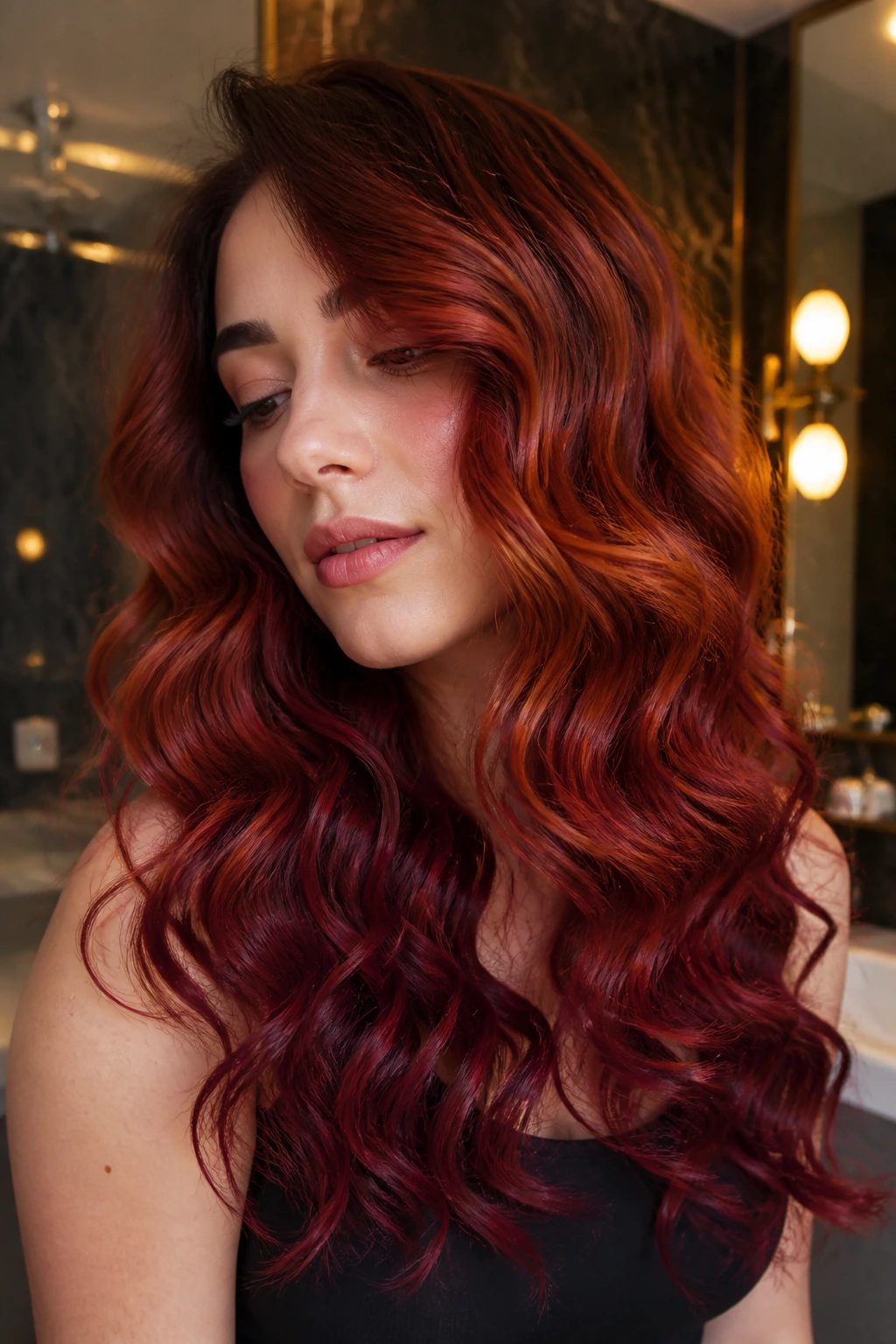
Copper to deep red is one of those shades that really comes alive on S-curls. The bends catch the copper first, then slide into red at the lower curves, so the color looks like it’s moving even when you’re standing still. On long hair, that motion is the whole reason to choose it.
The Science Behind the Shape
Color placement and curl pattern work together here. If the red starts where the S-wave begins, the eye reads one seamless shift instead of two separate colors. That makes the gradient feel smoother and more deliberate.
- Best on soft waves or glam curls
- Ask for red through the mid-lengths, not only the ends
- A shine spray helps the copper stay bright
- This shade looks richer on healthy, trimmed ends
One detail people miss: the curls should stay open enough to show the blend. Too-tight curls hide the gradient.
14. Auburn to Cherry Cola Finish
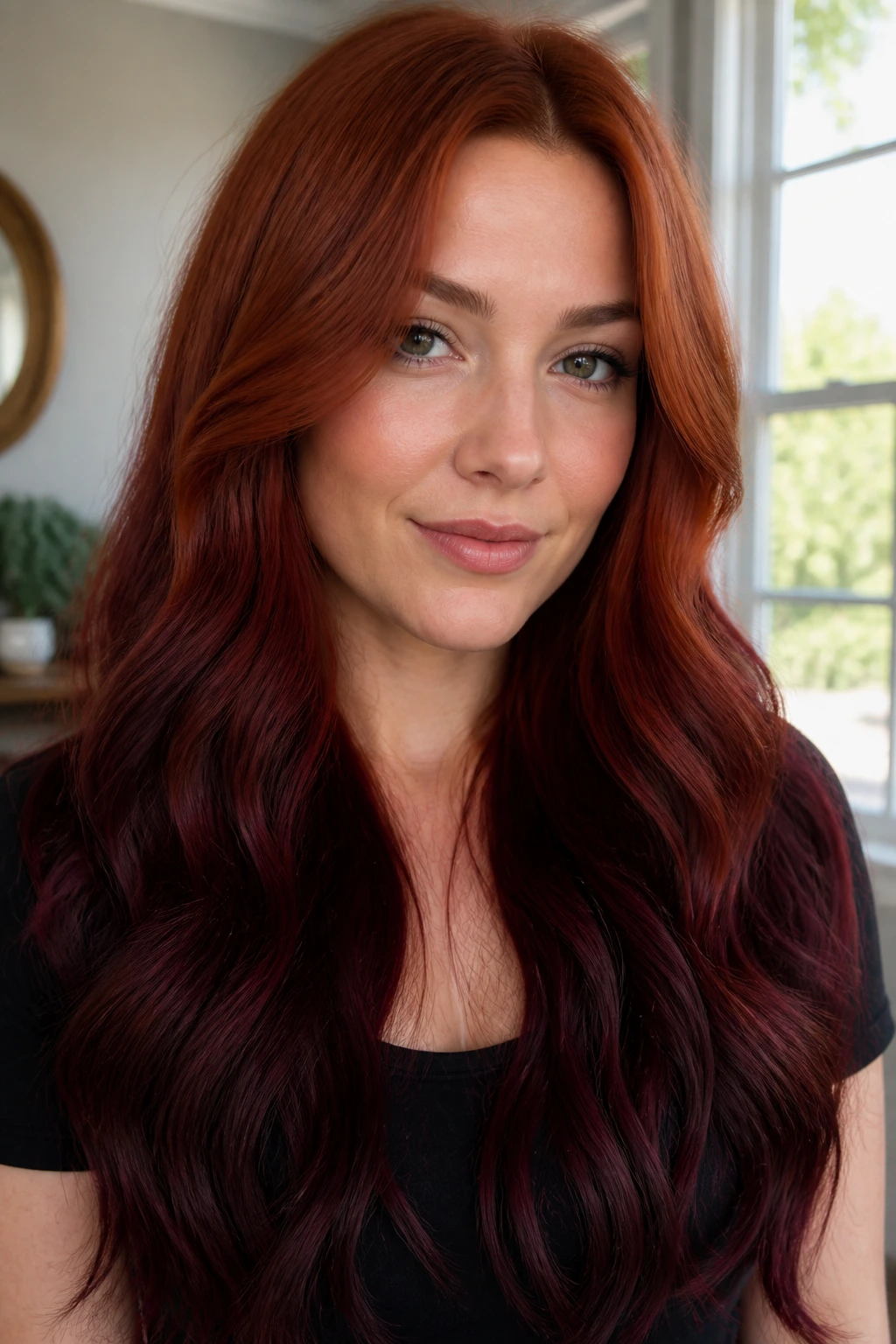
Cherry cola is one of the easiest red tones to wear because it sits close to brunette. Auburn at the top gives you warmth, and cherry cola at the bottom adds depth and a little shine without turning the hair neon. On long hair, the color looks especially good in blowouts with volume at the crown and movement through the ends.
The reason this combo works is simple: the red stays dark enough to blend into everyday life, but the cherry note keeps it from going flat. You can wear it straight and polished, or add waves and get a much richer finish. Either way, it does not look like a one-note red.
I’d choose this for someone who wants a red ombre that feels wearable in almost any setting. It’s not the loudest look here. That is why it lasts in real life.
15. Rooty Brunette to Raspberry Ombre
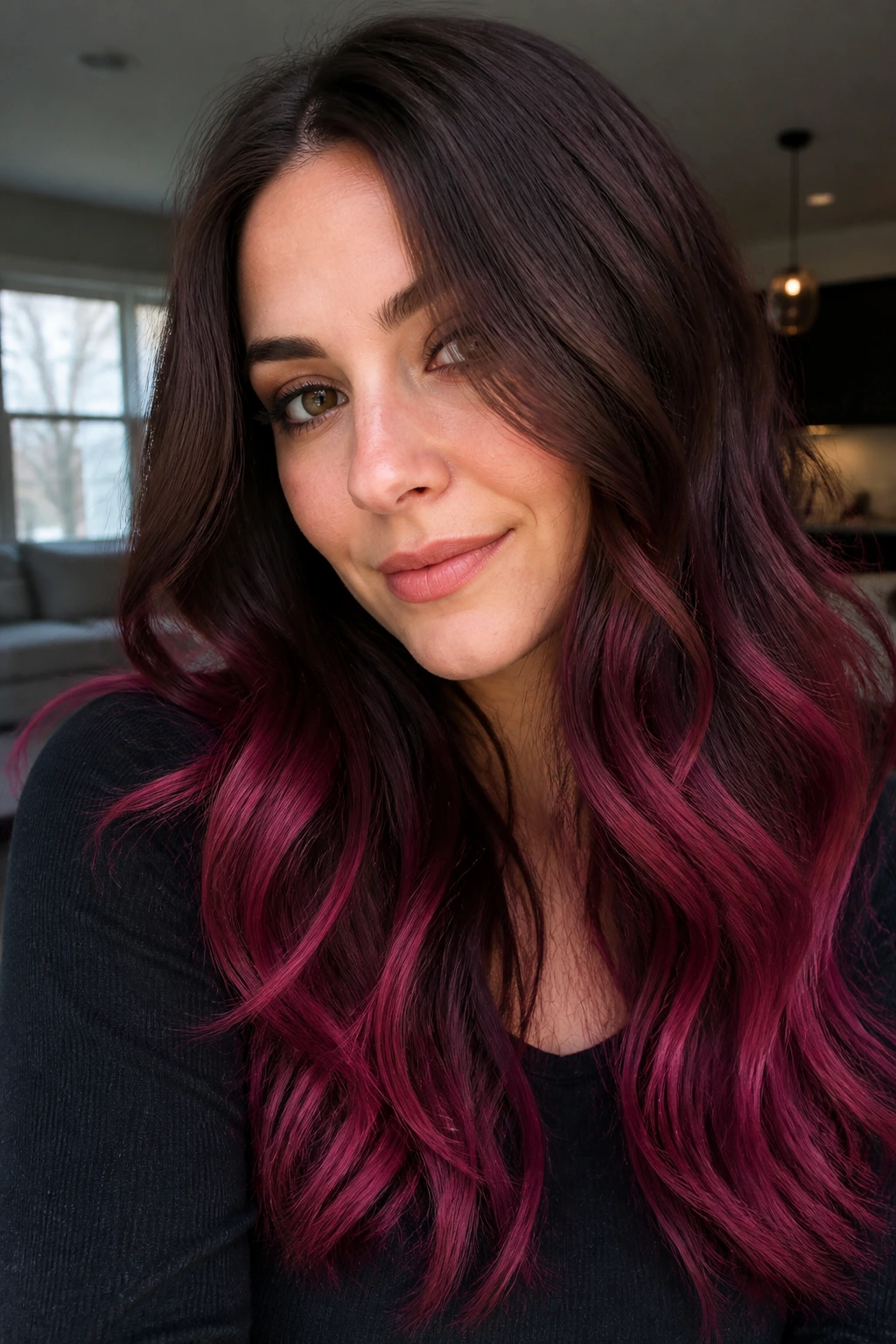
Picture this: you’re standing under cool indoor light, and the ends of your hair suddenly look berry-bright instead of brown. That’s raspberry ombre doing its thing. The rooty brunette base keeps the whole look grounded, while the raspberry tone brings a cooler red that sidesteps orange and leans a little more playful.
This is one of the better choices if you want red but hate warm brassiness. Raspberry has a fresher feel than burgundy and a lighter mood than wine tones. On long hair, it can be softened through the mid-lengths or pushed harder into the tips if you want more drama.
- Good for cool or neutral undertones
- Works well with layered cuts and loose braids
- Ask for the raspberry to stay muted, not pink
- A color-depositing mask in a berry shade can keep the ends lively
Closing thought: if you like red with a cooler edge, this one is easy to wear without looking dull.
16. Black to Garnet with Face-Framing Pieces
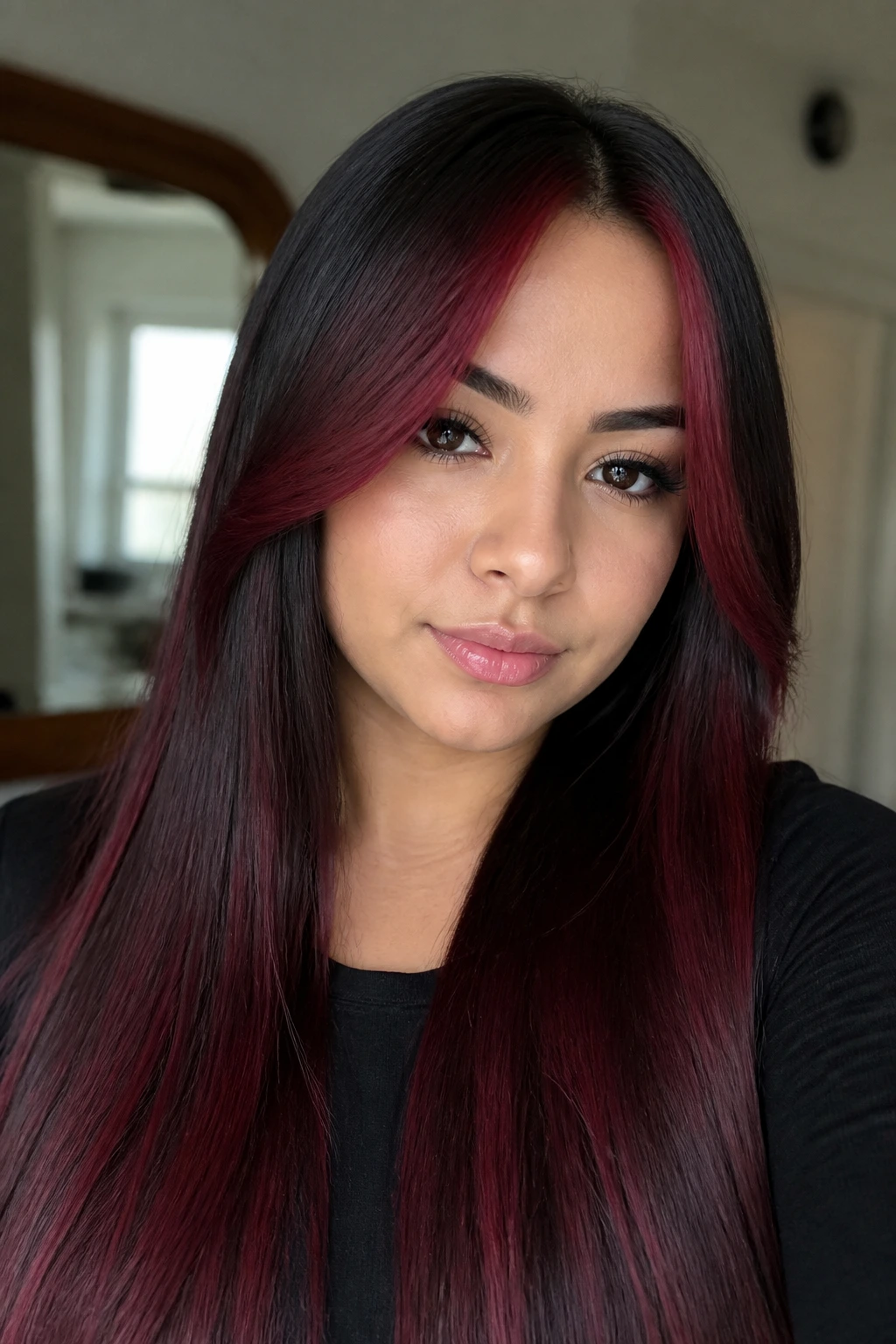
This version is a little smarter than a full-head red fade. The black base stays dominant through most of the hair, while garnet shows up first around the face and then deepens toward the lower lengths. That makes the style feel intentional instead of overloaded. On long hair, face-framing red pieces can change the whole mood of a cut.
Unlike scarlet ends, garnet keeps its depth. It reads dark, then flashes red when the hair moves. That makes it good for people who want contrast but do not want every strand competing for attention. The front pieces also brighten the face in a way that a lower-only ombre sometimes misses.
This one suits long straight hair especially well. The lines stay clean, the contrast stays strong, and the garnet keeps a little mystery in it. There’s a reason dark red hair keeps coming back.
17. Dark Brown to Brick Red Straight Hair
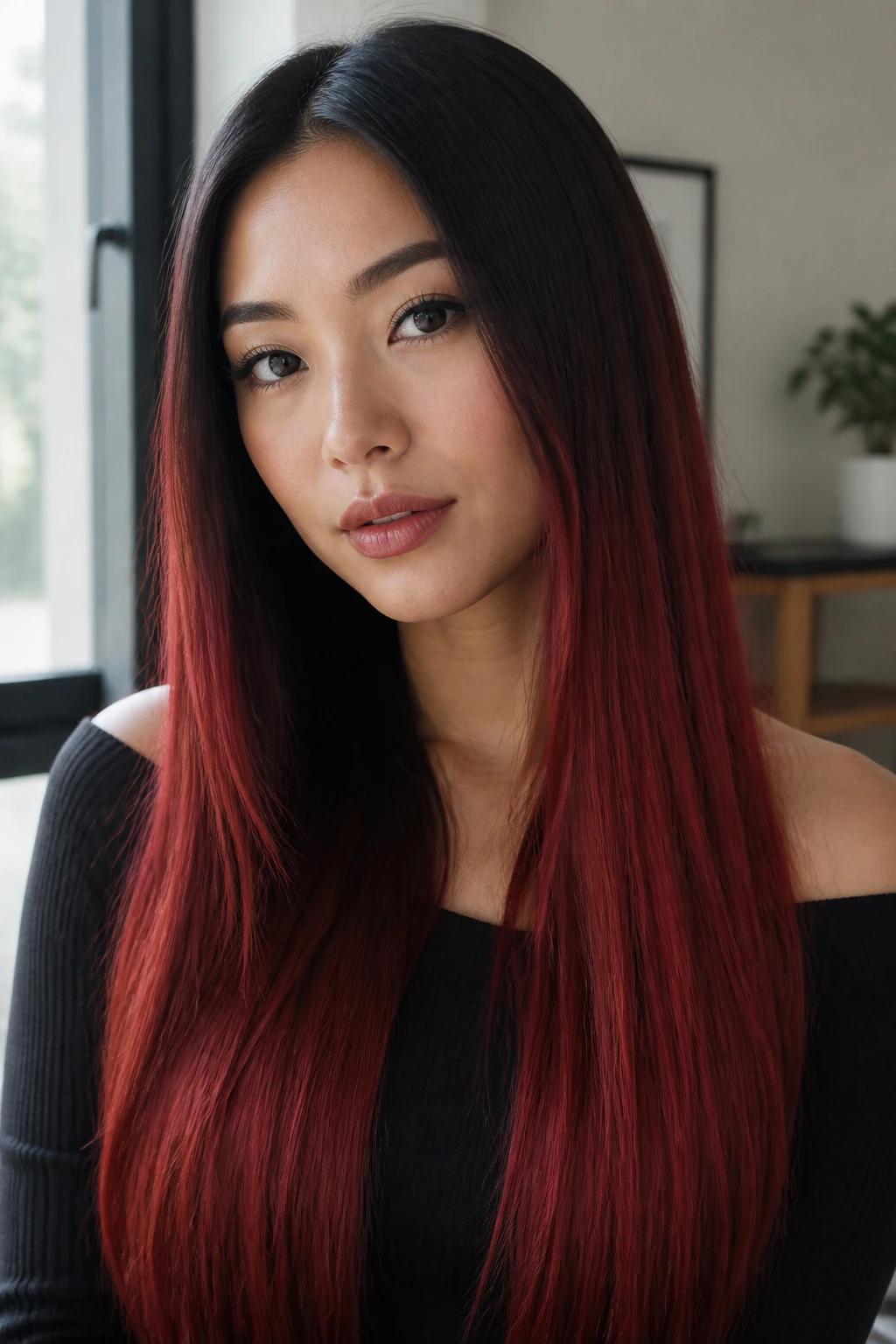
Straight hair changes everything about a red ombre. Without curl or wave, the fade has nowhere to hide, so every shift from dark brown to brick red shows up cleanly. That can be a blessing if you like precision. Brick red has enough warmth to stay red, but enough brown in it to look grounded on long, sleek lengths.
This is not a “soft and blurry” look. It’s sharper than that. The darker root section should fall into the brick tone in a way that feels deliberate, almost architectural. If the ends are blunt, the whole style gets even stronger because the color ends where the hair ends.
I like this on glassy blowouts, center parts, and one-length haircuts with a little weight at the bottom. It does not need a lot of styling. The color itself is the structure.
18. Cocoa to Merlot Waves
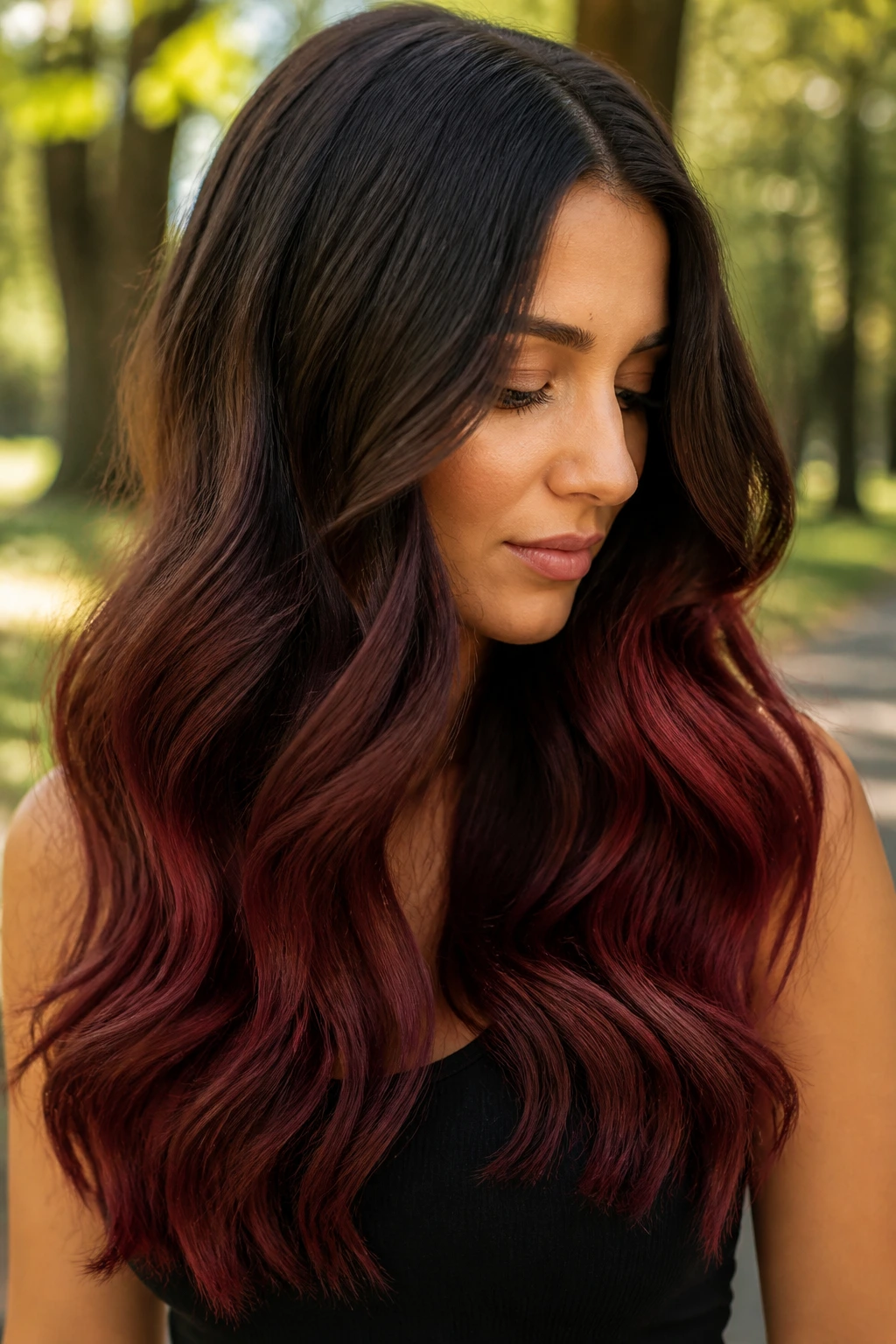
What makes merlot such a good red ombre shade? It has enough depth to look rich, but enough red in it to keep the hair from disappearing into brown. On cocoa roots, that merlot finish feels lush and slightly dark, which is useful if you want a color that turns heads without shouting.
Waves are the best home for it. They break the color into bands of light and shadow, and merlot thrives in that kind of texture. The deeper the wave, the more the red shifts between wine, plum, and brown-red. It is one of those shades that seems to change throughout the day.
How to Get the Most From It
- Ask for a deep wine tone with red undertones
- Keep the mid-lengths soft so the fade doesn’t look harsh
- Use a smoothing serum, because frizz dulls merlot quickly
- Style with a medium barrel for wide, slow waves
Small note: this one looks expensive when the ends are healthy. Not before.
19. Warm Brunette to Sunset Red Butterfly Cut
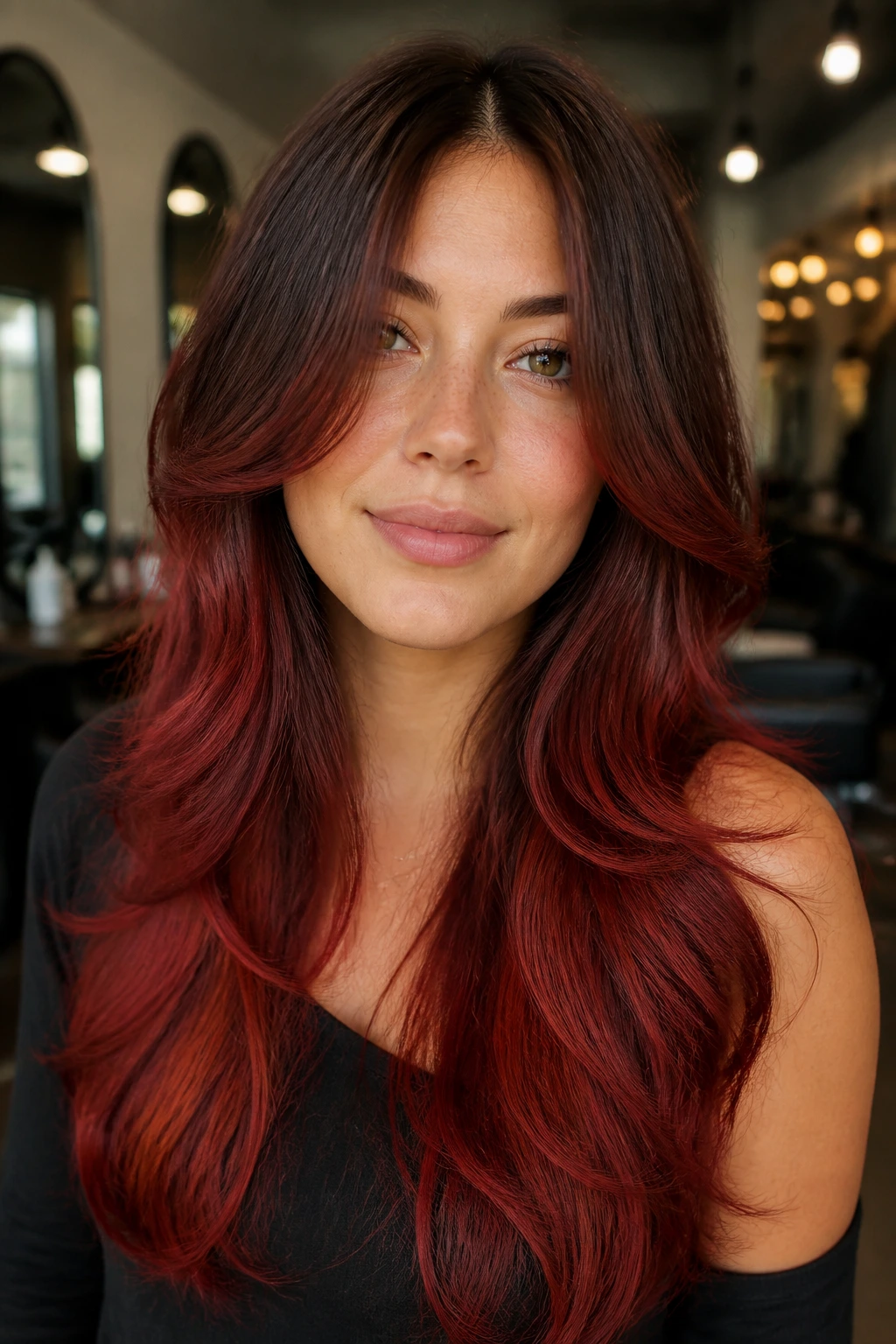
Butterfly layers are built for color like this. The shorter face-framing pieces and longer lower lengths create different surfaces for the red to land on, so a sunset red ombre can show several tones at once. Warm brunette at the top keeps the look calm, while the sunset red through the lower half brings the brightness.
This is one of my favorite pairings because the cut does half the work. The layers make the color feel fuller, and the color makes the layers easier to see. On long hair, that matters. Otherwise a heavy cut can swallow the red.
What the Layers Do
- Shorter top layers show the red earlier
- Long bottom layers give the fade more room
- The shape keeps the color from pooling at the ends
- Loose curls make the whole thing look softer
Good fit: anyone who wants red that moves when they do, not just when they pose for a photo.
20. Smoky Brown to Red Velvet Ombre
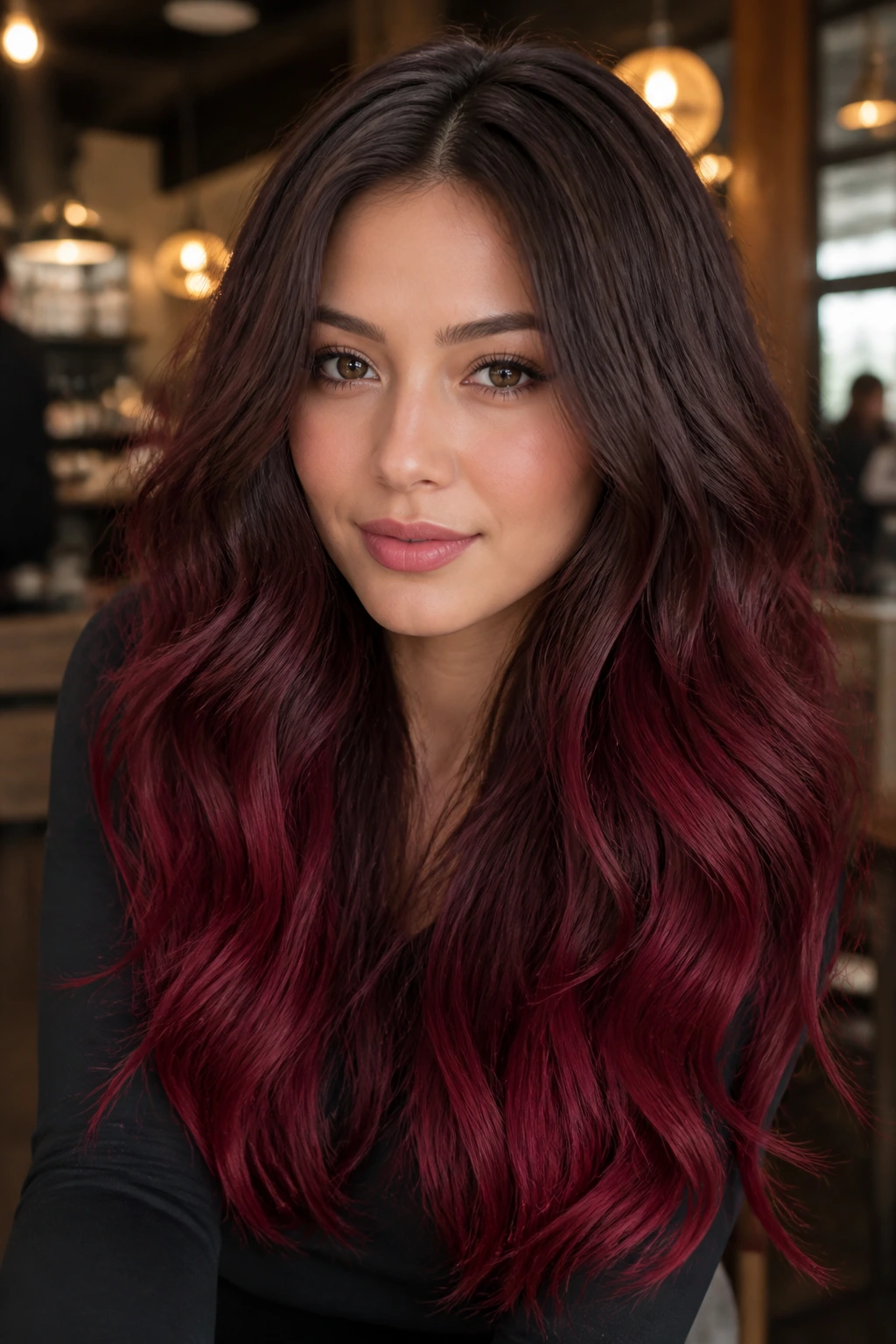
Smoky brown is a useful base because it keeps the red from looking too bright too quickly. Add red velvet through the ends, and you get a color that feels rich, dark, and a little plush. On long hair, the blend has room to stretch, which stops the red from crowding the base.
This is a strong option for thick hair. Thick hair can take a lot of pigment without looking busy, and smoky brown gives the reds a place to settle. The red velvet tone also has that soft, almost suede-like depth that works in both straight and wavy styles.
A center part makes the color feel balanced. A side part makes the red sweep across the face in a more dramatic way. Either way, this one has a low-key luxury to it that some brighter reds never manage.
21. Chestnut to Ember Red with Curtain Layers
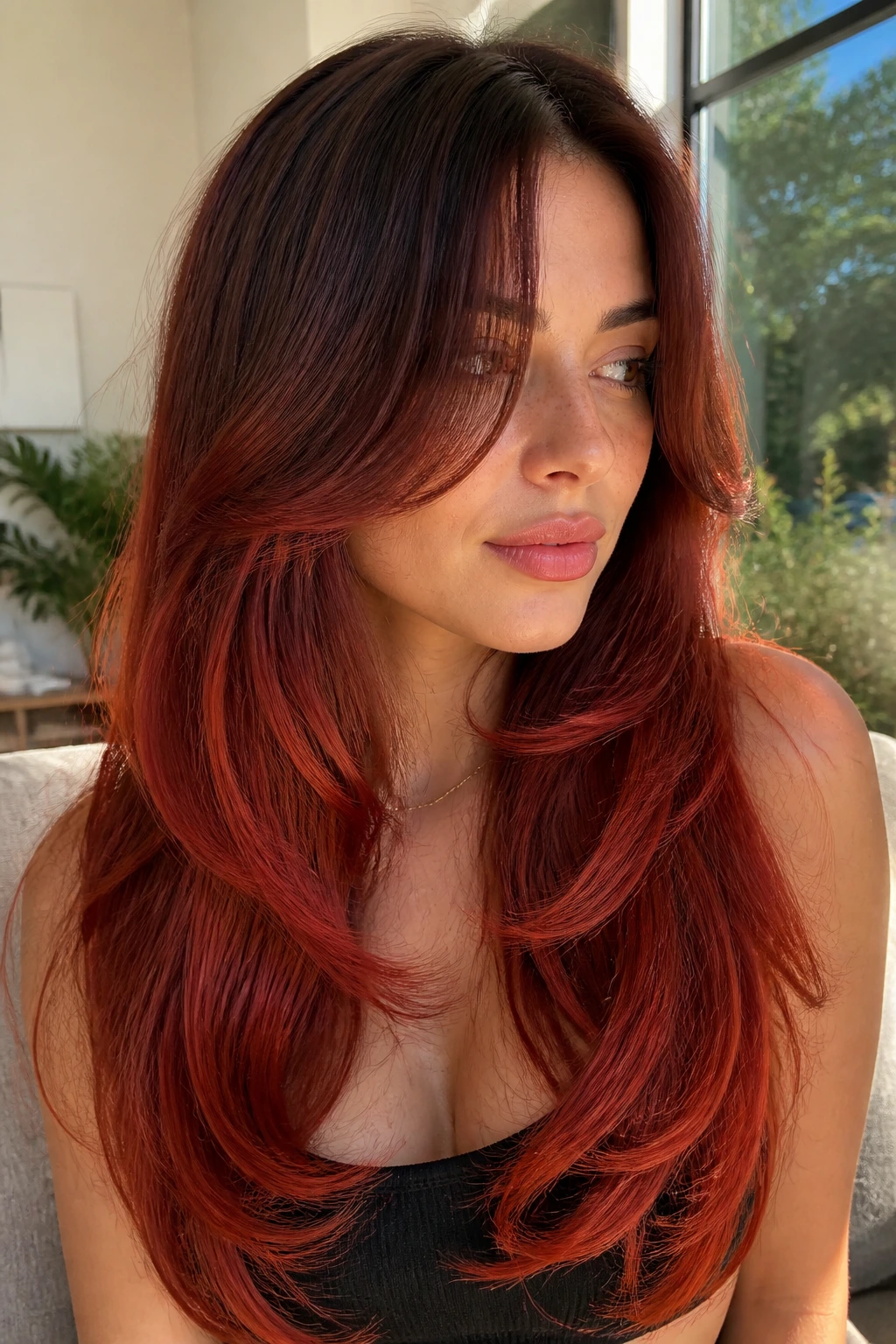
I keep coming back to curtain layers with red ombre because they do so much of the visual work. Chestnut at the top softens the face, then ember red builds through the mid-lengths and ends where the layers split open. That gives the color a natural frame, not just a flat fade.
This style is especially good if you want red that brightens the front first. Curtain layers pull color toward the cheeks and collarbone, which is useful when you want movement near the face and depth through the back. Ember red has a slightly hotter edge than auburn, so it reads warm without feeling orange.
- Best on long cuts with face-framing pieces
- Works well with a soft round-brush blowout
- Ask for the ember tone to stay deep at the roots of the fade
- A little shine mist on the ends helps the red stay vivid
My take: this is one of the easiest ways to make red look shaped.
22. Plum Brown to Ruby Dip-Dye Ends
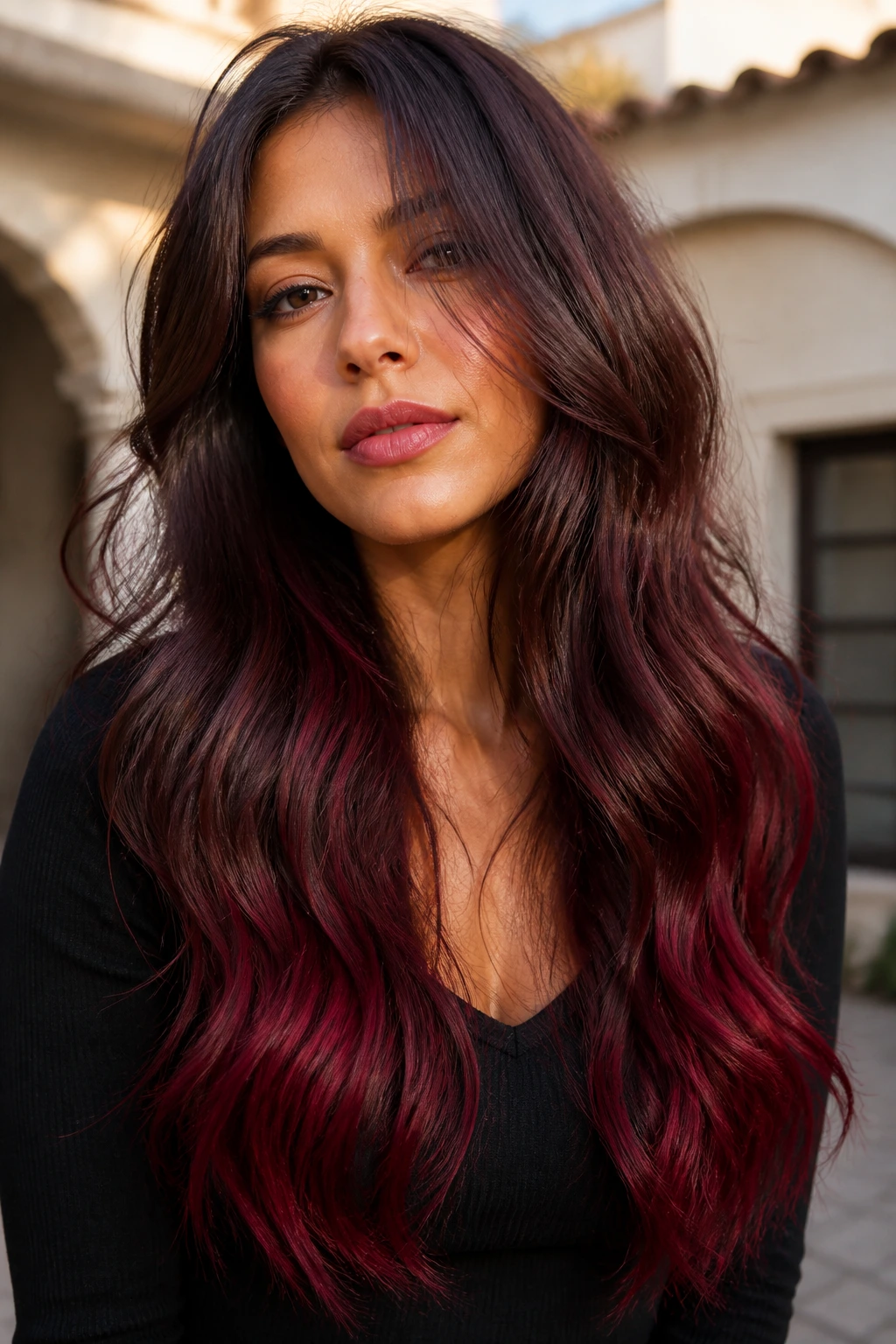
Dip-dye has a stronger edge than a soft melt. Plum brown through the top keeps the base moody, then ruby at the ends lands with a clearer line of color. On long hair, that line can look cool instead of harsh, especially if the cut has weight and the ends are healthy.
Unlike a blended ombre, dip-dye is about declaring where the color changes. That makes it a good fit for someone who wants the red to feel deliberate. Ruby is also a smart ending shade because it stays vivid without looking neon. It has enough depth to hold against the plum.
This style is best for people who like a little contrast in their hair and do not mind that the grow-out will stay visible. That is part of the charm. It has attitude.
23. Dark Espresso to Rosewood Lengths
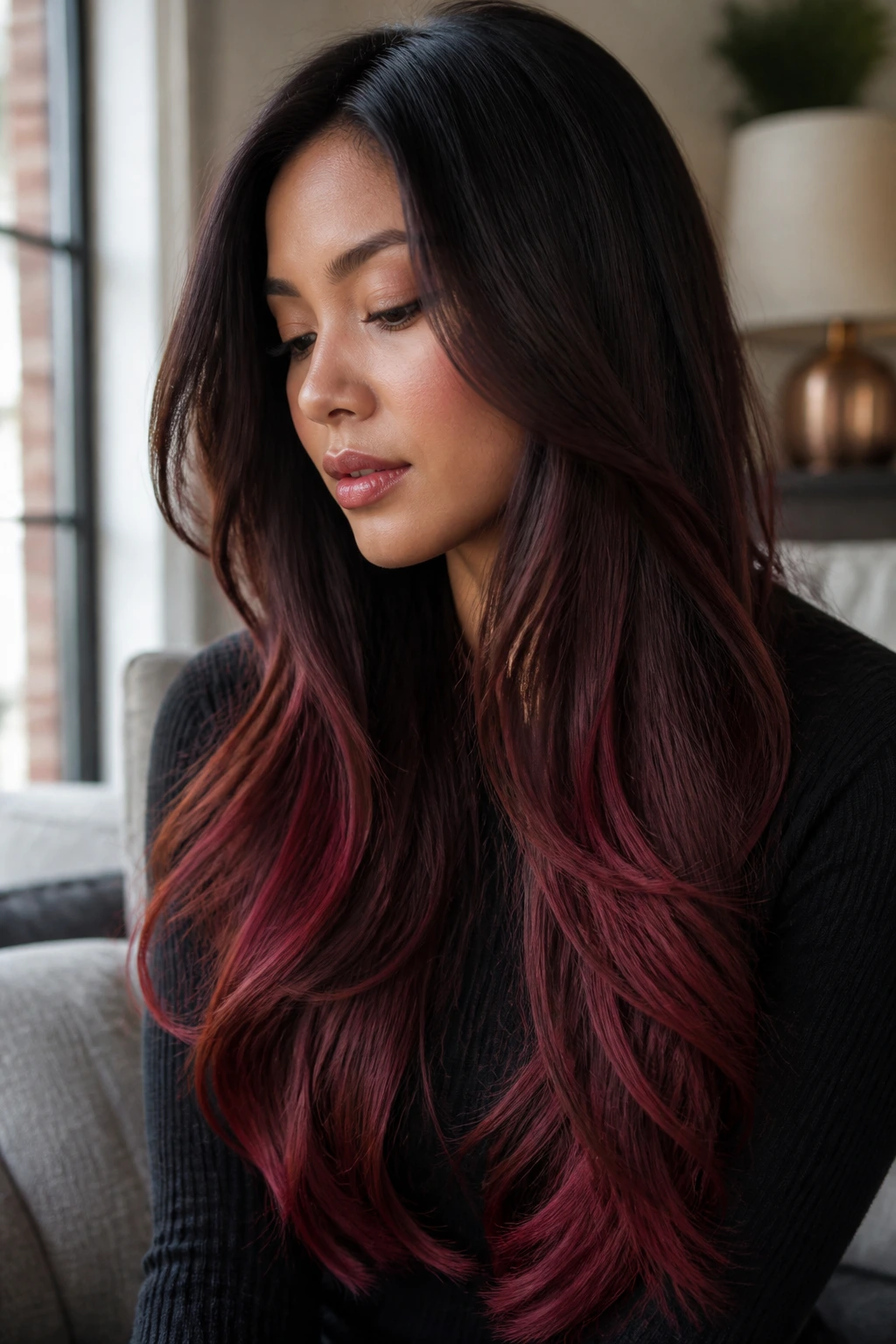
Rosewood sits in that quiet space between brown and red, and that’s why it works so well on long hair. Dark espresso at the top keeps the roots almost shadow-like, while the rosewood lengths bring in a soft red-brown glow that feels refined rather than loud. If you want red ombre hair ideas that lean understated, this is a strong one.
The nice thing about rosewood is that it behaves well in different textures. Straight hair shows the color shift cleanly. Waves make the rose tones look deeper. Braids turn the mix into a woven pattern of brown and red. It does not need much to look finished.
I like this shade for someone who wants a red result but not a bright red identity. There is a difference. Rosewood gives you the warmth without making the hair carry the whole outfit.
24. Soft Brunette to Tiger Lily Copper-Red
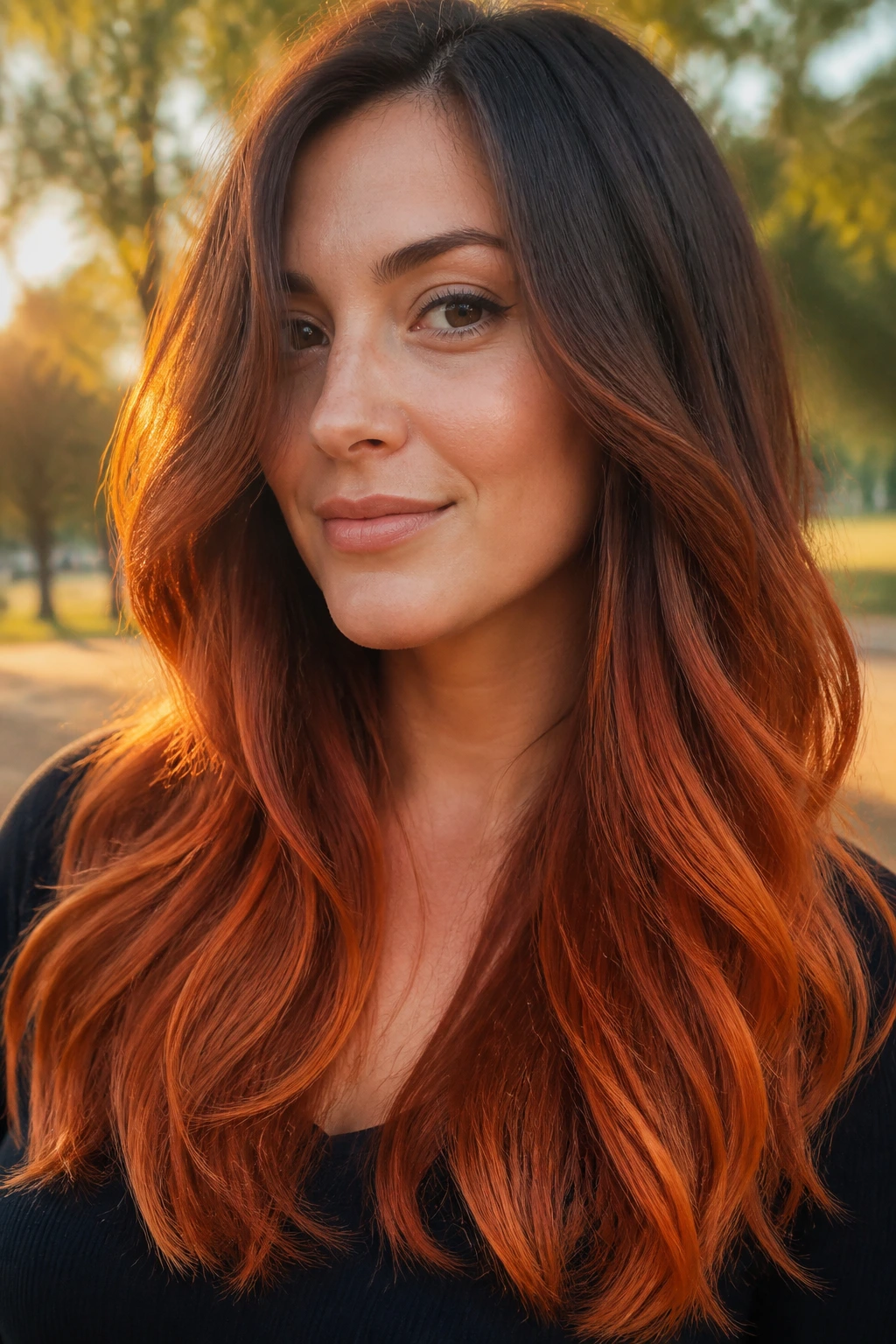
Can tiger lily copper-red work on long brunette hair without turning brassy? Yes, if you keep the root area soft and the copper controlled. The idea is to let the red-orange brighten the lower lengths while the brunette base keeps everything rooted. On long hair, that balance matters more than a lot of people think.
Tiger lily copper is a sharper, livelier version of copper. It has a floral warmth that feels fresh, but it can go too orange if the tone is pushed too high. That’s why the blend should start lower and stay a touch muted near the transition.
How to Keep It Clean
- Ask for copper-red, not flat orange
- Keep the base brunette one or two levels deeper
- Use a gloss if the ends start looking too bright
- Curl the hair away from the face to show the red-orange shift
Best for: long waves, loose ponytails, and anyone who likes warmth with a little bite.
25. Deep Brown to Mulberry Cascading Ends
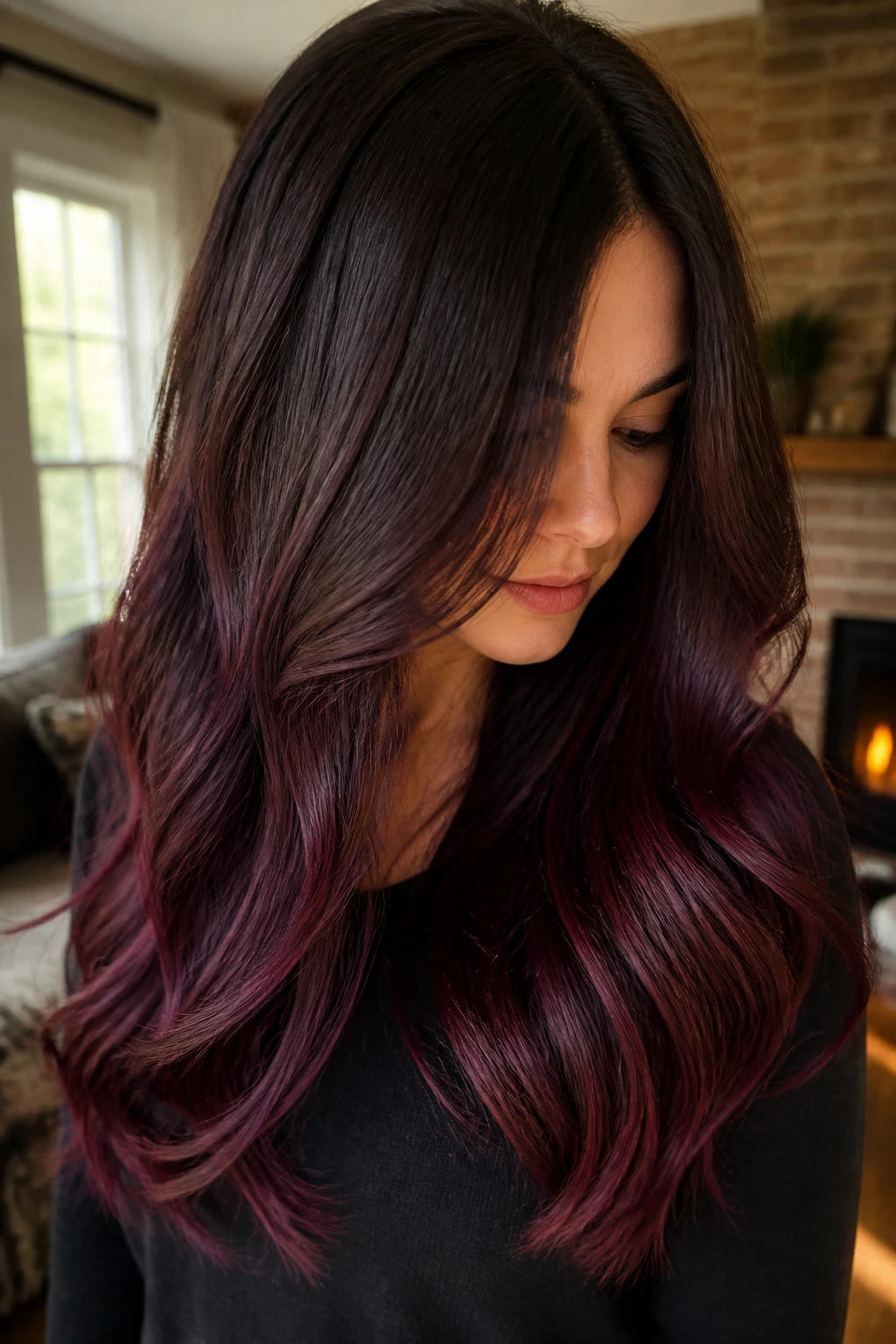
Mulberry is the red ombre shade I recommend when someone says they want red but means rich, dark, and slightly unexpected. Deep brown roots keep the top quiet, while the mulberry ends add berry depth that sits somewhere between wine and plum. On long hair, that final shade drapes beautifully through the lengths, especially if the cut has movement.
This one is a good finish for people who are tired of bright copper and want something with more weight. Mulberry feels denser. The color looks plush in waves and almost velvet-like in straight styles. If you braid it, the red-brown mix turns into a darker ribbon effect that still shows the fade.
I like it because it closes the gap between dramatic and wearable. Not every red ombre needs to shout. Some of the best ones just keep looking better the longer you stare at them.
