



Brown ombre hair on long lengths has a special kind of range. A short cut can handle a quick fade, but a long one gives the color room to breathe, stretch, and shift as it moves.
That’s why brown ombre hair ideas for long hair can look so different from one another even when they use the same family of shades. A soft espresso-to-caramel melt feels polished and easy. A cooler ash-brown fade can look sleek and a little moody. Push the contrast a little harder, and the ends start to read almost sunlit, especially when the hair is curled or braided.
The part most people miss is placement. Brown ombre on long hair works best when the transition doesn’t sit in one blunt line across the back. If the lightest tone starts too high, the whole look can feel stripey. Too low, and you lose the point of the fade. The sweet spot usually sits somewhere between the cheekbone and the middle of the length, depending on your cut, your density, and how much contrast you want.
Some shades also behave better than others on long hair. Warm browns bring out movement in waves. Cooler browns look clean and modern on straight lengths. Richer tones like mahogany or chestnut can make thick hair look lush instead of heavy. The trick is choosing a brown family that flatters your base and gives the ends enough life to matter.
1. Espresso Roots to Milk Chocolate Ends
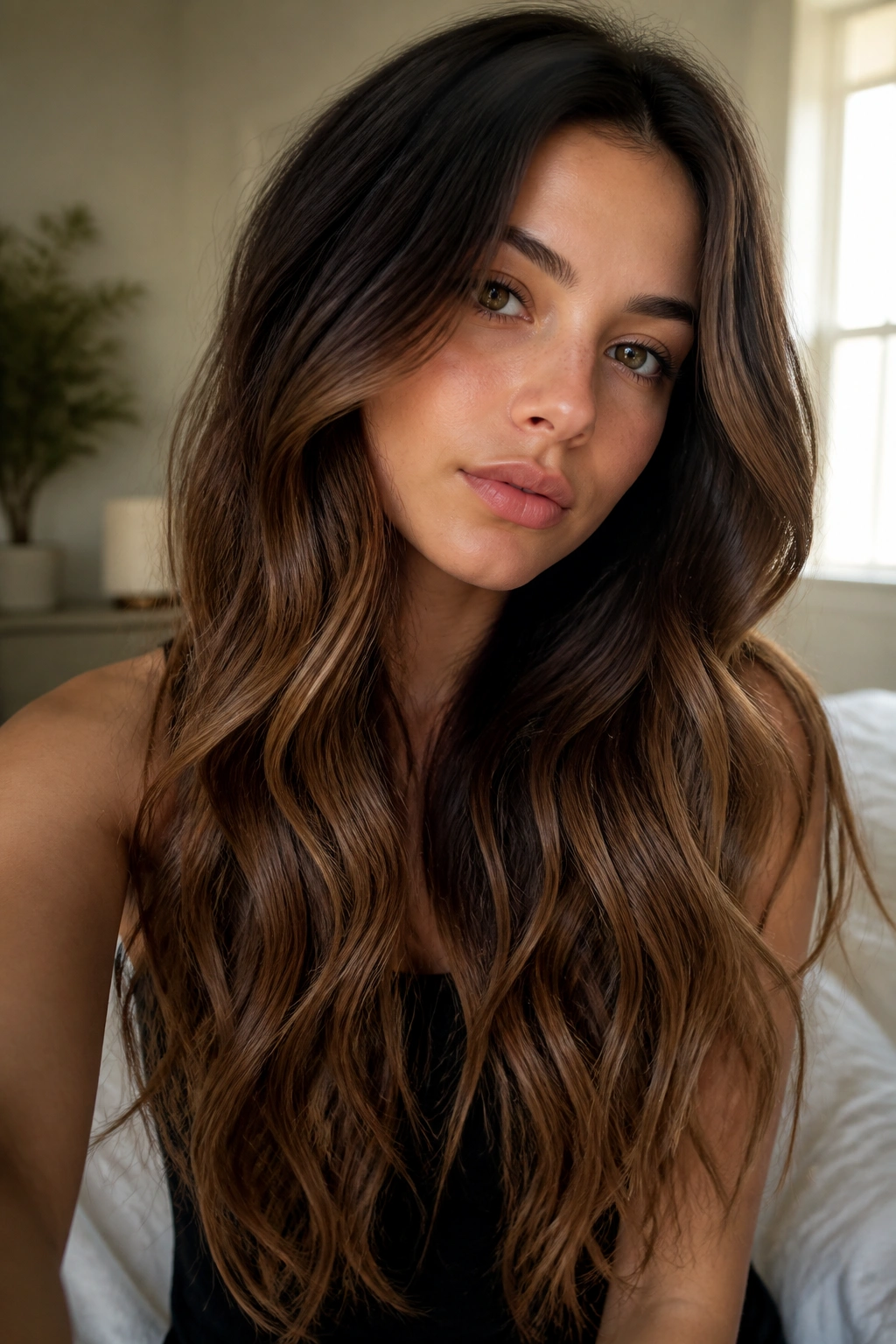
This is the brown ombre I recommend to anyone who wants the safest possible starting point. The root stays deep and glossy, while the lower half turns a soft milk-chocolate shade that still reads brown, not blonde.
On long hair, that gentle shift looks expensive without trying too hard. It also grows out cleanly, which matters if you do not want to babysit your color every few weeks. Ask for the transition to begin around the middle of the back or a little below the collarbone if your length is already dramatic.
A big-barrel wave makes this shade pairing come alive. Straight hair keeps it elegant; loose bends make the lighter ends look fuller and more dimensional. Either way, the finish should feel smooth, not chalky.
2. Dark Brown to Caramel Ribbon Fade
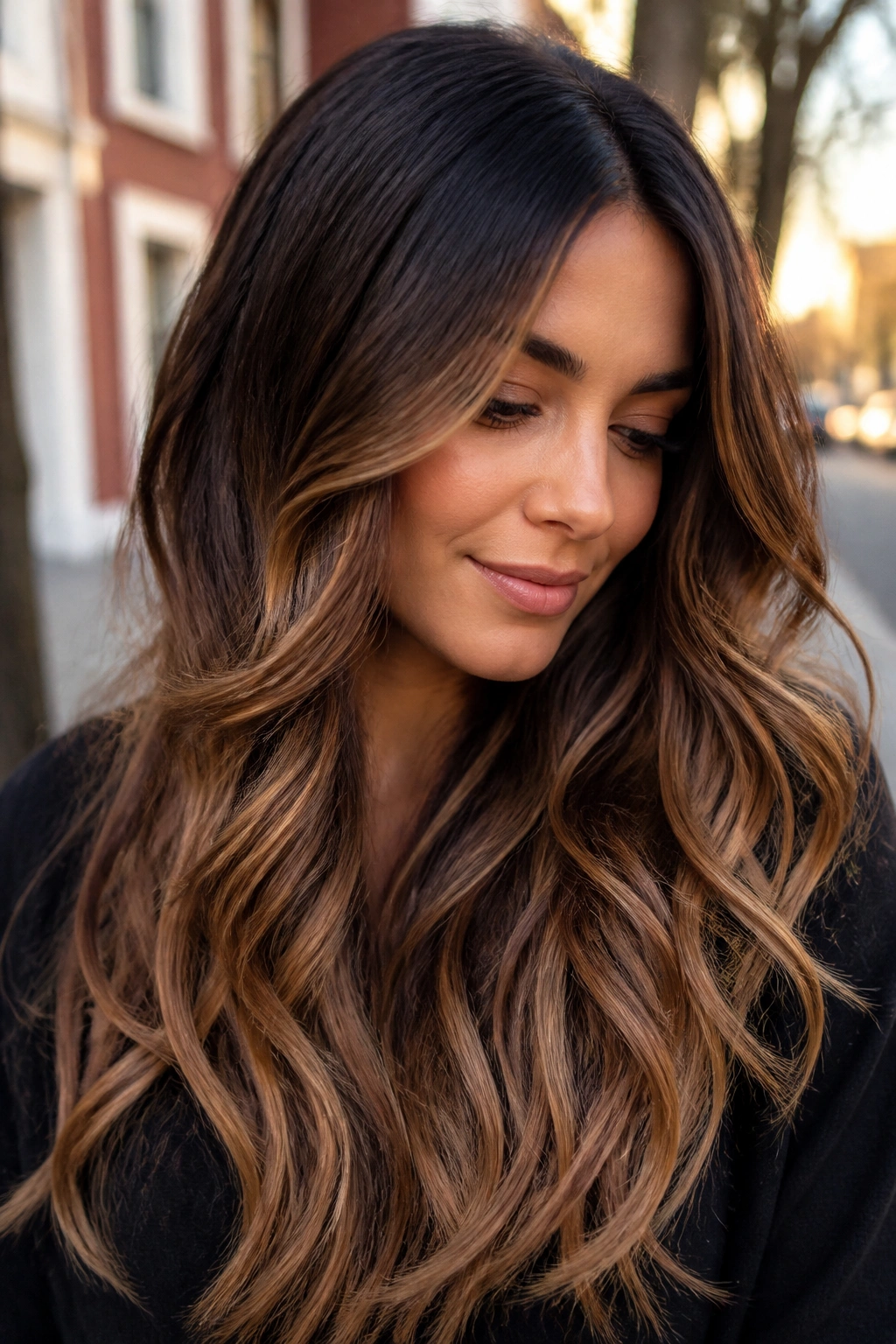
Want something a little warmer without jumping into full honey territory? Caramel ribbons are a smart move. They warm up dark brown bases fast, and on long hair they show up in a way that feels deliberate, not loud.
The key is to keep the caramel concentrated in the lower two-thirds of the hair, with only a few face-framing pieces lifted higher. If the warm pieces start near the roots, the whole style loses that ombre stretch and starts looking more like all-over highlights.
What to Ask For
- A dark brown base one or two levels deeper than the midlengths
- Caramel that sits 2 to 3 shades lighter than your root
- Soft feathering through the transition so the line never looks hard
- A gloss finish every 6 to 8 weeks if your hair tends to look dull
I like this one on long layered cuts. The ribbons catch movement when you walk, and the ends look thicker than they would in a single flat shade.
3. Chestnut Melt with Face-Framing Brightness
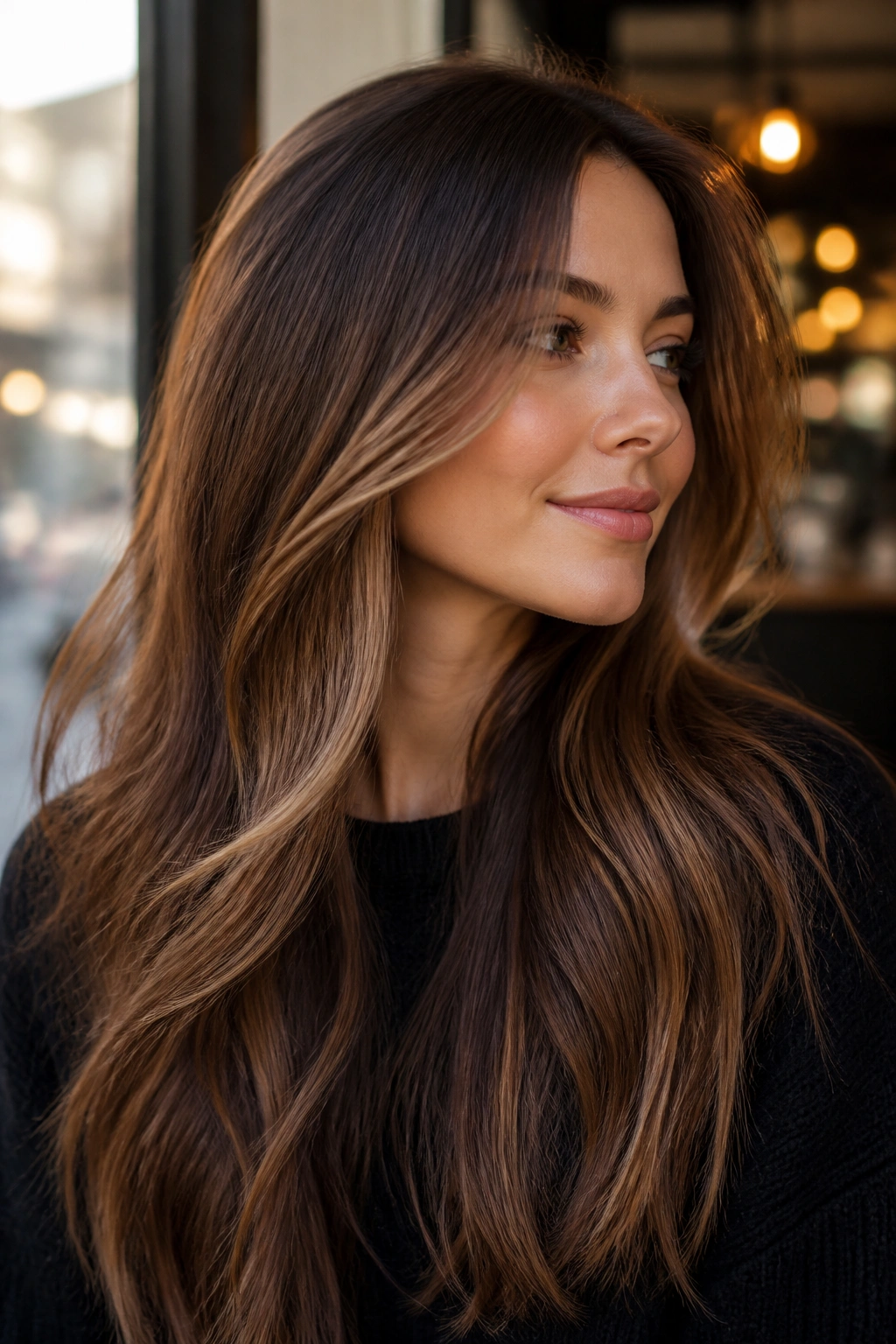
Picture long hair that stays rich through the back but opens up near the front. That’s the charm of a chestnut melt with a little face-framing brightness.
The chestnut keeps things grounded. Then the front pieces get just enough lift to soften the face and stop the color from feeling heavy. On very long hair, this is often the difference between “pretty brown” and “that actually suits the haircut.”
Where to Place the Brightest Pieces
- Keep the brightest chestnut or caramel pieces around the cheekbone.
- Let the back stay deeper so the length keeps its shape.
- Ask for a softer lift near the crown if your hair is thick.
- Leave the last few inches slightly lighter than the midlengths for a true ombre finish.
This is one of those styles that looks even better when the hair is tucked behind one ear. You get a little flash of color, then the fade disappears again into the length.
4. Cocoa to Honey Ombre on Soft Waves
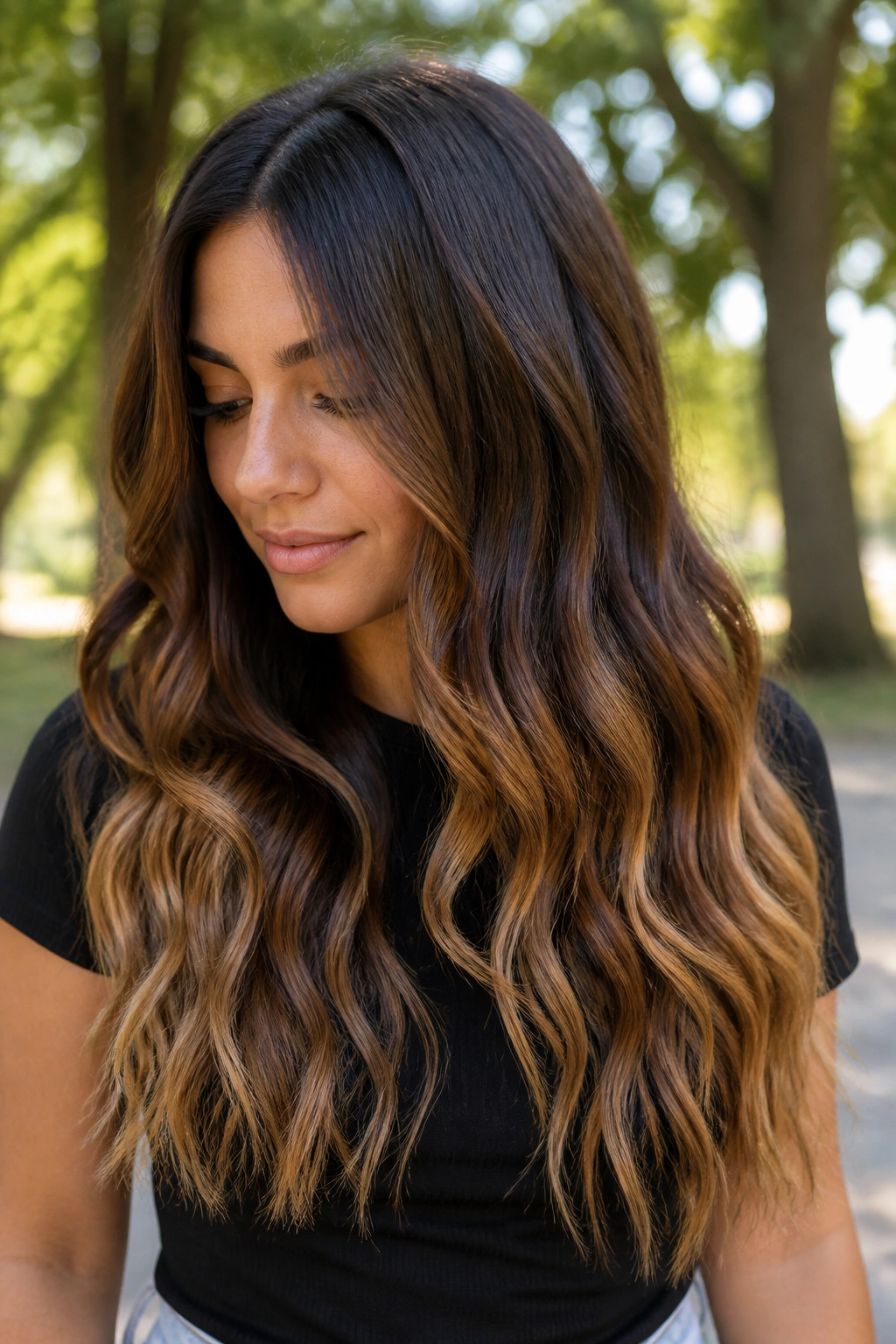
Honey on brown hair can go wrong fast if it’s too yellow. Cocoa keeps the base grounded, and the honey should sit more in the golden-beige lane than the brassy one.
Unlike full highlights, this version gives you one main story from top to bottom. That matters on long hair, because a clean color story keeps the length looking intentional instead of busy. I think it works especially well on soft waves, where the warm ends break up the mass of darker hair.
If your hair is naturally straight, you can still wear it. Just add a few loose bends with a 1.25-inch iron and leave the ends a little imperfect. Perfect curls can make this color look overstyled. A looser finish feels better.
5. Ash Brown to Mushroom Beige Ombre
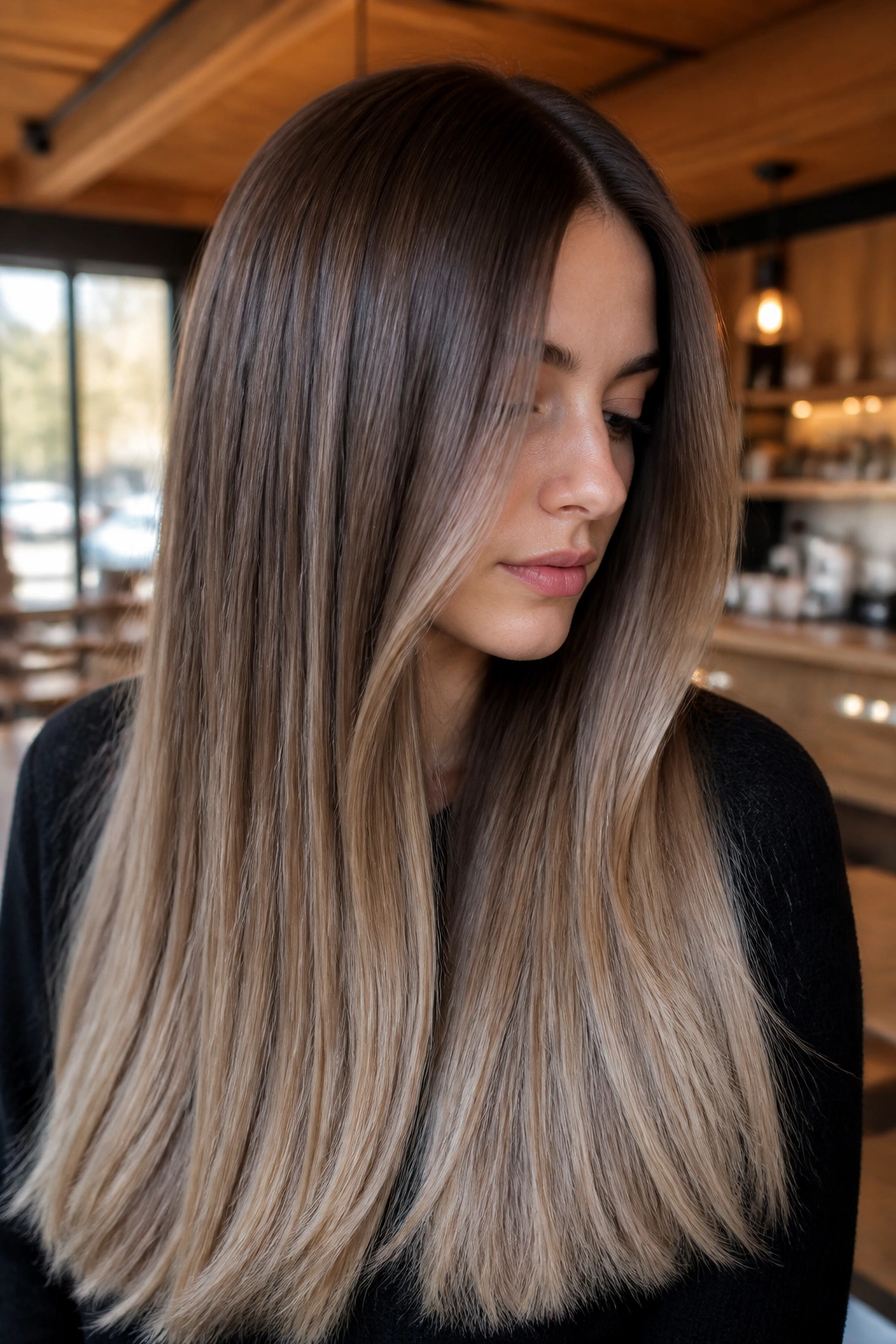
Ash brown has a cooler edge that some people love and others avoid completely. I’m in the first camp when the cut is long and sleek. The muted base makes the lighter ends look modern rather than sugary.
The transition into mushroom beige works best when the lift is gradual and the toner stays soft. You want the ends to feel pale-brown, not blonde. If they get too light, the contrast starts to fight the ash root instead of supporting it.
This shade family is especially nice if you wear your hair straight a lot. The cool tones show the shape of the cut, and a good gloss makes the surface look almost satin-smooth. It does need upkeep, though. Cool browns lose their crisp look faster than warm ones, so toning every 4 to 6 weeks keeps the finish clean.
6. Mocha Root Shadow with Toffee Ends
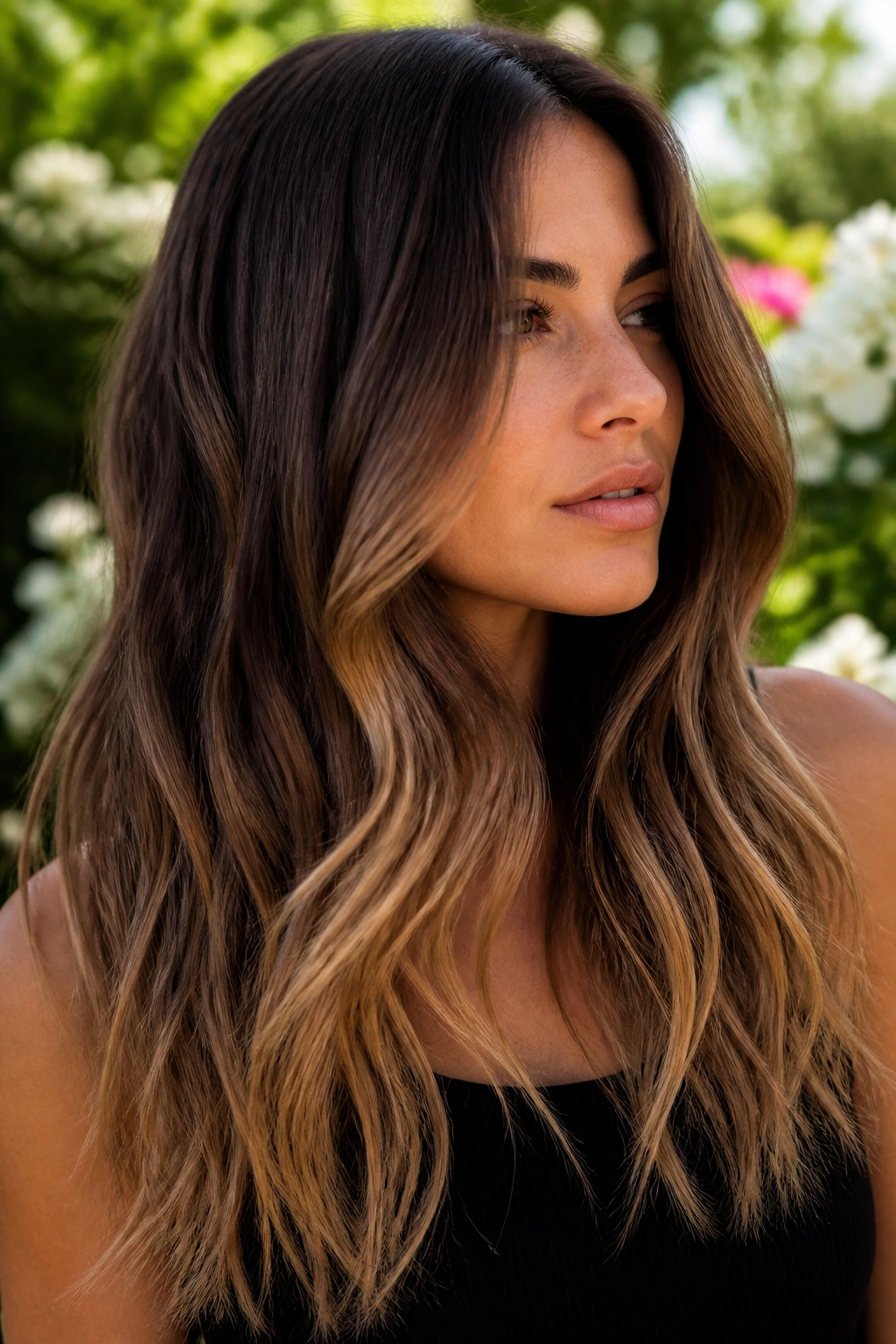
Mocha-to-toffee is one of those combinations that looks far more expensive than the setup should allow. The root shadow keeps everything grounded, and the toffee at the bottom gives long hair a little glow.
Why the Contrast Works
- Mocha roots hide regrowth well
- Toffee ends make dense hair feel lighter
- The fade works on both curls and straight styles
- The color shift looks strongest on hair that falls past the shoulders
What I like here is the control. You can make the ends a bit brighter if your hair is thick, or keep the toffee muted if your hair is fine and you want the length to stay soft. The style does not need a huge leap between shades to work.
Ask for the lightest pieces only on the bottom 4 to 6 inches. That keeps the ombre looking smooth, which is the whole point.
7. Cinnamon Brown with Copper-Kissed Ends
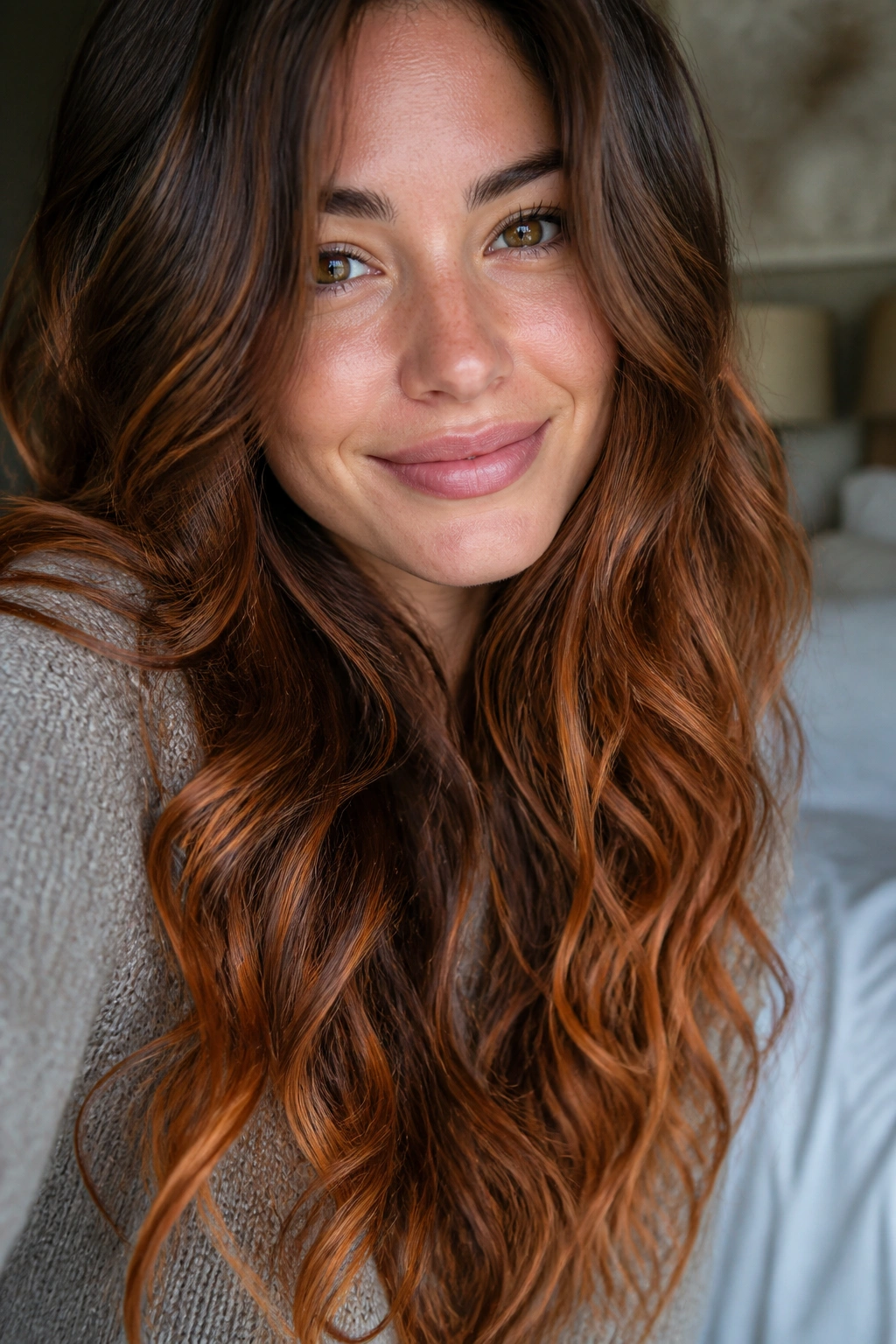
Cinnamon brown has a lively warmth that can easily tip into red, so the copper at the ends has to be handled with a light hand. You want a warm glow, not a bright orange stripe.
This is a good pick if your long hair tends to look flat in indoor light. The copper hints wake it up. Curly and wavy textures get the most out of it because the bends catch the warm tones in little flashes as the hair moves.
If you want the most flattering result, keep the midlengths cinnamon and reserve the copper for the last third of the hair. That leaves enough depth at the top so the style still reads as brown. The effect is richer than blonde ends and less heavy than a solid red-brown.
8. Chocolate to Bronze Ombre on Layered Hair
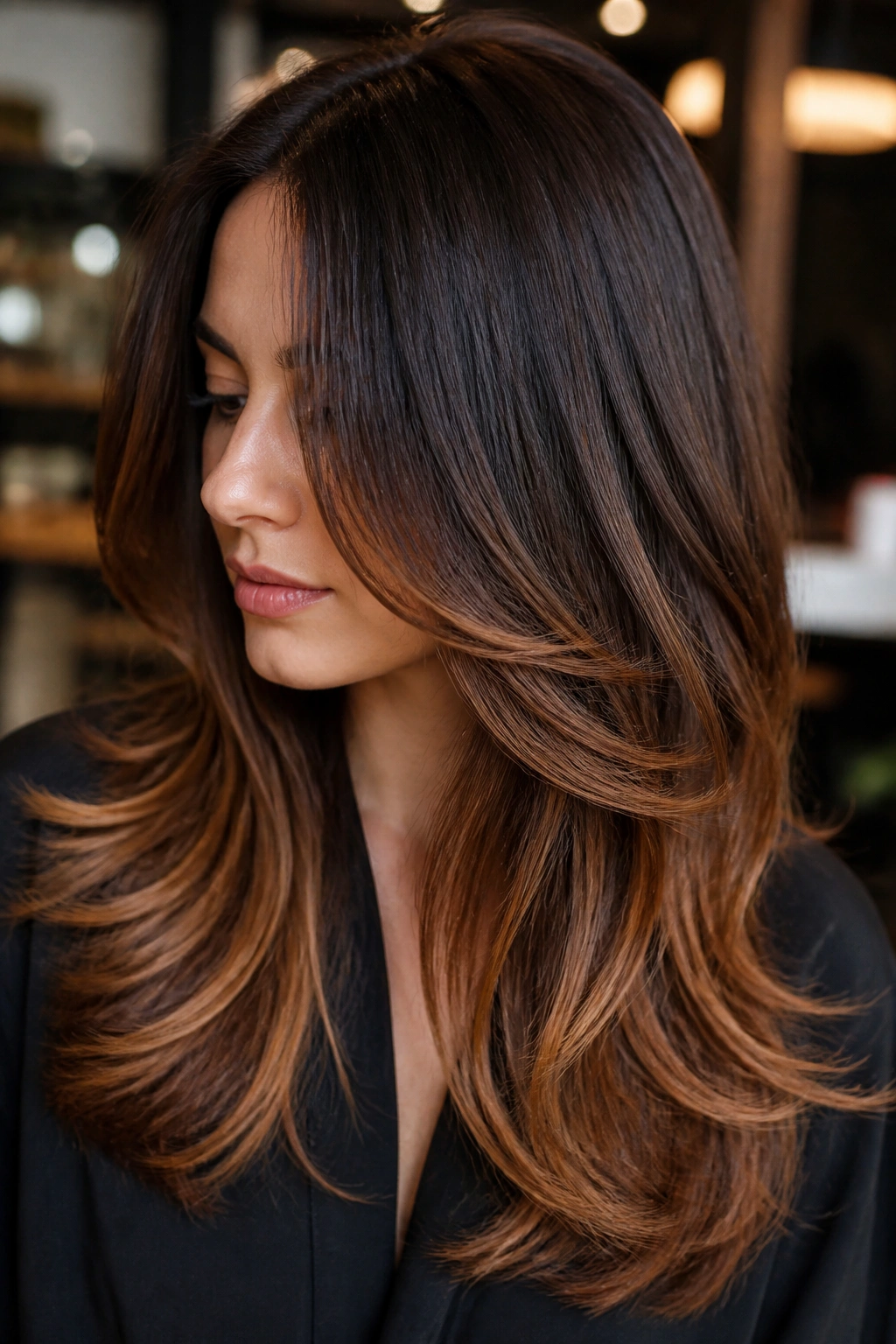
Bronze can be tricky, but on layered long hair it makes sense. The layers break up the color, so the bronze ends do not look like one large block of lightness.
The chocolate root gives the whole style weight. Then the bronze takes over gradually through the lower length and adds a hint of shine that feels especially good on layered cuts. Straight hair shows the contrast plainly. Wavy hair softens it and makes the bronze look a little more lived-in.
I’d avoid pushing the bronze too high on very dense hair. That can make the top look disconnected. Keep the fade low, let the layers do the work, and the whole style stays neat.
9. Walnut Brown with Sandy Ends
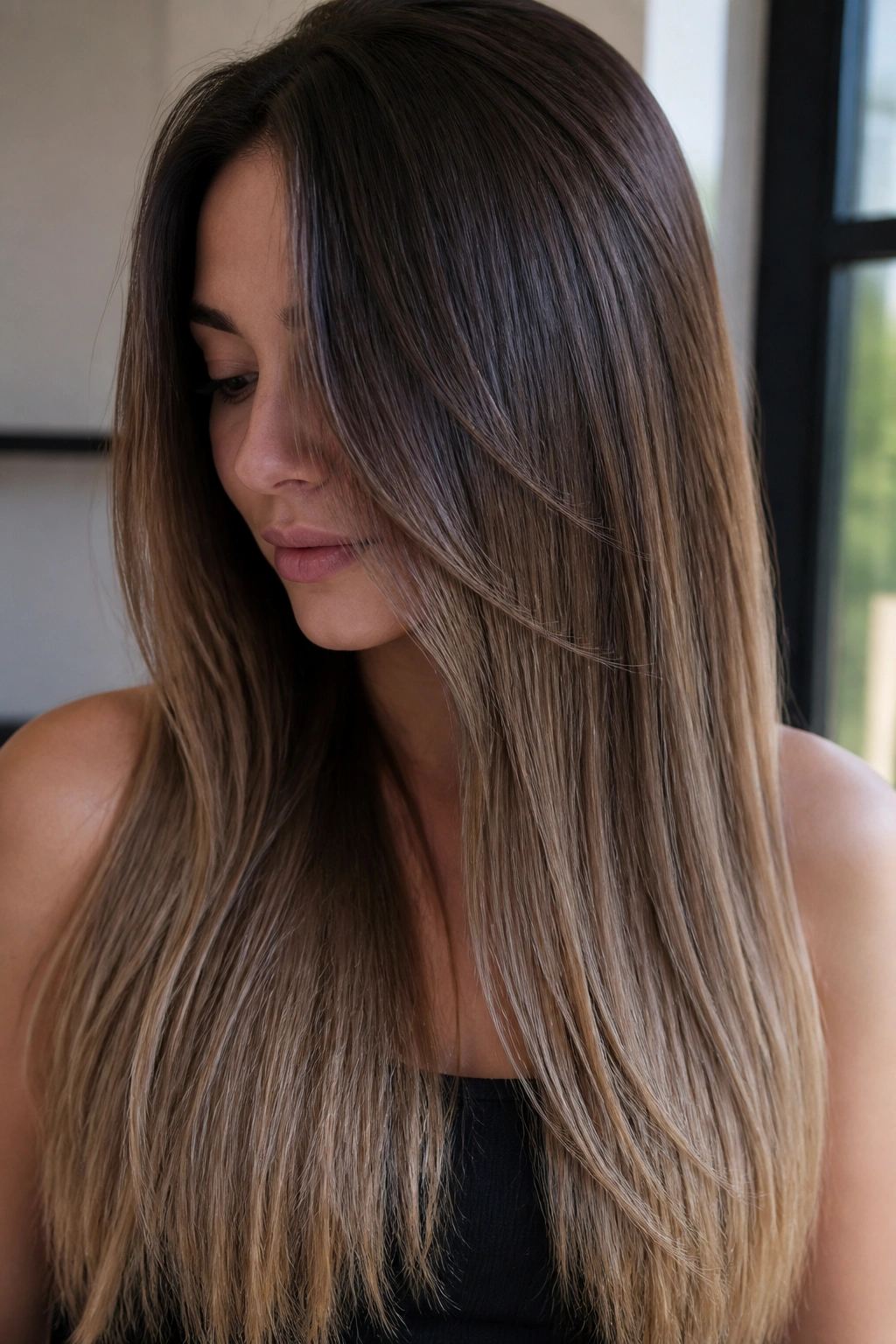
Walnut brown sits in that comfortable middle ground between cool and warm. It’s one of the easiest bases to wear, and sandy ends give it a lighter finish without making the color look loud.
Best for Low-Maintenance Wear
This is the brown ombre I’d send to someone who wants shape more than drama. The shift is there, but it does not shout. On long hair, that matters, because too much contrast can make the ends look thin.
A few notes help here:
- Keep the base around a medium walnut brown.
- Lift the ends only 1 to 2 levels lighter if you want softness.
- Use a smoothing cream before blow-drying so the sandy tone stays polished.
- Let the hair fall in one clean line if your cut is blunt; layers can come later.
The result feels calm. Not boring. Just calm.
10. Mahogany Brown to Auburn Fade
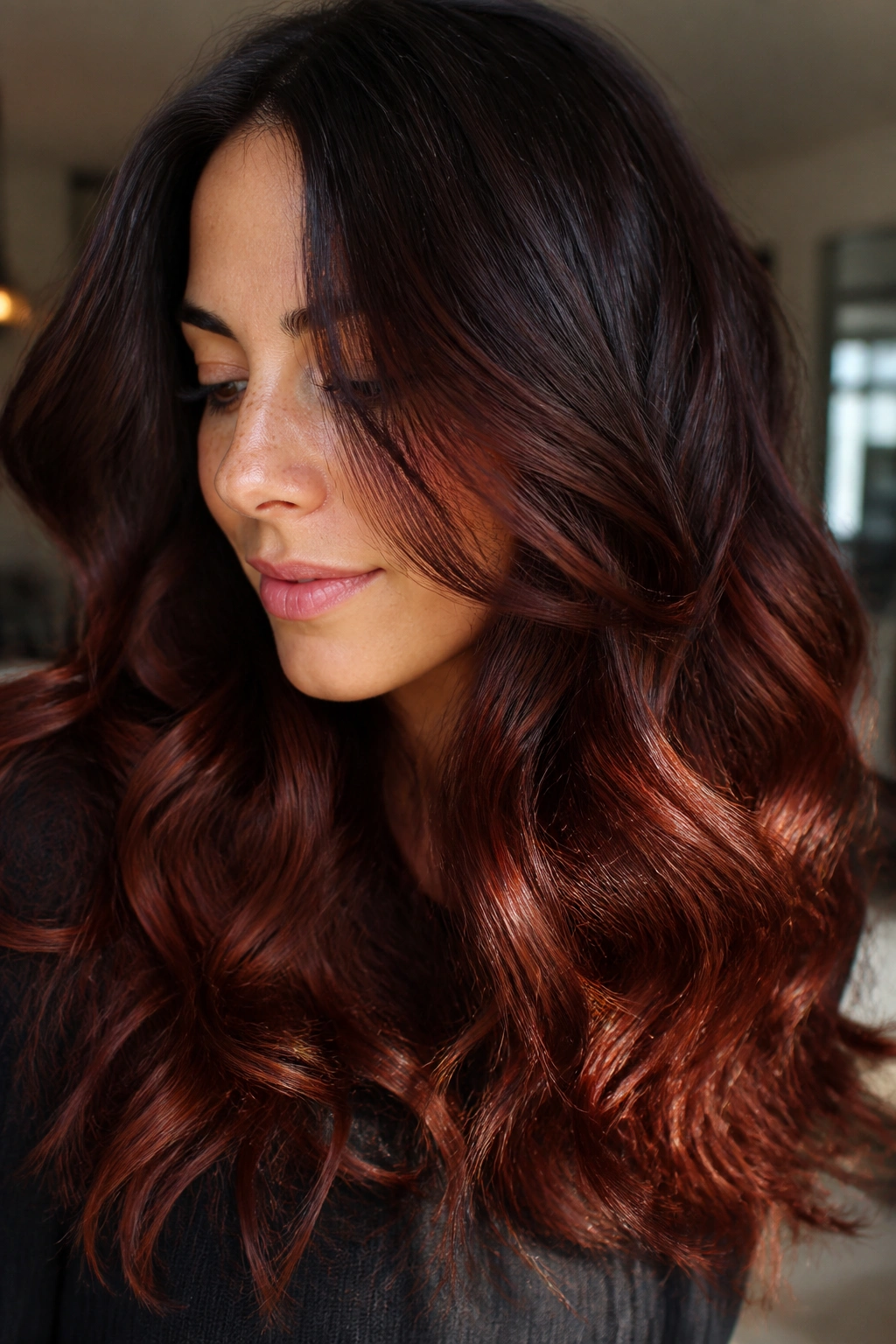
Mahogany is one of my favorites when a client wants depth with a little attitude. The red-brown base looks rich on long hair, and the auburn fade brings warmth without turning the whole head copper.
The best part is how this color moves in low light. Mahogany can look almost black indoors, then suddenly show red-brown depth near the ends when the hair shifts. Auburn at the bottom keeps that movement going. Loose curls make it even better because the color catches on each bend.
If your hair is very thick, keep the auburn more muted and closer to brown-red than full red. That way it blends instead of sitting on top. On medium-density hair, you can push the warmth a little further and still keep the fade soft.
11. Smoky Brunette Ombre with Cool Ends
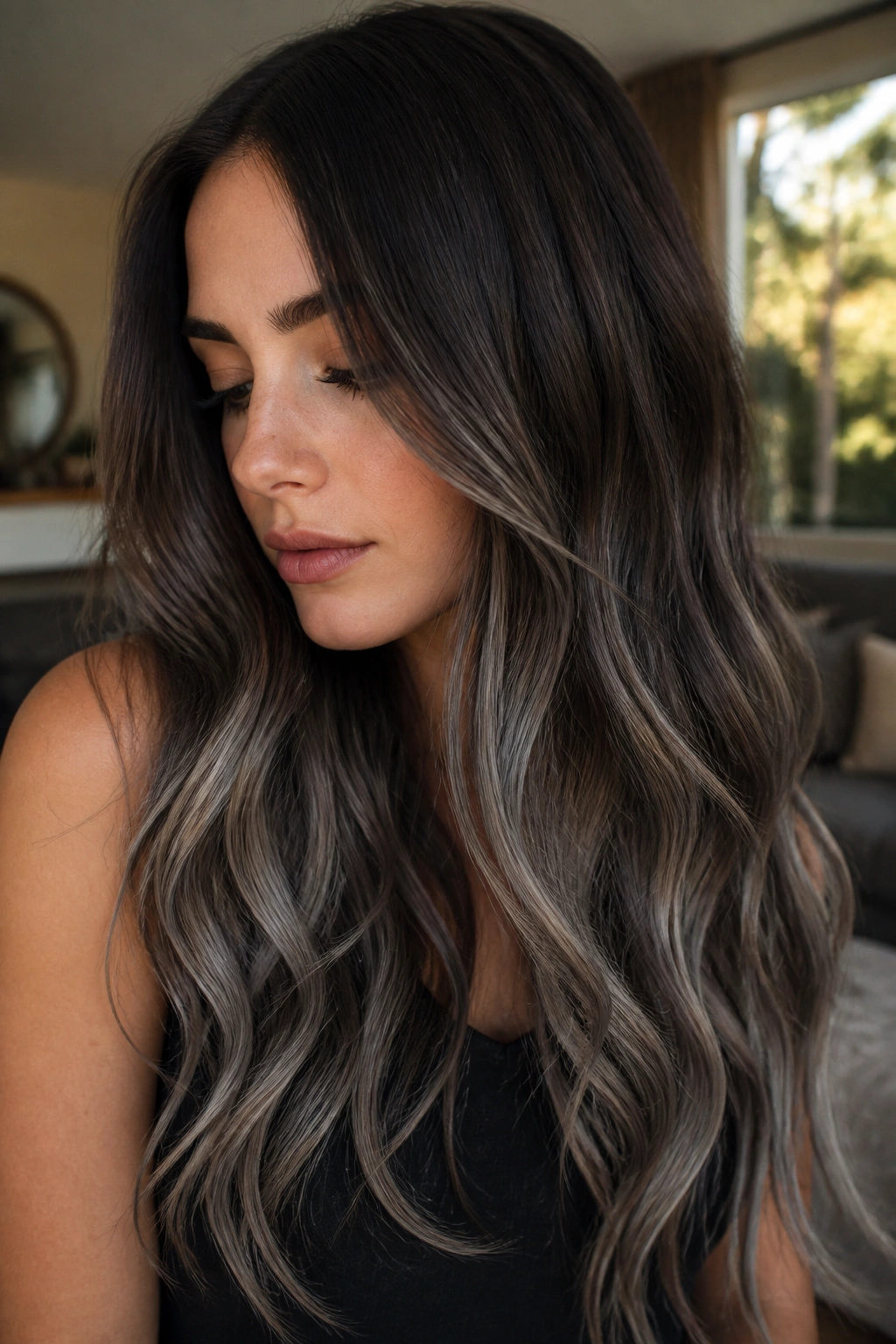
Smoky brunette is what I reach for when someone says they want brown, but not warm brown. The tone feels cool, soft, and a little moody — in a good way.
On long hair, this shade works because the lower ends do not scream for attention. They whisper. That gives the cut a smoother line and keeps straight styles from looking harsh. If you wear your hair curled, the cool ends create a nice contrast against shiny bends.
A gloss matters here. Smoky brown can turn dull fast if the surface looks dry. A clear or cool-toned glaze every month or so helps keep the finish soft and reflective. And if your hair tends to pick up warmth, ask for a toner that cancels brass without making the ends flat gray.
12. Latte Brown Ombre for Straight Lengths
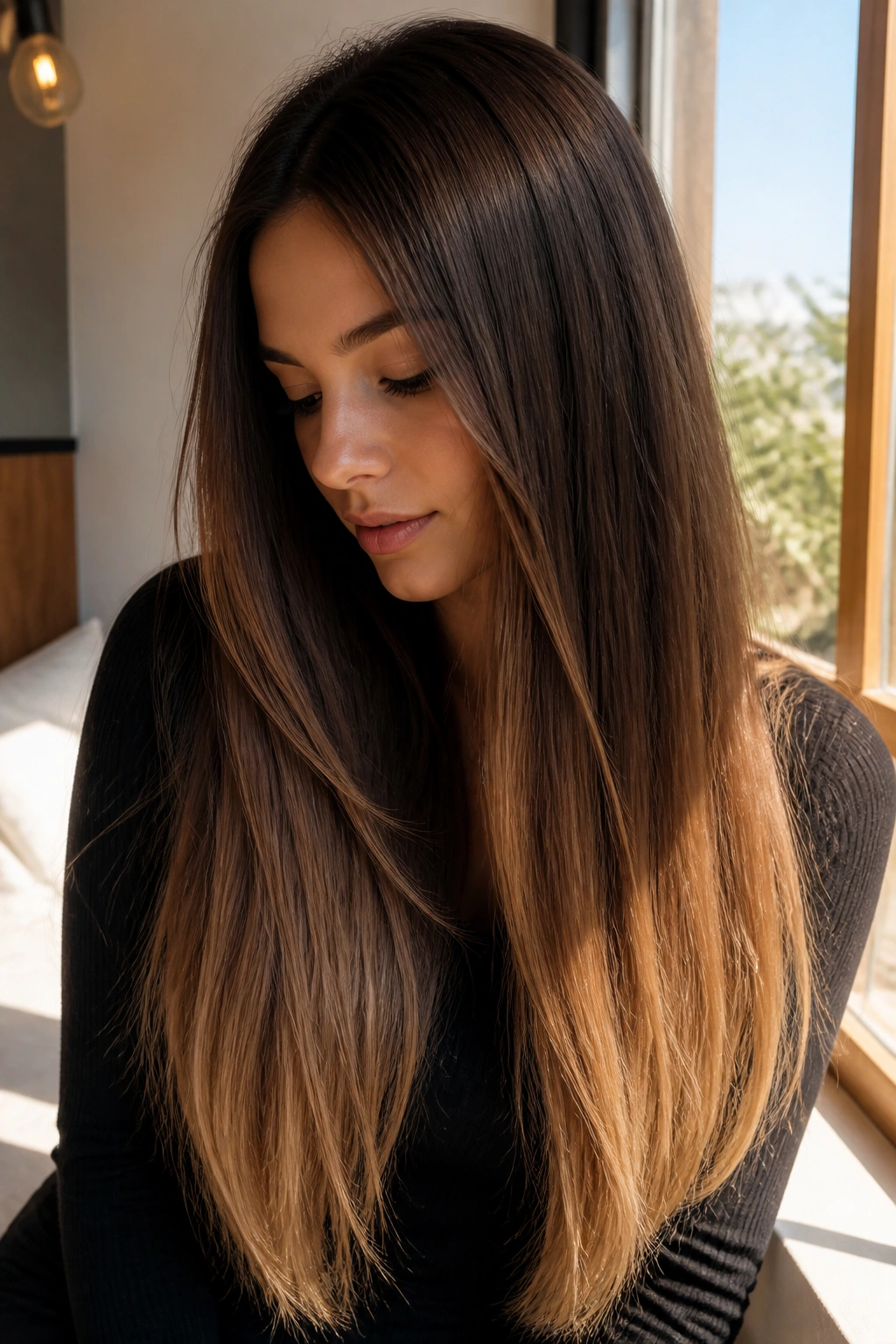
Latte brown is a good answer when you want lighter ends but still want the hair to stay soft and wearable. The shade should sit in that creamy brown zone — lighter than mocha, darker than beige.
Straight long hair shows this style cleanly. There’s no curl pattern to hide the fade, so the change from root to end needs to be gradual and smooth. A blunt cut or a long U-shape both work well, depending on whether you want the length to feel full or more tapered.
This is one of those looks that gets better with a careful blowout. Use a round brush, smooth the midlengths, and let the ends turn slightly inward. That tiny bend keeps the latte color from looking flat.
13. Brunette Balayage Ombre with Money Piece
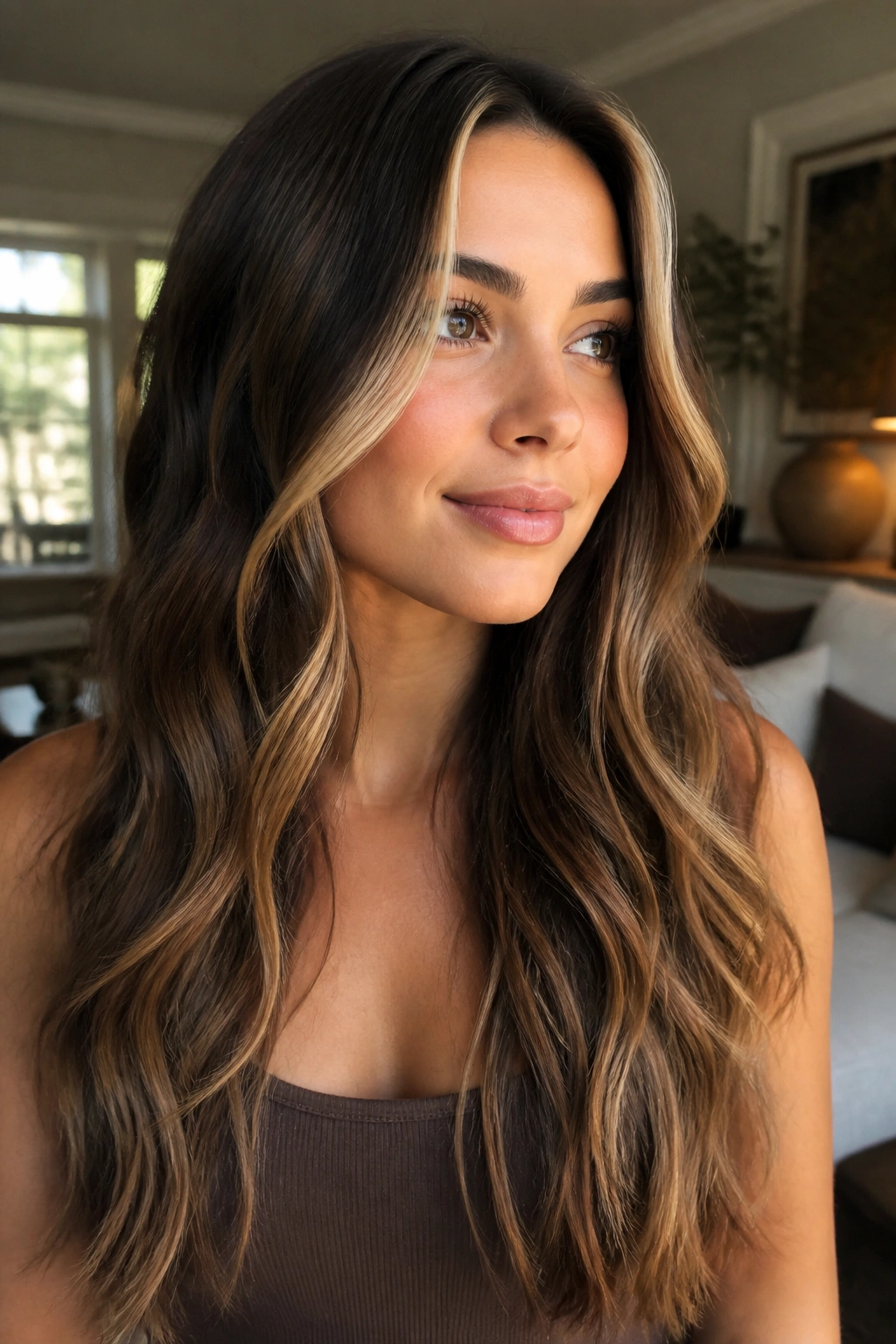
Some styles do too much at once. This isn’t one of them, if it’s done with restraint. A brunette balayage ombre with a money piece gives you brightness around the face and a deeper fade through the rest of the length.
How to Keep It From Looking Striped
The mistake is lifting the front pieces too sharply and leaving the rest untouched. That creates a split between the top and the bottom. The better move is to soften the money piece into the front layers, then let the color drift lighter as it goes down the hair.
A few useful rules:
- Keep the front brightness one tone lighter than the ends, not five.
- Blend the side sections into the midlengths.
- Leave some depth underneath so the color does not look overdone.
- Style with loose bends so the front pieces fall naturally.
On long hair, this gives you the benefit of brightness near the face without losing the clean ombre shape through the back.
14. Dark Chocolate to Beige Brown Ombre
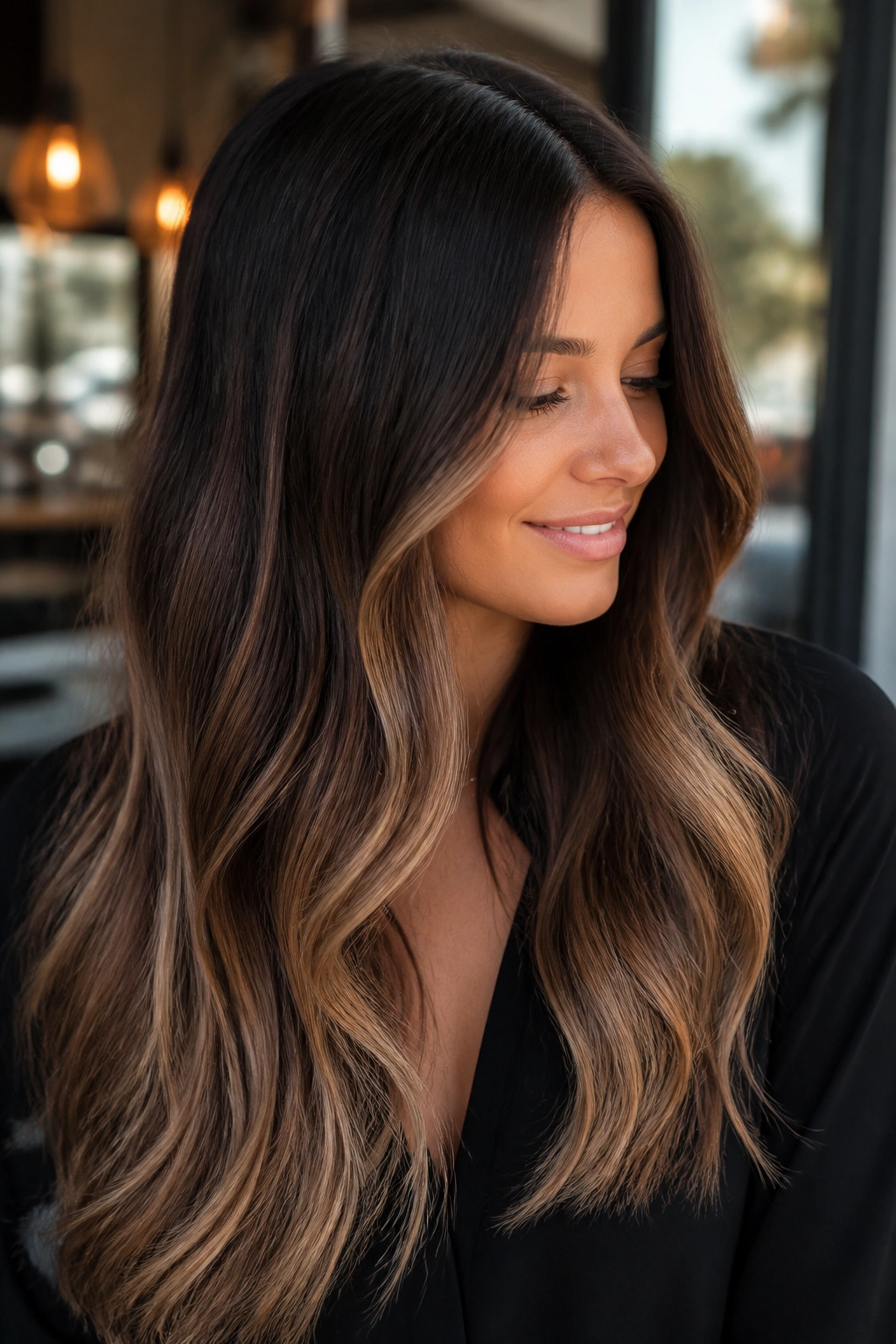
Dark chocolate roots with beige brown ends hit a nice middle ground. The contrast is visible, but it does not veer into blonde territory, which is one reason I like it for long hair that needs to stay rich.
Beige brown is a smart end tone because it reflects light without feeling yellow. It works well on long hair that’s slightly layered, since the lighter bottom catches the ends of the layers and makes them look more textured.
This is a good choice if you want a color that looks neat from a distance and interesting up close. The move from dark to beige should be smooth enough that you can’t point to one exact line where the shift starts. If you can, the transition is too harsh.
15. Chestnut Ombre with Curly Ends
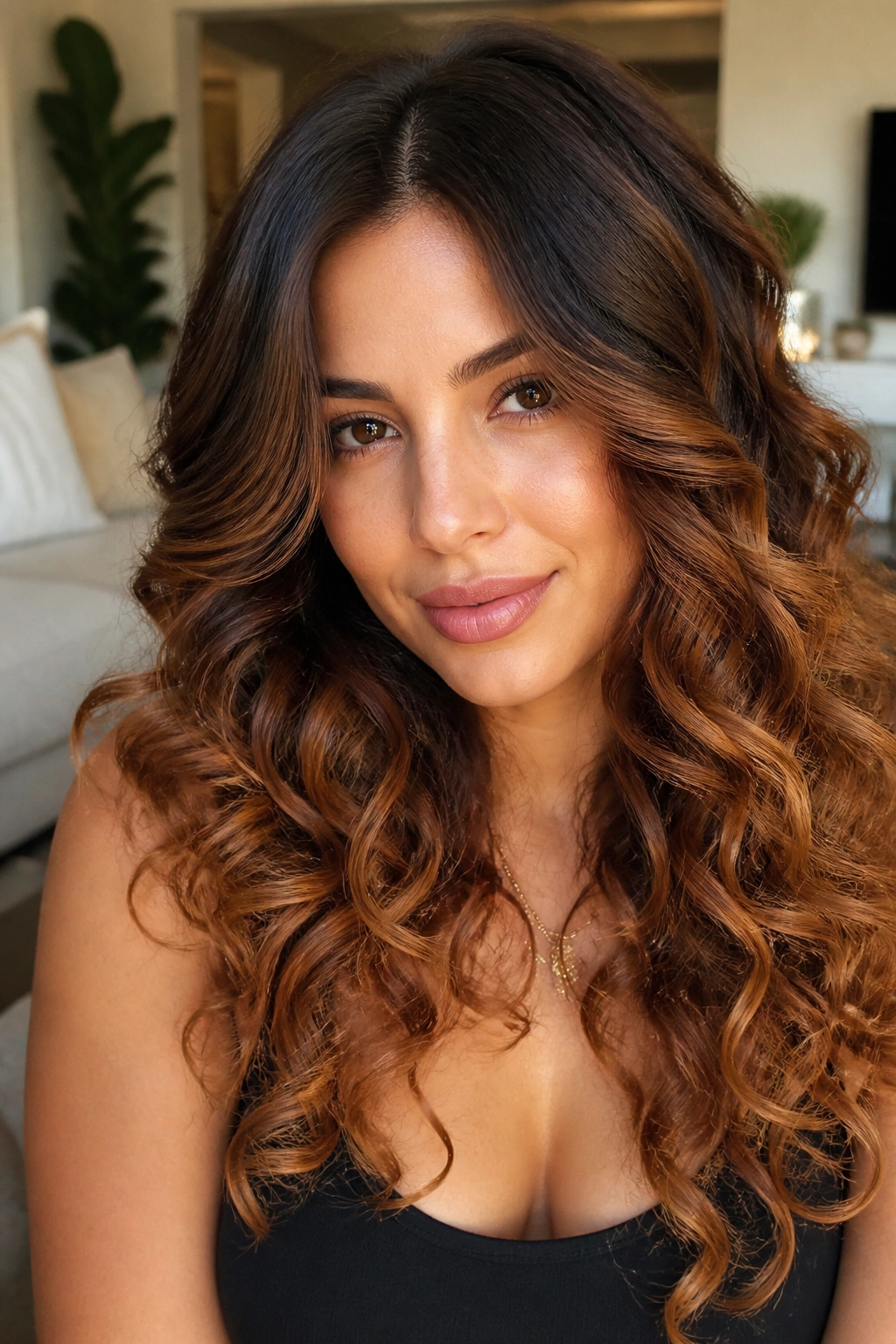
Curly hair and chestnut ombre get along fast. The curl pattern breaks the color into pieces, so the transition feels softer even when the contrast is noticeable.
Chestnut keeps the upper half warm and rich. The lighter ends, if they’re only a shade or two brighter, show up as depth instead of a separate layer. That matters on long curly hair, where too much brightness can make the ends look frizzy or dry.
Use curl cream before diffusing so the shade reads through the shape, not through a fuzzy halo. I’d also leave the very bottom inch a touch deeper if your ends are fragile. That tiny bit of darkness helps the hair look denser.
16. Reverse Brown Ombre with Darker Ends
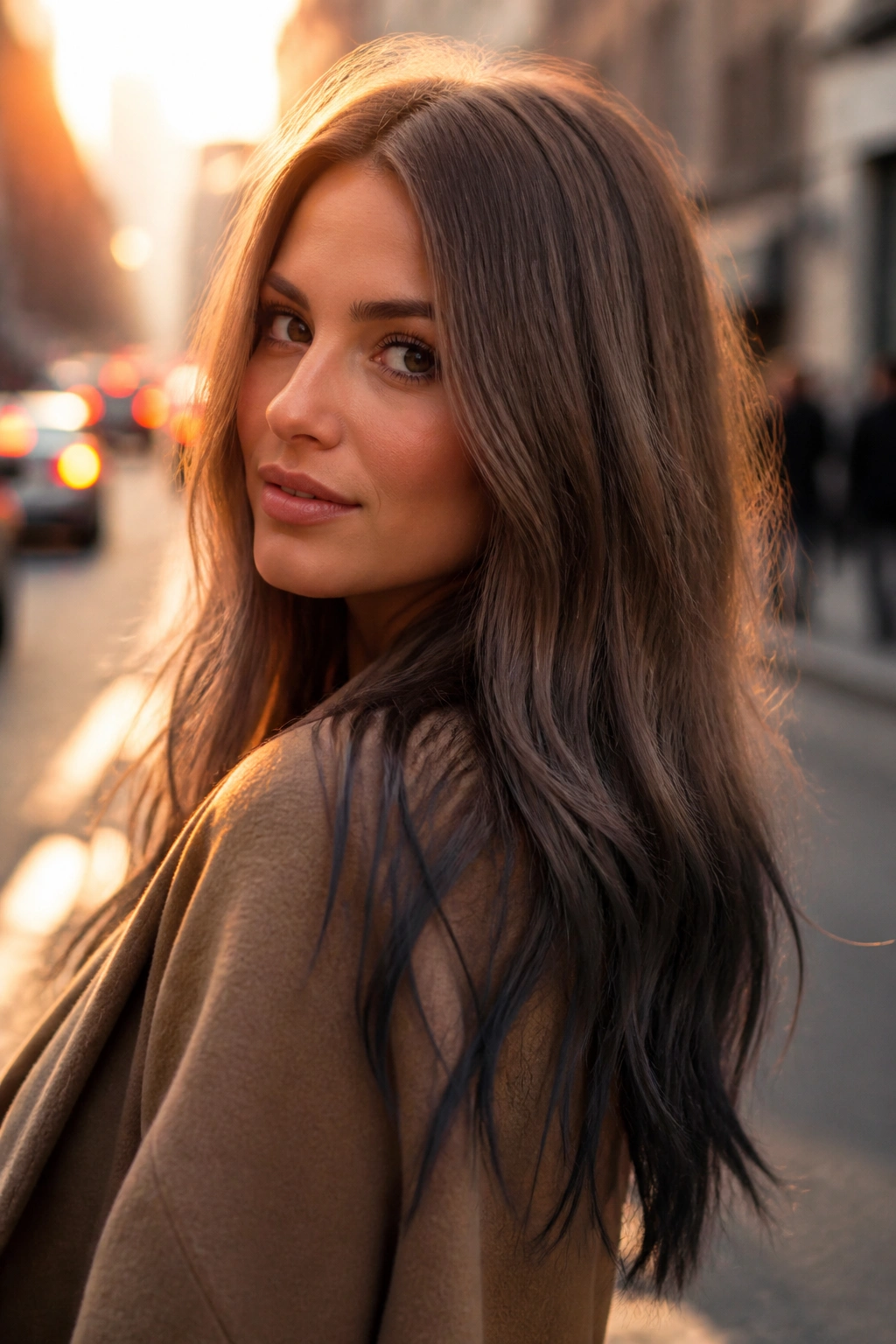
Reverse ombre is not the first thing people ask for, which is exactly why it can look good. Instead of lightening the ends, you let the top stay medium brown and the lower length drift deeper into espresso or near-black brown.
On long hair, the effect is dramatic in a quiet way. The length feels heavier, more grounded, almost velvet-like. It works best on straight or softly waved textures, where the dark ends can hang cleanly instead of disappearing into a curl pattern.
This style is not for everyone. It can make very fine hair look a little more solid, but on thick hair it adds weight in the best sense. If you like moody color and want something less common than caramel, this is a sharp choice.
17. Toffee Ombre on Thick, Heavy Lengths
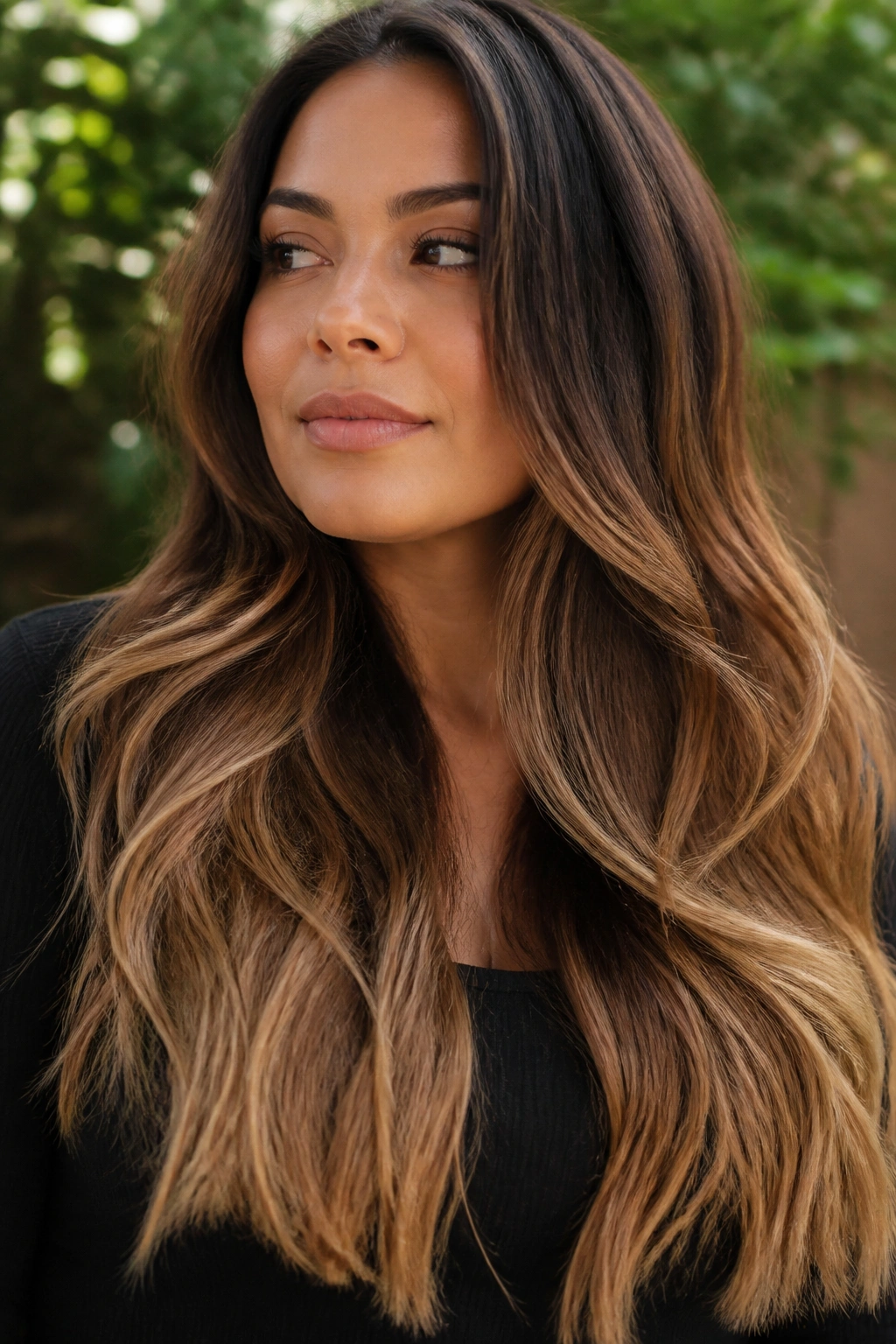
Thick hair can carry a lot of color without looking messy, which is why toffee ombre works so well here. The lighter ends help the length feel less bulky, and the warm tone keeps everything friendly instead of harsh.
Where to Lighten Thick Hair
- Start the lightening a bit higher, around the mid-lengths.
- Keep the ends creamy, not pale.
- Use wider sections so the fade does not look busy.
- Let the top stay deeper to preserve shape and shine.
On very dense hair, I’d avoid a tiny, delicate fade. It disappears. A stronger stretch from dark brown into toffee gives the color room to breathe, and the ends still look soft because the warmth carries them.
A long layered cut is a nice match. The layers stop the lighter color from pooling at the bottom in one heavy block.
18. Soft Sombre for a Barely-There Shift
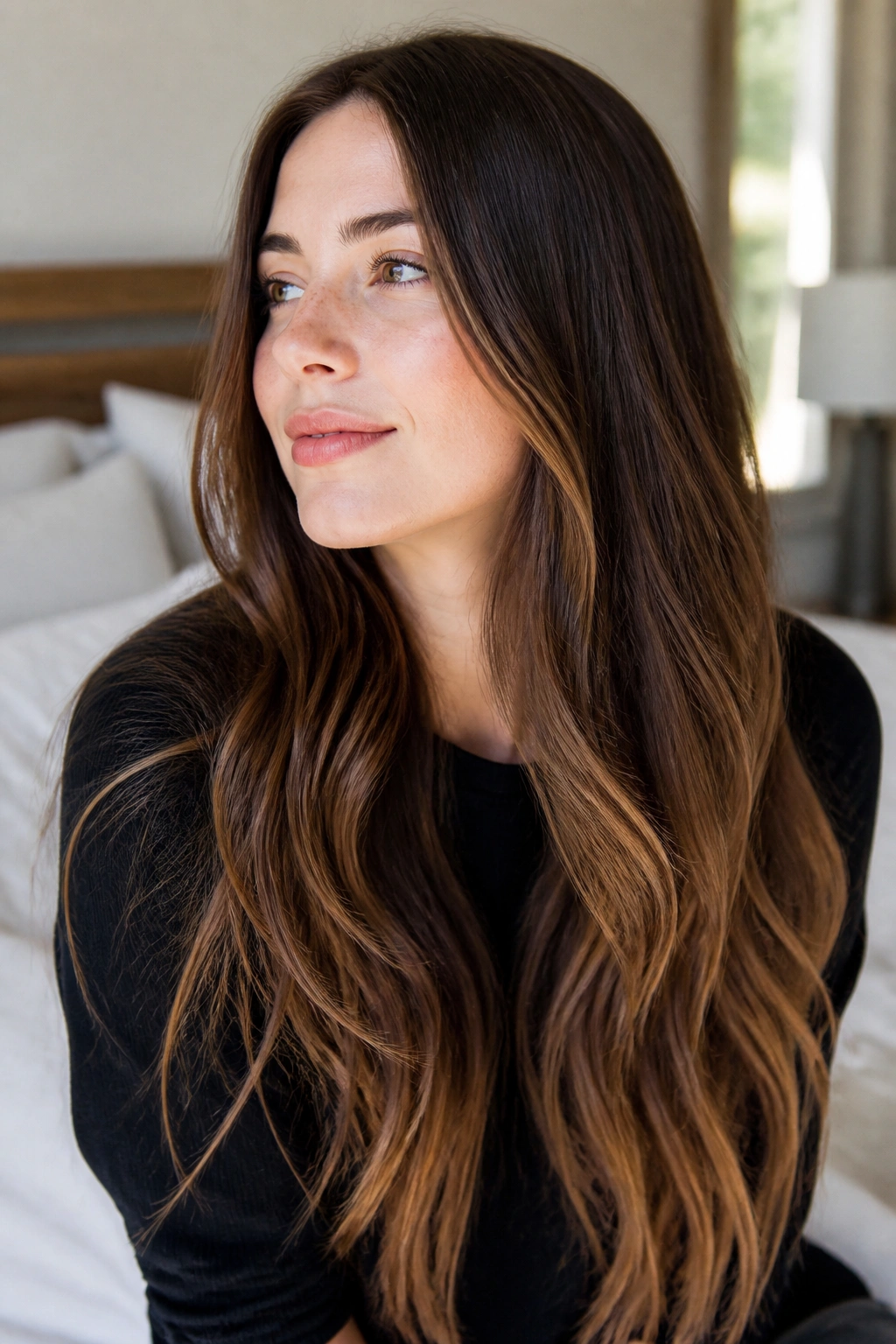
Soft sombre is basically ombre with a gentler hand, and sometimes that is exactly the right move. If you want brown ombre hair ideas for long hair but do not want a dramatic split between root and end, this is the one I’d point to first.
The lighter shade should only be one or two levels away from the base. That keeps the change visible without screaming for attention. On long hair, the result is subtle movement rather than a big color statement.
It works especially well if your hair is already shiny and healthy. A soft sombre is all about surface polish and a slow fade. If your ends are dry, the effect can look flat, so a trim before coloring helps more than people think.
19. Walnut to Honey Ombre with Curtain Bangs
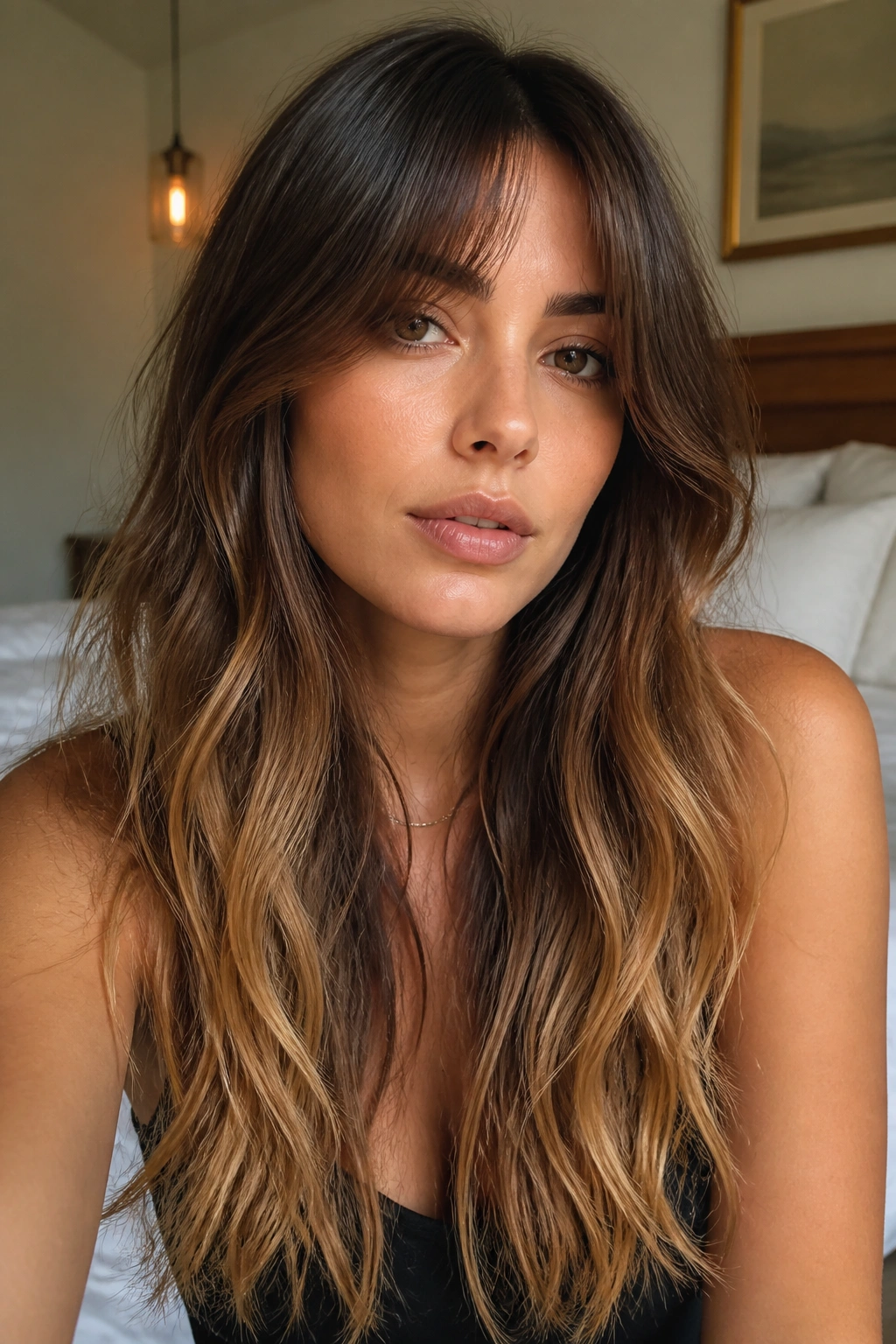
Curtain bangs can make a brown ombre feel much softer around the face. They bridge the top shade and the lighter ends, which keeps long hair from looking too bottom-heavy.
Walnut to honey is a warm, easy combination that suits people who like brightness but do not want a strong gold tone. The honey should stay muted enough to look brown-adjacent, not blonde. That keeps the color wearable across the full length.
If your curtain bangs are blended into the sides, the ombre looks even smoother. The bangs break up the transition and give your face a little light without forcing the rest of the hair to follow the same level of brightness.
20. Mushroom Brown Ombre with Gloss Finish
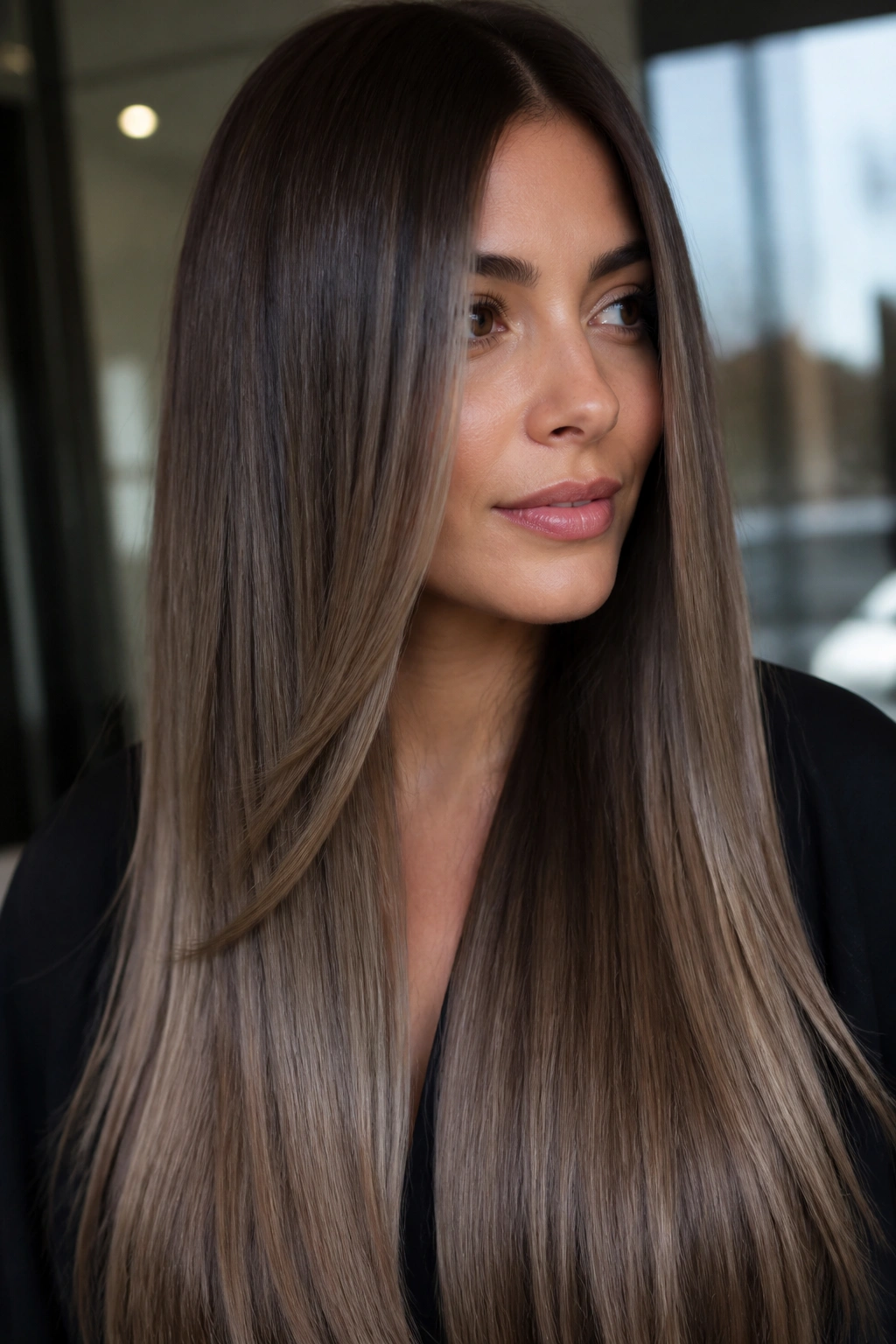
Mushroom brown has become a favorite of mine because it solves a common problem: too much warmth. It keeps the color cool, earthy, and expensive-looking without leaning gray in a harsh way.
On long hair, mushroom brown ombre needs a clean gloss finish. The tone itself is muted, so the shine has to do some of the visual work. Straight hair shows the color most clearly, though soft waves can make the lower fade feel a little fuller.
Ask for the ends to stay in that taupe-brown lane, not beige-blonde. The whole look should feel like a soft dusk color. If the tone gets too light, the style loses its best quality — that smoky, grounded finish.
21. Espresso to Caramel Dip-Dye Ends
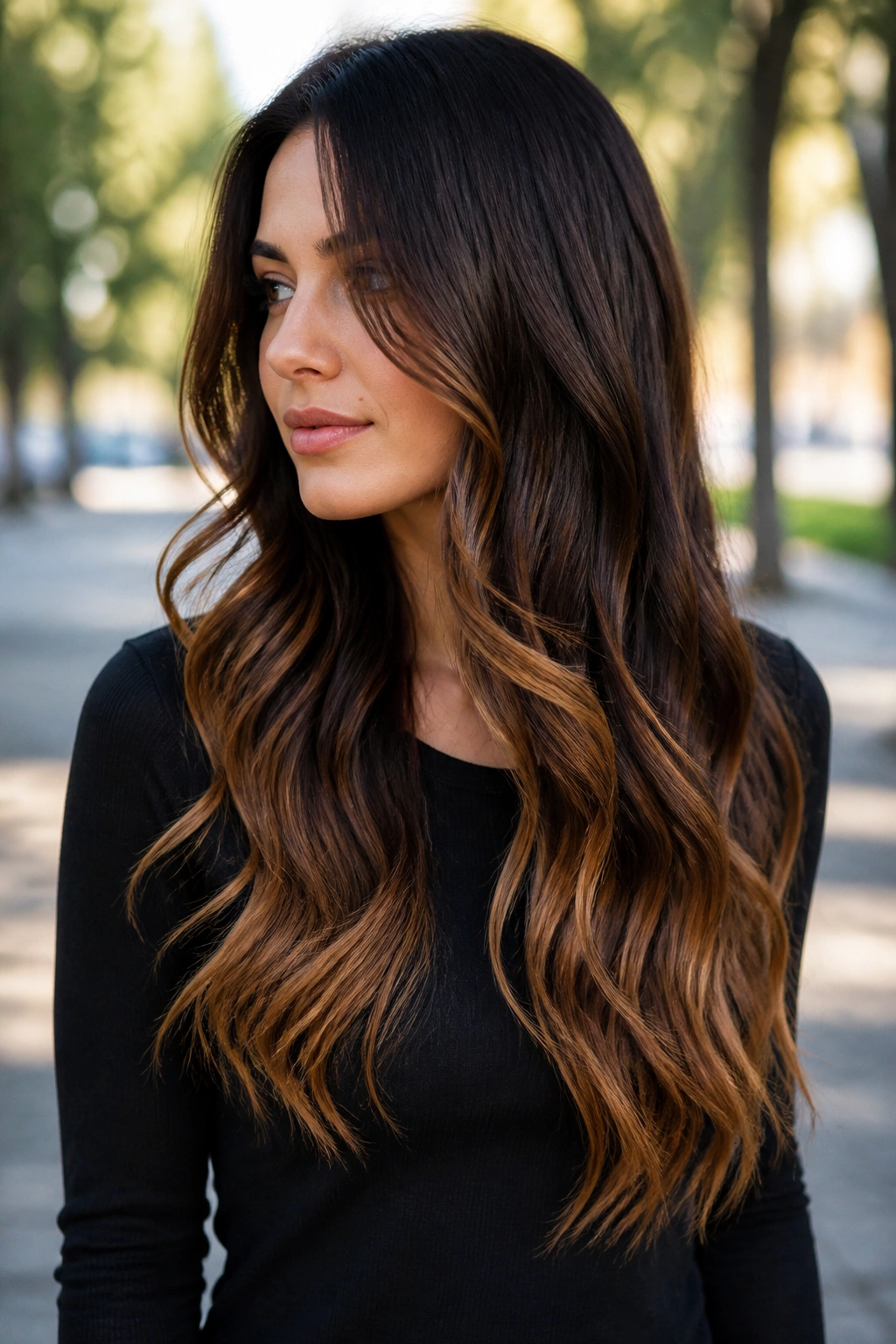
Dip-dye ends are a bolder cousin of ombre, and on long hair they can work because the extra length gives the color room to stop and start. The espresso root stays untouched, while the caramel is concentrated low enough to read as a deliberate finish.
I like this when someone wants visible contrast but does not want to commit to lightening the whole midlength. It’s more graphic than a classic fade, but the long length keeps it from feeling harsh. The darker upper section anchors the style.
Loose curls soften the edge a lot. Straight hair makes the dip-dye line more obvious, which can be fun if you like a sharper look. Either way, keep the caramel creamy and not too yellow.
22. Cinnamon Sugar Ombre with Braided Texture
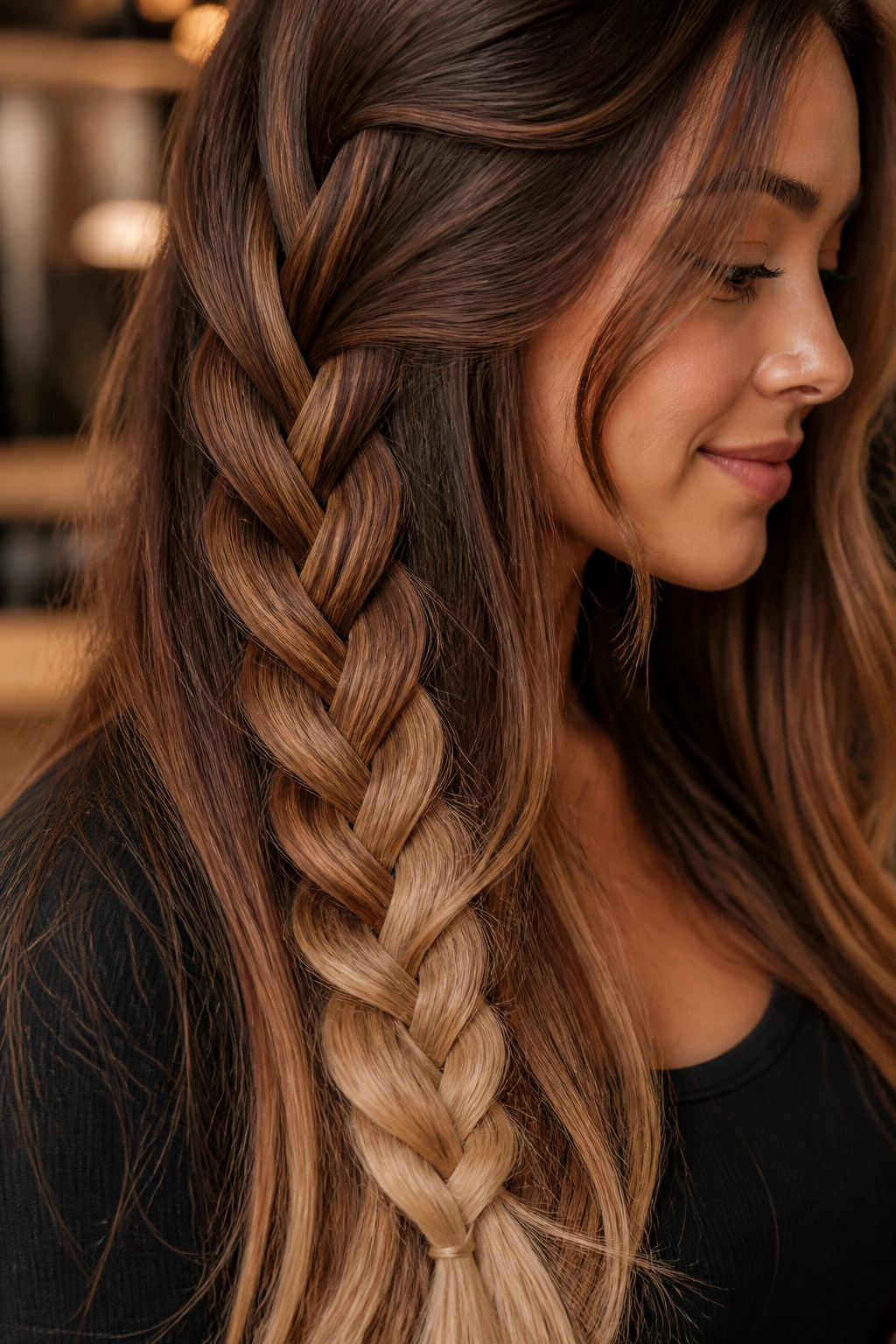
Braids show off color in a different way than loose hair does. Each weave exposes little bits of the fade, which is why cinnamon sugar ombre looks so good in fishtails, three-strand braids, and half-up styles.
The cinnamon base adds warmth, while the sugar-toned ends lighten the movement without reading blonde. On long hair, the effect is playful and textured. It works best when the color shift happens gradually through the lower half so the braid can pick up both tones.
A tiny bit of styling cream helps the braid stay smooth. Too much product will darken the surface and hide the color. Too little, and the braid loosens before the ombre has a chance to show.
23. Taupe Brown Ombre for Fine Hair
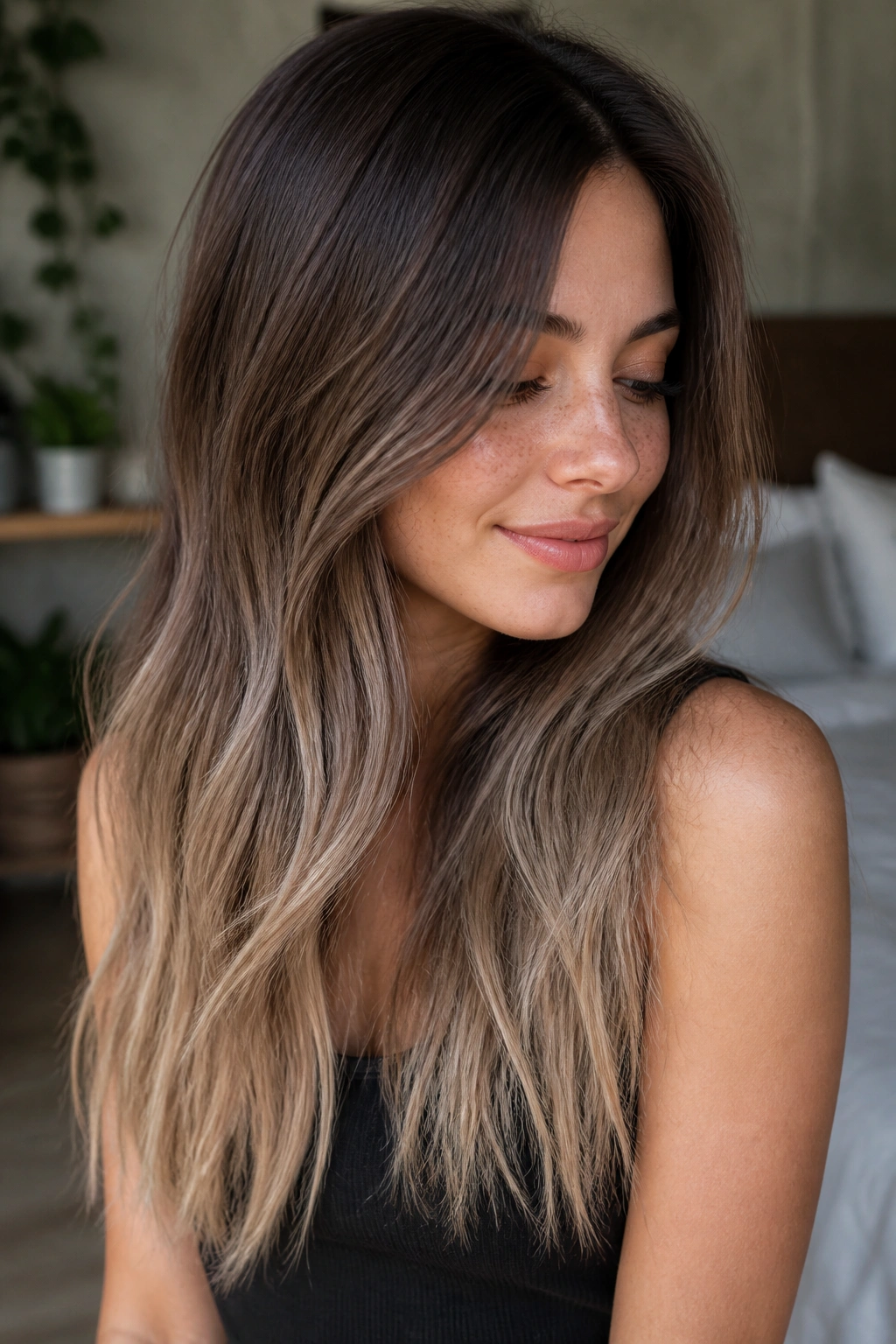
Fine hair can get swallowed by heavy color. Taupe brown avoids that problem by staying cool and airy, with lighter ends that do not look too dense or too warm.
The important part is restraint. A fine-haired client usually looks best with a softer fade and a lighter touch through the ends, not a dramatic two-tone split. Keep the transition blended and the lightest shade close to taupe-beige, which creates the illusion of fullness without making the hair look thin.
This style tends to work well on long straight hair and soft bends. You get the feeling of dimension, but the hair still looks light on its feet. That’s a good thing. Fine hair rarely benefits from heavy-looking color.
24. Auburn Brown Ombre with Vintage Waves
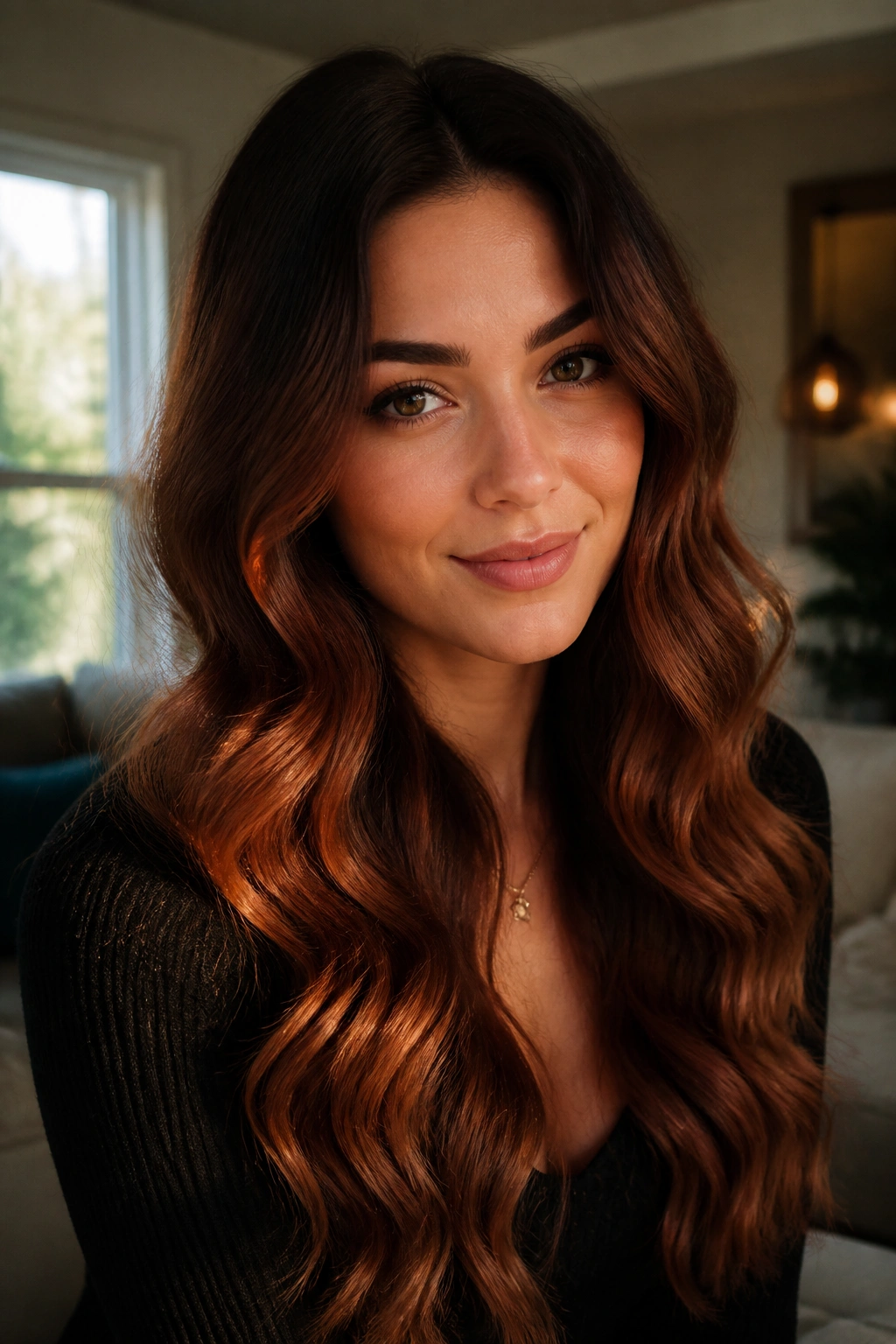
Vintage waves and auburn brown have an easy chemistry. The waves add polish, and the auburn tones give the ends a little old-school richness that looks especially good on long lengths.
What to Watch for in the Styling
Auburn can turn too bright if the wave pattern is too tight, so I prefer soft, brushed-out bends here. A 1-inch to 1.25-inch iron usually gives the right shape. Let the waves cool completely before brushing them into place, or the whole style can get fluffy fast.
A few things make the color land better:
- Keep the roots a deep brown so the auburn has contrast.
- Let the ends stay warm, not orange.
- Use a shine spray lightly on the midlengths.
- Pin the front sections back for a classic finish.
This is one of those ideas that feels dressed up even when the clothes are simple.
25. Glossy Dark Brunette Ombre for Waist-Length Hair
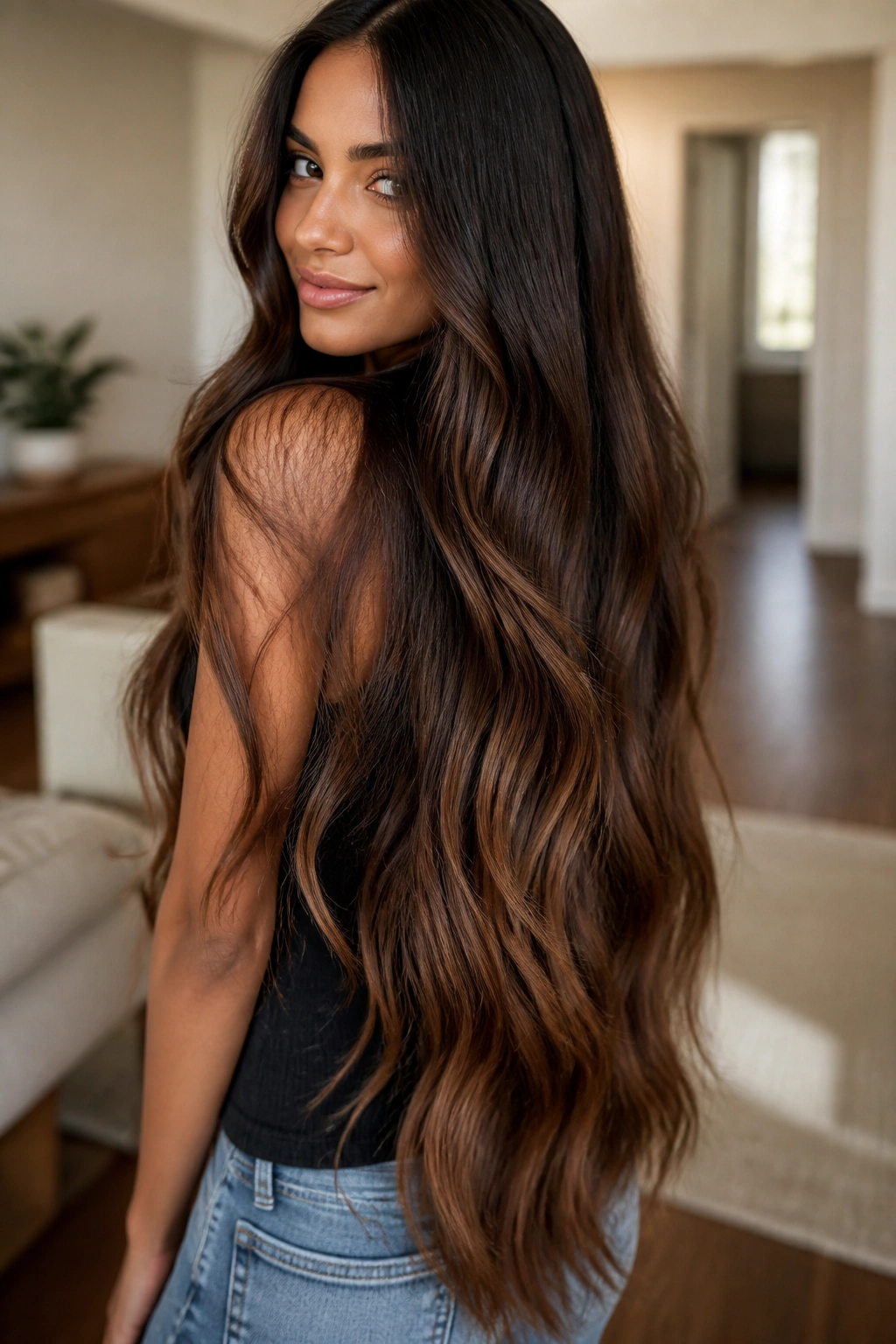
When hair is this long, shine matters more than most people think. A glossy dark brunette ombre keeps the length looking rich from top to bottom, with just enough lightness at the ends to prevent the style from sinking into one flat color.
The best version stays within the brunette family the whole time. You are not chasing brightness here. You are chasing depth, movement, and a smooth fade that makes the hair look healthy. On waist-length hair, that’s often enough.
I like this most on people who wear their hair down often and do not want a lot of upkeep. The color stays elegant even when it grows out. And if you do want to dress it up, a middle part and a soft bend at the ends are enough. No extra fuss needed.
Final Thoughts
Brown ombre works on long hair because length gives the fade somewhere to go. The shades can stay subtle, or they can drift into warmer caramel, cooler ash, or deeper mocha-red territory, and the result still feels cohesive if the transition is handled with a light hand.
The biggest mistake is chasing contrast without thinking about placement. A good brown ombre follows the cut, the texture, and the density of the hair. That is what keeps it from looking blocky.
If you take one practical thing from all 25 ideas, make it this: ask where the lightest tone should start before you pick the shade itself. That one decision changes everything.
