



White blue ombre hair on long lengths can look like frozen glass, or like a loud streak from a comic book, and the gap between those two outcomes is usually just placement. That’s the part people miss. The shade matters, sure, but the fade line, the thickness of the color band, and how much white you leave near the face do most of the heavy lifting.
Long hair gives this color room to breathe. Short cuts can make white and blue feel abrupt, but waist-length waves, layered ends, and soft curls let the transition stretch out in a way that feels deliberate. You get a real gradient instead of a hard split, which is why this shade family can read sleek, icy, playful, moody, or almost pearl-like depending on the tones you choose.
There’s another catch worth saying out loud: getting the white part clean takes lightening, and not every head of hair is a good candidate for a full blast of pale blonde and blue on day one. Hair that already feels dry at the ends, stretches when wet, or snaps under tension needs a softer hand. A smoky blue on a beige-blonde base can look far better than forcing a bright white result that won’t hold.
I’ve always liked white-blue color when it still looks like hair first and fantasy second. That means movement matters, shine matters, and the line between the tones should feel soft enough to wear with a sweatshirt or a sharp black dress. Some of the looks below lean icy and quiet. Others have more attitude. All of them work especially well when the length gives the fade room to unfold.
1. Frosted Navy Ends
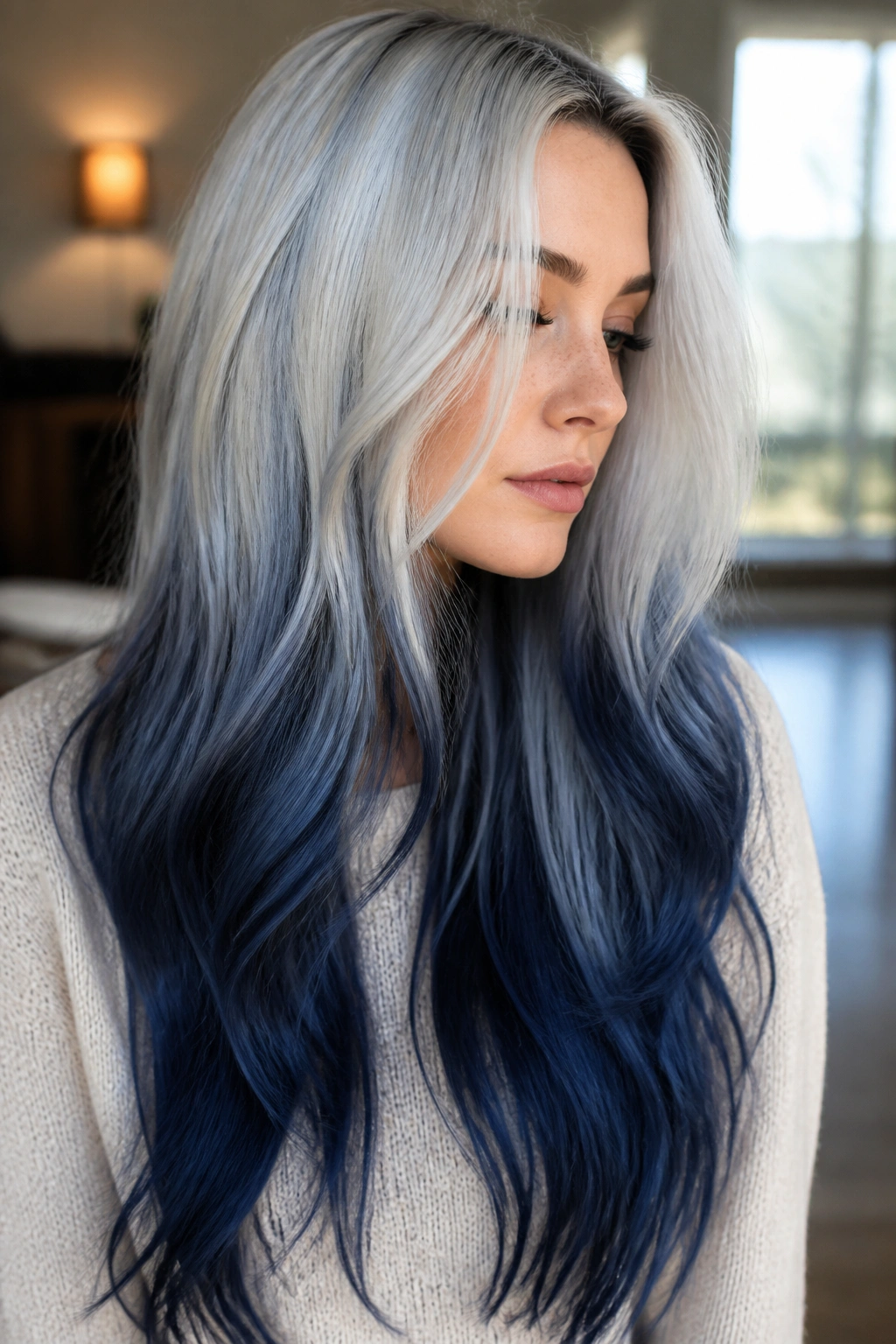
Frosted navy ends are the easiest place to start if you want white blue ombre hair with a clean finish. The top stays icy and pale, while the last 8 to 12 inches sink into a deep navy that feels cool rather than cartoonish. On long layers, the dark ends give the whole look a frame.
Why It Works
The contrast does a lot of the work for you. White near the crown keeps the color bright, and the navy at the bottom stops the ombre from feeling washed out. I like this version on loose waves because the darker ends peek through in little flashes instead of turning into one flat block.
- Best on layered cuts where the ends move separately.
- Looks strongest on hair that reaches the chest or longer so the navy has room to breathe.
- Less fussy than bright blue, since navy fades in a softer, more forgiving way.
- Pairs well with side parts or curtain bangs because the face frame stays light.
My tip: keep the navy concentrated on the last section of hair, not halfway up the shaft. The lower you anchor it, the more polished it looks.
2. Soft Arctic Fade
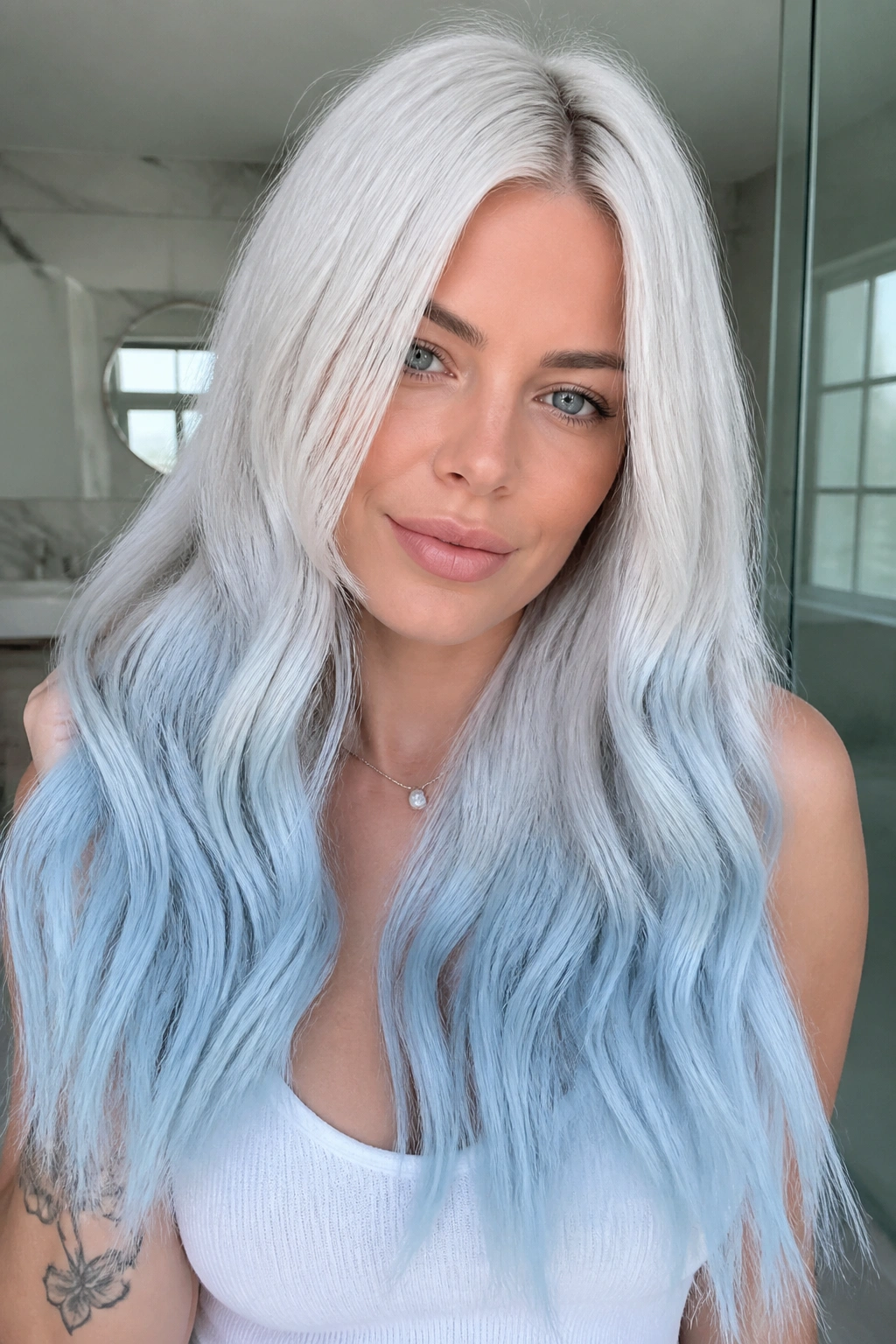
If you hate sharp contrast, stop here. A soft arctic fade moves from pearl white at the top into a pale blue haze that almost disappears into the ends. It is calm, airy, and a little expensive-looking in the best sense of that phrase.
The trick is saturation. The blue should whisper, not shout. On very long hair, that gentle shift lets the eye travel all the way down the length without getting stuck at a hard line. It’s the kind of color that looks especially good when the hair is smooth and shiny, because the tone change is subtle enough to feel like light more than dye.
This is also one of the few blue ombre looks that can work on people who do not want to live at the salon. The fade grows out with less drama, and the pastel ends can be refreshed with a blue conditioner or a sheer gloss when they start to look tired. If your base is already pale blonde, this one can be done without pushing the hair into a harsh neon place.
3. White Roots, Blue Mid-Lengths
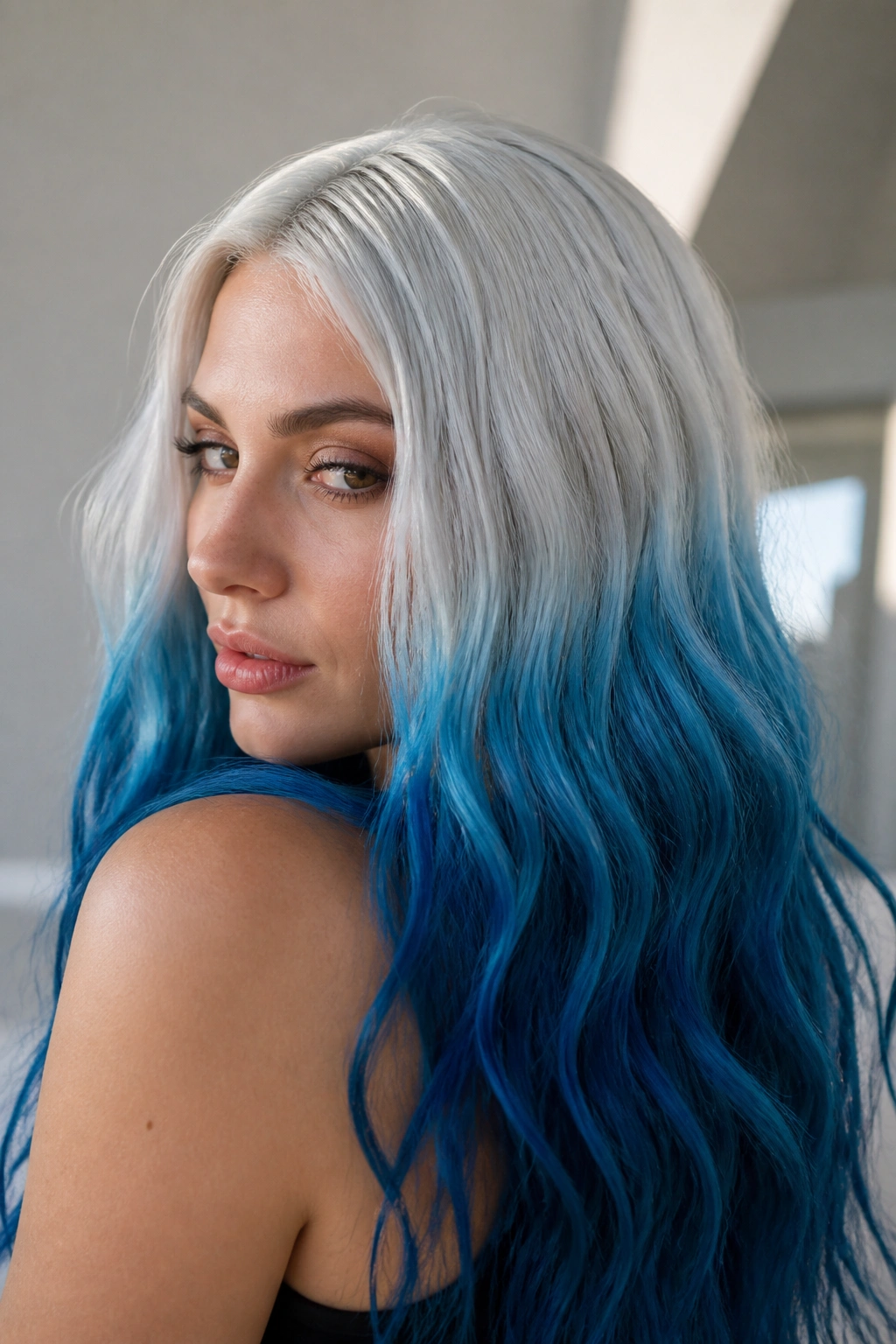
Why start the blue halfway down instead of at the tips? Because on long hair, that placement can make the whole style look taller and more dimensional. White roots or a very pale silver top keep the crown open, then the blue comes in through the middle and carries the color story down the rest of the hair.
That middle-band placement works especially well when you wear braids, half-up styles, or big curls. The blue shows up in moving sections instead of disappearing at the bottom, and the white at the top keeps your scalp area bright. It also gives the cut a little more shape if you have layers, since the color shift happens where the hair starts to bend and fall.
How to Style It
- Loose curls show the color change best.
- Half-up ponytails keep the white top visible.
- Braids make the blue look woven into the hair instead of painted on.
- Blowouts with round-brush volume keep the transition soft.
This one feels smart when you want color, but not the usual dip-dye look. It has more movement than a simple tip fade.
4. Smoky Steel to Ice Blue
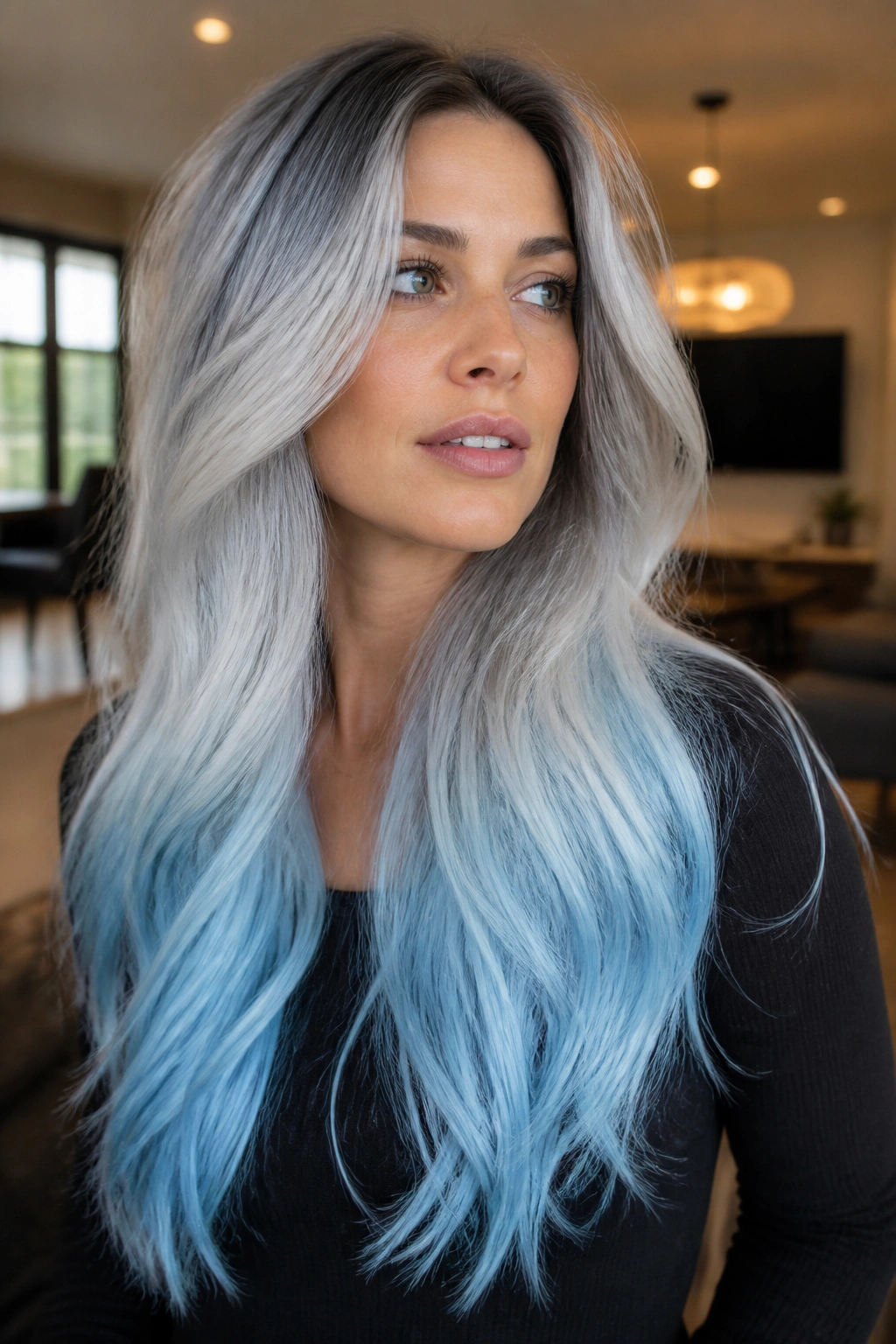
Picture a long layered cut where the top reads brushed silver and the lower half slips into glacier blue. That’s the whole mood here. It feels cool, almost metallic, and it works because the blue is held back by a smoky base instead of dropping straight into a bright shade.
A good colorist will usually keep the steel tones near the top and use a translucent blue glaze as the hair gets longer. The result is not flat. It shifts from silver to blue-gray to pale ice, which gives long hair a sort of shimmer without making it loud.
- Works well on level 9 or lighter hair that already has a pale blonde base.
- Needs a neutral toner first so the white doesn’t pick up yellow.
- Looks best with soft bends rather than very tight curls.
- Avoid heavy purple shampoo use on the blue lengths, because it can make the tone muddy.
What I like here is the restraint. It feels grown-up without getting dull, and the movement in long hair keeps the cool tones from turning chalky.
5. Pastel Powder Blue Wash
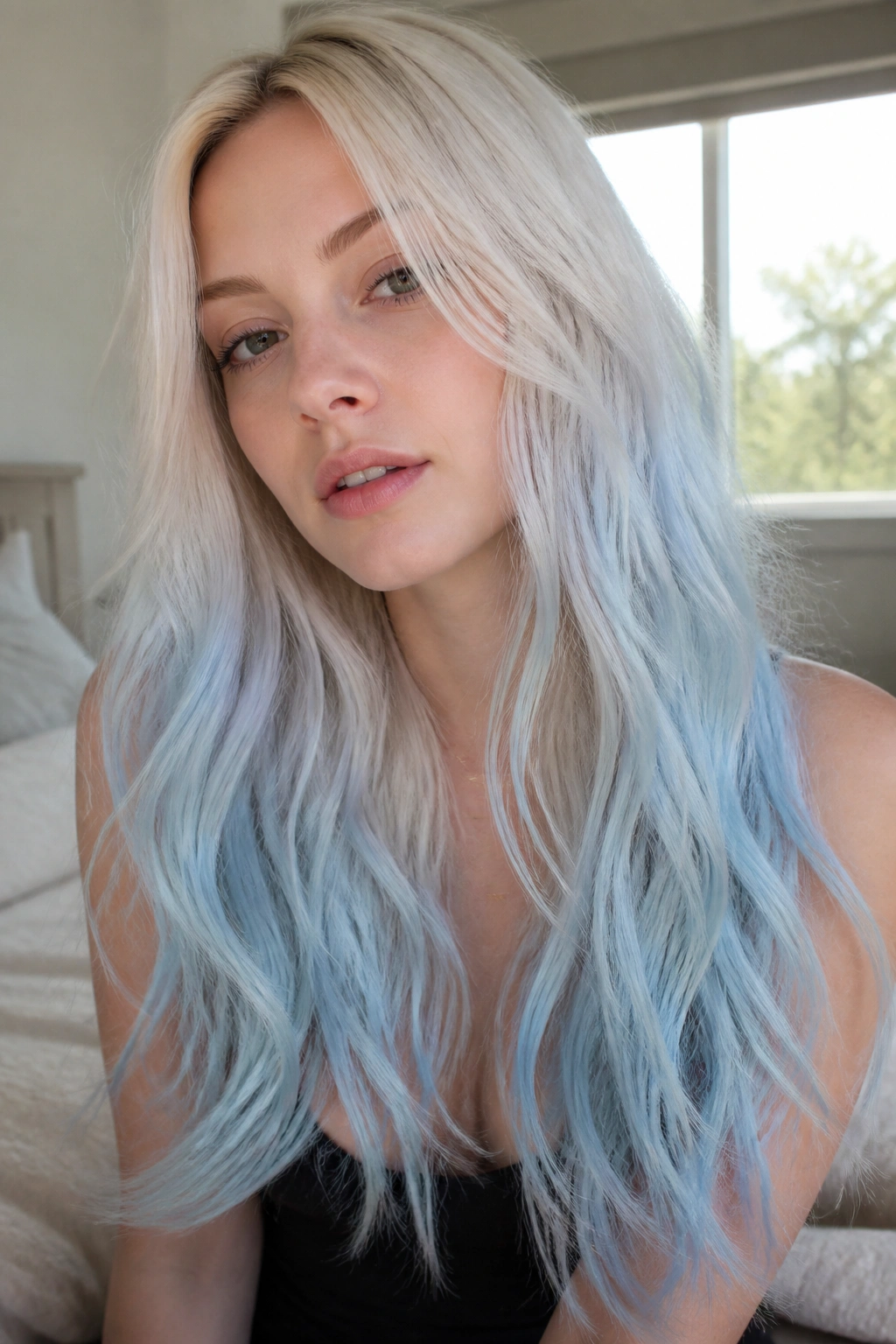
Pastel powder blue is the quiet one in the room. The shade sits between white and baby blue, so the ombre barely announces itself at first glance, then shows its softness when the hair moves. On long hair, that kind of whisper-light color can be lovely because there is enough length for the fade to feel airy instead of weak.
The biggest mistake with pastel blue is making it too opaque. Heavy pigment turns the style flat fast, and flat pastel hair can look oddly heavy even when the shade itself is light. I prefer a sheer, milky blue on a very pale base, especially if the ends have a little texture from curling or air-drying.
This version suits people who like a softer look and do not want the color to dominate the room. It also behaves nicely when it starts to fade, because the blue usually drifts toward white or a faint misty cast rather than into an ugly green. Long layers help a lot here. The movement keeps the powdery tone from sitting like a block across the back.
6. Chunky Ribbon Ombre
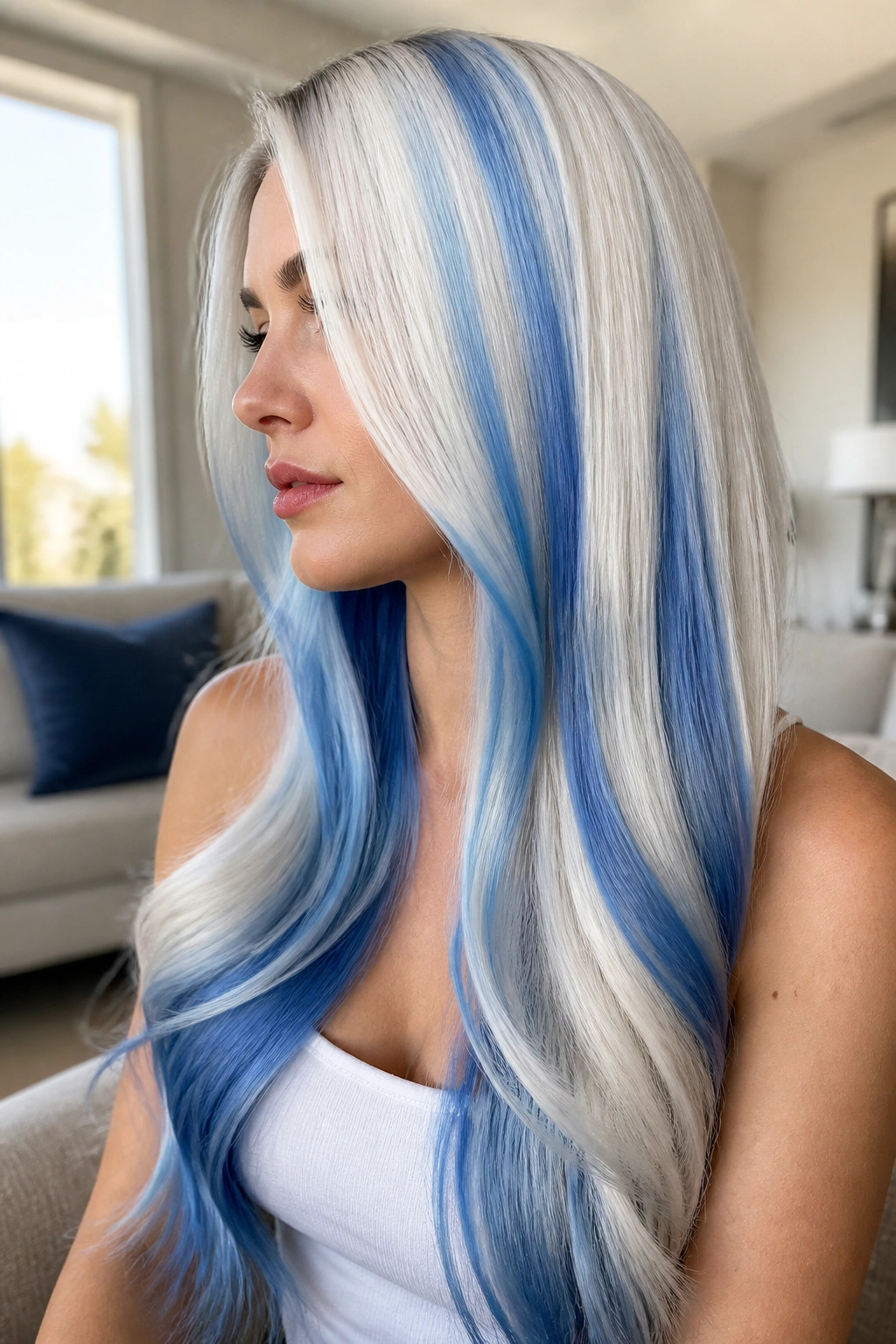
Unlike airy blends that disappear into one another, chunky ribbon ombre keeps the blue visible in thicker sheets. That gives the style more edge, and on long hair it can look incredibly deliberate. The white sits in broad panels, then the blue drops through in ribbons that you can spot from across the room.
This is the one I’d point to if someone told me their hair was dense and they wanted the color to show up even when it’s worn straight. Thick hair can eat subtle blends. Ribbon placement fixes that by giving the eye larger sections to read, which makes the ombre look crisp instead of blurry.
It’s also a smart choice if you like styling your hair with big curls or a wide-barrel iron. The ribbons catch the bend in the hair and create those alternating flashes that make the whole color feel richer. If your cut is layered, the ribbons can land in different places on each layer, which keeps the blue from looking like one painted stripe.
For long hair, this one has presence. It knows it.
7. Silver Fox Blue
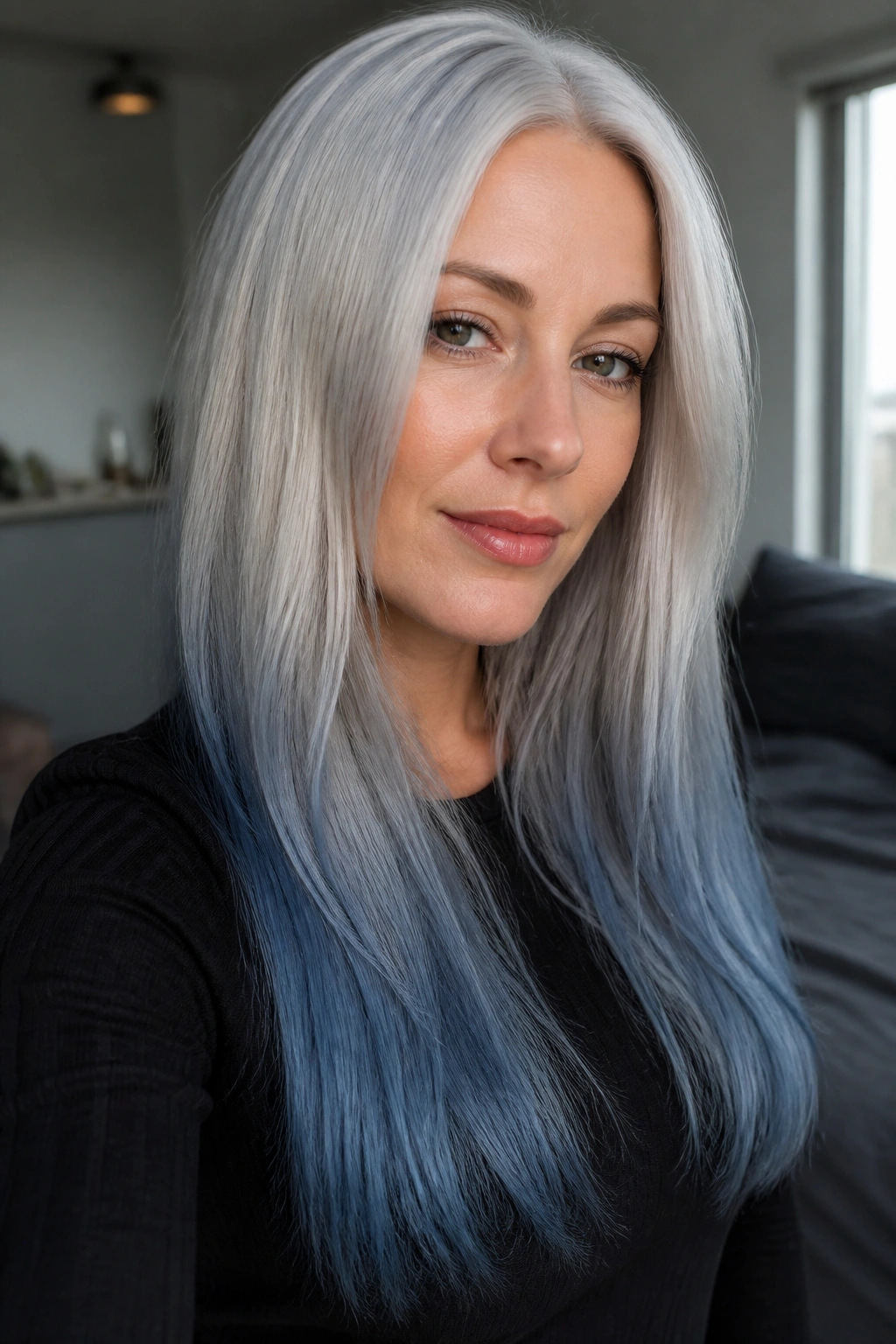
Silver fox blue is for the person who wants the white to look intentional, not accidental. The root area stays silver-white, the mid-lengths soften into cool gray, and the ends hold a muted blue that feels like steel with a little color in it. It’s calm, sharp, and surprisingly flattering on long hair with a clean cut.
Why It Works
The blue is kept dusty, which matters. Bright electric blue on a silvery base can feel loud in a hurry, but a softened blue-gray reads elegant and a little edgy at the same time. That balance is why this style works on straight hair, sleek blowouts, and long layered cuts with narrow ends.
- Choose a cool silver toner to keep the top from turning yellow.
- Use a muted blue glaze rather than a saturated dye.
- Best on long, straight lengths where the line stays crisp.
- Looks especially good with a center part because the symmetry supports the cool tones.
My tip: if the blue starts to fade too fast, refresh it with a diluted color conditioner once every week or two. A strong deposit is not the goal here; a soft tint is.
8. Denim Dip-Dye
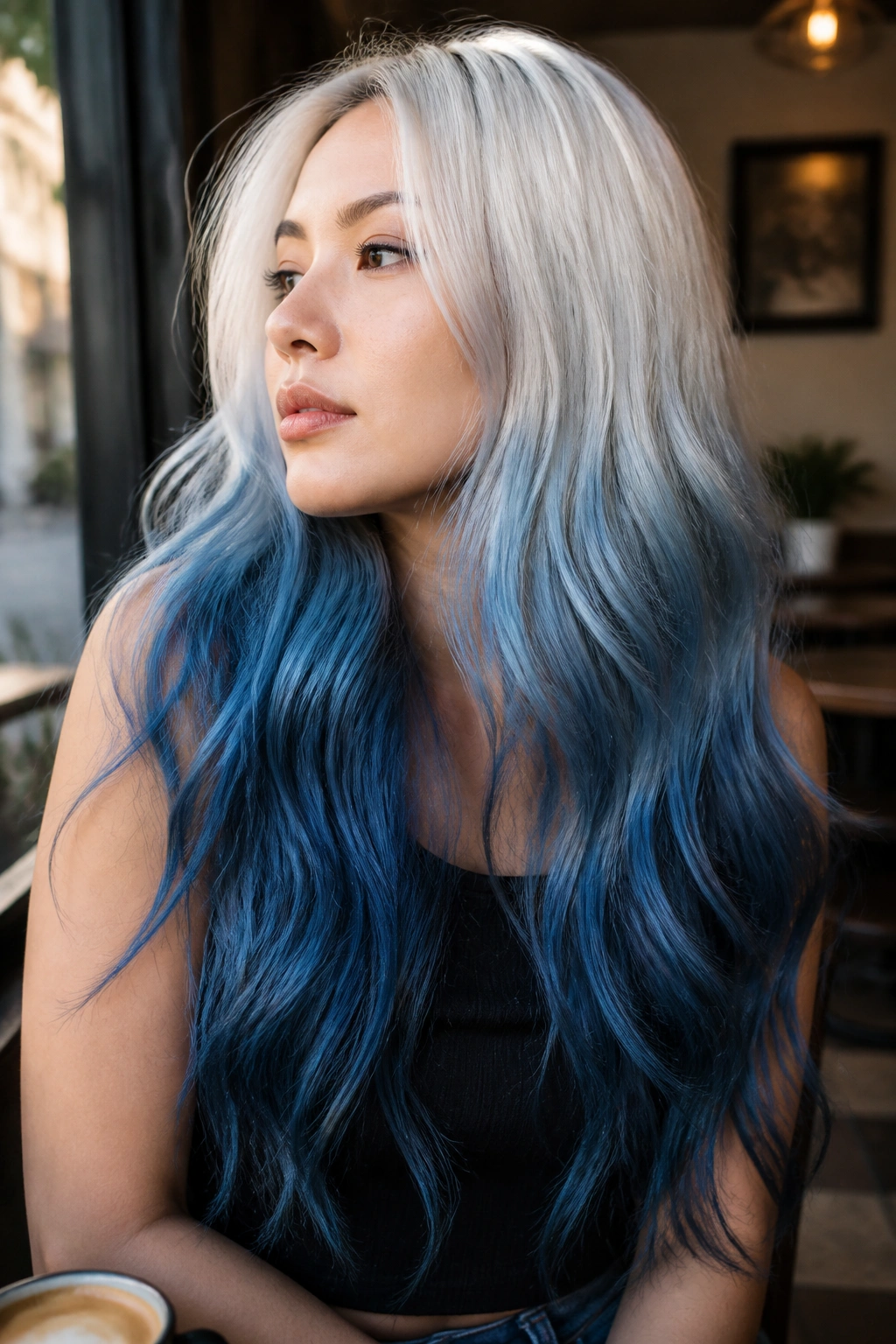
Denim blue is the most wearable middle-ground blue, and that’s why I keep coming back to it. It has enough color to show up, but it doesn’t hit you in the face the way cobalt does. On a white-blue ombre, denim gives the ends a textured, lived-in feel that works nicely on long hair.
The best part is how forgiving it looks when it softens. Denim fades in a way that still feels like denim, which is probably why so many people land on it by accident and then decide to keep it. On wavy hair, the color sits into the bends and gives the ends a little shadow. On straight hair, it reads cleaner and more graphic.
This shade also plays well if you wash your hair often. The fade doesn’t instantly look messy, and the transition from white to blue stays readable even after a few shampoos. I would still avoid dragging the color too far up the shaft unless you want a heavier finish. Long hair gives you enough room to keep the blue anchored low and let the top stay bright.
9. Mermaid Mist Gradient
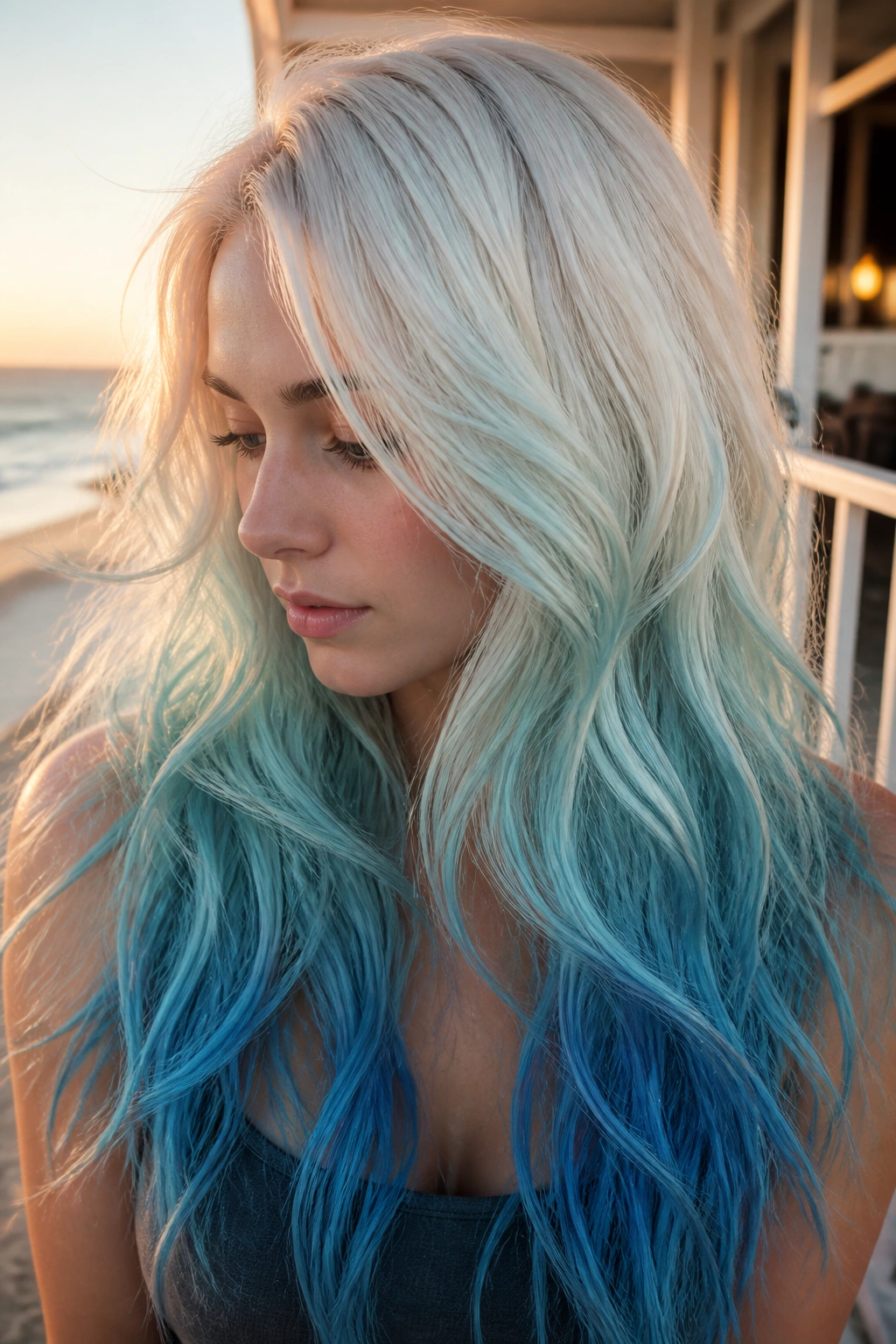
How do you keep a blue ombre from feeling costume-y? Keep the white airy, keep the blue translucent, and let the transition move through several soft shades instead of one hard jump. That’s the whole trick with mermaid mist.
The look usually starts with a pearl or silver-white crown, then passes through a pale aqua haze before landing in a slightly deeper blue at the ends. On long hair, that extra middle zone matters. Without it, the color can go from white to blue too quickly and lose the dreamy feel.
How to Wear It
Loose waves are the easiest match. They break up the color just enough to make the fade look fluid, and they keep the ends from looking heavy. Braids do a nice job too, especially loose fishtails or pulled-apart plaits, because they show little fragments of white and blue together.
This one suits people who want something soft, but not boring. It still has fantasy in it. It just doesn’t scream.
10. Blueberry Sorbet Ends
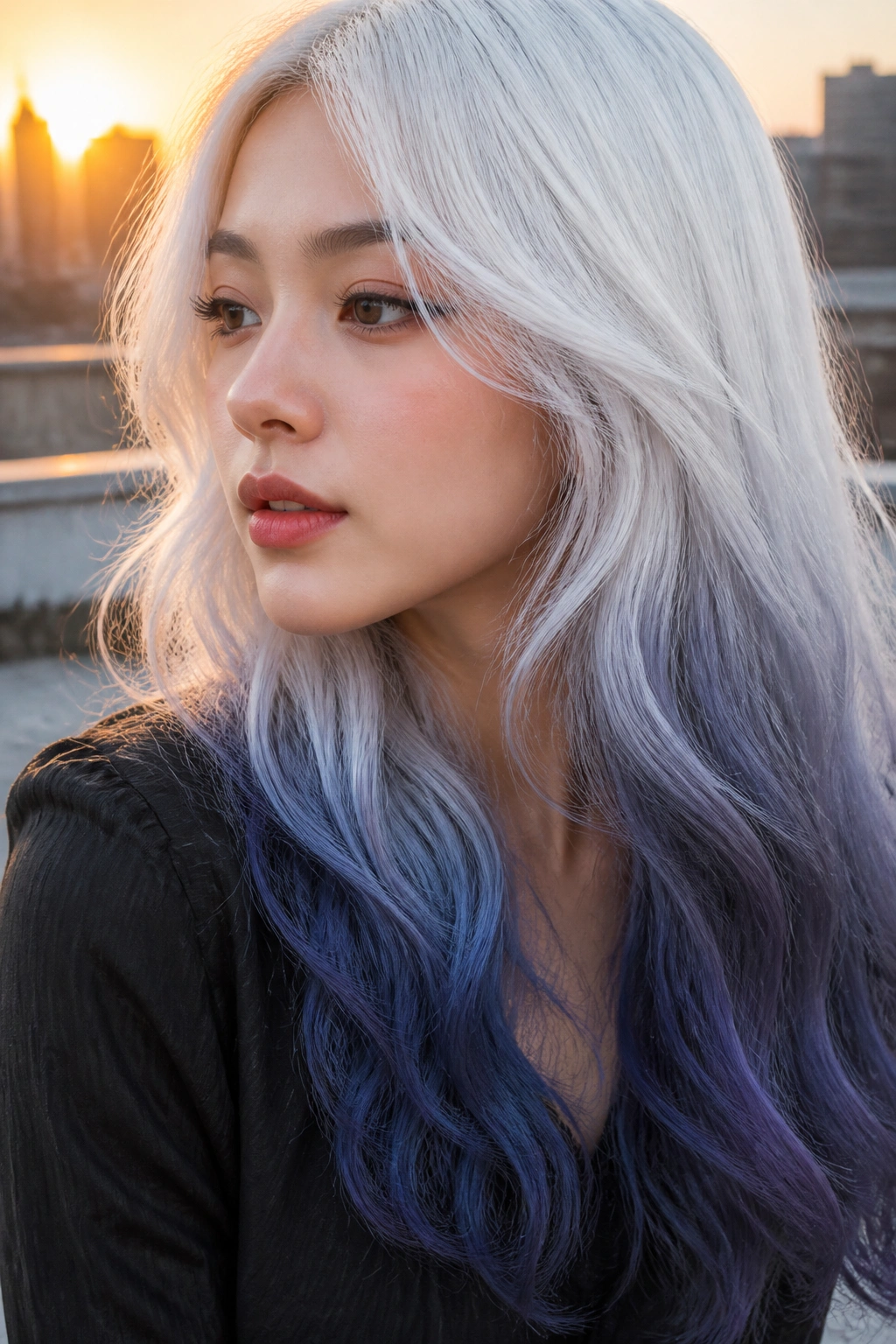
Blueberry sorbet ends have a little more sweetness than a straight blue fade. The blue leans berry-toned, almost like a cool blue with a faint violet edge, so the result feels softer and more dimensional on long hair. The white above it keeps the whole look bright, while the blue at the bottom gives the style a colder finish.
That berry note matters more than people think. Pure blue can look flat against a pale blonde base, especially when the hair is very long and the color needs to travel. A blueberry tone picks up light in a gentler way and gives the ends some depth without making them dark.
- Best on hair with soft waves, since the bend shows the blue-violet cast.
- Works well if you want a cooler shade that isn’t too stark.
- Looks nice with layered ends because the color settles into different lengths.
- Pairs with neutral makeup easily, since the color stays controlled rather than loud.
My favorite part is the ending. The last few inches almost feel like a cool stain of color, which looks elegant on chest-length and longer cuts.
11. Reverse Ombre with White Glow
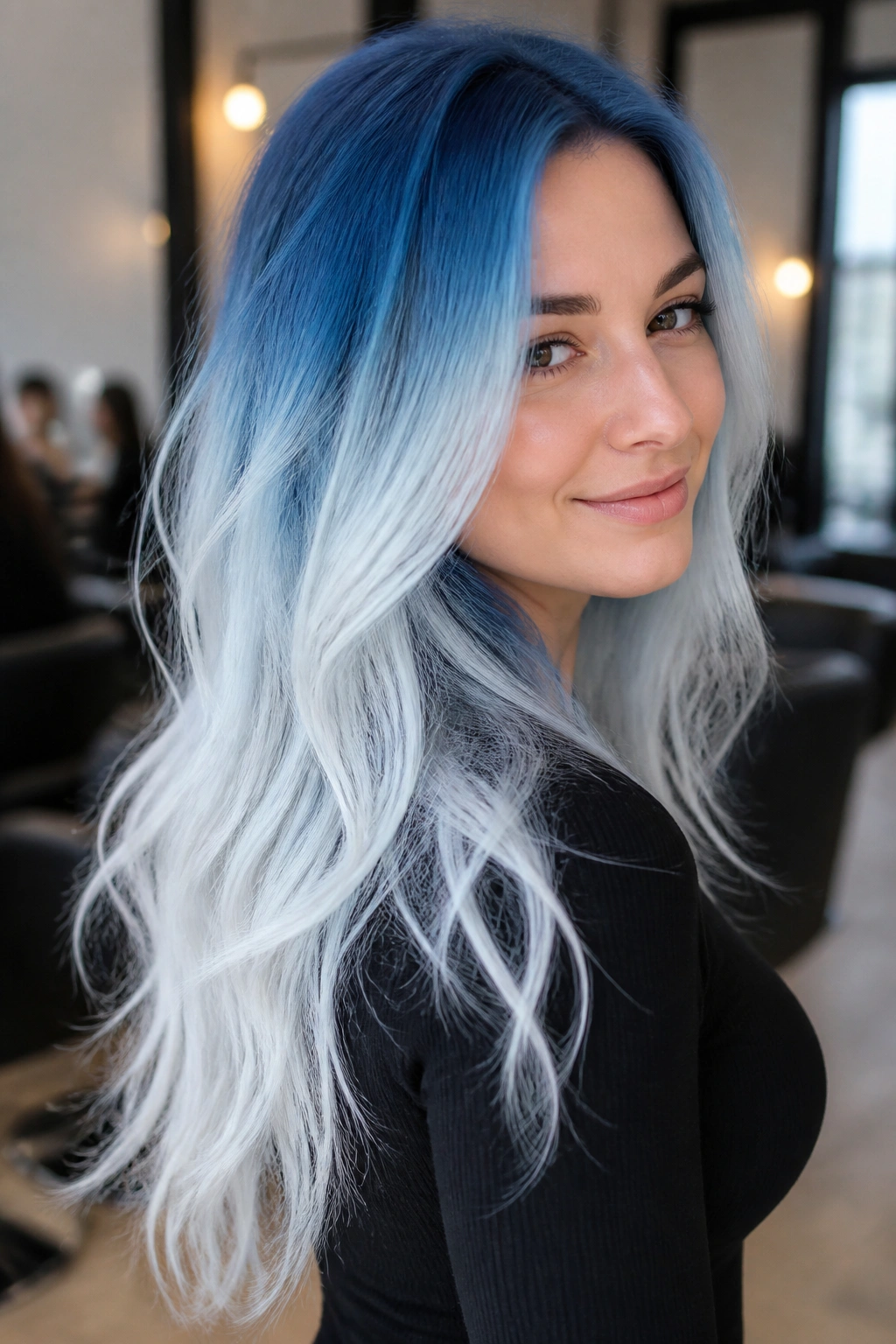
Reverse ombre flips the usual script: the blue begins higher up, then melts into white at the ends. On long hair, that reversal can look striking if the blue is kept smoky instead of bright. You get a heavier color story at the top, then a pale finish that keeps the length from feeling weighed down.
This is not the safest choice for someone who wants low upkeep. Roots will show faster here because the darker or stronger color sits closer to the scalp area. Still, there’s something satisfying about the way long hair can carry the whole gradient. The top half looks anchored, the lower half looks airy, and the whole thing has a bit of drama without needing a blunt cut.
I like this version on hair that already has movement. Long layers, face-framing pieces, and loose bends help the blue slide into the white instead of looking stacked. If the blue is too opaque, the style loses that floating feeling. Keep the saturation controlled and the white ends clean, and the result feels much more expensive than the effort it takes to maintain.
12. Hidden Underlayer Blue
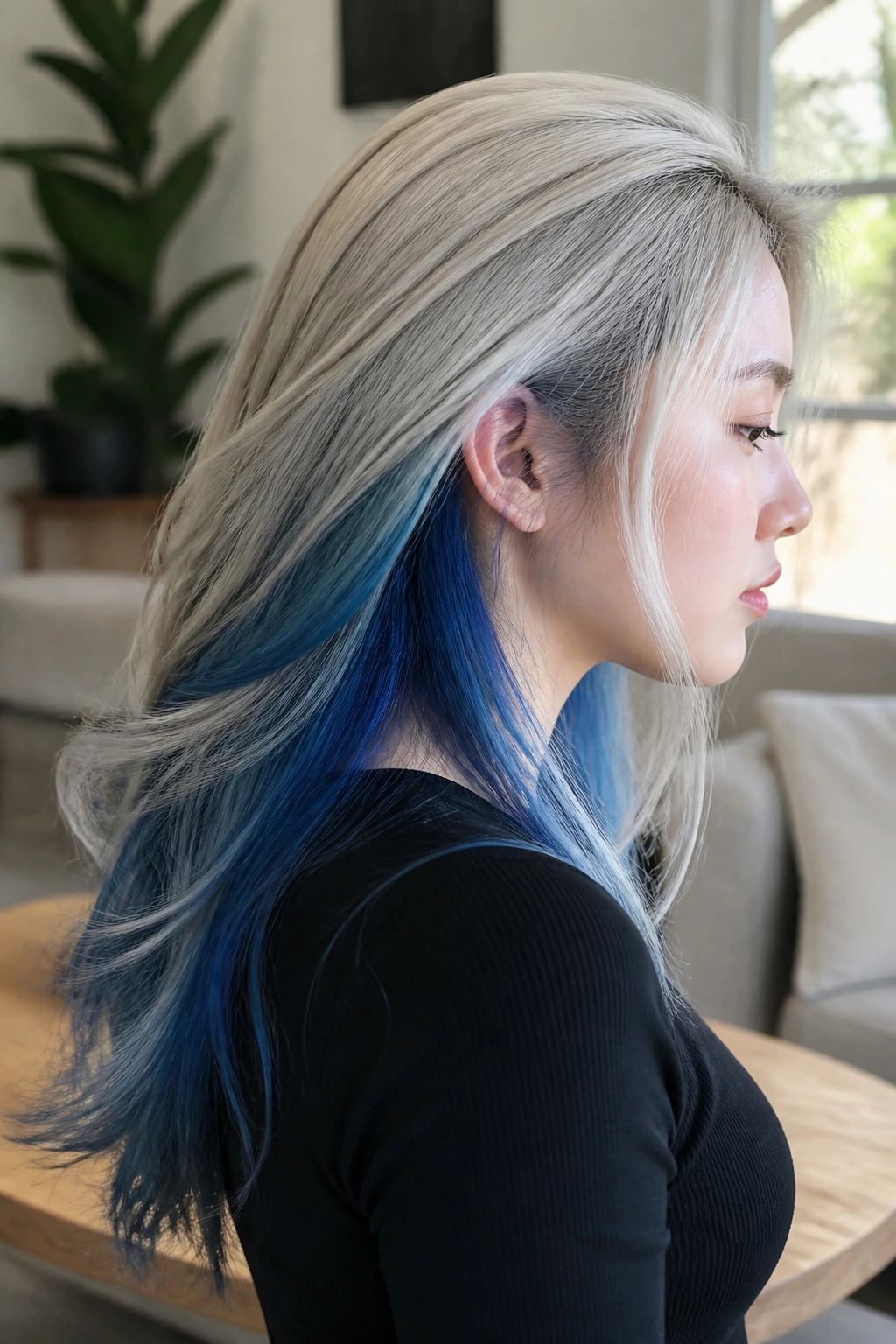
Unlike full-surface ombre, this version tucks the blue underneath a white or silver top layer. That means the color is there, but it shows up in flashes when you turn your head, braid the hair, or sweep it into a low ponytail. Long hair is perfect for this because the underlayer has enough length to peek through in a real way.
It’s a good choice if you want color with some restraint. The top stays pale and bright, which keeps the overall look wearable, while the hidden blue gives you the fun part. I also like this on people who wear their hair up a lot. A bun can look plain from the front and interesting from behind, which is a better payoff than it sounds.
This style keeps damage more localized too. The pale top can be maintained separately from the blue underlayer, and the blue can be refreshed without touching every strand. If you’ve ever wanted white-blue hair but worried about commitment, this is the version that lets you test the water without jumping all the way in.
13. Cool-Toned Money Piece
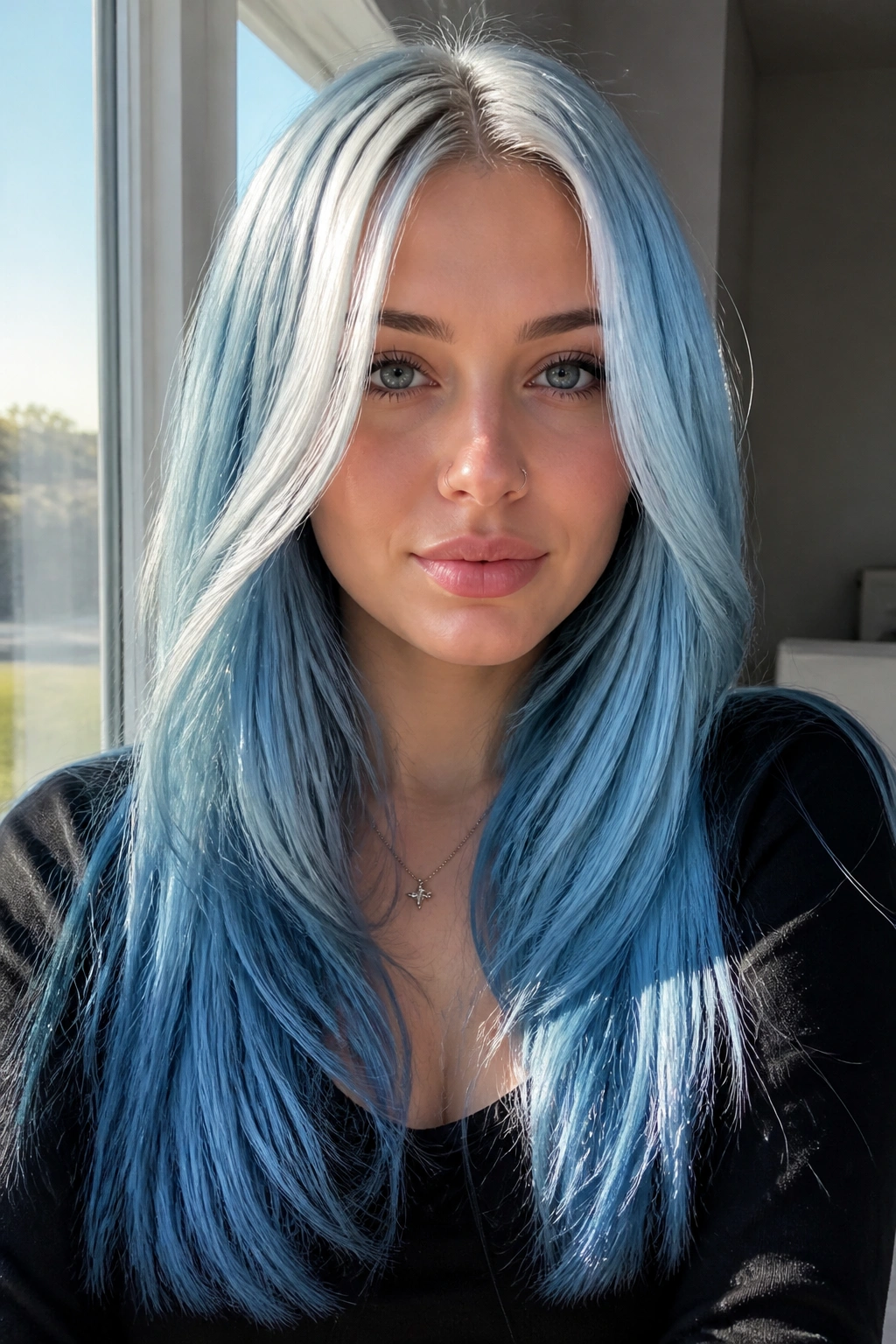
A cool-toned money piece puts the lightest white-blue right around the face, then lets the rest of the hair fall into a blue ombre through the lengths. That bright frame changes the whole look. Suddenly the color reads sharper, the face gets a little lift, and the long hair doesn’t swallow the details.
Why It Works
The front pieces do a lot of the visual work, which is handy if the back of your hair is thicker or darker. You can keep the length cool and blue without losing brightness near the face. I like this look because it still feels soft when the hair is down, but it also wakes up a ponytail or clip-up style.
- Keep the face frame at least one shade brighter than the rest of the white section.
- Use a blue that fades softly, since the front pieces will be touched and styled the most.
- Best with long layers or curtain bangs.
- Great if you wear hair back often, because the front still carries the color.
The whole style reads quickly, which is the point. It gives you the icy frame without needing a full head of dramatic contrast.
14. Hazy Cloud Ombre
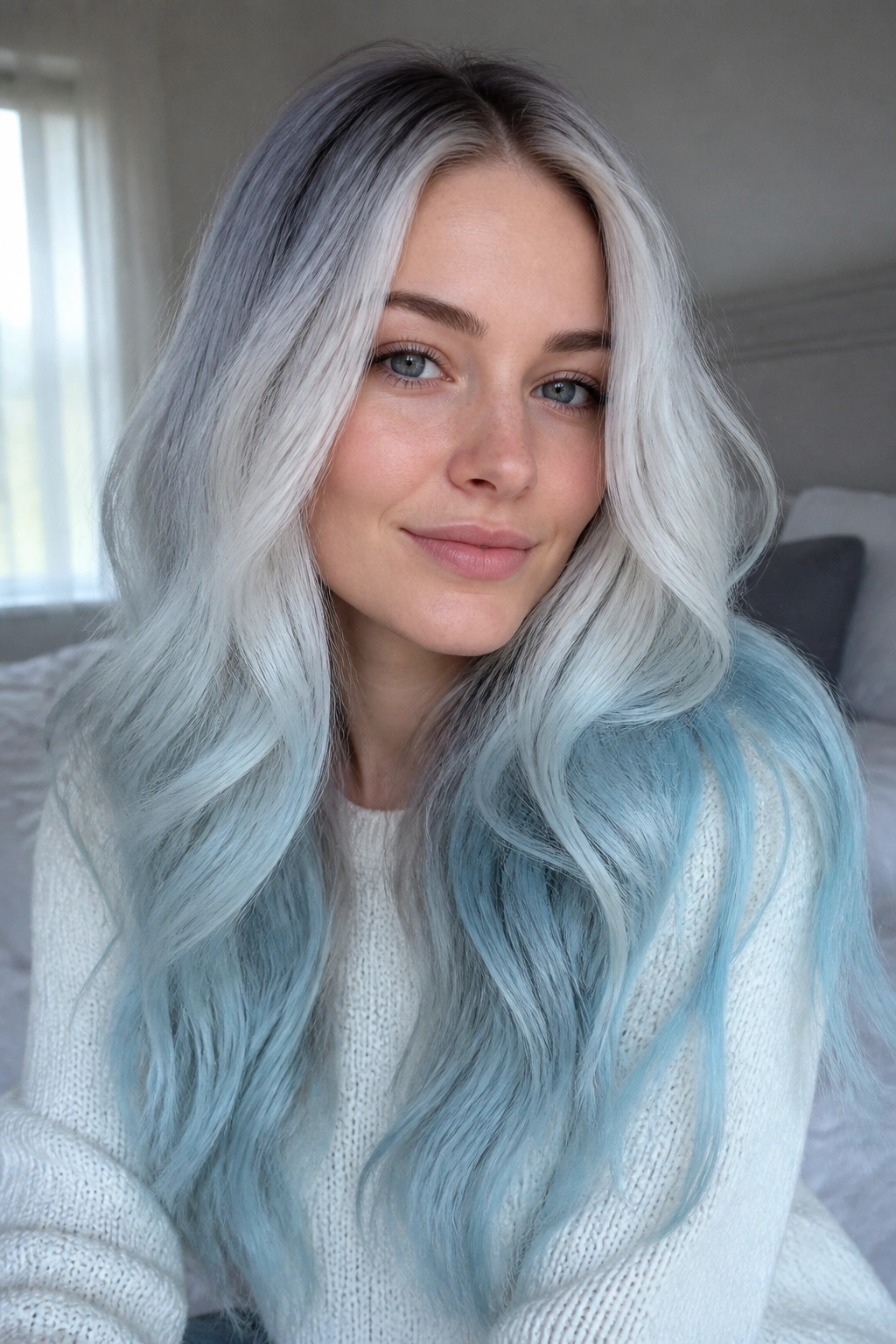
The softest white-blue ombre can also be the hardest to get right. Hazy cloud hair depends on a low-saturation blend where the white, silver, and blue all sit close together, almost like fog. On long hair, that softness can feel gorgeous because the color seems to drift rather than start and stop.
This is not a loud style. If you want sharp edges, skip it. But if you like pale color that still carries a hint of blue, cloud ombre has a lot to offer. It works especially well when the hair has a slight bend or a brushed-out wave, because the loose texture keeps the tones from blending into one flat shade.
The best version uses a cool gloss over a very light base, then adds just enough blue at the ends to make the fade visible in motion. Think of it as a tone story, not a block of color. The hair should look soft at first glance and more interesting the longer you stare at it. That quiet reveal is the whole appeal.
15. Midnight Blue to White Tips
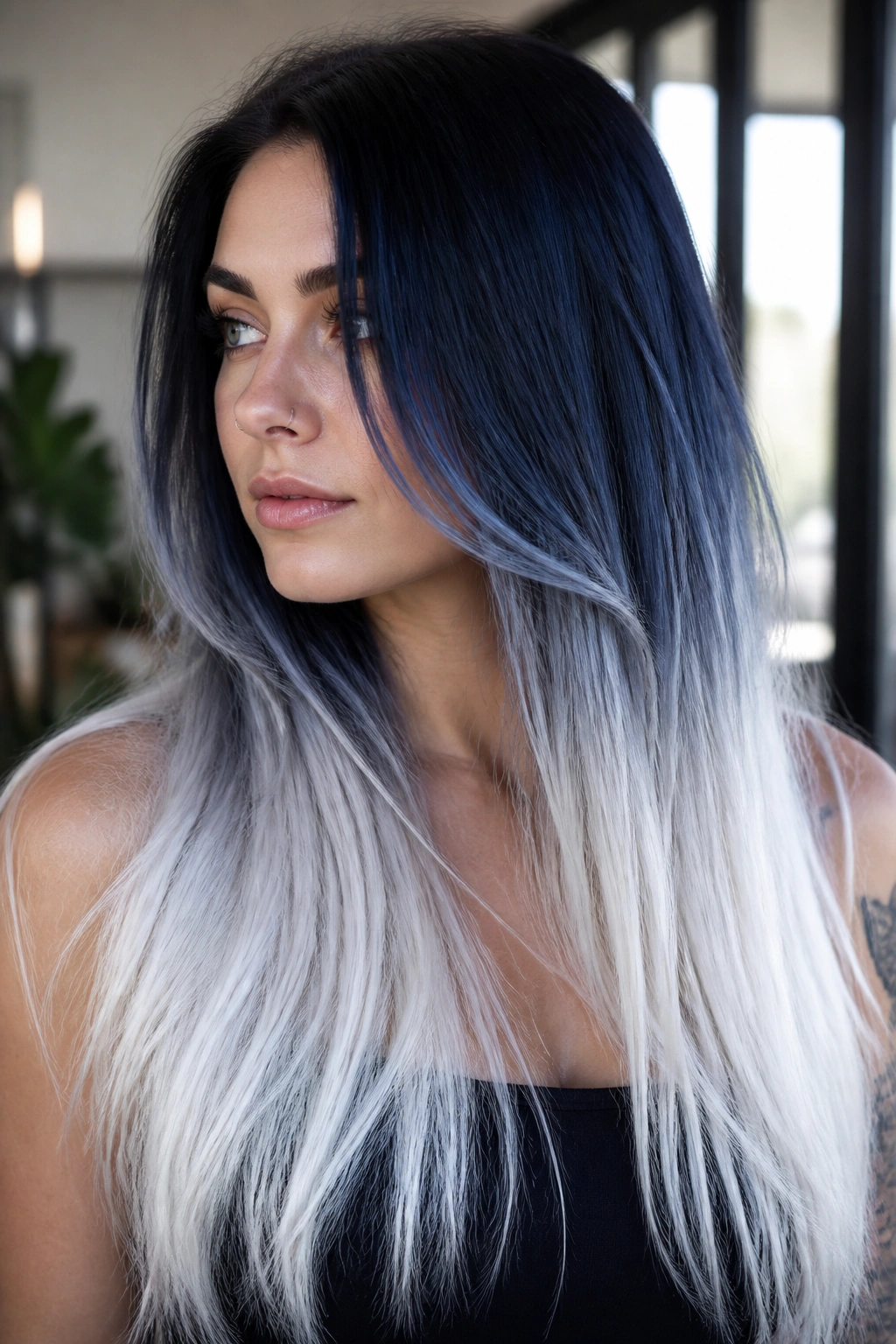
How dark can the blue go before the style stops feeling like ombre and starts feeling like two separate colors? Pretty dark, actually, if the ends still land cleanly on white. Midnight blue to white tips gives long hair a dramatic top-to-bottom shift, and it works best when the blue is dense but not black.
This style has real contrast. The top half carries the weight, the bottom half lightens everything up, and the eye moves through the length in a strong line. On straight hair, the gradient feels almost graphic. On curls, the darker root area breaks up into shadows and the white tips flash through the bends.
How to Style It
- Sleek blowouts show the color split most clearly.
- Large curls soften the contrast and make the white tips pop at the ends.
- Center parts keep the color balanced.
- Glossing the white tips every few weeks helps them stay bright instead of dingy.
This one is for people who like their hair to have a little bite. It is not shy.
16. Glacier Melt Balayage
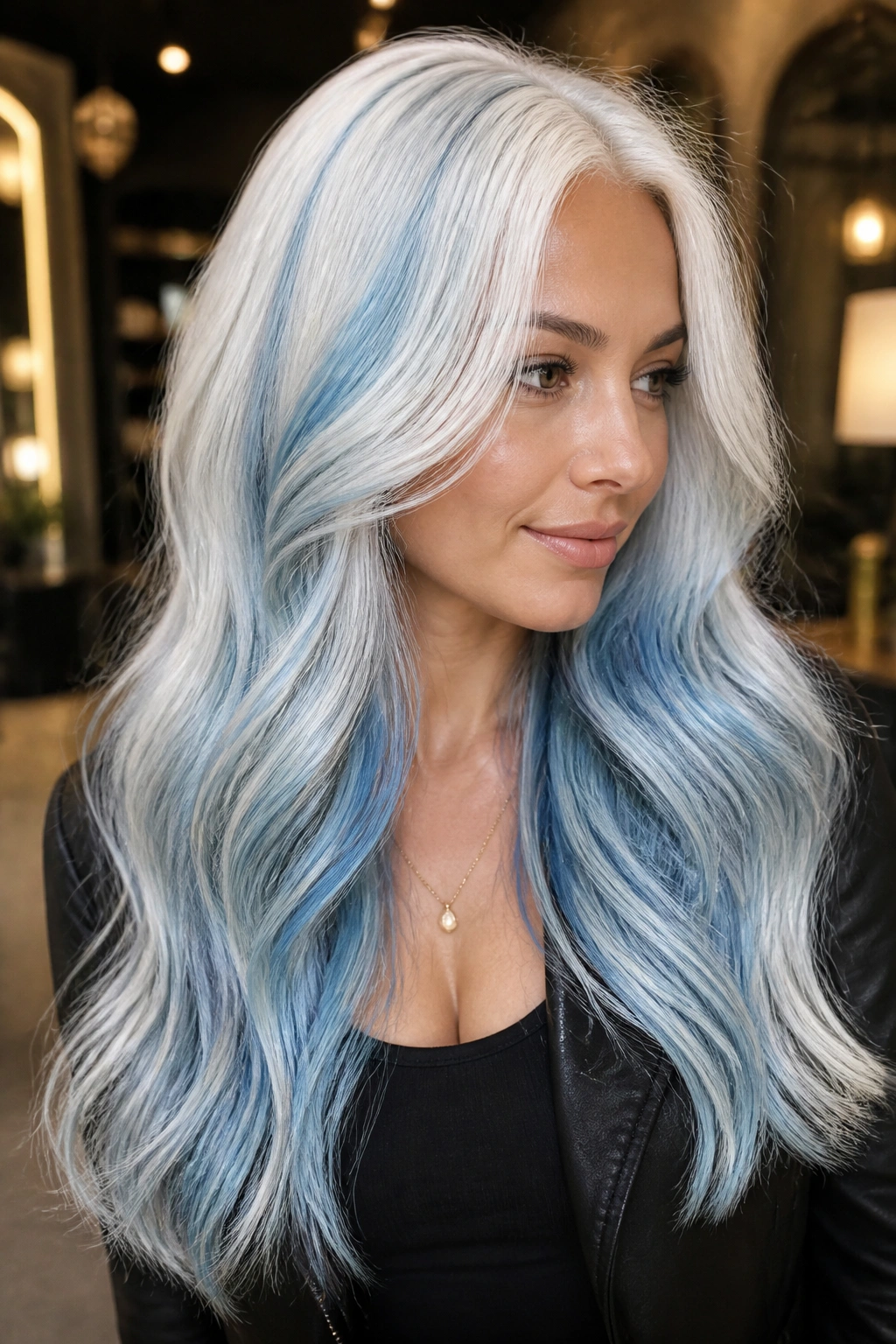
A glacier melt balayage spreads white and blue in hand-painted strokes instead of a strict gradient line. That gives long hair a more natural-looking flow, even though the colors are still clearly fantasy shades. The white pieces melt through the blue panels, and the whole thing moves like water over stone.
The hand-painted placement matters here. A good colorist will usually keep the brightest white around the face and crown, then pull the blue down in wider sections so the layers can show off the blend. This is one of the easiest ways to stop long hair from looking stripey. The pieces stay soft, but the contrast still reads.
- Best on layered cuts because the paint can sit on different lengths.
- Works well with waves or a loose curl set.
- Lets the roots grow in with less shock than a hard color block.
- Looks cleaner when the ends are trimmed regularly, since split ends make the blend look messy fast.
What I like most is the movement. It feels like the color was placed where the hair naturally wanted it.
17. Opal Blue Iridescent Fade
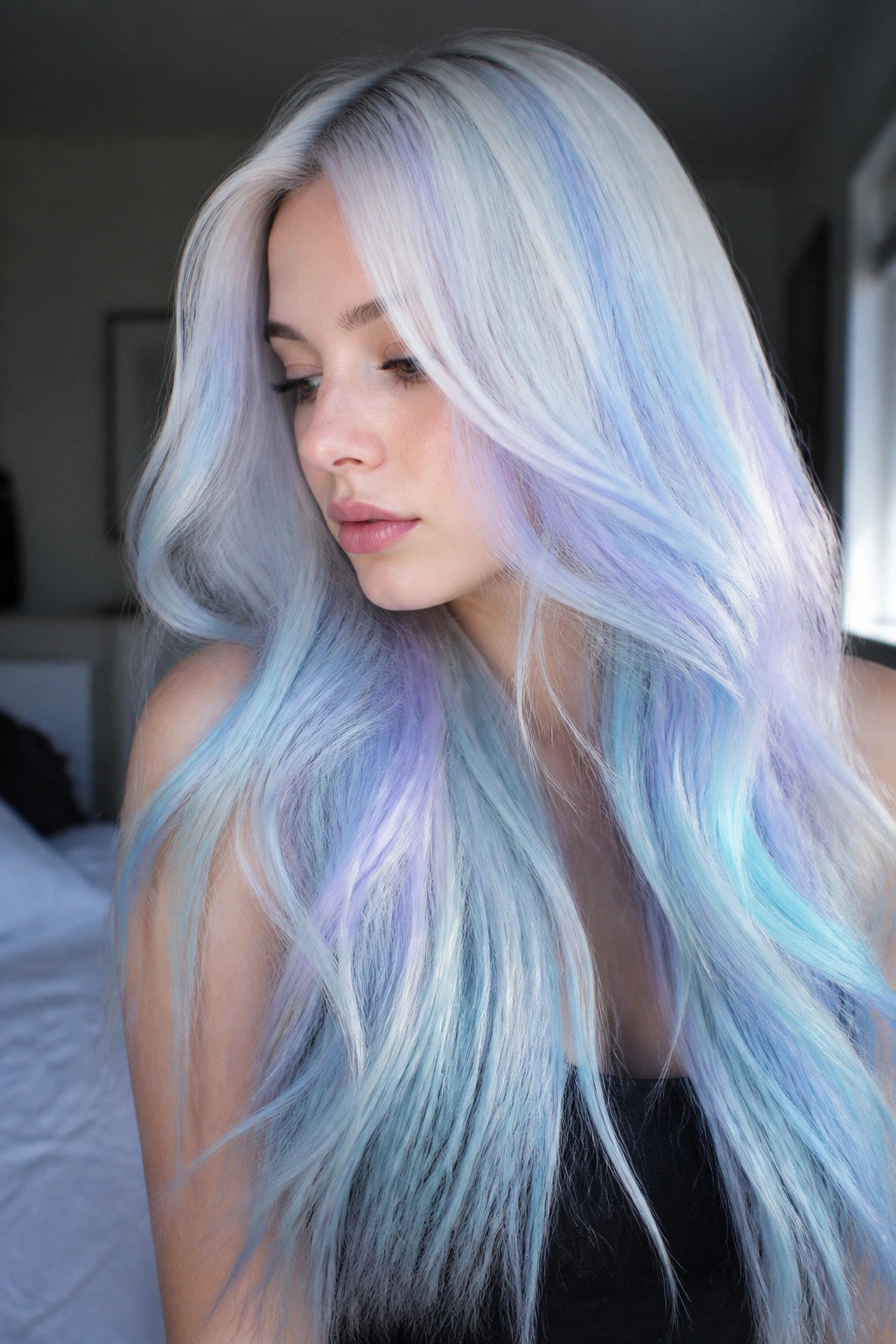
Opal blue works when you want the hair to shift between white, blue, and a touch of violet without landing on one flat note. On long hair, that kind of iridescent fade can look far richer than a simple pale blue because the tones change as the hair swings.
The trick is not loading the color with too much pigment. Opal shades need space. A pale platinum base, a translucent blue glaze, and a whisper of violet or pearl toner can be enough. Push the color too hard and the whole thing loses its sheen. Keep it soft and the hair starts to read almost mineral, like polished stone with a cool edge.
I especially like this on long layers because the movement reveals different tones in different places. Under indoor light, the blue can look more muted. In natural light, the violet notes come forward a bit. That little shift keeps the style from feeling one-note. If you want a white-blue ombre that looks a touch more expensive and a touch less obvious, this is the one I’d point to.
18. Face-Framing Ice Streaks
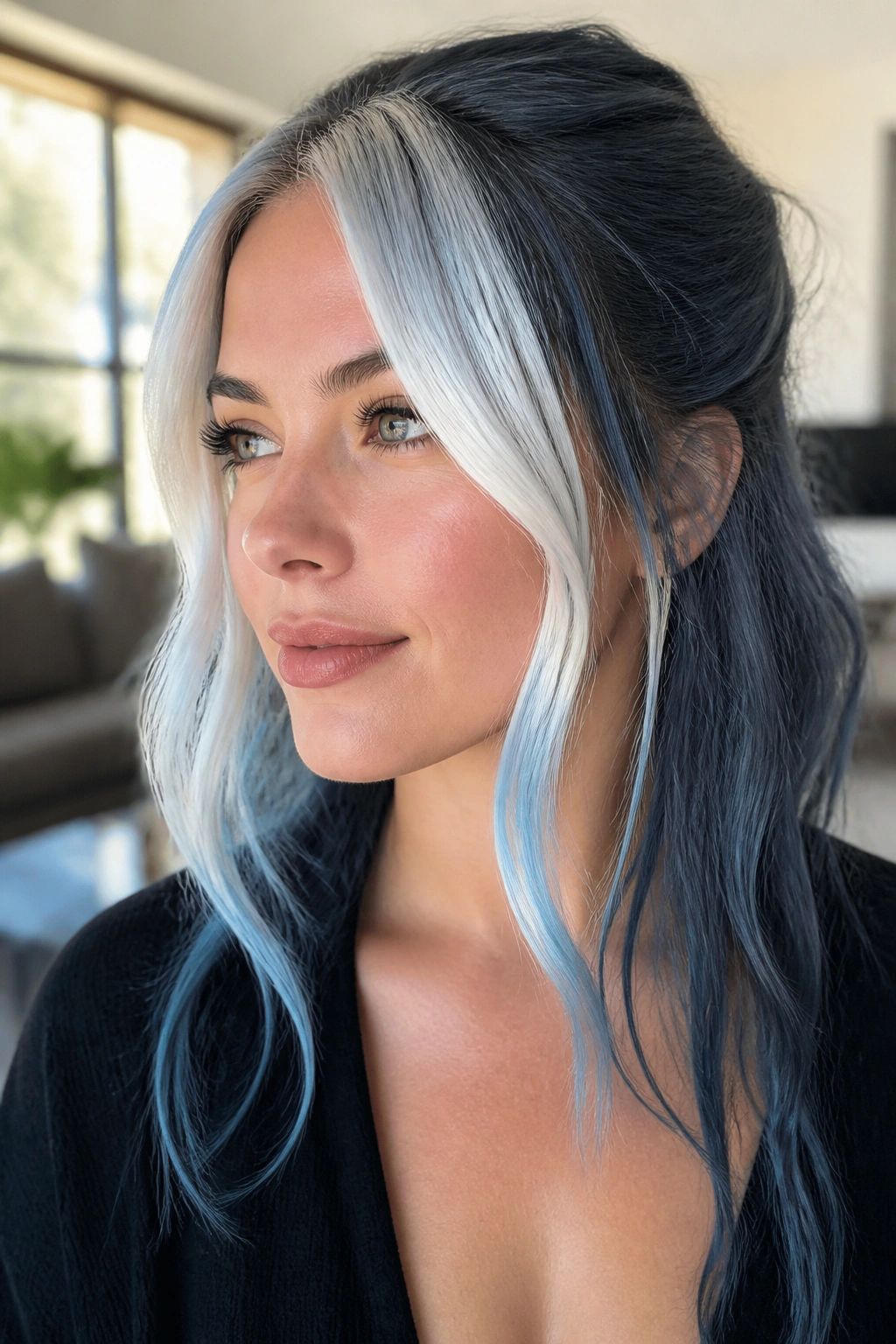
Face-framing ice streaks keep most of the ombre soft through the lengths, then hit the front with bright white-blue panels that wake everything up. On long hair, that front-heavy placement can be a smart move because it gives you a clear point of focus without forcing the whole head to be high contrast.
Unlike a full-head ombre, this version feels lighter. The back can stay smoky, pearly, or softly blue, while the front does the loud work. That makes it a nice pick for people who wear their hair pulled back often. A low ponytail, a claw clip, or a loose braid still shows off the front pieces, and that means the color stays visible even when the rest of the hair is tucked away.
My recommendation is simple: keep the face-framing streaks a shade brighter than the rest of the white area, and let the blue deepen just after the cheekbone. That shape flatters long hair because it gives the style direction. Straight lengths can look sharper; waves make the streaks feel softer. Either way, the front pieces do the talking.
19. Two-Tone Contrast with Soft Blend
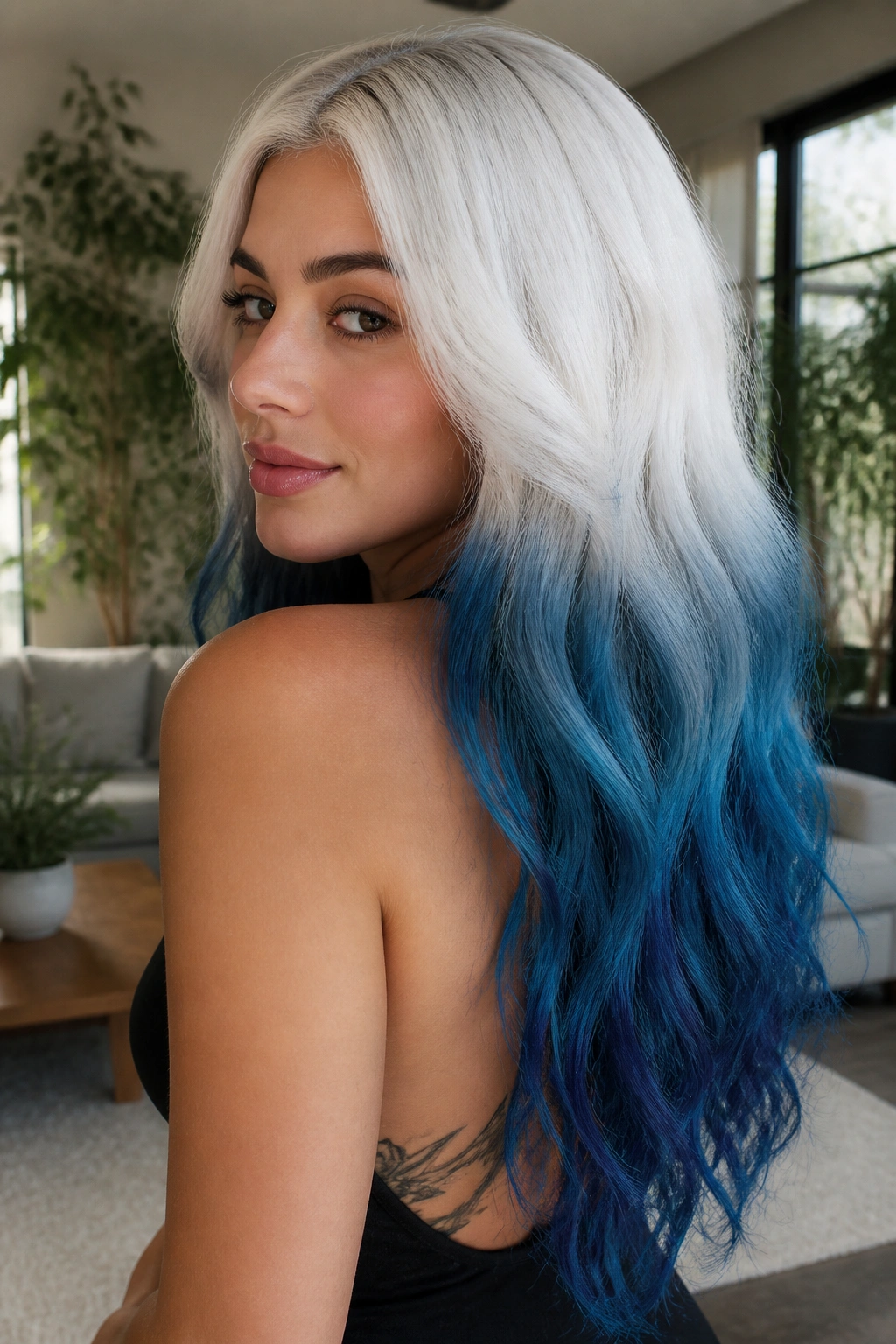
Two-tone contrast sounds blunt, and honestly, that’s part of the appeal. The top stays white or pale silver, the lower half moves into blue, and the transition between them is softened enough that the whole look still feels wearable on long hair. It is a bolder answer to the white-blue ombre idea, but not a messy one.
Why It Works
Long hair can handle a stronger split because there’s enough length to show the full change. If the cut is thick or blunt, the two-tone effect can look clean and dramatic. If the cut is layered, the seam softens a little and the colors blend more naturally as the pieces fall over one another.
- Strongest on thick, long hair where the color bands stay visible.
- Looks sharp with straight styling and softer with waves.
- Needs a tidy transition zone so the split doesn’t look accidental.
- Good choice if you like color that reads from a distance.
My tip: keep the blend area narrow and intentional. Too much blur between the shades can make the whole thing lose its shape.
20. Soft Platinum to Aqua Blue
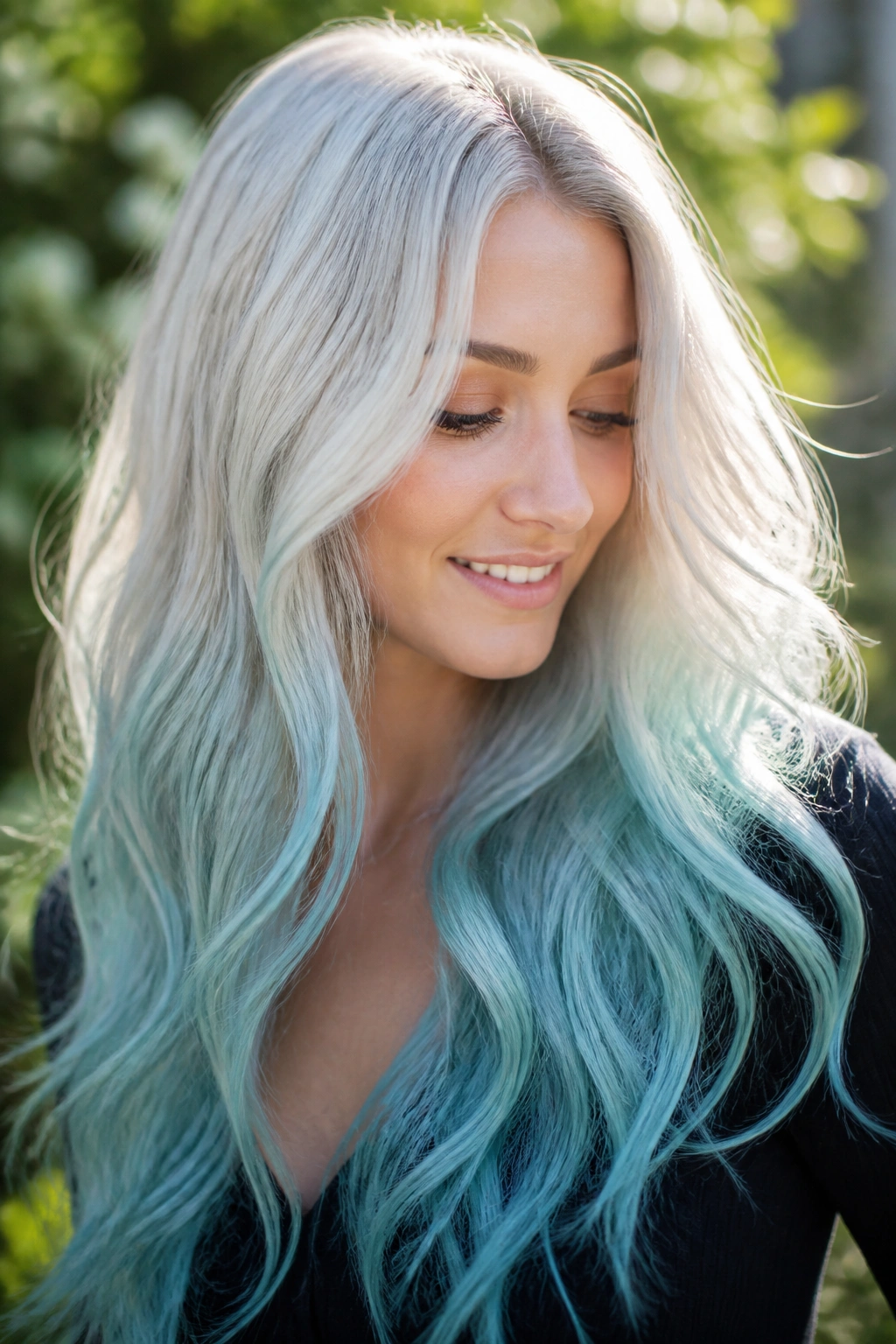
If you want the airy end of the spectrum, soft platinum to aqua blue is the one I’d hand to a cautious client. The platinum stays bright and clean at the top, then the ends take on a translucent aqua that feels lighter than cobalt and less stern than navy. On long hair, the effect is breezy and a little luminous.
The best version doesn’t use an opaque blue. Aqua should look like color suspended in water. That matters, because opaque blue on very light blonde can turn harsh fast, especially when the length is full and the hair has a lot of surface area. A translucent glaze gives the ends a clean finish and keeps the white from getting swallowed.
This shade also fades in a useful way. The aqua usually drifts toward mint, pale blue, or a faint cool wash, which still looks intentional for a while if the hair is cared for with cool-toned shampoo and gentle washing. If you want one white-blue ombre idea that stays soft, reads bright, and feels easy to wear with long waves or a straight blowout, this is the most forgiving pick in the bunch.
