



Long hair gives brown blonde ombre hair room to breathe. That’s the big difference. On shorter cuts, the color change can feel abrupt if the blend is off by even half an inch. On long lengths, the fade can stretch from a deep brunette root into softer blonde ends in a way that looks lived-in, glossy, and expensive without trying too hard.
The part people miss is placement. Ombre is not just “dark on top, light on bottom.” If the transition sits too high, long hair can look streaky. If it sits too low, the ends can look heavy and flat. The sweet spot changes with your cut, your wave pattern, and how warm or cool your natural brown shade already is.
Warm brunettes usually like caramel, honey, toffee, and champagne. Cooler brunettes behave better with beige, ash, mushroom, or pearl tones. That’s not a rule carved in stone, but it’s close enough to save a bad color appointment. Long hair is forgiving in one way and brutally honest in another: it shows off a clean blend, and it also shows off every patchy lightener job.
So the best ideas are the ones that give the color room to move. Soft waves. Layered ends. Face-framing pieces. A root shadow that keeps the grow-out from looking obvious. The styles below live in that sweet spot, and each one leans a little differently depending on how bold, soft, warm, or cool you want the finished look to feel.
1. Dark Chocolate Brown to Honey Blonde Waves
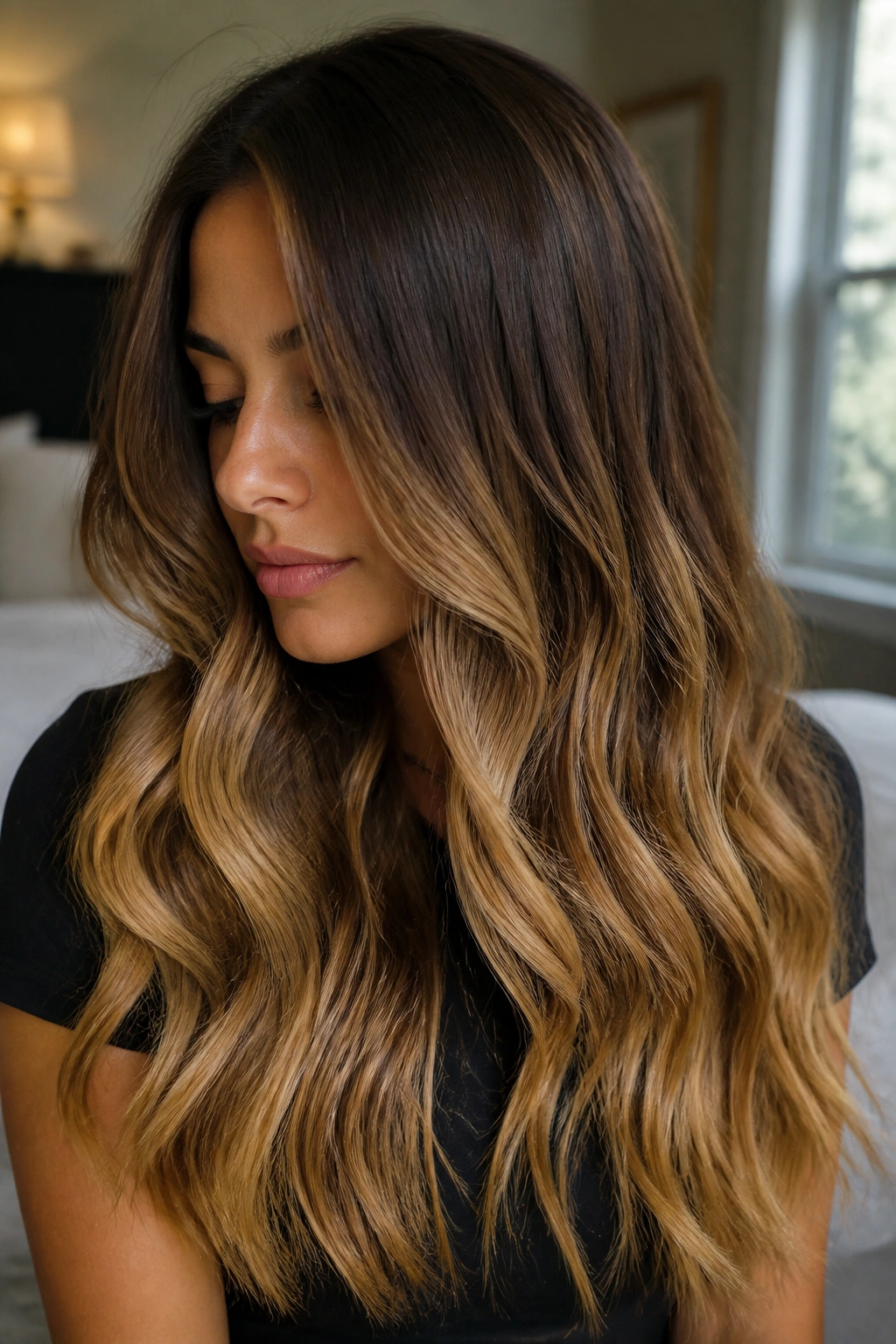
Dark chocolate brown melting into honey blonde is the easiest brown blonde ombre hair idea to wear on long hair, and I mean that in the best way. The contrast is clear enough to show the fade, but not so sharp that it starts shouting across the room.
Why It Works on Long Hair
Honey blonde has a warm, soft glow that reads especially well once the hair moves. On long waves, the ends catch light in a way that makes the color shift look deeper than it is. The dark root keeps the style grounded, while the honey tone brightens the last few inches without making them look dry or chalky.
It also works because the color story is simple. Brown at the top, golden at the bottom, and no weird middle zone that looks muddy. If your natural base is around level 4 or 5, this is the kind of ombre that can look expensive even when the styling is casual.
Quick styling notes:
- Best with loose, brushed-out waves
- Ask for honey blonde, not pale yellow blonde
- Start the lightening around the mid-lengths, not the chin
- A 1.25-inch iron gives the softest bend
Pro tip: Keep the root area glossy and deep. That contrast is doing a lot of the work.
2. Espresso Brown to Beige Blonde Ends
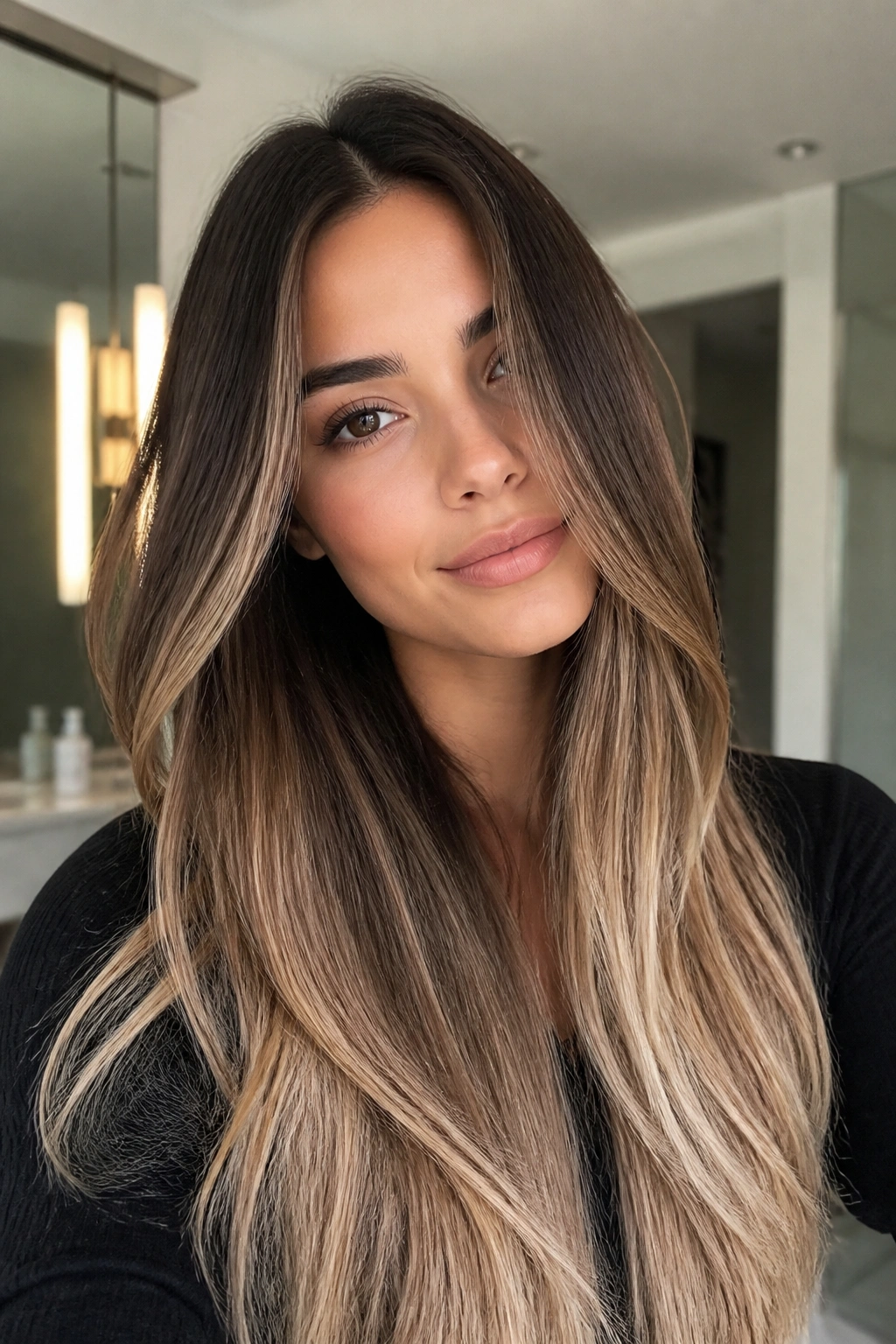
This is the cool-girl version of ombre, and it has a sharper, cleaner finish than warmer blends. Espresso brown on top with beige blonde on the ends creates a soft contrast that feels polished instead of sugary.
Beige blonde is the useful part here. It avoids the orange or gold cast that can creep in when dark brown hair is lifted too fast. On long hair, that cooler blonde tone also makes layered ends look airier, which matters if your hair is thick and tends to hang heavy.
I like this look on straight or softly waved hair because the color edges stay visible. If you curl it too much, the beige can disappear into the pattern. A blunt, middle-leaning part makes it feel more modern. A side part softens it.
The one catch? You’ll need a toner strategy. Beige can fade into brass fast if the hair is porous, so a gentle toning gloss every few weeks helps keep the finish clean without making it icy. No need to overdo purple shampoo. That stuff can flatten the warmth if you use it like detergent.
3. Chestnut Brown to Buttery Blonde with Face-Framing Pieces
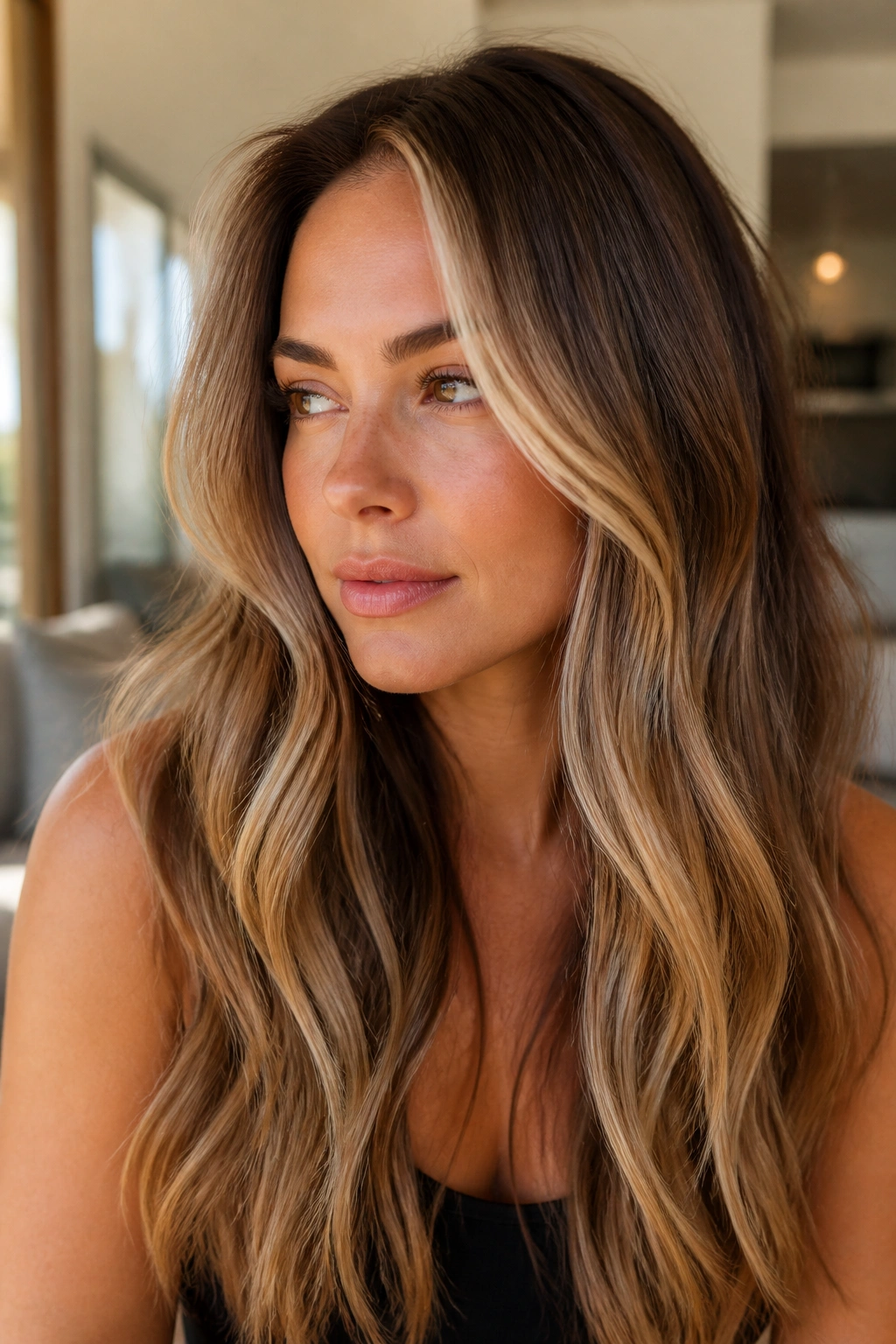
Why does chestnut brown look so good with buttery blonde? Because chestnut already has a soft warmth in it, and buttery blonde keeps that warmth alive instead of fighting it. On long hair, the result feels sunlit rather than streaky.
How to Wear It
The face-framing pieces matter here. A few lighter strands around the front of the face stop the ombre from looking like a color block that begins too low. They also give long hair some lift near the cheeks and jaw, which is handy if your hair falls straight down and needs a little shape.
Buttery blonde sits between gold and beige, which makes it forgiving. It’s bright, but not loud. That’s a useful middle ground if you want the blonde to show up in photos without looking over-processed in daylight.
For styling, think of soft bends and separated ends rather than tight curls. The color looks better when it has a little space between the pieces.
- Best on layered long cuts
- Works well with round brushing
- Looks balanced with curtain bangs or a center part
- Ask for subtle money pieces around the face
4. Mocha Brown to Caramel Ombre in Loose Curls
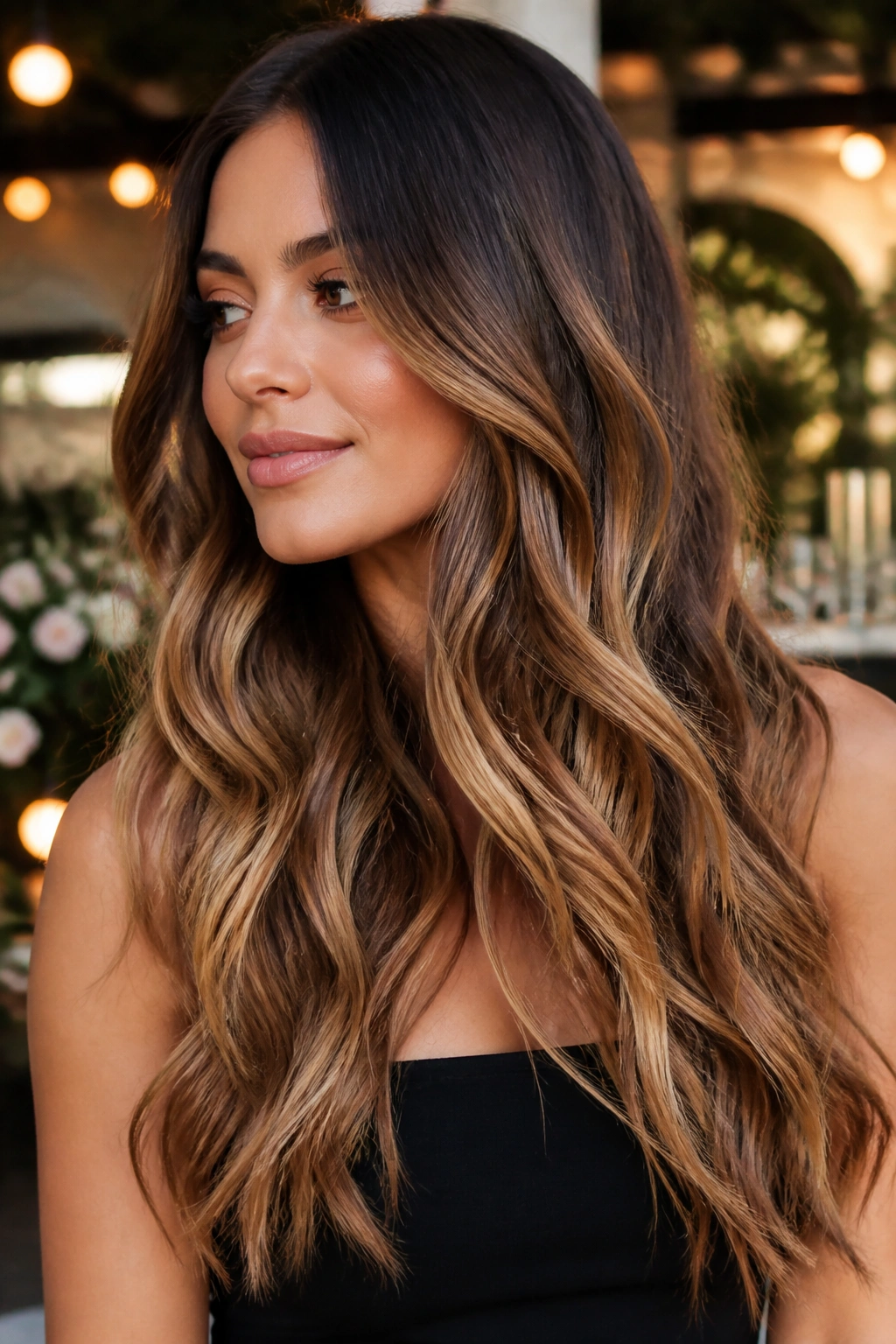
A woman I know wore this exact combination to a wedding, and I still remember the way it moved. The base was deep mocha, the ends were caramel, and every loose curl seemed to catch a different ribbon of color as she turned her head.
That is the trick with caramel ombre on long hair: the curl pattern does half the styling for you. Caramel is warm enough to glow, but it has more depth than plain gold, so it shows up in layers instead of flattening out. If your hair is long and thick, that matters a lot.
What Makes It Stand Out
The gradient should begin around the shoulders or just below. If it starts too high, the caramel can read like chunky highlights. If it starts too low, you lose the ombre effect and the whole thing turns into dark ends with a little color hanging on.
The best version is glossy. Not oily. Glossy. The difference is that one looks healthy and the other looks like you skipped dry shampoo for a week.
- Loose curls reveal the color ribbons best
- A caramel toner keeps the ends warm, not orange
- Satin pillowcases help preserve shine
- A light oil on the mid-lengths is enough
5. Cool Ash Brown to Mushroom Blonde
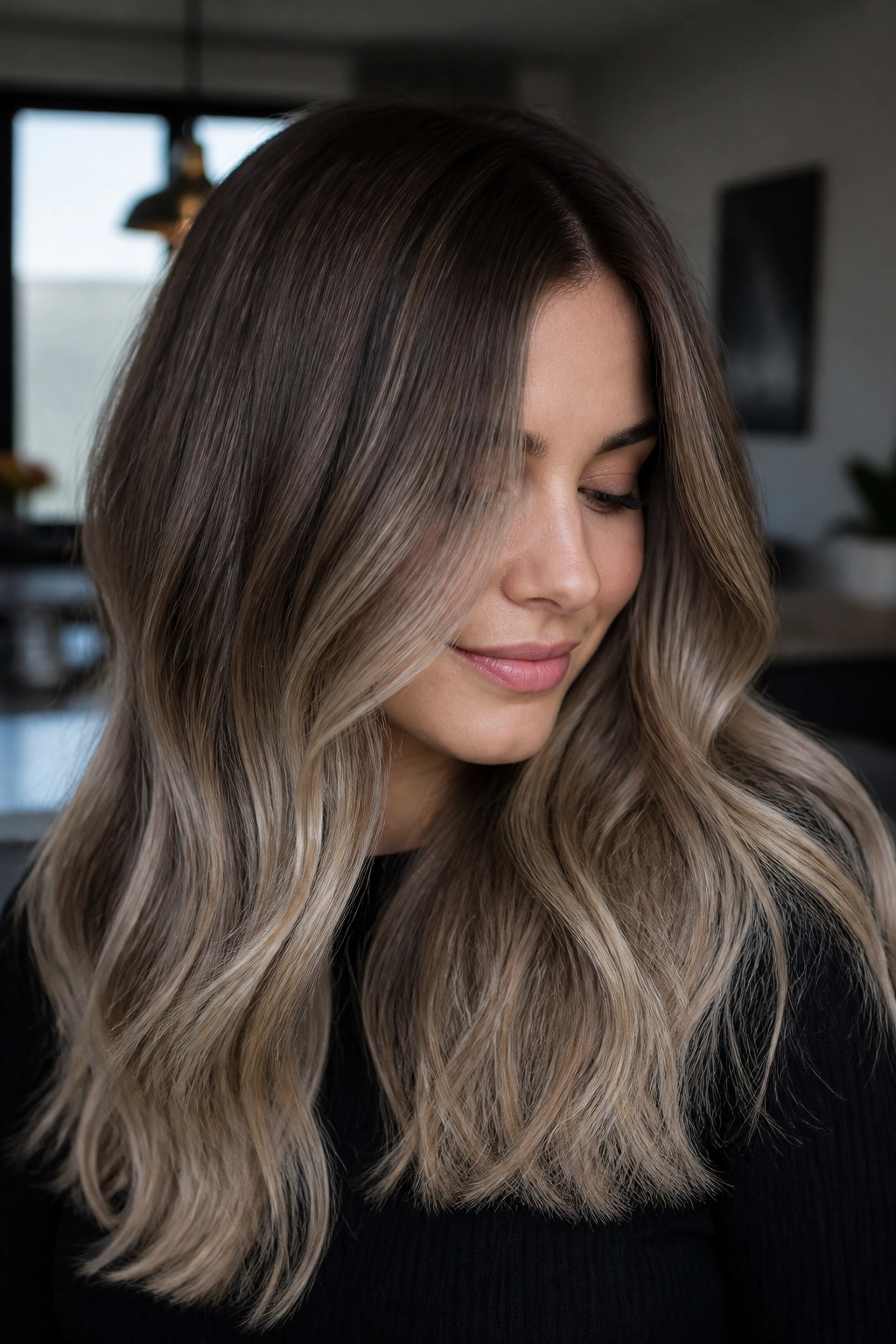
Cool ash brown fading into mushroom blonde is for the person who wants a brown blonde ombre hair look without any obvious warmth. It’s quieter than honey or caramel, and that is exactly why it works.
The palette leans smoky. The brown base stays ashy, almost cool-toned, and the blonde ends move into a beige-gray zone that reads expensive in the plainest, least showy way possible. On very long hair, that cool shift can look sleek and almost misty when the light hits it.
I would choose this if your skin has pink, neutral, or blue undertones and you usually hate how gold can turn brassy on you. Mushroom blonde is not a bright blonde. It’s softer, and that softness gives long hair a more polished feel.
The downside is upkeep. Cool tones fade fast, and if the hair is porous, the ends can turn dull. A tonal gloss helps. So does a sulfate-free shampoo. Skip heavy violet masks unless the blonde is going yellow; too much of them can make the ends look flat.
6. Bronde Ombre with a Soft Root Melt
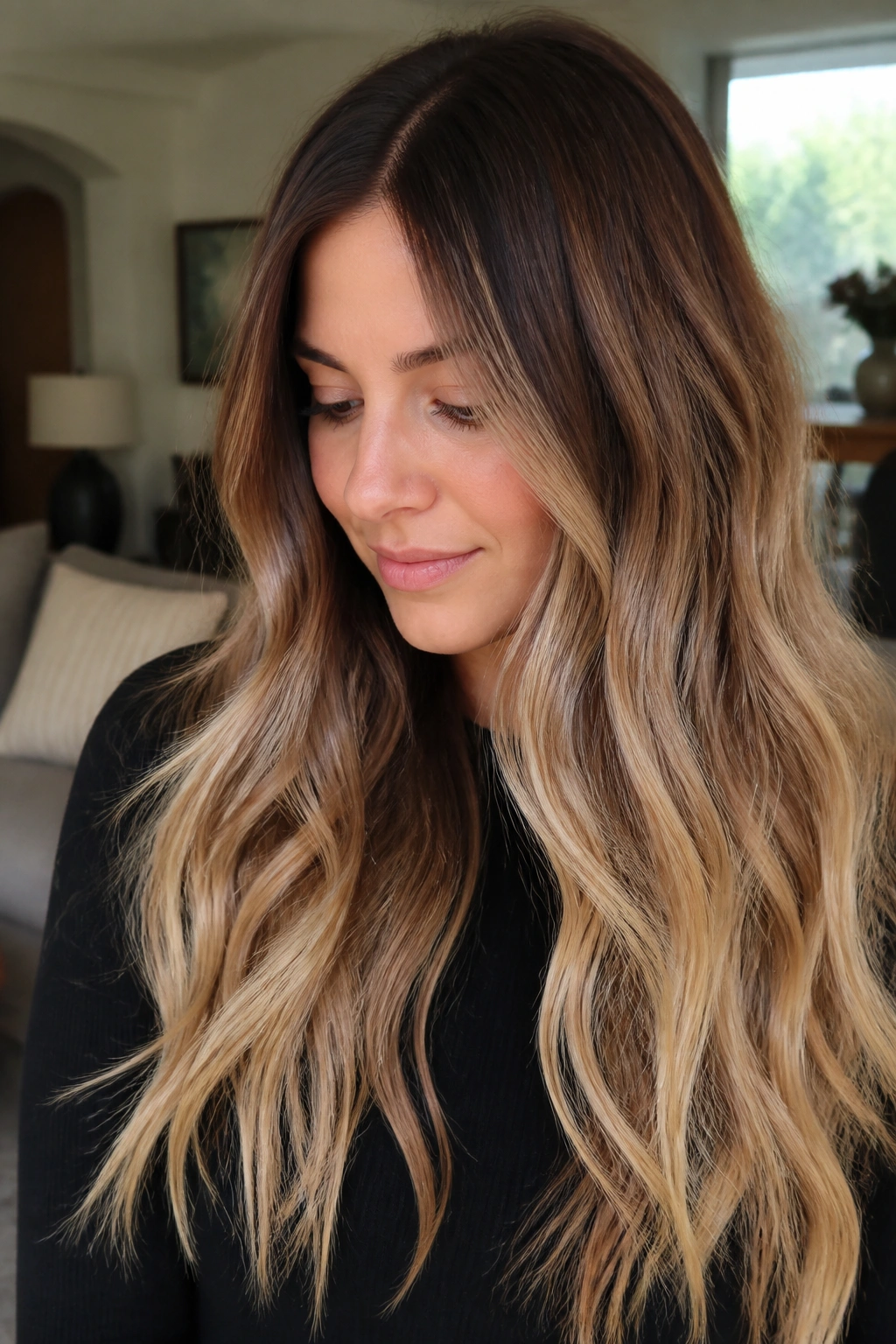
Bronde is the best bridge between brunette and blonde when you do not want the color jump to feel dramatic. It sits right in the middle, which makes it useful on long hair that needs movement more than contrast.
Compared with classic ombre, a bronde melt starts softer at the root and stays blended longer through the mid-lengths. That means the color change is less obvious when the hair is straight and more dimensional when it’s waved. It’s a smart choice if you wear your hair both ways and don’t want the color to depend on curling irons.
This one is especially good if your natural brown is medium rather than deep. A root melt keeps the grow-out softer, which matters when long hair hangs for months before a trim. The result is less “I got my hair dyed” and more “my hair somehow always looks good.”
Best for low-maintenance people. Also best for anyone who wants blonde ends but hates the look of hard stripes near the part.
7. Cinnamon Brown to Vanilla Blonde Mid-Length Sweep
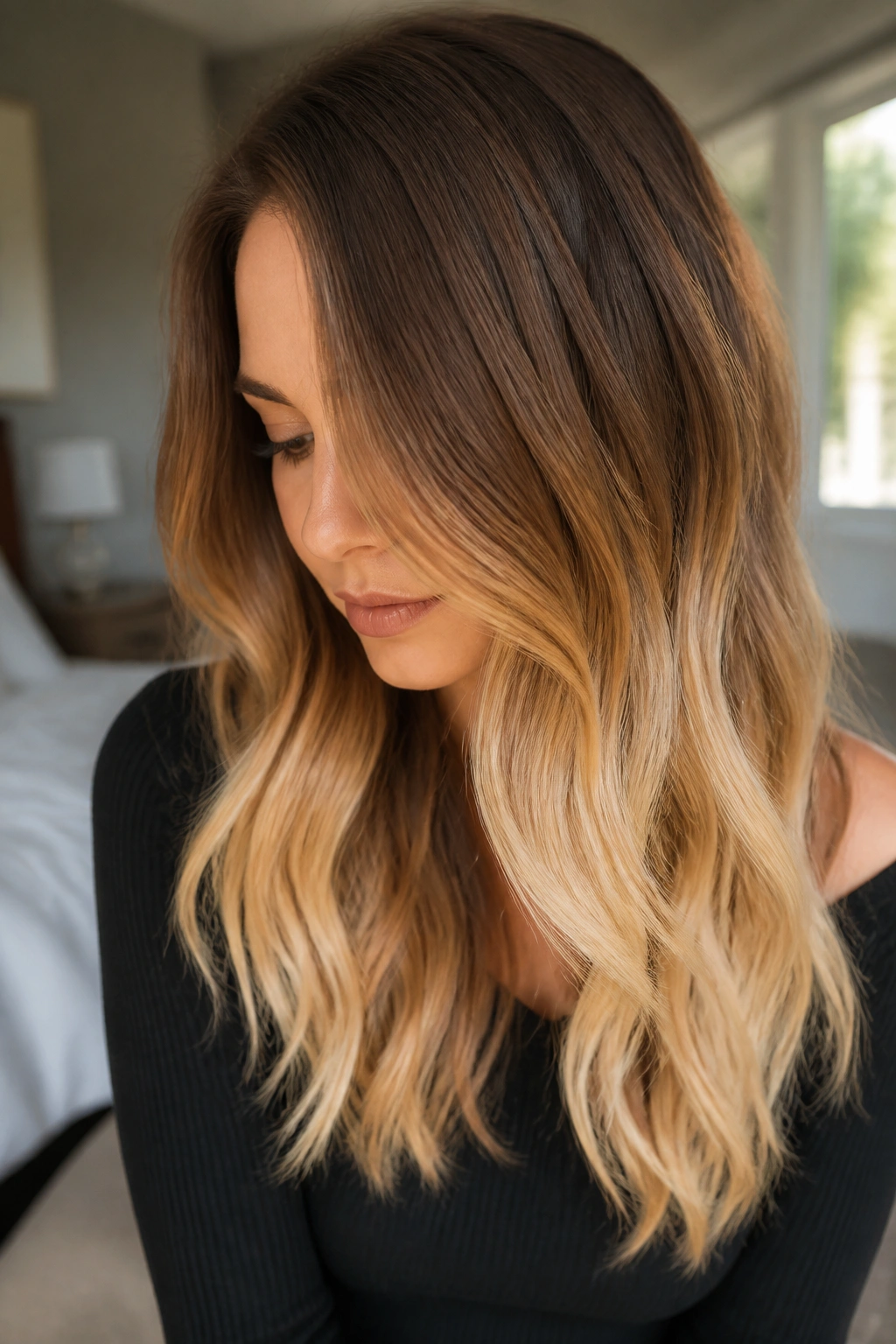
Cinnamon brown gives the base a little spice, and vanilla blonde lightens the ends without turning them yellow. That mix is cheerful in a way that still feels grown-up.
Why the Mid-Length Sweep Matters
With long hair, the fade looks better when it begins somewhere around the mid-lengths and not just at the last three inches. A mid-length sweep gives the eye something to follow. It makes the color look like a planned shift, not a bleach job that ran out of steam.
Vanilla blonde is useful because it feels bright without going stark. If your hair has natural red or copper undertones, vanilla keeps the whole look from going muddy. It’s one of those shades that seems small on a swatch card and suddenly makes sense once it’s on long waves.
A curling wand with a 1-inch barrel gives this style some movement, but don’t overwork the ends. Too much heat and the vanilla starts looking dry. A heat protectant with a light cream finish helps keep the whole thing soft.
8. Rich Walnut Brown to Champagne Blonde Ends
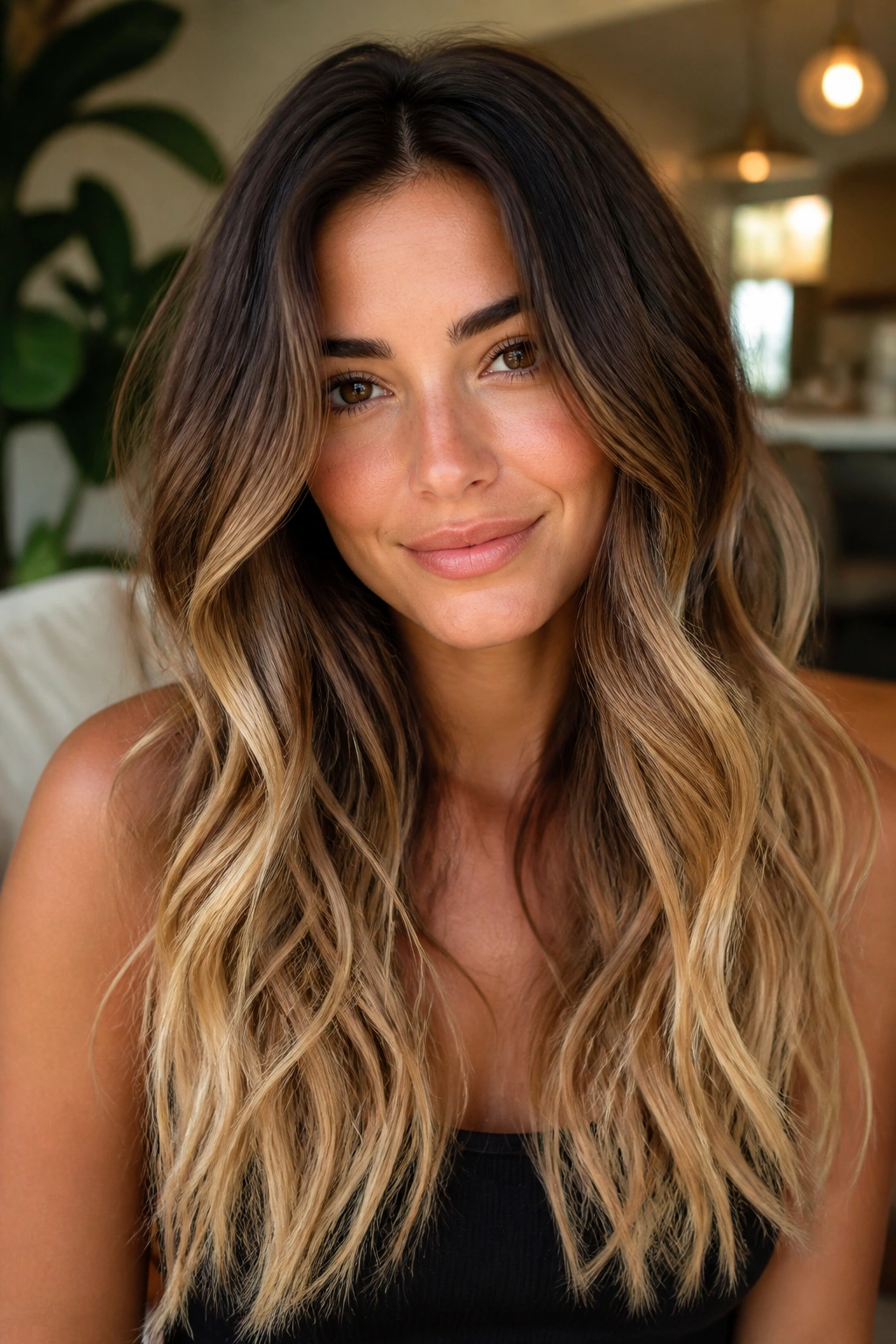
This is one of the prettiest options if you want your long hair to look dressed up without going dramatic. Walnut brown has depth, and champagne blonde gives the ends a soft, pale lift that still keeps a hint of warmth.
Champagne is the key word. It is not icy platinum, and it is not bright gold. It sits in that elegant middle space where the blonde looks airy but still expensive-looking. On long hair, especially hair with a natural bend, the shift feels very clean.
I prefer this on hair that’s already in decent shape. Champagne tones can expose dryness faster than a warmer blonde because they reflect light differently. If the ends are fried, the color tells on you. Quickly.
The fix is simple enough: regular trims, a hydrating mask once a week, and a gloss that brings back shine without darkening the blonde too much. If you like soft makeup and polished clothes, this one fits beautifully.
9. Soft Auburn Brown to Honey Blonde Balayage
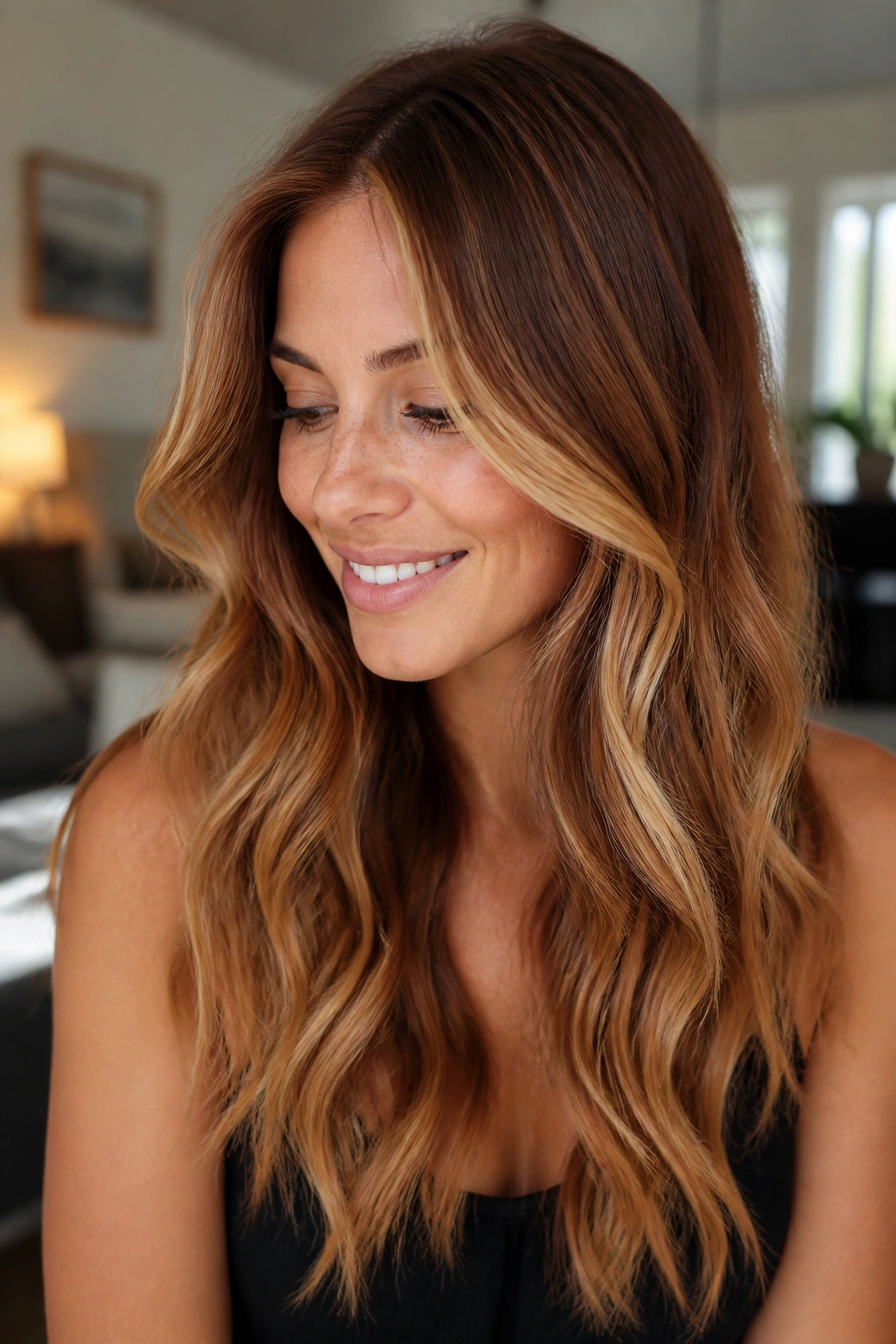
Can auburn brown and blonde live together without looking busy? Yes, if the blonde is honey-toned and the placement stays light around the face and ends. On long hair, this blend can look rich rather than fiery.
How to Make It Work
Auburn already has warmth, so the blonde needs to respect that. Honey blonde does the job better than beige or ash because it keeps the overall color in the same family. If you try to force a cool blonde over an auburn base, the ends can look disconnected. Not cute.
Balayage placement helps too. Rather than a solid ombre line, hand-painted pieces soften the transition and make the color feel sun-washed. That matters on long hair because the length gives you enough surface area to show variation. One flat block of color would waste that.
This look is especially nice with layered waves and a side part. The warm tones bring out green, hazel, and brown eyes. If your makeup leans peach or bronze, the whole effect gets even better.
10. Toffee Brown to Golden Beige Ombre
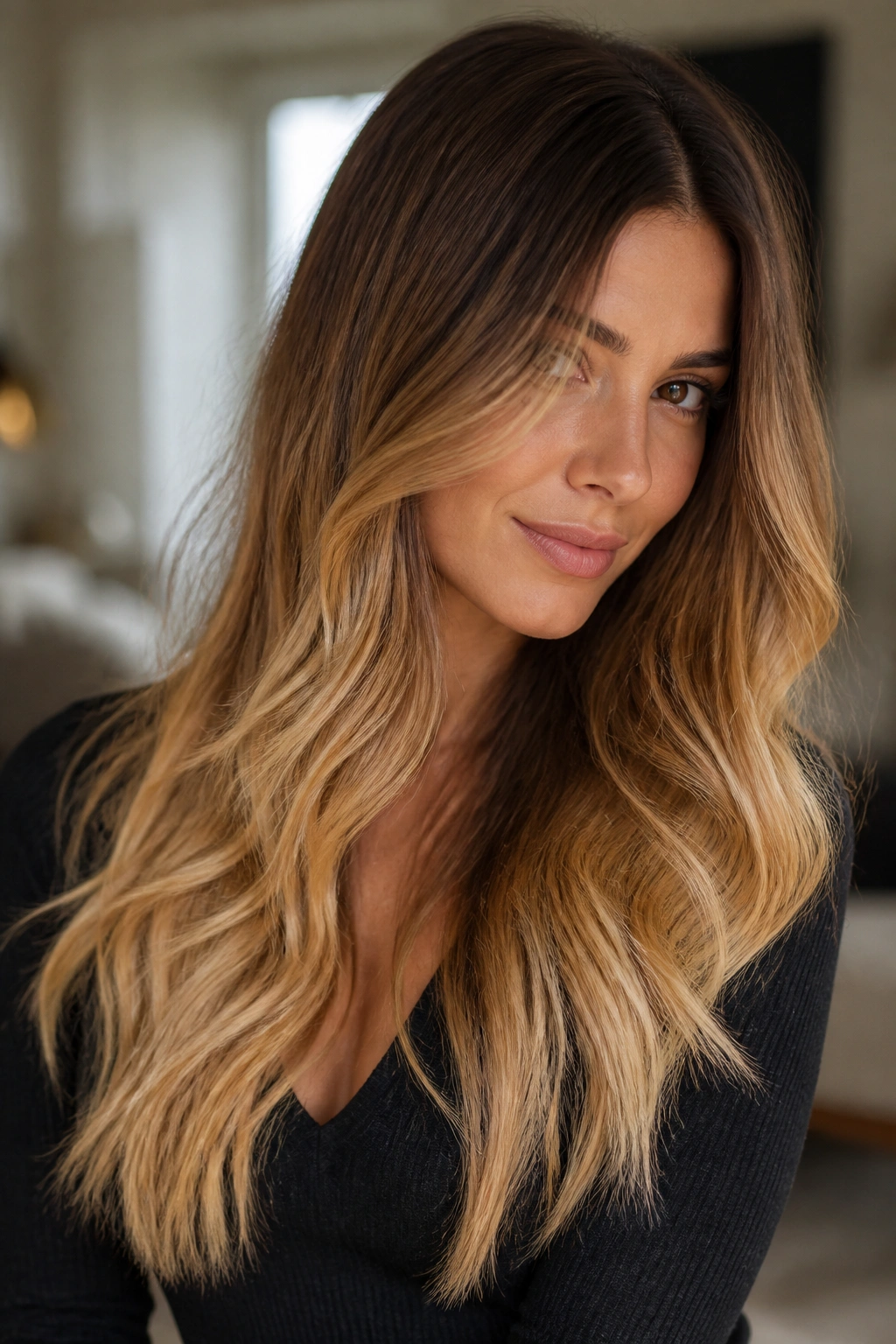
Toffee brown fading into golden beige is one of those blends that looks easy, but only if the tones are placed carefully. Toffee gives the roots a soft caramel-brown richness, while golden beige keeps the blonde ends from looking too orange or too pale.
A long, layered cut makes this shine. The darker root area holds the depth, then the beige ends spread out enough to feel light. On thick hair, that matters because thick lengths can swallow color if the contrast is too mild.
What It Does Best
This ombre is good for people who want warmth but not brass. That’s a narrow lane, and this shade sits right in it. The beige mutes the gold just enough, so the final look feels polished instead of sunny-beach cliché. I’ll take that over overcooked gold any day.
A soft blowout shows it well. So does a loose braid, if you want the shade to look woven through the hair rather than painted on top of it.
- Works well on medium brown bases
- Looks strongest under natural light
- Best with long layers or face-framing ends
- Needs gloss refreshes to keep the beige clean
11. Dark Brown to Sandy Blonde with Curtain Bangs
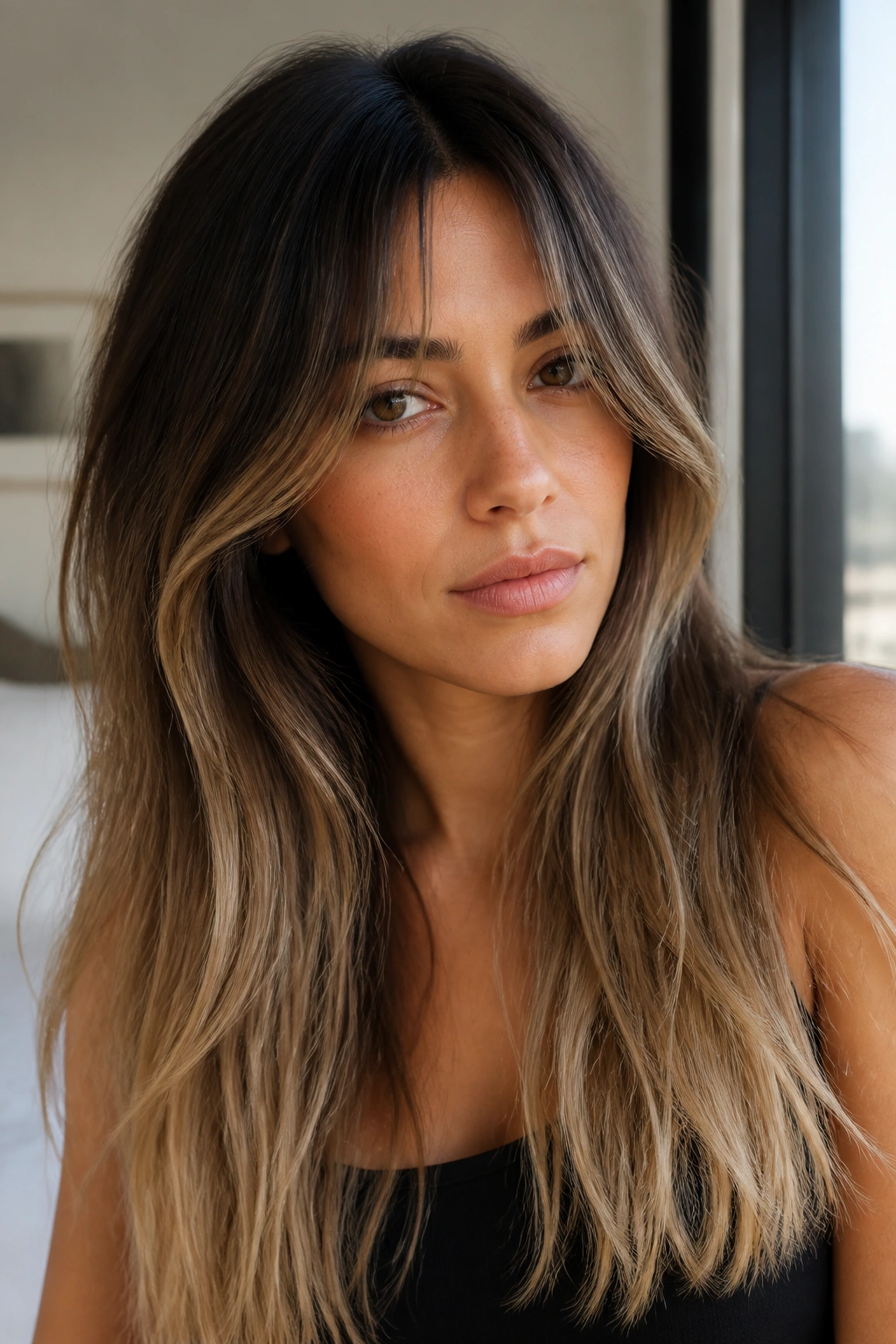
Sandy blonde can save a dark brown ombre from looking too heavy, and curtain bangs make the whole cut feel balanced. On long hair, that front softness matters because the length alone can pull the face downward if the top section is too flat.
The sandy tone is a little warmer than ash, a little cooler than honey, and that middle position gives it a believable, beach-dried finish. It’s not trying too hard. It just reads as sun-worn in a nice way.
Curtain bangs help because they break up the wall of color. Instead of waiting for the blonde to show up only at the ends, you get movement around the cheekbones and temples. That makes the ombre feel intentional from the front, which is where people usually see it first.
This is a good choice if you wear your hair down a lot. If you live in ponytails or buns, the ends will still do the visual work, but the bangs keep the style from disappearing when the hair is loose.
12. Cocoa Brown to Creamy Blonde Ribbon Highlights
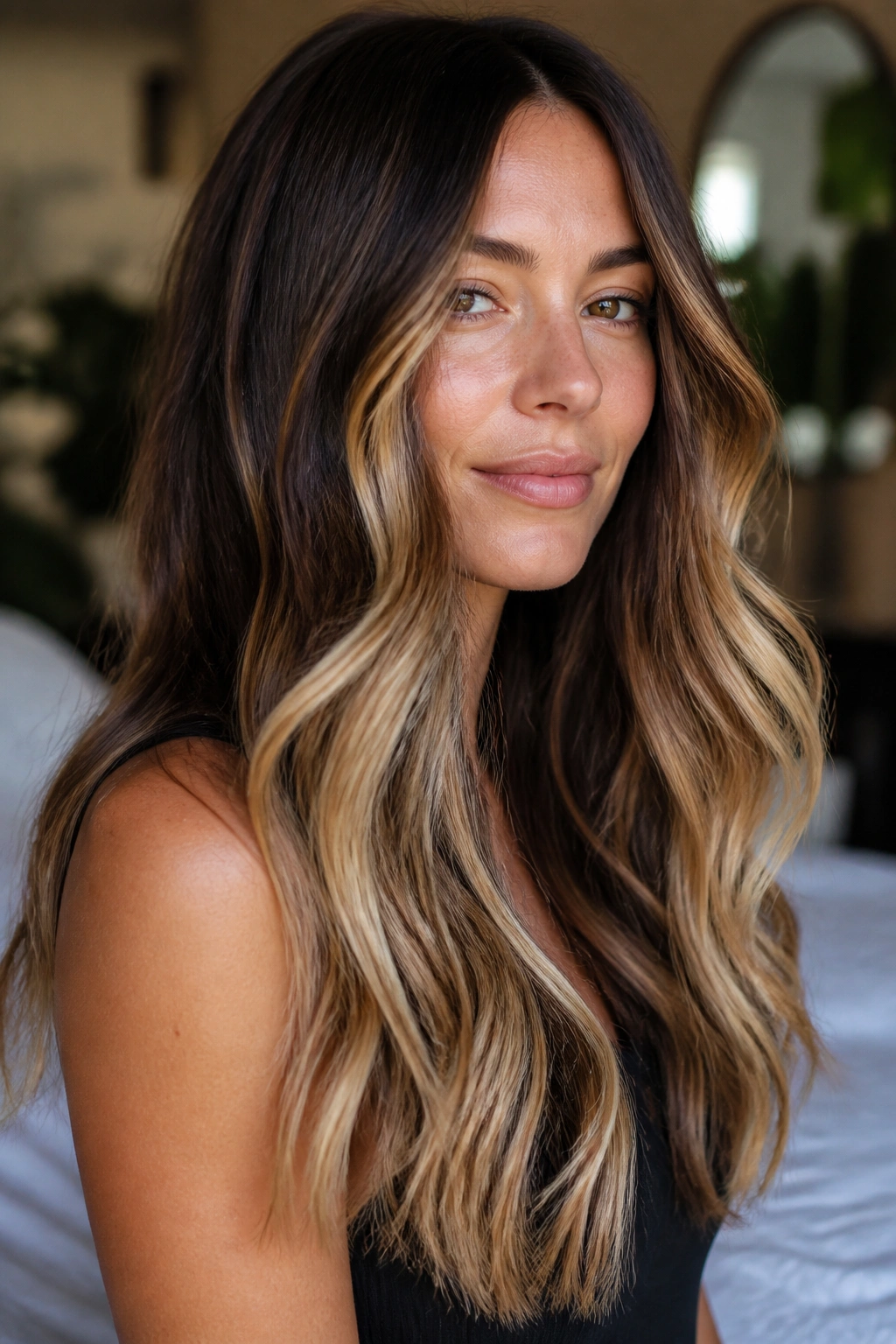
This is a different animal from a classic ombre. Instead of one gradual fade, creamy blonde ribbons are woven through the ends and mid-lengths so the color feels more broken up, more light-catching, and less like a single stripe.
That’s useful on long hair because long lengths can look heavy at the bottom. Ribbon highlights inside a cocoa base give the eye places to land. The result is dimensional, and it stays interesting even when the hair is straight. No need to curl it into submission every morning.
Unlike a strong ombre, this version is better if you want motion without a hard transition. It also works well on layered cuts because the ribbons can sit differently on each layer. That little variation makes the style feel less predictable.
Best for someone who wants blonde visible from multiple angles, not just at the ends. If you hate the idea of a blunt fade line, this is the safer, prettier way to go.
13. Smoky Brunette to Pearl Blonde
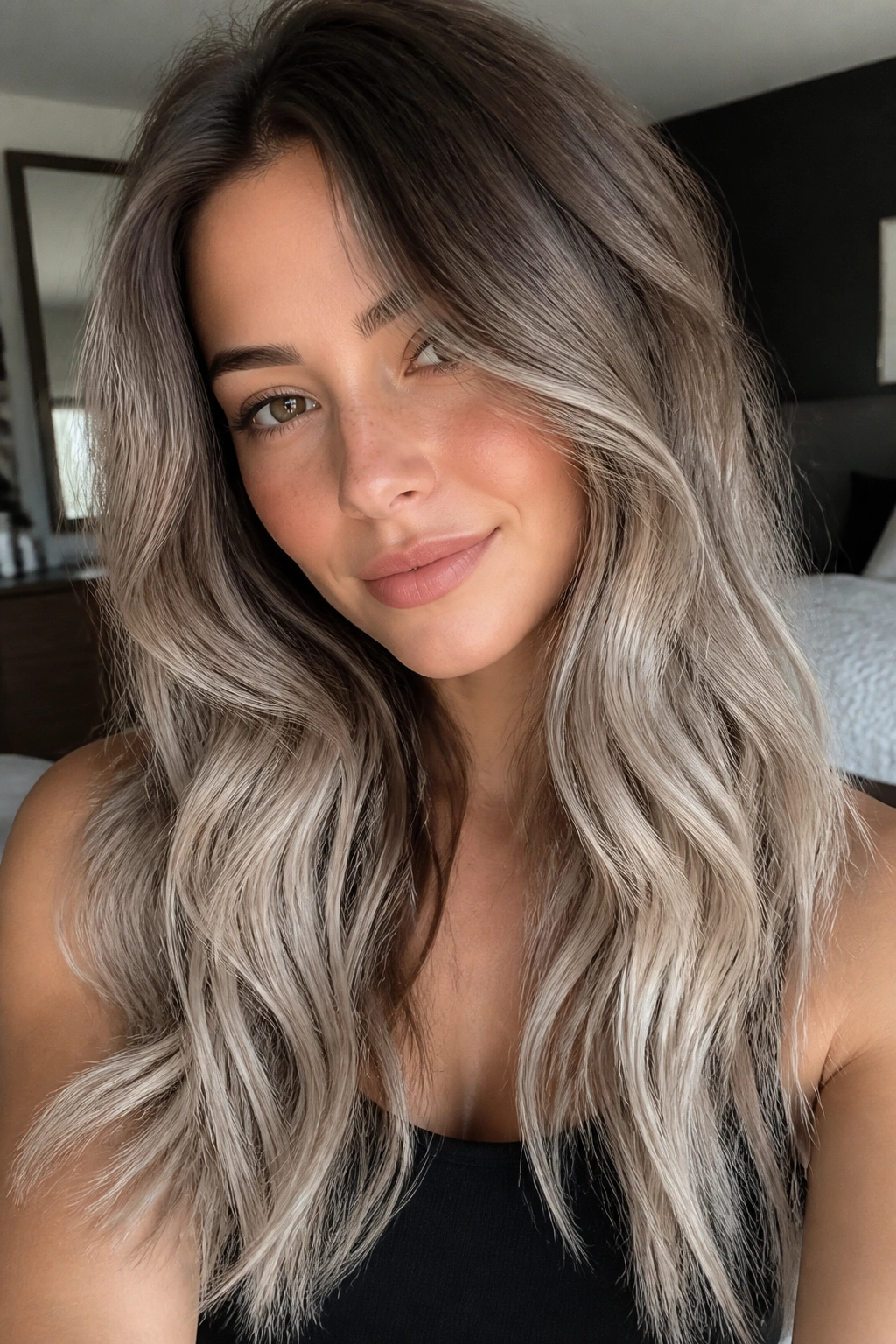
Pearl blonde on a smoky brunette base has a cooler, more polished feel than the warmer ombre looks most people picture first. On long hair, it can feel a little ethereal without tipping into costume territory.
Why It Stands Out
Pearl blonde has a soft reflective quality. It isn’t pure silver, and it isn’t flat beige. There’s a faint opalescent look to it that plays well with long waves, especially if the cut has some layering at the bottom. The smoky brunette base keeps the overall style from becoming too pale.
The trick is restraint. Pearl blonde looks best when the lightness is concentrated toward the lower half and the very ends. If the blonde creeps too far up, the color can lose its softness and turn high-maintenance fast.
This is the kind of ombre that looks especially good with minimalist makeup, crisp shirts, and straight or gently bent hair. It has an edge, but it’s a quiet one.
- Best for cool undertones
- Needs regular toning to hold the pearl finish
- Pairs well with glossy styling creams
- Works on fine hair if the ends are kept soft
14. Maple Brown to Amber Blonde with Big Waves
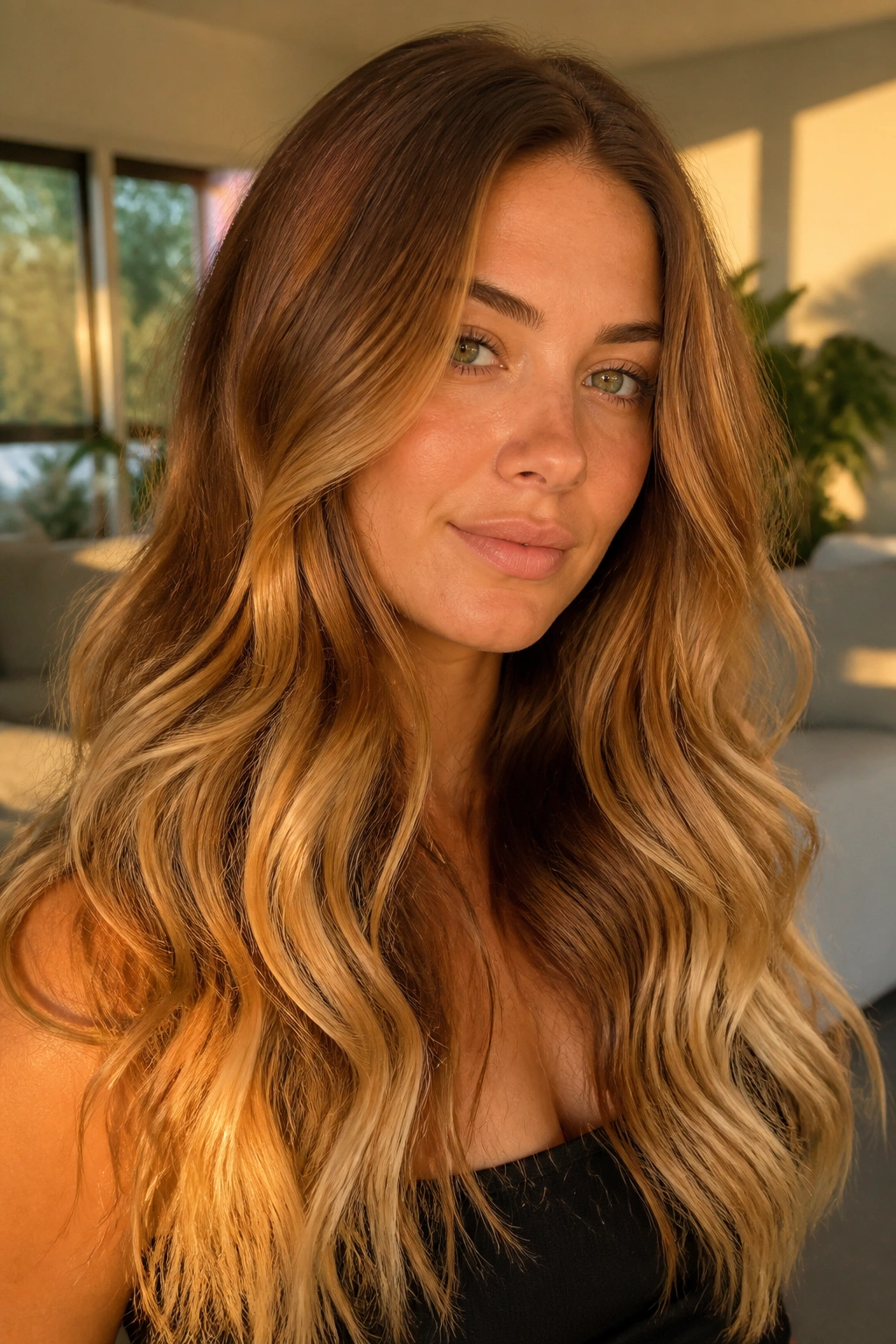
Maple brown into amber blonde has warmth in every inch, and that’s what makes it so wearable. The brown base feels earthy, while the amber ends glow a little richer than standard gold.
A big wave pattern suits this one better than tight curls. Large, loose bends let the amber spread out and look almost molten in the ends. It’s a strong choice for long hair that has a lot of density, because the color won’t get swallowed by the bulk.
The tone is flattering if your skin leans golden, olive, or peach. It also works well in colder weather, when hair color can look dull if the blonde ends are too pale. Amber keeps the style alive.
I’d avoid making the ends too light here. The beauty of maple and amber is that they still feel connected to each other. If you push the blonde into pale territory, you lose that cozy richness.
15. Chestnut Brown to Wheat Blonde on Ultra-Long Layers
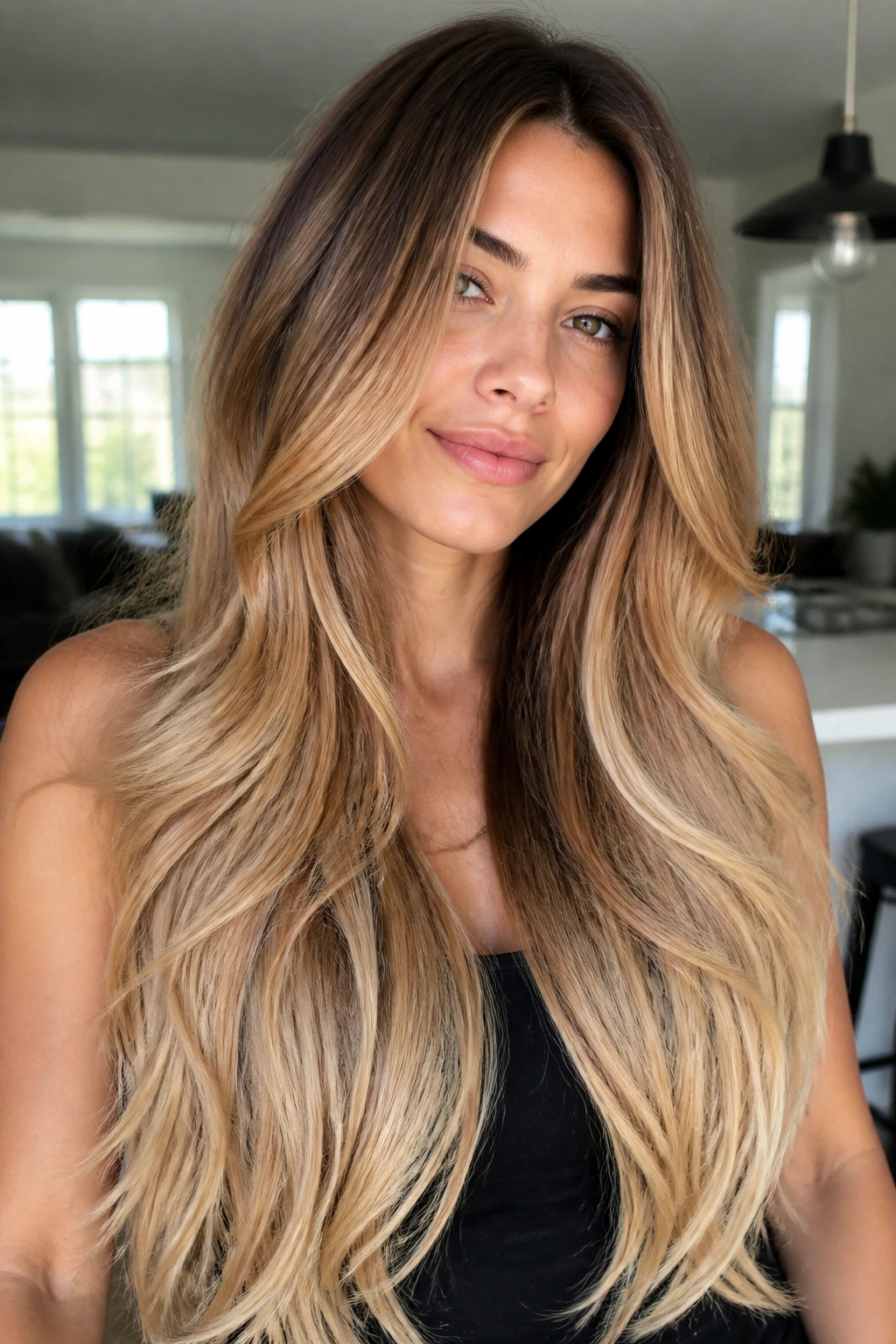
Why does wheat blonde work so well on ultra-long layers? Because wheat sits between bright blonde and beige, so it keeps the finish soft while still showing enough contrast against a chestnut base.
How to Keep It From Going Flat
Ultra-long hair can get heavy at the bottom, and that’s where a wheat blonde ombre helps. The lighter ends pull the eye downward in a clean way, while the layered cut stops the whole style from looking like a curtain. That combo is the difference between elegant and dragged-out.
Chestnut brown brings some red warmth into the root area, which keeps the long fade from looking muddy. Wheat blonde cools it down just enough. The color story feels balanced if the layers are visible, especially around the lower third of the hair.
This is a nice pick for people who want blonde that looks believable in daylight. It doesn’t scream for attention. It just looks healthy, soft, and expensive in a low-key way.
If your hair is fine, keep the layers feathered. If it’s thick, the wheat ends can handle a little more weight and still show movement.
16. Deep Espresso to Caramel Money Pieces and Blonde Ends
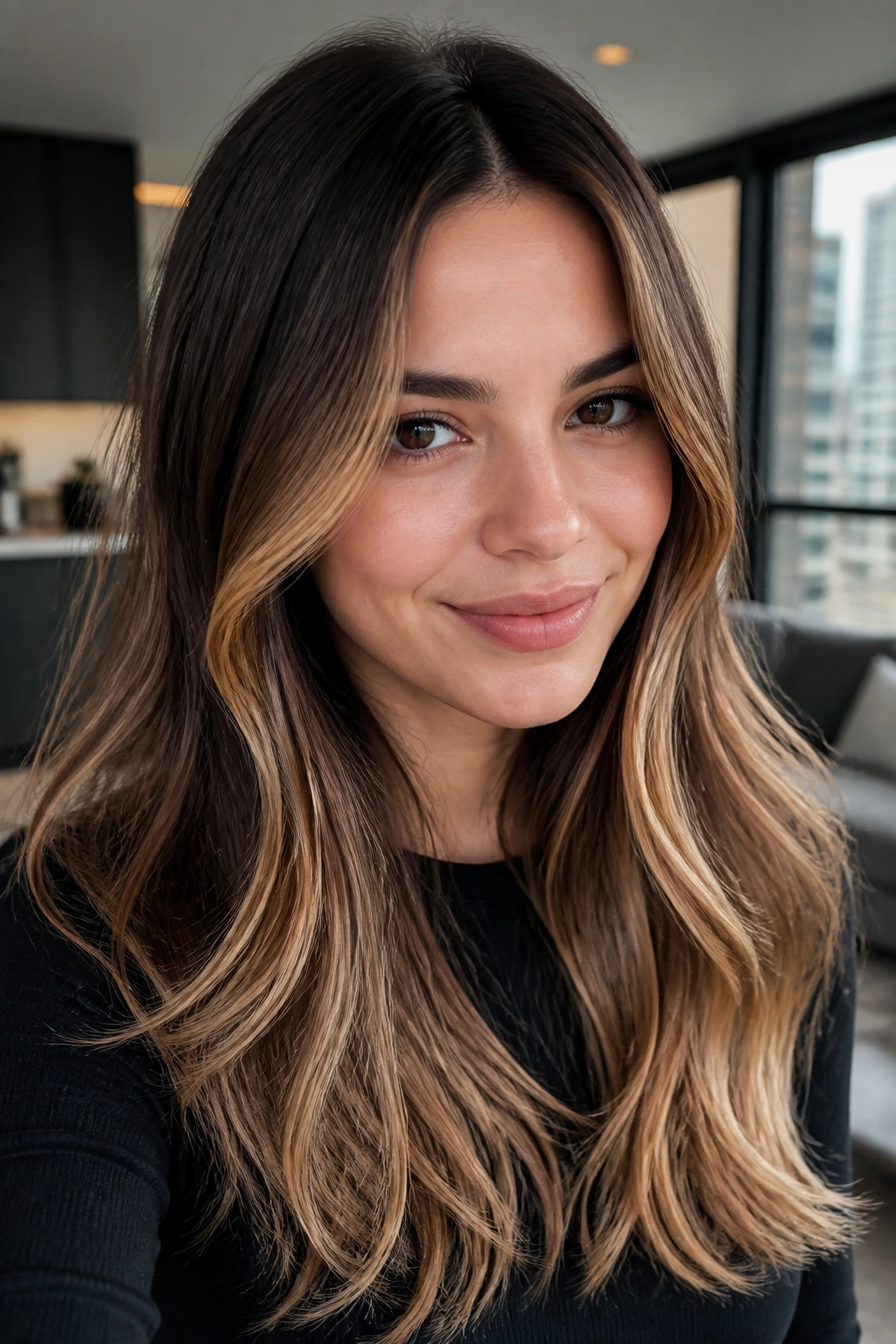
This one is for people who want the drama near the face and the softness through the rest of the hair. Deep espresso roots create a clean anchor, caramel money pieces brighten the front, and blonde ends finish the long silhouette.
That setup solves a common problem. A lot of long ombre hair looks flat at the top because all the brightness gets pushed down too far. Money pieces fix that fast. They frame the face, open up the front, and make the ombre feel intentional from the first glance.
The ends can be a lighter caramel-blonde mix rather than a full pale blonde. That keeps the style from feeling too stark against the dark root. If you wear your hair in half-up styles, this layout looks especially good because the front pieces stay visible.
Best part: you get dimension even when the hair is pinned back.
Less fun part: it needs sectioning work from a colorist who knows what they’re doing. Poor placement here looks patchy fast.
17. Cocoa Root Shadow with Soft Platinum-Tinged Blonde Ends
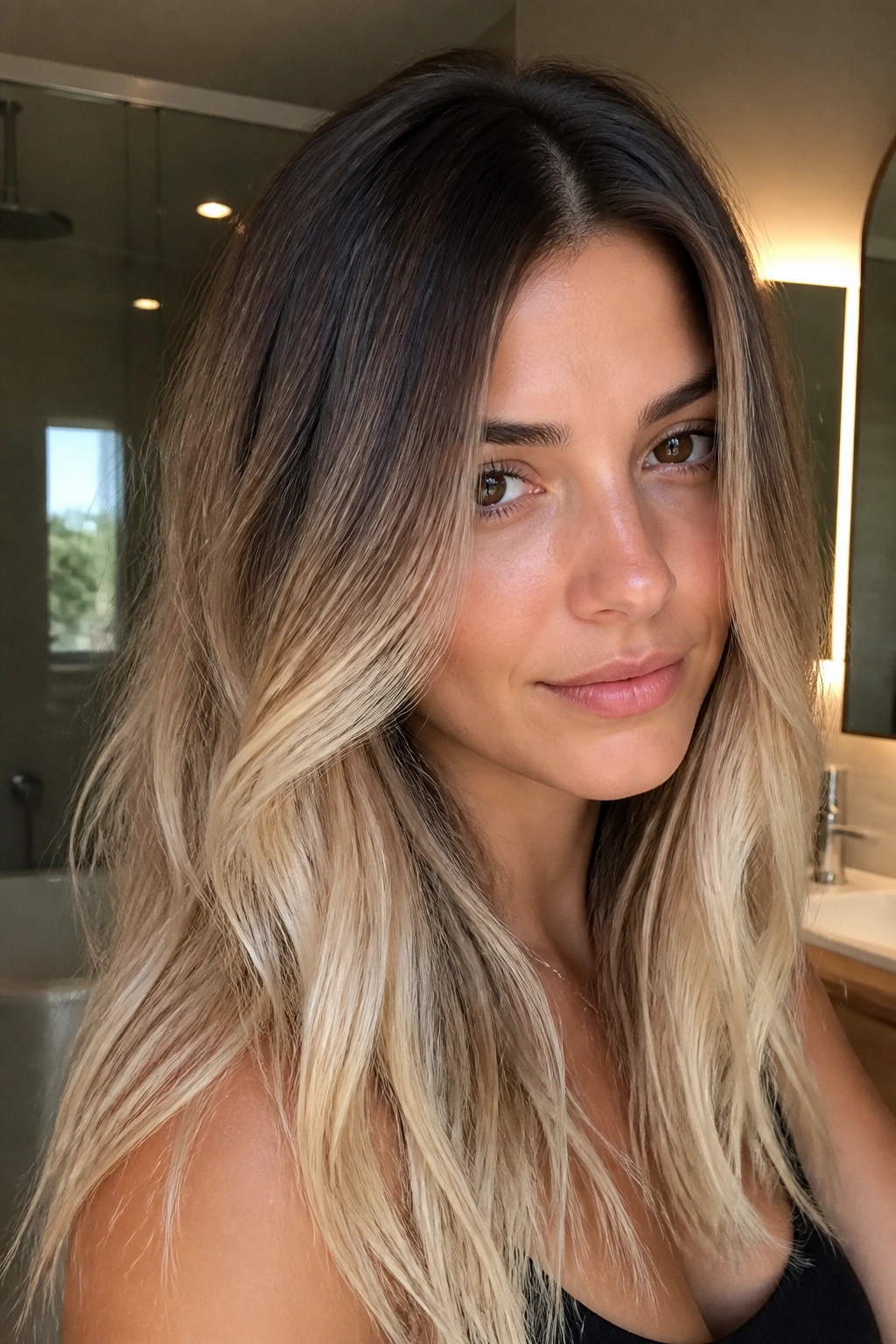
Soft platinum-tinged ends are not for the faint of heart, but when they’re done right, they make long brown hair look sharp and airy at the same time. A cocoa root shadow keeps the root area dark and glossy, which is what keeps the platinum from looking like it belongs to a different head.
The important part is “soft platinum.” Not white. Not silver-gray. Just a cool, pale blonde with enough beige in it to stay wearable. On long hair, that cooler finish can look striking if the ends are healthy and the cut has movement.
This style asks for more upkeep than the warmer ombres in the list. The toner fades, the ends can dry out, and the contrast is unforgiving when the hair gets rough. I would only choose this if you are comfortable with masks, trims, and regular gloss appointments.
Still, the payoff is real. The dark root makes the light ends pop. If you like clean lines, cool tones, and a little edge, this one has a lot going for it.
18. Warm Brunette to Butterscotch Blonde with Braids
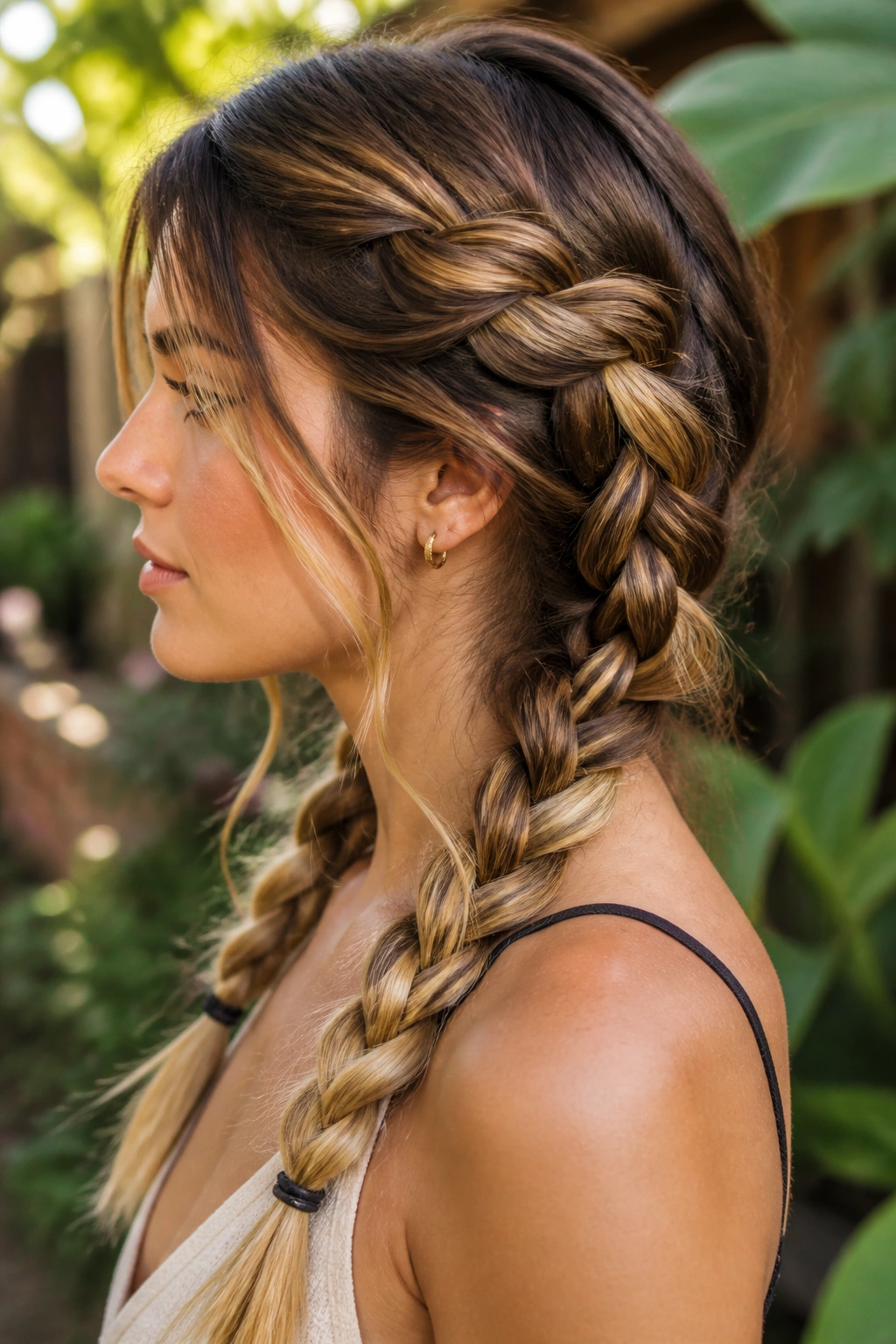
Braids are the underrated styling trick for ombre hair. They show the shift in tone from root to end in a way that loose hair sometimes hides, especially when the color blend is soft.
Why Braids Change the Look
Warm brunette fading into butterscotch blonde can look almost liquid once it’s braided. The darker sections weave through the lighter ones, and the color contrast becomes more obvious without needing stronger dye. On long hair, that matters because a braid gives the length a job to do.
Butterscotch is warmer and richer than honey. It has a caramel edge, which makes it feel slightly deeper. If your natural base is medium brown, this is a flattering place to go because the warmth stays connected all the way through.
This idea is good for people who wear their hair up a lot. The braid shows off the gradient at the crown, nape, and ends in a way that a simple ponytail does not.
- Dutch braids show the color pattern clearly
- Loose fishtails make the blonde look softer
- Great for festivals, travel, or casual weekends
- Works best when the blonde begins below the jawline
19. Walnut Brown to Sunlit Blonde for Curly Long Hair
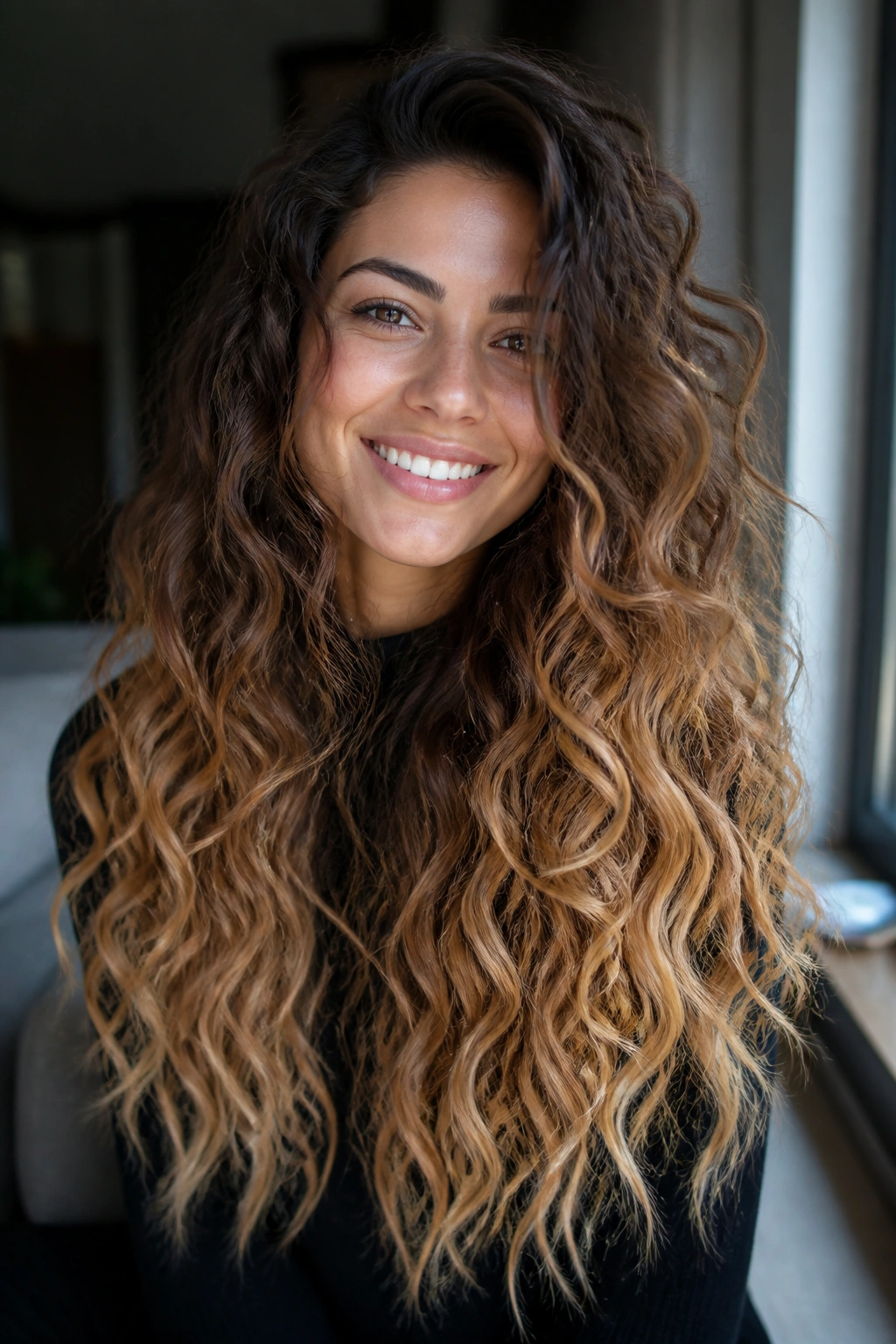
Curly long hair needs a different kind of ombre thinking. The curls already create dimension, so the color has to support that shape instead of fighting it. Walnut brown to sunlit blonde does exactly that.
A curly texture spreads the lighter ends around the head in a way straight hair can’t. That means sunlit blonde doesn’t need to be as bright to make an impact. The curls will do the work. Every ringlet catches color differently, which keeps the style from looking flat even when the hair is one length.
What to Watch For
The lightening should respect curl pattern and porosity. Curly ends can dry out faster, and if the blonde is pushed too high, the hair can lose some of its spring. A softer fade with slightly brighter ends usually looks better than a hard jump.
A leave-in conditioner matters more here than it does on straighter textures. So does diffusing on low heat. The whole look lives or dies by curl definition.
If your curls are loose and large, sunlit blonde can read airy. If they’re tighter, keep the tone a little warmer so the contrast doesn’t get too stark.
20. Mushroom Brown to Beige Blonde with a Sleek Blowout
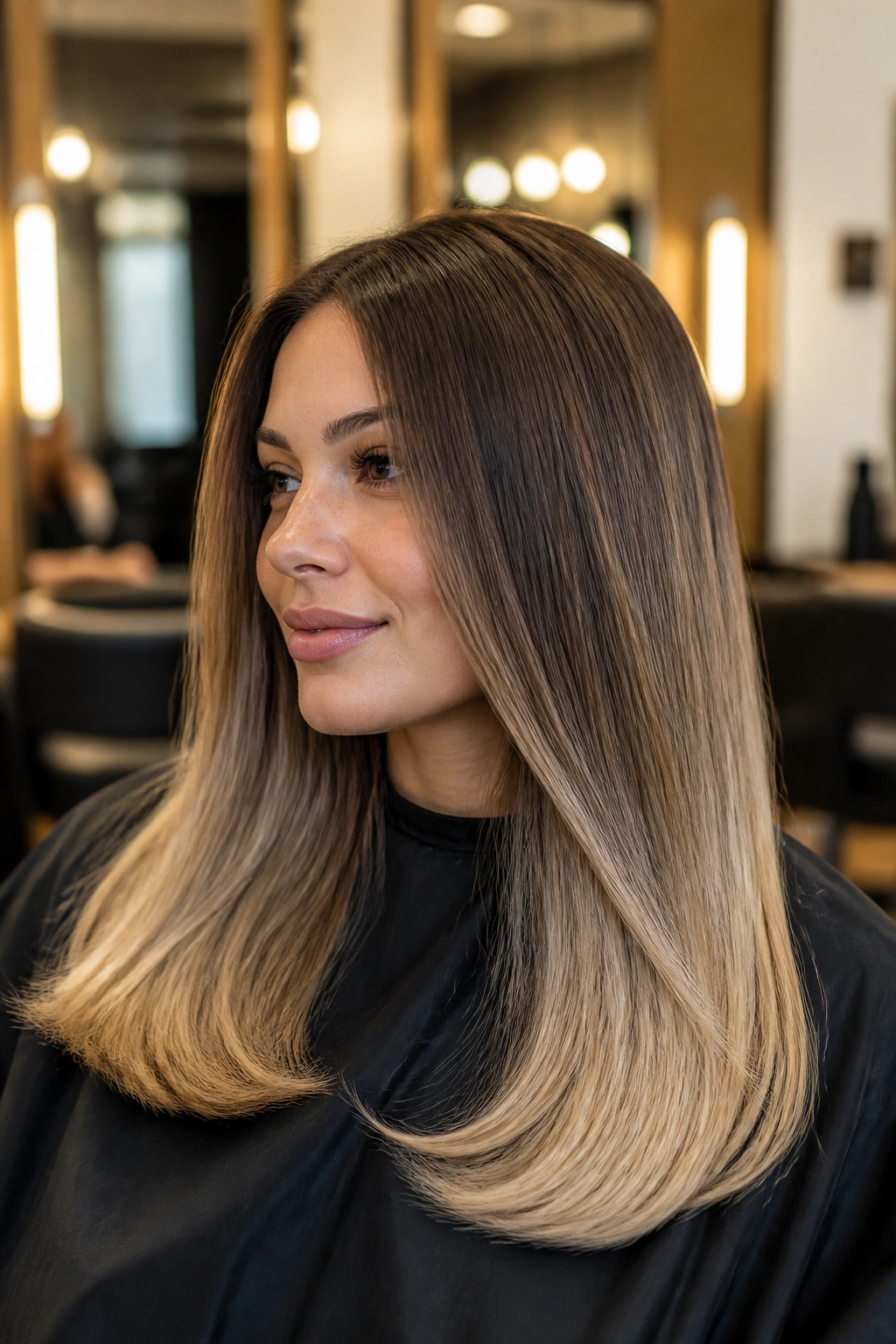
If you like your hair smooth, glossy, and straight, mushroom brown into beige blonde is one of the cleanest ombre choices around. The sleek finish shows the color shift without the noise of waves or curls getting in the way.
That is the reason this combo works. The texture is doing less, so the color has to do more. Beige blonde keeps the ends soft and wearable, while mushroom brown gives the root a cool, slightly smoky base. On long hair, that creates a long vertical line that feels elegant without being stiff.
A round-brush blowout makes the transition even smoother. The ends should bend under just a little, not flip out. That tiny curve keeps the blonde from looking chopped off at the bottom.
Use heat protectant. Seriously. Sleek ombre hair only looks sleek when the ends are smooth, and you can see dryness from across the room if the blowout gets too hot.
21. Hazelnut Brown to Cream Blonde with Invisible Layers
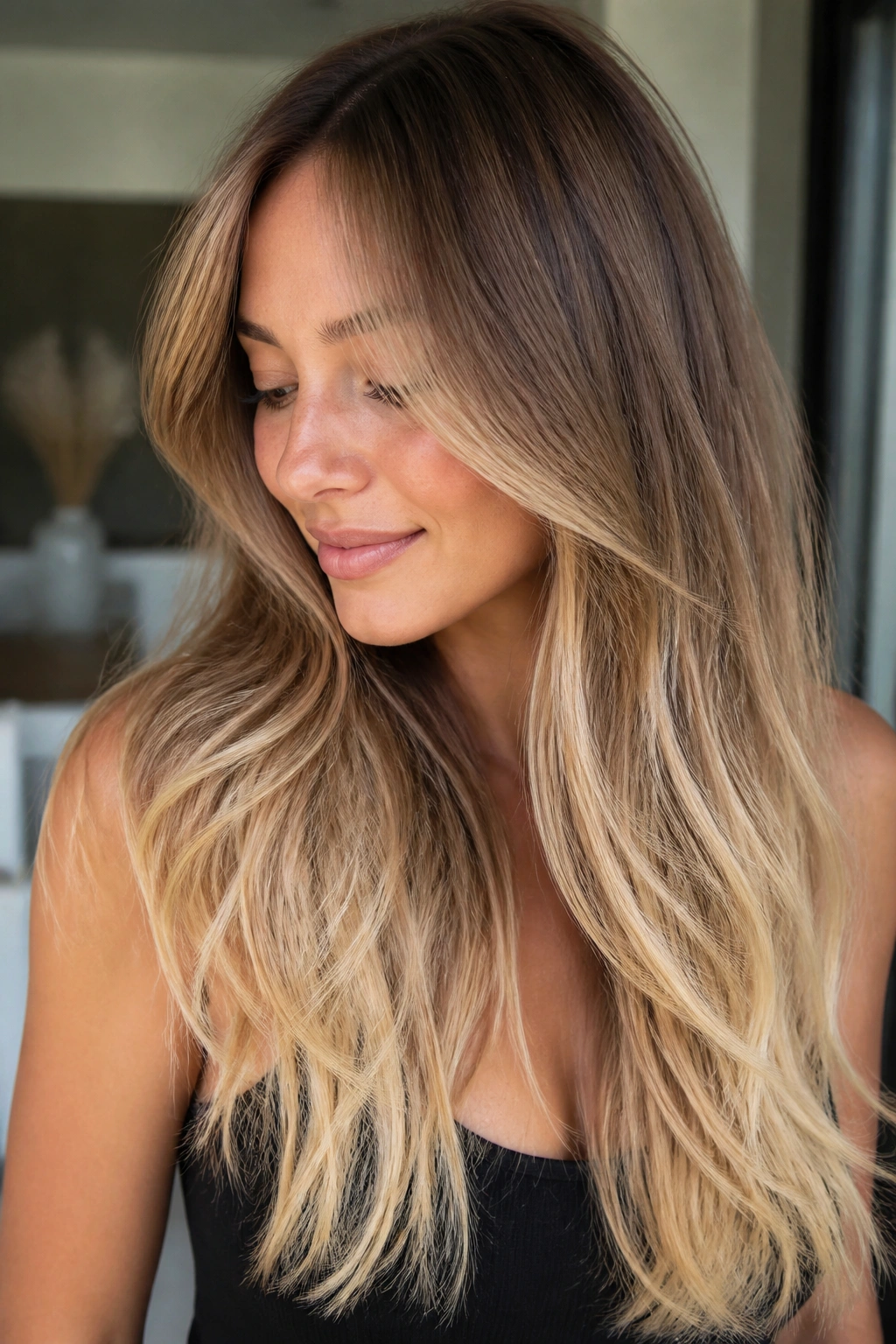
Why do invisible layers help ombre hair? Because long lengths need movement even when the cut looks almost one-length from the front. Hazelnut brown to cream blonde works best when the hair can fall in soft, separated sections rather than one heavy sheet.
How to Use It
Cream blonde is softer than platinum and lighter than beige, which makes it a strong finishing tone for people who want a bright end without a hard edge. Hazelnut brown has enough warmth to keep the base rich, so the contrast feels pretty rather than severe.
Invisible layers help the color show by letting the light catch different pieces at different lengths. You may not notice the cut at first glance, and that is the point. The layers support the ombre without stealing attention from it.
This is a smart choice if your hair is thick but you hate obvious layering. It also works well if you wear it half-up, because the movement still shows when the top section is pulled back.
22. Dark Brown to Soft Champagne Blonde Ombre for a Polished Finish
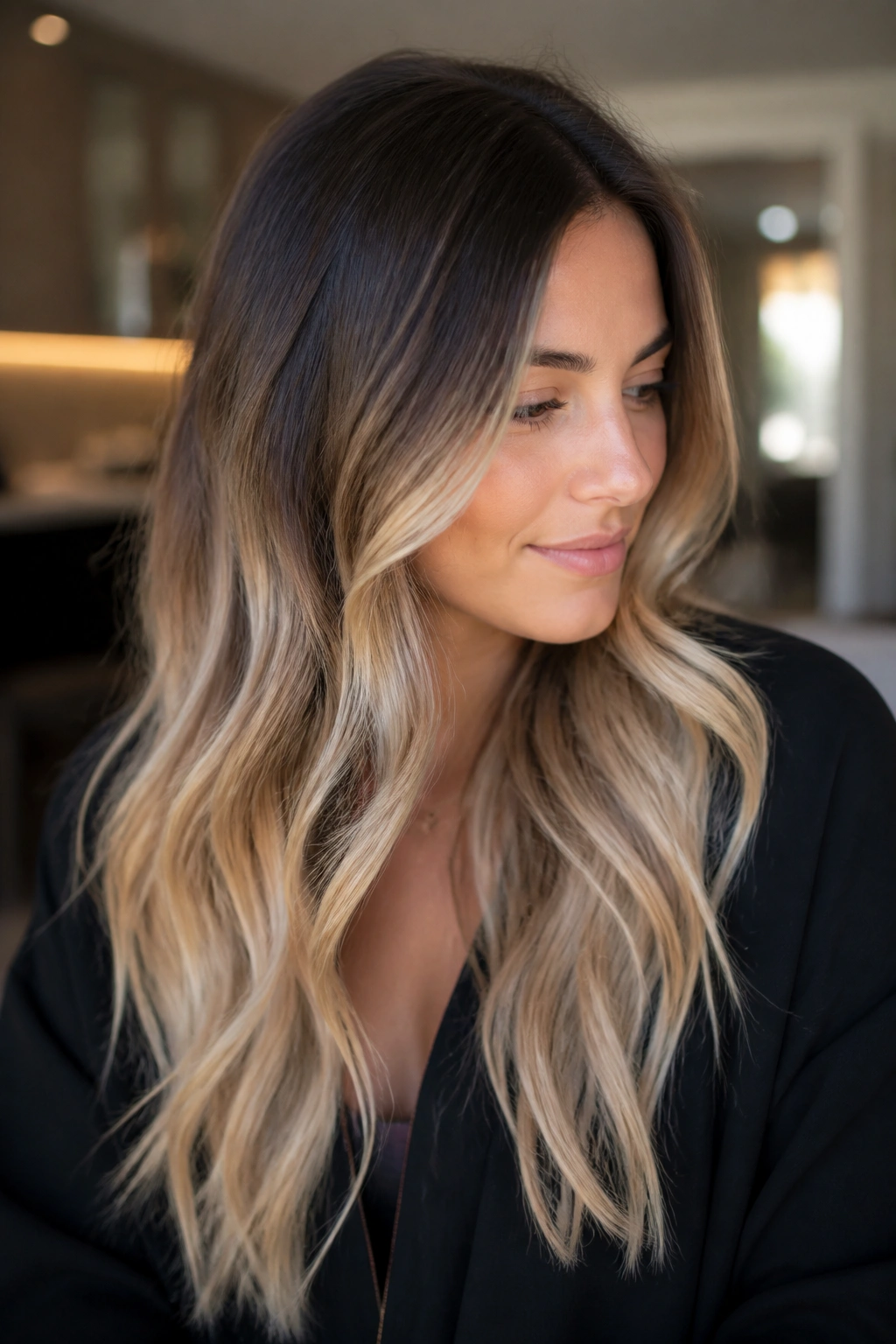
If you only want one brown blonde ombre hair idea saved on your phone, make it this one. Dark brown into soft champagne blonde sits right between warm and cool, which makes it easier to wear than a lot of brighter options.
Champagne ends feel polished without getting rigid. They have enough pale brightness to lighten the whole look, but not so much that they pull the focus away from the long shape of the hair. On deep brown roots, the effect is clean and expensive-looking, especially when the hair is healthy and the cut keeps the ends moving.
This shade also behaves well across textures. Waves make it softer. Straight hair makes it sleeker. Braids show the tone change in a gentle way. That flexibility matters on long hair because you rarely wear it only one way.
If the rest of the list feels too warm, too cool, too bold, or too soft, this is the middle path. It’s the one I’d send to someone who wants a polished ombre that won’t look dated the moment the styling changes.
