



Long hair gives ombre room to stretch, and that changes everything.
A color melt that looks a little ordinary on a collarbone-length cut can look rich and layered halfway down the back, because there’s space for the root shadow, the transition, and the lighter ends to each do their own work. The trick is not to chase brightness for its own sake; the smartest ombre on long hair uses the length to build movement.
Some people want a whisper-soft caramel fade. Others want navy ends, smoky silver, or a high-contrast blonde finish that reads like a statement. All of those can work, but the fit depends on your base color, your cut, and how much upkeep you’re willing to live with.
The mix below leans practical. A few looks are low-commitment. A few need patience and a good toner. Long hair can carry the whole range, and that is exactly why ombre never really gets boring.
1. Soft Caramel Ombre Melt
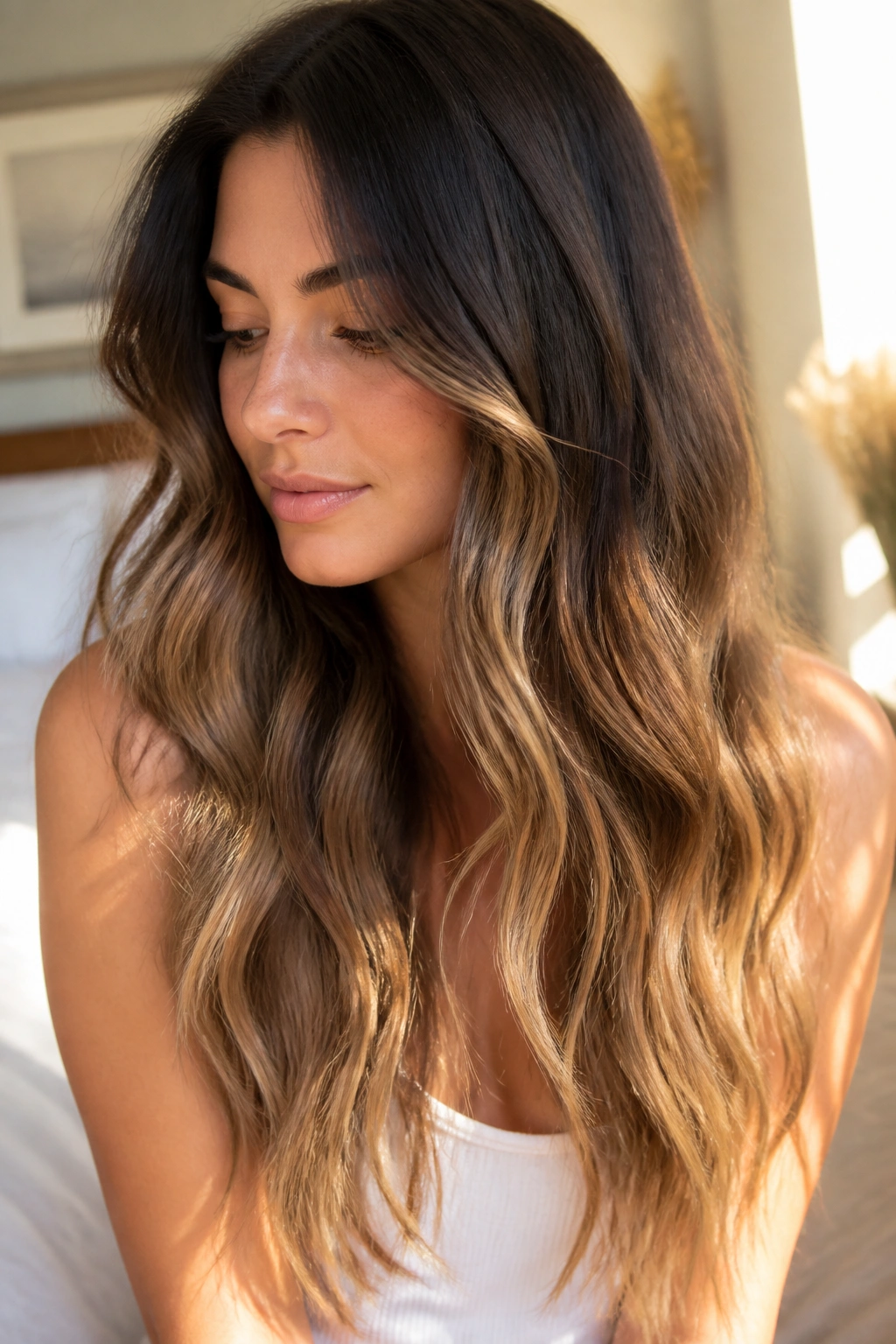
This is the easy favorite for brunettes who want dimension without drama. A deep brown root that slips into caramel through the mid-lengths and ends gives long hair that soft, glossy swing people chase in salon photos. It looks especially good when the caramel is more beige than orange.
Why It Works
Caramel is forgiving. On long hair, it breaks up heavy dark lengths and keeps the ends from looking flat, which matters a lot if your cut has layers that need movement. It also grows out with less fuss than a high-blonde finish.
- Best base: medium brown to dark brown.
- Ask for: a root shadow that stays 2 to 3 inches deep.
- Style with: loose bends or large-barrel curls.
- Skip if: you want a cool-toned finish only.
Pro tip: Keep the caramel around level 7 or 8, not brassy gold, or the whole look can turn loud fast.
2. Ash Bronde Fade
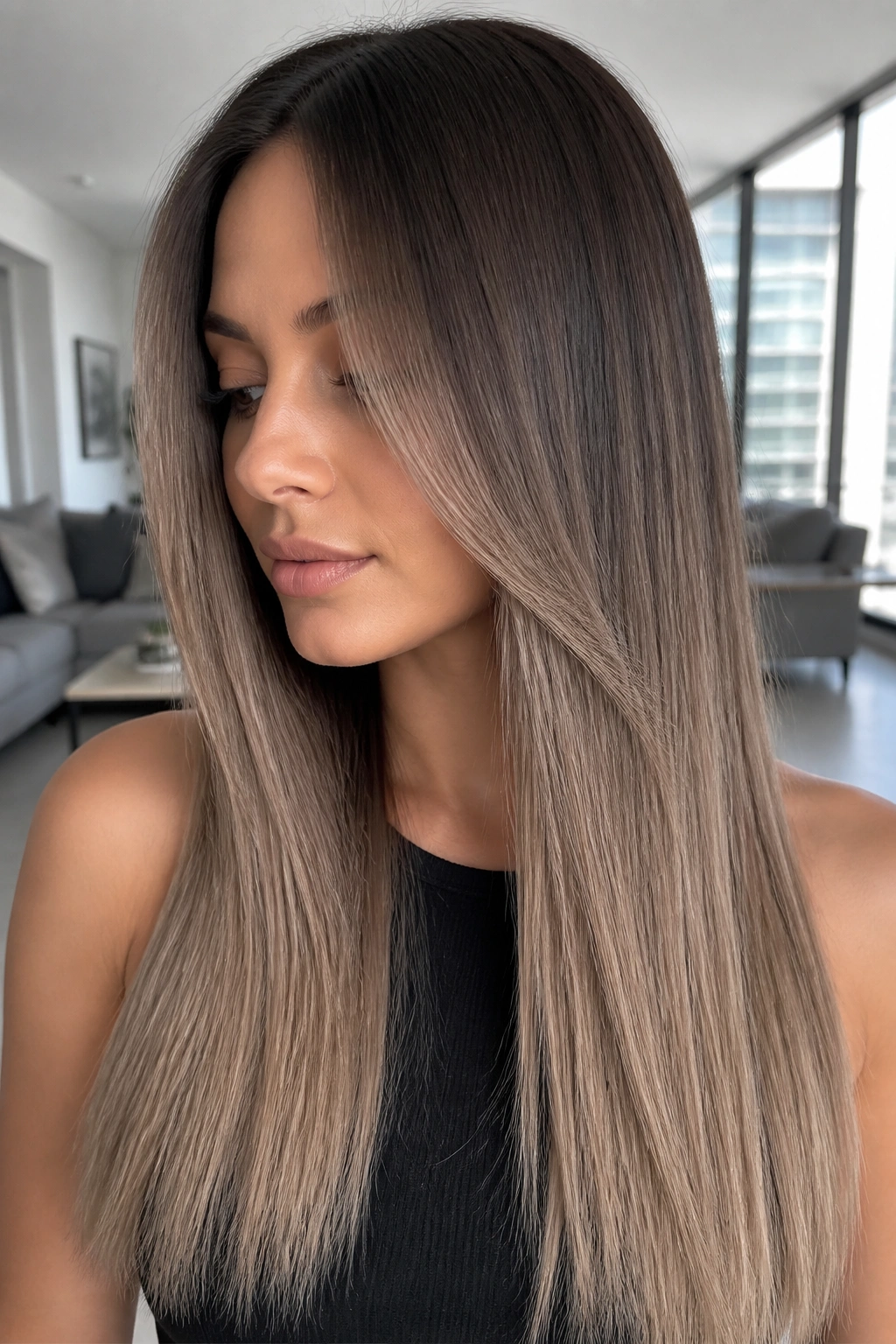
If you hate brass, this is the one to watch. Ash bronde sits between brunette and blonde, which makes it a smart pick for long hair that needs lightness but not a full blonde commitment. The cooler edge keeps the ends from going orange after a few washes, which is where a lot of softer blondes fall apart.
Long lengths give ash tones room to breathe. You get that smoky middle ground through the mids, then a pale beige finish near the ends. On straight hair, the shift looks sleek. On wavy hair, it looks layered and expensive without trying too hard.
The main thing to ask for is balance. Too much ash on dark hair can look flat, and too much beige can lose the point. A good colorist will keep the root area deep, lift the mids carefully, and tone the ends just enough to stay cool without turning gray.
3. Chestnut to Copper Glow
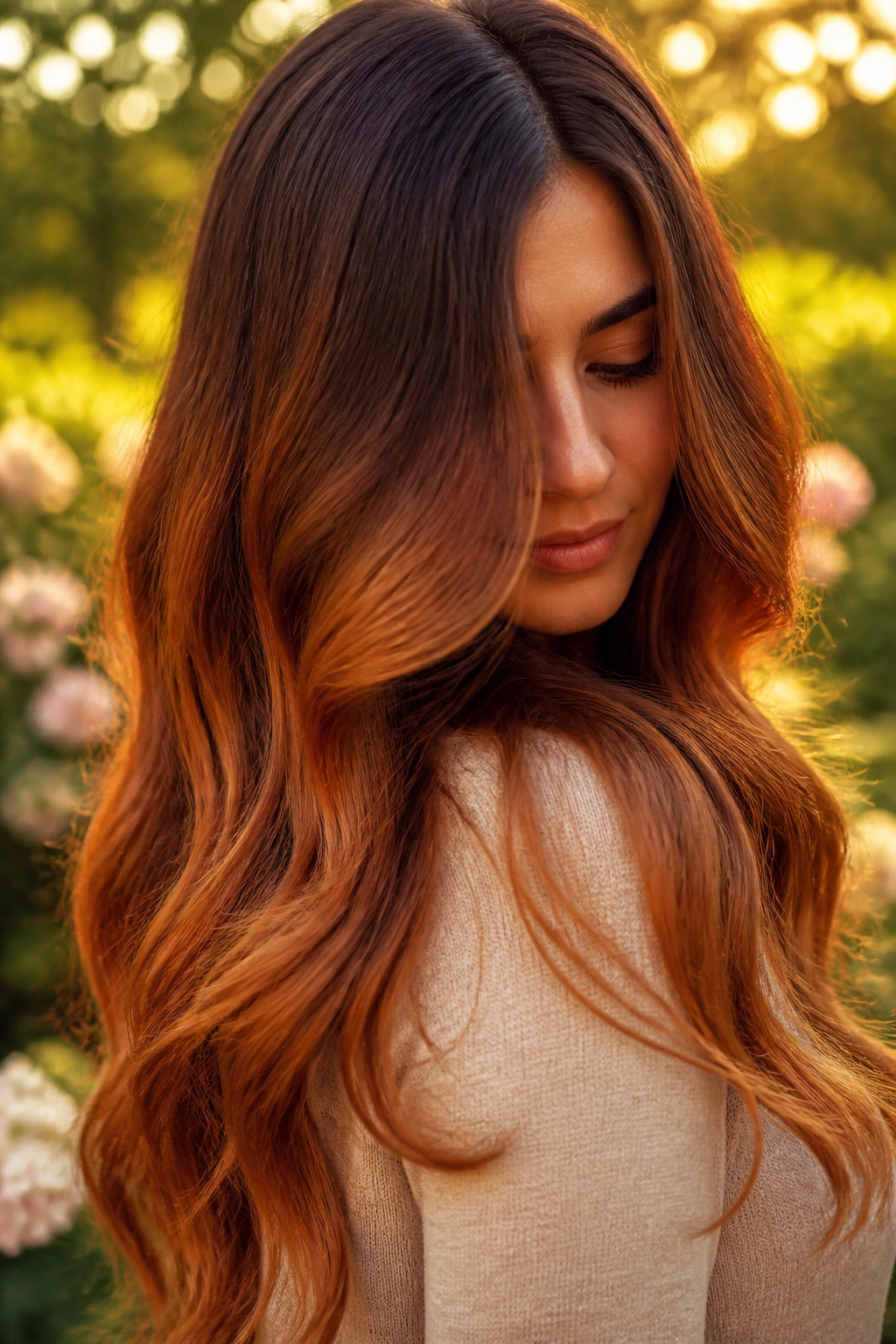
Why does copper work so well on long hair? Because long lengths let warm tones move. A chestnut root melting into copper through the mids and ends catches light in a way that feels alive, not painted on. It’s a lovely choice if your skin has warmth or if you just want hair that looks richer in natural light.
How to Wear It
Copper likes texture. Soft layers, airy blowouts, and curl patterns all help the red-orange notes show up at different points along the strand. If the hair is poker-straight, the finish can read more solid than gradient.
- Best base: chestnut brown, auburn brown, or dark brunette.
- Tone note: keep the copper vivid but not neon.
- Maintenance: gloss every 4 to 6 weeks if you want the shine to stay bright.
- Best styling match: brushed-out waves.
The biggest mistake is making the copper too bright at the ends and too flat at the top. You want a melt, not a stripe.
4. Black to Mocha Smoke
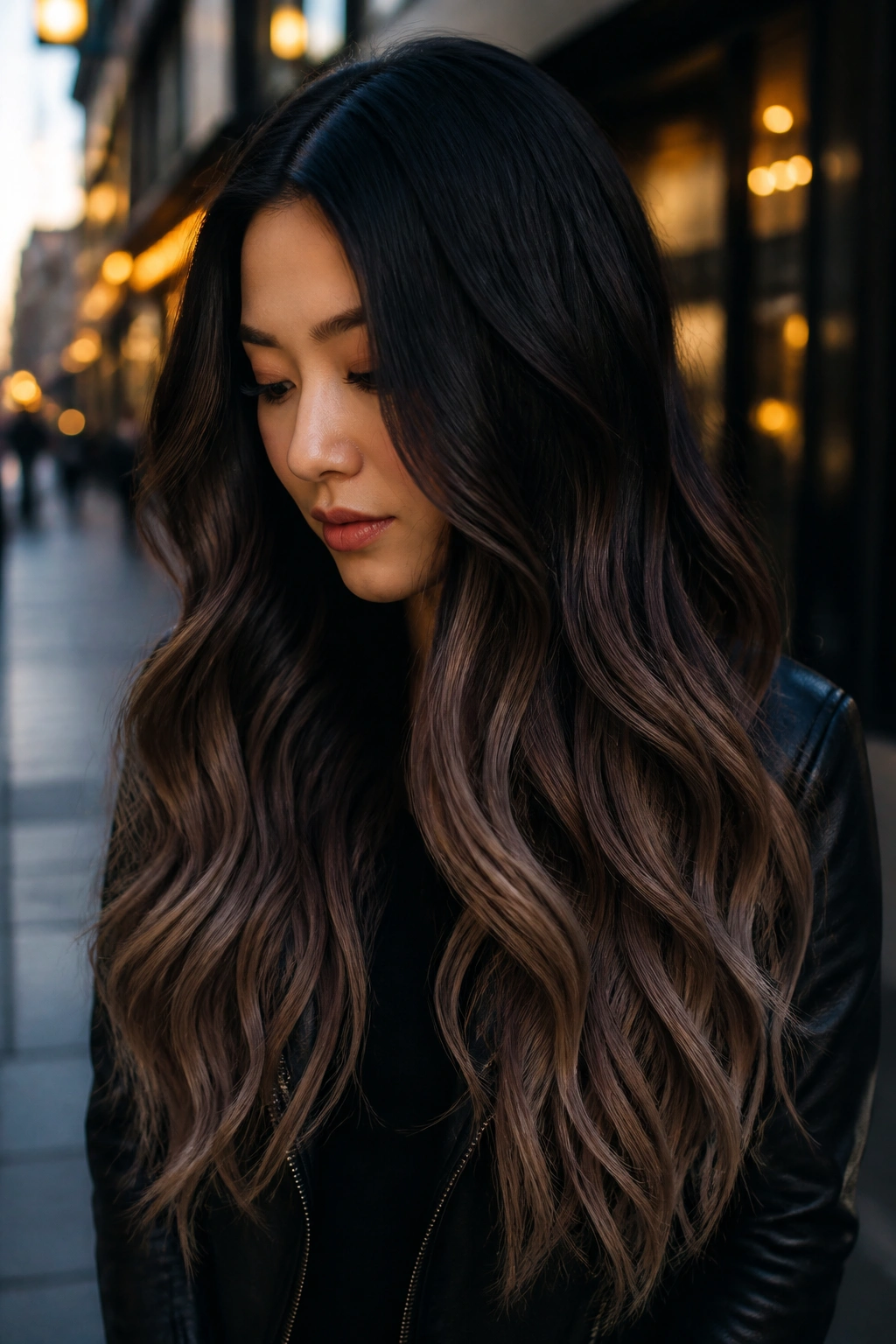
This one is for people who want contrast without shouting. Black roots shifting into mocha ends still feel dark and polished, but the lower half gets enough softness to keep the hair from looking like one solid block. On very long hair, that small change matters more than people expect.
I like this ombre because it works in almost any setting. In dim light, it looks like rich brunette hair. In sunlight, the mocha shows up and gives the ends a little lift. That makes it one of the more wearable long hair ombre ideas for someone who wants depth rather than brightness.
A few things help here:
- Keep the transition below the cheekbone for a cleaner grow-out.
- Choose mocha over milk chocolate if you want a cooler finish.
- Add long layers if your hair is thick and heavy.
The whole look depends on softness. If the line is too sharp, it stops feeling like ombre and starts looking like two separate colors.
5. Espresso to Honey Blonde
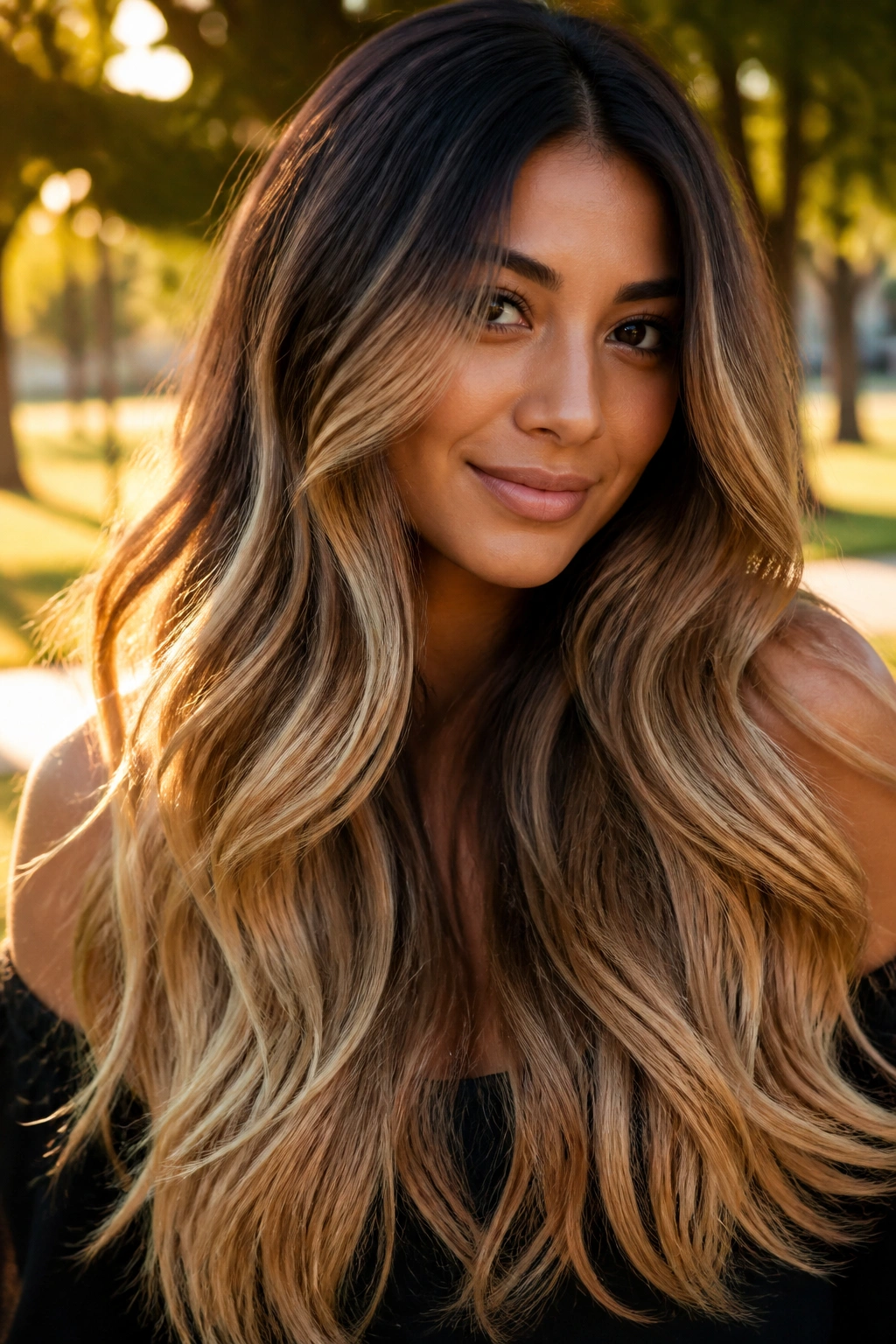
Espresso to honey blonde is a classic for a reason. The dark root keeps the top grounded, while the honey through the ends gives long hair that sunny, easy glow people like when they want brightness without icy tones. It’s not subtle. It’s also not loud in a bad way.
The best version starts with a strong shadow at the top and eases into warm blonde through the lower half. Honey is kinder than platinum on long brown hair because it doesn’t demand a perfect pale lift. That alone saves a lot of damage and a lot of toner drama.
This look shines on thick hair and on hair with long layers. The ends need enough movement to show the gradient, and a round brush blowout or loose wave does that better than a pin-straight finish. If your natural base is already dark, be patient with the lift. Honey looks soft, but getting there can still take careful work.
6. Reverse Ombre With Dark Ends
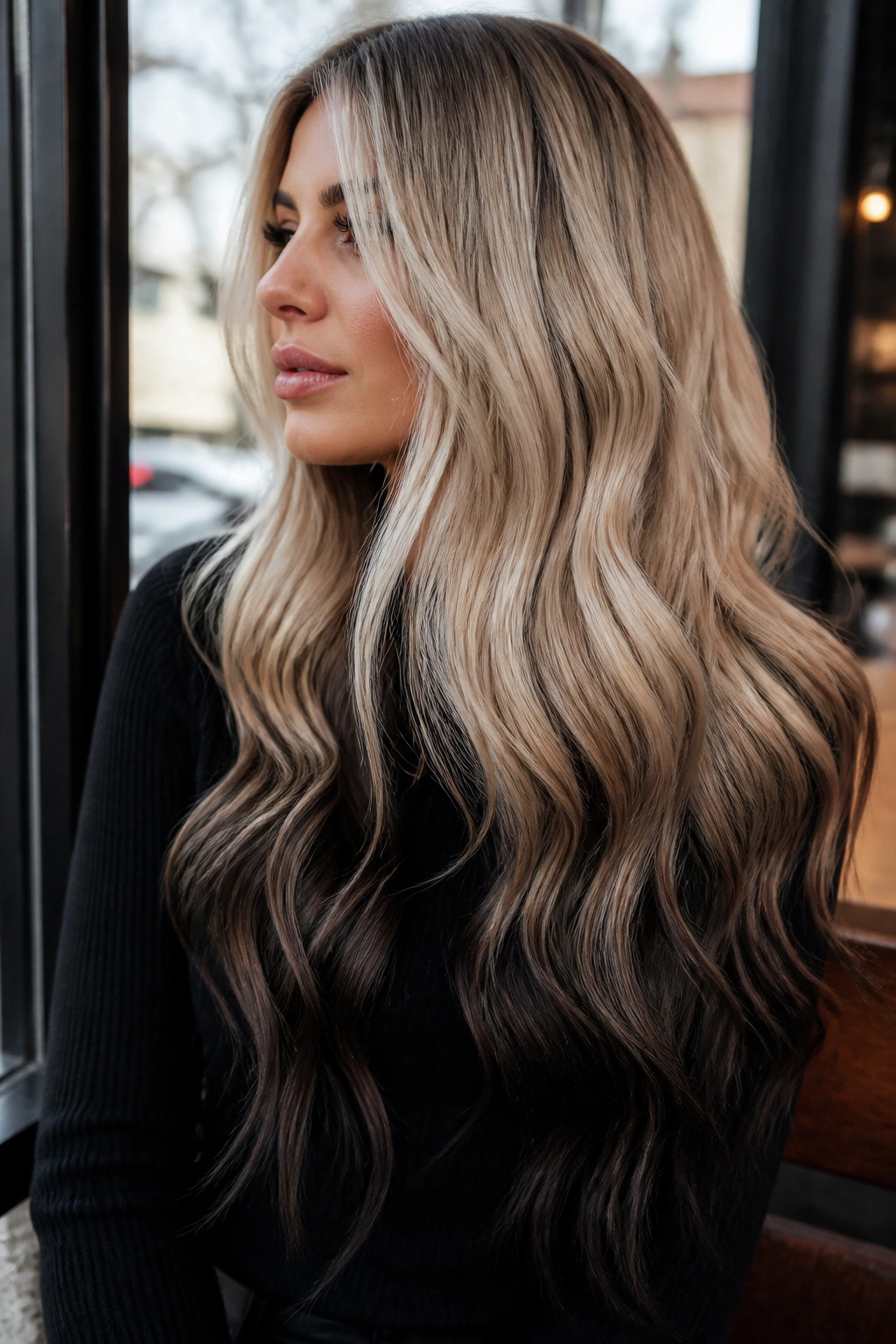
Unlike standard ombre, this one starts light near the crown or mid-lengths and deepens toward the ends. It is a bolder, slightly unusual choice, and on long hair it can look striking instead of confusing. The darker tips create weight, which can be useful if your ends tend to look thin.
Who It Suits
People with very long, very fine hair often like this because the deeper ends give the bottom half more visual presence. It also works if you want something fashion-forward without using a vivid color. Think blonde through the top and mids, then soft brown, mocha, or even cool brunette at the ends.
What to Ask For
- A light root area with a smooth fade downward.
- Ends that stay 1 to 2 levels deeper than the mids.
- A gloss that keeps the darker end from looking muddy.
- Soft layers so the gradient can move.
It’s not the easiest maintenance choice, because growing roots can change the balance fast. Still, when it’s done well, it looks intentional and a little unexpected—in a good way.
7. Rose Gold Smoke
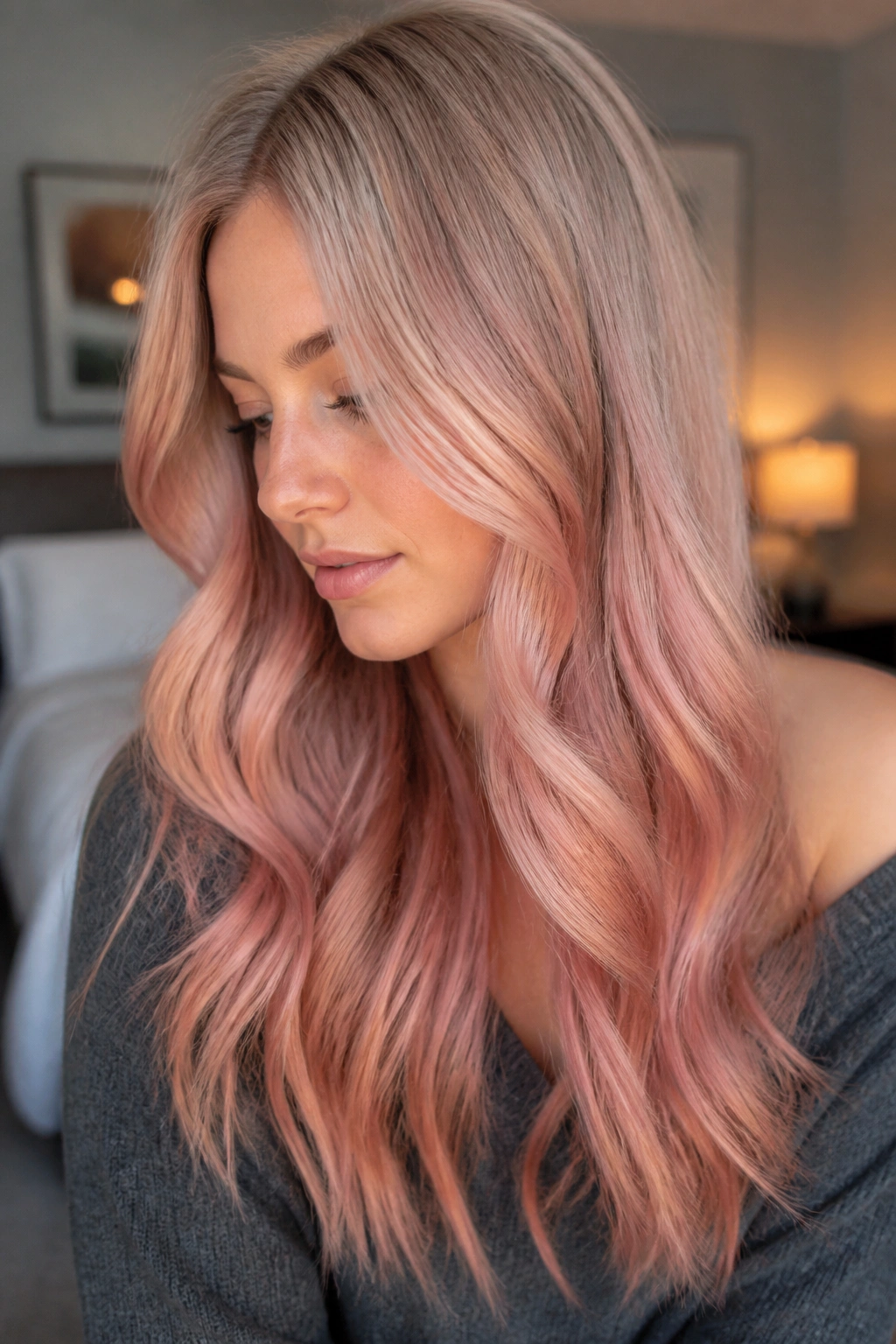
Rose gold only gets tricky when the pink is too sugary. On long hair, a smoked version feels richer: champagne at the top, blush through the middle, then a muted copper-pink finish near the ends. It is softer than a full fantasy shade, but it still has personality.
The reason this works on long lengths is simple. The color has room to shift. A short cut can make rose gold look flat, while long hair lets the warmer and cooler notes show in different places as the hair moves. That movement is half the appeal.
It looks best when the hair is lifted evenly and toned with care. Too much gold and it turns peach. Too much pink and it starts to look like a washout color from a cartoon. The sweet spot is a dusty, soft metallic finish that feels polished without becoming stiff.
8. Auburn to Peach Sunset
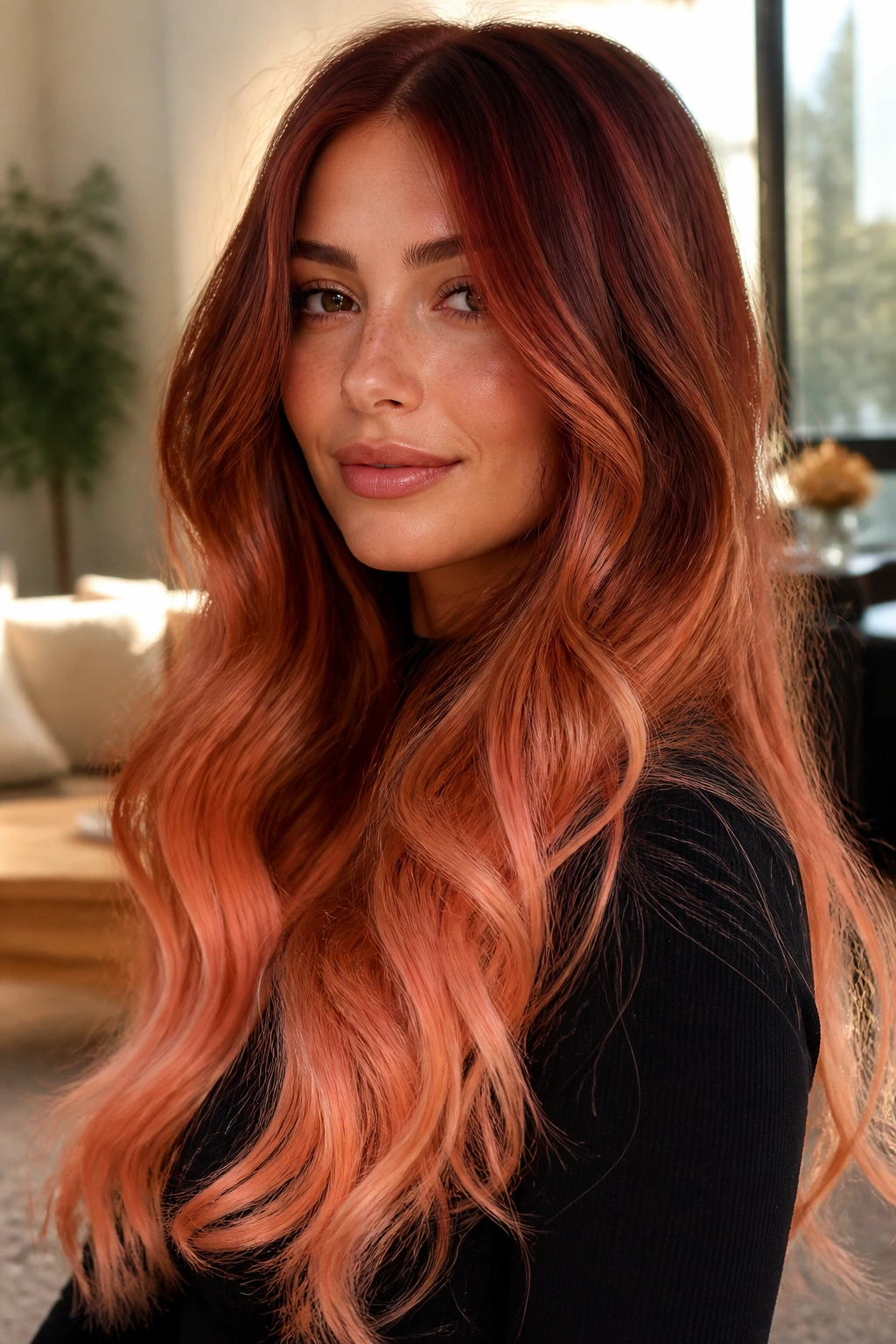
What happens when you want warmth but don’t want plain red? Auburn melting into peach gives long hair a sunset feel that looks especially good with waves. The auburn brings depth near the crown and through the mids, then the peach lightens the whole finish near the ends.
What to Ask For
Ask for a red-brown base that stays rich, not brick, and a peach tone that leans soft and creamy rather than neon. If the peach gets too bright, the whole look tips into costume territory. A better version keeps the transition gradual and glossy.
Long layers help this color behave. The peach catches on the lighter pieces first, so the ends don’t disappear into the rest of the hair. If your hair is very thick, this is also a good place to use a few face-framing lighter pieces so the front doesn’t stay too dark.
Auburn and peach together feel playful, but they still read grown-up when the tones are muted a little.
9. Mushroom Brown to Pearl
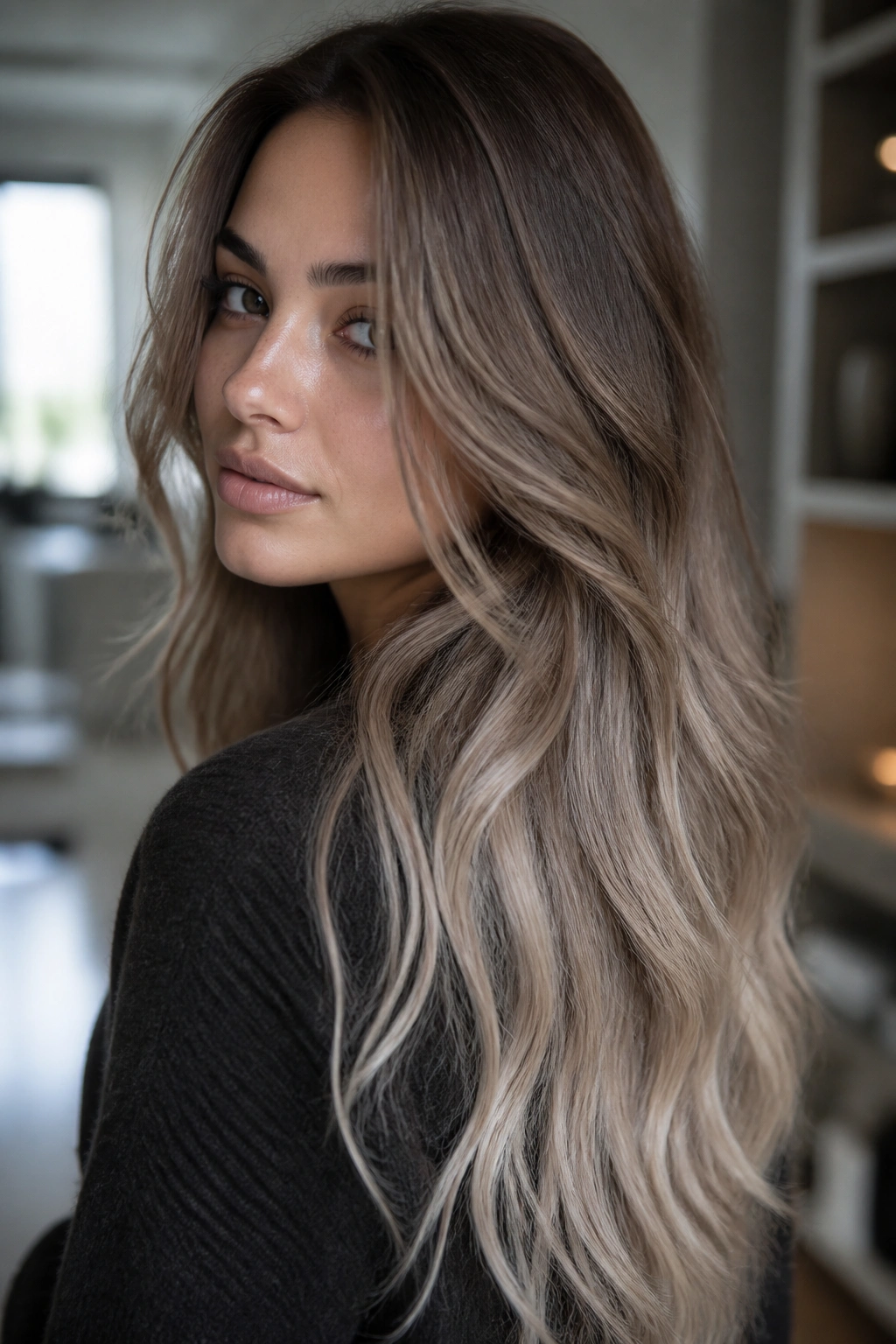
Cool, earthy, and a little expensive-looking. Mushroom brown to pearl is one of those combinations that rewards restraint. The top stays rooted in a smoky brown with gray-beige undertones, then the ends drift toward pearl blonde without ever going icy-white.
This is a strong choice for long hair because the subtleties show up better over distance. Up close, the color looks quiet. In motion, the different cool notes separate just enough to look layered. It is especially nice on silky straight hair, but loose bends can make the pearl ends shimmer a little more.
- Best starting point: medium brunette.
- Tone family: beige, ash, and soft silver.
- Best styling: smooth blowouts or soft S-waves.
- Maintenance note: toner matters here; brass shows fast.
If you like hair color that whispers instead of shouts, this one makes a very good case for itself.
10. Bordeaux to Cabernet Ombre
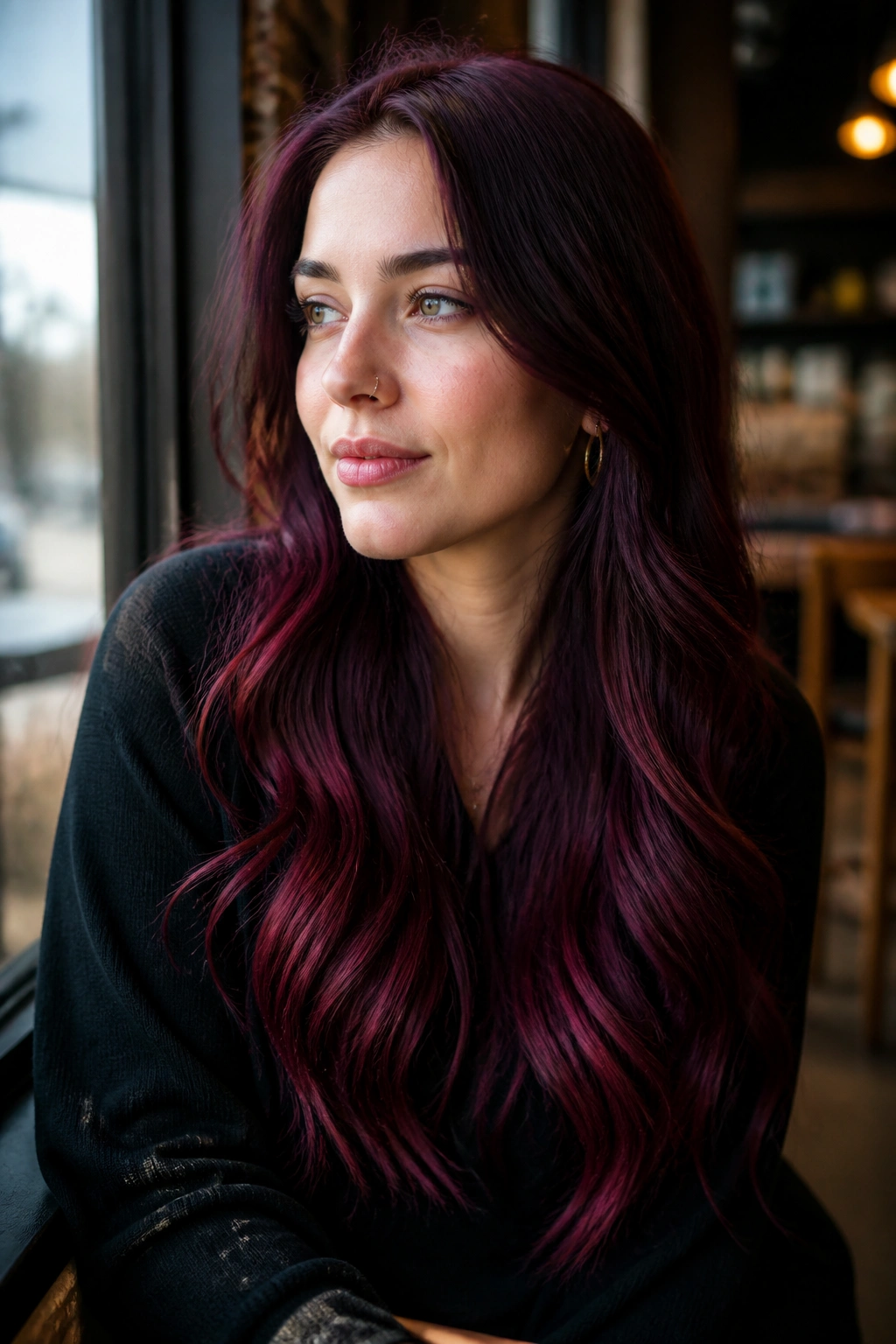
Bordeaux to cabernet is richer than a plain burgundy and less sharp than a cherry red. On long hair, the red-violet family has space to deepen through the mids and then glow at the ends, which keeps the color from looking flat or one-note. It feels dramatic, but not cartoonish.
The best part is how it moves. In low light, the hair can look wine-dark. In daylight, the red comes forward and gives the finish a glossy edge. That shift is what makes long hair such a good canvas for red ombre shades; the color changes as the light changes.
This style suits people who want a darker palette with more emotion than brown. It also flatters layered cuts, because the shorter pieces around the face can catch more of the red-violet tone. A cool gloss keeps it elegant. A too-bright cherry can go loud fast, and then you spend more time defending the color than enjoying it.
11. Midnight Navy Fade
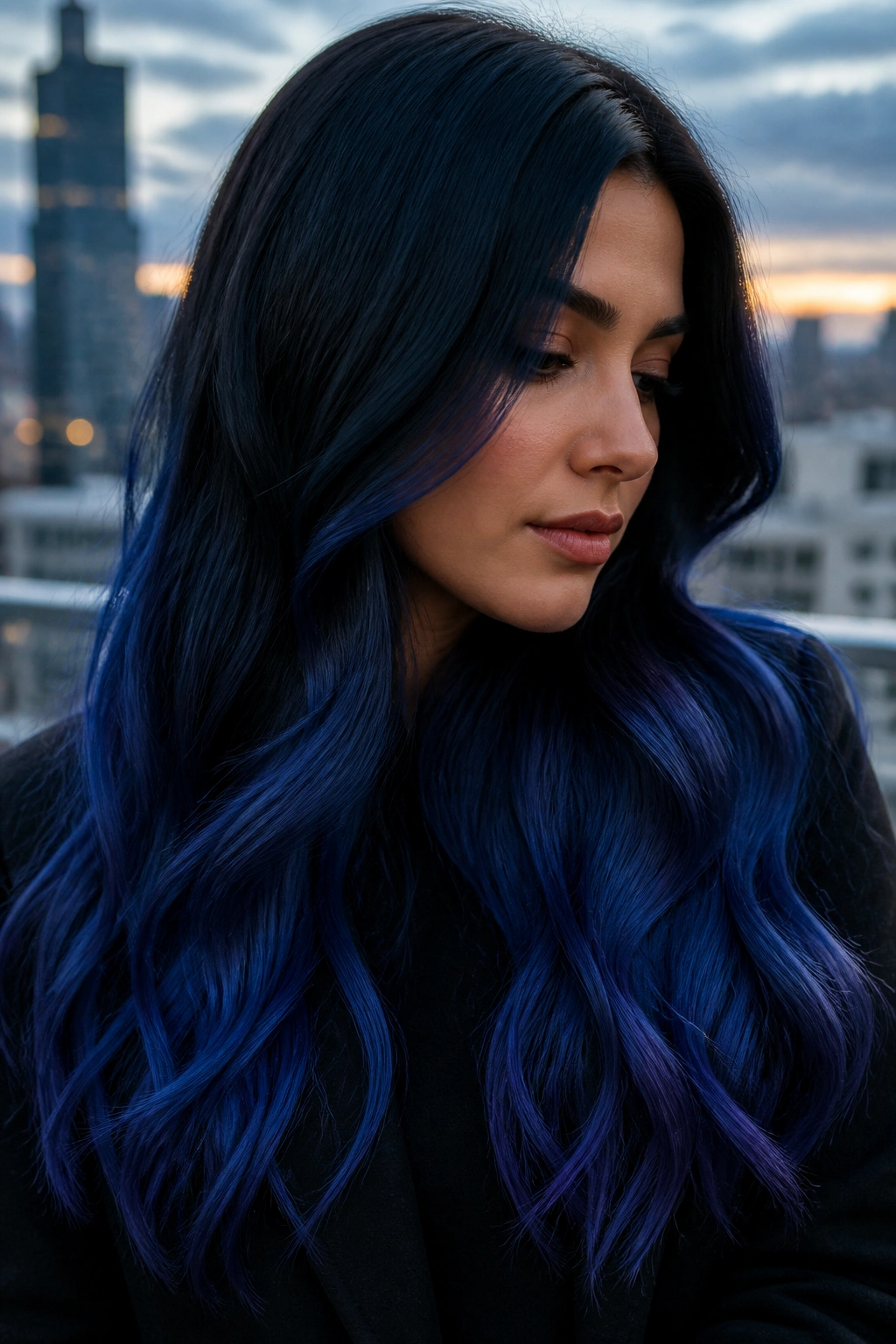
Navy is one of the smartest fantasy colors for long hair. It stays dark enough to feel wearable, yet the blue undertone shows up when the light hits the ends. A midnight navy fade usually starts on a black or deep brown base and softens into blue-black, then a deeper indigo at the tips.
Unlike teal or bright blue, navy doesn’t shout for attention. It reads polished from a distance and then becomes more interesting the closer you look. That makes it a good fit for long, straight hair as well as waves, where the darker and lighter blue notes can separate naturally.
The key is prep. The ends need enough lift to hold the blue, but not so much that they turn green or washed out. If your starting color is very dark, ask for gradual lightening and a dense dye deposit at the ends. Navy is pretty unforgiving when the base is patchy.
12. Plum to Lavender Melt
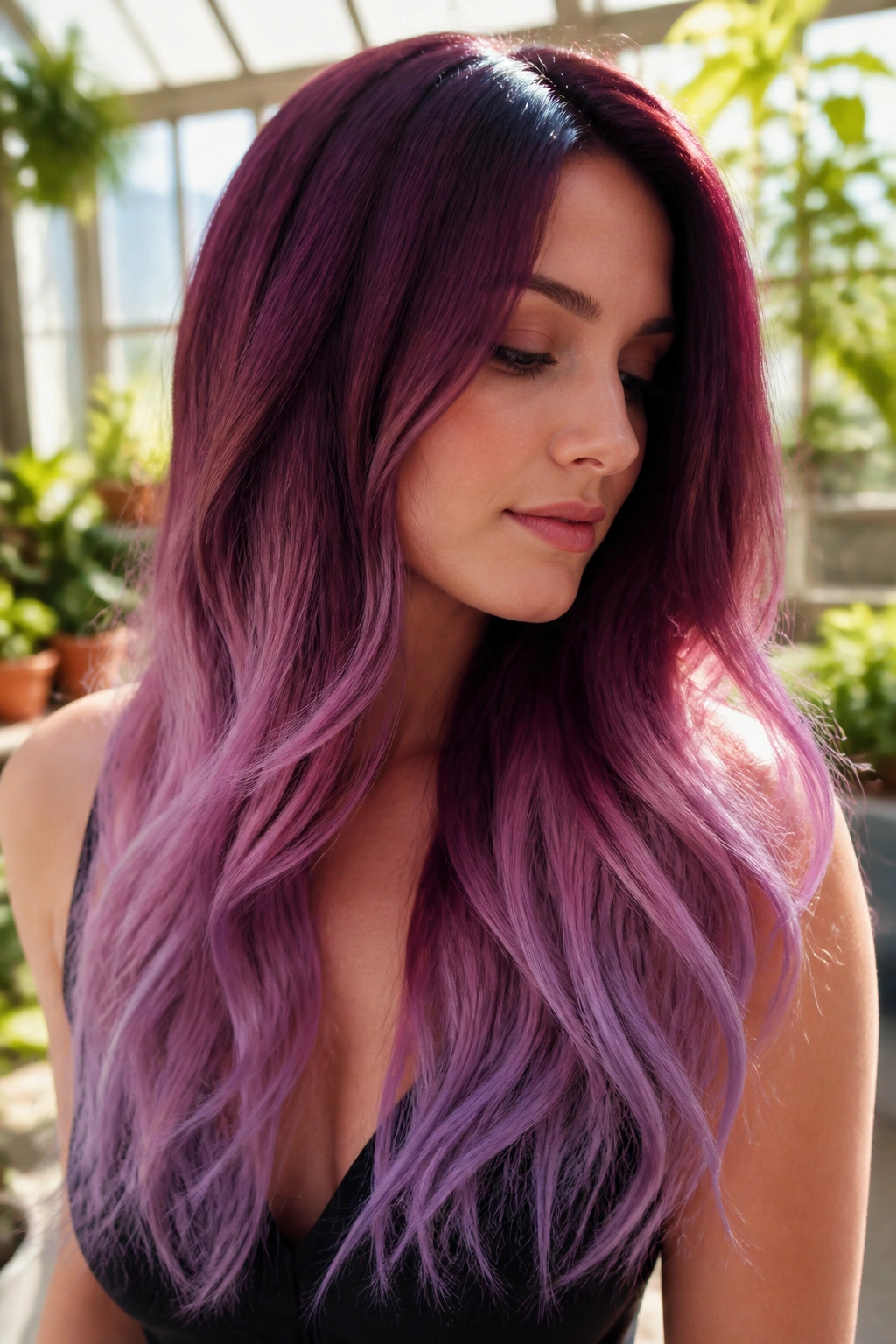
Plum to lavender can look soft or theatrical, depending on how much pigment you leave in. On long hair, I prefer the softer route: a deep plum crown melting through berry mids into dusty lavender ends. That blend keeps the color from feeling sugary.
Who Should Try It
This is a nice choice for people who want a fantasy shade that still has some depth. Fine hair can look fuller with it, because the contrast between the plum and lavender creates visual body. Thicker hair benefits too, though the color reads more layered than airy.
Keep the lavender muted. Pastel ends on very long hair can fade fast and show unevenly. A smoky lavender or lilac-gray mix holds up better and looks more expensive in person. If the hair has a lot of warmth in it, the plum at the top helps control that so the lighter ends stay clean.
It is a color that likes gloss. A clear or lightly tinted gloss every few weeks keeps the transition soft and the ends from going chalky.
13. Teal-Dipped Ends
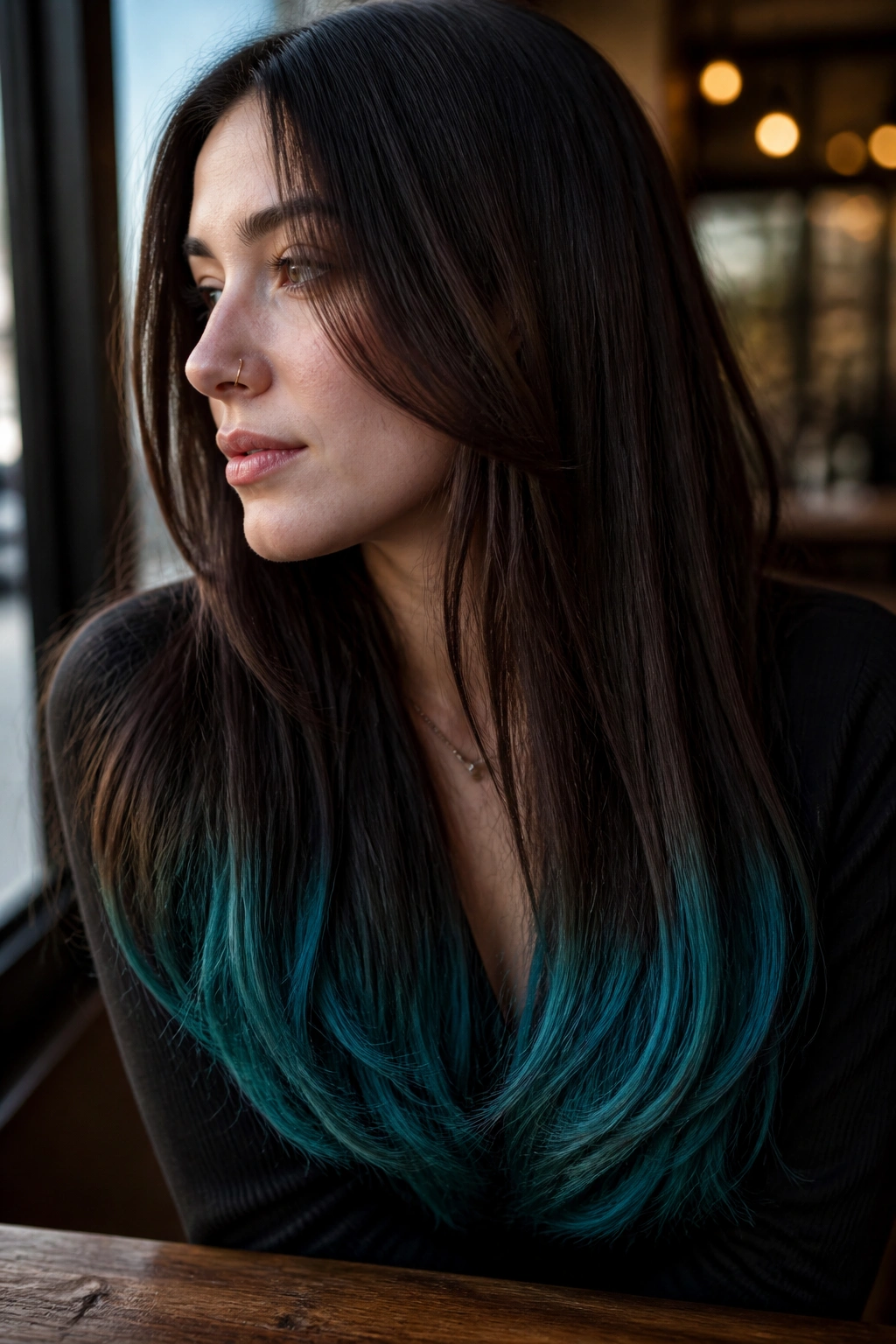
Do you want a vivid color without committing to a full head of fantasy dye? Teal-dipped ends are the answer. The top can stay black, dark brown, or even deep mocha, while the lower third gets a saturated teal that feels playful but still neat when the fade is smooth.
How to Keep It Clean
Teal is one of those shades that looks best when the hair is healthy and the cut is tidy. Split ends make it look ragged. Clean blunt ends or long layers hold it better. The color itself should live in the cooler range, not the green range, unless you want a more sea-glass look.
- Best base: dark brown or black.
- Best placement: the last 4 to 8 inches of hair.
- Best finish: straightened ends or loose waves.
- Watch for: fading into mint if the hair isn’t pre-lightened enough.
A teal ombre can look fresh for a long time if you wash in cool water and keep heat styling light. Hot tools fade it faster than most people expect.
14. Cinnamon Ribbon Ombre
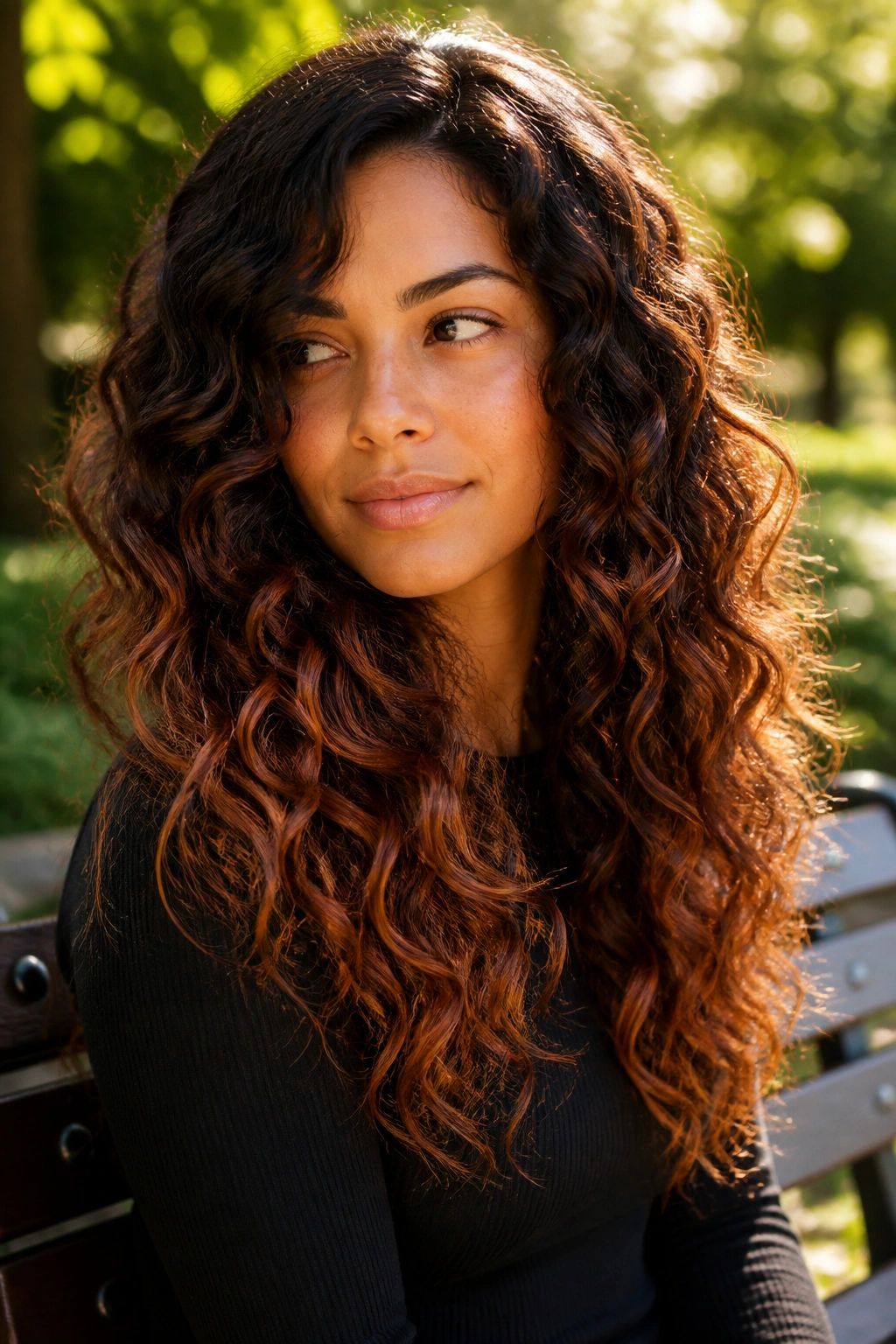
If your hair is curly or deeply wavy, this one is a gift. Cinnamon ribbon ombre uses warm brown roots with strands of cinnamon and toasted copper woven through the lower half, so the color catches the bends instead of sitting like one flat sheet.
The magic is in the placement. You do not want one blunt block of lightness at the ends. You want painted ribbons that land where the hair curves, because that gives the finish real depth. On long curls, the effect can be gorgeous—especially when the cut has enough layers to let the lighter ribbons peek through.
What Makes It Different
- The warmth is broken into ribbons, not one wash of color.
- The lighter pieces sit lower on the length so the roots stay grounded.
- Curl definition makes the copper and cinnamon read brighter.
- It grows out with less harsh demarcation than a solid blonde end.
This is one of the more flattering ombre hair ideas for long hair if you want warmth and motion without a hard fade.
15. Beige Blonde Shadow Melt
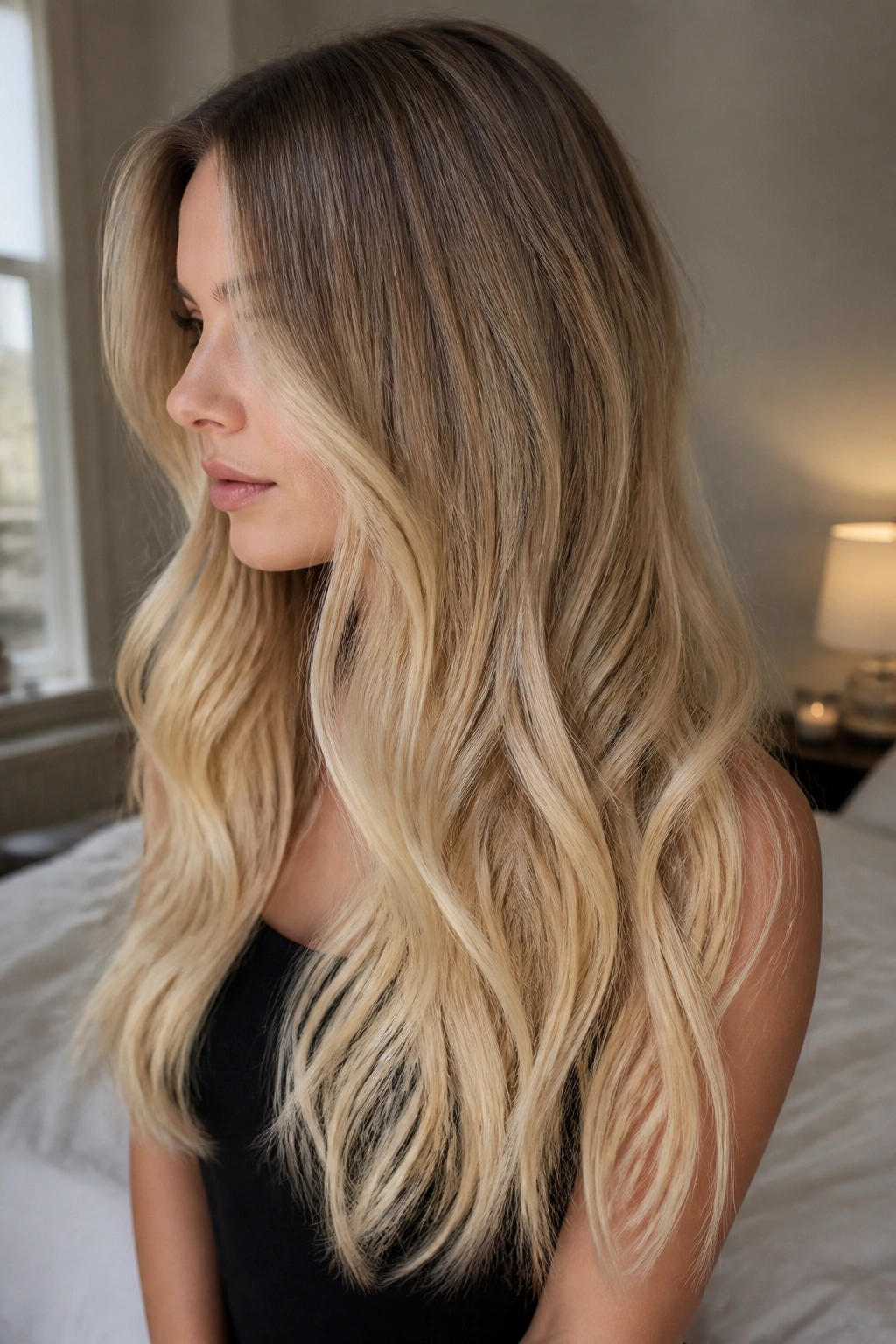
Beige blonde shadow melt is for people who want blonde that looks softened down, not bleached to a squeak. The root area stays sandy or dirty blonde, the mids lighten gently, and the ends finish in a beige blonde that feels smooth rather than yellow.
It works especially well on long hair with a lot of layering because the lighter ends can fall in different planes. That gives the hair a kind of soft texture even when it’s blown out straight. If you wear your hair in a middle part, this color can frame the face in a calm, clean way.
The main appeal is ease. Beige blonde does not need to be icy to feel polished. In fact, too much ash can make it look flat, and too much gold can make it look brassy. Beige sits in the middle and usually behaves better over time.
16. Silver Taupe Ombre
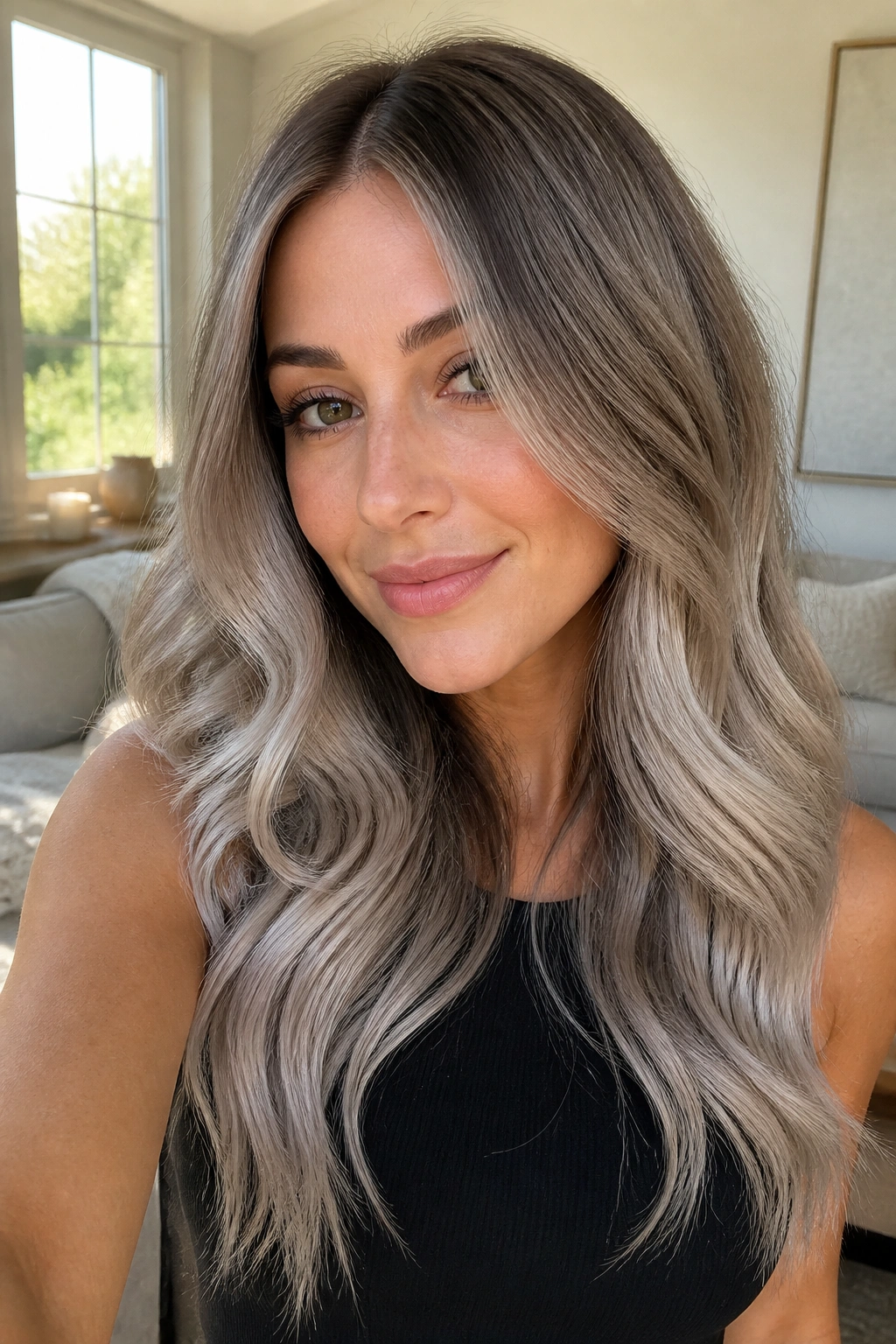
Silver taupe is the cool girl’s answer to blonde. It has the softness of beige, but with a smoky edge that feels a little more deliberate. On long hair, the gradient can start with a dark taupe root and move into a pale silver-beige finish that looks smooth rather than stark.
This is a good pick if you like cool tones but don’t want full silver from roots to ends. It also works well with long layers because the different tones catch on the shape of the cut. On wavy hair, the taupe and silver separate enough to give the style movement. On straight hair, it looks sleek and controlled.
The one catch is maintenance. Silver-adjacent tones need toner to stay clean, and long hair shows fade more clearly than short hair. If you are willing to keep the tone fresh, though, the payoff is a very polished look that feels grown-up without being stiff.
17. Mahogany to Bronze
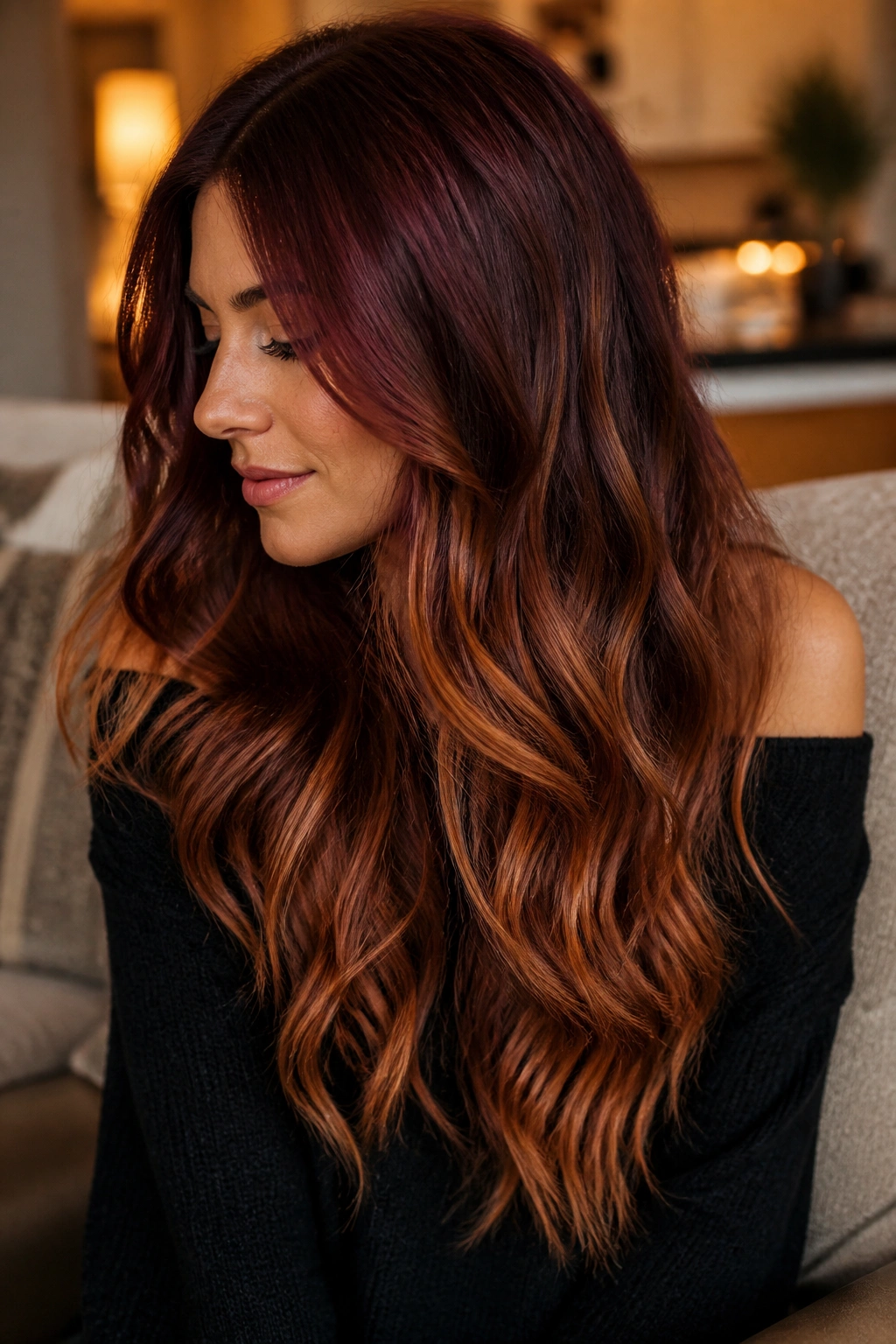
Mahogany to bronze is rich without being precious about it. The top half stays deep and wine-brown, then the ends pick up bronze warmth that gives the whole look a bit of shine. On long hair, that change feels luxurious because the bronze has room to glow instead of flashing all at once.
This is a strong option if you want warmth but do not want to go copper or orange. Bronze keeps the finish grounded. Mahogany gives it depth. Together, they make hair look fuller, especially when the cut has long layers or face-framing pieces.
A color like this benefits from glossing more than harsh lifting. The aim is not to bleach the ends pale; it is to give the lower half enough brightness to separate from the root color. That makes it kinder to the hair and easier to keep looking healthy between salon visits.
18. Black Cherry Ombre
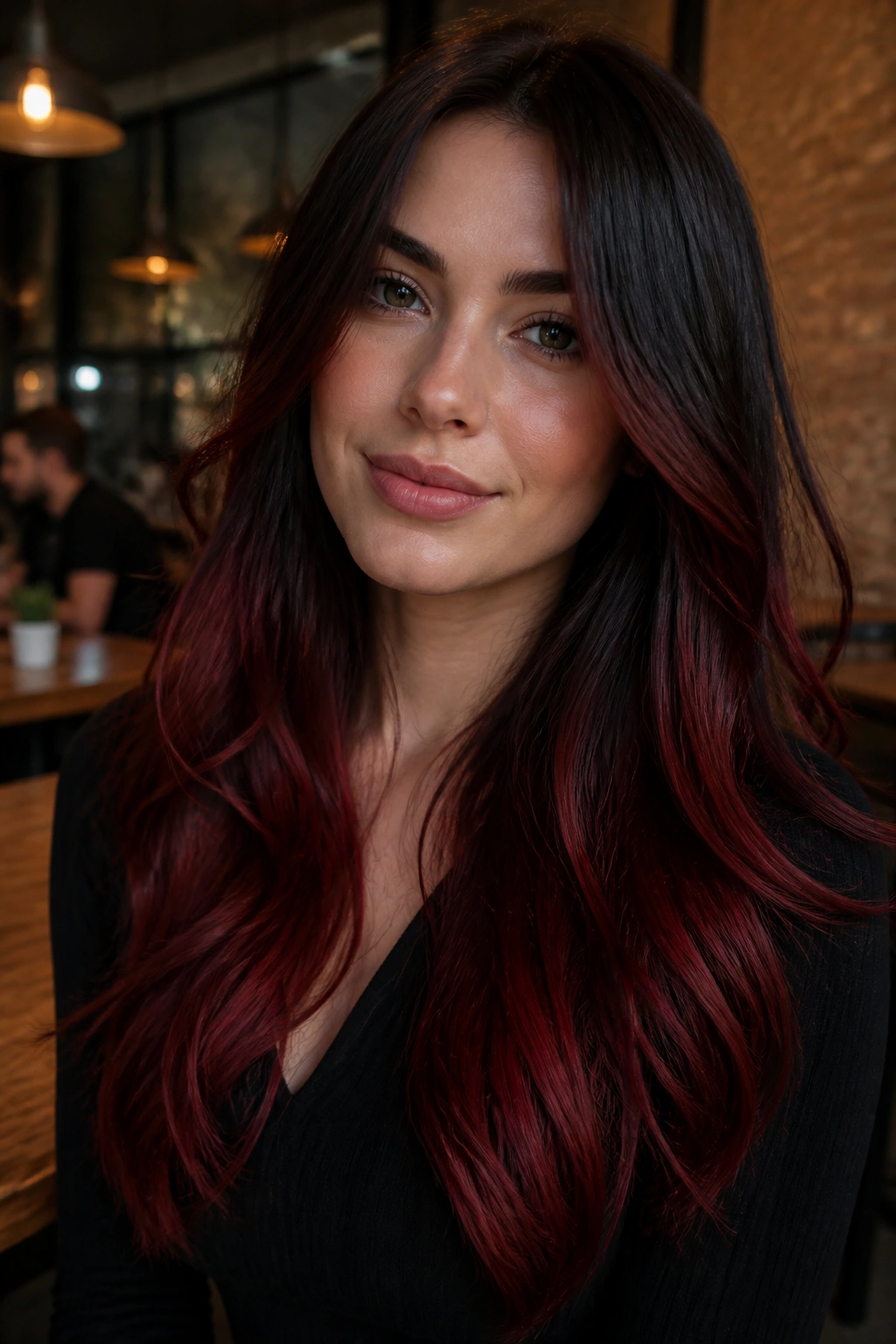
Black cherry is darker than burgundy and more complex than simple red. On long hair, it usually starts as a near-black base with cherry-red undertones that reveal themselves more on the mids and ends. It can look almost dark brown in shade, then suddenly turn wine-red when the light catches it.
Why It Holds Up So Well
The dark base hides regrowth better than lighter reds, and long length gives the cherry tones room to show without taking over the whole head. That means you get drama, but the hair still feels anchored. It’s also a nice match for curls, because the bends break the color up in a way straight hair can’t.
A few notes help:
- Choose cherry over bright red if you want the color to feel deeper.
- Ask for the lighter red to stay below the jawline.
- Keep the ends glossy, or the shade can look flat.
- Use sulfate-free shampoo if you want the red to last.
Black cherry is one of those colors that looks far more expensive when it is a little subdued.
19. Sandstone Ombre
Here’s the version for people who want sun-warmed color without obvious blonde. Sandstone ombre begins with a soft brunette or dark blonde root, then eases into sandy beige and muted gold through the mids and ends. The whole thing feels calm, like warm stone after the sun has hit it for a while.
It works because the contrast stays mild. Long hair often looks better when the ombre doesn’t fight the natural density of the length. Sandstone keeps the finish airy but not thin. It also pairs well with center parts and soft waves, where the lighter pieces can drift around the face without making the top look too dark.
This is one of the easier colors to live with if you want something pretty that does not demand constant correction. It’s not flashy. That is part of the appeal.
20. Raspberry Brown
Raspberry brown gives brunette hair a little pulse of color without jumping into full red. The root stays cocoa or chestnut, then the lower length shifts into raspberry-brown, a shade that sits between berry and chocolate. On long hair, the effect feels playful and rich at the same time.
The shade is strong enough to show, but not so bright that you’ll feel stuck with a dramatic fashion color. It also flatters wavy hair because the berry notes show up more on the bends. Straight hair can wear it too, though the finish reads more uniform and less textured.
What I like here is the balance. You get something interesting at the ends, but the overall look still feels grounded. If you want color that makes people look twice without reading neon, raspberry brown is one of the cleaner options.
21. Espresso to Champagne
Champagne blonde gives ombre a cleaner, cooler finish than honey. Pair it with espresso roots and you get a long-hair look that feels sleek, a little airy, and more restrained than warm blonde blends. The transition usually starts dark at the top, softens through a neutral mid-tone, then lands in a pale beige-blonde end.
This style is best for people who want brightness but dislike gold. Champagne stays soft on the eye. It also works nicely with long, layered cuts, because the lighter ends can move separately from the roots and keep the hair from looking heavy.
The catch is brass. Champagne can tip yellow if the toner is neglected or if the starting lift is uneven. If you like your color clean and cool, stay on top of maintenance. If you prefer warmth, this might feel too polished for everyday wear. Still, on long hair, it has a very clean finish.
22. Smoky Violet Ends
Smoky violet is a grown-up way to wear purple. The trick is keeping the violet muted, with gray or brown in the formula so the ends do not turn candy-bright. On long hair, a smoky violet ombre can start from deep brunette or black and shift into dark plum, then finish in a softened violet haze.
Best for a Rich, Dark Palette
This one suits people who like color but want to stay on the deeper side of the spectrum. It feels more dramatic than a plain brunette ombre, yet it does not read as playful in the same way teal or lavender might. Long hair gives the violet room to show in layers, which keeps the shade from looking flat.
A few things make it work:
- Keep the violet in the level 5 to 7 range for richness.
- Avoid pastel lilac if your base is dark and you want low upkeep.
- Use waves or curls to bring out the color shifts.
- Ask for a cool gloss, not a flat purple dye job.
Smoky violet is moody in the best way.
23. Golden Apricot Ends
What if you want warmth, but a softer kind? Golden apricot gives long hair a sunny fade that sits between peach and gold. It starts with a brunette, dark blonde, or warm brown root and ends in a pale apricot that keeps the color bright without making it harsh.
This is a flattering choice for hair that already has some natural warmth. The apricot finish feels cheerful, but not childish, when the blonde is softened down. It also plays nicely with long layers because the lighter ends can float around the shoulders and frame the face.
How to Ask for It
Tell your colorist you want a warm blonde with a peach undertone, not a true pastel. That difference matters. Pastel apricot fades faster and can look chalky on long lengths. A golden version holds its glow better and tends to look healthier between appointments.
If your wardrobe leans earthy—cream, brown, olive, rust—this color can fit in with almost no effort.
24. Platinum Money-Piece Ombre
A platinum ombre with a money piece is for people who want the front to do the talking. The long hair keeps the ends soft and gradual, while the face-framing pieces around the hairline go lighter and brighter. That contrast can make the whole style feel sharper without needing a full platinum head.
The reason this works so well on long hair is that the bright front pieces draw the eye first, then the length gives the lightness room to fade back into a softer end tone. It is a smart choice if you want blonde impact without bleaching everything into the same shade.
- Best base: medium to dark brown.
- Best face frame: one to two inches wide on each side.
- Best cut: long layers or curtain bangs.
- Best styling: blowouts that show the front highlight.
Platinum does ask for upkeep. The bright money piece will show tone shifts fast, and long hair makes that more obvious. Still, the payoff is strong if you like high-contrast color.
25. High-Contrast Mocha to Linen
This is the boldest end of the ombre spectrum. Mocha at the top, linen blonde at the bottom, and a visible difference between them. Not a stripe. Not a blur that disappears. A real contrast, softened just enough that it still feels like one style.
I like this on long hair with a strong cut—think layers, a clean hemline, or a shape that lets the ends move. The darker root keeps the style grounded, and the linen blonde gives the length a bright finish that reads from across the room. If your hair is thick, the contrast helps stop the bottom half from vanishing into heaviness.
This is not the most low-maintenance choice, and it should not be. High contrast asks for careful toning and a little discipline with heat and shampoo. But when the blend is clean, it has real presence. Some ombre ideas whisper. This one speaks up.
Final Thoughts
Long hair can carry a softer fade than short hair, but it can also handle more drama. That is the real advantage. The length gives you room to decide whether you want caramel, ash, red, blue, silver, or something louder at the ends.
Pick the version that matches how you wear your hair most days. Loose waves show off blend lines. Straight styles make contrast look sharper. Curls make ribbons and warm tones come alive. A good ombre on long hair does not fight the cut you already have—it uses it.
