



Long hair gives lavender ombre room to breathe. That matters more than people think. On a bob, lavender can read like a quick color hit; on waist-length hair, it can unfold from a shadowy root into lilac, silver, or mauve in a way that feels intentional instead of loud.
The prettiest versions are rarely the brightest ones. A deep brunette base with silver-lavender ends, a blonde melt with barely-there lilac, or a black-underlayer peekaboo can look richer than a full pastel head ever does. Lavender ombre hair has range, and long lengths make that range visible.
There’s one catch worth saying out loud: pastel lavender usually needs a pale canvas. If your hair starts dark, you’ll often get a better result with smoky violet, dusty lilac, or plum-heavy blends first, then work lighter if your hair can handle it. Porous ends grab pigment fast, too, which is why placement and glossing matter almost as much as the dye itself.
Some of these ideas lean soft. Some are a little bratty in the best way. Long hair can carry both, and that’s exactly why this color keeps showing up in salons and inspiration boards.
1. Smoky Root Melt Into Silver Lavender Ends
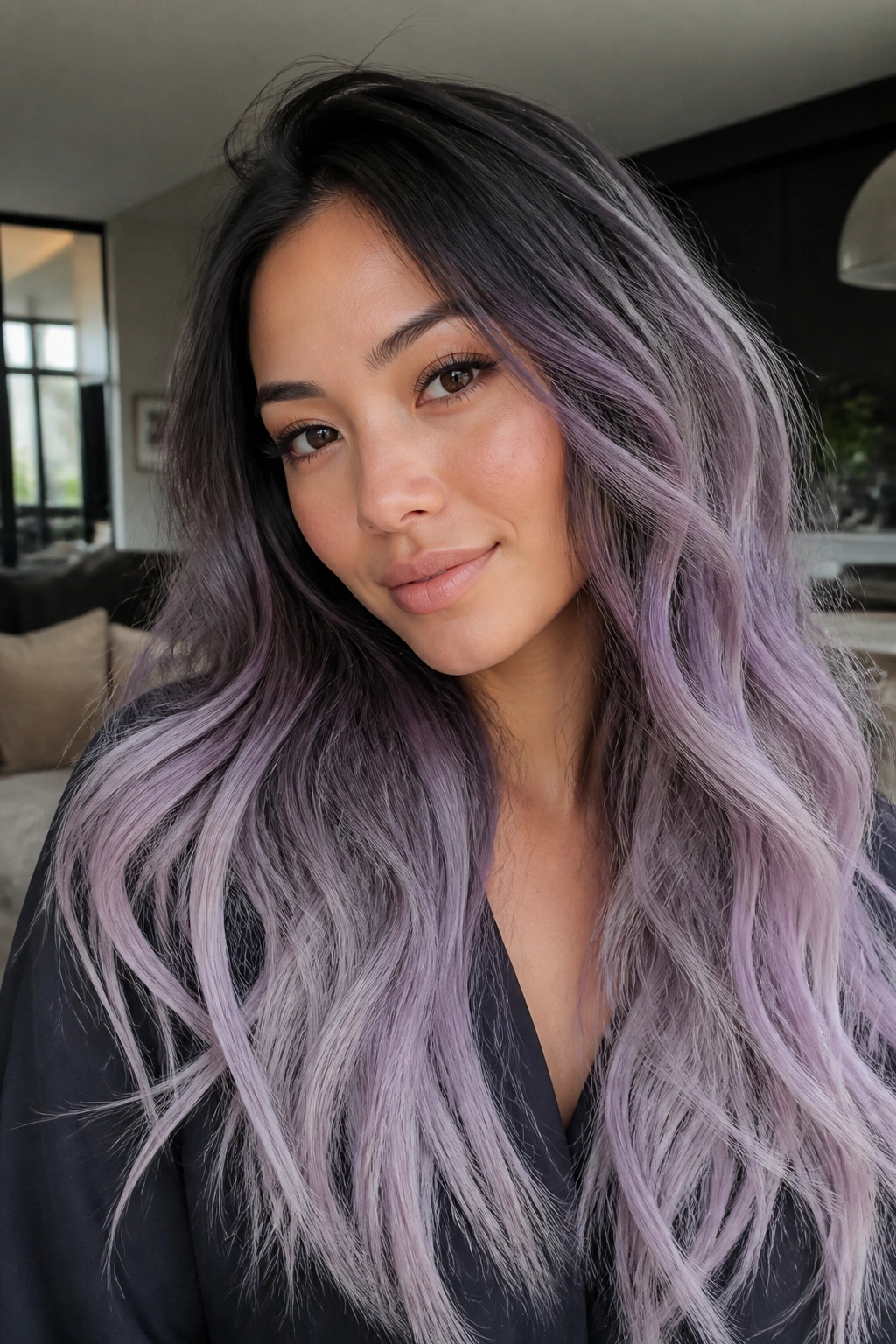
This is the version I’d hand to someone who wants lavender ombre hair but does not want to look like they’re headed to a costume party. The smoky root melt keeps the crown deep and soft, then lets the color drift into silver-lavender at the ends, where long hair gives the shade room to glow without turning blunt.
Why It Works
The dark root shadow does half the styling for you. It hides regrowth, softens the transition, and gives the pastel ends something to sit against, which makes the lavender look cleaner and less sugary.
On long hair, the melt can start around the cheekbones or collarbone and stretch all the way down. That extra distance matters. You get a slow fade instead of a hard line, and the whole look feels more expensive because nothing screams for attention.
- Best on dark blonde to medium brown bases
- Ask for a shadow root about 2 to 3 inches deep
- Ends look best when toned to a silver-lavender gloss
- Works especially well on loose waves and layered cuts
Tip: If your ends are already dry, keep the lavender a shade deeper than you think you want. Faded pastel on damaged hair tends to go dull fast.
2. Chestnut Balayage With Soft Lavender Ribbons
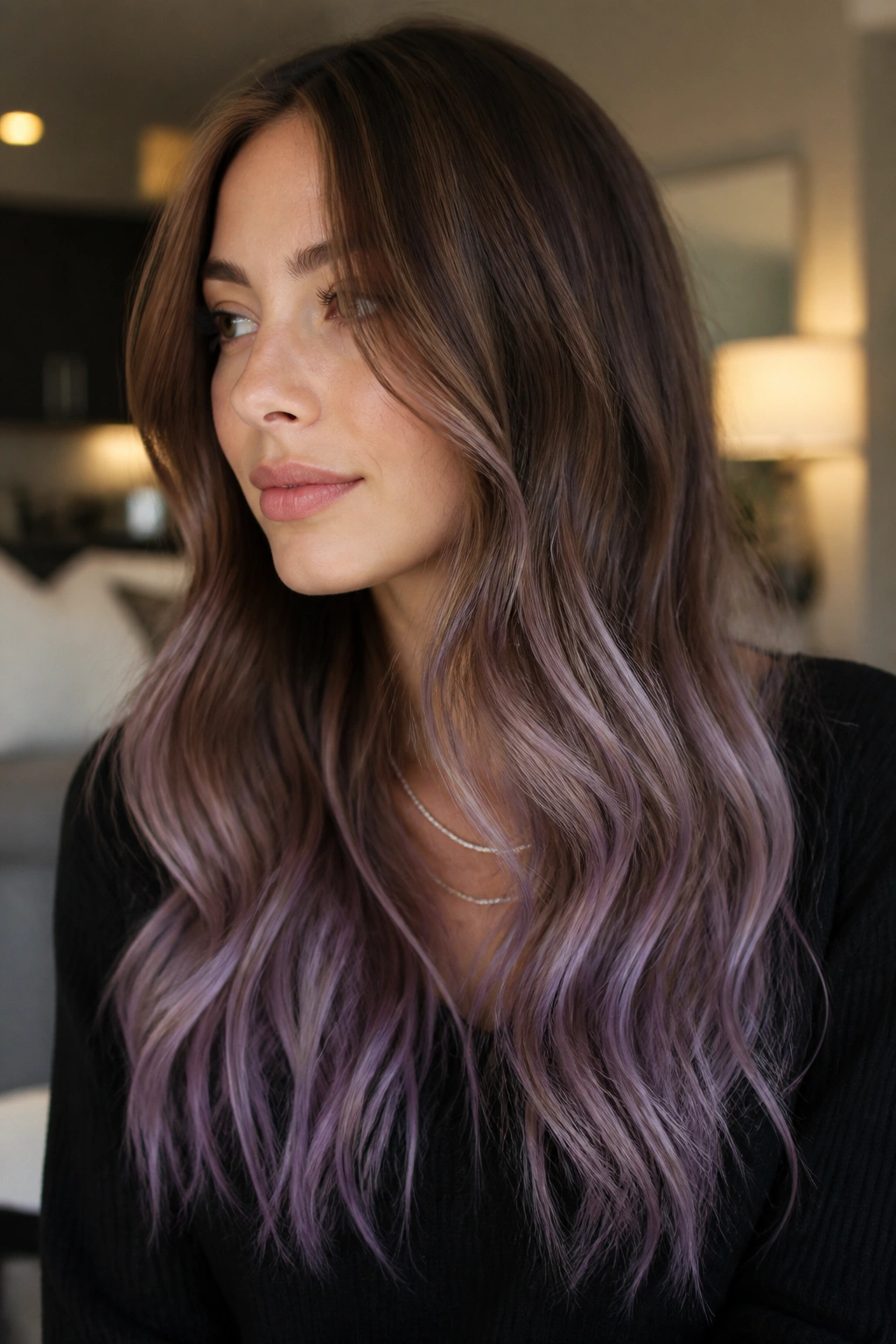
You do not need a full bleach-out to wear lavender ombre. On chestnut hair, a few softly painted ribbons can read as lavender ombre without overwhelming the base color, and long hair gives those ribbons space to show movement every time you turn your head.
The trick is restraint. Keep the chestnut rich at the crown and through most of the top layer, then place the lavender in narrow panels through the lower third. That way the color looks woven in instead of stacked on top. I like this version on layered hair because the curls or bends separate the ribbons naturally and make the whole thing feel a little airy.
For a salon ask, say you want balayage placement with lavender concentrated around the mid-lengths and ends, not an all-over pastel. If your base is warm chestnut, ask for a lavender shade with a gray-violet edge so it does not lean pink in a weird way. That tiny detail matters more than people realize.
3. Platinum Blonde to Pastel Lavender Fade
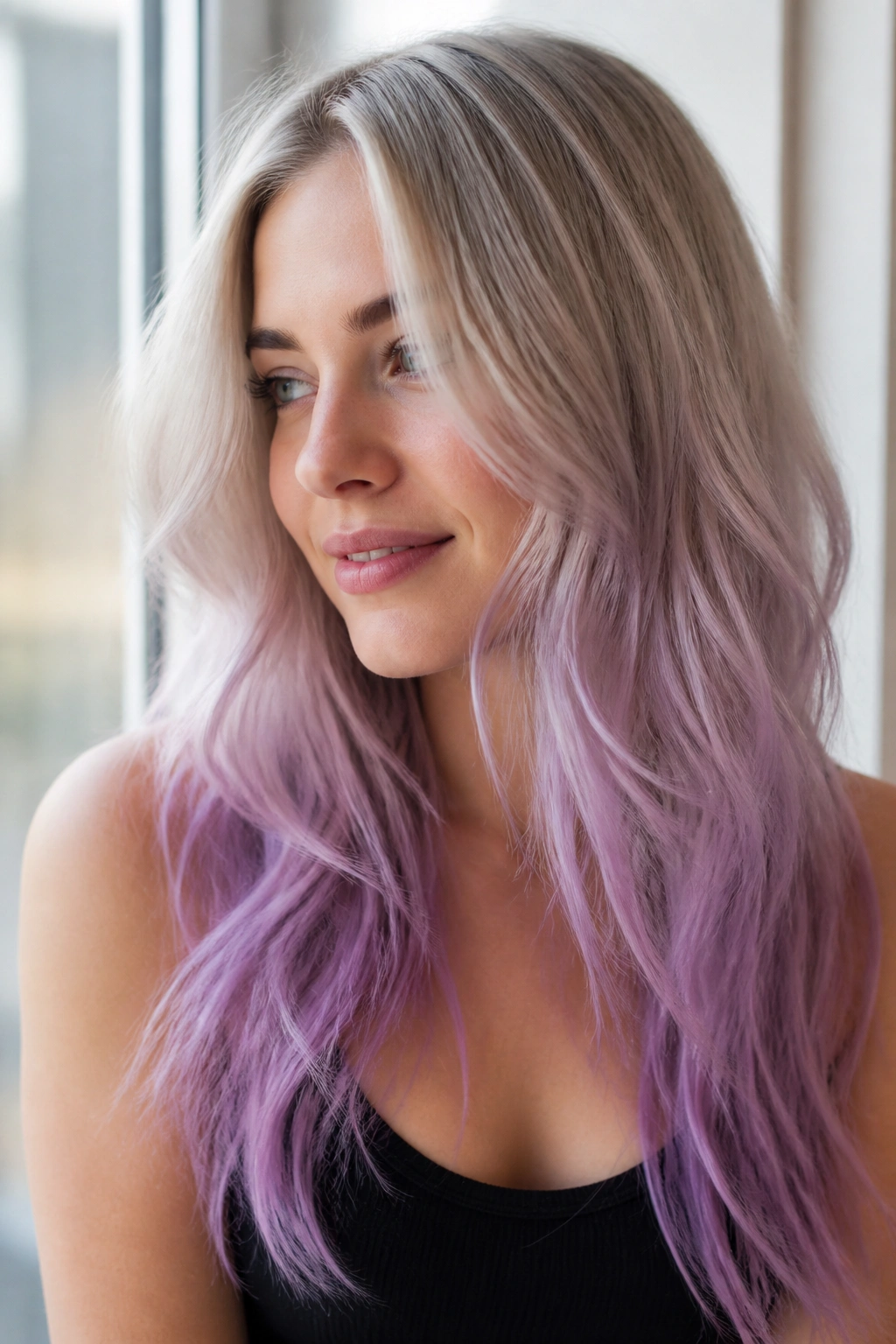
Why does this version feel so light? Because the platinum base lets lavender behave like a veil instead of a block of color. On long hair, that softness looks especially pretty when the fade begins high enough to show movement but low enough to keep the roots looking clean.
This is the look for someone who likes bright blonde but wants a little color without giving up the airy feel. The lavender should not be opaque. It should look like a wash that settles into the lower lengths, with the ends carrying the most pigment. If the blonde starts turning buttery or yellow, the lavender can skew peachy, and that is where the whole mood changes.
How to Wear It
Keep the styling smooth or gently waved. Tight curls can break up the fade too much and make the pastel look patchy. A center part and a glossed finish are hard to beat here.
If you want this on long hair, ask for level 10 blonde at the ends and a sheer lilac toner rather than a dense dye. It looks delicate. That is the point.
4. Dark Plum Roots and Lilac Mid-Lengths
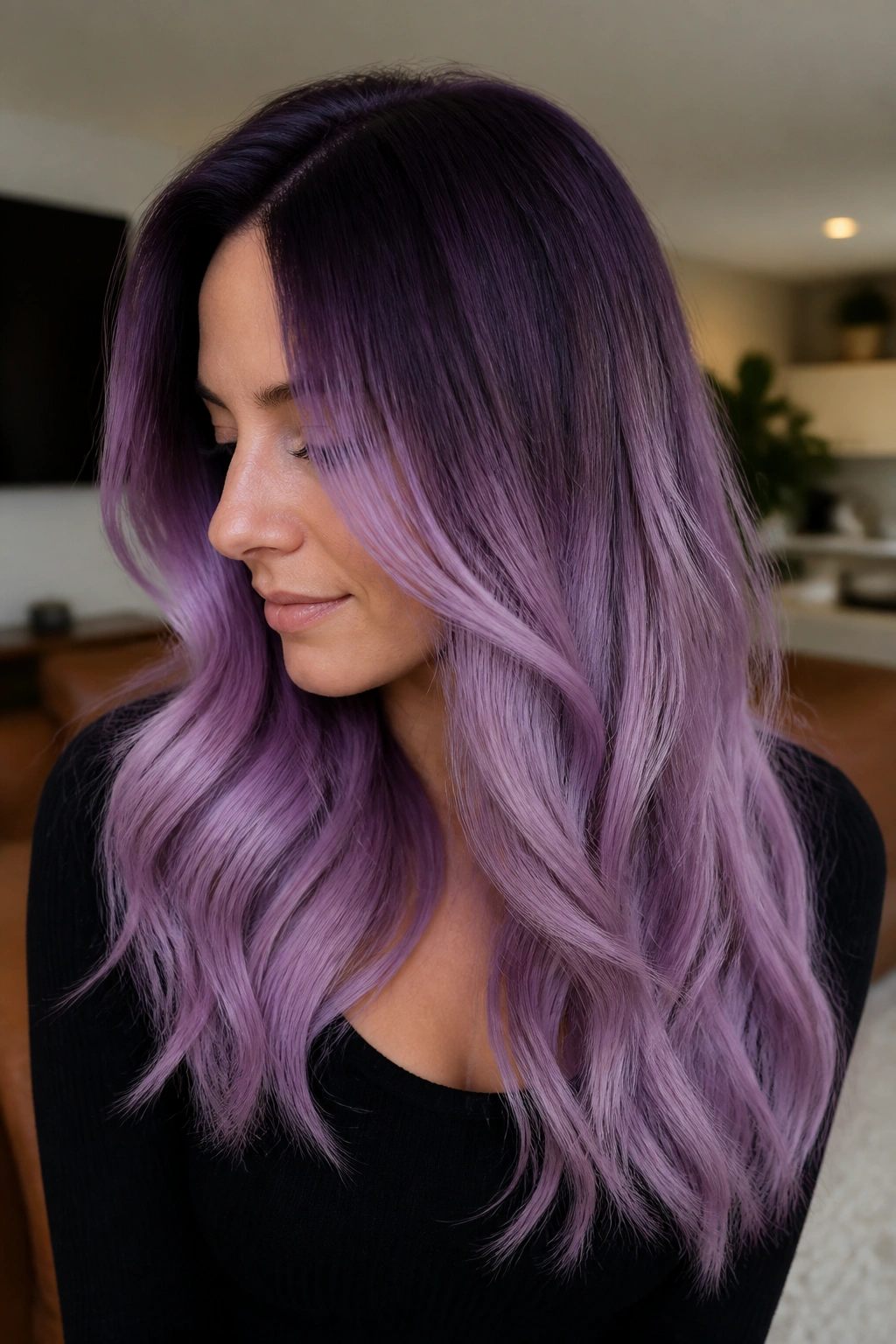
Picture long hair that starts near-black at the crown and loosens into lilac somewhere between the shoulders and the waist. That’s the appeal here: the plum root gives the ombre depth, while the lilac mid-lengths keep the color from feeling too heavy.
This style works because it gives the eye a place to land. A lot of lavender looks can feel flat if every section is the same intensity. Not this one. The plum keeps things grounded, and the lilac opens up as the hair moves, which is exactly what long hair does best.
- Great for naturally dark brunettes who want less contrast than blonde-lilac
- Ask for a root smudge in plum or eggplant
- Let the lilac begin around the ear to collarbone zone
- Finish with a cool gloss so the purple does not go candy-bright
Tip: Keep the lilac muted. If it gets too neon, the plum and the pastel start fighting each other.
5. Ribboned Lavender Ombre for Curly Hair
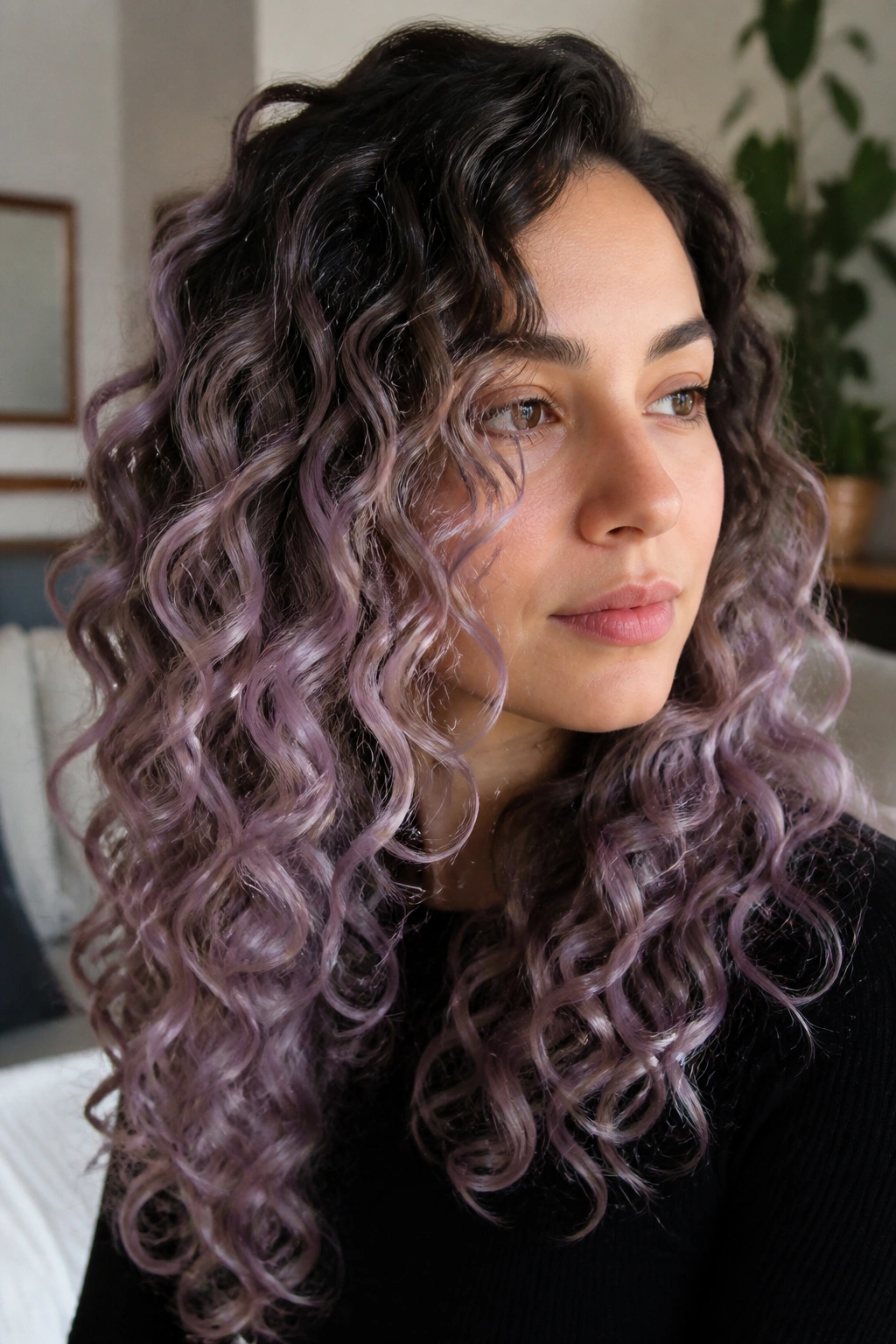
Curly hair and lavender ombre are a good match when the color is painted with the curl pattern in mind. The ribbons open up as the curls separate, so the lavender reads in flashes instead of one flat band. On long curls, that movement is half the charm.
The mistake I see most often is striping. Wide, even lightened bands can sit on top of curls like stripes on a sweater. Much better to keep the placement staggered and let the color travel through selected curl clumps, especially on the lower half of the hair. That gives you dimension without making the pattern look busy.
A curl cream with a bit of hold helps here because frizz can blur the fade. You want the color to look deliberate, not fuzzy. A little shine serum on the ends is enough; too much product will make the lavender look darker and hide the movement you paid for.
6. Face-Framing Lavender Around the Front
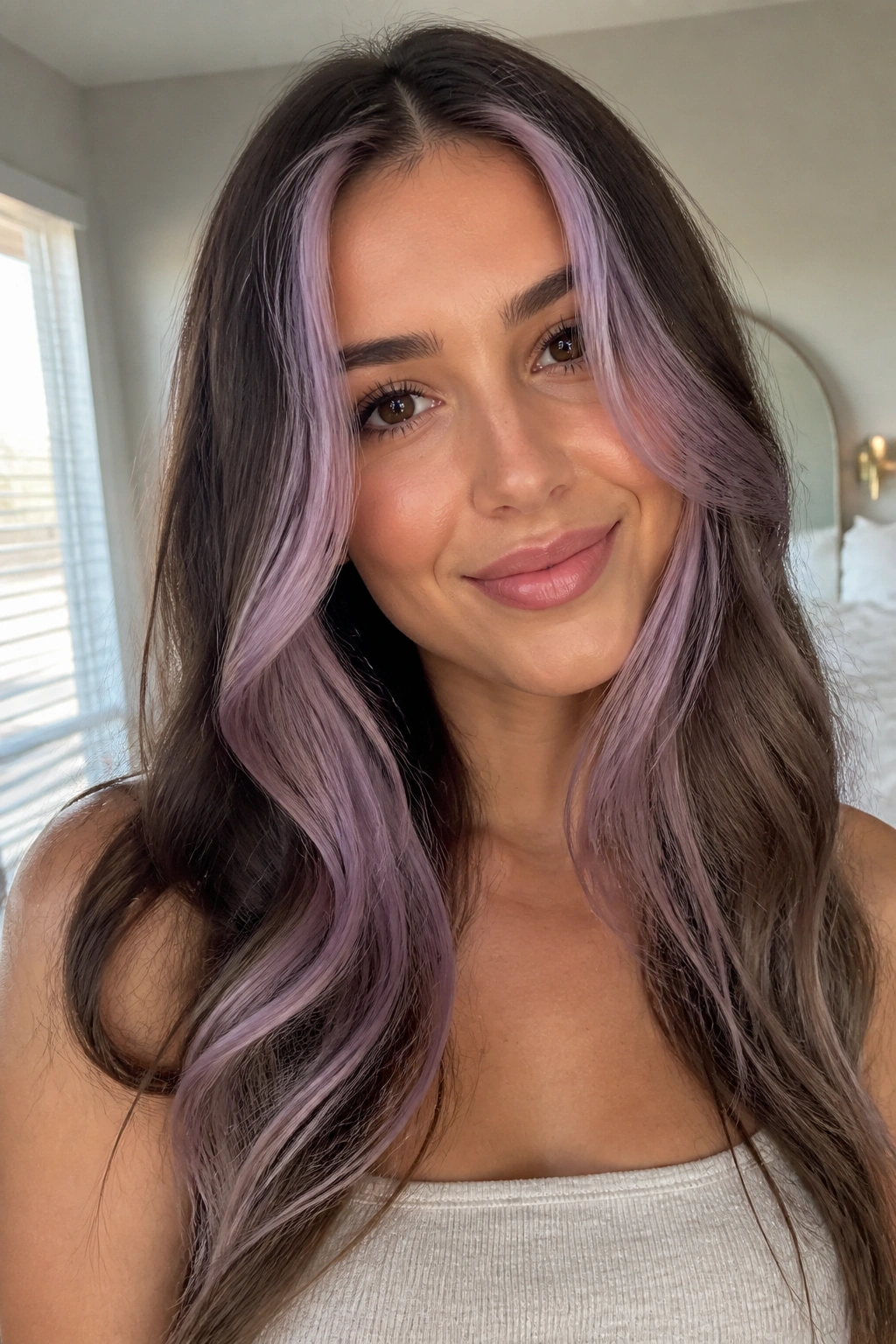
What if you want lavender ombre hair, but you do not want the whole head to go there? Put the color around the face first. Long hair makes this especially flattering because the front pieces can sweep into the rest of the length without the look stopping at the jawline.
This is one of the easiest ways to make the color feel softer. The lavender near the face brightens the skin, while the rest of the hair can stay brunette, blonde, or softly tinted. If you wear your hair half up or tucked behind one ear, the color shows just enough to feel intentional. If you wear it down, the front frame pulls the eye straight to your features.
When It Looks Best
It really shines on layered hair with a cheekbone or collarbone part of the cut. Ask for the lavender to begin a little lower around the back so the face frame stays the star. That keeps the style from turning into a full pastel block.
7. Lavender Money Piece With Long Ends
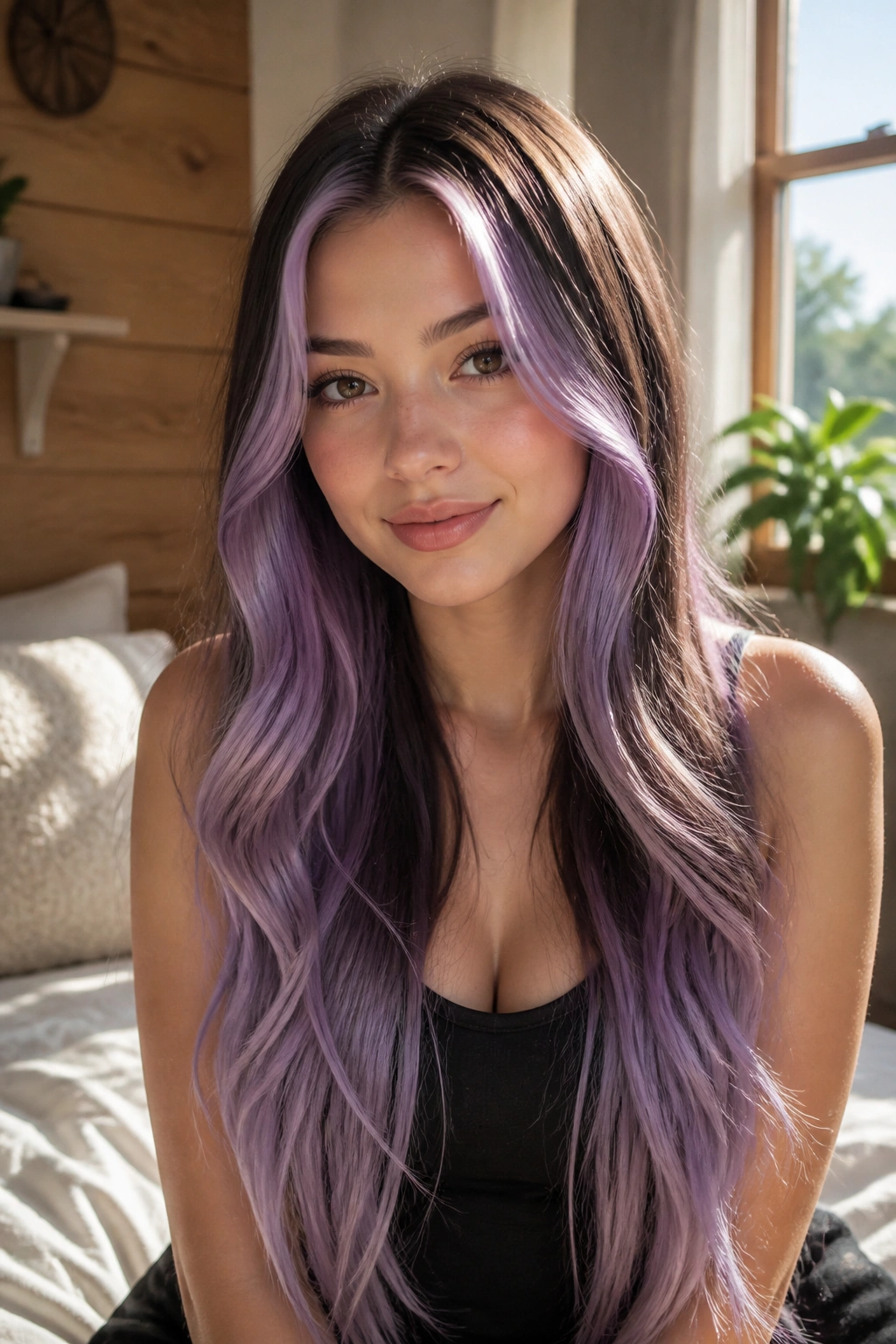
A bright money piece can save you from coloring the whole head, and on long hair it gives the lavender somewhere to travel. The front pieces do the showy work, then the rest of the ombre softens out toward the ends so the color doesn’t feel one-note.
This version suits people who like contrast. You can keep the roots deep, light the front panels more heavily, then taper into softer lavender through the lower lengths. The effect is a little more graphic than a traditional melt, but long hair keeps it from feeling choppy because the ends still flow into each other.
- Best if you part your hair in the same place most days
- Ask for a stronger front lift than the rest of the head
- Keep the money piece a touch brighter than the lower lavender
- Looks sharp with straight styles and soft bends alike
Tip: If the front pieces are too pale, they can overpower the rest of the ombre. Ask for a slightly deeper lilac at the crown side of the frame so everything stays connected.
8. Sheer Lavender Tips on Glassy Straight Hair
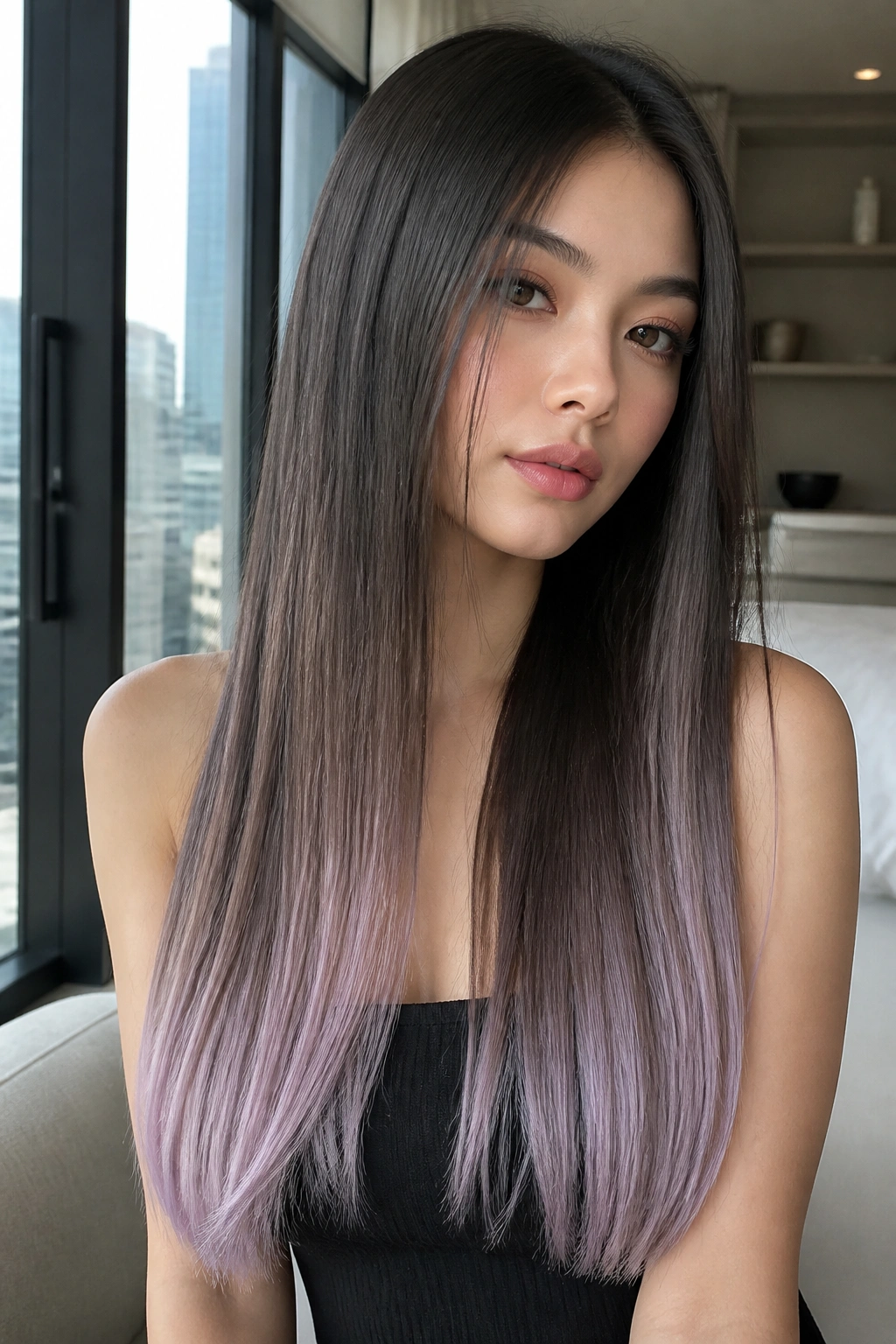
The straightest hair often shows ombre better than curls do. There’s nowhere for the color to hide, which means sheer lavender tips can look almost architectural on long, glassy lengths. The line is clean. The shine does the rest.
This is not the place for chunky fade zones. Keep the transition long and soft, then let the very ends carry the light lavender tint. Because the hair lies flat, every little color shift shows up clearly, and that makes even a subtle version feel polished. The trick is to keep the color translucent. A dense lavender block on straight hair can look heavy fast.
Heat styling matters here, too. Use a protectant before any flat iron pass, because pastel ends fade fastest when they’re fried. If the hair is already bleached, the cuticle is open more than you think, and hot tools will chew through the tone in a hurry.
9. Midnight Navy Into Lavender Gradient
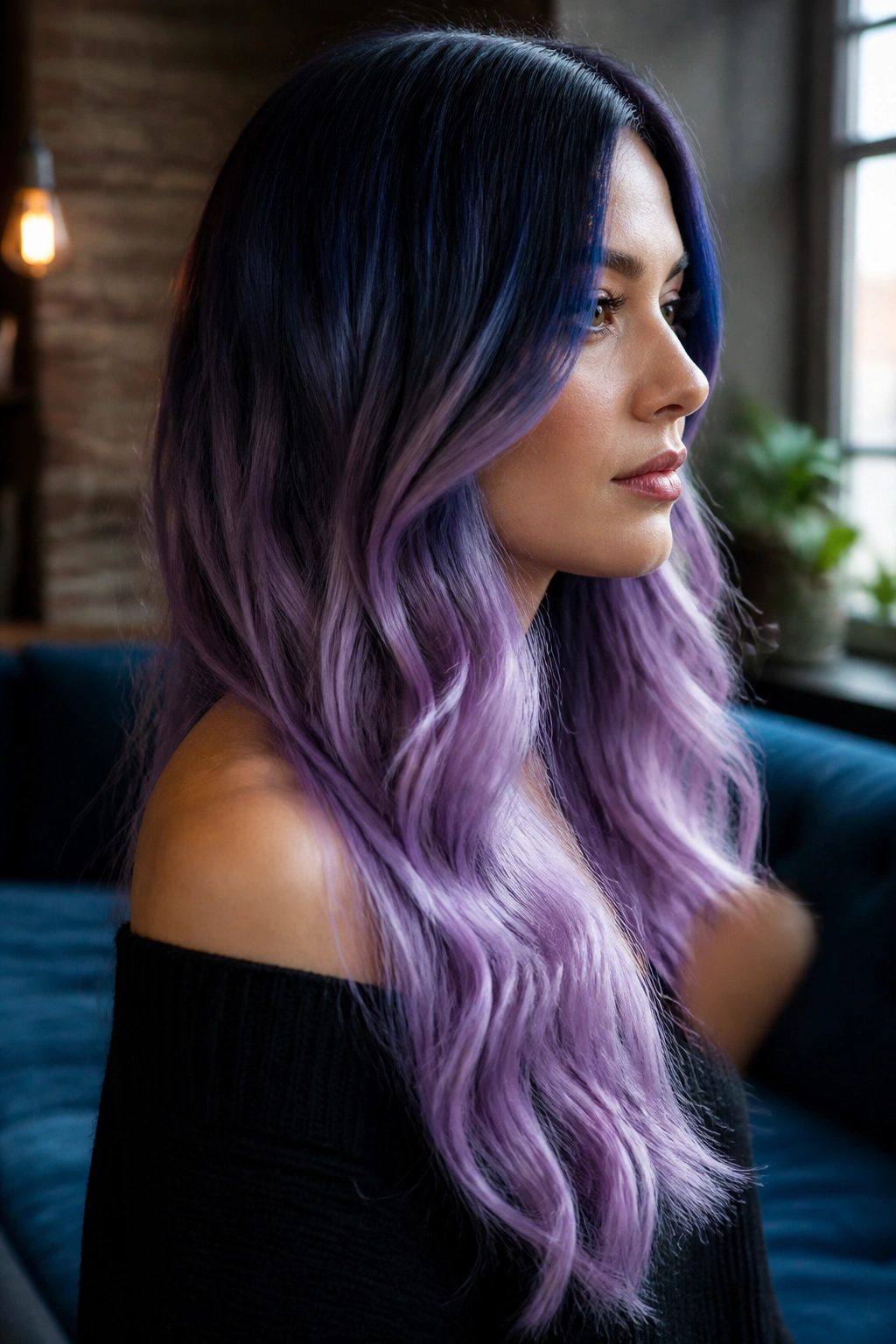
Why do navy and lavender work together so well? Because the blue base cools everything down and makes the purple feel richer. On long hair, that gradient can move from inky navy at the top into soft lavender at the ends without losing its edge.
This is a darker, moodier take on ombre, and I like it for people who want color that reads elegant from far away but gets more interesting up close. The navy can sit near the roots or through the top half, then the lavender lightens as it goes. If the transition is too abrupt, the whole look feels costume-like. Keep the shift gradual and let the long length do the blending.
How to Wear It
Loose waves are the sweet spot. They let both colors show at once, especially when the navy catches the light near the crown and the lavender flickers through the ends. A gloss with blue-violet pigments keeps the navy from washing out into flat black.
10. Mauve Root Melt for Warm Skin Tones
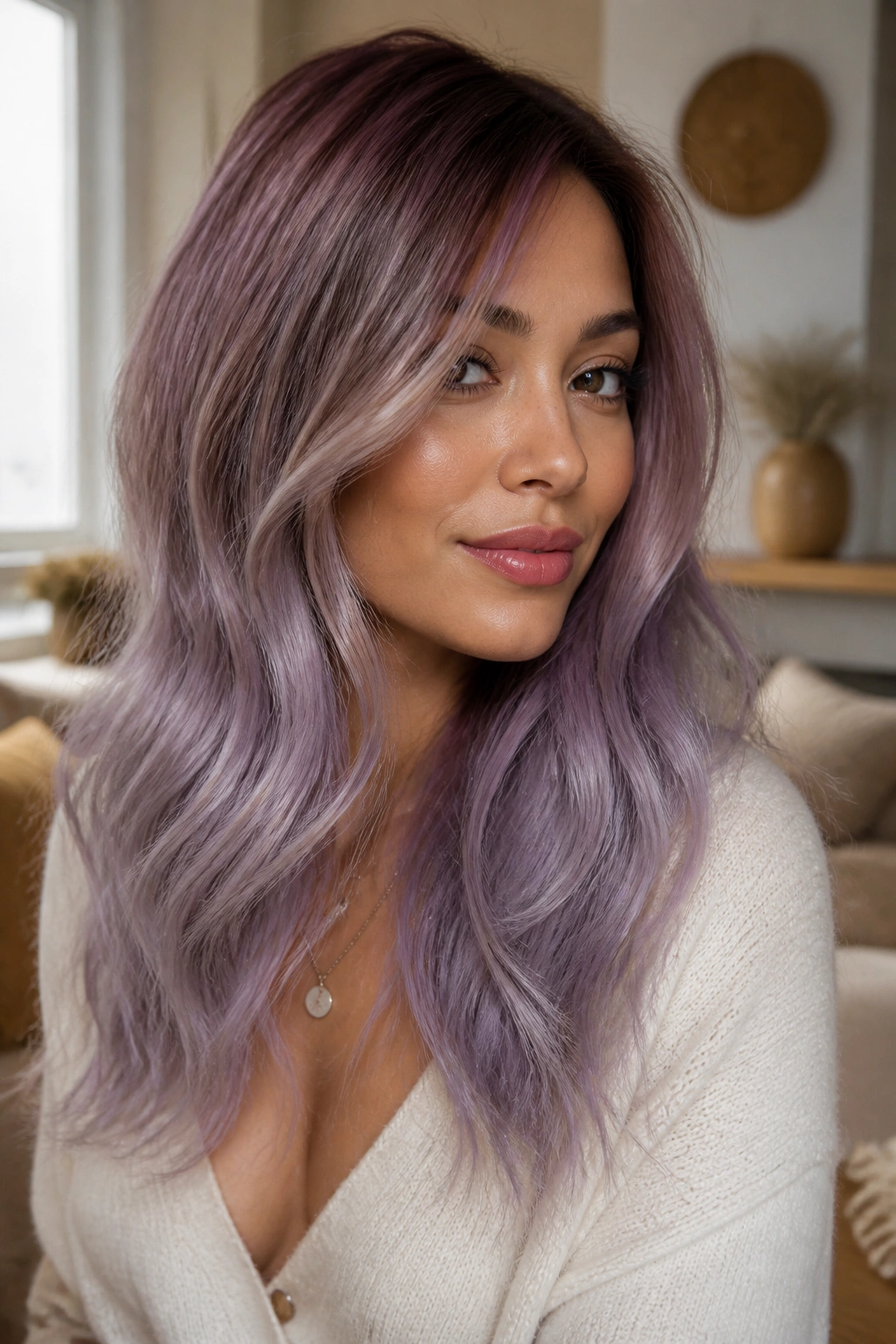
If icy pastels make your face look washed out, mauve is your friend. It has enough red in it to warm the lavender family back up, and on long hair that can make the whole ombre feel softer and more wearable.
Think of this as the cousin of lavender, not a copy of it. The root melt can start in a muted mauve-brown, then drift into a dusty lavender through the lengths. That tiny pink-brown cast keeps the color from reading too cool, which is why it flatters warm or golden skin so well. I also like it on hair that has a little natural wave, because the mauve catches the bends and keeps the lavender from looking flat.
- Works best on warm or neutral skin tones
- Ask for rose-violet lowlight at the roots
- Keep the ends dusty, not frosty
- A soft wave shows the tone shifts more than pin-straight hair
Tip: Skip a super-ashy toner here. Too much ash will drain the mauve and leave you with a color that looks tired.
11. Silver Gray to Lavender Smoke Ombre
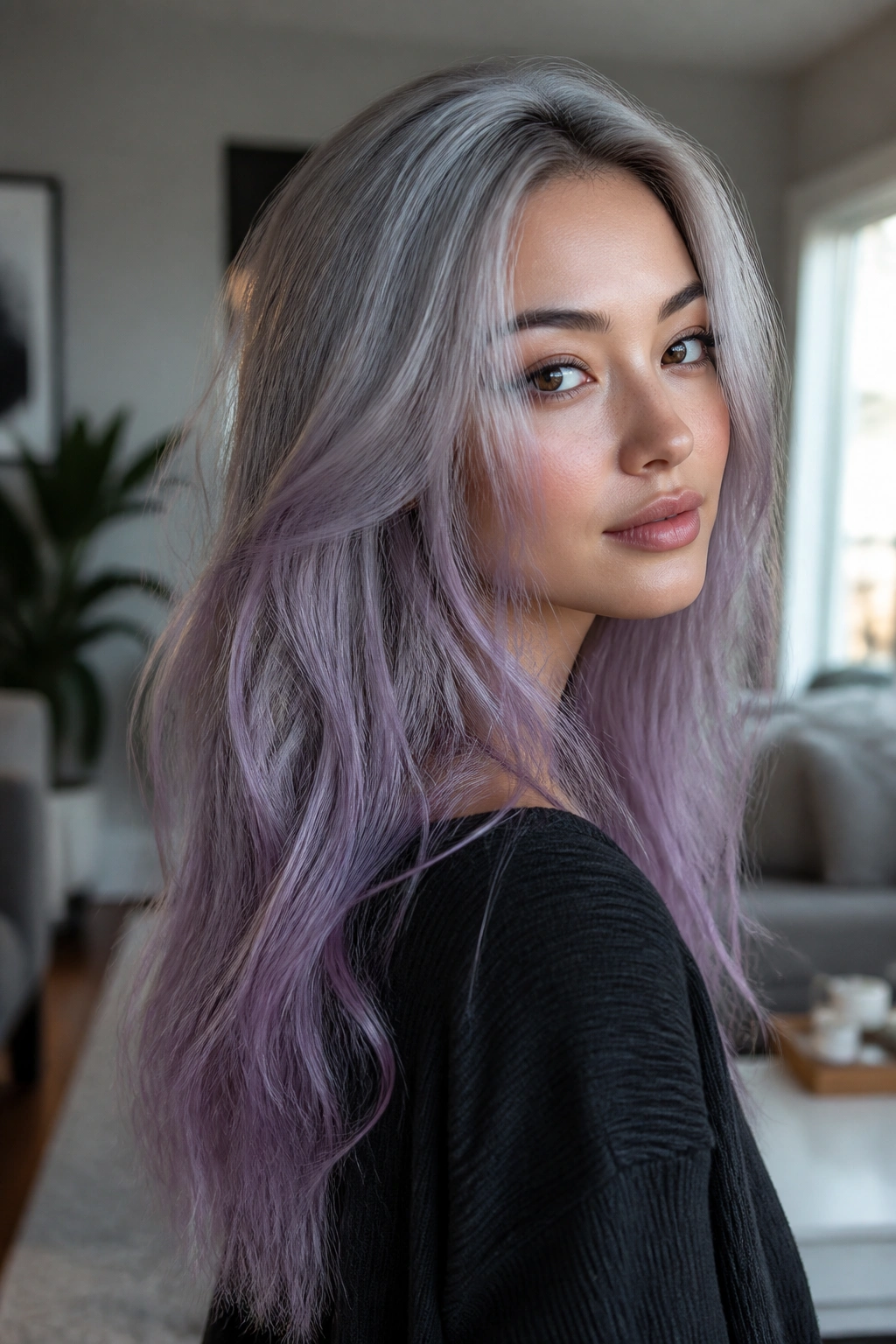
Silver-gray into lavender smoke is one of those shades that sounds delicate and ends up looking sharper than you expected. The reason is the balance of cool tones. Gray keeps the blonde from going yellow, and lavender gives the finish a whisper of color without turning it sugary.
I like this best on long hair with a bit of internal layering. The silver can sit higher up, the lavender can trail through the middle, and the smoke at the ends softens everything together. If you wear your hair in a low ponytail, the gradient still shows. If you wear it loose, the movement looks almost metallic in places.
The maintenance is simple but not lazy. Purple shampoo too often can make silver go dull, so use it sparingly and lean on a tinted mask instead when the lavender starts fading. The whole point here is softness. Harsh cleansing strips that away fast.
12. Orchid Purple to Lavender Dip-Dyed Ends
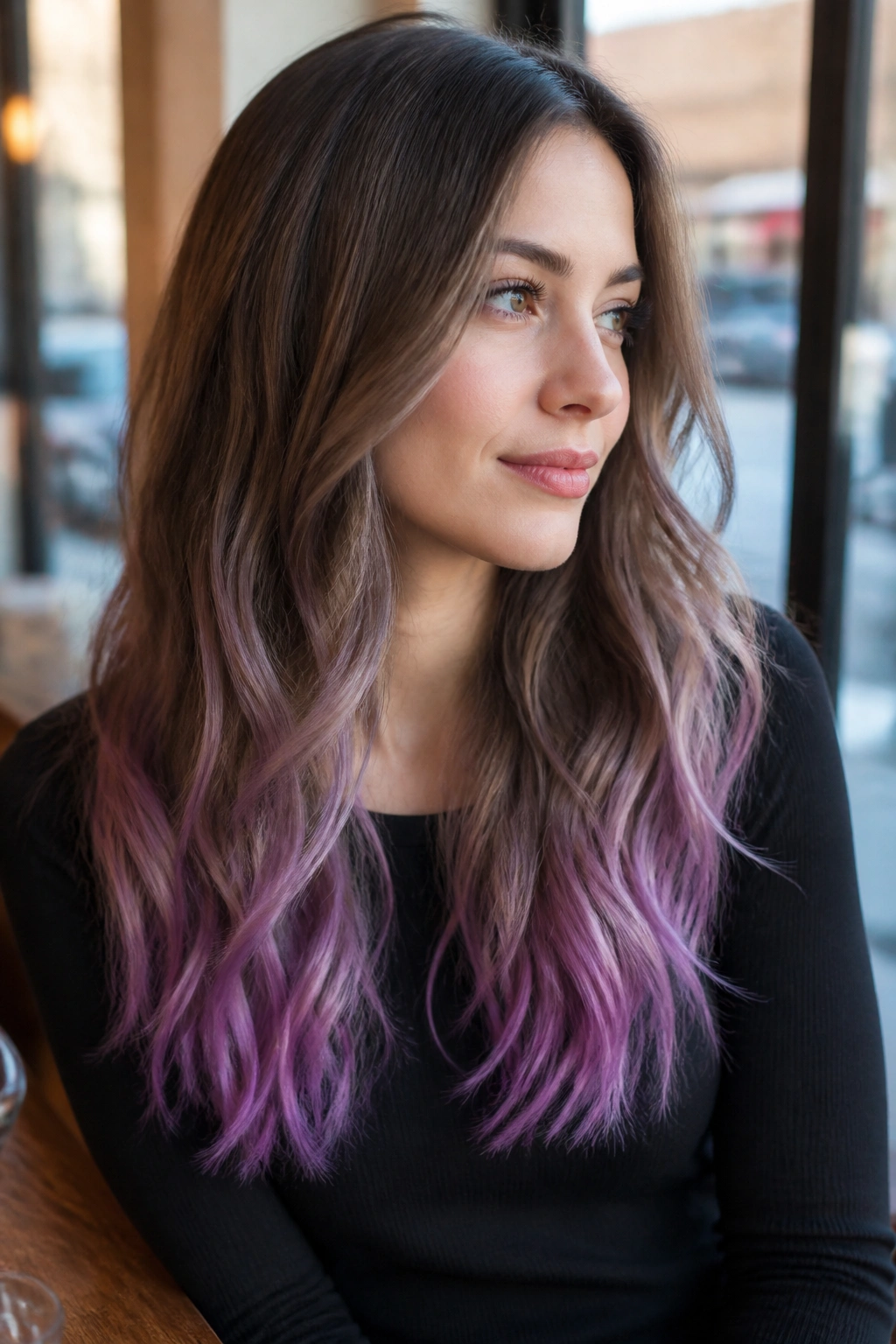
This one has more attitude, and I mean that in a good way. Unlike a soft melt, orchid-to-lavender dip-dye gives you a visible shift near the bottom of the hair, which can be a relief if you want the color to feel deliberate rather than faded in.
Long hair carries a dip-dye well because the ends have enough length to hold the contrast. The orchid section can be rich and saturated, then the lavender lightens toward the final inches. On straight hair, the line reads crisp. On curls, it breaks into soft blocks of color that look lively instead of severe.
It is a smart option if you want something bolder that still lets your roots stay natural. The grow-out is easy, too, because the color lives so far down. Just keep the ends conditioned. Dip-dyed hair shows dryness fast, and orchid can go muddy if the cuticle gets rough.
13. Black Hair With Hidden Lavender Underlayers
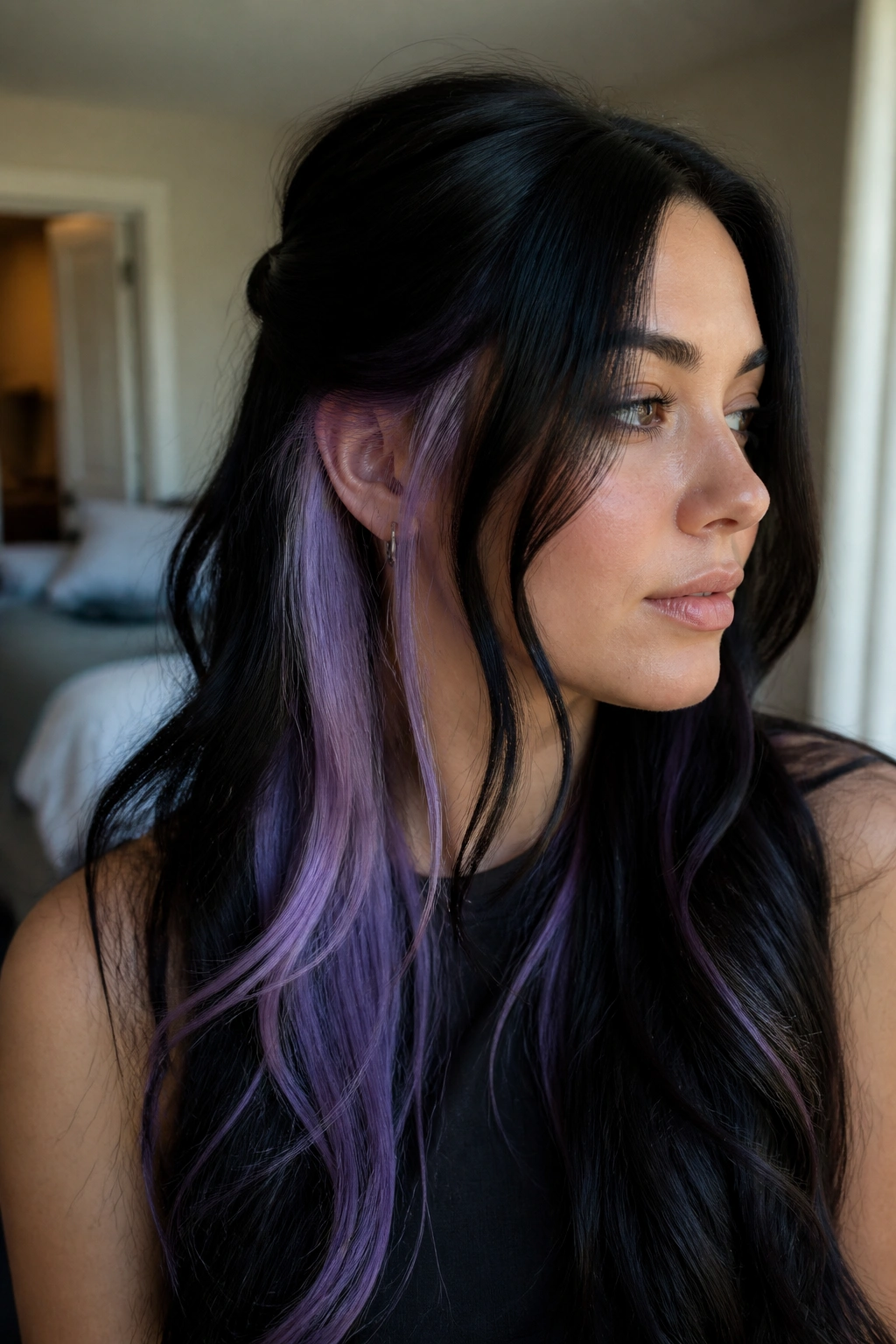
This is the style that keeps its drama until you move. On black or near-black hair, hidden lavender underlayers sit beneath the top curtain of hair, so the color only flashes when you tuck it behind your ear, braid it, or throw it up in a clip.
Long hair is perfect for this because the underlayer has real length to work with. You can keep the visible surface dark and glossy, then let the lavender live underneath in a wide ribbon from about the nape to the ends. That placement makes the color feel intentional rather than random. It also protects you from getting bored with it too fast.
Why It Works
The contrast is doing all the work. Black hair on top makes the lavender underneath look brighter, even if the lavender itself is muted. That means you can wear a softer shade and still get a strong visual hit.
Tip: Make the underlayer wide enough to show when the hair moves. Too narrow, and the color disappears unless you’re standing under perfect light.
14. Mushroom Brown to Dusty Lavender Ombre
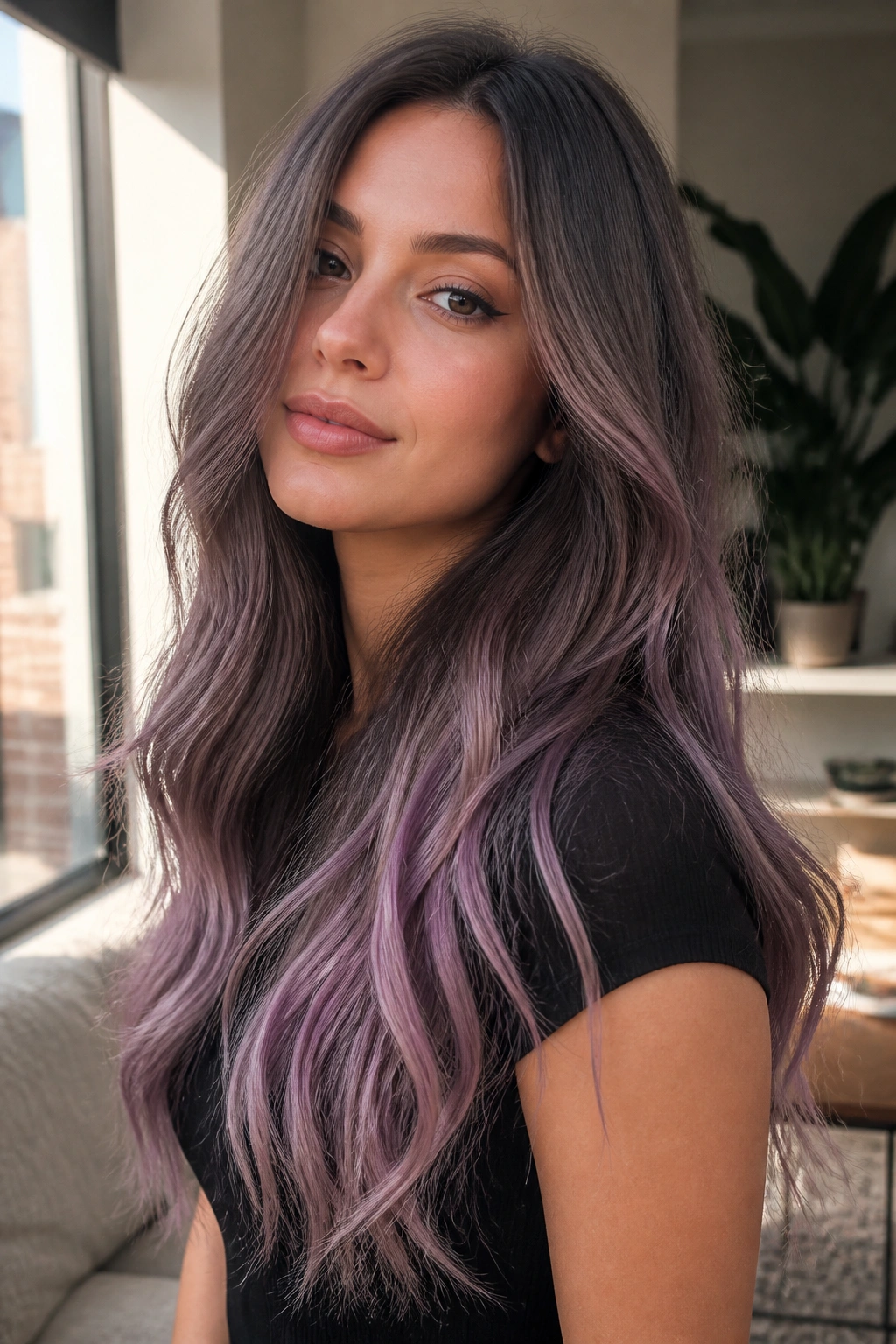
Dusty lavender looks richest when the brown base has a little ash in it. That’s why mushroom brown is such a good starting point. It already carries that cool, earthy softness, so the lavender can settle in without feeling pasted on.
On long hair, this shade reads understated in the best way. The root area stays lived-in and neutral, the mid-lengths carry a foggy purple haze, and the ends land in a muted lavender that feels almost velvety. It’s not a loud color story. That’s the point. The appeal is in the smoothness of the transition and the way the lavender picks up movement instead of shouting for it.
If your skin leans neutral or cool, this can be an easy color to wear day after day. I’d ask for a mushroom glaze at the roots and a dusty lilac finish at the ends, then avoid anything too warm in the toner. Warmth drags the whole thing out of shape.
15. Beige Blonde to Icy Lavender Ends
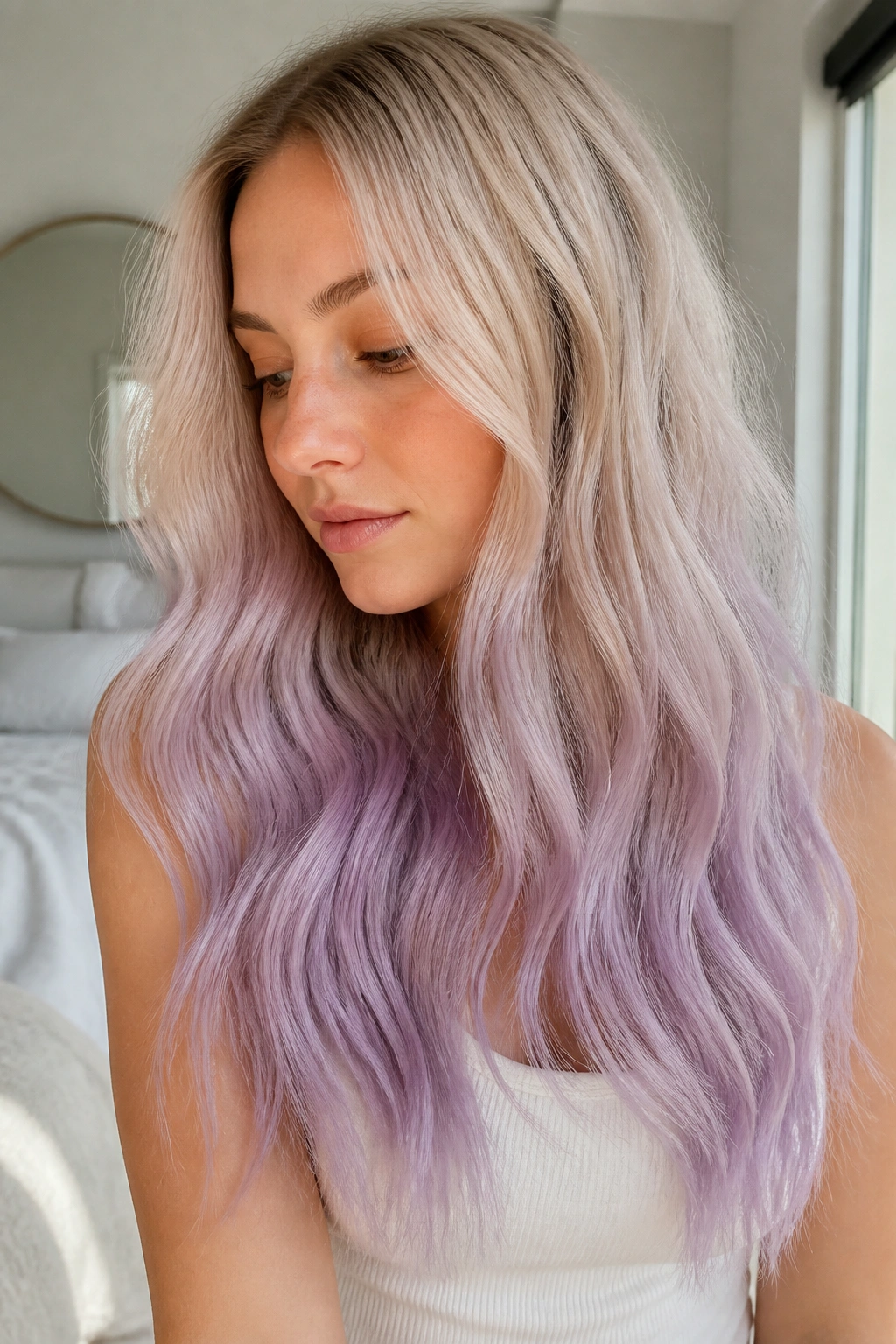
Why does beige blonde work better than stark white here? Because it leaves a little softness in the base, which makes the lavender ends feel smoother and less stark on long hair. The whole look becomes gentler, almost cloud-like, without losing brightness.
This is a good choice if you like light hair but want a cooler finish than plain blonde. The beige root zone keeps the hair from looking too flat at the top, and the icy lavender on the lower lengths gives just enough color to keep the style interesting. On long layers, the transition can move a little higher so the fade doesn’t disappear when you wear your hair in waves.
How to Wear It
Soft bends or a loose blowout show the tonal shift best. Pin-straight hair can make the beige and lavender look too separated, while waves let them blend. If your natural tone is very golden, this version may need more toner upkeep than you’d expect. Keep a violet gloss on hand, not a heavy purple shampoo, unless you want the ends to go chalky.
16. Berry-Lavender Fusion for Deep Dimension
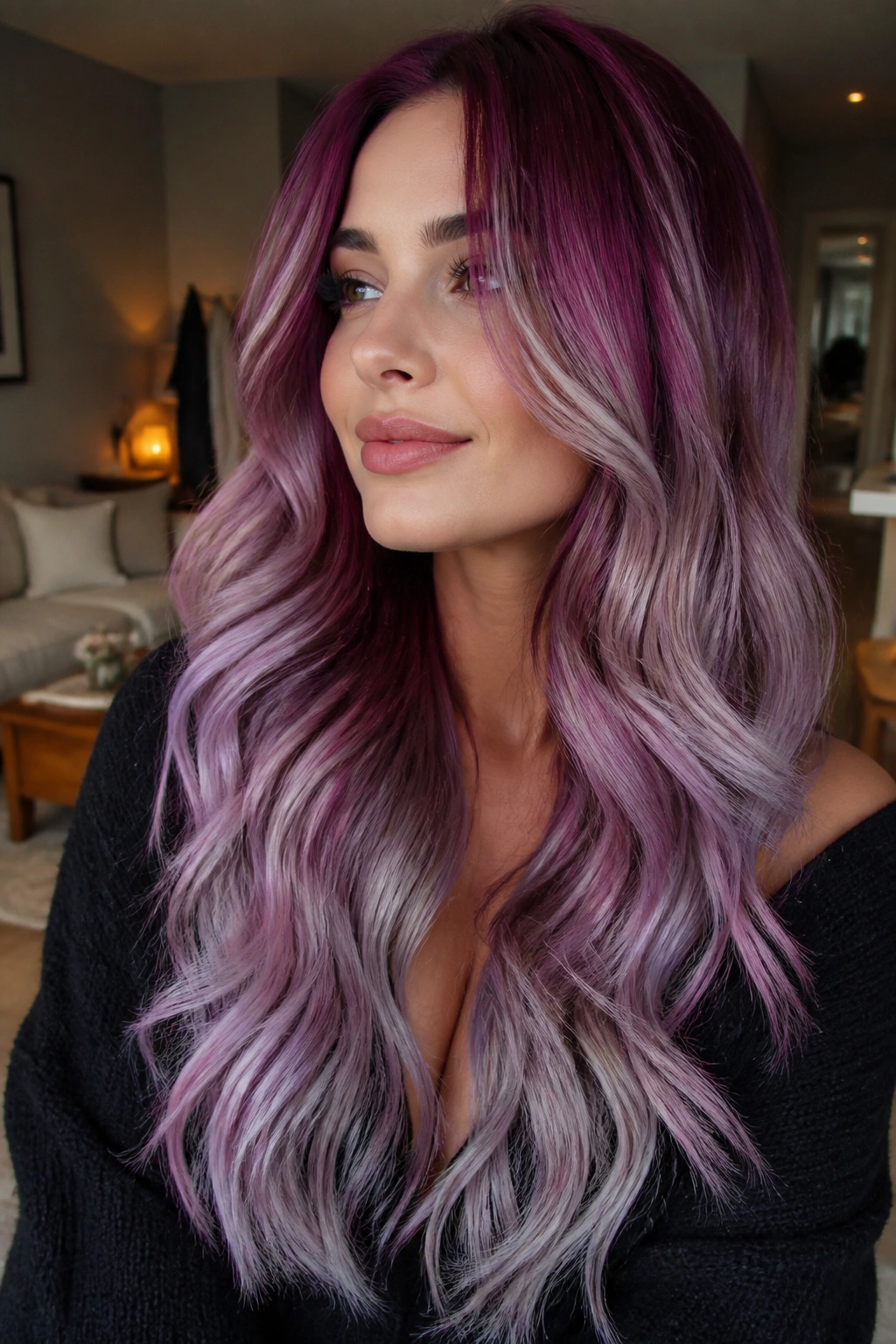
If plain pastel feels too sweet, berry-lavender is the fix. The berry note gives the lavender a darker, fruitier edge, and long hair lets that depth travel from the mid-lengths all the way to the ends without the color collapsing into one flat tone.
I like this on long hair that already has movement, especially with layers or a soft curl pattern. The berry can sit closer to the roots, almost like a tinted shadow, and the lavender can take over as the hair drops lower. That pairing keeps the ombre from looking washed out. It feels plush. Not fussy. Plush.
- Best for medium to deep skin tones
- Ask for violet-red lowlights mixed into the root melt
- Keep some lavender lighter at the very ends
- Works well when you want color that still feels rich in indoor light
Tip: If the berry side is too bright, the whole look can swing into magenta. Keep it muted so the lavender stays the star.
17. Mermaid Waves With Lavender and Sea-Glass Tones
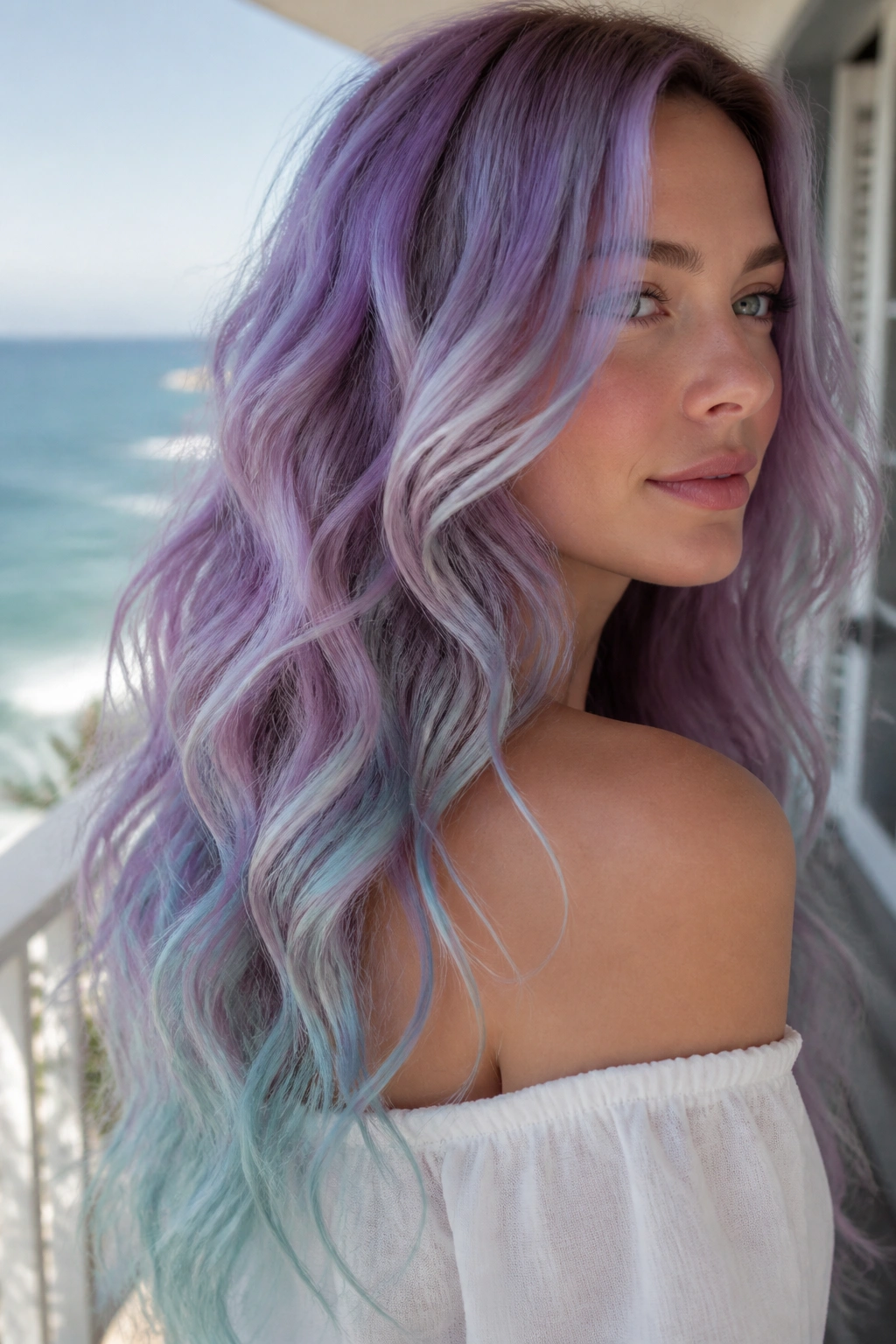
Mermaid hair can get cheesy fast, so the trick is to keep the sea-glass tones in the undertone instead of making them the whole story. On long hair, lavender can sit as the main color while tiny bits of aqua or mint peek through the waves and make the finish look watery.
This version works because long hair lets you layer tones instead of forcing a single flat shade. The lavender should still lead. Think of the blue-green pieces as accents tucked into the bend of the wave, not as a separate block. If you go too heavy on the aqua, the whole thing stops reading lavender ombre and turns into a different look altogether.
I’d keep the roots cool and neutral, then work the lavender through the mid-lengths with the sea-glass note closest to the ends. It’s a playful color, yes, but long hair makes it feel more elegant than cartoonish. The waves soften the edges, and that goes a long way.
18. Blunt Long Hair With a Sharp Lavender Fade
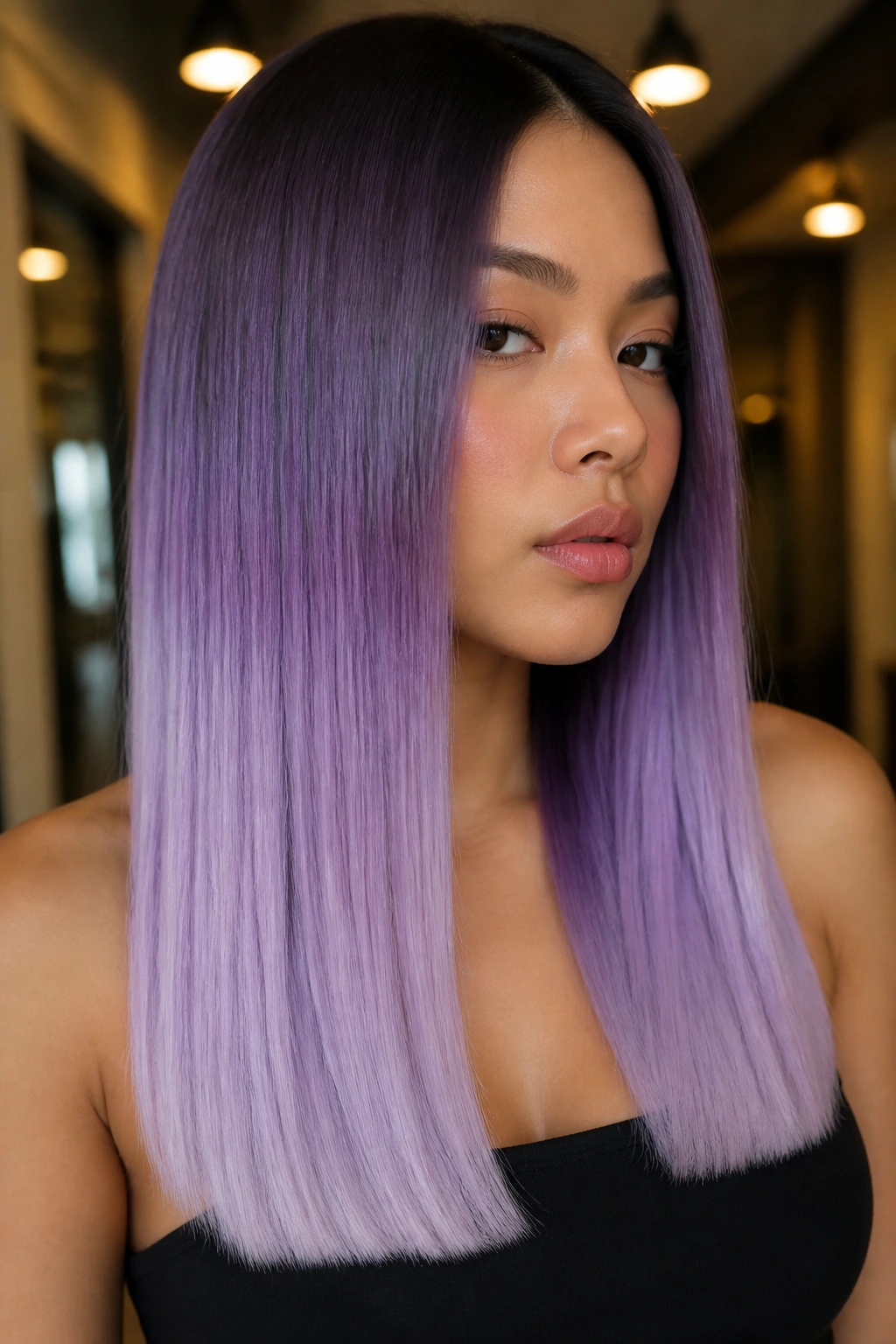
Blunt ends change the whole mood of lavender ombre. Instead of a wispy, floating finish, you get a clean edge that makes the color transition feel crisp and deliberate. On very long hair, that contrast can look striking.
Unlike layered cuts, a blunt shape does not scatter the color. It keeps the lavender on one clear canvas, which is why the fade should be long and smooth. Start the color shift higher up, around the mid-back or bust line, then let the ends carry the lightest lavender. If the transition is too narrow, the color can look like it stops short.
This style suits someone who likes polish with a little bite. Straight styling makes the line even sharper, but a soft wave can be nice too because it keeps the edges from feeling too severe. The key is shine. A blunt cut without shine can look heavy. A glossy one? Sharp in a good way.
19. Layered V-Cut With Lavender Ends
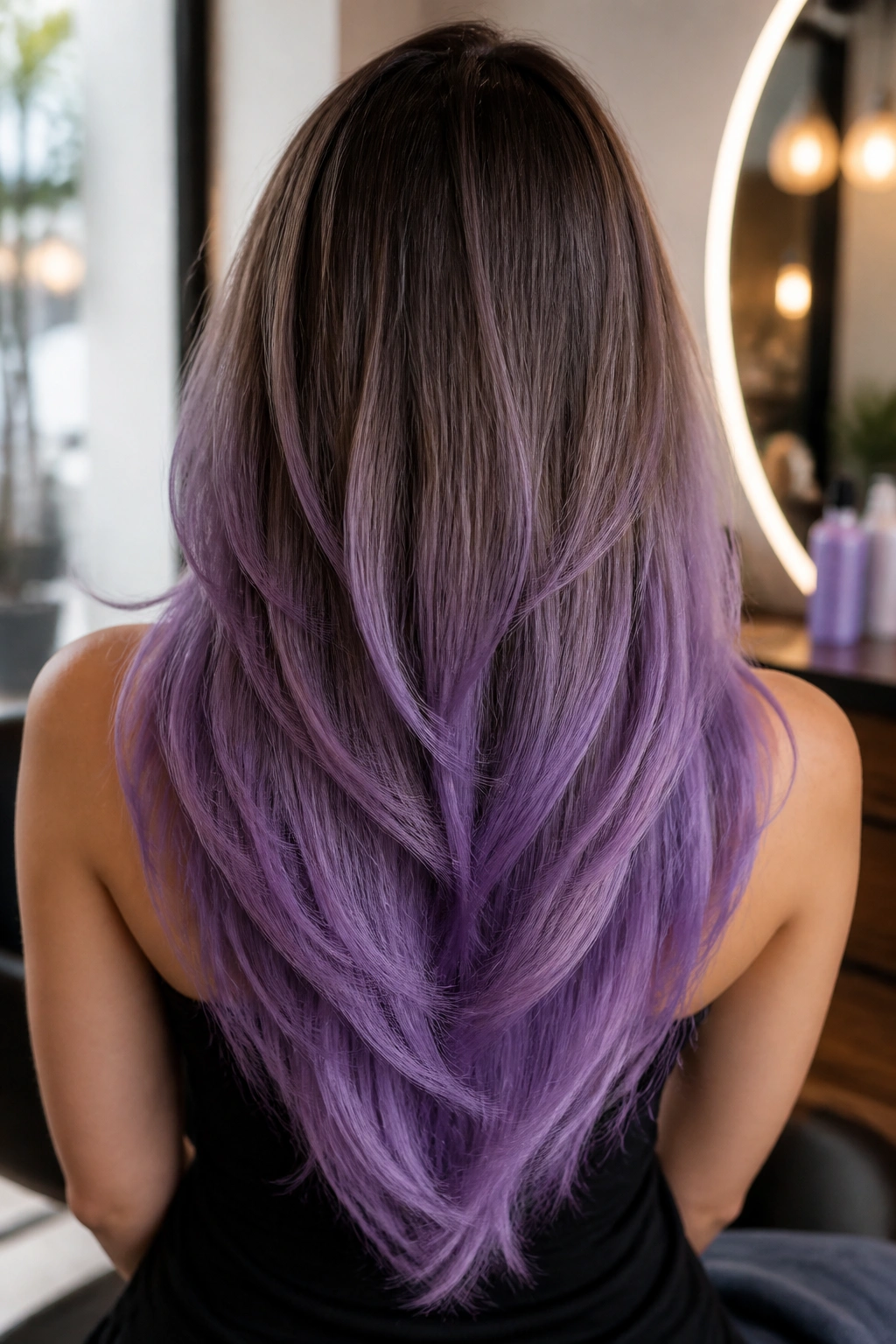
A V-cut gives lavender ombre room to spread. The longest center point in the back acts like a runway for color, and the shorter side layers keep the hair from turning into one heavy sheet. On long hair, that shape makes the lavender look more alive.
This is one of my favorite pairings because the cut and the color actually help each other. Layers stop the ends from looking too thick after lightening, and the lavender helps show the V shape when the hair is down. It is also a nice choice if your hair is dense and tends to swallow color. The shape opens everything up.
Why It Works
The V-cut lets the darkest part of the ombre stay higher and the lightest part fall where the eye naturally lands. That means the color feels balanced even when you wear it over a coat or sweater.
Tip: Ask your stylist to keep the very tip of the V slightly deeper than the rest of the ends. It helps the point stay visible and keeps the lavender from looking too washed out at the bottom.
20. Curtain Bangs With a Lavender Face Frame
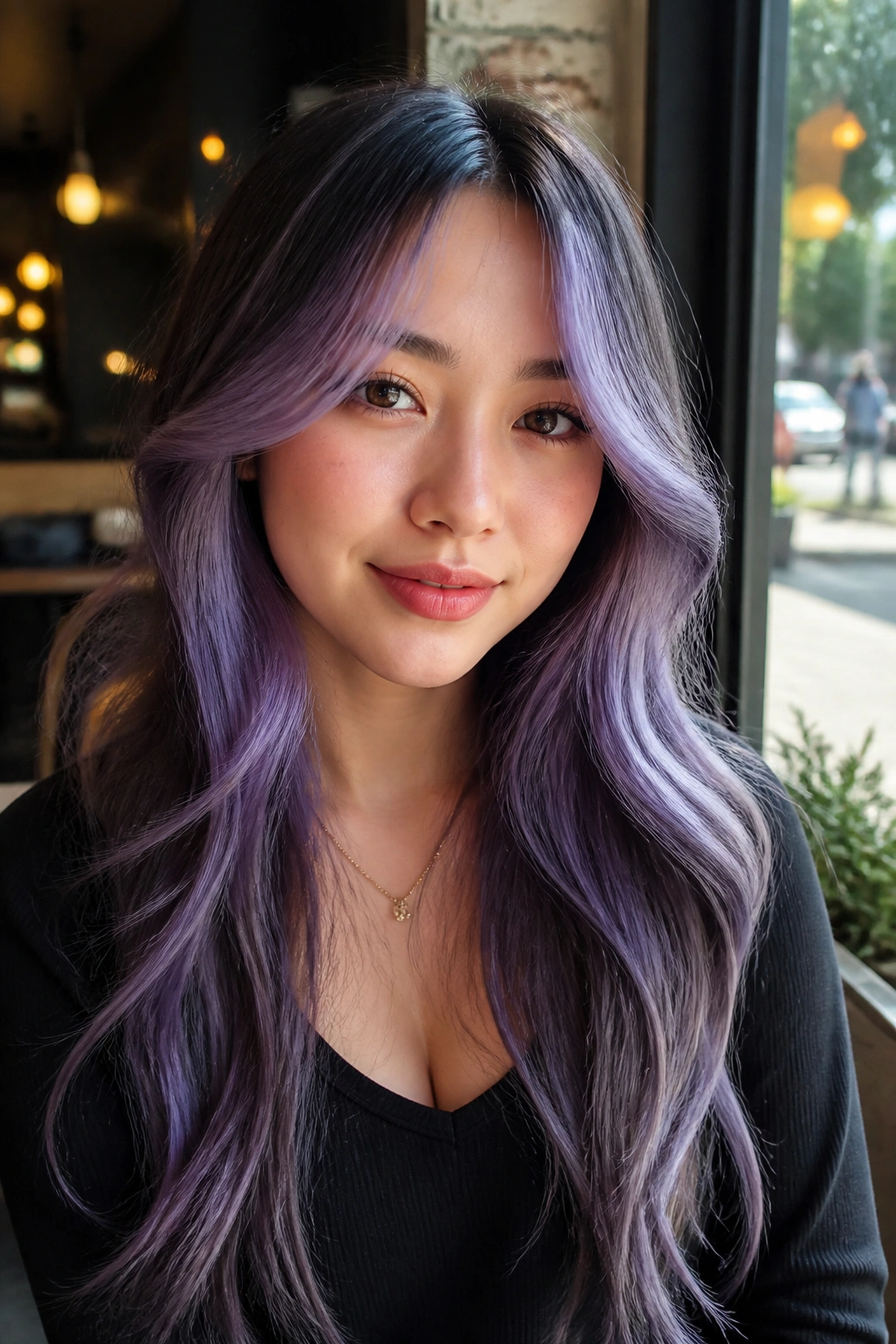
Curtain bangs change the whole conversation. They let you put lavender right where people look first, and long hair gives the rest of the ombre enough space to soften behind them. The result feels playful without becoming too sweet.
I like this because the bangs can carry a slightly deeper violet than the ends, which keeps them from disappearing into the face. That tiny shift matters. If the bangs are too pale, they can look faded before the rest of the color has even done its job. Keep the frame a touch richer and let the length go lighter.
This is also a good style if you like changing your part. A middle part shows the frame clearly; a side part tucks some of it away and makes the lavender feel quieter. Either way, the long lengths below keep the ombre story going. It is a softer route into color, but it still has personality.
21. Copper Roots Into Lavender Contrast
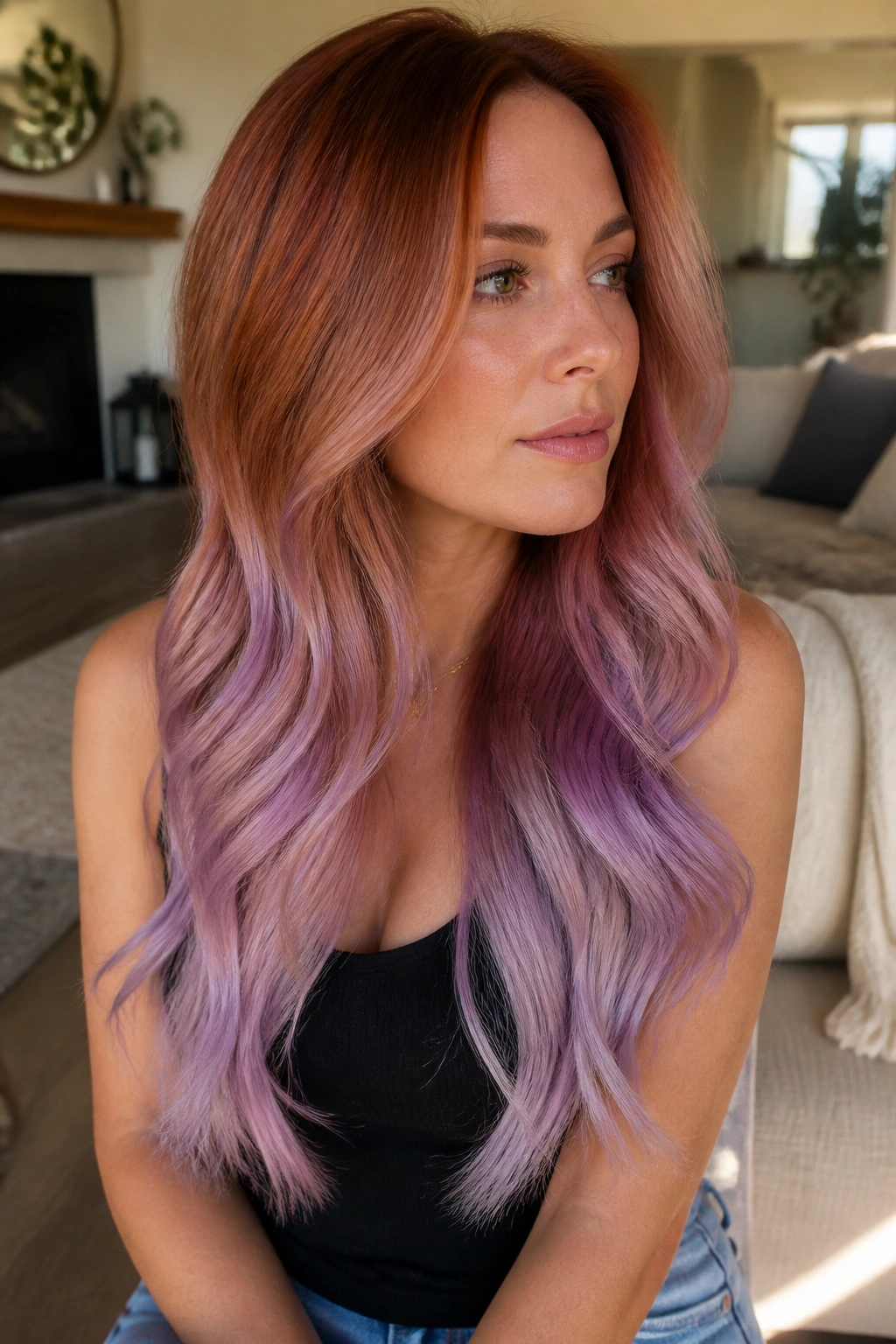
Why would copper and lavender work together? Because the warmth of copper makes the cool lavender look sharper. On long hair, that contrast can feel energetic instead of clashing, especially if the transition is handled with care.
This idea is a little more adventurous, and it suits redheads or auburn brunettes who don’t want to lose their warmth. The copper can stay up top, then shift through a rose-violet buffer into lavender at the ends. That middle step is the part people skip, and that’s usually why warm-to-cool color jobs go muddy. Give the colors a place to breathe between each other.
How to Wear It
Loose waves and braids show both ends of the color family. If you want the lavender to stay bright, keep the copper from getting too orange. A red-copper base with a muted lavender finish reads much better than a neon orange crown fighting a pastel end.
22. Reverse Ombre: Lavender Roots to Blonde Ends
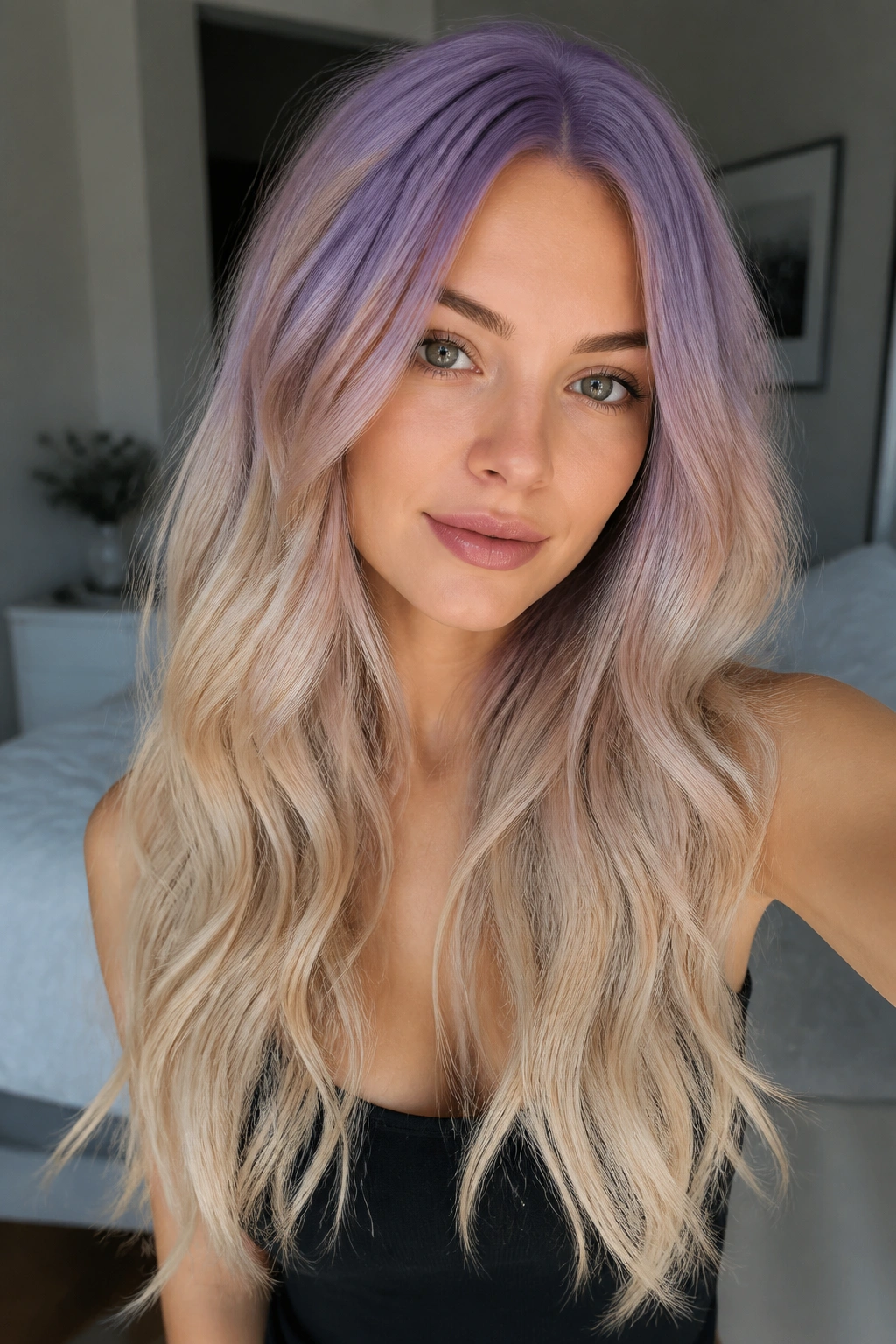
Reverse ombre is not for the shy, and that’s exactly why it works on long hair. Lavender at the roots flows into blonde ends in a way that feels bold from the first inch, then softens as it moves downward.
This style flips the usual rulebook. Instead of hiding regrowth, the root color becomes the statement. On long hair, the lavender crown has enough length to look deliberate, not like a quick experiment. The blonde ends lighten the whole thing so it doesn’t feel too heavy, especially if the lavender is smoky rather than ultra-bright.
- Best for people who want a high-contrast look
- Ask for a root color strong enough to stay visible after a few washes
- Keep the blonde ends toned beige, not banana yellow
- Works well on smooth blowouts and half-up styles
Tip: If you hate obvious root grow-out, skip this one. It looks cool when maintained, but it does ask for commitment.
23. Peekaboo Lavender Beneath Natural Length
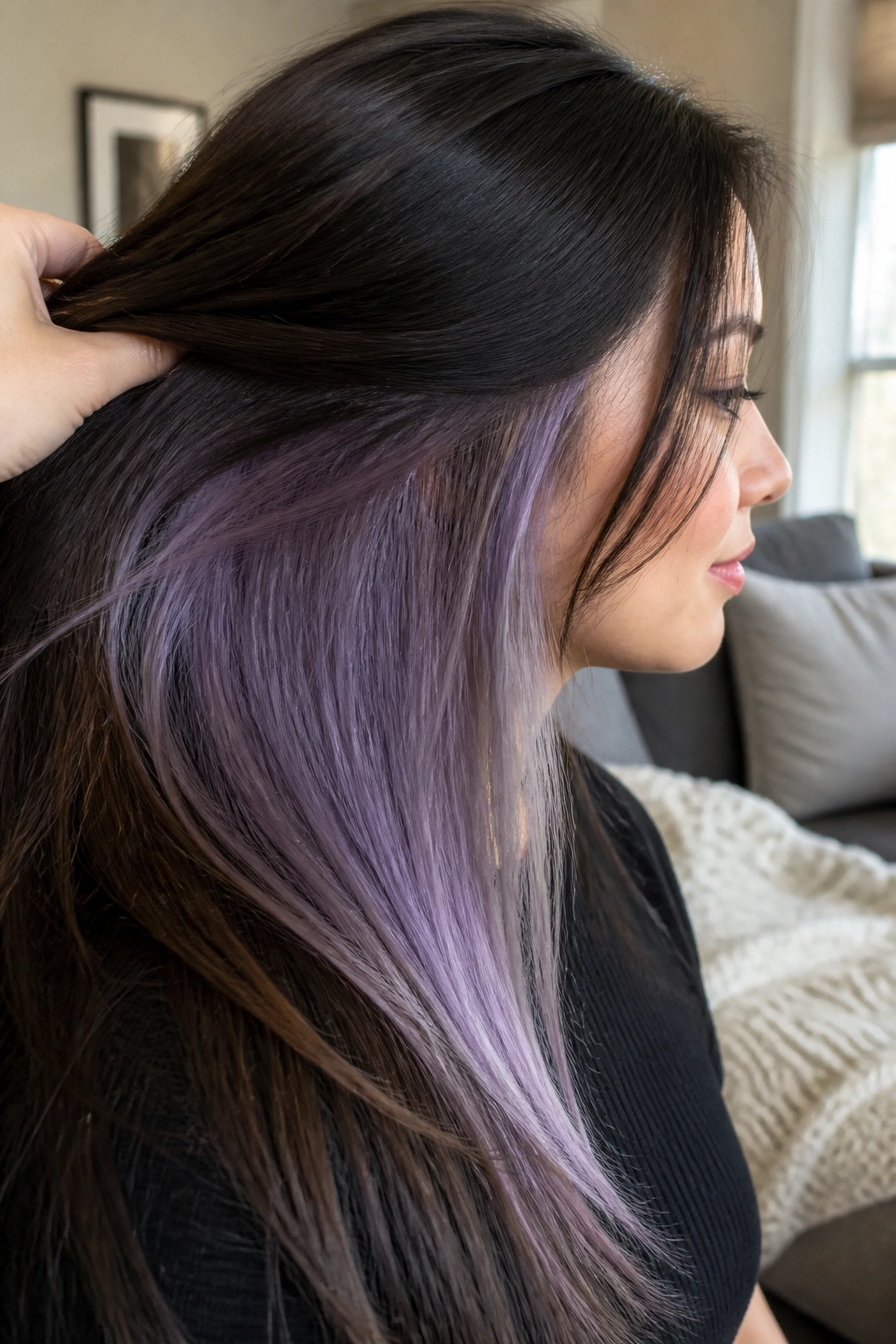
Peekaboo color is still one of the smartest ways to wear lavender ombre if you need the top layer to stay natural. The color lives underneath, hidden by the long outer curtain, then flashes through when the hair swings, braids, or gets pinned up.
This version is a gift for people who want color with a low-visibility day mode. On long hair, the lavender can cover a much wider underlayer than it can on shorter cuts, which makes the reveal more satisfying. It can start around the nape and run all the way to the ends, or it can sit in a thicker panel on one side if you want a more asymmetrical feel.
I prefer this on hair that gets worn in ponytails or half-up knots. The underlayer shows off without taking over. And because the top layer stays natural, the lavender stays in better shape between touch-ups. That’s not glamorous, but it is practical.
24. Ash Brown to Pastel Lavender and Mushroom
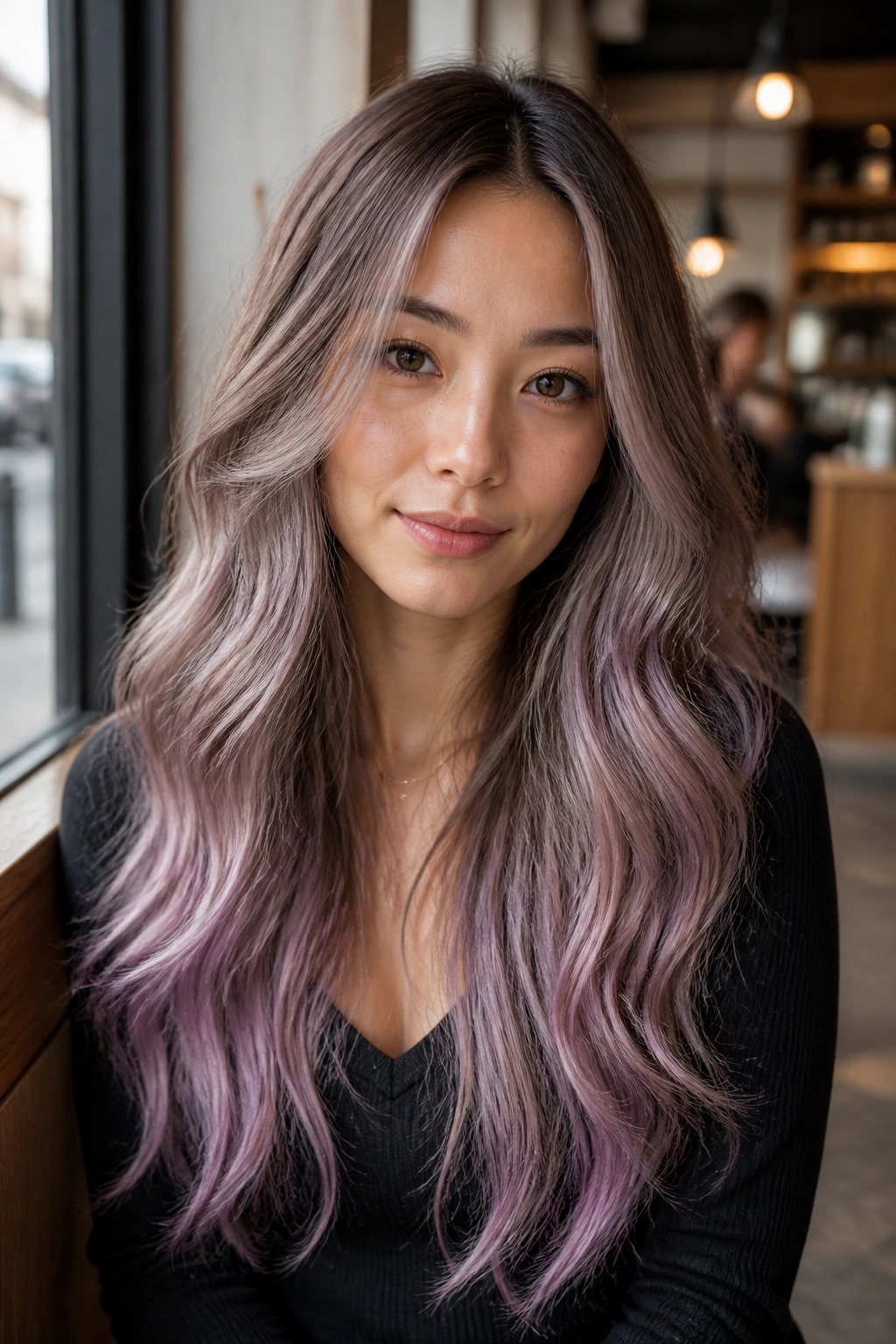
Ash brown is a quiet hero in lavender ombre. It gives the root area a cool, smoky base, then the mushroom tone in the middle helps the pastel lavender feel connected instead of abrupt.
Long hair makes this especially nice because each tone has room to exist on its own. The ash brown keeps the top from warming up too much, the mushroom softens the middle, and the lavender ends stay pale without floating off on their own. The whole look is subdued, but not boring. It has that foggy, expensive feel that works well on straight or gently wavy hair.
How to Wear It
This is a good fit if you like neutral clothes, silver jewelry, or makeup that leans soft and muted. Ask for a cool brown root shadow, then let the lavender stay dusty rather than pastel-bright. If the stylist pushes the ends too pink, the mushroom middle loses its job, and the whole fade can feel disconnected.
25. Smoky Lilac With Chunky Ribbon Placement
Chunky ribbons are back for a reason. On long hair, they give smoky lilac more shape, especially when you want the ombre to be noticeable from across the room instead of only in close-up.
The key is that the ribbons should still be soft-edged. You want broad panels of lilac, not hard stripes. That makes the color feel editorial without looking harsh. Long layers help, because the ribbons break a little as the hair falls, which makes the lavender look more dimensional than a flat sweep ever could.
- Best on thick hair that can hold color panels
- Ask for wide but feathered placement
- Use a smoky lilac, not a candy pastel
- Works well if you love half-up styles and big waves
Tip: Don’t place the ribbons too high. If they start near the roots, the style loses the ombre feel and turns into a full highlight job.
26. Rose-Lavender Blend on Long Lengths
Rose-lavender is the easiest way to keep pastel from looking flat. The rose lifts the lavender just enough, giving it a warmer, fuller feel that flatters long hair beautifully when the ends are soft and the middle sections carry a little depth.
This is the version I’d point people toward if they want something romantic rather than icy. The rose note can live near the mid-lengths, then fade into a truer lavender at the ends. That small shift keeps the color from going chalky. It also helps the style survive indoor lighting, which can drain a lot of pastel shades. When rose and lavender sit together, they hold up better.
The look works especially well with loose curls, soft bends, or brushed-out waves. Straight hair can make the rose look a little sharper than intended. If you like a gentle finish and wear a lot of cream, blush, or warm neutrals, this color family feels easy to live with.
27. Braids and Twists With Violet-to-Lavender Fade
Braids and twists make lavender ombre do something different. The plaits break the color into bands, so the fade looks more intricate than it does on loose hair. On long lengths, that means the shift from violet to lavender can show in layers as the braid turns.
This is a smart pick if you want your color to change as the hairstyle changes. A side braid shows the transition one way. Two twists show it another. The gradient keeps moving, which keeps the color interesting. If your hair is natural and textured, the braid pattern can do half the work for you. If you’re using extensions, make sure the color is blended before the braid is installed, because a harsh line will show fast.
How to Use It
Keep the roots slightly deeper violet so the lavender has somewhere to bloom. If every inch is pastel, the braid can look washed out. A richer base near the top makes the lavender pop along the woven sections.
28. Amethyst Fade Into Soft Lavender Layers
If you want the richest version of lavender ombre hair for long hair, this is the one I’d save for last. Amethyst at the top gives the color a jewel-like depth, and soft lavender through the layers keeps it from becoming too dark or too heavy.
The long cut matters here because the layers give the fade places to catch and release. Amethyst can live near the crown and upper lengths, then slip into a softer lavender as the hair drops. That creates a full, plush effect that looks especially good with movement. The color is bold, but it still has softness.
- Best for layered hair with plenty of length
- Ask for amethyst depth at the top third
- Keep the lavender lighter through the ends and face pieces
- Works well with waves, braids, and big blowouts
Tip: If you want the color to last, keep the ends a little darker than you think. Long hair fades from the bottom up faster than people expect.
Final Thoughts
Long hair is generous to lavender ombre. It gives the color room to shift, breathe, and soften in ways shorter cuts cannot always manage. That’s why the same shade can look delicate on one head and dramatic on another — placement and length do a lot of the heavy lifting.
If you want the easiest wear, start with smoky roots, dusty lilac, or hidden underlayers. If you want something brighter, go for platinum fades, face-framing color, or a sharper dip-dye finish. The common thread is still the same: the best lavender ombre is the one that respects your base color and your hair’s condition.
Bring photos, yes, but bring a point of view too. Tell your colorist how much contrast you want, how often you’re willing to touch it up, and whether you want the lavender to whisper or show off. That conversation usually decides the outcome more than the dye formula does.
