



Auburn ombre on long hair has one job and it does it well: it turns length into movement. The best auburn ombre hair ideas for long hair do not scream red from the root to the tip; they start with a deeper base and let the warmth build as the hair falls, sways, and catches light. That slow color shift is what keeps the look rich instead of loud.
Long hair gives the color room to breathe. A shoulder-length cut can wear auburn ombre, sure, but the drama lives in the longer canvas, where a colorist can move from espresso, chestnut, or chocolate through cinnamon, copper, mahogany, and even a little burgundy without the blend feeling rushed. When the gradient is done well, the ends almost look warmed by the sun rather than dyed in a single appointment.
That space matters.
The trick is choosing the right flavor of auburn. Some versions lean soft and smoky, some are bright enough to make straight hair look expensive, and a few bring enough fire to make a braid look like it was woven with ribbon. If your hair is long, you can be picky, and you should be. The next twenty ideas make that choice a lot easier.
1. Copper Melt From Espresso Roots
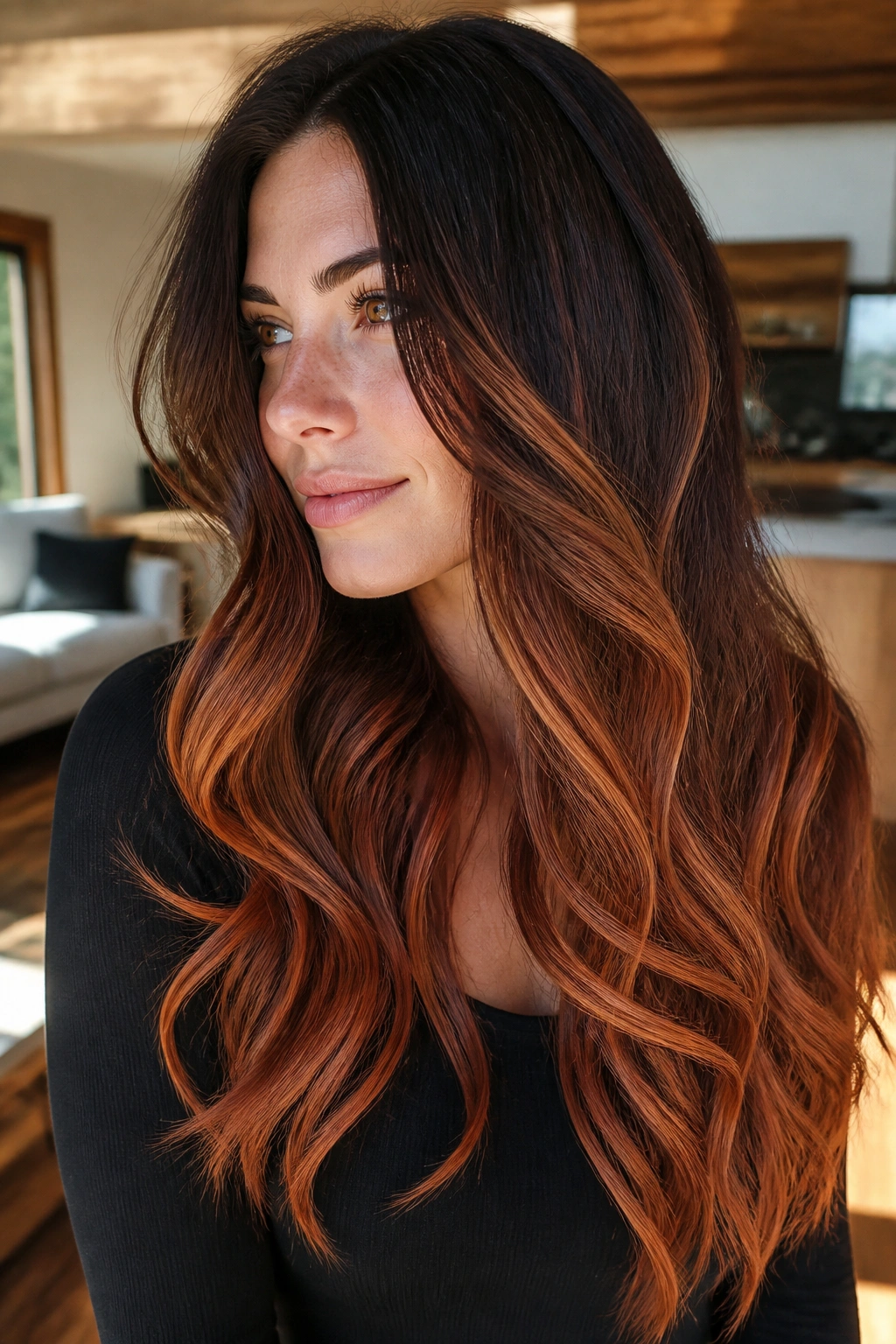
A copper melt is the kind of auburn ombre that makes long hair look expensive without trying too hard. I like this version on dark brunettes because the base stays deep and glossy while the lower lengths warm up into a clean copper finish. The contrast is there, but it does not look choppy or striped.
Ask for espresso roots around level 3 or 4, then a mid-length shift into chestnut, followed by copper ends around level 6 or 7. On long hair, that gradual jump matters. If the color moves too fast, the whole look turns patchy. If it moves slowly, the hair gets that soft, fluid fade people usually want when they say ombre but don’t want a hard line.
This one shines on long waves and thick straight hair. The movement in the hair helps the copper glow instead of sitting flat. If your ends are dry, a gloss is worth the effort. Copper shows every rough patch.
One sentence, because it matters: shine is half the look here.
2. Cinnamon Ribbon Balayage on Long Waves
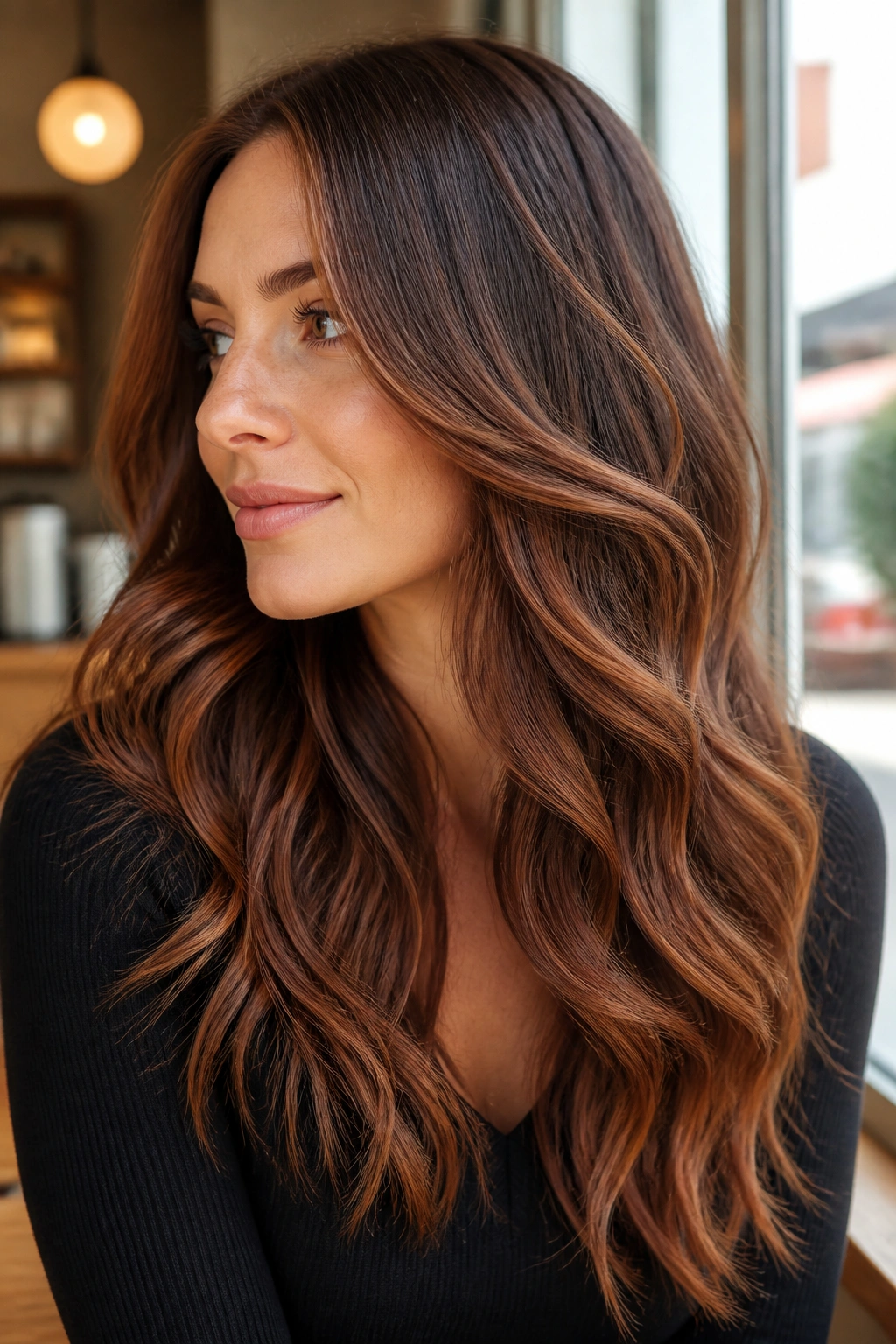
Cinnamon ribbons are for the person who wants dimension first and drama second. The color reads auburn, but it does so in thin, hand-painted ribbons that weave through the lengths instead of flooding the whole bottom half. On long hair, that restraint looks elegant in a way chunky color rarely does.
Why It Sits So Softly on Long Hair
Long waves give cinnamon room to move. The color can start a few inches below the roots and spread more thickly toward the mid-lengths, then taper off near the last 3 or 4 inches. That keeps the crown darker and the ends lighter, which is exactly what makes balayage feel lived-in rather than staged.
What to Ask For
- Base color: level 5 brown or soft chestnut
- Ribbon tone: cinnamon auburn, one to two shades lighter than the base
- Placement: finer pieces near the crown, wider pieces around the ears and below
- Finish: a warm gloss on the ends, not a brassy one
Pro tip: keep the front pieces a touch brighter than the back. It wakes up the face without turning the whole head into a highlight map.
3. Mahogany Fade for Sleek, Straight Lengths
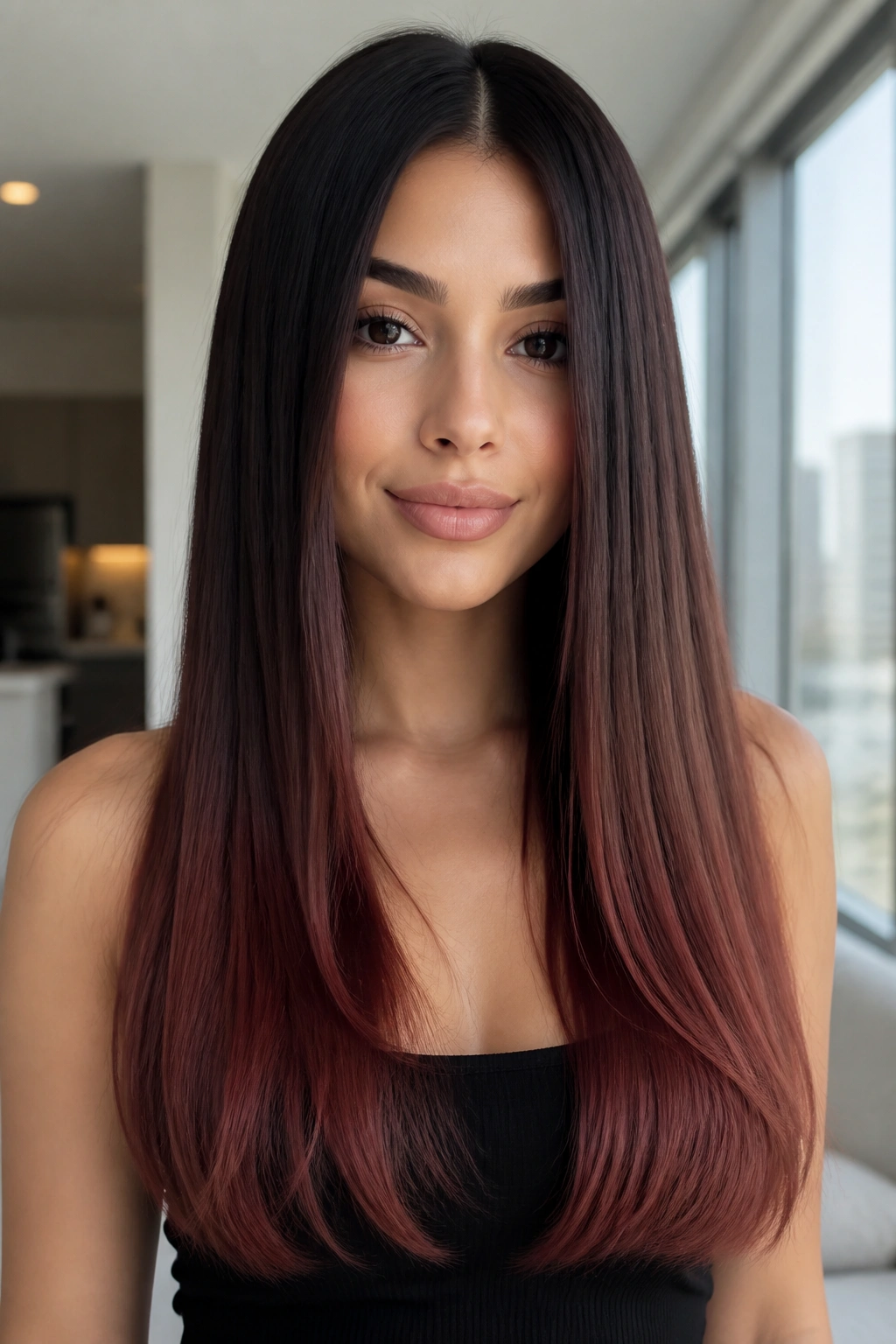
Why does mahogany look so good on straight long hair? Because straight lengths show the fade like a clean line on a piece of good paper. There’s nowhere for the color to hide, which sounds unforgiving until you realize it makes the transition look deliberate and polished.
Mahogany sits in that lovely middle zone between red and brown. On long hair, I like it when the roots stay a cool chocolate or espresso and the color softens into a deep mahogany around the collarbone, then brightens a little at the ends. The result feels darker and more serious than copper, but still warm enough to keep the hair from looking flat.
How to Wear It
A center part sharpens the look. So does a flat iron with a slight bend at the ends instead of pin-straight stick hair. If your hair is very dense, a subtle face frame in mahogany keeps the length from swallowing your features.
This is the auburn ombre I’d choose if someone wanted color that feels grown-up without looking severe. It’s calm. That’s the appeal.
4. Rusty Auburn With Face-Framing Brightness
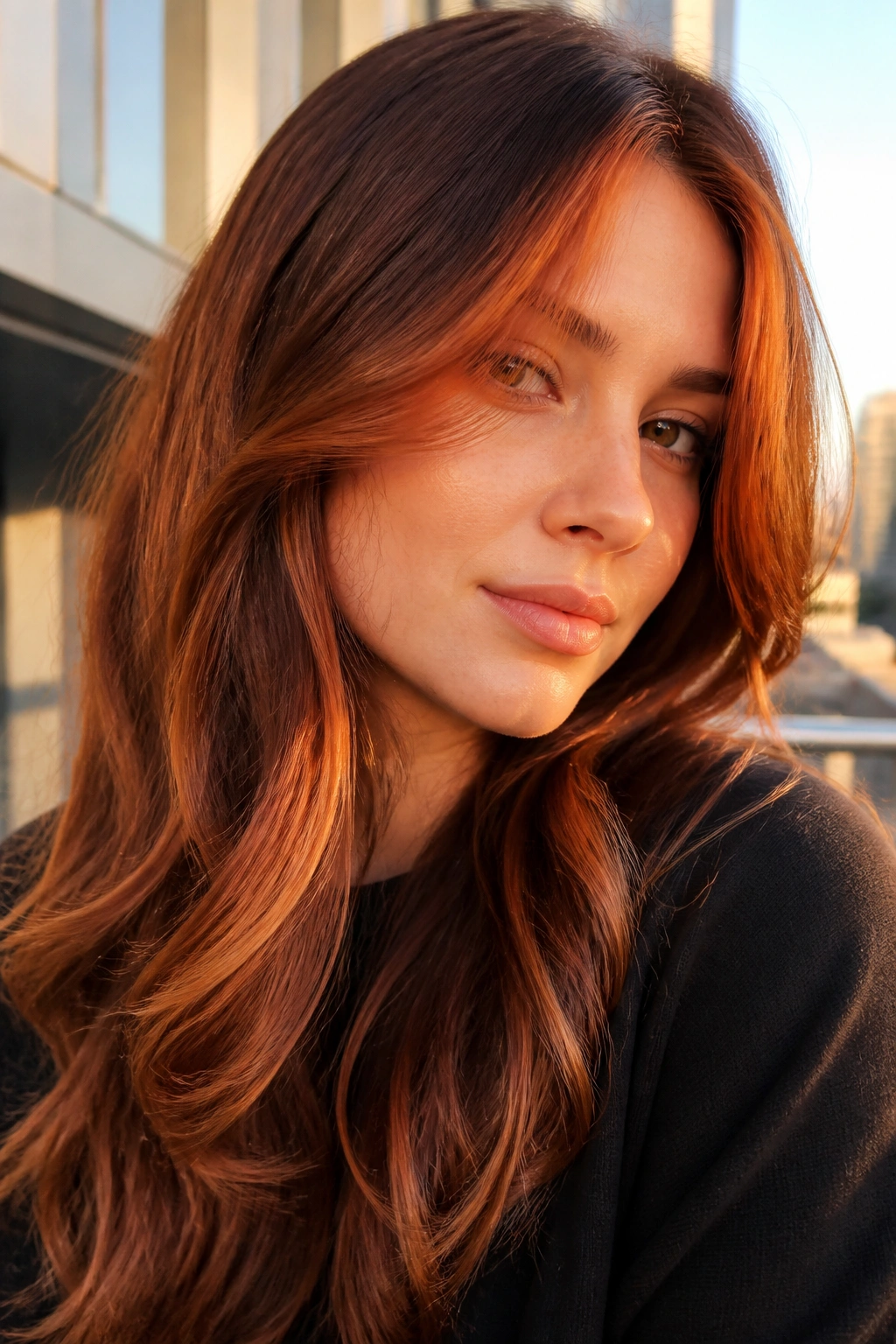
Picture long hair in loose bends, with the front sections carrying just enough extra rust to pull the eye forward. That’s the whole trick here. The rest of the hair can stay more muted, but the face-framing pieces are brighter and a little warmer, which gives the cut lift without a lot of obvious contrast.
This version works especially well if your long layers start around the chin or cheekbones. The color follows the cut. It makes sense visually, which is why it tends to look better than random bright ends stuck onto an otherwise dark canvas. Rusty auburn also has a slightly earthy edge that keeps it from feeling too polished.
- Best on: medium to dark brunettes
- Looks strongest with: long layers or soft shag cuts
- Ask for: brighter copper-rust pieces around the front, softer auburn through the back
- Avoid: a yellow-orange toner, which can make the ends read brassy
The front brightness is what keeps this one from disappearing indoors. Outside, though, it really wakes up.
5. Chocolate-to-Cherry Auburn Ombre
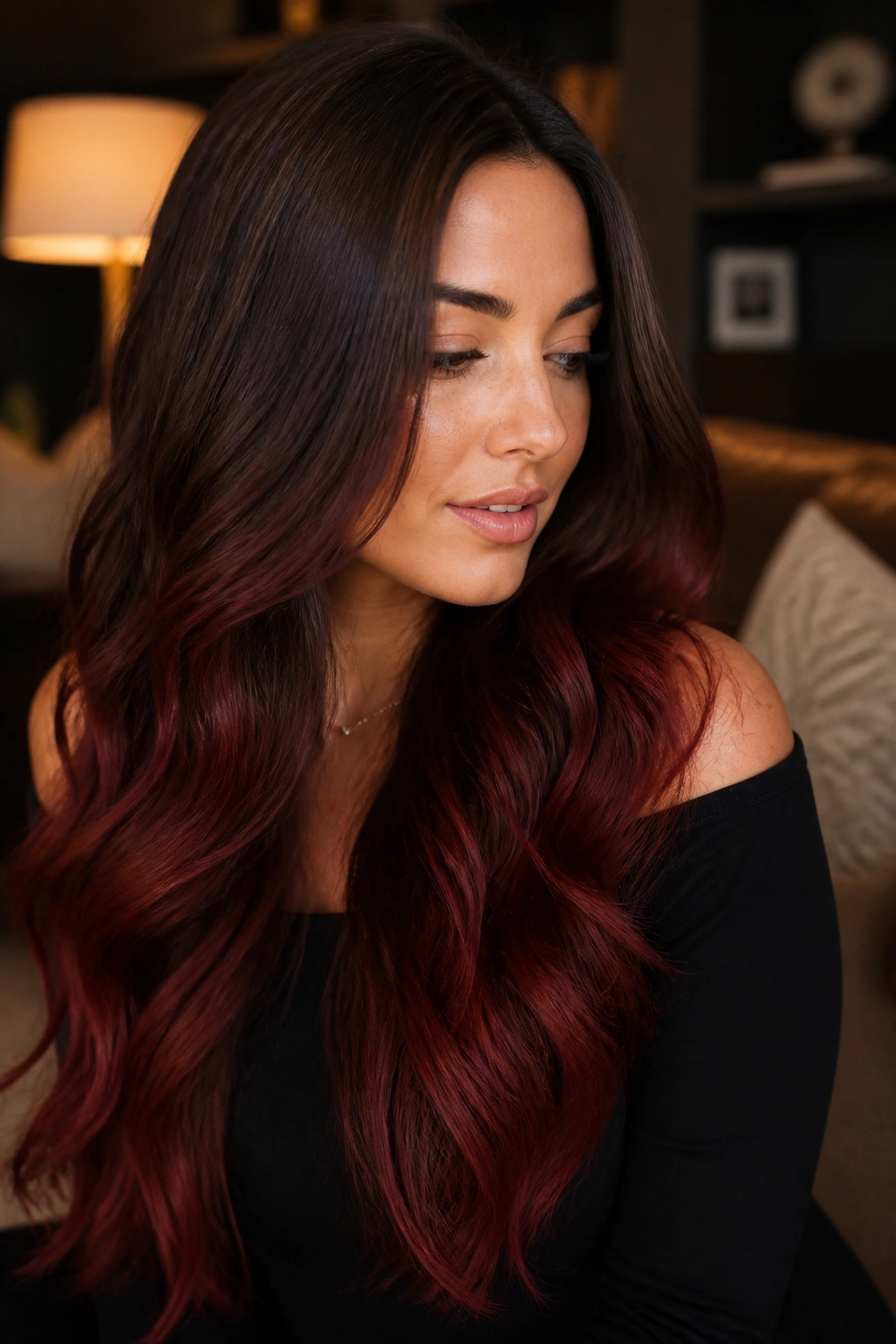
Chocolate to cherry is the richest version on this list, and I mean that in the best way. The base stays dark and almost silky, then the color slides into a cherry-toned auburn that feels deeper than copper and more playful than mahogany. On long hair, the shift has room to read as plush instead of loud.
What I like most is the way this color behaves in motion. In a braid, the cherry pieces peek through. In a low ponytail, the ends catch a little red-violet glow. In loose curls, the whole thing looks layered and dimensional, which is exactly what long hair should do when the color is chosen well.
A demi-permanent cherry gloss works nicely if you do not want a permanent red commitment. That kind of finish gives the auburn a wine-dark edge without making the hair look stained. Keep the base chocolate, not black, unless you want the cherry to stay very subtle. Black hair can eat the whole effect.
This is one of my favorite auburn ombre hair ideas for long hair because it feels luxe without being fussy. There’s a little drama, but the color never shouts.
6. Smoky Auburn With a Shadow Root
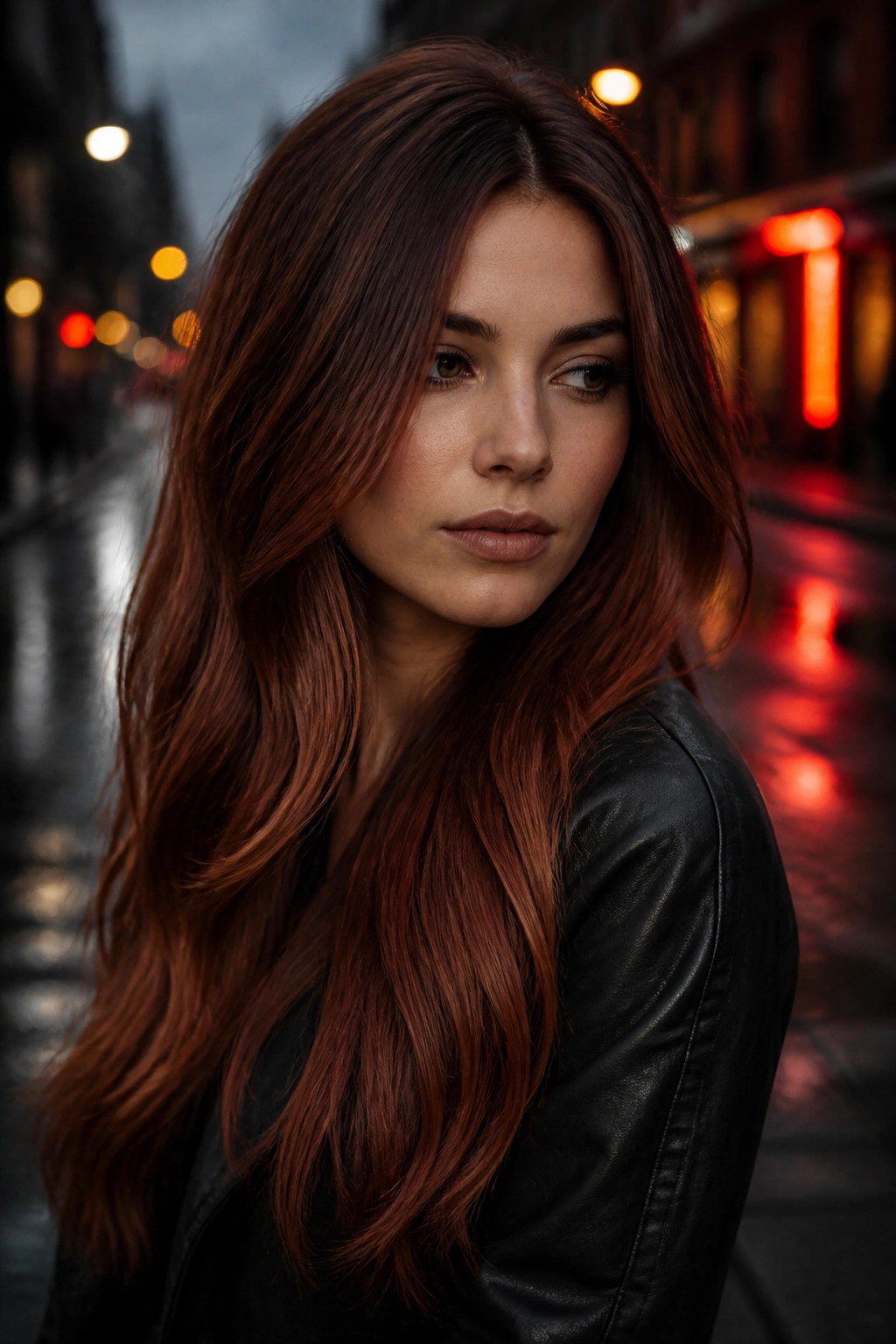
Unlike brighter copper ombre, smoky auburn keeps the red muted and a little dusky. That difference matters more than people think. A smoky finish gives long hair a softer edge, which means the fade can be more visible without the color looking loud or orange.
This version works especially well if your skin has cool or olive undertones, or if you wear a lot of black, charcoal, and deep navy. The muted red picks up those clothes nicely. It also pairs well with very long hair because the shadow root keeps the top from looking busy while the auburn takes over from the mid-lengths down.
What Makes It Different
The root shadow should be at least two levels deeper than the auburn mids. That gives the fade its depth. The ends can still carry warmth, but they should stay restrained — think smoked copper, not bright penny.
Who It’s Best For
- People who want auburn without orange brightness
- Long hair that’s worn straight, wavy, or in a soft blowout
- Anyone who likes red tones but wants the roots to grow out quietly
If copper feels too cheerful, smoky auburn is the smarter choice.
7. Rosewood Auburn on Straight Hair
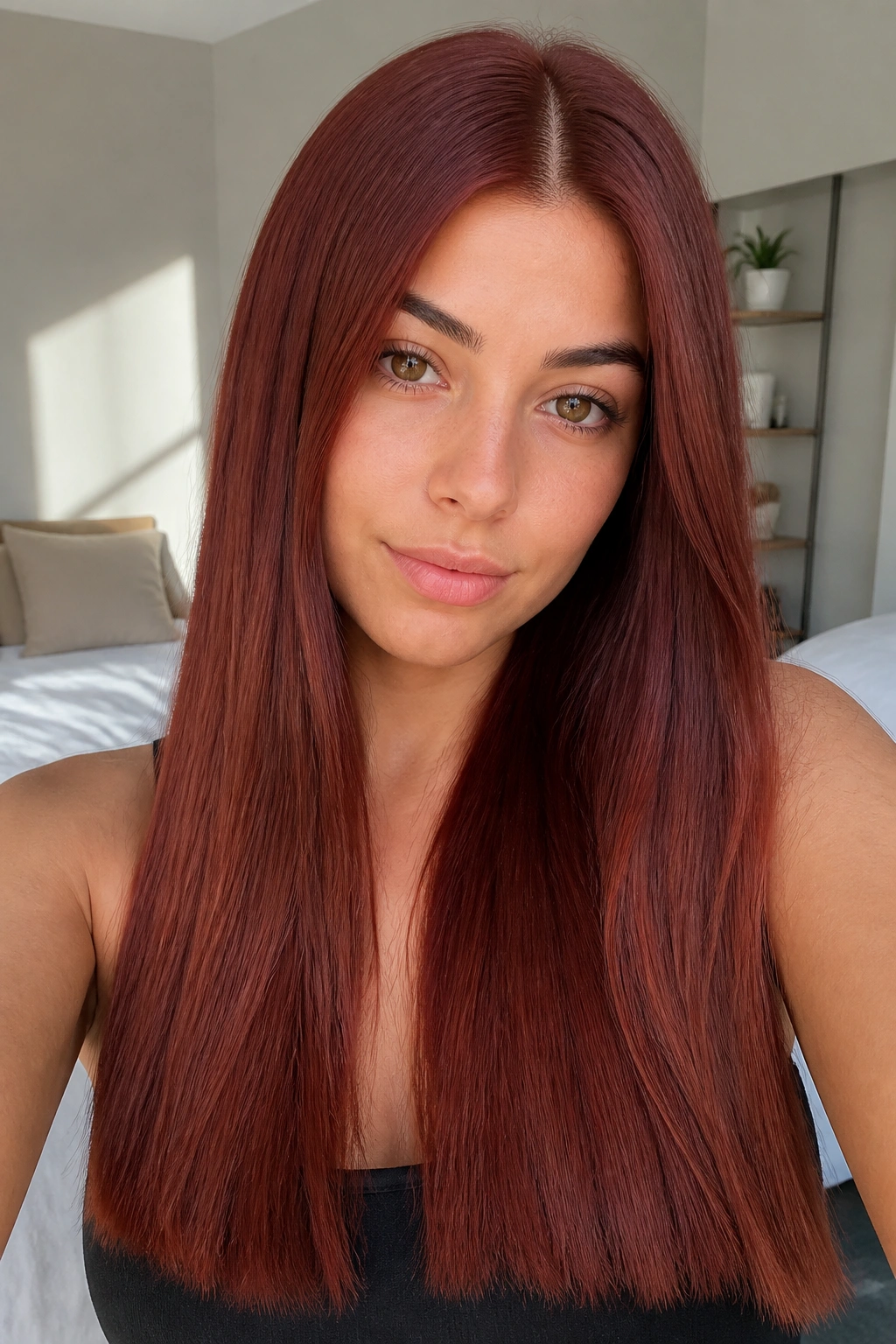
Rosewood is the sleeper option. It does not get as much attention as copper or cherry, but on long straight hair it can look richer because the color sits in that red-brown zone that feels refined rather than fiery. The ombre starts with a chestnut or mocha base and ends in a rose-tinted auburn that leans just a little cool.
I like this most on hair that’s worn sleek, center-parted, and long enough to show the full color drift. A blunt cut makes the finish feel graphic in a good way. Layers can still work, but the cleaner the shape, the clearer the rosewood effect.
What Makes It Different
Rosewood isn’t trying to imitate natural red. It’s more polished than that. The tone has a soft wine cast, which makes it stand out from standard brown-to-copper ombre.
How to Wear It
A flat iron pass with a rounded bevel at the ends is enough. You do not need pin-straight hair here. A little bend makes the rose tone move.
If you want auburn that feels quietly expensive, this is the one I’d put high on the list.
8. Sunset Auburn Balayage on Loose Waves
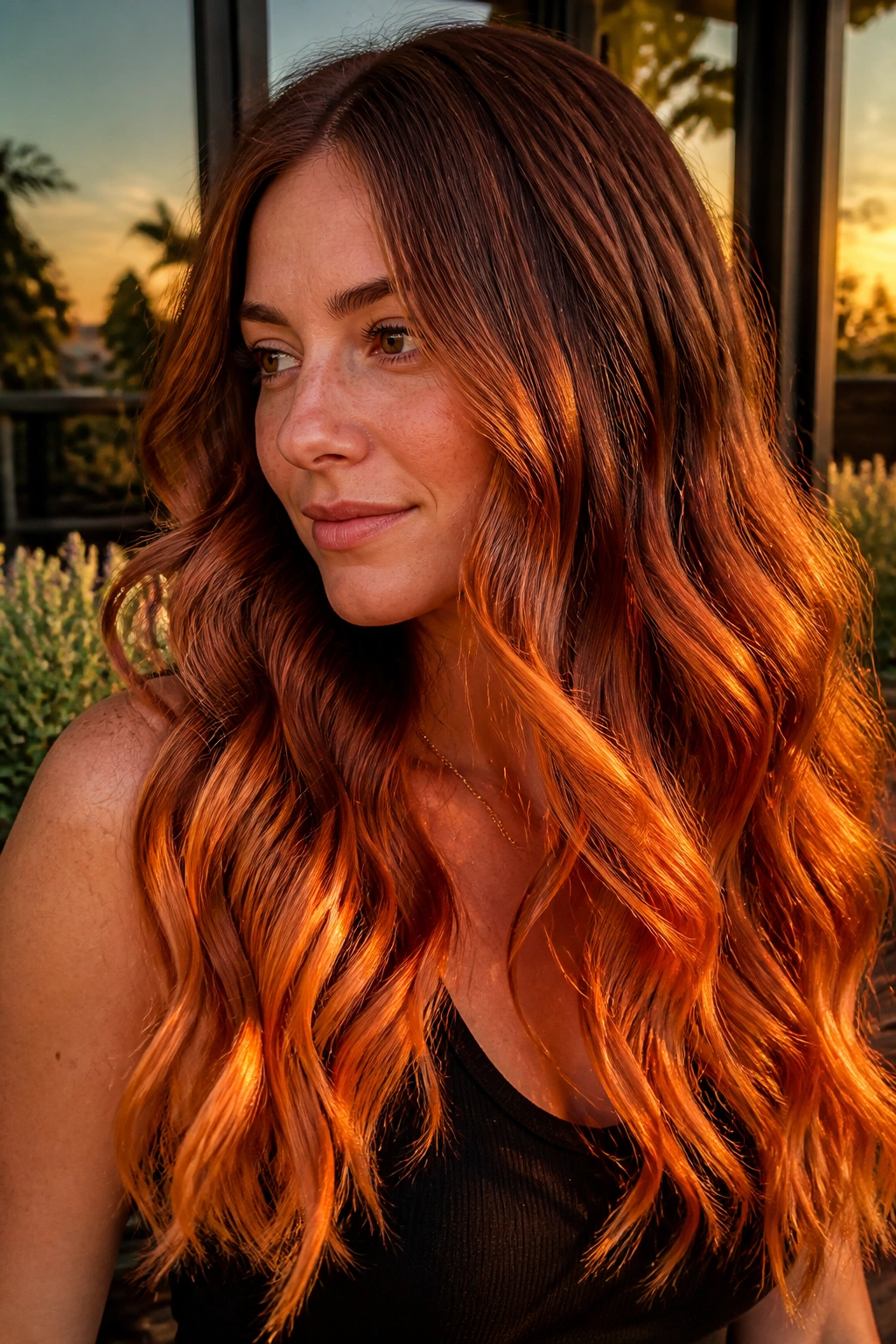
Do you want color that looks like it was warmed by late-afternoon light? Sunset auburn is the answer. It blends copper, amber, and a touch of apricot through long waves so the ends feel luminous instead of merely dyed. It’s warmer than mahogany, lighter than burgundy, and easier to wear than a full copper block.
The best part is how well it plays with loose styling. A 1.25-inch curling iron, a quick brush-out, and a little texture spray are enough. The color does most of the work once the waves are in place. You can also let the hair air-dry into a softer bend if your texture already has movement.
How to Get the Most From It
- Curl away from the face for the first two sections
- Leave the last inch or two straighter for a softer finish
- Use a light shine spray only on the mids and ends
- Keep the root area darker so the fade has depth
This shade looks especially good on layered long hair. The movement helps the color read as layered too, which is a nice bonus.
9. Chestnut Auburn Ombre for Thick Hair
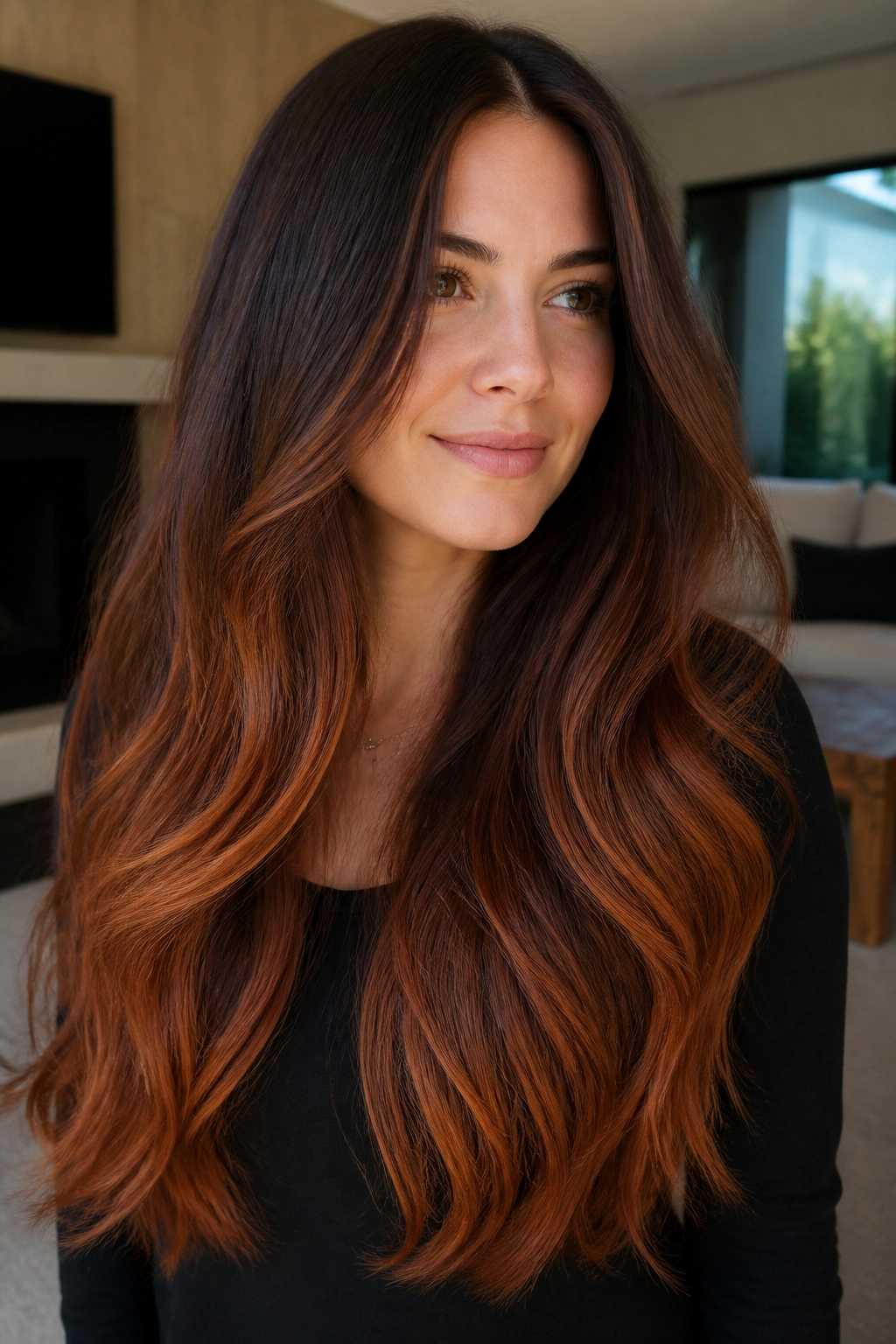
Thick hair can handle more color depth, and chestnut auburn uses that to its advantage. Instead of creating a thin stripe of red at the bottom, the shade runs through the length in a thicker, richer way, so the whole head feels balanced. Long thick hair needs that balance, or the ends can look heavy.
I like this version because it keeps things grounded. The base sits in deep chestnut territory, then the mids pick up auburn warmth, and the ends brighten just enough to keep the hair from looking like one solid block. On dense hair, that contrast is visible even when the hair is pulled into a low bun or a thick braid.
A Few Details That Help
- Ask for lowlights under the top layer so the color has depth
- Keep the auburn warm, not orange
- Avoid razor-thin ends if your hair already feels bulky
- Use a cream-based leave-in so the finish doesn’t puff up
There’s a practical side to this look too. Chestnut auburn hides regrowth well, which is useful if you don’t want to be in the salon every few weeks.
10. Burgundy Auburn Ends
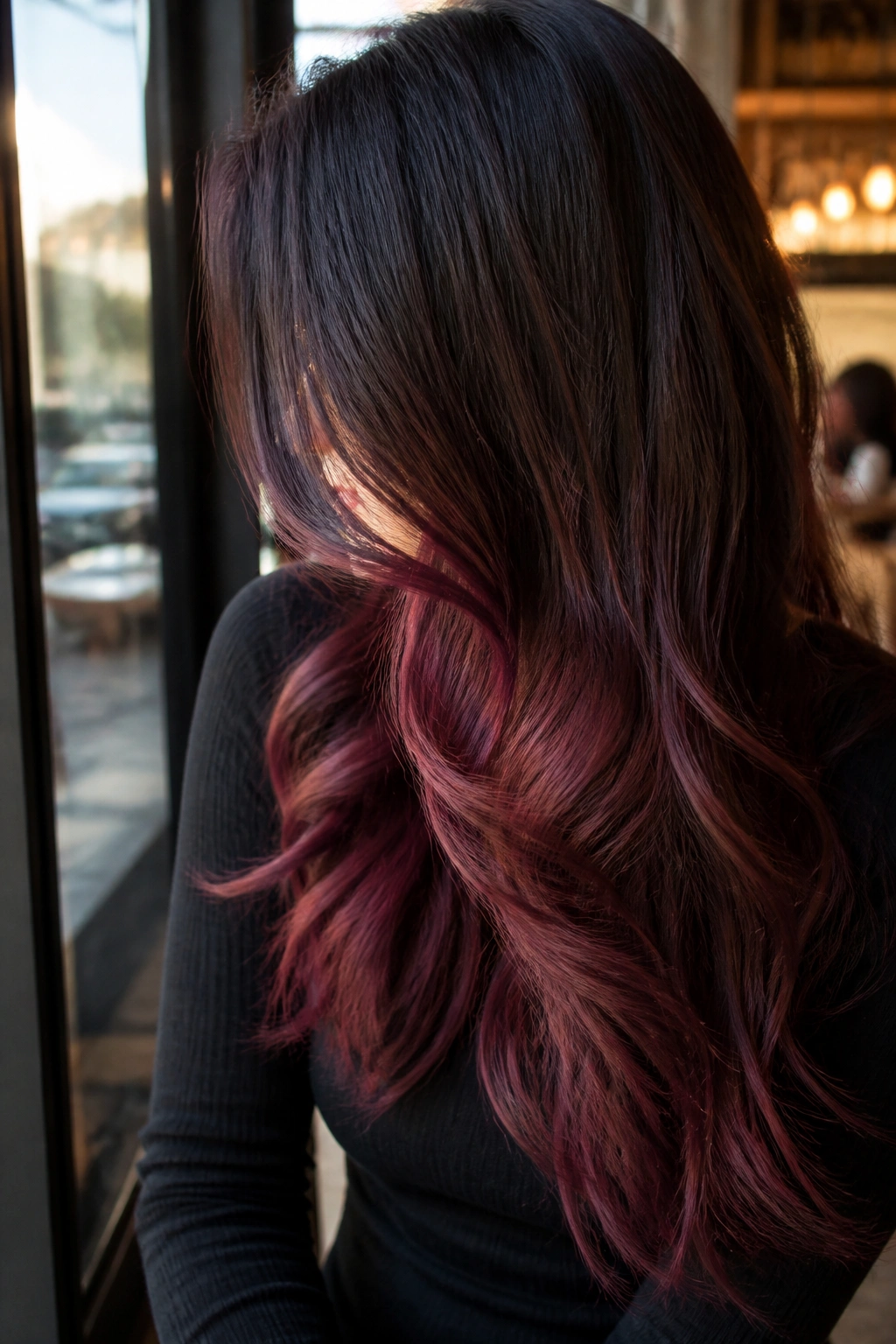
Burgundy auburn ends bring a bit of drama without asking you to go red from the root. The top stays dark — chocolate, espresso, or deep mocha — while the last few inches turn into a wine-tinged auburn that feels moody in the best way. Long hair gives that deeper tone enough space to show off.
I especially like this on hair that’s worn in low ponytails, half-up twists, or loose braids. The burgundy pieces reveal themselves at different angles, so the color keeps changing as the hair moves. That shifting quality is part of the appeal. If the whole head were burgundy, the effect would be flatter.
A semi-permanent or demi-permanent glaze is a smart way to wear this. Burgundy pigments can fade fast, and when they do, they can slip into a dusty pink-brown that isn’t nearly as nice. Keep the finish glossy and the tone stays rich longer.
This is one of the more dramatic auburn ombre hair ideas for long hair, but it still has enough restraint to feel wearable.
11. Copper Penny Ombre With Curtain Bangs
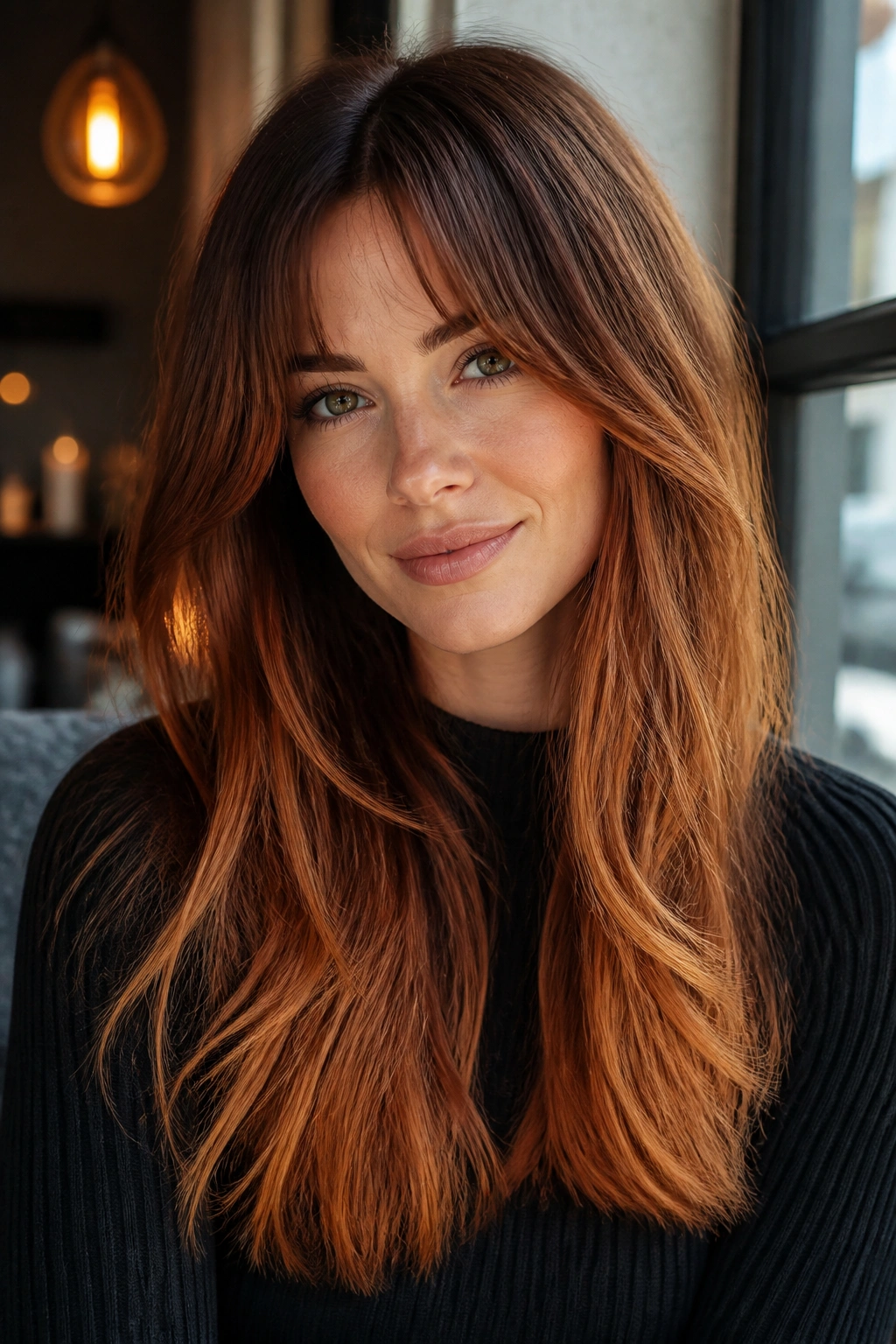
Copper penny with curtain bangs is a good reminder that long hair doesn’t have to rely on the ends alone. The bangs set the tone right at the front, then the copper moves through the lengths and gets brighter toward the bottom. That front-to-back balance makes the whole cut feel intentional.
Unlike a heavy fringe, curtain bangs let the auburn show around the face without chopping up the length. They also give the colorist a small, important place to echo the ends. A few brighter face-framing pieces near the bangs make the transition look soft, not sudden.
What Makes It Different
The bangs create a built-in focal point. That means the auburn doesn’t need to scream at the ends to get attention. The eye already lands up top.
Who It Suits Best
- Long layered cuts
- Oval, heart, and longer face shapes
- Hair that parts easily in the middle or slightly off-center
If you like your long hair to feel airy rather than heavy, this one does the job. It’s flattering in motion and even better when tucked behind the ears.
12. Espresso-to-Auburn Melt for Low Maintenance
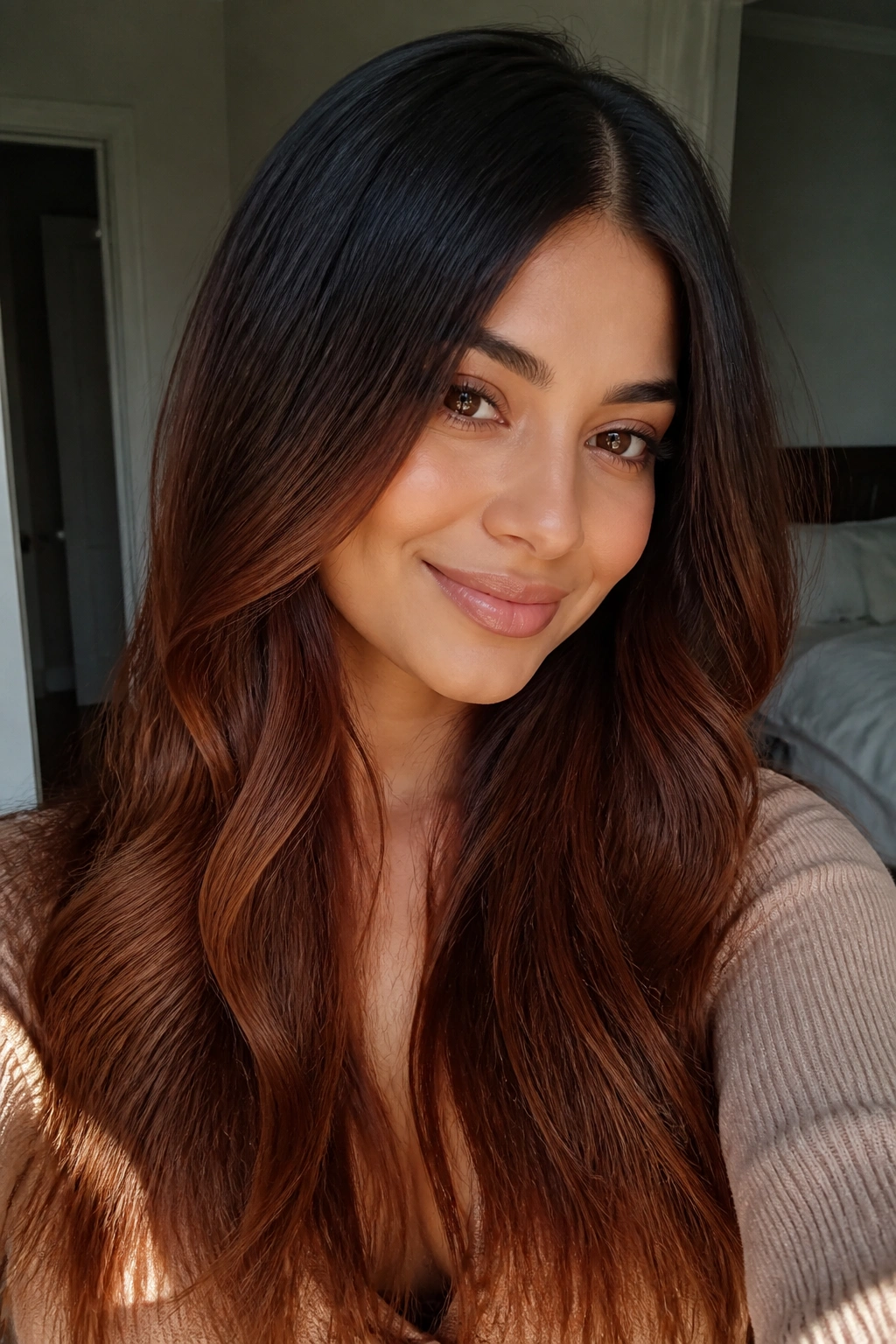
Sometimes the best color is the one that grows out without making you hate your reflection six weeks later. Espresso-to-auburn melt is built for that. The root stays close to your natural dark shade, and the warmth appears gradually through the mids and ends, which softens regrowth in a way harsher color can’t.
What to Ask For at the Salon
- Keep the root close to your natural level 3 or 4
- Blend in auburn balayage starting below the cheekbones
- Use a warm glaze on the ends instead of a bright toner
- Leave a soft root shadow so the grow-out line stays gentle
This style is ideal if you wear long hair down most days but still pull it into a ponytail or clip. The color still reads well when tied back, which matters more than it sounds. Some ombres look nice only when the hair is fully styled. That gets old fast.
If you want auburn without a high-maintenance schedule, this is the sensible pick. No fuss. Still polished.
13. Auburn Ombre With Gold Reflects
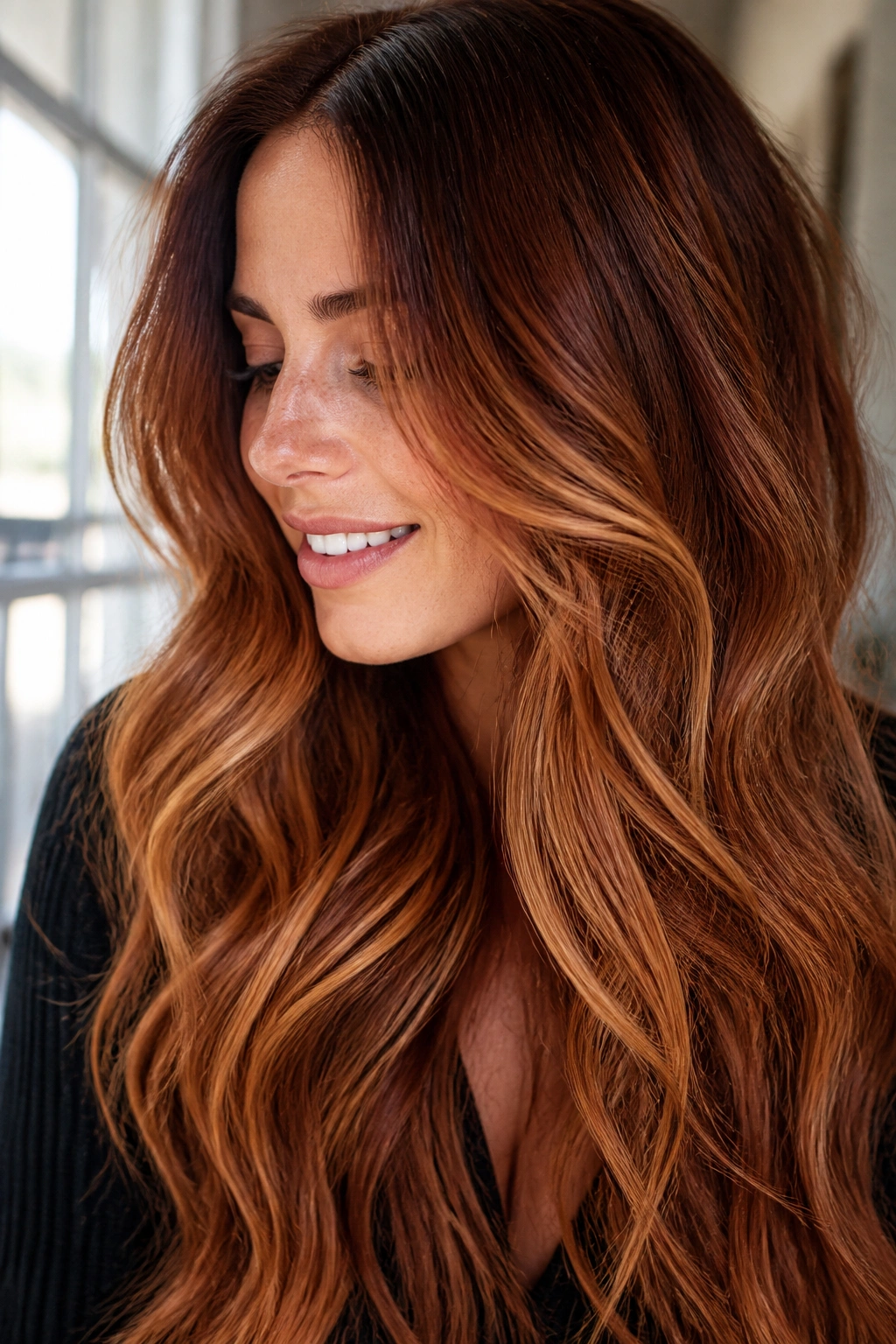
Auburn gets much more interesting when the tone has a little gold in it. Gold reflects keep the color from going flat, especially on long hair where a matte finish can make the whole thing look dry. The result is warmer, brighter, and more alive under natural light.
This version suits people with warm or neutral undertones, but it can work on cooler skin too if the gold stays soft. The key is not to let the color drift into yellow. That’s where auburn starts losing its shape. You want gold reflect, not brass.
A lightweight oil on the mids and ends helps this style look its best. Use a small amount — really small — because too much product can make the gold tones look greasy instead of luminous. A heat protectant with a glossy finish also helps when you’re blow-drying or curling.
This is the auburn ombre I’d pick for someone who wants their long hair to look sunlit from the inside out.
14. Deep Auburn on Layered Cuts
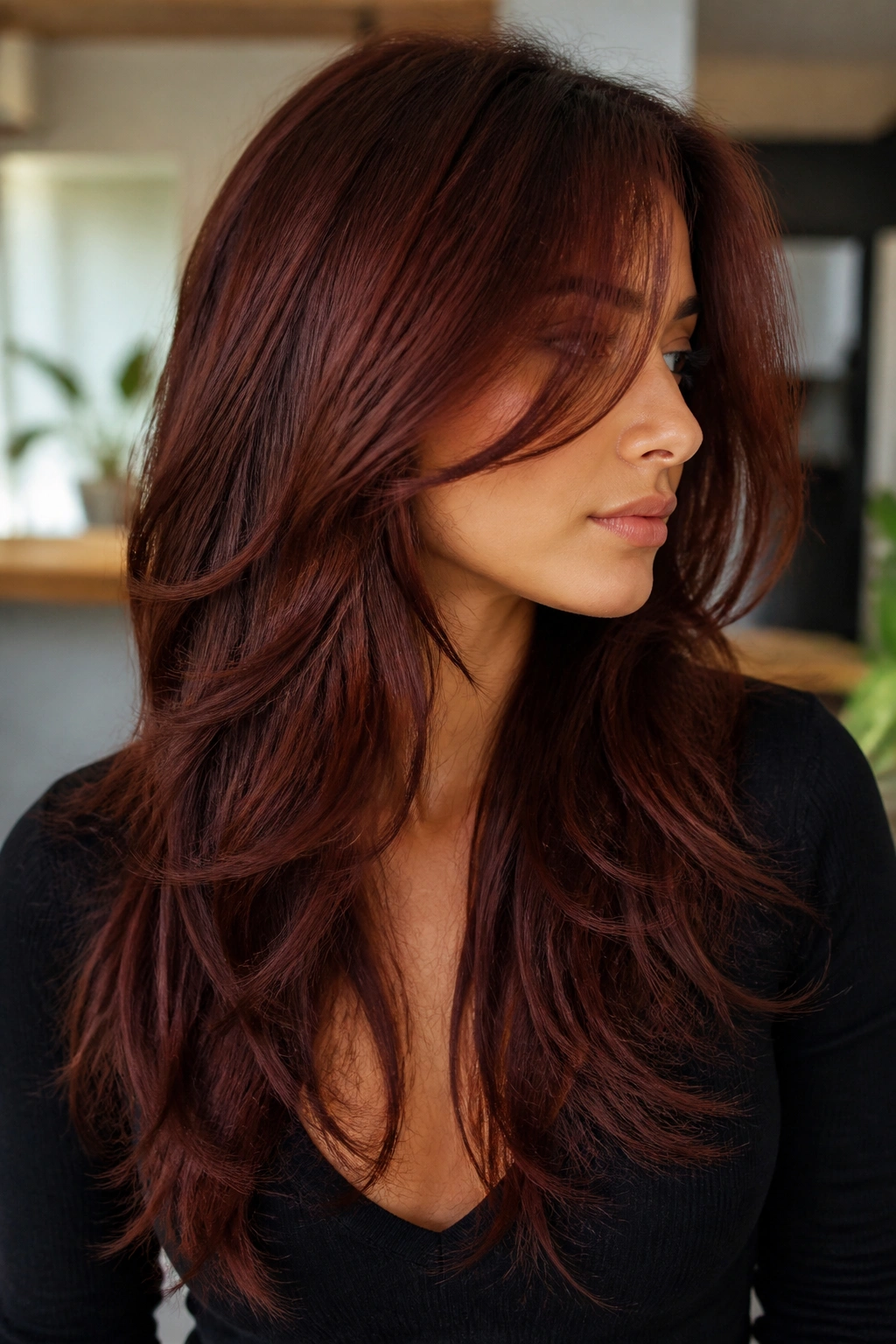
What happens when long layers meet deep auburn? The cut and color start working together instead of competing. Layers break up the length, and auburn color deepens the movement, so the hair looks fuller and more alive even when it’s worn loosely.
I like this shade when the base is a dark brunette and the auburn lives mostly through the mid-lengths, then softens into a deeper red-brown at the ends. If the color is too bright on a layered cut, it can make every layer shout. Deep auburn keeps the shape readable without turning it into a zigzag.
The best layered cuts for this look are the ones with visible face-framing pieces and long internal layers. Those give the color places to land. Even a simple blowout looks more finished because the red-brown catches on each curve instead of pooling at the bottom.
One short truth: layers and auburn like each other.
15. Dark Roots With Bright Ember Ends
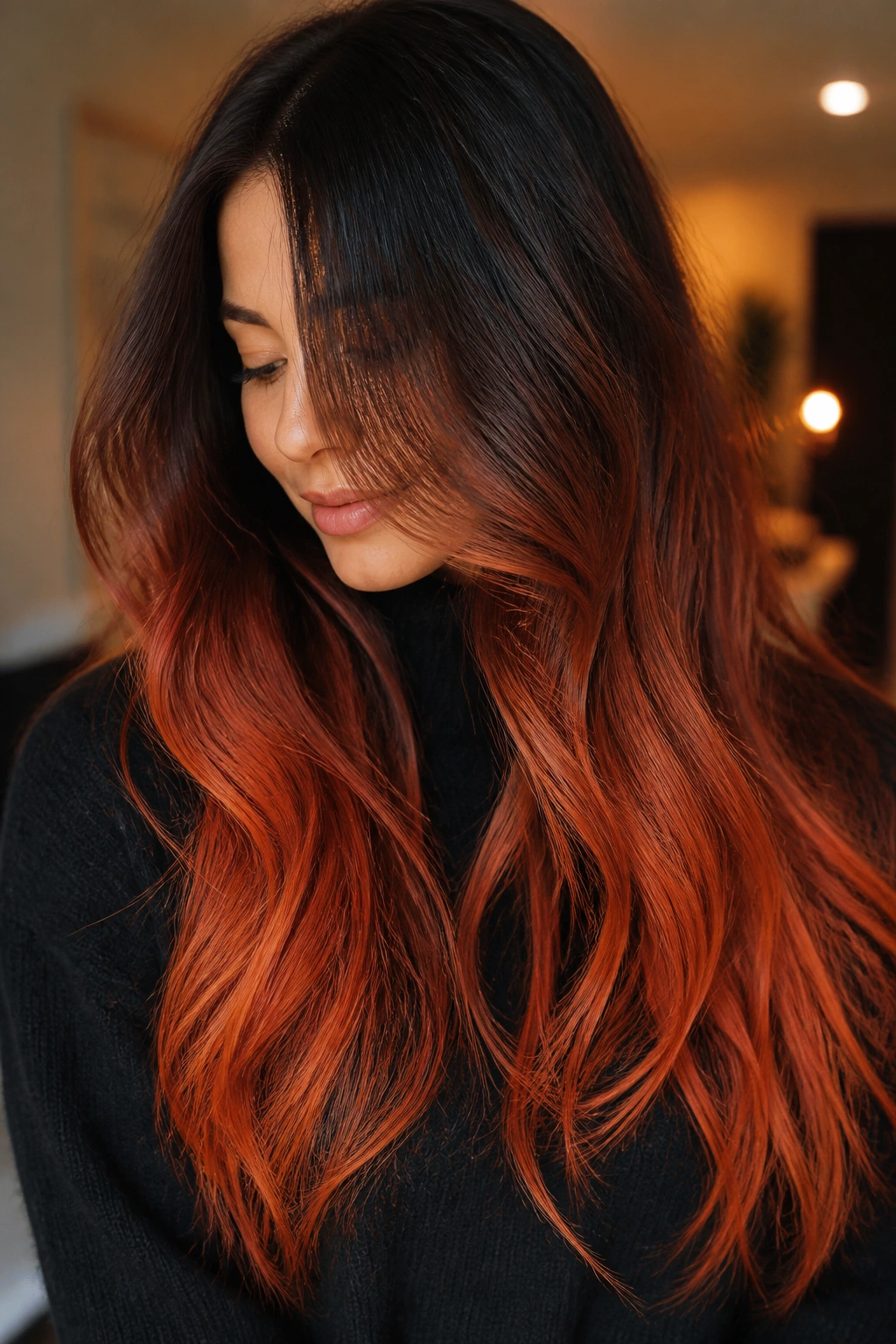
This is the dramatic one. The roots stay dark and almost ink-like, then the bottom length turns into a bright ember shade that sits somewhere between copper and burnt orange. On very long hair, that high contrast looks bold in a way shorter hair usually can’t support.
A few things make this work. First, the transition has to stay soft, or the color looks split in half. Second, the ember ends need shine, because bright red-orange tones dry out fast visually when they go matte. Third, the haircut should have enough movement to keep the ends from looking like one heavy block of color.
- Best on: long waves, long layers, or thick hair with shape
- Best styling move: loose bends, not tight curls
- Best maintenance habit: gloss the ends before the color starts looking dusty
- Best vibe: bold, polished, a little rock-and-roll
This is not the quiet option. It’s the one you wear when you want the ends to be noticed.
16. Auburn Ombre for Fine Hair
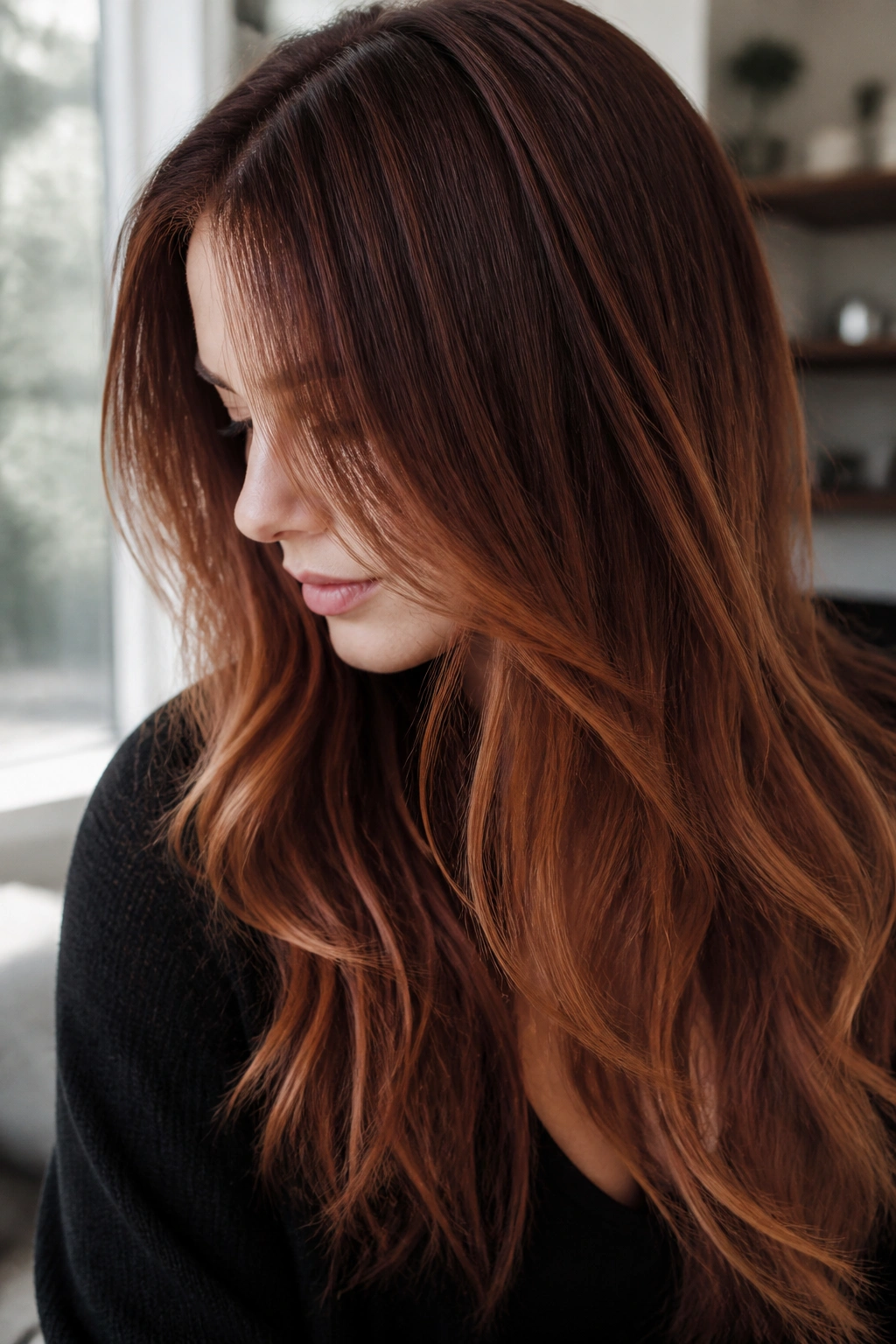
Can fine hair wear auburn ombre without looking thin at the ends? Absolutely, but the color has to be handled with care. Fine hair loses density fast when the contrast is too harsh, so the fade should stay soft, and the ends should be bright enough to show dimension without looking stringy.
I’d keep the root close to a medium brown and bring in auburn through delicate ribbons rather than thick panels. That keeps the body of the hair looking fuller. A little brightness around the face helps too, because it creates the illusion of more hair where people look first.
What to Avoid
- Too-dark lowlights that make the hair look see-through
- A hard ombre line around the mid-lengths
- Over-toning the auburn into a muted brown
- Heavy oils that collapse volume at the ends
What Helps
A root lift at the crown, a few baby highlights around the part, and a blow-dry with a round brush. Fine hair loves lift. The color should support that, not bury it.
This is one of those cases where less color, placed better, gives more impact.
17. Auburn and Caramel Dimension on Long Curls
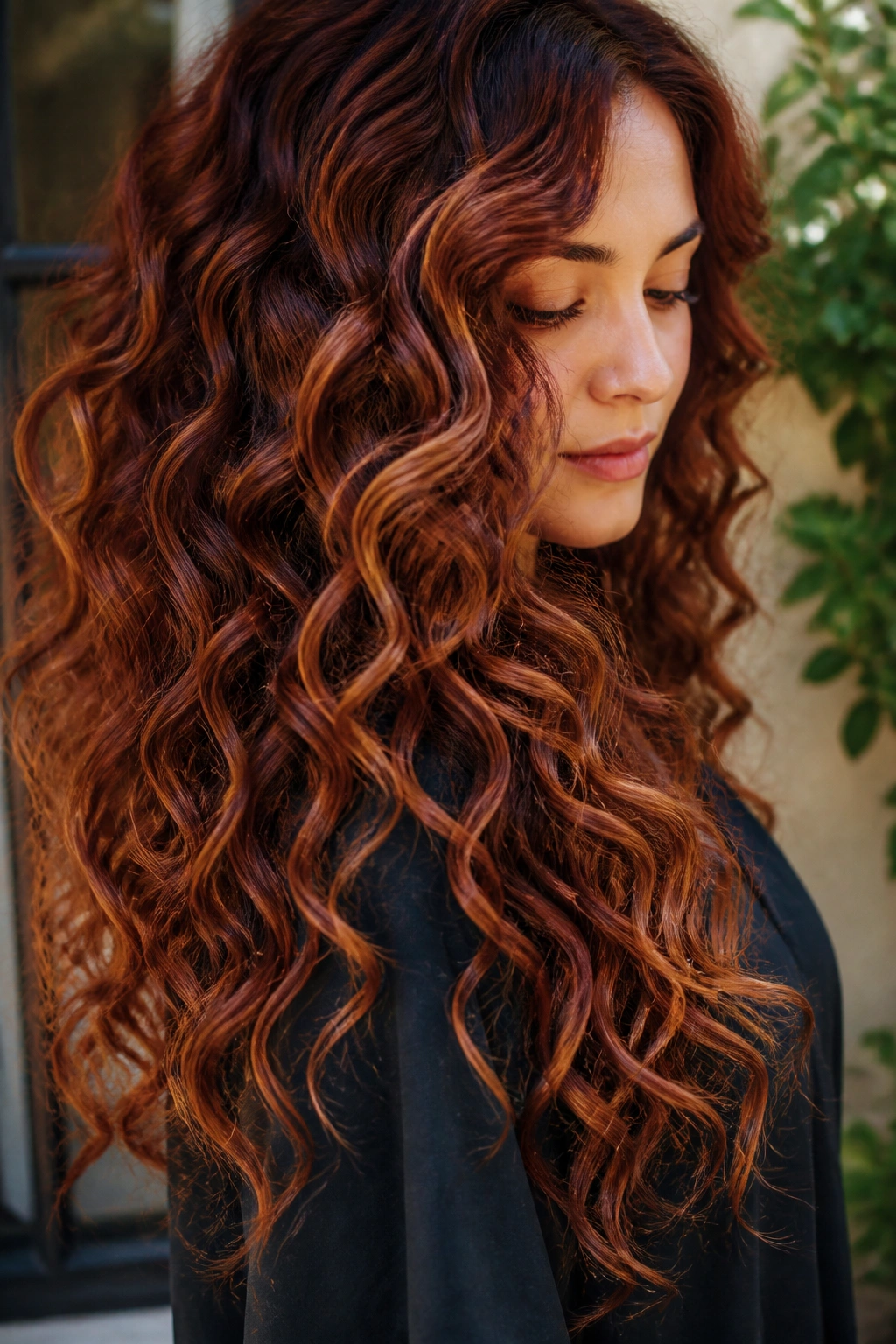
Curls change everything. They don’t show color in the same straight-line way, which means auburn ombre on long curls needs more dimension to read clearly. Caramel pieces woven through auburn give the pattern enough contrast to show up when the hair springs and bends.
Unlike straight hair, curls hide part of the color under themselves. That means you want a mix of warm auburn and caramel through the outer layer, then a slightly deeper base underneath. The color ends up looking richer from every angle, not just head-on.
A diffuser helps, but so does a good cut. Long curls need shape at the ends or the ombre can bunch up and look heavy. If the curl pattern is strong, keep the brightest pieces higher on the head so they don’t disappear when the hair shrinks.
This shade is especially good if you like wearing your curls half-up. The color shows in the top layer, the ponytail, and the loose ends all at once.
18. Merlot Auburn Gradient
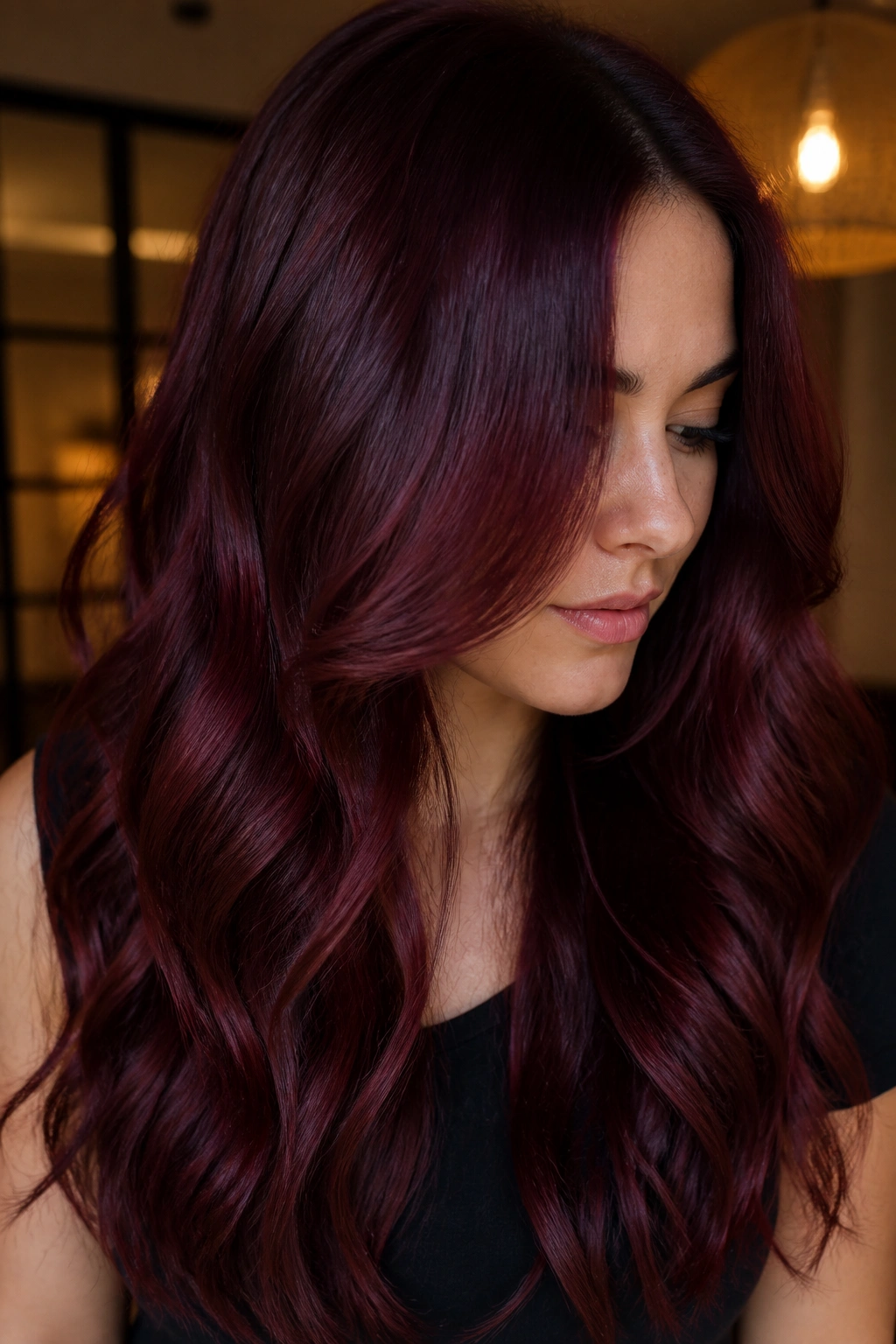
Merlot auburn is for people who like red with a little depth and no apology. The color sits darker than copper and richer than standard auburn, which gives long hair a plush, almost velvet look. It’s one of the easiest ways to make long lengths feel luxurious without going full wine red.
What Makes It Stand Out
The merlot tone has a red-violet edge, so it catches the eye without glowing orange. That matters if your skin tone tends to fight with bright copper. Merlot is calmer. More grounded.
How to Keep It from Going Flat
- Use a color-safe shampoo and wash in cool water
- Skip clarifying formulas unless the hair feels coated
- Refresh the ends with a gloss before the red starts fading
- Add soft waves to keep the darker red tones visible
This color looks especially good in deep side parts and swept-over styles. Long hair gives the gradient a chance to show depth from root to tip. If you want auburn that feels a little dressier, this is a strong pick.
19. Soft Rust Ombre for Natural Redheads
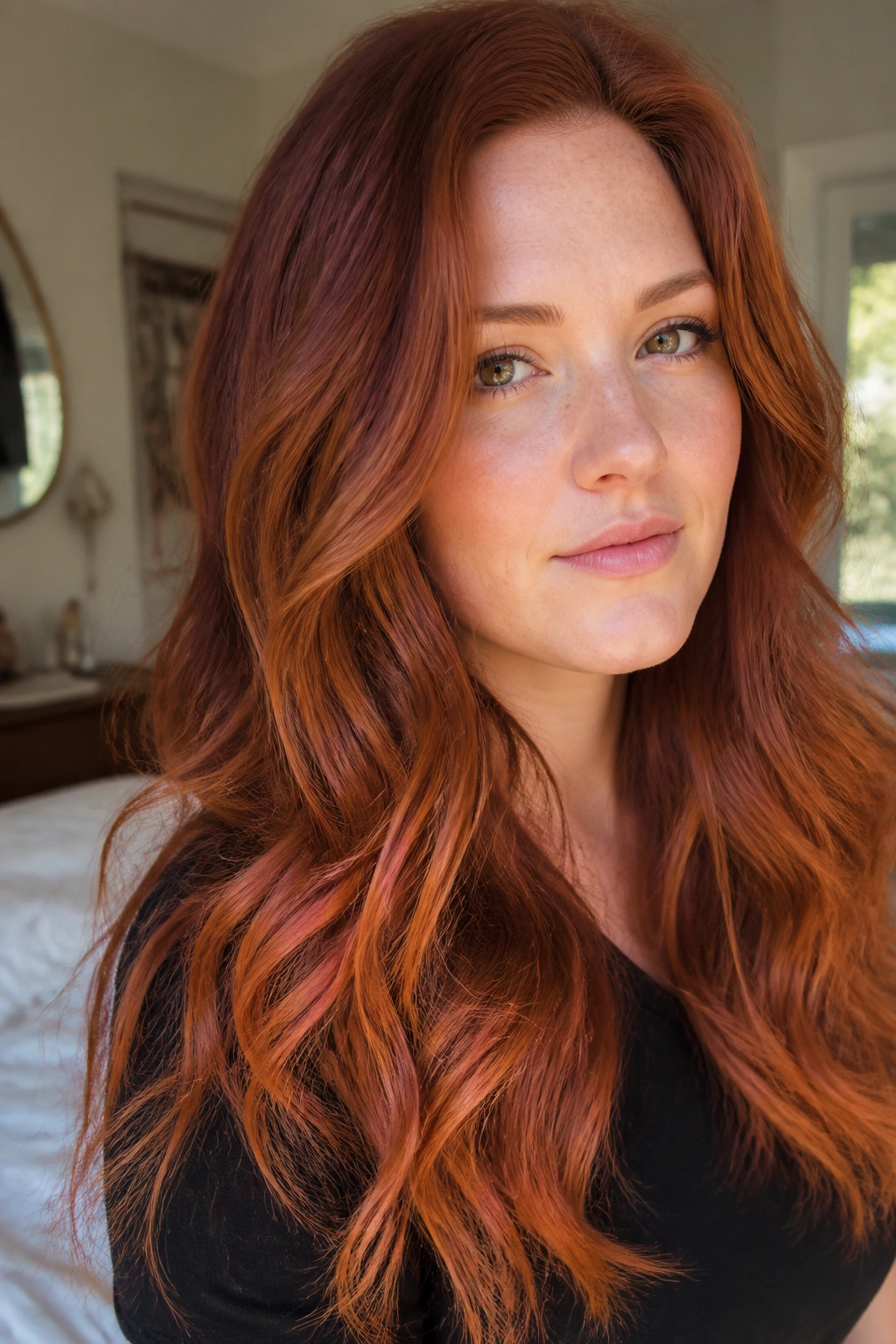
Natural redheads do not have to stay subtle forever. In fact, soft rust ombre can bring out the best part of their color without erasing what’s already there. Instead of forcing a new red tone onto the hair, this version extends the natural warmth into the lengths and nudges the ends a little deeper or a little brighter, depending on the starting shade.
That makes it a smart move for auburn-adjacent brunettes too. The whole look feels believable because the red family is already present. The difference is that the fade stays soft and the contrast stays low, which is ideal if you want a long, blended finish instead of a bright makeover.
A strawberry glaze near the face and a rustier tone in the ends is often enough. You do not need to go much farther than that. Long hair gives the color room to play, and natural red tones already have enough character on their own.
This one is quietly one of the nicest auburn ombre hair ideas for long hair because it respects the hair’s starting point.
20. Glossy Auburn Ombre With Braids and Updos
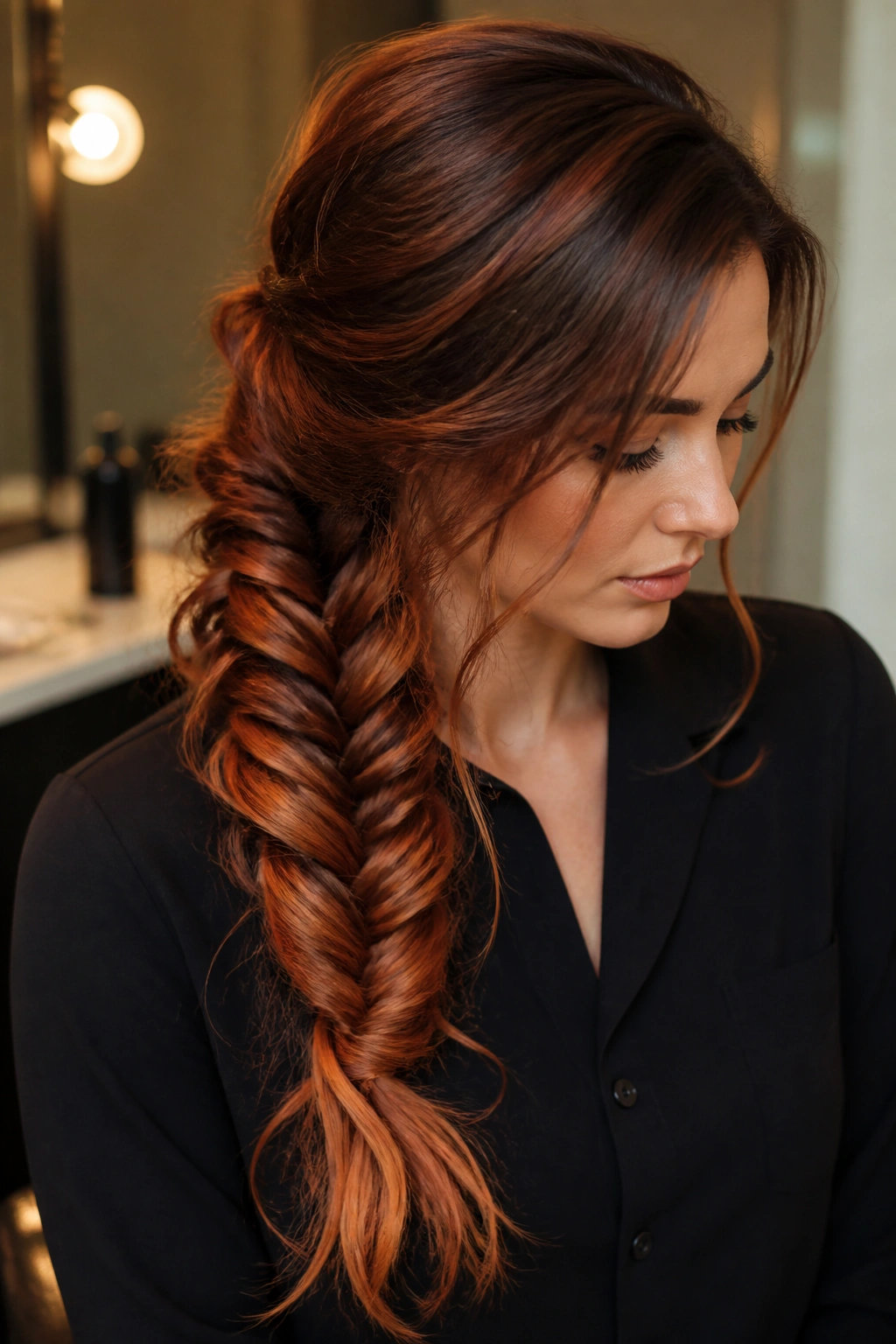
Long hair earns its keep here. Auburn ombre looks especially good when the hair is braided, twisted, or pinned into a low updo because the different tones stack on top of one another and show depth instead of disappearing into one flat curtain. The braid exposes the fade. The bun gathers the warmth. The color gets to do a little extra work.
I’d choose a glossy finish for this style rather than a matte one. Gloss keeps the auburn from looking dusty, which is a real problem on long lengths that have a lot of surface area. A shine spray on the mids and ends, used sparingly, gives the braid or twist enough life without making it limp.
A few styling ideas make the color pop:
- A loose fishtail braid with the lighter ends left out a little
- A low twisted chignon with front pieces curled away from the face
- A half-up knot that shows the root shadow and the brighter bottom half
- A soft ponytail wrapped with a strand of hair so the color looks polished
If you want auburn ombre that does something interesting on regular days and special ones, this is the one I’d keep in my pocket.
