



Long hair gives ash ombre room to breathe. That’s the big advantage, and it’s why ash ombre hair ideas for long hair tend to look richer than the same color placed on a blunt bob or a cropped cut.
The fade has space to travel. Dark roots can melt through smoky mids, then soften into silver, taupe, beige ash, or something a little more adventurous like slate blue. On long lengths, the eye gets time to read the shift, which means the color looks intentional instead of streaky.
Brass has a way of ruining the mood.
That is the catch with ash tones. They can look sleek and expensive when the lift is clean and the toner is right, but they can also go flat, muddy, or slightly green if the underlying warmth isn’t handled well. Long hair hides a lot, though, and that’s part of the reason this palette is so forgiving when it’s done with care.
What I like most about ash ombre on long hair is the range. You can keep it soft and wearable, or push it into frost, charcoal, and silver if you want something with more edge. The best versions always look like the color belongs there — not like it was pasted on at the end.
1. Espresso Roots with Silver Ash Ends
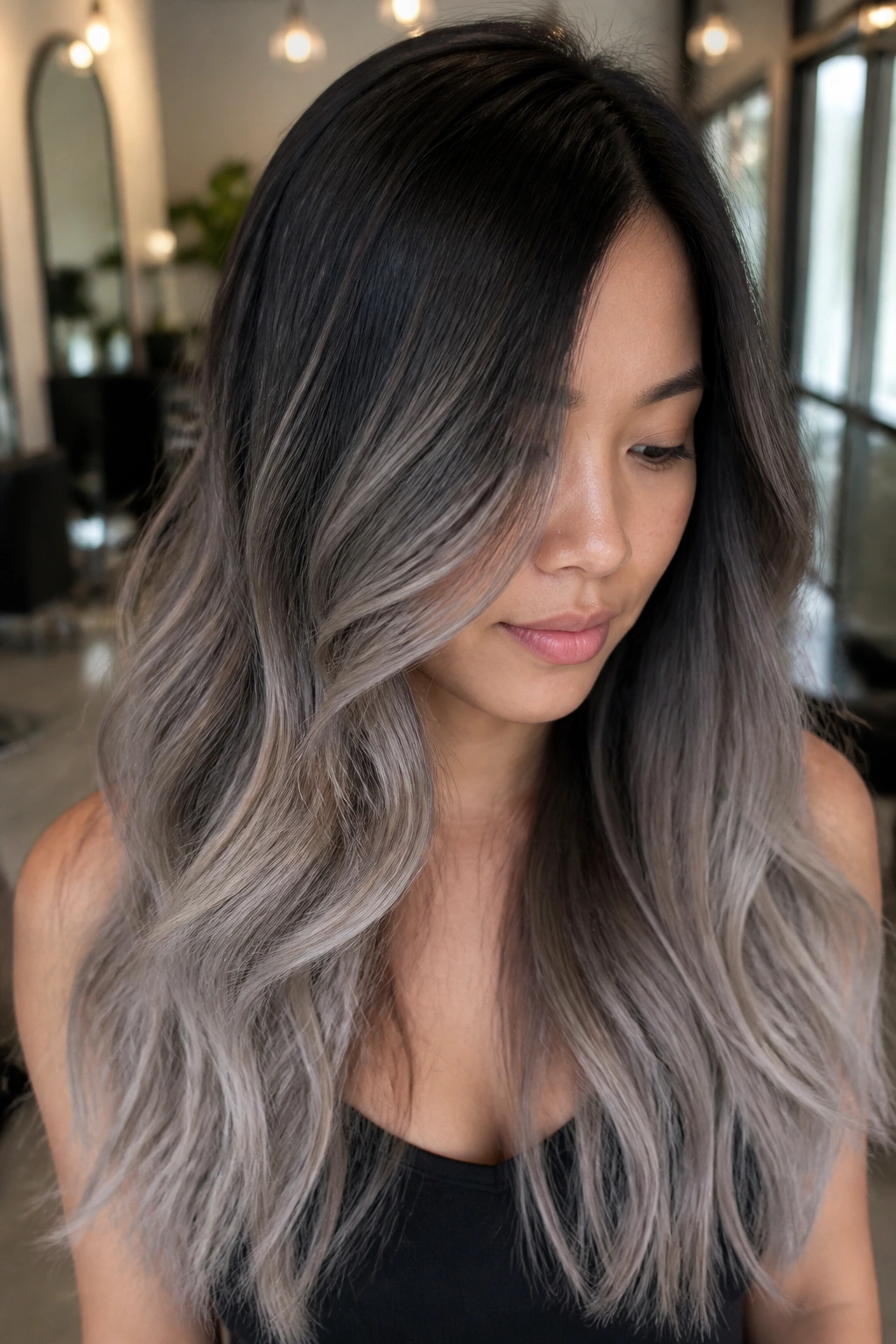
This is the look I recommend most often for dark brunettes who want ash ombre without losing the depth that makes long hair look full. The root stays espresso or deep mocha, then the color drifts into cool brown mids before landing in silver ash ends that feel crisp rather than icy.
The reason it works is simple: the contrast is strong, but the jump is gradual. On long hair, that slow fade gives the silver room to show up without looking disconnected from the base. Loose bends make the transition even better, because every curve catches a different part of the gradient.
A few details make or break it. Keep the lightest pieces below the cheekbones if you want the grow-out to stay soft. Ask for a root shadow that sits one to two levels deeper than your natural base. And if your ends are porous, don’t let anyone overlighten them just to chase a brighter silver — that’s how the finish starts looking dusty instead of glossy.
It’s a strong pick if you like polish but don’t want a high-maintenance blonde.
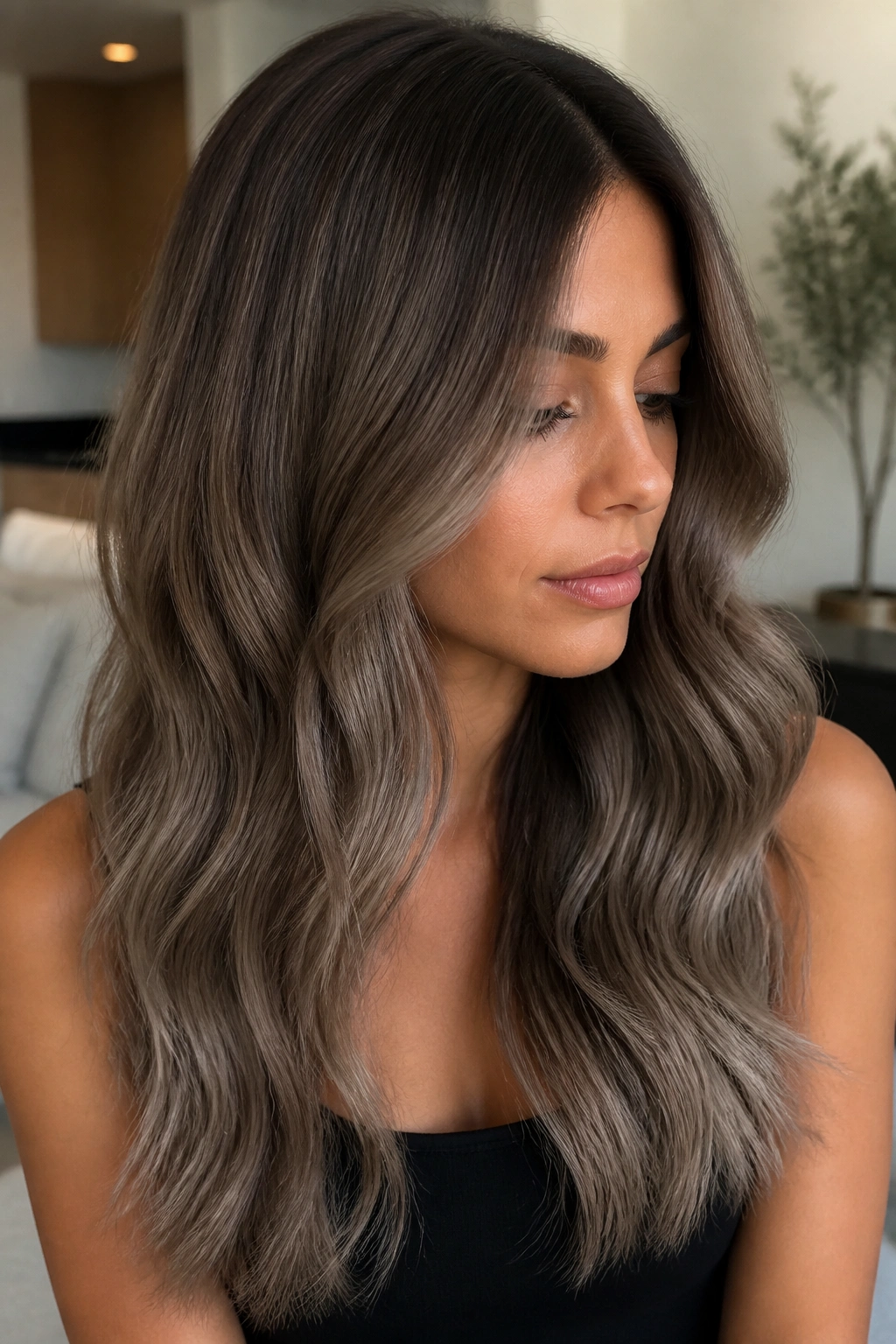
2. Mushroom Brown Ash Ombre
Why It Feels So Wearable
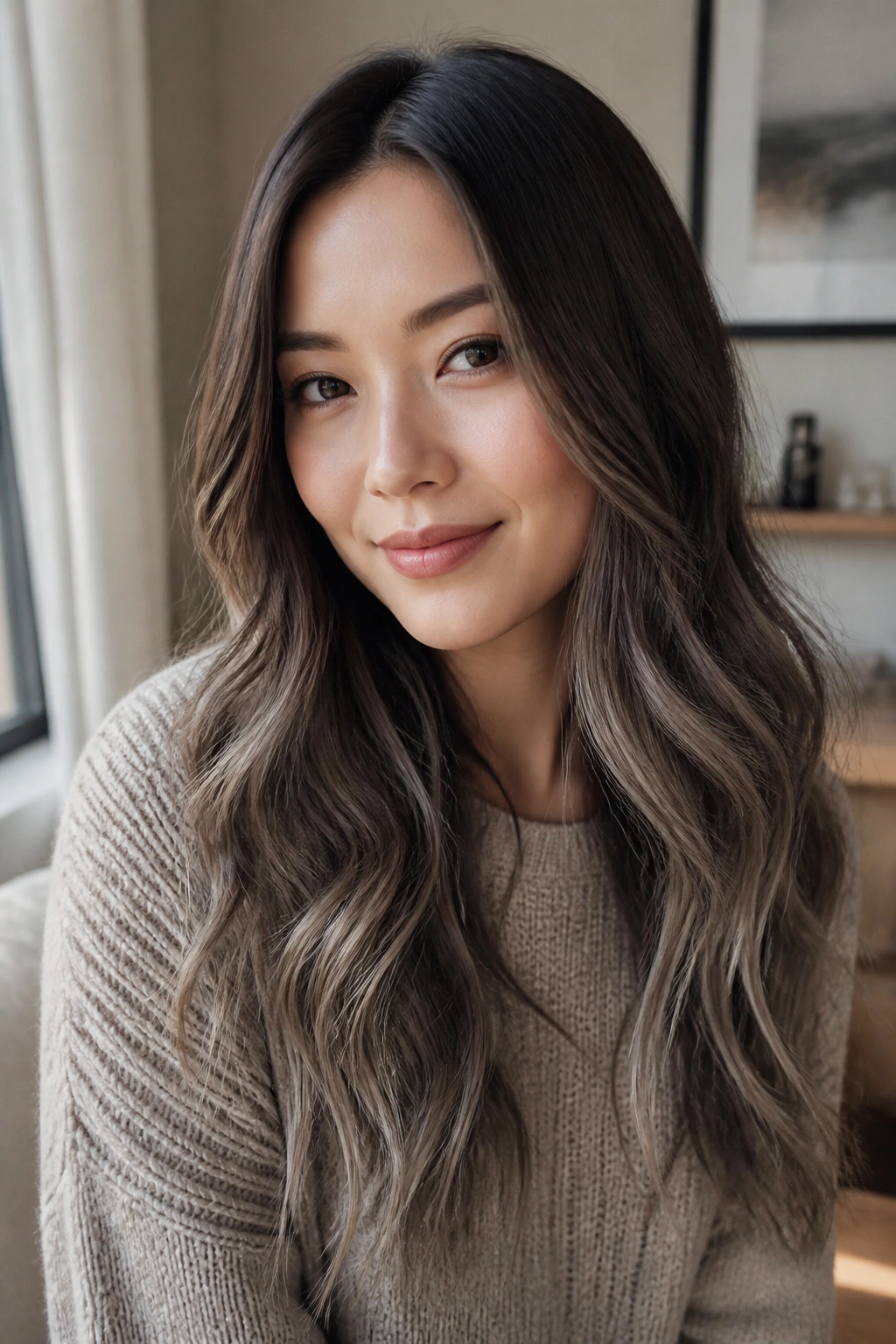
Mushroom brown sits in that cool, taupe-heavy zone that a lot of people overlook. It’s not gray, not beige, not chocolate. It’s the quiet middle, and on long hair that middle tone has enough surface area to look rich instead of flat.
What to Ask For
- A medium-brown root, usually around level 5 or 6, with smoky taupe mids.
- Ashy ends that stay softer than silver and darker than beige blonde.
- A blended transition starting below the collarbone so the color doesn’t look chopped up.
- A gloss every 6 to 8 weeks if your hair pulls red quickly.
Best Way to Wear It
Soft waves show the color best, but this shade also looks clean when worn straight. I’d choose mushroom brown for someone who wants the ash trend without the “I just toned my hair into near-white” problem. It’s calm. It grows out nicely. And it doesn’t fight with makeup or clothes the way cooler platinum shades sometimes do.
3. Jet Black to Cool Smoke Brown
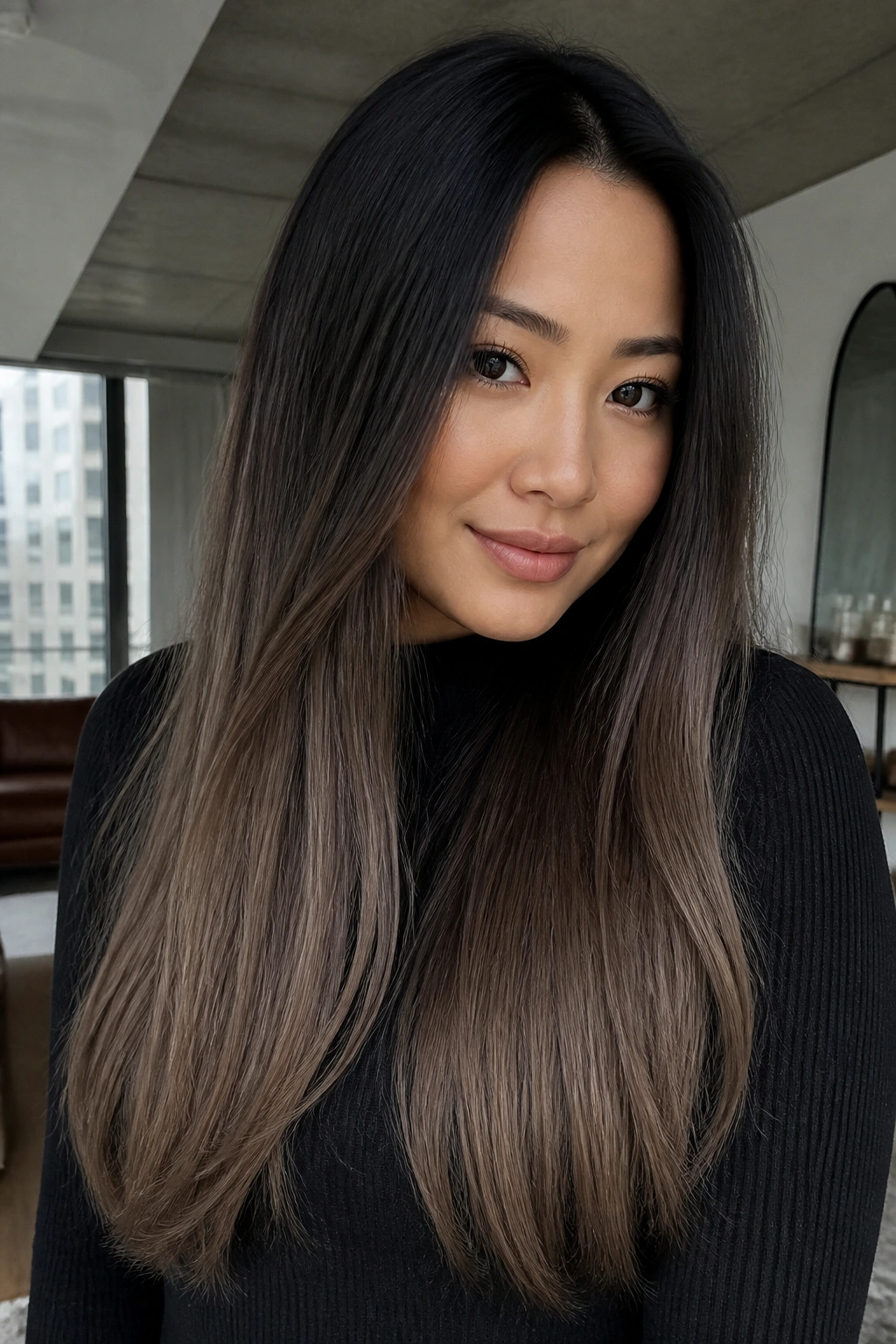
Can black hair pull off ash ombre without looking striped? Yes — if the fade is handled slowly and the target tone stays smoky, not blonde.
This version is for people who love deep, glossy roots and want the ends to shift into cool smoke brown instead of a dramatic pale finish. The trick is keeping the lightening controlled. A good stylist will lift through the midlengths first, then let the lower half hover in that soft charcoal-brown zone that reads ash in daylight and almost black indoors.
It looks especially sharp on long, straight hair. Waves soften the transition, which is nice, but straight lengths make the contrast feel deliberate. I also like this one for thick hair, because the darker root keeps the ends from looking thin or wispy.
If your hair has a lot of warmth underneath, ask for a blue-based toner rather than something overly violet. That keeps the smoke tone grounded. Too much violet on a deep base can go weirdly flat. Nobody wants that.
4. Ash Bronde Waves with Soft Contrast
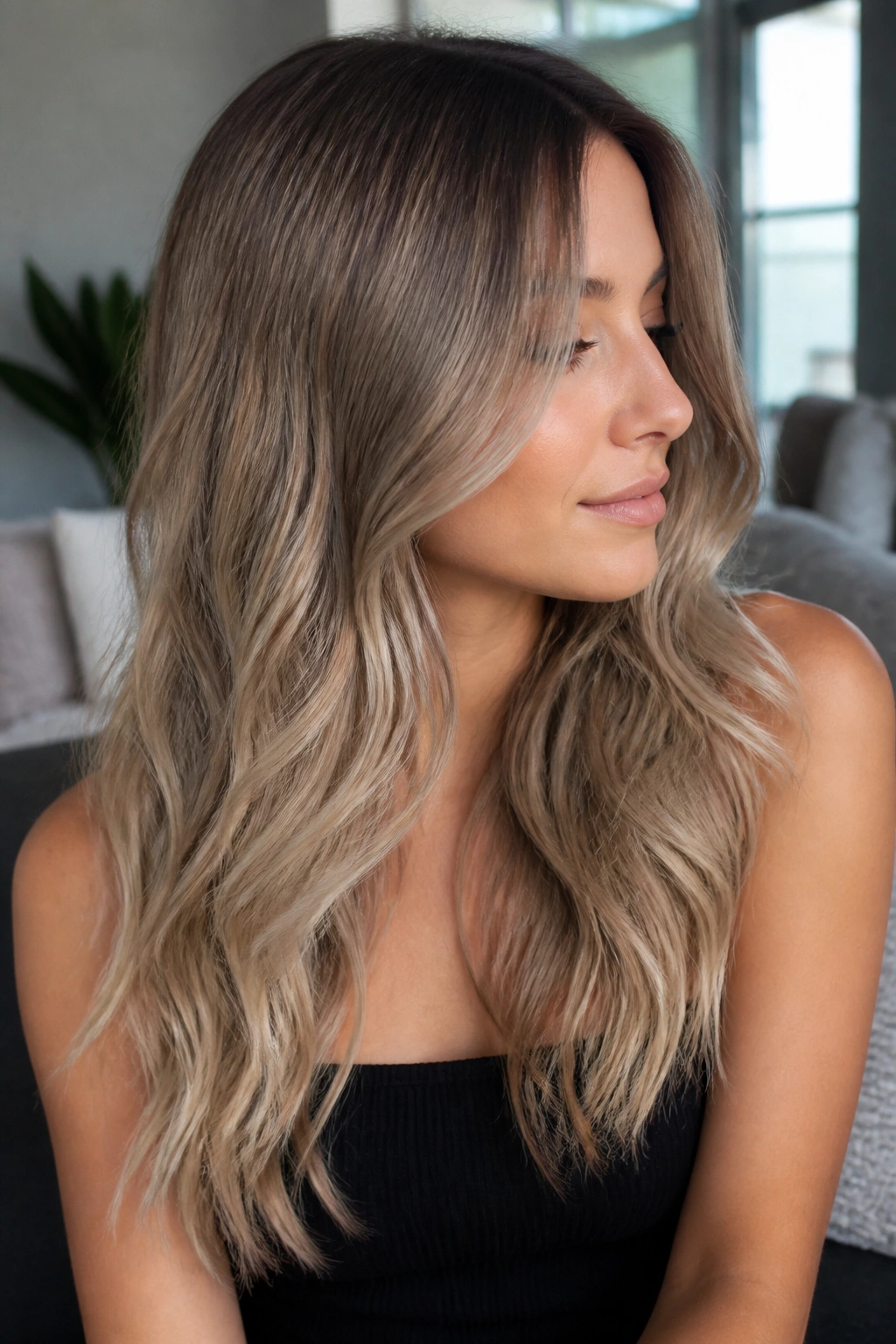
Ash bronde is the calm cousin of classic blonde ombre. It keeps more brunette in the formula, which is why it flatters long hair so well — especially if you don’t want your color to scream from across the room.
What Makes It Different
Warm bronde leans sunlit. Ash bronde leans cooler and cleaner. The difference sounds small until you see it on long waves, where the cooler tone gives the hair a misty look that sits somewhere between beige and soft brown. It’s a nice choice if your skin tone runs neutral or slightly cool, but it can still work on warmer complexions when the ash is kept subtle.
Best Styling Move
- Soft waves with a 1.25-inch wand.
- A center part if you want the fade to feel balanced.
- A lightweight shine spray at the ends, never near the scalp.
- Purple shampoo only when the blonde parts start looking yellow, not on every wash.
I like this one for people who want lightness without the sharpness of a full blonde transformation. It’s easier to live with than high-contrast ash blonde, and it tends to look better when hair is worn loose.
5. Beige Ash Fade on Long Layers
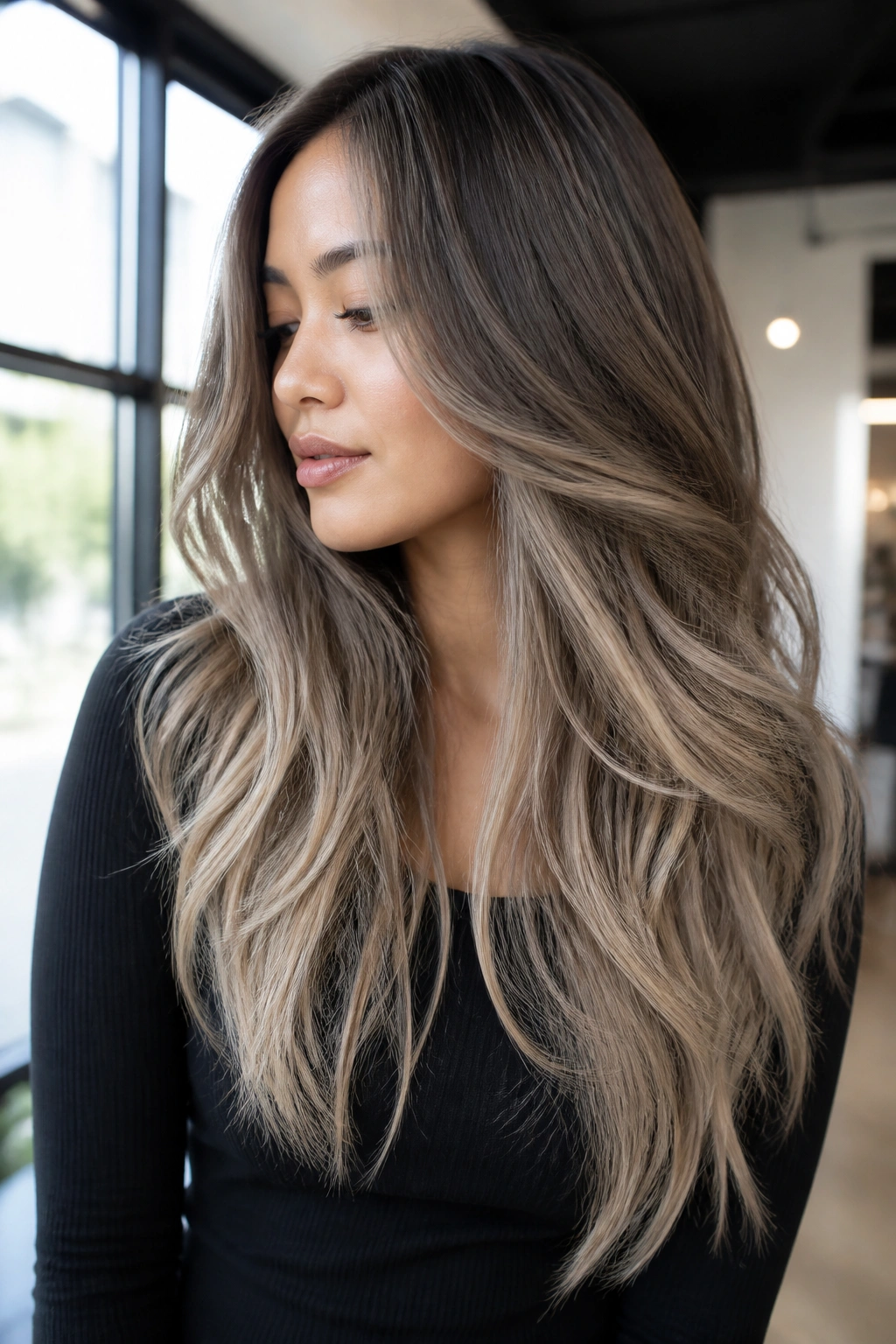
The prettiest beige ash fades usually happen on long layers, not one-length hair. Layers let the color catch on different planes, so the beige reads soft and airy instead of dull.
This look starts with a neutral brunette or dark blonde root, then drifts into beige ash mids and lighter sandy ends that still keep a cool undertone. It’s one of those colors that looks almost understated in photos but much richer in person, because the beige never fully loses its cool base.
What I’d ask for at the salon is a tone that sits between mushroom and champagne, with the lightest pieces concentrated on the outer layers. That creates movement when the hair swings. It also keeps the underside deeper, which helps the whole style feel denser.
A little face-framing brightness is fine here, but don’t overdo it. Beige ash looks best when the transition feels lived-in, not stripey.
6. Charcoal to Frosted Gray Ombre
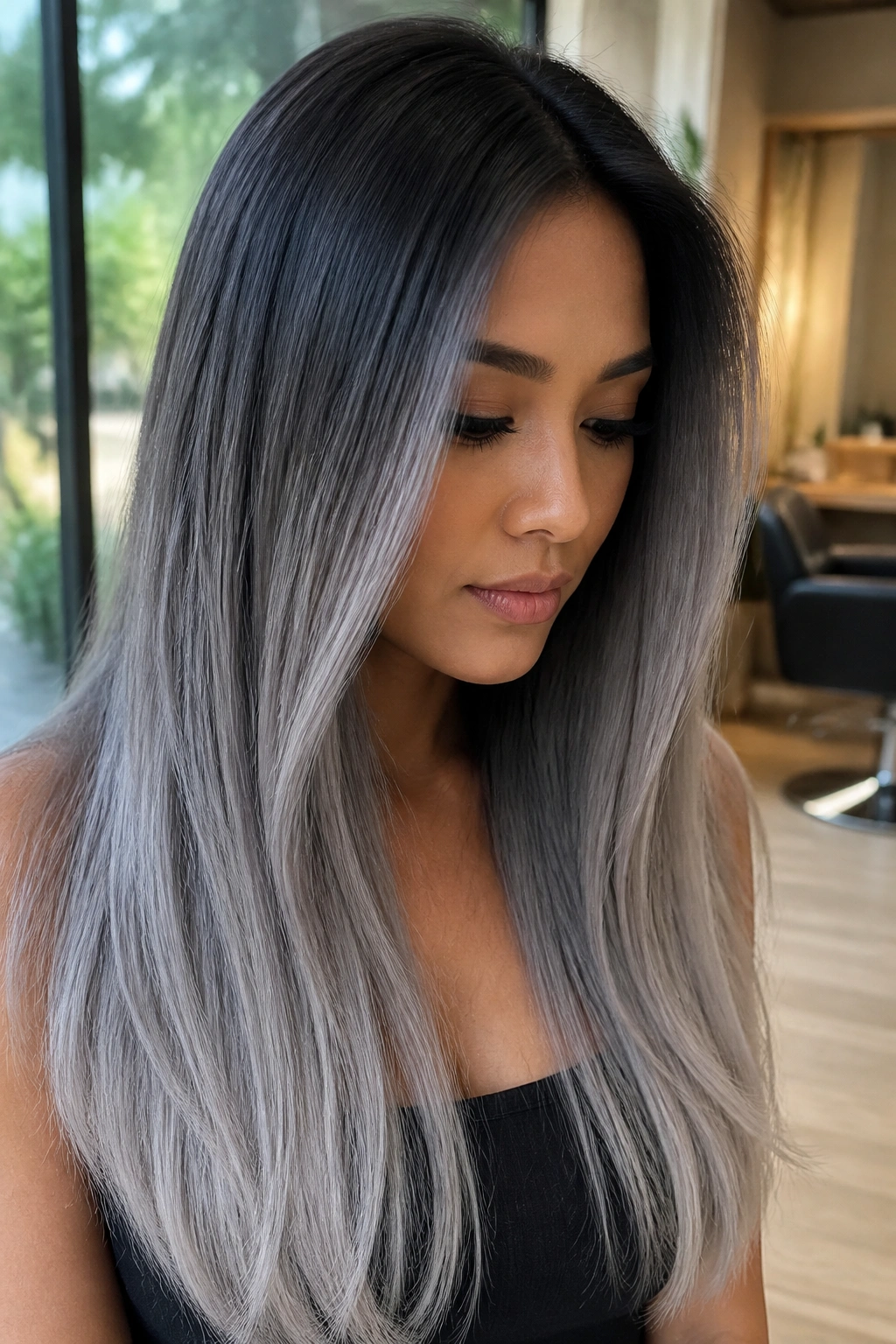
This is the boldest ash ombre in the bunch. Charcoal roots fading into frosted gray ends make a long cut look sharp, almost architectural, and the effect gets stronger the straighter the hair is worn.
The downside is obvious: this shade asks a lot from the hair. Gray and silver tones show dryness fast. Split ends stand out. Rough texture stands out. So if you want this finish, the cut has to be in shape before the color ever goes on. A blunt dusting at the ends can make a bigger difference than people expect.
I like this shade on people who wear strong makeup, dark clothes, or simple outfits that let the hair do the talking. It’s not shy. It also suits cool skin tones more easily than warm ones, though a skilled colorist can soften the gray with a whisper of smoky beige if needed.
A gloss every few weeks helps a lot. So does trimming the ends before they start looking frayed. Gray is honest like that.
7. Icy Ash Blonde on Dark Blonde Hair
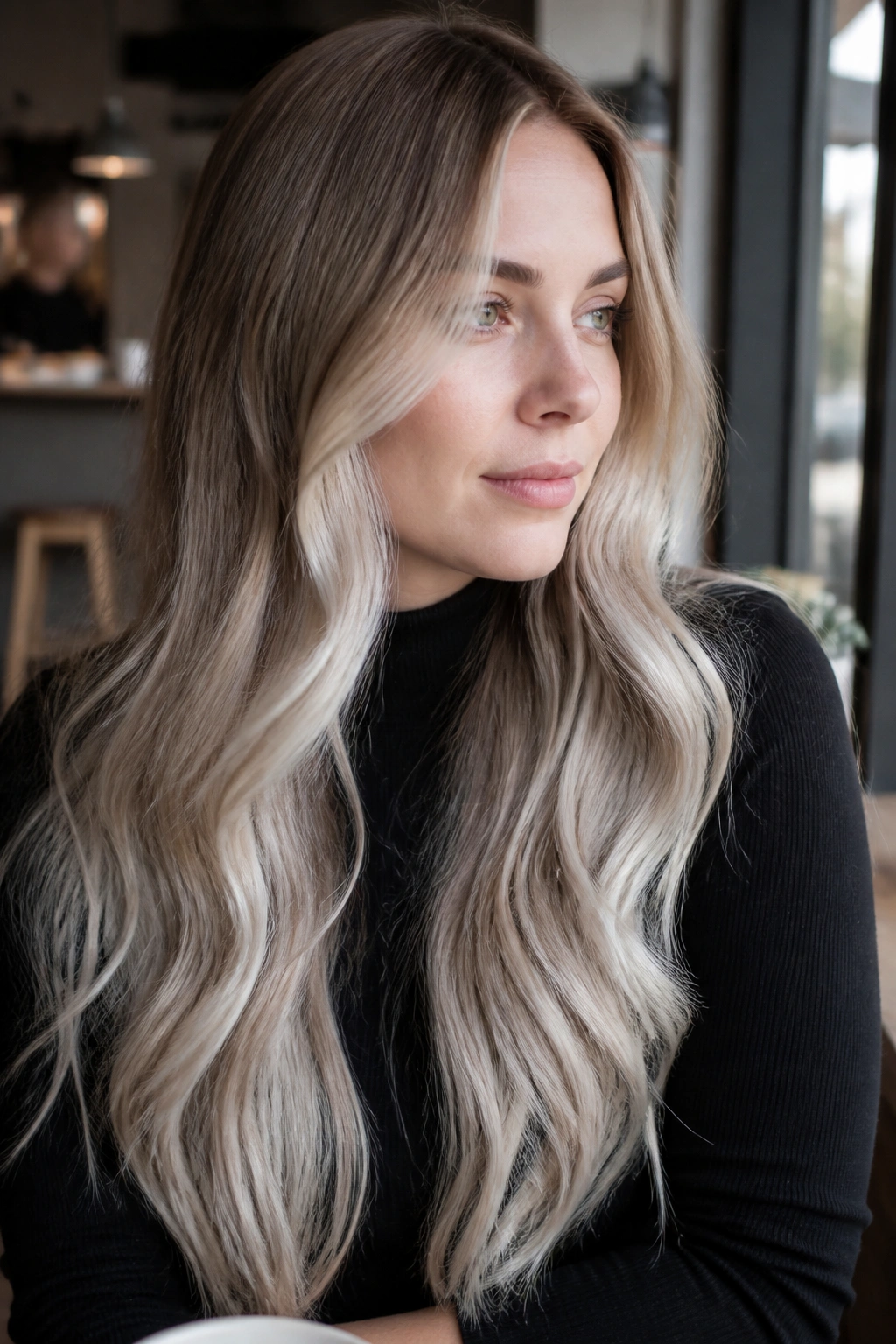
If your natural hair already sits in the dark blonde range, this is one of the easiest ash ombre ideas to wear. You’re not forcing the hair to travel too far, which keeps the finish cleaner and the upkeep less annoying.
The Trick
The best versions don’t start with a harsh brown-to-blonde line. They begin with a soft shadow root, then let the mids brighten into icy ash blonde with only a little beige in the mix. That small touch of warmth keeps the tone from looking chalky.
A few practical notes help here:
- Ask for lift in thin sections so the blonde stays even.
- Use a violet shampoo only when the hair starts to lean yellow.
- Keep heat styling moderate, because pale ash shows damage faster than deeper shades.
- Trim the ends before they get wispy; ice tones make fraying obvious.
I’d wear this with loose curls or brushed-out waves. On long hair, the movement stops the blonde from reading too severe. It also makes the ash feel more dimensional, which is half the point.
8. Smoky Brunette with Pearl Ash Ends
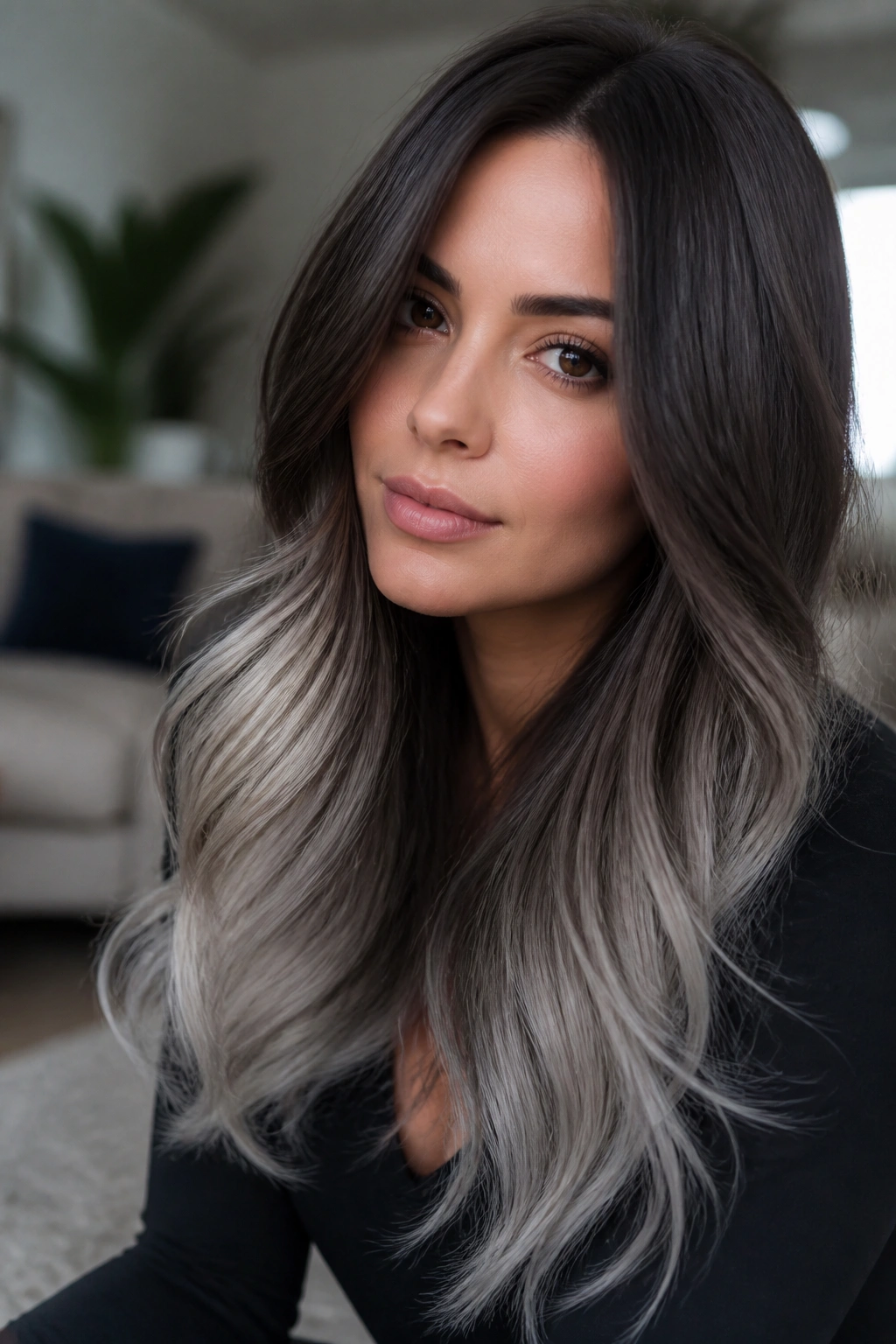
Pearl ash is softer than silver, and that small difference matters a lot on long hair. Silver can feel crisp and cool; pearl ash has a faint softness to it, almost like the color picked up a little light without turning warm.
That makes this look useful for people who want something refined rather than dramatic. The root stays brunette — maybe level 4 or 5 — while the ends fade into a pale, pearly smoke that’s lighter than mushroom but gentler than platinum. It’s a nice middle path if your hair is fine and tends to look thinner at the bottom.
What I’ve always liked about pearl ash is how it behaves in motion. Waves give it depth. Braids show the tonal shift. Even a simple low ponytail looks better because the ends have that soft, milky finish instead of a flat blonde block.
If your natural color pulls orange, don’t let the toner overcorrect into gray. Pearl ash needs a little softness to stay pretty.
9. Slate Blue Ash Ombre
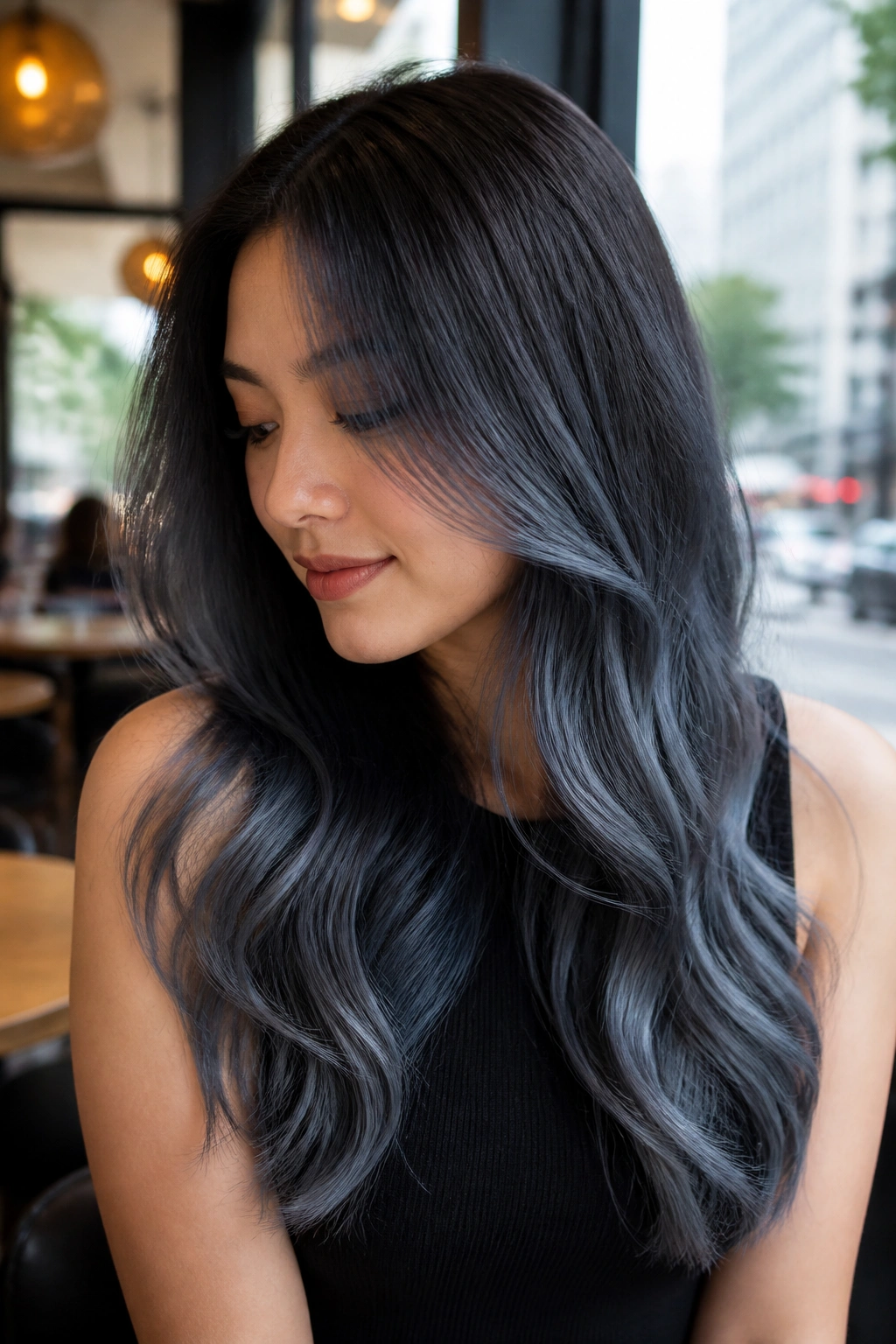
A little blue changes everything.
Slate blue ash ombre keeps the base cool and smoky, then slips a muted blue-gray note through the mids and ends. It’s not loud. It’s not neon. It’s that cold, slatey color you notice only after a second look, which is exactly why it works so well on long hair.
Styling Note
This shade looks best when the hair is either very smooth or softly waved. Too much texture can break the color into pieces, and then the blue reads patchy instead of intentional. A flat brush blowout shows the full gradient. Loose barrel curls give it a softer feel.
I’d choose this for someone who wants ash, but is bored with plain beige. It’s also a clever option if your wardrobe leans black, gray, denim, or deep green. The blue tint picks up all of those shades nicely.
Because the tone sits on the cool side, tone-depositing masks can help keep it from fading into dull brown. Just don’t overuse them. A heavy blue mask can make the ends look flat if the hair is already porous.
10. Rooted Ash Platinum with Long Curls
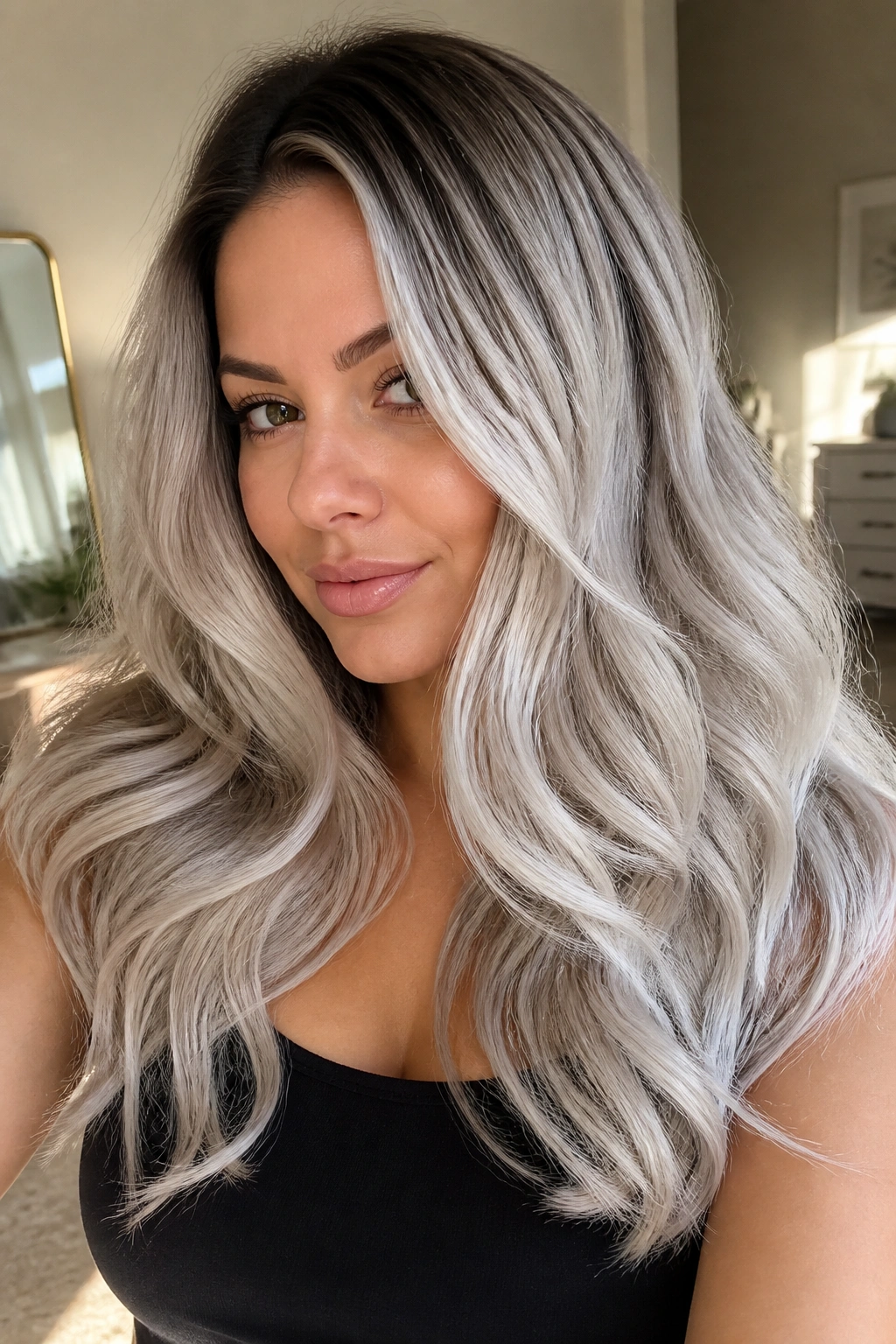
Rooted ash platinum is one of those looks that looks easy and isn’t. The dark root gives it shape; the platinum gives it punch; the ash keeps it from going yellow or overly bright. On long curls, all three pieces matter.
Why Curls Help
Curls break up the color so the platinum doesn’t turn into one solid sheet. That matters. The eye gets tiny shifts of light and shadow, and the ash tones sit inside the curl pattern instead of sitting on top of it.
A stylist should usually leave the root a little deeper than you might think. If the base is too light, the whole style loses contrast and starts to feel flat. The platinum should live mainly through the lower half of the hair, where the curl pattern can show it off.
A few quick habits help the style last:
- Use a heat protectant before every curling session.
- Wrap curls away from the face for a softer frame.
- Sleep on a silk pillowcase if your ends are fragile.
- Refresh the shape with a few face-framing curls, not the whole head.
This is a high-impact ash ombre, but the root keeps it grounded.
11. Sandy Brown to Smoke Taupe
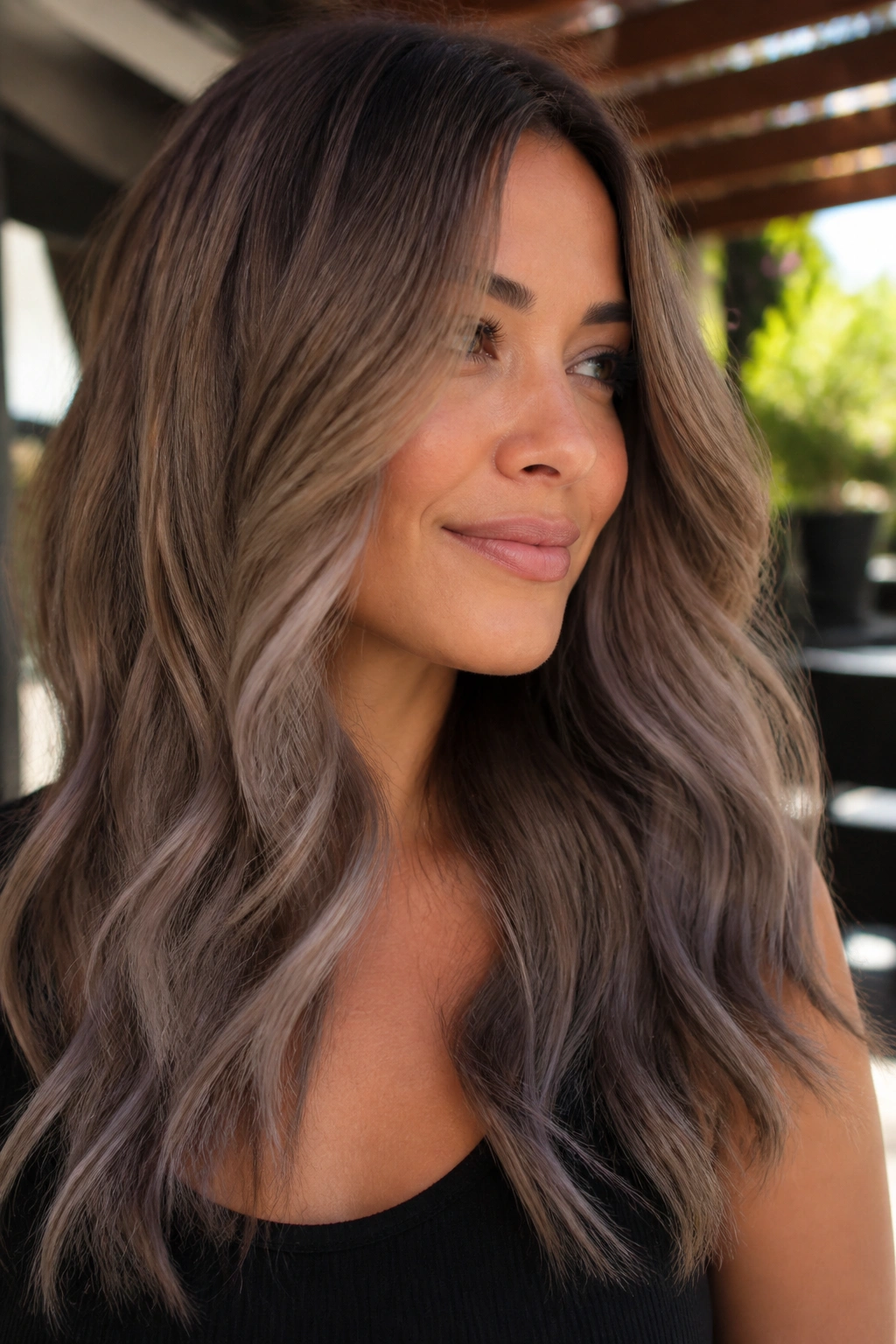
This is probably the softest ash ombre idea in the set, which makes it a smart choice for long hair if you want the color to feel easy rather than dramatic. Sandy brown gives the base a little warmth; smoke taupe cools it down just enough to feel modern.
The shade works especially well when the hair is worn in relaxed waves or a big, loose braid. The taupe catches on the edges of the braid and gives the whole thing a dusty finish that looks expensive without trying hard. Straight hair is fine too, but the real charm is in movement.
I like this for people who have warm brown hair and don’t want to fight their natural undertone too much. It’s less maintenance than full ash blonde, and the grow-out line tends to disappear into the midlengths. If your ends are a little dry, that’s another win, because smoke taupe is more forgiving than pale silver.
A toner with a beige base keeps this from turning flat. Too much gray and it can look tired.
12. Face-Framing Ash Ombre with Curtain Bangs
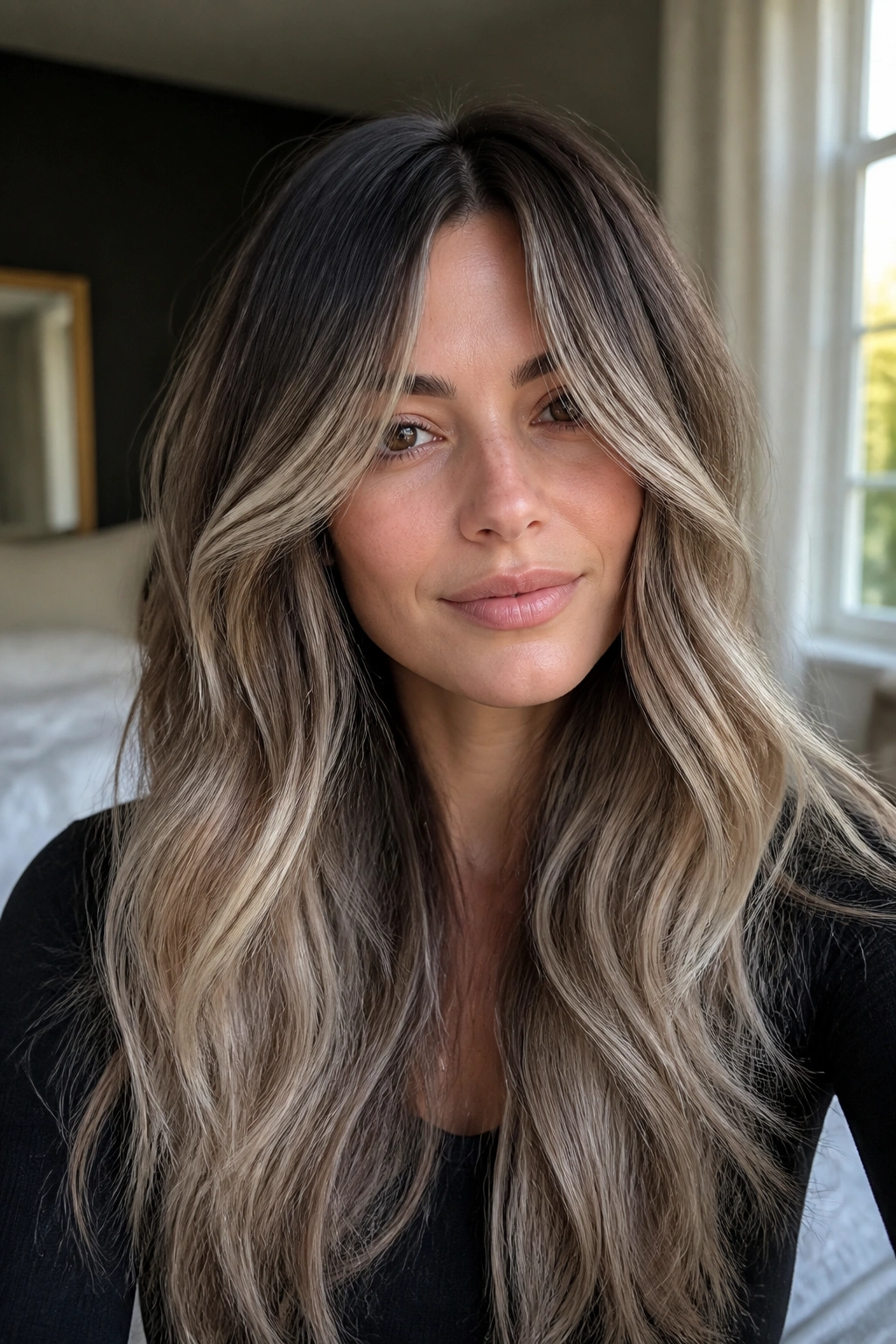
What if you want the ash without committing every strand to it? Face-framing ash ombre with curtain bangs is the answer I’d point to first.
The front pieces lighten a touch faster than the rest, so the color opens around the face while the back stays deeper and richer. Curtain bangs help because they carry the ash tone right where people look first. On long hair, that gives you a brighter frame without making the whole head feel light.
Why It Flatters Long Hair
- The lighter front sections soften strong cheekbones.
- Curtain bangs make the grow-out look intentional, not awkward.
- The deeper back keeps thick hair from losing weight visually.
- Loose waves blend the front and back so the contrast stays smooth.
I’d ask for the brightest pieces to start around the cheekbone and melt into the collarbone area. If the lightest part begins too high, the bangs can turn brassy too fast. If it starts too low, you lose the face-framing effect entirely.
This is one of those styles that photographs well in real life because the front catches light and the lengths keep their depth.
13. Ash Balayage Ombre on V-Cut Hair
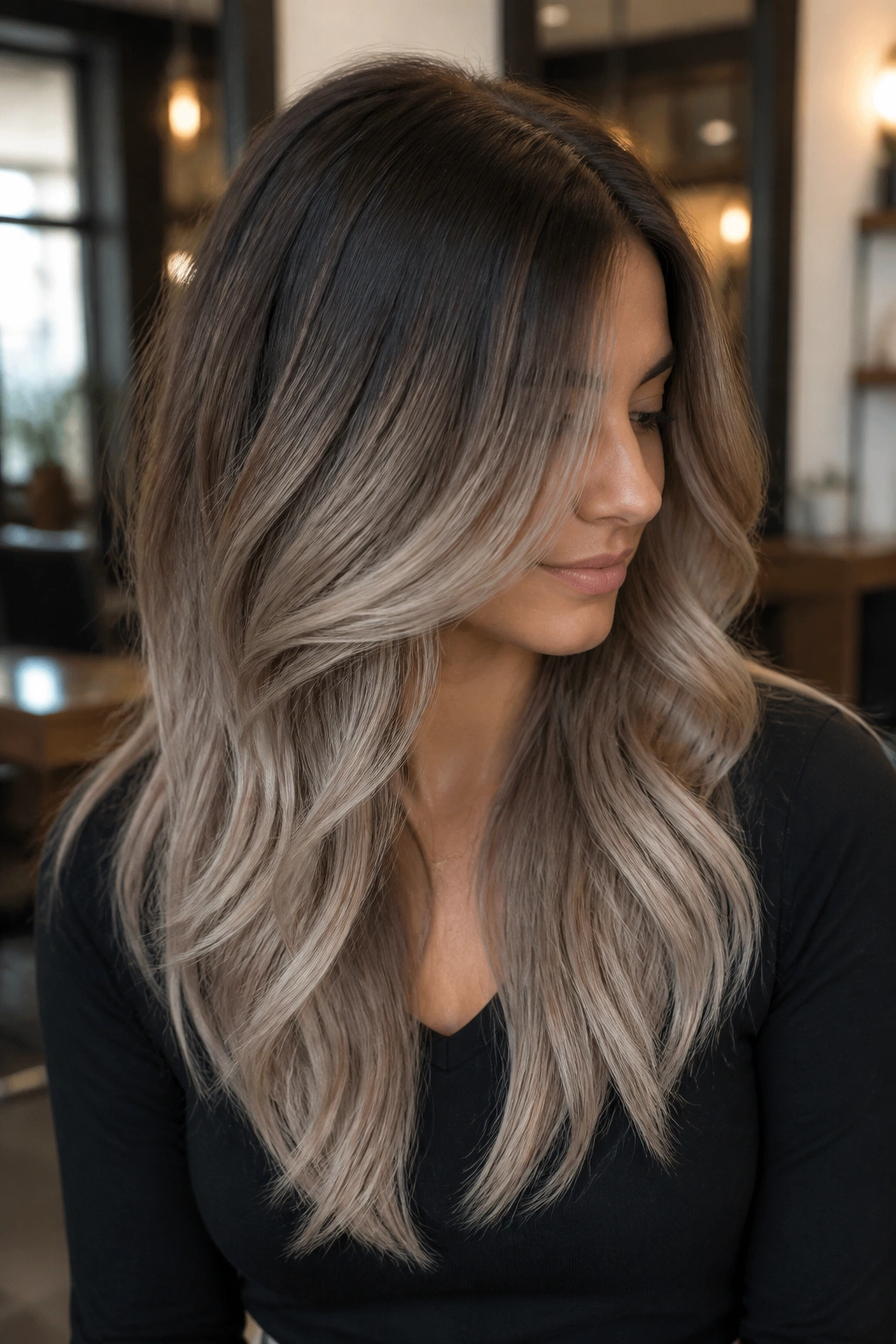
Color follows the cut. That sounds obvious, but people forget it all the time.
On a V-cut, ash balayage ombre looks sharper because the color point pulls the eye down the length of the hair. The layers create a natural path for the smoke and silver tones, which means the ombre doesn’t have to work as hard to show itself. Long, tapered ends also make the lighter pieces feel more delicate.
Best for
- Thick hair that needs shape.
- Long straight styles that can look heavy at one length.
- Dark brunettes who want movement without a full blonde shift.
- People who like wearing their hair in half-up styles.
I like balayage here rather than a hard ombre line, because the hand-painted pieces can follow the layers and avoid that old-school blocky effect. The color should feel woven in, especially around the bottom third of the hair where the V-cut gets narrower.
If you wear your hair curled, the ash tones will pop in a kind of ribboned pattern. If you wear it straight, the shape alone carries the look. Nice either way.
14. Straight Glass-Shine Ash Ombre
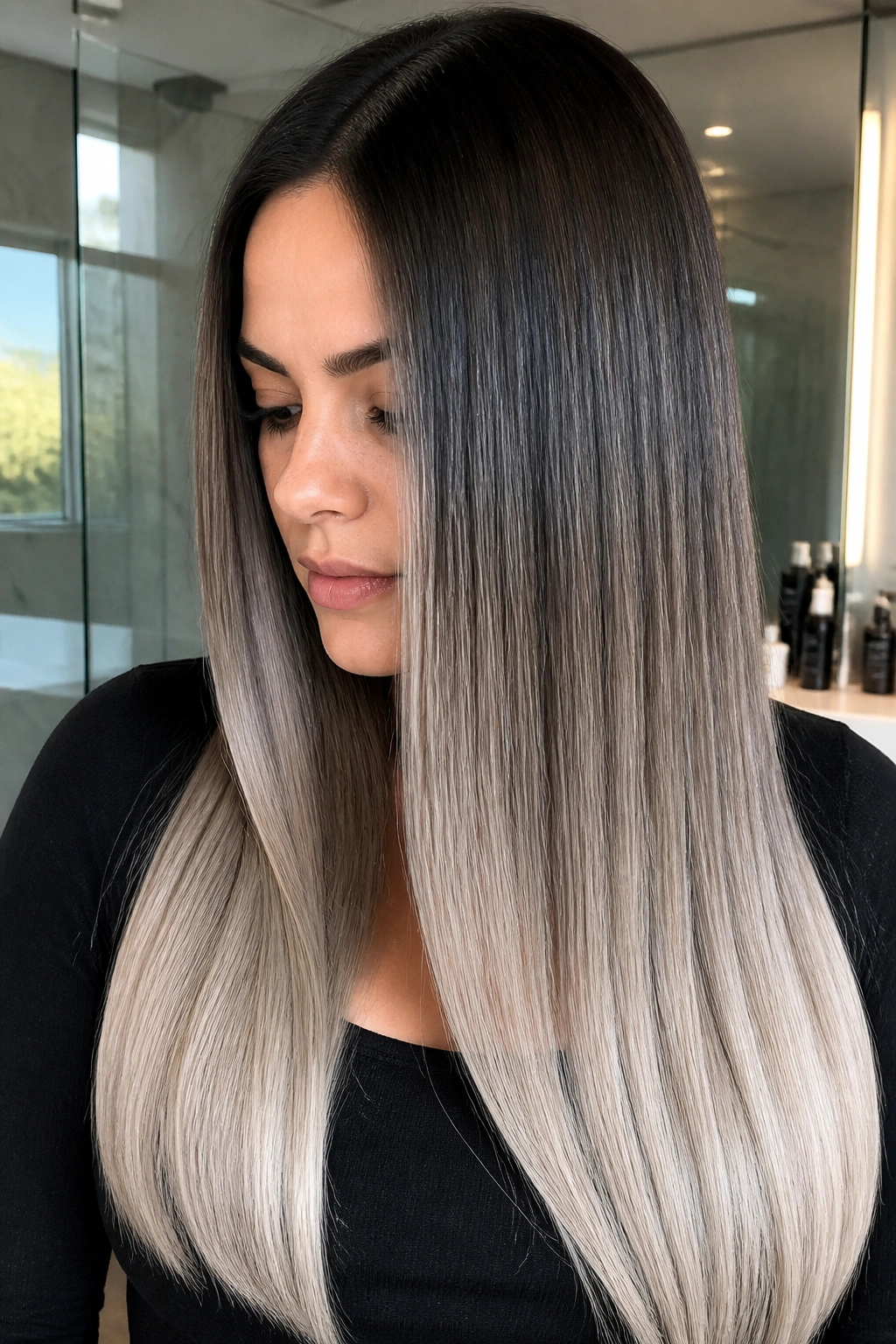
Straight hair shows every inch of the gradient, and that’s the whole point here. Glass-shine ash ombre is for long hair that’s kept smooth, clean, and reflective, with the cool tones doing the talking instead of the curls.
The finish starts with a deep root — anything from brunette to dark blonde, depending on where your natural color sits — then moves into cool midlengths and bright ash ends that stay polished. No frizz. No rough texture. No rushed toner job. The style lives or dies on the surface quality of the hair.
A flat iron can help, but only if the hair is protected first. A heat protectant with a light silicone base is useful here because it helps the ends look slick without making them oily. A pea-sized amount of serum is enough for most long hair. More than that and the style starts to separate.
This is the version I’d wear if I wanted the color to feel clean and sharp. It’s not the softest choice, but it may be the neatest one.
15. Layered Ash Ombre with Feathered Ends
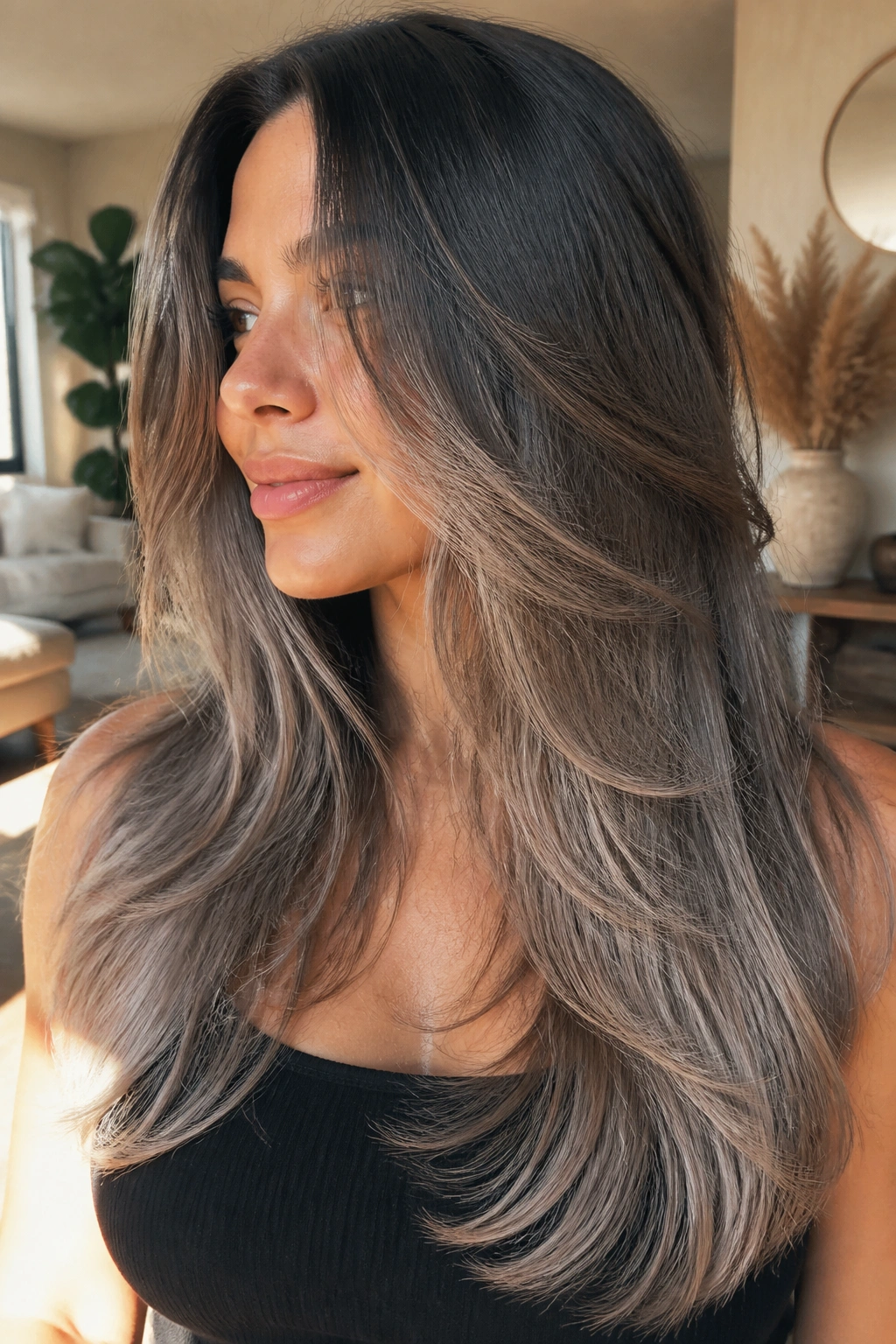
Does your long hair feel heavy at the bottom? Then layered ash ombre with feathered ends is the one to look at.
The color does half the work, but the cut does the rest. Feathered ends let the ash tones spread out instead of pooling into one thick block. On very long hair, that matters a lot. A heavy hemline can make even gorgeous color feel stuck. Feathering keeps the finish light and airy.
I’d choose this for medium to thick hair that needs motion. The root can stay brunette or dark blonde, while the mids and ends shift into smoky ash beige or silver-brown. The lighter pieces should be concentrated near the outer layers so the shape shows when the hair moves.
A round brush blowout makes this look especially good, because the ends flick away from the shoulders and the color catches the movement. If you prefer air-drying, a curl cream with a low hold can keep the layers from puffing up.
The cut and color need each other here. Alone, each is fine. Together, they look much more finished.
16. Ash Champagne Ombre on Long Blonde Hair
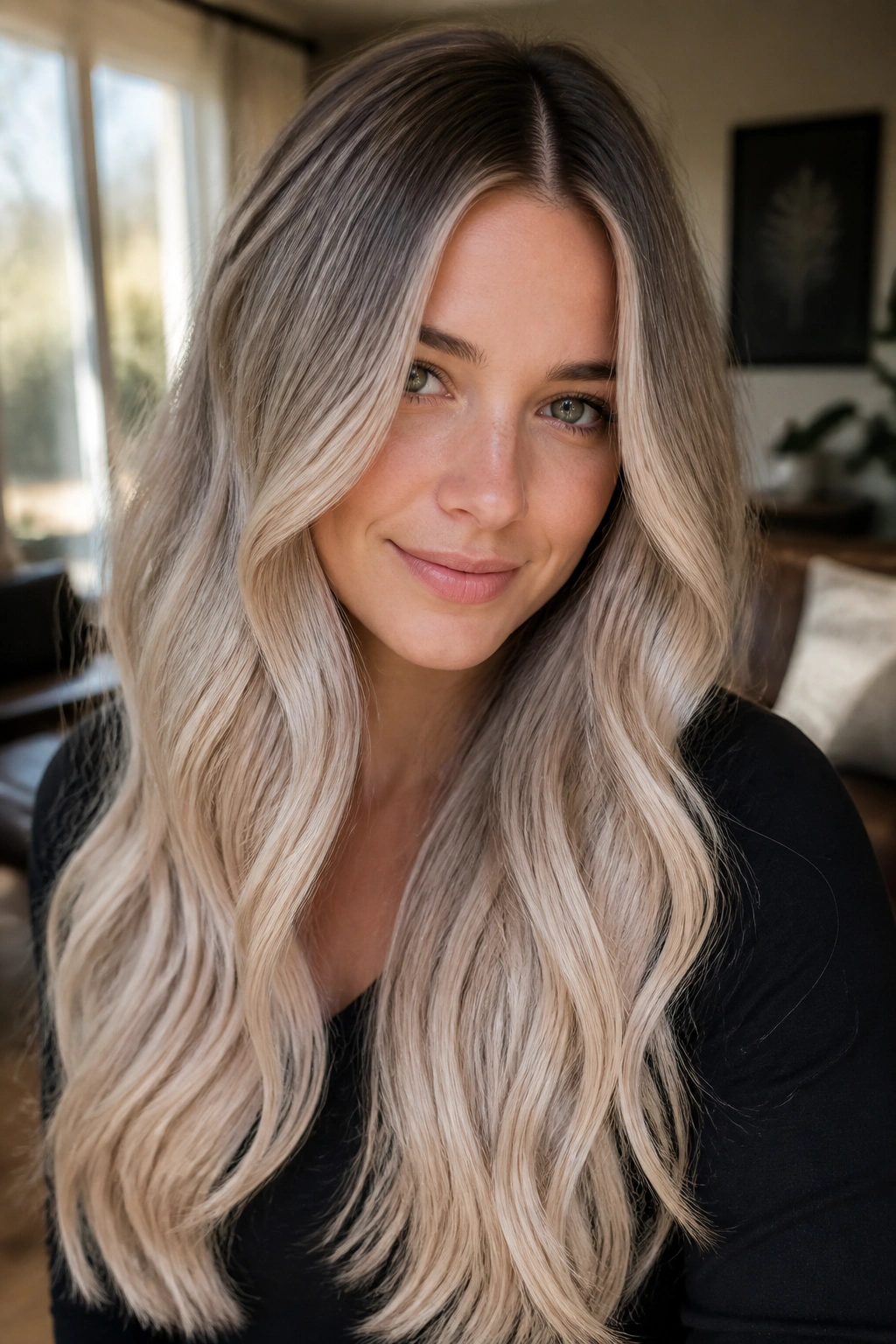
Ash doesn’t have to mean icy.
That’s the part people miss. Ash champagne keeps the cool base, but softens it with a pale, creamy blonde note that feels lighter and friendlier than pure silver. On long blonde hair, it’s a nice way to add dimension without pushing the color into stark territory.
This is especially good if your natural blonde already lifts easily. You don’t have to fight for the result, which means the hair stays in better shape. The root can remain a soft shadow blonde, then melt into champagne ash mids and cooler ends that never tip into yellow. The grow-out is gentle, too.
I’d wear this with a middle part and soft bends through the ends. Too much curl can hide the champagne note, and too little shape can make the whole thing look washed out. The right balance sits right in the middle — clean, but not severe.
A beige gloss every so often keeps the tone from slipping too cold. That’s the whole game here.
17. Cool Cocoa to Silver Smoke Ombre
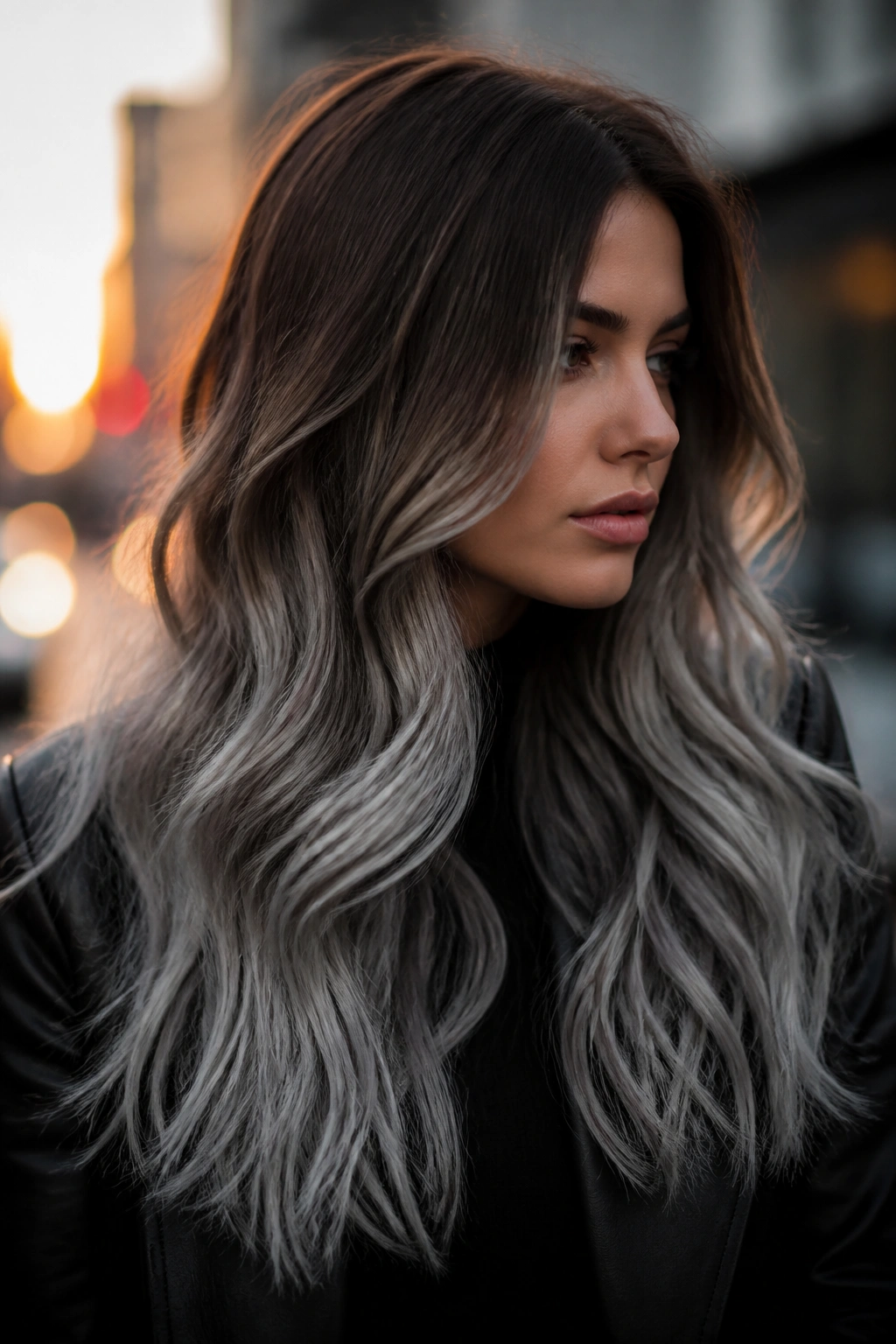
This one has a little more weight than the brighter ash blondes, and that’s what makes it so good on thick, long hair. Cool cocoa roots keep the style grounded, while silver smoke ends bring the lightness in slowly.
The look is especially strong on hair with natural body. Waves, curls, and big blowouts all show the transition well. The silver doesn’t have to fight to be seen because the cocoa underneath gives it contrast. And since the tone stays cool all the way through, the finish reads sleek rather than warm.
I like this idea for darker wardrobes and low-drama makeup. The hair does the heavy lifting. It also suits people who like their color to feel moody without going fully gray. There’s some softness in it, but not much warmth.
If your hair tends to grab color unevenly, ask for the silver smoke to be built in with fine sections rather than chunky pieces. Thin sections blend better on long lengths and keep the ends from looking stripy.
18. Dusty Lilac Ash Ombre
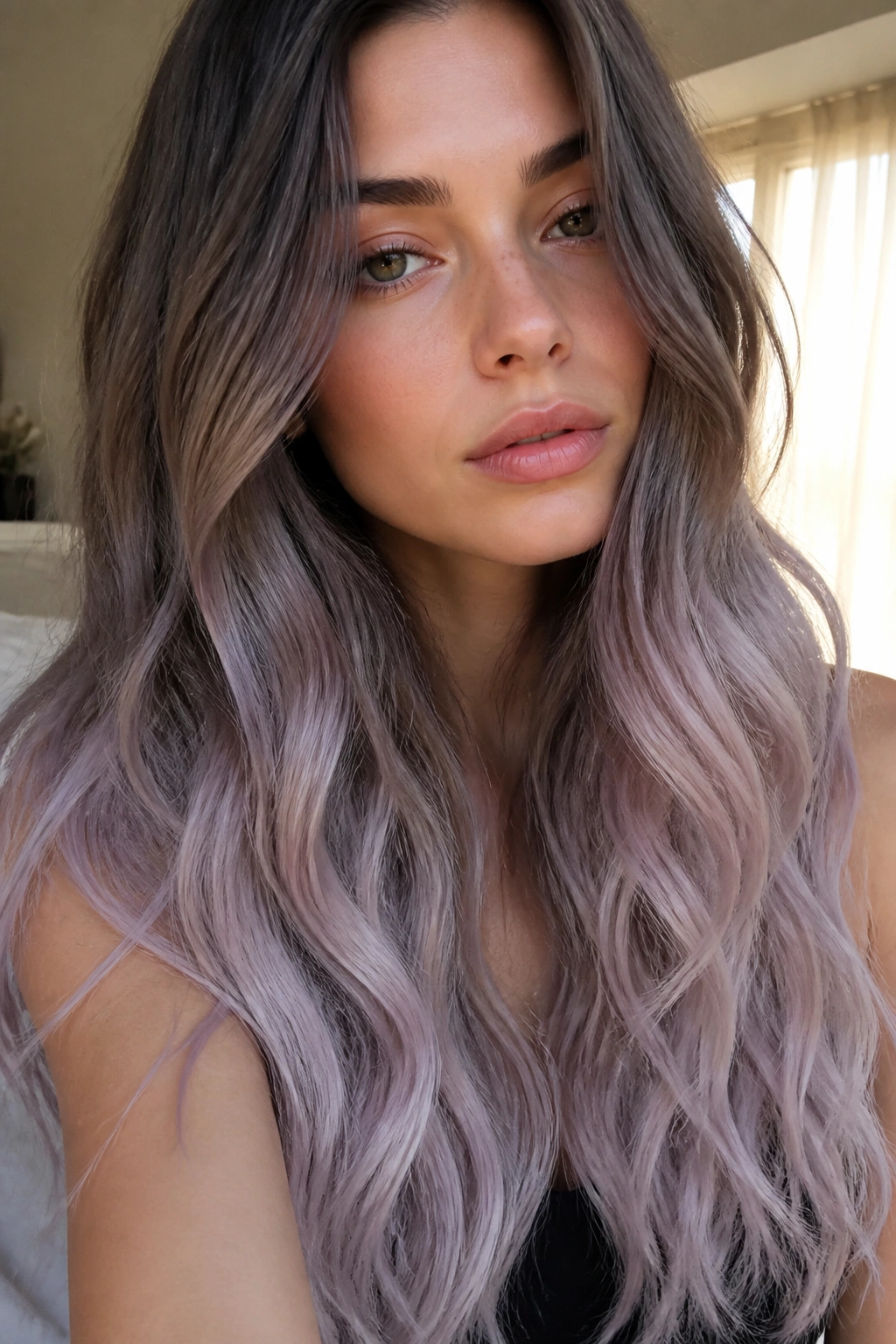
Sometimes the prettiest ash is the one with a tiny color twist. Dusty lilac ash ombre takes the cool smoke base and adds a muted lavender cast to the ends — nothing bright, nothing sugary, just a faded lilac haze that sits well on long hair.
A Good Fit for This Look
It’s a smart choice if you want something a little playful but still grown-up. The color reads as ash first and lilac second, which keeps it from feeling costume-like. On long waves, the lilac shows up only where light hits the surface. That’s why it works.
A few practical notes:
- Best on hair that can lift to a pale blonde without breaking.
- Tones fade faster than neutral ash, so plan on refreshing them.
- Satin pillowcases help keep the cooler pastel from rubbing off as fast.
- A light curl pattern shows the shade better than pin-straight hair.
I’d avoid this if your hair is already heavily damaged. Pastels are flattering, but they’re not forgiving. If the ends are rough, the lilac can turn dull fast. When the hair is healthy, though, this one has a soft, almost dusty finish that looks lovely on long layers.
19. Ash Ombre with Peekaboo Panels
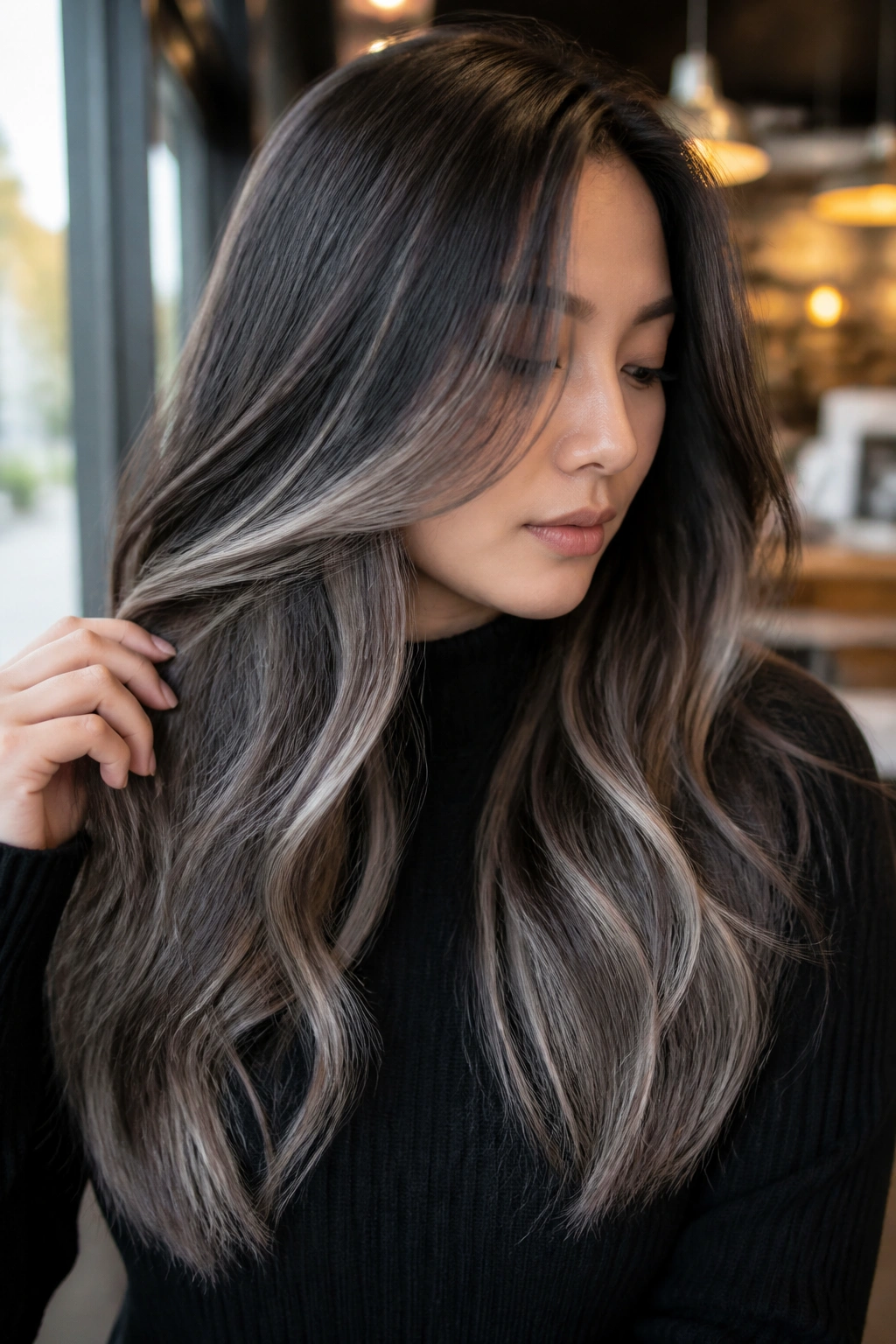
Sometimes the prettiest ash is hidden. Peekaboo panels give you that little surprise under the top layer — smoky silver, gray beige, or cool taupe peeking through when the hair moves, twists, or goes up.
This is one of the more flexible ash ombre hair ideas for long hair because it lets you keep most of the length deeper and more natural. The lighter tone lives underneath or around the inner layers, so the style changes depending on how you wear it. Down and loose, it stays subtle. In a braid or half-up twist, the color shows off.
That makes it a smart move for anyone who works in a conservative setting or just doesn’t want the whole head lightened. It also helps long hair feel less heavy, because the contrast appears in motion instead of all at once.
A stylist usually places the peekaboo panels below the crown and around the lower sides of the head. That keeps the color hidden when you want it to be, and obvious when you don’t. A good compromise. Honestly, one of the better ones.
20. Matte Mushroom-to-Ivory Ash Fade
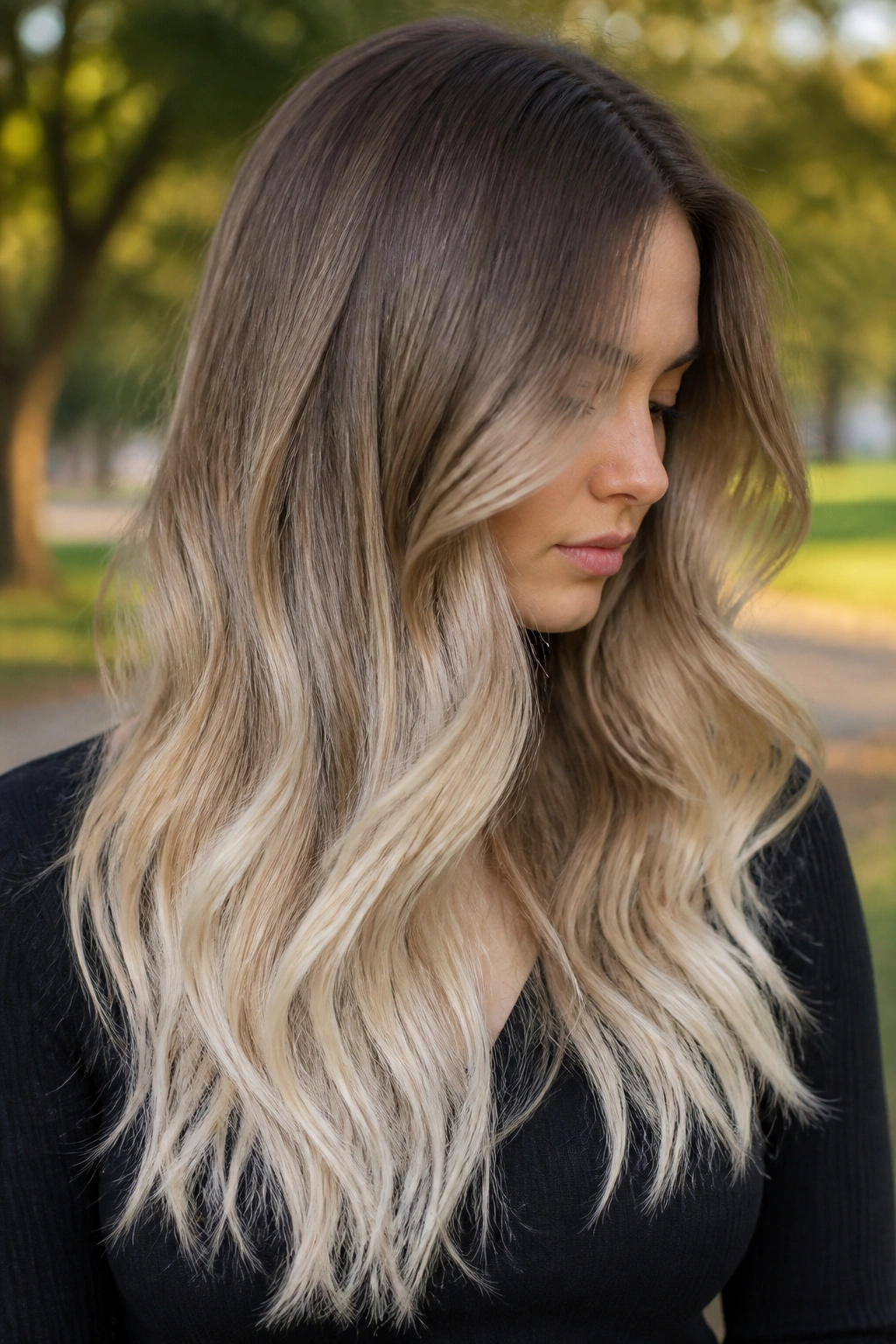
This is the one I’d call the soft finish. The roots sit in mushroom brown, the mids move through dusty ash, and the ends fade into ivory ash that looks pale but not chalky.
On long hair, the matte texture matters. If the hair is too glossy, the ivory can start to look flat. A slightly muted surface lets the tones read as blended and expensive-looking rather than overly bright. That’s why this version often looks best when the hair has natural texture — a little wave, a little bend, a little movement.
I like this look for people who want an ash ombre that feels airy instead of icy. It’s lighter than mushroom brown, but less severe than full silver. The grow-out is kinder than pure platinum, and the color still keeps enough depth to make long lengths look thick.
If I had to give one practical tip, it would be this: keep the ends trimmed. Ivory ash shows damage faster than deeper ash tones, and even a tiny bit of breakage can steal the finish. Clean ends make the whole style look more deliberate.
