



Blonde ombre hair ideas for round faces work best when the color does a little shape work.
A round face usually looks longer when the brightness starts below the widest part of the cheeks and falls toward the shoulders. Start the blonde too high, and the eye stops right where you do not want it to. Push it lower, keep the roots a touch deeper, and the whole cut feels cleaner and slimmer.
Placement matters more than brightness.
That’s the part a lot of people miss. The tone matters, sure, but the exact spot where the blonde begins, the way the front pieces fall, and whether the part sits dead center or slightly off to one side can change the whole read of the haircut. I like ombre when it’s doing that quiet little trick of making the face look longer without screaming about it.
1. Soft Caramel Root Melt
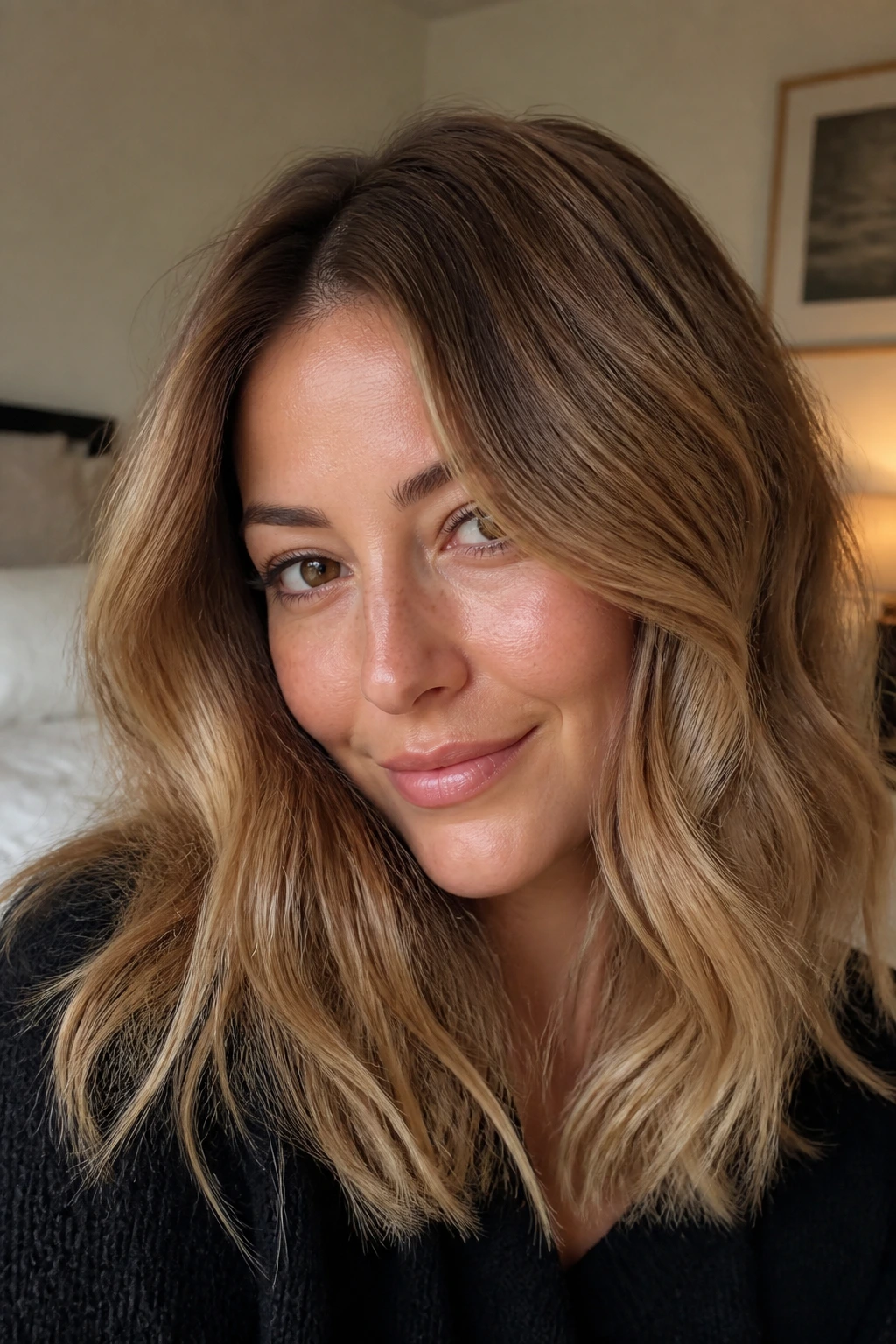
Warm caramel through the mids is one of the easiest ways to flatter a round face. The dark-to-light shift is gentle, so you get softness instead of a hard line across the cheeks.
Ask for a root shade that sits about one to two levels deeper than your mid-lengths, then let the blonde open up below the cheekbone. That keeps the light from bunching right at the widest part of the face. Loose waves help too. Tight curls can spread the shape outward, while a softer bend falls in a cleaner vertical line.
Why the Melt Works
- The deeper root gives the eye a place to start.
- Caramel mids keep the look warm instead of brassy.
- Ends that lighten near the collarbone draw attention lower.
Best styling move: wrap hair away from the face on a 1¼-inch iron, then leave the front pieces a little straighter so they hang longer.
2. Champagne Blonde on a Collarbone Lob
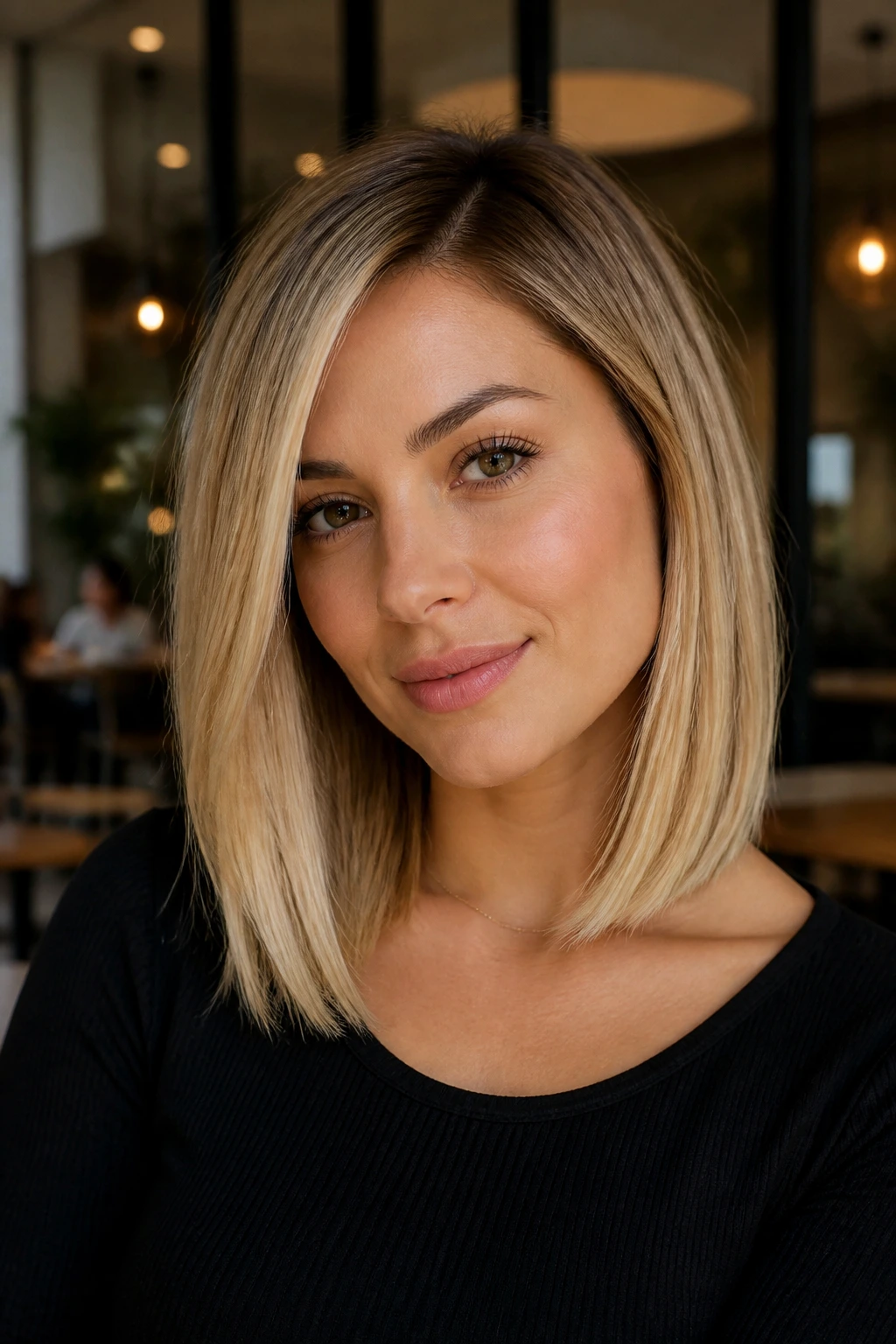
A collarbone lob can do a lot of flattering work on a round face, especially when the blonde feels airy and pale rather than heavy. Champagne blonde has that soft, creamy sparkle that brightens the cut without making the sides look wide.
The trick is length. You want the bluntest part of the cut to sit right around the collarbone, not at the jaw. That extra inch or two matters more than people think. A slight off-center part helps too, because it breaks the symmetry that can make a round face look even rounder.
This one is polished without feeling stiff. The color should move from a shadowed root into light beige-gold ends, with the brightest pieces kept in the lower half of the hair. Clean, simple, and it works.
3. Honey Blonde Waves with Curtain Bangs
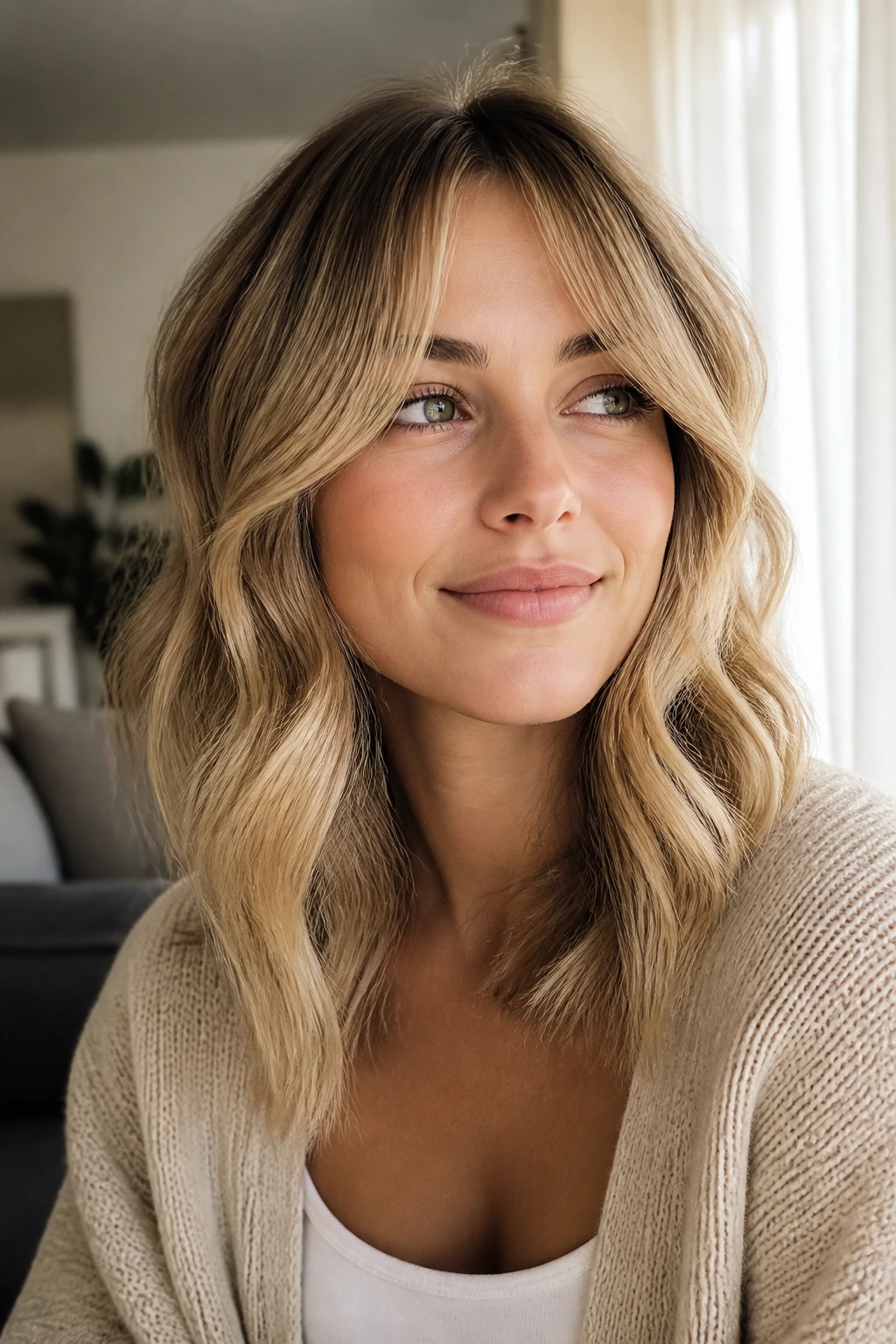
Can curtain bangs work on a round face? Yes, when they open below the cheekbones and don’t sit too short. That’s the entire game here.
Honey blonde keeps the style warm and soft, while the curtain fringe draws the eye down the sides of the face instead of across it. I like this look on shoulder-length hair because the waves and the bangs work together. The bangs give shape up top; the ombre gives length at the bottom. That pairing matters.
How to Wear the Bangs
- Ask for the shortest point to fall around nose to cheekbone level.
- Keep the outer corners longer so they blend into the front layers.
- Style the bend away from the face, not inward.
A honey blonde ombre looks best when the ends are a little brighter than the mid-lengths. Not streaky. Just enough lift to keep the finish fresh.
4. Ash Beige Ombre with a Deep Side Part
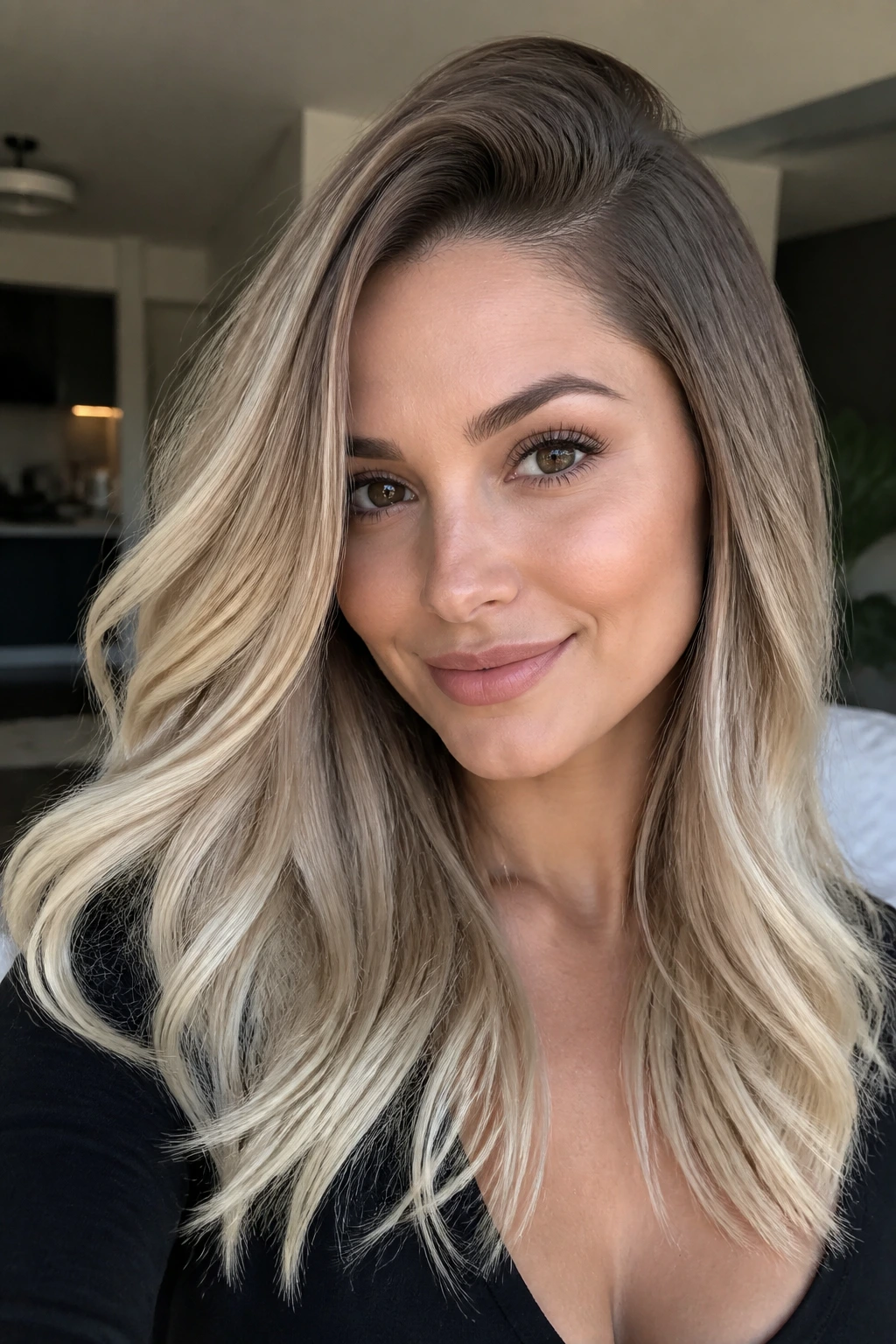
A deep side part is underrated for round faces. It creates a diagonal line right away, which is useful when you want to interrupt all that natural curve.
Ash beige blonde makes the effect feel cooler and sharper. I like it when the roots are muted and the ends are creamy, not yellow. The contrast should be quiet, though. If the front pieces get too light too close to the temples, the face can look wider. Keep the brightest beige lower, around the jaw and below, and the whole shape looks longer.
This style is especially good if your hair has a little bend but not much volume. The side part gives instant lift at the crown. The cool blonde keeps the finish calm.
5. Platinum Ends on a Dark Blonde Base
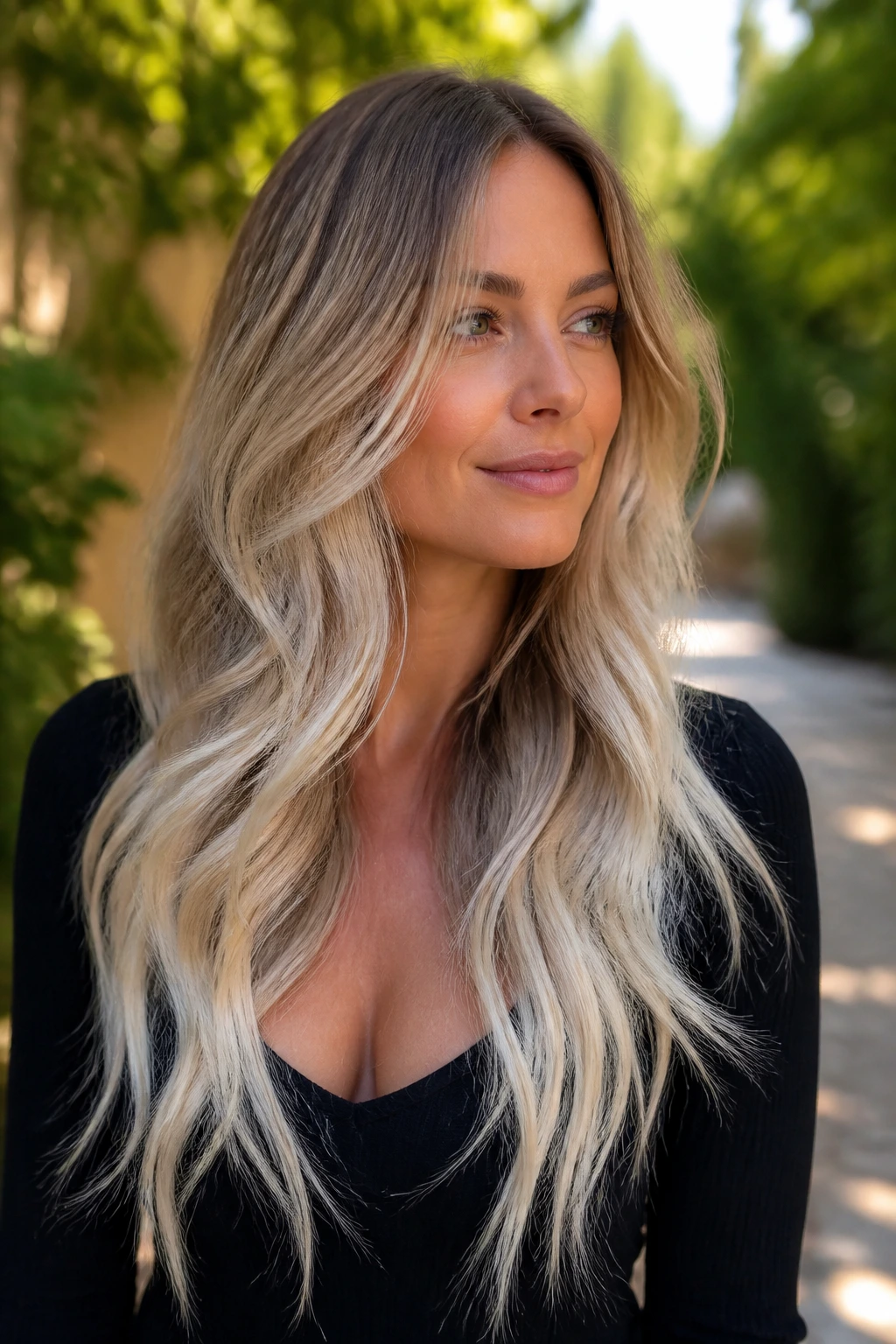
You do not need an allover platinum blonde to get drama. In fact, on a round face, that can be too much of a good thing.
What works better is a darker blonde or light brown root that melts into pale platinum only at the bottom third of the hair. That way the eye travels down instead of getting trapped around the cheeks. It also looks cleaner on long layers, because the layers stop the blonde from turning into one wide block of color.
This one does ask a little more from you at the sink. Platinum ends need toning, and they can go dull fast if you pile on purple shampoo. Use it sparingly. Let the blonde stay bright, not chalky.
6. Sandy Blonde Fade on Long Layers
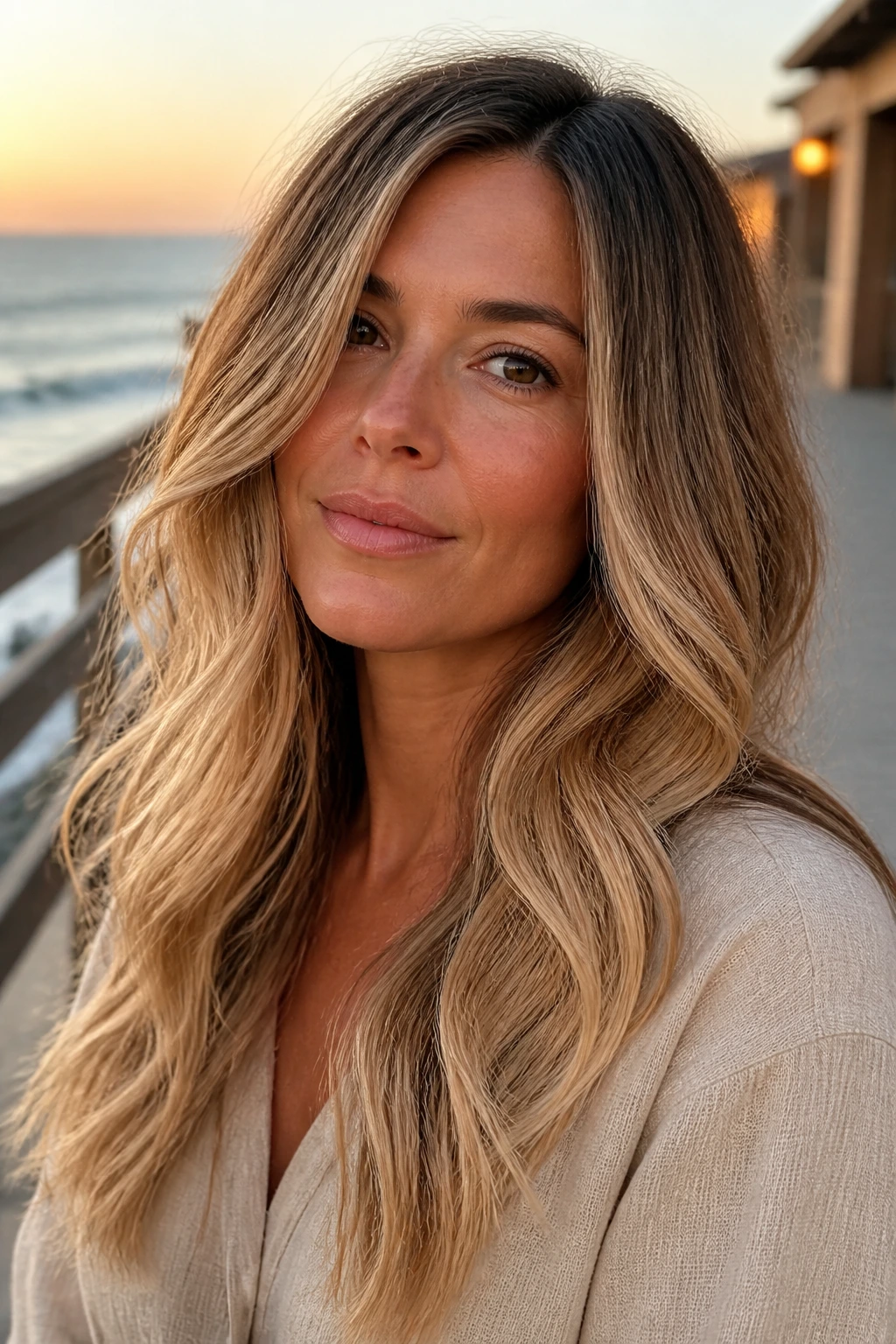
Sandy blonde is one of those shades that never tries too hard. It sits between beige and gold, which makes it easy to wear on a round face without drawing too much attention to the sides.
Long layers help the most here. They keep the hair moving vertically, especially if the ends are a touch lighter than the mids. Ask your stylist to start the fade lower, around the cheek-to-chin area, not right at the temple. That little shift makes the difference between “soft” and “puffy.”
I like this look on hair that already has a bit of natural wave. Air-dry it with a leave-in cream, then twist two front sections away from the face while it dries. Nothing fussy. Just enough shape to stretch the silhouette.
7. Bright Money Piece and Lived-In Ends
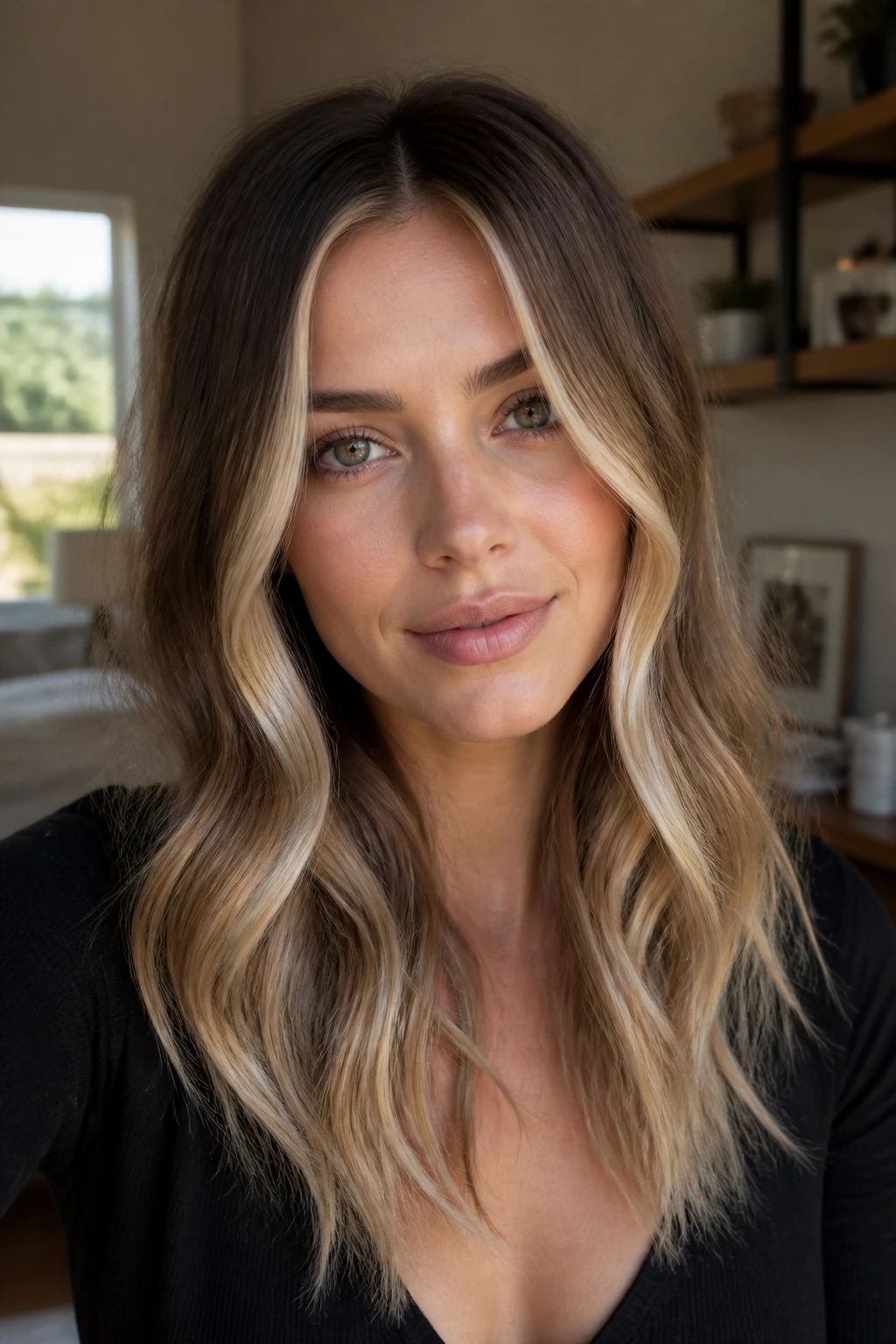
A bright money piece can work on a round face if it stays narrow and low enough. The point is not to flood the entire front with light. The point is to create two slim vertical lines that frame the face and keep the eye moving.
Where the Brightness Belongs
Ask for the lightest ribbons to begin around lip to chin level, not at the hairline. That keeps the contrast from sitting right at the temples. The rest of the ombre can stay softer and more blended, which makes the front pieces do the work.
- Keep the money piece slim, not chunky.
- Let the ends stay a little brighter than the mids.
- Style with a loose bend so the front pieces fall straight enough to lengthen.
Good rule: if the front looks wider than the rest of the cut, it’s too much light.
8. Mushroom Blonde Ombre for Soft Contrast
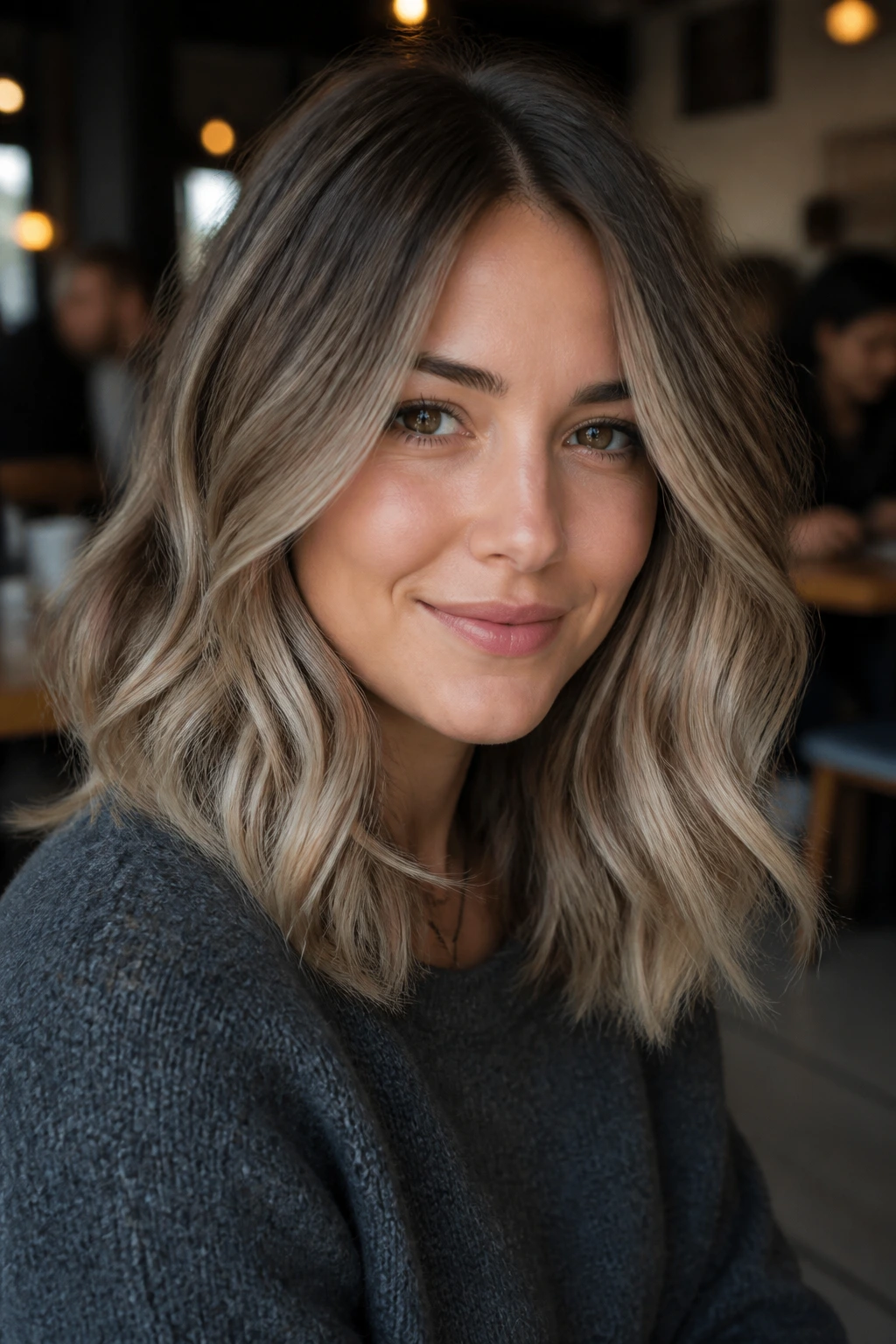
Mushroom blonde is one of my favorite shades when someone wants blonde without the cheerfulness of a warm gold. It has that smoky beige tone that feels grounded, and on a round face it can look quietly lean.
The darker, cooler root shadow is doing a lot here. It keeps the top from puffing out visually. Then the mids shift into a muted blonde that feels soft instead of stripey. The ends can be the lightest part, but they should still stay inside the beige family. If they go too pale too soon, the contrast gets loud fast.
This style is especially nice on medium-length cuts with a bit of texture. It reads relaxed, not stiff. That matters.
9. Vanilla Blonde on a Feathered Shag
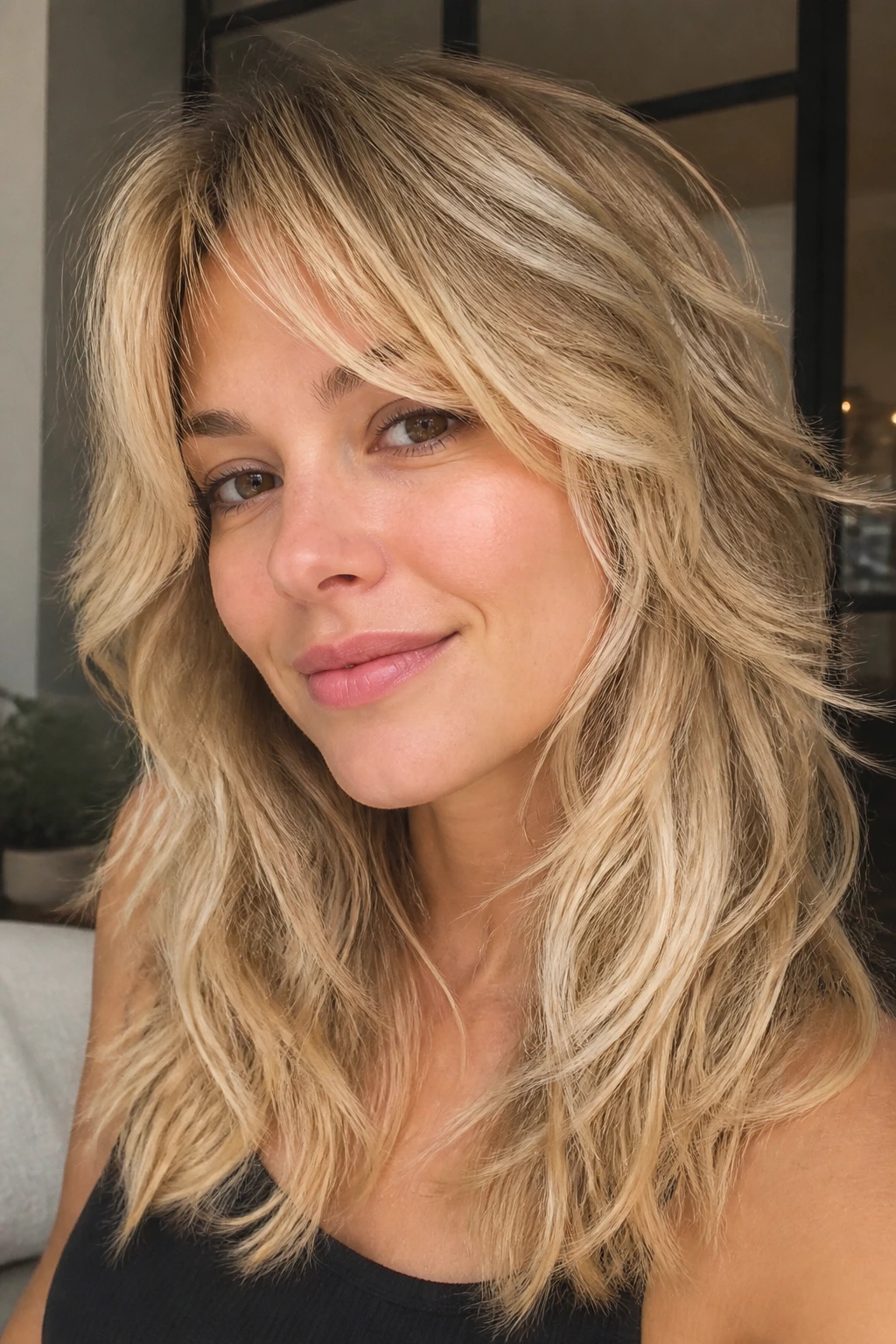
A shag gives you movement before color even enters the room. That’s why vanilla blonde works so well with it.
The feathered layers break up the outline of the haircut, and the ombre can follow those layers down in soft, pale ribbons. On a round face, that broken shape helps more than a smooth, even curtain of hair. You want the outline to feel a little uneven in a good way. Not messy. Just not round.
Vanilla blonde is light, creamy, and clean at the ends, while the root stays soft enough to keep the cut from looking flat. Use a texture spray at the mid-lengths and scrunch the ends a little. The slight roughness gives the face more length than a polished wave would.
10. Golden Blonde on a Butterfly Cut
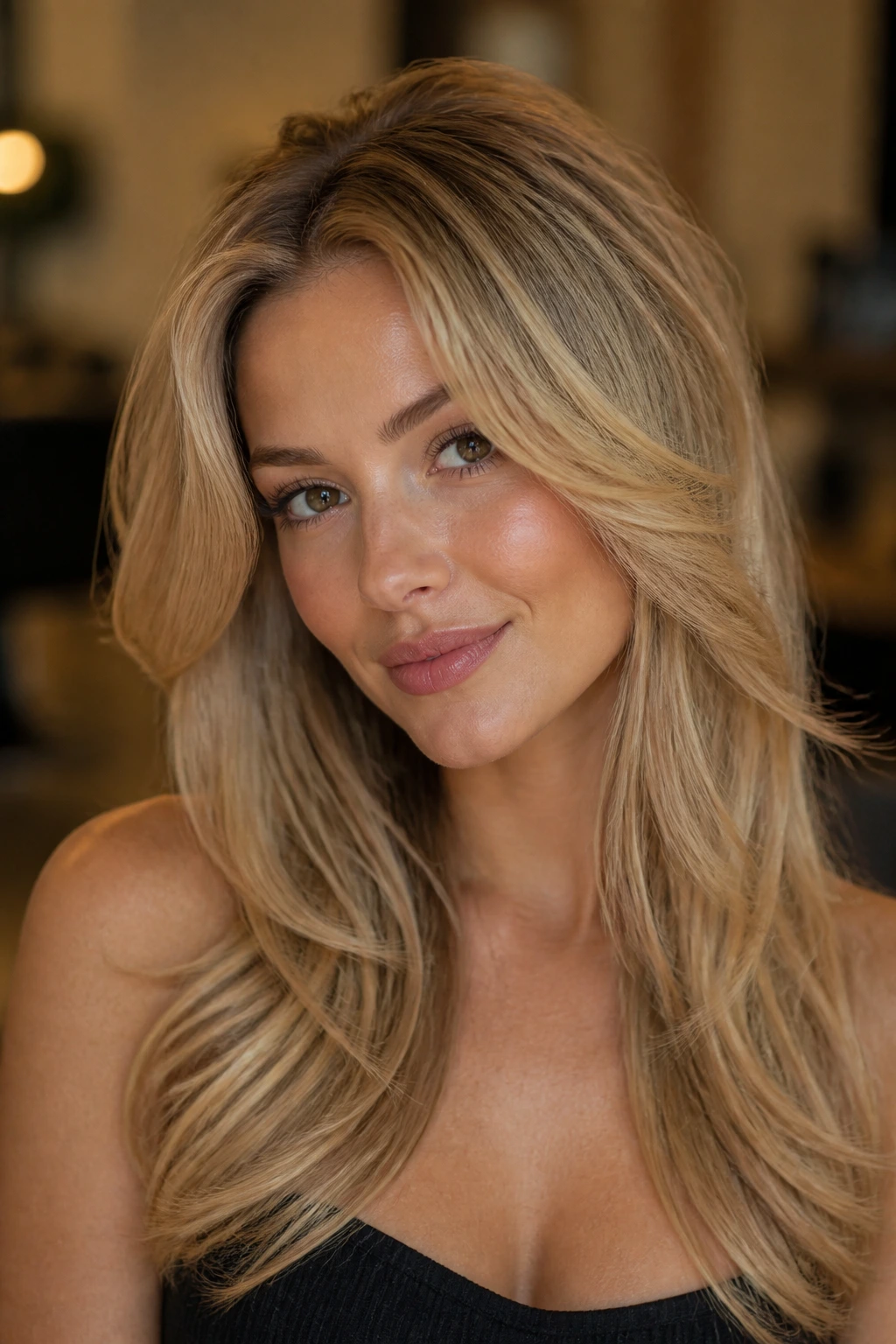
The butterfly cut was made for people who want lift near the crown and length through the bottom. For a round face, that matters a lot.
Golden blonde gives the style warmth, and the layered shape gives it lift without width. The shorter top layers float around the cheekbones, while the longer lower layers stay below the jaw and collarbone. That split is what keeps the face looking open and long.
Styling Notes
- Blow-dry the crown up and back for height.
- Keep the front pieces longer than the shortest top layers.
- Let the ends flick out a little instead of curling inward.
A butterfly cut can turn heavy hair into something airy fast. The blonde just needs to follow the shape, not fight it.
11. Beige Blonde with Rounded Face-Framing Layers
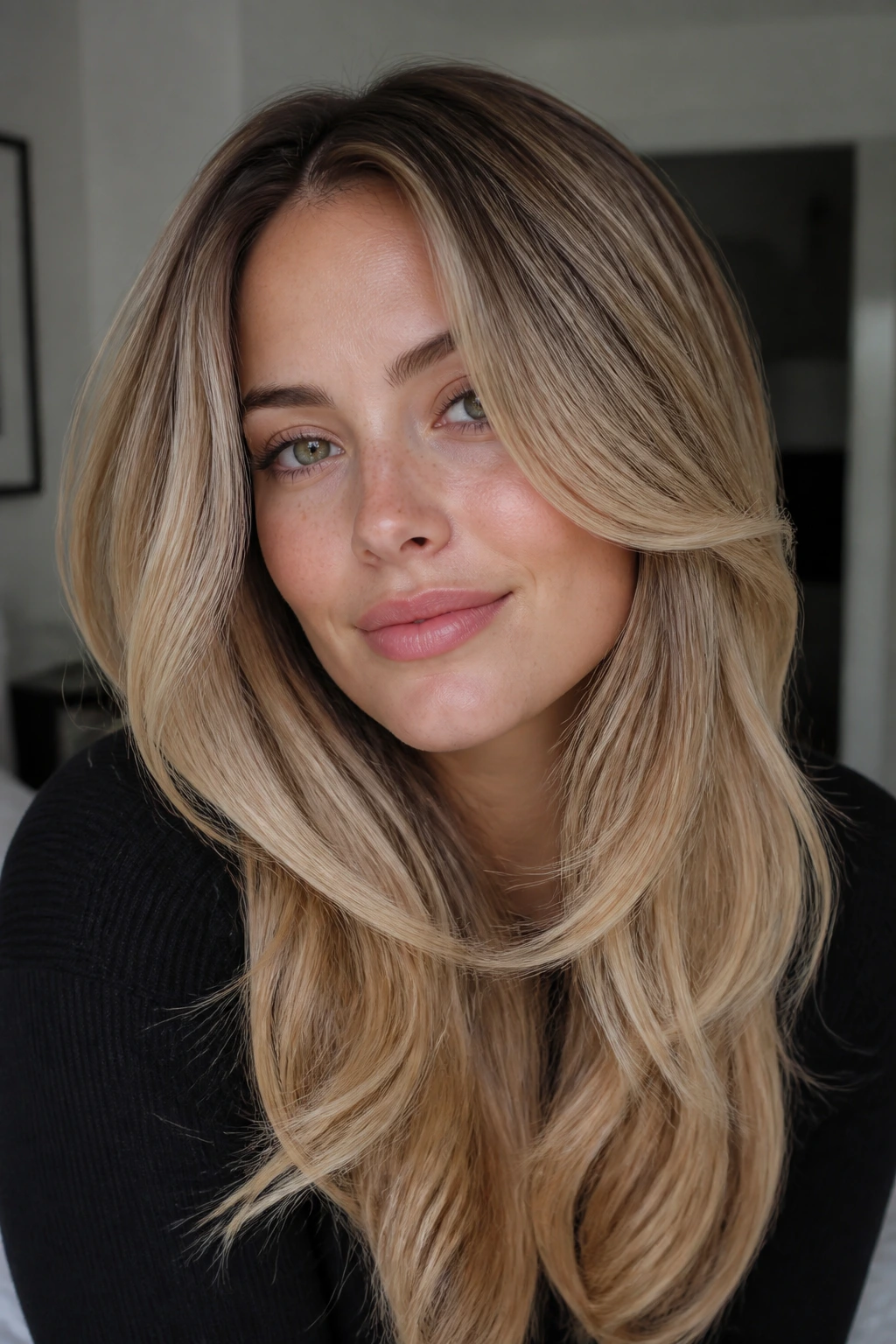
Rounded face-framing layers sound like they would add width, but when they’re cut the right way, they do the opposite. The key is that the curve should fall below the cheekbone instead of right across it.
Beige blonde keeps the whole look neutral and soft. I like this especially on hair that tends to feel bulky near the jaw. The color can start darker at the roots, then blend into a soft beige that brightens only once the front pieces start dropping lower. That gives the face a longer outline.
If your hair is thick, ask for the layers to be thinned a touch through the mids. Not too much. You still want body. Just less bulk where the face is widest.
12. Icy Blonde Ends on a Long V-Cut
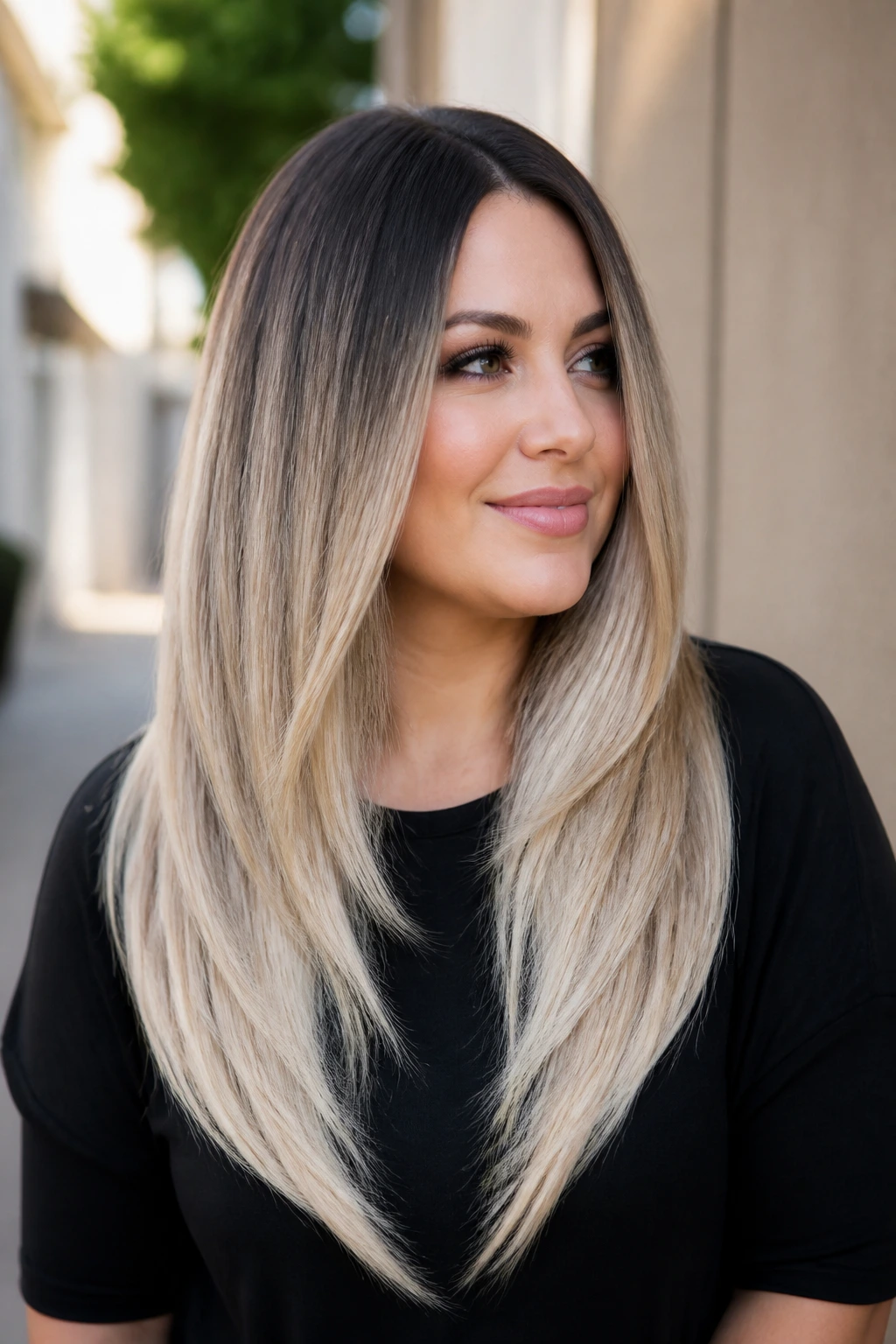
An icy blonde ombre can look sharp on a round face if the cut underneath gives it a point. That’s where the V-cut comes in.
What the V-Shape Does
The back gets a soft taper, so the hair narrows toward the ends instead of sitting in one heavy line. That shape pulls the eye downward. It also helps the icy ends look intentional rather than floaty.
- Keep the front pieces long and sleek.
- Start the lightest blonde well below the chin.
- Use a shine serum on the ends so the tone looks clean, not dry.
This is not a shy look. It’s crisp. The darkness at the top makes the icy ends feel even brighter, and the V-shape keeps the whole style from feeling boxy.
13. Buttery Blonde Ombre on a Blunt Lob
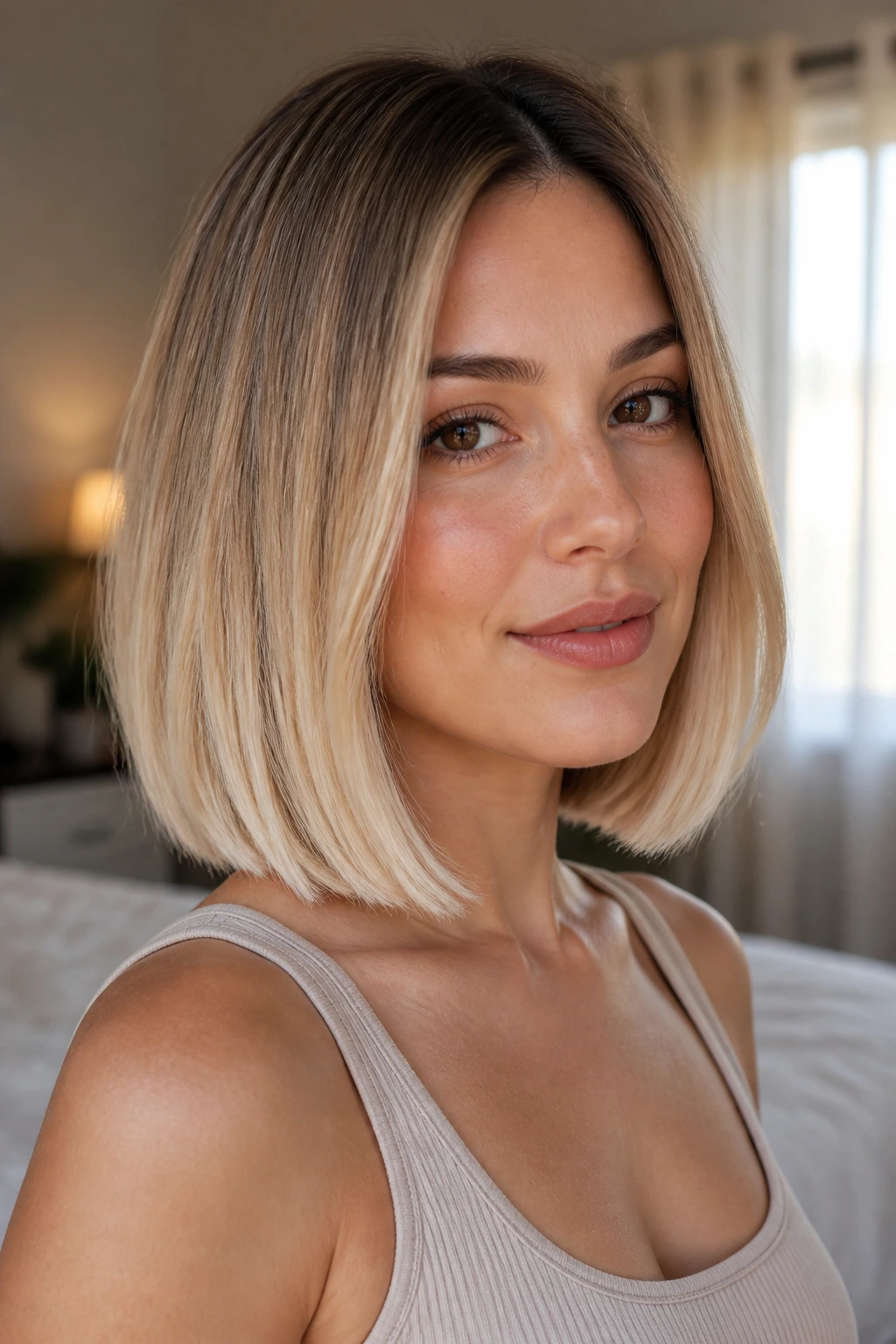
A blunt lob is a strong choice for a round face, and that’s exactly why I like it. The clean edge gives the haircut structure, while the buttery blonde keeps it from feeling severe.
The blonde should melt gradually from a deeper root into a warm, creamy finish. What you do not want is a harsh line at the cheek. Keep the transition low and soft. The blunt edge then sits just below the jaw, which gives the face a tidy frame without widening it.
This works especially well if your hair is fine. The blunt cut makes the ends look fuller, and the buttery tone adds warmth without too much visual noise. One of those styles that looks simple until you realize how much is happening underneath.
14. Pearl Blonde with Wispy Bangs
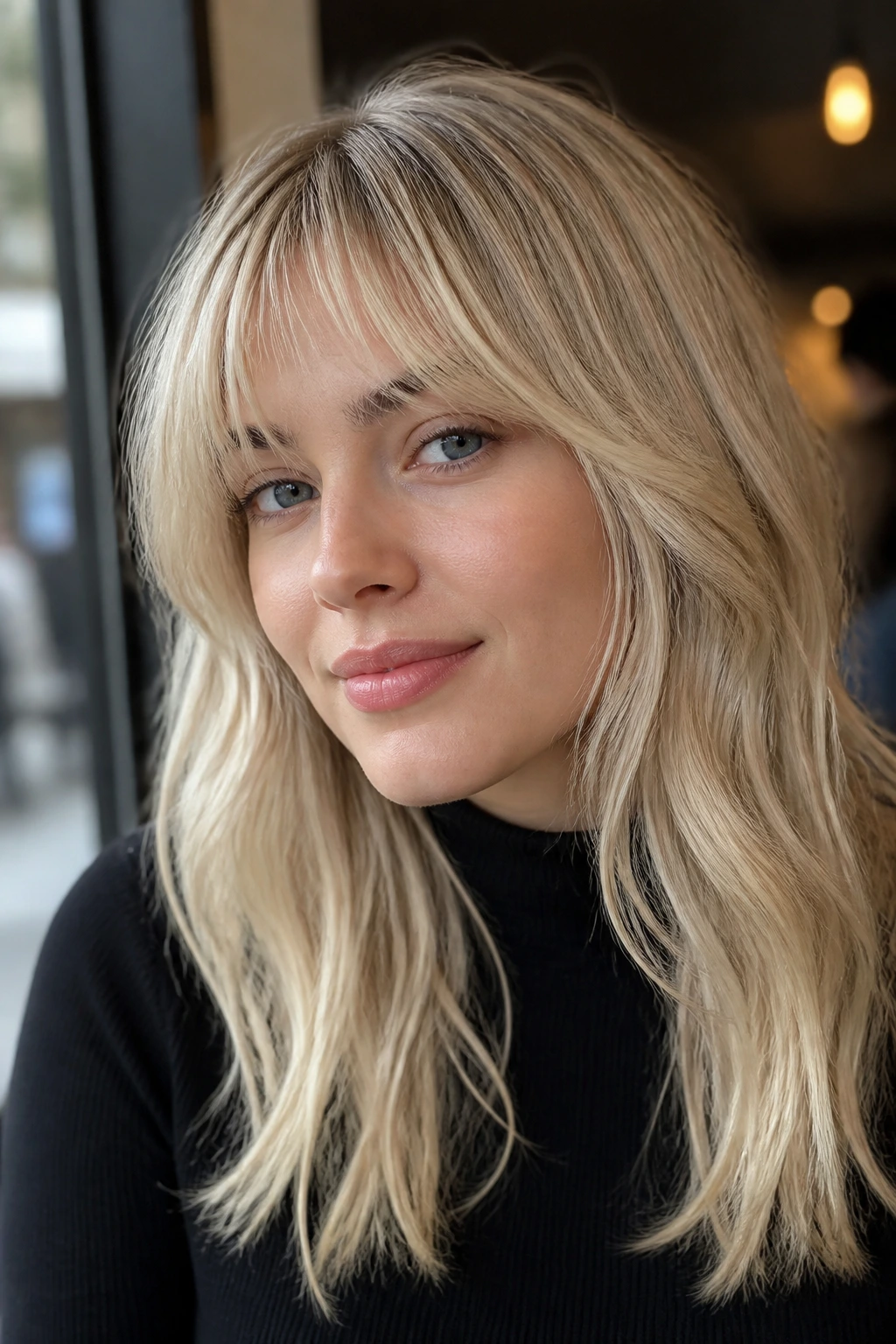
Pearl blonde should look cool and clean, not chalky. When it’s paired with wispy bangs, the effect is delicate in a useful way.
The bangs skim the forehead instead of closing off the face. That matters on a round face because heavy bangs can shorten the upper half too much. Wispy ones leave little bits of skin showing through, and that keeps the face open. The ombre can start softly at the roots and get brighter under the ears, where it won’t push the cheeks outward.
I’d keep this one airy in the styling too. A soft blowout, a bent end, maybe a little root lift. That’s enough. The pearl shade does the rest.
15. Bronde-to-Blonde Gradient on Wavy Hair
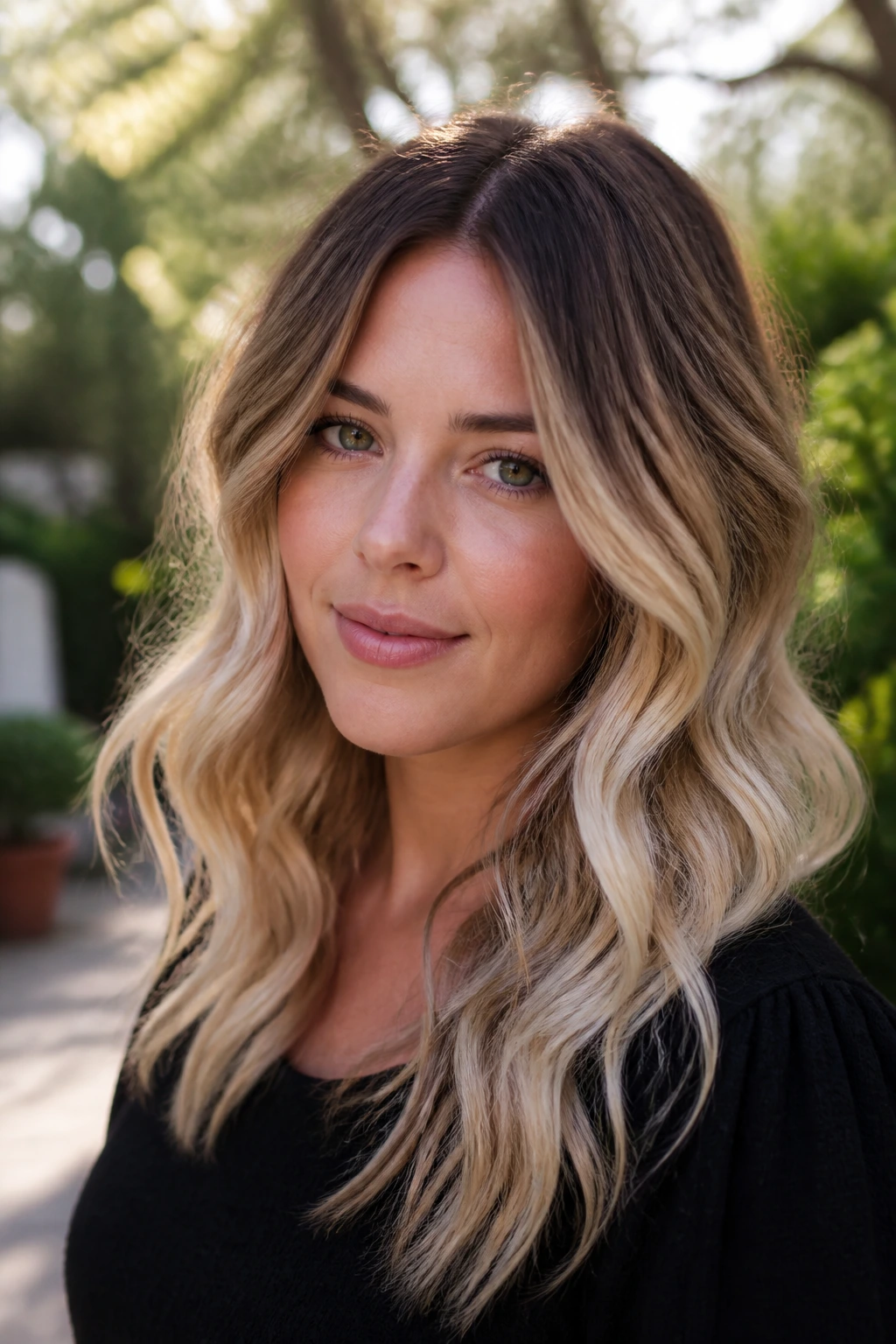
Unlike a high-contrast ombre, a bronde-to-blonde gradient feels slow and natural. That’s useful if you want the round face to look a touch longer without calling attention to the color shift.
The base stays brown-blonde or dark blonde, then the mids soften into beige, and the ends land in a lighter cream. On wavy hair, that gradual shift is especially flattering because the bends create vertical movement. The waves keep the hair from spreading outward too much, and the color rides along the shape instead of sitting on top of it.
This is one of the easier versions to wear between salon visits. The roots blend back in without looking blunt. No harsh line. No drama.
16. Sunlit Blonde on a Textured Pixie Bob
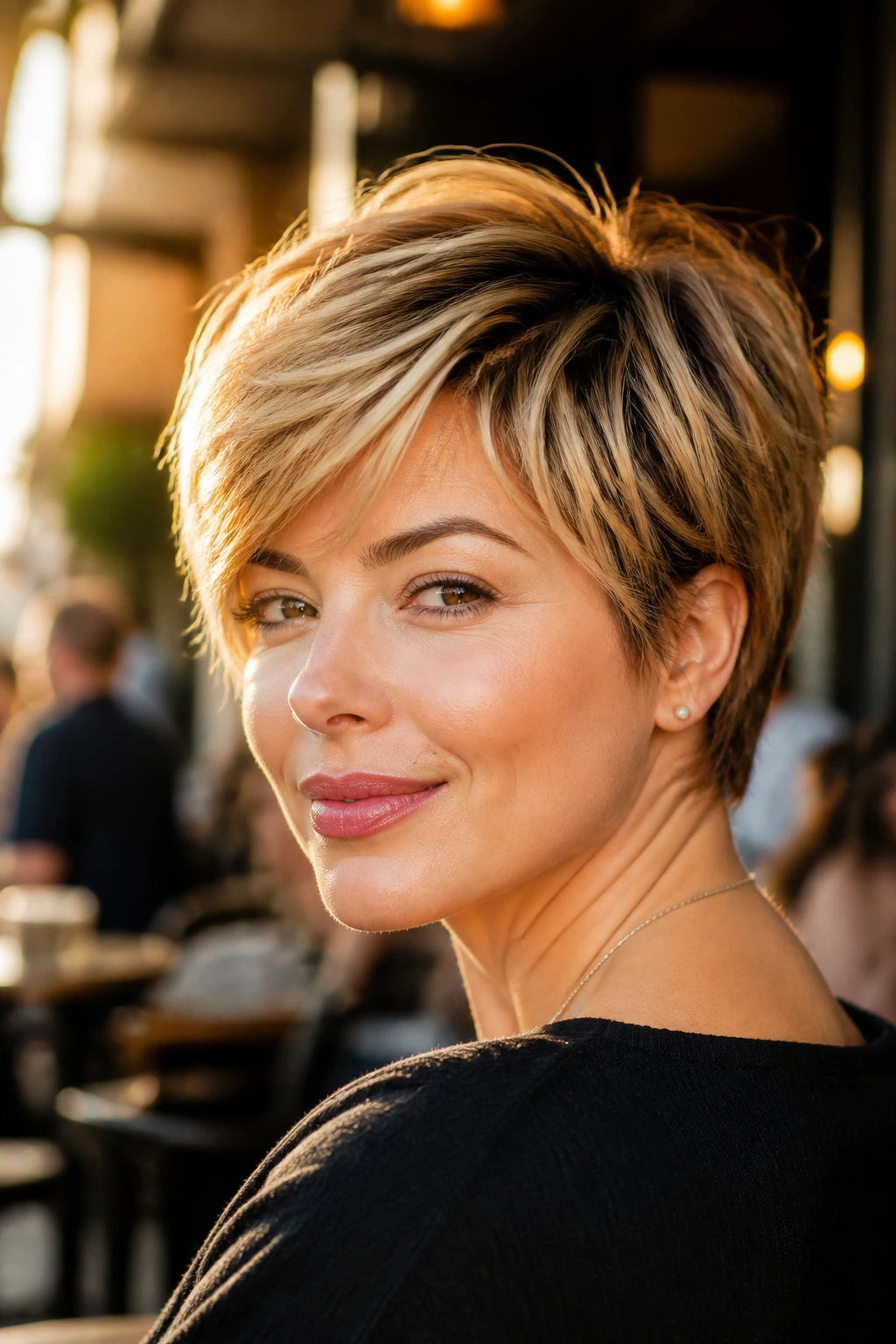
Short hair can flatter a round face when the crown has lift and the sides stay close. That’s the thing people miss.
A textured pixie bob with sunlit blonde ends gives you height up top and movement at the bottom. The blonde should live mostly on the top layers and the ends, not puff out through the sides. Keep the fringe soft and slightly angled if you can. Straight-across, heavy bangs can make the face feel shorter.
This cut is sharp in a good way. It feels fresh, a little playful, and it doesn’t hide the face. If you like short hair but want the shape to feel slimmer, this is one to save.
17. Cocoa Root Stretch to Creamy Ends
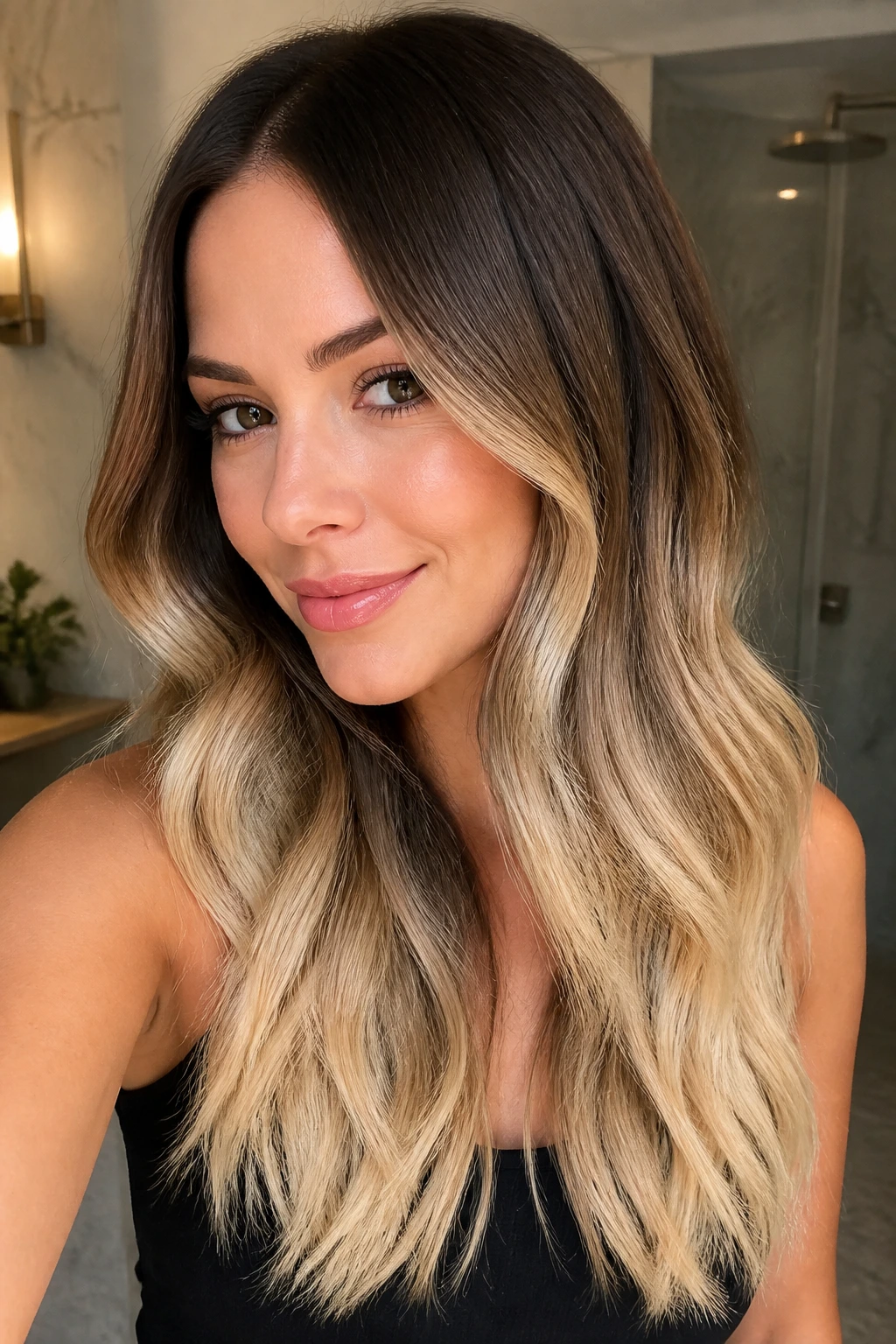
This is the version I like for thick hair that tends to hold too much width near the cheeks. The deeper cocoa root gives the style weight at the top, which sounds odd until you see how well it keeps the shape in line.
The lightest blonde belongs at the bottom, where the hair already wants to fall. Creamy ends, not frosty ones, keep the look soft. If you push the blonde too high, the whole cut can balloon out. Leave the root stretch long and let the transition happen slowly.
A smooth blow-dry works best here. Too much texture can make thick hair spread. A little bend at the ends is enough.
18. Champagne and Cream Balayage Ombre
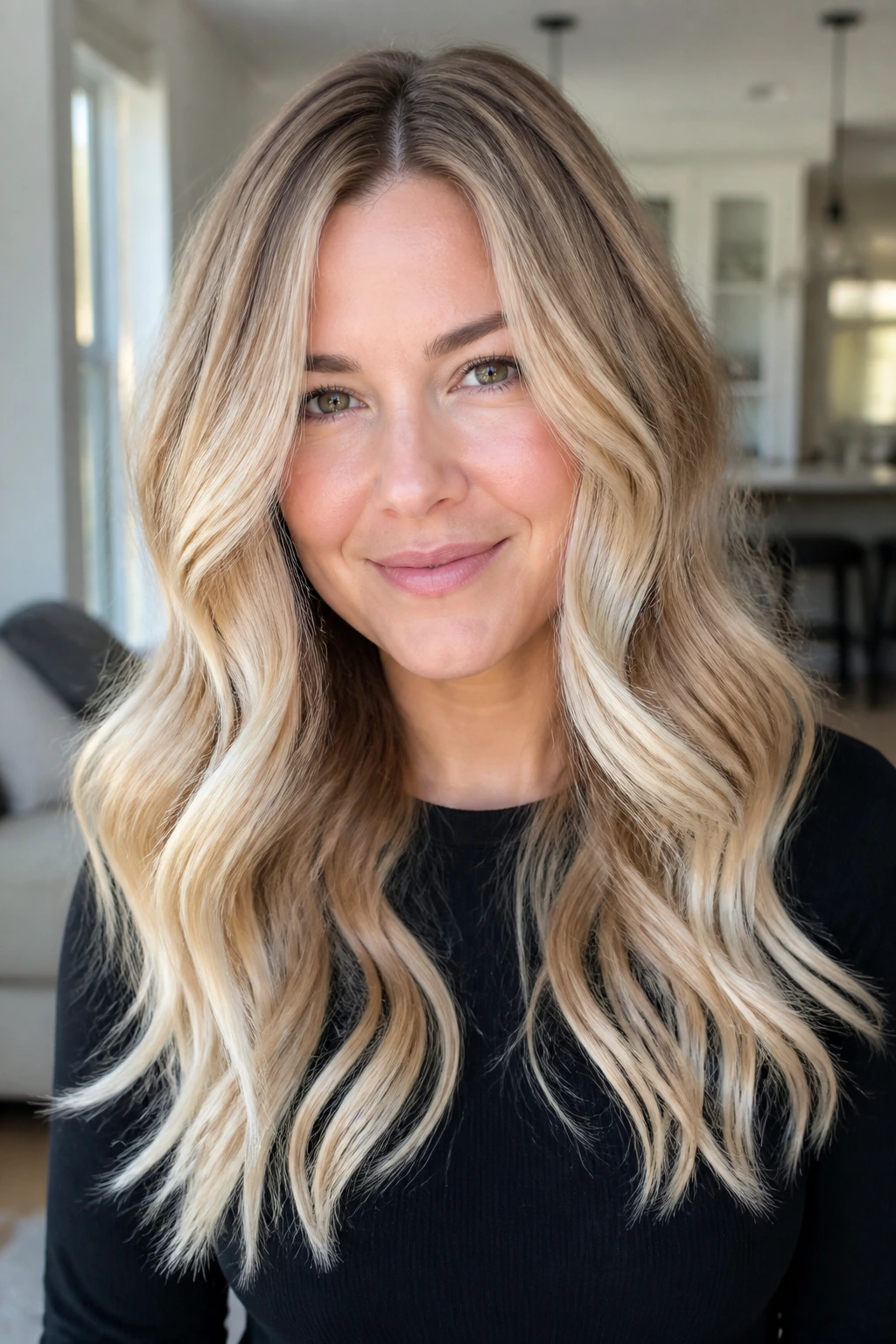
Why pick one blonde when two shades can do the shaping for you? Champagne and cream together make the color feel richer, and on a round face they stop the hair from looking flat.
Two Tones, Two Jobs
Champagne can sit nearer the face, while cream lives lower in the lengths. That split keeps the brightest blonde from pooling around the temples. It also gives the ends more presence, which helps the eye fall lower.
- Use champagne for the softer face-framing pieces.
- Keep cream for the lower half and ends.
- Let balayage strokes stay thin near the cheeks.
This is a nice choice for layered hair that needs a little movement without looking streaky. It has enough contrast to feel alive, but not so much that it shouts.
19. Smoked Blonde on Shoulder-Length Waves
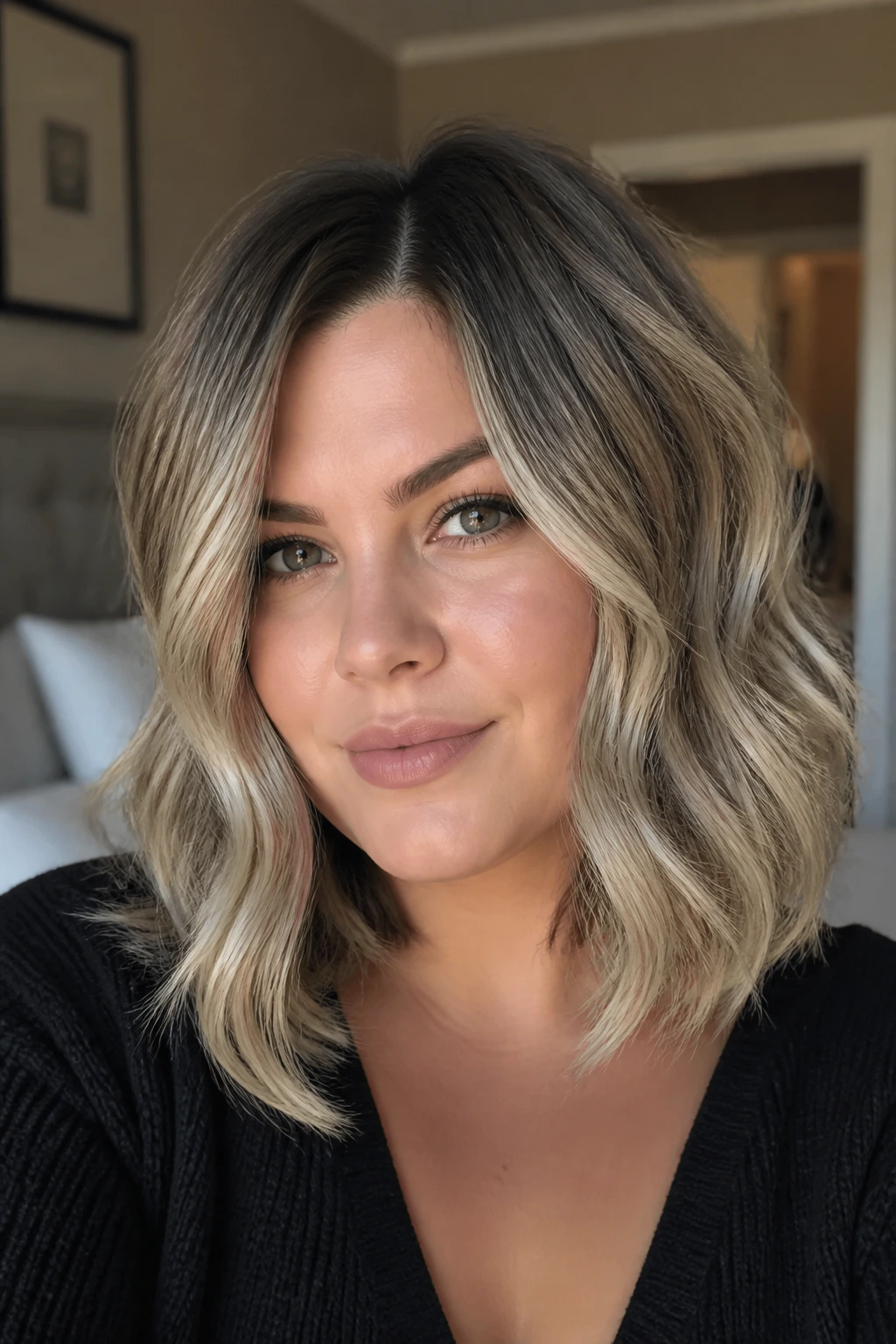
Smoked blonde has a little edge to it. The color sits in that muted space between beige, ash, and soft taupe, which can be a gift on a round face.
Shoulder-length waves are the right partner. The length skims past the cheeks, and the waves keep the style from turning boxy. I like the roots darker here, with the blonde opening only once the hair drops below the cheekbone. The cool tone does a neat little trick too: it makes the hair feel slimmer and more controlled.
This is not a sunny, beachy blonde. It’s cooler, quieter, and a bit more polished. Good if you want your hair to look intentional without being fussy.
20. Soft Gold Ombre with Long Curtain Pieces
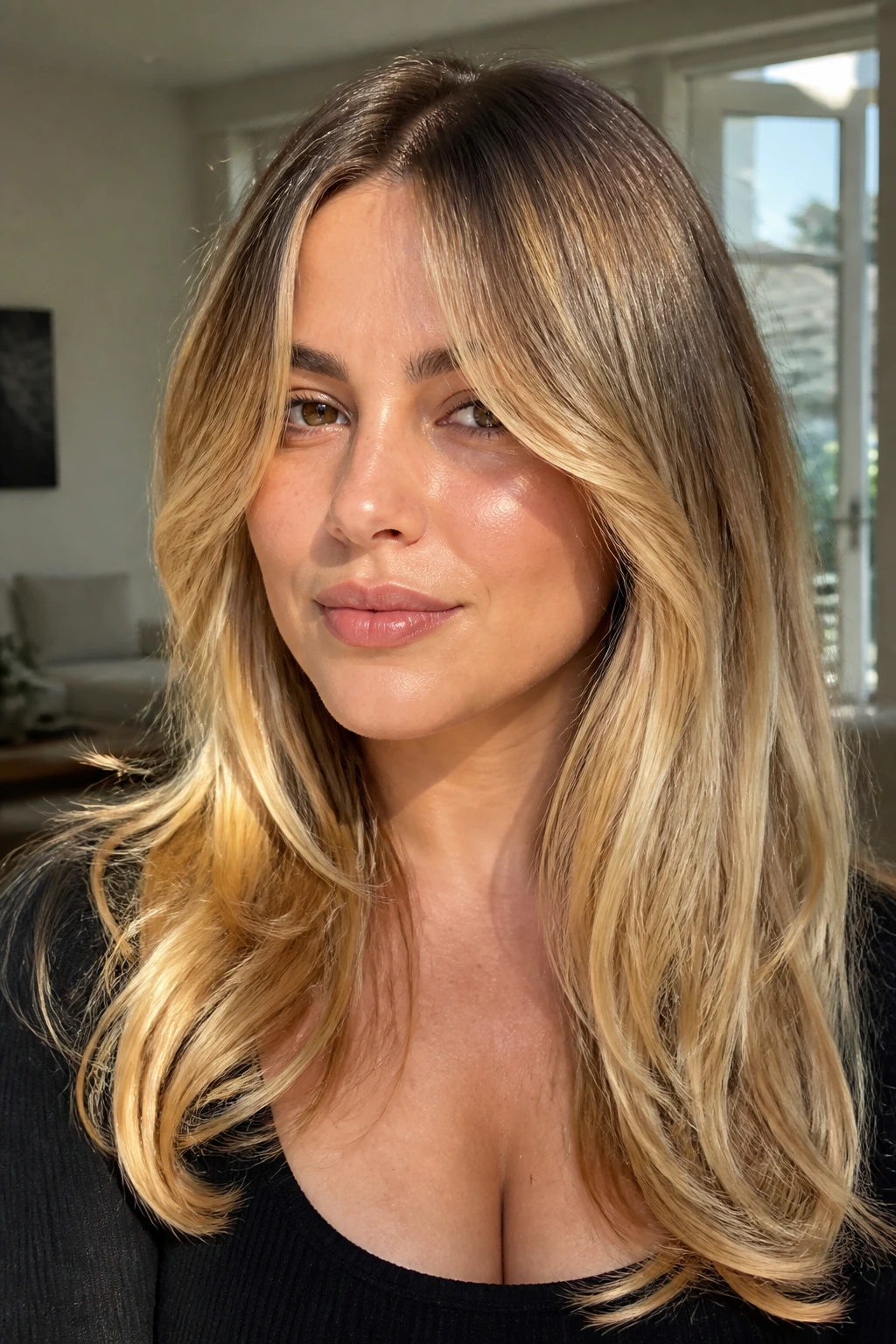
If you like warmth but still want shape, soft gold is a smart place to land. The tone is rich enough to glow, but it doesn’t have the harsh brightness that can widen the cheeks.
Long curtain pieces are the star here. They should start near the cheekbone, then sweep down below the jaw and settle around the collarbone. That diagonal line is doing more than the color is. It stretches the face in a way a center-heavy style never will.
How the Front Pieces Should Fall
Keep the shortest point of the curtain fringe longer than you think you need. Around nose level is a solid starting place. The rest can drift down in soft gold strands that blend into the ombre.
The result feels soft, warm, and long. Exactly where you want the eye to go.
21. Bright Blonde Ends on a Side-Swept Cut
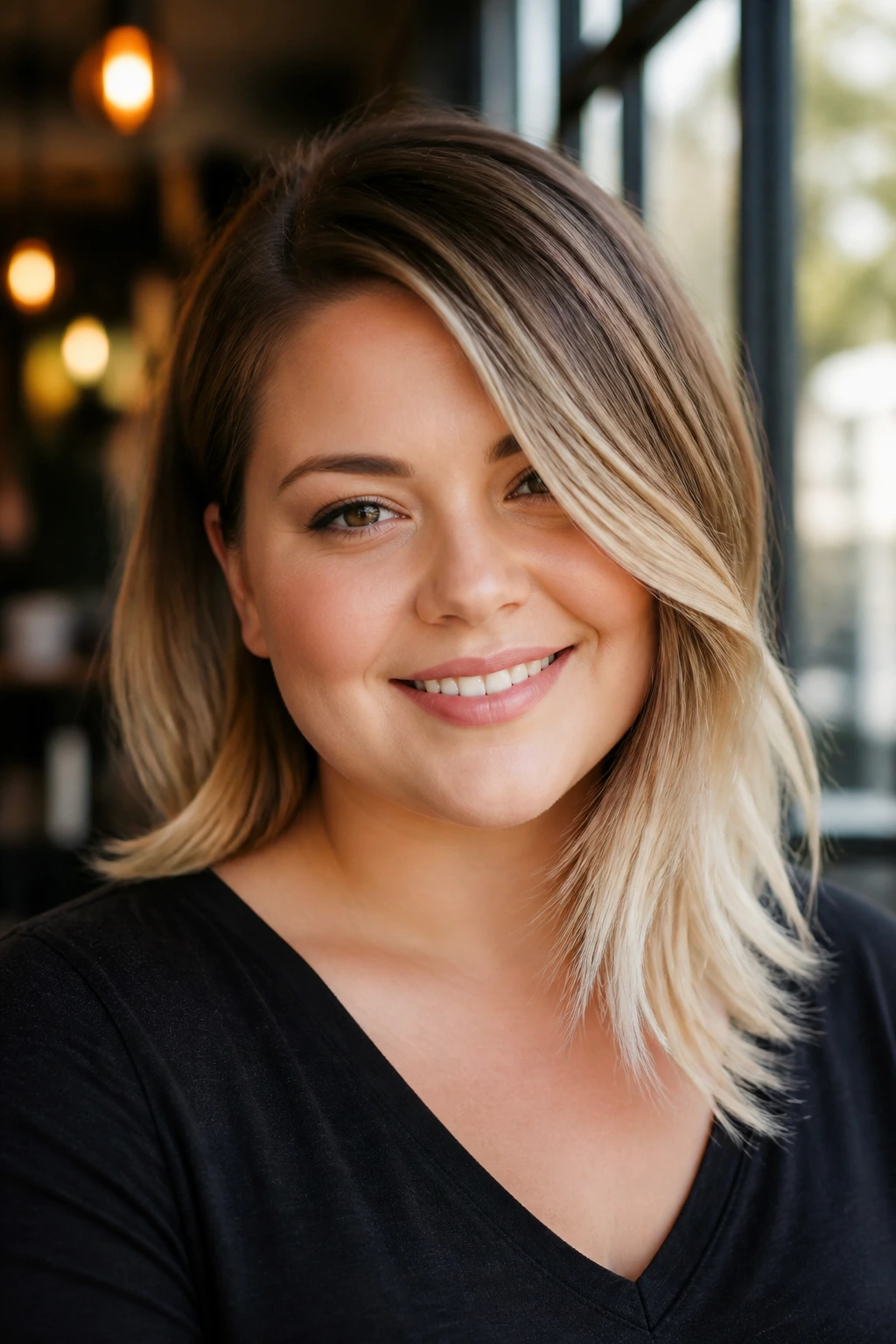
A side part is not a backup plan on a round face. It can be the whole solution.
The sweep creates a diagonal from the crown down toward the opposite cheek, which breaks up the symmetry that makes roundness stand out. Bright blonde ends then finish the line at the bottom, so your eye keeps moving. I’d keep the upper section darker and the brighter blonde lower, almost like a spotlight that lands where the hair starts to narrow.
This works especially well if you like some drama but don’t want a chunky money piece. The side-swept front gives shape, and the ends carry the light.
22. Almond Blonde on Loose Curls
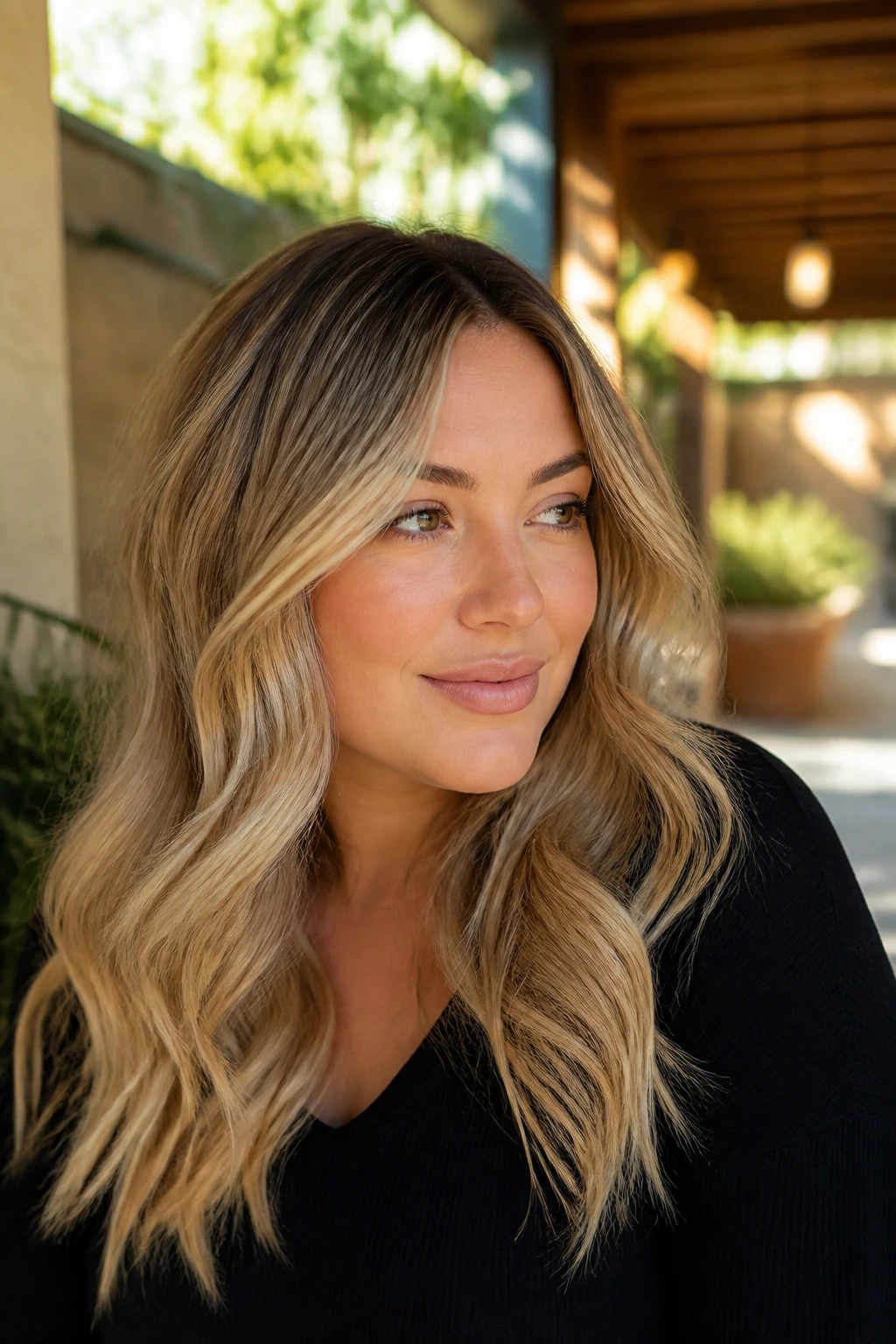
Loose curls and a round face can get along beautifully when the curls are stretched a touch and the blonde lives in the lower half of the length. Almond blonde helps because it has that soft, nutty warmth without going orange.
The big mistake here is placing the lightest pieces too close to the cheeks. Better to keep them underneath and toward the ends, where the curls fall in longer spirals. That way the color lengthens the shape instead of adding width.
Use a medium barrel and leave the ends slightly straighter if your curls are tight. You want movement, not a perfect corkscrew halo. That little bit of looseness changes everything.
23. Dimensional Blonde Ombre with Internal Layers
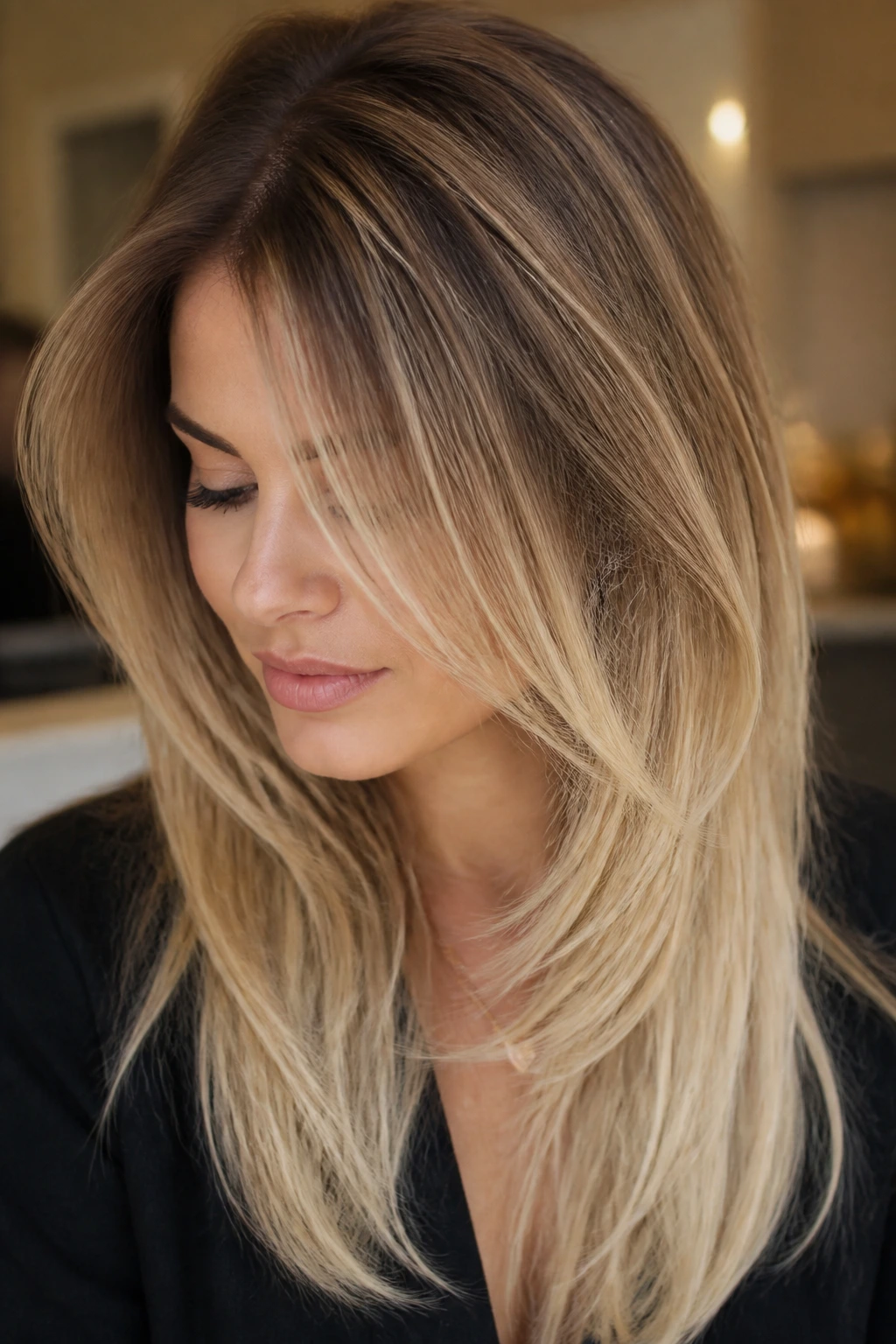
Internal layers are a quiet hero. Nobody sees them straight on, but they stop thick hair from sitting like one solid wall around the face.
Why the Hidden Layers Help
They remove bulk from the inside while keeping the outside shape full. On a round face, that’s useful because the hair can move without spreading too far outward. Add a blonde ombre that gets lighter in the lower lengths, and the whole cut feels lighter on the eyes too.
- Ask for internal layers, not just surface layers.
- Keep the face-framing pieces longer than the rest.
- Let the ends be the brightest zone.
This style is for someone who wants dimension without obvious striping. It looks a little different every time the hair moves, which is half the appeal.
24. Pale Wheat Blonde on a Straight Lob
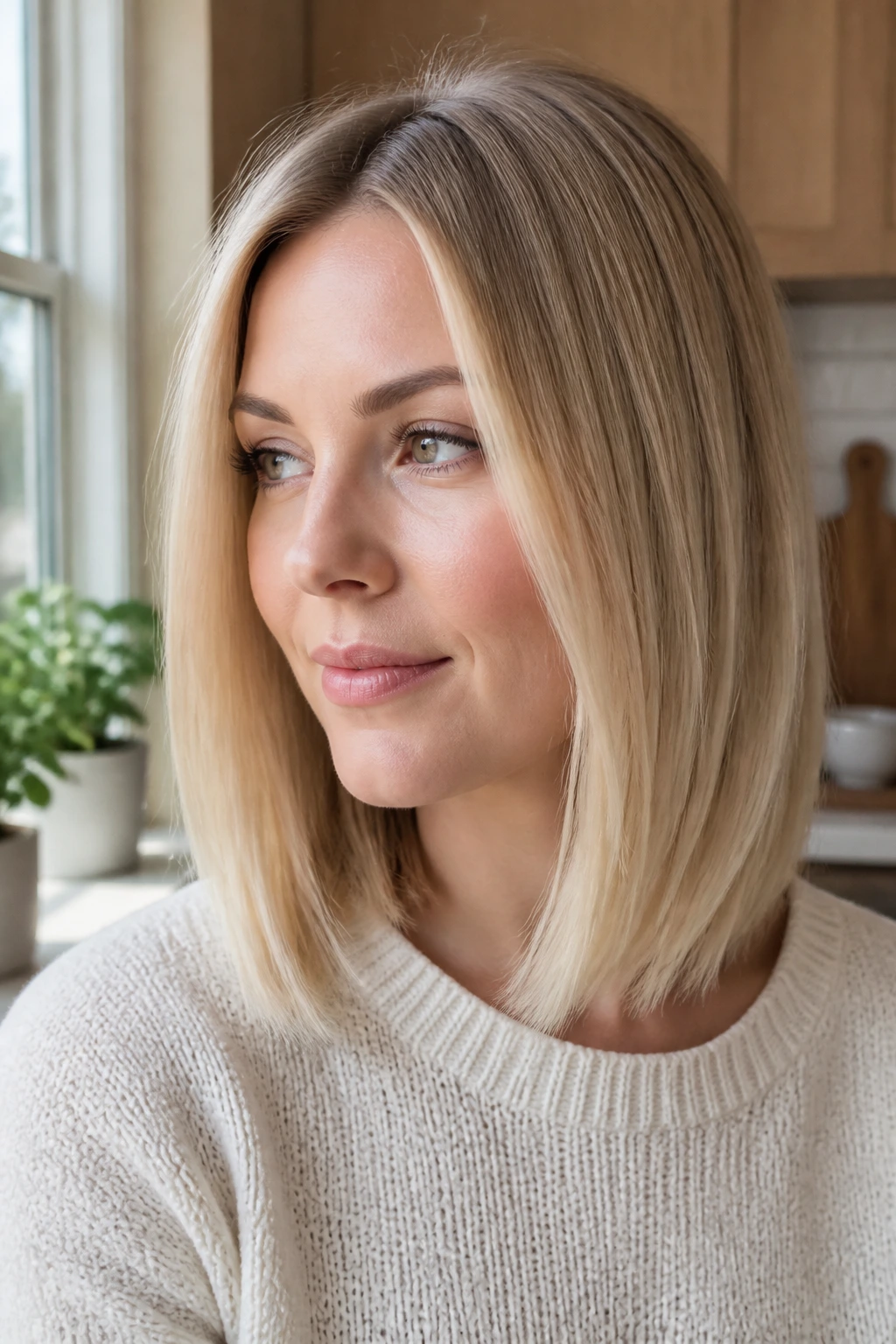
Straight hair and round faces can work together when the cut stays clean and the blonde stays slightly muted. Pale wheat blonde has that gentle, sun-faded feel that keeps things soft.
A straight lob gives you a narrow line from shoulder to shoulder. That’s good. It doesn’t flare out the sides. If the ombre starts too high, the face can look wider, so I’d keep the transition lower and the root deeper. The wheat tone is pale enough to feel bright, but not so icy that it hardens the look.
This is a neat choice if you like hair that falls into place without much fuss. Straight, calm, and a little polished.
25. Honey-Butter Melt on a Round-Brush Blowout
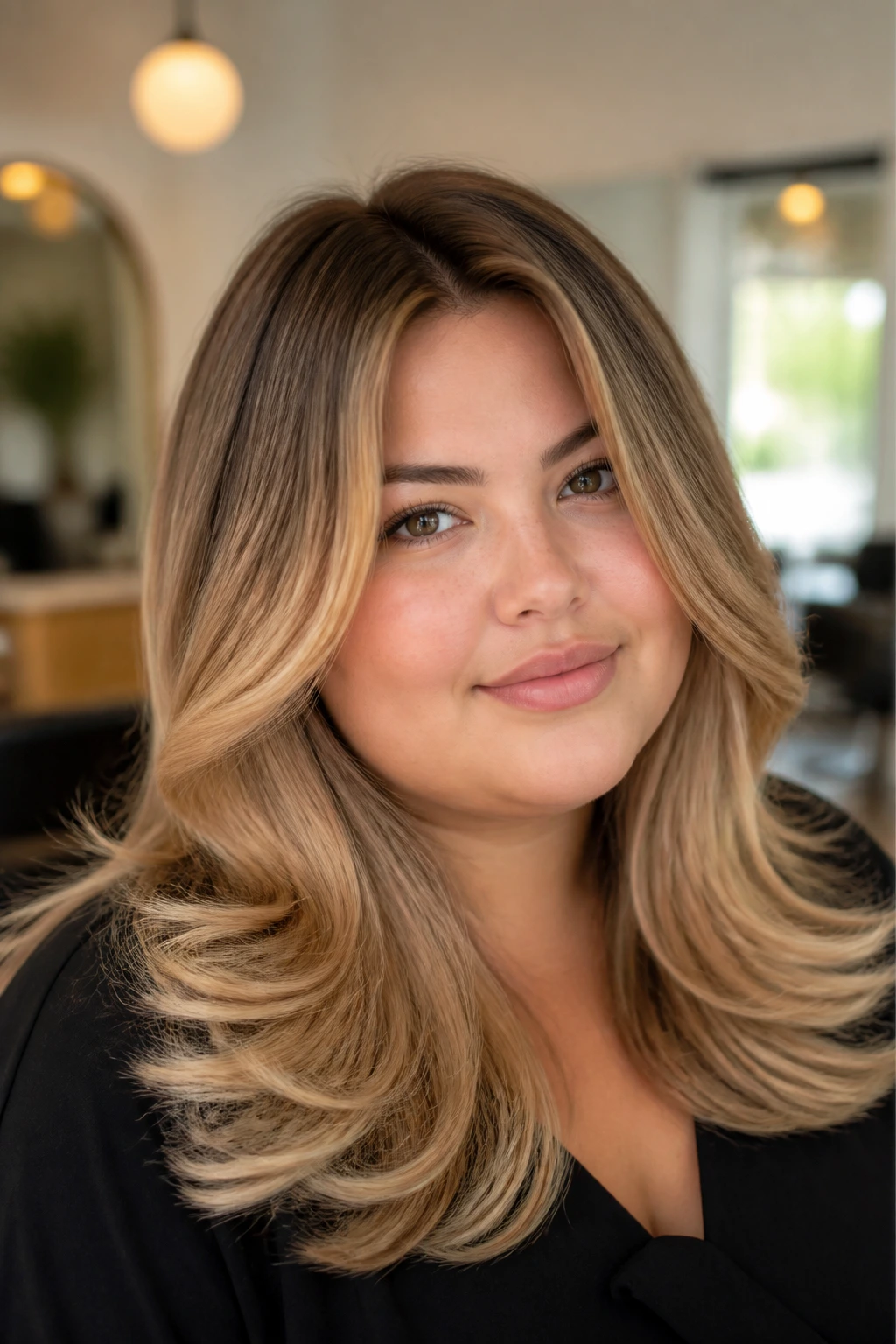
A round-brush blowout is one of the fastest ways to make ombre hair look fuller at the top and narrower at the sides. That makes it a smart match for round faces.
The honey-butter melt should start at a deeper root, then fade into a warm, creamy blonde by the time it reaches the last few inches. The blowout adds bend at the ends, but keep the volume mostly at the crown. Not at the cheeks. That difference matters more than people realize.
If you like a salon finish that still feels wearable, this one is easy to love. The warm tone keeps the hair soft, and the shape does the rest.
26. Frosted Beige Blonde on a U-Cut
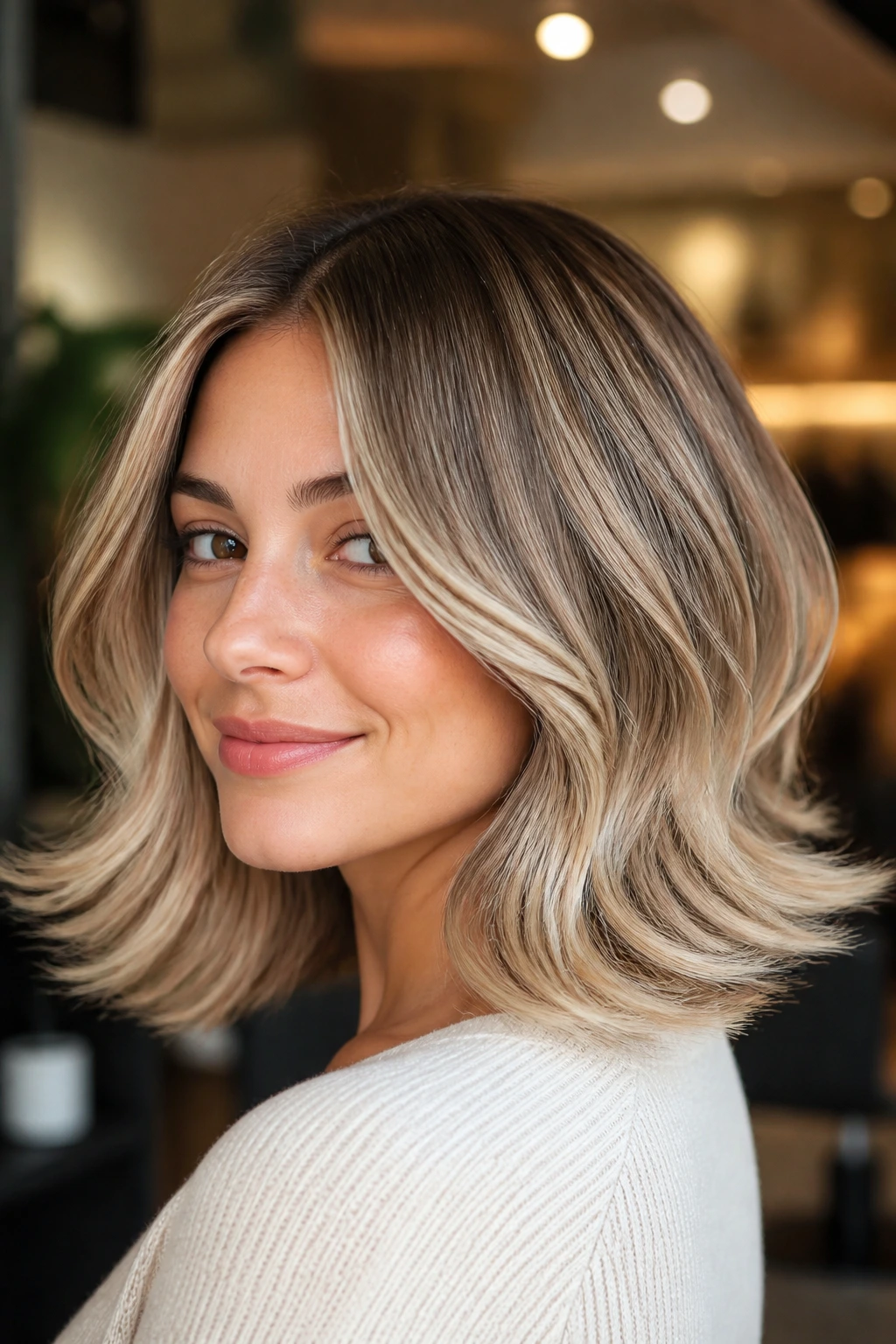
A U-cut gives the back a soft curve, which keeps the length looking smooth instead of boxy. On a round face, that curve is friendlier than a sharp horizontal line.
What the U-Shape Changes
The center back stays a little longer, while the sides taper down gently. That lets the eye move in a downward path. Frosted beige blonde adds a cool, clean finish that keeps the shape from feeling heavy.
- Ask for the shortest front pieces to stay below the chin.
- Keep the brightest blonde away from the temples.
- Use a soft wave or a brush-out bend so the shape flows.
This cut is underrated. It looks quiet on a hanger, then suddenly makes sense when it’s on your head.
27. Toasted Sand Blonde on a Choppy Lob
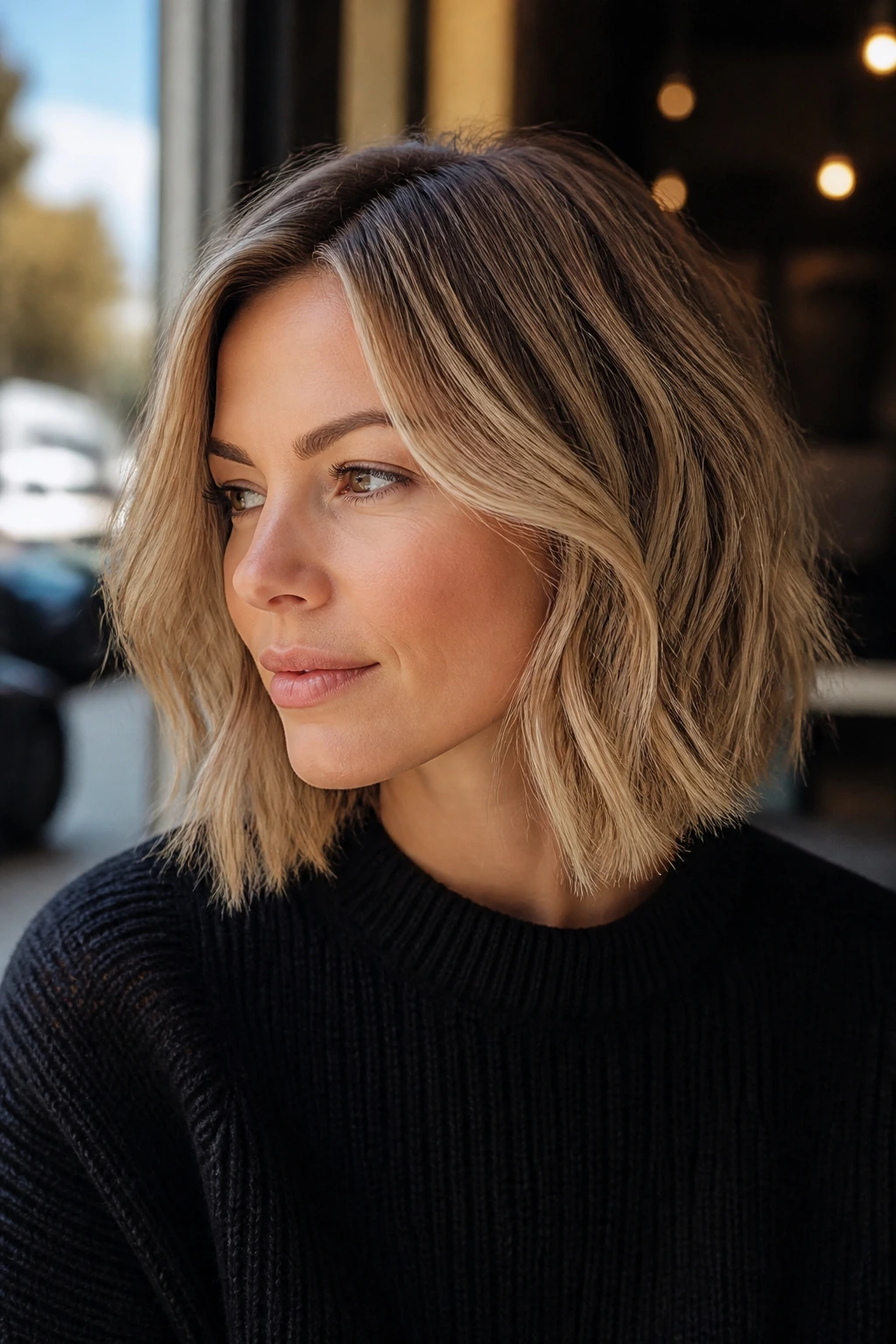
A choppy lob can be better than long layers when fine hair needs help not looking flat. The broken ends stop the cut from turning into one wide shape, which is useful on a round face.
Toasted sand blonde keeps it grounded. Not too gold, not too beige, just warm enough to feel healthy. The ombre can start at a darker root and loosen into the sand tone through the mids, with the brightest ends sitting a little below the jaw. That placement keeps the face open.
I like this one when you want a style with some edge but not actual sharpness. It has texture without chaos.
28. Face-Lengthening Ombre with Extra-Long Front Pieces
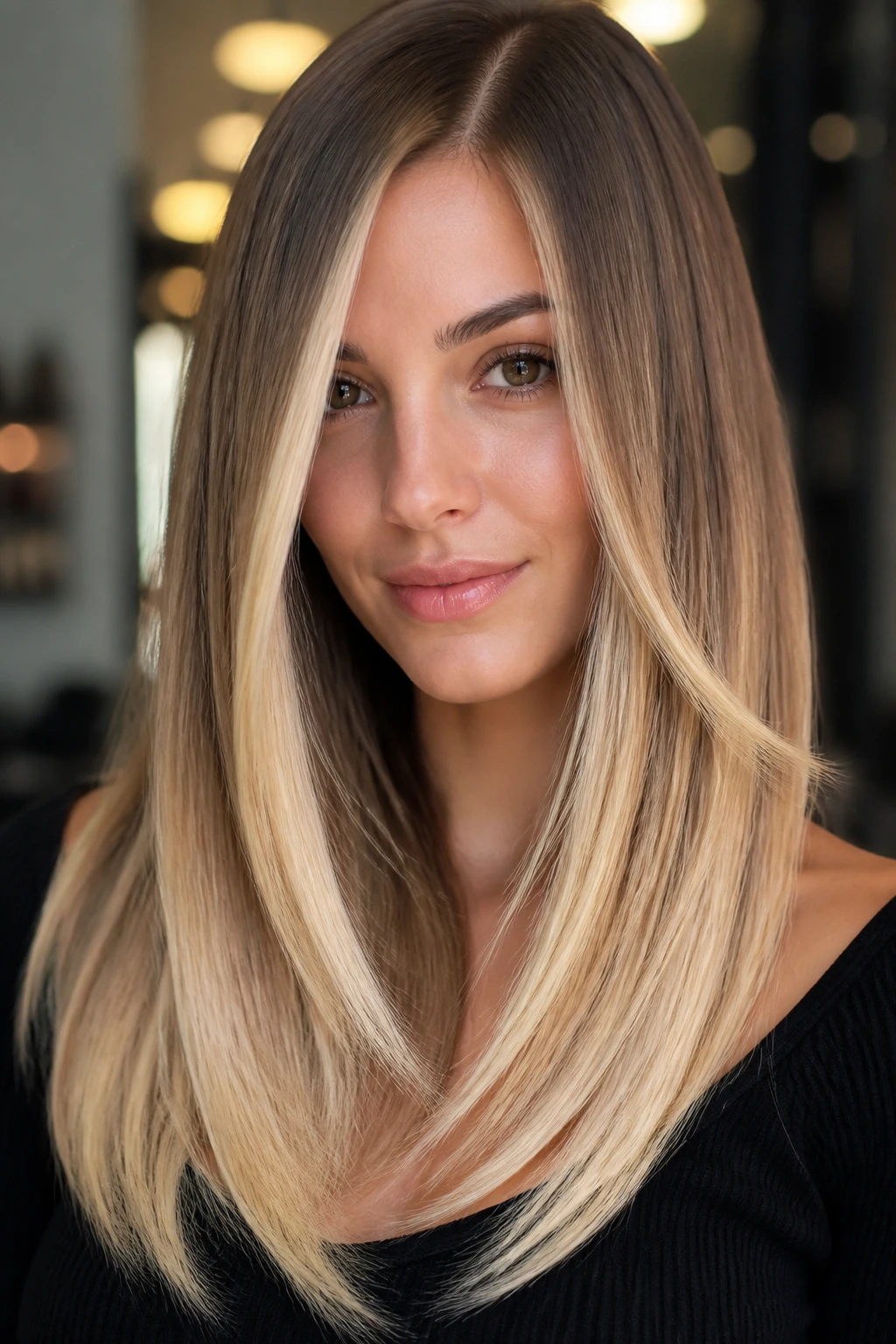
If you want one part of the cut to do the heavy lifting, make it the front pieces. Long front sections can change a round face faster than almost anything else.
Where to Start the Brightest Pieces
Keep the lightest blonde below the cheekbone, then let it drop all the way to the collarbone or even the top of the chest if the hair is long enough. That long line is what stretches the face visually. A middle section can still work here, but an off-center part usually feels a little friendlier.
- Ask for front pieces that hit below the chin.
- Let the blonde fade gradually through the lengths.
- Keep the crown slightly darker so the head shape doesn’t widen.
This is a good option if you want the safest, most face-lengthening result without changing the haircut too much.
29. Soft Silver-Blonde Fade on Dark Roots
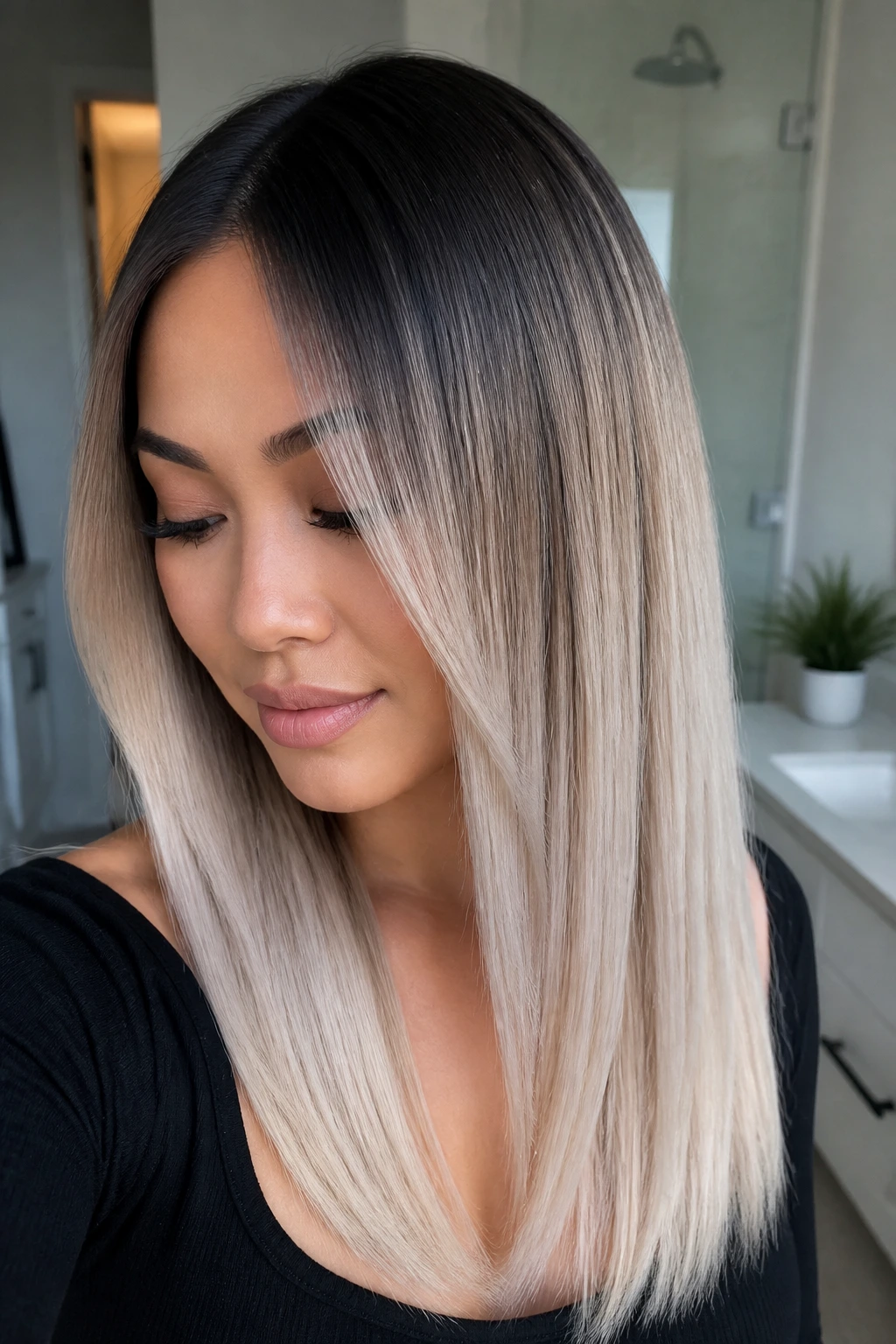
Soft silver-blonde can look striking on a round face when the roots stay deep and the finish stays clean. The cool contrast gives the hair a sleek, narrow read instead of a fluffy one.
The fade should be slow. Dark roots into smoky beige, then pale silver-blonde only at the bottom. That way the brightness sits where the hair already wants to taper. Keep the styling smooth, too. Frizz can blur the shape and make the color look wider than it is.
A small warning: silver tones can go dull if you overdo purple shampoo. Use it when the blonde starts leaning yellow, not on autopilot. That keeps the finish crisp.
30. The Most Balanced Blonde Ombre for Round Faces
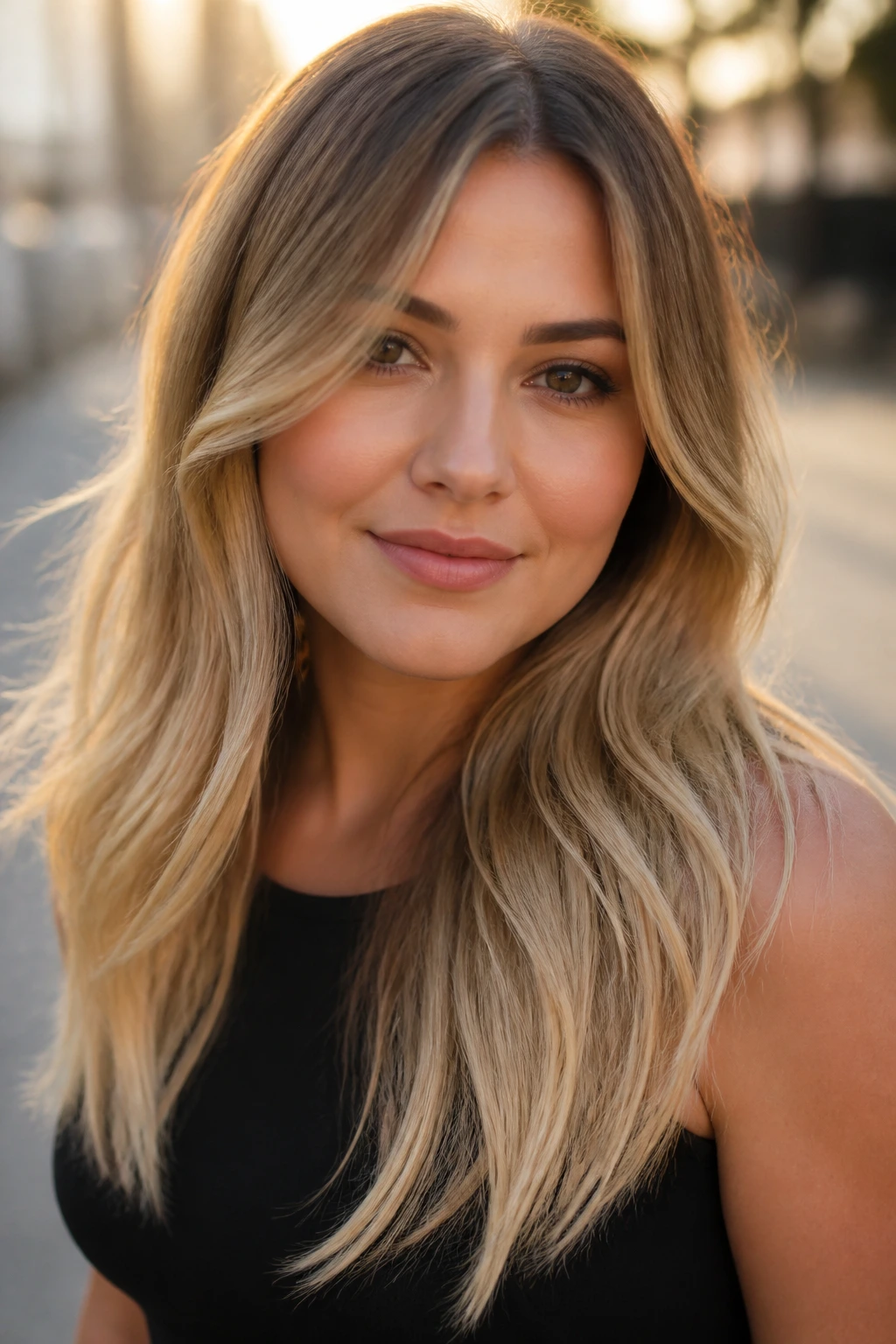
If you want one version that plays nicely with nearly every texture, this is the one I’d save: long layers, a soft root shadow, and blonde that opens below the cheekbone. It is not flashy. It just works.
The off-center part helps, the front pieces stay long enough to narrow the face, and the lightest blonde rests lower than the widest part of the cheeks. That combination keeps the shape soft without making it vague. You still get brightness. You still get movement. You just do not get all the width in the wrong place.
And that’s the real trick with blonde ombre on a round face. The color should feel like it’s falling, not spreading.
