



Long hair makes burgundy look expensive, even when the cut is simple. There’s room for the color to breathe, room for the fade to soften, and room for those red-brown notes to show up differently when the hair swings, twists, or lands over one shoulder.
If you’ve been collecting red burgundy ombre hair ideas for long hair, the real trick is not finding a pretty shade. It’s choosing where the red starts, how fast it melts, and whether the finish should look glossy, smoky, or loud enough to turn heads from across a room.
That matters more than people think. Burgundy can go wine-dark, cherry-bright, plum-cool, or brownish and velvety, and long hair changes the whole story because the gradient has space to stretch. On a blunt bob, the same color can feel abrupt. On waist-length hair, it can look layered, rich, and far more deliberate.
A good burgundy ombré also works with the hair you already have. Dark brunettes usually need less lift. Medium brown hair can take a softer red transition. Black hair often looks best when the fade stays low and smoky so the ends don’t fight the base. That’s the kind of detail that saves a lot of disappointment.
1. Midnight Cabernet Melt
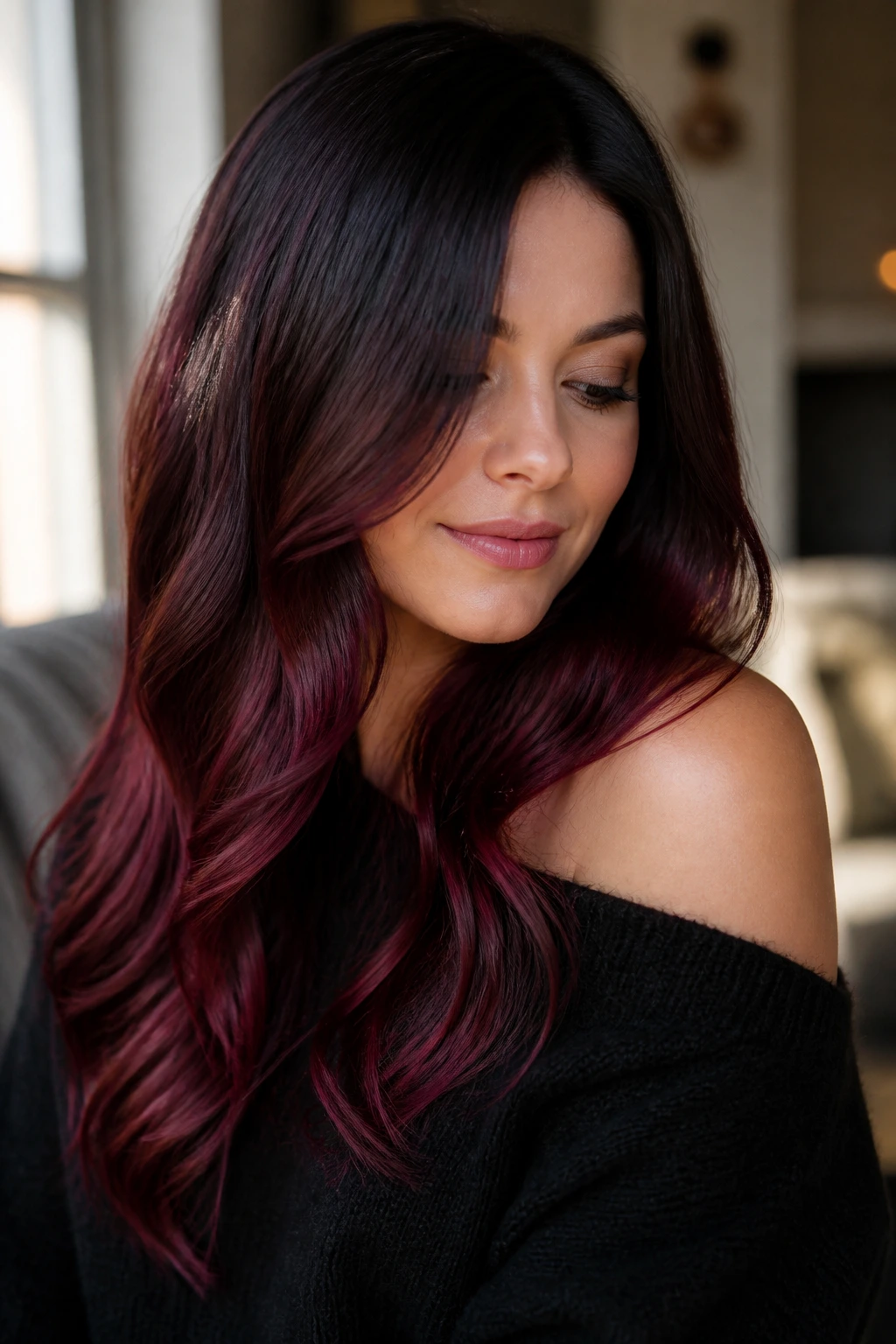
This is the version I recommend when you want the color to whisper before it shouts. The roots stay nearly black, then the burgundy slides in so slowly that the whole look feels like velvet in low light. On long hair, that slow fade is the point.
Why It Works
The darker base keeps the style sleek, while the burgundy ends show up when the hair moves. If your hair is straight or only softly waved, this shape gives the color a clean, expensive finish instead of a choppy stripe.
Best for: thick, dark hair; straight blowouts; long layers that need depth.
Ask for: a soft melt starting around the mid-lengths, not a hard line.
Style note: a 1.25-inch iron creates broad bends that make the red look deeper.
Bold color can feel dramatic. This version doesn’t need to.
2. Cherry Cola Face Frame
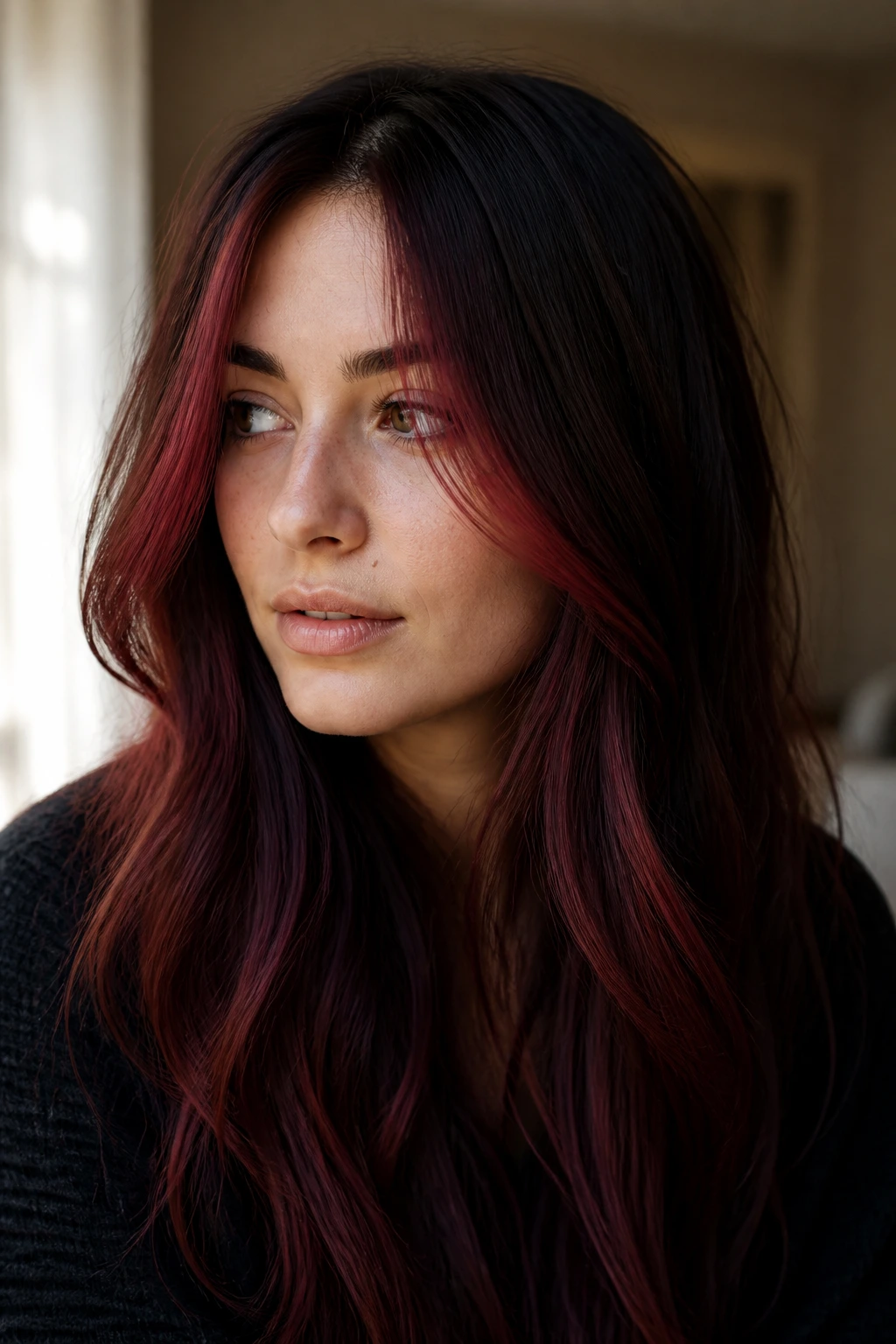
A face frame is the easiest way to make burgundy feel fresh without covering the whole head in red. The front pieces pick up a cherry-cola tone first, then the color drifts down the lengths. It’s a smart choice if you wear your hair half up a lot.
What makes it work is contrast. The face gets brightness, the rest stays richer and darker, and the eye goes straight to the front instead of reading the color as one block. On long hair, that detail matters because the front pieces can start higher and still leave enough dark hair behind them.
If you like wearing curtain bangs or long face layers, this is a strong pick. The front bits keep the style from feeling heavy, and the burgundy reads as playful rather than severe.
3. Merlot Ends on Espresso Brown
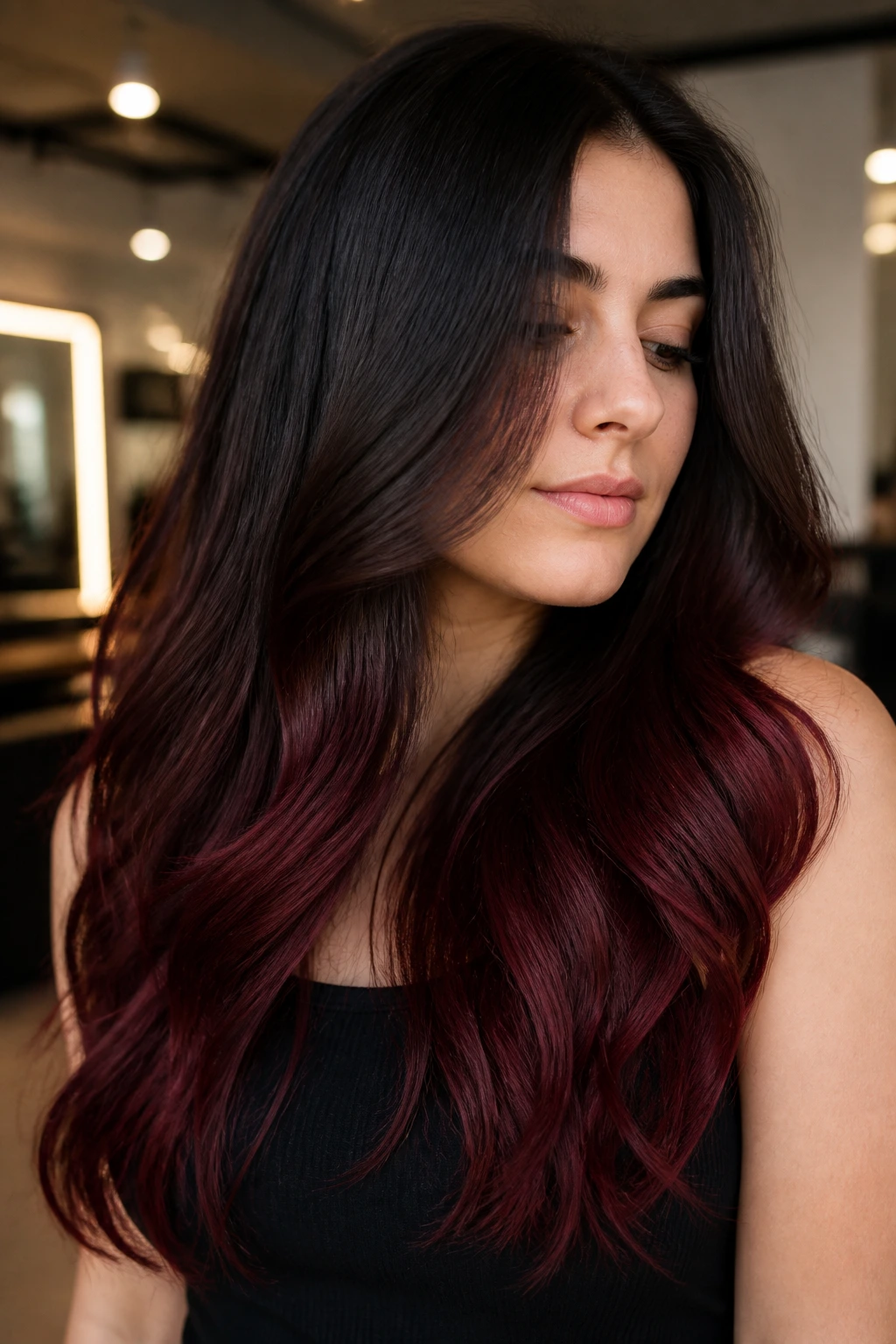
This one is for the person who wants the easiest grow-out on the list. The espresso base stays untouched for most of the length, and the merlot shade shows up only in the last third or so. It feels polished, almost restrained, which is rare for red hair.
What Makes It Different
A low ombré like this keeps your roots calm and your ends interesting. It also works well on hair that’s already long enough to show movement, because the color change is visible even when the hair is worn in a braid or a simple low ponytail.
How to Wear It
- Best on waist-length or mid-back hair.
- Looks good with loose beach waves.
- Reads deeper and cooler under indoor light.
- Can be stretched farther down if you want a softer fade.
One neat thing: this shade doesn’t need to be bright to be noticeable.
4. Black Cherry Money Piece
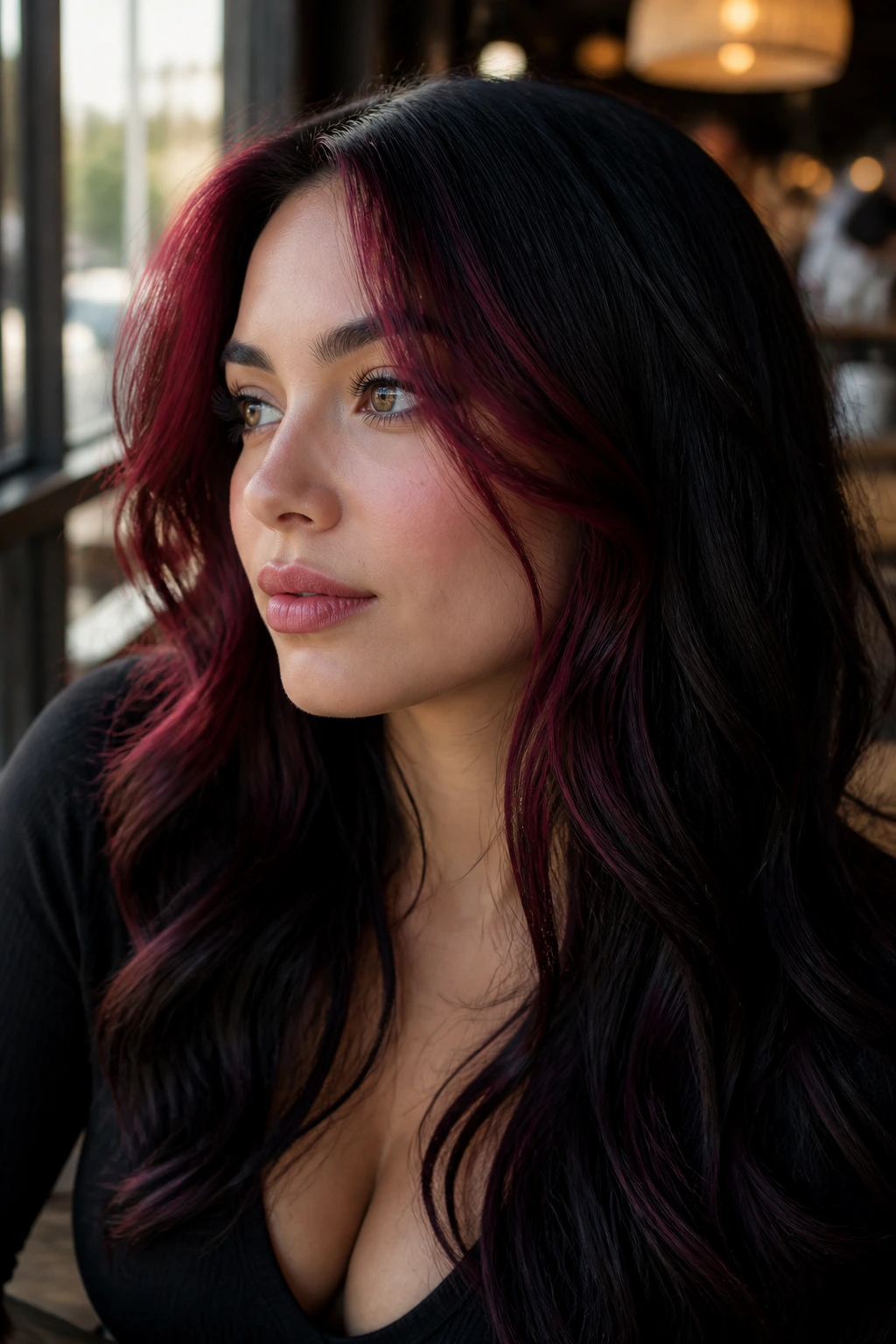
A money piece can do a lot of work when the rest of the hair is dark and moody. Here, the front two sections are painted with black-cherry red, then the color eases into a burgundy ombré through the rest of the length. The result is sharp at the front, soft everywhere else.
That sharpness is what makes this one feel modern. You get a little face-lightening effect without turning the whole head into a high-maintenance color project. On long hair, the bright front pieces keep the color from disappearing when the rest of the hair is draped over a coat collar or tucked behind the ears.
If you usually wear waves, even better. The red front pieces bend around the cheekbones and show off the fade in motion.
5. Velvet Plum-to-Burgundy Fade
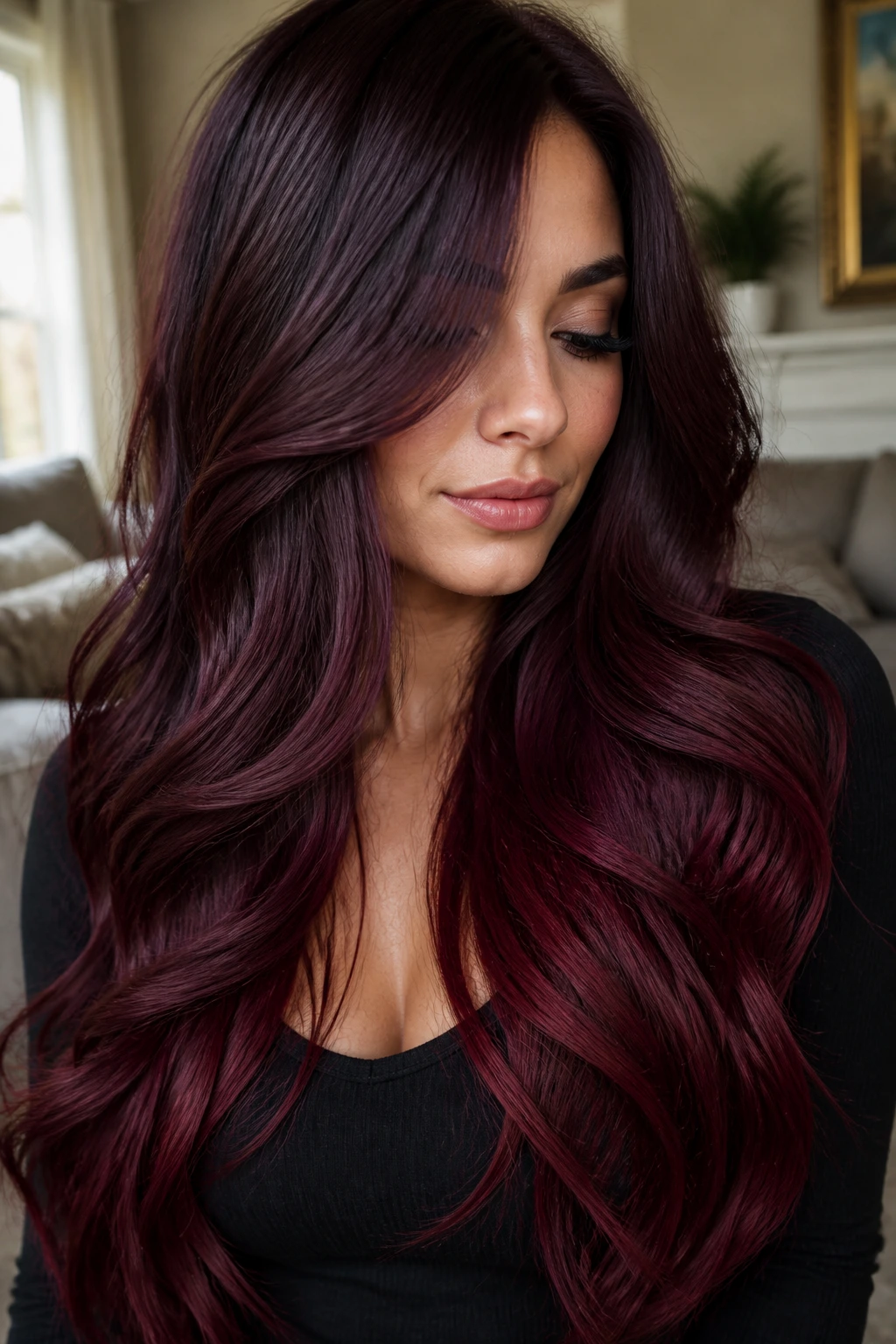
Cooler burgundy has a very different personality. It leans toward plum first, then deep wine, which makes the whole look feel moodier and a bit more refined. Long hair is a good canvas for it because the color shift can happen in stages instead of one jump.
The beauty of this version is the middle tone. A lot of burgundy ombrés go straight from dark brown to red and skip that in-between softness. Plum gives you that softer bridge, and the final burgundy ends look richer because of it.
This one suits cool or neutral undertones especially well. It also flatters long curls, where the plum and red catch differently on each bend of the hair.
6. Cinnamon Red Dip Dye
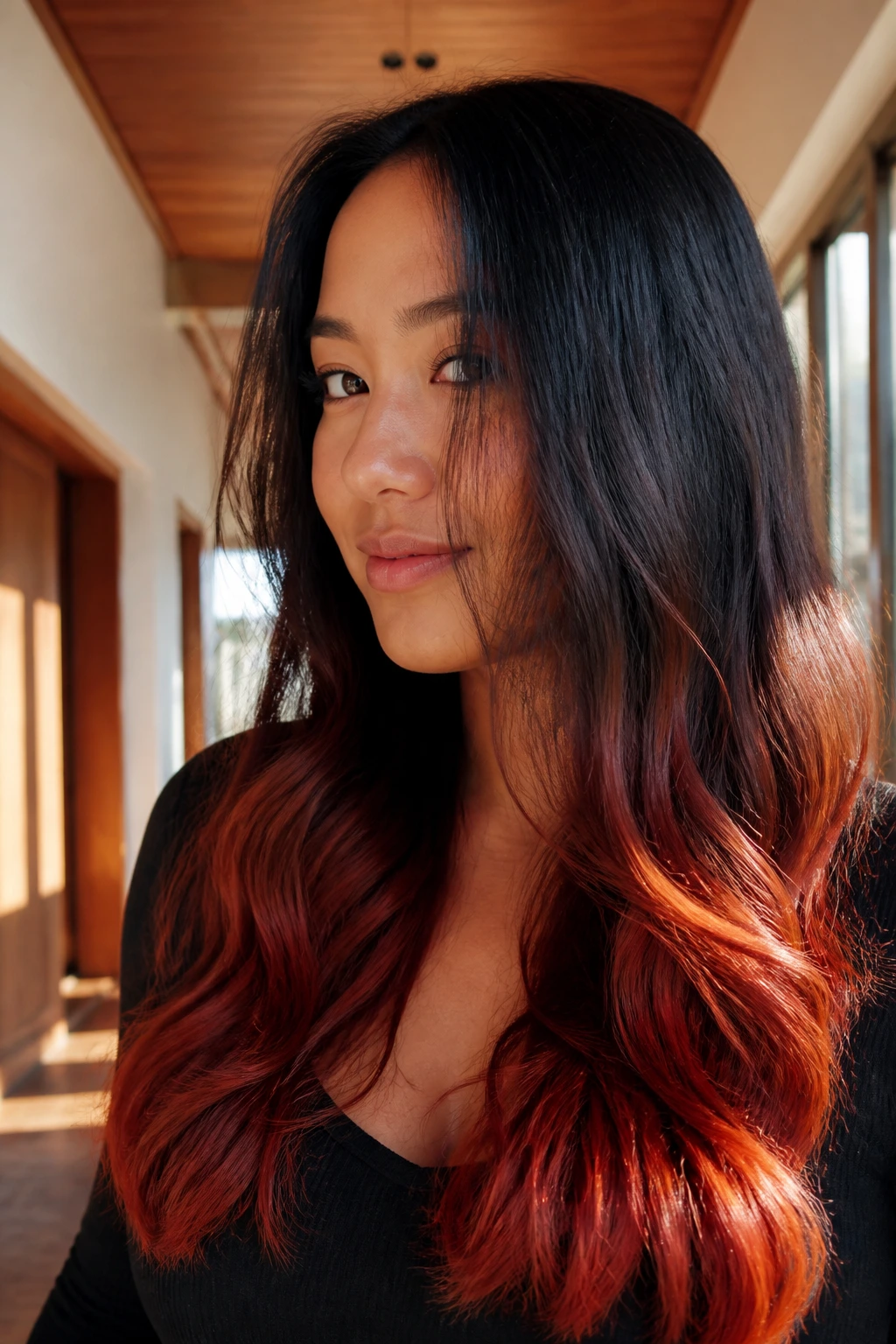
Dip-dye gets a bad reputation when it’s too abrupt. Done well, though, it can look bold and fun instead of dated. A cinnamon red dip on long hair keeps the roots natural and lets the ends go warm, spicy, and unmistakably red.
The key is saturation. Cinnamon needs enough pigment to read from a distance, but not so much that it turns orange. On long hair, the lower sections can take the color without making the whole head feel heavy, especially if the top half is still dark brown or chestnut.
Good If You Want
- A noticeable color change with low root upkeep.
- A warmer burgundy family shade.
- Something that looks strong in braids and fishtails.
- A color that can grow out without looking sloppy.
It’s a louder look. That’s the point.
7. Wine-Stain Burgundy Ombre Waves
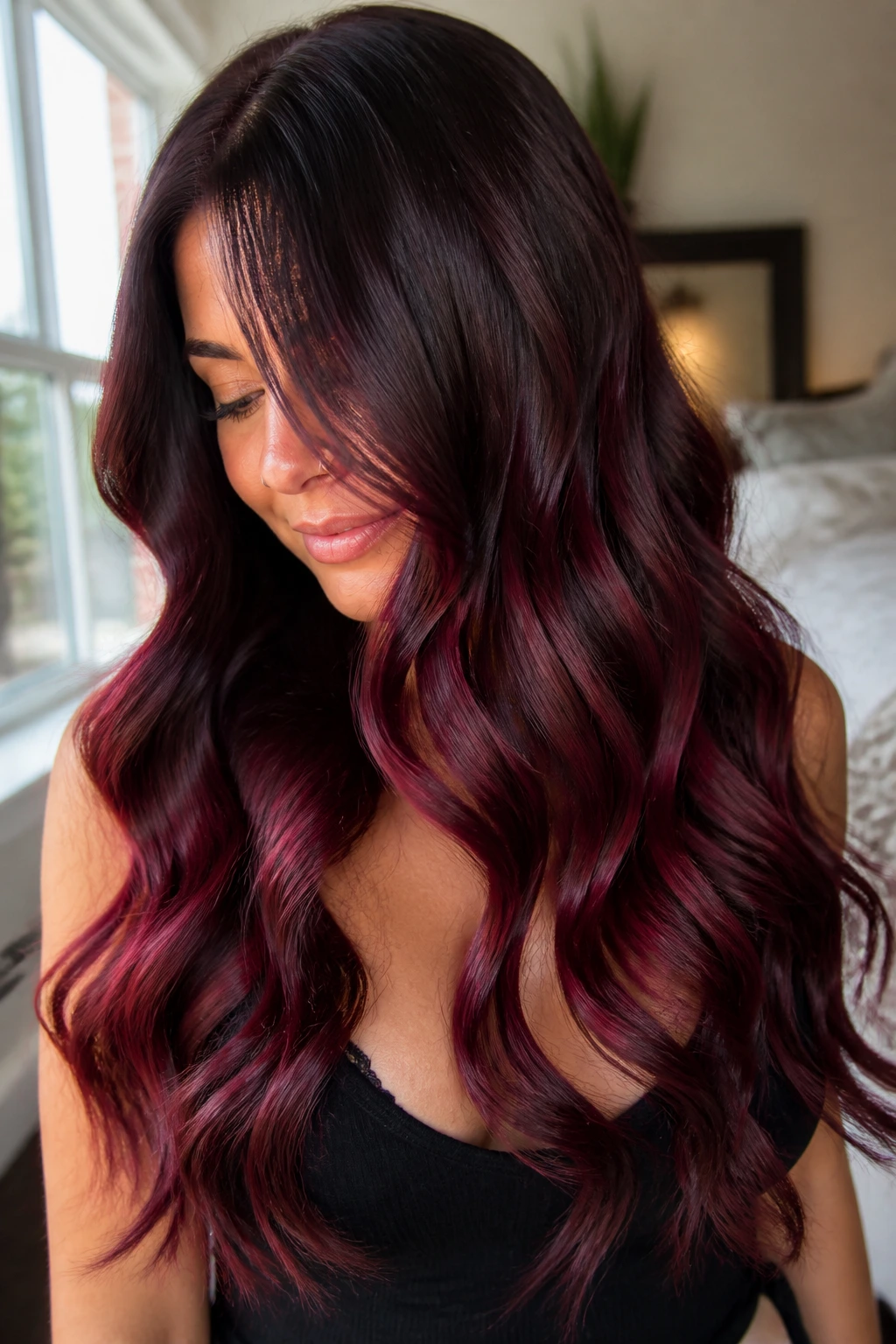
Waves make burgundy look like it was made for hair, honestly. The color lands in ribbons, and each bend catches a slightly different depth of red. This version keeps the fade soft enough that the word ombre still feels right.
Why It Works
The long wave pattern breaks up the color, so the burgundy never sits in one flat sheet. That matters on long hair, where flat color can look heavy fast. With movement, the red shows up in layers—deep wine on top of the wave, darker plum in the dip, then a brighter burgundy where the curve turns.
Best Styling Move
Use a wide-barrel iron or braid-dry the hair overnight, then finish with a light gloss serum. You want reflection, not grease.
8. Glossy Garnet Ombre
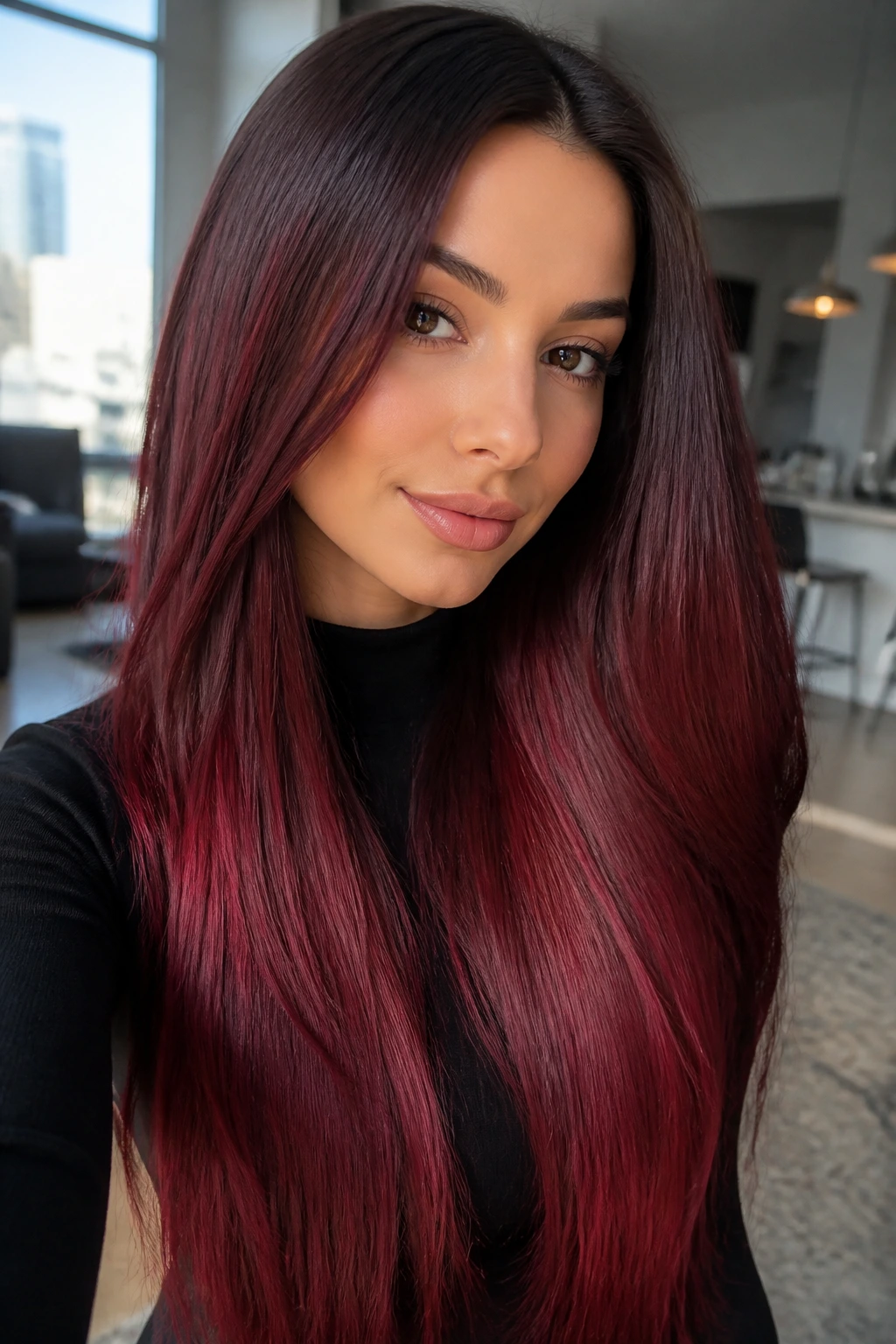
Garnet is one of my favorite shades because it has enough red to read clearly, but enough brown underneath to stay wearable. On long, straight hair, that matters a lot. The finish can look sleek, almost lacquered, if the cut is clean.
This style usually starts with a deep brunette base and moves into a garnet-red end point that feels jewel-toned rather than fiery. The shine is the whole story here. If the hair is smooth and the ends are trimmed, the color looks intentional from root to tip.
It also pairs well with one-length long cuts. Layers can be pretty, sure, but a straight line gives the color a dramatic fall, almost like ribbon against dark fabric.
9. Raspberry Burgundy Feather Fade
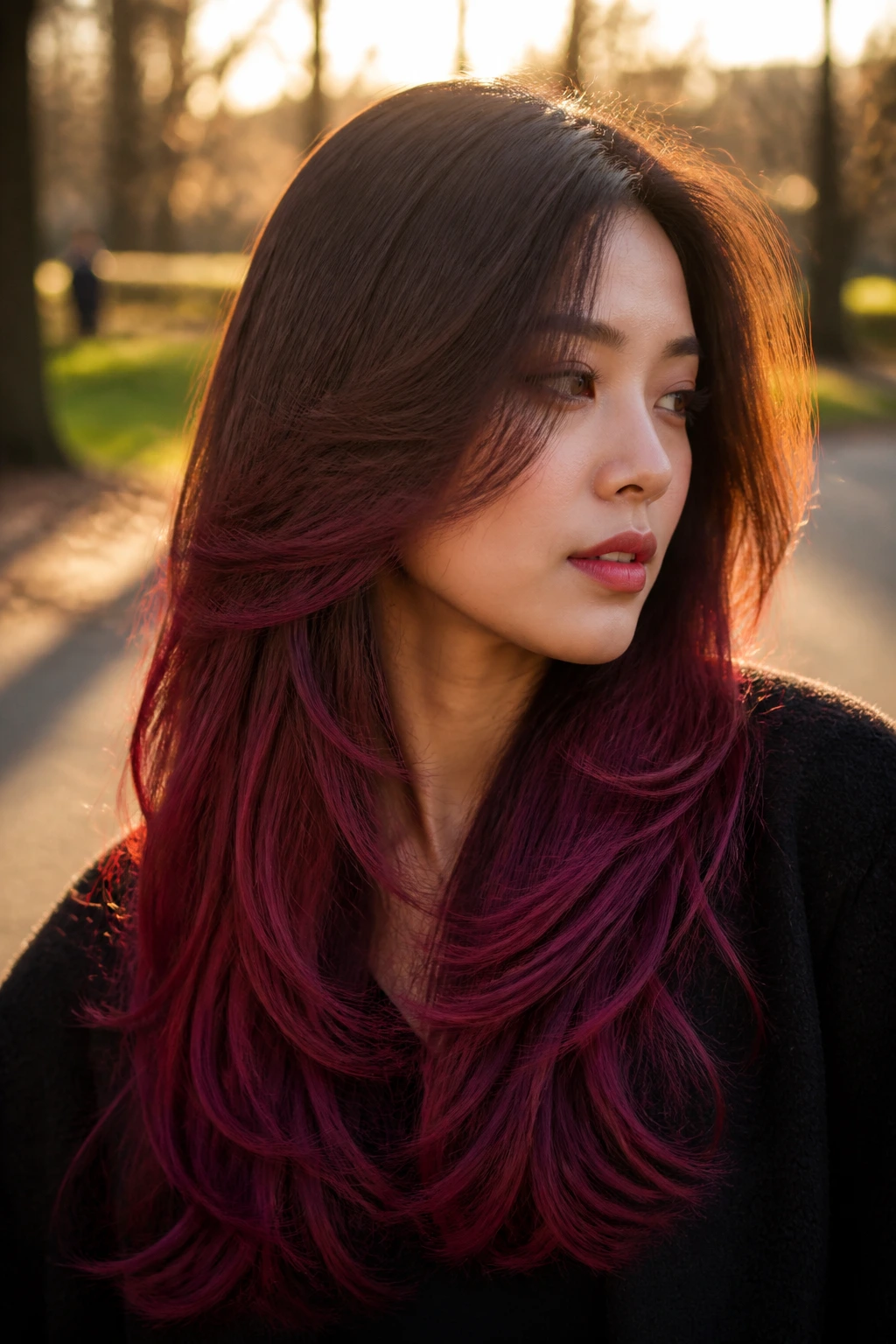
Raspberry burgundy sits lighter and a little sweeter than classic wine red. It’s a smart choice if you want red to show up without sliding all the way into deep cabernet. On long feathered layers, it feels airy instead of dense.
The feathering matters because it keeps the ends from looking heavy. A softer haircut lets the burgundy land at different points, so the fade looks more like movement than a painted block. If your hair tends to puff out at the bottom, this shade can actually help the shape feel cleaner.
This one also photographs well in natural light because the raspberry notes pop at the ends while the top stays earthy. It’s a nicer balance than people expect.
10. Deep Brick Red Tips
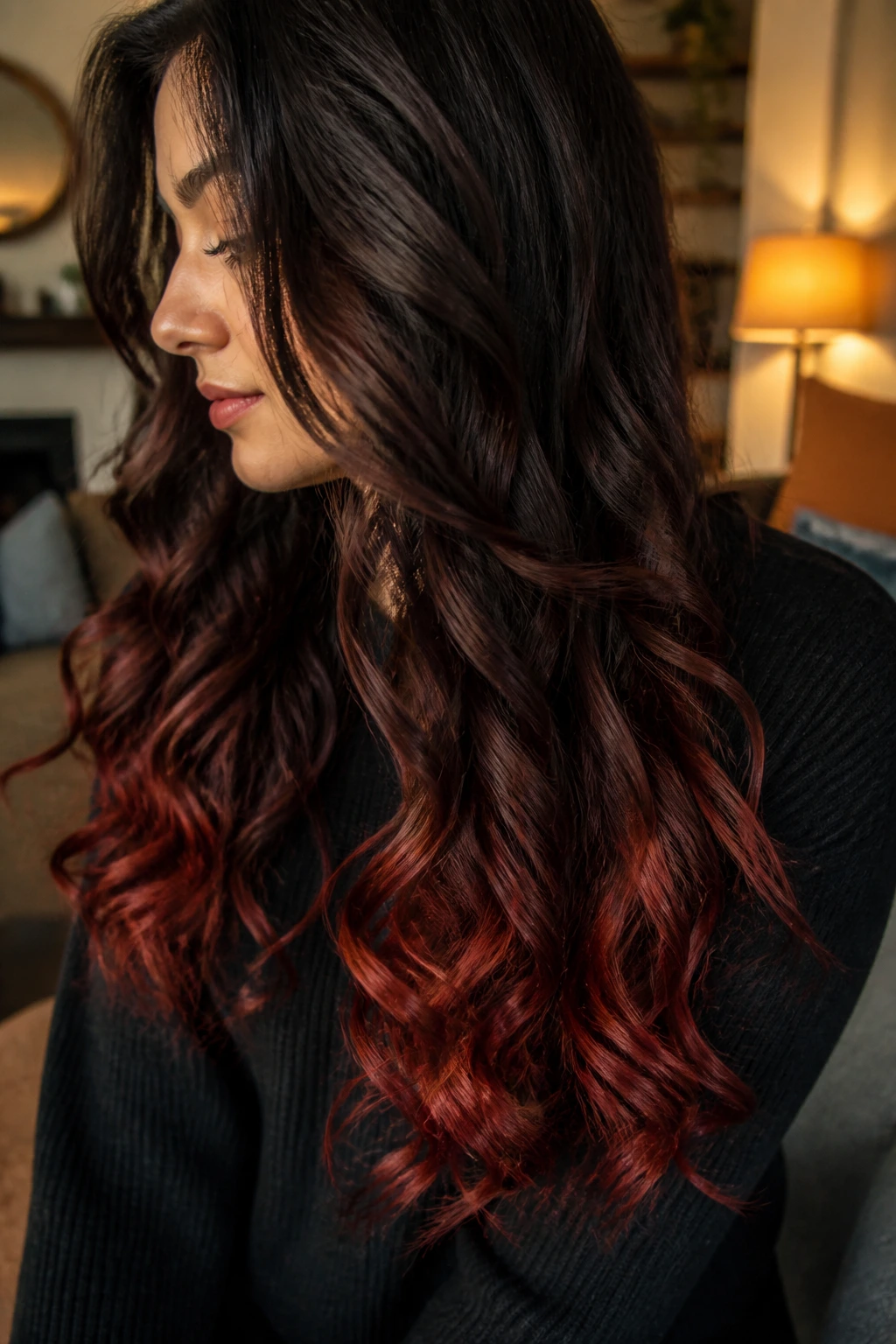
Brick red is the warm cousin in the burgundy family. It has more brown-red depth than cherry, less purple than wine, and a very grounded feel. On long curls or waves, the tips look like they were brushed with spice.
What makes brick red work is the warmth. Cooler burgundy can sometimes feel too plum-heavy against warm skin tones, but brick red tends to sit closer to copper and chestnut. That gives the ends a soft glow instead of a hard color break.
If you want a color that reads autumnal without being pumpkin-orange, this is the lane. It’s especially nice on layered hair, where the shorter pieces can show the red sooner and make the whole style feel fuller.
11. Rosewood Burgundy Melt
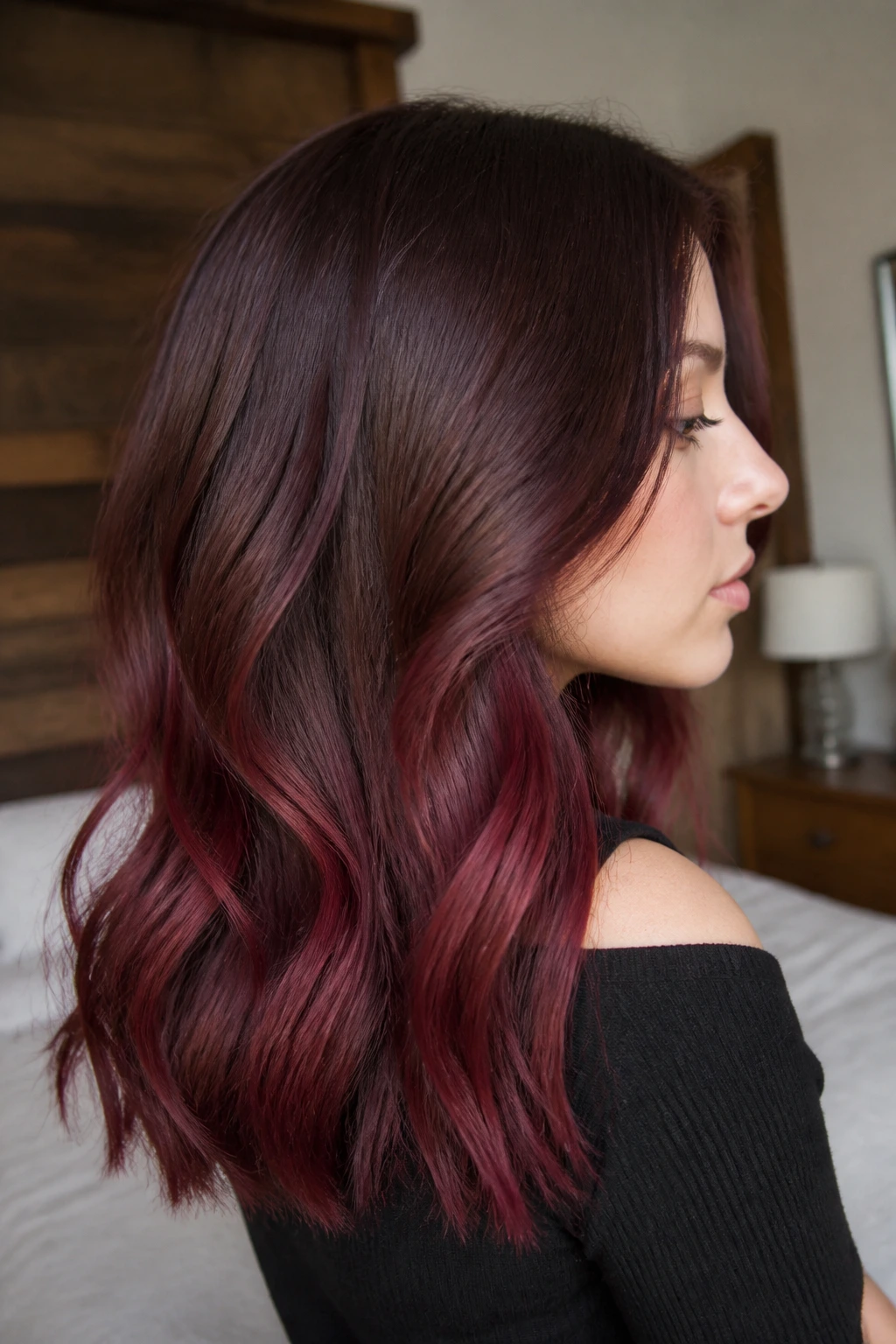
Rosewood is for people who like red, but not shouting-red. It has that muted, woodsy quality that feels expensive in a quiet way. The fade usually starts gently through the mid-lengths, then deepens into rosewood burgundy at the bottom.
What To Ask Your Colorist
- Keep the red muted, not bright.
- Blend through brown-red tones before the final burgundy.
- Leave the top section darker for contrast.
- Finish with a clear gloss so the shade stays soft, not flat.
This is one of the easiest burgundy ombré looks to wear every day because it doesn’t fight your clothes or makeup. It just sits there looking rich.
12. Cola Black to Cherry Red
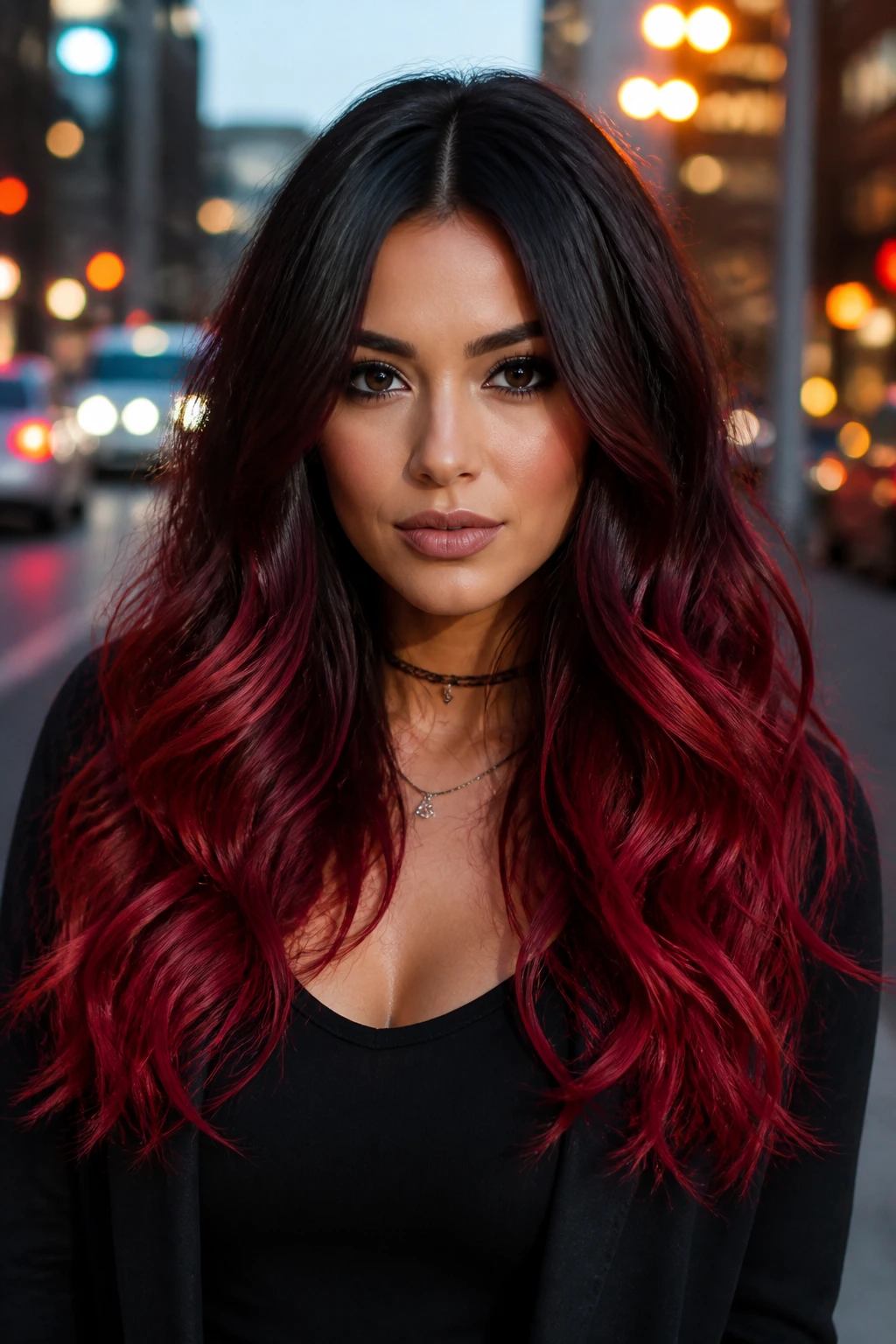
High contrast can be fun when it’s handled with some restraint. Cola black at the top and cherry red at the ends gives you that dramatic shift without turning the whole head into a neon project. Long hair gives the transition room to feel intentional instead of jarring.
The trick is keeping the red deep enough to stay in the burgundy family. If the ends are too bright, the look stops reading as burgundy ombré and starts heading toward cherry candy territory. That might be fine for some people. If you want depth, stay in the darker red range.
It’s a strong choice for sleek styles, especially when the hair is worn down and straight. The color line becomes part of the shape.
13. Auburn-to-Burgundy Ribbon Ends
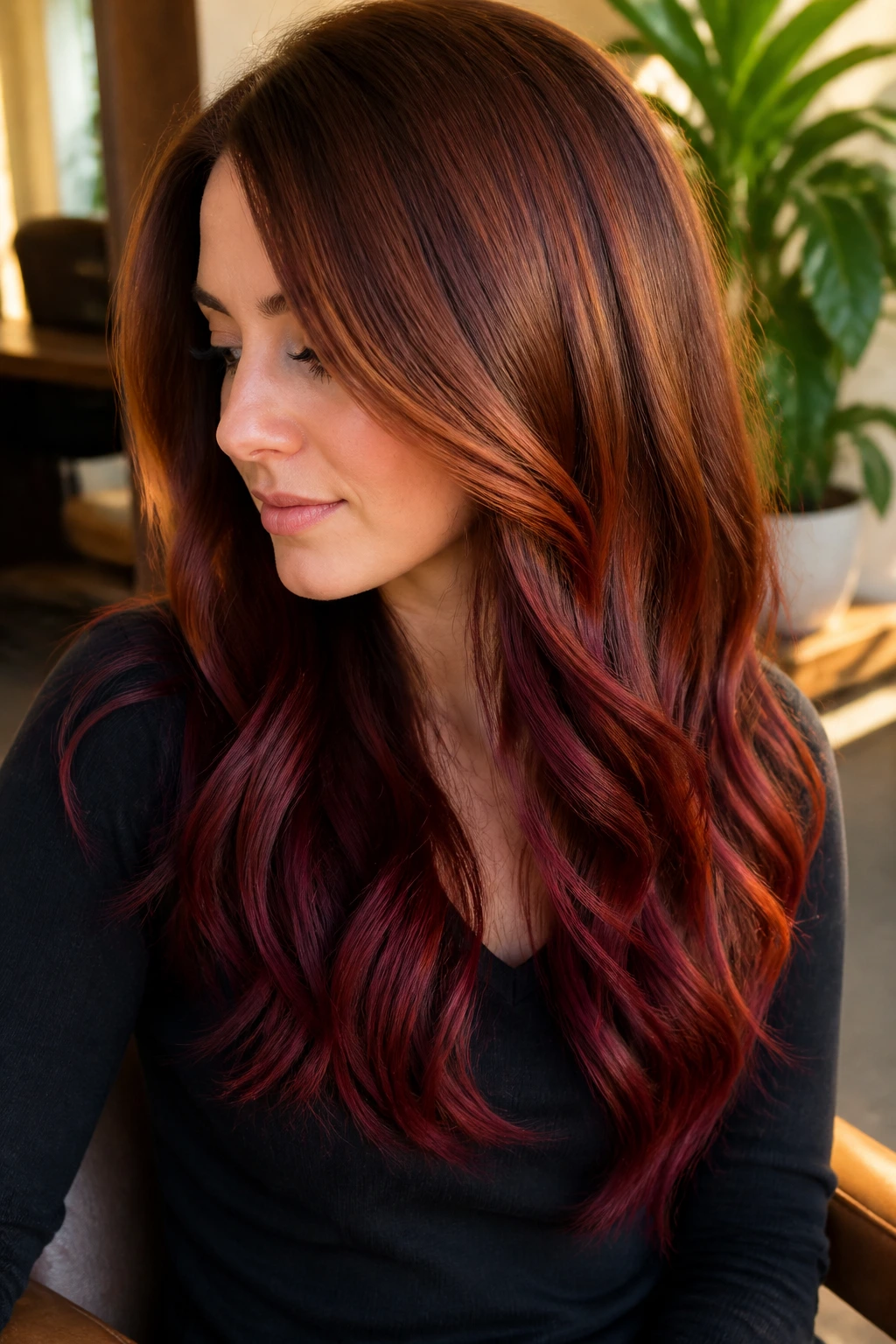
This version is warmer and softer than a lot of burgundy looks. The hair begins in auburn or deep copper-brown, then the burgundy shows up in ribbon-like pieces through the lower half. It feels less like a hard fade and more like the color is woven in.
That woven look is what makes it good for long hair with movement. Layers and bends keep the red from looking too uniform, and the auburn base means the shift is gradual even before the burgundy appears. If you hate harsh ombré lines, this is a nice middle ground.
It also flatters hair that already has warmth in it. Natural redheads, deep brunettes with warm undertones, and golden-brown bases all tend to wear this well.
14. Velvet Burgundy Ombre with Curtain Bangs
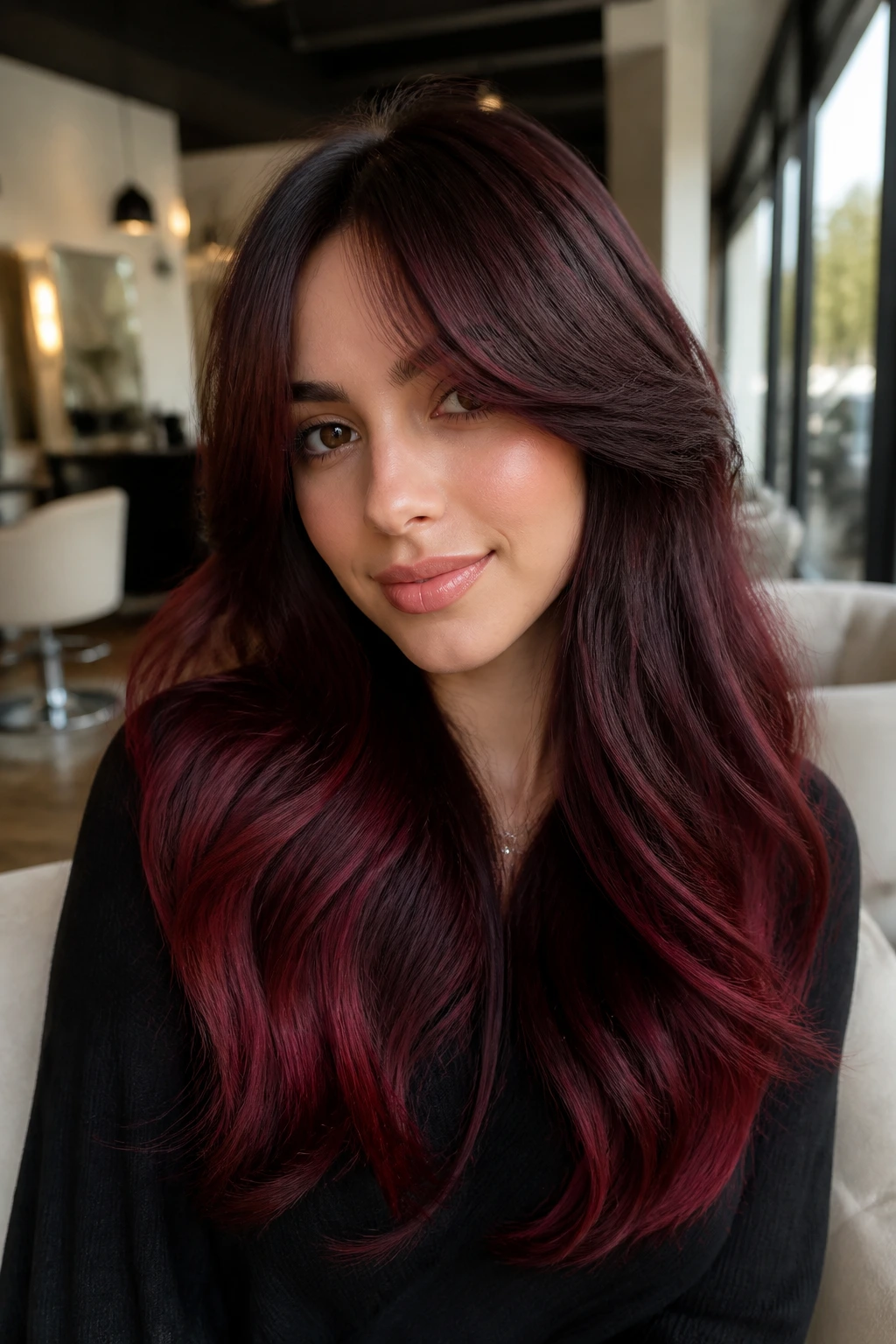
Curtain bangs change the whole mood of a burgundy ombré. They bring the color up around the face, which means the long lengths don’t have to do all the work. The result feels softer and a little more styled, even on a simple day.
Why It Stands Out
The fringe gives your color a front-facing moment. Instead of waiting for the ends to swing around, you see burgundy near the cheekbones right away. On long hair, that helps the style feel balanced.
Best Pairing
- Long layers that start below the chin.
- A medium-dark brunette base.
- Loose bends, not tight curls.
- A center part or soft off-center part.
This is one of those looks that can go casual or dressed-up without much effort. That’s useful.
15. Dark Chocolate with Red Wine Veil
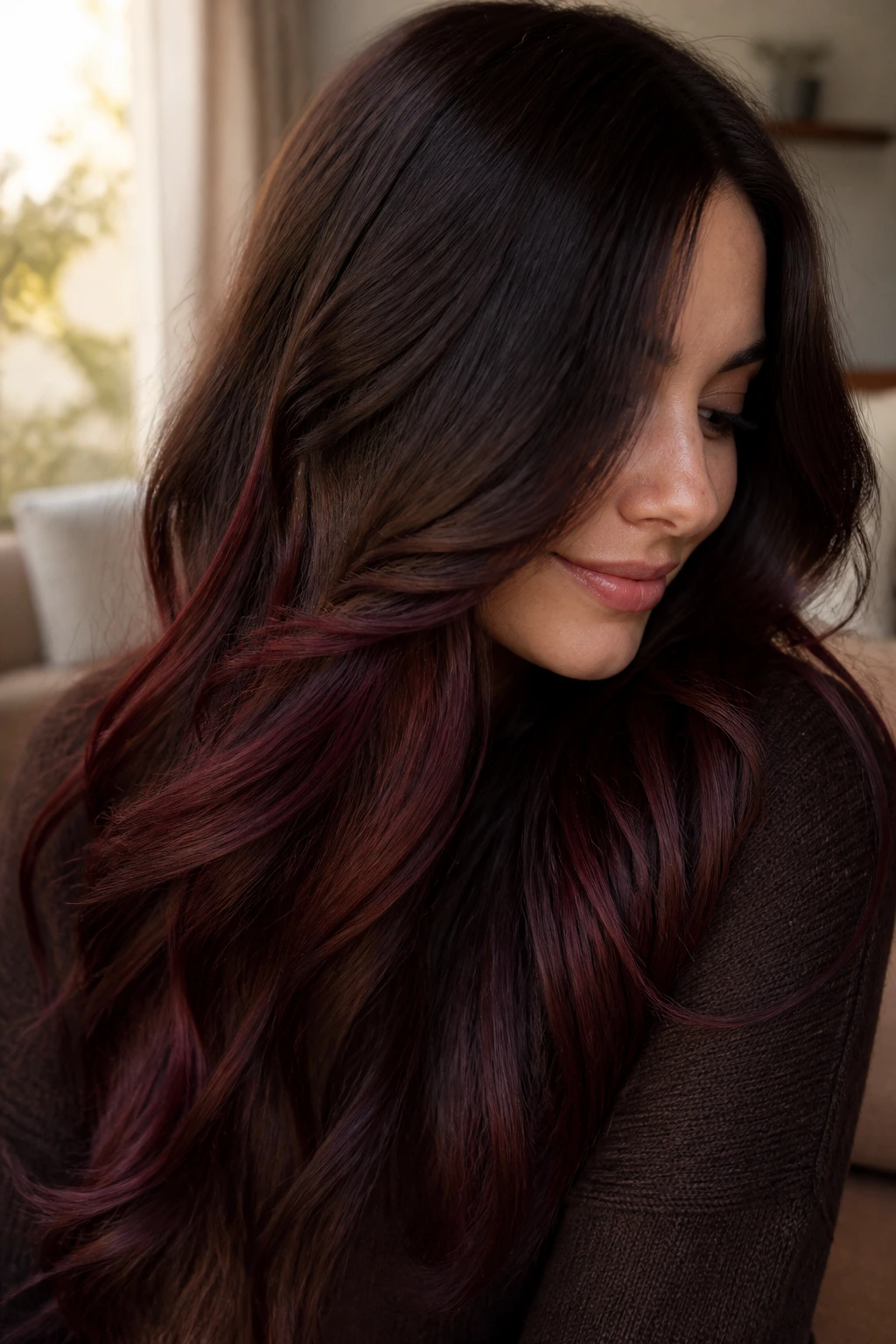
Sometimes the smartest choice is barely visible until the light hits it. A red wine veil over dark chocolate hair gives you depth, not drama. The burgundy sits under the surface and peeks out as the hair moves.
That subtlety is a gift on long hair, because long lengths can carry hidden dimension better than short ones. The top layer stays dark, which keeps the look grounded, while the red wine tone underneath gives it life. It’s the kind of color that shows better in motion than in a still photo.
If your workplace or lifestyle calls for something restrained, this is one of the cleanest options. It looks grown-up without feeling boring.
16. Cranberry Burgundy Spiral Ends
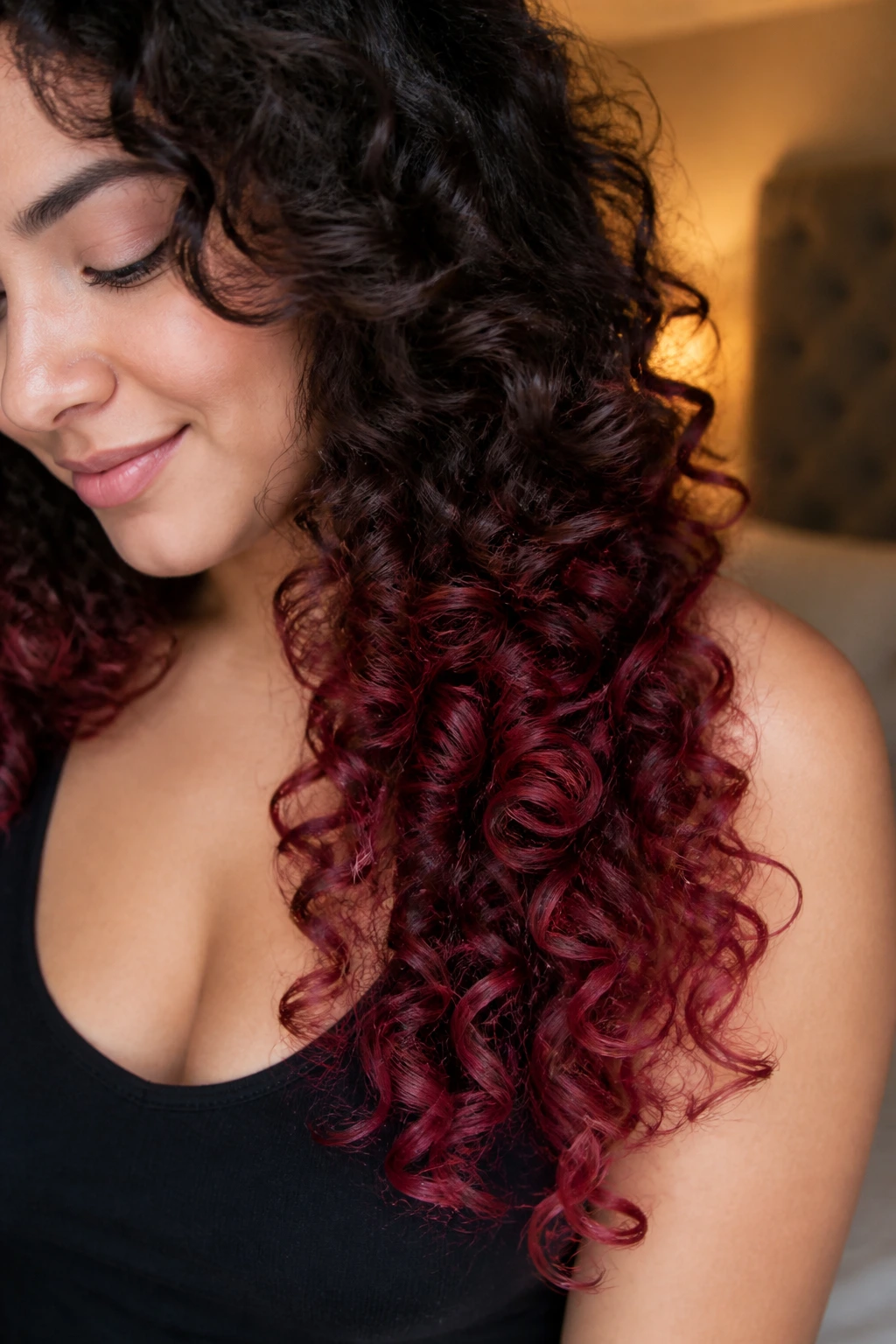
Curly hair loves a deeper red at the ends. The spiral shape catches the burgundy in little pockets, so the color looks denser and more textured than it does on straight hair. Cranberry gives the finish a brighter edge than classic wine.
How It Reads on Curls
Each curl ring has its own little color story. The outer edge can show cranberry first, while the inside of the spiral holds a darker burgundy. That contrast makes the shape look fuller.
A few practical notes:
- Use a moisture mask before coloring.
- Keep the fade low so the curls stay dimensional.
- Diffuse on low heat.
- Avoid over-lightening the ends; curls get thirsty fast.
This one has personality. A lot of it.
17. Cabernet Balayage with Invisible Layers
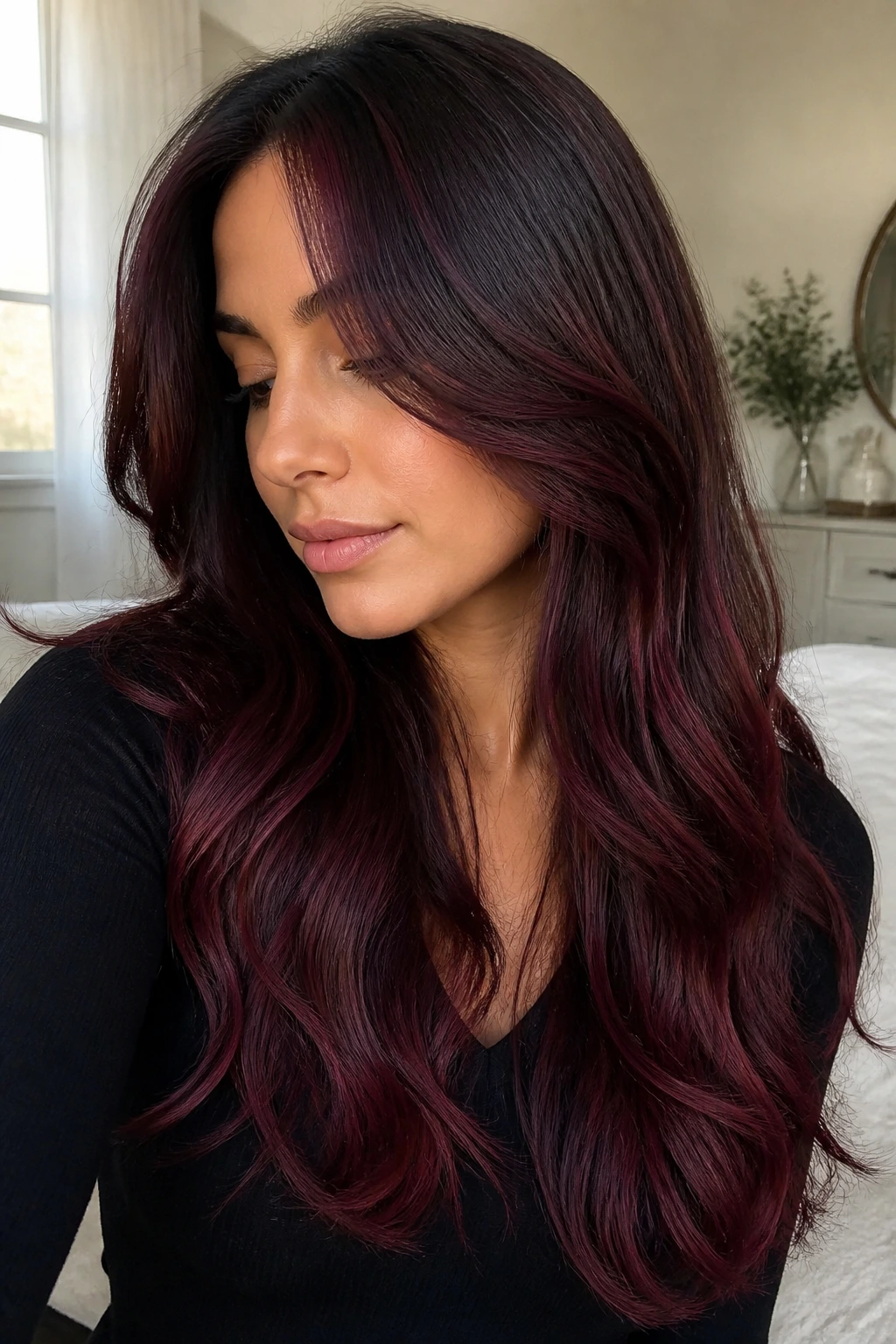
Balayage and ombré don’t have to be opposites. On long hair, the two techniques can work together beautifully when the burgundy is painted in soft, scattered pieces rather than one strict block of color. Invisible layers help the movement show without making the ends look thin.
What I like here is the softness. The color follows the hair’s natural fall, so it never feels stamped on. If your long hair is thick, that’s a real advantage because the burgundy can live in pockets and still show from every angle.
This is also a strong pick if you like air-dried texture. The random placement keeps the style from looking too tidy.
18. Ruby Red Ombre on Layered Curls
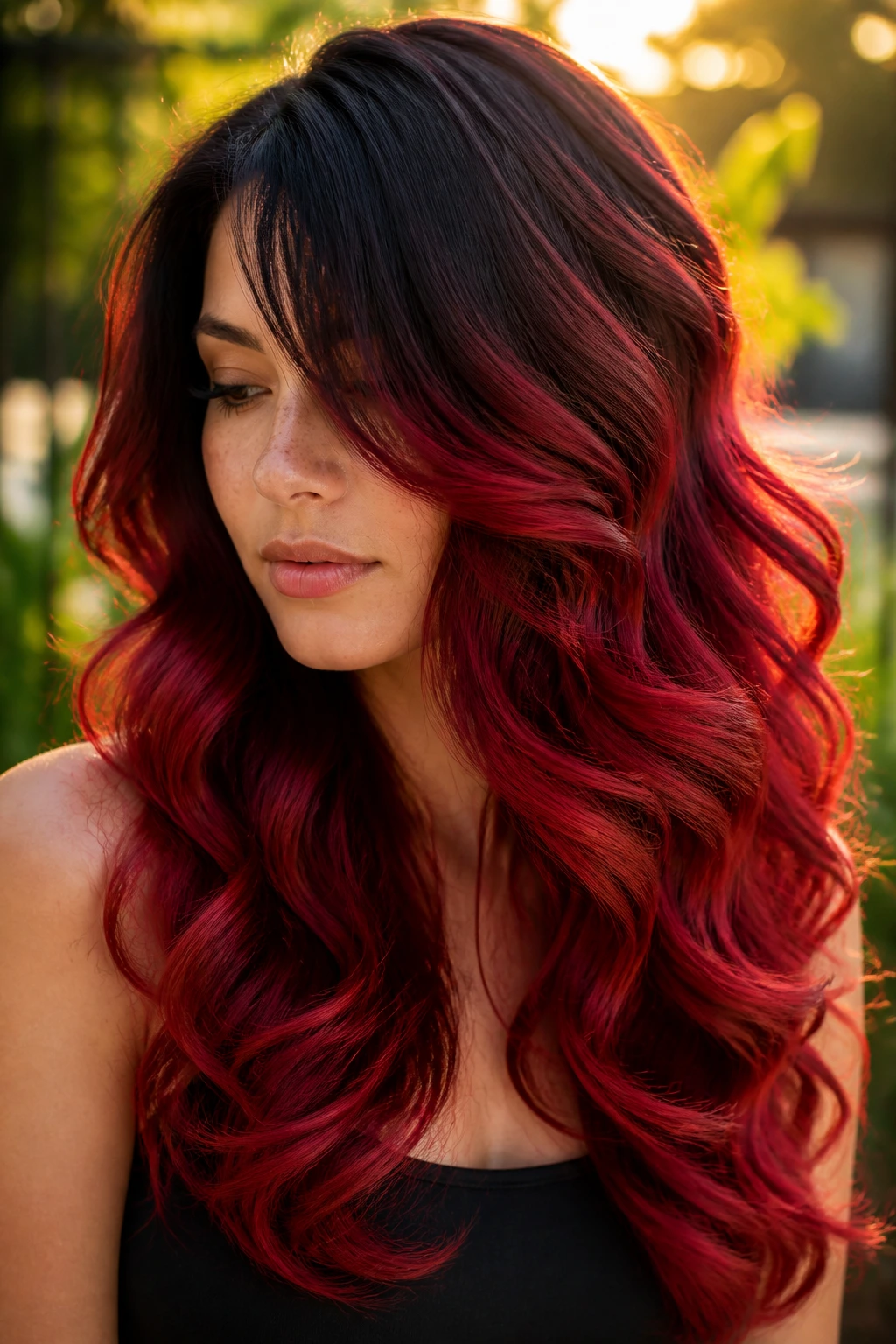
Ruby red is brighter than burgundy, but when it melts into a darker base, it can still feel rich instead of flashy. Layered curls are a great match because the lift and bounce show off the transition from dark roots to ruby ends.
The layers matter here more than the color itself. Without them, ruby can pile up at the bottom and feel too heavy. With them, the red lands in different spots and the whole style looks alive. On long hair, that extra movement is a gift.
This is a good option if you want your hair to read from across the room but still stay in the red-brown family, not bright copper.
19. Burgundy Peekaboo Ends
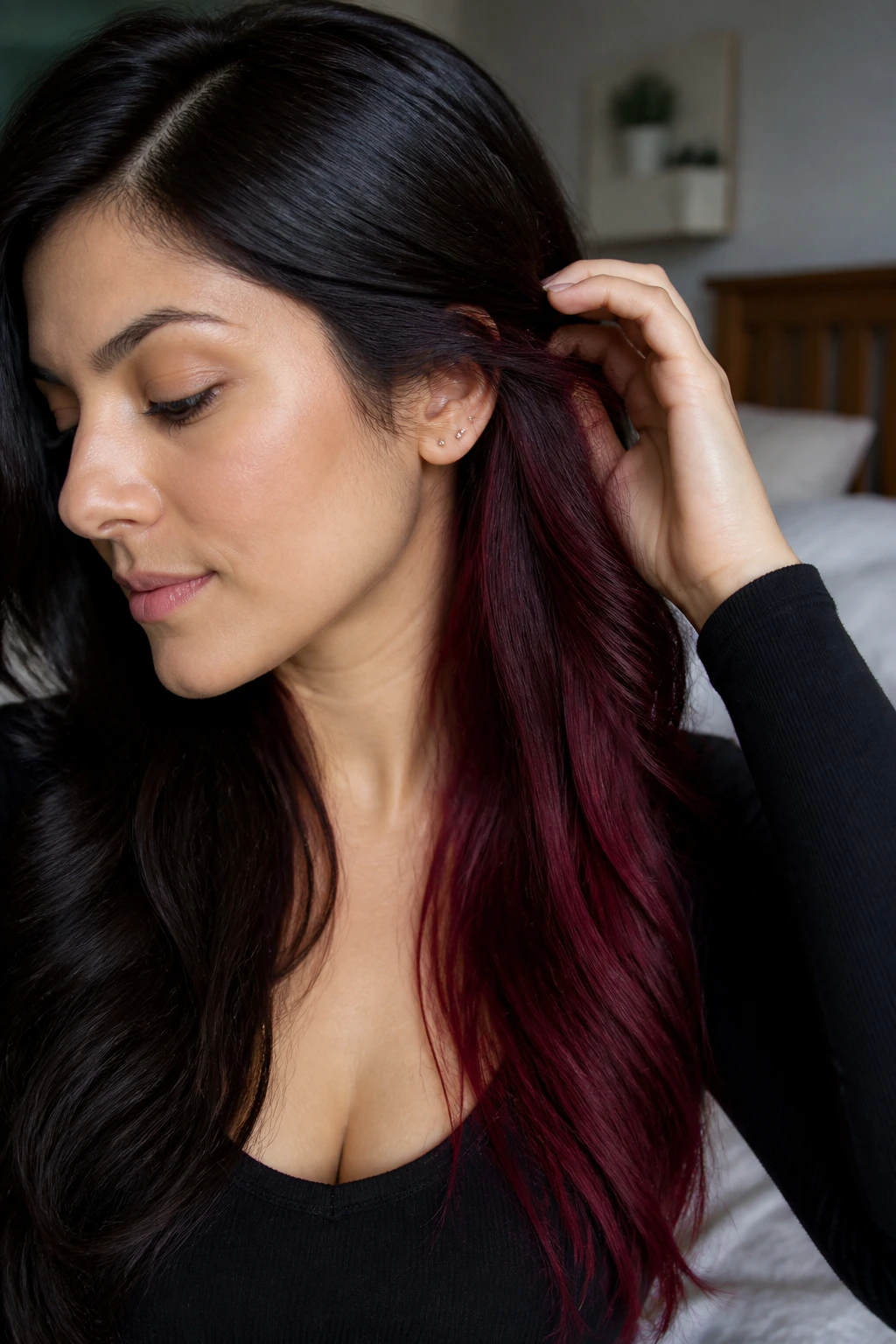
Peekaboo color is underrated. The top layer stays dark, and the burgundy lives underneath where it flashes only when the hair flips, braids, or gets tucked behind the ear. On long hair, that hidden placement makes the color feel playful without being constant.
It’s also a good answer if you’re nervous about a full red ombré. You get the satisfaction of the color change, but you can control how much of it shows. People with very long, thick hair usually like this because the hidden pieces create surprise instead of bulk.
If you wear half-up styles often, this is especially fun. The color appears right where the hair gathers.
20. Mahogany to Wine Gradient
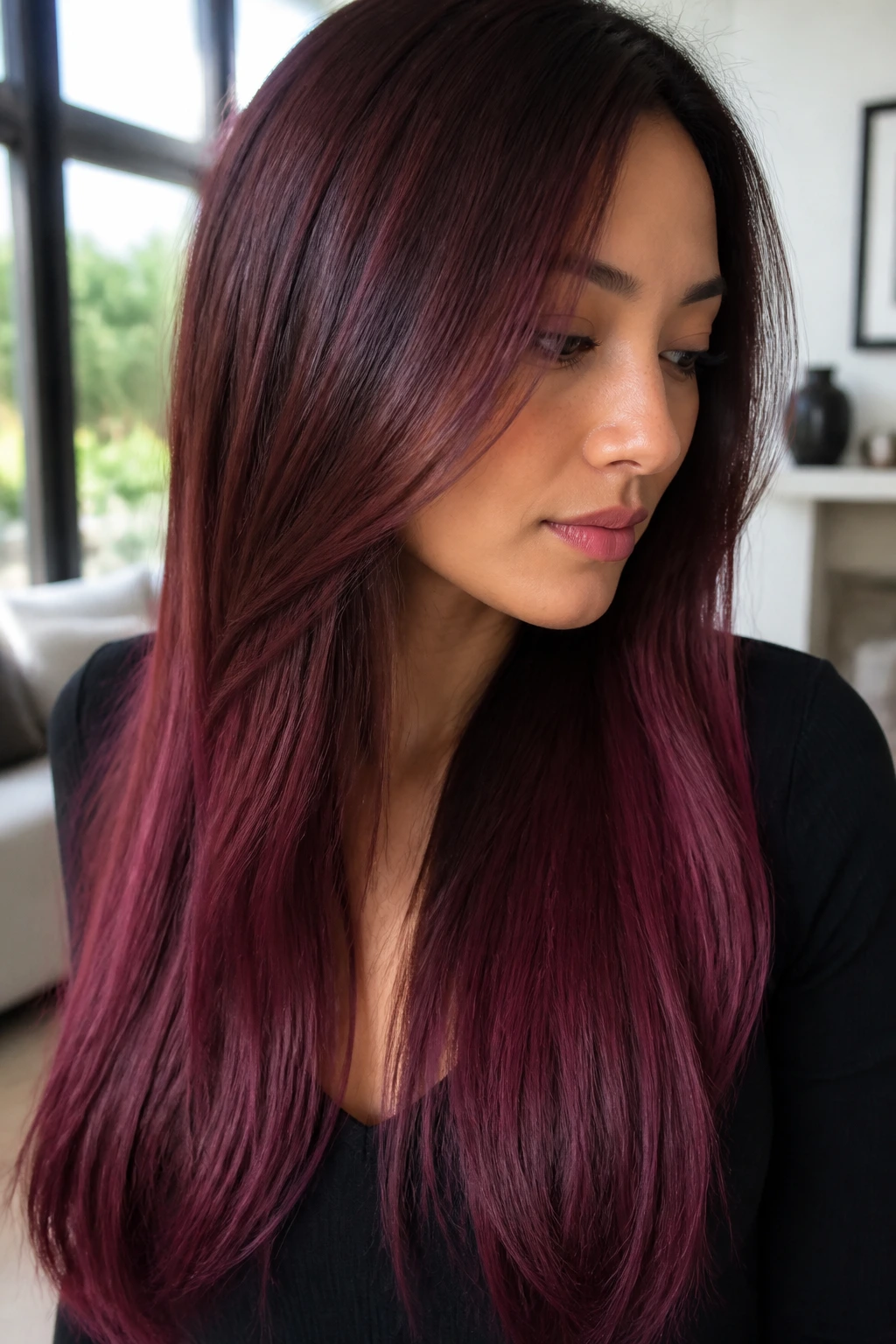
Mahogany gives you a brown-red base that feels grounded, then the wine tone comes in lower and deeper. This gradient is one of the most natural-looking burgundy ombré options for long hair because the shades are close enough to blend cleanly.
The elegance here is in the slow shift. You don’t see a hard line, just a mellow change from wood-toned red into darker wine. That makes it good for people who want something noticeable but not high drama.
It suits straight, wavy, and loosely curled hair, which is nice because not every color idea needs a special style to work. Some shades just carry themselves.
21. Scarlet Burgundy Half-and-Half Fade
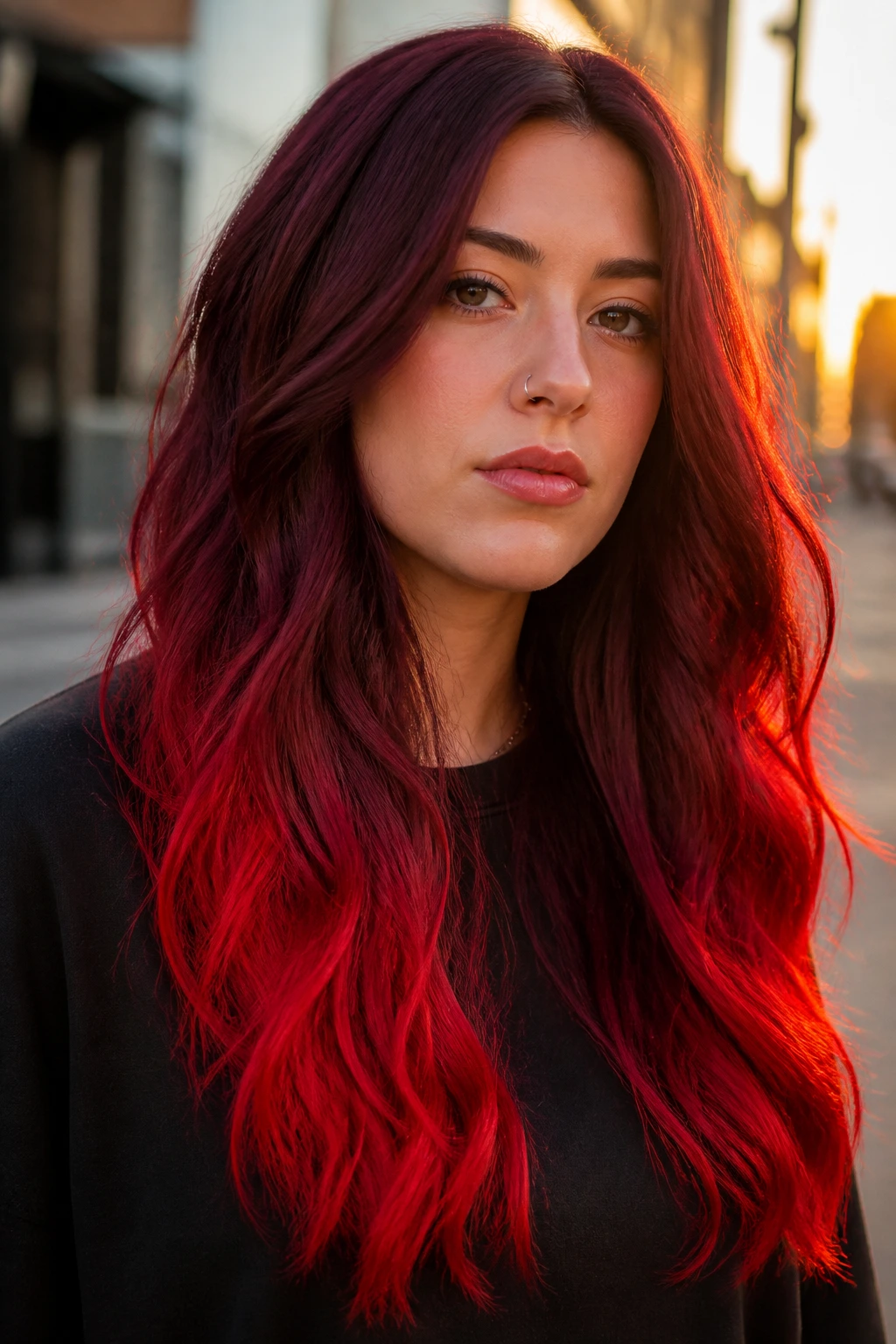
This is the brash cousin in the group. Half-and-half fading means the color shift is faster and more visible, with scarlet near the bottom and burgundy woven into the transition. It’s not subtle, and that’s exactly why it works for some long-haired clients.
Quick Fit Check
- Best for confident color wearers.
- Strong on blunt cuts and long layers.
- Needs regular glossing to keep the red from dulling.
- Looks best when the red pieces are saturated, not patchy.
If you like hair that makes a statement before you even style it, this is your lane. It has edge, but it still feels polished if the fade is done cleanly.
22. Mulled Wine Ombré on Thick Hair
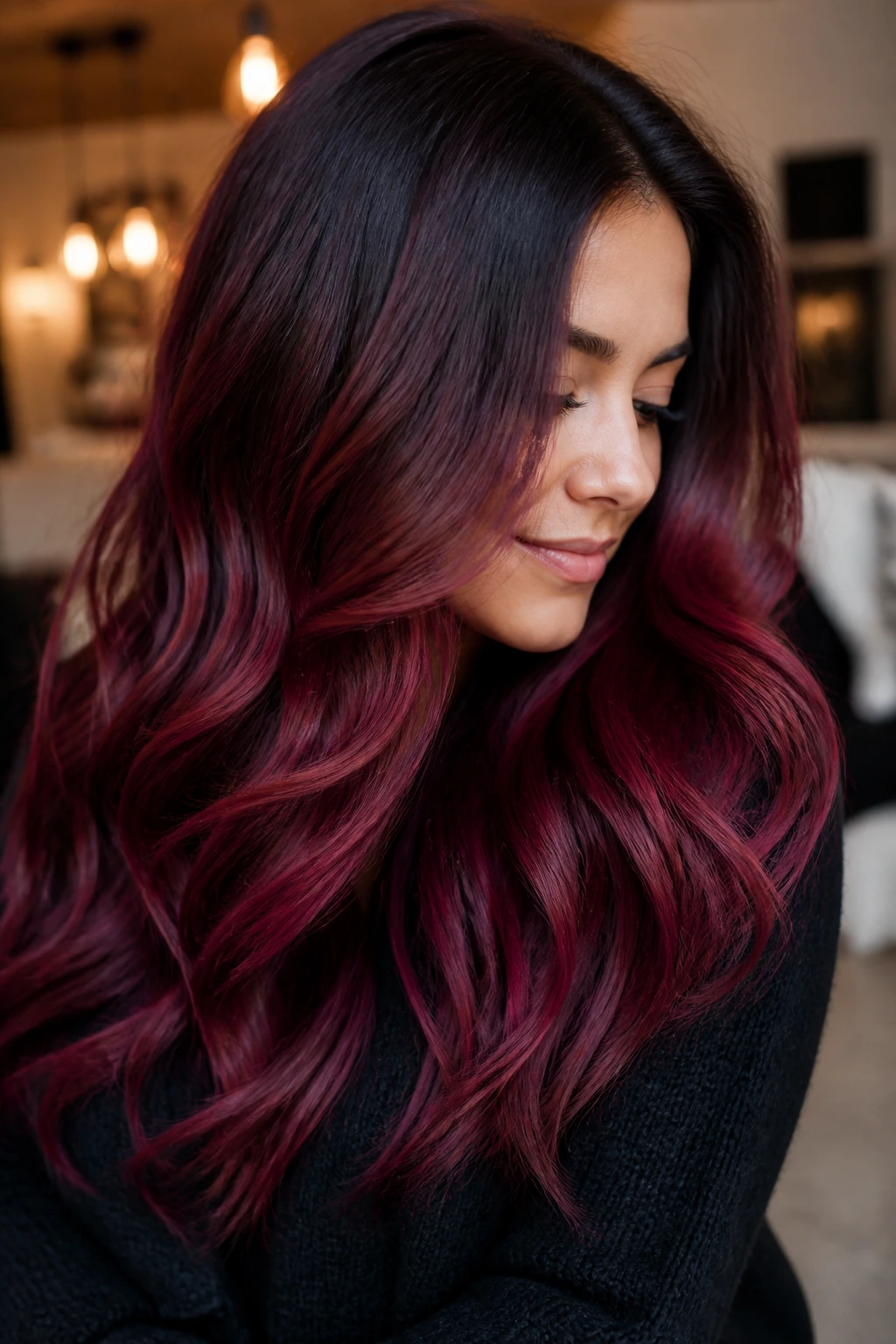
Thick hair can swallow softer burgundy shades if the color placement is too timid. Mulled wine fixes that. It’s darker, spicier, and strong enough to sit on dense lengths without disappearing into them.
Long thick hair also gives the color room to settle in layers. The top can stay chestnut or espresso, the mid-lengths carry the red wine tone, and the ends deepen again. That creates a full, heavy-looking color map, which thick hair often wears better than airy pastel fades.
If your hair is dense, ask for a lower fade and plenty of saturation through the ends. Sparse color on thick hair is a waste of good length.
23. Cherry Jam Ends on Long Straight Hair
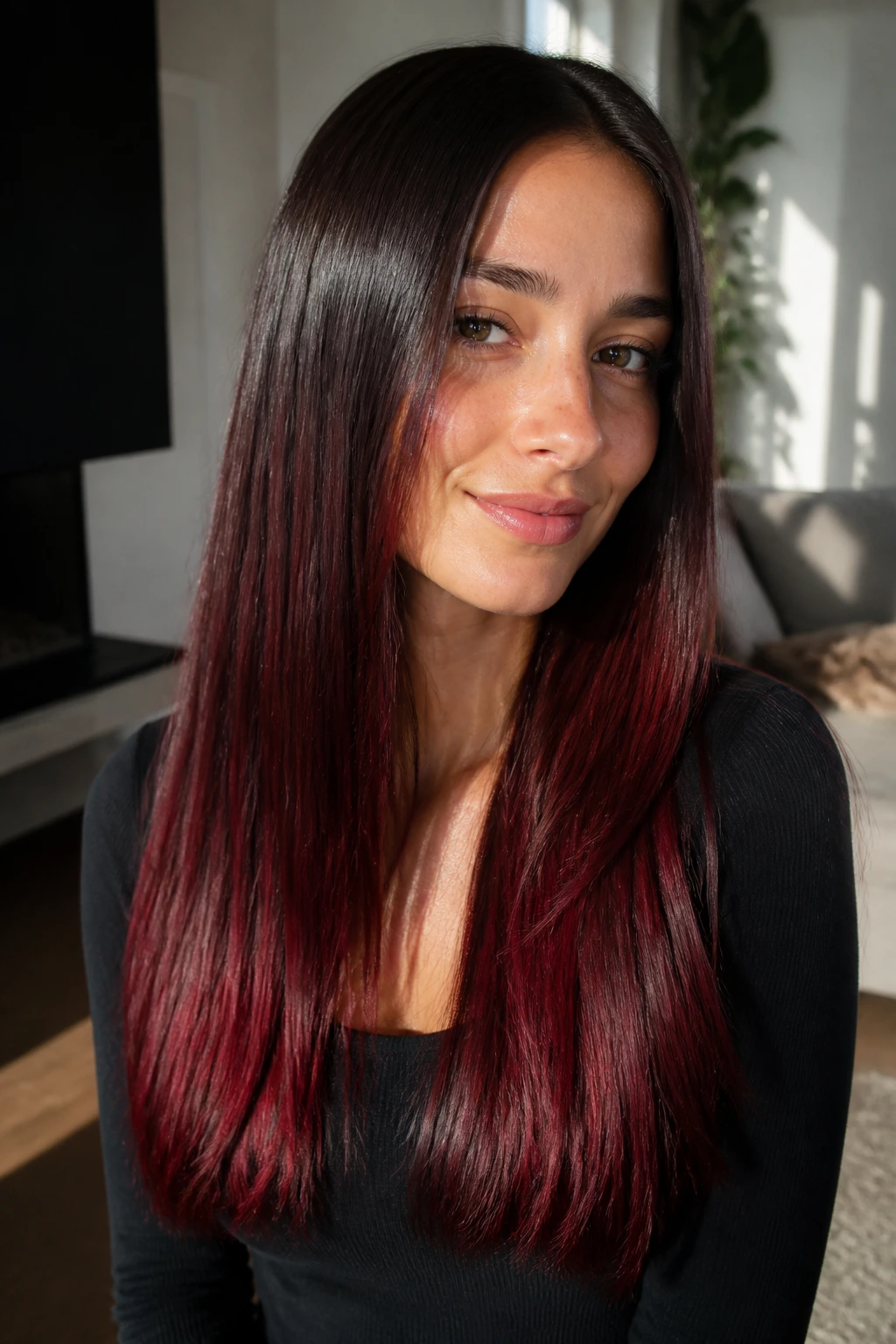
Straight hair can make ombré look either sleek or flat. Cherry jam keeps it sleek. The ends are richer and a little sweeter than classic burgundy, and the long straight shape lets the color fall in one clean sheet.
That clean sheet is the whole attraction. There’s no curl to break up the line, so the red has to be rich enough to carry the style on its own. Cherry jam does that by sitting between deep burgundy and berry red, which gives the hair shine without going bright.
A flat iron pass at the ends can help this look, but don’t overdo it. A slight bend is enough.
24. Velvet Burgundy with Face-Framing Streaks
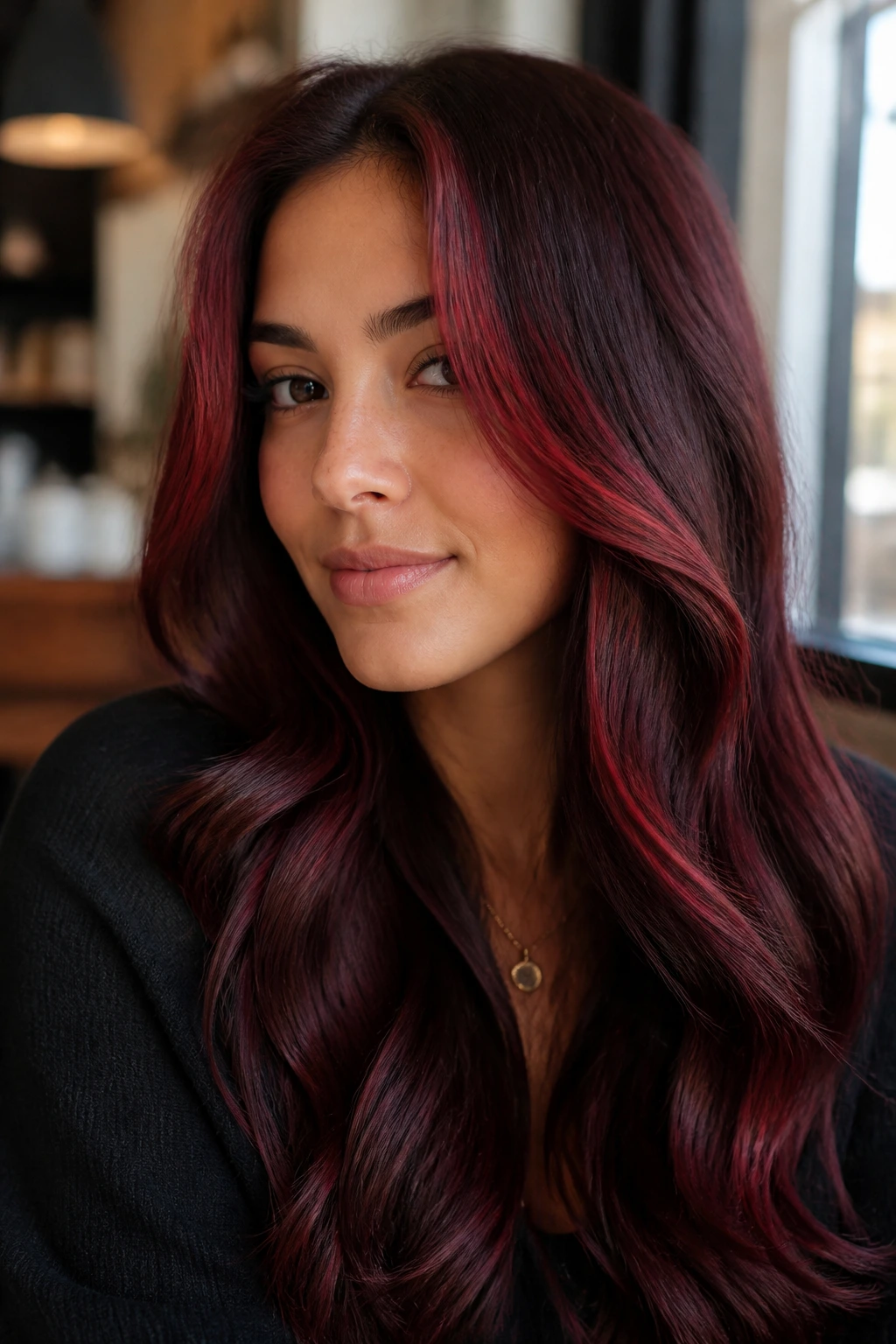
Face-framing streaks are a nice way to keep burgundy from hiding under the length of the hair. They give you color right where the eyes land, then the rest of the ombré falls away into the body of the hair. It feels thoughtful, not busy.
This version works well if you like your color to shift with your styling. Wear the front pieces loose, and the red reads soft. Pull the hair back, and the streaks become the main event. Long hair makes that flexibility possible because there’s enough length left to keep the rest of the ombré dramatic.
It’s especially flattering on layered cuts with movement around the cheekbones.
25. Smoky Plum Red Fade
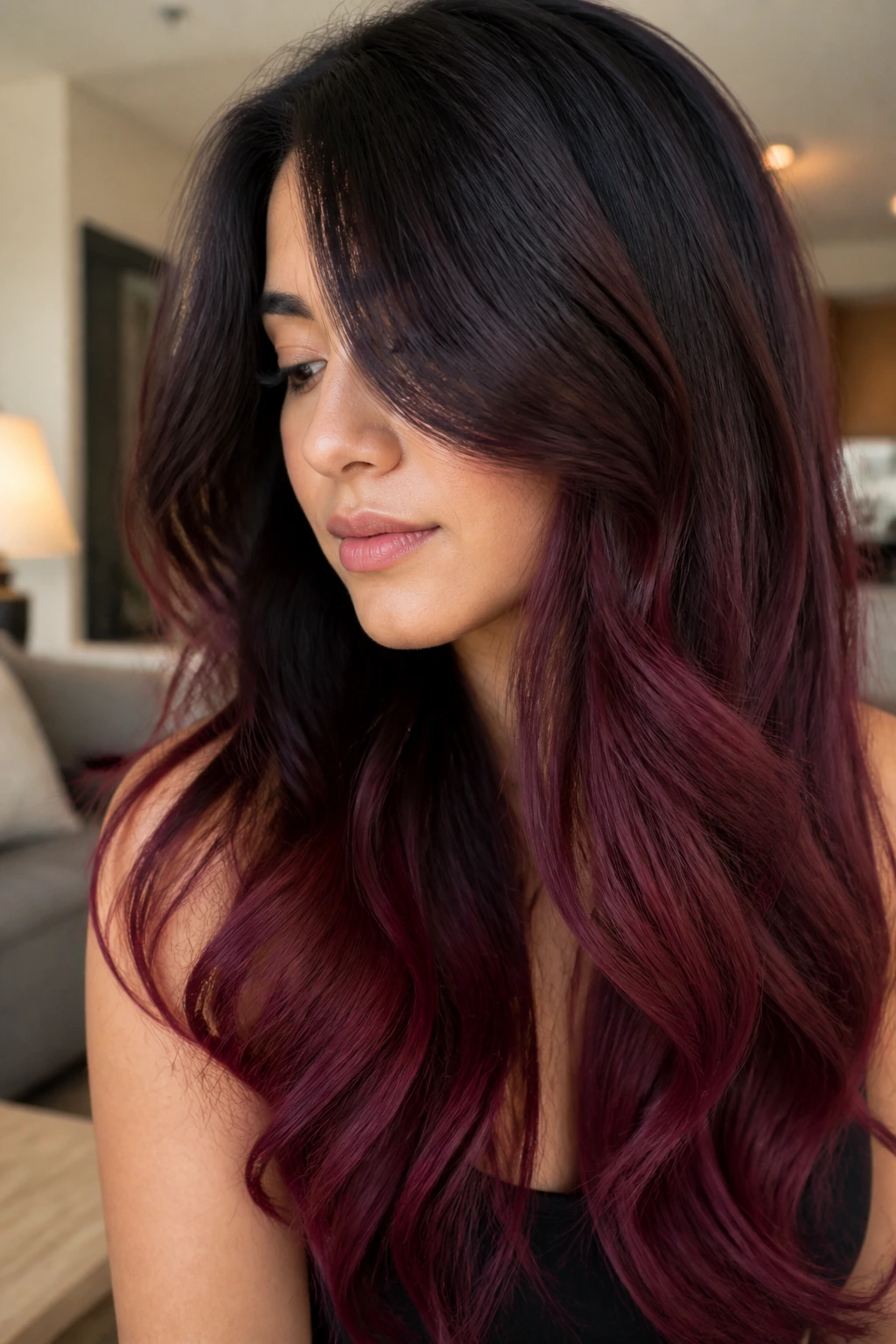
Smoky plum is cooler, darker, and more muted than standard burgundy. It gives the ends a dusty wine look that feels understated in a good way. On long hair, that kind of shade can be gorgeous because the length keeps it from looking muddy.
The smoke in the color matters. Too much purple and the look goes cold. Too much red and you lose the depth. Smoky plum sits in the middle, which makes it useful for people who want red tones but don’t want the obviousness of cherry or copper.
This is one of the best choices for winter coats, dark lipstick, and deep brown wardrobes. It sits nicely beside them.
26. Red Velvet Ombré with Long Layers
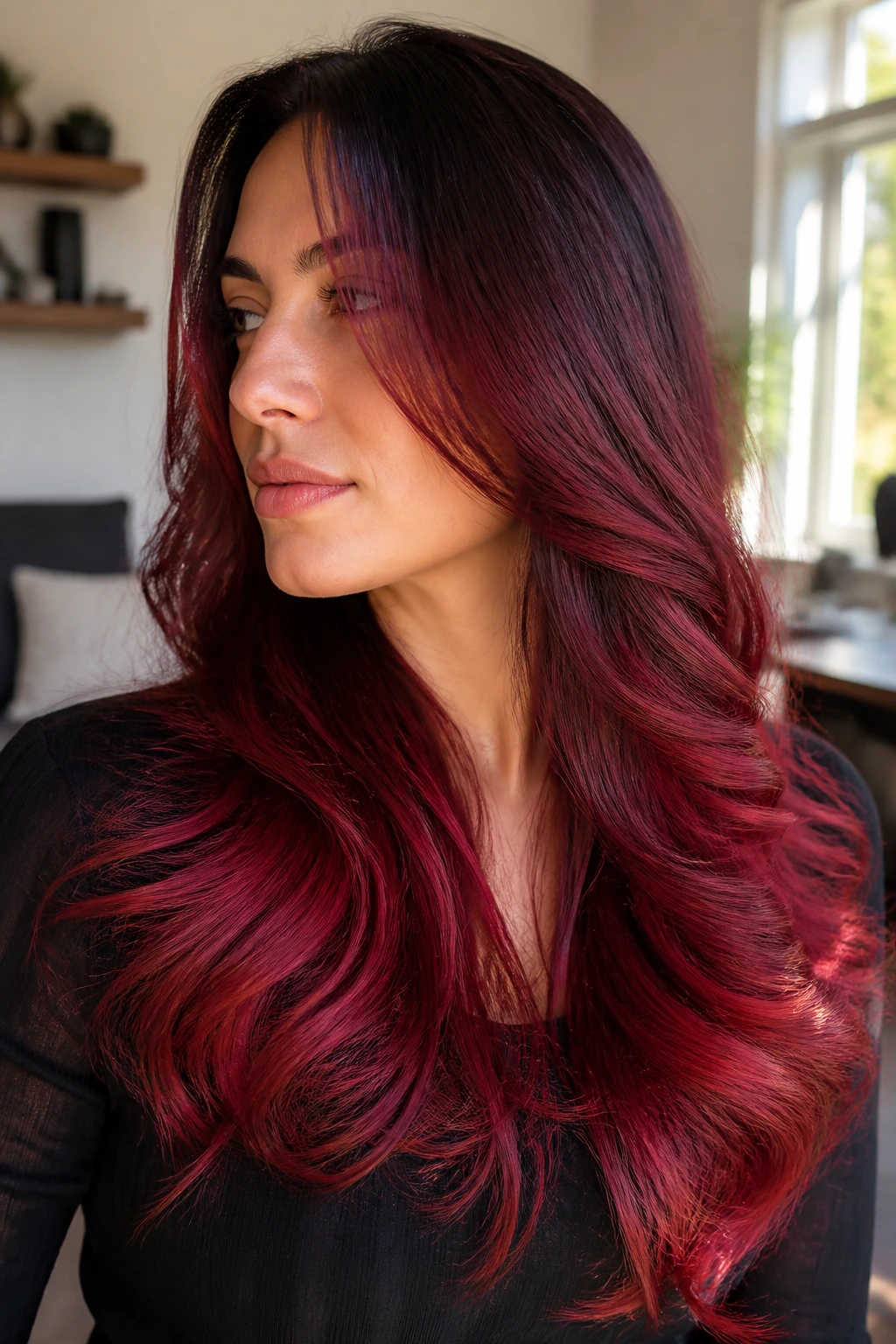
Long layers and burgundy ombré are a pair I’ll always defend. The layers stop the ends from looking like one heavy curtain, and the red velvet tone gives the hair a plush, soft finish. On long hair, that combination can look almost cinematic.
How to Style It
- Blow-dry with a round brush for bend.
- Add waves only through the last half of the length.
- Keep the ends glossy with a light serum.
- Trim every 8 to 10 weeks so the layers stay visible.
The best part is the movement. Every layer catches a slightly different amount of red, which gives the color more life than a one-length cut usually does.
27. Raspberry Wine Ombre with Braids
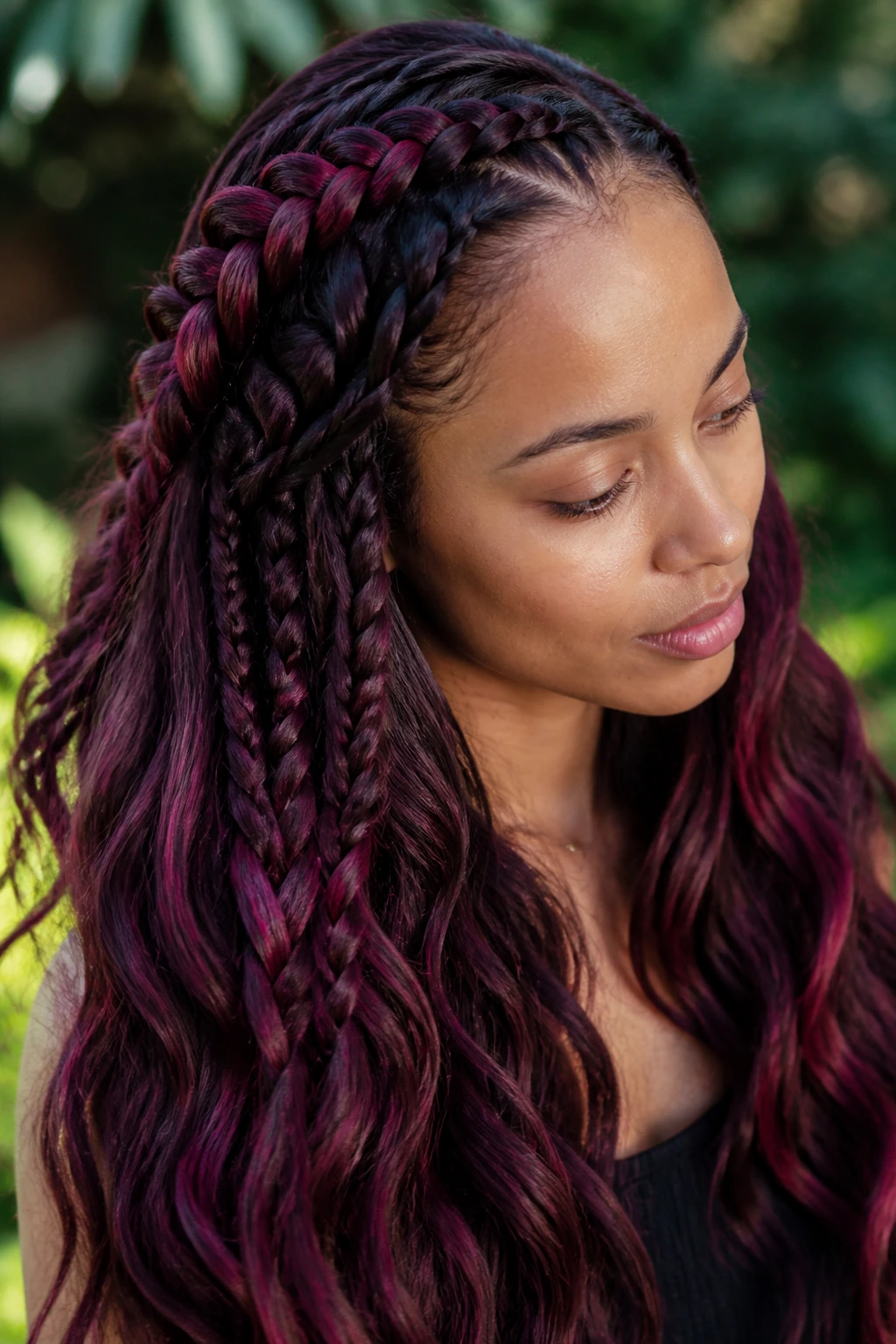
Braids are one of the easiest ways to show off ombré color. The strands cross over each other, and the raspberry wine tones flash in little sections instead of sitting flat. On long hair, that makes the color feel much more detailed.
This is a smart choice if you wear plaits, crowns, or bubble braids often. The burgundy won’t disappear into the style; it gets better inside it. The brighter raspberry notes are especially nice because they keep the braid from looking too dark.
A quick trick: braid the hair after it has cooled from heat styling. Warm, damp hair tends to swell, and the color contrast gets lost.
28. Dark Merlot S-Curve Ombre
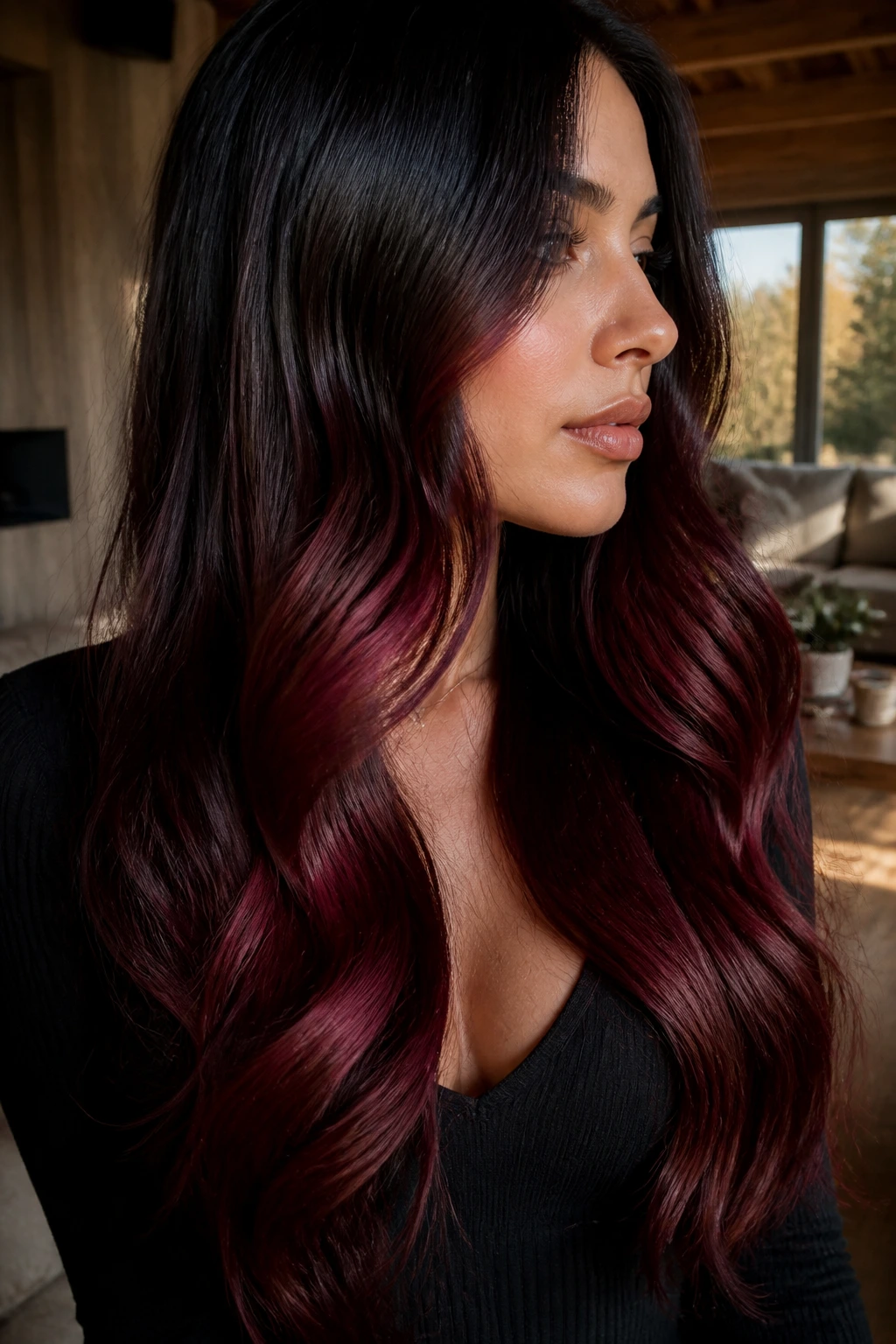
S-curve placement sounds fussy, but the idea is simple. The color is painted so it follows a soft curve through the lengths instead of going straight down. On long hair, that can make burgundy look more organic, especially when the hair has waves or loose bends.
Dark merlot is a great shade for this because it stays rich without stealing the show. The curve helps the eye travel through the hair, and the merlot tone appears in a way that feels natural rather than striped. It’s one of those styles that looks better the more the hair moves.
If your hair tends to fall in the same place every day, this placement keeps the color from feeling one-note.
29. Burnt Cherry Copper Transition
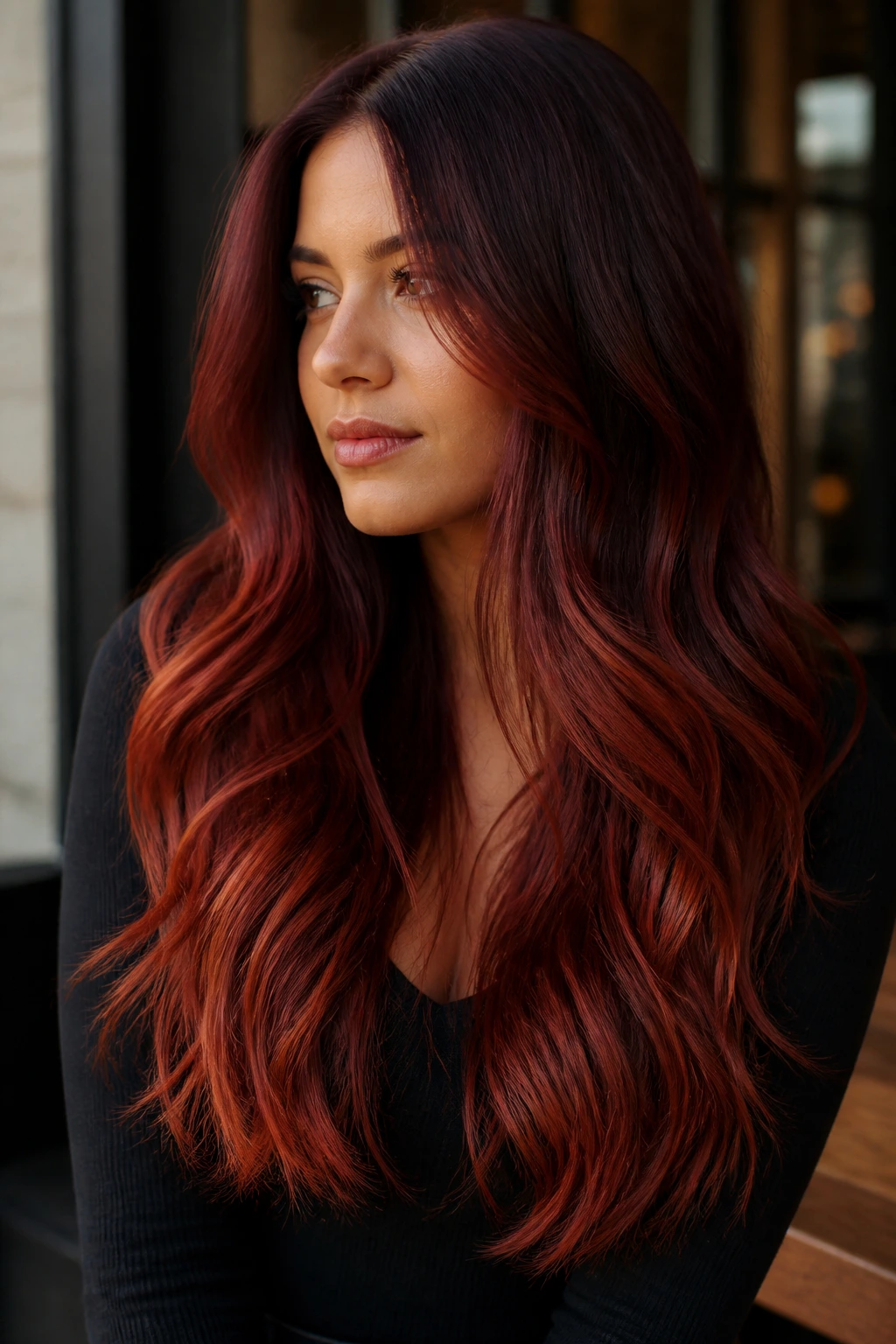
This is where burgundy meets warmth head-on. The transition starts in deeper cherry tones, then pushes toward a copper-red finish at the bottom. It’s a little less wine cellar and a little more glowing ember.
That warmth gives long hair a kind of bounce that cooler burgundies sometimes miss. If your skin has golden or peachy tones, the copper edge can be especially flattering. If you want red hair that feels alive even in low light, this is a strong candidate.
It does need smart toner choices. If the copper gets too orange, the whole idea slides off balance. Kept in check, though, it’s gorgeous.
30. Luxe Cabernet Curtain-Fall Ombre
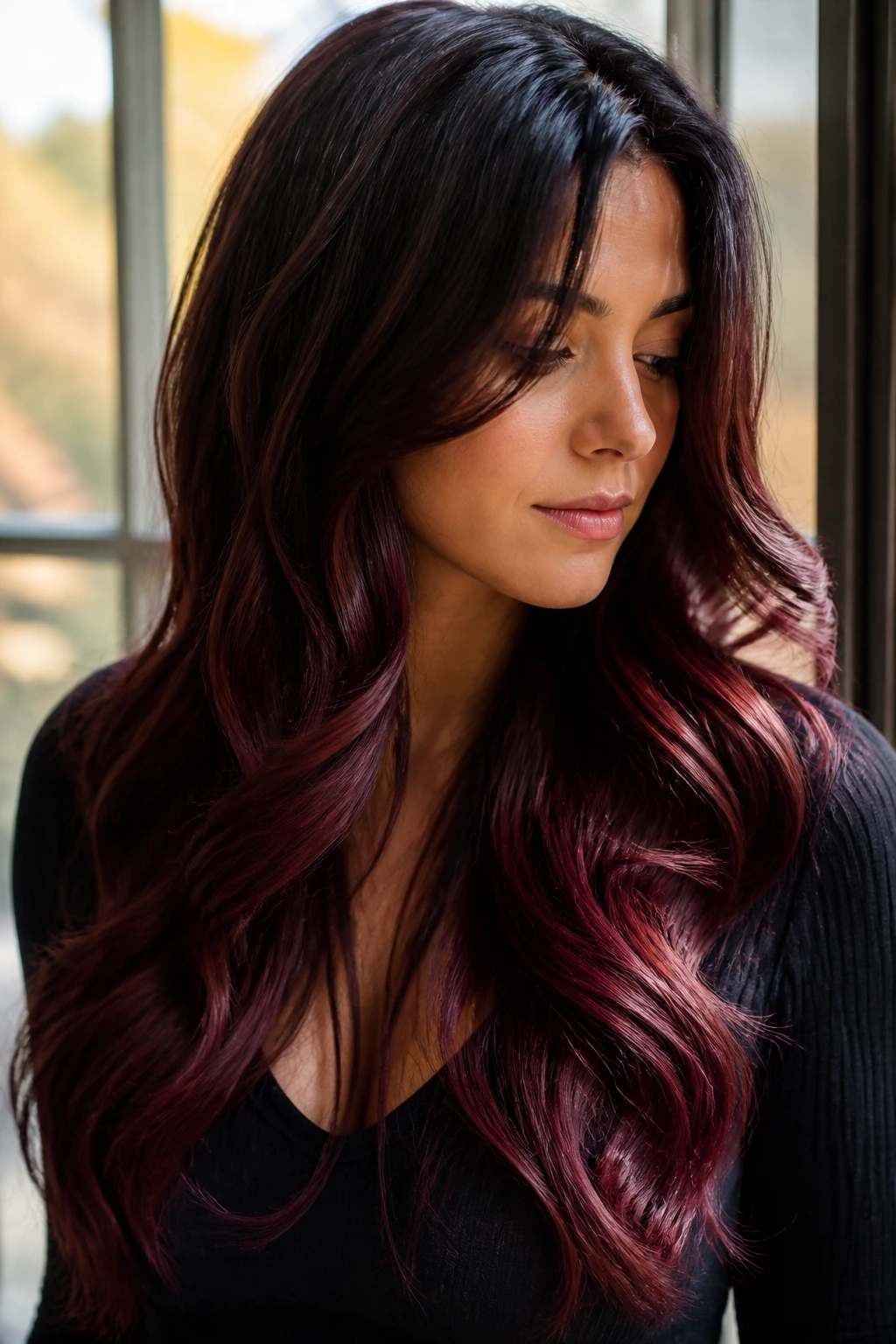
This is the big, flowing version of the look—the one that makes sense when the hair is long, full, and meant to be seen in motion. Cabernet at the ends, deep brunette at the top, and curtain-like movement through the mid-lengths give the whole style a graceful fall.
Long hair is doing the heavy lifting here. The fade can start higher, the color can live through more of the length, and the final effect still feels soft because there’s enough hair to carry it. If you want one burgundy ombré idea that looks good in a loose braid, over a sweater, or spread across the back of a coat, this is it.
A final thought: the best burgundy ombré is the one that fits your cut, not the one that looks loudest in a photo.
