



Long hair is the best canvas for pink-purple ombre hair. The length gives the fade room to breathe, which is why the color can look dreamy instead of streaky. On a blunt bob, the same palette can feel abrupt; on waist-length layers, it slips from shade to shade like ribbon in water. That difference matters.
The other reason this look works so well is control. Pink, mauve, lilac, orchid, plum, and magenta all behave a little differently on hair that has been lifted to different levels, so the transition can be soft, moody, or loud depending on where you want the color to sit. If the midlengths are too yellow, the pink goes peachy and the purple can turn muddy. If the ends are too porous, the violet can grab hard and lose that silky blend. Hair color is never only about the dye tube. It’s about the canvas.
That’s why long hair is such a gift here. You can let the root stay natural, let the middle section do some of the blending work, and let the ends carry the boldest shade. You can also move the color around with braids, half-up styles, waves, or a blunt blowout and get a different read every time. Some looks whisper. Some announce themselves from across the room.
1. Soft Rose-Quartz to Lilac Pink Purple Ombre Hair
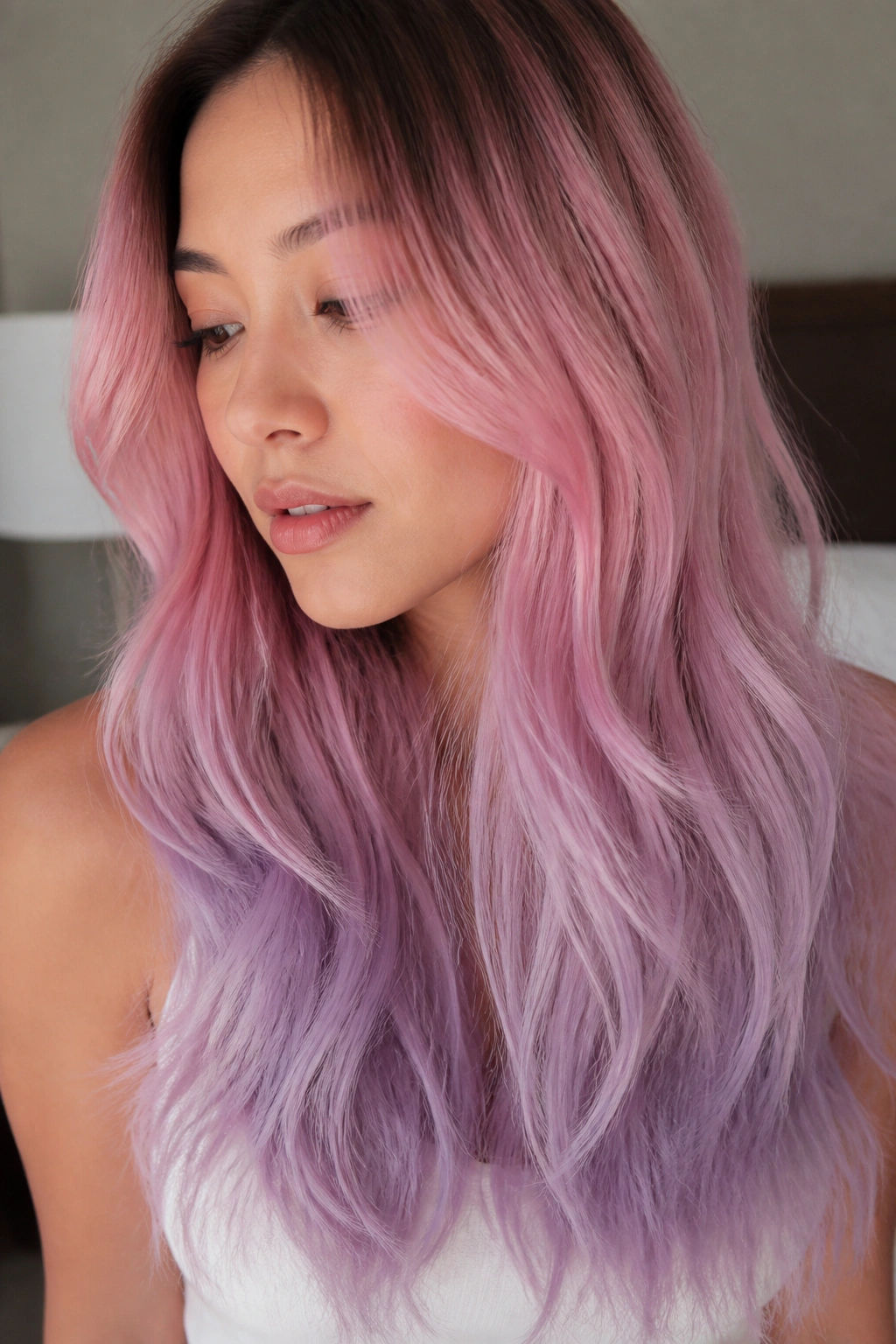
This is the gentlest version of the palette, and it has a way of looking expensive without trying too hard. The shift starts with a pale rose-quartz pink through the midlengths, then drifts into a cool lilac at the ends. On long layers, the color has enough space to look blurred instead of painted on.
Why it reads so clean on long hair
The trick is keeping the root area almost quiet. A shadow root in your natural shade or one shade darker stops the color from looking flat, while the pink-to-lilac fade does the actual talking. It’s soft, but not sleepy.
- Best on light blonde or pre-lightened brown hair.
- Looks especially good on loose waves, where each bend catches a different part of the gradient.
- Ask for a low-contrast melt, not a hard line at the cheekbones.
- A clear gloss every few weeks keeps the rose shade from going chalky.
My favorite part: this version grows out with less drama than the bolder looks, so it suits anyone who wants color that feels pretty rather than loud.
2. Deep Plum Roots with Orchid Ends
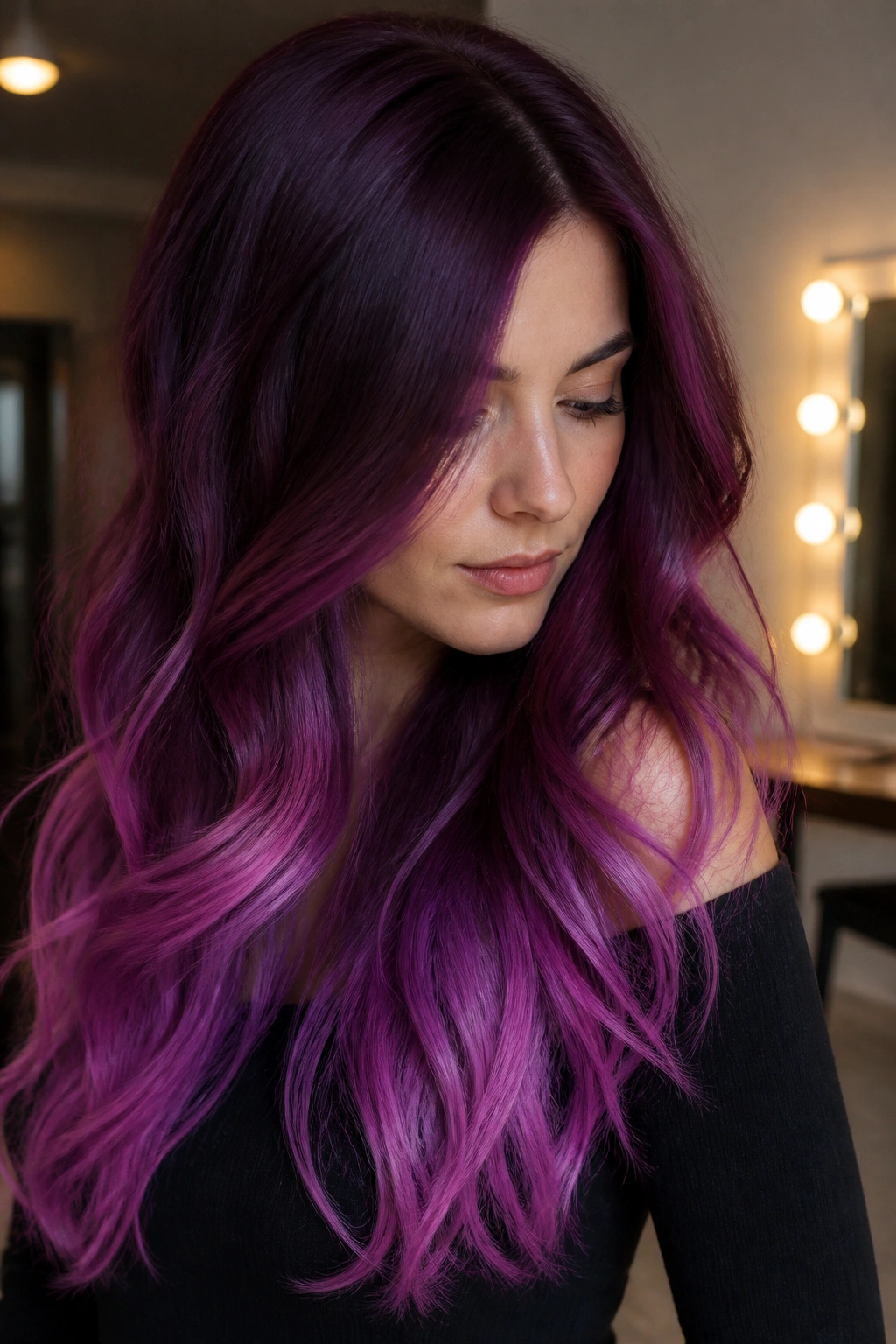
Plum at the top and orchid at the bottom gives long hair instant depth. It’s a stronger look than the soft pastel version, and that’s the point. The root area stays rich and dark, which makes the ends glow when they hit the light.
There’s also a sneaky bonus here: darker violet near the crown can make long hair look denser up top. That matters if your ends are fine or a little see-through. The orchid finish then lightens the whole silhouette so the length feels airy instead of heavy.
If you wear your hair in one long curtain, this color is gorgeous. If you twist it into a low ponytail, the plum root and bright ends peek through in a way that feels deliberate, not fussy. It’s one of those shades that does a lot without needing much styling.
3. Magenta Sweep on Dark Chocolate Hair
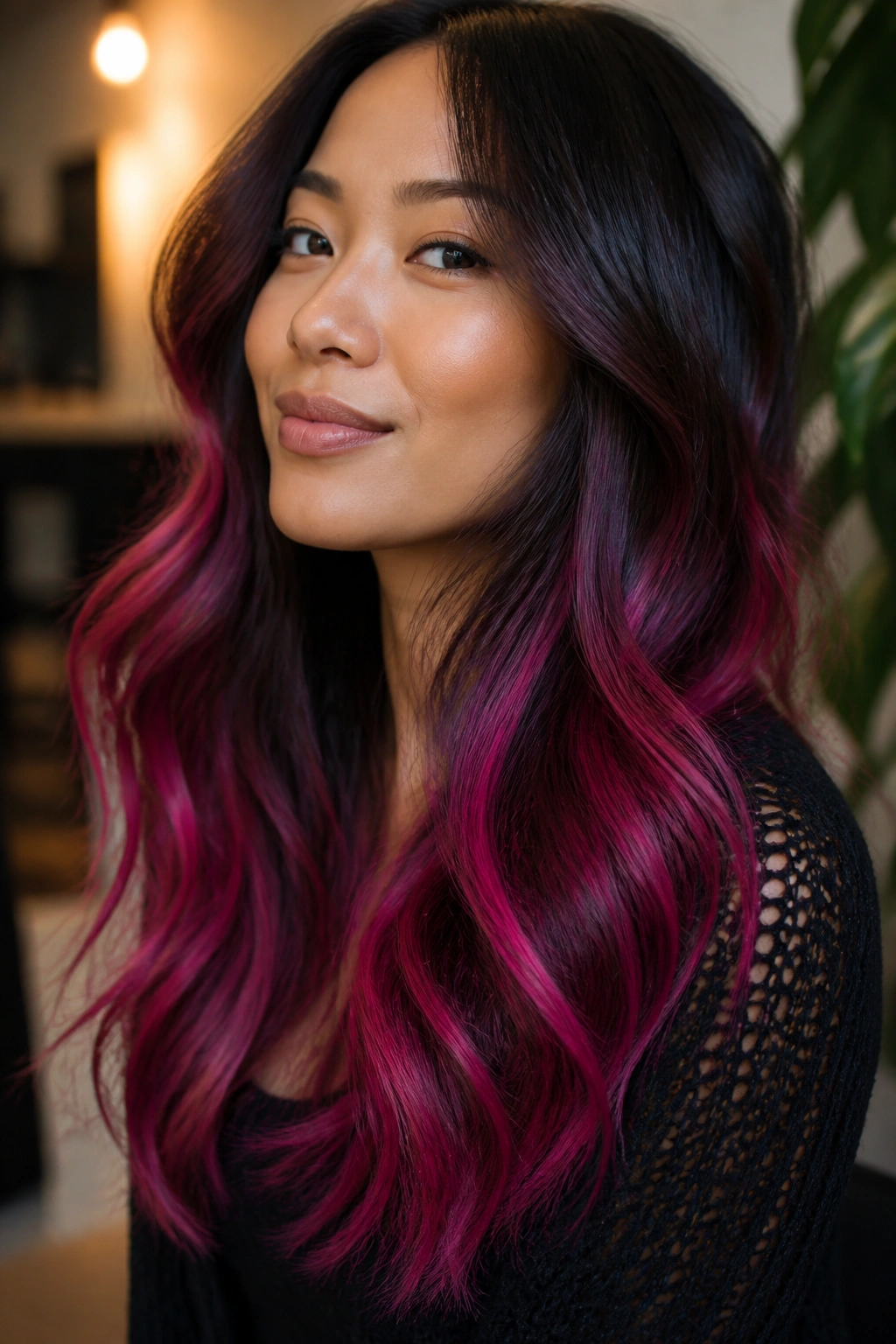
Picture dark chocolate hair with a wash of magenta moving through the lower half. That’s the energy here. It’s bolder than rose, less icy than lilac, and it keeps a nice amount of warmth so the whole look doesn’t tilt too cold.
What makes it hit harder than a simple pink fade
Magenta carries more red in it, which means it reads well against brunette bases. You do not need every inch lifted to pale blonde for this one to work. That makes it kinder to long hair that has been colored before, because you can keep more of the natural depth and still get punch.
- Great for medium-to-dark brunettes.
- Beautiful in braids, where the magenta threads weave through the darker base.
- Works best when the transition starts around the ribs or lower chest.
- A sulfate-free shampoo helps the red tones stay richer between salon visits.
Long hair gives this look a little swagger. The color moves when you walk, and that movement is half the charm.
4. Dusty Pink to Violet Ribbon Layers
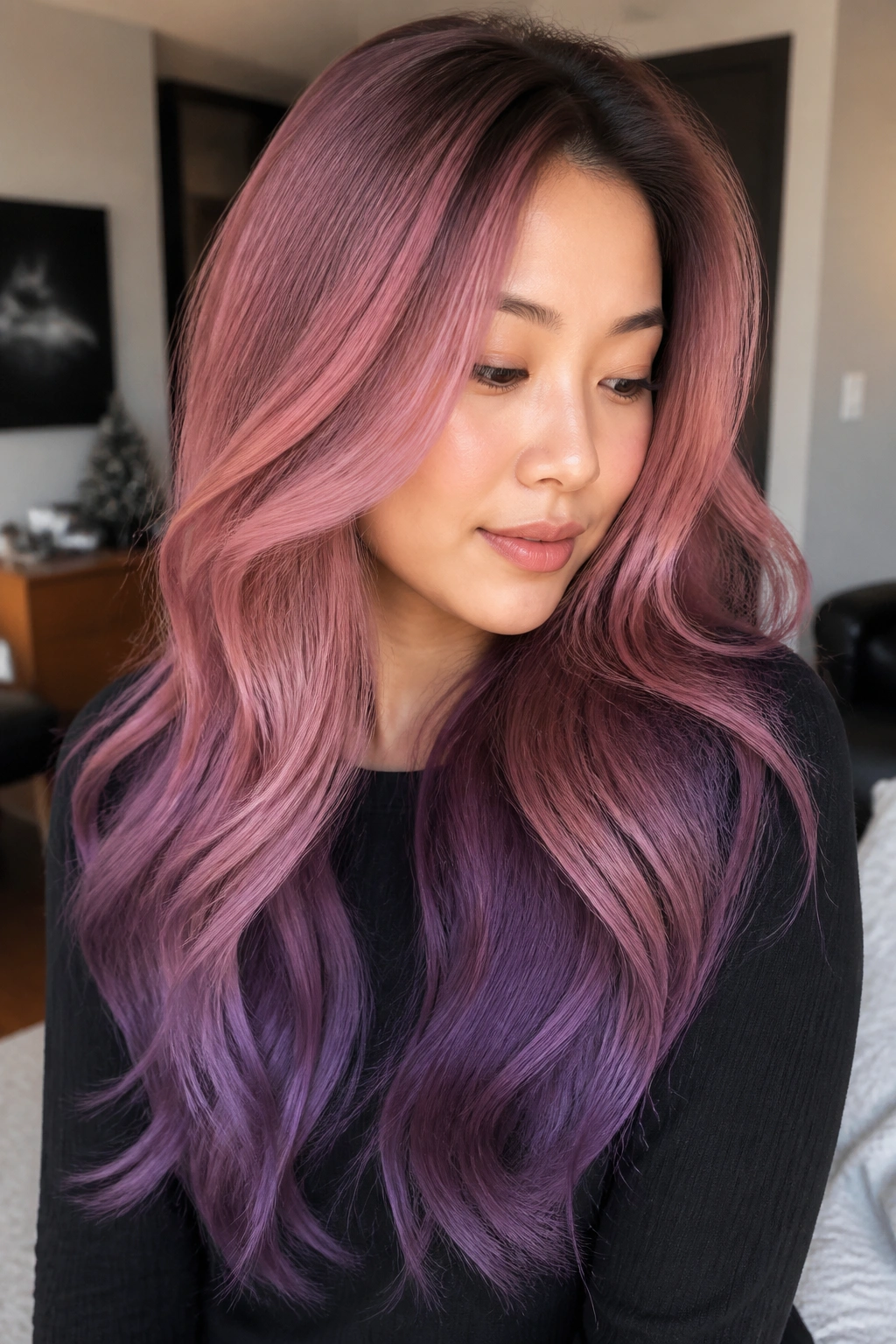
Why does this version feel calmer than neon color? Because dusty pink and violet behave like ribbon, not paint. The shades are muted enough to blend into the hair, yet they still show enough contrast to keep the ombre visible.
Long layers make this look smarter. The shorter pieces near the face pick up the dusty pink first, while the lower lengths catch the violet and keep the whole shape from feeling bottom-heavy. It’s a good choice if you want color that looks styled even on a day when you barely do anything.
How to ask for it at the salon
Tell your colorist you want a diffused blend with soft saturation, not a bright block of pink. The goal is to keep the line between colors broken up with feathered pieces. A money-piece can be left a touch lighter if you want the face to open up.
This one is especially nice on long, layered cuts because the layers do half the work for you. The color falls into them and looks almost woven in.
5. Cotton Candy Ends with Blended Midlengths
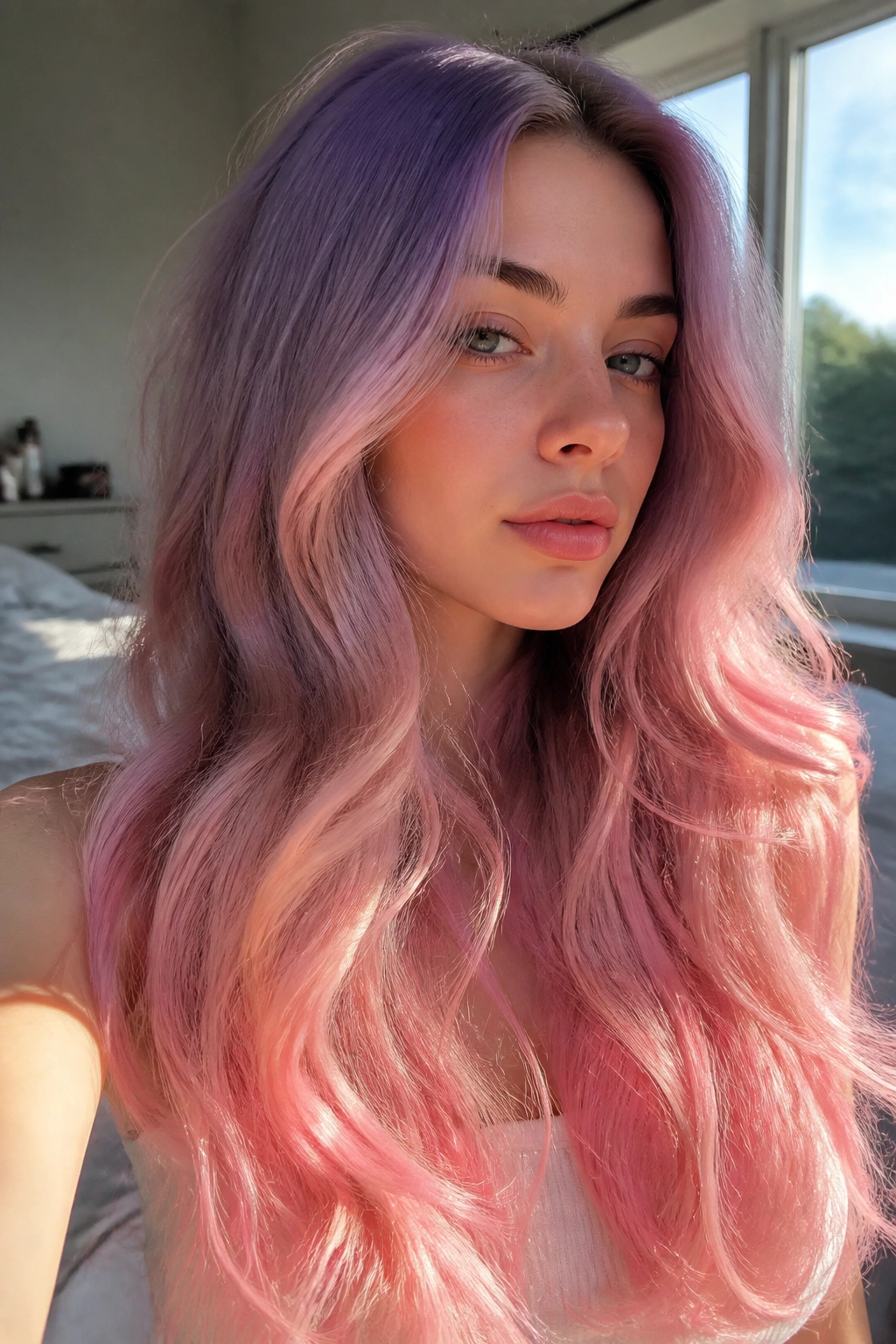
Cotton candy ends are the playful side of pink-purple ombre, and long hair keeps them from looking childish. That’s the part people miss. On short hair, this kind of color can feel like a costume. On long hair, the extra length gives it room to soften.
The midlengths do the heavy lifting here. Instead of jumping from blonde straight into pink and then purple, the color moves through a creamy blush zone first. That bridge keeps the fade from looking chopped up. It also lets the ends stay lighter and fluffier, which is where the cotton-candy feeling comes from.
Loose curls are the best styling match. The color sits in the bends and turns almost cloudlike. Straight hair can work too, but it reads sharper. If you like that crisp look, fine. If you want the softest version, set it with a big barrel iron and let the curls cool before brushing them out.
6. Berry Red to Amethyst Fade
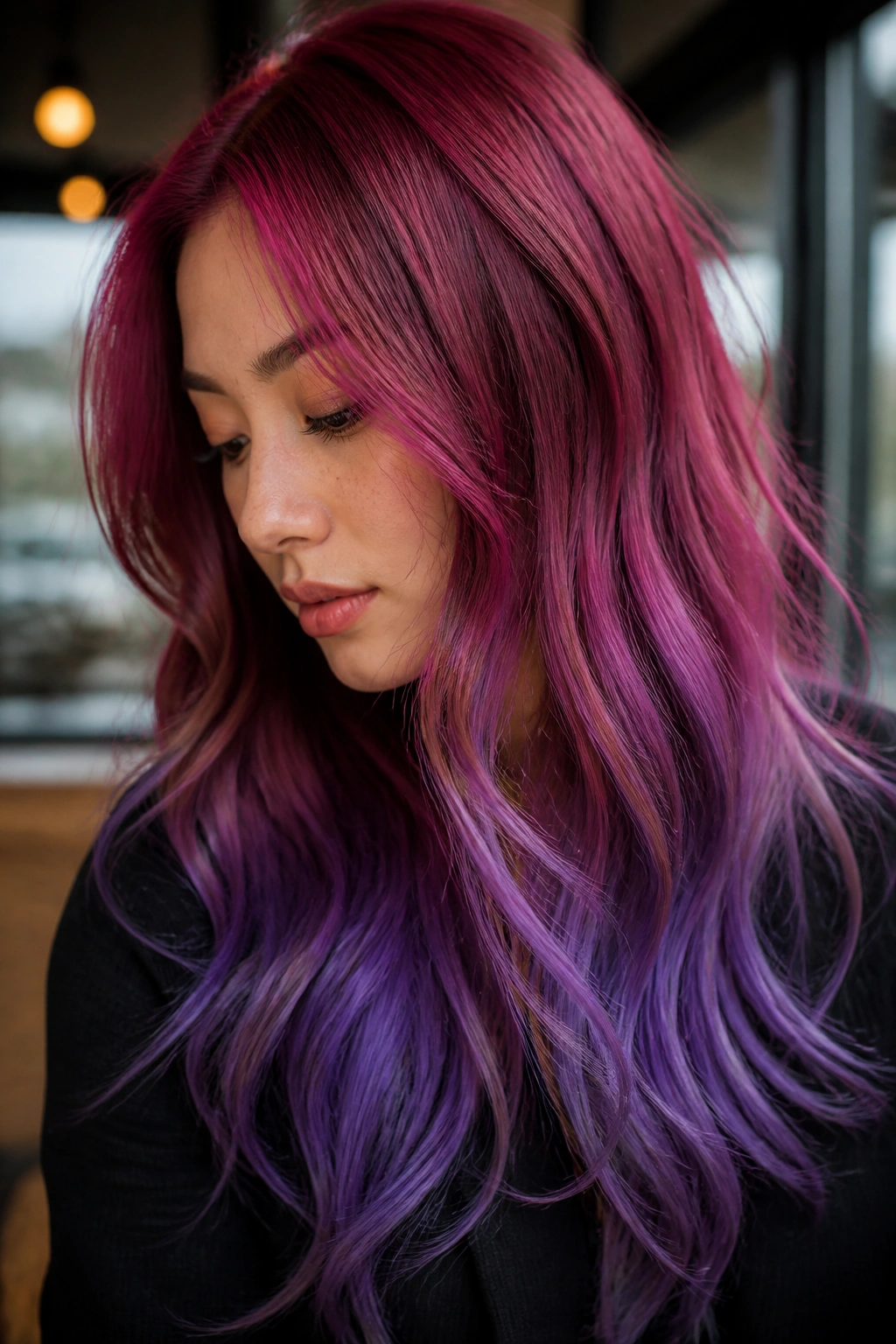
Berry red into amethyst is one of those combinations that looks richer in person than it does in photos. The red at the top keeps the palette warm and juicy, then the purple takes over with a deeper, cooler finish. It feels moody without going dark.
I like this on long hair because it shows a real color story. The transition has a beginning, a middle, and an end. That sounds obvious, but a lot of ombre work misses the middle and jumps too fast. This one gives you a bridge shade that actually earns its place.
The look is especially good if your wardrobe leans black, cream, charcoal, or denim. Berry and amethyst both play well with those colors, so the hair becomes the statement without fighting the rest of your outfit. And yes, a middle part or soft center wave makes it look even better.
7. Pastel Pink Veil Over Purple Underlights
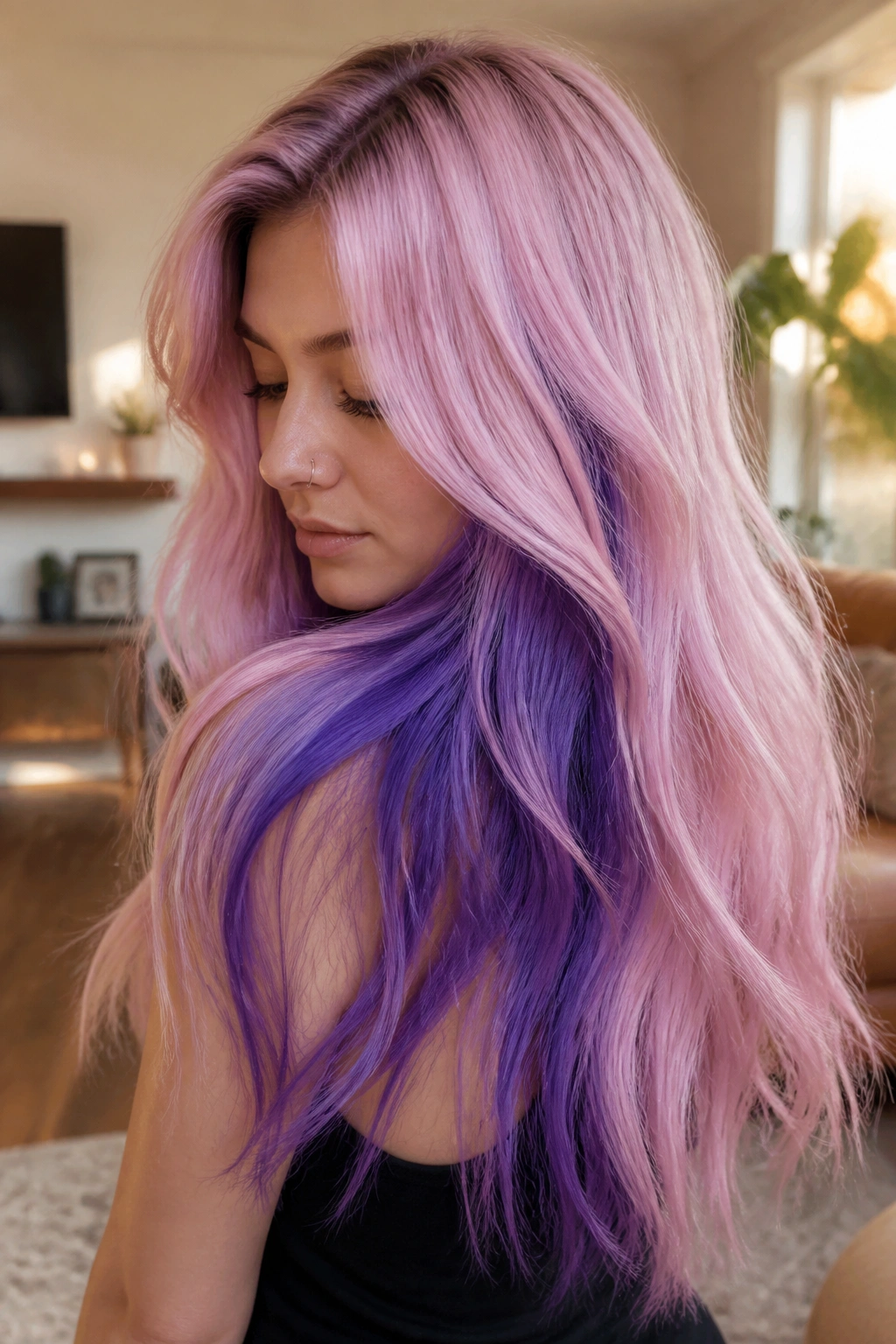
This is the sneaky one. From the front, it can look like soft pastel pink with a violet haze underneath. Turn your head, flip a section of hair, or pin it half-up and the purple underneath comes alive. It’s pink purple ombre hair with a hidden layer, which makes it a little more interesting than a standard fade.
What makes it different from a regular ombre
The top veil is lighter and more delicate, while the underlights carry the stronger purple. That means the color changes with movement instead of sitting in one obvious band. On long hair, especially thick hair, this gives you a nice surprise effect.
- Best for people who want color that can look softer at work and bolder off-duty.
- Great for braids, twists, and half-up knots.
- Works well when the top layer is kept a shade lighter than the underlayer.
- Ask for sliced panels under the top section, not chunky stripes.
It’s a clever choice. Not loud in every moment, but never boring.
8. Mauve-to-Lavender Money Pieces and Ends
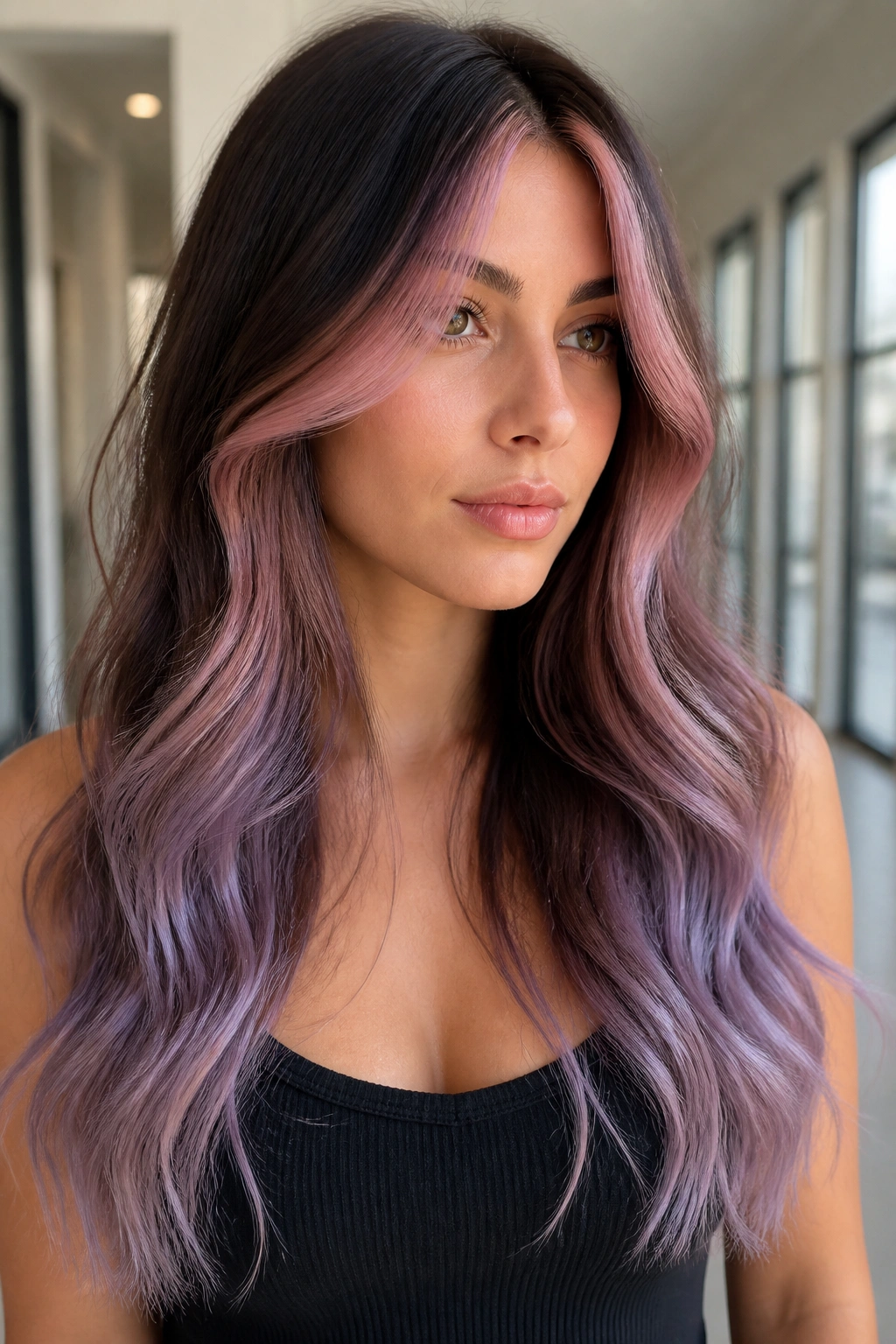
If you like face-framing color, this is the one I’d point you toward first. Mauve money pieces pull attention up around the face, while lavender ends keep the long lengths feeling light and airy. It’s a smart way to wear pink-purple ombre if you don’t want the whole head washed in vivid color.
The nice thing about money pieces is how much they change the mood of a haircut. A long layered cut can go from plain to noticeable with just those front sections colored cleanly. Add lavender on the ends, and the whole thing gets a soft glow without needing heavy saturation everywhere.
This is also one of the easiest ways to ease into fashion color. You can keep more of your natural base, which helps with maintenance. When the front pieces grow out, they blend into the rest of the hair more gracefully than a blunt color line would.
9. Sunset Orchid Ombre for Wavy Layers
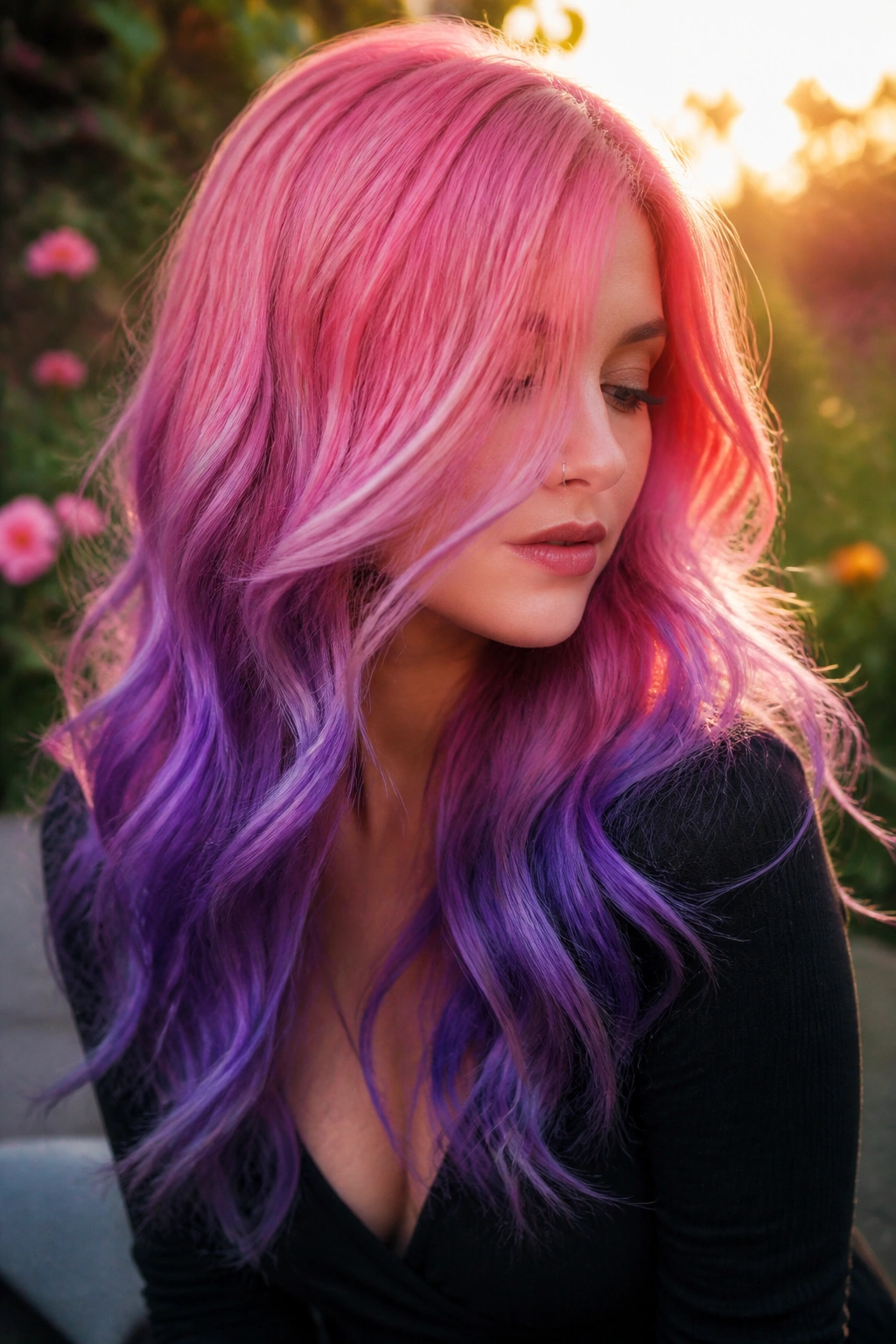
You know that look where the hair seems to move even when you’re standing still? That’s what wavy layers do for sunset orchid color. The pink sits in the upper sweep of the wave, the purple drops into the bend, and the whole thing feels fluid.
A long layered cut is almost doing half the styling job here. The shorter pieces at the top can carry the brighter pink, while the longer pieces hold more orchid and violet. Because the color is placed through the shape of the cut, the ombre looks hand-painted rather than forced.
Quick details that make it shine
- Use loose waves, not tight curls.
- Keep the transition slightly lower than the collarbone on very long hair.
- A gloss with a soft pink or violet tone can refresh the ends between appointments.
- Darker roots help the orchid section read richer.
This is one of the prettiest versions if you like movement over drama. It feels alive, which is exactly what long layered hair should do.
10. Raspberry to Wine to Violet Gradient
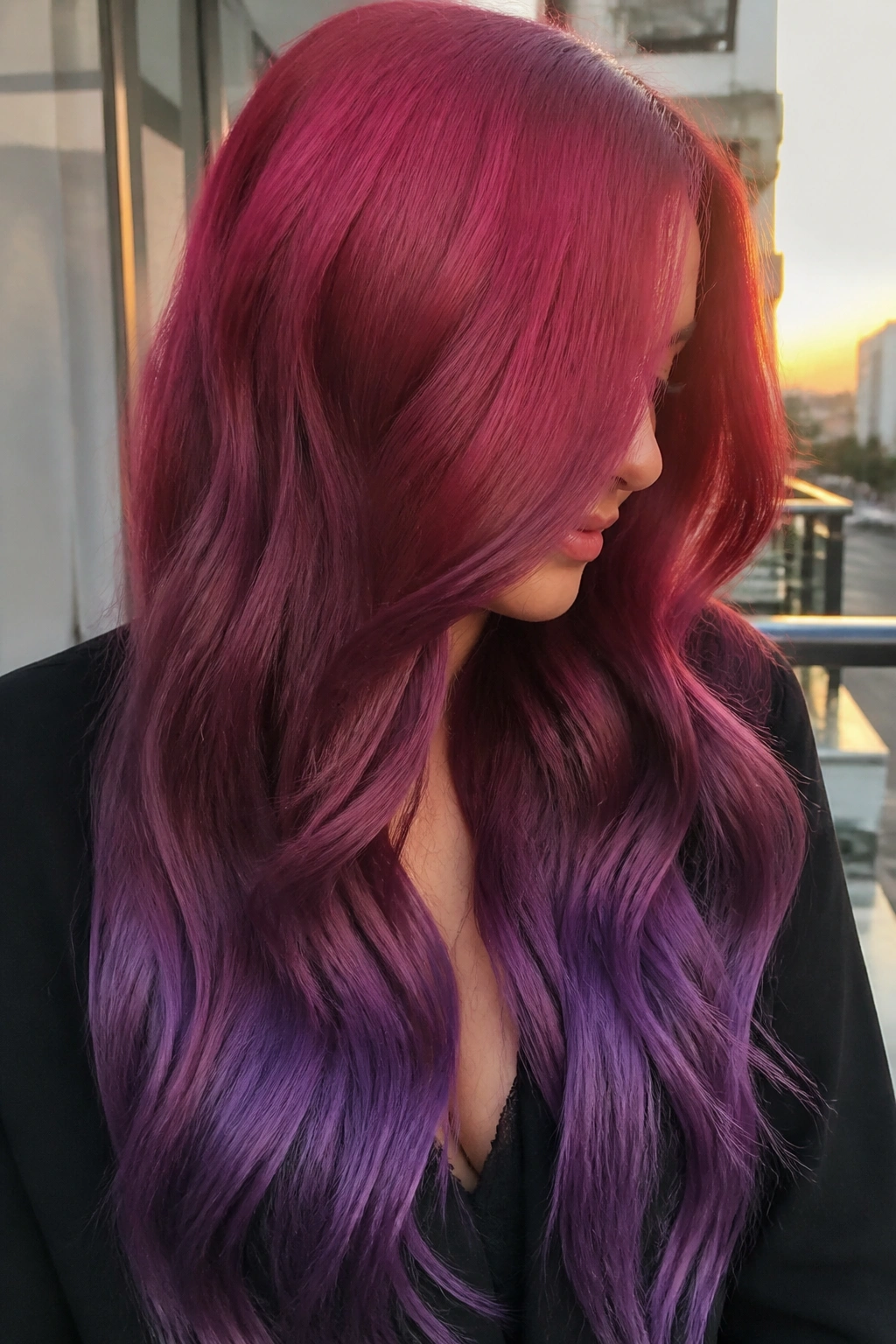
Why stop at two shades when three can tell a better story? Raspberry to wine to violet is richer and more dimensional than a simple pink-to-purple fade. It’s also a better fit for long hair, because the extra length gives each color room to show up on its own before melting into the next.
The raspberry sits brightest near the top, the wine darkens the middle, and violet closes the ends. That middle wine tone matters. Without it, the transition can look too abrupt, especially on straight hair. With it, the fade feels deeper and more polished.
How to wear it
This shade trio works especially well on sleek blowouts, high ponytails, and big, brushed-out waves. Each style shows the color differently. Straight hair makes the gradient neat and graphic. Waves make it softer and more romantic. Either way, the color has enough depth to hold interest for a long time.
11. Smoky Rose to Eggplant Fade
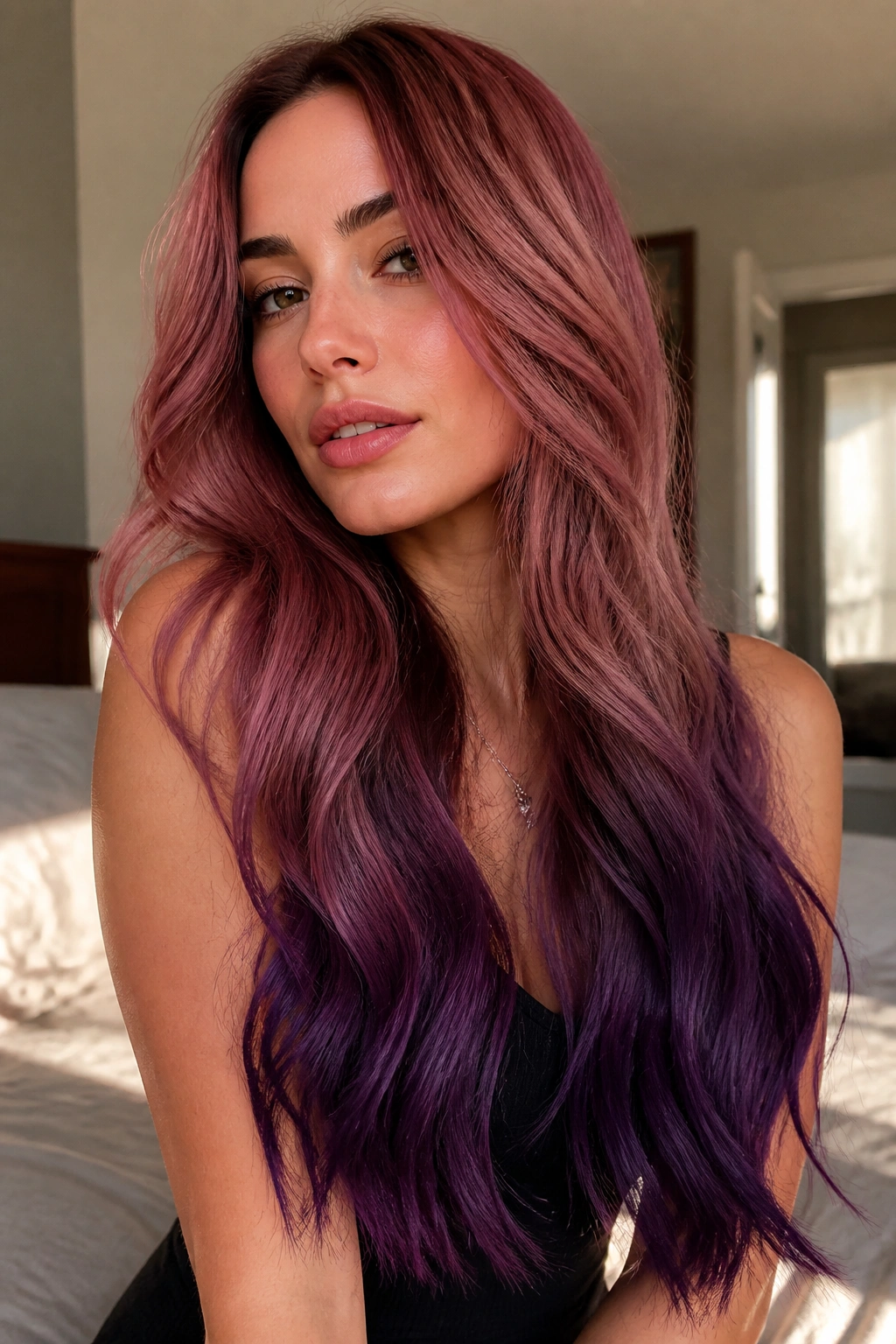
Smoky rose and eggplant are for people who like color with a little attitude. The rose is muted, almost dusty, and the eggplant ends bring in a darker purple that reads rich rather than sweet. It’s a more grown-up take on pink purple ombre hair.
This version flatters long hair because the darker ends anchor the length. If your hair is very long and very fine, that can be a good thing. Too much lightness at the bottom can make the ends feel thin. Eggplant gives them weight.
It also looks especially good in straight styles. The darker finish creates a clean line when the hair falls over the shoulders, and the rose through the upper lengths keeps it from feeling flat. If you want something that feels cool, moody, and a little editorial, this is a strong pick.
12. Bubblegum Pink with Purple Face-Framing Ends
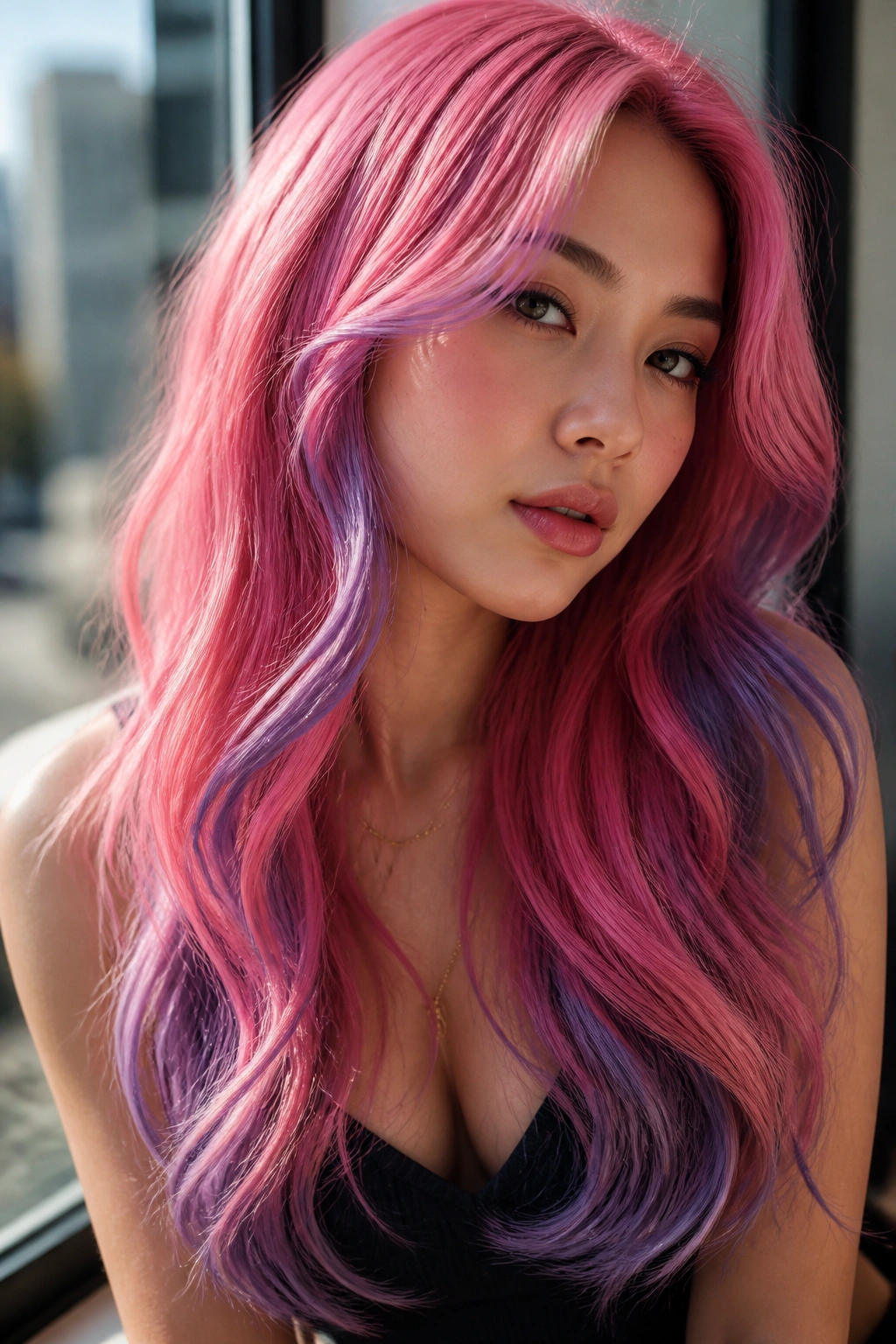
Some looks are meant to be noticed. This is one of them. Bubblegum pink near the front and purple at the ends gives long hair a cheerful, high-energy finish that reads bright without needing neon everywhere.
The face-framing pieces do the heavy lifting. They pull the eye in immediately, which means the rest of the ombre can stay a touch softer and still look intentional. I like this on long hair with curtain bangs or long layers, because the front sections have room to fall into place.
The purple at the bottom keeps the look from turning into one-note pink. That contrast matters. It stops the color from feeling flat and gives your length a second act.
- Best if you like bold hair in photos and in motion.
- Pair with waves for the richest color read.
- Ask for the front panels to be one level brighter than the rest.
- Keep a color mask in the shower for the pink sections.
13. Peachy Pink into Grape Purple Ombre
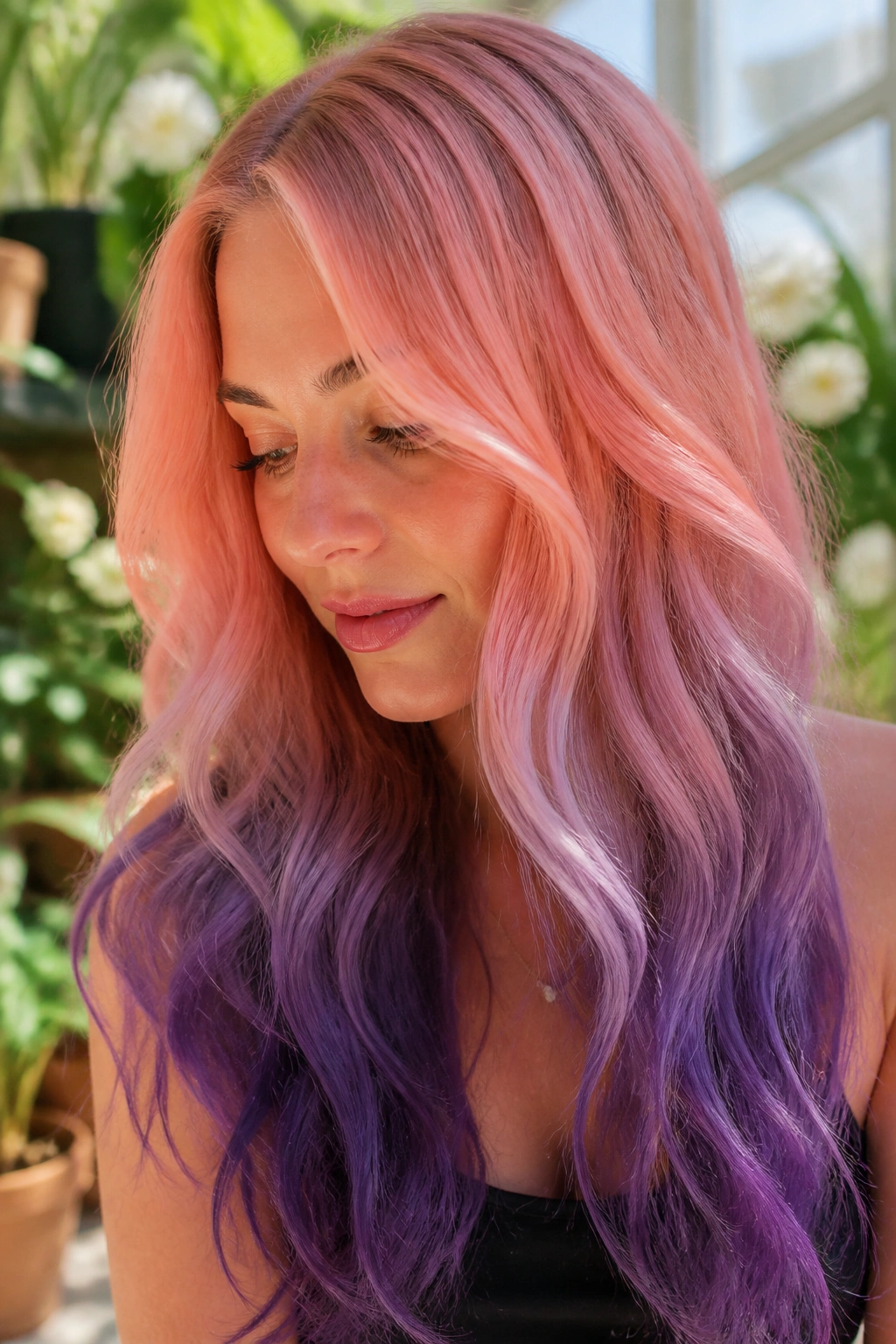
A lot of pink-purple ombre ideas go cool right away. This one starts warmer. Peachy pink softens the upper half, then grape purple takes over at the bottom and gives the hair a deeper finish. That temperature shift is what makes it interesting.
Long hair handles that warm-to-cool transition well because the length gives the shades room to separate before they blend. On shorter hair, peach and grape can fight each other. On long layers, they get a little breathing room, and the result feels smoother.
Why it flatters so many skin tones
Peach near the face adds warmth. Grape purple below adds depth. Together, they create a balance that can look fresh on both warm and cool complexions. The key is avoiding a muddy midpoint, so the transition has to stay clean and glossy.
A soft wave pattern helps the color catch light in sections. It’s a cheerful look, but not cartoonish. That distinction matters.
14. Neon Pink Dip Dye into Electric Violet
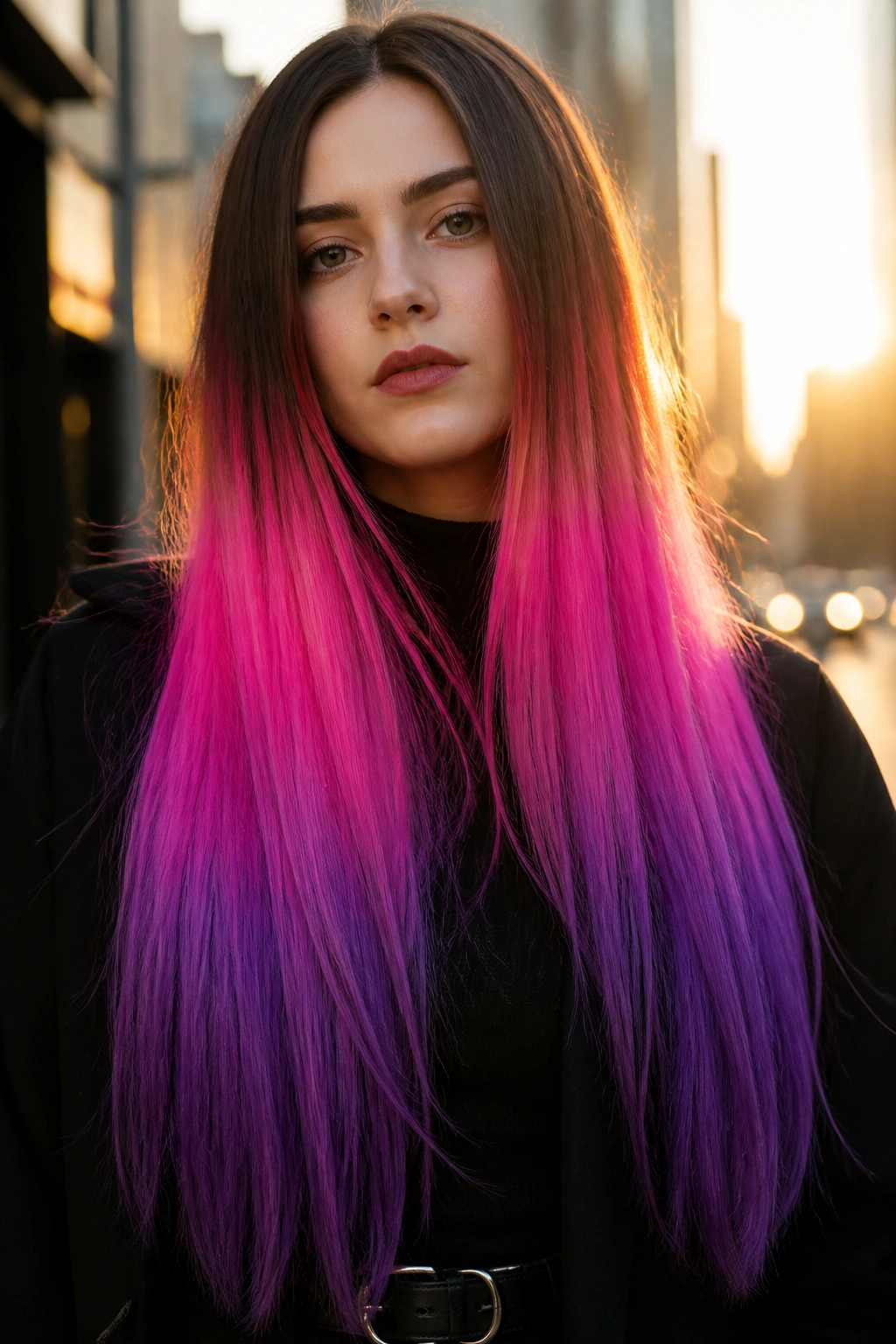
This is the loudest look in the lineup, and it knows it. Neon pink dip dye dropping into electric violet is not shy, not subtle, and not trying to be. Long hair makes it feel more deliberate because the bright ends have somewhere to go.
The dip-dye approach keeps the roots quiet and puts the color where you want the impact. That’s useful if you like fashion color but still want some ease at the scalp. The line can be soft or sharp depending on how much blend you ask for, though I prefer a slightly blurred edge so it doesn’t look like the ends were dunked in dye.
This style loves blunt finishes, glossy straight hair, and sharp center parts. If your hair has layers, the color can still work, but the line will break up more. That may be a good thing if you want a rougher, less polished feel.
15. Rose Gold Roots, Purple Ends
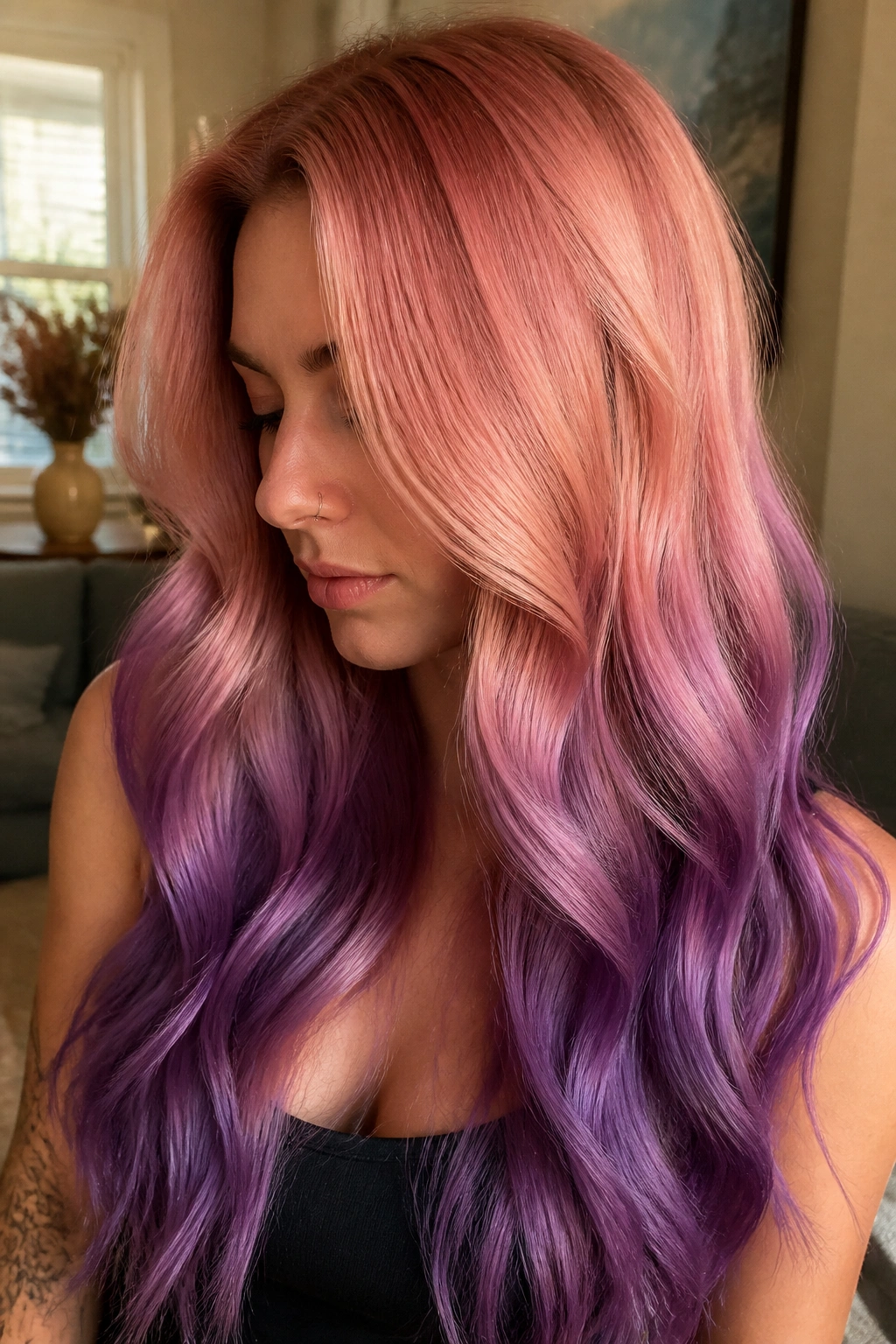
Rose gold roots sound unusual, and that’s why they work. The metallic warmth near the crown gives long hair a soft sheen, while the purple ends make the look more dimensional. It sits somewhere between romantic and modern.
What makes the finish feel polished
The rose gold area acts like a bridge shade. It isn’t as pale as pink, and it isn’t as cool as lilac, so it helps the transition into purple feel smoother. On long hair, that bridge really matters because the fade has more space to unfold.
- Best on blonde or lightened bases.
- Works well with a gloss finish to keep the rose tone shiny.
- Looks elegant in low buns and loose waves.
- Ask for the purple to deepen gradually, not all at once.
This is one of those styles that benefits from healthy ends. Split ends snag color visually, and metallic shades show that fast. A trim before coloring helps.
16. Blackberry to Fuchsia Melt on Curly Hair
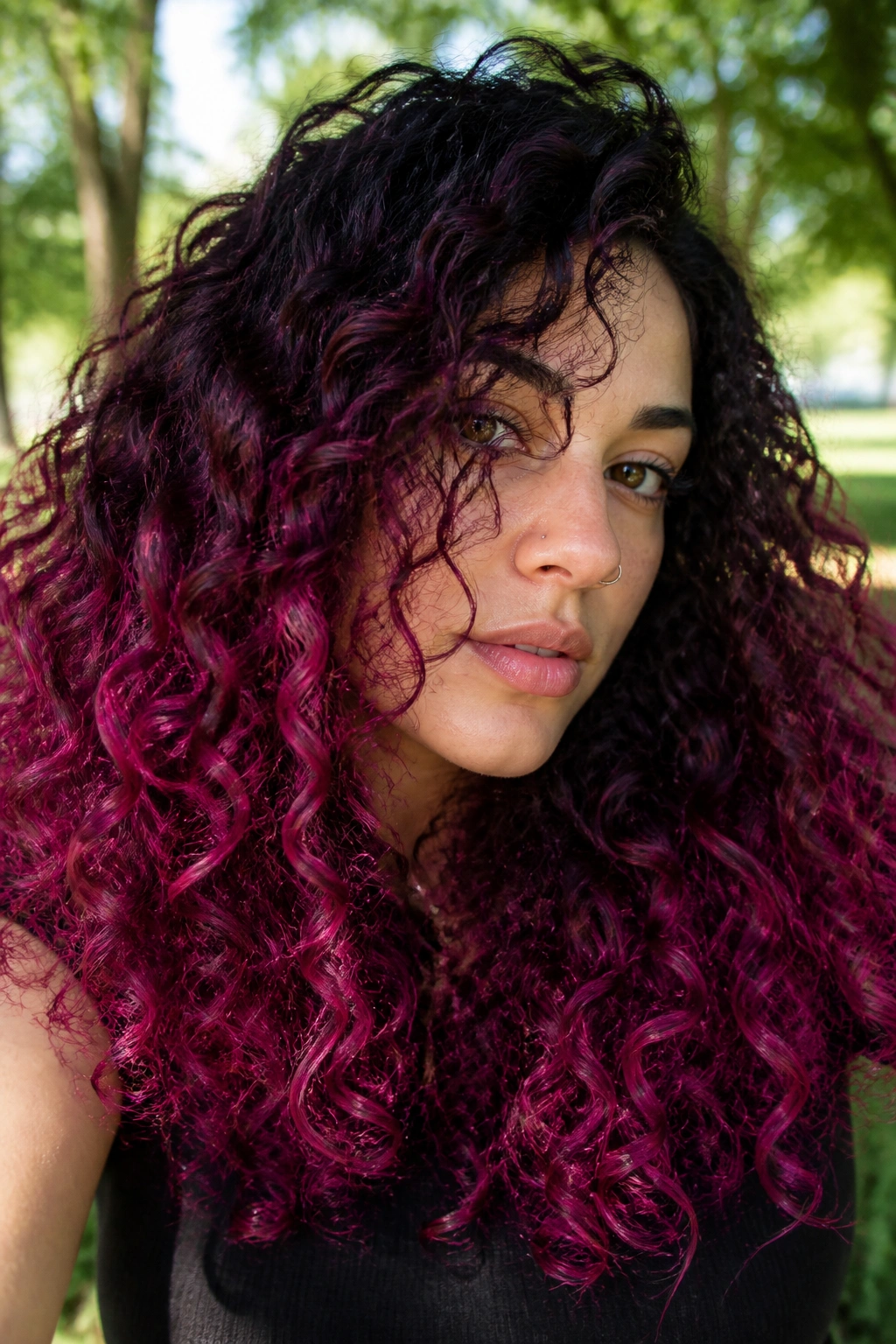
Curly hair changes the whole game. A blackberry-to-fuchsia melt doesn’t just sit on the surface; it wraps around the curl pattern and shows different shades as the hair moves. That makes long curls a perfect match for this kind of ombre.
The blackberry tone near the roots and midlengths gives curls a rich base, which helps avoid that washed-out look some bright colors get on textured hair. Then fuchsia comes in on the ends and outer layers, where it catches light and adds punch. The contrast is strong, but the curls keep it from feeling harsh.
I like this one best when the colorist places the brightest pieces on the outer ring of the curl pattern. That way, the color shows in everyday wear and not only when the hair is fully stretched or styled.
17. Soft Plum Balayage with Pink Micro-Ends
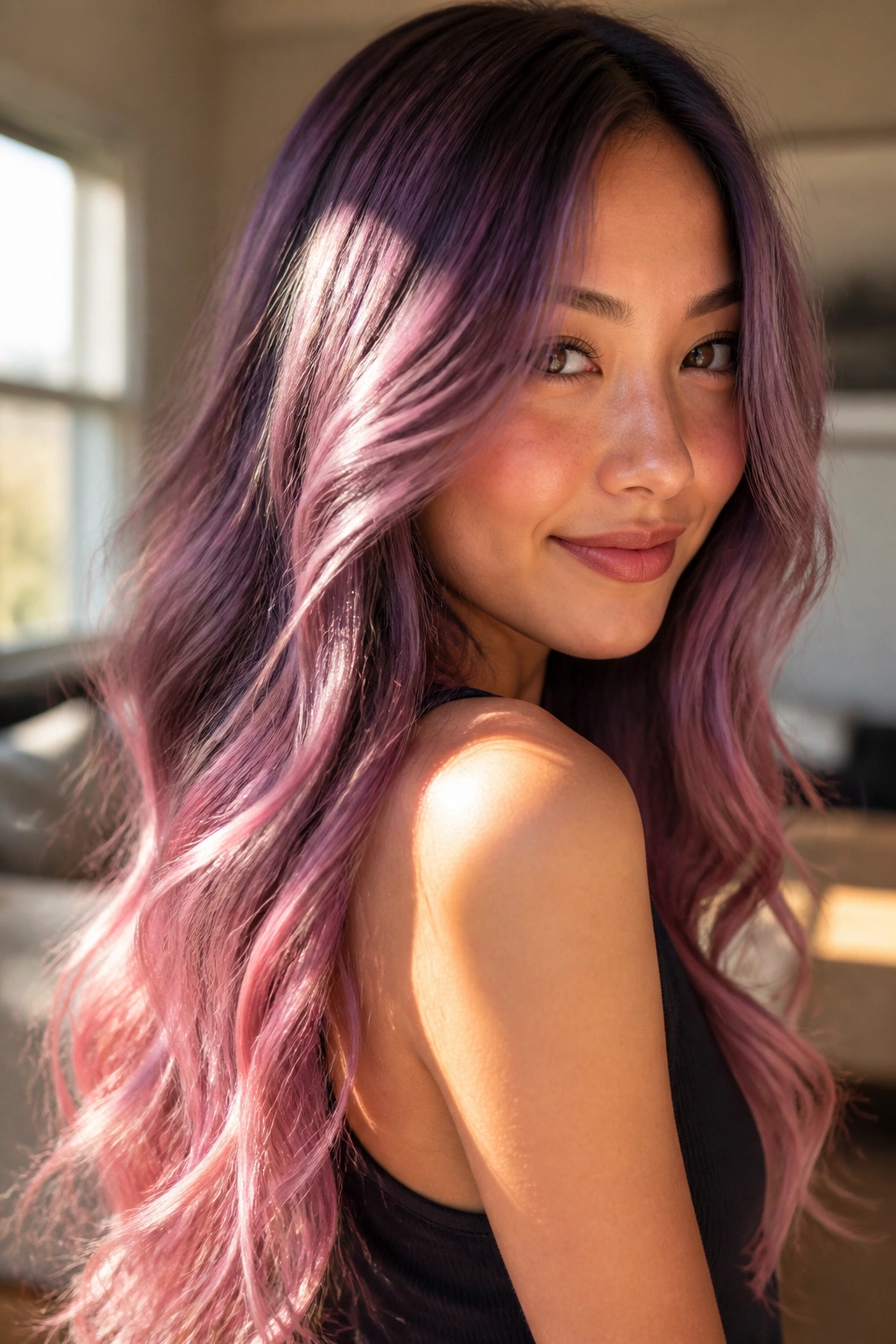
This is the quiet one in the middle of the pack, and honestly, I think it deserves more attention. Soft plum balayage gives the hair a gentle purple base, then tiny pink ends add a little spark without taking over the whole head.
Micro-ends are good when you want the color to feel like an accent instead of a full event. On long hair, that subtle detail can travel a long way. The plum sections build depth through the midlengths, and the pink tip work makes the outline of the hair feel lighter.
Because the pink is concentrated near the bottom, this style is easy to style with waves, low ponies, or a loose braid. It’s refined, but not stiff. If loud color makes you hesitate, this is a smart middle road.
18. Blush Pink Over Silver-Lilac Base
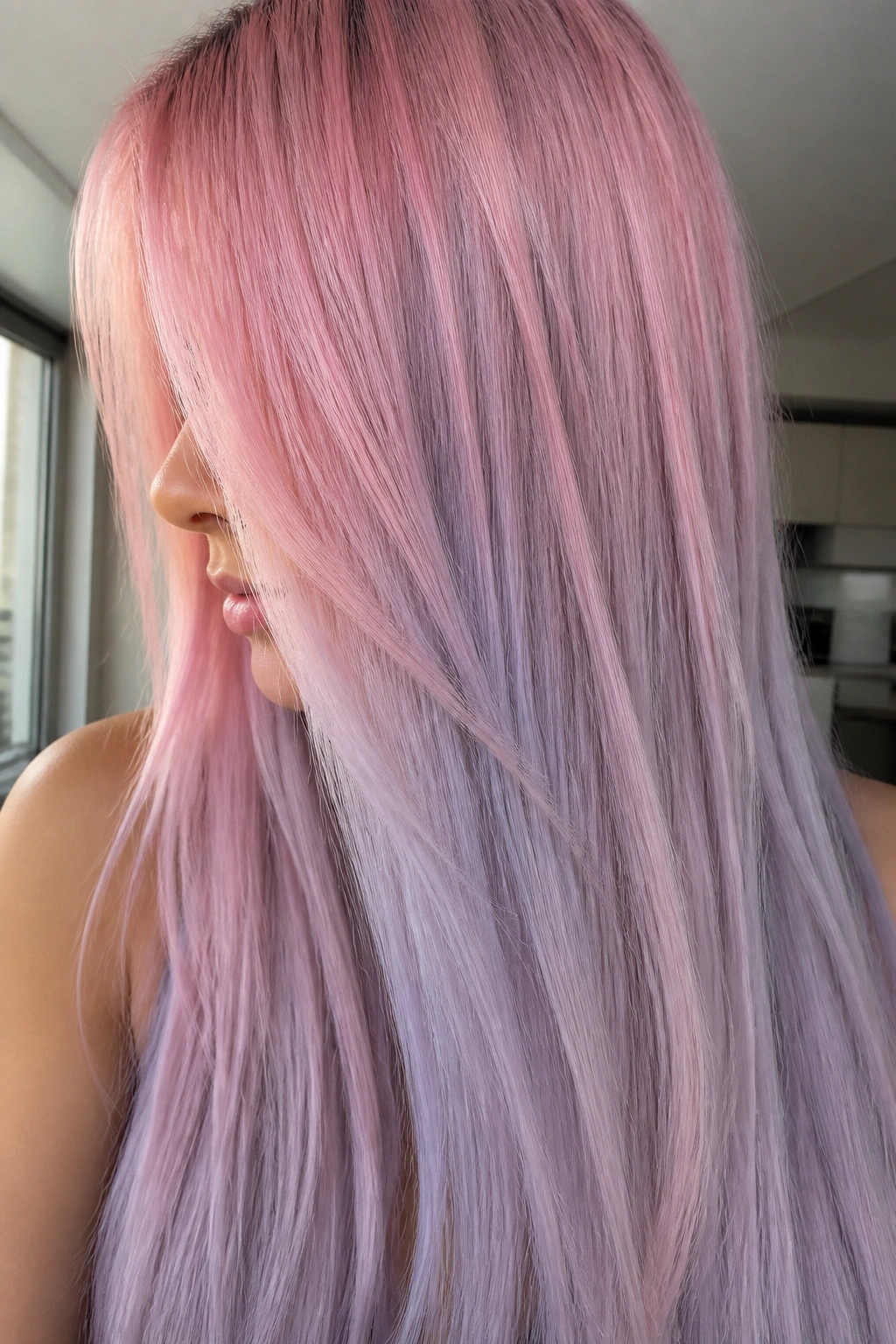
Blush pink over a silver-lilac base has an icy softness that looks almost luminous on long hair. The silver underlayer keeps the whole thing cool, while the blush on top adds just enough warmth to stop it from looking flat.
This kind of color depends on clean lifting. If the base is brassy, the silver-lilac part won’t read right. Once the tone is clean, though, the blend is beautiful in a restrained way. I like it on long straight styles because the surface catches the silver tone first, then the blush slides into view as the hair moves.
It’s also one of the better options if you enjoy glossy, reflective finishes. A clear gloss or pastel toner can keep the ends from looking dull after a few washes. The look is soft, but it does ask for discipline.
19. Fuchsia Underlayer Ombre for Half-Up Styles
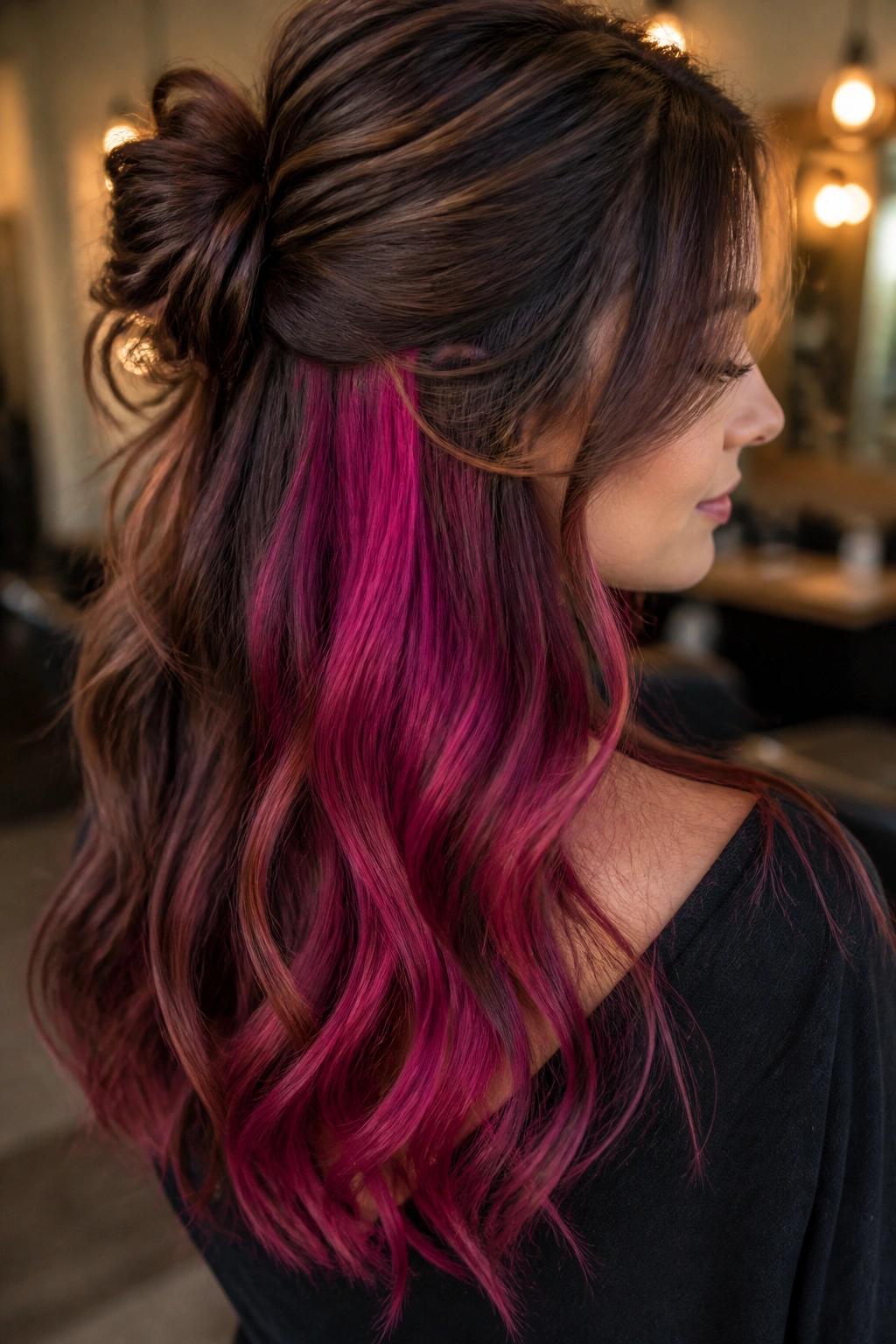
Half-up styles love hidden color. Fuchsia underlayers bring a strong pink-purple hit without forcing the whole head to be bright all the time. On long hair, the underlayer can stay tucked away when you want a softer look, then show off when you pin the top section back.
Why this one is practical and fun
The underlayer gives you flexibility. Down and loose, the hair can look like a normal brunette or blonde with a hint of violet at the ends. Half-up or braided, the fuchsia jumps forward. That’s a useful trick if you like change but don’t want to recolor the full length every few weeks.
- Great for festivals, parties, or everyday wear with a hidden twist.
- Best when the top layer stays slightly deeper in tone.
- Braids and claw clips reveal the fuchsia fast.
- Works well on thick hair, where the underlayer has room to hide.
This is one of my favorite ways to wear color because it feels personal. Not everyone needs to see it right away.
20. Violet-First Ombre with Pink Tips
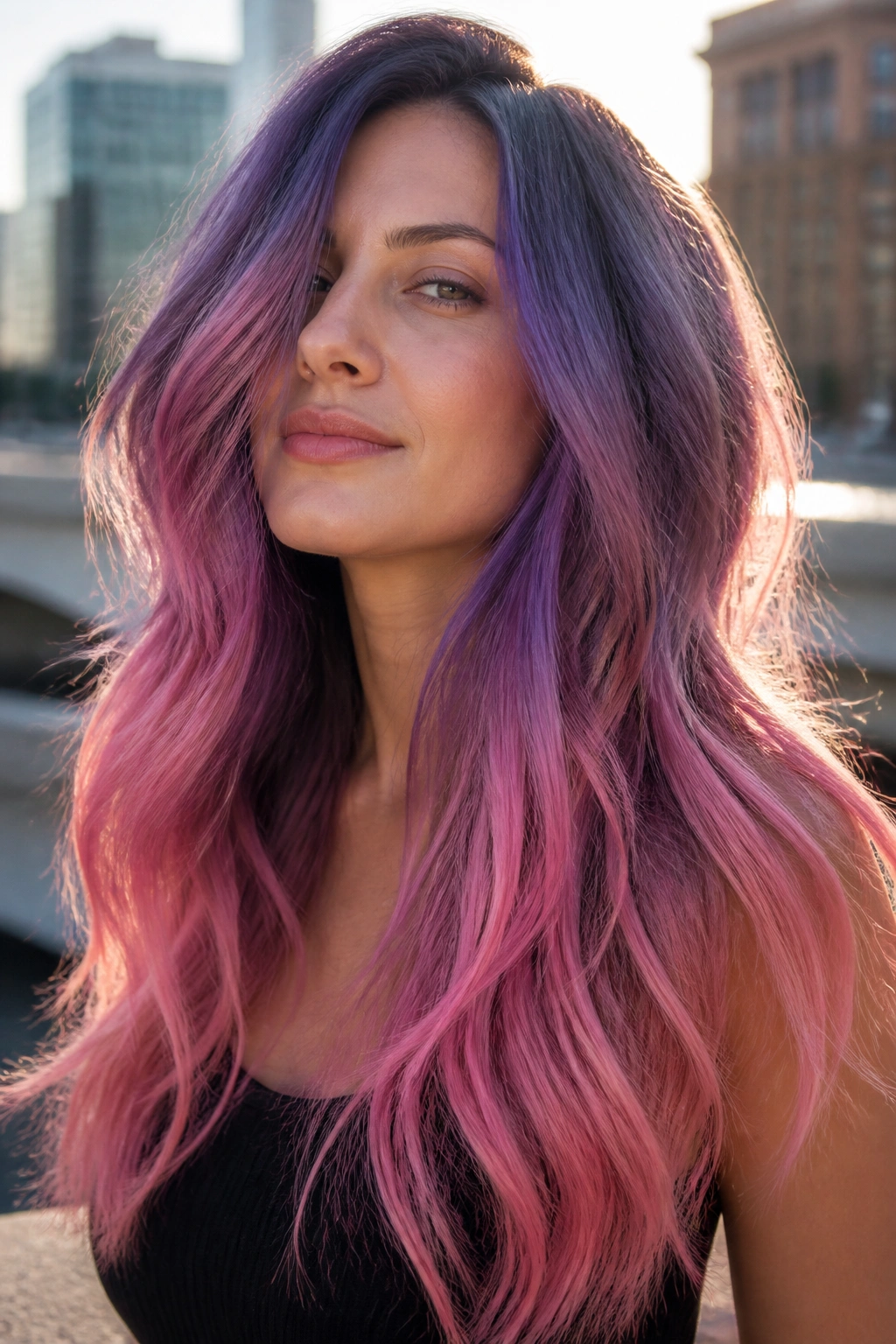
Most ombre looks start with pink and finish with purple. Flipping that order changes the mood. Violet-first with pink tips creates a cooler, darker upper half and a brighter finish at the bottom, which can make long hair feel unexpectedly fresh.
The violet near the top frames the face in a calmer way, while the pink at the tips gives the hair a lighter ending. It’s a good choice if you’re tired of the usual bright-at-the-top formula. On very long hair, the reversal keeps the eye moving downward without losing shape.
This one looks especially good in layered cuts with movement around the face. The darker violet can sharpen the outline, and the pink tips keep the ends from disappearing into the background. If you like color that bends the rules a little, this one does that cleanly.
21. Coral Pink to Amethyst Sunset
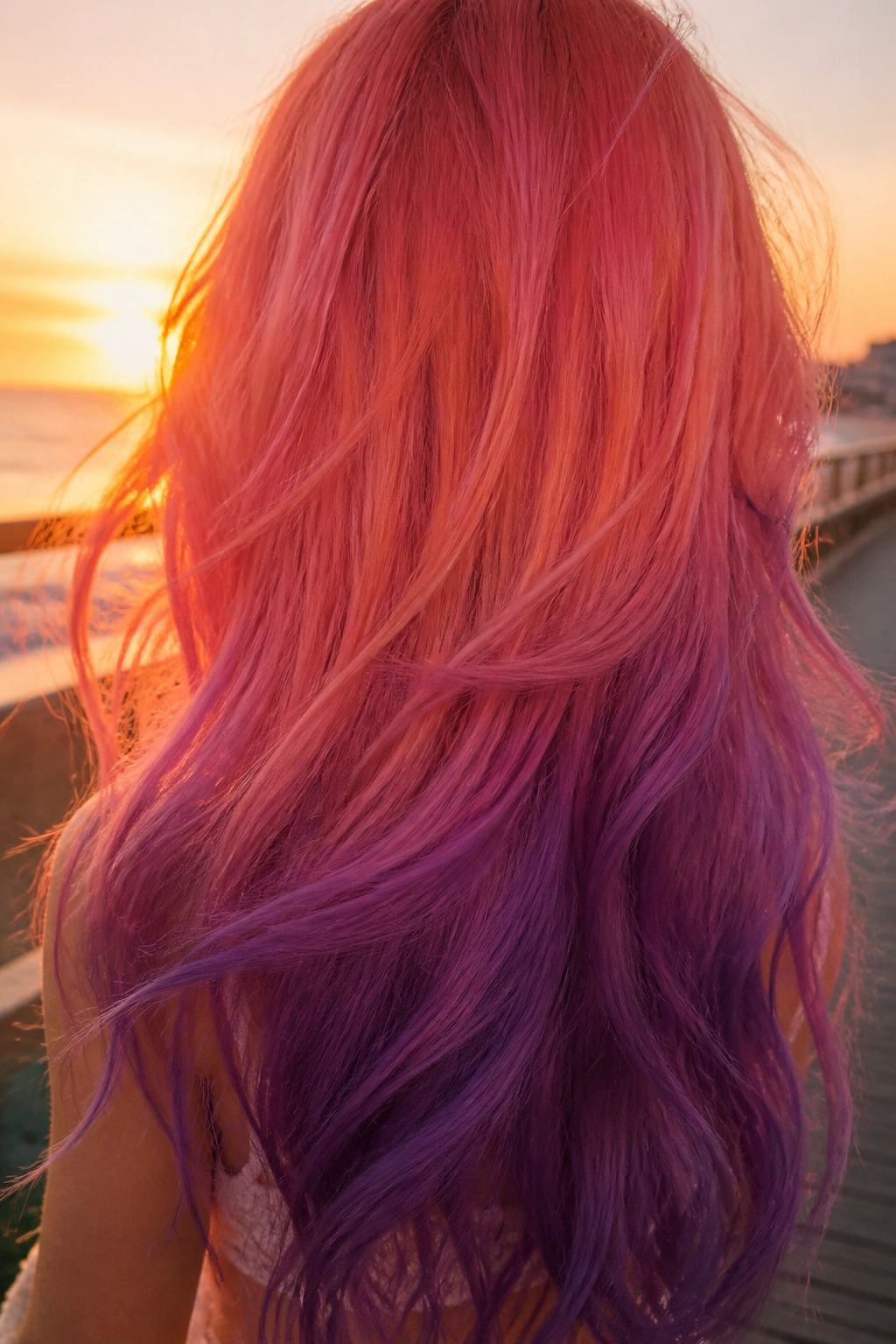
Coral pink and amethyst sound like a strange pair until you see them together. Then it clicks. The coral brings a warm, sunset-like feel to the upper sections, and the amethyst finishes the length with a deep purple glow.
Long hair gives this combination room to show both temperature zones. That matters. Coral can look flat if it has to carry the whole style, and amethyst can feel heavy if it arrives too fast. On long layers, the colors have time to breathe and separate.
What to ask for if you want this color
Tell your colorist you want a warm pink at the top, not a bubblegum neon, and a violet that leans jewel-toned rather than blue-black. That small wording difference changes the whole mood. A soft curl pattern helps the coral stay visible near the face while the amethyst pools at the ends.
It’s romantic, but not sugary. That’s the sweet spot.
22. Deep Mauve Ombré with Glossy Plum Finish
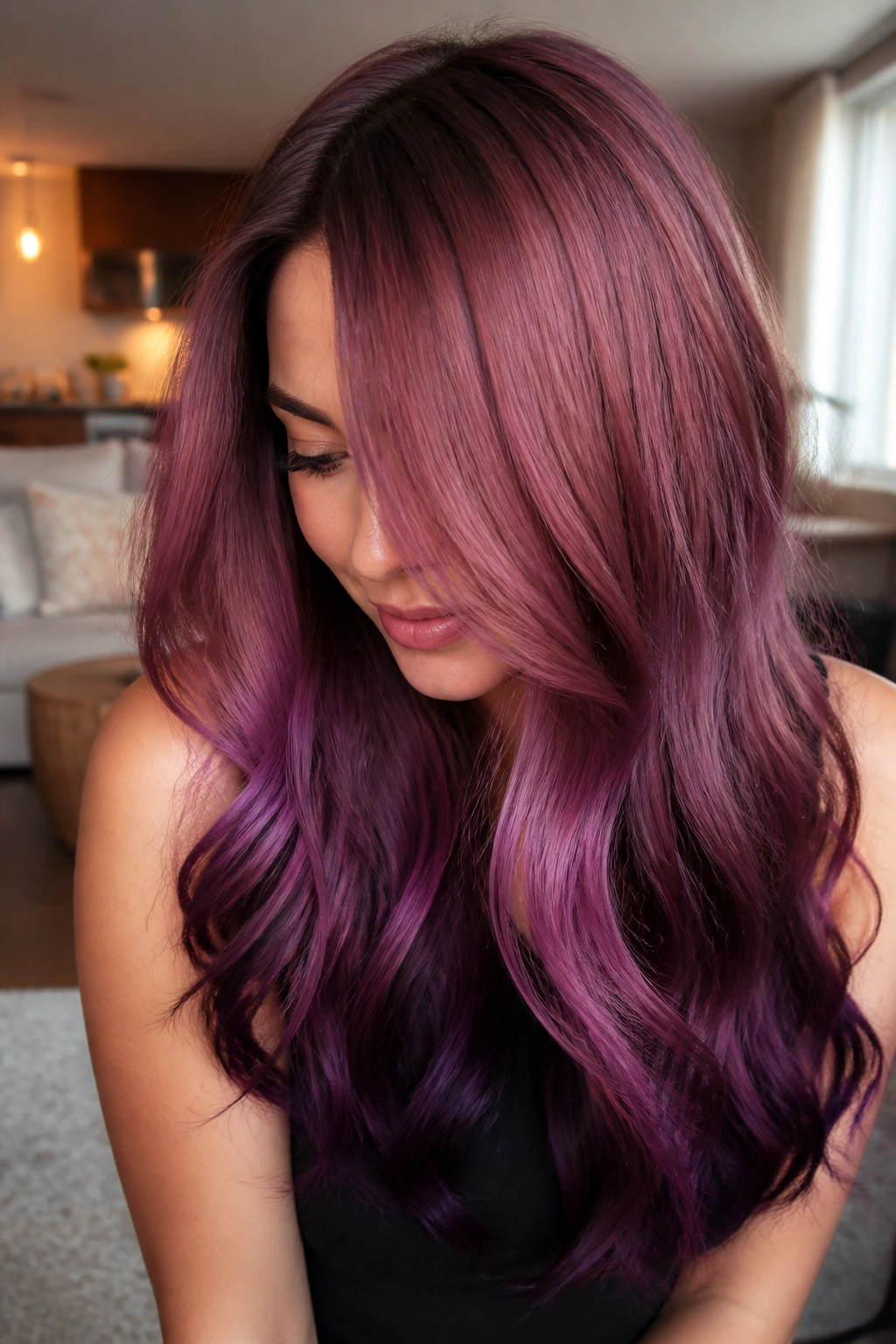
This is the polished ending to the whole palette. Deep mauve at the upper lengths, glossy plum at the bottom, and a finish that looks smooth rather than bright. If you want pink-purple ombre hair that feels wearable on long hair without losing personality, this is a strong final stop.
The reason it works so well is restraint. Mauve gives you color without screaming for attention, and plum adds depth so the ends don’t wash out. A good gloss changes the whole thing, too. It makes the hair look like it has been cared for, which matters more than people admit. Dry color can look flat. Glossy color looks deliberate.
I’d put this one near the top of the list for anyone who wants a low-drama version of fashion color that still feels rich. It’s the kind of shade that looks good tied back, worn loose, or tucked behind one ear. And that’s probably the real test. If a color only works in one pose, it’s a costume. If it holds up in a messy ponytail on a normal day, it earns its place.
