



Long hair gives gray color room to move. That matters more than people think. On short cuts, gray can look flat or overly graphic if the blend is too hard. On long hair, the same shade can feel soft, smoky, and expensive-looking because the fade has space to breathe.
Grey ombre hair ideas for long hair work especially well when the transition is gradual. Dark roots keep the style grounded, the mid-lengths hold the bridge tone, and the ends carry the icy payoff. That three-part shape is what keeps the look from turning into a blunt stripe of color.
The other thing long hair does well is hide a little imperfection. A gray ombre can be unforgiving when the lift is patchy or the toner goes muddy. On waist-length waves, though, a few uneven ribbons often read as depth instead of damage. Lucky break. Use it.
Some versions lean bright and silvery. Others sit in mushroom, graphite, or smoke and feel much closer to brunette. The best one for you depends on your base color, your texture, and how much time you want to spend keeping brass away from the cooler tones. That part is worth thinking through before you fall for a photo on a screen.
1. Charcoal Roots to Icy Silver Ends
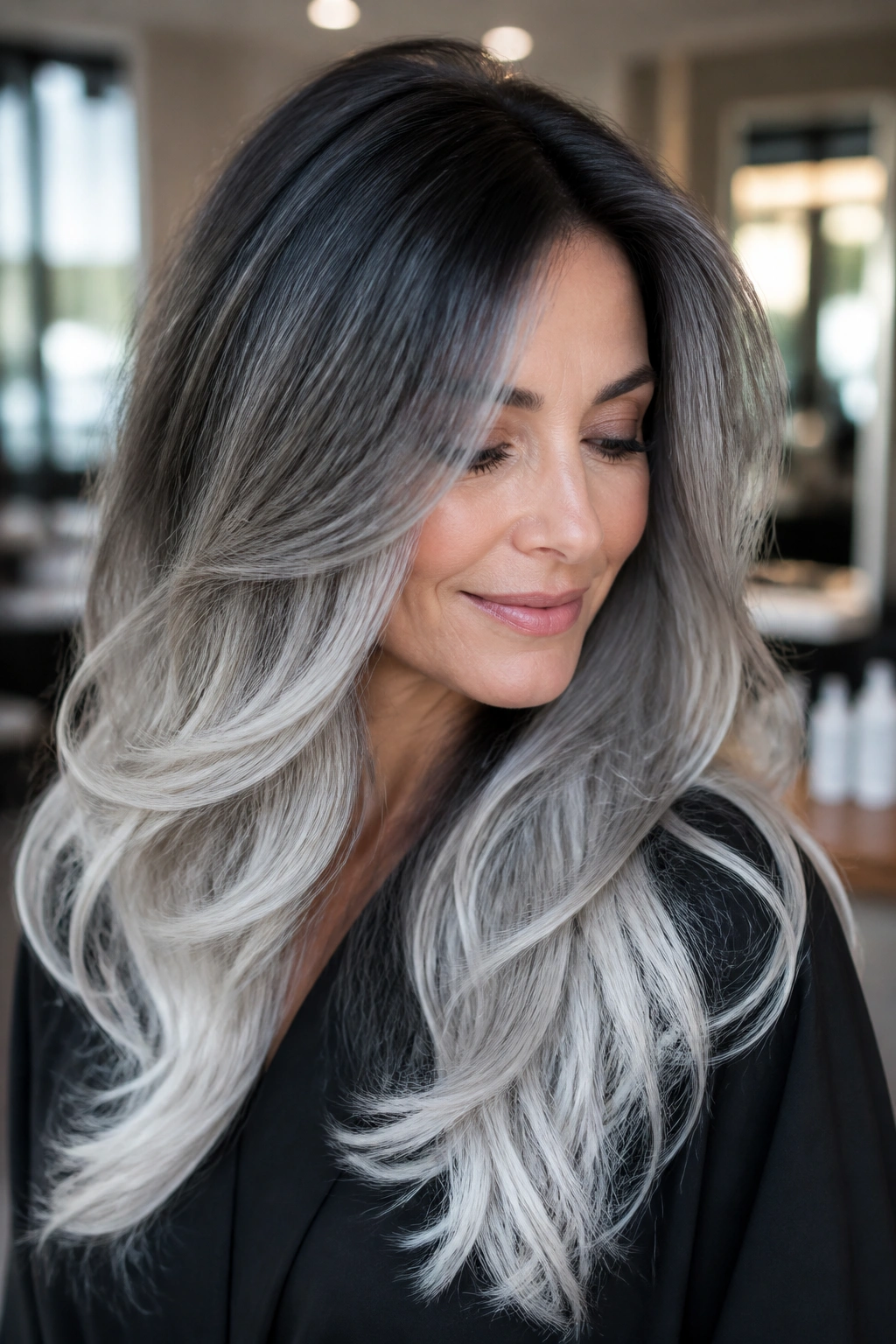
This is the classic gray ombre that people picture first, and for good reason. The root stays deep charcoal or near-black, then the color opens into a cool silver that looks almost lit from within when it hits layered waves.
Why It Works
Long hair gives this blend a real runway. The dark-to-light shift looks deliberate because the eye has time to travel through each stage instead of jumping straight from root to tip. On thick hair, that extra length also helps the silver ends feel lighter rather than heavy and blocky.
A soft wave makes it even better. Straight hair can show every line of the fade, which is fine if you want drama, but loose bends blur the boundary in a prettier way.
- Best base: dark brown to black
- Best finish: loose curls or a wide-barrel blowout
- Toner tone: cool silver, not white
- Maintenance note: purple shampoo once a week is usually enough if the gray is well-toned
Pro tip: ask for the silver to start lower than you think. On long hair, the extra shadow near the crown keeps the grow-out cleaner.
2. Espresso to Mushroom Gray Melt
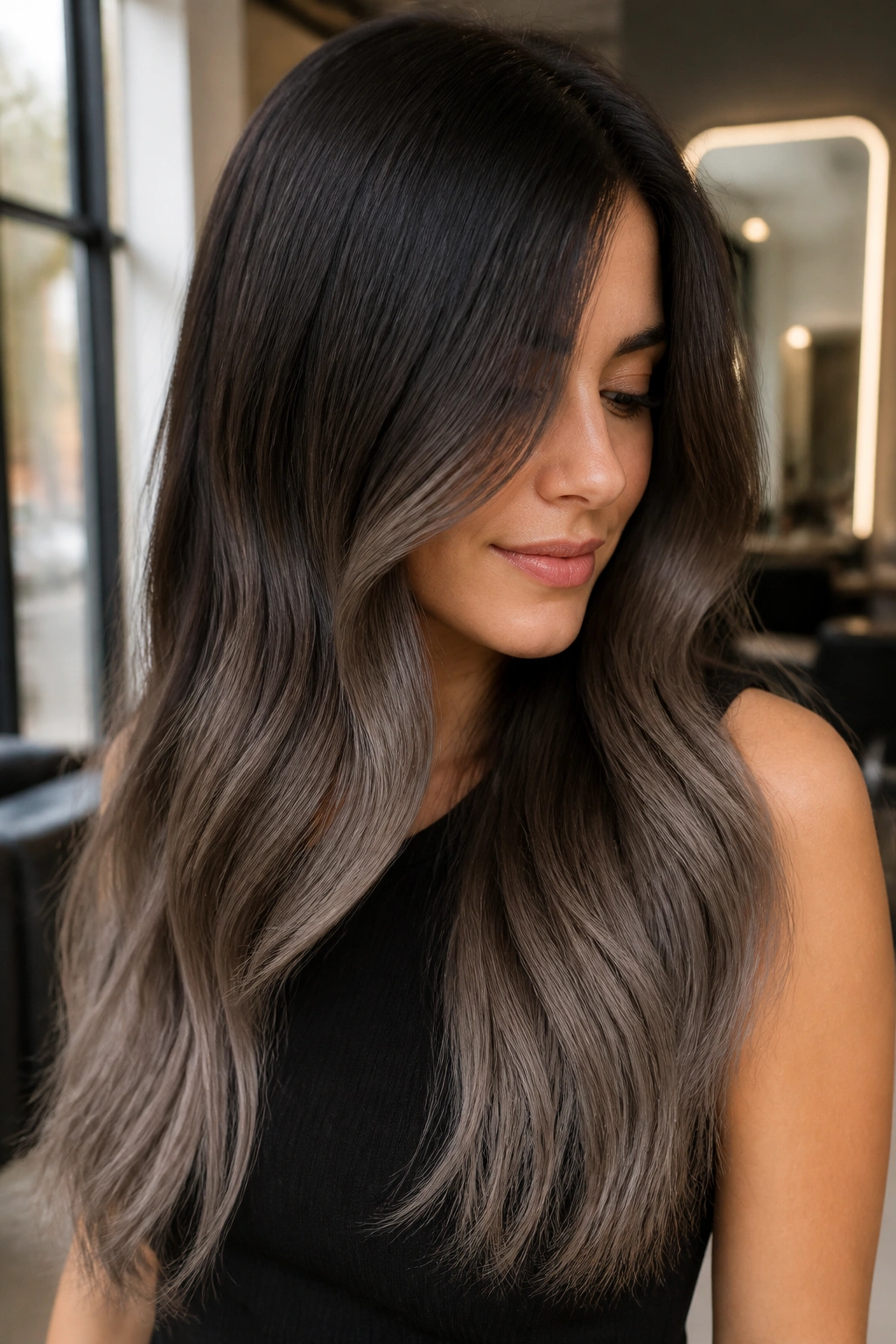
This is the gray ombre for people who like a quieter look. It doesn’t shout from across the room, which is exactly the point. The espresso base stays rich, then melts into a mushroom gray that has a soft beige-cool balance instead of a stark silver edge.
The result feels wearable on long straight hair, but I think it looks even better on a soft S-wave. The neutral gray reads less metallic and more plush. That makes it easier to wear if your wardrobe lives in black, cream, denim, or olive.
There’s a nice practical side too. Mushroom gray tends to forgive slight fading better than icy silver, so the ends can grow out a little without looking broken. If you want a gray ombre hair idea for long hair that works in an office, at dinner, and in daylight, this is one of the smartest picks.
3. Jet Black to Smoke Gray Dip Dye
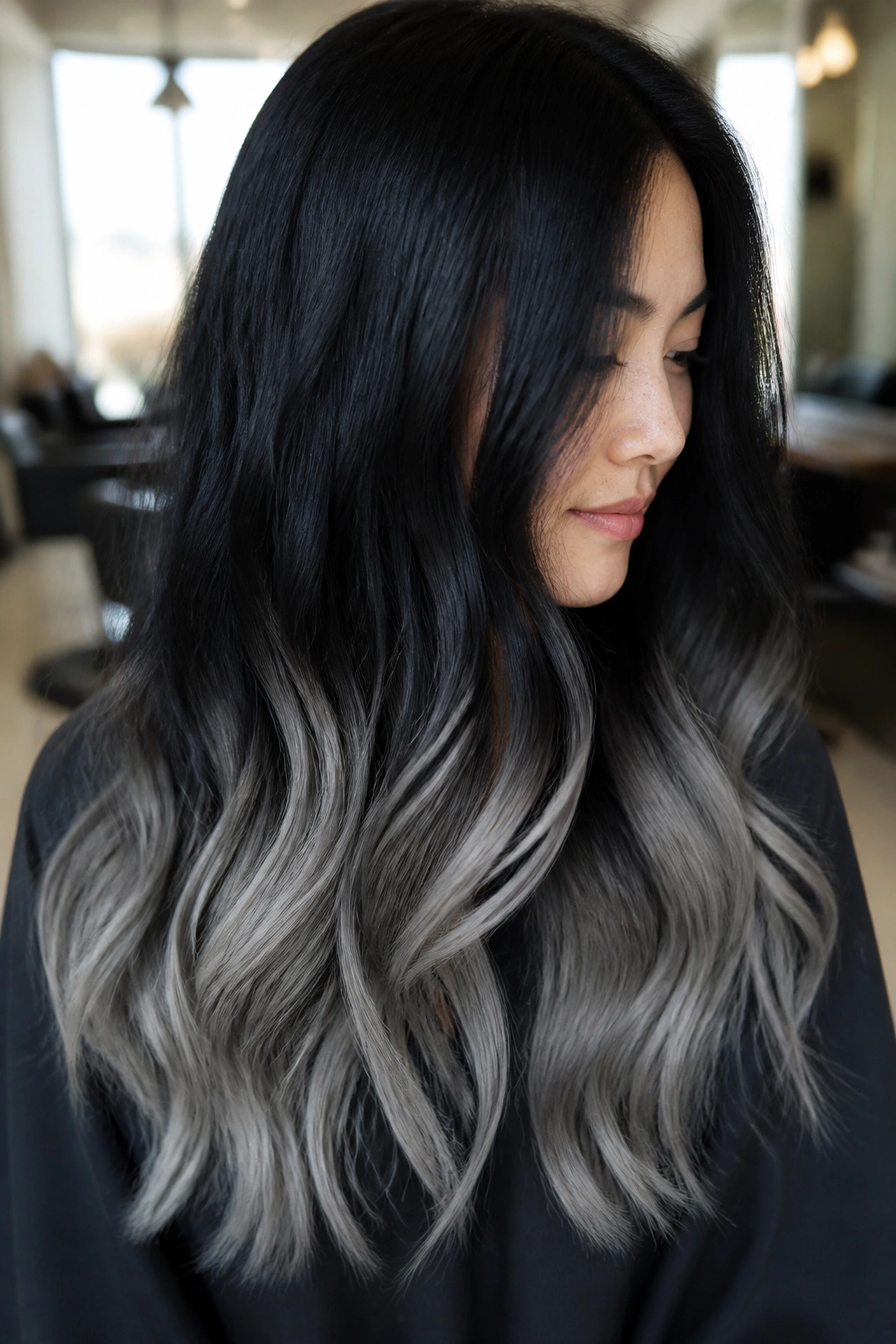
Want something sharper? Start with a deep jet-black base and keep the gray packed mostly into the last third of the length. The dip-dye effect feels bold without needing a full-head lightening session, which is a relief if you like dark hair but still want the cool edge of gray.
Why does it work so well on long hair? Because the length gives the dip a real shape. On a bob, this can look abrupt. On waist-length hair, the line lands lower and feels intentional, almost like the ends were dusted in smoke.
How to Wear It
This look loves blunt ends, shiny straight styles, and high-gloss finish sprays. It also makes braids look stronger, since the dark-to-light contrast gets broken into a neat pattern.
If you like drama but not chaos, keep the gray cool and smoky rather than bright silver. The darker version lasts longer between toning sessions, and it keeps the black base from looking washed out.
4. Chestnut to Graphite Ribbon Balayage
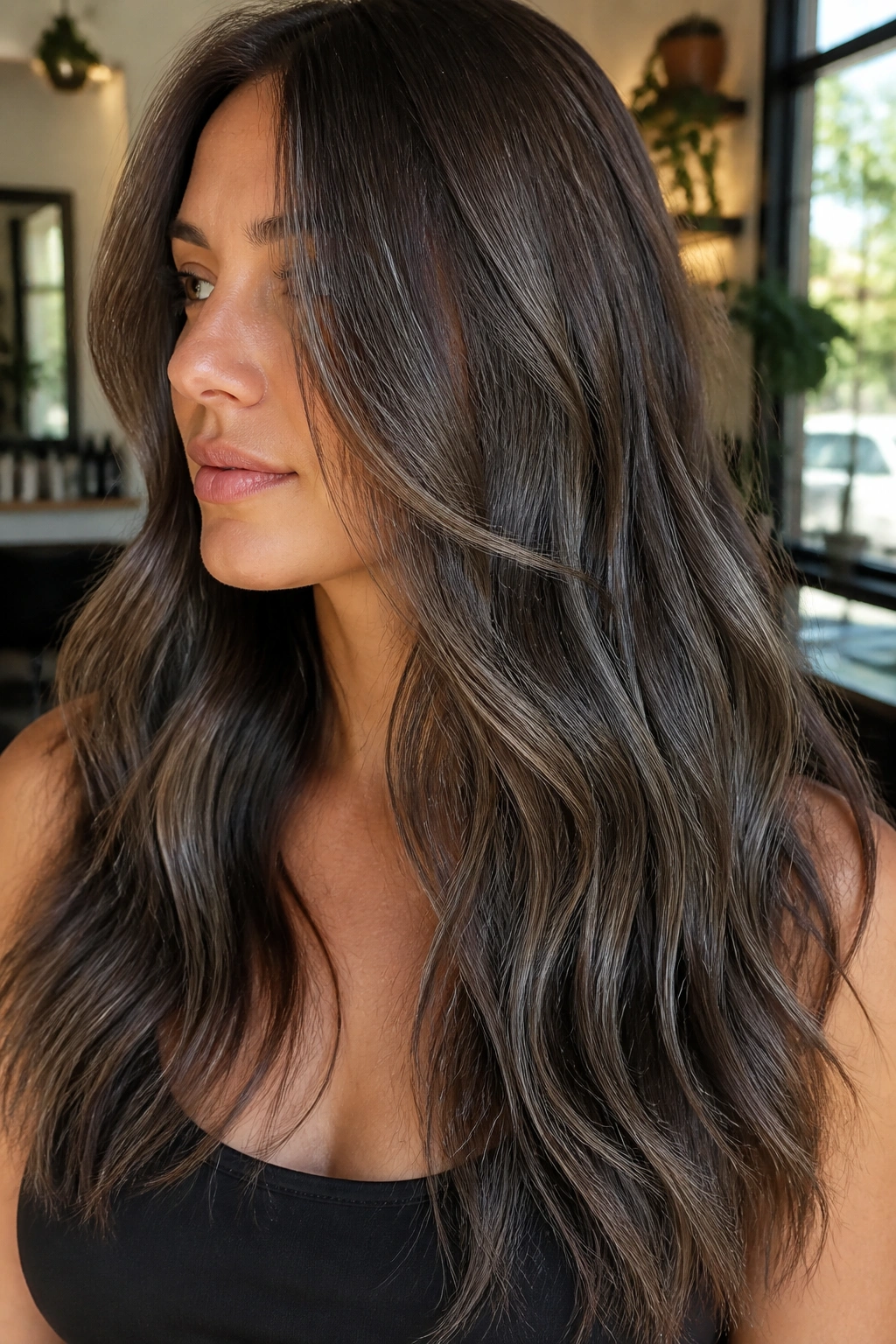
Picture long chestnut hair with thin graphite ribbons woven through the lower half. That’s the mood here. Not chunky streaks. Not a sudden fade. Just narrow gray-brown strands that give the length movement and depth.
The trick is restraint. A lot of gray balayage gets too heavy and starts looking like stripes, which is a shame because this version is much better when the pieces are thin and a little uneven. The long lengths let the ribbons show differently depending on how the hair falls.
- Best for: layered cuts, beach waves, and hair that already has natural texture
- Color placement: mid-lengths through ends, with a few higher pieces near the face
- Mood: softer than silver, darker than ash blonde
- Styling note: a texturizing spray makes the graphite pieces pop without making the hair stiff
The nice part is that this style grows out gracefully. You do not have to panic every time the root shows a little more.
5. Ash Brown to Pearl Gray Melt
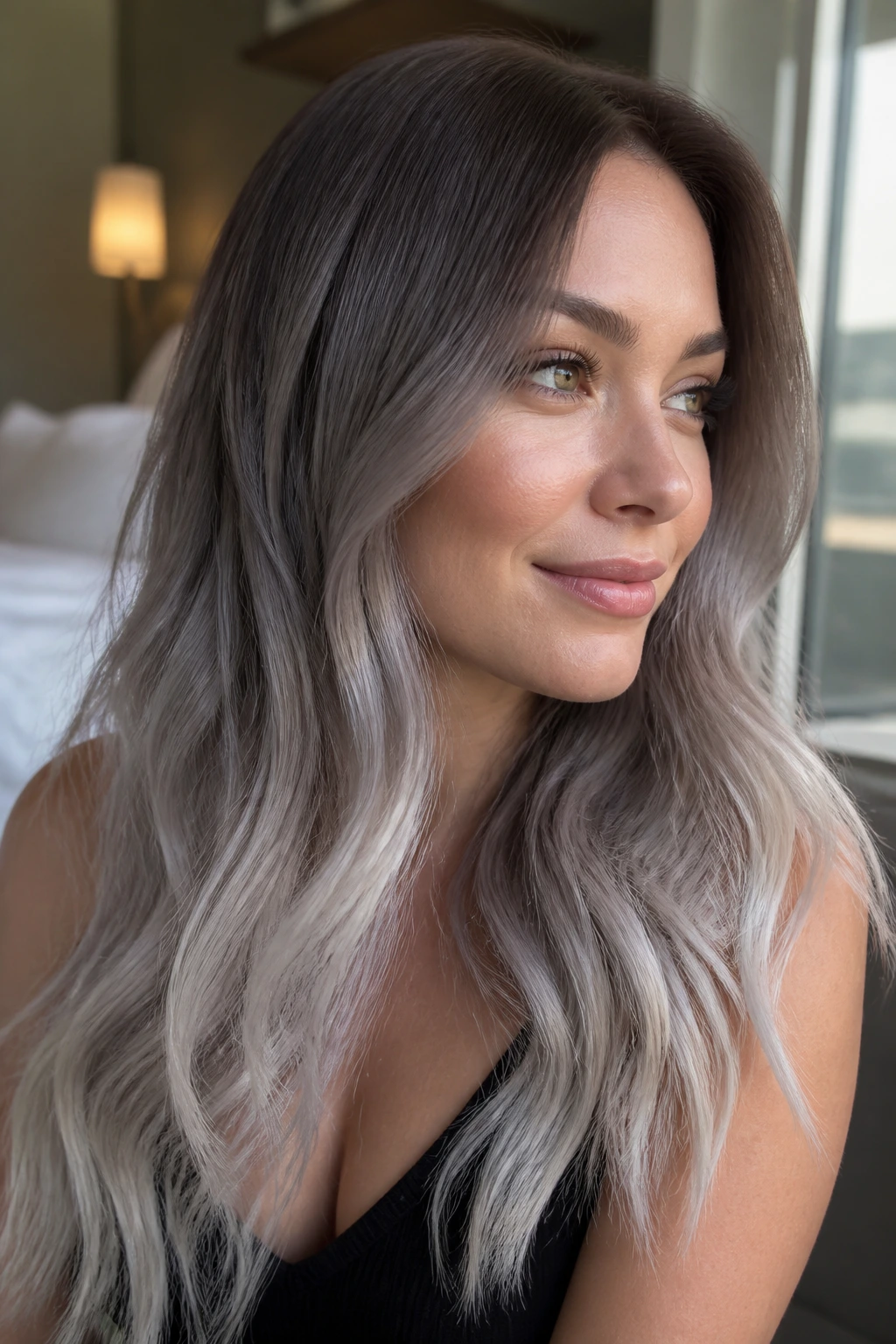
Ash brown into pearl gray is the kind of color that looks calm from across the room and surprisingly rich up close. The ash base keeps the roots cool, then the pearl tones bring a soft sheen to the ends. It’s less icy than platinum gray and less heavy than charcoal.
Long hair helps because pearl gray needs room to shine. On shorter hair, the tone can feel flat if the light isn’t hitting it. On longer lengths, the movement gives the finish dimension, especially around layers that flip inward near the shoulders.
I like this one for people who want gray but don’t want the color to look severe. There’s a gentler feel to it. The fade is visible, yes, but not harsh, and that makes the whole style easier to live with between salon visits.
One caveat: if your base is too warm, the ash can go muddy. A clean cool lift first keeps the pearl from turning dull.
6. Smoky Lilac-Gray Ombre
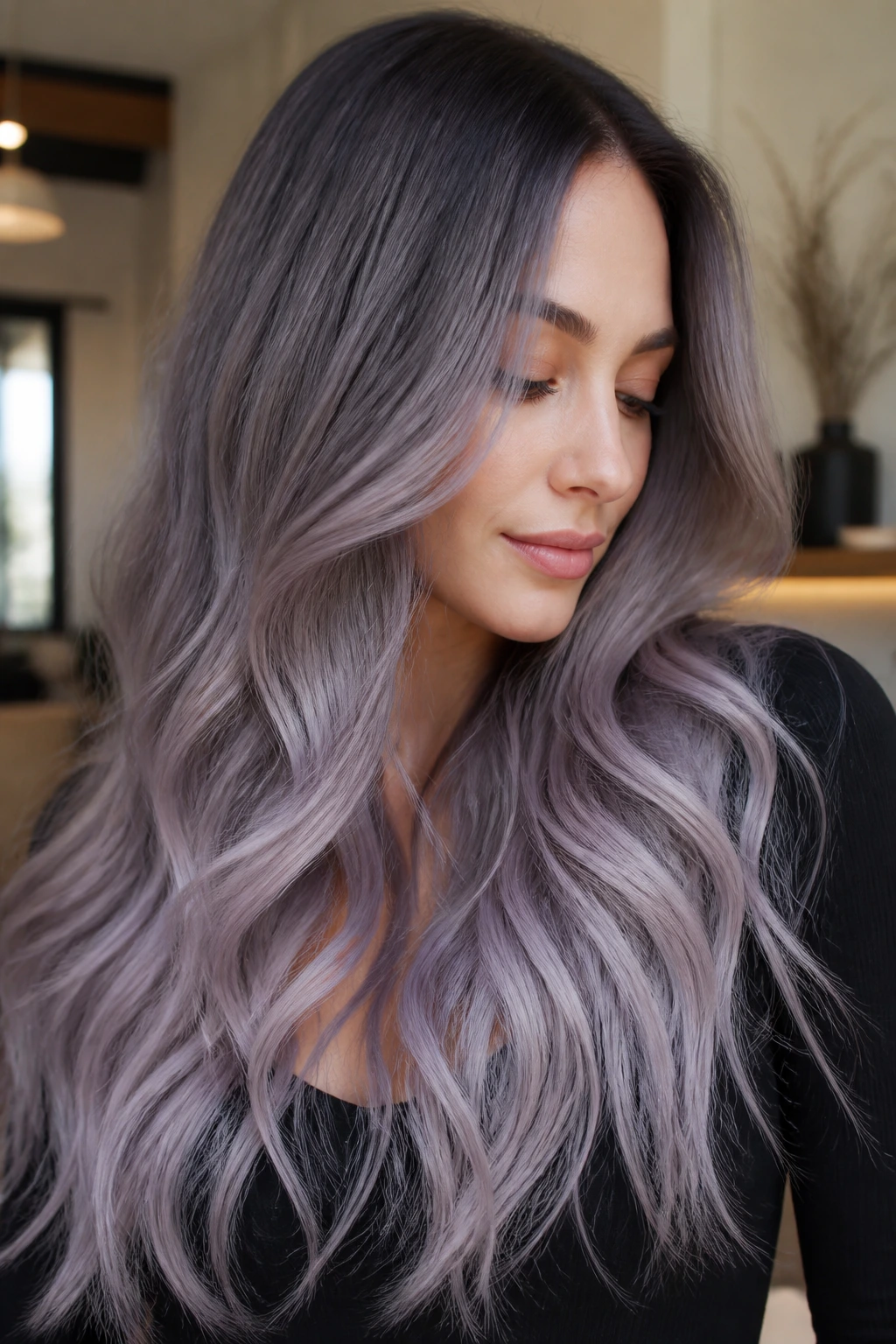
Gray doesn’t have to stay strictly neutral. Add a whisper of lilac, and the whole style changes. Smoky lilac-gray has that cool, misty feel that sits somewhere between silver and lavender, which is why it looks so good on long hair with movement.
What Makes It Different
Unlike plain silver, lilac-gray can soften sharp features and add a faint glow to pale or cool-toned skin. It also photographs with a little more depth because the violet cast catches light at the edges. That said, it does fade faster than a straight gray because pastel tones are less stubborn.
Who It Suits
- People who want gray but still want a hint of color
- Long layered hair that can show off the tonal shift
- Waves, curls, and braided styles
- Anyone who likes cooler fashion colors without going full fantasy
If you want the lilac to stay visible, ask for a gray base with a violet toner rather than a heavy purple dye. It reads softer and wears better.
7. Slate Gray on Loose Curls
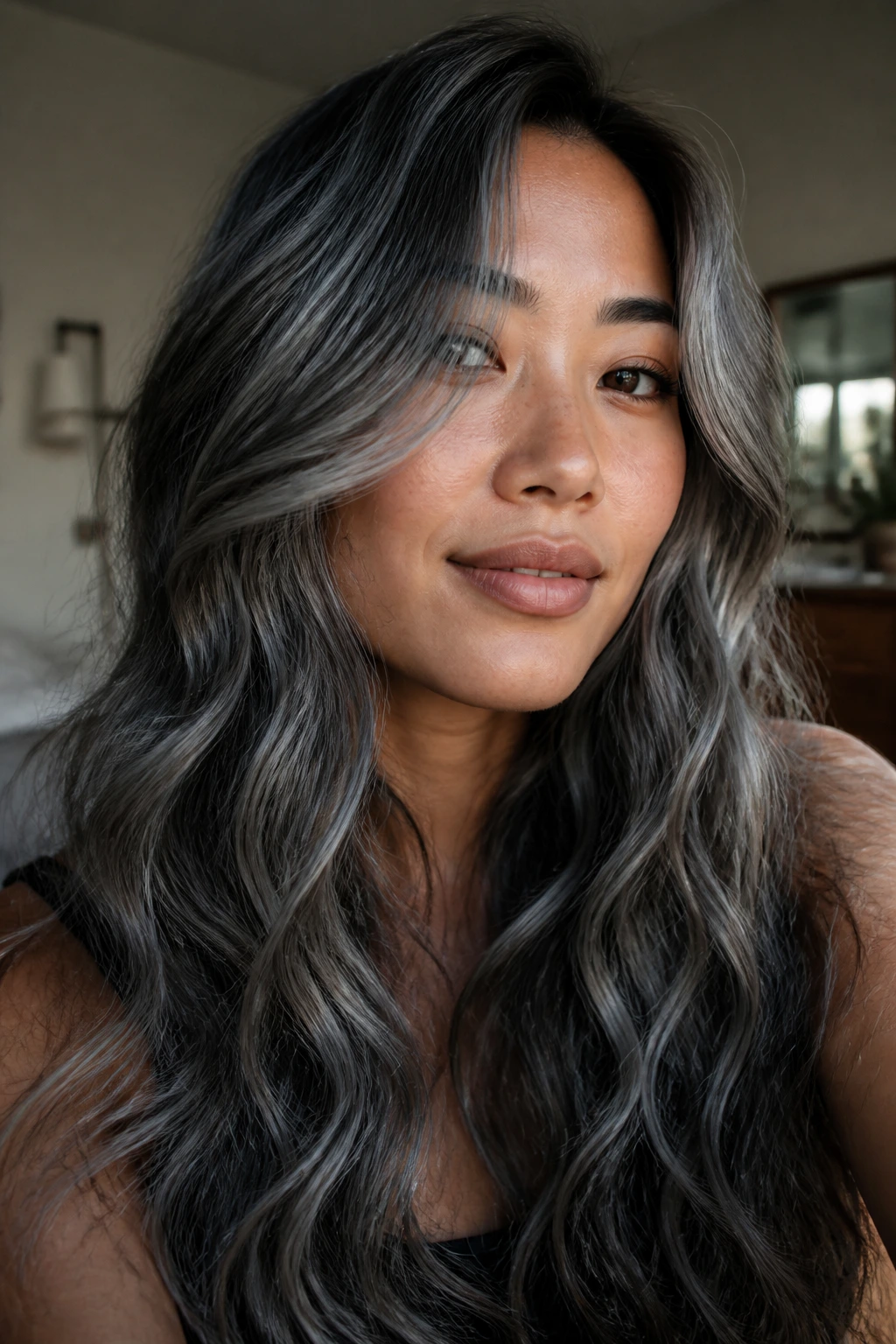
Slate gray on long curls has a moody, almost stone-like depth that flat straight hair can’t quite match. The color sits darker than silver and lighter than charcoal, which gives the curls a dense, plush look instead of a frosty one.
Why the Texture Matters
Curly hair breaks up color in a lovely way. Each bend catches the gray a little differently, so the shade looks layered even when the dye job is clean and simple. That is a gift with slate gray, because the tone itself can go flat if it’s applied without enough dimension.
A diffuser helps here. So does a curl cream with a light hold, because you want shape without crunch.
- Best curl type: loose waves through medium curls
- Best finish: satin or soft matte, not ultra-glossy
- Color note: keep a few darker lowlights near the underside
- Styling tip: scrunch the curls upward with a microfiber towel before drying
My take: slate gray looks richest when it is not trying too hard. The messier it moves, the better it behaves.
8. Silver Face-Framing Pieces with Shadow Roots
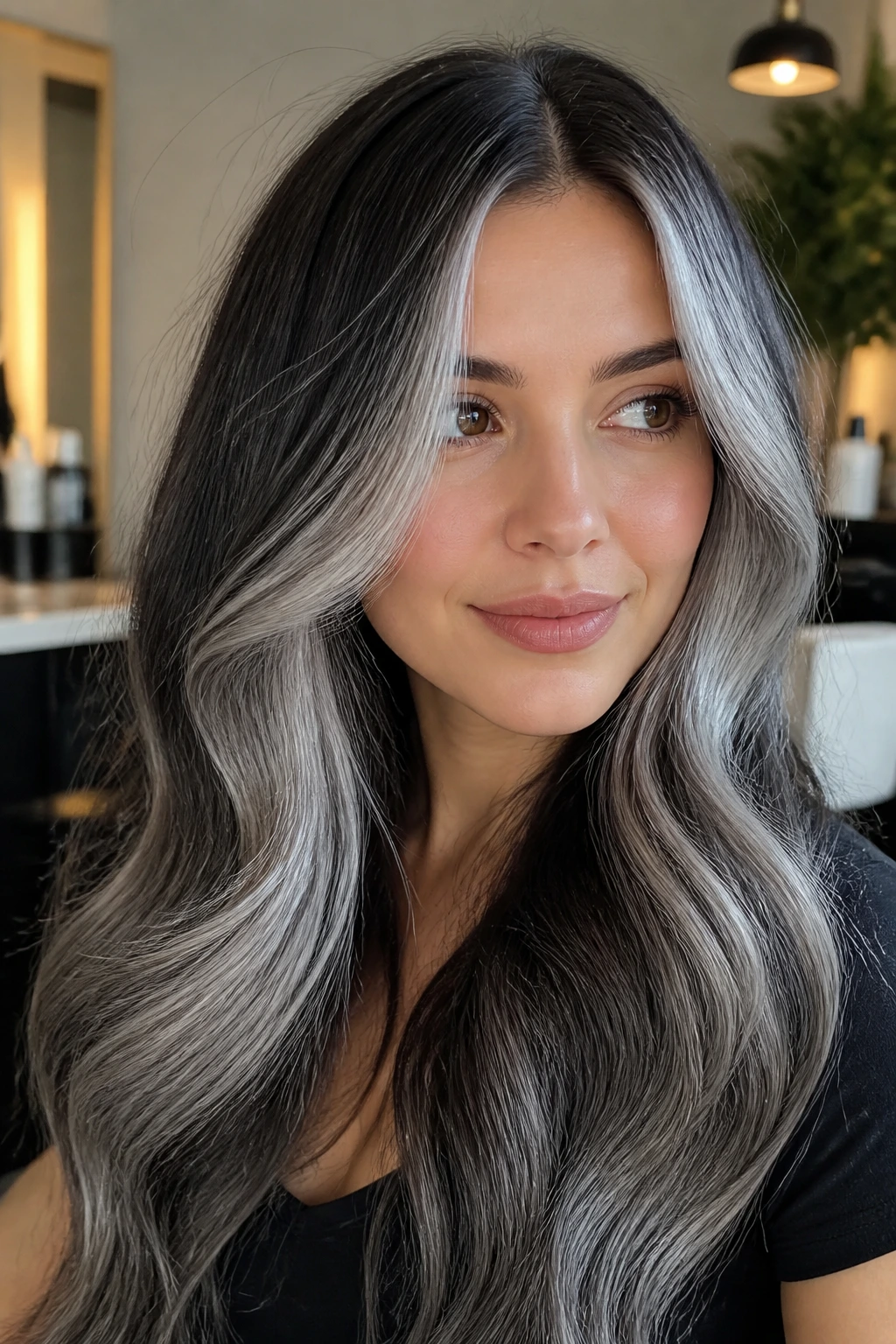
This one is sneakier than it sounds. The gray ombre stays concentrated around the front sections and lower lengths, while the roots remain shadowy and deep. The result is brightness where you actually want it — around the face — without turning the whole head into one giant silver statement.
That placement is smart on long hair because it draws the eye vertically. You get the lift of silver near the cheeks, but the back still feels anchored and dark. It’s also a good way to test gray if you’re nervous about going full cool-toned.
Long layers make this style shine. The face-framing pieces can fall forward, the rest of the hair can stay tucked back, and the contrast reads clean instead of busy.
If your haircut has curtain bangs, even better. The silver pieces will peek through in a way that looks deliberate rather than stripey.
9. Steel Blue-Gray on Straight Lengths
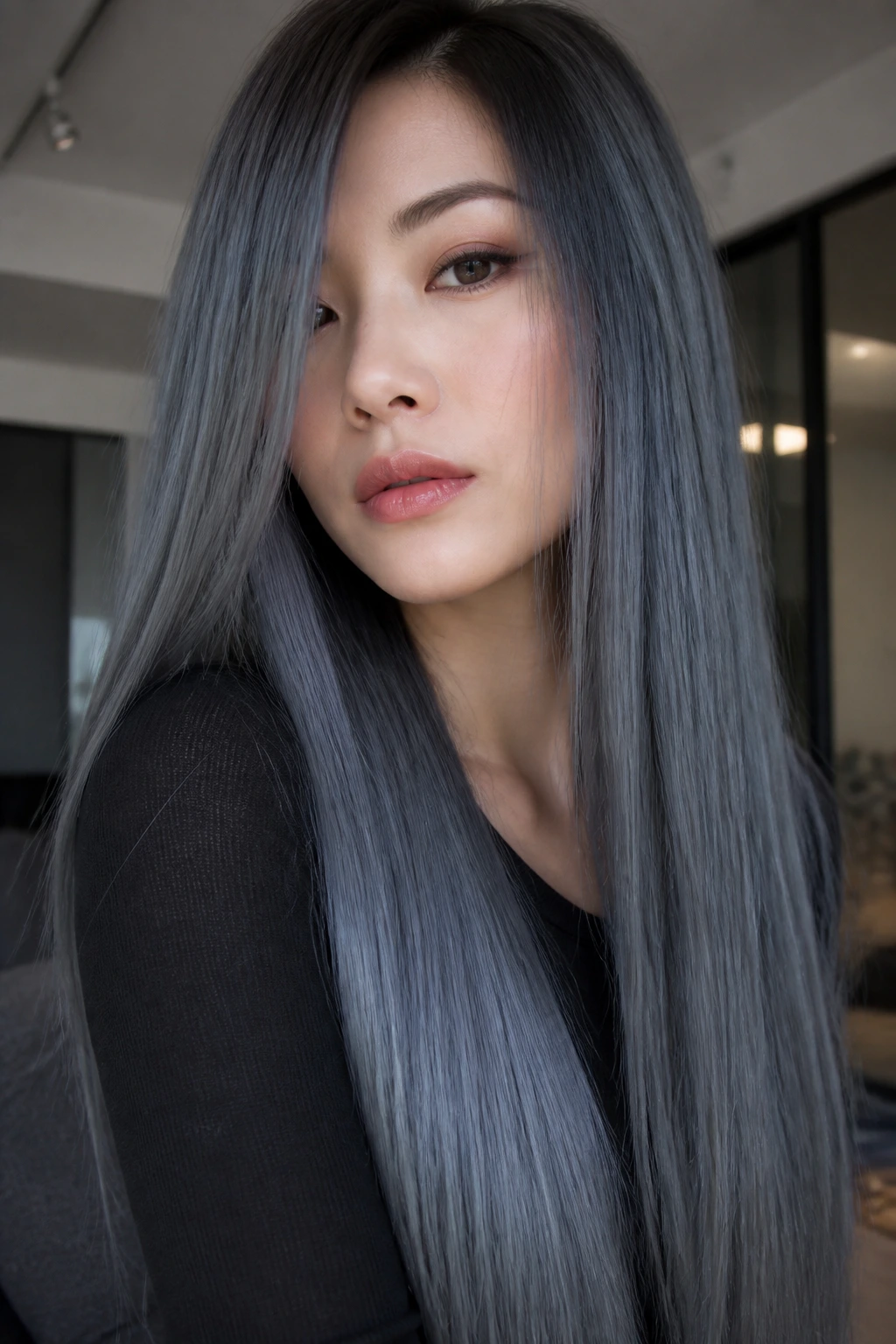
What if you want gray to look sharp instead of soft? Steel blue-gray is the answer. The blue cast pulls the color away from plain ash and gives the lengths a cool, sleek edge that works especially well on straight, glassy hair.
The reason it suits long hair is simple: straight lengths create a clean color plane. There’s nowhere for the steel tone to hide, so the finish looks crisp and polished. A center part makes it feel even more graphic.
How to Ask for It
Tell your colorist you want a gray with a blue undertone, not a blue dye job. That distinction matters. You want the hair to stay wearable, not turn neon or flat.
This shade can be beautiful on dark brunettes who are willing to lighten the mids and ends first. It is less forgiving than mushroom gray, though, so the toner needs to stay cool and fresh. Use heat protection before styling; repeated flat-ironing can rough up the shine fast.
10. Gunmetal to Silver Waterfall Waves
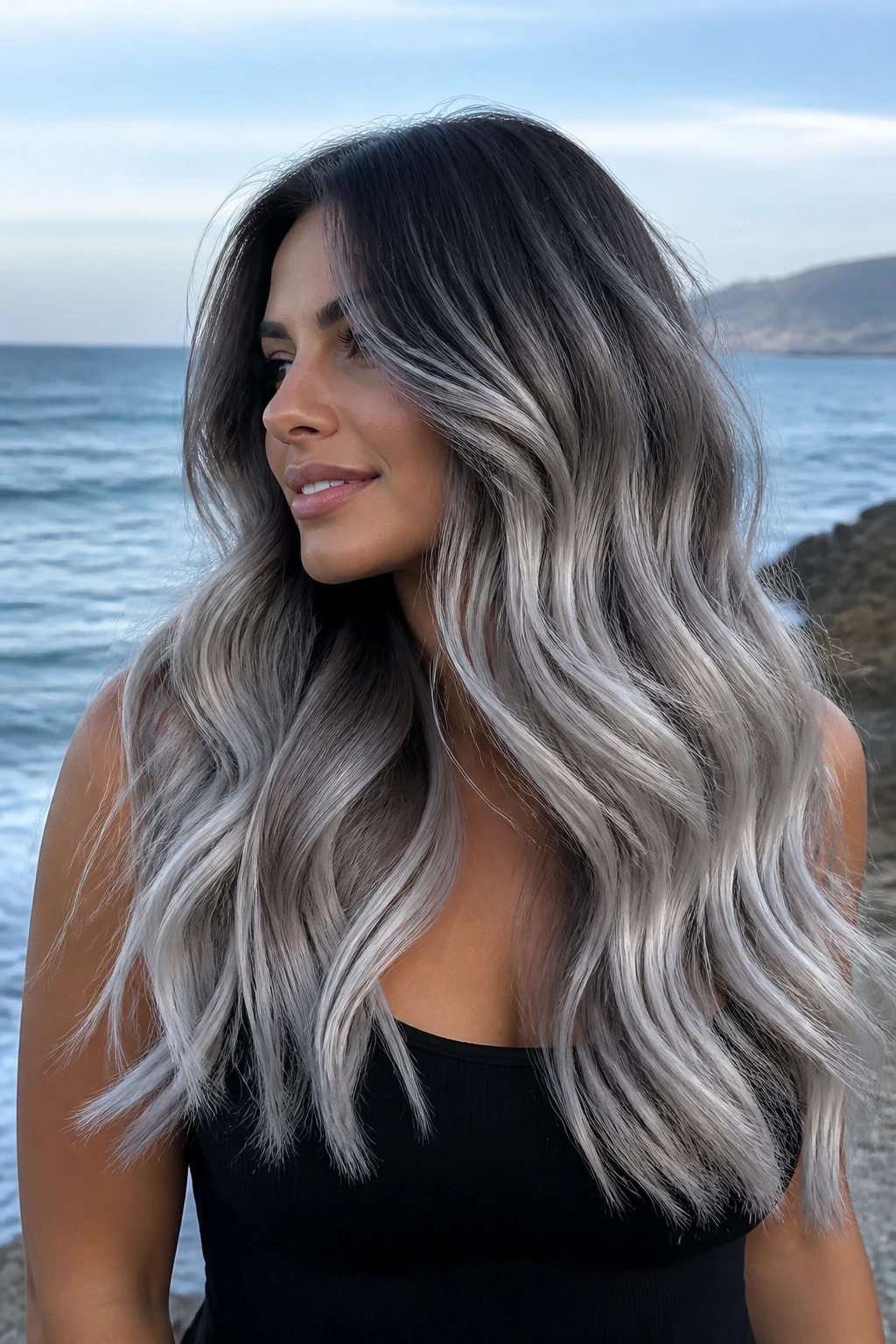
Think of this as gray ombre with more sheen and less softness. Gunmetal near the roots slides into bright silver through the lengths, and the whole thing comes alive when the hair falls in big waterfall waves. It has body. It has movement. It does not sit politely still.
I’ve always liked this version on long hair because the wave pattern prevents the gray from looking like a solid sheet. The dark and light parts slip around each other as the hair moves, which keeps the color from feeling heavy at the ends.
- Best styling tool: 1¼-inch curling iron or wand
- Best finish: brushed-out waves for a smooth cascade
- Color depth: deeper at the roots, brighter below the collarbone
- Maintenance note: gloss treatments help the silver stay reflective
A style like this looks more expensive when the waves are loose and the ends are not over-curled. Leave the bottom inch straighter, and the whole thing feels less prom, more polished.
11. Cool Caramel to Ash Gray
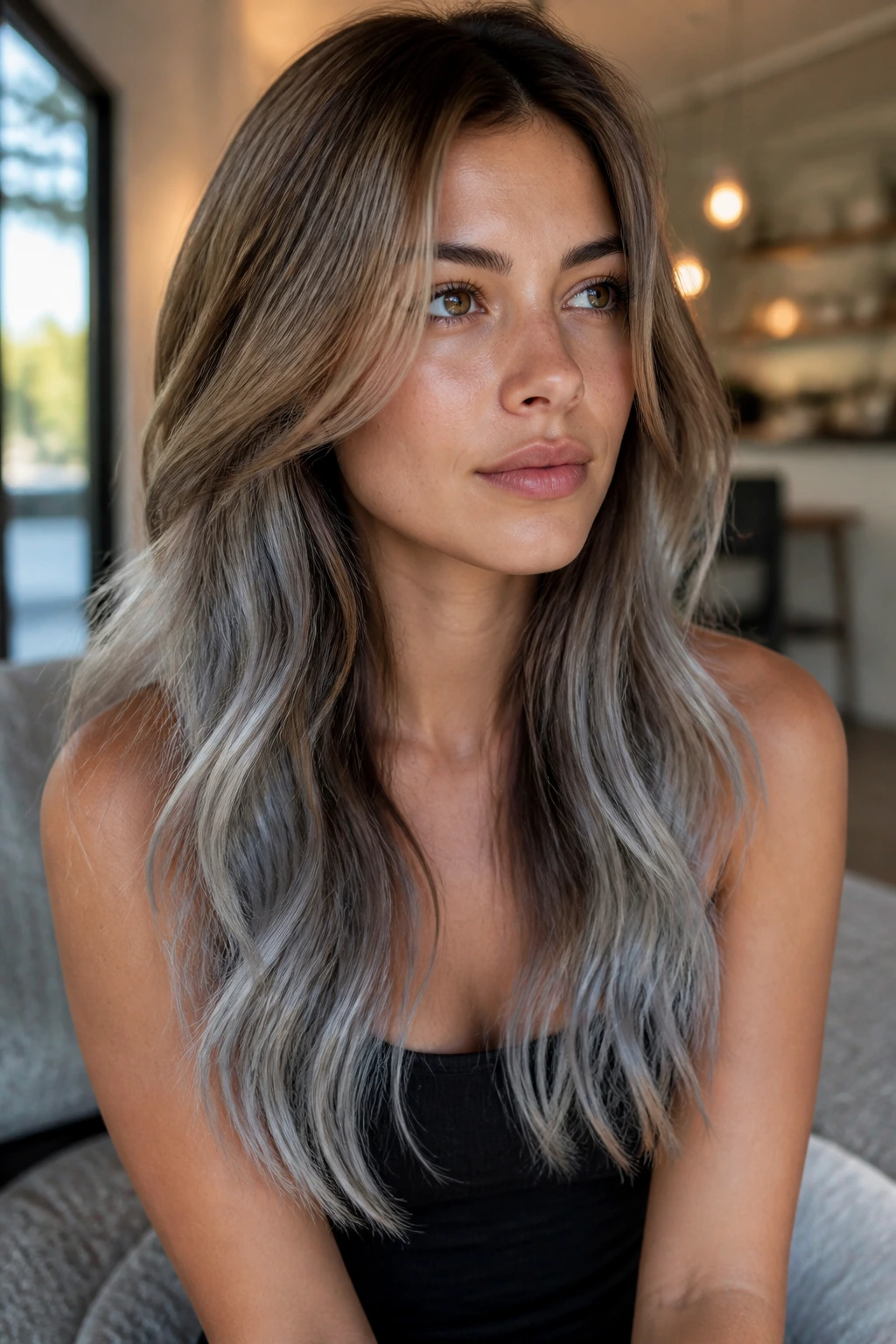
This is one of the few gray ombre ideas that plays nicely with warmth before cooling down. The caramel root zone gives you a softer entry point, then the ash gray arrives through the mids and ends to cool the whole look off.
That warm-to-cool shift can be gorgeous on long hair with layers around the face. The caramel keeps the root area from looking harsh, and the gray keeps the finish from turning too sweet. It’s a balancing act, and I think long hair handles it better than short hair does because there is more space for the transition to breathe.
It’s also useful if your natural color sits in the medium brunette range. You do not have to fight your base as hard. The gray can arrive later and still feel connected to the rest of the hair.
If you like low-maintenance color with a little personality, this is a strong candidate. The grow-out is softer than an all-over silver and less demanding than a full icy blonde makeover.
12. Dusty Gray with White-Blond Tips
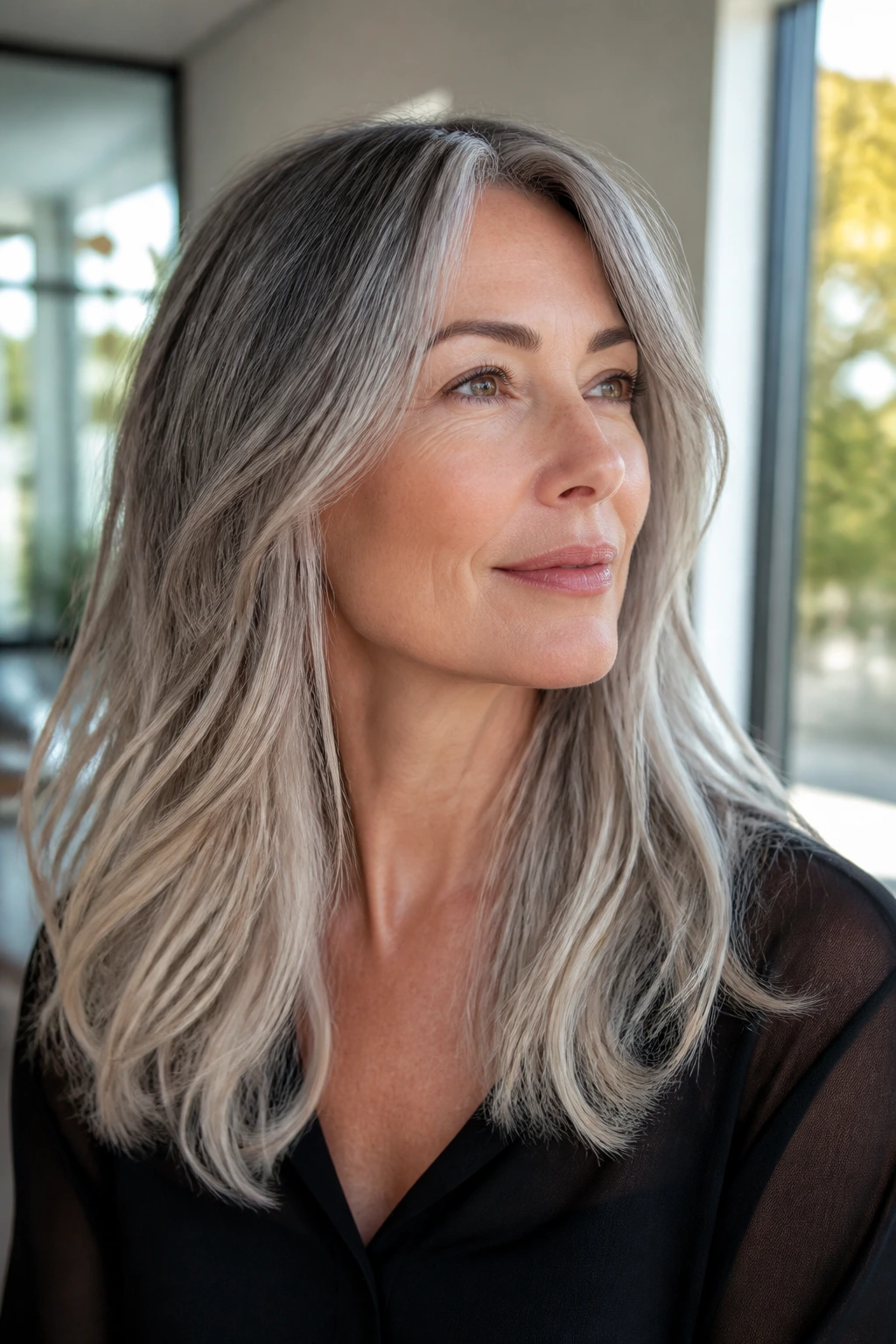
This one reads airy and clean, almost like the ends were lifted by sunlight and then cooled with a gray glaze. Dusty gray through the lengths gives way to white-blond tips, and the contrast works best when the light ends are kept narrow rather than chunky.
Unlike heavier charcoal-to-silver ombres, this version feels featherweight. That’s because the gray stays soft and powdery instead of dark or dense. On long layered hair, it can make the whole cut look lighter without removing length.
What Makes It Different
The white-blond tips catch the light first, while the dusty gray holds the middle ground. That keeps the style from looking flat at the transition point. It also works well on naturally finer hair because the lighter ends can create the illusion of more movement.
Best of all, it plays nicely with loose waves and soft blowouts. The tips flick around at the shoulders, which gives the gray a little sparkle without turning it into a high-contrast stripe.
13. Mermaid Charcoal-Silver Blend
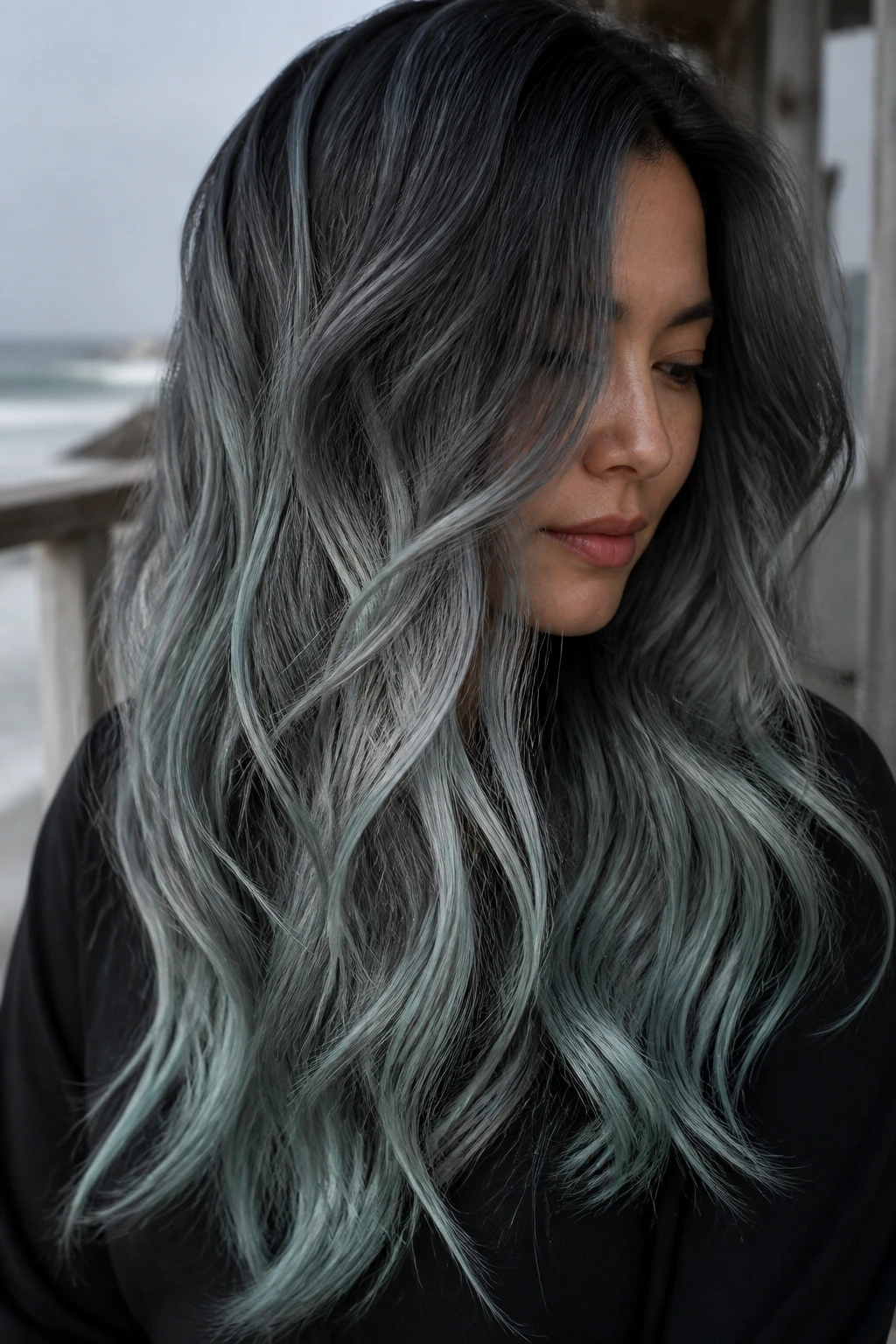
This is where gray ombre gets a little dreamy. Mermaid charcoal-silver keeps the base dark and moody, then breaks the lengths into silver, slate, and muted sea-glass tones. It feels fantasy-adjacent without needing bright teal or purple to carry it.
Why It Works
Long hair is the reason this style makes sense. The color has room to layer, so the charcoal underneath and the silver on top can move like scales instead of blocks. On straight hair, the effect is sleek. On waves, it looks more fluid and a little wild.
Try it if you want gray but find plain silver too plain. The mix of tones gives your hair depth from every angle, and that depth matters when the hair is very long. Flat color on long lengths can feel heavy fast.
- Best cut: long layers or U-shape ends
- Best texture: waves, braids, or half-up styles
- Best toner family: charcoal, pearl, and cool silver
- Maintenance note: a color-depositing mask can help keep the silver side from washing out
My favorite part: this is one of the few gray looks that still feels playful.
14. Salt-and-Pepper Soft Ombre
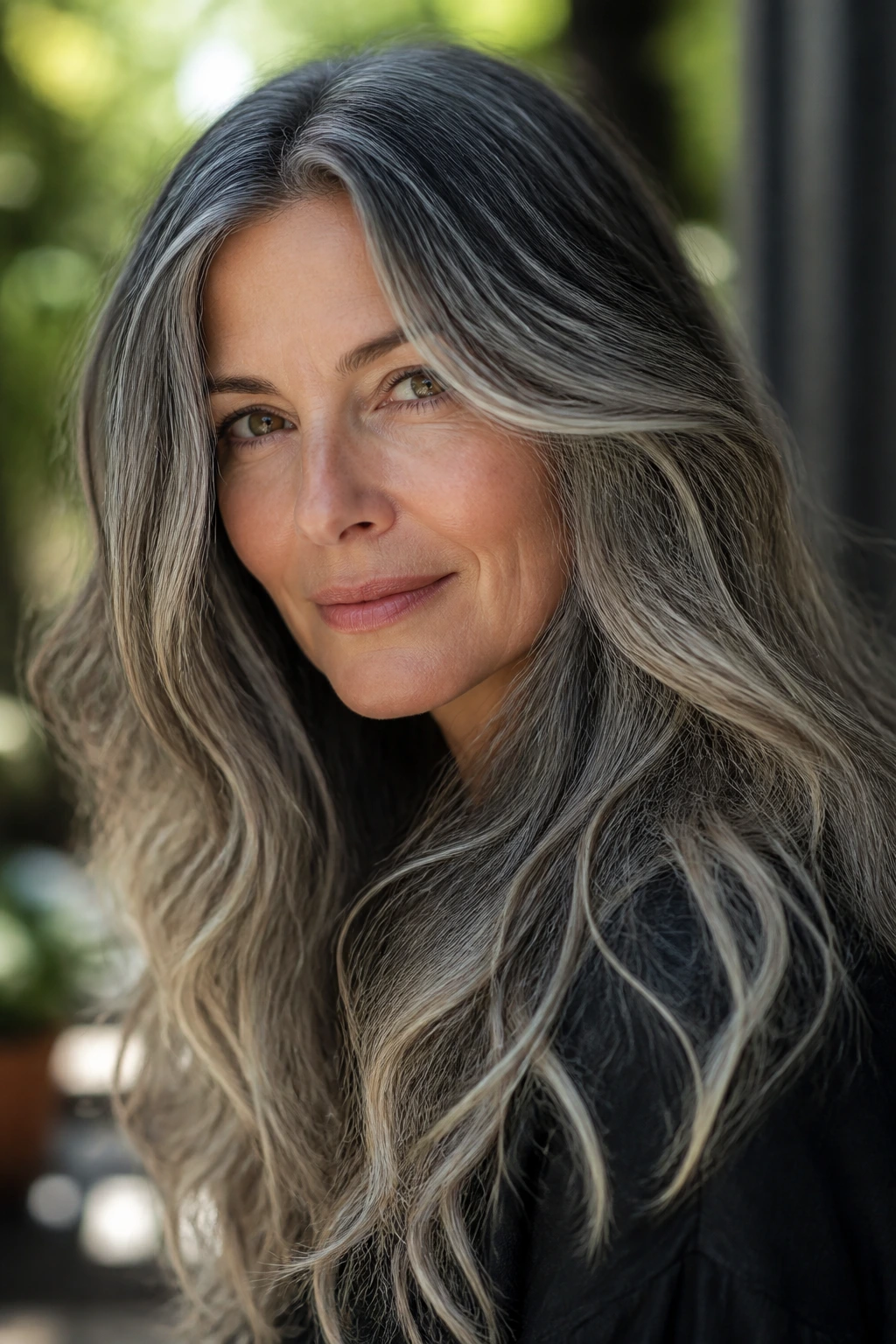
This is the least “done” gray ombre here, and that’s why it works. The roots keep their darker salt-and-pepper mix, then the ends drift lighter in a soft, almost weathered way. It looks natural enough to fool people, which is rare for a fashion color.
The blend is especially kind to long hair because the darker root zone creates a nice frame around the face, while the lighter ends keep the length from looking too heavy. You get dimension without a strict line of demarcation.
If you already have a few grays in your natural hair, this style can feel like a smarter version of what’s already happening. It doesn’t fight the silver strands. It builds around them.
A blunt cut can make this look sharper, but I think soft layers are better. They let the different tones mix as the hair moves, and that movement is half the charm.
15. Graphite Underlayer Peekaboo
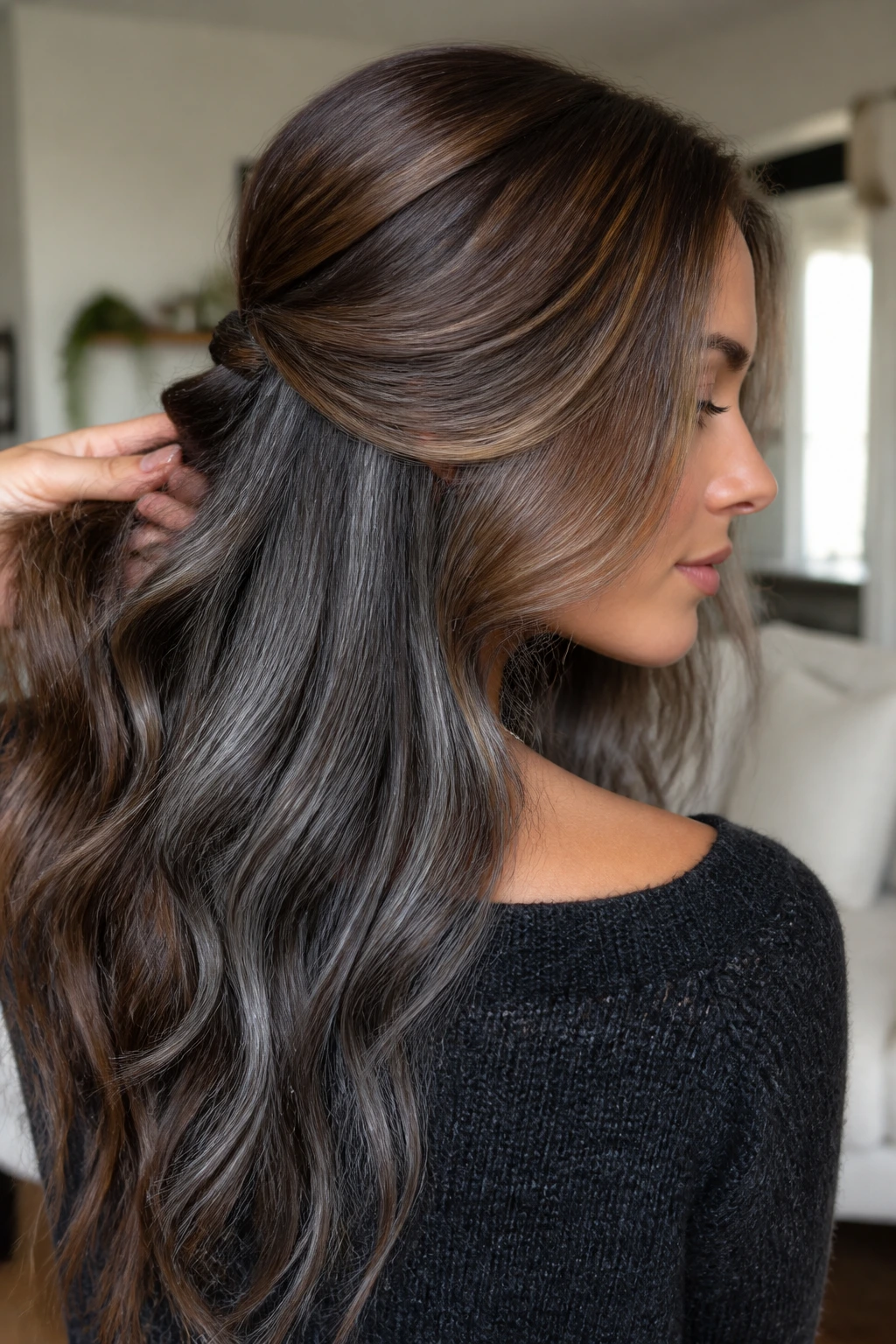
Here’s the quiet one. From the top, the hair can look like a deep brunette ombre with only a hint of gray at the ends. Underneath, though, the graphite color hides in the lower layers and flashes through when the hair flips, braids, or gets pulled half-up.
That hidden placement is brilliant on long hair. Length gives you enough surface area to tuck color inside the shape instead of putting it everywhere. It also makes the style easier to live with if your job or lifestyle calls for something subtle.
How to Use It
Wear it in long braids, twisted buns, or half-up knots if you want the underlayer to show. Straight and tucked-back styles reveal the graphite more cleanly than big curls do.
This version works best when the outer layer stays slightly warmer or neutral, so the gray underneath feels like a surprise rather than the whole story. It is a good pick for someone who wants a cooler color but doesn’t want constant maintenance on the visible top section.
16. Frosted Silver on Blown-Out Layers
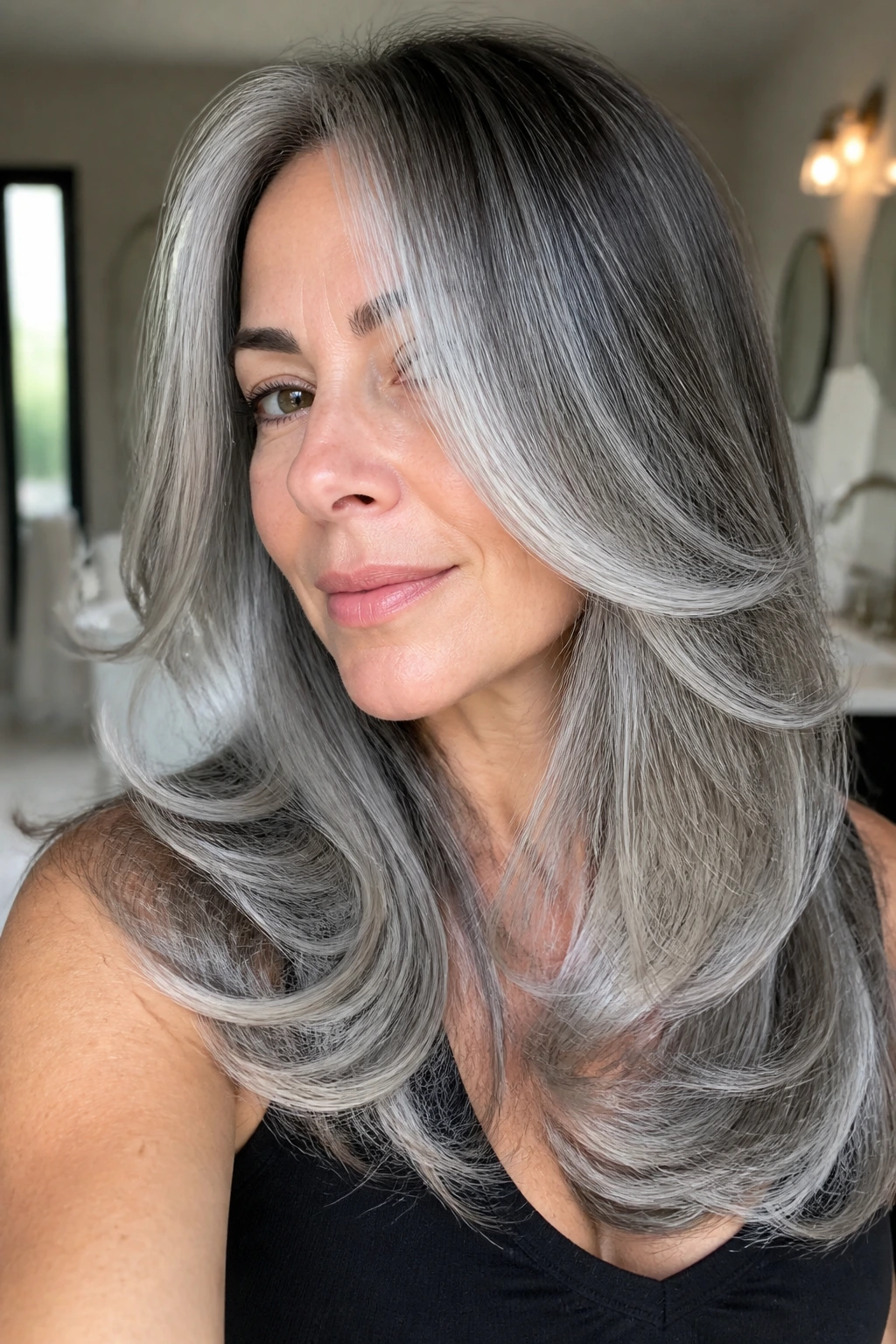
If you like salon blowouts, this is your lane. Frosted silver starts with a medium-dark base and opens into a bright, cool finish that looks almost frosted over the edges. On layered long hair, the movement is the whole point.
The layers matter because the color needs shape. Each lifted section catches a different piece of silver, so the ends can look airy rather than thick. That keeps the style from weighing down the face.
- Best styling: round brush blowout or hot rollers
- Best finish: glossy, brushed, and smooth
- Tone family: pale silver with a cool veil, not flat white
- Maintenance note: use a sulfate-free shampoo if you want the toner to last longer
This is the kind of gray ombre that looks expensive when the hair is healthy. Dry ends will ruin it. Slightly. Enough to matter.
17. Smoky Ombre with Curtain Bangs
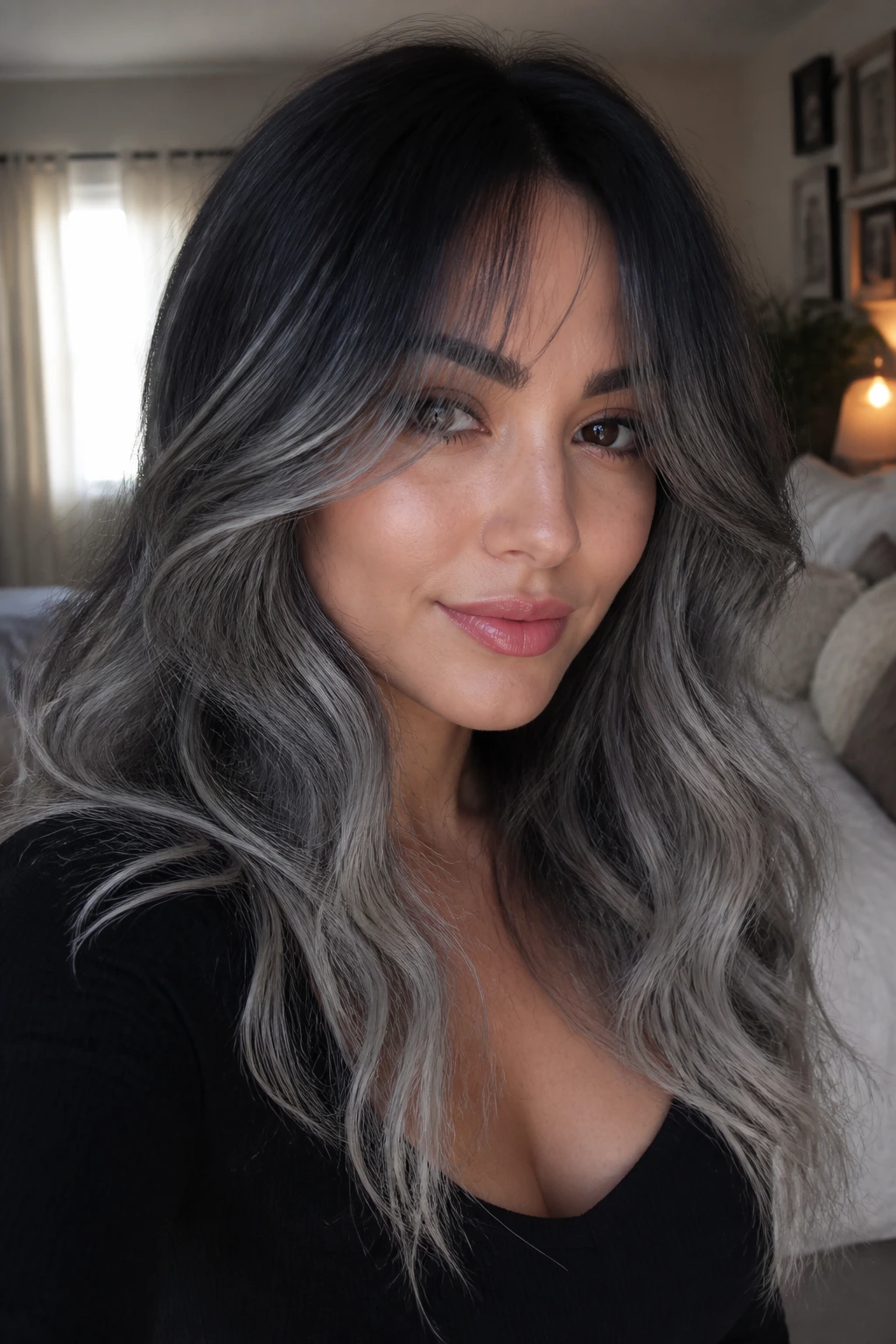
Curtain bangs change the whole mood. Add smoky gray ombre to long hair, and the bangs become a soft frame that eases the eye from dark roots into the cooler lengths. It’s not as high-contrast as a dip-dye, and that is exactly why it feels elegant.
The bangs also solve one common problem with gray on long hair: too much uninterrupted color. A fringe breaks the line near the face, so the fade looks less like a block and more like a shape. That matters if your hair is very thick.
I like this look best when the gray stays a little smoky, almost graphite at the top and silver at the ends. The in-between tone keeps the bangs from looking disconnected from the rest of the hair.
Let the curtain pieces hit around the cheekbone or just below. Shorter than that and the blend can feel abrupt.
18. Gray-Silver Balayage with Glossed Ends
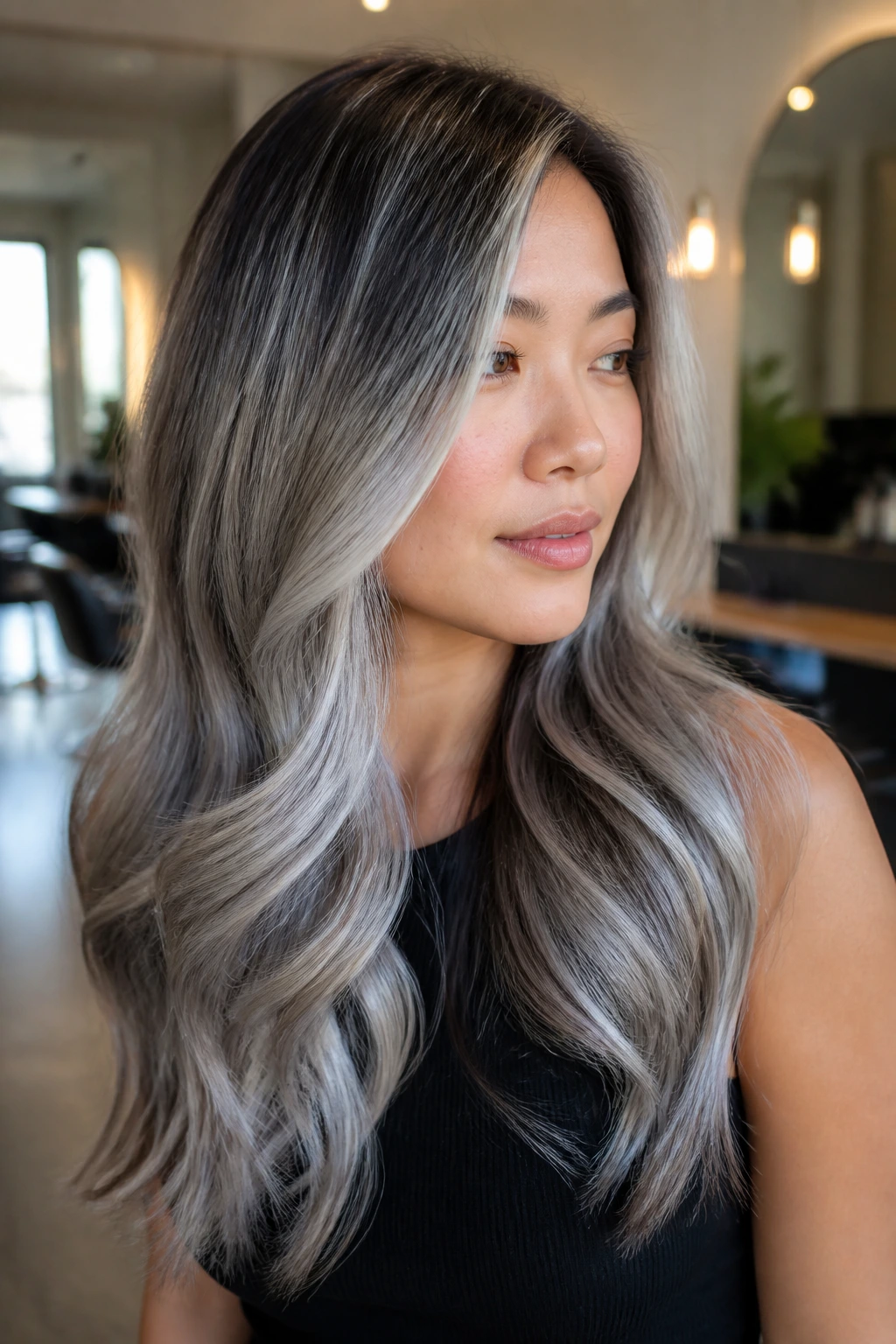
This version leans polished instead of bold. The gray is painted as balayage through the lengths, then the ends are glossed so they reflect light instead of sitting matte. That finish can make long hair look sleek even when the tone itself is cool and muted.
What Makes It Different
Unlike a hard ombre line, balayage leaves room for soft spacing between the painted pieces. On long hair, that means the color moves in ribbons rather than blocks, which is easier on the eyes and kinder during grow-out.
The gloss is the important part here. Gray tones can look dusty if the hair is porous, and a clear or cool gloss helps the ends reflect light again. You can feel the difference when you run your fingers through it — smoother, less fuzzy.
Who should pick this? Anyone who wants gray hair ideas for long hair that feel refined, not edgy. It suits soft waves, high-shine blowouts, and long layers that need a little life at the ends.
19. Mushroom Beige to Silver Ash
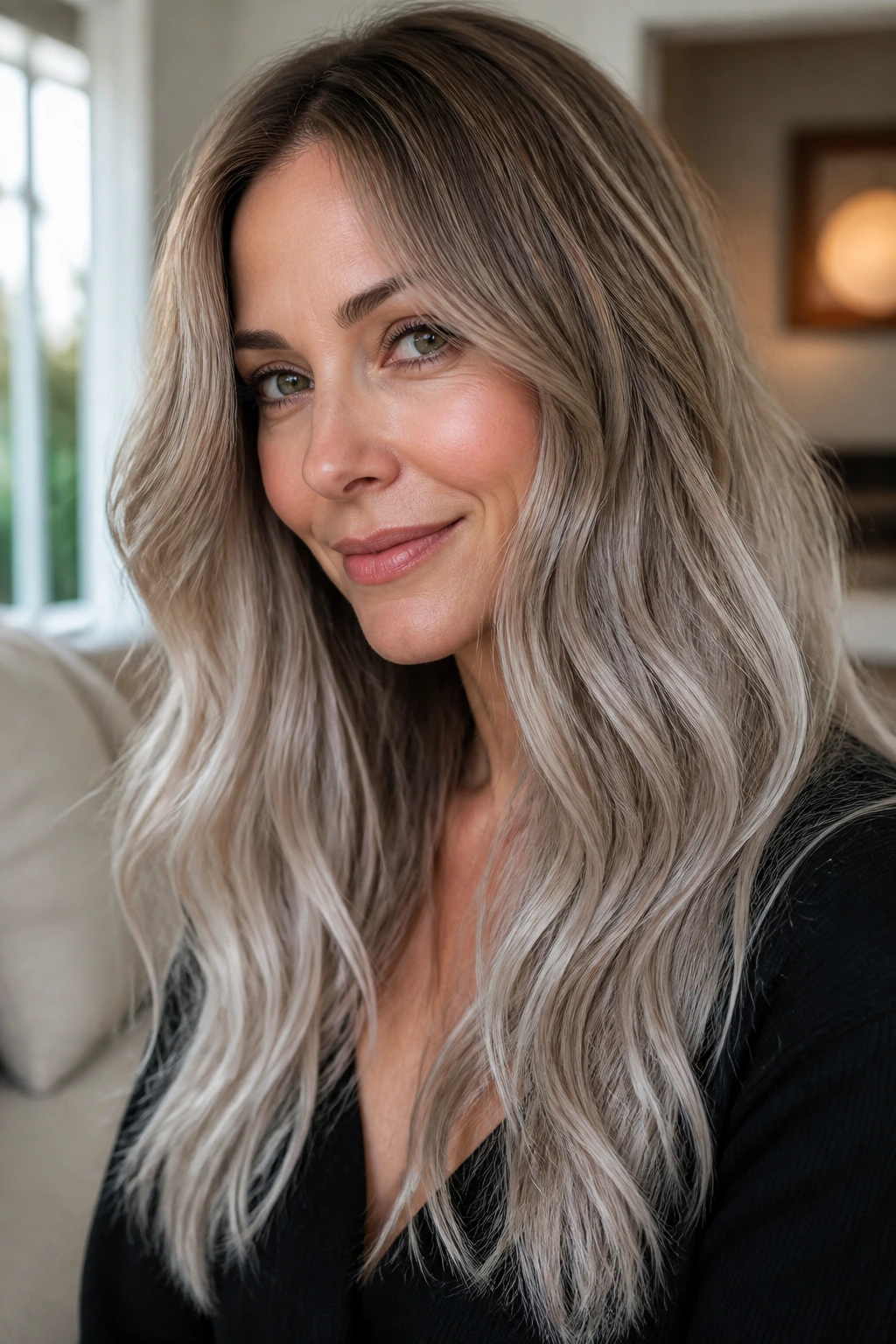
Mushroom beige is one of my favorite bridge tones for gray ombre because it sits in that middle zone between warm and cool. Slide it into silver ash on long hair, and the transition feels easy instead of abrupt.
The beige keeps the roots from looking too stark. The silver ash sharpens the ends just enough to give the style purpose. On very long hair, that combo can be more flattering than a pure icy gray because it won’t wash out the face as hard.
Why It Works
Long hair can swallow color if the shade is too pale. Mushroom beige gives the mids something to hold, and the silver ash finishes the job without making the last inch look bleached out. That balance is why this style tends to age well through grow-out.
- Best base: light brunette
- Best shape: soft layers, not razor-thin ends
- Best styling aid: lightweight oil on the ends only
- Best vibe: calm, neutral, easy to wear
If you want gray without looking frozen, start here.
20. Midnight Brunette to Moonlit Gray
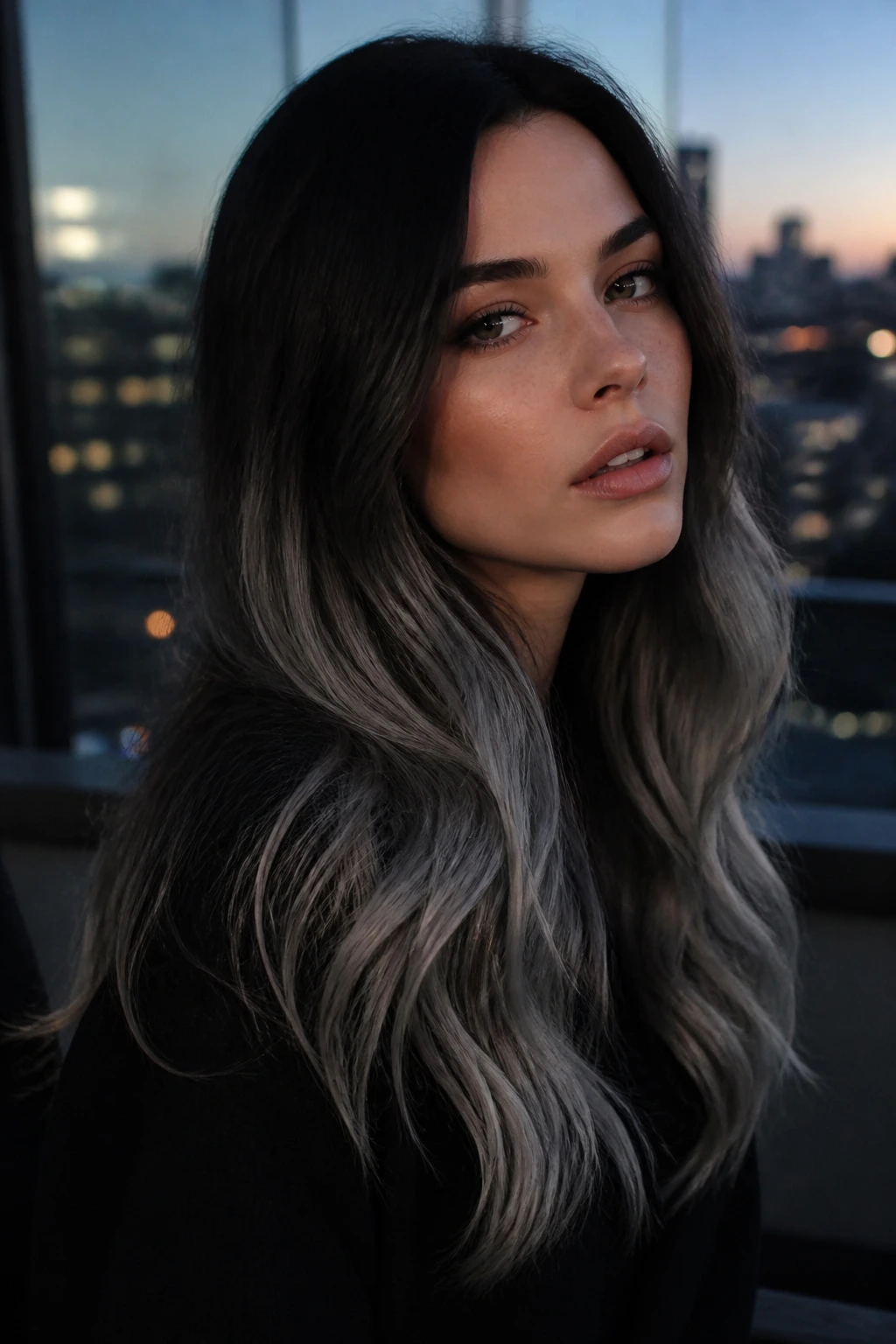
This one has drama, but it’s controlled drama. The roots stay deep midnight brunette, then the gray opens slowly and turns moonlit near the ends. The finish should feel cool, luminous, and a little mysterious — not harsh.
Long hair makes that shift feel cinematic. There’s enough distance between root and tip for the color to evolve in visible stages, which keeps the gray from looking pasted on. The best versions also use a few lowlights in the lower mid-lengths, so the silver has something dark to sit against.
If your hair is naturally dark, this is the gray ombre that lets you keep some of that depth. You are not fighting your base. You are working with it.
A center part can make the look even stronger. Loose waves soften it. Straight, glossy lengths make it sharper. Both work.
21. Lavender-Gray Ombre for Long Braids
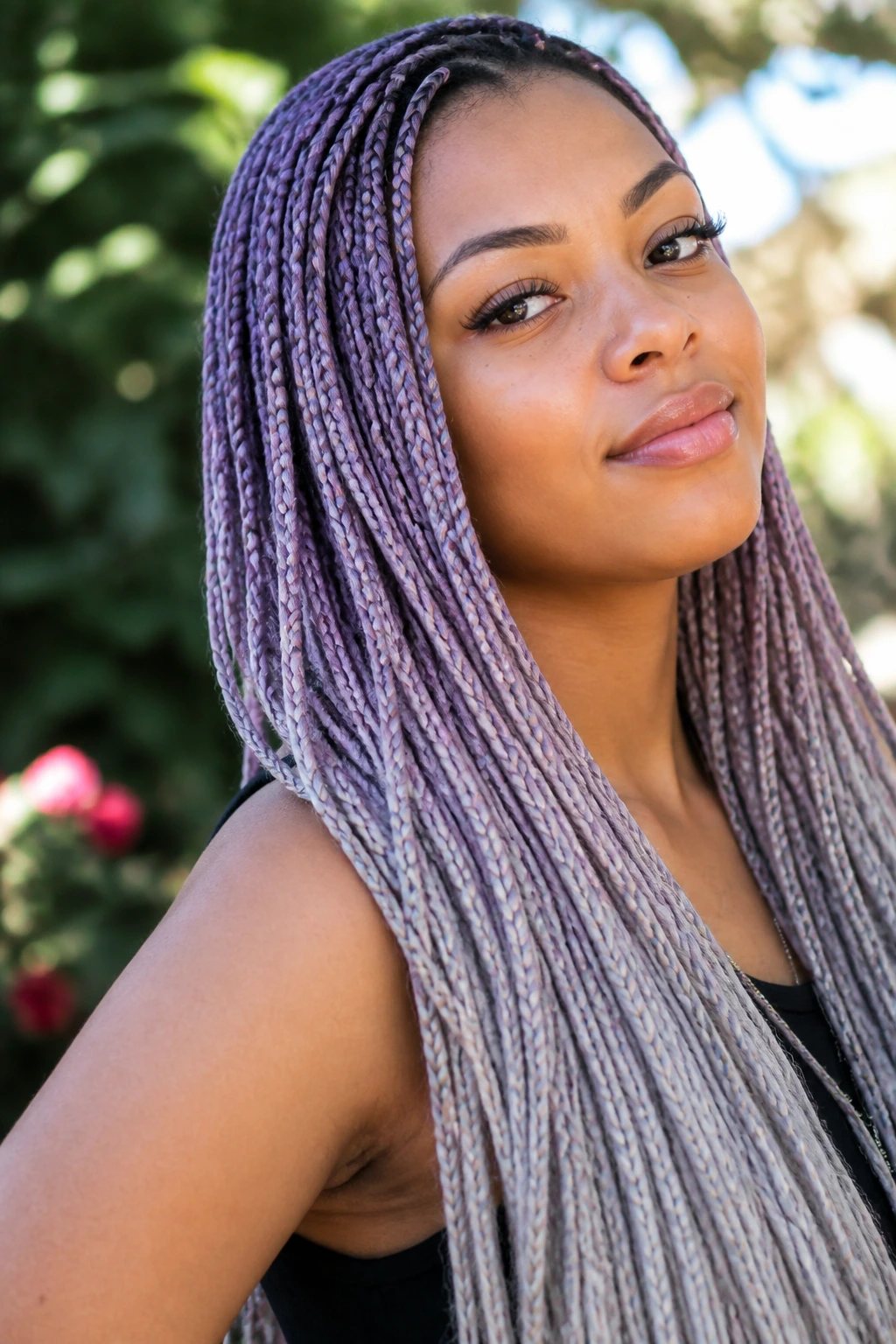
Braids are where this color gets interesting. Lavender-gray ombre hides a soft violet tint inside the gray, and braids pull the tones apart in neat little sections so you can actually see the shift. Long hair gives the braid enough length to show the whole story.
The lavender should stay muted. Think dusty, not candy. If the purple is too loud, the look stops reading as gray and starts feeling like a fantasy shade in a different category.
How to Get the Most From It
Long box braids, loose three-strand braids, and big fishtails all show this color in different ways. A braid with a slightly loose finish reveals the gray-violet mix better than a tight one.
This is a lovely choice if you want gray with a softer mood and a little personality. It is also one of the easier ways to wear pastel-leaning gray because the braid pattern naturally softens the fade.
A braid is doing some of the visual work for you. Nice trade.
22. Creamy Silver Melt on V-Cut Hair
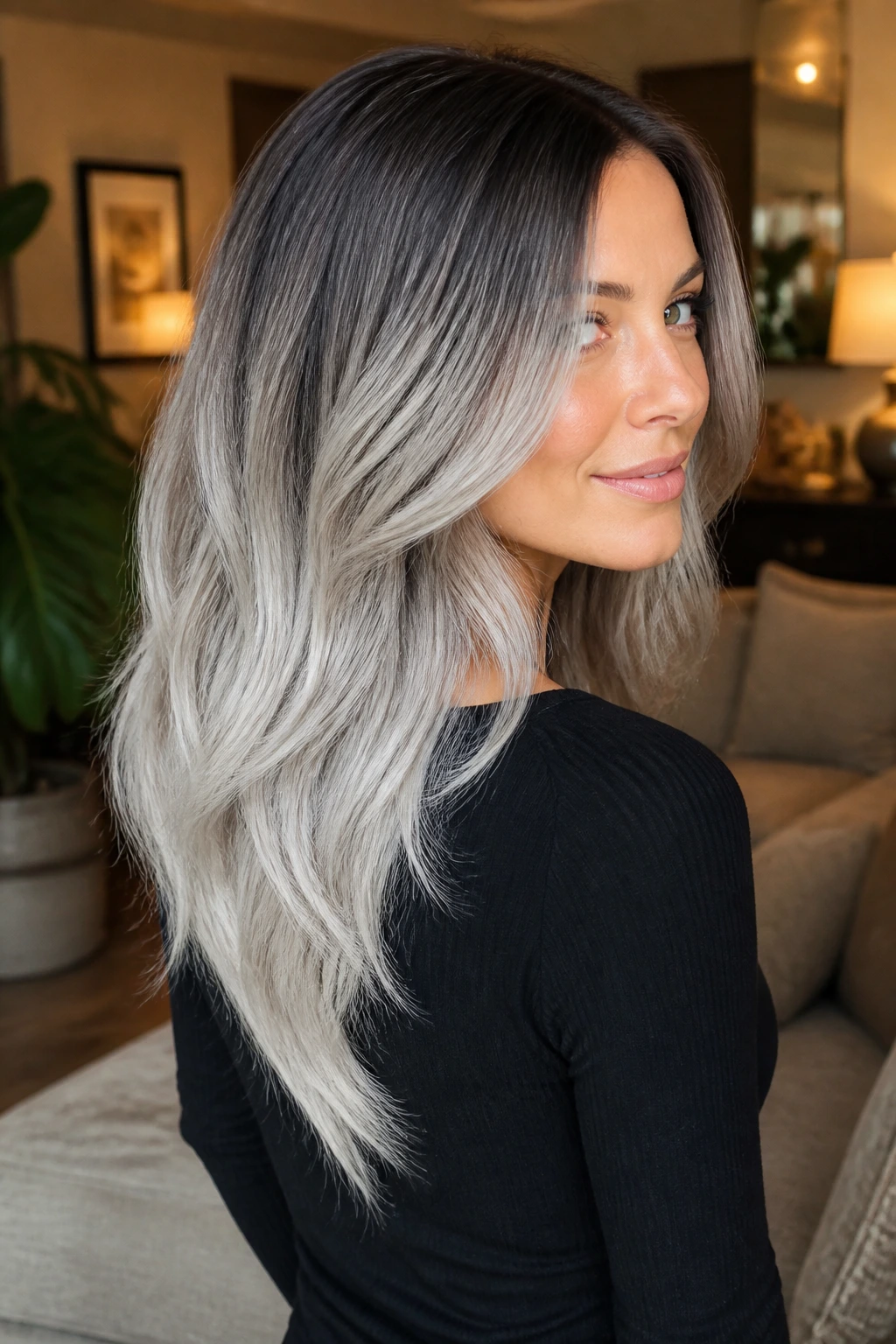
A V-cut gives gray ombre a clean point to land on, and that shape matters more than most people expect. The cut narrows the lengths toward the center back, so a creamy silver melt can taper beautifully instead of hanging heavy at the hemline.
The creamy tone is softer than icy platinum and warmer than stark steel. That makes the finish more forgiving on long hair, especially if your base is brunette and you want the transition to feel smooth. The V-shape helps too, because the longer center section pulls the eye down in a neat line.
What to Watch For
If the ends are too blunt, creamy silver can look broad and thick. The V-cut fixes that by giving the hair a point and a little swing. It also works well with curling, since the tapered shape keeps the ends from puffing out too much.
This is one of those gray ombre hair ideas for long hair that feels elegant without being fragile. You can wear it wavy, blown out, or even in a half-up twist, and the color still reads clean.
Final Thoughts
Grey ombre on long hair works because long length gives the fade room to behave. That sounds simple, but it changes everything. The best versions have depth near the root, softness through the middle, and a finish that looks planned rather than patched together.
If you’re choosing between shades, start with your base color and your maintenance patience. Cool silver is striking, but mushroom gray, graphite, and smoky blends often wear easier and grow out more gracefully. One clean toner appointment can make a huge difference. So can a haircut that supports the fade instead of fighting it.
The smartest gray looks never rely on color alone. They use texture, layers, and placement to make the ombre feel alive when the hair moves. That’s the part worth asking for at the chair.
