



Long hair gives ombre room to breathe. A fade that would look blunt on a bob can feel soft and rich on waist-length hair, because the eye has space to travel from root to tip. That’s why ombre hair ideas for long hair are such a smart search in the first place: the length does half the work.
The trick isn’t chasing the lightest blonde you can find. On long hair, the best fades usually start with a root color that looks like it belongs there, then slide into lighter mids and finish with ends that are bright enough to show movement. If the transition is too high or too harsh, you lose the whole point. If it’s too close to your base, it can read flat.
Some looks are quiet and easy to wear for months. Others are smoky, coppery, cool-toned, or a little dramatic. That range is the fun part. A thick, dark mane and a fine, straight blonde cut should not wear the same ombre, and pretending they should is how people end up disappointed at the salon.
Use the ideas below as a menu, not a rulebook. Think about where you part your hair, how often you heat-style it, and whether you want something sun-kissed, moody, bright, or low-key. Long hair can carry more color than short hair, and that freedom is half the appeal.
1. Caramel Melt on Deep Chocolate Brown
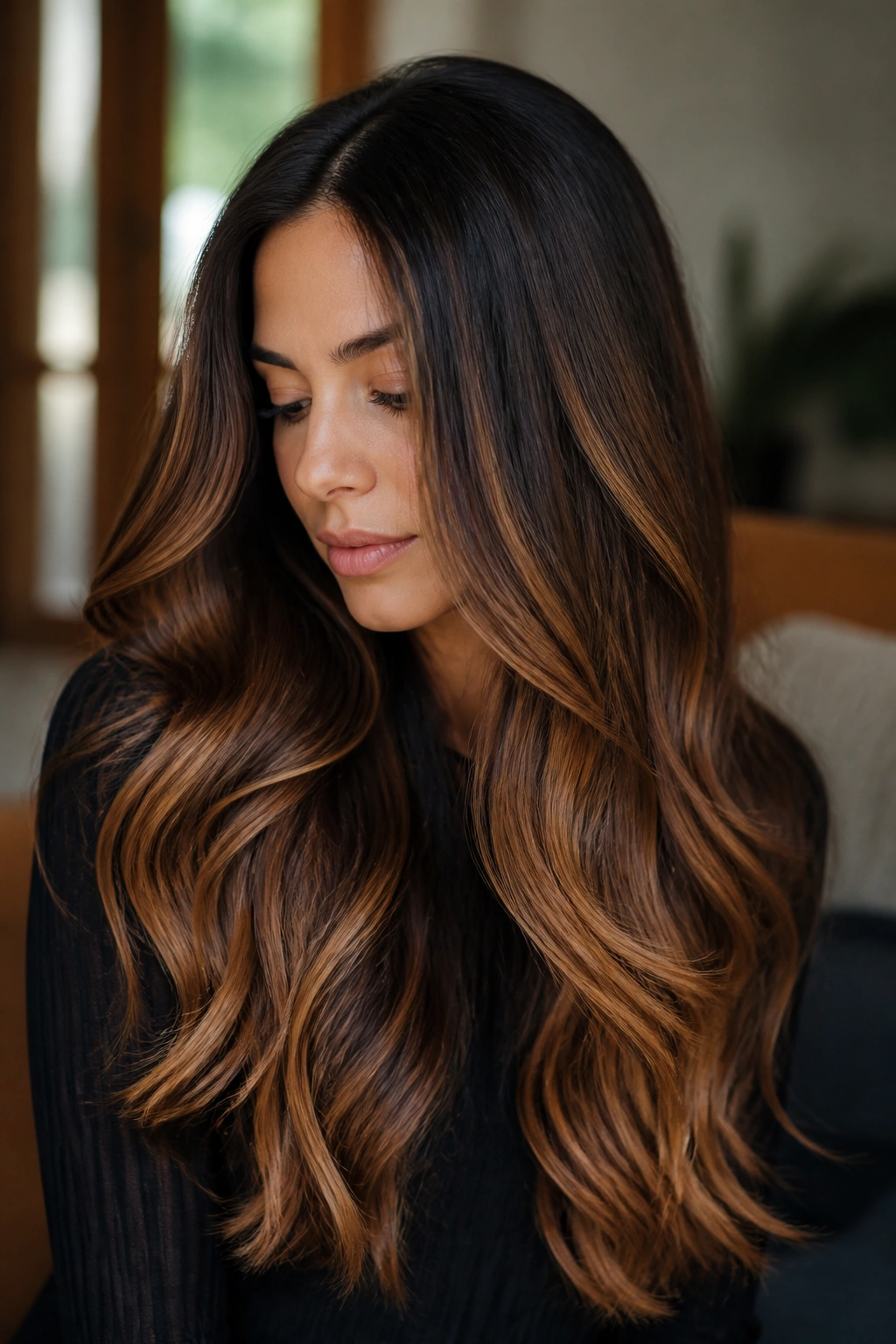
A good caramel melt looks like coffee with a ribbon of cream. Not stripy. Not chunky. Just soft, slow, and warm from mid-length to ends.
Why this one works
Long hair gives the fade enough room to open up, so the caramel can start lower without looking abrupt. Ask for a chocolate brown base at about level 4 or 5, then paint caramel through the mids and keep the ends glossy rather than pale.
What to ask your colorist for
- A deep brunette root that stays close to your natural color
- Caramel ribbons one to two levels lighter through the lengths
- A soft transition that begins around the collarbone or lower
- Ends that still look dimensional, not bleached out
Best with: loose waves, a blowout, or a braid that shows the contrast in a single sweep.
2. Espresso to Mushroom Brown
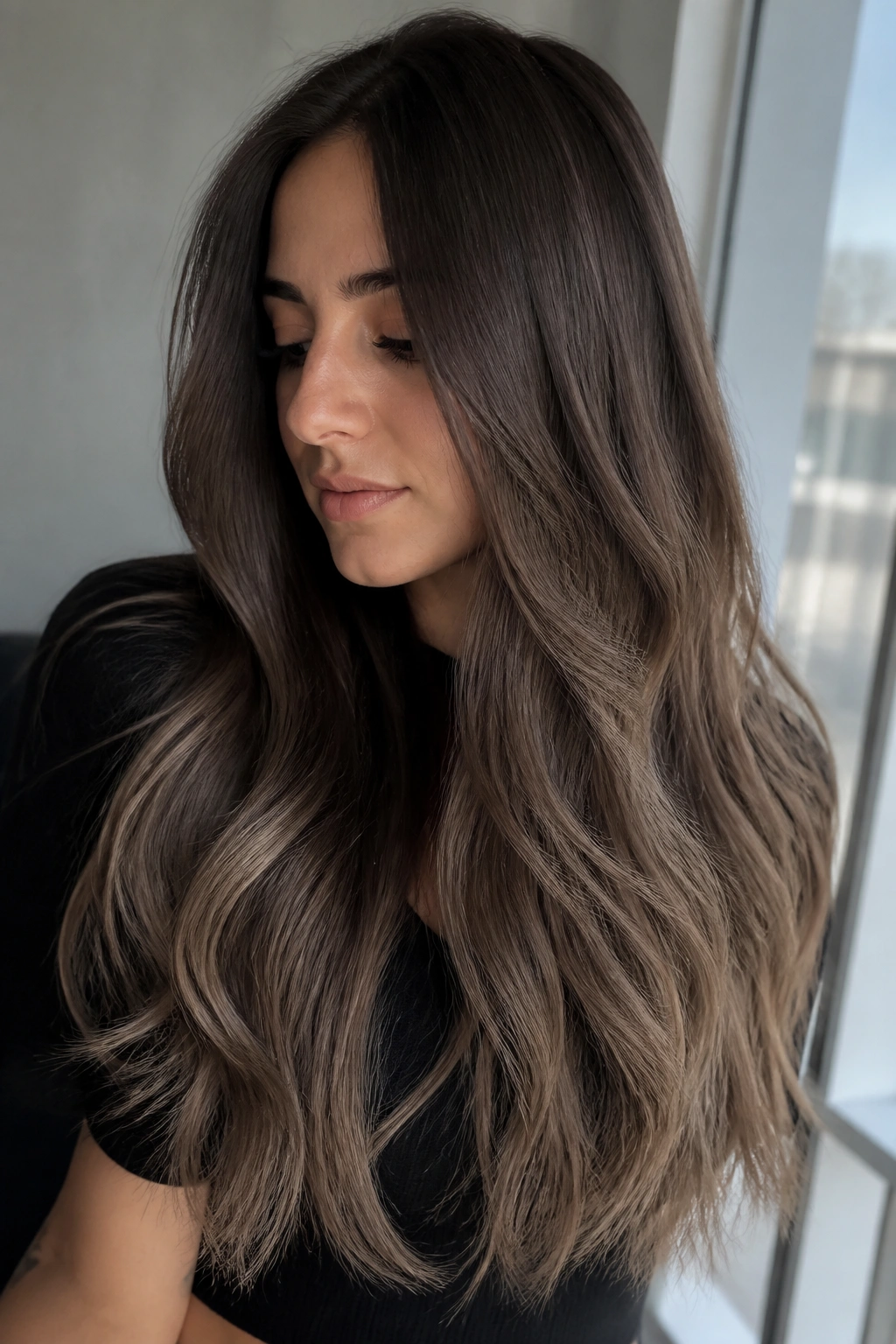
This one is cooler, quieter, and a little more expensive-looking in the best way. Espresso at the roots sliding into mushroom brown at the ends gives long hair a smoky edge without making it feel heavy.
That cooler fade is useful if your hair pulls red or orange easily. Mushroom brown keeps warmth in check, and on long lengths it looks polished instead of muddy. Ask for a gloss between appointments if the ends start to turn too warm; that little refresh makes the difference.
It’s the ombre I’d pick for someone who wants dimension but doesn’t want to look like they tried too hard. Very low drama. Very wearable.
3. Dark Brunette to Honey Blonde
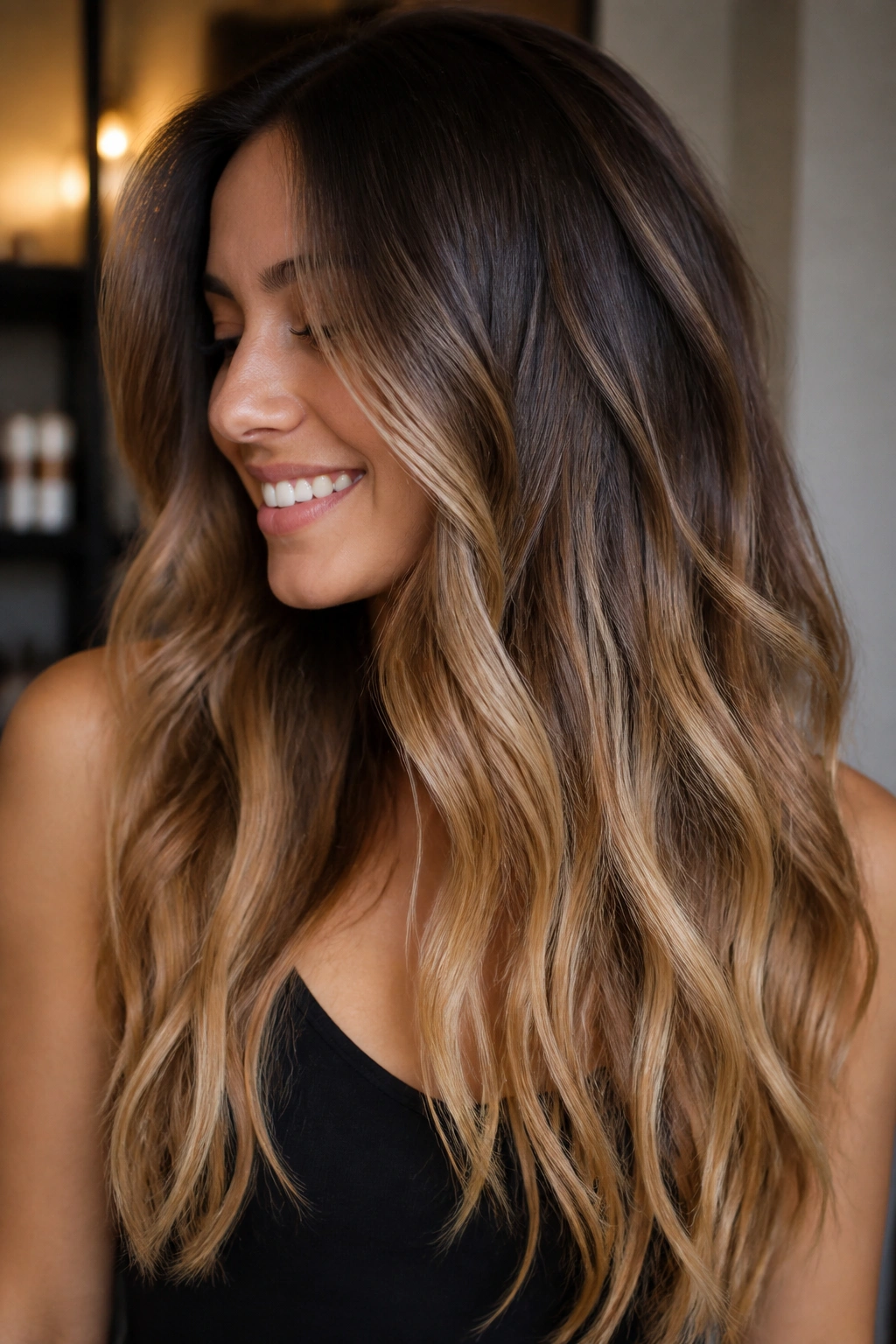
Want a blonde ombre that still looks soft on long hair? Start with a dark brunette root and let the honey sit in the mid-lengths, not just the last inch or two. The fade reads natural when the lightest pieces don’t begin too high.
How to wear it
Honey blonde looks best when the hair has movement. A 1.25-inch curling iron, wrapped away from the face, gives the color room to show itself. Straight hair can work too, but the transition needs to be cleaner and a touch brighter so it doesn’t disappear.
What makes it easy to live with
- Honey tones are friendlier than icy blonde on darker bases
- Regrowth stays softer than with full blonde
- Warm glosses keep the finish shiny
- Long layers help the gradient look intentional
If you like warmth around your face, this is one of the safest bets.
4. Black to Ash Brown Smoke
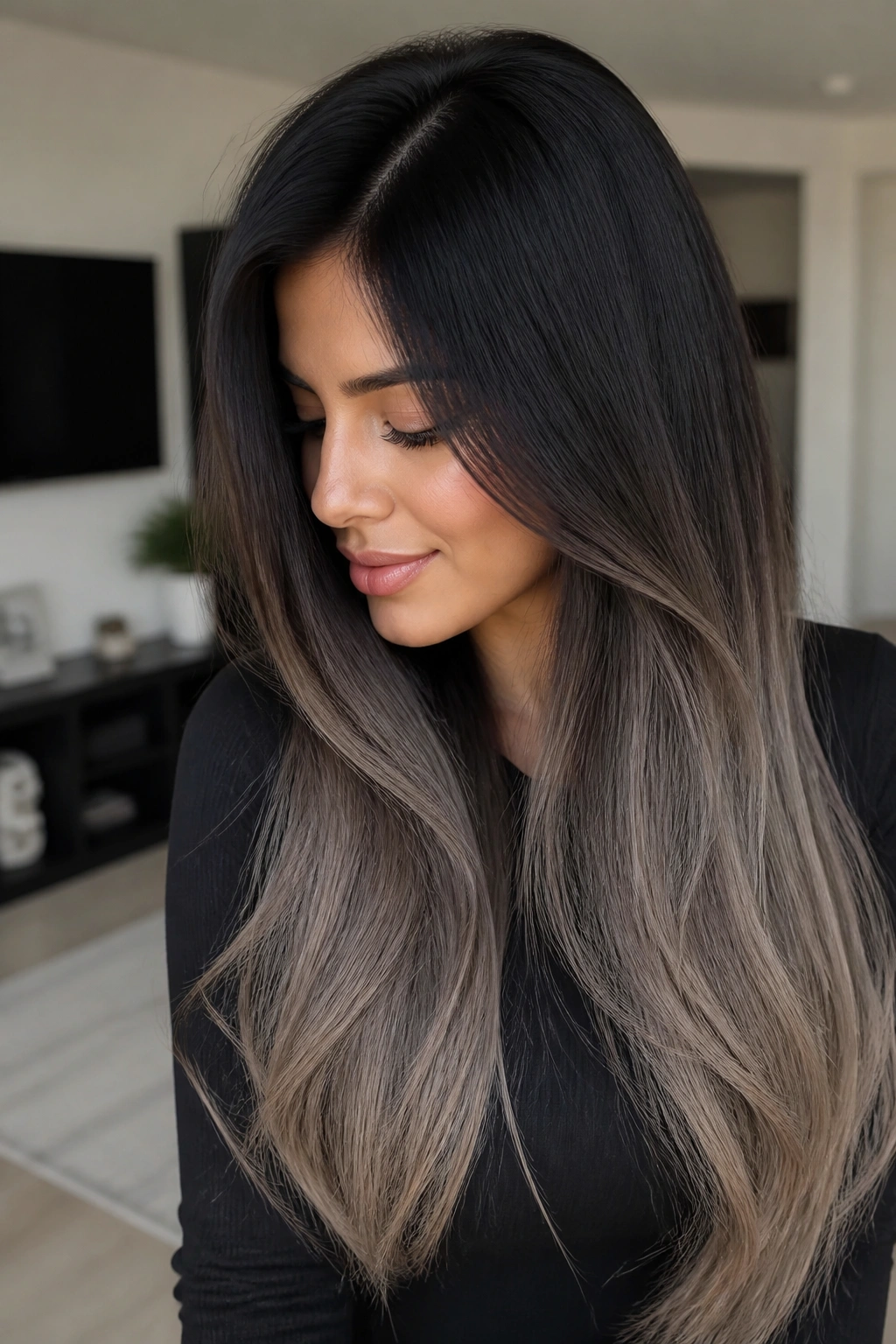
Picture black roots that fade into ash brown ends with no orange in sight. That’s the whole mood. Sharp at first glance, then soft once you move.
This works best when the ash isn’t too light. If the ends are lifted only a few levels, you get a smoke-like effect that keeps depth in very long hair. Push the fade too far and it starts to look patchy. Keep it around collarbone length and lower, and the ombre will look like it was made for the cut.
A side part makes the contrast feel even cleaner. So does a sleek blowout. Curls can blur it a little, which is not a bad thing if you want less edge.
5. Copper to Strawberry Blonde
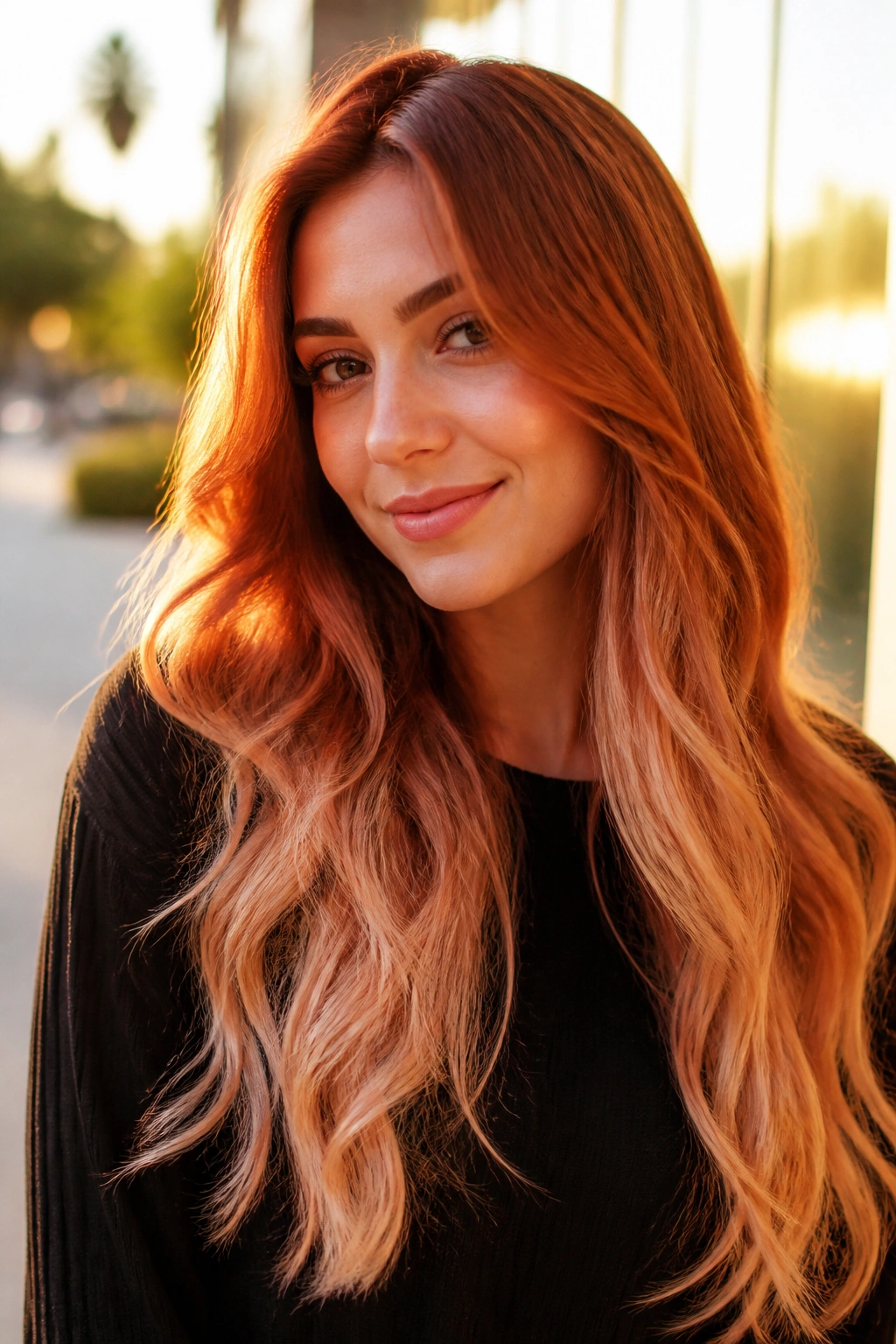
Copper fading into strawberry blonde is one of those looks that makes long hair feel alive. The color seems to shift every time you turn your head, which is exactly why it works so well on length.
The warm side of copper gives the roots depth, while strawberry blonde keeps the ends bright without going full gold. If your skin likes warmth, this is an easy win. If your hair is naturally medium brown, the fade can start around the cheekbones and still feel smooth.
Don’t let the strawberry go too pale. That’s the mistake. A soft blush-gold finish reads far richer than a washed-out pale blonde.
6. Auburn to Rose Gold
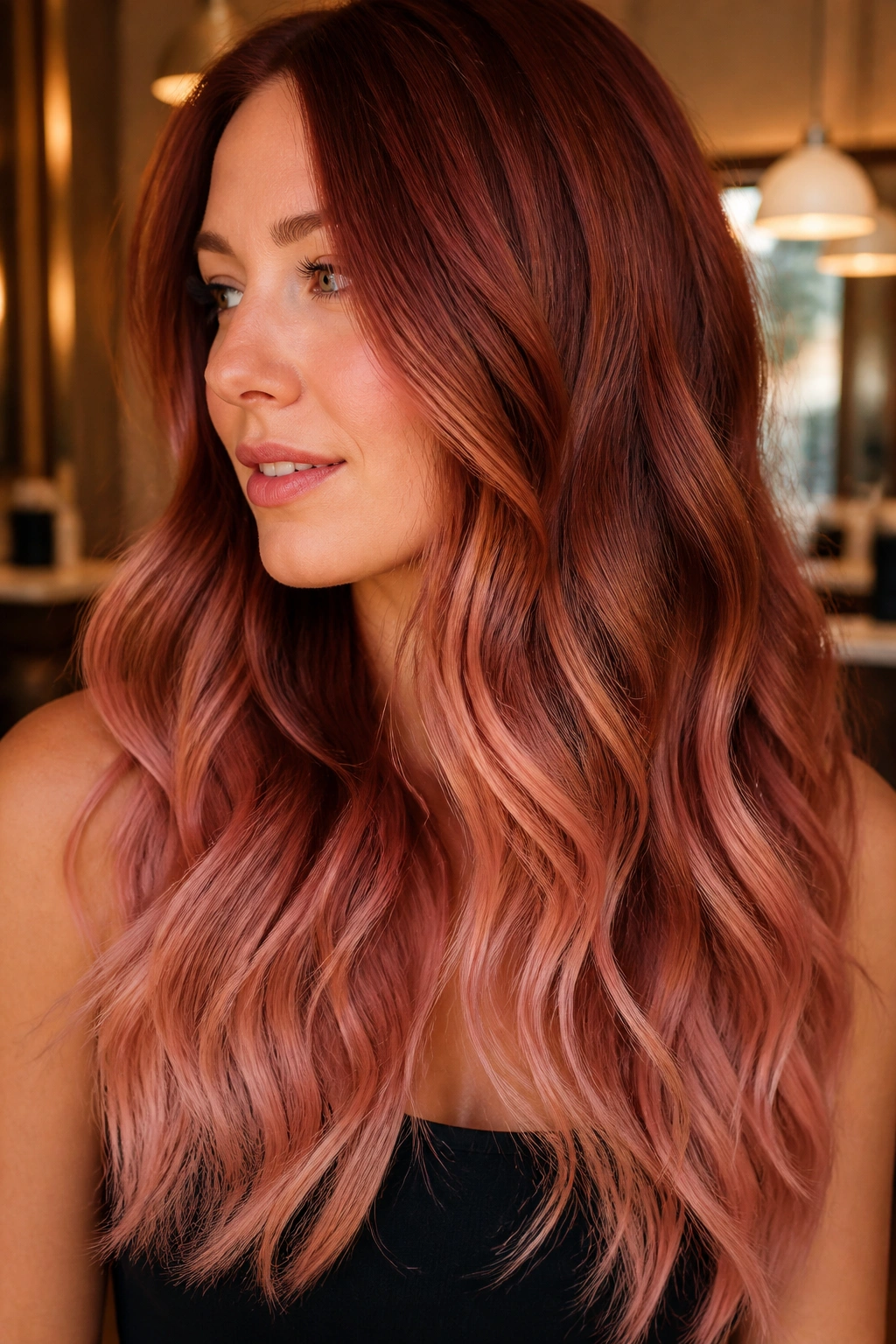
Auburn to rose gold is for someone who wants color, not just lightness. The red base makes the ombre feel velvety; the rose gold ends give it a little shine without turning it into candy pink.
Compared with a standard copper fade, this one feels more romantic and a touch cooler. It’s also a smart choice if you like wearing hair in half-up styles, because the color shift stays visible even when the length is pinned back.
Keep the rose gold muted rather than neon. A dusty rose finish ages better, fades more gracefully, and looks better under indoor light. That last part matters more than people think.
7. Chestnut to Cinnamon Glaze
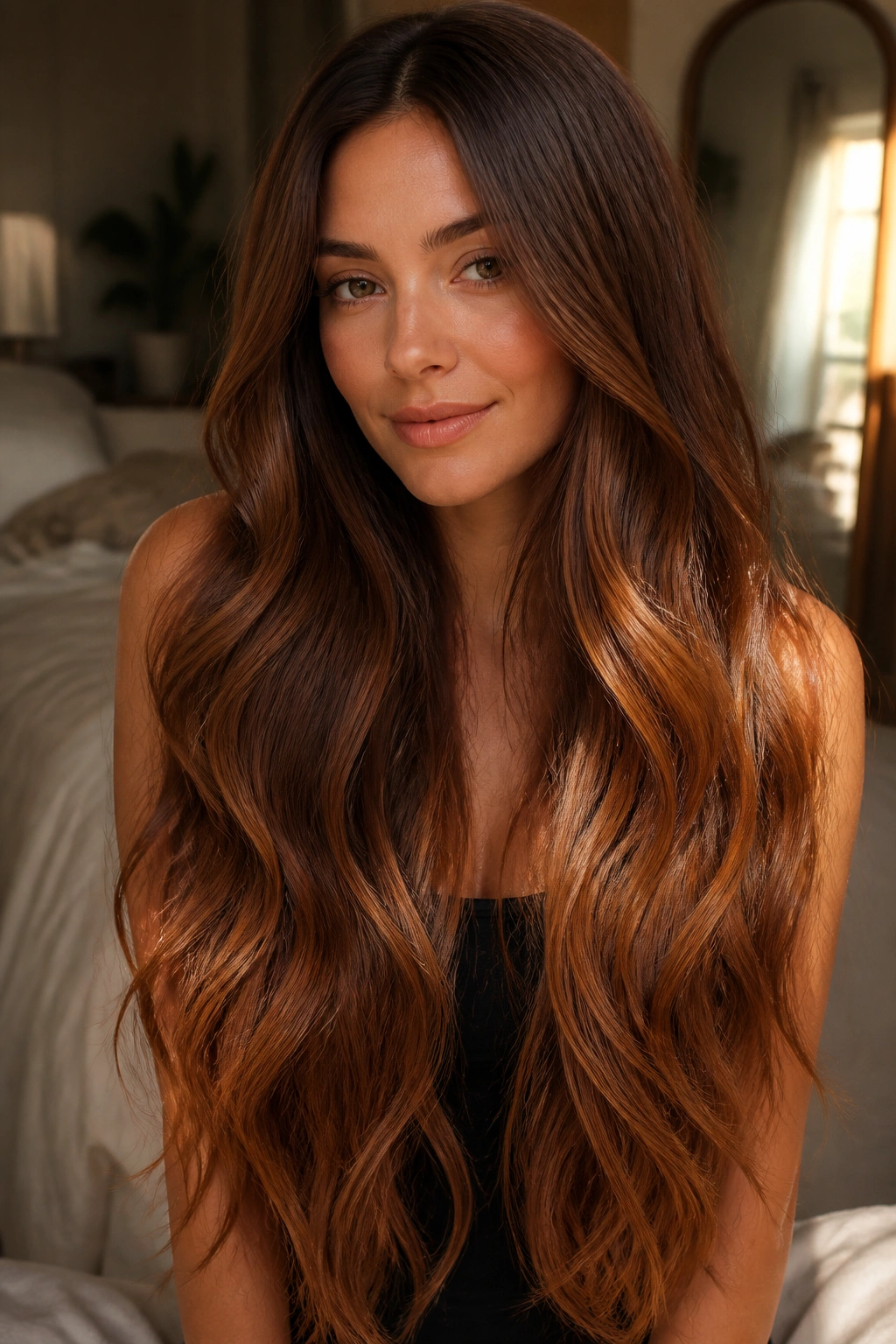
Chestnut and cinnamon sit close together, and that’s why this ombre is so wearable. It does not scream for attention. It just gives long hair depth, warmth, and a bit of shine near the ends.
Why it flatters long hair
The cinnamon glaze should start low enough that the chestnut root still feels dominant. On waist-length hair, that usually means keeping the lighter tone below the shoulders. Too high, and the whole thing turns into a chunky balayage situation.
Best styling choices
- Soft waves that expose the gradient
- A middle part for a relaxed feel
- A round-brush blowout if you want the ends to glow
- A color-safe shampoo that won’t strip the warm tone too fast
This is one of those shades that looks richer in person than in photos. The warmth sits in the hair rather than on top of it.
8. Sandy Blonde to Vanilla Cream
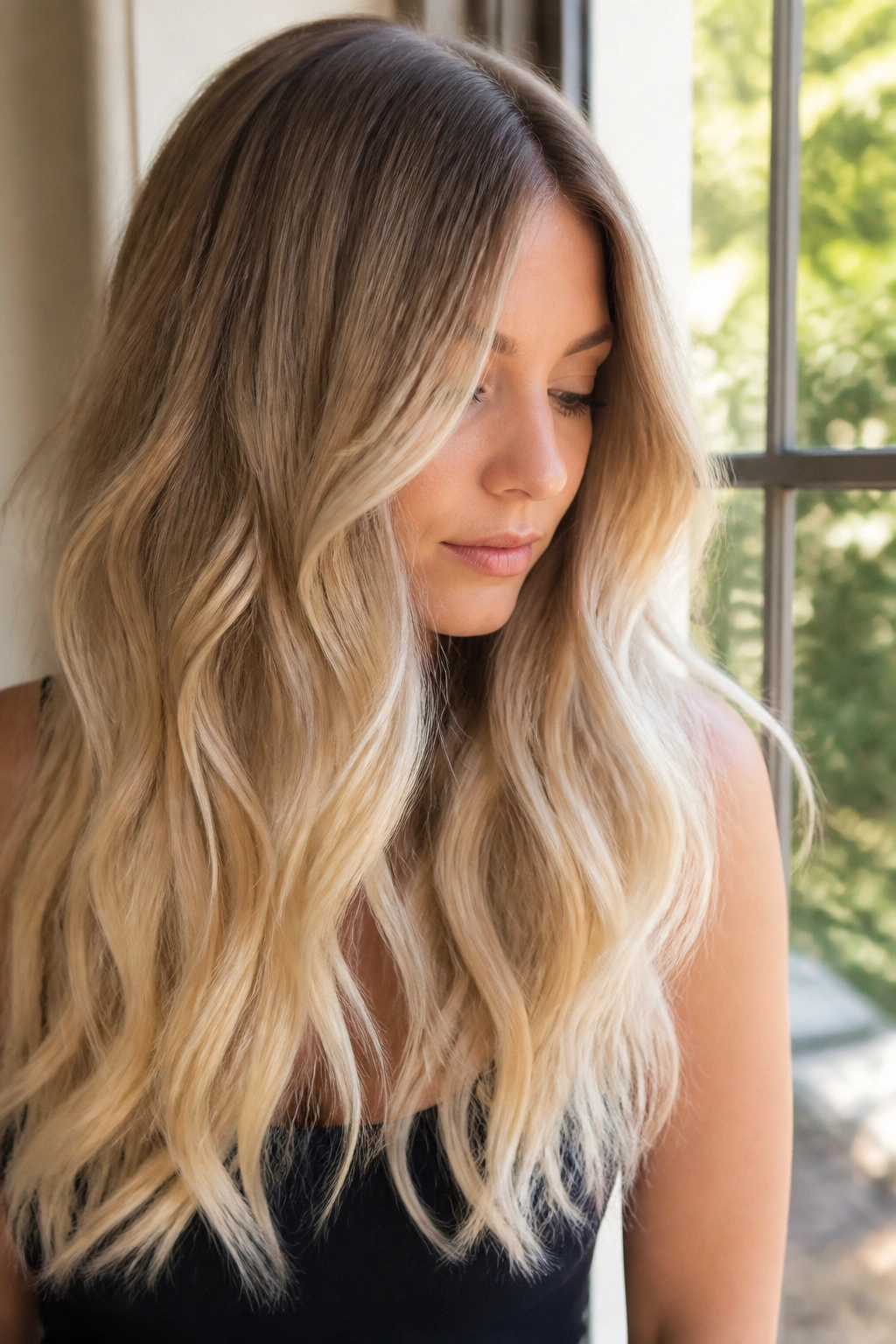
If your base is already blonde, sandy-to-vanilla ombre can look almost effortless. The root stays grounded in a beige sand tone, while the ends drift into a creamy vanilla that brightens the whole length.
This works especially well on long layered hair because the lighter ends move around and catch the eye. On one-length cuts, the transition can feel too smooth, almost sleepy. Layers wake it up.
Ask for the vanilla to stay soft. Not white. Not icy. Cream is the word here. It should look like a clean, warm highlight rather than a stark blonding job.
9. Brunette to Beige Blonde Bronde
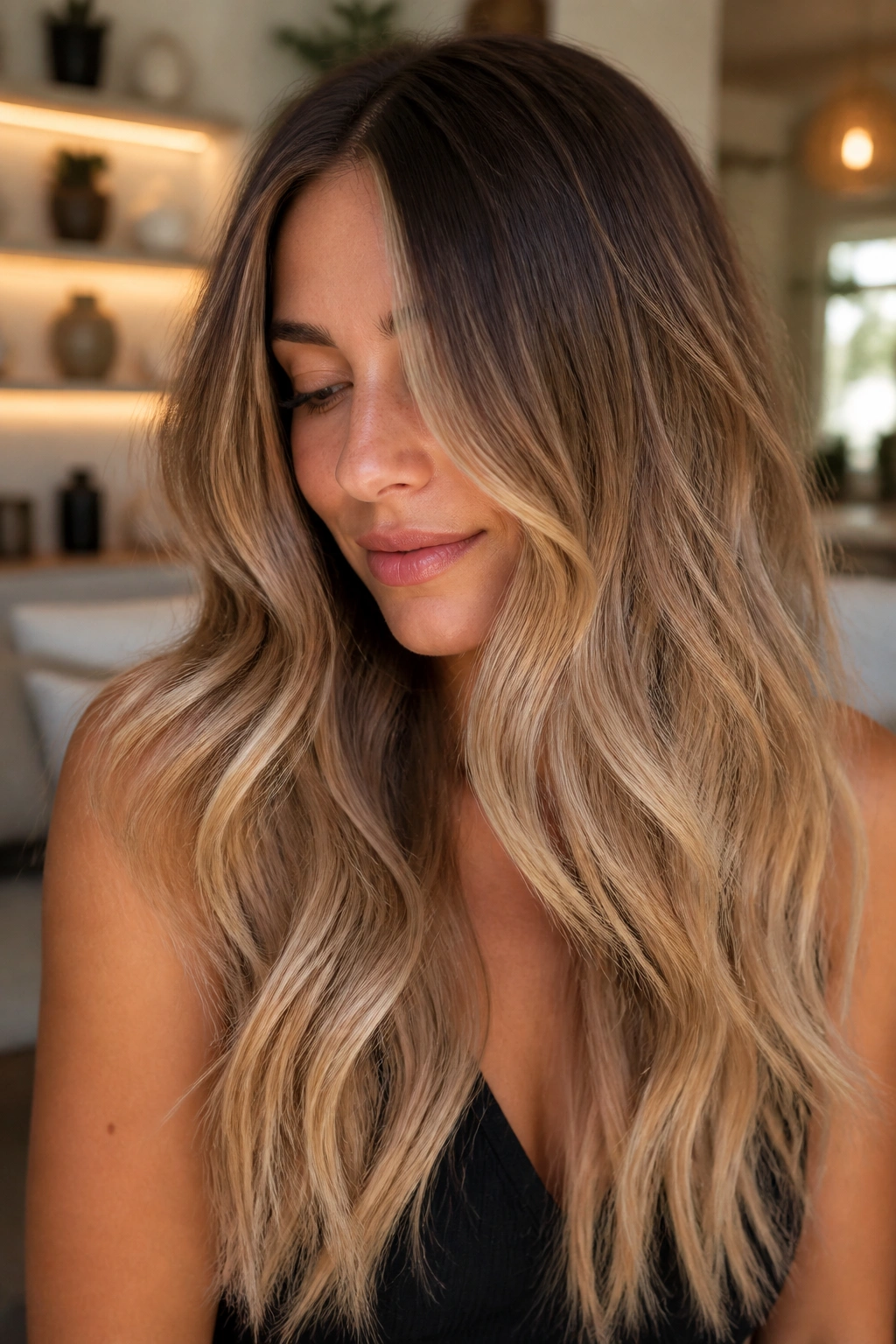
Bronde is the easiest way to keep a long ombre from looking overly processed. The brunette root gives the style depth, and the beige blonde ends keep it light without going brassy.
The beauty of this look is how little it fights your natural color. If your hair is medium brown, the fade can stay subtle; if it’s darker, the blonde can be a little stronger. Either way, it grows out with less fuss than a high-contrast blonding job.
This is the one I’d pick for someone who likes hair that looks expensive but doesn’t need constant attention. It’s not loud. It’s just well judged.
10. Rooted Blonde to Pearl Ends
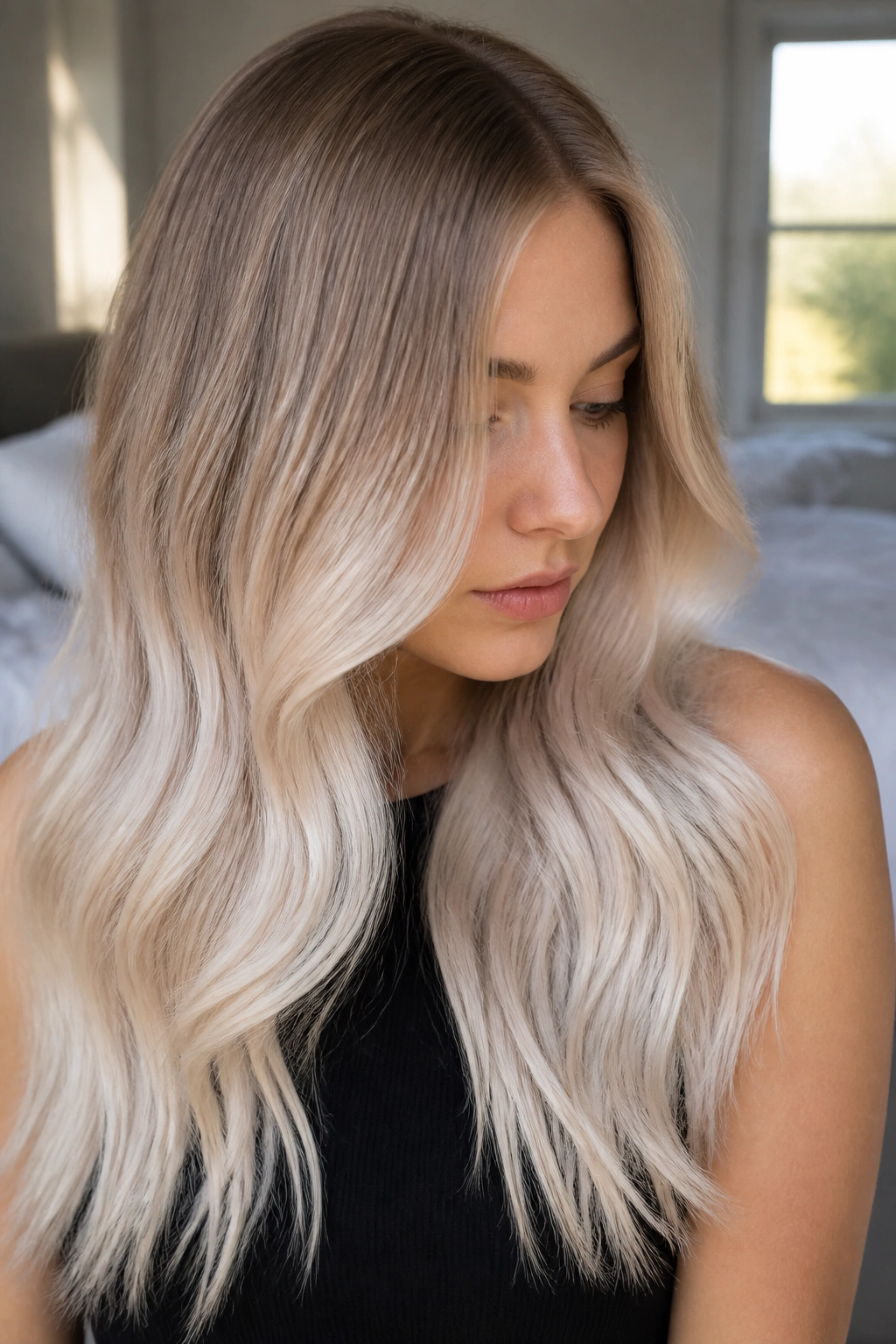
Rooted blonde ombre can look flat if the ends don’t have enough tone. Pearl ends fix that. They give long blonde hair a soft, luminous finish without pushing it into icy territory.
How to keep it from looking dull
Ask for a root shadow that stays about one to two shades deeper than your mids. That tiny bit of depth stops the fade from disappearing into one solid blonde sheet. Pearl toner on the ends keeps the finish cool and clean.
Good pairings
- Loose curls for extra shine
- Long curtain bangs for a softer frame
- Purple shampoo once a week, not every wash
- A shine spray on the mid-lengths only
If your hair is very fine, this look can get wispy fast, so keep the toning gentle.
11. Jet Black to Silver Smoke
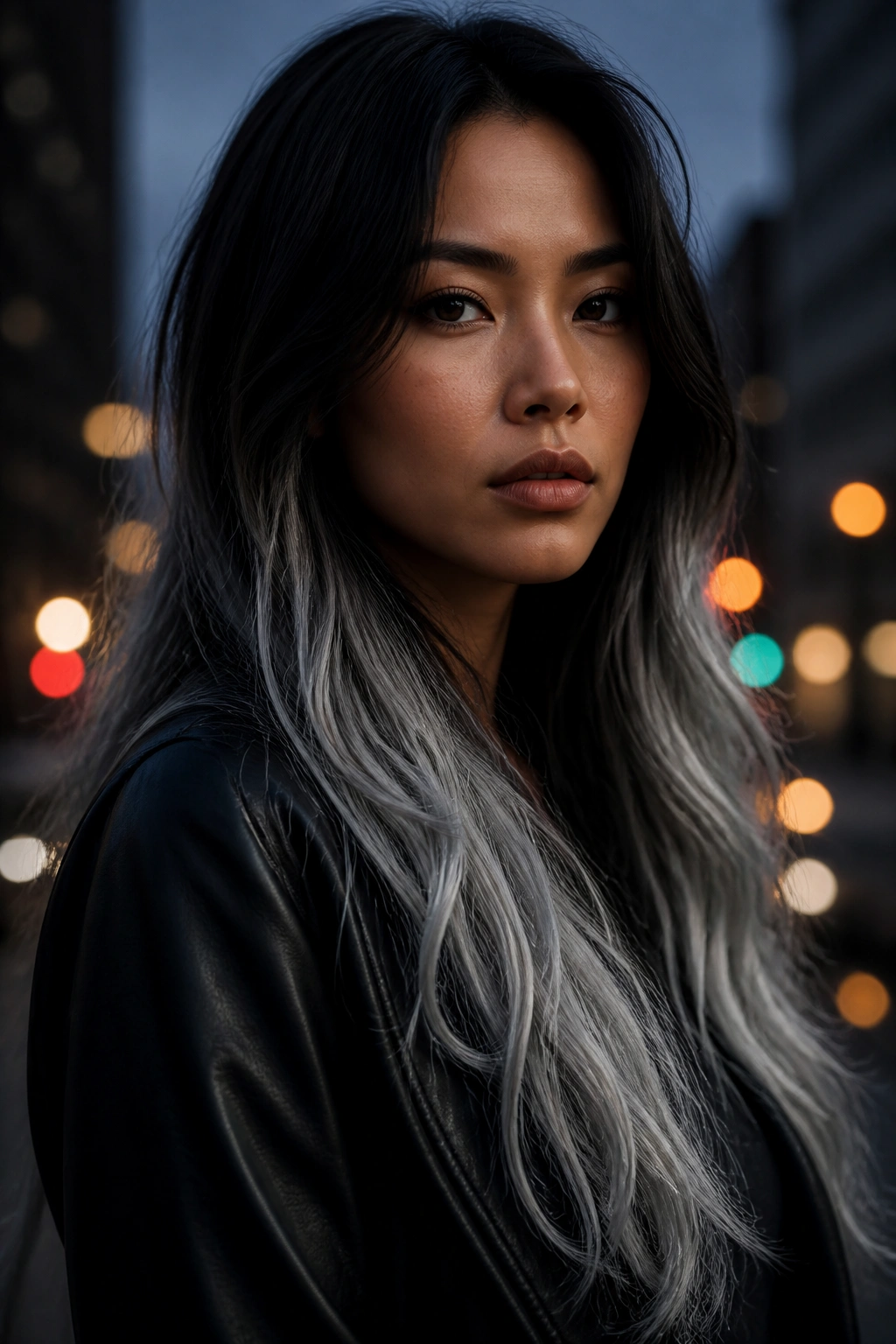
This is not shy hair. Jet black at the root fading into silver smoke at the ends gives long hair a real edge, and the length keeps it from reading gimmicky.
The important part is tone control. Silver should feel smoky and metallic, not flat gray. On very long hair, that slight shift from black to silver looks best when the transition starts lower than you think. Around the ribs, sometimes even lower. The farther the fade has to travel, the better it behaves.
You will need maintenance. Silver fades fast, and black roots show regrowth. Still, if you like contrast and don’t mind toning, this one has serious presence.
12. Burgundy to Plum Wine
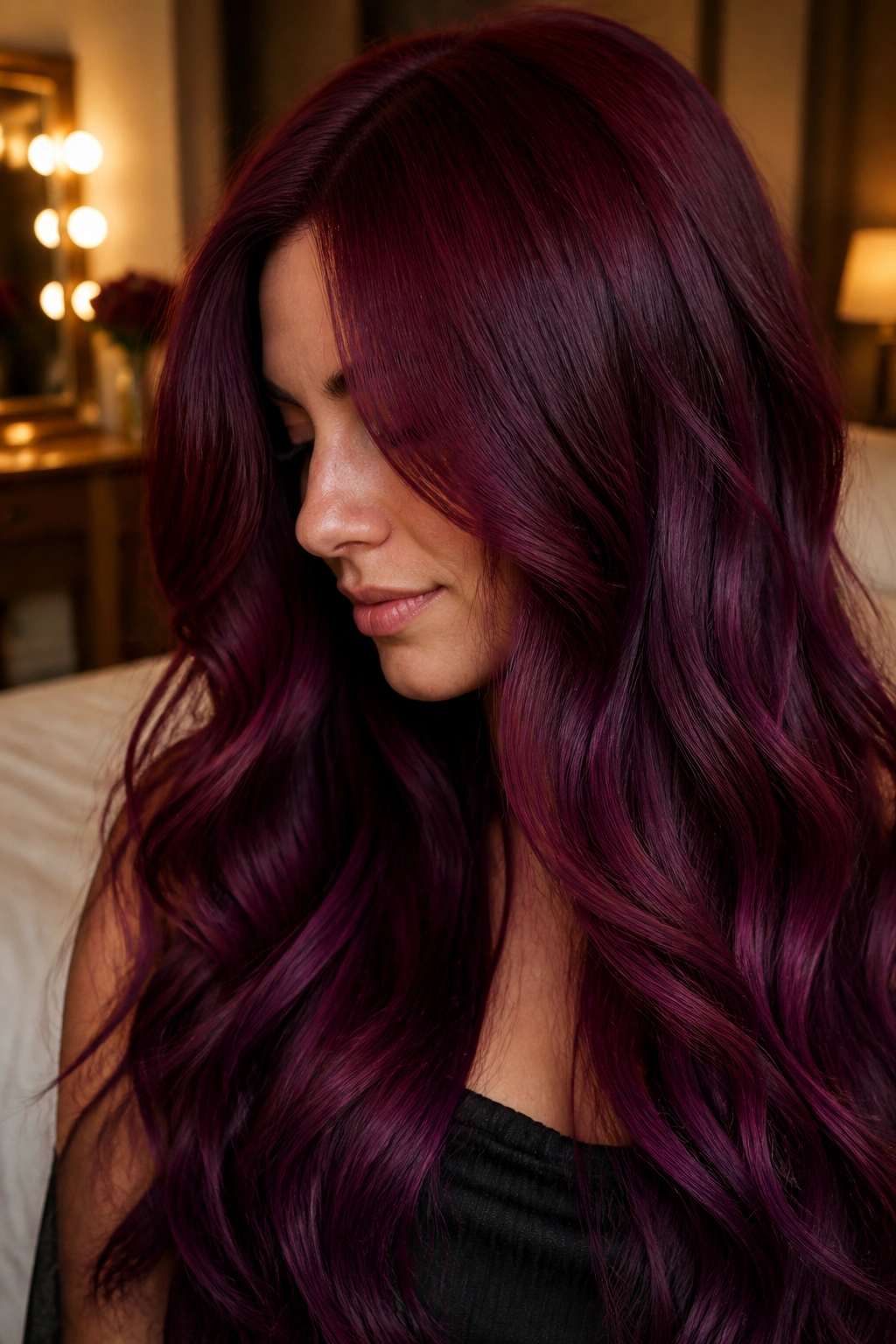
Burgundy melting into plum wine gives long hair a deep, velvet look. It’s rich without being heavy, and the shift from red to purple feels smooth when the root stays darker.
The neat thing about this combo is how it changes in different light. Indoors, it can look almost brown-black. Outside, the plum comes forward. That makes it a good choice if you want color that keeps revealing itself instead of announcing itself all at once.
Ask your colorist to avoid a neon purple end. A wine tone, not a candy tone, keeps the whole look grounded.
13. Plum to Lavender Haze
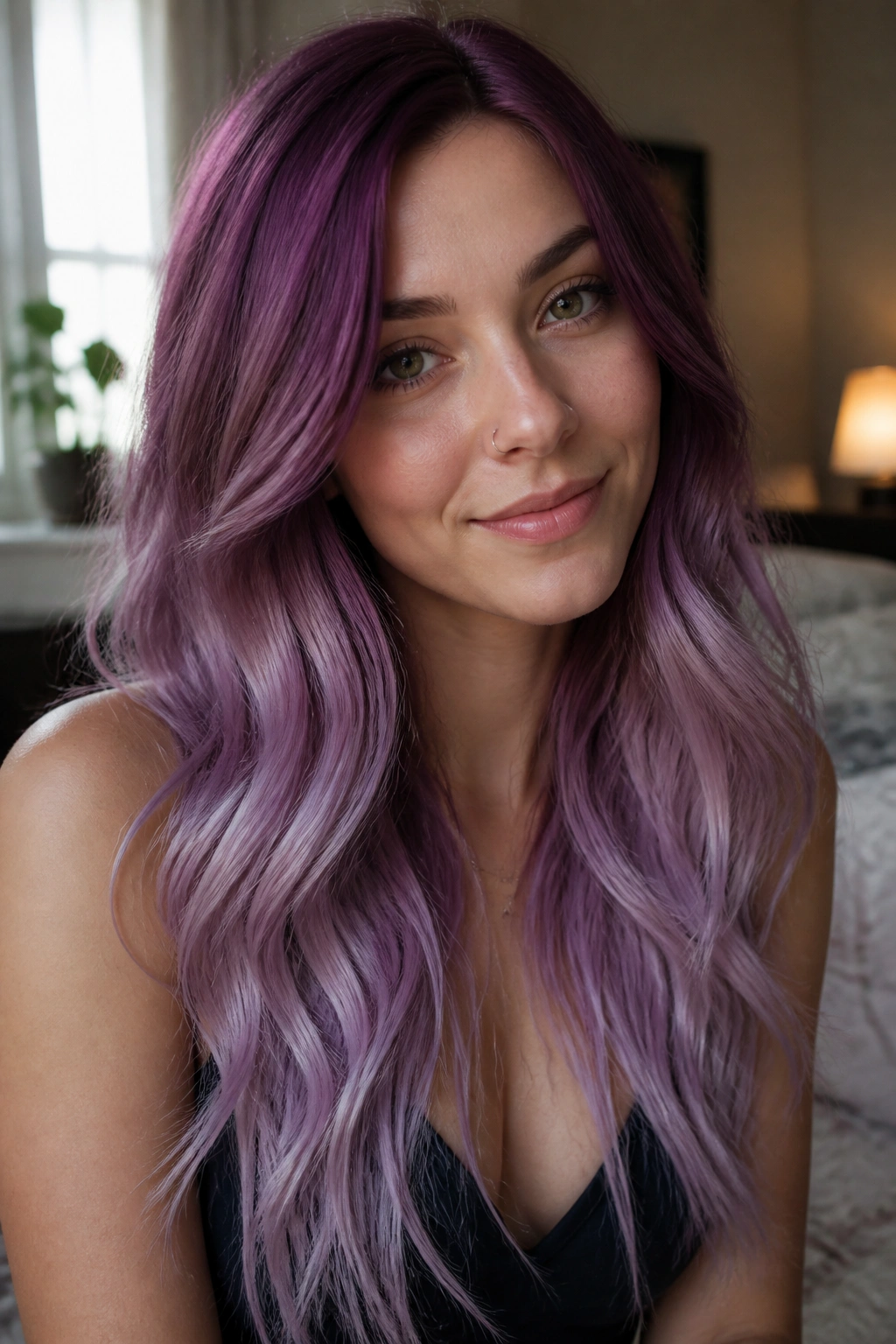
Can long hair handle pastel ombre without looking washed out? Yes, if the base is deep enough. Plum at the top gives the lavender ends something to sit on, so the color shift feels deliberate.
This is a softer, cooler version of fantasy color. The lavender doesn’t need to be bright to work. In fact, a dusty lavender haze usually looks better because it blends into the plum instead of fighting it. Wavy styling helps here, since the bend in the hair breaks up the color and keeps it from reading like one flat panel.
If you wear a lot of black, this shade pops in a good way.
14. Midnight Navy to Teal Tips
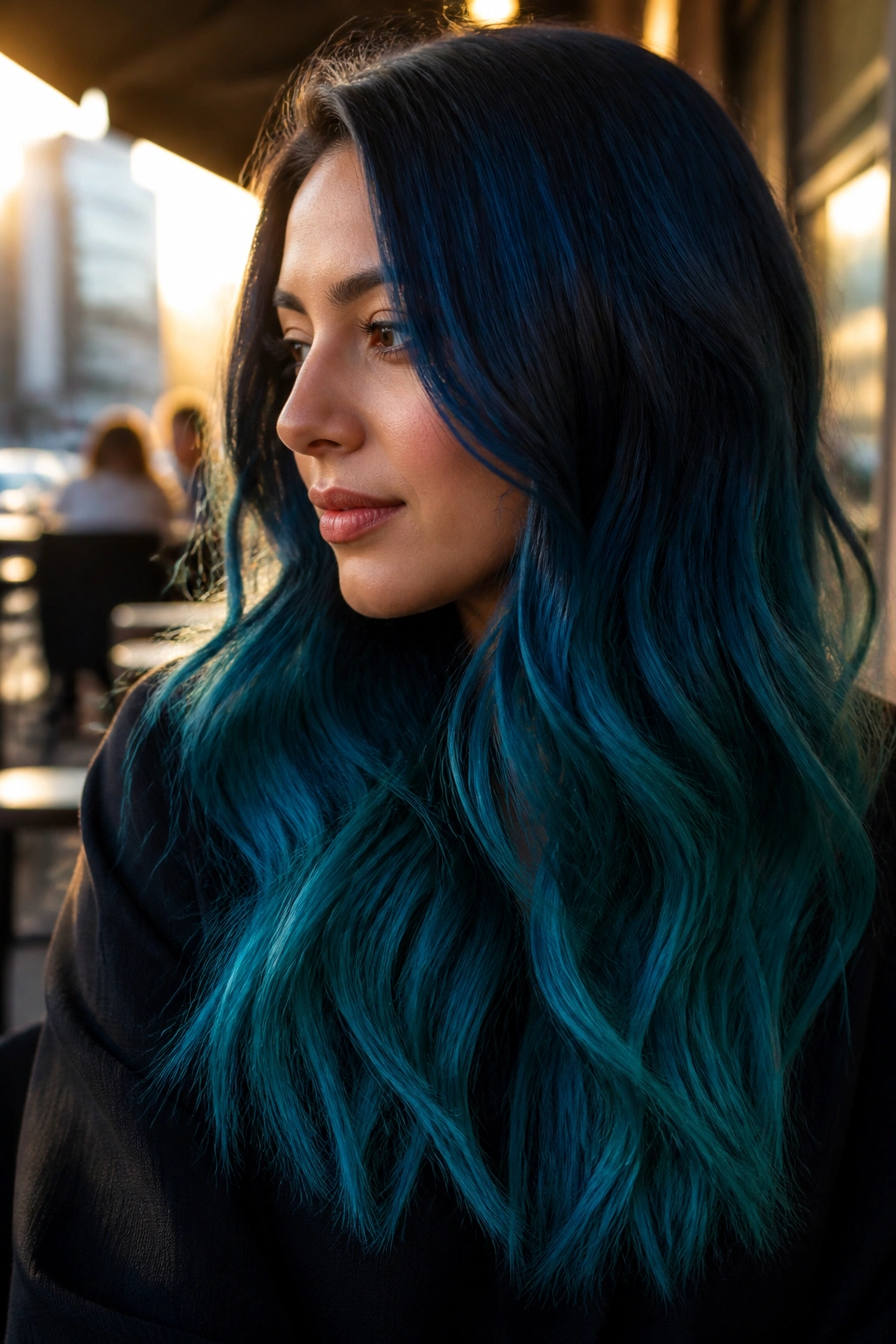
Midnight navy roots fading into teal tips feel bold but not cartoonish when the fade is done right. Long hair helps because the color can move from dark to bright over a real stretch, not just a few inches.
What makes this one different
The navy should stay almost black at the top, then give way to a blue-green that gets clearer at the ends. Teal works best when it’s dense and saturated, not neon. On thick hair, the color can handle more contrast. On fine hair, keep the transition softer so the ends don’t look thin.
Styling notes
- Wear it wavy to show the gradient
- Use sulfate-free shampoo to slow fading
- Add a gloss when the teal starts to dull
- Try a deep side part if you want the color band to show more
It’s playful, but still grown-up.
15. Forest Green to Emerald Fade
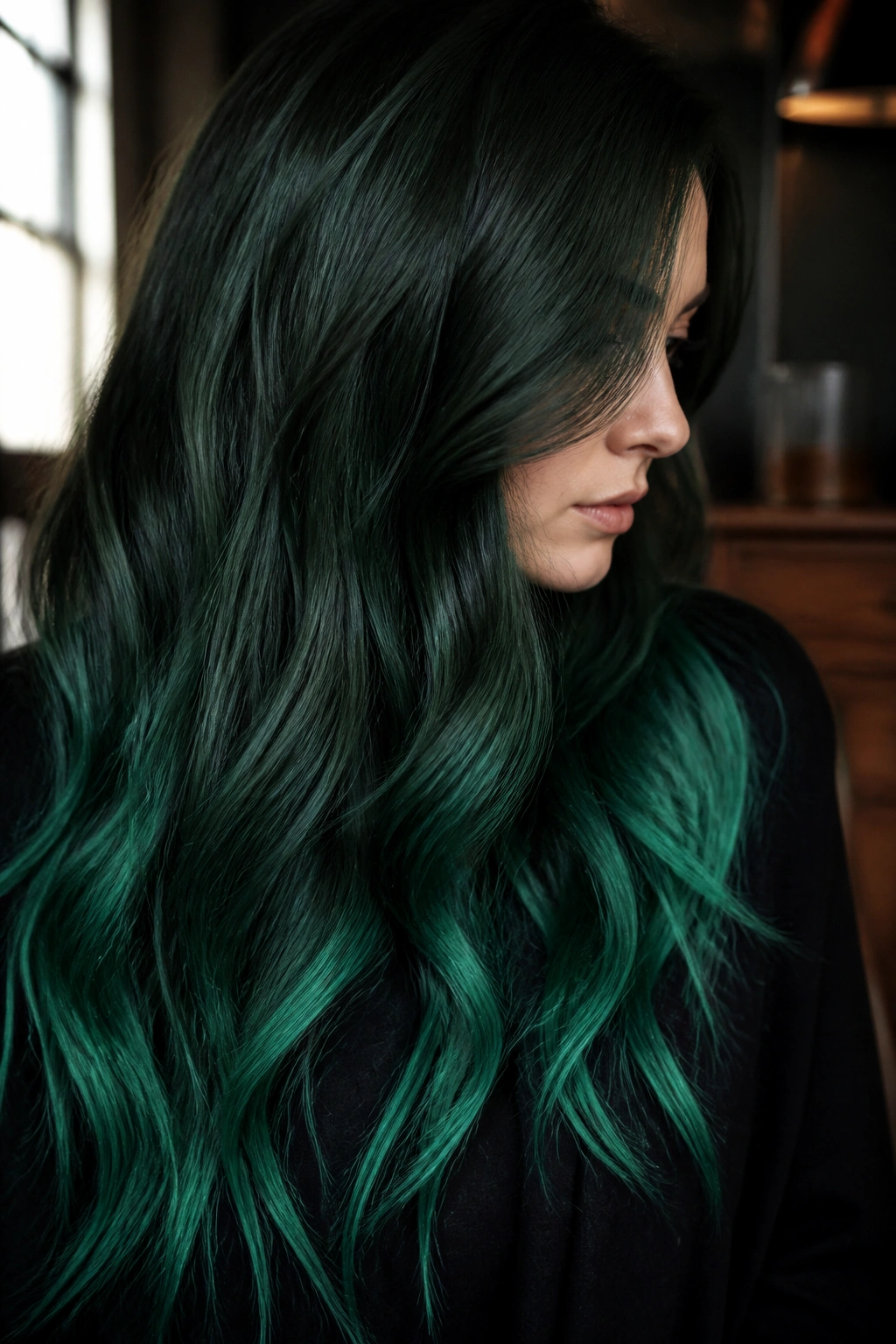
A lot of people think green hair has to be loud. It doesn’t. Forest green fading into emerald can look moody, elegant, and a little mysterious on long hair, especially if the root is deep and almost black.
The trick is keeping the green rich. If the shade goes too grassy, the whole thing loses its depth. Emerald ends should look like crushed velvet under dim light, not highlighter ink. Long waves help the colors blend, while straight hair makes the shift more graphic.
I like this look on people who want a fantasy color but hate anything childish. It has the drama, minus the sugar rush.
16. Mocha to Toffee Face Frame
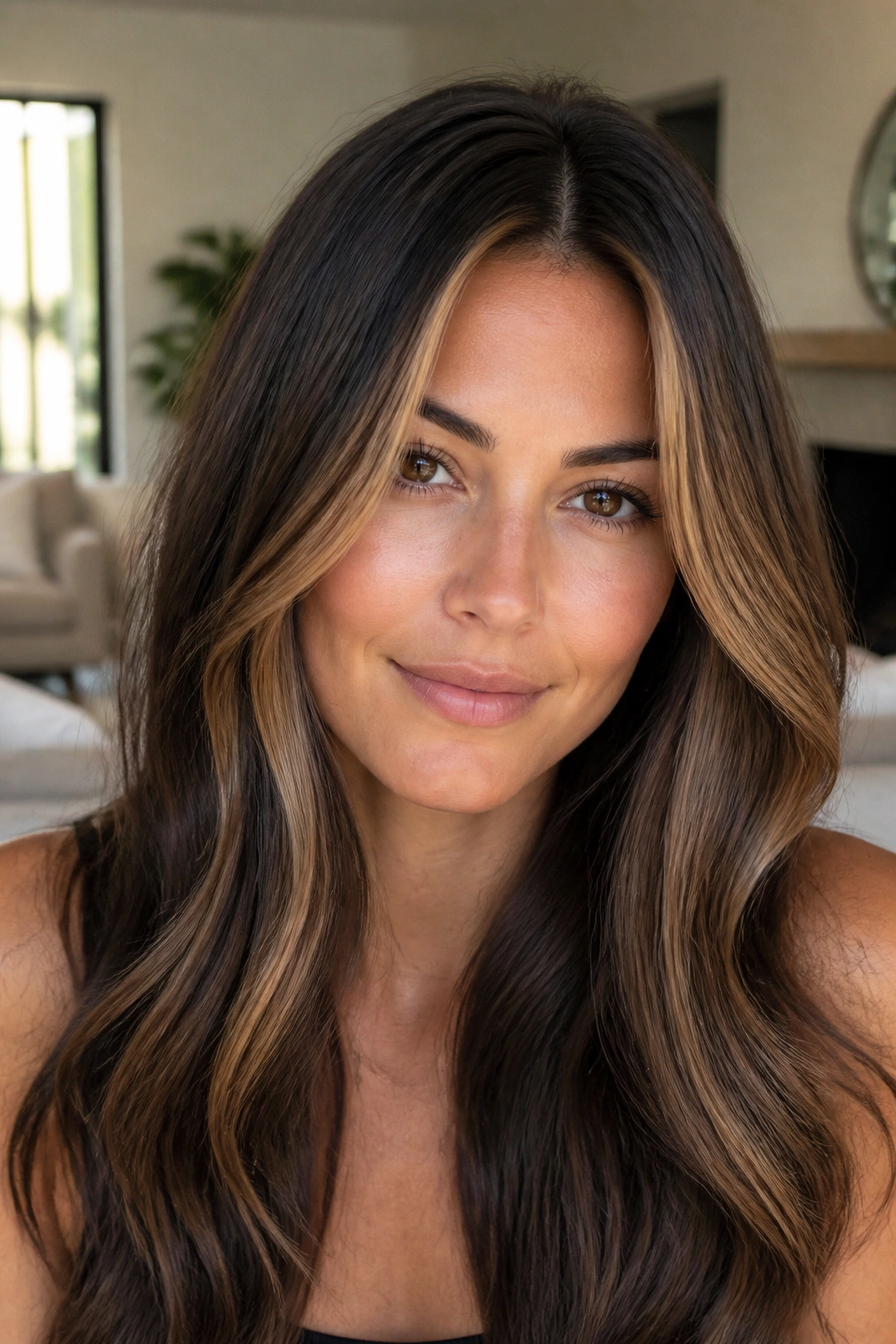
Mocha to toffee is the kind of ombre that flatters without shouting about it. The real move here is the face-framing brightness, which keeps long hair from feeling weighed down at the front.
A toffee face frame gives you light around the eyes and cheekbones, while the rest of the hair stays grounded in mocha. That contrast makes the style feel more modern than a simple all-over fade. If your hair is thick, this is especially smart, because it removes some visual heaviness without taking away length.
Ask for the front pieces to start a little higher than the back. Just a little. That detail keeps the style from looking flat in photos and in real life.
17. Ash Brown to Icy Beige
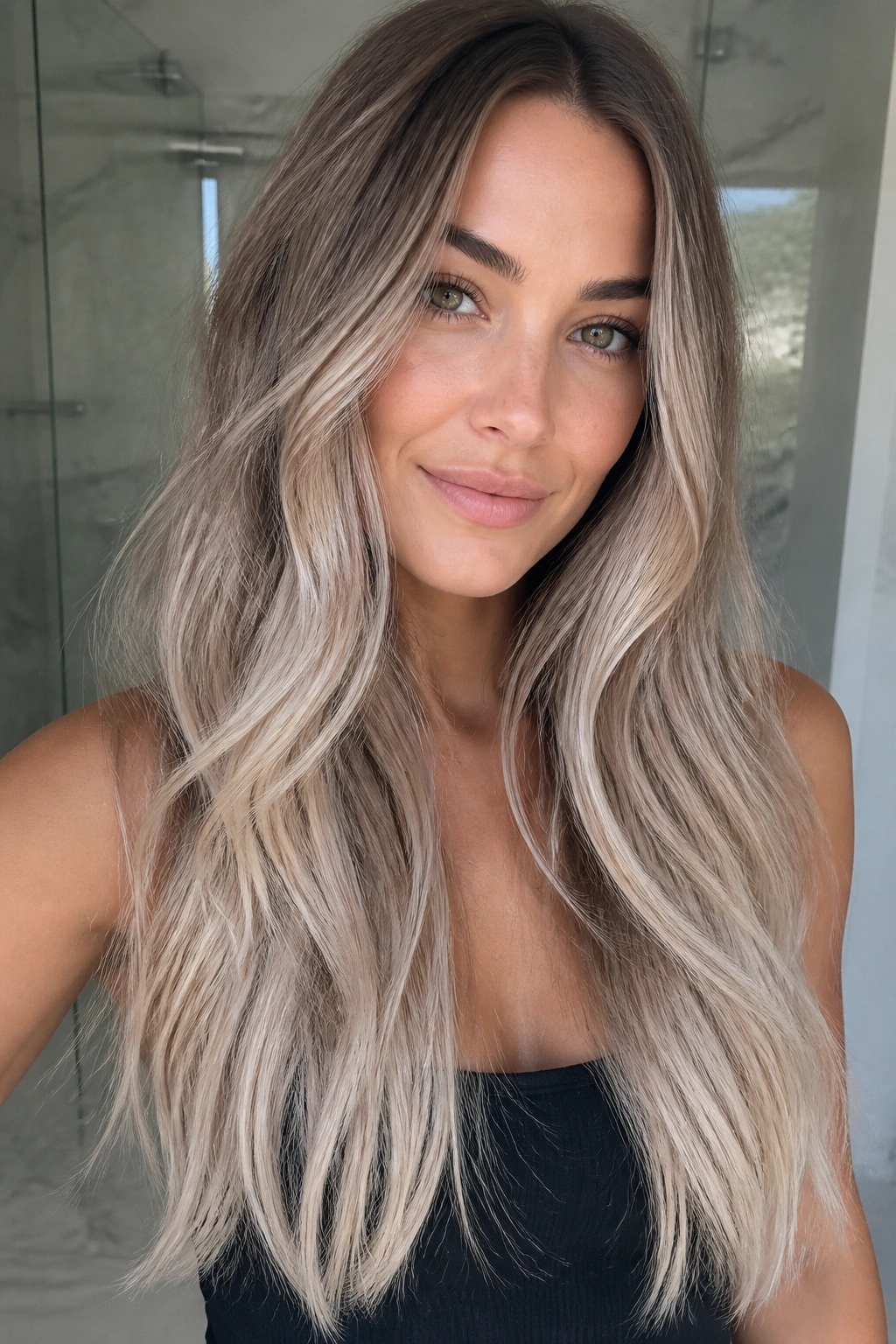
This one is for cooler tones, and it can look expensive if the beige stays clean. Ash brown roots keep the ombre from drifting warm, while icy beige ends add brightness without going full platinum.
What to watch for
- Keep brass under control with a blue or purple toner, depending on your base
- Ask for a soft shadow root so regrowth doesn’t jump out
- Don’t lift the ends too far if your hair is fragile
- Use a bond treatment if your strands are already dry from lightening
The color itself is cool. The care is not glamorous, but it matters. Icy beige on long hair is only pretty when the ends still move like hair, not straw.
18. Mushroom Blonde to Oat Milk
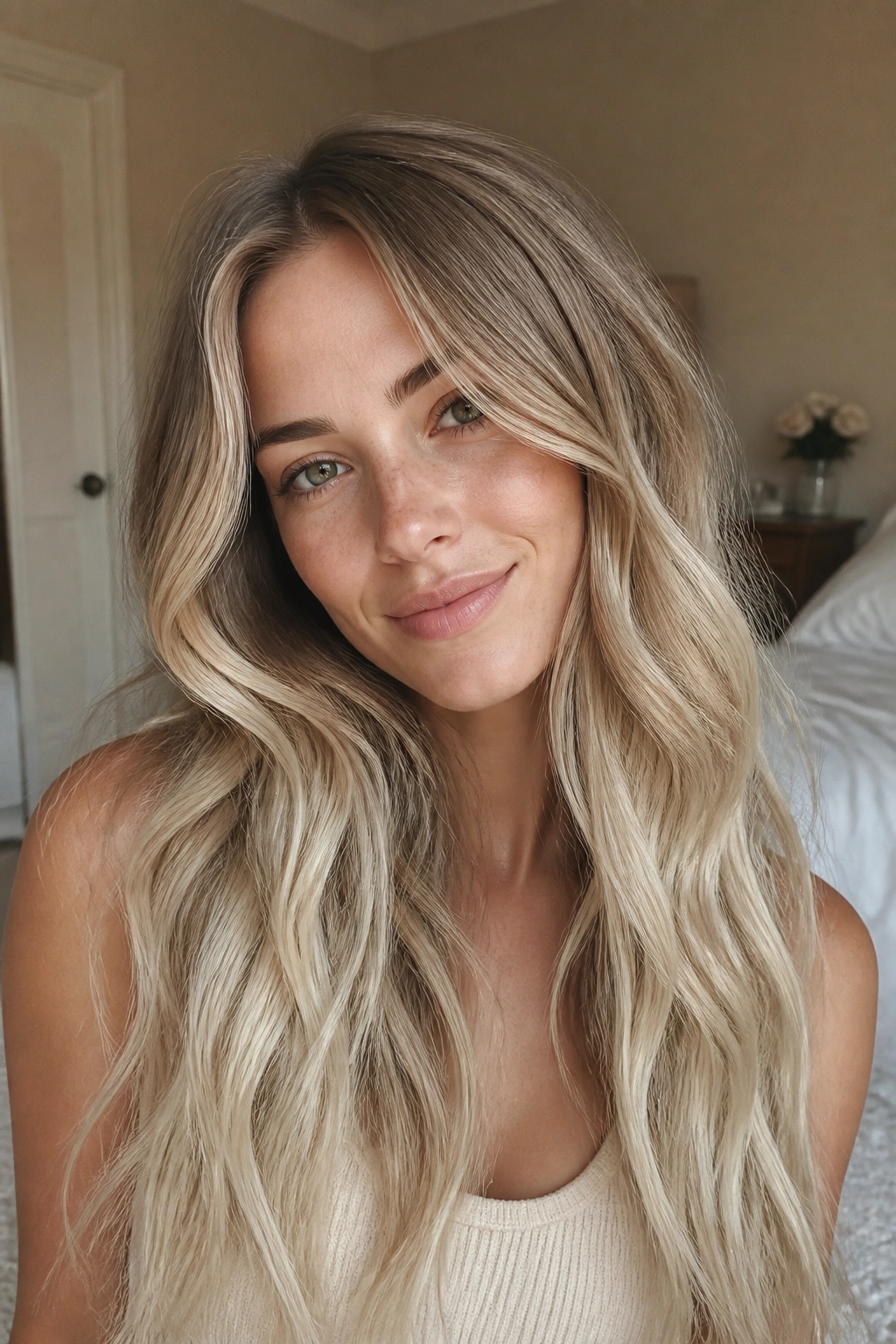
Mushroom blonde into oat milk is a softer cousin of the ash-and-beige family. It’s muted, creamy, and just warm enough to avoid looking dusty.
The effect works because the root shade has a little shadow in it. That shadow keeps the long ombre from turning into one bright block. Oat milk ends add a gentle lift, especially on layered cuts where the lighter pieces can separate and catch the eye.
This is a strong choice if you want blonde, but not loud blonde. It has that lived-in feel people chase without making the hair look ignored.
19. Coffee to Amber Copper
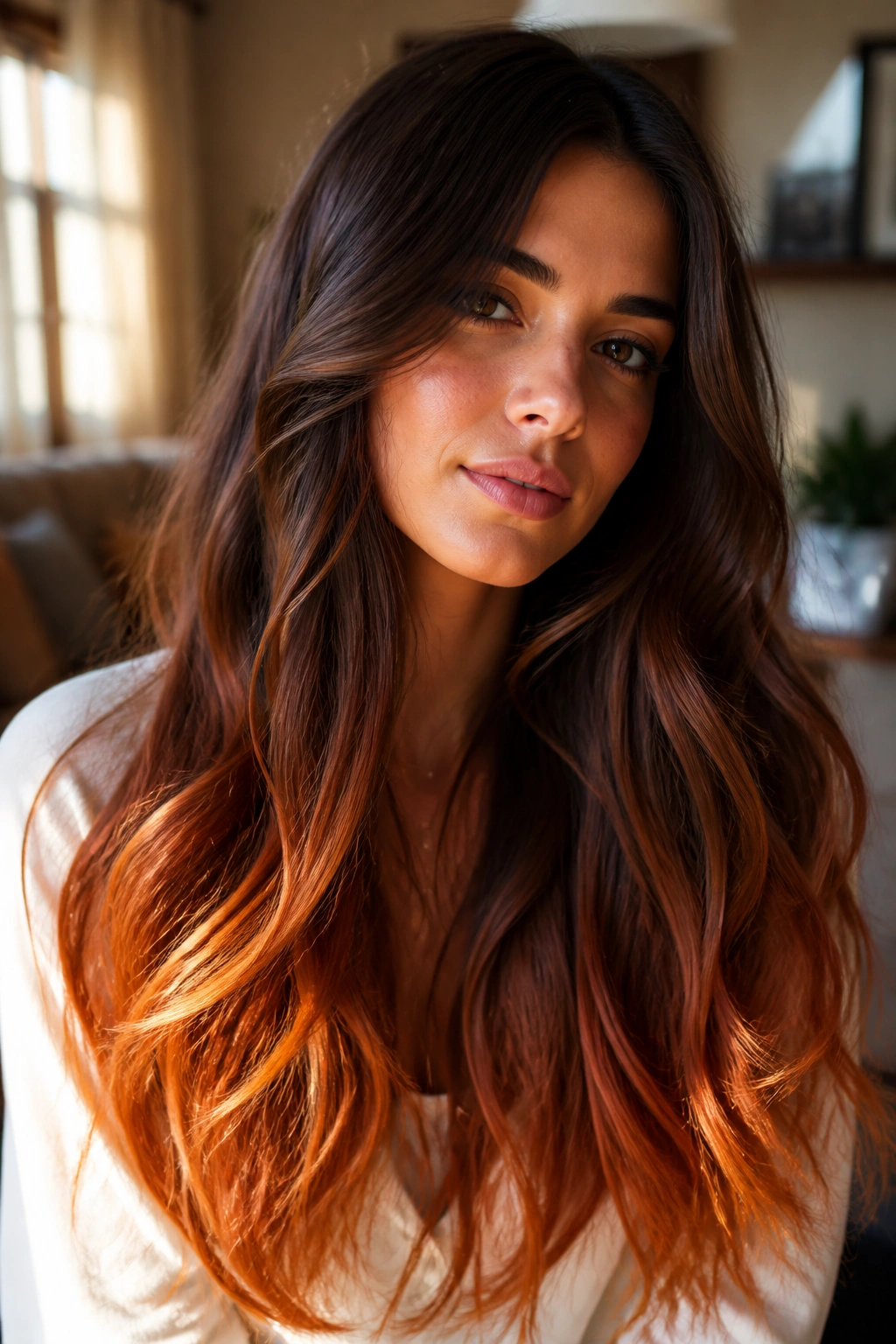
Coffee to amber copper is warm in a way that feels full, not fiery. The base is dark enough to give the copper ends a real glow, and on long hair that glow can travel down the whole length.
Why it stands out
Amber copper is a little softer than true copper and a little richer than gold. That middle ground makes the ombre wearable. If your complexion likes warm shades, this can light up the face fast. If you’re nervous about red, ask for the copper to stay muted through the mids and bolder only at the tips.
Wear it with
- Big curls for a glossy finish
- A center part if you want the fade to feel symmetrical
- Warm-toned makeup, especially peach blush
- Regular glosses to keep the amber from fading dull
It’s the kind of color that looks best with movement.
20. Black Cherry to Berry Wine
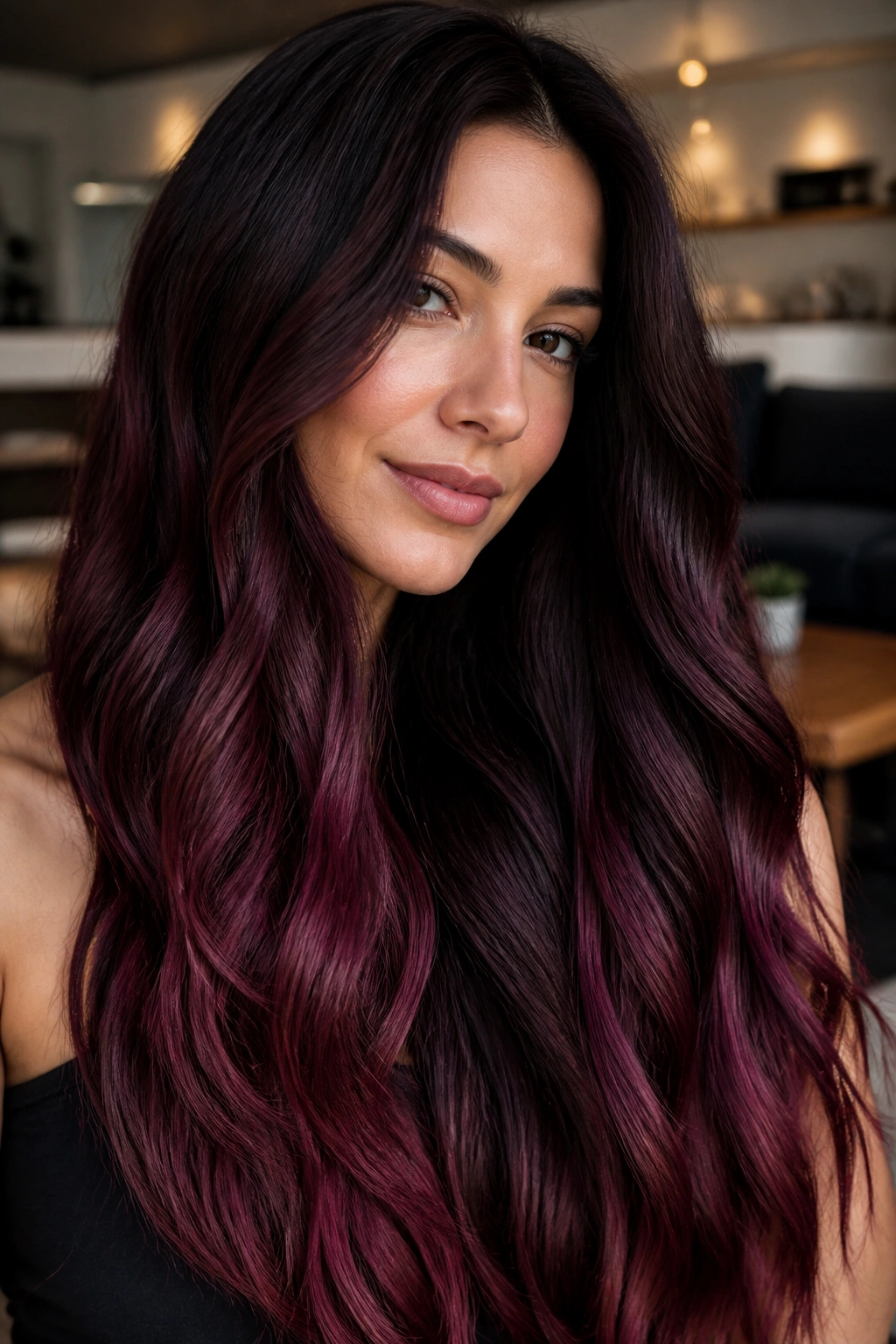
Black cherry ombre has a little bite to it. The root stays dark and nearly inky, while the berry wine ends bring out a deep red-purple that catches light in a satisfying way.
This is a strong choice for long hair because the color shift has room to build. On short hair, black cherry can feel like one note. On length, it gets layered. That matters. The more hair you have, the better the darker root and wine ends can play off each other.
A soft wave helps the berry tones show. Straight hair will make the look sleeker, but the wine color may read darker than you expect.
21. Dusty Rose to Peach Blush
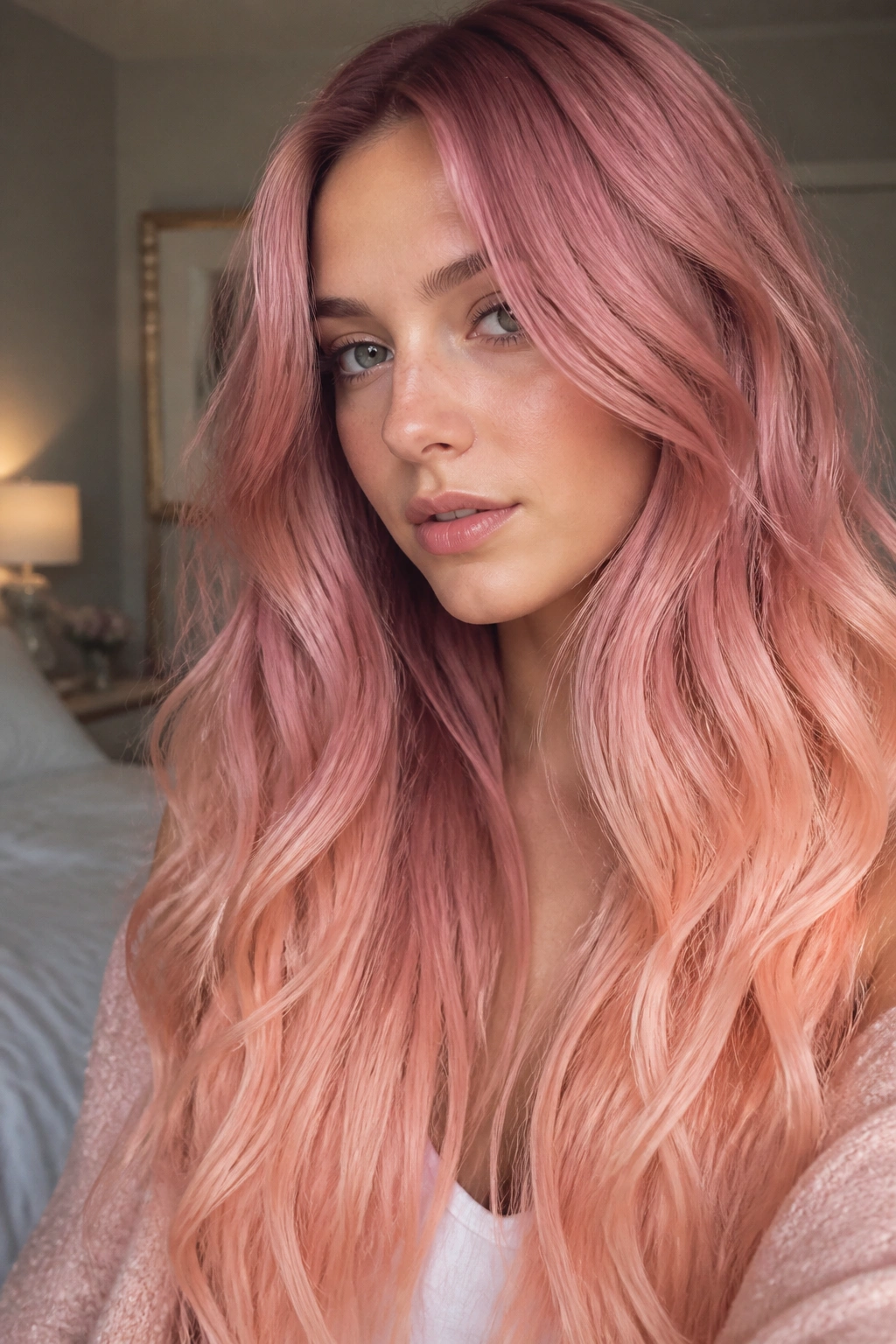
Dusty rose fading into peach blush is softer than it sounds. It feels airy, but not sweet in a sugary way. On long hair, the colors spread out enough that the shift looks almost watercolor-like.
Best base shades
This works best on pre-lightened blonde or a light beige base. If the hair is too yellow, the peach can turn loud fast. A clean pastel base lets the rose and peach stay gentle. Ask for the rose to be muted at the crown so the whole look doesn’t turn candy-bright.
How to style it
- Soft waves keep the pastel tones blended
- A half-up knot shows both colors at once
- Dry shampoo can dull the finish, so use it sparingly
- A color-depositing mask helps between salon visits
It’s pretty, but the grown-up version of pretty.
22. Champagne Blonde to Cream
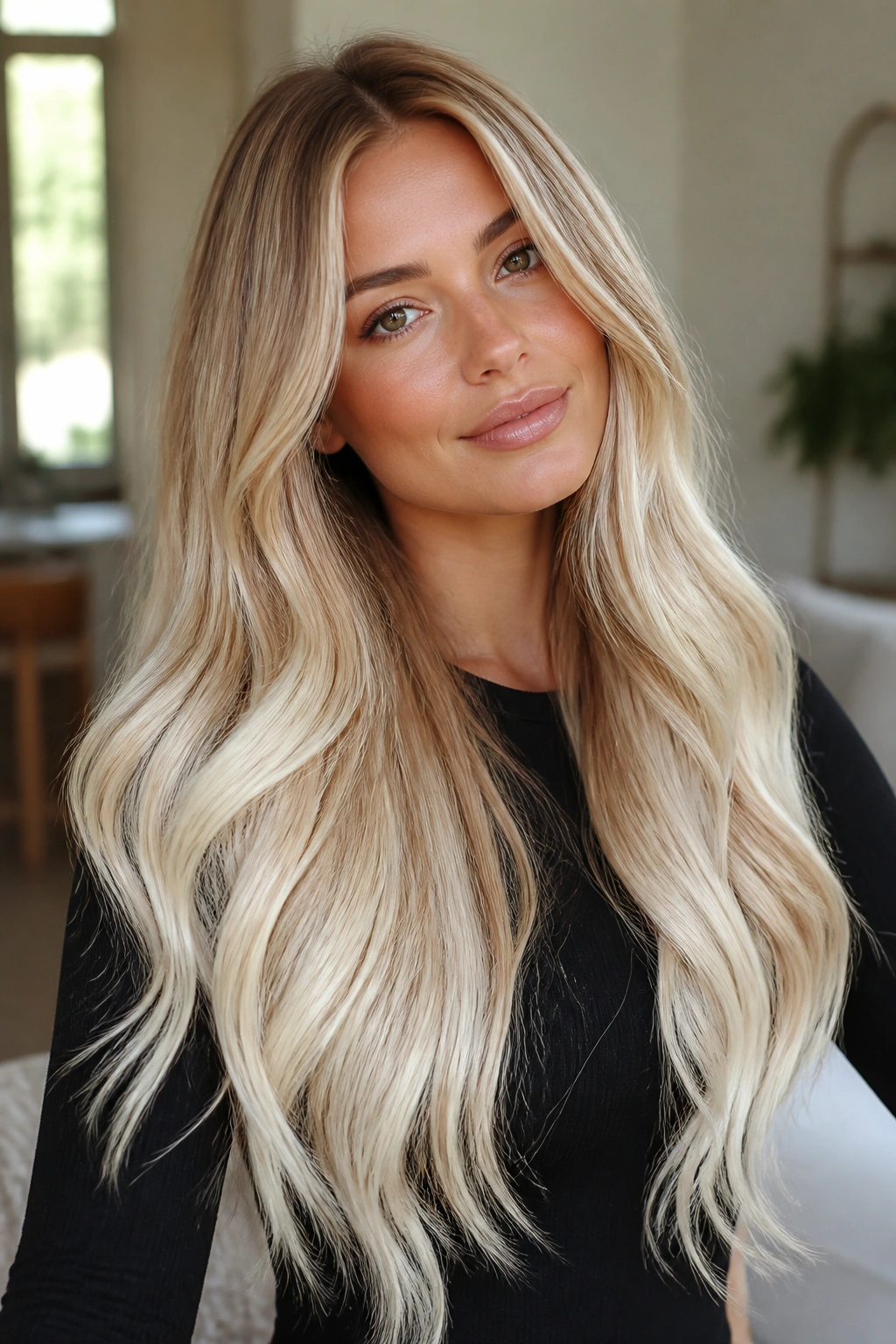
Champagne blonde into cream is a polished ombre for long hair that already has lightness. The champagne root keeps a little sparkle, while the cream ends soften the finish.
Compared with platinum, this looks friendlier and less stark. Compared with beige blonde, it looks a touch brighter. That middle ground is why it works so well on long lengths. The hair moves, the light catches, and the color shift still feels gentle.
If your hair has a lot of layers, ask for the cream to sit on the lower third. The fade should read gradual, not dipped. That small choice makes the style feel cleaner.
23. Reverse Ombre Blonde to Brunette Ends
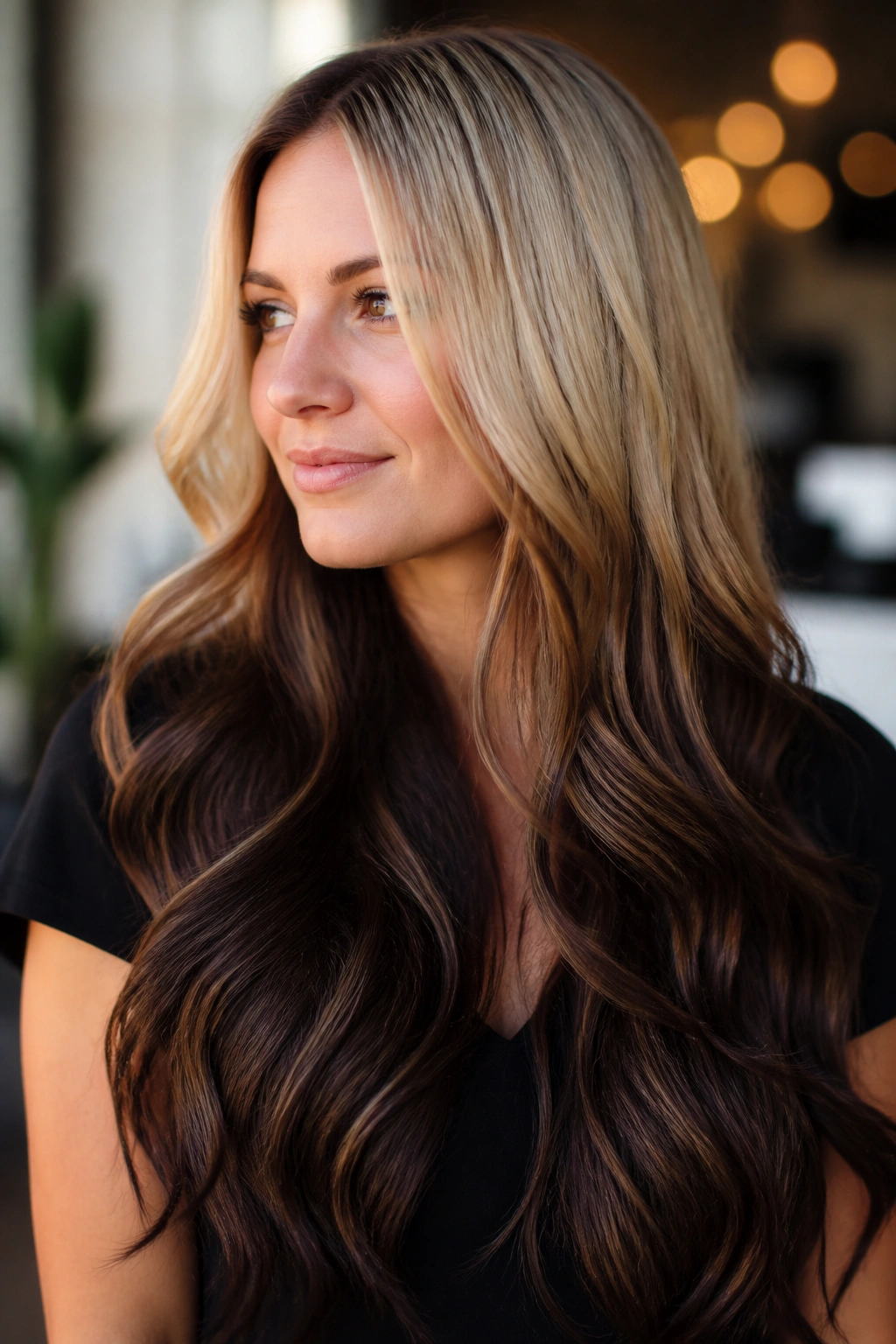
Reverse ombre gets talked about less than blonde-on-top fades, and that’s a shame. Blonde roots fading into brunette ends can look striking on long hair because the darker ends add weight and movement.
The style works when the brunette is rich, not flat. A cool chocolate or soft mocha at the bottom keeps the hair from looking chopped off. Long hair helps because the eye sees a true gradient instead of a sudden switch.
This is also a smart option if your natural roots are already light and you’re tired of constant highlight upkeep. The darker ends make the grow-out look intentional, which is a nice trick when you want less salon time.
24. Sunlit Brunette Ribbon Ombre
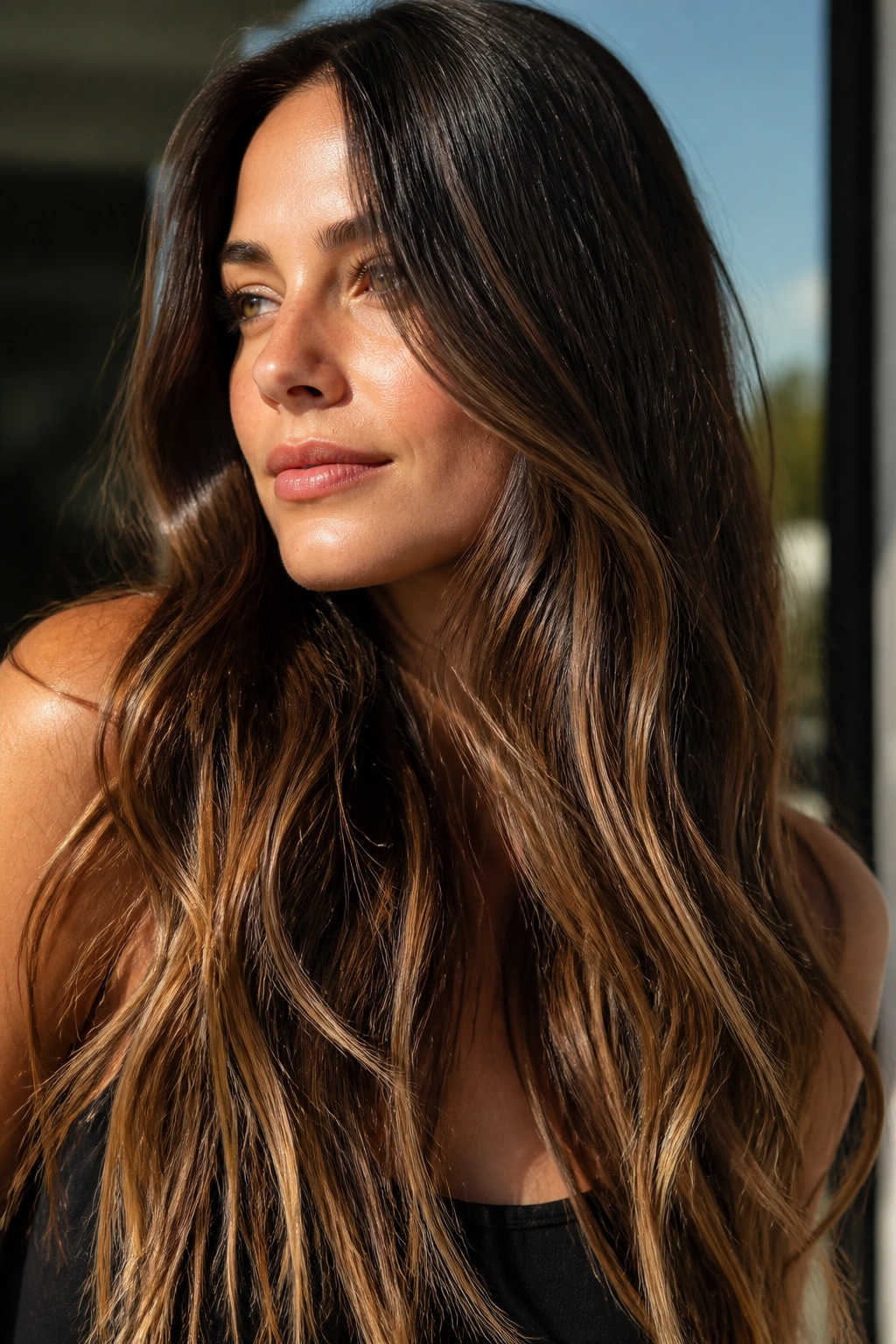
Imagine deep brunette hair with narrow ribbons of light running through the lengths and then softening toward the ends. That’s this look. It feels more organic than a hard ombre, and long hair gives those ribbons enough room to show.
What I like here is the quiet movement. The color doesn’t sit in one solid block. It shifts as the hair moves, which makes it feel more expensive than a heavy highlight job. Ask for the light pieces to be scattered through the outer layers, not packed into one panel at the back.
A braid makes this style look especially good, because the ribbons stack and show depth at once. Simple, but not boring.
25. Maple Brown to Apricot Gold
Maple brown into apricot gold brings warmth without going too red. It’s one of the easier ways to make long hair look sunnier while still keeping the base grounded.
The maple shade should hold onto a little brown at the crown. That gives the apricot room to glow later in the fade. If the ends are too light, the whole look turns soft yellow. If they stay apricot-gold, the color looks richer and more deliberate.
This is a nice pick when you want something bright but not icy. It sits somewhere between caramel and copper, and that middle space is where a lot of flattering hair color lives.
26. Soft Brunette to Honey Peach
Soft brunette fading into honey peach sounds unusual, and that’s why it works. The honey keeps the warmth believable, while the peach brings a fresh note at the ends.
Who it suits
This shade is good on long hair that needs a little life without a harsh blonde jump. It flatters medium brunettes especially well, since the peach can glow without overwhelming the base. If your hair already has red tones, ask for a muted peach rather than something brighter.
What to ask for
- A soft brunette root with no hard line
- Honey through the mids
- Peach only toward the last third of the hair
- A glossy finish so the warm tones don’t look dry
It’s unusual, but still wearable.
27. Smoky Lilac to Silver Violet
Smoky lilac melting into silver violet is the kind of color that looks dreamy on long hair because there’s space for both tones to show. It’s not bubblegum. It’s not flat gray either. It sits in the middle, which is where the charm lives.
The smoky lilac root keeps the style soft, while silver violet brightens the ends without making them icy. On layered hair, this gets even better because the lighter pieces separate and give the violet room to breathe. If the hair is one length, keep the blend very soft or the ends can look heavy.
A shine spray helps here. Pastel-purple shades love shine, and dullness shows fast.
28. Walnut Brown to Bronze Gold
Walnut brown to bronze gold is warmer than ash shades and quieter than copper. Think earthy root, golden metal ends, and a finish that feels grounded rather than flashy.
Compared with caramel ombre, bronze gold has a little more shine and a little less softness. That makes it a smart pick for long hair that needs depth without looking flat. If your natural color sits in the medium brunette range, this transition can feel almost tailor-made.
It also plays well with curled ends. The bronze catches the bend in the hair, so the last few inches look brighter than they do straight. That tiny shift gives the color more life.
29. Dark Red to Ember Copper
Dark red fading into ember copper is the kind of ombre that looks alive. The root holds that deep wine-red base, while the copper ends feel hot, glowing, and slightly uneven in a good way.
Why it reads so well on long hair
Length gives the fade a chance to warm up gradually. You do not want a hard jump here. The color should shift like embers fading to flame, not like two separate dyes stacked on top of each other. Keep the copper richer than orange, and the whole thing stays elegant.
Small things that matter
- A red-friendly shampoo slows fading
- A gloss can bring the ember tone back fast
- Soft curls make the copper show more than pin-straight hair
- A deep side part gives the red more drama near the face
It’s bold, but not loud in the cheap way.
30. Midnight Brunette to Graphite Silver
Midnight brunette to graphite silver is the one I’d point to if you want something cool, sharp, and a little moody without going full fantasy color. The root stays almost black, then softens into a slate-like silver that still feels grown-up.
The long length matters here. Graphite silver needs space, or it can look like a dusted finish instead of a deliberate fade. On very long hair, the silver can live at the ends and lower mids, where it looks like light caught in metal. Keep the tone smoky, not bright, and it will wear better between toning sessions.
If you want one ombre that feels modern without chasing a trend, this is the one I’d circle first.
